Bordeaux Musée des Beaux Arts. Part 1. The Lacour Wing.

Last week I spent a few days in the French city of Bordeaux and besides visiting must-see museums such as Cité du Vin, Musée d’Aquitaine, the cathedral and sampled the red wine and French cooking, I spent half a day looking around the Musée des Beaux Arts which had an excellent selection of paintings. The Musée des Beaux Arts Bordeaux is the oldest of Bordeaux’s museums and was founded in 1801 under the guidance of painter Pierre Lacour. This establishment ranks among the most significant art galleries in France beyond the confines of Paris.
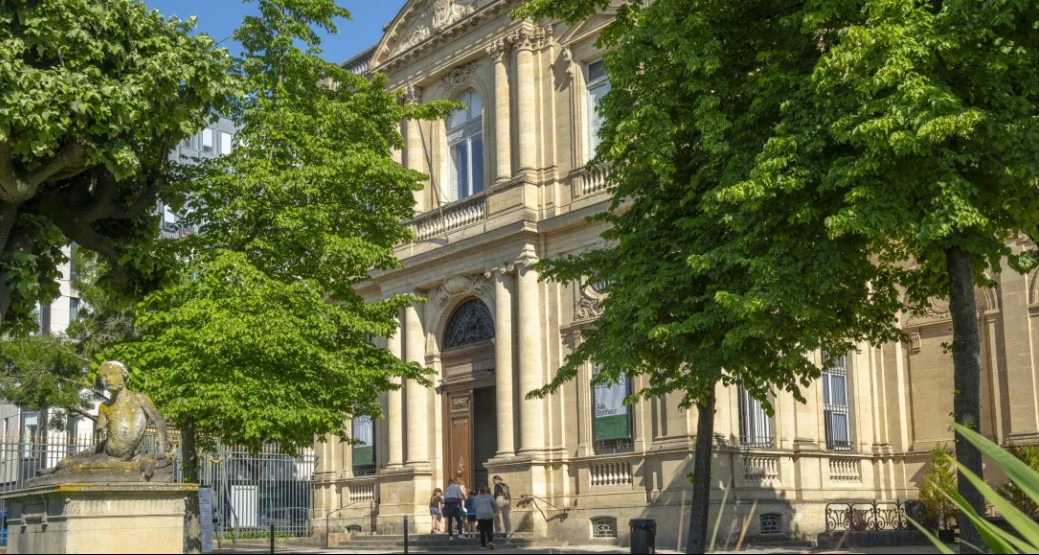
Lacour wing of the Musée des Beaux Arts, Bordeaux
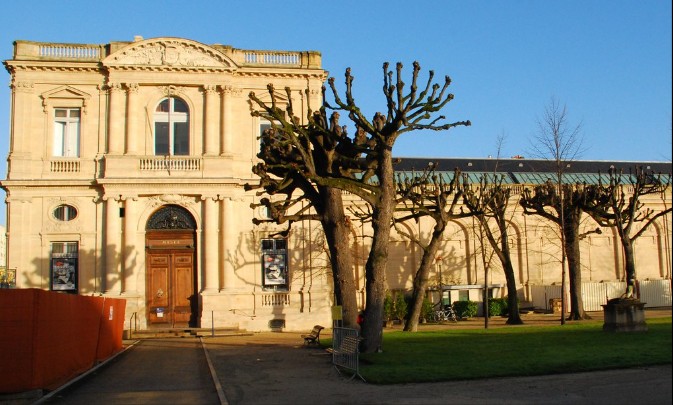
Bonheur Wing of the Musée des Beaux Arts, Bordeaux

The museum is located in the heart of Bordeaux, next to the town hall gardens.  It is a veritable treasure trove of art and history, offering an exceptional selection of European painting and sculpture from the 15th to the 20th century. The museum consists of two buildings, housed in the north and south wings of the Palais Rohan, the current town hall.  Its extensive permanent collection features major works by Flemish, Dutch, Italian, and French artists. Highlights include paintings by Peter Paul Rubens, Jean-Baptiste Chardin, Eugène Delacroix, and Odilon Redon, offering a journey through various artistic movements. The museum is not limited to old masters. It also has a fine selection of works from the 19th and early 20th centuries, reflecting the artistic developments of these periods.

In this first of two blogs I want to look at some of the works which were on show in the south wing of the museum, The Lacour Wing.

In the Lacour Wing the permanent exhibition starts with Renaissance art from Italy and Northern Europe in the 15th and 16th centuries with Titian amongst the paintings. The 17th century exhibition includes Baroque art with works of Paul Rubens and a section of Dutch painters including Jan van Goyen.  Finally, in this wing there is an exhibition of 18th century paintings including a painting of the port and quais of Bordeaux by the building’s namesake, Pierre Lacour.
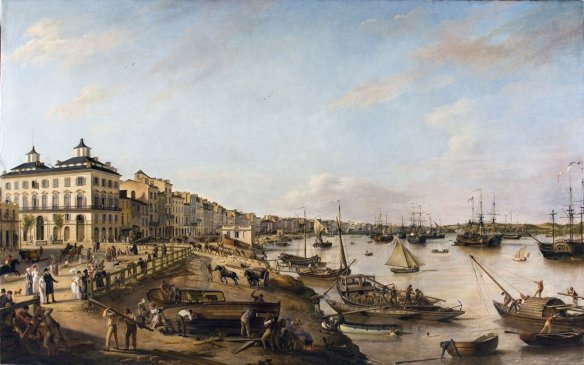
The view of the Chartrons and Bacalan Harbour and Waterfront Area in Bordeaux by Pierre Lacour Snr. (1804-1806)

The Port de la Lune, Bordeaux’s port since the Middle Ages, takes its name from the crescent-shaped bend of the Garonne on which the city was built. Since the 17th century, this panoramic view has been a favourite subject for artists from Bordeaux and beyond. Originally from Bordeaux, Pierre Lacour Snr. is one of the tutelary figures of the Musée des Beaux-Arts, a French painter and lithographer known for his views of the city and its surroundings. A professor and then director of the Academy of Painting, Lacour trained many generations of artists. Between 1804 and 1806, Pierre Lacour, the museum’s first curator, captured this urban landscape in his own vision of Bordeaux. The depiction takes in the view that depicts the facades of the Chartrons and Bacalan.

The Artist Painting a Family Portrait by Pierre Lacour Snr. (1798)

The Chartrons dates back to the 14th century when the Carthusian monks,  the “Chartreux” in French, settled here giving the district its name. By the 17th century, the area had become the headquarters of Bordeaux’s booming wine trade.  The Bacalan is the northern part of the city built around the port.  For me, the joy of the painting is its focus on the smallest detailing of the human activities in this lively district.   As day comes to an end, we see carters and their teams loaded with stones, also carriages and cabriolets.  Shipwrights maintain the hulls of the canoes. In the background, a porter is unloading a cargo of stave wood used to create wine barrels. Further on, a carter is trying to pull up his team, loaded with stones, with his whip, while, further back, barrels are rolled on the ground from a barge, then pulled by means of ropes towards the warehouses.  The work highlights all the socio-professional categories at the origin of the city’s economic prosperity: merchants, craftsmen, and boatmen. An impressive fleet of canoes and skiffs sailed around the tall ships that came to trade.

The young girl in the left foreground carrying a parasol is the painter’s daughter, and the man to whom she is addressing is Pierre Lacour himself. Leaning over the fence next to them is Pierre Lacour Jr.

Portrait, said to be of Aubin Vouet by Simon Vouet (c. 1620), Arles, musée Réattu

Aubin Vouet was a French painter, the son of Laurent Vouet and younger brother of Simon Vouet, both also painters. Aubin joined his brother Simon in Rome six years after his eldest brother had moved there. They were there together around 1619-1620 and they both lodged on Vicolo di San Silvestro. In Rome Aubin was strongly influenced by Caravaggio, as can be seen in this painting David Holding Goliath’s Head, and this influence labelled him as one of the Caravaggisti.  Aubin returned to France, whereas his brother stayed in Rome a further six years until 1627. In 1621, on his return to France, Aubin was made painter in ordinary to Louis XIII.
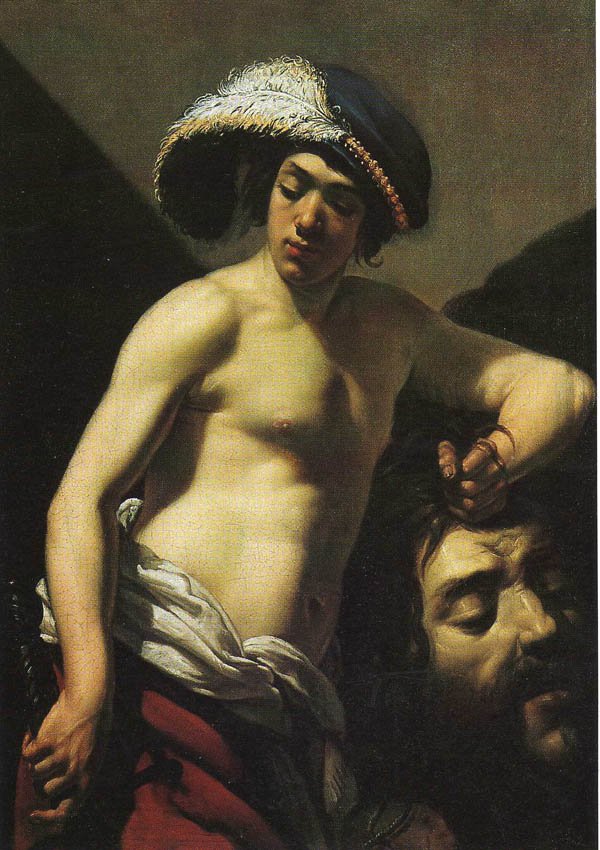
David holding the head of Goliath by Aubin Vouet (c.1620)

The battle between the Philistine giant Goliath and the young Jewish shepherd David, recorded in the Old Testament, ended the war that divided these two peoples as described in the First Book of Samuel, XVII, 48-54:

“…As the Philistine moved closer to attack him, David ran quickly toward the battle line to meet him. Reaching into his bag and taking out a stone, he slung it and struck the Philistine on the forehead. The stone sank into his forehead, and he fell face down on the ground.  So, David triumphed over the Philistine with a sling and a stone; without a sword in his hand, he struck down the Philistine and killed him.  David ran and stood over him. He took hold of the Philistine’s sword and drew it from the sheath. After he killed him, he cut off his head with the sword.  When the Philistines saw that their hero was dead, they turned and ran.  Then the men of Israel and Judah surged forward with a shout and pursued the Philistines to the entrance of Gath[f] and to the gates of Ekron. Their dead were strewn along the Shaaraim road to Gath and Ekron.  When the Israelites returned from chasing the Philistines, they plundered their camp.  David took the Philistine’s head and brought it to Jerusalem; he put the Philistine’s weapons in his own tent…”

Driven by his faith, David – often referred to as a “child,” “young,” and “handsome” defeated Goliath, a seasoned warrior, through trickery. Armed only with his slingshot, he knocked out his enemy with a stone and then took his sword to cut off his head.   This biblical tale was favoured by many artists of the early seventeenth century such as Caravaggio and his emulators Domenico Feti, Artemisia Gentileschi, Bartolomeo Manfredi, Nicolas Régnier or Valentin de Boulogne. The theme depicted in this painting was favoured by artists during the first third of the 17the century. They all had a real liking for this biblical episode, the conclusion of the fight made it possible to represent the revulsion of death.

It is thought that Aubin Vouet was seduced by the violence of the Caravaggio masterpieces he had seen in Rome.  In this work he chose to characterise David as the victorious hero, with his eyes lowered and his pout disdainful. The way in which Vouet has depicted youthful nudity is believed to be inspired not only by Florentine Renaissance sculpture but also by Caravaggio’s depictions of adolescents, and it cleverly contrasts the young man’s virile features with Goliath’s imposing head. The young David’s body is highlighted by the framing of two-thirds of the body, represented in a clever chiaroscuro. The elegance of the hat braided in gold and adorned with an ostrich feather adds a touch of refinement to David.
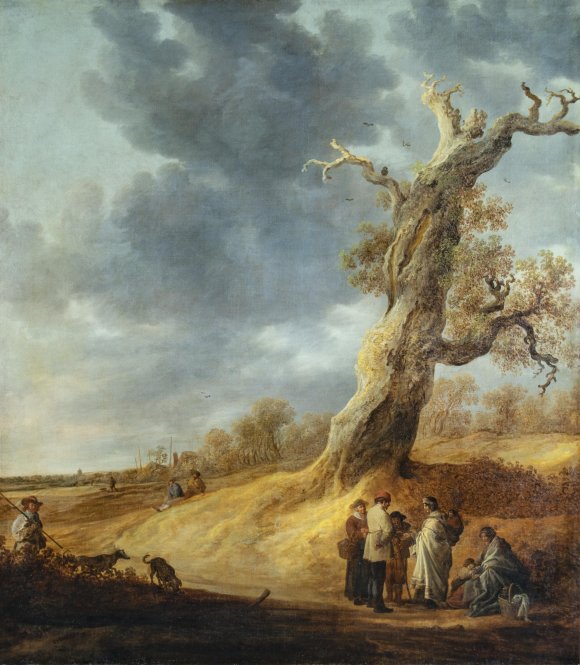
The Oak Struck by Lightning or The Fortune Teller by Jan Josephsz van Goyen (1638)

I have often written about my love of Dutch Golden Age paintings so it would be remiss of me not to include an example of work from this period. Jan Josephsz. van Goyen was one of the main pioneers of naturalistic landscape in early 17th-century Holland. His many drawings show that he travelled extensively in Holland and beyond. In 1634 he is recorded painting in Haarlem, in the house of Isaac, the brother of Salomon van Ruysdael, who was another of the pioneers of realistic landscape painting in the north Netherlands.  Van Goyen was born at Leiden, and trained in Haarlem with Esaias van de Velde. After returning to Leiden he moved to The Hague in 1631, where he chiefly worked until his death. His earliest dated painting is from 1620.  His daughter married his pupil Jan Steen, the famous painter of genre scenes, in 1649.

This painting, The Oak Struck by Lightning also known as The Fortune Teller,  is one of the Dutch painter Jan Josephsz van Goyen’s masterpieces. The work is typical of the quasi-monochrome style van Goyen had developed between 1633 and 1644 in The Hague, after initially training in Haarlem.  Before us we see a highly detailed view of a tree, which had been struck by lightening,. The depiction then opens out into an extensive panorama under a threatening dark sky which looms above this tree. The range of colours used by the artist is reduced down to simple shades of yellow and grey and changes towards a monochrome palette. In front of the tree, we see a bohemian-looking figure reading the palm of a villager.  
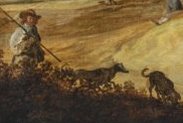
On the left of the painting, we see a well-dressed gentleman walking his dogs.  This is a self-portrait of van Goyen !

The owl
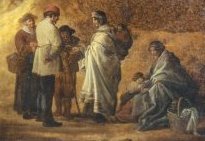
The Palm Reader

However, this is not simply a picturesque landscape scene.  It is in fact an allegorical one.  Van Goyen was a devout Christian who wanted to add a narrative to his painting.  We need to look closely at some of the details to discover what van Goyen was “saying”.   The red of the man’s beret symbolizes his inability to ignore superstition. The owl, perched in full daylight on a bare, dead branch of the oak tree, represents man’s blindness to chiromancy, the supposed prediction of a person’s future from interpreting the lines on the palms of their hands, in other words, palmistry which was a practice forbidden by the Church. Finally, the lightening evokes divine punishment. 
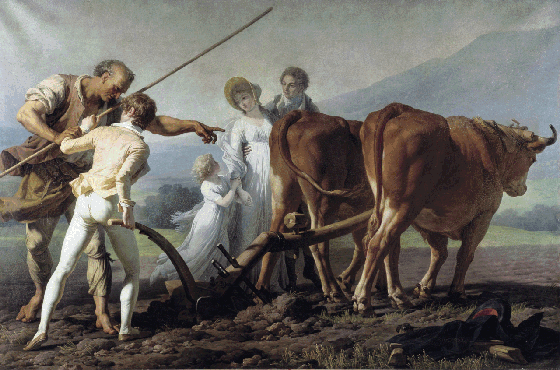
The Ploughing Lesson or The Agriculture Lesson or Agriculture by François-André Vincent

The next painting from the Lacour Wing of the museum which I am showcasing is The Ploughing Lesson by François-André Vincent, a French neoclassical painter.    He was the son of the miniaturist François-Elie Vincent and studied under Joseph-Marie Vien.  François-André Vincent was a pupil of École Royale des Éleves Protégés. From 1771 to 1775 he studied at the French Academy in Rome.
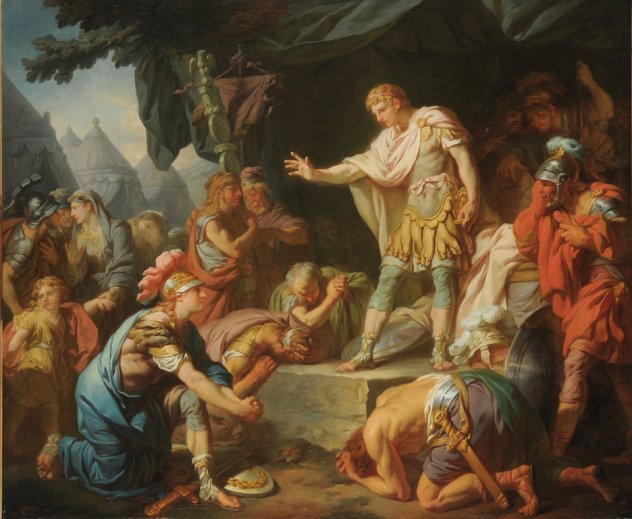
Germanicus Calms Sedition in his Camp by François-André Vincent (1768) Beaux-Arts Paris

He travelled to Rome after winning the Prix de Rome with his painting, Germanicus Calms Sedition in his Camp, in 1768, and it was then that he was installed at the Palais Mancini, where he painted numerous portraits, inspired by Jean-Honoré Fragonard’s style, who also was visiting Rome and Naples at the same time.  He was a leader of the neoclassical and historical movement in French art, along with his rival Jacques-Louis David, another pupil of Vien. He was influenced by the art of classical antiquity, by the masters of the Italian High Renaissance, especially Raphael. François-André Vincent was one of the principal innovators of the subjects and themes in French art of Neoclassical style and his works were of a high standard.

The Ploughing Lesson, a genre painting completed in 1798, also features a series of portrait paintings as members of a wealthy family observe their son’s lesson in ploughing, aligning with the belief that a knowledge of agriculture was of vital importance following the French Revolution. In the background we have depicted the Pyrenees mountains.  The painting was commissioned by the industrialist, financier and politician from Bordeaux and Toulouse, François-Bernard Boyer-Fonfrède. He was also an important patron of the arts who ran a cotton mill in Toulouse as well as a “Free School of Industry” for children from poor families who worked in the factory.  The painting was intended to be part of a series, illustrating the virtues and the foundations of a good education.  The painting was meant to depict that work in the fields was a noble occupation for children.  This bringing together of the bourgeoise and the peasant suggests an idyllic alliance of two opposing social classes.

The painting depicts a strong-bodied farmer explaining to his pupil, a boy from a good family with fine features, how to hold the plough as it is pulled by a pair of oxen.  Witnessing this lesson is the young man’s family. The painting was shown at the 1798 Paris Salon and was accompanied by a vignette:

“…Penetrated by the truth that agriculture is the basis of the prosperity of States, the painter has represented a father of a family who, accompanied by his wife and young daughter, comes to visit a ploughman in the middle of his work. He pays homage to him by attending the lesson he has asked him to give to his son, whose education he would consider imperfect without this knowledge. Note – Commerce and other interesting parts of education must form a sequel to this first table which, as well as this suite, are intended for citizen Boyer-Fonfrède, of Toulouse…”

Some art critics criticised the posture of the novice as being unseemly because the boy’s head is hidden, when by convention it should be turned towards the viewer.

The painting was acquired by the Musée des Beaux-Arts in Bordeaux in 1830.

……to be continued
Luca Signorelli. Part 3.

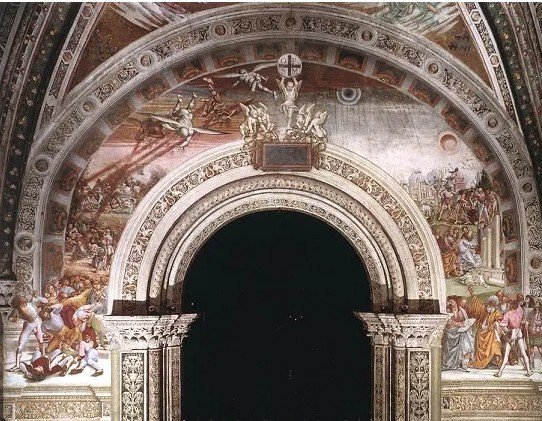
 Destruction of the World by Luca Signorelli

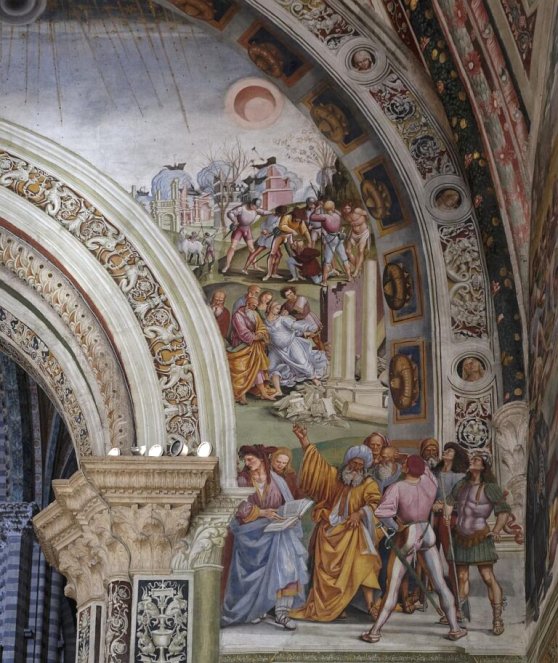
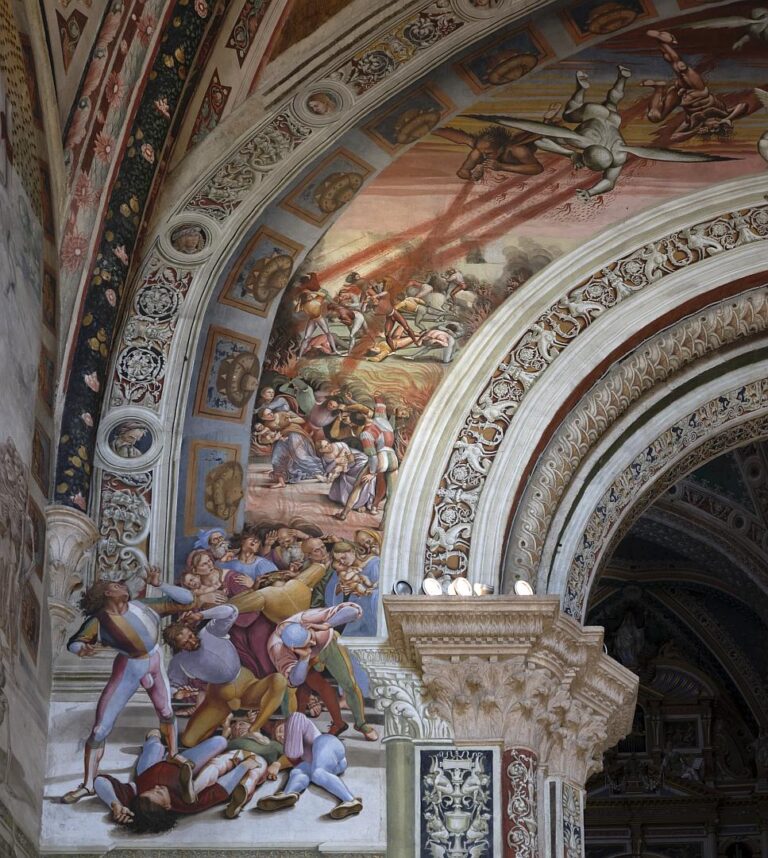
The events of the Apocalypse, in the form of the Destruction of the World, fill the space which surrounds the entrance into the large San Brizio chapel. These Apocalyptic frescos may not influence us now but one has to remember that at the beginning of the 16th century, at the time Signorelli was painting these masterpieces, life in Italy was much different in comparison to our lives now.  Italy was affected with not just wars but various diseases which killed many of its citizens and so, sudden and painful death was looked upon as a distinct possibility causing a sense of spiritual paranoid. This terrible Apocalyptic hysteria jumbled minds and instilled fear into many. Add to this the prophecies of Girolamo Savonarola, a charismatic Dominican friar, regarded as the Antichrist, with his hell-fire sermons and his warnings about the end of time and the great battle between the spiritual and the worldly which would usher in the Last Judgement.   According to the prediction in the Scriptures, the deeds of the Antichrist take place immediately before the end of the world.   Add to this the words of Mark (13:24-27) in the bible recalling the words of Jesus whilst teaching his disciples on the Mount of Olives:

“…But in those days, after that tribulation, the sun will be darkened, and the moon will not give its light, And the stars will be falling from heaven, and the powers in the heavens will be shaken.  And then they will see the Son of Man coming in clouds with great power and glory.  And then he will send out the angels and gather his elect from the four winds, from the ends of the earth to the ends of heaven…”

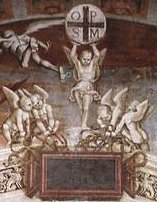
The position of this fresco is on the inner side of the Chapel portal.  On looking at the work, we are immediately aware of the drama depicted in the fresco.  The upper part depicts a group of cherubs that seem to blissfully wrestle with a ribbon plaque. At the centre stands a little winged creature holding high the herald of the ‘Opera del Duomo di Orvieto’ (O.P.S.M – the institution that promotes, manages and administers the work of the construction of the Cathedral).

Destruction of the World (detail) by Luca Signorelli

The depiction and narrative is divided on each side of the portal.  To the right is a portrayal of the early signs of the end of times. We can see that the moon is growing dark, the raining of stars and the eclipse. The sky is overcast and the earth trembles in fear. In the background we see stormy waves whipping up the sea and threatening to engulf humanity. Of the people depicted in this fresco, Signorelli divides them into three groups.  The group, on the right, consists of men and women shocked by the destruction of a marbled structure, maybe a temple.  They gaze in horror at the remains of the three truncated pillars and the pile of broken pieces of the columns lie at their feet.  In the foreground we observe the prophets and the philosophers who stand and study the devastation that lies before them in sombre trepidation.

Destruction of the World (detail) by Luca Signorelli

On the left of the portal, we see demons dance amongst the dangerous skies while disgorging floods of fire onto the pitiful survivors. These people under attack fall against each other like broken dolls. We see women with babies at their breasts screaming in pain whilst some men flee on horsebacks to escape the flames, but in vain.  Lower down this side of the fresco Signorelli has depicted individuals of all ages being attacked. The elderly, youths and children are all victims of these savage attacks.  We look at upturned faces, covered ears and fearful eyes which portray this terrible calamity which has befallen mankind

Signorelli had been commissioned originally to complete ceiling frescos that had been begun by Fra Angelico. The cathedral authorities had been so impressed by what he achieved with the vaulted ceiling that they decided to offer him a further commission to paint frescos on the seven side walls of the chapel.   

The Resurrection of the Flesh by Luca Signorelli

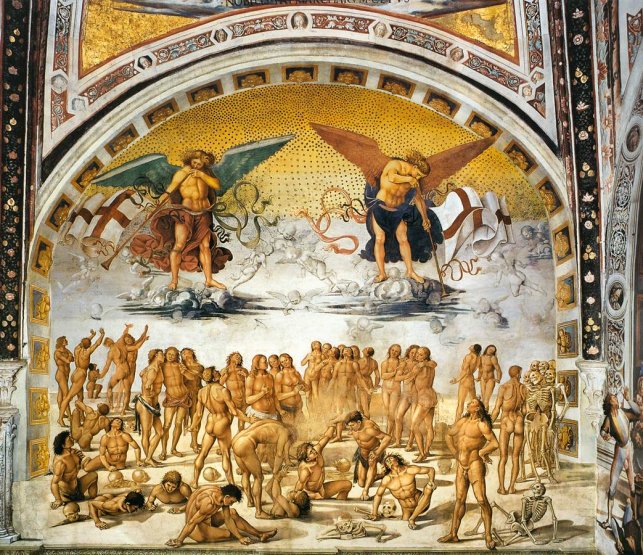
The next fresco in the series by Signorelli I am looking at is The Resurrection of the Flesh which is located in the first compartment on the right wall of the Chapel of San Brizio. This was another fresco depicting scenes from the end of time and illustrates the text found in the First Letter of Paul to the Corinthians (1 Cor. 15:51-52)

“…Behold! I tell you a mystery. We shall not all sleep, but we shall all be changed, in a moment, in the twinkling of an eye, at the last trumpet. For the trumpet will sound, and the dead will be raised imperishable, and we shall be changed…”

Signorelli was in his element with this work and his mastery of painting nude figures.   The great art historian Vasari wrote of this artistic ability of Signorelli stating:

“…true method of making nudes and how, though only with craft and difficulty, they can be caused to be alive…”

Of Signorelli, Bernard Berenson the American art historian who specialized in the Renaissance said that he was one of the greatest of modern illustrators, and thanks to which his art is still an extremely important part of our figurative heritage.

Resurrection of the Flesh (detail) by Luca Signorelli

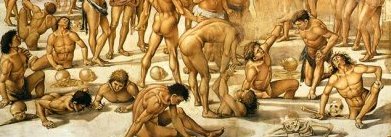
Viewed all together the huge frescoes in the Orvieto chapel give a feeling of overcrowding and of confusion which is far from being attractive, but we need to look closely at what is going on in the fresco.  Look closely at the details and then we begin to recognise the genius of the artist.  In the fresco, Resurrection of the Flesh, we observe the macabre but comical notion of the nude with his back to the observer who is carrying on a conversation with the skeletons.

We see skulls surfacing through the cracks in the ground, who then put on their bodies as though they were a costume, and become human beings once again. This fresco demonstrates Signorelli’s ability to depict naked bodies with all of their well-defined musclature.

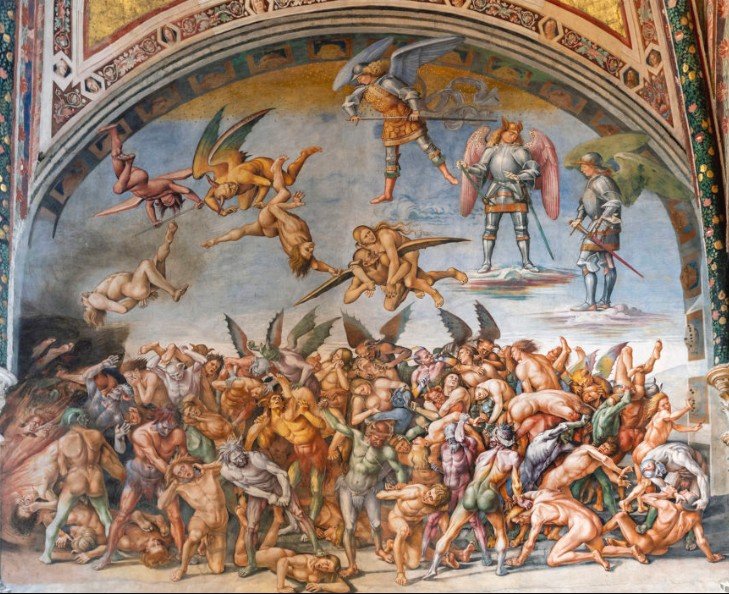
The Damned Cast into Hell by Luca Signorelli

The next fresco on the wall of the Chapel San Brizio is entitled The Damned Cast into Hell. It is located next to the altar wall.

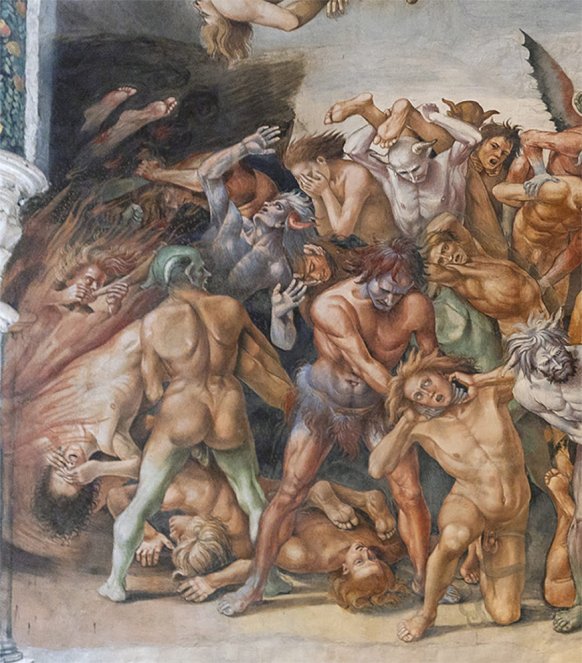
The Damned Cast into Hell (detail) by Luca Signorelli

Before us we have a “horror show” confronting the observer with men and women screaming, their nude bodies twisted in pain as they are tortured by gaudily coloured demons. The fresco represents one part of the End of Days narrative, when Christ returns to judge mankind, separating those who are destined to go to heaven designated the blessed from those who were to enter the fires of hell, designated the damned. The fresco depiction was based on the bible passage Gospel of Matthew (25:31-46), which describes the final day:

“…When the Son of Man comes in his glory, and all the angels with him, he will sit on his glorious throne.  All the nations will be gathered before him, and he will separate the people one from another as a shepherd separates the sheep from the goats.  He will put the sheep on his right and the goats on his left.  Then the King will say to those on his right, ‘Come, you who are blessed by my Father; take your inheritance, the kingdom prepared for you since the creation of the world.  For I was hungry and you gave me something to eat, I was thirsty and you gave me something to drink, I was a stranger and you invited me in,  I needed clothes and you clothed me, I was sick and you looked after me, I was in prison and you came to visit me…”

In The Damned Cast into Hell, we see naked bodies tumble, twist, and writhe as they are seized by demons depicted in unnatural, acidic colours.  The scene is both violent and chaotic, and yet, it is also amazingly structured, and every figure is anatomically precise a testament to Signorelli’s ability to portray nude figures.  Muscles strain and limbs extend and recoil. Pain is depicted as a physical condition, not just an abstract punishment. Signorelli was constantly attentive to how human figures moved under stress: fear, agony, desperation.  His figures are not emblematic dummies. They have a physicality and are clearly human.

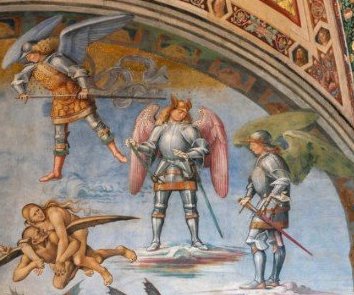
The Damned Cast into Hell (detail) by Luca Signorelli

Above the disturbing melee, below we see standing on small clouds, the three archangels, Michael, Gabriel, and Raphael.  The triumvirate are fully clad in suits of armour, drawing their swords ready to battle.

The Elect being called to Paradise by Luca Signorelli

The Elect being called to Paradise (detail) by Luca Signorelli

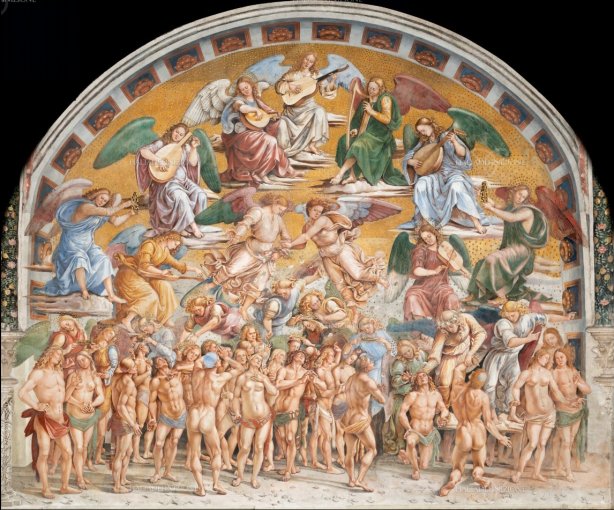
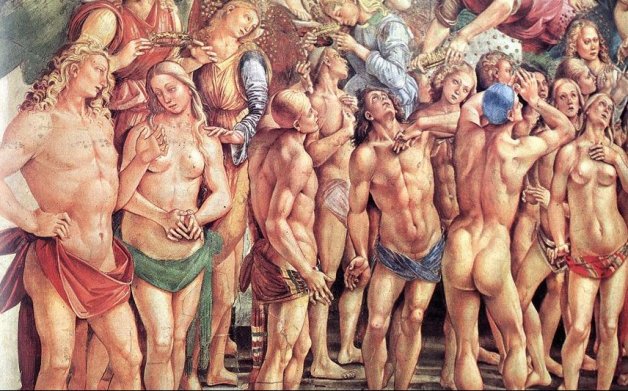
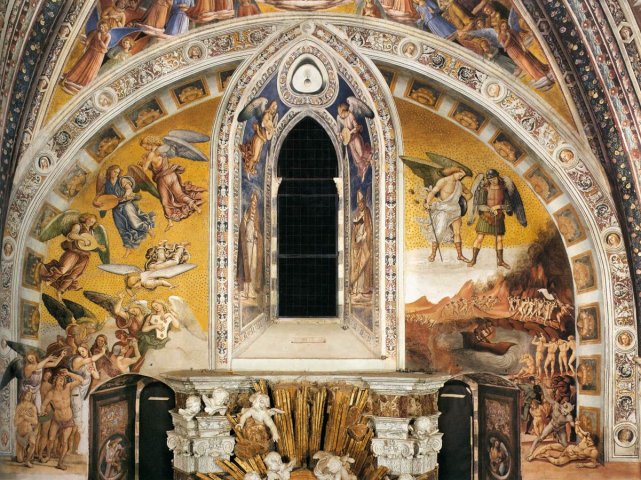
The last two frescos I am looking at are entitled The Elect being called to Paradise and The Damned The frescos cover the south wall pierced by three lancet windows. Within the embrasures of the windows are painted the angels and the saints namely St Brizio, St Constantius, Archangel Michael is shown crushing a demon and Archangel Raphael guiding Tobias.   Angels are seen guiding the chosen ones, the faithful, towards heaven. The golden skies radiate with glory while a choir of angels exalt with song and dance. The medieval musical instruments they play are both string and wind based. Once again the figures depicted in the fresco bear out the artist’s ability to portray the body of nude men and women.

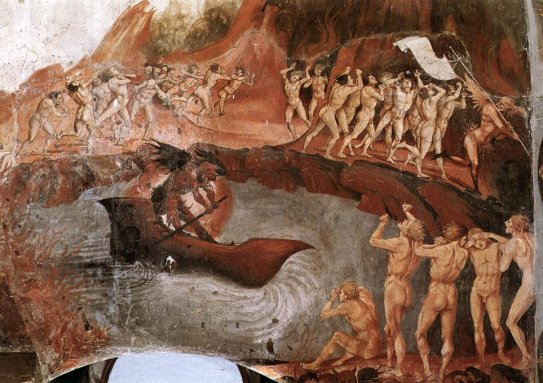
The Damned by Luca Signorelli

The Damned (detail) by Luca Signorelli

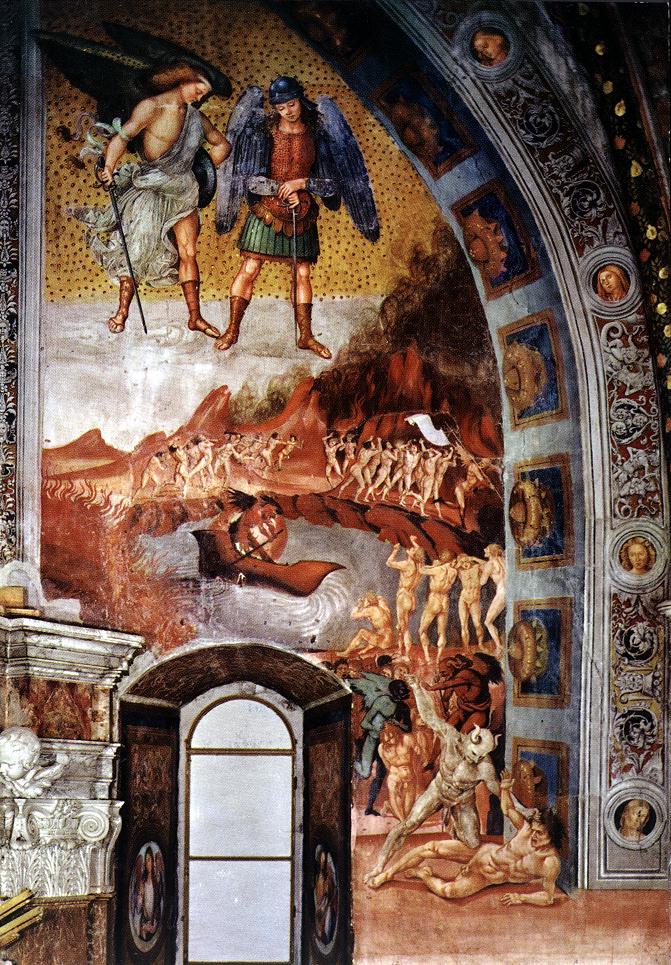
There is a striking contrast between The Elect being called to Paradise and the fresco entitled The Damned.  In the former the people were joyous having been selected to be taken to heaven by the angels.  In the latter the people who failed to pass the test to enter Heaven were consigned to Hell.  Gone has the joyful singing to be replaced by the shrieks of those condemned to the fires of Hell.  Two archangels, perched above the scene, look down and silently at the divine tragedy. The depiction is derived from Dante Alighieri’s Inferno part of his early fourteenth century narrative poem, Divine Comedy.  Above are fading golden skies and below we see the icy waters of the rivers Styx and Acheron. The two waterways divide the world of the living from the world of the dead with flaming fires roar along the boundaries. Those who have been damned desperately howl and scream at their past foolishness which has brought them to this point. As we look at the raging pit, we can see a demon running around it holding a white flag mocking the sinners.  A group of wailing sinners follow him as he leads them further along the road to Hell.

The Damned (detail) by Luca Signorelli

From Dante’s Inferno we recognise the famous ferryman Charon at the centre of this scene. As described in Dante’s poem, he is a spiteful winged demon. His role was to transport souls of the newly dead across the river into the underworld. The oar he holds was used to strike the stragglers.

In 1508 Pope Julius II summoned several artists to come to Rome, including Signorelli, Perugino, Pinturicchio, and Il Sodoma to paint the rooms he chose as his apartments in the Vatican Palace. Despite making a start on the commission, the Pope terminated their contract deciding that Raphael be solely in charge of the decorations. Luca Signorelli returned to Siena, but most of the rest of his life he lived in his hometown of Cortona. He became a highly respected citizen of the town, even entering the magistracy of the town as early as 1488 and holding a leading position by 1523, the year of his death.

Luca Signorelli. Part 2.

In this second part of the blog looking at the works of Luca Signorelli, I want to examine his frescos in the Chapel of St Brizio at the Cathedral of Orvieto which are considered to be his foremost masterpieces.

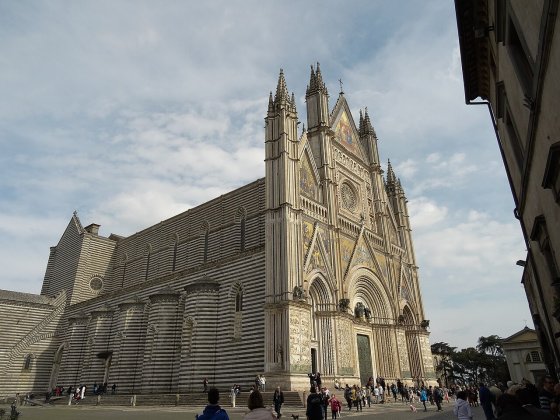
The cathedral basilica of Santa Maria Assunta, Ovierto.

The cathedral in Orvieto, the cathedral basilica of Santa Maria Assunta, began to be built in 1290 at the request of Pope Nicholas IV with the intention of creating a single large place of worship for the city to replace the two churches that pre-existed, the episcopal church of Santa Maria and the parish church of San Costanzo, both of which made way for the new cathedral. This change was part of a broader urban redevelopment project driven by the frequent presence of the papal court in the city, which required a grand church for papal ceremonies. The building of the main cathedral was considered architecturally completed in 1532.

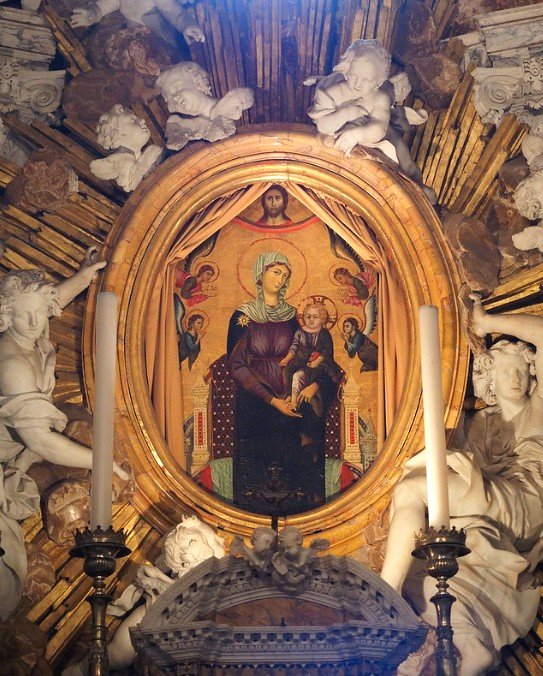
The Madonna di San Brizio altarpiece

In 1396, a century after construction began, Tommaso di Micheluccio from Orvieto left a legacy in his will to fund the construction of a chapel dedicated to the Assumption. This chapel was completed in 1444. Until 1622, the chapel was called La Cappella Nuova, as it was the last one to be built  after that of the La Cappella del Corporale (Corporal Chapel)  

La Cappella del Corporale (Corporal Chapel)  

Why was it named the Corporal Chapel? The corporal is an altar linen used in Christianity for the celebration of the Eucharist. It is a small square of white linen cloth, usually somewhat smaller than the width of the altar on which they are used, so that they can be placed flat on top of it when unfolded.  During the Liturgy of the Eucharist, various altar vessels are placed on the corporal, including the chalice, the paten, and the ciborium containing the smaller hosts for the Communion of the laity

In 1263, while a Bohemian priest was celebrating mass in Bolsena, drops of blood came down from the host and went to wet the corporal. Pope Urban IV, knowing of the miraculous episode, had the Holy Linen transported to the city of Orvieto, where, the following year, he instituted the feast of Corpus Christi.  Every year the city of Orvieto commemorates the miracle of Bolsena and the institution of the feast of Corpus Christi with the procession of the Sacred Corporal, accompanied by the parade of the historical procession in medieval costumes.

In 1622,  the venerated image of the Majesty of the Table was transferred to the Capella Nuova.  Legend had it that it was painted by St. Luke, but in reality the work is of the late thirteenth or early fourteenth century. This relic was also known as the “Madonna di San Brizio”, because in 1464 the image of the saint had been added next to the Virgin, then removed; it ended up giving its name to the entire chapel, La Cappella di San Brizio, known simply as San Brizio,

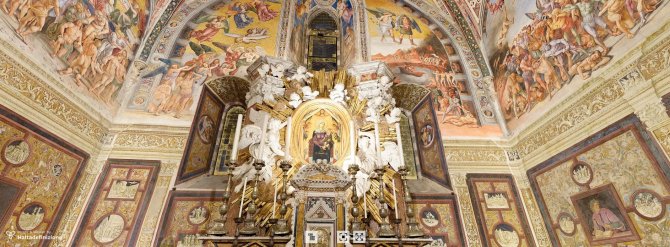
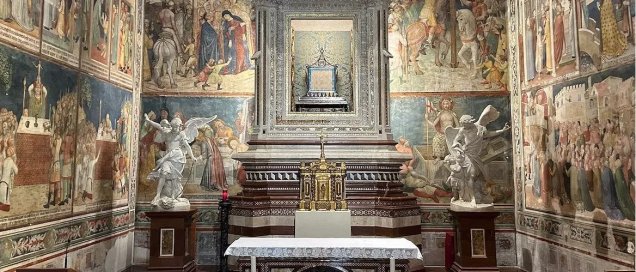
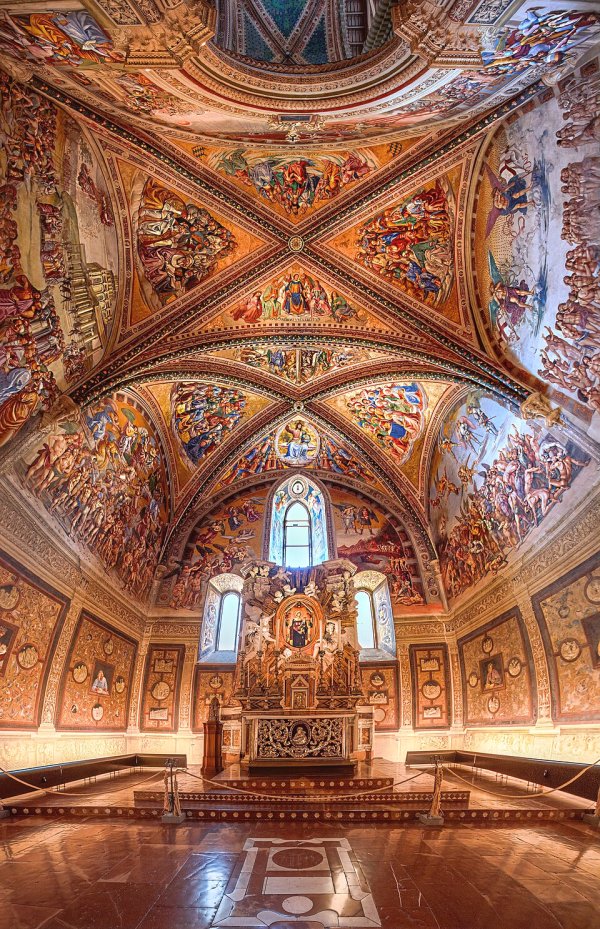
Chapel of San Brizio

The idea to add the Chapel of San Brizio onto the main building of the cathedral in 1396 was a way to expand the thirteenth-century building.  The actual extension was not completed until 1444.   Three years later, on June 14th, 1447, the Opera del Duomo signed a contract with Fra Angelico to paint frescos on the Chapel vault, on the theme of the Last Judgment.

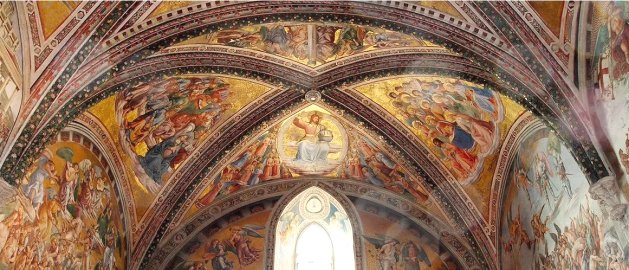
Frescoed vault by Giovanni da Fiesole known as Fra Angelico, Chapel of the Madonna di San Brizio, Cathedral of Orvieto. Italy

Fra Angelico and Benozzo Gozzoli began the decoration of the vault but only managed to complete the work on the ceiling depicting Heaven with the Saints, arranged in different ranks, surrounding Christ as the Judge sitting on a throne, before he was summoned to Rome by Pope Nicholas V to work on the Niccoline Chapel in the Apostolic Palace in the Vatican City. In 1449, work in the Orvieto Cathedral came to a halt. 

In 1489 Pietro Perugino, an Italian Renaissance painte, was approached to complete the work. However, he never began and for the next fifty years the decorations to the chapel were abandoned.  In April 1499 the cathedral authorities approached Luca Signorelli for him to complete the vault frescos which had now been untouched for fifty years following Fra Angelico’s departure.  Signorelli, along with his school of apprentices, assistants, and students, completed the frescos on the vault with scenes of the Choir of the Apostles, of the Doctors, of the Martyrs, Virgins and Patriarchs.

The vaulted ceiling

On completing the work on the vaulted ceiling, the cathedral board were so pleased with the results that in late 1499 they commissioned Signorelli to paint frescoes in the large lunettes of the walls of the chapel. He began in 1500 and the chapel frescos were completed in 1503. Art historians consider the frescoes in the chapel are the most complex and impressive works by Signorelli. As far as the subject matter, The Apocalypse, is concerned, it is one of the most important subjects of Christian iconography. It is likely that for the ceiling frescoes (the groups of Apostles, Angels, Prophets, Patriarchs, Doctors of the Church, Martyrs and Virgins) Signorelli simply completed the programme that had originally been devised by Fra Angelico. But the frescoes on the side walls, although the basic subject would have been planned in accordance with the Cathedral’s administrators and theologians, they are wholly the product of Signorelli’s fertile imagination. The side walls are covered with seven large scenes:

the Sermon and Deeds of the Antichrist,

the Destruction of the World,

the Resurrection of the Flesh,

the Damned,

the Elect,

the Paradise,

the Hell.

The works of Signorelli on the vaulted ceiling and on the upper walls represent the events surrounding the Apocalypse and the Last Judgment.

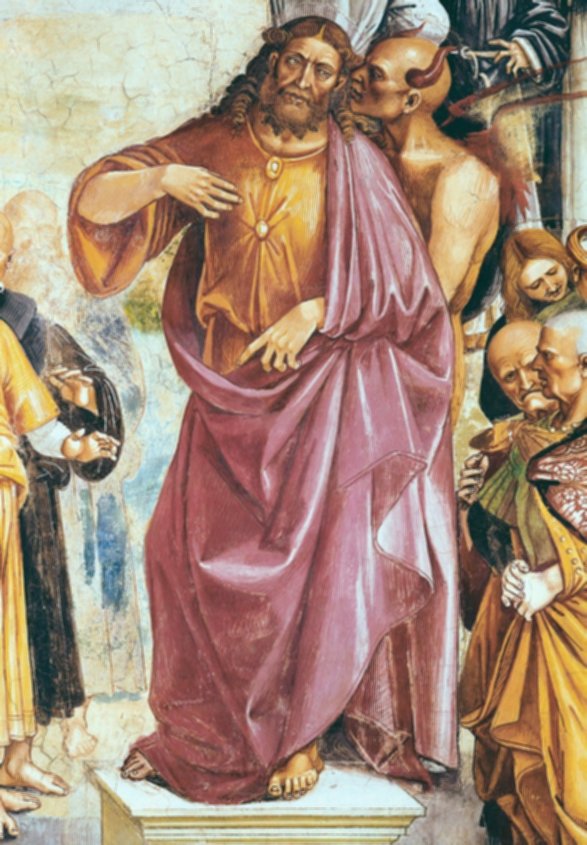
Sermon and Deeds of the Antichrist by Luca Signorelli (1500-04)

The Apocalyptic events he depicted began with the Sermon and Deeds of the Antichrist, and proceeded to Doomsday and The Resurrection of the Flesh. These frescos occupy three vast lunettes, each of them a single continuous narrative composition.  Signorelli began in 1499 and the chapel frescos were completed in 1503. Art historians consider the frescoes in the chapel are the most complex and impressive work by him.

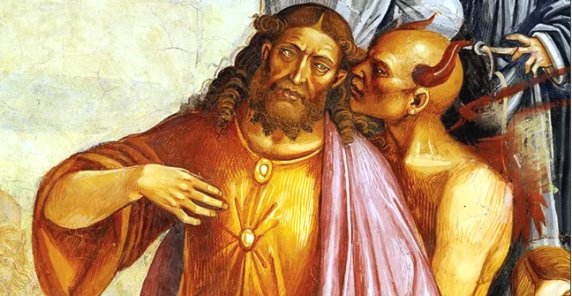
One such fresco focused on the Sermon and Deeds of the Antichrist. It is a vision of apocalyptic deception, mass manipulation, and spiritual warfare.  The Bible (Matthew 24: 23 – 25) recounts Jesus’ warning of false prophets:

“…Then if anyone says to you, ‘Look! Here is the Messiah!’ or ‘There he is!’ – do not believe it. For false Christ’s and false prophets will appear and produce great signs and omens, to lead astray, if possible, even the elect. See, I have told you ahead of time…”

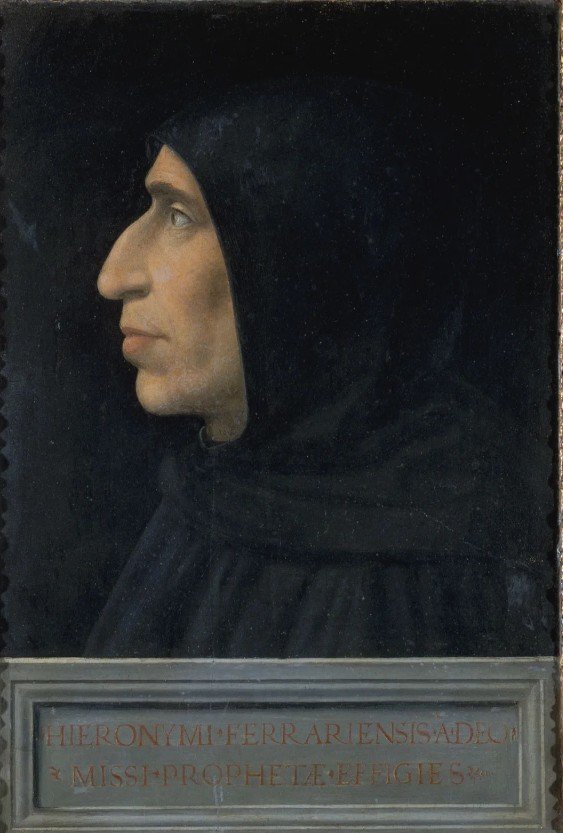
Fra Bartolomeo: portrait of Girolamo Savonarola

Many believe that Signorelli’s depiction could also have been a reference to Girolamo Savonarola, the notorious Italian Dominican friar and preacher. who was identified as a false prophet.  Savonarola was excommunicated for heresy and sedition and later hanged and burned at stake in Florence on May 23, 1498. Signorelli began the work just a year after the execution of Giralamo Savonarola.  It was at a time people were suffering tyrannical cruelty, resulting in many impoverished citizens were being exploited.  People were becoming obsessed with death, political turmoil, and the meaning of true righteousness.

At first glance, the fresco appears to depict a Christ-like figure giving a sermon to an entranced gathering. But this is not Christ the Messiah. It is the Antichrist whose motions mimic those of the real Christ as seen in traditional scenes of the Sermon on the Mount. However, we need to look closer at the scene.    Just behind the speaker’s ear a demonic figure whispers commands of what the Christ-like figure should say. The portrayal of evil here is not monstrous, it is eloquent. It is believable, and troublingly recognisable. A crowd gathers. For some the speech is fascinating and believable.  For others, it has caused great distress. It is this which reminds us that deception affects us differently depending on the thought process of each listener

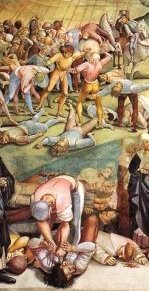
Scenes of violence

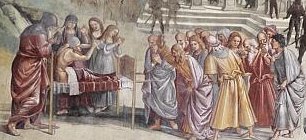
False raising of Lazarus

In the mid-ground, horrifying scenes unfold, acts of violence, manipulation, and miraculous deceptions, including a false Lazrus-like raising of the dead. In the sky we see the Archangel Michael is heading towards Earth to fight the Antichrist.

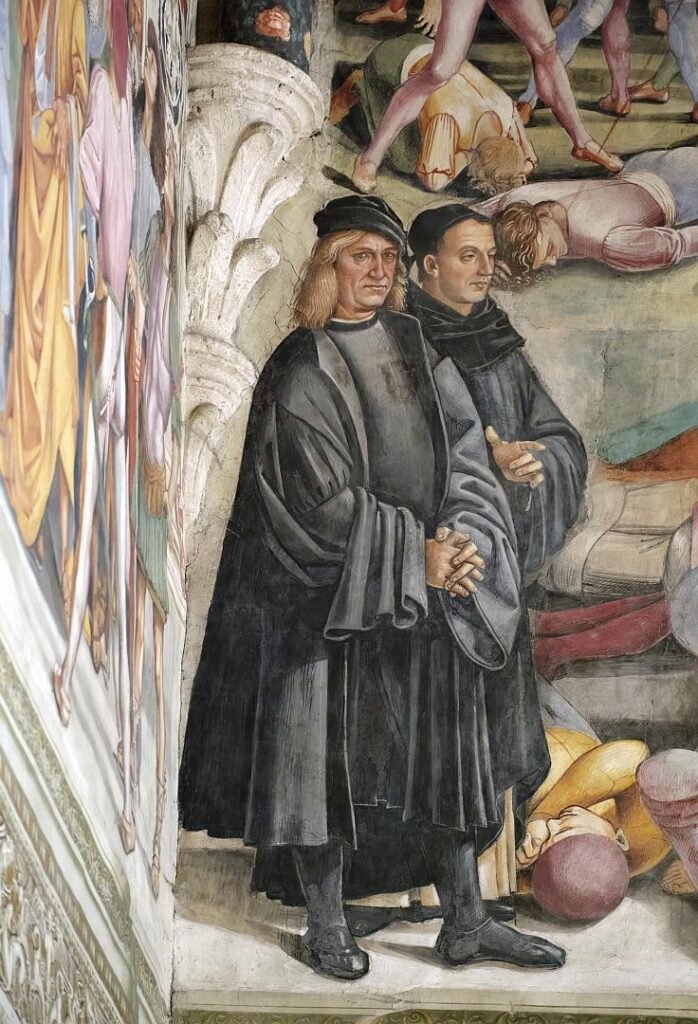
In the lower left corner there are two darkly clothed gentlemen; the man to the left is apparently a self-portrait of the artist, while the man to the right is thought to have been a portrait of Fra Angelico.

The Antichrist does not brandish a sword. He simply wields words, ideas, of how to mesmerise the crowd. The Antichrist mimics the divine and offers signs and wonders so as to best influence the senses of the onlookers so that it causes them to find a way to avoid truthful reality.  The depiction prophesises a warning that the art of twisting the truth becomes the most dangerous lie of all.

………………………..to be continued.


Much of the information was gained from Wikipedia plus a few excellent websites:

The Patroclus

Traveling in Tuscany

POTTYPADRE

Web Gallery of Art

Italian Renaissance Art

The Art Story

Duomo di Orvieto