
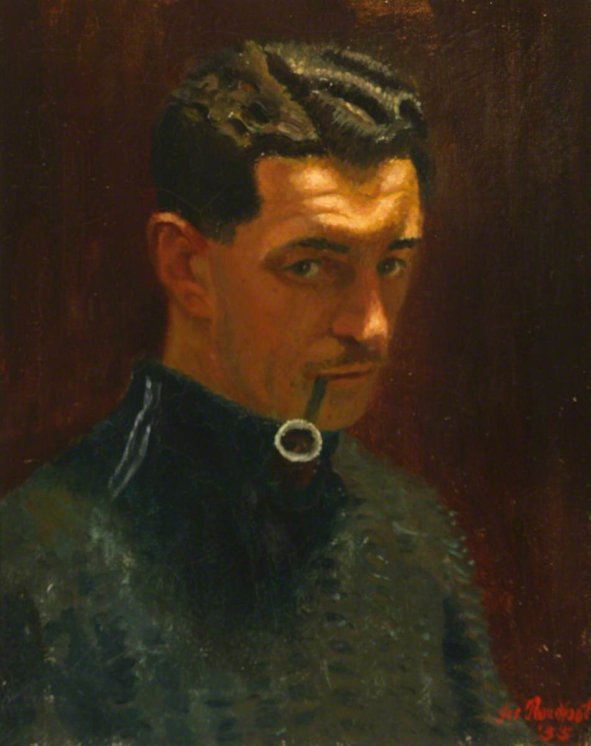
James Proudfoot self portrait
The artist I am looking at today is the Scottish-born painter James Proudfoot. Proudfoot was well-known for his beautifully crafted portraits of stage and screen actors and his haunting and wonderful landscapes and coastal scenes. He was born in the Scottish city of Perth on March 3rd 1908 and grew up in a modest household. There were no artists in his family. His father owned a carpet business in Perth.
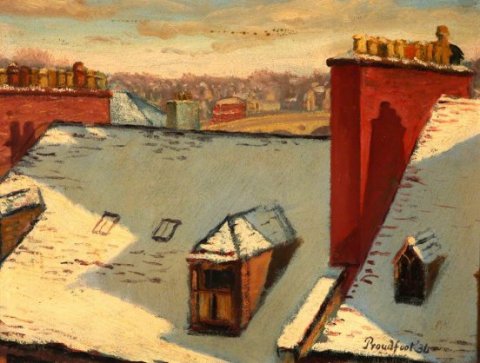
Perth Rooftops in Snow by James Proudfoot (1936)
Proudfoot attended local schools and completed his education at the Perth Academy, and it was whilst studying here that he developed an initial interest in art amid a general academic curriculum. After leaving Perth Academy he gained a place at St Andrews University. Once he had completed his degree course young James Proudfoot worked briefly at his father’s business.
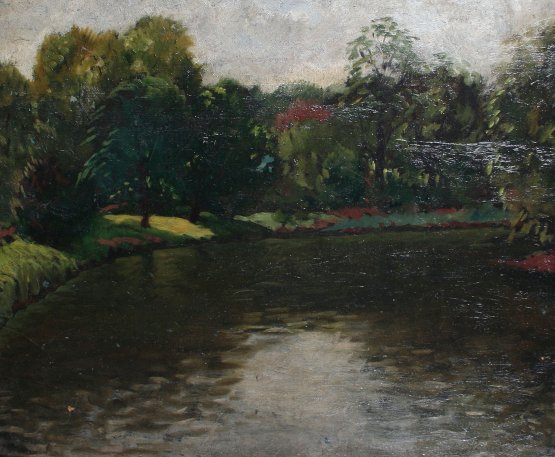
River Landscape with Trees by James Proudfoot (1938)
His childhood in Perth and the surrounding Scottish countryside, opened up an environment that would later influence his landscape paintings. After a short time working for his father in the early 1930s he wanted to increase his artistic knowledge and travelled to London where he studied at Heatherley School of Fine Art in London and Goldsmiths, University of London, where he enhanced his abilities as a portrait and landscape painter. Following the completion of his studies at Heatherley School of Fine Art and Goldsmiths College of Art in London during the early 1930s, James Proudfoot began exhibiting his work professionally, including submissions to the Royal Academy from 1933, when he focused on small-scale landscapes and portraits that demonstrated a powerful understanding of light and form.
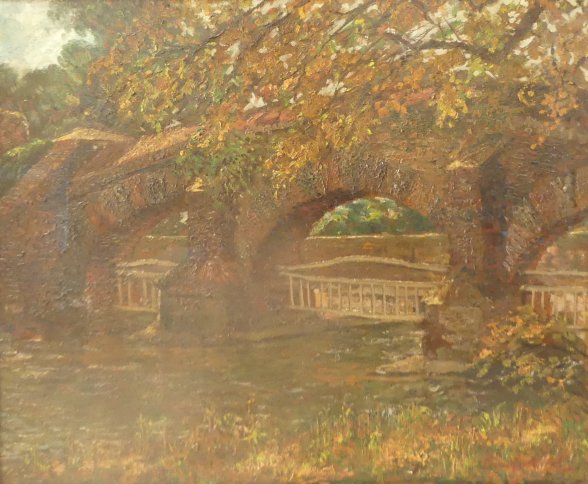
The Old Stone Bridge with river running underneath by James Proudfoot (1948)
His early works showed his artistic journey from the works of an academic student to more personal, more atmospheric compositions, which accentuated reminiscent depictions of everyday scenes which were emphasised by tonal harmony and structural detail.
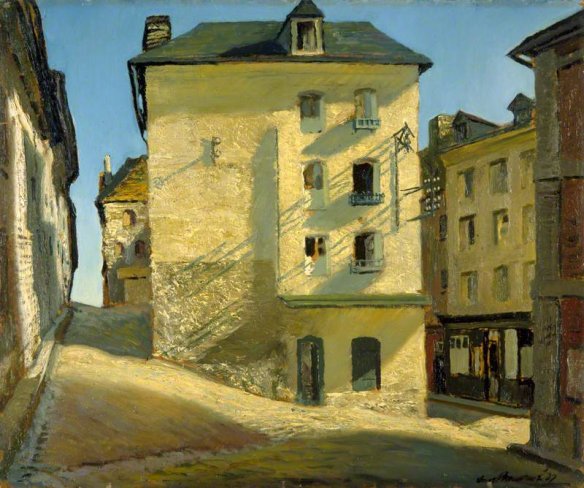
Sun on a House, Dieppe by James Proudfoot (1937)
James Proudfoot travelled through Europe during the inter-war period and particularly to France before World War II, and those visits conjured up a series of vibrant coastal and urban scenes and an introduction to brighter palettes and impressionistic touches to his style. One good example of this was his 1937 painting, Sun on a House, Dieppe, which epitomises this influence, as he depicts the sun beaming down on the facade of a house in the Normandy town of Dieppe using vivid yellows and blues that express the warmth of Mediterranean light. This and other works, which formed part of a loose series of Dieppe subjects from the late 1930s, underline Proudfoot’s captivation with how light transforms ordinary architecture, and by so doing, brings together Scottish precision with French colourism.
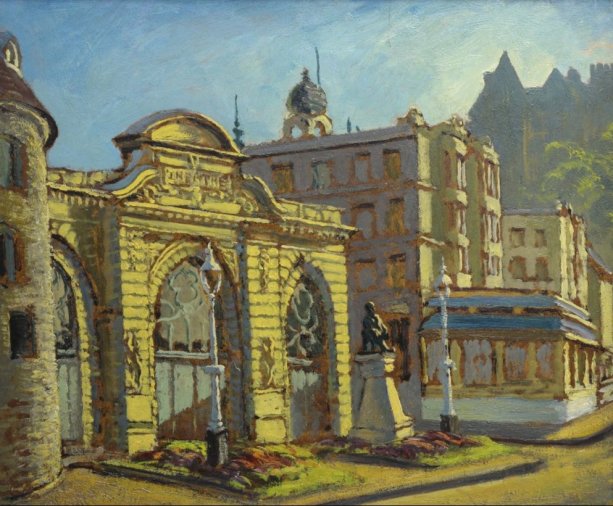
Dieppe Theatre by James Proudfoot (1937)
The influence of France on the development of Scottish art can never be overestimated. Proudfoot’s stylistic development was shaped by his Scottish roots and exposure to contemporary European movements, including impressionism from French artists and the bold colour palettes of Scottish contemporaries associated with the Glasgow Boys
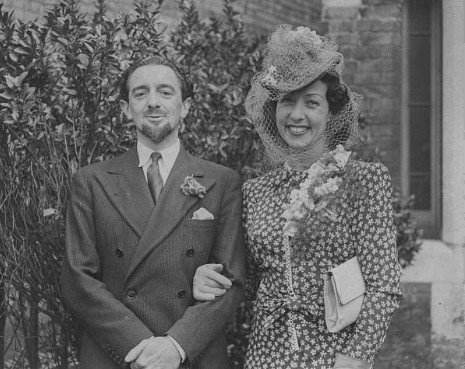
James Proudfoot and Ellen Pollock on their wedding day in 1945
On July 13th, 1945, at the Marlows Road Registry Office in London, James Proudfoot married the British actress Ellen Pollock a British character actress who mainly appeared on stage in London’s West End. She also appeared in several films and TV productions. This was Ellen’s second marriage. Her first marriage ended in 1944 with the death, during World War II, of her husband Captain Leslie Hancock, an English first-class cricketer and British Army officer.
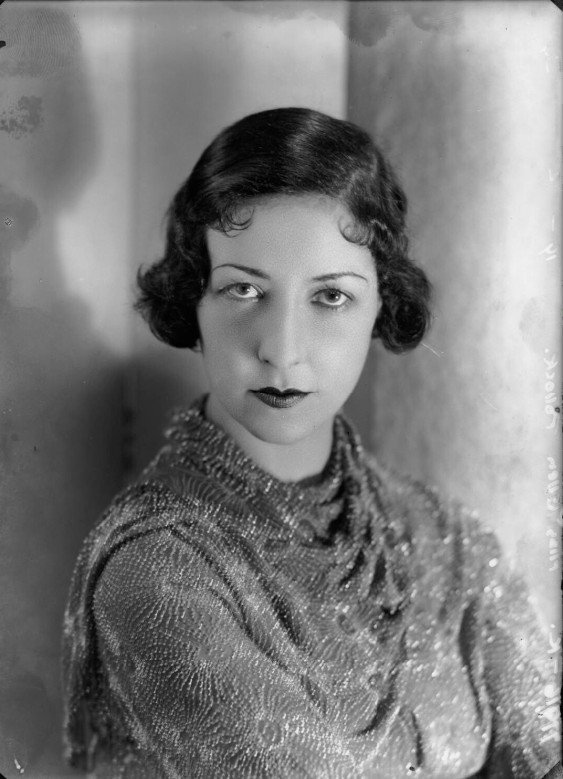
Ellen Pollock (Ellen Proudfoot) by Bassano Ltd
James and Ellen brought together two figures prominent in London’s cultural scene, with Pollock’s established career in theatre and film providing Proudfoot access to a dazzling network of performers, many of whom appeared in Proudfoot’s portraits.
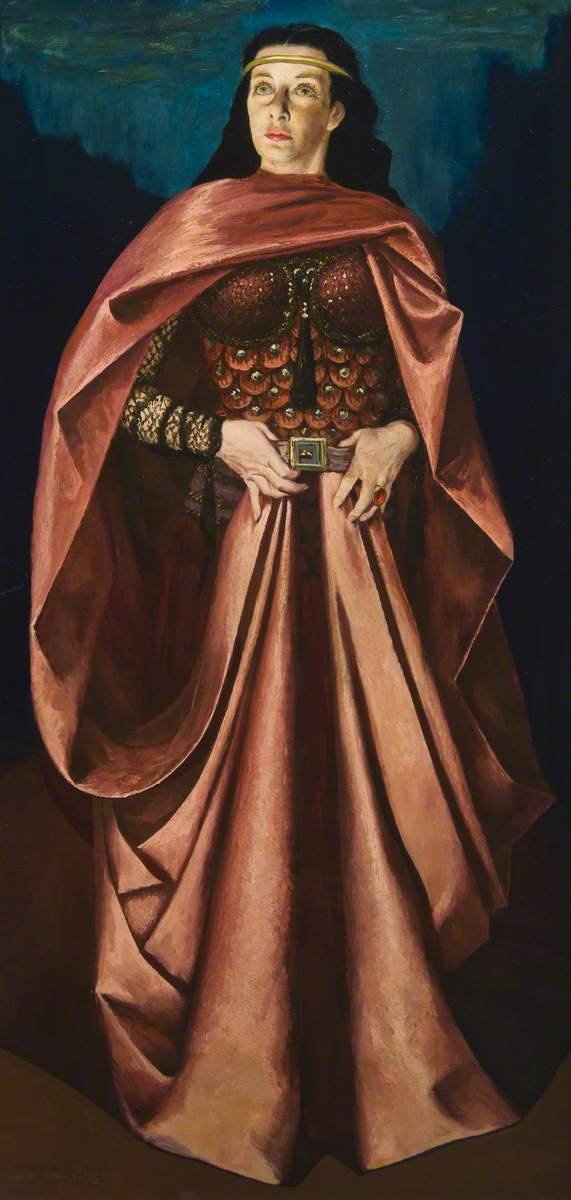
Ellen Pollock as Lady Macbeth by James Proudfoot
James Proudfoot captured Ellen Pollock in several paintings, including a 1953 painting depicting her as Lady Macbeth.
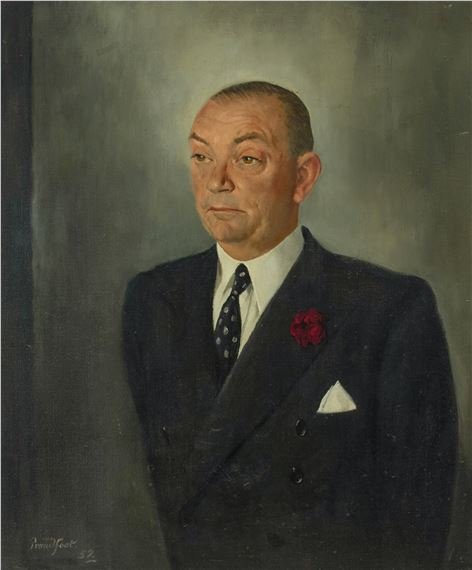
Noël Coward by James Proudfoot (1952)
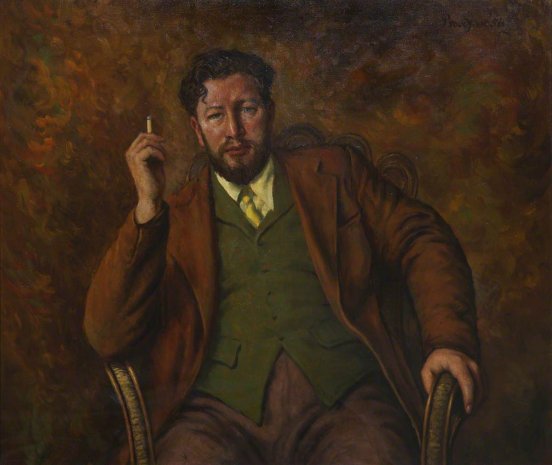
Peter Ustinov by James Proudfoot (1956)
During his artistic career James Proudfoot gained recognition for his ability to capture the likenesses of prominent cultural figures in his many portraits. Examples of his portraiture can be seen in his depiction of Noël Coward and Peter Ustinov. This portrait of Peter Ustinov received an honourable mention at the 1956 Paris Salon, recognizing its technical merit and lifelike depiction among international entries.
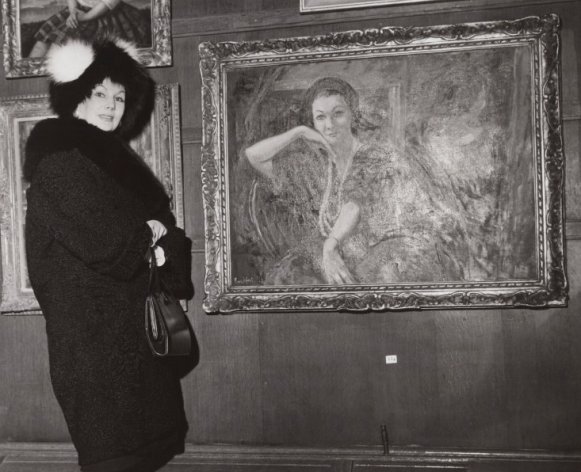
Barbara Gioalen standing next to James Proudfoot’s portrait of her.
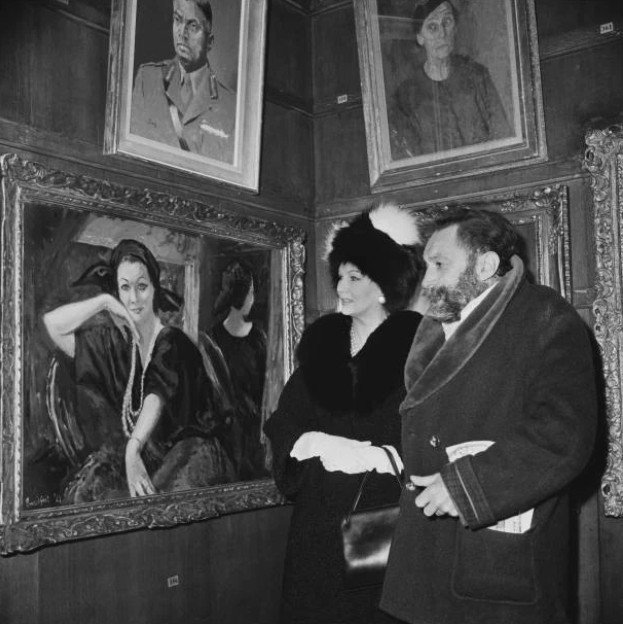
Barbara Goalen with James Proudfoot looking at his portrait of her (1956)
Barbara Goalen was a British model who came to international prominence between 1945 and 1954, then gave up her career at the height of her success. Described as “the most photographed woman in Britain” and “arguably the first British supermodel”, she epitomised post-war glamour and modelled for both Dior and Balenciaga.
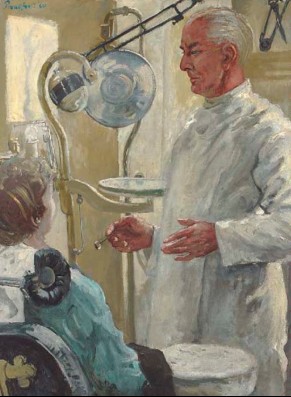
The Dentist’s Chair by James Proudfoot (1960)
James Proudfoot had lived in Chelsea, London since 1937, where he established his professional base as a painter and remained there until his death in 1971. He maintained a studio in Chelsea, and integrated into the city’s vibrant art scene through regular exhibitions at institutions such as the Royal Academy, the New English Art Club, and the Royal Scottish Academy.
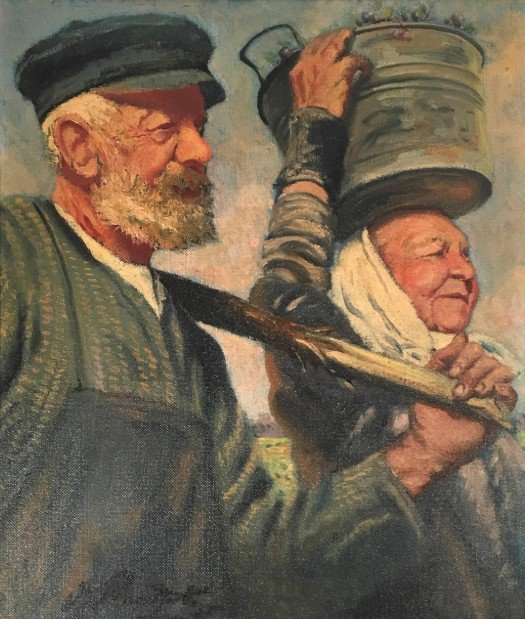
Two Grape Farmers by James Proudfoot
During his latter days, Proudfoot’s artwork never changed despite his age and post-war conditions. He managed to sustain a balance between carrying out lucrative commissioned portraits of prominent figures and personal landscape paintings that reflected his various “voyages” of discovery. His daily life revolved around his marriage to actress Ellen Pollock, which connected him to London’s theatrical circles.
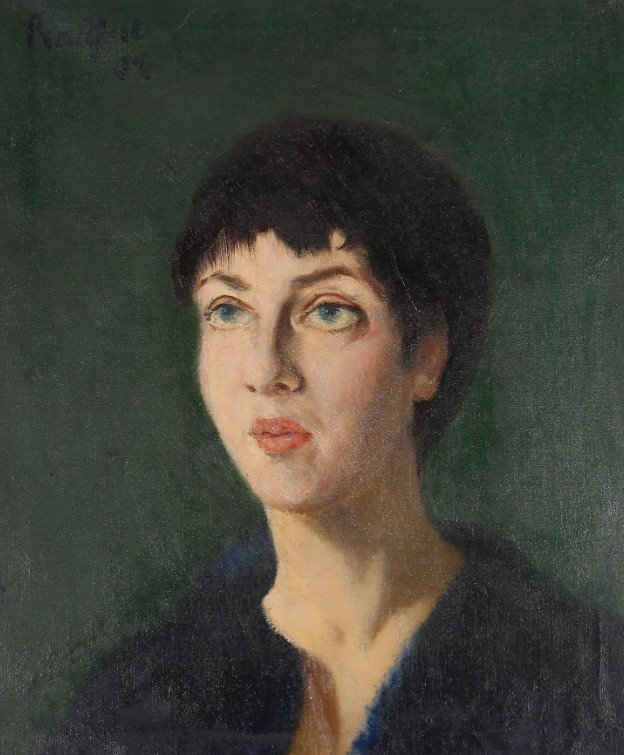
Pale Blue Eyes by James Proudfoot
The artwork of James Proudfoot’s were exhibited primarily through group shows in prominent British institutions during his active years in London from the 1940s to the 1970s. He participated in exhibitions at the Royal Academy of Arts, the New English Art Club, the Royal Scottish Academy, and the Royal Society of Portrait Painters although there are no records of major solo exhibitions in London or elsewhere during his lifetime, Several of Proudfoot’s paintings are held in UK public collections today. Perth Art Gallery houses the largest grouping of his work.
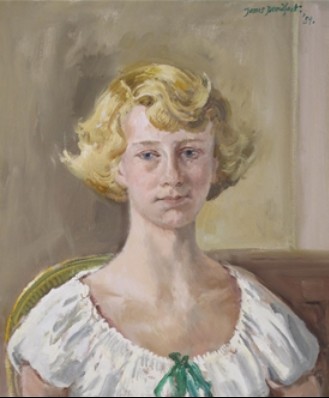
Portrait of a Young Lady by James Proudfoot
James Proudfoot’s work received positive contemporary attention for both his portraits and landscapes, highlighting his skill in capturing realism and atmospheric effects. He remains relatively obscure today compared to contemporaries like Lucian Freud, who gained greater prominence in British figurative art.
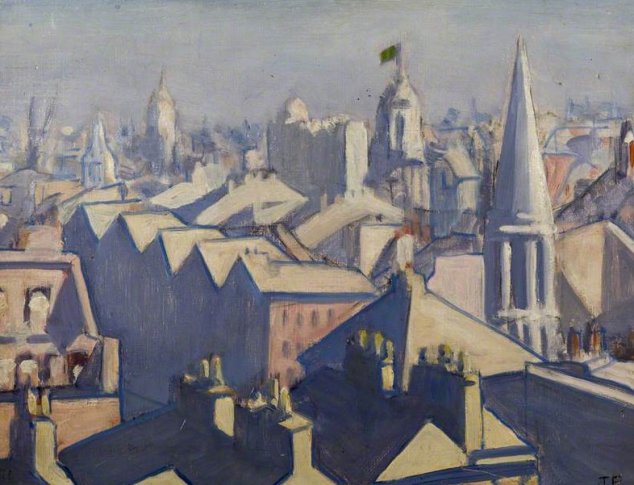
A London Skyline by James Proudfoot
Proudfoot’s influence on mid-20th-century British figurative painting is evident through his membership in key institutions like the New English Art Club (NEAC), where he exhibited works emphasizing observational accuracy and narrative depth, helping sustain resistance to modernist trends among younger artists. Recent reassessments have positioned Proudfoot as an underrecognized Scottish painter,
James Proudfoot died in London on July 15th, 1971, aged 63.
Most of the information for this blog came from

