The artist I am looking at today was one of the leading French painters of the nineteenth century. He was a colossal figure in 19th-century French art, a painter whose career managed to tie together the past academic traditions with the proliferating trends of modernism. Let me introduce you to Léon Joseph Florentin Bonnat.
Madame Bonnat, mère de l’artiste by Léon Bonnat
Bonnat was born in Bayonne, in the French Basque Country in the far southwestern corner of France, close to the Spanish border, on June 20th1833. He is remembered for his forceful, expressive and emotional portraits and yet he also made his name as talented history and religious painter, and an influential educator, who also built up a great personal art collection.
Portrait of Madame Melida, sister of Léon Bonnat by Léon Bonnat
In 1846. his family moved from France to Spain and went to live in the city of Madrid where his father took over the running of a bookshop. For thirteen years old Léon, who had developed a love of art this move was opportune. In the Spanish capital, Bonnat received his foundational art education, studying under the tutelage of José de Madrazo y Agudo one of the primary exponents of the Neoclassical style in Spain. He was also the patriarch of a family of artists that included his sons Federico and Luis; and his grandsons, Raimundo and Ricardo. Federico de Madrazo y Kuntz, and his father were leading figures in Spanish academic art, and Federico was a renowned portraitist.
The Artist’s Sister by Léon Bonnat
Bonnat began his artistic education at the Academia Real de las Bellas Artes de San Fernando, in the studio of Federico Madrazo. Studying under Federico de Madrazo, he was plunged into the rich artistic heritage of Spain and he spent numerous hours in the Prado Museum, copying the works of Spanish Golden Age masters such as Diego Velázquez, Jusepe de Ribera, Francisco de Zurbarán, and Francisco Goya. These painters and their artworks had a great influence on Bonnat through their profound realism, dramatic use of chiaroscuro and the dignified way they depicted their subjects and their styles left an indelible mark on Bonnat’s developing style. Their portraits often used sombre palettes and this textural richness of Spanish art resonated deeply with him, and this style provided a contrast to the often more refined idealized French academic tradition that he would come across in his later years.
Job by Léon Bonnat (1880)
Léon’s father died in 1853 and Léon and his family moved back to France and their hometown of Bayonne. Now back “home” Léon continued his art studies at the Ecole de Dessin de Bayonne, where one of his tutors was Bernard-Romain Julien, a French printmaker, lithographer, painter and draughtsman. In 1854, with a stipend of 1500 francs from the city of Bayonne, Bonnat left Bayonne and travelled north to the French capital. His move to the French capital and the tuition costs were partly funded by the City of Bayonne. Having attained a strong foundation from his training in Madrid, Bonnat was able to enter the well-respected Ecole des Beaux-Arts. There, where he studied in the atelier of Léon Cogniet, a much admired historical and portrait painter. Cogniet’s studio was known for its demanding academic training, with great emphasis on students’ ability, emphasizing their drawing, and composition skills. The students would also spend time studying the works of the old Masters. For a time whilst in Paris Bonnat briefly studied with Paul Delaroche, another prominent academic painter.
The Good Samaritan by Léon Bonnat
Adam and Eve Finding the Body of Abelby Léon Bonnat
Now in Paris, Bonnat began to create his reputation as an up-and-coming artist. In 1857, for the first time, he submitted paintings to the Paris Salon with works such as The Good Samaritan and Adam and Eve Finding the Body of Abel which demonstrated his skill in depicting religious and historical subjects, which confirmed the influence of his Spanish and Italian studies.
Villa Medici, Rome.
In 1857, whilst studying at the École des Beaux-Arts, Bonnat competed for the prestigious Prix de Rome in Painting, The Prix de Rome in Painting was one of the most prestigious awards in the field of fine arts. It was created in 1663, and this annual competition was organized by the Académie royale de peinture et de sculpture (Royal Academy of Painting and Sculpture) in Paris. Each year the winners of the Prix de Rome were sent to the Villa Medici in Rome to perfect their artistic training for a number of years. The prize awarded to the winner was a scholarship that allowed promising artists to study cost-free in Rome. It was the goal of every early-career artist to win the award. By rewarding talented young artists with a scholarship and a chance to stay at the Villa Medici in Rome, it was also seen as a way in which it helped to promote academic art and encourage artists to hone their skills. Bonnat, after two failures in 1854 and 1855 had made another attempt to win the prize in 1857.
The Resurrection of Lazarusby Léon Bonnat (1857)
Each year, entrants were given a subject to focus on and then present their submission in front of a demanding jury. This fierce competition encouraged artists to push their limits and express all their creativity. The year, 1857, Bonnat attempted to win the award the subject matter chosen by the organisers was Lazarus. Léon Bonnat submitted his work entitled The Resurrection of Lazarus and he was awarded the second prize, which unfortunately did not include the full French state scholarship.
Lazarus Raised from the Deadby Charles Sellier
The winner of that year’s prize was the French painter who specialized in mythological and historical subjects, Charles Sellier with his painting, Lazarus Raised from the Dead.
Portrait of Léon Bonnat byEdgar Degas
Bonnat was pleased to receive the second-place award but disappointed that his prize did not allow him a three-year all expenses paid stay at the Villa Medici which was only awarded to the winner of the competition. However, thanks to the financial assistance of a further 1500 francs granted to him by the city of Bayonne, as well as money raised by some of the town’s wealthy citizens including the Personnaz family, a wealthy Jewish family of fabric exporters, he was able to spend the next three years in Rome, where he was able to study the works of the great Italian Masters, particularly the works of Raphael, Titian, and Michelangelo, as well as the powerful naturalism of Caravaggio. During his stay in Rome, he also became friends with Edgar Degas, Gustave Moreau, Jean-Jacques Henner, and the sculptor Henri Chapu.
St Vincent de Paul Taking the Place of a Galley Slave by Léon Bonnat (1865)
Bonnat remained in the Italian capital from 1858 until 1861. Bonnat’s early paintings, such as his 1865 St Vincent de Paul Taking the Place of a Galley Slave were renowned for their dramatic intensity and his religious works of that time strengthened his reputation in this genre. This painting was based on a part of Vincent;s life. Vincent de Paul was an Occitan French Catholic priest who dedicated himself to serving the poor and became Chaplain-General of the Galleys in 1619, while working for the General of the Galleys of France, Philippe-Emmanuel de Gondi. This position took him to the port of Marseilles in 1622. When not at sea, the galley slaves, or galères, would spend their time in a squalid prison in the fortified port’s prison. Vincent was horrified at the state of the prisoners and their environs and complained to his patron M. Gondi that such a situation could not continue if France was truly a Christian kingdom. Vincent began ministering to the galley slaves, providing aid to the Catholic prisoners, as well as to the enslaved Muslims and Protestants. At the same time, he instituted important reforms in relation to how these men were treated, regardless of their faith, and set about building a hospital in Marseilles to treat the galley slaves. Due to a lack of steady funding, the General Hospital of Galley Slaves, as it would eventually be called, was not finished until 1646.
Because of Léon’s artistic prowess and being looked upon as a leading academic artist, he was often asked to act as a juror for the annual Salon exhibitions, and in 1867, he was his nominated to the Legion of Honor.
…….to be continued.
Most of the information for these blogs about Léon Bonnat came from Wikpedia and these blogs:
Bronze Bust of Mantegnaattributed to Gian Marco Cavalli
The artist I am featuring today is the fifteenth century painter, Andrea Mantegna, who created many magnificent religious works. Andrea Mantegna was born into a lower working-class family in late 1490 or early 1491 in Isola di Carturo a small village close to Padua which was then within the Republic of Venice. His father, Biagio, was a carpenter. When he was eleven years of age he started an apprenticeship with Francesco Squarcione, an Italian painter from Padua. His school was very popular at the time and over a hundred painters passed through the school. Padua, then, was looked upon as a great place to be if you were and aspiring artist and the likes of Uccello, Lippi and Donatello spent time in the city. Mantegna, who was gifted with a precocious talent, stayed with his tutor for six years.
Although he gained a great reputation as an artist and was admired by many, he left Padua and spent most of his life in Verona, Mantua and Rome where he carried on with his paintings. In 1460 he entered the service of Ludovico Il Gonzaga the Marquis of Mantua as his court artist. This engagement earned Mantegna a great deal of money which was a sign of the high regard in which his work was held. Whilst employed by Gonzaga he completed many fresco paintings of the Gonzaga family.
St Luke Polyptych by Andrea Montagne (1453-1454)
One of his early works was the St Luke polyptych which he completed as the altarpiece for a Benedictine Abbey of Santa Giustina in Padua.
Saint Justina
Santa Giustina (St. Justina) is depicted at the lower level of the altarpiece at the far right. She is identified by the palm branch (a symbol of martyrdom) and the short sword in her breast which refers to her martyrdom in Padua in AD 303, during the persecutions of the Christians by the Roman Emperor Maximian.
Saint Luke (detail from Polyptych of St Luke by Mantegna)
In the central panel of the polyptych we see St. Luke depicted writing his gospel. Although many depictions of the saint feature an ox or calf, they are absent but in keeping faith with the fact this is an altarpiece for a Benedictine abbey, Mantegna has provided Luke him with a monk’s tonsure.
Man of Sorrows (detail from Polyptych of St Luke by Mantegna)
Above St. Luke, we see two saints either side of an image of the Man of Sorrows. This is an iconic religious image that shows Christ, usually naked above the waist, with the wounds of his Passion prominently displayed on his hands and side.
St. Julian the Hospitaller (detail from Polyptych of St Luke by Mantegna)
The panel to the far right of that portrays St. Julian the Hospitaller, a Roman Catholic saint, depicted as a young nobleman. As in many depictions of this saint, he is holding a wrapped sword, held downward. In his left hand he holds a palm branch symbolising martyrdom.
St. Prosdocimus (detail from Polyptych of St Luke by Mantegna)
To the left of St. Luke there is a portrait of St. Prosdocimus. In one hand he holds the bishop’s crosier, which is an ecclesiastical ornament which is conferred on bishops at their consecration.
Other members of the deity depicted in the altarpiece are St. Jerome whose left hand points to his breast and his right holds a stone, which refers to the penances he endured to rid himself of shocking thoughts. We see him depicted in his usual red robes. Two other figures in the lower tier are dressed in the brown Benedictine monk’s habits, each hold the martyrdom symbol of a palm branch.
Polyptych of Saint Zeno by Mantegna(1457-60)
Another beautiful altarpiece fashioned by Mantegna was a commission he received from the abbot of the Basilica of San Zeno, Gregorio Correr.
Central panel of the San Zeno polyptych
It comprises of three main painting above a predella comprising of three almost square scenes. The central panel of the San Zeno Altarpiece depicts the Madonna holding her Child and surrounded by music-making angels. She is seated on a marble throne decorated with Roman-inspired reliefs. Hanging across the top of the three main paintings are garlands that appear to be affixed to the top of them.
Left-hand panel depicting Saints Peter and Paul, St John the Evangelist and St Zeno.
To the left and right of this main panel there are portraits of eight saints. The saints to be included in these two paintings was the choice of the commissioning abbot. On the left are Peter, Paul, John the Evangelist and Zeno; on the right, Benedict, Lawrence, Gregory and John the Baptist.
Right-hand panel depicting Saints Benedict, Lawrence, Gregory and John the Baptist.
The predella
The three paintings of the predella depict biblical scenes. Presently, the three paintings on the predella are not the originals which were taken by Napoleon in 1797 along with the main picture which was restored to Verona in 1815. The original outer two predella paintings are now in Tours, Musée des Beaux-Arts and the centre one is in the Louvre.
The Agony in the Garden
The left-hand panel depicts the Agony in the Garden. The setting is Gethsemane and we see an angel floating high above with the cup that symbolizes the inexorable fate reserved for Christ. Beyond the dead tree Mantegna has attempt to depict Jerusalem in accurate detail. A winding road leads through a rural scene with unrepaired boundary walls to the main gate. The central temple towering over the rest of the buildings was modelled on the Omar Mosque, which in the Middle Ages was often taken for Solomon’s Temple.
The Crucifixion
The middle painting depicts the Crucifixion. The setting is a cracked rocky plateau on Golgotha. The place of execution is marked by holes in the rock, that had already been used for other crosses. At the foot of Christ’s cross lies the skull of Adam, the first man. According to legend, Adam’s grave was at Calvary and was exposed by the earthquake when Christ died.
The Resurrection
The panel on the right of the predella depicts the Resurrection. In the centre of this painting, the bright apparition of Christ stands out, emphasized by the darkness of the rocky grotto. The faces of the guards show a range of reactions to the miracle of the Resurrection, from a still sleepy figure gazing in front of him to a soldier rising to his feet in amazement.
The Uffizi Triptych by Andrea Mantegna (1460-1470)
The Adoration of the Magi known as the Triptych of the Uffizi, is a tempera painting on wood by Andrea Mantegna, completed around 1460 and is now part of the Uffizi collection in Florence. One of the questions regarding this triptych is whether it is one! The work is composed of three panels which only came together in 1827. The fact that they then became encased in a nineteenth century ornate frame does not make them part of a triptych and some art historians doubt that Mantegna created them as a triptych or envisaged them to be set up as one in the way they are now arranged. The three works were commissioned in the for Ludovico III Gonzaga’s private chapel in the Castle of St. George in Mantua.
Ascension of Christ (Detail of the Uffizi Triptych by Mantegna)
The left hand panel of the triptych, known as the Ascension panel, we see a number of saints, gazing upwards at Christ as he floats skywards surrounded by a mandorla of angels. Immediately below Christ stands Mary, who faces towards us in the lower section of the panting, slightly raised on a ledge of rock.
Adoration of the Magi (detail of the Uffizi Triptych by Mantegna)
The central panel of the triptych is the Adoration of the Magi. The three Magi symbolize both the three ages of man and also the three continents which were known at that time, Asia, Europe, and Africa. The adherents of different cultures among the followers of the kings are depicted realistically – they were familiar because of the activities of cosmopolitan Venice, a major trading centre and slave market. Once again we see the mandorla of angels around the Virgin Mary. Mandorla is an Italian word for almonds or almond shaped. It is a term often used in Christian art when describing an aureole enclosing figures such as Jesus Christ or the Virgin Mary
The Circumcision (detail of The Uffizi Triptych by Mantegna)
The panel on the right depicts the Circumcision of Christ on New Year’s Day, eight days after he was born as was written in the bible (Luke 2:21-24):
“… On the eighth day, when it was time to circumcise the child, he was named Jesus, the name the angel had given him before he was conceived. When the time came for the purification rites required by the Law of Moses, Joseph and Mary took him to Jerusalem to present him to the Lord (as it is written in the Law of the Lord, “Every firstborn male is to be consecrated to the Lord and to offer a sacrifice in keeping with what is said in the Law of the Lord: “a pair of doves or two young pigeons…”
On the left of the painting we see Joseph carrying a wicker basket, in which are two pigeons.
St Sebastiano Church, Mantua
Mantegna moved with his family to Mantua at the behest of the Marquis Ludovico III Gonzaga of Mantua. On many occasions Ludovico had tried to persuade the artist to enter his service. Finally in 1460 Mantegna was appointed court artist where his salary was seventy-five lire a month, a very large sum of money in those days. Mantegna was the first painter of any repute to be based in Mantua. During Mantegna’s long stay in Mantua, he and his family lived near the San Sebastiano church dedicated to St. Sebastian. Maybe this is what fascinated Mantegna with the saint as he went on to paint three versions of Saint Sebastian.
St. Sebastian by Mantegna (Kunsthistoriches Museum, Vienna) 1456=59
It has been suggested that the first painting by Mantegna depicting Saint Sebastian was completed around 1459 whilst he was still living in Padua. A few years earlier many of the Padua citizens had been taken ill, many of whom died. Mantegna contracted the plague virus but he managed to recover from the deadly disease. Saint Sebastian received the widest veneration and was called especially in times of plague as an emergency helper. It is thought that the portrait of the saint was commissioned by the Padua city elders to celebrate the end of the pestilence outbreak. Mantegna completed the work in 1459, a year before he left the city for Mantua.. Sebastian is tied to the ruins of a Corinthian column, his body is pierced with numerous arrows.
Rider in the cloud
Look at large white cloud at the top left of the painting. You should just be able to make out the figure of a man astride a horse. According to the Italian art historian Battisti, the theme refers to the Book of Revelation (19: 6-11):
“…Then I saw heaven opened, and behold, a white horse! The one sitting on it is called Faithful and True, and in righteousness he judges and makes war…”
The nude figure of the martyr, which resembles a stone sculpture, is placed in front of an antique architectural backdrop, which looks even more “authentic” due to the Greek signature (“the work of Andrea”) on the left edge of the pillar. This first version of Saint Sebastian can be found in the Kunsthistoriches Museum in Vienna.
Saint Sebastian by Mantegna (Louvre) (c. 1480)
Mantegna’s second version of his depiction of Saint Sebastian, which he completed around 1480, is now part of the Louvre collection in Paris. The Louvre’s St. Sebastian was once part of the Altar of San Zeno in Verona. In the late 17th century-early 18th century it was recorded as being in the Sainte Chapelle of Aigueperse, in the Auvergne region of France. Its presence there is related to the marriage of Clara Gonzaga on February 24th 1482, in Mantua, at the age of seventeen, to Gilbert of Bourbon-Montpensier, who in 1486 succeeded his father as Count of Montpensier and Dauphin of Auvergne. It remained there for over four hundred years until it was acquired by the Louvre in 1910 part of the art and ancient book collector, Jules Maurice Audéoud’s legacy to the State.
The Archers (detail from the Louvre Saint Sebastian by Mantegna)
The picture depicts the saint with a well sculpted body, tied to the ruins of a Corinthian column and pierced by numerous arrows. We look at him from below which enhances our perception of the strength and power of his figure. Sebastian’s head and eyes are turned toward Heaven which is affirmation of his unwavering Christian beliefs whilst bearing the pain of martyrdom. At his feet are a pair of grim-faced archers. Their inclusion is intended to create a contrast between the man of steadfast faith, and those who are only attracted by disrespectful and evil pleasures. It is thought that the man with the arrows is Mantegna himself.
Detail of the antique city in the background of the Louvre St. Sebastianby Mantegna
Look at the detail Mantegna has put into the background. The classical ruins are typical of Mantegna’s pictures. The cliff path, the gravel and the caves are references to the complications of trying to reach the Celestial Jerusalem, the fortified city depicted on the top of the mountain, at the right middle-ground of the painting, and described in Chapter 21 of John’s Book of Revelation:
“…Then I saw a new heaven and a new earth, for the first heaven and the first earth had passed away, and there was no longer any sea. I saw the Holy City, the new Jerusalem, coming down out of heaven from God, prepared as a bride beautifully dressed for her husband…”
Saint Sebastian by Mantegna (Galleria Giorgio Franchetti alla Ca’ d’Oro, Venice) (c.1490)
Andrea Mantegna’s panel depicting Saint Sebastian, now in the Galleria Franchetti at the Ca’ d’Oro, is the last of his three paintings of Saint Sebastian. This painting, like the previous two, focuses on Saint Sebastian’s martyrdom, in which he is executed by a firing squad of archers who plunged their arrows into his body. Given that these arrows inflicted numerous wounds all over his body, Sebastian came to be invoked during times of the plague, due to the many body sores that it provoked. The story goes that Sebastian miraculously survived the execution due to the strength of his faith. He, according to legend, was rescued and healed by Saint Irene of Rome, who also became a popular subject for 17th-century artists. Shortly after his recovery he went to Emperor Diocletian to warn him about the fate of sinners, and as a result was clubbed to death.
Whereas the first two of Mantegna’s depictions of Saint Sebastian resemble each other in style and represent the saint in a setting of classical architectural ruins, with lush landscapes and blue sky filling the background, this third is more sombre and is in complete contrast with the Montagne’s earlier works featuring the martyred saint. In this version he is silhouetted against a neutral, shallow background, brown in colour. Look at the facial expression in this version. It makes viewers much more aware of the pain he is suffering.
Candle
In the lower right corner, an inscription wrapped around a smoking extinguished candle reads
“…NIHIL NISI DIVINUM STABILE EST. CAETERA FUMUS…”
(Nothing is stable except the divine. The rest is smoke.)
TheLamentation of the Dead Christ by Mantegna (c.1480)
I cannot finish this blog about Mantegna without focusing on my favourite work of his, The Lamentation of the Dead Christ which was completed around 1490. It is one of very few oil on canvas paintings of the period. It is an almost monochromatic vision of Christ. The painting has a limited amount of tonal colouring, mainly pink, grey and golden-brown. The setting of the painting seems to be a morgue-like and claustrophobic space with its cold dark walls. This poorly lit space intensifies the paleness of the body. The forceful image is of the body of Christ laid out on a stark and granulated marble slab. Mantegna has toyed with the rules of perspective making the head large, whereas if the rules of perspective had been adhered to then the head would be much smaller than the feet. There is an intense foreshortening of the body which makes it appear heavy and enlarged.
Christ’s suffering, before death, is plain to see. Mantegna has given us an unusual vantage point. It places the observer at the feet of the subject and by doing so, adds to one’s sense of empathy. It could almost be described as a gruesome sight. The face of Christ is lined. His head of wavy hair rests upon a pink satin pillow. The wounds seen on the back of his hands are like torn paper, as is the horizontal cut in his side made by the spear. It is almost blasphemous, as here Christ has not risen from the dead and he is like us mortals. In the foreground are the feet of Christ each with dried puncture marks made by the crucifixion nails. Look at the skill in which Mantegna has painted the folds of the shroud.
The mourners (detail from The Lamentation over the Dead Christ by Mantegna)
At the left we have three mourners, Mary, Saint John and perhaps slightly hidden by the other two mourners, Mary Magdalene. Their tear-stained faces are distorted in grief. These contorted facial features derive from the masks of classical tragedy. One cannot help but be moved by their expressions.
In terms of Classical art, Andrea Mantegna was one of the greatest of his time.
My featured artist today is the late Victorian painter Arthur Hacker. He regularly exhibited his works at the Royal Academy, London and the New Gallery in Regents Street which closed as a gallery in 1910 and is now a fashion store. His painting genres were many including works featuring contemporary drama, mythological and Biblical narratives, landscapes and still lifes. Later he concentrated on portraiture which proved very lucrative.
Mr Charles Davies on The Traverser by Edward Hacker
Arthur Hacker was born on September 25th, 1858 in the North London district of St Pancras. His father was Edward Hacker, a line engraver who specialised in animal and sporting prints. Edward Hacker worked for forty years for the Sporting Review. Having completed his normal schooling, eighteen-years-old, Arthur Hacker applied for and was accepted into the Royal Academy Schools in 1876 and after four years of artistic tuition graduated in 1880. He then, like many artists of the time, travelled to Paris and trained in the atelier of Léon Bonnat. One of his fellow pupils at the Royal Academy Schools and at the atelier was Stanhope Forbes, the English artist who was a founding member of the influential Newlyn school of painters. Arthur was greatly influenced by French art, especially their plein air realism.
Her Daughter’s Legacy by Arthur Hacker
In 1881 he had his painting Her Daughter’s Legacy displayed at the Royal Academy and it received rave reviews. An engraved version was used as an illustration for The Illustrated London News, on August 6th 1881.
A Heavy Burden by Arthur Hacker
Hacker completed a number of other paintings which depicted the harsh reality of peasant life. One which particularly catches the eye is his painting, A Heavy Burden, in which we see a a man struggling to carry his sleeping son through fields whilst his daughter follows on behind clutching hold of a bunch of wildflowers in the folds of her apron, which she has managed to pick during their walk.
Portrait of Arthur Hacker by Solomon J. Solomon (1884)
Once Hacker had completed his studies in Paris in 1884 he set off on a painting voyage of discovery through Spain and north Africa with his friend and fellow British painter, Solomon J. Solomon, who painted Hacker’s portrait when the two were in Tangiers. This would be the first of many expeditions Hacker made to Africa.
By the Waters of Babylon by Arthur Hacker (1888)
In 1886, Arthur Hacker along with Stanhope Forbes and Philip Wilson Steer, joined The New English Art Club (NEAC). It was founded in London as an exhibiting society by artists influenced by impressionism and whose work was rejected by the conservative Royal Academy and were looking for a new exhibition space. Early members were James Abbott McNeill Whistler, Walter Sickert and Philip Steer. Others in the NEAC’s first show included Sir George Clausen, Stanhope Forbes and John Singer Sargent.
Pelagia and Philammon by Arthur Hacker (1887)
For most of us the name Charles Kingsley conjures up his famous children’s book, The Water Babies, which he published in 1863. However, ten years earlier he published a novel entitled Hypatia which recounts the fictionalised account of the life of the female philosopher Hypatia. It was said to have been a favourite of Queen Victoria. Also, within the tale is the young monk Philammon and his search for his sister Pelagia who has been living as a hermit in the desert. In Hacker’s 1867 painting we see this poignant meeting of the siblings. Pelagia is at the point of death, and Philammon administers the holy sacraments to her. Philammon is sitting by the body of his sister. A chalice can be seen by his side. In the background we see vultures aware of the oncoming death.
The Sea Maiden by Arthur Hacker (1897)
Another of Hacker’s paintings which featured a nude woman was his 1897 work entitled The Sea Maiden.
Arthur Hacker, The Annunciation (1892)
Arthur Hacker also painted a number of religious works and one of his best known was his 1892 painting entitled The Annunciation which is now part of the Tate Britain collection. The depiction presents the Biblical story of the Annunciation, as was recorded in the Gospel of James. In that particular account, Mary, while gathering water from a well, is visited by an angel, which she cannot see. It is said by some that it is Hacker’s most beautiful painting.
The angel tells Mary that she will have a baby and that he should be named Jesus. It is thought that during Hacker’s travels in Spain and North Africa he was influenced by the life amongst the native people and in this painting it could well be that the clothes we see Mary wearing replicates the Islamic dress Hacker will have seen during his travels. The fabric enshrouds Mary almost makes her ghost-like. Mary stands tall with such grace. she wears layers of soft, floating, light fabric. These robes lend her multiple identities. All at once she is a classical Grecian statue, a goddess, and a bride. She appears authoritative and ethereal, yet tragic and mournful.
In the work, the figure of Mary is both radiant and haunting and is framed in the centre of the painting. Hovering behind Mary is an angel who has floated down from the sky. Hacker has painted the angel so translucently that he almost disappears into the background. In the angel’s hand the there is an offering of a lily. Historically, flowers are symbolic of the Virgin Mary’s and the lily’s’ white petals imply Mary’s chastity and the golden pollen of the flower symbolises her radiant soul. On either side of her, Hacker has placed objects which help narrate the story. A large brown clay water jug is on the floor by her feet. Behind her we see the twisted trunk and branches of an olive tree.
In front are steps and a low wall, which encircle the pool of water which she has come to, so as to fill her jug. Mary seems detached from things around her. She ignores them as she stares directly towards us, the viewer. Look how she looks out at us. We are hypnotised by that penetrating stare. Her eyes are dark and disconcerting and contrast with her small, white, veiled face. She has a thoughtful and solemn countenance and her hands are resting against her heart. She is now aware that something dramatic is taking place, something which will affect her life.
Infra-red photography shows that the painting originally included a woman wearing a headscarf sitting behind Mary.
The Temptation of Sir Percival by Arthur Hacker (1894)
One of Hacker’s well-known works is his Pre-Raphaelite-style painting The Temptation of Sir Percival. The 1894 painting depicts a scene from Thomas Malory’s 1480’s book Le Morte d’Arthur, recounting the story of King Arthur, Guinevere, Lancelot, Merlin and the Knights of the Round Table, including Sir Percival a knight of the Round Table who went on a quest to find the Holy Grail. During that mission, the devil in the form of a beautiful but predatory women tries but fails to seduce Sir Percival and get him drunk. Sir Percival however on looking at his sword he notices the handle and its shaft form a cross. On seeing this, he crosses himself and the woman vanishes.
The Temptation of Sir Percival is now kept in the Leeds City Art Gallery collection.
A Wet Night at Piccadilly Circus by Arthur Hacker (1910)
Public taste in art changed around the 1890’s and their once-loved genre of historical subjects began to wane and this forced artists, of that genre, to think about diversifying. Arthur Hacker had to change the subjects in his paintings but he was equal to the challenge. One solution for Hacker was his decision to re-visit his earlier ideas which had still engaged public interest. He once again experimented with misty, atmospheric depictions of the London streets, undoubtedly motivated by the work of the French Impressionists, and produced a wonderful painting, Wet Night, Piccadilly Circus which he completed in 1910 and submitted it as his diploma piece when he was promoted to the rank of Royal Academician.
Punting on the Thames by Arthur Hacker (1901)
For reasons of finance it was important for artists to judge the changing interests of the buyers of art. They needed to know what could make them the most money. Arthur Hacker, like John William Waterhouse, Frank Dicksee and others, decided that portraiture could be a wise financial strategy and they began to develop a flourishing portrait practice. Hacker carried out many portraiture commissions and amongst his sitters were politicians, army officers, high-ranking clergy, aldermen, headmasters, physicians and society women.
Portrait of John Gordon Thomson by Arthur Hacker
An example of Arthur Hacker’s portraiture can be seen in his Portrait of John Gordon Thomson, who drew the central cartoons for Fun the Victorian weekly magazine a rival to the better-known Punch magazine. Thomson was an artist who had his work exhibited at the Royal Academy and illustrated many books and magazines.
Sir Frank Short by Arthur Hacker (1918)
Another portrait by Arthur Hacker was his 1918 work depicting the British engraver Frank Short who was born at Wollaston, Worcestershire. He was the son of an engineer and trained to follow his father’s profession; his scientific background gave him a deep understanding of materials, and he made his own tools and invented new ones.
Portrait of the Artist’s Mother (Sophia Hacker) by Arthur Hacker (1907)
Another beautiful work of portraiture was his portrait of his mother in 1907. Albeit a very formal pose it still manages to remain both sophisticated and gentle in its depiction of the elderly lady.
Charlotte A. Ferguson of Largham by Arthur Hacker
In 1902, Hacker built a new house at Heath End, Checkendon, Oxfordshire, and named it Hall Ingle. He had commissioned a young architect Maxwell Ayrton to design the property and carried out the decorations himself. Arthur Hacker died in Kensington, London on November 12th 1919. He was sixty-one years old. He is buried in Brockwood Cemetery, Surrey.
Breton Peasant Woman Holding a Taper by Jules Breton (1869)
Besides his rural works of art, Jules Breton will also be remembered for his religious paintings. One simple work was his 1869 painting entitled Breton Peasant Woman Holding a Taper, which can be seen at the Brooklyn Museum. It is an intimate portrayal of an elderly lady in Breton costume. Jules Breton made the background plain and dark so that her white headdress and the starched folds of her collar stand out. In one hand she holds the long thin candle whilst the other hand clasps her rosary beads. France may have been reeling from revolutions and turmoil with even worse to come but Breton was happy to focus on regional dress and religious tradition. Since 1994, the painting has been housed at the Musée des Beaux-Arts in Quimper
The Pardon in Kergoat by Jules Breton (1891).
One of his greatest religious works was his multi-figured depiction entitled The Pardon at the Chapel of Kergoat in Quéméneven. A pardon occurs on the feast of the patron saint of a church or chapel, at which an indulgence is granted. Hence use of the word “pardon”. Pardons only occur in the traditionally Breton language speaking Western part of Brittany. This “pardon” at the Chapel of Kergoat was one of the most popular pardons because of the virtues of the waters from the nearby fountain. The Chapelle Notre-Dame de Kergoat is a 16th century chapel in the hamlet Kergoat, in the commune Quéménéven, Finistère, in north-western France. People came from all over Cornouaille, as shown by the presence of people from the Bigouden area. Jules Breton was moved by the number of beggars and the passion of the pilgrims. His portrayal of the event lets us imagine the movement of this procession as it goes around the monumental chapel.
Le pardon de Notre-Dame-des-Portes à Châteauneuf-du-Faou by Paul Sérusier (1894)
He, like many other artists such as Gaugin, Pascal Dagnan-Bouveret and the Pont-Aven School painter, Paul Sérusier, depicted similar scenes of devotion.
The Blessing of the Wheats in Artois by Jules Breton (1857)
Another religious procession featured in one of Jules Breton’s paintings. It was his 1857 work The Blessing of the Wheats in Artois which he presented at the Salon that year and was awarded a second-class medal. It was also the year that Jean-François Millet had his famous painting, The Gleaners, exhibited at the Salon. Jules Breton’s painting was bought that year by the French State for the Luxembourg Museum. The procession we see in the painting is a procession of the Rogations. Rogation Days are days set aside to observe a change in the seasons. Rogation Days are tied to the spring planting. There is one Major Rogation, which falls on April 25, and three Minor Rogations, which are celebrated on the Monday, Tuesday, and Wednesday immediately before Ascension Thursday. Around Jules Breton’s village of Courrières, the girls in their communion dresses, the clergy, and the local notables walk the countryside to attract the blessing of heaven to the coming crops. This painting reminds us of the important place of Christianity in French rural life.
Les Premières Communiantes à Courrières by Jules Breton (circa 1860,)
Jules Breton was the self-proclaimed “peasant who paints peasants.” During his career, he would paint many pictures that focused on the religious traditions of rural communities, especially those in the towns and villages of Brittany and his birthplace and current home, Courrières. One of the earliest paintings to study the theme of communicants, people who receive or are entitled to receive Communion, was his 1860 work, Les Premières Communiantes à Courrières which hangs in the Musée du Petit Palais, Paris. This work depicts the ceremony of First Holy Communion being held in the village of Courrières, a ceremony during which a person, around the age of eight, first receives the Eucharist. The young girls who are about to receive the sacrament usually wear beautiful white dresses.
Les Premières Communiantes à Courrières by Jules Breton (circa 1884,)
In 1884, twenty-four years after Breton completed Les Premières Communiantes à Courrières, he was given a commission by one of his patrons, Samuel Putnam Avery, to complete another work depicting the First Communion ceremony and offered him 50,000 francs for its completion. He gave the artist freedom to choose a depiction of the ceremony. Avery was a great supporter and fan of Breton’s work and in a letter from May 4th, 1882, after Breton had accepted the commission, he thanked him saying:
“…I have so much confidence in your genius I am convinced that you will create a masterpiece, and want to leave you free to do what interests you most…”
Breton set to work in the summer of 1883 making numerous sketches for the finished commission. Avery became impatient as over a year had passed since the commission had been agreed upon and in November Breton wrote once more to Avery saying that the work was nearing completion and that he intended to submit it to the 1884 Salon. Breton has depicted a much broader view of the Communion ceremony. The setting is a Spring morning and the mauve lilac is in full bloom. The “ruralness” of the depiction is enhanced by the inclusion of birds fluttering over the thatched roofs of the whitewashed cottages. The bright sunlight shines down upon the procession and lights up the virginal white diaphanous veils of the young girls as they slowly walk through the village towards the church of Courrières. The painting was hailed a great success and the art critic for the Art Journal who wrote about the 1884 Salon said:
“…Les communiantes is perhaps the finest work in the exhibition… In the detail, the characterization, the perfect technique, the harmonious and varied coloration, and above all in the feeling, this picture is especially fine…”
The work was the culmination of numerous sketches that Breton had taken.
Élodie with a Sunshade, Baie de Douarnenez by Jules Breton (1871),
After the Salon closed, Avery purchased the painting for 50,000 francs, and then promptly sold it to the American art collector, Mary Jane Sexton Morgan, the widow of Charles Morgan, an American railroad and shipping magnate. She paid $12,000 for the painting. Charles de Kay, a writer on art wrote in the Magazine of Art:
“…What the most fabulous art dealer, what the most self-important artist asked, she paid without wincing…”
Mary died in 1885 and the following year at the auction of her collection in May 1886, the work was purchased by Donald Smith, Lord Strathcona, president of the Bank of Montreal, for $45,000, the highest price ever paid for a work by a living artist at the time.
La Communiante by Bastien-Lepage (1875)
Jules Breton’s decision to submit his work to the Salon jurists was not really a gamble as the Salon had shown a love for this type of depiction. Bastien-Lepage’s La Communiante was favourably received by the Salon jurists in 1875. In that work, the young girl at her First Holy Communion ceremony sits in front of us. Her hands are joined on her lap in a touch of reverence. She fixes us with a steady gaze. Her eyes and hair are the only dark details of the canvas. The only colour is that on the face, wrists and arms which are covered under light gauze. The rest of the work is bathed in tones of white and grey.
La première Communion à l’eglise de la Trinité by Henri Gretrix (1877)
Two years later, in 1877, the French artist Henri Gervex, had his painting, La première Communion à l’eglise de la Trinité, accepted into the 1877 Salon.
Rolla by Henri Gervex (1878)
The interesting fact about Gervex and the Salon was his works later turned to more lascivious depictions of nude or semi-nude women and the submission of his painting, Rolla, to the Salon jurists of the 1878 Salon was rejected, on the grounds that it was too risqué and they wanted to avoid the furore which occurred with Manet’s 1865 Salon painting, Olympia, which was accepted into the exhibition but subsequently was condemned by many conservative critics as being “immoral” and “vulgar .
Summer by Jules Breton (1891),
Besides being a talented artist, Jules Breton was a poet and in 1880, had his poem Jeanne published. His poetry was so good that it was awarded the Montyon Prize by the Académie Française. However, he had little time to dedicate to his poetry as the demand for his artwork was escalating and he was now attracting considerable interest from the ever-expanding and lucrative market in America.
Last Flowers by Jules Breton (1890)
Samuel Putnam Avery was a critical part in exposing American audiences to European Art in the second half of the nineteenth century, importing major works by Ernest Meissonier, Charles-François Daubigny and William Bouguereau, among others, and he provided Breton with many sales and commissions on behalf of collectors. The American public liked Breton’s depiction of rural labourers as one art historian, Madeleine Fiddell-Beaufort put it in her 1982 book, Jules Breton and the French Rural Tradition:
“…they [the Americans] appeared to exist in a harmonious and classless society that was appealing in a country that prided itself on a democratic tradition…”
The Weeders by Jules Breton (1860)
The American market was also aware of Breton’s awards from the various Salons and realised that buying his works was a real investment. Two examples of his work that went to America can be seen in the Joslyn Art Museum in Omaha. The Weeders was completed in 1860. The painting impeccably demonstrates Breton’s Academic approach to painting. The depiction is a delicate blend of realistic observation and a romantic sentiment. Breton has managed to beautifully capture the delicate mauves and roses of the twilight sky and added the simplicity of these stooped figures, Breton has managed to convert the activity of common field labour into a less harsh scene, almost one of graceful contemplation.
The Vintage at Chateau Lagrange by Jules Breton (1864)
Another of his works at the museum is his 1864 work, The Vintage at Chateau Lagrange. The setting of the work is not Brittany where a number of his paintings were set. The painting depicts a festival being held in the Médoc district of southern France just north of Bordeaux. Breton decided to travel to the southern parts of France where he believed lay the “sublime landscapes with inhabitants embodying extraordinary beauty.” It was fortuitous that Breton was invited by Count Charles Tenneguy Duchâtel, the owner of Chateau Legrange winery to visit him and paint a picture depicting the grape harvest at his estate. The setting was ideal for Breton but the adverse weather on his first visit necessitated a second visit to complete his sketches. The painting was then completed in his Paris studio. It is interesting to note Breton’s portrayal of the grape pickers. They seem well-dressed and happy and their work has afforded them a distinctly classical quality and the hard-working process of picking the grapes from the vine has been depicted as a noble task rather than a tiring and arduous chore by poorly dressed and unhappy peasants. Could it be that the Count wanted the painting to depict his workers as well dressed, well fed, happy people who were pleased to serve him?
Planatation d’un Calvaire by Jules Breton (1858)
In his painting, Planatation d’un Calvaire, Jules Breton recounts an event, which he witnessed in his youth. Before us, we see a group of monks carrying on a stretcher the statue of Christ that will be fixed to the wooden cross. In the background of the painting, we can see the cross being erected in the grounds of the churchyard. In front of monks, three young girls wear the symbols of the Passion (the crown of thorns, the nails, and the spear). Finally, behind them, comes the priest, the children’s choir and the parishioners who close the march. The group moves forward in a slow procession towards the great cross, which is in the process of being erected in the background. Breton, through this depiction, reminds himself of the fervor and recollection of this village community. The palette he has used is dominated by grey and beige, and is warmed by colourful tones of yellow, red and blue. Breton’s wife, Élodie de Vigne, is represented twice in this painting. She is both the character of the mother holding her two children by the hand and that of the girl in white carrying a cushion on which rests the crown of thorns.
Young Women Going to a Procession by Jules Breton (c 1890),
In 1861 Jules Breton was named Chevalier de la Légion d’Honneur. In 1867 he exhibited ten paintings at the Exposition Universelle and was given a first-place medal. In 1872 he was given the Medal of Honour at the Salon. Jules continued exhibiting at the Salons and was promoted from Officer to Commander of the Légion d’Honneur in 1885, and in 1886 he was elected as a member of the Insitut de France. In 1889-1900 he was also a jury member of the Salon. Towards the end of his career his works often focused on a single figure within the composition.
Jules Breton died in Paris on July 5th 1906, aged 79. His wife Elodie died three years later on July 30th 1909, aged 73.
If you have enjoyed reading about Jules Breton, I can thoroughly recommend you try and read his 1890 autobiography entitled The Life of an Artist which gives you an insight into the great man’s life and his thoughts.
In many of my previous blogs I have talked about youngsters, in centuries gone by, who had all the advantages needed to become an artist. They were male and did not have to overcome the barriers females had to hurdle over to become acknowledged painters. They were from wealthy families who could pay for their child’s best artistic tuition. They were part of an artistic family whose parents or siblings could initially tutor them, encourage them and, at the same time, introduce them to their established artist friends. These were great advantages, not having these benefits was a disadvantage for an aspiring painter.
The nineteenth century American artist I am looking at today had one major disadvantage. He was an African American in nineteenth century America where racism was rife, and as such had to overcome problems his white contemporaries did not have to face. He, however, battled on and became the first African American painter to gain international acclaim. Welcome to the world of Henry Ossawa Tanner.
Portrait of Artists Mother by Henry Ossawa Tanner (1897)
Henry Ossawa Tanner was born in the city of Pittsburgh on June 21st 1859. His middle name was derived from the Battle of Osawatomie, an armed engagement that occurred on August 30, 1856, between pro- and anti-slavery partisans at the town of Osawatomie, Kansas. He was the eldest of nine children born to Benjamin Tucker Tanner and his wife Sarah Miller Tanner, a private school teacher, who was born into slavery in Virginia but whose mother had enabled her to escape to the North via the Underground Railroad. Tanner’s portrait of his mother in 1897, Portrait of the Artist’s Mother, is a dignified depiction of the woman who brought him up. The painting with its deep hues and the large area of dead space adds drama to the painting.
Henry Ossawa Tanner, Angels Appearing before the Shepherds, c. 1910
Henry was brought up in a religious setting. His father was a minister in the African Methodist Episcopal Church in Pittsburgh, the first independent black denomination in the United States. He and his family moved frequently due to him being assigned to various parishes. His father was also a political activist for the abolition of slavery. Religion always played an important role in Henry Ossawa Tanner’s life and art.
The family moved from Pittsburgh to Philadelphia in 1868 when Henry was nine years old. He attended The Promise Academy at Roberts Vaux High School, for coloured students. named after the American jurist, abolitionist, and philanthropist Roberts Vaux It was a school which encouraged the love of art. He did well at the school and eventually graduated as the valedictorian of his class. The story goes that one day in 1872, thirteen-year-old Henry Ossawa Tanner was walking in the city’s Fairmont Park and came across an artist with his easel painting a landscape. He never forgot this meeting and determined there and then that he too would become an artist. Living in Philadelphia in the summer was a test for everybody. The temperature and the humidity were extremely high and everyday living became onerous. The Tanner family, like many others tried to escape the humid conditions by going to the seaside and experience the cooling Atlantic breeze. Young Henry enjoyed these seaside trips and found plenty of subjects to paint. Some of his sketches were seen by the Philadelphia artists, Henry Price, who offered young Henry a one-year apprenticeship at his Philadelphia studio. It was here that Tanner began to learn about art.
The Disciples See Christ Walking on the Water by Henry Ossawa Tanner (ca. 1907)
However, his father had other ideas as he was doubtful that a career in art was a suitable occupation for his son. With that in mind he arranged for Henry to start an apprenticeship as a miller in a flour mill. Henry Tanner was a delicate young man whose health was never resilient throughout his life and working in the flour mill proved too strenuous and he became seriously ill. Tanner was confined to his home to recuperate. Much of the time during this period of isolation was spent sketching. Once he had recovered, and was freed from home-based isolation, he would often take trips to Rainbow Lake in the Adirondack Mountains where the air was cleaner. He would also go down to the sunnier and warmer climate of Florida. He was pleased when he could get out of the family house and could not wait to be able to start sketching and painting. Tanner began to paint landscape and seascape scenes.
Sand Dunes at Sunset, Atlantic City by Henry Ossawa Tanner (1885)
His artwork must have reached a good standard as at the age of twenty-one, he passed the entrance examination to the Pennsylvania School of Fine Arts in 1880. It was here that he received the finest art tuition from the likes of the great American realist painter, Thomas Eakins. The artwork and teachings of Eakins were to have a great influence on Tanner for the rest of his life. He remained a student there, off-and-on, until 1885. Tanner exhibited some of his early works in New York in 1885 and the following year he opened his own studio in Philadelphia. Once again, Henry and his family would often head towards the New Jersey coast in the summer to avoid the stifling heat of Philadelphia. During those hot summer days Henry completed a painting entitled Sand Dunes at Sunset. Over a century later, in 1995, it became the first painting by an African American artist to be acquired by the White House.
The Young Sabot Maker by Henry Ossawa Tanner
Tanner left the Pennsylvania Academy prior to graduating as he wanted to set himself up in business and in 1888 an opportunity arose in Atlanta, Georgia for him to establish his own art and photography gallery. His idea was to set up a modest gallery where he would attempt to earn a semi-artistic living by selling drawings, making photographs, and teaching art classes at the city’s private Methodist, historically black, university Clark Atlanta University. Through Tanner’s connection with the Methodist Church he came in contact with Joseph Crane Hartzell who was an American Missionary Bishop of the Methodist Episcopal Church. Joseph Hartzell and his wife became his main white patrons over the next several years. In spite of his efforts, Tanner’s Atlanta studio failed and, in the summer of 1888, Henry sold the business.
Spinning by Firelight – The Boyhood of George Washington Gray by Henry Ossawa Tanner (1894)
Henry Tanner left Atlanta and moved to Highlands, North Carolina, a town in Macon County in North Carolina. The town is located on a high plateau within the larger Blue Ridge Mountains. He had moved there with the idea that he could make some money from his photographs and paintings. He also believed that the clean mountain air would be good for his well-being. After staying at Highlands during the summer of 1888, he returned to Atlanta and taught drawing for two years at Clark Atlanta University. In a conversation Henry Tanner had with Bishop Hartzell and his wife, he told them about his desire to go to Europe and study art in Rome. They believed it to be a good idea and they arranged to have an exhibition of his work at a gallery in Cincinnati in the Autumn of 1890 and from the sale of his work his trip to Europe would be paid for.
The exhibition was held but unfortunately none of Tanner’s paintings sold. He was devastated. However, the bishop and his wife came to his rescue and bought all the paintings ! Henry Tanner now had the funds to travel to Europe. Tanner eventually set sail for Europe in January 1891. He stayed for a short time in Liverpool and London and then travelled to Paris. He was so impressed by the art scene of the French capital. To him, the French artistic world was much more cutting-edged than that of America’s art world, so much so that he abandoned his plans to travel to Rome and put roots down in the French capital. Once settled in Paris, Tanner enrolled in the Académie Julian and studied under Jean-Paul Laurens, a French painter and sculptor, and one of the last major exponents of the French Academic style and Jean Joseph Benjamin-Constant, a French painter and etcher best known for his Oriental subjects and portraits. He also joined the American Art Students Club of Paris.
In 1893, Tanner went back to the United States to deliver a paper on African Americans and art at the World’s Columbian Exposition in Chicago. In this same year, he created one of his famous works The Banjo Lesson while he was in Philadelphia. His depiction incorporated a series of sketches he had made while visiting the Blue Ridge Mountains, four years earlier. The sketches he had made during the summer of 1888 had opened his eyes to the poverty of African Americans living in Appalachia.
Henry Ossawa Tanner, The Banjo Lesson, 1893
The setting is inside a cramped log cabin with the cool glow of a hearth fire casting the scene’s only light source from right corner, enveloping the man and the boy in a rectangular pool of light across the floor. The young boy holds the banjo in both hands. He looks down, completely focused on the task ahead. His grandfather holds the banjo up gently with his left hand so that the boy is not hampered by its weight, yet it is also clear that the grandfather expects the young boy to appreciate the music he is producing although it may be hard work.
Woman from the French West Indies by Henry Ossawa Tanner (ca. 1891)
When he arrived back in his homeland, he was respected as an artist but despite this recognition and the honours and prizes he received for his art, his paintings were often displayed separately from those of his white colleagues. In 1895 he returned to in Paris, saying that he could not fulfil his artistic aspirations while fighting discrimination in America. Tanner lived over half of the rest of his life in France, saying that he was able to find an expansive and more accepting environment, free from the racial strife which he encountered in America.
The Thankful Poor by Henry Ossawa Tanner (1894)
In 1894 Tanner completed another memorable work. It was entitled The Thankful Poor. It was an oil painting depicting an elderly black man sitting down to supper with a teenage boy. Their heads are bowed in prayer, thanking The Lord for the food they were about to eat. The table is plain and the food upon it is meagre, but Tanner has captured their thankfulness. Whilst Tanner has painted the two figures in great detail, the rest of the scene, such as the wall and the tablecloth seem to just blend in the light. This warm light which streams through the window onto the wall helps to enrich the spiritual quality of the painting. The bright light shines on the young boy’s face and illuminates the boy’s deliberations, devotion, and gratitude for having food to eat. Look how Tanner has portrayed poverty in the way he depicted the man’s coarse hands and the boy’s scruffy clothes. Around the mid 1890’s, Henry Tanner strong religious beliefs became more apparent in his works. He was determined that the biblical stories he knew and loved should feature in his artwork. He once said:
“…my effort has been not only to put the Biblical incident in the original setting…but at the same time give the human touch…to convey to my public the reverence and elevation these subjects impart to me…”
Daniel in the Lion’s Den by Henry Ossawa Tanner (1896)
Impressionism had been at the height of its popularity in the 1870’s and Tanner was Influenced by colours used by the Impressionists. He was also inspired by the works of the Symbolists. A classic example of his work at the time was his 1896 painting Daniel in the Lion’s Den which won an honourable mention at the Paris Salon of 1896. In this depiction, Daniel is incarcerated in a den of lions. He was being punished for refusing to pray to King Darius of Persia. The late evening light streams through an upper window of his dark prison cell lighting up the lower body of Daniel and highlights his arms crossed on his lap whilst besides him is the exceptionally large head of one of the lions. There is a calmness about the figure of Daniel which underlines his spiritual belief in what he is doing. The shades of blue/green offer us a picture of serenity. The painting, which was the first to be exhibited at the Salon by an African American, was highly praised by the art critics and received international recognition. This was Tanner’s first major religious painting and indicated the direction that his art would take.
Le Grand Inquisiteur chez les rois catholiques by Jean-Paul Laurens
The choice of a religious subject may have been inspired initially by his teacher Jean-Paul Laurens, his former tutor at Académie Julian, who was noted for dramatic biblical paintings and who had depicted a similar scene of incarceration in his painting, Le Grand Inquisiteur chez les rois catholiques, a copy of which Tanner had owned. A later version of this painting can be found at the Los Angeles County Museum of Art on Wilshire Boulevard.
……….when I arrived at the Museo de Bellas Artes in Seville I was pleasantly surprised to see that there was a special exhibition on marking the 400th anniversary of Seville’s great painter Bartolomé Estaban Murillo. It had opened in November 2018 and was still running. The city of Seville had been celebrating the 400th anniversary of his birth for the last twelve months and this exhibition, which ends in April, was the culmination of the celebrations.
Self-portrait by Murillo
Murillo came from a very large family, the youngest of fourteen children. His father was both a barber and a surgeon. His parents died when he was young and he went to live with a distant relative and artist, Juan del Castillo who started Murillo’s artistic education. He stayed with Castillo until 1639 when his mentor had to move to Cadiz. Now Murillo, aged twenty-two, had to fend for himself and scraped a living by selling some of his paintings. In 1643 he travelled to Madrid where he met Velazquez who was also from Seville and had now become a master of his craft. He took pity on Murillo and let him lodge in his house. Murillo stayed in Madrid for two years before returning to Seville. In 1648, at the age of thirty-one, Murillo married a wealthy lady of rank, Doña Beatriz de Cabrera y Sotomayor. Murillo died in 1682 aged 64. He lived a humble and pious life and was a brave man. On his death he left a son and daughter, his wife having died before him.
The Seville exhibition was a collection of fifty-five paintings by Murillo from museum collections around the world. The exhibition was divided into nine sections each providing a glimpse of the world through Murillo’s eyes. The sections were designated as Holy Childhood, A family of Nazareth, Glory on Earth, The Immaculate Conception, Compassion, Penitence, Storyteller, Genre painting and Portraiture. It was a journey through his religious works to the social realism of 17th century Seville, which has been described as a city of paupers and saints, of rascals and wealthy noblemen and merchants who, through their wealth, were able to have Murillo paint their portraits.
The Good Shepherd by Murillo (1665)
In the first section, there was the Prado-owned painting entitled The Good Shepherd, which Murillo completed in 1665. The scene has a rural setting along with classical allusions in the form of archaeological ruins which we can see in the left background. Jesus is portrayed as the boy who exudes an air of determination as he holds his shepherd’s crook in one hand whilst his left-hand lies across the back of the animal. There is a certain gentleness about the scene and the sheep, seen with the boy, represents the Agnus Dei (Lamb of God), which is talked about in the scriptures. The depiction of the lamb as being obedient and submissive is all part of the divine plan.
The Holy Family with the Infant St John by Murillo (c.1670)
One of Murillo’s paintings in the Family of Nazareth section was The Holy Family with Infant Saint John, which Murillo completed around 1670 and was loaned to the Seville gallery by Budapest Museum of Fine Arts. This was a pendant painting forming a pair with his work The Flight into Egypt, which was also on show. In the depiction, we see Saint Joseph, in the background, with his carpentry tools. In the foreground, we see the Christ Child and the young Saint John busily tying two sticks together to form a cross. Mary watches over the children as she busies herself sewing. A sense of depth has been added to the composition by the inclusion of a background of mountains and clouds.
The Holy Family (The Heavenly and Earthly Trinities) by Bartolomé Esteban Murillo, (1675-1682)
In the third section, Glory on Earth we have the Murillo painting The Holy Family (The Heavenly and Earthly Trinities) which was loaned to the museum for this exhibition by London’s National Gallery. This work of art encapsulates the religious theory that Jesus is both God and man and thus belongs to both the Heavenly Trilogy of God the Father, God the Son and God the Holy Spirit as well as belonging to the Earthly Trinity – the family from Nazareth as seen in the painting with Jesus’ closeness to his mother, the Virgin Mary and his father, her husband Saint Joseph.
The Annunciation by Murillo (c.1660)
Murillo completed many paintings featuring the Virgin Mary and many were on show at the exhibition. The Annunciation by Murillo, which he completed around 1660 and had been loaned out by the Prado, was a great example of this focus on the Mother of God.
The Virgin and the Rosary by Murillo (c.1680)
The Dulwich Gallery-owned work by Murillo entitled The Virgin and the Rosary was also on view. In this work we see the Virgin seated on a throne of clouds floating in the celestial sphere and unlike other versions of this work by the Seville painter, clouds and angels have now been added to become her throne and footstool.
Mater Dolorosa by Murillo (1670-1675)
One of my favourite pieces of religious art by Murillo, which was at the exhibition, was Mater Dolorosa an artwork, which was part of a private collection belonging to a Dutch family. Mater Dolorosa or Our Lady of Sorrows refers to the sorrows in the life of the Virgin Mary and is a key subject for what is termed Marian art in the Catholic Church. In 1939 when the painting was bought from the Amsterdam art dealership, de Boer, by a private Dutch buyer, there was some doubt as to whether this painting was by Murillo but the German art historian August Lieberman Mayer, who was one of the most prominent art historians of the early 20th century and the era’s leading specialist for 17th century Spanish painting, wrote to the new owner stating his belief that it had been painted by Murillo. In his letter dated July 12th, 1939, he wrote:
“…I deeply regret, that actually I cannot make a new edition of my book in „Klassiker der Kunst“, but I hope to publish another monography of Murillo in Spain“ The picture is, in my opinion, a very fine, well preserved, genuine and most characteristic work by B. Murillo, executed most probably about 1668, the period, I consider the best and most powerful of the master. I reserve me the right of the first publication of this important and impressive work..”
Despite Mayer’s opinion, many art scholars still question his attribution. August Mayer never did publish another work on the Spanish master. As a Jew, he was forced to leave his offices in Munich by the Nazis. He then fled to Paris in 1936 but was later arrested and was deported to Auschwitz in 1944 where he died.
I am not a great lover of religious art, probably not due to the quality of the work but more to do with the subject matter. I was therefore very pleased that after seven rooms of religious painting the final two rooms were devoted to Murillo’s genre paintings and his portraiture.
A Peasant Boy leaning on a sill by Murillo (c.1675)
I especially liked Murillo’s painting A Peasant Boy Leaning on a Sill, which he completed around 1675. When London’s National Gallery acquired this work in 1826, it was the first Spanish painting to enter the museum’s collection. The National Gallery of London loaned this to the Museo de Bellas Artes for the Murillo exhibition. This striking depiction of a cheerful boy is related to Murillo’s depictions of street urchins in his larger canvases. We see the boy at a window, the implication being that there is a lot going on that we are not aware of and so we have to be satisfied with what we have before us. So what else is going on? What has been excluded from the depiction? What is the boy looking at? Some would have us believe that this work had a companion piece painted by Murillo, which was to be hung to the right of this one which would allow us to see what the boy was looking at.
Young Girl Lifting her Veil by Murillo
That suggested pendant piece was Young Girl Lifting Her Veil, (which is privately owned and was not included at the Seville exhibition). However, many art historians cast doubt on the two paintings being pendant pieces but the fact is that they were painted around the same time, they are both half-length depictions and are of similar size. I have included the Young Girl Lifting her Veil and let you decide whether the two paintings hung side by side on a wall would add to your belief that they were pendant pieces. Was this beautiful girl the subject of the boy’s gaze? Some think that the boy’s demeanour has an air of mischief about it and his expression was not instilled with innocent sincerity, like that of the girl. I will leave you with one further clue. At the sale of the two works at the Peter Coxe London saleroom on March 20th, 1806 of paintings owned by the Marquess of Lansdowne, the catalogue described them as:
“…No.50. Murillo. A Laughing Boy – delicately treated in every part – one of those performances so rare to be met with, & in his best style of perfection.
No.51. Murillo. Portrait of a girl treated with the same tone of harmonious colouring, as the preceding Lot, to which it is a companion, in the same happy effect of management…”
The two paintings were sold at the auction to separate buyers.
Four Figures on a Step by Murillo (1655-1660)
The most bizarre painting at the exhibition, and one I particularly like, is Four Figures on a Step, which is owned by the Kimbell Art Museum of Fort Worth, Texas. At first sight, I thought somebody had defaced the painting by adding a pair of thick black spectacles to the woman on the right.
Before us, we have four very different characters. In the central background, we have a young woman. Her face is somewhat distorted into a smile, even a knowing wink, as she raises her scarf over her head. What is the significance of the gesture? Art historians have hypothesised that it is a coquettish gesture whilst others say that that is reading too much into her manner stating that the depiction is a simple scene with a family scrutinising the goings-on in the street outside. However, the scene to many historians is to associate it with one of procurement. Procurement? They would have us believe that the older women with the thick dark glasses, resembles the character of a Celestina, an aged prostitute, madam, and procuress, of Spanish literature. The old procuress, Celestina, comes from the 1499 book La Celestina, which is considered to be one of the greatest works of all Spanish literature, a timeless story of love, morality, and tragedy by Fernando de Rojas. The Celestina is often represented as a crone wearing enormous glasses and a headscarf hence the belief that Murillo’s painting includes a procuress! So, if she is procuring, is she offering the man the pleasures of the young woman? More conservative historians point to the fact that on the contrary to the Celestina idea, the mature woman also resembles the bespectacled characters in Dutch and Flemish genre paintings, which Murillo would have seen.
The possible “procuress” is seen cradling the head of a young boy whose bottom is exposed by his torn breeches. In less liberal times Murillo’s depiction of the bare bottom had offended the public and had been over-painted for reasons of regaining a modicum of modesty but the painting now, after restoration, is seen as Murillo intended.
So the question I leave you with is this depiction simply a portrayal of the colourful characters to be found in the streets of Seville, or does the painting carry a reproachful, message, urging the viewers to avoid enticements of worldly decadences?
Portrait of Juan de Saavedra by Murillo (1650)
In the final room of the exhibition, we have Murillo’s portraiture. Murillo’s earliest dated portrait is a newly discovered canvas, which depicts Juan Arias de Saavedra y Ramírez de Arellano an aristocrat from Seville and one of Murillo’s patrons. The subject of the painting was a knight in the Order of Santiago as indicated by both the red cross on his left shoulder and the pendant with a scallop shell. The portrait is shown as being in a stone frame, which includes the sitter’s coat of arms. Murillo often used this stone-frame device in his bust-length portraiture. Also in the painting are two putti each holding a tablet. The one held by the putti on the left records the age of the sitter as twenty-nine while the one on the right has the date on which the portrait was painted – 1650. Below the portrait, there is a lengthy Latin inscription which is about Saavedra. Saavedra, it states, was a senior minister of the Holy Inquisition and is described in the inscription as a “profound connoisseur of the liberal arts, and of painting in particular”. The inscription also includes a passage by Murillo, which offers convincing proof of the connection between the artist and the nobleman with Murillo admitting his gratitude and sincere regard for Saavedra.
Portrait of Josua van Belle by Murillo (1670)
My last offering for this blog is another work of portraiture by Murillo, which was loaned to the Seville museum by the National Gallery of Ireland. The sitter is Josua van Belle. He was born in Rotterdam and became a Dutch shipping merchant who lived for a period in Cadiz and Seville, where this portrait was painted in 1670. Van Belle was a celebrated art collector and amongst his collection of paintings, was Johannes Vermeer’s Woman Writing a Letter, with her Maid, which also resides in the National Gallery of Ireland. This portrait is looked upon as one of Murillo’s finest.
The Museo de Bellas Artes’ exhibition was excellent, full of beautiful masterpieces by Murillo and you have until the last day of March to visit this Sevilla exhibition.
Having decided to escape the cold and miserable weather of Britain for a short period I find myself in the warmth of the Algarve soaking up the sun and staring out at the blue sky and sea whilst reading about blizzard and gale-force conditions back home. Ok, that’s enough schadenfreude for one day. However, it is my location that leads me on to the next few blogs – not the Algarve but its neighbour Andalusia which I visited last week and enjoyed the delights of the beautiful city of Seville. I think I was most impressed by the city’s architecture and it is a timely reminder for me to walk more upright and look above eye level instead of concentrating on the pavement – old age can be a challenge!
Museum courtyard
I always try and visit at least one art gallery if I visit a large city so when I arrived in the Andalusian city of Seville and after settling into the hotel, I headed for Museo de Bellas Artes de Sevilla. Some art galleries/museums can be large and soulless with just a never-ending series of rooms. I particularly like ones, which are different and have had a usage prior to becoming a museum, such as a place of residence or a religious institution, which then come with ornate decorations.
The garden of Museo Sorolla, Madrid
One of the best I have visited was the Museo Sorolla in Madrid which albeit smaller in size in comparison to the much bigger art institutions in the city and, despite featuring only the works of Joaquin Sorolla, it was a true joy to behold and one I insist you visit when in the Spanish capital. The building was originally the artist’s house and was transformed into a museum after the death of his widow, Clotilde, in 1929. The museum was eventually opened in 1932.
Museo de Bellas Artes de Sevilla
The Museo de Bellas Artes de Sevilla was originally home to the convent of the Order of the Merced Calzada de la Asunción, founded on the site by Saint Peter Nolasco, shortly after the re-conquest of Seville by the Christians in 1248. The building itself was built in 1594, but did not become a museum until 1839, following the desamortizacion, the name given to the Spanish government’s seizure and sale of property, including from the Catholic Church, from the late 18th century to the early 20th century which resulted in the shutting down of religious monasteries and convents. The building we see today, with the galleries arranged on two floors around three quiet courtyards and a central staircase, was largely the work of Juan de Oviedo y de la Bandera.
Entrance to the Museo de Bellas Artes, Sevilla
This superb art museum has been lovingly restored and it now ranks as one of the finest in Spain. It is built around three patios, which are decorated with flowers, trees, and the distinctive Seville tile work. Much of the paintings in the permanent collection was Religious Art. Because of Spanish unwavering obedience to the religious teachings of Rome, it was therefore not surprising that their artists were heavily involved in spreading the Christian message through their commissioned works of art. The purpose of religious art and architecture was to gain converts to the Catholic faith. Architecture in the shape of breathtaking cathedrals was, therefore, the principal form of inspiration. Inside the cathedrals and churches statuary was also inspirational and religious stories were illustrated in the form of stained glass windows, altarpieces, and works of art.
Inside, the museum’s permanent collection of Spanish art and sculpture from the medieval to the modern focuses on the work of Seville School artists, such as Bartolome Esteban Murillo, Juan de Vales Leal, and Francisco de Zurbaran.
Sagrada Cena (Holy Supper) by Alonso Vasquez (1588)
The large (308 x 402 cms) painting Sagrada Cena (Holy Supper) by the Renaissance painter Alonso Vazquez is part of the permanent collection. It was his first known work and was commissioned for the refectory of the Cartuja de Santa Maria de las Cuevas de Sevilla in 1588. The composition is based on different prints, living the naturalistic elements of the tableware and food. The Mannerist style of the work features the elongated fingers and hands and the emphatic and animated gestures of those at the table all adorned in artificially-coloured clothing.
St Francis of Assisi by Francisco Pacheco (1610)
There were a number of religious paintings by the sixteenth-century Spanish artist Francisco Pacheco including his 1610 painting St Francis Assisi.
Luis de Vargas. Alegoría de la Inmaculada Concepción (Seville Cathedral)
Works were on show by Luis de Vargas, the 16th-century painter of the late Renaissance period, who spent much of his life in Seville although he did travel to Rome where he was influenced by Mannerist styles. Such works are characterized by the exaggeration or alteration of proportions, posture, and expression. He was not only a great painter, but was also a man of strong devotional temperament, and was known as a holy man. His greatest wish was to use his talent for the glory of God, and he had a tradition of going to confession and receive Holy Communion before painting one of his great altarpieces. One of his contemporaries said that Vargas kept a coffin in his room to remind him of the approach of death.
The Purification of the Virgin by Luis de Vargas (c.1560)
One of his paintings on view at the museum was The Purification of the Virgin. In this work we see Mary depicted inside the temple, presenting the baby Jesus to the priest, San Jose. The depiction is completed by the inclusion of three women and a young girl with two pigeons in a basket, together with some angels. This painting records the ceremony of the Purification of the Virgin and the Presentation of the Child Jesus in the temple and festivity celebrated this event occur on February 2nd, which is forty days from the twenty-fifth of December, the date of birth of Jesus. This forty day period harks back to the Mosaic law, which states that the woman who gave birth to a man was impure for a period of forty days, (eighty if the one born was female!). At the end of that forty-day period, the baby had to be presented to the priest in the temple, so that he could be declared clean by means of an offering. As for the offering the mother was expected to offer the priest a one-year-old lamb. However, Mary, being from a poor family, was unable to offer a lamb, and so instead of a lamb, Mary offered the priest a pair of pigeons.
Calvario con el centurión by Lucas Cranach (1538)
The 1538 work entitled Calvario con el centurión (Calvary with the Centurion) by Lucas Cranach is also part of the museum’s permanent collection. At the heart of the depiction we see Christ on the cross, on either side of him are the in-profile portrayal of the good thief, Dismas, and the evil thief, Gestas, both of whom are also impaled on their crosses. The depiction is at the very moment that Jesus raises his head skywards and utters the words “Father in your hands I commend my Spirit” and it is those very words (vater in dein hendt befil ich mein gaist) we see written in Cranach’s native tongue, at the top of the painting. Look at the amazing way Cranach has depicted the facial expressions of the three men. In the central foreground, we see the centurion atop his rearing horse. He utters the words “Truly this Man was the Son of God” and again the words in German “Warlich diser mensch ist gotes sun gewest” can be seen as if coming from his mouth. The background of this work is quite interesting. Cranach has split it in two. The upper part, which is the sky, is dark and filled with a sense of foreboding whilst the lower background is a distant view of the city of Jerusalem.
One of the two most famous Sevilla-born artists was Diego de Siva y Velázquez, who was born in the Spanish city in 1599. Some of his paintings were displayed at the Sevilla museum and I particularly liked his 162o painting, St Ildefonso Receiving The Chasuble From The Virgin.
St Ildefonso Receiving The Chasuble From The Virgin by Diego Velazquez (1620)
Saint Ildefonsus, a scholar and theologian, was born in Toledo around 607 AD. Ildefonse, against his parents’ wishes, gave up their clerical plans for him and he became a monk at the Agali monastery in Toledo and in 650 he was elected to head the order as their abbot. On December 18th 665, according to a biography on the saint in the Catholic Encyclopaedia, he experienced a vision of the Blessed Virgin when she appeared to him in person and presented him with a priestly vestment, to reward him for his zeal in honouring her and it was this event that Velázquez captured in his painting. According to legend, Bishop Ildefonsus and the congregation were singing Marian hymns when light cascaded into the church, terrifying the congregation and causing most of them to flee. The bishop and a few of his deacons remained and they watched as Mary descended and sat on the episcopal throne. She was full of praise for Ildefonsus’ devotion to her and vested him with a special chasuble from her son’s treasury, which she instructed the bishop to wear only during Marian festivals.
The highlight of my tour around the museum was not just witnessing the permanent collection but happening to arrive during a special 400th-anniversary exhibition of one of Seville’s most famous painters. Who was he? I will tell you in my next blog………..
I think I have already mentioned, on more than one occasion, that of all the different eras in art, my favourite is seventeenth century Dutch and Flemish art with some of my favourite artists, Jan Steen, Albert Cuyp, Jacob van Ruisdael and Paulus Potter all being born in the 1620’s. Today, it gives me great pleasure in presenting another talented painter of that time. The artist I am featuring in this blog was once described as a wunderkind and the Mozart of the art world, for he, like the great composer, was a young genius. Sadly, also like Mozart, he died young, at the age of thirty-five. Today I am looking at the life and art of Adriaen van de Velde, whose landscapes are looked upon as being the very best that the Dutch Golden Age produced. I also want to look at his family and other artists who influenced him.
The brothers van de Velde. Etching by Gerard Darbiche from painting by Ernest Meissonier
Adriaen van de Velde was born in Amsterdam in November 1636. He came from an artistic family with both his father, Willem van de Velde the Elder, and Adriaen’s elder brother, Willem van de Velde the Younger, being marine painters. Adriaen’s father’s interest in marine painting probably stemmed from the fact that his father, Adriaen’s Flemish-born grandfather, Willemsz van de Velde, was a bargemaster and merchant plying his trade in inland shipping. His grandfather and his family were Calvinists and when Spain, which was staunch Catholic, took control of Flanders they were forced to move to the Protestant north, to Leiden sometime in the 1580’s. Adriaen’s father, Willem van der Velde the Elder, was born in Leiden in 1611. In 1631 he married Judith van Leeuwen and she went on to give him three children, Magdalena who was born in 1632, Willem in 1633 and finally Adriaen in 1636.
Battle of Dunkirk by Willem van de Velde the Elder (1639)
Willem van der Velde the Elder earliest drawings date back to the 1630’s and 1640’s and they would often feature individual ships of the Dutch fleet. His art also depicted many naval battles, which he had been commissioned to paint by the Dutch admiralty. One trip he made was in July 1653 was during the Battle of Scheveningen, which was the final naval battle of the First Anglo-Dutch War between the fleets of the Commonwealth of England and the United Provinces. In 1658 Van de Velde accompanied the Dutch navy to Copenhagen when Admiral Jacob van Wassenaer defended the Danes’ right of way into the Baltic against Charles X’s Swedish forces; the drawings that Van de Velde produced of this battle earned him the praise of the Danish king.
Dutch Men of War at Anchor by Willem van de Velde the Elder
His representation of major naval battles continued with the outbreak of the Second Anglo-Dutch War in 1665. One of his largest commissions, from Admiral Michiel de Ruyter, was to record the Four Days’ Battle in 1666.
The Battle Council on the De Zeven Provincien by Willem van de Velde the Elder (1666)
The twenty-four drawings that survive represent moments from the battle itself as well as the individual vessels that gathered around De Ruyter’s flagship. De Ruyter employed the artist again during the Third Anglo-Dutch War, to record the Battle of Solebay on June 7, 1672.and sketch battle scenes first hand and then later, in the comfort of his studio, fashion very detailed pen paintings. His expertise with pen paintings had him referred to as a ship draughtsman or artist and ship draughtsman rather than a painter.
Dutch Ferry Boat before a Breeze by Simon de Vlieger
Adriaen’s brother Willem, who was born in Leiden was interested in carrying on the marine painting tradition of his father and was trained by his father and later by Simon de Vlieger, a Dutch designer, draughtsman, and painter, who was most famous for his marine paintings.
Willem and his father remained in Amsterdam until 1672, the year Adriaen died, and then, as a consequence of the economic collapse brought about by the French invasion they were forced to move to England to seek out a living from their artworks. Two years later, in 1674, he and his father entered the service of Charles II, and Willem the Younger had the use of a studio in the Queen’s House at Greenwich, before moving to Westminster in 1691.
Ships in a Gale by Willem van de Velde the Younger
Adriaen van de Velde, although initially taught by his father, wanted to paint something different and decided to concentrate on landscape art and some believe, for that reason, it was arranged that he went to study at the studio of Jan Jansz Wijnants.
Landscape with Two Hunters by Jan Wijnants
Wijnants was an Italianate landscape painter who took his inspiration from the art of the Dutch painters who had travelled to Italy and consciously adopted the style of landscape painting that they found there. They then incorporated Italian models and motifs into their own works. However, this is disputed by many as Wijnants was only five years older than Adriaen and the two were unlikely to be master and pupil. What is agreed is that the two collaborated on some works.
Cattle in a Meadow by Paulus Potter (1652) Oil on wood.
One artist of that era who was a great influence on Adriaen was Paulus Potter who was eleven years his senior. Paulus Potter was a Dutch painter who specialized in animals within landscapes, usually with a low vantage point. He lived in Amsterdam from 1852 to 1854 which would be about the time when sixteen-year old Adriaen would be looking for a tutor and a studio to work in. Many believe Potter could have taken Adriaen under his wing and tutored him.
Standing Bull by Adriaen van de Velde (c.1657)
Adriaen van de Velde besides being a talented landscape painter was also an accomplished draughtsman. He was actively involved in the practice of staffage. So what is staffage? Staffage is when an artist adds human or animal figures as subordinate elements to a landscape painting in order to give the painting a livelier appearance. Staffage was commonly used by 16th- and 17th-century landscape painters, who would often include religious and mythological scenes in their works. Staffage was frequently painted into a picture, not by the landscapist, but by another artist and this where Adriaen came into his element for he was extremely talented when it came to drawing animals and humans and added figures and animals into paintings by Meindert Hobbema, Jacob van Ruisdael, Willem Verboom and other contemporary artists.
Kneeling Female by Adriaen van de Velde
Adriaen van de Velde was one of only a few seventeenth century landscape artists whose surviving graphic collection of works include figure studies. Many of his figure studies and sketches, which were later used in his paintings, still exist. Adriaen completed many female nude studies and was always interested in posture and how it affected the female form. A nude female sketch of his can be found in the Ashmolean Museum in Oxford entitled Kneeling Female Nude.
The Annunciation to the Virgin by Adriaen van de Velde (1667)
It is thought that this sketch could have been a preliminary sketch he used when painting The Annunciation to the Virgin which he completed in 1667 and which now hangs in the Rijksmuseum.
Vertumnus and Pomona by Adriaen van de Velde
Adriaen completed a work which highlights his ability to depict the female form. It is entitled Vertumnus and Pomona and was completed in 1670. Vertumnus and Pomona is a story of seduction and deception from Ovid’s Metamorphoses, and the two featured in many 17th century Dutch paintings. Vertumnus, the Roman god of seasons and change, assumed multiple guises as he attempted to woo the recalcitrant wood nymph Pomona.
The Migration of Jacob by Adriaen van de Velde (1663)
Besides his wonderful landscapes Adriaen completed many religious works and his “stand out” painting would probably be one he completed in 1663 entitled The Migration of Jacob. The depiction is based on the story in the Old Testament (Genesis XXXI, 17-18):
“…Then Jacob put his children and his wives on camels, and he drove all his livestock ahead of him, along with all the goods he had accumulated in Paddan Aram to go to his father Isaac in the land of Canaan…”
Jacob left Paddan Aram in Northwest Mesopotamia, fleeing from his father -in-law, Laban whom he had worked for, for more than twenty years. The bible story continued:
“…When Laban had gone to shear his sheep, Rachel stole her father’s household gods. Moreover, Jacob deceived Laban the Aramean by not telling him he was running away. So he fled with all he had, crossed the Euphrates River, and headed for the hill country of Gilead…”
In the painting, we see a large procession meandering through the countryside. It is headed by Jacob who with his wives, possessions and cattle are on a journey to reach his father, Isaac, who lived in Canaan. Jacob, wearing the white turban sits astride the bay horse and we see him talking to his favourite wife, Rachel. She is riding the white horse whilst she breast-feeds her child, Joseph. The figures in the painting are in the shadows whilst the two main protagonists and those who are herding the sheep, are bathed in sunlight. If one did not know the story one would believe it is a peaceful procession slowly crossing the landscape but Adriaen has add dark threatening clouds to give the idea that there is an urgency to this “convoy” and that not all is well. Laban, after three days, realised that his daughter and son-in-law have left taking with them many of his possessions and gives chase. What happened next ? I will leave you to consult the Old Testament book of Genesis to find out !!
Agony in the Garden by Adriaen van de Velde
Another religious work by the artist was Agony in the Garden. This picture belongs to the principal group of large-scale religious works by him which he completed in the 1660s for the secret Catholic places of worship in and around Amsterdam. These commissions for religious works by the Catholic Church followed on from his marriage in 1657 to a Catholic lady, Maria Pietersz Ouderkerck, at which time he also converted to Catholicism.
In my next look at the works of Adriaen van de Velde I will be concentrating on what he was best known for – his exquisite landscapes.
Portrait of the Artist Aged Eighteen by Maurice Denis
The year 1890 was the year Maurice Denis began to fall in love. It was in this year that he met Marthe Meurier, a musician. He had started to write a journal diary in 1884 and kept adding daily passages throughout his life. In his diary entry for September 3rd 1891 he declared his happiness at being in love. He wrote:
“…One feels more beautiful when one is in love. The attitudes are easy and chaste. Life becomes precious, discreet…”
And later the diary entry for November 8th 1891 shows his joy with being with Marthe and his love for her:
“…She is more beautiful than any picture, any representation, any subjective effect! She exists outside of me, I am not the one who creates her…….Faith, love is an act of faith. I believe in you Marthe…”
Le menuet de la Princesse Maleine ou Marthe au piano (Princess Maleine’s Minuet or Marthe Playing the Piano). by Maurice Denis (1891)
Denis would complete many portraits of his fiancé. One of the first, completed in 1891, was entitled Le menuet de laPrincesse Maleine ou Marthe au piano (Princess Maleine’s Minuet or Marthe Playing the Piano). It is an interesting depiction of his fiancé. She is in three quarter profile with her hands resting on the keys of the piano. On the piano stand we see the frontispiece of some sheet music, the cover of which was designed by Maurice. The Princess Maleine mentioned in the title of the painting was a character in a tragic and violent play written by Maurice Maeterlinck that year. The book had obviously captured the imagination of Maurice’s fiancé as Denis wrote an entry in his diary that October:
“…She is reading again thePrincess Maleine until two in the morning. She is pale, nervous, affectionate. Pains for me, and again doubts. Always doubts. Never mind, it’s life…”
The background wall is coloured using the technique known as pointillism, in which small, distinct dots of colour are applied in patterns to form an image. This technique was developed by Georges Seurat and Paul Signac in 1886 (see My Daily Art Display Oct 21st 2011). This painting is housed in the Musée d’Orsay.
Triple portrait of Martha by Maurice Dennis (1892)
Another interesting portrait of his fiancé was completed a year later in 1892. It was entitled Triple Portrait de Marthe, fiancée. In the painting we see three portraits of Marthe and by depicting Marthe’s images three times in the work Maurice had hoped to symbolise the different aspects of his fiancé’s personality. He believed that a single portrait would only depict one characteristic whereas a multiple portrait gave him the chance to load the painting with many of her traits and, by doing so, depicting the uniqueness of his fiancé.
Triple Portrait of Yvonne Lerolle by Maurice Denis (1897)
Maurice Denis used the same technique later in 1897 when he completed Portrait d’Yvonne Lerolle en trois aspects (Triple Portrait of Yvonne Lerolle). Yvonne was a friend of Denis and the daughter of Henri Lerolle and art patron and music publisher. The artist recorded in his journal how he structured the painting, writing:
“…Do the portrait of Y, making the foliage prominent and set the small tree further back so that it becomes more prominent and, at the same time, makes room for the smaller figures. 1. decide on a composition; 2. draw each part or essential element; 3. put the composition on to canvas with the modifications and patches of colour; 4. draw in chalk, charcoal, then in de-oiled paint, and in local colour; 5. rub down and then touch up. Give equal care to each operation. The advantage of this formula is that you only have to paint once and you can do each section individually…”
The description that accompanies the painting which is housed in the Musée d’Orsay states:
“…Maurice Denis seems particularly fond of using “mise en abyme” as the image reduces: the paving stones in the foreground provide a reference point, as if everything beyond this becomes a variation on the image of the young woman. By portraying several phases in the life of Yvonne, Denis remains faithful to his love of allegorical representations of moments of existence, like those he had already done in the four paintings of his Seasons cycle (1891-1892, various locations). And, by reminding us, along with Mallarmé, Maeterlinck and Proust, that the true essence of a human being is the sum of his or her successive appearances, Denis reaches a pinnacle of Symbolist art…”
Mise en abyme is a formal technique in which an image contains a smaller copy of itself, in a sequence appearing to recur infinitely; “recursive” is another term for this.
La Cuisinière by Maurice Denis (1893)
My next picture which I am showing you is La Cuisinière (The cook). This also features Marthe Meurier, now his wife Marthe Denis,. It was completed in 1893, the year the two were married. Maurice Denis was brought up as a Catholic and one of the things that he must have found attractive about his future wife was her strong Christian beliefs. Both were familiar with the Bible and although it may not be apparent at first sight, this picture has religious connotations. It is typical of Denis’ early works being simply, as the Christie’s New York catalogue described it:
“…a plane surface covered with colors, a compositional tour-de-force in Denis’ oeuvre….. It also possesses a powerful narrative, one that carries several layers of meaning in the symbolist manner, pertaining to the artist, the cook, Brittany, the New Testament and the history of European painting…”
After Maurice and Marthe married in June 1893 they honeymooned in a small rented house in the small Breton town of Perros-Guirec and the interior of the building features in this painting. Maurice decided to feature his wife working in the kitchen as he looked on her domestic expertise as a wonderful attribute. He wrote in his journal the following year:
“…she carries out the essential household tasks with total dedication” while displaying her shy love and her taste for what is beautiful among humble domestic tasks…”
It is no coincidence that Maurice’s wife was named Marthe by her very religious parents. It was the name of the woman in the New Testament who was known for her dedication at home. We see Denis’ wife Marthe in the foreground working in the kitchen but look carefully at the background of the work and the silhouette against the window. It is that of Jesus and Mary. Accoring to the bible, Jesus had come to visit the two sisters, Martha and Mary of Bethany. In this painiting, Marthe Denis is portraying the character of Martha, who is hard at work in the kitchen. The story according to the Gospel of Luke (10:38-42) sets the scene:
“…As Jesus and his disciples were on their way, he came to a village where a woman named Marthaopened her home to him.She had a sister called Mary,who sat at the Lord’s feetlistening to what he said.But Martha was distracted by all the preparations that had to be made. She came to him and asked, “Lord, don’t you carethat my sister has left me to do the work by myself? Tell her to help me!”
“Martha, Martha,”the Lord answered,“you are worriedand upset about many things,but few things are needed—or indeed only one. Mary has chosen what is better, and it will not be taken away from her…”
However in this work, Denis has focused on the character of Martha rather than Mary. The biblical tale focuses on Jesus’ support for Mary who was, rather than helping Martha with her kitchen chores, had chosen to just sit and listen to the words of Jesus. As in most paintings depicting the threesome, Martha was cast as the bit player and although Jesus did not reproach her for complaining about her sister he said he could see no wrong in Mary’s choice not to help her sister. Maurice Denis’ painting takes an opposing stand, casting Martha as the tireless worker who was looking after the needs of their respected visitor. Having said all this, let us remember that this is first and foremost another portrait of Denis’ wife.
The Muses by Maurice Denis (1893)
On 12 June 1893 Denis married his great love, Marthe Meurier. The wedding reception was held on the terrace in front of the Pavilion of Henri IV in the forest of St-Germain-en-Laye, Paris, which had also been the setting for Denis’ major painting The Muses, completed earlier that year. This large decorative composition, measuring 171 x 138 cms, was both a significant representation of the artist’s style at the time, as well as a remarkable prefiguring of Art Nouveau, which emerged in the mid 1890s. It is very noticeable in this painting that Denis had expanded his palette with much richer colours such as reds, greens and golds. The Art Nouveau style can be seen in the way the artist has incorporated sinuous lines and decorative patterning of the trees, their trunks, and their leaves, which lie scattered on the ground like a carpet. Maurice Denis had been commissioned to paint this work by Arthur Fontaine, a French government official. The title of this painting, The Muses, derives from Greek mythology and refers to the nine goddesses of literature, science and the arts. Each of the Muses had their own domain, one would be “in charge of” dance, one for comedy, one for literature and so on. The Muses were considered the fund of knowledge which was embodied in the poetry, song-lyrics, and myths. Denis used his wife, Marthe as a model for each of his three Muses in the foreground of this painting. On the left of the trio we see Marthe with a sketchbook on her lap. She is the Muse who is associated with art. The depiction of Marthe with her bare back and shoulders on view to us, dressed in what looks like a ball gown, is the Muse of love. The third Muse which Marthe portrays is dressed in black, her hair is covered with a veil and on her lap is an open religious book, maybe the bible or a book of prayers. She is the Muse associated with religion. In the background, amongst the trees, we see many more females walking about dressed in full length gowns and it is this which adds to the “otherworldly” character of the painting.
Decoration of the chapel of the College of the Holy Cross Vésinet by Maurice Denis (1899)
As I mentioned earlier both Maurice and Marthe Denis were devout Roman Catholics and much of his later art focused on religion. He was determined to renew French church art. French religious art had lost its popularity and was often cynically termed as the Saint-Sulpice style of art, named after the area in Paris surrounding the famous church which flooded the market with plastic religious relics. After visiting Italy in 1910, Denis became greatly influenced by the works of the great Italian fresco painters of the 14th and 15th centuries and began to place emphasis on subject matter, traditional perspective, and modelling, which was contrary to the ideas of Les Nabis. In November 1919 Maurice Denis and a contemporary of his, fellow artist George Desvallières, founded an artistic movement known as the Ateliers d’Art Sacré (Studios of Sacred Art). The aim of this movement was to create church art once again and teach aspiring young artists to create paintings that would serve God and would decorate places of worship with tasteful religious works. Maurice himself went on to complete works on canvas as well as murals for more than fifteen churches throughout France. His artistic work was one of the chief forces in the resurgence of religious art in France.
Le Calvaire (La montée au Calvaire) by Maurice Denis (1889 )
One of his early religious works, which he completed in November 1889, is entitled Le Calvaire, or La Montée au calvaire (Calvary, also called Road to Calvary). It is a painting of great simplicity. The structure of the composition is a rising diagonal which runs from the bottom right of the painting with the group of women, black clad nuns, and moves diagonally up to the top left of the work to the top of the upright of the cross. One is not given any pictorial detail of the women who slowly follow the procession. They just merge together to form a black mass of people as is the gathering of the lance bearing Roman soldiers we see in the right background. This anonymity of the women makes for a more haunting image. In the mid-ground we see Jesus forced to his knees by the weight of the cross. Mary his mother has moved to him, embraced him and offered her support.
The dome of the Theatre Champs-Élysées
In 1911 Maurice Denis was commissioned to carry out paintings and murals for the soon to be built Theatre des Champs-Elysées which opened in 1913. The theatre is made up of three separate theatres. The largest theatre was for symphony concerts and operas whilst the two smaller theatres stage repertory theatre. The Art Deco building was designed by a talented group of artists. The architect was initially Henry van der Velde but later taken over by August Perret and his brother. Antoine Bourdelle looked after the bas relief sculpture work on the outside, Maurice Denis designed the massive cupola dome with its immense mural decorations whilst Édouard Vuillard was tasked with the paintings.
Maurice Denis’ murals in L’Église du Saint-Espirit, Paris.
One of the churches which Maurice Denis and some of the artists from the Ateliers d’Art Sacré, decorated, was the Église du Saint-Espirit which can be found in the 12th arrondissement of Paris. The building was designed by Paul Tournon. The construction began in 1928 and was completed seven years later.
The chapel at Le Prieuré
In 1918 Maurice Denis purchased the old General Hospital of Saint-Germain-en-Laye, which had been built by Louis XIV and Madame de Montespan. Denis named it the Le Prieure (the Priory). Maurice’s wife Marthe died on August 22nd 1919 after being ill for several years. Maurice Denis later painted murals on the walls of the chapel, which was part of the Le Prieuré, which he dedicated to her memory.
On February 2nd 1922, Denis married again. His second wife was Elisabeth Graterolle, and she gave her husband two more children. Maurice Denis died in L’hôpital Cochin in Paris after being taken there with injuries he sustained resulting from being hit by a truck on the Boulevard St Michel on November 13th 1943, just twelve days before what would have been his seventy third birthday.
There was so much more to write about this great French artists and so many more paintings I could have added but time and space dictate that I leave it there. If you like what you have seen in my last two blogs, I hope you will take the opportunity to research further into the life and works of Maurice Denis.
In today’s blog I complete my look at the 16th century Italian painter, Giovanni Battista Moroni, and look at some of his religious works.
Moroni had studied under Alessandro Bonvicino (Il Moretto) and in the 1540’s he eventually rose to become the main studio assistant at his Master’s Brescia workshop. Moroni went on to ply his trade in Bergamo, his home town of Albino and the town of Trent during which time, the town hosted the Catholic ecumenical Council of Trent. The first Council being held between 1546 and 1548 and Pope Julius III instigated the Second Council of Trent, which began in May1551 and ended two years later. During these days Moroni received many commissions to paint altarpieces for the local churches.
The Last Supper by Giovanni Battista Moroni (1566-9)
One such religious work was The Last Supper which Moroni completed in 1569. The setting for the work is a covered logia, which is part of an architectural setting through which we glance out at a distant blue-skied landscape. The first thing that strikes you about this rendition of the famous religious scene is the man in black who stands behind those partaking in the meal. We can tell by his dress that he is not one of the Apostles. He stands behind St John and is acting as a waiter to the diners. He is the dominant character in the painting but why was he included? We know the painting was commissioned in December 1565 by the Confraternita del Santissimo Sacramento, a regional Brotherhood of the Blessed Sacrament in the small Bergamo commune of Romano di Lombardia and was not completed until 1569. There has been much speculation about the identity of the man in black with some people, such as the 19th century Italian art historian, Milesi Locatelli, who in his 1869 three-volume biography Illustri Bergamaschi. Studi critic-biografici, and more recently Maria Calì in her 1980 book, “Verita” e “religione” nella pittura di Giovan Battista Moroni, both stated that it was the artist himself but why the confraternity would want Moroni to include himself is hard to rationalize. Simone Facchinetti who co-wrote the book which accompanies the Royal Academy’s Moroni exhibition believes that the man in black is Lattanzio da Lallio, the parish priest of the Romano di Lombardia church at the time of the painting and his position of power over the confraternity and the fact that he was arranging the painting commission with Moroni, may have allowed/asked the artist to have himself depicted in the painting.
My next couple of religious works by Moroni are very interesting. The depiction in each case is believed to have come from what was taught by Saint Ignatius of Loyola in his Spiritual Exercises, often termed the Ignatian Spirituality. The Spiritual Exercises are a compilation of meditation, prayer, and contemplative practice developed by St. Ignatius Loyola to help people deepen their relationship with God. They were a set of Christian meditations, prayers and mental exercises. When one prayed, St Ignatius believed that one should meditate on a biblical passage so as to bring the person praying closer to God. He gave precise instructions on the matter of composition or envisioning the place. The religious composition is the fruit of mental prayer. It is a sort of vision arising in the mind of the one who is praying. It is seeing with the eyes of the imagination a physical location in which the thing the worshipper wishes to contemplate is to be found.
A Man in Contemplation Before the Crucifixion with St John the Baptist and St. Sebastian by Giovanni Battista Moroni (c.1575)
The first painting is entitled A Man in Contemplation Before the Crucifixion with St John the Baptist and St. Sebastian which was completed by Giovanni Battista Moroni around 1575. The painting is housed in the Bergamo church, Chiesa di Sant’ Alessandro della Croce. In this work a man in the foreground has turned towards us and points towards a painted scene of the Crucifixion which is being witnessed by St John the Baptist on the left and St Sebastian on the right. The latter can be seen holding the arrows shot at him during the first attempt on his life. Sebastian is often depicted in paintings tied to a tree or a pillar and shot with arrows but according to legend he did not die and was rescued by Irene of Rome, later Saint Irene. Later, around AD 288, he was clubbed to death for openly criticising the Roman Emperor Diocletian.
A Gentleman in Adoration before the Baptism of Christ by Giovanni Battista Moroni (c.1555)
The second work depicts a man praying and at the same time concentrating his mind on a story from the Bible, which in this case is the baptism of Christ by St John. What we see before us is what, through deep meditation, the praying man has conjured up in his mind during prayer. The painting is entitled Gentleman in Contemplation of the Baptism of Christ which Moroni completed around 1555. The young man, with his hands clasped in prayer, stands upright before the biblical scene he is imagining, separated from it by some architectural ruins. In the background we have a Lombardy landscape and in the middle ground we see the two figures by a stream which almost certainly alludes to the River Jordan where Christ was baptised by John. The painting is now part of the Gerolamo and Roberta Etro collection. Gerolamo, an avid art collector, was the founder in 1968 of Etro the Italian luxury fashion house.
The Mystic Marriage of St. Catherine by Giovanni Battista Moroni (c.1545-50)
My final offering of a religious work by Moroni is The Mystic Marriage of St. Catherine and was completed around 1550. It is a beautiful and delicate work of art and is housed at the Ashmoleon Museum in Oxford. In the painting we see a depiction of St Catherine, an early Christian martyr of royal birth, seated next to the Virgin Mary, who cradles the Christ Child. Catherine is receiving a wedding-ring from Him, which symbolises her spiritual closeness to God. In her left hand she holds a palm frond which was adopted into Christian iconography to represent the victory of martyrs, a victory for the faithful against those who want to claim their soul. St Catherine, who died in Alexandria, Egypt, in the early 4th century AD, when she was in her twenties. She was martyred at the hands of the pagan emperor Maxentius.
Torre civica, Bergamo
The setting for the painting is inside a room, which has a large window, through which can be seen a town. It is thought that it is the town of Bergamo, as to the left, one sees the town’s Torre Civica, which was built in the twelfth century. The small oil on canvas painting, which measures 86cms x 68cms, is thought to have been designed for private devotion. Furthermore the original recipient of the work is thought to have been a young girl, who would then identify herself with the teenage martyr, Catherine.
Giovanni Moroni was part way through a commission to paint The Last Judgement in the church at Gorlago, a commune of Bergamo, close to his home town of Albino. He never completed the commission as he died in February 1579. Although his exact birth date is not known it is reckoned he was in his mid-fifties when he died.



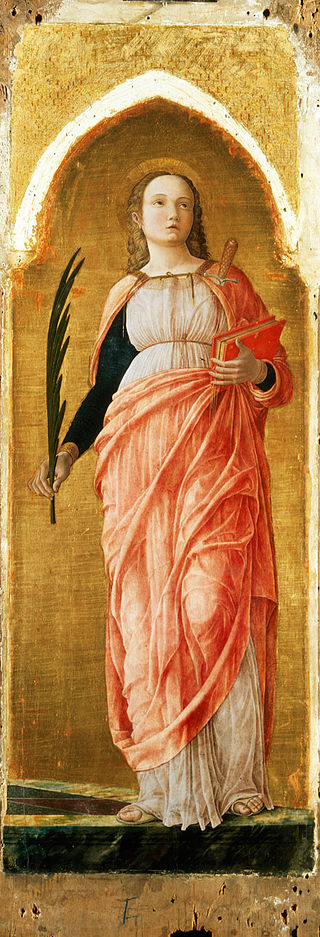
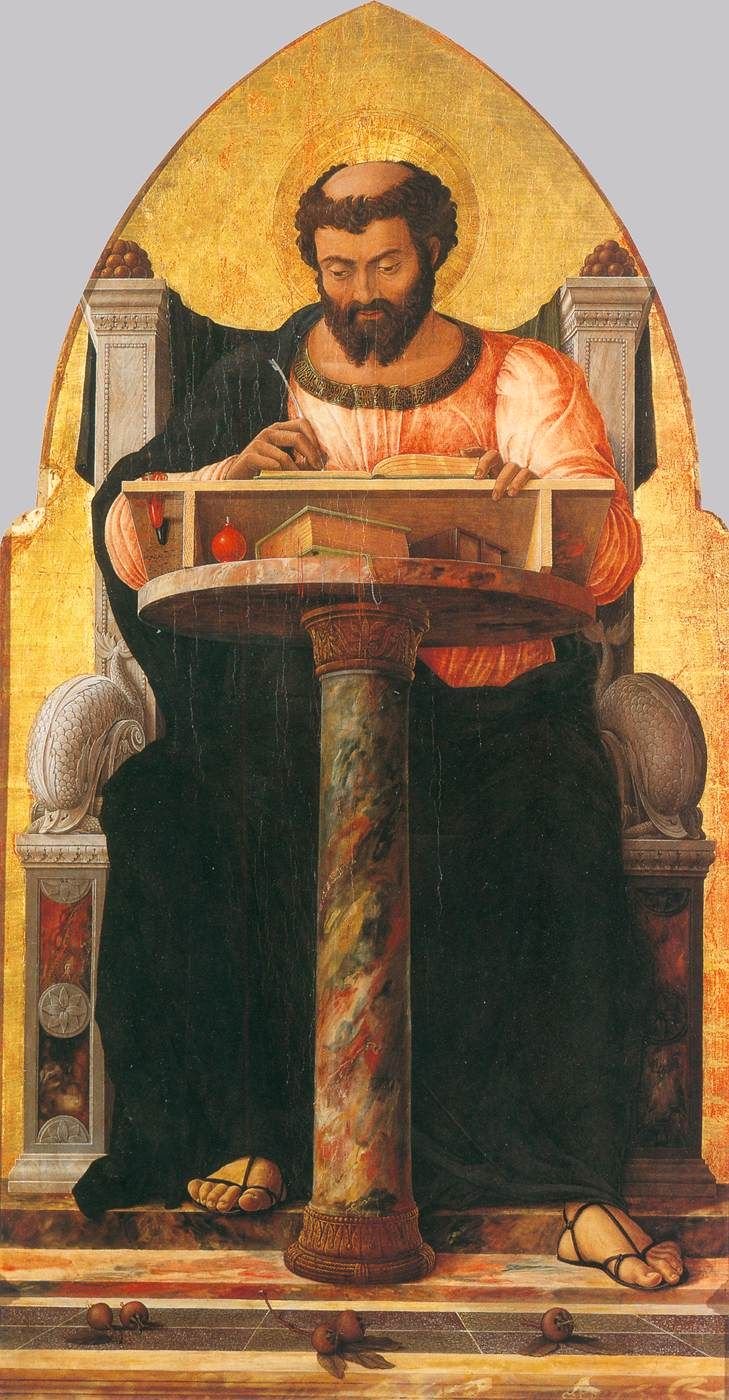

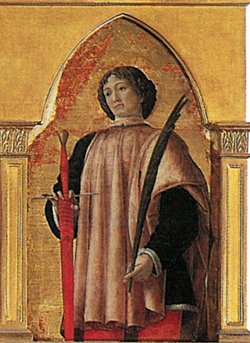

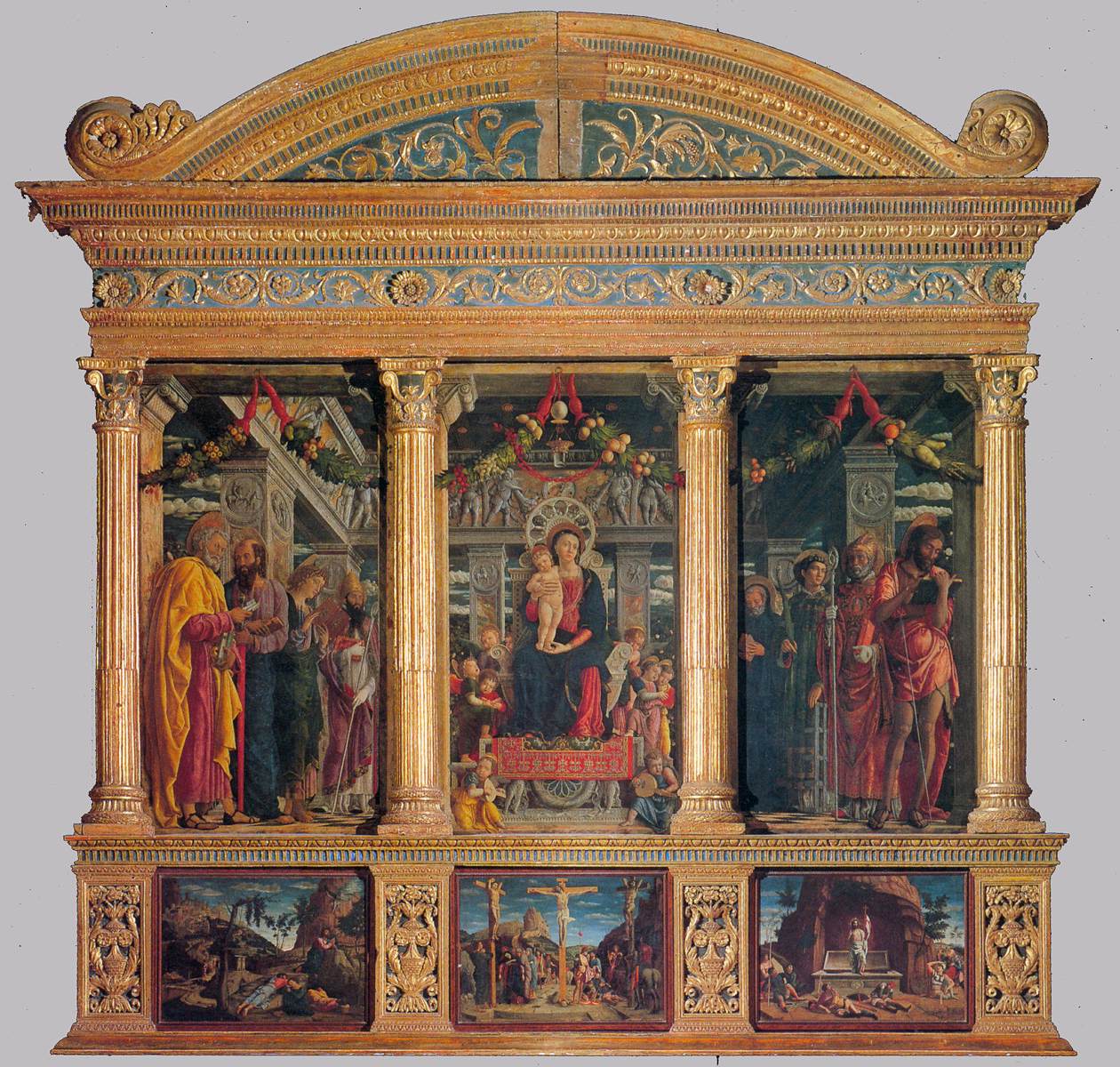


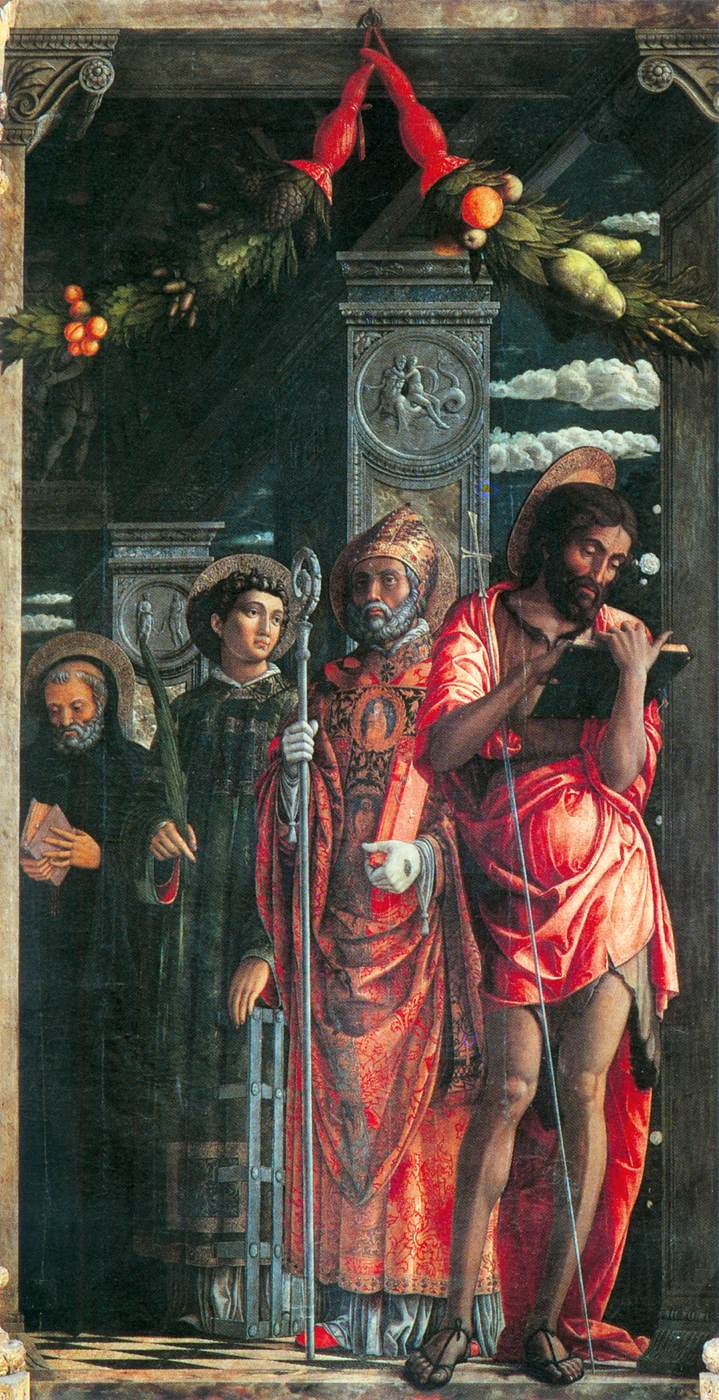

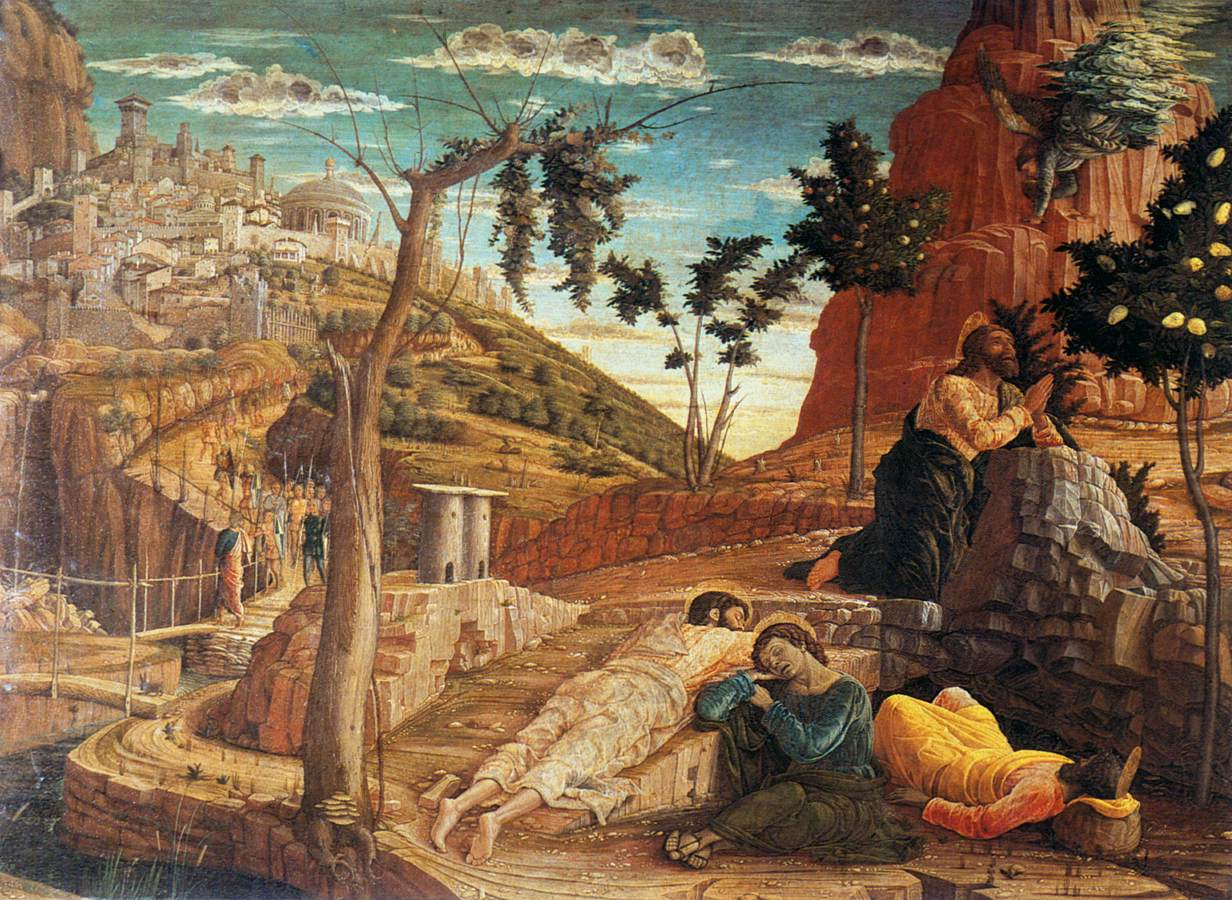


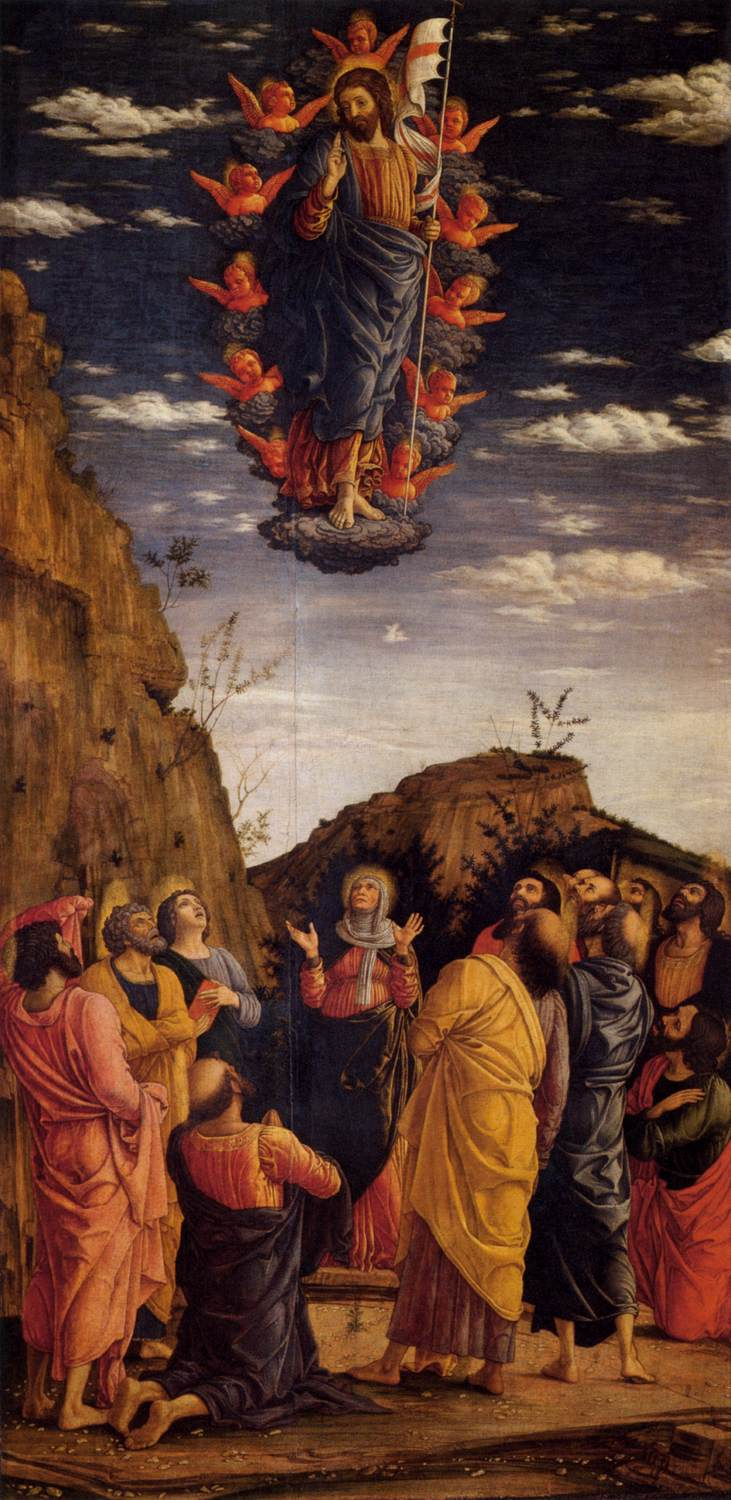
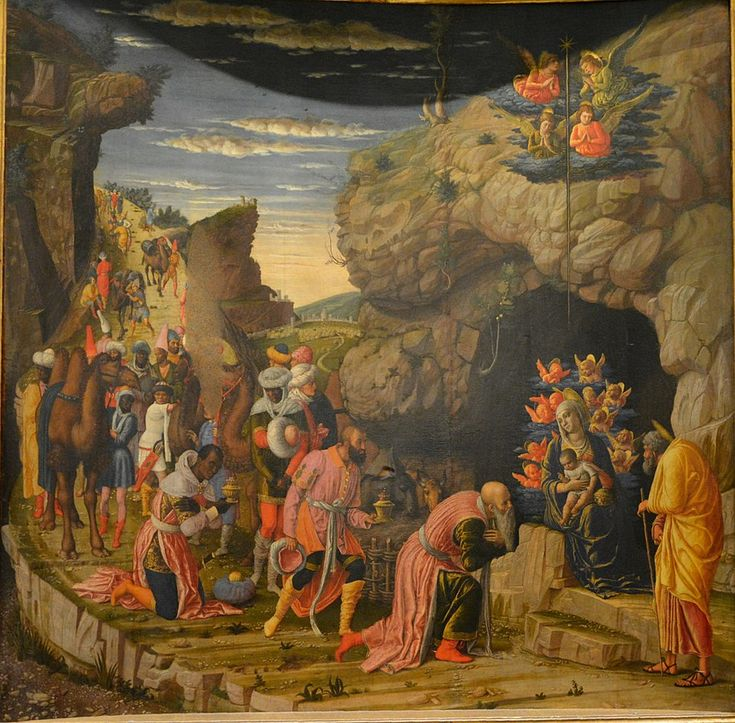
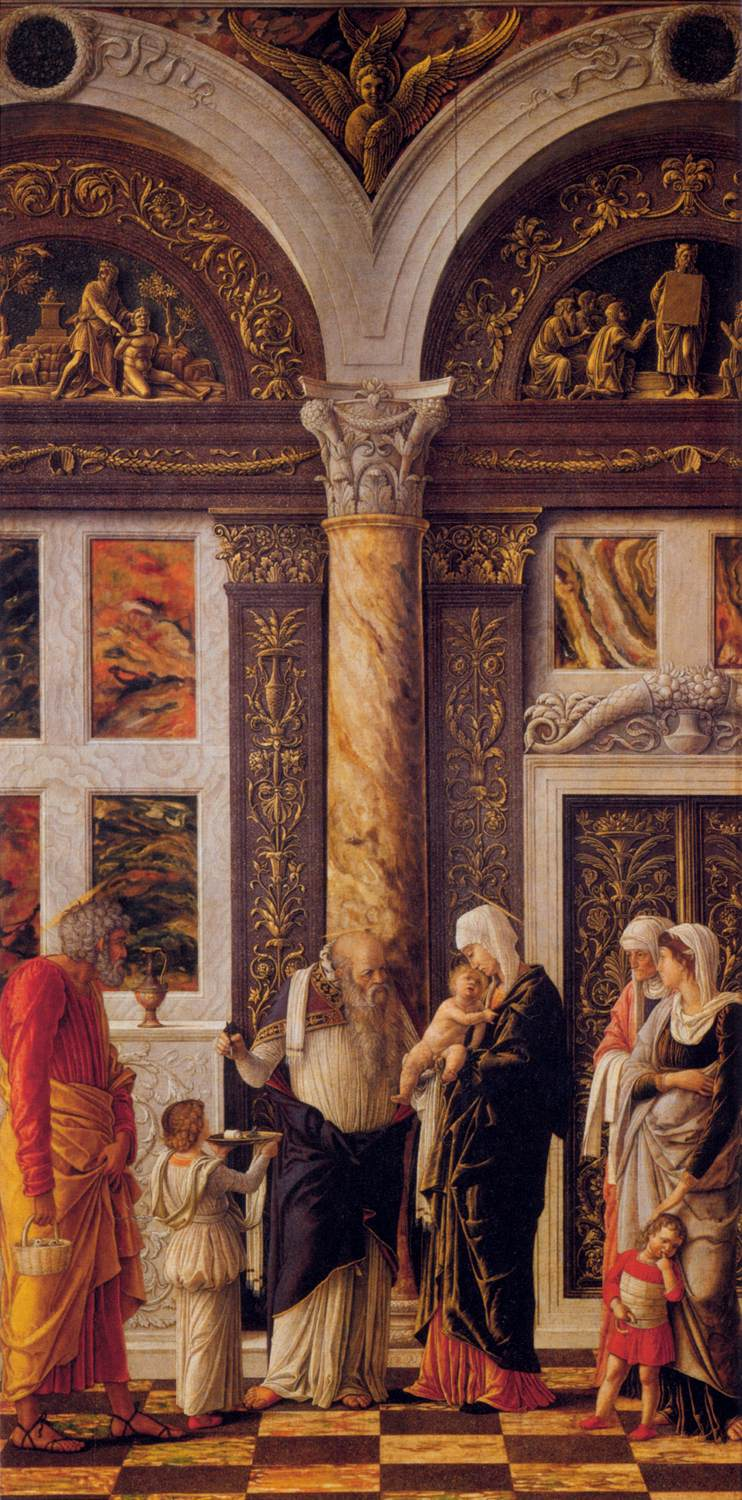
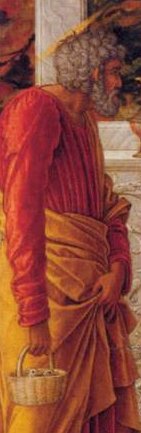
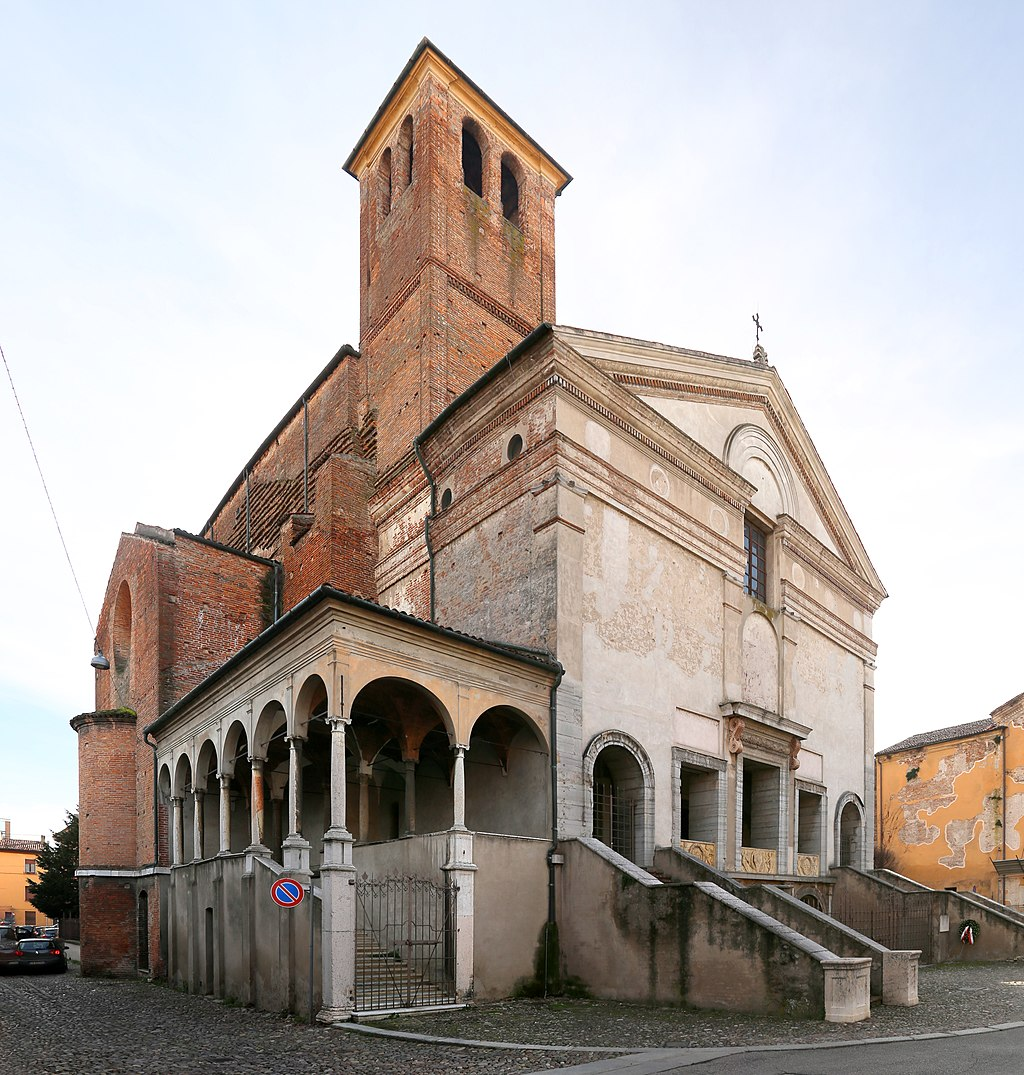



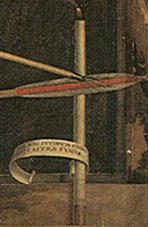
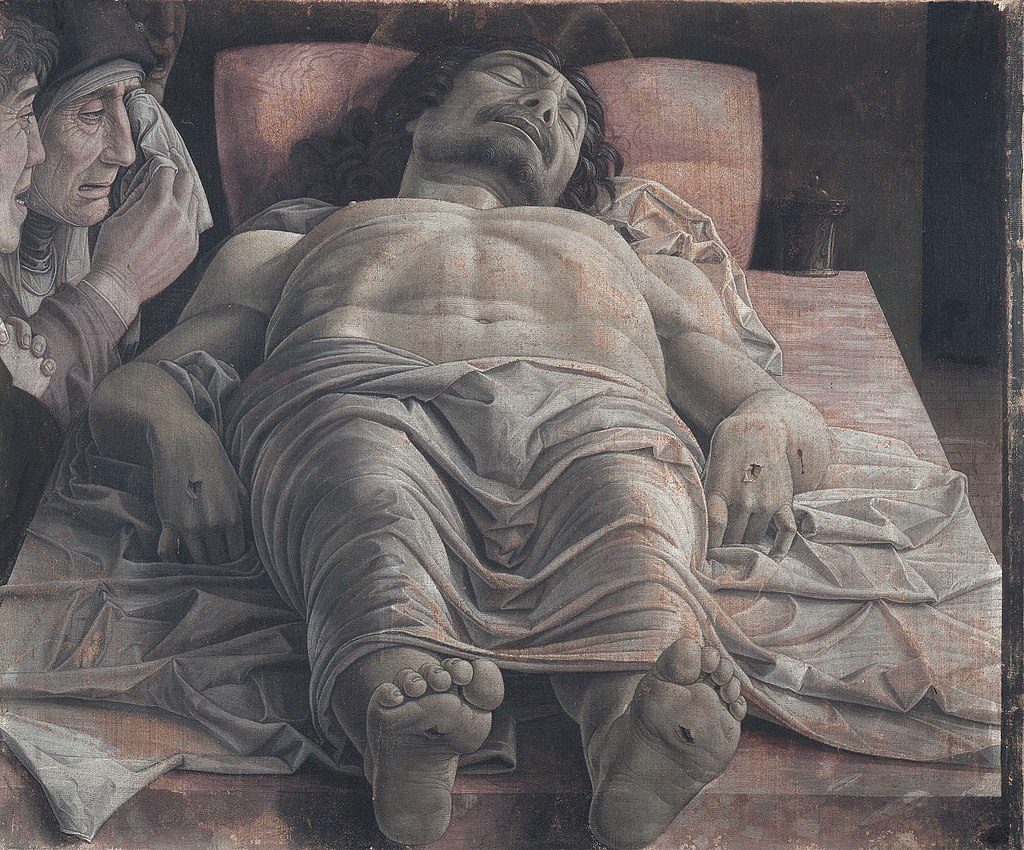
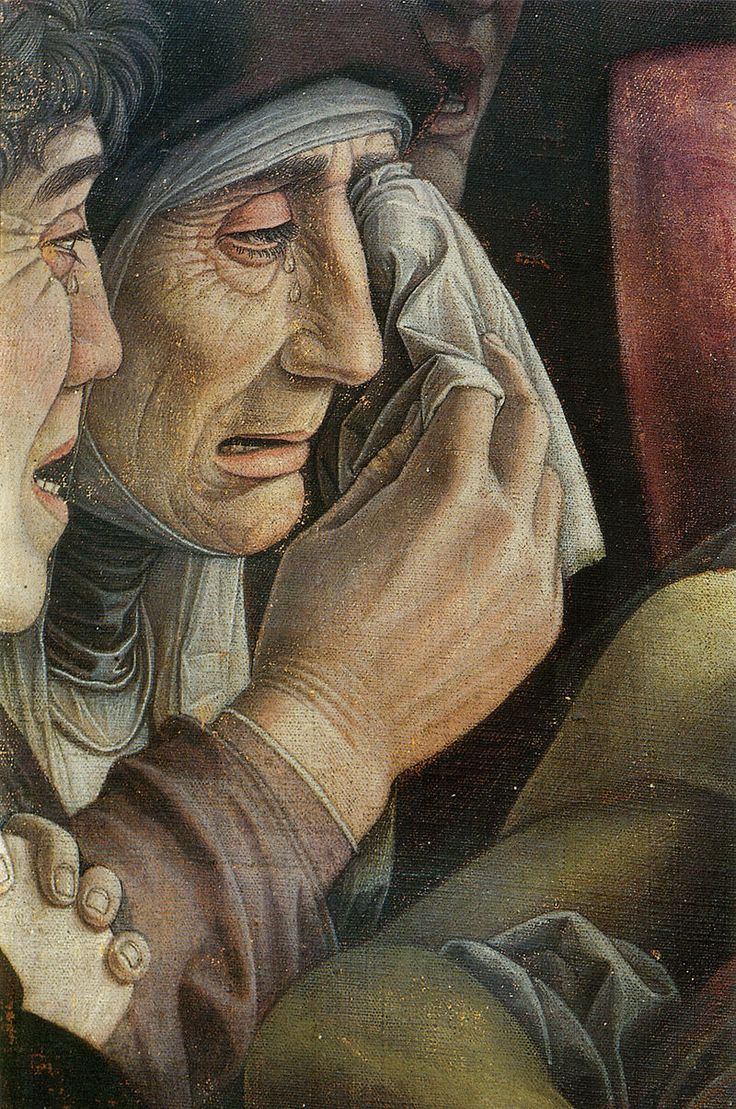


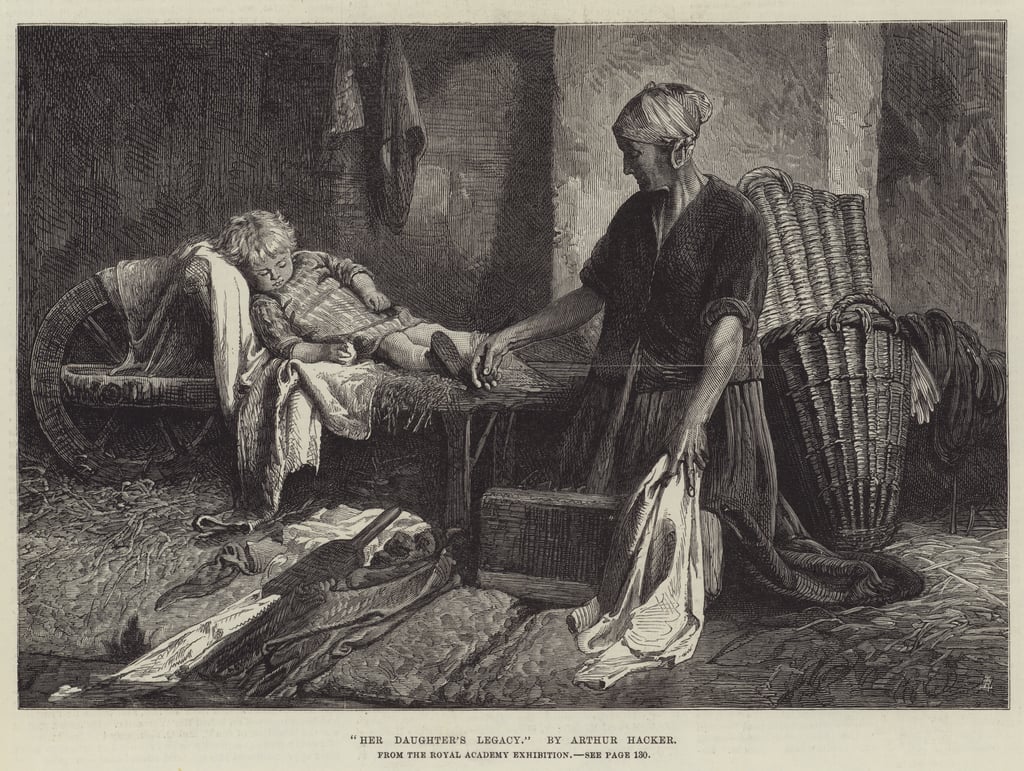
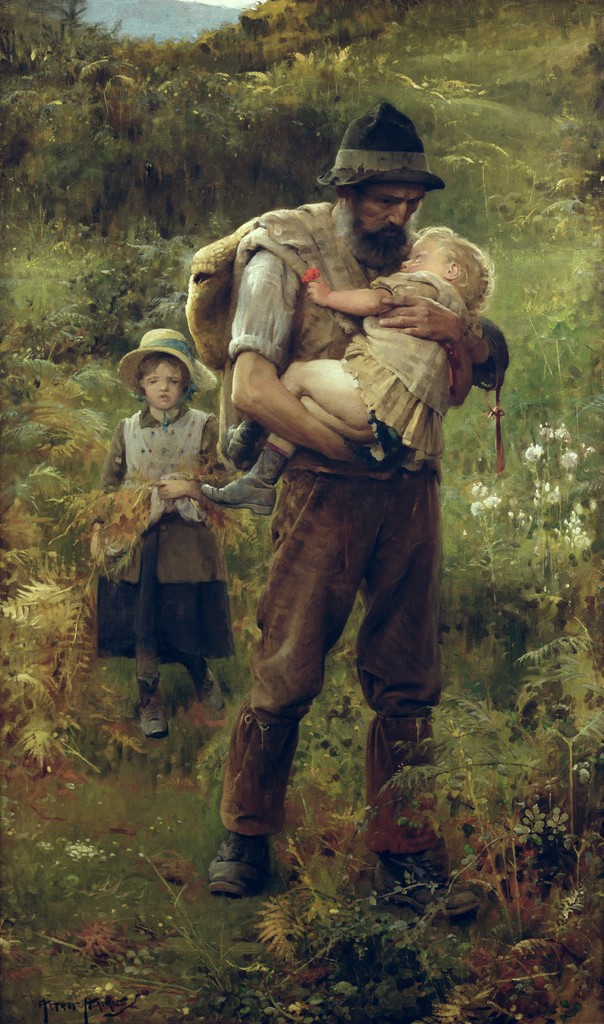


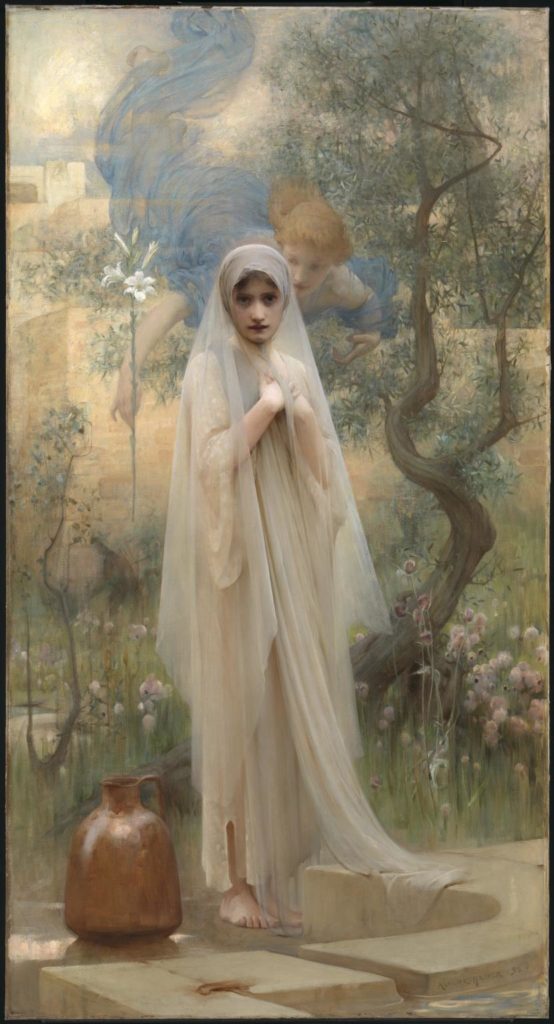
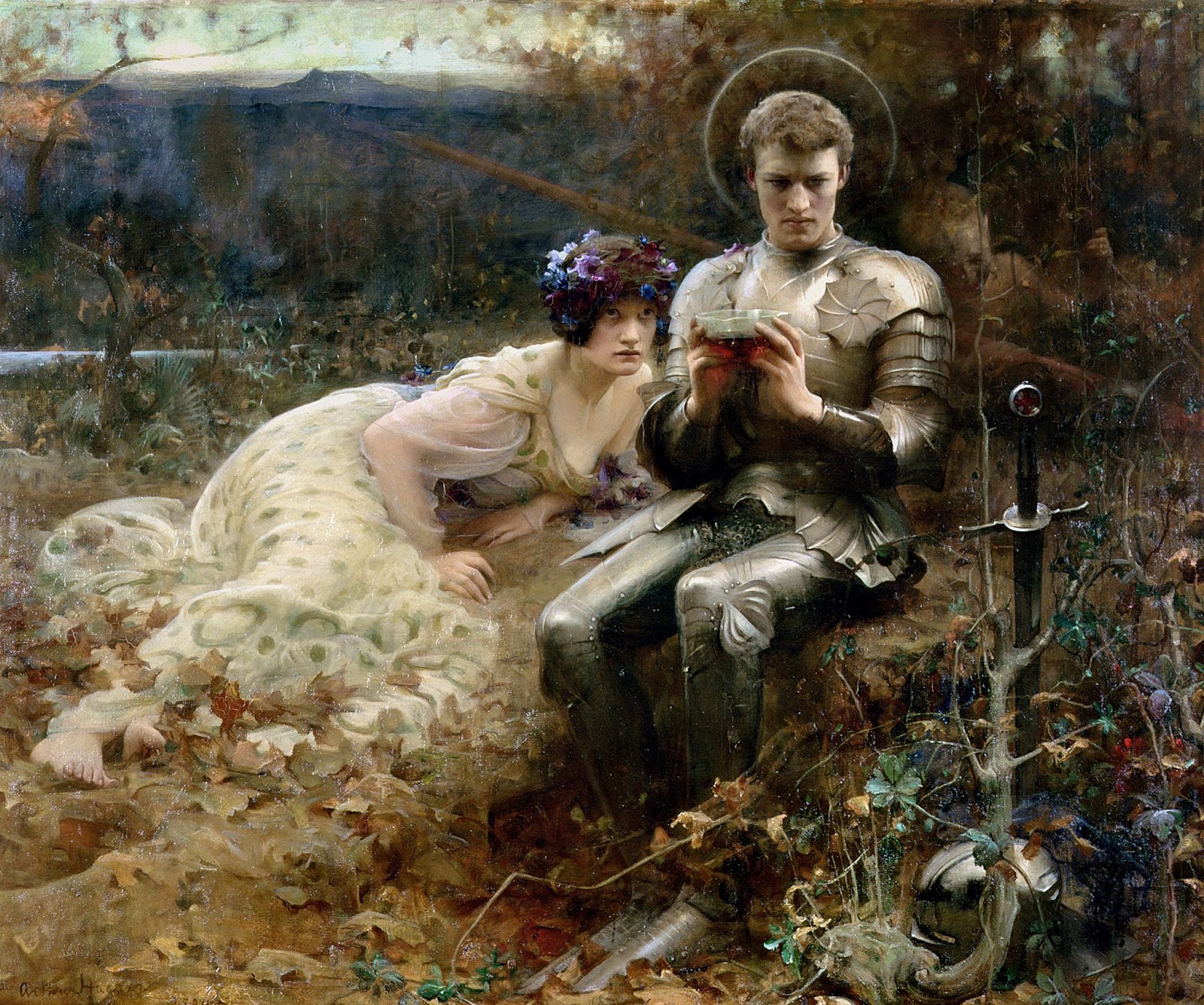
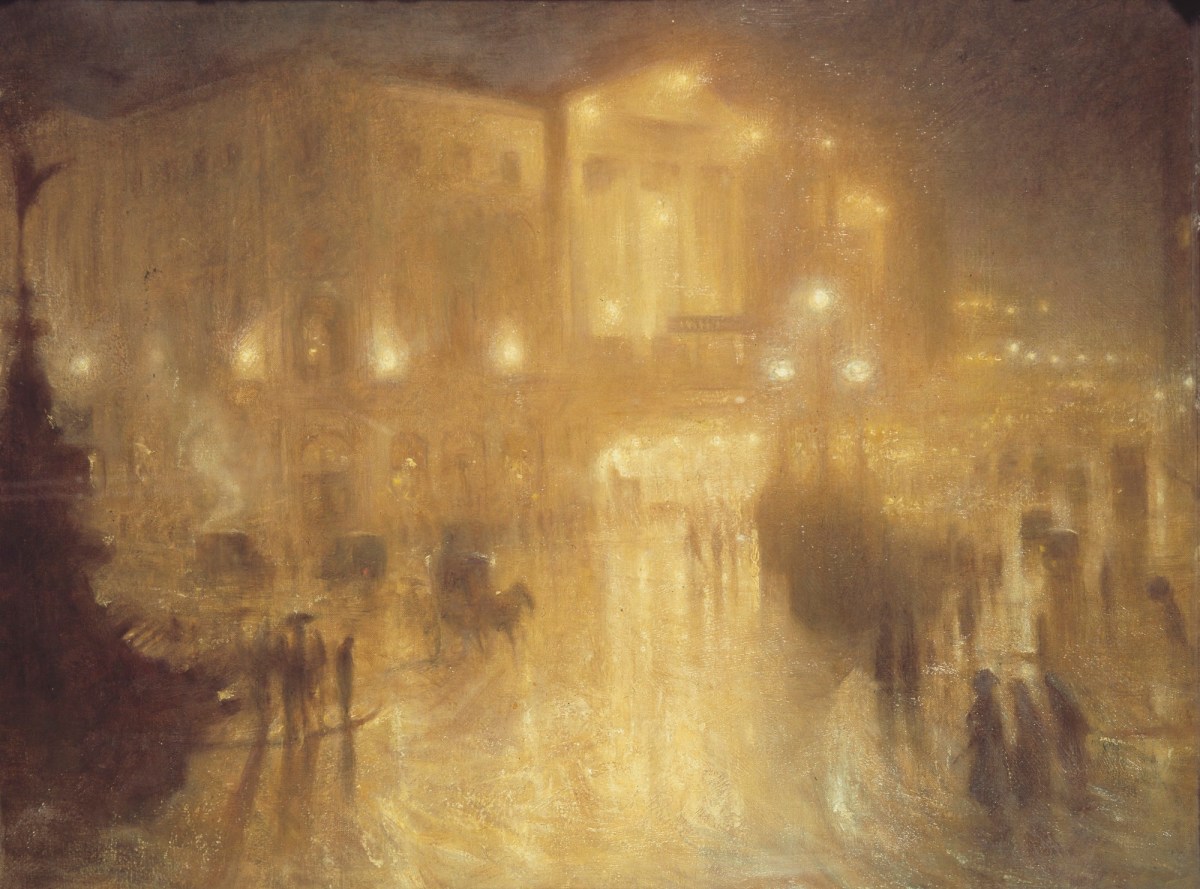
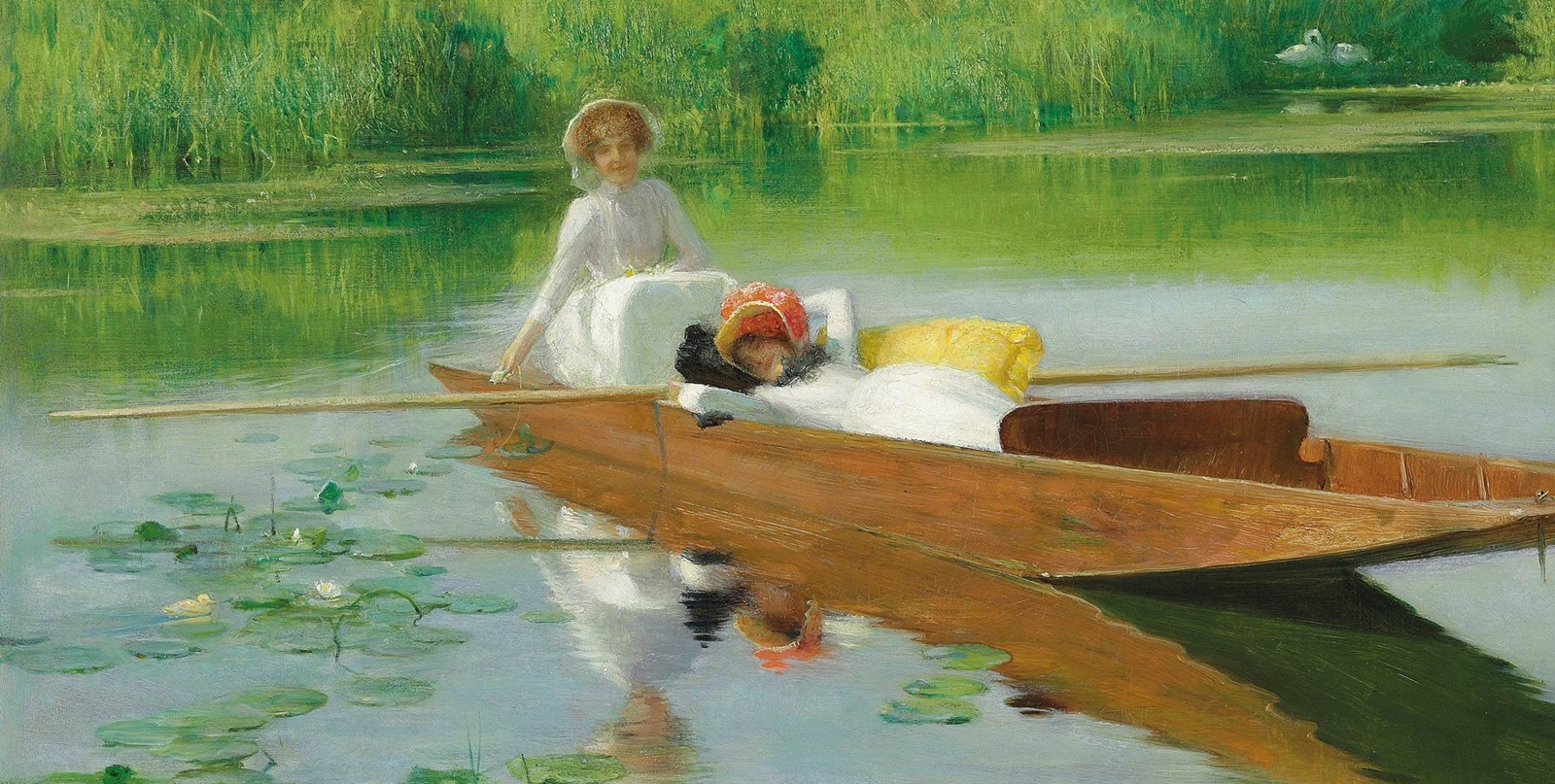
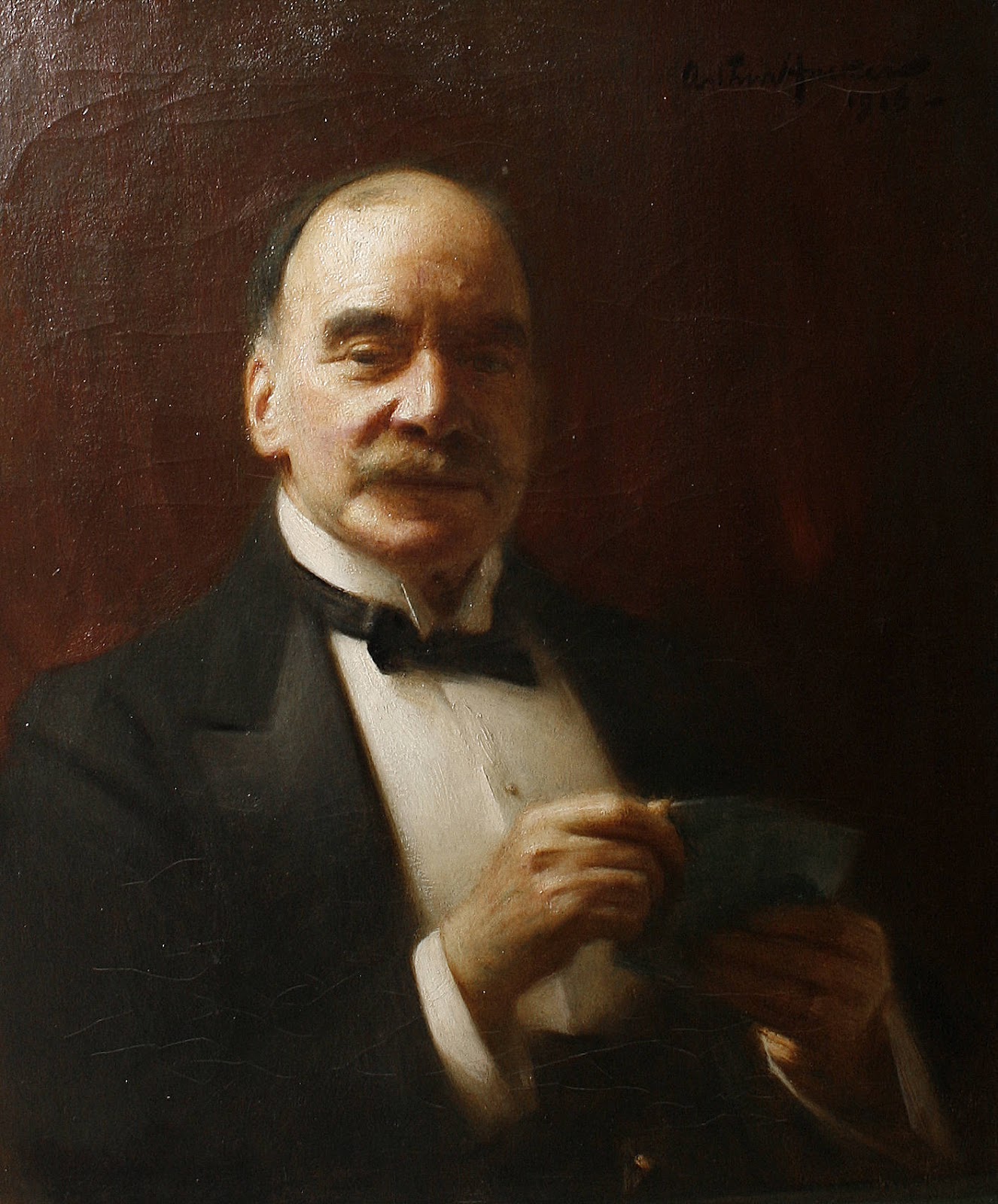
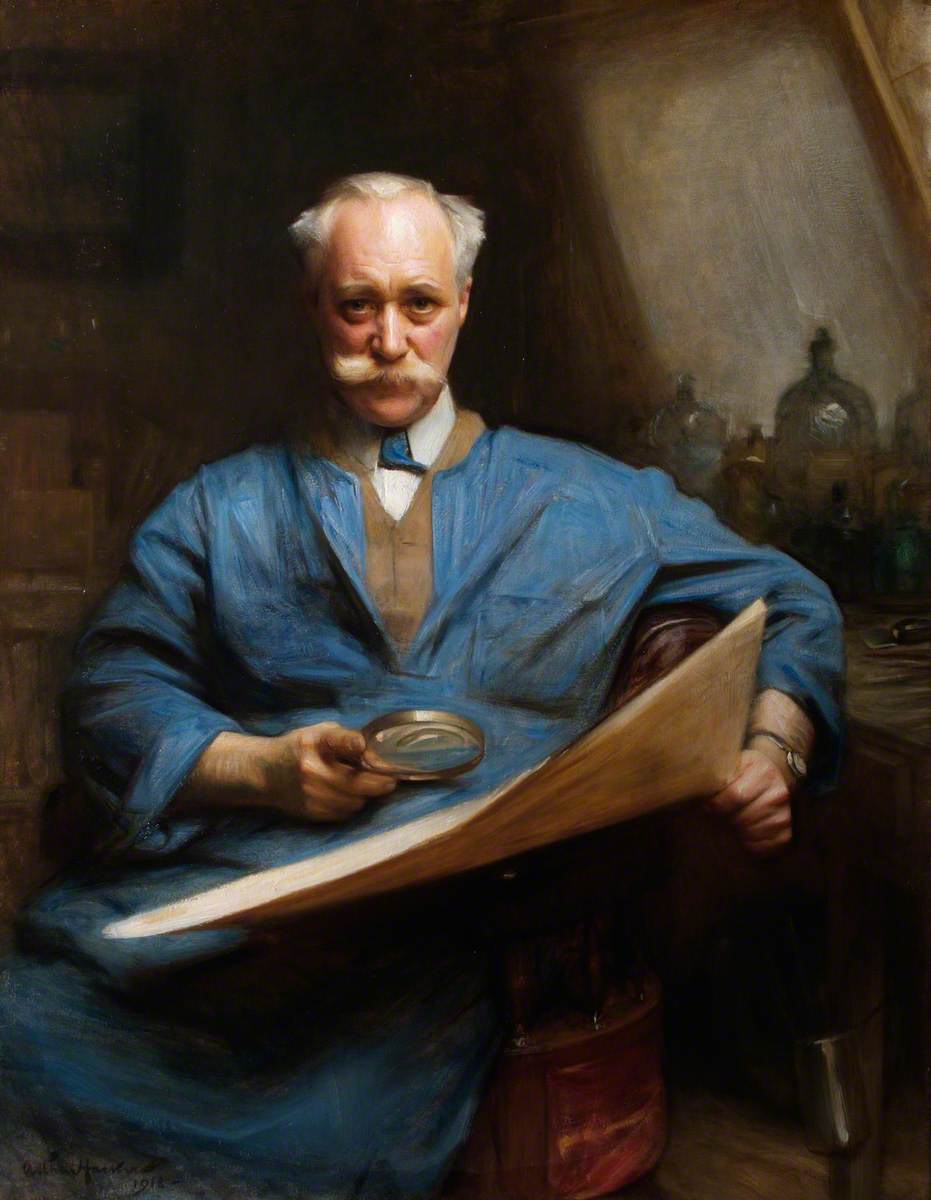
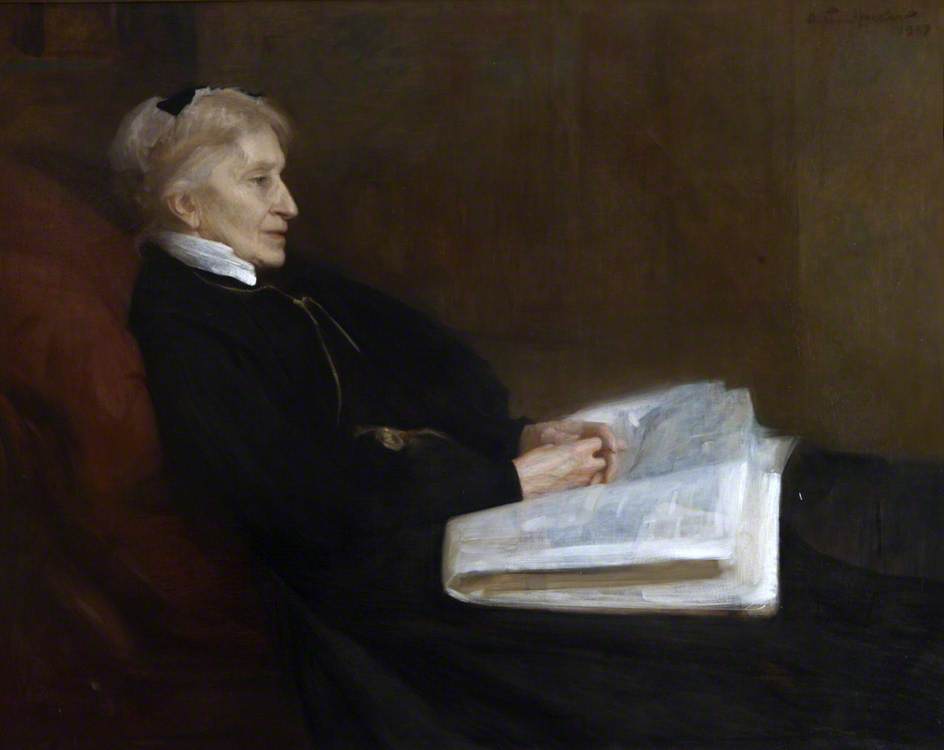
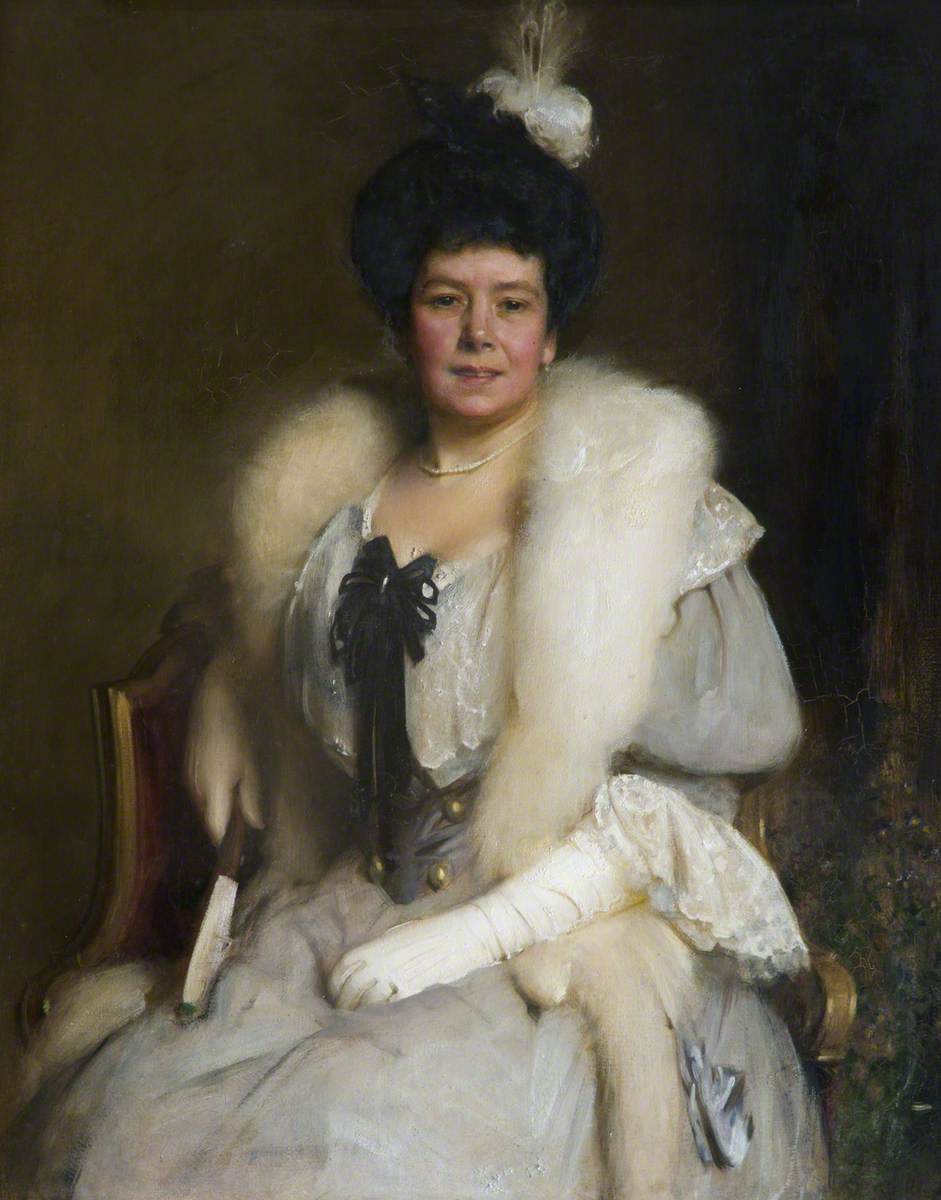


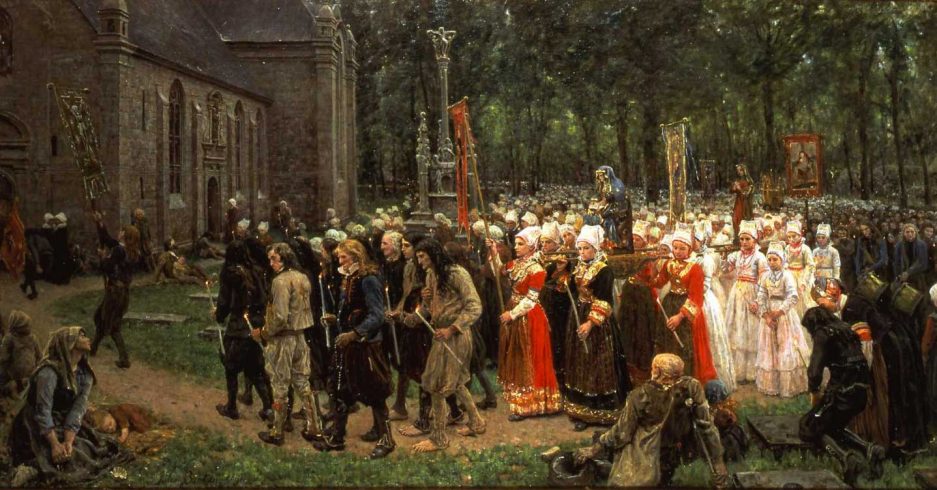


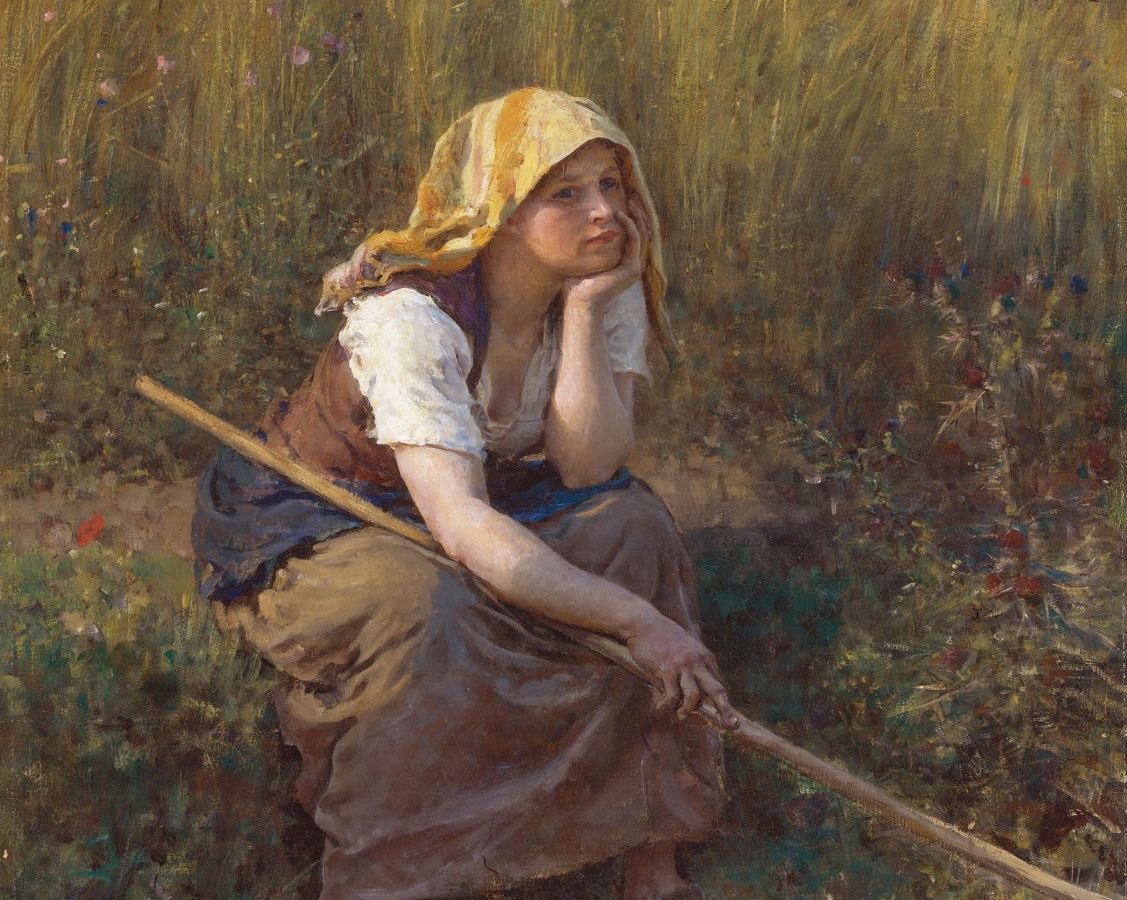

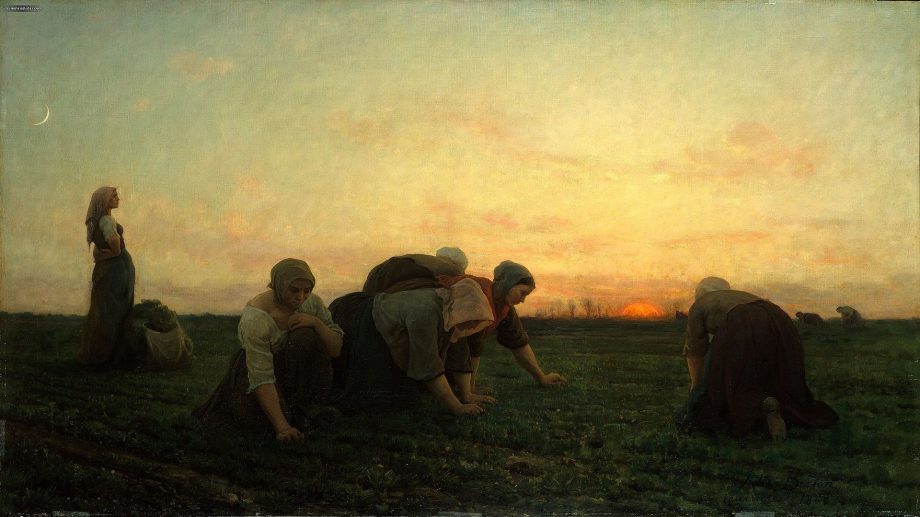


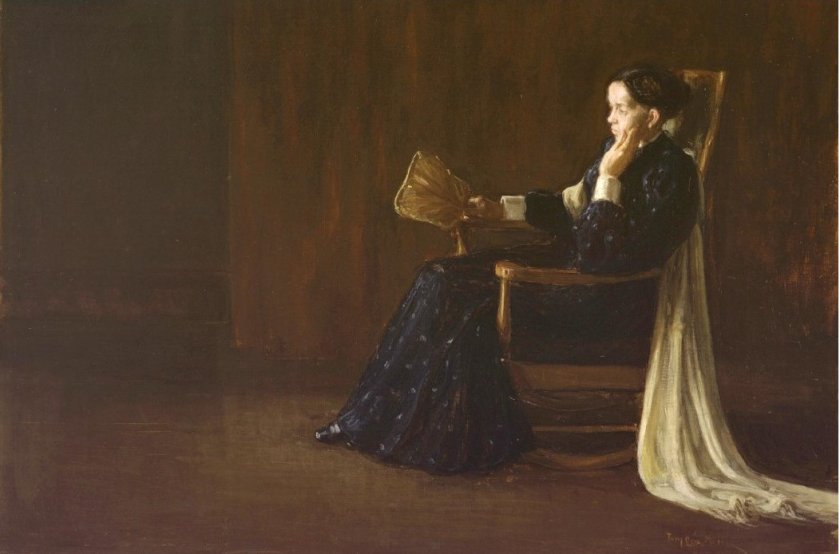
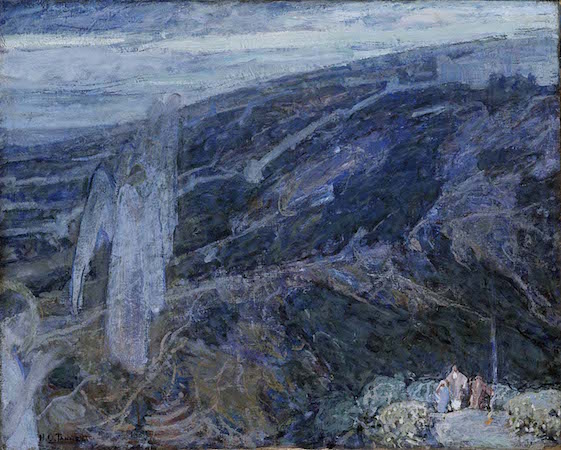
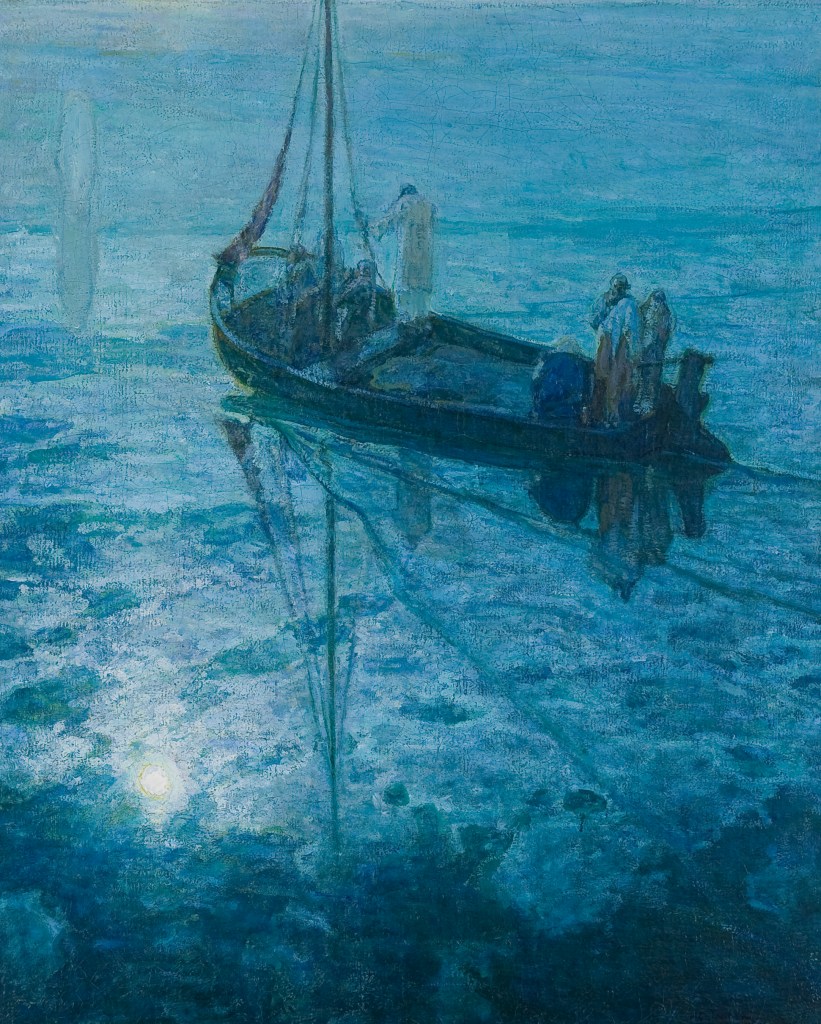

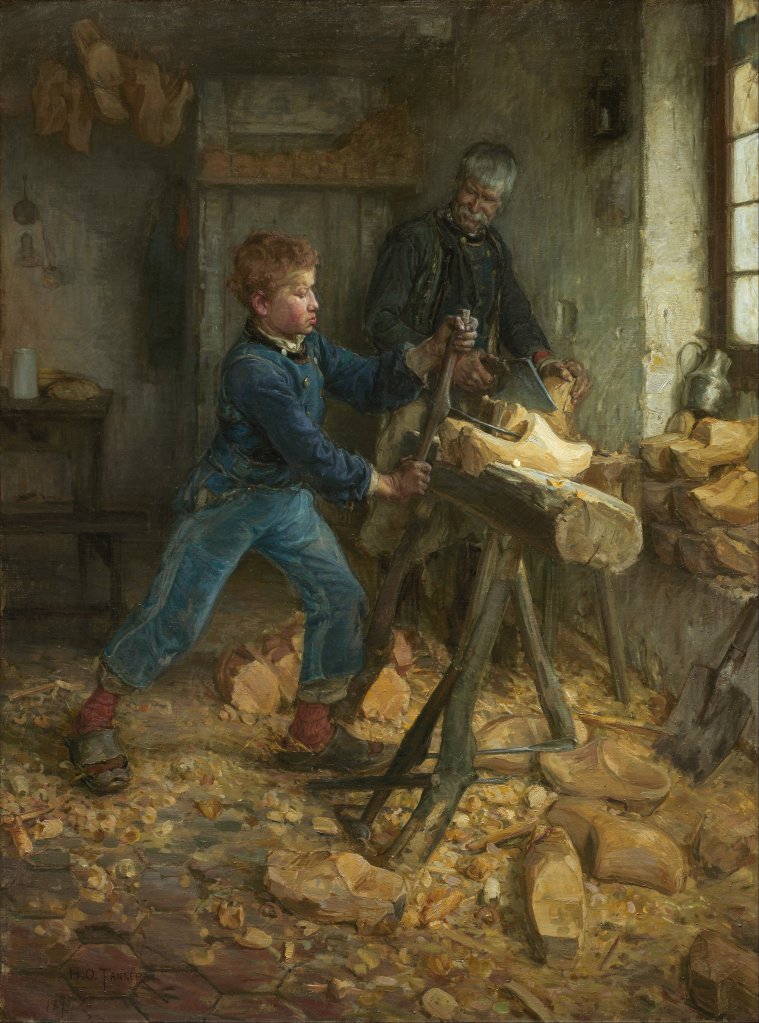

 In 1893, Tanner went back to the United States to deliver a paper on African Americans and art at the World’s Columbian Exposition in Chicago. In this same year, he created one of his famous works The Banjo Lesson while he was in Philadelphia. His depiction incorporated a series of sketches he had made while visiting the Blue Ridge Mountains, four years earlier. The sketches he had made during the summer of 1888 had opened his eyes to the poverty of African Americans living in Appalachia.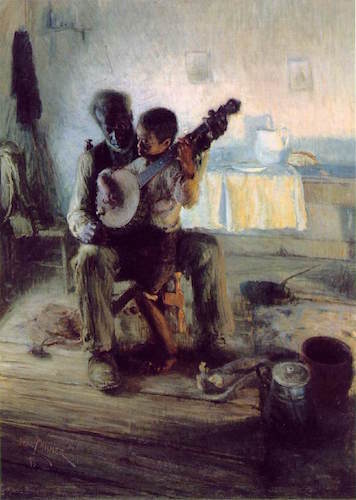

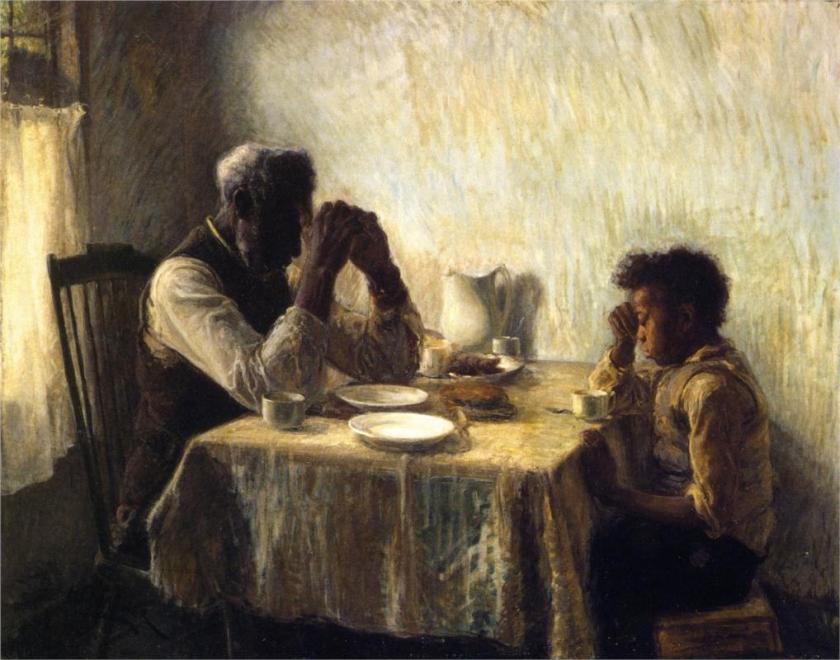

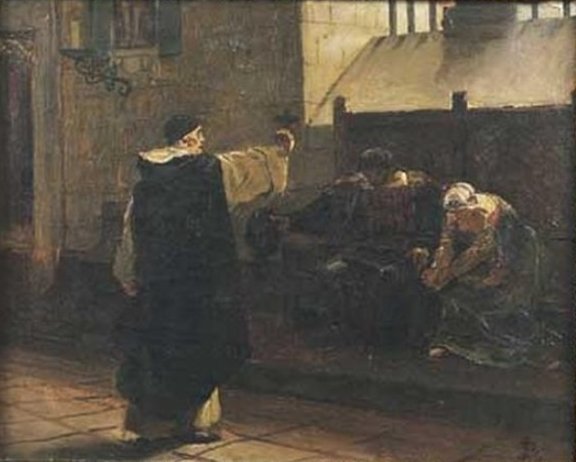


 The Seville exhibition was a collection of fifty-five paintings by Murillo from museum collections around the world. The exhibition was divided into nine sections each providing a glimpse of the world through Murillo’s eyes. The sections were designated as Holy Childhood, A family of Nazareth, Glory on Earth, The Immaculate Conception, Compassion, Penitence, Storyteller, Genre painting and Portraiture. It was a journey through his religious works to the social realism of 17th century Seville, which has been described as a city of paupers and saints, of rascals and wealthy noblemen and merchants who, through their wealth, were able to have Murillo paint their portraits.


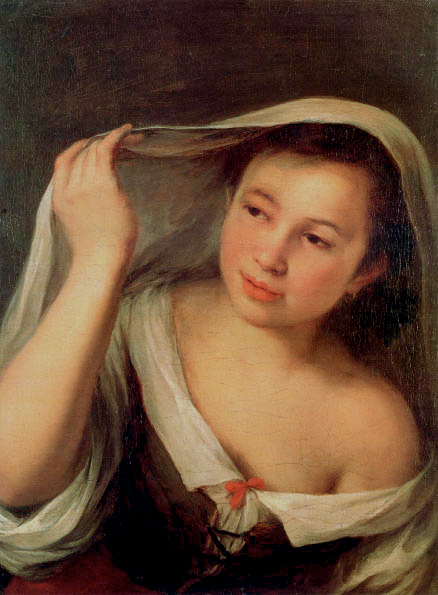


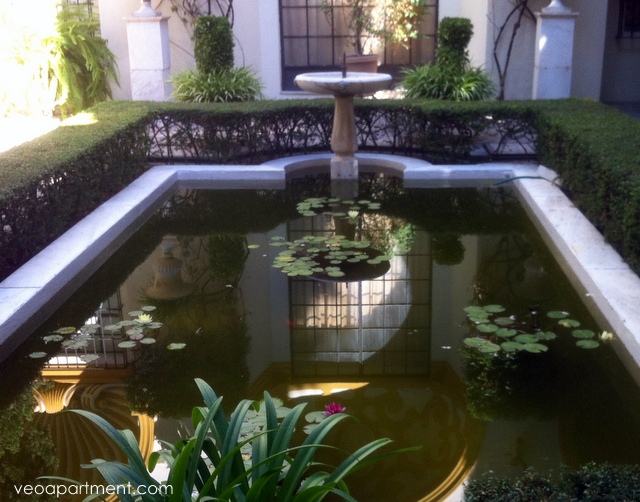
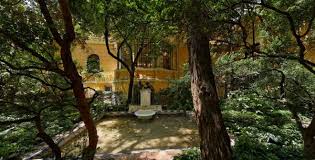
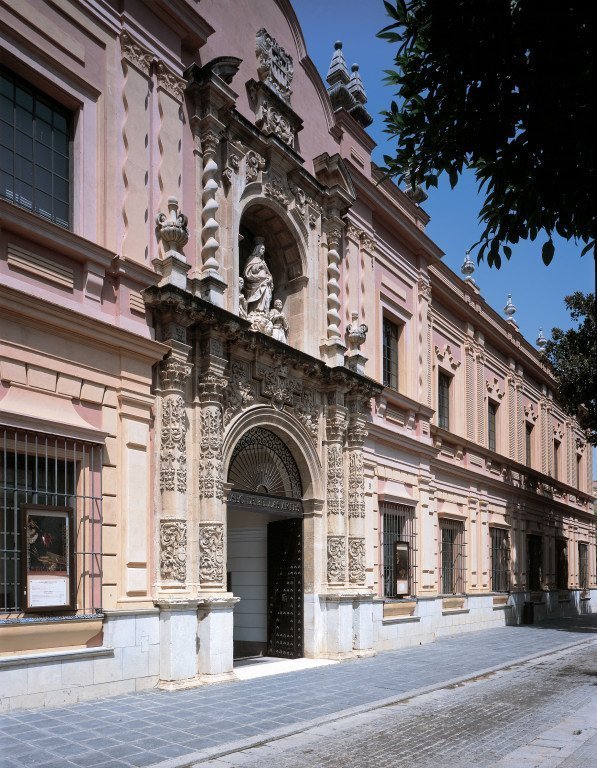
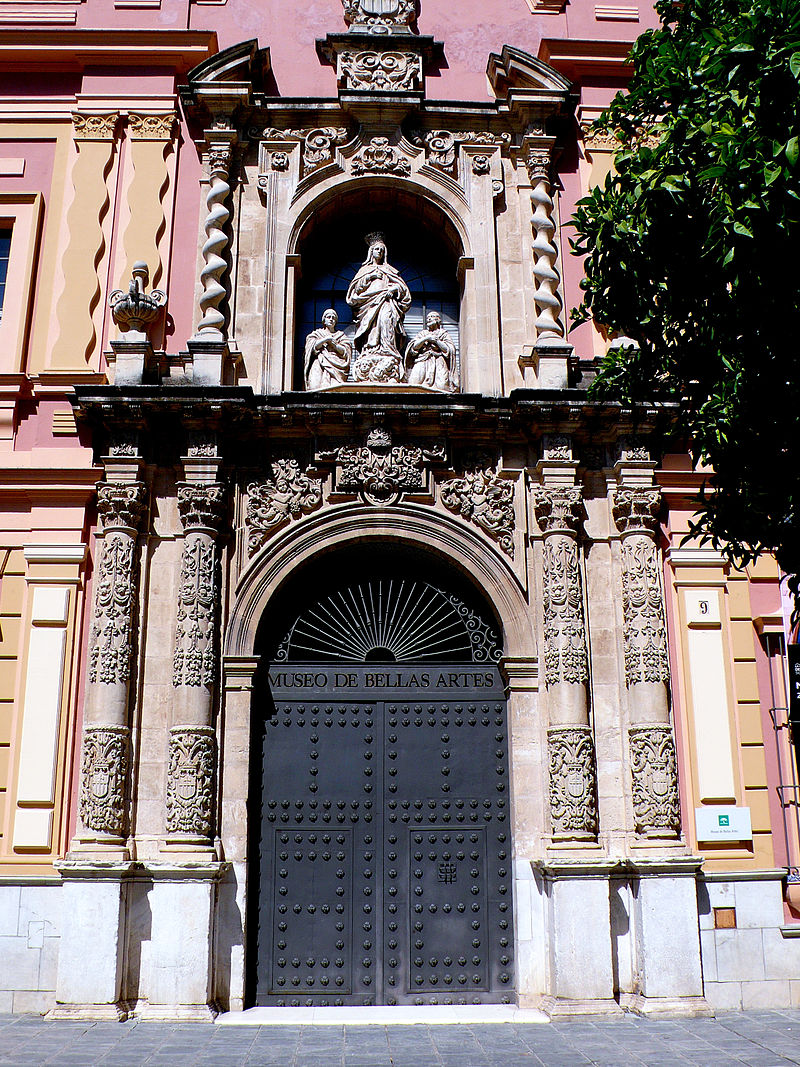
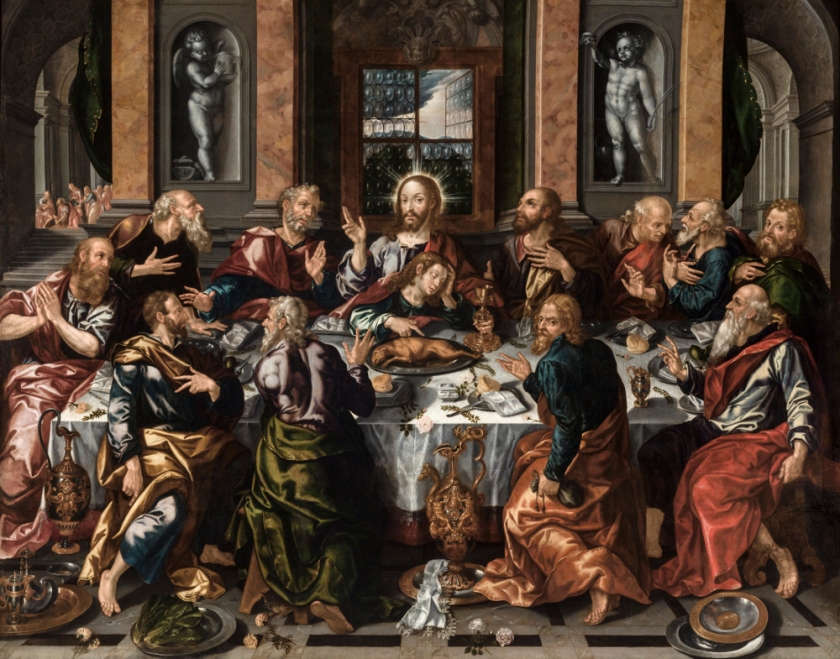
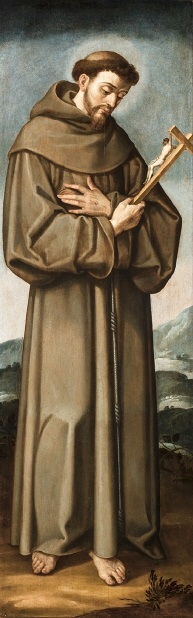
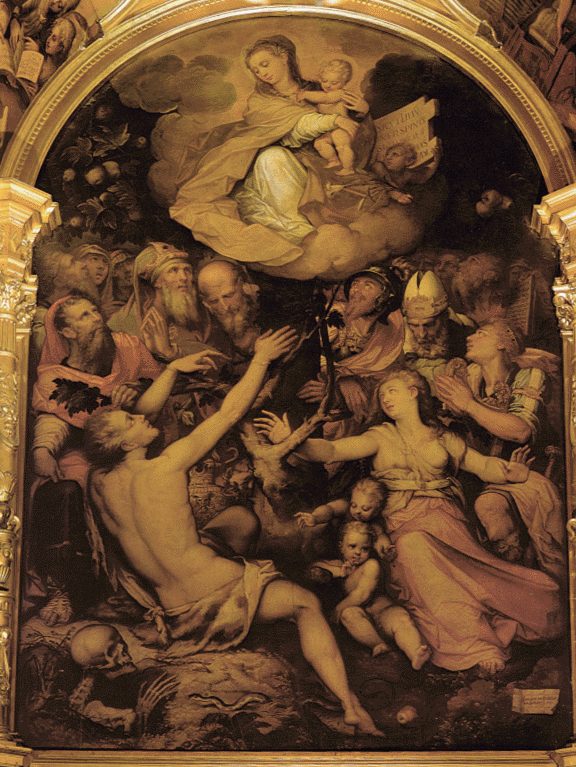
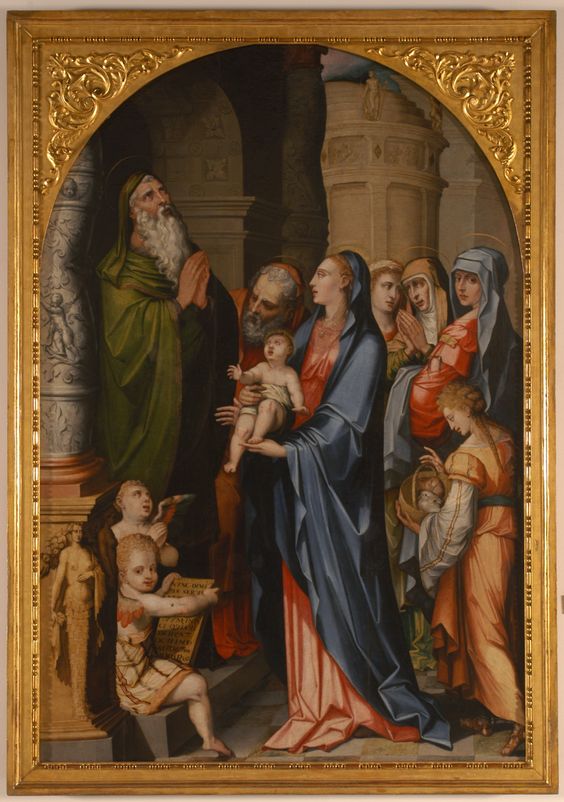
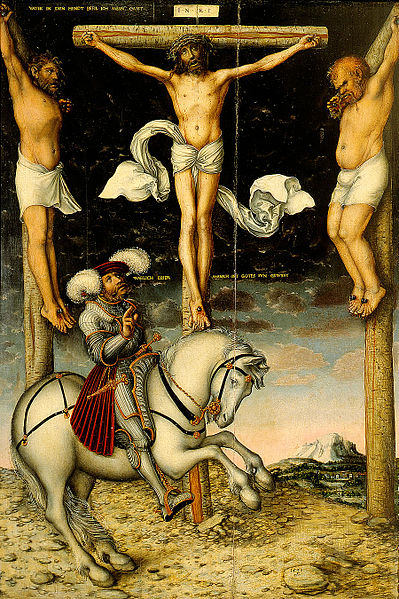


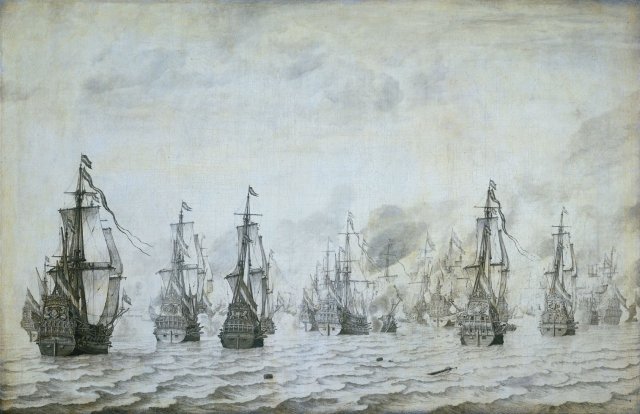


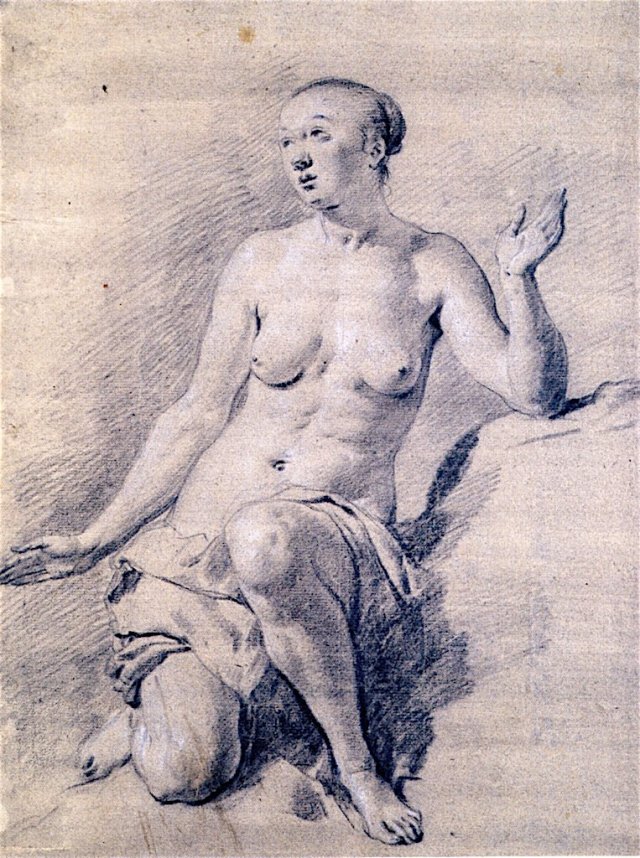


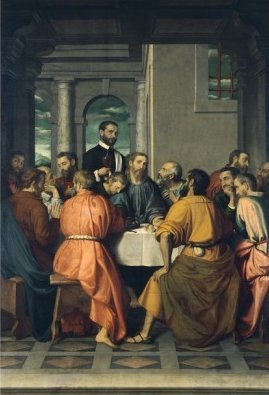


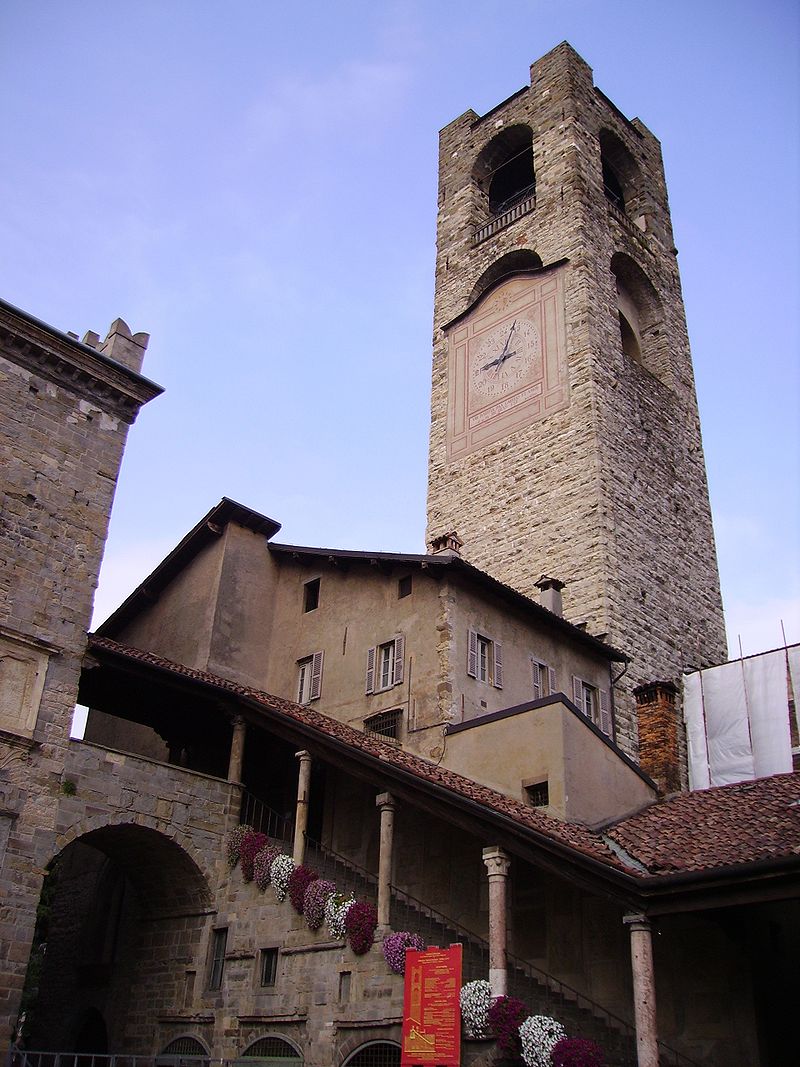
 my daily art display