Élisabeth-Louise Vigée Le Brun and Marie Antoinette

Marie-Antoinette of Austria, Queen of France
by Élisabeth Vigée Le Brun (1778)

I had intended this blog to be the concluding look at the life and some of the works of Élisabeth-Louise Vigée Le Brun but instead I am just concentrating this blog on a couple of the portraits Élisabeth did of the Queen consort Marie Antoinette and look at Élisabeth’s life up to her forced exile from France.  My next blog will conclude Élisabeth’s life story.

At the end of my last blog we had reached 1775 and Élisabeth’s step father had retired from his jewellery business and the family had moved to an apartment in a large property, Hotel de Lubert, which was situated on the rue de Clery.    The Hotel de Lubert was also where the painter and art dealer Jean-Baptiste Pierre Le Brun had his gallery.  Soon after settling into her new home, Élisabeth took a great interest in the beautiful masterpieces which filled Le Brun’s apartment and gallery.   She recalled this time in her memoirs saying:

“…I was enchanted at an opportunity of first-hand acquaintance with these works by great masters.  Monsieur Lebrun was so obliging as to lend me, for purposes of copying, some of his handsomest and most valuable paintings. Thus I owed him the best lessons I could conceivably have obtained…”

Six months after moving in to her new home Le Brun proposed marriage to Élisabeth.   She was not physically attracted to him but was concerned about her family’s financial future, hated living with her stepfather and after much persuasion from her mother, who believed Le Brun was very rich, agreed to Le Brun’s proposal.  Even on her wedding day on January 11th 1776, Élisabeth had her doubts about the wisdom of her decision for she later wrote:

“…So little, however, did I feel inclined to sacrifice my liberty that, even on my way to church, I kept saying to myself, “Shall I say yes, or shall I say no?” Alas! I said yes, and in so doing exchanged present troubles for others…”

Élisabeth’s fears were soon borne out for although she termed her husband as being “agreeable” he had one great character flaw – he was an inveterate gambler and soon his money and that which Élisabeth earned from her commissions was frittered away.  However before the money had run out, Élisabeth and her husband bought the Hotel de Lubert in 1779, and her Salons, which she held there became one of Paris’ most fashionable pre-revolutionary venues for artists and the literati.  Two years later, on February 12th 1780, her only child Jeanne Julie Louise was born.   In 1781 she and her husband left Paris and journeyed to Flanders and the Netherlands and it was during this trip that she saw some of the works by the great Flemish Masters and these paintings inspired her to try new painting techniques. During their time in Flanders she carried out various portraiture commissions for some of the nobility, including the Prince of Nassau.

It was back in the year 1779 that Élisabeth first painted a portrait of Marie-Antoinette, Louis XVI’s queen consort.  It was at a time when the lady had reached the pinnacle of her beauty.  In her memoirs Élisabeth described Marie-Antoinette:

“…Marie Antoinette was tall and admirably built, being somewhat stout, but not excessively so. Her arms were superb, her hands small and perfectly formed, and her feet charming. She had the best walk of any woman in France, carrying her head erect with a dignity that stamped her queen in the midst of her whole court, her majestic mien, however, not in the least diminishing the sweetness and amiability of her face. To anyone who has not seen the Queen it is difficult to get an idea of all the graces and all the nobility combined in her person. Her features were not regular; she had inherited that long and narrow oval peculiar to the Austrian nation. Her eyes were not large; in colour they were almost blue, and they were at the same time merry and kind. Her nose was slender and pretty, and her mouth not too large, though her lips were rather thick. But the most remarkable thing about her face was the splendour of her complexion. I never have seen one so brilliant and brilliant is the word, for her skin was so transparent that it bore no umber in the painting. Neither could I render the real effect of it as I wished. I had no colours to paint such freshness, such delicate tints, which were hers alone, and which I had never seen in any other woman…”

Both the artist and sitter formed a relaxed friendship and in her first portrait (above) the queen is depicted with a large basket, wearing a satin dress, and holding a rose in her hand. The painting was to be a gift for Marie-Antoinette’s brother, Emperor Joseph II, the Holy Roman Emperor, and a further two copies were made, one of which she gave to the Empress Catherine II of Russia, the other she would keep for her own apartments at Versailles.  In all, Élisabeth painted more than thirty portraits of the queen over a nine year period

Élisabeth’s friendship with Marie-Antoinette and her royal patronage served her well as in 1783,  her name had been put forward by Joseph Vernet for election to France’s Académie Royale de Peinture et de Sculpture.   As her morceau de réception (reception piece) she submitted an allegorical history painting entitled La Paix qui ramène l’Abondance (Peace Bringing Back Prosperity).  She also submitted a number of her portraits. The Académie however did not categorise her work within the academy categories of either portraiture or history.  Her application for admission was opposed on the grounds that her husband was an art dealer, but because of Élisabeth’s powerful royal patronage, the Académie officials were overruled by an order from Louis XVI.  It is thought that Marie Antoinette put considerable pressure on her husband on behalf of her painter friend.

Having royal patronage and being great friends with Marie-Antoinette was a boon when the Royalty was loved by its people but once the people turned against Louis XVI and his queen, as happened during the French Revolution, then any friends the royal couple had were equally detested and at risk from the mob.  Attacks on Élisabeth Vigée Le Brun’s character had started back in late 1783 when the newspapers wrote stories about an alleged affairs she had with the Finance Minister, Charles Alexandre, Vicomte de Calonne, the Comte de Vaudreuil and the painter François Menageot.  The rumours persisted and it all came to a head in 1789 when fictitious correspondence between Élisabeth and Calonne was published in the spring.  Rumours about her lavish lifestyle abounded, even though they were not altogether true.  She was now starting to realise that having close connections to the monarchy, which she had once considered to be advantageous, was becoming a dangerous liability.
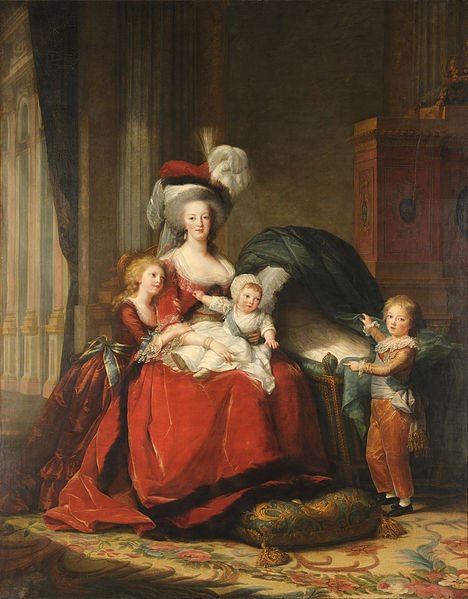
Marie Antoinette and her Children
by Élisabeth Vigé Le Brun (1788)

Élisabeth Vigée Le Brun’s last portrait of Marie-Antoinette was completed in 1788 and entitled Marie Antoinette and her Children.  The setting is a bedroom or a private chamber within the Royal palace.  Marie Antoinette is seated with her feet on a cushion.  This depiction of her posture symbolizes her status and high position in society.  She has a young infant on her lap and her son and daughter are either side of her.  In the painting we see her son, Louis-Joseph, Le Dauphin, standing to the right. Louis-Joseph suffered from bad health all his young life with the onset of early symptoms of tuberculosis and he died of consumption in 1789, a few months before his eighth birthday.   On the Queen’s lap sits Louis-Charles, Duc de Normandie, who on the death of his elder brother, became the second Dauphin. Following the guillotining of his father Louis XVI,  he became known as Louis XVII. This young boy was imprisoned in The Temple, a medieval Parisian fortress prison, where he died in 1795, aged ten, probably from malnutrition but rumour also has it that he was murdered.  Standing on the Queen’s right is Marie Therese Charlotte de France, Madame Royale.  She was Marie-Antoinette’s eldest child.  She too was imprisoned in The Temple but was the only member of the Royal family to survive the ordeal.  She remained a prisoner for over a year but Austria arranged for her release in a prisoner-exchange on the eve of her seventeenth birthday, in December 1795.  In the painting we can also see depicted an infant’s cradle which Louis-Joseph points to and lifts the covers showing it as being empty.  This empty cradle is a reference to Princess Sophie, Marie Antoinette’s other daughter, who was born in 1786 and died of convulsions two weeks before her first birthday.  This very poignant painting still hangs at Versailles.

On the night of October 6th 1789, following the invasion of Versailles by Parisian mobs and the arrest of the royal family, Élisabeth Vigée Le Brun left the mayhem of Paris with her daughter and governess in a public coach and headed for Italy.  She had hoped to return to France in the near future when the situation had settled down but in fact she never set foot back in France for twelve years.

My next blog will look at the latter part of Élisabeth’s life and I will regale you with my tale of infidelity which was the reason for featuring Élisabeth-Louise Vigée Le Brun in the first place !!


Self Portraiture by Élisabeth-Louise Vigée Le Brun

Over the next two blogs I want to introduce you to and look at the life of one of the finest 18th century French female portraitist, Élisabeth-Louise Vigée Le Brun.  In my initial blog about her I want to examine her early life and show you three of her self portraits and in the following blog I will conclude her life story and tell you about her friendship with Marie-Antoinette, her exile from the land of her birth and relate how I was once again unfaithful having been seduced by a new beauty !  Sounds interesting ?

Self Portrait in a Straw Hat (age 22)
by Élisabeth-Louise Vigée Le Brun (1782)

Today’s artist was born Élisabeth-Louise Vigée in April 1755 on the rue Coquilliere in Paris, just six months before another baby girl was born in the palace of Emperors of Austria in Vienna, a priveleged child, who would become the queen of the French nation and also play a large part in Élisabeth’s life.  That Viennese baby was Marie-Antoinette.   But let me return to Élisabeth.  Élisabeth was the daughter of Louis Vigée, a portraitist and professor at the Academie de Saint Luc .  Her mother, Jeanne Maissin was a hairdresser by trade.  At the age of 3 months, she was sent to a small farm near Épernon, where she was looked after by relatives.  She stayed with them until she was six years old.  Following this, she attended the convent school, Couvent de la Trinite in the Faubourg Saint Antoine district of Paris, as a pensionnaire, (a boarder) where she remained until she was twelve years old.  It was here that she first displayed her young talent for drawing and painting.  In her memoirs she wrote about her time at the boarding school, her love of drawing and the trouble it often got her into but also the pleasure her father had in her interest in art.  She wrote:

“….During that time I scrawled on everything at all seasons; my copy-books, and even my schoolmates’, I decorated with marginal drawings of heads, some full-face, others in profile; on the walls of the dormitory I drew faces and landscapes with coloured chalks. So it may easily be imagined how often I was condemned to bread and water. I made use of my leisure moments outdoors in tracing any figures on the ground that happened to come into my head. At seven or eight, I remember, I made a picture by lamplight of a man with a beard, which I have kept until this very day. When my father saw it he went into transports of joy, exclaiming, “You will be a painter, child, if ever there was one!…”

On returning to live at home on a permanent basis, her father gave Élisabeth her first drawing lessons when she was allowed to attend his drawing classes which he gave to students in his studio.  Sadly his tuition did not last long as Louis Vigée died on May 9 1767 in his apartment on the rue de Clery.   To lose her father at the age of twelve was a traumatic experience for Élisabeth and she recalled the moment:

“…I had spent one happy year at home when my father fell ill. After two months of suffering all hope of  his recovery was  abandoned. When he felt his last moments approaching, he declared a wish to see my brother and myself. We went close to his bedside, weeping bitterly. His face was terribly altered; his eyes and his features, usually so full of animation, were quite without expression, for the pallor and the chill of death were already upon him. We took his icy hand and covered it with kisses and tears. He made a last effort and sat up to give us his blessing. “Be happy, my children,” was all he said. An hour later our poor father had ceased to live…”

Self Portrait with her Daughter (Maternal tenderness)
by Élisabeth-Louise Vigée Le Brun (1786)

Élizabeth’s father had, on his death, left the family penniless and his widow had to find ways of clearing their debts and pay for her son’s schooling and it is with that in mind that, in December of that same year, 1767, she married a wealthy jeweller, Jacques François Le Sevre and the family moved to an apartment on the rue Saint Honore facing the Palais Royal.    However any thoughts she had that her rich husband would solve the family’s financial problems were soon dashed as he turned out to be miserly with his money and just provided the bare minimum for his wife and her son.  Élisabeth, by this time, had been earning her own money from commissions but was made to hand it over to her step-father for him to use as he saw fit.

Élisabeth began taking drawing lessons with her friend Blaise Bocquet from the history painter and Academician, Gabriel Briard, who had a studio in the Louvre.  During her training she copied the paintings of the Old Masters at the Louvre and the Palais-Royal, which housed the magnificent Orléans art collection, and during this period she encountered the French artist, Claude Joseph Vernet.  He would often give her artistic advice and encourage her and more importantly introduced her to prospective important and wealthy patrons.  She also met the Abbé Arnault, of the French Academy.  She later described him as a man of strong imaginative gifts, with a passion for literature and the arts and recalled how his conversation enriched her with ideas.     It was the studying of the Old Masters’ paintings which furthered her knowledge of anatomy, perspective, and the other important aspects of history painting which she was not allowed to formally study, simply because of her gender.  She spent a great deal of time copying the heads in some of the pictures by Rubens, Rembrandt and Van Dyck, as well as several heads of girls in paintings by Jean-Baptiste Greuze.  She was a great admirer of Greuze’s portraiture because, from them, she learnt about his use of  the demi-tints when portraying flesh colouring.

By this time Élisabeth had decided that her future lay in her art and she would strive to become a successful painter.  However her choice of career was problematic simply because she was a female.  As a female, she was excluded from formal academic training and artistic competitions and this factor alone gave her a distinct disadvantage in comparison to the training afforded to her male contemporaries.  At this time in France, the most prestigious type of painting was history painting but to achieve a reputation as a great history painter one had to undergo an all-embracing formal artistic education into the likes of the technique of painting the nude male and how to best arrange figures within a painting for it to be accepted as an acceptable narrative work.  However for reasons of modesty, females were not allowed to paint nude males and so as this formal training was not yet available to aspiring female artists, they had to settle for painting portraits, landscapes and genre works.  She now decided to specialise in portraiture.

Self Portrait with Daughter (à la Grecque)
by Élisabeth-Louise Vigée Le Brun (1789)

In 1774, aged nineteen, Élizabeth applied to join the Academy of Saint Luke where her father had taught. She was accepted and that year she exhibited several of her works at their Salon.  Her portraiture and the way in which she depicted her sitters in a flattering manner was very popular and much in demand.  In 1775 she married a wealthy art dealer and amateur painter, Jean-Baptiste-Pierre Le Brun.  The marriage was a marriage of convenience orchestrated by her mother.  Five years later, the couple had their only child, Jeanne Julie Louise, born on February 12th 1780.  It was not a love match, but more of a mutually-beneficial pact that benefitted them both.  .  Her husband marketed her work and endorsed her artistic career while also profiting from her artistic output.  It worked well and the couple became quite affluent and lived a luxurious lifestyle, which allowed them to mix socially with the highest circles of society. Soon Élisabeth and her husband would hold fashionable soirées at their home.  Their guests included artists, writers, and important members of Parisian society.  In 1776 she finally managed to achieve her ultimate aim.  She secured her first royal commission when she was asked to paint a series of portraits of King Louis XVI’s brother, the Comte de Provence.  Before long she even caught the attention of the king and queen themselves and Élisabeth was summoned to the court in 1778 to paint her first portrait of the Marie Antoinette. Marie Antoinette had had her portrait painted by many artists but neither she nor her mother, Marie-Thérèse were ever fully satisfied with the results.  However, they both approved of Élisabeth’s depiction which, although it admirably conveys her royal status, it was actually much more simplified and natural than most of the earlier official portraits of the queen.  This portrait marked the start of a close relationship between Élisabeth and Marie-Antoinette.  This relationship greatly enhanced the reputation of the artist and led to many wealthy commissions. Louis XVI was equally impressed by her artistic work and in Wendy Slatkin’s book, Women Artists in History, she quotes Louis XVI’s comments about Élisabeth and her work:

“…I know nothing about painting, but you have made me love it…”

Élisabeth was a devoted royalist and idolized Marie Antoinette and the rest of the royal family.  It was however this close friendship with Marie-Antoinette which was to alter the course of her life.

Portrait of Susan Lumsden by Rubens

I have included three self portraits in this intial blog about the artist Élisabeth-Louise Vigée Le Brun.   The first one entitled Self Portrait with Straw Hat was completed in 1782 and is held in a Swiss private collection.  Élisabeth exhibited this work at the 1783 Académie royale de peinture et de sculpture (Royal Academy of Painting and Sculpture), Paris.  Of this painting the artist wrote:

“…I was so delighted and inspired by Rubens’ Le Chapeau de Paille that I completed a self portrait whilst in Brussels in an effort to achieve the same effect.  I painted myself wearing a straw hat with a feather and a garland of wild flowers and holding a palette in one hand...”

For a more comprehensive look at Rubens’ Le Chapeau de Paille, also known as Portrait of Susanna Lunden go to My Daily Art Display of March 11th 2011.

Lady Hervey and her Daughter by Angelika Kauffmann

The second self portrait I have featured was completed by Élisabeth in 1786 and is entitled  Madame Vigée-Le Brun and Her Daughter, Jeanne-Lucie, known as Julie (1718–1819).  The painting is thought to have been inspired by a work by Angelika Kaufmann, entitled Lady Hervey and her Daughter which depicted Elizabeth Drummond, Lady Hervey and her daughter Elizabeth Catherine Caroline Hervey later to become The Honourable Mrs Charles Rose Ellis.  The work by Vigée Le Brun is one of maternal tenderness and is somewhat reminiscent of the sentimental pictures of Jean-Baptiste Greuze which Élisabeth had studied in her younger days.


The third portrait in this blog is entitled Madame Vigée-Le Brun et sa fille, Jeanne-Lucie-Louise, dite Julie (Madame Vigée-Le Brun and her daughter Jeanne-Lucie-Louise, known as Julie) and is often referred to as Self Portrait with Daughter (à la Grecque).  It is currently housed at the Louvre in Paris.

July Fourth by Grandma Moses

July Fourth by Grandma Moses (1951)

Grandma Moses – Part 3

This is my third and final instalment of the life and times of Grandma Moses, the great American Folk artist.  If you have just landed on this page I suggest, before reading this blog, you first go back and look at the earlier blogs covering the early and middle part of her life (My Daily Art Display November 6th and 9th)

I ended the last blog talking about Grandma Moses successful one-man exhibition at Otto Kallir’s Manhattan Galerie St Etienne in October 1940.  At the time of her exhibition she was eighty years of age.  Before the exhibition had finished its one-month run the large Manhattan department store, Gimbels, asked that Grandma Moses’ artwork be exhibited in their store’s large auditorium in time for the Thanksgiving Festival the following month and they invited the artist to be in attendance to talk to the shoppers.  Grandma Moses, who had not attended her one-woman show, agreed to Gimbels’ “meet and greet” request and arrived accompanied by Carolyn Thomas, the owner of the Hoosick Falls drugstore, where the artist’s work was first put on display and her artistic journey had begun.

After the success of the Galerie St Etienne exhibition Grandma Moses works were put on display at other exhibitions in New York and Washington.  In 1941 she exhibited some of her works at the Syracuse Museum of Fine Arts and for her painting The Old Oaken Bucket, she was awarded the New York State Prize.  Over the years Grandma Moses received numerous requests from people for copies of her work, which they had seen at various exhibitions.  She rarely refused and this would explain why titles of her works often recurred.   It should also be noted that although she provided copies of specific works for people, she would often deviate slightly from the original.  In some cases the scene would be the same but the time of year and thus the weather conditions were changed and thus the tonal quality of the painting was adjusted.

When one looks at the many winter scenes depicted in Grandma Moses’ paintings one can understand why a greetings card company would be interested in her work.  The Brundage Greeting Card Company arranged for a number of her paintings to be part of their 1946 Christmas card selection and the following year, 1947, Hallmark acquired the right to reproduce Grandma Moses paintings and they went on to appear for many years on their Christmas and Greetings cards.

In 1849, aged 89, Grandma Moses attended the Women’s National Press Club Awards held at the Statler Hotel in Washington.  Over seven hundred guests and dignitaries attended and watch President Truman hand out the six awards to women who had made substantial contribution in their field.  Grandma Moses’ received her award for her outstanding accomplishment in Art.  Other award winners were Franklin Delano Roosevelt’s widow, Eleanor for her work as Chairman of the UN Human Rights Commission, Madeleine Carroll, the actress and America’s first female elected mayor of a large city (Portland, Oregon), Dorothy McCullough.  The day after the Awards ceremony Grandma Moses was invited by President Truman and his wife to take tea with them at their Blair House residence (The White House was closed between 1949 and 1951 while the building, which had been found to have serious structural faults, was completely gutted and rebuilt and refurbished).

At the end of May 1949, Grandma Moses returned home to Eagle Bridge in triumph and was met and serenaded by an estimated eight hundred people.  Eagle Bridge had never seen the like before.  She remembered that day well and despite all the homecoming celebrations, she wrote of the time in a letter, simply stating:

“…In a way I was glad to get back and go to bed that night…”

In February 1949, Grandma Moses’ youngest son Hugh, who, along with his wife Dorothy, had been living with her and helping run the Mount Nebo farm died suddenly.  She remained at the farmhouse but two years later in 1951 she moved across the road to a new ranch-style house, which her sons, Forrest and Lloyd had built for her.  Now aged 91, she was not to be left to live alone as her daughter Winona returned from California to be with her.

In March 1952 when President Truman was finally allowed to go back with his wife to live at the White House after its extensive refurbishment, Grandma Moses wrote to his wife:

 “…As I have seen in the papers, the White House will be reopened on April 1st.  It would be a great pleasure to me to dedicate on this occasion an original painting by Grandma Moses to the White House and to the American people, if the President and you would approve of my intention, and if there is a place for it…”

Her offer was accepted and her painting entitled July Fourth has been hanging in the White House ever since.   This is My Daily Art Display featured painting for today.   In 1955 she completed another painting for a US President – this time it was a work of art for President Dwight Eisenhower, entitled The Eisenhower Farm, which was presented to him in January 1956, by Vice President Richard Nixon to mark the third anniversary of his inauguration.  Eisenhower was delighted with the painting but did comment that he wished his farm was as big as the one depicted in Grandma Moses’s painting.

Following the end of World War II Grandma Moses fame spread to Europe.  They had already seen illustrations of her work in magazines but there was now a hunger to see the originals.   In 1950 a collection of fifty of her works was sent to Europe and were shown at exhibitions in all the major European art capitals such as Vienna, Munich, Salzburg, Paris, Berne and The Hague.   The attitude to her artwork changed after these exhibitions.  The art critic for the London journal, Art News and Review wrote:

“…Grandma Moses is one of the key symbols of our time…….She is clearly an artist, whose paintings reveal a quality identical with genius…”

High praise indeed !!

In 1955 she took part in a famous TV programme with the legendry radio and TV commentator Edward Murrow and in May 1960 Governor of the New York State, Nelson Rockefeller issued a proclamation declaring September 7th that year to be “Grandma Moses Day”, which was the day of her one hundredth birthday.

By this time Grandma Moses’ health was starting to decline.  Her strength was waning and she was having severe difficulty with walking.   After a number of falls her son Forrest took her to the Health Centre at Hoosick Falls.  Sadly for Grandma Moses it was decided that she could not continue to live in her home as she needed constant care and so she was admitted to the nursing home.  Away from her own home she was unable to paint and this saddened her.  She never made it back home and although she celebrated her 101st birthday at the Hoosick Falls Health Centre she passed away three months later on December 13th 1961 and was buried at the Maple Grove Cemetery.

News of her death spread far and wide and tributes poured in.  President Kennedy issued the following statement:

“…The death of Grandma Moses removes a beloved figure from American life.  The directness and vividness of her paintings restored a primitive freshness to our perception of the American scene.  All Americans mourn her loss.  Both her work and her life helped our nation renew its pioneer heritage and recalled its roots in the countryside and on the frontier…”

I hope you have enjoyed this look at an astounding female artist.  I have trawled through reams of information to try and get a true picture of the great lady’s life.  I have come across numerous factual contradictions, which I have tried to sort out.   My main source of information was a book I bought myself entitled Grandma Moses by Otto Kallir.  It is a wonderful book and one I recommend you buy.

Bringing in the Maple Sugar by Grandma Moses

Bringing in the Maple Sugar by Grandma Moses (1939)

Grandma Moses – Part 2

This is the second part of my story about Grandma Moses and if you have just alighted on this page, you should go back to my last blog in which I looked at her early life.

I ended my last blog about Grandma Moses in the year 1927.  This was the year when her husband of almost forty years, Thomas Salmon Moses, died and Anna May Robertson Moses became a sixty-seven year old widow.  Following her husband’s death, she remained on her Mount Nebo farmstead along with her youngest son Hugh, who took over the running of the farm along with his wife Dorothy.  One of Grandma Moses’ other daughters, Anna, lived close by in the town of Bennington with her husband Frank, who was her first cousin, and their two children Walter and Thomas.   Anna had contracted tuberculosis and had become very ill.  Grandma Moses spent a lot of time with her and her family taking care of her two grandchildren.  Anna Moses died in 1933 and Grandma Moses stayed on at their Bennington home for the next two years looking after her son-in-law and his children.  This arrangement continued until 1935, at which time Frank Moses remarried and Grandma Moses was then able to return to her home.

Over those past years Grandma Moses found more time to carry on with her embroidery and needlepoint work.  Once when her sister Celestia came to Mount Nebo for a visit she saw some of her sister’s work and suggested that she should concentrate more on painting rather than embroidery.  This advice, together with the fact that Grandma Moses was suffering badly from arthritis of the hands, persuaded her to heed her sister’s advice and she began to concentrate all her artistic efforts, not in yarn but in oils.

I ended my last blog by mentioning Grandma Moses “big break” as far as her artistic opportunities were concerned.   This came in 1938 when her daughter-in-law, Dorothy persuaded her to let her take some of her embroidered work and painted pictures down to the Woman’s Exchange in the W.D. Thomas drugstore in Hoosick Falls and it was at this point that fate stepped in and took a hand,  for passing through the town during his Easter vacation was Louis Calder, a New York amateur art collector and engineer.  He spotted Grandma Moses’ works displayed in the drugstore window, priced between $3 and $5 and he bought them all.  He then enquired about the artist of his recent acquisitions and went to visit her.  He then bought a further ten of her works.

Louis Calder returned to New York and tried to interest people in Grandma Moses’ works.  There was little interest.  Somewhat despondent Calder had virtually given up hope of re-selling his newly bought acquisitions.  However the following year, 1939, he got to hear about an exhibition being held in the Members Room of the city’s Museum of Modern Art that was to open on October 18th and run for a month.  The exhibition was to be entitled Contemporary Unknown American Painters.  Calder went to the organiser of the show, Sidney Janis and showed him the works of Grandma Moses which he had just bought the previous year.   Janis agreed to exhibit three of the paintings, Home,  Maple Sugar Days and The First Automobile.   None of the paintings sold but Calder was not disheartened and contacted Grandma Moses urging her to produce further works for him.

In the meantime Louis Calder went on searching for prospective buyers for the paintings.  It was at the end of 1939 that he heard of a new gallery, Galerie St Etienne, which had recently been opened by Otto Kallir on Manhattan’s West 57th Street.   In 1938, Otto Kallir, then known as Otto Nierenstein, was one of Vienna’s most prominent Jewish art dealers but had fled the Nazi regime and emigrated to the United States.  He then, in 1939, established his gallery and helped to introduce Expressionism to America.   Later in the 1940’s and 1950’s, Kallir would give numerous important Austrian and German modernists, including Gustav Klimt, Oskar Kokoschka, Alfred Kubin, Paula Modersohn-Becker and Egon Schiele their first American exhibitions in his gallery.   Otto Kallir was known to be interested in folk art and primitive art and so Louis Calder arranged for him to see some of Grandma Moses’ art work.

One of the paintings which Kallir really liked was entitled Bringing in the Maple Sugar and it is this painting which I have featured in My Daily Art Display blog today.   Grandma Moses completed the work in 1839 and it depicts a sugaring-off scene in which people are collecting sap from the maple trees.  It is a winter scene set in a snow-covered clearing and we can see people busying themselves with the task in hand of collecting the precious tree sap to be used in making maple syrup.  Once the sap is collected in the buckets it is carried over and poured into kettles which dangle over fires.  Besides the hard-working adults in the scene, Grandma Moses has added the figures of children happily playing in the snow and waiting for some maple syrup candy which is being prepared by a man on the left who is busily stirring the pot.   To the right of the picture we can see a horse-driven sleigh loaded with timber which will be used to keep the fires burning.  In the left mid-ground we see a team of oxen approaching, pulling their sleigh full of wood.  It is a painting full of activity but what impressed Kallir most of all was not the way the artist had painted the figures, which he considered rather clumsy, but the way she had painted the landscape background.  He commented that although he believed Grandma Moses had never heard of any rules of perspective, she had managed to achieve an impression of depth in the way she had depicted the tall bare trees in the foreground to smaller ones in the background and the clearly outlined larger figures in the foreground to the smaller, hazy-detailed figures in the background.   He also liked how she had almost merged the smoke which billowed and rose from the chimney of the hut and the bluish gray sky of an early morning in winter.  For Kallir it was Grandma Moses’ ability to convey a true atmosphere and a oneness with nature that appealed to him.

Otto Kallir agreed to exhibit Grandma Moses’ works in a “one-man show” at his gallery.  It opened on October 9th 1940 and was entitled What a Farm Wife Painted and consisted of thirty-three of her paintings and one of her embroidered works.  The New York Times of October 8th previewed the exhibition and part of the article read:

“…Mrs Anna May Robertson Moses, known to the countryside around Greenwich, New York, as Grandma Moses, began painting three years ago, when she was approaching 80…”

From that day on Anna Mary Robertson Moses became known as Grandma Moses.

The Old Hoosick Bridge by Grandma Moses

The Old Hoosick Bridge by Grandma Moses (1847)

For the last few blogs I have been looking at the lives of artists who were taken from us at a very young age, and in very sad circumstances.   I looked at the lives and works of the French artist Fréderic Bazille and the English painter Brian Hatton both of whom gave up their lives for their country on the battlefield at the age of twenty-nine and in my last two blogs I showcased the life and work of the German Expressionist Paula Modersohn-Becker who died suddenly after giving birth to her first and only child at the young and tender age of thirty-one.  The three painters promised so much and we were cruelly robbed of their artistic talents.  For my next three blogs I wanted to lift spirits and talk about an artist who did not die young, in fact lived to the age of 101.  She is probably far better known in her native America than in the rest of the world.  Let me introduce you to Anna Mary Robertson Moses who became better known as Grandma Moses, the most famous of American naive painters.  Naive art is defined as art produced in more or less sophisticated societies but lacking or rejecting conventional expertise in representational skills.  It is art that is often typified by a childlike simplicity in the subjects it depicts and in its methodology.   There is often a lack of perspective, with objects being depicted the same size notwithstanding whether they are in the foreground or background.  Again, there is no diminishment in detail or strength of colour between objects in the foreground and the background.  There is a simplicity about this type of art and it has become ever more popular.

Anna Mary Robertson was born on September 7th 1860, on a farm in Greenwich, upstate New York.  She was the third of ten children born to Russell King Robertson, a flax grower, and Margaret Shannahan.    She had a simple and happy early life and she recalled those happy days some eighty-five years later in an autobiographical sketch of her early life which she wrote in 1945:

“…I Anna Mary Robertson was born back in the green meadow and wild woods, on a Farm in washington, Co., in the year of 1860, Sept 7, of Scotch Irish Paternal ancestry.   Here I spent my life with mother Father and Sisters and Brothers, those were my Happy days, free from care or worry, helping mother, rocking Sisters cradle taking sewing lessons from mother sporting with my Brothers, making rafts to float over the mill-pond, Roam the wild woods gathering Flowers, and building air castles…”

Her schooling was limited.  She attended a one-room schoolhouse with her brothers and sisters.  She said that schooling was just confined to three months in the summer and three months in the winter but few young girls went to school in the winter as it was so cold and they did not have enough warm clothing.   When she was twelve years of age, she left home and for the next fifteen years she earned a living as a “hired girl”, working at neighbourhood farms.  The work was often hard but she recounted how she benefited from the experience:

“….I left home to earn my own living as then was called a hired girl.   This was a grand education for me, in cooking, House Keeping, in moralizeing and mingleing with the outside world…”

Anna Mary Robertson
the bride (1887)

She spent time living with the Whitesides family who she liked and they looked upon her as one of their own.  They were an elderly couple, devout Presbyterians and every Sunday she would drive them to church in their horse and carriage.  The wife, who was an invalid, was quite ill and Anna for three years cared for her.   When she died she stayed and looked after the husband and his nephew and wife moved in to run the farm.  Anna stayed until Mr Whiteside died and after that just drifted away from the neighbourhood still working as a “hired girl”.

Thomas Salomon Moses
the bridegroom (1887)

In 1887, at the age of 27, she married Thomas Salmon Moses, a farmer by occupation, and the couple left the area for North Carolina, where they were going to run a horse ranch.  However they never made it to North Carolina as once they arrived in Staunton Virginnia, they were offered the chance to run a farm.  The farm had lost all its coloured workers after the war and people were desperate to employ others to fill their places They accepted the offer and lived there for a year before moving on to live and work on a six hundred acre dairy farm.  She wrote about her life there:

“… Here I commenced to make Butter in pound prints and ship to the White Sulphur Springs, W, Va.   I also made potato chips, which was a novelty in tho days, this we continued for several years…”

She gave birth to ten children, five of whom died in infancy. In a letter she looked back at that time with the birth and death of her children, writing:

“… Here our ten children were Born and there I left five little graves in that beautiful Shenadoah Valley…”

She, along with her husband and their five surviving children, Winona, Forrest, Lloyd, Anna and Hugh, left Virginia at the end of 1905 and moved north to the hamlet of Eagle Bridge in Rensselaer County, New York State which was not far from her birthplace.  The couple bought a farm, which was known locally as Mount Nebo, named after Moses’ biblical resting place and went into the dairy business, selling milk.  Over the years one of her daughters, Anna, got married and left home and two of her sons, Forrest and Lloyd, went to live on a farm which they had bought themselves.   In 1927 Anna’s husband Thomas died and their youngest son Hugh and his wife Dorothy took over the running of the farm.  Anna Mary Moses was then sixty-seven years of age.

You may find it strange that up to this point in my account of Anna’s life I have never mentioned her art.  I haven’t mentioned drawing lessons or her desire to be an artist.  The reason is quite simple – art never became a serious part of her life although her father, whol liked to draw,  would give her and her brothers paper and he would like to watch them all draw pictures and she would often colour her drawings using grape juice or juice from other berries.  However with all her work as a “hired girl” and later as a young wife she never had time on her hands to continue with her painting.  However, soon after her husband died  and she was becoming too fragile to carry on with her housework, she needed something to occupy her time, as she wrote in her autobiographical sketch:

“…Here Jan 15, 1927, my Husband died, my youngest son and wife taking over the farm,

Leaving me unoccupied, I had to do something, so took up painting pictures in worsted, then in oil…”

The Old Hoosick Bridge 1818
Embroidery by Grandma Moses

My Daily Art Display featured painting today is entitled The Old Hoosick Bridge which Grandma Moses painted in 1947.  The reason for featuring this work, although she painted it when she was 87 years of age, was that she had in her early days depicted a similar scene, but as a work of embroidery, which was entitled, The Old Hoosick Bridge, 1818. (above)   Initially Anna started making pictures out of worsted wool which she designed herself and were awash with very bright colours.  This scene was typical of her early works which were from memories of her early childhood and as a farmer’s wife.  The old covered bridges were landmarks in her early days but at the time she painted this picture the bridge had well gone.

In my next blog I will continue with her life story and recall how she got her big “break” as far as her art was concerned.

Self Portrait on her Sixth Wedding Anniversary by Paula Modersohn-Becker

Self Portrait on her Sixth Wedding Anniversary
by Paula Modersohn-Becker (1906)

My blog today concludes my look at the life of the German Expressionist painter, Paula Becker, later to become Paula Modersohn-Becker.   For her early life you should first read my last blog.

As I told you in that last blog, Paula moved to Worpswede and joined the other artists in 1898.   The artist colony provided her with a lot of inspiration.  She was influenced by resident artists such as Heinrich Vogeler, whose house, the Barkenhoff, was the centre of the artistic community.   She became great friends with the young sculptor Clara Westhoff and the poet Rainer Rilke, who in 1901 would marry Clara.  She also struck up a friendship with the young German painter Otto Modersohn and his wife Helene.  Otto and Helene Schröder had married in 1897 and their daughter Elsbeth was born the following year.

Paula quickly found her own artistic style, painting pictures of withdrawn farm children and elderly ladies whom she painted in poorhouses (see previous blog).   Paula from the outset had loved the peace and tranquillity at Worpswede but being still young, for remember, she was only twenty-two when she arrived at the artist colony, she still hankered after the excitement of city life.  So after more than twelve months at Worpswede she decided to head for the then art capital of the world – Paris.   She left Germany on December 31st 1899, the last day of the nineteenth century.   After settling in Paris she wrote a letter to her mother, in which she commented about the change of scene:

“…I see these Paris trips as a positive addition to the slightly one-sided life I lead here……………After 10 quiet months in Worpswede, I feel that immersing myself in a foreign city with all of its stimuli is something really essential for my life…”

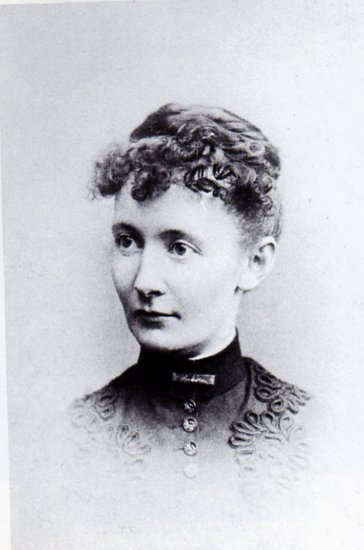
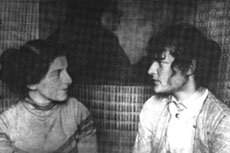
Clara Westhoff and Paula Modersohn-Becker

Paula was not alone in Paris as her friend, the sculptor from Worpswede, Clara Westhoff, had moved there the previous year hoping to study under August Rodin.     At first, life in Paris was difficult for Paula.  She lived in a small cramped attic room but she still embraced life in Paris with great enthusiasm and was determined to avail herself of an education in the arts, a thing which was still denied to women in Germany at the time.  Whilst in the French capital, Paula Becker studied at both the Académie Colarossi and the École des Beaux-Arts, and made numerous visits to the Louvre, all the time taking pleasure in absorbing the artistic life of the city. Through her friend Clara, she met and got to know sculptor Auguste Rodin. She made many visits to contemporary exhibitions and was deeply impressed by the works of the Post-Impressionists especially Paul Cézanne, Vincent van Gogh and Paul Gauguin.  She was also influenced by the strong colours used by the Fauve artists and the Realism style of Jean-François Millet.

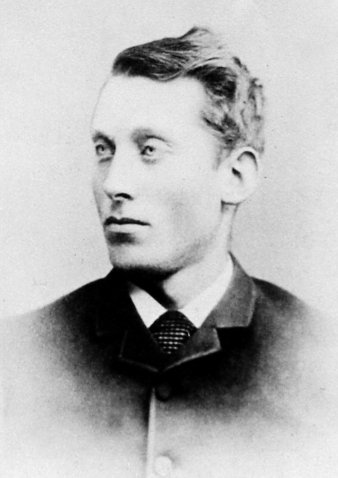
Otto Modersohn and Paula Becker

From April to November of 1900, Paris hosted a World Fair, known as the Exposition Universelle.  The reason for this great event was to celebrate the achievements of the past century and to accelerate development into the next.  Paula invited Otto Modersohn, who was still at Worpswede, to come with his wife and daughter and see the great exposition.  Otto Modersohn arrived in Paris in June along with another Worpswede artist, Fritz Overbeck, but he had had to leave his wife behind as she was unwell, suffering from tuberculosis.  Tragically she died whilst her husband was still in Paris.  He immediately returned to Worpswede to look after his one year old daughter.  Paula also returned to Worpswede and during the following year she and Otto Modersohn married and Paula became stepmother to his daughter, Elsbeth.

Paula could not settle back in Worpswede and was determined that she would have to return to Paris if she was to become a serious painter.   Her husband was very unhappy with her decision to leave him despite her promising to return to Worpswede on frequent visits.  So although married, she abandoned her husband, despite his protestations, and returned to Paris.  On arriving in Paris she recorded her thoughts about what the future held for her:

“…Now I have left Otto Modersohn, I stand between my old life and my new one. What will happen in my new life? And how shall I develop in my new life? Everything must happen now…”

These long periods living away from Otto put pressure on their marriage and after a few years the marriage was all but over and they continued to live separate lives.  In 1907 she returned to Otto in Worpswede and it appeared that the two had reconciled.   Paula became pregnant and bore a child, a daughter Mathilde.  Mathilde (Tillie) Modersohn was born on November 2nd 1907.  Otto and Paula were delighted with their new arrival but their joy was short lived as less than three weeks later, on November 20th 2007, Paula Modersohn-Becker died from a post-natal embolism.  She was just thirty-one years of age. Sadly, that same month Paula’s mother died of a heart attack.

My Daily Art Display’s featured painting today is one Paula completed in Paris in May 1906.  It is entitled Self Portrait on her Sixth Wedding Anniversary.  It is an unusual study as one needs to remember that at the time she painted this picture, she was not pregnant.  On the contrary, she had been reported as saying that, at that time in her life, she was not ready to have children and certainly not a child with Otto!  So why did she depict herself “with child”?  I do not know the answer to that but I read one article the other day in which the author states:

“….Paula was not pregnant in this painting The painting, then, is a metaphor for how she felt about herself as a young artist: fecund, ripe, able for the first time in her life to create and paint freely in the manner that she wished. What she is about to give birth to is not a child but her mature, independent, artistic self…”

I will let you make your own mind up as to why she would want to depict herself as being pregnant.

In the painting, she has portrayed herself with the distended stomach of a pregnant woman but her breasts are small and pert and lack the fullness one associates with pregnancy.  It is a life-size portrayal, measuring 101cms x 70cms.  She stands before us, naked to the waist.  Her eyes are level with ours.  She stares out at us with her large brown eyes. Her auburn hair is parted in the centre and swept up into a chignon.    She half smiles.  Her expression is one of self-confidence.   She appears unabashed by her nakedness as she tilts her head to one side in a questioning gesture.  Her only clothing is a white cloth skirt which is loosely tied around her hips below her distended belly.  Her large hands lie above and below her belly.  It is as if she is framing and showcasing her pregnancy.  Around her neck, and lying between her breasts, is a necklace made up of lozenge-shaped amber coloured beads, which subtly glow against her pale skin.

There is a Gauginesque Tahitian look about the painting.   It is an unusual and a complex self portrait which she painted on the occasion of her sixth wedding anniversary to Otto Modersohn and we know that, at this time, their marriage was well and truly on the rocks and maybe that is why she signed the painting “PB” for Paula Becker, her maiden name and left out “Modersohn” her married name.

Almost a year after her death, Rainer Maria Rilke, the poet and husband of her friend Clara Westhoff wrote the poem Requiem for a Friend in memory of Paula. The poem itself is too long to add to this blog but I have attached the website URL below if you would like to read the full translation of this very moving poem.

http://www.paratheatrical.com/requiemtext.html

Her daughter Tillie, who died in 1998, aged 91, founded the Paula Modersohn-Becker-Foundation (Paula Modersohn-Becker-Stiftung) in 1978.  The Paula-Modersohn-Becker Museum in Bremen has the distinction of being the first museum devoted to the work of a female painter. Early in the 20th century, the patron and merchant Ludwig Roselius amassed a collection of the artist’s major works and this along with works from the Paula Modersohn-Becker Foundation bear out her importance as a pioneer of modern painting.

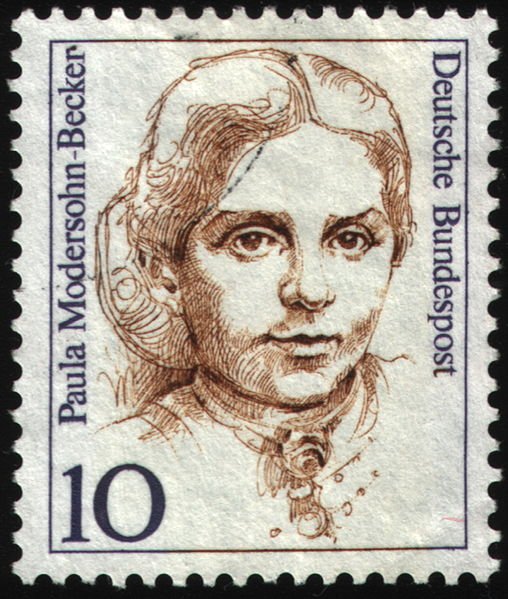
German Commorative stamp

In 1988 a stamp with the portrait of Paula Modersohn-Becker was issued in the series Women in German History by the German

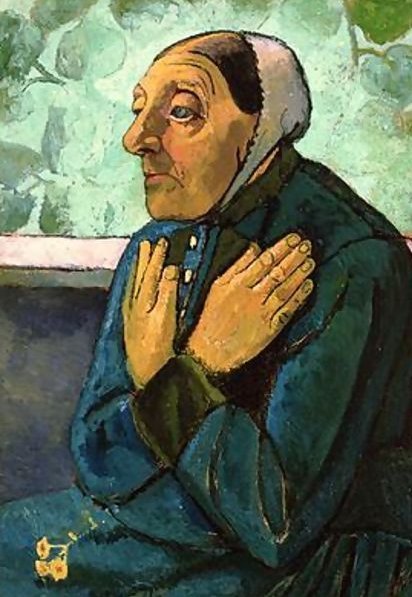
Old Peasant Woman Praying by Paula Modersohn-Becker

Old Peasant Woman Praying by Paukla Modersohn-Becker (1905)

In My Daily Art Display of July 28th 2012, I looked at the life and works of the German Expressionist painter, Gabriele Münter and in my next two blogs I want to showcase the life and feature a couple of the works of art of another early German Expressionist artist, Paula Modersohn-Becker.  She may not be familiar to some of you but I am sure you will find her life story interesting, if a little sad, and her artwork unusual.

Paula Modersohn-Becker

Paula Becker was born in Friedrichstadt, a central district of Dresden in 1876.  She was born into a cultural middle-class family, the third of seven children.  Her father, who was the son of a Russian university professor, had been a government railroad official but had had to take early retirement on health grounds and her mother was the daughter of an aristocratic family.  When Paula was twelve years of age she and her family moved to Bremen.  In 1892, when she was sixteen years of age, she travelled to London to stay with one of her father’s sisters.   During her seven month stay in England she received her first drawing lessons.  Paula loved drawing and painting and wanted to become an artist but her father, mindful of the poor financial rewards of being an artist, insisted that first she must enrol on and complete a two-year teachers’ training course before he would allow her to follow her dream of becoming a painter and study at the Berlin School of Women Artists.  She attended the teachers’ training college in 1893 and completed the course two years later.  During this two year period she received drawing and painting lessons from the German painter and stage designer, Bernhardt Wiegandt.

Just a few miles north of Paula’s Bremen home was the small village of Worpswede, which is situated in the Teufelsmoor, a region of bog and moorland.  It was to play a large part in Paula’s life as it had become the home of an artistic community.  It all began in 1884 when Mimi Stolte, the daughter of a shopkeeper in Worpswede, whilst staying with her aunt in Düsseldorf, met Fritz Mackensen, a young art student at the city’s Art Academy and since he was virtually penniless, she took pity on him and invited him to Worpswede to spend the holidays with her family.  After that, he visited her on a number of occasions and liked the area so much that, in 1889, he made it his home and soon, along with his artist friends, Otto Modersohn and Hans am Ende, founded the artists’ colony of Worpswede.  Other artists, writers and poets soon descended on the small town and in 1895 the “Kunsthalle Bremen” exhibited works by artists from Worpswede for the first time.

In 1896 Paula Becker enrolled on a painting and drawing course run by the Verein der Berliner Künstlerinnen (Union of Berlin Female Artists) which offered art studies to women.  Following this she began a one-and-a half-year apprenticeship.    At first she concentrated on drawing lessons with portrait and nude studies and later she studied painting under the tutorship of the Swedish/German painter, Jeanna Bauck.  The following year, Paula Becker visited the artist colony at Worpswede for the first time and met the German painter, Fritz Mackensen, who became her art tutor.  In 1898 Paula left home and went to live in Worpswede and worked alongside the other artists.  During this period she completed many works depicting women and children of the farming community and for models she would use the local peasant women and their children as well as getting some of the old women from the local poor house to pose for her. She also completed some landscape works, which depicted the desolate and dark moors which surrounded the Worpswede area.  These moors were crossed by a number of canals used by barges for transporting locally harvested peat moss to Bremen.  The artist colony painters of Worpswede believed in and promoted a romanticized view of country life, which they believed was a powerful antidote to the revulsion they felt for urban industrialization. Paula however thought differently and rejected the sentimental approach of her fellow artists, believing that a basically realistic subject could better represent profound spiritual values.  Although there was a kind of peace and tranquillity at Worpswede she still hankered after the excitement of city life.  So after more than twelve months at Worpswede she decided to head for the art capital of the world – Paris.   She left Germany on December 31st 1899, the last day of the nineteenth century.

My Daily Art Display featured painting today is entitled Old Peasant Woman Praying which Paula Becker completed in 1905.  There is a kind of Primitivism to this painting similar to what we have seen in Gaugin’s works.  The woman has her large lumpish peasant hands crossed over her chest in a meditative prayer-like manner.  There is a religious feel to this work.  One cannot say for sure what is in the background.  Could it be the coping of a wall with a large leafed tree in the background or is it just a flower/leaf-patterned wall.  However note how the artist has interrupted the background with brightness around the head of the peasant, almost halo-like, giving her a kind of spirituality.   She has a weather-beaten face from the continuous hours spent outside working in the unforgiving sunlight.   The painting is of a lower-class peasant woman and yet it is not a condescending painting.  There is a certain dignity about this woman.  This was never just a peasant painting which was meant to entertain the elite.  This is quite different to the way Van Gogh depicted his peasants in The Potato Eaters (See My Daily Art Display February 7th 2012).   Paula has given her subject a modicum of respect and by doing so has created a beautiful work of art.

In my next blog I will tell you more about Paula Becker’s life, her marriage to Otto Modersohn and her untimely death and feature some more of her works of art.

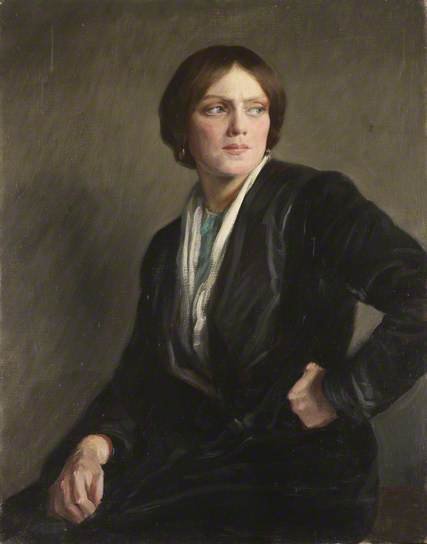
The Outcast by Brian Hatton

The Outcast by Brian Hatton (1913)

Today I am concluding my look at the life of the Hereford artist Brian Hatton and featuring a couple more of his paintings.

In 1905 Brian Hatton was accepted into Trinity College Oxford where he remained for a year.  Hatton enjoyed travelling and in 1906 along with his uncle Charles Marr, he went to Holland where they visited Amsterdam and The Hague.  On returning from his trip abroad, Hatton went to Scotland where he enrolled at the Hospitalfields Art School in Arbroath and studied painting under George Harcourt, the Scottish portrait and figure painter.  This establishment is believed to be Scotland’s first school of fine art and the first art college in Britain.  It was founded by Patrick Allan-Fraser, a patron of the arts.   Allan-Fraser, who was the son of an Arbroath weaving merchant, had studied art in Edinburgh and was once president of the British Academy of Art in Rome.  He acquired the Hospitalfields estate through marriage and set about the remodelling of the buildings, converting the eighteenth-century barn into a gallery.  Allan-Fraser died in 1890 and having no heirs, bequeathed the building to the State for the promotion of Education in the Arts.   It was later renamed the Patrick Allan-Fraser School of Art.

In 1908 Hatton returned to England and went to live in Camden Place, London, where he and his cousin Geoffrey Vevers shared lodgings.  Whilst in London he attended an art school in South Kensington and spent time at the National Gallery copying paintings.  During 1908 Hatton was invited to join an archaeological expedition to Egypt, led by the English Egyptologist, Professor William Flinders Petrie and his wife.

Mother, July 27th 1909 by Brian Hatton

Brian and his party arrived back in England in May 1909.  Whilst he had been away his mother’s health had declined and she had been away from home staying with relations in Scotland.   In the July her doctors prescribed a rest cure and she went into a Shropshire nursing home in Church Stretton and for a time her health seemed to improve.  Sadly Brian’s mother’s health took a sudden turn for the worse and on July 27th 1909 she died.  This was a terrible blow to the Hatton family, especially to Brian.  His mother had, at an early age, recognised his artistic potential and nurtured it with great care.  There are numerous letters in the archives which show how his mother had been his closest confidant and friend.  His final tribute to his mother was a sketch he made of her as she lay at peace in her room, entitled Mother, July 27th 1909.

Following his mother’s death, and for the next twelve months, Brian immersed himself in his artistic work and carried out a number of portraiture commissions.  Eventually he craved a break from this type of work and decided to realise a dream he had been nurturing and planning for some time – a visit to Paris.  In November 1910 he decided to fulfil this dream and set off for the French capital, visiting the Louvre and working at the Parisian art school, Académie Julian.

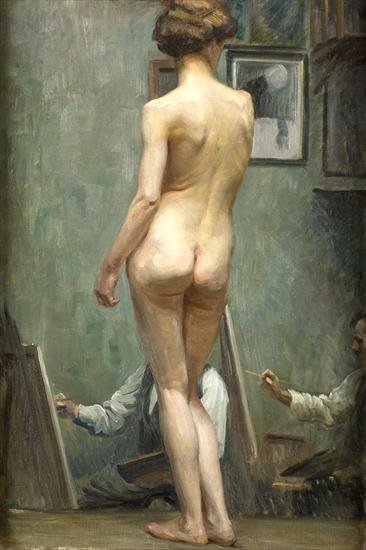
At Académie Julian, Paris by Brian Hatton (1910-12)

It was whilst at this artistic school that he started the painting (above) entitled At the Académie Julian, Paris, which he completed back in England, two years later, in 1912.

After his brief sojourn in Paris, Brian returned to England and to his family home in Herford in time for Christmas. It was 1911 and the year that the new king, George V, was crowned king of England.  Brian made frequent trips to London and realised that to prosper artistically he needed to establish a studio in the capital and seek out a well-connected patron.  His dilemma was simple – to gain a wealthy London patron he needed to have a studio in the city but to be able to afford a London studio, he needed a wealthy patron !   In a letter to him from the English artist Briton Riviere,  who had been following Hatton’s progress from when he was a youngster, Riviere warned Hatton about the perils of London:

“…I feel that a move to London is almost inevitable for you as time went on and I hope that now you are strong enough in your own convictions and beliefs, to escape being drawn into any artistic extravagances and fashions of the day, which have been so much to the fore in these times…”

Despite the warning, Hatton left Hereford and with his Oxford University friend and fellow artist, Gerald Siordet set themselves up in The Bronze Door studio in South Kensington in January 1912.  Hatton received many commissions and soon he was so busy he found it difficult to spare time to return to Hereford and visit his father and siblings.  In 1913 he received a royal commission from Windsor Castle to make drawings of Princess Alice’s children, Prince Rupert and Princess May.   Princess Alice was the longest surviving grandchild of Queen Victoria.  The success of this commission led to many more from the “landed gentry”.

In 1913 he was approached by a member of the Royal Institute of Oil Painters to see if he would like his name to be put forward in the November annual election to become a member of the Society.  This was a great honour and to further his cause he submitted some of his best paintings to their summer exhibition, one of which was entitled The Outcast, which is My Daily Art Display’s featured painting today.  For this work he had employed a model, Beatrice Stewart, who despite her haunting beauty was lame.  In this work Hatton has depicted her with strong features and a somewhat curious expression.  It is an expression of resignation to her fate combined with a rebellious air and yet there is also a somewhat poignant sadness in her expression.  The work received a “highly commended” award at the exhibition.

In 1914 commissions for his work had virtually dried up and Brian was facing financial problems.  The newspapers at the time were full of stories of an impending war with Germany and on July 28th, just a fortnight before his twenty-seventh birthday, war was declared.  Brian left London and returned home and in September enlisted as a trooper with the 1/1 Worcestershire Yeomanry cavalry regiment.  In October the troop was getting ready to ship out to France.   On November 5th his father received a letter from him with some surprising news:

Nov 5th 1914

My Dear Old Dad,

I have just got married to Biddy today by soldier’s licence.  I only decided to go through with it last night and got Biddy down to talk it over with her.  I suppose on the whole it is a very rash thing to have done…..”

He ended the letter rather sheepishly:

“…I hope when you have got over this little shock that you will give us your blessing.   We shall need all that we can get!   Yes, I know that I’m a silly young fool and all that.  But I am still your

loving son

Brian

Brian’s wife, Lydia Bidmead (Biddy), gave birth to their daughter, Mary Amelia,  on September 21st 1915, the same day as his father’s birthday.  Brian went home to Hereford to see his wife and daughter.  A month later he went to Devenport to embark the troop ship, Scotia, bound for Mudros on the Greek island of Lemnos, which had been a British base used for fighting in Gallipoli.     In his last letter to his grandmother he ended with a wistful remark, fully mindful of the dangers which lay ahead.  He wrote:

“…I shall be thankful to return with a sound right hand and eyesight…”

He and his regiment left Mudros and sailed for Egypt in December 1915.  Brian was now back in the country he had visited seven years earlier when he was part of the Flinders Petrie Archaeological Expedition.  On arrival he was trained as a signaller but found learning semaphore and the Morse code very difficult.  Mail to and from home was spasmodic and often letters went astray which he found very frustrating.  He had witnessed some military action but the imminent danger he and his colleagues were in seemed to have not fully hit home and there was even an element of enjoyment about the conflict.  In a postscript to his last letter home in April 1916 he commented:

“…To me, at the time, it all seems ridiculous – like a comic opera.  The men were all smoking and joking and nobody seemed in the least danger.  One only has to take reasonable precautions and lie down behind a few inches of sand hill to be quite safe from any bullet…”

On April 21st 1916 a party of combat engineers was sent to sink wells at Oghratina in the Sinai Desert and to protect them a detachment of Worcester Yeomanry from their base in Katia, of which Brian Hatton was one, was sent to protect them.  On Easter Sunday, April 23rd they came under heavy attack from a Turkish infantry regiment.  The British commanding officers asked for volunteers to ride back to their main garrison at Katia to fetch help.  Brian Hatton was one of the volunteers.  He rode off but was never seen again.   Months later his body was found.  The corpse was identified as that of Brian Hatton as in his wallet was a tiny photograph of Biddy and a postcard addressed to his wife.

I will bring this blog about Brian Hatton to a close with the words of Walter Shaw Sparrow, a British writer on art who wrote a book in 1926 entitled, Brian Hatton – a young painter of genius killed in the War and in it he talked about Hatton’s artistic ability:

“…Brian had the rarest of all things – true genius…”

He went on to describe Brian’s early years as:

“… a boy endowed with gifts of spirit so extraordinary that the first period of work from the age of ten, 1897, to that of nineteen, 1906, was a period not of rare promise only but also of wonderful achievement, showing not only maturity of Design, but maturity of Poetic Feeling, and a charm brimming with country life and English humour…”

The museum and art gallery in Hereford has a small permanent exhibition of Brian Hatton’s art work and I believe the drawings and paintings are often changed.  It is somewhat sad and disappointing that the display is so small and that there was no literature on hand about him considering he was the town’s famous son.   For a full and excellent account of his life through his letters you may like to get hold of Brian Hatton’s 1978 biography by Celia Davies entitled Brian Hatton – A biography of the artist (1887-1916).  I found the book of great help when I was piecing together Brian Hatton’s life.

Brian Hatton – Family portraits

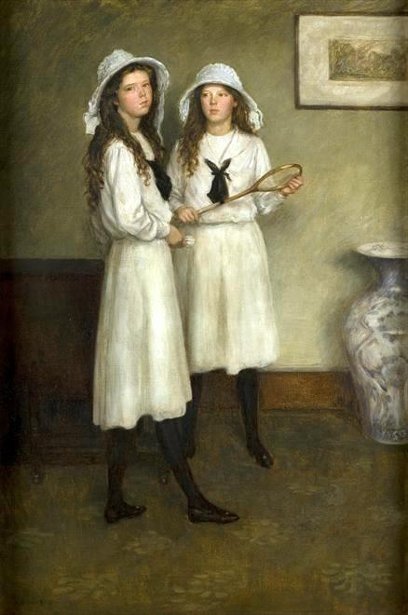
Ailsa & Marjorie Hatton, with a Racquet
by Brian Hatton (1908)

Today I am going to start to look at the life of a young artist, born at the end of the nineteenth century who, like Frédéric Bazille, the featured artist in my last blog, had promised so much but whose life was cut short fighting for his country.

Brian Hatton, the son of Alfred and Amelia Hatton, was born in Whitecross, a suburb of Hereford, in August 1887.   His father, a keen sportsman, was involved in the leather business and was engaged in tanning and in the making of leather gloves.   Brian was the eldest of three children.  He had two sisters, Alisa Marr Hatton who was born in 1893 and Marjorie who was born in 1895, the same year that the family moved from Whitecross to Broomy Hill, another suburb of Hereford.   His siblings would feature in many of his paintings and it is these family portraits which I feature in My Daily Art Display blog today.    As a young child Brian showed a remarkable talent for drawing.   His parents, who were very proud of his artistic ability constantly encouraged and nurtured his talent. When Brian was just eight years old, he was awarded a Bronze medal for his exhibit at the Royal Drawing Society, an association founded in 1888, which promoted the teaching of drawing in schools.

Girl Seated In A Red Beret (Marjorie Hatton, The Artist’s Younger Sister)
by Brian Hatton

At the age of ten, Brian developed asthma and he was sent to Swansea where it was hoped that the sea air would help him recuperate.  During this time he lived with Doctor and Mrs Lancaster.  Whilst there, he used to spend a lot of time pony riding, visiting the beach and pier where he did much sketching.  Swansea, at the time was buzzing with activity, as it was preparing for Queen Victoria’s Diamond Jubilee celebrations.   During 1898 he began lessons at the Swansea School of Art and was awarded the ‘Gold Star’ of the Royal Drawing Society. Following this award from the Society, the artist George Frederic Watts became a great admirer of Brian’s talent and began to take a keen interest in his development.

Alisa Marr Hatton (The Artist’s Older Sister)
by Brian Hatton

Brian Hatton continued to paint and entered his work in many exhibitions and continued winning medals.  In 1903, when he was sixteen years of age, he went down to Cornwall and spent some time in the Carbis Bay area, which was home to many English artists, such as Norman Garstin and Stanhope Forbes.  It offered Hatton a chance to study their work and let them see his portfolio.  Although they congratulated him on his portrayal of the sea and his other favourite subject, horses, they felt that he needed to better his landscape work.

Lydia May Hatton (The artist’s wife)
by Brian Hatton

My final offering today (above)  is an elegant pencil and wash drawing, which Brian Hatton completed in 1911.  It is a portrait of Lydia May Bidmead, who later became Mrs Brian Hatton.   Lydia May, known to her friends as Biddy, was a dancer, talented teacher and performer.   This pencil drawing brings out the sophisticated grace of his wife-to-be with its fine pencil lines and rosy watercolour capturing her elegant beauty. Lydia May Bidmead was married to Brian Hatton by soldier’s licence on 5th November 1914. Their daughter Mary was born the following year.

In my next blog I will conclude the life story of Brian Hatton and look at two of his works which I saw when I visited the Hereford Museum and Art Gallery last weekend.

Réunion de famille (Family Reunion) by Frédéric Bazille

Family Reunion by Frederic Bazille (1867-69)

Often when I am driving down a large highway and see that the traffic flow in the opposite direction has stopped resulting in a formidable two or three mile tailback and I go further on, past the hold-up, around a bend in the road, and see cars heading towards the stopped traffic, the drivers of which are completely oblivious to what is around the bend.  They are happily driving on.  Life for them is good.  Maybe they are heading home or heading for a destination they have been counting down time to reach.   They have great plans with regards what they will do when they reach their destination.   It is at times like these that I think about life and death and the way we, like the driver and passengers of the cars heading unwittingly towards the tail-back.  We are happily going about our business, completely unaware of what is about to happen to us in a few minutes, or a few hours, or a few days or a few months hence.

So why do I start my art blog in such a fashion?   The reason is that for my next two blogs I am featuring works by two young artists who had their whole lives ahead of them and who must have believed theirs was to be a successful and happy future and yet because of a conscious decision they both made, their lives would end suddenly in the theatre of war.  Today I am going to once again look at the life and works of the nineteenth century French painter Frédéric Bazille and in the following blog I want to introduce you to an artist, who you may not have come across before, the English Victorian painter Brian Hatton.

Jean Frédéric Bazille was born in Montpellier at 11, Grand’rue in 1841. His father was Gaston Bazille and his mother was Camille Victorine Bazille (née Viliars).  Gaston Bazille was a wine merchant, senator and president of the Agricultural Society of Herault.  He was the head of an affluent and cultured upper middle-class Protestant family.  He and his wife had three children, Suzanne the eldest, followed by Jean Frédéric and Claude Marc.  Whilst living in Montpellier, Bazille became acquainted with a friend of his father, a local art collector Alfred Bruyas.  Bruyas was also a close friend and patron of the artist Gustave Courbet and, over time, he had built up a sizeable art collection with works by Jean-François  Millet, Jean-Baptiste-Camille Corot, Eugène Delacroix and of course, many by his friend Courbet.   Young Frédéric Bazille often had the chance to examine these precious works and was fascinated with and inspired by the collection.   This was to be the start of the young man’s love affair with art.  He began to paint and sketch but his father told him that if he wanted to continue with his art he had to agree to continue with his studies. He graduated from high school in Montpellier, where he obtained a degree in 1859, and as he would do anything to continue with his art, he went along with his father’s wishes and began his medical studies at the Faculty of Montpellier.

To continue with his medical studies, Bazille had to move to Paris and so in November 1862 he travelled to the capital.   Whilst in Paris, Bazille, unbeknown to his father, spent more time sketching and painting than getting on with his medical studies.    In late 1862, Bazille enrolled at the private art studio of Charles Gleyre, the Swiss historical painter.   Whilst at this atelier he met and became friends with fellow aspiring artists, Claude Monet, Auguste Renoir, Alfred Sisley and James McNeil Whistler.   Monet and Renoir would become close friends of Bazille’s and they were to influence his artistic style and approach toward art, particularly through the practice of en-plein air painting and directly observing life and nature.  During this time, a frequent meeting place for these artistic friends was the Café Guerbois in Paris, where new ideas and theories were discussed passionately.    Bazille, unlike Monet, had no money problems.  He came from a well-off family and he would often pay for many a round of drinks.   Bazille also paid for studio rent and art supplies and always helped ease the financial worries of the likes of Monet by buying some of their paintings and by doing so ensured that his new-found friends would be saved from complete financial despair.

When Gleyre’s studio closed the following year Bazille decided to leave Paris and follow his friends whilst he waited on the results of his medical exams.  In 1863 he went and lived alongside Monet at Chailly and learnt the en plein air painting technique in the Forest of Fontainebleau.  In 1864, he found out that he had failed his medical exams, much to his father’s disappointment.   Bazille gave up any idea of entering the medical profession and, from this time on, he concentrated all his efforts on his painting.

France declared war on Prussia on 19 July 1870 but the other German states quickly joined on Prussia’s side and France was soon defeated.  In August 1870, at the age of 28, Frédéric Bazille, against the wishes and advice from his friends, enlisted in the Third Regiment of the Zouave.    Zouave was the title given to certain light infantry regiments in the French army which trained in Algeria.   One must remember that Bazille was a wealthy man and could, if he had so wanted, not have gone to war, for in those days, even if he had been drafted, he and his family could have paid for another person to substitute for him. However Bazille chose to serve his country.   Bazille died on November 28th 1870 at the Battle of Beaune-la-Rolande, near Orléans.  Bazille’s biographer, François Daulte wrote about the incident:
“... The company halted on the top of ridge overlooking Beaune. It was greeted with a hail of Prussian bullets. The first of the men advancing toward the town fell like flies …….. In the general chaos women and children were escaping from the town and running towards isolated farm buildings which would offer some protection …….. Bazille’s turn came and he charged, crying: “Don’t shoot! Women and children!” He was hit by two bullets to the arm and chest. He fell, face down in the earth, fifty metres from the château where Corot had painted one of his masterpieces…”

Bazille died on the battlefield just eight days before his twenty-ninth birthday.   His family was devastated and his father travelled to the battlefield a few days later to take his body back for burial at Montpellier.

My featured painting today is probably Frederic Bazille’s most famous work, entitled Réunion de famille also called Portraits de famille (Family Reunion also called Family Portraits) which he completed in 1867 and altered slightly two years later.  It is a large painting, measuring 152cms x 230cms.  The subject of the work is an extended family gathering at Bazille’s family’s country estate at Méric, near Montpellier during the summer of 1867.  The sun is shining brightly but the people are safeguarded from the harsh rays of the sun by the very large tree on the terrace, the foliage of which filters the sunlight, which allows the artist to cleverly depict the very sophisticated light and shadow effects against the subjects, their clothing and surroundings.  Look at the strong contrasts of the bright colours between that of the landscape and the sky in comparison to the shaded areas under the tree.  As the sunlight manages to filter through the leaves it manages to light up some of the pale clothing contrasting it against the darkness of the jackets, shawl and apron.  It illustrates how Bazille’s liked painting in the light of the South of France.

In this painting, Bazille has depicted various figures in a tableaux-type style.  Although there is a peaceful feeling about this depiction, it is just a group of figures.  There is a lack of interaction between the family members with all the figures stiffly-posed and all, except the father, looking towards us as if we were the photographer recording this family get-together.  The photographer aspect of this painting may not be as far-fetched as it seems as it is known that around about this time Frédéric’s brother Marc married Suzanne Tissié and it could well be that Frédéric was in some ways recording the family get-together a few days after this wedding.  There is an air of confidence about the demeanours of the people depicted, which probably came with their affluent status in society.  In the picture Bazille has included ten extended family members and he even added himself in the painting.  He is not in a prominent position.  He has squeezed himself into the far left of the painting, which may infer that he was somewhat reluctant to include himself.    Next to him stands his uncle by marriage, Gabriel des Hours-Farel.  Seated on a bench with their back to him is his mother, Camille, and father, Gaston, whilst at the table is his aunt, his mother’s sister, Élisa des Hours-Farel and her daughter Juliette Thérèse.     Standing by the trunk of the tree with their arms linked are Bazille’s cousin Thérèse Teulon-Valio, the married daughter of Gabriel and Élisa des Hours-Farel,  and her husband, Emile.  On the right of the painting, standing by the terrace wall is Marc Bazille, Frédéric’s brother with his wife of a few days, Suzanne Tissié and his sister Suzanne.    The Bazille and des Hours families used to spend every summer on the magnificent estate of Méric, in Castelnau-le-Lez, a village near Montpellier. The house and its grounds were slightly higher up, overlooking the village.

Two years later, after it was shown in the Salon, Bazille re-worked parts of the painting, replacing little dogs, which had been in the foreground, with a somewhat contrived still life made up of a furled umbrella, a straw hat and a bunch of flowers.

The painting was accepted by the French Salon of 1868, which slightly embarrassed Bazille as his friend Monet had failed to get any of his works accepted by the Salon jurists that year.  Bazille didn’t gloat much about his inclusion in the Salon, stating that his being chosen over Monet was “probably by mistake.”  Bazille’s is often now looked upon as a dilettante, an amateur who flirted with avant-gardism but lacked application and so remained a follower rather than a leader. However some of his contemporaries would disagree, Camille Pissaro described him as:  “one of the most gifted among us.”

Bazille produced many beautiful works of art during his short lifetime and who knows what he may have accomplished if he had not patriotically decided to fight for his country and sadly, within a year of painting today’s picture he was lying dead on a battlefield.