Jasper Francis Cropsey

Among the most vibrant and spectacular works of the nineteenth century, were the sweeping landscape depictions of the Hudson River School which managed to capture the rugged beauty of the American countryside and wildernesses.  The name Hudson River School was first used disparagingly by trendy Europhile critics who preferred the dignified depictions of the realism of L’École de Barbizon.  The beautiful paintings of the Hudson River School compellingly convey the natural grandeur, not just of the Hudson River Valley, as the name would imply, but also the Catskills, Adirondacks, White Mountains, the Maritimes, the American West and South America.  My guest artist was one of the great painters of that School.

Jasper Francis Cropsey

Jasper Francis Cropsey was born at Rossville, Staten Island on February 18th 1823.  He was the eldest of eight children and his ancestors were of Dutch and Huguenot ancestry. His father was Jacob Rezeau Cropsey who had a farm in Rossville and his mother was Elizabeth Hilyer Cropsey (née Cortelyeu).  During his early years, Cropsley suffered many bouts of ill health which resulted in him missing school and forced him to rest up at home.  During those frequent periods of inactivity, he taught himself to draw. Many of his sketches featured architectural drawings and landscapes.  Whilst attending the local country school he would help is father on the farm but in his pre-teen and teenage years he developed his main love, sketching and painting.  Much to the chagrin of his teachers he would often be found doodling on his school books.  In his 1846 unpublished biography, Reminiscences of My Own Time he wrote:

“…I was so disposed to adorn my writing book, on the margin, wherever there was a blank space, with fancy letters, boats, houses, trees, etc., and paint, or color the pictures in my books that I would undergo the reprimand of the teacher, rather than desist from it…”

The Valley of Wyoming, by Jasper Francis Cropsey (1865)

Cropsey as a young teenager was fascinated with architecture and this led him to assemble an elaborate model of a country house which he submitted to the 1837 fair of the Mechanics’ Institute of the City of New York and it won him a diploma.  The model was well received and Joseph Trench, a New York architect who saw it, offered fifteen-year-old Cropsey a five-year apprenticeship in his architectural office. After eighteen months, Cropsey’s proficiency in drawing had earned him the responsibility for nearly all the office’s finished renderings.   Cropsey prospered at the firm and during his penultimate year at the company he began painting the backgrounds of the architectural designs. To improve that skill, Joseph Trench persuaded his young apprentice to study watercolour painting with English-born watercolourist, Edward Maury.  The firm even provided him with paints, canvas, and a space in which to study and hone his artistic skills.

The Narrows from Staten Island, by Jasper Francis Cropsey (1868)

Cropsey left the Trench’s office in 1842 and in 1843 he first exhibited a painting, which was quite well-received.  It was a landscape entitled Italian Composition, probably based on a print he had seen at the National Academy of Design. Jasper Cropsey was elected an associate member of the Academy the following year and became a full member in 1851.

Sunset on Greenwood Lake by Jaasper Francis Cropsey (1877)

Having left the Trench architectural company Cropsey managed to support himself for the next two years by accepting commissions to provide architectural designs.  Although that brought him financial support, his main love was sketching and painting landscapes and he would often take painting trips to New Jersey and Greenwood Lake, which straddles the border of New York and New Jersey.  After one such trip, Cropsey had put together a number of sketches of the area, which on his return home he converted them into two paintings of Greenwood Lake that were accepted at an 1843 exhibition at the American Art Union.

Autumn Foliage in the White Mountains (Mount Chocorua) by Jasper Francis Cropsey (1862)

During one of his trips to Greenwood Lake, Cropsey met Maria Cooley, whom he later married in May 1847. They went on to have two children, Mary Cortelyou Cropsey in 1850 and Lilly Frances Cropsey born in 1859. He and his wife crossed the Atlantic for a two-year European honeymoon and visited England during the summer of 1847, travelled throough France and Switzerland and reached Italy wheree the Cropseys spent a year among the colony of American artists who had settled in Rome. During that lengthy stay in Rome, Cropsey worked out of the former studio of Thomas Cole, the founding father of the Hudson River School. Cropsey became familiar with the works of the Nazarenes and other German artists in Rome and it was their influence which may have reinforced his own liking of detail in his paintings. Like many other American artists who visited Italy, Cropsey made frequent sketching trips to the Roman Campagna and other regions of Italy, such as Sorrento, Capri, Amalfi, and Paestum.

Maria Cooley Cropsy by Daniel Huntingdon (c.1850)

Cropsey and his wife returned to America in 1849 and he made his first trip to the White Mountains, a mountain range covering about a quarter of the state of New Hampshire and a small portion of western Maine.  Cropsey rented studio space in New York which he shared with Edwin White, the Massachusetts-born artist, at 114 White Street in New York City. Here he taught and worked up his European sketches into finished oil paintings. Cropsey and his wife made their base in New York and from there in the summers they would make exploratory trips through New York State, Vermont, and New Hampshire, and he would continually sketch what they saw. Cropsey specialized in autumnal landscape paintings of the northeastern United States. He would convert sketches into finished paintings and sell them but also to supplement the family income he would teach.  
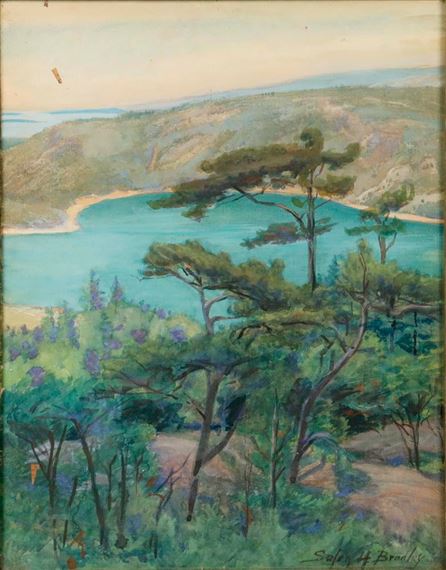
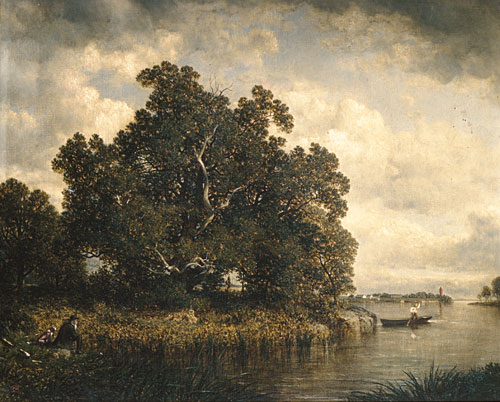
 Bayside, New Rochelle, New York by David Johnson (1886)

One of his pupils was the landscape painter David Johnson, who became a member of the second generation of Hudson River School painters.

Lord Byron’s Dream, by Charles Lock Eastlake (1827)

Cropsey and his wife made a second trip to England in 1856 and rented a studio in London at Kensington Gate.  It was an ideal place to host parties and make friends such as the art critic John Ruskin, John Singleton Copley, 1st Baron Lyndhurst, who was a British lawyer and politician and was three times Lord High Chancellor of Great Britain and Sir Charles Lock Eastlake who was a British painter, gallery director, collector and writer of the 19th century. He became the first director of the National Gallery and from 1850 to 1865 he served as President of the Royal Academy.    

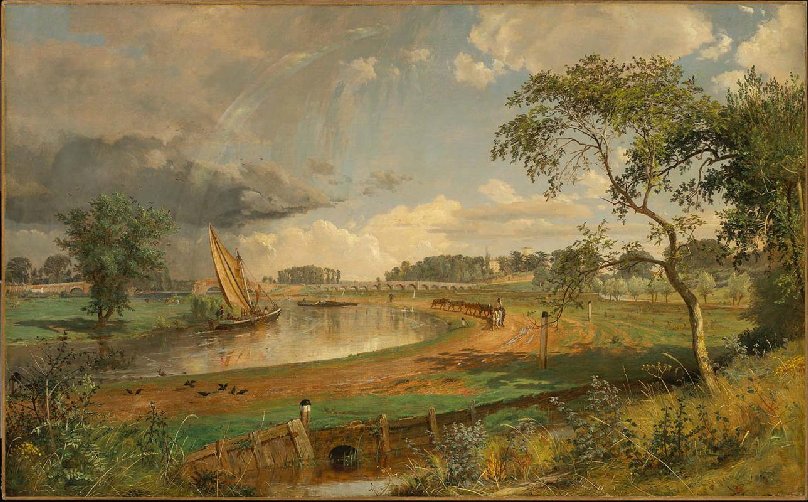
Walton on Thames by Jasper Francis Cropsey (1860)

It was with friends such as these that ensured many English and American landscape painting commissions came Cropsey’s way from both English and American patrons. When Cropsey arrived in England he brought with him many commissions from his American patrons who wanted paintings depicting English castles and abbey ruins. He also found that there was a great interest amongst English clients for his American landscapes. The London printer Gambert and Company commissioned thirty-six views from Cropsey for publication in the American Scenery journal.

Autumn—On the Hudson River , 1860 by Jasper Francis Cropsey

In 1860 Cropsey completed one of his most famous paintings entitled Autumn—On the Hudson River of 1860. This monumental view of the Hudson River Valley was painted from memory and in-situ sketches he had made, in his London studio. Cropsey adopted a high vantage point, looking southeast toward the distant Hudson River and the flank of Storm King Mountain. It is an autumnal scene which would soon become Cropsey’s trademark.  The work was praised by critics and the public alike, including Queen Victoria.  The painting depicts a sweeping panoramic view of the river under a sun-streaked sky in this long, horizontal landscape painting (60 x 108 inches).  The leaves on the trees are fiery autumnal oranges and reds.  In the background we catch a glimpse of the mountains through the haze.  At the bottom of the painting we can see vine-covered, fallen tree trunks and mossy grey boulders.  At the bottom left we can just make out a trickling waterfall and small pool. 

Although not easy to spot, on the bank of the pool, three men and their dogs sit and recline around a blanket and a picnic basket, their rifles leaning against a tree nearby. From our viewpoint, the land stretches down to a grassy meadow which is crossed by a meandering stream at the heart of the painting. 

In the right foreground we see cattle on the riverbank drinking the water close to a wooden bridge. 

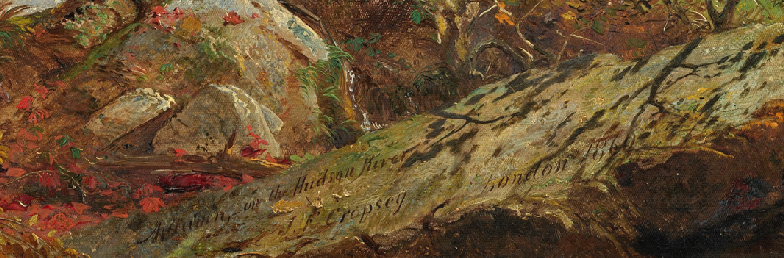
Artist’s signature on flat rock

Cropsey signed the painting as if he had carved it into the flat top of a rock at the centre foreground of the landscape with his name, the title of the painting, and date: “Autumn – on the Hudson River, J.F Cropsey, London 1860.”

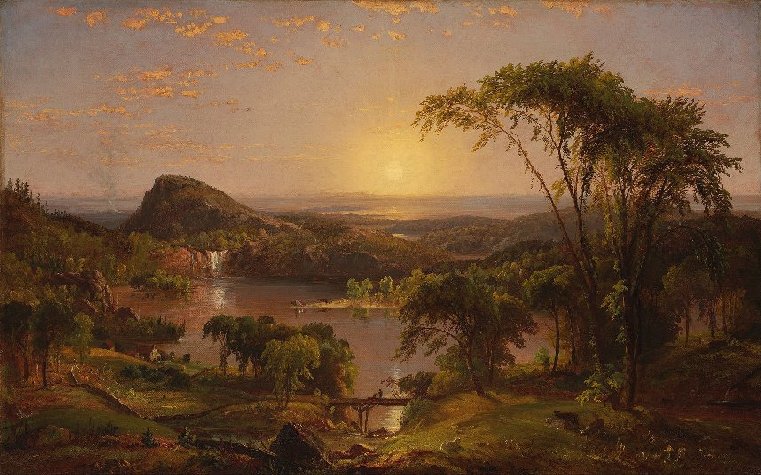
Summer, Lake Ontario by Jasper Francis Cropsey (1857)

Besides earning money from the sale of his landscape paintings he also provided illustrations for books of poetry by Edgar Allan Poe and Thomas Moore and did a series of views of American scenery published by Gambert and Company, London.  Cropsy was acclaimed not only for his beautiful autumnal landscapes such as Autumn—On the Hudson River, 1860 which is now part of the National Gallery of Art, Washington, D.C. collection, but for bringing to the untravelled British people the exquisite scenery of the great Western continent.   Queen Victoria was so impressed by Cropsey’s works of art that she appointed him to the American Commission of the 1862 International Exposition in London, and he subsequently received a medal for his services.

Coast of Genoa by Jasper Francis Cropsey (1854)

Cropsey and his wife returned to America in 1863. The 1860s were the most successful time for Cropsey as far as the sales of his work and his ever increasing bank balance. Shortly after their arrival home to America they visited Gettysburg to record the battlefield’s topography in a painting. Cropsey also began to accept architectural commissions once again and produced his best-known designs, such as the ornate cast and wrought iron Queen Anne-style passenger stations of the Gilbert Elevated Railway along New York’s Sixth Avenue.

High Torne Mountain, Rockland County, New York by Jasper Francis Cropsey (1851)

Cropsey’s father-in-law, Isaac P. Cooley was a justice of the peace from 1837 to 1839 and became a judge over the New Jersey Court of Common Pleas in 1840.    Cooley later became a member of New Jersey State House of Assembly from 1860 to 1861.   Cooley offered to build his daughter and son-in-law a studio on his estate but Cropsey declined the  offer and instead, purchased forty-five acres of land near Greenwood Lake in Warwick, New York, where he designed and built a 29-room Gothic Revival mansion with its own studio which he called Aladdin. The family then divided their time between living in New York City, and spending time in Warwick.

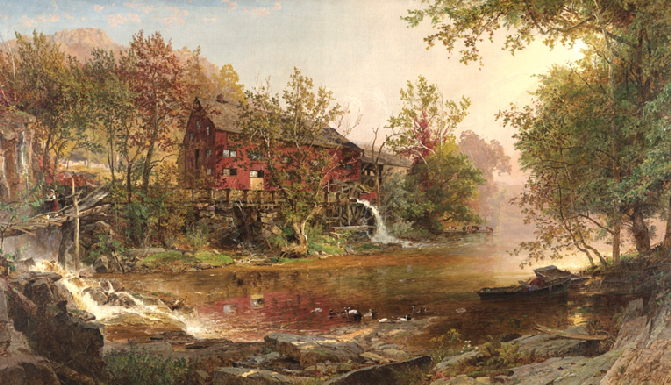
The Old Mill by Jasper Francis Cropsey (1876)

Unfortunately for Cropsey, the art of the Hudson River School began to lose its popularity and by the early 1870’s would be completely out of favour in the art world. In 1876 Cropsey completed his last major work, The Old Mill, which is now part of the Chrysler Museum of Art in Norfolk, VA. Collection.  The painting is a depiction of the Sanford gristmill, which stood on the banks of the Wawayanda Creek near Warwick, New York, and close to where Cropsey had built his palatial estate, Aladdin. The rural water mill was at the heart of the American pre-­industrial economy, but time moved on and in the 1870s, the water mills were quickly being replaced by more efficient steam-powered mills and factories.  This loss of such bygone icons concerned Cropsey.  For him, it was symbolic of the loss of the simple past.  It was a sentimental bereavement.  The depiction was typical of Cropsey’s past output – autumn landscapes that beautifully captured the sunlit atmosphere of autumn in New York and New England.  Cropsey exhibited it at the 1876 Centennial Exposition in Philadelphia, where he was awarded a medal for “excellence” in oils.

Wickham Pond and Sugar Loaf Mountain, Orange County by Jasper Francis Cropsey (1876)

The Hudson River School artwork began to lose its popularity by the mid 1870’s and by the end of the decade would be completely out of favour in the art world. In the early 1880’s the sale of Cropsey’s landscape paintings was dwindling eclipsed in popularity by the smaller scale works which were, softer, mood-evoking landscapes of Barbizon-inspired painters such as George Inness. As a result the Cropsy family’s financial situation became dire and the family was perilously close to having their home, Aladdin, in Warwick, NY, taken from them.   Fortunately, they managed to sell their lavish estate and at the same time, auctioned off many paintings, furniture, and household possessions in preparation to move to a smaller property.

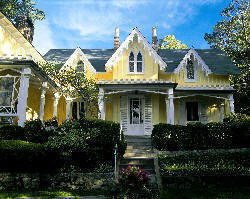
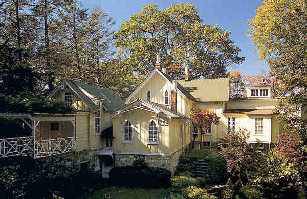
Ever Rest,  49 Washington Avenue, Hastings-on-Hudson

In 1885 the Cropsey family moved from Warwick to Hastings-on-Hudson, a village in Westchester County located in the southwestern part of the town of Greenburgh in the state of New York.  He firstly rented a property then later bought a house at 49 Washington Avenue, which they named Ever Rest. Cropsey and his family lived there for the rest of their lives.  They were content to live a quiet existence there at Ever Rest and did very little travelling.  As far as painting was concerned Cropsey concentrated in depicting local views or views based on the hundreds of sketches he had completed through the years, including studies he did in the two year period spent in Rome. .

Jasper Francis Cropsey by Edward Mooney (1850)

Jasper Francis Cropsey suffered a stroke in 1893 and died at Ever Rest on June 20th 1900 at the age of 77,  and Maria, his wife of 54 years, passed away in 1906.

The Cropsey home, known as Ever Rest,  was built in 1835 and purchased by Jasper F. Cropsey in 1885. Cropsey extended Ever Rest by adding an  artist’s studio to it in 1885. The Homestead is located at 49 Washington Avenue, Hastings-on-Hudson, NY.   On May 17, 1973, both the New York and National Historical Societies declared the Homestead an historical site. The Homestead is listed in the “National Register of Historic Places in New York”.


A great deal of information I needed cam fro some excellent websites:

Newington-Cropsey Foundation

Welcome Autumn with Jasper Cropsey’s Colorful Landscape Paintings

National Gallery of Art

Mark Murray Fine Paintings

Spellman Gallery

Ethel Sands and Anna (Nan) Hope Hudson

The blog today is about two talented early twentieth century painters who became lifelong friends and companions despite them having different ideas as to what was a “perfect” life.  Ethel Sands preferred the life of a socialite and enjoyed lavish soirees and was reputed to be one of the most important hostesses in cultured English society in the early twentieth century. However, Nan (Anna Hope) Hudson was more introverted, and craved a quiet rural lifestyle in her beloved France and Sands and Hudson apportioned their time between England and France to accommodate their lifestyle preferences . The art historian Wendy Baron described them as:

“…two independent, individual women with many tastes and interests in common, whose mutual love and understanding rescued them from the loneliness of spinsterhood…”

Ethel Sands (c.1927)

Ethel Sands was born on July 6th 1873 in Newport, Rhode Island.  She was the first-born child of Mary Morton Hartpence and Mahlon Day Sands who married in 1872. It was Mahlon’s second wife.  His first wife Edith Mintum died of typhus in 1868 whilst on a sea voyage.  Mahlon Sands was secretary of the American Free Trade League, as well as being a partner of his deceased father’s pharmaceutical importing firm, A.B. Sands and Company.   Mary and Mahlon also had two young sons, Mahlon Alanson Sands and Morton Harcourt Sands, who were five and eleven years younger respectively than their sister Ethel.  The three children were brought up in a well-to-do upper-class family household.

Still Life with a View over a Cemetery by Ethel Sands (1923)

When Ethel was eleven-years-old the family left America for what was supposed to be a short trip to England but, once there, decided to base themselves in London which they thought was a good base for onward travelling to the European countries.  However, they kept their house in Rhode Island and would return there once every year

Tea with Sickert by Ethel Sands (1912)

Mary and Mahlon moved amongst the wealthy London society, such as the Rothschild family and politicians, such as Gladstone, the writer Henry James and the artist John Singer Sargent.  They were also part of Edward VII, the Prince of Wales’ “Malborough House” social circle. 

Mrs Mahlon Day Sands by John Singer Sargent (1894)

Ethel’s mother Mary was considered to be a famous Society beauty of the day who had her portrait painted by Sargent and Henry James based his heroic character “Madame de Mauves” on her in his novella which centred on the troubled marriage of a scrupulous American wife and a far from scrupulous French husband.  Ethel Sands inherited a taste for socialising from her American parents.

Nan Hudson playing Patience at Chateau d’Auppegarde

Ethel Sands’ happy family life came to a shuddering halt when she was thirteen for in May 1888, her father, whilst out riding through Hyde Park, was thrown from his horse and died, aged 46.  Ethel’s mother was now tasked with bringing up the family on her own.

Nan Hudson c.1908

John Singer Sargent had encouraged Ethel to concentrate on her art and she took his advice for in 1894 when she was twenty-one, she decided to go to spend time in Paris to study painting.  Ethel began her artistic education at the Académie Carrière in Paris. Her early paintings featured highly coloured still-life works and interior depictions. Sands first exhibited her work in an exhibition held at the Salon d’Automne, Paris in 1904.  It was in 1894, whilst an art student that she met her lifelong partner Anna (Nan) Hope Hudson.

The Lamb Inn, Wallingford by Nan Hudson (1912)

Anna Hudson, best known as Nan Hudson, was born on September 10th 1869 in New York City. Her father was Colonel Edward McKenny Hudson, who died in 1892 at the age of sixty-seven; her mother had died in 1878 when Nan was just 9 years old. Having lost both parents, twenty-three year old Nan was left a large inheritance which was the result of her grandfather’s success as a partner of a banknote engraving organization, which later merged to become the American Bank Note Company.  Now, a young woman of independent means, was able to choose her own future. She had developed a love of painting and decided to follow this love and decided that Paris offered the best opportunity to further her artistic knowledge.  In the early days of living in the French capital she met Ethel Sands, a fellow American and art student who became her lifelong friend and companion.

Nan and Ethel studied together in 1896 at the studio of the French painter Eugène Carrière and then from January 1897 Nan also took classes with the Flemish painter Henri Evenepoel.  The friendship between Ethel and Nan, which started as study friends, soon blossomed and before long, they became inseparable.  This closeness is somewhat astonishing as the two women had totally different personalities.  While Ethel Sands found life in London, with all its social distractions, irresistible, Nan Hudson preferred the quieter existence in Paris and the French countryside.  However, they managed to compromise, dividing their time between France and England to satisfy both their yearnings, alternating periods of painting with travelling, socialising and entertaining.

Miss Hudson at Rowlandson House by Walter Sickert (c.1910)

The writer Virginia Woolf, in her diaries, described Nan Hudson as being dour and upstanding who was always stylishly dressed while the artist Walter Sickert, in a letter to the pair, described Nan as being the radiant and dashing horsewoman of a young man’s dreams.  In 1910 Walter Sickert completed a portrait of Nan Hudson, standing hand on hip and looking directly at the viewer, and captures her independent spirit and flair.  The painting was given the title Miss Hudson at Rowlandson House.

Portrait of Ethel Sands by Walter Sickert (1914)

After Nan and Ethel had made a trip to Venice, Nan completed a painting entitled Giudecca Canal and she had it exhibited at the Salon d’Automne in 1906.  It was liked by the critics and greatly admired by Walter Sickert. At first, he did not realise that the work was by her but once he found out he contacted her offering her advice on painting for the future. This initial letter to her resulted in a long-running correspondence between them and genuine friendship that lasted for many years. In 1907 Sickert invited both Nan Hudson and Ethel Sands to join the Fitzroy Street Group, which he had just formed and meetings were held in his studio in Fitzroy Street, to the north of central London.  The reason for this invitation could be because he admired their work or cynics would say it was more to do with their financial and social status both of which Sickert wanted to “explore”.  Both women accepted the invitation. Their main purpose of the group was to explore contemporary styles and methods, which they believed would challenge the conventional traditions of the New England Art Club. It was to be the establishing of the first artists’ collective.

Ethel Sands by Lady Ottoline Morrell vintage snapshot print, 1909 NPG Ax140123 © National Portrait Gallery, London

In 1911 many of the Fitzroy Group Group’s members, including Walter Sickert, formed the nucleus of the new Camden Town Group, and by November 1913 the Fitzroy Street Group had ceased to exist.  Unfortunately for Ethel and Nan the Camden Town Group was only open to male artists and so neither Nan or Ethel were not invited to join this new group. However, in 1913, a new grouping was formed known as the London Group.  The London Group was formed by a merger of the Camden Town Group and the English Cubists, later known as the Vorticists. It was the coming together of radical young artists who were defying the stranglehold which the Royal Academy had on exhibiting new works of art. The group was open to both male and female artists and Ethel Sands and Nan Hudson became founder members.

The Visitor by Nan Hudson

Up till this time Nan Hudson had only exhibited her work in Paris at the Salon d’Automne but through Ethel Sand’s contacts within the London art scene she began to show her work in London and exhibited her work at the New English Art Club, the Allied Artists’ Association and the Leicester Galleries.

Château d’Auppegard by Nan Hudson

At the start of the First World War, Hudson and Sands went to France and helped set up a hospital for wounded soldiers near Dieppe. This was forced to close but Nan Hudson continued to nurse both in England and in France until autumn 1918.  During the spell in Normandy during the war Nan Hudson fell in love with the area and after the war in 1920, she bought the Château d’Auppegard.  It was a seventeenth-century house with a grey slate gabled roof which lay about ten miles inland from Dieppe in the Normandy countryside.  This became their dream home and she and Ethel Sands spent the summers together and devoted much time and energy in its restoration and decoration. The two women renovated the dilapidated dwelling, even commissioning murals from the Bloomsbury artists Vanessa Bell and Duncan Grant for the loggia.

A Dressing Room by Ethel Sands

Nan Hudson completed a painting depicting her beloved chateau which is now part of the Tate collection.  She used a restricted palette of cool tones.  The depiction is typical of her later works when she tended towards landscapes with an element of architectural interest.   From 1926 onwards Nan concentrated on depicting rural landscapes found around the outskirts of Dieppe and the commune of Auppegard.  Many other landscape works came from the extensive touring around France in the Spring and early Autumn done by her and Ethel Sands.

Honfleur Harbour by Nan Hudson

Very few of Ethel Sands and Nan Hudson’s paintings survived the Second World War. Ethel Sands’ house in London was destroyed following a direct hit on it during the Blitz which obliterated much of both of their work. As well as this, Château d’Auppegard itself sustained extensive damage from bombing and looting that followed, when many drawings and paintings, including a collection of works by Sickert and Augustus John, were stolen, never to be seen again. It is very likely that paintings by the Ethel and Nan were therefore lost too.  Ethel and Nan returned to Auppegard in May 1946 and were horrified to witness the devastation of their beloved home.   One visitor to the chateau was Vanessa Bell who visited them in that September and she wrote about what she witnessed first-hnd:

“…The house has been terribly damaged by a flying bomb which exploded near. They have managed to repair the worst things and when one drives up to it [it] is still very lovely. But inside only the dining room is usable, and they have hardly any furniture and just enough for themselves. Poor old things – as they say, they are too old to begin all over again and they certainly do look very aged and decrepit…”

Still Life with Picture of the Madonna by Ethel Sands

However. the two occupants of the chateau, both then in their seventies, would not be defeated by the devastation and set about trying to repair it.  Age finally defeated them as far as renovating the chateau and Nan began to worry about its fate once she and Ethel had died.  In the end they decided to give the house over to a young friend of theirs, an amateur painter, Louis le Breton, on the understanding that it would eventually be bequeathed to the French nation. He, like the two owners of the chateau, shared their passionate love of the house and they felt sure that after they had died, his love of the Auppegard property would be preserved and cherished. Hudson and Sands continued to live at the château within a specially adapted self-contained apartment but their careful planning for the future of the building came to naught when Louis le Breton pre-deceased both of them, dying suddenly in the garden at Auppegard in March 1957.

Still Life with Books and Flowers by Ethel Sands

Nan Hudson became too ill to live there and was cared for initially by her life-long companion, Ethel and latterly at a nursing home in Kilburn, London, dying just a few months later in September 1957 aged eighty-eight.

Auppegard Church from the Chateau by Ethel Sands

Her funeral was held at Auppegard and she was buried in the churchyard facing her beloved château.

Ethel Sands died on March 19th 1962, aged eighty-eight.

Nettie Blanche Lazzell

Blanche Lazell during her time at the Art Student League, New York

Cornelius Carhart Lazzell, a direct descendent of pioneers who settled in Monongolia County, West Virginnia, after the American Revolutionary War, married Mary Prudence Pope and the couple went on to have ten children, three sons and seven daughters.  The ninth child was Nettie Blanche Lazzell who was born on October 10th 1878 and it is she who is the subject of today’s blog. 

The Lazzell family, who were devout Methodists, lived on a large farmstead near Maidsville, West Virginia, which lies close to the Pennsylvania border.  The town was thought to have been named Maidsville on account of there being a large proportion of “old maids” among the first settlers !  Her education during her early days was at the one-room schoolhouse on the property where students from the first through to eighth grades were taught from October through February.

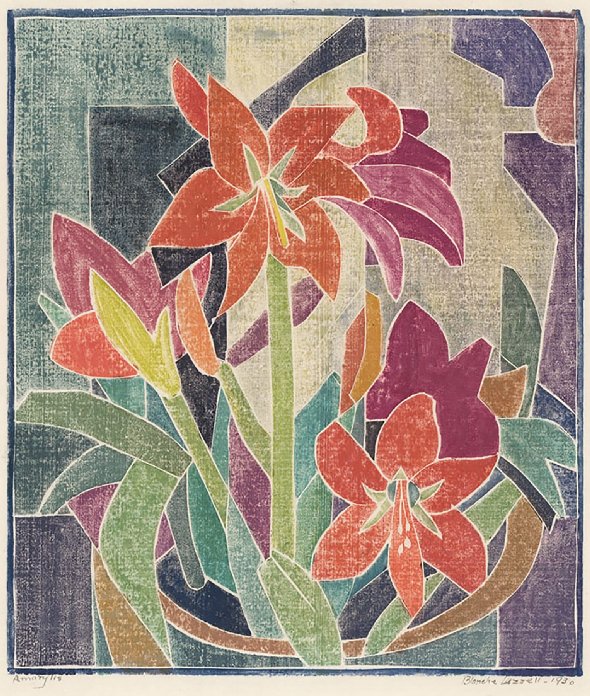
Amarylis by Blanche Lazzell (1930)

In 1891, when Blanche was just twelve years old, her mother died, aged 48. In her early teens Blanche experienced hearing problems and became partially deaf and it was not until a year later that a Baltimore doctor was able to remedy her illness.  In 1893, at the age of fifteen, Blanche enrolled at the West Virginia Conference Seminary, which is now the West Virginia Wesleyan College.  From there, in 1899, she transferred to the South Carolina Co-Educational Institute in Edgefield. Once she graduated from the Institute, she became a teacher at the Red Oaks School in Ramsey, South Carolina. In spring of 1900, she returned to her Maidsville home, where she tutored her younger sister, Bessie.   In 1901, she studied art at West Virginia University and did well, receiving a degree in art history and the fine arts in 1905.  She continued to study at WVU on a part time basis until 1909, allowing her to broaden her knowledge of art and twice substituting as a painting teacher.

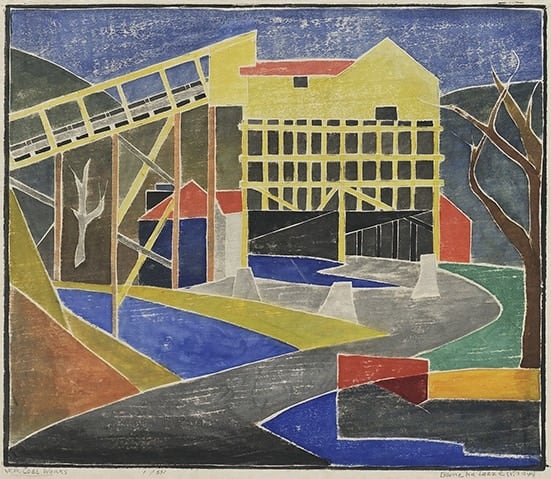
West Virginnia Coal Works by Blanche Lazzell (1949)

In 1908, at the age of thirty, she moved to New York and enrolled at the Art Students League.  The League had been formed in 1875 to provide more variety and flexibility in education for artists than it was felt the National Academy of Design provided. This breakaway group of art students included many women, many of whom, in the late 1890s and early 1900s, took on key roles. In Marian Wardle’s book: American Women Modernists: The Legacy of Robert Henri, 1910-1945. She recounts the words of the American artist Edith Dimmock regarding the atmosphere at the Art League:

“…In a room innocent of ventilation, the job was to draw Venus (just the head) and her colleagues. We were not allowed to hitch bodies to the heads——yet. The dead white plaster of Paris was a perfect inducer of eye-strain and was called “The Antique.” One was supposed to work from “The Antique” for two years. The advantage of “The Antique” was that all these gods and athletes were such excellent models: there never was the twitch of an iron-bound muscle. Venus never batted her hard-boiled egg eye, and the Discus-thrower never wearied. They were also cheap models and did not have to be paid union rates…”

During her time at the Art League Blanche studied under Kenyon Cox and William Merritt Chase and one of her fellow students was Georgia O’Keeffe. 

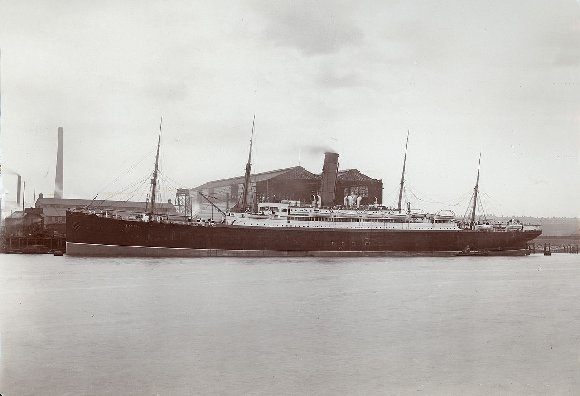
SS. Ivernia

On July 3rd 1912, Lazzell set sail on an American Travel Club cruise on the Cunard liner SS Ivernia, crossing the Atlantic and arriving in England. From there Blanche visited the Netherlands, Belgium and Italy.  She was fascinated by the architecture of the various churches she visited.   

Sailboat by Blanche Lazzell

In August she left the tour party and travelled to Paris.  She then stayed in a pension in Montparnasse on the Left Bank.  She moved into the Students’ Hostel on Boulevard Saint-Michel, one of the two major streets in the Latin Quarter of Paris, running alongside the Luxembourg Gardens.  During her stay in the French capital, she took lessons at the Académie de la Grande Chaumière, Académie Julian, and Académie Delécluse.  She eventually established herself at the Académie Moderne where her tutors were the post-impressionist painters Charles Guérin and David Rosen.  Of all the art tuition she received in Paris she was the most contented with the ideas and techniques behind the Parisian avant-garde art, a genre which pushed the boundaries of ideas and creativity, which she learnt about at the Académie Moderne.

The Monongahela River at Morgantown by Blanche Lazzell (1939)

Blanche returned to America on the White Star passenger liner, SS Arabic, at the end of September 1913.  On her return to America Blanche went to live with her younger sister Bessie in Morgantown.  During her European travels Blanche built up a portfolio of sketches and paintings enough for her to have a solo exhibition in December 1914.  To make ends meet, she rented a studio in town and taught art as well as selling her hand-painted chinaware.

Byrdcliffe Artist Colony

Byrdcliffe Artist Colony

In the summer of 1917, Blanche spent time at the Byrdcliffe Arts Colony, an artists’ colony just outside Woodstock, New York.  The Byrdcliffe Art Colony was founded by Jane Byrd McCall and Ralph Radcliffe Whitehead and colleagues, Bolton Brown, an artist and Hervey White, a writer.  The name of the colony came from an amalgamation of Jane and Ralph’s middle names.  It was founded in 1902 and the complex was formed of a number of Arts and Crafts cottages.  It was there that visual artists, poets, and musicians found their muses and spent time creating works of art, music and poetry. In later times famous people, such as Bob Dylan, writer Thomas Mann, and even famous actors, Helen Hayes, and Chevy Chase, spent time at Byrdcliffe.  Blanche studied under the Belgian-born artist William Schumaker who whilst in Paris had come into contact with European avant-garde artists.  On his return to America he brought with him modernist principles.  The term modernism in art was a rejection of history and conservative values such as realistic depiction of subjects; it was an innovation and experimentation with form, that is to say, the shapes, colours and lines that make up the work have a tendency towards abstraction.  From 1913 to 1931, Schumaker was artist-in-residence at the artists’ colony at Byrdcliffe.

Still Life by Blanche Lazzell

In 1918 Blanche Lazzell left Morganstown and moved permanently to Provincetown, which is situated on the northern tip of Cape Cod, Massachusetts, a place she had previously visited in 1915.   She made the town her summer base while wintering back in Morganstown and Manhatten. 

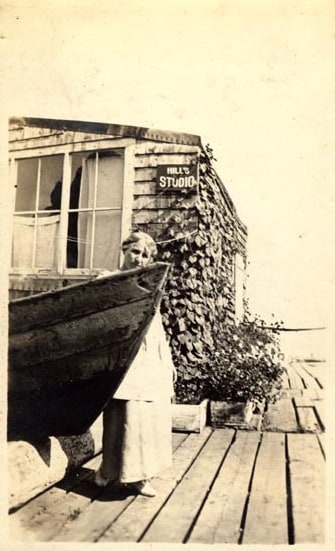
Blanche Lazzell outside her Fish House studio, Princetown

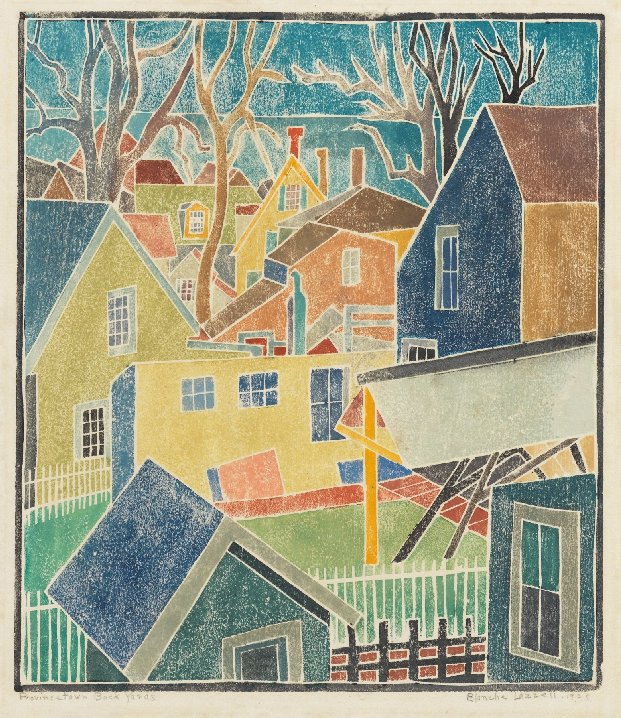
She purchased an old fish house which overlooked the harbour of Provincetown and converted it into her studio.  She immersed herself into the local art scene and became a member of the Provincetown Art Association and the Sail Loft Club, Provincetown’s women’s art club.  She also became involved with the Provincetown Printers, a group of artists, most of whom were women, who created art using woodblock printing techniques.  It was a refuge for artists and a lively hub of experimentation and innovation. It became known as Princetown Print.  It was a white-line woodcut print, but it differed from woodcut printing as rather than creating separate woodblocks for each colour, one block was made and painted. Small groves between the elements of the design created the white line. In the main the artists often used soft colours, so that the finished product sometimes had the appearance of watercolour paintings.  Recalling her first summer at Provincetown, Blanche Lazzell fondly remembered her time there saying:

“…Hundreds of American artists who had been living in Europe before the first World War flocked to Provincetown. This quaint old seaport town, famous for the first landing place of the Pilgrims, was already an art colony…To be in Provincetown for the first time, in those days, under ordinary conditions was delightful enough, but that summer of 1915, when the whole scene, everything and everybody was new, it was glorious indeed–”

Untitled Abstract work by Blanche Lazzell

Lazzell returned to Paris in 1923 and studied with both Fernand Léger, Andre Lhote and Albert Gleizes, who was said to be one of the founders of cubism. By 1925, Blanche had mastered the static and shuffled planes of Synthetic Cubism, to which she added her own distinctive colour palette and elegant receptivity. Blanche defined Cubism as:

“… the organization of flat planes of colour, with an interplay of space, instead of perspective…”

Princetown Backyards by Blanche Lazzell

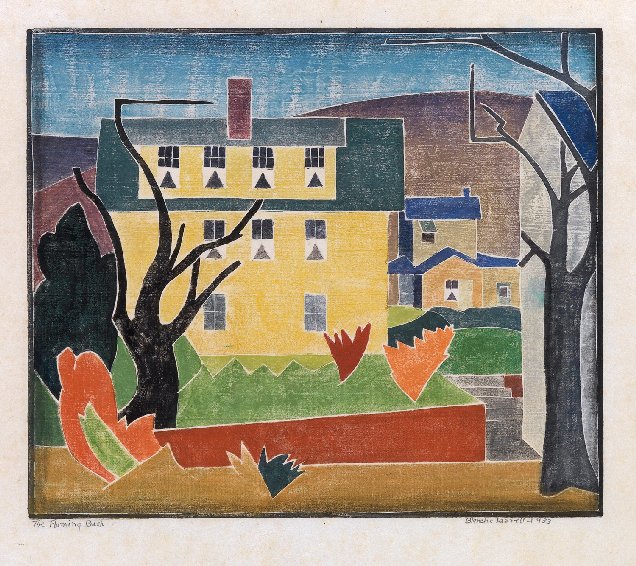
This was a style which was excellently suited to her woodcuts and often mirrored the angular patterns of the Provincetown houses, rooftops, and wharves which are depicted in many of her woodcut prints.  It is also interesting to note that Lazzell was a passionate gardener, and images of flowers often featured in her work but even these images, although based on direct observation, were changed into recurrent interactions of abstracted shapes.

The Flaming Bush by Blanche Lazzell (1933) At auction it realized $87,500.

Blanche’s younger sister Bessie gave birth to a son, in August 1924 and Blanche decided to return to Morganstown to help her.  Lazzell also became a mentor and role model for her niece, Frances Reed, the daughter of her sister Myrtle.   Blanche eventually returned to Princeton in 1926 and one of her first tasks was to pull down her previous studio, the Fish House, as it was getting too cold in the winter months due to the numerous drafts.

The Violet Jug by Blanche Lazzell

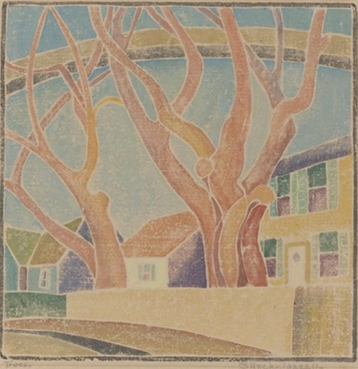
Trees by Blanche Lazzell (c.1930)

In 1928 she was invited to be on the board of directors of the international art group, Société Anonyme. Lazzell later joined the New York Society of Women Artists and the Society of Independent Artists. In the 1930s, Blanche took part in an exhibition called Fifty Prints of the Year where she exhibited her compositions The Violet Jug and Trees.

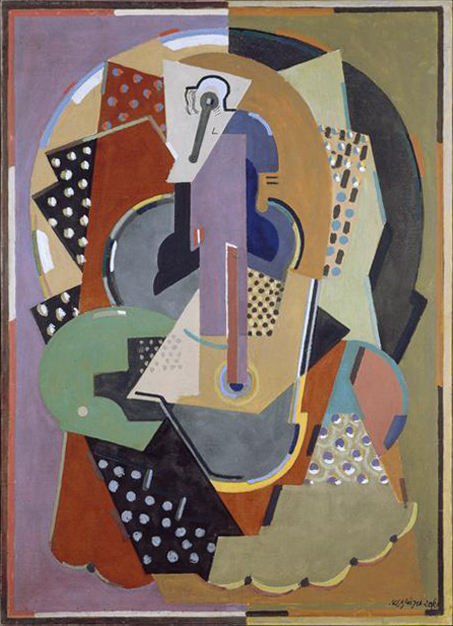
Ecuyère (Horsewoman) by Albert Gleizes (c.1923)

Around the same time she produced a number of pure abstract compositions which shows the influence of Albert Gleizes.

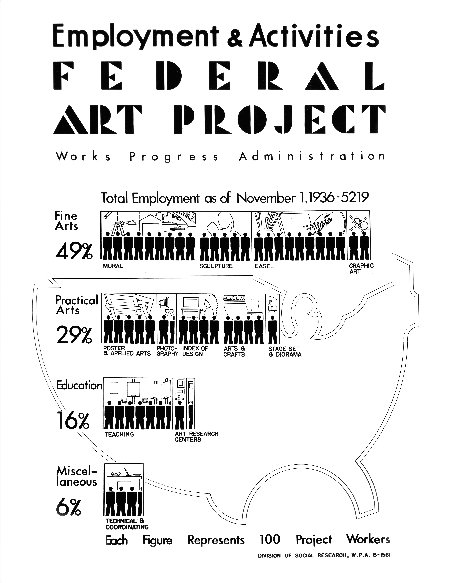
In 1934, America was in the midst of the Great Depression and Blanche Lazzell was one of two West Virginian artists who received Federal Art Project grants through the Works Progress Administration.  This was due to the American government which hired hundreds of artists who collectively created more than 100,000 paintings and murals and over 18,000 sculptures to be found in municipal buildings, schools, and hospitals in all of the 48 states. President Franklin Roosevelt sought to put as many unemployed Americans as possible back to work and to buoy the morale of the citizens. Some of the 20th century’s greatest visual artists were employed by the FAP, along with many nascent Abstract Expressionists.

Blanche Lazzell on her porch of her Provincetown studio, 1942

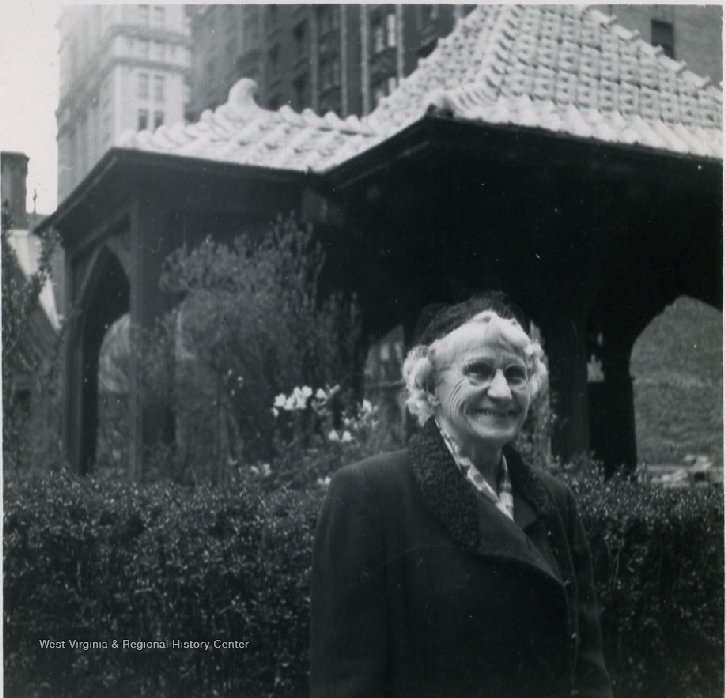
Blanche Lazzell outside Little Church around the Corner, New York

In May 1956, Blanche Lazzell’s health began to fail and she was taken to a hospital with a suspected stroke.  Lazzell died on June 1st 1956 and she is buried next to her father in Bethel Cemetery in Maidsville.  She was aged 77.

Susan Greenough Hinckley and Reverend Leverett Bradley

Susan Greenough Hinckley was born in the Beacon Hill area of Boston, Massachusetts on May 15th 1851. Her father was Samuel Lyman Hinckley, of the well-known family of Northampton Lymans, and her mother was Anne Cutler Parker whom he married in 1849, nine years after his first wife had died.  Susan had three siblings, an older brother Samuel Lyman Hinckley and a younger brother, Robert Cutler Hinckley.  She had a younger sister, Anna who died when she was eight years old. She also had a half-brother Henry Rose Hinckley who was the son of Samuel Hinckley and his first wife Henrietta who died at the age of twenty in 1838.

Oriental Still Life by Susan Bradley

From a young age Susan and her brother Robert showed an interest in, and a talent for, sketching and painting.  She attended Miss Wilby’s local school, where she was taught the history of painting.  In 1871, aged twenty, Susan made her first trip to Europe and this ignited her love of art.  Sadly, that December, while the family were in Paris her father died.  When the family returned to America, Susan decided to learn about watercolour painting and read the books written by John Ruskin.

Eagle Lake, Acadia, Maine by Susan Bradley

Four years later in 1875 she returned to Europe with her mother and visited Rome where she studied under Edward Darley Boit, a fellow Bostonian who at the time was living and teaching in the Italian capital.  On returning to Boston she enrolled at the Museum of Fine Arts’ School of Drawing and Painting, in Boston where one of her tutors was the Bostonian artist, Frederic Crowninshield.  Here, she was in the first life class for women under his tutelage.  In 1878 she began to exhibit her work at the American Watercolor Society and a year later, she enrolled in the Boston Museum of Fine Arts’ School of Drawing.

Reverend Leverett Bradley

A young man came into Susan’s life in 1878.  He was Reverend Leverett Bradley a theology student at Hartford Theological Institute.  Leverett Bradley was born in 1846 and was brought up on the family farm in Methuen, Massachusetts.  In April 1861 the American Civil War began and aged only fourteen, Leverett left home and enlisted as a soldier in the Fourteenth Regiment of the Infantry which was under the command of his father.  Leverett would write numerous letters to his family whilst away at war and they were later collated into a book, A Soldier Boy’s Letters (1862-1865).  At the end of the war, Leverett returned to his family in Massachusetts and decided to dedicate the rest of his life to the church.  In 1867, he enrolled at the Phillips Academy Andover to complete his education which had been cut short by the war.  Two years later he attended the prestigious Amherst College where he studied for a theology degree.  Having completed his degree, he studied at the Hartford Theological Institute and in the Spring of 1878 he was ordained and went to work at Boston’s Trinity Church, a church where Susan often went to worship. 

The couple had much in common as they both loved art and music.  Susan and Leverett became engaged in the summer 1879 and the couple married on December 3rd that year.  Soon after the marriage Leverett was assigned a new post and he and Susan relocated to Maine where Leverett took on the role of rector at Christ Church Episcopal in the town of Gardiner. He was remembered there for the passion and enthusiasm he gave to his role.

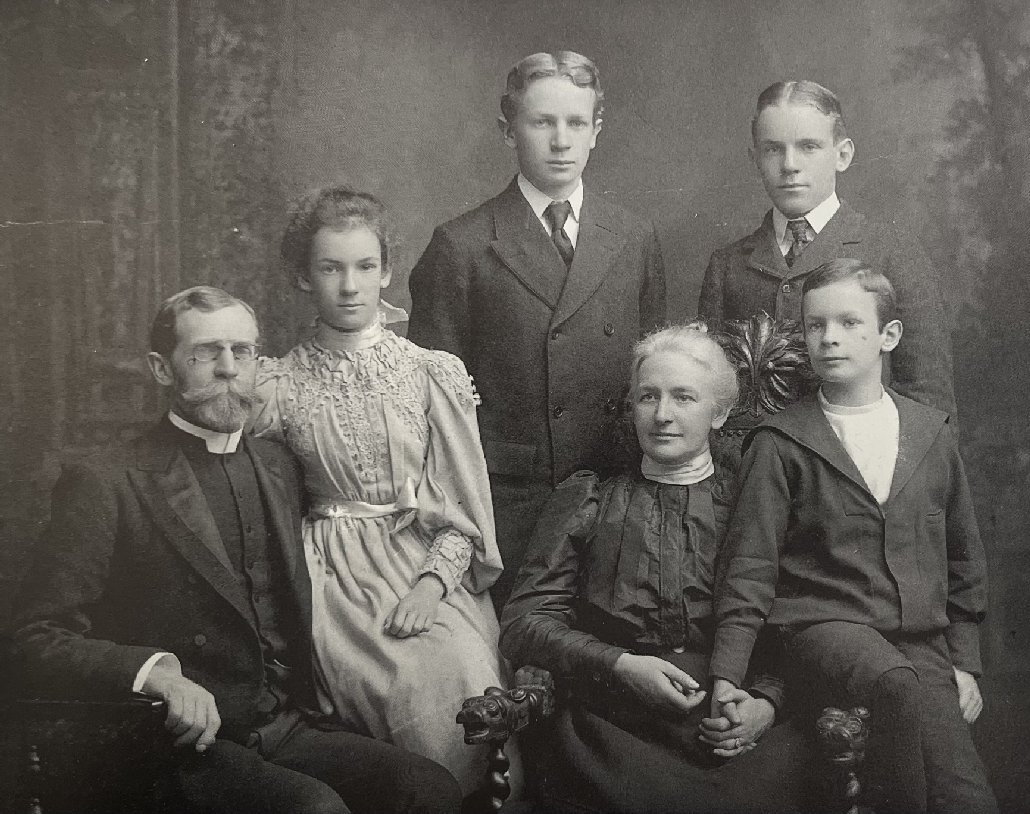
Leverett and Susan with their four children

In 1880, Susan gave birth to their first child, a son, Leverett Jnr., and two years later a second son, Walter, was born.  Susan and Leverett’s remained in Maine until the Autumn of 1884 when he accepted the position of rector of Christ Church in Andover, a town in Essex County, Massachusetts. Leverett and his wife Susan, now pregnant with their third child, a daughter Margaret, and their two young boys moved into the rectory of Christ Church.

Italian Landscape by Susan Bradley

Susan Hinckley Bradley faced, like so many female artists at the time, the fact that they did not have equal rights with male artists.  In the 1880’s, the best-known art societies such as the Boston Water Color Society, which was organized in 1885 by Childe Hassam, refused membership to women until 1918.  Other societies with similar discriminatory rules were the Art Club of Boston and St. Botolph Club, a dining club which was popular with many artists but which would not relax the all-male membership rule until 1988.  However, Susan had a very supportive husband who was equally horrified by the fewer opportunities for women artists to meet and exhibit their work, and together they decided to rectify the situation.

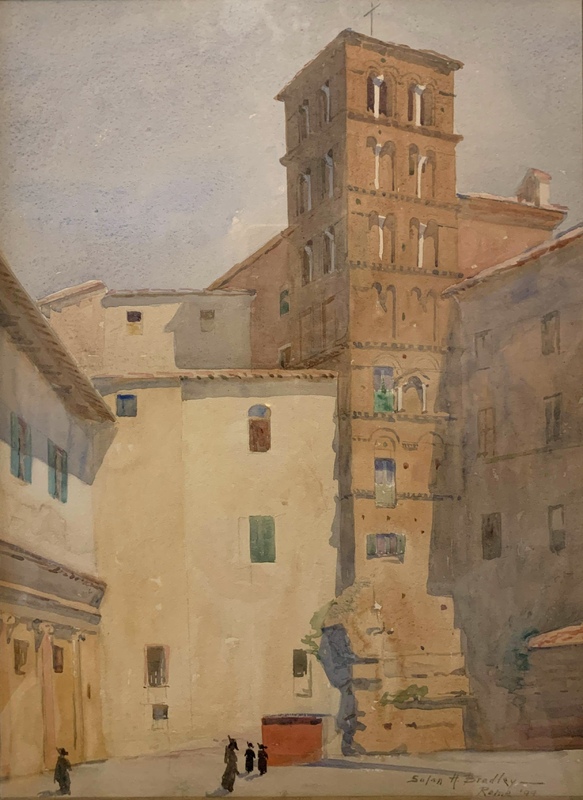
Rome by Susan Bradley (1899)

In 1887, Susan together with fifteen other women such as Sarah Wyman Whitman, Sarah Choate Sears, Martha Silsbee, and Helen Bigelow Merriman came together to form the Boston Water Color Club in response to the exclusive membership rules of the all-male Boston Water-Color Society.  The inaugural exhibition of the Water Color Club included forty-seven works by sixteen women artists; and ten years on, the membership had doubled.  Ironically it was not until nine years later that men were allowed to join the club.

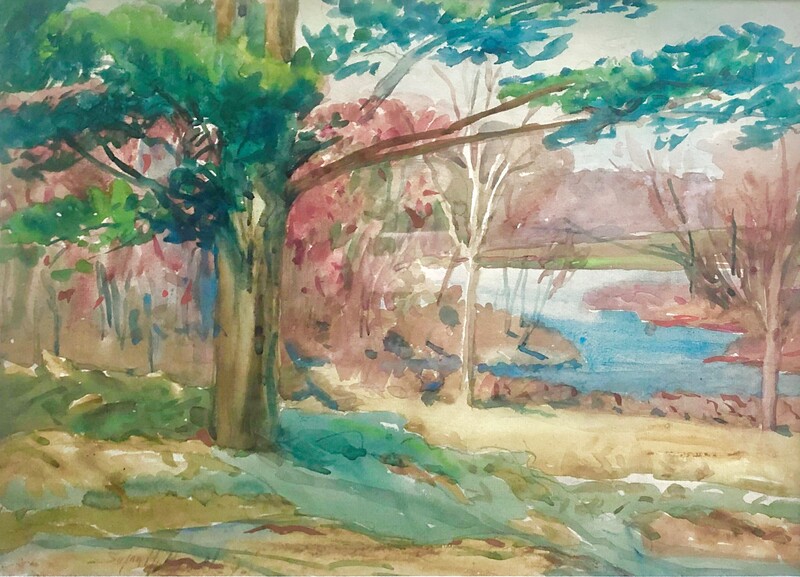
Concord River by Susan Bradley (c.1928)

In the Autumn of 1889 Susan and her husband were once again on the move, relocating to Philadelphia, when he was offered the rectorship at St. Luke’s Church. This church had a large, urban congregation and Leverett set to work and soon made a positive impact on the local community. He kept up the role of army chaplain of the Third Regiment for many years and during the miner’s strike of 1902 was called into active duty. Leverett’s health had been deteriorating for some time and on December 31st 1902 he died of heart complications, aged 56.

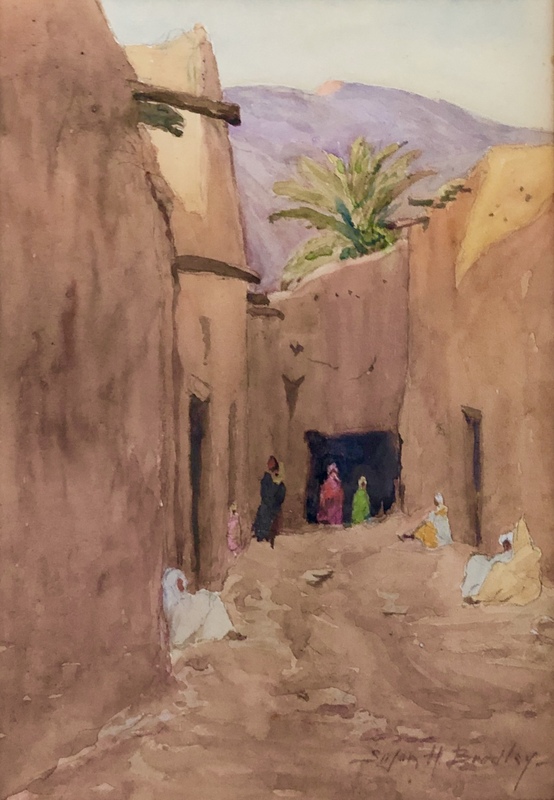
Evening near the Red Village, Algeria by Susan Bradley (c.1907)

Susan Bradley had to reduce her painting time when she was bringing up her four children and looking after her husband and their home.   She did get back to it eventually studying with William Merritt Chase, and spent time once again in Rome being tutored by Boit.  She travelled extensively to Egypt, Greece, Tunisia, Italy, Switzerland, France and Ireland, as well as exploring her own country and was known for not only the wilderness locations in Western Canada and Arizona but her depictions of the New York streets and the seascapes of the Maine and Massachusetts coasts.  Her work was shown at many exhibitions including the Panama Pacific International Exposition in 1915, Louisiana Purchase Exposition in 1904, and the American Watercolor Society in 1902 and her works form part of many of the collections of the major American museums.  Susan was a prolific painter whose career spanned five decades.

A Rose by Susan Bradley {1928)

She died on 11 June 1929, in Boston, Suffolk, Massachusetts, United States, at the age of 78, and was buried in Andover, Essex, Massachusetts, United States.

William James Glackens

To look at the history of the Ashcan School one has to go back a step and look at a group of painters who became known as The Eight.  These eight artists, with Robert Henri, acknowledged as the leader of the group, were Arthur B. Davies, William Glackens, Ernest Lawson, George Luks, Maurice B. Prendergast, Everett Shinn, and John Sloan.

Ashcan School artists and friends at John French Sloan’s Philadelphia Studio, 1898

Luks, Sloan, Glackens, and Shinn worked as newspaper artist/reporters and illustrator-cartoonists and maybe because of this connection, the many paintings of these artists took on a journalistic quality.  All eight artists utilised the crowded life found on the New York streets as the subject of their paintings.  Their work depicted un-idealized views of life in a big city and focused on the bars and the clientele, dark grubby-coloured tenements, pool halls, and slums. This was the epitome of urban realism.  Realism in art was described by Gustave Courbet in an open letter he wrote on December 25th 1861, now referred to as his Realist Manifesto.  He wrote:

“…To know in order to do, that was my idea. To be in a position to translate the customs, the ideas, the appearance of my time, according to my own estimation; to be not only a painter but a man as well; in short, to create living art – this is my goal…”

 At the high point of their popularity these men were seen as confronting Academia which favoured the genteel tradition of “art for art’s sake, and which had dominated the American art establishment for many decades with works from likes of John Singer Sargent and Abbott Handerson Thayer.

However, on February 3rd, 1908, the MacBeth Galleries, New York, opened an exhibition featuring The Eight artists. It caught the attention of the American art world and although the show remained on view in New York for less than a fortnight, it was taken to several cities including Chicago, Detroit, and Philadelphia.  These exhibitions were lauded as watershed exhibitions of 20th-century vanguard art.   It was a triumph of “American” art.

The name “Ashcan School” was a derisive criticism of The Eight and their works of art, which appeared in an article in The Masses, an American magazine of socialist politics.  The author of the article alleged that there were too many “pictures of ashcans and girls hitching up their skirts on Horatio Street” in their paintings.  The group of artists were amused by the article and the group soon became known as the Ashcan School of painters. The Ashcan School of artists had also been known as “The Apostles of Ugliness”.

William Glackens by Robert Henri (1904)

A few blogs back I looked at the life of George Luks who was an American realist painter connected to the Ashcan School.  Today I am looking at the life and paintings of one of his contemporaries who was also one of the Ashcan School of painters.  He is William James Glackens. William Glackens was born in Philadelphia on March 3rd 1870.  He was the youngest of three children to Samuel Glackens, a cashier for the Pennsylvania Railroad and his wife Elizabeth Glackens.  William’s siblings were an older sister, Ada and an older brother Louis who would later become a cartoonist and illustrator and work on early animation films.

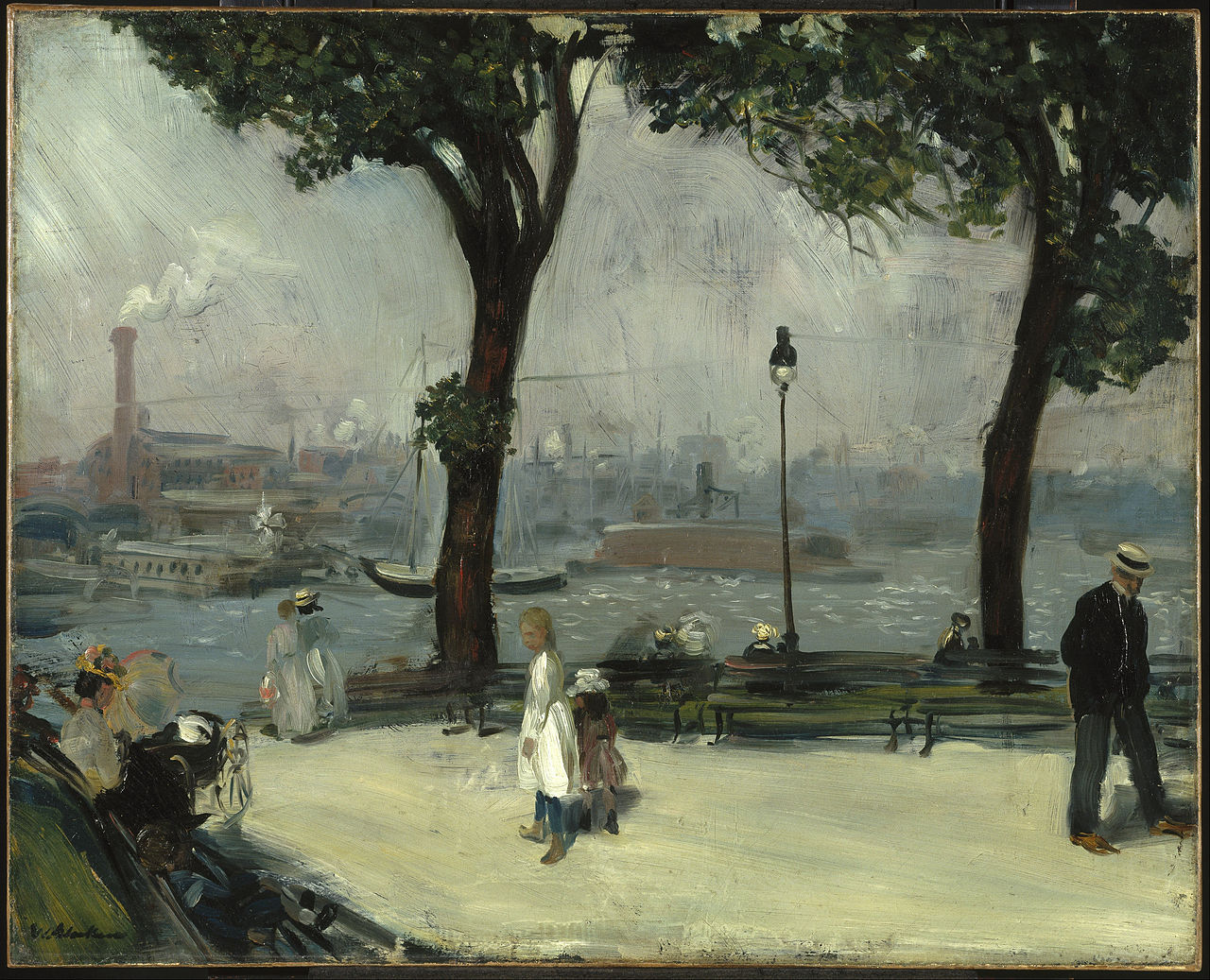
East River Park by William Glackens (1902)

William attended the Central High School where one of his fellow students John Sloan, who would later become a member of The Eight.  Glackens graduated from the Central High School in 1890. Throughout his school days Glackens loved to draw and paint and became a very accomplished artist and in November 1891, aged twenty-one, he and Sloan enrolled at the Pennsylvania Academy of Fine Art. Glackens also worked as an artist reporter for many newspapers, starting at the Philadelphia Record.  His task was to pictorially record news events and had to work to tight deadlines.

Christmas Shoppers by William Glackens (1912)

In October 1894, having completed his studies at the Academy of Fine Art, Glackens started a job as a staff artist/reporter for the Philadelphia Press and worked alongside fellow artists Sloan, Edward Davis, George Luks, and Everett Shinn.  Around this time Glackens was introduced to Robert Henri by Sloan.  Henri was an artist five years older than the pair.  He had returned to study at the Academy for a second stint after spending time in Paris studying at the Académie Julian, under William-Adolphe Bouguereau, where he developed a love for Impressionism and later, he was admitted into the École des Beaux Arts.  Besides befriending Glackens and Sloan two more aspiring artists, George Luks and Everitt Shinn joined the informal group which met at Henri’s apartment to discuss art, philosophy, culture and more, their meetings became known as the Charcoal Club because they would spend time using that medium to produce drawings from life.  This informal group explored art genres not available at the Academy, such as nude figure drawing. They also became interested in the social philosophical writings of Ralph Waldo Emerson, Walt Whitman, Émile Zola, and Henry David Thoreau.  Besides meeting to draw. paint and discuss philosophy, the group led a very sociable life during which alcohol played its part !

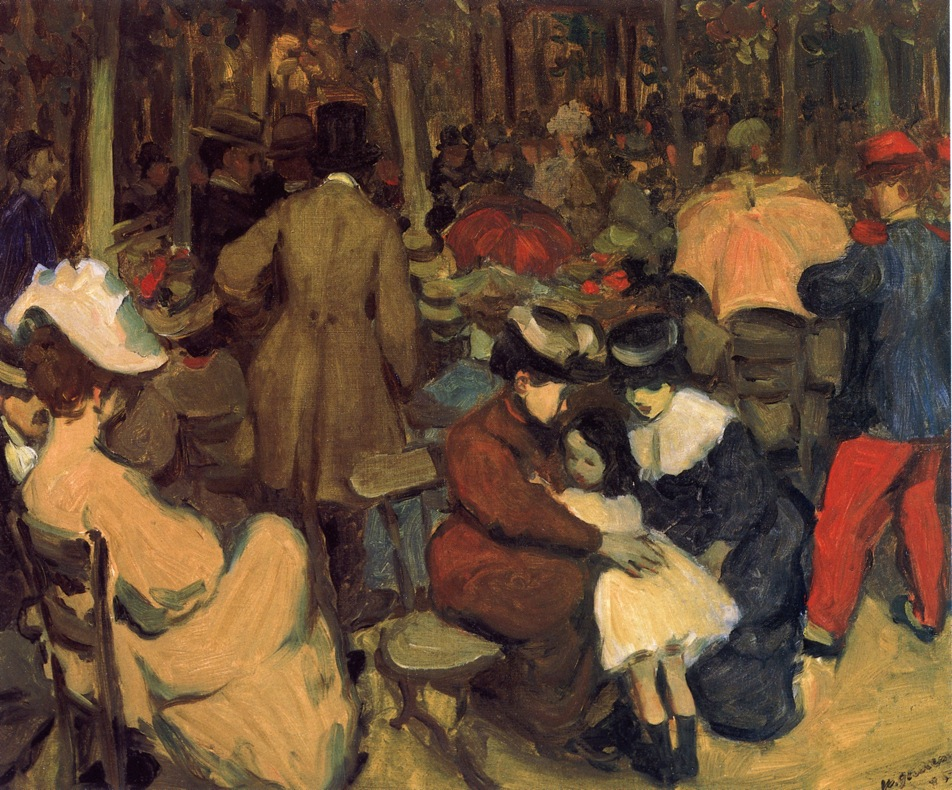
Figures in the Park, Paris by William Glackens (1895)

In 1895, Glackens, along with several other artists, including Robert Henri travelled to Europe so that they could learn more about  European art.  The first country they visited was Holland where Glackens scrutinised the work of the Dutch masters. From there he went on to the French capital where he and Henri rented a studio apartment for a year. For Glackens, staying in Paris, exposed him to the work of the great Impressionists and Post-Impressionists.  His greatest influence was the work of Manet.

Lena (the artist’s daughter) Painting by William Glackens (1918)

Glackens returned to America in 1896 and moved to New York and spent time at Henri’s many social gatherings.  Glackens took up employment at the New York Herald as a reporter and also worked as an illustrator for various magazines.  These two lines of work provided him with a good steady income and over the next decade he produced more than a thousand illustrations.  Although many were comedic in nature, in April 1898 the Spanish-American War broke out in Cuba and the McClure’s Magazine sent him there to collate the news and produce newsworthy illustrations.  It was a difficult assignment and his living conditions were poor.  On his return to New York, he was taken ill and it was discovered that he had contracted malaria which would return time and again during his life.

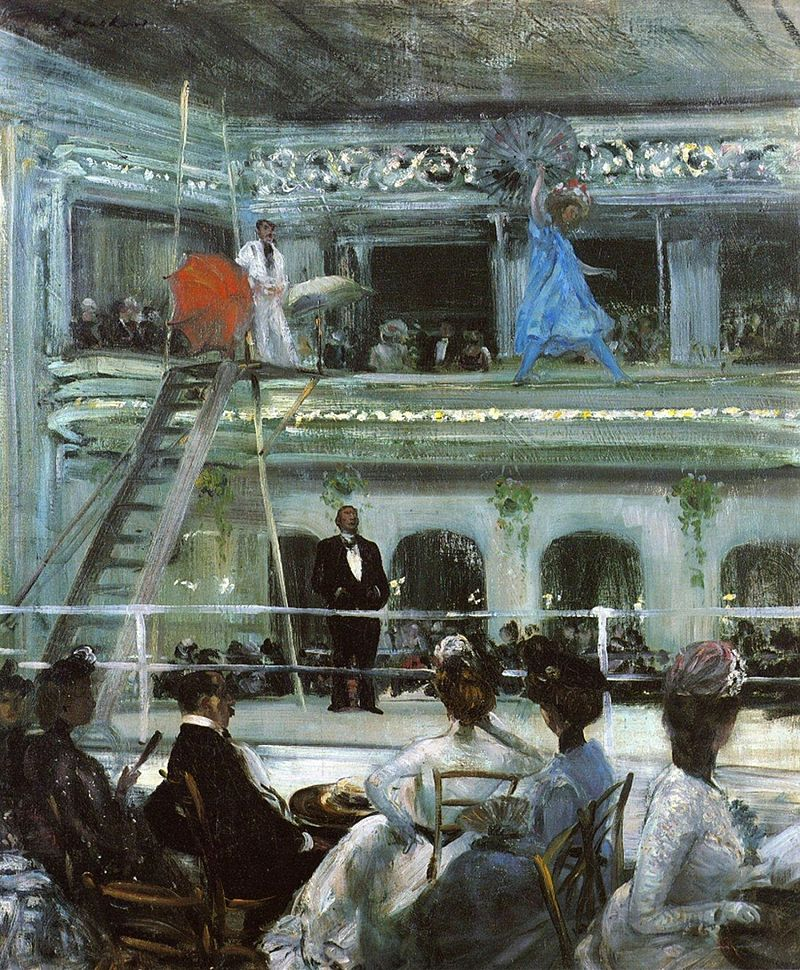
Hammerstein’s Roof Garden by William Glackens (1901)

In 1901 Glackens completed a painting entitled Hammerstein’s Roof Garden.  Hammerstein’s Roof Garden was the official name of the fashionable semi-outdoor vaudeville venue that theatre magnate, Oscar Hammerstein I, built atop the Victoria Theatre and the neighbouring Theatre Republic.  During summer months theatres were often closed due to the suffocating atmosphere inside the venues and so roof garden venues were very popular.  The viewer is placed as if they are part of the audience and in front of us, we see a a colourfully dressed female tightrope walker as she tentatively navigates the rope which is strung across the stage.  In the foreground we see the audience, some of which are unaccompanied females which was something that years ago would have been unheard of.  The painting is now part of the Whitney Museum of American Art collection in New York.

The Artist’s Wife, Edith Dimock Glackens, in her Wedding Dress by William Glackens (1904)

William Glackens’ single status ended in 1904 when he married Edith Dimock.  Edith, who was six years younger than William, came from a wealthy Hartford Connecticut family which made its fortune as silk merchants.  Despite her family’s strong objections but she turned away from business as a career and instead set about becoming a professional artist.  She left home and moved to New York City when, in her early twenties, she enrolled at the Art Students League where she studied with American Impressionist William Merritt Chase.

Sweat Shop Girls in the Country by Edith Dimock (c.1913) 

She soon made a name for herself as a talented watercolourist depicting women and children of working- and middle-class backgrounds. Through his wife’s wealth, Glackens could concentrate on his art, and often Edith and later their daughters, Ira and Lenna became his models. His 1901 portrait of his wife is of a classical formal style.  Set against a dark background, Edith is depicted wearing a black coat and hat with a long brown pleated skirt.  As with many of his portraits Glackens wanted his subjects to be seen just as they were, warts and all, and refused to idealize his sitters.   In this portrait Glackens has made no attempt to either make the depiction more modern or beautify the sitter.

Portrait of Edith Dimock Glackens by Robert Henri (c.1902)

His friend Robert Henri also painted a portrait of Edith around the same time which appears more idealized and certainly adds a touch of beauty to the depiction.

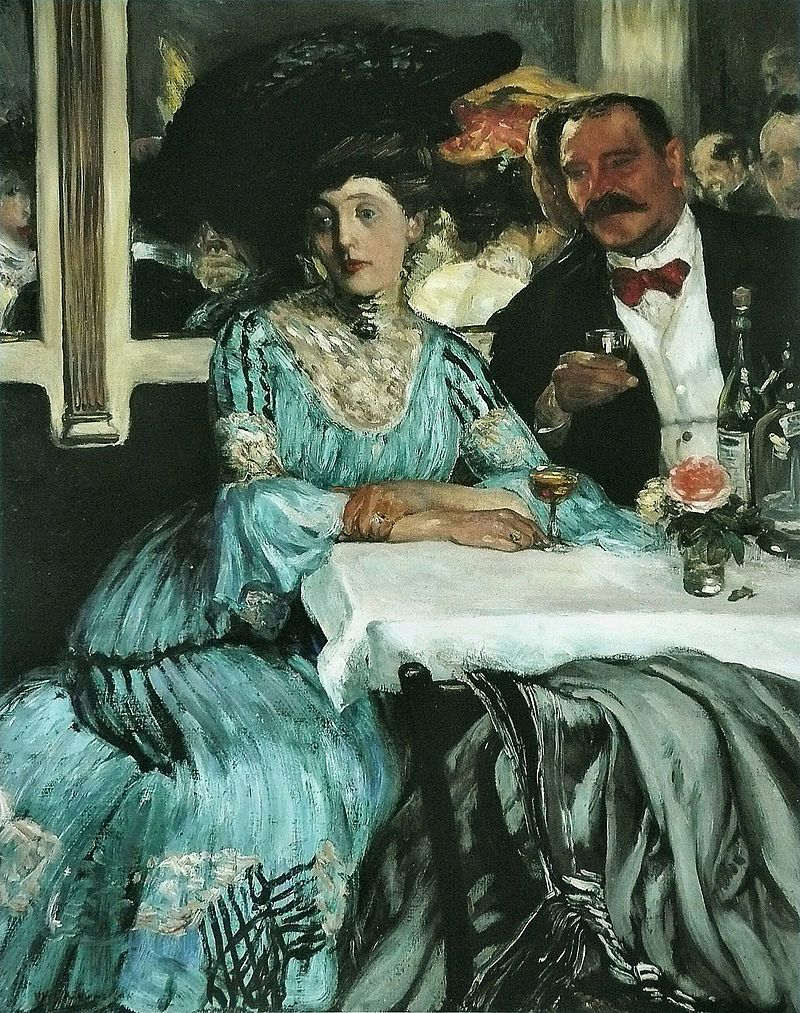
At Mouquin’s by William Glackens (1905)

Artists need to sell their work and to do this their work has to be shown at exhibitions.  However it was not always easy for many artists to have their work accepted by exhibition juries and in 1907, Glackens and many of his contemporaries decided to take the matter into their own hands and split from the National Academy of Design who they felt, for some reason, stopped accepting their work  The Eight, as they had come to be known, led by Robert Henri decided to host their own exhibition at the Macbeth Galleries in New York City and an opening date for the event was set for February 3rd 1908.

May Day in Central Park by William Glackens (1905)

Although part of the Ashcan School of Painters, Glackens preferred to use a lighter palette for his work, unlike the darker palette used by the others who liked to depict the darker and grittier side of life in the city.  For Glackens depictions of family life whilst shopping or relaxing in the park were his favourite subjects for his paintings.   Unlike his colleagues Glackens preferred to focus more on scenes of leisure and entertainment rather than concentrate on the misery of life in the slums of the Lower East Side.

The Green Car by William Glackens (1910)

The consequences of working as an artist/reporter for a number of Philadelphia and New York newspapers taught him to observe the smallest of details of a scene.  In New York Glackens had a studio on Washington Square Park and it was from here he captured a scene for his 1910 painting entitled The Green Car.  The painting depicts a green trolley car as it rounds the corner at the south side of the park and we see it is heading towards a lady who is standing by the snowy curb, waiting to alight.  She is dressed smartly in a long coat, hat, and muff, she signals to the conductor of the trolley car.  Our eyes move from the foreground and the green trolley car across the snow-covered grass, through the trees and finally alight on a row of three-storey brick tenement buildings.

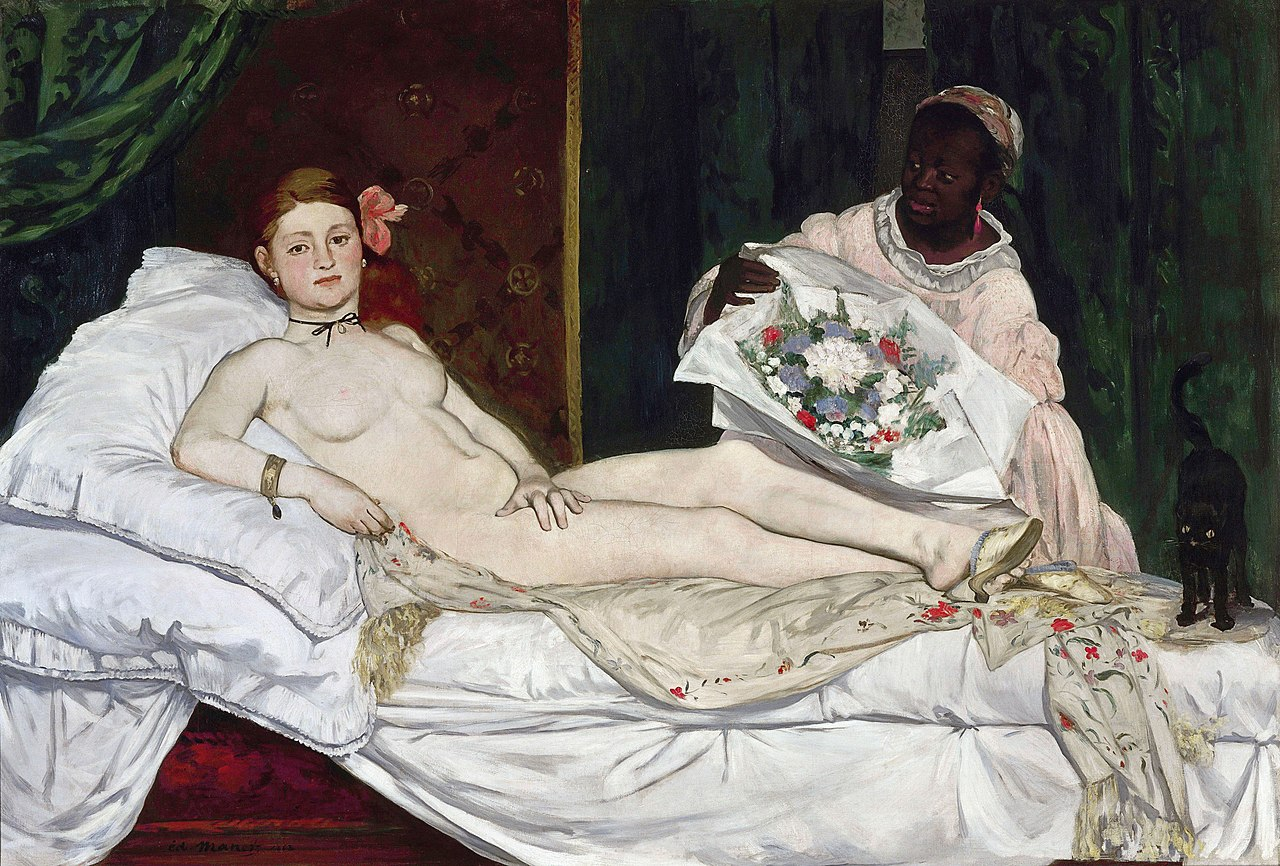
Olympia by Manet (1863)

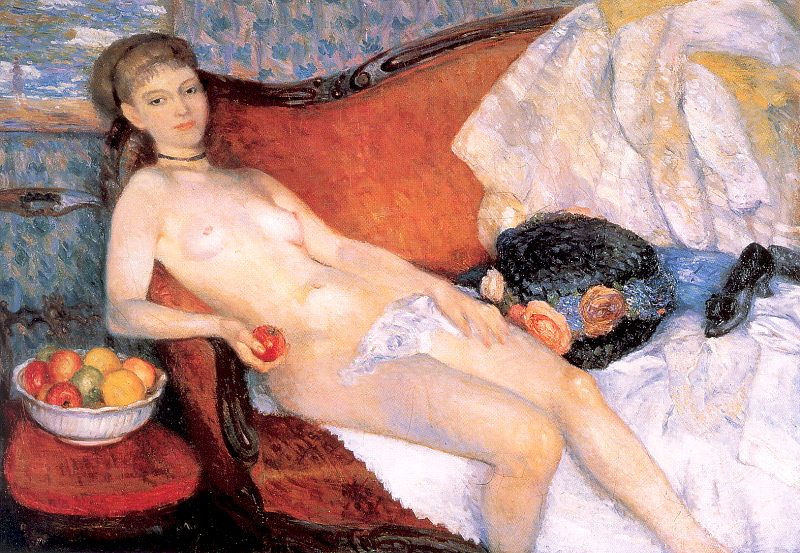
In 1910 Glackens produced what many believe is his homage to Édouard Manet’s Olympia with his painting entitled Nude with Apple

Nude with Apple by William Glackens (1910)

It depicts a reclining nude holding an apple which she has taken from the nearby bowl on her right.  To her left on the sofa there is a large hat and a pile of her discarded clothing including one blue shoe.  She wears a black choker around her neck which harks back to the same accoutrement warn by Manet’s reclining nude, Olympia.  Whereas Manet’s Olympia covered her pubic region with her hand, Glackens has modestly covered his model’s pubic region with a piece of discarded white lingerie.  Glackens’ depiction is another of his typical realist genre.  The model is ordinary.  She could not be termed beautiful.  The depiction alludes to her being simply one of Glackens’ models who has just arrived at his studio wearing a large flowery hat, a gown and blue shoes.  She then hurriedly undressed, abandoning her clothes on the sofa.  The scene seems to have been unscripted.    And yet…..are we to think of the apple in her hand as symbolising Eve?

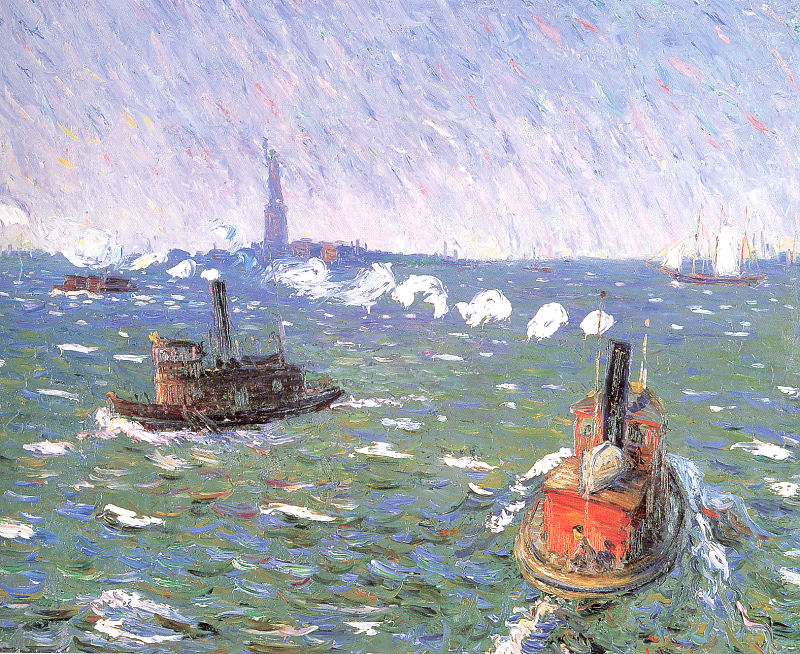
Breezy Day, Tugboats New York by William Glackens (1910)

Glackens extensive knowledge of European art and artistic trends in Europe led him to be commissioned by Albert Barnes, the American chemist, businessman, art collector, writer, and educator, in January 1912 to travel to Europe and buy paintings for him which would then become the foundation for the Barnes Collection in Philadelphia.  Barnes was also a High School classmate of Glackens and gave him twenty thousand dollars to be used for purchasing paintings and Glackens returned with thirty-three works of art.  That December Barnes himself travelled to Paris to buy more works of art.

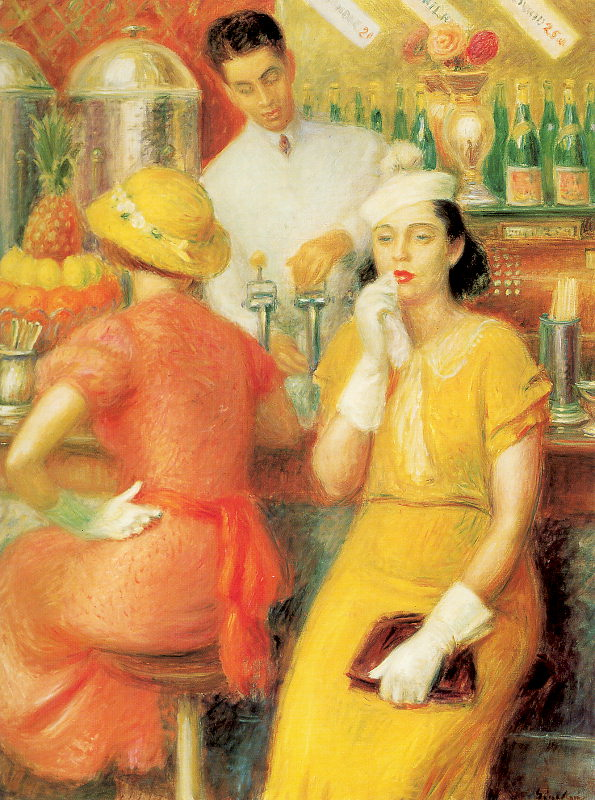
Soda Fountain by William Glackens (1935)

On Feb. 17th, 1913, the International Exhibition of Modern Art opened at the 69th Regiment Armory on Lexington Avenue in New York. The Armory Show, as it came to be known, had a profound effect on American art.  William Glackens helped to organize the American section of this ground-breaking exhibition but later reflected on how the American art was somewhat inferior to the European submissions. He voiced his opinion:

“…Everything worthwhile in our art is due to the influence of French art. We have not yet arrived at a national art […] I am afraid that the American section of this exhibition will seem very tame beside the foreign section. But there is a promise of renaissance in American art…”

William Glackens in his studio (c.1915)

Although he liked the modern and much more abstract European works Glackens maintained his love of painting scenes of everyday life and always remained a realist artist. During the inter-war years Glackens made a number of trips to Europe buying European works to enhance the Barnes collection. Glackens died of a cerebral haemorrhage on May 22nd 1938 while spending a weekend visiting fellow artist Charles Prendergast in Westport, Connecticut. He was 68.

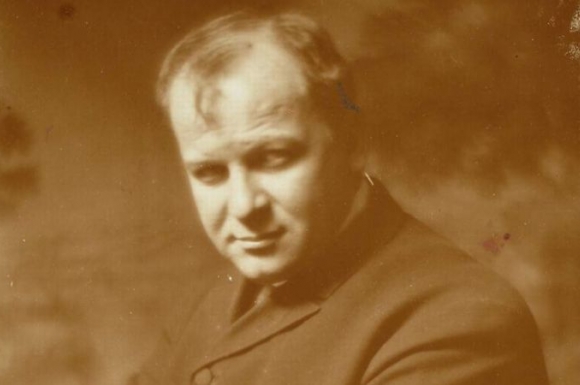
George Benjamin Luks

The artist I am looking at today is an American who was mainly known for his social-realist paintings and illustration.  Today’s painter supported several of his contemporaries in their philosophy of painting subjects which challenged the traditional approaches put forward at the time by the National Academy of Design and the established art circles in America.  This art renegade is George Benjamin Luks and he became a leading figure in the New York art world in the early part of the 20th century.

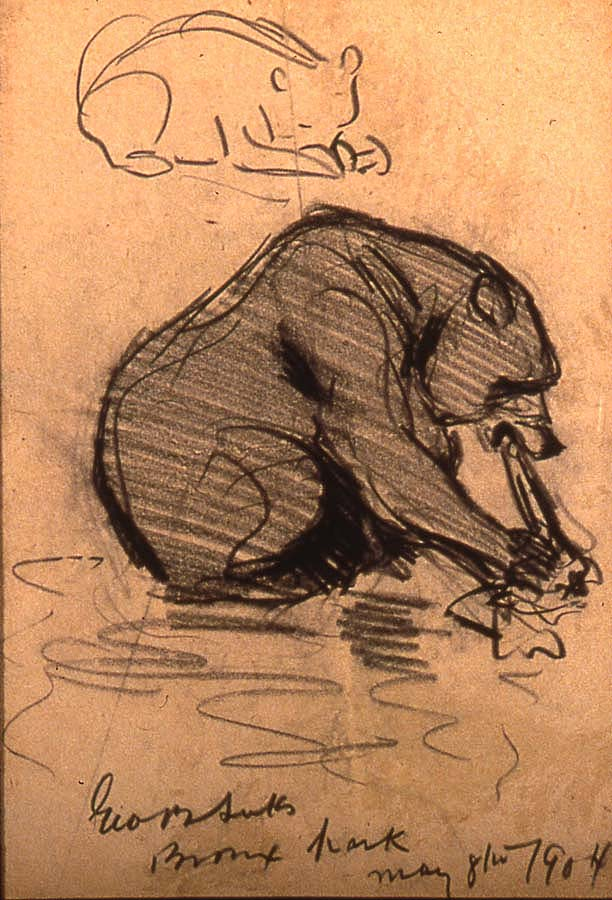
Bear by George Luks (1904)

George Luks was born on August 13th, 1867, in Williamsport, Pennsylvania.  He was the son of Emil and Bertha Luks who were both amateur painters and both encouraged their son’s inherent artistic talent by providing him with his earliest artistic tutoring.  When George was still a young child, the family moved some fifty miles south-east to Pottsville, a town in the heart of Pennsylvania’s coal region.  It was here that his father, a physician, tried to help the coal-miners and their families and was a supporter of a group known as the ‘Molly Maguires’, a secret organization of Irish-Americans that tried to improve conditions for the area’s miners.  As George grew up, he became aware of the poverty-stricken lives of the miners and their families.  This early exposure to the hard lives of the mining community had an effect on Luks and his works of art which often depicted impoverished families in naturalistic surroundings.

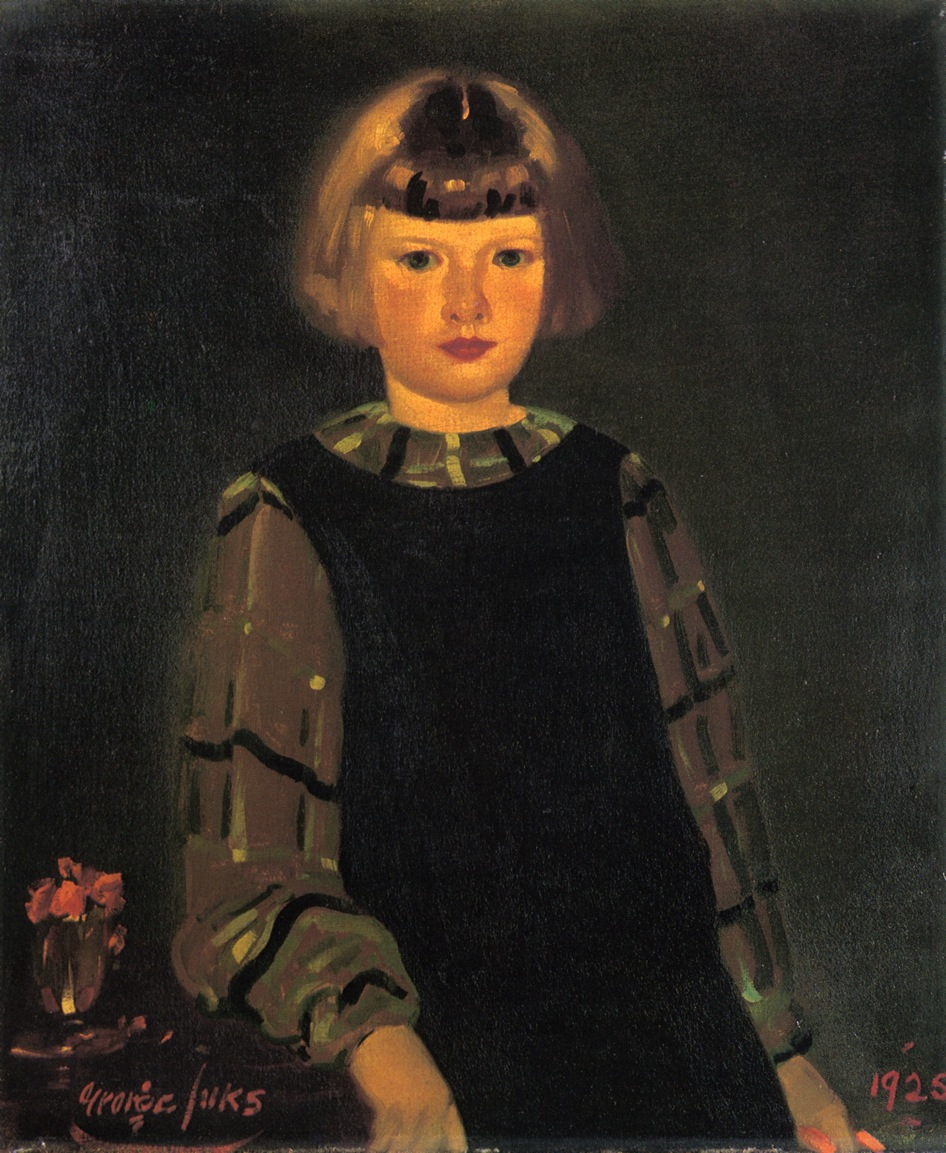
Portrait of Miss Ruth Breslin by George Luks (1925)

George Luks’ earliest job was in vaudeville.  He and his brother took part in the Pennsylvania and New Jersey vaudeville circuits while still in their teens.  However, even as a teenager, he was determined to become a professional artist and so his vaudeville career ended.  In 1884, at the age of seventeen, he enrolled in the Pennsylvania Academy of Fine Arts, where he was tutored by the painter, Thomas Anshutz, but his rebellious nature resisted the rigors of formal study, and he withdrew after a short stay.

London Bus Driver by George Luks (1889)

Luks then visited Europe and set about visiting Germany, England and France attending several of the city’s art schools.  One such school was the Kunstacademie in Dusseldorf, but his stay there as a pupil did not last long for the same reason that he departed the Pennsylvania Academy of Fine Arts – his dislike of the high standards and inflexibility of the rules of the establishment.  This mindset would stay with him all his life.  He then headed for Paris and London.  Throughout his European sojourn he was greatly influenced by European painters such as Velazquez, Manet, Rembrandt but in particular the Dutch painter, Frans Hals.

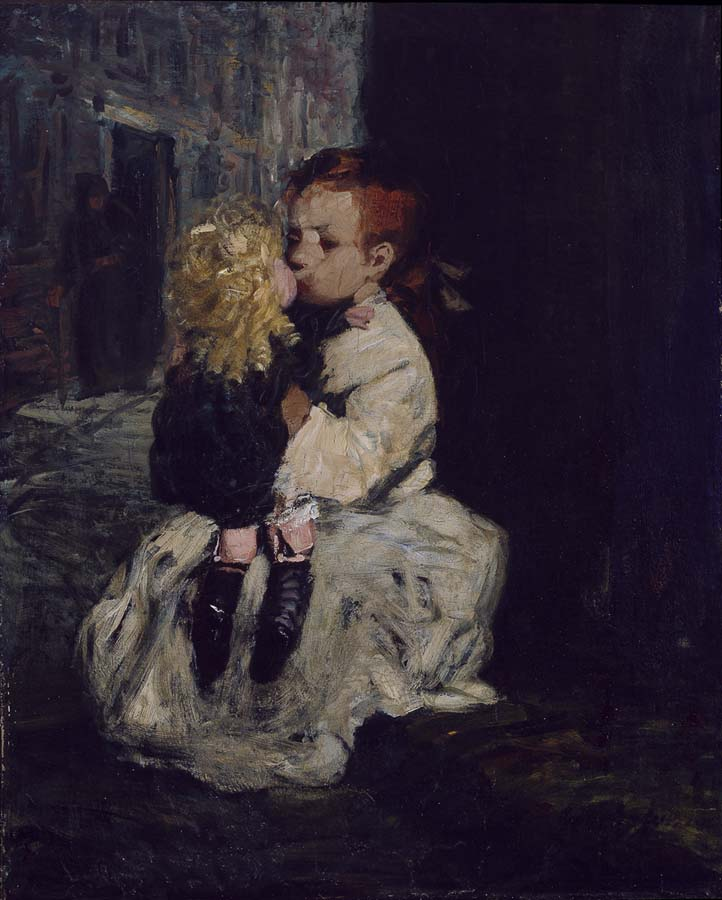
The Little Madonna by George Luks (1907)

On his return to America in 1890 he began to earn money as a newspaper illustrator and in 1894 he started at the Philadelphia Press and Philadelphia Evening Bulletin, where he produced “at-the-scene sketches” which later became illustrations to go alongside the news stories.   This was Luks’ forte as he was both a talented draftsman and had a meticulous eye for recording details of events.

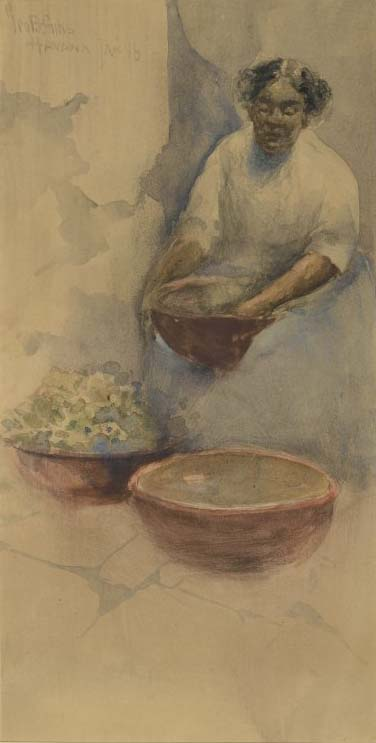
Havana by George Luks (1896)

He and fellow illustrator at the Philadelphia Press newspaper, Everett Shin, moved into a one-room flat in the city.  Whilst working at the newspaper Luks became friends with the artists John Sloan and William Glackens.  These four painters and illustrators would have weekly get-togethers at the studio of Robert Henri, a renowned artist who was several years their senior, and who emboldened his younger friends to ponder over the necessity for a new style of painting.  Henri’s vision was that this new artistic style would express the essentials of their own time and experiences and would counter the limitations imposed by the present conservative art establishment.  Henri told his friends that they should be depicting scenes of ordinary life and discard the current trends of portraying life as a genteel existence.  Robert Henri and his four new friends with their new ideas regarding the direction of American art, collectively became known as the Philadelphia Five.

In 1896, the Philadelphia Press sent Luks to Cuba to cover the Spanish-American War as a newspaper correspondent/war artist.  On his return to America, he re-located to New York and joined the newspaper, New York World, under publisher Joseph Pulitzer.  Luks began at the newspaper employed to draw the comic strips, such as The Yellow Kid and Hogan’s Alley.  It was during this period that Luks began to devote more time to hone his painting skills, and six years later, in 1902, he abandoned newspaper work to concentrate all his energies to painting. 

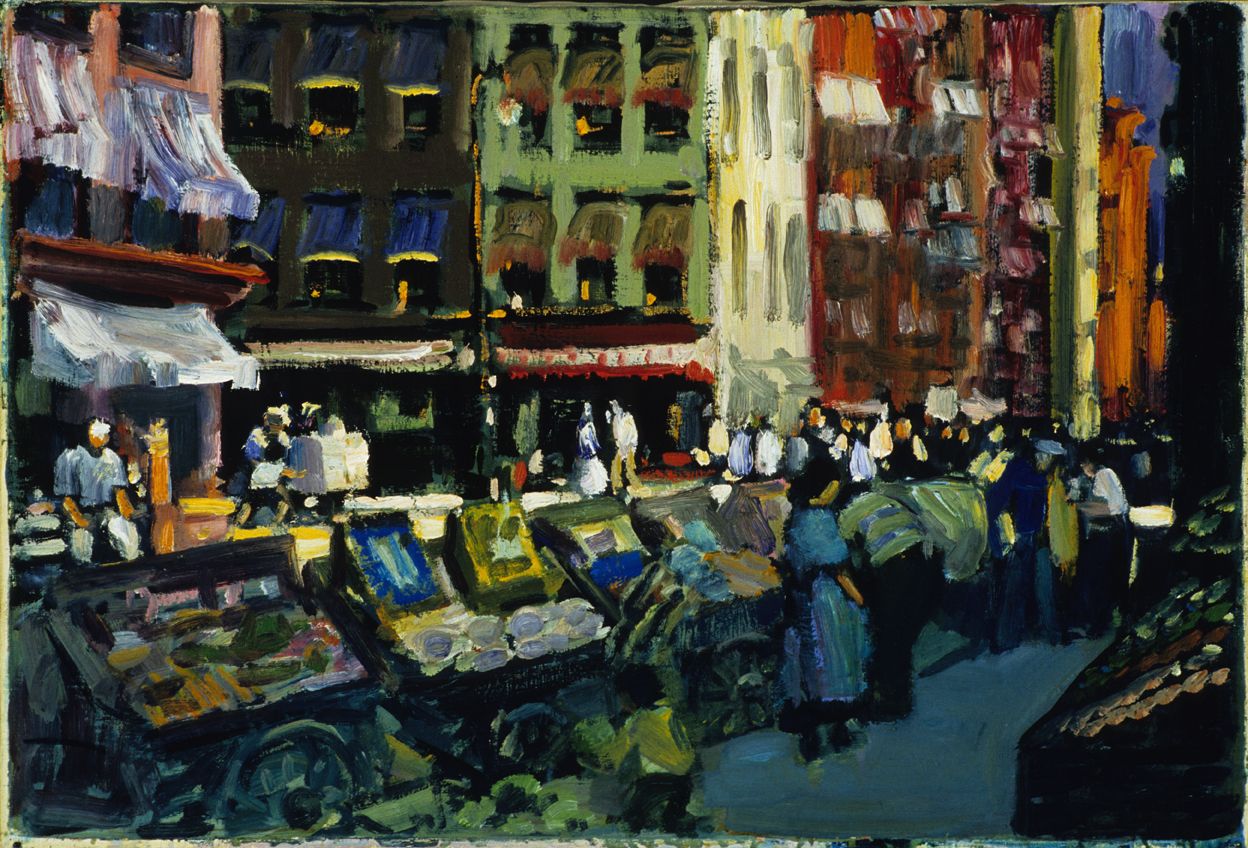
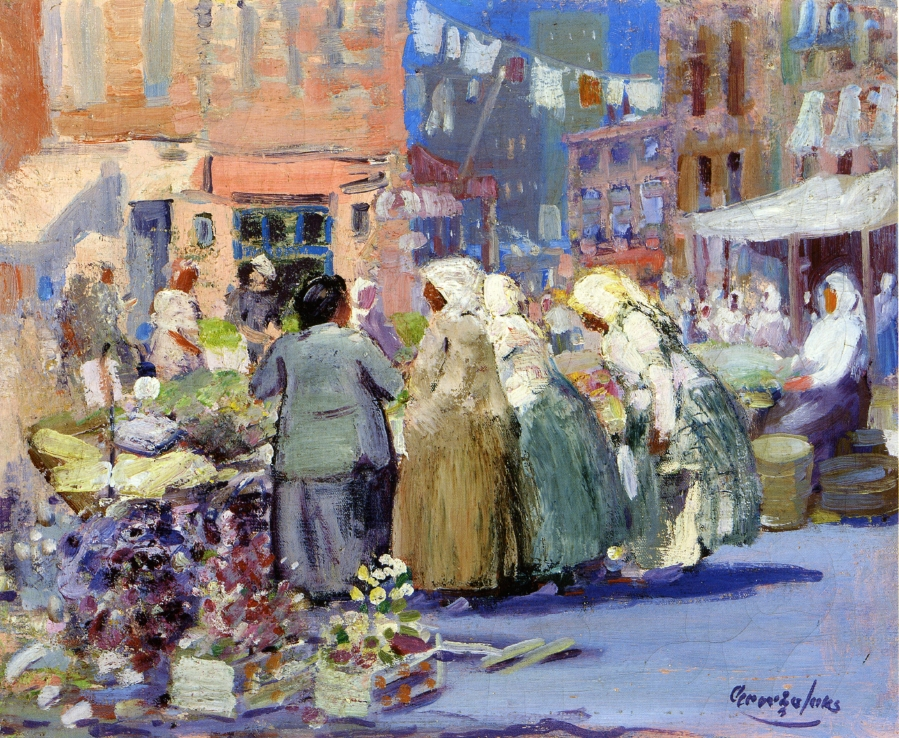
Street Scene (Hester Street) by George Luks (1905)

One of his most famous paintings was his 1905 work entitled Street Scene (Hester Street).  The setting is a push-cart market on Hester Street on the Lower East Side of Manhattan, an area of the city which was packed with recent Jewish immigrants.  From our viewpoint looking down the street we see a crowd of shoppers, both men and women and in the foreground we see children, milling around a toy pedlar, searching for bargains.  Many art historians have judged the depiction to be a compassionate pictorial essay of Jewish life.  We see the people in profile, and Luks has paid particular attention to skin colour and the physical features of the people in the crowd, while the subject matter relates to a series of caricatures of Jewish peddlers. It is a congested depiction and we only get small glimpse of the blue sky in the middle background. In the middle-ground we see the darkly oppressive inexpensive tenement blocks, in which were apartments that were so designed to house hundreds of these people, maximising the profits of the landlords.

Allen Street by George Luks (1905)

Another of George Luks’ 1905 Lower East Side paintings was entitled Allen Street. Between 1880 and 1920, more than twenty million immigrants came to America, making it the greatest period of mass migration in American history. At the time Luks painted these Lower East Side street scenes it was home to approximately half a million Jewish immigrants, who had fled economic hardship and political violence within the Russian Empire. At the time it was the most densely populated place on earth.  Sadly, with this sudden influx of Jews into the area came a rise in nativism, the protection of the interests of native-born or established inhabitants against those of immigrants, and anti-semitism.

Luks had produced antisemitic caricatures, above is an example, for several publications during the 1890s, and the emphasis on racist stereotypes about Jewish physiognomy  can be seen in the painting, Hester Street.

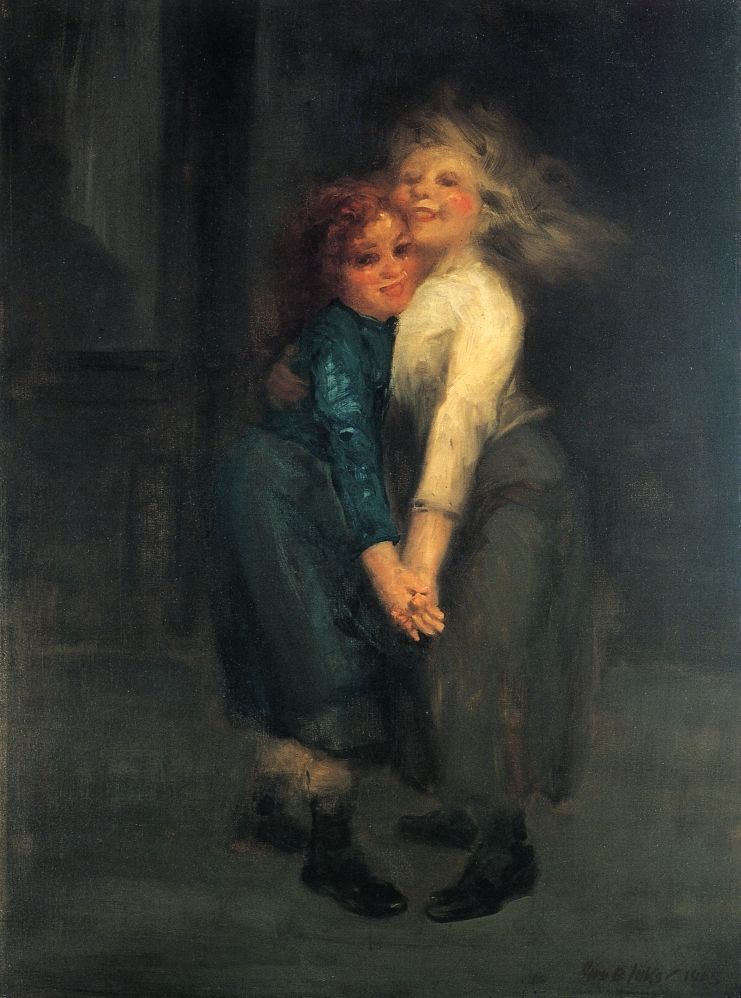
The Spielers by George Luks (1905)

Despite the hardship of life whilst living in the overcrowded tenement block Luks also wanted to depict a modicum of joy displayed by some of the younger residents.  His 1905 painting entitled The Spielers (from the German word spielen – to play) was one of his favourites works and when, in 1907, he gave it to his dealer, William Macbeth to sell, he said he wanted $2000 for it.  His dealer was dismayed at such a high price. When it was displayed at Luks’ 1910 solo exhibition at the Macbeth Gallery in New York, critics called it an artistic masterpiece.  Luks sold it direct to a collector but it is not known whether he achieved his $2000.  In an article in the New York Times Magazine on February 6th, 1916, the art critic James Huneker praised the work in his article George Luks, Versatile Painter of Humanity wrote:

“…The east side is yet to boast its Dickens. And Dickens would have enjoyed the picture of the little tousled Irish girl with her red locks who dances with the pretty flaxen-haired German child, surely a baker’s daughter of Avenue B. Now you might suppose that this vivid art, this painting which has caught and retained the primal jolt and rhythm of the sketch, might be necessary rude and unscientific in technique. It is the reverse. This particular picture is full of delicious tonalities. The head of the blonde girl might be from an English eighteenth century masterpiece…”

This simple painting of two girls dancing together more than any other work by Luks, made his reputation.

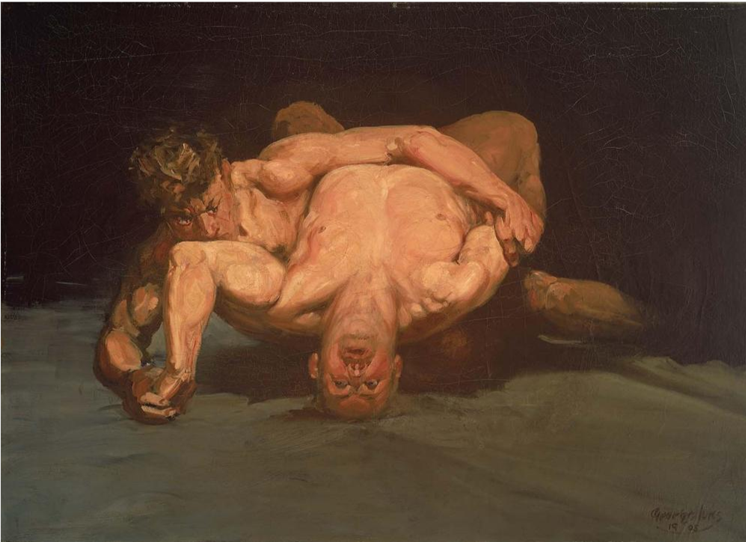
The Wrestlers by George Luks (1905)

Some art critics had voiced an opinion on Luks’ figurative work saying that he was not good at depicting human anatomy.  It is thought that Luks’ baulked at this sleight on his ability and in 1905 produced a complex painting of two nude wrestlers, so as to counteract their criticism. The painting is now housed in the Museum of Fine Art, Boston, which described the work:

“…The artist’s perspective was radical for the time. Luks’s composition effectively presses the viewer to the edge of the wrestling pit, thereby emphasizing the down-at-heels setting. The jarring vantage point also evokes the sweaty underbelly of modern urban life, a theme for which he and fellow members of the Ashcan School would become known.  Luks’s scene of entangled human flesh under duress is reminiscent of the sporting scenes that fellow Philadelphian Thomas Eakins painted, in particular Eakins’s 1899 Wrestlers (Los Angeles County Museum of Art). Whereas Eakins depicted a wrestling hold with the impassive eye of a painter rendering a studio model, Luks conveys the passion exuded by the heaving torsos. Eakins applied carefully blended strokes of pigment, building up solidly modelled forms after the manner of his studio training with the French academic painter Jean-Léon Gérôme. Luks, in contrast, enlivens his figures with energetic brushwork and thick impasto. Luks’s familiarity with the popular press, gained from his work for illustrated periodicals, may have inspired the sense of immediacy he suggested—brilliantly illuminated flesh is thrown into relief against the dark background as though caught in a reporter’s flashbulb.  The opponent at the left also recalls the terrifying visages of the early-nineteenth-century Spanish painter Francisco Goya’s so-called Black Paintings (Museo Nacional del Prado, Madrid), in which humans are transformed into ghouls. Luks portrays a distinctive type among the multitudes in New York City, in this case an aggressive athlete. Once again, his training as a newspaper illustrator likely honed his astute sensitivity to physiognomy, and here the thickly furrowed brow, devilish eyes, and flushed complexion suggest the bellicose personality befitting a pugnacious wrestler…”

Known originally as The Five, of which Luks became a member.  Then it became collectively known as The Eight, which was made up of the original five members with the addition of Arthur B. Davies, Ernest Lawson, and Maurice Prendergast.  Then The Eight eventually became known as the Ashcan School.  . The name “Ashcan” was originally coined by critics of the movement to deride the surplus of refuse bins in the artists’ pictures and the perceived dirtiness of the subjects at large. Robert Henri, the leader of the movement and its spiritual father was blunt of what he wanted to achieve. He said he wanted art to be akin to journalism… he wanted paint to be as real as mud, as the clods of horse-shit and snow, that froze on Broadway in the winter. Many of this group’s works were rejected when submitted to exhibitions of the powerful, conservative National Academy of Design and this motivated The Eight to form their own exhibiting group.  Their exhibition at the Macbeth Galleries in New York in January, 1908 was a significant event in the promotion of twentieth-century American art. 

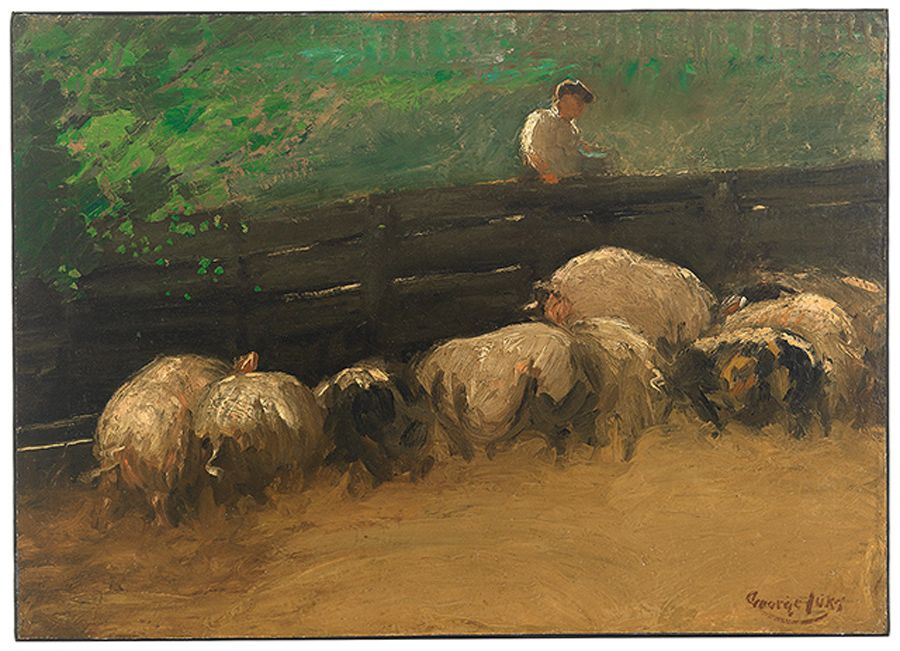
Feeding the Pigs by George Luks

Following the success of the New York exhibition John Sloan organized a traveling exhibition that brought their paintings to Chicago, Indianapolis, Toledo, Cincinnati, Pittsburgh, Bridgeport, and Newark.  These travelling exhibitions had people talking the new realism that the Ashcan School represented.  George Luk’s paintings Feeding the Pigs and Mammy Groody were seen as examples of this new ‘earthiness’ that many art lovers were not yet ready to accept.  The Ashcan movement threw down the gauntlet and confronted the academic art institutions, and as a result, during the 1910s the authority of the National Academy of Design as a cultural authority began to wane.  The Ashcan painters played a an essential role in developing the nation’s sense of what were to be considered suitable subjects for free artistic expression.

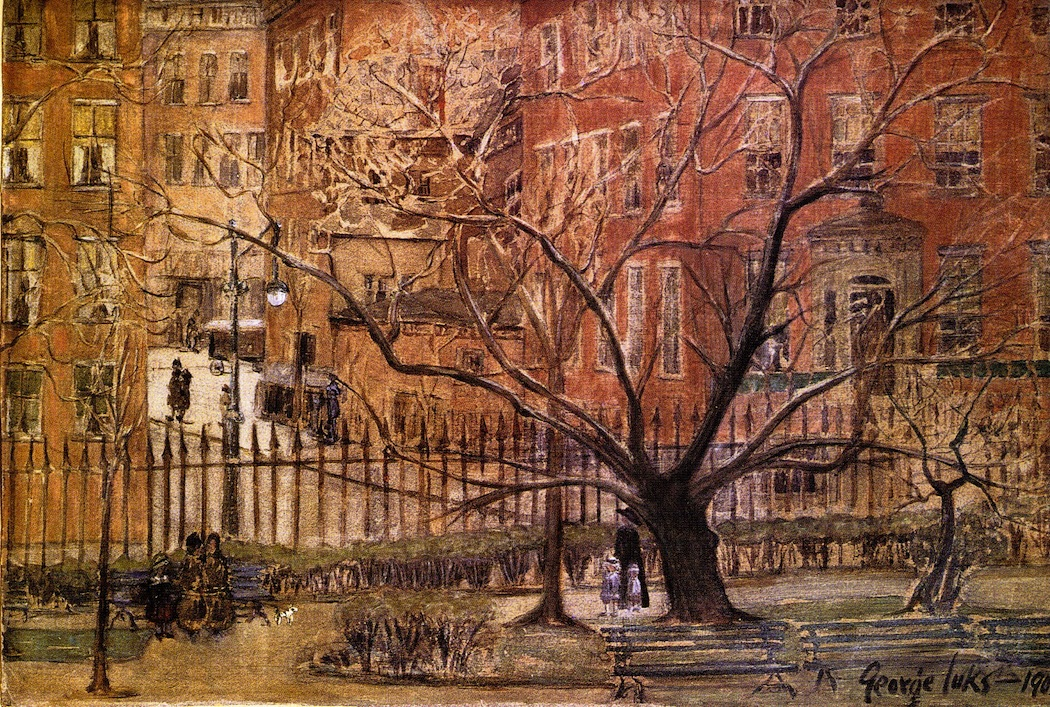
Gramercy Street by George Luks (1905)

As a member of The Eight, George Luks created works in vivid bravura manner that captured the spirited energy of the tenement districts of New York and their occupants. The American Art historian, Milton Brown wrote about George Luks’ works in his 1955 book, American Painting from the Armory Show to the Depression:

 “…In his art and in his character, he symbolized the spirit of American dynamism; as aggressive as a tycoon, as brash and boastful as a ‘drummer’. . . he was a swashbuckler in paint. This was not, of course, the cultured tradition of American life; it was rather the expression of a cruder side of America, an echo of the frontier…”

Hannaford.s Cove by George Luks (1922)

George Luks is best known for his depictions of New York City life, but he also painted many landscapes.

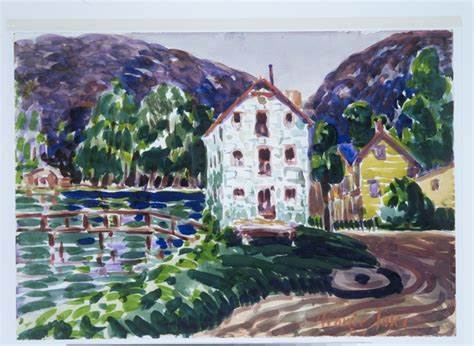
Old Gristmill, The Berkshires by George Luks (1925)

There are several landscapes of the Berkshire Mountains in Massachusetts that follow the Impressionist tradition.  One such work is his painting Old Gristmill, The Berkshires which he completed in 1925.   However, Luks was far happier living a city life.  

Foggy Night by George Luks (c.1925)

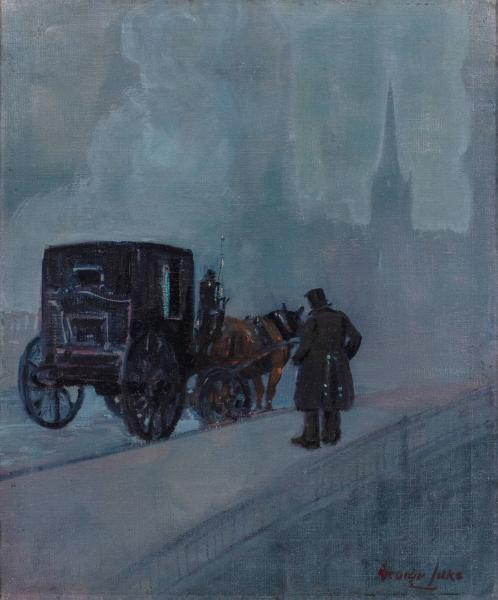
Luks’ painting Foggy Night which he completed around 1925 captures his urban vision during his many walks around the city. He was fascinated by what he saw.  In this depiction of an overcast night in New York, there is an eerie stillness about the scene.  We see a lone cab driver who has stopped his horse-drawn carriage on an otherwise empty bridge.  In the distance we can just make out shadowy buildings and the spire of a church. The city has been overwhelmed by the misty atmosphere and darkened by the nocturnal setting.

Spring Morning Houston and Division Streets by George Luks (1922)

George Luks was married twice but had no children. He was as famous for his paintings as he was with his mood.  He was said to be loud, boastful of his boxing prowess but a good-humoured man, and was a notoriously heavy drinker.  On October 29th, 1933, he was found dead in a Manhattan doorway at 6th Avenue and 52nd Street, a casualty of a bar-room brawl.  He was 66.  Luks was buried at Fernwood Cemetery in Royersford, Pennsylvania.  He was dressed in an 18th-century embroidered waistcoat, which was one of his most valued possessions. His death was reported in the New York Times and the reporter wrote:

“…His canvasses were invariably virile; his versatility was astonishing, and he painted as he lived, contemptuous of conventionalities, impatient with snobbishness and full of joy of life that so many of his paintings reflected…”

Clara Klinghoffer. Part 1.

Early childhood and teenage years

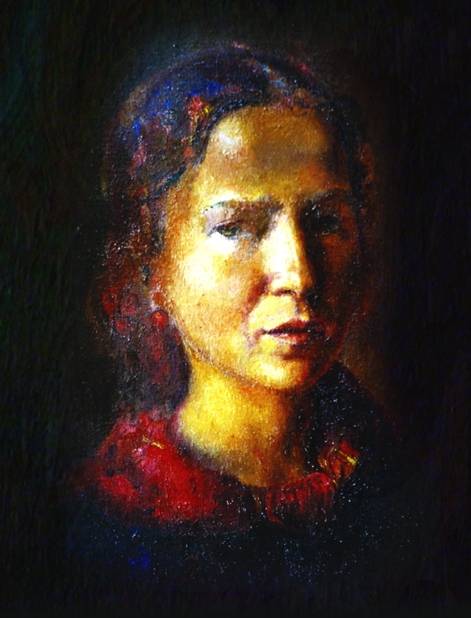
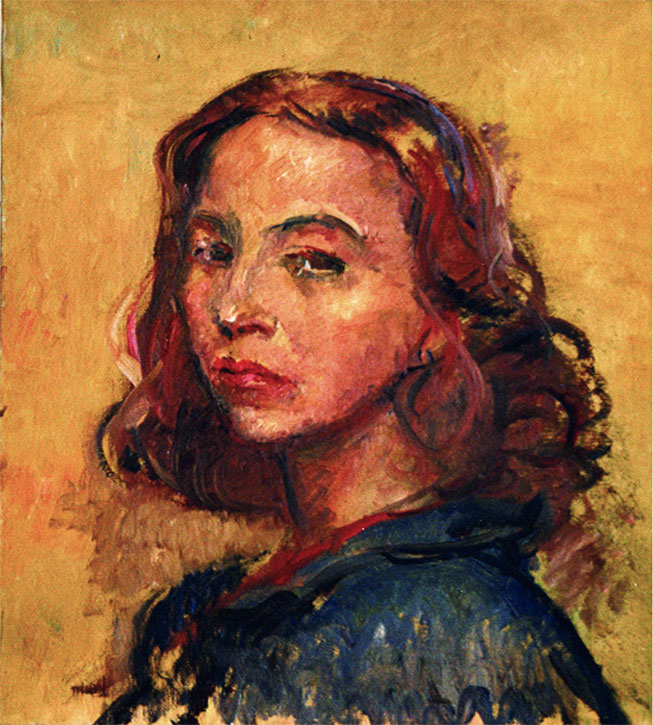
Self portrait by Clara Klinghoffer (1937)

“…Now universally recognized as one of the greatest English woman painters, she was a poor and utterly unknown young girl from the East End when her first exhibition took the artistic world by storm in 1919. Hailed everywhere as the girl who could draw like Raphael, her superb technique has always been compared with the Old Masters, but at the time of her first show she had never seen any of the great Old Masters pictures…”    

–Women of Today, 1932

My blog today looks at the rise of one of the great female artists. For Clara Klinghoffer’s life story, I want to go back to her paternal grandparents, Abel and Witie Stark who lived in in Szerzezec, a village some forty minutes by train away from the large town of Lemberg, known to us now as the Ukranian city of Lviv, but at the time of Clara’s birth in 1900 it was part of the contested region that was once Polish Galicia, but was then part of the Austro-Hungarian Empire.  Since Galicia had split from Poland and came under Austrian control, life had been good.  The majority of the population of the small town of Szerzezec were Jewish but they had a good working and social relationship with their fellow Christian citizens.  It was an easy-going and liberal place to live where both Jews and Christians realised they needed each other.  Abel Stark ran a grain business and had achieved lucrative contracts with the Austrian military.

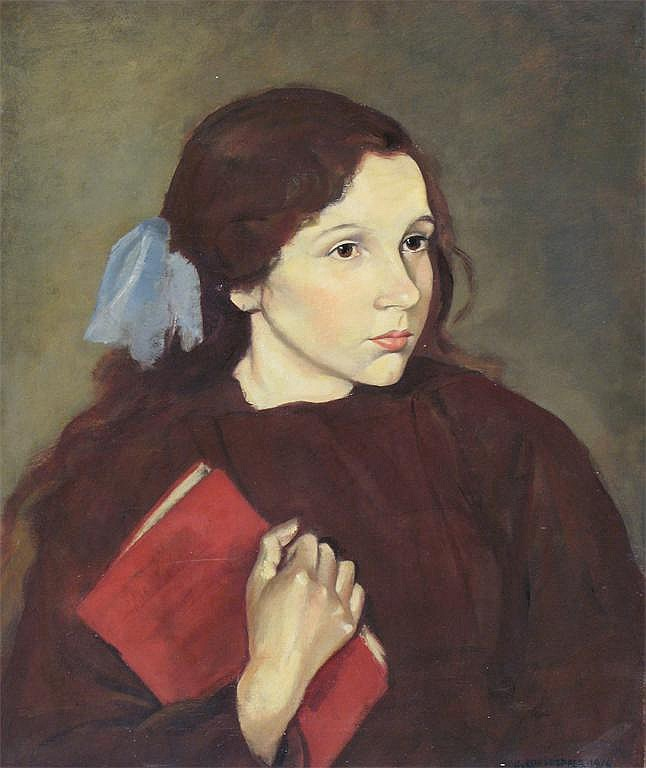
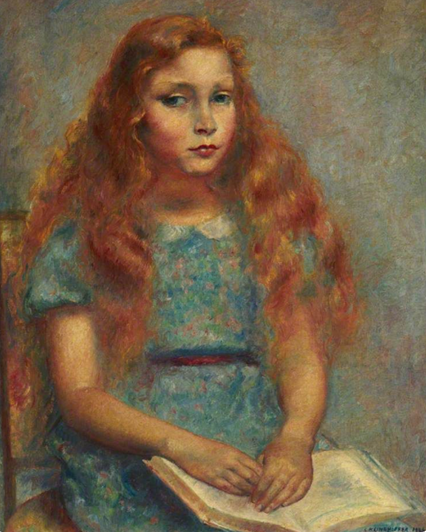
 Portrait of Annie Salomans with her book by Clara Klinghoffer (1918)

In 1898 Abel and Witie had one major problem to solve.  Their eldest daughter, Chana Riza (Hannah), was twenty four years old and despite her father and mother’s attempts to find her a husband and that of the local shadchan (matchmaker), she remained unwed !  If it was a problem for them, it was also a problem for her two younger sisters, Sarah and Leah, as according to ancient custom, they were not allowed to marry until the eldest sister married first.  Eventually a “marriage candidate” arrived who was acceptable to both parents and Chana Riza.  He was Salman Klinghoffer.  To Chana’s father, Salman was ideal and would be able to work in the family business whilst to Chana herself he had all the physical attributes she found pleasing. 

Self portrait by Clara Klinghoffer (1955)

Chana Riza and Salman Klinghoffer were married on March 1st 1898 at a large ceremony attended by most of the townsfolk and the merriment lasted for many days.  The newly-weds moved into her parents home and Salaman began working for his father in law but Salman and his father-in-law did not get on well.  They were two totally different characters.  Abel Stark was shrewd, dynamic and very determined which was the reason for his success in business.  On the other hand, Salaman was a quiet and contemplative man and somebody who shied away from confrontations.  Chalk and cheese !  Abel soon became aware that Salman would not eventually be able to take over the family grain business in a partnership with Abel’s son Ephraim and Salman riled at being treated like a lackey by his father in law..

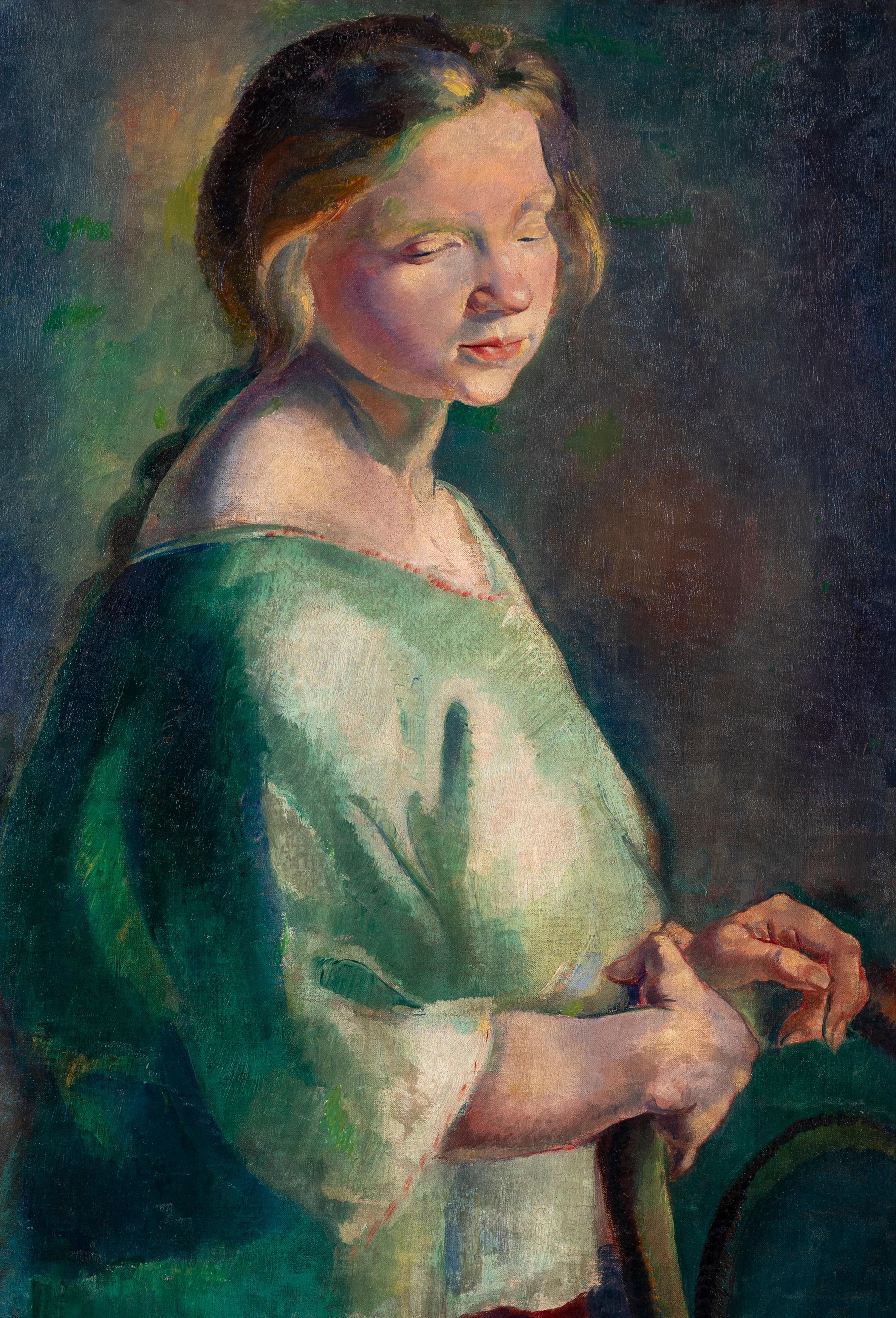
Untitled (Young Woman) by Clara Klinghoffer

Salman and Chana Rizi had their first child, Fegele, in early 1899 and later that year Chana became pregnant once more.  Her second child was born on May 18th 1900.  This second daughter was named Chaje Esther after her late maternal grandmother.  A third child, another daughter, Reisel, was born on April 4th 1902.  Although the grandparents were happy with the grandchildren, their happiness, at least in the eyes of Axel, was tempered by the fact that Chana Rizi had not given birth to any male offsprings.

Portrait of a Girl Reading by Clara Klinghoffer (1946)

Salman was fed up with life and working for Abel and soon on hearing many stories about the golden land of America decided that his future lay there and he would head there alone, get a job and then send for his wife and children.  Sadly Salman was a dreamer.    He broached the subject with Abel and Witie who did not oppose his dream and seemed to be pleased to be rid of him.  His wife viewed it differently but because she knew her husband was very unhappy, she believed he should grasp the chance to better his life and any way, soon she would join him.

Giuseppina by Clara Klinghoffer (1934)

Salman left Szerzezec but instead of going to America arrived in England in the city of Manchester and took a job as a presser in a tailor’s shop.  Nobody knows why he changed his plans of fulfilling his American Dream but maybe he had contacts in the northern English city.   At first he corresponded with his wife back home telling her what he was doing but there was never an invite for her and his three children to join him.  The arrival of letters from her husband soon became infrequent and eventually stopped altogether.  What had happened to him?  Had he taken up with another woman?  Had he become seriously ill?  Had he decided to journey on to America?  All were questions that Chana Rizi contemplated.  So in 1903, she took the momentous decision to go to Manchester with their two children Fegele and Chaje and look for her husband. Her youngest daughter, Reisel, was left with her grandparents.  Chana Rizi was just thirty years old and solo travel was hazardous and she would be arriving in a country whose language she could neither speak nor understand.  However, she did arrive in Manchester after a long boat trip during which time she was violently seasick and she eventually located her husband, much to his surprise.

Pastel portrait of Lucien Pissarro by Clara Klinghoffer (1928)

Salman was paid a pittance as a presser but Chana Rizi was determined to stay by his side so they could build a life together even if they all had to endure poverty.  It was also at this time that they changed the children’s first names.  Fegele became Fanny and Chaje Esther became Clara – Clara Klinghoffer.  The family could not make ends meet and so they moved to the Staffordshire town of Hanley.  Salman’s wages were better and Clara enjoyed the peace of the small rural town which compared favourably with the noisy and polluted city of Manchester but all was not well with the family dynamics and there was a rumour that Salman was having an affair with a local woman.  Chana Rizi, who was pregnant with her fourth child, packed their bags and demanded they returned to Manchester.

Harriet Cohen (pianist) by Clara Klinghoffer (1925)

The family arrived back in the city and rented a property at 18 Irwell Street in the Cheetham Hill district of the city and it was here in late June 1904 that Chana Rizi’s fourth child, another daughter, Rachel, was born.  Many years later, Chana went to visit a friend in London and when she returned to Manchester she announced to her family that they were going to move to the English capital and there would be a job waiting for her husband as manager of a drapery shop in Poplar in the East End of London, which would suit him better as the physical strain on him as a presser was proving too much for him and was affecting his health.  Salman went first to London to secure somewhere for the family to live.  He managed to rent a small East End flat in Puma Court, a tenement block off Whitechapel Road, close to Spitalfields fruit market.  Very little good could be said about their accommodation in their Puma Court flat or the neighbourhood and the smell of rotting fruit and veg coming from the market.

Clara’s early schooldays were ones she would rather forget.  Ferocious teachers who often meted out corporal punishment with a birch and unfriendly fellow pupils were things she had to put up with.  Added to that, her mother fell down the steps of their flat and broke her leg in a number of places which meant she had to rest up in bed with her leg in a heavy cast.

Pen & Ink fashion sketch from Clara’s childhood sketchbook (1913)

Salman was not happy working as manager at his cousin’s drapery shop.  He wanted to be answerable just to himself and so he looked to become self-employed.  He wanted to be his own boss.  He travelled back to Manchester where he set himself up as a “mill end” trader and arranged for bags of “end of roll” materials to be sent to his London home where they were stored in one of their rooms.  He and Clara’s mother then sorted them and Salman took them around various tailors selling the cloth.  The tailors in those days partly made their livelihood from repairing clothes and so needed various pieces of material.  Salman’s business prospered and he was soon able to lease his own shop in Grove Street, off Mile End Road in London’s East End, from where he would run his business and there would be accommodation above for the family.  Throughout the day, tailors would call at the shop looking for material.  Thanks to the support and ambition of his wife Chana, Salman had become a merchant – a profit-making businessman.  Around the early part of 1910 the family moved to another East End property, a roomier three-storey house at 148 Cannon Street Road where Clara’s mother had a dress shop and in April 1914 Salman Klinghoffer applied for naturalisation, probably due to the prospect of war in his homeland .

Photograph of Clara (c.1913)

Clara enrolled at St Mark’s School, a parish school serving poor and largely immigrant children, in nearby Cable Street and despite her sense of foreboding, she found she enjoyed school life and her favourite subjects were history drawing.  After school, Clara would return home and spend time in her mother’s dress shop and began to sketch some of the clients.  She would also spend time in the large attic which ran the whole width of their house and was used as a room to store her father’s mill ends. However there was a table in the attic at which she sat and sketched. This was her first “studio”.

Girl in Green Sari by Clara Klinghoffer

One of her mother’s clients, a young man, who saw Clara’s sketches told Clara’s mother that her daughter was very talented and she should take art lessons.  Clara’s mother was intrigued by the suggestion and she and her husband decided to do something to help their daughter. Studying art at an art school was very expensive but her father and mother managed to raise enough for her to enrol at the John Cass Institute, in Jewry Street, Aldgate. 

………….to be continued


Information for this blog was found in many sources but the most important ones were:

Clara Klinghoffer – 20th century English Artist

Clara Klinghoffer: the girl who drew like Raphael and Leonardo

Cedric Morris

Self portrait by Cedric Morris (1919)

Cedric Lockwood Morris was born on December 11th 1889 at Matcham Lodge, Sketty, Swansea.  He was the first-born child of George Lockwood Morris, an industrialist, iron founder and prominent rugby player who had played for Wales and his wife Wilhelmina (née Cory).  Both of Cedric’s mother and father hailed from well-to-do families who owned industrial businesses. Cedric had two sisters, Muriel who died in her teens and Nancy who was four years his junior. In 1947, when Cedric’s father, George, was eighty-eight, he succeeded to the baronetcy which had been created for his great grandfather. Sir John Morris, a copper and coal magnate.  This prestigious event came three months before he died and the baronetcy passed on to fifty-eight-year-old Cedric Morris, who became the 9th Baronet in November 1947. 

Cedric was sent away to St Cyprian’s School, Eastbourne, an English preparatory boarding school for boys, which trained pupils to proceed to leading public schools, and so providing a taster to boarding school life.  From here Cedric, aged thirteen, was enrolled at Charterhouse, an English public school.  He achieved very little academically at these schools and sat the examinations to enter the army, which he failed. In 1907, aged seventeen, Cedric, at his mother’s suggestion, travelled to Canada to work on a farm in Ontario.  That did not suit him and after a number of menial low-paid jobs he returned to Wales.  He briefly studied music at the Royal College of Music where he hoped to become a singer but again he failed in that venture.  In April 1914, at the age of twenty-four, he travelled to Paris and enrolled at the Académie Delacluse in the Montparnasse district of the French capital.  His stay in Paris was curtailed due to the outbreak of the First World War and he returned to England and joined the Artists’ Rifles, an active-duty volunteer reserve force of the British Army.  Many of those who joined were artists, actors, musicians and architects and its first headquarters was located at Burlington House. Its first commanders were the painters Henry Wyndham Phillips and Frederic Leighton. However like many of his previous aspirations, this came to naught, when he was medically discharged due to a childhood operation which affected his hearing and so he never made it to the Front.  However, Cedric who was an accomplished horseman, took up his next position as part of the  war effort when he joined the Remounts Service which was responsible for the provisioning and training horses and mules which were bound for the Front.  He worked under Cecil Aldin, a Remount Purchasing Officer who was also an amateur artist.  In 1916 the Remounts Service was taken over by the Army and became the Army Service Corps Remounts Service and as Cedric was a civilian he had to leave the organisation.

Frances Hodgkins by Cedric Morris (1917)

In 1917 Morris travelled to Zennor, a village in south-west Cornwall, close to St Ives, where he stayed for twelve months painting in watercolours and studying the plants and fauna of the area.  It was here that he met the New Zealand painter, Frances Hodgkins.

Cedric Morris (Man with Macaw) by Frances Hodgkins (1930)

As well as his painting of her Frances painted one of him with a macaw in 1930.

Arthur Lett Haines

By the time of the Armistice and the end of the Great War on November 13th, 1918, Morris had left Cornwall and returned to London and it was on Armistice Day that he first met Arthur Lett Haines and fell in love with the painter and sculptor despite Haines living with his wife of two years, Gertrude Aimee Lincoln, an American and granddaughter of Abraham Lincoln.  Cedric Morris moved into the Lett Hains’ household in Carlyle Square, Chelsea and the trio had planned to move together to America.  However, the three-person tryst ended and Aimee moved alone to America.  With Aimee out of the picture, the two men travelled to Newlyn, Cornwall and set up home. Arthur Lett Haines, known by his middle-name Lett, was five years younger than Morris, being born on November 2nd 1894.  He was educated at St Paul’s School Public School, London and went on to serve in the British Army during the Great War.

Atelier Tapisseries, Djerba, Tunisia by Cedric Morris (1926)

Cedric Morris and Lett Haines moved to Cornwall to set up home in 1919 and at the same time they sub-let their London flat to Frances Hodgkins.  They moved houses a couple of times before settling in a house known as The Bowgie, which was a combination of a row of old cottages overlooking Newlyn harbour, and became a holiday home for the pair.  At Christmas 1920 they sold The Bowgie and moved to Paris. 

Cedric Morris and Lett Haines

The Paris that Morris and Lett Haines arrived at was said to have been a melting pot of artistic creativity. The pair would devote their evenings mingling in the cafes and bars in Montparnasse and mixed with such artistic luminaries as Marcel Duchamp, Peggy Guggenheim and the photographer, Man Ray.  The one thing that Cedric Morris had difficulty with whilst in Paris was his dislike of crowds and so he and Lett Haines would take every opportunity to escape the hubbub of city life and although living in Paris for the next five years, it was just a base they used as the two painters, along with friends, went off on their European travels. 

The Italian Hill Town by Cedric Morris (1922)

They went to North Africa in 1921, 1925 and 1926 and spent time in Germany in 1921 before journeying to Italy where they travelled the country for most of 1922.  Cedric held his first one-man exhibition at the Casa d’Arte Bragaglia in Rome which opened at the beginning of November 1922.  Casa d’Arte Bragaglia was an exhibition space for Futurist art and a meeting point for intellectuals and artists.  Unfortunately the exhibition opening coincided with Mussolini’s March on Rome, an organized mass demonstration and a coup d’état which resulted in Benito Mussolini’s National Fascist Party ascending to power in the Kingdom of Italy.  Futurist art was condemned by Mussolini and his Fascist followers and the exhibition was closed down.

Patisseries and a Croissant by Cedric Morris (c.1922)

Although living in Paris, Cedric Morris held the first of his two one-man exhibitions in London. The first was in June 1924. which was held at Gower Street, and organised by the Arts League of Service, a little-known cultural organisation founded in Britain in 1919 with the singular aim of bringing art and the ‘higher forms of entertainment’ to the masses. Cedric exhibited forty-four paintings and twelve drawings.

Experiment in Textures by Cedric Morris, (1923)

It was also in the 1920s that Morris dabbled with Abstract Art.

The Brothel by Cedric Morris (1922)

Cedric Morris and Lette Haines were great “people watchers” and Parisian streets, boulevards and bars were great places to study the locals. Morris took delight in recording the activities and idiosyncrasies of the people as we can see in the paintings he completed around that time. One example is his painting entitled The Brothel.

Les Bocks à Montparnasse (1922)

Another was his café scene for his painting entitled Les Bocks à Montparnasse.

The Entry of Moral Turpitude into New York Harbour by Cedric Morris (1926)

One of Cedric Morris’ unusual paintings around this time was one he completed in 1926, entitled The Entry of Moral Turpitude into New York Harbour, a painting bought by his friend, Vita Sackville-West. This painting’s compartmented depiction is unique in Morris’ work.  The idea for this depiction came about with the dramatic and scandalous case of the time when the United States immigration authorities refused to allow a titled Englishwoman to land and enter into New York after a sea passage from England.  The Immigration officials stated that their refusal was based on their belief that she was allegedly guilty of “moral turpitude”.  Moral turpitude refers to conduct that is considered contrary to community standards of justice, honesty, or good morals and so covers numerous types of misdemeanours.  In the case of the English women her misdemeanour was having been divorced by her husband and the man, also titled, travelling with her had been cited in the divorce case.  She and her companion are depicted in Morris’ painting standing at the bow of the ship wearing coronets.  Their transatlantic ship is being approached by uniformed officials in a boat marked “USA”.  On the quayside we see a group of men wearing black suits, large hats and white collars waiting for the ship’s arrival.  They are meant to be ministers of the church. 

A legal battle followed and their deportation order was eventually quashed.  The news of the case travelled back to England and the English Foreign Secretary at the time was asked if England should refuse entry to Britain of American divorcees.  The main painting is surrounded by fourteen smaller paintings that were meant to draw attention to contrasting impulses in America towards liberty and oppression, the latter being an obvious message in the main painting.  Other scenes depicted in the smaller peripheral paintings include Landing of Christopher Columbus, Landing of the Mayflower, fraternisation between colonists and American Indians, burning of witches, George Washington cutting down the cherry tree, assassination of Lincoln, to name but a few.  Cedric Morris, probably due to his sexuality, disliked and found offensive the more restrictive aspects of morality taught by the churches

Herbs, Salads and Seasoning by Marcel Boulestin, illustrated by Cedric Morris

Probably because of Morris’ dislike of big cities, he and Lett Haines left Paris and returned to England, staying for a time in the late summer of 1926 with his sister Nancy who lived in the Dorset village of Corfe whilst at the same time they were searching out studio space in London.  At around this time he met Marcel Boulestin who had wanted an illustrator for his soon-to-be-published book, Herbs, Salads and Seasoning.  Cedric Morris accepted the commission to illustrate the book.

The Dancing Sailor by Cedric Morris (1925)

Morris eventually found a large studio in London which catered for all his needs.  It was at 32 Great Ormond Street and early in 1927 Cedric and Lett Haines moved in.  It seems strange that Morris should leave the over-crowded French capital because of the suffocating atmosphere and yet locate his studio in London but it is thought that Lett Haines had persuaded him to make the move to the English capital as it would be possible to launch Cedric into the British art scene.  The Great Ormond Street studio became a very popular meeting place and party venue for the great and the good of the Bloomsbury Set.  The Bloomsbury Set was a group of English writers, intellectuals, philosophers and artists in the first half of the 20th century which included Virginia Woolf, Vanessa Bell, Roger Fry, John Maynard Keynes, E. M. Forster and Lytton Strachey.

From a Bedroom Window at 45 Brook Street, W1 by Cedric Morris (1926)

Soon after settling down in London, Morris became a member of the Seven and Five Society, an art group of seven painters and five sculptors, including artist Ben Nicholson and sculptors Henry Moore and Barbara Hepworth.  Morris submitted many of his works to exhibitions but one of his greatest successes was at his one-man exhibition at Arthur Tooth & Sons Gallery in New Bond Street, an art gallery founded in London, in 1842 by Charles Tooth.  It was a great success with thirty-one of his thirty-nine painting selling at the private viewing and the remaining ones sold by the time the exhibition closed.

Pound Farm, Higham

Not only was Cedric Morris a great artist who loved to paint, he also had another great love – a love of horticulture.  He was a true plantsman but living in London hindered that love and so he and Lett chose the country life in order to pursue Cedric’s passion for horticulture. And so, early in 1929, Cedric and Lett took the lease of Pound Farm, Higham, Suffolk, and in February 1930 they gave up their London studio. The farm was owned by the wealthy landlady and student, Mrs Vivien Doyle Jones. In 1932 their landlady died and bequeathed the farm to Cedric Morris. It was here that Morris lovingly created a memorable garden.

Flowers by Cedric Morris (c.1926)

Morris had always been interested in floral painting and now, at Pound Farm, he found the ideal location. He also became a successful and well-known breeder of irises.

Irises and Tulips by Cedric Morris

Cedric Morris had a great passion and extensive knowledge of gardening and one of his favourite hobbies was breeding irises.  In his painting Irises and Tulips we see a colourful arrangement of irises and tulips and an impressive white Arum Lily along with two stems of the Great Yellow Gentian.  The tulips are shown as starting to collapse which hints at this painting being carried out in the early part of summer.

River Zezere, Portugal by Cedric Morris (1950)

Three miles to the south-west of Pound Farm was the small town of Dedham, which a century earlier, was the home of the great English painter, John Constable.  On April 12th 1937 Cedric Morris and Lett Haines opened the East Anglian School of Painting and Drawing in an old house in the centre of Dedham.  Lett-Haines taught theory, whilst Morris taught by encouragement and example.  It is interesting to note that the school was described in a prospectus as “an oasis of decency for artists outside the system”.  It was a great success from the very start and by the end of the year, it had sixty students. 

Lucian Freud by Cedric Morris (1941)

In 1939 a seventeen-year-old student by the name of Lucian Freud enrolled at the school, after he had spent a short time studying at the Central School of Art in London. 

May Flowering Irises. No.2. by Cedric Morris (1935)

In July 1939, disaster struck when the old Dedham house was destroyed by fire. Living nearby was the artist Alfred Munnings, who would become the President of the Royal Academy in 1944. He was one of England’s finest painters of horses, and an outspoken critic of Modernism which Cedric Morris practiced   He shed no tears when the Dedham art establishment of Morris and Lett Haines burnt to the ground and it was reported that he had his chauffer drive him around the burnt-out house, gloating at its destruction, and cheered loudly at the destruction of what he saw as an odious development in art . 

Benton End, the home to the East Anglian School of Painting and Drawing (Photo: Benton End House & Garden Trust)

Not to be deterred by this disaster, at the end of 1939, Morris and Lett Haines discovered Benton End, a rambling 16th-century house with gardens, on the outskirts of Hadleigh in Suffolk.  The large size of the place allowed the artists to live and run their school and also accommodate their students in one place, which hadn’t been possible at the previous venue.

In 1946, Cedric Morris and Lett-Haines became founder members of Colchester Art Society and later Morris became the society’s president.  In 1947, on the death of his father, Cedric became Sir Cedric Lockwood Morris, 9th Baronet.  Deteriorating eyesight in the mid 1970s curtailed most of his art.  The Dedham school closed shortly after Lett Haines died on February 25th 1978, aged 84.

Cedric Morris continued to live at Benton End until his own death on February 8th 1982, aged 92.   The two are buried near each other at Hadleigh Cemetery in Hadleigh.  Morris’s gravestone, in front, and Lett-Haines, in back on the right.


The information for this blog came from the many websites about the life of Cedric Morris and Lett Haines as well as Richard Morphet’s Tate Gallery book on Cedric Morris, the great Welsh artist.

Benjamin Robert Haydon. Part 4.

The sad ending to life.

In the previous blog I told you about Benjamin Haydon’s trip to Paris with his friend David Wilkie.   The journey began at the end of May 1814 when the pair were able to take advantage of the ending of hostilities between England and France.  Whilst in the French capital the two artists spent time at the Louvre  and see the art collections gathered by Napoleon from across Europe.  

Portrait of Emperor Napoleon I by François Gérard (1815)

They also visited François Gérard’s studio.  Gérard was one of the foremost portrait-painters of the day and had eight of his portraits accepted at the 1808 Salon and fourteen in the Salon of 1810.  His portraiture depicted all of the leading figures of the French Empire and of the Bourbon Restoration, as well as all of the most celebrated men and women of Europe and his Paris studio was often a meeting place for upper-class society. 

Napoleon Bonaparte as First Consul by François Gérard (1803)

When Haydon and Wilkie visited the studio Haydon was most impressed by Gérard’s portraits of Napoleon Bonaparte and he became captivated by the French leader.

Napoléon Bonaparte (‘Napoléon on St Helena’) by Benjamin Haydon (1830)

Haydon painted over two dozen of pictures of Napoleon, even bought his death mask and tried on one of the emperor’s hats.  In his portrait of Napoleon entitled Napoleon on St Helena we see the French leader in a thoughtful, meditative mood, pondering on his past triumphs and calamities.  One of the first of Haydon’s Napoleon portraits was for the lawyer, Thomas Kearsey, in 1829 and the following year it was exhibited at the Western Exchange.   A whole-length version above, entitled Napoleon Musing at St Helena was commissioned by Sir Robert Peel. Many others followed including Napoleon Meditating at Marengo and Napoleon Contemplating his Future Grave.

Arthur Wellesley, 1st Duke of Wellington by Benjamin Haydon (1839)

Having completed the depiction of the French leader pondering his triumphs and failures whilst on St Helena, Haydon wanted to produce a companion piece featuring the great British military leader, Arthur Wellesley, the Duke of Wellington.  The painting was to depict  Wellington overlooking the rolling fields at Waterloo at sunrise, a companion piece to Napoleon Bonaparte on St Helena gazing across the sea at St Helena.

In a way the portrait has an element of sadness as we see the ageing hero, who is not adorned in his military uniform but is dressed in civilian clothes.  The painting completed in 1839 by Haydon is almost twenty-five years after the Battle of Waterloo and twenty years after Wellesley finally left the military and entered the world of politics.  In the work we see Wellesley looking out over the scene of his greatest triumph at Waterloo. The Duke who was seventy at the time of the portrait disliked sitting for his portrait, or at least he did at this time of his life

He was even more disinclined to lend Haydon the helmet and sword which we see in the left foreground. Haydon eventually persuaded the Duke to allow them to be used as “stage settings” for the work.  Haydon went on to paint twenty-five variants of the portrait, signifying his almost obsessive interest in the Duke.

The Raising of Lazarus by Benjamin Haydon (1821-23)

When Haydon began painting The Judgement of Solomon he had debts of more than £600. Two years later when he completed the work the size of his debt had doubled. In 1821 he embarked on his largest ever canvas (426 x 632 cms), The Raising of Lazarus and in that year, Haydon’s financial problems came to a head when he couldn’t fulfil his obligations to some people who had lent him money. He was admonished but only just avoided imprisonment.

Mary Hyman – a sketch by Benjamin Haydon

It was in late Spring that Haydon first caught sight of Mary Cawrse Hyman whilst he was walking with his friend, Maria Foote, and he recounted that first glimpse of Hyman. In his journal he recorded the moment:

“…Not far from my house she requested me to stop a moment whilst she left a letter with a lady who was going into Devonshire. I waited; a servant came down, and requested I walk up……and in one instant the loveliest face that was ever created since God made Eve smiled gently at my approach…”

Haydon was besotted with her beauty and would spend hours walking by her home hoping to catch a glimpse of her. One “fly in the ointment” with Haydon’s hopes of happiness was that she was married and had two young sons, Orlando and Simon.

Later he made a sketch of her, from memory, in his journal and inscribed it:

“…My lovely Mary when first I saw her…”

Mary Haydon as the Delphic Sibyl, by Benjamin Robert Haydon (1821)

Mary’s husband, a Devonport jeweller, was much older than his wife and was unwell. He actually died in 1821, three years after Hayman had had that first encounter with Mary. Mary Hyman and Benjamin Haydon married on October 10th 1821 at Church of St Mary le Bone. His friend David Wilkie witnessed the ceremony and he and Haydon drank many toasts to a successful marriage. This ready-made family added more financial pressure on Haydon and a day after the marriage ceremony Haydon was arrested because of he was unable to pay his creditors. Haydon, accompanied by the Sheriff’s Officer, went to the home of David Wilkie to see if his friend would stand guarantor for the debt but Wilkie was reluctant until Haydon managed to negotiate with his landlord a longer time to repay him and so Wilkie agreed to help his friend. Haydon in typical fashion wrote to Wilkie the following day berating him for his unfriendly behaviour. Wilkie, who had reluctantly agreed to stand guarantor, was horrified by Haydon’s words, said to be a mixture of sarcasm and truth, upbraiding him for his unfriendly behaviour.

The Mock Election by Benjamin Haydon (1827)

On December 12th 1822 Mary gave birth to their first child, a son, Frank. He was the first of eight children fathered by Haydon, although sadly, five died in infancy. Haydon’s financial difficulties increased with the enlargement of the family and lack of sales of some of his works and this resulted him spending time in the debtor’s prison on a number of occasions.

His second such incarceration was in 1827 when Haydon was in King’s Bench Prison for debt. It was whilst staying here that he observed other inmates putting on a sham election in order to open a poll for the election of a member to plead for their parliamentary rights, which had been taken from them once they were imprisoned. It was proposed that they should elect a member of parliament to represent Tenterden, (a slang name for the prison).  Three candidates stood for election, one of whom was Lieutenant Meredith, a veteran of the Peninsula War. It was just like a normal election with addresses made by the candidates’ placards were printed and affixed to the walls of the prison and the electors were invited to attend the poll on Monday morning, the 16th of July.  Haydon recalled the riotous scene:

“…… As I approached the unfortunate, but merry, crowd, to the last day of my life I shall ever remember the impression… baronets and bankers, authors and merchants, painters and poets… dandies of no rank in rap and tat-ters… all mingled in indiscriminate merriment, with a spiked wall, twenty feet high, above their heads…”

King George IV bought the painting and gave Haydon 500 guineas.

Chairing the Member by Benjamin Robert Haydon (1828)

Probably Haydon’s best-known non-biblical works were painted around 1829.  In August 1828 he completed his large oil on canvas work entitled Chairing the Member. Haydon had been so encouraged by the sale of The Mock Election to George IV that he painted a companion piece, Chairing the Member, and returned to the prison to make drawings of some of the inmates. Later a third painting of contemporary life depicted in his painting entitled Punch and May Day in the New Road at Marylebone. He had great hopes that George IV would buy these works as well but he was to be disappointed, a setback he blamed on the actions of the Keeper of the King’s Pictures, William Seguier.

Chairing the Member is a crowd scene, the main characters of which are in a riotous mood brought on by an excess of alcohol.  In the background, we can see two men being hoisted aloft on the shoulders of their friends.  In the centre foreground we observe a man wearing a red waistcoat and coat, white breeches and a Napoleonic hat carrying a long pole attempts to challenge three guards, who stand on guard, seemingly unaffected by the riotous behaviour of the crowd.  A small child also grips the pole.  To the right we see a man slouched drunkenly on a stool still gripping a bottle of ale.  A woman, adorned in a black dress and wearing a white bonnet with pink ribbons, holds the man’s shoulders to prevent him falling off the stool.  A small child with a hoop stands in front of the seated man and places her hand on his thigh in order to steady him.  To the left, on the ground, we see a man slumped under a table, atop of which are glasses and glass decanters of wine.  Also, below the table, on the ground by the fallen man’s feet, is a small barrel in which are a pineapple and two other bottles wine. The whole disorderly scene is closely watched by an elderly man from an upstairs window on the right and, to the left, another man hangs out of an upper window below a red flag and toasts the revellers.  The painting is now part of the Tate Britain collection.

Punch or May Day by Benjamin Haydon (1829)

In 1829, a year after the completion of Chairing the Member, Haydon completed another work that depicted people enjoying themselves.  Initially Haydon had thought to entitle the work, Life, as it would encapsulate everyday life of everyday people but he later gave the work the title, Punch or May Day.  Hayden resolved to highlight the contrasts of everyday life. We see a crowd of mixed classes, ages and races who happily mingle with a costumed procession and a Punch and Judy show in the Marylebone Road.   On the right we see a marriage coach in which are a bride and groom.  In the background we see a hearse.  The newlyweds, tranquil and happy, look out of the window of their coach at the mayhem of the Punch and Judy performance with all its violence.  Even the May Day celebrations and procession in Marylebone Road, which were pagan traditions, is set against a backdrop which includes the Christian church of St Marylebone.  Taking part in this parade is a young dancing chimney sweep with blonde curls and soot-blackened face. The boy’s lively countenance contrasts with the artist’s treatment of the austere black footman standing at the back of the wedding coach.  In the left foreground we see a barefooted female slumped on the ground next to a table of wares which she is trying to sell.  Haydon believed he was a great history painter but also believed, like the woman selling her goods, he and his paintings were similarly under-appreciated.  In contrast, next to the beggar woman, and attentively watching the Punch & Judy show is a man dressed in the finest expensive clothes.  Look closely and you will see he is just about to have his pockets picked by a young pick-pocketer. Standing by the wedding coach and peering around the cavalry officer is a Bow Street runner, who is watching the antics of the thief. Behind the dandy is a rosy-cheeked farmer up from the country. Close to the Punch & Judy stage, a woman holds up her baby aloft so she could see the puppets close up. Haydon had been living in London for twenty-five years and he had enjoyed the capital’s vibrancy and in this painting he had aimed to encapsulate this energy and the diversity of the inhabitants.

Venus and Anchises by Benjamin Haydon (1826)

Haydon became well known as a lecturer on painting, and in 1835 he began to travel around England and Scotland on lecture tours. He was also a fervent believer that the country’s public buildings should be decorated with history paintings showing the glories of the nation’s past.  No doubt he believed he could supply such great works.

Curtius Leaping into the Gulf by Benjamin Haydon (1843)

Curtius Leaping into the Gulf was a painting Haydon completed in 1843 and depicts an ancient Roman legend, the young Marcus Curtius, throwing himself into a huge crack in the ground that had opened up in Rome. According to legend, the Roman gods were satisfied with Curtius’s sacrifice and the crack closed again.  In this work, Curtius is a self-portrait of Haydon Whether it was just a coincidence that Haydon should choose the act of suicide for his Curius painting we will never know but what is known that Haydon talked about suicide as an escape from his own life on a number occasions and he had often discussed suicide and the reasons why a person would end their own life.  He was a devote Catholic, so for religious reasons he would never countenance the taking of his own life and yet by the mid-1840s life had become very difficult as a result of his financial difficulties and his constant begging of his friends to alleviate his poverty.  He was becoming desperate.  The day before his death he was out walking with his son, Frank, and expressed how he gained pleasure on the idea of throwing himself off the Monument and dashing his head to pieces.  The viewing gallery at the top of the Monument in London was a favourite place for people wanting to commit suicide and this was only curtailed when the whole of the gallery was encased in an iron cage.  Frank was worried by his father’s mood and pleaded with him to discard any thoughts of taking his own life.  Back home, Frank told his mother about her husband’s dark thoughts but she laughed it off. 

Bartholomew Fair by Benjamin Haydon

The next morning Haydon asked his wife to travel to Brixton to invite over one of his journalist friends, David Coulton, to discuss some business.  That next morning with his wife out of the house, Haydon went to the premises of Isaac Rivière, a gun-maker, and bought himself a pocket-sized pistol.  He arrived back home within the hour and locked himself in his painting studio, with his unfinished work, The Blessings of Justice: Alfred and the First Trial by Jury on an easel.  A portrait of his wife sat on a smaller easel.  He wrote a will, but as it had not been witnessed, was invalid.  He wrote short letters to some of his friends.  One letter was to Sir Robert Peel in which he wrote:

“…Life is unsupportable!  Accept my gratitude for always feeling for me in adversity – I hope I have earned for my dearest Wife security from Want…”

He also wrote a letter to his wife:

“…God bless thee, dearest love.  Pardon this last pang, many thou has suffered from me.  God bless thee in dear widowhood.  I hope Sir Robert Peel will consider I have earned a pension for thee.  A thousand kisses.  Thy husband & love to the last…”

He also wrote a short note to each of his sons and daughter asking them to look after their mother and lead a good and honest life.  He then opened his diary which he had been keeping for the last thirty-eight years and wrote in it:

God forgive me – Amen

Finis

Of B.R.Haydon

‘Stretch me no longer on this tough World’ – Lear

End

He then cocked his pistol and shot himself in the head.  His wife and daughter heard the bang but thought it came from the nearby barracks and ignored it.  The pistol Haydon had bought that morning was of such a low calibre the bullet although fracturing his skull, did not penetrate his brain.   Not to be thwarted he picked up one of his razors and made two cuts to his neck and throat.  His wife and daughter still had no idea of what was happening and both left the house.  Benjamin Robert Haydon lay on the floor and bled to death.

The Maid of Saragossa by Benjamin Haydon

Benjamin Robert Haydon died in his London home on June 22nd 1846, aged 60.  His wife survived him by eight years, dying on July 25th 1858 aged 61.

I recounted this life story of Haydon over four blogs and yet I have only scratched the surface of his life.  Before you judge Haydon, and if you would like to find out more about this talented painter, then I do recommend you reading  Paul O’Keeffe’s biography: A Genius for Failure, The Life of Benjamin Robert Haydon. It was from this book that I got the majority of information for these blogs.

The Tokaido Road Trip. Part 3.

The end is in sight

The Tokaido Road

Hiroshige’s journey is over two-thirds complete. In the last blog he and his party had arrived at Arai and now the Tokaido Road travellers head in a westerly direction, following the coast as it approaches Shiomizaka,

No.37. Akasaka: Inn with Serving Maids by Hiroshige

Along with the preceding post stations of Yoshida and Goyu, the one at Akasaka was well known for its meshimori onna. Meshimori onna, which literally translates to “meal-serving woman,” is the Japanese term for the women who were hired by the hatago inns on the Tokaido Road post stations. At first their role was that of simply maidservants on the payroll of the inns, but as the traffic along became busier and the kaidō (road) grew,  competition between the inns increased, and the ladies were often engaged in prostitution.  However, in 1718 the Tokugawa shogunate laid down a law which stated that the number of meshimori onna working at each inn would be limited to two and this was seen as tacit permission to employ a limited number of prostitutes.  Hiroshige’s print depicts a typical inn and it is divided in half by a sago palm in the centre of the work. To the left we see travellers partaking of an evening meal.  On the right, we see prostitutes  putting on make-up and preparing for the evening entertainment.

No.38. Fujikawa: Scene at Post Outskirts by Hiroshige

At its peak, Fujikawa was once a large stop over town with 302 buildings. Its total population was approximately 1,200 people. In this ukiyo-e print by Hiroshige the artist has depicted a daimyō procession on their trek along the Tokaido Road entering the post station.  We see three commoners kneeling as the lord’s retinue passes by.  A line of old pine trees extend for approximately a kilometre mark the location of the Tōkaidō Road.

No.39. Okazaki: Yahagi Bridge by Hiroshige

Okazaki was a part of the thriving castle town which encircled Okazaki Castle, the headquarters for Okazaki Domain. The thirty-ninth print of the series depicts the Yahagibashi bridge.  This magnificent structure was one of the few bridges that people were permitted to use on the Tokaido Road by the Tokugawa shogunate.  It was one of the longest bridges built in Japan during the early Edo period. On the opposite bank of the river we can see Okazaki Castle.

No.40. Chiryū: Early Summer Horse Fair

Chiryū was the thirty-ninth of fifty-three stations of the Tōkaidō and counting the print featuring the Edo starting point at Nihonbashi, the fortieth of the woodblock series.  Reaching this point meant the travellers had trekked for three hundred and thirty kilometres and would have probably taken, on average, two weeks.  The town was famed for its horse market which took place in late April and early May.  Tall pine trees can be seen and the shogun, Tokugawa Ieyasu, ordered that the post station plant pine trees along through route of the highway before and after the town.  These all survived until the Isewan Typhoon of 1959 which destroyed most of them.

No.41. Narumi: Famous Arimatsu Tie-dyed Fabric

 The woodblock print depicts travellers passing by open-fronted shops selling tie-died cloth. Clothing such as the yukata kimono, the unlined kimono for summer use, which was a local speciality of the region.

No.42. Miya: Festival of the Atsuta Shrine

The Tokaido Road post station at Miya also acts as a post station on the The Nakasendō, the Central Mountain Route, also known as the Kisokaidō, which was one of the five routes of the Edo period, that connected Edo and Kyoto.  Hiroshige’s print depicts two gangs of men dragging a portable shrine cart which is just out of the picture, past a huge torii gate. The torii gate is the symbol of a Shinto shrine, and the name of the town, “Miya” also means a “Shinto shrine. The shrine in question is the famous Atsuta Shrine, one of the most famous in Japan and a popular pilgrimage destination in the Edo period.

No.43. Kuwana: Shichiri Crossing

The Kuwana post station was found in the castle town of Kuwana Domain, which was a major security installation on the Tōkaidō Road for the Tokugawa shogunate. The actual post station could be found located on the western shores of the Ibi River. Hiroshige’s print of Kuwana depicts two large ships of the Shichiri no watashi ferries about to set sail with travellers from in front of Kuwana Castle, whilst in the background we can see other ships sailing away on their voyages.

No. 44. Yokkaichi: Mie River by Hiroshige

Hiroshige’s ukiyo-e print of Yokkaichi  illustrates a stormy day and we see a man running after his hat which has been blown from his head.  Another man crosses a small bridge over the Sanju River  The roofs of the small group of huts which form the post station can be seen in the middle of a marsh are almost hidden by the reeds.

No. 45. Ishiyakushi: Ishiyakushi Temple by Hiroshige

The Ishiyakushi post station derived that name from the nearby Buddhist temple which is said to have been founded in 726 AD by the shugendō monk Taichō. According to the temple legend, Kūkai carved an image of Yakushi Nyorai on a huge boulder that was found in the forest, and Taichō later built a temple around this image. A settlement gradually developed around the temple.  Utagawa Hiroshige’s ukiyo-e print of Ishiyakushi depicts the temple in the midst of a grove of trees on the left and a village on the right.  Rising in the background are the Suzuka Mountains.  In the foreground we can see bales of rice which means that this is an Autumn depiction and tells us that this post station is at the heart of the countryside.

No.46. Shōno: Driving Rain

The weary travellers are suddenly caught out by torrential downpour as they arrive at the town of Shōno in Ise Province. On the right we see two men heading down hill, one holding an umbrellas and the other wearing a hat and cloak. There are two inscriptions on the umbrella. One is Takenouchi who was the publisher of the series of prints and the other is Gojūsan-tsugi, which was part of the Japanese name of the Tokaido Road woodblock series Tōkaidō Gojūsan-tsugi no uchi. To the left of these men we see another man wearing a hat and a cloak walking uphill followed by two litter-bearers. The falling of heavy rain is depicted like a grey curtain.

No.47. Kameyama: Clear Weather after Snow

The procession of travellers continue on an upward trajectory. The steep path takes them past the castle of Ishikmawa daimyo and we can just see the town of Kameyama in the valley to the left. The castle was home to the Ishikawa clan,  daimyō of Ise-Kameyama Domain.  The setting is early sunrise and the sky is reddened by the early morning sun. Kameyama was a well fortified city from the middle of the sixteenth century at the time of the building of the castle. In 1854, twenty years after Hiroshige’s woodblock print series was published, the castle was destroyed by the great Ansei earthquake. However in 1855 Hiroshige produced a vertical woodblock series of the Tokaido Road journey and in that series, despite the destruction of the castle, it is depicted in an unblemished state !

No.48. Seki: Early Departure of a Daimyō

The next depiction in the Tokaido series is that of the inn at Seki where the travellers had rested for the night. It is early the next morning and still somewhat dark. The people prepare to set off on the day’s travels. The innkeeper dressed in his traditional kamishimo, a formal kimono for men, stands on the verandah issuing instructions to one of his servants. To the left of the table we see a palanquin (litter) on the ground with the palanquin bearers standing by. The banners we see hanging around the courtyard of the inn probably bear the emblem of the daimyō who has spent the night at the inn. You can see some small brown signs hanging above the head of the innkeeper – they are advertising the availability at the inn of the famous Senjoko and Biojoko brands of white face-powder.

Snow landscape with a gate: Seki by Hiroshige (1855)

The town of Seki also appeared in the 1855 version of Hiroshige woodblock series of the Tokaido Road, the so-called Reisho Tokaido. In this depiction it is late afternoon on a snowy day and we see a few travellers passing the gate to the pilgrim’s route to Iso.

No.49. Sakanoshita: Fudesute Mountain by Hiroshige (c.1833)

Having left Seki, the travellers move deeper inland and have reached the summit of the Fudesute Mountain. The mountain derives its unusual name from an incident in which the celebrated artist Kano Motonobu threw away (sute) his brushes (fude) when he could not capture the beauty of the mountain in a painting.  

Another version by Hiroshige of Fudesute Mountain at Sakanoshita.

No.50. Spring Rain at Tsuchiyama by Hiroshige (c.1833)

The fiftieth print in the series depicts a daimyō procession.  They are enduring torrential rain as they traverse the crossing surrounded by a raging torrent which rushes below a wooden bridge. The post station, with its darkly coloured buildings, partly hidden by trees, are seen to the left of the picture.

Below are two prints made by Hiroshige of the remote Minakuchi layby station. One was part of the 1833 series and the other from the later series which was published around 1852 and known as the Reisho Tokaido or the Marusei Tokaido..

No.51. Minakuchi: Famous Dried Gourd by Hiroshige (c.1833)

In the 1833 print we see a lone traveller walking through the village of Minakuchi. In the foreground we observe women peeling and drying gourds In the background there is a range of hills. This resting station is located in a desolate rural area and was famous for its production of dried gourd shavings which were often used for Japanese dishes. These women we see are busy producing them. One is shaving a gourd, one, with a baby slung on her back, is helping the shaver, whilst another one is drying the shaved gourd on a rope.

The beautiful pines at Hiramatsuyama by Hiroshige (1851-2)

In this 1852 edition of the Reisho Tokaido we see a peasant leading an ox laden with produce making their way slowly along the winding uphill path. Another man follows. The setting of this print is the steep road leading to the next stop-over point at Ishibe and just to the left of the Tokaido Road. This hill between the villages of Harimura and Kojibukuro, although it only reaches an elevation of two hundred and twenty-eight metres, is known as Mount Hiramatsu. The striking thing about the depiction are the pine trees on either side of the road. Normally pine trees along the side of the road have been planted but these are said to have grown there on their own accord. Note in the background the white clouds depicted by Hiroshige. These cumulus clouds were a Western element, one which only rarely appeared in Hiroshige’s prints.

No. 52. Ishibe: Megawa Village by Hiroshige

Utagawa Hiroshige’s ukiyo-e Hōeidō edition print of Ishibe does not actually show the post station at all, but instead we see a tea house known as Ise-ya, which was located at Megawa no Sato, on the road between Kusatsu and Ishiba.  This shop was well-known for its tokoroten, a sticky sweet made from agar, and kuromitsu, a black sugar syrup. We see depicted in the print a group of travellers who seem to be dancing and cavorting in front of the shop.  They are observed by three women who are wearing travelling hats and walking sticks.  A couple of other travellers, some distance further down the road, are seen to be heavily laden, and struggling with their trek.

No.53. Kusatsu: Famous Post House by Hiroshige (1833)

The post station on the Tokaido Road at Kusatu was also a post station for the The Nakasendō (Central Mountain Route), also known as the Kisokaidō, both being one of the five routes of the Edo period.  Looking at the print we observe a busy scene within the post station itself in front of the open-fronted Yōrō-tei, a tea house in which many patrons are probably partaking in their famous Ubagamochi, a sweetened sticky rice cake which was a speciality of Kusatsu.   In front of the tea house, on the road itself, we see a passenger in an open kago (palanquin) holding desperately on to a rope as the porters rush him to his destination  Moving in the opposite direction we see a larger green, covered kago, and this is probably transporting a high status passenger.

No. 54. Ōtsu: Hashirii Teahouse by Hiroshige

The Ōtsu post station was the last of the fifty-three stations of the Tōkaidō as well as the last of the sixty-nine stations of the Nakasendō. In Hiroshige’s 1833 depiction we see oxcarts, heavily laden with bushels of rice or charcoal descending the street. The oxcarts pass in front of the open front of the Hashirii teahouse, which was a popular resting point on the highway, and was well known for its delicacy known as Hashirii Mochi, a sweet rice cake, which is still a local specialty of Ōtsu.  In front of the teahouse is a well from which fresh water gushes out.

No. 55. Kyōto: The Great Bridge at Sanjō by Hiroshige

Finally the weary travellers arrive at the Great Sanjō Bridge over the Kamo River in Kyoto, the imperial capital and the terminal of the Tōkaidō. The bridge is well known because it served as the final location for journeying on both the Nakasendō and the Tōkaidō, two of the famous “Five Routes” for long distance travelers during the Edo period in Japan’s past. In the background we can see houses, temples, and villas at the foot of Higashiyama. Mount Hiei, which is an important Buddhist centre, is silhouetted in distance.

That is the end of our 500 kilometres journey. Most of the pictures came from the website: The Fifty-three Stations of the Tōkaidō Road

(https://hiroshige.org.uk/Tokaido_Series/Tokaido_Great.htm)

The information about the journey came from the usual internet sources and a great book I found in a second-hand bookshop entitled Hiroshige, a Royal Academy of Arts, Publication, produced at the time of their 1997 exhibition of Hiroshige’s work.