
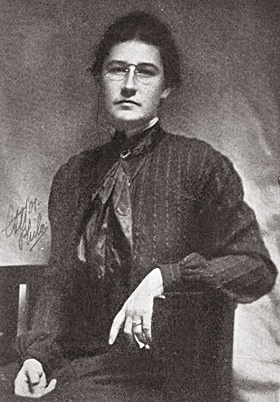
 The third of the Red Rose Girls was Jessie Willcox Smith. She became one of the most prominent female illustrators in the United States, during the celebrated ‘Golden Age of Illustration‘. Jessie was the eldest of the trio, born in the Mount Airy neighbourhood of Philadelphia, on September 6th 1863, the youngest of four children. She was the youngest daughter of Charles Henry Smith, an investment broker, and Katherine DeWitt Willcox Smith. Her father’s profession as an “investment broker” is often questioned as although there was an investment brokerage called Charles H. Smith in Philadelphia there is no record of it being run by anybody from Jessie Smith’s family. In the 1880 city census, Jessie’s father’s occupation was detailed as a machinery salesman. Jessie’s family was a middle-class family who always managed to make ends meet. Her family originally came from New York and only moved to Philadelphia just prior to Jessie’s birth. Despite not being part of the elite Philadelphia society, her family could trace their routes back to an old New England lineage. Jessie, like her siblings, were instructed in the conventional social graces which were considered a necessity for progression in Victorian society. It should be noted that there were no artists within the family and so as a youngster, painting and drawing were not of great importance to her. Instead her enjoyment was gained from music and reading. Jessie attended the Quaker Friends Central School in Philadelphia and when she was sixteen, she was sent to Cincinnati, Ohio to live with her cousins and finish her education.
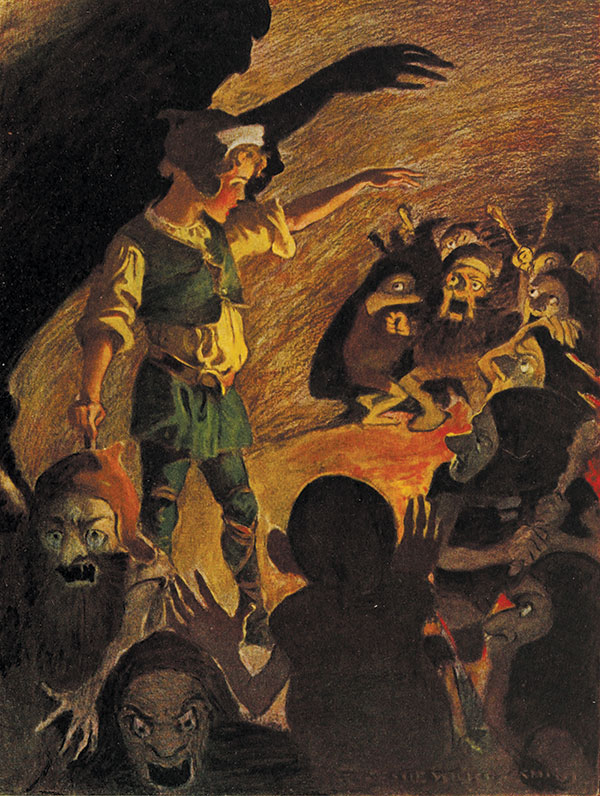
On completion of her education, instead of returning to the family in Philadelphia, she remained in Cincinnati to look for a job. Jessie had always been fond of children and managed to secure a position as a kindergarten teacher which would fulfil her need for money whilst doing a job she loved. However, the belief that all young children are angelic was soon dispelled and she found her charges obstreperous and ill-mannered and soon realised that teaching at a kindergarten was not for her. One of her friends was interested in art and soon she had managed to inveigle Jessie into the pastime and soon she showed a certain amount of promise as a budding artist. She remembered this change of direction writing:
“…I knew I wanted to do something with children but never thought of painting them, until an artist friend saw a sketch I had made and insisted I should stop teaching (at which I was an utter failure) and go to art school – which I did…”

Jessie Smith returned to Philadelphia to look for some artistic training and initially wanted to study sculpture. At the time there was a popular small table-top sculptures called Rogers Group which were relatively inexpensive, mass-produced figurines in the latter 19th which graced the parlours of homes in the United States. These figurines, often selling for as little as $15 a piece were affordable to the middle class. They were sculpted in more affordable plaster and painted the colour of putty to hide dust. She did try her hand at sculpture but soon realised it needed a certain talent, one which she was lacking. She wrote:
“…my career as a sculptor was brief for my clay had bubbles in it and burst when it was being fired. ‘Heavens’ I decided, ‘ being a sculptor is too expensive! I will be a painter…’ ”
However, Jessie realised that to become a painter she needed formal artistic training and it was difficult for that to happen for a woman in 1884. It was the age-old story. Men who wanted to train to become professional artists had academies and teachers to support them but for women, up until the 1850’s, there were few institutions which catered for women and anyway, it was generally thought to be totally ill-advised for a woman to contemplate or prepare for a professional career, art or otherwise. Life was mapped out for women. Acquire certain accomplishments which would attract a man, marry that man and give him children, and then be educated at home in the skills needed to look after one’s husband and children. For women of the middle and upper-class who were interested in art, then a private tutor could be hired but studying in mixed life-drawing classes was deemed unsuitable for women as was sketching nude statuary.
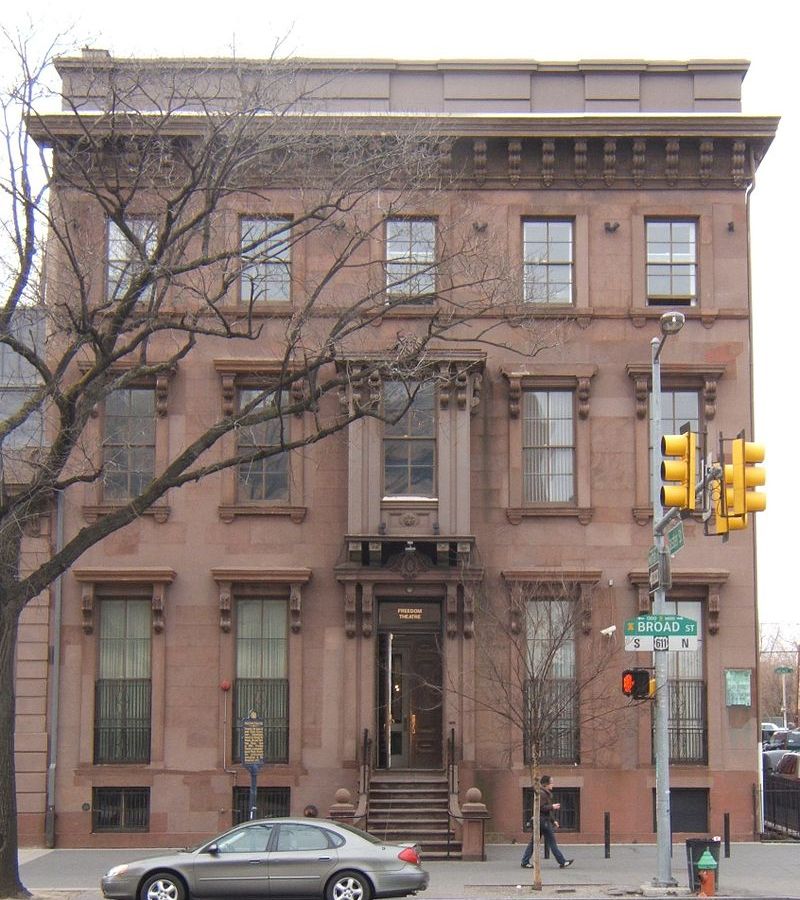
Despite this, twenty-one-year-old Jessie Willcox Smith, on October 2nd 1884, enrolled at The Philadelphia School of Design for Women, which was housed in a fashionable Philadelphia neighbourhood in an imposing mansion that had once been the home of actor, Edwin Forrest. The School had begun when Sarah Worthington King Peter, the wife of the British consul in Philadelphia, established an industrial arts school in her home in 1848 so as to teach a trade to women, who were without a means of supporting themselves. It was not in direct competition with the Pennsylvania Academy as its emphasis was on decorative pattern and ornament and until 1886 steered clear of controversial life-drawing classes. After a year at the School of Design, Jessie hankered for more than it could offer her. She wanted to study the techniques associated with Fine Art and so decided that she had to enrol at the Pennsylvania Academy of the Fine Arts.

She managed to persuade her parents to fund her tuition and in 1885 she enrolled in the class of the brilliant but controversial painter, Thomas Eakins. Master and student were so different. Jessie Willcox Smith was a conservative and shy young woman whilst her tutor was brash, carefree and provocative and cared little for the Academy’s attempt to reign him in. Eakins represented an outrageous departure from the social norms which had structured Jessie Smith’s life. Many complaints had been levelled at Eakins and his teaching methods especially those regarding female students. The following year, 1886, forty-one-year-old Eakins was sacked by the Academy. It is interesting to note that although there is no doubt her artistic ability flourished under the tutelage of Eakins she viewed him with disdain, once confiding in a friend that she thought he was a “madman”. Jessie did attend Eakins’ life-drawing classes but of the life models used, once declared:
“…I always wished there were children in the life classes, the men and women were so flabby and fat…”
After Eakins was dismissed from the Academy, he held private classes at his studio and many of his former students attended them, but not Jessie. She presumably did not agree with Eakins’ way of teaching and decided to remain at the Academy and study under Thomas Anshutz and James B. Kelly, two of Eakins’ former students.
 Jessie Willcox Smith graduated from the Academy in June 1888. She looked back on her time at the Academy with a certain amount of disappointment. Although her technique had improved, she had hoped to be part of an artistic community in which artistic collaboration would be present but instead she found dissention, scandal and in the wake of the Eakins’ scandal, institutionalized isolation. Jessie talked very little about her time at the Academy. It had been a turbulent time and she had hated conflict as it unnerved her and made her extremely distressed. This desperation to avoid any kind of conflict in her personal and professional life revealed itself in her idealistic and often blissful paintings. Jessie wanted to believe life was just a period of happiness.

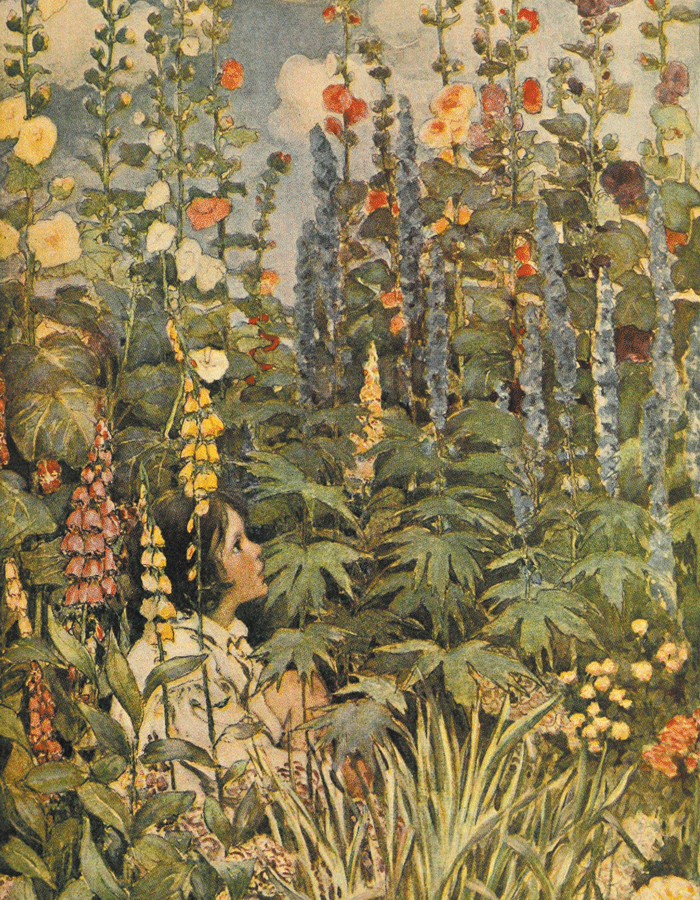
In 1909 a book of verse entitled The Seven Ages of Childhood by Carolyn Wells with accompanying illustrations by Jessie Wilcox was published.
After graduation, Jessie became interested in illustration and in 1889 took a job with the advertising department of Ladies’ Home Journal, one of the leading American women’s magazines. In 1894, nearly six years after graduating, she learned that Howard Pyle, the noted illustrator, was starting a School of Illustration at the Drexel Institute and she was accepted into the inaugural class along with Violet Oakley and Elizabeth Shippen Green.

Her illustrations appeared on the covers of Good Housekeeping resulting in most people becoming familiar with her art. For over 15 years she painted the covers for one of America’s most popular magazines. Month after month, from December of 1917 through March of 1933, a new Jessie Willcox Smith image was on the newsstands and in countless homes.
The Red Rose Girls were finally together. In my next blog I will look at their time at the Drexel Institute with Howard Pyle and their life together.
……………………to be continued
Most of the information I used for this blog came from an excellent book by Alice A. Carter entitled The Red Rose Girls, An Uncommon Story of Art and Love.











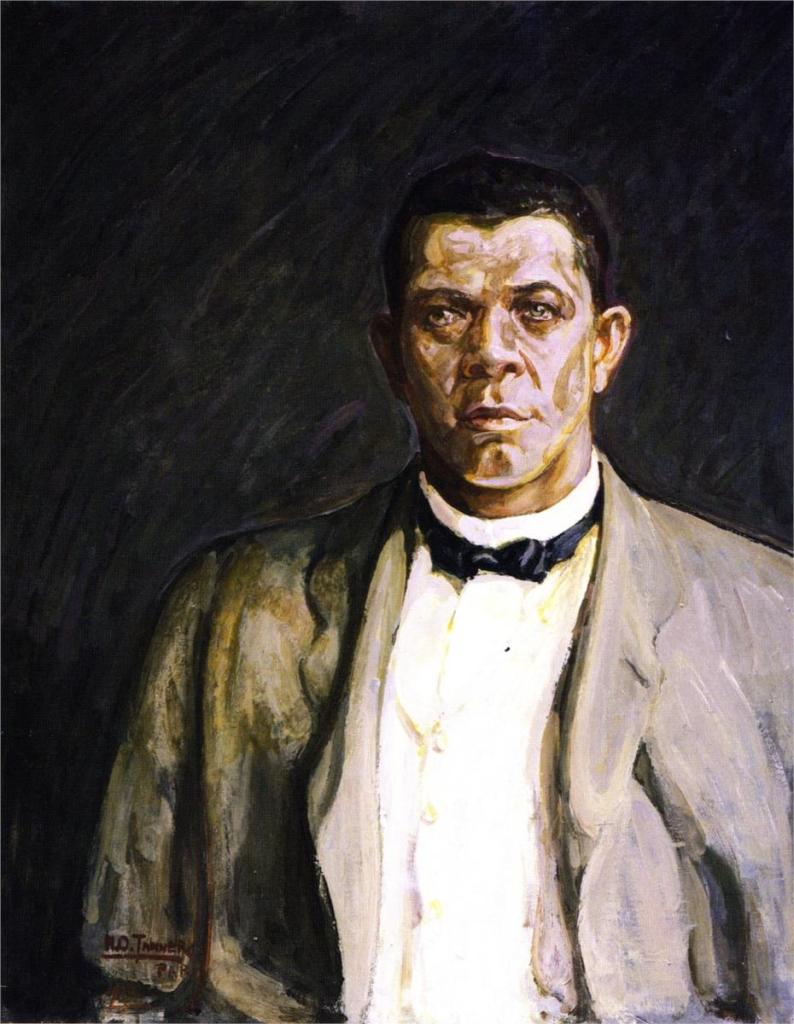
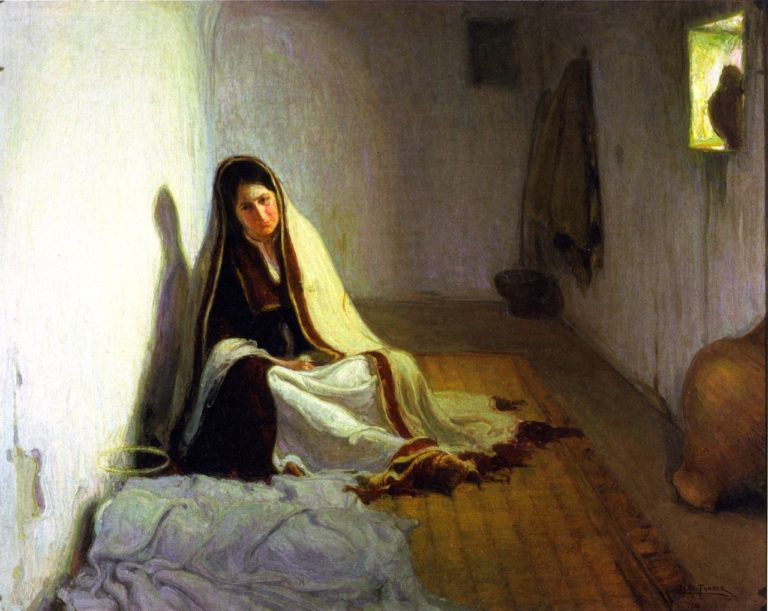


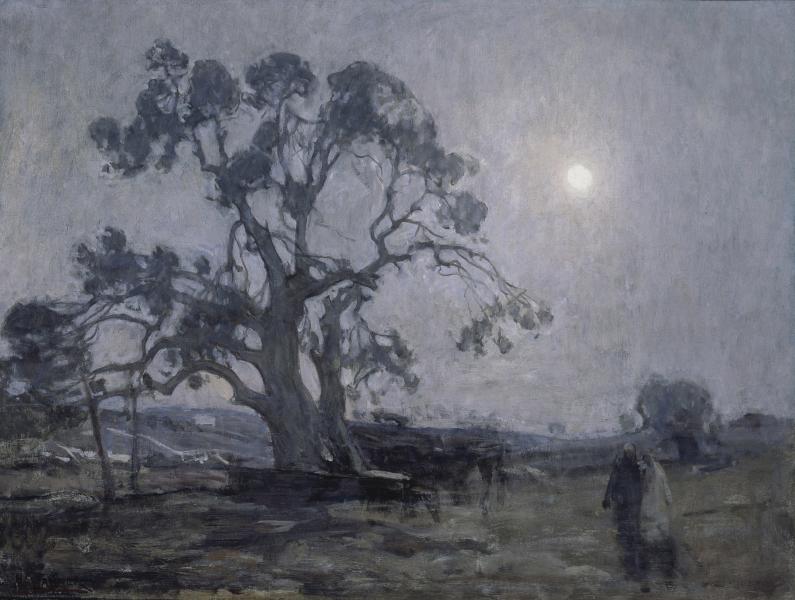


 The painting became the first work by an African American artist to join the White House permanent collection.
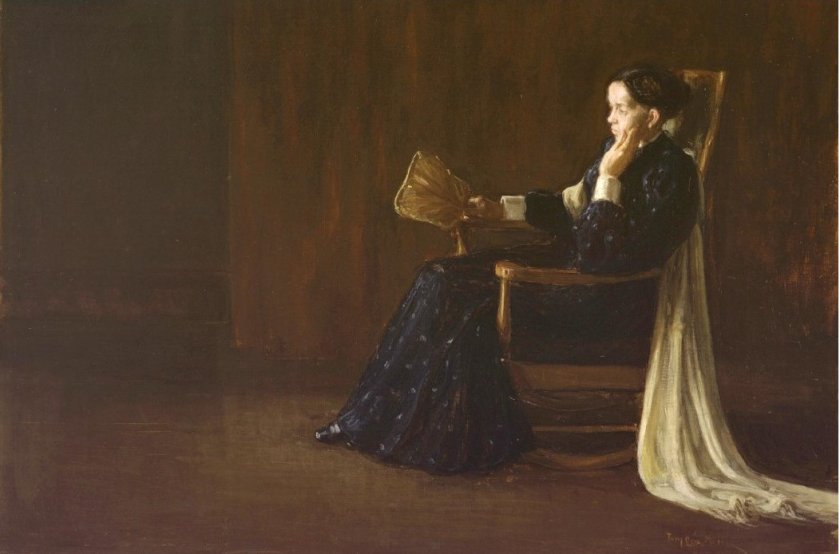
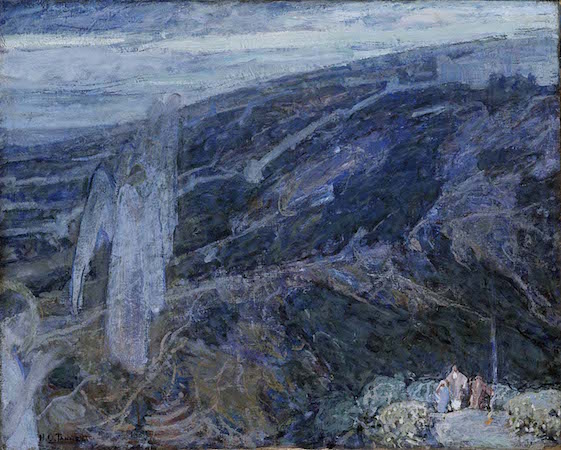
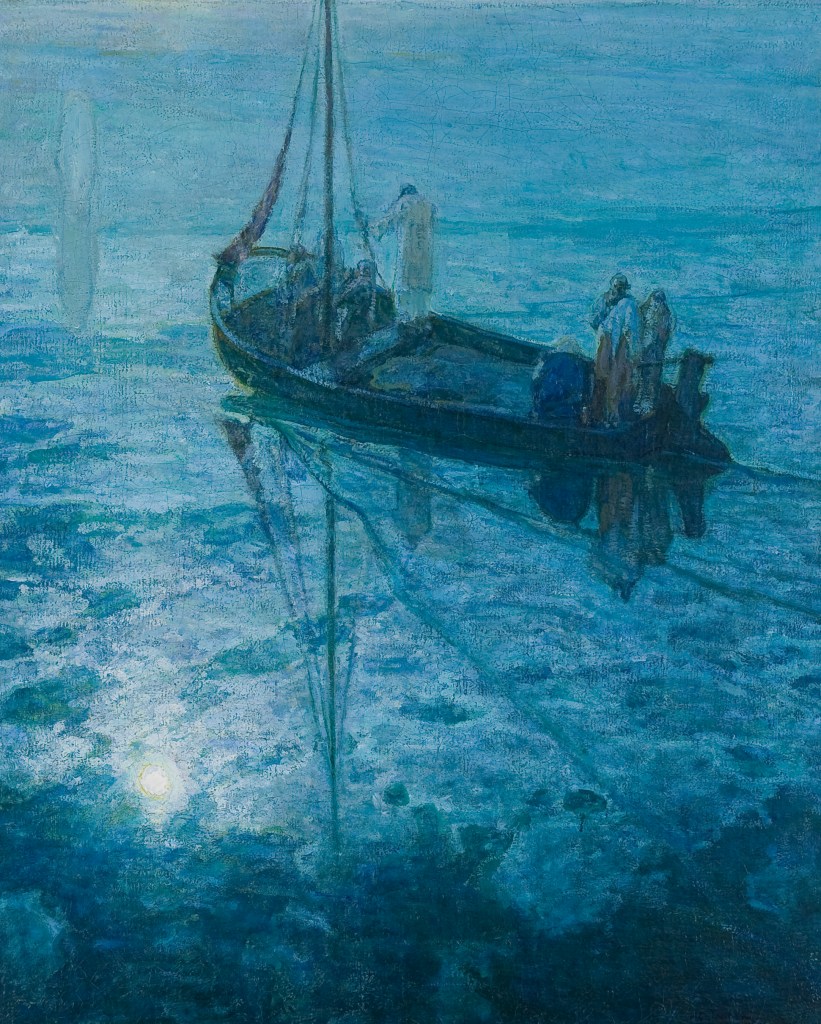

 In 1893, Tanner went back to the United States to deliver a paper on African Americans and art at the World’s Columbian Exposition in Chicago. In this same year, he created one of his famous works The Banjo Lesson while he was in Philadelphia. His depiction incorporated a series of sketches he had made while visiting the Blue Ridge Mountains, four years earlier. The sketches he had made during the summer of 1888 had opened his eyes to the poverty of African Americans living in Appalachia.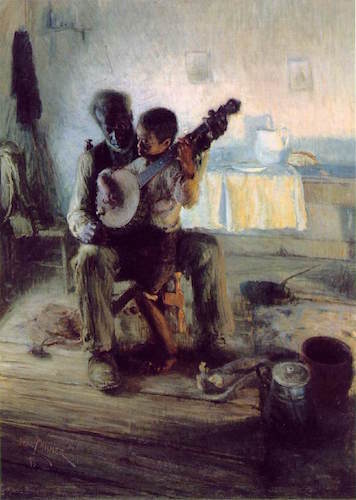













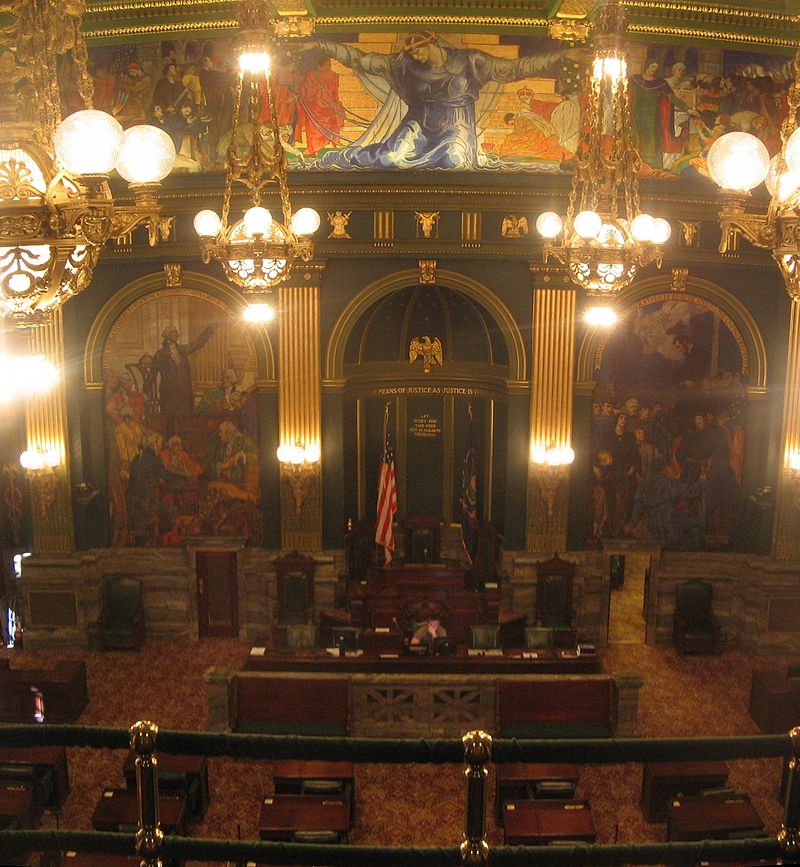
 The mural on the north wall, to the left of the Hearing Room shows King John of England sealing and granting Magna Charta (the Great Charter) in June 1215 on the banks of the Thames River at the meadow called Runnymeade. His reluctance to grant the Charter is shown by his posture and sullen countenance. But he had no choice. The barons and churchmen led by Stephen Langton, Archbishop of Canterbury, forced him to recognize principles that have developed into the liberties we enjoy today. King John, out of avarice, greed or revenge, had in the past seized the lands of noblemen, destroyed their castles and imprisoned them without legal cause. As a result, the noblemen united against the king. Most of the articles in Magna Charta dealt with feudal tenures, but many other rights were also included.
 The mural on the west wall over the entrance to the Hearing Room depicts an incident in the reign of Caesar Augustus Octavius. The Roman writer Seutonious tells of Scutarious, a Roman legionnaire who was being tried for an offense before the judges seated in the background. The legionnaire called on Caesar to represent him, saying: “I fought for you when you needed me, now I need you.” Caesar responded by agreeing to represent Scutarious. Caesar is shown reclining on his litter borne by his servants. Seutonious does not tell us the outcome of the trial but leaves us to surmise that with such a counsellor he undoubtedly prevailed. The mural represents Roman civil law, which is set forth in codes or statutes, in contrast to English common law, which is based not on a written code but on ancient customs and usages and the judgments and decrees of the courts which follow such customs and usages.
 The mural on the south wall portrays the trial of Chief Oshkosh of the Menominees for the slaying of a member of another tribe who had killed a Menominee in a hunting accident. It was shown that under Menominee custom, relatives of a slain member could kill his slayer. Judge James Duane Doty held that in this case territorial law did not apply. He stated:
 The fourth mural, which is actually the first one that is visible on making an entrance to the Supreme Court Room, and is Albert Herter’s rendition of the signing of the Constitution at the Constitutional Convention in Philadelphia on September 17, 1787. George Washington is shown presiding. On the left, Benjamin Franklin is easily recognizable. On the right, James Madison, “Father of the Constitution” is shown with his cloak on his arm. Although he was in France at the time, Thomas Jefferson was painted into the mural because of his great influence on the principles of the Constitution. The painting hangs above the place where the seven member Wisconsin Supreme Court sit to hand down their decisions. The mural’s position above the bench is symbolic that the Supreme Court operates under its aegis and is subject to its constraints. The United States Constitution has served us well for more than 200 years. This mural shows our indebtedness to federal law.
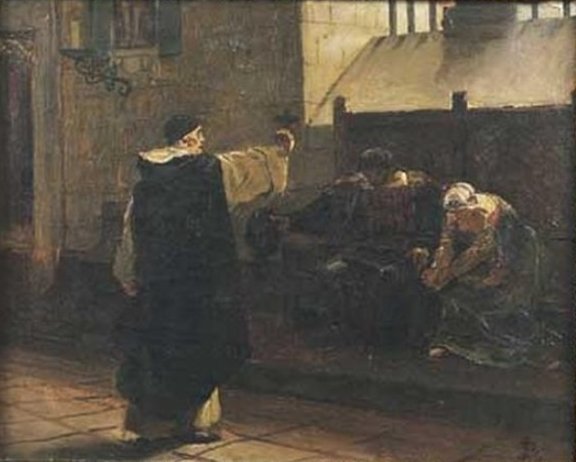
 The mural on the left was a scene from the court case against a local magistrate, Samuel Sewall. In 1692 a small group of men and women of Salem were arrested for bewitching their neighbours. Samuel Sewall, a local magistrate, was a member of the court that ultimately sentenced nineteen people to be hanged. The tragedy was realised several months later: those still being held were released. In the mural, Sewall is seen standing in Old South Church in Boston with his head bowed as his confession and prayers for pardon are read aloud.


