When I came across the words “Barnes School” in connection with art, I immediately thought it was referring to an artistic colony or a type of painting but I was wrong, albeit the name derived from the then rural town of Barnes, a district in the London Borough of Richmond upon Thames, where a talented artistic family had their painting studio. The name referred to a nineteenth century family of gifted Victorian landscape painters who pictorially depicted the British countryside. The head of this family of artists was Edward Williams. In this and the next three blogs I will be looking at the life and work of the talented patriarch and his six sons
Edward Williams (1781-1855)
Edward Williams was born some time in 1781 as baptismal records show him as being baptised on October 13th 1781 at St. Mary’s Church in the London borough of Lambeth. Edward was the son of Edward Williams, an engraver and Mary Ward. Mary came from a large artistic family. She was a sister of James Ward the well-known animal painter, and a sister of the equally well-known engraver, William Ward. Mary was also a sister-in-law of the talented figure painter George Morland, and a sister-in-law of Henry Chalon, another animal painter. The family history recounts that around 1793 Edward Williams’ mother left his father for another man, and their son Edward was sent to live with his maternal uncle, James Ward the painter. Ward was one of the outstanding artists of the day and was regarded as one of the great animal painters of his time. It is not recorded as to whether Ward ever gave his young nephew any artistic training but there is no doubt that Edward must have been influenced by his brief association with Ward.
A Cottage in a Wooded Landscape by Edward Williams
After staying with Ward for a short period Edward Williams took up an apprenticeship with a carver and gilder named Thomas Hillier, who was not in any of the trade guilds but nonetheless had a shop on Silver Street, Golden Square, London. It was probable that Edward began his career carving and gilding picture frames, but it is also known that to support himself financially he painted and sold miniatures.
River Landscape with Windsor Castleby Edward Williams
Edward married Ann Hildebrant, who was the daughter of Frederick and Sarah Hildebrant, on February 12th, 1806 at St. Pancras Church in London. Ann was twenty-five and Edward was a year younger. Although Edward Williams’ profession was as a carver and gilder he was amongst relatives who were all well-known painters and engravers, and consequently, as time passed, Edward re-invented himself as a painter.
The Jewish Cemetery by van Ruisdael (c.1655)
His initial delving into the world of art was when he started to copy well known landscape paintings of the Dutch Baroque era of the 1600’s, such as those by Jacob Isaackszoon van Ruisdael and Meindert Hobbema.
The Old Watermill by George Morland (1790)
Following this phase in his artistic career, he concentrated on copying works by contemporary landscape painters, such as his uncle, George Morland. Edward took the decision to become a landscape painter which was a risky choice as landscape art was, at the time, considered to be an inferior genre.
River by Moonlight by Edward Williams
Edward Williams became known for his moonlight scenes. Edward Williams often shared art exhibition venues with his sons, causing some confusion with the public who had trouble telling one Williams painting from another. He is often called “Old Williams” to distinguish him from his oldest son, and he is referred to in some of the art journals of the time as “Moonight Williams”, as moonlit scenes of the Thames were one of his favourite subjects in his paintings
A View on the Banks of the Thames by Edward Williams
As he got older, for river scenes along the Thames.
Edward and his wife Ann Hildebrandt had married in February 1806 and went on to have eight children. The first-born was Edward Charles Williams who was born on July 10th 1807 and because he had been given the same name as his father, Edward Williams, his father became known in his later years as “Old Williams” to distinguish himself from his eldest son . Two more sons followed, Henry John Boddington Williams in October 1811, George Augustus Williams in May 1814. Then followed the Williams’ only daughter, Emily Anne Williams who was born in June 1816. Arthur Gilbert Frederick Williams arrived in December 1819 followed by Sidney Richard Percy Williams in March 1822. Identical twin boys Alfred Walter Williams and Charles Williams were the final additions to the Williams family in July 1824. Sadly, Charles Williams died shortly after birth.
Crossing the Stream, A Wayside Chat by Edward Williams
Edward and his wife Ann lived in various residences, in what is now termed the West End of London, in Percy Street, Foley Street, and Charlotte Street. In 1827 the family moved to Cromer Street in the St Pancras area where they stayed for almost twenty years. By 1846 with the continuous sale of the father and sons’ paintings, the family’s finances had improved. Add to that fact the family had grown, they needed a larger residence and so moved to 32 Castelnau Villas, Barnes. Edward Williams spent his final years there with his wife Ann. She died, aged 71, and was buried on September 24th, 1851 at the Barnes Parish Church. Old Williams was overcome with the grief from the death of his wife and he died just four years later at the age of 74 on June 24th, 1855 at his Castelnau Villa house. He along with his wife now rest in the Old Barnes Cemetery. Sadly, the cemetery has been turned into a nature sanctuary by the city council and the graveyard has fallen into disrepair and is overgrown with bushes and vines.
……………..to be continued.
Most of the information I have found for these blogs about the Barnes School came from the excellent website of Mike Clark, entitled Genealogy of the Percy, Williams and Ward families. If you would like to read an in-depth account of the Williams family, this is a must-read.
Sanford Robinson Gifford by Eastman Johnson (1880)
Today I am looking at an American painter, Sanford Robinson Gifford, who was a leading member of the second generation of Hudson River School artists. The artwork of the Hudson River School captured the rugged beauty of the American landscape and celebrated and venerated the heady era of manifest destiny. In 1845, newspaper editor John O’Sullivan coined the term Manifest Destiny, which was the belief that white Americans were divinely ordained to settle the entire continent of North America. The second generation of Hudson River School painters set out from the New York area to explore more far-flung regions of America. Their painting documented the westward expansion and the “land grab” which underpinned the concept of Manifest Destiny. During the Civil War, their majestic images shown in their paintings of an unspoiled West provided hope for post-war reconciliation and the promise of expanses of wild country, full of promise and lands which were unscarred by battle.
Head of a Man, with Various Studies by Staford Robinson Gifford (c.1850)
Sanford Robinson Gifford was born in Greenfield, New York 0n July 10th 1823. He was the fourth of the eleven children of Quaker ironmaker Elihu Gifford and his wife Eliza Robinson Starbuck. Most of his childhood was spent in Hudson, New York, a town on the banks of the upper reaches of the Hudson River, across from the Catskill Mountains. Following normal schooling, Gifford entered Brown University in 1842. He left college after completing two years, and moved to New York City in 1845 to study art. He studied drawing, perspective and anatomy under the British watercolourist and drawing-master, John Rubens Smith, who in 1806 had emigrated from London to the USA and set up successful drawing schools in Boston, New York and Philadelphia. He also attended drawing classes at the National Academy of Design and studied the human figure in anatomy classes at the Crosby Street Medical College.
In 1846 Gifford visited the Berkshire Hills and the Catskill Mountains, sketching en plein air. He thoroughly enjoyed his sketching trips, once writing to a friend:
“…”These studies together with the great admiration I felt for the works of [Thomas] Cole developed a strong interest in landscape art, and opened my eyes to a keener perception and more intelligent enjoyment of nature. Having once enjoyed the absolute freedom of the landscape painters’ life I was unable to return to portrait painting…”
The Artist Sketching at Mount Desert, Maine by Sanford Robinson Gifford
The American Art Union bought and exhibited some of Gifford’s first landscape paintings in 1847. In 1851 he was elected an associate, and in 1854 an academician, of the National Academy of Design. He must have taken great pleasure in his landscape depictions as from that time on he concentrated on the landscape genre, becoming one of the finest artists of the Hudson River School. Gifford loved the freedom of the outdoors and travelled extensively to sketch landscapes which he would use later for future paintings. On his trips he would often write to his father recording his experiences. These letters home would, he said, serve the double purpose of letter and journal, and be an economy of time. He also asked his father to number the letters sequentially and keep them all together.
Study Of Windsor Castle by Sanford Robinson Gifford
In the summer of 1855 Gifford crossed the Atlantic and visited England, Scotland and Paris. He then spent the winter of 1855 completing paintings from the numerous sketches he had made.
Lake Nemi by Sanford Robinson Gifford (1856)
In the Autumn of 1856, he travelled to Italy and rented a studio in Rome and, during that winter he painted pictures of the surrounding area including Lake Nemi which he visited in October 1856. In a letter he described the scene:
“…We were high up above the lake. On one side in the foreground were some picturesque houses and ruined walls—a tall dark cypress, rising out of a rich mass of foliage, cut strongly against the lake, distance, and sky…”
A Home in the Wilderness by Sanford Robinson Gifford (1866)
By capturing scenes at sunset, Gifford was able to record the subtle effects of atmosphere and light that would become his trademark. Gifford was a true Luminist, a member of the Luminism art movement associated with many American landscape painters of the 1850’s to 1870’s Their artwork was characterized by effects of light in landscapes, through using aerial perspective, and concealing visible brushstrokes. The landscape art of the Luminist emphasized serenity and calmness. It focused on reflective water and soft, hazy skies but as part of often melodramatic, magnificent, oversized landscapes as the artist intended to capture the immenseness as they viewed their subject on location. An example of this Lumanism is his 1866 painting entitled A Home in the Wilderness. Gifford’s view of Mount Hayes in New Hampshire records human intrusion into a remote landscape. On the left riverbank a log cabin stands amid a recently cleared patch of land with several tree stumps, while figures in its doorway greet a man who has arrived with a canoe of supplies.
Lake Maggiore by Sanford Robinson Gifford (1859)
During the spring of 1857 whilst still in Rome, Gifford spent time with fellow American artists Worthington Whittredge, William H. Beard and Albert Bierstadt. Gifford and Bierstadt left Rome in May 1857 and set off on a walking tour of southern Italy. Gifford completed his European tour with visits to Innsbruck, Munich, Vienna, Prague, Dresden, Berlin and Paris, before returning to the United States at the end of the summer.
Photograph of the 10th Street Studio Building, New York (1870)
On his return Gifford rented studio Number 19 in the Tenth Street Studio Building in New York City. The Tenth Street Studio Building was constructed in New York City in 1857. It was situated at 51 West 10th Street between Fifth and Sixth Avenues in Manhattan and was the first modern facility designed solely to serve the needs of artists. It became the centre of the New York art world for the remainder of the 19th century. Gifford retained his studio until his death.
Twilight in the Catskills by Sanford Robinson Gifford (1861)
Over the next few years Gifford also made frequent summer trips to various north-eastern locales including the Catskills, the Adirondacks, the Green Mountains in Vermont, the White Mountains in New Hampshire, Maine and Nova Scotia.
Sanford Gifford in uniform (1861)
The American Civil War broke out in April 1861 and Gifford enlisted in New York’s Seventh Regiment and marched to the defence of Washington. Several paintings resulted from this experience, including his 1864 work entitled Sunday Morning in the Camp of the Seventh Regiment, near Frederick, Maryland, in July 1863 ,
Sunday Morning in the Camp of the Seventh Regiment, near Frederick, Maryland, in July 1863Night Bivouac of the Seventh Regiment New York at Arlington Heights, Virginia by Sanford Gifford (1861)
Another was his night scene entitled Night Bivouac of the Seventh Regiment New York at Arlington Heights, Virginia which he completed in 1861.
Near Palermo by Sanford Robinson Gifford (1874)
In 1868 Gifford once again travelled to Europe, and again visited the English and French capitals. Whilst in Paris he met with a fellow American Hudson River painter, Jervis McEntee and his wife. McEntee was a to some extent a lesser-known figure of the 19th-century American art world but apart from his paintings, McEntee’s journals are an enduring legacy, documenting the life of a New York painter during and after the Gilded Age. From Paris Gifford spent the summer visiting the Alps and Sicily before wintering in Rome.
Galleries of the Stelvio, Lake Como by Sanford Robinson Gifford (1878)
Gifford was always stimulated by the awe-inspiring Italian landscape and his painting Galleries of the Stelvio, Lake Como exudes a moment of pure artistic beauty. Gifford’s used shades of pastel blues and pinks to capture the hazy quality of a warm Italian summer afternoon. Look how the juxtaposition of light and shadow draws attention to the natural curve of the rock cliff exploited by and altered by man’s hand. The curve in the wall gives one the feeling of motion through the road tunnel and to the side of the road we see a couple looking over at the boats below and the still waters of the beautiful lake. Almost if we are in the tunnel\ we begin to feel the coolness of the tunnel in comparison to the area around the lake which is exposed to the sun.
Siout, Egypt by Sanford Robinson Gifford (1874)
In 1869 Gifford set off on his travels once more. This time he journeyed to Egypt where he and some friends. He hired a boat and took a two-month voyage from Cairo down the Nile River to the first cataract . Although many American artists left their home shores, few ventured much further than the European Continent. Sanford Gifford was one of the very few who ventured further afield.
On March 4 he reached the village of Siout (Asyut), on the western bank of the Nile, and this was the starting point of a great caravan route running through the Libyan Desert to the Sudan. The town was well known for being picturesque and for its history, having been the capital of the thirteenth province of Upper Egypt during antiquity and the birthplace of Plotinus, the great Neoplatonic philosopher. Gifford was taken with the town and noted in his journal the reasons for depicting it in his painting. He wrote:
“…Looking westward, the town with its domes and minarets lay between us and the sun, bathed in a rich and beautiful atmosphere. Behind, on the right, were the yellow cliffs of the Libyan mts., running back into the tender grades of distance. Between us and the town were fields of grain, golden green with the transparent light. On the right was a tent with sheep and beautiful horses, the sunlight sparkling on a splendid white stallion. On the left the road ran in, with a fountain and figures of men and women and camels. The whole glowing and gleaming under the low sun…”
The painting, simply entitled Siout, Egypt, is one of Gifford’s finest works in which he depicted Egypt.
Constantinople from the Golden Horn by Sanford Robinson Gifford (1880)
From Egypt, Gifford travelled to the Middle East with fellow artist, Alfred Craven, via the Suez Canal, where his itinerary included Syria, Jerusalem, Samaria, Damascus, Greece and Turkey. Gifford travelled to Constantinople in 1869 and he wrote about the time in his journal:
“…boats and costumes on the water on either side were all aglow with color, while through the purple haze of the distance flashed a thousand little golden lights from the windows of the Seraglio and the mosque of St. Sophia…”
Gifford final port of call was Venice which he reached in June 1869 and it was from here that he took a sea passage back to the United States at the beginning of September.
Portrait of Mary Cecilia Gifford by Stanford Robinson Gifford (1878)
Sanford Gifford married Mary Cecilia Canfield in 1877, at age fifty-four.
Autumn, a Wood Path by Sanford Robinson Gifford (1876)
I end this blog with my favourite painting by Gifford. It is his 1876 work entitled Autumn, a Wood Path. Gifford created several paintings depicting forest interiors, including this one set amid full autumnal blaze. The dense forest path is enclosed in a network of overarching trees which casts shadows on the rugged ground below, restricting sunlight to haphazard patches. A solitary hiker is visible in the distance.
Three years after his marriage, Gifford became ill while on a trip to Lake Superior and was brought back to New York where he was diagnosed as having contracted pneumonia following a bout of malarial fever. On August 29th, 1880, Gifford died in New York city, aged 57, and was buried at Hudson City Cemetery, Hudson, Columbia County, New York. His death was seen as a tragedy for American art. He was memorialized in 1880 by the publication of a series of addresses given at the Century Association and by a large retrospective exhibition at the Metropolitan Museum of Art in 1881. A compilation of a catalogue raisonné was published in 1881 and recorded that he had completed more than seven hundred paintings during his career.
The Rev. Dr. Bellows, who several times has officiated at the funerals of well-known American painters, delivered a touching and beautiful address in the Gifford mansion at Hudson. He spoke of Gifford’s love of his country, saying:
“…Patriotism, in the speaker’s opinion, was at one time a greater force in Gifford’s life than even love of Art; and his resolve to fight as a private soldier in the late war for the Union was greater in its influence upon the man, and in its possession of him, than even his devotion to his profession…”
The Arts and Crafts Movement was a design movement which emerged from the Pre-Raphaelite circle with the founding of the design firm Morris and Co. in 1861 by William Morris. It was a design movement which aspired to enhance the quality of design and make it available to the widest possible audience. The term was not coined until 1887 and the Arts and Crafts Movement officially started when Morris and fellow artist, Edward Burne-Jones established a group that they called the Birmingham Set or Birmingham Group. They were an informal collective of painters and craftsmen who worked in Birmingham, England in the late 19th and early 20th centuries. My featured artist today, Joseph Edward Southall, was one of the leaders of this group. He was probably the most important, if not the most celebrated artist of that group and was looked upon as among the most dedicated.
Self portrait by Joseph Southall (1925)
Joseph Edward Southall was born in Nottingham on August 23rd 1861, the son of a grocer, Joseph Sturge Southall, and his wife Elizabeth Maria Baker, both offsprings of distinguished Quaker families. Just a year after the birth of Joseph Southall his father died aged twenty-seven and Joseph and his mother had to go and live with his maternal grandmother in Edgbaston, a suburb of Birmingham
Joseph Southall’s education was to attend Quaker schools. He attended the Friends’ School at Ackworth and in 1872, at the age of eleven, transferred to the Friends’ School at Bootham, York, where he received his first tuition in art when he was taught watercolour painting by the English artist and educator, Edwin Moore. From the school at Bootham he went to a school in Scarborough while still carrying on with private lessons with Moore. On September 1st 1878, following on a few days after his seventeenth birthday, Joseph Southall completed his schooling and began an apprenticeship at the offices of the renowned Birmingham architectural partnership of Martin and Chamberlain. He remained with the firm for four years but continued his art studies at evening classes at the Birmingham School of Art. Both the architectural company and the School of Art were steeped in the spirit of John Ruskin and the Arts and Crafts movement. The architect John Henry Chamberlain was a founder and trustee of the Guild of St George, while the Principal of the School of Art, Edward R. Taylor, was a pioneer of Arts and Crafts education and a friend of William Morris and Edward Burne-Jones. It was also around this time that Joseph took to reading books written by Ruskin and William Morris, and what he gained from this would remain with him for the rest of his life.
Portrait of the Artist’s Mother by Joseph Southall (1902)
Southall however felt unfulfilled with his architectural training. Southall left the architectural practice to pursue his studies in painting and carving. For him, architecture should embrace and craft disciplines such as painting and carving and with that in mind and having been inspired by his reading of Ruskin and Morris he decided to go on trips to Europe to broaden his artistic education. In 1882 he visited Bayeux, Rouen and Amiens in Northern France where he was enthralled by the ancient cities with their Gothic cathedrals. In 1883, now a free agent, he, accompanied by his mother, journeyed to Italy and spent thirteen weeks visiting Pisa, Florence, Siena, Orvieto, Rome, Bologna, Padua, Venice and Milan. It was during his stay in Italy that he fell in love with the works of the painters of the Italian Renaissance and the frescoes of the fifteenth century painter, Benozzo Gozzoli
Southall returned home with an overwhelming appreciation of the Italian Primitives and set his mind to study and practise the art of painting in tempera, a painting medium he had witnessed whilst in Italy. In an essay by Peyton Skipwith in the book of paintings, Joseph Southall: 1861-1944.Sixty works by Joseph Southall, 1861-1944, from the Fortunoff Collection, he quotes Southall’s recollection of his time in Italy:
“…the thrill of joy which I experienced when, without any knowledge of what I was about to see, I stepped inside the enchanting cloisters of the great Campo Santo of Pisa. There I found myself at 21 years of age face to face with a vast series of frescoes, so quiet and yet so gay, so reticent in manner and so lively in essence that words must ever fail to convey even the faintest expression of what I felt…”
Beauty Seeing the Image of her Home in the Fountain.by Joseph Southall (1898)
After returning to England Southall began to experiment with the tempera medium whilst at the Birmingham School of Art. It was at the Birmingham School of Art that he met Arthur Gaskin, who became his closest friend. The School of Art was run by the enigmatic head, Edward R. Taylor who had made the Birmingham school one of the leading schools of art in Britain, and the foremost for the study of the crafts. One of Southall’s great work using tempera was his 1898 painting entitled Beauty Seeing the Image of her Home in the Fountain.
Sailing Ships by Joseph Southall (1910)
On his return to Birmingham Joseph Southall settled in the house of his uncle, George Baker, at 13 Charlotte Road, in the city suburb of Edgbaston and it would be here that he would remain for the rest of his life. George Baker was a charismatic man and a friend of John Ruskin. He was a staunch Quaker and a life-long admirer of John Ruskin’s Utopian ideals. Baker became a prominent member of Ruskin’s Guild of St George and succeeded him to become the second master of the Guild on Ruskin’s death in 1900. He also showed Ruskin some of his nephew’s 1883 Italian drawings. Ruskin was so taken by Southall’s architectural knowledge that in 1885 he gave Southall his first major commission. Ruskin wanted Joseph Southall to design a museum for the Guild of St George and have it built on Joseph’s uncle’s land near Bewdley, Worcestershire. To gather ideas for this project, Southall made a second trip to Italy in 1886, again visiting Pisa, Florence, Siena and Assisi, so as to do research into Ruskin’s commission. Unfortunately for Southall, the project was abandoned by Ruskin who reverted to his original plans to build a museum in Sheffield. Southall was very disappointed at the turn of events saying that his chance of becoming an architect vanished and he was destined to spend years of obscurity, followed by a little bitterness of soul. The years that followed this disappointment and his love of tempera began to wane. He was generally frustrated with the medium and eventually abandoned it leading him to favour painting with oils.
Fisherman Carrying a Sail by Joseph Southall (c.1907)
After a third visit to Italy in 1890, he once again became interested with the works by the Italian Primitives and slowly and once again experimented with the painting medium of tempera. His great influence now that he had returned to Birmingham, was his fellow Brummie artist, Sir Edward Burne-Jones.
Beauty Seeing the Image of Her Home in the Fountain by Joseph Southall (1898)
It was he who congratulated Southall on his 1898 tempera painting Beauty Seeing the Image of her Home in the Fountain. It was also Burne-Jones who in 1897 sent Southall’s tempera self-portrait, Man with a Sable Brush, to the New Gallery, along with his own work. These paintings and others like them, confirmed Southall as one of the foremost British tempera painters and as such led to his participation in the exhibitions of the Arts and Crafts Exhibition Society and the exhibition of Modern Paintings in Tempera at Leighton House. The latter immediately preceded the foundation of the Tempera Society, of which Southall became one of the foremost members.
Portrait of Anne Elizabeth Baker by Joseph Southall (1887)
For a number of years Joseph Southall had been very close companions with his cousin Anna Elizabeth Baker, known as Bessie, who was two years older than Joseph. He completed a number of portraits of her including his 1887 portrait of her when she was twenty years of age.
Coral Necklace by Joseph Southall (1895)
Another early portrait of Anna was John Southall’s 1895 painting entitled Coral Necklace.
Hortus Inclusus by Joseph Southall
She also appeared in his 1898 painting Hortus Inclusus which means private garden. The setting is just such a garden with tall yew hedges in the background. It is a portrait of Southall’s wife-to-be although the wedding would not take place for another five years. It is an idyllic scene with Anna sitting on a bench in the garden with her cat by her side.
The Agate (Portrait of the Artist and his Wife) by Joseph Southall (1911)
In June 1903 Joseph Southall and his long-time fiancé, Anna Elizabeth Baker were married. He was forty-two and she was forty-four. Their relationship started when they were both youths. Over time their relationship became more intimate and they eventually became engaged to be married. However, as they were cousins, this close kinship made the couple deliberately put off marriage until Anna was past child-bearing age. Probably my favourite portrait by Southall is the one which depicts he an Anna, eight years after they married. The setting is a beach, more than likely Southwold on the Suffolk coast, which is where they spent their honeymoon and returned their many times more. The title of the painting, The Agate, derives from Bessie seen in the depiction handing her husband an agate, a gemstone which can be found on the seashore in this area. This handing of the agate to her husband can be seen as a symbol of the couple’s collaboration, as we know that the agate gemstone is used by craftspeople to burnish the gilding on picture frames and Southall’s wife Anna, who was a talented craftswoman, would make the picture frames ready for her husband’s paintings.
The Sleeping Beauty by Joseph Southall (1903)
Joseph Southall’s popularity and recognition as a great painter grew. He was at the height of his career during the latter years of the 1890’s until the start of World War I. His work was shown at numerous exhibitions, not just in Britain but in Europe and America and he was elected a member of the Royal Birmingham Society of Artists, the Art Workers Guild and the Union Internationale des Beaux-Arts et des Lettres. His major exhibition in England was held in 1907 at the Fine Art Society in London and three years later a major one-man exhibition was held at the Galeries Georges Petit in Paris. At the Paris exhibition Southall’s work was snapped up and following the event he received a number of lucrative commissions.
Contentment by Joseph Southall (1928)
With the onset of war in 1014 Southall’s output as an artist waned. Southall being brought up a Quaker and followed their beliefs all his life had him take an anti-War stance at the onset of hostilities. Southall’s output as a painter declined considerably with the outbreak of World War I, as the pacifism inherent in his Quaker faith led him to devote his energies to anti-war campaigning. He abandoned his commitment to the Liberal Party and joined the Independent Labour Party, becoming Chairman of the Birmingham City Branch; the Party was the one left-wing body that always upheld its opposition to the war. Southall also chaired the Birmingham Auxiliary of the Peace Society and was a joint Vice-president of the Birmingham and District Passive Resistance League. His main artistic output during this period were anti-war cartoons printed in pamphlets and magazines, and art historians reckon they number among his most powerful works.
The anti-war pamphlet Ghosts of the Slain by Joseph Southall
In the above cartoon we see depicted ‘all those who sit in the high places and cast the people into the pit’. A diplomat and a businessman push a blindfolded officer towards a precipice, whilst a fashionable society woman looks on and a cleric of the Established Church appears as the priest who ‘blessed our banners and bade speed to our swords’. Apart from Death, who gleefully accompanies this performance on his drum, only the diplomat sees what is happening; the others all have their eyes covered.
‘The Obliterator’ appeared in his anti-war pamphlet Fables and Illustrations opposite a mock sales promotion advertising the Obliterator’s record of leaving ‘nothing standing and nothing breathing’ while making ‘a clean sweep of civilisation’. Southall’s woodcuts and satirical fables were published when most of his wartime energies were consumed by pacifist activism in Birmingham and print caricature provided him a convenient alternative artistic output. The essence of his moral standpoint is an unshakable absolute conviction of conscience, clearly articulated in his fable ‘Inscription from Babylon’: although citizens ‘ought to be law-abiding’, in the final analysis, pacifism is justified by faith that ‘Divine law stood above human laws’ in the form of the the sixth Commandment: ‘Thou shalt not kill’
The Castle at Angers by Joseph Southall (1933)
During the two decades of peace between the two world wars, Southall and his wife made regular trips to Europe, visiting France and Italy in the Spring and Autumn. Their European holidays were combined with their shorter summer holidays to their beloved Southwold on the Suffolk coast and Cornish breaks on the Fowey estuary, all of which gave Southall opportunities to paint the various places. At this time Southall’s favoured painting medium was watercolours. Many of these paintings were exhibited at the Alpine or Leicester Galleries in London and the Ruskin Galleries in Birmingham, as well as at the Royal Birmingham Society of Artists, the Royal Academy, and the Paris Salon.
Portrait of Sir Whitworth Wallace by Joseph Southall (1927)
Between holidays Southall spent time on lucrative commissions, painting portraits for wealthy patrons, who would often be from the Quaker community. One such work was his portrait of Sir Whitworth Wallace the first director of the Birmingham Museum and Art Gallery which opened in 1885.
The Return by Joseph Southall (1930)
At the 1930 Winter Exhibition at the Royal Academy, Southall exhibited his painting The Return. The painting depicts two women high up on the banks of a river, possibly the River Fowey, one seated on the grass in grey dress, with mustard coloured shoes and a blue hat with green bands. There is a red book on a rock beside her. The other woman stands. She wears a red hat, a salmon-coloured dress with white collar and cuffs. She waves a handkerchief and her white scarf also waves in the wind. On the still water below are sailing ships, casting long reflections on the water. On a small boat lower right, two figures appear to return the woman’s wave.
The Tower of San Vitale by Joseph Southall (1933)
Many of the works at this exhibition focused on Southall’s Italian paintings, many done using tempera. So popular were paintings in that medium that the following Summer Exhibition 1n 1931 allotted one room for works using tempera. This was indeed a change of heart by the Academy Hanging Committee jurists who had scorned that painting medium and could not decide whether such works fell into a watercolour or oil classification.
San Giorgio, Venice by Joseph Southall (1927)
Joseph and Bessie Southall made many trips to Italy and one of their favourite haunts was Venice which he depicted in a number of his works.
The Right Honourable F. W. Jowett by Joseph Southall (1944)
The couple made their last trip to Venice in the Spring of 1937 but later that year Southall was taken ill and had to undergo major surgery from which he never fully recovered. Doctors struggled to make a proper diagnosis of what was ailing Southall and he had to return to hospital on a number of occasions. Notwithstanding his poor health he still determinedly carried on painting. One of his last paintings was his memorial portrait in tempera of the Bradford MP, Frederick William Jowett who was a founder member of the Independent Labour Party. In the depiction we see a copy of the Independent Labour Party newspaper with a headline
“…IS THIS WHAT YOUR MEN FIGHT FOR?…”
Jowett had died in February 1944 and Southall had not quite finished it when he died nine months later. The work was then completed by Maxwell Armfield, before being presented to the City of Bradford.
Joseph Edward Southall died of heart failure at his home in Edgbaston in 1944, aged 83.
When my featured artist today had an exhibition of his work in London, the London Times summed up his works by saying “it must be seen to be believed”. In America the art critics designated him as “the magician of light”. His paintings are extraordinary. They are magnificent. Let me introduce you to the Russian landscape and staunch realist painter, Ivan Fedorovich Choultsé.
Sevanavank Monastery on Lake Sevan by Ivan Fedorovich Choultsé
Ivan Fedorovich Choultsé was born in St. Petersburg on October 21st 1874. His ancestors hailed from Germany but emigrated to Russia in the eighteenth century. The original spelling of his family name, which was of German origin, was Schultze. His story was not one of a child dreaming of becoming a professional artist. His fascination at an early age was electricity and its production through hydro power especially the electricity generated by the Imatra waterfall in South Karelia. His interest in science was sated by an engineering education, although he continued to convey his creative side and during those early days as a teenager, he would spend his spare time painting small sketches. He headed up an engineering project in Finland but something went badly wrong and he lost all his money and was declared bankrupt.
Winter Sunset by Ivan Fedorovich Choultsé
Ivan realised he had to earn money from another source and decided to concentrate on his drawing and painting abilities. Along with his early paintings which he had fortunately not discarded, he approached the academician, famous landscape painter and drawing teacher, Konstantin Yakovlevich Kryzhitsky, who had been a court painter to Tsar Nicholas II and was a painter of miniatures. His talent was apparent to Kryzhitsky and he enabled Ivan to be admitted to the Imperial Academy of Arts in St Petersburg. In addition to Kryzhitsky, Choultsé was influenced by other tutors, the Russian landscape artist Arkhip Kuindzhi and the Swiss landscape painter Alexander Kalam. In 1903 Choultsé held his first Academy exhibition which gained him early fame and recognition as a talented artist. His exhibition was a great success and he went on to exhibit his work at other major galleries in St. Petersburg and Moscow. He was eventually elected as a court painter to Tsar Nicholas II.
Park in Neskuchnoye by Ivan Choultse
In 1910 Choultsé embarked on an Arctic painting trip with Kryzhitsky. They visited the north of Norway and island of Spitzbergen. From that trip Choultsé produced a number of glorious paintings of the arctic landscape. In 1910 and 1911 Choultsé lost two of his most influential mentors, Kuindzhi in July 1910 and fifty-two year old Kryzhitsky who committed suicide in April 1911. Following the untimely death of Konstantin Kryzhitsky, Choultsé had his works shown at exhibitions which had been arranged by the society created by Grand Duchess Olga Alexandrovna, also a student of Konstantin Kryzhitsly, in his name. Choultsé frequently participated in its exhibitions that took place in the Grand Duchess’ palace on Sergeevskaya street in St Petersburg.
Silver Frost, Engadine, by Ivan Fedorovich Choultsé
Cholutsé reputation as a painter grew as did the sale of his work which was confirmed by the fact that the brother of Tsar Nicholas II, Mikhail Alexandrovich, regularly commissioned his works. In 1917 the Russian Revolution took place and for Choultsé he had to make an important decision. He was an academic painter and a supporter of the Academy system which meant staying in Russia under the new regime which was probably fraught with difficulty and so in 1917 he set off on a two-year trip of Europe. For those two years Choultsé was able to see and depict on canvas the beautiful landscapes of the mountainous regions of Northern Italy, Switzerland and Southern France where he painted the Mediterranean landscapes.
Vers Le Soir, Engadine’ by Ivan Fedorovich Choultsé
It could well have been the snowy Swiss landscape that brought back memories of his homeland or it could have been because he was mesmerised by the panoramic views of the likes of the long high Alpine valley region of Engadine and St. Moritz, but whatever it was, it profoundly affected Choultsé.
November by Ivan Choultsé
Choultsé finally settled back in Russia in 1921 as he still held out hope that he could remain a professional artist in his homeland under the new Soviet regime. He joined the Society of Individualist Artists in St. Petersburg and took part in the society’s first two exhibitions that year. After a while he lost hope that everything would be the same as it was in the pre-Revolution days and finally took the decision to leave his country of birth and go to Paris. He settled in the French capital in an apartment on the Boulevard Pereire, close to the Porte Maillot and it was here that the second stage of his career as a Russian immigrant began.
A Storm on the Horizon by Ivan Choultse (c.1926)
Choultsé artistic breakthrough in Paris came with his first solo exhibition of his work on November 23rd 1922, at the Galleries Gérard Frères. All fifty of his works were sold on the opening day of the show. This was extraordinary as the artistic environment of Paris was one of an over-abundance with all sorts of artistic offerings and gallery presentations. However, his success was indicative of the artist’s amazing talent. He became inundated with painting commissions and often did not have enough time to fulfil all the assignments.
St. Moritz by Ivan Choultsé
There is no doubt that Choultsé was influenced by the the snowy Swiss landscape which probably reminded him of his native Russia. He said that he had fallen in love with the immense vistas of Engadine and St. Moritz. He was deeply moved by what he saw there and would concentrate on studying the effects of light on nature and by doing this created his best-known themes of beautiful snow-filled landscapes. In 1923, Ivan Fedorovich’s Choultsé’s paintings were exhibited in the Paris Spring Salon. His works were an amazing success with the public and the art critics alike and he was touted as the most admired artists of the Salon. With all success, there is an element of luck and Choultsé’s good fortune emanated from having contacts with good art dealers and owners of art galleries. He was represented by the gallery of Leon Gerard, which not only successfully sold his works of art but also regularly arranged his personal exhibitions. In 1927, Choultsé received his French citizenship.
Sailing boat at sunset on the gulf of Finland by Ivan Choultsé (1916)
Success in Europe was soon followed by success in America. In 1928, Choultsé met Eduard Jonas, who took most of Choultsé’s works to America. Jonas was a prominent figure in French and international art market, owner of exhibition halls and galleries both in Paris and New York, and also offered an exclusive plan of exposing Choultsé’s works in the States. Choultsé was delighted with the opening up of the American market. In a letter to his daughter, he wrote:
“…”I met a very interesting dealer. And how good it is that now, sitting in Paris, I can sell my work for dollars!…”
A contemporary of Choultsé, the Russian writer and critic, Nikolai Breshko-Breshkovsky wrote about the artist’s newly found fame and fortune in America:
“…In America, Choultsé’s snow and sun paintings are highly esteemed and worth of great price…”.
La Corniche (Côte d’Azur) by Ivan Fedorovich Choultsé
Although based in Paris, Choultsé regularly travelled to the Mediterranean and enjoyed painting many summer landscapes around the Côte d’Azur .
Adriatic Sunset by Ivan Choultsé
He also completed many paintings depicting scenes around the Italian coast.
In 1933 Choultsé moved his permanent residence to Nice. One of the last exhibitions of his work was in March 1936 held at the Breton Castle on rue Saint Antoine in Nice. Ivan Fedorovich Choultsé died in 1939, aged 64 and was buried in the Cimetière Caucade in Nice,
Quiet Mediterranean Evening by Ivan Choultsé
The Toronto dealer, G.Blair Laing, wrote in his 1979 book, Memoirs of an Art Dealer that Choultsé “painted spectacular snow scenes in which light seems to come from behind the canvas and glow”
In 1935 the New York Hammer Galleries held a jubilee exhibition entitled ‘150 Years of Russian Painting’ and described Choultsé’s reputation as “beloved among American collectors as a great master of snowy landscapes gilded by slanted sunbeams”.
For all my readers who celebrate this festive period may I wish you all a Merry Christmas.
Alfred Sisley returned to France late on October 18th, 1874 after his four-month summer holiday spent in London. Sisley had been living in the town of Louveciennes since 1872 but in the winter of that year, Sisley and his family moved to 2 avenue de l’Abreuvoir in Marly-le-Roi, a commune in the Île-de-France region, in north-central France, located in the western suburbs of Paris, 18 kilometres from the centre of Paris.
The Church at Noisy-le-Roi: Autumn by-Alfred Sisley (1874).
Many art historians believe that during the time Sisley lived in Marly-le-Roi between 1875 and 1880, he produced his finest works. In the late autumn of 1874 Sisley completed a work featuring the town of Noisy-le-Roi which lay about 4 kilometres south-west of Marly-le-Roi. It was entitled The Church at Noisy-le-Roi: Autumn. In some ways, it is an unusually constructed work. The subject of the painting, the church has been placed in the mid-ground and there is no visual access to it from the foreground. Our view towards it through the foreground landscape is restricted by the fence line and a number of squat trees. The painting was exhibited at the Hôtel Drouot in Paris on 24 March 1875 along with works by Renoir, Monet, and Morisot. It was purchased by Paul Durand Ruel and submitted to the Salon jurists in 1876 but was turned down. The painting was sold on a number of occasions including an 8500 francs sale to Baron Henri de Rothschild in 1899. It was later bought by Sir William Burrell, a Scottish shipping merchant and philanthropist, who in 1944 gave it to the City of Glasgow Corporation. The one proviso was that this work and the whole of his collection was to be housed in a building far enough from the city centre so that the works could be shown to their greatest advantage, and to avoid the damaging effects of air pollution at the time.
The Burrell Collection at Pollok Park, Glasgow
It took the trustees more than 20 years trying to find a suitable resting place for Burrell’s collection, one which met all the criteria set out in the Trust Deed. A venue was finally found in 1967 when the Pollok Estate was given to the city of Glasgow. The Trustees also had to waive certain terms of the deed which allowed the current site, in Pollok Park to be used. The park was only three miles from the city centre but within the city boundaries.
La barque pendant l’inondation by Alfred Sisley (1876)
In December 1872 Sisley had painted four pictures showing floods at Port-Marly. In 1876 there was another flood and Sisley executed seven paintings as documentary evidence of its different stages, from the first rise in water level to the return of the river to its normal course. Being well settled in Marly-le-Roi, Sisley was there to witness the great floods of 1876. In March that year, the Seine burst its banks and flooded many of the riverside villages and towns including the neighbouring village of Port-Marly. In his 1876 painting, La barque pendant l’inondation (Boat in the Flood) he depicts a wine merchant’s house, À St Nicolas, which almost looks like it is resting on the mirrored surface of the flood waters. The artist produced six paintings of this event. He cleverly captured the great expanse of water with moving reflections that transformed the peaceful house of a wine merchant into something mysterious and poetic. Sisley’s viewing point gave him an oblique-angled view of the scene which meant that the wine-merchant’s shop becomes the predominant feature of the work and Sisley has been able to depict architectural aspects of the building, especially the upper section. The light colour tones are offset by the black pigment used for the window openings giving a sharp contrast between light and dark. The industrialist, Ernest Hoschedé, originally owned the painting. He was one of the first major supporter of the Impressionists’ art. His wife Alice became Monet’s second wife. A year after Hoschedé bought the painting his business collapsed and he became bankrupt. The painting was later sold by Durand-Ruel to the wealthy art collector, Comte Isaac de Camondo who had amassed a large number of works by the French Impressionists. He bequeathed this work and a number of other paintings from his collection to The Louvre in 1908, three years before his death. The painting was transferred to its current home, Musée d’Orsay, in 1986.
The Flood at Port-Marly by Alfred Sisley (1876)
The work we see above, The Flood at Port-Marly is housed in the Carmen Thyssen-Bornemisza Collection in Madrid. In the painting we see the rue de Paris in Port-Marly. On the right, behind the trees, we can see the overflowing River Seine. The sky is littered by wind-swept clouds which scurry across the sky. Sisley was able to give a marked emphasis to the movement of the clouds through the use of a low horizon line. We can see the road and how the water has flooded the pavements. The sun has reappeared and the water level is starting to recede, which allowed Sisley to set up his easel in the middle of the street and once again return to the use of a central perspective which can be found in many of his paintings. This technique derives from the classical tradition of French landscape painting. In September 1876, shortly after Sisley had concluded his series on the floods at Port-Marly, Stéphane Mallarmé, a French poet and critic, published an article on the Impressionist artists in the London magazine The Art Monthly Review. He said of Sisley:
“…He captures the fleeting effects of light. He observes a passing cloud and seems to depict it in its flight. The crisp air goes through the canvas and the foliage stirs and shivers…”
A Street in Louveciennes by Alfred Sisley (1878)
Sisley’s relationship with the Impressionists can be gauged by a set of statistics. At the first exhibition in 1874, Sisley exhibited five paintings, in the second exhibition in 1876 he had eight paintings displayed and in the third Impressionist Exhibition seventeen of his works were displayed. He did not exhibit any of his paintings at the fourth, fifth or sixth shows. So why? It is thought that two of the reasons could have been the lack of critical acclaim and success at the first three exhibitions but maybe more importantly there was a fragile sense of unity and some tension between the painters at these joint exhibitions. The fourth, fifth and sixth exhibitions were dominated by Degas and the works on show tended to be figure painting rather than landscape painting so this could also be a reason for Sisley backing away. There were few Impressionist artists that had a foot both in the figurative and landscape camps but Pissarro was the one exception and he exhibited at all eight of the Impressionist exhibitions. Sisley was also aware that he had to sell more works and become more well known to dealers and so turned back to the Salon. In a letter to the French journalist, author, and art critic, Théodore Duret Sisley wrote:
“…I am tired of vegetating, as I have been doing for so long. The moment has come for me to make a decision. It is true our exhibitions have served to make us money and in this have been useful to me, but I believe we must not isolate ourselves too long. We are still far from the moment we shall be able to do without the prestige attached to official exhibitions. I am therefore determined to submit to the Salon…”
A Turn of the River Loing, Summer by Alfred Sisley (1896)
Following the third Impressionist exhibition Sisley tried to get his works accepted by the Paris Salon jurists but failed. In October 1878 Sisley left Marly and moved to avenue de Bellevue in Sèvres, a town in the southwestern suburbs of Paris. Sisley’s finances were deteriorating fast. His paintings only sold for small amounts. He was borrowing money so that he and his wife were able to survive and, to make things worse, some of the lenders were demanding repayment of his debts. In 1880 Sisley could no longer afford to live in Sèvres and moved his family to Moret-sur-Loing, a town south of Paris on the edge of the Forest of Fontainebleau.
A Village Street in Winter, by Alfred Sisley (1893)
Paul Durand-Ruel kept buying paintings from the Impressionists and having them exhibited at various exhibitions and then hopefully selling them on for a profit. However, around the late part of the 1870’s the sale of his paintings was much lower in comparison to the number he had purchased and so he had to source some finance to cover his future buying plans. He turned to Jules Feder, the head of the Union Générale bank in Paris and an important early collector of Impressionist art. In 1880, Feder advanced a great deal of money to Paul Durand-Ruel, enabling the dealer to resume purchasing work from the Impressionists. Immediately upon receiving Jules Feder’s support Durand-Ruel acquired thirty-six paintings from Sisley. This all changed in February 1882 when Union Générale bank collapsed which, in turn, brought about the collapse of the French Stock Exchange, and triggered a general recession, and Jules Feder, the head of the bank, was ruined and because of that Durand-Ruel had to pay the banker back all the money that he had advanced him. Durand-Ruel, with no money to buy further Impressionist paintings, resulted in an extremely uncertain few years for the artists whom Durand-Ruel had supported, particularly Sisley… For the next several years Durand-Ruel was unable to advance money to the Impressionist painters he had always generously supported, and those works he did buy were at much reduced prices and because of this, Sisley was especially hard-pressed to make ends meet.
Bords du Loing, Saint-Mammes (The River Loing at Saint-Mammes) by Alfred Sisley (1885)
Things were changing for Sisley. Paul Durand-Ruel purchased his last painting by Sisley, Saint-Mamme’s from the River Loing, for 200 francs in February 1886. The Impressionists were starting to go their own ways. Renoir and Monet had gained public recognition whereas Sisley had not. This must have hurt Sisley and according to John Rewald in his 1961 book, The History of Impressionism, Sisley had become suspicious and sulky not even seeing his old companions anymore. The French art critic of the time, Arsène Alexandre wrote:
“…he [Sisley] added to his woes by creating imaginary ones for himself. He was irritable, discontented, agitated…..He became utterly miserable and found life increasingly difficult…”
Bridge at Villeneuve la Garenne by Alfred Sisley (1872)
Whereas Monet and Pissarro came back into Paul Durand-Ruel’s fold, Sisley refused. Durand-Ruel and his sons had bounced back and in the 1890’s once again had a successful network of connections in Europe and America who bought from the company. Probably due to his state of depression, Sisley ignored the opportunity to return to Durand-Ruel and benefit from the sales of his work. It was the beginning of the end. Sisley’s wife Eugénie died of cancer in October 1898. Sisley, who was ill himself, did not attend the funeral. He had been attending a doctor for five months but in November 1898 he suffered a massive haemorrhage and his health was deteriorating rapidly. Sisley died of cancer on January 29th 1899, aged 59. Sisley was buried on February 1st 1899 at the cemetery in Moret attended by his children and fellow artists such as Monet, Renoir, and Tavernier.
Dawn by, Alfred Sisley, (1878)
Sisley had been in the process of gaining French citizenship before he died, but on his death. remained an English citizen. His son Pierre settled his estate. According to records at Dammarie-les-Lys, the regional archives for Seine-et-Marne, Sisley’s legacy to his children comprised of his wardrobe, worth 50 francs, furniture worth 950 francs and money obtained from his paintings worth 115,640 francs, making it a total of 116,640 francs, equivalent to £4,665.
The Seine at Port Marly with Piles of Sand by Alfred Sisley (1875)
I end this blog with the words of Monet who, a week before Sisley’s death, wrote about Sisley to his friend Gustave Geffroy, the French journalist, art critic, historian, and novelist:
“…Sisley is said to be extremely ill. He is truly a great artist and I believe he is as great a master as any who have ever lived. I looked at some of his works again, which have a rare breadth of vision and beauty, especially one of a flood, which is a masterpiece…”
Portrait of Oswald Achenbach by Ludwig des Coudres. (1847.)
In Dusseldorf, on February 2nd 1827, Christine Achenbach gave birth to her fifth child, her son Oswald. His father, Hermann, was a man-of-all-trades, a one-time manager of a metal factory, a beer brewer, an innkeeper and finally a bookkeeper. Oswald was destined, like his brother Andreas, who was almost twelve years older than him, to become one of the great nineteenth century German landscape artists and an important representative of the Dusseldorf School of Painting. Their painting style was so alike that they were often jokingly referred to them as the Alpha and Omega of landscape painting.
Fishermen with the Bay of Naples and Vesuvius beyond by Oswald Achenbach (1877)
When Oswald was still a young child the family moved to Munich where he attended primary school. During Oswald’s early childhood, the family moved to Munich where he attended primary school for a short period. In 1835, the family moved back to Dusseldorf and Oswald followed the artistic path of his brother and was enrolled in the elementary class of the Kunstakademie Düsseldorf (Dusseldorf Art Academy). In fact, he should not have passed the entrance criteria for the school as its rules laid down a minimum entry age of twelve. However, he was given a place and remained there until 1841. There is no record of why the academy relaxed the age criteria but it could well have been that they recognised a budding artist who had probably received some artistic tuition from Andreas. All that is known about his six years at the academy is gleaned from his sketchbooks which were full of nature sketches from the area around the city.
Summer Landscape on the Banks of the Alban Lake by Oswald Achenbach
There is no certainty as to why Oswald left the Academy at the age of fourteen but it is thought that he was unhappy with the very demanding Academy teaching. It was not just the Dusseldorf Academy which had their rigid formal academic training, the same was happening in all the European Art Academies and all fought hard to maintain their formal approach. Where the Academies held the ‘whip hand’ was the fact that they organized the big art exhibitions, at which artists were primarily able to sell their work. Artists who dared oppose the Academic style were unable to have their works exhibited, which meant their opportunity to sell their paintings was curtailed. However, artists were not prepared to bow to such pressure and soon began to make their feelings known.
Via Appia with the Tomb of Caecilia by Oswald Achenbach
After leaving the Academy, Oswald Achenbach joined two associations: the Verein der Düsseldorfer Künstler zur gegenseitigen Unterstützung und Hilfe (association of Düsseldorf artists for their mutual support and aid) and like his brother, the Malkasten, which was founded on 11 August 1848 with Andreas Achenbach as one of the original signatories of the founding document. These Associations jointly staged plays, organized music evenings and staged exhibitions. At many of these events, Oswald took an active part, directing, playing or staging plays. He was a staunch supporter of the Malkasten and remained a member until the end of his life.
Venice, a view of the Piazzetta, with the Biblioteca Marciana, Santa Maria della Salute and the Dogana, by Oswald Achenbach
In 1843, sixteen-year-old Oswald Achenbach began a prolonged journey of discovery which lasted several months. He travelled through Upper Bavaria and the North Tyrol of Austria, and arrived in Northern Italy, all the time sketching the landscapes he encountered. He returned to Italy on many occasions and Oswald is best remembered for his Italian landscape works. Despite Oswald’s dislike of how art was taught at the Dusseldorf Academy, the subject matter and the techniques he employed in his early landscape works were heavily influenced by the ideas being taught at the art academies of the time. Art historians confirm that the influence of Johann Wilhelm Schirmer, a tutor at the Dusseldorf Academy and Carl Rottman, the German landscape painter who completed many Italian landscape works, can be seen in Oswald Achenbach’s paintings. In Oswald Achenbach oil studies for his paintings during his Italian travels, he adhered very closely to the nature of the landscape and concentrated on the details of the typical Italian vegetation. In his early works, he showed less interest in architectural motifs and any figures in his depictions played a much smaller role than they would in his later, more mature work.
Evening by Oswald Achenbach (1854). Royal Collection, Windsor Palace.
Around 1847, Oswald received a commission to contribute some lithographs of his paintings, sketches, and other works for the satirical journals, Düsseldorf Monathefte and the Düsseldorf Monatsalbum. These journals were published by Heinrich Arnz, a well-known bookseller and printer who co-owned the Arnz & Co. with his brother Josef. Heinrich had a son, Albert, five years younger than Oswald. He was an artist who, like Oswald, studied at the Dusseldorf Academie and would often accompany him on some of his Italian trips. Heinrich Arnz also had a daughter, Julie, the same age as Oswald Achenbach and after a brief courtship the pair became engaged in 1848, and three years later, the couple married on May 3rd 1851. Between 1852 and 1857 the couple had four daughters, followed by a son in 1861. Their son, Benno von Achenbach, went on to become the founder of the carriage driving system named after him. In 1906 he became head of the Neuer Marstall in Berlin, which housed the Royal equerry, horses and carriages of Imperial Germany and in 1909, William II awarded him the hereditary nobility for his services to equestrian sport.
Not now having any connections with the Dusseldorf Academy, Oswald Achenbach had problems in trying to exhibit and sell his artwork. However, in 1850 he found an outlet in the form of the newly founded Düsseldorf gallery of Eduard Schulte. The gallery exhibited the works of artists who were independent of the Academy and as such, played an essential role in Achenbach’s early economic success. The Eduard Schulte gallery became one of the leading German galleries and later expanded, opening galleries in Berlin and Cologne.
Morning by Oswald Achenbach (1854). Royal Collection, Windsor Castle.
Whether by mutual consent or just fate but the two landscape painting brothers Oswald and Andreas seemed to choose different areas of Europe to depict in their paintings. The older brother Andreas although a large amount of his work was focused on seascapes and maritime depictions, he preferred his landscapes to focus upon the countryside of Northern Europe and Scandinavia, whereas Oswald preferred to produce depictions of Southern Europe, especially Italy.
Market Square in Amalfi by Oswald Achenbach (1876)
Oswald’s first major painting venture to Italy came in the summer of 1850. His companion for the adventure was Albert Flam, a German landscape painter, who had been taught by Andreas Achenbach and, like the Achenbach brothers, had been a student at the Dusseldorf Academy. They travelled to the French Cote d’Azur seaside town of Nice and then crossed over the Franco-Italian border to Genoa, the capital of the Italian region of Liguria and then they journeyed north to Rome. The pair went off on daily sketching expeditions to the Roman Campagna which was so popular with earlier landscape artists who were inspired by its beauty. Rome was a great place for artists to meet each other and during his stay in Rome Oswald met many including the Swiss Symbolist painter, Arnold Böcklin, Ludwig Thiersch, the German painter known for his mythological and religious subjects and especially his ecclesiastical art, and the landscape painter, Heinrich Dreber with whom he spent a long time in Olevano Romano, a commune which lies about 45 kilometres east of Rome. All artists tackle landscape painting differently and Ludwig Thiersch commented on how his friends differed. He said that Dreber drew elaborate pencil sketches, Böcklin simply let himself experience the environment and recorded relatively little in his sketchbook, while Achenbach and Flamm both painted oil studies outdoors. For Oswald Achenbach it was all about colour and achieving the correct tone by layering the paint. Form and the distribution of light and shadow was also very important to him, but less so was detailed topographical accuracy.
Study from Upper Italy, 1845, oil on paper mounted on cardboard. This study was made during Achenbach’s 1845 trip to Northern Italy.
By the start of the 1850’s, Achenbach’s paintings were well-known internationally. In 1852, aged 25, the Art Academy in Amsterdam had admitted him as a member. More fame came his way when several of his works were displayed at the Exposition Universelle of 1855 in Paris, all of which were praised by the art critics and the public alike. In 1859, he received a gold medal at that year’s Salon Exhibition in Paris. In 1861 he was granted an honorary membership to the St Petersburg Academy and in 1862 he was bestowed membership of the Art Academy of Rotterdam.
The Evening Mood in Campagna by Oswald Achenbach (1850.)
Despite leaving the Academy due to his opposition to the Academy’s method of teaching art, in March 1863, Achenbach became the Professor for Landscape Painting at the Düsseldorf Academy. This was a great honour and it signified an elevation in his social standing as well as financial security. It would also look to be a volte-face to his earlier opposition but the reason for him accepting the post could have been due to the departure of the director of the academy, Friedrich Schadow, four years earlier and the fact there had been conciliation between the Academy and the independent artists. The title, Knight of the Legion of Honour, was bestowed on Oswald by Napoleon III in 1863. Many more international honours followed. Oswald Achenbach continued to have his work exhibited at the Salon between 1863 and 1868
View of Florence by Oswald Achenbach (1898)
In the following years, Achenbach continued to make more trips and his last major trip was to Italy. It began in the early summer of 1882 and he visited Florence, Rome, Naples, and Sorrento. In 1884 and 1895 he took trips to Northern Italy. He had planned a trip in 1897 to Florence but cancelled it due to illness.
Oswald Achenbach died in Düsseldorf on February 1st 1905, one day before his 78th birthday. He was buried in the city’s North Cemetery.
Professor Andreas Achenbach on his 70th birthday by Heinrich von Angeli
When I looked at the life of the Hudson River School painter, James McDougal Hart, I talked about his time at the Dusseldorf Academy and how the Dusseldorf School of painting influenced him. The style of the Dusseldorf School of painting is characterised by its finely detailed, often overstated, and fanciful landscapes that more often than not have some kind of religious or symbolic stories depicted via these landscapes. The leading artists and members of the Dusseldorf style of painting reinforced the need for plein air painting, so that the artist could capture the true nature before returning to their studios and remaking more accurate visual conditions in their work.
Coastal landscape with city view by Anders Achenbach (1875)
The Dusseldorf School of painting principal period was one from 1826 to 1859 when German painter Friedrich Wilhelm von Schadow was the school’s director. He had been professor at the prestigious Berlin Academy of the Arts, and in 1826 he was made director of the Düsseldorf Academy of the Arts, which he reoriented towards the production of Christian art. Twelve-years-old, Andreas Achenbach, is thought to have been one of von Schadow’s earliest pupils at the Dusseldorf Academy. Let me introduce you to this artist, the German landscape and seascape painter in the Romantic style.
Watermill in Westphalia, (1863) by Andreas Achenbach (1847), The Walters Art Museum
Andreas was born on September 29th, 1815 in the Northern Hesse town of Kassel, Germany. He was one of ten children born to Hermann Achenbach and Christine (née Zülch). His father Hermann was a merchant. In 1816 he took over the management of a metal factory in Mannheim. Two years later, in 1818, he moved his family to St. Petersburg, where the father wanted to set up a new venture, that of his own factory, the money for this project emanated from his wife’s “dowry”. Whilst in St Petersburg young Andreas received his first lessons in drawing in a girls’ school. He excelled and his teacher is said to have certified that six-year-old Andreas ‘could already do everything’. His father’s venture failed and, in 1823, he was forced to take his family back to Germany and settle down in the small Rhine Province town of Elberfeld. where family members of the father lived. Andreas’ father then began to earn a living, working as a beer and vinegar brewer and took ownership of an inn, The Black Wallfish, at Jägerhofstraße 34. It became a regular for visiting artists.
On February 2nd, 1827 Christine Achenbach gave birth to her fifth child, a son Oswald who would, in later years, become as greater an artist as his brother Andreas.
Die alte Akademie in Düsseldorf by Andreas Achenbach (1829)
Andreas began his formal academic training, in 1827, at the age of twelve, when he enrolled at the Kunstakademie Düsseldorf under Wilhelm Schadow, Heinrich Christoph Kolbe and Carl Friedrich Schäffer. At an exhibition of the Kunstverein für der Rheinlande und Westfalen, which Schadow had co-founded, fourteen-year-old Andreas Achenbach achieved his first major success by being not only the youngest artist with a painting at the exhibition but also that one of his paintings, the painting Die alte Akademie in Düsseldorf, was sold. The setting of the painting was a view from a window in his parents’ apartment in the house Burgplatz 152. It was an unusual subject for Andreas to choose, considering what he had been taught at the Academy. The depiction is a simple restrained cityscape and such “reality” was deemed to be too banal and unartistic at the Academy, which under the leadership of Schadow was dominated by idealistic concepts. It is thought that this work resulted in Achenbach’s name being omitted from the Academy’s list of artists and not appearing until the winter term of 1830/1.
Große Marine mit Leuchtturm by Andreas Achenbach (1836)
In 1832 and 1833 he took an extended study trip with his father to Rotterdam, Scheveningen, Amsterdam and Riga. The journey of discovery gave him the ideal opportunity to study Dutch and Flemish landscape painting. The works of the seventeenth-century Dutch landscape painters Jacob Isaackszoon Ruisdael and Allaert van Everdingen were to particularly influence his art. Achenbach, as well as painting landscapes also painted seascapes, often depicting terrific storms and it is thought that the stories he heard from his family regarding their treacherous 1818 journey to St Petersburg remained in his mind for many years. His artistic breakthrough came at the 1836 General German Art Exhibition in Cologne at which his painting Großer Marine mit Lighthouse, was on show and up for sale. It was bought by the Prussian governor in the Rhine Province, Frederick of Prussia.
Storm on the sea at the Norwegian coast by Andreas Achenbach (1837) Städel Museum
Following his trips with his father, Andreas Achenbach made many painting trips on his own. In 1835 he made a major trip to Denmark, Norway, and Sweden. And the following year he journeyed to the Bavarian Alps and the Austrian Tyrol. After his tour of Bavaria and the Tyrol, he left Dusseldorf and settled in Frankfurt and, thanks to the assistance of his friend, the German history painter, Alfred Rethel, he was able to open a studio at the Städelsche Kunstinstitut. Despite having his own studio in Frankfurt, Andreas continued with his periodic travels. He returned to Scandinavia in 1839 taking a painting tour of Norway.
Clearing Up—Coast of Sicily by Andreas Achenbach (1847), The Walters Art Museum
He also took more trips to Italy during the period from 1843 to 1845 when he stayed in the Campagna and spent time on the Isle of Capri. and often returned to Scandinavia, often accompanied by his artist brother, Oswald. Ostend was a popular destination for the two brothers.
Hildesheim by Andreas Achenbach (1875)
In 1846 Andreas returned to Dusseldorf and lived on the Flinger Steinweg, a then prosperous middle-class area of the city. He took over the running of his father’s brewery and inn. His father, despite being sixty-three, was glad to hand the business to his son so he could concentrate on being a freelance accountant. Andreas became a member of a number of artistic associations and was one of the founders of the newly formed Künstlerverein Malkasten (Artists’ Association Malkasten), often referred to as The Paint Box, which still exists today. He, together with other wealthy patrons, provided for the purchase of the former Estate of the Jacobi family in Pempelfort and its expansion as a permanent centre of the association, using considerable funds of his own. Andreas wholeheartedly immersed himself in Dusseldorf’s artistic life.
Maximilian Achenbach (Max Alvary)
In 1848 Andreas Achenbach married Marie Louise Hubertine Catharine Lichtschlag and the couple went on to have five children, three daughters, Lucia, Karoline, and Helena and two sons, Gregor, and Maximilian. Maximilian studied to be an architect at Aachen university and graduated in 1871. After working as an architect for a few years, and against the will of his father, he gave up his architectural career, married, and began his vocal studies in Milan and Frankfurt. He took his stage name, Max Alvary. so as not to offend his father and compromise his father’s business. Later Maximilian moved to Weimar and performed at the court opera, where he was very successful. He later appeared at the Metropolitan Opera House in New York and Covent Garden Opera House in London.
Storm by Andreas Achenbach (1898)
In 1848 Achenbach was awarded the Belgian Order of Leopold. In 1853, he was made an honorary member of the Pennsylvania Academy of the Fine Arts, In 1861 the Order of St. Stanislaus, and in 1862 the Accademia di Belle Arti di Brera in Milan. More honours followed and in 1878 he was awarded the Commander’s Cross 2nd Class of the Royal Norwegian Order of Saint Olav. On 24 January 1881 he was admitted to the Prussian Order of Pour le Merite for Science and the Arts. In 1885 he became an honorary citizen of Düsseldorf, in whose northern cemetery he received an honorary grave, designed by the sculptor Karl Janssen.
Honorary grave of Andreas Achenbach with mourning angel of Karl Janssen, North Cemetery Düsseldorf
Andreas Achenbach died on April 1st 1910, aged 94. He was laid to rest in the Malkasten-Haus, where there was an opportunity to say goodbye to him for several days. The people of Düsseldorf queued to pay their last respects. The funeral procession moved off from the Paint Box heading to Achenbach’s final resting place at Dusseldorf’s North Cemetery and it was commented in the local media that it was akin to a state funeral of a prince.
In my next blog I will look at the life and works of Andreas’ brother, Oswald Achenbach.
“…Mrs. Julie Hart Beers Kempson became the only woman artist of the century to specialize in landscape. It is perhaps not surprising to find so few women landscapists, since the rigors of painting outdoors and the unseemliness of women engaging in this activity during the Victorian era acted as a deterrent…”
William H. Gerdts, Women Artists of America 1707-1964 (Newark: Newark Museum, 1965)
The above extract is from the article in the 1965 Newark Museum catalogue Women artists of America, 1707-1964 that accompanied the exhibition. It was written by the American art historian and former professor of Art History at the City University of New York Graduate Center, William Gerdts.
Cabin in Autumn, Upper Hudson Valley by Julie Hart Beers (1910)
In my final blog regarding the artistically talented siblings of the American Hart family I want to look at the life and work of the youngest child of James and Marion Hart, Scottish immigrants who had settled in Albany, N.Y., in 1831. Julie Hart was born in 1835, in Pittsfield, Massachusetts, and was the only one of her siblings to have been born in America. She, as we have seen in the two previous blogs, had two talented artists as brothers, William Hart and James McDougal Hart. The world of Fine Art in America, in the nineteenth century, was a male-dominated institution. There were female painters but they were looked upon purely as hobbyists rather than being serious professional painters. It was believed by many men that women had better things to do than paint professionally – raising children, keeping house and looking after their hard-working husbands. Most art academies didn’t admit women, and neither did the art societies that linked artists with patrons, which was a prerequisite to the financial success of an aspiring artist. So, in the early part of the nineteenth century, women artists signed their work with just a first initial and a surname so as to conceal their gender, thus hoping that their ability as an artist would not be downgraded once the sex of the artist was known. For women to succeed in the world of Fine Art they needed both their family and/or financial backing to launch them professionally. Often, they were the sisters, daughters and wives of better-known male artist. There was no formal training for women at art institutions so once again they relied on family members or friends to help develop their talent. Julia Hart was fortunate enough to have her two elder brothers, who were aligned with the Hudson River School of art, to teach and mentor her and so, as a teenager, she became interested in plein air landscape painting. She was one of very few professional women landscape painters in nineteenth-century America
The Old Birch Tree by Julia Hart Beers (1876)
In 1865 the American Civil War had ended and the Reconstruction had begun. Americans unfettered by the trials of war were once again relishing the joys of tourism and travel. They would often explore the great landscapes. One such area was the banks of the Hudson River which had started its 319-mile journey from the Adirondacks towards its outflow between Manhattan and Jersey City. It was the upper reaches including the Adirondacks, Catskills and White Mountains which tempted both tourists and artists alike. The artists, who were looked upon as being part of the Hudson River School, wanted to capture the beauty on canvas and the tourists wanted pictorial mementos of their journeys. These areas of beauty were often steep-sided hills and mountains and for female artists who came to the region for some plein air sketching and painting, they had to overcome the challenge of decorous dressing versus suitable attire for their arduous painting trips. These women ventured on their own or alongside male relatives into the wilderness, painting the breath-taking scenery that inspired America’s first art movement. Julie Hart was one of those women.
Hudson River at Croton Point by Julie Hart Beers (1869)
Julie Beers married in 1853, when she was eighteen years old. Her husband, also a painter, was Marion Beers. Marion, like Julie’s brothers, helped teach his wife artistic techniques which were to serve her well in the future. In the mid 1850’s Julie, like her two brothers, relocated to New York city and set up a studio. Since her marriage, Julie signed all her paintings “Julie H Beers” It is thought that Julie’s first exhibition was held at the National Academy of Design (NAD) in 1867, following which she had her paintings exhibited at the NAD annual exhibitions in each of the following twelve years. She also exhibited at the Boston Athenaeum in 1867 and 1868 and at the Pennsylvania Academy of Fine Arts in 1868.
Still Life with Fruit by Julie Hart Beers (1866)
Besides being a renowned landscape painter Julie was also a talented still life artist as can be seen by her 1866 painting Still life with Fruit.
Basket of Roses by Julie Hart Beers (ca. 1860’s).
Another of her still life paintings, completed around the same time was entitled Basket of Roses.
Cabin by the Forest by Julie H Beers
Her husband, Marion Beers died in 1876 and the following year Julie married Peter Kempson and the newly-weds moved to Metuchen in New Jersey. Julie Hart Beers Kempson proved that women landscape painters were the equal of men, despite the harshness of painting en plein air in the wild and often barely accessible landscapes along the Hudson River. Sadly her paintings did not receive affair and objective assessment during her lifetime and she was not truly valued in her own time, but notwithstanding that transgression, her talent and dedication as an artist which not only produced outstanding works of art, but also led the way for the female landscapists who would follow her.
A Quiet Pond by Julie Hart Beers (1873)
I will end this blog as I started it, with a quotation. This one is from Jennifer Krieger, Managing Partner at Hawthorne Fine Art in New York City. Her article entitled Women Artists of the Hudson River School formed part of the catalogue which accompanies the 2010 exhibition, Remember the Ladies: Women of the Hudson River School, which was held at Cedar Grove, The Thomas Cole National Historic Site, Catskill, New York. She wrote about the trials and tribulations of female artists and their struggle to carry out plein air painting in remote areas of the Hudson River valleys. She wrote:
“…These artists managed to make their way through vast, unexplored stretches of the American landscape and to shimmy up trees (for better views) in spite of their long skirts. Rather than complain about all that society had placed in their way…… [They] were all intent on honoring the beauty of the natural world they had experienced so directly. Rather than to complain about all that society had placed in their way, women artists pushed forward to accomplish their goals. As a result of their determination, our own cultural topography has been immeasurably enriched…”
A Hudson River Scene by Julie H Beers
Julie Hart Beers Kempson demonstrated that women landscape painters were the equal of men, even given the hardships of painting outdoors. While largely undervalued in her own time, her talent and dedication not only produced outstanding works of art, but also broke important ground for the female landscapists who would follow her.
The Hudson River School, as it has come to be termed, was founded by the painter Thomas Cole around 1825. Cole believed that nature manifested to man the mind of the Creator and saw the artist as a prophet. The Hudson River School was so named because its proponents showed a fondness for depicting the scenery to be found in the countryside bordering the Hudson River. James McDougal Hart, like his brother William and his sister, Julie, were looked upon as second generation exponents of this type of landscape painting.
James McDougal Hart (1828-1901)
James McDougal Hart was born on May 10th 1828 in the East Ayrshire town of Kilmarnock. His father James was a schoolteacher and he and his wife took passage on the SS Camillus with their seven children and emigrated to America, landing in New York on February 12th 1830. After landing on American shore, the family located to Albany in upstate New York.
After completing his education, James, like his brother William before him, became an apprentice to a local sign and carriage maker and was employed to paint landscape scenes on carriage doors and banners. In 1851 James left America and travelled to Germany, visiting Munich, Leipzig and Dusseldorf, where he enrolled for a short period at the Dusseldorf Art Academy. Being a student at the Academy he was influenced by the Düsseldorf school of painting, which was a name given to a group of painters who taught or studied at the Academy during the 1830s and 1840s, a period when the Academy was directed by the Romantic painter Wilhelm von Schadow. The Dusseldorf School is typified by its keenly detailed yet imaginary landscapes, often with religious or allegorical stories set in the landscapes and he was a great believer in plein air painting and the use of a palette with comparatively subdued colours.
The Old Homestead by James McDougal Hart (1862)
The Düsseldorf School had a significant influence on the Hudson River School in the United States, and many prominent Americans trained at the Düsseldorf Academy such as George Caleb Bingham, Worthington Whittredge, and Richard Caton Woodville. Strangely, one of the great Hudson River painters, Albert Bierstadt, applied but was not accepted.
Cows Watering by James McDougal Hart
James Hart returned to Albany around 1853 and opened a studio where he painted and gave painting lessons. In 1857 he moved to New York City and he and his brother William opened up a studio. James became an associate member of the National Academy of Design in 1857 and a full member in 1859.
The Puzzle by Marie Theresa Gorsuch Hart
James Hart married fellow painter Marie Theresa Gorsuch in 1866 and the couple went on to have five children, three sons Robert Gorsuch Hart, William Gorsuch Hart and William Howard Hart and two daughters, Mary Theresa Hart and Letitia Bonnet Hart. Three of the siblings became artists in their own right.
Portrait of Adeline Pond Adams Seated in an Interior by William Howard Hart (1891)
William Howard Hart became a landscape and portrait painter. He studied in New York with J. Alden Weir at the Art Students League. Later, in the 1890’s, he went to Paris and studied under Gustave Boulanger and Jules Lefebvre at the Academy Julian.
The Basket of Roses by Letitia Bonnet Hart
Letitia Bonnet Hart, who became a painter known for her portrait and figure painting, was born in 1867. She exhibited in twenty-eight annual exhibitions from 1885 to 1914, including at the Woman’s Building at the 1893 World’s Columbian Exposition in Chicago. In 1901 she exhibited in the Pan American Exposition in Buffalo, New York and three years later, in 1904, her work was shown in the Louisiana Purchase Exposition in St. Louis,. She and her sister Mary Theresa Hart, shared a studio in NYC and later she went to live in Lakesville, CT.
The Puzzle by Marie Theresa Gorsuch Hart
Marie Theresa Hart was born in 1872 in Brooklyn, New York and studied with her father as well as with Edgar Melville Ward, the American genre painter, at the National Academy of Design. Between 1889 and 1895, she was enrolled in antique and life classes at the Academy and won several awards. She was best known for her floral painting and illustrations of violets and was also an accomplished portrait artist and art teacher.
The Coming Storm by James McDougal Hart
One of James Hart’s favourite subjects was cattle, and this can be seen by his painting entitled The Coming Storm, where he depicted them huddled under trees, during a period of stormy weather.
Picnic on the Hudson by James McDougal Hart
The mid 1860’s was a time of wealth for some Americans. The Civil War had ended in 1865. The North in 1865 was an extremely prosperous region. Its economy had boomed during the war, bringing economic growth to both the factories and the farms. Since the war had been fought almost entirely on Southern soil, the North did not have to face the task of rebuilding. Men involved in transportation made large profits from the movement of supplies for the Union troops during the Civil War. The world of property development also created many wealthy people. It was known as the Gilded Age and was an era that occurred during the late 19th century, from the 1870s to about 1900. The Gilded Age was an era of rapid economic growth, especially in the Northern United States and the Western United States.
A Mid Summers Idyll by James McDougal Hart (1868)
James Hart later moved to Brooklyn and in the 1870s, he and his brother, William, opened studios in Keene Valley, NY, in the heart of the Adirondacks. For artists like James Hart and his brother William there was plenty of commissions to be had. The wealthy industrialists, now the nouveau riche of the post-Civil War society especially wanted to acquire works which depicted serene and relaxing rural scenes, scenes of picturesque tranquillity and they were eager to spend their money on such paintings as well as other paraphernalia of culture which they believed would allow them to become part of the cultured elite. The American author Sinclair Hamilton summed it up, observing:
“…both Hart brothers painted in a language intelligible for the artistically illiterate…”
James McDougal Hart Oil Painting – Hudson River Landscape
James went on to exhibit at the annual exhibitions of the National Academy, and also at the Pennsylvania Academy of Fine Arts, the Boston Athenaeum, the Centennial Exhibition in Philadelphia, the Boston Art Club, and at the Paris Expositions of 1867 and 1878.
Autumn Landscape by James McDougal Hart (1867)
James McDougal Hart died on October 24, 1901, aged 73. Like his brother William, he is buried at the Green-Wood Cemetery, Brooklyn, New York. Even if one cares little today for the style of painting carried out by James and William Hart, one is able to benefit a better understanding of the era in general, and of its fascination with the Hudson River School painters, through a study of their art work. . The paintings of James MacDougal Hart can be found in several public collections including the Metropolitan Museum of Art and the Brooklyn Museum.
“…Go first to Nature to learn to paint landscape, and when you shall have earnt to imitate her, you may then study the pictures of great artists with benefit . . . I would urge on any young student in landscape painting, the importance of painting direct from Nature as soon as he shall have acquired the first rudiments of Art…”
Asher Durand, a leading Hudson River School painter. Letters on Landscape Painting (1855)
The Hudson River School painters produced the most richly colourful and remarkable landscape works of the 19th century. However, the term “Hudson River School” was a judgemental term used by European critics who were used to, and preferred, the revered realism of the French Barbizon School. The Hudson River paintings celebrated and honoured the rugged beauty of the American landscape. The works effectively communicated the natural grandeur of what was termed the New World. The paintings did not just depict scenes of the Hudson River Valley, but also depicted scenes from the Catskills, Adirondacks, White Mountains, the Maritimes, the American West and South and the second-generation painters even captured the beauty of their Canadian neighbour. In earlier blogs I have looked at the life and works of many of the Hudson River painters such as Frederick Church, Asher Durand and the man looked upon as the founder of the movement, Thomas Cole. In my next three blogs I am going to look at the members of a family whose art followed the concepts of this art movement. Let me introduce you to three members, siblings, of the Hart family.
James Hart and Marion Robertson lived in Scotland and the couple married on July 16th 1811, and they went on to have ten children. Of these, William Hart was born in Paisley, Scotland on March 31st 1823 and James McDougal Hart was born five years later on May 10th 1828. In 1830 James and Marion Hart and their seven children sailed for America, arriving in New York on February 12th aboard the SS Camillus. They later settled in Albany in up-state New York. At the time of their sea voyage, James was twenty-one months old and William was just a few months away from his seventh birthday. On December 28th 1834, their youngest child, a daughter, Julia Fenn Hart was born. She was the only child of the family to be born in America. Julia later changed the spelling of her name to Julie and dropped the middle name, Fenn, entirely.
William HartWilliam Hart’s signature
If you read about William Hart you will see his name is often given as “William M Hart” or “William McDougal Hart” but some say the middle name “McDougal” was his brother’s middle name and not his. I have no idea of the correct name so I will just refer to him as William Hart. Above is a signature from one of his paintings and he has signed it “Wm” with the small letter “m” underlined which I believe is a shortened version of William and not the initial of a middle name. William’s artistic ability was all self-taught. He was apprenticed to a decorative painter in Albany, New York and worked in the local township of Troy. He was employed to paint coach panels and window shades with depictions of landscapes. Later William decided to set himself up as a portrait painter and travelled in search of commissions and spent several years in and around Michigan but returned to Albany in 1845 because of ill health and a paucity of business opportunities.
First Sketch from Nature by William Hart (1845)
To give some idea of the artistry of William Hart, one only has to look at one of his first landscape works. It is a prime example of his talent at using oil paints plein air which required a special talent. Prior to 1841, when collapsible paint tubes revolutionized plein air painting, pigments had to be mixed and blended by hand, and then carefully sealed in leather bladder bags for transport. It was a time-consuming and problematic task. However, William Hart probably was able to buy the collapsible tubes. The work was entitled First Sketch from Nature and this oil on canvas work was completed in 1845, by the twenty-two year old. On the reverse of the canvas is inscribed the words:
“…My first sketch from Nature in Oil Wm. Hart 1845 Normanskill near Albany N.Y…”
Wordsworth Manor (White Moss House near Grasmere) by William Hart, (1852,) Albany Institute of History and Art
His first art works were exhibited at the National Academy of Design in New York in 1848. Having gained the financial assistance of a patron, Doctor Ormsby, William Hart went abroad in 1849. He spent three years travelling around both England, but mainly his native Scotland before returning to Albany in 1852.
A Quiet Nook by William Hart (1885)
In the following year he took up residence in New York and at this time, all his art was focused on landscape painting and many would include studies of cattle. Cattle were a popular decorative addition in Hudson River School art, and many of the artists from that group included them in at least some of their landscapes. The inclusion of the animals was looked upon as being symbolic of man’s cordial rapport with nature.
Mount Madison from Shelburne by William Hart (1871)
In 1854, he opened up his own studio in the Tenth Street Studio Building, situated at 51 West 10th Street between Fifth and Sixth Avenues in Manhattan. It was the first modern facility in the city designed solely to serve the needs of artists. It became the centre of the New York art world for the remainder of the 19th century. In its initial years, Winslow Homer took a studio there, as did Edward Lamson Henry, and many of the artists of the Hudson River School, including Frederic Church, Lockwood de Forest and Albert Bierstadt.
Harvest Scene – Valley of the Delaware by William Hart (1868)
William soon became one of the most popular landscape artists of the late nineteenth century. He was elected an associate of the National Academy of Design in 1854 and an academician in 1858. On July 15th that same year William and his wife, Jennette had their first child, a daughter, Jessie.
Cows Drinking at a Pool by William Hart (1886)
William Hart was a founder of the Brooklyn Academy of Design and seven years later, in 1865, he became its first president. William Hart exhibited his work on a regular basis throughout the mid 1870’s in particular at the Brooklyn Art Association. He was also one of the eleven founding members of the American Watercolour Society, which was formed at a meeting at the Gilbert Burling’s studio in the New York University Building on December 5th 1866 and Hart was its president from 1870 to 1873. It is interesting to note that although the Society wished to keep the quality of its membership high, many of the top artists of the time were reluctant to join the new Society because women had been allowed membership.
White Pine, Shokan, Ulster County, New York by William Hart (1859)
William Hart also painted in watercolours and his 1860 watercolour and pencil on paper work entitled White Pine, Shokan, Ulster County, New York is a fine example of his work. It is a depiction of a white pine tree. Few works can surpass the immediacy and spontaneity of William Hart’s watercolour of a stately white pine tree, which he observed whilst visiting Shokan, New York, which lies on the eastern edge of the Catskill Mountains. Hart frequently went on long sketching trips and travelled throughout the Hudson River valley. He even went as far away as Maine and Lake Superior. As a talented draughtsman he experimented with different media and diverse styles. William Hart completed close to four hundred drawings and watercolours which in 2004 were donated to the Albany Institute and from looking at the collection one can see his love of nature and his determination to depict it accurately.
Naponock (Naponoch) Scenery, Ulster County, New York by William Hart (1883)
William Hart was also known for his remarkable etchings. In 1883 the Art Department of the New England Manufacturers’ and Mechanics’ Institute, Boston, held an important exhibition of contemporary American art. The 731 works on view were mainly American drawings and etchings one of which William M. Hart’s etching, Naponock (Naponoch) Scenery, Ulster County, New York.
Scene at Napanoch by William Hart (1883)
That same year Hart completed an oil painting depicting the same area which also included the obligatory cattle. It was simply entitled Scene at Naponock and can be found in the Metropolitan Museum of Art in New York, a direct bequest from Hart’s daughter, Jessie Hart White.
William Hart died at Mount Vernon, New York, in June, 1894, aged 71 and was buried at Green-Wood Cemetery, Brooklyn, New York.



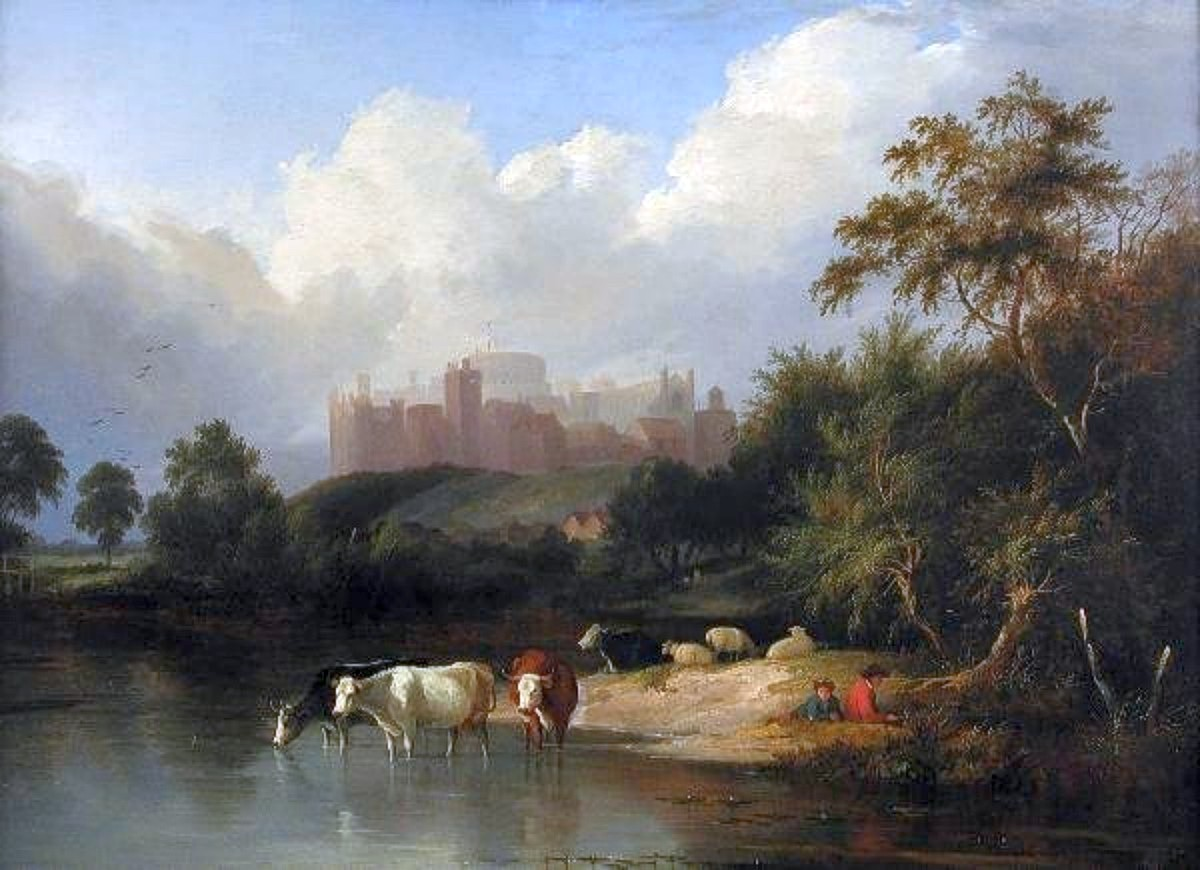

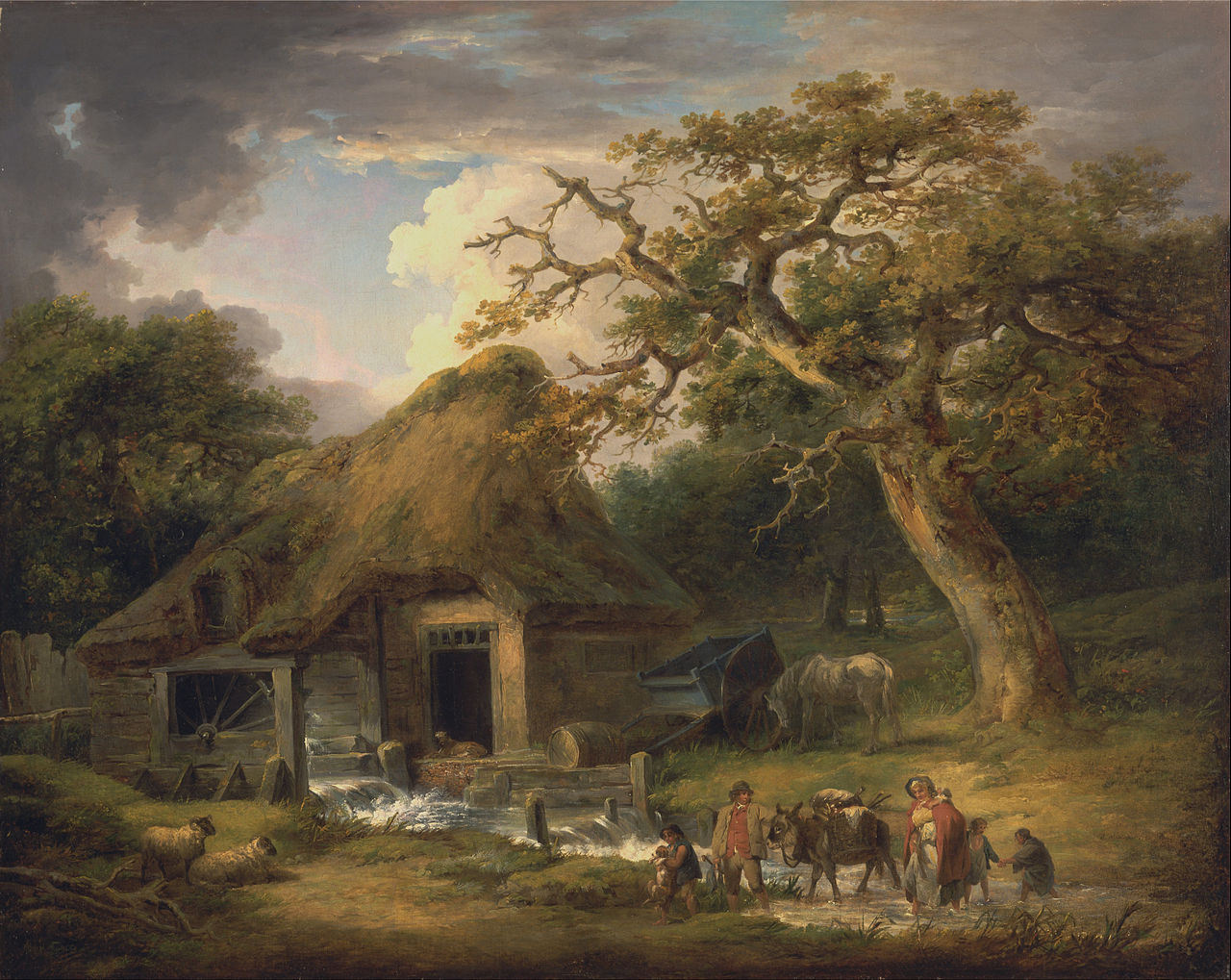
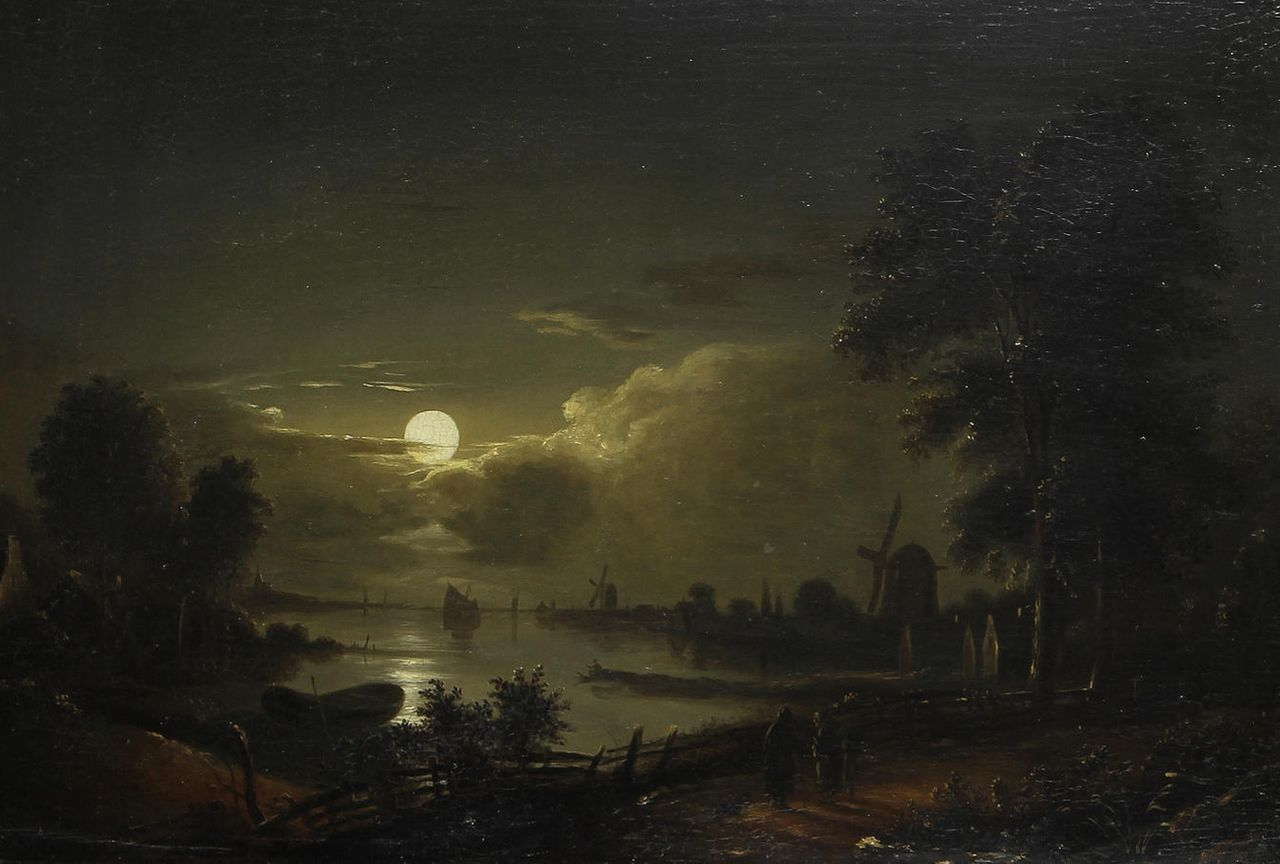

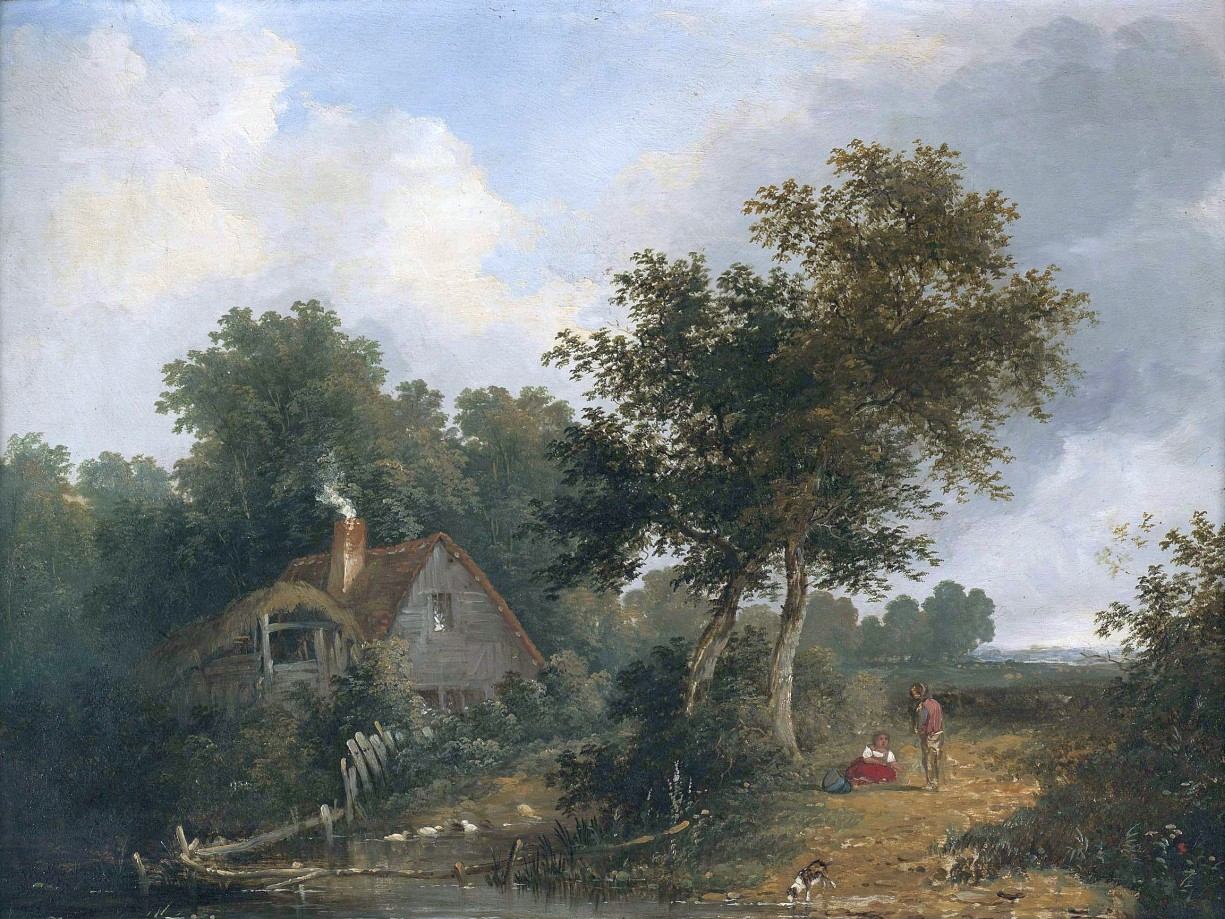


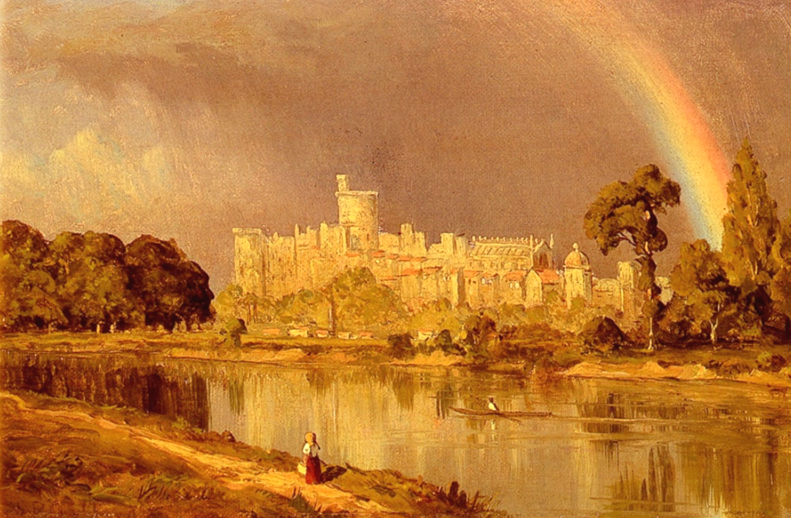


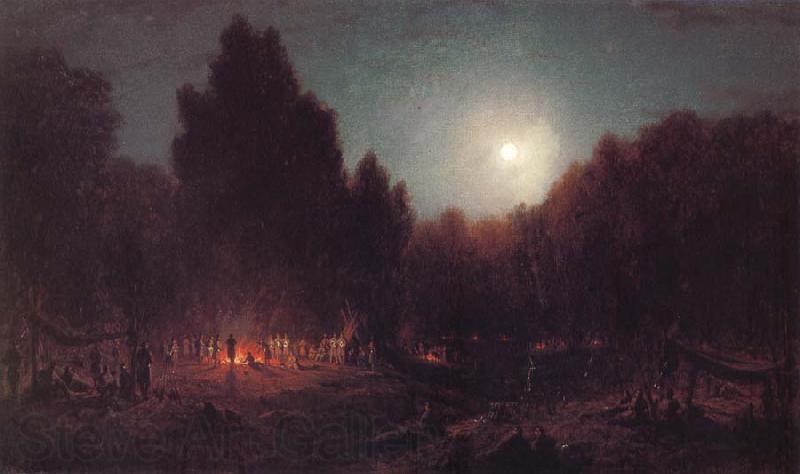
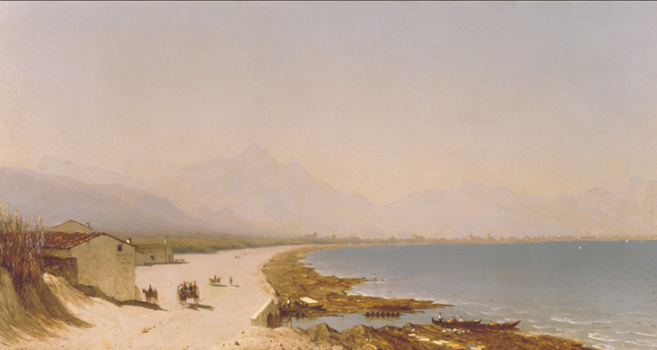

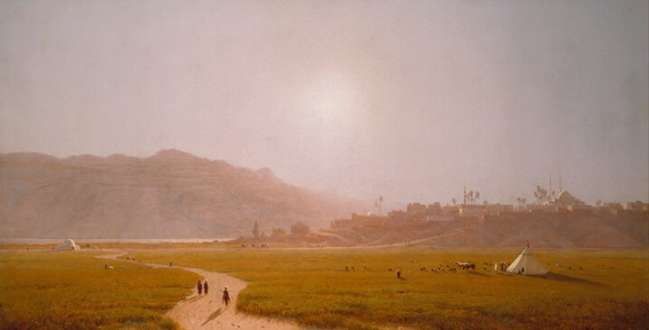

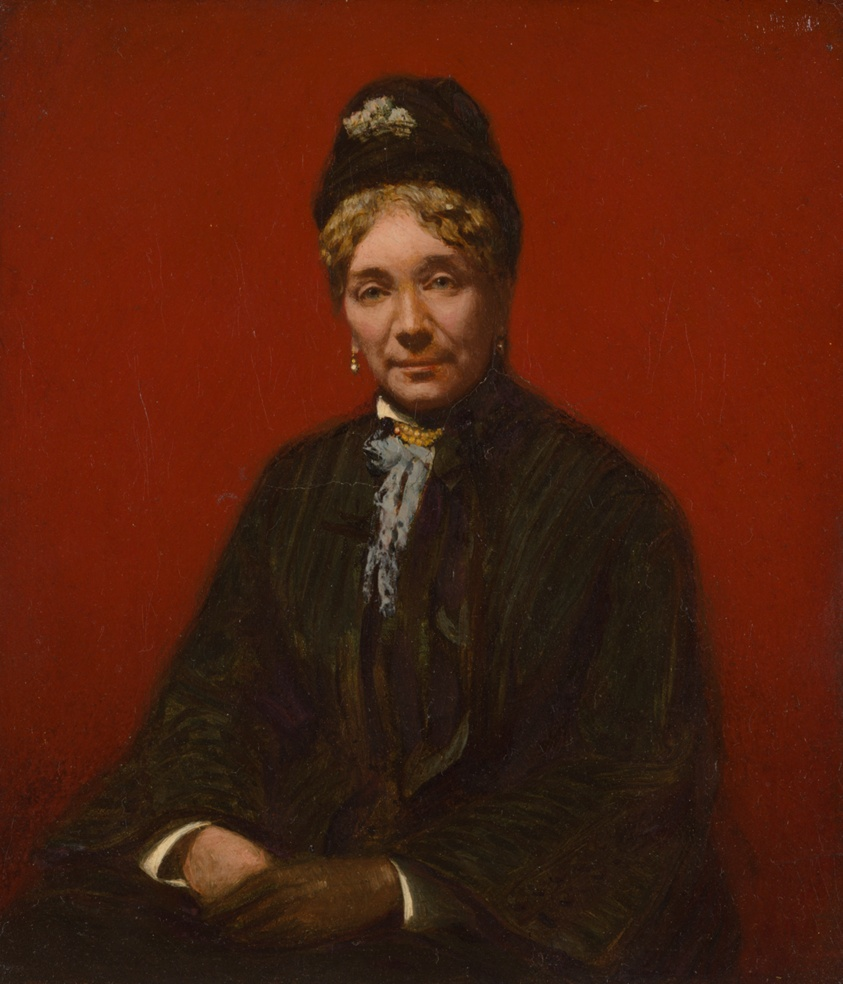
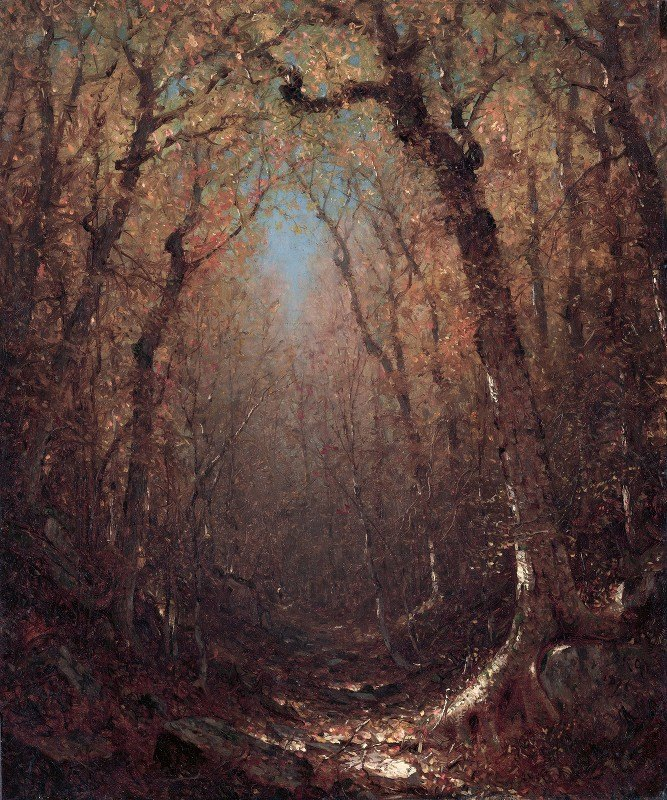

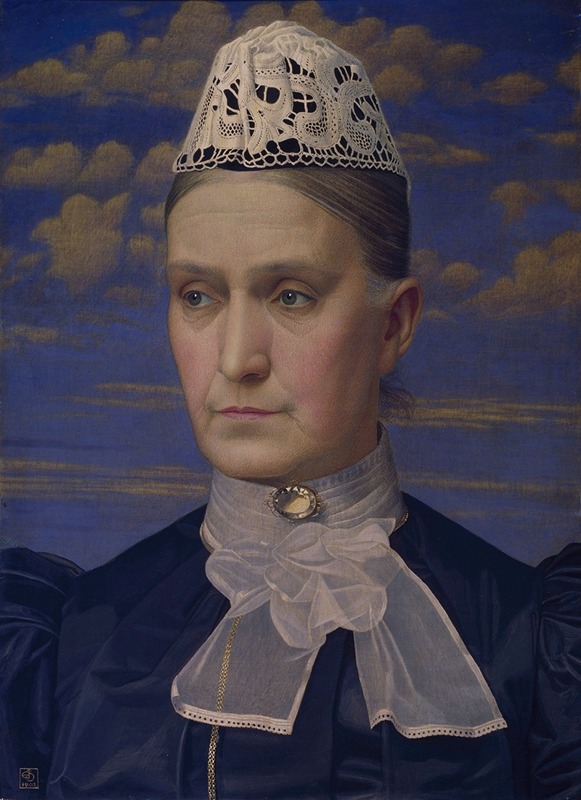
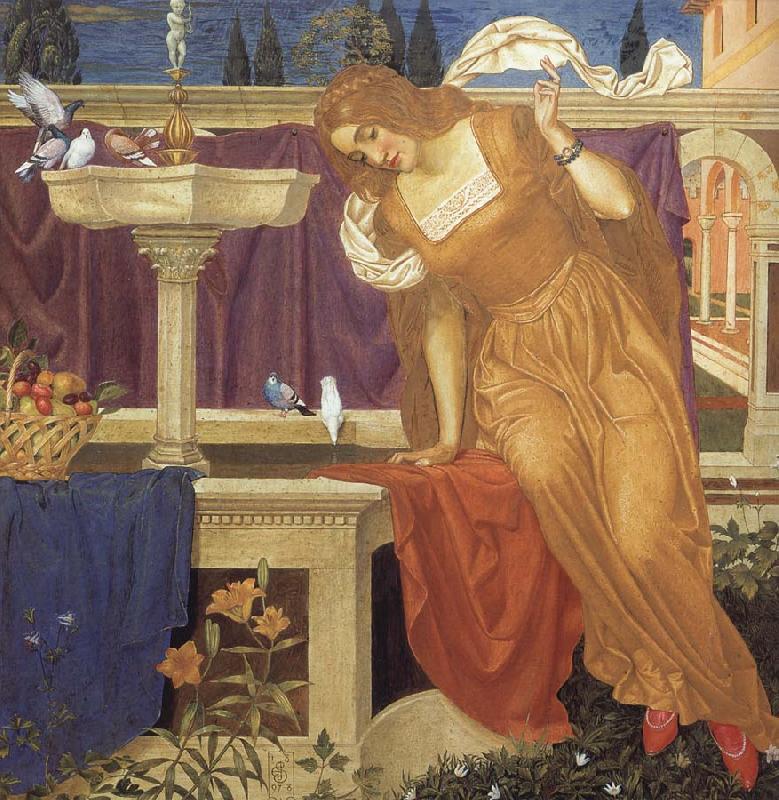
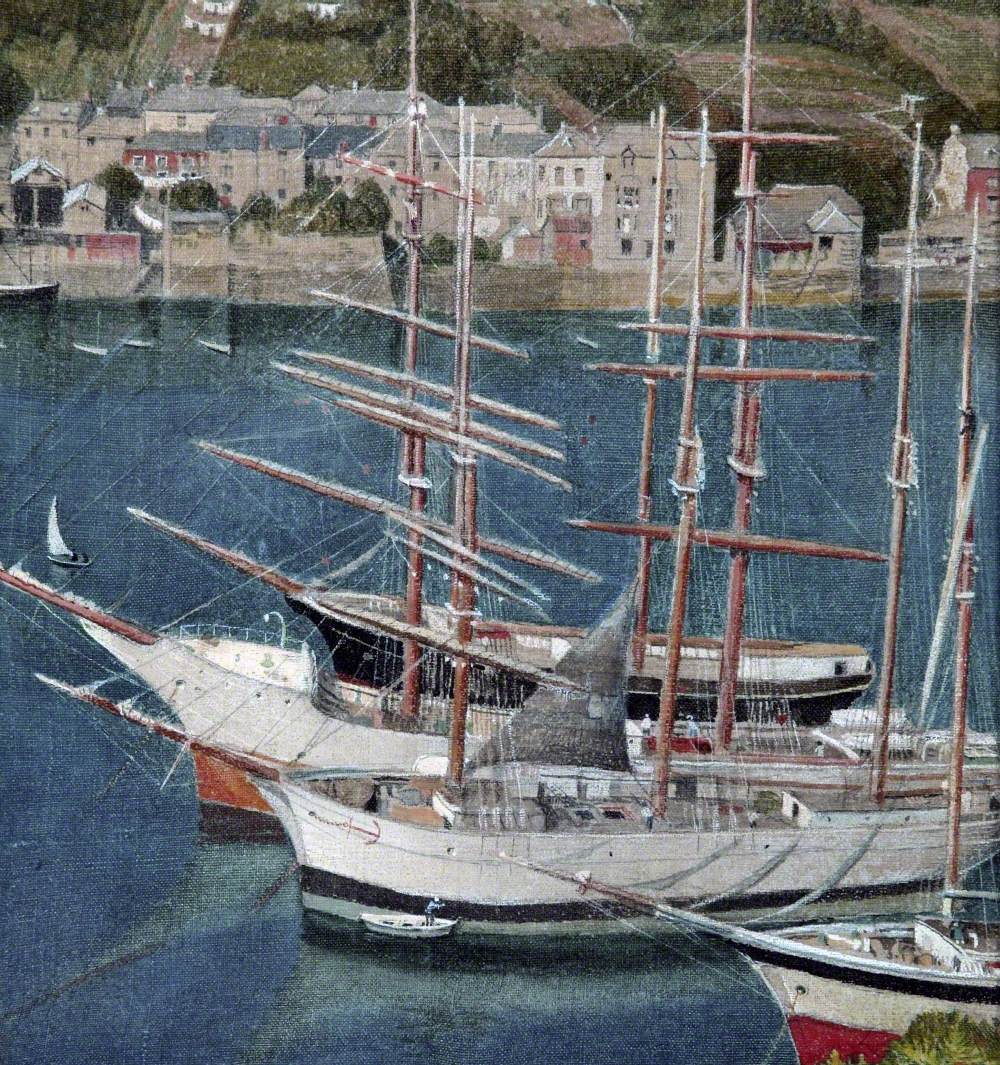
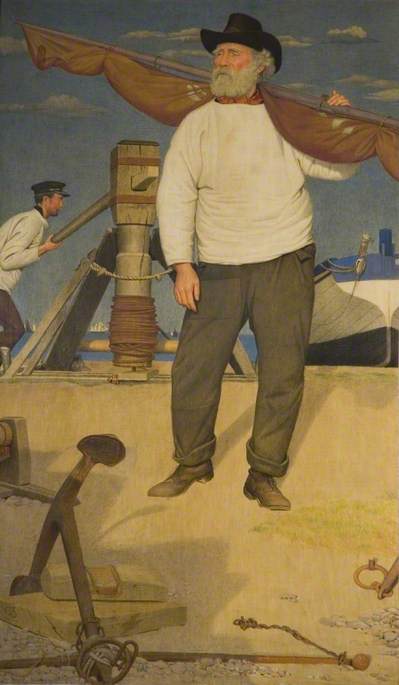
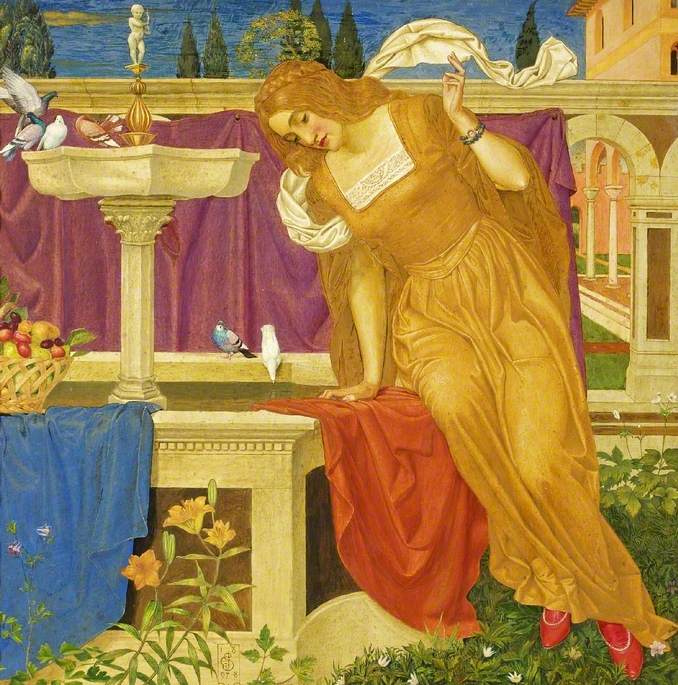
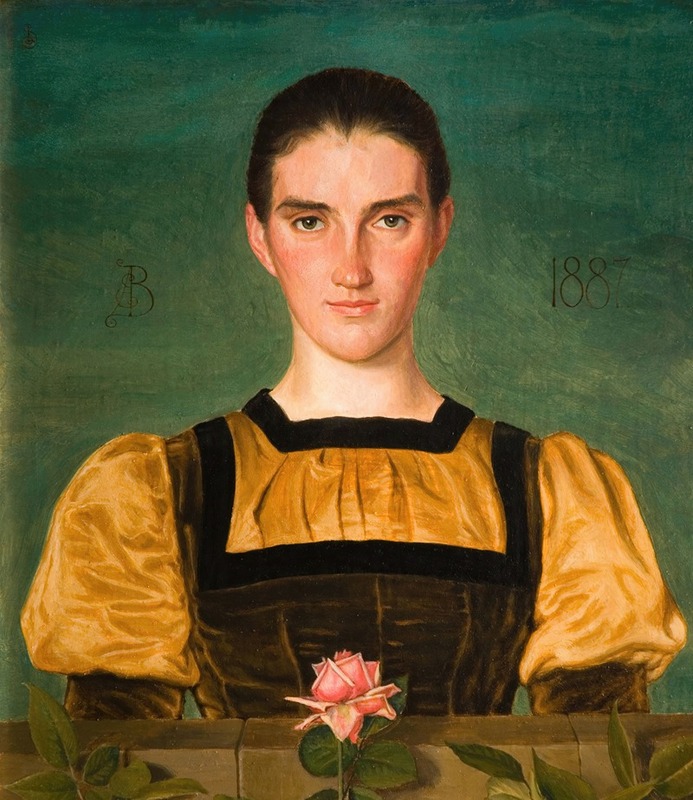


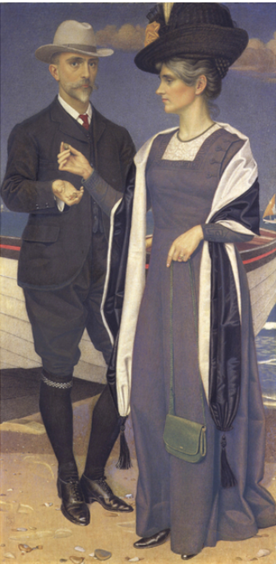
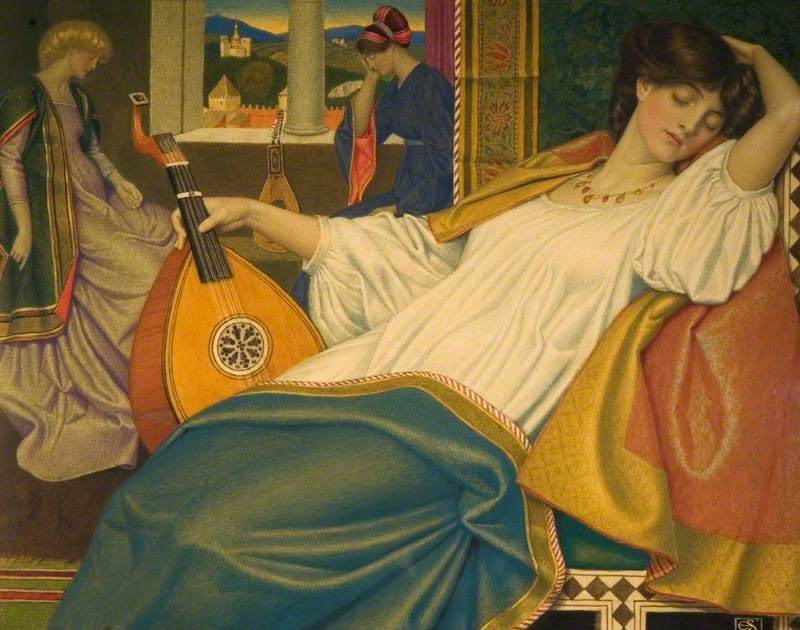

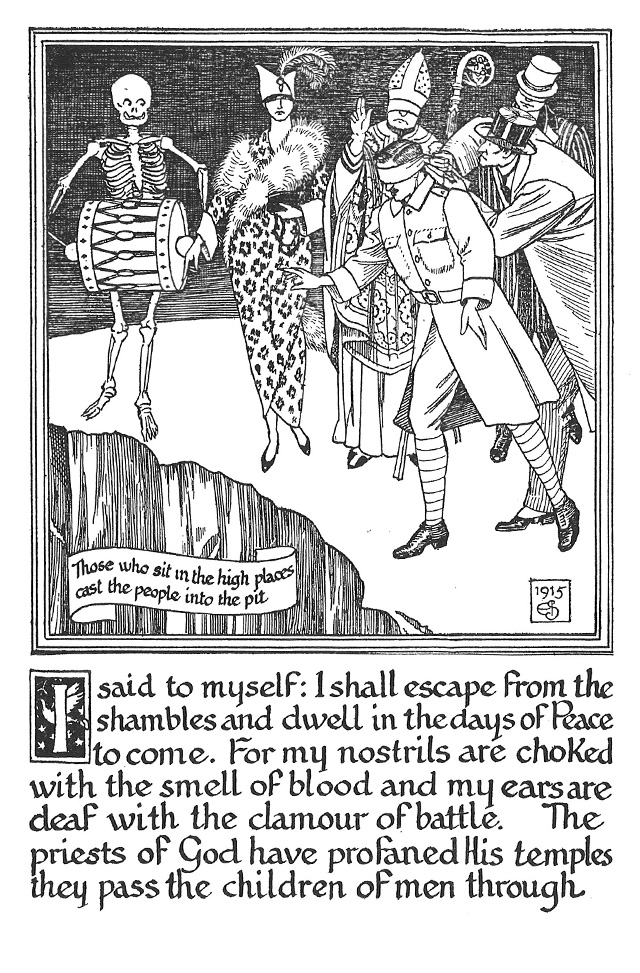

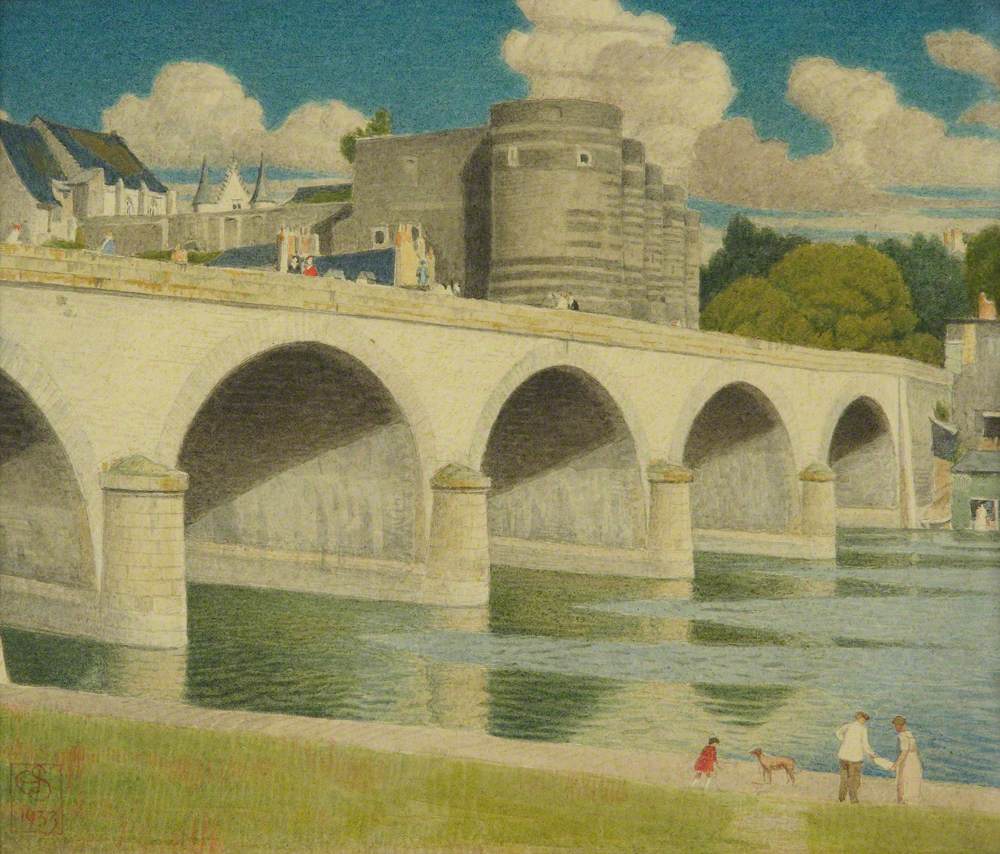

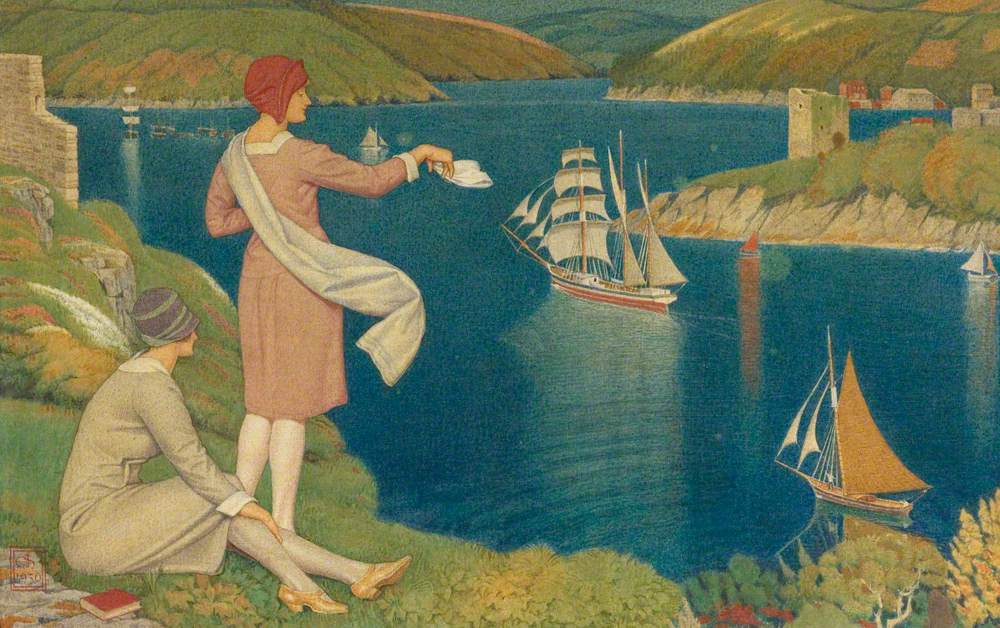
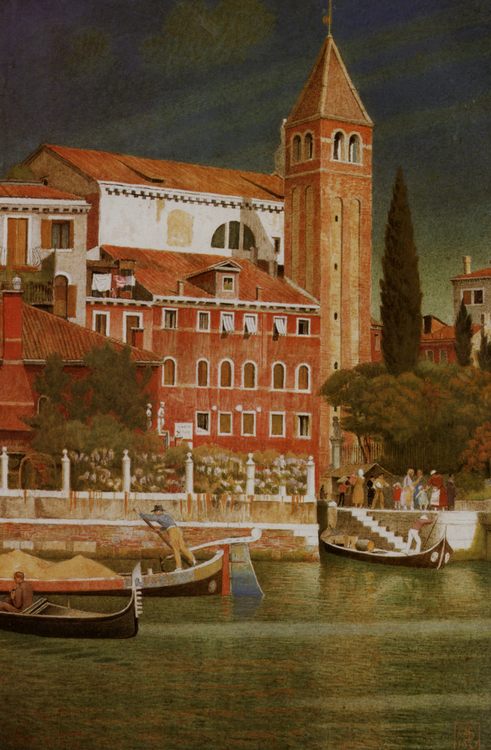
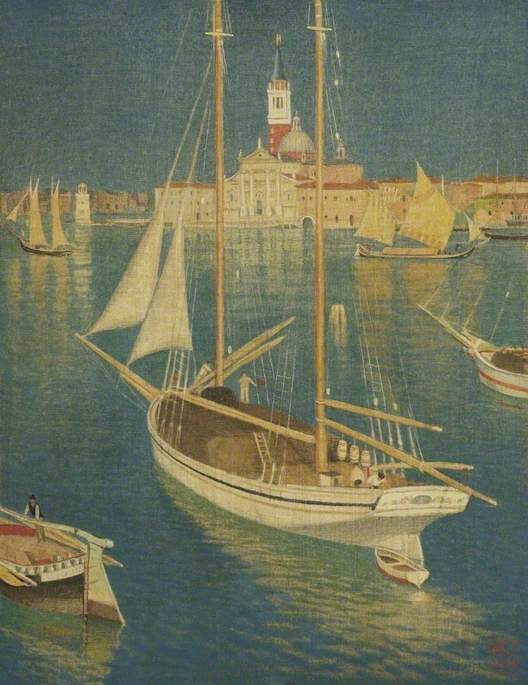
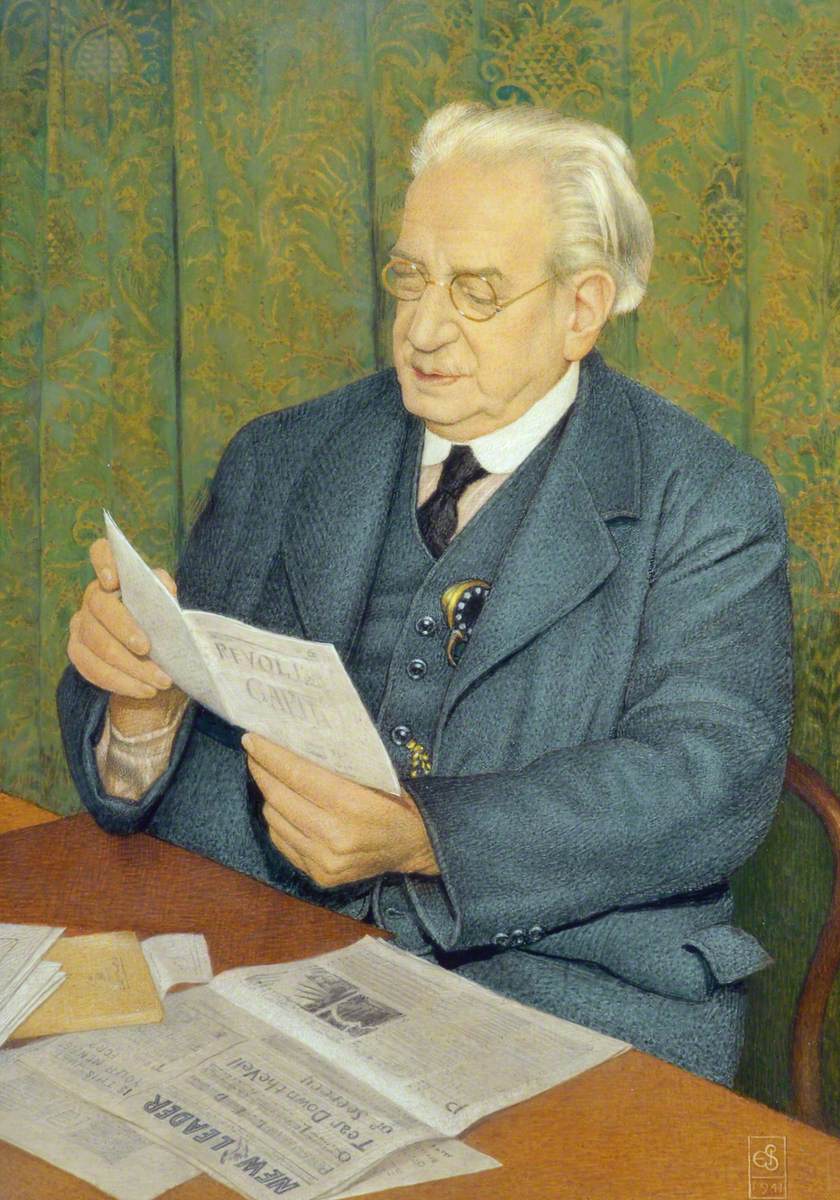
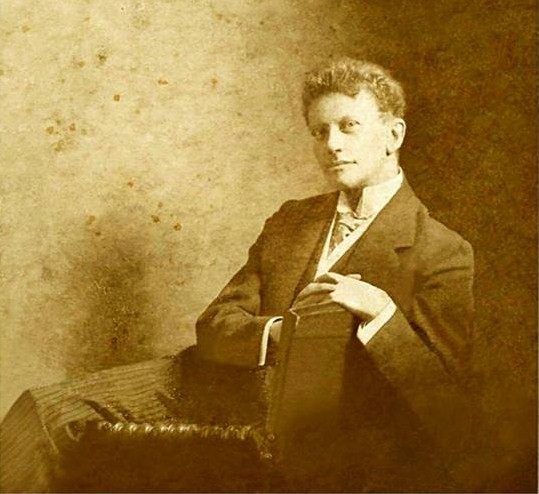


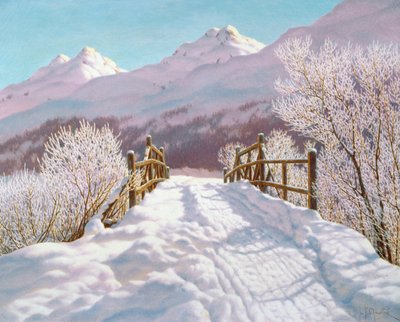

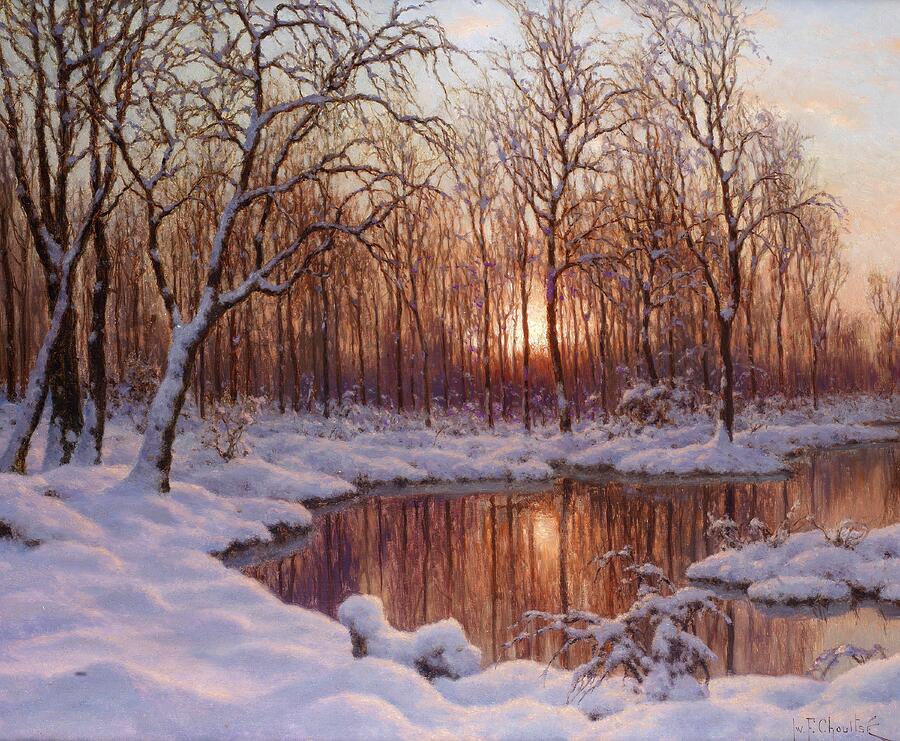


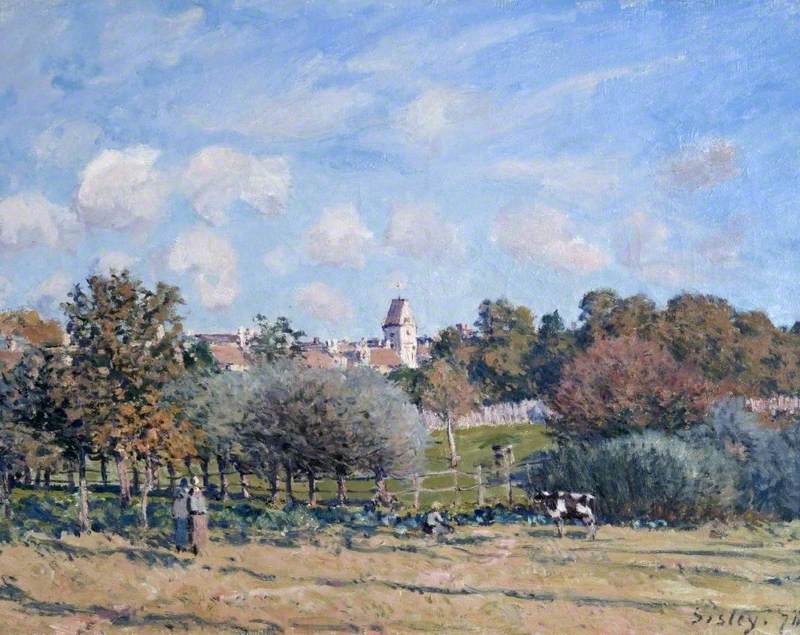
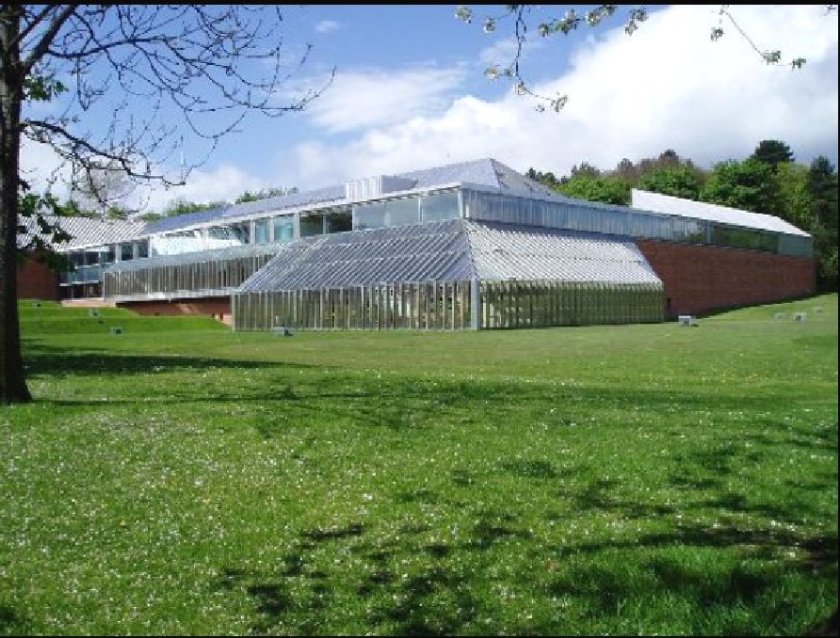


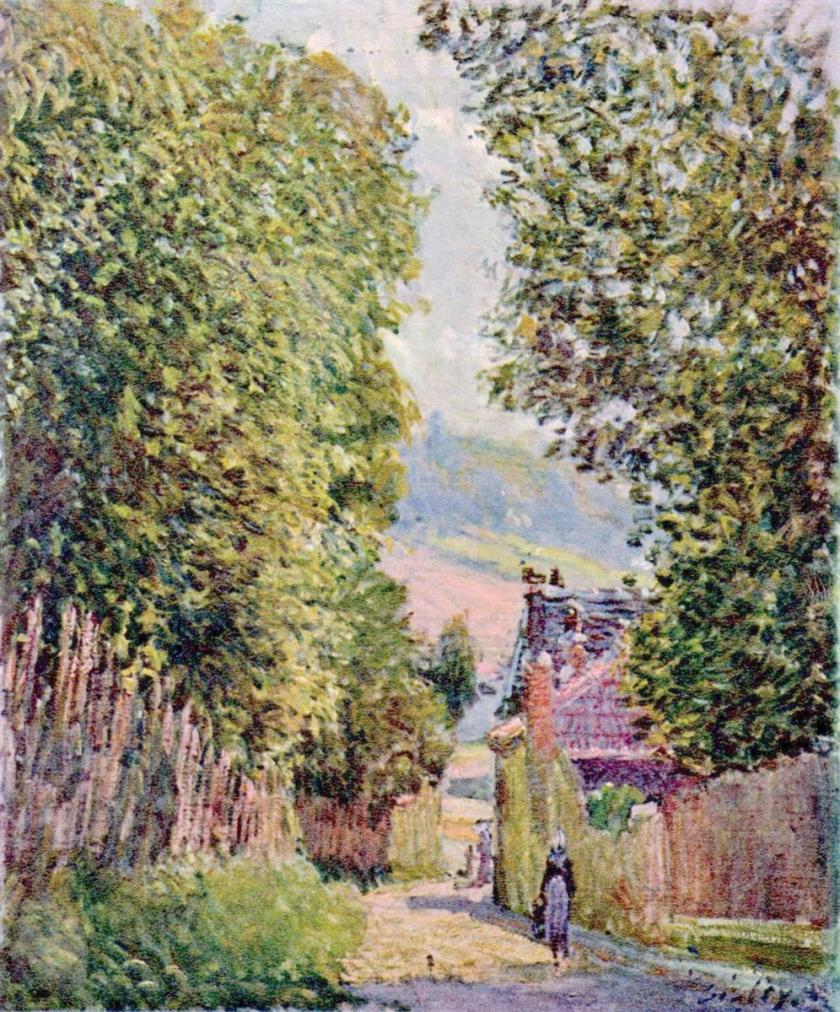

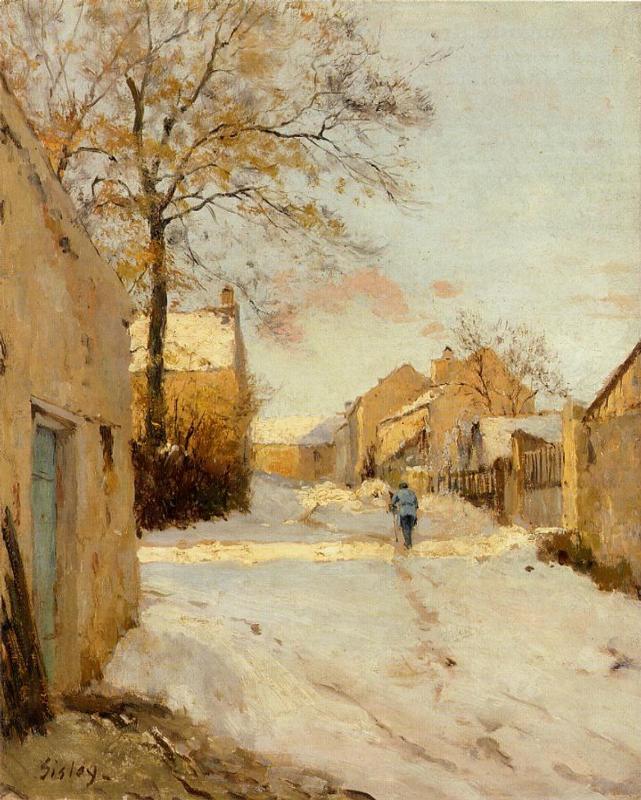
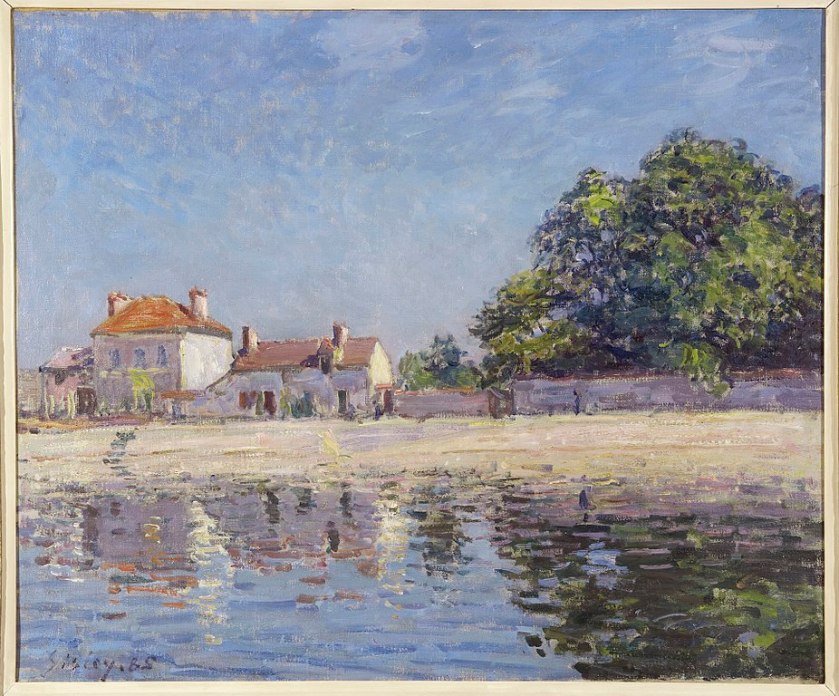
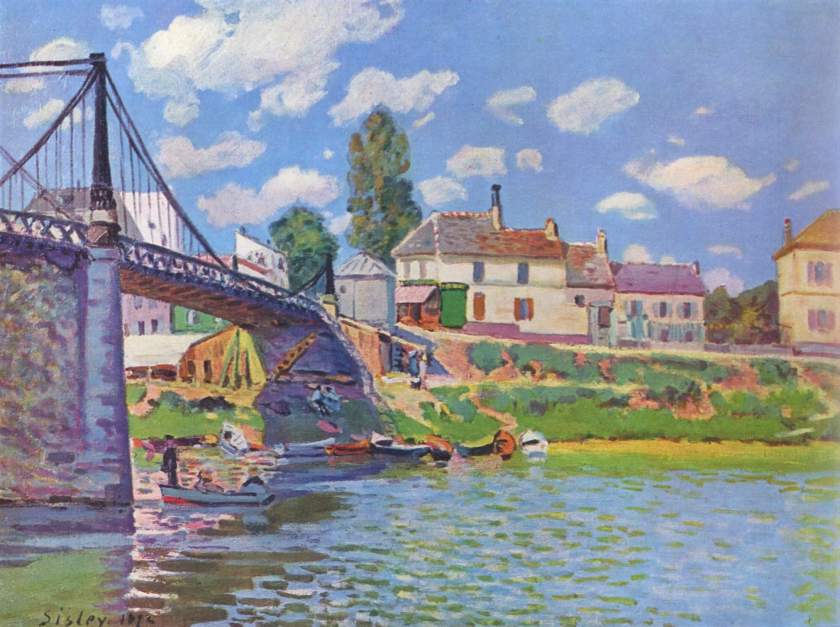
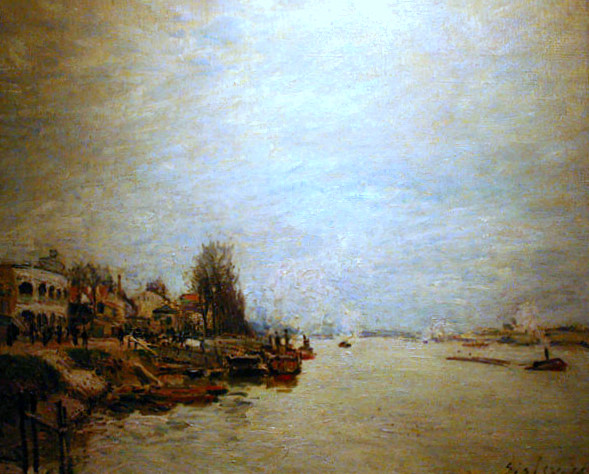


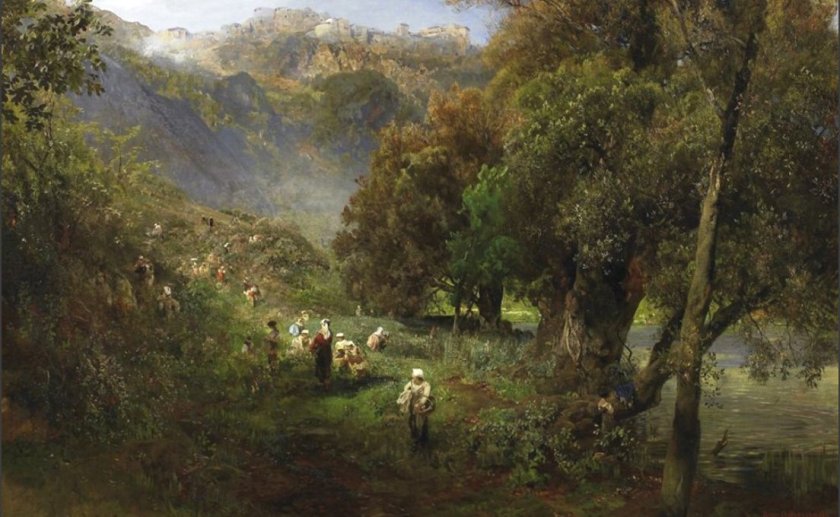

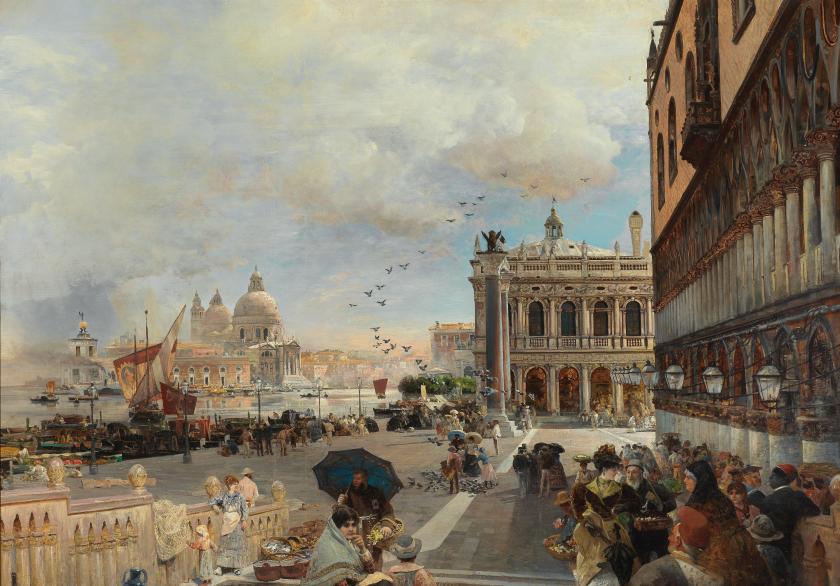
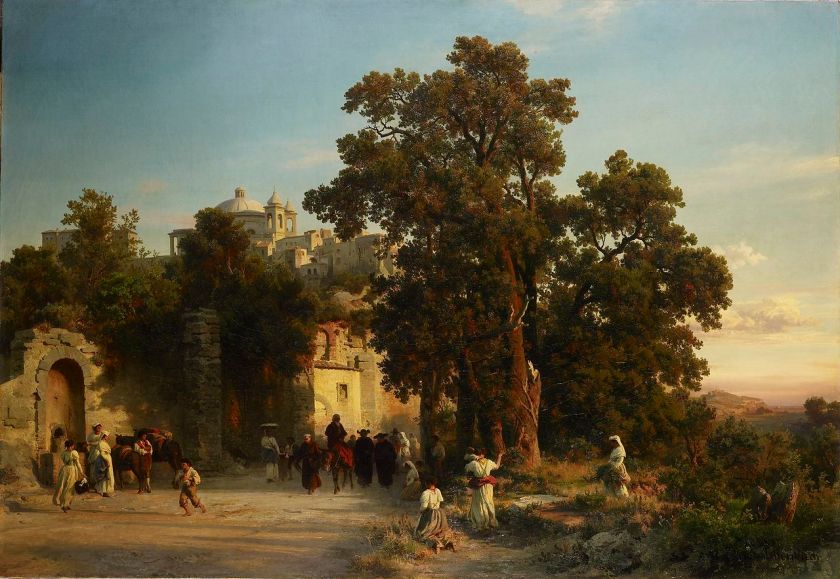

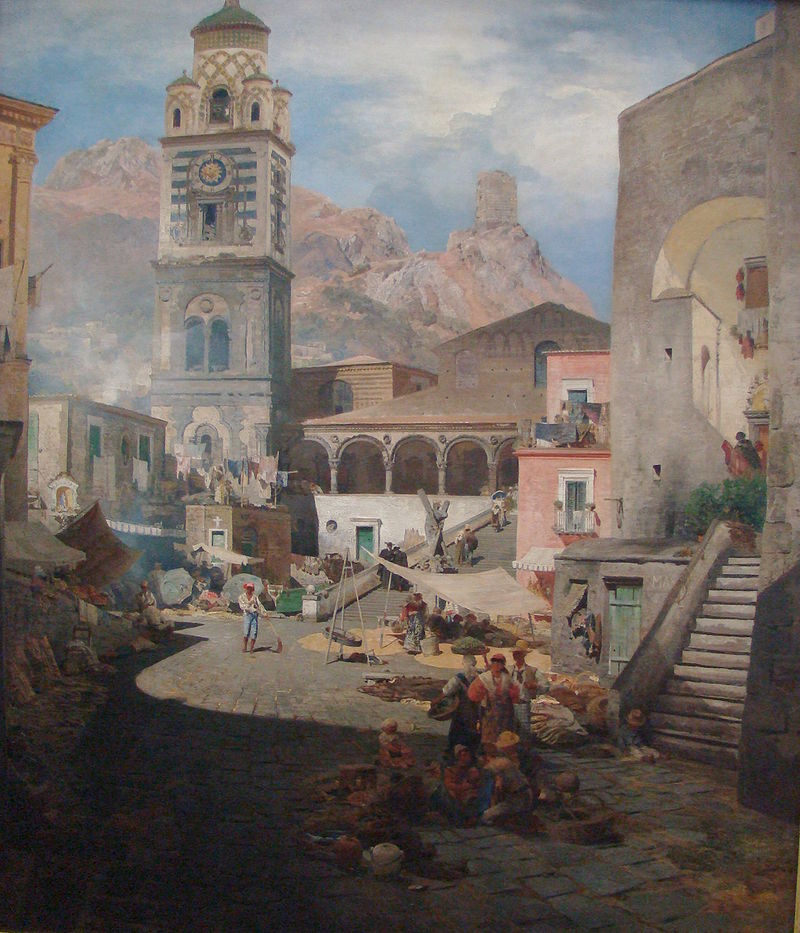
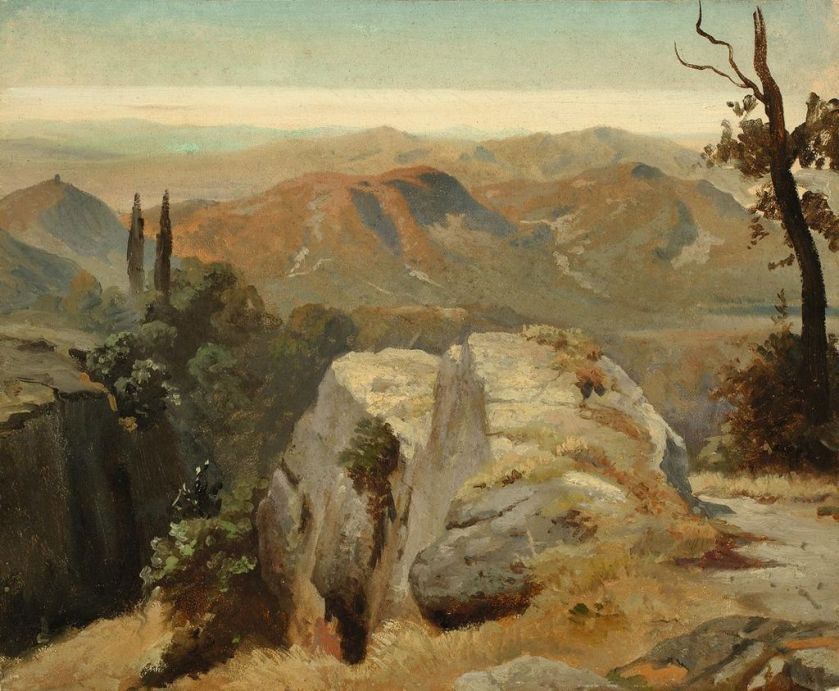
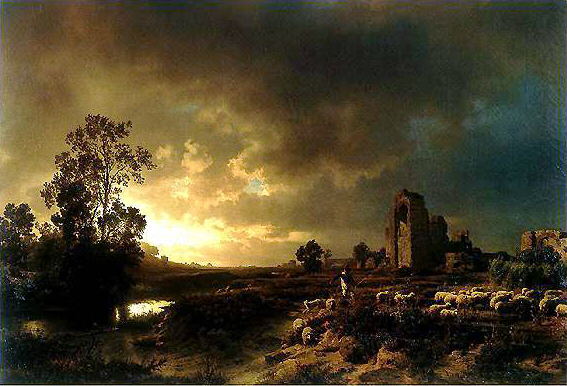
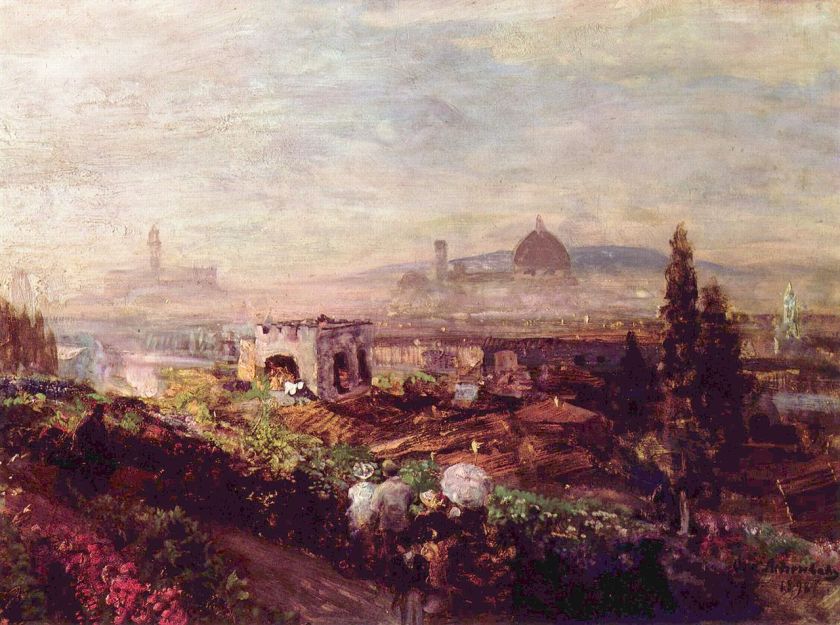
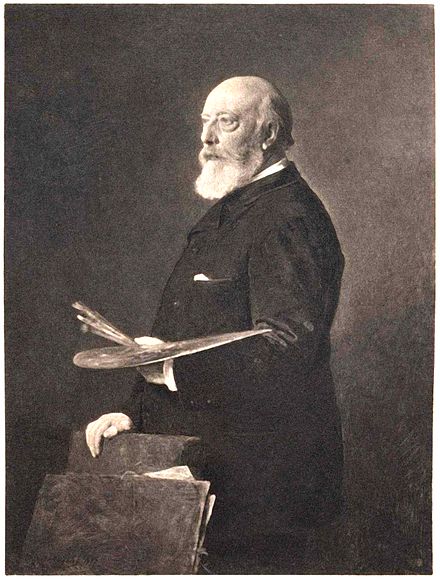

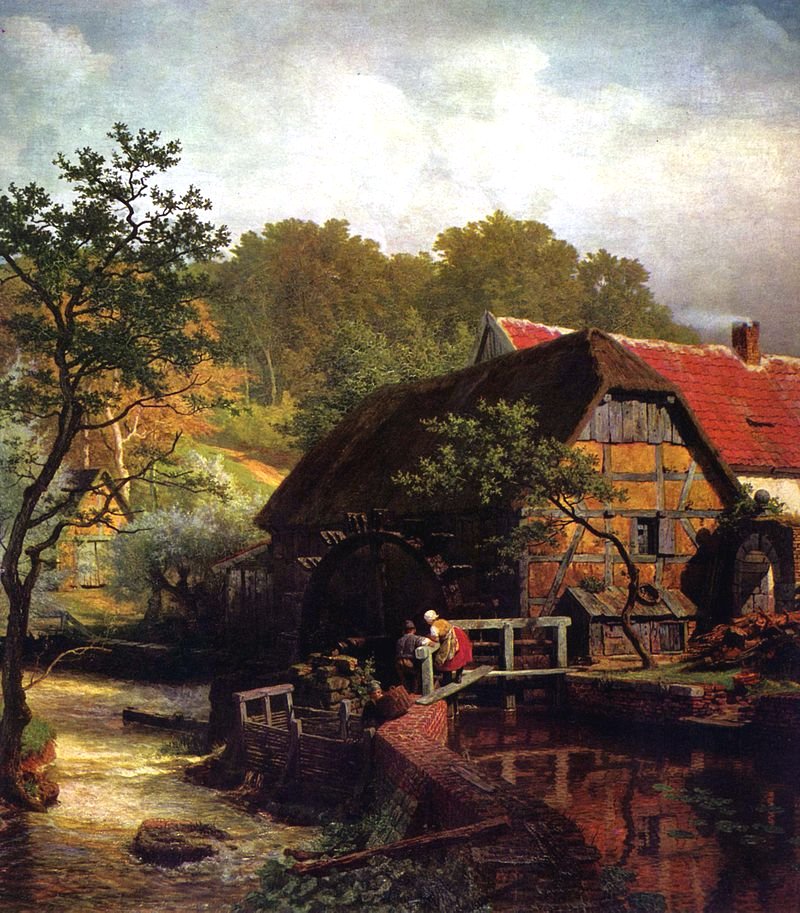

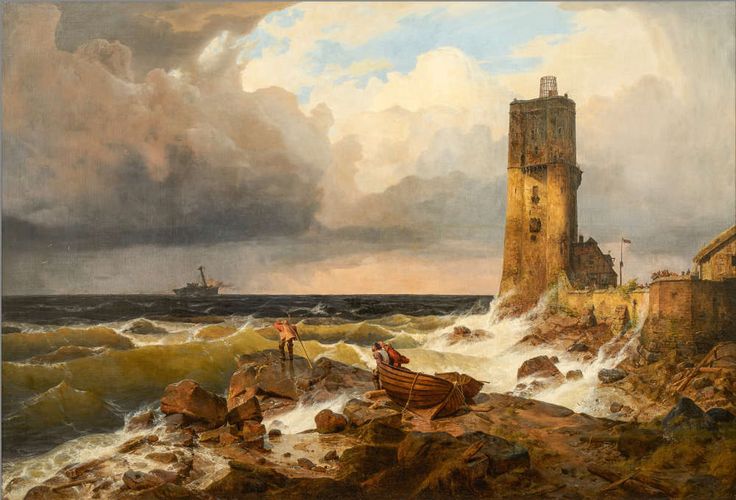
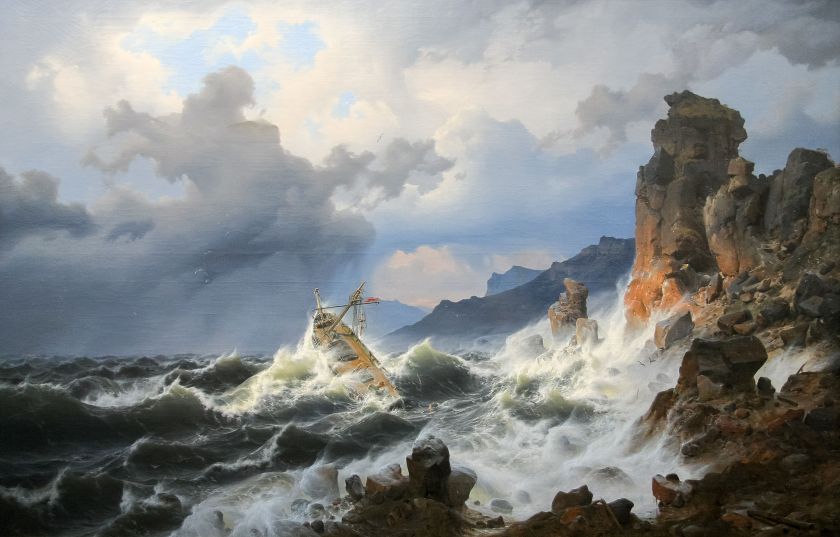


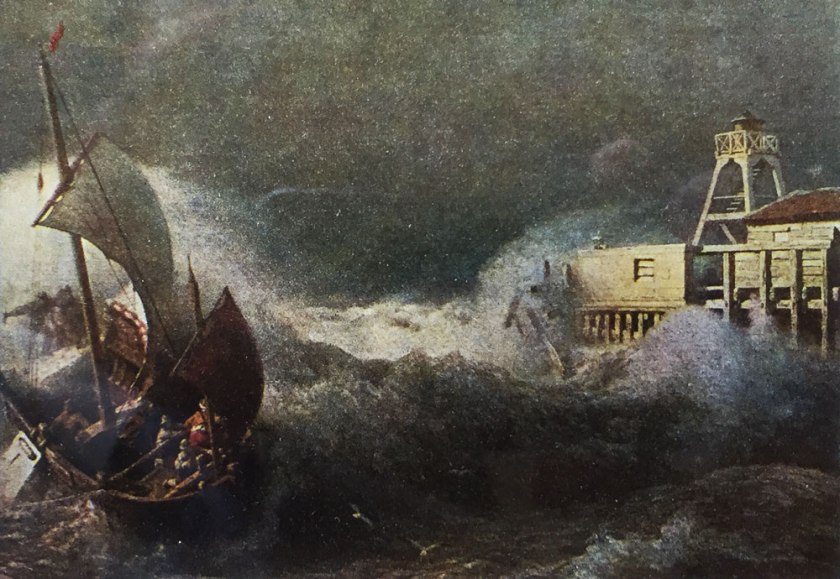
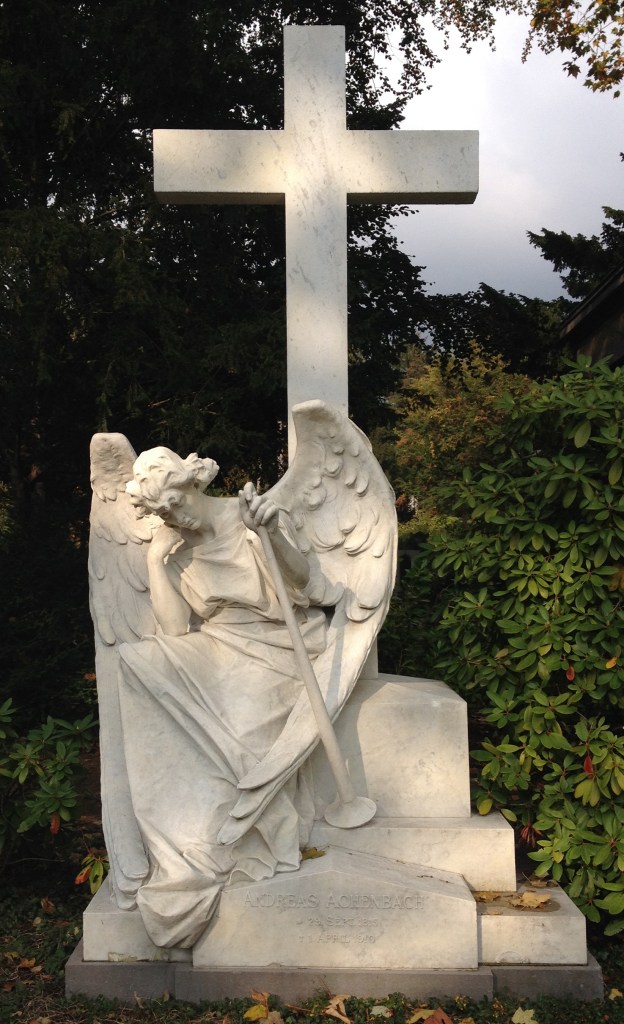
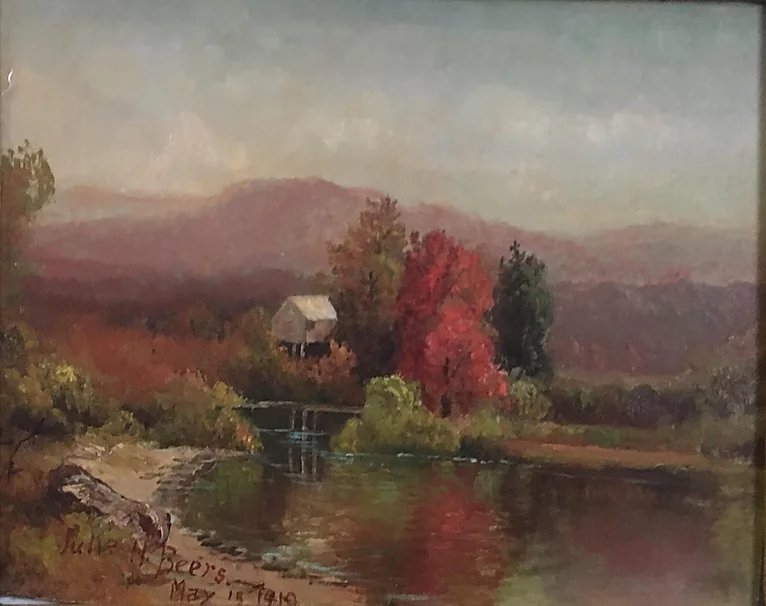

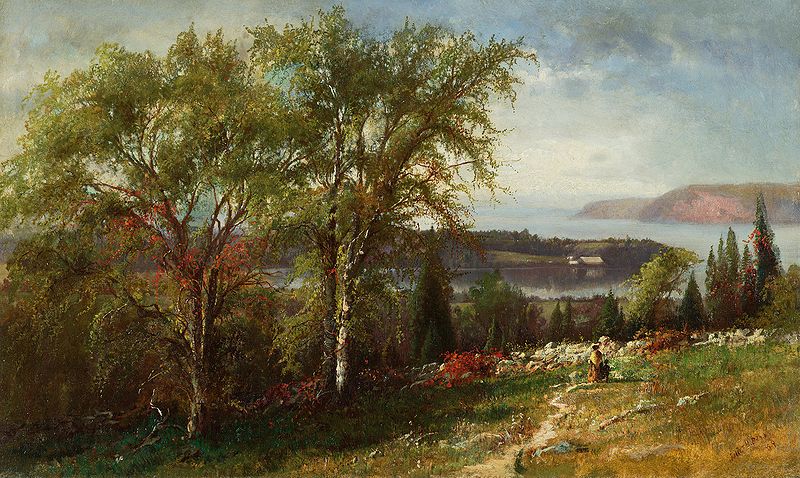
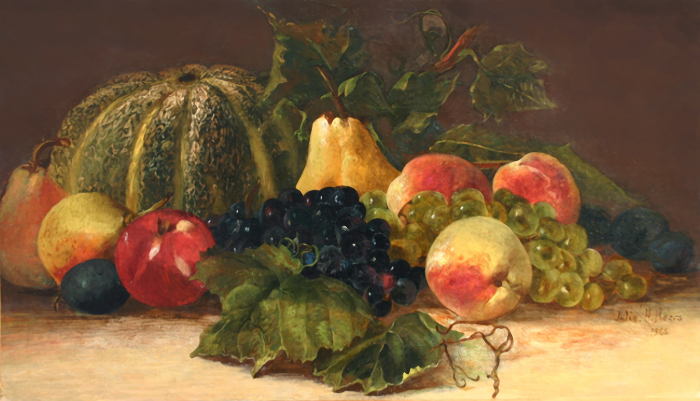
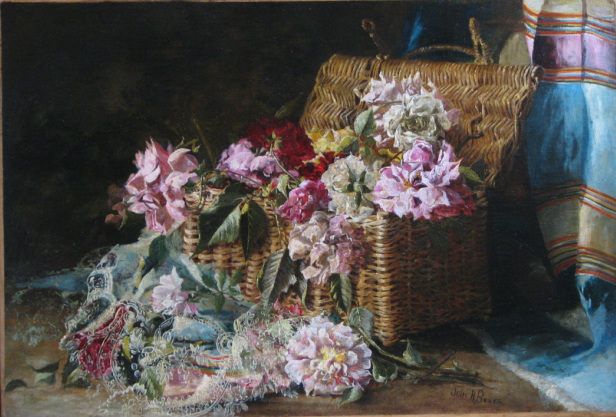

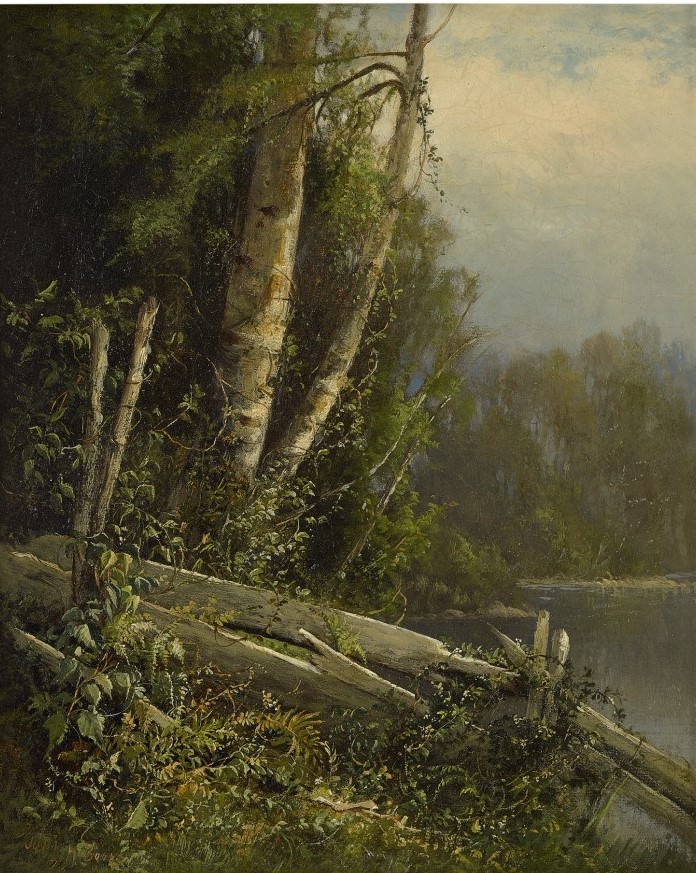

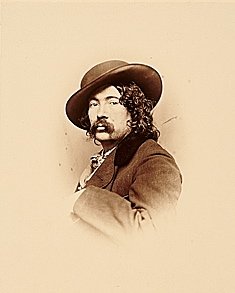


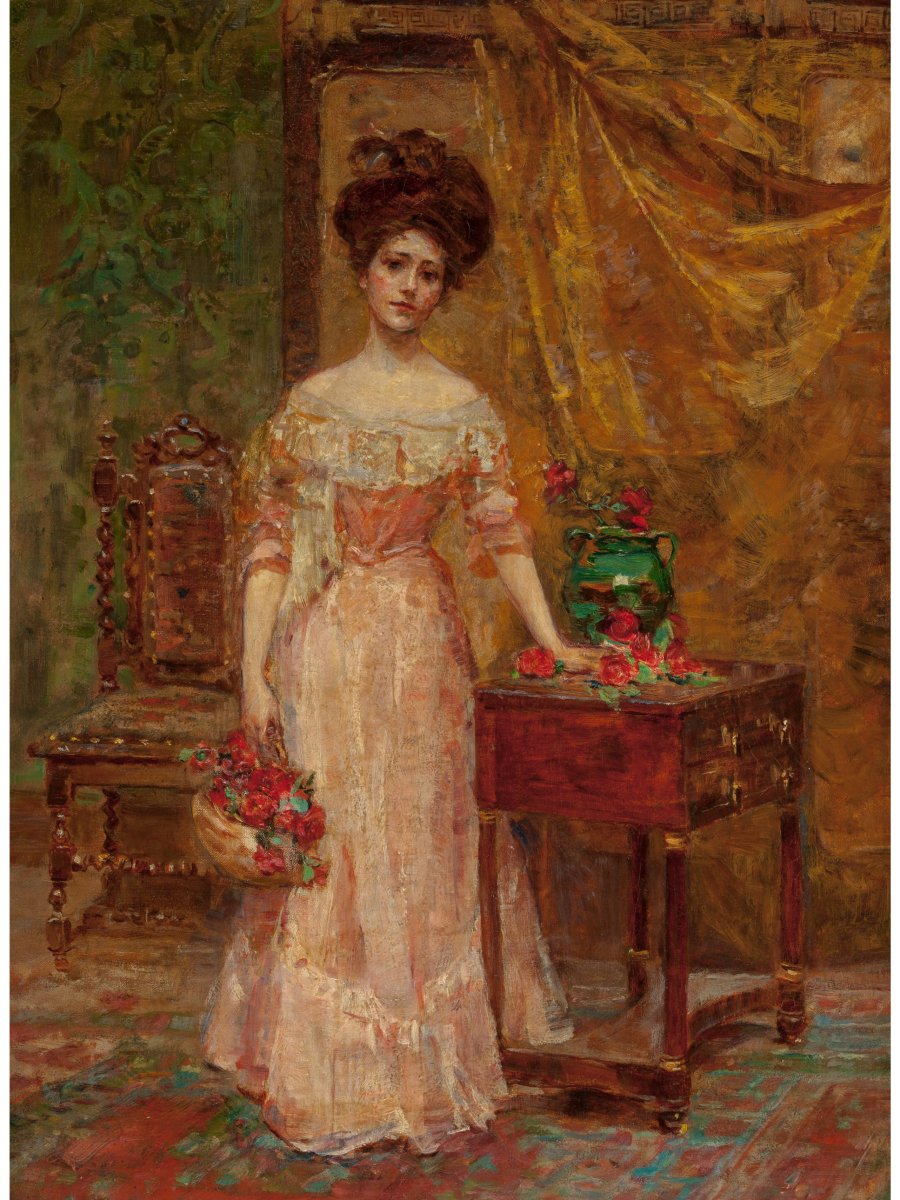


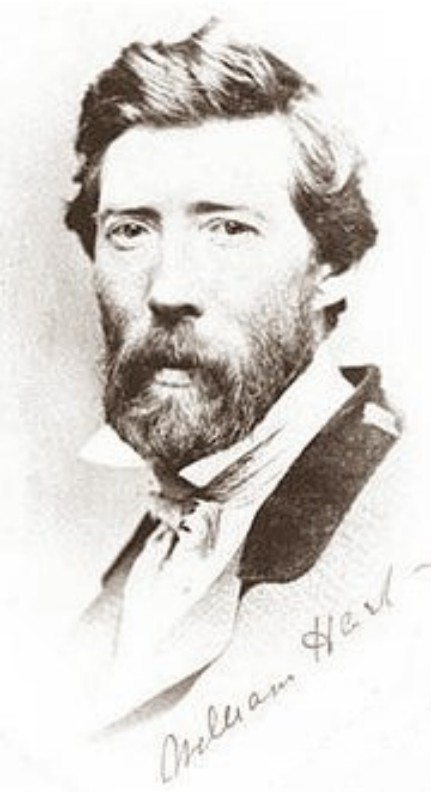


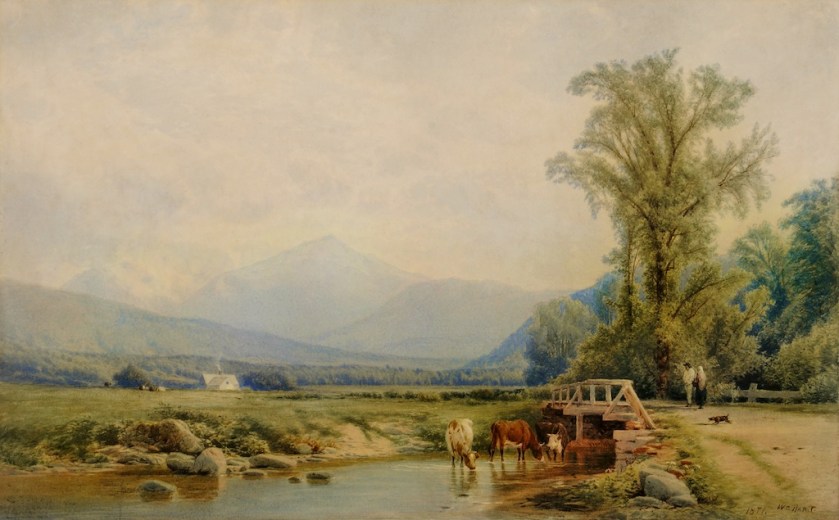
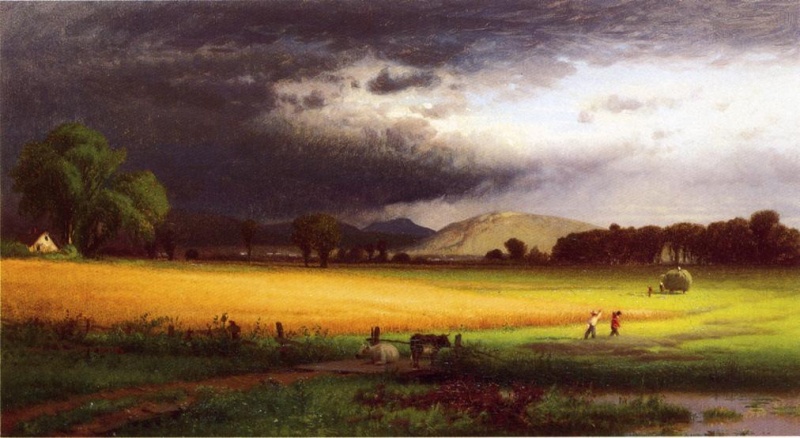
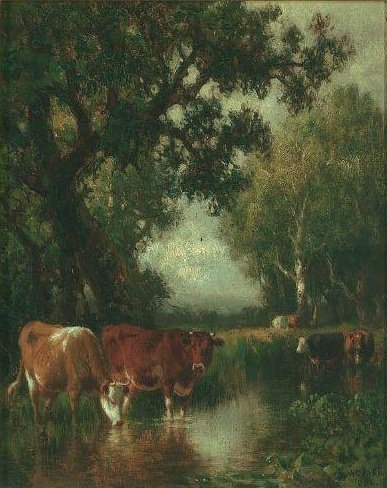


 my daily art display