In my recent blogs looking at the life of Marie Bashkirtseff, I talked about the time she spent studying art at the Académie Julian in Paris and her rivalry with her fellow artist Louise Breslau. Despite the wealthy lifestyle of Bashkirtseff she was still constantly jealous of Breslau, who she perceived as her rival at the academy. She was also very jealous of Breslau’s friendship with contemporary artists such as Edgar Degas. So today, I thought I should dedicate this blog to her rival, and look at the life and works of the German-born artist, Louise Breslau.
Two young girls sitting on a banquette by Louise Breslau (1896)
Maria Luise Katharina Breslau, who would later be known simply as Louise Catherine Breslau, was born in Munich in December 1856 but spent much of her early life in Zurich. She was born into a prosperous middle-class family. Louise had three younger sisters Marie-Henrietta, Emma and Bernadette. Her father was an eminent obstetrician and gynaecologist and in 1858 he and his family moved to Zurich where he took up a position as head physician in obstetrics and gynaecology at the University Hospital of Zurich.
Louise suffered badly from asthma when she was young and was often confined to her bed and it was due to this enforced confinement, that to pass the time and counter loneliness, she immersed herself in reading and also developed a love of sketching.
La fille à l’orange by Louise Breslau (1897)
In 1866, When Louise was nine years old, her father died of staph infection which he contracted during the execution of a postmortem examination. Louise, even though still very young, was tasked with helping her mother to bring up her three younger sisters. When her health worsened, she spent some time in a convent near to Lake Constance where with its warmer climate it was hoped that her health would improve. It was during her stay at the convent that she became more interested in art and she continued to sketch and paint during her teenage years. Her love of art and her artistic ability became apparent to her mother who persuaded Louise to attend the drawing classes of the local Swiss portrait painter, Eduard Pfyffer. She excelled under his tuition but after a while she believed that she had learnt all she could from Pfyffer and she wanted her art to be more than just a pleasing hobby. All young ladies of a certain class, besides learning about domestic skills, were also encouraged to be able to play a musical instrument and be able to paint or sketch. However, Louise wanted art not to be just a pleasant pastime, she wanted to become a professional artist and to achieve this she knew she had to leave Switzerland, move to the European capital of art, Paris, and enrol at a specialist art academy. In 1876 she went to Paris but like many other female artists who wanted the best art training that Paris could offer, she was disappointed with the ruling of the prestigious Académie des Beaux-Arts that only male artists would be allowed to enter their hallowed establishment. This sexist ruling did not change until 1897. So, like Bashkirtseff, she enrolled at the Académie Julian who catered for aspiring female painters.
Children reading by Louise Breslau
Her fellow students at the Académie Julian included the Ukrainian artist, Marie Bashkirtseff, Madeleine Zillhardt, the French painter, Sophie Schäppi who, like Louise, had come to Paris from Switzerland and the Irish painter, Sarah Purser. Louise excelled at the academy and was looked upon by her tutors as one of their best students and this fact did not lie well with Marie Bashkirtseff who was inordinately jealous of her fellow student. In 1879, Louise Breslau, Sophie Schäppi and the singer Maria Fuller moved into a large apartment in the Avenue des Thermes and that same year Breslau had her painting entitled Tout passé accepted at the Paris Salon. This was a great achievement not only for Louise but also for the female atelier of Académie Julian.
Les amies by Louise Breslau (1881)
Two years later, in 1881, she received an honourable mention at that year’s Salon for her triple portrait entitled, Les amies (Portrait of Friends). In it we see her friends Maria Feller on the left, Sophie Schäppi in the centre and Louise on the right, with a white dog sitting on top of the scarlet tablecloth. It is a painting in which we see the three females in a reflective mood. The painting is now housed in the Musée d’Art et d’Histoire, Geneva. Louise Breslau was now acknowledged as an up-and-coming artist. She opened her own studio and soon started to receive numerous commissions for her work from the wealthy of Paris society.
Le thé à cinq heures by Louise Breslau (1883)
In 1883 she was commissioned by the owner of the French newspaper Le Figaro to paint a portrait of his daughter. She completed the commission and exhibited the painting entitled Isabelle de Rodays at the 1883 Salon. She also exhibited another of her works, Five O’clock Tea at that year’s Salon and this can now be found at the Berne Kunstmuseum.
Chez soi by Louise Breslau (1885)
In 1885 Louis Breslau completed another great work entitled Chez Soi which is a portrayal of her mother and sister in an interior setting. The dog sits at the feet of her mother and this genre piece exudes an air of silent contemplation. The painting resides in the Musée d’Orsay in Paris.
Contre Jour (Louise Breslau and Madeleine Zillhardt) by Louise Breslau
The friendship between Breslau and Madeleine Zillhardt would last a lifetime and she would appear in many of her paintings. After a brief affair in 1886 with the sculptor Jean Carriès, whom she met through Jules Breton, Louise Breslau chose to share her life with Madeleine Zillhardt and in 1902 the two women moved to a studio in Neuilly-sur-Seine where they set up home.
Jean Carries in his Atelier by Louise Breslau
She eventually became the third woman artist, and the first foreign woman artist to be bestowed France’s Legion of Honour award. During World War I Breslau, although by this time a naturalised Swiss citizen, and Zillhardt, remained at their home at Neuilly. Breslau showed her patriotism towards her new country, France, by drawing numerous portraits of French soldiers and nurses on their way to the Front. Louise was sixty-two years of age when the war ended and she began to withdraw from public view and was contented to stay at home and sit in her garden, painting flowers but she still loved to entertain her friends.
Louise Catherine Breslau died in May 1927, aged 70 after suffering from a long and debilitating illness. Most of her estate went to her good friend and long-time companion Madeleine Zillhardt. As per her wishes Louise Breslau’s body was taken to the small Swiss town of Baden where she was buried next to her mother.
Unlike Bashkirtseff, who died at the age of 25, Breslau had many years to forge her artistic reputation. Bashkirtseff sadly knew, when she was told that she was dying, that she would never have the time to be able to build up such an artistic reputation as Breslau but of course Bashkirtseff will always be remembered for her diaries. The works of art of Louise Breslau were very popular when she was alive but sadly, after she died, she was almost forgotten.
In my previous blog I concentrated on the portraiture of Marie Bashkirtseff but she will probably be remembered best for other genres
One painting by Marie Bashkirtseff which came about during her time at the Académie Julian was one commissioned by the founder of the establishment, Rodolphe Julian. He asked her to paint a canvas depicting the artists at work in his academy. The finished canvas was entitled L’Atelier Julian and is now looked upon as one of Bashkirtseff’s finest works. Initially Marie was not impressed by the commission but could see the benefit for herself, writing in her diary:
“…As for the subject, it does not fascinate me, but it may be very amusing, and then Julian is so taken with it, and so convinced… A woman’s studio has never been painted. Besides, as it would be an advertisement for him, he would do all in the world to give me the wonderful notoriety he speaks about…”
Atelier Julian (In the Studio) by Marie Bashkirtseff (1881)
The painting portrays the light and airy studio at the Académie Julian where Bashkirtseff and her fellow students would work. L’atelier Julian is a quite large oil on canvas work measuring 154 x 186cms and is currently housed in the Dnepropetrovsk State Art Museum. It is a fascinating work featuring sixteen students all taking part in a life-drawing session. The studio looks well organised, although small in size, but that maybe due to the number of people crammed into the room. As an observer, we firstly focus on the woman seated at the centre of the work. She wears a bright blue dress. In her hands are a small brush and a maulstick. She is working on a painting of the young nude model, who is holding a staff whilst standing on the raised dais so that he can be seen clearly by all the female students. If we look past this lady we see one of her colleagues staring out at us. Maybe someone is entering the room to join this artistic group. Our eyes now leave the lady in blue and we start to scan the rest of the room. It is a hubbub of activity. Some of the females are concentrating intently on their canvases whilst others partake in chit-chat. The two females in the foreground, one seated, one standing, engage in conversation. The lady standing rests her hand on a wine-coloured velvet drape which has been laid over the back of the chair. Look at the drape. See how Bashkirtsteff has showcased her artistic ability in the way she has depicted the elaborate folds of the material. Many artists in the past and in the present time like to show off their artistic skills in this way. This large and multi-faceted work was exhibited to great acclaim at the 1881 Salon.
Following a visit to Russia in 1882 to visit her relatives she returned to Paris. She had not been feeling well and decided to visit her doctor. In Dormer Creston’s 1937 biography on the artist entitled Fountains of Youth – The Life of Marie Bashkirtseff, he quoted her diary entries:
“…At the doctor’s. For the first time, I had the courage to say: Monsieur, I am becoming deaf. It can be borne, but there will be a veil between me and the rest of the world…”
Later that year her health deteriorated further and she noted in her dairy after visiting the physician that the news was not good:
“…I am consumptive, he told me so to-day…”
Despite her failing health she carried on with her art. She punished herself by working long hours almost as if she realised her time was almost up and none should be wasted. It was in 1882 that she met the French painter Jules Bastien-Lepage. He was ten years older than Marie but he became her confidante and mentor and her greatest inspiration. It has often been mooted that the two became very close romantically. He persuaded her to look beyond her wealthy lifestyle and observe and depict in her paintings those who were less financially fortunate than herself. She listened to Bastien-Lepage and soon the subjects of her work changed. Her works soon depicted the lower classes and street scenes. This was such a turn-around for a young woman who had only known the life of affluence.
The Meeting by Marie Bashkirtseff (1884)
One of her best loved paintings featuring the “real world” is entitled The Meeting which she completed in 1884 and was exhibited at that year’s Salon. It is now housed at the Musée d’Orsay in Paris. It was an enormous success, both with the press and public alike. However, much to Bashkirtseff’s annoyance, her painting was not awarded a medal. In her diary she wrote of her frustration and disappointment:
“…I am exceedingly indignant because, after all, works that are really rather poor have received prizes…..There is nothing more to be done. I am a worthless creature, humiliated, finished…”
Marie believed that being awarded a medal by the Salon jurists would help to immortalise her and that, to her, was of the utmost importance as, at this time, she knew her life was coming to an end. She desperately did not want to die before her artistic talent was recognised. She dreaded being forgotten.
In this next work, Marie Bashkirtseff copies the Naturalist style of her friend and mentor, Jules Bastien-Lepage. Lepage’s naturalism focused mainly on the countryside but Bashkirtseff decided to follow his style of naturalism or realism but concentrate on an urban setting. In some ways the work is a genre scene, a depiction of everyday life. Before us are six young boys, who stand in a circle fascinated with what the tallest boy has in his hand, although it is not visible to us. Whatever it is, it has them deep in discussion. Some still wear their school smocks. The shabbiness of their clothes and shoes marks them as coming from poor working-class families and the setting is a run-down working class area. We see, behind the group of boys, the old wooden fence with the graffiti and the torn posters all inferring that the setting is one of poverty.
Bashkirtseff’s choice of depicting working-class schoolchildren in this painting may have come about as it was the subject of schooling which had become a great topic of conversation in the early 1880’s with Jules Ferry, a member of the French government at the time, establishing the law that saw the arrival of free, compulsory, secular education. However other art critics would have us believe that the depiction of the boys was simply a bourgeois stereotype that people like Bashkirtseff would adopt. Again some people wanted to look for a message in the painting, a message that may only be there in their eyes. The feminists pointed to the fact that the group are all males and further suggest that the young girl walking away alone is symbolic of the feminist movement and their desire for better integration in society. In the book, Overcoming All Obstacles: The Women of the Académie Julian by Gabriel Weisberg and Jane Becker, the writers wrote about the painting and its lack of recognition by the Salon jurists:
“…While painters at the Salon designated her for a medal, the jury passed on her submission. The public complained. While Robert-Fleury was encouraging her to include passages of draped figures (to show off her virtuosity in that skill), Marie refused, not finding drapery fitting to her modern street boys. Again the critics noted her sincerity of execution, freshness of facture, and realism in taking up the subject. While the work did not receive a medal, it was bought by the state, and several engravings and lithographs were made after it…”
Autumn by Marie Bashkirtseff (1883)
Although I stated earlier that Bashkirtseff wanted to focus on urban portrayals, my next offering of her work is a beautiful painting entitled Autumn, which moves towards a landscape work. The setting is a rutted tree-lined road which runs parallel to the river. Through the trees we see an arched stone bridge which straddles the waterway. The time must be late summer or maybe early autumn as many of the trees have shed their bronze-tinted leaves while others cling to the branches and retain their summer colour. To the side of the road is a pavement. Look at the details Marie has depicted of the sidewalk. The fallen bench straddles the pavement and the road. The crumbling stonework of the pavement is clearly visible and which is now home for the fallen, windswept leaves and what looks like an abandoned newspaper lies in the gutter close to the fallen bench. Beside the pavement we see a stretch of garden fencing which has seen better days. This is an example of Naturalism in art, a style Marie Bashkirtseff had adopted due to the influence of her close friend, Jules Bastien-Lepage. The painting is devoid of people and this fact alone means we are not distracted from the artist’s detailed depiction of the area. It also avoids the work of art being focused on people and the depiction of them may turn the painting into a work of Social Realism with the landscape being looked upon as merely a background to a story within the work. The colours used by the artist set the scene for a certain time of year and also a certain time of day. One can imagine the lighting of the scene would be different at another time of day and obviously it would be a far different depiction if this had been mid-winter.
In a diary entry for May 1884, she wrote:
“…What is the use of lying or pretending? Yes, it is clear that I have the desire, if not the hope, of staying on this earth by whatever means possible. If I don’t die young, I hope to become a great artist. If I do, I want my journal to be published…”
Marie Bashkirtseff’s mausoleum in Cimetière de Passy, Paris
Four months after this entry, on October 31st 1884, Marie Bashkirtseff died of consumption (pulmonary tuberculosis) in Paris. She was just twenty-five years old and for her, she sadly believed she had achieved little.
Inside of Marie Bashkirtseff’s mausoleum
She was buried in Cimetière de Passy in a large mausoleum, designed as a full-sized artist’s studio and has now become a French Heritage site. The inside of Marie Bashkirtseff’s mausoleum we see in the central background a copy of Marie’s bust which was sculpted by her friend the sculptor René de Saint Marceaux. Behind the sculpture hanging on the wall is one of Marie Bashkirtseff’s last and unfinished paintings entitled Women Saints. At either side, on pedestals are busts of her parents Sadly almost two hundred of her works were destroyed or looted during the Second World War. However her journal was published by her family in 1887. Sadly it was an abridged version which had been heavily censored by her relatives who thought a lot of the contents about them were unflattering seeing to it that a good deal of material was critical and unflattering to the family and unfit for the reading public. Having said that however, the diary stands as one of the great diaries of its time. It was not until some years later, with the discovery of Marie’s original manuscript in the Bibliothèque nationale de France that it was realised that the diaries published by the family had been heavily edited. An unabridged edition of the complete journal, based on the original manuscript, has been published in French in 16 volumes, and excerpts from the years 1873–76 have been translated into English under the title I Am the Most Interesting Book of All.
The diaries were started by a girl of fourteen and they began as a simple coming-of-age journal but later developed into an often sad account of how life conspired against her and her fight to survive.
I will leave you with an entry in her diary when she talks about how people may remember her. She wrote:
“…If I do not die young I hope to live as great artist; but if I die young, I intend to have my journal, which cannot fail to be interesting, published. Similarly: “When I am dead, my life, which appears to me a remarkable one, will be read. (The only thing wanting is that it should have been different)…”
Photograph of twenty year old Marie Bashkirtseff (1878)
I had been researching the life of Jules Bastien-Lepage for a future blog when I came across the fascinating story of a Ukranian lady, a friend of his, who during her very short life excelled as a painter, a sculptor and a diarist. It was her talent as a diarist and her personal diary which led to her notoriety. I have split her lifestory, as short as it was, between two blogs, so come with me and explore the life of Maria Konstantinovna Bashkirtseva who became better known as Marie Bashkirtseff and her portraiture.
Marie Bashkirtseff was born in November 1858 at Gavrontsi, a beautiful country estate close to the provincial town of Poltava in southern Ukraine. Her father was Konstantin Bashkirtseff and her mother Mariia Babanina, who was a lady, fiercely proud of her Tartar heritage. The family were wealthy and were looked upon as being of the petite noblesse social class, which was a termed used to describe the lesser nobility of France, especiallyrural landowners of noble ancestry. A year later Marie’s brother Paul was born. Marie was a studious and very intelligent child, speaking Russian and French fluently and even when young she exhibited a dynamic personality. Her parents split up in 1859 and her mother took her and her brother back to her parents’ home in Tcherniakovka.
The Umbrella by Marie Bashkirtseff (1883)
In May 1870, when Marie was eleven years old, her grandfather, Stepan Babanin, her brother Paul, and a motley collection of other family members, along with the family physician, Doctor Walitsky, left Tcherniakovka for good and embarked on a voyage of discovery around Russia and Europe. The extensive journey lasted almost two years until the weary travellers settled down in a villa situated in the foothills of the Mediterranean Alps overlooking the coastal resort of Nice. It was at this idyllic setting that fourteen year old Marie started to dabble with her artwork and also started to write her diary. This diary which was eventually published in 1887, three years after her death, was to become a best seller. In it she would write about her life on the Côte d’Azur with her extended family, her teenage infatuations, her dreams for the future and her loves. She had a fixed idea of what her diary would be all about, writing:
“…If I don’t live enough to be illustrious, this diary will be interesting for naturalists; the life of a woman is always curious, day by day, without affectation, as if nobody in the world should ever read it and at the same time with the intention of being read; I’m sure that you will find me pleasant… and I mean everything. Otherwise, what’s the point in writing? Apart from this, you will see that I say everything…”
Portrait of Mme X by Marie Bashkirtseff (c.1884)
Marie Bashkirtseff received a well rounded education. She was home-tutored with the family employing governesses and private tutors and she studied a number of languages including English, German, Italian, Greek and Latin. She was well versed in history, mythology and literature and it was that knowledge that found its way onto the pages of her diary. She also developed a great love of music and singing. She was an accomplished pianist, played the harp and was a talented singer and she hoped that one day she would become a professional mezzo-soprano. This plan for her future was to be dashed after a severe bout of laryngitis which irrevocably affected her vocal chords. She was devastated at this turn of events, once musing in her diary about what could have been:
“…My God! What a beautiful voice I had! It was powerful, dramatic, captivating; it gave chills in the back. And now I have nothing, not even a voice to speak with!…”
With music being a thing of the past, Marie needed another outlet for her exuberance and it came in 1877, when, aged nineteen, she decided to embark on a career as an artist. For this to happen she decided that Nice was not the place to be and insisted that the whole family should move to the European capital of art, Paris, for it was here she believed she would receive the best art tuition and be able to study the paintings of the Masters. The family opposed the move, not because they didn’t want to move to the capital but because of Marie’s fragile health. They believed that the warm climate of Nice was more suitable for Marie than the colder, damper climate of Paris. It was not because of their wish to stay warm and enjoy the sunny climate of the south but it was because Marie had been diagnosed with irreversible tuberculosis and doctors had warned against such a move. However the dominant and forceful character of Marie won the day and that year they left the south of France and moved north.
Portrait of a Woman by Marie Bashkirtseff (1882)
The Parisian establishment, which was in the forefront of art tuition, was the École des Beaux-Arts but this was not an option for Marie as, at that time, women were not allowed to enrol for study at that academy. Marie then chose to enrol at the Académie Julian, which was the only academy at the time which accepted female students, albeit the men and women trained separately. However the training for females was similar, even allowing women to participate in life drawing classes with nude models, which was frowned upon by other art establishments. It was founded by Rodolphe Julian in 1868. It was a private studio school for art students, which, as well as training aspiring male artists to pass the exams to enter the hallowed and prestigious École des Beaux-Arts, it also offered independent training in arts to wannabe female painters. Whilst there Marie received excellent artistic training under the tutelage of the likes of Rodolphe Julian, Tony Robert-Fleury, Gustave Boulanger, and Jules-Joseph Lefebvre. She revelled in this world of art and even the glamour of her social life took a back seat as she commented in her diary:
“…as for me, although feeling pleased of being in the ballroom, I’ve been thinking all the time in a pastel painted this morning with which I wasn’t satisfied…“
Marie was a perfectionist in all that she did and was highly competitive. This latter characteristic manifested itself in her fierce competition with her fellow student, the Swiss-born painter, Louise Catherine Breslau. They both exhibited works at the Paris Salons and Marie’s competitive nature soon turned to jealousy, jealous of the artistic ability of her fellow student. She looked upon Breslau as a competitor in the race to be recognised by the art critics and the public. Breslau was two years older than Bashkirtseff but was to outlive her by more than forty years and so was able to consolidate her reputation within the art world.
Parisienne, Portrait of Irma by Marie Bashkirtseff (1882)
Marie Bashkirtseff, besides her dedication to painting, developed another love whilst living in Paris. She was drawn to the feminist movement . Hubertine Auclert had founded the feminist movement known as Le Droit des Femmes in 1876, the year before Marie had arrived in Paris. It was a movement that supported women’s right to have the vote. Marie, using the pseudonym, Pauline Orell, applied her innate ability as a writer to produce articles in support of feminism. She had some of her writings published in La Citoyenne, a bi-monthly feminist newspaper first published Hubertine Auclert in Paris in 1881. In the March 1881 edition an article by Baskirtseff appeared which linked her artistic career with that of the plight of women. She cynically wrote:
“…I will not surprise anyone by saying that women are excluded from the School of Fine Arts as they are almost everywhere. Yet we admit them to the School of Medicine, why not at the École des Beaux-Arts. Perhaps one fears scandals that would cause the element in this female comedies environment…”
Jeune Femme Lisant la Question du Divorce d’Alexandre Dumas (Portrait of a Young Woman Reading) by Marie Bashkirtseff (1880)
In 1880 , Marie Bashkirtseff submitted a beautiful work of portraiture to the Salon. It was entitled Jeune femme lisant la Question du Divorce d’Alexandre Dumas (Portrait of a young woman reading). It was not simply a portrait of a young woman, it was a work of art with a message. We see before us a portrait of a beautiful and stylish young woman who is totally engrossed in reading her book, The Divorce Question by Alexandre Dumas. The sitter for this portrait is thought to be Marie’s cousin, Dina Babanine, who two years after Marie’s death would marry and become the Countess Toulouse-Lautrec. There is a feminist statement behind this depiction. There is the message that beautiful women have intelligence. The title of the painting tells us the title of the book she is reading. It was the 1880 work by the well-known author, Alexandre Dumas, who was discussing divorce and the French laws appertaining to the subject. It was a controversial book and in some ways a ground-breaking one. The serious and intellectual nature of the book was a statement that women do not, as believed by many, especially men, only read frothy romantic novels. The artist was also making a statement regarding the important position of women in society. In this case, it was about her aspirations for female independence. The right to divorce and break free from an abusive relationship, the same right as men to be trained to become an artist, the women’s right to vote. It was simply her belief regarding the right of women to be equal to men.
Portrait de la Comtesse Dina de Toulouse-Lautrec, by Marie Bashkirtseff (1883)
Dina Babanin featured in another of Bashkirtseff’s works. It was a work in pastels, simply entitled Dina Babanine and was completed in 1883. Dina was Marie’s cousin and also a close life-long friend. Her early upbringing was in total contrast to that of Marie. Dina and her brother had been brought up in a very disruptive household. Her father had his marriage to their mother annulled making his children illegitimate. This beautifully crafted portrait depicts the beauty of Marie’s cousin. She wears a pale blue décolleté peignoir with a wide delicate white collar. Her face, neck and chest have been depicted using delicately blended light tones which enhance the youthful beauty of the sitter. Her full lips are pressed together but it is her eyes that catch our attention. They are dark blue in colour. She does not quite focus upon us. There is a feeling that she has lost her power of concentration and there is a blankness about her stare. Like all inquisitive and discerning observers we search for imperfections of her beauty but they are hard to find. Maybe we comment upon the slight cleft of her chin. Maybe we remark upon the flatness of her nose. However we cannot but acknowledge her overall beauty. Look at the composition. It is all about the female. There is no jewellery, no flowers attached to her simple but revealing dress with its plunging neckline. The artist wanted nothing to divert our attention from her cousin’s beauty and in that she has unquestionably succeeded.
In my next blog I will conclude her life story, look at some of her most famous paintings and reveal more about her diary.
I was reading the other day about the short list for the National Portrait Gallery – 2014 BP Award. Apparently the judges, who decide on which works should be shortlisted, are not aware of the names of the artists when they make their selections. For the first time in the twenty-five years of the competition, two of the portraits selected for the exhibition were works by a husband and wife, Henrietta Graham and Tim Hall and it made me wonder how well husband and wife artists co-exist and whether they were supportive of each other’s artistic efforts and style or were they occasionally critical and somewhat jealous of each other’s success. My featured artist today was one half of a husband and wife duo but it is thought that the husband became so critical of his wife’s works and her style of painting that she eventually gave up art altogether.
Marie Bracquemond (1840-1916)
The lady in question was born Marie Anne Caroline Quivoron in December 1840 in the small picturesque coastal village of Argenton-en-Landunvez, on the Brittany coast. She was of the same era as her female Impressionist contemporaries, Berthe Morisot, Mary Cassatt and Eva Gonzalez but her background was very unlike their more privileged and cultured upbringing. Her mother’s first marriage was an arranged one to a sea captain. It was neither a successful nor happy union. However, it did not last long as he died shortly after the birth of his daughter, Marie Anne. Her mother was only a widow for a short period before marrying for a second time. Her husband was a Monsieur Pasquiou. Shortly after this second marriage, Marie, her mother and her mother’s new husband moved away from Britanny and went to live in the Jura, a mountainous region in the east of the country. Then, soon after, they crossed over the border to take up residence in Switzerland. Again their stay was short-lived and before long they moved back to central France and settled in Corrèze in the Auvergne, where Marie’s sister, Louise, was born. According to what she told her son in later life, this was the happiest time of her childhood. They lived in a area surrounded by mysterious forests, fast-flowing streams and ancient ruined abbeys. Living there was a truly magical time for her. The family finally moved north and settled in Paris but later because of Marie’s health problems they were advised by the family physician, Doctor Hache, to move out of the polluted atmosphere of the city and settle in Étampes, a small town south-west of the capital where the air would be purer.
Detail from Woman in the Garden (a portrait of her sister Louise) by Marie BracquemondWoman in the Garden (Portrait of her sister Louise Quivoron) by Marie Bracquemond (1877)
Now a teenager, Marie developed a love for art and it was whilst living in Étampes that she received her first artistic tuition. Her teacher was a Monsieur Wassor, an elderly man who gave art lessons to the young women of Étampes as well as earning money as an art restorer. He got Marie to make copies of reliefs and plaster casts which he had scattered around his studio and he also got her to make copies of paintings he had accumulated. When the summer came and the weather improved he would take Marie and other students outside to paint en plein air. Her progress as an accomplished artist was swift and a measure of that is the fact at the age of seventeen she submitted a family portrait, which included her mother, her sister Louise and one of her elderly teachers, for inclusion at the 1857 Salon and it was accepted.
Pierre Bracquemond as child by Marie Bracquemond (1878)
Fate now took a hand in Marie’s future as the sister-in-law of the family doctor, Doctor Hache, was married to the Neoclassical painter, Jean-Auguste-Dominique Ingres and she arranged for Marie to meet her husband. Ingres arranged for her to work with two of his students, Jean-Hippolyte Flandrin and Émile Signol and she learnt much from them. Although grateful for Ingres’ help she was unhappy with the elderly artist’s disdain with regard female artists. In a letter she wrote about Ingres’ contempt:
“…The severity of Monsieur Ingres frightened me. I tell you, because he doubted the courage and perseverance of a woman in the field of painting. He wished to impose limits. He would assign to them only the painting of flowers, of fruits, of still lifes, portraits and genre scenes…”
For Marie, Ingres view on female artists was unacceptable. Her determination to rail against Ingres’ criticism of female artists and his compartmentalising of the artistic genres suitable for female artists, materialised when she wrote of her split with the elderly painter:
“…There is in me a strong determination to overcome all obstacles. I wish to work at painting, not to paint some flowers, but to express those feelings that art inspires in me…..All this will not come to pass in a year, but in any event, I do not wish to return to Monsieur Ingres…”
The Lady in White by Marie Bracquemond (1880)
Her artistic ability must have been well known as she soon received commissions including one from the court of Empress Eugenie, the Empress of France and wife of Napoleon III, which commissioned a depiction Cervantes in prison. Following the successful conclusion of this commission she was approached by the Director-General of French Museums, Count de Nieuwerkerke, to work at the Louvre, making copies of the most famous paintings in the collection. It was in 1867, whilst Marie was working in the Louvre copying a painting by Rembrandt, that a young man, Félix Bracquemond, an engraver and etcher, first caught sight and fell in love with this dark-haired beauty. Félix, through his friend, Eugène Montrosier, was introduced to Marie. A two-year courtship followed during which time Félix introduced Marie to all his artist friends, such as Millet, Corot, Degas, Rodin and Fantin-Latour and art critics and writers such as Edmond de Goncourt and Gustave Geffroy, and through them she received more and more commissions. Unfortunately for Marie there was a problematic downside to this relationship. Félix was not a particularly nice man. He had a very off-hand brusque demeanour. He was self-opinionated and later became über-critical of Marie’s artistic talent but despite Marie’s mother’s voiced concern over the relationship between Félix and her daughter, the couple were married in August 1869 and went to live in the rue de l’Université in Paris. Marie was well aware of her husband’s unacceptable characteristics but presumably believed that all that would change when they were married. It didn’t! In 1870 Marie gave birth to their only child, Pierre. Despite his uncompromising and offhand attitude Marie learnt a great deal from her husband and she exhibited works at the 1874 and 1875 Salon.
The Artist’s Son and Sister in the Garden at Sèvres by Marie Bracquemond (1890)
Haviland China was a factory set up in Limoges, France, by the American entrepreneur David Haviland and later was aided by his sons, Charles and Theodore. The factory produced the finest china tableware. In 1872 David’s son Charles, opened the Auteuil Studio in Paris, which attracted many of the great artists of the day, including Manet, Monet, and the Damousse brothers, all of whom greatly influenced Haviland’s floral designs. It became known as the “French School”. Félix Bracquemond, who had a reputation as a great ceramics decorator, was, in 1878, employed in the studio as the artistic director and Marie also worked there designing plates for dinner services. In an article in the 1904 magazine Women in the Fine Arts, the writer, Clara Erskine Clement who was the author of Women in the Fine Arts from the Seventh Century to the Twentieth Century AD,wrote about Marie Bracquemond’s amazing ability:
“…Madame Bracquemond had the facility of employing the faience colours so well that she produced a clearness and richness not achieved by other artists. The progress made in the Haviland faience in the 70’s was very largely due to Madame Bracquemond, whose pieces were almost always sold from the atelier before being fired, so great was her success…”
Faience is the conventional name in English for a tin-glazed earthenware.
One of Marie’s great accomplishments was to design and produce several dishes and a wide Faience panel of ceramic tiles entitled the Muses, all of which were exhibited at the Exposition Universelle in Paris in 1878; the preliminary sketch used for the design was shown at the Impressionist Exhibition of 1879 and among its greatest admirers was Edgar Degas.
On the Terrace at Sèvres by Marie Bracquemond (1880)
It was around 1880 that there was a change in Marie’s artistic style. Gone were the small muted works of art and in their place came larger works with a greater intensity of colour and more of her paintings were carried out en plein air allowing her to catch the nuances of the daylight which constantly changed.. This was the era of the Impressionists and Marie Bracquemond had become great friends of Edgar Degas, Claude Monet, Renoir and Gaugin these artists had become her artistic mentors. She had been welcomed into the Impressionists’ fold and she exhibited works at three of their annual exhibitions, in 1879, 1880 and the final Impressionist Exhibition in 1886. Three of her works completed in 1880 which clearly demonstrate her alteration of style to a noticeable Impressionist style, were The Lady in White, On the Terrace at Sèvres and Le Gouter (Afternoon Tea).
Le Gouter or Afternoon Tea by Marie Bracquemond (1880)
She was delighted with her art and its popularity but this delight was not shared by her husband, Félix, who resented her success and her close liaison with the Impressionists. Their son Pierre, who loved his mother and was the No.1 fan of her work, later wrote about his father’s resentment. According to Pierre, Félix was jealous of her achievement and rarely showed her works to visiting artists and friends. He said that Félix now resented any criticisms Marie might venture about his paintings. It appeared that the once close artistic relationship between Marie and Félix, with each offering constructive critiques regarding their works, was over. Félix would often hide his new works from his wife but at the same time was openly critical with regards to her artistic efforts. This uncomfortable atmosphere in the marital home and the constant friction between her and Félix finally took its toll in 1890 when Marie could not stand her husband’s attitude to her work any longer and except for a few examples completely gave up her painting. One of her last works was the Impressionist-style work entitled The Artist’s Son and Sister in the Garden at Sèvres which she completed in 1890. At the time of this painting the constant battle with her husband had made her become introverted and she became a virtual recluse, rarely leaving their Sèvres home. Her sister Louise did not like her brother-in-law finding him overbearing and boorish in the way he treated her sister.
Pierre Bracquemond painting a bouquet of flowers by Marie Bracquemond (1887)
Pierre Bracquemond who was taught by his father later became involved in works for Gobelin, a Parisian tapestry factory. He then worked at a career as an interior decorator specialising in the designs of carpets and tapestries. He also carried on his love of art concentrating on seascapes and nudes, chiefly employing the technique of encaustic paintiing, which was also known as hot wax painting, as it involved using heated beeswax to which colored pigments were added. He also wrote many critiques with regards art and the teachings of his father on the subject. There were also many manuscripts he had written about his parents Marie and Félix, some of which were never published.
Marie Bracquemond died in Paris on January 17, 1916.
The artist I want to look at today could, I suppose, be labelled simply as a floral painter but in fact because of her desire for accuracy in floral detail she is often referred to as a botanical painter. Even today, in the age of photography, botanical art still thrives and with so much destruction of habitats around the world, which nurtured rare flora, the necessity to record such species in detail is of paramount importance. My featured artist today is the Victorian artist Marianne North.
The House at Hastings
Marianne North was born at Hastings Lodge in Hastings, England on October 24th 1830. Her father Frederick North, an Old Harovian, was a wealthy landowner, local magistrate and, on a number of occasions, a Liberal Member of Parliament for Hastings. His wife Janet (née Marjoribanks), was the daughter of Sir John Marjoribanks M.P., 1st Baronet of Lees in the County of Berwick. She had been widowed when her first husband Robert Shuttleworth of Gawthorpe Hall in Lancashire died in a coaching accident 1818. She and her first husband had a daughter, Janet Shuttleworth. Marianne North came from a long line of nobility and many of her ancestors’ portraits hung in the family dining room. She was devoted to her father and in her autobiography, A Vision of Eden, she wrote of him:
“…My first recollections relate to my father. He was from first to Last the one idol and friend of my life…”
Marianne had an elder brother, Charles and a younger sister, Catherine. It is believed that she did not receive any formal education, except for a short period in a school in Norwich, which she hated. Marianne was adamant that she taught herself all that was to be learnt, writing in her autobiography:
“…Walter Scott or Shakespeare gave me their versions of history, and Robinson Crusoe and some other old books my ideas of geography…”
Flowers of the Angel’s Trumpet and humming birds, Brazil by Marianne North
However the status and wealth of her father ensured that his children were well educated and often had the opportunity to mix with artists and musicians. Marianne was said to have had a penchant for singing and as a child was given vocal lessons by Charlotte Helen Sainton-Dolby, the well-known English contralto, composer and singing teacher. Unfortunately as a teenager her singing voice gave way and she began to concentrate on her other love – drawing and painting. Life was good for Marianne. As a young teenager, she had basked in a life of prosperity. It was a privileged life. Winters were spent at their Notting Hill house in London. In the spring, they would move back to their large family home in Hastings. During the summer months she and her family would either spend time on their farmhouse in Rougham, Norfolk, which had once been the laundry of Rougham Hall, once owned by her ancestors. Alternatively, they would stay at Gawthorpe Hall in Lancashire which had been inherited by Marianne’s step-sister, Janet. In the late summer of 1847 Marianne’s father took his family on a European tour which lasted almost three years. Throughout this time Marianne studied flower painting, botany, and music. On arrival back to London Marianne wanted to continue with her love of drawing and painting and it was arranged for her have some lessons in flower painting from a Dutch painter, Miss van Fowinkel and the English flower painter, Valentine Bartholemew, who had held the position of Flower Painter in Ordinary to the Queen from 1849 until his death thirty years later.
Marianne’s mother, Janet, who had increasingly become an invalid, died in January 1855. The relationship between mother and daughter was nowhere as strong as the one between her and her father. Marianne talked about her mother in her autobiography and commented:
“…On the 17th of January 1855 my mother died. Her end had come gradually; for many weeks we felt it was coming. She did not suffer, but enjoyed nothing, and her life was a dreary one. She made me promise never to leave my father…”
Doum and Date Palms on the Nile above Philae, Egypt by Marianne North (c. 1880)
With her mother gone, Marianne, aged twenty-four, took on the role as the lady of the house, looking after her father and the running of the household. Her father, who had been the Liberal MP for Hastings on a number of occasions, would during the parliamentary recess take his two daughters off on long trips around Europe. One of their favourite destinations was the valleys around the southern slopes of Mont Blanc and Monta Rosa. By this time Marianne’s brother Charles had married and his father had given him the old house in Rougham. Marianne’s sister Catherine had married in 1864 and her father, Frederick North, narrowly lost his Hastings parliamentary seat by just nine votes at the General Election in July 1865 and this gave him the opportunity to set off on another voyage of discovery with Marianne travelling through Europe and the Mediterranean isles of Corfu and Cyprus before reaching Syria and Egypt.
Papyrus Growing in the Ciane, Syracuse, Sicily by Marianne North (1870)
Three years after his defeat in the General Election Frederick North was re-elected as MP for Hastings in 1868. Marianne’s father was sixty-eight years old and his health had begun to deteriorate but this did not stop him from taking a holiday to Southern Germany with Marianne. However during their Bavarian sojourn, he became ill and Marianne was advised to take him back home to Hastings, which she did. Frederick North died on October 29th. Marianne was devastated for not only had she lost her father, she had lost her greatest friend. She recalled his death in her autobiography, writing:
“…The last words in his mouth were, ‘Come and give me a kiss, Pop, I am only going to sleep’. He never woke again and left me indeed alone…”
She recalled how much her father had meant to her and one can feel her deep sorrow. She wrote:
“…For nearly forty years he had been my one friend and companion, and now I had to learn to live without him, and to fill up my life with other interests as I best might. I wished to be alone, I could not bear to talk of him or anything else…”
The Aqueduct of Morro Velho, Brazil by Marianne North (1873)
Marianne North carried on with her two great loves, travelling and painting the flora she saw during those voyages of discovery. In July 1871 she set off on a long journey which would last over two years. She arrived in Canada, travelled on to the United States, and later the Caribbean island of Jamaica. From there, in 1872, she journeyed to Brazil where she spent much of her time drawing in a remote forest hut. She eventually returned to England in September 1873. Throughout her time on her travels she would be constantly sketching the flora of the area and the landscapes.
Roadside Scene under the Cocoanut Trees at Galle, Ceylon by Marianne North (c.1877)
In the spring of 1875 she was once again off on her travels. This time she visited Tenerife, and later that year started her first round-the-world trip taking in the west coast of America, Japan, Borneo, Java, and Ceylon, and did not return home until March 1877. Although she loved being in the house in Hastings and spent much time in the garden she had a wanderlust and in September 1878 this travel bug bit once again and she set off by ship to India, where she stayed for nearly six months,
Marianne North Gallery, Kew Gardens, London
By this time Marianne had built up a large collection of drawings which she had completed during her extensive travels. As they were so popular she held an exhibition of her work in a London gallery. Having been overwhelmed by their popularity she came up with the idea that they should be housed in a permanent collection and with this in mind she approached Sir Joseph Hooker, the director of the Kew Botanical Gardens in London and offered to present them with her art works and to fund the building of a gallery to house them. This was agreed and the architect James Fergusson submitted designs for the building and building work started in 1880. Sir Joseph Hooker as well as being a director of Kew Gardens was a good friend of Charles Darwin and he was introduced to Marianne and it was on his suggestion that she should visit Australia, and New Zealand to discover and sketch the native flora and vegetation. Marianne took up his suggestion and once again left her homeland and sailed to the antipodean.
Inside the Marianne North Gallery
On her return to England she set about arranging her paintings inside the newly completed gallery building at Kew and on July 9th 1882 it opened to the public as the Marianne North Gallery.
The Wild Tamarind of Jamaica with Scarlet Pod and Barbet by Marianne North (1872)
She resumed her travels visiting South Africa in 1883 and the following winter she was in the Seychelles. All this travelling and having to endure constantly changing climatic conditions eventually affected her health and, during her later years, she was unable to live a pain-free existence. She began to lose her hearing and in 1888 began to suffer from liver disease which finally claimed her life. Marianne North died on August 30th 1890 aged 60. Maybe it would be fitting to leave the last words to her sister Catherine who wrote about her sister:
“…The one strong and passionate feeling of her life had been her love for her father. When he was taken away she threw her whole heart into painting and this gradually led her into those long toilsome journeys. They no doubt shortened her life; but length of days had never been expected or desired by her, and I think she was glad, when her self-appointed task was done, to follow him whom she had faithfully loved…”
I have only been able to attach a few of Marianne’s numerous sketches and I am sure a visit to her gallery at Kew Gardens would be an amazing experience. For those of you who might not be able to make that journey may I suggest you get hold of her autobiography, the book which I have been reading and from which I gleaned most of the facts about this talented painter. It was not an expensive book and well worth the money. It is called A Vision of Eden; The Life and Work of Marianne North.
In my last blog I looked at the life of the eighteenth century French artist, Anne Vallayer-Coster and featured a number of her exquisitely painted floral still-life works. In today´s blog I am looking at the life and works of a contemporary of hers, the talented French miniaturist and portrait painter, Adélaide Labille-Guiard.
Adélaïde Labille was born in Paris in April 1749, the youngest of eight children, to Marie-Anne Saint-Martin and Claude-Edme Labille. Her father was a marchand du corps de la mercerize (a haberdasher)and he and his wife owned a haberdashery shop, La Toilette, in the rue Neuve des Petits-Champs, at the heart of the capital. Their home was also situated on this street. The shop became very popular and by the 1760’s it had built up an élite clientele. One interesting fact about the family shop was that in 1761 a young girl, Jeanne Antoinette Bécu, applied to work in it, was taken on and became friends with Adélaïde. Whilst there she met the comte du Barry, became his mistress, left the shop and would later become la maitresse-en-titre, the chief mistress of Louis XV.
Giving birth to eight children took its toll on Adélaïde´s mother and she was often laid low with one illness after another. In 1768, when Adélaïde was nineteen years old, her mother died. Little is known about Adélaïde’s siblings except that one of her older sisters, Félicité, married the painter and art collector, Jean Antoine Gros in 1764. However in a letter Adélaïde wrote to Comtesse d´Angiviller in 1783, she said she was the only surviving member of the family.
The Sculptor Augustin Pajou by Adélaïde Labille-Guiard (1783)
So what made Adélaïde want to become an artist? One reason could be the location of the family home, which was close to the Palais Royale and had become the hub of theatres, music halls and dance halls but was also home to a large collection of professional artists as it was close to the Louvre, which at the time was the headquarters of the Académie Royale. The most talented artists of the time, who were willing to comply with the strict guidelines of the Académie, had become members of this august establishment but many others painters who failed to be accepted into the halls of the institution had become members of the city’s trade guild, the Academy of Saint Luke. It is thought that Adélaïde may have got her earliest artistic tuition from some of her artistic neighbours, one of whom was the Swiss-born painter of portrait miniatures, François-Élie Vincent, a member of the Guild of Saint Luke, who also lived in rue Neuve des Petits-Champs. In 1769, Adélaïde, aged twenty, joined his classes and it was during this time as Vincent’s apprentice that she was able to exhibit some of her work at the Académie de Saint-Luc. This was also the year she married. Her husband was Louis-Nicolas Guiard who was an official in the Treasury of the Clergy and who lived on the same street as Adélaïde. The ceremony took place at the local church of St Eustace on August 25th 1769. The marriage contract recorded that Adélaïde was a professional painter at the Académie de Saint-Luc.
Madame de Genlis by Adelaide Labille-Guiard (1780)
Five years on, in 1774, Adélaïde had moved on artistically to work with pastels under the tutelage of the distinguished seventy year old French pastelist, Maurice-Quentin de la Tour who had his studio a few blocks away from Adélaïde’s home. It is believed that Adélaïde had been introduced to him by one of his former students and a neighbour of hers, the Swedish portraitist Alexander Roslin. Roslin, an Academician since 1753, was married to the painter, Marie Suzanne Giroud, and was a great believer in women’s right to become artists and was aware of the problems they had in trying to progress as professional painters. Art historians believe that Roslin was the person who would later put forward Adélaïde’s name to become a member of the Académie Royale.
Three years on, around 1777, she started to work in oils and her introduction to, and tuition in this painting media came from François-André Vincent the son of her former tutor. He was to become a leader of the neoclassical and historical movement in French art. They became very close and such closeness fuelled rumours of a romantic tryst between the two artists. Whether such rumours damaged her marriage or whether there were other reasons, the couple went their own separate ways in 1777 and her child-less marriage to Guiard ended in legal separation in 1779. Adélaïde however kept signing her work Labille-Guiard. The relationship between Adélaïde and Vincent is examined in the 2012 book by Elizabeth Mansfield, entitled The Perfect Foil: François-André Vincent and the Revolution in French Painting and in it she suggests that the pair had been very close as far back as 1769 when she worked in his father’s studio, but the fact that he was a Protestant found little favour with Adélaïde’s father and so marriage was not a possibility. However following the separation from her husband and after the reformation of divorce laws, the couple were able to marry in 1800.
Portrait of François André Vincent by Adélaïde Labille-Guiard (1795) Louvre, Paris
Adélaïde’s second husband François-André Vincent, being a talented artist and having the right connections, became a student at the Académie Royal in 1765, three years later won the prestigious Académie prize, Prix de Rome and was awarded a four-year scholarship at the Palazzo Mancini, the French Academy school in Rome. On his return to Paris in 1782 he was made a full Academician. For Adélaïde, her artistic journey was far more difficult. Females wishing to become artists struggled to receive artistic training unless they had family members who were artists and who had their own studios but this was not the case for Adélaïde whose father was a merchant. However as I said earlier she did eventually secure artistic tuition and with the support of Roslin she became a member of the Académie Royale on May 31st 1783, the same day in which Élizabeth Vigée-Lebrun was received into the Academy. The addition of these two females to the Academy brought the number of female Academicians to four. Anne Vallayer-Coster, the floral and still life painter and the miniaturist, Marie-Thérèse Réboul, also known as Madame Vien being the other two Academicians. A royal decree had set a cap of four female Academicians at any one time. The French Arts Minister, comte d’Angiviller, had obtained the royal ruling and had stated that such a cap would be sufficient to honour the talent of female artists but added condescendingly that they could never be useful to the progress of the arts!
Self-Portrait with Two Pupils, Mademoiselle Marie Gabrielle Capet and Mademoiselle Carreaux de Rosemond by Adélaïde Labille-Guiard (1785)
In 1780 Adélaïde had set up her own studio and had accepted a group of women pupils, several of whom went on to become successful portraitists. By 1784, her reputation as a gifted art teacher was firmly established and one of her most famous works, which is now housed in the Metropolitan Museum of Art in New York, is her 1785 work entitled Self–Portrait with Two Pupils, Mademoiselle Marie Gabrielle Capet and Mademoiselle Carreaux de Rosemond, which highlights her role as a tutor. The work has often been construed as a piece of propaganda, symbolising the dispute over the role of women in the Academy. She has portrayed herself in her studio which is richly furnished and this was her way of denoting her favourable financial situation. She is seated in front of a large canvas and behind her stand two of her students, Marie Gabrielle Capet and Mademoiselle Carreaux de Rosemond, who have been depicted in much plainer clothes. Adélaïde wears a sumptuous and expensive low cut gown and large plumed hat neither of which would have been worn by an artist at work but is more likely to be a declaration of her femininity, and the fact that she is an artist who moved in high society. The feminist stand on art education was further enhanced by the inclusion of her two female students both of whom would become great artists in their own right. In the background she has included the bust of the Vestal Virgin as an additional emphasis of the feminist mood of the time. One can tell by this work that she had a great belief in herself as an artist. So if she wanted to paint a self-portrait, why include two other people in the work? The reason for their inclusion is probably two-fold. First of all, because she was a strong proponent of the education of women artists, it is her statement of belief that females should receive artistic tuition and secondly she is demonstrating her ability as a group portraitist and this painting received critical acclaim when it was exhibited which led to many commissions for family group portraits. This was indeed a clever self advertisement by the artist. One of the pupils in the painting, Marie Gabrielle Capet, became Adélaïde’s close friend and her favourite student. She became a miniaturist and pastel portraitist in her own right and lived with Adélaïde Labille-Guiard before and after the artist’s marriage to Vincent. After Adélaïde died Marie Gabrielle Capet remained in the house and continued to care for Adélaïde’s husband.
Marie Adélaïde de France, Known as Madame Adélaïde daughter of Louis XV and Marie Leszczyńska by Adélaïde Labille-Guiard (1787)
Labille-Guillard was an extremely talented portraitist and unlike her fellow Academician, Lebrun, she received portrait commissions from both sides of society, members of the aristocracy as well as revolutionary figures. She also received royal commissions and one of her royal patrons was Princess Marie Adélaïde, the aunt of Louis XVI and through this received an annual government pension of 1000 livres. Labille-Guiard painted the portrait of the princess and her sister, Princess Victoire-Louise, as well as a portrait of the sister of Louis XVI, Princess Élisabeth. Because of these royal commissions to paint portraits of female family members of Louis XVI, she came to be known as Peintre des Mesdames. She would normally have been also allowed a studio at the royal court but because her pupils were female that was not to be. However such royal patronage, in some ways, made Labille-Guiard politically vulnerable at the time of the French Revolution of 1789 and she was made to destroy a number of her portraits of court members of the fallen monarchy and for a time she decided, for her own safety, to leave Paris. At the Salon exhibition of 1791 she exhibited portraits of two prominent members of the French National Assembly, Maximilien Robespierre and Armand, duc d’Aiguillon.
In 1795 Adélaïde was granted artists’ lodgings at the Louvre and had her government pension enhanced to 2000 livres. As a member of the Académie Royale she continued to regularly exhibit her portraits at the Salon until 1800. Adélaïde Labille-Guiard died in April 1803, aged 54.
Whilst researching the life of Adélaïde Labille-Guiard I came across a book entitled Adélaïde Labille-Guiard – Artist in the Age of Revolution by Laura Auricchio. It is from this literary work that I gleaned most of the information regarding her life. I can highly recommend the book if you want to find out more about the artist and study some of her exquisite works.
At the end of 1362 the Florentine writer, Giuseppe Boccaccio, he of The Decameron fame, (see my Daily Art Display Feb 21st 2012), had completed his book, De mulieribus claris (Of Famous Women), a biography of famous (and infamous) women, some real, some mythological. In it he wrote about three female artists and commented:
“…Art is Alien to the mind of women, and these things cannot be accomplished without a great deal of talent, which in women is usually very scarce…”
In this blog I am returning to look at female artists and I am featuring a highly talented lady whose superb artistic talent rubbishes Boccaccio’s theory. Today, I am looking at the struggle she, like other female painters of the time, had fighting their way through to success in a male-dominated field. One of my favourite paintings is by the eighteenth century French female artist Louise Elisabeth Vigée Le Brun (See My Daily Art Display November 21st 2012) and recently I have been reading about a contemporary of hers, the very talented 18th century French painter who, like Le Brun, gained the patronage of Marie-Antoinette, the wife of the French monarch, Louis XVI. She is Anne Vallayer-Coster. Such royal patronage was the ultimate prize for aspiring painters as it led to many lucrative commissions. However, unlike Le Brun, Anne Vallayer was not solely a portraitist but was an exceptional still-life and floral painter.
Anne Vallayer-Coster was born in Paris in December 1744. She was the second of four daughters. Her mother was a painter of miniatures. Her father, Joseph Vallayer, was a goldsmith working at the Gobelins Manufactory Company in Paris, and the family lived on the grounds of the Gobelins Manufacturing complex, which produced the finest tapestries as well as luxury objects, which often adorned the royal palaces. In 1757 the family moved to another area of Paris and Anne’s father started to trade in jewellery. His business soon expanded with royal patronage and was granted the right to produce metal products for the military.
Anne Vallayer became interested in sketching and painting at an early age and her mother encouraged her by arranging for her to have private tuition from an art teacher, Madeleine Françoise Basseporte, a one-time pupil of the great French botanical painter, Claude Aubriet, and she, like him, was made the Royal Painter at the court of Louis XV, teaching the royal princesses to paint flowers. Anne Vallayer learnt well from Basseport and she too was to become a talented botanical artist. Her next art tutor was the landscape painter Claude Joseph Vernet. In a short period of time Anne Vallayer became an accomplished artist concentrating on floral still-life works. Her works were a beautiful juxtaposition of the flowers and inanimate objects such as books, musical instruments, tableware and furnishings. The inanimate objects Vallayer included in her floral depictions allowed her to highlight her artistry by depicting the various different surfaces, such as glass, pewter, and silver and how the light played differently on each of them. The still-life works often included aspects of trompe-l’oeil affording depth perception.
Attributs de la musique by Anne Vallayer-Coster (1770)
In 1770, when she was just twenty-six years of age, such was her artistic talent that a number of her tutors and fellow artists suggested that she should apply to become a member of the Académie Royale. To gain admittance to the Académie Royale de Peinture et de Sculpture she submitted two reception pieces. They were still life works entitled Les attributs de la peinture, de la sculpture et de l’architecture(The Attributes of Painting), and Attributsde la musique (The Attributes of Music).
Les attributs de la peinture, de la sculpture et de l’architecture by Anne Vallayer-Coster (1769)
It could be that Anne Valleyer was quite canny when she put forward to the Académie elders her reception piece The Attributes of Painting, as all the objects we see depicted are references to the various arts taught at the academy. The brushes and palette symbolize painting, the bust and torso epitomize sculpture, and the building plans signify architecture. The books and portfolios of drawings symbolize the scholarly facet of the fine arts. It is thought that the bust is a self-portrait of Anne.
Her works met with great acclaim and the honourable Academicians unanimously elected her. This was an extraordinary endorsement as there was a “four female artist at any one time cap” on admissions to the Académie at this time. This achievement was recognised in the twice-weekly gazette and literary magazine Mercure de France of that year, when the journal paid tribute to her achievement, writing:
“…the disadvantages of her sex notwithstanding, she has taken the difficult art of rendering nature to a degree of perfection that enchants and surprises us…”
This should have been the happiest time of her life but the sudden death of her father overshadowed the joyous news. With the main family breadwinner now gone, her mother had no choice but to take over the family business, whilst Anne helped the family finances with the sale of her paintings.
However, despite her being admitted to the Academy she, unlike the male Academicians, was still not allowed to take part in any of the establishment’s drawing courses which involved nude models, as women drawing nude men was considered indecent. So with the drawing course out of her reach she was not able to break into the highest genre of art as set down by the Académie, historical paintings, and so she continued with her favoured art genre, still-lifes as well as some portraiture and landscapes and as an Academician she was now allowed to exhibit some of her work at the biennial Paris Salon exhibitions. This she did starting in 1771 and went on exhibiting regularly there until 1817. In a review of her work shown at the 1771 exhibition, the prominent French philosopher and art critic Denis Diderot wrote:
“…if all new members of the Royal Academy made a showing like Mademoiselle Vallayer’s, and sustained the same high level of quality, the Salon would look very different…”
Portrait of Marie-Adelaide-Louisa de France, called Madame Adelaide by Anne Vallayer-Coster (1780)
She completed a number of portraits of the royal family including one of Marie-Antoinette. It is said that the queen disliked her portrait. The French critics who were complimentary with regards her floral works, were dismissive of her figurative work. With this in mind and being aware that she had major rivals in that genre, including two fellow Academicians, Elisabeth Vigée Le Brun and Adelaide Labille-Guiard, who were the favoured female portraitist of the time, she decided to concentrate on her still-life painting.
Art was a very important facet in the life of the upper class and nobility. A thorough knowledge of which artists were in vogue and who were the up-and-coming artists was of great importance. Soon through word of mouth in Court circles and the glowing evaluations of her artistic ability, the floral still-life work of Anne Valleyer came to the attention of Queen Marie-Antoinette. Anne Valleyer received a number of painting commissions from Marie-Antoinette and many members of the royal court as well as a number of wealthy art collectors. As was the case with Elisabeth Vigée Le Brun, the artist and queen became friends and in fact, it was the queen who, at a ceremony at Versailles in 1781, witnessed and signed off the marriage contract between Anne and her betrothed, Jean-Pierre-Silvestre Coster, a wealthy lawyer and respected member of a powerful family from Lorraine.
A Vase of Flowers, two Plums on a Marble Table top by Anne Vallayer-Coster (1781)
In total, Anne Valleyer-Coster painted over one hundred and twenty floral still-life works. One painting which she completed in 1781 entitled A Vase of Flowers and Two Plums on a Marble Tabletop was used as a model by Gobelins for one of their tapestries.
Bouquet of Flowers in a Terracotta Vase, with Peaches and Grapes by Anne Vallayer-Coster (1776)
To fully appreciate the talent of Anne Valleyer-Coster as an artist take a look at a work she completed in 1776 entitled Bouquet of Flowers in a Terracotta Vase, with Peaches and Grapes. This still-life painting was one of a pendant pair and was commissioned by a high-ranking official of the entourage of the Queen of France, Marie Antoinette. Both paintings were exhibited at the Salon of 1777, the year after they were completed. One has come to recognise her expertise in the way she depicts flowers but in this painting we see how accomplished she was when it came to her bas-relief imités.
Detail of bas-relief imités on vase
Look carefully at the vase and the depicted bas-relief work. In sculptural terms, Bas-relief is a form of sculpture in which a solid piece of material is carved so that objects project from a background. This painting combines a number of different elements. We have the exquisite floral painting. We have the still-life depiction of the terracotta vase and the various fruit and finally we have the bas-relief imités depicted on the vase. The skill of the artist in completing such a work is dramatic and totally eye-catching.
Vase of Flowers and Conch Shell by Anne Vallayer-Coster (1780). Metroppolitan Museum of Art, New York
Another famous work of hers is Vase of Flowers and Conch Shell, which she completed in 1780. This work of art is thought to be one of three small oval paintings of flowers and fruits which she exhibited in the Salon of 1781. The flowers are a selection of anemones and marguerites. Look carefully how she has depicted the light reflecting on the gilt of the blue porcelain vase and the vase itself and how it shimmers on the multi-coloured conch shell. She has paid close attention to the various textures of the objects on display and how the light reflects differently on their surfaces.
Garden Still Life, with Implements, Vegetables, Dead Game, and a Bust of Ceres (The Attributes of Hunting and Gardening by Anne Valleyer-Coster (1780)
A number of her paintings are in British galleries but her still-life work, Garden Still Life, with Implements, Vegetables, Dead Game, and a Bust of Ceres (The Attributes of Hunting and Gardening) can be found in Basildon Park, Berkshire, a country house run by the National Trust of Great Britain.
BasildonPark
The Palladin-style house itself is worth a visit. It was built between 1776 and 1783 for Sir Francis Sykes, a wealth English landowner, Member of Parliament and who was once the Governor of Kasimbazar, India. Valleyer-Coster received this painting commission along with its companion piece, A Still Life of a Vase of Flowers, Fruit, and a Bust of Flora, on a Table in an interior from Joseph-Marie Terray, abbé de Molesme, who was the directeur-général des Bâtiments du Roy and contrôleur–général des finances. The National Trust came by this work of art when it was allocated to them by the UK Government who, in 2010, had taken it in lieu of inheritance tax from the state of Lord and Lady Iliffe, the previous owners. The setting is a park and in the work we see a rake and scythe propped up against a plinth. In the foreground there is a variety of vegetables, a cardoon or wild artichoke, a gourd, a marrow, a melon, a cabbage, a tomato, along with a sickle. On the plinth itself besides the bust of a young woman with an ear of corn in her hair, we see depicted a gun, game-bag, two dead partridges and a hare.
When the fall of the ancien régime came during the French revolution all those close to Louis XVI and his wife Marie-Antoinette were in great danger and many of the artists, such as Vigée Le Brun, had to go into exile to save themselves. Anne Valleyer-Coster was fortunate in as much as, regardless of her closeness to the queen, who along with her husband, Louis XVI, was hated by the common people, she managed to survive the bloodshed of the French Revolution. However, along with the fall of the French monarchy, went her primary patrons and her lucrative commissions dried up completely. She, as an artist, was forgotten during these turbulent times.
Still Life with Lobster by Anne Vallayer-Coster (1781)
It is interesting to note that a painting, Still Life with Lobster, which she completed in 1781. Many believe it to be her best still-life work. In 1817 she exhibited it in that year’s Paris Salon. This painting came into the hands of Louis XVIII after he had been restored to the French throne in 1814. Some art historians believe Vallayer-Coster gave it to the king as an expression of her joy as somebody who had remained loyal to the Bourbon cause throughout the turbulent years of the Revolution and the following Napoleonic imperialism. However, it should be noted that she had produced two works of art in 1804 for Napoleon’s Empress Josephine. In the work, she has included many of the previous objects she had incorporated in earlier still life works.
Anne Valleyer-Coster was one of the greatest still-life painters of the eighteenth century and art historians believe that her work was influenced by the great Jean-Baptiste-Siméon Chardin who died in 1779 and who is still considered to be one of the greatest French still-life and genre painters. She imitated his dark and shadowy tabletops on which were her arrangements of fruit, bread and dead game. In her later years she turned to a more unrestrained lavishness which was seen in Dutch floral painting. She died in Paris in 1818, aged 73 and will always be remembered for her still-life works with their distinctive colouristic brilliance and their almost photographic quality. If you are lover of still-life and floral paintings, you will love her beautiful works of art.
If you were to decide to hang another picture on one of your walls of your abode, I wonder what you would decide to display. I wonder how you would come to your decision. Would you hang a picture of somewhere you have just visited as an aide-mémoire of the place you enjoyed so much for its beauty, whether it is a seascape, landscape or even a cityscape? Maybe you would consider hanging a print of a painting by one of the great Masters of the Renaissance so that you can be reminded of their artistic mastery but, if you do that, maybe such an inclusion would be construed by your friends as a sign of your pretentiousness. On the other hand, you may choose to hang a painting which, through its complexity and symbolism, becomes a talking point for all those who cast their eyes upon it. Let me offer you an alternative. Today I am featuring a very popular English artist, whose work you either love or hate. She became well-known for her much-adored colourful and ostentatious depictions of large, often scantily-dressed women with a lust for life, often in a setting of a pub or club. She was often referred to as the woman who painted fat ladies. However many were critical of her work. The English art critic, Brian Sewell, was openly disparaging of her artistic style and said of it:
“…very successful formula which fools are prepared to buy but doesn’t have the intellectual honesty of an inn sign for the Pig and Whistle. It has a kind of vulgar streak which has nothing to do with art…”
However, the one thing that her work guarantees is that it will bring a smile to your face and her paintings and prints have sold across the world. The artistic establishment has shunned her work and strangely enough it seems that she understood their condemnation of her efforts as an artist, once saying:
“…I know there are some artists who look down on my work and when you compare mine with some of the others, I can see what they’re getting at…”
At the start even she had been disappointed with what she produced, confessing:
“…I expected to paint like Stanley Spencer. It was a great disappointment to me when I realised that I didn’t…”
The featured painter today was a wonderful proponent of Naive Art, which is a classification of art that is often characterized by a childlike simplicity in its subject matter and technique. So who was this enigmatic and talented person?
Clubbing in the Rain by Beryl Cook
Beryl Frances Lansley was born in September 1926 in Egham, Surrey. She was one of four sisters. Her father was an engineer and her mother was an office worker. Her parents’ marriage broke down and her father left the family home when Beryl was just four years old. In 1930, her mother took her and her three sisters to live in Reading where the family was supported by their paternal grandfather. When Beryl was ten years old the Cook family moved next door and they had a son, John, and soon Beryl and John became good friends. Beryl attended the Kendrick Girls’ School in Reading, but in 1940, aged 14, she left school to train as a typist. It should be noted that during her early life and her school days Beryl showed no interest in art!
Dining Out by Beryl Cook (1985)
In 1944 the family moved to Marylebone, London and Beryl took up a number of jobs; as a secretary in an insurance office but she didn’t enjoy office work, as a show girl in a touring production of TheGypsy Princess, but felt too self-conscious to enjoy the experience and in the fashion industry for Goldberg’s of Bond Street, which aroused her life-long fascination with the way people look and dress. In 1947 the family moved once again and this time went to live in an idyllic house in Hampton, a small town on the north bank of the River Thames and it was from their house that Beryl helped her mother to run a small tea-garden. It was around this time that she became re-acquainted with her erstwhile next-door neighbour, John Cook, who during the war had been an officer in the Merchant Navy. Friendship turned to love and Beryl and John were married in October 1948. In 1950 the couple had a son, also called John and in 1952 they all move into John’s mother’s house in Southend-on-Sea, where they remained until they bought their own house in nearby Leigh-on-Sea, Essex the following year.
Her husband left the merchant Navy in 1955 and he and Beryl tried their hand at running a pub and bought the public-house tenancy of the White Horse Inn, in the small village of Stoke by Nayland, on the Essex-Suffolk border. However they had always enjoyed the bustle of city life and were not use to the tranquillity of the countryside that now surrounded them. It what not what they wanted and so they terminated their pub venture after just twelve months. In 1956, John managed to find himself a job with a motor company as a car salesman but the position meant re-locating his family to Salisbury, the capital of Southern Rhodesia. Beryl worked as a book-keeper in an insurance office but she was far from happy with life in Africa and once talked of her unhappy experience in Southern Rhodesia and the ex-pat lifestyle, saying:
“…I didn’t like being so far from the sea and I couldn’t bear the social life which revolved around parties because there wasn’t anything else to do…”
Hangover by Beryl Cook (1961)
However there was one incident during their stay in Rhodesia that was to change Beryl’s life. It happened in 1960, when her son John was ten years old. She was trying to interest him in drawing and painting and had caught the artistic bug herself, so much so that her husband bought her a set of oil paints. Beryl’s first painting was a half-length copy of a dark-skinned lady which she saw in a photograph, who had large pendulous breasts. Her husband was amused by what he saw and cheekily christened it The Hangover. She never sold this work and remained in the family home.
In 1963 the family moved to the Ndola Copper Belt in Northern Rhodesia. John continued his work as a car salesman and Beryl worked in a finance office. Life for the Cook family was no better, in fact it was worse and they only remained there until 1965. Beryl and her husband had had enough of land-locked Rhodesia and decided to head back home. In 1965 Beryl along with her husband and son returned to the UK settling first in a cottage in East Looe, Cornwall and the change of country and her happiness to be back “home” inspired Beryl to once again take up her art. In 1968 the Cooks moved to Plymouth where they bought a guesthouse on Plymouth Hoe. John Cook continued working in the motor trade whilst Beryl opened up the guesthouse to visitors in the summer. Many of her guests were actors with travelling repertory companies who were appearing at the local theatres. Once the summer was over, the guesthouse was closed and Beryl was able to concentrate on her paintings. She would often use wood instead of canvas and would search for ideal pieces she could find, such as lavatory seats, driftwood and wardrobe doors! She painted continuously during the cold winter months and admitted that she was pleased when summer arrived and she had to put her paint brushes away so as to concentrate on her paying guests. She commented:
“…I had to stop painting for about four months each summer when the visitors were here, and in a way this was quite a relief for by this time there were so many paintings it had become increasingly difficult to stack them!…”
Beryl loved living in Plymouth for it was a flourishing seaside town full of lively and often risqué bars. It was a place frequented by all kinds of people. There were the local fishermen and sailors from the naval warships tied up in the harbour. The place was awash with countless fascinating individuals, and Beryl and her husband would spend time in the local bars where the entertainment was often glitzy and gaudy drag acts. Beryl would often surreptitiously sketch the characters frequenting the bars and they would become the leading figures in many of her paintings.
Anybody for a Whipping by Beryl Cook (1972)
Beryl sold her first paintings in the early 1970’s. The sale of some of her work was arranged by Tony Martin, an antiques dealer friend of the couple, who had bought Beryl and John’s cottage in East Looe. The more her work sold the more she grew in confidence and soon the walls of her guesthouse were filled with her work. In 1972 Beryl asked her husband what he would like for Christmas and his request was simple – he wanted Beryl to paint him a risqué depiction of a scantily-dressed plump young lady. Beryl acquiesced to his Christmas request and gave him a painting which became known as Anybody for a Whipping?
Sabotage by Beryl Cook
Her paintings were about people and she was surrounded with all types, both locals and holiday makers. A classic work of hers around this time was her hexagonal painting entitled Sabotage, completed in 1975. Three women taking part in bowling are depicted in the work. One very large woman is seen bending over about to bowl whilst one of her fellow bowlers, looks out at us with a cheeky smile, as she pokes the bottom of her compatriot. Beryl painted it on a wooden bread board.
Beryl achieved another artistic breakthrough in 1975 when an actress who was a regular guest at Beryl’s guesthouse and who loved her paintings, which adorned the walls, mentioned them to Bernard Samuels who ran the Plymouth Art Centre. Eventually, after much persuasion, he went to see her artwork for himself. At this time she had about sixty paintings spread throughout the rooms of her establishment and Samuels convinced her that she should exhibit them all together in one room at his Art Centre. The exhibition was held in the November and December of that year and it proved a great success. The number of visitors surpassed all expectations, so much so that the duration of the exhibition was extended.
The Lockyer Tavern, (c.1960) courtesy PWDRO, copyright Plymouth Library Services,
The following year The Sunday Times colour magazine featured one of her works, the Lockyer Street Tavern, with the headline The Paintings of a Seaside Landlady. The Lockyer Tavern on Lockyer Street, Plymouth was built in 1862 but now no longer exists, having been demolished in the late 1970’s. It was a favourite haunt of Beryl and her husband and in the painting we see some of her distinctive characters – the regular pub goers lounging at the bar with their pints of beer and glasses of wine.
Lockyer Street Tavern by Beryl Cook
There is an effeminate air about some of the characters depicted which probably alluded to a thriving gay community in the seaport at the time. During the 1950s, 60s and 70s The Lockyer Tavern became famous for being a safe place for gay men to drink and socialise, particularly in its ‘Back Bar’. Homosexuality in those days was a taboo subject and The Lockyer became so famous for the sexuality of some of its clientele that it became a coded term for discovering a person’s sexuality – by asking ‘do you know the Lockyer’s? What Beryl was good at was her power of observation and her attention to detail. In this painting we see how she has portrayed the clothing, accessories and hairstyles of her characters. For many the essence of her work is the “fun factor” and how her sense of humour oozes from most of her work. In this painting our eyes are drawn to the falling man who crutch is thrown upwards as he falls as well as the somewhat effeminate pose of the bespectacled man as he disdainfully looks on.
Hen Night by Beryl Cook (1995)
Another Plymouth drinking establishment that featured in many of her works was The Dolphin Hotel. In her 1995 painting entitled Hen Night we see a line of “larger than life” happy ladies entering the establishment with just one thought in their mind – to have a good time. This, for one of them, is her last night of freedom before she gets married. The dress code of the ladies is probably inappropriate for their figures but today it is still the same. They are probably oblivious of how they look in their short skirts and shorts and are just out to enjoy themselves, which I am sure they do. Beryl described the painting:
“…The friends make the bride a hat (in this case a large cardboard box covered in silver paper and saucy decorations) and there is much singing and hooting as they go through the streets…”
Her paintings are all about having a good time and maybe that is why they are so popular as they are amusing and they lift our spirits. In her work entitled Striptease we see men standing around a bar with pints of beer grasped tightly in their hands ogling a larger than life woman as she disrobes in front of them. One can almost imagine the conversation passing between them as the ladies clothes fall, one by one, to the floor.
In 1976 Beryl Cook had her first London exhibition, it was a sell-out. Following this an article appeared in The Sunday Times, and this led to Beryl being contacted by Lionel Levy of the Portal Gallery in London who wanted to put on an exhibition of her work. She agreed, and in 1977 had her first solo exhibition. Following the success of the exhibition she went on to hold annual exhibitions at the portal Gallery for the next eighteen years. Her last one there was in 2006 with the aptly named title Beryl Cook at 80.
The Red Umbrella by Beryl Cook (1991)
Her paintings were not solely based on what she witnessed during her life in England. She had been an admirer of the works of English painter Edward Burra, who was best known for his often salacious depictions of the urban underworld and black culture. He had painted scenes around the dockside bars of Marseille and the seedier side of the night clubs around Barcelona’s Ramblas district. The works had seduced Beryl and John to visit those places for themselves and for Beryl it was an ideal opportunity to sample the life of these somewhat seedy parts of the towns. From her visit to Barcelona came her painting entitled Red Umbrella which depicted a well-known lady of the night doing her nightly round of the Ramblas bars in search of business.
Roulette by Beryl Cook
Beryl often derided the ostentatious and one of my favourites is her work entitled Roulette which depicts a room in a gambling establishment. How many times have we, after a few too many drinks, decided that we should end the night at a casino. The outcome is a foregone conclusion with the casino quickly relieving us of our money. In this work we see a plump lady lying across the beige of the roulette table lovingly grasping a mound of chips. Has she just won them or is she trying to place them on her favourite number? The pin-stripe suited man with glass a champagne in one hand and a large cigar in the other passes behind her but leans back as he seems unable to take his eyes off her large derriere. A couple of fellow roulette players sit at the table mesmerised by the lady’s actions.
Tango Busking by Beryl Cook (1995)
Beryl Cook was awarded the OBE for services to art in 1966. Many of her works have been bought by British galleries and the Portal Gallery in London has represented Beryl’s work for more than thirty years. In January 2004 her larger than life, over-exuberant characters starred in a two-part animated television series made for the BBC. The animated films, which won several animation awards, was entitled Bosom Pals and Beryl’s voluptuous ladies were transferred from canvas to screen. Besides the recognisable females which were seen in the film the setting used was often The Dolphin pub on Plymouth’s Barbican, which had featured in many of her paintings. People who watched the TV series, and who had never previously seen her artwork, suddenly became aware of talent.
Beryl Cook died in May 2008, aged 81. Her husband of almost sixty years and their son survived her. Beryl Cook never trained professionally, but her paintings have appealed to many for their candour, loudness, and some would say their vulgarity. Her paintings, which often focused on women with large bottoms and bosoms, were as saucy as the well-loved British seaside postcard and they are now looked upon in some quarters as true folk art in the same tradition as Brueghel, Stanley Spencer and the Colombian artist, whom I featured in my last blog, Fernando Botero.
Elizabeth Jane Gardner by William Bouguereau (1879)
The artist I am looking at today is the American, Elizabeth Jane Gardner. If you read my last blog, which was the conclusion of the life of the French Academic painter William Bouguerau, you will know that Gardner was his second wife. This is not a story about the wife of a famous painter dabbling with art. This is a story about the fighting spirit of an acclaimed painter – a great artist in her own right, although it has to be said that she was often criticised because much of her work resembled her husband’s genre pieces.
Elizabeth Jane Gardner was born in October 1837. Her birthplace was the town of Exeter in the American state of New Hampshire. It was here that she attended junior school. After completing her regular school education in 1853, she attended the Lasell Female Seminary at Auburndale Massachusetts. The college, which was founded in 1851, was named after its founder Edward Lasell, who was a great believer in female education. It was at this college that Elizabeth studied languages and art. She graduated in 1856 and for the next few years was a teacher of French at the newly opened Worcester School of Design and Fine Arts in Massachusetts.
Whilst she had been studying art at the Lasell Seminary she would often question the teaching she received but it dawned on her that the foundation of all good painting stemmed from the ability to master the art of drawing. It was probably during the time spent in her art classes there that she nurtured the desire to one day, go to Europe and live and study art in Paris, which was then, the capital of the art world and the Mecca for all European and American artists. This artistic ambition to savour French life and its art was probably delayed by the American Civil War and her dream was not realised until 1864, when she and her former art teacher at the Lasell Seminary, Imogene Robinson, set sail for France. They got themselves a flat in Paris and that summer obtained licenses as copyists at the Louvre and the Musée du Luxembourg. For the duration of that summer they fulfilled artistic commissions from America by copying paintings in the collection of the prestigious galleries which they also sold to the locals. However Elizabeth’s main reason for coming to Paris was to receive further artistic tuition at one of the prestigious art academies and so in the autumn she applied to enter L’École des Beaux-Arts, the foremost art institution. She was horrified that her application was rejected, not on the grounds of her ability but on the grounds of her sex. L’École des Beaux-Arts, like many art establishments at the time, had a male-only admissions policy and refused to admit females into their hallowed corridors. The banning of women from the L’École des Beaux-Arts was not lifted for another thirty-five years, in 1897.
Whether it was her and her American companion Imogene’s need to fulfil their initial aim for coming to France, to receive tuition from an established artist or whether it was the simple fact that the public art galleries were not heated and copying works of art in the cold establishments became less pleasant, the women gave up their commissioning work and in the winter of 1864 they looked for an artist who would provide them with some tuition. Established artists were happy to nurture and teach aspiring artists provided they could pay. The more the student was willing to pay the better the class of artist who would become their tutor. Elizabeth’s companion Imogene was in a much better financial situation than Elizabeth and was able to secure Thomas Couture as her mentor and tutor whereas Elizabeth who was not as well off settled for a lesser-known painter Jean-Baptiste-Ange Tissier, whose students were mostly women.
Portrait of Elizabeth Gardener Bouguereau by her husband William Bouguereau (1895)
Elizabeth Gardner was a resolute and determined character and was not going to be put off by red tape and sexist bureaucracy of the art academies and so devised a plan on how she would gain admission to one of the Parisian art schools. Before she had left the shores of America, she had been ill and had lost a lot of weight and had had to have her hair cropped short. Her figure had taken on a boyish appearance which part facilitated her ingenious plan. She decided to pose as a young lad but for a woman to walk the streets of Paris dressed as a male she had to have permission from the Paris Police Department! The law was passed on November 17th 1800 when Paris city chiefs had placed the order on the statute books that required women to seek permission from the police if they wanted to “dress like a man.” The order was issued at the end of the French Revolution when working-class Parisian women were demanding the right to wear pants in their fight for equal rights. Parisian women activists, during the Revolution, had also requested the right to wear trousers as a political gesture and like their male working-class revolutionaries became known as “sans-culottes” for wearing trousers instead of the silk-knee breeches preferred by the bourgeoisie. It was modified in 1892 and 1909 to allow women to wear trousers if they were “holding a bicycle handlebar or the reins of a horse”. Such an old fashioned law! Actually not, for it was only in January 2013 that the French Minister of Women’s Rights, Najat Vallaud-Belkacem, said that the ban was incompatible with modern French values and laws and although it had been ignored for many years it was only right that the law was officially repealed and so French officials invalidated the 213-year-old order that forbade women in Paris to dress like men and wear trousers. The French government had been opposed to women wearing trousers for it was a simple method of preventing women, who dressed as men, from gaining access to certain offices or occupations which were male-only domains.
The rear of the Gobelin Factory (c.1830)
Elizabeth’s plan worked, for in 1865, she successfully applied to the drawing school of the prestigious Gobelin Tapestry factory which was best known as a royal factory supplying the court of Louis XIV and later monarchs. At the beginning she was accepted as a young lad but after a while her fellow students and instructors realised that she was actually a young woman. Whether it was because of her outstanding drawing ability or her determined personality, one may never know, but despite the discovery of her sex, she was allowed to stay.
In the Académie Julien in Paris by Marie Bashkirtseff (1881)
One person, who was also impressed with her ability and strength of mind, was Rodolphe Julian. He had established the Académie Julian in 1868 as a private studio, a school for art students. The Académie Julian was a kind of feeder school for art students who wanted to later gain admission to the École des Beaux-Arts as well as offering independent training in arts. At that time, women were not allowed to enrol for study at the École des Beaux-Arts, but this new Académie Julian accepted both men and women, albeit they were trained separately, but most importantly, women participated in the same studies as men, which included access to classes which taught the basis of art – drawing and painting of nude models. The Académie Julian was particularly popular with aspiring American artists for it did not have an admission’s precursor of having to be able to speak French.
Whether it was beginners luck or just the fact that she had become a successful and talented artist but in 1868 she had two of her painting accepted by the Salon jury. To have a painting exhibited at the Salon was a great moment in the life of an aspiring painter. It was not just in recognition of their talent but it enhanced the value of their future works. Elizabeth was delighted and wrote home to her parents:
“…when the ex’n opened both of mine were hung in full view among foreign artists and raises the value of what I paint…”
Elizabeth Gardner’s works were often found in the annual Salon exhibitions and in the exhibition catalogues she, like many other artists whose works were on show, would often name the well know artists who had taught them. This was an attempt by artists to boost their status and their “artistic bloodline”. It is by looking at these catalogue entries that we know that Elizabeth received tuition from Hugues Merle, a contemporary and friend of Bouguereau from 1868 to 1874. The name of the artist, Jules-Joseph Lefebvre was added in catalogues in 1875 as was the name of William Bouguereau from 1877 onwards.
Moses in the Bullrushes by Elizabeth Jane Gardner (1878)
In 1878 Elizabeth Gardner put forward a religious painting for inclusion at that year’s Salon. It was entitled Moses in the Bulrushes. She had started the work the previous year and was pleased with its progress. In December 1877, she wrote about her progress with the work to her brother, John, who was back home in Exeter, New Hampshire:
“… I have advanced my picture of little Moses a good bit this month. The canvas is now covered and now comes what is to me the hardest part. I have always ideas enough for nice subjects but it is so hard to make the reality come up to the dream. I get sometimes quite frantic over it…”
The work was accepted by the Salon jurists and exhibited in 1878. The Arts critic of the American Register, a newspaper for expatriate Americans living in Paris wrote in the April 6th edition:
“…‘Miss E. J. Gardner has just completed her picture for the Salon, Moses in the Bulrushes. The subject is taken at the moment when Moses has just been placed amongst them, and his sister has parted the bulrushes to watch the approach of Pharaoh’s daughter, who is seen in the distance. The expression of anguish in the mother’s face is especially well rendered, and the coloring is remarkably fine…”
The fact that she had put forward a religious painting for inclusion at the Salon was a brave move as history and religious paintings were looked upon as the highest form of art genre. It was a genre that was also looked upon as being artistically, a male-only domain and female artists were often discouraged from attempting such works. However as we know, Elizabeth Gardner was a strong-minded person and never shied away from controversy if she believed her course of action was right. Her submission of this religious work entitled Moses in the Bullrushes, put her in direct competition with her male counterparts. It was also interesting to note that her take on the event portrayed was from a female perspective. She had depicted the two women, the mother of the baby and the Pharaoh’s daughter, as courageous women who were saving the life of the baby, Moses.
As the sale of her paintings increased with her popularity, so her financial situation improved. Things got even better in the late 1870’s when the renowned Paris art dealer Goupil began purchasing her work and in the 1880’s her work was so much in demand that the prestigious Knoedler art dealership of New York, was buying her Salon paintings, sight unseen. This art dealership had formerly been a subsidiary of the Parisian art dealers, Goupil & Cie.
Elizabeth had reached one of her most sought-after ambitions in 1868 – to have one of her paintings exhibited at the Paris Salon. However Elizabeth was not one to rest on her laurels and her next ambition was not only to have her work hung at the Salon exhibition but that it was deemed worthy of an award. She had to wait another nine years for that happening.
One of Elizabeth Gardner’s artistic mentors was William Bouguereau. Elizabeth and her companion Imogene were living in a flat in rue Nôtre-Dame des Champs in the Montparnasse district of Paris, the same street in which Bouguereau and his family resided. Elizabeth became known to the family and was on friendly terms with Bouguereau’s wife, Marie-Nelly. William Bouguereau and Elizabeth Gardner must have become quite close during this time as, eight months after the tragic death in childbirth of Bouguereau’s wife in April 1877, the grieving widower proposed marriage to Elizabeth. Elizabeth was happy to accept but Bouguereau’s mother and daughter Henriette were horrified. The daughter threatened to leave home and join a convent if a marriage took place but this threat was never tested as Bouguereau’s of the vociferous, sustained and obdurate opposition from his mother to the formalising of the partnership was enough to halt any proposed wedding plans. However the couple became engaged in 1879 and Elizabeth wrote about Bouguereau, their betrothal and her thoughts about his mother. In a letter she wrote:
“…And now about my engagement…. I am very fond of Mr Bougereau and he has given me every proof of his devotion to me. We neither of us wish to be married at present. I have long been accustomed to my freedom. I am beginning to attain a part of the success for which I have been struggling so long. He is ambitious for me as well as I for myself. As it is I can’t help working very much like him. I wish to paint by myself a while longer. He has a fretful mother who is now not young, 78 I think. She is of a peevish, tyrannical disposition and I know she made his first wife much trouble…”
Elizabeth and Bouguereau continued to work together and seemed happy or maybe just resigned, to accept a long drawn out courtship.
The Farmer’s Daughter by Elizabeth Jane Gardner (1878)
The realisation of Elizabeth’s ambition to be awarded a medal at the Salon came in 1887. By this time, the popularity of her work had surged and she had been inundated with commissions but her mind was focused on her Salon entries and in December 1886, she wrote to her brother John of her desire to achieve that ultimate success:
“…I must work to get a medal in Paris and not for money a while longer. All will come right in time I am confident if I work hard and am patient…”
In a letter to her sister Maria in January 1887, she again sounded both resolute and optimistic about her award prospects:
“…I am bound to get a medal some year…”
Finally in 1887 the Salon awarded her a medal (third class) for her work entitled The Farmer’s Daughter. The idea for the painting came to Elizabeth whilst she was on a painting trip in the countryside. Whilst out, the weather turned nasty and a downpour ensued. She took refuge from the rain by sheltering in a farmer’s barn and it was whilst there that she saw the farmer’s daughter feeding the hens and ducks. So impressed by what she saw, she decided to make a quick sketch of the scene which led to the finished prize-winning work. The painting is a depiction of unspoiled rural living and must have been seen as a breath of fresh air in comparison to paintings by the up-and-coming Impressionists depicting city scenes and the onset of modernity. Gardner’s tranquil scene would probably have made many people want to exit the city and sample the peacefulness and serenity of the countryside and was for the owner of such a painting, it was a reminder of how life was in simpler days.
The award she received for her work was the first and only medal that was ever bestowed on an American woman painter at the Paris Salon. She was ecstatic and on May 30th 1887, she wrote to her brother John back in America:
“…My pictures at this year’s Salon have just received the medal which I have waited for so many years. I hasten to write you by the first mail for I know you will All sympathize with me in my happiness. The jury voted me the honor by a very flattering majority – 30 voices out of 40 ….No American woman has ever received a medal here before. You will perhaps think I attach more importance than is reasonable to so small a thing, but it makes such a difference in my position here, all the difference between that of an officer and a private, and I hope it will be a good thing for the sale of my paintings. I made an extravagant risk in my large one this year. Monsieur Bouguereau is very happy at my success. He is as usual President of the Jury, it is his great impartiality which has so long kept him in office. He has always said that I must succeed through my own merit and not by his influence. I hope to send some photos soon….I have nearly a hundred letters of congratulation and dispatches to acknowledge today. I have begun by the dear ones at home…”
This work by Elizabeth was to receive further awards when it was exhibited in the Gallery of the United States at the Paris Exposition Universelle in 1889 where it was awarded a bronze medal. To understand how great an achievement this was, one has to remember she was up against some of the finest American painters such as Thomas Eakins, William Merritt Chase and John Singer Sargent.
The Imprudent Girl by Elizabeth Jane Gardner (1884)
The work was exhibited along with another of her works, the somewhat controversial, L’imprudente (The Imprudent Girl).
Elizabeth and William Bouguereau had been courting for seventeen years, unable to marry for fear of crossing Bouguereau’s mother who was adamant that the couple should not marry. However in 1896 his mother died aged 91 and the couple wasted no time in getting married. The colour of Elizabeth’s bridal gown was black and white because, as she explained, although it was her wedding day, she was still in mourning for Bouguereau’s mother. The groom was 71, and the bride 59 years of age. Elizabeth wrote home about their change in circumstances:
“… The old lady died on February 18th at the age of 91. Her devoted son who had borne with such affectionate patience all her peculiarities was quite afflicted by the change [in her health]. He had so long had the habit of subordinating every detail of his life to her desires, of which the first was to rule without opposition in his house…”
After marrying Bouguereau, Elizabeth almost stopped painting altogether and spent most of her time looking after her husband and his studio. When asked why she stopped painting she simply replied:
“…He was alone and needed me. I abandoned the brush…”
She did not resume her painting career until after his death nine years later and it was then that she signed all her works in her married name.
One other of Elizabeth Gardner’s painting of note was completed just before she married William. It was another religious painting entitled The Shepherd David and was based on a passage from the Old Testament story (1 Samuel 17:34):
“…And David said unto Saul, “Thy servant kept his father’s sheep, and there came a lion and a bear and took a lamb out of the flock…”
The work depicts David demonstrating his worthiness to fight Goliath when he tells the tale of how he, as a shepherd, battled with wild beasts which were menacing his flock. In the painting Elizabeth has shown the young David kneeling in triumph on a dead lion while at the same time grasping a lamb under his right arm. He looks upward towards the heavens, with his left arm raised in recognition that God had given him the strength to fight off the wild animals. Elizabeth was proud of the painting and wrote to her sister Maria in America that she full expected to see her painting receive full-page coverage as one of the best works of art in 1895 in Goupil’s, the esteemed Parisian art dealers, art directory.
Elizabeth and William worked happily together from their studio in rue Nôtre Dame des Champs and, even at the age of 78, Bouguereau took his new wife to Italy a country he hadn’t visited since 1850 when he had won the Prix de Rome prize and the stay at the Villa Medici. The couple would spend their summers away from the claustrophobic atmosphere of the French capital and return to the calming ambience of his birthplace, La Rochelle. It was here that William Bouguereau died of a heart attack on August 19th 1905, three months short of his eightieth birthday. His body was transported back to Paris and he was buried in the Cimetière de Montparnasse.
Art critics of the time often disapproved of Elizabeth’s painting style, saying that it copied too closely the style of her husband. However Elizabeth was unrepentant and was very proud of her work and in a 1910 interview stated:
“I know I am censured for not more boldly asserting my individuality, but I would rather be known as the best imitator of Bouguereau than be nobody!”
The similarity in style between works painted by her and her husband was probably a financially astute decision as she was well aware that this genre of art, the sentimental secular works, was very popular with the public both in France and even more so in America where clients could not get enough of her and her husband’s art.
Elizabeth Jane Gardner Bouguereau, a native of New Hampshire will be remembered as the feisty young woman who challenged the French art establishment. She was proud to be different and by so doing, signposted the way for many other women to challenge the stranglehold that males had on the world of art. Elizabeth died at her summer residence in St. Cloud, a western suburb of Paris in January 1922 aged 84 and was buried, like her husband William, in the Cimetière de Montparnasse in Paris.
If you are interested in the life and work of Bouguereau and Elizabeth Gardner I do suggest you buy the excellent book, Bouguereau by Fronia E. Wissman, an author who has written or contributed to a number of books about French artists.
Of my featured artist today, the Dutch Golden Age writer and poet Theodorus Schrevelius wrote in his 1648 book about the history of Haarlem entitled Harlemias:
“…There also have been many experienced women in the field of painting who are still renowned in our time, and who could compete with men. Among them, one excels exceptionally, Judith Leyster, called “the true Leading star in art…”
Judith Jans Leyster was born in Haarlem in July 1609. She was the eighth child of Jan Willemsz Leyster who was a cloth maker and owner of a local brewery, which was called Ley-ster (guide or leading star). It is thought that her initial artistic tuition came from Frans Pieter de Grebber. De Grebber, a member of the local painters’ guild, Haarlem Guild of St Luke, was a landscape artist and portraitist, who also designed tapestries. The reason for this belief is that the chronicler of life in Haarlem at that time, Samuel Ampzing, mentioned Judith Leyster in his 1628 book about life in Haarlem, Beschrijvinge ende Lof der stad Haelem in Holland. He commented that Leyster, then 19 years old, was a painter who had “good and keen insight”. It was interesting to note that he also made the comment: “Who has ever seen paintings by a daughter?” which alluded to the fact that it was very unusual for a female to become a professional painter and furthermore, in 1633, she was one of only two females in the 17th century who had been accepted as a master in the Haarlem Guild of St Luke. The first woman registered was Sara van Baabbergen, two years earlier.
It was around this time that Judith’s family left Haarlem and moved some forty kilometres to the southwest and went to live in Vreeland, a town close to the provincial capital Utrecht. Utrecht in the 1620’s was the home of the group of artists known as the Utrecht Caravaggists. These painters, such as Dirck van Baburen, Hendrick ter Brugghen, and Gerrit van Honthorst had spent time in Rome during the first two decades of the 17th century and, in the Italian capital, it was a time when Caravaggio’s art was exerting a tremendous influence on all who witnessed his works and by the early 1620s, his painterly style of chiaroscuro, was wowing the rest of Europe. Whether Judith Leyster mixed with these painters or just picked up on their style is in doubt as the family stayed in the Utrecht area less than twelve months, moving to Amsterdam in the autumn of 1629 but two years later Judith returned to her home town of Haarlem.
It is known that she met Frans Hals when she was in Haarlem but although many of Leyster’s work resembled Hals’ work, both in style and genre, art historians are not in agreement as to whether she was ever actually Hals’ pupil or simply an admirer. Leyster’s paintings were secular in nature and she never painted any religious works. Although she is known to have painted a couple of portraits she was, in the main, a genre painter, recording on canvas the life of everyday people. They were, generally speaking, joyous in their depiction and were extremely sought after by wealthy merchants.
Self Portrait by Judith Leyster (1835)
Her famous self-portrait was completed around 1630 when she was twenty-one years of age and could well have been her entrance piece for the Haarlem Guild of St Luke’s. In the work, she is at her easel, palette and an array of eighteen paint brushes in her left hand. Her right arm is propped against the back of her chair and a brush, held in her right hand is poised ready to carry on painting the work we see on her easel. She has turned towards us. She is relaxed and seems to have broken off from painting to say something to whoever is in her studio. The first things we notice are that the clothes she is wearing. These would not be the ones she would wear when she was painting. They are too good for such a messy job to be worn by somebody who is painting. Her skilful depiction of her clothes allude to her social status and her depiction of them is a fine example of the up-to-date female fashion. Also consider, would a painter working on a painting really be clutching all eighteen of their brushes at the same time? Of course not! This is more a painting in which Judith Leyster is intent on promoting herself. Through this self- portrait she is eager to reveal herself, her painterly skills and her social standing. In this one painting she is advertising her ability to paint a merry genre scene as seen by the painting of the violin player on the easel. This depiction of a musician was similar to the one depicted in her 1630 work entitled The Merry Company, which she completed around the same time as this self-portrait. Of course this being a self-portrait it has also highlighted her ability as a portraitist. It is interesting to note that when this painting was subjected to infrared photography it was found that the painting on the easel was Leyster’s own face and so one has to presume she originally intended that this painting would be a quirky “self-portrait within a self-portrait”, but presumably, Leyster on reflection, decided to have the painting on the easel represent another facet of her painterly skills – that of a genre painter. This was her most successful and profitable painting genre with its scenes of merrymakers. It was this type of work which was extremely popular with her clientele, who wanted to be reminded of the happy and enjoyable times of life. Although Leyster was proficiently skilled as a portrait artist the art market was already crowded with popular portraitist and so, probably for economic reasons, she decided to concentrate on her genre paintings.
Judith Leyster’s signature
Around 1629 she set up a studio on her own and started to add her own signature to her works. Her signature or moniker was an unusual and clever play on her surname “Leyster”. Lei-star in Dutch means “lode star” or “polestar” a star often used by sailors to navigate by and she was often referred to as a “leading star” in the art world, and so she used this play-on-words to create a special signature: a monogram of her initials with a shooting star. She must have been successful at selling her works of art as soon she had employed three apprentices. It is interesting to note that she had a falling out with Frans Hals who had “illegally” poached one of her apprentices and the whole matter ended up in court at which time Hals was made to apologise and make a payment to her for his action.
The Jolly Toper by Judith Leyster (1629)
Judith Leyster completed many genre pieces in which she portrayed people as being happy with their lot in life. Settings were often inside taverns but whereas with other Dutch artists who tended to portray the tavern dwellers with a moralistic tone around the evils of drink and the repercussions of becoming a heavy drinker, Leyster wanted to focus more on people enjoying themselves. A good example of that was her 1630 painting which is in Amsterdam’s Rijksmuseum entitled The Jolly Toper or The Merry Drinker which is considered to be one of her finest works.
The Merry Drinker by Frans Hals (c.1628)
However with this painting came the assertion by many critics that she was merely a copier of Frans Hals style of painting, such as her choice of subjects and her brushwork. Hals had completed his own painting The Merry Drinker in 1630 so I will leave you to decide whether there are more similarities between Leyster and Hal’s paintings other than the subject matter.
The Last Drop (The Gay Cavalier) by Judith Leyster (c.1639)
Although Leyster’s genre scenes would often focus on happiness and merriment with no moralistic judgement, she did occasionally focus on the darker side of life and a good example of this can be seen in her 1639 painting which is housed at the Philadelphia Museum of Art, entitled The Last Drop (The Gay Cavalier). It is a vanitas work, meaning it is a work of art which in some way symbolises the brevity of life. In the work we see two men dressed in festive clothing having an enjoyable time drinking and smoking. The fact that they are not just celebrating but are also dressed up for the occasion has led people to believe that this merriment is taking place on the Dutch holiday of vastelaovend, which we know as Shrove Tuesday, the day before the start of Lent. This was the day when people took advantage of the last day of merrymaking before the forty days of Lent abstinence and fasting. However it is not just the two revellers that Leyster has depicted in the drinking scene, for between them we see a skeleton. The skeleton holds an hour-glass in one bony hand and a skull and a lit candle in the other. The candle both casts a shadow on the seated drinker but at the same time lights up the cavalier’s face. The skull, burning candle and hour-glass are classic symbols of a vanitas painting which have the sobering effect of reminding us of the brevity of life and the inevitability of death. There is no interaction between the drinkers and the skeleton which is probably an indication that as they have imbibed so much alcohol the thought of death never crosses their mind. Look at the expression on the face of the cavalier dressed in red. It is one of blankness and stupidity which we have often witnessed when we look into a face of a drunkard. At that moment in time, he has no concern about his own mortality. One final comment about this work is that it is a good example of how Leyster utilised a style of painting which was associated with the Italian painter Caravaggio and his Dutch followers, the Utrecht Caravaggists, whom Leyster would have seen earlier in her career. It is known as tenebrism which is where the artist has depicted most of the figures engulfed in shadow but at the same time, have some of them dramatically illuminated by a shaft of light usually from an identifiable source, such as a candle as is the case in this painting, or from an unidentifiable source, off canvas.
A Boy and a Girl with a Cat and an Eel by Judith Leyster (c.1635)
On a lighter note I offer you another painting with a moral, but somewhat more humorous, which Judith Leyster completed around 1635 and is entitled A Boy and a Girl with a Cat and an Eel. It is a visual joke with a moralising tale. It is one of those paintings, typical of Dutch genre scenes, in which you have to look carefully at all who and what are depicted in the painting so as work out what is going on. See if you can fathom it out.
The two main characters are a boy and a girl. The boy has a cheeky smile on his face. He has enticed the cat to join them by waving a wriggling eel which he now holds aloft, having grabbed the cat. The little girl has now grabbed the tail of the cat, which in a state of shock and fear. It is desperate to get away from the pair of young tormentors and has extended its claws and about to scratch the boy’s arm in an attempt to escape his clutches. The young girl who has a face of an older woman, admonishingly wags her finger at us – so why is she so censorious? It is believed that she is smugly warning us against foolish and mischievous behaviour alluding to the Dutch saying: ‘He who plays with cats gets scratched’. In other words he who seeks trouble will find it. Although children are depicted in this moralising scene, it is more a warning to adults about their behaviour and many Dutch artists who painted genre scenes with a moral twist frequently used children to put over their moral message.
In the late 1630’s, a strange phenomenon occurred in the Netherlands, which had been brewing for a number of years. It became known as Tulpenwoede (tulip madness) which saw the price of tulip bulbs rocketing. It all began when some tulip contracts reached a level which was about 20 times the level of three months earlier. In one particular case a rare tulip known as Semper Augustus, which had been valued at around 1,000 guilders per bulb ten years earlier was fetching a price of 5,500 guilders per bulb in January 1637. This meant that one of these bulbs was worth the cost of a large Amsterdam house. Many people, who watched the rising value of the tulip bulb, wanted part of the action. People used their life savings and other assets were cashed in to get money to invest in these bulbs, all in the belief and expectation that the price of tulip bulbs would continue to rise and they would suddenly become rich. Alas as we have all seen when a thing is too good to be true, it usually is, and by the end of February 1637 the price of a tulip bulb had crashed and many people lost their savings.
Tulip by Judith Leyster from her Tulip Book
However the rising value of the tulip bulb came as a boon to floral artists for if people could not afford the actual tulips for their gardens or pots the next best thing was to have a painting of them and even better still would be to have a book full of beautiful depictions of different tulips. Judith Leyster realised that the public’s love of tulips could be advantageous for her and she produced her own book of tulips.
Flowers in a vase by Judith Leyster (1654)
In 1636 Judith Leyster married Jan Miense Molenaer, another genre painter, and the two of them set up a joint studio and art dealing business. They moved to Amsterdam as the opportunity to sell their works of art was better and there was also a greater stability in the art market. Judith went on to have five children and the role of mother and housekeeper meant that her art output declined. Until recently it was thought that her artistic output had all but ceased, that was until the run-up to a Judith Leyster retrospective at the Frans Hals Museum in Haarlem a number of years ago when a beautiful floral still life which she painted in 1654 surfaced. It had been hidden from public view in the collection of a private collector.
Judfith Leyster and her husband remained in Amsterdam for eleven years. They then moved to Heemstede in the province of North Holland, where in 1660, at age 50, Leyster died.



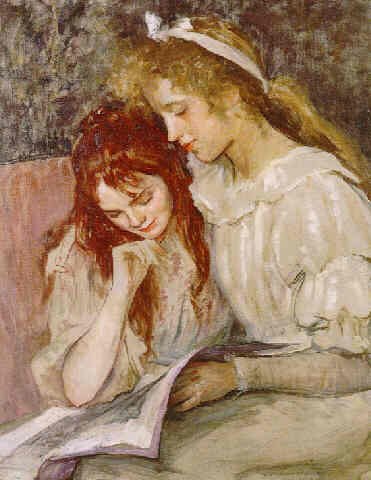
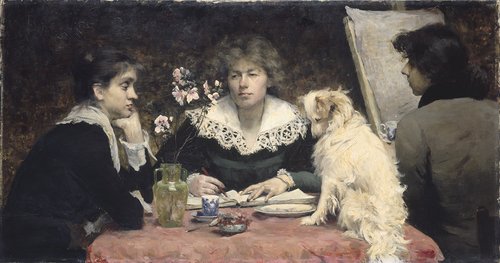
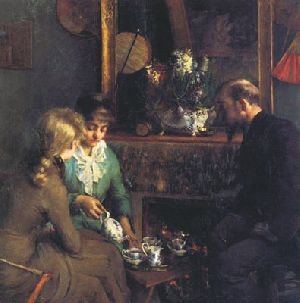

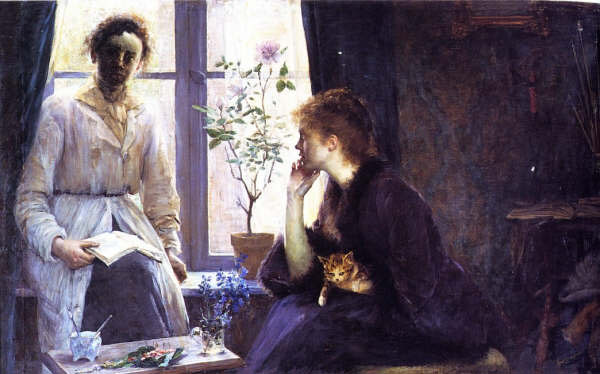
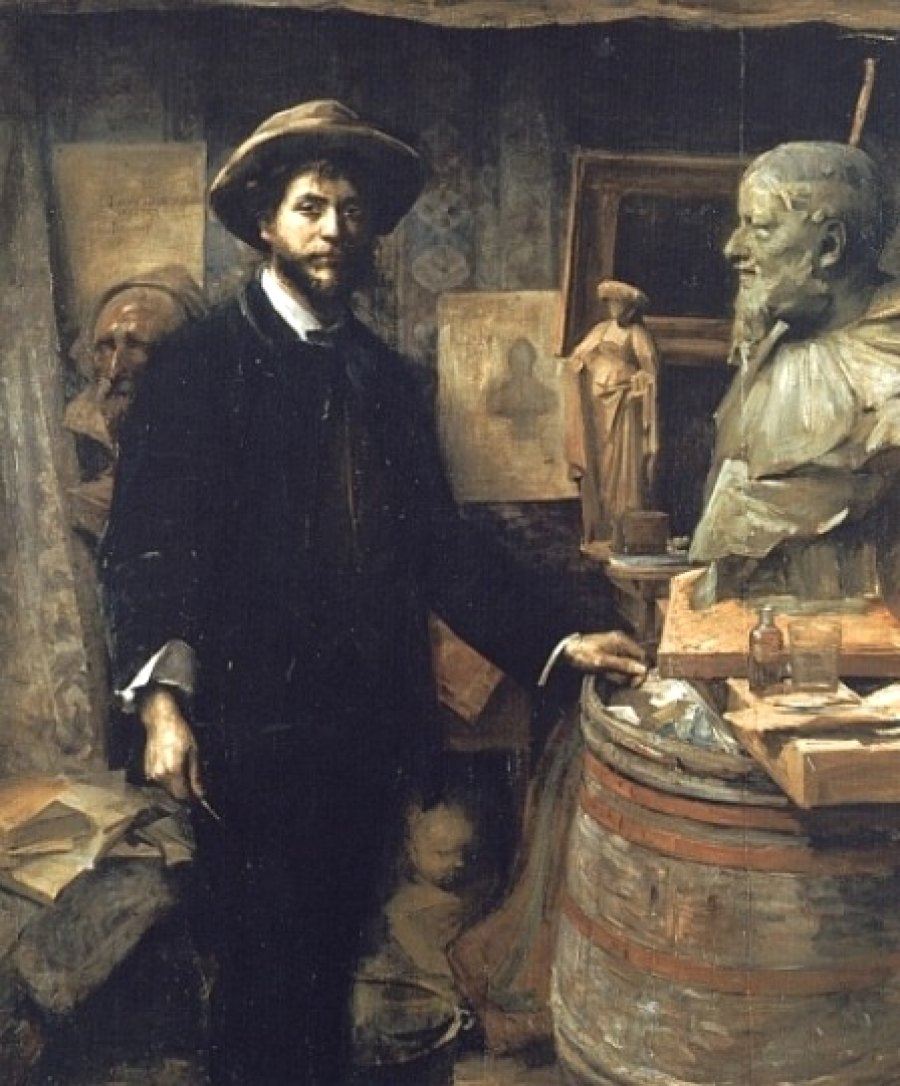

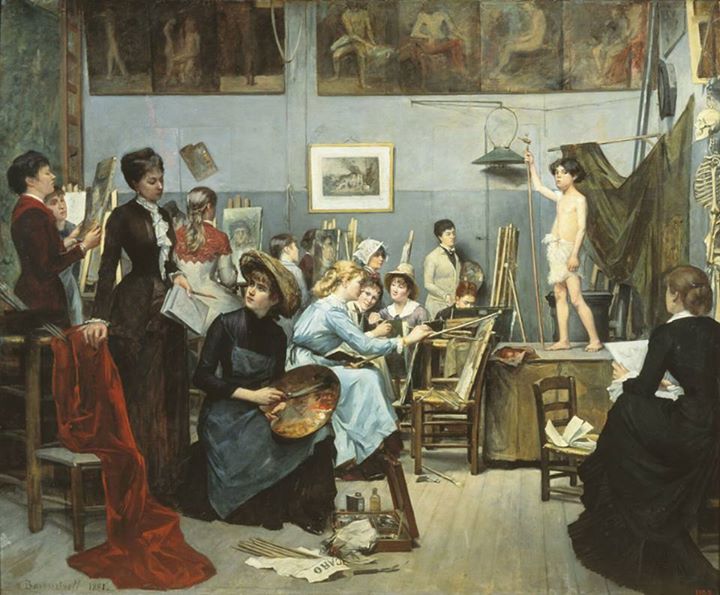

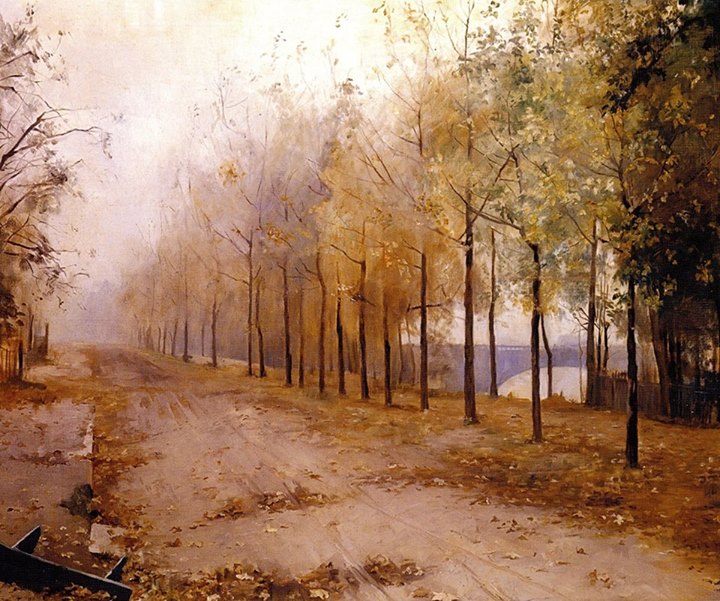
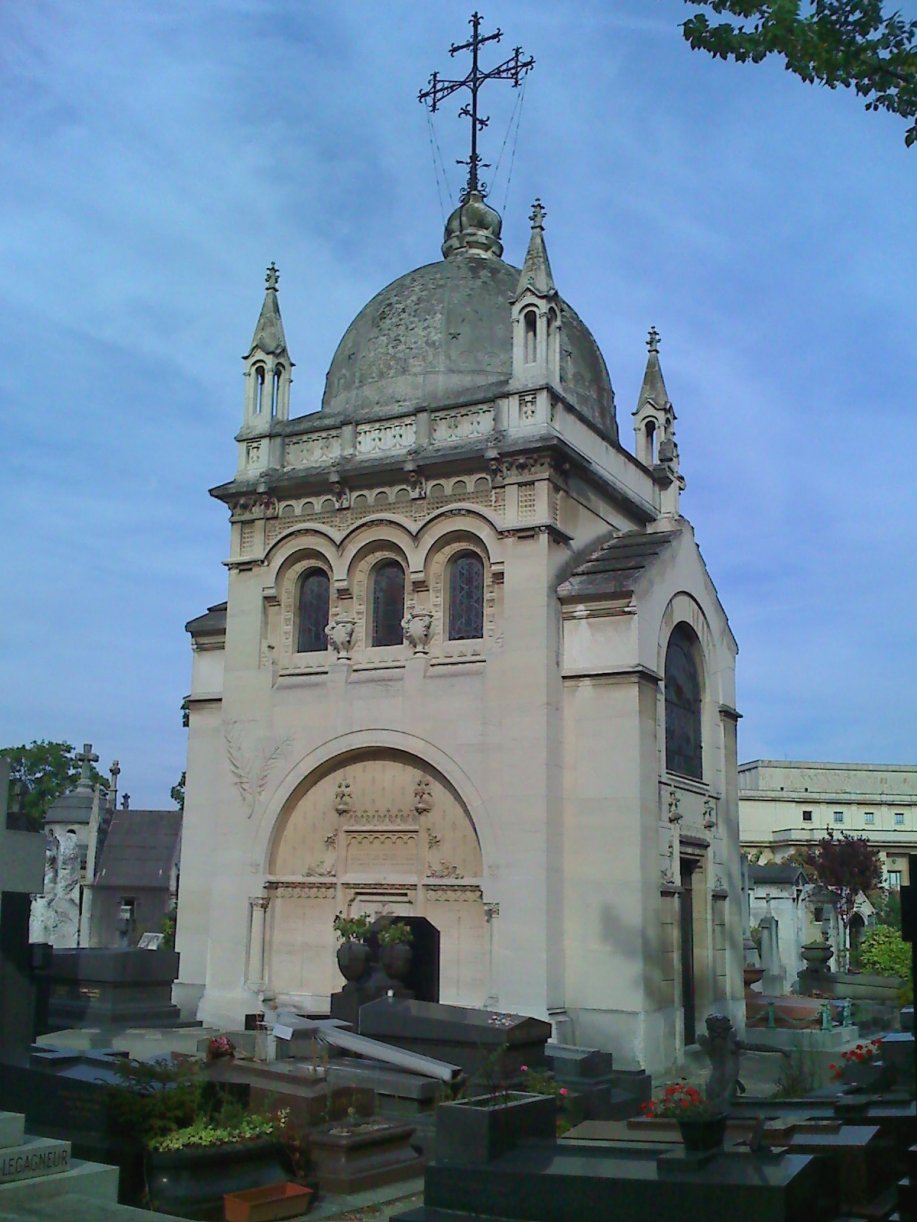

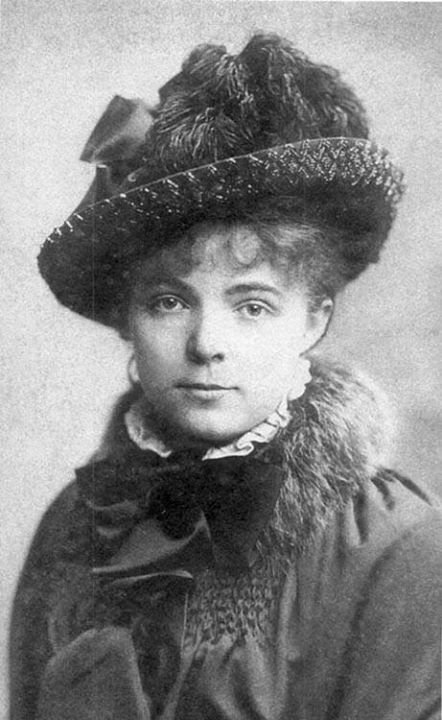
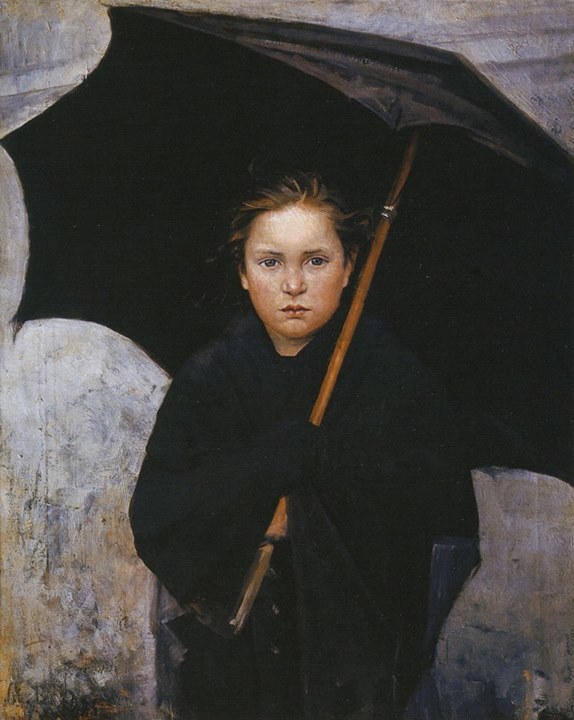
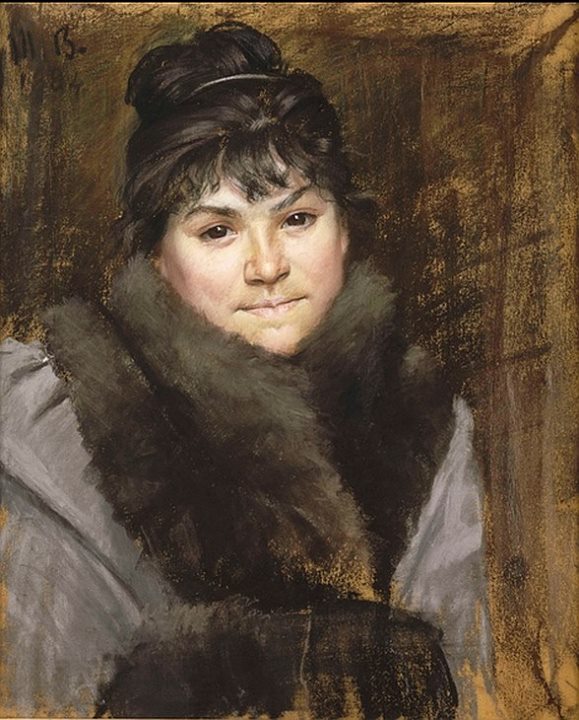


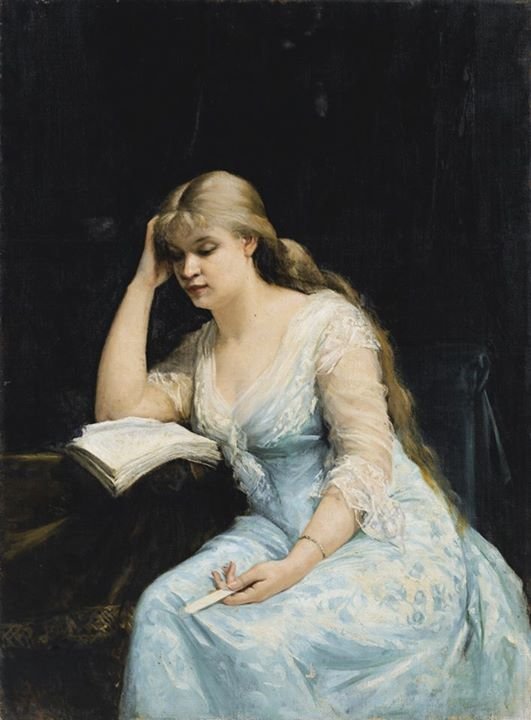
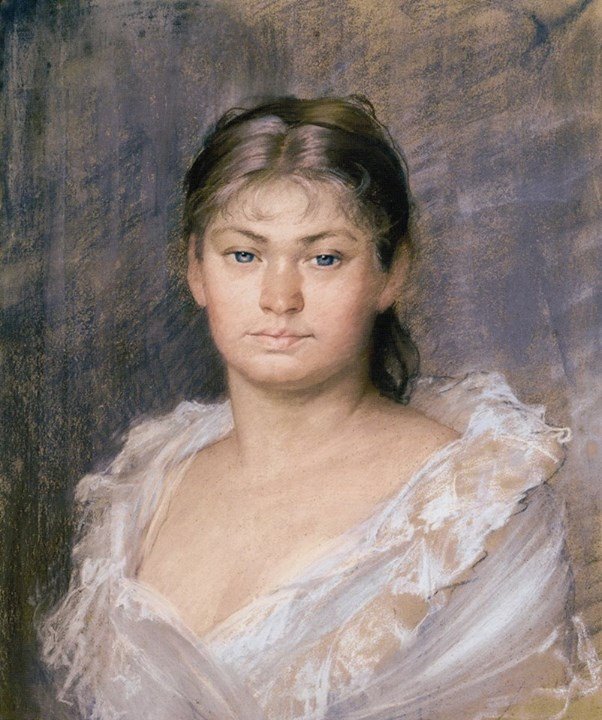

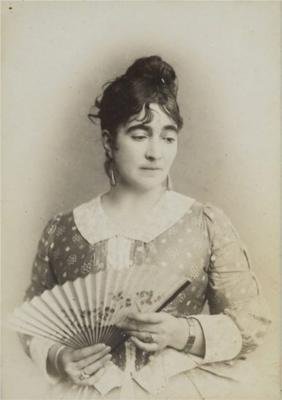

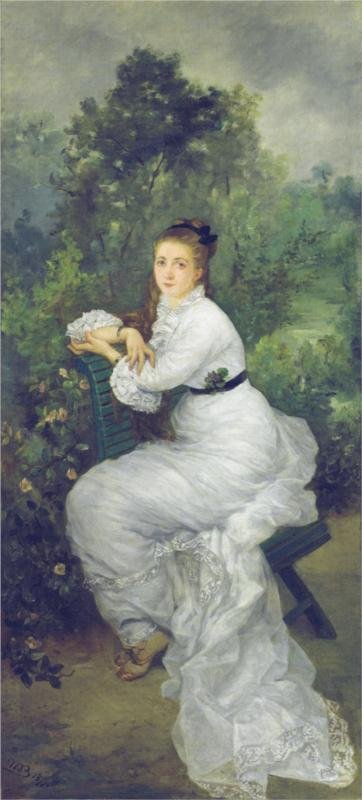
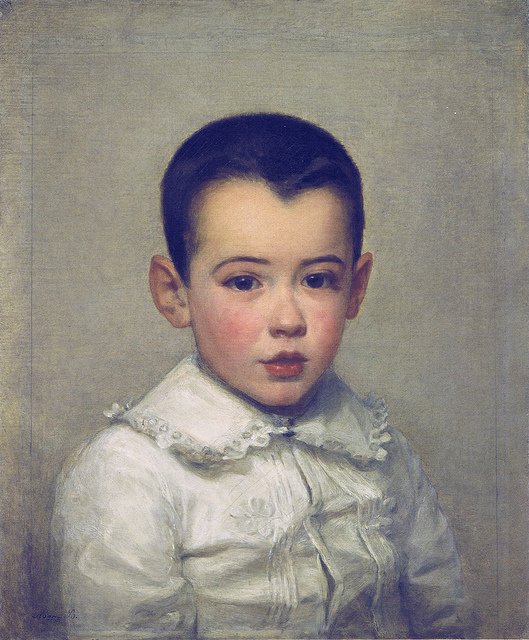

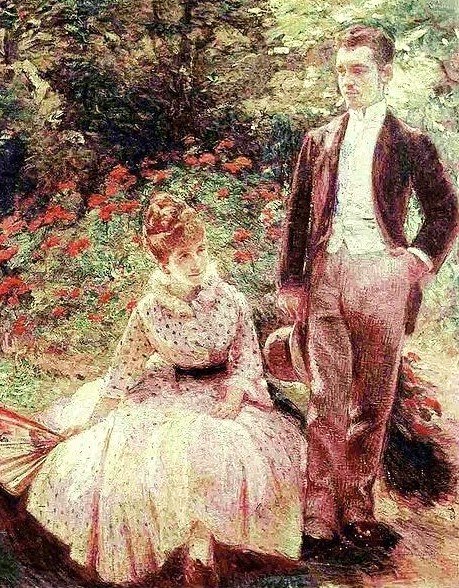


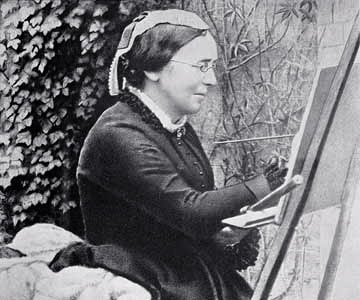


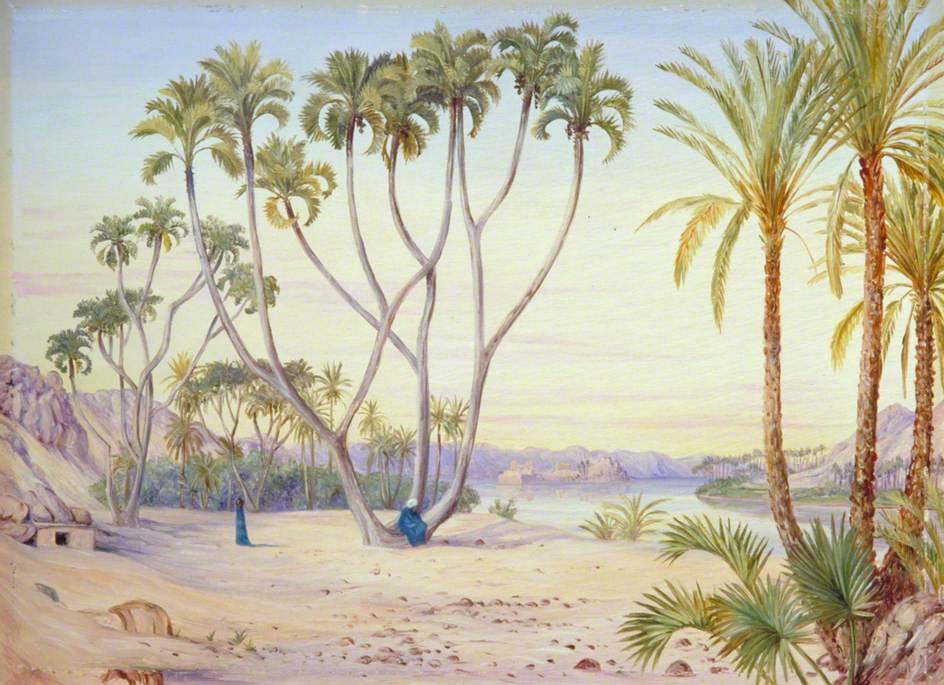
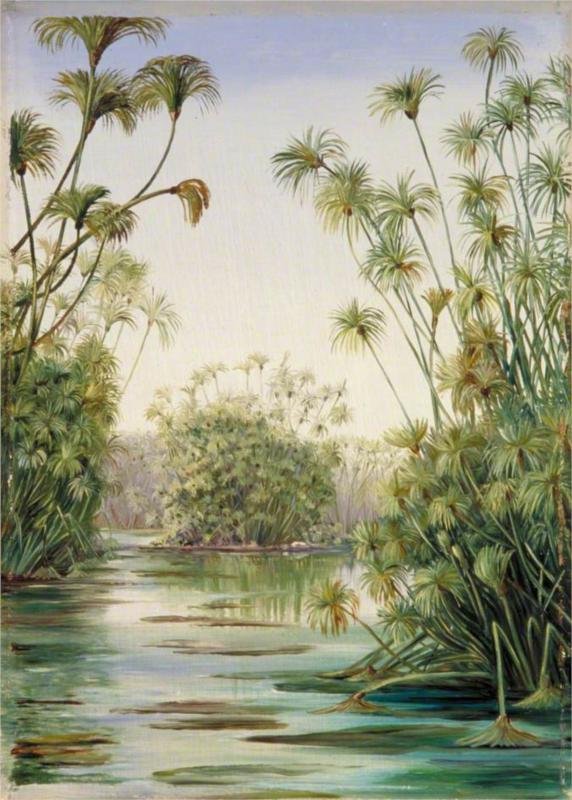


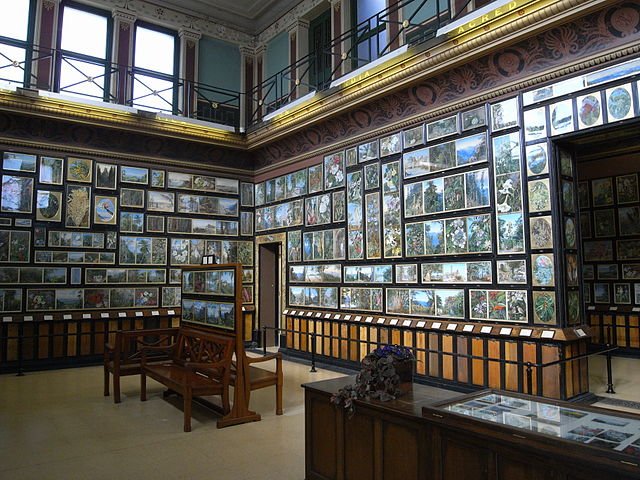
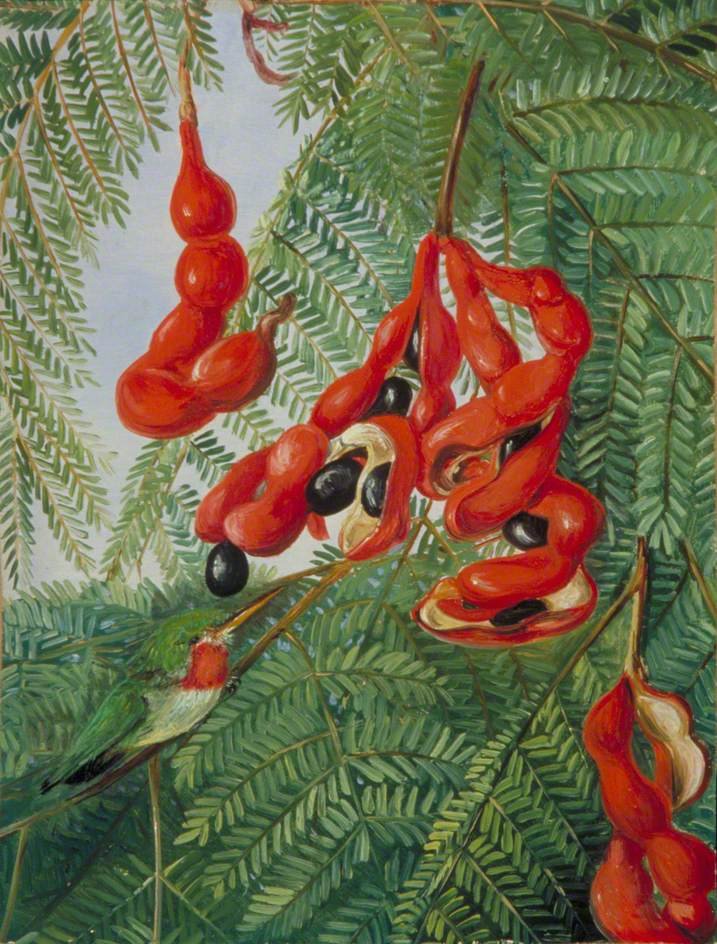


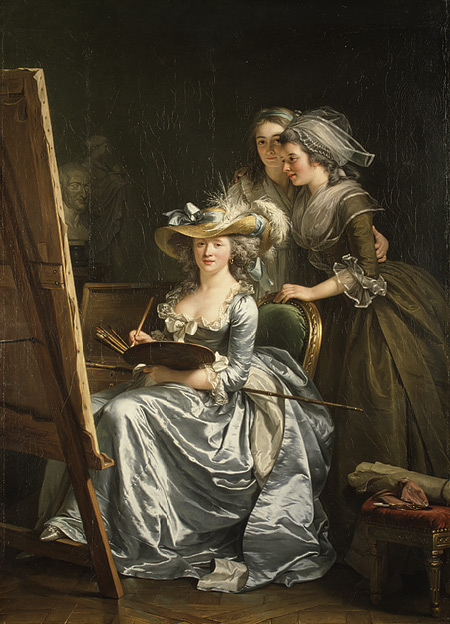


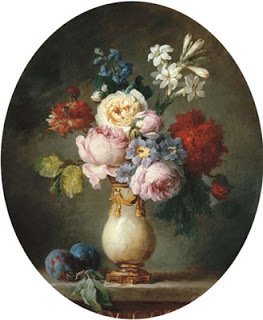


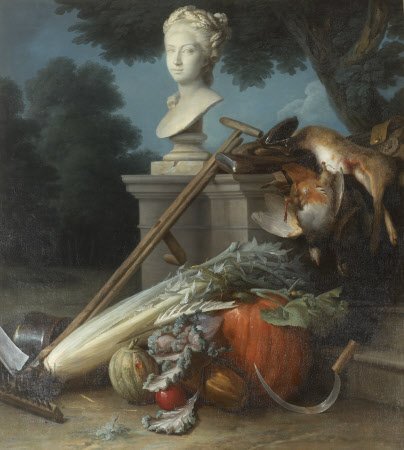
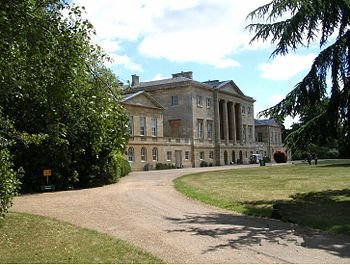
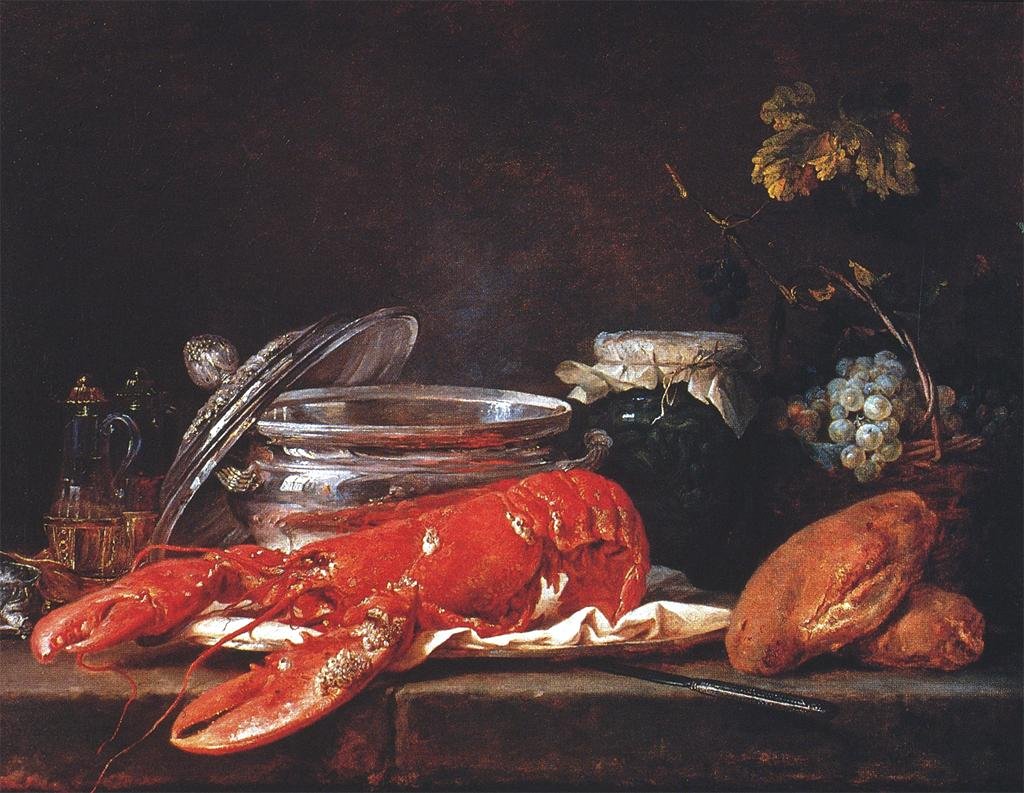

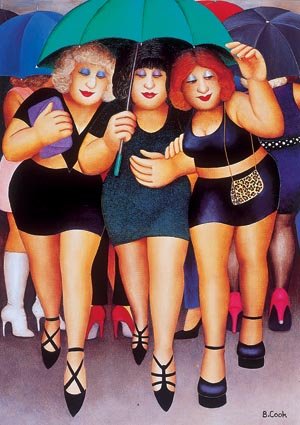
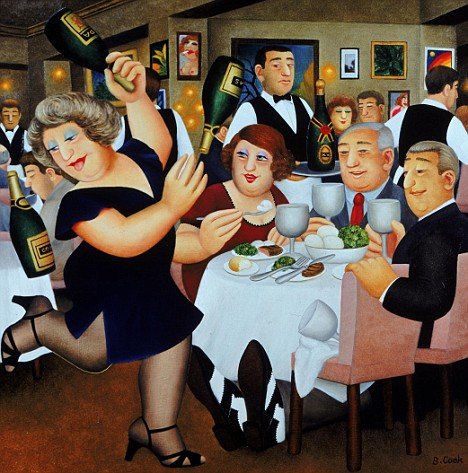
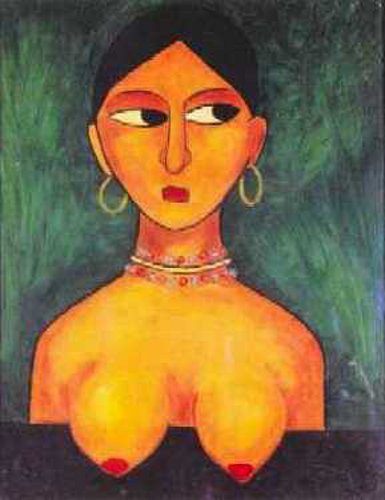
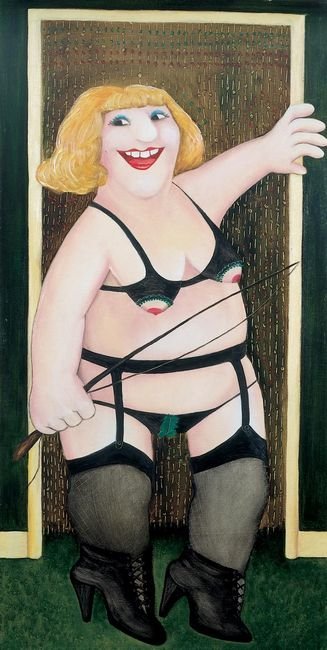

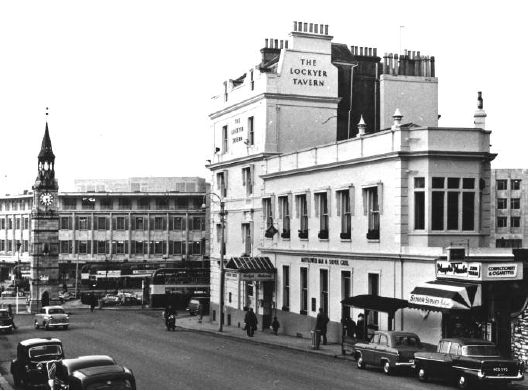


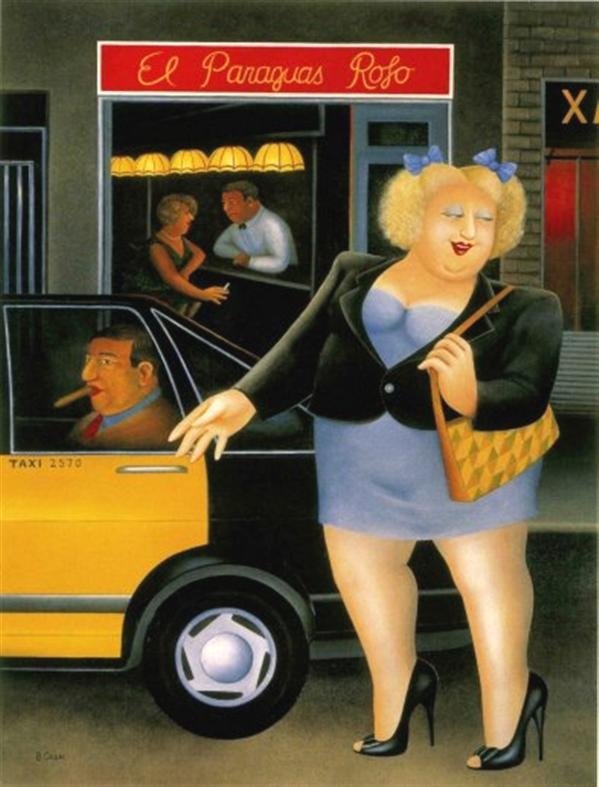
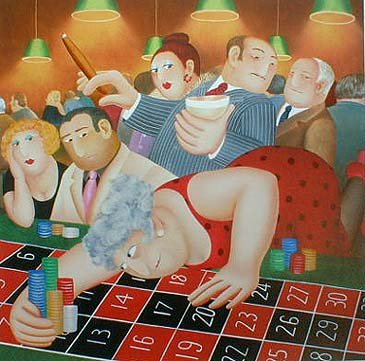
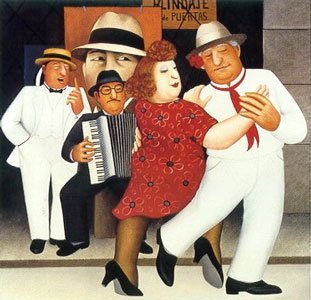
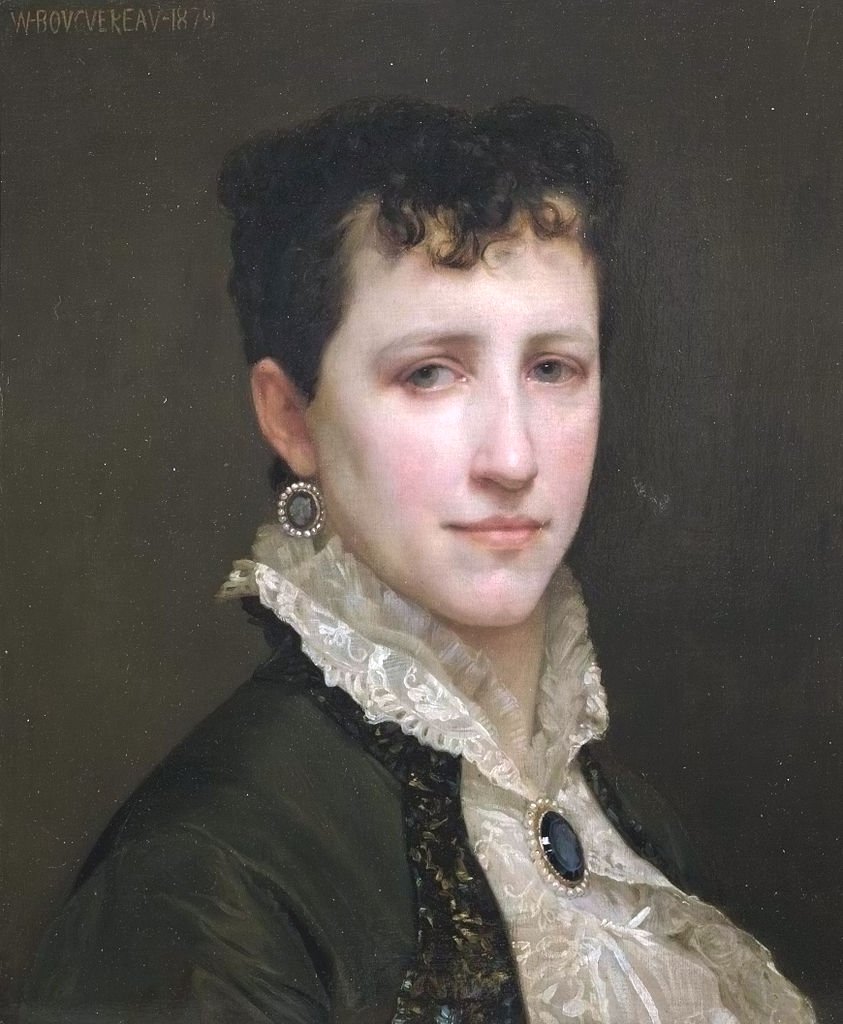

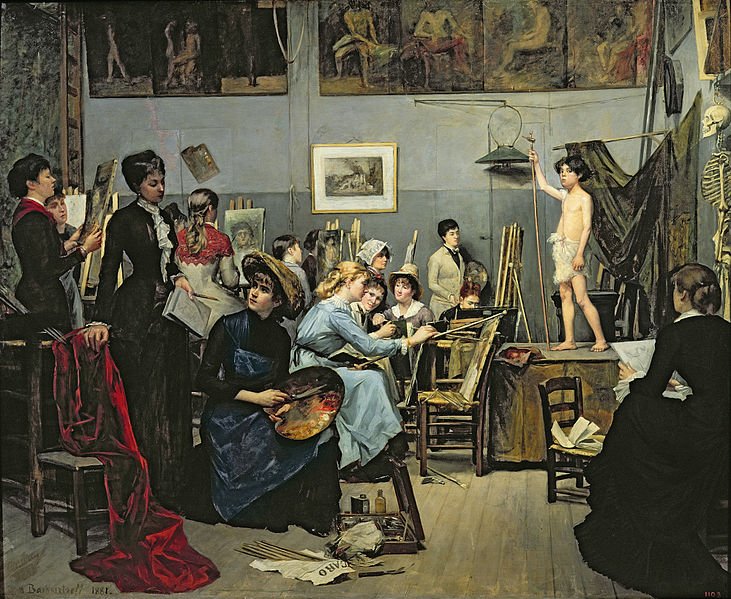
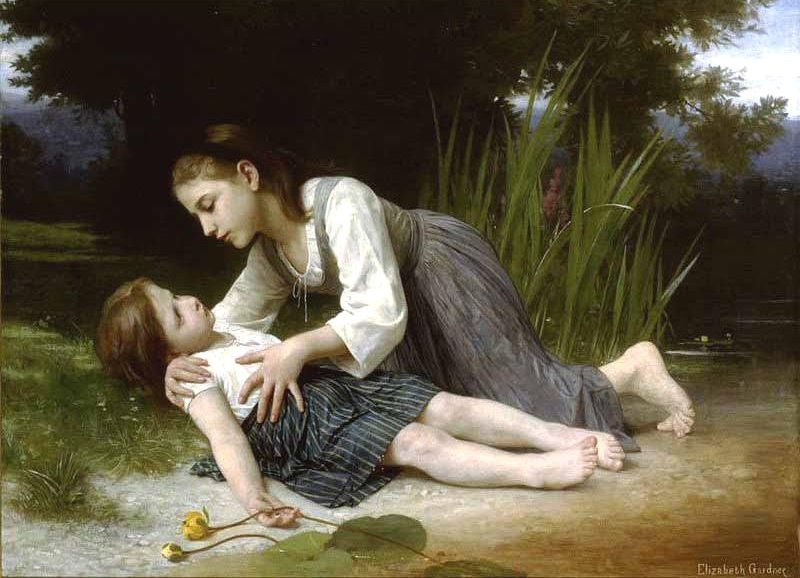




 my daily art display