Max Liebermann. Part 2.

Self portrait by Max Liebermann (1934)

Max Liebermann was Jewish, not a strict Orthodox Jew, but more of a secular Jew who regarded himself through assimilationist eyes. Maybe because of this he avoided painting religious subjects with the exception of a painting he completed in 1879 entitled The 12-Year-Old Jesus in the Temple With the Scholars.

Der zwölfjährige Jesus im Tempel (The Twelve-year-old Jesus in the Temple) by Max Liebermann (1879)

The painting depicts twelve-year-old Jesus in the temple, having been at the Festival of Passover in Jerusalem with his parents, but unbeknown to them, he had stayed behind in the city when they had set off to return home. The story continues as per the biblical tale (Luke 2:43-48):

“…After the festival was over, while his parents were returning home, the boy Jesus stayed behind in Jerusalem, but they were unaware of it. Thinking he was in their company, they travelled on for a day. Then they began looking for him among their relatives and friends. When they did not find him, they went back to Jerusalem to look for him. After three days they found him in the temple courts, sitting among the teachers, listening to them and asking them questions. Everyone who heard him was amazed at his understanding and his answers. When his parents saw him, they were astonished. His mother said to him, “Son, why have you treated us like this? Your father and I have been anxiously searching for you…”

The setting for this painting is derived from Max’s visit to the Jewish quarter of Amsterdam in 1876 when he made architectural sketches of the Portuguese Synagogue of Amsterdam. The curved staircase, which he later depicted as a spiral staircase in the painting, is a reference to the 16th-century Levantine Synagogue in Venice. The paned window on the upper edge of the painting also echoes the windows of the Portuguese Synagogue of Amsterdam.

Liebermann originally depicted Jesus, not as a holy figure, but as a dark-haired boy with Semitic features and mannerisms, arguing the doctrine with his elders. The painting was first exhibited at the First International Art Show in Munich in 1879, at a time when antisemitic activism and propaganda was just starting to break out in Germany. The artwork caused a major outcry with critics terming the depiction blasphemous. The art critic for the Augsburger Allgemeine Zeitung, Friedrich Pecht, asserted that Liebermann had painted “the ugliest, know-it-all Jewish boy imaginable,” and went on to state that the artist had shown the Jewish elders as “a rabble of the filthiest haggling Jews.” More criticism rained down from upon high with the Crown Prince of Bavaria declaring that he was scandalised, and the Bavarian State Parliament even spent time debating the painting and Pecht’s comments. One Catholic MPs criticised the fact that it had been admitted into a State establishment knowing that the country had inhabitants who were overwhelmingly devout Christians. One deputy pronounced that Liebermann, being a Jew, should have known better than to paint such a scene and that the painting was reviled as “a stench in the nostrils of decent people” It seemed that Lieberman’s mistake was simply that as Liebermann was a Jew, he had depicted an overtly Jewish Jesus.

Preliminary Sketch

And yet in the painting we cannot understand the violent criticism of the detractors regarding Liebermann’s Jesus who is depicted as a long-haired, slightly effeminate, blond boy. However, this was not the original depiction as this is because Liebermann, in response to unrelenting criticism, repainted the figure before it was included in a Paris exhibition in 1884. Art historians know this as a sketch of the untouched 1879 version has been preserved, in which it can be seen that Liebermann had originally depicted a barefoot boy with short, unkempt dark hair and a stereotypical Jewish profile. Liebermann changed the young Jesus’s appearance with the figure once described as an “urchin” now appears as a serious, intelligent, perhaps slightly deferential child. However, the changes, did not change the mood of the German critics and the work was not exhibited again in Germany until the Berlin Secession exhibition of 1907.

Sewing School by Max Liebermann (1876)

In 1875 Liebermann left Paris and spent three months in Zandvoort in Holland. It was in this Dutch town that Max acquired a brighter and more less planned style by copying paintings by one of his favourite artists, Frans Hals. Max developed a practice of setting aside time between the idea for a motif coming to him and the implementation of the larger finished painting. When he returned to Paris in the autumn of 1875 he moved into a more spacious studio and began to convert his Dutch sketches into full sized works. He returned to the Netherlands in the summer of 1876 where he remained for several months. During this stay he met the etcher William Unger, who brought him into contact with Jozef Israëls and the Hague School. One example of this change of painting style was Liebermann’s work entitled Sewing School which he completed in 1876. The sewing school depicted in this painting was in an orphanage in Amsterdam. Liebermann had started his career as a realist painter, but by the time of this work, he was already establishing himself as an Impressionist-style painter.

Schusterwerkstatt (Cobbler’s Workshop) by Max Liebermann (1881)

During his visit to the Netherlands in the summer of 1880, Liebermann travelled to the small village of Dongen in North Brabant, in the southern Netherlands. It was here that he made a number of studies that would be used when completing the work in his studio. One example of this was his depiction of a cobbler in his workshop. At the workshop, he created studies that he later used for his 1881 painting Schusterwerkstatt, (Cobbler’s Workshop).

Altmännerhaus (Old Men’s Home) in Amsterdam by Max Liebermann (1881)

Having completed the Cobbler’s Workshop painting he travelled to Amsterdam on his way to returning to Munich. It was whilst in Amsterdam that he came across the Catholic Altmännerhaus (Old Men’s Home). He happened to glance into the garden of the establishment and saw a large group of older gentlemen dressed in black sitting on benches in the dappled sunlight. According to Erich Hancke’s 1914 book, Max Liebermann. Sein Leben und seine Werke:

…He [Liebermann] had visited a friend at the Rembrandt Hotel, and when he looked out of the corridor window descending the stairs, his gaze fell down into a garden where many old men dressed in black were standing and sitting in a corridor bathed in sunlight […]. He later used a drastic analogy to characterize that moment: ‘It was as if someone were walking on a level path and suddenly stepped on a spiral spring that shot him up…”

Study for Old Men’s Home in Amsterdamby Max Liebermann (1881)

Liebermann immediately began to paint the scene and concentrated on the effect of light which was being filtered through a canopy of leaves and this dappled effect became known as “Liebermann’s sunspots” and would be seen in Liebermann’s later Impressionist depictions. He made two on-site portrait-format studies of the scene, one in oil and one in pastel, after which Liebermann painted the final picture in his Munich studio later that year. The painting was exhibited at the Paris Salon and received an honourable mention. Furthermore, Léon Maître, a well-known collector of Impressionism, acquired several of Liebermann’s paintings.

 Recreation Time in the Amsterdam Orphanage by Max Liebermann (1884)

Life in Paris was taking its toll on Liebermann. He needed to sell his artwork to prove to himself and his parents that he had not wasted his life. This continual pressure caused Lieberman to fall into periods of deep depression and his painting output declined, furthermore, the works he put into the Paris Salon were not getting the recognition he believed he had deserved. There was also still the anti-Prussian sentiment amongst the French and this did not help him sell his work. In all, he realised that the Netherlands or Germany were much more acceptable places to work and live. He left Paris and spent a couple of months in Venice before returning to Munich in 1878. It was here that he was able to enhance his status as an important progressive artist. Munich had everything Liebermann required – the artistic culture and patrons who supported him. He spent hours visiting the city’s museums and art galleries and creating everlasting and important friendships. He eventually left Munich and relocated to Berlin, his birthplace, in 1884, where he remained for the rest of his life.

Martha Marckwald by Anders Zorn (1896)

In that same year, 1884, that Max moved to Berlin he married Martha Marckwald, the fourth child of the German Jewish couple Ottilie and Heinrich Benjamin Marckwald, who ran a wool store in Berlin. When Martha’s father died in 1870, Max’s father Louis became the thirteen-year-old Martha’s guardian. The Marckwald and Liebermann families became even closer when Max’s elder brother Georg Liebermann married Martha’s elder sister Elsbeth. On September 14th 1884, thirty-seven-year-old Max Liebermann married twenty-six-year-old Martha. It was a marriage that would last more than fifty years until Max died in 1935. In August 1885 Max and Martha’s only child, Käthe, was born and in 1892.

Max’s mother died on August 12th 1892, aged 70 and his father died two years later on April 29th 1894, aged 75. Although the death of his parents was a sad time for Max, he was finally released from their unrelenting words of warning as to the perilous status of an artist. Max moved into his family’s Berlin home in Pariser Platz where he lived out the remainder of his life.

Liebermann Villa at Wannsee

In 1909, overwhelmed by the noisy life in the German city, the Liebermann family bought a plot of land in the Alsen summer villa colony on the northern shore of the Kleiner and western shore of the Großer Wannsee at Wannsee, some twenty kms south-west of Berlin, close to Potsdam. It was here that they built themselves a summer home, somewhere to retire to during the hot summer months when city life became very oppressive. The Villa was designed by the architect Paul Otto Baumgarten, the garden by Liebermann in collaboration with the then-director of the Hamburger Kunsthalle, Alfred Lichtwark.

Martha Liebermann in the garden at Wannsee

Their summer home was situated amidst the magnificent villas of this impressive Berlin colony, embedded in a park, and represented a unique cultural landscape of the time of the German Empire and the Weimar Republic.

The Villa at Wannsee by Max Liebermann (1930)

Flowering Shrubs by the Gardner’s Cottage by Max Liebermann (1928)

The Flower Terrace at Wannsee by Max Liebermann (1915)

During the following years, Liebermann had designed a beautiful garden at the Villa Wannsee. He was so proud of the finishing results that the garden became the subject of many of Liebermann’s painting.

The Artist in His Studio by Max Liebermann (1932)

During the latter decade of the nineteenth century Liebermann continued living and painting in Berlin and would spend his summers at Wannsee or the Netherlands. Liebermann, like many of his contemporary Berlin artists, were dissatisfied with how they were being treated by the Association of Berlin Artists and the restrictions on contemporary art imposed by Kaiser Wilhelm II, so sixty-five of them seceded as a demonstration against the standards set by the Association and the government endorsed art. This break-away became known as the Berlin Secession and its aim was to form a “free association for the organization of artistic exhibitions”. In 1898, Liebermann became the President of the Berlin Secession, which was simply a group of artists that was formed as an alternative to the conservative arts establishment.

Two Riders on the Beach by Max Liebermann (1901)

The Berlin Secession championed new forms of modern art and were not be tied down to and be dominated by the old-fashioned academic art favoured by the Berlin Academy. These break-away groups from the art establishments were not new occurrences as the same happened with the Munich Secession in 1892 and the Vienna Secession in 1897. The initial breakaway took place in Paris in 1890 when the Société Nationale des Beaux-Arts along with its exhibition arm, the Salon au Champs-de-Mars, was formed as a modern alternative to the official Société des Artistes Français and its exhibition arm, the Salon de Champs-Élysées. These break-away groups all wanted the same thing – the rejection of the official arts governing bodies due to their aversion of avant-garde art such as Impressionism, forms of Post-Impressionist painting and Naturalism, as well as their obstructive exhibition policies, which were inclined to support time-honoured painters and sculptors over their younger, more modernist contemporaries.

Marthe Liebermann with her grand-daughter Maria by Max Liebermann (1922)

In 1920, Liebermann became president of the Prussian Academy of Arts in Berlin, which was the highpoint of his career and signified how the Academy had changed over since the time of the Berlin Secession.

Portrait of President Paul von Hindenburg by Max Liebermann (1927)

Being a Jew, Liebermann had got used to the anti-Semitism in his homeland but by the early 30s with the rise and coming to power of the National Socialists it had noticeably worsened. In a way, it was a good thing that Liebermann died quietly in his sleep at the family home on February 8th 1935 aged 87 as he avoided bearing witness to the atrocities which followed. In 1938, his daughter Käthe her husband Kurt Riezler and their twenty-one-year-old daughter Maria were forced to flee the country and go to America.

The Graves of Max and Martha Liebermann at the Senerfelderplatz Jewish Cemetery, Berlin

They tried to persuade Max’s widow, Martha, to also emigrate but she refused to leave the land where her husband was buried. Martha Liebermann remained in Berlin, ultimately committing suicide in 1943 to escape her impending deportation to a concentration camp.


Most of the information for this blog came from the excellent website Liebermann Villa am Wannsee which goes into detail about his life and works.

I also consulted the informative website on all things art: The Art Story

Information regarding the painting, A Twelve-Year-Old Jewish Boy, came from the website: Art and Faith Matter/s

Max Liebermann

My artist today is the German painter Max Liebermann.  Liebermann was a key figure in the nineteenth century German art scene, who was well-known for his part in bringing Impressionism to the German art world and was one of the founder members of the Berlin Secession.

Photograph of Max Liebermann by Jacob Hilsdorf (1904)

Max Liebermann was born in Berlin on July 20th 1847.  He was the second born child of Louis Liebermann and Philippine Liebermann (née Haller).  He had an elder sister, Anna and two younger brothers, Georg and Felix. His father was a wealthy Jewish fabric manufacturer who later became a banker.  Max’s paternal grandfather Josef Liebermann was a textile entrepreneur and in 1860, the Liebermann family bought the Dannenberg’sche Kattun-Fabrik, which was one of the foremost companies for the production of cotton in Europe. Max was brought up in a very wealthy family environment.

Dorotheenstädtische Realschule, Berlin.

In 1851, aged 4, Max attended the local humanistic nursery school.  He was not impressed with the school and throughout his school days, he had an aversion for his teaching establishments.  On completion of his time at primary school he attended the Berlin Dorotheenstädtische Realschule. Max was not a great scholar and spent most of his time drawing rather than studying. 

Palais Liebermann at Pariser Platz 7, to the right of the Brandenburg Gate (1892)

In 1857, when Max was ten years old, his father Louis bought the impressive Palais Liebermann, located in Berlin-Mitte at Pariser Platz 7, north of the Brandenburg Gate. Although Max’s family were Jewish his parents decided to bring Max up in the Jewish denomination known as Reform Judaism which was a highly liberal strand of Judaism and is characterized by little stress on ritual and personal observance, rather than the stricter orthodox way of life of their grandfather. The family attended church services in the reform community but increasingly turned away from the more orthodox way of life of their ancestors.

The Shoemaker by Max Liebermann (1881)

In 1859 Max’s father commissioned a portrait of his wife by the artist Antonie Volkmar. During one of the sittings Philippine Liebermann had her son Max accompany her to the artist’s studio. The story goes that Max asked the artist for a pen and paper so he could pass the time sketching. Antonie Volkmar was so impressed with Max’s sketching that she told his mother that Max would become a fine artist. Max’s parents, although aware of that prediction, wanted their son to carry on with his normal schooling and a compromise was reached that if he carried on attending school and did well, they would enrol him in private painting lessons from Eduard Holbein and Carl Steffeck. Upon finishing primary school, his father, Louis Liebermann, chose for Max and his brothers. the Friedrichwerdersche Gymnasium, a prestigious humanistic grammar school, where the sons of Bismarck had studied.

Workers on the Beet Field by Max Liebermann (1876)

Max graduated from the Gymnasium in 1866 and carried out his parent’s wishes by enrolling at the Friedrich Wilhelm University in Berlin where he studied chemistry, like his brother before him.  However he was still more interested in his painting and would often miss lectures to go off on painting trips or helping out at Carl Steffeck’s studio.   Later he attended the University of Berlin and studied law and philosophy but once again his mind was solely on art and in January 1868, following little progress with his studies, he was asked to leave.  One can only imagine how his parents took this turn of events. They were furious as to how their son had wasted this golden opportunity.   Whether it was the case that they had to make the best of a dire situation and realised that their son was only interested in his art, they arranged for Max to enrol at the Grand Ducal Saxon Art School in Weimar where he studied under the Belgian history painter, Ferdinand Pauwels.  Pauwels took his students on a visit to the Fridercianum (Kassel’s Gemaeldegalerie), which has one of the world’s best collections of early German and Flemish paintings, amongst which are nineteen works by Rembrandts. These works were to influence Liebermann for the rest of his life. 

Amsterdam Orphanage by Max Liebermann (1876)

The Franco-Prussian War broke out in 1870 and twenty-three-year-old Max was captivated by the general population’s patriotic fury and passion. However, Max was unable to join up for military service on medical grounds and so volunteered as a medic for the Johannitern, the Order of St. John and he witnessed the war at the Siege of Metz. The battlefield carnage during the siege distressed Max and his patriotic war fervour waned rapidly.

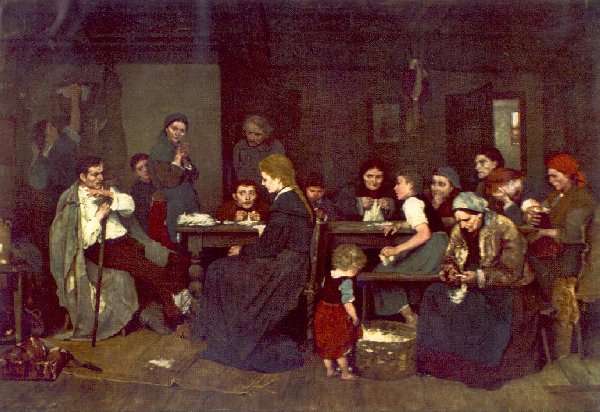
Tépéscsinálók (Tear Makers) by Mihály von Munkácsy (1871)

In the Spring of 1871, Liebermann lived in Düsseldorf, where the influence of French art was greater than in Berlin. Whilst in the city he met Mihály von Munkácsy, a Hungarian painter, who had earned international reputation with his genre pictures and large-scale biblical paintings. His paintings often featured scenes from the daily lives of peasants and poor people. Max saw Mihály von Munkácsy’s recently completed work entitled Tépéscsinálók and this stimulated his interest in genre painting. The subject of Munkácsy’s painting comes from memories of the 1848 Hungarian Revolution also known as the War of Independence and it depicts a wounded soldier, leaning on his crutches in a dark interior, recounting the story of life on the front line and the difficult battles he had experienced. Whilst the men were at war the girls, women, old people, and children remained at home in their villages looking after returning wounded soldiers, their kinfolk, who had suffered mentally and physically on the battle front. In this depiction the villagers listen attentively to the soldier’s emotional story and many cry (hence the painting’s title “Tearing Up”). Mihály von Munkácsy depicted the scene with particularly sympathetic memories, since the War of Independence and the tragic events that followed caused his sad childhood and saw him orphanhood at the age of six.

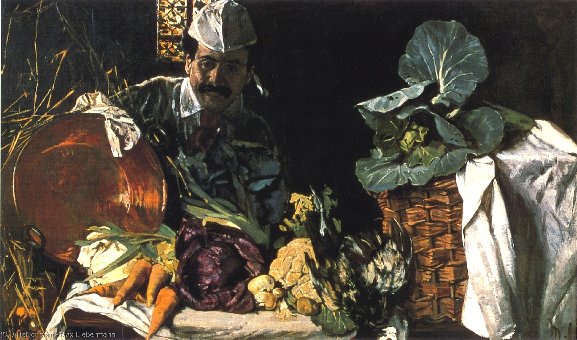
Self portrait in Kitchen with Still Life by Max Liebermann (1873)

Realising that the Netherlands was a place he had to visit to satiate his appetite for genre painting, Max, thanks to financial assistance from his brother, travelled to Amsterdam and Scheveningen. It was the first of many trips he made to the the Netherlands, a country he said inspired him.

Die Gänserupferinnen (Goose Pluckers) by Max Liebermann (1872)

When Max returned home in 1872 to continue with his studies at Weimar, his studio colleague Thomas Herbst had brought back a drawing of geese-plucking women from a study trip. Liebermann decided to use this motif and merge it with the style of Munkácsy and realised that this would be the basis of his next work. He then started on his large (120x170cms) painting entitled Die Gänserupferinnen (Goose Pluckers), which is now part of Berlin’s Alte Nationalgalerie collection. The work is painted in dark tones and depicts the simple task of goose plucking but the scene bears a resemblance to Mihály von Munkácsy’s work, Tépéscsinálók. It was the first painting that the twenty-five-year-old Liebermann exhibited in public at a Hamburg art exhibition. The art critics acknowledged the skilful painting style of Liebermann but were highly critical of the subject calling it distasteful and labelling him as the “painter of the ugly”. The painting was then exhibited that same year in Berlin but the critics were again fervently critical as they had been in Hamburg. However, the work found a buyer in the railway millionaire Bethel Henry Strousberg and with the money from the sale of the painting Liebermann travelled to Paris. His time in Paris was spent looking at the works of French artists such as Millais and Courbet and he was impressed by their style and motifs. Bethel Henry Strousberg’s empire later collapsed and he became bankrupt and had to sell some of the paintings he had collected over the years. Louis Liebermann, Max’s father, bought the Gänserupferinnen (Goose Pluckers) painting from him.

Potato Harvest in Barbizon by Max Liebermann (1875)

Liebermann had now discovered his first and favoured style, one which was both a realistic and unsentimental depiction of working people, and yet a style which avoided disdain, shaming of the subjects but also shied away from false romanticising of the people depicted. It was Realism. Liebermann became disillusioned with the German art scene which he believed had become too old-fashioned and somewhat retrograde and he was even disenchanted with Germany itself, so in December 1873 Liebermann travelled to Paris where he set up home and studio in Montmartre. Once settled in the French capital he sought out the artists who were looked upon as leading Realism artists of the day as well as the plein air Impressionism painters but many refused to meet with him due to the sour taste the Franco-Prussian War had left and the bitterness the defeat by the Prussian forces had caused and it had only ended three years earlier.

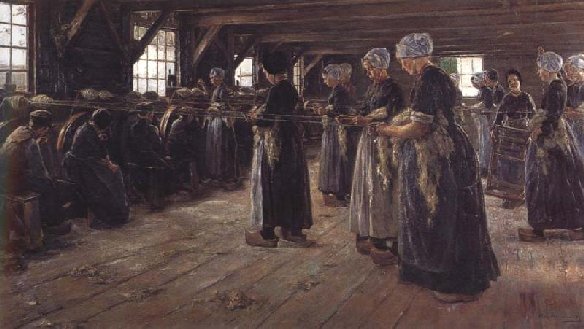
Flax Spinners by Max Liebermann (1889)

Besides still being influenced by Munkácsy, Liebermann had fallen in love with the art of French Barbizon painters Constant Troyon, Charles-François Daubigny, Camille Corot but above all Jean-François Millet. It was in 1874 that he submitted and had accepted his Die Gänserupferinnen (Goose Pluckers) painting to the Salon de Paris. However, this received negative reviews in the Parisian press, especially those newspapers which held nationalist views following the Franco-Prussian war. The first summer Liebermann spent in Paris it saw him travel to Barbizon, situated near the Forest of Fontainebleau, the home of the Barbizon School of artists, whose painters practiced en plein air painting which proved to be of great importance for the development of Impressionism. Liebermann decided to revert from the old-fashioned, heavy painting of Munkácsy, and became more engrossed in the methods used by the artists of the Barbizon School.

From 1874 Max Liebermann continued his studies in Paris and it was during thus time that he became increasingly interested in rural motifs, in “simple” people working on the land.

………to be continued.


Much of the information was found in various Wikipedia sites but also in:

The Art Story

Liebermann Villa am Wansee

Maria Slavona

Maria Slavona was born Marie Dorette Caroline Schorer on March 14th 1865 in the north German town of Lübeck.  She was the daughter of the pharmacist Theodor Schorer and his wife Ottilie, (née Steger).  Her father owned the Löwenapotheke on the corner of Königstraße, and Johannisstraße in the town, which is now known as Dr.-Julius-Leber-Straße.  She was the youngest of five children and had two brothers and two sisters.  As a child, she was brought up in a happy household in the old patrician house in Johannisstraße. Her parents’ home was a great meeting place for writers, artists and intellectuals. For Maria life at home was a liberal and cultural experience and, at an early age, she soon developed an intense interest in drawing and painting. Her parents encouraged her love of all things artistic and they hopde that one day she would become a painter and her mother and father supported this future road for her. 

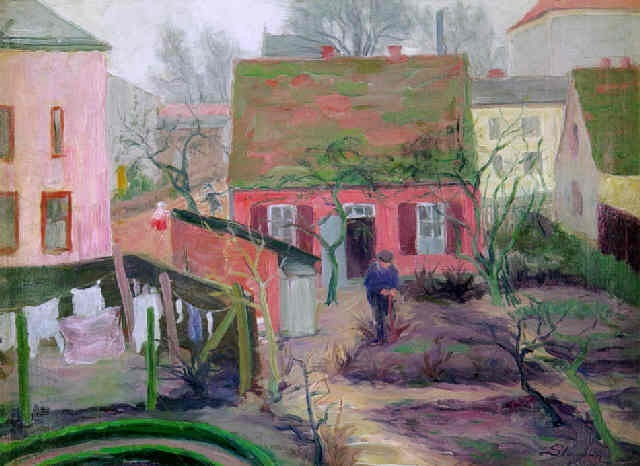
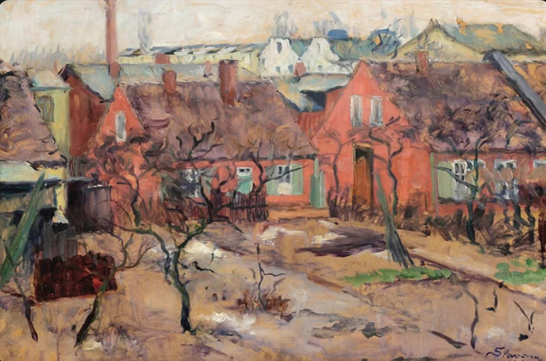
Red Gardener’s House with Gardener (Early Spring, Kahlhorst near Lübeck) by Maria Slavona

In 1882, when she was seventeen years of age, Maria went to Berlin to study art.  This was an unorthodox move as accordance with the social conventions of the time, it was unseemly for a young, unmarried woman to leave her parents’ home and pursue an education, in her case. studying painting.  Her move to Berlin caused a scandal in the Hanseatic city of Lübeck.  However, since women in Germany were denied access to art academies, Maria Slavona attended the Eichler private painting school in Berlin and the Deutsches Gewerbe-Museum zu Berlin, (Royal Museum of Decorative Arts) which at the time had a teaching institute.  In 1887, aged twenty-two, she moved to the painting school of the Verein der Berliner Künstlerinnen (Association of Women Artists and Friends of Art) in Berlin. It was an informal and free atmosphere, and the women here were allowed to conduct nude studies on living models.  A year later she enrolled at the painting school of the Münchner Künstlerinnenverein (Munich Association of Women Artists).

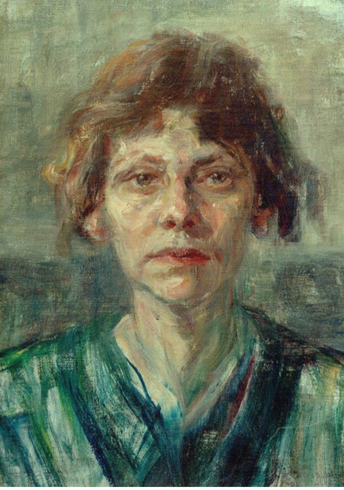
Self portrait by Maria Slavona (1887)

Her self-portrait, created in Berlin in 1887, shows the face of a 22-year-old, extremely pretty young woman, framed by tangled curls. With her head turned to the left, she fixes her gaze firmly on the viewer. Settling in this Bavarian city was fortuitous as the city of Munich had been, since 1850 onwards, deemed the most important centre for artistic creation and painting.  At this time, her most important patron and mentor was Ludwig Herterich, a German painter and art teacher, who in 1898 was a professor at the Academy of Fine Arts Munich, where he taught many young artists including Maria Slavona.   He introduced Maria to French Impressionism. A painting style that would be influential for her later paintings.

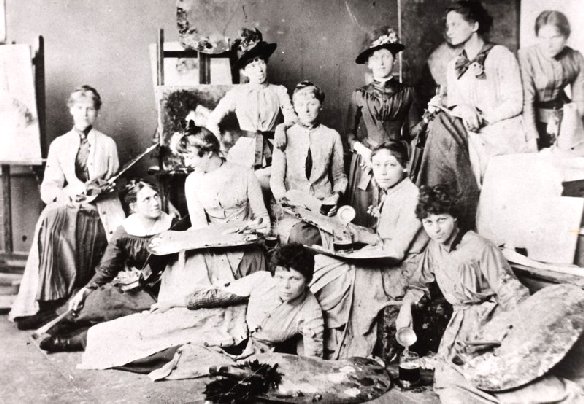
In the Munich Ladies’ Academy: Käthe Kollwitz seated between Maria Slavona (front right) and Rosa Pfäffinger (lying in front right)

Maria loved her time in Munich and made many friends including a fellow aspiring young painter, Käthe Kollwitz, who was also studying art in Munich. During a return home to Lübeck, she met some Scandinavian artists, one of whom was Vilhelm Petersen and, as they became closer friends, they both decided to take assumed names for their artworks. He chose Willy Gretor and she became Maria Slavona. Along with friends Maria and Vilhelm visited Paris in 1890.  She recalled her arrival in the French capital:

“…In 1890, I came to Paris. This is where a new world opened up to me. The first visits to the Louvre almost numbed and overwhelmed me. But I was disappointed by the schools I saw, I didn’t like them. I decided to work alone and seek advice and judgment only in the circle of a few young like-minded friends, almost all Danes and Norwegians…”

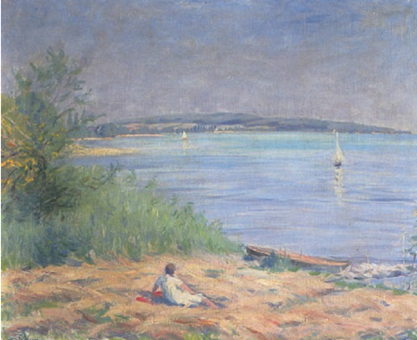
Sommermorgen am Starnberger See by Maria Slavona

That same year, Maria gave birth to an illegitimate daughter, Lilly, but her relationship with the father of the child, Petersen, was over.  She had at first looked upon him as a charismatic and educated man but he turned out to be a dubious art dealer, womanizer and bon vivant.  Worse still when their daughter Lilly was born Petersen had deserted Maria and she was left to bring up her daughter alone.

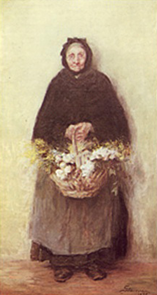
Alte Blumenfrau by Maria Slavona (1893)

In 1893, at her first exhibition at the Salon de Champ-de-Mars an annual event organized by the Société Nationale des Beaux-Arts.  Maria Slavona submitted her work, Alte Blumenfrau (Old Flower Woman). At this exhibition, ironically she identified herself under the male pseudonym “Carl-Maria Plavona”.  The painting depicts an old woman standing in frontal view, holding a large basket of white and yellow flowers in front of her body in her worn-out hands. Placed in front of a simple, ochre-coloured wall, the dark, poor clothing of the woman forms a strong contrast to the light background. The wrinkled face, framed by a headscarf, shows emotionless features. The tired eyes look firmly at the viewer.

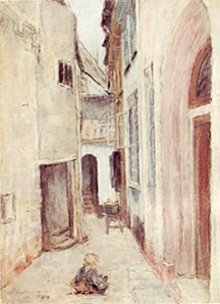
St Jurgen-Gang in Lubeck by Maria Slavona (1902)

Maria Slavona who, around 1898 had met the Swiss art connoisseur and collector Otto Ackermann. Their friendship grew over the next two years and in 1900 they married. Maria’s daughter Lilly took the name Ackerman and later she became an actress under the name Lilly Ackermann. Otto Ackermann was a valuable asset in the introduction of French art into Germany in the early 20th Century.  Otto and Maria set up home in Paris and it soon became a central meeting place for Parisian bohemianism. Visiting artists such as Münch, Liebermann, Leistikow, along with literary giants and art lovers would often frequent their home and be made most welcome.  Maria, who had spent sixteen years in the French capital, had led a happy and artistically productive life. During this period, she had completed many paintings depicting landscapes, portraits, still life and interiors.

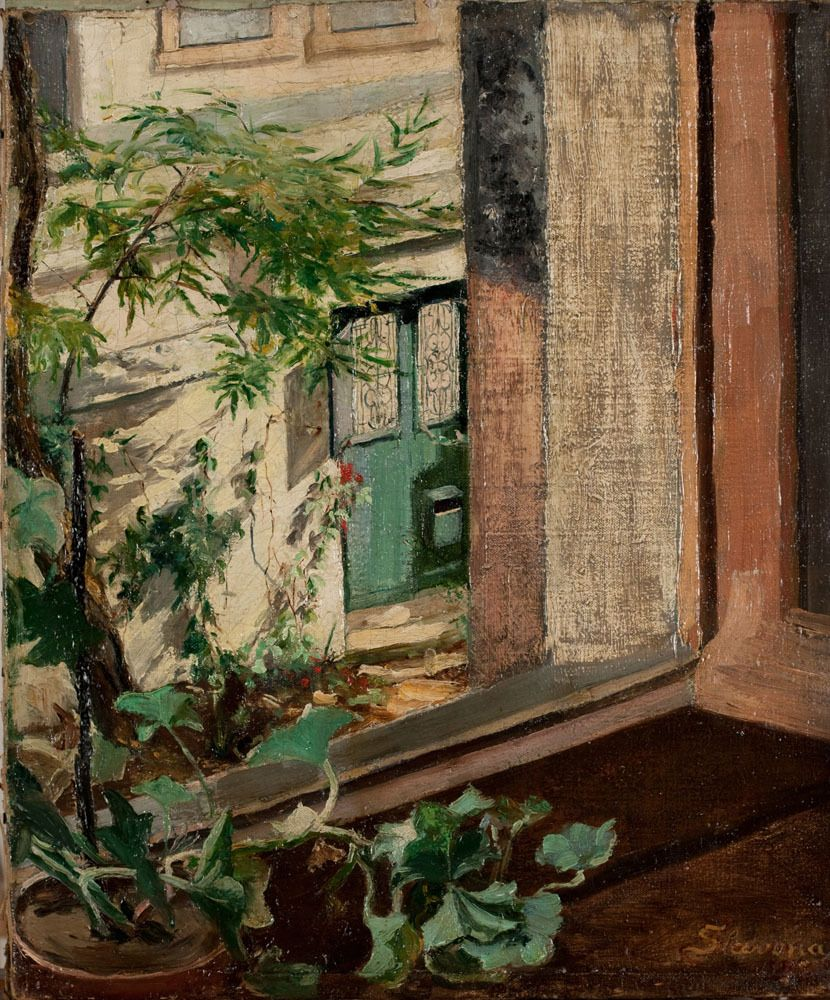
View from Studio Window by Maria Slavona (1899)

One of her favourite subjects was the view from the window of their home.  All of her work over those years established her reputation as a talented painter.

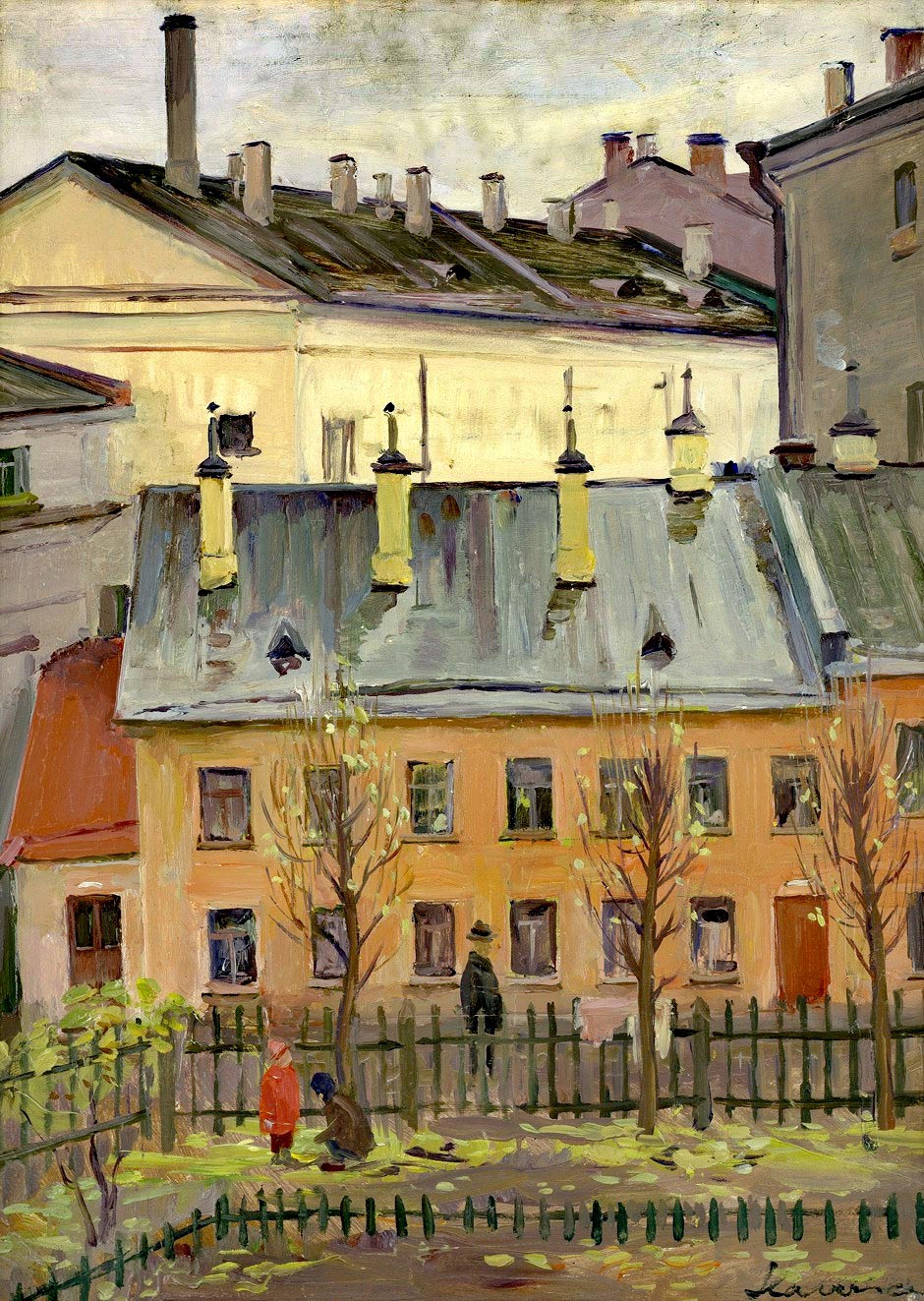
Houses on Montmartre, around 1900 by Maria Slavona

Häuser am Montmartre by Maria Slavona

In 1906 Maria and her family left Paris and returned to her old hometown of Lübeck.  During her stay in Lübeck she completed many paintings depicting the town and the surrounding areas.

 Villa entrance in Lübeck by Maria Slavona

Spring Thaw near Lubeck by Maria Slavona (1913)

Unfortunately, the bourgeois, art-hostile atmosphere that pervaded the old Hanseatic city had a negative effect on her husband’s art trade business and sadly this gave them no alternative but leave Lübeck in 1909, and move to Berlin.  It was in the German city of Berlin that she was once again artistically active and from 1913 she became a member of the Berlin Secession.  This was one of the last art Movements of 19th century German art.  It was a breakaway group of artists, who in 1898 ‘seceded’ from the city’s arts establishment, led by the eminent painter Max Liebermann.  It was a reaction to the Association of Berlin Artists, and the restrictions on contemporary art imposed by Kaiser Wilhelm II.  Sixty-five artists “seceded,” demonstrating against the standards of academic or government-endorsed art.  The group established an independent exhibition society, in order to champion new forms of modern art – rather than continue to churn out the old-fashioned academic art favoured by the art establishment.

Bouquet of field flowers by Maria Slavona (c.1900)

Following the end of the First World War Maria’s health began to deteriorate.  Added to that with a decrease in the sale of her paintings, the financial circumstances of the family took a substantial dip.  To try and rectify both her health and cut back on their financial outgoings the family moved to the countryside village of Munsing in Upper Bavaria.  From that time on, Maria mainly created floral still life works. 

Self portrait by Maria Slavona (1910)

Maria Slavona died in Berlin on May 10th 1931 aged 66.  Unfortunately, a large part of her work was lost during the Second World War, and also, for many years, her remaining works were branded by the Nazi government as Entartete Kunst (Degenerate Art) in 1933 and it was mainly ignored outside of her hometown Lübeck. Slavona is now known and famous as a representative of German Impressionism. Although she was unable to build on the artistic successes of her Paris years in Berlin, she was one of the best-known painters of her time, along with Dora Hitz and Käthe Kollwitz.

On the occasion of the 50th anniversary of her death in 1981, the Hanseatic City of Lübeck honoured its once famous and forgotten citizen with a large exhibition in the St. Anne Museum.

Oswald Achenbach

Portrait of Oswald Achenbach by Ludwig des Coudres. (1847.)

In Dusseldorf, on February 2nd 1827, Christine Achenbach gave birth to her fifth child, her son Oswald. His father, Hermann, was a man-of-all-trades, a one-time manager of a metal factory, a beer brewer, an innkeeper and finally a bookkeeper. Oswald was destined, like his brother Andreas, who was almost twelve years older than him, to become one of the great nineteenth century German landscape artists and an important representative of the Dusseldorf School of Painting. Their painting style was so alike that they were often jokingly referred to them as the Alpha and Omega of landscape painting.

Fishermen with the Bay of Naples and Vesuvius beyond by Oswald Achenbach (1877)

When Oswald was still a young child the family moved to Munich where he attended primary school. During Oswald’s early childhood, the family moved to Munich where he attended primary school for a short period. In 1835, the family moved back to Dusseldorf and Oswald followed the artistic path of his brother and was enrolled in the elementary class of the Kunstakademie Düsseldorf (Dusseldorf Art Academy). In fact, he should not have passed the entrance criteria for the school as its rules laid down a minimum entry age of twelve. However, he was given a place and remained there until 1841. There is no record of why the academy relaxed the age criteria but it could well have been that they recognised a budding artist who had probably received some artistic tuition from Andreas. All that is known about his six years at the academy is gleaned from his sketchbooks which were full of nature sketches from the area around the city.

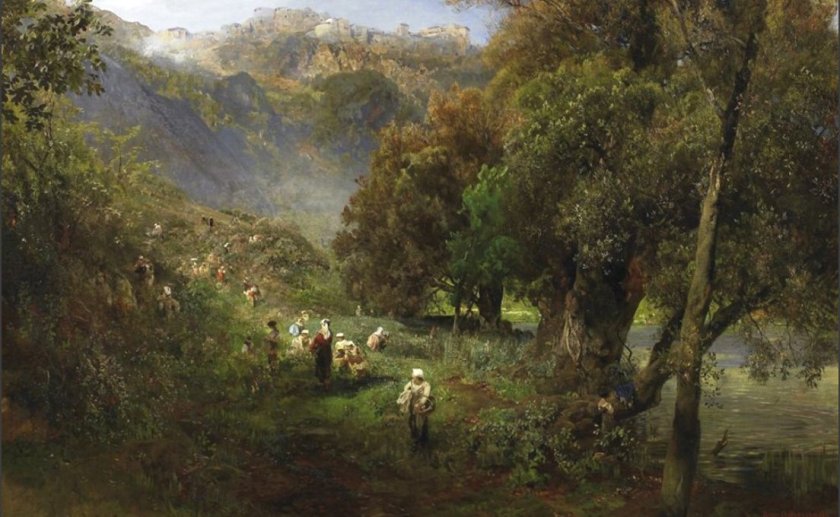
Summer Landscape on the Banks of the Alban Lake by Oswald Achenbach

There is no certainty as to why Oswald left the Academy at the age of fourteen but it is thought that he was unhappy with the very demanding Academy teaching. It was not just the Dusseldorf Academy which had their rigid formal academic training, the same was happening in all the European Art Academies and all fought hard to maintain their formal approach. Where the Academies held the ‘whip hand’ was the fact that they organized the big art exhibitions, at which artists were primarily able to sell their work. Artists who dared oppose the Academic style were unable to have their works exhibited, which meant their opportunity to sell their paintings was curtailed. However, artists were not prepared to bow to such pressure and soon began to make their feelings known.

Via Appia with the Tomb of Caecilia by Oswald Achenbach

After leaving the Academy, Oswald Achenbach joined two associations: the Verein der Düsseldorfer Künstler zur gegenseitigen Unterstützung und Hilfe (association of Düsseldorf artists for their mutual support and aid) and like his brother, the Malkasten, which was founded on 11 August 1848 with Andreas Achenbach as one of the original signatories of the founding document. These Associations jointly staged plays, organized music evenings and staged exhibitions. At many of these events, Oswald took an active part, directing, playing or staging plays. He was a staunch supporter of the Malkasten and remained a member until the end of his life.

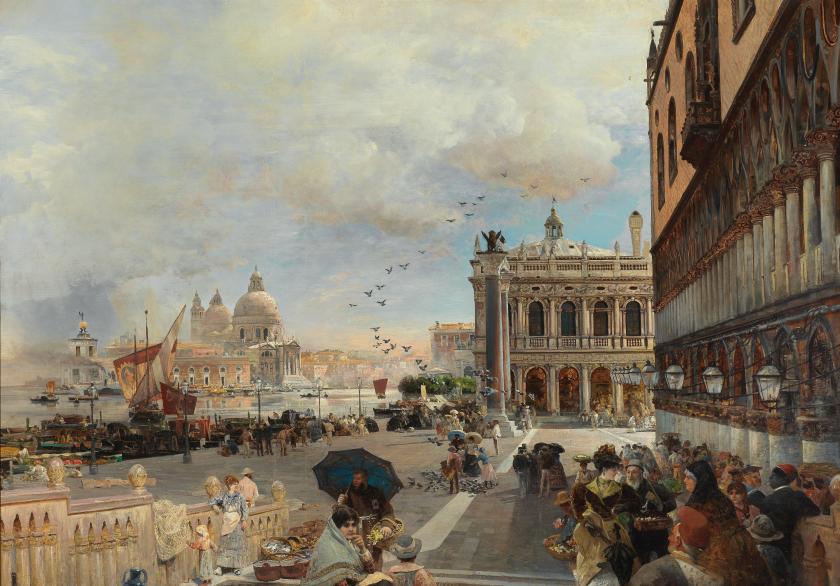
Venice, a view of the Piazzetta, with the Biblioteca Marciana, Santa Maria della Salute and the Dogana, by Oswald Achenbach

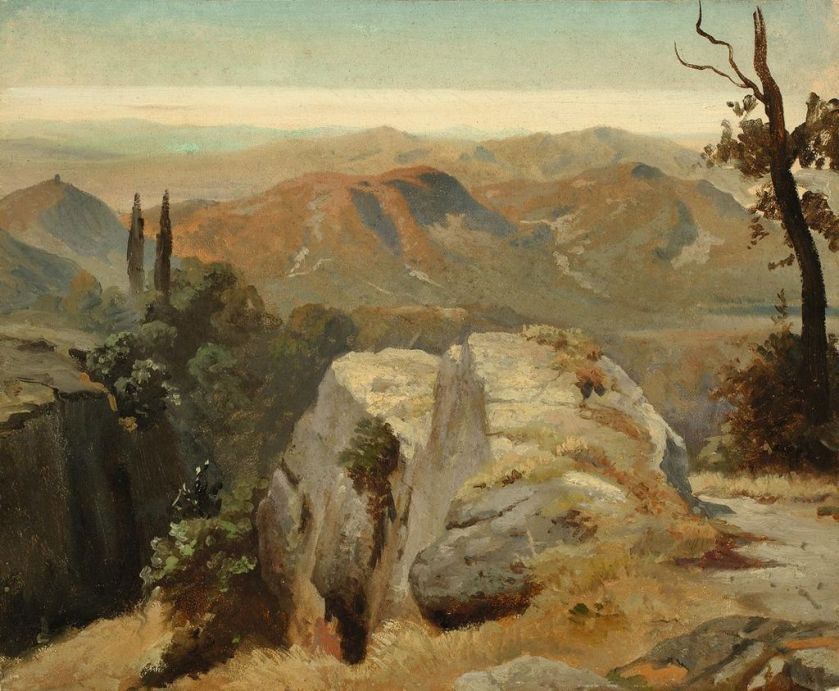
In 1843, sixteen-year-old Oswald Achenbach began a prolonged journey of discovery which lasted several months. He travelled through Upper Bavaria and the North Tyrol of Austria, and arrived in Northern Italy, all the time sketching the landscapes he encountered. He returned to Italy on many occasions and Oswald is best remembered for his Italian landscape works. Despite Oswald’s dislike of how art was taught at the Dusseldorf Academy, the subject matter and the techniques he employed in his early landscape works were heavily influenced by the ideas being taught at the art academies of the time. Art historians confirm that the influence of Johann Wilhelm Schirmer, a tutor at the Dusseldorf Academy and Carl Rottman, the German landscape painter who completed many Italian landscape works, can be seen in Oswald Achenbach’s paintings. In Oswald Achenbach oil studies for his paintings during his Italian travels, he adhered very closely to the nature of the landscape and concentrated on the details of the typical Italian vegetation. In his early works, he showed less interest in architectural motifs and any figures in his depictions played a much smaller role than they would in his later, more mature work.

Evening by Oswald Achenbach (1854). Royal Collection, Windsor Palace.

Around 1847, Oswald received a commission to contribute some lithographs of his paintings, sketches, and other works for the satirical journals, Düsseldorf Monathefte and the Düsseldorf Monatsalbum. These journals were published by Heinrich Arnz, a well-known bookseller and printer who co-owned the Arnz & Co. with his brother Josef. Heinrich had a son, Albert, five years younger than Oswald. He was an artist who, like Oswald, studied at the Dusseldorf Academie and would often accompany him on some of his Italian trips. Heinrich Arnz also had a daughter, Julie, the same age as Oswald Achenbach and after a brief courtship the pair became engaged in 1848, and three years later, the couple married on May 3rd 1851. Between 1852 and 1857 the couple had four daughters, followed by a son in 1861. Their son, Benno von Achenbach, went on to become the founder of the carriage driving system named after him. In 1906 he became head of the Neuer Marstall in Berlin, which housed the Royal equerry, horses and carriages of Imperial Germany and in 1909, William II awarded him the hereditary nobility for his services to equestrian sport.

Not now having any connections with the Dusseldorf Academy, Oswald Achenbach had problems in trying to exhibit and sell his artwork. However, in 1850 he found an outlet in the form of the newly founded Düsseldorf gallery of Eduard Schulte. The gallery exhibited the works of artists who were independent of the Academy and as such, played an essential role in Achenbach’s early economic success. The Eduard Schulte gallery became one of the leading German galleries and later expanded, opening galleries in Berlin and Cologne.

Morning by Oswald Achenbach (1854). Royal Collection, Windsor Castle.

Whether by mutual consent or just fate but the two landscape painting brothers Oswald and Andreas seemed to choose different areas of Europe to depict in their paintings. The older brother Andreas although a large amount of his work was focused on seascapes and maritime depictions, he preferred his landscapes to focus upon the countryside of Northern Europe and Scandinavia, whereas Oswald preferred to produce depictions of Southern Europe, especially Italy.

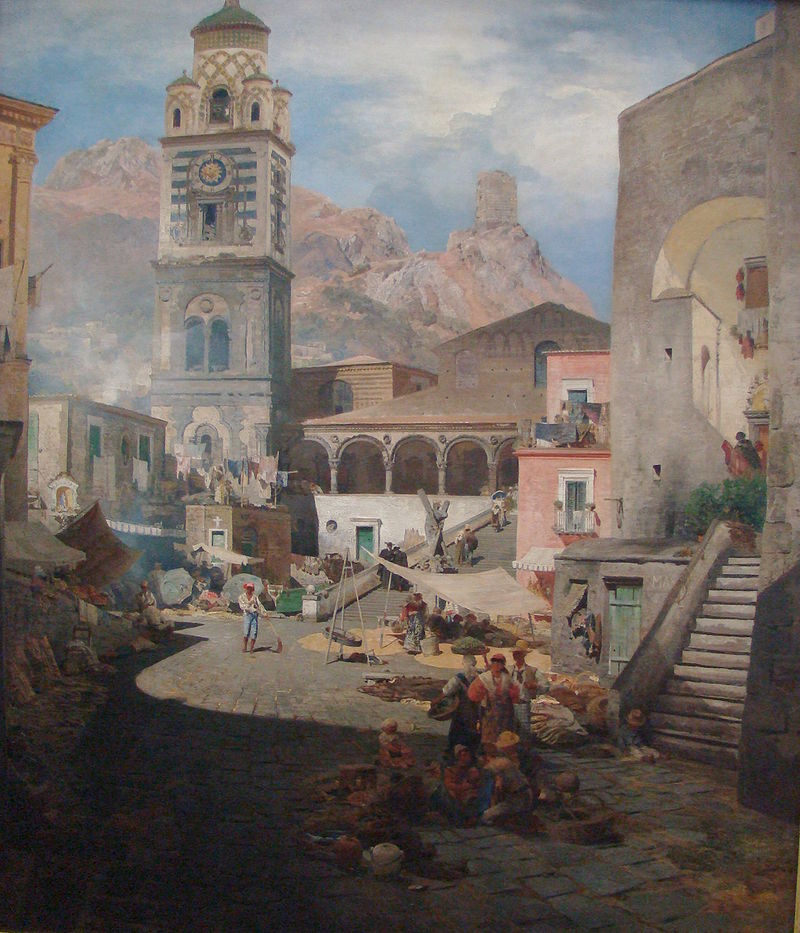
Market Square in Amalfi by Oswald Achenbach (1876)

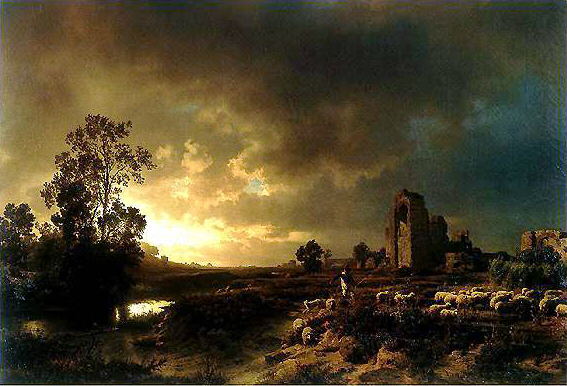
Oswald’s first major painting venture to Italy came in the summer of 1850. His companion for the adventure was Albert Flam, a German landscape painter, who had been taught by Andreas Achenbach and, like the Achenbach brothers, had been a student at the Dusseldorf Academy. They travelled to the French Cote d’Azur seaside town of Nice and then crossed over the Franco-Italian border to Genoa, the capital of the Italian region of Liguria and then they journeyed north to Rome. The pair went off on daily sketching expeditions to the Roman Campagna which was so popular with earlier landscape artists who were inspired by its beauty. Rome was a great place for artists to meet each other and during his stay in Rome Oswald met many including the Swiss Symbolist painter, Arnold Böcklin, Ludwig Thiersch, the German painter known for his mythological and religious subjects and especially his ecclesiastical art, and the landscape painter, Heinrich Dreber with whom he spent a long time in Olevano Romano, a commune which lies about 45 kilometres east of Rome. All artists tackle landscape painting differently and Ludwig Thiersch commented on how his friends differed. He said that Dreber drew elaborate pencil sketches, Böcklin simply let himself experience the environment and recorded relatively little in his sketchbook, while Achenbach and Flamm both painted oil studies outdoors. For Oswald Achenbach it was all about colour and achieving the correct tone by layering the paint. Form and the distribution of light and shadow was also very important to him, but less so was detailed topographical accuracy.

Study from Upper Italy, 1845, oil on paper mounted on cardboard. This study was made during Achenbach’s 1845 trip to Northern Italy.

By the start of the 1850’s, Achenbach’s paintings were well-known internationally. In 1852, aged 25, the Art Academy in Amsterdam had admitted him as a member. More fame came his way when several of his works were displayed at the Exposition Universelle of 1855 in Paris, all of which were praised by the art critics and the public alike. In 1859, he received a gold medal at that year’s Salon Exhibition in Paris. In 1861 he was granted an honorary membership to the St Petersburg Academy and in 1862 he was bestowed membership of the Art Academy of Rotterdam.

The Evening Mood in Campagna by Oswald Achenbach (1850.)

Despite leaving the Academy due to his opposition to the Academy’s method of teaching art, in March 1863, Achenbach became the Professor for Landscape Painting at the Düsseldorf Academy. This was a great honour and it signified an elevation in his social standing as well as financial security. It would also look to be a volte-face to his earlier opposition but the reason for him accepting the post could have been due to the departure of the director of the academy, Friedrich Schadow, four years earlier and the fact there had been conciliation between the Academy and the independent artists.  The title, Knight of the Legion of Honour, was bestowed on Oswald by Napoleon III in 1863. Many more international honours followed. Oswald Achenbach continued to have his work exhibited at the Salon between 1863 and 1868

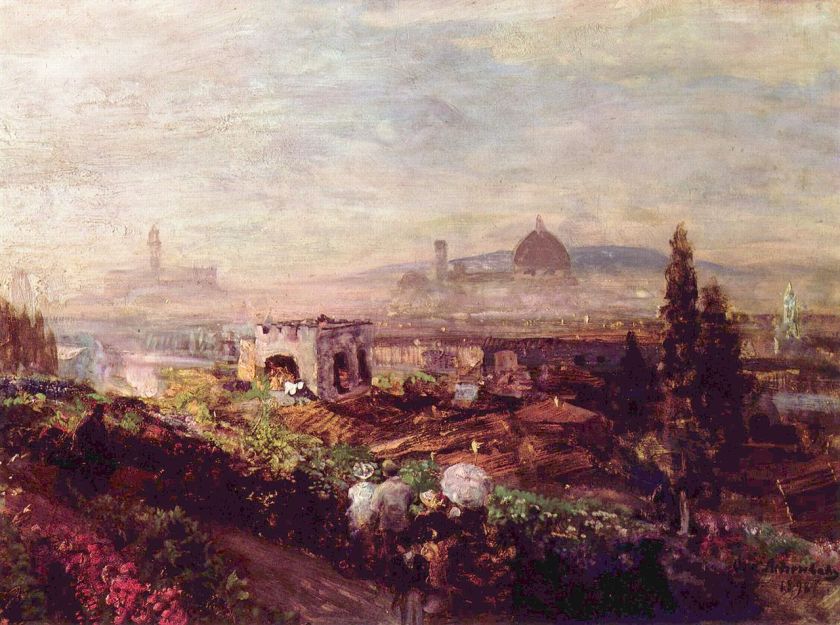
View of Florence by Oswald Achenbach (1898)

In the following years, Achenbach continued to make more trips and his last major trip was to Italy. It began in the early summer of 1882 and he visited Florence, Rome, Naples, and Sorrento. In 1884 and 1895 he took trips to Northern Italy. He had planned a trip in 1897 to Florence but cancelled it due to illness.

Oswald Achenbach died in Düsseldorf on February 1st 1905, one day before his 78th birthday. He was buried in the city’s North Cemetery.

Andreas Achenbach


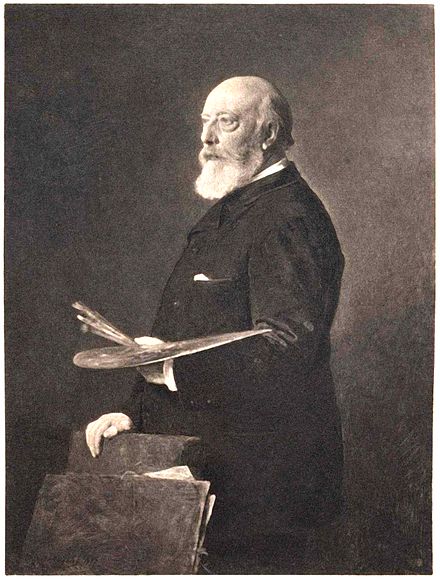
Professor Andreas Achenbach on his 70th birthday by Heinrich von Angeli

When I looked at the life of the Hudson River School painter, James McDougal Hart, I talked about his time at the Dusseldorf Academy and how the Dusseldorf School of painting influenced him. The style of the Dusseldorf School of painting is characterised by its finely detailed, often overstated, and fanciful landscapes that more often than not have some kind of religious or symbolic stories depicted via these landscapes. The leading artists and members of the Dusseldorf style of painting reinforced the need for plein air painting, so that the artist could capture the true nature before returning to their studios and remaking more accurate visual conditions in their work.

Coastal landscape with city view by Anders Achenbach (1875)

The Dusseldorf School of painting principal period was one from 1826 to 1859 when German painter Friedrich Wilhelm von Schadow was the school’s director. He had been professor at the prestigious Berlin Academy of the Arts, and in 1826 he was made director of the Düsseldorf Academy of the Arts, which he reoriented towards the production of Christian art. Twelve-years-old, Andreas Achenbach, is thought to have been one of von Schadow’s earliest pupils at the Dusseldorf Academy. Let me introduce you to this artist, the German landscape and seascape painter in the Romantic style.

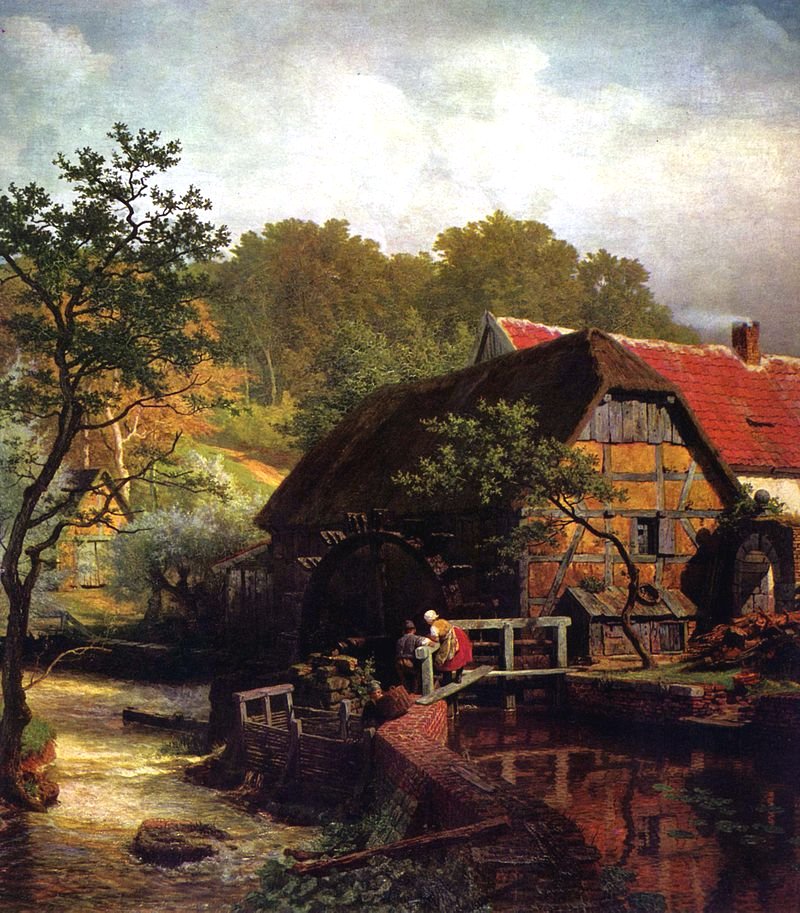
Watermill in Westphalia, (1863) by Andreas Achenbach (1847), The Walters Art Museum

Andreas was born on September 29th, 1815 in the Northern Hesse town of Kassel, Germany. He was one of ten children born to Hermann Achenbach and Christine (née Zülch). His father Hermann was a merchant. In 1816 he took over the management of a metal factory in Mannheim. Two years later, in 1818, he moved his family to St. Petersburg, where the father wanted to set up a new venture, that of his own factory, the money for this project emanated from his wife’s “dowry”. Whilst in St Petersburg young Andreas received his first lessons in drawing in a girls’ school. He excelled and his teacher is said to have certified that six-year-old Andreas ‘could already do everything’. His father’s venture failed and, in 1823, he was forced to take his family back to Germany and settle down in the small Rhine Province town of Elberfeld. where family members of the father lived. Andreas’ father then began to earn a living, working as a beer and vinegar brewer and took ownership of an inn, The Black Wallfish, at Jägerhofstraße 34. It became a regular for visiting artists.

On February 2nd, 1827 Christine Achenbach gave birth to her fifth child, a son Oswald who would, in later years, become as greater an artist as his brother Andreas.

Die alte Akademie in Düsseldorf by Andreas Achenbach (1829)

Andreas began his formal academic training, in 1827, at the age of twelve, when he enrolled at the Kunstakademie Düsseldorf under Wilhelm Schadow, Heinrich Christoph Kolbe and Carl Friedrich Schäffer. At an exhibition of the Kunstverein für der Rheinlande und Westfalen, which Schadow had co-founded, fourteen-year-old Andreas Achenbach achieved his first major success by being not only the youngest artist with a painting at the exhibition but also that one of his paintings, the painting Die alte Akademie in Düsseldorf, was sold. The setting of the painting was a view from a window in his parents’ apartment in the house Burgplatz 152. It was an unusual subject for Andreas to choose, considering what he had been taught at the Academy. The depiction is a simple restrained cityscape and such “reality” was deemed to be too banal and unartistic at the Academy, which under the leadership of Schadow was dominated by idealistic concepts. It is thought that this work resulted in Achenbach’s name being omitted from the Academy’s list of artists and not appearing until the winter term of 1830/1.

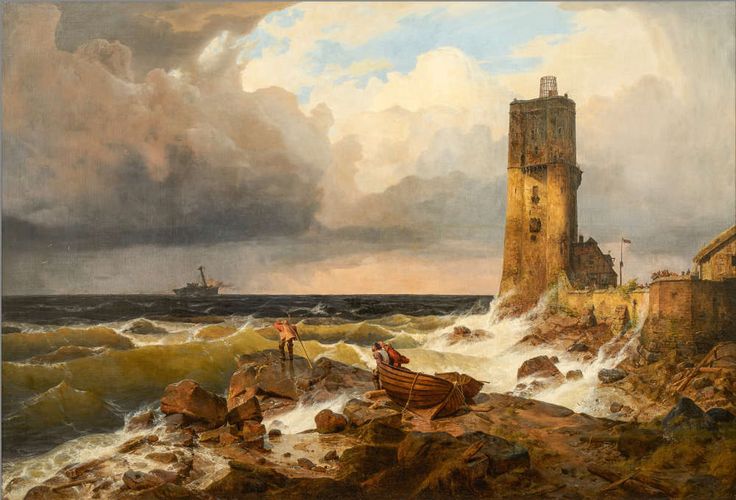
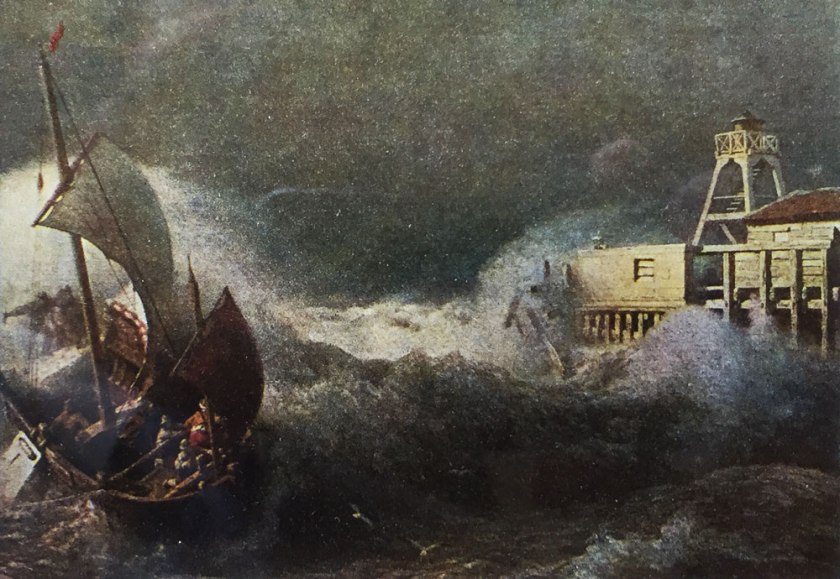
Große Marine mit Leuchtturm by Andreas Achenbach (1836)

In 1832 and 1833 he took an extended study trip with his father to Rotterdam, Scheveningen, Amsterdam and Riga. The journey of discovery gave him the ideal opportunity to study Dutch and Flemish landscape painting. The works of the seventeenth-century Dutch landscape painters Jacob Isaackszoon Ruisdael and Allaert van Everdingen were to particularly influence his art. Achenbach, as well as painting landscapes also painted seascapes, often depicting terrific storms and it is thought that the stories he heard from his family regarding their treacherous 1818 journey to St Petersburg remained in his mind for many years. His artistic breakthrough came at the 1836 General German Art Exhibition in Cologne at which his painting Großer Marine mit Lighthouse, was on show and up for sale. It was bought by the Prussian governor in the Rhine Province, Frederick of Prussia.

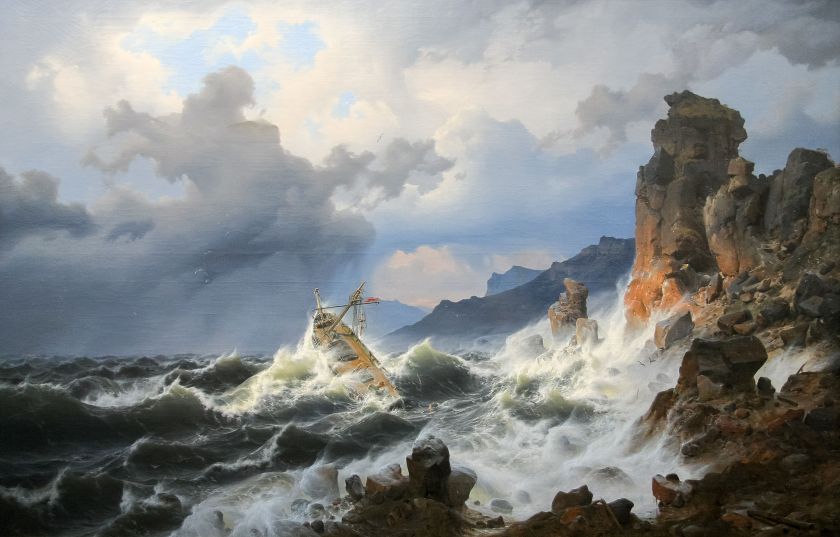
Storm on the sea at the Norwegian coast by Andreas Achenbach (1837) Städel Museum

Following his trips with his father, Andreas Achenbach made many painting trips on his own. In 1835 he made a major trip to Denmark, Norway, and Sweden. And the following year he journeyed to the Bavarian Alps and the Austrian Tyrol. After his tour of Bavaria and the Tyrol, he left Dusseldorf and settled in Frankfurt and, thanks to the assistance of his friend, the German history painter, Alfred Rethel, he was able to open a studio at the Städelsche Kunstinstitut. Despite having his own studio in Frankfurt, Andreas continued with his periodic travels. He returned to Scandinavia in 1839 taking a painting tour of Norway.

Clearing Up—Coast of Sicily by Andreas Achenbach (1847), The Walters Art Museum

He also took more trips to Italy during the period from 1843 to 1845 when he stayed in the Campagna and spent time on the Isle of Capri. and often returned to Scandinavia, often accompanied by his artist brother, Oswald. Ostend was a popular destination for the two brothers.

Hildesheim by Andreas Achenbach (1875)

In 1846 Andreas returned to Dusseldorf and lived on the Flinger Steinweg, a then prosperous middle-class area of the city. He took over the running of his father’s brewery and inn. His father, despite being sixty-three, was glad to hand the business to his son so he could concentrate on being a freelance accountant. Andreas became a member of a number of artistic associations and was one of the founders of the newly formed Künstlerverein Malkasten (Artists’ Association Malkasten), often referred to as The Paint Box, which still exists today. He, together with other wealthy patrons, provided for the purchase of the former Estate of the Jacobi family in Pempelfort and its expansion as a permanent centre of the association, using considerable funds of his own. Andreas wholeheartedly immersed himself in Dusseldorf’s artistic life.

Maximilian Achenbach (Max Alvary)

In 1848 Andreas Achenbach married Marie Louise Hubertine Catharine Lichtschlag and the couple went on to have five children, three daughters, Lucia, Karoline, and Helena and two sons, Gregor, and Maximilian. Maximilian studied to be an architect at Aachen university and graduated in 1871. After working as an architect for a few years, and against the will of his father, he gave up his architectural career, married, and began his vocal studies in Milan and Frankfurt. He took his stage name, Max Alvary. so as not to offend his father and compromise his father’s business. Later Maximilian moved to Weimar and performed at the court opera, where he was very successful. He later appeared at the Metropolitan Opera House in New York and Covent Garden Opera House in London.

Storm by Andreas Achenbach (1898)

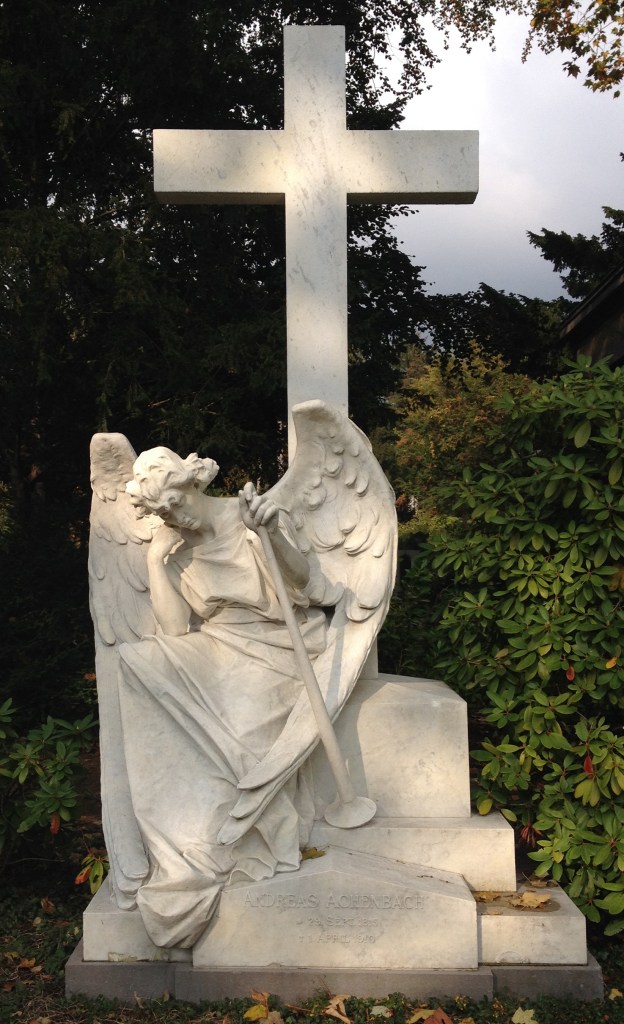
In 1848 Achenbach was awarded the Belgian Order of Leopold. In 1853, he was made an honorary member of the Pennsylvania Academy of the Fine Arts, In 1861 the Order of St. Stanislaus, and in 1862 the Accademia di Belle Arti di Brera in Milan. More honours followed and in 1878 he was awarded the Commander’s Cross 2nd Class of the Royal Norwegian Order of Saint Olav. On 24 January 1881 he was admitted to the Prussian Order of Pour le Merite for Science and the Arts. In 1885 he became an honorary citizen of Düsseldorf, in whose northern cemetery he received an honorary grave, designed by the sculptor Karl Janssen.

Honorary grave of Andreas Achenbach with mourning angel of Karl Janssen, North Cemetery Düsseldorf

Andreas Achenbach died on April 1st 1910, aged 94. He was laid to rest in the Malkasten-Haus, where there was an opportunity to say goodbye to him for several days. The people of Düsseldorf queued to pay their last respects. The funeral procession moved off from the Paint Box heading to Achenbach’s final resting place at Dusseldorf’s North Cemetery and it was commented in the local media that it was akin to a state funeral of a prince.

In my next blog I will look at the life and works of Andreas’ brother, Oswald Achenbach.

Balthasar Denner – Portrait artist committed to the truth.

When an artist paints a landscape, seascape or cityscape he has to decide whether what he produces is a topographically accurate depiction of what he is looking at or an idealized version. He may consider adding or removing something or placing some feature in a different place to enhance the finished product. He may decide that such action would create a more agreeable balance. He is the artist and it is his choice. The one caveat of course is that if it is a commissioned piece he may have to discuss what he proposes to change with the person who is paying for the painting.

Portraiture is defined as the art of representing the physical or psychological likeness of a real or imaginary individual. Portraiture is also subject to the vagaries of idealism and verism. Idealistic portraiture often comes in the form of the backdrop and the accessories which surround the sitter and which, in some way, enrich the status of the sitter. Expensive furnishings, expensive tableware, expensive and fashionable clothes and jewellery worn by the sitter gives the viewer the feeling that the subject is prosperous and wealthy. Globes and books on a table near to the sitter can give the impression that they are learned and well-travelled. The figure of the sitter can be adjusted to make them look younger, more handsome or more beautiful.

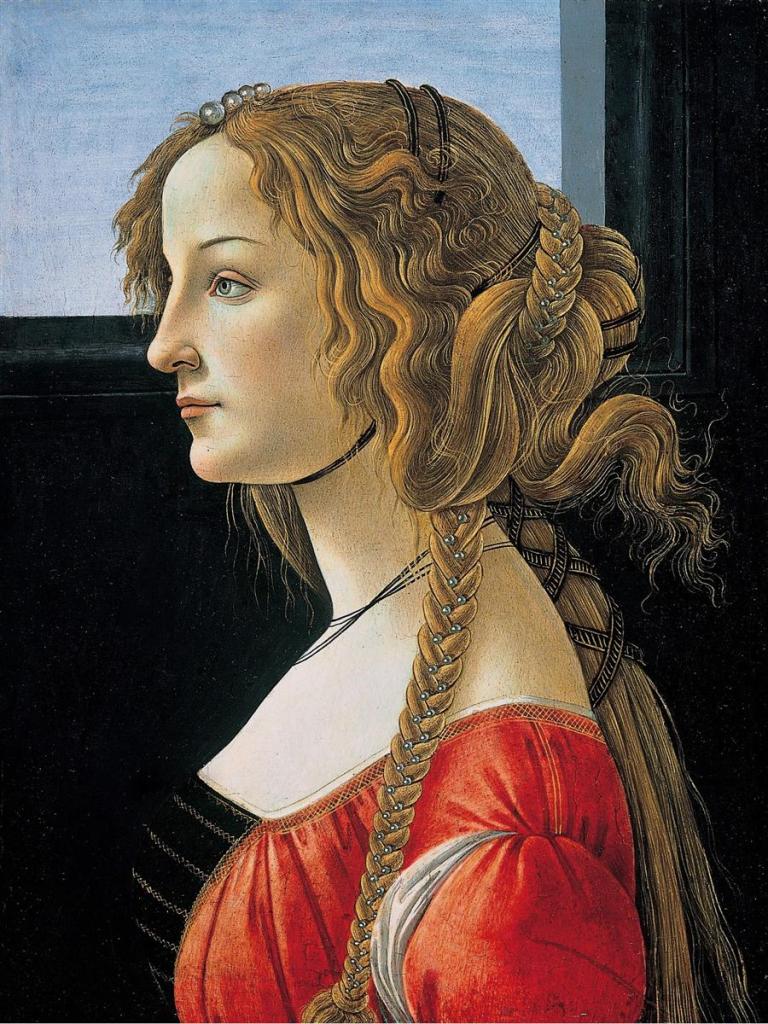
Portrait of Simonetta Vespucci by Botticelli (c.1476)

One of the most famous idealised portraits was Botticelli’s depiction of Simonetta Vespucci, nicknamed la bella Simonetta. She was an Italian noblewoman from Genoa, the wife of Marco Vespucci of Florence and the cousin-in-law of Amerigo Vespucci. She was famous as the greatest beauty of her age in Northern Italy, and the model for many paintings by Botticelli and other Florentine painters. Speculation has it that the portrait of Simonetta is actually just an idealized version which emerged as the perfect beauty through Botticelli’s mind eye. The Italian Master achieved the flawless complexion of Simonetta by using a special mixture, terre verte – a green, earthy tone – to under paint, and afterward layered the flesh- like tones over it to create diverse shades of pink, yellow, and orange. Botticelli made use of fine lines and shapes to unobtrusively build up contrasts and fashion the depth and texture of the portrait. Apart from Botticelli, she also served other painters as an inspiration. She died young and childless at twenty-three. She presumably did not appear in public quite this perfectly styled. Her coiffure with beads, ribbons, feathers and artificial hairpieces would have been too elaborate and high-flown even by Florentine standards. Her outfit is much more likely to have been a nymph costume in the antique or classical-mythological style. This portrait is looked upon as the ideal of contemporary female beauty. Look at the way the artist has depicted her eyelashes and how she turns her body slightly towards us. It is the perfection of idealised beauty

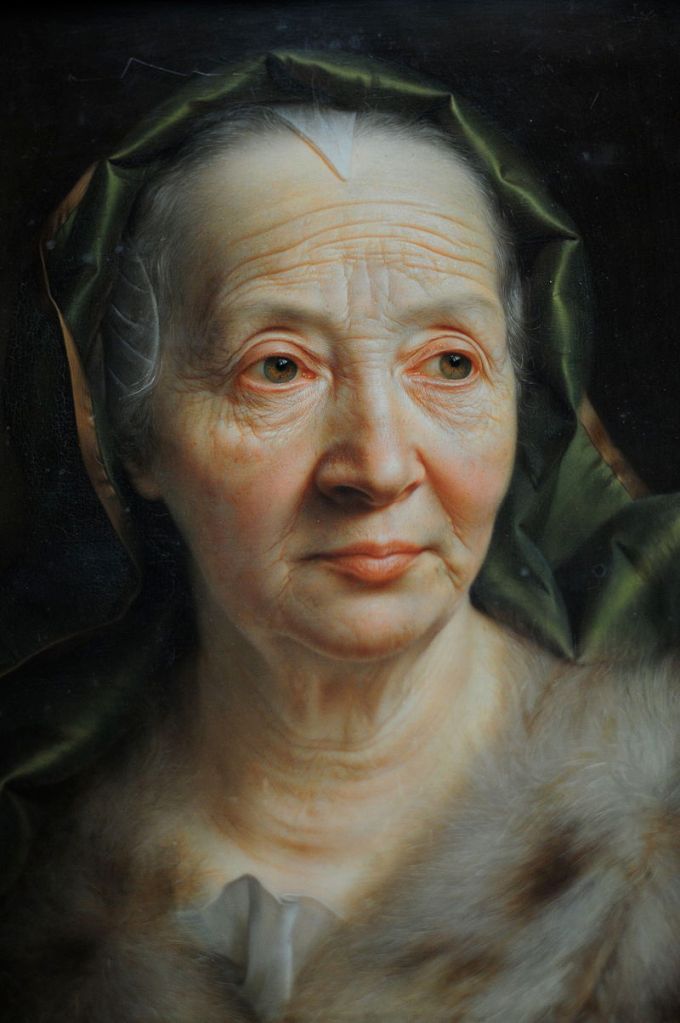
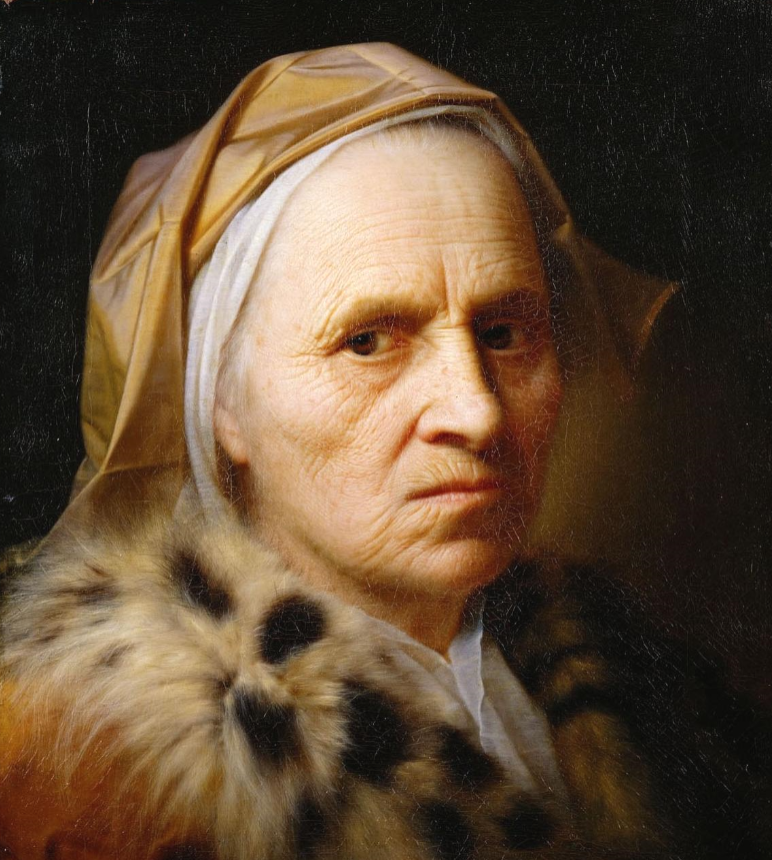
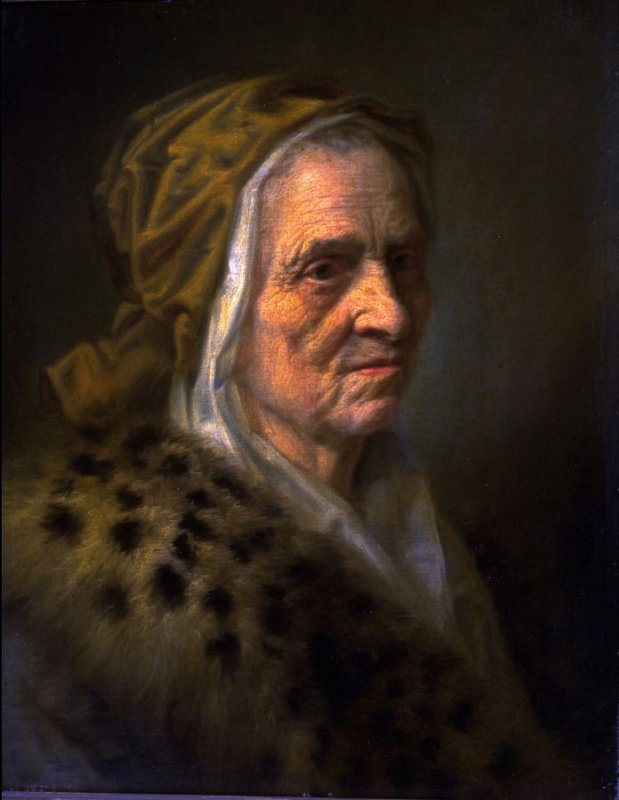
Portrait of an Old Woman by Balthasar Denner

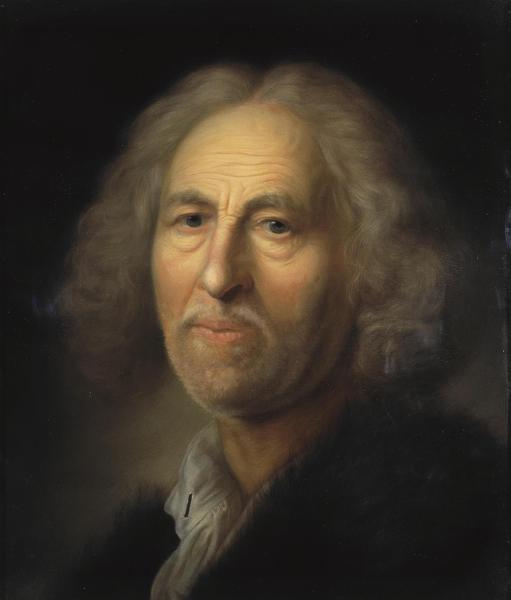
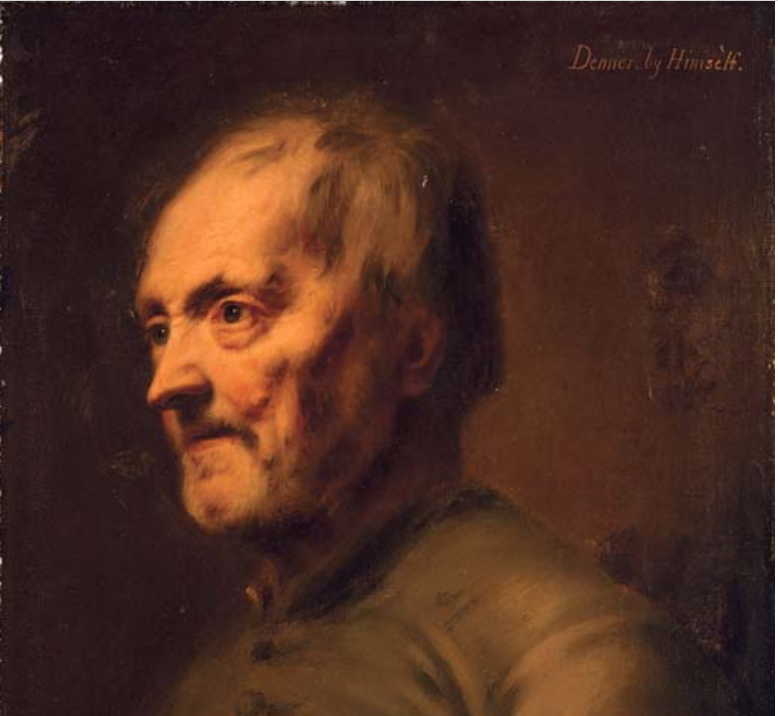
The opposite to idealism is verism. Verism is a term which dates back to the Roman Empire and is from the Roman Latin word verus meaning true and from Italian term verismo, meaning realism in its sense of gritty subject matter. In modern times the Italian term verismo, gives the sense of stark uncompromising subject matter. In portraiture verism is a form of realism in which a veristic portrait depicts a sitter with warts, wrinkles and all instead of a highly idealised depiction of smooth flawless skin.  Veristic portraits do not attempt to idealize or beautify the subject; instead they represent all features of the individual, including wrinkles, imperfect proportions, balding, and blemishes of the skin

In this blog I am looking at the life of a great seventeenth century German portrait artist, who completed a number of veristic portraits. Today’s blog is all about Balthasar Denner, who will be remembered for his half-length and head-and-shoulders portraits of elderly men and women. Denner tended to focus attention on the face and if clothing was to be included in the depiction, he would leave that to other artists, including, in later years, his daughter, Catharina.

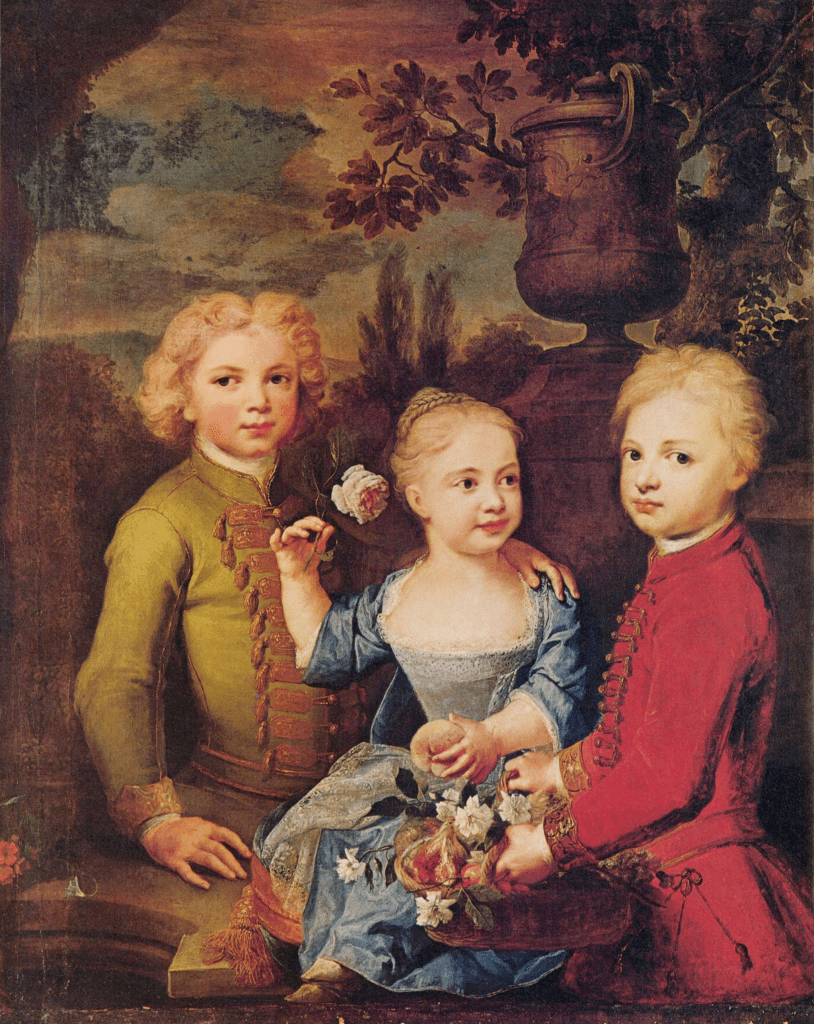
Three Children of Alderman Barthold Hinrich Brockes by Balthasar Denner

A good example of this collaboration can be seen in a painting he completed in 1724 entitled Three Children of Alderman Barthold Hinrich Brockes, on the back of which is an inscription stating that he painted the heads of the children, Jacob van Schuppen later in Vienna painted the bodies and costumes, and the background is from Franz de Paula Ferg. The flowers in the hands of the children were painted by Franz Werner Tamm.

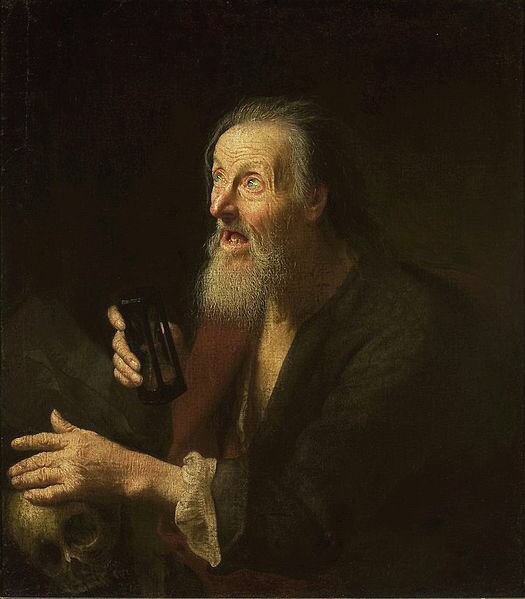
Old Man with an Hourglass by Balthasar Denner

Balthasar Denner was born on November 15th 1685 in Altona, now a suburb of Hamburg but, at the time Altona was part of the Danish kingdom and second only to Copenhagen in size. He was one of eight children but was the only son. His mother was Catharina Wiebe. His father was Jacob Denner, a Mennonite minister who was involved with the business of dyeing cloth. At the age of eight Balthasar was involved in an accident which resulted in him walking with a limp for the rest of his life. Following the accident, he was laid up in bed for a long period and to the pass the time he began to draw and started to copy the works of the Dutch painters, Abraham Bloemaert and Nicolaes Berchem whose works were very popular at that time.

Denner received his first artistic training from Frans van Amama, a Dutch painter. In 1696, at the age of eleven, Balthasar and his family left Altona and went to live in Danzig, where his father worked for a while as a Mennonite pastor. When he was thirteen years old Balthazar took up oil painting. The family returned to Altona in 1701 and Balthasar was put to work as a clerk for his uncle who was a prosperous merchant. Denner remained in the Hamburg suburb until 1707 at which time, aged twenty-two, he went to live in Berlin and that year became a member of the Prussian Academy of Arts in Berlin. This state arts academy was established in 1696 in Berlin by prince-elector Frederick III and was the third oldest art academy in Europe. At the start of his artistic career Denner concentrated on painting miniatures which became very sought-after items.

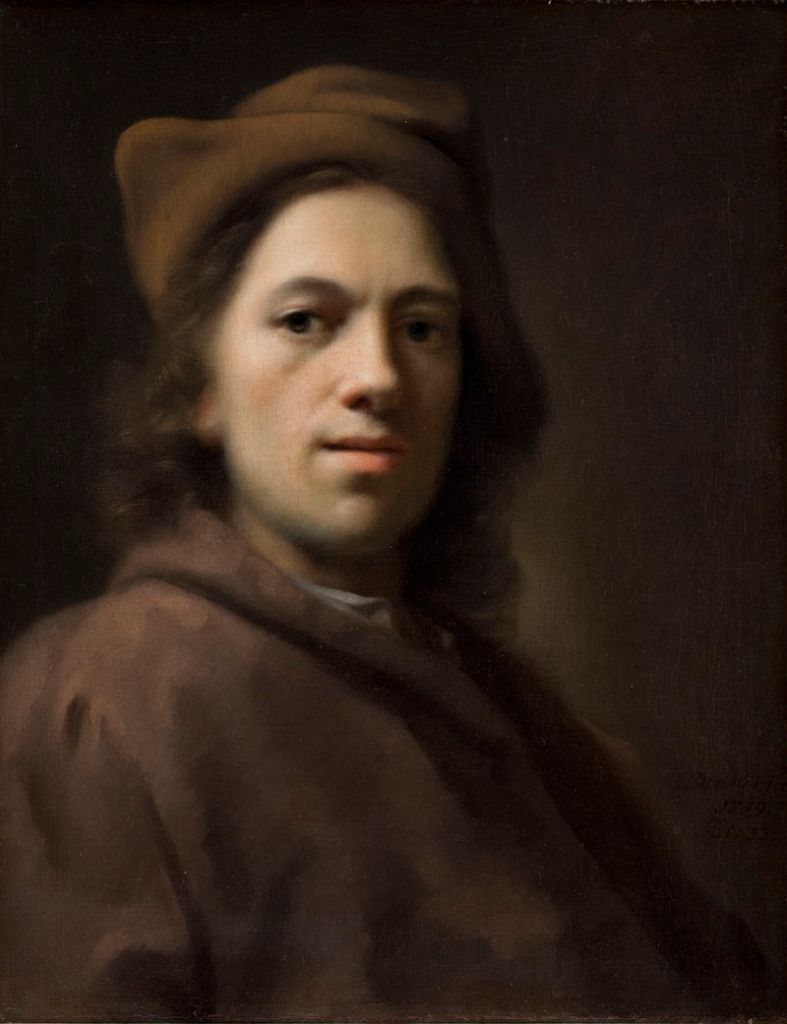
Balthasar Denner self-portrait (1719)

In 1709, Balthasar Denner obtained his first significant commission – to paint the portraits of Christian August, the uncle and guardian of Karl Friedrich, Duke of Schleswig-Holstein-Gottorf, and his sister Marie Elisabeth, the later Abbess of Quedlinburg. On completion of the portrait, Denner’s client was so captivated by the finished result that he invited him to Schloss Gottorf in Schleswig to paint other portraits, and in 1712 Denner completed a memorable group portrait which included twenty-one individuals from the Duke’s court. The group portrait is now housed in Schloss Rastede, near Oldenburg in Germany and it was this painting which greatly enhanced the reputation of Balthasar Denner as an exceptionally talented portrait painter.

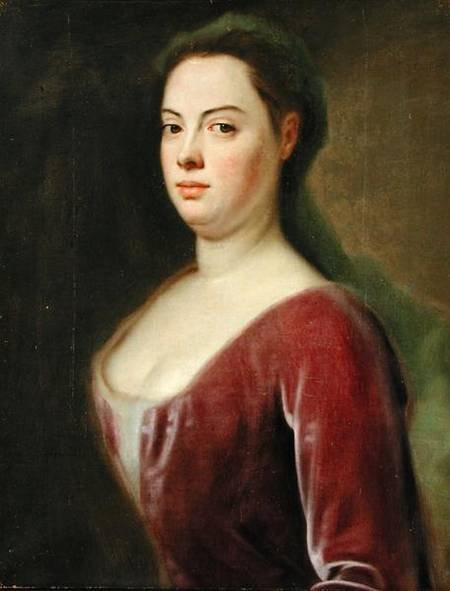
Portrait of Frau Denner by Balthasar Denner

During his stay in Berlin, he would frequently return to his home town of Altona. In 1712, in Hamburg, he married Esther de Winter and the couple went on to have six children, five daughters and a son. After the destruction of Altona in 1713, burnt to the ground by Swedish troops, during the Great Nordic War which had begun in 1700 between the forces of Sweden and the might of Russia and its allies, Norway and Denmark, Balthasar moved from Altona to Hamburg.

Old Woman by Balthasar Denner

Denner travelled a great deal in the next ten years following up commissions from wealthy clients. In 1714 he made a trip to Amsterdam and later, in 1720 he visited the court in Wolfenbüttel and Hanover. Whilst in Hanover he became acquainted with many Englishmen who were living in the German city and it was through these friendships that he and his family were invited to come to London. His painting of an Old Woman circa 1720 received great acclaim. On his way to England he met the Dutch painter, Adriaen van der Werff, who the great art historian, Arnold Houbraken, considered was the greatest of the Dutch painters and such acclaim was the prevailing critical opinion throughout the 18th century. Van der Werff, on seeing Denner’s portrait, compared it to the Mona Lisa.

Head of an Old Man by Balthasar Denner

The work also caused great excitement in London and it was sent to Charles VI, Holy Roman Emperor. Denner received 5875 guilders and in 1725 and was commissioned to paint an old man as a pendant piece for the same amount of money. Denner stayed in the English capital for seven years but eventually returned to Hamburg complaining that he could no longer endure the smog which beset London

Old Woman with fur by Balthasar Denner

In 1729 he was invited to visit the court in Blankenburg am Harz en Dresden and later travelled to Berlin. The wealthy and the European nobility all wanted to be painted by him and have their portrait hanging in their stately homes. Around 1740 he painted ten copies of the twelve-year-old Peter III (Russia) which were sent to all the European courts and one was sent to the court of Petersburg. In 1742 he the court of St Petersburg offered Denner a position as court painter with an immense salary but he declined the offer
In 1743 he painted Adolf Frederick, King of Sweden. Two years later, around 1745 he returned with his family to lived in his birthplace, Altona and it was here that three of his children died. It was a time of great sadness, and such was his grief that Denner, for a whole year, would never put brush to canvas.

Selfportrait by Balthasar Denner

Balthasar Denner died on April 14th 1749 aged 63, in Rostock. At the time of his death there were forty-six unfinished paintings in his Altona studio. Klara Garas the Hungarian art historian, and one-time Director of the Museum of Fine Arts in Budapest described Denner’s portraiture:

“… ‘Denner’s genre figures and character heads depicting wrinkled old women and men were particularly popular and were admired for their detailed execution and meticulous accuracy. They ensured the artist international success and attracted especially high fees: Emperor Charles VI of Austria is believed to have sent 600 ducats from Vienna in payment for a typical head of a woman, an extraordinary sum at that time…”

Goethe – His family, his early life and his loves

Portrait of Johann Wolfgang von Goethe by Georg Oswald May (1779)

 In nearly all my previous blogs I have either featured a single painting or a single artist but this blog is different as I am concentrating on not just one piece of art or one painter but instead looking how various artists portrayed the same sitter.  The subject of this blog is the German writer and statesman Johann Wolfgang von Goethe.

Johann Caspar Goethe (father)

Goethe was born in Frankfurt am Main in August 1749.  His father was Johann Casper Goethe, whose father was the son of a wealthy tailor who later became an innkeeper.  Goethe’s father inherited a fortune from his late father’s estate and after studying law at Leipzig University enjoyed the life, as a man of leisure, touring Italy, France, and the Low Countries.  Goethe Snr. was also an avid collector of books and paintings and later he would devote himself to his children’s education.

Catharina Elisabeth Goethe (mother) by Georg Oswald May (1776)

Goethe’s mother was Catharina Elisabeth Goethe (née Textor), the daughter of Johann Wolfgang Textor, a prominent citizen of Frankfurt. She was twenty-one years younger than her husband whom she married in August 1748. Goethe was the eldest of seven children.  Sadly only he and his eldest sister, Cornelia, who was two years his junior, lived to adulthood with the other siblings dying in infancy.

Cornelia Goethe (1771)

The family’s status would probably be identified as middle-class but they were financially well off and young Goethe lived a comfortable early life.  Frankfurt, at the time, was a wealthy commercial and financial centre, and it was also virtually a self-governing republic, a kind of city-state within the Holy Roman Empire.   His mother was a great influence to her son in the early days when she encouraged him to read and consider writing stories.  He attended a local school but after some troubles his father withdrew him and decided that his son should be home-tutored along with his sister Cornelia.  Tutors were brought in and young Goethe received academic lessons in subjects such as Greek, Latin, French, Italian, English and Hebrew as well as non-academic tuition in horse riding, dancing and fencing.  Home tutoring continued until he was fifteen years old.

Portrait of Adam Oeser by Anton Graff (1776) (Musée des Beaux-Arts de Strasbourg)
Portrait of Adam Oeser by Anton Graff (1776)
(Musée des Beaux-Arts de Strasbourg)

Goethe’s father had mapped out his son’s future education and career, wanting him to follow in his own footsteps, attending Leipzig University as a law student and then going forward into the legal profession.  Following that, his father believed that there would be a place for his son at the Supreme Court in Wetzlar and that the rounding off his education would be accomplished by young Goethe taking part in a Grand Tour of Italy.  Following that journey, his father had great hopes that his son would carve a niche in Frankfurt society and gain a powerful position in the city’s administration – an end game his father never quite managed to achieve, and so in 1765, at the age of sixteen, Goethe, like his father before him,  enrolled at Leipzig University to study law.  The city was the hub of the country’s literary revival.   It was whilst in Leipzig that he had his first official drawing lessons from the German painter and sculptor Adam Friedrich Oeser , a professor at the Hochschule für Grafik und Buchkunst in Leipzig, which had opened its doors for the first time the year before and would become one of the oldest art schools in Germany.  It was during his artistic studies that Goethe became influenced by the writings of the art historian Johann Winklemann.

Friederike Oeser
Friederike Oeser

Whilst taking drawing lessons at the home of Adam Oeser he became friends with his daughter Friederike Oeser .  The Oeser family proved to be a great influence on Goethe and for years after his departure from Leipzig he would write to both father and daughter

By the time Goethe entered Leipzig University he had written a few short pieces but on reflection thought that they were child-like in quality so decided to destroy them and write a more adult piece.  The result was a collection of erotic verses and a pastoral drama, a form of drama evolved from poetry which idealizes nature and the rural life, entitled Die Laune des Verliebten (The Lover’s Caprice) which he started in 1767 but did not complete until many years later.

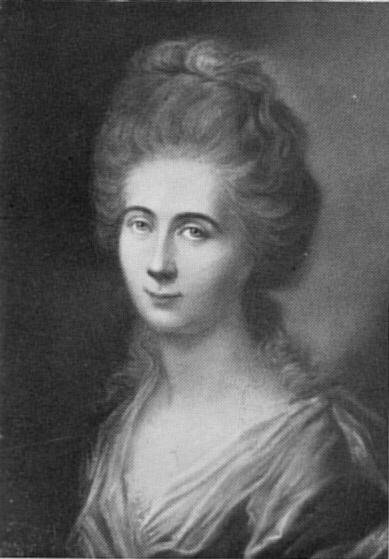
Anna Katharina Schönkopf

All was not well with university life as he fell in love with Anna Kätchen Schönkopf, the daughter of an innkeeper and wine merchant, Christian Gottlieb Schönkopf.  Although bombarding her with words of love and devotion and dedicated poems to her (a collection of them entitled Annettenlieder (Songs to Annette) was later published), the young woman, sadly for Goethe, never returned his love and was put off by his jealousy and eventually entered into a liaison with another aspiring lawyer, Christian Karl Kanne, ironically, a man who had been introduced to Anna by Goethe.

Goethe was devastated and decided to take literary revenge by writing a verse comedy, Die Mitschuldigen (Partners in Guilt) which highlighted the folly of a woman and her regrets after a year of marriage to the wrong man.  Goethe’s stay at the university was cut short in September 1768 when he was struck down with tuberculosis and had to return home without any qualifications.  In April 1770 having recovered from his long illness he travelled to Strasbourg to resume his studies for a doctorate in law.  To achieve this he had to produce a dissertation,  His choice of subject for the dissertation was controversial in which he questioned the status of the Ten Commandments.  For the examiners it was a step too far and was rejected and so his studies took another route by taking instead the Latin oral examination for the licentiate in law which he passed.

Friederike Brion. Color lithograph after drawing of George Engelbach

In October 1770, during his student days in Strasbourg, Goethe met Friederike Brion, an eighteen year old Lutheran pastor’s daughter during a riding trip with a fellow student, Friedrich Weyland,  to the small village of Sesenheim, forty kilometres north of Strasbourg, not far from the River Rhine. The two had dressed themselves as impoverished theology students and managed to inveigle a stay at the parsonage overnight which was when Goethe was introduced to the family.  Once again it was love at first sight when he saw Friederike .  He wrote about the initial encounter with Friederike:

“…Slim and light, as if she had nothing to wear in itself, she went, and almost seemed for the huge blond braids cute little head, the neck too delicate. From serene blue eyes, she looked around very clear, and the like snub nose did research so freely in the air, as if there could be in the world do not worry; the straw hat hanging on the arm, and so I had the pleasure to see them at the first glance at once in all its grace and loveliness and be seen…”

The love affair was both passionate and short-lived, ending when Goethe had received his licentiate in June 1771 and “fled” back to the family home in Frankfurt.  As a young man, Goethe was somewhat of a commitment-phobe.  Friederike was broken-hearted and suffered a breakdown.  Maybe Goethe felt some guilt as a lot of his writings during the next decade featured women who had been spurned by their lovers. One such work was Heidenröslein (“Rose on the Heath” or “Little Rose of the Field”) which was a poem he wrote in 1771.  Heidenröslein tells of a young man’s rejected love, with the lady being represented by a rose.

Goethe and Friederike Brion by Eugen Klimsch (1890)

The German painter and illustrator, Eugen Klimsch, captured a scene between the star-crossed lovers, Friederike and Goethe, in a woodcut entitled Goethe and Friederike Brion which he completed in 1890.  Klimsch was a follower of seventeenth century Dutch paintings and French Rococo art and his greatest success was the illustrations he did for the 5th edition of Goethe’s autobiography, Aus meinen Leben, Dichtung und Wahrheit (Poetry and truth from my own life) a story of his life between birth and 1775.

The first meeting between Johann Wolfgang Goethe and Friederike Brion in Sesenheim by August Borckmann (1875)

Another illustration featured Goethe and Frederike first meeting, this time by August Borckmann which appeared in an 1875 edition of Das Buch Für Alle (The Book for All), a German illustrated monthly family magazine.

At the graveside of Friederike Brion (200th death anniversary)
At the graveside of Friederike Brion
(200th death anniversary)

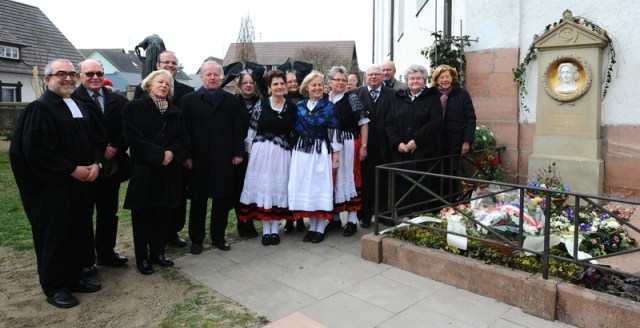
Frederike Brion died in Meißenheim in 1813 and three years ago there was a service at her grave to mark the 200th anniversary of her death.  Among those present were dignitaries from Sesenheim and Conrad Textor (2nd from left), a descendant of Goethe.

Having achieved the licentiate in law, Goethe then started a legal practice in Frankfurt.  The plans for his future that his father had meticulously designed were well on the way to fruition !   In the spring of 1772 Goethe, wanting to further himself in the legal profession. travelled to Wetzlar, to work and gain practical experience as a law clerk at the Imperial Supreme Court.  Wetzlar proved to be yet another location where Goethe fell in love, this time his beau was Charlotte Buff.  This liaison was never going to be a success as, at the time, Charlotte was, and had been for four years, engaged to be married to Johann Kestner, an art collector and diplomat, and although she, Goethe and Kestner spent time together the short lasting experience was always going to be a disappointment to Goethe and end in tears, even though he provided the wedding rings for the happy couple.

First edition of Die Leiden des jungen Werthers by Johann Wolfgang Goethe

According to J G Robertson in his 1959 book A History of German Literature, the doomed love of Goethe led him to publish an emotional novel entitled Die Leiden des jungen Werthers  (The Sufferings of Young Werther), which was published in 1774. The fictional tale, thought to be semi-autobiographical, is presented as a collection of letters written by Werther, a young artist of a sensitive and passionate temperament, to his friend Wilhelm. These give an intimate account of his stay in the fictional village of Wahlheim (based on Garbenheim, near Wetzlar whose peasants have enchanted him with their simple ways. There he meets Charlotte, a beautiful young girl who takes care of her siblings after the death of their mother. Werther falls in love with Charlotte despite knowing beforehand that she is engaged to a man named Albert eleven years her senior.  This novel proved immensely popular in Europe, and was far more influential than Goethe’s later works. Werther became a cult-figure for a whole generation, but was also criticized as provocative and a threat to customary morality. The novel was translated into many languages, imitated, “corrected,” even occasionally forbidden—whereupon it would be circulated secretly from one reader to the next

Charlotte Buff-Kestner by Johann Heinrich Schröder

A painting of Charlotte Buff-Kestner was completed by the German pastelist  portrait painter, Johann Heinrich Schröder.  Schröder  was born in Meining in 1757 and studied at the Academy of Painting and Sculpture in Kassel under Johann Heinrich-Tischbein  (see later, his paintings of Goethe).   Schröder soon became a portrait painter at the German royal courts, such as the one of Brunswick and Baden, where his lively, bright pastel portraits were highly acclaimed.

Goethe is made Privy Councilor by Wilhelm von Kaulbach,

In December 1774 Goethe made the acquaintance of Carl August, the Hereditary  Duke of Sachsen-Weimar –Eisenach, and had been invited to Weimar as his guest.  In October 1775 he made the journey to the German town which was then under the influence of Duchess Anna Amalia who was an ardent patron of the arts. After arriving in Weimar, Goethe was serenaded by the courtiers and became a good friend of Anna Amalia’s son Duke Karl August, so much so, on Goethe’s thirtieth birthday, in 1779, recognizing his official duties, he was made a privy councilor and the ceremony was captured in the drawing by Wilhelm von Kaulbach.  In the sketch we see Goethe being crowned by Duke Karl and seated we see Anna Amalia.  Goethe commented about the event, writing:

“…It is strange and dream-like, that I, in my thirtieth year, enter the highest place which a German citizen can reach…” 

Charlotte von Stein by Georg Melchior Kraus (1787)

One of Anna Amalia’s ladies in waiting at the Weimar court was Charlotte von Stein.  Shortly after his arrival in Weimar Goethe met Charlotte and a friendship quickly followed which would last more than a decade.  During that period she greatly influenced Goethe’s life and his writing.  They were so close that her eleven year old son came to live with Goethe and he acted as his tutor.

In September 1786, ten years after his arrival in Weimar, Goethe suddenly left the German town and his friends and set off for Italy on what was to be a two year voyage of discovery.  He had not consulted the Duke of Weimar, his employer or his close friend Charlotte von Stein.   This decision of course was the final piece of his father’s jigsaw plan for his son’s life.   He was thirty-seven years of age and the sojourn proved to be, as Goethe put it, “the happiest period of his life”.  It was in Italy that Goethe arranged a travelling stipend for the German portrait painter Johann Heinrich Wilhelm Tischbein so that he could join him.  Goethe had been pleased with Tischbein’s works of art and believed that he would be a good travelling companion and someone who could help him with his own works of art .  When they arrived in Rome, the two lodged in a large apartment on the Via del Corso.  Johann Tischbein had come from a family of artists which spanned three generations and to identify him from his siblings he became known as “Goethe’s Tischbein”.  The two lived in adjoining rooms of the apartment but often took meals together.  Goethe was initially delighted with his companion, writing:

“…We are so well suited that it is as if we have always lived together…”

This initial friendship waned slightly, as although they travelled together from Rome to Naples, they then parted company with Goethe wanting to head to Sicily and Tischbein, being of more meagre means, decided to stay in the Neapolitan city in the hope of attaining a post at the Academia del Arte.  The two were very different in character and latterly could not stand each other’s company !

Goethe at the window of the apartment on the Via del Corso, Rome by Johann Tischbein (1787) (42 x 27cms) (Frankfurter Goethe-Museum)
Goethe at the window of the apartment on the Via del Corso, Rome by Johann Tischbein (1787)
(42 x 27cms)
(Frankfurter Goethe-Museum)

One of Tischbein’s great talents as an artist was his power of observation and this is highlighted in his  watercolour entitled Goethe at the window of the apartment on the Via del Corso in Rome which he completed in 1787.

Goethe in the Roman Campagna by Johann Heinrich Wilhelm Tischbein (1787) (164 x 206cms) Frankfurt Stâdel Museum
Goethe in the Roman Campagna by Johann Heinrich Wilhelm Tischbein (1787)
(164 x 206cms)
Frankfurt Stâdel Museum

Tischbein’s most famous painting, and said to be one of the most popular works of art in Germany, is his 1787 work entitled Goethe in the Roman Campagna, which he had started the previous October.   We see Goethe wearing a halo-like broad brimmed grey hat, which was de rigeur for the German artists living in the Eternal city.  He wears a long sleeved creamy white duster and gazes out at the distant landscape in an idealized full-length classical pose.  He looks calm and collected.  It is typical of a Neoclassical painting with the ancient ruins seen in the background.  Behind Goethe, towards the right of the painting we can see a relief scene of Iphigenia meeting her brothers.  This was not an accidental inclusion by Tischbein as at the time Goethe was working on Iphigenia in Tauris based on the ancient Greek tragedy by Euripides , Iphigeneia in Taurois.

I suppose I should apologise over this blog on two counts.  Firstly it is over-long and secondly it is probably more to do with history than art but after reading about the painting Goethe in the Roman Campagna I got hooked on the writers early life and loves.

Portrait of a Man and His Wife by Ulrich Apt the Elder

Portrait of a Man and His Wife by Ulrich Apt and Workshop (1521)Queen's Gallery London
Portrait of a Man and His Wife by Ulrich Apt and Workshop (1521)
Queen’s Gallery London

My featured artist today is probably unknown to most of you as he was to me.  He is the late Gothic painter Ulrich Apt the Elder, who was born in Augsburg around 1460.  The work I am featuring today fascinated me when I saw it the other day at the Northern Renaissance Dürer to Holbein exhibition, which is being held at the Queen’s Gallery in London and runs until April 14th 2013.  It is a wonderful exhibition and one I can thoroughly recommend.

Ulrich Apt the Elder was the fourth son of the German painter Peter Apt who trained and worked in the German city of Augsburg.    Little has been written about the artist but we do know from documents that he became an independent master at the age of twenty-one and became an important member of the Guild of Painters, Glaziers, Carvers and Gilders.  He concentrated on religious commissions and it is thought that his first major commission he obtained was in 1491 when he completed a very large fresco of St. Christopher in the Augsburg Cathedral.   He also accepted many portraiture commissions from the leading citizens of Augsburg society, who were enamoured by his conservative style. He was given a very important and lucrative commission from the city of Augsburg in 1516 for frescoes to decorate their town hall.  It is known that Ulrich had built up his business to such an extent that he had all but established a monopoly in mural painting in Augsburg, and from his tax records it can be seen that his business thrived and he had become extremely wealthy.  His three sons worked with him and he trained several Augsburg artists of the next generation.   There has been much discussion amongst art historians as to who actually painted the various works which came from the workshop as a number were done collaboratively and a number of the painters including those of his family had similar styles.    Apt’s eldest son Jacob became an independent master in 1510 and died in 1518.  The second, Ulrich Apt the Younger, was active as a painter in 1512 and continued until 1520.  The youngest, Michael, became a master in 1520 and is documented working as a painter until 1527.    It is thought that during his lifetime he made many journeys to the Low Countries and it is following these visits that his artistic style became noticeably more predisposed towards Netherlandish painting.   Ulrich Apt the Elder’s works, because of this, began to influence other Augsburg artists of the time.  Apt’s studio decided to follow the Netherlandish manner and tradition.  However not all of his contemporary artists from Germany followed this artistic path, for painters such as Hans Holbein the Elder and Hans Burgkmair favoured, and were influenced by, the works of Italian painters, particularly those from Venice

My Daily Art Display’s featured oil on limewood work today is entitled Portrait of a Man and His Wife and was completed in 1512.  In all, the artist painted three versions of this work.  One may wonder why he should do that and the answer could well lie with why the picture was painted in the first place.   It is thought to be a painting to commemorate a wedding and therefore, as we do nowadays, commemorative copies celebrating the marriage were given as gifts to various close relations as well as one being kept by the happy couple.  One copy of the painting is now held in a prívate collection, one is now owned by the Queen of England, having been first acquired for the collection of King Charles I, who received the painting as a gift from Sir Henry Vane, the Comptroller and then Treasurer of the King’s Household.   A third version is on display at the Metropolitan Museum of Art in New York, which acquired their painting in 1912.

In the painting we see the bride and groom, behind which there is a landscape in which there is a centrally positioned church.  Bearing in mind the date of the painting and the fact that it was carried out in Augsburg, art historians believe it to be the wedding of Lorenz Kraffter and Honesta Merz, a couple, who went on to have nine children.  The groom was the son of James Lindsay of Crafford who immigrated to Augsburg from Scotland.   What is interesting to note is the positioning of the man and woman in relationship to the background landscape.  The man is placed in the middle of the finely and beautifully detailed landscape with a castle shown at his back.  From this, we are to deem that this man is of great importance and holds at position of great consequence in Augsburg society – a “man of the world”.  However, look at how the artist has positioned the bride.  She is placed against a blank and dark wall which alludes to her role in life, that of domesticity and enclosure within the marital home.  The landscape in both paintings is criss-crossed by narrow winding paths and two meandering rivers, which curve around the church and castle.  In the New York version the river is given a bluish tone.   Another interesting aspect of the paintings is the three sets of numbers, two of which one can see on the lower sill of the window.  They are “52,  “35”  and “1512” which although not clearly shown in my attached pictures is plainly on view in the painting I stood in front of, and is in between and above the two other numbers.  The “52” indicates the age of the man whilst the “35” denotes the age of the woman and the “1512” alludes to the date the painting was completed by the artist.  The husband is dressed sumptuously in a gown lined with marten and the manner in which he is dressed denotes his high-standing in the local society

The incorporation of a detailed landscape view seen through a window has probably derived from artists such as Hans Memling and its inclusion in this work highlights the power of the Netherlandish influence on the artists of Augsburg in the latter part of the fifteenth century.  Hans Holbein the Elder, another Augsburg painter, would often incorporate architectural settings in his portraits. Although this is essentially a wedding portrait and the focus of the painting is the bride and groom, look at how Ulrich has spent much time in the fine painstaking details of the background landscape with its trees and buildings.

Although I cannot find a picture of the third copy of this painting it is easy to see the differences in the two paintings on offer today, which may lead one to believe that different artists in Ulrich Apt the Elder’s workshop may have had some part in the execution of the works.   A tracing for the figures was obviously shared since they match almost perfectly.  The one in the privately owned Schroder collection is said to be of the highest quality and it is believed that all of that work was carried out by Ulrich Apt himself.  The version held in the Royal Collection, which was previously considered to be a seventeenth-century copy of that in the Schroder collection, has revealed that after recent cleaning and conservation work, it is a very good version by Apt and his workshop.

Originally thought to be by Quinten Massys, and at the end of the seventeenth century it was attributed to Holbein the Younger and furthermore, in the nineteenth century it was thought to be a portrait of his parents. However in 1928, the German art historian Karl Feuchtmayr identified the artist as Ulrich Apt.

Portrait of a Man and His Wife by Ulrich Apt the Elder (1512)Metropolitan Museum of Art, New York
Portrait of a Man and His Wife by Ulrich Apt the Elder (1512)
Metropolitan Museum of Art, New York

The Metropolitan Museum of Art’s copy, shown above, is different in a number of ways to the one held in the Royal Collection.   The first and most obvious difference is the colour of the woman’s dress.   In the Royal collection she is wearing a dress, the color of which is drab brown, whereas in the New York painting it is light turquoise.   According to the MMA, their copy of the painting has been severely overcleaned in the flesh tones. They also comment that splits that run horizontally across the panel at the levels of the sitters’s mouths and foreheads have been filled and in-painted.

Self Portrait on her Sixth Wedding Anniversary by Paula Modersohn-Becker

Self Portrait on her Sixth Wedding Anniversary
by Paula Modersohn-Becker (1906)

My blog today concludes my look at the life of the German Expressionist painter, Paula Becker, later to become Paula Modersohn-Becker.   For her early life you should first read my last blog.

As I told you in that last blog, Paula moved to Worpswede and joined the other artists in 1898.   The artist colony provided her with a lot of inspiration.  She was influenced by resident artists such as Heinrich Vogeler, whose house, the Barkenhoff, was the centre of the artistic community.   She became great friends with the young sculptor Clara Westhoff and the poet Rainer Rilke, who in 1901 would marry Clara.  She also struck up a friendship with the young German painter Otto Modersohn and his wife Helene.  Otto and Helene Schröder had married in 1897 and their daughter Elsbeth was born the following year.

Paula quickly found her own artistic style, painting pictures of withdrawn farm children and elderly ladies whom she painted in poorhouses (see previous blog).   Paula from the outset had loved the peace and tranquillity at Worpswede but being still young, for remember, she was only twenty-two when she arrived at the artist colony, she still hankered after the excitement of city life.  So after more than twelve months at Worpswede she decided to head for the then art capital of the world – Paris.   She left Germany on December 31st 1899, the last day of the nineteenth century.   After settling in Paris she wrote a letter to her mother, in which she commented about the change of scene:

“…I see these Paris trips as a positive addition to the slightly one-sided life I lead here……………After 10 quiet months in Worpswede, I feel that immersing myself in a foreign city with all of its stimuli is something really essential for my life…”

Clara Westhoff and Paula Modersohn-Becker

Paula was not alone in Paris as her friend, the sculptor from Worpswede, Clara Westhoff, had moved there the previous year hoping to study under August Rodin.     At first, life in Paris was difficult for Paula.  She lived in a small cramped attic room but she still embraced life in Paris with great enthusiasm and was determined to avail herself of an education in the arts, a thing which was still denied to women in Germany at the time.  Whilst in the French capital, Paula Becker studied at both the Académie Colarossi and the École des Beaux-Arts, and made numerous visits to the Louvre, all the time taking pleasure in absorbing the artistic life of the city. Through her friend Clara, she met and got to know sculptor Auguste Rodin. She made many visits to contemporary exhibitions and was deeply impressed by the works of the Post-Impressionists especially Paul Cézanne, Vincent van Gogh and Paul Gauguin.  She was also influenced by the strong colours used by the Fauve artists and the Realism style of Jean-François Millet.

Otto Modersohn and Paula Becker

From April to November of 1900, Paris hosted a World Fair, known as the Exposition Universelle.  The reason for this great event was to celebrate the achievements of the past century and to accelerate development into the next.  Paula invited Otto Modersohn, who was still at Worpswede, to come with his wife and daughter and see the great exposition.  Otto Modersohn arrived in Paris in June along with another Worpswede artist, Fritz Overbeck, but he had had to leave his wife behind as she was unwell, suffering from tuberculosis.  Tragically she died whilst her husband was still in Paris.  He immediately returned to Worpswede to look after his one year old daughter.  Paula also returned to Worpswede and during the following year she and Otto Modersohn married and Paula became stepmother to his daughter, Elsbeth.

Paula could not settle back in Worpswede and was determined that she would have to return to Paris if she was to become a serious painter.   Her husband was very unhappy with her decision to leave him despite her promising to return to Worpswede on frequent visits.  So although married, she abandoned her husband, despite his protestations, and returned to Paris.  On arriving in Paris she recorded her thoughts about what the future held for her:

“…Now I have left Otto Modersohn, I stand between my old life and my new one. What will happen in my new life? And how shall I develop in my new life? Everything must happen now…”

These long periods living away from Otto put pressure on their marriage and after a few years the marriage was all but over and they continued to live separate lives.  In 1907 she returned to Otto in Worpswede and it appeared that the two had reconciled.   Paula became pregnant and bore a child, a daughter Mathilde.  Mathilde (Tillie) Modersohn was born on November 2nd 1907.  Otto and Paula were delighted with their new arrival but their joy was short lived as less than three weeks later, on November 20th 2007, Paula Modersohn-Becker died from a post-natal embolism.  She was just thirty-one years of age. Sadly, that same month Paula’s mother died of a heart attack.

My Daily Art Display’s featured painting today is one Paula completed in Paris in May 1906.  It is entitled Self Portrait on her Sixth Wedding Anniversary.  It is an unusual study as one needs to remember that at the time she painted this picture, she was not pregnant.  On the contrary, she had been reported as saying that, at that time in her life, she was not ready to have children and certainly not a child with Otto!  So why did she depict herself “with child”?  I do not know the answer to that but I read one article the other day in which the author states:

“….Paula was not pregnant in this painting The painting, then, is a metaphor for how she felt about herself as a young artist: fecund, ripe, able for the first time in her life to create and paint freely in the manner that she wished. What she is about to give birth to is not a child but her mature, independent, artistic self…”

I will let you make your own mind up as to why she would want to depict herself as being pregnant.

In the painting, she has portrayed herself with the distended stomach of a pregnant woman but her breasts are small and pert and lack the fullness one associates with pregnancy.  It is a life-size portrayal, measuring 101cms x 70cms.  She stands before us, naked to the waist.  Her eyes are level with ours.  She stares out at us with her large brown eyes. Her auburn hair is parted in the centre and swept up into a chignon.    She half smiles.  Her expression is one of self-confidence.   She appears unabashed by her nakedness as she tilts her head to one side in a questioning gesture.  Her only clothing is a white cloth skirt which is loosely tied around her hips below her distended belly.  Her large hands lie above and below her belly.  It is as if she is framing and showcasing her pregnancy.  Around her neck, and lying between her breasts, is a necklace made up of lozenge-shaped amber coloured beads, which subtly glow against her pale skin.

There is a Gauginesque Tahitian look about the painting.   It is an unusual and a complex self portrait which she painted on the occasion of her sixth wedding anniversary to Otto Modersohn and we know that, at this time, their marriage was well and truly on the rocks and maybe that is why she signed the painting “PB” for Paula Becker, her maiden name and left out “Modersohn” her married name.

Almost a year after her death, Rainer Maria Rilke, the poet and husband of her friend Clara Westhoff wrote the poem Requiem for a Friend in memory of Paula. The poem itself is too long to add to this blog but I have attached the website URL below if you would like to read the full translation of this very moving poem.

http://www.paratheatrical.com/requiemtext.html

Her daughter Tillie, who died in 1998, aged 91, founded the Paula Modersohn-Becker-Foundation (Paula Modersohn-Becker-Stiftung) in 1978.  The Paula-Modersohn-Becker Museum in Bremen has the distinction of being the first museum devoted to the work of a female painter. Early in the 20th century, the patron and merchant Ludwig Roselius amassed a collection of the artist’s major works and this along with works from the Paula Modersohn-Becker Foundation bear out her importance as a pioneer of modern painting.

German Commorative stamp

In 1988 a stamp with the portrait of Paula Modersohn-Becker was issued in the series Women in German History by the German

Old Peasant Woman Praying by Paula Modersohn-Becker

Old Peasant Woman Praying by Paukla Modersohn-Becker (1905)

In My Daily Art Display of July 28th 2012, I looked at the life and works of the German Expressionist painter, Gabriele Münter and in my next two blogs I want to showcase the life and feature a couple of the works of art of another early German Expressionist artist, Paula Modersohn-Becker.  She may not be familiar to some of you but I am sure you will find her life story interesting, if a little sad, and her artwork unusual.

Paula Modersohn-Becker

Paula Becker was born in Friedrichstadt, a central district of Dresden in 1876.  She was born into a cultural middle-class family, the third of seven children.  Her father, who was the son of a Russian university professor, had been a government railroad official but had had to take early retirement on health grounds and her mother was the daughter of an aristocratic family.  When Paula was twelve years of age she and her family moved to Bremen.  In 1892, when she was sixteen years of age, she travelled to London to stay with one of her father’s sisters.   During her seven month stay in England she received her first drawing lessons.  Paula loved drawing and painting and wanted to become an artist but her father, mindful of the poor financial rewards of being an artist, insisted that first she must enrol on and complete a two-year teachers’ training course before he would allow her to follow her dream of becoming a painter and study at the Berlin School of Women Artists.  She attended the teachers’ training college in 1893 and completed the course two years later.  During this two year period she received drawing and painting lessons from the German painter and stage designer, Bernhardt Wiegandt.

Just a few miles north of Paula’s Bremen home was the small village of Worpswede, which is situated in the Teufelsmoor, a region of bog and moorland.  It was to play a large part in Paula’s life as it had become the home of an artistic community.  It all began in 1884 when Mimi Stolte, the daughter of a shopkeeper in Worpswede, whilst staying with her aunt in Düsseldorf, met Fritz Mackensen, a young art student at the city’s Art Academy and since he was virtually penniless, she took pity on him and invited him to Worpswede to spend the holidays with her family.  After that, he visited her on a number of occasions and liked the area so much that, in 1889, he made it his home and soon, along with his artist friends, Otto Modersohn and Hans am Ende, founded the artists’ colony of Worpswede.  Other artists, writers and poets soon descended on the small town and in 1895 the “Kunsthalle Bremen” exhibited works by artists from Worpswede for the first time.

In 1896 Paula Becker enrolled on a painting and drawing course run by the Verein der Berliner Künstlerinnen (Union of Berlin Female Artists) which offered art studies to women.  Following this she began a one-and-a half-year apprenticeship.    At first she concentrated on drawing lessons with portrait and nude studies and later she studied painting under the tutorship of the Swedish/German painter, Jeanna Bauck.  The following year, Paula Becker visited the artist colony at Worpswede for the first time and met the German painter, Fritz Mackensen, who became her art tutor.  In 1898 Paula left home and went to live in Worpswede and worked alongside the other artists.  During this period she completed many works depicting women and children of the farming community and for models she would use the local peasant women and their children as well as getting some of the old women from the local poor house to pose for her. She also completed some landscape works, which depicted the desolate and dark moors which surrounded the Worpswede area.  These moors were crossed by a number of canals used by barges for transporting locally harvested peat moss to Bremen.  The artist colony painters of Worpswede believed in and promoted a romanticized view of country life, which they believed was a powerful antidote to the revulsion they felt for urban industrialization. Paula however thought differently and rejected the sentimental approach of her fellow artists, believing that a basically realistic subject could better represent profound spiritual values.  Although there was a kind of peace and tranquillity at Worpswede she still hankered after the excitement of city life.  So after more than twelve months at Worpswede she decided to head for the art capital of the world – Paris.   She left Germany on December 31st 1899, the last day of the nineteenth century.

My Daily Art Display featured painting today is entitled Old Peasant Woman Praying which Paula Becker completed in 1905.  There is a kind of Primitivism to this painting similar to what we have seen in Gaugin’s works.  The woman has her large lumpish peasant hands crossed over her chest in a meditative prayer-like manner.  There is a religious feel to this work.  One cannot say for sure what is in the background.  Could it be the coping of a wall with a large leafed tree in the background or is it just a flower/leaf-patterned wall.  However note how the artist has interrupted the background with brightness around the head of the peasant, almost halo-like, giving her a kind of spirituality.   She has a weather-beaten face from the continuous hours spent outside working in the unforgiving sunlight.   The painting is of a lower-class peasant woman and yet it is not a condescending painting.  There is a certain dignity about this woman.  This was never just a peasant painting which was meant to entertain the elite.  This is quite different to the way Van Gogh depicted his peasants in The Potato Eaters (See My Daily Art Display February 7th 2012).   Paula has given her subject a modicum of respect and by doing so has created a beautiful work of art.

In my next blog I will tell you more about Paula Becker’s life, her marriage to Otto Modersohn and her untimely death and feature some more of her works of art.