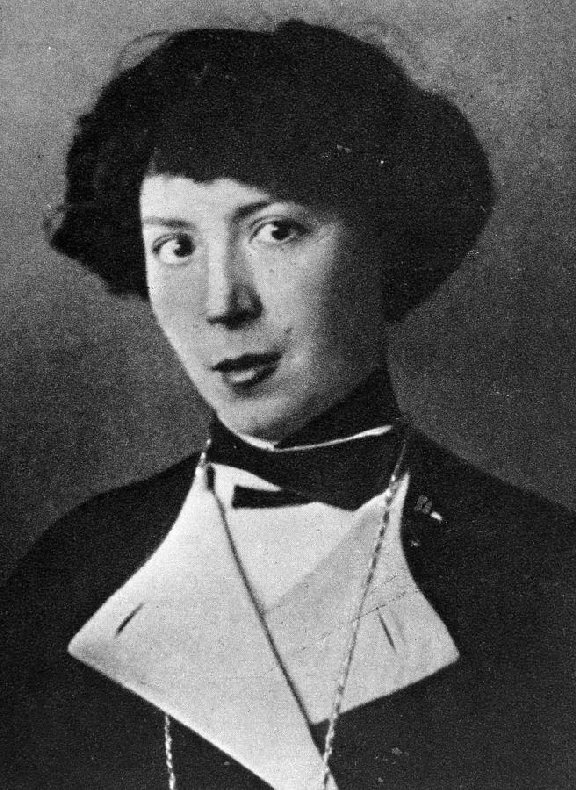
Marie Laurencin. Part 1.

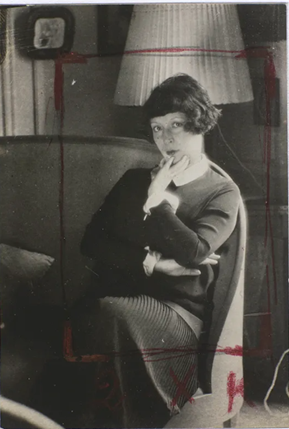
Marie Laurencin photographed by Man Ray (c.1925)

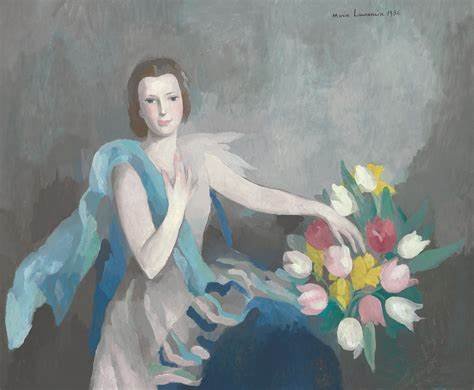
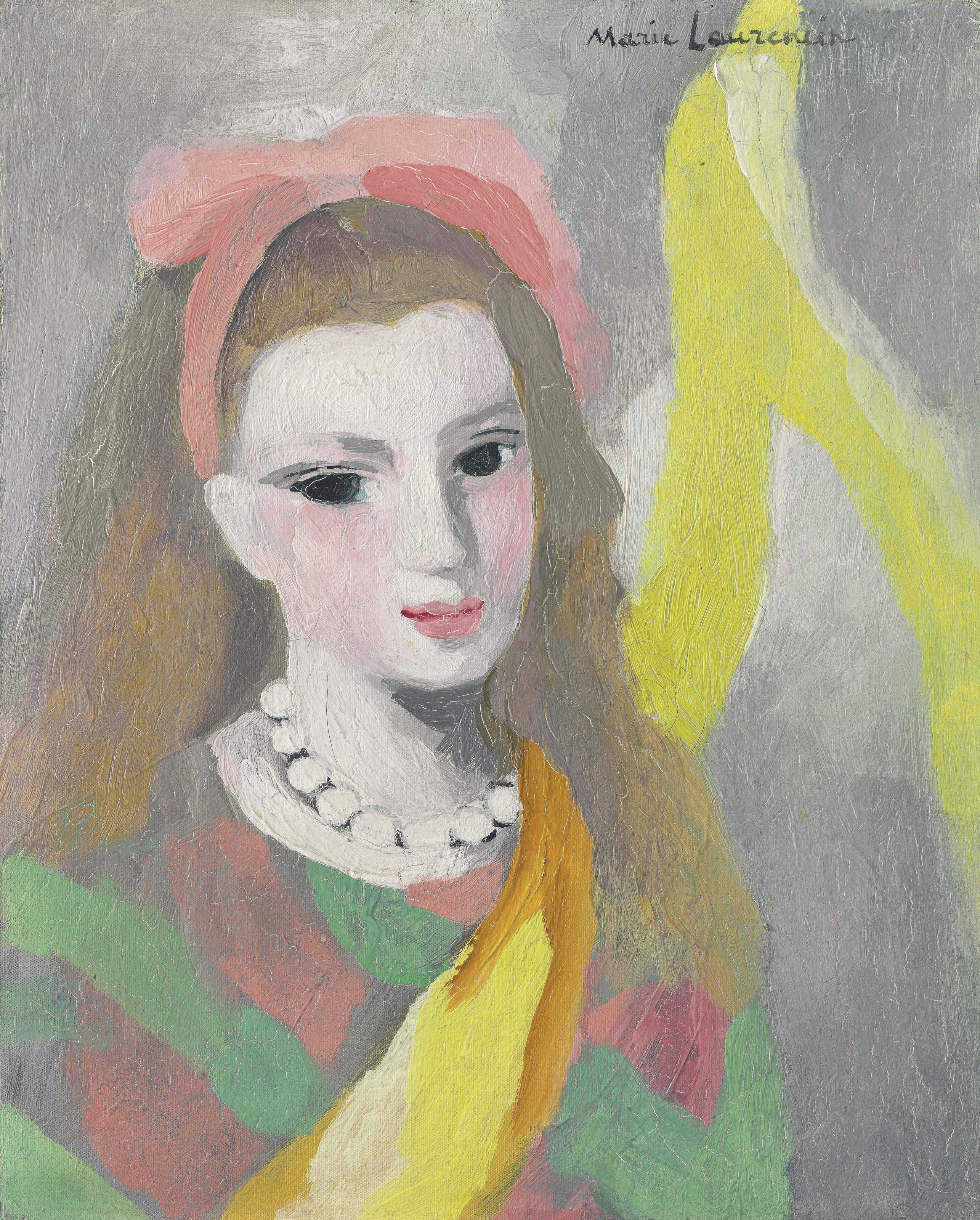
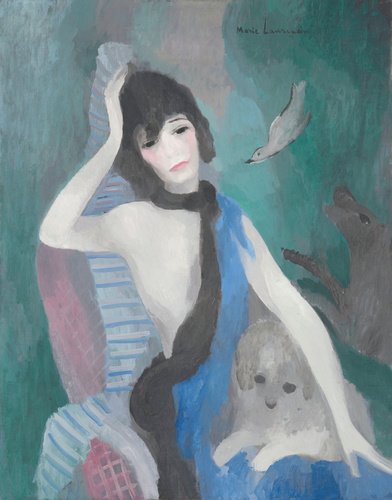
My blog today features the life and artwork of the nineteenth century French painter, Marie Laurencin.  She played an important role in the bringing out the female and lesbian identity in early-20th century modern art movements which at the time was dominated by men.  Her depictions were mainly of females, including many self-portraits but also many also accompanied by animals.  She prided herself with her choice of subjects famously stating:

“…Why should I paint dead fish, onions and beer glasses?  Girls are much prettier…”

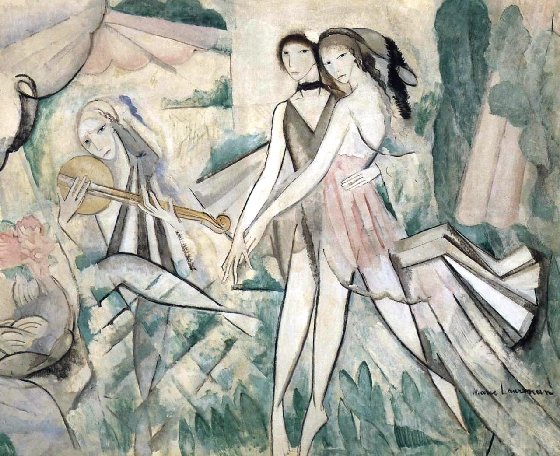
Le Bal élégant, La Danse à la campagne by Marie Laurencin (1913)

From early in life, Laurencin was predominantly interested in worlds in which women moved independently and peacefully, creating self-portraits and scenes featuring animals and women which were striking in their thematic consistency. Her fame came through her association with Cubism and she exhibited her work with the Section d’Or, (“Golden Section”), which was also known as Groupe de Puteaux or Puteaux Group, a collective of painters, sculptors, poets and critics associated with Cubism and Orphism.  Her work was also exhibited in America at the Armory Show, but later in her life she fought against her art being compartmentalised in a specific art movement.  She concentrated on her own aesthetic, favouring escapist imagery in pastel hues, that was at once decorative and radical in its embrace of feminine images.

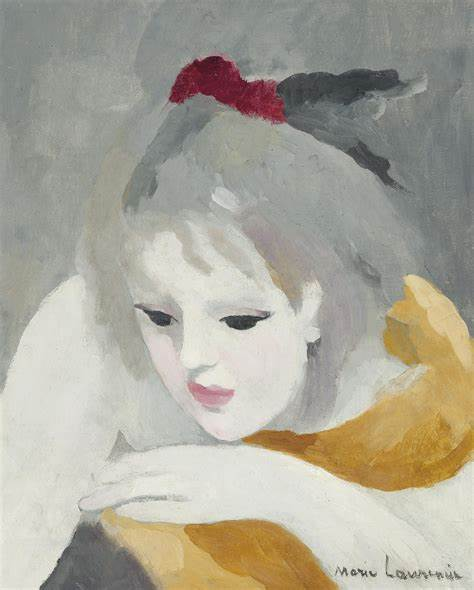
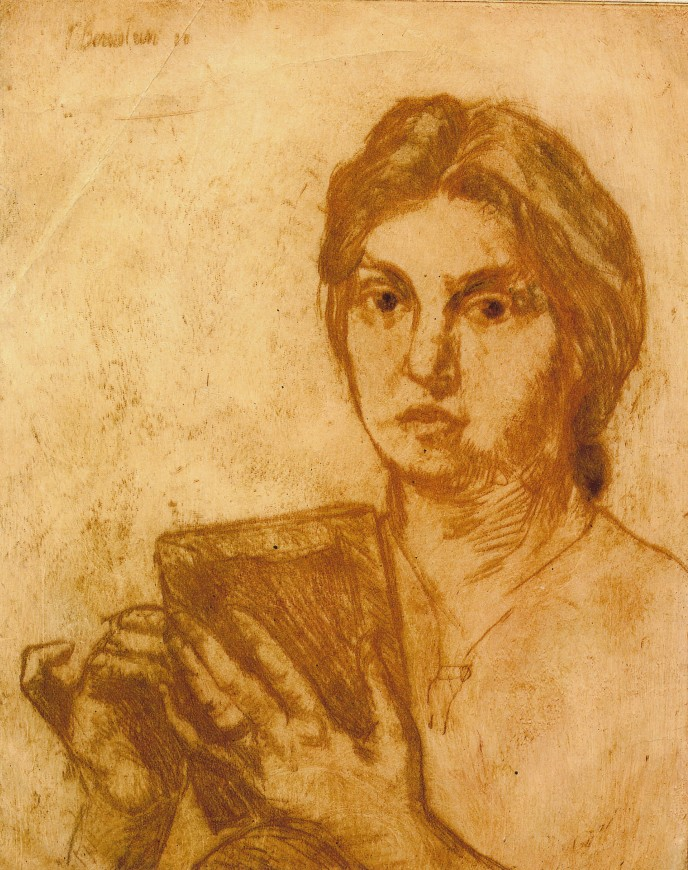
Tête pensive by Marie Laurencin

Marie Laurencin was born in Paris on October 31st, 1883, and lived in an apartment with her mother, Pauline Mélanie Laurencin, a seamstress. Laurencin was an illegitimate child but did not have the courage to question her mother about her absent father.  However, when she was twenty-one-years-old her mother disclosed that her father was the politician Alfred Toulet. Marie Laurencin’s achievements at school were limited although she w an avid reader and enjoyed sketching.  He failings at school precluded her from becoming a teacher, a profession favoured by her mother.   As a teenager, Marie found life difficult and this was presumably due to her classroom failings.  She became introverted and began to paint self-portraits which she carried on doing for most of her life.  After leaving school she studied the art of porcelain painting at the École de Sèvres with the flower painter Madeleine Lemaire.  In 1903 when she was twenty, she enrolled at the Académie Humbert where she worked on drawing, painting and printmaking. 

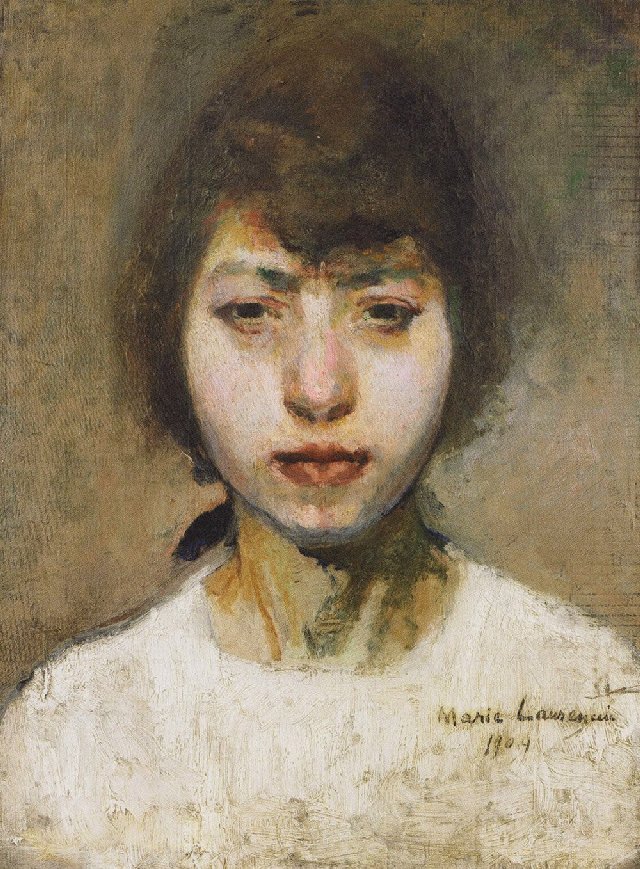
Self-portrait by Marie Laurencin (1904)

She completed one of early self-portraits in 1904 whilst studying at Académie Humbert.  Laurencin depicts herself wearing a white painter’s smock and her hair is tucked behind her face.  She stares out at us with calm confidence and yet serious expression and yet she has a piercing questioning stare. The palette Laurençin has used is dominated by browns, whites and pinks and she has cleverly used colour to model her face, with pinks shaping the sides of the nose and the eyelids and browns and greys indicating shadows around her cheeks.  Her lips, at the centre of the canvas, are red and full.  It was this love of self-portraiture throughout her artistic career that indicated her interest in depicting herself as the subject of her work which ties in closely to her concentration on female independence and self-fashioning. Laurencin always depicted herself as both an independent artist and as a modern woman.  The painting is part of the Musée Marie Laurencin, Nagano collection in Japan.

Portrait de jeune femme by Marie Laurencin

It was at the Académie Humbert that she first encountered fellow French students Georges Braque and Francis Picabia who would become famous artists of the twentieth century.  It was through her friendship with Braque that she soon became part of a group that included Picasso.

Natalie Clifford Barney

It was around this time that Marie first encountered Natalie Barney, an American writer born in Dayton, Ohio and after coming to Paris to live, hosted a literary salon at her Rue Jacob home, in Paris that attracted French and international writers.  Although the guests included some of the most prominent male writers of her time, Natalie Barney attempted to showcase female writers and their work.  For her, the events were celebrations inspired by the archaic Greek poet Sappho’s group on the island of Lesbos.  Many of these soirees were neo-Sapphic get-togethers, at which a crowd mainly comprised of lesbian and bisexual women would mingle and discuss links between female desire and creative production.  It was these events that were to influence Laurencin’s creative production which can be seen throughout her artwork.

Aléoutiennes by Marie Laurencin

Laurencin’s first print-making efforts came in 1904 with her illustrations of Pierre Louÿs’s The Songs of Bilitis, a collection of erotica, which basically was a set of lesbian poems celebrating erotic love between women. It was around this time that Marie Laurençin indicated her own preference for women.  In 1907, twenty-four-year-old Laurencin had her work shown at her exhibition debut at the Salon des Indépendants, which was held at the Gallery Clovis Sagot in Montmartre. Many of the Cubists painters had their artwork displayed at this event and they wanted to claim Laurencin as one of their own.  However, she refused to be compartmentalised with any one genre. 

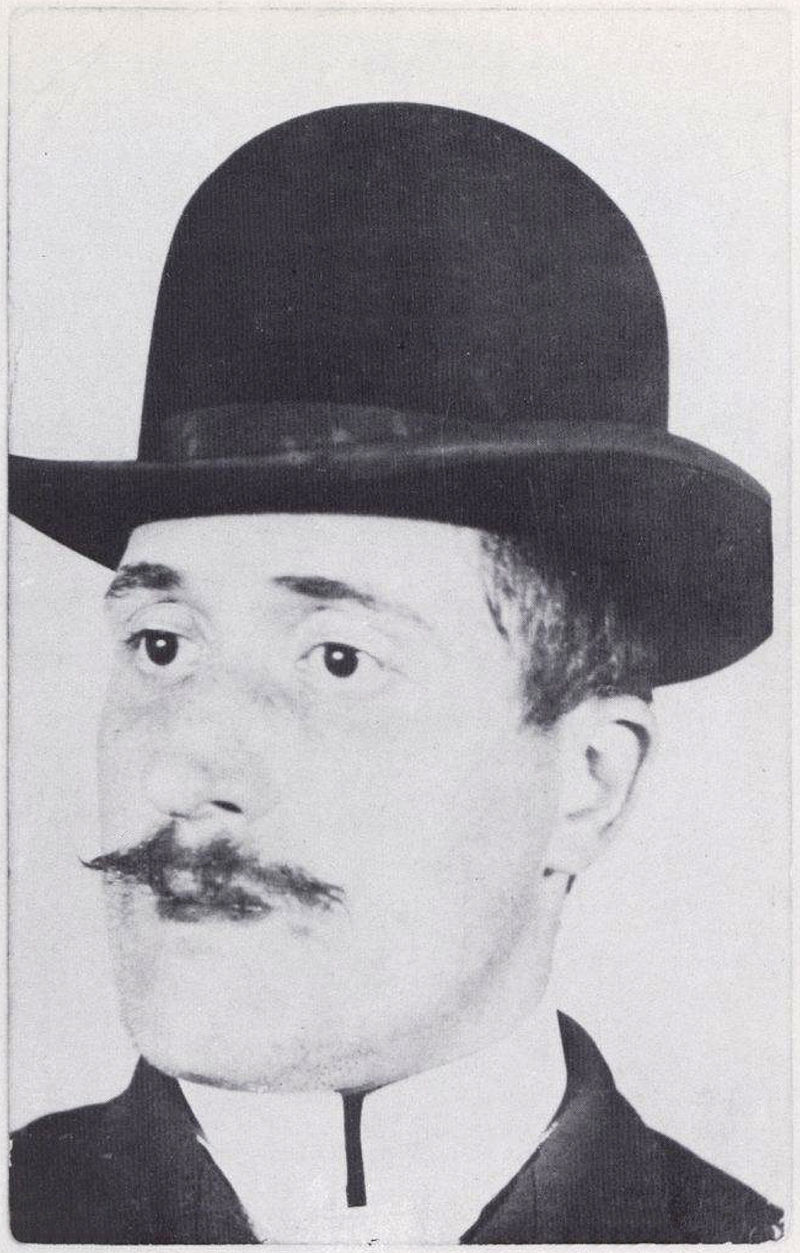
Guillaume Apollinaire,

Whilst attending the exhibition Pablo Picasso introduced her to Guillaume Apollinaire, the French poet, playwright, short story writer, novelist and art critic of Polish descent.  Laurençin and Apollinaire had a relationship that lasted for six years, during which Apollinaire wrote often about his lover and would refer to her as “Our Lady of Cubism” which of course led more people to associate her with the Cubism movement.

The Muse Inspires the Poet by Henri Rousseau (1909)

The relationship between the two lovers was a strange one. Both were illegitimate children of a single mother and whether this had something to do with it but they lived apart throughout their relationship. The pair never married, and it is thought that this was to the disapproval of their mothers and also they both believed in the modern lifestyle which reject the bourgeois convention of marriage. The “partnership” was depicted in Henri Rousseau’s 1909 portrait of Laurencin and Apollinaire, in 1909, entitled The Muse Inspires the Poet. The two were great influence on each other and their artistic vision so much so that Apollinaire referred to Laurençin as “a female version of himself” and his literary works inspired her dreamy imagery and the symbolism of her work.

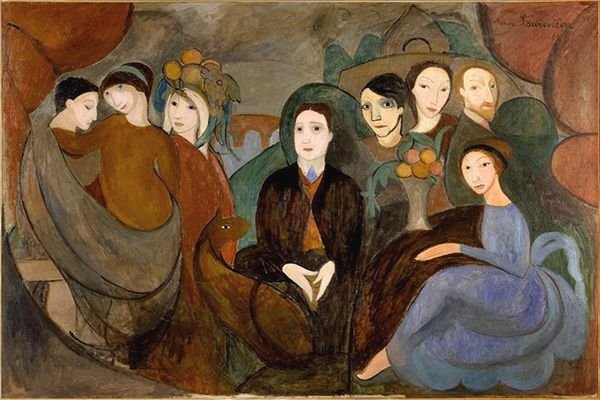
Apollinaire and his Friends by Marie Laurencin (1909)

Laurencin completed an interesting painting in 1909 entitled Apollinaire and his Friends.  The painting depicts a gathering of intellectuals, artists, and bohemians, with their host, Guillaume Apollinaire, the celebrated poet and art critic, in the centre of the painting.  He is surrounded by a group of friends.  Before him sits a dog who is depicted with its head turned in loving admiration of the poet !  On the left of Apollinaire are Gertrude Stein, the novelist and art collector, Fernande Olivier, a French artist and model known primarily for having been the model and first muse of painter Pablo Picasso, and for her written accounts of her relationship with him and an unknown woman with a lavish headdress.  To the right of Apollinaire, behind a vase of flowers, are the poets, Maurice Cremnitz, Marguerite Gillot, and Picasso.  Laurencin is seated on the ground wearing a pale blue dress.  She has turned her body turned toward Apollinaire while she looks out at us.  The colour of her dress and the colour of Apollinaire’s tie are similar and she has probably consciously did this to serve as a pictorially connection between her and him.  Laurencin gave the portrait to Apollinaire as a gift and she sold a smaller version to Gertrude Stein.  Apollinaire had the painting placed above his bed in his apartment on the Boulevard Saint-Germain, and it remained there throughout his life and after his death was preserved by his family. The painting can now be seen in the collection of the Musée Picasso in Paris

Laurencin’s paintings dating from around 1910 have a strong flavour of cubism. However, she once again stated that although the experiments of cubism fascinated her, she was adamant that she would never become a cubist painter because she was not capable of it.

…………to be continued.
Jessie and Aniza McGeehan

Jessie Mary McGeehan

Jessie Mary McGeehan was born to Patrick and Mary McGeehan in 1872 in Rawyards, Airdrie, about twenty miles east of Glasgow.  She had four younger sisters, Annie Louise, known as Aniza, born on December 24th 1874, Mary Catherine born March 6th 1877, who in September 1904 entered the Order of Sisters of Notre Dame, taking her final vows in December 1914 and becoming Sister Callista. Agnes McGeehan was born April 26th 1882 and she was the one daughter who helped the mother with the running of household affairs.  Agnes was the only one of the McGeehan sisters who never went for art training. The youngest sister was Lizzie who was born on May 20th 1883. Lizzie was eighteen when she attended the Glasgow School and remained there for for five years.  Lizzie exhibited her watercolours, signing them Phil Winsloe, from 1908 to 1918, the year she died of pneumonia, just thirty-five years old.   There was also two brothers Charles Vincent born in 1882 and William born in 1884. However this is the story of the two eldest sisters, Jessie and Aniza, who made names for themselves in the world of art.

Jessie and Aniza’s father was Patrick McGeehan, whose own parents had emigrated from Ireland in the 1820s. He was a grocer and spirit dealer in Black Street, Rawyards, who later became a carriage hirer.  Patrick was also a talented musician and amateur artist who must have reached a high standard as his painting The Blasted Oak, Cadzow was accepted by the Royal Scottish Academy in 1879.  He was very involved in the town’s community and church life.  There can be no doubt that Patrick encouraged his children to progress with their own artistic ambitions.

Good Morning by Jessie McGeehan

In the March of 1888, Patrick’s eldest daughter Jessie, still only fifteen years of age, enrolled at the Glasgow School of Art.   That September, two of her younger sisters, Annie Louise, known as Aniza, aged thirteen, and nine-year-old Mary Catherine joined her.  One would have thought that they would have been too young to study at the Art School but when examining the attendance register of the School it can be seen that there were many other students of that age.  It is thought that the deciding factor for their admission was down to them having an older sibling or family member at the school.  Jessie and Aniza studied there for seven years but Mary Catherine McGeehan, according to the Art School register, only completed one year before leaving.   While studying at the art college the girls won a number of prizes in local competitions and gained free studentships to the school.

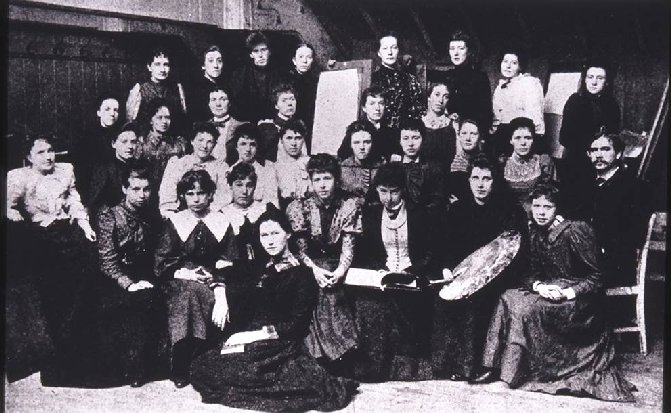
The photograph above shows the female students who were attending the 1894/95 session at Glasgow School of Art Archives.  Aniza McGeehan is standing immediately above the seated gentleman, Francis Newbery, who was head of the Art School, and her sister, Jessie, is the third lady on the right of Newbery.

Dinan by Jessie McGeehan

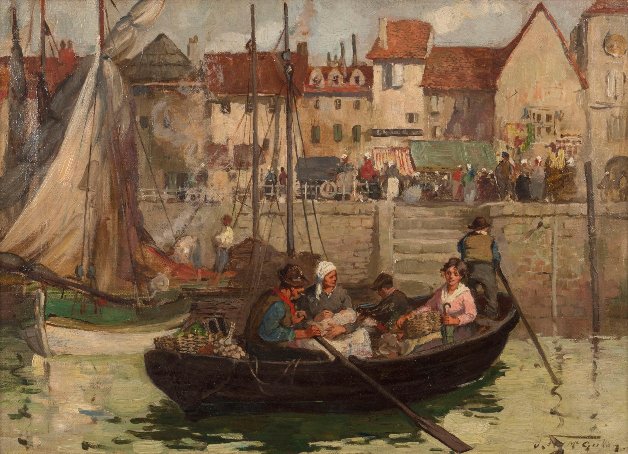
After leaving the Glasgow School of Art in 1895 Jessie continued her studies in Paris. It was around this time that Jessie’s paintings had a “flavour” of France as can be seen in her work entitled Dinan, depicting the Breton riverside town with a view of the river, bridge and buildings.  Other paintings of hers depicting the French way of life were entitled Un Bon Coin and Flower Sellers, Paris which were exhibited at the Exhibition of the Royal Glasgow Institute of Fine Arts (RGI).  From the last decade of the nineteenth century Jessie’s work, both oil and watercolours, were shown at exhibitions at the Royal Glasgow Institute of Fine Arts, the Royal Scottish Academy and the Walker Art Gallery, Liverpool and in 1901 her work was shown at the Royal Academy, London.

Harvesting Plums by Jessie McGeehan (1932)

In 1897 Jessie set up her own studio at 134 Bath Street, Glasgow which for a time she shared with her sister Aniza.  Shortly after the turn of the century Jessie’s artwork was being appreciated throughout Britain and abroad.  In the art magazine, The Studio, there was an article about female artists and part of which was dedicated to Jessie:

“…In any notice of the lady painters of Glasgow, mention must also be made of Miss McGeehan’s bold and striking work. She is an ambitious artist whose pictures improve steadily from year to year; she evinces considerable skill in brushwork, and much that is fine and poetic in the inspiration of her work…”

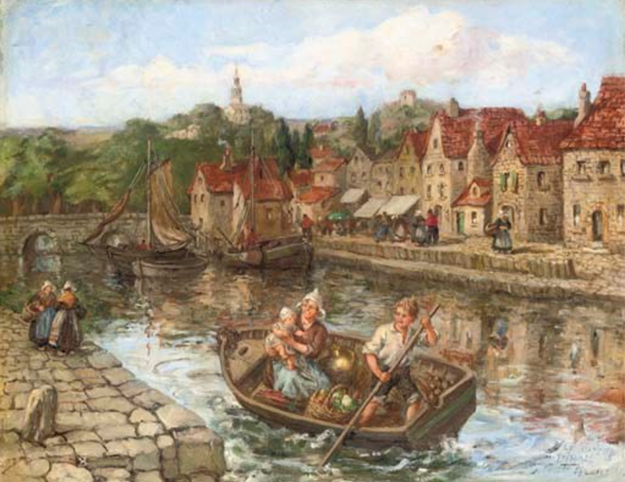
On a Dutch Canal by Jessie McGeehan

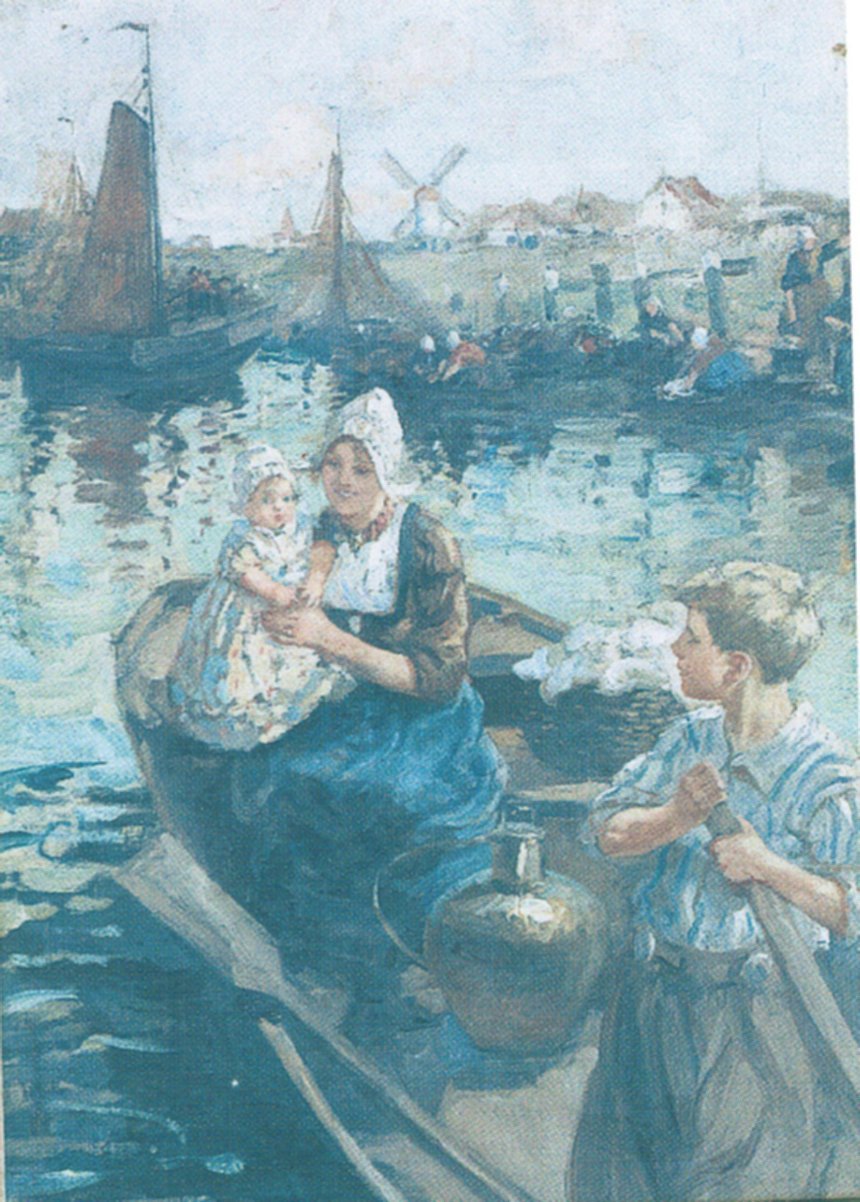
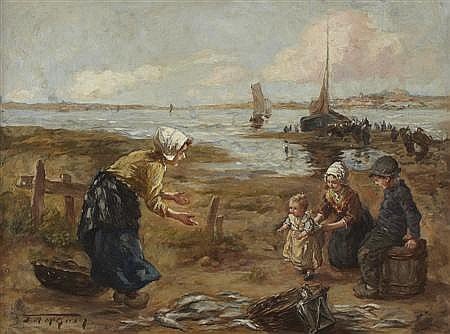
During the early 1900s, Jessie spent time in Holland as many of her works, which appeared in exhibitions between 1906 to 1913, featured Dutch subjects. Her reputation as a talented young artist grew and the Scottish newspaper, the Scots Pictorial wrote about her growing reputation in the art world by 1919:

“… Jessie McGeehan – ‘One of our youngest Painters whose work has earned for her a high place among British Artists. Trained at the Glasgow School of Art, and in Paris, where she enjoyed the friendship of some of the greatest painters and sculptors of the age, she has added to this training by travel and an exhaustive study of the treasures in the great European galleries. Miss McGeehan contributes to the Royal Academy and other important art exhibitions…”

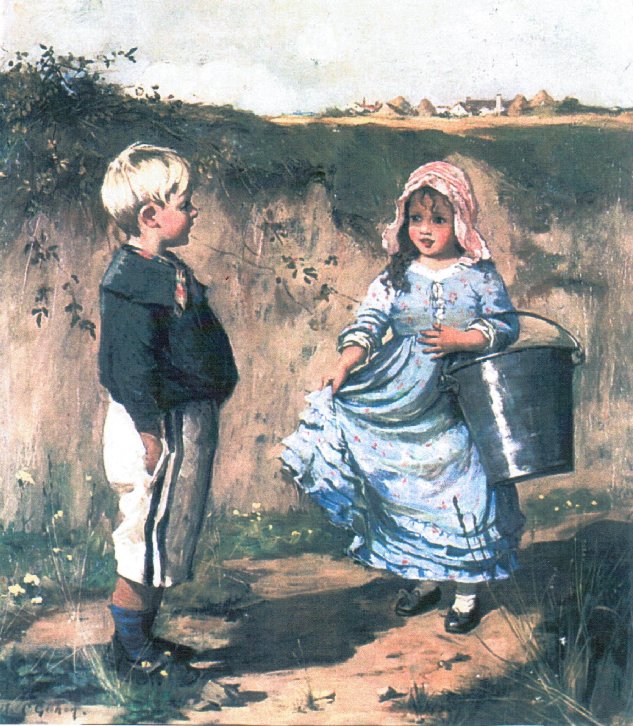
Children playing on the Beach by Jessie McGeehan

The year 1915 was the beginning of a sad time for the McGeehan family. That year their son, William who was just thirty-one years-old was reported missing presumed dead, while serving in France with the King’s Own Scottish Borderers. Three years later in 1918 his brother, Charles Vincent, a joiner who was only thirty-six, died in the Western Infirmary, Glasgow and his younger sister Lizzie died of pneumonia, aged 35.  One year after their deaths and after forty-eight years of marriage, Patrick’s wife Mary died at their home in Montgomerie Street, Maryhill, Glasgow. Jessie’s father Patrick died on May 3rd 1924.

Glass mosaic in St. Augustine’s Church by Jessie McGeehan

Jessie McGeehan created a glass mosaic panel for St Augustine’s Church in Langloan, Coatbridge. She also created a glass mosaic in fourteen panels depicting the Stations of the Cross for St Aloysius Church in Garnethill as well as undertaking work for St Mary’s Church in Lancashire.

Aniza McGeehan by Jessie McGeehan (1929)

Jessie McGeehan’s 1929 oil portrait of her sister Aniza is in the North Lanarkshire Museums collections. This was one of two oil paintings exhibited in the 1929 Walker Art Gallery Autumn Exhibition. At the same exhibition Aniza exhibited a bronze bust of her sister, Jessie.

Running parallel to Jessie’s artistic life was her sister Annie Louisa (Aniza) artistic journey.  Aniza was the second of eight children, born on December 24th 1874.   She was two years younger than Jessie but, like her and her younger sister Mary, she attended Glasgow Haldane Academy Society of Arts, better known simply as the Glasgow Art School.  Aniza’s time at the art school was one of great success, winning a local art scholarship, and in 1895 she was joint winner of the Haldane Travelling Scholarship which came with a £50 prize and with this she was able to afford a trip to Paris in 1896, where she established her own studio and enrolled at the Colorossi Academy.   She began to exhibit her work, paintings and sculptures, and in 1897 she had her sculptured bust of Lizzie Bell shown at that year’s Glasgow Fine Art Institute exhibition.

Ferry on the River Dordogne by Jessie McGeehan

Around this time, her father sold his licenced grocery business in Coatbridge and moved to Glasgow.  Aniza left Paris and returned home to Glasgow where she shared a studio at 134 Bath Street with her sister, Jessie. She had her portrait of school inspector Dr Smith shown at two exhibitions in 1899.  The art critics stating that the portrait was one that evoked “masculine strength” which was in complete contrast to her sculpture work, a bust of Mrs D. Campbell Rowat, which was hailed by the critics as “delicate and refined”.

A Day at the Dunes by Jessie McGeehan

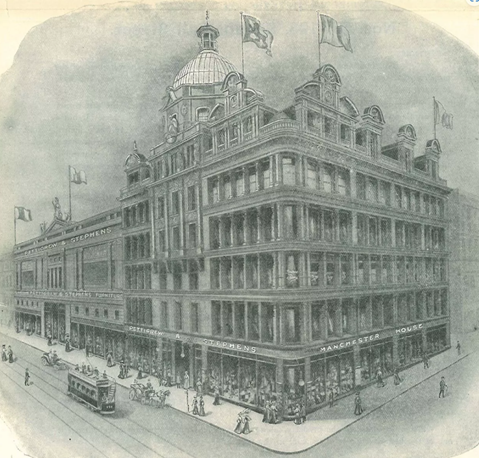
Towards the late 1890s, Aniza received the commission for ten sculptures for Pettigrew and Stephens’ Store, Sauchiehall Street, Glasgow and according to her family she barely had time to finish the commission before her marriage in St Aloysius Church, Garnethill on June 12th 1900 to Vincent Murphy, a timber merchant from Liverpool.  The service was conducted by her uncle, Father Charles Brown.  Clearly Aniza’s talent had been recognized by many of the leading figures in the Glasgow Art World.

Pettigrew and Stephens’ Store, Sauchiehall Street, Glasgow .

Sadly, this magnificent building, which encompassed many of the outstanding talents in Glasgow, was demolished in 1974. Fortunately, Roger Guthrie, a leading member of the Glasgow conservation movement,managed to save two of Aniza’s sculptures. One was gifted to The Hunterian Museum and the other to the Scottish Amicable Building Society in Stirling. Aniza moved to Waterloo Park in Liverpool which at the time had a number of Scottish families living there.  Vincent and Aniza went on to have four children, but only John Vincernt and Marie Louise (Marielle) survived childbirth. Despite the work involved in raising a family she continued with her sculpture work and in 1903 had one her bronze works, Monsignor Nugent, exhibited at the Royal Academy, London. 

Learning to Walk by Jessie McGeehan

In the mid-1930s, Jessie had moved to 152a Renfrew Street, which was to remain her studio and home for the rest of her life.

Vincent and Aniza flanked by their son John Vincent and their daughter Mariella

Sadly, Aniza’s daughter Marielle died of pneumonia, when she was only nineteen years of age. Following her marriage Aniza continued to exhibit and take commission work, but soon this became too much due to family commitments resulting in her exhibiting less frequently than Jessie.

Annie Louise (Anzia) McGeehan

Anzia McGeehan died in September 2nd 1962, aged 87.

Jessie McGeehan died in Glasgow in 1950, aged 78


Information for this blog came from the usual internet sources plus:

The Parish of St Augustine Coatbridge website – A Family of Artists.

The Glasgow School of Art

Walasse Ting

Walasse Ting (1929-2010)

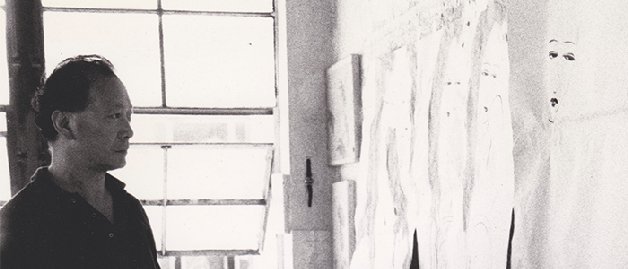
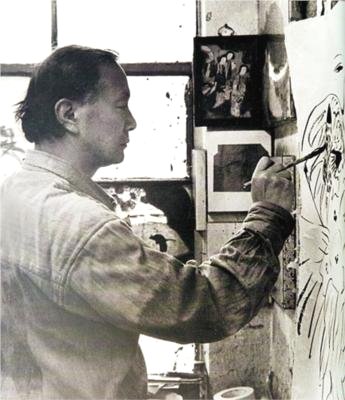
Walasse Ting at work in his studio

I have just returned from another stay in the Algarve where I could finally see some sun and experience warm weather.  Whenever I visit the Algarve, I always visit the Art Catto gallery in Loule which I have often written about.  This time I not only got a chance to return to the excellent small gallery in the centre of town,but take up their invitation to the opening of an exhibition at the Conrad Hotel in Quinta do Lago.

Conrad Hotel, Quinta do Lago, Algarve

The Conrad Hotel is, to say the least, a spectacularly lavish hotel, and the entrance foyer rooms where fine places to exhibit the expensive works of Walasse Ting.  Seven years after his death, Walasse Ting’s has been given a place as a giant of 20th century paintings. He is such a captivating figure and the art he has produced over his 50-year career reveals many influences.   Today, his artwork is in public collections which include MOMA, New York; Guggenheim Museum, New York; National Gallery of Chicago, Chicago; Tate Modern Museum, London; Centre Pompidou, Paris; Hong Kong Museum of Art, and the Shanghai Art Museum. 

Beautiful Ladies by Walasse Ting

Many devoted private collectors also own his artwork. The latter group is growing especially fast, thanks in part to the rise of China as an economic and cultural force.  From the very early works, Walasse Ting’s paintings have charmed viewers with his use of vivid colours and light-hearted mood.

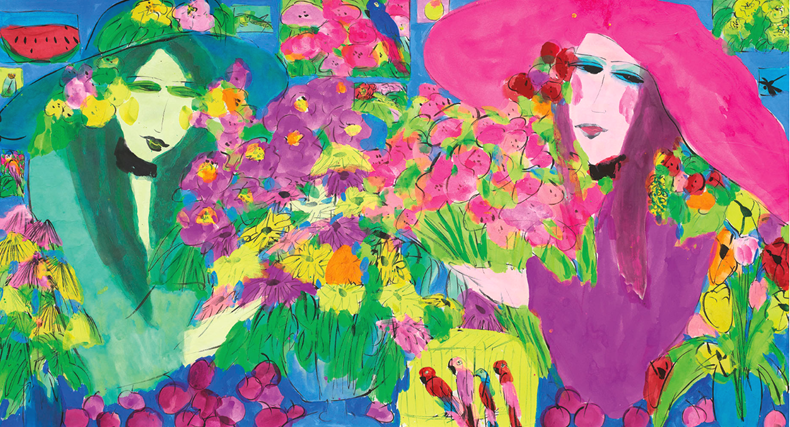
Ladies with Parrots by Walasse Ting

Walassi Ting is a Chinese artist who was born in Wuxi, China in 1929 but in fact was raised in Shanghai.  Ting is primarily a self-taught painter, sculptor, graphic artist, lithographer and poet, who began his life as an artist at a very young age. Ting studied at the Shanghai Art Academy before he left China in 1946 and after living briefly in Hong Kong set sail for France in 1950.   Times were hard for the young aspiring artist continually battling against poverty.  His stay in Paris coincided with the rise of the avant-garde artistic group known as CoBRA.   The word Cobra is derived from the French names of the cities of Copenhagen, Brussels and Amsterdam.

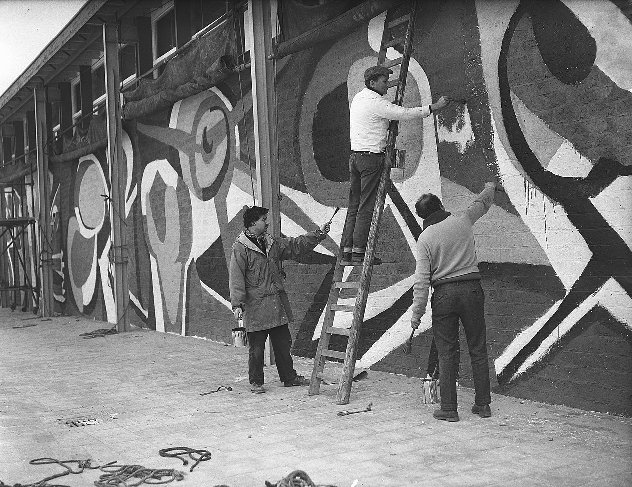
CoBra member Karel Appel working on a mural in Rotterdam for the Manifestation E55

The artists had founded the CoBRA group during a major international conference held in Paris in 1948 and they came from these three European capitals.  Ting became acquainted with all the members of the avant-garde group, most notably Pierre Alechinsky and Asger Jorn.

Women with Flowers by Walasse Ting

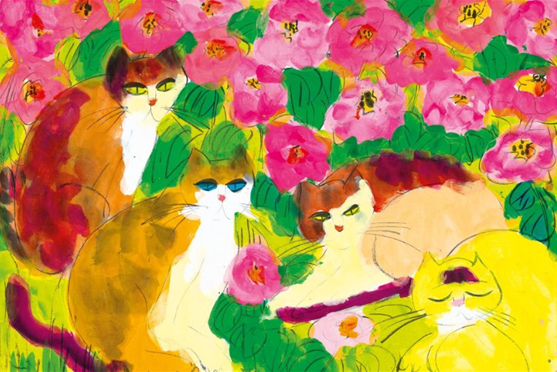
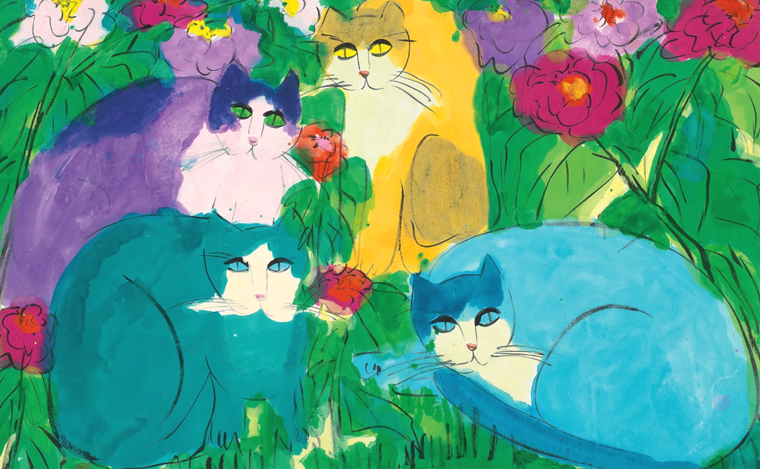
Walassi Ting left Paris and arrived in New York in 1959 and participated in the Pop Art and Abstract Expressionism movement where his closest associates were artists Sam Francis and Joan Mitchell, members of the second generation of Abstract Expressionist painters.  He sold many paintings which often featured bold dripping strokes.  It was just over a decade later in 1970 that Walassi Ting created a distinctive style using calligraphic brushstrokes to define outlines and filling flat areas of colour with vivid paint. After 15 years of abstract painting, Walasse Ting’s interest in the body and his exploration of sexuality led him back to figuration in the 1970’s.  Like the colour master, Gauguin, Ting made a number of journeys to Tahiti continually on the lookout for the exotic colours that he loved. The subject of his paintings often contained women, cats, birds and peacocks. 

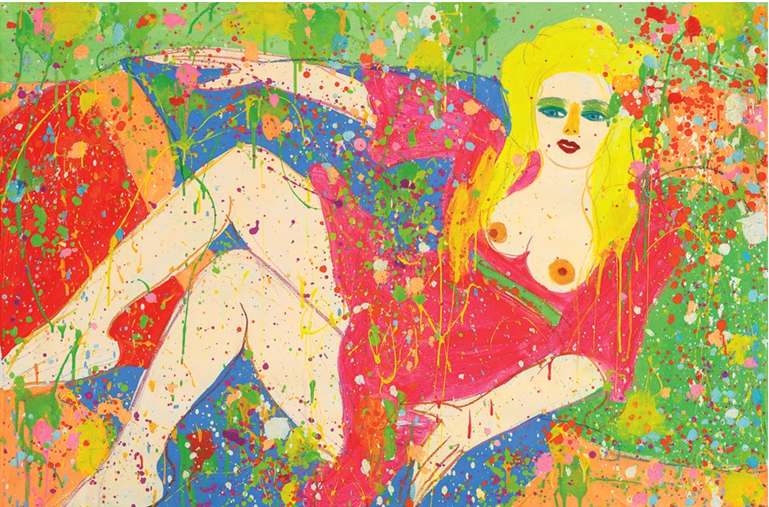
Kiss me, Kiss me by Walasse Ting

Ting embraced sexual desire through his art, as he conveyed his inner emotions through the fluent and expressive brushstrokes as he captured the alluring beauties set against a background of uncontrolled vibrant acrylic colours that break free into a dreamscape of sensual pleasure. In his 1974 acrylic on paper work entitled Kiss Me, Kiss Me, the title of the work and the bare-breasted model conjure up the emotions of sexual passion.   The work comprises of flat planes of colour and simplified lines, and the woman exposes herself to us, and is drenched in a tumult of multicoloured drips as if she was incorporated into an abstract expressionist canvas.

Come Talk to Us by Walasse Ting

In the summer of 1976 Ting produced his acrylic on canvas work entitled Come Talk to Us which depicted two half-length female figures who stare at a plant-like bouquet of colours at the centre of the image, an image which divides the image in two. The mirror-image like effect creates a sense of calm and balance, and the dabs of green, blue, and red paint trickle slowly along the canvas, exuding a melancholic beauty like that of gazing through a window on a rainy day. The title of the painting, Come Talk to Us, questions the viewer and echoes a lonely yet tantalizing longing. Ting has once again used the depiction of his figures to express the feelings inspired in him by objects of beauty.  Ting explained:

“…When I see a beautiful woman [and] I see flowers, its beauty makes me feel intangible, melancholy, love, refreshed, different, and reborn. I want to use different colours to express my inner feelings and emotions in my paintings.”

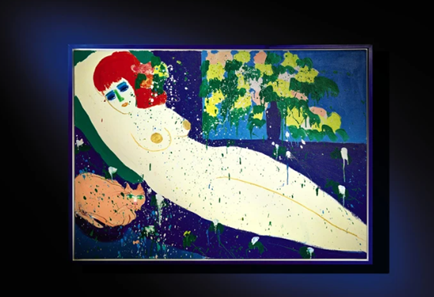
Eat me, I’m a Fish b y Walasse Ting

His 1978 work, with the strange title, Eat Me, I’m a Fish, Ting has splattered the paint over the entire canvas giving it the impression of a faint effervescence. This oblong depiction of the woman suggests the shape of a fish and the title boldly summons the viewer to come and consume its imagery, once again arousing the viewer’s culture’s sexual drive. The figure transects the diagonal of the picture plane while a cyan blue rectangle slices off the upper right quadrant of the image, giving the impression of a window.  Eat Me, I’m a Fish is Walasse Ting’s vivid interpretation of everyday life, and yet the composition is an obvious reference to Édouard Manet’s masterpiece Olympia. This painting could be thought of as Ting’s homage to a modern master, reinterpreting the essence of this classic painting and challenging the earlier artist’s greatness.

At the Conrad exhibition, many of his paintings were watercolours on rice paper.  They were both delicate and ornate, rendered with detail and repetitive patterns.

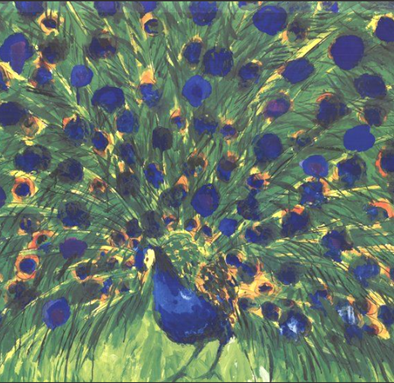
Peacock by Walasse Ting

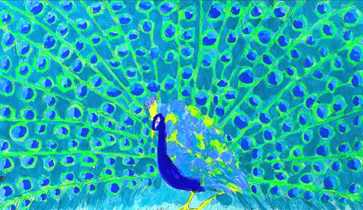
Peacock II by Walasse Ting

Ting frequently depicted cats, flowers and birds as in his painting, Peacock, in which the ‘eyes’ of the bird’s plumage radiate outwards across the large surface of the painting, creating a striking wallpaper of electric blue, yellow and green. The controlled circles, tightly arranged, create an arresting optical vibration.

Cat Series by Walasse Ting

Cat Series by Walasse Ting

One very unusual thing at the exhibition was a display board giving a brief bio. by Ting himself It was also in the exhibition brochure. That is not strange in itself but what was unusual and some may say inappropriate, was his summary of his life “achievements”, year by year.

In the mid-1980s, he set up a studio in Amsterdam and in 2001 he permanently settled in that city. He was unable to create after a stroke in 2002. Ting died on May 17, 2010, at the age of 81 in New York.

Graham Clarke

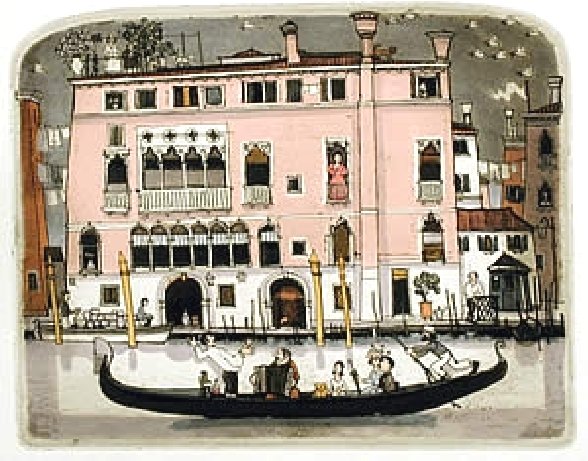
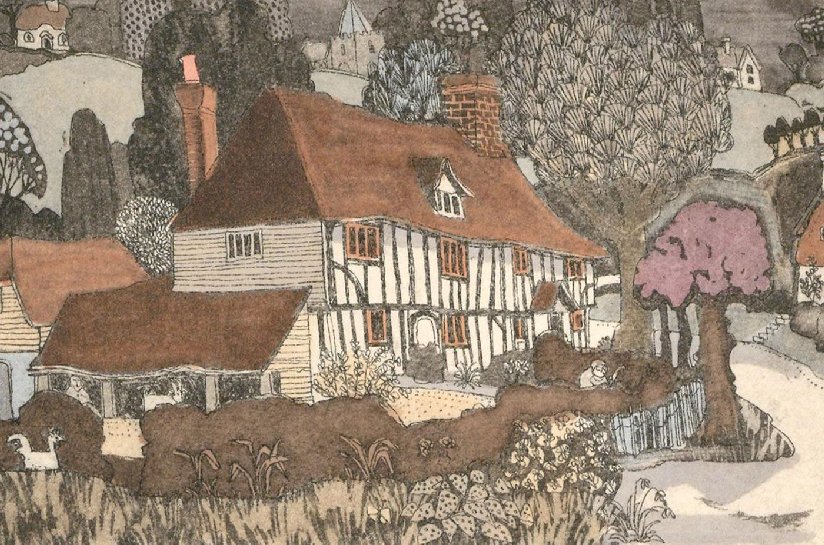
What is the reason behind you placing a paintings or prints on your walls at home?  Is it because it reminds you of somewhere you have visited or maybe it is a depiction of somewhere nearby?  Maybe it is a portrait of a loved one or somebody famous whom you admire.  In this period of our lives when there is so much suffering going on around us then sometimes the painting is a depiction which simply lifts our spirits and makes us smile.   Today I am looking at an artist and his work which fulfils that category.  Let me introduce you to the English author, illustrator and humourist Graham Clarke. He has created over five hundred images of his beloved English rural life. He has focused on how the ordinary Englishman viewed Europe. Through his quirky depictions, he brings his own unique brand of humour to his interpretation of past and present history through the eyes of the common man.

Graham Clarke

Graham Clarke was born on February 27th 1941 in a village in Oxfordshire during the Second World War.  His father Maurice was a Midland Bank employee.  He, his mother and his elder brother, Anthony, were evacuated there from their three-bedroomed semi-detached home in Hayes, Kent.  When Graham was two years old the family spent a couple of months at the Cornish village of Denabole, which lies close to Trebarwith with its large expanse of sandy beaches which was always remembered fondly by Graham.  In his teenage years Graham and the family would spend time at the coastal towns of Broadstairs and Looe and it was those holiday times on the coast that made a great impression on him. 

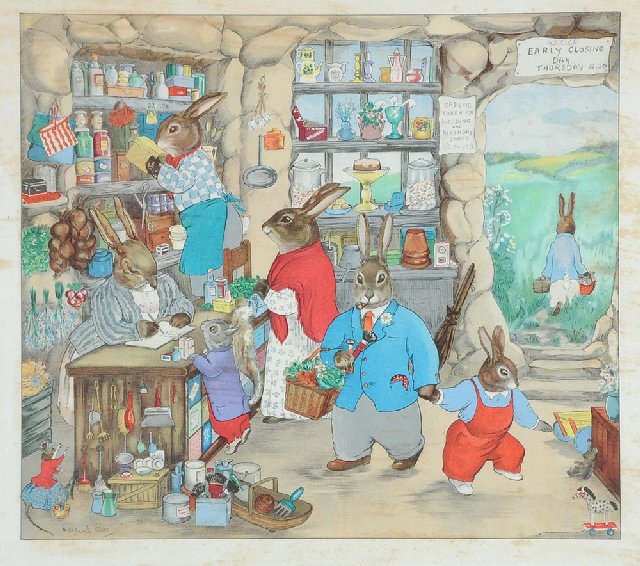
The Flippits.  A Story of the Rabbit, Fox and Badger by Margaret Ross.

On his fourth birthday in 1945, with the war at an end, back living in Kent, Graham received a birthday present which was to remain in his memory in the years that followed.  It was the children’s book, The Flippits.  A Story of the Rabbit, Fox and Badger by Margaret Ross.  It was a make-believe world, a world of peace unlike the threatening years that he and his family had experienced during the war.   It was an underground world of a warren with its cottagey interiors.  It was a book with illustrations which fuelled the imagination of four-year-old Graham.  Looking at many of Graham’s multi-figured depictions one can look back at the multi-figured illustrations from this book and realise the connection.

A la Carte by Graham Clarke

In 1949, when Graham was eight years old, the family left their home in Hayes and moved to a larger three-bedroomed semi-detached house. large enough to also accommodate Graham’s paternal grandfather  who had been widowed.  As a teenager, Graham was described as being an observant and sensitive child by his mother who would spend his free time cycling and exploring Hayes Common.  He and his brother would also help their parents with their love of amateur dramatics and their AmDram group, The Hayes Players.  Graham’s brother Anthony would help his parents by aiding with set building jobs and Graham would assist with painting stage portraits and stained glass windows.

Miss Jay’s Wood by Graham Clarke (1952)

One day Graham’s father came home and presented his son with a box of felt-tipped brushes and spirit-based inks and after the usual child-like sketches his artwork improved and he began to use watercolours for his countryside depictions.  The box of watercolour paints with sable brushes and a set of oils had been a Christmas gift from his aunt and uncle in 1952 and on that Boxing Day he completed his first oil painting entitled Misses Jay’s Wood, which was owned by a close-by neighbour.  The painting was bought by one of the neighbours for ten shillings.  Graham could immediately envision himself as becoming a professional artist !

Close Up Please by Graham Clarke

Meanwhile, Graham attended a small private school who fast-tracked their pupils’ education to be of a standard which would allow them to pass their 11+ exams.  Whilst attending this school Graham let it be known of his future aspirations as a professional artist.  However, he received no encouragement from his teachers, in fact, they told him it would be a pauper’s life for him if he were to realise his artistic dream.  Notwithstanding this, he clung to his ideas and passed the 11+ exams and entered the Beckenham and Penge Grammar School in 1952.  During his time there he enjoyed the geography and history lesson through his love of map-making and his fascination with castles and life for the working-class people of those times. 

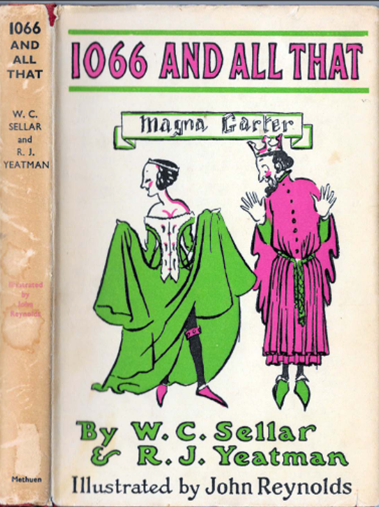
A book at the time which fascinated Graham was 1066 and All That, a tongue-in-cheek reworking of the history of England, written by W. C. Sellar and R. J. Yeatman and illustrated by John Reynolds.

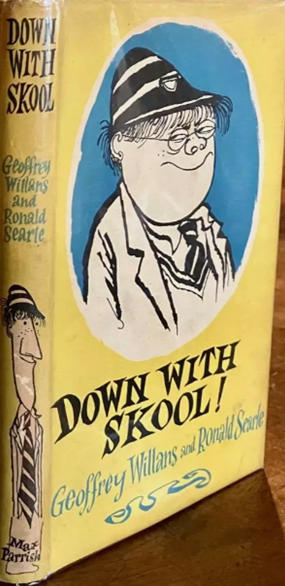
Another book which Graham loved was Down with Skool, by Ronald Searle which was one of his 1953 Christmas presents.  He became interested in caricature.  He excelled at art under Ronald Jewry, his art teacher who encouraged his students to use their imaginations when they painted.  Graham Clarke enjoyed his time in the art class.

Graham received an excellent grade for his GCSE ‘O’ level Art and managed to scrape through Maths and Science sufficient enough to enter the sixth form ‘A’ level on a Science course but he hated it.  His former art teacher, Jewry, approached his father and suggested that his son should abandon his A-level Science course and take up art instead.  No doubt Graham had already spoken with his father over his future.

Graham’s favourite artist at this time was Samuel Palmer, born in 1805, a British landscape painter, etcher and printmaker who was also a prolific writer. Palmer was a key figure in Romanticism in Britain and produced visionary pastoral paintings.  Graham believed that although he knew about the works of Palmer he realised that to get to really know him he had to visit the countryside around Shoreham, in west Kent, where Palmer had been so inspired.  During his studies at the Art College Graham had enrolled in the History of Art Course and went on a short train journey to Shoreham.  Graham was mesmerised by what he observed.  He later wrote:

“…Palmer loved this place and love it is that makes me walk here too.  Every lane is climbing up its hill [and] down again to the river, over the bridge and up and on again climbing and twisting. These are not mountains here there is no raging torrent, the trees are not giants and all is on a small scale, quiet and complete, Palmer decided God (and Nature) was at its best in this little valley of vision. Twenty miles from here is peace…”

Round and Round by Graham Clarke

One of his tutors as the Beckenham Art School was Wolf Cohen who Graham described as “small, fiercely energetic and a model of dedication” and it was he who instilled in Graham that art should be life-absorbing.  Although Graham’s figure drawing was not the best he managed to improve that during the time he spent in Susan Einzig’s life classes.  She introduced Graham to the Laurie Lees’ book Cider with Rosie, illustrated by John Ward.   It was these delicate and sensitive drawings that appealed to Graham.

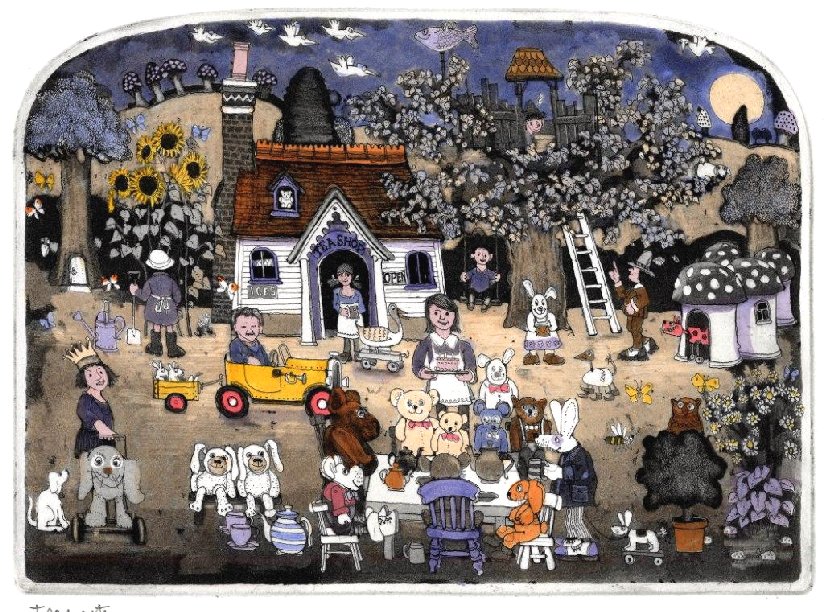
Tea Party by Graham Clarke

At the start of his final year at the art college, Graham Clarke had to make a decision about his future.  His tutor Wolf Cohen persuaded him to apply for a post-graduate position at The Royal College of Art and along with half a dozen of his fellow students he would spend weekends at Cohen’s studio building up his portfolio which would be needed when he applied to the college.  Graham succeeded in his entry interviews and portfolio submission and in 1961 he became a student at the prestigious Royal College of Art.

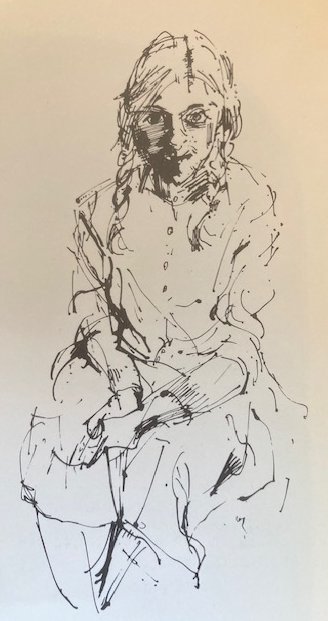
Wendy by Graham Clarke. Pen and ink drawing from his sketchbook.

In his late teens Graham had been a member of various Youth Clubs, one of which was the Bromley High Street Methodist Youth Club and it was here that eighteen year old Graham first met fifteen year old Wendy Hudd and the two of them became involved with the organising of plays, pageants and parties.

The Four Seasons by Graham Clarke

Graham’s first year at the Royal College of Art was a disaster.  He felt totally isolated from his fellow students and their interests in art.  Whereas they looked for their inspiration by studying modern American magazine depictions of pop stars and flashy cars and motorcycles, Graham clung to his love of all things rural or historical and soon realised that he was going to be isolated by such loves.  As he said, he was destined to “plough a lone furrow”.  He decided to stay with what he loved and he was proud of this sincere decision and when challenged about it, would just say that he did not need to “ride another horse”.  Graham described his first year as being a dark tunnel and yet he added he could just make out a light at the end of it.  Graham was fortunate to have the support of Wendy and her family during those difficult twelve months.

Serenata by Graham Clarke

At the Royal College of Art Graham specialised in illustration and printmaking and had the chance to follow his interest in calligraphy.

Billingsgate Market by Edward Bawden (1967)

During his time at the Royal College of Art he was greatly influenced by one of his tutors, Edward Bawden, an English painter, illustrator and graphic artist, who was known for his prints, book covers, posters, and garden metalwork furniture. 

Yeomans by Graham Clarke

It was through Bawden’s influence that Graham took an interest in producing prints of traditional landscapes, the depictions of which highlighted local areas.  One such print featuring a rural scene was Yeomans which depicted a quaint English street scene featuring cottages and trees. 

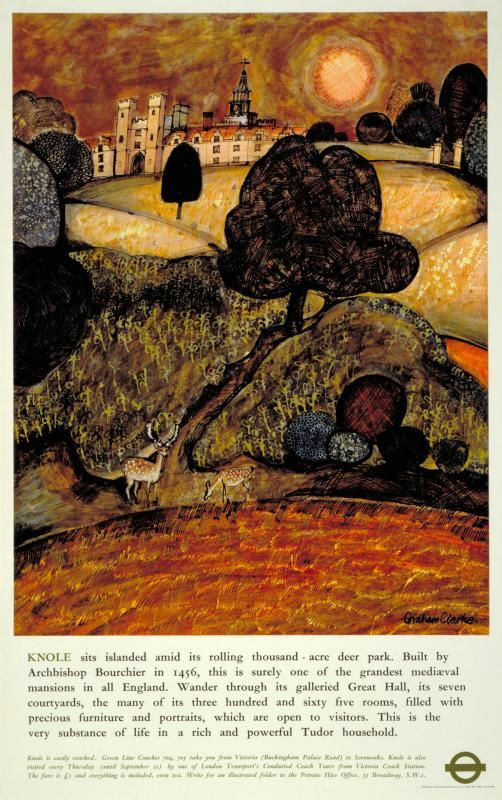
Graham finally graduated in 1964, which, fortunately for him, coincided with peoples’ interest in buying prints which resulted in a flourishing sale of them.  His artwork was admired and he soon received commissions for his depictions from the likes of Editions Alecto and London Transport Publicity Department and so a bright career for him began.

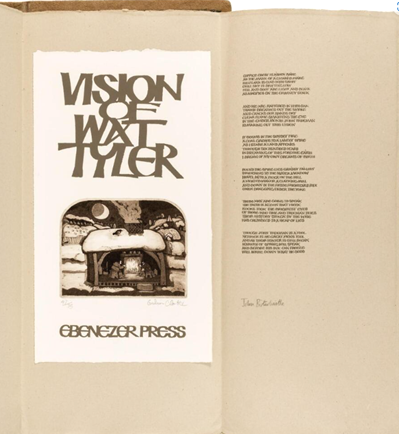
Vision of Wat Tyler by Graham Clarke

In 1969 Graham’s first hand-printed “livre d’artiste”, Balyn and Balan was published.  Another of his books was Vision of Wat Tyler which won recognition from the most influential patron and connoisseur of the day, Kenneth Clark. Lord Clark wrote enthusiastically in praise of Vision of Wat Tyler:

“…the whole book is a splendid assertion that craftsmen still exist and cannot be killed by materialism. A few idealists are the only hope for decent values…”

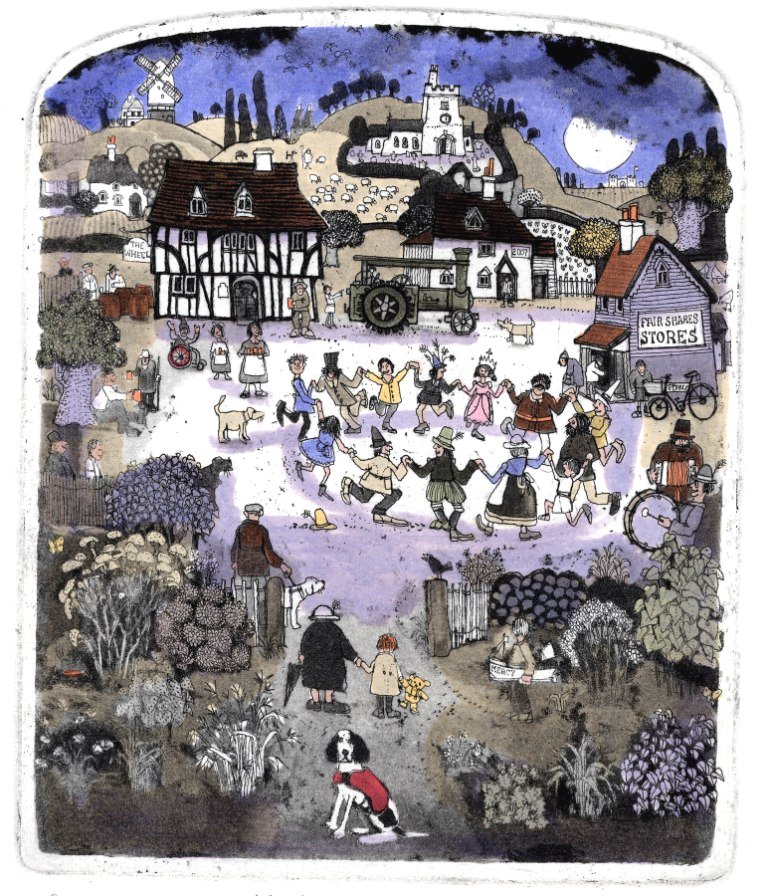
Dance by the Light of the Moon by Graham Clarke

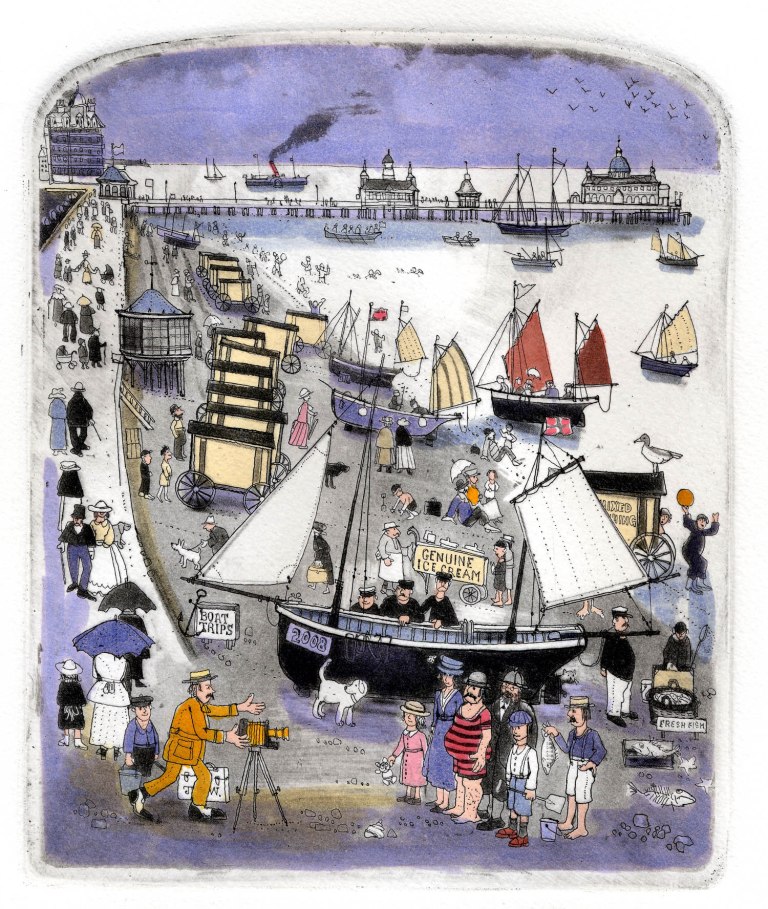
Graham’s famous ‘arched top’ etchings has established his widely successful reputation in Britain and overseas, and came to public attention in 1973 when the first of these, Dance by the Light of the Moon, was exhibited and sold in London at the Royal Academy of Arts Summer Show.

For you Madam by Graham Clarke

Examples of his work are held by Royal and public collections, including the Victoria and Albert Museum, the British Museum, the Tate Gallery and the National Library of Scotland in the United Kingdom, as well as by Trinity College, Dublin, the Library of Congress in Washington, D.C., the New York Public Library and the Hiroshima Peace Museum. Many more are to be found on the walls of private homes all over the world, collected systematically by devotees, as well as singly by ordinary art lovers who “know what they like”

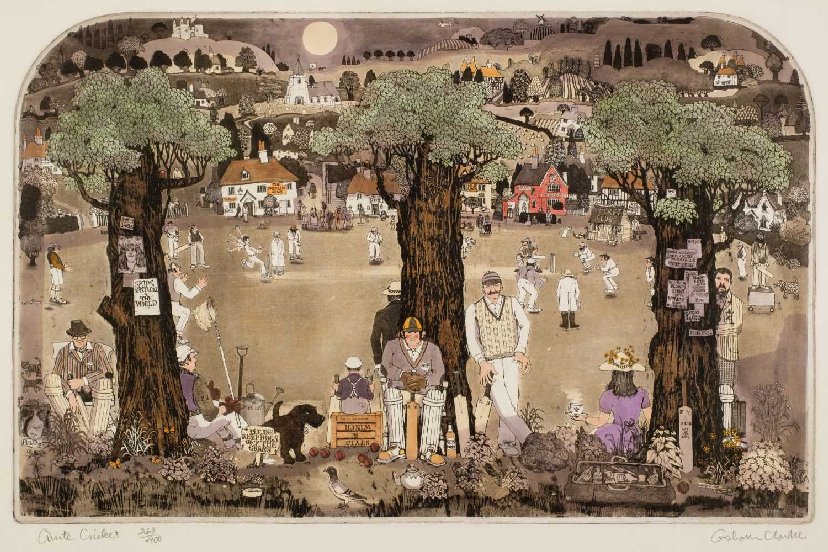
Quite Cricket by Graham Clarke

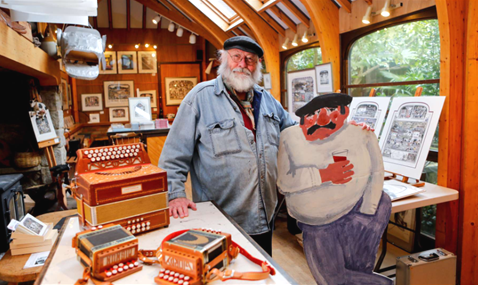
Graham Clarke, who prides himself as being a “Man of Kent” lives with his wife Wendy, four children, his animals and friends, in the village of Boughton Monchelsea in the county of Kent where he also has his studio. 

He offers open-days at his studio which gives visitors an opportunity to view his work including hand coloured limited edition etchings, watercolours, posters and greetings cards depicting English rural life and history, the Bible and the Englishman’s view of Europe, all of which are available for sale.


My blog has only scratched the surface of the life of this talented artist. The information for this blog came from two main sources:

Clare Sydneys’ 1985 book entitled Graham Clarke

and

Graham Clarke’s website

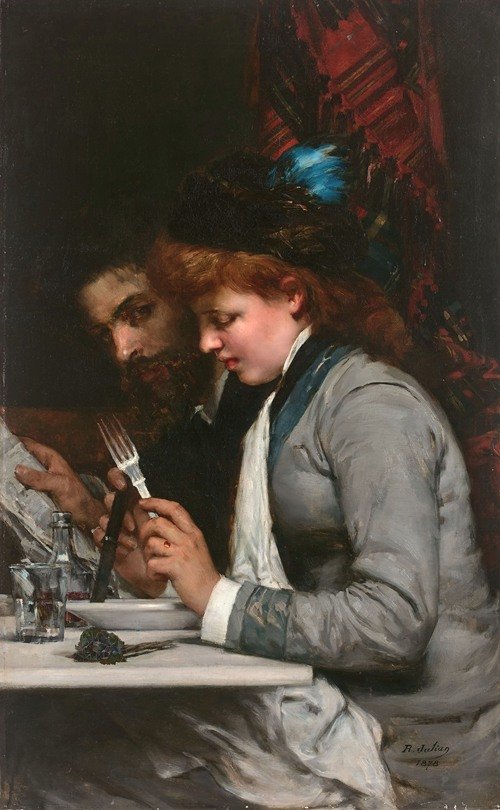
Amélie Beaury-Saurel and Rodolphe Julian.

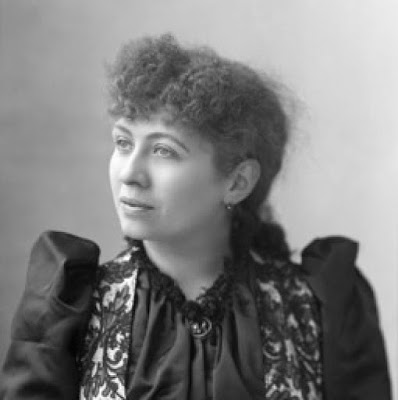
Amélie Beaury-Saurel

Amélie Beaury a French painter, was actually born in Barcelona on December 17th 1848.  Her family had previously lived in Spain and Corsica before moving to the Catalan city in 1845.  Her parents, Camille Georges Beaury and Irma Catalina Saurel owned a large carpet and tapestry factory with more than twenty looms, which they called Saurell, Beaury y Compañía. Amélie was their middle child.  She had an elder sister, Irmeta, also an artist, and a younger sibling, Dolores. Amélie later added “Saurel” to her name in recognition of her mother’s family who could trace their lineage to the Byzantine emperors of the 11th century.

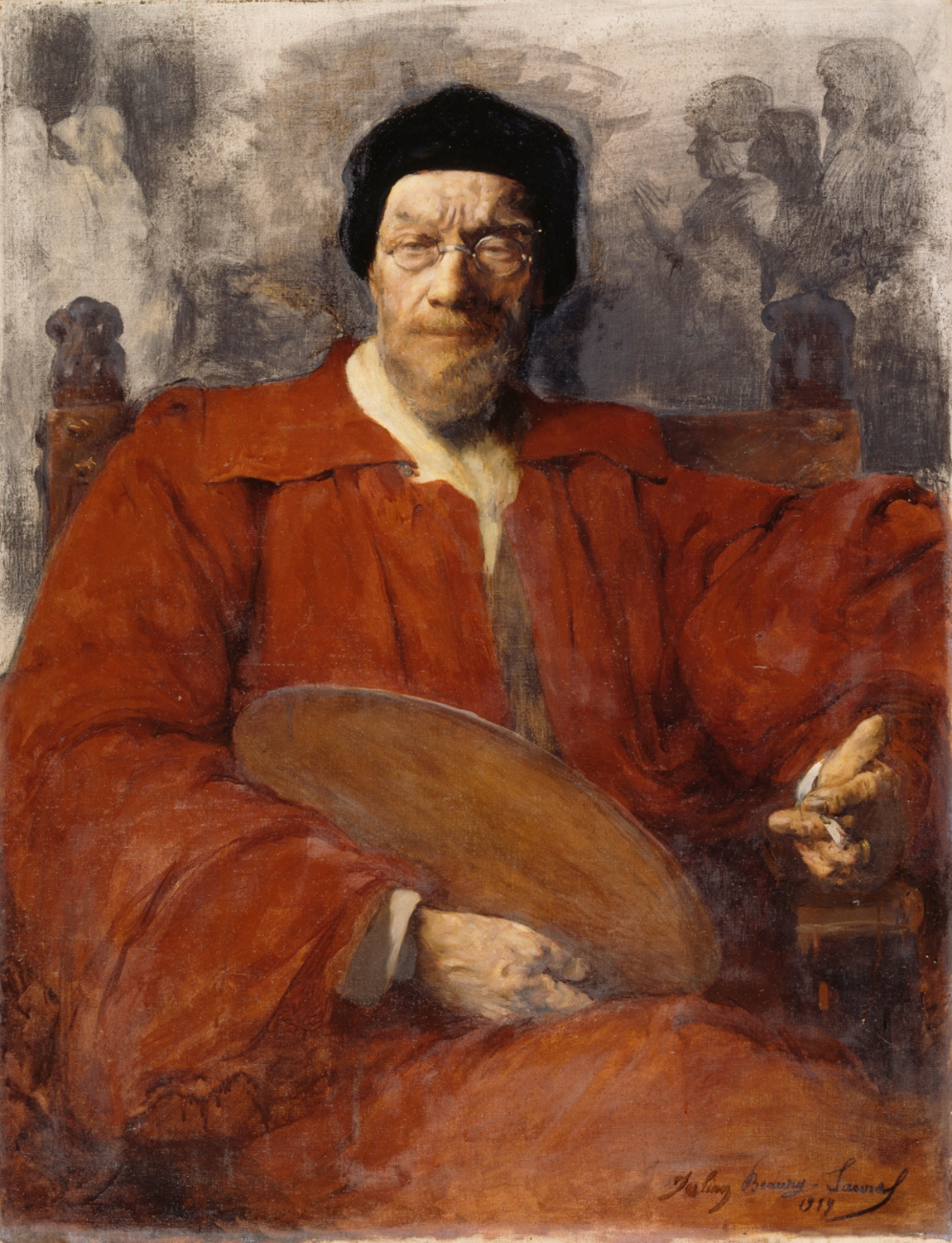
Portrait of the artist Jean-Paul Laurens by Amélie Beaury-Saurel (1919)

The happy family life was shattered in the late 1850s when Amélie’s father died and her mother decided to relocate with her three daughters to Paris.  Amélie recalled in an interview that she and her family lived in the French capital when she was ten years old and that her widowed mother, with little money, had to endure financial hardships.   Her mother instilled a love of art in her children and she would take them to the Louvre Museum to see the works of the Masters and encourage them to copy the works of the these great artists.

Portrait of Léonce Bénédite, curator of the Musée du Luxembourg,  by Amélie Beaury Saurel (1923)

Due to this family impoverishment, Amélie’s mother decided that her daughters should help with the financial burden and set about having them train as porcelain painting, a socially acceptable way of earning a living and eventually becoming financially independent. Amélie set to work as a painter of porcelainware but later said she considered what she was doing as commercial painting which in many ways damped down her creativity.  Her mother was very supportive of Amélie’s love of painting and, in 1874, initially paid for her nineteen-year-old daughter to study at the prestigious Académie Julian.  One of her first tutors was Pauline Coeffier, a French oil painter and pastelist, who specialized in the art of portraiture. Later many of the leading artists of the day would advise and tutor her, such as Tony Robert-Fleury, William Bouguereau, Jules Lefebvre, Benjamin-Constant, Jean-Paul Laurens and Pierre Auguste Cot.

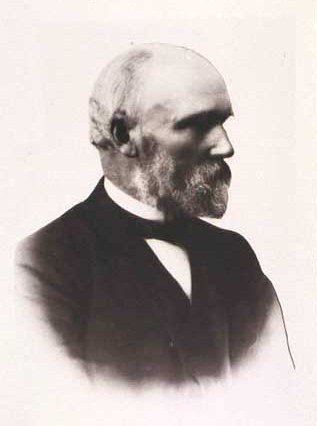
Rodolphe Julian

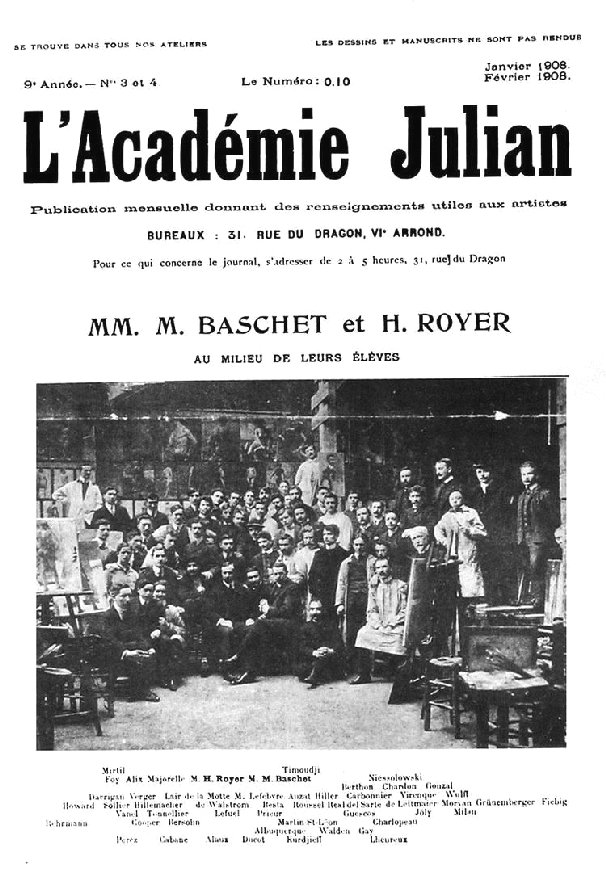
The Académie Julian was founded in 1868 by Rodolphe Julian. It was a private art school for painting and sculpture.  Paris was looked upon as the capital of the art world, and the centre of modern art.  This was one reason many young aspiring painters came to the French capital to discover all the latest trends in painting, like Impressionism and Post Impressionism, decorative art of various types, new forms of representational art such as expressionism, lithography and much more. Also with having a reputation as a forward-thinking art college the Académie Julian profited from the reputation of Paris.

Chez Duval by Rodolphe Julian

Another reason for the popularity of Académie Julian was that it was the only art school in Paris to accept foreign students, many of whom struggled to pass the difficult French language exam, which was conditional on their acceptance into the Ecole des Beaux-Arts. Ambitious female painters were also barred from attending the official Ecole des Beaux-Arts until 1897 and even then, it was not considered suitable for women to study life drawing.  In contrast, Académie Julian was happy to offer them a full programme of education and training to women in fine art. They were offered the same classes as men, including the drawing of nude models. In fact, the Académie was one of the few schools to admit women to life-drawing classes. In fact, one of its four new branches was actually exclusively designed for female art students.

The Académie Julian was also regarded as a stepping stone to the prestigious École des Beaux-Arts by getting them prepared for the entrance exams and at the same time offered independent alternative education and training in arts.  Aspiring artists, both men and women, were welcome at the Académie Julian.   Men and women were trained separately, and women participated in the same studies as men, including drawing and painting of nude models.  The Académie Julian had no entrance requirements, was open from 8 a.m. until nightfall, and very soon became the most popular establishment of its type. Rodolphe Julian opened several branches throughout Paris, one of them especially for female artists, and by the 1880s the student population at these establishments reached six hundred.

Female Students at the Académie Julian in Paris, c. 1885

To ensure the success of the Académie, Rodolphe gathered together well-known and esteemed artists, such as Adolphe William Bouguereau, Jean-Paul Laurens, Tony Robert-Fleury, Jules Lefebvre and other foremost painters of that time trained in Academic art, to become tutors or visiting professors.  Académie Julian became recognised as a leading art establishment and its students were allowed to compete for the Prix de Rome, a prize awarded to promising young artists, and also show their work in the major Salons or art exhibitions.

So, who was Rudolphe Julian?

Rodolphe Julian was born in Lapalud, a commune in the Vaucluse department in the Provence-Alpes-Côte d’Azur region in southeastern France on June 13th 1839. He worked as an employee in a bookstore in Marseille but later moved to Paris, where he became a student of Léon Cogniet and Alexandre Cabanel, professor at the École des Beaux-Arts, albeit he never officially enrolled there.  Rodolphe was well aware of the struggles of artists who looked for artistic training once they had arrived in Paris and so, in 1863 he opened his own art school, Académie Julian.

Portrait of a Woman by Amélie Beaury-Saurel

Living in Paris, Amélie was determined to increase her knowledge of art and the Académie Julian offered her the best way of achieving that goal and eventually becoming a professional portrait artist.  However this course of action had to be funded so she approached Rodolphe Julian and proposed that in return to her helping out with the administrative and financial duties of the Académie, he would allow her to attend his classes free of charge.  He agreed. Rodolphe Julian had opened a women’s workshop in 1873 and in 1895 he put Amélie in charge of it.  As well as organising the workshop she had begun a very lucrative career as a portrait artist and received many commissions.

Académie by Amélie Beaury-Saurel (1890)

In 1890, Amelie completed one of her greatest paintings entitled Académie.  The title for the work refers to the art academy which at the time prohibited female painters from joining its ranks.  Her depiction conveys the compelling message to the viewer that she was not going to allow herself to be browbeaten by the male-dominated artistic establishment and she would not conform to their dictates.  The model in the painting exudes strength and determination as she stands grasping stalks of bamboo and stares out at us, challenging us.  It can be no coincidence that Amélie has depicted her model naked and this nude pose empathises the strong and defiant attitude women embraced as artists.

Deux vaincues (Two Defeated Women) by Amélie Beaury-Saurel (1892)

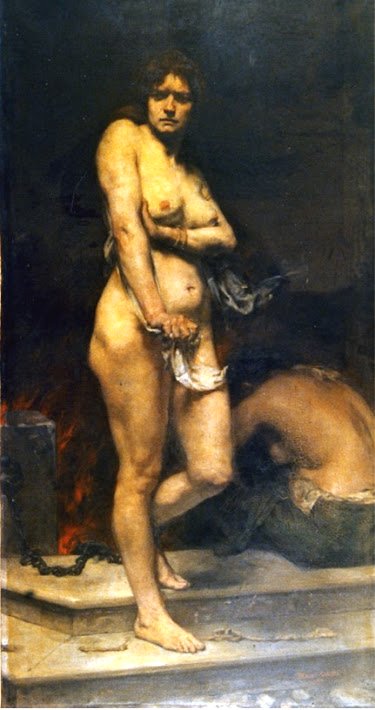
Two years later in 1892 Amelie produced another defiant depiction entitled Deux vaincues (Two Defeated Women).  It is looked upon as a rallying call to all female painters to be fearless as they travel through the unwelcoming and unforgiving world of art education and artistic professionalism and the many obstacles they had to overcome.  It was a plea to female artists to not allow themselves to be defeated in the face of the obstacles they would encounter.  The sketch depicts two women, both naked, chained to a wall.  Both face similar hardships but they have fared differently.  The one with her back to us is slumped forward in a defeated pose, while the other, in contrast, stands boldly upright, unrepentant and stares out defiantly.  The painting is a challenge to all women as to whether they give in or fight on. The work was exhibited at that year’s Salon.

 Portrait de Séverine by Amélie Beaury-Saurel (1893)

In 1893 Amelie completed a portrait of Caroline Rémy de Guebhard. She was a French journalist who held strong non-conformist views which labelled her as an anarchist, socialist, and communist.   She also was a great believer in feminist’s rights and opinions and this no doubt drew Amelie to paint the portrait.   Caroline Rémy de Guebhard would use the pen name Séverine, derived from the Latin severus which means “rigorous” or “brave”, for many of her newspaper articles.  When we look at the portrait, our eyes are immediately drawn to the vivid red flower on the sash of her dress.  The flower symbolizes Séverine’s leftist political views.  Look at her facial expression.  It is one that exudes strength, determination and tells you that this lady will not be moved.  Amelie’s ability as a great portraitist is borne out in this beautiful work.

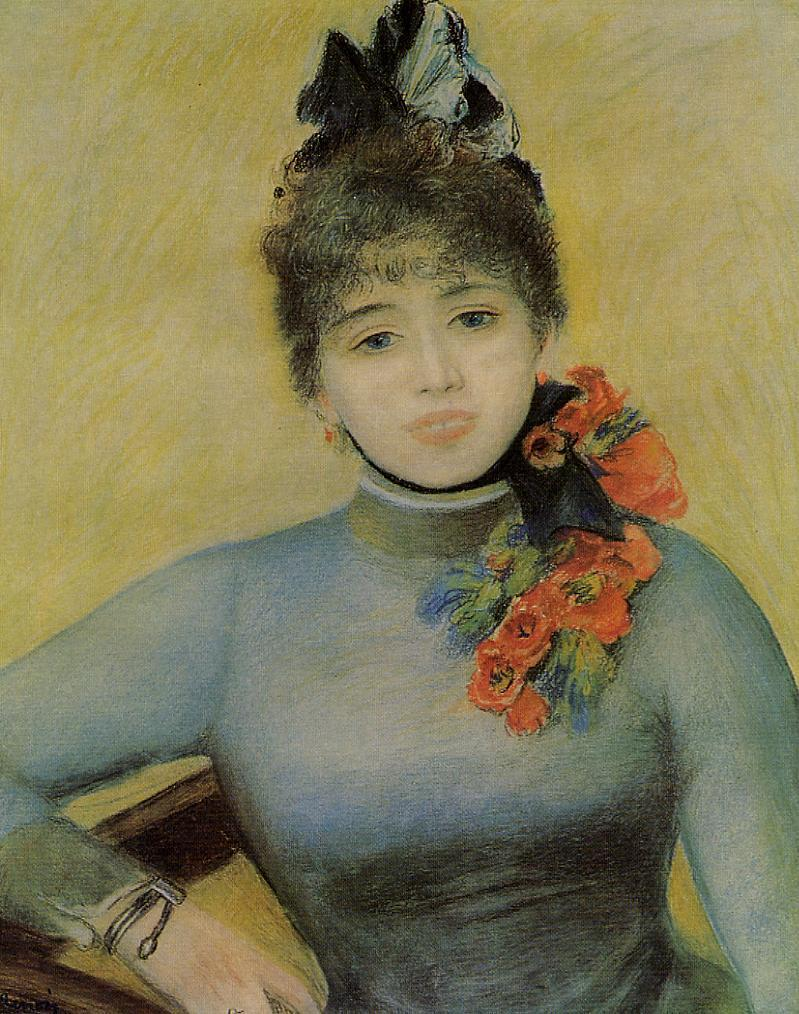
Séverine by Renoir (c.1885)

A portrait of Caroline Rémy de Guebhard was also complted around 1885 by Renoir. It is in the permanent collection of the National Gallery of Washington.

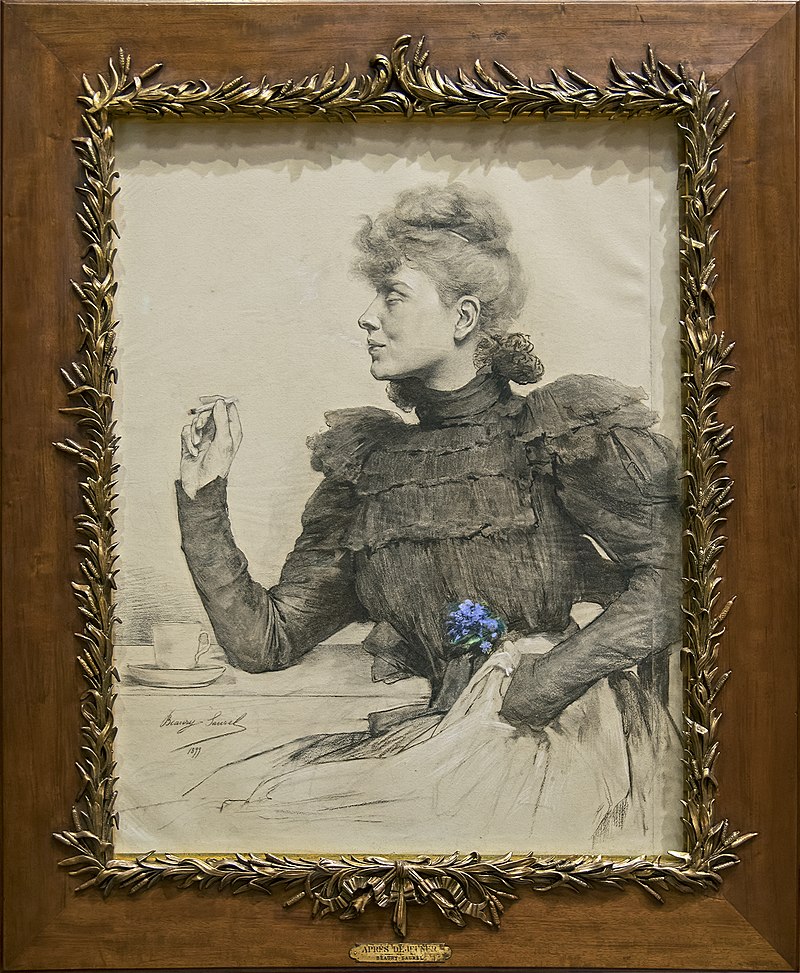
Dans le bleu by Amélie Beaury-Saurel (1894)

One of my favourite works by Amelie is her 1894 painting entitled Dans le bleu.  It is a pastel on canvas which depicts a young woman waking up in the morning and indulging in the gratification of smoking that first cigarette.  However that is not the point of the depiction.  It is all about feminist assertions. In this painting, we see a woman depicted in profile, boldly treating herself to the pleasures of escapism. It is a depiction of defiance as women at this time were not seen smoking, especially not in public.  It was a habit that was counter to the feminine conceptions of the time.  We should remember that Amélie Beaury-Saurel had dedicated a large part of her work to the female model and had always maintained the feminist cause.  She supported the right to arts education and artist status for women.  In 1894 when she was working on this painting her reputation in Paris as an artist was at its highest point and her paintings were exhibited all over the French capital.

The background of the work is very dark, predominantly blue and this allows the figure stand out in the work.   It is hard to know whether the scene takes place in a private dwelling such as a kitchen or a living room or whether the setting was in a public place, such as a café.  The woman in the depiction sits smoking a cigarette, chin in hand.  She appears to be daydreaming. She seems preoccupied as she watches the blue smoke unfurl from her lips, drifting upward. What is she thinking about?  Would she, like the smoke, like to drift away?  Some have suggested this might be a Beaury-Saurel self-portrait, as the model resembles the artist.  The depiction is simple and realistic and in no way staged.  Amelie’s depiction is all about everyday reality and is without any hint of idealization which would have weakened the work and it is this simplicity that has added to the beauty of the depiction and has expressed the woman’s femininity.

Our Girl Scouts by Amelie Beaury-Saurel

In this painting by Amelie, the seven women are represented in a compact group, around a table with a pile of books. On the left, holding his handlebars in his hand gloved, the Belgian cycling champion, Hélène Dutrieu; next to her, holding a paintbrush, the publisher Anna-Catherine Strebinger (Madame Henri Rochefort) who was also a student at the Académie Julian; then the collector Marguerite Roussel looks at the viewer; in the center, in professional attire and pointing to an article in a code, the lawyer Suzanne Grinberg, an eminent member of the French Union for the women’s suffrage, created in 1909; leaning on her, in the outfit that she had adopted to travel safely to the Middle East, archaeologist and explorer Jane Magre-Dieulafoy. Then comes the novelist and journalist Lucie Delarue-Mardrus and aviator Elise Deroche, First woman to obtain a pilot’s license.

After Lunch by Amelie Beaury-Saurel (1899)

In 1895, Amélie Beaury-Saurel, married Rodolphe Julian and he put her in charge of the women’s workshops which he had started in 1873.  Amélie managed the expenses for the women’s studio, served as an intermediary between instructors and students, and ran the women’s group but also continued her career as a portraitist. She earned a medal for her submissions to the 1885 Paris Salon and the bronze medal at the 1889 Exposition Universelle. 

Chateau Julian, Lapalud

Rodolphe Julian died on February 2nd 1907, aged 67, and two months later on April 10th, Amelie’s mother died.  Following the death of Julian, Amelie took on the role of director of the Académie Julian.  This was a mammoth task and so she received help from her nephews Gibert and Jacques Dupuis, the children of her sister Dolores.  Rodolphe Julian had bought a large house in the village of Lapalud, where he was born and on his death they were bequeathed to his nephews.  Amelie bought this large property from her nephews and transformed it to accommodate her family. It was called the “Mas” Julian.

Amélie Beaury-Saurel

During her last years, Amélie continued to paint but also fought for women’s rights and supported women artists and their fight against male-dominated art circles.  She participated in solidarity exhibitions for the benefit of institutions such as the Société des Artistes Français, the Société Nationale des Beaux- Arts or the Fraternité des Artistes.  Such commitment to the promotion of art and her endless creative activity were recognized in 1923, a year before her death, through her appointment as Chevalier de la Légiond’honneur.   

Amélie Beaury Saurel died on May 30th 1924 aged 75 at he Paris home which she had once shared with her late mother and sisters.


Information for this blog came from the ususal search engines plus:

Aware Women Artists

Elles-d-artistes blogspot

Musings on Art

Ville de Lapalud

The Funen Painters. Part 2.

Following the last blog regarding the early members of the Funen artists, this blog looks at some of the younger members and how they were often connected.

Peter Syrak Hansen

One of the leading figures of the Funen painters was Peter Syrak Hansen and it was his home and workshop, Mesterhuset, which became a cultural meeting place for the Funen painters. Syrak Hansen was born in Swanninge, a Danish village on South Funen, on September 10th 1853. He trained as a decorative painter at the Academy of Fine Arts in Copenhagen under George Hinkler.

The Double Portrait of Count Preben Bille-Braheand his second wife Johanne Caroline neé Falbe by Christoffer Eckersberg (1817)

After qualifying Syrak received many decorative work commissions in South Funen’s to decorate manor houses and churches. He was also given funds by the prominent and wealthy art collector and art patron, Count Bille-Brahe of Hvedholm, and continued his artistic studies in Germany, Austria and France, where he concentrated on studying church decorations. Following his European travels, he later settled down as a master painter and decorative painter in Faaborg in southern Funen and based himself in the building, which became known as the Mesterhuset. He bought Mesterhuset, situated at Lagonis Minde 7 in 1875, and he became a sought-after decorative painter working primarily in churches and manor houses on South Funen.

Sonnige Strandansicht by Peter Syrak Hansen

Syrak Hansen became so busy with all the commissions he received he had to look for some help and he hired a journeyman painter. The painter was Fritz Syberg who worked with Syrak in his workshop from 1882. It was here that Fritz Syberg got to know his future wives, Anna and Marie Hansen.

Faarborg Harbour by Karl Schou (1917)

Syrak Hansen married Marie Birgitte née Rasmussen and he and his wife had five children.  Marie Hansen, the eldest, was born in 1865 and became a parliamentary stenographer whose first husband was the painter Karl Schou. Schou was born in Copenhagen in 1870. After normal schooling he became a student at Valdemar Sichelkow’s painting school from 1884 to 1886 and then studied under Malthe Engelsted at The National Drawing Teacher Course, Copenhagen from 1886 to 1887, Finally he attended  Kristian Zahrtmann’s School from 1887 to 1900. During those three years at Zahrtmann’s school he became friends with the Funen painters.

Three persons in conversation at an evening party by Hans Nikolaj Syrak Hansen (1903)

A year after the birth of their first child, Marie Hansen gave birth to their first son, Hans Nikolaj Syrak Hansen who became apprenticed to his father. Hans attended Zahrtmann’s School in Copenhagen from about 1885 to the spring of 1887, but he had to give up his art studies and return home in order to take over the painting company from his father in 1891.

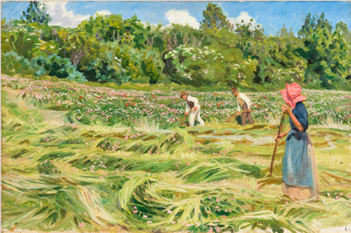
The Hay on the Meadow, South Funen by Peter Hansen

Syrak and Marie Hansen’s third child, their second son, Peter Marius Hansen was born on May 13th 1868. He attended the Copenhagen Technical School before studying under Kristian Zahrtmann at the Kunstnernes Frie Studieskoler between 1884 and 1890. 

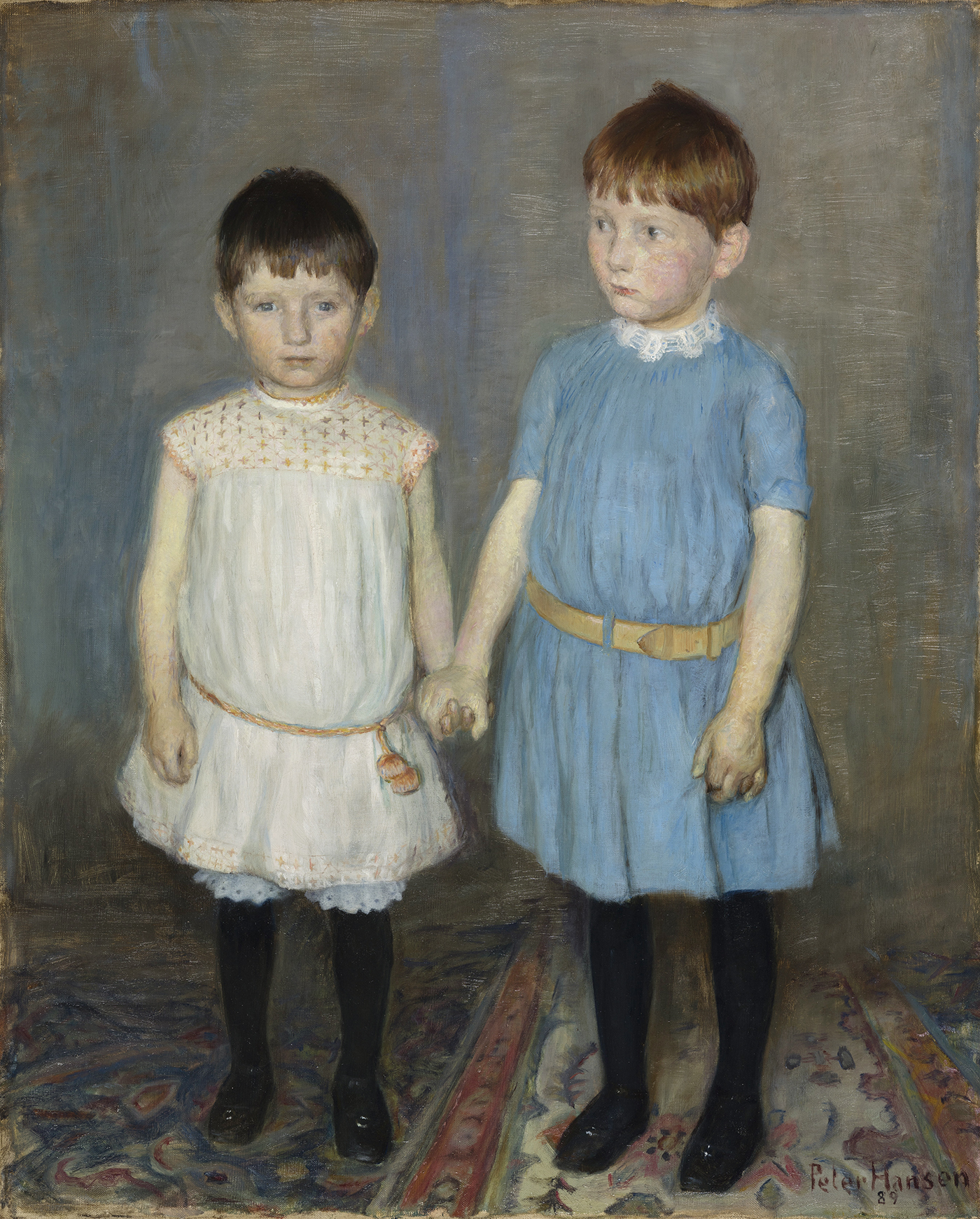
Double portrait of two children. The artist’s stepdaughters by Peter Hansen (1889)

Peter Hansen married Elisa Nikoline, who had previously been married to an engineer, Ludvig Conrad Neckelmann, whom she divorced. In 1898, shortly after the divorce, Peter and Elise married. Ludvig and his wife, Elisa, had had two daughters, Marie Christine and Elizabeth and Peter completed a double portrait of his stepchildren.

By the window. Double portrait of the artist’s daughter, Elena and stepdaughter, Marie Christine by Peter Hansen (1902)

Peter and Elisa went on to have their own two daughters, Elena Italia in 1899 and Anna Margrethe in 1906. In 1902 Hansen completed a double portrait of his twenty-year-old elder stepdaughter, Marie Christine and his own three-year-old child Elena Italia.

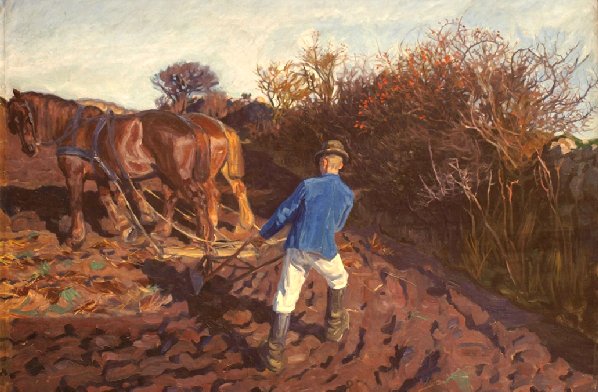
The Ploughman Turns by Peter Hansen (1902)

Peter Marius Hansen belonged to the group of Danish painters who were called the Funen Painters, since they came from and mainly worked on the island of Funen.  One of the important qualities Peter displayed was his respect for the steadily, busily working human being and he made it a key motif in his art. For him the Peasant was the epitome of this ideal, when he would depict local Danish farmers and the mountain farmers from around the Danish artists’ colony in the Italian village of Cività d’Antino in Abruzzi.

Fritz Syberg self portrait (1910)

Christian Friedrich Wilhelm Heinrich Syberg, generally known as Fritz Syberg, was born on July 28th 1862, in Faaborg.  He came from a poor background and was first apprenticed as a house painter under Syrak Hansen.  From there, in 1882, he attended the Copenhagen Technical School where Holger Grønvold taught him drawing. In the Spring of 1884 he enrolled for a short period at the Danish Academy but then attended the Kunstnernes Frie Studieskoler  where he became one of the first Fynboerne, along with Peter Hansen, Johannes Larsen, and Poul S. Christiansen to study under Kristian Zahrtmann.

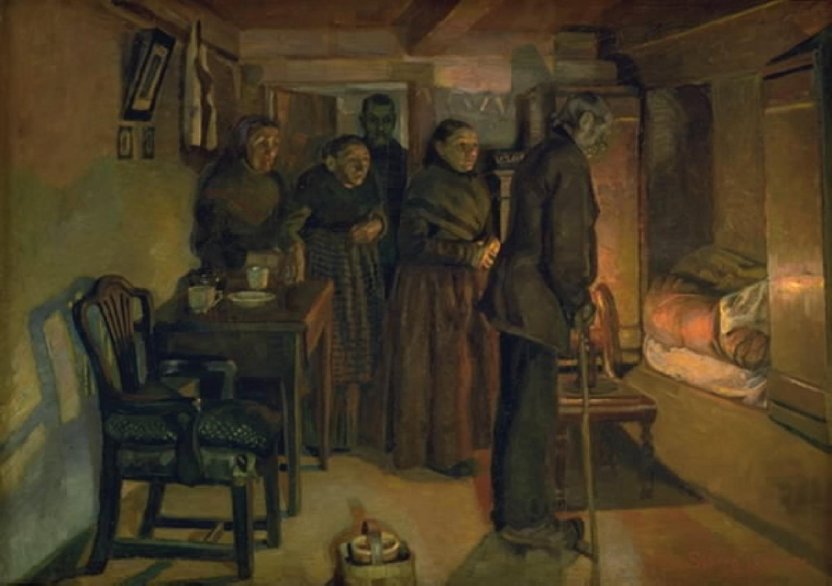
Dodsfald (Death) by Fritz Syberg (1881)

In the early 1890s may of Syberg’s paintings were dark and this can be seen in his 1892 work entitled Dodsfald (Death) which depicts his mother, Johanne Marie, on her death bed in 1881 in the Fåborg’s poorhouse.

Fritz Syberg “Jeg vil synge dem alle, alle!, sagde Moderen” (1898). Illustration for Hans Christian Andersen’s Historien om en moder. (I will sing them all, all of them!, said the mother) (1898). Illustration for Hans Christian Andersen’s The Story of a Mother by Fritz Syberg

In addition to the sale of his paintings, Syberg accepted many book illustration commissions, the most famous being his depictions for Hans Christian Andersen’s tragic tale, The Story of a Mother, which no doubt, Syberg could relate to his own childhood.  These depictions became one of the most celebrated collections of illustrations in Denmark’s history.

Spring by Fritz Syberg

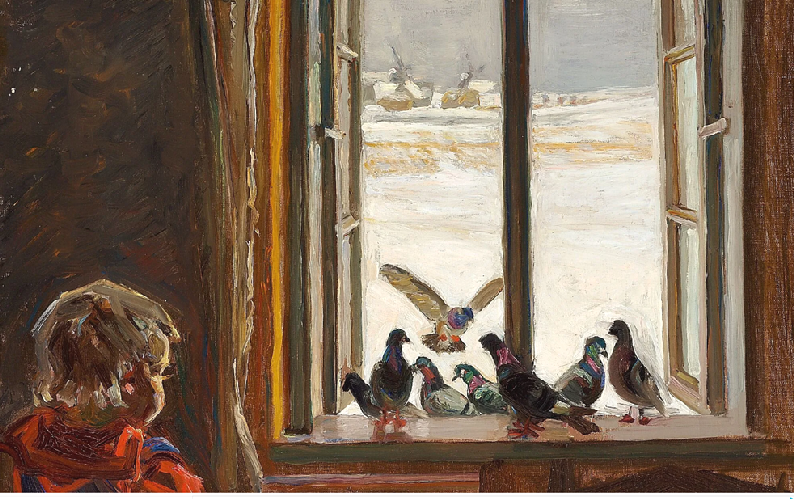
Watching Birds on the Windowsill by Fritz Syberg

Having struck up a close friendship with Syrak Hansen’s daughter Anna whilst working as Syrak’s apprentice, their friendship turned to love and the couple married in 1894. The couple went on to have seven children.   In the 1890s and the early decade of the twentieth century Fritz Syberg made a number of trips to other European countries such as Italy, The Netherlands, Germany and France, sometimes with his family.. 

Anna Syberg by her husband Fritz Syberg (1896)

Syrak and Marie Brigitte Hansen had their fourth child, a second daughter, Anna Louise Birgitte Hansen in January 1870 and she, like her brother Peter, became part of the Funen painters. Anna Syberg grew up amidst a very colourful and energetic artistic environment that differed from ordinary middle-class conventions. Her father, Peter Syrak Hansen, was a master painter, and a renowned figure in the town of Faaborg.  Fortunately for Anna, her parents believed that education was of prime importance to both their daughters as well as their sons.

Crocus, Hyacinths and Tulips by Anna Syberg (1898)

Anna loved to learn and one of her favourite pastimes was decorative painting.  In 1884 she enrolled on a two-year course at a technical school in Faaborg, and in 1889 she was receiving tuition in Copenhagen from the sculptor Ludvig Brandstrup and the painter Karl Jensen. Her artistic education was topped off when she received singing lessons, learnt to play the piano to a high standard and learnt to sing lieder and Danish songs.

Wild Roses by Anna Syberg (1898)

Anna Syberg became a key figure in the Funen Painters artists’ colony.  Her paintings, other than a few figure scenes, depicted flowers and plants, often in the vases and pots around her home, or in her garden and ones she saw when out walking in the countryside. She worked mainly in watercolours, using multiple layers that would often include sketched lines of pencil, transparent layers of watercolour and black ink contours ensuring the depiction of the floral was of the utmost accuracy.

Grapes in the Greenhouse by Anna Syberg (1903)

The subject of her depictions were often of stage-managed as she experimented with the floral arrangements.  In many of her works she would often let the depiction of her flowers and plants extend beyond the edge of the paper in a form of dynamic cropping.  Her floral painting were neither symbolic nor botanical studies.  In Anna Syberg’s pictures, flowers are not charged with symbolic significance, nor are they stringently restrained botanical studies with all its scientific accuracy. In her works, Anna Syberg portrays the simple beauty of the flowers, a testament to their beauty. In 1894 Anna Hansen married Fritz Syberg.

Fritz and Anna Syberg

So this life as a Funen painter amongst family and friends was to be part of much loved idyllic lifestyle for Anna Syberg.  What could possibly interrupt this peaceful and fulfilling way of life?   And yet………..

At the turn of the century in Denmark, like many other European countries and those across the other side of the Atlantic, the stature of women in art, and even in life itself, was continually being questioned by men.  For many men, including even some fellow artists, women simply painted as a hobby or to add to their social graces but for women in the early 1900s practicing art was problematic.  For Anna it was one thing to be a talented artist, it was another thing to have the same respect bestowed upon her for her work as that of the men.  Things came to a head in Faarborg when the town got their own museum and paintings had to be selected for display in the museum.

Mads Rasmussen

Mads Rasmussen, an important businessman in Faaborg, and his wife Kristine, held a party one evening and among the guests were the Funen Painters’ inner circle including amongst others Fritz Syberg, Peter Hansen and Jens Birkholm. Together with Johannes Larsen they were all to become part of the Museum’s purchasing committee which, in turn, came to act as the steering group for the Museum’s acquisitions, their curation and the fixtures and fittings for the gallery.  It was very unusual that the “money man” would let a group of artists dictate as to what works were to fill the gallery.

Artists hanging their works in the galleries of Faaborg Museum, May 1915. From the left: Peter Hansen, Peter Tom-Petersen, Johannes Larsen, Astrid Noack, Nicolaus Lützhøft, Christian Ernlund, Carl Petersen og Fritz Syberg.

Here was the problem – the purchasing committee for Faaborg Museum, made up of the Funen painters, were all  male artists from the group, and they didn’t believe in the quality of the works produced by the female members of the group. In the minutes of the meetings of the purchasing group, comments were recorded stating that

“…At the negotiations, Peter Hansen and Birkholm wanted to be recorded in the minutes that they voted against the acceptance of Mrs. A.(Alhed) Larsen and Miss Christine Larsen’s works. Peter Hansen also against Mrs. Syberg…”

Also in the minutes, Peter Hansen, Anna’s elder brother, noted:

“…AS (Anna Syberg) and the other ladies had no significance for Danish art…”

Gallery at the Faarborg Museum

No reasoning was ever recorded as to why they thought so little of the works of the female Funen painters but the damage was done.   Presumably, one has to recognise that at that time there was generally a reluctance for women to be able to produce an artistic work. The one thing to remember also is that flower painting traditionally had a lower rank in the art world and this could have been in the minds of the male purchasing committee.

Anna was horrified that her own brother would critique her work so harshly and the rift between siblings became bitter.  She wrote to her brother Peter:

“…Where you create yourself. You voted against me at the Faaborg Museum based on high idealistic notions of safeguarding the best interests of art in Denmark. “You did not want to hide from me”, you wrote that I and the other ladies had no significance for Danish art…”

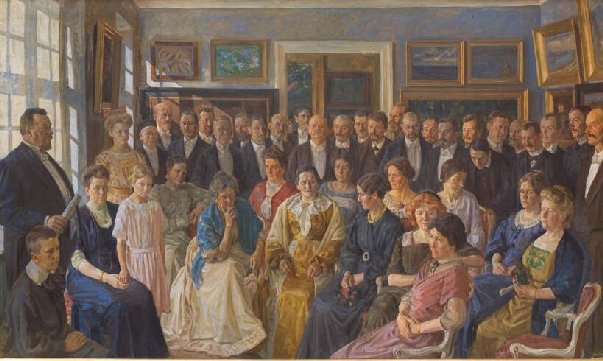
Faaborg Museum Inauguration (1910) by Peter Hansen

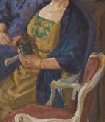
Anna Syberg is not in the picture of the artist group Fynbomalerne, despite her being a central part of the group. She should have supposedly sat on the empty chair in the bottom right corner.

The empty chair.

During the heated exchanges between Anna and Peter, he was working on a painting depicting the inauguration of the Faarborg Museum. The depiction was supposed to pay tribute to a group of artists who were both well-known and acclaimed painters. Anna Syberg’s outburst of anger over the words of her brother and members of the purchasing committee came while her brother was working on the painting, and it is believed that he deliberately chose not to paint his sister as part of the group and yet, to rub salt into the wounds, he provocatively indicated her absence with the empty chair, despite her being present at the inauguration and was said to have sat tanned and dressed in festive clothes with a large hat in the front row of the group. All the other female artists in the group are in the painting.

Anna Syberg (née Hansen) 1870-1914

Anne Syberg died on July 4th 1914 following a failed operation to treat a gallbladder infection.  She was just forty-four years of age.  Sadly the recognition she deserved as a gifted artist never came until after her death.  In 1915 a retrospective of her art was held and it was a success, and sales were high, including Faaborg Museum which purchased sixteen of her works. quite central in the country. After her death, Fritz Syberg married Anna’s elder sister Marie who he had known since the days of working for is father-in-law.

In 1873 Syrak Hansen’s youngest child, Poul Gerhardt, was born.  He did not follow his siblings into the world of art. He was married to Dagmar and the couple had two children: Helga and Louise.  Poul is believed to have died at the young age of 33 in 1906.


I could not have put together the two blogs about the Funen painters without the information I gleaned from various websites:

The Beauty of the Moment

Faarborg Museum

DR

The Hirschsprung Collection

arkivdk

Theresa Bernstein. Part 2.

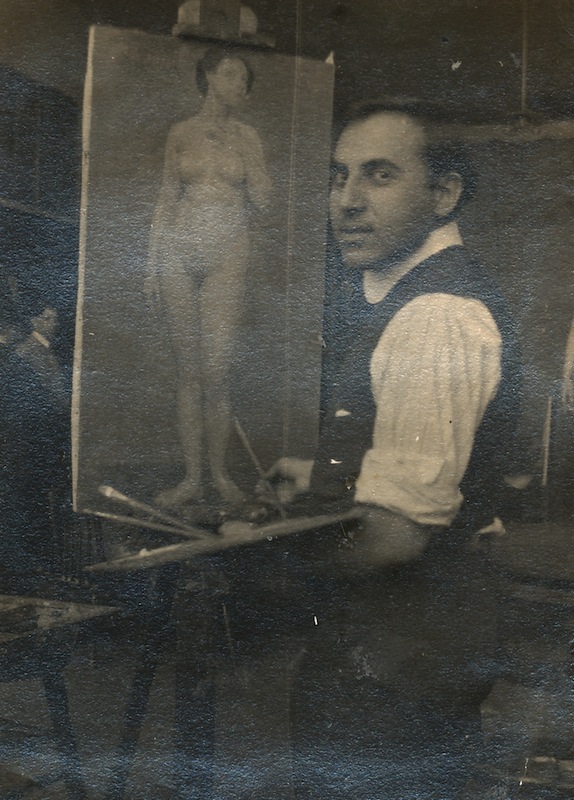
William Merowitz in his studio.

John Weichsel was the founder of the People’s Art Guild in 1915.  It was to be an alternative to the system of traditional fine art galleries. The Guild would set up exhibitions in various unconventional spaces and by doing so, the Guild brought avant-garde art into the immigrant settlement houses and tenements of the Lower East Side with the goal of exposing a new set of people to modern art and at the same time, providing artists with direct contact to new markets. One of the helpers at the Guild was William Meyerowitz.

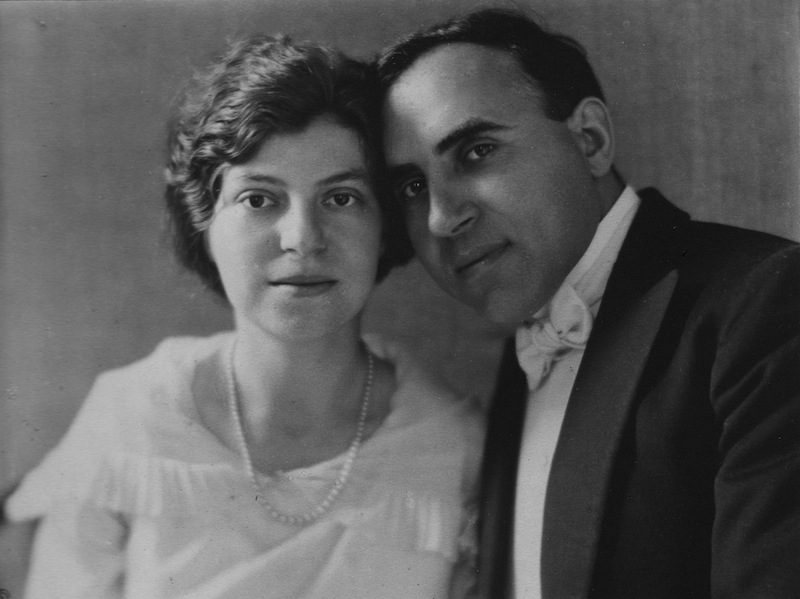
Theresa and William’s Wedding Photograph (1919)

Meyerowitz called on Theresa at her studio and asked if she could offer some of her paintings for a benefit show with the Guild.  From this initial meeting a friendship developed which blossomed into romance and finally on February 7th 1919 the couple married in Philadelphia.

The Studio (54th West 74th Street) by William Meyerowitz (1935)

William Meyerowtiz was born in Ekaterinoslav, now Dnipro in Eastern Ukraine, on July 15, 1887.   He and his father had immigrated to New York City in 1908, and they settled in the Lower East Side. William studied etching at the National Academy of Design and was also a talented singer and while he was a student he sang in the chorus of the Metropolitan Opera. Later, he rented a studio in the same building as the 291 gallery run by Alfred Stieglitz.

Portrait of the Artist by Theresa Bernstein (1920)

Their marriage took an early blow when their baby daughter died of pneumonia. and from that tragedy, they remained childless. Despite this tragic occurrence the couple lived a happy and contented life. In her 1986 biography of her husband, William Meyerowitz, The Artist Speaks. Theresa Bernstein Meyerowitz wrote:

“…In the Autumn evenings, we used to take a little table from the studio and place it in front of the fireplace. William would split some logs and light the fire. … We would have cozy conversations about our work, our friends, ourselves and they were precious evenings we spent together. We never tired of each other’s company. . . . From the day we met, our life was one absorbing conversation...”

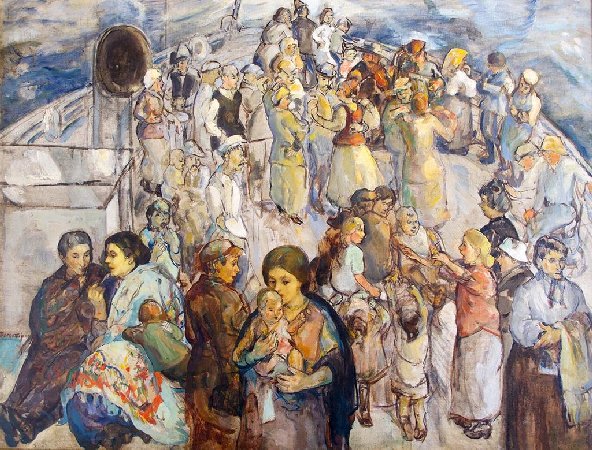
The Immigrants by Theresa Bernstein (1923)

In 1891, Theresa Bernstein had been an immigrant entering America with her mother and father when she was just one-year-old. Thirty-two years later she completed a painting entitled The Immigrants, depicting the deck of the Cunard liner, Aquitania and the plight of immigrants heading for the “promised land”.  The centre point of this depiction is a young mother and her baby and maybe Theresa wanted, through this painting, to recall what it would have been like for her mother making that sea passage across the Atlantic.  The young woman is surrounded by her fellow immigrants.  She seems to be lost in her thoughts.  What are her thoughts?  Behind her right shoulder is a young man hovering nearby.  Could she be thinking of a new relationship, a new romance?  Behind her left shoulder is a group of children with their mother.  Maybe the young woman daydreaming about a happy family life with numerous children.  This is a depiction which directs our thoughts on the vulnerability, change and challenge which affect this young woman but at the same time offers a glimmer of hope with regards her possible new beginning.

The Milliners by Theresa Bernstein (1921)

Bernstein’s 1921 painting entitled The Milliners is typical of many of her figurative works depicting a large group of people.  Look back at some of her multi-figured paintings: the job-seekers in a crowded waiting room (Waiting Room – Employment Office), people crowded into a train on the elevated railway (In the Elevated), and many others depicting beach scenes at Coney Island or audiences at the music hall or theatre.   Theresa was Jewish and although this 1918 painting, The Milliners, could not be termed Jewish, it was personal to Theresa as her sister-in-law worked in the millinery industry, a typical “vocation” that was both immigrant and Jewish. 

View through window (The Milliners)

In the painting we see a group of female workers, engaged in the fastidious and creative labour of creating hats. It depicts six women gathered around a table which is brimming with accessories.  The depiction is a close-up of the women and this view emphasizes the cramped nature of the space that the women are working in but it also offers us a close look at their individual features.  The setting is probably a room in a city tenement apartment.  If you look carefully at the upper left, you can just make out a window, windowsill and through this space we can just make out the metal fire escape which was common in this type of building.

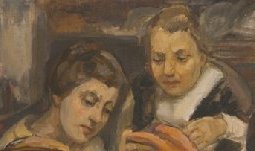
Mother and Mother-in-law

This is also a depiction of Theresa’s beloved family.  Theresa’s mother is the woman we see depicted at the upper left of the group, with greying hair, talking to Theresa’s mother-in-law, whose hands hide the delicate threads she is working with, head bowed as if in prayer. On either side of the mothers are two of Theresa Bernstein’s sisters-in-law, Bessie and Sophie, who was actually  a milliner herself. One of them, dressed in black, has placed a newly made black hat on her head and is admiringly viewing the result in a hand-held mirror.  Her sister, dressed in bright yellow, watches as her sibling vainly gazes lovingly at her reflection.  She holds a black hat which has two large flame-like yellow feathers attached to it.  In the lower right of the group, diametrically opposite her mother, is Minna, Theresa’s third sister-in-law, dressed in a white dress and they are testament to two generations of milliners.  The final member of this working group of women sitting on the far right, dressed in green, is Katie.  She is the only one to be looking out us.  Maybe she is silently inviting us into this intimate circle.  Katie was the family housekeeper and Theresa’s much-loved confidante.

Katie by Theresa Bernstein (1917)

Katie, the Bernstein’s housekeeper was the subject of Theresa’s portrait in 1917. Although Theresa thought of her as a friend and part of the family. For Katie, her role in the Bernstein household was somewhere between an employee and a sister to Theresa.  Bernstein did not choose sitters for their glamour or their social status, her choice of subjects was based upon people she liked.  In this portrait which uses earth tones we see Katie wearing a heavy shabby coat.  She is pinching the lapels tightly together.  On her head is a hat, with the haloed brim positioned at a jaunty angle allowing the feathers, attached to it, to cascade downwards.

Woman with a Parrot by Theresa Bernstein (c.1917)

Elsa Baroness von Freytag-Loringhoven the German-born avant-garde visual artist and poet, who was active in Greenwich Village, New York, from 1913 to 1923, where her radical self-displays came to embody a living Dada. She was considered one of the most controversial and radical women artists of the era.  Theresa Bernstein painted several striking portraits of this Dada artist, poet, model, and muse, whom she befriended in New York’s Greenwich Village. Was it the sitter’s uncompromising attitude to life which attracted Bernstein for she too was equally radical in her own time, as she established her own path as a Jewish immigrant and a female artist in the male-dominated art market.  In this painting entitled Woman with a Parrot which she completed around 1917, we see the baroness gracefully poised against a plain background; her back is partially exposed, and she holds a red parrot.

The Cribbage Players by Theresa Bernstein (1927)

The New York Society of Women Artists (NYSWA) was founded in 1925 and devoted itself to avant-garde women artists.  Theresa Bernstein was one of the earliest members and and took part in this and other women artists’ groups throughout her career.  Theresa was acutely sensitive to the discrimination against her within the profession because she was a woman and for that reason, she would often use only her first initial when exhibiting, especially at the National Academy of Design. She was both disillusioned and disappointed with never having been nominated to the Academy. She would often amusingly recount an anecdote about the male artistic preserve, the Salmagundi Club of New York City. (It only began to admit women in the 1970s.) Her story goes that a delegation from the club visited her studio at one point in search of a Mr. Bernstein. At first Theresa believed that they were looking for her father. After some amusing banter, it soon became apparent that they wished to offer “Mr. Bernstein” a membership in the club and they stalked off in a mood when they found out that the painter of the canvases, they so admired, was in fact Theresa Bernstein.

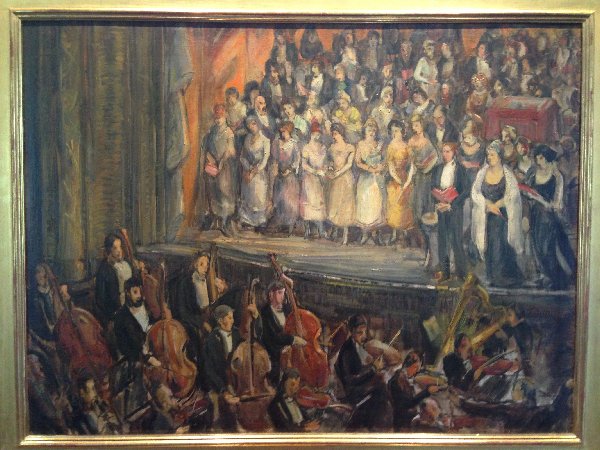
Metropolitan Opera by Theresa Bernstein (1924)

Metropolitan Opera by Theresa Bernstein

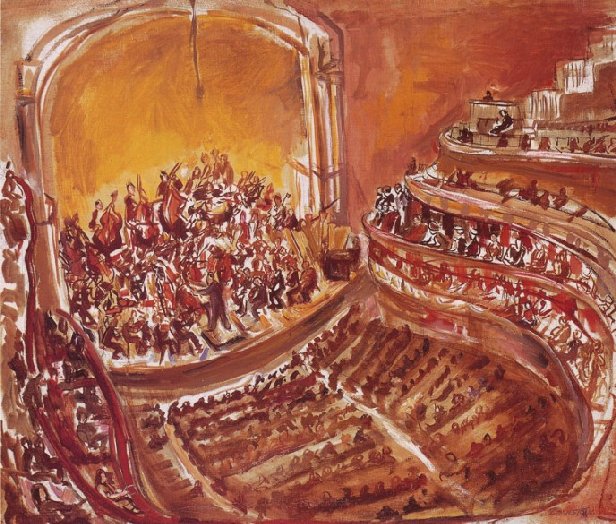
Toscanini at Carnegie Hall (1930)

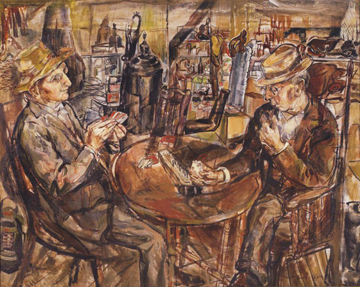
Two subjects that fascinated Theresa Bernstein and were often depicted in her works of art were her love of music which she had got from her husband and the depiction of crowds and both these elements can be seen in her depiction of musical events at the Metropolitan Opera House and Carnegie Hall,

The Music Lover by Theresa Bernstein (1913)

Theresa Bernstein died at Mount Sinai Hospital in Manhattan on February 12th 2002, sixteen days before her 112th birthday, although it is thought she may have been older, but she had never been forthcoming regarding her birthdate!  Her husband William Meyerowitz had dies in 1981.  She will always be remembered as one of the first to paint in the Realist style.

Music Lovers by Theresa Bernstein (1934)

I will leave the last words on this wonderful artist to Patricia M Burnham, lecturer in American studies and art history at the University of Texas, who wrote an article about Theresa Bernstein in the Woman’s Art Journal, Vol. 9, No. 2 (Autumn, 1988 – Winter, 1989).  She wrote:

“…Her work has not gone unrecognized. Each decade of her 80-year career has been marked by gallery representation and one-woman shows. Her early work especially generated considerable excitement among reviewers and critics.  But she has never gained the national reputation one might have expected nor are her works to be found in a large number of major art museums.  Happily, Theresa Bernstein is now being rediscovered.  Along with many other women artists, she has been a beneficiary of the women’s movement and feminist art scholarship.20 Art historians taking another look at early-20th-century American art are beginning to recognize her achievements.   Yet to come is a full evaluation of her work that will reveal the weaknesses among the strengths, the particulars among the universals, the womanly among the human and ultimately provide a meaningful synthesis worthy of its subject…”

Anna Richards Brewster. Part 2.

During the three-year period between 1901 and 1904 Anna, her father and young brother went on several painting trips.  They travelled through Europe to Norway as well as taking a couple of trips around the east coast of America.   Anna and her father, the painter, William Trost Richards, had joint exhibitions of their work in New York, Boston and Washington at which twenty of her works she had completed in Clovelly were displayed.

In 1904 whilst Anna was enjoying a trip back home in Boston she got news that her elderly friend and patron, Mr Kemp-Welch, had died.  During her stay in America, she went to New York to visit her brother Herbert who was a professor of Botany at Barnard College, Columbia University.  Whilst with her brother she met his roommate a professor of English literature, William Tenney Brewster.   From that first meeting with him the pair spent many hours together during Anna’s two-week American vacation.  She eventually sailed back to England but the pair corresponded regularly.  Their friendship blossomed and in January 1905, William proposed marriage to Anna.

William Trost Richards in his Newport Studio by Anna Richards Brewster (1892)

Anna didn’t accept right away as she had a lot to think about.  She wanted to carry on being a professional artist and she was concerned that marriage would interfere with that as it had done to so many female painters who had chosen married life over the role of a professional painter.  In March, after much soul searching, Anna agreed to marry William and they were married on July 18th 1905 at the Parish Church of St Luke in Chelsea and she became Mrs Anna Richards Brewster.  The couple went on honeymoon and for the first part of it her father and brother, Herbert, accompanied them.

Landscape with Wild Flowers by Anna Richards Brewster (1901)

Anna and William decided that they must live in New York because of his teaching post and they settled on a plan to rent two apartments on the same floor of a building on the upper west side of New York, one for them and the other for her father and brother.  The plan was to share meals and staff and one room in the second apartment would be set up as a studio for Anna and her father.  The plan never came to fruition as in the Autumn of 1905, her father, William Trost Richards had a heart attack, whilst working on a large painting in his Newport studio on a large painting, and died.

Anna’s worries about her dual role as a wife and a professional artist proved unfounded as her husband pushed her to continue painting and exhibiting her work even while her life and interests were changing.   Anna was content with how her life had evolved and wrote to her friend Annie Winsor in 1906 telling her about her new sense of purpose:

“…The sense of permanency of its being ‘the real thing’ as it were, in marriage is a comfort and a struggle to me and I like the problems of life becoming less shadowy and unreal than they are to a single person. I have always felt irresponsible a spectator before; but now at last I am in the arena…”

Anna Richards Brewster with her three-year-old son Herbert (1908)

William Tenney Brewster with his son Herbert (1909)

In 1906 Anna gave birth to her first child, a boy, and she and her husband named him Herbert, presumably after her brother.  It proved to be a complicated birth and at one point the lives of mother and baby were in peril.  In June 1906 in a letter to Annie Winsor, Anna described the traumatic birth and her proud husband:

“…It was a capable doctor who saved us — and indeed it was all they could do to save the little hoy’s life…. The boy is doing well now…. he is his father’s son — Dick [i.e. William Tenney Brewster] is delighted with and about him. He was charming and spontaneously devoted all the time — I think it is the profoundest experience he has ever had. I didn’t suppose he would care so much so soon….. I’m sorry that the child is rather a ticklish one to take care of, being excessively sensitive to heat and cold — his circulation is bad. It is so hard to get one’s experience with babies: for experience is won through mistakes: and mistakes are disastrous with babies…”

From the letter we can deduce that the baby’s health was an issue which would later haunt them. The early years with baby Herbert were talked about by Edith Price, Anna’s niece, in a May 1986 interview with Susan Brewster McClatchy.

“…Of course they spoiled him dreadfully. … He was the wonder of wonders and she had ideas she had gotten from some German child health expert at the time, that you let them run around naked…. Anyway, he was such a poor, puny, one-foot-in-the-grave little baby that mother [Anna’s sister Nelly] said. “He’s off to an awfully bad start.” Well, the German exercises did him good and he became quite a sturdy little boy…”

Once again we get the feeling that all was not right with baby Herbert.

Campfire Long Pond ME by Anna Richards Brewster

Lily Pond Matunuck Rhode Island by Anna Richards Brewster (1915)

When Anna’s father died he left Anna and her husband a property on Cedar Swamp Pond in Matunuck, Rhode Island, as a wedding present. There they built a small summer camp, and it was here that the couple would spend the next thirty summers.

Palma Majorca by Anna Richards Brewster (1932)

Meanwhile, Anna’s best friend Annie Winsor, an educator, was living with her uncle William Ware, who owned a boarding house in New York.  She taught at the Brearley School, an all-girls private school in New York City, located on the Upper East Side.  Her uncle had also invited Annie’s distant cousin, Joseph Allen to come and live with them.  Joseph, a Harvard graduate, had been teaching at Cornell and in 1897 began teaching at the City College of New York.  Annie and Joseph’s friendship turned to love and the couple were engaged in 1899 and married the following year.  The couple had three children by 1905 and decided that New York was not an ideal place to bring up children and so they moved to White Plains, a town in Westchester County, a northern suburb of New York. Unfortunately Annie found the schooling there was below her standard and decided to home-school her children and from this she also began to teach the children of her neighbours.  In 1907, buoyed by the success of teaching the neighbourhood children she founded the Roger Ascham School, a progressive, co-education school that included all grades from first to high school.  Later the school relocated to the nearby town of Scarsdale.

Autumn Path by Anna Richards Brewster (1915)

Anna Richards Brewster and her husband William decided, for the same reason as Annie and her husband, that New York city life was not the place to raise their son Herbert and they too moved to Scarsdale and built themselves a house.  Anna immersed herself in the Scarsdale community, founding the Scarsdale Art Association, and helped to found the Scarsdale Women’s Club.  She also became a trustee of her friend Annie Winsor Allen’s Roger Ashcam School in 1909.  Despite the upheaval of bringing up her son, looking after her husband and the issues around re-location she still managed to exhibit works at the Pennsylvania Academy of Fine Arts

Butler Road, Scarsdale, New York by Anna Richards Brewster

In January 1910, a month before the completion of their new house in Fenmore Road, Scarsdale, their son Herbert was taken seriously ill and tragically passed away.  The cause of death was believed to have been complications from a bout of pneumonia.  Anna and her husband William were devastated. Edith Price, Anna Richards Brewster’s niece, remembered that sad time in an 1986 interview:

“…The house that was to be for their boy was being built through the Winter of 1909 and early months of 1910, but in February there was no child. It was a beautiful house. . . . I saw it first in 1913 , when I went alone to visit. It was overwhelmingly haunted, for me, and always remained so. . . . The little presence that their love and lasting loneliness had caused to dwell there was inescapable…”

Twenty years later Edith revisited the house and recalled that visit:

“…I slept in the nursery, whose pictures I had secretly copied many years before. . . . Anna had meant to paint fairytale scenes in a high dado all around the room. Instead there were pictures of a three-year-old hoy — in the snow on Riverside Drive, in the woods at Cedar Swamp.  It must have helped many dark hours – painting them – trying to hold him from slipping away. I wonder what WTB [Anna’s husband] did with those paintings. I would dearly love to have one. I wonder if he destroyed them…”

The paintings were never found.

The outward appearance of Anna and her husband after the death of their son was one of resignation and yet they seemed to have recovered but I am sure inwardly their minds were in utter turmoil, but life still had to go on. 

No. 9 Fenemore Road, Scarsdale in Early Autumn by Anna Richards Brewster

In February 1910 the construction of their new house was completed and they moved in.  Anne returned to her painting but only showed her work infrequently.  The couple still spent the summers at their cottage in Matunuck, Rhode Island.  William carried on lecturing but every seven years Barnard College allowed him to take a year’s sabbatical and during those twelve months he and Anna would travel. 


Camogli [Italy by Anna Richards Brewster (1933)

Portofino by Anna Richards Brewster

Their European journeys took them to the Lake Como area of Italy and Camogli, a seaside town close to Sorrento and towns such as Portofino on what is now known as the Italian Riviera.

Via Dolorosa, Jerusalem by Anna Richards Brewster

Outside the Jaffa Gate, Jerusalem by Anna Richards Brewster

A Market In Biskra, Algeria by Anna Richards Brewster

They also travelled to the Middle East and North Africa and Anna recorded their journey through her paintings.

In 1919 William Brewster was due to take another one-year sabbatical and he and his wife had once again planned to travel abroad but their plans changed when he was offered and accepted a position with the University Union in Paris.  He was tasked with converting this private club for wealthy American military officers to a civilian educational establishment now that World War I was almost over.  Consequently, Anna and William decided to rent out their Scarsdale property and she would take up residence at the Metropolitan Club in New York City while her husband found an apartment tor them in Paris.

However, the plan and his position within the organisation ended badly probably due to the directors not willing to go along with William’s revolutionary ideas.  He had wanted to integrate the American students with the French and this would include finding them housing in French homes. Even more distasteful to the directors was William’s plan to provide scholarships for middle-class Americans and to open the programme to women students.  William’s post was severed. However, their Scarsdale home had been rented out and so Anna had to spend the next year living in New York City.

Ardsley Road Bridge by Anna Richards Brewster

Besides depicting the various places she and William visited abroad she completed numerous sketches of rural Scarsdale before it became industrialised which she often used to complete finished works.  Her husband recalled her interest in their neighbourhood, he wrote:

“…She sketched deftly, accurately and rapidly and thus in more than sixty active years, made thousands of sketches all drawn and coloured on the spot… From such sketches she often made larger and more finished pictures…”

Anna received many painting commissions including a portrait commission to paint the portraits of eight professors at Columbia University and closer to home she was also asked to paint a portrait of the founder of the Scarsdale library.

First exhibition of the Scarsdale Art Society

Throughout the 1930s, Anna and her husband would take many trips to Europe, especially Italy, a country they both loved.  Anna tirelessly sketched during these journeys of discovery.  In 1938, Anna founded the Scarsdale Art Association and for many years she would offer to tutor members at her house. 

Tucson Arizona by Anna Richards Brewster (1940)

Anna Brewster’s painting of Tucson comes from a group of works found in her studio at the time of her death in 1952. It was one of a select number of pieces that her husband, William Tenney Brewster, included in a privately published book in 1954 titled A Book of Sketches by Anna Richards Brewster.

In 1950 Anna’s health began to deteriorate and her sight became very limited causing her to stop painting.  On May 23rd 1952 she suffered a stroke and on August 21st 1952 Anna Richards Brewster died, aged 82.

In the book of Anna’s sketches that her husband published in 1954, he described his wife’s style and innate talent.  He wrote:

“…She could do about anything in oil, watereolor, paistel, pen and ink and pencil: from portraits to miniatures; from actual gardens to charming assemblages of flowers; from comic skits to wholly sober and serene representations of people and places.   As her father said, ‘She could have had wide success if she had chosen one line and developed a speciality but she preferred to express her wide range of sympathies.’ . . . Of the various forms that I have spoken of, by far the most characteristic are the oil sketches. They are the most numerous; the two thousand that she left at the time of her death are hardly half of what she made in sixty years. . . . She painted very rapidly, with little reliance on the eraser or paint rag and was able to find something interesting anywhere. Her gear was the simplest. I never knew her to tote an easel or stretched canvas. … A small box with a block of canvas about seven inches by five sufficed . . . for larger sketches, a box about nine by thirteen was the thing. The larger sketches are more numerous and more detailed than the smaller, but neither kind occupied more than a single sitting or was continued after an interruption. A sketch in the morning and another in the afternoon would be not uncommon…”


Some of the information was gleaned from the usual search engines but most came from a 2008 book entitled Anna Richards Brewster, American Impressionist which was a collection of essays edited by Judith Kafka Maxwell with contributions from Wanda Corn, Leigh Culver, Judith Kafka Maxwell, Susan Brewster McClatchy and Kirsten Swinth.

Anna Richards Brewster. Part 1. 

Anna Richards (c.1885)

My featured artist today is Anna Richards Brewster, the much-admired American Impressionist painter who was one of the most successful women artists of her time and yet her name has largely been forgotten. Anna was born in the Germantown neighbourhood of Philadelphia in 1870. She was the sixth of eight children of William and Anna Richards.

William Trost Richards 

Her father was William Trost Richards, the American landscape artist, who was associated with both the Hudson River School and the American Pre-Raphaelite movement. After living most of his life in Pennsylvania, William Trost Richards rented a summer home in Newport, Rhode Island, and later built a summer home, Gray Cliff, on Conanicut Island in 1881, so as to be closer to the ocean. Richards was recognized by his colleagues as one of America’s foremost marine painters.

A Rocky Coast by William Trost Richards (1877)

Anna’s mother was Anna Matlack Richards, an intellectual Quaker from a prominent Philadelphia family. She was a children’s author, poet and translator best known for her fantasy novel, A New Alice in the Old Wonderland. Anna Matlack and William Richards married in 1856.

The 2009 edition of Anna Matlack Brewster’s book, A New Alice in the Old Wonderland.

Anna Matlack, as a young woman published fictional works, plays, and poems, including a fictional autobiography by “Mrs. A. M. Richards” with the title Memories of a Grandmother in 1854.  After she married William Trost Richards they spent many years travelling abroad.  In the 1890s, she published comic poems for children in the popular children’s magazines Harper’s Young People and The St. Nicholas Magazine. The success of these comics led her to publish A New Alice in the Old Wonderland in 1895, which featured illustrations by her daughter Anna. It is recognised as one of the more important “Alice imitations”, or novels inspired by Lewis Carroll’s Alice books.

Landscape with a Canal by Anna Richards Brewster (1887)

Anna Matlack Richards educated their children at home to a pre-college level in the arts and sciences and her son-in-law later wrote about his wife and siblings gaining knowledge from their mother’s teachings:

“… Besides the usual subjects, all of them knew something about art, literature and music; each played a musical instrument; and each was encouraged to follow some special interest and to understand and to care for excellence…”

Mentome France by Anna Richards Brewster

Between 1878 and 1880, the family lived in England, mainly in Cornwall and London, and for a short time in Paris, where Anna’s father found subjects for his painting and Anna would often accompany her father during his painting trips. Having returned to America, the family lived in Boston from 1884 to 1888 so that their son, Theodore, was able to attend Harvard University.

Country House near Exeter, England by Anna Richards Brewster

At the age of fourteen Anna exhibited at the National Academy of Design.  Now living with her family in Boston, she studied with Dennis Miller Bunker at the Cowles Art School where he was the chief instructor of figure and cast drawing, artistic anatomy, and composition. In 1888 the school awarded her the first scholarship in Ladies Life classes.

Langdale Pikes by Anna Richards Brewster (1905)

From there, in 1890, Anna left Boston and went to New York to study at the Art Students League for a few months each winter beginning in 1889 and these annual trips continued until early 1894. Here she was tutored by William Merritt Chase, Henry Siddons Mowbray and John La Farge.  In 1889 she won the Dodge Prize, worth $300, awarded by the National Academy for the best picture painted by an American woman of any age. The winning painting was entitled An Interlude to Chopin.

Near Williamstown Ma. by Anna Richards Brewster

Whilst in New York, she rented a room at Mrs. Jacobs’s boarding house, and it was here that one day she met Annie Ware Winsor, who taught at the Brearley School, a private school for girls in New York City. Winsor was five years older than Anna but they became life-long friends and intellectual soulmates. Annie Winsor, through her family’s connections, was able to inroduce Anna to many important and prominent families, such as the Vanderbilts and Schuylers.

Moulin Huet, Guernsey by Anna Richards Brewster

Annie and Anna both became members of the Social Reform Club, an organization for improving the conditions of the poor, and the Louisa May Alcott Literary Circle, where they read books and poetry. This allowed Anna to break away from the insular life of living with her family and the lack of any social interaction when living at home.

Portrait of the Artist’s Father by Anna Richards Brewster

Between 1890 and 1895, Anna once again went to Europe with her father and, like him, she managed to capture what she saw on canvas and in numerous sketch books.  They travelled to various places in England, Ireland, Scotland and the Channel Islands.  She even went to Paris where she studied at the Académie Julian with the French painters, Jean-Joseph Benjamin-Constant and Jean-Paul Laurens.  Whilst at the family home in Boston she would receive private art lessons from LaFarge who was a friend of the family.  She recounted in a letter to her friend Annie Winsor one such session:

“…The whole afternoon I was wrapped in the pleasure of admiration for Mr. LaFarge. Father and I agree that no mortal could have acted with more perfect courtesy, quietness and charm. I am very glad he came, though it wasn’t much of a lesson…”

Clovelly by Anna Richards Brewster

Anna was now in her early twenties and both her parents who had been backing her financially began to wonder when she would become a professional painter and earn her own living and they began to pressurise her.   She had always had a difficult relationship with her father and mother.  She was much closer to her father.  Her father had been giving her lessons in art from an early age and had to critique her work which often led to many heated arguments.  Anna would also have heated discussions with her mother who was both a serious scholar and a formidable woman.  Her mother described Anna as “an uneasy household presence” and was tiring of her lack of future plans.  In a letter Anna wrote to her friend Annie Winsor in September 1893 in which she recounted the words of her mother:

“…Mother said that if I was good for anything I should never have a pencil out of my hand, (that I should draw everything, anything) and think of nothing else.  That I ought to read nothing, think nothing, write nothing…..Most people don’t have the physical strength or mental strength to concentrate themselves…….no other thing can attain perfection and perfection is the only thing that exists nothing else counts.  I reject that doctrine but nevertheless it is not without effect but I don’t believe, won’t believe that to be a painter one must be a fanatic…”

Clovelly Village, England by Anna Richards Brewster (1895)

Anna had some exhibiting success during the early 1890s.  She had exhibited and sold four of her paintings at the National Academy of Design in New York and in 1895 she illustrated two books for JD Lippinott, a family friend, who owned his own publication business. A decision was made in 1895 between twenty-five-year-old Anna and her parents.  It was time for her to leave home and make a life for herself as an artist.  She had made a number of trips to England with her father and he believed that it was there that his daughter could make a name for herself and make a living from her art.  It was decided that she should head for the small, picturesque Devon coastal village of Clovelly.

Devonshire Farm House by Anna Richards Brewster

Anna remained in Clovelly for a year and then in 1896 moved to London where she and her parents agreed it would be an ideal place to show and sell her work.  In 1896 she rented a studio and an apartment in Chelsea, where she lived for the next nine years. Whilst living in the English capital she sold a number of her paintings and exhibited four times at the Royal Academy. Thirteen of her paintings featuring life at Clovelly were even exhibited in Baltimore, Maryland.  Her works were also shown at the National Academy of Design and at Knoedler Gallery in New York; and at the Pennsylvania Academy of the Fine Arts in Philadelphia.  In England her work was on show at the Royal Society of Artists, in Birmingham and three times at the Royal Miniature Society.

Battersea Bridge at Twilight by Anna Richards Brewster

On an earlier trip to London, Anna’s parents had become friends with an elderly couple, Mary and Henry Kemp-Welch, who were leading lights in the London art world and Mrs. Kemp-Welch became Anna’s patron and introduced her to many socially prominent families and from these introductions Anna received some portrait commissions.

A Summer Morning in London by Anna Richards Brewster

Anna’s living expenses had been met by her father whose financial situation had been sound due to the sale of his own paintings.  He had also financially helped his other children.  Anna must have been very conscious and somewhat felt guilty, about relying on her  father for money and this is borne out in letter she wrote to her friend, Annie Winsor on August 28th 1900:

“…Money is the one thing I feel I have no control over whatsoever, and whose workings, bearings, laws, and significance I do not understand…”

And in another letter to Annie on November 29th 1900, she wrote:

“…My mind’s much occupied with the question of making money. I must … I shall never get any feeling of self-respect until I can support myself…”

Trafalgar Square London by Anna Richards Brewster

In 1900, Anna’s patron and friend Mrs Kemp Welch, now in old age, had become frail and she was advised by her doctors to leave England during the cold damp winter months and move to a warmer climate.  Anna had a lot to be thankful for the elderly lady’s support and so offered to accompany her to Italy as her chaperone.  She had a lot to do before she could leave London and one can tell the pressure she was under as one notes a letter she sent to Annie Winsor prior to her departure.  She wrote:

“…Next Tuesday, Mrs. K-W (who is far from well) and I start for Italy for her health; and before then I have to rent my flat . . . finish my academy pictures, ditto a portrait, ditto some work for Mr. Holiday [a stained-glass artist], give my five pupils their last lessons…”

Italian Gardens at Mount Vesuvius by Anna Richards Brewster

Anna and Mrs Kemp Welch did get to travel to Italy in December 1900.  That month had been a sad period for Anna as she received news of her mother’s death, aged 66.  It had not been altogether a shock to Anna as her mother had been diagnosed as having breast cancer two years earlier and she was later diagnosed as being terminally ill.  Anna’s mother was adamant that her daughter remained in England and not come back to America.  She had visited her daughter in London in October 1900, two months before her death.  On December 22nd 1900 Anne wrote to her friend Annie Wintor telling her about that last meeting she had with her mother:

“…Yes, it is a great happiness that – just lately, she and I got a restful feeling of mental understanding, more than ever before….I got to say what I had been longing to – that whatever happened I could always feel that now we understand each other, and that all misconceptions were past……She grew so much in those years from the moment when she learned of her mortal malady, and met the knowledge with all the bigness of her soul…. I felt nearer to her than I ever had.  She has grown more human and beautiful to the end…”

……….to be continued.


Some of the information was gleaned from the usual search engines but most came from a 2008 book entitled Anna Richards Brewster, American Impressionist which was a collection of essays edited by Judith Kafka Maxwell with contributions from Wanda Corn, Leigh Culver, Judith Kafka Maxwell, Susan Brewster McClatchy and Kirsten Swinth.

Maritime Art. Part 3.

Having looked at Marine Art with depictions of mighty sailing ships in Part 1., and the plight of fishermen and lifeboatmen battling raging seas in Part 2., this third and final part will concentrate on the tranquillity of the sea and the shoreline A and how people enjoy the elements.

When I was last in Madrid and had spent a few days and many hours in the main Museums of Art, such as the Prado, Thyssen-Bornemisza and the Museo Reina Sofia, I decided to visit the Sorolla Museum, featuring work by the Spanish artist Joaquin Sorolla as well as by members of his family such as his daughter Elena.

Strolling along the Seashore by Joaquin Sorolla (1909)

Sorolla completed a number of beautiful works featuring the serenity of simply walking along a beach.  It is an abnormally large square canvas (200 x 208cms) for a seascape work with life-sized figures.  The two figures are of his wife, Clotilde and his daughter Maria as they walk along the Playa de El Cabanyal beach in their hometown of Valencia.  Both women wear long white sundresses.  There is an air of elegance and sophistication regarding mother and daughter and they appear to be members of the upper class whiling away their time at the beach on a beautiful summer’s day.  Because of our viewpoint we do not see the horizon and the background is the sea with white foam atop the waves.  Sorolla has used many shades of blue to depict the shimmering sea.

Running Along the Beach, Valencia by Joaquin Sorolla (1908)

Nothing expresses happiness and excitement more than children running along the shoreline without a care in the world. Sorolla’s painting entitled Running Along the Beach captures the energy and movement of the three children as they race along the water’s edge. The city of Valencia and its beaches were Sorolla’s great loves despite the fact that he resided in Madrid.  He spent many hours at the beach painting en plein air capturing the effects of the beautiful Mediterranean sunlight.

Summer’s Day on Skagen’s Southern Beach by Peder Severin Krøyer (1884)

Boys Bathing at Skagen, Summer’s Evening by Peder Severin Krøyer (1899)

From looking at the marine/seascape paintings they produced, life at Skagen in Denmark must have been an idyllic way for the artist colony painters and their families to relax and enjoy their lives.

Summer Evening on Skagen Beach, Portrait of the Artist’s Wife by Peder Severin Krøyer (c.1899)

His painting, Summer Evening on Skagen Beach, Portrait of the Artist’s Wife, was part of Peder Severin Krøyer’s iconic, large scale ‘blue period’.  Krøyer arrived in Skagen for the first time in 1882.  Soon he became captivated by the light, the landscape and the simple lifestyle of the local community.   He returned every year during the summer months, whilst spending the rest of the year travelling or in Copenhagen where he had his studio. In the summer of 1889, around the time he completed this painting, he had married Marie Triepeke, a Danish painter, whom he had had met in Paris, shortly after she arrived in the French capital in December 1888. Marie ran into Krøyer at the Café de la Régence, a favourite with the many Danish artists living in the city at the end of the 1880s.  As Krøyer affection for Skagen grew, he began to take more of an interest in the vast expanses of sea, sand and sky.  In the painting the two figures are set into a blue half-light, which was a favourite with the artists of the Symbolist movement.

Anna Ancher and Marie Krøyer going for an Evening Walk along Sønderstrand by Michael Ancher (1897)

A Stroll on the Bach by Michael Ancher (1896)

Another Skagen painter, who depicted the sea and shoreline was the Dane, Michael Ancher.  He is renowned for his many works of Skagen’s fishermen and their battle with the harsh nature of the seas around Skagen, but he also produced paintings which highlighted the more tranquil side of life in the coastal town. When in the early 1890s Peder Krøyer painted his first blue-toned atmospheric pictures depicting Skagen South beach, Ancher was inspired by these images. In Ancher’s early paintings of Skagen from around the 1880s, the beach is first and foremost a place of work for the fishermen, but in the 1890s, Ancher saw the beach as becoming a promenade for the bourgeoisie, and in this work, this is just what Ancher has depicted. In the painting, A Stroll on the Beach, we see the merchant and counsellor, Lars Holst’s four daughters and a friend: In the front, Ida Holst, on the left, her sister, Anna Holst with her friend Elisabeth Bang, then Minne and on the right, Sophie Holst.
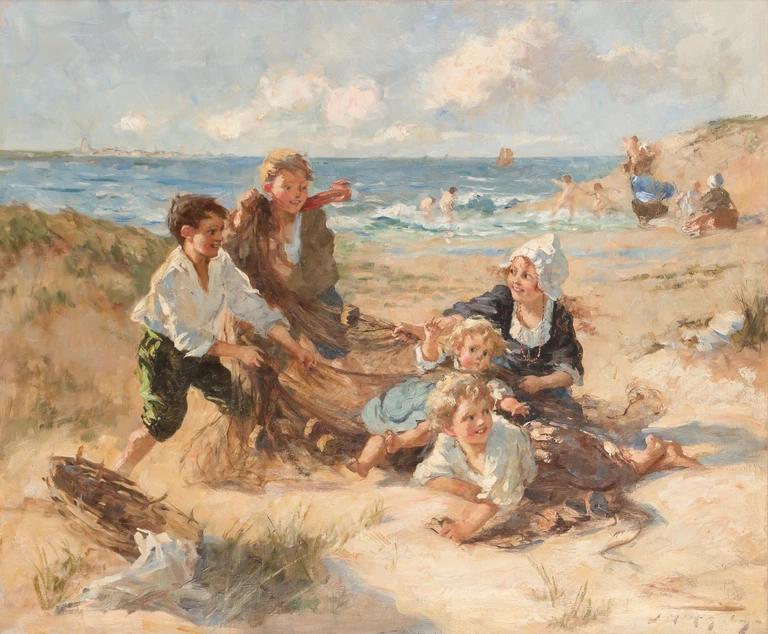
Eagle Head Massachusettes (High Tide} by Wilmslow Homer (1870)

Spending time at the beach can be a way of relaxing and clearing one’s mind of bustling city life.  It can also be a place when one can enjoy solitude and try and rid our minds of things we strive to forget.  This painting, Eagle Head Massachusetts (High Tide} was completed by American artist Wilmslow Homer in 1870.  In 1861 his employer, Harpers, sent him to the front lines of the American Civil War, where he sketched battle scenes and camp life, the quiet moments as well as the chaotic ones.  During his time as an illustrator for the magazine he witnesses the horrors of war and this painting was one of serene tranquillity which Homer had desired after his time at the Front.   After the long war, he turned his focus to lighter scenes and started concentrating on fashionable young women. The High Tide painting is believed to be Homer’s most daring subject.   It depicts three women on the beach having emerged from a swim in the sea.  The woman in the centre rings out her wet hair, startling the small dog which looks on.  The painting received mixed reviews with some focusing on issues of decorum and class, criticizing the women’s state of undress, despite the fact that they are wearing typical bathing costumes of the era.  Another criticised how Homer had depicted the women as “exceedingly red-legged and ungainly”.

At the Seaside by William Merritt Chase (c.1892)

William Merritt Chase was the most important teacher of American artists around the turn of the 20th century.  From 1891 to 1902, Chase served as the director of the Shinnecock Hills Summer School of Art in the town of Southampton, on Long Island, New York. The school and Chase’s stay on Long Island were organised by Mrs. Janet S. Hoyt, a wealthy patron of the arts and an artist who lived in the Shinnecock Hills.  Chase taught two days each week and spent the rest of his time painting and enjoying the company of his family. In his painting, At the Seaside, we see women and children enjoying themselves on the beach, along Shinnecock Bay. It is a depiction of genteel leisure on a perfect day, at a perfect location.   Chase has depicted a broad expanse of sky that fills the upper half of the canvas. We see the rushing clouds cleverly echoing the bright white forms of the children’s dresses and the Japanese-style parasols.

Crowd at the Seashore by William Glackens (1910)

William Glackens, known as an urban realist, favoured the crowded Coney Island beaches of New Jersey to depict the egalitarian throngs that came together there to relax and enjoy the sun and sea.  The mass of figures depicted in his painting Crowd at the Seashore, suggested that the folk from New York and New Jersey who came were of mixed socio-economic backgrounds.  Glackens desire to introduce liveliness into the work was achieved by using a vibrant palette.  To heighten the scene’s energy, Glackens used a vivid palette and vigorous brushstrokes, and he added saturated oranges and blues to conjure up the midday sun’s heat and glare. William Glackens painted many pictures featuring beach scenes which became very popular.

Shadows on the Sea. The Cliffs at Pourville by Monet (1882)

Monet’s painting entitled Shadows on the Sea is an excellent example of Impressionism and we are able to observe the individual brushstrokes of the wave.  Monet has depicted shadows, reflections and movements by a series of short, curved brushstrokes in pure, unmixed pigments.   It is interesting to note how Monet has used pure colours such as yellow and turquoise blue on parts of the wave and placed them next to each other.  Our eyes blend them from a distance and we begin to see green waves. The setting for the work is a hot summer day by the sea, and we note that the strong wind flowing across the water disturbs it, and it becomes a million small, flashing mirrors, which is exactly what Monet had hoped to convey.

Cliff Walk at Pourville by Claude Monet (1882)

The Cliff Walk at Pourville is an 1882 work by Claude Monet and is currently part of the Art Institute of Chicago collection.    Monet had a three-month stay between February and April 1882 at Pourville, a commune in the Seine-Maritime department in the Normandy region in northern France, in 1882.  He fell in love with the coastal town and the surrounding area and wrote to his future wife, Alice Hoschedé, extolling its merits:

“…How beautiful the countryside is becoming, and what joy it would be for me to show you all its delightful nooks and crannies…”

She was impressed by Monet’s enthusiasm and so they returned to Pourville in June that year.  The painting features two ladies on the cliff above the sea who could well be Alice and her daughter Blanche.   Many years later an X-ray of the painting indicated that the artist originally painted a third figure into the grouping, but later removed it. In John House’s 1986 book, Monet: Nature into Art, he talked about Monet’s marine art:

“…His cliff tops rarely show a single sweep of terrain. Instead, there are breaks in space; the eye progresses into depth by a succession of jumps; distance is expressed by planes overlapping each other and by atmospheric rather than linear perspective- by softening the focus and changes of colour…”

Figures on the Beach by Renoir (1890)

Another seaside scene I like was painted by Auguste Renoir in 1890 and entitled Figures on the Beach.  The setting is thought to have been a beach on the Cote d’Azur in southern France.  It is a sun-filled work in which we see two females at the beach, one shown in profile, sitting whilst holding a parasol on the sand, the other standing with her back to us holding a small wicker hamper.  Besides the two female we also have a small white dog lying in the sand next to the seated woman.  In the mid-ground we see a young boy dressed in blue standing by the water’s edge throwing stones into the sea.

Sea Bathing, the Beach at Étretat by Eugène Lepoittevin, (1864)

Sea Bathing in Étretat by  Eugène Lepoittevin (1866)

My final two offerings featuring marine art and the way people enjoy their time on beaches and in the sea are from the French artist, Eugène Lepoittevin, who achieved an early and lifelong success as a landscape and maritime painter.  In the upper painting entitled Les Bains de Mer, Plage d’Étretat (Sea Bathing, the Beach at Étretat), completed in 1864, we see a large group of people enjoying their day at the seaside.  Of these figures some have been identified.   They include the prominent French author, Guy de Maupassant (in blue cap at left), Charles Landelle, the French portrait artist, (in red cap, centre), and the French illustrator, engraver, Bertall (reading newspaper at right). The painting  which was completed in 1864 was lost and only rediscovered  in the last decade and was sold at Sotheby’s in Paris, in December 2020, for €226,800, a record for a work by Lepoittevin.

Sea Bathing, the Beach at Étretat is also the title of another of Lepoittevin’s works and was completed in 1866.  The setting is the tranquil shores of Étretat, a place for plein air painting favoured by the artist.  It had everything he wanted – pristine beaches and dramatic cliffs with its natural arches carved by the relentless seas.  Add to this people enjoying the good weather and the opportunity to bathe in the clear water and the scene becomes idyllic.