Léon Joseph Florentin Bonnat. Part 2

Léon Bonnat painting a portrait of artist, Alfred Roll (1918)

Léon Bonnat was born in Bayonne, France and lived there until he was thirteen years old.  Léon’s family then moved to Madrid where his father took on a book shop.  Léon’s love of art began to materialise after he went to live in the Spanish capital and, to encourage him, his father would take his son to the Prado.  He remembered those museum visits, saying:

“…I was brought up in the cult of Velasquez. I was very young, in Madrid; my father, on bright days such as one only sees in Spain, sometimes took me to the Prado Museum, where we did long stops in Spanish cinemas. I always left them with a feeling of deep admiration for Vélasquez… “.

Italian Woman with Child by Léon Bonnat

In 1853, when Léon was twenty, his father died and the family returned to their French hometown of Bayonne.  After studying at the Ecole de Dessin de Bayonne, he went to live in Paris and study at the Ecole des Beaux-Arts.  In Paris, he was able to view paintings by the great Masters of French and Dutch art and particularly remembers seeing the works of Rembrandt and the influence his works had on him, commenting:

“…What is striking about Rembrandt is the power, the strength and the brilliance. He represents life in all its intensity. We see his characters, we talk with them, he resuscitates and revives an entire era. a marvellous and unique gift of interpretation, he joins the sensitivity, the goodness of a heart which vibrates to all the miseries, to all the joys, to all the emotions of humanity. He does not belong to any school. He has opened the new path which closed behind him…”

Roman Girl at a Fountain by Léon Bonnat (1875)

In 1857 he came second in the Prix de Rome competition and left Paris and spent three years at the Villa Medici.  The Villa Medici, now the property of the French State was founded by Ferdinando I de’ Medici, Grand Duke of Tuscany, and has housed the French Academy in Rome and welcomed winners of the Rome Prize since 1803, so as to promote and represent artistic creation in all its fields.

L’Assomption de Marie by Léon Bonnat (1869)

L’Assomption de Marie in situ in the Church Saint-André à Bayonne (Pyrénées-Atlantiques, Nouvelle-Aquitaine, France)

In 1869 Bonnat was awarded the Medal of Honor of the Salon for his painting L’Assomption.

The Martyrdom of Saint Denis by Léon Bonnat (1880)

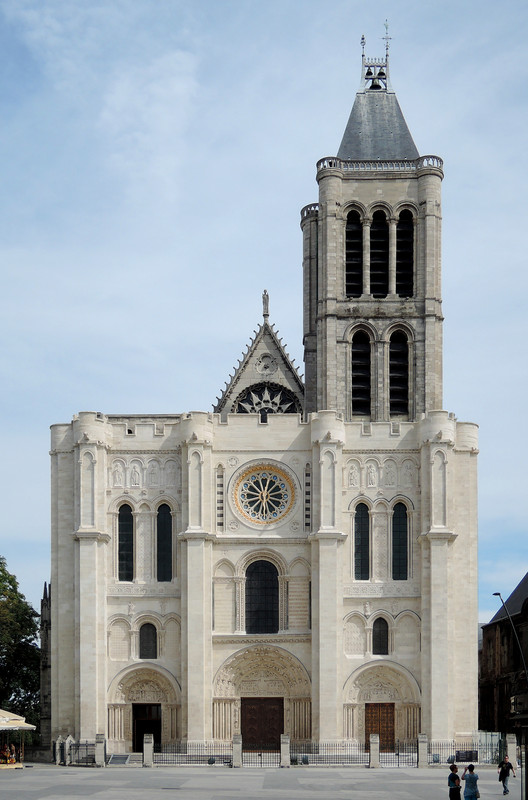
One of Bonnat’s last religious paintings was his 1880 painting entitled The Martyrdom of Saint Denis.  St Denis was a 3rd-century Christian martyr and saint.  Denis was Bishop of Paris and through his speeches, made many conversions but he was looked upon by the local Roman priest as a danger and had Denis together with his faithful companions, the priest Rusticus and deacon Eleutherius, executed.  The place of the execution, by beheading, was on the highest hill in Paris, which is now known a Montmartre.   Denis was said to be against the beheading taking place at this spot and “folklore” has it that after Denis was beheaded, the corpse is said to have picked up his severed head and walked ten kilometres from the top of the hill, and during that entire walk he preached a sermon. 

Basilica of St Denis, Paris

Detail of the north portal sculpture; the martyrdom of Saint Denis, Eleuthere and Rustique 

Denis finally collapsed at the place where he wanted to be buried, the spot where now stands the Basilica of St Denis and which is also the burial place of the Kings of France.  Saint Denis is the patron saint of both France and Paris.

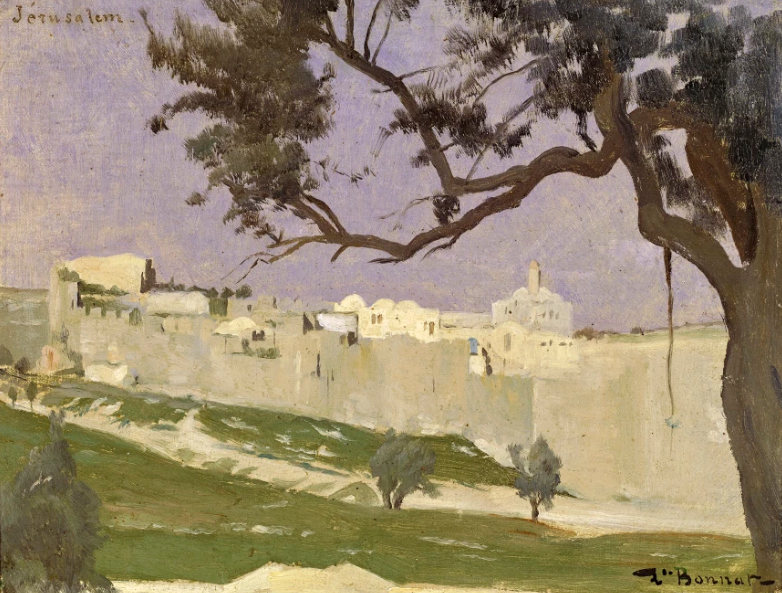
View of Jerusalem by Léon Bonnat

Although, as we will see later, Bonnat was best known for his portraiture and his early historical and religious subjects, but his landscapes and Orientalist depictions are looked upon as among his most intensely personal and beautifully crafted works.  Léon Bonnat travelled to the Middle East in 1868 together with a party that included the French painter, Jean-Léon Gérôme, his pupil Paul-Marie Lenoir,  the Dutch artist Willem de Farmas de Testas and Gérôme’s brother-in-law Albert Goupil.  The journey began in January 1868 at the Egyptian port of Alexandria and by the third of April, the group had arrived at the gates of Jerusalem.   Willem de Famars Testas recalled their first glimpse of the walled city:

“…The first glimpse of Jerusalem was gripping, the sun-illuminated city was silhouetted against a violet thundery light, while the outlying land lay under the shadow of clouds…”

Léon Bonnat recorded the impressions and the specifics of their arrival at the gates of Jerusalem in April of that year in one of his may oil on canvas sketches entitled View of Jerusalem.

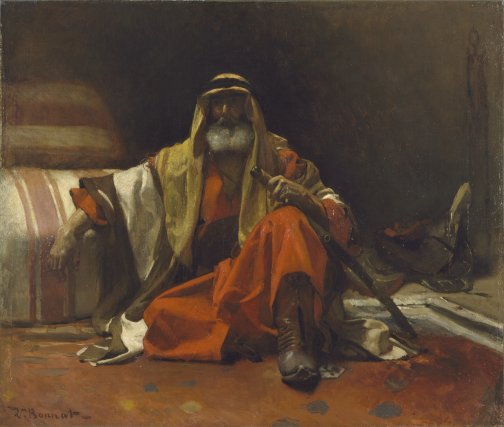
An Arab Sheik by Léon Bonnart (c.1870)

One of Léon’s works from this period was entitled An Arab Sheik which he completed once back in Paris.  It is thought that Bonnat’s depiction emerged from combining multiple resources such as the French model who posed for the seated figure; the saddle we see which Bonnat brought back from his travels and a multitude of sketched notations which he made during his travels in the Middle East.  Combining all this data Léon managed to create a painting that appears authentic, and yet, it is stereotypical of what Europeans believed about the Arabic world and its people such as the way the sheik holds his sword depicting his strength and fierceness and enhances how Europeans believed that that cultures in the Middle East and elsewhere were ruled by violence, in contrast to the supposedly more “civilized” societies of Europe and North America.

Christ on the Cross by Léon Bonnat(1674)

Bonnat’s haunting work entitled Christ on the Cross was commissioned in 1873 for the courtroom of the Cour d’Assises of the Palais de Justice in Paris.  The reasoning behind the commission was that it would embody divine justice in the eyes of the accused and by reminding them of the sufferings of Christ to save the fishermen. The painting was submitted  at the 1874 Salon.  The painting measures 1.59 meters in width and 2.27 meters in height. Bonnat’s depiction fundamentally renews the traditional representation of Christ on the cross. Christ is shown with a crown of thorns, his body is muscular and pale, and he wears a simple white loincloth. Blood is visible from the nails piercing his hands and feet. The background is dark and sombre. The crucified Christ is characterised in an extremely realistic way, accentuating Christ’s suffering due to the torture he received. Christ on the Cross is one of the best known and best loved crucifixion paintings of the western world. The painting can be viewed at the Petit Palais, Museum of Fine Arts of the City of Paris.

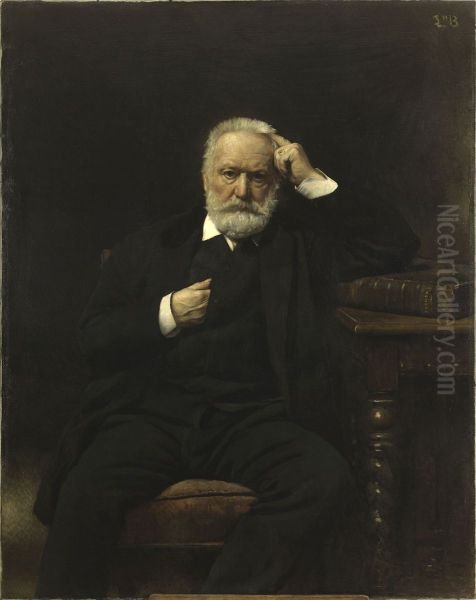
Victor Hugo by Léon Bonnat (1879)

For an artist to survive financially he or she must sell their work.  Once back in France, after his three-year stay at Villa Medici in Rome, Léon realised that the sale of his historical and religious paintings had fallen off and he had to look for another painting genre which would attract more buyers.  While Bonnat created many religious and historical works, his long-lasting fame rested on his exceptional career as a portrait painter. In an era before photography became the norm, painted portraits were central for chronicling the likenesses of important individuals, and Bonnat became one of the most sought-after portraitists of the French Third Republic and beyond. His sitters included presidents, politicians, writers, scientists, artists, and members of high society.

Jules Ferry by Léon Bonnat (1888) Jules François Camille Ferry was a French statesman and republican philosopher. He was one of the leaders of the Moderate Republicans and served as Prime Minister of France from 1880 to 1881 and 1883 to 1885.

Bonnat artistic brilliance as a portrait artist was his extraordinary skill in capturing not just a physical likeness but also the sitter’s charm, personality and social standing. His portraits are typified by their unruffled gravity, psychological perception, and scrupulous attention to every detail, whether it be the texture of fabrics to the detailed features of the face and hands. Bonnat often used dark, neutral backgrounds, which allowed viewers to focus entirely onto the subject, which were often illuminated by a carefully controlled light source, a technique evocative of the Spanish painter, Velázquez.

Portrait of Marthe and Therese Galoppe by Léon Bonnat (1889)

Marthe and Therese Galoppe were prominent figures in 19th-century France, known for their social standing and involvement in Parisian society. The painting captures their youthful beauty and grace, reflecting the evolving role of women in society during that time. Bonnat’s portrayal of the Galoppe sisters is significant as it showcases women not just as muses but as individuals with their own identities, challenging traditional views of women in art.

Armand Fallières by Léon Bonnat (1907) French statesman who was President of France from 1906 to 1913.

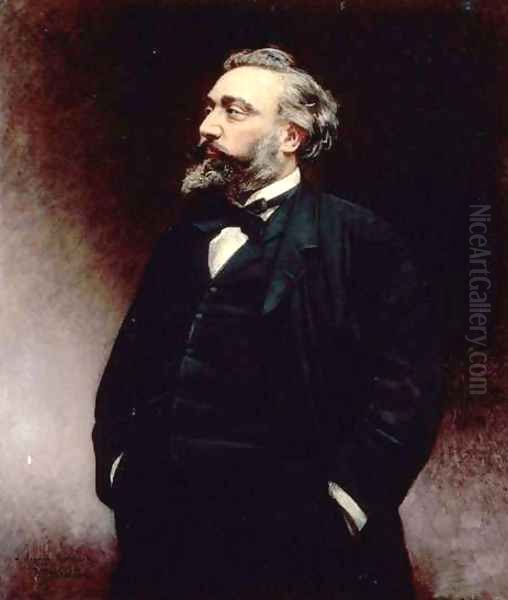
Among his most famous sitters were famous figures were the statesman Adolphe Thiers, the revered author Victor Hugo, the pioneering scientist Louis Pasteur, fellow painter Pierre Puvis de Chavannes, and French Presidents like Jules Ferry and Armand Fallières. Bonnat’s portraits served not only as personal records but also as official images that helped shape the public perception of these influential individuals. His success in this genre brought him considerable wealth and prestige.

Portrait of Léon Gambetta by Léon Bonnat (1888) Gambetta was a French lawyer and republican politician who proclaimed the French Third Republic in 1870 and played a prominent role in its early government.

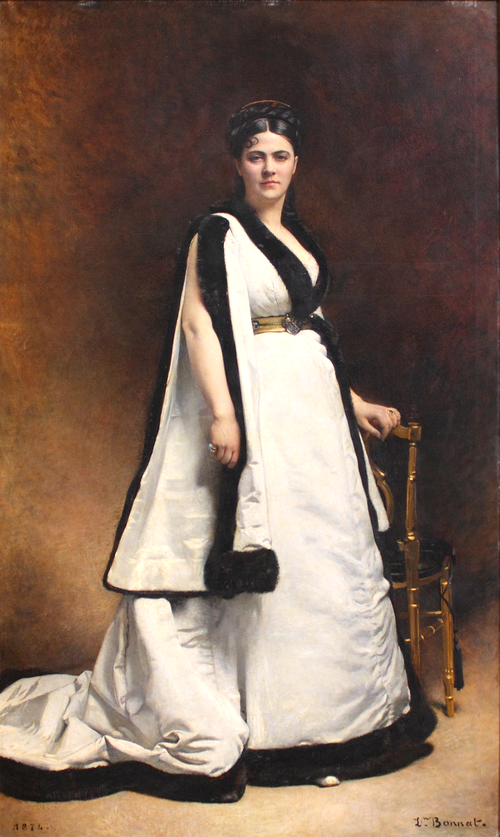
Madame Pasca by Léon Bonnat (1874) Alice Marie Angèle Pasquier was better known by her stage name Madame Pasca, a French stage actress.

Bonnat’s methodology when it came to creating portraits was known to be both thorough and painstaking. He demanded of his sitter numerous meetings so that he could carefully observe them in order to capture subtle gradations of expression and posture and because of this, he was able to achieve prolonged observations which allowed him to realise a high degree of naturalism along with psychological depth.  However, Bonnat’s long processes to achieve a finished portrait did not always please the sitters.  Although he was minded as to what the sitter wanted in the finished portrait, Bonnat refused to flatter his subject and simply strived for an unvarnished truth, but still conveying the dignity appropriate to the subject’s station in life. His commitment to authenticity along with his undoubted technical mastery in delivering form and texture, achieved the finished product being solid, present, and intensely real.

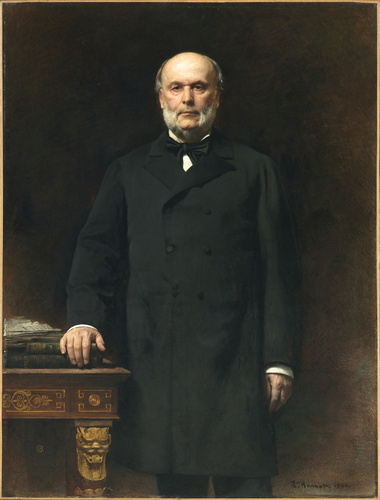
Portrait of Jules Grévy by Léon Bonnat (1880). Jules Grévy was  a French lawyer and politician who served as President of France from 1879 to 1887.

Léon Bonnat who had benefited, following the intervention of the mayor of Bayonne, Jules Labat, when he was granted a municipal scholarship from the city to study the Fine Arts in Madrid and then later in Paris, announced his intention to give his native city the gigantic art collection he had built up.  Léon Bonnat’s dedication to art extended well beyond his lifetime through this act of extraordinary generosity. Léon had no direct heirs, and decided to bequeath his extensive personal art collection, along with many of his own works, to his hometown of Bayonne.

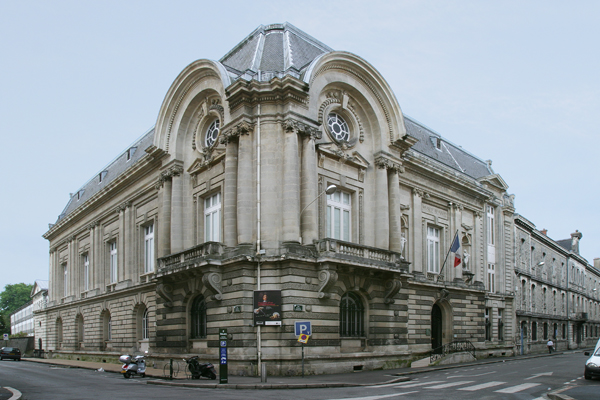
Musée Bonnat-Helleu in Bayonne, France

It was during the latter part of the nineteenth century that Bonnat had achieved financial stability and was able to indulge his passion for collecting art, especially drawings. He acquired sketches, drawings and prints by Rembrandt, Poussin, and Watteau as well as many others.  Eventually, his collection included drawings and paintings from the best of his students and colleagues as well. Like many collectors, Bonnat not only loved the art he had acquired, but he also hoped to share it with a larger public and so he proposed the idea of building a museum in his native Bayonne that would ultimately house his own collection. With his deep roots in the region, continuing family ties to Bayonne, and undoubtedly a sense of gratitude for the support he’d received as a fledgling painter, Bonnat worked tirelessly at developing the new museum. 

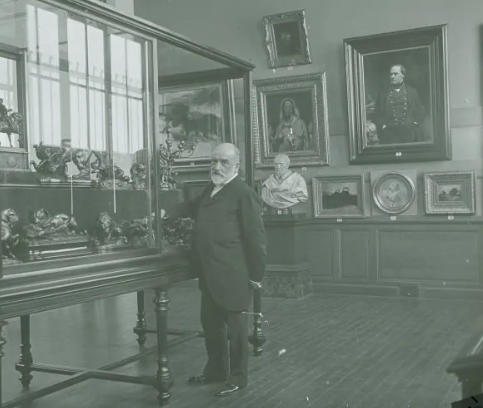
Léon Bonnat, installing his collection at the Musée Bonnat, Bayonne.

In 1902, he personally installed a large portion of his own unparalleled collection in the new Musée Bonnat.  The collection was later enriched by the donation of the collection of Paul Helleu and his wife Alice, leading to its current name, the Musée Bonnat-Helleu.  The chosen location of the museum was located at the corner of the two streets, Jacques-Laffitte and Frédéric-Bastiat, in the city centre, near the church of Saint-André where Léon Bonnat’s painting, Assumption of the Virgin can be seen. In 1896, the first stone of the future museum was laid by the Bayonne mayor Léo Pouzac and the classical-style building, in limestone, was completed eighteen months later. Inaugurated in 1901.  When the Bonnat Museum opened, the artist and collector came to set up his collection himself, while writing a will by which he bequeathed almost all of his works to the National Museums with the obligation to deposit them in Bayonne.

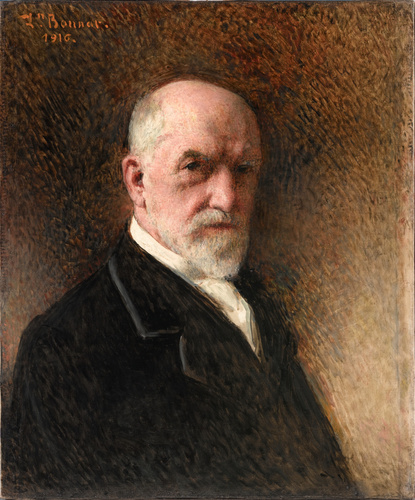
Self portrait by Léon Bonnat (1916)

Léon Bonnat died in Monchy-Saint-Éloi,  a commune in the Oise department in northern France, on September 8th 1922, aged 89.   Léon had never married and lived most of his life with his mother and sister. 

Léon Joseph Florentin Bonnat.

Self portrait by Léon Bonnat (1855)

The artist I am looking at today was one of the leading French painters of the nineteenth century.  He was a colossal figure in 19th-century French art, a painter whose career managed to tie together the past academic traditions with the proliferating trends of modernism. Let me introduce you to Léon Joseph Florentin Bonnat.

Madame Bonnat, mère de l’artiste by Léon Bonnat

Bonnat was born in Bayonne, in the French Basque Country in the far southwestern corner of France, close to the Spanish border, on June 20th1833.  He is remembered for his forceful, expressive and emotional portraits and yet he also made his name as talented history and religious painter, and an influential educator, who also built up a great personal art collection.

Portrait of Madame Melida, sister of Léon Bonnat by Léon Bonnat

In 1846. his family moved from France to Spain and went to live in the city of Madrid where his father took over the running of a bookshop. For thirteen years old Léon, who had developed a love of art this move was opportune. In the Spanish capital, Bonnat received his foundational art education, studying under the tutelage of José de Madrazo y Agudo one of the primary exponents of the Neoclassical style in Spain. He was also the patriarch of a family of artists that included his sons Federico and Luis; and his grandsons, Raimundo and Ricardo.  Federico de Madrazo y Kuntz, and his father were leading figures in Spanish academic art, and Federico was a renowned portraitist.

The Artist’s Sister by Léon Bonnat

Bonnat began his artistic education at the Academia Real de las Bellas Artes de San Fernando, in the studio of Federico Madrazo. Studying under Federico de Madrazo, he was plunged into the rich artistic heritage of Spain and he spent numerous hours in the Prado Museum, copying the works of Spanish Golden Age masters such as Diego Velázquez, Jusepe de Ribera, Francisco de Zurbarán, and Francisco Goya. These painters and their artworks had a great influence on Bonnat through their profound realism, dramatic use of chiaroscuro and the dignified way they depicted their subjects and their styles left an indelible mark on Bonnat’s developing style. Their portraits often used sombre palettes and this textural richness of Spanish art resonated deeply with him, and this style provided a contrast to the often more refined idealized French academic tradition that he would come across in his later years.

Job by Léon Bonnat (1880)

Léon’s father died in 1853 and Léon and his family moved back to France and their hometown of Bayonne.  Now back “home” Léon continued his art studies at the Ecole de Dessin de Bayonne, where one of his tutors was Bernard-Romain Julien, a French printmaker, lithographer, painter and draughtsman.  In 1854, with a stipend of 1500 francs from the city of Bayonne, Bonnat left Bayonne and travelled north to the French capital. His move to the French capital and the tuition costs were partly funded by the City of Bayonne. Having attained a strong foundation from his training in Madrid, Bonnat was able to enter the well-respected Ecole des Beaux-Arts. There, where he studied in the atelier of Léon Cogniet, a much admired historical and portrait painter. Cogniet’s studio was known for its demanding academic training, with great emphasis on students’ ability, emphasizing their drawing, and composition skills.  The students would also spend time studying the works of the old Masters. For a time whilst in Paris Bonnat briefly studied with Paul Delaroche, another prominent academic painter.

The Good Samaritan by Léon Bonnat

Adam and Eve Finding the Body of Abel by Léon Bonnat

Now in Paris, Bonnat began to create his reputation as an up-and-coming artist. In 1857, for the first time, he submitted paintings to the Paris Salon with works such as The Good Samaritan and Adam and Eve Finding the Body of Abel which demonstrated his skill in depicting religious and historical subjects, which confirmed the influence of his Spanish and Italian studies.

Villa Medici, Rome.

In 1857, whilst studying at the École des Beaux-Arts, Bonnat competed for the prestigious Prix de Rome in Painting, The Prix de Rome in Painting was one of the most prestigious awards in the field of fine arts. It was created in 1663, and this annual competition was organized by the Académie royale de peinture et de sculpture (Royal Academy of Painting and Sculpture) in Paris. Each year the winners of the Prix de Rome were sent to the Villa Medici in Rome to perfect their artistic training for a number of years.  The prize awarded to the winner was a scholarship that allowed promising artists to study cost-free in Rome. It was the goal of every early-career artist to win the award.   By rewarding talented young artists with a scholarship and a chance to stay at the Villa Medici in Rome, it was also seen as a way in which it helped to promote academic art and encourage artists to hone their skills. Bonnat, after two failures in 1854 and 1855 had made another attempt to win the prize in 1857.

The Resurrection of Lazarus by Léon Bonnat (1857)

Each year, entrants were given a subject to focus on and then present their submission in front of a demanding jury. This fierce competition encouraged artists to push their limits and express all their creativity.  The year, 1857, Bonnat attempted to win the award the subject matter chosen by the organisers was Lazarus. Léon Bonnat submitted his work entitled The Resurrection of Lazarus and he was awarded the second prize, which unfortunately did not include the full French state scholarship.

Lazarus Raised from the Dead by Charles Sellier

The winner of that year’s prize was the French painter who specialized in mythological and historical subjects, Charles Sellier with his painting, Lazarus Raised from the Dead.

Portrait of Léon Bonnat by Edgar Degas

Bonnat was pleased to receive the second-place award but disappointed that his prize did not allow him a three-year all expenses paid stay at the Villa Medici which was only awarded to the winner of the competition.  However, thanks to the financial assistance of a further 1500 francs granted to him by the city of Bayonne, as well as  money raised by some of the town’s wealthy citizens including the Personnaz family,  a wealthy Jewish family of fabric exporters,  he was able to spend the next three years in Rome, where he was able to study the works of the great Italian Masters, particularly the works of Raphael, Titian, and Michelangelo, as well as the powerful naturalism of Caravaggio.  During his stay in Rome, he also became friends with Edgar Degas, Gustave Moreau, Jean-Jacques Henner, and the sculptor Henri Chapu.

St Vincent de Paul Taking the Place of a Galley Slave by Léon Bonnat (1865)

Bonnat remained in the Italian capital from 1858 until 1861.   Bonnat’s early paintings, such as his 1865 St Vincent de Paul Taking the Place of a Galley Slave were renowned for their dramatic intensity and his religious works of that time strengthened his reputation in this genre.  This painting was based on a part of Vincent;s life. Vincent de Paul was an Occitan French Catholic priest who dedicated himself to serving the poor and became Chaplain-General of the Galleys in 1619, while working for the General of the Galleys of France, Philippe-Emmanuel de Gondi. This position took him to the port of Marseilles in 1622.   When not at sea, the galley slaves, or galères, would spend their time in a squalid prison in the fortified port’s prison. Vincent was horrified at the state of the prisoners and their environs and complained to his patron M. Gondi that such a situation could not continue if France was truly a Christian kingdom. Vincent began ministering to the galley slaves, providing aid to the Catholic prisoners, as well as to the enslaved Muslims and Protestants. At the same time, he instituted important reforms in relation to how these men were treated, regardless of their faith, and set about building a hospital in Marseilles to treat the galley slaves. Due to a lack of steady funding, the General Hospital of Galley Slaves, as it would eventually be called, was not finished until 1646.

Because of Léon’s artistic prowess and being looked upon as a leading academic artist, he was often asked to act as a juror for the annual Salon exhibitions, and in 1867, he was his nominated to the Legion of Honor.

…….to be continued.


Most of the information for these blogs about Léon Bonnat came from Wikpedia and these blogs:

NiceArtGallery

Rehs Gallery

Léon Bonnat by Guy Saigne

Vincent and the Galley Slaves

Mark (Max) Gertler. Part 2.

Mark Gertler

Gertler had now settled into life at the Slade art academy.  One of his fellow students, C.R.W Nevinson  summed up life at the Slade when he and Gertler were students there saying it was full with a crowd of men such as I have never seen before or since..  As far as his thoughts on Gertler, he once wrote that Max was the genius of the place… and the most serious, single-minded artist he had ever come across.   Gertler was considered the best draughtsman to study at the Slade since Augustus John. Another student, Paul Nash, said that Gertler riding high “upon the crest of the wave”.

Still life with a Bottle of Benedictine by Mark Gertler

In 1910 a new seventeen-year-old student arrived at the Slade Academy of Art who was to add a little “spice” to the lives of Gertler and some of the other students.   Dora de Houghton Carrington, who after joing the Slade, became known simply by her surname, Carrington, as she considered Dora to be vulgar and sentimental. Gertler and C.R.W. Nevinson both became closely attached to Carrington and according to Michael J. K. Walsh 2002 biography, C. R. W. Nevinson: The Cult of Violence, he wrote about that impossible situation:

“…What he (Nevinson) was not aware of was that Carrington was also conversing, writing and meeting with Gertler in a similar fashion, and the latter was beginning to want to rid himself of competition for her affections. For Gertler the friendship would be complicated by sexual frustration while Carrington had no particular desire to become romantically involved with either man…”

This was unfortunate as Gertler and Nevinson had become great friends.  Gertler wrote to his sponsor, William Rothenstein saying:

“…My chief friend and pal is young Nevinson, a very, very nice chap. I am awfully fond of him. I am so happy when I am out with him. He invites me down to dinners and then we go on Hampstead Heath talking of the future…”

In Michael J. K. Walsh’s biography of Nevinson, Hanging a Rebel: The Life of C.R.W. Nevinson, he wrote:

“…Together they studied at the British Museum, met in the Café Royal, dined at the Nevinson household, went on short holidays and discussed art at length. Independently of each other too, they wrote of the value of their friendship and of the mutual respect they held for each other as artists…”

C.R.W. Nevinson, himself, wrote of his friendship with Gertler in his 1937 autobiography, Paint and Prejudice:

 “…I am proud and glad to say that both my parents were extremely fond of him.” Henry Nevinson recalled: “Gertler came to supper, very successful, with admirable naive stories of his behaviour in rich houses and at a dinner given him by a portrait club, how he asked to begin because he was hungry…”

Gertler pursued Carrington for a number of years, and they had a brief sexual relationship during the years of the First World War.

Portrait of a Girl ( Gertler’s Sister, Sophie) by Mark Gertler (1908-1911)

As is the case for many young aspiring portrait artists, Gertler, before he painted commissioned works, began by painting portraits of family members. One of his most frequent depictions was of his mother.

The Artist’s Mother by Mark Gertler (1913)

In this painting of his mother Golda Gertler has depicted her as a peasant with huge, working hands. He called the portrait ‘barbaric and symbolic’, explaining that it was meant to show ‘suffering and a life that has known hardship’.

The Artist’s Mother by Mark Gertler (1911)

Gertler once wrote rather disparagingly about his sitter:

“… “I am painting a portrait of my mother. She sits bent on a chair, deep in thought. Her large hands are lying heavily and wearily in her lap. The whole suggests suffering and a life that has known hardship. It is barbaric and symbolic. Where is the prettiness! Where! Where! …”

Portrait of the Artist’s Mother by Max Gertler (1924)

This was the final portrait Gertler’s mother.  In this work there is no hint of sentimentality or the personality which came to the fore in his earlier portraits of her.  It is a depiction of dominance and authority.  The art critics of the time highly praised it.  Gertler loved the finished portrait and whether he was concerned that it would be bought and taken from him, it made him put a price of £200 on it in the hope that this would put off buyers.  It didn’t work as it was bought for the full asking price, which was the highest price any of his works fetched during his lifetime !

Portrait of the Artist’s Family, a Playful Scene by Mark Gertler (1911)

Gertler completed many more paintings of his family.  One such was his Portrait of the Artist’s Family, a Playful Scene which he completed in 1911. It depicts a room in the  family’s Spital Square house with his two brothers Harry and Jack watching their sister tickling their mother who has fallen asleep in her chair.

Still Life with Bowl, Spoon and Apples by Mark Gertler (1913)

Mark Gertler, like many young artists, was interested in new art trends, some of which he may be able to experiment with.   In November 1910 an influential exhibition opened at London’s Grafton Rooms entitled Manet and the Post-Impressionists curated by Roger Fry, which introduced the work of artists such as Cézanne, Gauguin, Van Gogh, and Picasso, to English art lovers.  Despite some derogative remarks from well-known critics, Gertler found the exhibition amazing and began to experiment with brighter colours and flatter styles.  In 1913 Gertler completed his painting, Still Life with Bowl, Spoon and Apples which displayed the influence of Cezanne

The Pond by Mark Gertler (1917)

The influence of Cézanne on his work, can also be seen in his 1917 work The Pond.  In this depiction we see the branch of a tree extends like an arm pointing to the silvery pond which can be seen in the mid-distance, created from a patchwork of overlaid paint strokes. Gertler uses an abstract arrangement of colours to capture the lush greenness of this quiet spot, emulating the dappled effect of light and colour reflecting on the still surface of the pond.  He has created a sense of depth in the way he has built up his painting with blocks of colour, which creates the impression of standing beneath the tree, overlooking the scene. 

Garsington Manor and Gardens

The painting was completed by Gertler whilst he was staying at Garsington Manor, the Oxfordshire residence of renowned literary and artistic patron Lady Ottoline Morrell.   It is believed that the painting, The Pond, was based on the fish pond at Garsington. At the outbreak of the First World War, Gertler was one of many artists and writers associated with the Bloomsbury Circle invited to Garsington Manor. Many were conscientious objectors who worked on the estate.

The Jewish Family by Mark Gertler (1913)

In 1912 Mark Gertler moved from the family home into the top-floor attic studio of 32 Elder Street, Spitalfields, which he shared with his brother Harry and Harry’s wife, and was just around the corner from the family home. Gertler remained deeply attached to home, family and the vital Jewish culture of his native Spitalfields/Whitechapel area of London’s East End, and this can be seen in his 1913 painting The Jewish Family.  It was a depiction of a family of four of differing generations and could well be based on his own family members. The painting was bought by Edward Marsh, a scholar and influential art collector, who became a patron of Gertler.  Sir Edward Marsh through the Contemporary Art Society bequeathed the painting to the Tate, London in 1954.

Around this time Mark Gertler became good friends with the writer Gilbert Cannan who based the title character of his 1916 novel Mendel, A Story of Youth, directly on intimate conversations he had with Gertler who talked about his early life and his relationship with C. R. W. Nevinson and Carrington.   “Mendel” being the Yiddish given name of Gertler.

Gilbert Cannan at his Mill by Mark Gertler (1916)

Mark Gertler’s friendship with Gilbert Cannan flourished and in 1914 he went to stay with the writer and his wife, Mary, in their Hertfordshire home, a converted windmill, at Cholesbury.  Cannan had been employed as a secretary by J. M. Barrie, the Scottish novelist and playwright, best remembered as the creator of Peter Pan. A relationship developed in 1909 between Cannan and Barrie’s wife Mary Ansell, a former actress, who felt ignored by her husband.  Although attempts were made by her husband to save their marriage they were divorced and she and Cannan were married in 1910.  Mark became a regular visitor at Cannan and Mary’s windmill house and it is thought that he began making preliminary sketches during his early visits and completed his painting Gilbert Cannan at his Mill in 1916.  It depicts Cannan with his dogs, Luath and Sammy.  Cannan’s wife Mary owned Luath, and he had been the model for Nana, the Newfoundland dog in Peter Pan. Sadly the relationship of Cannan and Gertler declined after 1916, mainly because of Cannan’s increasingly unstable behaviour.

Merry-go-Round by Mark Gertler (1916)

 At the outbreak of the First World War in 1914 there was a call to arms and Max applied for military service but was rejected on the grounds of his ‘Austrian’ parentage.  In 1918 he again applied but was  then later, after being called up in 1918, excused active service on the grounds of ill health which fortunately for Max avoided being forced to publicly declare his pacifist convictions, which were instead pictorially articulated in his 1916 anti-war painting entitled Merry-Go-Round.. Is this simply a painting of a carousel and people enjoying themselves or is there something more we should get from the depiction.  The Painting is part of the Tate Britain’s collection and was begun in May 1916 when Gertler wrote to Lytton Strachey about it:

“… ‘I am working very hard on a large and very unsaleable picture of “Merry-Go-Round…”‘

Max completed it the following autumn. Merry-Go-Round depicts men in uniform with their girlfriends close by their side.  Maybe it was the last time they had to enjoy life before they were sent to Europe to fight for King and Country.  But all is not well as the facial expression on the men is not one of joyfulness that such rides would inspire.  The faces are fixed in what looks like a cry for help.  Like the ride itself, which is unstoppable, probably too is their fate on the fields of war. When it was exhibited, it was looked upon by many critics as one of the most important war painting.  The writer, D. H. Lawrence, wrote to Gertler:

“…I have just seen your terrible and dreadful picture Merry-go-round. This is the first picture you have painted: it is the best modern picture I have seen: I think it is great and true. But it is horrible and terrifying. If they tell you it is obscene, they will say truly. You have made a real and ultimate revelation. I think this picture is your arrival…”

In an interview in 2021, Jeannette Gertler, Mark’s niece talked about the Merry-go-Round painting and she told the interviewer:

“…It was very controversial, not popular. People were annoyed about it and it was slated so much because it was making fun of the war. Making fun of the soldiers going around and around, achieving nothing. They thought it was very naughty of him to do that. Dispiriting. But he was opening their eyes. Really he was…”

On being asked what the Gertler’s family made of the painting Jeannette said:

“…They didn’t mind, Mark was their golden boy, their star, but other people were very annoyed about him making fun of the war. The boys were all pacifists you see. The family, they’d had enough trauma, as Jewish émigrés you know…”

Queen of Sheba by Mark Gertler (1922)

In 1920, Gertler was diagnosed with tuberculosis and was forced to enter a sanatorium.  He would have to attend these medical facilities on a number of occasions during the 1920s and 1930s. These health issues created an unsettling period for Gertler but he decided to go to Paris and returned home full of ideas.

Mandolinist by Mark Gertler (1934)

He was inspired by the great French painter Renoir, who was a leading painter in the development of the Impressionist style.  Gertler especially liked Renoir’s figurative paintings and on returning to London he began to focus on female portraits and nudes, and would sometimes combine figures with elaborate, colourful still lifes.  The 1920’s was to become his commercially most successful decade.

The Violist by Mark Gertler (1912)

Two of Gertler’s preliminary Studies for The Violinist (1912)

Continuing with musical depictions I come to Gertler’s famous 1912 figurative painting entitled The Violinist but, referred to in a letter by Gertler, as The Musical Girl, which he started whilst attending the Slade Art School. He created preliminary pencil head sketches before he completed two oil on panel versions of The Violinist.  The completed painting shown above is the second version.   We do not know the name of the sitter but we do know she was a music student and a friend of Gertler’s family.  Gertler was obviously taken by her distinctive looks with her striking, crop-haired, grey-eyed female who obviously captured his imagination.  His sitter wears a loose, open-necked, vivid purple blouse.  The vibrant colours of her clothing and background are perfectly balanced against the luminous skin tones. It is not the clothes we focus on but her face and her downward-looking eyes with their delicate lids relating closely to the earlier pencil study for the work.  The painting was sold for GBP 542,000, the most paid for a Gertler painting. The top preliminary study sold for GDP 62,500.

Talmadic Discussion by Mark Gertler

It was around 1925 that Mark Gertler met Marjorie Greatorex Hodgkinson who had begun studying at the Slade under Henry Tonks in 1921. That same year Gertler was admitted to Mundesley Sanatorium in Norfolk, and Marjorie’s visits to him and her caring nature seemed to boost his health.  He and Marjorie married in 1930 and their son Luke was born two years later.

Sales of Gertler’s paintings declined during the 1930s but despite their poverty, the Gertlers maintained a busy social life while Mark’s work continued with the still lifes, portraits and monumental nudes such as the Mandolinist.  Sadly, Gertler suffered from long bouts of depression, and other forms of ill-health.  Max’s marriage to Marjorie suffered because of his poor physical and mental health and by the mid-1930s, despite his efforts to improve matters, the marriage had deteriorated and Gertler’s mental health worsened and he became suicidal.

The Basket of Fruit by Mark Gertler

His mental decline was also part caused by the death of his close friends; the writers Katherine Mansfield in 1923 and D. H. Lawrence to tuberculosis in 1930.  Mark’s friend, and once a fellow student of his at the Slade, Dora Carrington, committed suicide in 1932, two months after her close friend, Lyllton Strachey’s death.  That same year Mark Gertler’s mother died.  Gertler went on painting trips to Europe to help his moods but this didn’t work and to make things worse many art critics began to slate his work.

Self portrait with Fishing Cap by Mark Gertler

Gertler’s final exhibition, held at the Lefévre Gallery in May 1939, failed to attract visitors and he sold only three works. Not long after, on June 23rd 1939, Mark Gertler gassed himself in his Highgate studio. He was buried four days later in Willesden United Synagogue Cemetery.


Once again information for this blog came from ma ny Wikipedia sites but also from these excellent websites:

Ben Uri Research Unit

Art UK

A Crisis of Brilliance

Spartacus Educational

Fine Art Society

New English Art Club

Glyn Vivian Gallery

Christies

New Hope Artists. Part 3.

The third artist who was involved in the early days of the New Hope Artists Colony was Daniel Garber.  He has been looked upon as being one of the three most important painters of that group

Daniel Garber

Daniel Garber was born on April 11th, 1880, in North Manchester, Indiana. He was the son of Daniel Garber and Elizabeth Garber (née Blickenstaff). Daniel always had a love of art and the belief he could some day become a professional artist.  In 1897, when he was sixteen years old he enrolled at the Art Academy of Cincinnati.  In that same year he moved to Philadelphia and in 1899 he became a student at the Pennsylvania Academy of the Fine Arts on a six year course.  His instructors at the Academy included Thomas Anshutz, William Merritt Chase, and Cecilia Beaux.  During the summers of 1899 and 1900 he also registered to take summer school classes in Fort Washington, Pennsylvania, at the Darby School of Painting, where he studied under Hugh Breckenridge, an artist and educator who championed the artistic movements from impressionism to modernism and Thomas Anshutz, an artist known for his portraiture and genre scenes, and who, along with Breckenridge, was a co-founder of The Darby School. This summer art school flourished first in Darby, PA, and then in Fort Washington, PA, between 1898 and 1918.  Anshutz and Breckenridge brought a lot of new ideas about painting back to Philadelphia after their European stays, and introduced those ideas to a public that was initially not very responsive to Impressionism, 

Lambertville Beach by Daniel Garber

During his time as a student at the Pennsylvania Academy, Daniel Garber met fellow artist Mary Ethel Franklin while she was posing as a model for the portrait class of Hugh Breckenridge. Peviously, she had been a student of Howard Pyle when he taught at the Drexel Institute. Following on from a two-year courtship, Garber and Mary were married on June 21st, 1901.

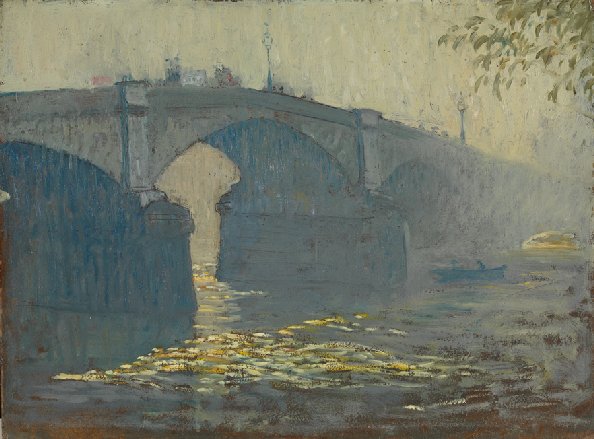
Battersea Bridge by Daniel Garber (1905)

Whilst still studying at the Academy, Daniel opened a studio in Philadelphia in 1901 and set to work as a portraitist and commercial artist. In May 1905, he won a Pennsylvania Academy award, The William Emlen Cresson Traveling Scholarship, which financed him to go to Italy, England and France for two years of independent studies. During his two-year sojourn in Europe he was continually creating paintings which depicted different rural villages and farm scenes and built up a collection of Impressionist landscapes some of which were exhibited at the Paris Salon. One such work was entitled Battersa Bridge.

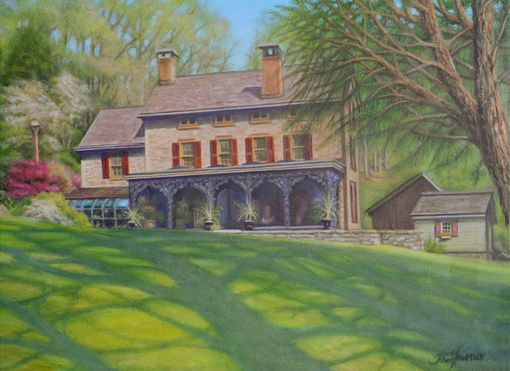
Painting of Daniel Garber’s home, Cuttalossa, by J.C.Turner

Upon his return to America in 1907, Garber began teaching life and antique drawing classes at the Philadelphia School of Design for Women. That summer, Garber, his wife and baby Tanis settled in Lumberville, Pennsylvania, a small town just north of New Hope. Their new summer home came to be known as Cuttalossa, named after the creek which occupied part of the land. The family spent part of their time in Lumberville and part in Philadelphia at their Green Street townhouse which he used as a base when he was teaching.

Rural Landscape by Daniel Garber

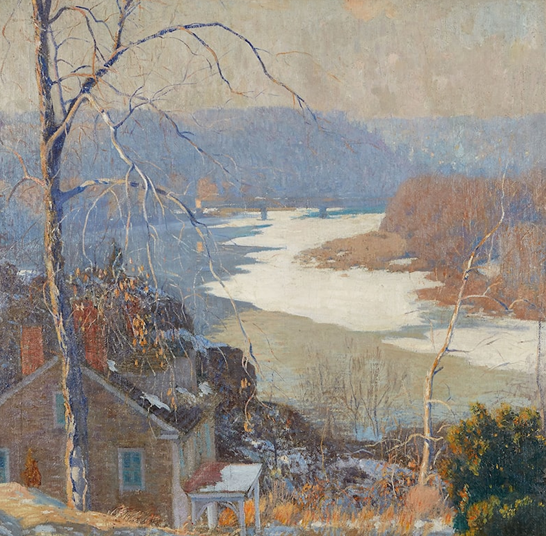
Up the River, Winter by Daniel Garber (1917)

Daniel submitted many of his Pennsylvania landscapes at various exhibitions and received numerous prestigious awards for these works.

Garber teaching at Chester Springs, c. 1935. Image courtesy of the Garber family.

In Autumn 1909, Garber was offered a position at the Pennsylvania Academy as an assistant to Thomas Anshutz. Garber accepted and became an notable instructor of art at the Academy where he taught for the next 41 years. As a lecturer in art, Garber aroused in his students an anxious silence as he passed among them, correcting the mistakes in their work. The brusque severity of his remarks often had his students, especially the women, in tears. He commented to one female student whilst critiquing her artwork:

“…Can you cook?……You sure can’t draw, so you’d better learn how to cook…”

Garber’s students, albeit often fearing his harsh critiques, respected his honest comments, realising the value of his observations and understanding the high expectations and dedicated concern underlying them.

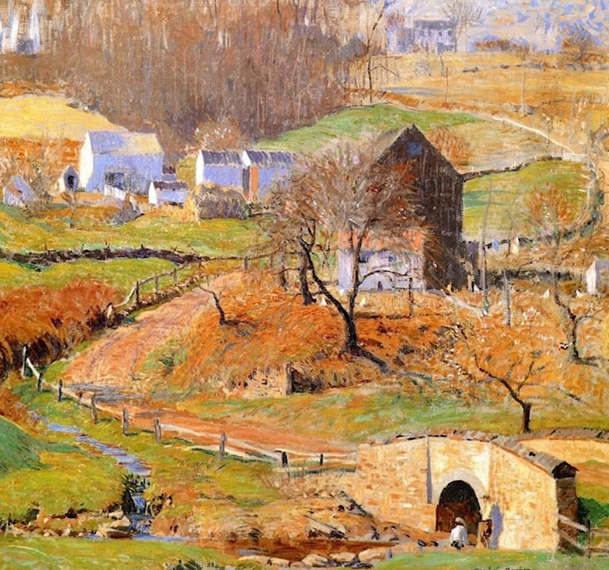
The Valley – Tohickon by Daniel Garber (1914)

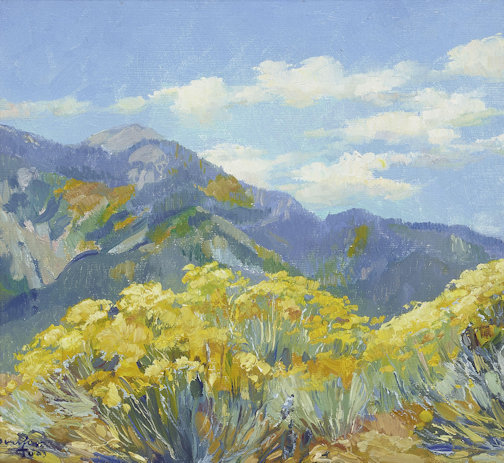
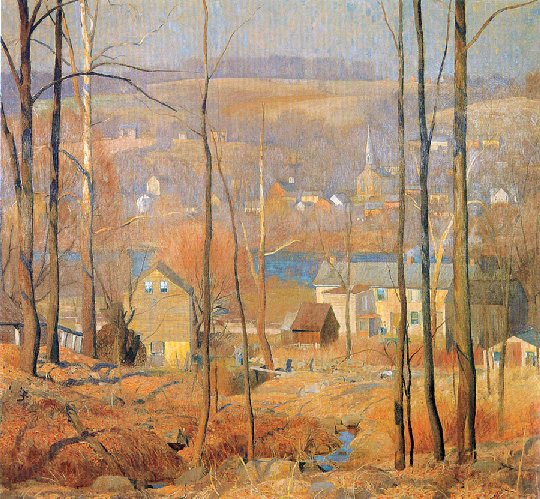
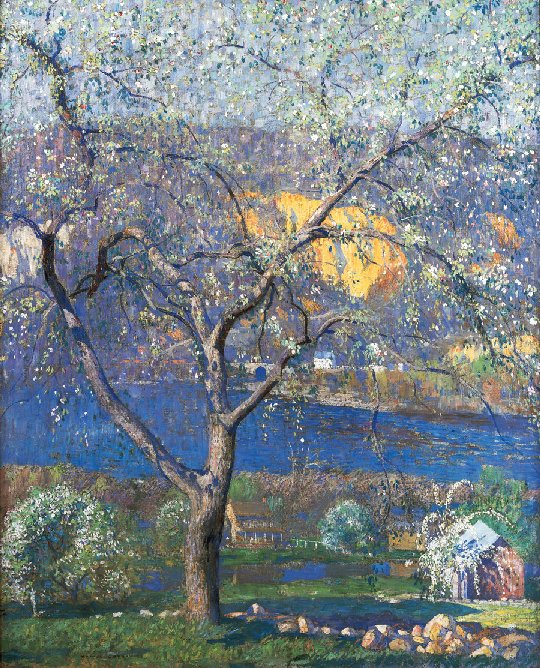
Daniel Garber painted consummate landscapes depicting the Pennsylvania and New Jersey countryside which surrounded New Hope. In contrast to fellow New Hope artist, Edward Redfield, Garber delicately painted using a thin paint application technique. His paintings exude both beautiful colour and light, which generate a sensation of endless depth. Garber like Redfield painted large exhibition size works with the intention of submitting them to exhibitions and winning prizes which they were both extremely successful doing so.

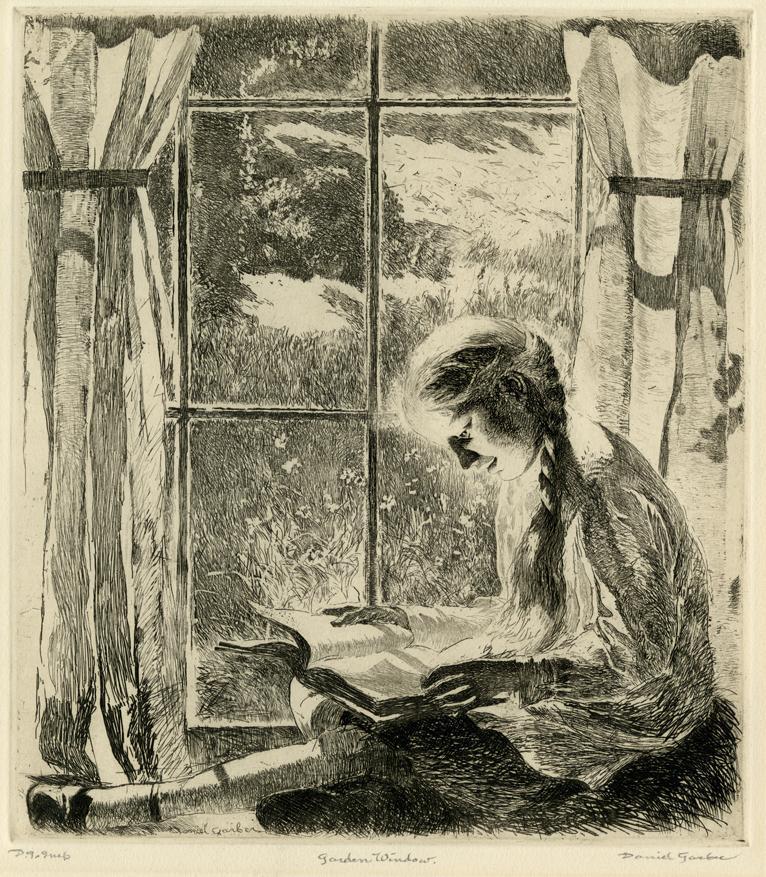
Garden Window, an etching and drypoint on paper by Daniel Garber (1946).

Although, he completed many small delicate paintings he was a fine draftsman, and completed many works on paper, mostly in charcoal but also a few works in pastel. Daniel Garber was also a talented etcher completing a series of about fifty different scenes, most of which run in editions of fifty or fewer etchings per plate.

Stockton Church etching by Daniel Garber (1941)

Daniel Garber loved to sketch. In fact the first jobs he held during his teenage years honed his skills as a draftsman. After working at the Franklin Engraving Company, Daniel Garber illustrated books and magazines, one of which was the collected works of Theodore Roosevelt. In 1917, he went back to his first love, drawing, this time as a printmaker. There was financial sense for Garber in making prints as by doing so he widened his exposure as an artist, exhibiting his work at print venues as well as the usual gallery outlets. He held many one-man exhibitions of his drawings, etchings, and prints and this meant an expansion to his market.

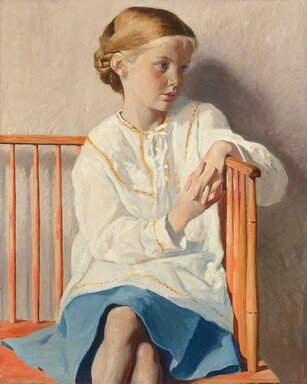
Tanis Garber by Daniel Garber (1914)

Daniel and Mary Garber’s first child Tanis had been born in Paris on December 16th 1906 and when she was seven years old her father completed her portrait. The portrait is part of the National Gallery, Washington’s collection.

Tanis by Daniel Garber (1915) From the Warner Collection of the Westervelt Warner Company, displayed in the Westervelt Warner Museum of American Art, Tuscaloosa, Alabama.

In this depiction (above) of his daughter Tanis he portrays her as if standing in a doorway of his studio at their home, Cuttalossa. In this work Garber began to explore the passage of light through air and objects. Although this might look like an Impressionist-style work, it is not about capturing fleeting light effects or impressions. In fact, Garber said that the painting was worked on over all of the summer months of 1915, with himt apparently returning to the work when his general light effects could be recreated. What Garber had in mind was his desire to simply achieve a Golden Age depiction of childhood; an eternal idealized image, rather than a momentary real one.

The Boys by Daniel Garber (1915) Depicting three of Garber’s students at the Pennsylvania Academy of the Fine Arts, this oil was created in his studio at Cuttalossa

Garber’s second child, John Franklin Garber was born in Pennsylvania on September 25th 1910, three years after his parents had returned to America from France. He grew up on the Garber property Cuttalossa, near Lumberville and he, like his sister Tanis and his mother, posed for many of Garber’s figurative paintings. He attended Penn Charter School and graduated with a degree in chemical engineering from Lehigh University in 1933. John Garber became a keen sponsor and advocate of his father’s work, assisting and corresponding with museums, private collectors, dealers and writers

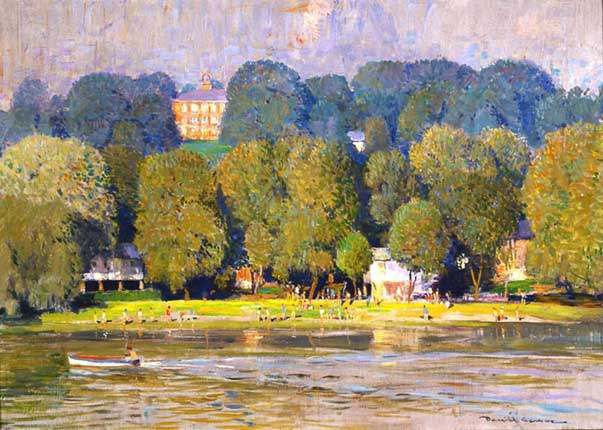
Geddes Run by Daniel Garber (1930)

Daniel Garber’s works were exhibited nationwide and many earned awards, including a gold medal at the Panama-Pacific International Exposition in 1915 in San Francisco, California. He was elected a member of the National Academy of Design in 1913.

Buds and Blossoms by Daniel Garber (1916)

Daniel Garber died, aged 78, on July 5th, 1958, after falling from a ladder at his studio.

He continued to paint until nearly the end of his life and produced over 2,500 objects which were shown at over 750 exhibitions during the course of his lifetime. It had always been his desire to create and to share his art with the public. This interest in art and educating was also apparent by his forty-one years at the Pennsylvania Academy of Fine Arts, where he taught from 1909 until 1950, where he offered up his knowledge of art and was able to influence succeeding generations of artists. Garber’s paintings today are considered by collectors and art historians to be among the finest works produced from the New Hope art colony. His paintings can be seen in many major museums including the Smithsonian American Art Museum in Washington, DC, the Art Institute of Chicago and Philadelphia Museum of Art.

Was he the greatest of the New Hope painters ? I will let you decide.


Information for this blogs was obtained from a number of sources including:

Incollect

New Hope Colony Foundation of the Arts

Michener Art Museum

Jims at Lambertville

Maria Elisabeth Georgina “Lizzie” Ansingh

Lizzie Ansingh

My featured artist today is a Dutch lady who became a great portrait painter but may be best remembered for another type of art which I will tell you about later.

Portrait of Lizzie Ansingh by Thérèse Schwartze (1895)

Maria Elisabeth Georgina Ansingh, better known as simply Lizzie Ansingh, was born on March 13th 1875 in the Dutch town of Utrecht. She was the eldest of three daughters of the pharmacist and amateur painter, Edzard Willem Ansingh and Clara Theresia Schwartze.

Johann Georg Schwartze self portrait (1869)

Her maternal grandfather was Johann Georg Schwartze a painter from Northern Netherlands who grew up in America and her aunt who was the portrait painter Thérèse Schwartze, and it was she who gave Lizzie her first drawing lessons. For many years during her childhood, due to her mother’s poor health, Lizzy lived with her aunt Thérèse and it was this aunt who encouraged her to paint and as French impressionism was the rage around that time, Thérèse introduced Lizzy to all sorts of impressionist painters of the time. Both of them also visited many museums and art exhibitions together, which further helped Lizzy gain a perspective on art.

Theresia Ansingh by Thérèse Schwartze

Lizzie’s youngest sister Theresia Ansingh was also a painter but did not take up art, using the non-de-plume Sorella, (meaning “sister”), until she was approaching the age of 50.

Housemates by Thérèse Schwartze (c.1919)

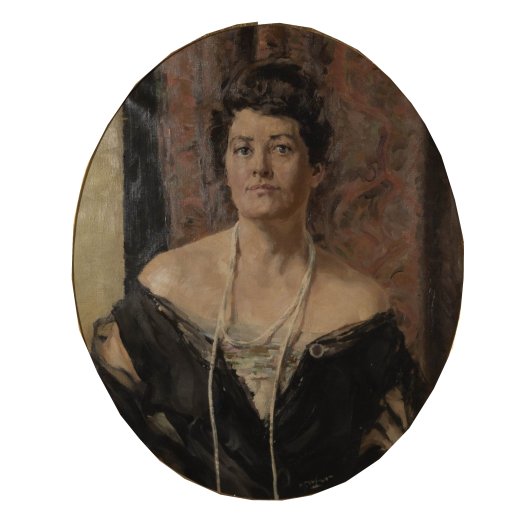
Around 1915, Thérèse Schwartze completed a group portrait of those living together in the Ansingh/Schwartze household. The setting is a room in their house in which a table is the only furniture on show. There are five people around the table. Sitting, with her hands on her lap, is Thérèse Schwartze’s sister the sculptor, Georgine Elisabeth Schwartze. Standing at the back, dressed in black with her hands crossed, is Lizzie Ansingh’s mother, Clara Theresia Ansingh-Schwartze. In the centre, seated at the table with an open book resting on two other books is Anton Gillis Cornelis van Duyl, the journalist and editor-in-chief of the Algemeen Handelsblad, the husband of Thérèse Schwartze. On the right of the group is Lizzie’s sister Thérèse Ansingh and on the far right, standing, leaning against her sister, Maria Elisabeth Georgina (‘Lizzy’) Ansingh.

Kunstenaars or Amsterdamse Joffers: Ritsema, Surie, Osieck, Ansingh, Van den Berg, Van Regteren-Altena en Bodenheim.

In 1894, when Lizzie was nineteen years old she enrolled at the Rijksakademie van beeldende kunsten (State Academy of Fine Arts) and studied Fine Art in a separate class for female students and this helped her to further develop her artistic skills. At the Academy, she also learned about human anatomy by studying Greek and Roman statues. Whilst studying at the Academy she and a number of fellow students, Marie van Regteren Altena, Suze Bisschop-Robertson, Coba Ritsema, Ans van den Berg, Jacoba Surie, Nelly Bodenheim, Betsy Westendorp-Osieck and Jo Bauer-Stumpff, formed a group in Amsterdam called Amsterdamse Joffers. This was a group of like-minded young Dutch female painters who would meet up regularly and share their artwork and more importantly support each other on their artistic journey. Many came from wealthy and artistic families and did not depend on painting for their livelihoods. Thérèse Schwartze would often act as a mentor/facilitator at their meetings. It became a major movement in Amsterdam and opened ways for many female painters to pursue art as a full-time profession. Lizzy Ansingh joined many other art associations such as Arti et Amicitiae, kunstvereniging Sint Lucas and Pulchri Studio. Lizzy Ansingh graduated from the art academy in 1897 and by this time Thérèse Schwartze had persuaded Lizzie to make painting a full-time career. This is what she actually did.

The Source of Life by Lizzie Ansingh

As I alluded to at the start of this blog, although Lizzy Ansingh, like her aunt, painted portraits, she will be remembered for being a painter of dolls. Thérèse Schwartze, her aunt encouraged this unusual interest. Lizzy purchased an antique dollhouse from 1740s and would spend hours arranging her dolls looking for inspiration for her paintings and would often buy pieces for furnishing the dollhouse.

Flora by Lizzy Ansingh

Sadly, on the night of April 17th 1943, Lizzy’s Amsterdam studio, along with the doll-house, was severely damaged when a British bomber was shot down, destroying the Carlton Hotel and much of the Reguliersdwarsstraat alongside her studio. The fire which followed was the most devastating in Amsterdam since 1659. Fortunately Lizzie restored the dollhouse and is now part of the Museum Arnhem collection.

Child on a Carp by Lizzie Ansingh

A Doll wearing a Mantilla by Lizzie Ansingh

Lizzie wrote two children’s books, A Little Fruit Basket in 1927 and Aunt Tor has Her Birthday in 1950. She also collaborated with illustrator, Nelly Bodenhein, and published a booklet of illustrations with lines of verse. Her poetry was published in the literary magazine Maatstaf from 1956 to 1957.

Lizzy Ansingh on the occasion of her 80th birthday (13 March 1955) in her Amsterdam studio on Prinsengracht. Photo Ben van Meerendonk / AHF, IISH Collection, Amsterdam

Lizzie Ansingh never married. She died in Amsterdam on December 14th 1959 aged 84.


Information for this blog came from a number of sources including:

Art Now and Then

The Famous People

Arnhem aan Zee – The Doll World of Lizzie Ansing

George Edward Handel Lucas

My story today about an artist is a sad one. It is a tale of rags to riches and back to rags. My featured artist is George Edward Handel Lucas who because of artistic ability at a very young age was labelled by some as an artistic genius.

E G Handel Lucas self portrait painted on is 26th birthday (1887)

It all began at No.87 Church Street in Croydon on May 4th 1861 when George Edward Handel Lucas was born. He was the fifth child. His father, Edwin Newton Lucas, was a tailor and men’s outfitter by trade and had his shop on London Road. In 1875 the shop closed and his father ran his business from home. His father’s love of classical music, especially the works of George Frederick Handel led to his son’s middle name. This love of music led to his father’s second job, as for two evenings a week, he gave singing lessons at is house, in order to boost his income.

Autumn and Winter by EG Handel Lucas (1879)

Despite his business and his music tuition the large family found it difficult to make ends meet. In 1868, Handel Lucas was enrolled at Whitgift Middle School, which at that time provided education from the age of seven to fourteen for sons of the poor of the parish. Handel Lucas loved drawing and painting from an early age and at the age of fourteen he exhibited at the Royal Society of British Artists. He was the youngest person to have ever achieved that. Lucas left full-time schooling at the age of fourteen. He set himself up in a studio in a lean-to at his family’s Church Street home and could now finally concentrate on his art.

A Bird’s Nest and Flowers on a Mossy Bank by EG Handel Lucas (1879)

Handel Lucas’ favoured art genre was floral painting and still life. He would spend hours on his depiction of the minutiae of the flowers. Slowly his work became known and from the money he accumulated from their sale he would fund his artistic training. Lucas studied life drawing in the evenings at Heatherley School of Fine Art and for a short time studied at the St John’s Wood Art School.

Roses from the Vicerage (1877)

In 1877, eighteen-year-old Lucas completed his painting entitled Roses from the Vicarage and he submitted it to the Royal Academy annual exhibition where it was sold on the opening day. The price realised was £30 which is the equivalent of £4500 in today’s money. Three years later, in December 1880, a reviewer wrote, in relation to the work that Lucas had exhibited at the Royal Academy:

“…I am not surprised to find that the critics are praising the works of that young artist, Mr. E. G. H. Lucas. I was certain when his `Roses’ was in the Royal Academy three years ago… that time was only needed for him to come to the front…”

Smarting from a Hard Hit by EG Handel Lucas

Lucas’ artistic output was small due to the time it took him to complete a painting.  His attention to detail was such that his completed works rarely took less than six months to complete and in many cases, very much longer.  He exhibited his work regularly from 1879 to 1891 at the Royal Academy annual exhibitions and often his work was positioned “on the line”, a rare privilege for an “outsider”. His work received many complimentary reviews in the press with one art critic stating:

“…Mr Handel Lucas… possesses in a more marked degree than any still life painter I have met with, that genius which a great writer has informed us is an infinite capacity for taking pains..”

“While the Cat’s Away the Mice will Play” by EG Handel Lucas (1881)

Soon he and his artwork became well known.   Although his still life floral works took him so long to complete they sold well, he decided to concentrate on figurative painting.  Although this was an idea which would increase his output he also knew there was still a demand for his floral paintings and such commissions brought in the money and were far more popular in comparison to his figurative works.  It was all about supply and demand.

In 1895, Lucas married Clare Mary Stunell and they went on to have two daughters, Elsie Cecil Lucas born in 1899 and Marie Newton Lucas in 1900.  These new additions added pressure on the family finances and the time he spent looking after his wife and children resulted on his output being as little as only two or three major paintings a year, and this in turn meant that their family income fell.

The artwork of Lucas with all its great attention to detail was adored by English art lovers in the last decade of the 1800s but at the beginning of the twentieth century the genre began to fall out of favour with the British public’s interest switching to Impressionism. Sales of Lucas’ work dwindled.

The Pears Annual

One light at the end of the tunnel for Lucas at this time was that the Pears Soap Company wanted to buy some of his paintings which they sought to incorporate in their well-liked annuals. Eventually they bought three of his paintings.

The Cause of Many Troubles by EG Handel Lucas (1903)

His painting entitled The Cause of Many Troubles was bought by Pears in 1903 and was published in 1906. It depicts such things as playing cards, dice, a tombola, a picture of a racehorse and a flagon of beer. All items reminded us of gambling and the imbibing of alcohol and the perils of such pastimes. A further reminder of what these “hobbies” could lead to was the pistol affixed to the wall, which some mired in gambling debts, believed was the only way out. The Pears Soap Company paid Lucas £106 for the painting (around £15,000 in today’s money). It was an extraordinary amount.

Some of Life’s Pleasures by EG Handel Lucas (c.1908)

The second painting the Pears Soap Company bought from Lucas was one entitled Of Such is the Kingdom of Heaven and they paid him another substantial amount, £150 and yet it was never used in their publications. The third of Lucas’ works they bought was his painting, Some of Life’s Pleasures and it could well have been the antidote for his The Cause of Many Troubles painting for this was all about harmless and fulfilling pastimes such as painting, reading and playing a musical instrument. This painting appeared in the Pears Annual in 1909. The company bought it for £81 a considerably lesser amount that the previous two purchases had achieved. Lucas had no recourse but to accept this lower amount as he was desperate to clear his debts.

View from Pompeii over the Gulf of Naples to Capri. by EG Handel Lucas (1888)

Lucas became desperate with worry with regards his mounting debts and lack of sales. In 1908, it just became too much for him and he suffered a nervous breakdown. To reduce costs the family left Croydon and moved to Brighton. It was here that Lucas and two local photographers set up a new photographic project and started a company called The Handeltype Syndicate Company and Lucas filed a patent for their new photographic process. Sadly for Lucas, after twelve months, their company failed and the three men, together with friends and family who had financially backed them, lost all their money.
Foes in the Guise of Friends by EG Handel Lucas (1913)

Another of Lucas’ paintings which advocated temperance and warned of the perils of drinking was his 1913 painting entitled Foes in the Guise of Friends. The painting’s title says it all. It was this painting that had not been completed and was unsold and had been used as a bargaining tool by Lucas with his landlady who had been demanding money for the rent. He had no money, the landlady didnt want the painting and the family were evicted.

Haymaking by EG Handel Lucas

Finally, Lucas found work in the south London district of Streatham where he and his family went to live. His friend asked him to design Christmas cards for his Christmas card business. Lucas never lost his love of photography and a printing process called Handelchrome which he invented. It involved transferring a photograph onto glass and painting it from behind and he intended to use this technique as an aid for his portrait work. Sadly, this invention like many of Lucas’ ideas came to nought and he struggled to match his income and his expenditure.

Two Vases of Flowers by EG Handel Lucas

In the 1920s Lucas completed a number of paintings but he was unable to achieve prices for them that he had done thirty years earlier.

The Stolen Nest by EG Handel Lucas (1927)

He did however have one success when he was commissioned to provide a number of paintings which were then used as illustrations for the Brooke Bond Tea calendar, one of which was entitled The Stolen Nest which was published in the 1929 calendar. It is set on the banks of the River Wandle, a right-bank tributary of the River Thames in south London.

Portrait of Jesse Ward by EG Lucas (1927)

One of his best portraits was of the founder of The Croydon Advertiser, Jesse Ward.

In 1936, Lucas received the devastating news that his wife had been knocked down and injured in a road traffic accident. He suffered a fatal heart attack and died on April 4th 1936, aged 74.


I will end this blog about Edward George Handel Lucas with the words of an art critic in the 1890s when he described Lucas’ art as:

“…When the present and succeeding generations have passed away, this little gem of the painter’s art will survive to prove that one man in Croydon, at least, knew how to paint, and could unite patent toil with Heaven Born genius…”


The majority of information for this blog came from an article written by David Morgan for the Inside Croydon website in December 2023.

Utagawa Kuniyoshi and Nichiren. Part 2.

Nichiren’s journey continues……………………………

The Mantram “Namumyohorengekyo” Appears to Nichiren in the Waves near Sumida on the Way to Exile on Sado Island. One of the ten Utagawa Kuniyoshi’s Sketches of the Life of the Great Priest series.

Nichiren continued his journey into forced exile on Sado Island with a sea voyage from the mainland to the island. During the sea voyage across the Sea of Japan his boat is hit by a storm, said to have been conjured up by Susanoo-no-Mikoto, a kami associated with the sea and storms, which was likely to capsize the boat.

Nichiren casts a spell the first line of the Lotus Sutra, “Namu Myōhō Renge Kyō (Devotion to the Mystic Law of the Lotus Sutra as seen written on the waves.

Nichiren’s crew were terrified fearing death but Nichiren remained steadfast and cast a spell on the raging sea by reciting the first line of the Lotus Sutra, “Namu Myōhō Renge Kyō (Devotion to the Mystic Law of the Lotus Sutra) and these words appear on the waves. The words are a pledge, an expression of resolve, to embrace and demonstrate our Buddha nature. It is a promise to ourselves that one will never acquiesce in the face of problems and that one will overcome sorrow and pain. The sea immediately became calm. You will notice that depiction of the curling wave resembles Hokusai’s great 1831 print entitled The Great Wave off Kanagawa.

It was a similar wave depictions Utagawa Kuniyoshi used in his 1847 series entitled Tametomo s ten heroic deeds as seen above.

In the Snow at Tsukahara, Sado Island. One of the ten Utagawa Kuniyoshi’s Sketches of the Life of the Great Priest series.

The sixth print in the series is looked upon as the greatest example of Utagawa Kuniyoshi’s work and depicts the exiled monk, Nichiren, in his red robes, climbing, by himself, up a hill covered in snow. He had been earlier exiled by the regent Hojo Tokimune for his outspoken views on mainstream Buddhism and taken to Sado Island where he was abandoned in a cemetery with only a makeshift shelter to protect him from the elements in the midst of a harsh winter. An icy wind whips through his loose garments. He struggles to ascend, and his bare legs are ankle-deep in the snow. Utagawa uses a snowstorm to represent the cold reality the exile is facing. Behind him and to his right the houses in the village are visible.

Bunpô sansui gafu (Album of Landscapes by Bunpô) 1824.

It is believed that Utagawa Kuniyoshi’s landscape was influenced by the Japanese artist Kawamura Bunpō, and was based on a design from his book, Bunpō sansui gafu (A Book of Drawings of Landscapes by Bunpō). The Metropolitan Museum of Art in New York which has this print in its collection refers to it as a “masterpiece of ukiyo-e printmaking prints”. They describe it as a particular masterpiece of ukiyo-e printmaking as it creates a perfect resonance between pictorial and emotional presentation. The severe snowstorm symbolizes the hardships Nichiren underwent during his exile. The monk demonstrates his strength of spirit by persevering in his uphill struggle.

Claude Monet was an avid collector of Japanese prints and it is thought that some of his snowy winter landscapes were influenced by Japanese woodcut prints. When he died, Monet left behind 231 Japanese prints decorating his house at Giverny, one of which was Utagawa Kuniyoshi’sprint, In the Snow at Tsukahara, Sado Island.

The Rock Settling a Religious Dispute at Ōmuro Mountain on the Twenty-eighth Day of the Fifth Month of 1274. One of the ten Utagawa Kuniyoshi’s Sketches of the Life of the Great Priest series.

The setting for the seventh print of the series is in Komuroyama. We see Nichiren has managed to suspend in the air a large rock which has been hurled towards him by a member of the Yamabushi, a Japanese mountain ascetic hermit. This action by Nichiren was achieved by the sheer will of his spiritual power. A different versions of the story exists in which it is said that a member of a competing Buddhist school invited Nichiren to a contest to see who had the greater religious power to control the levitation of a rock. According to this legend, the man was able to lift the rock but Nichiren prevented him from lowering it. Upon losing the contest, the story goes, the man left his sect and became a Nichiren’s follower.

Nichiren Praying for the Repose of the Soul of the Cormorant Fisher at the Isawa River in Kai Province. One of the ten Utagawa Kuniyoshi’s Sketches of the Life of the Great Priest series.

In the eighth print of the series, we see Nichiren in his red robes, seated in prayer, sitting atop a cliff overlooking a river. Below is a small fishing craft used by fishermen who use trained cormorants to catch the fish. Two men sit in the boat, their hands also clasped in prayer. Nichiren had an affinity towards fishermen as his father was once one. However, at this time, a number of Buddhist sects showed prejudice towards fishermen as they killed (fish) for their own consumption. The story of Nichiren and the cormorant fisherman was the basis of the kabuki play Nichiren shônin minori no umi (Nichiren and the waters of Dharma), and Kuniyoshi had also featured it in a series of 10 landscape prints published around 1831.

The Priest Nichiren praying for the restless spirit of the Cormorant Fisherman at the Isawa river by Yamamoto (Yamamoto Shinji)

The woodcut print artist Tsukioka Yoshitoshi a few years later returned to the theme of Nichiren and the cormorant fishers with his own work, a triptych, entitled The Priest Nichiren praying for the restless spirit of the cormorant fisherman at the Isawa River. On the left panel is the ghost of the fisherman Kansaku, who had died as a result of fishing in a sacred area, and in 1274 appeared to Nichiren in a dream and begged him to save his lost soul. On waking, the priest found himself on the bank of the Isawa river in the Province of Kai, and there he prayed for Kansaku’s soul. Kansaku’s ghost is attended by several of the cormorants that he used to catch fish for him (tight metal collars were placed round the cormorants necks so that they could not swallow the fish before he had collected it).

Nichiren presiding over a crowded service in a temple hall, a dragon emerging in a dark cloud from the inert body of a woman lying prostrate before him. One of the ten Utagawa Kuniyoshi’s Sketches of the Life of the Great Priest series.

The ninth print of the series is a depiction of Nichiren’s 1277 encounter with a dragon. He was at Mount Minobu praying along with many of his supporters at a prayer assembly in the temple. Suddenly a beautiful woman appeared on the floor in front of him and interrupted his prayers.
Nichiren performs an exorcism on the woman in the temple, bringing forth a dragon which frightens the people gathered at the assembly. To calm the assembled people Nichiren holds aloft his Buddhist scriptures demanding that the woman should show her true self at which point she transforms into a shichimen daimyōjin (seven-faced dragon). Following her revealing her true identity, she vanishes.

The Saint’s Efforts Defeat the Mongolian Invasion in 1281. One of the ten Utagawa Kuniyoshi’s Sketches of the Life of the Great Priest series.

The final print in the series focuses on the war between the Mongol-led Yuan dynasty of China and Japan in 1281 when that summer the Mongols invaded Japan. This was the second time the two regimes had clashed. The first time the two nations fought was seven years earlier when the Mongol’s first invasion of Japan occurred in 1274. In the battle, a storm fortuitously aided the Japanese defence, as it helped to sink part of the Mongol fleet. Legend has it that Nichiren predicted the Mongol invasion in his book  Risshō Ankoku Ron.   It was the fierce storm which put an end to the Mongol invasion and Nichiren was given credit for conjuring up the storm. However, it should be remembered that Nichiren often predicted that Japan would be destroyed for ignoring him and his teachings about the Lotus Sutra. The woodblock print depicts the Japanese soldiers being driven back the Mongol invasion. Mongol ships continue the battle by launching fire stones from catapults towards the shore, but the ships appear to be sinking due to the storm and power of Nichiren’s prayers.

Utagawa Kuniyoshi received a commission in 1831 for this new print series in remembrance of the 550-year anniversary of the death of Nichiren, the founder of Nichiren Buddhism. The finished prints were later used for Nichiren Buddhist religious materials.

Statue of Nichiren Daishonin on the outskirts of Honnoji, in the Teramachi district of Kyoto.

Nichiren was born on 16th of the second month in 1222, which is 6 April in the Gregorian calendar and died outside of present-day Tokyo, on October 13th 1282. According to legend, he died in the presence of fellow disciples after having spent several days lecturing from his sickbed on the Lotus Sutra.

In 1856 Utagawa Kuniyoshi suffered from palsy, which caused him much difficulty in moving his limbs. It is said that his works from this point onward were noticeably weaker in the use of line and overall vitality. He died in his home in Genyadana in 1861 aged 63.

Max Liebermann. Part 2.

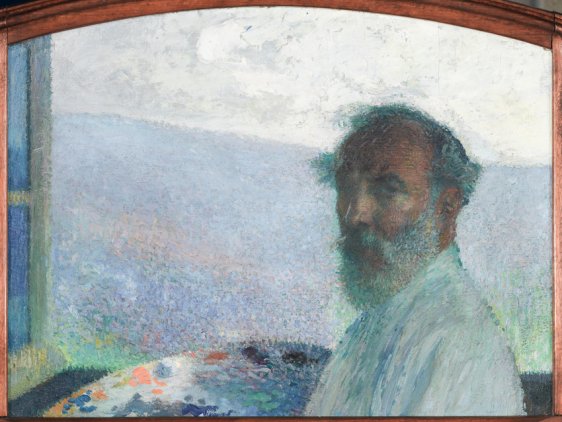
Self portrait by Max Liebermann (1934)

Max Liebermann was Jewish, not a strict Orthodox Jew, but more of a secular Jew who regarded himself through assimilationist eyes. Maybe because of this he avoided painting religious subjects with the exception of a painting he completed in 1879 entitled The 12-Year-Old Jesus in the Temple With the Scholars.

Der zwölfjährige Jesus im Tempel (The Twelve-year-old Jesus in the Temple) by Max Liebermann (1879)

The painting depicts twelve-year-old Jesus in the temple, having been at the Festival of Passover in Jerusalem with his parents, but unbeknown to them, he had stayed behind in the city when they had set off to return home. The story continues as per the biblical tale (Luke 2:43-48):

“…After the festival was over, while his parents were returning home, the boy Jesus stayed behind in Jerusalem, but they were unaware of it. Thinking he was in their company, they travelled on for a day. Then they began looking for him among their relatives and friends. When they did not find him, they went back to Jerusalem to look for him. After three days they found him in the temple courts, sitting among the teachers, listening to them and asking them questions. Everyone who heard him was amazed at his understanding and his answers. When his parents saw him, they were astonished. His mother said to him, “Son, why have you treated us like this? Your father and I have been anxiously searching for you…”

The setting for this painting is derived from Max’s visit to the Jewish quarter of Amsterdam in 1876 when he made architectural sketches of the Portuguese Synagogue of Amsterdam. The curved staircase, which he later depicted as a spiral staircase in the painting, is a reference to the 16th-century Levantine Synagogue in Venice. The paned window on the upper edge of the painting also echoes the windows of the Portuguese Synagogue of Amsterdam.

Liebermann originally depicted Jesus, not as a holy figure, but as a dark-haired boy with Semitic features and mannerisms, arguing the doctrine with his elders. The painting was first exhibited at the First International Art Show in Munich in 1879, at a time when antisemitic activism and propaganda was just starting to break out in Germany. The artwork caused a major outcry with critics terming the depiction blasphemous. The art critic for the Augsburger Allgemeine Zeitung, Friedrich Pecht, asserted that Liebermann had painted “the ugliest, know-it-all Jewish boy imaginable,” and went on to state that the artist had shown the Jewish elders as “a rabble of the filthiest haggling Jews.” More criticism rained down from upon high with the Crown Prince of Bavaria declaring that he was scandalised, and the Bavarian State Parliament even spent time debating the painting and Pecht’s comments. One Catholic MPs criticised the fact that it had been admitted into a State establishment knowing that the country had inhabitants who were overwhelmingly devout Christians. One deputy pronounced that Liebermann, being a Jew, should have known better than to paint such a scene and that the painting was reviled as “a stench in the nostrils of decent people” It seemed that Lieberman’s mistake was simply that as Liebermann was a Jew, he had depicted an overtly Jewish Jesus.

Preliminary Sketch

And yet in the painting we cannot understand the violent criticism of the detractors regarding Liebermann’s Jesus who is depicted as a long-haired, slightly effeminate, blond boy. However, this was not the original depiction as this is because Liebermann, in response to unrelenting criticism, repainted the figure before it was included in a Paris exhibition in 1884. Art historians know this as a sketch of the untouched 1879 version has been preserved, in which it can be seen that Liebermann had originally depicted a barefoot boy with short, unkempt dark hair and a stereotypical Jewish profile. Liebermann changed the young Jesus’s appearance with the figure once described as an “urchin” now appears as a serious, intelligent, perhaps slightly deferential child. However, the changes, did not change the mood of the German critics and the work was not exhibited again in Germany until the Berlin Secession exhibition of 1907.

Sewing School by Max Liebermann (1876)

In 1875 Liebermann left Paris and spent three months in Zandvoort in Holland. It was in this Dutch town that Max acquired a brighter and more less planned style by copying paintings by one of his favourite artists, Frans Hals. Max developed a practice of setting aside time between the idea for a motif coming to him and the implementation of the larger finished painting. When he returned to Paris in the autumn of 1875 he moved into a more spacious studio and began to convert his Dutch sketches into full sized works. He returned to the Netherlands in the summer of 1876 where he remained for several months. During this stay he met the etcher William Unger, who brought him into contact with Jozef Israëls and the Hague School. One example of this change of painting style was Liebermann’s work entitled Sewing School which he completed in 1876. The sewing school depicted in this painting was in an orphanage in Amsterdam. Liebermann had started his career as a realist painter, but by the time of this work, he was already establishing himself as an Impressionist-style painter.

Schusterwerkstatt (Cobbler’s Workshop) by Max Liebermann (1881)

During his visit to the Netherlands in the summer of 1880, Liebermann travelled to the small village of Dongen in North Brabant, in the southern Netherlands. It was here that he made a number of studies that would be used when completing the work in his studio. One example of this was his depiction of a cobbler in his workshop. At the workshop, he created studies that he later used for his 1881 painting Schusterwerkstatt, (Cobbler’s Workshop).

Altmännerhaus (Old Men’s Home) in Amsterdam by Max Liebermann (1881)

Having completed the Cobbler’s Workshop painting he travelled to Amsterdam on his way to returning to Munich. It was whilst in Amsterdam that he came across the Catholic Altmännerhaus (Old Men’s Home). He happened to glance into the garden of the establishment and saw a large group of older gentlemen dressed in black sitting on benches in the dappled sunlight. According to Erich Hancke’s 1914 book, Max Liebermann. Sein Leben und seine Werke:

…He [Liebermann] had visited a friend at the Rembrandt Hotel, and when he looked out of the corridor window descending the stairs, his gaze fell down into a garden where many old men dressed in black were standing and sitting in a corridor bathed in sunlight […]. He later used a drastic analogy to characterize that moment: ‘It was as if someone were walking on a level path and suddenly stepped on a spiral spring that shot him up…”

Study for Old Men’s Home in Amsterdamby Max Liebermann (1881)

Liebermann immediately began to paint the scene and concentrated on the effect of light which was being filtered through a canopy of leaves and this dappled effect became known as “Liebermann’s sunspots” and would be seen in Liebermann’s later Impressionist depictions. He made two on-site portrait-format studies of the scene, one in oil and one in pastel, after which Liebermann painted the final picture in his Munich studio later that year. The painting was exhibited at the Paris Salon and received an honourable mention. Furthermore, Léon Maître, a well-known collector of Impressionism, acquired several of Liebermann’s paintings.

 Recreation Time in the Amsterdam Orphanage by Max Liebermann (1884)

Life in Paris was taking its toll on Liebermann. He needed to sell his artwork to prove to himself and his parents that he had not wasted his life. This continual pressure caused Lieberman to fall into periods of deep depression and his painting output declined, furthermore, the works he put into the Paris Salon were not getting the recognition he believed he had deserved. There was also still the anti-Prussian sentiment amongst the French and this did not help him sell his work. In all, he realised that the Netherlands or Germany were much more acceptable places to work and live. He left Paris and spent a couple of months in Venice before returning to Munich in 1878. It was here that he was able to enhance his status as an important progressive artist. Munich had everything Liebermann required – the artistic culture and patrons who supported him. He spent hours visiting the city’s museums and art galleries and creating everlasting and important friendships. He eventually left Munich and relocated to Berlin, his birthplace, in 1884, where he remained for the rest of his life.

Martha Marckwald by Anders Zorn (1896)

In that same year, 1884, that Max moved to Berlin he married Martha Marckwald, the fourth child of the German Jewish couple Ottilie and Heinrich Benjamin Marckwald, who ran a wool store in Berlin. When Martha’s father died in 1870, Max’s father Louis became the thirteen-year-old Martha’s guardian. The Marckwald and Liebermann families became even closer when Max’s elder brother Georg Liebermann married Martha’s elder sister Elsbeth. On September 14th 1884, thirty-seven-year-old Max Liebermann married twenty-six-year-old Martha. It was a marriage that would last more than fifty years until Max died in 1935. In August 1885 Max and Martha’s only child, Käthe, was born and in 1892.

Max’s mother died on August 12th 1892, aged 70 and his father died two years later on April 29th 1894, aged 75. Although the death of his parents was a sad time for Max, he was finally released from their unrelenting words of warning as to the perilous status of an artist. Max moved into his family’s Berlin home in Pariser Platz where he lived out the remainder of his life.

Liebermann Villa at Wannsee

In 1909, overwhelmed by the noisy life in the German city, the Liebermann family bought a plot of land in the Alsen summer villa colony on the northern shore of the Kleiner and western shore of the Großer Wannsee at Wannsee, some twenty kms south-west of Berlin, close to Potsdam. It was here that they built themselves a summer home, somewhere to retire to during the hot summer months when city life became very oppressive. The Villa was designed by the architect Paul Otto Baumgarten, the garden by Liebermann in collaboration with the then-director of the Hamburger Kunsthalle, Alfred Lichtwark.

Martha Liebermann in the garden at Wannsee

Their summer home was situated amidst the magnificent villas of this impressive Berlin colony, embedded in a park, and represented a unique cultural landscape of the time of the German Empire and the Weimar Republic.

The Villa at Wannsee by Max Liebermann (1930)

Flowering Shrubs by the Gardner’s Cottage by Max Liebermann (1928)

The Flower Terrace at Wannsee by Max Liebermann (1915)

During the following years, Liebermann had designed a beautiful garden at the Villa Wannsee. He was so proud of the finishing results that the garden became the subject of many of Liebermann’s painting.

The Artist in His Studio by Max Liebermann (1932)

During the latter decade of the nineteenth century Liebermann continued living and painting in Berlin and would spend his summers at Wannsee or the Netherlands. Liebermann, like many of his contemporary Berlin artists, were dissatisfied with how they were being treated by the Association of Berlin Artists and the restrictions on contemporary art imposed by Kaiser Wilhelm II, so sixty-five of them seceded as a demonstration against the standards set by the Association and the government endorsed art. This break-away became known as the Berlin Secession and its aim was to form a “free association for the organization of artistic exhibitions”. In 1898, Liebermann became the President of the Berlin Secession, which was simply a group of artists that was formed as an alternative to the conservative arts establishment.

Two Riders on the Beach by Max Liebermann (1901)

The Berlin Secession championed new forms of modern art and were not be tied down to and be dominated by the old-fashioned academic art favoured by the Berlin Academy. These break-away groups from the art establishments were not new occurrences as the same happened with the Munich Secession in 1892 and the Vienna Secession in 1897. The initial breakaway took place in Paris in 1890 when the Société Nationale des Beaux-Arts along with its exhibition arm, the Salon au Champs-de-Mars, was formed as a modern alternative to the official Société des Artistes Français and its exhibition arm, the Salon de Champs-Élysées. These break-away groups all wanted the same thing – the rejection of the official arts governing bodies due to their aversion of avant-garde art such as Impressionism, forms of Post-Impressionist painting and Naturalism, as well as their obstructive exhibition policies, which were inclined to support time-honoured painters and sculptors over their younger, more modernist contemporaries.

Marthe Liebermann with her grand-daughter Maria by Max Liebermann (1922)

In 1920, Liebermann became president of the Prussian Academy of Arts in Berlin, which was the highpoint of his career and signified how the Academy had changed over since the time of the Berlin Secession.

Portrait of President Paul von Hindenburg by Max Liebermann (1927)

Being a Jew, Liebermann had got used to the anti-Semitism in his homeland but by the early 30s with the rise and coming to power of the National Socialists it had noticeably worsened. In a way, it was a good thing that Liebermann died quietly in his sleep at the family home on February 8th 1935 aged 87 as he avoided bearing witness to the atrocities which followed. In 1938, his daughter Käthe her husband Kurt Riezler and their twenty-one-year-old daughter Maria were forced to flee the country and go to America.

The Graves of Max and Martha Liebermann at the Senerfelderplatz Jewish Cemetery, Berlin

They tried to persuade Max’s widow, Martha, to also emigrate but she refused to leave the land where her husband was buried. Martha Liebermann remained in Berlin, ultimately committing suicide in 1943 to escape her impending deportation to a concentration camp.


Most of the information for this blog came from the excellent website Liebermann Villa am Wannsee which goes into detail about his life and works.

I also consulted the informative website on all things art: The Art Story

Information regarding the painting, A Twelve-Year-Old Jewish Boy, came from the website: Art and Faith Matter/s

Louise Emerson Rönnebeck. Part 2.

Arnold and Louise settled down to living in the Colorado town of Denver in 1926. Soon the couple became active in the Denver art community and both were founding members of the Denver Artists Guild in 1928.  Whilst living in Denver during the 1920s and 1930s, they would regularly visit Santa Fe in New Mexico and when in Taos would be guests at Mabel Luhan’s Los Gallos compound.

The Rönnerbeck Family (1937)

The help Louise received from the WPA was just what she needed as her portrait commissions had dwindled due to the Depression and the little savings she had left from a family inheritance was quickly diminishing. Besides her portraiture she had always been interested in painting murals and accordingly she worked long and hard and entered a number of WPA competitions to win mural commissions in various US States. In all, she entered sixteen mural commission competitions for the Treasury Department Section of Painting and Sculpture,  a New Deal art project established on October 16, 1934, and administered by the Procurement Division of the United States Department of the Treasury.
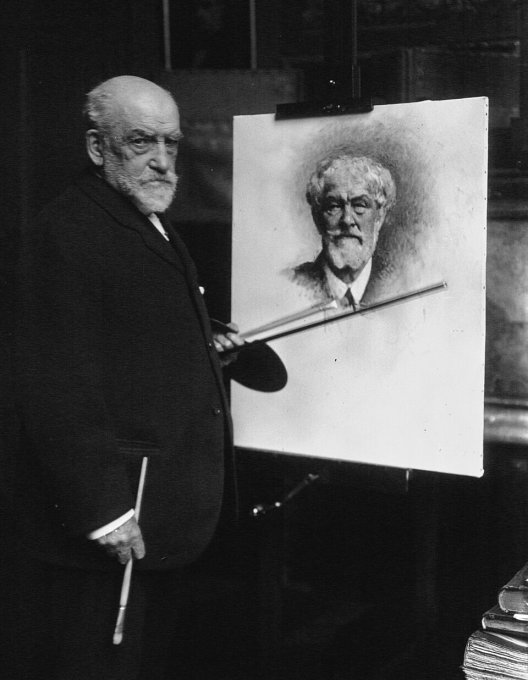
The Fertile Land Remembers, oil on canvas mural by Louise Rönnebeck for the Worland, Wyoming Post Office, now in the Dick Cheney Federal Building, Casper, Wyoming, (1938)

In many of her submissions she focused on the power of women in striving for their goals but also depicted the plight of women and the children who were forced to work at a young age. In the end, she was awarded two commissions. In November 1937 she was invited to submit sketches for a mural that would decorate a wall in the post office of the Wyoming town of Worland. The Worland commission was for $570 and the artist was allowed 119 days for its completion. The organisers wrote Ronnebeck that the mural called for a “simple and vital design” based on a theme appropriate to the locale. Awarding Louise the Wyoming commission was a controversial decision as she was living in Colorado and many believed the commission should have gone to a Wyoming-based artist but the organisers stated bluntly that no Wyoming artist reached the standards they required. Louise commenced her oil on canvas mural entitled The Fertile Land Remembers in 1938. The mural depicts a white American couple with their child sitting in a wagon being pulled by two large oxen. These three figures, all looking towards us, are painted in a variety of rich colours whilst the native Indian horseback riders seen chasing buffalo are portrayed cloud-like figures in the sky above the wagon and are depicted in pale monochromatic luminous grey. None cast their eyes towards us. They are probably Cheyenne or Sioux, the forgotten people of Wyoming, who lived a nomadic lifestyle in order to pursue buffalo herds and were subdued and placed in reservations. Unlike the colourful people in the wagon being the present and future the pale grey figures are symbolic of the past. In the background we see the emerging elements of the white American future. Louise wrote about her thought process that went into the mural design:

“…The work is a romantic recollection of the covered wagon and the wild Indian and bison of the Old West, who still in retrospect hover over the irrigated fields and oil wells of the present. The covered wagon drawn by oxen is shown inexorably pressing through the galloping figures of a vanishing culture, whose form becomes shadowy and disappear into the past under the white man’s determination to open new lands. The landscapes on either side depict the present which was created by these pioneers. The way in which the idea is presented was suggested by the device of the double exposure used in many motion pictures to show the past and the present merging into one dramatic unit…”

Harvest by Louise Rönnebeck (1940)

Louise Rönnebeck’s second commission was for the post office and courthouse in the Colorado town of Grand Junction but which is now housed in the city’s Wayne N. Aspinwall Federal Building United States Courthouse. Louise won the opportunity to paint The Harvest through entering a contest anonymously, for fear of gender prejudice, and submitting a sample sketch. In 1940, with the enlargement of the Wayne N. Aspinall Federal Building, Rönnebeck’s mural was placed to embellish the postmaster’s office door pediment with its conspicuous V-shaped bottom. Her depiction represented the plight of the Native American Ute people who prior to the 1860s had lived in southwest Colorado for centuries and it was here that they had their seasonal hunting grounds. However, despite a Treaty which granted the Utes absolute and undisturbed use and occupation of their land, the lure of rich mineral deposits lured prospectors on to their land. The tribe was squeezed into an ever-smaller parcel of land by the incoming miners. The matter came to a head in 1881 when the Utes refused to leave the territory and were forced to the south-western border of Colorado. The six million acres of land once owned by the Utes was now up for grabs and settlers poured in establishing local industries such as orcharding in the form of growing peaches. In the foreground of Louise Rönnebeck’s large mural we see the harvesting of the peach crop by a young couple, modelled by Louise’s two children. To the left of the painting, we see settlers moving into the Ute’s land with their horses and to the right we see the result of this influx as the Ute people are forced out. This is a painting depicting a thriving local industry and acts as a counterpoint to the hard times of the Great Depression.

Unveiling of “missing” painting.

In a January 18th, 1992, article by Ginger Rice in Grand Junction’s Daily Sentinel, it describes the mural’s mysterious disappearance for more than twenty-five years. Workers removed the oil-on-canvas painting for conservation work, and it subsequently went missing. Fortunately, a General Services Administration building manager, Tim Gasparani, re-discovered the mural and in 1992, The Harvest finally returned to its original home.

The People vs Mary Elizabeth Smith. by Louise Emerson Rönnerbeck (1936)

In 1936, Louise Rönnerbeck completed a dramatic painting entitled The People vs Mary Elizabeth Smith. The depiction was based upon an emotional trial of an eighteen-year-old mother of a eight-month old child, Mary Elizabeth Smith, in January 1936. She, whom the press termed “the girl mother” had been accused of murdering her husband in the previous November. She had accused her estranged husband, nineteen-year-old Robert Dwight Smith, who was unemployed, as being abusive towards her. Just prior to the shooting he had petitioned the court to annul their three-year-old marriage which would result in their child being looked upon as being illegitimate. For Mary Elizabeth, this was too much to bear and so she took her brother’s hunting rifle, marched along to her sister-in-law’s house where her husband was staying and shot him. She told the police that she did not know why she did it. She just knew she had to protect her baby’s name. Her defence lawyers stated that having been deserted by her husband and struggling to bring up their son it had taken its toll on her mental health. Louise Rönnerbeck depicted the theatrical trial scene which she had witnessed.

The defence lawyer mitigated the actions of his client by reminding the jury of her personal history. Her father had deserted her leaving her mother to struggle to provide for her two children. Her own eight-month-old son, Rodney, born after a particular long and painful labour was the centre of her life. The courtroom was filled throughout the trial and the press feasted on the events. In his article, Jack Carberry of the Denver Post wrote:


“…”they met love, and in their ignorance of life, it engulfed them…”

Rönnebeck’s painting depicts the dramatic trial scene. In the witness box, at the centre of the legal proceedings, we see the frail reed-headed defendant, wearing a dark dress with a white collar, handkerchief in hand, as she grasps the side of the witness box. She is barely able to stand and is fully aware that if the all-male jury (at this time women were not allowed to be jury members) convicts her, she faces either the death penalty or life imprisonment. It was reported in the Denver Post that her testimony was one of child-like simplicity. On the left in the front row of the courtroom we see the girl’s mother holding her daughter’s infant son. She had come every day to offer support to her daughter. After Mary’s testimony it was reported that there was not one person in the courtroom who wasn’t crying, moved by the young woman’s simplistic testimony. Also in the scene we see the prosecutor waving the murder weapon and on a table to his right are the deceased bloodied shirt and trousers. The jury retired for five hours before returning and acquitting her for reasons of insanity.

The Children by Louise Emerson Rönnebeck (c.1935)

Following the end of World War II, Louise lectured at the University of Denver from 1945 to 1951 as well as providing some magazine illustrations. Her husband Arnold died of cancer on November 14th 1947, aged 62 and with her two children marrying, Arnold in 1950 and Ursula in 1953, she was left on her own. In 1954 she went to live in Bermuda where she and her family had spent many holidays. Here she taught art at the Bermuda High School for Girls between 1955 and 1959 and continued to paint. In the Autumn of 1973 she returned to Denver where she spent the rest of her life.

Louise Emerson Rönnebeck died in Denver on February 17th 1980, aged 78.


I collected information regarding the life and art of Louise Emerson Rönnerbeck from various sources. The main ones were:

Louise Emerson Ronnebeck

JStor: Louise Emerson Rönnebeck: A New Deal Artist of the American West
Betsy Fahlman. Woman’s Art Journal Vol. 22, No. 2 (Autumn, 2001 – Winter, 2002), pp. 12-18 (8 pages)

Living New Deal

Post Office Fans

Fourteenth Street School of Artists

“…I hope my work is recognizable as being by a woman, though I certainly would never deliberately make it feminine in any way, in subject or treatment.  But if I speak in a voice which is my own, it’s bound to be the voice of a woman…”
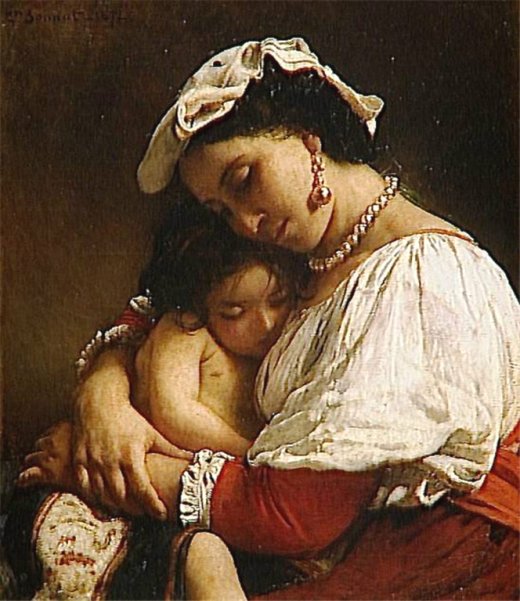
-Isabel Bishop

Isabel Bishop, 1959. Photo by Budd ( New York N.Y.). Archives of American Art, Smithsonian Institution.

The Ashcan School of painters was the artistic movement that depicted Urban Realism in America during the late 19th and early 20th century. A few decades later another group of American realist painters, who were also based in New York city, began to focus on everyday life in the city. For these artists, it was all about the bustling area which centred around 14th Street and Union Square in Lower Manhattan during the Depression era. They became known as the Fourteenth Street School of Artists. One of these artists was Isabel Bishop.

Female Head by Isabel Bishop

Isabel Bishop was the youngest of five children born on March 3rd 1902 in Cincinnati, Ohio, to John Renson Bishop and Anna Newbold Bishop. Her parents were descendants from East coast mercantile families but although they came from “old money” they were considered middle-class and often struggled financially. Isabel’s parents were both highly educated individuals. Her father was a Greek and Latin scholar and had a Ph.D in history. Her mother was a writer and an activist for women’s suffrage. The family frequently moved from town to town for financial reasons and to gain employment. Wherever they set up home, Isabel’s father, John, would find work at the local school where he often rose to become its principal and in some cases took ownership of the school.

Ice Cream Cones by Isabel Bishop

In 1887 the couple had their first children, twins, a boy and a girl, Mildred and Newbold and in 1890 another set of twins, once again a boy and a girl, was born, Remson and Anstice. This enlargement of the family caused financial hardship and her father had to continually look for better paying jobs. Isobel did not remember much about the two sets of twins as by the time she was born they were away at boarding school or college. According to Isabel her parents were very different in temperament. Her mother was a free spirit but very strong-willed and in her 1987 interview she recalls an incident that had repercussions on her father’s life:

“…It was hard on my father that she was strong. For one thing, in Detroit, Michigan, women were not supposed to be strong. She simply liked what she liked and that was it. One time she was asked to go down to the court and testify in some case. She went down, but she wouldn’t swear to be telling the truth. She was asked by the court why she wouldn’t and she said, “I don’t believe in God.” It was in the Detroit papers with the headline:


“SCHOOL PRINCIPAL’S WIFE DOESN’T BELIEVE IN GOD”


I really felt for my father. I mean, a school principal! His life was pretty impossible after that…”

Two Girls with a Book by Isabel Bishop

Although born in Cincinatti Isobel and her parents moved to Detroit a year after she was born. In 1914, when she was twelve years of age, Isabel was enrolled in Saturday morning life drawing classes at the John Wicker Art School in Detroit. From there, at the age of sixteen, and once she had graduated from High School, she left Detroit and went to New York. It was here that she enrolled at the School of Applied Design for Women, where she studied illustration. In 1920, aged eighteen, Isabel, wanting to enhance her artistic knowledge and skills, attended the Art Students League where her first tutor was Max Weber, whom she disliked and who gave her a hard time. Later she was tutored by Kenneth Hayes Miller, another artist associated with the Fourteenth Street School who couldn’t be more different than Weber. Other tutors were Guy Pène du Bois, Robert Henri and Frank Vincent DuMond.

Portrait of Isabel Bishop by Guy Pene du Bois (1924)

According to Helen Yglesias’ 1989 biography Isabel Bishop, although Weber treated Isabel harshly and she felt intimidated by Robert Henri, in Kenneth Hayes Miller she found a mentor who, in her words, was “intellectually stimulating, not stultifying, a fascinating person who presented all sorts of new possibilities, new points of view.”

Isabel Bishop’s 9 West 14th Street Studio (no longer extant) highlighted in red, 14th Street, north side, west from Fifth Avenue. June 11, 1933.

Another friend she made at the Art Students League was Reginald Marsh, who made fleeting visits to the classes at the Art Students League whilst she was student there and this friendship led to her being witness to the working-class life of the city. In 1926, she went to live at 9 West Fourteenth Street, which was a short distance from where Marsh lived and it was in this vicinity that she kept her studio that overlooked Union Square at Broadway and East Fourteenth Street and remained there until 1982. From the windows of her studio she was able to witness the daily activities in Union Square. Fourteenth Street in the 20s and 30s was referred to as “The Poor Man’s Fifth Avenue.” It was a bustling center for bargain shopping and bawdy entertainment in the form of burlesque shows and movie theatres for everyday working-class New Yorkers. 

Still Life with Orange #1 by Isabel Bishop

Her friendship with fellow student, Reginald Marsh, encompassed many lunch or dinner dates when they discussed their day’s work. She affectionately recalled that they each paid for their own fifty cent meal and occasionally Marsh would take her to a Coney Island dance marathon or backstage at Minsky’s Burlesque. She recalled that it was great going with Reggie, and whilst there he would sketch the goings-on at the Burlesque show. She said that there were a number of occasions, the owner, Minsky bought Reggie’s work.

The Artist’s Table by Isabel Bishop

Isabel loved the area around Union Square and would regularly visit the Square itself, sketching for hours on end. She remembered those days saying:

“…I adored it. Drawing nourished my spirit; it was like eating. I got ideas there, for drawing is a way of finding out something, even though it might only be the discovery of a simple gesture…”

If she liked one of her sketches, she would turn it into an etching or make a painting from it. She soon became known for depicting urban life and was a leading member of the Fourteenth Street School of artists.

14th Street by Isabel Bishop

The Great Depression began in 1929 and nobody seemed to want to spend money buying the work of an unknown female artist, especially one who had not even had a solo show. Money was tight, people were losing their jobs and America had fallen into the grip of the worst depression in history and most Americans were worried about how they could survive the disaster that had befallen the nation. Isabel went from art gallery to art gallery hoping that they would accept her paintings but with little luck. It was a very depressing and frustrating time in Isabel’s life. A turning point came when Isabel met Alan Gruskin. Gruskin had hoped to become an artist, but while still a student realized that his talents were better suited to art administration than painting. On graduating from Harvard he worked at a New York gallery that specialized in the works of the Old Masters. He left there and returned home hoping to start a career as an author but that never came to fruition so he returned to Manhattan and, in 1932, opened the Midtown Galleries at 559 Fifth Avenue. He specialised in artwork by living American artists and in that year he staged a solo exhibition of Isabel’s paintings.

Dante and Virgil in Union Square by Isabel Bishop (1932)

Isabel Bishop’s paintings focused on the ordinary people of New York City, and in particular, those in her neighbourhood around Union Square and 14th Street. However, her 1932 painting entitled Dante and Virgil in Union Square was extraordinary with her inclusion of Dante, in the red cloak, and Virgil, with a laurel wreath on his head, which makes this work memorable. Isabel said she was motivated when she read the translation of Dante’s Inferno, the first part of Italian writer Dante Alighieri’s 14th-century narrative poem The Divine Comedy with its tales of life in the underworld. In her depiction, Isabel likened the hordes of poor souls that confronted Dante and Virgil in the various levels of hell with the hordes of human beings that daily passed through Union Square at rush hour. In the painting we see a crowd of people at Union Square, the equestrian statue of George Washington in the centre framed by the Union Square Savings Bank and other buildings in the background. It is a very busy scene a woman leading her child by the hand, pairs of women walking away from the crowd, and a number of working class men, portrayed in darker colours, facing into the Square seem completely unaware of the classical figures, who stand in the shadowed foreground of the sidewalk, as if embodying the evaluating gaze of another era.

At the Noon Hour by Isabel Bishop (1936)

In Ellen Wiley Todd 1993 book, The “New Woman” Revised: Painting and Gender Politics on Fourteenth Street, she describes the New Woman of the 1920s and 1930s as:
“…being a moderate sort, who hoped to capitalize on new job possibilities and to make herself attractive with the mass-produced products of the clothing and cosmetics industry…”

Hearn’s Department Store-Fourteenth Street Shoppers by Isabel Bishop (1927)

The entrance to Hearn’s Department Store was right across the street from Isabel Bishop’s studio and she realised that it was the perfect place to find and observe this “New Woman.” Isabel Bishop’s Hearn’s Department Store—Fourteenth Street Shoppers was completed in 1927, the same year that she enrolled in Kenneth Hayes Miller’s mural painting class at the Art Students League. It depicts the city’s middle-class shoppers who are wearing the latest fashions and who visit the shops around Union Square in order to pick up the latest bargains.

Two Girls by Isabel Bishop (1935)

In 1935 Isabel completed her painting entitled Two Girls. It was yet another of her works which depicted young working women. In this painting we see a close-up of two smartly dressed figures seemingly engaged discussing the contents of a letter. Isabel used two models for this depiction and for this work she used Rose Riggens, a server at a restaurant where Isabel often had breakfast, and Riggens’ friend Anna Abbott. The work exudes both warmth and tranquillity which counters the dire economic circumstances of the Great Depression in the 1930s. This painting which took her twelve months to complete was one of Isobel Bishop’s most well-known works and was originally shown at the Midtown Galleries in New York. It is now part of the city’s Metropolitan Museum of Art.

Encounter by Isabel Bishop (1940)

In her 1940 painting entitled Encounter we witness an exchange occurring between a man and a woman though the circumstance of this meeting remains unclear. From many of her paintings we can deduce that Isabel was an insightful observer of everyday activities of young women who visited offices and stores in her neighbourhood. Her works present working women as vivacious subjects for the American Art Scene, which centred on the daily lives of the city’s population. At a time of great unemployment Isabel found it easy to employ young unemployed clerical workers to pose for her. In this work, she depicts a young woman and her boyfriend, with whom she is having a rather stormy romance. The painting can be seen in the St Louis Art Museum.

Tidying Up by Isabel Bishop (1941)

In her 1941 painting Tidying Up, we see a woman, perhaps a secretary or salesperson, using a pocket mirror to check her teeth for lipstick smudges. Isabel liked to depict working-class women during their idle moments away from their jobs. She spent more than a decade depicting secretaries, salesclerks, and blue-collar workers who lived and often worked in and around Union Square. She favoured subjects of women who were simply going about their everyday lives, eating, talking, putting on makeup, and taking off their coats. It was these mundane actions along with facial expressions that Isabel Bishop believed divulged the character and temperament of the people she portrayed. This painting is part of the Indianapolis Museum of Art collection.
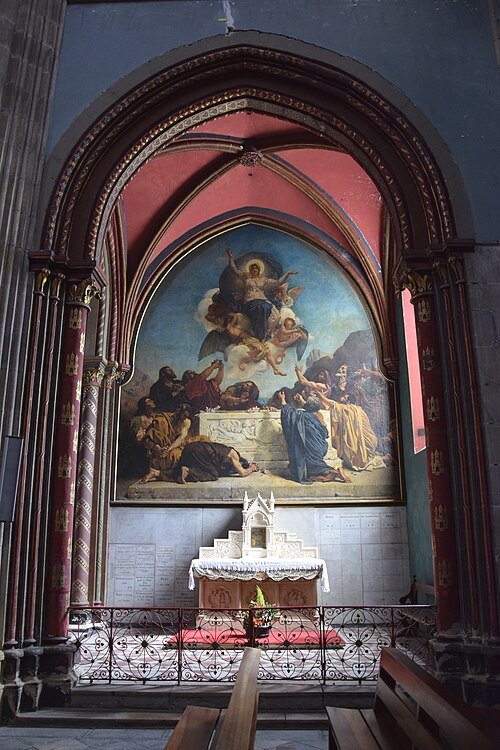
Girl Reading by Isabel Bishop (1935)

Bishop remained on Union Square, where she kept a studio until the end of her life. The area around Fourteenth Street and Union Square remained foremost as the subject matter for her paintings. She received many awards during her life and she was elected an associate member of the National Academy of Design in 1940 later in 1941 she was elevated to full Academician. She received a Benjamin Franklin Fellow at the Royal Society of Arts in London and was also elected a Member of the National Institute of Arts and Letters in 1944 and was the first woman to hold an executive position in the National Institute of Arts and Letters as vice-president. In 1979, she was awarded the Outstanding Achievement in the Arts Award presented to her by President Jimmy Carter.

Self portrait by Isabel Bishop (1927)

Isabel Bishop died on February 19th 1988 two weeks before her eighty-sixth birthday.


Most of the information for this blog came from the following excellent websites:

The Art Story

incollect
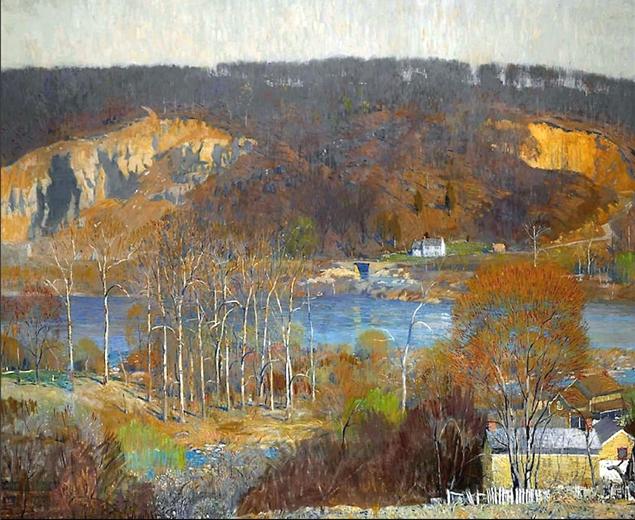
Isabel Bishop

Hellenica World

Off the Grid

Oral history interview with Isabel Bishop,
1987 November 12-December 11

Annex Galleries

Reading and Art