Famous Views of the Sixty odd Provinces by Utagawa Hiroshige. Part 1.

Memorial Portrait of Utagawa Hiroshige by Utagawa Kunisada (c.1858) This portrait of the artist Hiroshige shows him as he looked just before his death, with the robes and shaven head of a Buddhist priest. At the age of sixty, two years before his death of an undetermined long illness, he took monks vows.

Utagawa Hiroshige or Andō Hiroshige, born Andō Tokuta in 1797 was a Japanese ukiyo-e artist, considered the last great master of that tradition.

In March 2023 I began a three-blog series looking at his woodcut prints of Hiroshige entitled The Tokaido Road Trip. The Tōkaidō Road,  which literally means the Eastern Sea Road, and was once the main road of feudal Japan. It ran for about five hundred kilometres between the old imperial capital of Kyoto, the home of the Japanese  Emperor  and the country’s de facto capital since 1603, Edo, now known as Tokyo, where the Shogun lived.

Today I want to start a two-blog series looking at one of Hiroshige’s great print collection series entitled Famous Views of the Sixty-odd Provinces (Rokujuyoshu meisho zue) and whisk you away on a pictorial journey around Japan courtesy of the great Japanese master ukiyo-e print artist, Utagawa Hiroshige.   Ukiyo-e is a genre of Japanese art that flourished from the 17th through 19th centuries. Its artists produced woodblock prints and paintings of such subjects as female beauties; kabuki actors and sumo wrestlers; scenes from history and folk tales; travel scenes and landscapes; flora and fauna; and erotica.

Yamashiro Province, The Togetsu Bridge in Arashiyama by Hiroshige. Print from Hiroshige’s Famous Views of the Sixty-odd Provinces series.

Togetsu Bridge

The first print I am offering depicts the Togetsu Bridge which straddles the Katsura River.  The 150-metre-long structure has been a landmark in Western Kyoto’s Arashiyama District for over four hundred years. It is known for its natural beauty. Changing colour throughout the year with blushing pink in the spring and ablaze in reds, oranges, and yellows each autumn. The bridge has often been used in historical films.  It is also the site of an important initiation for local children. Young boys and girls (the latter clad in kimono) first receive a blessing from a local temple and then make their way across the bridge under orders to do so without looking back. If one ignores this instruction, it is said to bring bad luck as a result, so the stakes are high.

Kawachi Province: Mount Otoko in Hirakata  by Hiroshige. Print from Hiroshige’s Famous Views of the Sixty-odd Provinces series.

The series represents a further development of Hiroshige’s landscape print design, including some of his most modern compositions. The striking new use of a vertical format allowed Hiroshige to experiment with the foreground and background contrasts typical of his work, drawing the viewer in while at the same time implying a sense of great distance.  In the depiction we see the Yodo River curving below, the rugged peak of Mount Otoko breaks through the clouds. Mount Otoko was home to the Iwashimizu Hachimangu Shrine, one of Japan’s most important Shinto sites and a popular pilgrimage destination. The use of bokashi (color gradation) infuses the scene with a rich atmosphere. Bokashi is the Japanese term which describes a technique used in Japanese woodblock printmaking. It achieves a variation in lightness and darkness (value) of a single colour or multiple colours by hand applying a gradation of ink to a moistened wooden printing block, rather than inking the block uniformly. This hand-application had to be repeated for each sheet of paper that was printed.  The best-known examples of bokashi are often seen in 19th-century ukiyo-e works of Hokusai and Hiroshige, in which the fading of Prussian blue dyes in skies and water create an illusion of depth.   In later works by Hiroshige, an example of which is the series One Hundred Famous Views of Edo, most prints originally featured bokashi such as red-to-yellow-to-blue colour sunrises.

Izumi Province, Takashi Beach by Hiroshige. Print from Hiroshige’s Famous Views of the Sixty-odd Provinces series.

Takashi Shrine

The high vantage point of this design allows for a sweeping panorama and an expansive view of the beautiful coastline.  In the foreground of this print, nestled amongst the pine trees on the side of a lush green hill, is the Tagashi Shrine, which  is nestled among the pine trees and pilgrims follow the track to the holy place.  Looking further down the pine-covered slope we can see Osaka Bay which reaches out to the horizon in the background whilst waves can be seen crashing onto Takashi Beach.  Hiroshige used the technique known as kimetsubushi to enhance the colours.  Kimetsubushi  was a technique used to enhance the expressive application of colours in woodblock printing and involved the intentional use of woodgrain (visible in traditional printing blocks, which were cut parallel to the grain of the tree). Called kimetsubushi (“uniform grain printing”), the process involved working the surface of the wood with stiff brushes or rubbing with pads to roughen the surface and thereby impress the paper with the grain pattern in areas of relatively uniform or “flat” colour.

Owari Province, Tsushima, Tenno Festival by Hiroshige. Print from Hiroshige’s Famous Views of the Sixty-odd Provinces series.

Festival Owari Tsushima Tenno

Festival Owari Tsushima Tenno

The setting of this print is the Tenno River and we see from above, as night begins to fall over the mountains and hills, the river is illuminated by the hundreds of lanterns decorating the boats which are part of the Tenno Festival.  The festival, which has existed for more than five hundred years, is held on the fourteenth and fifteenth days of the sixth month on the lunar calendar and the highlight of the celebration is the sailing of the illuminated boats. It is one of the three major river festivals in Japan and nationally renowned. To cater for the crowds visiting the festival, temporary teahouses have sprung up on the riverbank.

Sagami Province, Enoshima, The Entrance to the Caves by Hiroshige Print from Hiroshige’s Famous Views of the Sixty-odd Provinces series.

On the left edge of the print we can just see the side of Mount Fuji.  In the foreground waves can be seen crashing against the rugged cliffs of Enoshima, a small offshore island, about 4 km in circumference, Below the lush green of the cliffs above, the cave entrance in the lower right temps the viewer into the darkness of the cave. Hewn by the waves over time, this cave system housed a shrine to Benzaiten, a goddess associated with fortune and artistic success.  The caves attracted many pilgrims, and the entire island was considered a sacred site. In addition to the usual travellers, this small island attracted many celebrities and ambitious individuals.

Pilgrimage to the Cave Shrine of Benzaiten by Hiroshige (c. 1850)

Three year before Hiroshige embarked on his Famous Views of the Sixty-odd Provinces series he completed another woodcut print of Cave Shrine of Benzaiten at Enoshima.

Hida Province, Basket Ferry by Hiroshige Print from Hiroshige’s Famous Views of the Sixty-odd Provinces series.

Detai; of Hida Province Basket Ferry

The Basket Ferry (detail) by Hiroshige

The Hida Province, Basket Ferry is illustrated in one of Hiroshige’s woodcut prints.  Travellers are ferried above a swift flowing river using an ingenious rope and basket system which is fixed between two sheer cliffs.  In the depiction we see the jagged cliffs rise up all around as the sun sets behind the mountain range beyond. It is a beautifully coloured print which once again is detailed with fine bokashi shading.  It is not thought that Hiroshige ever tried this “ferry” but it is more likely that he found these details in the designs of others, perhaps an illustration by his teacher Utagawa Toyohiro in his 1809 novel The Legend of the Floating Peony.

Shinano Province, The Moon Reflected in the Sarashina Paddy-fields, Mount Kyodai by Hiroshige. Print from Hiroshige’s Famous Views of the Sixty-odd Provinces series

As clouds encircle the base of Mount Kyodai reflections of the full moon seem to leap through the paddy-fields, each watery surface reflecting its likeness in this atmospheric composition. The Just above the fields, Choraku Temple sits in the shadow of “Granny Rock.”  This place is also significant in that it was the location of the signing of the Treaty of Shimoda in 1855, which officially established diplomatic relations between Bakumatsu Japan, the final years of the Edo period when the Tokugawa shogunate ended, and the Russian Empire.

………to be continued.


Apart from various Wikipedia sites the information for this blog came from:

ISSUU – Hiroshige: Famous Places in the 60-odd Provinces -Ronin Gallery

Fuji Arts

Viewing Japanese Prints

Utagawa Kuniyoshi and Nichiren. Part 2.

Nichiren’s journey continues……………………………

The Mantram “Namumyohorengekyo” Appears to Nichiren in the Waves near Sumida on the Way to Exile on Sado Island. One of the ten Utagawa Kuniyoshi’s Sketches of the Life of the Great Priest series.

Nichiren continued his journey into forced exile on Sado Island with a sea voyage from the mainland to the island. During the sea voyage across the Sea of Japan his boat is hit by a storm, said to have been conjured up by Susanoo-no-Mikoto, a kami associated with the sea and storms, which was likely to capsize the boat.

Nichiren casts a spell the first line of the Lotus Sutra, “Namu Myōhō Renge Kyō (Devotion to the Mystic Law of the Lotus Sutra as seen written on the waves.

Nichiren’s crew were terrified fearing death but Nichiren remained steadfast and cast a spell on the raging sea by reciting the first line of the Lotus Sutra, “Namu Myōhō Renge Kyō (Devotion to the Mystic Law of the Lotus Sutra) and these words appear on the waves. The words are a pledge, an expression of resolve, to embrace and demonstrate our Buddha nature. It is a promise to ourselves that one will never acquiesce in the face of problems and that one will overcome sorrow and pain. The sea immediately became calm. You will notice that depiction of the curling wave resembles Hokusai’s great 1831 print entitled The Great Wave off Kanagawa.

It was a similar wave depictions Utagawa Kuniyoshi used in his 1847 series entitled Tametomo s ten heroic deeds as seen above.

In the Snow at Tsukahara, Sado Island. One of the ten Utagawa Kuniyoshi’s Sketches of the Life of the Great Priest series.

The sixth print in the series is looked upon as the greatest example of Utagawa Kuniyoshi’s work and depicts the exiled monk, Nichiren, in his red robes, climbing, by himself, up a hill covered in snow. He had been earlier exiled by the regent Hojo Tokimune for his outspoken views on mainstream Buddhism and taken to Sado Island where he was abandoned in a cemetery with only a makeshift shelter to protect him from the elements in the midst of a harsh winter. An icy wind whips through his loose garments. He struggles to ascend, and his bare legs are ankle-deep in the snow. Utagawa uses a snowstorm to represent the cold reality the exile is facing. Behind him and to his right the houses in the village are visible.

Bunpô sansui gafu (Album of Landscapes by Bunpô) 1824.

It is believed that Utagawa Kuniyoshi’s landscape was influenced by the Japanese artist Kawamura Bunpō, and was based on a design from his book, Bunpō sansui gafu (A Book of Drawings of Landscapes by Bunpō). The Metropolitan Museum of Art in New York which has this print in its collection refers to it as a “masterpiece of ukiyo-e printmaking prints”. They describe it as a particular masterpiece of ukiyo-e printmaking as it creates a perfect resonance between pictorial and emotional presentation. The severe snowstorm symbolizes the hardships Nichiren underwent during his exile. The monk demonstrates his strength of spirit by persevering in his uphill struggle.

Claude Monet was an avid collector of Japanese prints and it is thought that some of his snowy winter landscapes were influenced by Japanese woodcut prints. When he died, Monet left behind 231 Japanese prints decorating his house at Giverny, one of which was Utagawa Kuniyoshi’sprint, In the Snow at Tsukahara, Sado Island.

The Rock Settling a Religious Dispute at Ōmuro Mountain on the Twenty-eighth Day of the Fifth Month of 1274. One of the ten Utagawa Kuniyoshi’s Sketches of the Life of the Great Priest series.

The setting for the seventh print of the series is in Komuroyama. We see Nichiren has managed to suspend in the air a large rock which has been hurled towards him by a member of the Yamabushi, a Japanese mountain ascetic hermit. This action by Nichiren was achieved by the sheer will of his spiritual power. A different versions of the story exists in which it is said that a member of a competing Buddhist school invited Nichiren to a contest to see who had the greater religious power to control the levitation of a rock. According to this legend, the man was able to lift the rock but Nichiren prevented him from lowering it. Upon losing the contest, the story goes, the man left his sect and became a Nichiren’s follower.

Nichiren Praying for the Repose of the Soul of the Cormorant Fisher at the Isawa River in Kai Province. One of the ten Utagawa Kuniyoshi’s Sketches of the Life of the Great Priest series.

In the eighth print of the series, we see Nichiren in his red robes, seated in prayer, sitting atop a cliff overlooking a river. Below is a small fishing craft used by fishermen who use trained cormorants to catch the fish. Two men sit in the boat, their hands also clasped in prayer. Nichiren had an affinity towards fishermen as his father was once one. However, at this time, a number of Buddhist sects showed prejudice towards fishermen as they killed (fish) for their own consumption. The story of Nichiren and the cormorant fisherman was the basis of the kabuki play Nichiren shônin minori no umi (Nichiren and the waters of Dharma), and Kuniyoshi had also featured it in a series of 10 landscape prints published around 1831.

The Priest Nichiren praying for the restless spirit of the Cormorant Fisherman at the Isawa river by Yamamoto (Yamamoto Shinji)

The woodcut print artist Tsukioka Yoshitoshi a few years later returned to the theme of Nichiren and the cormorant fishers with his own work, a triptych, entitled The Priest Nichiren praying for the restless spirit of the cormorant fisherman at the Isawa River. On the left panel is the ghost of the fisherman Kansaku, who had died as a result of fishing in a sacred area, and in 1274 appeared to Nichiren in a dream and begged him to save his lost soul. On waking, the priest found himself on the bank of the Isawa river in the Province of Kai, and there he prayed for Kansaku’s soul. Kansaku’s ghost is attended by several of the cormorants that he used to catch fish for him (tight metal collars were placed round the cormorants necks so that they could not swallow the fish before he had collected it).

Nichiren presiding over a crowded service in a temple hall, a dragon emerging in a dark cloud from the inert body of a woman lying prostrate before him. One of the ten Utagawa Kuniyoshi’s Sketches of the Life of the Great Priest series.

The ninth print of the series is a depiction of Nichiren’s 1277 encounter with a dragon. He was at Mount Minobu praying along with many of his supporters at a prayer assembly in the temple. Suddenly a beautiful woman appeared on the floor in front of him and interrupted his prayers.
Nichiren performs an exorcism on the woman in the temple, bringing forth a dragon which frightens the people gathered at the assembly. To calm the assembled people Nichiren holds aloft his Buddhist scriptures demanding that the woman should show her true self at which point she transforms into a shichimen daimyōjin (seven-faced dragon). Following her revealing her true identity, she vanishes.

The Saint’s Efforts Defeat the Mongolian Invasion in 1281. One of the ten Utagawa Kuniyoshi’s Sketches of the Life of the Great Priest series.

The final print in the series focuses on the war between the Mongol-led Yuan dynasty of China and Japan in 1281 when that summer the Mongols invaded Japan. This was the second time the two regimes had clashed. The first time the two nations fought was seven years earlier when the Mongol’s first invasion of Japan occurred in 1274. In the battle, a storm fortuitously aided the Japanese defence, as it helped to sink part of the Mongol fleet. Legend has it that Nichiren predicted the Mongol invasion in his book  Risshō Ankoku Ron.   It was the fierce storm which put an end to the Mongol invasion and Nichiren was given credit for conjuring up the storm. However, it should be remembered that Nichiren often predicted that Japan would be destroyed for ignoring him and his teachings about the Lotus Sutra. The woodblock print depicts the Japanese soldiers being driven back the Mongol invasion. Mongol ships continue the battle by launching fire stones from catapults towards the shore, but the ships appear to be sinking due to the storm and power of Nichiren’s prayers.

Utagawa Kuniyoshi received a commission in 1831 for this new print series in remembrance of the 550-year anniversary of the death of Nichiren, the founder of Nichiren Buddhism. The finished prints were later used for Nichiren Buddhist religious materials.

Statue of Nichiren Daishonin on the outskirts of Honnoji, in the Teramachi district of Kyoto.

Nichiren was born on 16th of the second month in 1222, which is 6 April in the Gregorian calendar and died outside of present-day Tokyo, on October 13th 1282. According to legend, he died in the presence of fellow disciples after having spent several days lecturing from his sickbed on the Lotus Sutra.

In 1856 Utagawa Kuniyoshi suffered from palsy, which caused him much difficulty in moving his limbs. It is said that his works from this point onward were noticeably weaker in the use of line and overall vitality. He died in his home in Genyadana in 1861 aged 63.

Nettie Blanche Lazzell

Blanche Lazell during her time at the Art Student League, New York

Cornelius Carhart Lazzell, a direct descendent of pioneers who settled in Monongolia County, West Virginnia, after the American Revolutionary War, married Mary Prudence Pope and the couple went on to have ten children, three sons and seven daughters.  The ninth child was Nettie Blanche Lazzell who was born on October 10th 1878 and it is she who is the subject of today’s blog. 

The Lazzell family, who were devout Methodists, lived on a large farmstead near Maidsville, West Virginia, which lies close to the Pennsylvania border.  The town was thought to have been named Maidsville on account of there being a large proportion of “old maids” among the first settlers !  Her education during her early days was at the one-room schoolhouse on the property where students from the first through to eighth grades were taught from October through February.

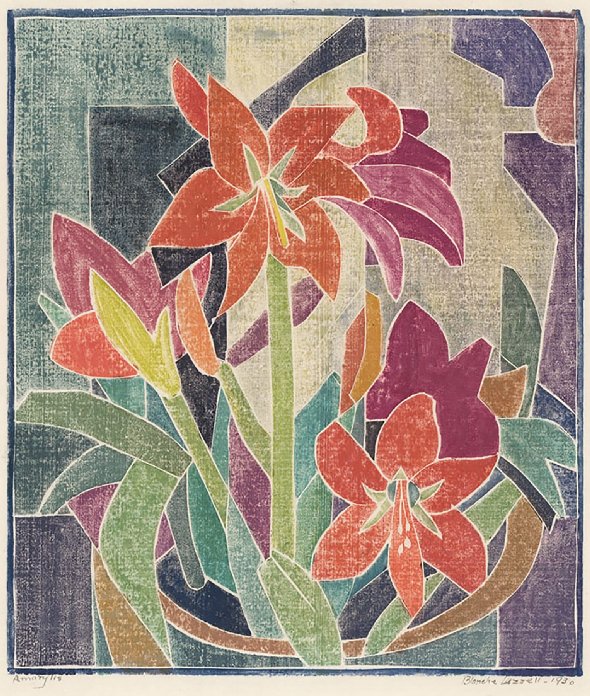
Amarylis by Blanche Lazzell (1930)

In 1891, when Blanche was just twelve years old, her mother died, aged 48. In her early teens Blanche experienced hearing problems and became partially deaf and it was not until a year later that a Baltimore doctor was able to remedy her illness.  In 1893, at the age of fifteen, Blanche enrolled at the West Virginia Conference Seminary, which is now the West Virginia Wesleyan College.  From there, in 1899, she transferred to the South Carolina Co-Educational Institute in Edgefield. Once she graduated from the Institute, she became a teacher at the Red Oaks School in Ramsey, South Carolina. In spring of 1900, she returned to her Maidsville home, where she tutored her younger sister, Bessie.   In 1901, she studied art at West Virginia University and did well, receiving a degree in art history and the fine arts in 1905.  She continued to study at WVU on a part time basis until 1909, allowing her to broaden her knowledge of art and twice substituting as a painting teacher.

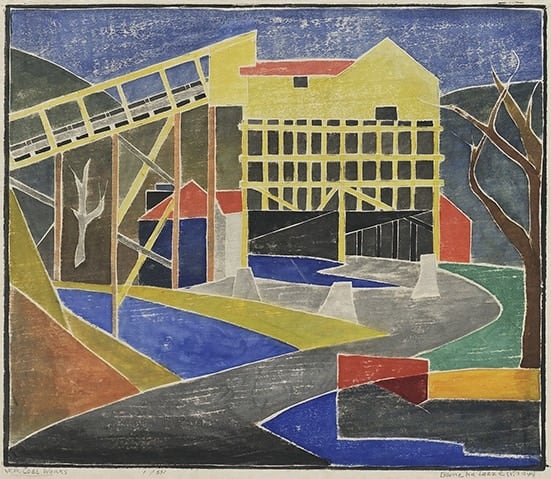
West Virginnia Coal Works by Blanche Lazzell (1949)

In 1908, at the age of thirty, she moved to New York and enrolled at the Art Students League.  The League had been formed in 1875 to provide more variety and flexibility in education for artists than it was felt the National Academy of Design provided. This breakaway group of art students included many women, many of whom, in the late 1890s and early 1900s, took on key roles. In Marian Wardle’s book: American Women Modernists: The Legacy of Robert Henri, 1910-1945. She recounts the words of the American artist Edith Dimmock regarding the atmosphere at the Art League:

“…In a room innocent of ventilation, the job was to draw Venus (just the head) and her colleagues. We were not allowed to hitch bodies to the heads——yet. The dead white plaster of Paris was a perfect inducer of eye-strain and was called “The Antique.” One was supposed to work from “The Antique” for two years. The advantage of “The Antique” was that all these gods and athletes were such excellent models: there never was the twitch of an iron-bound muscle. Venus never batted her hard-boiled egg eye, and the Discus-thrower never wearied. They were also cheap models and did not have to be paid union rates…”

During her time at the Art League Blanche studied under Kenyon Cox and William Merritt Chase and one of her fellow students was Georgia O’Keeffe. 

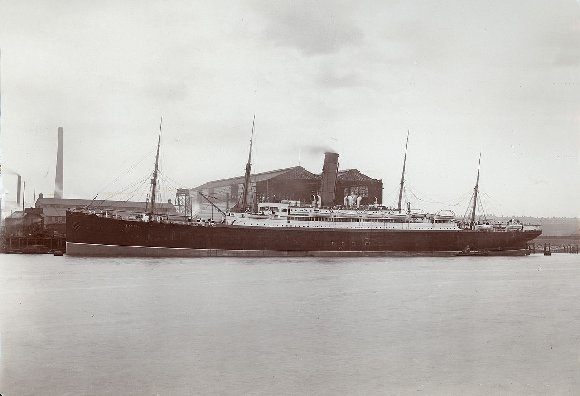
SS. Ivernia

On July 3rd 1912, Lazzell set sail on an American Travel Club cruise on the Cunard liner SS Ivernia, crossing the Atlantic and arriving in England. From there Blanche visited the Netherlands, Belgium and Italy.  She was fascinated by the architecture of the various churches she visited.   

Sailboat by Blanche Lazzell

In August she left the tour party and travelled to Paris.  She then stayed in a pension in Montparnasse on the Left Bank.  She moved into the Students’ Hostel on Boulevard Saint-Michel, one of the two major streets in the Latin Quarter of Paris, running alongside the Luxembourg Gardens.  During her stay in the French capital, she took lessons at the Académie de la Grande Chaumière, Académie Julian, and Académie Delécluse.  She eventually established herself at the Académie Moderne where her tutors were the post-impressionist painters Charles Guérin and David Rosen.  Of all the art tuition she received in Paris she was the most contented with the ideas and techniques behind the Parisian avant-garde art, a genre which pushed the boundaries of ideas and creativity, which she learnt about at the Académie Moderne.

The Monongahela River at Morgantown by Blanche Lazzell (1939)

Blanche returned to America on the White Star passenger liner, SS Arabic, at the end of September 1913.  On her return to America Blanche went to live with her younger sister Bessie in Morgantown.  During her European travels Blanche built up a portfolio of sketches and paintings enough for her to have a solo exhibition in December 1914.  To make ends meet, she rented a studio in town and taught art as well as selling her hand-painted chinaware.

Byrdcliffe Artist Colony

Byrdcliffe Artist Colony

In the summer of 1917, Blanche spent time at the Byrdcliffe Arts Colony, an artists’ colony just outside Woodstock, New York.  The Byrdcliffe Art Colony was founded by Jane Byrd McCall and Ralph Radcliffe Whitehead and colleagues, Bolton Brown, an artist and Hervey White, a writer.  The name of the colony came from an amalgamation of Jane and Ralph’s middle names.  It was founded in 1902 and the complex was formed of a number of Arts and Crafts cottages.  It was there that visual artists, poets, and musicians found their muses and spent time creating works of art, music and poetry. In later times famous people, such as Bob Dylan, writer Thomas Mann, and even famous actors, Helen Hayes, and Chevy Chase, spent time at Byrdcliffe.  Blanche studied under the Belgian-born artist William Schumaker who whilst in Paris had come into contact with European avant-garde artists.  On his return to America he brought with him modernist principles.  The term modernism in art was a rejection of history and conservative values such as realistic depiction of subjects; it was an innovation and experimentation with form, that is to say, the shapes, colours and lines that make up the work have a tendency towards abstraction.  From 1913 to 1931, Schumaker was artist-in-residence at the artists’ colony at Byrdcliffe.

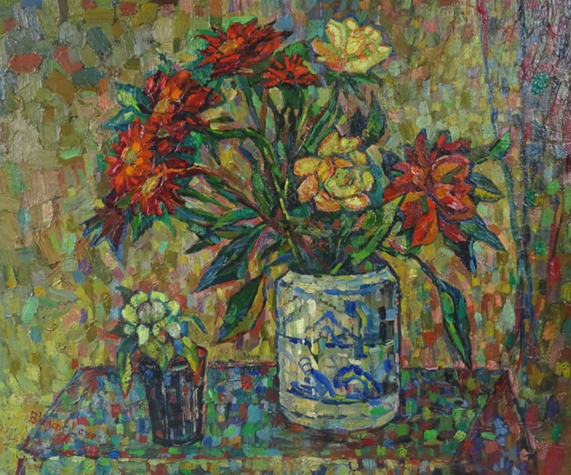
Still Life by Blanche Lazzell

In 1918 Blanche Lazzell left Morganstown and moved permanently to Provincetown, which is situated on the northern tip of Cape Cod, Massachusetts, a place she had previously visited in 1915.   She made the town her summer base while wintering back in Morganstown and Manhatten. 

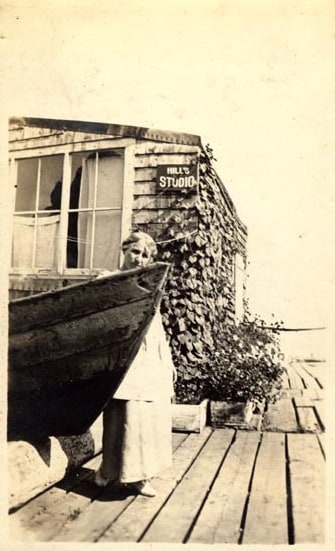
Blanche Lazzell outside her Fish House studio, Princetown

She purchased an old fish house which overlooked the harbour of Provincetown and converted it into her studio.  She immersed herself into the local art scene and became a member of the Provincetown Art Association and the Sail Loft Club, Provincetown’s women’s art club.  She also became involved with the Provincetown Printers, a group of artists, most of whom were women, who created art using woodblock printing techniques.  It was a refuge for artists and a lively hub of experimentation and innovation. It became known as Princetown Print.  It was a white-line woodcut print, but it differed from woodcut printing as rather than creating separate woodblocks for each colour, one block was made and painted. Small groves between the elements of the design created the white line. In the main the artists often used soft colours, so that the finished product sometimes had the appearance of watercolour paintings.  Recalling her first summer at Provincetown, Blanche Lazzell fondly remembered her time there saying:

“…Hundreds of American artists who had been living in Europe before the first World War flocked to Provincetown. This quaint old seaport town, famous for the first landing place of the Pilgrims, was already an art colony…To be in Provincetown for the first time, in those days, under ordinary conditions was delightful enough, but that summer of 1915, when the whole scene, everything and everybody was new, it was glorious indeed–”

Untitled Abstract work by Blanche Lazzell

Lazzell returned to Paris in 1923 and studied with both Fernand Léger, Andre Lhote and Albert Gleizes, who was said to be one of the founders of cubism. By 1925, Blanche had mastered the static and shuffled planes of Synthetic Cubism, to which she added her own distinctive colour palette and elegant receptivity. Blanche defined Cubism as:

“… the organization of flat planes of colour, with an interplay of space, instead of perspective…”

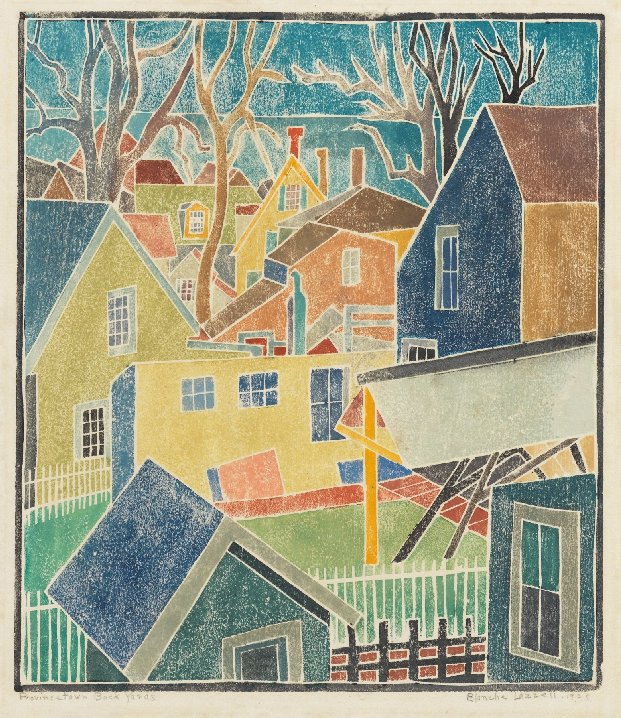
Princetown Backyards by Blanche Lazzell

This was a style which was excellently suited to her woodcuts and often mirrored the angular patterns of the Provincetown houses, rooftops, and wharves which are depicted in many of her woodcut prints.  It is also interesting to note that Lazzell was a passionate gardener, and images of flowers often featured in her work but even these images, although based on direct observation, were changed into recurrent interactions of abstracted shapes.

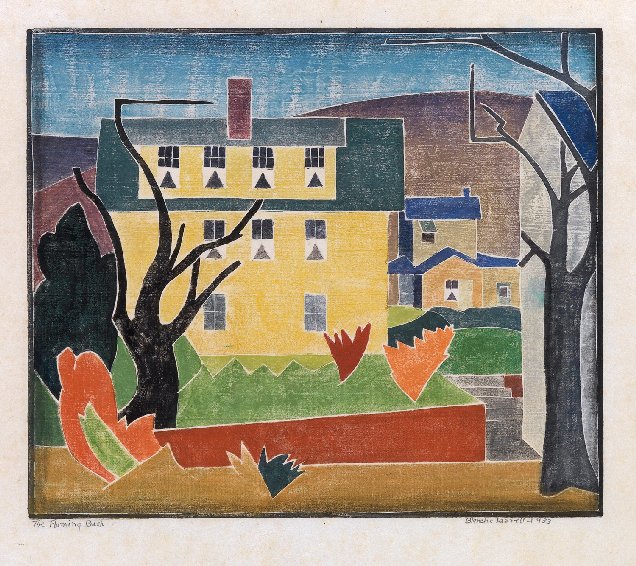
The Flaming Bush by Blanche Lazzell (1933) At auction it realized $87,500.

Blanche’s younger sister Bessie gave birth to a son, in August 1924 and Blanche decided to return to Morganstown to help her.  Lazzell also became a mentor and role model for her niece, Frances Reed, the daughter of her sister Myrtle.   Blanche eventually returned to Princeton in 1926 and one of her first tasks was to pull down her previous studio, the Fish House, as it was getting too cold in the winter months due to the numerous drafts.

The Violet Jug by Blanche Lazzell

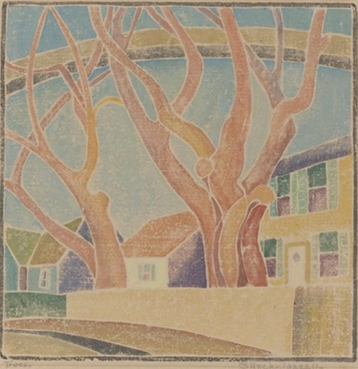
Trees by Blanche Lazzell (c.1930)

In 1928 she was invited to be on the board of directors of the international art group, Société Anonyme. Lazzell later joined the New York Society of Women Artists and the Society of Independent Artists. In the 1930s, Blanche took part in an exhibition called Fifty Prints of the Year where she exhibited her compositions The Violet Jug and Trees.

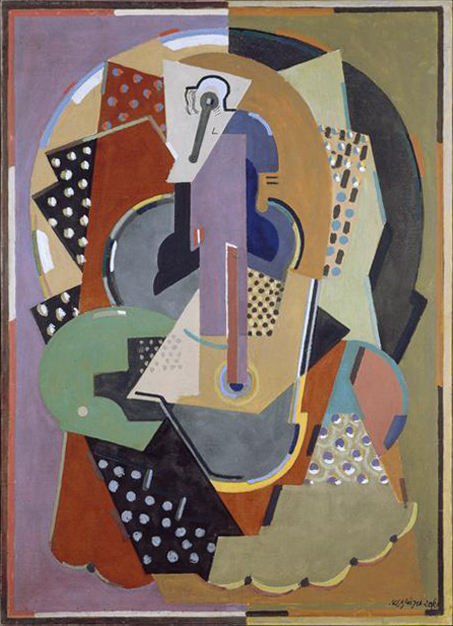
Ecuyère (Horsewoman) by Albert Gleizes (c.1923)

Around the same time she produced a number of pure abstract compositions which shows the influence of Albert Gleizes.

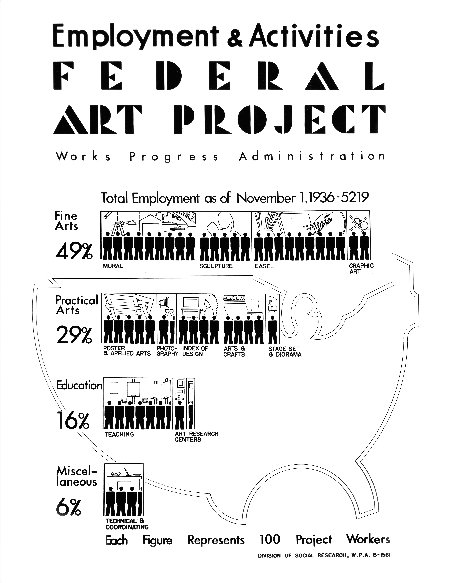
In 1934, America was in the midst of the Great Depression and Blanche Lazzell was one of two West Virginian artists who received Federal Art Project grants through the Works Progress Administration.  This was due to the American government which hired hundreds of artists who collectively created more than 100,000 paintings and murals and over 18,000 sculptures to be found in municipal buildings, schools, and hospitals in all of the 48 states. President Franklin Roosevelt sought to put as many unemployed Americans as possible back to work and to buoy the morale of the citizens. Some of the 20th century’s greatest visual artists were employed by the FAP, along with many nascent Abstract Expressionists.

Blanche Lazzell on her porch of her Provincetown studio, 1942

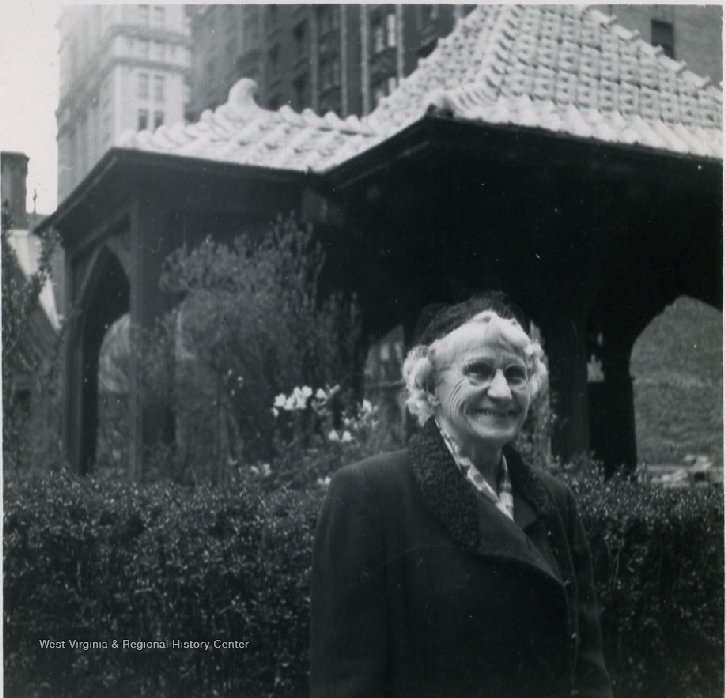
Blanche Lazzell outside Little Church around the Corner, New York

In May 1956, Blanche Lazzell’s health began to fail and she was taken to a hospital with a suspected stroke.  Lazzell died on June 1st 1956 and she is buried next to her father in Bethel Cemetery in Maidsville.  She was aged 77.

The Tokaido Road Trip. Part 1.

Leaving Edo

The next three blogs today are all about a journey.  I hope you will join me on this journey and look at the artwork associated with the long trek.  Most of you will have heard of the Camino de Santiago or in English, The Way of St James, which has a number of various starting points, but all paths on the Camino pilgrimage route lead to the Spanish town of Santiago de Compostela, where the remains of St James, (Sant Iago), were discovered in the ninth century. I will be guiding you along the Tokaido Road as seen and recorded in woodblock prints by the Japanese artist Utagawa Hiroshige.

The Tōkaidō Road,  which literally means the Eastern Sea Road, was once the main road of feudal Japan. It ran for about five hundred kilometres between the old imperial capital of Kyoto, the home of the Japanese  Emperor  and the country’s de facto capital since 1603, Edo, now known as Tokyo, where the Shogun lived.

The Tokaido mainly followed the Pacific coast and places where mountains suddenly meet the sea. It then ran across the mountains, and around the southern end of Lake Biwa, to Kyōto.

Memorial portrait of Utagawa Hiroshige by Utagawa Kunisada I (1858)

Hiroshige completed fifty-five woodcut prints 0f the fifty-three stop-over stations plus the two termini, which later became post-towns established along it.  These consisted of horse and porter stations, along with providing a range of lodgings, food, etc, establishments for the use of travellers. The horses were mainly for use by official messengers, but in some cases travellers wearied by their long journey could also hire horses.

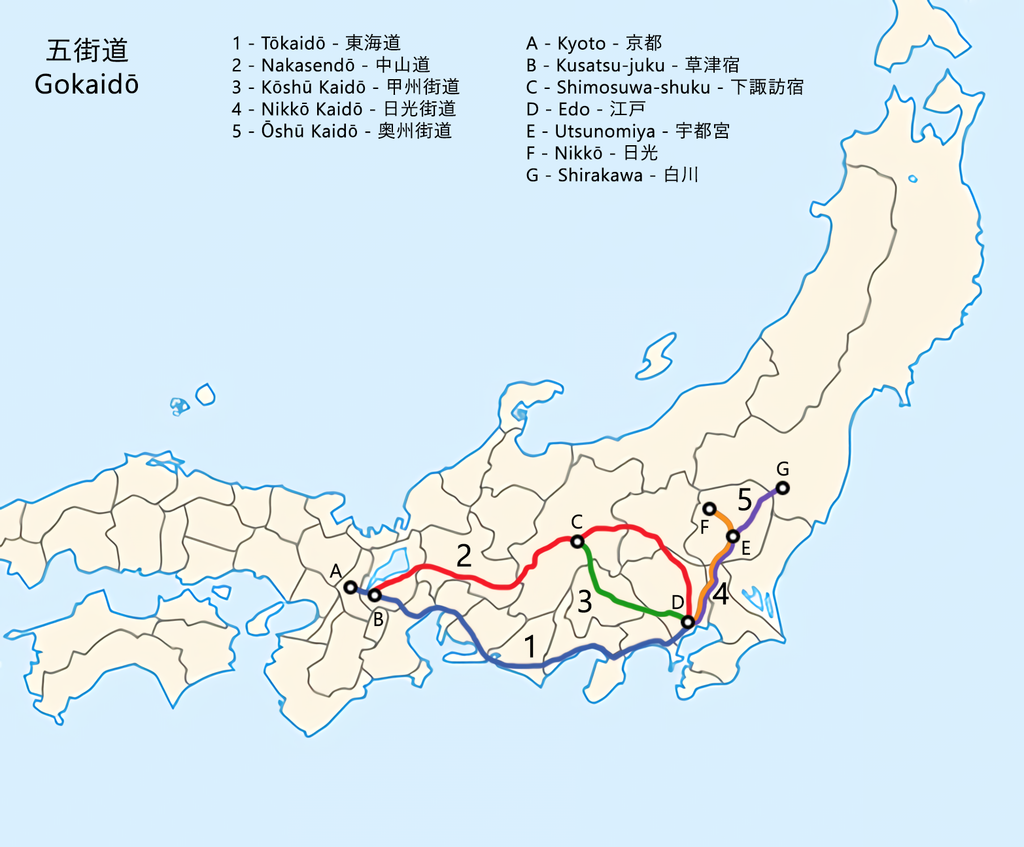
The Five Routes (五街道, Gokaidō)

The Five Routes (Gokaidō), sometimes translated as “Five Highways”, were the five centrally administered routes that connected Edo, the de facto capital of  Japan, with the outer provinces during the Edo period (1603-1868).  Two of these routes appeared in a series of woodblock prints completed by Utagawa Hiroshige. In this blog we will be following his journey along the Tōkaidō Road.

No.1. Nihon Bridge: Morning Scene.

In 1832 Hiroshige travelled with an entourage of the Shogun’s officials from Edo to Kyoto along the Tokaido Road. This journey proved to be an eye opening and life changing experience for him. One has to remember that Hiroshige was an urban man of Edo, and his life had been centred around Edo. This journey he undertook along the Tokaido, entering rural villages and observing the beauty of his country made a great impression on the artist, so much so that he immediately returned to Edo once the journey had been completed and started on his woodblock series using the sketches he had made during the long trek.   They were then published as the Fifty-three stations of the Tokaido or Hoeido Tokeido.  The publication earned him great critical acclaim during his lifetime and for future generations.   Hiroshige was part of an official delegation which was tasked with transporting horses, a gift from the shogun Tokugawa leyasu, the hereditary commander-in-chief in feudal Japan, to the imperial court of the Emperor Ayahito.  The horses were a gift from him which symbolised the power structure in Japan and how the shogun recognised the divine rights of the emperor.

Travelling along the Tokaido Road had some restrictions and checkpoints, known as seki, were set up by the Tokugawa government, where guards stood watch, and turned back those who did not have the appropriate passes. Even in the city of Edo there were restrictions and each section of the city, known as machi was closed off by wooden gates called kido.  These gates were shut every night, and re-opened early in the morning and so a traveller wishing to start on the first stage of the Tokaido route, at the Nihon-bashi literally “Japan Bridge” in the heart of Edo would have to wait until the kido at the bridge was opened.

Nihonbashi: Daimyō Procession Setting Out

Hiroshige’s journey started in the eighth month of 1832 at the Nihonbashi starting point. It was also from here that the Daimyō Procession started their annual pilgramige. Among the travellers on the Tōkaidō were the processions of the great daimyō, powerful Japanese magnates, and  feudal lords who, from the 10th century to the middle 19th century, ruled most of Japan from their vast, hereditary land holdings. They were subordinate to the shogun.  They were directed to spend every other year at the Shōgun’s court to prevent them from organizing rebellions, and the group travelled back and forth in huge processions numbering hundreds of people.

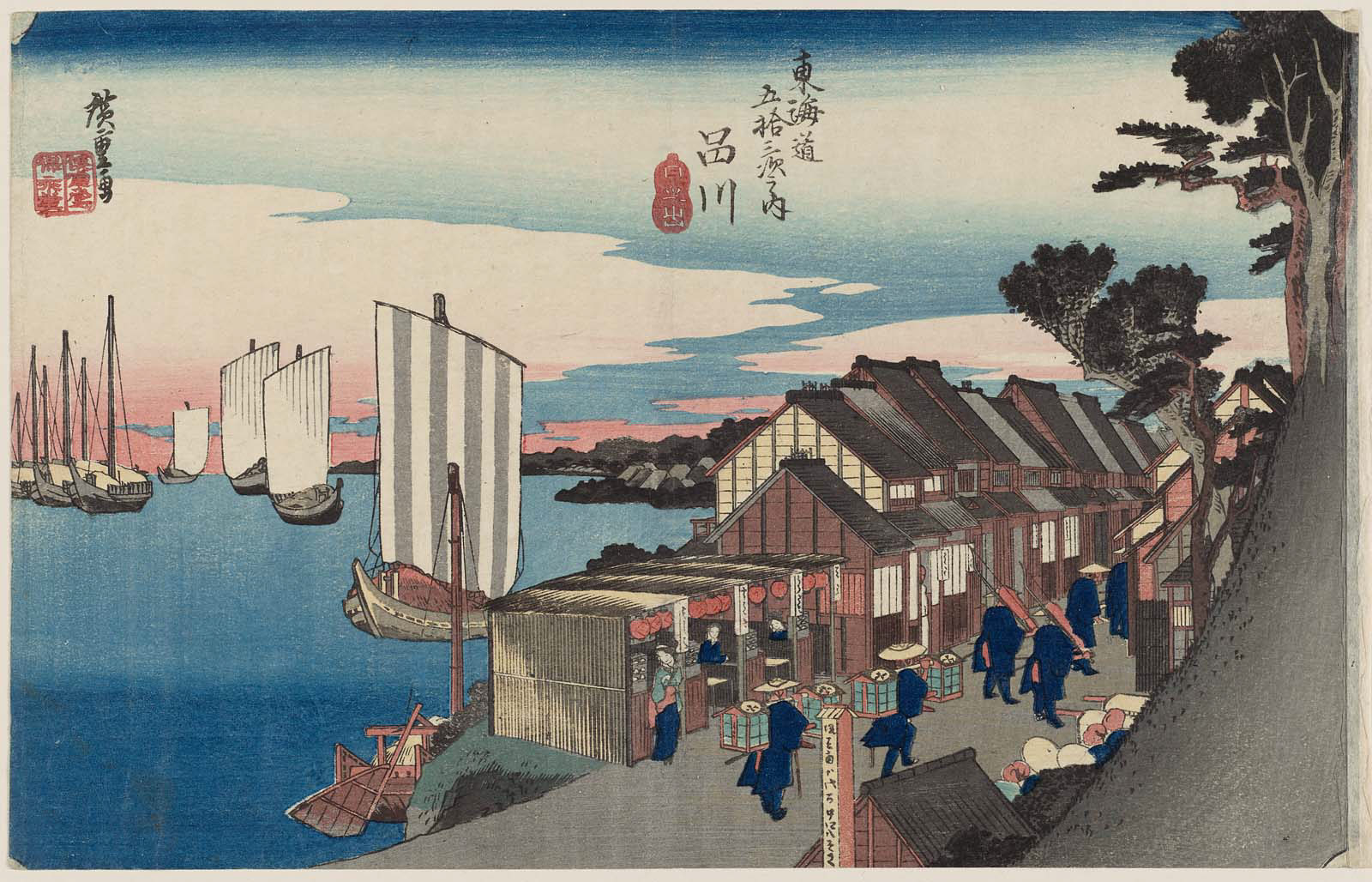
No.2.  Shinagawa: Sunrise by Hiroshige

The first stop-off point on Hiroshige’s journey along the Tokaido Road journey was at Shingawa, a suburb of Edo.

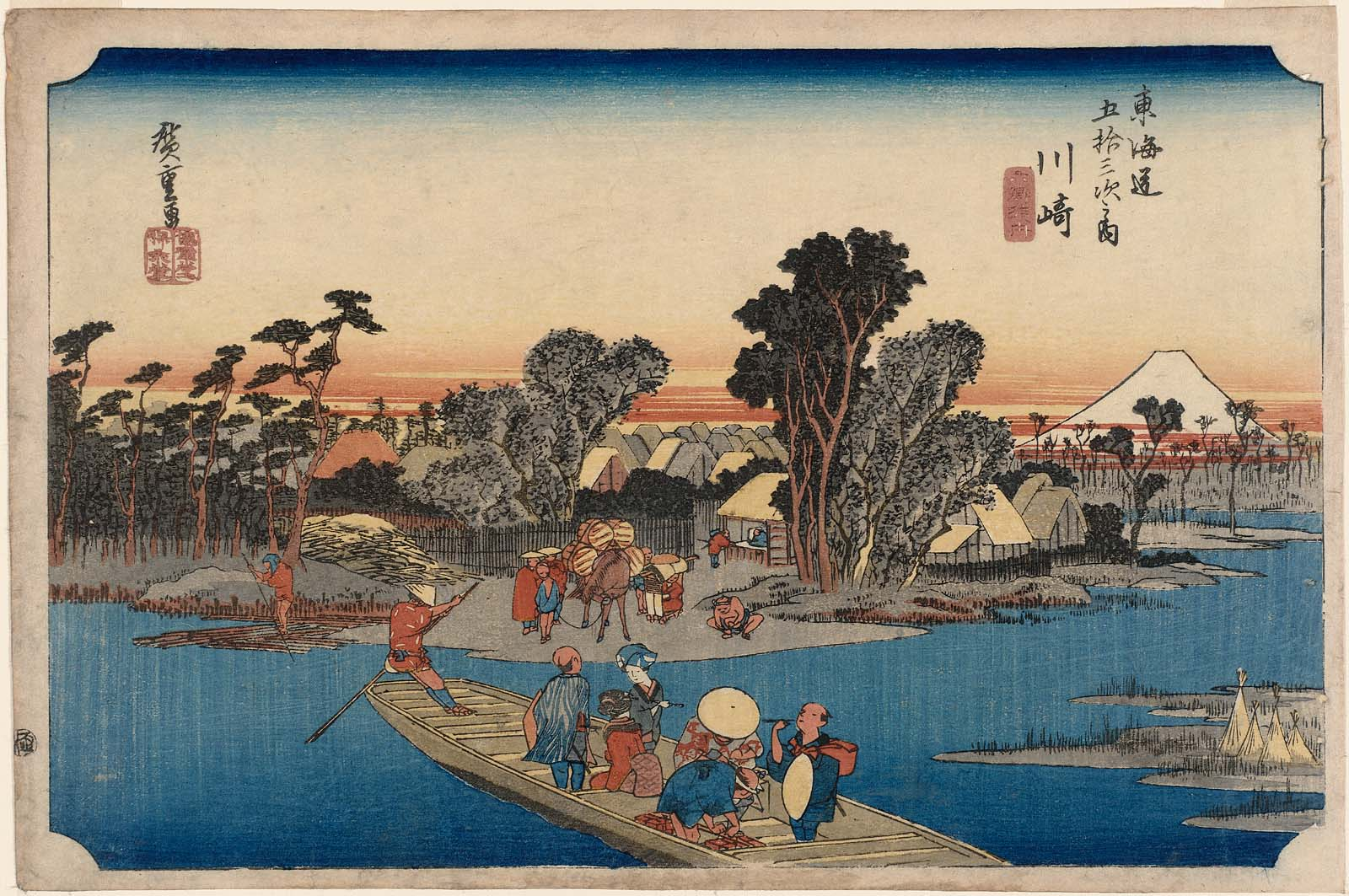
No.3. Kawasaki: The Rokugo Ferry by Hiroshige (1833).

In the third of the series we see the Rokugo Ferry at Kawasaki depicted.  It is a tranquil river scene in which we witness a ferry carrying six passengers.  On the Kawasaki shore we see future passengers along with their horse who have to wait for the ferry’s return.  Mount Fuji appears in the upper-right of the print.

No.4. Kanagawa: View of the Embankment by Hiroshige (c.1833).

The fourth of the fifty three woodcuts was of travellers arrival at Kanagawa.

The setting of the woodcut print is the town of Kanagawa and it is an evening scene.  We see the weary travellers slowly ascending the hill, being propositioned by young girls who try to entice them into the tea-houses.

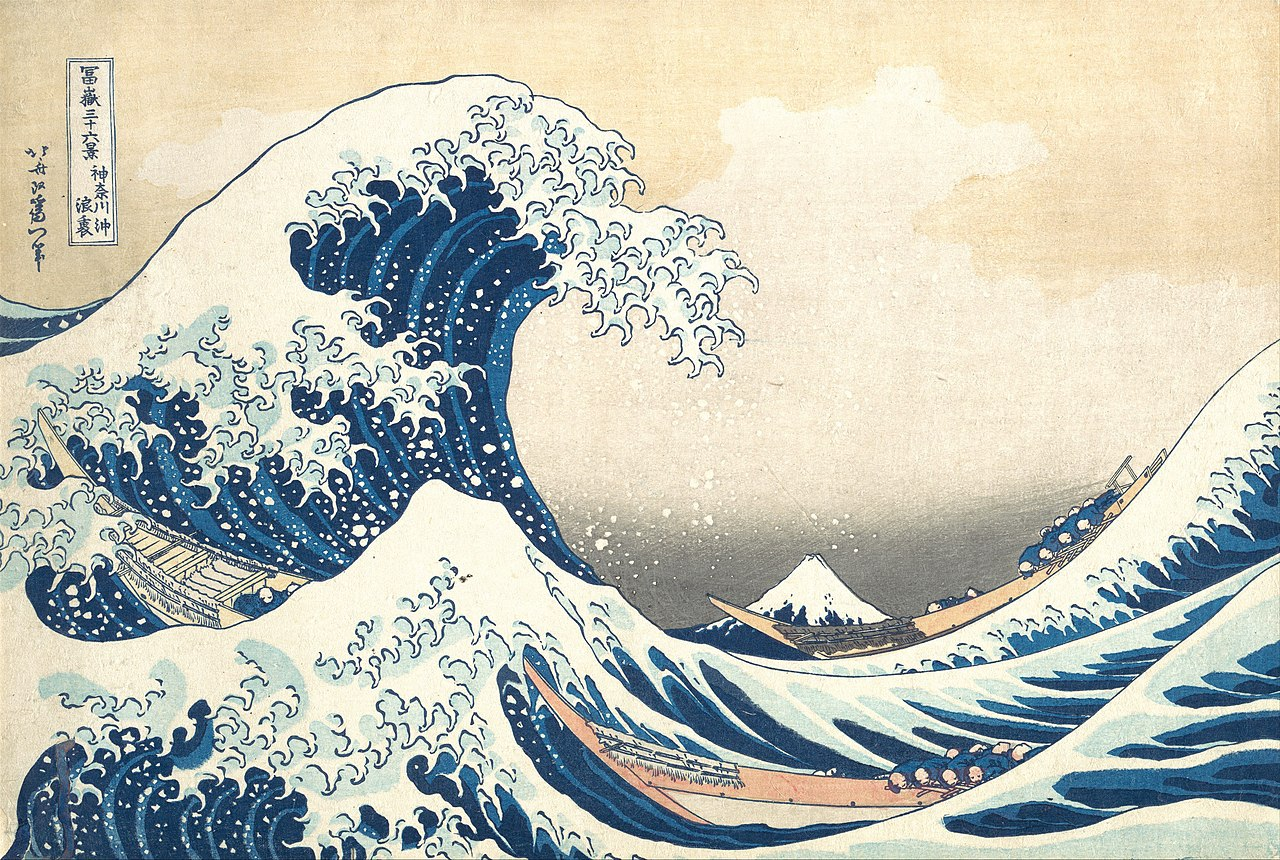
The Great Wave off Kanagawa by Hokusai’s  (c. 1829–1832)

Kanagawa is also the famous setting for Japan’s most famous artwork – Hokusai’s print entitled The Great Wave off Kanagawa. In 1923 the town was devastated by the Great Kanto earthquake.

No.5. Hodogaya: Shinmachi Bridge by Hiroshige.

The next stop for Hiroshige was at the lay-over station of Hodogaya on the bank of the Katabira River.  This town, now a suburb of Yokohama, was formed by combining the towns of Katabira, Godo, Iwama and Hodogaya. For that reason, the Katabira Bridge across the Katabira River was called the Shinmachi Bridge (meaning New Town Bridge). Begging Zen priests of the Fuke sect and palanquin bearers are seen crossing the bridge, and beyond them women of the small restaurants stand around and chat.

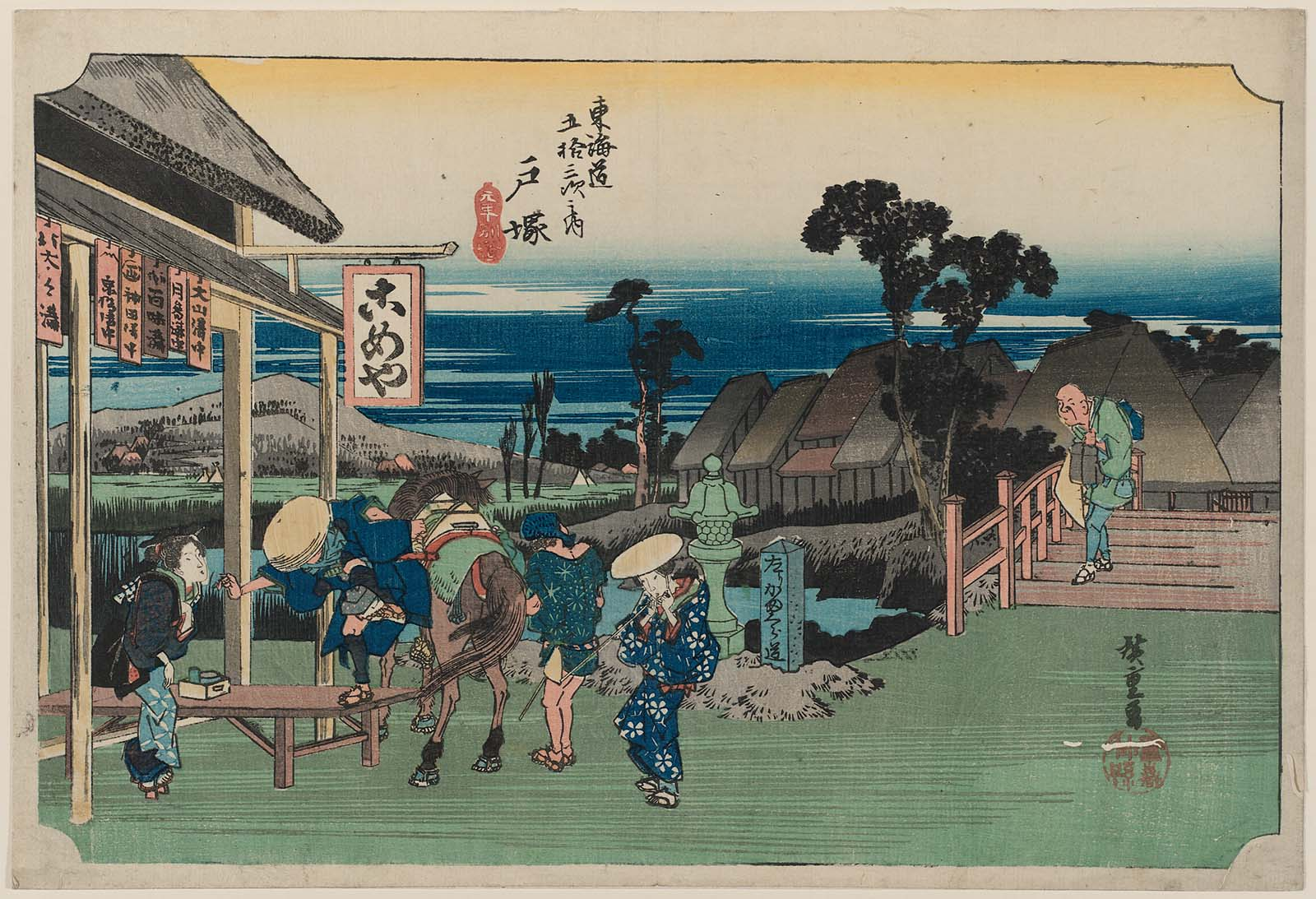
No.6. Totsuka: Motomachi Fork by Hiroshige

The next layby station on Hiroshiga’s journey is another suburb of Yokohama called Totsuka.  In this print we see a man dismounting from his horse in front of an open tea-house, while a waitress stands by to receive him. Beyond this station, the highway was lined with finely shaped pine trees.

No.7. Ōiso: Tora’s Rain by Hiroshige

Once Hiroshige and his party had departed from Totsuka and passed through Fujisawa and Hiratsuka the travellers arrived at Ōiso, a coastal town located in Kanagawa Prefecture.   In his depiction of Ōiso, dark black skies dominate and we see a small group of travellers entering the town sheltering from the downpour.  To the right of the road we can see Mount Korai and to the left we have a sea view.  The inclement weather is highlighted by the menacing black cloud which hovers above the horizon in the yellowish sky. The town of Ôiso at one time had been the home of Ôiso no Tora, also known as Tora Gozen. She was a courtesan based at the Chôtei brothel in Ôiso and the mistress of Soga no Juro and features in numerous kabuki plays.  Soga and his younger brother Goro slew Kudō Suketsune, avenging the death of their father.  Shortly afterwards the two brothers were executed.  This historical event later featured in many Noh and puppet theatre.  According to the stories, following Jûrô’s death, Tora became a nun and devoted the remainder of her life to praying for his soul.  Tora Gozen was later metamorphosed into a stone, which is one of the sites that can be seen in Ôiso. It is said that she cried on the 28th day of the Fifth Month, the day of Juro’s death and the title of the woodcut Tora’s Rain is reference to this event.

No.10. Odawara: The Sakawa River by Hiroshige (c.1833)

Hiroshige and the travellers left Oiso and headed south-west towards their next stop, Odawara but to reach that stop-over town they had to cross the Sakawa River. In those days travellers made the crossing on the backs of waders, or for the very rich traveller, they would cross the water seated in a palanquin or litter. On the middle-ground on the right of the print we can see the low-lying town of Odawara. Further to the right we observe the fifteenth-century castle of Odawara which nestles below a tree-covered hill.

No.11. Hakone: View of the Lake by Hiroshige (c.1833)

Having left Odawara Hiroshige and the travelling party headed for Hakone and Mishima.  To reach Hakone the travellers had to trek through mountainous regions close to their destination.  The mountains close to Hakone rose more than a thousand metres and the way to Hakone was a constant up and down and then circling Lake Ashi through the Hakone Pass to reach the Hakone stop-off station.  The woodcut print depicts Lake Ashi on the left and in the distance we can make out Mount Fuji silhouetted against a reddish sky.  The presence of Mount Fuji is all about artistic licence as from the position we are looking from, the mountain would not have been visible.

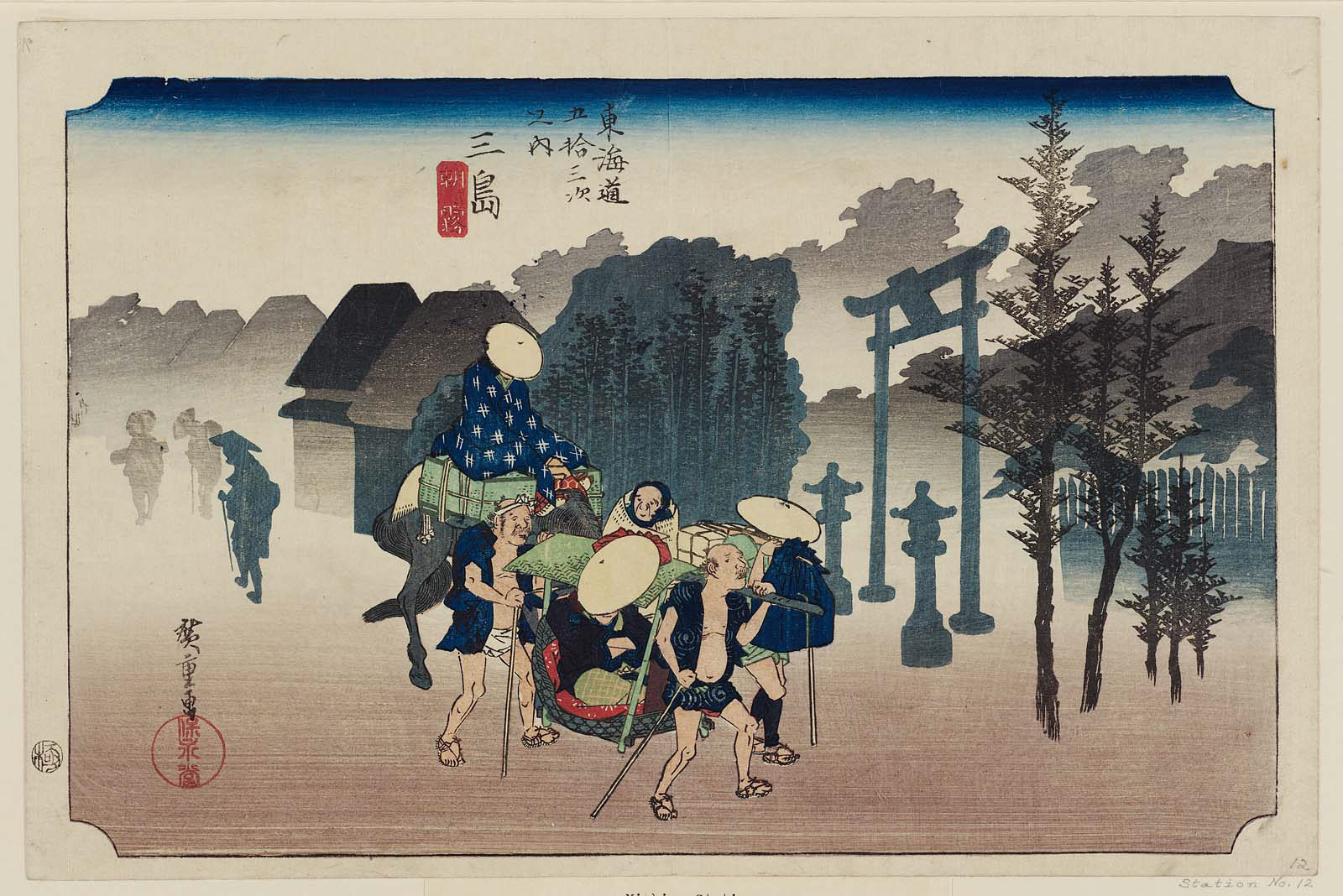
No.12. Mishima: Morning Mist by Hiroshige (c.1833)

The next stop on the Tokaido Road is the town of Mishima. During the time of Hiroshige, Mishima prospered as an inn town on the old Tokaido Road, a gateway to Mt. Fuji, Hakone and the Izu peninsula.  In the woodcut print we can see a small company of travellers passing through the town.  In the depiction, through the morning mist, we can clearly see two stone lanterns of the Mishima shrine.  To the left we see the roofs of the town and a few further figures.  As the shrine is on the right-hand side of the road the travellers are heading to Edo and the party is carrying a palanquin which would come in use for the journey ahead over the mountain pass.

Mount Fuji seen across a Plain: Numazu by Hiroshige (c.1852)

No.13. Numazu: Twilight by Hiroshige (c.1833)

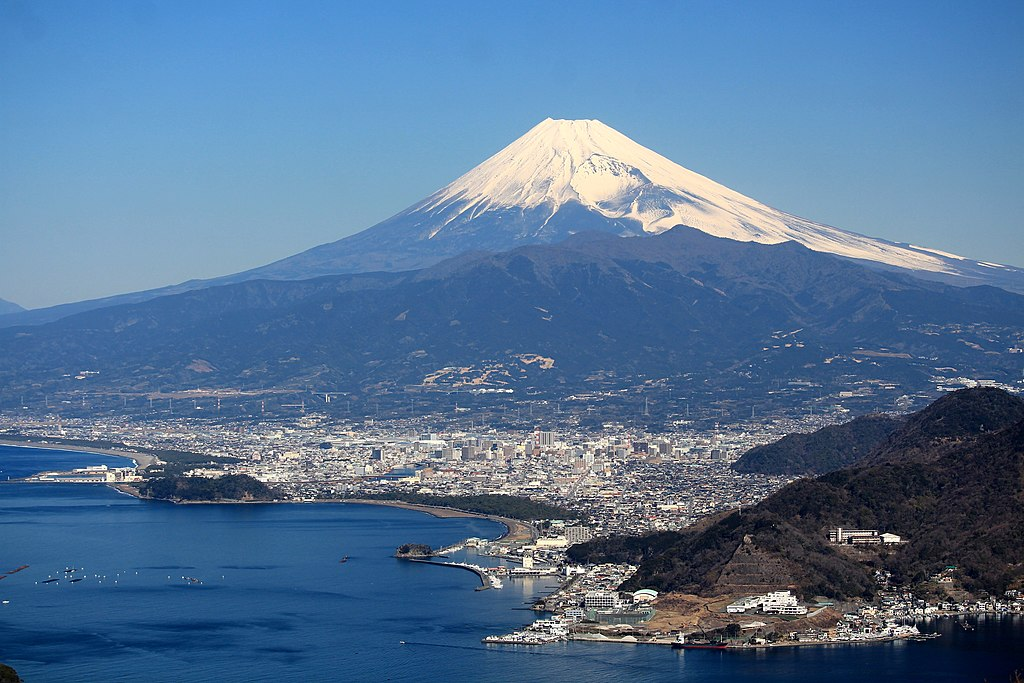
Present day Numazu with Mount Fuji in the background

Having passed through the mountains of Hakone Hiroshige’s party descend down to the plain which gives them the perfect view of the imposing Mount Fuji. The background of the upper print, completed in 1852 by Hiroshige, is a yellow sky with the smaller Mount Ashitaka on the right. In the right foreground we can just make out the castle of Numazu which was completed in 1579 and two hundred years later it was destroyed and rebuilt.

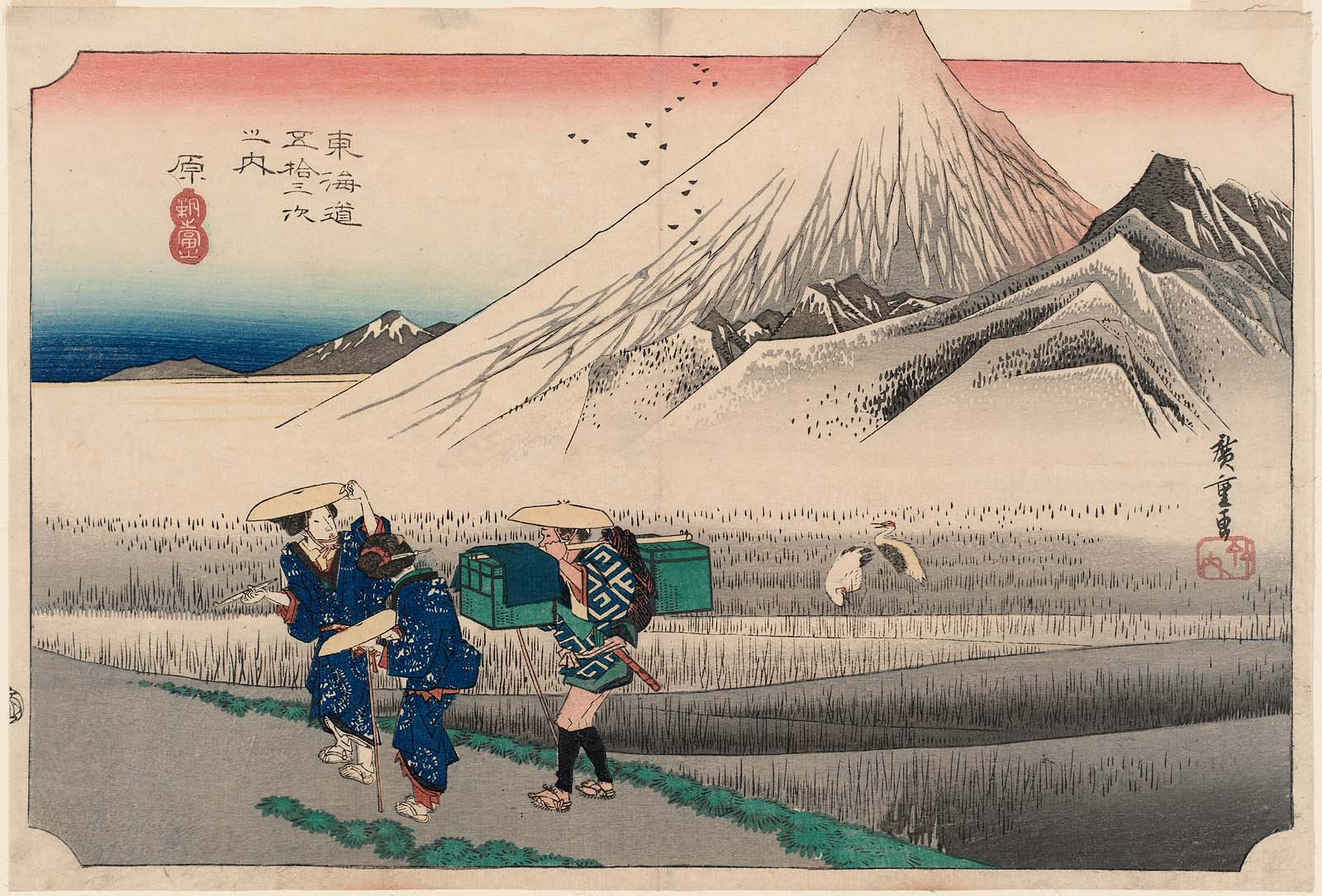
No.14. Hara: Mount Fuji in the Morning by Hiroshige (c.1833-34)

At Hiroshige’s next layby station at Hara, which literally means “field”, the view of Mount Fuji is virtually unobstructed. It is here that one gets the best view of the majestic mountain.  The mountain’s imposing height is emphasized as its peak extends beyond the frame of the picture. This was a technique used by Hiroshige in many of his prints depicting the mountain.  Two women, accompanied by a male attendant in traveling dress, seem awestruck by the breath-taking view.  The early morning sun reddens the sky.  To the right of Mount Fuji is Mount Ashitakayama.  The small party depicted in this painting are en route to the next stop over point, Yoshiwara,  The area around Hara is dotted with ponds and pools which are habitat for eels and the presence of two cranes in the field is evidence that they are hunting for food from one of these pools.  The jacket of the porter bears a pattern that later appears regularly on Hiroshige’s prints as his seal, consisting of two signs for “Hiro”.

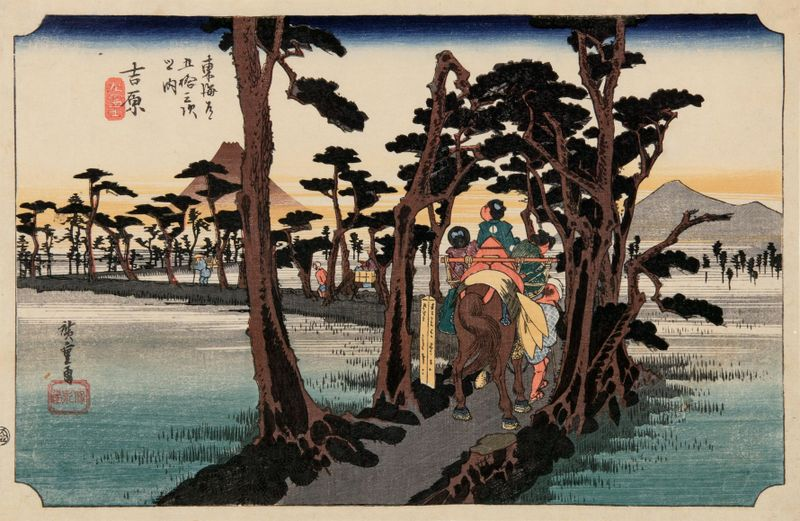
No.15. Yoshiwara: Mount Fuji on the Left by Hiroshige. (1833).

No.16. Kanbara: Night Snow by Hiroshige (c.1833)

Deep snow covers the slope of Kanbara in the evening and we can see fresh flakes falling on the houses. Trees, and mountains create a quiet scene only broken by the perceived crunch of the travellers’ footsteps in the snow. Two travellers wearing cloaks and hats trudge up the hill.  To the left of them there is another man dressed in blue holding an umbrella and a walking stick.  The mountains in the background and the houses in the middle ground stand out against a grey sky.  Once again Hiroshige has added a dark strip along the upper edge of the painting to denote that it is evening.  This painting is another case of artistic licence as it rarely snows in the Kanbara area, which is in present-day Shizuoka.

Hiroshige’s journey along the Tokaido Road continues in Part 2 of the blog.

Toyohara Kunichika

The Great Wave off Kanagawa by Hokusai (1829-1832)

When I think about Japanese printmakers I think about the three eighteenth century masters of that genre.  There was Hokusai with his well known print The Great Wave off Kanagawa.

Rain Showers at Shōno.by Hiroshige

Then there was Hiroshige with his many prints, including one of my favourites, Rain Shower at Shōno.

Fukaku Shinobu Koi by Kitagawa Utamaro (c.1794)

The third of the great eighteenth century printmakers which I call to mind is Kitagawa Utamaro who was one of the most highly regarded designers of ukiyo-e woodblock prints and paintings, and is best known for his bijin ōkubie “large-headed pictures of beautiful women” of the 1790s. One of Utamaro’s most famous works being Fukaku Shinobu Koi which set an auction record of €745,000 in 2016. The woman depicted in the title of the print, Fukaku Shinobu Koi means deeply hidden love and the woman has blackened her teeth, a tradition known as ohaguro, the Japanese custom which normally signifies a married woman, but maybe she is not, as her eyebrows are unshaved which would also signify as her being married.  It could be that she is still young and only recently married.  In her hair she has an ornate kanzashi hairpin with a flower design on it.   This type of hairband was often associated with maiko (trainee geisha).  The young woman looks down and holds a kiseru tobacco pipe in her right hand.  Look at her countenance.   She stares off, her shoulders raised, eyes narrowed, and tiny lips pursed, as if in a deep, emotional mid-sigh.

The other day I had the opportunity to see a small exhibition of Japanese prints by Kunichika at the Lady Lever Gallery on Merseyside, He was the most celebrated print designer of the nineteenth century and so I am dedicating this blog to some of his prints as well as looking at the mystical and colourful world of life in Edo and the magic of Kabuki.  For the unitiated in Japanese life and culture let me start by talking about Edo, Ukiyo-e and Kabuki.

Bijin and a child among flowering sedges under a misty full moon in Ueno Park by Kunichika (1880)

Kyoto, which had been the historic capital of Japan, was replaced by Edo, a castle town centred around the Edo Castle.  Edo became the de facto capital of Japan from 1603 and the seat of the Tokugawa shogunate, the military government of Japan. The period ruled by the Tokugawa shogunate from 1603 to 1868 became known as the Edo period.  This Tokugawa military government brought in social segregation by underlining a hierarchal class system which positioned the warriors at the top, followed by farmers, craftsmen, and then merchants at the bottom. The rulers also organised and built walled areas in the cities where theatres, teahouses, and brothels were licensed and which came to be known as the “pleasure districts.”  For the Japanese people the Edo period was a relatively peaceful time domestically and the regime’s isolationist policy in relationship to the rest of the world, maintained peace in the country. From this was born an art form that reflected this Japanese lifestyle and which found a new audience amongst a rising Japanese middle class and this art known as Ukiyo-e, was born as an evolution of yamato-e, a previous style of painting. Ukiyo-e depended upon collaboration between four people. The artist, using ink on paper, drew the image that was then carved by a craftsman into a woodblock. A printer then applied pigment to the woodblock, and a publisher oversaw and coordinated the process and marketed the works.

Kunichika in 1897, aged 52.

The artist I am featuring today is Kunichika Toyaharo, who was born Yasohachi Oshima on June 30th, 1835 in the Kyobashi district of Edo, which nowadays days is known as Tokyo.

 His father, Ōshima Kyujū was the proprietor of a public bathhouse. His father was a poor businessman, and he lost the bathhouse sometime in Yasohachi’s childhood. The boy’s mother, Arakawa Oyae, was the daughter of a teahouse proprietor. At that time, commoners of a certain social standing could ask permission to alter the family name and so to distance themselves from the father’s failure, the family took the mother’s surname, and the boy became Arakawa Yasohachi.

Around the age of twelve, Kunichika became a student of the ukiyo-e master Chikanobu.      A year later he entered the studio of Utagawa Kunisada the most popular, prolific and commercially successful designer of ukiyo-e woodblock prints in 19th-century.  It was at this point in time that Yasohachi Oshima received his artist name – Kunichika. The name derives from the names of his two masters – Kunisada and Chikanobu.

Kunichika was reputed to be a rather bohemian artist. He married in 1861 and had one child with his wife – a daughter named Hana. Although there is no definitive account of their marriage, it is known that they broke up but it is not known who left whom.  What is known is that he was a philanderer and led a nomadic life very rarely staying in one place for any period of time.  It is said that he once actually bragged that he had moved one hundred and seven times during his life.  His heavy drinking habits and time spent in brothels is well documented by his contemporary artists, Kyosai Kawanabe and Kiyochika Kobayashi and reading between the lines Kunichika was probably an alcoholic with  loose morals who could not control his spending habits.

According to Kanichika’s biographer, Amy Reigle Newland in her 1999 book, Time present and time past: Images of a forgotten master: Toyohara Kunichika, 1835–1900, Kunichika got into trouble in 1862 when he made a “parody print” in response to a commission for a print illustrating a fight at a theatre. This angered the students who had been involved in the fracas. They ransacked Kunichika’s house and tried to enter Kunisada’s studio by force. His mentor revoked Kunichika’s right to use the name he had been given but relented later that year. Decades afterwards Kunichika described himself as greatly “humbled” by the experience.

Kunisada Memorial by Kunichika (1864)

To get an idea of Kunichika’s status in the studio of Kunisada when his mentor died in 1864, of all his apprentices, Kunichika was tasked with producing memorial prints of his late master, one of which was a diptych.

A Scene from Bancho Sarayashiki (The Dish Manor at Bancho) by Kunichika (1863)

Kunichika embraced modern subjects and his prints reflected the great social and political change which was taking place at the time in Japan. He will be best remembered for his depictions of the Kabuki theatre, and his prints encapsulated the drama and excitement of scenes from popular plays and famous actors.  Kabuki, which literally means the art of song and dance, is a world-renowned form of traditional Japanese performance art. It incorporates music, dance, and mime with elaborate costumes and theatre sets.  Kabuki dramas depict stories which came from regional myths and history.  Kabuki is a bizarre visual display which focuses more on looks than the story itself. The elements which go into the production, such as costumes, lighting, props, and set design compliment aspects of the actual performance such as song and dance. All are presented in grandiose fashion to create a single, spectacular show.

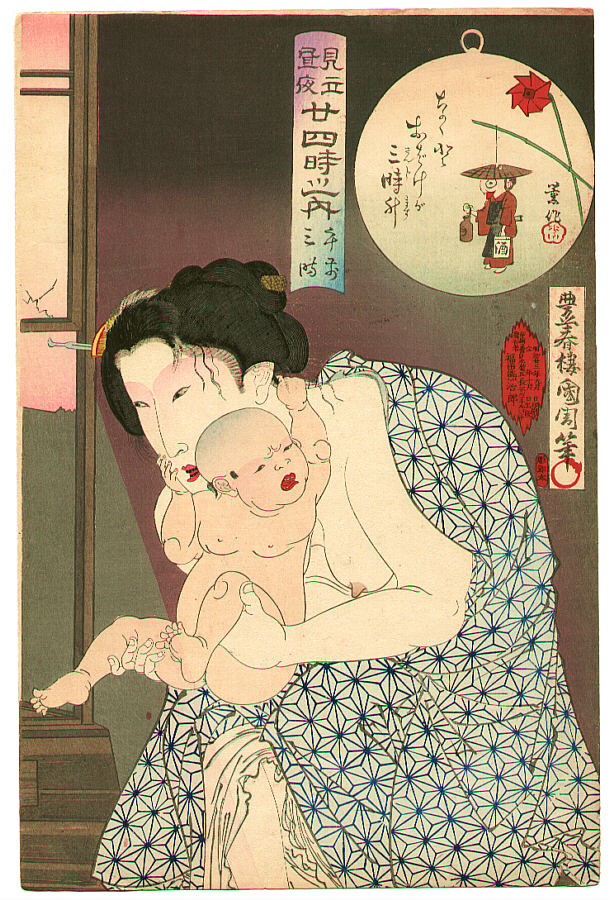
Mitate Chuya Niju-Yo Ji no Uchi” (Allusion to the Twenty-four Hours of the Day) by Kunichika Mitate Chuya Niju-Yo Ji no Uchi” (Allusion to the Twenty-four Hours of the Day). – Babysitting at 3 a.m.

Kunichika produced a set of twenty-four prints featuring each hour of the day.  This series is regarded as Kunichika’s finest, completed bijin series.  Bijin is a Japanese term which literally means “a beautiful person” and is synonymous with bijyo meaning “beautiful woman”.  The prints are a fascinating collection of beauties in different aspects of lives and full of intriguing word-puns and allusions. Th one above is set at 3 o’clock in the morning and we see a mother trying to get her baby to sleep.

Niwaka Festival at 9 p.m. – Scenes of the Twenty-four Hours by Kunichika
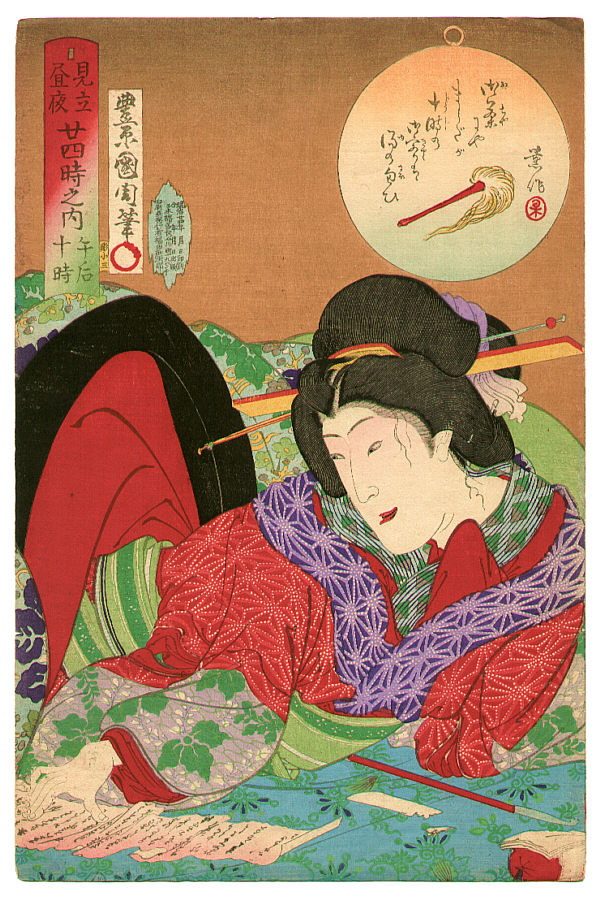
Courtesan at 10 p.m. – Scenes of the Twenty-four Hours by Kunichika

The prints are a fascinating collection of beauties in different aspects of lives. At 10 o’clock in the evening we see a courtesan waiting for her client.

Scenes of Famous Places Along the Tokaido Road Station 77: Tenryugawa, 1863 by Kunichika

Another interesting set of prints was completed in 1863 and us known as The Tokaido Road Processional series. The print above is one of a series of about one hundred and sixty woodblock prints the authorities commissioned seventeen of the leading ukiyo-e artists of the time  The series is a collaborative effort of the various print designers of the Utagawa School in one quite unique effort.   What is probably fascinating about the series is despite the differing ages and styles of the artists who contributed to this project, from twenty-four-year-old Tsukioka Yoshitosh to the Master himself, Kumisada, who was seventy-seven, there is a homogeneity about them and it is very difficult to distinguish between them.  Kunichika completed seven of this series

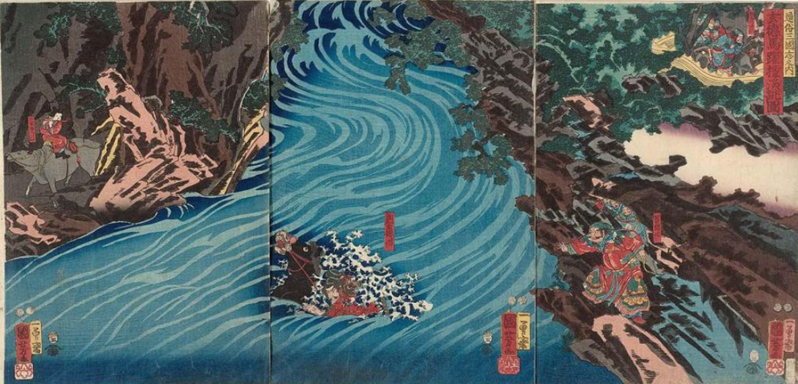
Utagawa Kuniyoshi triptych Xuande Leaping into the Gorge of Tan (1853)

Whilst Kunichika was still attending Kunisada’s Kameido studio he was also being influenced by Kunisada’s colleague and rival Kuniyoshi, in the way he has added the swirling motifs of the water taken directly from the Kuniyoshi triptych Xuande Leaping into the Gorge of Tan. In Kunichika’s 1863 print, Scenes of Famous Places Along the Tokaido Road Station 77: Tenryugawa, he depicts figures in a boat in the foreground set against the swirling waves of the seashore.

The background to the depictions is the journey made by Shogun Tokugawa lemchi, Japan’s military leader, who had travelled along the Tokaido Road from the military capital, Edo, (Tokyo) to the Emperor in the imperial capital, Kyoto, for a crisis meeting concerning foreign incursions into their country.  The road was an important and busy road used by samurai, officials and merchants during that time. Along the road, there were outposts, inns, temples and shrines at the service of weary travellers. The prints depict the Shogun’s entourage at various beauty spots on the Tokaido Road.

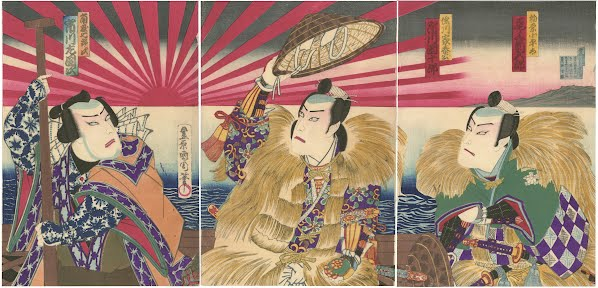
Onoe Kikugorō V, Ichikawa Danjūrō IX and Ichikawa Sadanji I
(in the play Matsu no sakae Chiyoda no shintoku)
by Toyohara Kunichika, 1878

Kunichika was a lover of Kabuki theatre and fascinated by the actors.  Many of his prints feature the leading actors of the time and snippets of the plays themselves. This woodblock triptych print from 1878 features the three greatest actors of the time, Onoe Kikugorō V playing the role of Kashiwabara Koheita, Ichikawa Danjūrō IX in the role of Tokugawa Ieyasu  and Ichikawa Sadanji I in the role of Kakuya Shichirōji in the play Matsu no sakae Chiyoda no shintoku, which was written by Kawatake Mokuami and staged at the Shintomi-za in June 1878. The play, a historical drama, was a portrayal of the life of first Tokugawa shogun, Tokugawa Ieyasu, and was the first commercial production in the Shintomi-za.  The play ran for forty-two days, and attracted a total of forty-nine thousand theatre goers.

Ghost of Shinchunagon Taira no Tomomori by Kunichika (1867) 

Many of the kabuki plays were based on historical tales of the past and Kunichika captured one such story in his 1867 woodcut print entitled Ghost of Shinchunagon Taira no Tomomori.  The main character was played by the well-known kabuki actor Otani Tomoemon V.  He took on the character of the ghost of Taira no Tomomori, who committed suicide after his defeat at the Battle of Dan-no-ura by tying himself to an anchor and jumping into the sea. In the print, he is depicted with the anchor behind him, a rope entwined around it.  His face a pale blue to indicate that he is a ghost. His long, wet hair falls over his shoulders, and blood flows from wounds to his head and body. He wears a fine suit of armour with the butterfly crest of the Taira family on the chest plate. A terrific, expressive image with incredible fine detail in the hair.

The actor Ichikawa Sandanji as a Suikoden hero

Another of Kunichika’s prints featuring a “great” of the world of kabuki actors is of the actor Ichikawa Sandanji playing the role of a Suikoden hero.  Ichikawa Sadanji I belonged to the triumvirate of stars who dominated the Kabuki world during the Meiji era (1868-1912).  The two others “greats” were Ichikawa Danjûrô IX and Onoe Kikugorô V.

Making A Wish At The Shrine by Kunichika (1869)

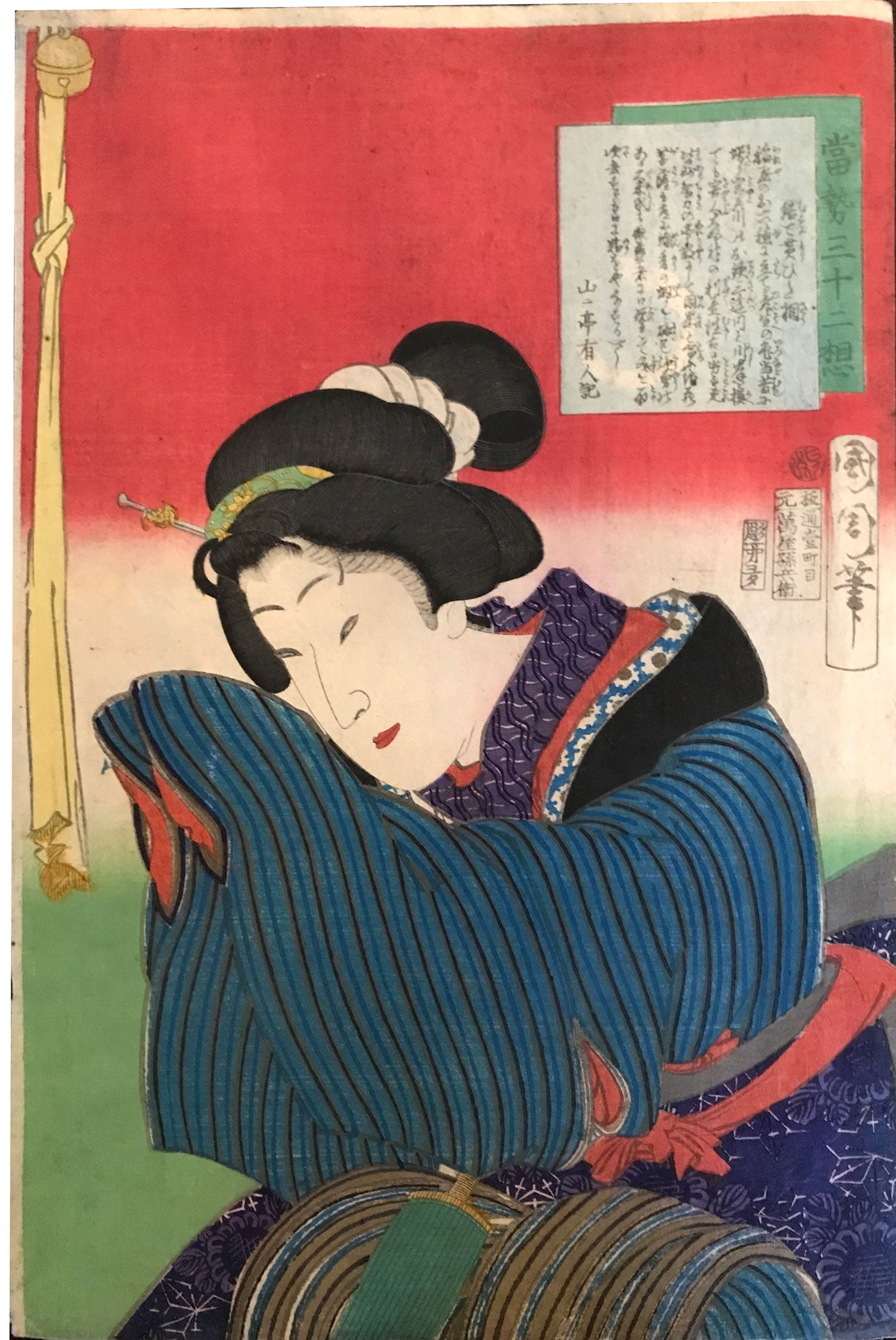
My final offering of Kunichika’s woodblock prints is his 1869 work entitled Making A Wish At The Shrine. It is one print from the Tosei Sanju-ni So (Thirty-two Fashionable Physiognomies series), which was one of Kunichika’s major works. The series showcased typical Ukiyo-e beauties but their facial expressions and gestures were livelier and more personalized. These down-to-earth beauties were the harbinger of what became known as Meiji realism which became increasingly popular during the mid – late Meiji period. 

Lady Lever Gallery
Port Sunlight Village, Wirral CH62 5EQ
Kunichika: Japanese Prints
15 April – 4 September
The first exhibition held in a national gallery outside Japan to focus on one of the most important 19th century Japanese print makers.