Musée Jacquemart-André, Baron Haussman and Georges de la Tour

Having been touring Europe for the last three weeks I have had a rest from my blog.   The last part of my journey was a short three-day stay in Paris and it was almost seven years since I had graced this wonderful city. I have visited many art galleries around the world, and my favourites have been the ones that offer something else other than walls of artwork.  I do like artwork which is hung on walls of the interiors of beautiful buildings.  It is like a 2 for 1 offering beautiful architecture and magnificent paintings.
Baron Haussman’s Paris

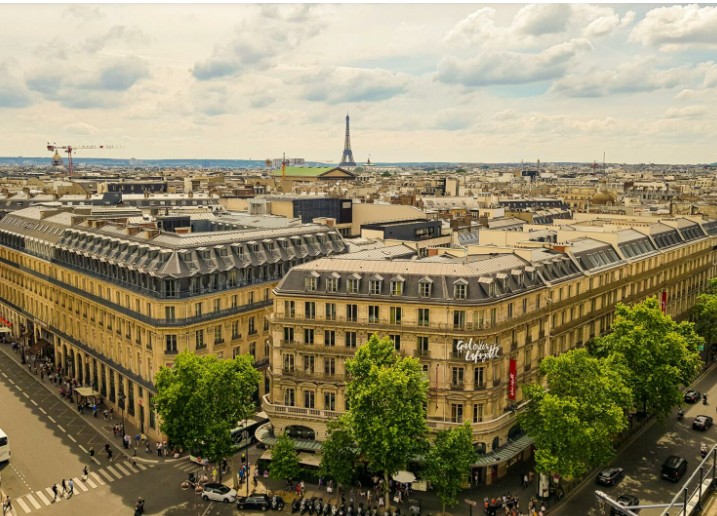
Whilst in Paris there was an exhibition of one of France’s great 17th century artists, and one of the greatest exponents of 17th century Baroque painting, Georges le Tour.  However, first let’s have a look at the impressive building which was hosting the exhibition.  The Musée Jacquemart-André is a private museum located at 158 Boulevard Haussmann in the 8th arrondissement of Paris.  The street named after Georges-Eugène “Baron” Haussmann, a French administrator, who in the mid nineteenth century, with the backing of Emperor Napoleon III, was responsible for the transformation of the ancient impoverished and unhealthy areas of Paris which involved the demolition of 19,730 historic buildings and the construction of 34,000 new ones. Old narrow streets gave way to long, wide avenues characterised by rows of regularly aligned and generously proportioned neo-classical apartment blocks faced in creamy stone.

One such building was Musée Jacquemart-André, situated on Haussman Boulevard, which was the private home of Édouard André and his wife Nélie Jacquemart which was to display the art they collected during their lives. It was what the French term it as a hôtel particulier, a grand urban mansion. Edouard André bought land on the newly created Boulevard Haussmann with the intention of having a mansion built. Building started in 1869 by the architect Henri Parent and completed in 1875. 
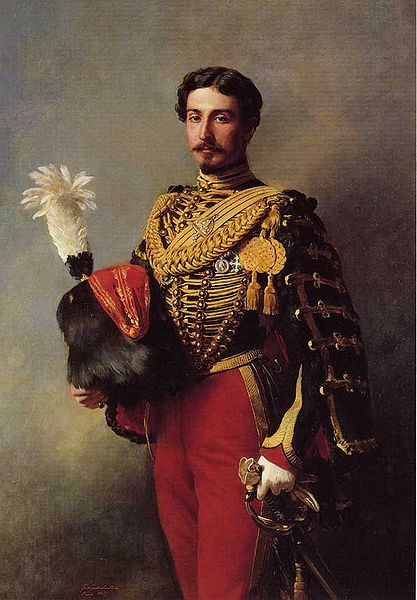
Portrait of Édouard André by by Franz Xaver Winterhalter. 

Nélie Jacquemart and Édouard André were an improbable and mismatched couple.  She was a Catholic woman and a famous society portrait painter, and he was the Protestant heir to a banking fortune. 
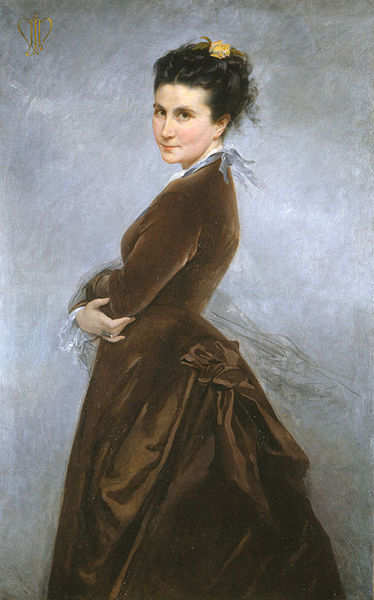
Nélie Jacquemart – Self portrait

They married in 1881. Nélie had painted Édouard André’s portrait ten years earlier. Each year, the couple would travel to Italy, buying works of art and slowly amassing one of the finest collections of Italian art in France. When Édouard André died in 1894, Nélie Jacquemart carried on the renovation of their home.  She also made many trips to Japan and neighbouring far-east countries adding many Oriental works to the collection.  Following her husband’s dying wishes, on her death in 1912, she bequeathed the mansion and its collections to the Institut de France as a museum, and it opened to the public in 1913. The couple’s relationship led to one of the most notable private art collections of fin-de-siècle Paris.

The Tapestry Room
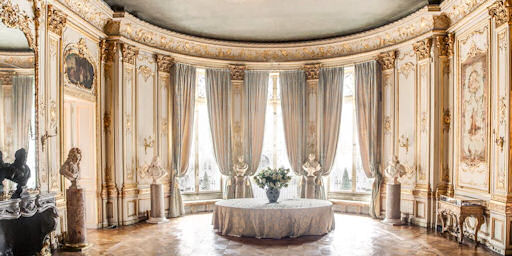
The Round Room

Once inside the Musée Jacquemart-André we are able to glimpse into the splendour of Parisian aristocratic life as it was in the 19th century.  We can witness the luxurious setting, both inside and outside of Édouard André and Nélie Jacquemart former mansion.  Adorned with the finest works of art, one can see in every room the evidence of their passion for Italian and French art.  This was a building which hosted extravagant receptions and soirees.
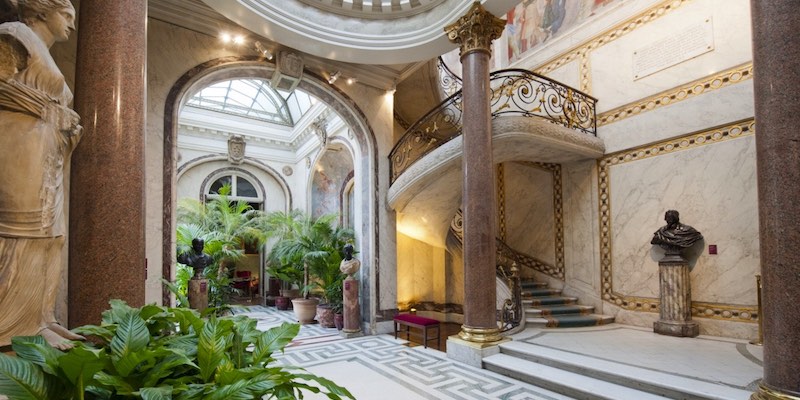
The Winter Garden and Staircase


Grand Salon

Their collection of Italian artwork which Nélie meticulously curated is legendary and includes paintings by Sandro Botticelli, Giovanni Bellini, and Andrea Mantegna. Besides these Italian works of art, the museum houses an remarkable array of French, Dutch, Flemish, and English paintings, as well as sculptures, antique furniture, and objets d’art. Wandering through rooms one observes how they have been preserved in their original state, and one feels that we have been immersed into the world of Parisian high society.

One of the State Rooms and Picture Gallery

The grand salons were designed for hosting lavish events and feature stunning frescoes, sculptures, grand sweeping staircases, and luxurious decor. The experience of walking through lavishly decorated rooms and halls allows us to see how the affluent lived in a bygone era of luxury.
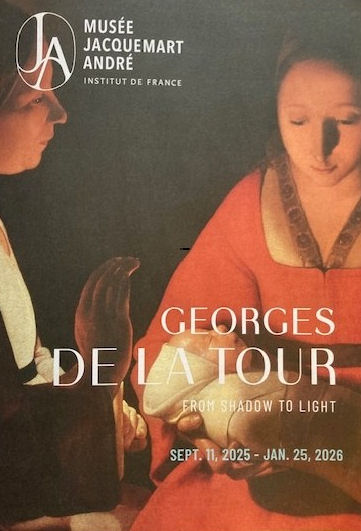
Once the excellent tour of the rooms and garden of the mansion was complete, I went to see the Georges la Tour exhibition which was spread across several upstairs rooms.   It was entitled From Shadow to Light which alludes to the way La Tour explored in his paintings nocturnal scenes, half hidden candles, light filtering through a translucent page, glimmers on a skull or a lantern punctuating the darkness in which meditation unfolds.
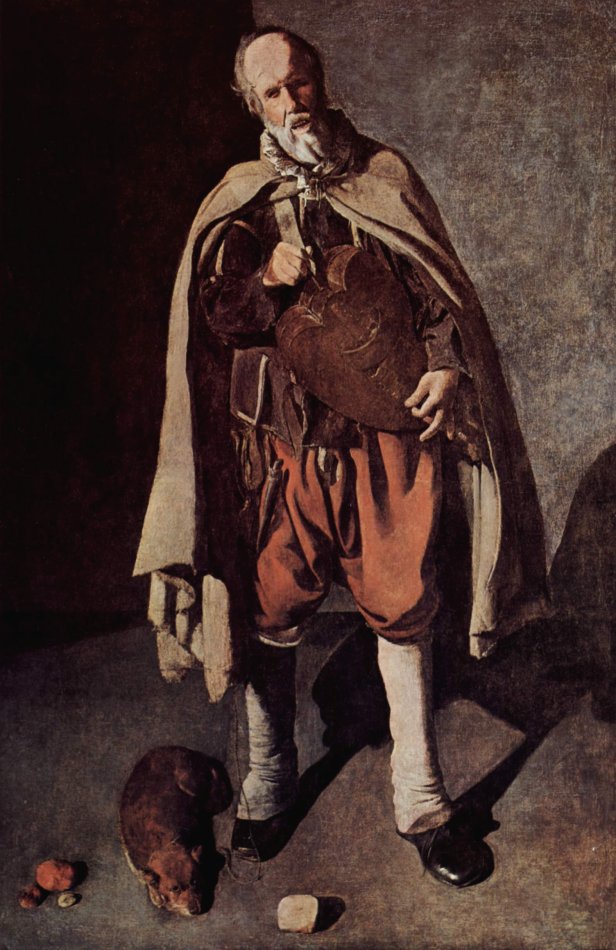
The Hurdy=Gurdy Man with a Dog by Georges de la Tour (1625)

Georges de la Tour was baptized in March 1593 in Vic-sur-Seille in Lorraine.  He was the second of seven children, born into a family of bakers.  Following a fire started by French troops during the Thirty Years’ War, his home, his studio, and some of his works were destroyed and he and some of his family escaped to Nancy.  A year later la Tour was appointed “First Painter to the King” by Louis XIII and as such, he lived in the Louvre and was officially recognized by the court and the Parisian artistic community.   At the height of his career, he painted for many prestigious patrons such as Cardinal Richelieu and the Dukes of Lorraine and became one of the wealthiest painters of his time.
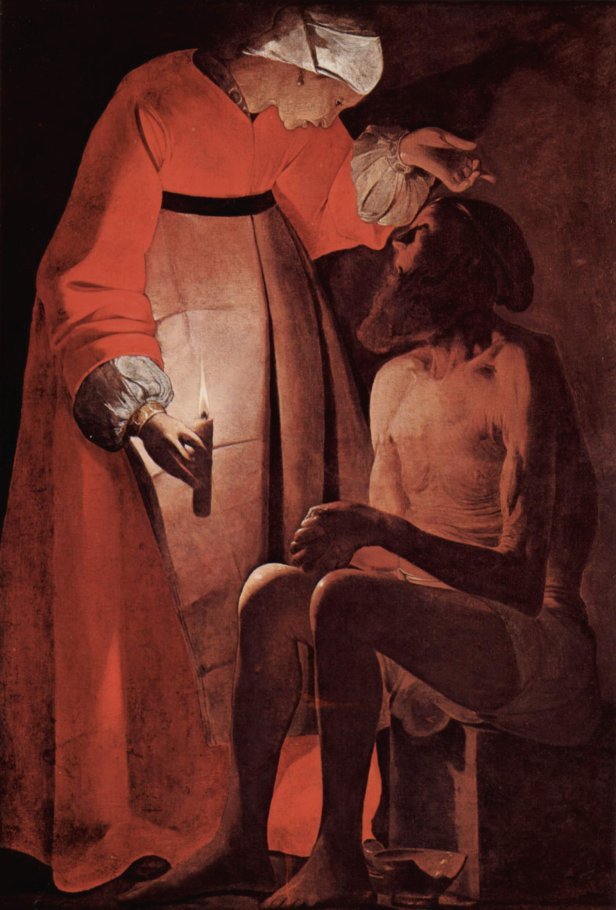
Job Mocked by his Wife by Georges de la Tour (1635)

As can be seen in his paintings, Georges de La Tour was influenced by the Italian painter Caravaggio whose style was then spreading throughout Europe. It is not thought that de la Tour ever travelled to Italy but he was probably influenced by Dutch and Lorraine Caravaggism.  De la Tour developed a personal and daring interpretation of chiaroscuro that made him truly original. His paintings are notable for their realism and sober compositions, which contrast with the dramatic intensity of Italian Caravaggist works. Although de la Tour’s work used the technique of chiaroscuro  his style is of painting is often alluded to as tenebrism.  Tenebrism, which comes from the Italian word tenebroso meaning dark, gloomy, mysterious and is a style of painting using especially pronounced chiaroscuro, where there are violent contrasts of light and dark, and where darkness becomes a dominating feature of the image. This technique was developed to add drama to an image through a spotlight effect and is common in Baroque paintings. Tenebrism is used only to obtain a dramatic impact while chiaroscuro is a broader term, also covering the use of less extreme contrasts of light to enhance the illusion of three-dimensionality.

St Peter Repentent by Georges de la Tour (1645)

The pamphlet that went with the exhibition describes the painting of St Peter as:

“…The celebrated St Peter Repentent exemplifies this sober style, in which lightbecomes the principal sign of the divine. The visual rhyme between the saint’s tonsureand the rooster’s crest introduces a discreet irony, a singular perspective on religious iconography…”

The painting is based on the Bible story of Jesus’s arrest on the night of the Last Supper, when the apostle Peter denied knowing him. Although Christ forgave his betrayal, Peter was consumed by guilt. In his painting, La Tour represents Peter as an old man, reflecting on his past actions in a state of perpetual repentance. The apostle’s red-rimmed eyes and the uncertain light of the lantern evoke the feeling that the Peter has spent anxious sleepless nights and the use of muted colours and simple forms give visual expression to Peter’s solemn and dejected emotions.
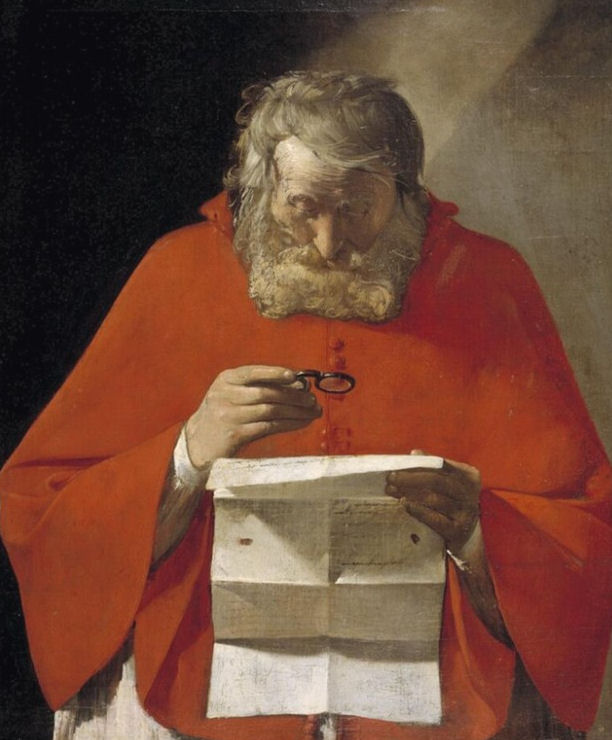
St Gerome Reading a Letter by Georges de la Tour (1629)

The painting by Georges de la Tour’s Saint Jerome Reading a Letter was completed around 1629 and is a masterclass in how to make a single, ordinary action, in this case, reading, carry the weight of a whole life. St Jerome was an early Christian priest, confessor, theologian, translator and historian and his image fills the frame at half-length, wrapped in a cardinal-red mantle.  His head bends slightly forward, and a wisped halo of grey hair catches the light that slants in from the upper right in a wedge-like form.  In his left hand, Jerome holds a creased sheet of paper and in his right hand, he lifts a small pair of spectacles toward the page, trying to focus on the written words.
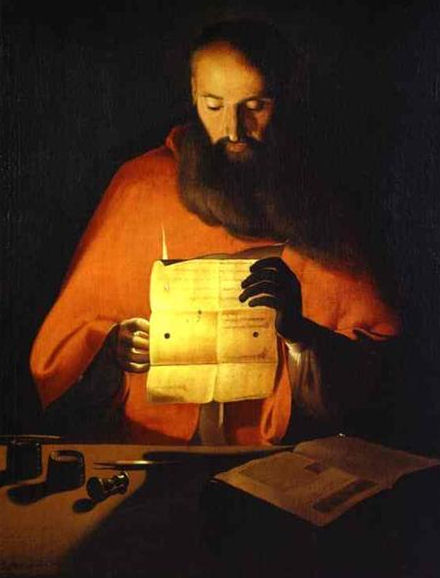
St Jerome Reading by Georges de la Tour (1650)

Georges de La Tour is best known for his religious paintings, which are instilled with extraordinary spiritual intensity despite the look of simplicity. In complete contrast to the religious works, de la Tour was interested in scenes of games of cards and dice as well as genre scenes. His interest in depicting card players and card cheats can be seen in two versions he made two years apart.

The Cheat with the Ace of Clubs by Georges de la Tour ( 1630–1634)

The earlier version is one of two versions of the composition by de la Tour and is known as The Cheat with the Ace of Clubs.   There are a number of variations in details of colour, clothing, and accessories between the two paintings.  This one is now hanging in the Kimbell Art Museum in Fort Worth, Texas.
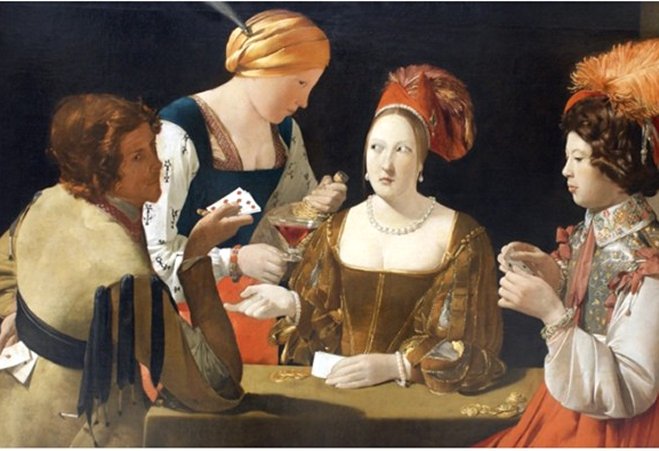
The Card Sharp with the Ace of Diamonds by Georges de la Tour (1636-38)

The work, the later variation, depicts a card game in which the wealthy young man on the right is being cheated of his money by the other players, who both appear to be part of the scheme. The card sharp on the left is in the process of retrieving the ace of diamonds from behind his back.

The Dice Players by Georges de la Tour (1651)

De la Tour’s painting entitled The Dice Players is a genre painting which he completed in 1651.  In the work he depicts a group of five figures who are deeply absorbed in their game with dice. Their intimate gathering around a table, illuminated by a single, subtle light source, is a good example of his tenebrism-style that emphasizes dramatic contrasts between light and dark. Look how each figure has a different facial expression as we see them all concentrating on the game.  Besides this, look at how the artist has depicted details of their period clothes and he has created, through the dim, atmospheric lighting, a vivid record of 17th-century life, and a sense of realism to the scene. De la Tour has used a sombre palette and the careful attention to textural details highlights the gravity of the moment.
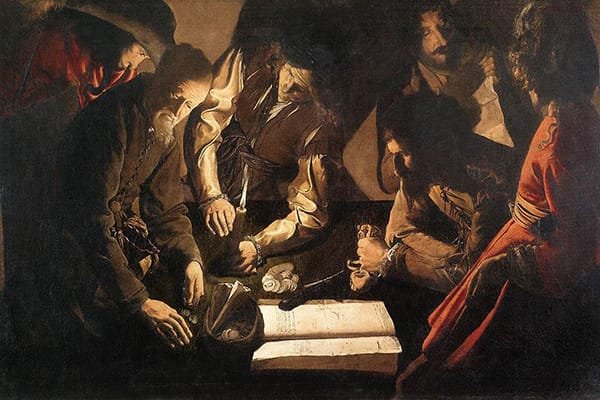
Payment of Taxes by Georges de la Tour (1620)

The painting entitled Payment of Taxes by Georges de La Tour was completed around 1620. Once again it highlights la Tour’s love of the artistic movement known as Tenebrism which is characterized by dramatic illumination and stark contrasts between light and dark. It is a large painting measuring 152 by 99 centimetres. The painting depicts a group of figures huddled together around a table. The depiction is dramatically lit by a single, stark light source, casting deep shadows and creating a profound sense of volume and space. This light appears to emanate from a candle or lantern which is out of view, highlighted by the reflective surfaces and illuminating select portions of the figures and objects. The men gathered around the table are engaged in an exchange, with a distinct focus on the act of counting or possibly exchanging money. The artist has focused their expressions and their hands and that emphasizes the gravity and concentration of the transaction at hand. The use of light and shadow not only gives the scene an emotional feeling but it also guides the viewer’s gaze through the composition, emphasizing the movement of money encapsulated in this painting.

Peasant Couple Eating by Georges de la Tour (c.1620)

Georges de la Tour’s painting entitled Peasant Couple Eating was completed around 1623, at the early part of his artistic career.   The two half-length figures which are almost life-size are tightly framed in the pictorial space.  They face us as if we have interrupted them during their meagre meal of dried peas.  The man exhibits a sour and resentful look as he looks down.  The woman stares fixedly at us with her deep-set almost dead eyes as she raises a spoon to her mouth.  As the background is a simple grey, we have no idea where the event is taking place.  However, this background enhances the old couple.  The painting of half-length figures like this one was a characteristic of Caravaggio’s style, an artist who influenced de la Tour in his early works.  This painting proved very popular and there are records of three 17th century copies.

In the book, Georges de la Tour of Lorraine, 1593-1652, by Furness, the author wrote of the artist:

“……Georges de la Tour is classed as a realist.  Realist he is in that his subjects, predominantly if not exclusively religious, are represented in terms of “real” life, often the life of his own country-town and surroundings in Lorraine.  But he avoided naturalism; rather, he chose to simplify, modelling his forms by marked contrasts of light and shade, and using large volumes and severe lines, with great selective economy of detail…”


Some of the paintings shown in this blog were not at the exhibition but I wanted to show you more of la Tour’s work.

Did I enjoy the exhibition ? The painting were excellent. However, for me the downside was two-fold. Firstly the rooms displaying the paintings were overcrowded (and this was a timed-enterance exhibition). Some people were moving clockwise whilst others moved anticlockwise and it felt slightly claustrophobic. Secondly all the paintings were accompanied by a card describing the work but they were all in French, rather bilingually. My love of visiting art museums is to buy a book with regards the exhibition and in this case a book about the actual museum itself and the works of the artist were on sale in many languages but none in English.. Brexit ???

I recommend you to the gallery website:

Musée Jacquemart-André | Museum in Paris

Georges de la Tour. Part 2. Religious works and tenebrism

My featured artist today would often bring into play the tenebrism style in his works of art.  The term tenebrism comes from the Italian word tenebroso, meaning dark or gloomy and figuratively can be translated as “mysterious” and is a word used to primarily describe dark tonality in a work of art.  Tenebrism was developed to add a sense of drama to an image through a spotlight effect.  Tenebrist works of art first came on the scene in Rome around 1600 and some of the earliest examples were by Caravaggio.  The dark backgrounds to his works and the shadows cast across the subjects of his painting where in complete contrast to small areas of light, often from an unidentified source, which lit up part of the main depiction.  Caravaggio’s tenebrist style was taken up by a number of his Italian contemporaries such as the father and daughter painters Orazio and Artemisia Gentileschi and the great Dutch Master, Rembrandt von Rijn.  Many of the artists from outside Italy who came to Rome and Naples to study art also experimented with tenebrism.  Georges de la Tour was a masterful exponent of this style of painting.  In some ways his tenebrist style was slightly different from that of Caravaggio in as much as he would often include the source of light in his painting.  Although Georges de La Tour spent his entire artistic career in provincial France, far from cosmopolitan centers and artistic influences, he developed a poignant style as profound as the most illustrious painters of his day. In his lifetime his work appeared in the prominent royal collections of Europe. La Tour’s early training is still a matter for speculation, but in the province of Lorraine he encountered the artist Jean Le Clerc, a follower of the Italian painter Caravaggio.

Magdalen with the Smoking Flame by Georges De La Tour (1640)

One great example of Georges de la Tour’s tenebrist style can be seen in his work entitled Magdalene with the Smoking Flame which Georges De La Tour, completed in 1640 and which can now be found in the Los Angeles County Museum of Art.  In this work we see a depiction of Mary Magdalen, not as an aged woman living a hermit-style life in her grotto, but as a contemplative young woman.  This is a depiction of a vivacious young woman who sought the pleasures of the flesh in her early days.  Her arms and legs are bare.  There is a sense of melancholia and loneliness about her demeanour.  She sits with her left elbow resting on the table with her hand supporting her chin as she gazes fixedly at the burning flame.  Maybe she is mentally examining her past life.   Look how the artist has managed to achieve differing textures which have been brought to life by the light of the candle.  Observe the textural difference between her heavy red skirt and thin white, wrinkled blouse which contrasts with the blemish-free smoothness of Magdalene’s flesh.  On her knees rests a skull which is always looked upon as symbolising our own mortality and the inevitability of death.  On the table there are books of Scripture, a wooden cross and a leather scourge which alludes to Christ’s suffering and his eventual crucifixion.  These latter two items add to the sombre mood of the work.  However, besides Magdalene, the main subject of the work is the oil lamp which smokes and emits the light that brings a modicum of luminosity to the dark painting.  Flame from a candle is often looked upon as symbolising enlightenment and purification but in this depiction there is a smoky element to the flame which may lead us to believe that enlightenment and purification of Magdalene’s mind and soul are not yet complete.     Although our eyes too are drawn to the candle we should look at other aspects of the work and see the mastery of the artist in the way he depicts the various textures.   We have the well-polished skull and the leather cover of the books both of which reflect the candlelight.

Christ in the Carpenter's Shop by Georges de la Tour (1645)
Christ in the Carpenter’s Shop by Georges de la Tour (1645)

Another haunting work of Georges de la Tour in his tenebrist style is Christ in the Carpenters Shop, completed in 1645 and which hangs in the Musée du Louvre, Paris.  It is a depiction of Joseph, a descendant of the house of David, husband of Mary and “foster father” to Christ, who was a carpenter in Jerusalem. In Georges de la Tour’s depiction we see Joseph leaning forward, busy drilling a hole in a block of wood with his auger, the shape of which mirrors the shape of a cross.  He is in his workshop watched over by Jesus whose face radiates in the large frame.  Once again the depiction of the two characters is swathed in darkness with only their faces and upper bodies lit up by the flame of the candle held by the boy.

Jesus holding the candle

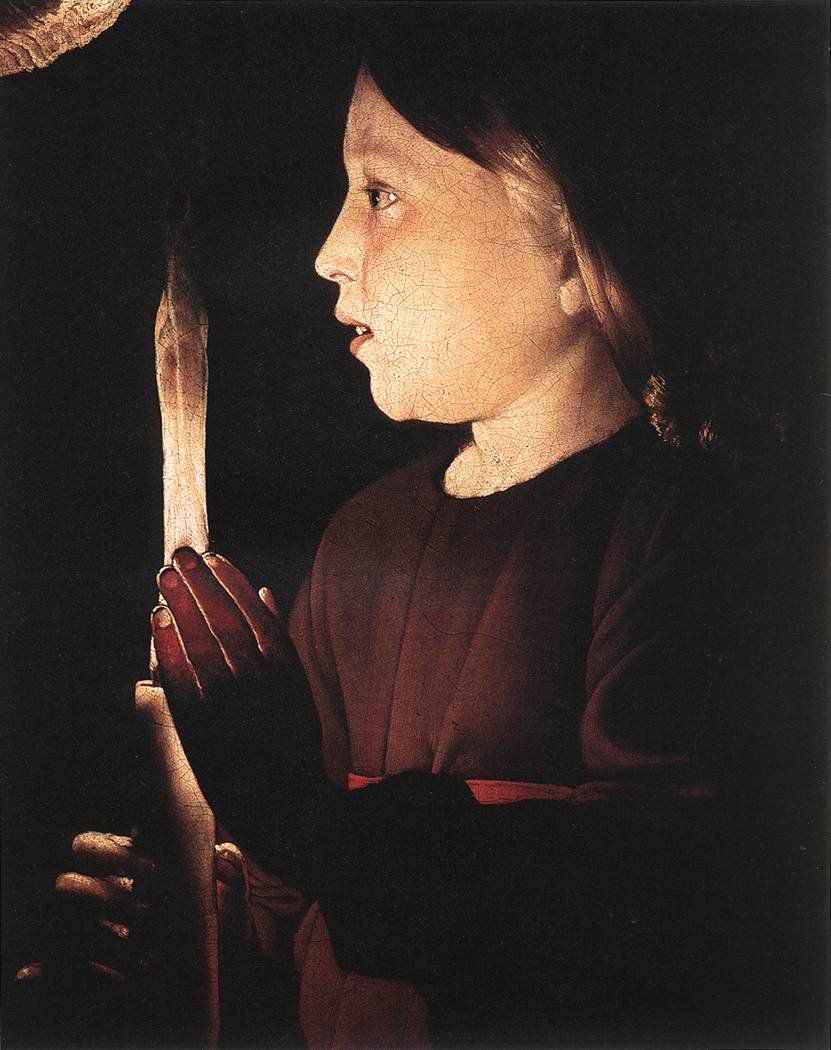
 Jesus is seated and holds a candle to illuminate what Joseph is doing.  It almost seems that it is the face of Jesus which is illuminating the scene and not the light of the candle.  The act of holding up the light for Joseph to see by has an allegorical reference to Jesus Christ being the Light of the World as mentioned in the New Testament (John 8:12):

“…I am the light of the world. Whoever follows me will never walk in darkness, but will have the light of life…”

The contrast between the two figures is striking.  The bearded Joseph, a large hulk of a man, is bent over towards his young helper in an almost threatening stance brought upon by the physical exertion of working the auger.   In total contrast Jesus is depicted as gentle youngster watching Joseph’s every move.  The candlelight illuminates the young face of Jesus.  There is purity and innocence in the way the artist has depicted the face of Jesus.  What is also fascinating about the depiction of the young Christ is the way de la Tour has depicted the luminescence of Jesus’ left hand which is shielding the flame. Although this is probably looked upon as a religious work because of its title, it could well have been a simple genre piece looking with strong realism at a young boy watching his father at work.  If we look at the floor, on which we see carpenter’s tools, a wooden ladle and a curled wood shaving.  It could almost be deemed as an excellent still-life work.

The Dream of St Joseph by Georges de la Tour (c. 1640)

The Dream of St Joseph was a work completed by Georges de la Tour around 1640.   The work was based on a dream that Saint Joseph had, as recounted in Matthew’s New Testament gospels.   According to Matthew, Joseph had three dreams.  One was to tell him he was to be Mary’s husband and the father of the Christ Child.  The second dream was to warn Joseph that he must take Mary and Jesus, leave Bethlehem and go to Egypt and the third and final dream the angel told Joseph to take his family back to Nazareth as all was now safe.  :

Matthew 1:20-21

 But after he had considered this, an angel of the Lord appeared to him in a dream and said, “Joseph son of David, do not be afraid to take Mary home as your wife, because what is conceived in her is from the Holy Spirit.  She will give birth to a son, and you are to give him the name Jesus, because he will save his people from their sins.”

Matthew 2:13

 “…When they had gone, an angel of the Lord appeared to Joseph in a dream. “Get up,” he said, “take the child and his mother and escape to Egypt. Stay there until I tell you, for Herod is going to search for the child to kill him…”

Matthew 2:19-20

 “…After Herod died, an angel of the Lord appeared in a dream to Joseph in Egypt  and said, “Get up, take the child and his mother and go to the land of Israel, for those who were trying to take the child’s life are dead…”

We are not sure as to which of the dreams is depicted in this painting and it matters not.  However some art historians who have researched the works of de la Tour have offered a different reasoning behind the work claiming that in early art catalogues the painting had a much simpler title, An Old Man Asleep, Woken by a Girl Carrying a Candle.  So is this a religious or secular work?  In the painting we see two people, an old man and a child.  The old man on the right is seated next to a small table.  His eyes are closed.  His mouth is slightly open.  He is asleep and possibly lost in a dream world.  His right elbow rests on the table and his head is resting in his right hand.  On his lap we see an open book with the fingers of his left hand still lightly gripping a page.   Standing in front of him is a child, probably a girl, dressed in the garb of a biblical character.

Dream-like apparition appearing to St Joseph

She stares at the sleeping man and has her arms outstretched in a prayer-like manner. There is something strange about her posture.  It is almost as if she is casting a spell over the sleeping man.   It is simply a depiction of a man and a child.  There are no sign of halos on the head of the child signifying her as an angel and so one can understand why some people cast doubts on the biblical connotation of the work.

What fascinates me about this work of art is the tenebrist style Georges de la Tour has used in his lighting of the depiction.  The light from the candle flickers and is partially hidden by the one of the girl’s outstretched arms but it still manages to light up her face in a haunting manner.  She becomes apparition-like which of course lends to the idea that she is in the old man’s dream.  Once again, as in the last painting the girl’s fingertips become translucent and the page held in the man’s hand is illuminated.   It is a fascinating work and I will leave you to decide whether you believe it is a religious work and hence it’s current title or whether it is simply a secular work of art and hence its original title.

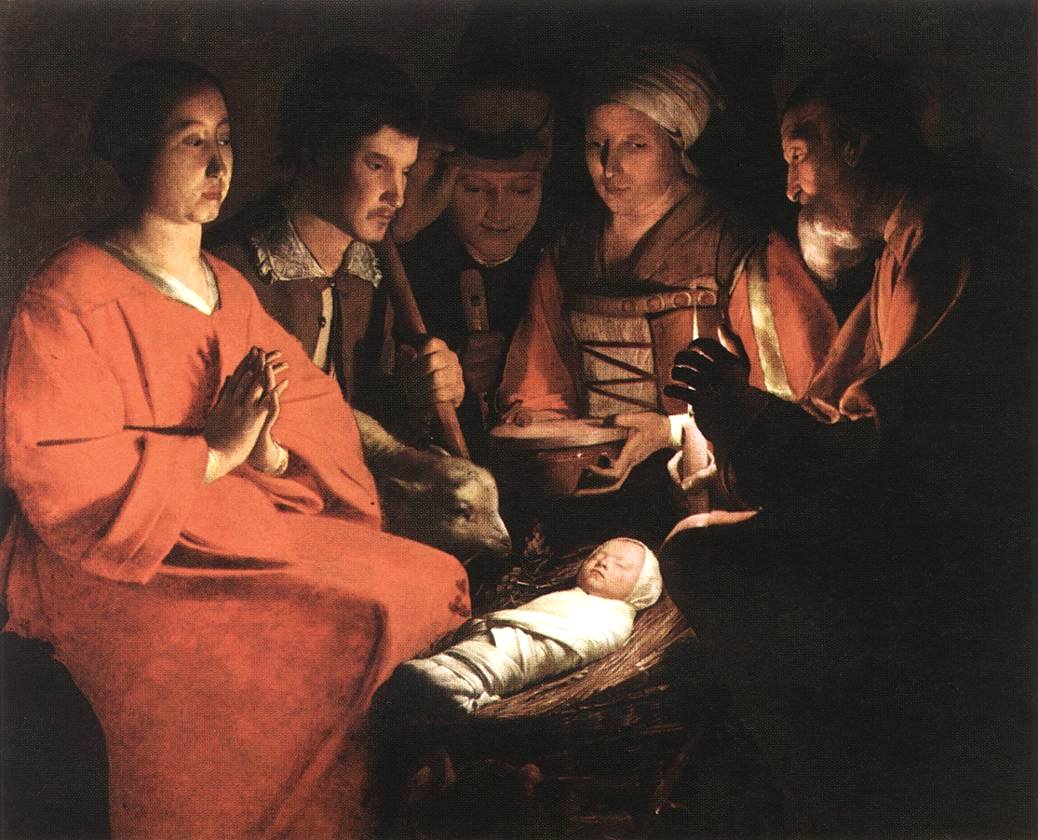
Adoration of the Shepherds by Georges de la Tour (1644)

There can be no such doubt with regards to my final featured work by Georges de la Tour.  The birth of Jesus and the presence of shepherds is a religious scene which has been depicted numerous times by different artists.   This painting, Adoration of the Shepherds, was completed by Georges de la Tour around 1644 and can now be found in the Louvre. The first thing we notice about this work is the amazing candlelight illumination which is associated with tenebrism.  As we look at the work we feel the tranquillity and contemplative mood of those around the newborn baby.   Mary is to the left of the painting, her hands clasped in prayer.   Opposite her is the elderly bearded figure of Joseph.  He holds a lit candle in his right hand whilst his left hand guards the flame from being extinguished.  Once again, as seen in previous works, the light from the candle filters through between the fingers of his hand.  His depiction of the visiting shepherds is a triumph of realism.  They crowd around the crib with their presents.  The one holding a staff has brought a sheep.  The one next to him, slightly in the background has brought a flute, which he clutches to his chest and the shepherdess, or it could be a serving girl, has come with food in the shape of a covered terrine.  Next to the crib the lamb chews at an ear of corn which is providing bedding for the infant.  There is a simplicity to this scene and this could well be due to the omission of the wealthy trio of visiting kings, dressed in their fine clothes, and holding their expensive gifts which are often included in depictions of the baby in the manger paintings.  It is thought that Georges de la Tour’s depiction emanates from the Christmas tradition when villagers dressed up as shepherds and shepherdesses to re-enact the Nativity scene and this premise is borne out by the way he has depicted the shepherds in fine contemporary clothing which is in contrast to the plain red gown worn by Mary.  Note the small shadow cast by the candlelight on her gown.  It is of a trèfle or trefoil, a three-leaved plant, which is part of the crib bedding and is probably a symbolic reference to the Holy Trinity.

In this and my previous blog I have featured two distinct types of paintings by Georges de la Tour and I will leave you decide which you prefer.

Georges de la Tour. Part 1

In my next two blogs I am looking at the life of the seventeenth century French artist, Georges de la Tour and featuring some of his works of art.   In this first blog I want to feature some of his genre paintings and in the second blog I will look at how he, like Caravaggio before him, was a master of tenebrism.

Georges de la Tour was born in 1593 in Vic-sur-Seille, a small town in the department of Lorraine in north-eastern France but which, at the time, was part of the Holy Roman Empire.  He was one of seven children born to his father Jean, a baker and mother Sybille.  Details of his early life are sparse but we know he married Diane le Nerf when he was twenty-four and they went on to have ten children.  Three years after marrying the couple moved to Lunéville, which was his wife’s home town, and was also just a short distance from Georges’ birthplace.  It was here that he spent the rest of his life.    He had quite a successful career and his paintings were bought by the likes of King Louis XIII, Cardinal Richelieu and the Duke of Lorraine whom he worked for between 1639 and 1642. He died in 1652 just short of his fifty-ninth birthday.

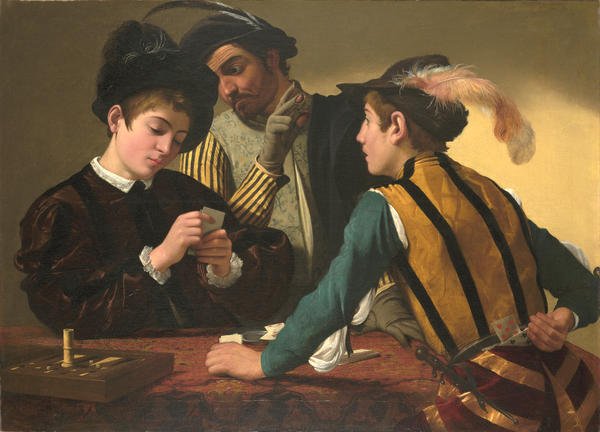
The Cardsharps by Caravaggio (c.1594)

Paintings featuring card players, and the perils of being cheated of your winnings, were not an unusual subject and one of the most famous was completed around 1594 by Caravaggio.  It was entitled The Cardsharps and now hangs in the Kimbell Art Museum in Fort Worth.   The boy on the right is the “cheater” and his older accomplice in the middle is giving him signs as to the cards held by his opponent.

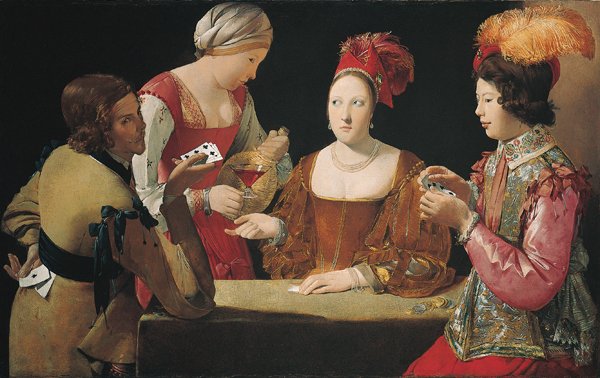
Le Tricheur à l'as de carreau or The Cheat with the Ace of Diamonds by Georges de la Tour (c. 1635)
Le Tricheur à l’as de carreau or The Cheat with the Ace of Diamonds
by Georges de la Tour (c. 1635)

The first of the Georges de la Tour paintings I want to showcase is one entitled Le Tricheur à l’as de carreau or The Cheat with the Ace of Diamonds which he completed around 1635 and is now to be found in the Louvre.   It is easy to see the similarity between this painting and the one painted forty years earlier by the Italian Master.  This seventeenth century work was put on show at the 1934 exhibition at the Musée de l’Orangerie in Paris entitled The Painters of Reality in France in the seventeenth century and it was through this memorable exhibition that French 17th century art was brought back to prominence and works by Georges de la Tour, who had almost been forgotten by French art lovers, once again became popular and his works following the exhibition were in great demand.

 The first thing we must decide on is what is going on.      On the right is a man dressed in the most expensive clothes carefully studying his hand of cards.    There is something about his appearance which makes us believe that he is slightly naive as his conspirators exchange sidelong glances.  He is slightly set apart from the other three characters.  Is he there at his own volition or has he been seduced into coming to the gambling den by the courtesan who sits next to him?  In a way it is a painting with a moral.  It is a depiction of a man who has to withstand three great inducements.   He has to withstand the temptations of lust brought on by the presence of the courtesan and serving maid, the temptation of alcohol which is being handed out to the card players and of course he has to resist the vice of gambling  French moral standards of the time frowned upon the three vices.  However he has put his moral standards to one side and for that, we know, by what we see happening before us, will be his undoing.

The courtesan is centre stage in the painting.  On the table by her is a small pile of money.  It is not as large as that of the guests but that will soon change.  Her clothes are sumptuous.  The plunging neckline of her costume no doubt titillates her male guest and probably distracts him from his game.  Her hair is topped by a fancy and fashionable feathered headdress.  Look at her eyes.  They are shifty.  Her whole expression, her whole demeanour, is one of deceitfulness.  Her right hand points to her co-conspirator probably advising him to play his hand.  We see him retrieving the ace of diamonds from under his belt, which will complete his winning hand.  The serving wench brings wine to the table and she too has a deceitful look about her as she casts a sidelong glance at the “mark”.  She knows what is going on.  She is part of the conspiracy.  The man, who is slightly in shadow and who is retrieving the ace of diamond looks out at us.  We have been drawn into this plot.  It is as if now we are also co-conspirators.

Cheat with Ace of Clubs by Georges de la Tour (c.1634)

A copy of this work which Georges de la Tour completed later can be found at the Kimbell Art Museum in Fort Worth Texas, the same gallery which owns the Caravaggio painting, Cheaters.   This painting is entitled Cheat with Ace of Clubs and once again is a moralistic painting warning people against the vices of lust, excess wine and gambling.  Like the painting in the Louvre the characters are the same, the shifty looks of the deceivers are the same it is just the suit of cards has changed from diamonds to clubs.

The Fortune Teller by Georges de la Tour (c.1630)

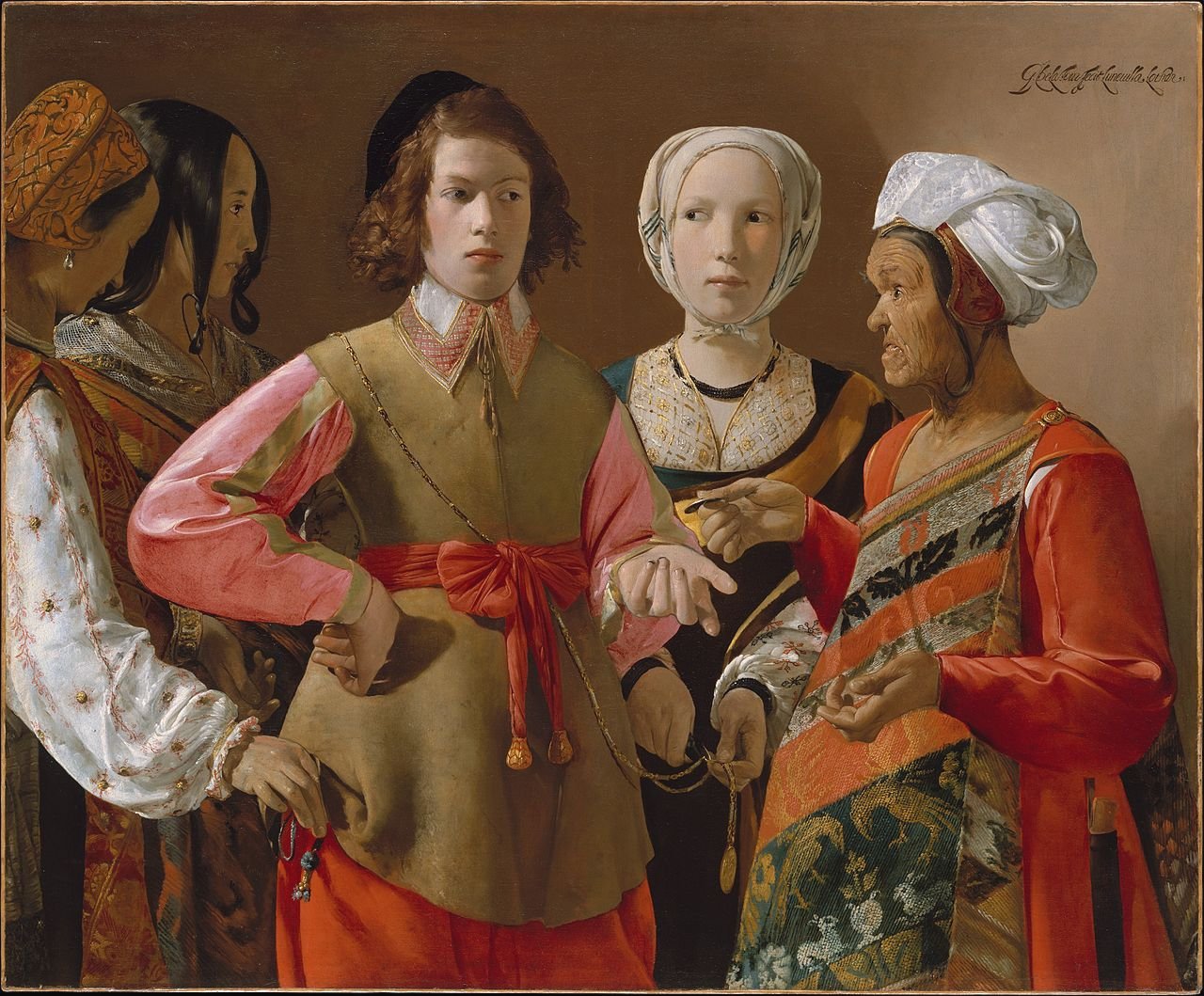
Four years before Georges de la Tour embarked on the theme of cheating at cards he focused on another piece of skulduggery – pick-pockets and con-artists.  The work in question was known as The Fortune Teller which he completed during the 1630’s and can now be found in the Metropolitan Museum of Art in New York.  In this work we see a naive young man standing between two young women.  He is well dressed and one is given the impression that he is also wealthy and ideal rich picking for the pick-pocket.   To the right of the painting is the wrinkle-skinned old crone who purports to be a fortune teller and has extracted a silver coin from the young man as payment for her telling him his fortune.  She is about to take the coin from his hand, and as part of the gypsy fortune-teller ritual, she will then cross his palm with it.   She, like the three younger women, are colourfully dressed and portrayed as gypsies.   As is often the case, even in today’s time, gypsies are pictorially portrayed in this work of art as thieves.  The crime is clearly there for us to witness as whilst the young man is engrossed in what the fortune teller has to say and at the same time as he hands over his fee the young lady on the right of the painting delicately removes the coin purse from the pocket.  However that is not all the young man is about to lose.  Look at the young woman between the fortune teller and the man.  She is more soberly dressed.  Look what she is doing with her hands.  She is just about to cut the gold medallion from its chain which is around the young man’s neck and right shoulder.  I like the way her eyes are fixed on his face in order to see if he is aware of what she was doing.

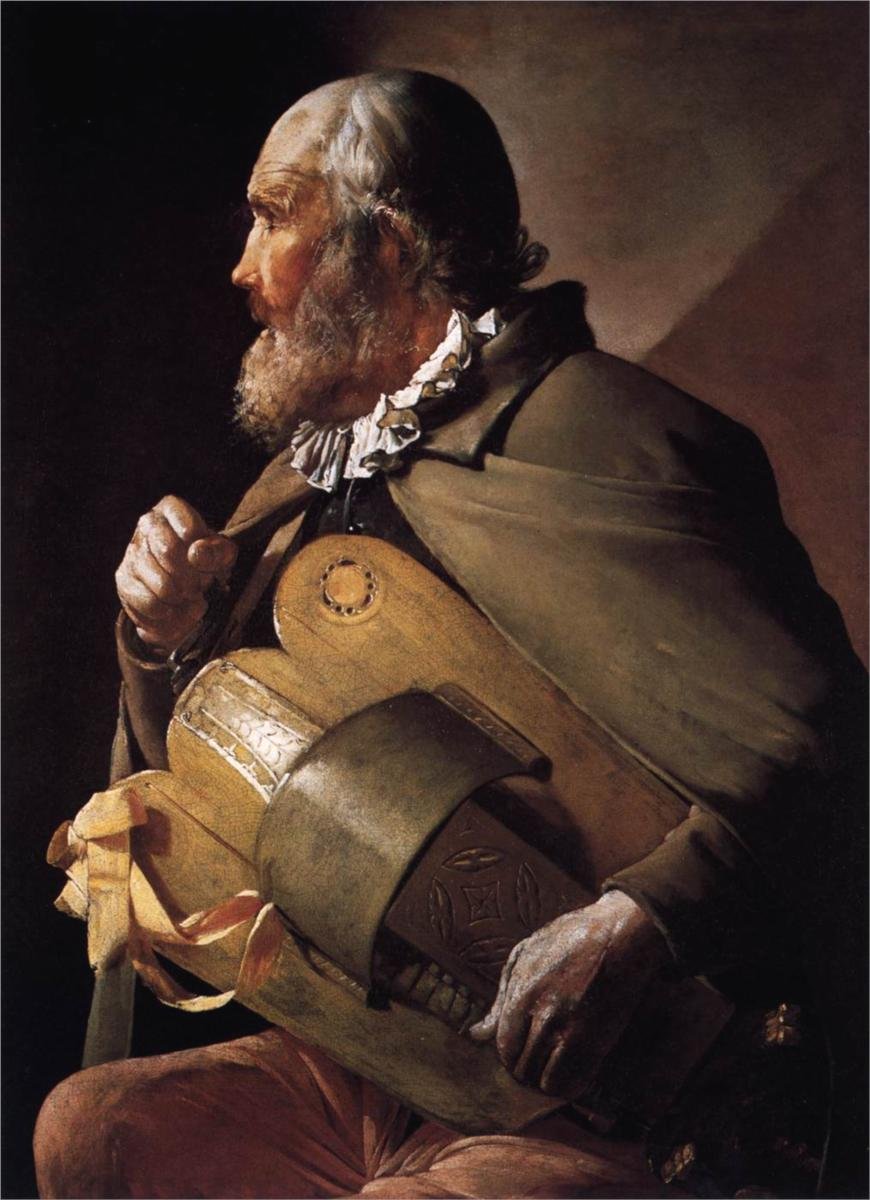
My final featured paintings by Georges de la Tour move away from the group genre scenes with the accompanying moral tale and focus on single portraits.  These are really exquisite works of art.  The subject of the next work of art is an elderly blind beggar and street musician trying to eke out a meagre living by playing a hurdy-gurdy. The hurdy-gurdy was the first stringed instrument to which the keyboard principle was applied. In France it was known as Viella a Roue , which literally translates to wheel fiddle and which describes the method by which sound is produced. The bowing action of the fiddle is replaced by a wheel cranked by a handle. The outer rim of the wooden wheel is coated with resin. When the crank is spun, the wheel turns and the gut strings vibrate.  The player of such an instrument was known as a vielleur.

Blind Hurdy-Gurdy Man by Georges de la Tour (c.1630)

Georges de la Tour often painted several variations on the same subjects, and the depiction of a street musician was an example of this.  He painted the one shown above, entitled The Blind Hurdy-Gurdy Player, around 1630 and it can now be found in the Prado, Madrid.  The man is depicted in profile and, but for the title of the work, one would never have known that he was blind, although his eyes are closed.  He has a trouble-worn face and his forehead is heavily wrinkled.  His skin is swarthy from spending most of his time out on the streets.   He wears a thick grey-brown coat with a white lace ruff.  Look how the artist has spent time on depicting the texture of the musical instrument.

The Hurdy-Gurdy Player by Georges de la Tour (c.1630)

Another version of this work can be seen in the Musée des Beaux-Arts, Nantes in France.   This work entitled The Hurdy-Gurdy Player was also completed by de la Tour around 1630.  This is a more unsettling portrait of the beggar.  He looks unkempt and uncared for.  His facial expression is one of pain and anguish as he sings to the tune he plays on the hurdy-gurdy.  He wears the same heavy grey-brown coat with the white scarf or ruff.  On the floor in front of him, resting on a large stone, is his bright red hat with a plume of feathers and often this painting is referred to as The Hurdy-Gurdy Player with Hat.

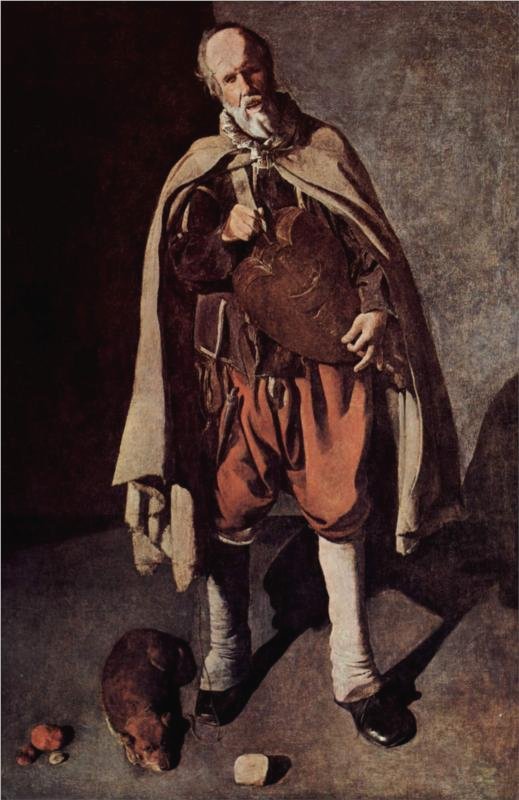
The Hurdy Gurdy Player with a Dog by Georges de la Tour (c.1625)

An earlier version, around 1625, on the same theme can be found in Bergues, the northern French town, close to the border with Belgium.   It is the Musée Municipal Bergues which houses The Hurdy-Gurdy Player with his Dog by Georges de la Tour.

In my next blog I will feature some of Georges de la Tour’s tenebrist paintings, a style which had been made popular by Caravaggio.