
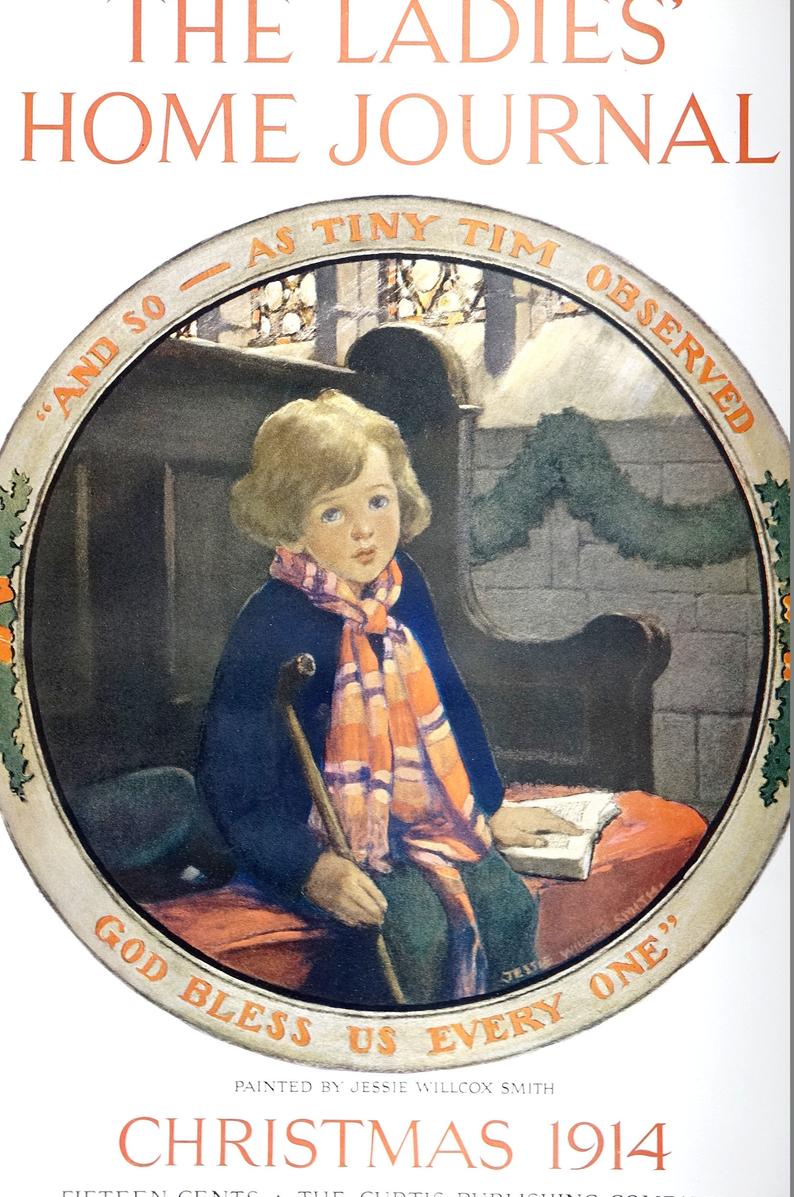
Front cover illustration of The Ladies Home Journal by Jessie Wilcox Smith
Jessie Willcox Smith rented a small studio space at 1334 Chestnut Street, in downtown Philadelphia. The studio, although cramped and barely room enough for one artist, was in an ideal place for Jessie, as it was close to her job at Ladies Home Journal.
Violet Oakley and her family had returned from their European travels and relocated to Philadelphia to seek medical treatment for her father, Arthur Oakley. She and her sister Hester rented a studio further down the street at number 1523, in the Love Building. It was a three-room skylight space on the third floor. It was a much larger space in comparison that of Jessie’s studio apartment. The sisters managed to spruce up the space by furnishing it with items lent to them by their mother. The walls of the studio were covered with prints of paintings by the Old Masters. Hester Oakley, who was not particularly interested in art was concentrating on her writing and did not need a spacious studio and so vacated the premises, leaving her sister to find new tenants. Eventually Hester’s place was taken up by Elizabeth Shippen Green, Jessie Willcox Smith, and Jessie Dodd, all fellow students of Violet at the Drexler Institute.
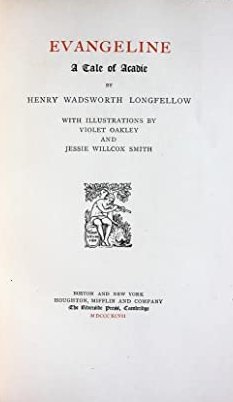
Living together, the ladies soon began working together on commissions. Jessie Smith and Violet Oakley, with Howard Pyle acting as their mentor, began work on illustrations for a new edition of Evangeline, A Tale of Acadie, an epic poem by the American poet Henry Wadsworth Longfellow, which was first published in 1847. The epic poem describes the betrothal of a fictional Acadian girl named Evangeline Bellefontaine to her beloved, Gabriel Lajeunesse. The story tells of how the lovers are separated when the British deported the Acadians from Acadie in the Great Upheaval. The poem then follows Evangeline journey across America as she spends years in a search for him. Finally, Evangeline settles in Philadelphia and, as an old woman, works as a Sister of Mercy among the poor. While tending the dying during an epidemic she finds Gabriel among the sick, and he dies in her arms. The commission was completed and the book was published in 1897. Howard Pyle was delighted with the finished illustrations by Jessie and Violet saying:
“…There is a singular delight in beholding the lucid thoughts of a pupil growing into form and colour; the teacher enjoys a singular pleasure in beholding his instruction growing into definite shape. Nevertheless, I venture to think that the drawings possess both grace and beauty…”
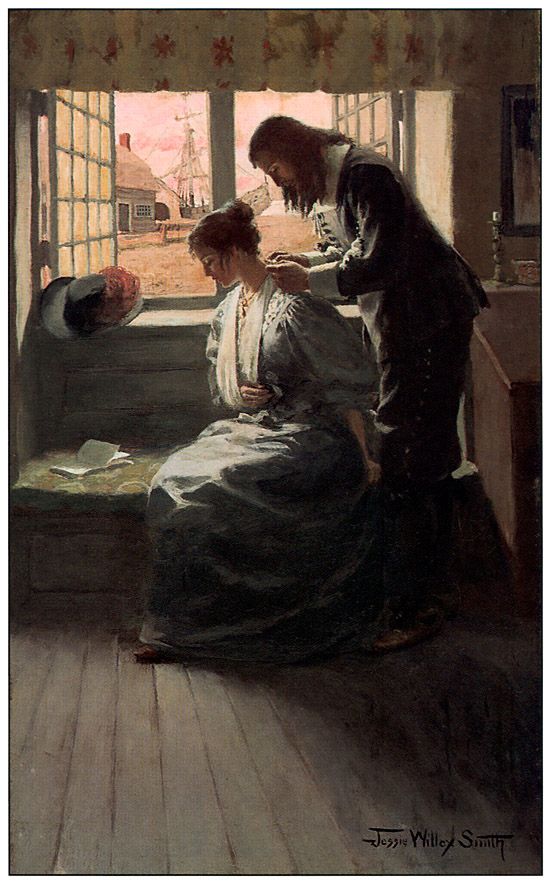
Illustration by Jessie Wilcox Smith for Maud Goodwin’s book The Head of the Hundred.
The illustrations that Smith and Oakley did for the book were a great success and this resulted in a number of new commissions including a commission for Jessie Smith to provide illustrations for a romantic novel, The Head of a Hundred by Maud Wilder Goodwin which was first published in 1897. Violet Oakley meanwhile provided illustrative covers for The Century magazine and Collier’s Illustrated Weekly.
The three women became part of Philadelphia’s vibrant artistic community and became founder members of The Plastic Club. The art educator Emily Sartain founded the Plastic Club. Its raison d’être was as an arts organization for women to promote collaboration and exhibit members’ works. It was partly in response to the Philadelphia Sketch Club, which was an exclusively male arts club.
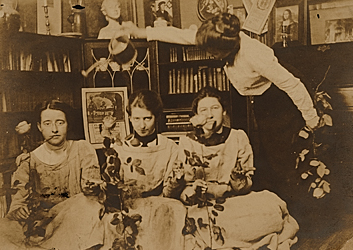
Photograph shows Green, Oakley, and Smith seated, each holding a rose, while Cozens holds a watering can over their heads, pretending to water them. Handwritten identification on verso: The Red Roses; Elizabeth Shippen Green, Violet Oakley, Jessie Willcox Smith, Henrietta Cozens; with Violet Oakley’s poster in the background for first exhibition at the Plastic Club. Photograph taken at 1523 Chestnut Street, when they planned to move to “The Red Rose”, Villanova.
Jessie Dodd finally left the shared apartment as she was struggling to gain commissions, unlike the other three women. She became very despondent and in 1899 she gave up artistic career and returned home to Ohio leaving just Violet Oakley, Jessie Wilcox Smith, and Elizabeth Shippen Green living at the Love Building. The relationship between the three ladies was what was termed a “sympathetic companionship” but in fact was what we would now term a romantic friendship. There was nothing scandalous about their relationship as in nineteenth century America romantic friendships was deemed a normal part of a woman’s life. The three women were very supportive of each other and shared their triumphs and failures. There came a time when they had to decide the course their future would take. Howard Pyle had warned them that combining an artistic career with marriage was not a viable option in an age when a woman was expected to manage a household, function as a hostess and bear children and of course in the minds of Jessie, Violet and Elizabeth, the words of Howard Pyle were sacrosanct. Jessie Smith was very definite about her views on this subject, saying:
“…A woman’s sphere is as sharply defined as a man’s. If she elects to be a housewife and mother – that is her sphere and no other. Circumstances may, but volition should not, lead her from it. If on the other hand she elects to go into business or the arts, she must sacrifice motherhood in order to fill successfully her chosen sphere…”
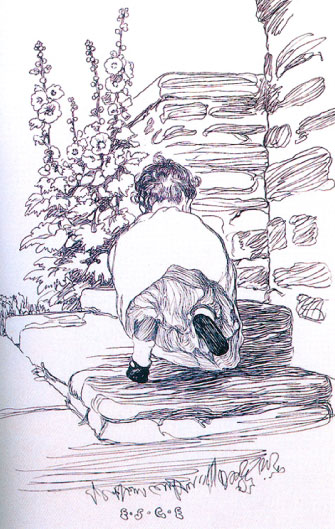
Elizabeth Shippen Green ink on paper illustration, Climbing the Steps.
Jessie Smith and Elizabeth Green were both busy working for The Ladies’ Home Journal and were soon being inundated with commissions resulting in that they could leave their staff jobs and work on a freelance basis. Elizabeth Shippen Green was submitting a number of pen-and-ink drawings many of which appeared on the covers of the St Nicholas and The Scholar’s Magazine as well as appearing alongside short stories published in Curtis Publishing Company’s Saturday Evening Post. One of the latter was reproduced in a volume published in London under the title: The Studio’s 1900-1901 Modern Pen Drawings: European and American. Her drawings featured in the volume alongside works by the renowned illustrators of the time, Edwin Austin Abbey, Maxwell Parrish, and her teacher Howard Pyle. The editor, Charles Holme, wrote:
“…Miss Elizabeth Shippen Green though a newcomer, draws with force and has a nice regard for the decorative effect of lines and black masses…”

Madonna and Magi sketch for stained glass panel, by Violet Oakley (1902)
In 1900 Violet Oakley received a commission to paint two murals and create five stained-glass windows and an altarpiece in mosaic for All Angels Church in New York’s Upper West Side. The year 1900 was both a happy and unhappy year for Violet Oakley. Her sister Heather had married her long-time friend Stanley Ward in 1898 and in 1900 the couple had their first child. Birth and death are mechanisms of population balance and 1n 1900 Violet’s father Arthur died after a long and debilitating illness.

The three artists remained at their studio on Chestnut Avenue and whilst the winters were tolerable the heat and humidity of New York in the summer months was oppressive so much so that during the summer of 1900 they rented apartments in the Low dormitory on the Bryn Mawr College campus. Jessie and Elizabeth even won a commission to illustrate the 1901 calendar for the college.

The Red Rose Inn , Villanova, Pennsylvania
In the Autumn of 1900, at the end of their summer stay at Bryn Mawr college, the three friends first visited the Red Rose Inn which was situated in the Philadelphia suburb of Villanova. The friends had spent many a happy hour leafing through the pages of England Country Life magazines and hankered for a country lifestyle. Violet Oakley in her handwritten autobiography remembered the time. She wrote:
“…We became enamoured of the idea of living in the midst of beauty and order of such Gardens as those of England: of having a country estate; of escaping from work in city studios…”
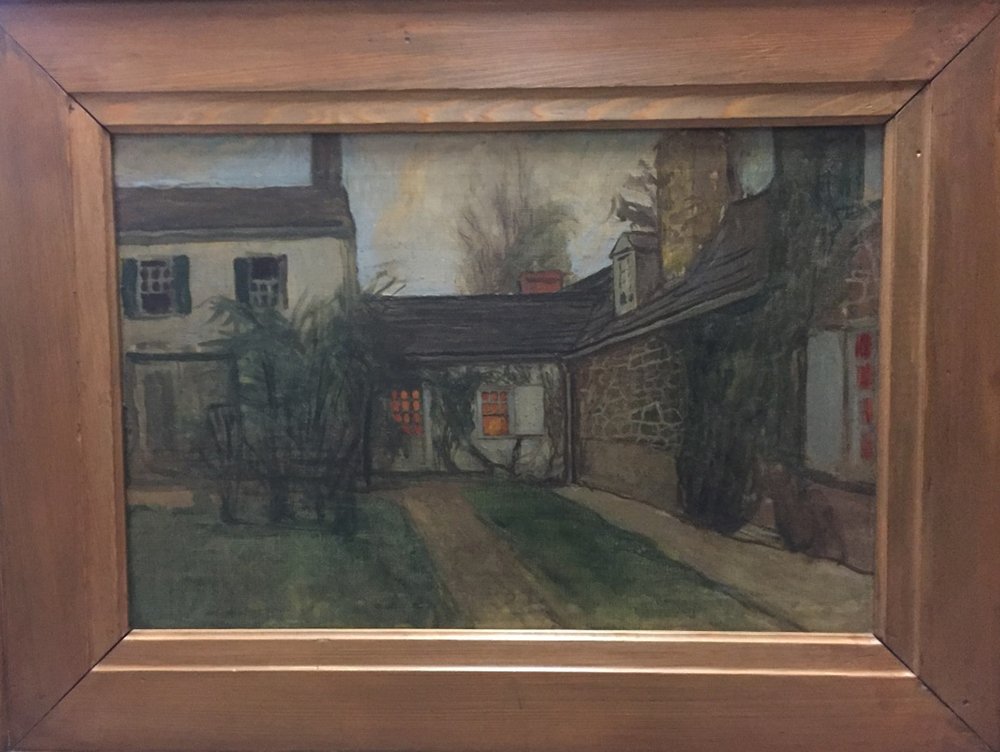
Red Rose Studio
On one of their last days at the college campus they drove out to Villanova to see the Red Rose Inn. The inn had been in the local news for many years as the owner, Frederick Phillips, was rumoured to be turning it into an artist’s colony and subdivide the eight hundred plus acres into a number of building lots. Unfortunately for Phillips he was not the sole owner and his co-owning siblings baulked on his expensive plans to renovate and build on the land as were his near neighbours who christened his plans, Phillip’s Whim. The die was cast when Frederick Phillips died and his siblings wanted to sell the property. It was eventually sold to the American banker, Anthony J Drexel for $200,000.
After a lot of legal wrangling the three artists managed to arrange to rent the Inn and, in the Spring of 1901, they gave in their notice terminating the lease on the 1523 Chestnut Street studio and moved out. They moved into the Inn in the late Spring of 1901 and with them came another female, their friend, forty-three-year-old Henrietta Cozens. Henrietta, the daughter of a cotton broker, was not an artist but her role was to be responsible for managing the property, overseeing all the domestic chores, and looking after the upkeep of the gardens. The monthly outgoings for the three artists had suddenly increased from the mere $125 per month they paid to the landlord for their studio in the Love Building to $500 per month for the rent for the Rose Inn and the wages of the servants and cook. An although the three artists subsidised Henrietta’s share of the costs it was a financially binding situation and one which needed the three artists to remain together and so once again, they vowed to remain together and never marry. It was this new home of theirs that led to Howard Pyle calling them The Red Rose Girls.

Bryn Mawr College 1902 calendar – illustration by Elizabeth Shippen Green
In February 1902, the three artists were offered their own three-woman show. It was an exhibition of a variety of their work. It comprised of their book illustrations and Jessie Wilcox Smith’s designs for the Bryn Mawr calendars. Elizabeth Green showed her illustrations for Harper’s Magazine and the Saturday Evening Post as well as her calendar illustrations. Violet Oakley’s offerings for the exhibition comprised of two covers she completed for Collier’s Weekly, some charcoal drawings and her designs for the All Angels’ stained-glass windows and chancel decorations. The exhibition was a great success and was an important step in the careers of the three artists.

At the exhibition Jessie Wilcox Smith submitted thirty of her illustrations some of which were advertisements for Procter & Gamble.
All good things have to come to an end and their time at The Red Rose Inn ended on January 25th 1906 when the three women were served with an eviction notice:
“…Anthony J. Drexel having leased to you the premises in Lower Merion Township, Montgomery County, Pennsylvania, known as the Red Rose Inn, by lease the terms of which expire on May 1st 1906, subject to three months’ notice, and the said Anthony J Drexel and Margarita, his wife, having granted, assigned and conveyed to me the said premises, with the lease, you and each of you are hereby notified and required to quit and deliver up to me possessions of the said premises, which you now hold as tenant under me, at the expiration of the said lease, namely the first day of May A.D. 1906 as I desire to have such possession…
Signed Henry S Kerbaugh…”
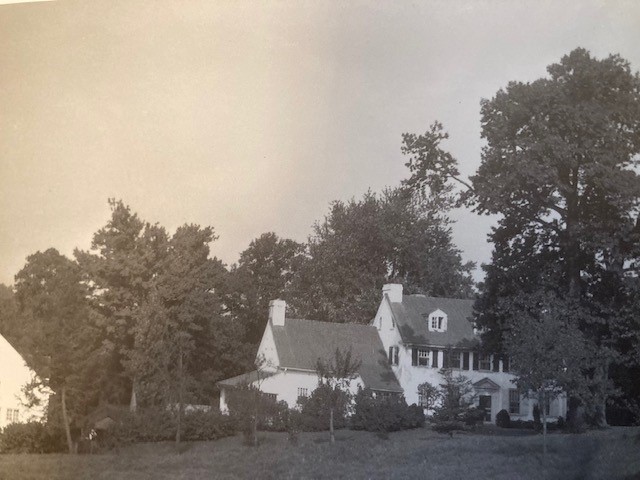
Thanks to the benevolence of Dr. George Woodward, a wealthy relative of Elizabeth Shippen Green, the three artists managed to rent a renovated stone-walled house, adjacent barn, and carriage house at Hill Farm, located on Woodward’s estate at Cresheim Creek in Mt. Airy, some ten miles north of Philadelphia. The three women named their new home Cogslea (C for Henrietta Cozens, O for Violet Oakley, G for Elizabeth Green and S for Jessie Smith) and “lea” for the sloping land of the new estate.
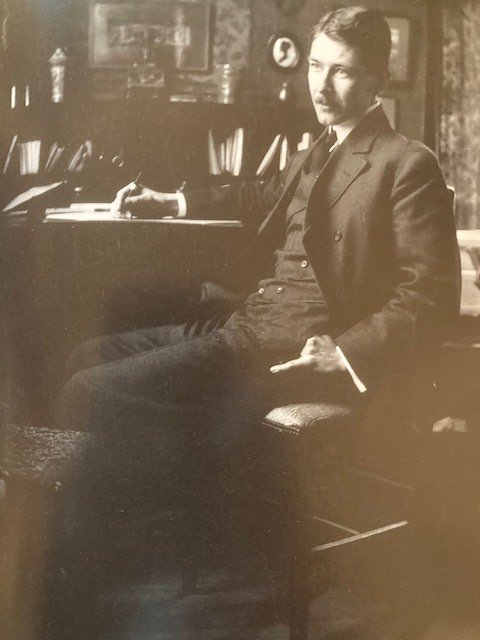
Photograph of Huger Elliot posing for Elizabeth Shippen Green at Cogslea
In 1909, Elizabeth Green’s mother died and the following March, her father Jasper Green passed away. More change was to come in 1910. Elizabeth Shippen Green had built up a friendship for a couple of years with Huger Elliott, a graduate of Columbia University’s school of architecture and the Ecole des Beaux Arts in Paris. He was looking for more than just a friendship with Elizabeth, albeit the couple had become engaged, but Elizabeth was hesitant about their future considering she had, along with her two friends, “signed a pledge” to keep men out of their lives and just live for their art. In October 1910, Huger Elliot visited Elizabeth at Cogslea and gave her an ultimatum – marry me now or break off the engagement! One can only imagine the state of Elizabeth’s mind at this turn of events. She had to try and think rationally. She was now thirty-nine years of age and been with her friends for thirteen years and a decision to marry Elliot would violate their “agreement”. On the other hand, she knew her friends were financially secure and had been given numerous commissions. She also realised that the dynamics of the household were changing. Jessie Smith and Henrietta Cozens, who were close in age, were becoming inseparable and both had a quiet temperament and an unbending sense of decorum which was polar opposite to Elizabeth’s exuberance. Her other friend and housemate, Violet Oakley, was engrossed in her religion and impassioned about her dream of a utopian society and her aspiration to elevate the morals of the country though her art. Maybe the deciding factor was that Elizabeth more than just liked Huger. She made the decision to marry Huger Elliot and leave Cogslea and her friends. Violet, Jessie, and Henrietta were stunned by her decision., Henrietta Cozens declared:
“…How can she love anyone more than she loves us?…”

Elizabeth Shippen Green and Huger Elliot on their honeymoon in Germany in 1911
The die was cast and On June 3rd 1911 Elizabeth Shippen Green married Huger Elliott at Cogslea. The couple left Cogslea that evening and went to stay in Philadelphia prior to their honeymoon in Germany. Unfortunately for Elizabeth being in Philadelphia she saw the front page of the June 4th edition of the Philadelphia Press which announced:
“…Trio of Artist Friends Broken by Cupid…”
which went on to state:
“…a note of sadness was felt when the realization came that the trio of artists who had lived and worked together so long would be depleted by the absence of Mrs Elliott…”
The Chestnut Hill Herald was even more sensational in its coverage stating that a heartbroken Violet Oakley broke down completely whilst trying to change Elizabeth’s mind. After their honeymoon, Elizabeth and her husband Huger settled in Cambridge Massachusetts. From 1912 to 1920 Huger was supervisor of educational work and director of the department of design at the Boston Museum of Fine Arts. For the next five years, he served as president of the Pennsylvania Museum and School of Industrial Art in Philadelphia. He was the Director of educational work in the Metropolitan Museum of Art in New Nork from 1925 to 1941, when he retired. It was not until two years later, in July 1913, that Elizabeth was reunited with Violet, Jessie and Henrietta when she and her husband returned to Cogslea for a visit.
Violet Oakley was desperate to have a much larger studio to accomodate her massive murals and so she decided to buy Cogslea for herself and to achieve that she had to sell all her assets. Jessie Wilcox and Henrietta Cozens moved out of Cogslea, bought a quarter of the estate land, and built a house on it for themselves. The Red Rose Girls had finally been separated.
Jessie Wilcox Smith died on May 3rd 1935, aged 71.
Elizabeth Shippen Green Elliott died on May 29th 1954, aged 82. Her husband Huger had died of a heart attack on November 13th 1948, aged 71.
Violet Oakley was the last of the Red Rose Girls to die. She passed away on February 25th 1961, aged 86.

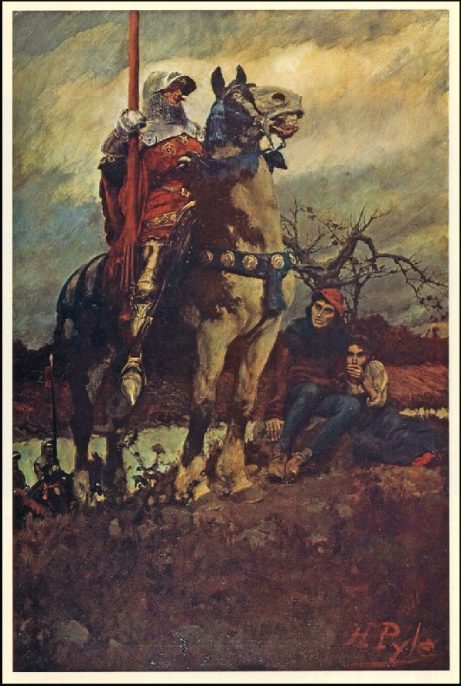


 He completed Legend and Stories of King Arthur in 1903. The book contains a compilation of various stories, adapted by Pyle, regarding the legendary King Arthur of Britain and select Knights of the Round Table. Pyle’s novel begins with King Arthur in his youth and continues through numerous tales of bravery, romance, battle, and knighthood.
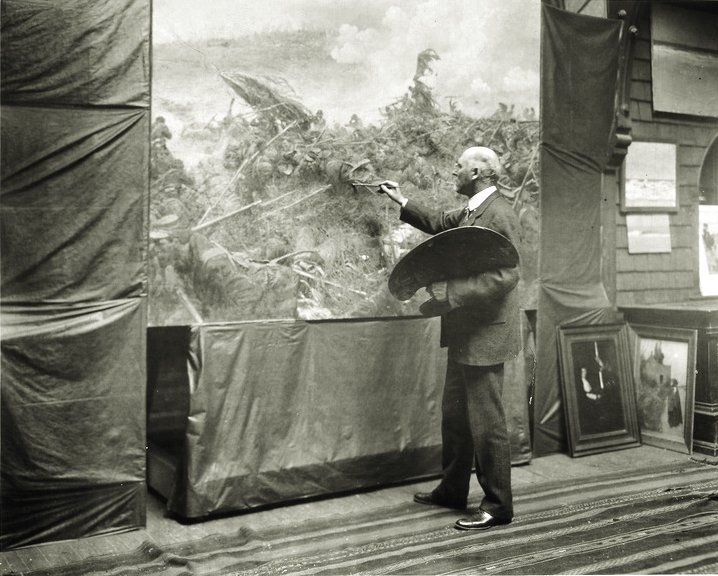
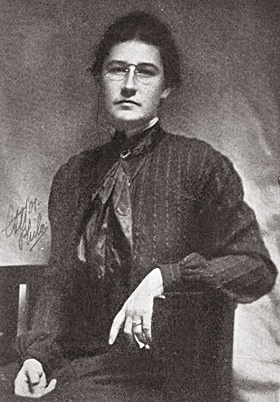 The third of the Red Rose Girls was Jessie Willcox Smith. She became one of the most prominent female illustrators in the United States, during the celebrated ‘Golden Age of Illustration‘. Jessie was the eldest of the trio, born in the Mount Airy neighbourhood of Philadelphia, on September 6th 1863, the youngest of four children. She was the youngest daughter of Charles Henry Smith, an investment broker, and Katherine DeWitt Willcox Smith. Her father’s profession as an “investment broker” is often questioned as although there was an investment brokerage called Charles H. Smith in Philadelphia there is no record of it being run by anybody from Jessie Smith’s family. In the 1880 city census, Jessie’s father’s occupation was detailed as a machinery salesman. Jessie’s family was a middle-class family who always managed to make ends meet. Her family originally came from New York and only moved to Philadelphia just prior to Jessie’s birth. Despite not being part of the elite Philadelphia society, her family could trace their routes back to an old New England lineage. Jessie, like her siblings, were instructed in the conventional social graces which were considered a necessity for progression in Victorian society. It should be noted that there were no artists within the family and so as a youngster, painting and drawing were not of great importance to her. Instead her enjoyment was gained from music and reading. Jessie attended the Quaker Friends Central School in Philadelphia and when she was sixteen, she was sent to Cincinnati, Ohio to live with her cousins and finish her education.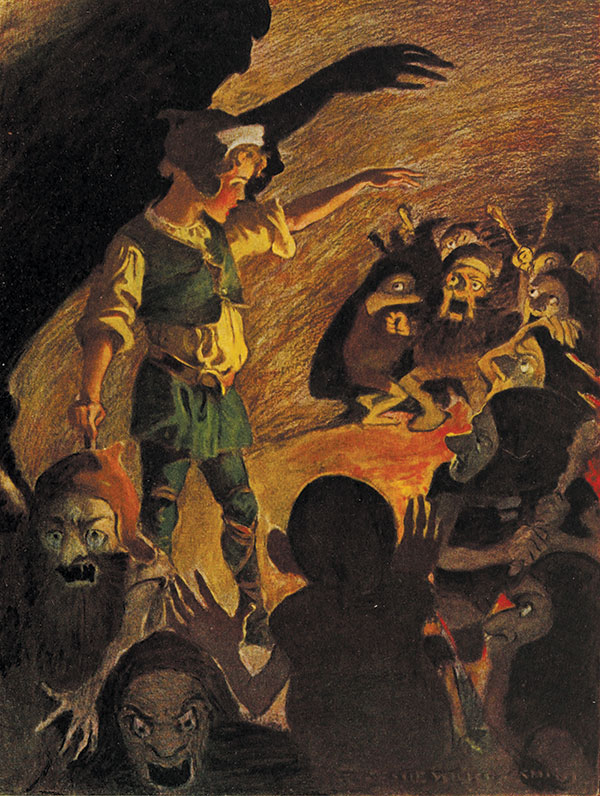

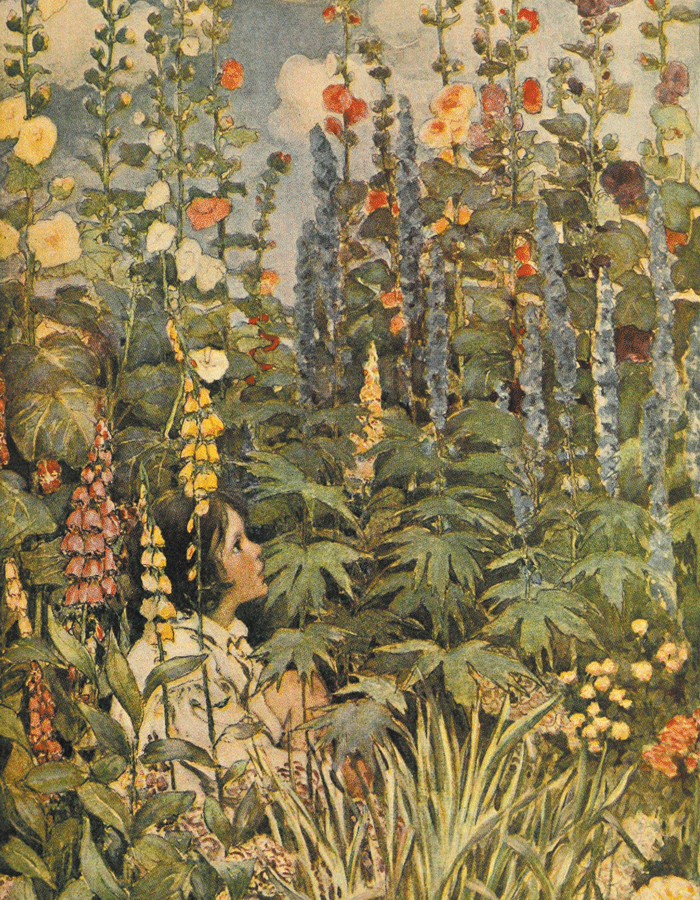
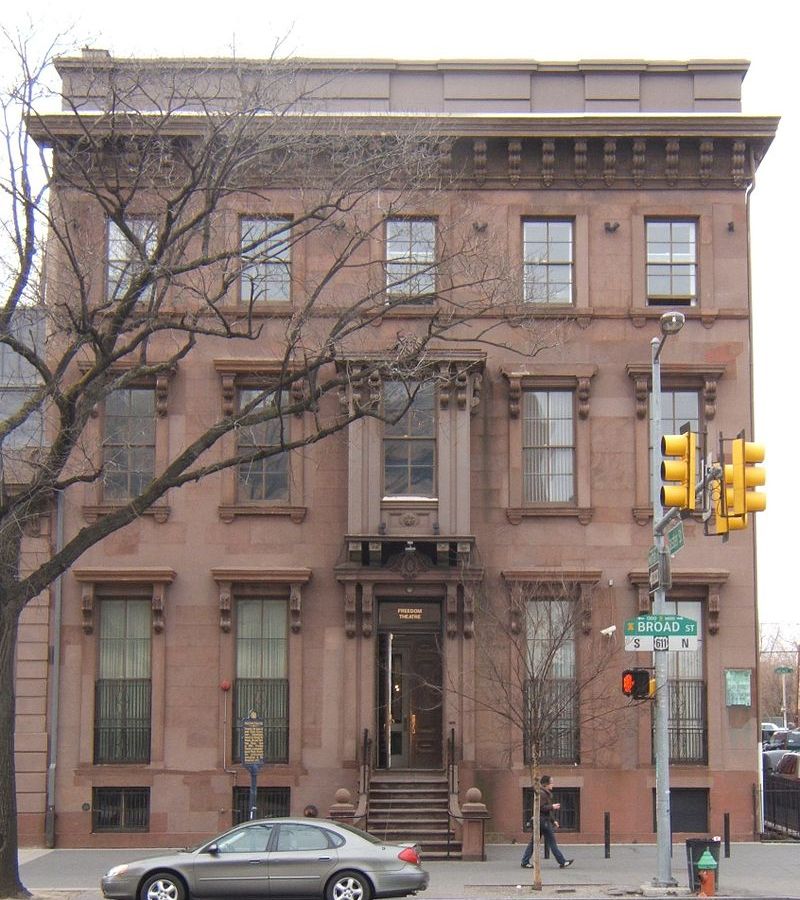

 Jessie Willcox Smith graduated from the Academy in June 1888. She looked back on her time at the Academy with a certain amount of disappointment. Although her technique had improved, she had hoped to be part of an artistic community in which artistic collaboration would be present but instead she found dissention, scandal and in the wake of the Eakins’ scandal, institutionalized isolation. Jessie talked very little about her time at the Academy. It had been a turbulent time and she had hated conflict as it unnerved her and made her extremely distressed. This desperation to avoid any kind of conflict in her personal and professional life revealed itself in her idealistic and often blissful paintings. Jessie wanted to believe life was just a period of happiness.









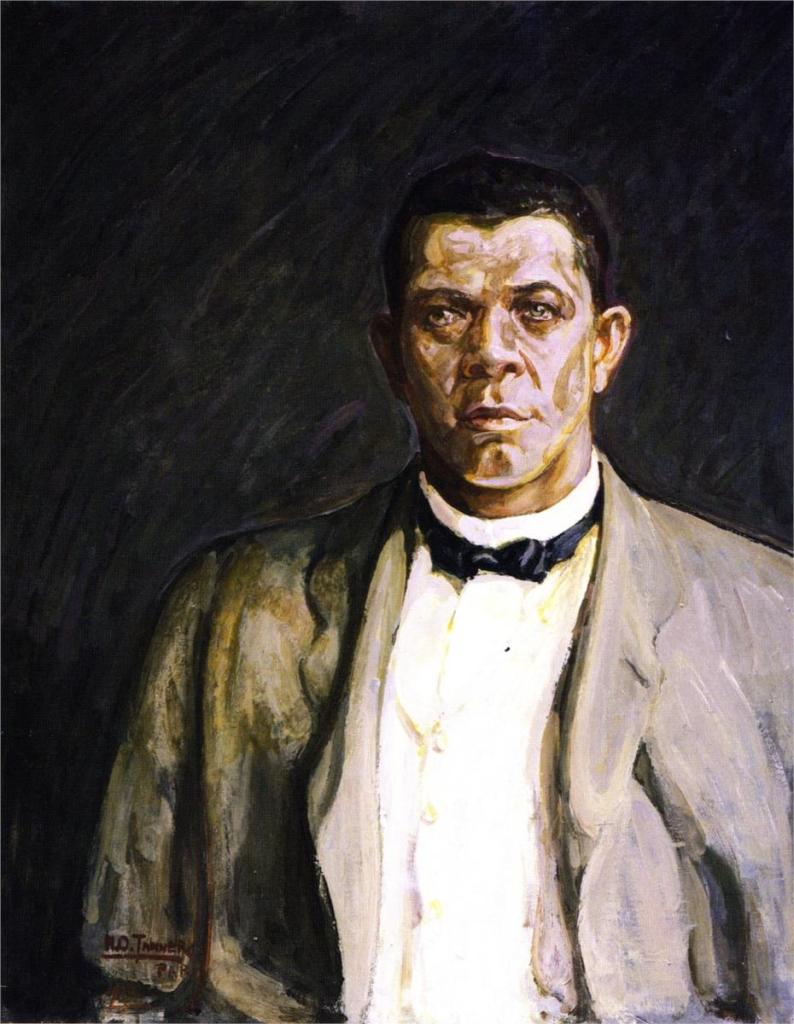
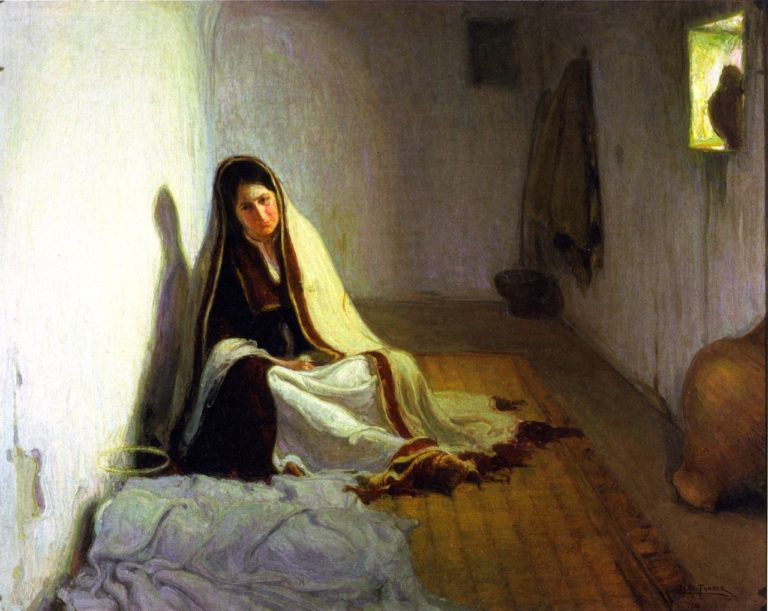


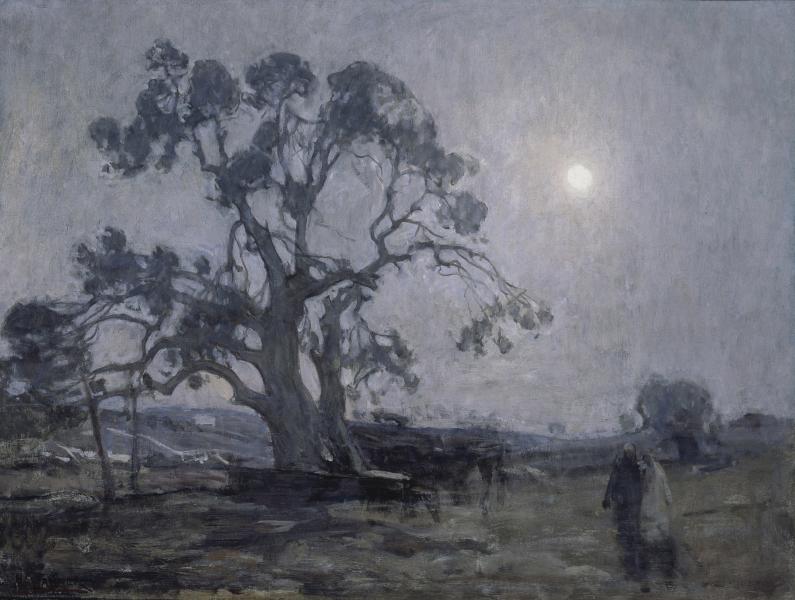


 The painting became the first work by an African American artist to join the White House permanent collection.
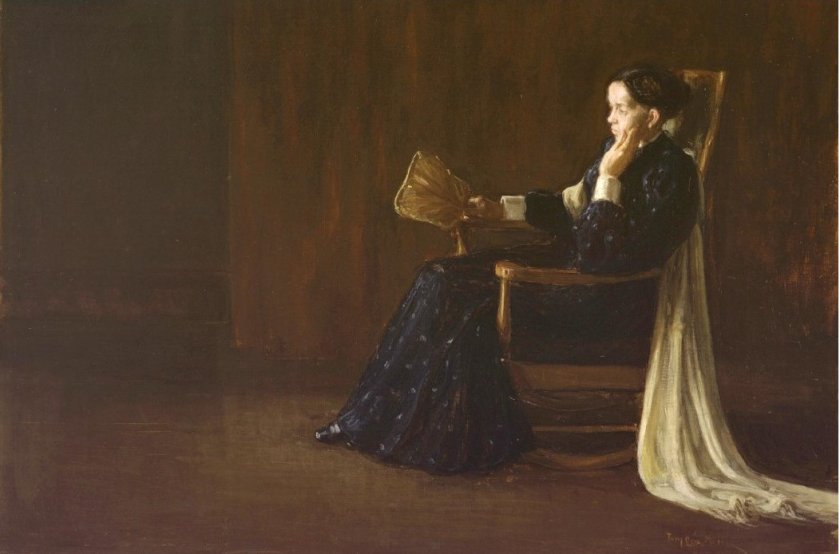
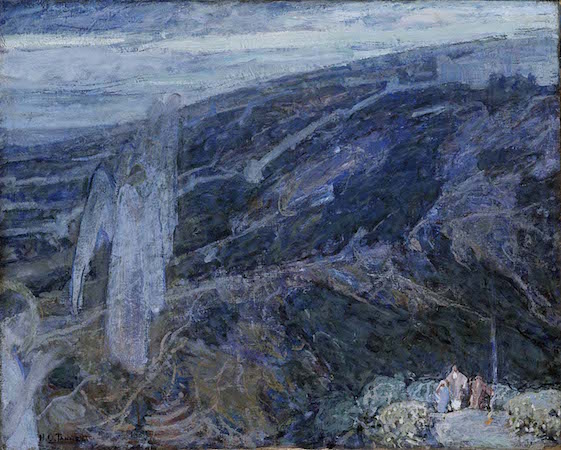
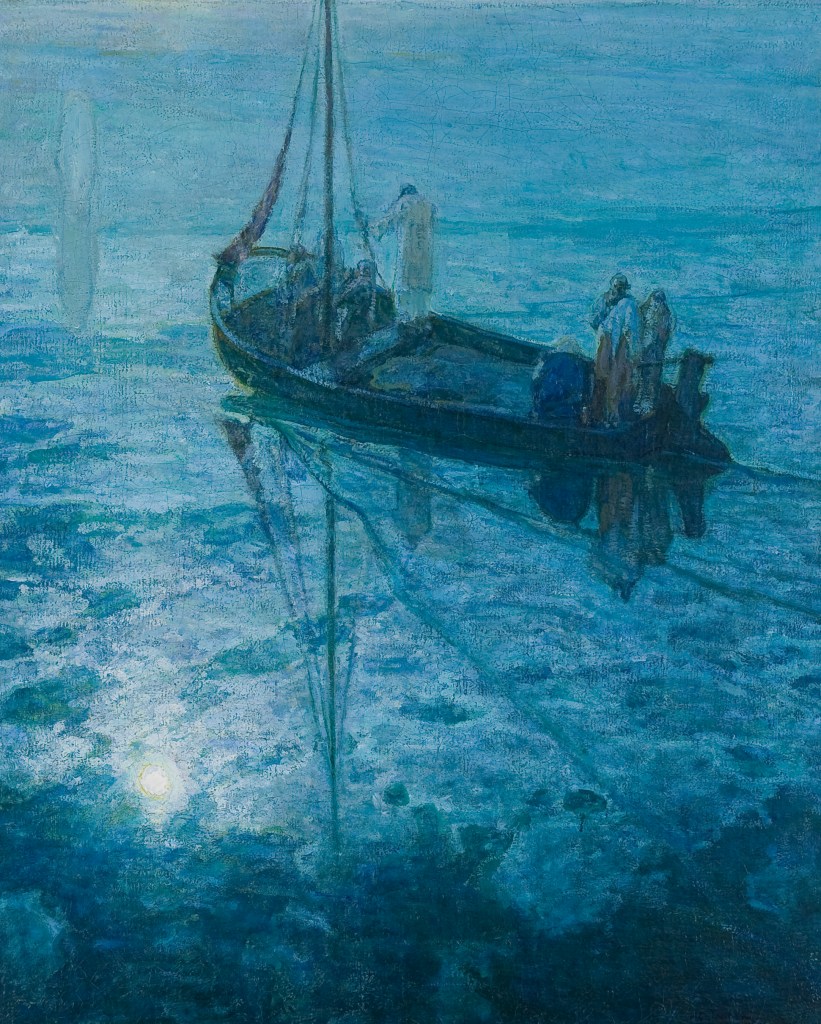
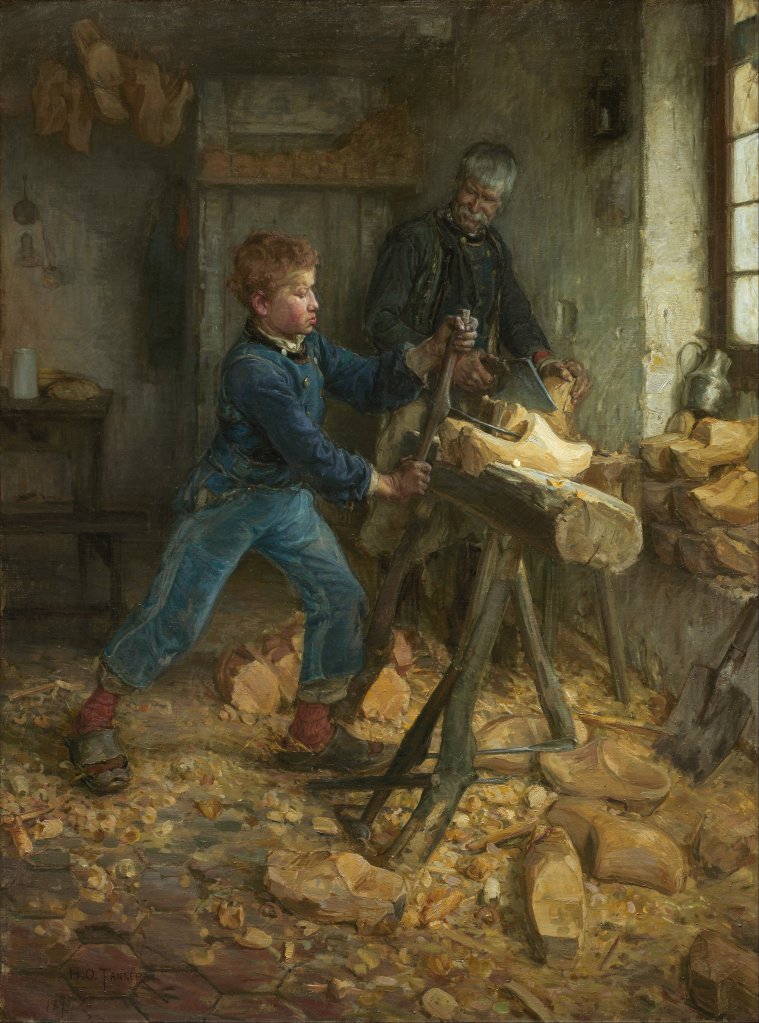

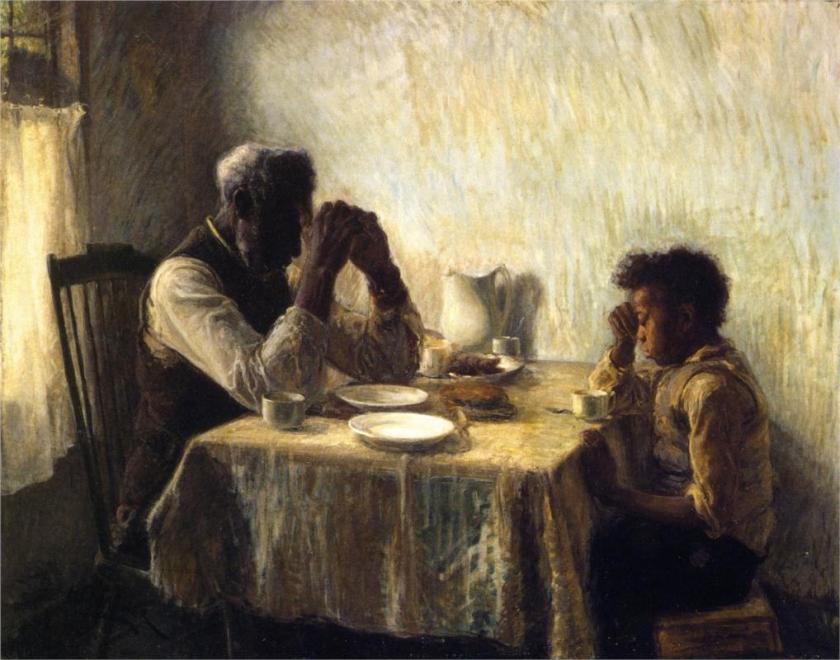
 In 1893, Tanner went back to the United States to deliver a paper on African Americans and art at the World’s Columbian Exposition in Chicago. In this same year, he created one of his famous works The Banjo Lesson while he was in Philadelphia. His depiction incorporated a series of sketches he had made while visiting the Blue Ridge Mountains, four years earlier. The sketches he had made during the summer of 1888 had opened his eyes to the poverty of African Americans living in Appalachia.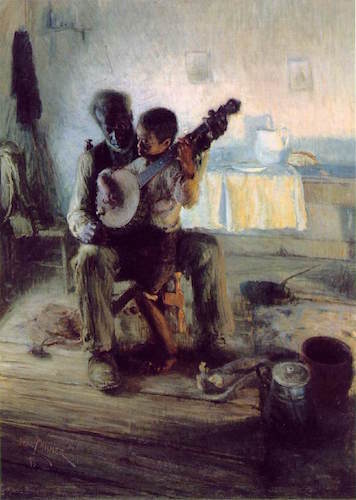













 The mural on the north wall, to the left of the Hearing Room shows King John of England sealing and granting Magna Charta (the Great Charter) in June 1215 on the banks of the Thames River at the meadow called Runnymeade. His reluctance to grant the Charter is shown by his posture and sullen countenance. But he had no choice. The barons and churchmen led by Stephen Langton, Archbishop of Canterbury, forced him to recognize principles that have developed into the liberties we enjoy today. King John, out of avarice, greed or revenge, had in the past seized the lands of noblemen, destroyed their castles and imprisoned them without legal cause. As a result, the noblemen united against the king. Most of the articles in Magna Charta dealt with feudal tenures, but many other rights were also included.
 The mural on the west wall over the entrance to the Hearing Room depicts an incident in the reign of Caesar Augustus Octavius. The Roman writer Seutonious tells of Scutarious, a Roman legionnaire who was being tried for an offense before the judges seated in the background. The legionnaire called on Caesar to represent him, saying: “I fought for you when you needed me, now I need you.” Caesar responded by agreeing to represent Scutarious. Caesar is shown reclining on his litter borne by his servants. Seutonious does not tell us the outcome of the trial but leaves us to surmise that with such a counsellor he undoubtedly prevailed. The mural represents Roman civil law, which is set forth in codes or statutes, in contrast to English common law, which is based not on a written code but on ancient customs and usages and the judgments and decrees of the courts which follow such customs and usages.
 The mural on the south wall portrays the trial of Chief Oshkosh of the Menominees for the slaying of a member of another tribe who had killed a Menominee in a hunting accident. It was shown that under Menominee custom, relatives of a slain member could kill his slayer. Judge James Duane Doty held that in this case territorial law did not apply. He stated:
 The fourth mural, which is actually the first one that is visible on making an entrance to the Supreme Court Room, and is Albert Herter’s rendition of the signing of the Constitution at the Constitutional Convention in Philadelphia on September 17, 1787. George Washington is shown presiding. On the left, Benjamin Franklin is easily recognizable. On the right, James Madison, “Father of the Constitution” is shown with his cloak on his arm. Although he was in France at the time, Thomas Jefferson was painted into the mural because of his great influence on the principles of the Constitution. The painting hangs above the place where the seven member Wisconsin Supreme Court sit to hand down their decisions. The mural’s position above the bench is symbolic that the Supreme Court operates under its aegis and is subject to its constraints. The United States Constitution has served us well for more than 200 years. This mural shows our indebtedness to federal law.
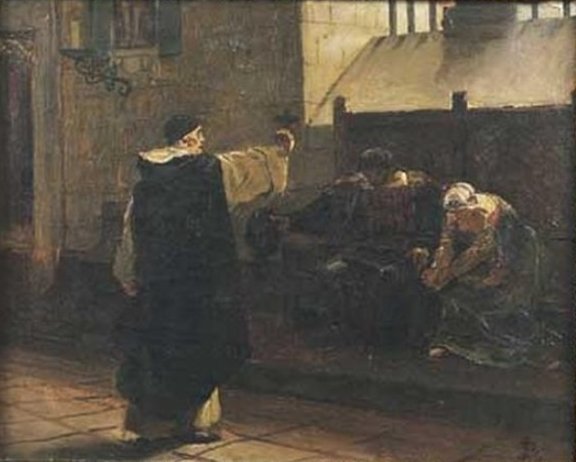
 The mural on the left was a scene from the court case against a local magistrate, Samuel Sewall. In 1692 a small group of men and women of Salem were arrested for bewitching their neighbours. Samuel Sewall, a local magistrate, was a member of the court that ultimately sentenced nineteen people to be hanged. The tragedy was realised several months later: those still being held were released. In the mural, Sewall is seen standing in Old South Church in Boston with his head bowed as his confession and prayers for pardon are read aloud.
 my daily art display