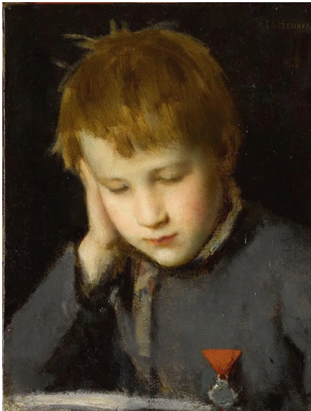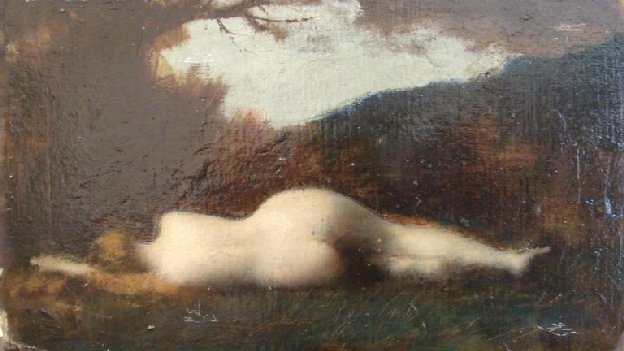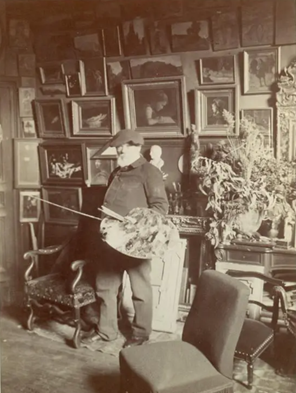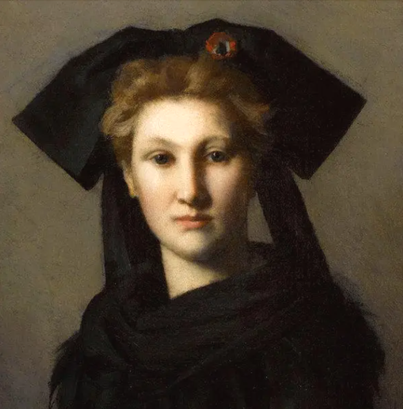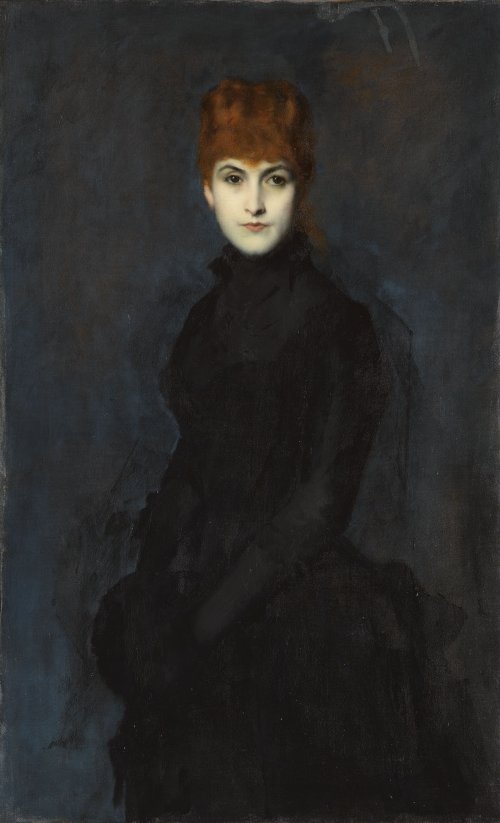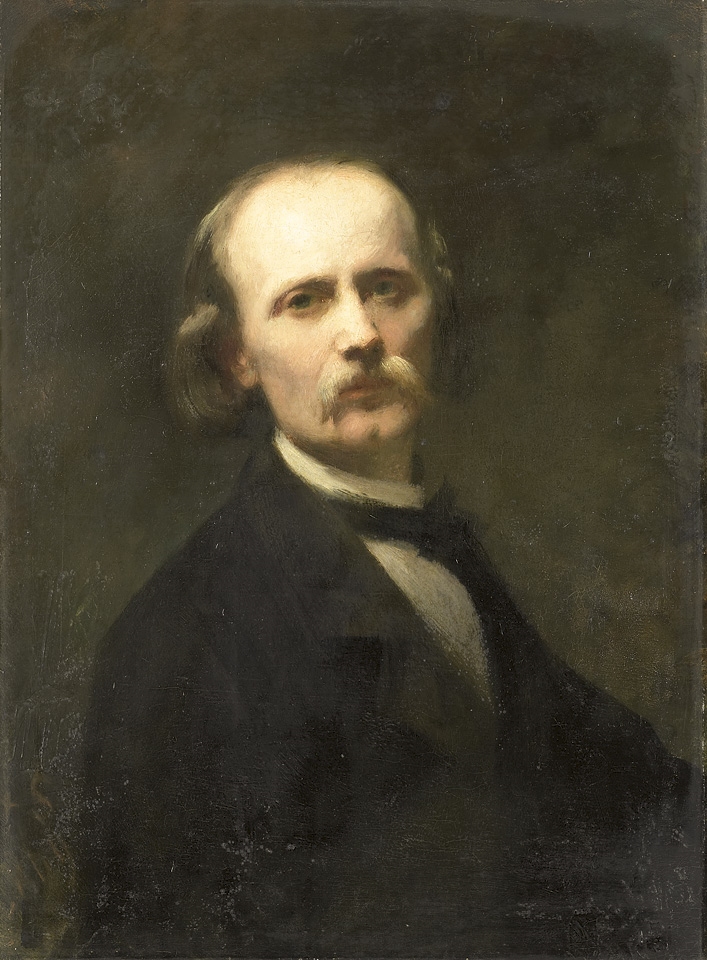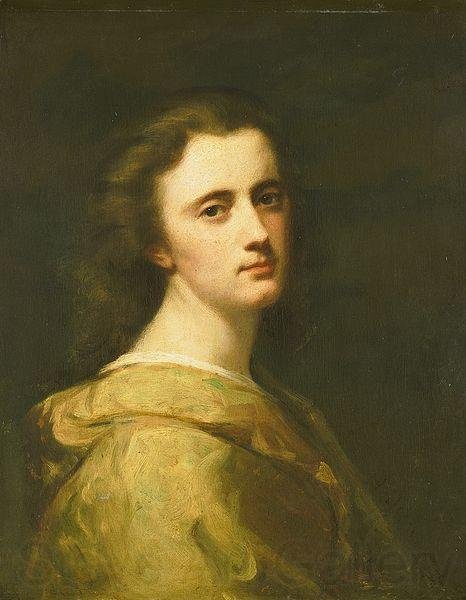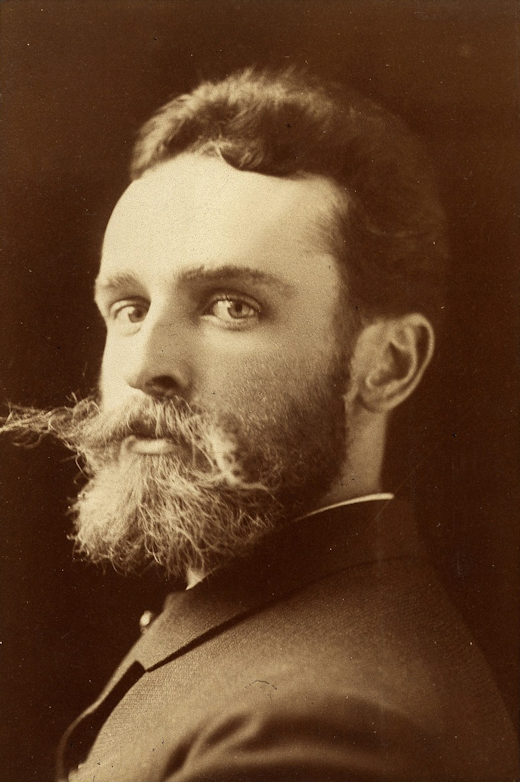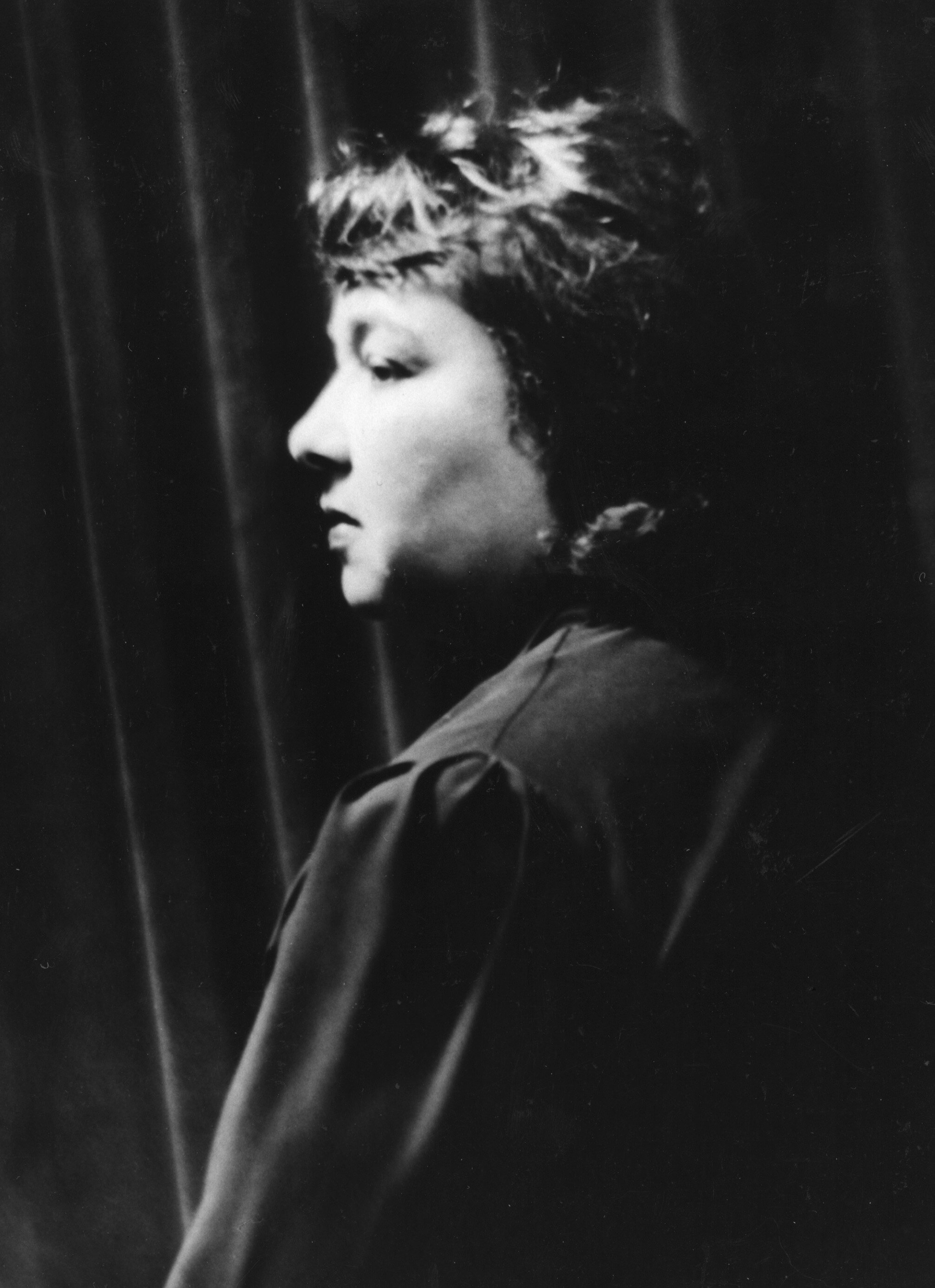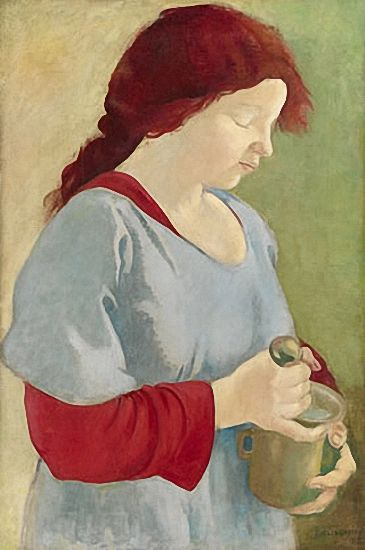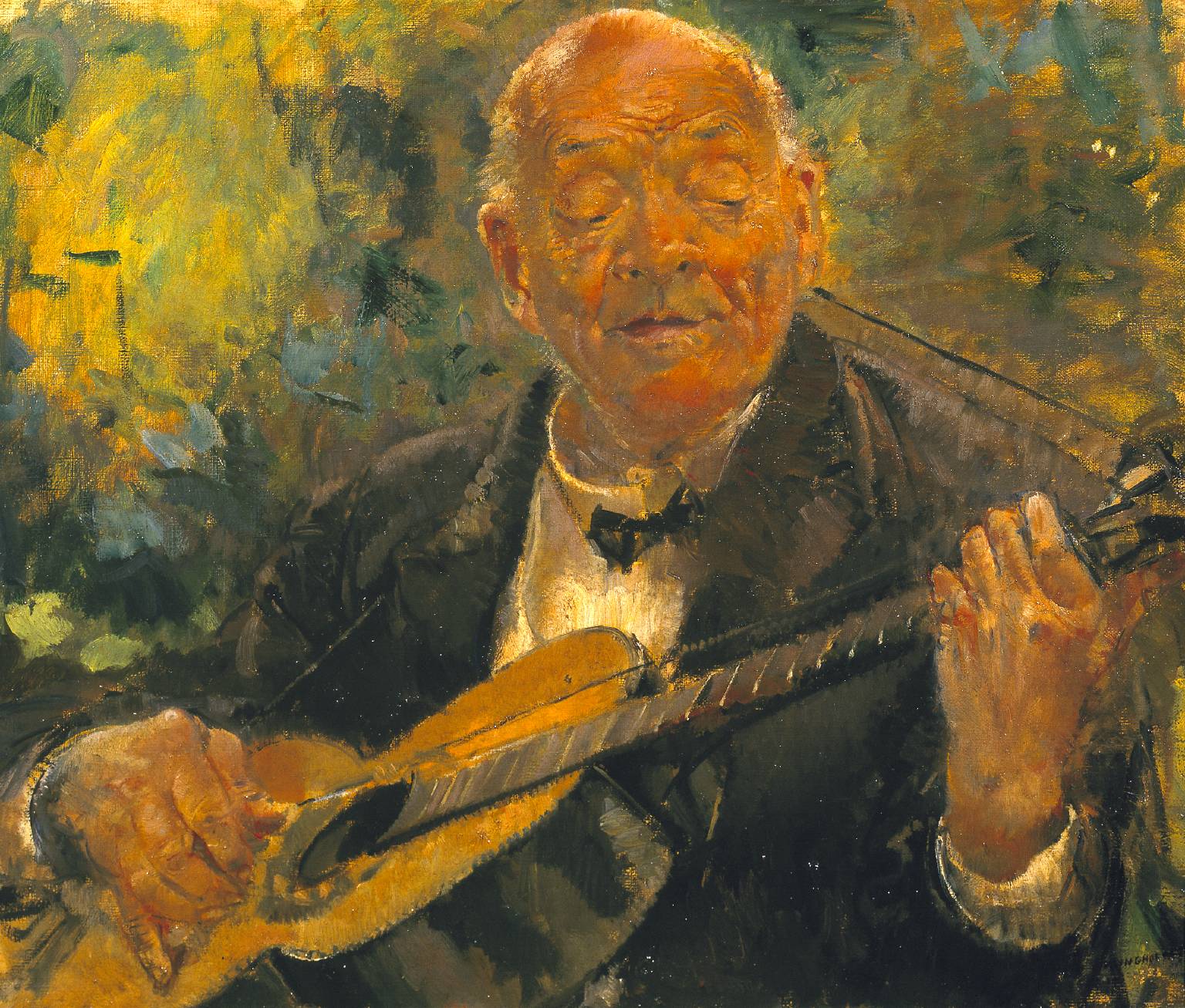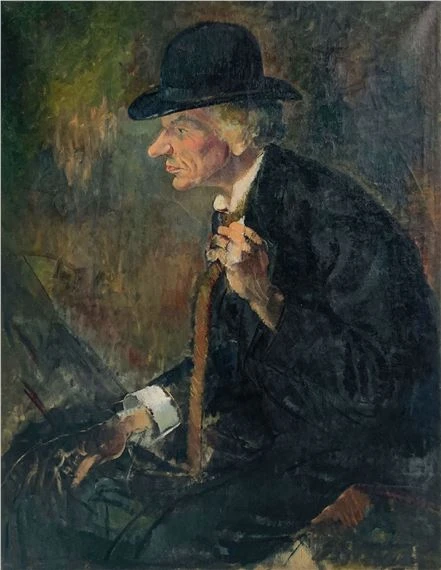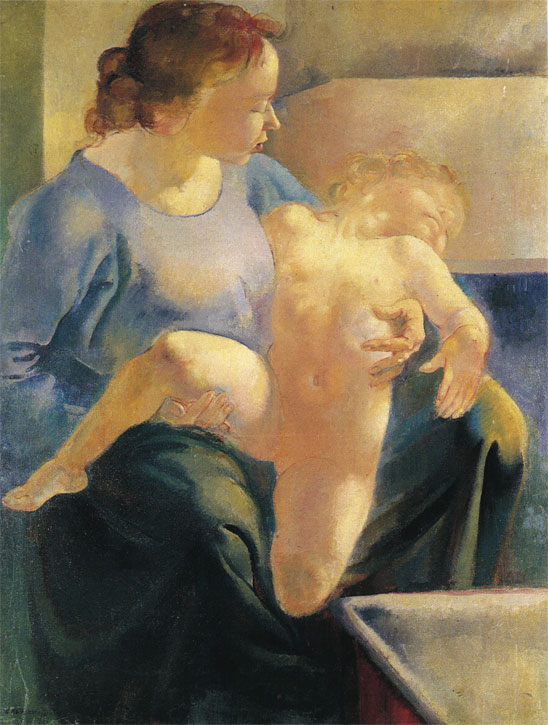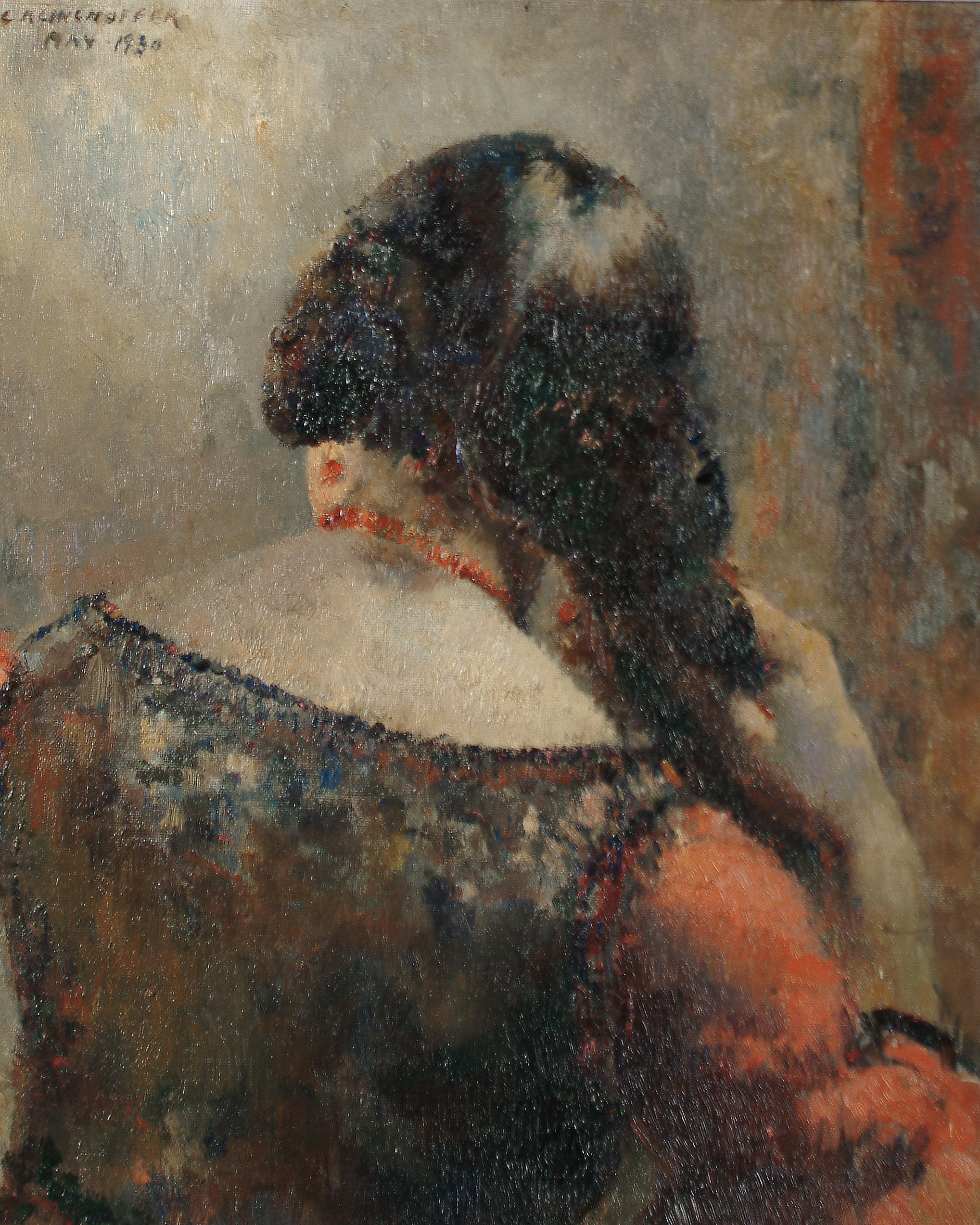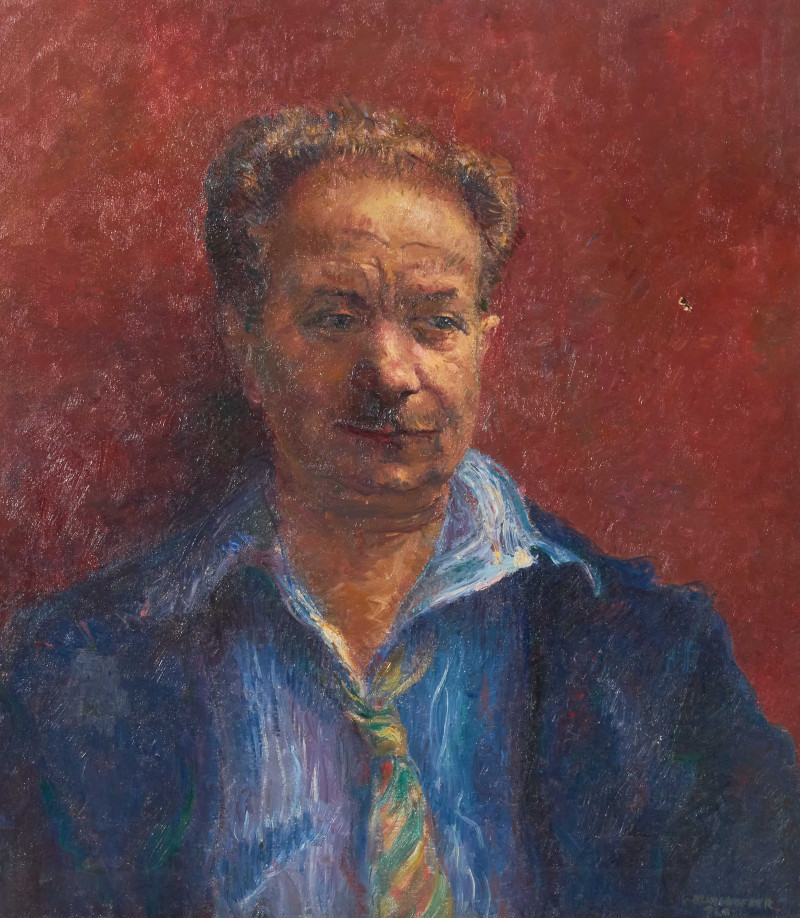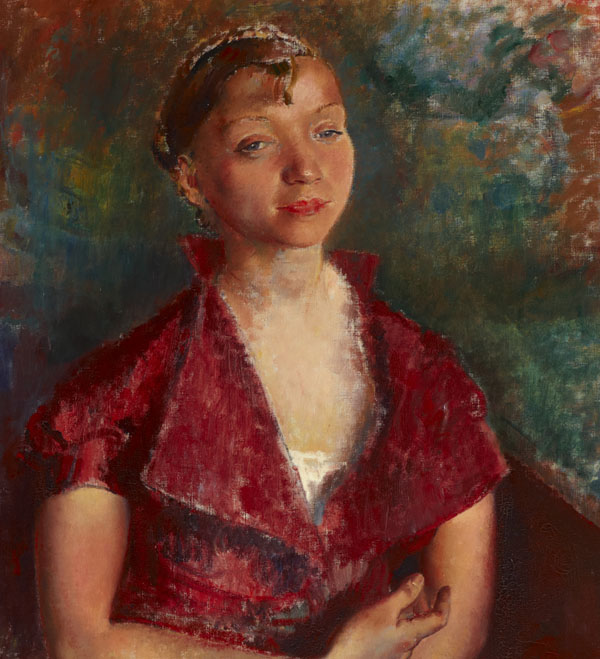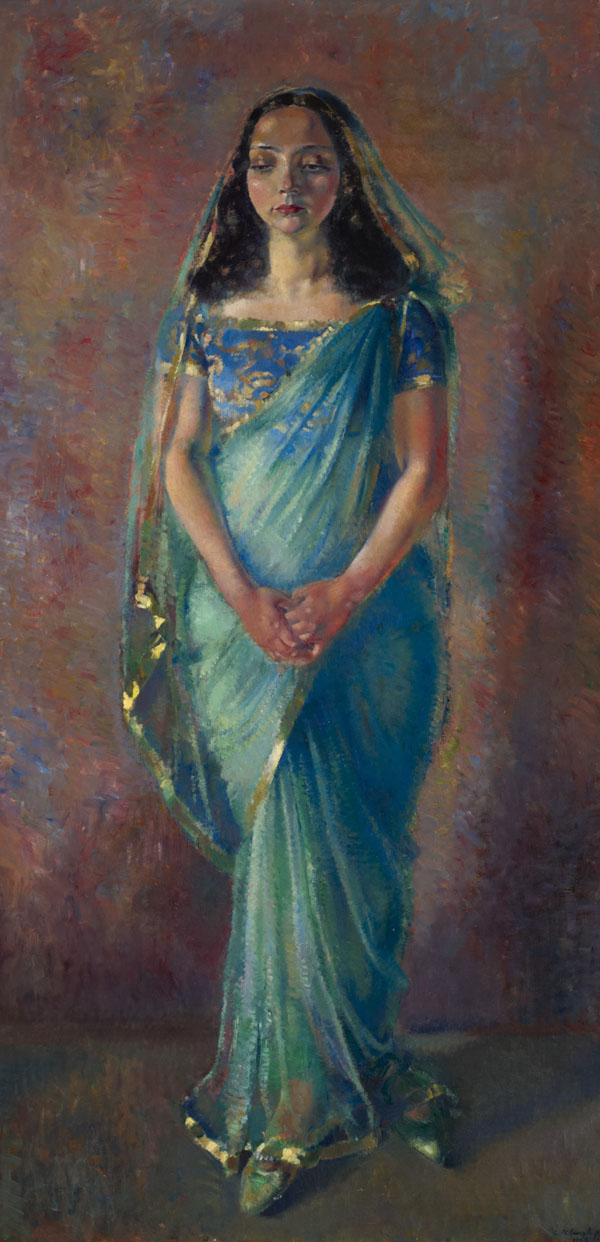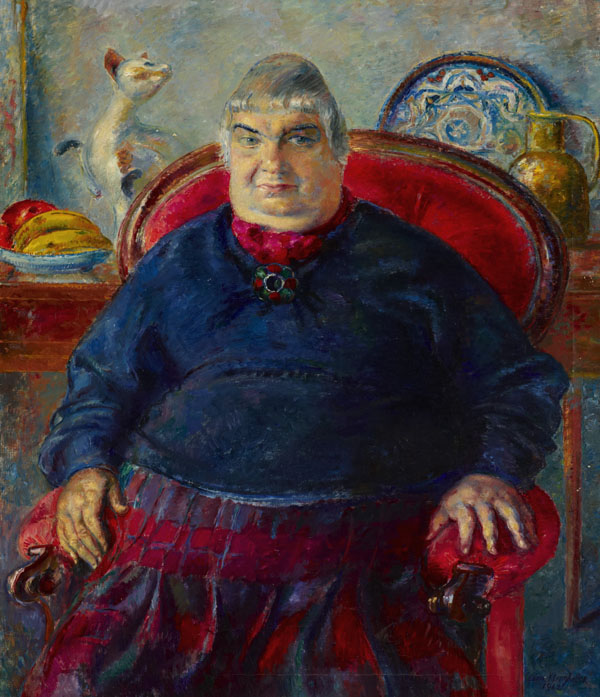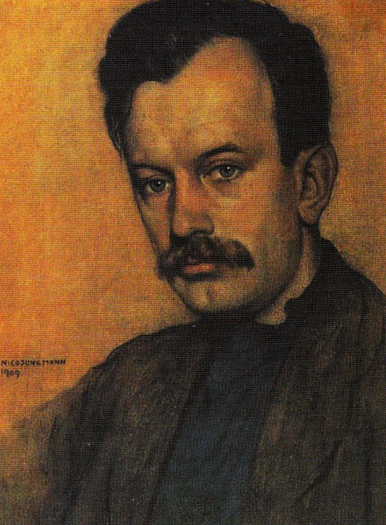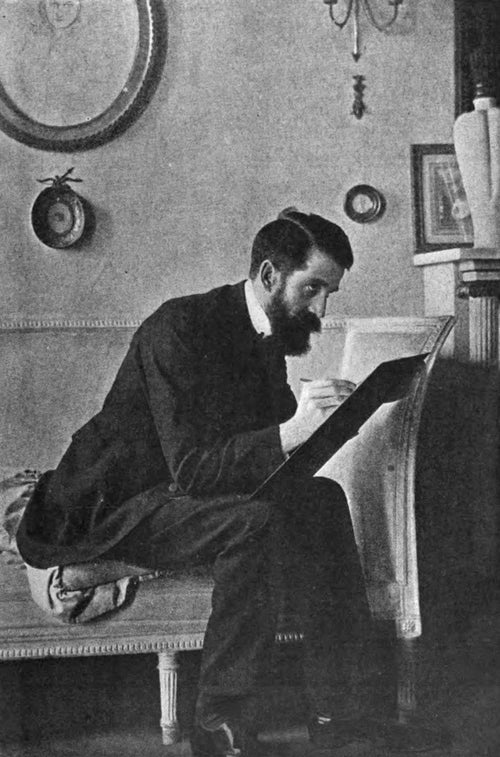
Paul César Helleu and Alice Guérin.

Paul César Helleu

At the end of my previous blog about the French artist Léon Bonnat, I talked about how he had bequeathed most of his art collection and the majority of his work to the local Bayonne museum and how the town named the Museum after him and yet it is now known as the Musée Bonnat-Helleu.. So who is “Helleu”?
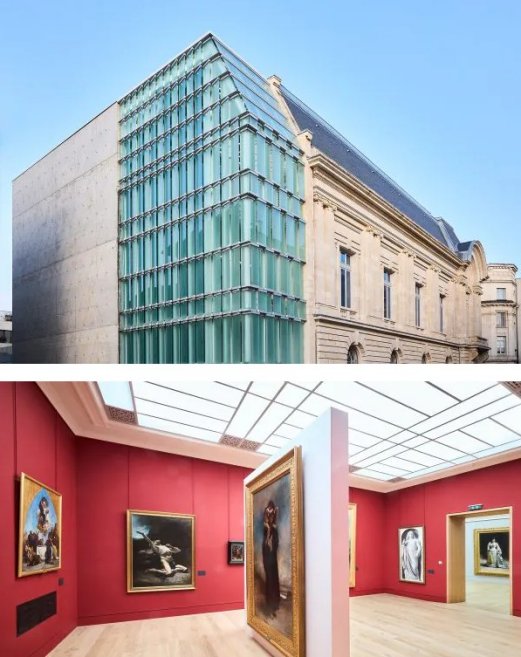
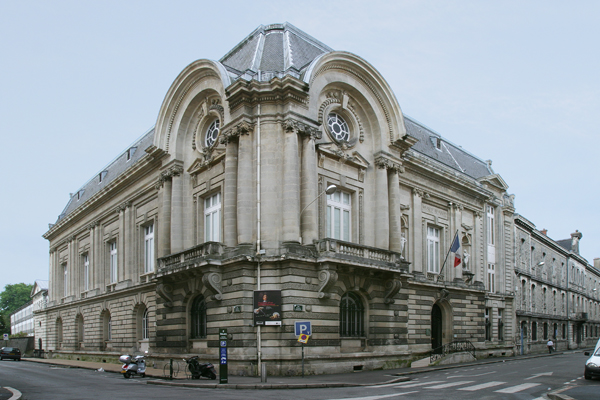
Musée Bonnat-Helleu, Bayonne

The donation of Paulette Howard-Johnston, the youngest child of Paul and Alice Helleu made the museum one of the places of reference for the works of Paul César Helleu from 1988 onwards. It houses his works thanks to his daughter’s donation, as well as the donations and bequests of Paulette Howard-Johnston’s nieces, Éliane Orosdi and Ghislaine de Kermaingant,  when in 2009, she died.  In her will,  the Bonnat Museum was designated as the heir to her collection of more than 300 new pieces.  In 2011, the museum closed its doors for a major renovation, while thanks to this last bequest made by the Helleu family, the museum became the Musée Bonnat-Helleu.
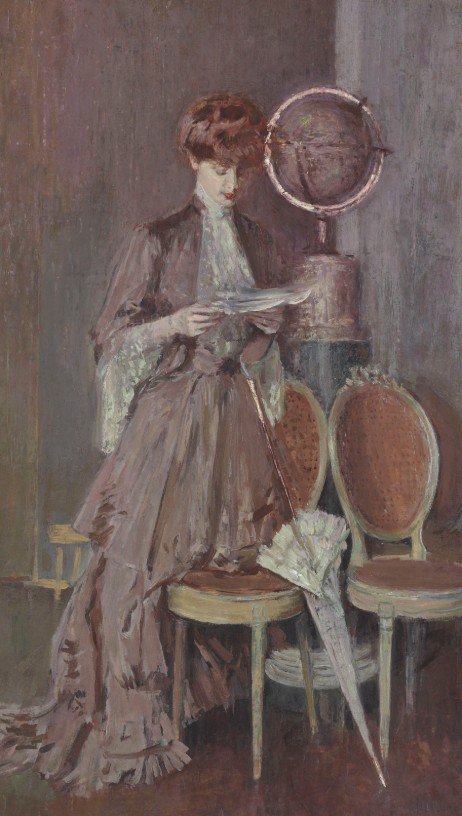
Portrait of Madame Helleu reading by Paul César Helleu

Paul César Helleu was born on December 11th, 1859, in the Brittany town of Vannes.  His mother, Marie Esther Guiot and his father, César Helleu, who was a customs receiver, were married in 1855 and had two sons Paul and his elder brother Édouard.   Paul took an interest in art when he was young. Following the death of his father when Paul was just a teenager, he decided he wanted to further his art studies by going to live in Paris.  His widowed mother was against this idea but Paul persisted and travelled to Paris to continue his schooling at the Lycée Chantal.  In 1876, at the age of sixteen Paul graduated and was admitted to the École des Beaux-Arts, at the atelier of Jean Leon Gerome, where he began his formal academic training in art.
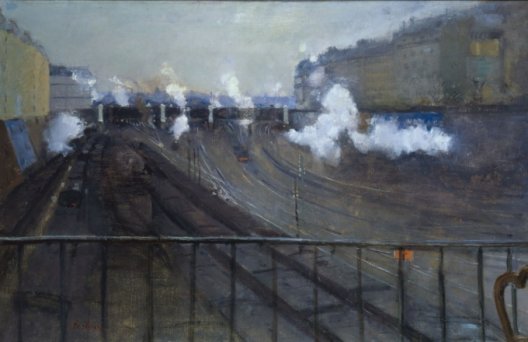
The Saint Lazare Train Station by Paul César Helleu (1885)

It was also in the Spring of 1876 that Helleu attended the Second Impressionist Exhibition at the Durand-Ruel Gallery in Paris. A total of nineteen artists participated in the exhibition, including prominent figures such as:  Degas, Monet. Morisot and Gustave Caillebot. Whilst in Paris,   Helleu made the acquaintance of John Singer Sargent, James McNeill Whistler, and Claude Monet. He was struck by their modern, bold alla  prima artistic technique, which was an approach to painting that involved applying layers of paint, also known as wet-on-wet, and completing a painting in a single sitting. This meant working with wet paint and not letting the layers dry, before applying the next layer. In Italian, the phrase alla prima translates to “at first attempt”.  Helleu was also impressed with their plein air style of painting.
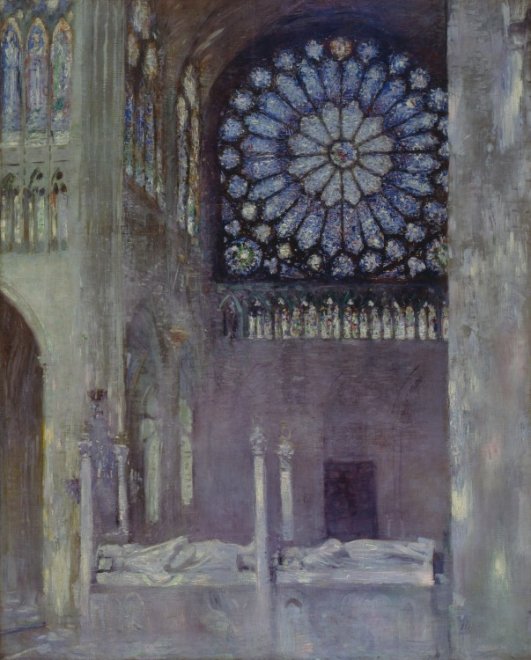
The Interior of the Abbey Church of Saint Denis by Paul César Helleu (c 1891)

Following graduation, Helleu found employment at the prestigious faience (earthenware) workshop, Joseph-Théodore Deck Ceramique Française.  Joseph-Théodore Deck was a 19th-century French potter, and an important figure in late 19th-century art pottery.  In 1856 he established his own earthenware workshop and began to experiment with styles from Islamic pottery, and particularly the Iznik style.  At the time Paul César Helleu joined the workshop, Japonisme, the popularity and influence of Japanese art and design following the forced reopening of foreign trade with Japan in 1858 was all the rage. Helleu created decorations for dishes.
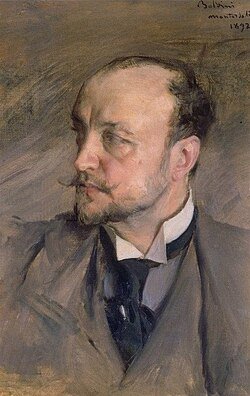
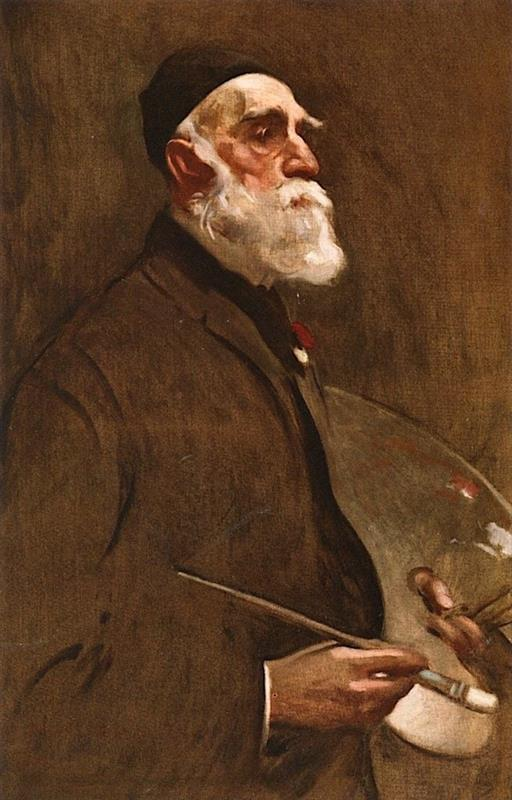
Giovanni Boldini self portrait (1892)
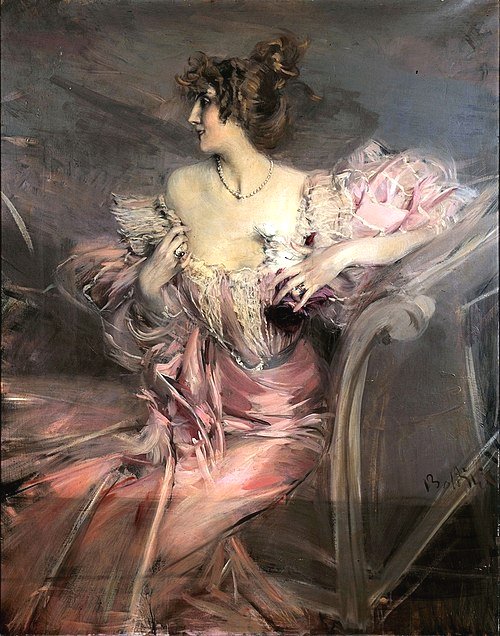
Portrait of Marthe de Florian, a French demi-mondaine and socialite,  by Giovanni Boldini (1898)

Around this time, Helleu met Giovanni Boldini, an Italian genre and portrait painter who lived and worked in Paris.   His portraiture focused on all the grandes dames of Paris, and for them to have their portrait painted by Boldini was looked upon as the crowning event of the social season. Boldini became a friend and mentor to Helleu, and his style of painting had a great influence on his artwork. The other great influence for Helleu was his friendship with John Singer Sargent, often referred to as the leader of “posh portraiture” in Britain, that majorly encouraged Helleu. Helleu even sold his first painting to Sargent. 

Portrait de Madame Chéruit by Paul César Helleu (1898) Madeleine Chéruit was a French fashion designer. She was among the foremost couturiers of her generation, and one of the first women to control a major French fashion house.

This time in Helleu’s life coincided with France’s Belle Époque era. The term, Belle Époque, literally means “Beautiful Age” and was a name given in France to the period between the end of the Franco-Prussian War in 1871 up to to the start of World War I in 1914. During those forty plus years of peace, the living standards for the upper and middle classes increased, (albeit the lower classes did not benefit in the same way, or to anywhere near the same extent).  It was the well-off who termed the phrase Belle Epoque labelling it a golden age in comparison to the humiliations that came with the Prussian invasion and what was to come, the devastation and occupation of the First World War.
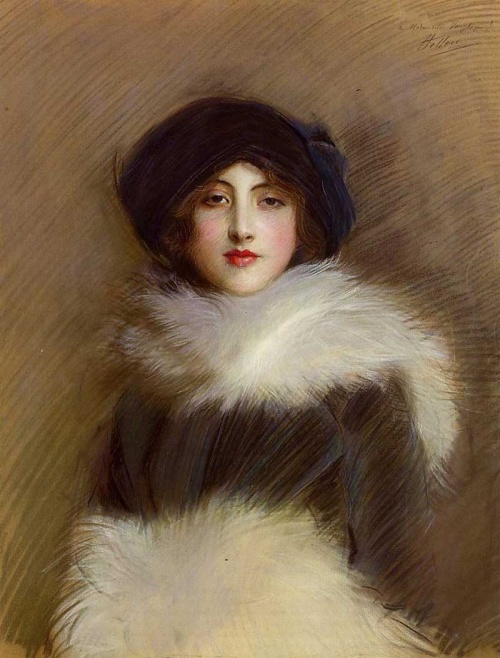
Mademoiselle Vaughan by Paul César Helleu (1905)

It was a time of booming progress and prosperity in Europe, with Paris the centre of the fast-flowing changes in economics, technology, and the arts. However, as the name denotes, beauty was a key element of this prosperous period.  The upper-class patrons would often commission artists to paint their portrait or one of a family member, in a luxurious and extravagant manner highlighting both their beauty and wealth.  The finished portraits heightened an artist’s reputation, ensuring more clients for the artists.

Alice Helleu by Paul César Helleu (1885)

This blog is not only about Paul César Helleu but also his muse, lover, and later his wife, Alice Louis-Guérin. Helleu met Alice in 1884 when her mother asked him to paint a portrait of her fourteen-year-old daughter, Alice. At the age of twenty-four, Helleu appears to have fallen in love with her during this first meeting.   Alice remained the artist’s favourite model throughout his life and she was also a muse for many other artists.  Her beauty and sophistication also helped introduce her husband into the elite circle of artists, writers and society figures of the French capital.  The Count de Montesquiou, who was a noted dandy and one of the leading figures in the artist’s group of friends, described her appearance as

“…La multiforme Alice, dont la rose chevelure illumine de son reflet tant de miroirs de cuivre…”

 (‘The multifaceted Alice, whose rosy hair illuminates so many copper mirrors with its reflection.’)
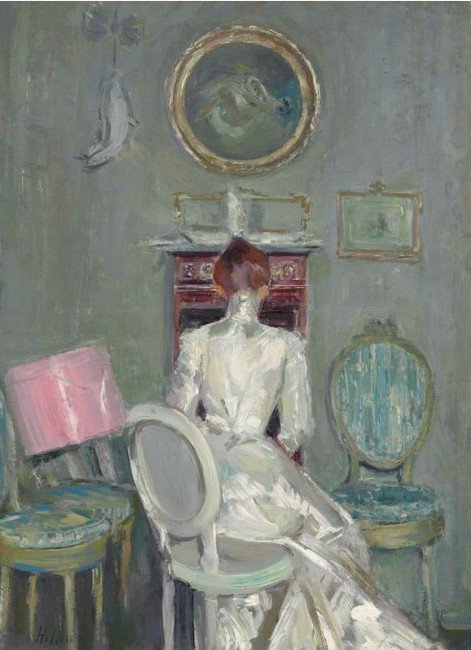
Madame Helleu à son bureau by Paul César Helleu.

Helleu often avoided standard conventional rules of portrait composition, and would frequently depict his sitters from behind – standing before a mirror, or sitting at a desk, as was the case of his painting entitled Madame Helleu à son bureau. Note the porcelain koi carp hanging in the upper left corner which was an example of Japonisme which was all the rage in Paris at the time.   The desk depicted in the painting and which appears in numerous works by Helleu is still in the artist’s family.  The painting hanging above it is Boldini’s Leda and the Swan.
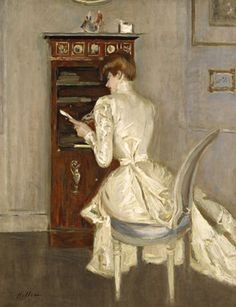
Madame Helleu assise à son bureau dans le salon de l’atelier de l’artiste, capturant une scène intérieure intime avec une élégance raffinée. (Madame Helleu seated at her desk in the artist’s studio salon, capturing an intimate interior scene with refined elegance.)

His painting entitled Mrs. Helleu sitting at her desk in the artist’s studio living room confirms Paul and Alice Helleu were had superb taste and these portraits depict Alice seated at a secrétaire in the couple’s drawing room of their Paris apartment, into which they moved in 1888. I suppose these two paintings cannot be considered as portraits in the conventional sense of the word, but rather as interior still life works, in which the furniture and surroundings are as vital as the sitter.
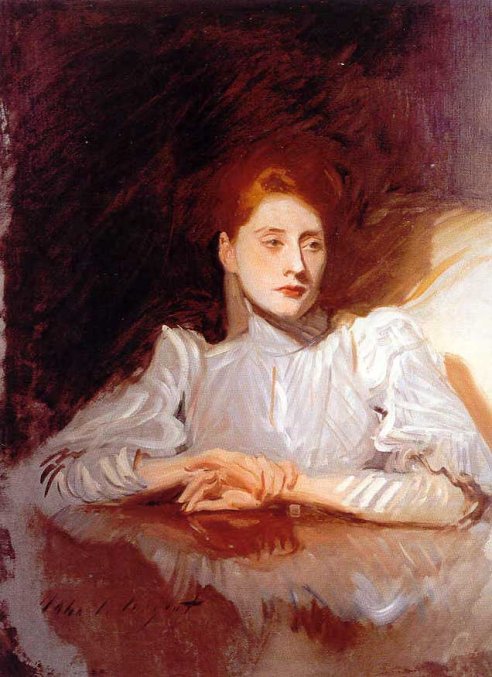
Madame Helleu by John Singer Sargent (1889)

Alice Guérin was depicted in a number of paintings by Paul Helleu’s friend John Singer Sargent.
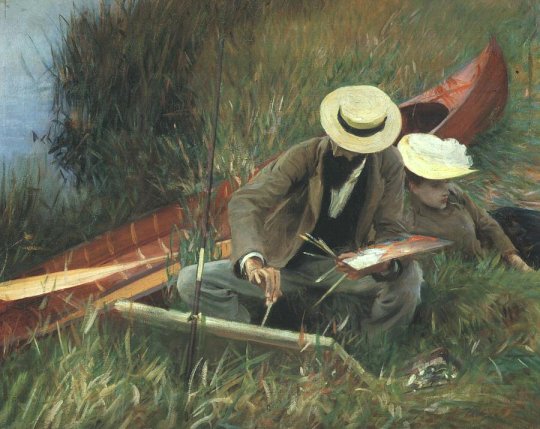
Paul Helleu Sketching with his Wife by John Singer Sargent (1889)

In his 1889 painting, Paul Helleu Sketching with his Wife, Sargent depicts a tranquil outdoor scene, portraying the French artist Paul Helleu engaged in the act of sketching. Alongside him, sits his wife Alice who appears happy and relaxed.  The figures of husband and wife are set against a lush, natural environment that suggests a calm and comforting ambiance. Sargent’s painting also manages to capture their fashionable clothing with Paul wearing a formal suit and Alice attired in an elegant dress.  Both wear wide-brimmed hats that both provide shade and stylishly adorn their heads.
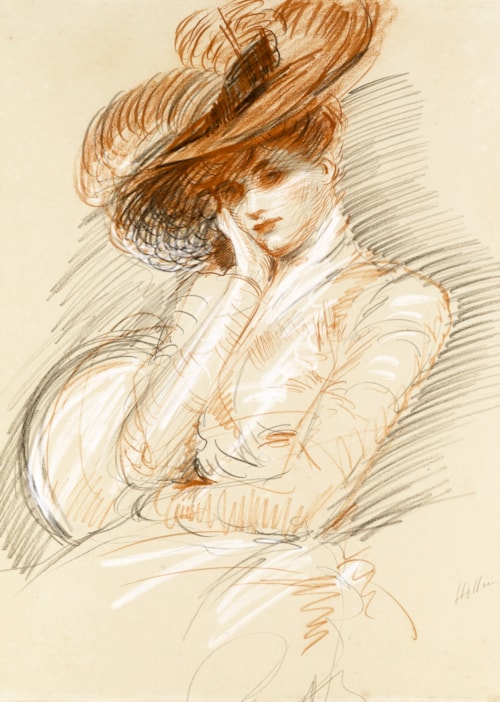
Portrait of Artist’s Wife by Paul César Helleu

Paul Helleu was one of Sargent’s closest friends.  Initially, they had met in Paris in 1878.  Paul was 18 years old and Sargent 22. Sargent’s artistic career had already taken off, and he was becoming known to the public as a great portraiture artist and was receiving many commissions for his work. However, on the other hand, Helleu was selling little of his work, and because of this, he was suffering from depression.  Paul Helleu was financially strapped with hardly enough money to even eat and had to leave his studies in art due to lack of funds.  Sargent, got to hear about the plight of his friend and visited him at his studio and although he never alluded to his friend’s dire financial difficulties, Sargent selected one of Helleu’s paintings, and commended it for its artistic merits. Helleu was so flattered that the successful Sargent would think so kindly of his work that he offered to give it to him.  The story goes that Sargent responded to Helleu’s offer, saying:

“…I shall gladly accept, Helleu, but not as a gift. I sell my own pictures, and I know what they cost me by the time they are out of my hand. I should never enjoy this pastel if I hadn’t paid you a fair and honest price for it…”

He paid Helleu one thousand francs for the painting.  Helleu never forgot Sargent’s generosity and moral support and later, when Sargent was suffering from depression after the death of his father, Paul and Alice Helleu went to stay with him in England.
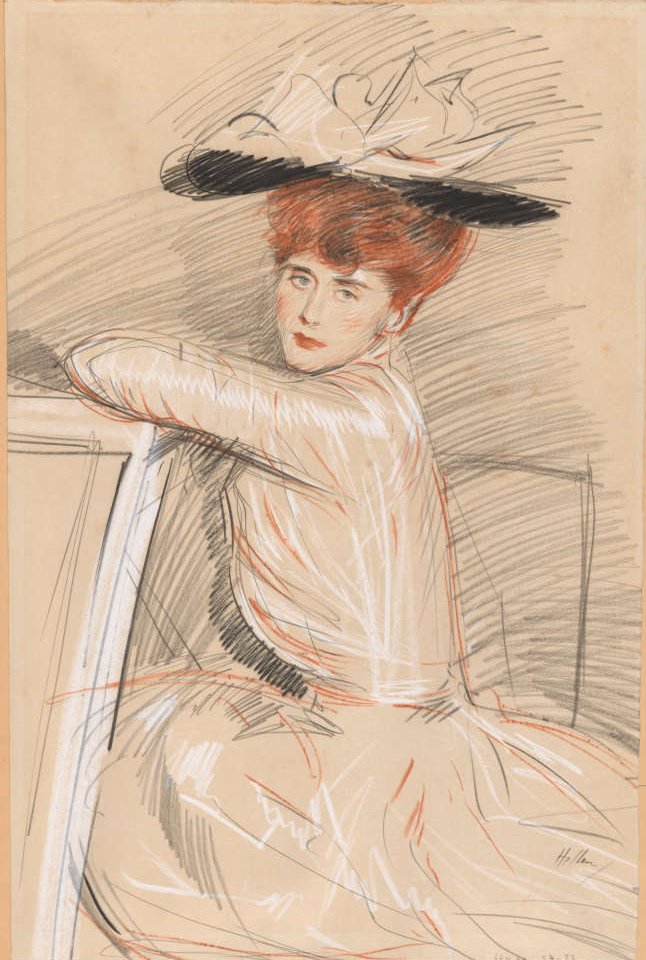
Portrait of Madame Helleu by Paul César Helleu.

Paul César Helleu and Alice Louis-Guérin married, two years after their first encounter, on July 29th, 1886, at Neuilly sur Seine.  She was two months away from her seventeenth birthday and Paul was twenty-six years old.  They went on to have four children, Hélène in 1887, Jean in 1894, Alice in 1896 and Paulette in 1904.
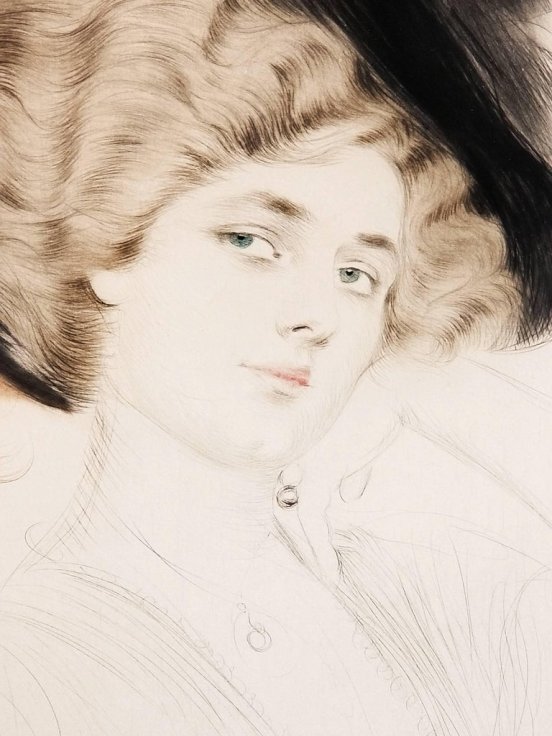
Details of Femme aux chapeau – Drypoint by Paul Helleu
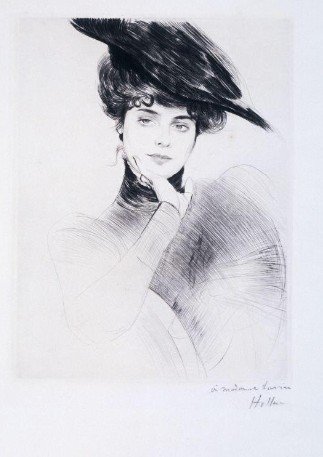
Drypoint Portrait of a Young Woman wearing a Hat by Paul César Helleu (c.1900)

It is believed that during a trip to London in 1885 Helleu once again met Whistler who introduced him to James Tissot a French society painter, illustrator, and caricaturist who was living in the English capital.  It was this established artist who taught Helleu the unique medium of etching.  Helleu became fascinated by drypoint etching.  Drypoint is a printing technique in which the printmaker scratches the lines on the printing plate with a sharp pointed tool. The printmaker holds the tool like a pencil and pushes the excess metal to either side of the furrow. It is this curl of rough metal, known as the ‘burr’, that gives the drypoint print its character. The ink is held in the burr as well as in the furrow and gives the edges of the printed line a soft, blurred quality. In Helleu’s work (above) the burr on the woman’s choker gives it a very velvety look.  Over the course of his career, Helleu produced more than 2,000 drypoint prints and he quickly mastered this technique, using the same flair with his stylus as he demonstrated with pastels.  It was the brilliance of his drypoint etchings that ensured Helleu’s place as one of the greats of the Belle Epoque, and he journeyed to Britain and America, and his artworks boosted his fame across both sides of the Atlantic.
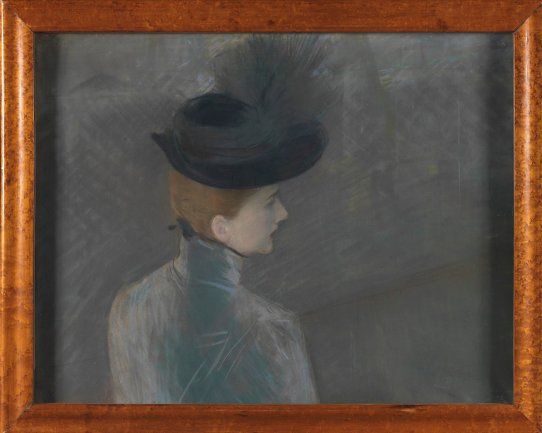
Alice au chapeau noir by Paul César Helleu

Helleu and his wife had made many friends in Paris including Countess Greffulhe, a French socialite, known as a renowned beauty and queen of the salons of the Faubourg Saint-Germain which allowed Helleu to successfully expand his career as a portrait artist to elegant women in the highest ranks of Paris society
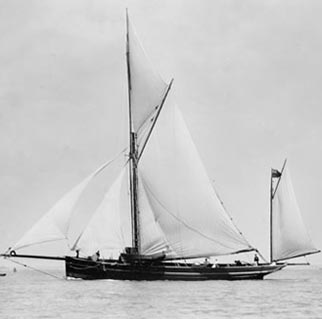
Paul Helleu’s yacht Étoile

Paul Helleu, wife Alice and baby daughter Paulette on L’Étoile (c.1904)

In 1904, Helleu was awarded the Légion d’honneur by the French president, Émile Loubet, and became one of the most celebrated artists of the Edwardian era in both Paris and London. He was an honorary member in important beaux-arts societies, including the Société Nationale des Beaux-Arts and the International Society of Painters, Sculptors, and Engravers, headed by Auguste Rodin. 
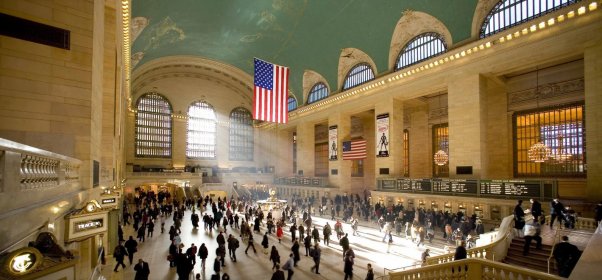
New York City’s Grand Central Terminal.

During his second trip to the United States in 1912, Helleu was awarded the commission to design the ceiling decoration in New York City’s Grand Central Terminal. Helleu decided on a mural of a blue-green night sky covered by the starry signs of the zodiac that cross the Milky Way.

Paul César Helleu (1859-1927)

Helleu made his last trip to New York in 1920 for an exhibition of his work, but he realized that the Belle Époque era was over. He sadly realised that he had lost touch with that vibrant era.   Shortly after his return to France, he destroyed nearly all of his copper plates.   While planning for a new exhibition with Jean-Louis Forain, a French Impressionist painter and printmaker, Helleu died of peritonitis following surgery in Paris, on March 23rd, 1927 at age 67.


Information needed for this blog came from Wikipedia and Facebook plus the following websites:
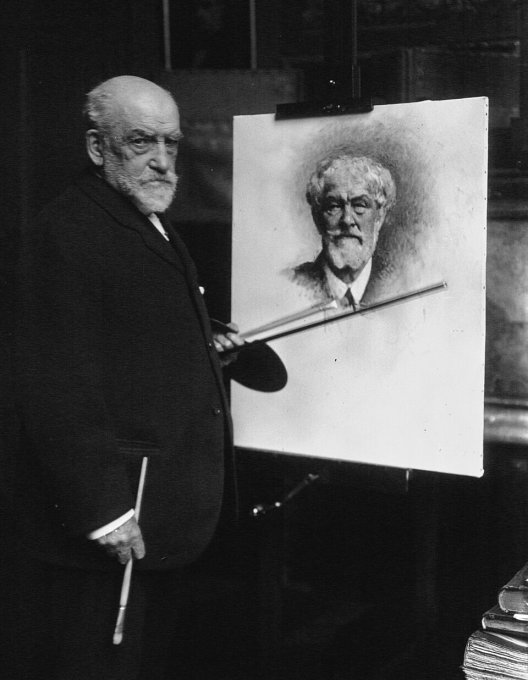
Brave Fine Art

Contessa Gallery

Stephen Ongpin Fine Art

John Singer Sargent Virtual Gallery

Sotheby’s

Léon Joseph Florentin Bonnat. Part 2

Léon Bonnat painting a portrait of artist, Alfred Roll (1918)

Léon Bonnat was born in Bayonne, France and lived there until he was thirteen years old.  Léon’s family then moved to Madrid where his father took on a book shop.  Léon’s love of art began to materialise after he went to live in the Spanish capital and, to encourage him, his father would take his son to the Prado.  He remembered those museum visits, saying:

“…I was brought up in the cult of Velasquez. I was very young, in Madrid; my father, on bright days such as one only sees in Spain, sometimes took me to the Prado Museum, where we did long stops in Spanish cinemas. I always left them with a feeling of deep admiration for Vélasquez… “.

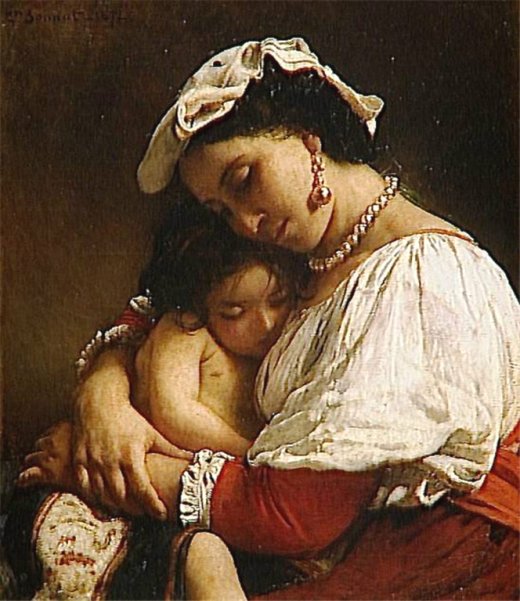
Italian Woman with Child by Léon Bonnat

In 1853, when Léon was twenty, his father died and the family returned to their French hometown of Bayonne.  After studying at the Ecole de Dessin de Bayonne, he went to live in Paris and study at the Ecole des Beaux-Arts.  In Paris, he was able to view paintings by the great Masters of French and Dutch art and particularly remembers seeing the works of Rembrandt and the influence his works had on him, commenting:

“…What is striking about Rembrandt is the power, the strength and the brilliance. He represents life in all its intensity. We see his characters, we talk with them, he resuscitates and revives an entire era. a marvellous and unique gift of interpretation, he joins the sensitivity, the goodness of a heart which vibrates to all the miseries, to all the joys, to all the emotions of humanity. He does not belong to any school. He has opened the new path which closed behind him…”

Roman Girl at a Fountain by Léon Bonnat (1875)

In 1857 he came second in the Prix de Rome competition and left Paris and spent three years at the Villa Medici.  The Villa Medici, now the property of the French State was founded by Ferdinando I de’ Medici, Grand Duke of Tuscany, and has housed the French Academy in Rome and welcomed winners of the Rome Prize since 1803, so as to promote and represent artistic creation in all its fields.

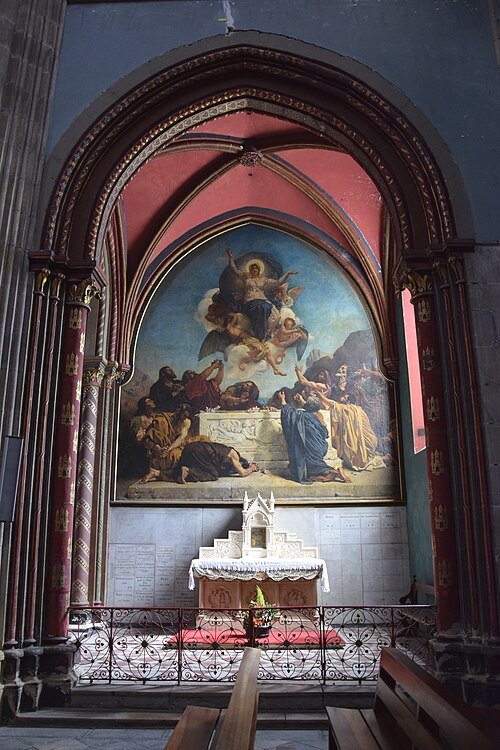
L’Assomption de Marie by Léon Bonnat (1869)

L’Assomption de Marie in situ in the Church Saint-André à Bayonne (Pyrénées-Atlantiques, Nouvelle-Aquitaine, France)

In 1869 Bonnat was awarded the Medal of Honor of the Salon for his painting L’Assomption.

The Martyrdom of Saint Denis by Léon Bonnat (1880)

One of Bonnat’s last religious paintings was his 1880 painting entitled The Martyrdom of Saint Denis.  St Denis was a 3rd-century Christian martyr and saint.  Denis was Bishop of Paris and through his speeches, made many conversions but he was looked upon by the local Roman priest as a danger and had Denis together with his faithful companions, the priest Rusticus and deacon Eleutherius, executed.  The place of the execution, by beheading, was on the highest hill in Paris, which is now known a Montmartre.   Denis was said to be against the beheading taking place at this spot and “folklore” has it that after Denis was beheaded, the corpse is said to have picked up his severed head and walked ten kilometres from the top of the hill, and during that entire walk he preached a sermon. 

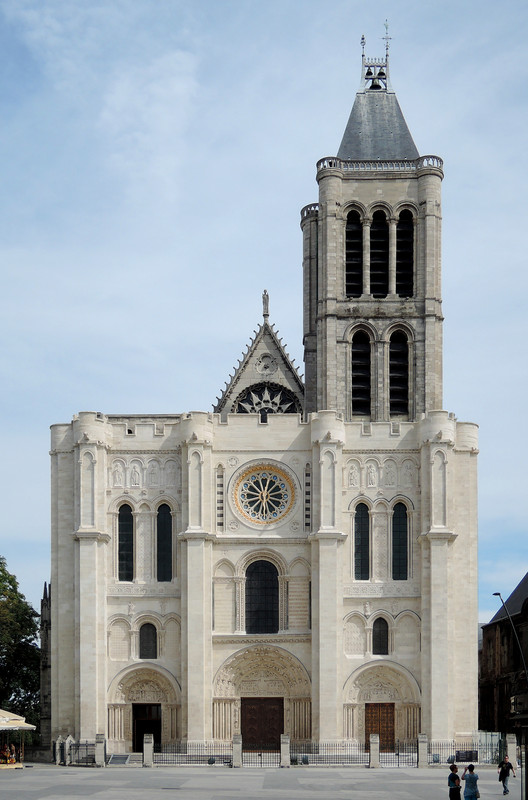
Basilica of St Denis, Paris

Detail of the north portal sculpture; the martyrdom of Saint Denis, Eleuthere and Rustique 

Denis finally collapsed at the place where he wanted to be buried, the spot where now stands the Basilica of St Denis and which is also the burial place of the Kings of France.  Saint Denis is the patron saint of both France and Paris.

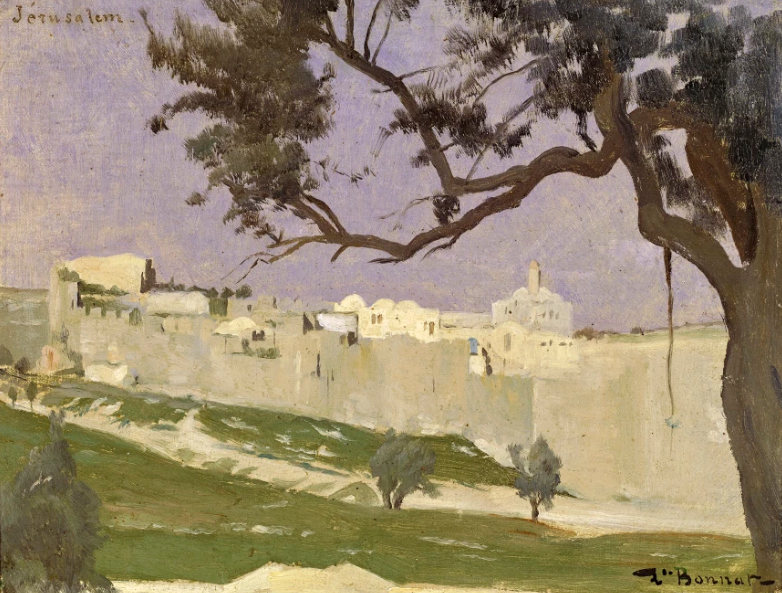
View of Jerusalem by Léon Bonnat

Although, as we will see later, Bonnat was best known for his portraiture and his early historical and religious subjects, but his landscapes and Orientalist depictions are looked upon as among his most intensely personal and beautifully crafted works.  Léon Bonnat travelled to the Middle East in 1868 together with a party that included the French painter, Jean-Léon Gérôme, his pupil Paul-Marie Lenoir,  the Dutch artist Willem de Farmas de Testas and Gérôme’s brother-in-law Albert Goupil.  The journey began in January 1868 at the Egyptian port of Alexandria and by the third of April, the group had arrived at the gates of Jerusalem.   Willem de Famars Testas recalled their first glimpse of the walled city:

“…The first glimpse of Jerusalem was gripping, the sun-illuminated city was silhouetted against a violet thundery light, while the outlying land lay under the shadow of clouds…”

Léon Bonnat recorded the impressions and the specifics of their arrival at the gates of Jerusalem in April of that year in one of his may oil on canvas sketches entitled View of Jerusalem.

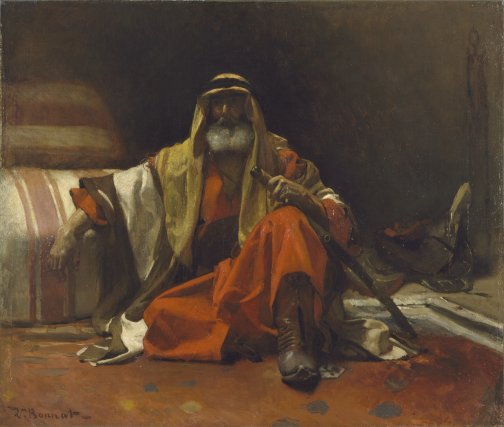
An Arab Sheik by Léon Bonnart (c.1870)

One of Léon’s works from this period was entitled An Arab Sheik which he completed once back in Paris.  It is thought that Bonnat’s depiction emerged from combining multiple resources such as the French model who posed for the seated figure; the saddle we see which Bonnat brought back from his travels and a multitude of sketched notations which he made during his travels in the Middle East.  Combining all this data Léon managed to create a painting that appears authentic, and yet, it is stereotypical of what Europeans believed about the Arabic world and its people such as the way the sheik holds his sword depicting his strength and fierceness and enhances how Europeans believed that that cultures in the Middle East and elsewhere were ruled by violence, in contrast to the supposedly more “civilized” societies of Europe and North America.

Christ on the Cross by Léon Bonnat(1674)

Bonnat’s haunting work entitled Christ on the Cross was commissioned in 1873 for the courtroom of the Cour d’Assises of the Palais de Justice in Paris.  The reasoning behind the commission was that it would embody divine justice in the eyes of the accused and by reminding them of the sufferings of Christ to save the fishermen. The painting was submitted  at the 1874 Salon.  The painting measures 1.59 meters in width and 2.27 meters in height. Bonnat’s depiction fundamentally renews the traditional representation of Christ on the cross. Christ is shown with a crown of thorns, his body is muscular and pale, and he wears a simple white loincloth. Blood is visible from the nails piercing his hands and feet. The background is dark and sombre. The crucified Christ is characterised in an extremely realistic way, accentuating Christ’s suffering due to the torture he received. Christ on the Cross is one of the best known and best loved crucifixion paintings of the western world. The painting can be viewed at the Petit Palais, Museum of Fine Arts of the City of Paris.

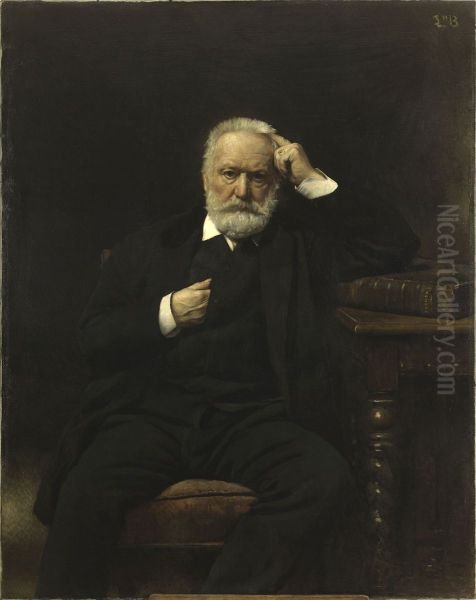
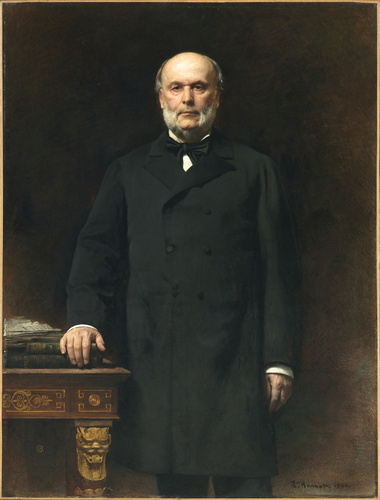
Victor Hugo by Léon Bonnat (1879)

For an artist to survive financially he or she must sell their work.  Once back in France, after his three-year stay at Villa Medici in Rome, Léon realised that the sale of his historical and religious paintings had fallen off and he had to look for another painting genre which would attract more buyers.  While Bonnat created many religious and historical works, his long-lasting fame rested on his exceptional career as a portrait painter. In an era before photography became the norm, painted portraits were central for chronicling the likenesses of important individuals, and Bonnat became one of the most sought-after portraitists of the French Third Republic and beyond. His sitters included presidents, politicians, writers, scientists, artists, and members of high society.

Jules Ferry by Léon Bonnat (1888) Jules François Camille Ferry was a French statesman and republican philosopher. He was one of the leaders of the Moderate Republicans and served as Prime Minister of France from 1880 to 1881 and 1883 to 1885.

Bonnat artistic brilliance as a portrait artist was his extraordinary skill in capturing not just a physical likeness but also the sitter’s charm, personality and social standing. His portraits are typified by their unruffled gravity, psychological perception, and scrupulous attention to every detail, whether it be the texture of fabrics to the detailed features of the face and hands. Bonnat often used dark, neutral backgrounds, which allowed viewers to focus entirely onto the subject, which were often illuminated by a carefully controlled light source, a technique evocative of the Spanish painter, Velázquez.

Portrait of Marthe and Therese Galoppe by Léon Bonnat (1889)

Marthe and Therese Galoppe were prominent figures in 19th-century France, known for their social standing and involvement in Parisian society. The painting captures their youthful beauty and grace, reflecting the evolving role of women in society during that time. Bonnat’s portrayal of the Galoppe sisters is significant as it showcases women not just as muses but as individuals with their own identities, challenging traditional views of women in art.

Armand Fallières by Léon Bonnat (1907) French statesman who was President of France from 1906 to 1913.

Among his most famous sitters were famous figures were the statesman Adolphe Thiers, the revered author Victor Hugo, the pioneering scientist Louis Pasteur, fellow painter Pierre Puvis de Chavannes, and French Presidents like Jules Ferry and Armand Fallières. Bonnat’s portraits served not only as personal records but also as official images that helped shape the public perception of these influential individuals. His success in this genre brought him considerable wealth and prestige.

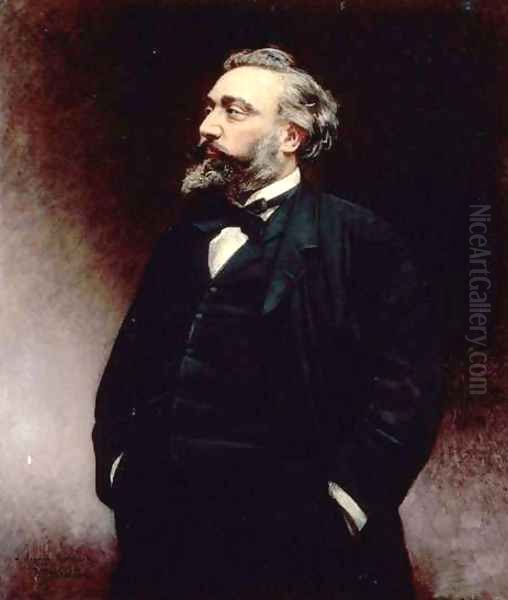
Portrait of Léon Gambetta by Léon Bonnat (1888) Gambetta was a French lawyer and republican politician who proclaimed the French Third Republic in 1870 and played a prominent role in its early government.

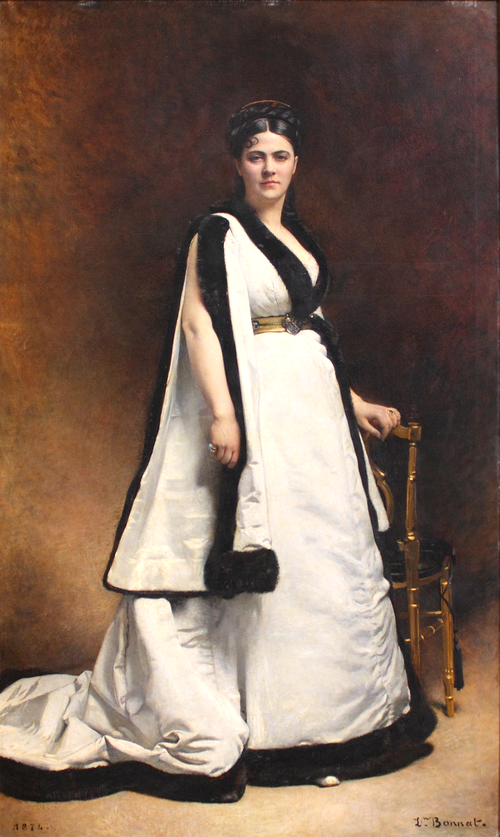
Madame Pasca by Léon Bonnat (1874) Alice Marie Angèle Pasquier was better known by her stage name Madame Pasca, a French stage actress.

Bonnat’s methodology when it came to creating portraits was known to be both thorough and painstaking. He demanded of his sitter numerous meetings so that he could carefully observe them in order to capture subtle gradations of expression and posture and because of this, he was able to achieve prolonged observations which allowed him to realise a high degree of naturalism along with psychological depth.  However, Bonnat’s long processes to achieve a finished portrait did not always please the sitters.  Although he was minded as to what the sitter wanted in the finished portrait, Bonnat refused to flatter his subject and simply strived for an unvarnished truth, but still conveying the dignity appropriate to the subject’s station in life. His commitment to authenticity along with his undoubted technical mastery in delivering form and texture, achieved the finished product being solid, present, and intensely real.

Portrait of Jules Grévy by Léon Bonnat (1880). Jules Grévy was  a French lawyer and politician who served as President of France from 1879 to 1887.

Léon Bonnat who had benefited, following the intervention of the mayor of Bayonne, Jules Labat, when he was granted a municipal scholarship from the city to study the Fine Arts in Madrid and then later in Paris, announced his intention to give his native city the gigantic art collection he had built up.  Léon Bonnat’s dedication to art extended well beyond his lifetime through this act of extraordinary generosity. Léon had no direct heirs, and decided to bequeath his extensive personal art collection, along with many of his own works, to his hometown of Bayonne.

Musée Bonnat-Helleu in Bayonne, France

It was during the latter part of the nineteenth century that Bonnat had achieved financial stability and was able to indulge his passion for collecting art, especially drawings. He acquired sketches, drawings and prints by Rembrandt, Poussin, and Watteau as well as many others.  Eventually, his collection included drawings and paintings from the best of his students and colleagues as well. Like many collectors, Bonnat not only loved the art he had acquired, but he also hoped to share it with a larger public and so he proposed the idea of building a museum in his native Bayonne that would ultimately house his own collection. With his deep roots in the region, continuing family ties to Bayonne, and undoubtedly a sense of gratitude for the support he’d received as a fledgling painter, Bonnat worked tirelessly at developing the new museum. 

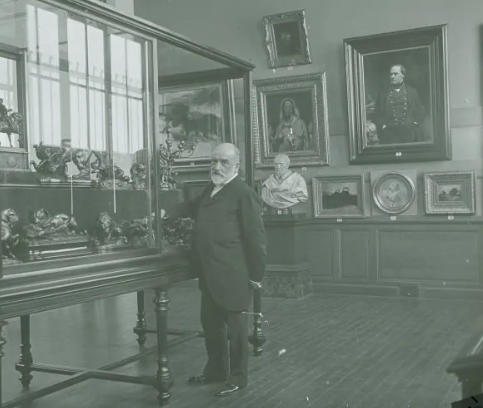
Léon Bonnat, installing his collection at the Musée Bonnat, Bayonne.

In 1902, he personally installed a large portion of his own unparalleled collection in the new Musée Bonnat.  The collection was later enriched by the donation of the collection of Paul Helleu and his wife Alice, leading to its current name, the Musée Bonnat-Helleu.  The chosen location of the museum was located at the corner of the two streets, Jacques-Laffitte and Frédéric-Bastiat, in the city centre, near the church of Saint-André where Léon Bonnat’s painting, Assumption of the Virgin can be seen. In 1896, the first stone of the future museum was laid by the Bayonne mayor Léo Pouzac and the classical-style building, in limestone, was completed eighteen months later. Inaugurated in 1901.  When the Bonnat Museum opened, the artist and collector came to set up his collection himself, while writing a will by which he bequeathed almost all of his works to the National Museums with the obligation to deposit them in Bayonne.

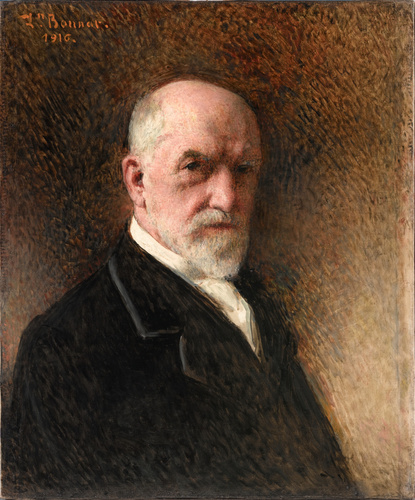
Self portrait by Léon Bonnat (1916)

Léon Bonnat died in Monchy-Saint-Éloi,  a commune in the Oise department in northern France, on September 8th 1922, aged 89.   Léon had never married and lived most of his life with his mother and sister. 

Jean-Jacques Henner

In my previous blog regarding the Dutch painter Thérèse Schwartze I mentioned that one of her early art tutors was Jean-Jacques Henner, the French painter famed for his portraiture.  Today I am going to focus on his life and his many artworks.

Jean-Jacques Henner

Henner was born on March 5th 1829 at the Alsatian town of Bernwiller.  Henner came from a family of Alsatian farmers who had settled in Bernwiller in the Haut-Rhin. He was the youngest of six siblings of George Guillaume Polycarpe Henner and Madeleine Henner (née Wadel).  He had two older sisters, Maria Anne and Madeleine and three older brothers, Séraphin, Grégoire and Ignace. He grew up in this farming community, but despite their modest financial situation, his parents sent him to the College of Altkirch where he studied drawing. His teacher was Charles Goutzwiller who noticed his rapid progress and encouraged him to move to Strasbourg and study at the studio of Gabriel-Christophe Guérin. His artistic studies continued when he enroled at the Ecole des Beaux-Arts in Paris as a pupil of Michel-Martin Drolling,  a neoclassic French painter noted especially as a history painter and portraitist. In 1851 he was tutored by another French artist, François-Édouard Picot, famed for his mythological, religious and historical paintings.   

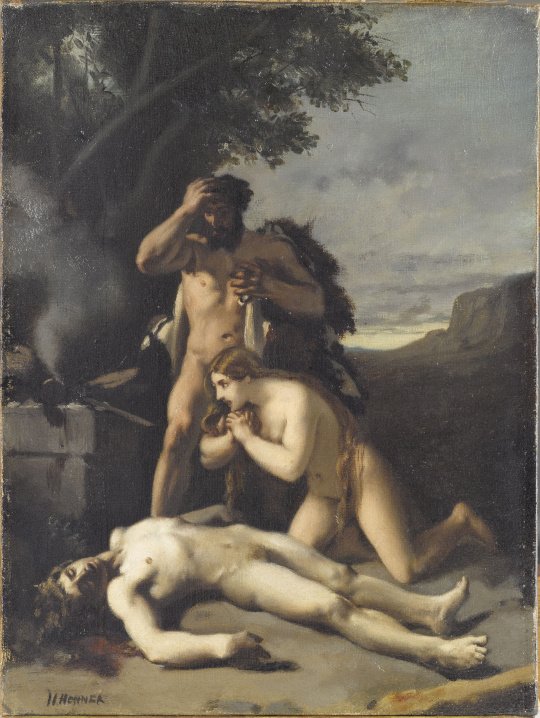
Adam and Eve find the Body of Abel by Jean-Jacques Henner (1858)

In 1848, he entered the École des Beaux Arts in Paris and in 1858 after two failed attempts he won the coveted Grand Prix de Rome award, which was a French scholarship for arts students.  His submission was his painting entitled Adam and Eve find the Body of Abel.  The prize for the winner was a bursary that allowed them to stay at the Villa Medici in Rome, for three to five years at the expense of the state. The painting can be seen at the Musée d’Orsay.

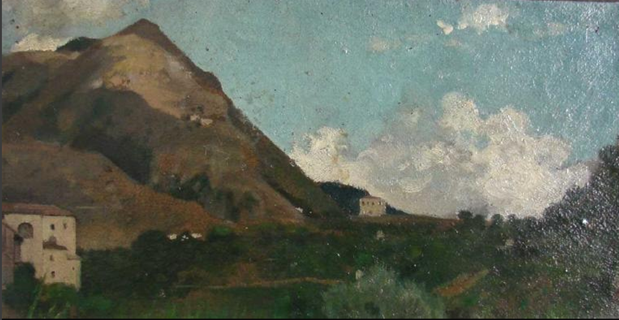
Mountains on the Outskirts of Rome by Jean-Jacques Henner (c.1861)

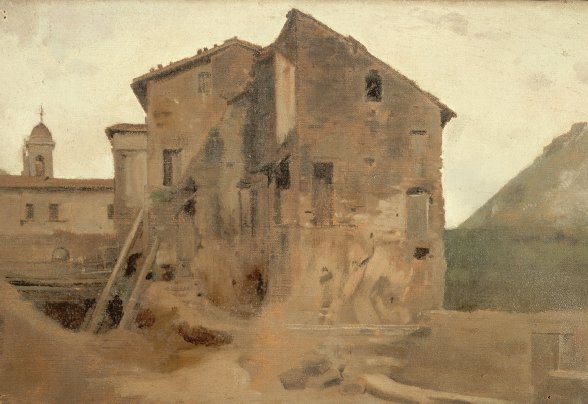
During his five-year stay in Rome, he was guided by Jean-Hippolyte Flandrin, a French Neoclassical painter.  Like many artists, Henner was captivated by Italy and spent many hours in museums reproducing the works of the painters that he respected. He also had plenty of time during his five-year stay to travel around the country, visiting Florence, Venice and Naples in which time he completed a number of small landscape paintings.  His works at that time showed his appreciation of past masters and it was Titian and Correggio who influenced him the most. In 1864 Henner returned to Paris and brought back copies of works by masters and a number of luminous landscapes.

Rome from the terrace of the Villa Medici by Jean-Jacques Henner (1860)

During those five years in Rome Henner painted this work at the Villa Medici where he stayed between 1859 and 1864. This is not simply a view of the Eternal City as observed from the villa. Once he had painted the garden, Henner then populated the terrace with groups of what he believed were “typical” characters, which he had often seen in real life and are simply identifiable by their clothes, monks, peasants, and elegant ladies. All are depicted in front of the classical panorama of the city, in which one can see the silhouette of Saint Peter’s Basilica in the background.

Masure dans la campagne de Rome (Dilapiated House in the Countryside of Rome) by Jean-Jacques Henner (c.1863)

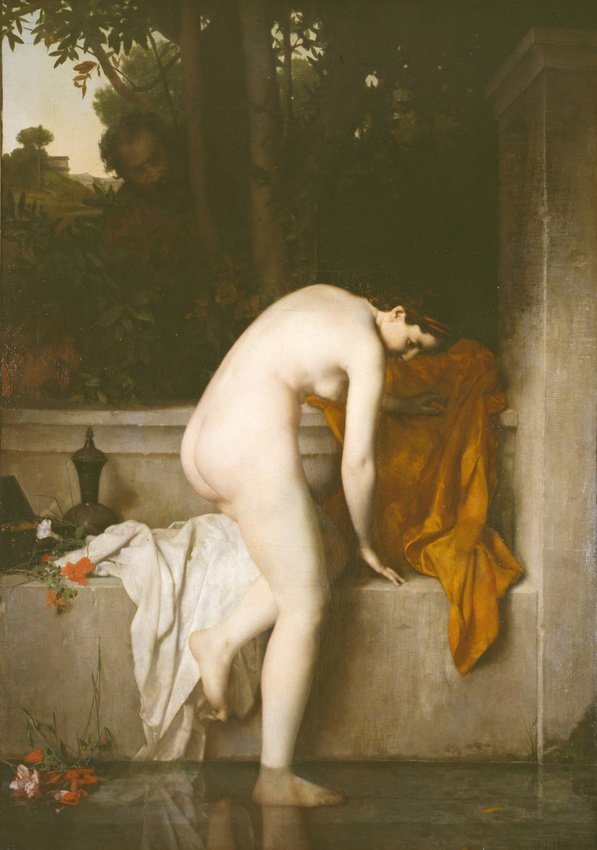
La Chaste Suzanne by Jean-Jacques Henner (1864)

Henner had his painting Bather Asleep exhibited at the Salon in 1863 and at the following year’s Salon his painting La Chaste Suzanne was exhibited. The Biblical episode depicting Suzanne bathing was a popular one for painters and it was above all an opportunity for various artists to paint a beautiful nude. Jean-Jacques Henner sent back his version to the French Academy which he completed whilst in his last year of his residence at the Villa Medici in Rome. For Henner, this was a compulsory exercise, supposed to demonstrate the student’s progress and their skill in execution, and for the Academy to see if their prize winner was advancing artistically.

Sacred Love and Profane Love by Titian (1514)

Henner almost certainly took his inspiration from respected examples left by the great masters’ depiction of nudes which he had seen whilst in the Italian capital. It is thought that Henner was influenced Titian’s 1514 painting entitled Sacred Love and Profane Love which was at the Galleria Borghese in Rome. Henner’s work was not well-received and was harshly criticised for the heaviness and lack of graciousness in the model’s body. It was also criticised for the artificiality of the subject which although being put forward as a history/biblical painting offered little more than a depiction of a bather. However the propensity of ridding any narrative self-justification in painting the nude, and so giving it as a subject in itself, was becoming more common in the work of many contemporary artists, such as Courbet.

Séraphin Henner (brother) by Jean-Jacques Henner (c.1881)

Grégoir Henner (brother) by Jean-Jacques Henner (1889)

While a student in Paris Henner was particularly interested in portraiture, and during his frequent visits home to Alsace he would complete many portraits of his family as well as local dignitaries and scenes of Alsatian peasant life.

Eugénie and Jules Henner by Jean-Jacques Henner (c.1865)

Eugénie and Jules were two of the three children of his brother, Séraphin and his wife, Madeleine. Henner was very close to his nephew and niece and he paid for violin lessons for Jules and piano lessons for Eugenie when they were little. Henner had no children of his own, and on his death, he bequeathed them all that he possessed. Here, Eugénie and Jules are depicted together in their childhood.

Paul Henner by Jean-Jacques Henner (before 1867)

A rather sad portrait. Paul Henner was the third child of Séraphin and Madeleine Henner. He was born in 1860, but sadly died seven years later.

Byblis by Jean-Jacques Henner (c.1870)

In 1864 Henner returned to France and exhibited with great success at the Paris Salon between 1865 and 1903. During his early days back in France his works were of quasi-mythological subjects, such as his 1867 work entitled Byblis, which was exhibited at the 1867 Salon.

Jean-Jacques Henner in his Paris studio at 11 place Pigalle

Jean-Jacques Henner lived in rue La Bruyère and his studio was at 11 place Pigalle, where he lived from 1867.

L’Alsace. Elle Attend (Alsace, She Waits) by Jean-Jacques Henner (1871)

Jean-Jacques Henner’s birthplace was the region of Alsace and this north-east area of France borders Germany. With the defeat of France in the Franco-Prussian War in 1871, Alsace and northern Lorraine were annexed to the new German Empire. At the conclusion of the First World War, the defeat of Germany, and the Treaty of Versailles, Alsace once again came under French control. In 1940, during the Second World War Alsace–Lorraine was occupied by Germany during the Second World War. Although it was never formally annexed, Alsace–Lorraine was incorporated into the Greater German Reich. With the defeat of Germany in 1945 Alsace returned to French rule. Henner’s 1871 painting entitled L’Alsace. Elle Attend had political overtones. It depicts a young Alsatian woman in mourning and is a political comment on the German annexation of the province after the Franco-Prussian War. The patriotic image was very popular and achieved a wide circulation when it was engraved by Léopold Flameng.
L’Alsace. Elle Attend meaning Alsace, she awaits, was commissioned on the initiative of Eugénie Kestner, a member of the Thann industrial family from Alsace. On completion it was given Léon Gambetta, a French lawyer and republican politician, who was one of the fiercest opponents of the relinquishment of the Alsace-Lorraine region to the new German Empire following the war of 1870. Following the defeat of France by the Prussian armies a sense of fervent and heightened patriotism followed. Henner’s painting quickly became looked upon as a symbol of Alsace’s suffering, a pain shared by the painter who was very attached to the region of his birth. The painting depicts a young Alsatian woman in mourning, unassuming but gracious.

Donna sul divano nero (Woman on Black Divan) by Jean-Jacques Henner (1869)

At that time, Henner had assumed a naturalistic style which can be seen in his painting entitled Woman on a Black Divan, which was exhibited at the Salon of 1869 and now is housed at the Mulhouse, Musée des Beaux-Arts. A smaller version of this painting also included a rosette in the red, white and blue colours of France, pinned onto the traditional black Alsatian bow, gives the painting its patriotic significance without being pompous or anecdotal.

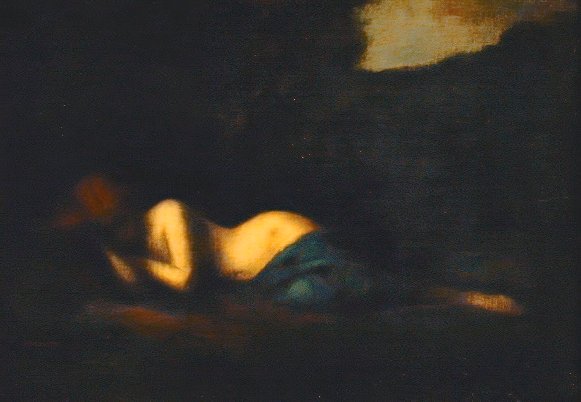
Magdalene in the Desert by Jean-Jacques Henner (1874)

After 1870 Henner’s entire work became a deliberation on the theme of death in various appearances. There were the depictions of Mary Magdalene in what became known as the Magdalene Series, such as Magdalene in the Desert, which was exhibited at the 1874 Salon, and Magdalene Weeping, which he completed in 1885.

Die Magadalena by Jean-Jacques Henner (Exhibited at the 1878 Salon)

La Magdaleine by Jean-Jacques Henner

Henner complted many more Magdalene paintings.

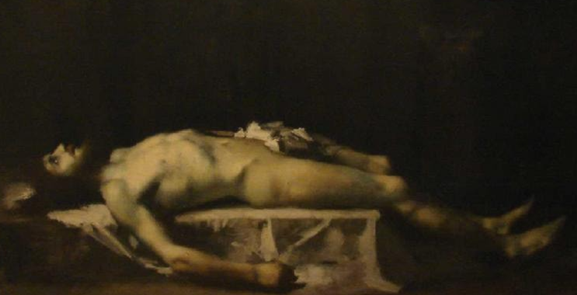
The Dead Christ by Jean-Jacques Henner (c.1884)

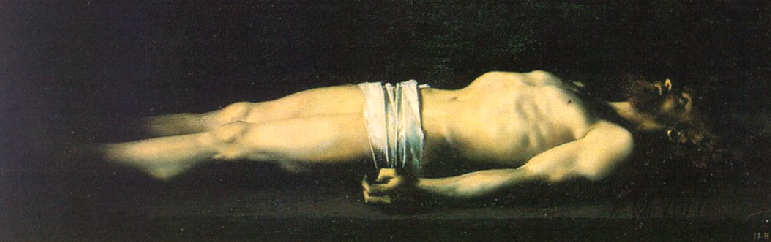
Jesus at the Tomb by Jean-Jacques Henner (c.1879)

There was also a number of works in Henner’s Dead Christ series with paintings such as Jesus at the Tomb, which was exhibited at the 1879 Salon and is now part of the Musée d’Orsay collection and the painting entitled Dead Christ which was exhibited at the 1884 Salon and now hangs at the Musée Beaux-Arts in Lille.

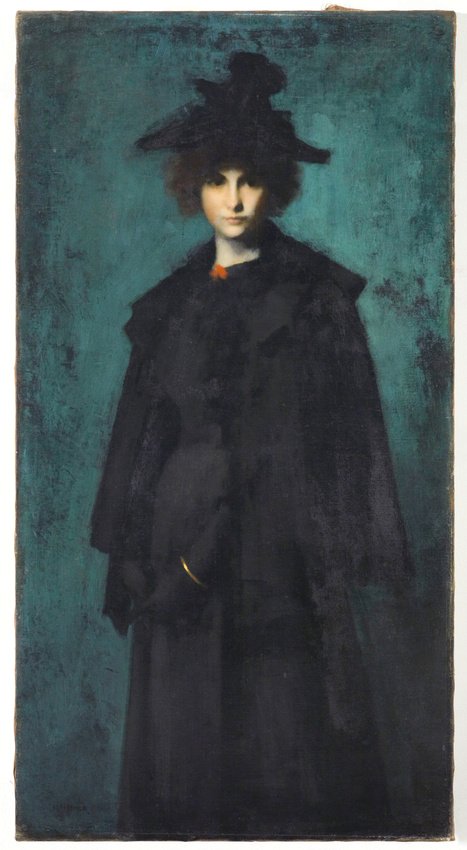
Portrait of Madame Laura Leroux by Jean-Jacques Henner

Jean-Jacques Henner will best be remembered for his portraiture which would provide him with financial stability. During his lifetime he completed many portraits of his family and famous people like his Portrait of Madame Laura Leroux. Laura Leroux-Revault was a French artist and painter. Her first teacher was her father, the painter Louis Hector Leroux and she later trained at the Académie Julian art school in Paris. She also trained under Jules Lefebvre and in Jean-Jacques Henner’s studio. The two artists were friends of her father.

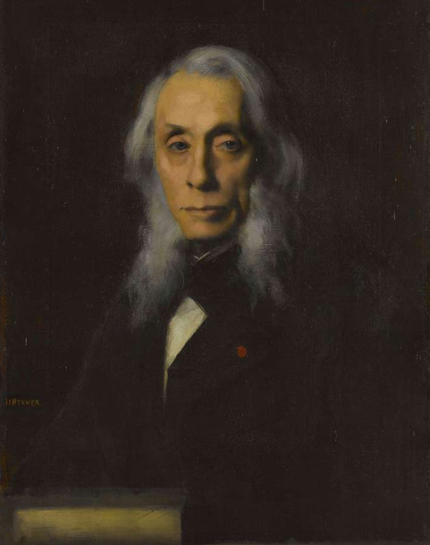
Portrait of Jean-Gaspard-Félix Laché Ravaisson-Mollien by Jean-Jacques Henner (1889)

Another famous person to be immortalised by Henner was Jean-Gaspard-Félix Laché Ravaisson-Mollien, a French philosopher, said to be France’s most influential philosopher in the second half of the nineteenth century.

The Reader by Jean-Jacques Henner

La comtesse Kessler by Jean-Jacques Henner (c.1886)

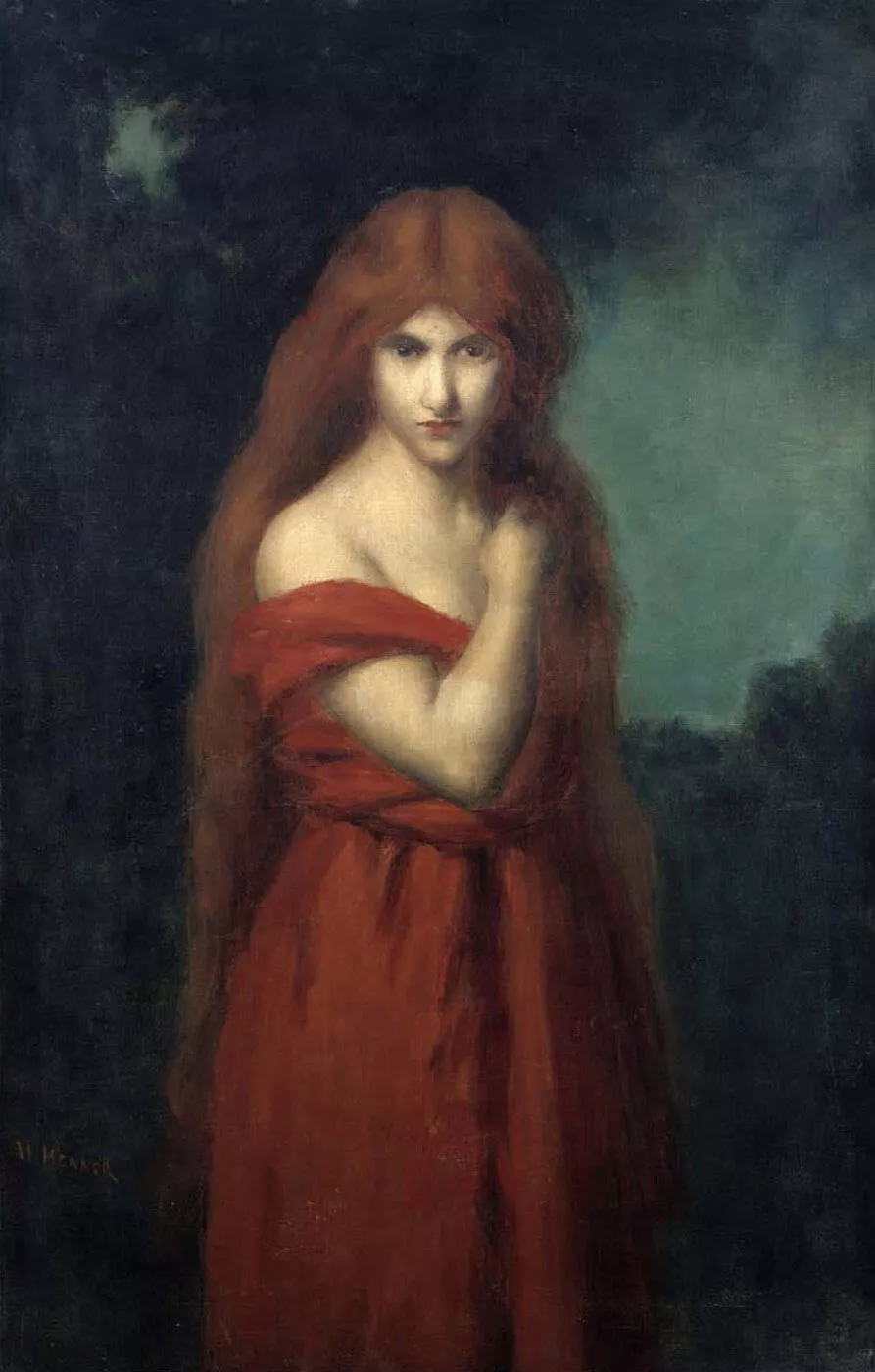
Henner’s love of portraying nudes in historical or mythological settings was not his only love. He had a passion for the colour red and of portraying women with red hair !

Woman in Red by Jean-Jacques Henner

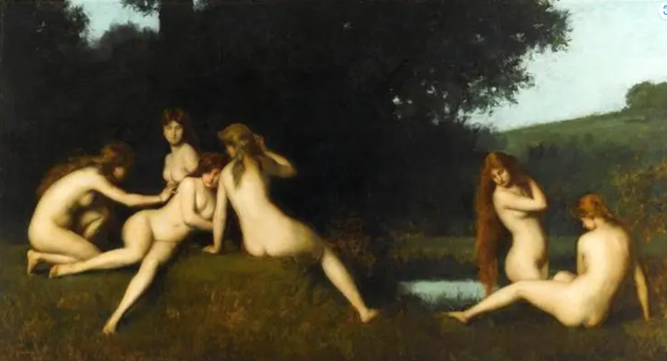
Les Naïades by Jean-Jacques Henner (1861). Painted for the Soyers’ dining room, 43 rue de Fauborg Saint-Honoré. Paris.

Alsatian Girl by Jean-Jacques Henner

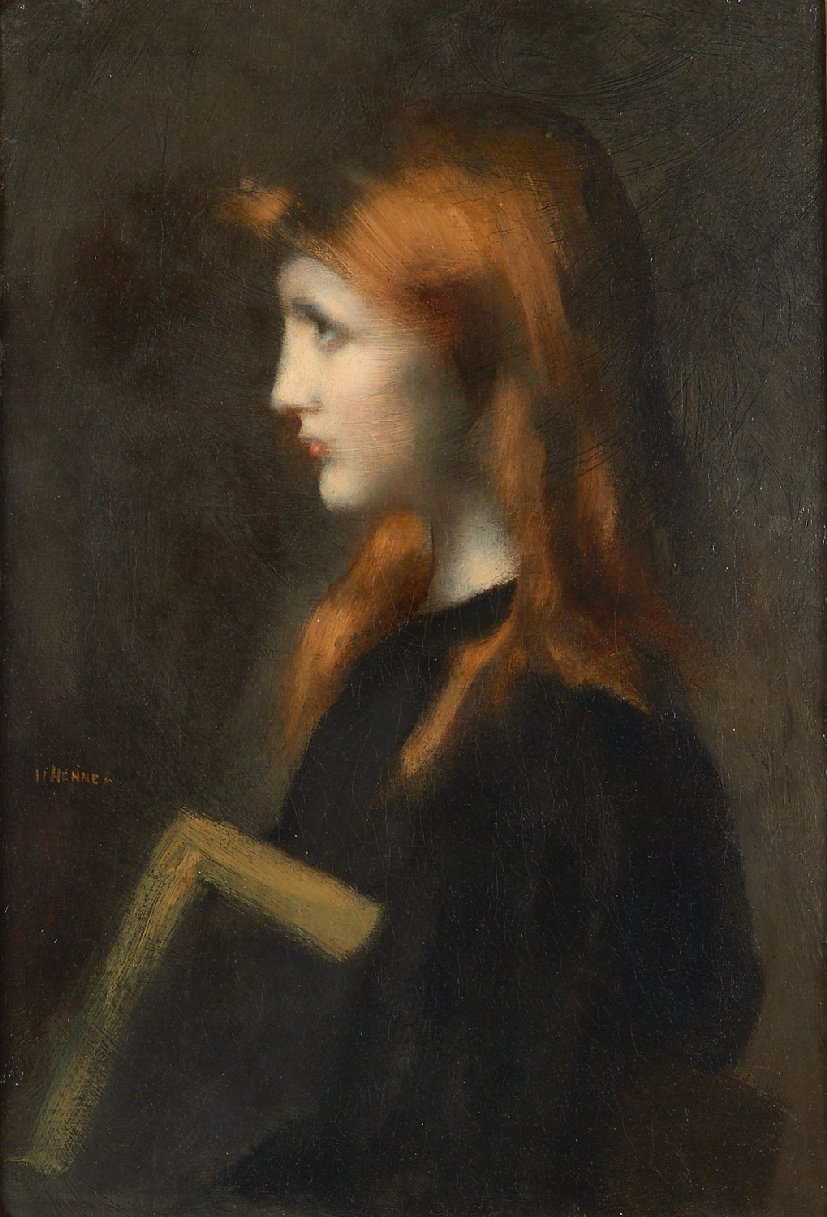
L’Ecoliere by Jean-Jacques Henner

Over the years Henner tutored many aspiring painters. Between 1874 and 1889 he taught at what was termed “the studio of the ladies”, which he organized with Carolus-Duran, during the time when women were not allowed entry to the École des Beaux-Arts. Some of these students also served as his models such as Dorothy Tennant, Suzanne Valadon and Laura Leroux-Revault, daughter of his close friend Hector Leroux; Henner’s full-length portrait of Laura Leroux (shown earlier) is now at the Musée d’Orsay having been shown at the Paris Salon of 1898 and purchased by the French State.

Jean-Jacques Henner (Photograph by Nadar c.1900)

Jean-Jacques Henner died in Paris on July 23rd 1905 aged 76.

Thérèse Schwartze

Thérèse Schwartze – self portrait (1917)

Therese Schwartze was a Dutch 20th century painter.  Such was a hugely talented portrait artist that was one of only a few females who had been honoured by receiving an invitation to contribute her self-portrait to the hall of painters at the Uffizi Gallery in Florence.  This genius of portraiture completed around a thousand works during her forty-year career, which means that she completed more than twenty paintings a year. Because many of her portraits were created to be treasured by family members, most of her work has remained in private collections.  About one hundred and fifteen of her paintings are in public collections in the Netherlands, and twelve are part of foreign public collections, which leaves the locations of nearly four hundred paintings still unknown. She became a millionaire in the process. Schwartze also established an international reputation, with countless exhibitions and commissions throughout Europe and the United States. 

Self Portrait by Johan Georg Schwartze

Thérèse was born on December 20th 1852 in Amsterdam.  She was the daughter of Johan Georg Schwartze and Maria Elisabeth Therese Herrmann.  She was one of five children and had four sisters including Georgine, a sculptor, Clara Theresia, a painter and one brother, George Washington Schwartze, also a painter. 

Portrait of Thérèse aged 16 by her father, Johan Georg Schwartze (1869)

Her father was a well-respected portrait painter and it was he who provided Thérèse with her first artistic training.   In 1869 her father completed a portrait of his daughter, Thérèse.

Three girls of the orphanage in Amsterdam by Thérèse Schwartze (1885)

At that time, there was the perception that teaching girls and young ladies to paint was seen simply as a part of a cultured upbringing rather than a profession for earning money which was viewed as the role of the man. But for Johann Schwartze he couldn’t care less about such conventions. He trained his daughter in painting and drawing from a very young age and intended that Thérèse would become his worthy successor. She started her professional career at the age of sixteen, working in her father’s studio which she eventually took over when she was twenty-one after his death in 1874. Schwartze wrote to her father in a birthday letter, writing:

“…I will apply myself more to everything, so as, with God’s blessing, to be able to earn my living by painting…”

Because the art academies were not yet open to girls, her father sent her to Munich for expensive private lessons for a year under Gabriel Max and Franz von Lenbach who was regarded as the leading German portraitist of his era. In 1879 she moved to Paris and continued her artistic studies under Jean-Jacques Henner, the Alsace-born portrait artist.

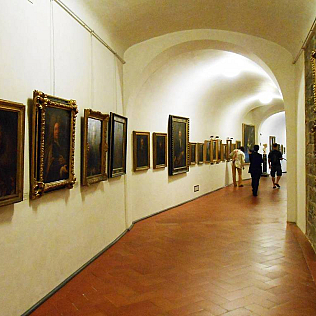
The Vasari Corridor at the Uffizi Gallery, Florence

Thérèse Schwartze’s portraits are truly remarkable and she was one of the few women painters, who had been honoured by an invitation to contribute her self-portrait to the Hall of Painters, the Vasari Corridor, at the Uffizi Gallery in Florence. The Uffizi collection is one of the most complete in all Europe, first started by Cardinal Leopoldo de’ Medici in the 17th century.  The passageway was designed and built in 1564 by Giorgio Vasari to allow Cosimo de’ Medici and other Florentine elite to walk safely through the city, from the seat of power in Palazzo Vecchio to their private residence, Palazzo Pitti.   The passageway used to contain over a thousand paintings, dating from the 17th and 18th centuries, including the largest and very important collection of self-portraits by some of the most famous masters of painting from the 16th to the 20th century, including Filippo Lippi, Rembrandt, Velazquez, Delacroix and Ensor.   While the Medici family bought the first paintings, after the collection started, the family started receiving the paintings as donations from the painters themselves. This has continued over the centuries and there were more paintings in the collection that did not have space to be exposed.  Things have now changed as from 1973 to 2016, some of the self-portraits which had been hung in the Vasari Corridor, were, however only visible during restricted and occasional visits because of the confined space, which, also lacked air conditioning and adequate lighting.  Most of the self portraits have been moved to other rooms at the Uffizi.

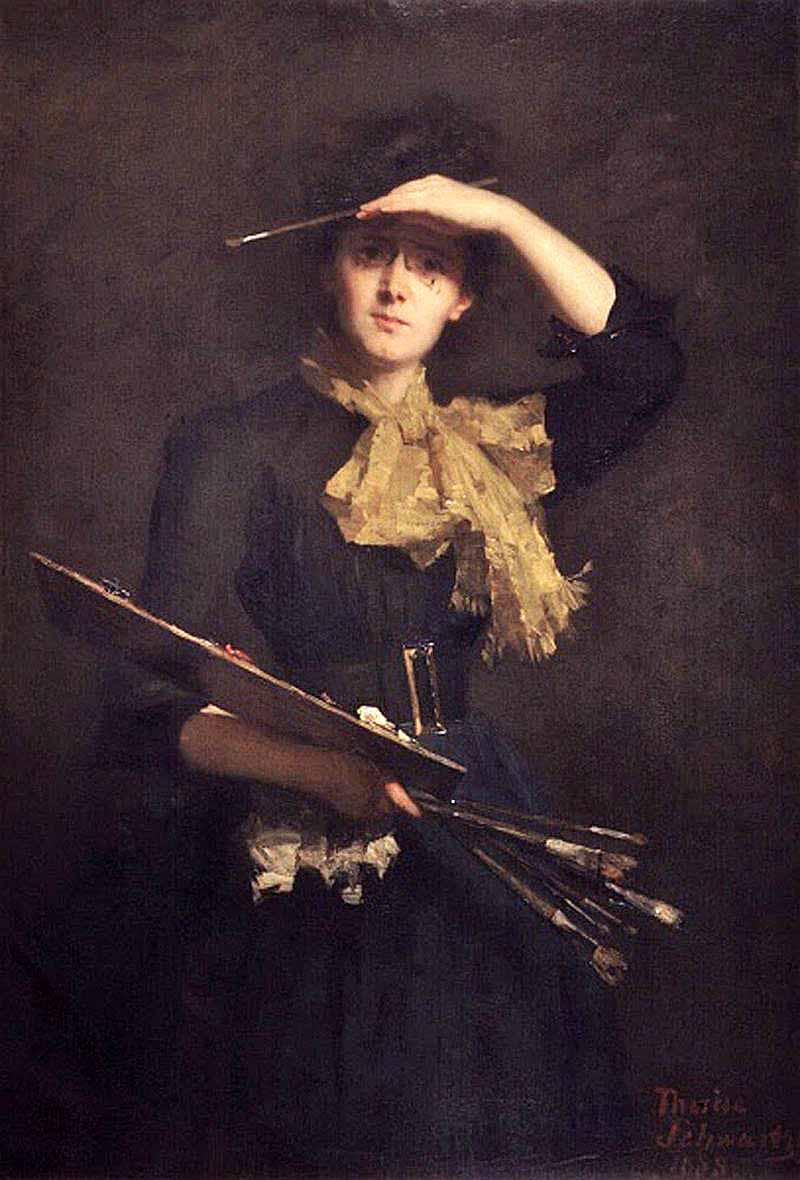
Self-portrait with Palette by Thérèse Scwartze (1888)

Only a handful of female portrait painters were active professionally in the 19th century, one of whom was Schwartze, who was nicknamed the ‘Queen of Dutch Painting’.  In the self portrait she contributed to the Uffizi entitled Self-portrait with Palette, she depicts herself staring out at us with a haunted look, paintbrush in one hand with the other looped through a paint-laden palette. The background of this canvas is bare, and our eyes are drawn to the painter’s tools: eyes, brush, pigments, and a rag at the ready. The painting was exhibited at the 1888 Paris Salon before being given to the Uffizi gallery in Florence.

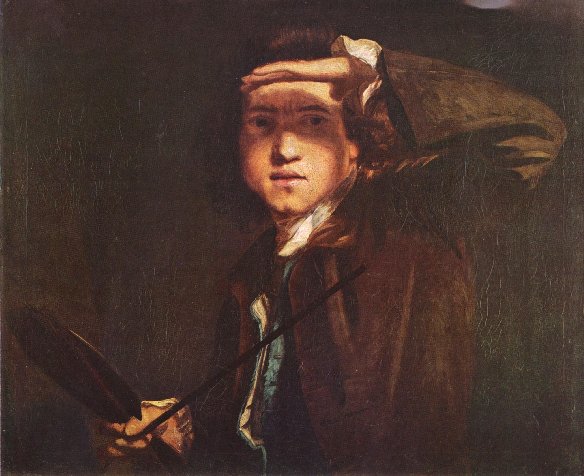
Sir Joshua Reynolds self portrait (c.1748)

Thérèse’s depiction of herself in her self-portrait could well have been inspired by Sir Joshua Reynold’s self-portrait which shows him similarly with his hand raised shielding his eyes from the bright light.

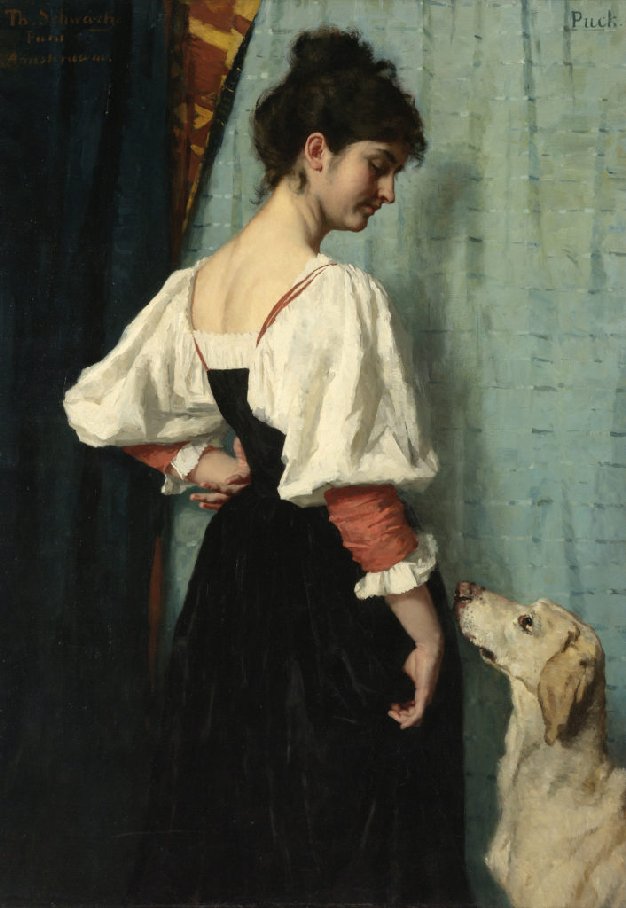
Young Italian Woman, with ‘Puck’ the Dog by Thérèse Schwartze, c. 1885)

Whilst living and studying in Paris, Thérèse completed her painting, Young Italian Woman, with ‘Puck’ the Dog.  The model she used for this painting was known as Fortunata.  She was one of the many professional Italian models working in Paris in the late 19th century. Schwartze started this painting in 1884 and exhibited it a year later in Amsterdam, having added the dog in the meanwhile.

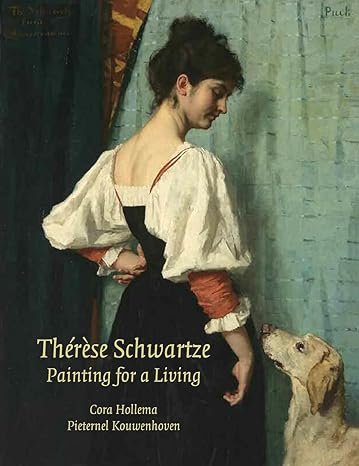
According the 2021 biography by Cora Hollema and Pieternel Kouwenhoven entitled Thérèse Schwartze: painting for a living. Thérèse’s career took off at a time when a new, wealthy Dutch class wanted to flaunt its status and what better way to achieve this than with a flattering portrait. Her biographer wrote:

“She was in demand because she produced a new elegant, un-Dutch, extravagant, flattering style of portraiture which was in demand by the upcoming ‘new money…….. The new entrepreneurs and industrialists in the second half of the 19th century…”

Portrait of Aleida Gijsberta van Ogtrop-Hanlo with her five children by Thérèse Schwartze (1906).

Schwartze was one of the leading society painters in the Netherlands around 1900. Her clientele came from the nobility and the bourgeois elite in Amsterdam and The Hague. Members of the royal family also sat for her.   A good example of her excellent portraiture is her 1906 group portrait of Aleida Gijsberta van Ogtrop-Hanlo with her five children.  In this work, Aleida van Ogtrop-Hanlo is surrounded by, from left to right: Adriënne (Zus), Pieter (Piet), Maria (Misel), Eugènie (Toetie) and Adèle (Kees). The youngest and sixth child, Joanna (Jennie) was not yet born.  Her husband was a wealthy stockbroker and founder of Amsterdam Royal Concertgebouw. The portrait of his wife and children has a dreamy quality, with rich clothing and poetic colours. It gives an excellent impression of the self-image of the Dutch upper classes at the beginning of the twentieth century.  Stylistically Thérèse Schwartze followed in the footsteps of the famous eighteenth-century English portrait painter, Thomas Gainsborough. 

 Portrait of the six Boissevain daughters by Thérèse Schwartze (1916)

An equally great group portrait by Thérèse Schwartze was her Boissevinfamily portrait but this a more decorous depiction.  It is entitled Portrait of the Six Boissevain Daughters and she completed it in 1916. According to Schwartze’s biography by art historian, Cora Hollema, this difference in style was not due to a development of the artist, but more to do with the wishes of her client. Mr. & Mrs. Boissevain, who were wealthy members of the Amsterdam upper class had ten children, six daughters and four sons. They were aware of the portrait of Aleida and her children by Thérèse but believed it to be far too modern.   So, when they commissioned Thérèse to paint the portrait in 1916 they asked her to produce a more time-honoured portrait of their daughters. Thérèse was now the breadwinner of the family and so sensibly adapted her style according to her client’s demands bearing in mind the adage: The client was king.

Thérèse Schwartze in her studio, Prinsengracht 1021, Amsterdam, 1903.

Thérèse’s great success as an artist became a point of reference for the young Dutch women painters who founded the Amsterdamse Joffers, a group of women artists who met weekly in Amsterdam at the end of the 19th and beginning of the 20th century. These “ladies of Amsterdam” met weekly, often at the Schwartze home, to update the glorious Dutch tradition of painting based on French Impressionist innovations.  They supported each other in their professional careers. Most of them were students of the Rijksakademie van beeldende kunsten and belonged to the movement of the Amsterdam Impressionists.

Woman wearing a hat (Portrait of Theresia Ansingh (Sorella)), by Thérèse Schwartze (after 1906).

Besides Schwartze’s commissioned portraits, which made her very wealthy, she still had time to complete portraits of her friends and relatives which were not commissioned and were often given as gifts.  A fine example in this regard is the portrait of Schwartze’s niece, Theresia Ansingh, who later became a member of the Amsterdam school of female painters known as The Joffers, many of them were inspired by Schwartze’s professional success. 

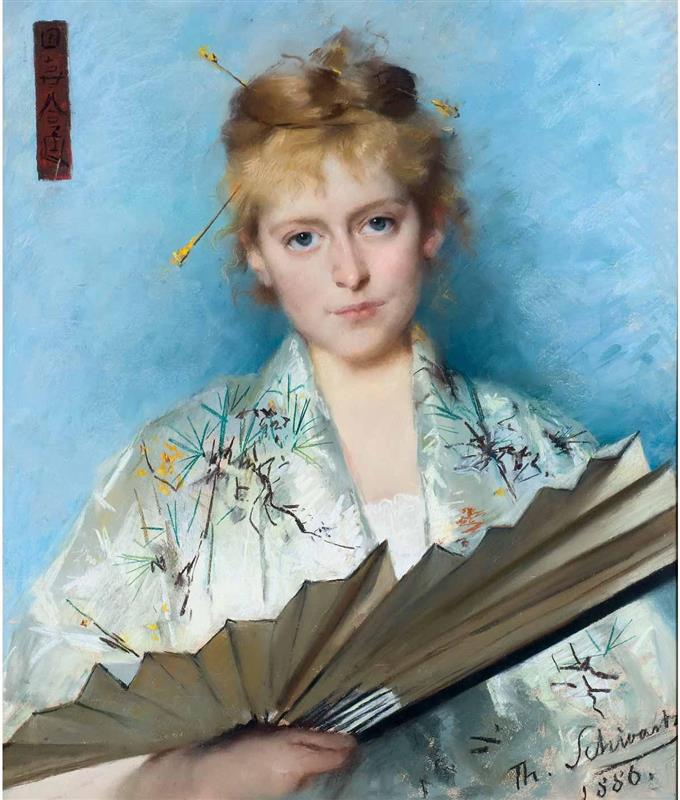
Maria Catharina Ursula (Mia) Cuypers by Thérèse Schwartze (1886)

One of my favourite portraits by Schwartze was her fascinating portrait of one of her friends, which is an amalgam of formal and informal portraiture and is entitled Portrait of Mia Cuypers.  She was a daughter of the architect Pierre Cuypers, who designed such famous buildings as the Rijksmuseum and Amsterdam’s Central Station. In 1883, she fell in love, to the dismay of her family and the astonishment of “high society,” with the Chinese-British merchant Frederick Taen-Err Toung from Berlin, who was in Amsterdam selling his Oriental merchandise at the International Colonial Exposition. Mia managed to overcome the social uproar and married Toung in 1886.  Being a close acquaintance of the Cuypers family, Thérèse was commissioned by the groom-to-be to make this wedding portrait, which is said to have only taken her one and a half days to complete.  There are Chinese characters in the upper left corner, which are not clear in my attached photo, which mean “rice field,” “longevity”/”delighted,” and “coming together.”

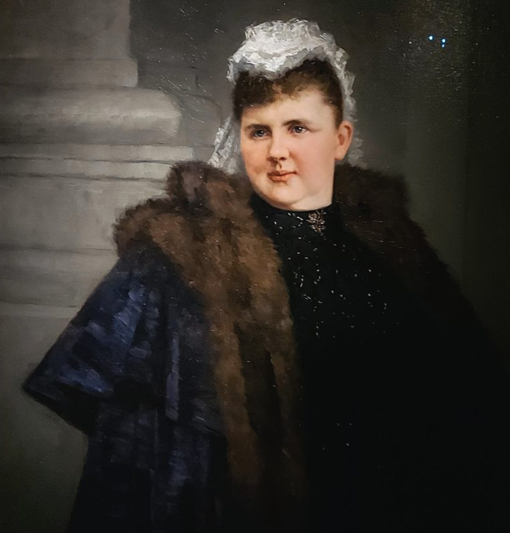
Portrait of Queen Emma by Thérèsa Schwartze (ca. 1881)

Soon after, she received a commission for a portrait of Queen Emma and the little princess Wilhelmina, who was born in 1880. In the single portrait of the young queen, she is dressed in dark colours against a neutral background, all is dark except her face. In this painting, one can already see the fine art of portraiture and the depicting of differing textures that Thérèse fully mastered. The fur stole, the lace cap on her head, as well as the brocade of the queen’s robe.

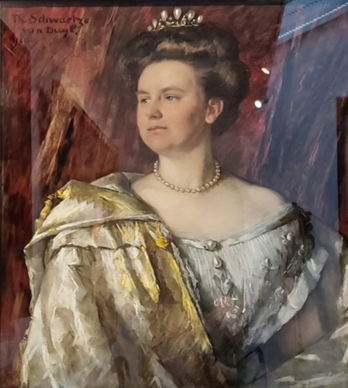
Portrait of Princess Juliana by Thérèsa Schwartze (1910)

Thérèse’s worked with the royal family of the Netherlands through a period of thirty-five years and in all they gave her six commissions that contributed greatly towards her fame and wealth. Most royal portraits were of Queen Wilhelmina.

Portrait of Queen Wilhelmina by Thérèse Schwartze (1910)

The royal court had a habit of paying a little more than the average client, which meant that 1910 was a particularly profitable year for Thérèse.  She painted so many members of the royal family that she was almost deemed a member of their household.

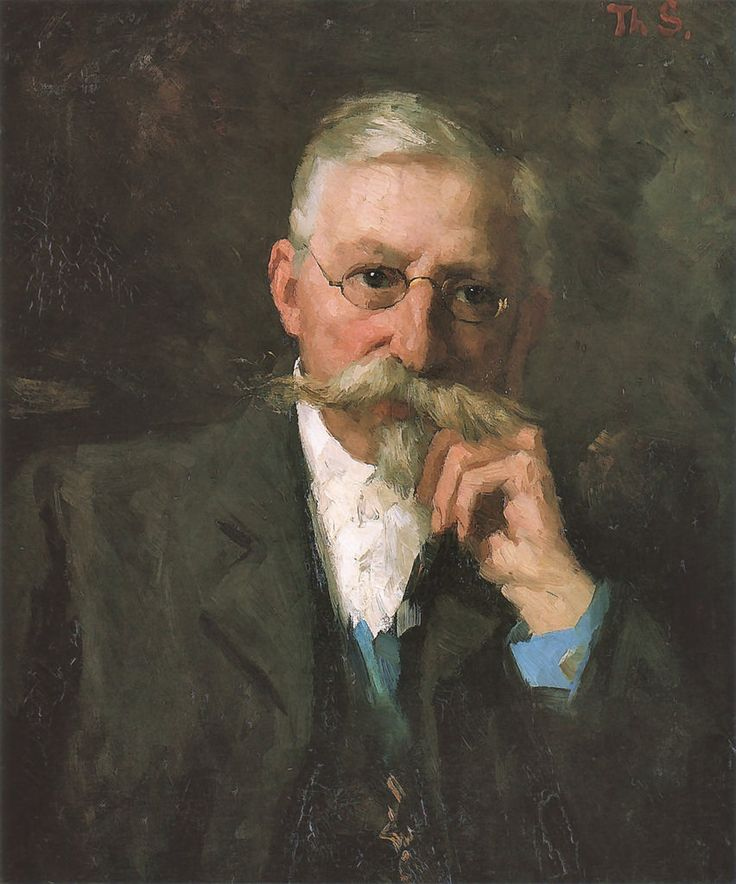
Portrait of Anton van Duyl by Thérèse Schwartze

In 1906, Thérèse Schwartze married the editor-in-chief of the Algemeen Handelsblad, Anton van Duyl. Twelve years after they married, Thérèse’s husband died on July 22nd 1918.  It was double blow for Thérèse as she herself had been very ill at the time and five months later, on December 23rd 1918, three days after her sixty-seventh birthday, she died in Amsterdam.  

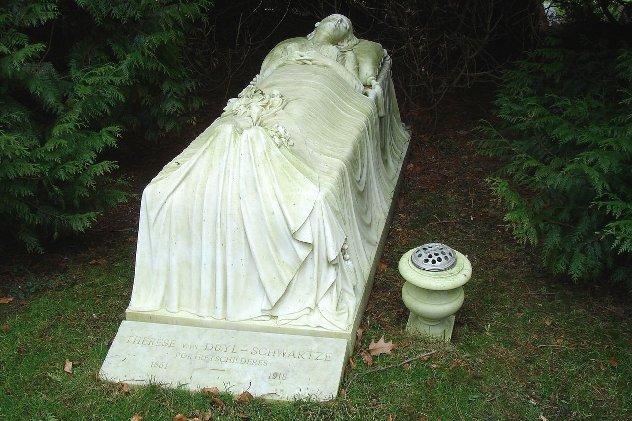
Grave of Thérèse Schwartze at the Nieuwe Ooster cemetery, Amsterdam.

She was buried at Zorgvlied cemetery in Amsterdam but was later reburied at the Nieuwe Ooster cemetery in Amsterdam, where her sister created a memorial to her, modelled after her death mask, which is now a rijksmonument.

Cyril and Renske Mann. Part 4.

Renske Mann from her book, The Girl in the Green Jumper

Renske was overjoyed by Cyril’s words. Although she didn’t believe his words were utterances of flattery and just simple facts, nevertheless the words made her happy and made her love him even more.

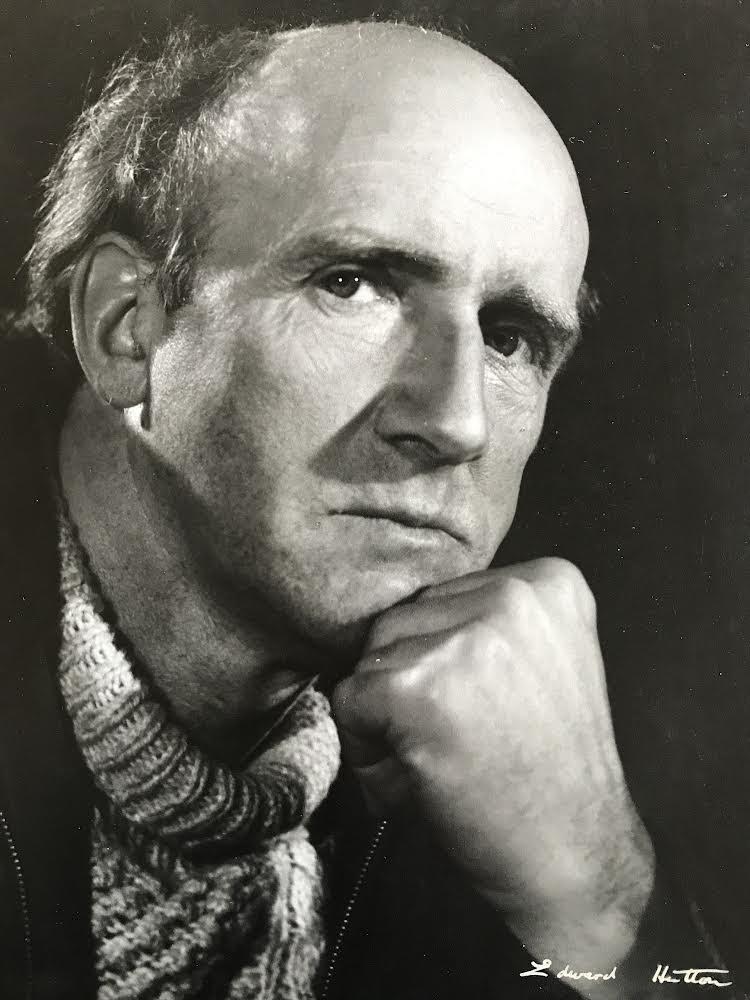
Cyril Mann (1960). Photograph by Edward Hutton.

Throughout his career Cyril painted many portraits, self-portraits and in the 1960s Cyril Mann completed a number of nude depictions using Renske as his model. 

Ecstasy by Cyril Mann (1963)

One such nude portrait, using her as a model, was completed in 1963 and entitled Ecstasy.  Renske remembers the morning he began this work. In her book, The Girl in the Green Jumper, she describes the setting:

“…Cyril mostly painted in the morning.  The minute he drew the curtains he knew when the weather was set to last.  As the sun rose, it cast shadows from the Crittall windows [steel framed windows] across my nude body on our single bed.  He stared at me, grunting and squinting ‘Stay put and take a comfortable pose’ he ordered.  I knew by then that there was no such thing: every pose would turn into agony in time…”

It was not just about her body or pose it was also about the sunlight streaming through the window. It was of the utmost importance to Cyril to capture the dynamic effects of the rays of the sun as they bounced off every surface, from walls on to Renske’s body and back.  He was like a man possessed.  Tables and chairs had to be moved out to make a working space.  He would shuffle around the tight spaces never lifting the gaze from Renske’s body.  She moved to get comfortable on the bed and started to doze off only to be woken abruptly by Cyril who rudely told her “not to go fucking asleep”.  Throughout painting Renske said he would not stop talking, all the while explaining what he was doing.  He was adamant that he had to block in the light areas first as they were more important, not the mid-tones or darks.  Cyril compared Renske to the RA models he had once used saying:

“…Models at the RA haven’t a clue.  They just sit on a chair.  Students have to group around a podium.  If you are in the wrong spot, you’re fucked.  At least you know how to make your body look interesting…”

Cyril had been introduced to the famous English television personality, Denis Norden, who on seeing the painting told Cyril that he should give it the title Ecstasy. Cyril and Renske had hoped that Norden would buy the painting but he didn’t but their mutual friend, Peter Davis, who had introduced Denis Norden to them suggested they just give Norden the painting for nothing as the celebrity owning one of Cyril’s paintings would be added kudos. However Cyril was appalled by the suggestion and simply said ‘to hell with that’.

Modern Venus (c.1963)

One morning Cyril Mann came into the bedroom where is wife, naked, had just risen from bed.. He flings back the curtains and the sunlight streams in, illuminating her. He screamed at her not to move and at the same time drags into the room a large canvas and starts to paint her portrait.  She remembers that her shadow was cast against the wall as she rose from the vey messy jumble of bedclothes strewn on the bed. She is standing facing him with her left arm above her head which in that posture soon becomes numb. She balanced by standing one foot in front. Their blue alarm clock on their round bedside table glistens in the sun. He told her that she was a Modern Venus. Not rising from a seashell but from the sheets and blankets. The painting Modern Venus is complete.

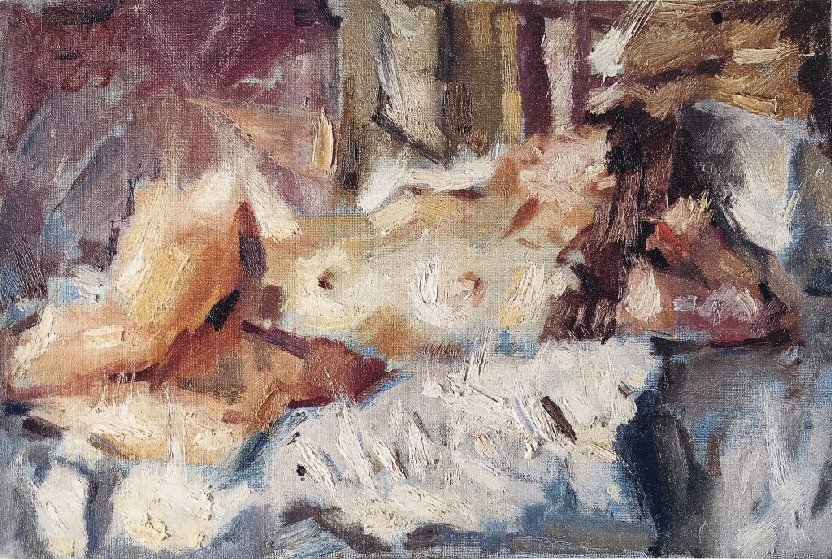
Reclining Nude in Sunlight by Cyril Mann (1962)

In Reclining Nude in Sunlight, Cyril Mann omits detail as he just wants to depict and render light as a dynamic force. He used large hog’s-hair paintbrushes so that he could rapidly cover the canvas, and so focus on the light and how the sunlight fell and reflected on Renske’s nude body as it swiftly crossed their room.

Golden Torso by Cyril Mann (1961)

Golden Torso was completed in 1961 and when the author and art critic John Berger saw it he immediately recommended it for the Granada TV Art Collection which was recognised as probably having the third best corporate collection in Britain. Unfortunately for Berger the painting had already been snapped up by another collector and Berger reluctantly chooses another picture for his sponsor.

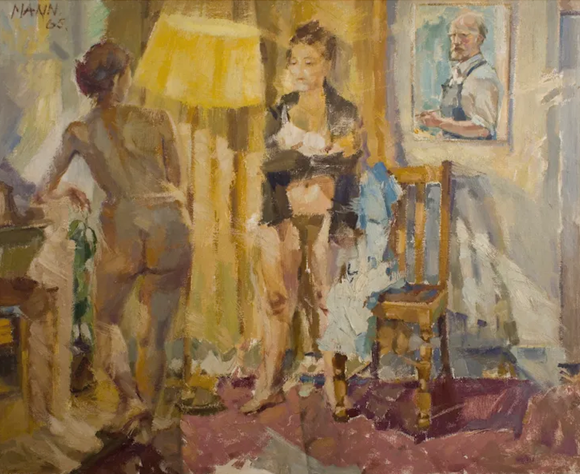
Self portrait with Double Nude by Cyril Mann (1965)

Probably the best-known portraits Cyril completed of Renske was The Girl in the Green Jumper, one with her fully clothed.  His self-portrait can be seen in the background, hanging on the wall.

The Girl in the Green Jumper by Cyril Mann (1963)

In the painting, The Girl in the Green Jumper, we see Renske perched on the narrow wooden armrest of their red chair, which she recalled made sitting still very difficult and painful, much to Cyril’s annoyance. She said that posing for Cyril required a good deal of concentration and willpower. The depiction came about when Cyril was admiring the green of her jumper which he commented looked so much more intense, seen against the red upholstery of their newly-purchased G-Plan suite. Renske, like many, queried whether it is a portrait or a study of sunlight blazing on to her through the window, striking her face and bouncing all over the room. She commented to her husband that her hands were just fingerless smears of paint but he replied that that was true abstraction. Abstraction he said was “to leave out” and abstract art is not actually abstract at all and should be better termed as “non-figurative”.

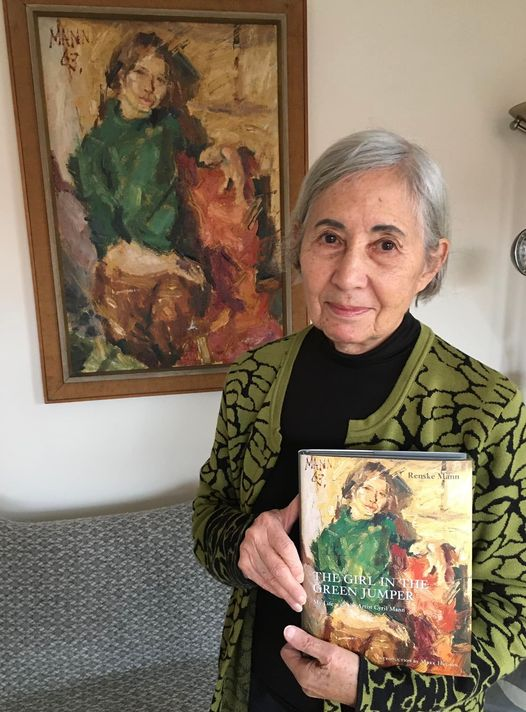
Amanda Mann has followed in her father Cyril Mann’s footsteps and is now also a talented artist. Here Amanda is seen with the painting that inspired her mother Renske Mann’s memoir “The Girl In The Green Jumper: My life with Cyril Mann”.

Cyril Mann, besides the nude depictions of his wife and self-portraits, completed many portraits of his family and friends which highlight what, he as a talented portrait artist, could produce. There is no doubt that he could have been a wealthy portrait painter. Alas he only rarely painted portraits of people outside the family as he said he could not accept portraiture commissions where he was supposed to flatter his sitter, which he believed was often the prerequisite for being given the commission.

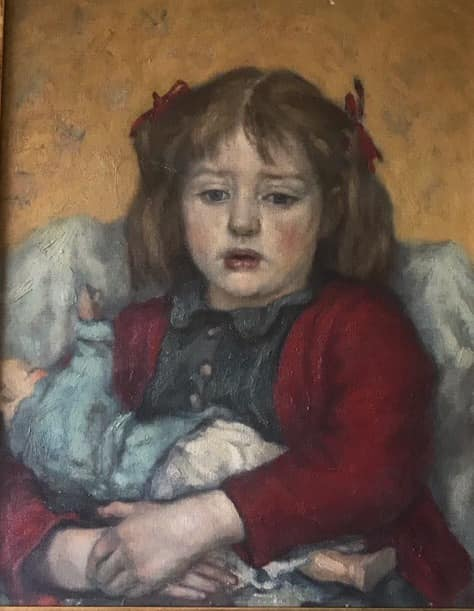
Portrait of Sylvia, aged 3, tearfully clutching her doll, by Cyril Mann (1943)

Sylvia, Cyril’s first daughter, would recount on a number of occasion the memory of sitting for her father for the portrait. She said the agony and boredom of sitting still for hours, clutching the doll still haunted her.

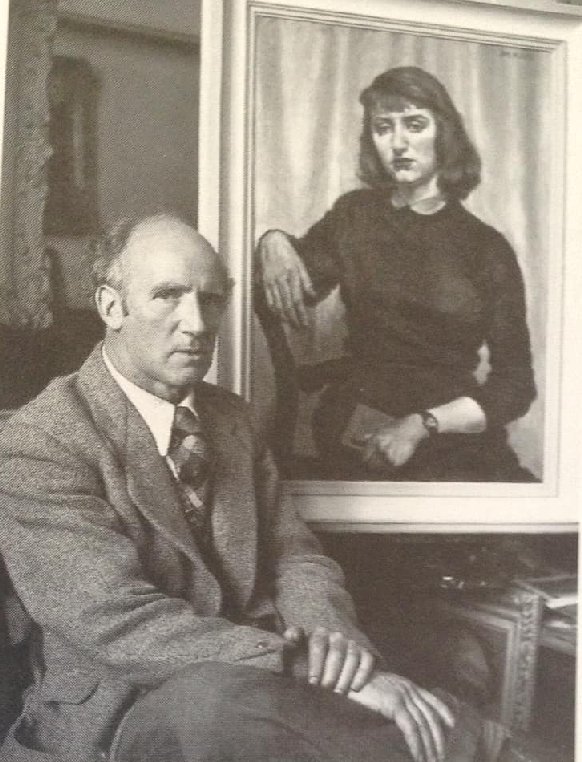
Portrait of Sylvia, by Cyril Mann (c.1957)                  Collection Gideon Dewhirst (Sylvia’s son and Cyril’s grandson)

Cyril Mann with his portrait of Sylvia Mann.

It is hard to judge the mood of the sitter. Sylvia was then aged seventeen and it was the time prior to her attending Keele University. It seems she is somewhat lost in her own thoughts. The depiction shows her holding a book, signifying her love of literature. After university she would go on to become a published author, poet and playwright. Sylvia died in 2006.

Amanda, aged 4, with Doll by Cyril Mann (1973)

Cyril and Renske’s four year old daughter, Amanda, was posed sitting on a chair holding her doll. It was a similar depiction to Cyril’s portrait of his first-born daughter, Sylvia, which he completed in 1943, also with a doll.

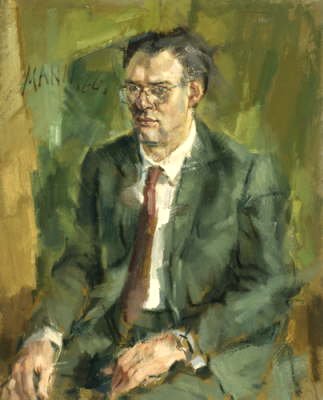
Portrait of David Hardisty by Cyril Mann (1966)

David Hardisty was a young lawyer working as a patent agent. He had seen and fell in love with one of Cyril’s floral paintings which were on display at the Rawinski Gallery in London. Hardisty, who had recently married, could not afford the £300 price tag. Not to be deterred he went to Bevin Court to ask Cyril if he could buy the painting in fifteen £20 instalments. Cyril agreed and during the following years David bought more of Cyril’s paintings. In the portrait, sunlight once again takes precedence over form in Cyril’s rendering. It plays across David’s features and on his suit, tie and hands. Time must have been at a premium for Cyril as the portrait was completed in only six two-hour sittings.

My Student, Vic Singh by Cyril Mann (1962)

When Renske went to the art class in December 1959 and met Cyril Mann for the frst time, one of his students that evening was Vic Singh. whom Renske remembered as being an extremely handsome young man,. His mother was Austrian and his father was an Indian politician. Singh went on to become a photographer. One day he called around to Bevin Court and Cyril persuaded him to pose for a portrait. He agreed and posed, one foot raised with his elbow resting across his knee while stretching one arm towards the bookcase in order to maintain his balance. He was exhausted by the time Cyril had completed the portrait.

Portrait of Ernest Groome (1971)

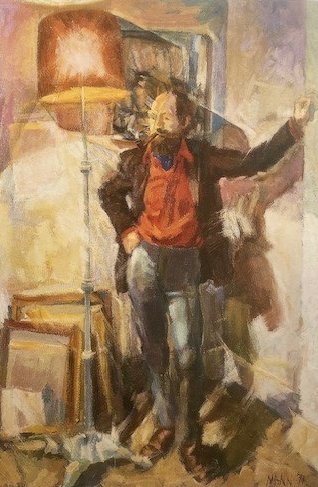
In 1960, Renske, like her husband, began to worry about the lack of sales of his paintings and suggested he took some of his work to Hyde Park Corner where many artists hung their work on the railings. Cyril was horrified with this idea saying that serious artists would not dream of hawking their wares in such a way. Renske, however, said that if he wouldn’t do it, she would. She arrived at Hyde Park Corner and found some spaces on the railings where she could hang Cyril’s artwork but she had forgotten to bring string or hooks to complete her task. She was rescued by a young Irishman, Ernest Groome, an aspiring young artist who had been working as a touring pub entertainer. He managed to find hooks and string and he and Renske hung Cyril’s paintings on the railings. 

Cyril first painted Ernest Groome’s portrait in 1961 shortly after the Hyde Park Corner meeting and ten years later completed another portrait of Groome. In this portrait Groome is in Renske and Cyril’s home. The red shade of the standard lamp picks up the colour of his shirt, casting a strong solid shadow against the wall behind him.

Self portrait by Cyril Mann

Cyril left behind many self-portraits which capture his many moods.

Self-Portrait with Hat by Cyril Mann (c.1968)

It is a very worried-looking Cyril Man who stares out at us in his 1968 Self-Portrait with Hat. He seems to have the cares of the world on his shoulders. It is 1968 and Renske is pregnant with her daughter Amanda, Renske, whose job was bringing financial stability to the household, was having to give up her job to have the baby. How were they going to cope? Could Cyril sell more of his work? All of these and many more questions were probably racing around Cyril’s head at the time of the self-portrait.

Self-Portrait with a Brush by Cyril Mann (1966)

The most controversial self-portrait came in 1978 under the title Ecce Homo. Ecce homo, meaning “behold the man” are, according to the Gospel of St John, the Latin words used by Pontius Pilate when he presented a scourged Jesus, bound and crowned with thorns, to a hostile crowd shortly before his Crucifixion. 

Ecce Homo by Cyril Mann (1978)

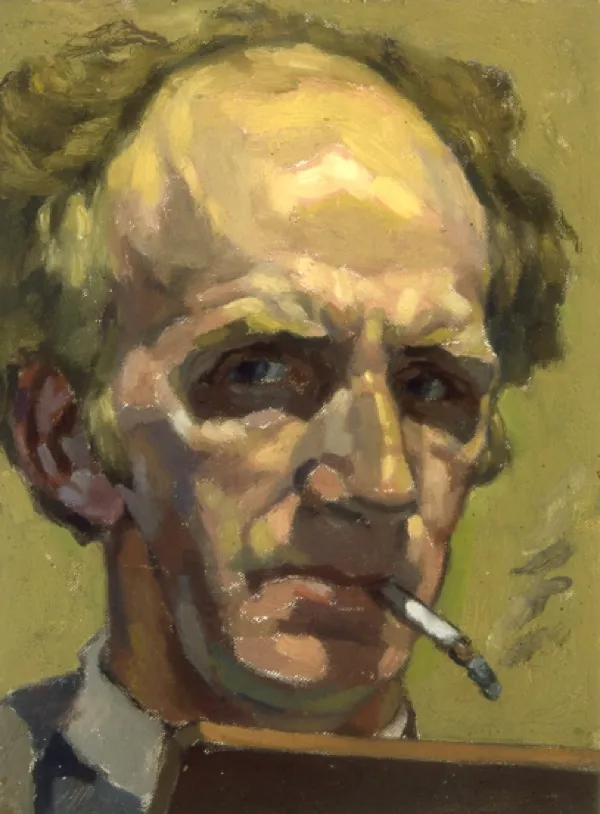
Ecce Homo was one of last self-portraits painted by Cyril Mann. He died a year later. His state of mind, at the time he painted his own portrait, was unstable but there was also a sense of defiance about this depiction. A sense that he was master of his own destiny. It is in a way a mirror of his great creative energy which throughout his life shone brightly and was never dimmed by his detractors.  Having given up smoking on doctor’s orders he had reverted to that habit and the portrait shows him defiantly holding a cigarette. It was another way of showing that he, and he alone, would make decisions about himself.  His rebellious posture and the title he gave the work was his way of reasoning that he, like Christ, had been persecuted and in a way crucified by art critics and gallery owners. He adamantly believed that the reason he never achieved the success he deserved during his life was due to others and not himself.   In the background, we see flanking him two earlier self-portraits and their positioning symbolises the thieves crucified on either side of Christ.

……. to be continued.


It would not have been possible for me to put together this and following blogs about the artist, Cyril Mann, without information gleaned from a number of sources:
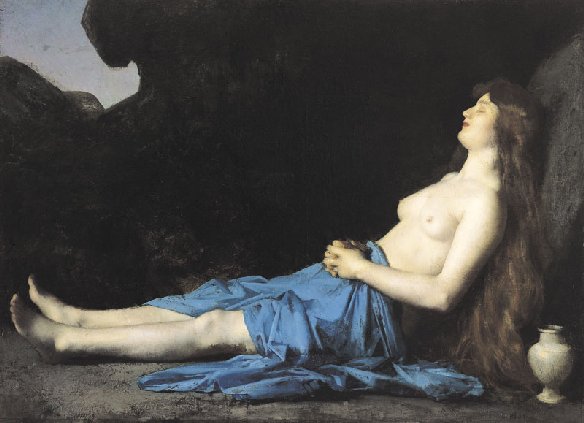
The comprehensive biography of Cyril Mann, The Sun is God by John Russell Taylor

Renske Mann with her book The Girl in the Green Jumper, My life with the artist Cyril Mann

The intimate autobiography of Cyril Mann’s life by his second wife Renske, entitled The Girl in the Green Jumper.

Renske Mann and Natalie Ava Nasr, the lady playing the role of Renske in the play.

Peter Tate who plays Cyril Mann, Christian Holder, director of the play and Natalie Ava Nasr, who plays Renske in the play The Girl in the Green Jumper.

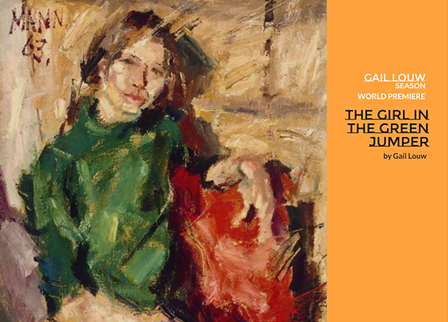
This autobiography has now been turned into a play which receives its World Premiere on Wednesday March 13th at the Playground Theatre, London, 8 Latimer Rd, London W10 6RQ. It runs until March 24th.

Finally, and most importantly I owe many thanks to Renske Mann herself who provided me with information and photographs appertaining to her late husband Cyril.

Piano Nobile Gallery London for information and pictures.

John White Alexander

During the nineteenth century, Paris was considered the art capital of the world.  Once the American Civil War had ended, aspiring American artists, who had the necessary funds, made their way across the Atlantic to the French capital and enrolled in one of the many ateliers there, to learn from the foremost painters of the time.  Many enrolled in the prestigious government-sponsored École des Beaux-Arts and in thriving private academies and studios.  They also had the chance to visit the Louvre and study the works of the Masters of byegone days and be impressed by the modern works on display at the Paris Salons, World’s Fairs, and other exhibitions, including the eight shows staged by the Impressionists.  These young Americans also submitted their own works to the various exhibitions.  Today I am looking at the life of one such American, John White Alexander.

The American photographer and art critic, John Nilson Laurvik, wrote about my featured artist in the December 1909 edition of the Metropolitan Magazine:
“…In the whole history of art one looks in vain for anything approaching his inimitable skill in the arrangement and play of his figures. . . .[He is] pre-eminent as a delineator of feminine beauty and charm…”

John White Alexander

John White Alexander was an illustrator, landscape and still life painter, printmaker, muralist, society portraitist,  and production designer of posters, costumes, scenes, lighting, and tableaux vivants.  Alexander was born on October 7th, 1856, in Allegheny, Pennsylvania, which is now a part of the city of Pittsburgh.  He was orphaned at the age of five and was subsequently raised by his grandparents. When Alexander was 12 years old, he quit school and became a telegraph boy. One of his employers, Colonel Edward Jay Allen, the secretary/treasurer of the Pacific & Atlantic Telegraph Co., noticed Alexander’s aptitude for drawing and began working with him to help him develop that talent. So impressed with Alexander that he assumed guardianship of the young boy and persuaded him to return to the local High School for eighteen months.

Six years later, in December 1874, Alexander and a friend took a trip down the Ohio River,  earning money for food by sketching farmhouses and selling them to the locals.  It is said that Mark Twain read about their trip and a number of incidents on their voyage of exploration were used in his 1884 novel,  Huckleberry Finn.  Soon after his adventure, Alexander relocated to New York and spent three months seeking a job in New York City, visiting a number of publishers, showing his sketchbook.  He was finally employed as an office boy at Harper’s Weekly magazine where he was later promoted to illustrator and political cartoonist in 1875. He remained working for the magazine for three years. 

Alexander then travelled to Paris but found it very expensive and moved on to Germany and the city of Munich where he received his first formal artistic training at the Royal Academy, winning a bronze medal for drawing.    It was in Munich that Alexander first met Kentucky-born German painter, Frank Duveneck.  In 1878, Duveneck had opened a painting school in Munich.

Portrait of John White Alexander by Frank Davenek (1879)

However, like Paris, the cost of living in the city of Munich proved too onerous for Alexander and so he and Duveneck moved to the Bavarian town of Polling, a small town fifty miles east of Munich, where Duvenek set up another painting school and Alexander taught a private watercolour class in Duveneck’s school.  His students were known as the Duveneck Boys and included such aspiring painters as John Twachtman, Otto Henry Bacher, and Julius Rolshoven.  In 1879 Duvenek completed a portrait of John White Alexander.

Venice Canal Scene by John White Alexander (1880)

From 1879 to 1881, Alexander travelled and studied with Frank Duveneck in Italy. The pair spent the summer of 1880 in Venice.    One day, Alexander met Whistler by chance as he was painting next to a canal. Alexander returned to America in 1881 and was able to pick up illustrative commissions from various magazines.  One such commission saw him travelling 2,100 miles along the Ohio River in the Spring of 1881 resulting in sixteen sketches of the local coal industry.

Oliver Wendell Holmes by John White Alexander

On his return to America besides returning to his work as an illustrator, he became a very successful portrait artist. Many well-known individuals sat for Alexander such as Oliver Wendell Holmes, an American physician, poet, and humourist notable for his medical research and teaching, and as the author of the “Breakfast-Table” series of essays.

…..also Thomas Worthington Whittredge, an American artist of the Hudson River School.

Walt Whitman by John White Alexander (1889)

….and Walter Whitman Jr. who was an American poet, essayist, and journalist. He is considered one of the most influential poets in American history.

Mary Emma Woolley by John White Alexander

In 1909, Alexander completed the portrait of Mary Emma Woolley, an American educator, peace activist and women’s suffrage supporter. She was the first female student to attend Brown University and served as the 10th President of Mount Holyoke College from 1900 to 1937.  It is a beautiful portrait of the woman, exuding elegance and his brushstrokes along with the delicate shadows depict her as a dignified woman of great importance.  The sitter lightly thumbs a book with one hand while the other is clenched into a fist which was possibly referencing her knowledge and passion.  It is said that the way Alexander portrays Woolley validates a tendency among male artists of this era, who often painted women as domestic, inwardly emotional beings with exquisite exterior refinement.

Owing to the fact that they both had the same surname, John White Alexander was introduced to and later married, Elizabeth Alexander.  She was the daughter of James Waddell Alexander, president of the Equitable Life Assurance Society.   John and Elizabeth had one child, the mathematician James Waddell Alexander II.  In 1881 John White Alexander completed a black and white sketch of Elizabeth.

Portrait of Mrs John White Alexander (1902) by John White Alexander

……….and in 1902 he completed a full-length portrait of his wife.

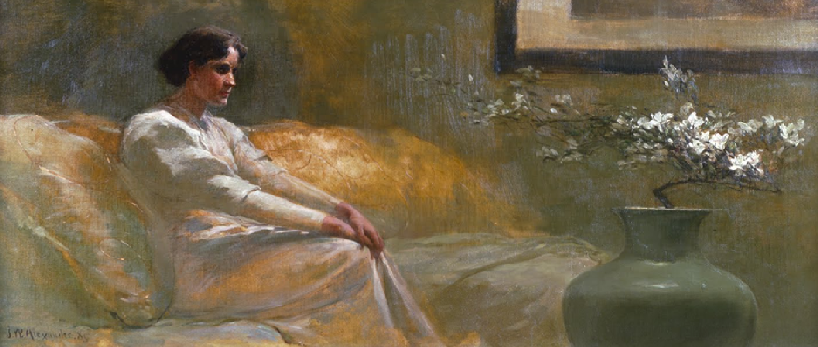
Azalea (Portrait of Helen Abbe Howson) by John White Alexander (1885)

A turning point in Alexander’s artistic career came when, during a summer European holiday in 1884, he wrote to his early mentor, Colonel Allen, telling him of his desire to complete a “subject picture”. The result was his 1885 painting entitled Azalea (Portrait of Helen Abbe Howson). In Alexander’s painting, we see Howson adorned in a white dress seated on a sofa on the left of the horizontally elongated painting.  To counteract that, on the right is a white-flowering azalea branch in a large celadon vase and on the back wall one can see the bottom of a framed image.  The main title of the painting refers to the flowers Helen Howson stares pensively across the room at.  This pose of Howson is one of contemplation and in many of his figurative works Alexander depicts women who avoid the gaze of the viewer.  Some believe that Alexander’s depiction of self-conscious subdued women may be his way of counteracting the growing activism of women in their battle for suffrage and other forms of equality that was manifesting around this time.

Whistler’s Mother by James Mcneil Whistler

Historians believe the depiction was influenced by Whistler’s portrait of his mother which had been exhibited in New York in 1882.  The poses are similar. The “cut-off” picture frame is depicted in both paintings.

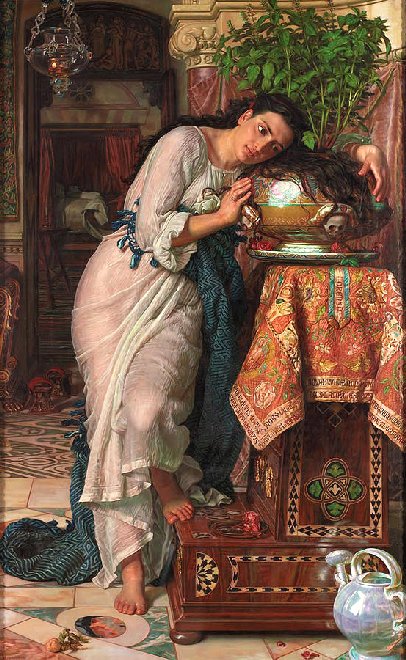
Six years later in 1897 Alexander completed another memorable work featuring a single woman.  It was entitled Isabella and the Pot of Basil and is based on a poem written by the English poet John Keats entitled Isabella, or the Pot of Basil. Keats had actually “borrowed” his tale from the Italian Renaissance poet Giovanni Boccaccio.  The story goes that Isabella was a Florentine merchant’s beautiful daughter whose ambitious brothers disapproved of her romance with the handsome but humbly born Lorenzo, their father’s business manager. The brothers murdered Lorenzo and told their sister that he had travelled abroad. The distraught Isabella began to decline, wasting away from grief and sadness. She saw the crime in a dream and then went to find her lover’s body in the forest. Taking Lorenzo’s head, she bathed it with her tears and finally hid it in a pot in which she planted sweet basil, a plant which is now associated with lovers. 

This scene was made famous by William Holman Hunt’s 1868 version…

 …….and the 1907 one by John Waterhouse,

However Alexander’s pictorial rendition of the scene is so different to the other two.  His depiction has used theatrical effects to depict this gruesome scene.  He has isolated Isabella in a shallow recess and illuminated her from below, almost as if she were an actor on a stage who has been illuminated solely by the footlights.

There is an eeriness about the way Alexander has utilised a cold monochromatic palette, and if we allow are eyes to follow the sensuous curves of Isabella’s gown, they are finally drawn to the loving attention Isabella gives the pot, as she gently caresses it. Isabella seems to be in a world of her own totally oblivious to us, the viewers.  It is a tragic depiction of lost love.

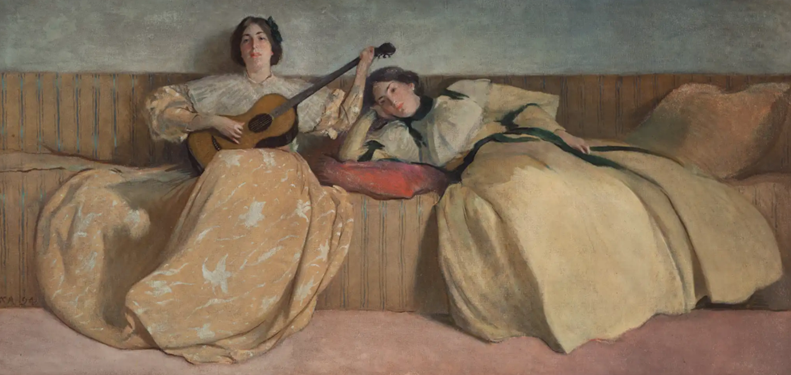
Panel for Music Room, by John White Alexander (1894)

There has always been a connection between fine art paintings and music.  So many famous works of art have depicted people playing musical instruments.  It is the conjoining of two great arts.  Many such paintings depict young ladies playing a musical instrument or intently listening to a musical recital.  Take a look at this beautiful work by John White Alexander as he depicts two young women laying back languorously on a long and plush sofa. 

Look carefully at their facial expressions.  The woman on the left who is playing the guitar is lost in concentration and in some ways seems mesmerised by the sounds coming from her instrument.  The woman on the right lies towards her resting on an ornate cushion.  She seems to be in a dream-like state lost in thought.  It is a frieze-like horizontally elongated depiction which measures 94 x 198cms (33 x 78 inches) portraying a dream-like atmosphere.

Memories by John White Alexander (1903)

Another of Alexander’s paintings featuring the interaction between two women is his 1903 work entitled Memories.

Repose by John White Alexander (1895)

One of Alexander’s most famous works is his 1895 painting entitled Repose. Once again it is a depiction of a woman lying languourously across a large cushion on a long sofa. The curves of her body can be seen despite the voluminous white dress she wears. Her head rests on her hand and she looks out at the viewer. 

The facial expression of the woman, whose lips are slightly parted, gives an added touch of sensuousness to the depiction. This provocative facial expression along with the sinuous curves are a reflection of the then current French taste for sensual images of women as well as the undulant linear rhythms of Art Nouveau.

Murals by John White Alexander on the Grand Staircase of the Art Museum of the Carnegie

Alexander held his first exhibition in the Paris Salon in 1893 and it was held to be a brilliant success.  Immediately following the exhibition, he was elected to the Société Nationale des Beaux Arts.  In 1901 he was named Chevalier of the Legion of Honor, and in 1902 he became a member of the National Academy of Design. He was elected a member of the American Academy of Arts and Letters and in 1900 at the Paris Exhibition he was awarded a gold medal.  Another gold medal was awarded to him in 1904 at the World’s Fair at St. Louis. His works are in museums in both America and Europe.

Grand staircase, Art Museum of the Carnegie Institute in Pittsburgh

In addition, in the entrance hall to the Art Museum of the Carnegie Institute in Pittsburgh, a series of Alexander’s murals entitled Apotheosis of Pittsburgh covers the walls of the three-storey atrium area.

View overlooking Grand Staircase of the murals by John White Alexander

At the top of the Grand Staircase of the Carnegie Art Museum in Pittsburgh, a cultural haven sponsored by industrialist Andrew Carnegie, there is a sweeping mural completed by John White Alexander in 1907.  This total number of murals cover almost 4,000 square feet of wall space of the interior.  The Apotheosis of Pittsburgh is a series of forty-eight murals, all painted by Alexander between 1905 and 1915.  The murals reflect turn of the century Western ideals of progress across three floors of the Grand Staircase. Alexander was given creative freedom for the project, and the resulting murals tell a story of Pittsburgh through the lens of Andrew Carnegie’s vision of the steel industry and the wealth gained through Industrial Capitalism that fuelled his philanthropy. Alexander completed the first elements of the mural in 1907 and the remainder in 1908.

Jonathan Scorch’s blog has a full description of the murals.

John White Alexander died May 31st 1915, aged 58, before finishing the mural panels for the third floor.

Laura Wheeler Waring. Part 2.

Houses at Semur by Laura Wheeler Waring (1925)

Saint-Jean-Pied-de-Port by Laura Wheeler Waring (1925)

After her short stay in the south of France, Waring returned to Paris in the Spring of 1925 and continued her studies at the Académie de la Grande Chaumiére whilst staying in the Villa de Villiers in Neuilly-sur-Seine.  That year Laura completed her paintings, Houses at Semur, France and Saint-Jean-Pied-de-Port. Critics believed this was a turning point in her artistic style as we see her use of vivid colours in order to express vivid, brilliant atmospheric conditions. Both works enhanced her growing reputation.  The following year, she had works shown at the Corcoran Gallery in Washington, D.C., the Brooklyn Museum, and the Philadelphia Museum of Art. And her standing in the art world was such that she was asked to curate the Negro Art section at the Sesquicentennial Exposition in Philadelphia.  

On June 23rd, 1927, Laura Wheeler was married to the Philadelphian, Walter Waring, a public-school teacher, who was ten years her junior and who was then working as a professor at the all-Black Lincoln University. The couple had no children. That same year, Laura won a gold medal in the annual Harmon Foundation Salon in New York. Laura Waring was actively painting during the Harlem Renaissance.  The Harlem Renaissance was an influential movement in African American literary, artistic, and cultural history from 1918 to the mid-to-late 1930s. The movement was originally referred to as the New Negro Movement, which referred to Alain LeRoy Locke’s 1925 book, The New Negro, which was an anthology that sought to motivate an African-American culture based in pride and self-dependence.

She was also involved with the Harmon Foundation.  It was established in 1921 by wealthy real-estate developer and philanthropist William E. Harmon who was a native of the Midwest, and whose father was an officer in the 10th Cavalry Regiment.  The Foundation originally supported a number of good causes but is best known for having served as a large-scale patron of African-American art and by so doing, helped gain recognition for African-American artists who otherwise would have remained largely unknown.

In 1944 the Harmon Foundation, which was under the direction of Mary Beattie Brady, organized an exhibition Portraits of Outstanding Americans of Negro Origin.  The idea behind the exhibition was to try and counteract racial intolerance, ignorance and bigotry by illustrating the accomplishments of contemporary African Americans. The exhibition featured forty-two oil paintings of leaders in the fields of civil rights, law, education, medicine, the arts, and the military. Betsy Graves Reyneau, Laura Wheeler Waring, and Robert Savon Pious painted the portraits that became known as the Harmon Collection. US Vice President Henry A. Wallace presented the first portrait, which featured scientist George Washington Carver, to the Smithsonian in 1944. The Harmon Foundation donated most of this collection to the Smithsonian’s National Portrait Gallery in 1967.

Anna Washington Derry by Laura Wheeler Waring (1927)

Laura Wheeler Waring will always be remembered for her portraiture and her most acclaimed work was not of the prosperous and famous African Americans which I have highlighted below but of a poor laundress, Anna Washington Derry.  She was one of five children who had moved with her family from Maryland to the eastern Pennsylvanian town of Strodsburgh, a borough in Monroe County.  Monroe was home to a small free Black community who had arrived via the Underground Railroad, a network of secret routes and safe houses used by enslaved African Americans to escape into free states.

The beautiful realistic depiction of the old lady beautifully conveys the lady’s dignity and inner determination through her use of simple, brown-beige tones of her dress, her expressive face, her folded arms and hands.  In the town where she lived Derry was looked upon as that of a community matriarch who was fondly addressed locally as “Annie”. The portrait was unveiled in 1926 at an elite exhibition for Black Philadelphian professionals some of whom may not have identified with Waring’s “ordinary” subject. The art historian Amanda Lampel commented:
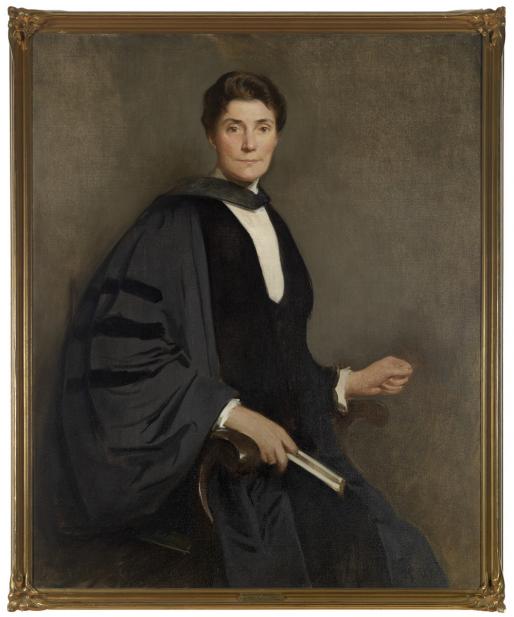
“…Although Derry’s portrait did not sell that day, the Philadelphia Tribune, the oldest continuously published African American newspaper in the United States, called it remarkable……… Compared to fellow contemporaries like Aaron Douglas, Waring was much more conservative in her painting style and subject matter. This was in keeping with the types of artists who won the prestigious Harmon Foundation award, which sought to spotlight the up-and-coming Black artists of the Harlem Renaissance. Most of the award winners painted more like Waring and less like Douglas…”

In 1927 Laura exhibited the portrait of Anna Washington Derry at New York’s Harmon Foundation where it received the First Award in Fine Art – Harmon Awards for Distinguished Achievement Among Negroes. From there it was exhibited at Les Galeries du Luxembourg in Paris and across America.  The depiction was often reproduced in magazines and journals. The exhibition had its premiere at the Smithsonian Institution on May 2nd, 1944.  For the next ten years, Portraits of Outstanding Americans of Negro Origin, exhibition, travelled to museums, historical societies, municipal auditoriums, and community centres around the United States.  The public response was overwhelmingly positive in every venue.

James Weldon Johnson by Laura Wheeler Waring

Laura Wheeler Waring will be most remembered for her portraits of successful, upper class Negroes and whites including James Weldon Johnson, the successful Broadway lyricist, poet, novelist, diplomat, and a key figure in the NAACP, National Association for the Advancement of Coloured People.  In 1900, he collaborated with his brother to produce “Lift Every Voice and Sing,” a song that later acquired the subtitle of “The Negro National Anthem.”

William Edward Burghardt Du Bois by Laura Wheeler Waring

Another sitter for Laura was William Edward Burghardt Du Bois (W.E.B. DuBois), who was the first African-American to earn a doctorate from Harvard University  He then became a professor of history, sociology, and economics at Atlanta University, and  co-founder of the National Association for the Advancement of Coloured People (NAACP), and founder and editor of the NAACP’s magazine The Crisis. Laura Waring had worked for Du Bois, creating several illustrations for The Crisis. Laura depicts Du Bois seated at a wooden desk or table, looking to the right. The spectacles he holds in his right hand, and the small paper he holds in his left, confirm his status as an intellectual and academic.

Marian Anderson by Laura Wheeler Waing (1947)

Many women were sitters for Laura’s portraits including Mary White Ovington, an American suffragist, journalist, and co-founder of the National Association for the Advancement of Coloured People (NAACP).  Another of her most famous female portraits was of  the opera singer, Marian Anderson.  This contralto singer, like many African American artists of the time, first achieved success in Europe. She was persuaded to return to America in 1935 and that year had a triumphant concert which secured her standing in the opera world.  In 1939 she became embroiled in a historic event when the Daughters of the American Revolution banned her appearance at its Constitution Hall because she was black. President Roosevelt’s wife, Eleanor, stepped into this controversial banning and arranged for her to take top billing at the Easter Sunday outdoor concert at the Lincoln Memorial, an event which drew in 75,000 opera fans as well as having the event broadcast to a radio audience of millions.

Jessie Redmon Fauset by Laura Wheeler Waring (1945)

Another female to have her portrait painted by Laura Wheeler Waring was Jessie Redmon Fauset, the first African American woman to be accepted into the chapter of Phi Beta Kappa at Cornell University, where she graduated with honours in 1905. Fauset then taught high school at M Street High School (now Dunbar High School) in Washington, D.C., until 1919  She then moved to New York City to serve as the literary editor of the NAACP’s official magazine, The Crisis. In that role, she worked alongside W. E. B. Du Bois to help usher in the Harlem Renaissance of the 1920s.

Alice Dunbar-Nelson by Laura Wheeler Waring (1927)

In the 1890s women formed national women’s club federations, most of which were dominated by upper-middle-class, educated, northern women. Few of these organizations were bi-racial, a legacy of the sometimes uneasy mid-nineteenth-century relationship between socially active African Americans and white women. Rising American prejudice led many white female activists to ban inclusion of their African American sisters. The black women’s club movement rose in answer in the late nineteenth century. The segregation of black women into distinct clubs produced vibrant organizations that promised racial uplift and civil rights for all blacks, as well as equal rights for women. Soon there followed another, more powerful group known as the National Association of Coloured Women in 1896. Women, including Laura Wheeler Waring and Alice Dunbar-Nelson, came together from a variety of backgrounds to combat negative stereotypes and fight for basic rights. Alice Dunbar-Nelson became the subject of Laura Wheeler Waring’s 1927 portrait. By the time the portrait was completed, Dunbar-Nelson was a prominent political activist and journalist and was much in demand as a public speaker. The depiction of her radiates her self-confidence and both artist and sitter were talented, intellectual women whose friendship helped advance the rights of both women and African Americans.

Waring died on February 3rd, 1948, aged 60, in her Philadelphia home after a long illness.  She was buried at Eden Cemetery in Collingdale, Pennsylvania. In 1949, Howard University Gallery of Art in Washington, D.C. held an exhibition of art in her honour.  Her paintings were also included in the 2015 exhibition We Speak: Black Artists in Philadelphia, 1920s-1970s at Philadelphia’s Woodmere Art Museum.

Laura Wheeler Waring (1887-1948)

There is no doubt that although Laura spent most of her life in America she always treasured her three stays in France which played an important role in her artistic progress. During those three periods on French soil she was able to engage in its culture, and associated with famous French, African, and African American intellectuals. Her scholarship, her study at the Academie de la Grande Chaumiere, and her solo exhibition in Paris gave her recognition in the United States in the form of awards, supervisory and teaching positions, and additional exhibitions.  Like many of her colleagues, Waring cherished the freedom she found abroad, declaring in her diary:

“…In my very busy seasons here to come I shall want to relive some of these moments of atmosphere. I record them so that I can never say “I wish I had enjoyed that more” or “I didn’t apprecate all that then but now—[.]” I can never say the above truthfully because am grateful every minute and even the least of things gives me a thrill. . . . The very feeling of freedom is a pleasure and the ride on the bus down will be a joy…”


Much of the information for this blog and many of my other blogs in the past has come from an excellent website entitled The Art Story.

Other sources were:

A CONSTANT STIMULUS AND INSPIRATION”: LAURA WHEELER WARING IN PARIS IN THE 1910s and 1920s by Theresa Lieninger-Miller

BLACKPAST

SPEEDWELL

Clara Klinghoffer. Part 3.

Marriage and travels.

Lucien Pissarro by Clara Klinghoffer (1928)

Clara continued to paint and produce beautiful works of art.  She worked constantly at her easel from daybreak till sunset.  She was awarded a bursary by the Slade allowing her to attend classes three days a week for a year and receive tuition from the Slade Professors of Art, Frederick Brown, and Henry Tonks.  However, Clara only continued with this tuition for a few weeks, preferring to paint on her own at home.  In 1921, the excessive workload she had given herself and her innate perfectionism finally took a toll on her health and she suffered a breakdown and suddenly the desire to paint had left her.  She was suffering badly both mentally and physically, losing weight and becoming gaunt.  She talked to nobody about her struggle and her parents could not understand why she spent little time painting.  Clara recognised that she was ill and tried self-help but with little success.  It was almost a year later when something strange happened to arrest this decline.  At the rear of their large house, beyond their garden, there was a low border wall, on the other side of which was a set of newly constructed tennis courts.  Clara and her sisters were fascinated and loved to watch the tennis players in action.  The courts were owned by a good-looking young man in his early twenties, Julius Abrahams. A close friendship developed and Julius had strong feelings for Clara.  Clara painted a full sized portrait of him but as Julius was engaged to another woman, Clara decided that a friendship was all she could offer Julius. 

Upon Reflection by Clara Klinghoffer (1919)

Clara continued to build up a portfolio of her work and a number of her drawings were due to be exhibited at the Leicester Galleries in Central London in June 1923.  Her drawings caught the attention of a certain Mr Smith who had contacted her and asked to see more of her work.  Clara was requested to visit his house in Gordon Square in Central London’s Bloomsbury.  Despite disliking trudging across London in wintry weather to visit a possible patron, she needed to sell work to fund her artistic materials and so on January 10th 1924, a Sunday afternoon, she headed towards Gordon Square and to her meeting with Mr Smith – a meeting which would change the course of her life.

Rose with a Mortar and Pestle by Clara Klinghoffer (1919)

Unbeknown to Clara her meeting with Mr Smith was not a one-to-one meeting but she was heading to his house where he was hosting one of his artistic soiree.  One of the regulars to these “parties” was an Italian journalist who lived in Hampstead with his fellow lodger, a Dutch freelance journalist, Joseph (Joop) Stoppleman.  Joop was invited by his flatmate to come along to the party and reluctantly agreed, on the pretext that the experience might even make good copy for an article.  On entering the drawing room of the opulent house the two journalists were greeted by raucous singing led by their host, Mr Smith.  Midway through the party the doors to the Salon opened and Stoopleman in his biography, Clara Klinghoffer, The Life and Career of a Traditional Artist described what happened next:

“…the Study door was opened and a small girl with beautiful auburn hair, entered, carrying a portfolio much too large for her to hold with any comfort…”

The revellers were bemused by the sight of this small girl.  Mr Smith, who was halfway through giving his rousing speech to his guests, stopped and rushed towards Clara, taking her portfolio from her and raising it in the air, whilst acclaiming:

“…”Now my young friends you will have the privilege to see art that is on a par with the work of the great Masters. And who has created it?  This little girl–Clara Klinghoffer. Mark that name well, for one day it will be famous…”

The portfolio of Clara’s work was then placed on the large table at the centre of the Salon and Clara showed each of her paintings and drawings to the guests.  They were all amazed by what she had created.  When the party came to an end Joop Stoopleman offered to carry the heavy portfolio for Clara until she reached the trolleybus which would take her home.  He wanted to see her again and was both surprised and delighted when Clara asked if he wanted to visit her at home and see more of her work.  He avidly agreed and they exchanged telephone numbers and a date was set for the next meeting.  This was the start of a long friendship which resulted in a love affair and which would eventually result in marriage. Joop was well received by the family but as a freelance journalist he knew he could not boast a regular steady income.  As for Clara, she relied on the sale of her work so that their combined income was somewhat irregular.

Harriet Cohen by Clara Klinghoffer (1925)

The new year, 1925, was a very busy time for both Clara and Joop.  Clara worked steadily on her drawings and paintings. One of her sitters was Harriet Cohen, the celebrated British concert pianist. At the same time, she was organising her work for a large-scale exhibition in the Redfern Gallery, in Old Bond Street, which was to begin in March of 1926. Clara had collected together twenty new paintings and some thirty new drawings. By the time she had put together sufficient work for the exhibition she was both exhausted and deflated.  Her spirits were lifted when she was invited to accompany her friend Mabel Greenberg on a month-long holiday in the Pyrenees.  Clara, on her return home at the end of April, was refreshed and was filled with ideas that could be used as depictions for her future paintings.  In parallel to Clara’s busy schedule, Joop had to go on a trip to Holland visiting chief editors, to see if he could find new outlets for his writing.

Portrait of a Girl in a Fur Hat by Clara Klinghoffer

During the New year celebrations of 1926, Joop and Clara decided that they would marry once the Redfern Gallery exhibition had run its course.  The exhibition which opened on March 9th was a great success and her paintings received much praise from the art critics.  The art critic of The Times wrote:

“…It is perhaps being wise after the event to say that “work has feminine characteristics when an artist is known to be a woman. But this is certainly the case with Clara Klinghoffer’ s exhibition of paintings and dnawings at the Redfern Gallery. That is to say she has the power to imitate with great skill the manner of another painter and yet of toning it down and adapting it to her own less emphatic means of expression, as Berthe Morisot did with Manet. Her drawings and small pictures, rather than her larger oils, show that she has real talent. Her drawings are by far her best work and please at once, though, while they are reminiscent of Leonardo da Vinci, they leave out his emphasis and thus their correctness becomes apparent only after close examination. As is the modern custom, they are intended to be works of art in themselves, not studies of works of art, and they do not show the curiosity of an artist who draws to find something out, not to produce a finished effect. They are sensitive, but not profoundly sensitive.  Mims Klinghoffer’s paintings are more under the influence of Renoir than of Leonardo, and in her biggest pictures she has tried to be more forcible than is in keeping with the character shown in her drawings…”

Portrait of the Artist’s Husband, aged 25 by Clara Klinghoffer

Once the Redfern Gallery Exhibition had completed, Clara felt utterly drained and Joop persuaded her to take a rest from painting and visit his homeland, Holland.  She agreed to the change of scene despite Joop not being able to accompany her from the start as he was committed to leading a tour party to Europe.  Joop arranged for her to stay with a family in the village of Voorthuizen and when, after six weeks,  Joop finally arrived,  the pair travelled north to his home town, Groningen and there she met Joop’s family.  Clara and Joop finally returned to London in June 1926 and their marriage took place on July 29th at the Duke Street Great Synagogue of London.  At the time of the wedding Clara’s youngest sister, Hilda had been very unwell.  Joop and Clara decided that as they were going to the warm weather of Southern France for their honeymoon, Hilda should accompany them so as to help restore her health.  All was agreed with the family and the three of them took the ferry to Calais and then the train south to Avignon for a short stay before arriving at their ultimate destination, the Côte d’Azur seaside town of Menton.

The Old Troubador by Clara Klinghoffer (1926)

The Menton pension they stayed in was very comfortable but quite expensive.  In fact, it was too expensive for them as they planned to stay in Menton for six or seven weeks.  Clara approached the pension owner and because they intended to stay a long time in Menton, he agreed to lease them a large house, Villa Aggridito, situated on the Boulevard de Garavan, on the outskirts of the town, and only charged them just four hundred francs a month.  They took him up on his generous offer.  One day whilst out walking they came across a man carrying a guitar.  In Joops biography of his wife he recalls the moment:

“…we saw a little man with grey hair standing in the middle of the right-hand lane. He was neatly dressed in black linen trousers and jacket and carried a large guitar on a leather strap across his shoulders. He had a long egg-shaped face, burnt a red brown by the summer sun. His straight nose had wide, sensitive nostrils; his large eyes were of a melancholy brown.   His forehead, wide and furrowed, blended into his high bald dome; and above both ears were thick tufts of snow-white hair.  On his open shirt collar a neat dress tie had somehow found a foothold. All in all, he made the impression of a musician on the way to an appointment, transporting his instrument in a somewhat unorthodox way.  As we approached, he quickly placed the guitar in position, and began to play. First a gay melody, then the popular ‘Valencia’ tune, of which he sang the words in a small, tremulous voice. We stopped and listened. There was nothing about him of the street singer. Rather, he seemed to be amusing himself and, accidentally, allowing us to share his enjoyment…”

The musician was Torquato Simoncelli and he came to their villa the next day and sat for Clara. It took half a dozen sittings for Clara to complete the portrait. On February 16th 1958, Clara wrote about that visit:

“…My husband and I spent the summer and autumn of 1926 in Menton-Garavan, close to the Italian border. It was there, at the border, that we met old Torquato Simoncelli, singing and playing on his guitar. This gentle and lovable old man came to sit for me on the terrace of our Villa, after his day’s work as a Troubadour was over (generally in the late afternoon). He sang, reminisced and played while I painted…. I did paint a second picture of him in another pose (this picture I still have)…”

………to be continued.


The information I used for this blog came from a variety of sources but the two main ones which would be of interest to you if you want a more in-depth look at Clara’s life are:

Clara Klinghoffer- 20th century English artist

and

Clara Klinghoffer: the girl who drew like Raphael and Leonardo

Clara Klinghoffer. Part 2.

The artistic road ahead.

“…I consider Clara Klinghoffer an artist of great talent, a painter of the first order…
Her understanding of form places her in the very first rank of draughtsmen in the world…”

Sir Jacob Epstein, London, March 30, 1939

Self portrait by Clara Klinghoffer

Fourteen year old Clara was just about to leave St Mark’s School and it is thought that it could have been the head teacher of the school, Mrs Sinock, who suggested that Clara should enrol at Sir John Cass Institute in Aldgate. Once there she was set the task to make sketches of statues such as Michelangelo’s David concentrating on the various facial attributes. Soon the tutors realised she had a natural aptitude for sketching. A talent which she achieved with little effort, one that amazed her tutors. Clara was happy at the Institute but that all ended when one of the young tutors acted towards her in a sexually inappropriate manner which frightened her. The pleasure she once had attending the classes vanished and she left the Institute suddenly without giving a reason for her departure. For a fourteen year old girl this must have been a shocking moment in her life.

Salman Klinghoffer -Man In A Felt Hat (‘Daddy’) by Clara Klinghoffer (1929)

Clara’s father was disappointed that his daughter had given up her art studies and one day whilst travelling home on a tram he caught sight of an advert for the Central School of Arts and Crafts which was situated in Southampton Row in the West End of London He then managed to persuade his daughter to come with him to the art school and enrol. She agreed and took with her a portfolio of her sketches. The principal took a look at her work and immediately offered her a place, starting that next Monday. On the Monday, Clara, who was still very small, arrived at her classroom carrying her huge portfolio case much to the amusement of the two tutors who were overseeing the students. One was Douglas Grant a British painter who became part of the Bloomsbury Set and the other was Bernard Meninsky, the British figurative and landscape painter who had immigrated from Ukraine with his family when he was three weeks old. On looking at Clara’s portfolio, Meninsky was astounded by the quality of her work and set her the task of sketching a cast of a hand. He was astounded by the result and likened it to that of Da Vinci drawings. Both Meninsky and Grant had witnessed such talent in a person so young as Clara and often her sketches were hung on the walls of the classroom. Also on the wall was a print of Botticelli’s Primavera which Clara said that she loved above any other work she had seen. Another of her favourite works was a black and white reproduction of Titian’s Bacchus and Ariadne which she had seen a few years ago in the local library. More and more, she became influenced by Italian art.

East End Girl with Dark Hair by Clara Klinghoffer

Meninsky went on to tutor Clara in life drawing and became an important influence on her work.  He also introduced her to a number of luminaries of the art world such as Walter Sickert’s third wife, Thérèse Lessore, a British artist who worked in oil and watercolour and was a founder member of the London Group, the English writer and painter, Wyndham Lewis, and the New York born sculptor, Jacob Epstein and his publicist wife, Peggy, who became her close friends.

Harry, Old London Man by Clara Klinghoff (c.1920)

Clara remained at the Central School of Arts and Crafts for two years and during this period would often spend time at her easel, sketching at the Victoria and Albert Museum and her favourite venue, the British Museum, where she became a regular and was well known to the security guards, staff and regular visitors.

Mother and Child by Clara Klinghoffer. Modelled by Clara’s eldest sister Fanny and her youngest sister Hilda (1918)

One of Clara’s fellow students at the Central School of Arts & Crafts was a young man called Seidenfeld, who was besotted with Clara but she alas did not return his amour.  He, like Meninsky, praised Clara’s work and would tell everybody who would listen, about Clara’s work and her extraordinary talent.  Word of this young artistic genius reached the ears of a journalist, Joseph Leftwich and he was so impressed by her artistic talent that he spoke of it to the post-Impressionist painter, Alfred Wolmark,   Wolmark had some of his work shown at the Hamstead Art Gallery in London and he persuaded Clara to put together a portfolio of her work which would be used in her “one-man” show at the gallery in May 1920.  That gave her twelve months to complete a collection which was good enough to be exhibited and this entailed a period of non-stop painting. The painting Mother and Child was one which was exhibited at Clara solo show at the Harpenden Gallery in May 1920. The show received rave reviews and of this work, The Sunday Times art critic wrote:

“…Clara Klinghoffer’s ‘ Mother and Child’ will appeal to ‘many as having more sheer beauty than any work in the exhibition. While exceedingly able in point of drawing, this moving painting of a mother just lifting her child “out of the bath delights one by the piquancy of its colour, the shimmer of light on the bare flesh being rendered with the tenderness of a Renoir and the dexterity of a Besnard. In its dazzling radiance it is a joy of pure colour…”

Portrait of a girl in a fur hat, with red background by Clara Klinghoffer

Portrait of Woman Plaiting her Hair by Clara Klinghoffer

In the end Clara submitted twenty-one paintings and thirty-two framed and glazed drawings. On May 3rd 1920 the solo exhibition opened. The London Evening Standard stressed the brilliant future this 19-year-old painter is destined to have. and it continued:

“…One of the most encouraging things about her work is that it gives frank and full expression to what may be supposed to be her racial instincts and interests. She likes exuberant forms and bright colours and says so when painting with commendable frankness. Her strongest point at present is the ease with which she can fill her canvas. Evidently, she has studied the Old Masters, particularly Leonardo da Vinci, to good purpose…”

In 1920, an edition of the The Jewish Chronicle sang the praises of Clara’s work at the exhibition writing:

“…Clara Klinghoffer, in her exhibition at the Hampstead Art Gallery, has clearly proved to be a truly great artist. Her drawings are very beautiful and quite remarkable for an artist scarcely out of her teens. One feels how very much she has been influenced by the Great Masters–by Raphael and by Leonardo for example. And yet, her outlook is entirely modern; she has absorbed the past and expresses herself freely, inspired but never enslaved thereby. Her paintings are always well composed and this is so whether a single portrait or a group is considered. She has a peculiar sense of colour and makes no attempt to get the correct tone, which fact accounts for the unreal appearance of all save one or two portraits. She apparently paints without much effort, and the spontaneity of her work is charming……. There is nothing shallow in Miss Klinghoffer’s genius. She is perfectly sincere and employs her extraordinary gifts for a definite artistic purpose, simply and beautifully, without the slightest trace of affectation…”

The painting Mother and Child was then put on display at the New English Art Club that summer and the press was full of praise for the work

Portrait of a Man (on Red) by Clara Klinghoffer

Meanwhile, her father’s “mill end” business was flourishing, so too was her mother’s clothes shop, so much so, the family moved to a large Victorian House in King Edward Road, Hackney.  Compared to their previous London homes, this was paradise.  It was large with a basement kitchen, large first floor living rooms and several bedrooms on the upper floors.  The increase in the size of their home was fortuitous as Clara’s mother gave birth to a three further children, all daughters, which meant the house was home to mother, father and seven daughters !  Business success for her father meant that he could afford to buy Clara all the materials she needed for her paintings.  He and his wife were convinced their daughter would one day become a famous painter.

Portrait of the Artist’s Sister Rachel (Rachel in a Red Dress) by Clara Klinghoffer

Clara would complete small paintings of the neighbourhood children but realised that for her own exhibition at the Hampstead Gallery she would need to complete larger works and so she turned to her sisters, (Fanny, Rose, Rachel, Bertha, Leah, and Hilda), whose ages ranged from four to twenty-one, to act as models, but most frequently Rose (who also sat as a model for the sculptor Jacob Epstein), and Rachel. This shimmering portrait of Rachel is made from delicate brushstrokes and this was a recognisable style of Clara’s portraits and establish her renowned warmth and understanding in the way she depicts her sitters.

Girl in the Green Sari by Clara Klinghoffer (1926)

This portrait, Girl in the Green Sari, by Klinghoffer was that of the Bengali artist Pratima Devi, the  daughter-in-law of the famous Bengali poet and philosopher Rabindranath Tagore.  Pratima often travelled abroad with him and they often visited Klinghoffer in her London studio. In all, she completed at least three portraits of Pratima: the first, in oils, around 1919-20; the second, a pencil head, which The Times, in 1924, considered it remarkable for the sensitive drawing and the suggestion of light. This later full-length painting was carried out in 1926, which was the year Clara married and her husband remembers Pratima’s visit and sitting for her portrait.  She wore the blue sari and was adorned with dazzling jewellery.  Clara had Pratima remove all the jewellery, maybe as she believed it would detract from the woman’s depiction.  We observe Pratima as a demure, maybe shy, woman with her eyes downcast, dressed in a translucent sari standing in front of a glistening backdrop.

Portrait of Orovida Pissarro by Clara Klinghoffer

Clara’s arresting portrait of her friend and fellow artist Orovida Pissarro was completed in 1962.  Orovida was born in Epping, Essex, in 1893, and was the only child of Lucien and Esther Pissarro. Her father, Lucien Pissarro was an acclaimed artist and graphic illustrator, while Lucien’s father, Orovida’s grandfather, was the renowned Danish-French painter Camille Pissarro who was a founder of the Impressionist movement.  Much to her father’s horror, Orovida turned her back on Impressionism – and even dropped her famous surname, wanting to be simply known as ‘Orovida’. Her reason for this was not because she wanted to cut herself off from her family ties but because she wanted to make her own way in life, on her own terms.  Clara has depicted the form of her sitter including her rounded belly and full face framed by her cropped hairstyle, which is copied in the curves of the chair.  Behind her we see a collection of inanimate objects which probably referred to items which often appeared in Orovida’s portraiture.

……to be continued.


Information for this blog was found in many sources but the most important ones were:

Clara Klinghoffer- 20th century English artist

Clara Klinghoffer: the girl who drew like Raphael and Leonardo


Johan Rudolf Bonnet

Rudolf Bonnet

My next two blogs were requested by a reader of my site and so I always try and fulfil requests, here is the first one.

Today I am looking at the life and work of the Dutch painter Johan Rudolf Bonnet.  He was born in Amsterdam on March 30th 1895, although, as we will see, he spent most of his life in the town of Ubud on the Indonesian island of Bali.  He was one of the most individualistic artists who travelled and painted in the Dutch East Indies during the first half of the 20th century and he stood head and shoulders above his fellow European artists who visited the island of Bali.  It was during his journeys away from his homeland to the East Indies which saw his artistic talent blossom.

Anticoli Corrado

Rudolf’s father was, Jean Bonnet Jr. and his mother was Elisabeth Elsina Mann, and both were of Huguenot descent, and were bakers. After normal Primary schooling he received artistic education at a technical High School where he studied decorative painting.  He also attended evening classes at the Rijksacademie van Beeldende Kunsten. In 1920, when he was twenty-five, Rudolf Bonnet along with his parents took a vacation to Italy.  Rudolf loved the area south of Rome known as Anticoli Corrado.  The town was the home of an artists’ colony and many of the young inhabitants would pose as models for the this thriving artistic community.  Rudolf remained in Italy for eight years.

Portrait of Wijnand Otto Jan Nieuwenkamp by Nico Jungmann (1909)

It was during his latter years in Italy that Rudolf met Wijnand Otto Jan Nieuwenkamp, the first European artist to visit Bali, and who significantly influenced the island’s art and culture, making it better known in the wider world, and who had made numerous illustrations of Balinese culture. Nieuwenkamp shared with Bonnet this love for the Dutch East Indies and Bonnet knew he had to visit this “wonderous” place.

Self portrait by Rudolf Bonnet (1927)

In 1927, a year before leaving for the Dutch East Indies, Bonnet, aged thirty-two, completed a self-portrait.  It is a stunningly meditative depiction of the artist at a time in his life when he was struggling to find inspiration and motivation outside his safe and comfortable European lifestyle.   The painting was completed at a time in the artist’s life when he had begun to yearn for inspiration and an experience outside the comforts of European living. The artist surveys us out of the corner of his eye. It is a self-portrait which does not hide his physical facial gauntness and the receding hairline which cannot disguise his premature ageing.  Bonnet, in this portrait, has honestly revealed himself to us. 

Village Street by Walter Spies (1929)

Soon after arriving on the island Bonnet met the German  artist Walter Spies, who had come to the Dutch East Indies in 1923 and settled in Bali four years later in the town of Ubud.  Nine years later Spies moved out of the town and built himself a mountain retreat in Iseh.   Rudolf Bonnet took over Spies’ house in Ubud where he set up his own studio.

Dewa Poetoe by Rudolf Bonnet (1947)

The sitter for the above artwork is Dewa Putu Bedil, one of the youngest members of the Pita Maha movement who had received instruction and encouragement from Bonnet in developing his own artistic style. Bonnet had a close personal relationship with, Dewa Poetoe and this work is an outstanding study of expression, and highlights the artist’s mastery of portraiture.

I Tjemul by Randolf Bonnet (1949)

Bonnet soon came across traditional Balinese art but soon he began to witness a change in it as local painters came in contact with the tourists who were visiting the island and soon they picked up on their concepts of art.  It was not long before Bonnet immersed himself in issues affecting the local community such as healthcare and education and he became involved in setting up the Pita Maha movement.  Pita Maha literally means “Great Shining” and was founded in 1934 as an association for artists in Bali and it had two main goals; firstly to develop, improve and preserve the quality of Balinese art objects by setting up weekly inspections and secondly to encourage the selling of high-quality art by coordinating sales exhibitions outside Bali.  Bonnet believed the association would inspire local artists to raise their artistic standards.

Two Balinese Men by Rudolf Bonnet (1956)

Two Balinese Men by Rudolf Bonnet (1954)

During his time in Italy, Bonnet had fell in love with the Italian Renaissance masters and in particular their portraiture.  It was this that influenced him when he set about portraying the indigenous people living in the colonial Dutch East indies and he knew they faced many hardships during their lifetime in what was an ever-changing modernising of the twentieth century.  Hoisted on their bare shoulders are tools of their manual trade Rudolf portrays the unpretentiousness of their daily existence and in a way has depicted them in the highest benchmarks of classical beauty.

Portrait of J. Djemul by Rudolf Bonnet (1949)

Bonnet’s arrival on Bali in 1929 was followed by an influx of Europeans all who wanted to learn about and record the lives of the Balinese people.    During the 1930s, Bali became home to the anthropologists Margaret Mead and Gregory Bateson, musicologist Colin McPhee, and the artists Miguel Covarrubias and Walter Spies.  All these people helped glamorize and make popular the image of Bali itself and its inhabitants.  Through words and paintings, they, like Bonnet presented Bali as an extraordinary place of unspoilt beauty.  McPhee, made a musicological study of Bali, and in his book A House in Bali, described the island as “an enchanted land of aesthetes at peace with themselves and nature”, while Miguel Covarrubias, the Mexican painter, caricaturist, illustrator, ethnologist and art historian,  on his honeymoon in Bali with his wife Rosa, wrote an ethnographic book, Isle of Bali, which became a literary sensation in the West, lauded for the detailed sketches of Balinese women, dancers and scenery that Covarrubias had made in the field.

“Ni Radji” Bali by Rudolf Bonnet (1954)

The Balinese idyll for Bonnet came crashing down with the arrival of the Japanese army in February 1942.  Bonnet remained at liberty until later that year when he was arrested and sent to Sulawesi, where he remained a prisoner of war  in internment camps in Pare-Pare, Bolong and Makassar for the remainder of the conflict. 

Rudolf Bonnet standing in front of his house in the 1950s

When the war ended and he was released from internment and Bonnet returned to Bali where he built his house and studio in Campuan. More trouble was to rear its ugly head with the deterioration in the relationship between the Republic of Indonesia and the “motherland”, The Netherlands. 

(Dua orang gadis) Double portrait of Ni Radji by Rudolf Bonnet.

However Bonnet was able to stay due to his close relationship with President Sukarno who, as an art lover, had collected fourteen of Bonnet’s works. His relationship with Sukrano soured in 1957 after a dispute regarding Bonnet’s painting entitled (Dua orang gadis) Double portrait of Ni Radji. Both Bonnet and President Sukarno loved the painting and Bonnet wanted to keep the work for himself and refused to sell it.  For Bonnet, it was  a means of remembering the young woman who had modelled for him but had left Ubud after her marriage.   However Bonnet was pressurised by the President and had to sell the painting to Sukarno and after the acrimonious dispute Bonnet was forced to leave Indonesia in 1958. He only returned for short visits to his beloved Bali fifteen years later.

Rudolf Bonnet died in the Dutch town of Laren on April 18th 1978, aged 83.  He was cremated and his ashes were taken to Bali by his niece Hilly de Roever-Bonnet, where they were re-cremated.