Peder Mork Mønsted – The great Danish landscape artist.

By The River, Brondbyvester by Peder Mønsted (1922)

Landscape and seascape painting must be the most popular art genre. Like all painting genres there are many good examples and some exceptional examples of such paintings. In today’s blog I want to highlight the exceptional landscape work of the nineteenth century Danish painter, Peder Mork Mønsted, who due to his naturalistic plein-air depictions, was considered the foremost landscape painter of his day in Denmark.

The Red Umbrella by Peder Mønsted (1887)

Mønsted was born on December 10th, 1859, a few years following the end of what was known as Den danske guldalder (The Danish Golden Age). This period of Danish history straddles the first half of the nineteenth century and is a period of outstanding creative production in Denmark. The start of the nineteenth century had been a disastrous period for Denmark and especially its capital, Copenhagen which had suffered from fires, bombardment and national bankruptcy, but it was also a period when the arts took on a new period of inspiration and originality brought on by the Romanticism movement of Germany, which was at its peak in the first half of the nineteenth century. It was a period when much of Copenhagen had to be rebuilt and this saw the development of Danish architecture in the Neoclassical style. The city took on a new look, with buildings designed by Christian Frederik Hansen and by Michael Gottlieb Bindesbøll.

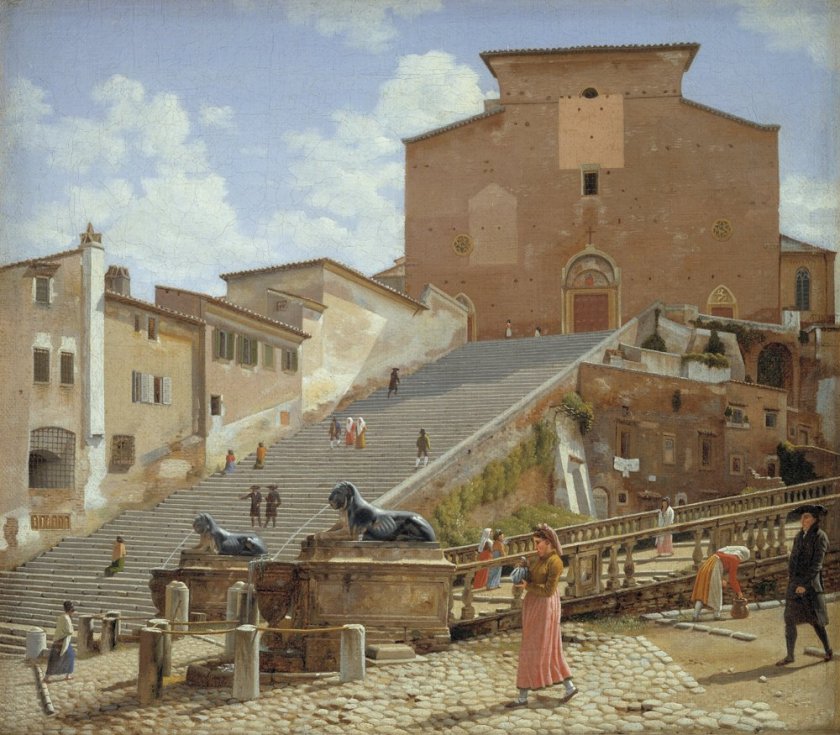
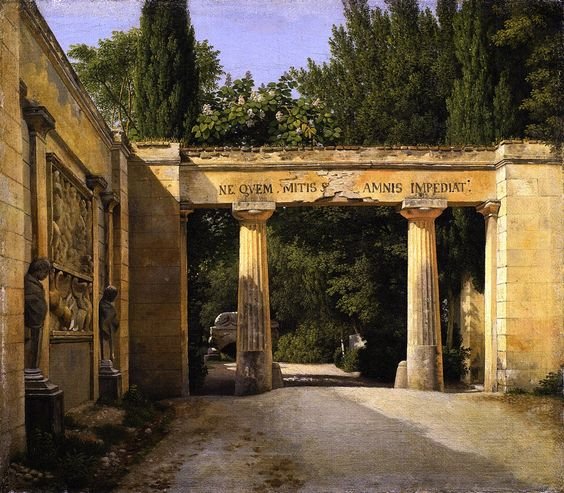
The Gatehouse in the Park of Villa Borghese, Rome, by Christoffer Eckersberg (1816)

This Golden Age was most commonly associated with the Golden Age of Danish Painting from 1800 to around 1850 which included the work of Christoffer Wilhelm Eckersberg (see My Daily Art Display five-part blog starting August 5th, 2016) and his students, such as Wilhelm Bendz, Christen Købke, Martinus Rørbye, Constantin Hansen and Wilhelm Marstrand. Eckersberg taught at the Academy in Copenhagen from 1818 to 1853, and became its director from 1827 to 1828. He was an important influence on the following generation, in which landscape painting came to the fore. He taught most of the leading artists of the period.
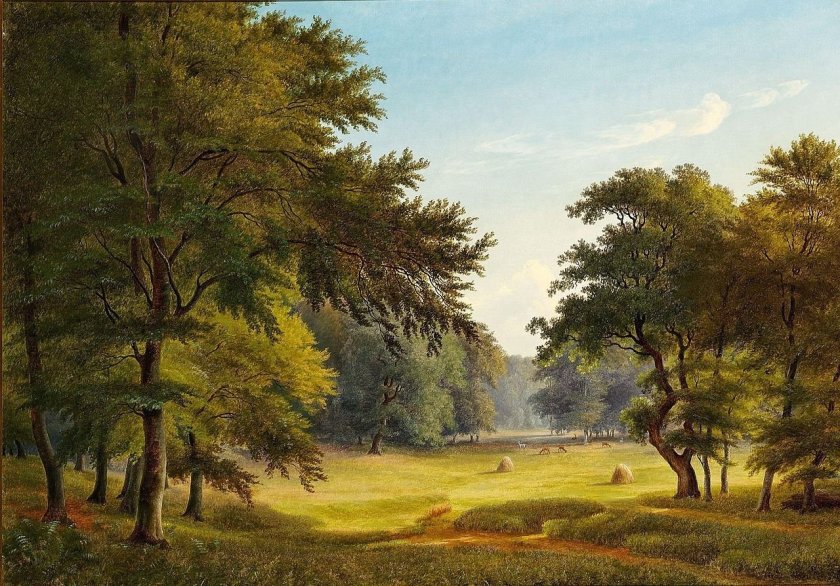
A Summer Day at the Dyrehaven by Peter Skovgaard

Peder Mork Mønsted was born near Grenå in eastern Denmark. He was the son of Otto Christian Mønsted, a prosperous ship-builder, and Thora Johanne Petrea Jorgensen. He had an elder brother, Niels. He was a pupil at the Crown Prince Ferdinand’s Drawing School in Aarhus where he studied under Andries Fritz, the Danish landscape and portrait painter. After leaving the Drawing School in 1875, Mønsted moved to Copenhagen and enrolled on a three-year art course at the Royal Academy of Art where he received tuition in many facets of art including the tutoring in figure painting by the Danish genre painter, Julius Exner. It was at the Academy that he began to learn about, and be influenced by, the art of Christen Købke and Pieter Christian Skovgaard, a romantic nationalist painter and one of the main figures associated with the Golden Age of Danish Painting. Skovgaard is particularly known for his large-scale depictions of the Danish landscape.
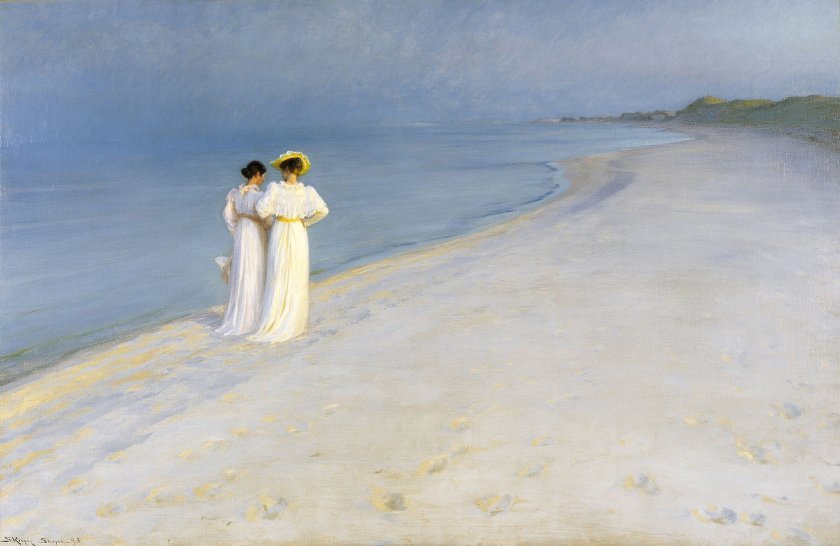
Summer Evening on Skagen’s Southern Beach with Anna Ancher and Marie Krøyer by Peder Severin Krøyer (1893)

In 1878 Mønsted left the Academy to study under the artist Peder Severin Krøyer. Krøyer was one of the best known and the most colourful of the Skagen Painters, who were a community of Danish and Nordic artists living and painting in Skagen, Denmark. Krøyer was the unofficial leader of the group.

In the Shadow of an Italian Pergola by Peder Mønsted (1884)

In his early twenties, Mønsted travelled extensively. In 1882 he journeyed through Switzerland and on to Italy where he visited the isle of Capri. During these journeys he would constantly sketch the people and the landscapes. One such painting to come from that Italian trip was completed in 1884 entitled In the Shadow of an Italian Pergola. Before returning to his home in Denmark he visited Paris and stayed there for four months during which time he studied at the studio of William-Adolphe Bougureau, the French academic painter.
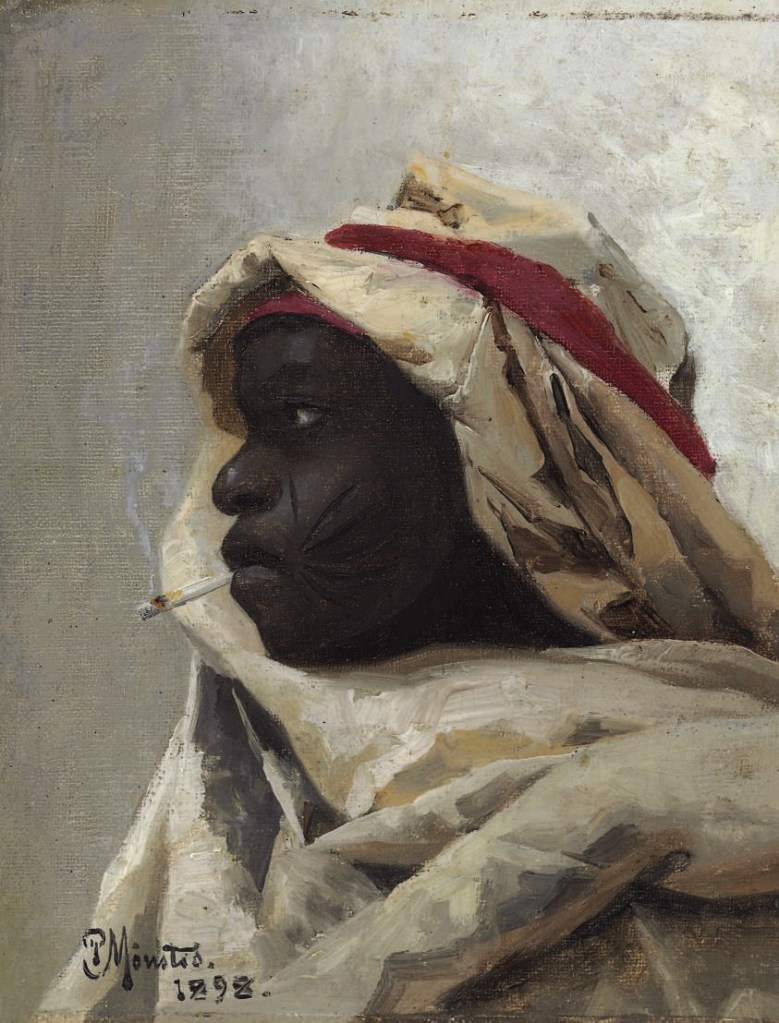
The Smoking Moor by Peder Mønsted (1898)

Mønsted was a habitual traveller constantly seeking places and people to paint. In 1884, he first visited North Africa returning to Algeria in 1889. One of his later paintings, a portrait entitled The Smoking Moor, came from his time in North Africa.

Olga by Peder Mønsted (1917)

Peder Mønsted besides being an exceptional landscape painter was also a talented portraitist as we can see in his 1917 work, simply entitled Olga.

The Cloister, Taormina by Peder Mork Mønsted (1885)

In 1885 his journeys took him to Sicily and Taormina, the commune in the Metropolitan City of Messina, which lies on the east coast of the island. It was from this visit that Mønsted completed his painting The Cloister, Taormina.
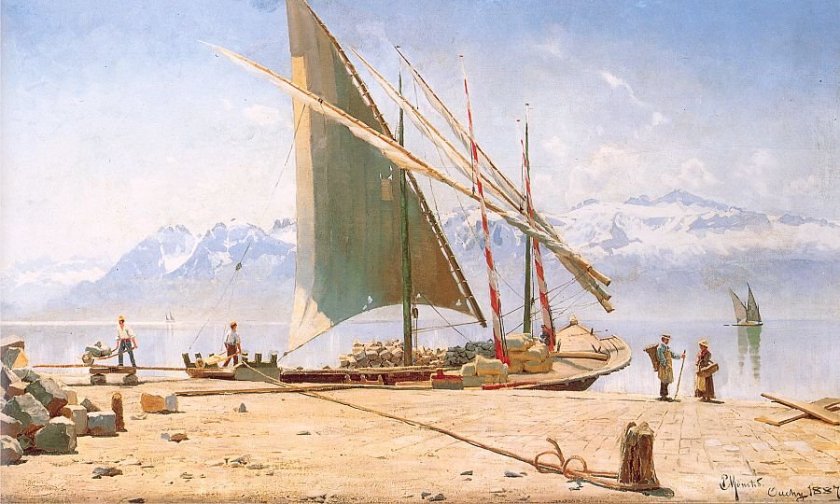
Unloading Stone from a Barge at Ouchy by Peder Mork Mønsted (1887)

Mønsted visited Switzerland on several occasions and his 1887 painting Unloading Stone from a Barge at Ouchy recalled the time he visited the port of Ouchy which is situated south of the city of Lausanne, on the edge of Lake Léman.

On March 14th, 1889, at Frederiksberg, Peder Mork Mønsted married Elna Mathilde Marie Sommer. Nine years later the couple had a son, Tage.
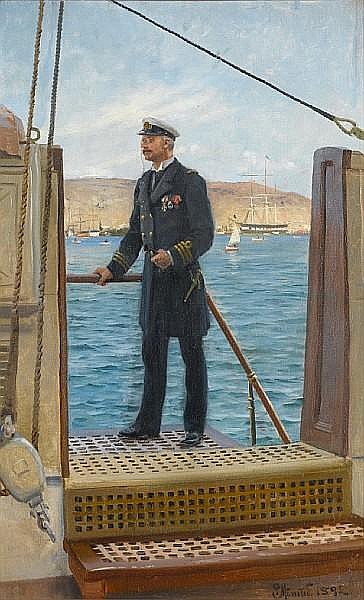
King George I of Greece by Peder Monsted

In 1892, Mønsted travelled to Greece, where he was a guest of King George I, who was Danish. While there, he completed portraits of the Royal Family including one of the king himself at the top of a ship’s gangway.
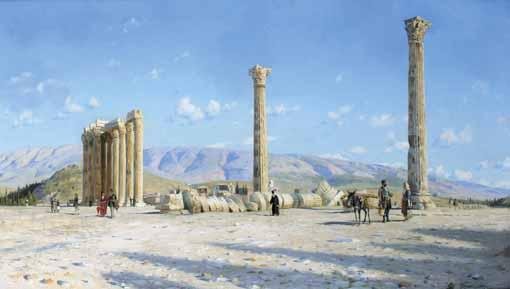
With his royal invitation to Greece, he also took the opportunity to depict the ancient sites. The above large-scale work (80 x 137cms) is one of his finest paintings of the last decade of the nineteenth century. It is thought that the two finely-dressed people depicted to the left in the mid-ground are King George I and his wife, Queen Olga of Greece. Further to the left are members of the famous Presidential Guard known as the Evzones.  From Greece, Mønsted travelled to Egypt and Spain.

Landscape with River by Peder Mønsted

However, Peder Mork Mønsted will always be remembered for his beautiful landscape works often featuring his native countryside. It is hard to describe the works in a single word but if one had to then words like serene, placid, and tranquil come to mind. His depiction of water in the form of rivers and brooks and the surface reflections are breathtakingly beautiful.  One good example of this is his painting Landscape with River.
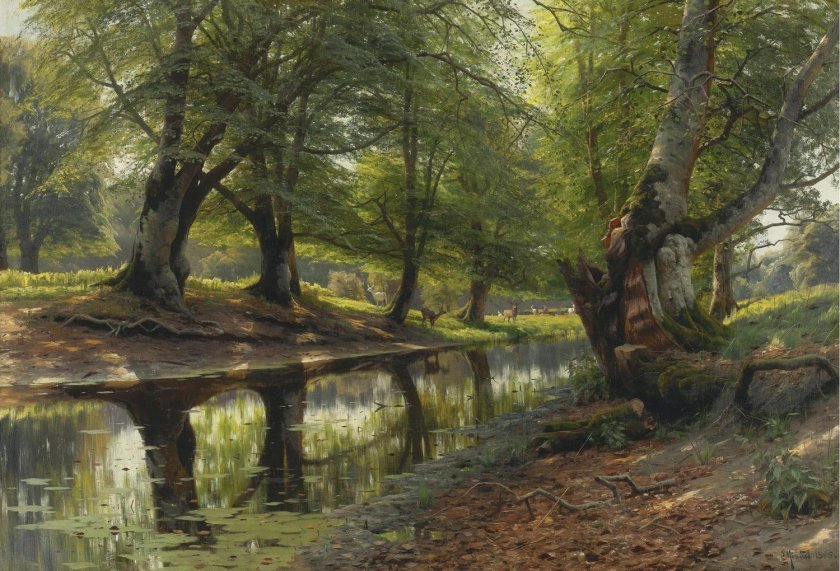
Creek North of Copenhagen by Peder Mønsted

Mønsted continued all his life to paint the Danish and Scandinavian landscapes and coastlines. His depictions of nature were poetic, even romantic. His forte as far as his landscape works are concerned is his discerning eye for the grandeur of nature and his unerring ability to record both detail and colour.

Spring Landscape in Saeby by Peder Mork Mønsted (1912)

Of all the motifs within the landscape theme, water seems to be one that arouses the greatest admiration when depicted with serene beauty. It is in such landscape works that there is a multitude of conditions that challenge and stimulate an artist, whether they be beginners or the most experienced painters. It is known that many famous Impressionists had real problems when it came to the representation of water in their compositions and ended up with their depictions, concentrating much more on the effects 0f light on a scene rather than on a realistic representation.

A Tranquil Forest Lake by Peder Mork Mønsted (1904)

The onset of World War I caused Mønsted to curtail his European travels but the 1920’s and 1930’s once again saw him journeying around the Mediterranean countries.

A Sleigh Ride Through a Winter Landscape by Peter Mønsted (1915)

His travels produced numerous sketches that later became paintings which he presented at several international exhibitions. Most of his landscapes were, however, devoted to Scandinavia. He was especially popular in Germany, where he held several shows at the Glaspalast in Munich. During his later years, he spent a great deal of time in Switzerland and travelling throughout the Mediterranean. Most of his works are now held in private collections. In 1995, a major retrospective, called “Light of the North”, was held in Frankfurt am Main.

The Community of Hoje Taastrup, outside Copenhagen by Peder Mønsted

Philip Weilbach’s artistic icon, Weilbach Dansk Kunstnerleksikon often just referred to as Weilbach, is the largest biographical reference book of Danish artists and artists and the entry on Peder Mønsted sums up the work of this great man:

“…[Mønsted’s] great success was largely a consequence of his ability to develop a series of schematic types of landscape, which could each individually represent the quintessence of a Scandinavian, Italian, or most frequently Danish landscape. In motifs, built up around still water, trees, and forest, he specialised in portraying the sunlight between tree crowns and the network of trunks and branches of the underwood, the reflections on the water of forest and sky and snow-laden winter landscape paintings with sensations of spring, often all together in the same painting. Insofar as Mønsted included figures in his paintings, these were principally used as ornaments with a view to emphasising the idyllic character of the motif; and only rarely were the figures and the anecdotal element given as prominent a role as in traditional genre paintings…

Peder Mork Mønsted died in his Danish homeland on June 20th 1941, aged 81.

Florence Ada Fuller

Florence Fuller (1867 – 1946)

The artist I am featuring today is the South African-born, Australian portrait and landscape artist Florence Ada Fuller.  She was born in Port Elizabeth, South Africa in 1867, one of several children of Louisa and John Hobson Fuller.  As a child, she emigrated with her family to Melbourne.  In 1883, aged sixteen years of age, Florence attended the National Gallery of Victoria Art School and for two years between 1884 and 1886 she worked part-time as a nanny.

Going Out with the Tide by Robert Hawker Dowling (c.1882)

During this period she received artistic tuition from her English-born uncle Robert Hawker Dowling, a painter of orientalist and Aboriginal subjects, as well as portraits and miniatures. He was Melbourne’s most sought-after portraitist of the early to mid 1880’s

Sir Henry Loch by Robert Hawker Dowling(1885)

One of his portraits was the 1885 one of Sir Henry Loch, later 1st Baron Loch of Drylaw, who was Governor of Victoria from1884 to 1889. This portrait was completed by 1885 and shown in exhibitions in that year.

Barak – last chief of the Yarra Yarra Tribe of Aborigines by Florence Fuller (1885)

In 1885, through the good auspice of her uncle, Florence, then eighteen years old, received a commission from Ann Fraser Bon, the Scottish-born philanthropist and a formidable woman who fought strenuously to protect the limited rights of Aboriginal people.  She asked Florence to complete a formal oil on canvas portrait of William Barak, the leader of the Wurundjeri people, who was also an artist, and who became an advocate and leader in the wider Aboriginal community.  The work was acquired by the State Library of Victoria.  It is interesting to note how two art critics viewed the finished portrait.  One complimented the way in which Fuller avoided romanticising Aboriginal people while another critic said that in his opinion the portrait was an idealisation of the man rather than a truthful portrait.

Amy, the Artist’s Sister by Florence Fuller

In 1886, Robert Dowling, returned to England and Florence gave up her work as a governess and decided to concentrate on her art, opening up her own studio in Melbourne.  For all aspiring artists, to get a wealthy patron is an ideal start to their artistic career and Florence Fuller procured one by a strange turn of fate.  Her uncle who had completed the portrait of Sir Henry Loch had started on a portrait of his wife but had not completed it by the time he went on his visit to London.  Sadly, in 1886, aged fifty-nine, he died shortly after arriving in England.  Florence was then asked by Sir Henry Loch to complete his wife’s portrait, which she did and Lady Loch was so pleased with the end result, she became Fuller’s patron.

Dawn Landscape by Florence Fuller (1905)

Florence later received tuition from the Australian landscape painter, Jane Sutherland.  Sutherland, who had been born in New York, emigrated to Sydney, Australia in 1864 when she was eleven years of age.  She was one of the founding members of the plein-air movement in Australia, and a member of the Heidelberg School, an Australian art movement which has often been described as Australian Impressionism.  Sutherland was also one of few professional female artists and had to constantly strive for equality and fought hard to further the professional reputation of female artists during the late nineteenth century.

Weary by Florence Fuller (1888)

In 1888, Fuller completed a pair of realism paintings featuring poverty.  They were entitled Weary and Desolate and both featured child poverty against the backdrop of a ship berthed at the docks in Melbourne. The powerful imagery of the painting, Weary,  depicting a homeless child was a potent declaration on the disadvantaged in sharp contrast to the booming economy of the Australian city and although similar paintings by English Victorian realist artists were common this artistic work of urban realism was a shaming of Australian society and its injustice and as such, was very unusual. Look how Fuller has included the tattered advertising hoarding, its message frayed and in shreds weathered by time and the elements almost making its messages unintelligible.  The title of the work is based on the poem, Weariness, by Longfellow with its opening lines:

“…O little feet! that such long years

Must wander on through hopes and fears,

Must ache and bleed beneath your load…”

Inseparables by Florence Fuller (1891)

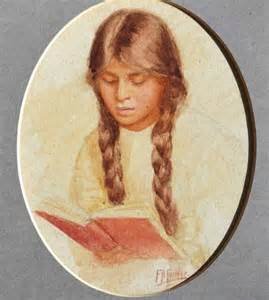
At an exhibition of the Victorian Artists’ Society in 1889 Fuller won a prize for the best portrait by an artist under the age of 25. Another portrait of a child by Fuller which has a happier connotation is her 1890 work Inseparables which depicts a child reading her book.  The joy the child gets from reading is depicted in this warm painting.   One of the interesting things about studying a painting is our “take” on it.  A good example of this is how this painting was viewed by two very different experts.  The work was shown as part of The Edwardians exhibition at the National Gallery of Australia and the curator saw the depiction as a “love of reading”.  On the other hand, the Australian art historian Dr Catherine Speck looked upon the work as being all about “subversion” because it portrayed a young woman reading and by doing so “gaining knowledge” rather than the stereotypical role of a family and home maker.

Lady in a Wicker Chair by Florence Fuller

Another of Fuller’s paintings which focused on the enjoyment of reading was her work Lady in a Wicker Chair.  In the depiction, we see the lady leaning forward, as if someone is coming into the room where she is reading. She ensures that she doesn’t lose the place in her book by marking it with her hand. Look how Fuller has made sure the attention of the viewer is solely on the lady by darkening and blurring the detail of the background.

Sydney Harbour (View Across Double Bay from Darling Point) by Florence Fuller (c. 1920)

In 1892, she, accompanied by her married sister Christie, left Australia, and travelled to Cape Town to recuperate from an illness.  She and her sister were the guests of her uncle Sir Thomas Ekins Fuller, a member of the Parliament of the Cape of Good Hope and it was through him that she was introduced to Cecil Rhodes, the British businessman, mining magnate and South African politician, who served as Prime Minister of the Cape Colony from 1890 to 1896.   She left South Africa in 1894 but before she went she completed a painting depicting the home of Cecil Rhodes.  Fuller returned in 1899 and had a number of meetings with Rhodes in order to put together studies for five portraits of him.

Whilst Yet the Days are Wintry by Florence Fuller

In 1894 Florence travelled to Europe.  Her first port of call was Paris where she enrolled at the Académie Julian, where one of her tutors was William-Adolphe Bouguereau.  It was at a time when French art schools had just recently opened their doors to women.  This was not a popular move with many of the male artists, who felt threatened and the aspiring female painters were often held in contempt by some of the male tutors.  The female students at the Académie often suffered from lowly and congested conditions.  Whilst there, she exhibited her work at the Paris Salon in 1896 and again in 1897.  Her works were also exhibited at the Royal Academy in 1897 and later in 1904, as well as being hung at exhibitions at the Royal Institute of Oil Painters and the Manchester City Art Gallery.

The Swan River, Perth by Florence Fuller (c.1904)

She returned to Australia in 1904 and for the next five years lived in Perth, where her sister Amy lived.  Fuller held an exhibition of 41 works in Perth in 1905, and the newspaper proprietor Winthrop Hackett described one of her paintings, Early Morning, which was later purchased for the Art Gallery of Western Australia:

“…it is probably the greatest success in the domain of pure impressionism … because of its pure tone, its admirable perspective and its strongly vivid reproduction of that mysterious and evanescent but always brilliant colouring that is momentarily lent by the sunrise…”

A Golden Hour by Florence Fuller (1905)

In 1905, she completed a painting entitled A Golden Hour.  When the National Gallery of Australia bought the painting in 2013 they described it as:

“…a masterpiece … giving us a gentle insight into the people, places and times that make up our history…”

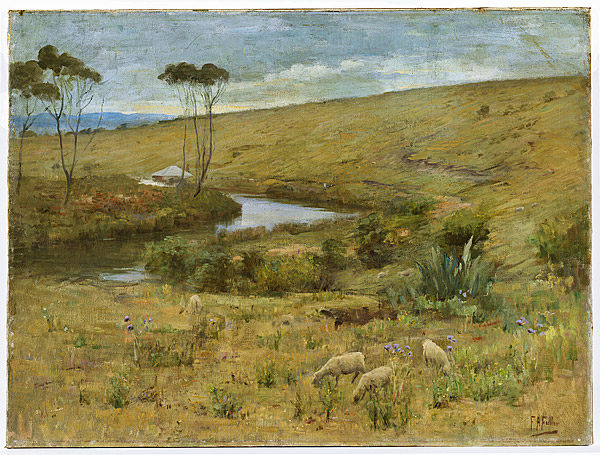
The depiction is of a tranquil early evening, the end of a beautiful day.  The sun is slowly setting and it gives off a warm glow over the xanthorrhoea, grasses and wildflowers, and lights up the trunks of the white gum trees. In the midground we see a couple walking side by side through the wildflowers towards the valley. Look at the mountains and the sky in the background which have been painted in many pink tones, adding tranquillity to the scene.  If we close our eyes we can sense this calmness, this serenity, and soon our imagination even allows us to hear the sound of birds as they circle the gum trees.  The setting of the landscape is the Darling Ranges in Western Australia, and the couple we see in the painting are John Winthrop Hackett, businessman, philanthropist and owner of the West Australian newspaper, and his new wife Deborah Vernon Hackett, née Drake-Brockman, who had married Hackett in 1905, when she was just eighteen years of age, much to the horror of her family. When exhibited in October 1905 the art critic for The Western Australian newspaper called the painting the pièce de résistance of Fuller’s exhibition. Many of the art critics of the time were also complimentary with regards to the work, citing the expertly balanced composition and the masterful way Fuller had depicted the hills and sky but most of all praised ‘the wonderful light effects which they referred to as ‘the golden glories of late afternoon’.

Deborah Vernon Hackett by Florence Fuller (c.1908)

The lady depicted in A Golden Hour also appeared in another painting by Florence Fuller, entitled Portrait of Deborah Vernon Hackett, which she completed around 1908.  Hackett was born in West Guildford, Western Australia, in 1887, she was the daughter of surveyor Frederick Slade Drake-Brockman and heroine Grace Vernon Bussell and younger sister of Edmund Drake-Brockman.  On August 3rd 1905, at the age of 18, she married Sir John Winthrop Hackett who was forty years her senior much to the annoyance of her family. He was a newspaper proprietor, newspaper editor, and prominent Western Australian politician.  Fuller depicted Hackett compassionately.  The portrayal capturing the young woman’s grace and charm. But she also conveyed the complexity of the twenty-one-year old woman’s character through the contrast between the femininity of her soft, pale-blue dress and the dramatic black hat.  She gazes directly at us.  It is a somewhat piercing expression questioning why we are staring at her.

Girl with a Doll by Florence Fuller (1890)

Florence Fuller joined the local theosophy society in Perth in May 1905, after attending a talk given by the enigmatic theosophist Charles Webster Leadbeater.  Fuller’s time was taken up by the local branch of the society variously holding the positions of secretary, treasurer, and librarian of the local branch.  She went on to paint many portraits of the leaders of the Theosophical Society.  In 1911, she travelled to London and three years later journeyed to India and visited Adyar, the headquarters of the Theosophical Society.

Florence Fuller in her Studio

Later that year Fuller returned to NSW and settled in Mosman where she mainly painted miniatures.  In 1920, the Society of Women Painters in New South Wales established a School of Fine and Applied Arts, with Florence Fuller appointed as the inaugural teacher of life classes.  Fuller began to suffer from mental illness, which deteriorated over time, and in 1927, at the age of sixty, she was committed to Gladesville Mental Asylum where she died nearly two decades later, on July 17th 1946, aged seventy-nine. She was buried at Rookwood Cemetery, New South Wales.

Charles Leickert. Part 3 – the middle and latter years.

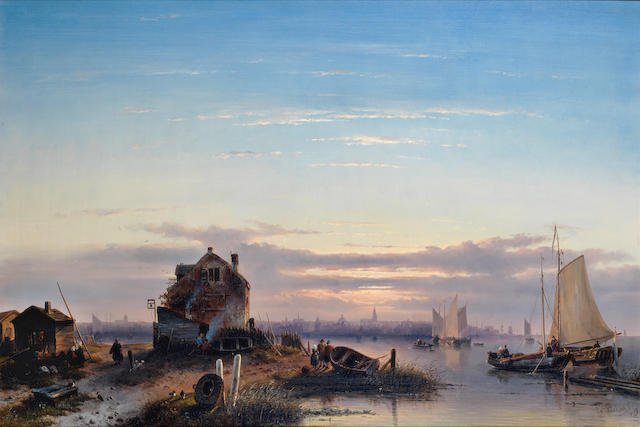
View on the Ij with Amsterdam in the Background by Charles Leickert (1848)

…………………..In hindsight, Leickert’s decision to move away from The Hague in 1848 and base himself in Amsterdam was probably a brave decision but it paid off as the next twenty years are looked upon as his best period. The finely drawn details in his works and his use of the chiaroscuro technique was looked upon by the critics as masterful. One of the first paintings he did after his move to Amsterdam was View on the Ij with Amsterdam in the Background. The setting is a view from the grounds around the tollgate on the north shore of the IJmuiden, a body of water, formerly a bay, in the Dutch province of North Holland. It was a favourite place of artists, and the Amsterdam public were always willing to buy such depictions.

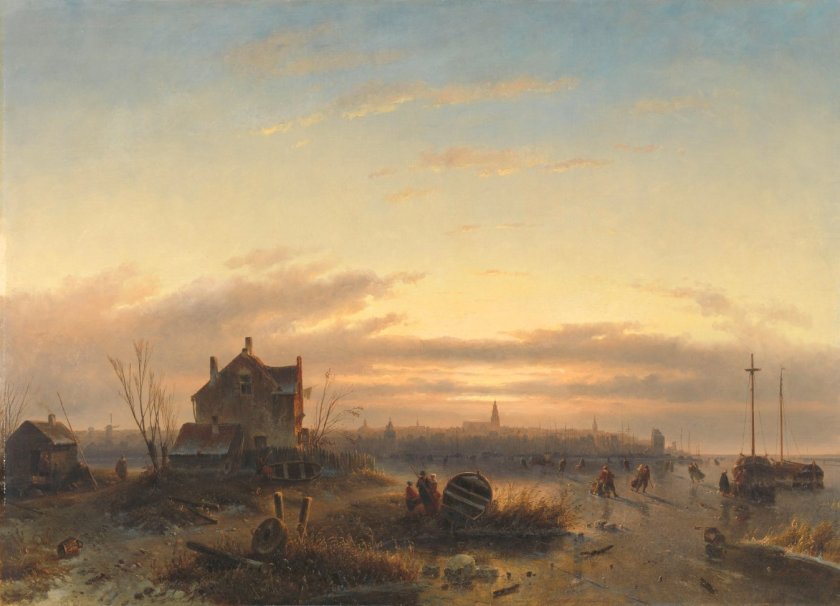
Winter op het IJ voor Amsterdam by Charles Leickert (1849)

Many artists depicted similar scenes and in fact Leickert completed several versions of this painting, including one with the same view but in a winter setting, entitled Winter op het IJ voor Amsterdam (Amsterdam in the Winter with the Setting Sun), which can be seen at the Rijksmuseum. It was painted from the same viewpoint at slightly different stages of sunset. Both paintings depict the same barn, house, and figure group to the left-hand side. However, the most notable difference is that the Rijksmuseum painting is set during winter and it depicts people skating on the frozen river. These two works are masterpieces in the way they depict a highly detailed analysis of light and colour, and the atmospheric fluctuations between the seasons and times of day. These were aspects of overriding importance to Leickert. Leickert left his mentor Schelfhout when he moved from The Hague to Amsterdam and began to be “his own man” as far as his artwork was concerned. An art critic at the 1850 Rotterdam exhibition which included Leickert’s winter variation of the painting commented on the work and Leickert’s newly-found independence:

“…Leickert has long managed to situate himself outside the school of Schelfhout – that is, to learn to observe with his own eyes. His view of Amsterdam in the Winter with the Setting Sun is one of those paintings at which one must gaze for a long time to recover, as it were all that is surprising and alluring about a sunset in December. The sky has a particularly divine effect, being harmoniously rendered and incontrovertibly one of the most handsome of the Exhibition…”

The “divine effect” mentioned by the critic alludes to the strong Romantic evening light depicted in the painting. In the work look how Leickert has the setting sun lighting up and colouring the sky in red, orange, and lilac tints. The setting of the painting was typical of Leickert. He often chose riverbank scenes which were full of human activity. He himself often lived in houses which were close to river or canal banks, such as the Rokin, in the centre of Amsterdam.

Fisherfolk on the Beach near Scheveningen by Charles Leickert

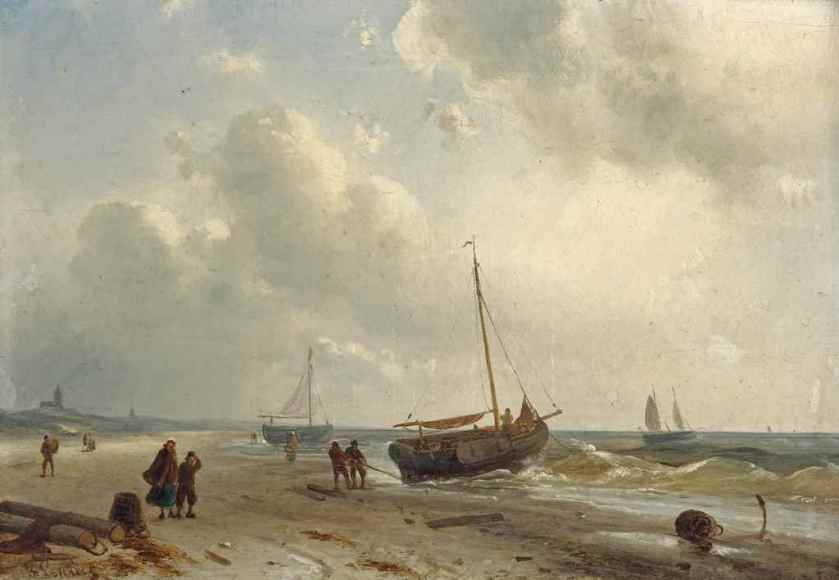
Having lived in both The Hague and Amsterdam he would have visited the coast on many occasions especially the fishing village of Scheveningen. Although Leickert will always be remembered for his cityscapes and landscapes he did paint coastal scenes. One such work was Fisherfolk on the beach near Scheveningen, the setting and type of depiction was very popular with artists.

Self portrait by Charles Leickert (1852)

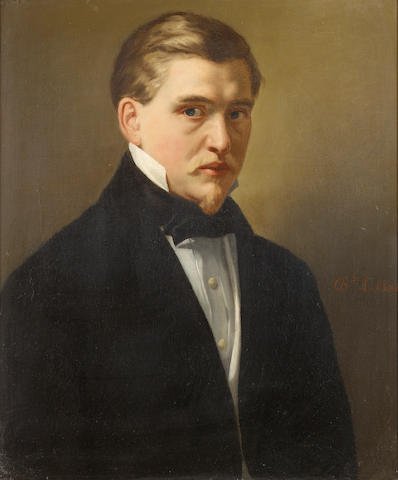
We think of Leickert as a painter of enchanting scenes whether it be a riverscape, landscape or cityscape but the one facet of his talent is somewhat surprising – that of a portraitist, although he never contemplated this genre as a professional alternative to landscape painting. His 1852 Self Portrait was a triumph of tonal modulations used in the facial depiction. Look at how Leickert use of light on the skin and dark areas, as well as the clever way in which he shapes the background by the use of varying tones. What is Leickert trying to achieve with this portrait? What does he want us to take away after viewing the painting? Look at the way he is both well-groomed and well-dressed. Look at his facial expression – serious and somewhat imposing. What he has achieved with this depiction is a portrait of a professional and successful man, one who has gained success professionally as an artist and attained social acceptance. There is even a hint of elitism in his demeanour.

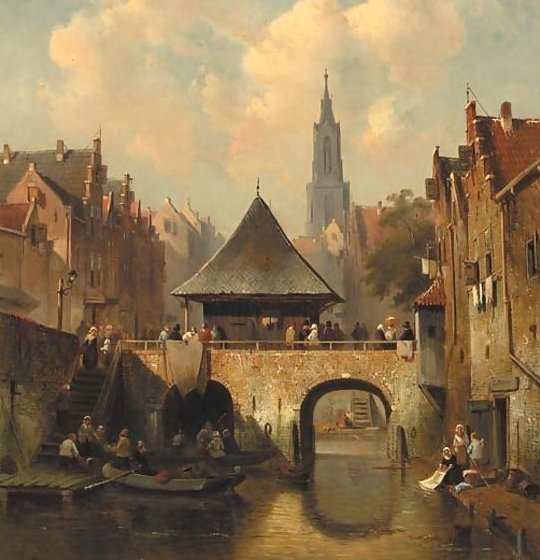
A Cappricio View of Utrecht by Charles Leickert

Leickert’s landscapes and cityscapes focused on life as it was and he rarely added to his depictions anything which signalled the changes that were taking place. He shied away from modernity. His paintings concentrated on picturesque towns and ageless, unspoilt landscapes. Such depictions had the wistful feeling of Romanticism.

At the ‘koek en zopie’ in a Panoramic Winter Landscape by Charles Leickert

I love his portrayal of the frontages of the old Dutch streets. I love how he instils in the viewer a sense of warm cosiness and contentment as we look at a winter scene with the refreshment stall on the ice. An example of this is his 1892 painting entitled At the ‘koek en zopie’ in a Panoramic Winter Landscape.

Numerous Skaters near a koek-en-zopie on a FrozenWaterway by a Mansion by Charles Leickert (1892)

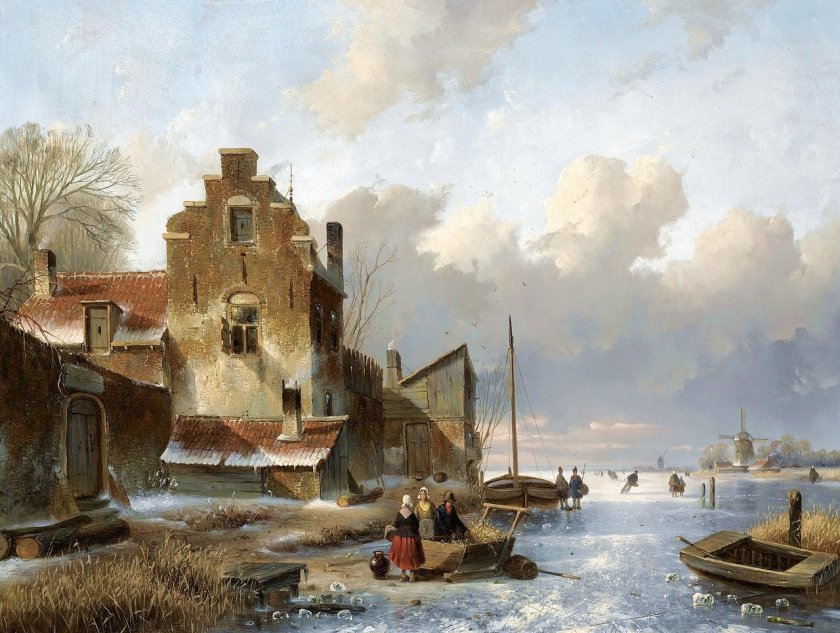
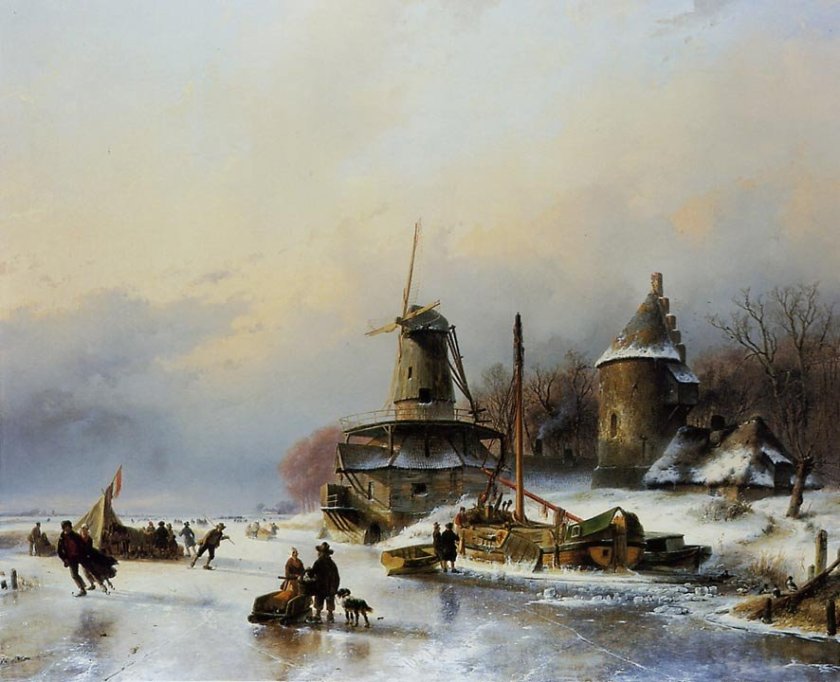
Koek en zopie (cookies and hooch!) were refreshment stalls on the ice which sold cakes and biscuits as well as hot alcoholic drinks. The strange quirk of why these stalls were on the ice and not on the land was because if they had been positioned on the mainland there would have been a tax levied on their products. Nowadays these small stalls sell drinks such as split pea soup and hot chocolate. Another painting by Leickert which featured the koek en zopie was entitled Numerous Skaters near a koek-en-zopie on a Frozen Waterway by a Mansion.  On the frozen water, we see villagers engaged in their daily routines. For some, whom we see skating, it is leisure time whilst others in the depiction are using the ice to transport goods. A house with a snow-covered step gable can be seen on the right of the painting. This tall structure forms a vertical compositional element and is echoed in the two windmills and the mast of the small boat which appears to be stuck in the ice. Look at how Leickert has accurately depicted the ice with all the scratches in its surface made by the skaters and sleighs. Look at how Leickert has depicted the sky. It is masterful with variance of colours, different tones of pink, blue and grey added to which are the dark clouds. The warm colours for the sky contrasts and enhances the whiteness of the snow which emphasises the coldness of the winter day.

A Frozen Canal with a Peasants by Charles Leickert

In 1859, forty-three-year-old Leickert leaves Amsterdam and travels to Germany where he journeyed down the Rhine valley calling at Rudesheim and later Mainz where he stayed for some time – time enough to meet, fall in love with, and on September 29th, within the year of their first meeting, marry thirty-six-year-old, Apollonia Schneider. The couple returned to the Netherlands in 1861, settling for a year in Frederikstraat in The Hague before returning to Amsterdam, where his drawings and paintings drew the attention of King Willem III.

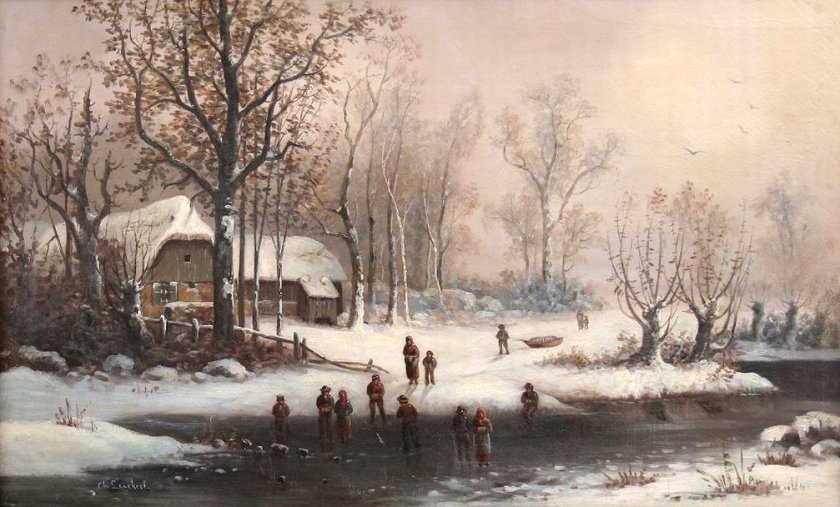
Winter Scene with Figures by Charles Leickert

Over time Leickert’s paintings became less popular as they were beginning to be looked upon as old fashioned and the new painters of The Hague and Amsterdam could command prices three-times as high as his were sold for. In 1887, Leickert, then seventy-one years of age decided to end his artistic career, left The Netherlands, and returned with his wife to Mainz, where twenty-eight years earlier, they had married.

Figures on the Ice Unloading a Sledge by Charles Leickert

Charles Leickert died in Mainz on December 5th, 1907, aged ninety-one. His obituary notice stated he was a widower with no children and it is believed that his wife Apollonia had died a few years earlier. Leickert was a prolific artist producing approximately seven hundred paintings, of which he only exhibited about eight-five.

————————————————————————–

Most of the information for the three blogs on Charles Leickert came from excellent 1999 book entitled Charles Leickert 1816-1907: Painter of Dutch Landscape by Harry J Kraaij


Charles Leickert. Part 2 – The influences of Andreas Schelfhout, Wijnand Nuyen and Charles Rochussen


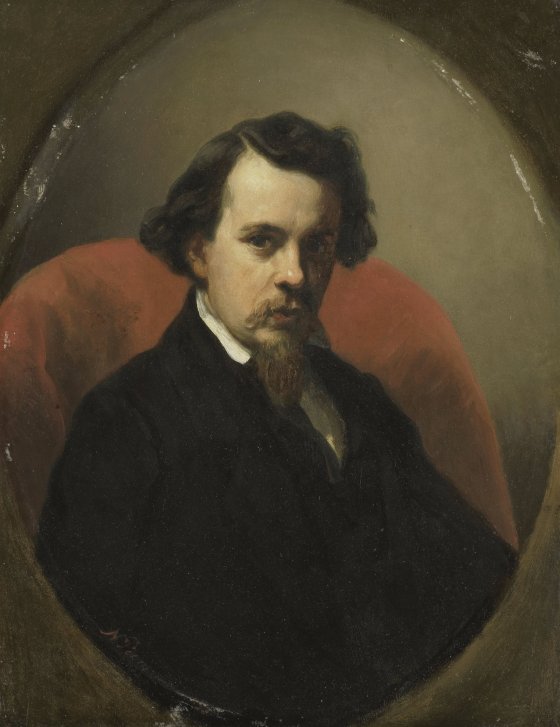
Portrait of Charles Leickert by Charles Pieneman (1853)

…………………………………………In 1834, whilst attending the The Hague Drawing Academy Leickert gained a First Prize in the Third Grade which allowed him to enter the studio of Wijnand Nuyen. It was also at this establishment that he attended classes in architecture and ornamental drawings which was a perfect artistic grounding for him and proved a great help when he went on to paint his cityscape depictions.

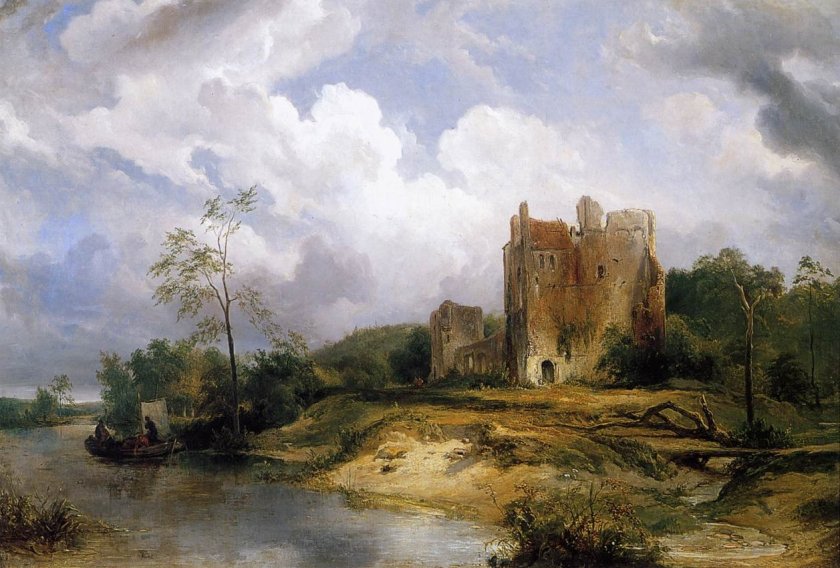
River Landscape with Ruins by Wijnand Nuijen

A fellow student and friend of Charles Leickert from The Hague Drawing Academy Wijnand Nuijen opened his own atelier in 1833 and sometime later, in the mid 1830’s, it is known that Leickert worked there. It was through Nuijen that Leickert, although he carried on with his cityscape depictions, became more interested in the painting of nature. Dutch landscape paintings became very popular in the nineteenth century and there was a great demand for works depicting rivers and windmills. Many looked upon this painting genre as being a testament to the greatness of their country and the oneness with God. The nineteenth century Dutch merchant and poet, Reijer Hendrik Someren, in his lecture to the Rotterdam Drawing Society in 1830 summed up this feeling when he talked about:

“…Vaderlandsche goede zeden, Vaderlandsche genoegens, Vaderlandsche huiselijkheid…”
(Fatherlandish virtues, Fatherlandish pleasures, Fatherlandish domesticity)

It was the belief that nature and God are as one. It was a pantheistic view that all reality is identical with divinity.

Ice Merriment Near a Mill by Andreas Schelfhout

Leickert’s time with Nuyen did not last long as the latter died in 1839, at the young age of twenty-six. After the death of his mentor Leickert went to the studio of Andreas Schelfhout, an artist who had once taught Nuyen. Nuyen had married one of Schelfhout’s daughters and it was incumbent on Schelfhout to take on his late son-in-law’s atelier and his pupils. Schelfhout at the time was one of the highest paid artists of The Hague, one of the most influential Dutch landscape artists of his century and one of the most sought-after teachers.

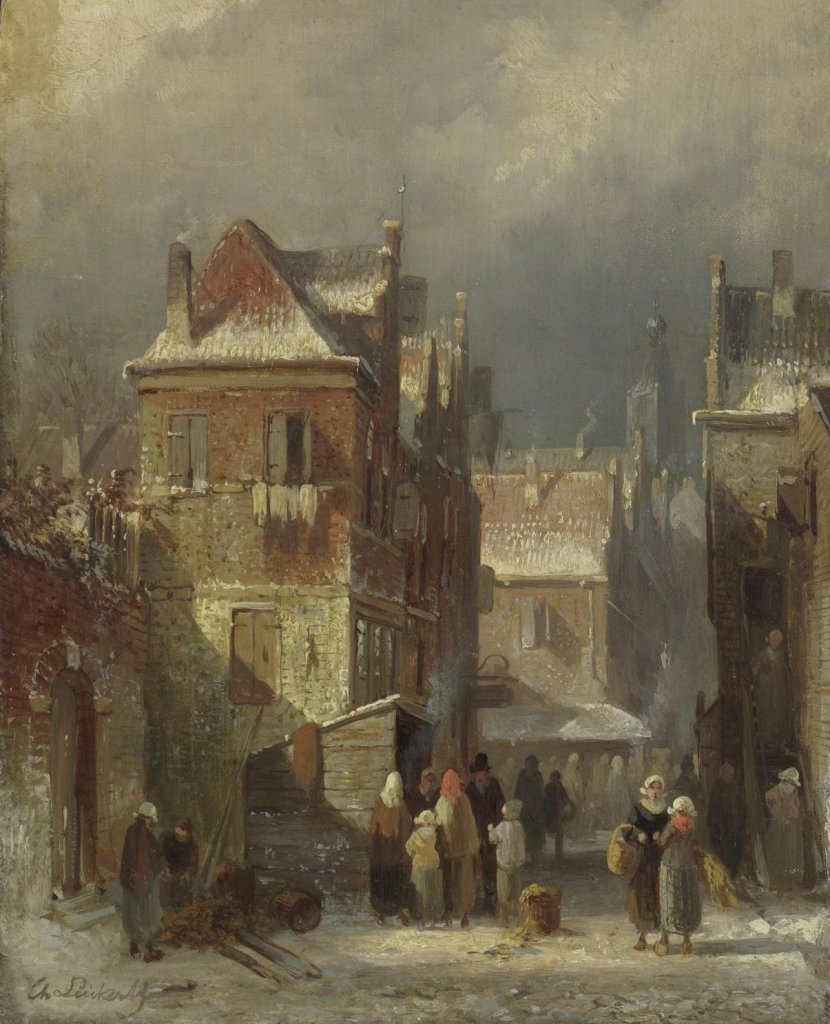
Winter Scene by Charles Leickert (1867)

Leickert flourished as a painter under the mentorship of Schelfhout. Schelfhout and been known for his wonderful landscapes and certainly influenced Leickert and his first winter landscape was greeted by an art critic who stated:

“…Mr C Leycert, of The Hague, demonstrates with a winter scene with some buildings that he has turned the lessons of his master to good use…”

A Village Along A River, A Town In The Distance by Charles Leickert (1880)

Despite that first winter landscape work Leickert’s first love was always for summer landscapes. Although the landscapes were his own work, critics were often keen to point out the influence of Schelfhout on the depiction. One river scene of his which was shown at an exhibition was commented upon by the art critic of the art newspaper, Kunstkronijk, wrote of this influence:

“…A river view by M. Leickert, in The Hague, is well drawn and painted, soft and charming in tone, in the manner of Schelfhout, whom he fortunately seems to be emulating…”

However, there were other critics who thought that this copying of Schelfhout’s style was not beneficial to Leickert and wondered if it were not for Schelfhout, Leickert’s works may not even exist, one wrote:

“…Would not the handsome work by C. Leickert be less pleasing if we were less accustomed to the winter views by Schelfhout?…”

Maybe such implied criticism was to be expected as Schelfhout was adored by critics and the public and many were annoyed that Leickert was merely copying the great man’s style. However, for Schelfhout, Leickert was the most gifted of his pupils and probably the copying of his style by his pupil may have endeared him more to the master.

Summer River View by Charles Leickert (c.1847)

Over time Leickert liked to produce landscapes which incorporated stretches of water, whether it be lakes or rivers. They were characterised by pale hues. Take for example his painting Summer River View which he completed around 1847 and is now housed in the Douwes Gallery in Amsterdam. Look at the colours used for the sky and water. Look how many different tones of blue and grey  he has used and these are contrasted by the golden/sandy tones of the shore. Our eyes are always drawn to the red colour in a painting and in this case, we immediately note the red roofs of the houses in the middle ground but we are also drawn to look at the launching of the boat because one of the men pushing the boat towards the water wears a bright red jacket. From there our eyes wander further into the depiction towards the white-sailed boat which is moored across the river, behind which is a castle in the background. It is a fascinating work and one which makes us carefully search the painting so that we do not miss any of the details. This painting, like many of Leickert’s landscapes, incorporate a certain amount of staffage. Staffage, in painting, are the human and animal figures depicted in a scene, especially a landscape, that are not the primary subject matter of the work, but in the case of Leickert the staffage was always subservient to the landscape and there were rarely any facial expressions seen on the small characters. For Leickert, it was all about the beauty of the landscape.

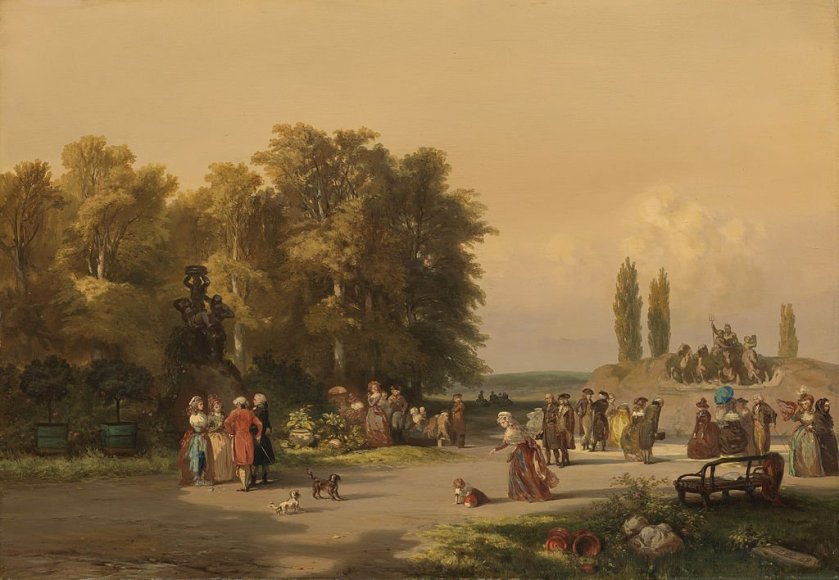
Park in the Vicinity of Paris by Charles Rochussen (1848)

Leickert was twenty-five years old when he first journeyed outside his homeland, a year after he was released from the Civic Orphanage in 1841. He visited Germany with his fellow painters Carl Eduard Ahrendts and Charles Rochussen, a former fellow student of Nuyen. He often collaborated with Rochussen with his landscape work arranging for Rochussen to add the staffage in his landscape depictions.
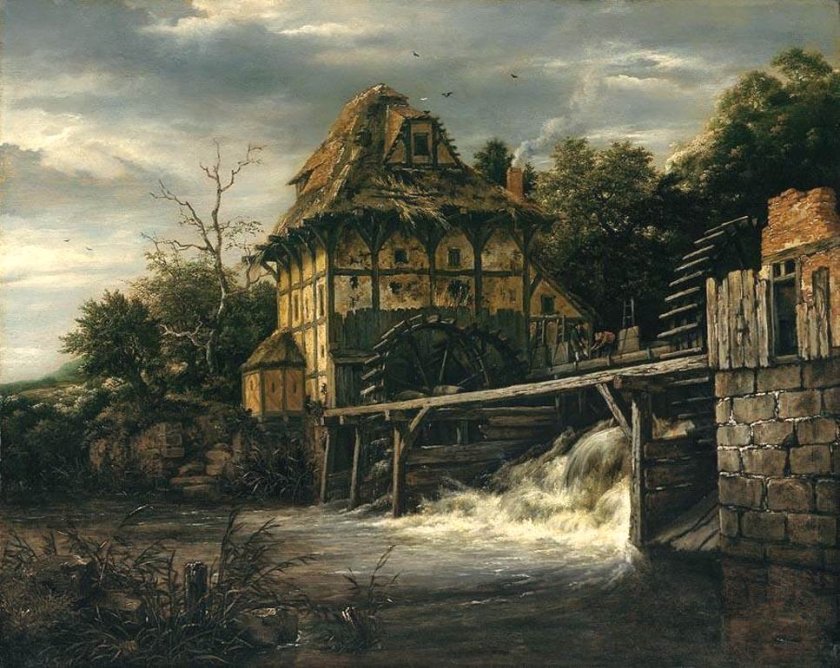
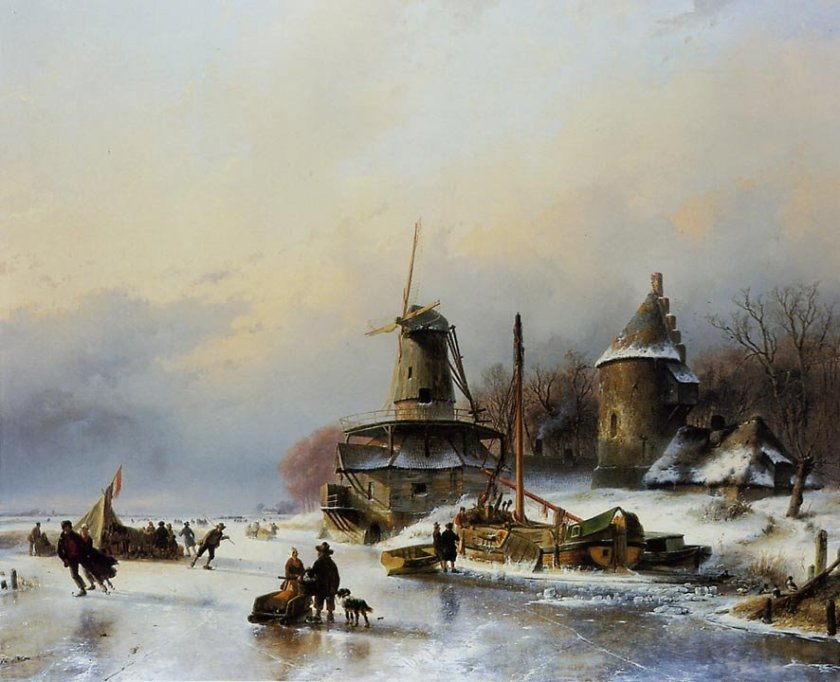
The Frozen River by Charles Leickert

By the mid-1840’s Leickert’s paintings had increased in popularity and he was starting to accumulate money from their sales. Having left the orphanage he moved to rented accommodation in Nieuwe Molstraat which was in the neighbourhood where he had spent his early childhood. It is thought that he may also have, by this time, his own studio.

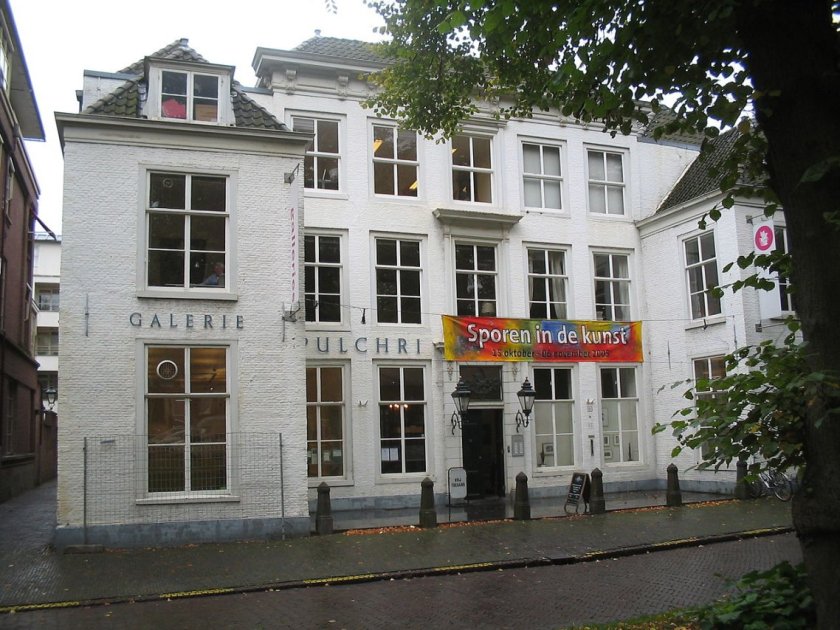
Pulchri Studio, The Hague

In 1847, we know that Leickert was involved with the formation of the Pulchri Studio that year, as his signature was on the Pulchri Studio Regulation. The Pulchri Studio, which I mentioned in my blogs about Hendrik Mesdag,  was established in 1847.  It is a Dutch art society, art institution and art studio based in The Hague. It was modelled on the successful artist colony of Barbizon south of Paris in the forest of Fontainebleau and still exists today. The chairman of this organisation at its inception and for a number of years was Leickert’s old mentor Bartholemus van Hove.

A Summer View on Overschie by Charles Leickert (1870)

In 1848 Leickert left The Hague and moved to Amsterdam. So why did he move as we know his paintings were selling well in the city? Maybe the reason was that Leickert, along with many of Schelfhout’s pupils, were churning out numerous landscape works and Leickert may have believed that the landscape market in The Hague was reaching saturation point. Maybe he also wanted to go out on his own and break away from Schelfhout. Whatever the reason, Leickert left The Hague and rented a house in Kalverstraat in Amsterdam which he shared with Rochussen. From there, their collaborative work continued. He became a member of the Amsterdam art society Arti et Amicitiae (art and friendship) which was founded in 1839 and still exists today. Historians have made a comparison between the art establishments of Pulchri Studio in The Hague and the Arti et Amicitiae society in Amsterdam and believed the latter to be classier, which was just as Leickert liked. Later, in 1856 he became a member of the Royal Academy of Drawing of Fine Arts of Amsterdam and became a member of the Board of Governors of the Academy.

……………………………. to be concluded

—————————————————————————


Most of the information for the three blogs on Charles Leickert came from excellent 1999 book entitled Charles Leickert 1816-1907: Painter of Dutch Landscape by Harry J Kraaij

Charles Leickert. Part 1. The early years, influences and tutors

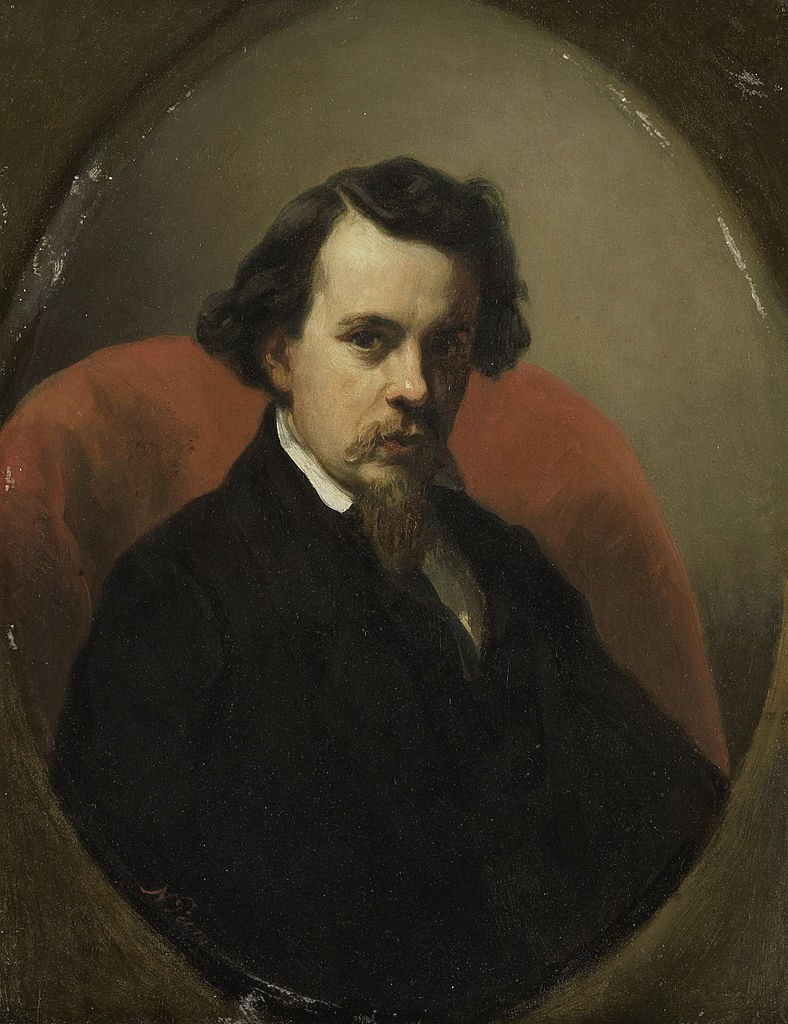
Charles Leickert by Nicolaas Pieneman (1853)

My featured artist today and over the next two blogs, is the Dutch nineteenth century landscape painter Charles Henri Joseph Leickert. His painting genre was also often associated with another artistic “-ism”, that of Romanticism. But what is Romanticism when used as a description of an artist’s work. In his 1950 book De Romanesken, the Dutch art writer, Frans Hannema described Romanticism in art as:

“…A great emotive stirring of the heart; an all enveloping expansion of feeling; a controllable urge for the whimsical, the grotesque, the fantastic and the eerie; a boundless desire and self-imposed hardship; a fantastic devotion and passionate contempt; an unfathomable nostalgia for the transience of all happiness and for the inconstancy of all things; a flight from circumscribed reality to the interminable dream: these are the fiercely jostling and often contradictory emotions with which the soul of the Romantic individual is affected…”

Two Undershot Watermills with Men Opening a Sluice by Jacob van Ruysdael (1650s)

However, Romanticism in art was not that evident in Dutch paintings of the time. The leading Romantics of the nineteenth century were the Frenchman, Théodore Géricault, and Eugene Delacroix and the German Caspar David Friedrich. Dutch paintings in the early nineteenth century were generally limited to landscapes and cityscapes. The favourite Dutch artists of the time were from the bygone days of the seventeenth century such as Jan van Goyen, Salomon van Ruysdael, Jacob van Ruisdael, and Isaac van Ostade. Unlike the Romantic depictions of forests and waterfalls depicted in Jacob van Ruysdael’s works, Leickert preferred to depict everyday Dutch village and river scenes with their picturesque embankments or winter scenes featuring frozen canals on which people would be seen skating, and the frozen rivers and canals would often be overlooked by windmills. However, the Romantic title associated with Leickert was probably due to his ability to saturate his scenes with what is almost a supernatural light which was so prevalent in his depictions especially those featuring the evening sun.

Ice Merriment Near a Mill by Andreas Schelfhout

So why is Leickert not a well-known Dutch artist? Some historians believe the answer lies with his character. He was a shy person and often hid his light under the proverbial bushel. The bushel being his mentor and teacher, Andreas Schelfhout, whose shadow Leickert was pleased to remain under. The subject of Schelfhout’s works was very similar to that of Leickert or maybe that should be seen the other way around! Andreas Schelfhout was a Dutch painter, etcher, and lithographer, known for his landscape paintings. Schelfhout belonged to the Romantic movement and his Dutch winter scenes with frozen canals and skaters were already famous during his lifetime.

Charles Leickert was born on September 22nd, 1816 in Brussels. His parents were, his father Henricus Michael Leickert who had been born in Wittendorf, Germany in 1781 and his mother, also German-born, Henrietta Frederique Martilly. Leickert’s parents, who were married in Berlin, lived there until 1815, at which time with the defeat of Napoleon at the Battle of Waterloo and the subsequent ending of the First French Empire, the French were driven out of the Netherlands and Leickert’s father, mother, and his eldest sister, two-year-old, Louïze Frederica, moved from Berlin to Brussels.

Summer Landscape by Charles Leickert

Leickert’s father gained employment as the King’s chamberlain (valet de chambre) at the court of King Willem I. At this time, and until 1820, the Kingdom of the Netherlands had twin seats of government, The Hague in Northern Netherlands, and Brussels in Southern Netherlands and so Henricus Leicker, as part of the royal entourage, had to move with his family backwards and forwards from one city to the other. In 1816 Charles Leickert was born in Brussels while some his younger siblings were later born in The Hague. Finally, around 1820 The Hague was designated as the sole capital of The Netherlands and the Leickert family made their home there. With the defeat of Napoleon and the ending of the French annexation of the Netherlands thousands of people came to live in the country and the population of The Hague swelled. The surge in population led to housing shortages, poor sanitation and disease which led to a large rise in infant mortality. The Leickert family were hit hard losing most of their children before they reached adulthood, some due to typhoid and tuberculosis and his three-year-old brother died of his burns in a fire.

View of the Old Women and Children’s Hospital in The Hague by Bartholomeus van Hove (1830)

Charles Leickert managed to survive and when he was just twelve years old, because he was showing talent as an artist, his father enrolled him into The Hague Drawing Academy in 1827. The tutor who had the most influence on Leickert was the Dutch landscape and cityscape painter, Bartholomeus van Hove. In 1828, a year after his enrolment, Charles Leickert’s father Henricus died. The cause of death was given as verval van krachten which simply means a decline in strength which seems very unusual as Henricus was just forty-five years old, but it could have been “part and parcel” of the poor sanitary conditions of the city at the time. Leickert’s mother Henrietta was left to bring up the family but struggled financially as her poor health meant she could not work. She pleaded successfully with the art academy to give her son artistic tuition for free, a decision which says a lot for Leickert’s talent. With no money to pay the mortgage, the king stepped in and bought the house of his one-time servant and Henrietta, along with Charles and his two sisters, Adelheid and Barbara, moved into rented accommodation. The health of Leickert’s mother continued to deteriorate and she eventually died in 1830.

Winter Landscape by Charles Leickert (c.1860)

Charles Leickert’s mother was a great believer in her son’s talent as an artist and she wrote a short poem in one of his sketchbooks as a testament to her belief that one day he would become a great painter. A translated version of her poem is:

Accept this booklet, little Lijket
And fill it with sweet studies
Improve your judgement, and the little heart
That burns with love so sweet for art
With little skills, free from small sorrows
May life flit by till death draws nigh.

Walk in the little field and in small nature
Observe and draw each little hour
Every little object, be it great or small
And great you shall one day be as artist.

Charles then 14 years of age, Adelheid aged 10 and Barbara aged 12 were placed in the Civic Orphanage. Their older sister Louïze, who was eighteen, had her own home as a live-in domestic. Although being consigned to an orphanage seems harsh, it had its benefits. Sanitation was good, the children were inoculated against infections which were killing many children at the time and they were fed and clothed. Life in fact for the children was quite good, and for Charles, being the son of the former First Chamberlain to the King, he was allowed to carry on his art lessons at the Drawing Academy. Art played a part in the orphanage and the children were encouraged to try out art and the most talented would attend painting classes which were funded by charitable bequests.

Winter Scene by Charles Leickert (1867)

It is known, through his biographer, Johannes Immerzeel, that Charles Leickert’s first art teacher was Bartholomeus van Hove who ran a flourishing studio as well as teaching at The Hague Drawing Academy. Whilst under van Hove’s tutelage, Leickert honed his drawing skills and the art of chiaroscuro. The term chiaroscuro derives from the two words chiaro bright (< Latin clārus) + oscuro dark (< Latin obscūrus) and describes the prominent contrast of light and shade in a painting, and how the artist by managing the shadows is able to create the illusion of three-dimensional forms.

…………….. to be continued


Most of the information for the three blogs on Charles Leickert came from excellent 1999 book entitled Charles Leickert 1816-1907: Painter of Dutch Landscape by Harry J Kraaij

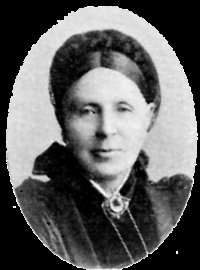
Josefina Holmlund

Just in case you haven’t read my previous blog featuring the Welsh artist,  Sally Moore, let me explain why this blog, like the previous one, is much shorter in length than my usual ramblings.

When I decide on a subject for my blog I look for three criteria to be met.  Firstly, and on a personal note, I need to be interested in the person or their art.  Secondly, I need to be able to find enough information with regards the life of the artist and their family upbringing and lastly, I need to have enough copies of their works to be able to populate the blog.  Without all three criteria, I tend to reluctantly disregard the artist as the subject of my blogs.  Having said this blog and the last one featured two artists but  did not meet with all the criteria – the missing criterium is the limited information I have about their life, but because I liked their work so much I decided to feature them albeit in much shorter blogs.  Today I am looking at the life and work of the nineteenth century Swedish landscape painter, Josefina Holmlund.

Josefina Holmlund

Josefina Holmlund was born in Stockholm in 1827.  Her parents were Nils Holmlund and Johanna Helena Holmlund (née Torsslow) and she had one sister, Jeanette.  Josefina trained as a painter and studied under Teodor Billing, a former student of the Royal Academy of Fine Arts in Stockholm who was a realist landscape painter and who depicted many scenes from Skåne, Lapland and Värmland.  Her other tutor in those early days was Olof Hermelin, who was an ardent advocate for national Swedish values ​​and became a prominent portrayer of the domestic landscape mainly in Uppland and Södermanland

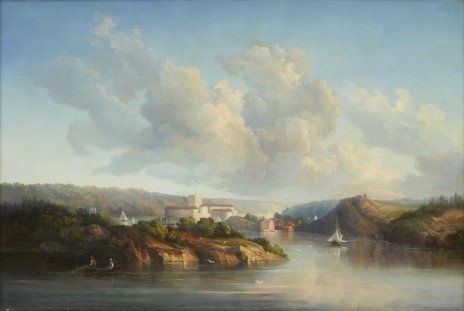
Vaxholm fortress by Josefina Holmlund

In the 1850’s, Josefina attended the Royal Academy of Fine Art in Stockholm where one of her professors was Edvard Bergh who started his career in law but later studied at the Royal Academy in Stockholm.  He founded the landscaping school at the Royal Academy and this school was characterised by the Swedish landscape painting of the time.  The fact that Josefina studied art at the Academy is unusual as the establishment did not officially allow entry for women before 1864.

In 1863, aged thirty-six, she travelled to Dusseldorf and went to live with her sister Jeanette.  Jeanette Holmlund who was also a painter had married the Norwegian landscape painter Nils Björnsson Möller.  Whilst living with them Josefina became influenced by her brother-in-law’s art.  She continued with her artistic studies and became strongly influenced by the “Dusseldorf School of painting”, which referred to a group of painters who either taught or studied at the Düsseldorf Academy of Art in the 1830s and 1840s, when the Academy was directed by the German Romantic painter Wilhelm von Schadow. The work of the Düsseldorf School is typified by finely meticulous yet imaginary landscapes.  Such landscapes often had religious or allegorical stories set in the landscapes. Members of the Düsseldorf School were great believers in plein air painting, and tended to use a palette with relatively subdued and even colours. that was a national romantic emphasis that depicted dramatic nature scenes, waterfalls and rapids with rocks.

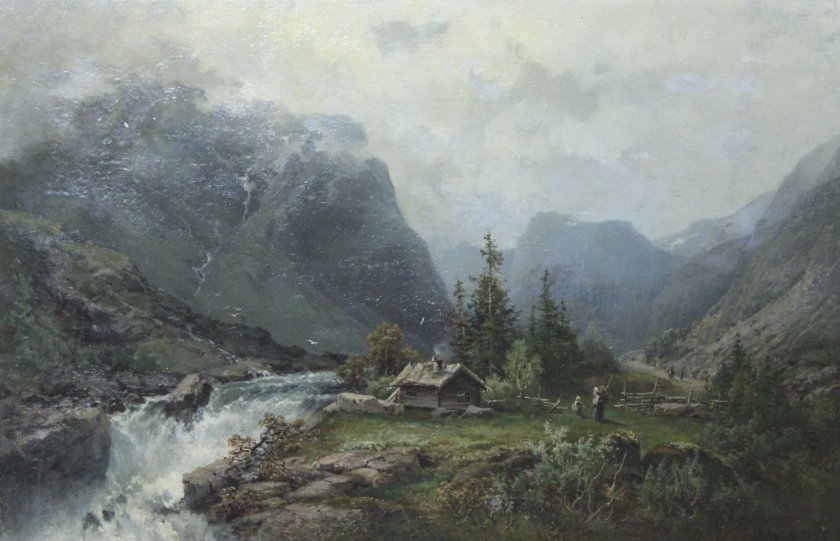
Mountain Landscape with Rapids by Josefina Holmlund

Josefina captured the starkness of life in the mountains and the ferocity of the rapids in her painting, Mountain Landscape with Rapids in which we see the fast flowing water of the rapids fall spectacularly over a waterfall at the side of which is a small, log-built cottage, with smoke billowing from the chimney.  By the side of it a lady, laden with wood she has collected heads home.

The Düsseldorf School emerged as part of the German Romantic movement.  Depictions by these artists had a national romantic emphasis that depicted dramatic nature scenes, waterfalls and rapids with rocks.  One can see in some of Josefina Holmlund’s paintings the influence of the Dusseldorf School.

She went on to make many trips to Holland, Norway and Scandinavia and the breath-taking countryside she discovered during her many journeys featured in her landscape works.

Josefina Holmlund never married and died in 1907, aged 78.

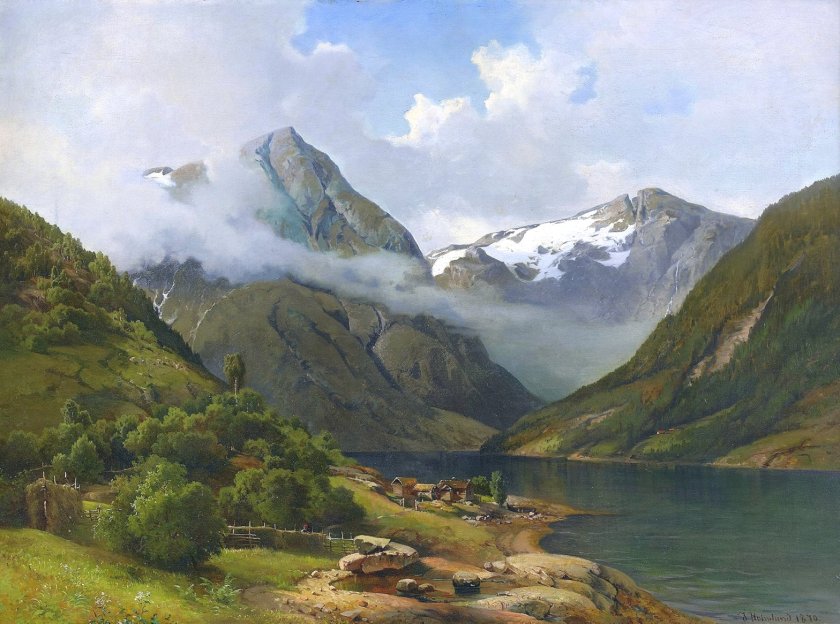
Fjord Landscape with Farm by Josefina Holmlund (1870)

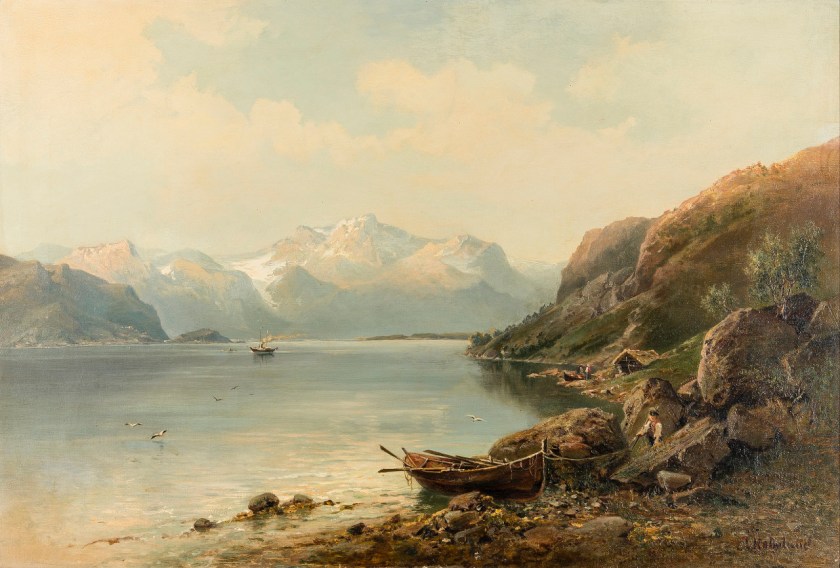
Many of her landscape paintings featured the breath-taking “V” shaped fjords such as Fjord Landscape with Farm, the one she completed in 1870.  There is a beautiful tranquillity about this depiction.

Fjord Landscape by Josefina Holmlund

Another painting of hers which I like is one featuring the tranquillity of the fjord which has lost its “V” shape as it is further from its source and closer to the sea.  In this work we see a steamer, puffing out smoke from its tall funnel as it chugs across the wide expanse of water.  In the right foreground we see a man making his way down to his row-boat.  On the bank of the fjord on the right mid-ground of the painting we can just make out a man and woman standing next to their boat and boathouse.

Kustbild med Båt (Coastel Scene with Boat) by Josefina Holmlund (1879)

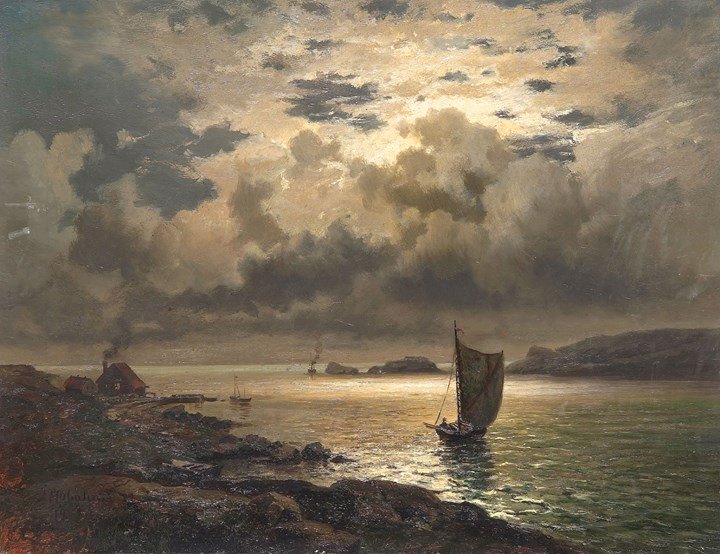
Josefina painted a beautiful and evocative sunset scene in 1879 entitled Kustbild med båt, (Coastal scene with boat).  Dark storm clouds almost obliterate the setting sun the rays of which force their way through to create a golden halo on the surface of the fjord.  Despite the prospect of an on-coming storm, a small sailing ship in the foreground sets out on its perilous journey.  In the left mid-ground we see a small cottage perched on the rocky bank of the fjord. Look at the myriad of colours, such as silver, greys and gold, she has used in depicting the water.

On the Bridge by Josefina Holmlund

Her ability to depict water with shimmering reflections is palpably shown in her painting entitled On the Bridge.

Sommarlandskap med Gärdesgård Intill en Väg by Josefina Holmlund (c.1855)

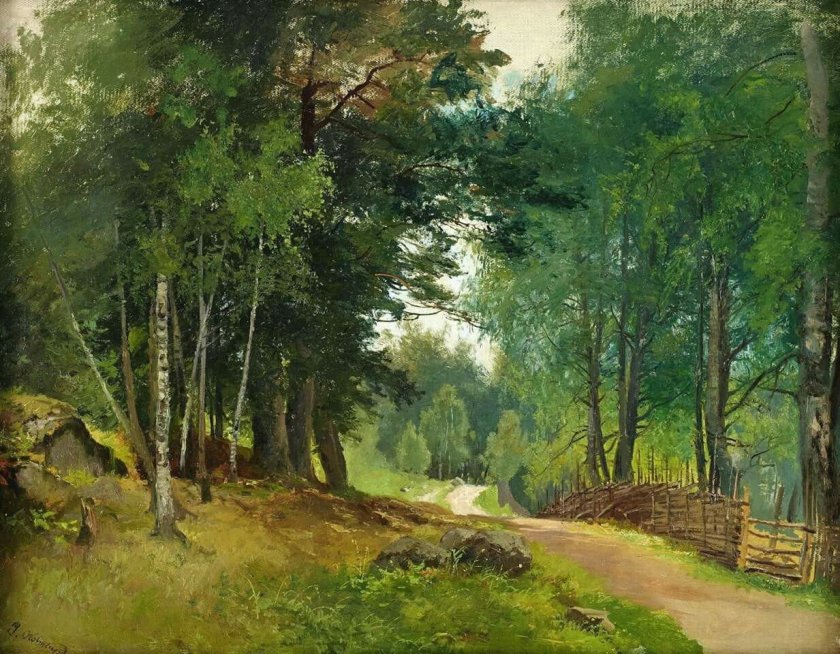
As well as her paintings of the fjords and lakes she completed many works featuring the countryside.  One of my favourites is Sommarlandskap med Gärdesgård Intill en Väg (Summer Landscape with Fence next to a Road) which she completed around 1855.

Cottage in the Woods by Josefina Holmlund (1879)

Often her countryside landscapes featured family life as in the case of her 1879 painting, Stuga vid skogsbryn (Cottage in the Woods) which is a depiction of idyllic life in the woods devoid of the noise and pollution of city life.  I think it is her portrayal of what life should be like.

Hide and Seek by Josefina Holmlund

Happiness attained from life in the woods is once again brought to the fore in her painting entitled Kurragomma (Hide and Seek), which combines the beauty and serenity of nature with the laughter and playfulness of three children as they amuse themselves with the game of hide and seek.

Village Street by Josefina Holmlund

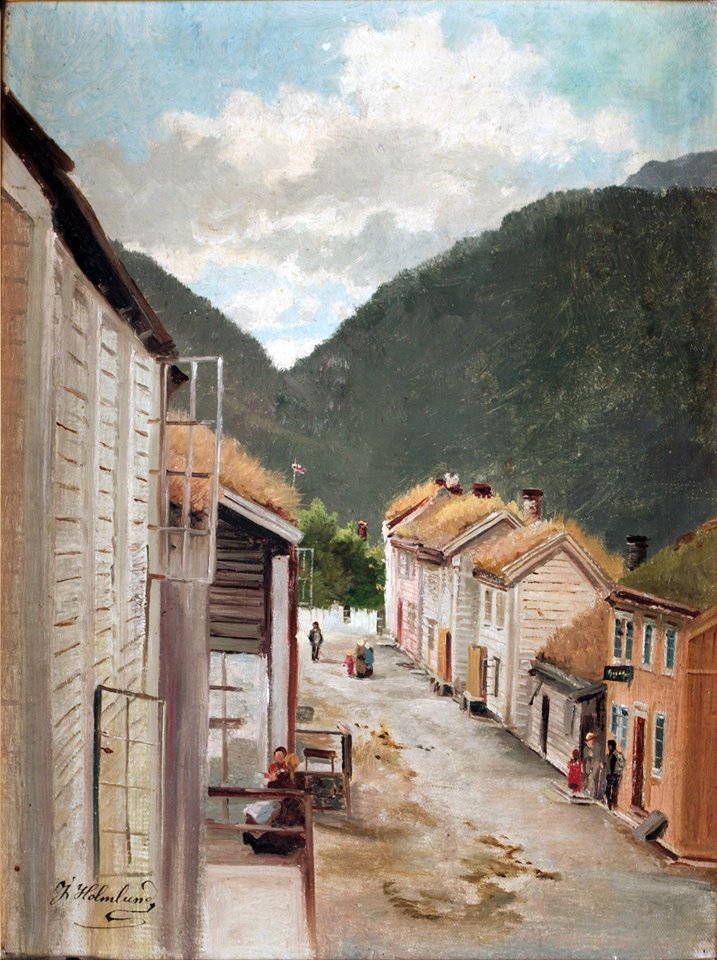
Another work of hers which I like for its simplicity is Village Street.

In my next blog I am going to look at the life and works of Charles Leickert, the nineteenth century painter of the Dutch landscape.

Eugène Galien-Lalou – the painter of Paris

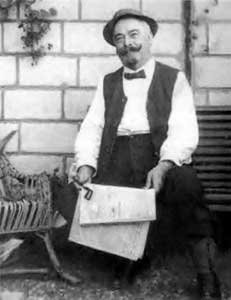
Eugene Galien-Lalou (1920)
Eugène Galien-Laloue (1920)

La Belle Époque, which literally means “Beautiful Age” is a name given in France to the period from the end of the Franco-Prussian War in 1871 and the start of World War I in 1914. So why was this termed a beautiful age?   Probably the reason for naming this period thus was because, for the middle and upper classes in France, the standards of living and security increased in comparison with the dark days that went before.  The devastation and death toll of the Franco-Prussian War and the short-lived but bloody battles of the Paris Commune were over.  Napoleon III’s period of power had ended and a Third Republic was declared.  It was a period free of wars affecting France.  It was a period of economic affluence and an era of many new innovations both cultural and technological.  For many it was a good time which needed to be savoured.  My artist today is one who lived and painted during this time and his Parisian street scenes of the time depicted an opulence which many, but the poorer classes, could enjoy. Let me introduce you to the French painter Eugène Galien-Laloue.  He was a consummate draughtsman.  His depictions of fin-de-siècle Paris architecture was of an amazing standard and yet he was not just a cityscape painter as he was equally adept with his landscape work in which he brought to life the rural French countryside.

Paris Street in Autumn by Eugene Galien-Lalou
Paris Street in Autumn by Eugène Galien-Lalou

In his tiny gouaches Galien-Laloue rendered every detail of fin-de-siècle Parisian architecture with absolute precision, but in his landscape works he was more attuned to the painterly tradition of the Barbizon School and the Impressionists, recording life in the rural French countryside in light-filled canvasses.  Galien-Laloue painted with great delicacy a wide variety of subjects.    Eugene

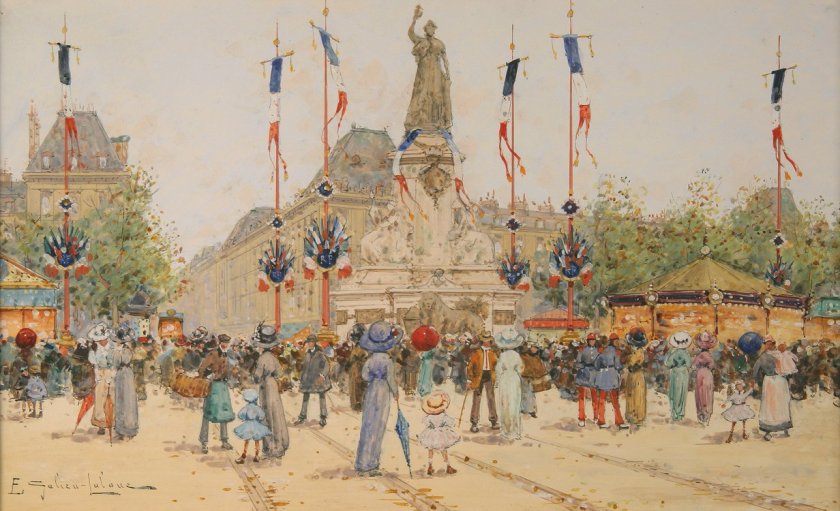
Un 14 Juillet, Place de la Republique by Eugène Galien-Lalou

Eugène Galien-Laloue was born in Montmartre, Paris, on December 11th 1854, almost a year after his father, Charles Laloue, an artist and set designer, married Eugène’s mother, Endoxi Lambert in December 1853.  Eugène was the eldest of nine children and the large family lived on Rue Leonie in the Montmartre, which at the time was an artistic community where many of the Parisian artists and freethinkers lived.  Eugène, even as a child, demonstrated his artistic ability and almost certainly his early training from his father, who liked to paint, and being a set designer was a talented draftsman.  Charles Laloue died suddenly in 1869 when Eugène was fifteen years old and the family, which only just made ends meet when he was alive, struggled to survive financially.  Eugène, was forced to leave school so that he could find work and help his family and his mother secured him a job as an assistant to a notary.

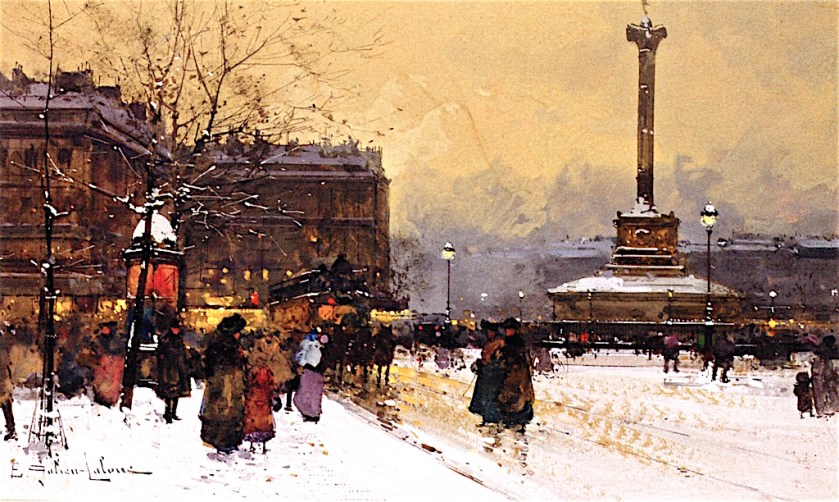
Place de Bastille by Eugène Galien-Laloue

In 1871, aged seventeen, filled with a sense of patriotism and nationalism, Eugène joined the army but to do so he had to lie about his age.  The war with Prussia was a short but deadly affair which France lost.  Fortunately, Eugène came through the bloody war unscathed and once the war ended he left the army and returned to civilian life.  His one aim in life was now to become a professional artist.  For an aspiring artist in Paris there was just one course one had to take to reach that ultimate goal.  One had to become a member of the prestigious L’Académie des Beaux-Arts, which was looked upon as the hub of the Parisian art world.  Some of the artists of this French Academy also served on the jury that selected paintings for the well-respected Salon de Peinture et de Sculpture, held at the Palais de l’Industrie on the Champs-Élysées, at which more than a thousand artists and sculptors had their works of art and sculptures displayed.  Unlike today there were only a small limited number of galleries where artists could show their work and so gaining access to the Salon was crucial for their success as painters and getting approval from the Salon hanging jurists was critical.

Flower Marketby by Eugène Galien-Laloue
Flower Market by by Eugène Galien-Laloue

In order to be nominated to the French Academy, an artist followed a well-tread course of instruction.  Students attended either the official school, the École des Beaux-Arts de Paris, or if they or their parents were affluent, received instruction in the private atelier of an established artist, often one who had connections with luminaries of the Salon.  Academic learning in the nineteenth century to become an artist was not an easy process.  The tuition was laborious albeit meticulous and it started off with the students learning draughtsmanship by copying engravings and sketching Roman and Greek sculpture, which was known as “working from the antique,” which translated, meant sketching black and white tonal studies from classical marble statuary or casts.  If the student had mastered that task, then the tutor would allow them to progress to the next phase of learning.  Advancement from one phase of instruction to another was based on the aspiring young artist mastering what they had been taught.  Progression was not based on an indiscriminate period of instruction.   They would then move on to drawing nude models using just graphite or charcoal.

Théatre de la Ville byby Eugène Galien-Laloue
Théâtre de la Ville by Eugène Galien-Laloue

Following several years of drawing the young artists would begin to paint.  This would be carried out under the direction of a time-honoured master and, when he believed his scholars to be ready, they would be allowed to submit their work to the Salon.  Having been trained by an established and well-respected painter would count for a great deal with the Salon’s jurists.  Not only did the jurists control which paintings would be exhibited they also decided on the placement of the paintings on the monumental and crowded wall of works.  A good placing of an artist’s painting (at eye level) ensured that they would be noticed by the buying public.  In the days of Eugène Galien-Laloue the Academy favoured large figurative works and looked on painting landscapes as a mere hobby one did when holidaying in the many artist colonies!

Illustrated railway poster of the time

Records do not show whether Eugène attended the Academie des Beaux-Arts or any other academy, such as L’Academie Julian but when one of his works appeared at the Salon it was noted in the catalogue that he was artistically trained by his uncle, Charles Laloue, but of course this was also the name of his father, so maybe there was some confusion as to who did train Eugène.  In life, everybody needs a good break, a stroke of luck, and for Eugène it was the seemingly unbounded industrial enlargement of La Belle Epoque and one aspect of this was rapidly developing rail network which was growing westward from Paris. Eugène was hired as an illustrator for the French railways, the Chemins de Fer de l’Ouest.  The Compaigne de l’Ouest was formed in 1855 through the merger of several smaller railways operating in the western suburbs of Paris, largely serving Normandy and Brittany. Destinations served included London and Jersey (through ports in Normandy and Brittany), as well as Rouen, Dieppe, Saint-Germain, Mont St. Michel, Mers-les-Bains, Treport, and other outlying places.   Illustrators, like Eugene, were employed to illustrate the sights that awaited passengers on their rail journeys and these were used to seduce potential passengers to find out more about what lay at the end of the line.  To carry out his job as a railway company illustrator Eugène had to travel to all these “exotic” places out West and sketch the rural landscape along the way.

En Normandie by Eugène Galien-Laloue

Eugene exhibited his work for the first time in 1876 at the Museum of Reims, where his work Le quai aux fleurs par la neige (Flower Market Along the Seine Under the Snow) was shown. The following year he exhibited for the first time at the annual Parisian Salon, showing En Normandie (In Normandy) as well as two other gouaches. He preferred executing gouaches since they were less time consuming as his oils and, in fact,  brought comparable prices.

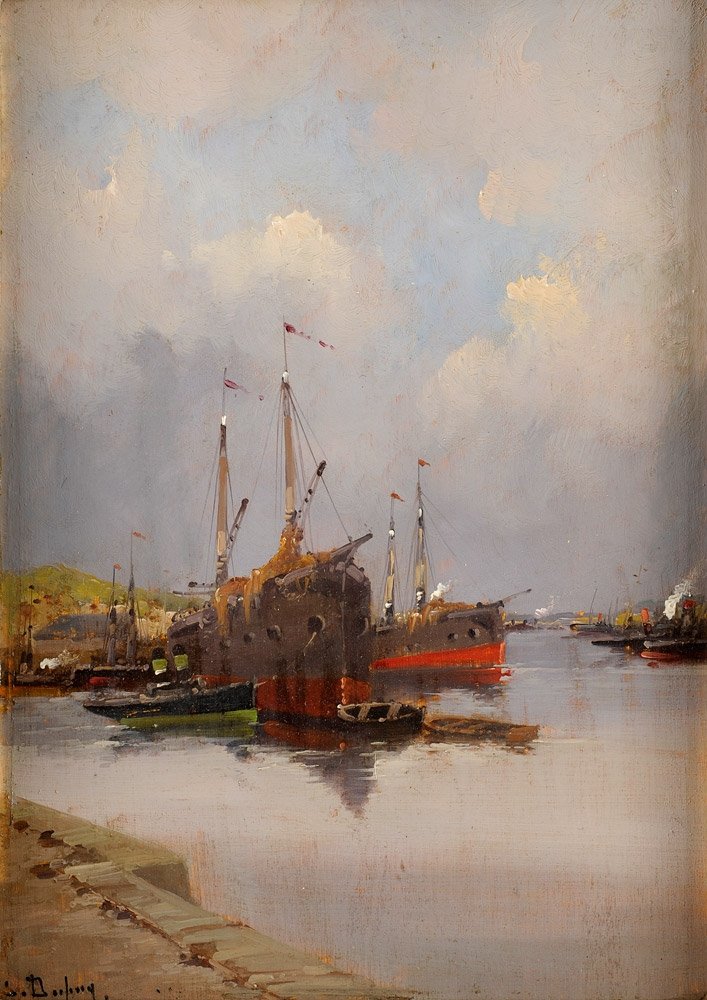
Harbour Scene by Eugène Galien-Lalou

After some time, Eugène Galien-Laloue decided to become self-employed and set himself up in his own Paris studio in rue de Clignancourt.  He spent a lot of his time alone which did not seem to bother him.  Acquaintances described him as a loner, an introvert, who was never happier than when he was working alone in his studio or sitting quietly managing his business.  Modern city life with all its gaiety did not appeal to him.  Maybe he became somewhat crotchety as it was said of him that he was a loner and someone who did not suffer fools gladly, and because of this characteristic people found it very difficult to befriend him.

The French Art Expert, Noe Willer, who was author of Galien-Laloue’s catalogue raisonné wrote of this aspect of Galien-Laloue’s character:

“…He was not eccentric but always conservative, practically a royalist.  He was obsessed with his painting.  In his private life he found simplicity alluring: he married three sisters, one after the other (beginning with the youngest and ending with the oldest).  They had all lived next door to him.  He lived a monastic life.  All worldly pursuits, games, alcohol, the pleasure of the flesh were not for him. Riding his bicycle to places in Paris to paint was his only physical exercise…”

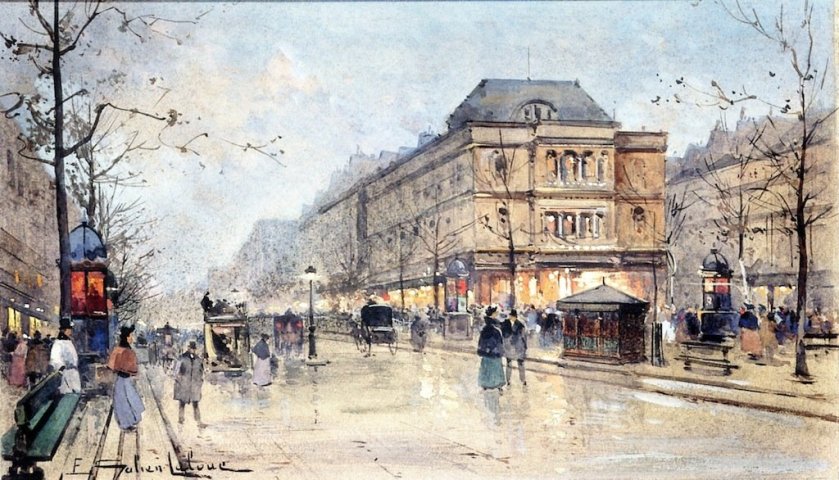
View of the Grands Boulevards by Eugène Galien-Lalou

The cityscape of Paris was changing rapidly during Eugène Galien-Laloue lifetime.  It all began around the 1830’s when Parisians were complaining about the condition of their city.  The city was overcrowded.   The streets with their open sewers were narrow and dark.  Paris had become a very dangerous and unhealthy environment to live in and the people were not happy with the government.  A whiff of revolution was once again in the air.  Tampering with the problem was not helping and so Napoleon III, in 1854, and his interior minister brought in Georges Eugène Haussmann, known as Baron Haussmann, to oversee the “rebuilding” of the city.  He had the slums torn down and the narrow streets were turned into wide avenues.  Large parks were created as were small villages on the periphery of the city.  A new theatre was built and the Paris Garnier opera house was completed in 1875.  The cit,y after many years of change, became a desirable place to live and it was this revitalisation of Paris which became the subject of the many Belle Epoque artists such as Eugène Galien-Laloue.

Summer Landscape with River by Eugène Galien-Laloue

These Belle Epoque artists were pleased to depict the reality of the newly refurbished French capital with its cafés, parks and buildings.   More importantly this now beautiful city was a magnet to tourists, visitors from Great Britain and the United States came to Paris while they were partaking of the “Grand Tour” and  Galien-Laloue had a ready market for his work which concentrated on depictions of the city.  These depictions were just the treasured mementos the American tourists wanted to take home with them for it is known that many of Galien-Lalou’s cityscapes made their way across the Atlantic and into the collections of wealthy Americans from New York, Boston and Chicago.

La Madeleine sous la neige by Eugene Galien-Laloue
La Madeleine sous la neige by Eugène Galien-Laloue

One of Galien-Laloue’s favourite subjects was, L’église Sainte-Marie-Madeleine; less formally known as La Madeleine.  This Roman Catholic church, looking more like a Roman temple, occupies a commanding position in the 8th arrondissement of Paris and was originally designed as a temple to the glory of Napoleon’s army.  Galien-Lalou depicted the building and the area surrounding it in both summer with the flower markets brightening up the grey buildings and in winter with snow on the ground and people rushing to get to the warmth of their destinations.

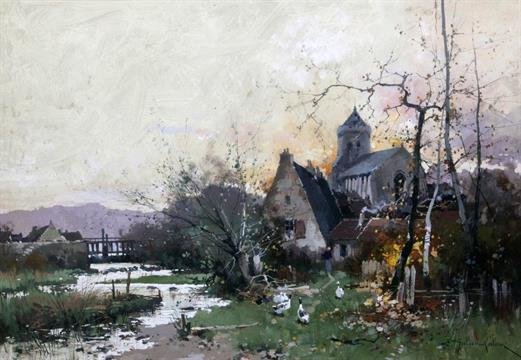
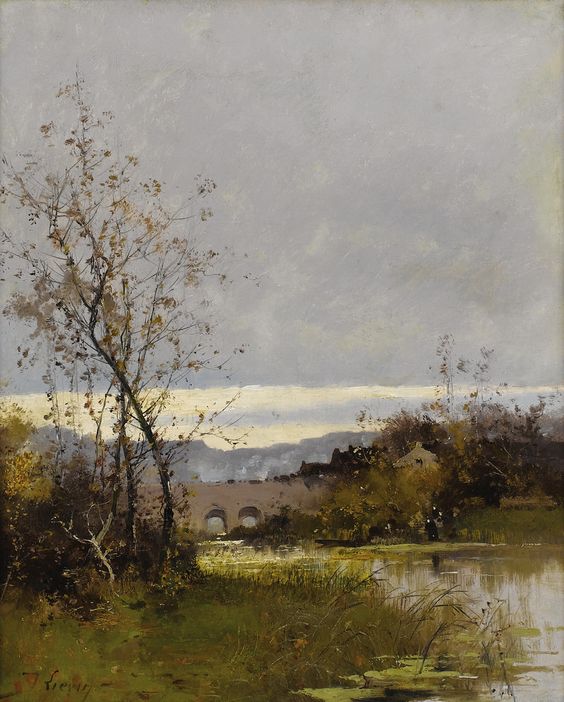
River in Normandy by Eugène Galien-Laloue

In complete contrast, many people, who moved from the countryside in search of work and went to live in the bustling and noisy city, hankered after a more tranquil life in the countryside they had left behind and wished to be reminded of their rural idyll of the past.  Paintings depicting rural landscapes became popular and Galien-Laloue and the Barbizon painters of the time filled the void in the market for those people who wanted a landscape painting to remind them of the peaceful serenity of nature they had left behind.  Galien-Laloue had cornered both markets – Parisian street scenes and his rural landscape works which he made when he journeyed around the roads and villages of the Ile-de-France Region and the riverside views along the tree-lined banks of the rivers Seine and Marne.

In the early 1900’s Eugène and his family left the city of Paris and went to live at Fontainebleau, a town fifty kilometres south east of Paris which is surrounded by a large and scenic forest.  Eugène now fifty years of age was probably drawn to this area because of its beautiful and quiet environ and the slower pace of life such an idyll afforded.

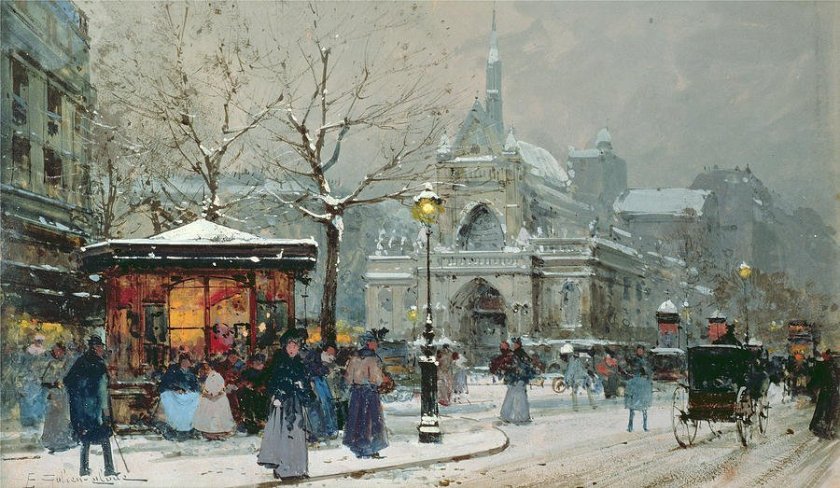
Snow Scene in Paris by Eugène Galien-Lalou

In 1904 he once again put forward a painting which was exhibited at that year’s Salon.  It had been fifteen years since Galien-Laloue had exhibited at the annual Salon due partly to the politics of the Salon and maybe because his sales were so good that he no longer needed the Salon to be a sales vehicle. World War I broke out in August 1914 and the ever-patriotic Galien-Laloue put himself forward to fight for his country but, at that time, he was sixty years of age and he was considered too old for military duty.

Eugène Galien-Laloue married three times which in itself is not unusual but the extraordinary thing was that his three wives were sisters.  He married Flore Bardin in the 1880’s and they had one child, a son, Fernand.  She died in 1887 and five years later he married her elder sister Ernestine.  This second marriage lasted thirty-three years until she died in 1925.  They had a daughter Flore.  A short time after the death of his second wife he married for a third time this time to another of the Bardin sisters, Claire.  Claire died in 1933 and Eugène, now almost eighty years of age, moved back to Paris to live with his daughter Flore, her husband and his grandchildren.

Sortie La Théatre by Eugene Galien-Laloue
Sortie La Théâtre by Eugène Galien-Laloue

Galien-Laloue never stopped painting but his output of pictures decreased.  Despite living with his family, he became even more introverted and lived a rather solitude lifestyle.  When the German army moved towards Paris in 1940, the family left their city home and went to their summer residence in their country at Chérence in Val d’Oise.  During this flight from the French capital Eugène broke his arm which curtailed his ability to paint.

Eugène Galien-Laloue died at Chérence on April 18th 1941, aged 86.

Many of his paintings also bore other names such as “L.Dupuy”, “Juliany”, “E.Galiany”, “Lievin” and “Dumoutier”.  The reason for this is thought to be that he had a sales exclusivity contract with certain galleries that gave them the exclusive right to sell all his works and so to get around this he may have decided to sell some of his works under a different name !   So why those pseudonyms?   J. Lievin’ was the name of a soldier he met during the Franco-Prussian war, ‘E. Galiany’ is an Italianized version of his own names, and ‘L. Dupuy’ was the name of a neighbour, Dupuy Léon.  Although he signed the paintings, very few of them showed a date and art historians have found it difficult to actually date them.

Adriaen van de Velde. Part 2 – beachscapes and landscapes

In my second blog on the seventeenth century Dutch artist, Adriaen van de Velde I want to look at his landscape and beachscape paintings.

The Beach at Scheveningen by Adriaen van de Velde (1658)

Probably his best-known beachscape work is his 1658 painting entitled The Beach at Scheveningen which can be found in the Staatliche Museen, in Kassel, Germany and is looked upon as one of the outstanding works of the Dutch Golden Age.  Scheveningen is a district of The Hague.  It was a fishing village at the time of the painting and it was not until the early nineteenth century that it became a seaside bathing resort.

Of the painting and Adriaen van de Velde, the eminent Dutch art historian Horst Gerson wrote in a 1953 article in the Burlington Magazine, quoting from the eighteenth century German art historian Gustav Waagen’s 1860 book, Handbook of painting.  The German, Flemish and Dutch Schools:

…At the age of nineteen he was already in this department one of the greatest masters that ever lived; the picture dated 1658, in the Kassel Gallery, displaying a tender feeling for nature, a mastery of drawing and a delicacy of chiaroscuro and harmony which are truly astonishing…”

 The setting is a bright but windy summers day on a wide sandy beach which is populated by several visitors who have come to take in the bracing sea air.  In the centre foreground, we see a well-dressed young couple, who are probably on a day trip to the seaside.  To their right we see a group of children playing in a large puddle of water, the remnants of the previous high water.  To the left perched on a hill is a church with its tall steeple, beneath which we see a rider on a horse galloping parallel to the line of dunes.  A covered wagon slowly trundles along the tide line.  Towards the right foreground, we see a group of fishermen, with their trouser legs rolled up, preparing to go into the water with their nets but the most unusual character is the one in the extreme right of the work.  Take a look at him.  His trouser legs are also rolled up.  Is he yet another fisherman or somebody who just wants to paddle and feel the sea caressing his feet.  His hands are clasped casually behind his back.  He is lost in thought as he looks out to sea. Maybe he was once a seafarer and is now remembering those times.

The Beach at Scheveningen by Simon de Vlieger (1633)

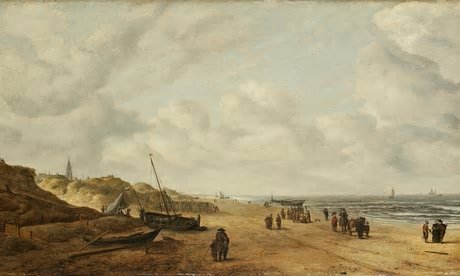
Depictions of the Scheveningen beach were often seen in paintings by other Dutch artists such as one of Adriaen van de Velde’s tutors, Simon de Vlieger’s 1633 in his work The Beach at Scheveningen.

Painting before restoration

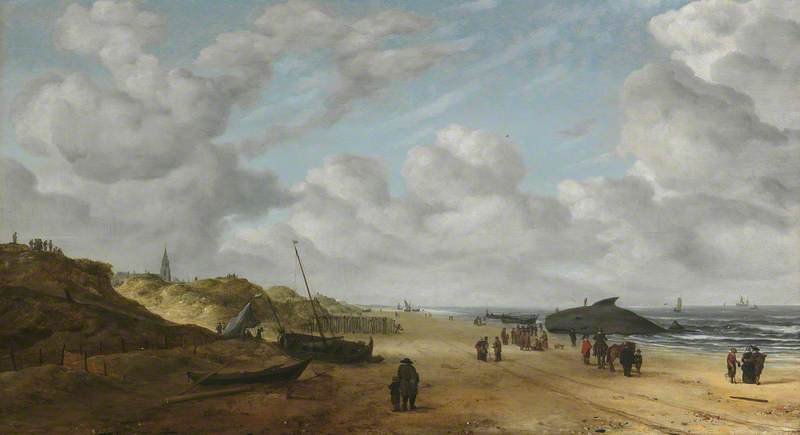
Another work entitled View of Scheveningen Sands painted by Hendrick van Anthonissen in 1641, featuring the same beach, has a very interesting story attached to it. The Fitzwilliam Museum in Cambridge has owned the work since it was bequeathed to them by amateur artist and clergyman Edward Kerrich in 1873.  By chance, the painting came to the Hamilton Kerr Institute, a division of the museum, renowned for paintings research and conservation, because the Dutch Golden Age gallery of the museum was being renovated.

View of Schevningen Sands by Hendrick van Anthonissen (1641)

The varnish coating on the painting had yellowed and become unsightly.   Initially, what appeared strange to the museum experts about the depiction was why were the people clustered at the sea edge and on the dunes above, on a cold wintry day staring at the tide line.  What were they looking at?  There then followed a long discussion among the experts of the museum about the potential risk of damaging the painting if and when they removed the varnish and some of the over-painting.  However, it was agreed to let the conservator, Shan Kuang, proceed to remove the overpainting, using a scalpel and solvents, working on tiny areas at a time,  under a microscope.  She then discovered that there appeared to be a man standing in mid-air, next to what looked like a sail from a boat.   After more of the over-painting was removed they realised the man was not standing in mid-air but on the back of an enormous whale which had beached in the shallows and what at first was thought to be a sail was in fact the whale’s large dorsal fin.

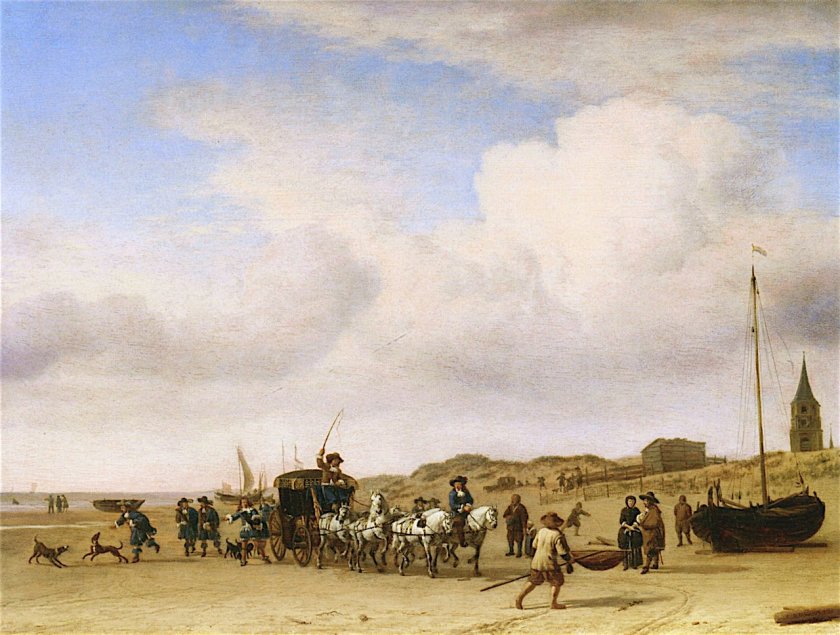
Carriage on the Beach at Scheveningen by Adriaen van de Velde (1660)

There is another Scheveningen beach painting by Adriaen van de Velde in the Louvre entitled Carriage on the Beach at Scheveningen.  This was completed in 1660 and is yet another of his works featuring the popular Dutch seaside resort.  In the painting we can see an imposing carriage making its way along the beach at Scheveningen.  The carriage is being directed by a man in a blue uniform, who sits astride the lead white horse, whilst the driver, who sits atop the carriage, is seen cracking his whip. There is a bit of humour added to this work as we see one of the valets, who is also bedecked in blue livery, running after two hunting dogs, which are happily playing on the sand. It is thought that the carriage was that of William, the young sovereign Prince of Orange, who would later become William III of England (William of Orange).  The tide is out, and we see local villagers walking along the beach.  Children are playing and, in the right foreground, we see a man carrying a large net, coming back from fishing. The composition, which is mainly made up of horizontals, is split by the vertical of the boat mast and the church steeple.  Sunlight comes diagonally from the left of the depiction, illuminating the white horses and casting long shadows of the people and carriage on the sand .  This soft golden light is probably due to the influence of the Dutch Italianate painters of the time such as Jan Both, Karel Dujardin and Nicolaes Berchem who had all stayed in Italy.  They had travelled extensively around the country and had adopted the style of landscape painting that they found there, and then incorporated Italian models and motifs into their own works.  Every detail in the painting has been meticulously drawn by the artist and it was his ability to draw characters that made him popular with other artists of the time who needed figures added to their landscapes or beachscapes – staffage!

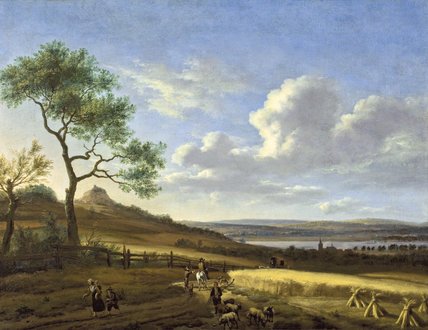
Panoramic Landscape with a Horseman and a Post Wagon by Adriaen van de Velde (1661)

However, Adriaen van de Velde is probably best known for his landscape paintings.  His painting, Panoramic Summer Landscape with a Horseman and a Post Wagon, which he completed in 1661 was described by Wolfgang Stechow, the German American art critic, pianist, and violinist, as being:

“…a landscape of such serene beauty and golden softness that its comparison with a Mozart melody will not, the writer hopes, be dismissed as farfetched…”

The setting is a late summer afternoon.  In the work, we see a man astride a horse being given directions.  Man and horse are bathed in sunlight as is the field with its four sheaves of wheat.  Cast in shadow, we also see a woman with child on her back and one by her side and a shepherd who is looking after his small flock of sheep.  In the right middle ground, also in shadow, is a small village on the edge of an expanse of water, with its church and tall steeple.

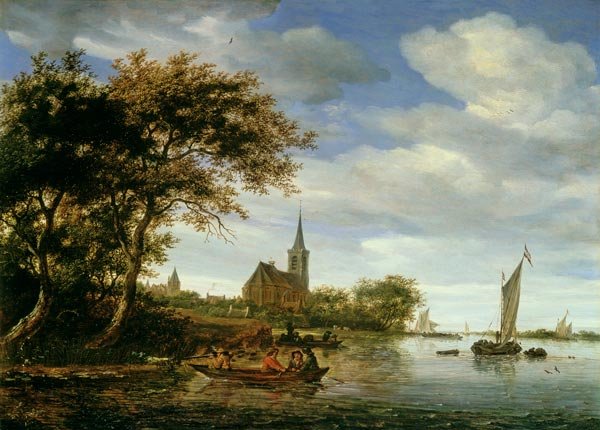
A River Scene by Salomon van Ruysdael

This type of composition we see before us with a tall tree on one side was dubbed by Wolfgang Stechow as being of a “one-wing composition” pattern which had been favoured by Salomon van Ruysdael.  It is a type of composition in which the large tree in some way acts as an introduction to the viewer to gaze at the panoramic view in the rest of the depiction.  Ruysdael’s landscapes would often have a single tall tree or a group of them to one side of his landscape paintings.  In this painting, van de Velde has counter-balanced the mass of leaves atop the tree on the left with the dense clouds on the right.

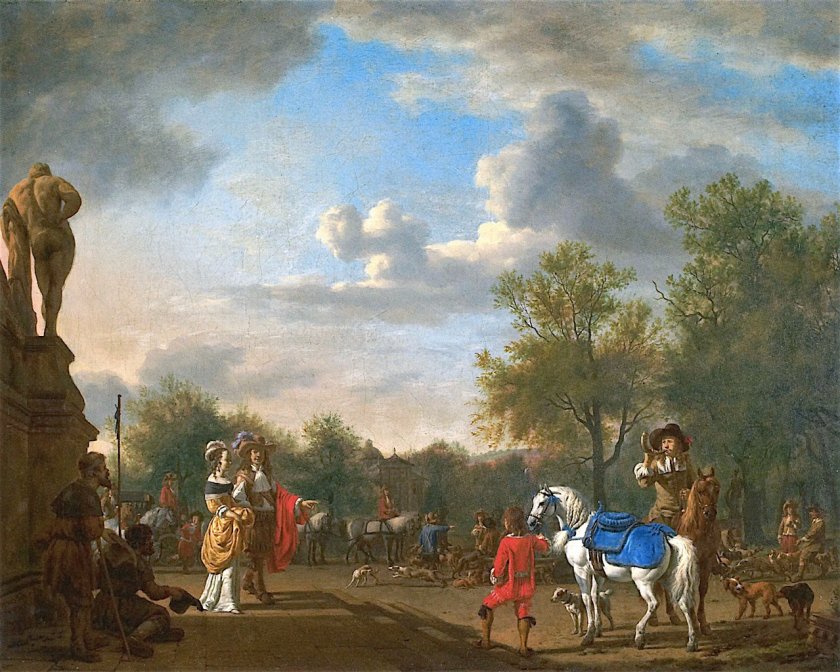
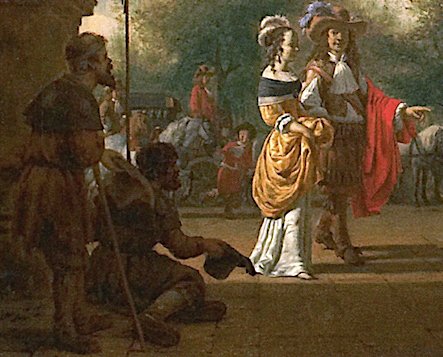
Departure for the Hunt by Adriaen van de Velde (1662)

A painting by Adriaen van de Velde which has elements of a landscape painting but is populated by many figures is entitled Departure for the Hunt, which he completed in 1662.  In all. there are sixteen human figures, eight horses and twenty-three dogs.  However, most are hidden in shadow and only the couple on the left, the man astride the horse blowing the hunting horn and the groom tending the rider-less white horse are illuminated by sunlight.   The painting was last publicly exhibited at the Royal Academy of Arts in London in 1952.  One of the reviewers of the exhibition was Horst Gerson wrote about it in the Burlington Magazine.  He remarked:

“…The well-to-do English collector of the eighteenth century loved to possess a good Adriaen van de Velde with his Wouwermans and Aert van der Neer.  The brilliant colours and the refined technique of these artists appealed to the cultivated taste of the upper-class…”

The "haves" and "have-nots"
The “haves” and “have-nots”

It is a highly colourful depiction and we are prompted to look at the detail of the work with its many figures.  We see beggars in the bottom left of the work trying to cajole the well-dressed couple into helping them financially.  This combination of the two beggars and the wealthy beautifully adorned couple makes us aware of the “haves and the have nots”.  To the right in the foreground we see the amusing scene of one of the dog handlers struggling manfully to control his charges.  It seems he is losing the battle.

 There are so many more paintings I could have included but I though this is just a “taster” to whet your appetite and persuade you to research more of his works.  If you live in London the Dulwich Picture Gallery is exhibiting a collection of his works until January 15th 2017 and I hope to visit there before it closes.  A book which accompanies the exhibition, Adriaen van de Velde, Dutch Master of Landscape was my main source for this blog.

Tomorrow I am off on a three day trip to The Hague to visit the Gemeentemuseum and the Alice Neel Exhibition and see the works of the American artist whom I extensively covered in six blogs a month or so ago and whilst in the Dutch city I hope to visit some other art galleries and feast my eyes on some beautiful Dutch and Flemish seventeenth century art.

Adriaen van de Velde. Part 1 – Family and early influences.

I think I have already mentioned, on more than one occasion, that of all the different eras in art, my favourite is seventeenth century Dutch and Flemish art with some of my favourite artists, Jan Steen, Albert Cuyp, Jacob van Ruisdael and Paulus Potter all being born in the 1620’s.  Today, it gives me great pleasure in presenting another  talented painter of that time.   The artist I am featuring in this blog was once described as a wunderkind and the Mozart of the art world, for he, like the great composer, was a young genius.  Sadly, also like Mozart, he died young, at the age of thirty-five.  Today I am looking at the life and art of Adriaen van de Velde, whose landscapes are looked upon as being the very best that the Dutch Golden Age produced.  I also want to look at his family and other artists who influenced him.

The brothers van de Velde. Etching by Gerard Darbiche from painting by Ernest Meissonier
The brothers van de Velde.
Etching by Gerard Darbiche from painting by Ernest Meissonier

Adriaen van de Velde was born in Amsterdam in November 1636.  He came from an artistic family with both his father, Willem van de Velde the Elder, and Adriaen’s elder brother, Willem van de Velde the Younger, being marine painters.  Adriaen’s father’s interest in marine painting probably stemmed from the fact that his father, Adriaen’s Flemish-born grandfather, Willemsz van de Velde, was a bargemaster and merchant plying his trade in inland shipping.  His grandfather and his family were Calvinists and when Spain, which was staunch Catholic, took control of Flanders they were forced to move to the Protestant north, to Leiden sometime in the 1580’s.  Adriaen’s father, Willem van der Velde the Elder, was born in Leiden in 1611.  In 1631 he married Judith van Leeuwen and she went on to give him three children, Magdalena who was born in 1632, Willem in 1633 and finally Adriaen in 1636.

Battle of Dunkirk by Willem van de Velde the Elder (1639)

Willem van der Velde the Elder earliest drawings date back to the 1630’s and 1640’s and they would often feature individual ships of the Dutch fleet. His art also depicted many naval battles, which he had been commissioned to paint by the Dutch admiralty. One trip he made was in July 1653 was during the Battle of Scheveningen, which was the final naval battle of the First Anglo-Dutch War between the fleets of the Commonwealth of England and the United Provinces.  In 1658 Van de Velde accompanied the Dutch navy to Copenhagen when Admiral Jacob van Wassenaer defended the Danes’ right of way into the Baltic against Charles X’s Swedish forces; the drawings that Van de Velde produced of this battle earned him the praise of the Danish king.

Dutch Men of War at Anchor by Willem van de Velde the Elder

His representation of major naval battles continued with the outbreak of the Second Anglo-Dutch War in 1665. One of his largest commissions, from Admiral Michiel de Ruyter, was to record the Four Days’ Battle in 1666.

The Battle Council on the De Zeven Provincien by Willem van de Velde the Elder (1666)

The twenty-four drawings that survive represent moments from the battle itself as well as the individual vessels that gathered around De Ruyter’s flagship. De Ruyter employed the artist again during the Third Anglo-Dutch War, to record the Battle of Solebay on June 7, 1672.and sketch battle scenes first hand and then later, in the comfort of his studio, fashion very detailed pen paintings.  His expertise with pen paintings had him referred to as a ship draughtsman or artist and ship draughtsman rather than a painter.

Dutch Ferry Boat before a Breeze by Simon de Vlieger

Adriaen’s brother Willem, who was born in Leiden was interested in carrying on the marine painting tradition of his father and was trained by his father and later by Simon de Vlieger, a Dutch designer, draughtsman, and painter, who was most famous for his marine paintings.

Willem and his father remained in Amsterdam until 1672, the year Adriaen died, and then, as a consequence of the economic collapse brought about by the French invasion they were forced to move to England to seek out a living from their artworks.  Two years later, in 1674, he and his father entered the service of Charles II, and Willem the Younger had the use of a studio in the Queen’s House at Greenwich, before moving to Westminster in 1691.

Ships in a Gale by Willem van de Velde the Younger

Adriaen van de Velde, although initially taught by his father, wanted to paint something different and decided to concentrate on landscape art and some believe, for that reason, it was arranged that he went to study at the studio of Jan Jansz Wijnants.

Landscape with Two Hunters by Jan Wijnants

Wijnants was an Italianate landscape painter who took his inspiration from the art of the Dutch painters who had travelled to Italy and consciously adopted the style of landscape painting that they found there.  They then incorporated Italian models and motifs into their own works.  However, this is disputed by many as Wijnants was only five years older than Adriaen and the two were unlikely to be master and pupil.  What is agreed is that the two collaborated on some works.

Cattle in a Meadow by Paulus Potter (1652) Oil on wood.
Cattle in a Meadow by Paulus Potter (1652)
Oil on wood.

One artist of that era who was a great influence on Adriaen was Paulus Potter who was eleven years his senior.  Paulus Potter was a Dutch painter who specialized in animals within landscapes, usually with a low vantage point.  He lived in Amsterdam from 1852 to 1854 which would be about the time when sixteen-year old Adriaen would be looking for a tutor and a studio to work in.  Many believe Potter could have taken Adriaen under his wing and tutored him.

Standing Bull by Adriaen van de Velde (c.1657)

Adriaen van de Velde besides being a talented landscape painter was also an accomplished draughtsman. He was actively involved in the practice of staffage.  So what is staffage?  Staffage is when an artist adds human or animal figures as subordinate elements to a landscape painting in order to give the painting a livelier appearance. Staffage was commonly used by 16th- and 17th-century landscape painters, who would often include religious and mythological scenes in their works. Staffage was frequently painted into a picture, not by the landscapist, but by another artist and this where Adriaen came into his element for he was extremely talented when it came to drawing animals and humans and added figures and animals into paintings by Meindert Hobbema, Jacob van Ruisdael, Willem Verboom and other contemporary artists.

Kneeling Female by Adriaen van de Velde

Adriaen van de Velde was one of only a few seventeenth century landscape artists whose surviving graphic collection of works include figure studies. Many of his figure studies and sketches, which were later used in his paintings, still exist.  Adriaen completed many female nude studies and was always interested in posture and how it affected the female form.  A nude female sketch of his can be found in the Ashmolean Museum in Oxford entitled Kneeling Female Nude.

The Annunciation to the Virgin by Adriaen van de Velde (1667)

It is thought that this sketch could have been a preliminary sketch he used when painting The Annunciation to the Virgin which he completed in 1667 and which now hangs in the Rijksmuseum.

Vertumnus and Pomona by Adriaen van de Velde

Adriaen completed a work which highlights his ability to depict the female form.  It is entitled Vertumnus and Pomona and was completed in 1670.  Vertumnus and Pomona is a story of seduction and deception from Ovid’s Metamorphoses, and the two featured in many 17th century Dutch paintings. Vertumnus, the Roman god of seasons and change, assumed multiple guises as he attempted to woo the recalcitrant wood nymph Pomona.

The Migration of Jacob by Adriaen van de Velde (1663)

Besides his wonderful landscapes Adriaen completed many religious works and his “stand out” painting would probably be one he completed in 1663 entitled The Migration of Jacob.  The depiction is based on the story in the Old Testament (Genesis XXXI, 17-18):

“…Then Jacob put his children and his wives on camels, and he drove all his livestock ahead of him, along with all the goods he had accumulated in Paddan Aram to go to his father Isaac in the land of Canaan…”

Jacob left Paddan Aram in Northwest Mesopotamia, fleeing from his father -in-law, Laban whom he had worked for,  for more than twenty years. The bible story continued:

“…When Laban had gone to shear his sheep, Rachel stole her father’s household gods.  Moreover, Jacob deceived Laban the Aramean by not telling him he was running away. So he fled with all he had, crossed the Euphrates River, and headed for the hill country of Gilead…”

In the painting, we see a large procession meandering through the countryside.  It is headed by Jacob who with his wives, possessions and cattle are on a journey to reach his father, Isaac, who lived in Canaan.  Jacob, wearing the white turban sits astride the bay horse and we see him talking to his favourite wife, Rachel.  She is riding the white horse whilst she breast-feeds her child, Joseph.  The figures in the painting are in the shadows whilst the two main protagonists and those who are herding the sheep, are bathed in sunlight.  If one did not know the story one would believe it is a peaceful procession slowly crossing the landscape but Adriaen has add dark threatening clouds to give the idea that there is an urgency to this “convoy” and that not all is well.  Laban, after three days, realised that his daughter and son-in-law have left taking with them many of his possessions and gives chase.  What happened next ?   I will leave you to consult the Old Testament book of Genesis to find out !!

Agony in the Garden by Adriaen van de Velde

Another religious work by the artist was Agony in the Garden. This picture belongs to the principal group of large-scale religious works by him which he completed in the 1660s for the secret Catholic places of worship in and around Amsterdam. These commissions for religious works by the Catholic Church followed on from his marriage in 1657 to a Catholic lady, Maria Pietersz Ouderkerck, at which time he also converted to Catholicism.

In my next look at the works of Adriaen van de Velde I will be concentrating on what he was best known for  – his exquisite landscapes.

Christoffer Wilhelm Eckersberg. Part 2 – Rome (1813 – 1816)

C.W.Eckersberg by Christian Albrecht Jensen (1832)

In my last blog I talked about Christoffer Eckersberg travelling to Paris in 1810 where he studied under the tutelage of the French painter, Jacques-Louis David.  The year 1810 was an important year for Eckersberg for a completely different reason for it was in this year on July 1st that he married Christine Rebecca Hyssing.  The two had been lovers for a number of years and in September 1808 she had given birth to their son Erling Carl Vilhelm.  It is thought that the reason for the marriage was more to do with expediency and the desire to legitimise their son than love and devotion and it was soon after his marriage that Eckersberg left the marital home to travel to France.

Erling Eckersberg
Erling Eckersberg

The marriage was doomed to be a failure and in 1816 the couple’s divorce papers finally came through whilst Eckersberg was away on one of his travels. In my next blog about Christoffer Eckersberg I will look at his excuisite portraiture.would follow in his father’s footsteps studying at the Danish Art Academy in Copenhagen and at the age of twenty-six he, like his father, received the Academy travelling scholarship for three years and during which time he journeyed to Paris and Parma in Italy.

The Israelites Resting after the Crossing of the Red Sea by Christoffer Eckersberg

Christoffer Eckersberg left Paris in June 1813 and arrived in Rome in July.  He rented a room in a house which was also home to the Danish sculptor, Bertel Thorvaldsen.  History paintings continued to be his favoured genre and in 1812 he had received a commission from a Jewish merchant, Mendel Levin Nathanson to depict the crossing of the Red Sea by Moses and the Jewish people and for two years whilst he was in Rome he worked on the painting which was entitled The Israelites Resting after the Crossing of the Red Sea.  This large work which measures 203 x 283cms (80 x 112 ins) can be seen at the National Gallery of Denmark in Copenhagen.  The depiction is not the actual crossing itself but what happened after the event – the Israelites resting after their crossing.   In the book of Exodus (14: 26-29) it was written:

“…The Lord told Moses, “Stretch your arm toward the sea—the water will cover the Egyptians and their cavalry and chariots.” 27 Moses stretched out his arm, and at daybreak the water rushed toward the Egyptians. They tried to run away, but the Lord drowned them in the sea. 28 The water came and covered the chariots, the cavalry, and the whole Egyptian army that had followed the Israelites into the sea. Not one of them was left alive. 29 But the sea had made a wall of water on each side of the Israelites; so they walked through on dry land…”

 It is testament to Eckersberg’s artistic ability that he has been able to include such a large group of people in such a natural manner and once again he has added a landscape dimension to the biblical painting in the way the people are shown within a real landscape setting based on his studies and meticulous observations of nature which served as the basis for the depiction of the morning sun and cloud formations.  This methodology was contrary to the teachings he received from his professor,Abildgaard back at the Copenhagen Academy, whose landscape works were often somewhat murky and had no relevance to the time of day of the depiction.

Rome, at the time of Eckersberg’s sojourn, was a hive of artistic activity.  Many young artists had travelled from all over Europe to congregate in the Eternal City to be with like-minded painters and this offered them a chance to exchange views on art.  Many were inspired by what they learnt from their contemporaries who, like themselves, had escaped the clutches of their Academies and the strict academic training.  It was a chance for them to try out new artistic ideas.  For landscape artists it was a vital stage in their education and the one main decision many undertook was to paint plein air.  This technique allowed them to sit before their chosen subject in the open air and paint what they saw rather than just sketching out doors and then taking the sketches back to their studios for completion.  For these artists plein air painting afforded them the chance to capture on canvas the existing weather conditions and observe how that affected the light and shadow.  It also gave artists the opportunity to produce topographically correct depictions rather than idealized versions conjured up in their studios.  One of the founders of this en plein air idea around 1780 was the French painter, Pierre-Henri de Valenciennes who produced many oil studies en plein air, which were not meant for exhibitions but for his own private collection.

The Marble Steps leading to the Church of Santa Maria in Aracoeli in Rome by Christoffer Eckersberg (1816)

At this time in Rome, landscape and cityscape paintings, especially ones with the city’s most famous sights were in great demand with the tourists so much so it was a struggle for these artists to come up with a subject or a point of view of a subject which had not already been recorded artistically by a previous painter.  One of Eckersberg’s plein air paintings featuring a well-known building in Rome is The Marble Steps leading to the Church of Santa Maria in Aracoeli in Rome.  It was completed in 1816 and we can see that he took up a position with his easel at the foot of the Capitoline Hill and that allowed him to produce a composition of vertical and diagonal lines.  From the way and the direction of the shadow cast by the church we know the time of day was around ten in the morning and so Eckersberg would return numerous times at this time to build up the painting on the canvas.

View of the Capitoline Hill with the Steps that go to the Church of Santa Maria] d’Aracoeli) by Paranesi (c.1757)
View of the Capitoline Hill with the Steps that go to the Church of Santa Maria d’Aracoeli by Giovanni Piranesi (c.1757)

It is interesting to note that the structures we see in the painting were real and yet what was untrue about the depiction is what was left out – the omission of Michelangelo’s Palace which was atop the hill to the left of the church.  We know this by looking at Giovanni Piranesi’s etching of the same scene made half a century earlier, one from his collection entitled Vedute di Roma (Views of Rome).

View of the Cloaca Maxima, Rome by Christoffer Wilhelm Eckersberg (1814)

Many of Eckerberg’s paintings featuring the city of Rome avoided the iconic locations which featured in many of the other artists’ paintings.  He seemed to favour depicting less famous parts of the capital.  One such work which he completed in 1814 was entitled View of Cloacia Maxima which was bought by the NGA in Washington in 2004.  Cloacia Maxima, which means Greatest Sewer, is one of the world’s earliest sewage systems, thought to have been built around 600 BC as an open air canal.  It is a highly elaborate depiction packed with rich detail.  Some of the buildings we see are very old and many are decaying.  There is no uniformity in the architecture for most of the buildings would have been erected in different eras.  The viewpoint for this painting was the eastern slopes of the Palatine Hill looking towards the Capitoline, one of the Seven Hills of Rome.  It is a painting which depicts the transition from the “countryside” in the foreground which then leads towards the city itself.  It is a realistic depiction for although the foreground is a mass of verdant vegetation, it has been continually crossed by people on foot carving out rough paths.  Our eyes follow the two figures that walk down the path and lead us into the city.

View of the Garden of the Villa Borghese in Rome by Christoffer Eckersberg (1814)

Even when Eckersberg chose a well known location for his painting, he chose to depict a view that in his mind didn’t become “yet another view” of a famous place.  In his painting View of the Garden of the Villa Borghese in Rome which he completed in 1814 he chose to depict part of the decaying and unexceptional 18th century aqueduct rather than the famous gardens themselves.  The ancient reliefs on the wall to the left are foreshortened and are almost unrecognisable. Having said that, it is a beautiful work, which combines a detailed depiction of the angular ruins of the aqueduct in the mid ground.  Our eyes follow the path which runs under the aqueduct arch to an area of the garden albeit it is hidden from view by the ancient arch itself and the trees.   Again, like the previous work, Eckersberg is making the comparison between the harshness of architecture and the softness of nature in a single painting.  The way the artist depicts the sunlit and shaded areas leads one to believe that this was another of Eckersberg’s plein air paintings.

A Courtyard in Rome by Christoffer Eckersberg (1814-16)
A Courtyard in Rome by Christoffer Eckersberg (1814-16) (34 x 28cms)

Another interesting painting during his stay in Rome is one entitled A Courtyard in Rome.  It is a depiction of a nondescript courtyard which could have been in any city so what made Eckersberg paint this one.  There is some conjecture about this and one line of thought is that it is the courtyard of Casa Buti a lodging house in which he and Thorvaldsen stayed.  If that was the reason for painting this scene then it would make it a more personal depiction and one he would have seen every day for three years.  However it and could equally be one he passed by one day when walking around the city and was just a random choice of depiction for the work.   There is nothing breathtaking about the scene and yet it is a beautifully crafted work.  It is interesting to note that the aspect of this scene, the loggia, which could have added colour and variety to the depiction, can barely be seen in the upper background.  The painting is housed in the art museum of the town of Ribe in western Denmark.

A View through Three of the North-Western Arches of the Third Storey of the Coliseum by Christoffer Eckersberg (c.1816)
A View through Three of the North-Western Arches of the Third Storey of the Colosseum by Christoffer Eckersberg (c.1816)

Probably the most famous of Eckersberg’s paintings was one he completed during his three year stay in the Eternal city and is entitled A View through Three of the North-Western Arches of the Third Storey of the Colosseum in Rome, which he completed around 1816.  It is a relatively small work just measuring 32 x 50cms and is currently housed in the Statens Museum for Kunst (National Gallery of Denmark) in Copenhagen.  Eckersberg had depicted the ancient monument in a number of sketches and paintings but he never depicted a view of the outer structure of the amphitheatre in its entirety unlike many other artists.  It was this painting that he will be remembered for.  He set up his easel high up on the third level of the Colosseum looking out across the city which we see through the three arches of the structure.  The background details of the city in the distance are so precise it is thought that he may have used a telescope to ensure accuracy.  Look at the foreground of the painting and the authentic way in which he precisely depicted the crumbling structure.  This aspect of the work encompasses a thoroughness not seen in many landscape works.  This attention to detail serves to highlight the slow disintegration of the ancient monument.   However the greatest attribute to this work is the way he has made the three arches of the Colosseum act as picture frames for the cityscape in the distance.   he painting is sometimes referred to as “The Beautiful Lie” for if we stood in front of the centre arch, as seen in the depiction, then we would not see views of the city of Rome depicted through the other two arches.  To see those views we would have to move to the left or right and look through other arches.  Eckersberg also rid himself of many of the intervening structures which he thought inconsequential and would detract from the beauty of the view.  However this straying from realism does not take anything away from the work.  Eckersberg just wanted his viewers to experience the beauty of Rome as he envisioned it.

In my next blog about Christoffer Eckersberg I will look at his exquisite portraiture.