Mark (Max) Gertler. Part 1.

Max Gertler by Lady Ottoline Morrell vintage snapshot print, 1917. © National Portrait Gallery, London

My featured artist today is Markz Gertler. He was one of the most prominent artists of his generation and an early member of the New English Art Club, elected in 1912. He was a painter of figures, portraits and still-life.  Markz was born on December 9th 1891 at 16 Gun Street, Spitalfields, London.   He was the youngest of five children born to Austrian-Jewish immigrants from Poland, Louis Gentler and Kate (Golda) Berenbaum.  Markz had to elder brothers, Harry and Jacob, known as Jack and two elder sisters, Deborah and Sophie. 

Dorset Street, Spitalfields (c.1910)

By the 19th century, most of the area’s around Spitalfields had traditional industries, including silk weaving, but they had moved elsewhere, although the area still produced some textiles.  This decline of the local industry destroyed Spitalfields and it became a poverty-stricken, overpopulated area with little work. The grand houses which had been built by the Huguenots were turned into slums, and the area became unsafe. By the late 19th century, many people considered the place the most criminal in London.

The Rabbi and his Grandchild by Mark Gertler (1913)

The following year after Markz was born, 1892, because of the terrible economic downturn in the area, the family moved back to Markz’s mother’s native city of Przemyśl in Galicia, which at the time was part of the Austro-Hungarian Empire but now is situated in south-eastern Poland close to the Ukraine border. Life for the family was little better here as Max’s father worked as an innkeeper but this failed and now the family were financially desperate.  It could have been that his father felt guilty about not being able to support his family but one night in 1893, Gertler’s father Louis, without telling anyone, left his family destitute and on the brink of starvation, and went off to America to search for work.  Much later he contacted his wife to say that once he got established in America, he would send for them and all would be well.  It never happened as all his hopes of making a fortune in America ended in failure. 

Whitechapel High Street (1905)

Following yet another business failure Louis Gertler left America and returned to England and the London borough of Whitechapel, the heart of London’s Jewish quarter.  He set himself up as a furrier and in 1896 he arranged for his family to join him.  Once in England, his son’s first name was changed from the Polish Markz to Mark.

Portrait of Mark Gertler by John Currie (1913)

Gertler spent his early formative years in Whitechapel, London, a poor Jewish community, and attended nearby schools in Settles Street and Deal Street between 1897 and 1906.  He displayed a gifted artistic talent even as a young child and was said to have been motivated by pavement artists, advertising posters, and it was the autobiography of the great English painter William Powell Frith, which made Max determined to become a professional artist. In 1906, at the age of fifteen, on leaving school so as to earn some money for his family Mark (known as Max) became an apprentice at the stained-glass company Clayton and Ball.  He hated working there and rarely spoke of  the experience in later years.  During this time, he would attend evening classes at the Regent Street Polytechnic but in 1907 he had to drop out of college due to his family’s perilous finances.  In 1908, Max was placed third in a national art competition and then realised that he could become a great artist.  In 1908 Gerter met the artist, William Rothenstein. After seeing Max’s work Rothenstein wrote to Max’s father:

“…It is never easy to prophesy regarding the future of an artist but I do sincerely believe that your son has gifts of a high order, and that if he will cultivate them with love and care, that you will one day have reason to be proud of him. I believe that a good artist is a very noble man, and it is worth while giving up many things which men consider very important, for others which we think still more so. From the little I could see of the character of your son, I have faith in him and I hope and believe he will make the best possible use of the opportunities I gather you are going to be generous enough to give him…”

However, knowing the cost of studying art and that the family would be ununable to pay his tuition fees he became downhearted.

Portrait of a Girl by Mark Gertler (1912)

Having the money to pay for tuition fees, he needed a sponsor to put him forward to the prestigious Slade School of Fine Art.  This he received with a recommendation from William Rothenstein, an English painter, printmaker, draughtsman, lecturer, and writer on art who lived in the affluent London borough of Hampstead and who held a number of soirées which often included many well-known artists and some young and up and coming ones, such as Mark.  Mark Gertler entered the Slade in 1908   and studied there for three years.  He was the first and youngest Jewish working-class student of his generation to do so.

In her 1989 biography A Life of Dora Carrington: 1893-1932 Gretchen Gerzina, wrote about Max Gertler’s arrival at the Slade, writing:

“…At the Slade, Mark was at first something of a misfit. He had started school late in life and had left it at the age of fourteen. His hair was short and his clothes were different. Most of all, however, the other students found him too serious and too intense. He was extremely handsome, with huge dark eyes, pale skin, and a thin body, and he was both solemn and passionate about his art. Only at the polytechnic had he finally been introduced to museums and systematic schooling in the history of art, including the old masters. When he first arrived at the Slade at seventeen, he had the fervour of a convert who has surmounted great obstacles for his religion. In contrast, his fellow students seemed privileged and rather frivolous. Yet his early opinions of them were not untouched by envy…”

Still Life by Mark Gertler

After a little time at the Slade, Max made friends with a group of very talented students all of whom would become famous artists, such as C.R.W. Nevinson, an English figure and landscape painter, etcher and lithographer, who was one of the most famous war artists of the First World War, Stanley Spencer, John S. Currie, Maxwell Gordon Lightfoot, Edward Wadsworth, Adrian Allinson and painter and draughtsman Rudolph Ihlee. This group became known as the Coster Gang because as writer David Boyd Haycock put it, they mostly wore black jerseys, scarlet mufflers and black caps or hats like the costermongers who sold fruit and vegetables from carts in the street.

Vanessa Bell’s Friday Club exhibition at the Alpine Club Gallery

In 1910, whilst he was still an art student at the Slade, Max began exhibiting some of his paintings at Vanessa Bell’s Friday Club.  Vanessa Bell was an English painter and interior designer, a member of the Bloomsbury Group and the sister of Virginia Woolf.  The idea for the Friday Club was inspired by her earlier involvements of café life in Paris. It was her wish to create a similar atmosphere, and the Friday Club held its first meeting in the summer of 1905 and that November the Club held its first exhibition.   From 1910 until 1918, the Friday Club was based at the Alpine Club.

………to be continued.


Once again much of the information was gleaned from various Wikipedia sites but also these excellent websites:

Ben Uri Research Unit

Art UK

A Crisis of Brilliance

Spartacus Educational

Sionah Tagger

In many of my blogs I have featured European artist who had ancestors who were part of the European Jewish community such as Marc Chagall, Chaim Soutine, Max Liebermann, Diego Rivera and Isaac and Joseph Israels.  As I look down the list of Jewish painters it appears to be dominated by male artists.  In this blog today I want to feature one of the great female Jewish painters, Sionah Tagger, who was one of the pioneers of Modernist painting in Israel.

See the source image
Sionah Tagger

Sionah Tagger was born in Jaffa, Israel on August 17th 1900.  She was the eldest daughter of Shmuel and Sultana Tagger, who were members of the Ahuzat Bayit group, the founders of Tel Aviv. Their house where she was born was at 3 Rothschild Boulevard and was the first two-storey house in Tel Aviv.  Her ancestors hailed from Spain and in the latter part of the fifteenth century they moved to Holland and then later they lived in Germany and Bulgaria.  Sionah’s father Shmuel, when he was just an infant, left Bulgaria with his family and immigrated to Palestine in 1868.  In 1890, when he was twenty-two-years old, he married Sultana, who was the daughter of a wealthy resident of the Old City in Jerusalem.  The newly-weds moved to Nahalat Shiva, the third neighbourhood built outside the walls of the Old City of Jerusalem in the 1860s.  Later, they moved to Jaffa, where Shmuel set up a business importing furniture and trading in leather. As a practicing Jew, Schmuel was involved in the founding of Jaffa’s central synagogue and of the Ohel Moed synagogue in Tel Aviv.

Sionah Tagger 1900 - 1988 Young Girl on the Beach,
Young Girl on the Beach by Sionah Tagger (1918)

Sionah Tagger had seven brothers and sisters – Asher, Baruch, Miriam, Shoshana, Hezkia, Shalom and Yosef. She was the oldest girl.  Sionah attended a number of different schools in Jaffa, Tel-Aviv and Jerusalem including the School for Girls in Neve Tzedek, the Levinsky Teachers Seminar and the Alliance School in Jerusalem, before starting her first artistic education with Avraham Eisentein-Aldema, one of the early Israelie bohemians. From there she began evening classes at the Hatomer Cooperative Studio at the Gymnqsia Herzliya in Tel-Aviv, which had been founded by Yaacov Peremen. Yosef Constantinovsky (Constant) and Yitzhak Frenkel were the most important painting teachers at the studio. Both instilled in their students the spirit of Russian Futurist Cubism, which was based on French art.

Ziona Tagger 1900- 1988 Children in the Yard
Children in the Yard by Sionah Tagger

From the age of twenty-one, Sionah enrolled on a course at the Bezalel School of Art in Jerusalem, despite her former teachers being opposed to the Academic, Romantic style of the Bezalel School’s artistic training. Whether she had been swayed by the views of her previous art teachers, Sionah was one of the students who protested against Boris Shatz, the founder of the Belazel School and Abel Pann one of the principal lecturers for their conservative approach

Sionah Tagger — AWARE Women artists / Femmes artistes
 The Train Passing through Neveh Tsedek by Sionah Tagger (1928)

Sionah first exhibited some of her works at the “First Artistic Exhibition” organized by Ferman at Gymnasia Herzliya in Tel Aviv.  In the late 1923 with support from her family she travelled to Paris, where she stayed for two years, living in the Montparnasse district of the capital.  She attended the newly opened academy of André Lhote which was situated close to the Montparnasse railway station.  The academy of André Lhote was much sought after and attracted an unprecedented number of international students. During her time in Paris, she studied draughtsmanship, composition and painting and over time she became influenced by Cubism, the revolutionary new approach to representing reality.  The movement was founded by artists Pablo Picasso and Georges Braque around 1907/8 but by the 1920’s when Sionah was in Paris she was attracted to the Fauvist works of André Derain. Although she returned home in 1925, she became the first female member of the Hebrew Arts Association. She revisited the Lhote Academy during her stay in Paris in 1930/31, as well attending the Académie de la Grande Chaumière.

Sionah Tagger — AWARE Women artists / Femmes artistes
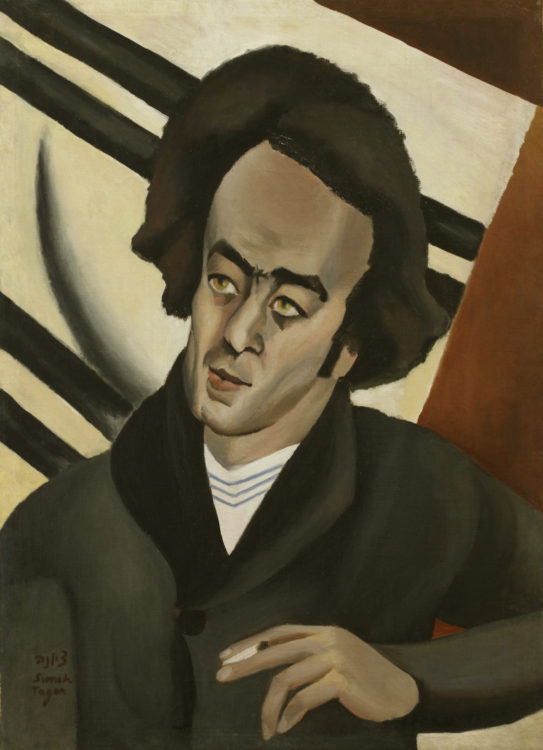
Poet Avraham Shlonsky by Sionah Tagger (1925)

After two years, Sionah returned to Israel and joined the local group of modern artists. They organised many exhibitions, some at the Ohel Theatre, at the Tower of David in Jerusalem. In 1931, Tagger held a solo exhibition at Gymnasia Herzliya in Tel Aviv, which was titled “Framed Portraits.” Sionah also participated in several exhibitions in Paris. On December 7th 1934 she gave birth to her son Avraham who would later become a member of the Knesset from 1977 to 1996 and for a time was the Minister of Agriculture. In 1938, Sionah exhibited her paintings in Cairo, at the Friedman-Goldenberg Gallery.

See the source image
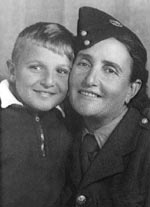
Sionah, in military uniform, with her son

During World War II, four of her brothers joined the British army and in 1942, Sionah Tagger, who at the time had an eight-year-old son, volunteered for the British Army, serving in one of the British army’s ATS divisions where she served mainly in Egypt and in the Western Desert where they carried out administration work.   They were later also trained as ambulance and delivery drivers. World War II was at its peak, and the Jewish population of Mandatory Palestine was in danger.  In 1944, Sionah was released from the army and went back to Tel Aviv, where she held a large exhibition of her paintings in the lobby of Habima Theatre.  The exhibition included 40 oil paintings, 30 watercolours and sketches depicting the experiences of female soldiers in the British army.

Sionah Tagger — AWARE Women artists / Femmes artistes
Jaffa by Sionah Tagger (1932)

Although she had extended stays in Paris, she also journeyed around Germany, Italy and Spain but always returned to her Israeli homeland where she would paint local landscapes. In 1948 Tagger represented Israel in the Venice Biennale.  In the Northern Israeli town of Safed there was an artist’s colony.  The founding members of the Artists’ Colony settled in Safed shortly after the creation of the State of Israel in 1948 and they took over an abandoned mosque which they turned into an exhibition centre for their artists’ cooperative. This Artists’ Colony was very important in the development of Israeli art.

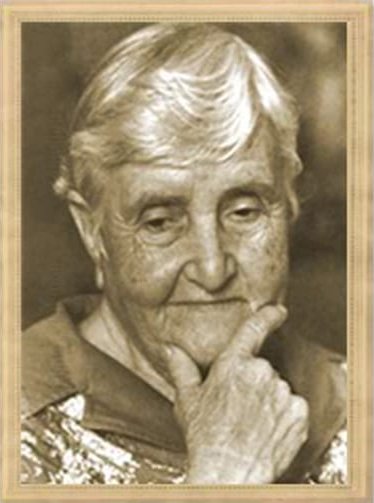
Sionah Tagger at home in Safed

Sionah arrived in Safed in 1951 and bought a nineteenth-century church at the heart of the city’s Christian-Arab neighbourhood. A short time after she bought the building, Sionah related that a priest had come to the house to carry off the bell that had been located in the church’s bell tower.  Thirty years after settling in Safed Sionah recalled early life in the Safed Colony:

…The views and alleyways lured painters to Safed. In the evenings we would walk around the city and talk about art. After Castel came Isakov, Shemi, Frankel, Marzer, Holtzman, Amitai, Lerner, Zachs and myself. We had no electricity during the artist’s colony’s first days, and so we used oil lamps instead. Our parties were all illuminated by the light of an oil lamp, and each one of us would tend to it in turn. Water was also scarce, and so we would carry water in cans from the dormant spring located in the artists’ colony…”

Sionah Tagger (1900-1988)

Tagger held over 40 solo exhibitions, partly because she had to make her living from the sale of her works, and she participated in numerous group exhibitions in Israel and abroad. Sionah Tagger died on June 16th 1988, aged 87.

Alois Heinrich Priechenfried

Settling the Accounts by Alois Heinrich Priechenfried

Today’s blog is a very short one.  I think I have mentioned before how I choose an artist to write about. There are two things I need before I can embark on the journey of looking at the life of an artist. Firstly, I need to have multiple sources which offer a biography of the painter. Why multiple? Because you would be amazed at how often I come across differing facts such as names of family members, educational information and simple dates and I have to work out what are the true facts. Secondly, I must have a wide range of pictures so as to be able to highlight the artist’s skill as a painter. Proceeding with the blog without both of these is very difficult.

Portrait of an Old Man by Alois Heinrich Priechenfried

However once in a while, and today is one of those occasions, I come across artwork which is so good that I just have to formulate a blog even though my knowledge about the artist’s life is severely limited. I scoured the internet and reference books and, as I was on a three-day visit to London on child-minding duties, I even went to the British Library but all to no avail as little seems to be written about today’s painter although the auction houses such as Bonhams, Christies and Sothebys offered samples of his art without a biography, which is somewhat unusual.  Let me introduce you to the nineteenth century Austrian portrait and genre painter Alois Heinrich Priechenfried.

Seated Rabbi by Alois Heinrich Priechenfried

Much of the Jewish art by Priechenfried focused on the quiet contemplation of the holy scriptures.

A Rabbi Studying the Torah by Alois Heinrich Priechenfried

Alois Michel Priechenfried, the artist’s father, was a gilder by trade. Gilding is the decorative technique for applying a very thin coating of gold to solid surfaces such as metal, wood, porcelain, or stone. He married Anna Hackensoellner and the couple had three children, August Franz, Georg and Alois. Alois Heinrich Priechenfried was born June 25th, 1867 in the Gumpendorf district of Vienna.

Seated Rabbi by Alois Priechenfried

Alois was brought up in the Catholic faith although when I first looked at his paintings I wrongly believed that he must have been Jewish.  Many of his paintings featured rabbis as is the one he painted entitled Seated Rabbi.  The quotation behind the rabbi is from Psalms 118:17, “I shall not die but live and proclaim the works of the Lord.”

Reading the Scriptures by Alois Heinrich Priechenfried

My favourite painting of his featuring people of the Jewish religion is one entitled Reading the Scriptures.  There is something very peaceful about this painting.  The rabbis, who are seen reading the holy book or quietly contemplating what they have just read, offers one a feeling of extreme serenity which many people get from their belief in their religion and their God.  I suppose, being a non-believer, I miss out on such times of peaceful contemplation.

A Cardinal Reading by Alois Heinrich Priechenfried

Not all Priechenfried’s paintings depicted aspects of the Jewish religion for one of his best paintings features a cleric from the Catholic religion.  It is simply entitled A Cardinal Reading.  Once again it is a portrayal of tranquil meditation.

Conversation in the Kitchen by Alois Heinrich Priechenfried

When young Alois was fourteen years old, he followed in his father’s footsteps and trained and worked as a gilder.  At the age of seventeen he enrolled for one year at the Vienna Academy of Fine Arts as a guest student.

Christian Griepenkerl (c.1907)

One of his professors at the Academy was the German painter, Christian Griepenkerl. Griepenkerl had been appointed a professor at the Academy of Fine Arts Vienna in 1874 and three years later he was the lead professor at the Academy’s special school for historical painting. Griepenkerl specialised in allegorical representation using themes from classical mythology and portraiture. He taught many of the foremost painters of the time including Egon Schiele and Anton Peschka but his teaching methodology and that of the Academy was looked upon by many young students as antiquated and overly-conservative and so many left the Academy and founded the Neukunstgruppe (New Art Group), which fostered its own style without Academic constraints.  Christian Griepenkerl later became famous for refusing Adolf Hitler’s application to join the Academy in 1907 stating that Hitler’s entrance submission piece was both unimaginative and unsatisfactory.

The Visit by Alois Heinrich Priechenfried

Alois married a Emile Aurelia Watzek, a Yugoslavian lady in 1890 and the couple went on to have eight children.  As can be seen in the above painting and the ones below, he also completed many genre works.

German Interior Scene by Alois Heinrich Priechenfried

Priechenfried spent many periods of his life in Munich but always returned to his beloved Vienna.

The Rehearsal by Alois Heinrich Priechenfried

Alois Heinrich Priechenfried died on May 24th 1953 at his home in Diefenbachgasse in the Rudolfsheim-Fünfhausdistrict of Vienna which lies on the northern bank of the River Wien. He was 85.


My apologies for the lack of biographical information but I am sure you will agree the paintings themselves are worth the blog.   If anybody knows more about Priechenfried I would love to hear from you and then I could update this blog.

Finally, Merry Christmas and a belated Happy Hanukkah to everyone.