My blog today is somewhat shorter than usual as I decided to concentrate solely on the life and works of Hendrik Mesdag’s wife Sientje van Houten, an artist in her own right and not just “Mrs Mesdag, wife of the marine painter Hendrik Mesdag”.
Hendrik Willem Mesdag married Sientje van Houten in April 1856 and seven years later in September 1863 their only child, Klaas was born. In June 1864, her father Derk, a wealthy Groningen timber merchant, died and left her a substantial inheritance which she realised in 1866. This change in her financial situation allowed Hendrik to leave his father’s bank where he had been working for sixteen years and concentrate on his painting and eventually become a professional artist. He even managed to have one of his paintings, which had been accepted at the 1870 Salon, awarded a gold medal.
Sientje Mesdag van Houten in her studio (c.1903)
Sientje had accompanied her husband when he went to stay in Brussels to study under Willem Roelofs. Their house in Rue Van de Weyer was often the focal point for Dutch and Belgian painters, and it could well have been the conversations on art at these soirées that stimulated Sientje’s mind and enhanced her artistic talent. She, like her husband, not only received instruction from Roelofs but also from Hendrik’s cousin the professional artist, Laurens Alma-Tadema.
Winter Scene by Johannes Christiaan d’Arnaud Gerkens (1875)
She accompanied her husband when he spent the summer of 1866 at the Oosterbeek artist colony and again in the summer of 1868 on the island of Nordeney where she, like Hendrik, spent time painting and sketching seascapes. The couple moved to The Hague in 1869, where they lived in a house on Anna Paulownastraat and later in a house on Laan van Meerdervoort. Her husband, who wanted to concentrate on seascapes, later hired a studio room facing the sea at the Villa Elba in Scheveningen where he and Sientje would spend hours painting and sketching. In order to improve her artistic proficiency, Sientje took drawing lessons from their family friend and painter Christian d’Arnaud Gerkens.
Head of a Dog by Sientje Mesdag van Houten (1875)
Life could not have been better for Hendrick Mesdag and his wife Sientje and yet fate would play a fateful trick on the couple. On September 24th 1871, tragedy struck when their beloved eight-year-old son Klaas, died of diphtheria. It must have been a devastating time for Hendrik and Sientje. Who knows whether Sientje wanted to totally immerse herself into something which would deaden the pain of loss but following the death of Klaas, she devoted all her time painting. She had been in contact with art from an early age through both her father, who had a modest art collection, which she and her siblings would have seen and of course she had lived with her husband and watched him paint.
Still Life with Yellow Roses by Sientje Mesdag van Houten
At first, Sientje concentrated on landscape painting and would often leave home and go on painting trips in the Scheveningen dunes with her friend and artist, Harriet Lido who was constantly giving her artistic advice. Sientje Mesdag-van Houten initially focused on landscape painting and travelled to areas such as Drenthe, Overijssel and the Veluwe region in Gelderland. Besides her love of landscape painting she also liked to paint still lifes. Over the years, she became increasingly accomplished as an artist and her self-confidence grew to such an extent that she began to submit her paintings to national exhibitions in Europe and America and was happy to partake in group exhibitions held by the Dutch Drawing Society and the Pulchri Studio. Her husband was also a member of the Pulchri Studio and on a number of occasions both husband and wife exhibited together. She was also the president of Our Club, a meeting place for cultured women. Mesdag-van Houten kept in touch with other women painters and dedicated herself to the cause of the ‘poor female artist’ and became the leading light and mentor for many young aspiring female artists who would gather at her studio for advice on their artwork
Sheep Barn hidden behind Ancient Oaks by Sientje Mesdag van Houten
She was in close contact with many art dealers and her paintings were sought after by their clients, especially her still lifes. In 1881 she helped her husband paint the amazing 1680 square metres panoramic painting of Scheveningen which has become known as Panorama Mesdag, but more about this work in the next blog. Her painting entitled Cottages at Sunset and Heath near Ede was well received at the 1889 Paris Exposition and was awarded a bronze medal.
Camelias in Vase by Sientje Mesdag van Houten
Sientje, like her husband Henrik, were avid collectors of art and eventually amassed almost three hundred and fifty works of art as well as objet d’arts, porcelain and artefacts from Holland and Asia. Their favourites were works by the French Barbizon School artists. This massive collection dated back to the time she had gone to live with her husband in Brussels whilst he was receiving artistic instruction from Willem Roelofs. Their joint collection grew to such a size that in 1887 they had a museum built next to their house in Laan van Meerdervoort in The Hague. In 1903 Sientje and Hendrik donated the collection and the museum to the Dutch state, since which time it has been called The Mesdag Collection and having visited it a few weeks ago I can assure you it is well worth a visit.
Farm and creek with boat by Sientje Mesdag van Houten
In 1904, Sientje Mesdag-van Houten celebrated her seventieth birthday at the art society, Pictura, and during the celebration they announced that they would name a room in their new building after her. The Pulchri Studio also mounted a retrospective exhibition of her work. For many years Sientje had been simply referred to as Hendrik Mesdag’s wife but in an interview she was very forthright about how she should be remembered, as noted by the interviewer who stated:
“…Despite her marriage to a renowned marine painter, she does not wish to go down in art history as Mesdag’s wife, but as an independent “heroine of art” who follows her own path and seeks recognition for her original artistic convictions…”
Sientje and Hendrik Mesdag
Sientje van Houten continued to paint all her life. She died on March 20th 1909, aged 74 and she was buried at the Oud Eik and Duinen Cemetery in The Hague, where later her husband Hendrik and her brother the liberal politician Samuel van Houten would also be interred. There is no doubt that in her day, she was one of the best known and well regarded female artist. Sadly, despite her protestations, soon after she died her standing in the art world declined and she was once again viewed as “the wife of Hendrik Mesdag, the marine painter”. There was however a renewed interest in her life and oeuvre in 1989 when art historians discovered more information regarding her life and artwork.
In my final blog about Hendrik Mesdag I will be focusing on his seascapes and his love of Scheveningen.
Georgia Totto O’Keefe photograph by Alfred Stieglitz (1918)
If I was to ask you who was the most quintessential American artist, I wonder whom you would choose. Would you go for one of the nineteenth century Hudson River School artists such as Frederic Church, Asher Durand and Thomas Cole or would you select one of the pioneering and tenacious American female painters who fought hard to gain a foothold in the male dominated world of art, such as Mary Cassatt and Elizabeth Jane Gardner. Perhaps you would decide on one of the great twentieth century painters such as Andrew Wyeth or Edward Hopper or the folk artist Grandma Moses. Then of course, let us not forget, there is John Singer Sargent and James McNeill Whistler and naturally there are the modern greats of American art such as Rofko, Warhol, Pollock and de Kooning. I suppose it is impossible to single out one from the list of artists who paint in so many different genres. However, for me, the painter who symbolises America is Georgia O’Keefe and in my next blogs I will look at her life and feature some of her best-loved paintings.
The O’Keefe farmhouse. outside Sun Prairie, near Madison, Wisconsin
Georgia Totto O’Keeffe was born on November 15, 1887, the second of seven children. She was the eldest of five girls and had a younger and elder brother. Her father, who was of Irish descent, was Francis Calyxtus O’Keefe, who ran a successful farmstead on the outskirts of the village of Sun Prairie, Wisconsin, along with his wife Ida Ten O’Keefe (née Totto), whose maternal grandfather was a Hungarian count. The farm was spread over 1700 acres of land on which they raised cattle, horses and grew crops. When Georgia was five years of age she attended the small one-roomed South Prairie Town Hall school. She progressed well and she and her siblings were constantly being pushed to learn by their mother, who would read stories to her children and play the piano for them. In fact Georgia went on to play both piano and violin.
At the age of eleven Georgia developed an interest in drawing and painting and so her mother arranged private art tuition for her and two of her sisters, Ida and Anita. Georgia revelled in what she learnt, She then attended the Sacred Heart Academy in nearby Madison as a boarder and in a conversation with a friend and fellow 8th grade pupil she talked about her future dreams:
“…I am going to be an artist!…..I don’t really know where I got my artist idea…I only know that by that time it was definitely settled in my mind…”
The O’Keefe’s house in Williamsburg
In 1902 her family moved to Williamsburg, Virginia but Georgia, who was fifteen years old, stayed behind for a short time with her aunt. Soon after she re-joined her parents in Peacock Hill, a suburb of Williamsburg and enrolled as a boarder at the private Chatham Episcopal Institute for Girls. She continued to love art and her artistic talent was recognised by all and her fellow students elected her art editor of the school yearbook. In her yearbook was written the telling verse:
“…O is for O’Keefe.
an artist divine.
Her paintings
are perfect and
drawings are fine…”
In 1905, Georgia, now seventeen years of age, graduated from high school and enrolled at the Art Institute of Chicago. It was here that she honed her skills as an artist and studied composition, anatomy and life drawing. Her anatomical drawing class tutor was John Vanderpoel, the Dutch-American artist and teacher, who was best known as an instructor of figure drawing and whose 1907 book, The Human Figure, became a standard art school resource. Georgia O’Keefe excelled at the Academy and all was going well until the summer of the following year when she went home and contracted typhoid and was so ill that she was unable to rejoin the Academy. She had to remain at home to recuperate for more than twelve months.
Dead Rabbit with Copper Pot by Georgia O’Keefe (1908)
When she finally got her health back in 1907, she decided to resume her art career but instead of returning to Chicago she enrolled at the Arts Student League of New York which was one of the top art colleges of the time. One of her tutors was William Merritt Chase, who was one of the foremost art teachers of his generation. At this institution aspiring young artists were trained in the European tradition, namely, learning to paint portraits and still-lifes. Once again her artistic talent shone through and the following year she won the League’s William Merritt Chase still-life prize for her oil painting Untitled (Dead Rabbit with Copper Pot). Her prize was a scholarship to attend the League’s outdoor summer school at Lake George, in upstate New York, east of the Adirondack Mountains.
In 1908 things changed for Georgia. The Arts Student League of New York wanted to keep to the European tradition of art tuition, copying in the style of the Old Masters. It was a conservative formula and one will never know whether it was this rigid mimetic way of teaching art that disillusioned Georgia, but at the end of her year’s tuition in the autumn of 1908, she decided that she no longer wanted to become a professional artist. Another reason for giving up on her art studies was that her father’s business had collapsed and the family was in need of an extra income and so Georgia gave up her studies and embarked on a career as a commercial artist in Chicago where she spent her time designing adverts and company logos. She did not paint another picture for four years.
Georgia O’Keeffe, aged 30
This artistic drought ended in 1912 when she attended a summer course at the University of Virginia in Charlottesville where one of the classes was run by Alon Bement of the Teachers College, Columbia University, in New York City. It was Bement who introduced O’Keefe to the radical thinking of his colleague, Arthur Wesley Dow, the head of the Faculty of Fine Arts at New York’s Columbia University Teachers College. Dow believed in the Modernist approach to art and postulated that rather than just copying nature, art should be created by the various elements of composition such as line, mass and colour. He put his thoughts into words in his 1899 book entitled Composition: A Series of Exercises in Art Structure for the Use of Students and Teachers. He summed his thoughts up in the introduction to the second edition of the work which came out in 1912. He wrote:
“…Composition … expresses the idea upon which the method here presented is founded – the “putting together” of lines, masses and colors to make a harmony. … Composition, building up of harmony, is the fundamental process in all the fine arts. … A natural method is of exercises in progressive order, first building up very simple harmonies … Such a method of study includes all kinds of drawing, design and painting. It offers a means of training for the creative artist, the teacher or one who studies art for the sake of culture…”
Georgia O’Keefe who had tired of the mimetic teachings of the academy was enthralled by Dow’s ideas and her love for art was rekindled. In 1912, she moved to Amarillo, Texas, where she had accepted a position as supervisor of art in the city’s public schools. She took up a post in the August of 1912 as an art teacher at City Public School of Amarillo but she returned to the University of Virginia’s to attend the summer course the following year; this time as an assistant to Bement and in the autumn of 1914 she went back to New York and enrolled for two semesters at Columbia University Teachers’ College where she studied under Dow himself. It was around this time that she discovered the work of Arthur Garfield Dove. Dove, an American modernist painter, who has often been labelled as the first American abstract artist. He placed great emphasis on the artist’s subjective experience of his surroundings and on the intrinsic emotional power of colour and line rather than just copying from nature. To Georgia this was not just a revelation but it was the kind of art, which she believed in and it was to influence her art for the rest of her life. For her, it was inspirational, and she happily set off on a new artistic journey. She was excited at the new ideas which flooded her brain and described how she felt:
“…I said to myself ‘I have things in my head that are not like what anyone has taught me – shapes and ideas so near to me – so natural to my way of thinking that it hasn’t occurred to me to put them down.’ I decided to start anew – to strip away what I had been taught – to accept as true my own thinking……. I was alone and singularly free, working into my own, unknown – no one to satisfy but myself…”
You can sense her joy. You can sense her feeling of casting off the shackles of rigid academic teaching. You can sense the elation in the way she saw her future.
Drawing XIII by Georgia O’Keeffe, 1915
In September 1915, she accepted a teaching post at Columbia College, South Carolina and it is around this time she begins to experiment with her art, producing a series of amazing cutting-edge charcoal abstract drawings. One such drawing was entitled Drawing XIII which was completed in 1915. In this work we see that the image is sub-divided into three parallel sections. The left hand section has wavy vertical lines which reminds one of a meandering river although some say it is more like a vertical flickering flame reaching upwards. The central part of the work consists of four rounded bulbs which if we continue with our thoughts of nature could then be construed as round top hills. An alternative to this premise is that they are four densely foliated trees. The right hand section comprises of a series of jagged lines which could be a representation of mountains and so in a way this drawing may be a bird’s eye view of a range of mountains and a flowing river with trees separating the two.
Early No. 2 by Georgia O’Keefe (1915)
Another of her charcoal works was entitled Early No. 2 which she also completed in 1915. O’Keefe has followed the advice of Arthur Dow and focused on the lines, shapes and tonal values which she, like Dow, believed were the fundamentals of the picture. Her reasoning behind these early drawings being in black and white and devoid of colour was her belief that colour would distract viewers from what she had hoped to create. It was all about curves and geometrical shapes and the clever balance between areas of the work which were light and shaded.
No. 12 Special by Georgia O’Keefe (1916)
Georgia O’Keefe was proud of her first foray into this new world of art and she would often refer to these early drawings as “Specials” indicating how much they meant to her. She mailed some of these drawings to her friend, Anita Pollitzer, who had been a Columbia classmate of hers. Pollitzer, who was now a photographer in May 1916, took them to show the internationally reknowned photographer and art impresario, Alfred Stieglitz, who had his gallery, 291, at 291 Fifth Avenue, New York. Stieglitz was impressed with what he saw and described them as:
“…the purest, finest sincerest things that have entered ‘291’ in a long while…”
Special No. 15 by Georgia O’Keefe (1916)
Unbeknown to O’Keefe, Stieglitz exhibited her drawings at his gallery alongside works by other artists. When O’Keefe found out about this, she was not best pleased but later forgave him. This initial collaboration between artist and gallery owner was to be a turning point in Georgia O’Keefe’s artistic life.
Having just become a grandfather for the third time last week I thought I would look at a painter who depicted mother and child in such a loving way and with breathtaking brilliance. My featured artist is the American painter Mary Stevenson Cassatt. In my next two blogs I will look at her paintings which feature children or mothers and their children. Despite never having married or having any children herself, she managed to capture, in her works of art, the essence of a mother-child relationship. These paintings were not sugary idealisations of mother and child but a realistic and natural representation of that great love between the two.
Little Girl in a Blue Armchair by Mary Cassatt (1878)
My first offering is just of a child and it is her oil painting entitled Little Girl in a Blue Armchair. She completed it in 1878 whilst living in Paris and submitted it for inclusion at that year’s Exposition Universelle, but it was rejected. She was furious at the rejection as she had been confident about its acceptance having already had some of her works accepted at earlier Salons. She was scathing of the three-man judging panel and later, in a letter to Ambroise Vollard, the Parisian art dealer, she wrote of her annoyance:
“…It was the portrait of a friend of M. Degas. I had done the child in the armchair and he found it good and advised me on the background and he even worked on it. I sent it to the American section of the big exposition [of 1878], they refused it … I was furious, all the more so since he had worked on it. At that time this appeared new and the jury consisted of three people of which one was a pharmacist ! …”
This rebuff by a jury system, which of course was similar to the way in which artists had paintings accepted for the Salon exhibitions, annoyed Cassatt and this is probably why she became friends with the Impressionist artists (although she and her friend Degas always referred to the group as the Independents) who railed against the Académie and its jurist system of accepting works into the annual Salon exhibitions. The failure to have the work accepted by the jury was not only a rejection of Cassatt’s efforts but, unknown to them, it was a snub to Degas himself, who had helped her with the painting’s background and the light source we see from the rear windows. He had also supplied the model who was the daughter of one of his friends. It is thought that she exhibited the work two years later, in 1879, at the Fourth Impressionist Exhibition in Paris, as Portrait de petite fille.
Paris at the time was revelling in the arrival of all things Japanese. Woodcut prints, fans, clothing and silk screens were all in great demand and Cassatt was an avid collector of these prints. In this painting we can see the Japanese influence in the way Cassatt has close-cropped all four sides of the work even though it meant having parts of each of the four colourful blue arm cut out of the painting. The chairs are arranged in such a way that they form a circle around an oddly dull-grey coloured floor. The upper part of the windows in the background is also cropped. The only things to avoid this cropping technique are the little girl and her pet griffon dog, which lies lethargically on the adjacent armchair. I like the way the child is depicted. Although the setting and the furniture have been carefully “stage-managed”, the girl herself seems to be less “posed”. The only manipulation of the child would be the clothes she wears which would probably not be her ordinary daytime attire. Whilst modelling for this painting, she has been made to wear fashionable clothes with a tartan shawl which match her ankle socks. Her hair has been well groomed and now has a bow in it. Her shoes are highly polished and the light catches their metallic buckles. However, it is a realistic pose. The young girl is slumped in the armchair and she exudes an uninterested demeanour obviously tired of posing for the artist. She is almost sullen in her deportment as she stares into space. How many times have we witnessed children slumped in an armchair or a couch complaining they have nothing to do and are bored? How many times have we looked upon our children in a similar pose and told them to “sit up and look lively”? This is such a life-like pose and is testament to Cassatt’s observational powers. The painting is housed in the National Gallery of Art in Washington.
Breakfast in Bed by Mary Cassatt (1897)
My next offering is Mary Cassatt’s 1897 work entitled Breakfast in Bed which is now housed at the Huntington Library and Art Collection, San Marino, California. In this oil painting we see a young mother lying in bed, with her arms wrapped around her young child. Is the embrace a sign of motherly love? Maybe the embrace is to hold her secure from falling off the bed but I am going to hazard a guess that the mother just wants to hold the child still so she does not run off and cause some mischief ! It is interesting to look closely at the faces of the mother and child. Their expressions are so different. The mother lies back with her head on the pillow and gives her child a sideways glance. She looks tired almost as if she is unable to lift her head from the pillow. It could be that she has returned to bed after making herself a cup of tea and brought her child with her so she doesn’t have to wonder what the lively toddler is up to when out of sight. The mother’s tired expression tells us that she would just like another thirty minutes of peace and quiet but looking at the child’s expression it will be an unfulfilled aspiration. In contrast, look at the child. She is wide awake, her eyes alert as she concentrates on something which is outside the painting. I am sure she is pondering on her next act of devilment.
Mary Cassatt’s Modern Woman Mural
Mary Cassatt left her homeland, America, and had been living in Paris since 1866. As an artist she did not become famous back in her homeland until 1893 when she was commissioned to paint a mural for the 1893 World Columbian Exhibition and Fair at Chicago. The position of the proposed mural was the tympanum over the entrance to the Gallery of Honour in the Women’s Building. A tympanum is the semi-circular or triangular decorative wall surface over an entrance, which is bounded by a lintel and arch. Her mural, which measured 12ft x 58ft, was in the form of a triptych. The central panel of the triptych was a depiction of an orchard setting and entitled Young Women Plucking the Fruits of Knowledge or Science. The Women’s Building at the exhibition was a showcase of women’s advancement throughout history and Cassatt’s mural was an allegorical work in which we see women picking fruit from trees and handing it down to younger women who were collecting it.
Central panel of triptych
This central panel was meant to symbolise women picking “fruit” from a contemporary “tree of life” and passing it (knowledge) on to a younger generation. Unfortunately after Exhibition, the Women’s Building was pulled down and Cassatt’s mural was lost but fortunately some black and white photos were taken of the work.
Baby reaching for an Apple by Mary Cassatt (1893)
So what has all this go to do with my theme of mother and child? The reason is simple. My next featured painting by Cassatt was a kind of spin-off from the lost Exhibition mural. It is entitled Baby Reaching for an Apple and was also completed by Mary in 1893 and now resides in the Virginia Museum, Richmond, Virginia. In the painting we see the mother holding down the branch of the apple tree to allow her young child to reach up and grasp the fruit. There is a beautiful contrast in colour between the green of the background and the leaves of the tree with the lustrous pink of the mother’s dress, her face and the baby’s body. Note the difference in subdued tonality of the lower part of the mother’s dress with the much brighter pink of the dress that encloses her upper torso and this is reciprocated in the background with the much darker green of the lower half in comparison to the brighter green of the upper background. Cassatt has obviously spent much time depicting all the apples hanging from the branches. All are different, all are beautifully painted. It is a very tender depiction.
Maternal Caress by Mary Cassatt (1891)
My final offering for this blog is a painting which Mary Cassatt completed in 1891 and is entitled Maternal Caress. It is acolour drypoint and aquatint on cream laid paper, which is presently housed in The National Gallery of Art in Washington. It is a small work measuring just 36.8 x 26.8 cm (14.5ins x 10.5ins). Once again this work harks back to the Japanese influence in her work. Cassatt had seen the exhibition of Japanese woodcuts, which were on display at the École des Beaux-Arts, and it’s is apparent that she wanted to similarly create prints that captured these somewhat audacious designs. The background wallpaper is an orange-brown with a floral motif, which matches that of the upholstery of the armchair. Against the wall lies a wooden bed with the white fluffed-up bedding which has a softening effect on the depiction. The mother and child take centre stage in the painting and Cassatt has spent a lot of time creating the intricate detail of the print of the woman’s dress which gives it a hint of Japonism.
It is not known who modelled for this work but it could have been a friend or relative of hers as she often got them to pose with their children for her paintings. Once again this is a realistic depiction. It lacks sentimentality. There is nothing idealized with the mother/child pose we see before us. It is, to some extent, simply an awkward hug of a child as he seeks comfort from his mother. She looks very concerned. Her eyes are closed as if she could not bear to look at her distraught child. Her left arm is wrapped tightly around her child hoping that the body to body contact will offer some reassurance to her young charge. Her right arm supports the bottom of the naked child. The child desperately throws his or her arms around the neck of the mother desperately seeking reassurance. This genre of mother/child paintings and prints was very popular at the time and Mary Cassatt sold many prints of this work.
In my next blog I will continue looking at works by Mary Cassatt and her fascination with the Mother and Child theme.
In my last blog I looked at the life of the eighteenth century French artist, Anne Vallayer-Coster and featured a number of her exquisitely painted floral still-life works. In today´s blog I am looking at the life and works of a contemporary of hers, the talented French miniaturist and portrait painter, Adélaide Labille-Guiard.
Adélaïde Labille was born in Paris in April 1749, the youngest of eight children, to Marie-Anne Saint-Martin and Claude-Edme Labille. Her father was a marchand du corps de la mercerize (a haberdasher)and he and his wife owned a haberdashery shop, La Toilette, in the rue Neuve des Petits-Champs, at the heart of the capital. Their home was also situated on this street. The shop became very popular and by the 1760’s it had built up an élite clientele. One interesting fact about the family shop was that in 1761 a young girl, Jeanne Antoinette Bécu, applied to work in it, was taken on and became friends with Adélaïde. Whilst there she met the comte du Barry, became his mistress, left the shop and would later become la maitresse-en-titre, the chief mistress of Louis XV.
Giving birth to eight children took its toll on Adélaïde´s mother and she was often laid low with one illness after another. In 1768, when Adélaïde was nineteen years old, her mother died. Little is known about Adélaïde’s siblings except that one of her older sisters, Félicité, married the painter and art collector, Jean Antoine Gros in 1764. However in a letter Adélaïde wrote to Comtesse d´Angiviller in 1783, she said she was the only surviving member of the family.
The Sculptor Augustin Pajou by Adélaïde Labille-Guiard (1783)
So what made Adélaïde want to become an artist? One reason could be the location of the family home, which was close to the Palais Royale and had become the hub of theatres, music halls and dance halls but was also home to a large collection of professional artists as it was close to the Louvre, which at the time was the headquarters of the Académie Royale. The most talented artists of the time, who were willing to comply with the strict guidelines of the Académie, had become members of this august establishment but many others painters who failed to be accepted into the halls of the institution had become members of the city’s trade guild, the Academy of Saint Luke. It is thought that Adélaïde may have got her earliest artistic tuition from some of her artistic neighbours, one of whom was the Swiss-born painter of portrait miniatures, François-Élie Vincent, a member of the Guild of Saint Luke, who also lived in rue Neuve des Petits-Champs. In 1769, Adélaïde, aged twenty, joined his classes and it was during this time as Vincent’s apprentice that she was able to exhibit some of her work at the Académie de Saint-Luc. This was also the year she married. Her husband was Louis-Nicolas Guiard who was an official in the Treasury of the Clergy and who lived on the same street as Adélaïde. The ceremony took place at the local church of St Eustace on August 25th 1769. The marriage contract recorded that Adélaïde was a professional painter at the Académie de Saint-Luc.
Madame de Genlis by Adelaide Labille-Guiard (1780)
Five years on, in 1774, Adélaïde had moved on artistically to work with pastels under the tutelage of the distinguished seventy year old French pastelist, Maurice-Quentin de la Tour who had his studio a few blocks away from Adélaïde’s home. It is believed that Adélaïde had been introduced to him by one of his former students and a neighbour of hers, the Swedish portraitist Alexander Roslin. Roslin, an Academician since 1753, was married to the painter, Marie Suzanne Giroud, and was a great believer in women’s right to become artists and was aware of the problems they had in trying to progress as professional painters. Art historians believe that Roslin was the person who would later put forward Adélaïde’s name to become a member of the Académie Royale.
Three years on, around 1777, she started to work in oils and her introduction to, and tuition in this painting media came from François-André Vincent the son of her former tutor. He was to become a leader of the neoclassical and historical movement in French art. They became very close and such closeness fuelled rumours of a romantic tryst between the two artists. Whether such rumours damaged her marriage or whether there were other reasons, the couple went their own separate ways in 1777 and her child-less marriage to Guiard ended in legal separation in 1779. Adélaïde however kept signing her work Labille-Guiard. The relationship between Adélaïde and Vincent is examined in the 2012 book by Elizabeth Mansfield, entitled The Perfect Foil: François-André Vincent and the Revolution in French Painting and in it she suggests that the pair had been very close as far back as 1769 when she worked in his father’s studio, but the fact that he was a Protestant found little favour with Adélaïde’s father and so marriage was not a possibility. However following the separation from her husband and after the reformation of divorce laws, the couple were able to marry in 1800.
Portrait of François André Vincent by Adélaïde Labille-Guiard (1795) Louvre, Paris
Adélaïde’s second husband François-André Vincent, being a talented artist and having the right connections, became a student at the Académie Royal in 1765, three years later won the prestigious Académie prize, Prix de Rome and was awarded a four-year scholarship at the Palazzo Mancini, the French Academy school in Rome. On his return to Paris in 1782 he was made a full Academician. For Adélaïde, her artistic journey was far more difficult. Females wishing to become artists struggled to receive artistic training unless they had family members who were artists and who had their own studios but this was not the case for Adélaïde whose father was a merchant. However as I said earlier she did eventually secure artistic tuition and with the support of Roslin she became a member of the Académie Royale on May 31st 1783, the same day in which Élizabeth Vigée-Lebrun was received into the Academy. The addition of these two females to the Academy brought the number of female Academicians to four. Anne Vallayer-Coster, the floral and still life painter and the miniaturist, Marie-Thérèse Réboul, also known as Madame Vien being the other two Academicians. A royal decree had set a cap of four female Academicians at any one time. The French Arts Minister, comte d’Angiviller, had obtained the royal ruling and had stated that such a cap would be sufficient to honour the talent of female artists but added condescendingly that they could never be useful to the progress of the arts!
Self-Portrait with Two Pupils, Mademoiselle Marie Gabrielle Capet and Mademoiselle Carreaux de Rosemond by Adélaïde Labille-Guiard (1785)
In 1780 Adélaïde had set up her own studio and had accepted a group of women pupils, several of whom went on to become successful portraitists. By 1784, her reputation as a gifted art teacher was firmly established and one of her most famous works, which is now housed in the Metropolitan Museum of Art in New York, is her 1785 work entitled Self–Portrait with Two Pupils, Mademoiselle Marie Gabrielle Capet and Mademoiselle Carreaux de Rosemond, which highlights her role as a tutor. The work has often been construed as a piece of propaganda, symbolising the dispute over the role of women in the Academy. She has portrayed herself in her studio which is richly furnished and this was her way of denoting her favourable financial situation. She is seated in front of a large canvas and behind her stand two of her students, Marie Gabrielle Capet and Mademoiselle Carreaux de Rosemond, who have been depicted in much plainer clothes. Adélaïde wears a sumptuous and expensive low cut gown and large plumed hat neither of which would have been worn by an artist at work but is more likely to be a declaration of her femininity, and the fact that she is an artist who moved in high society. The feminist stand on art education was further enhanced by the inclusion of her two female students both of whom would become great artists in their own right. In the background she has included the bust of the Vestal Virgin as an additional emphasis of the feminist mood of the time. One can tell by this work that she had a great belief in herself as an artist. So if she wanted to paint a self-portrait, why include two other people in the work? The reason for their inclusion is probably two-fold. First of all, because she was a strong proponent of the education of women artists, it is her statement of belief that females should receive artistic tuition and secondly she is demonstrating her ability as a group portraitist and this painting received critical acclaim when it was exhibited which led to many commissions for family group portraits. This was indeed a clever self advertisement by the artist. One of the pupils in the painting, Marie Gabrielle Capet, became Adélaïde’s close friend and her favourite student. She became a miniaturist and pastel portraitist in her own right and lived with Adélaïde Labille-Guiard before and after the artist’s marriage to Vincent. After Adélaïde died Marie Gabrielle Capet remained in the house and continued to care for Adélaïde’s husband.
Marie Adélaïde de France, Known as Madame Adélaïde daughter of Louis XV and Marie Leszczyńska by Adélaïde Labille-Guiard (1787)
Labille-Guillard was an extremely talented portraitist and unlike her fellow Academician, Lebrun, she received portrait commissions from both sides of society, members of the aristocracy as well as revolutionary figures. She also received royal commissions and one of her royal patrons was Princess Marie Adélaïde, the aunt of Louis XVI and through this received an annual government pension of 1000 livres. Labille-Guiard painted the portrait of the princess and her sister, Princess Victoire-Louise, as well as a portrait of the sister of Louis XVI, Princess Élisabeth. Because of these royal commissions to paint portraits of female family members of Louis XVI, she came to be known as Peintre des Mesdames. She would normally have been also allowed a studio at the royal court but because her pupils were female that was not to be. However such royal patronage, in some ways, made Labille-Guiard politically vulnerable at the time of the French Revolution of 1789 and she was made to destroy a number of her portraits of court members of the fallen monarchy and for a time she decided, for her own safety, to leave Paris. At the Salon exhibition of 1791 she exhibited portraits of two prominent members of the French National Assembly, Maximilien Robespierre and Armand, duc d’Aiguillon.
In 1795 Adélaïde was granted artists’ lodgings at the Louvre and had her government pension enhanced to 2000 livres. As a member of the Académie Royale she continued to regularly exhibit her portraits at the Salon until 1800. Adélaïde Labille-Guiard died in April 1803, aged 54.
Whilst researching the life of Adélaïde Labille-Guiard I came across a book entitled Adélaïde Labille-Guiard – Artist in the Age of Revolution by Laura Auricchio. It is from this literary work that I gleaned most of the information regarding her life. I can highly recommend the book if you want to find out more about the artist and study some of her exquisite works.
At the end of 1362 the Florentine writer, Giuseppe Boccaccio, he of The Decameron fame, (see my Daily Art Display Feb 21st 2012), had completed his book, De mulieribus claris (Of Famous Women), a biography of famous (and infamous) women, some real, some mythological. In it he wrote about three female artists and commented:
“…Art is Alien to the mind of women, and these things cannot be accomplished without a great deal of talent, which in women is usually very scarce…”
In this blog I am returning to look at female artists and I am featuring a highly talented lady whose superb artistic talent rubbishes Boccaccio’s theory. Today, I am looking at the struggle she, like other female painters of the time, had fighting their way through to success in a male-dominated field. One of my favourite paintings is by the eighteenth century French female artist Louise Elisabeth Vigée Le Brun (See My Daily Art Display November 21st 2012) and recently I have been reading about a contemporary of hers, the very talented 18th century French painter who, like Le Brun, gained the patronage of Marie-Antoinette, the wife of the French monarch, Louis XVI. She is Anne Vallayer-Coster. Such royal patronage was the ultimate prize for aspiring painters as it led to many lucrative commissions. However, unlike Le Brun, Anne Vallayer was not solely a portraitist but was an exceptional still-life and floral painter.
Anne Vallayer-Coster was born in Paris in December 1744. She was the second of four daughters. Her mother was a painter of miniatures. Her father, Joseph Vallayer, was a goldsmith working at the Gobelins Manufactory Company in Paris, and the family lived on the grounds of the Gobelins Manufacturing complex, which produced the finest tapestries as well as luxury objects, which often adorned the royal palaces. In 1757 the family moved to another area of Paris and Anne’s father started to trade in jewellery. His business soon expanded with royal patronage and was granted the right to produce metal products for the military.
Anne Vallayer became interested in sketching and painting at an early age and her mother encouraged her by arranging for her to have private tuition from an art teacher, Madeleine Françoise Basseporte, a one-time pupil of the great French botanical painter, Claude Aubriet, and she, like him, was made the Royal Painter at the court of Louis XV, teaching the royal princesses to paint flowers. Anne Vallayer learnt well from Basseport and she too was to become a talented botanical artist. Her next art tutor was the landscape painter Claude Joseph Vernet. In a short period of time Anne Vallayer became an accomplished artist concentrating on floral still-life works. Her works were a beautiful juxtaposition of the flowers and inanimate objects such as books, musical instruments, tableware and furnishings. The inanimate objects Vallayer included in her floral depictions allowed her to highlight her artistry by depicting the various different surfaces, such as glass, pewter, and silver and how the light played differently on each of them. The still-life works often included aspects of trompe-l’oeil affording depth perception.
Attributs de la musique by Anne Vallayer-Coster (1770)
In 1770, when she was just twenty-six years of age, such was her artistic talent that a number of her tutors and fellow artists suggested that she should apply to become a member of the Académie Royale. To gain admittance to the Académie Royale de Peinture et de Sculpture she submitted two reception pieces. They were still life works entitled Les attributs de la peinture, de la sculpture et de l’architecture(The Attributes of Painting), and Attributsde la musique (The Attributes of Music).
Les attributs de la peinture, de la sculpture et de l’architecture by Anne Vallayer-Coster (1769)
It could be that Anne Valleyer was quite canny when she put forward to the Académie elders her reception piece The Attributes of Painting, as all the objects we see depicted are references to the various arts taught at the academy. The brushes and palette symbolize painting, the bust and torso epitomize sculpture, and the building plans signify architecture. The books and portfolios of drawings symbolize the scholarly facet of the fine arts. It is thought that the bust is a self-portrait of Anne.
Her works met with great acclaim and the honourable Academicians unanimously elected her. This was an extraordinary endorsement as there was a “four female artist at any one time cap” on admissions to the Académie at this time. This achievement was recognised in the twice-weekly gazette and literary magazine Mercure de France of that year, when the journal paid tribute to her achievement, writing:
“…the disadvantages of her sex notwithstanding, she has taken the difficult art of rendering nature to a degree of perfection that enchants and surprises us…”
This should have been the happiest time of her life but the sudden death of her father overshadowed the joyous news. With the main family breadwinner now gone, her mother had no choice but to take over the family business, whilst Anne helped the family finances with the sale of her paintings.
However, despite her being admitted to the Academy she, unlike the male Academicians, was still not allowed to take part in any of the establishment’s drawing courses which involved nude models, as women drawing nude men was considered indecent. So with the drawing course out of her reach she was not able to break into the highest genre of art as set down by the Académie, historical paintings, and so she continued with her favoured art genre, still-lifes as well as some portraiture and landscapes and as an Academician she was now allowed to exhibit some of her work at the biennial Paris Salon exhibitions. This she did starting in 1771 and went on exhibiting regularly there until 1817. In a review of her work shown at the 1771 exhibition, the prominent French philosopher and art critic Denis Diderot wrote:
“…if all new members of the Royal Academy made a showing like Mademoiselle Vallayer’s, and sustained the same high level of quality, the Salon would look very different…”
Portrait of Marie-Adelaide-Louisa de France, called Madame Adelaide by Anne Vallayer-Coster (1780)
She completed a number of portraits of the royal family including one of Marie-Antoinette. It is said that the queen disliked her portrait. The French critics who were complimentary with regards her floral works, were dismissive of her figurative work. With this in mind and being aware that she had major rivals in that genre, including two fellow Academicians, Elisabeth Vigée Le Brun and Adelaide Labille-Guiard, who were the favoured female portraitist of the time, she decided to concentrate on her still-life painting.
Art was a very important facet in the life of the upper class and nobility. A thorough knowledge of which artists were in vogue and who were the up-and-coming artists was of great importance. Soon through word of mouth in Court circles and the glowing evaluations of her artistic ability, the floral still-life work of Anne Valleyer came to the attention of Queen Marie-Antoinette. Anne Valleyer received a number of painting commissions from Marie-Antoinette and many members of the royal court as well as a number of wealthy art collectors. As was the case with Elisabeth Vigée Le Brun, the artist and queen became friends and in fact, it was the queen who, at a ceremony at Versailles in 1781, witnessed and signed off the marriage contract between Anne and her betrothed, Jean-Pierre-Silvestre Coster, a wealthy lawyer and respected member of a powerful family from Lorraine.
A Vase of Flowers, two Plums on a Marble Table top by Anne Vallayer-Coster (1781)
In total, Anne Valleyer-Coster painted over one hundred and twenty floral still-life works. One painting which she completed in 1781 entitled A Vase of Flowers and Two Plums on a Marble Tabletop was used as a model by Gobelins for one of their tapestries.
Bouquet of Flowers in a Terracotta Vase, with Peaches and Grapes by Anne Vallayer-Coster (1776)
To fully appreciate the talent of Anne Valleyer-Coster as an artist take a look at a work she completed in 1776 entitled Bouquet of Flowers in a Terracotta Vase, with Peaches and Grapes. This still-life painting was one of a pendant pair and was commissioned by a high-ranking official of the entourage of the Queen of France, Marie Antoinette. Both paintings were exhibited at the Salon of 1777, the year after they were completed. One has come to recognise her expertise in the way she depicts flowers but in this painting we see how accomplished she was when it came to her bas-relief imités.
Detail of bas-relief imités on vase
Look carefully at the vase and the depicted bas-relief work. In sculptural terms, Bas-relief is a form of sculpture in which a solid piece of material is carved so that objects project from a background. This painting combines a number of different elements. We have the exquisite floral painting. We have the still-life depiction of the terracotta vase and the various fruit and finally we have the bas-relief imités depicted on the vase. The skill of the artist in completing such a work is dramatic and totally eye-catching.
Vase of Flowers and Conch Shell by Anne Vallayer-Coster (1780). Metroppolitan Museum of Art, New York
Another famous work of hers is Vase of Flowers and Conch Shell, which she completed in 1780. This work of art is thought to be one of three small oval paintings of flowers and fruits which she exhibited in the Salon of 1781. The flowers are a selection of anemones and marguerites. Look carefully how she has depicted the light reflecting on the gilt of the blue porcelain vase and the vase itself and how it shimmers on the multi-coloured conch shell. She has paid close attention to the various textures of the objects on display and how the light reflects differently on their surfaces.
Garden Still Life, with Implements, Vegetables, Dead Game, and a Bust of Ceres (The Attributes of Hunting and Gardening by Anne Valleyer-Coster (1780)
A number of her paintings are in British galleries but her still-life work, Garden Still Life, with Implements, Vegetables, Dead Game, and a Bust of Ceres (The Attributes of Hunting and Gardening) can be found in Basildon Park, Berkshire, a country house run by the National Trust of Great Britain.
BasildonPark
The Palladin-style house itself is worth a visit. It was built between 1776 and 1783 for Sir Francis Sykes, a wealth English landowner, Member of Parliament and who was once the Governor of Kasimbazar, India. Valleyer-Coster received this painting commission along with its companion piece, A Still Life of a Vase of Flowers, Fruit, and a Bust of Flora, on a Table in an interior from Joseph-Marie Terray, abbé de Molesme, who was the directeur-général des Bâtiments du Roy and contrôleur–général des finances. The National Trust came by this work of art when it was allocated to them by the UK Government who, in 2010, had taken it in lieu of inheritance tax from the state of Lord and Lady Iliffe, the previous owners. The setting is a park and in the work we see a rake and scythe propped up against a plinth. In the foreground there is a variety of vegetables, a cardoon or wild artichoke, a gourd, a marrow, a melon, a cabbage, a tomato, along with a sickle. On the plinth itself besides the bust of a young woman with an ear of corn in her hair, we see depicted a gun, game-bag, two dead partridges and a hare.
When the fall of the ancien régime came during the French revolution all those close to Louis XVI and his wife Marie-Antoinette were in great danger and many of the artists, such as Vigée Le Brun, had to go into exile to save themselves. Anne Valleyer-Coster was fortunate in as much as, regardless of her closeness to the queen, who along with her husband, Louis XVI, was hated by the common people, she managed to survive the bloodshed of the French Revolution. However, along with the fall of the French monarchy, went her primary patrons and her lucrative commissions dried up completely. She, as an artist, was forgotten during these turbulent times.
Still Life with Lobster by Anne Vallayer-Coster (1781)
It is interesting to note that a painting, Still Life with Lobster, which she completed in 1781. Many believe it to be her best still-life work. In 1817 she exhibited it in that year’s Paris Salon. This painting came into the hands of Louis XVIII after he had been restored to the French throne in 1814. Some art historians believe Vallayer-Coster gave it to the king as an expression of her joy as somebody who had remained loyal to the Bourbon cause throughout the turbulent years of the Revolution and the following Napoleonic imperialism. However, it should be noted that she had produced two works of art in 1804 for Napoleon’s Empress Josephine. In the work, she has included many of the previous objects she had incorporated in earlier still life works.
Anne Valleyer-Coster was one of the greatest still-life painters of the eighteenth century and art historians believe that her work was influenced by the great Jean-Baptiste-Siméon Chardin who died in 1779 and who is still considered to be one of the greatest French still-life and genre painters. She imitated his dark and shadowy tabletops on which were her arrangements of fruit, bread and dead game. In her later years she turned to a more unrestrained lavishness which was seen in Dutch floral painting. She died in Paris in 1818, aged 73 and will always be remembered for her still-life works with their distinctive colouristic brilliance and their almost photographic quality. If you are lover of still-life and floral paintings, you will love her beautiful works of art.
Elizabeth Jane Gardner by William Bouguereau (1879)
The artist I am looking at today is the American, Elizabeth Jane Gardner. If you read my last blog, which was the conclusion of the life of the French Academic painter William Bouguerau, you will know that Gardner was his second wife. This is not a story about the wife of a famous painter dabbling with art. This is a story about the fighting spirit of an acclaimed painter – a great artist in her own right, although it has to be said that she was often criticised because much of her work resembled her husband’s genre pieces.
Elizabeth Jane Gardner was born in October 1837. Her birthplace was the town of Exeter in the American state of New Hampshire. It was here that she attended junior school. After completing her regular school education in 1853, she attended the Lasell Female Seminary at Auburndale Massachusetts. The college, which was founded in 1851, was named after its founder Edward Lasell, who was a great believer in female education. It was at this college that Elizabeth studied languages and art. She graduated in 1856 and for the next few years was a teacher of French at the newly opened Worcester School of Design and Fine Arts in Massachusetts.
Whilst she had been studying art at the Lasell Seminary she would often question the teaching she received but it dawned on her that the foundation of all good painting stemmed from the ability to master the art of drawing. It was probably during the time spent in her art classes there that she nurtured the desire to one day, go to Europe and live and study art in Paris, which was then, the capital of the art world and the Mecca for all European and American artists. This artistic ambition to savour French life and its art was probably delayed by the American Civil War and her dream was not realised until 1864, when she and her former art teacher at the Lasell Seminary, Imogene Robinson, set sail for France. They got themselves a flat in Paris and that summer obtained licenses as copyists at the Louvre and the Musée du Luxembourg. For the duration of that summer they fulfilled artistic commissions from America by copying paintings in the collection of the prestigious galleries which they also sold to the locals. However Elizabeth’s main reason for coming to Paris was to receive further artistic tuition at one of the prestigious art academies and so in the autumn she applied to enter L’École des Beaux-Arts, the foremost art institution. She was horrified that her application was rejected, not on the grounds of her ability but on the grounds of her sex. L’École des Beaux-Arts, like many art establishments at the time, had a male-only admissions policy and refused to admit females into their hallowed corridors. The banning of women from the L’École des Beaux-Arts was not lifted for another thirty-five years, in 1897.
Whether it was her and her American companion Imogene’s need to fulfil their initial aim for coming to France, to receive tuition from an established artist or whether it was the simple fact that the public art galleries were not heated and copying works of art in the cold establishments became less pleasant, the women gave up their commissioning work and in the winter of 1864 they looked for an artist who would provide them with some tuition. Established artists were happy to nurture and teach aspiring artists provided they could pay. The more the student was willing to pay the better the class of artist who would become their tutor. Elizabeth’s companion Imogene was in a much better financial situation than Elizabeth and was able to secure Thomas Couture as her mentor and tutor whereas Elizabeth who was not as well off settled for a lesser-known painter Jean-Baptiste-Ange Tissier, whose students were mostly women.
Portrait of Elizabeth Gardener Bouguereau by her husband William Bouguereau (1895)
Elizabeth Gardner was a resolute and determined character and was not going to be put off by red tape and sexist bureaucracy of the art academies and so devised a plan on how she would gain admission to one of the Parisian art schools. Before she had left the shores of America, she had been ill and had lost a lot of weight and had had to have her hair cropped short. Her figure had taken on a boyish appearance which part facilitated her ingenious plan. She decided to pose as a young lad but for a woman to walk the streets of Paris dressed as a male she had to have permission from the Paris Police Department! The law was passed on November 17th 1800 when Paris city chiefs had placed the order on the statute books that required women to seek permission from the police if they wanted to “dress like a man.” The order was issued at the end of the French Revolution when working-class Parisian women were demanding the right to wear pants in their fight for equal rights. Parisian women activists, during the Revolution, had also requested the right to wear trousers as a political gesture and like their male working-class revolutionaries became known as “sans-culottes” for wearing trousers instead of the silk-knee breeches preferred by the bourgeoisie. It was modified in 1892 and 1909 to allow women to wear trousers if they were “holding a bicycle handlebar or the reins of a horse”. Such an old fashioned law! Actually not, for it was only in January 2013 that the French Minister of Women’s Rights, Najat Vallaud-Belkacem, said that the ban was incompatible with modern French values and laws and although it had been ignored for many years it was only right that the law was officially repealed and so French officials invalidated the 213-year-old order that forbade women in Paris to dress like men and wear trousers. The French government had been opposed to women wearing trousers for it was a simple method of preventing women, who dressed as men, from gaining access to certain offices or occupations which were male-only domains.
The rear of the Gobelin Factory (c.1830)
Elizabeth’s plan worked, for in 1865, she successfully applied to the drawing school of the prestigious Gobelin Tapestry factory which was best known as a royal factory supplying the court of Louis XIV and later monarchs. At the beginning she was accepted as a young lad but after a while her fellow students and instructors realised that she was actually a young woman. Whether it was because of her outstanding drawing ability or her determined personality, one may never know, but despite the discovery of her sex, she was allowed to stay.
In the Académie Julien in Paris by Marie Bashkirtseff (1881)
One person, who was also impressed with her ability and strength of mind, was Rodolphe Julian. He had established the Académie Julian in 1868 as a private studio, a school for art students. The Académie Julian was a kind of feeder school for art students who wanted to later gain admission to the École des Beaux-Arts as well as offering independent training in arts. At that time, women were not allowed to enrol for study at the École des Beaux-Arts, but this new Académie Julian accepted both men and women, albeit they were trained separately, but most importantly, women participated in the same studies as men, which included access to classes which taught the basis of art – drawing and painting of nude models. The Académie Julian was particularly popular with aspiring American artists for it did not have an admission’s precursor of having to be able to speak French.
Whether it was beginners luck or just the fact that she had become a successful and talented artist but in 1868 she had two of her painting accepted by the Salon jury. To have a painting exhibited at the Salon was a great moment in the life of an aspiring painter. It was not just in recognition of their talent but it enhanced the value of their future works. Elizabeth was delighted and wrote home to her parents:
“…when the ex’n opened both of mine were hung in full view among foreign artists and raises the value of what I paint…”
Elizabeth Gardner’s works were often found in the annual Salon exhibitions and in the exhibition catalogues she, like many other artists whose works were on show, would often name the well know artists who had taught them. This was an attempt by artists to boost their status and their “artistic bloodline”. It is by looking at these catalogue entries that we know that Elizabeth received tuition from Hugues Merle, a contemporary and friend of Bouguereau from 1868 to 1874. The name of the artist, Jules-Joseph Lefebvre was added in catalogues in 1875 as was the name of William Bouguereau from 1877 onwards.
Moses in the Bullrushes by Elizabeth Jane Gardner (1878)
In 1878 Elizabeth Gardner put forward a religious painting for inclusion at that year’s Salon. It was entitled Moses in the Bulrushes. She had started the work the previous year and was pleased with its progress. In December 1877, she wrote about her progress with the work to her brother, John, who was back home in Exeter, New Hampshire:
“… I have advanced my picture of little Moses a good bit this month. The canvas is now covered and now comes what is to me the hardest part. I have always ideas enough for nice subjects but it is so hard to make the reality come up to the dream. I get sometimes quite frantic over it…”
The work was accepted by the Salon jurists and exhibited in 1878. The Arts critic of the American Register, a newspaper for expatriate Americans living in Paris wrote in the April 6th edition:
“…‘Miss E. J. Gardner has just completed her picture for the Salon, Moses in the Bulrushes. The subject is taken at the moment when Moses has just been placed amongst them, and his sister has parted the bulrushes to watch the approach of Pharaoh’s daughter, who is seen in the distance. The expression of anguish in the mother’s face is especially well rendered, and the coloring is remarkably fine…”
The fact that she had put forward a religious painting for inclusion at the Salon was a brave move as history and religious paintings were looked upon as the highest form of art genre. It was a genre that was also looked upon as being artistically, a male-only domain and female artists were often discouraged from attempting such works. However as we know, Elizabeth Gardner was a strong-minded person and never shied away from controversy if she believed her course of action was right. Her submission of this religious work entitled Moses in the Bullrushes, put her in direct competition with her male counterparts. It was also interesting to note that her take on the event portrayed was from a female perspective. She had depicted the two women, the mother of the baby and the Pharaoh’s daughter, as courageous women who were saving the life of the baby, Moses.
As the sale of her paintings increased with her popularity, so her financial situation improved. Things got even better in the late 1870’s when the renowned Paris art dealer Goupil began purchasing her work and in the 1880’s her work was so much in demand that the prestigious Knoedler art dealership of New York, was buying her Salon paintings, sight unseen. This art dealership had formerly been a subsidiary of the Parisian art dealers, Goupil & Cie.
Elizabeth had reached one of her most sought-after ambitions in 1868 – to have one of her paintings exhibited at the Paris Salon. However Elizabeth was not one to rest on her laurels and her next ambition was not only to have her work hung at the Salon exhibition but that it was deemed worthy of an award. She had to wait another nine years for that happening.
One of Elizabeth Gardner’s artistic mentors was William Bouguereau. Elizabeth and her companion Imogene were living in a flat in rue Nôtre-Dame des Champs in the Montparnasse district of Paris, the same street in which Bouguereau and his family resided. Elizabeth became known to the family and was on friendly terms with Bouguereau’s wife, Marie-Nelly. William Bouguereau and Elizabeth Gardner must have become quite close during this time as, eight months after the tragic death in childbirth of Bouguereau’s wife in April 1877, the grieving widower proposed marriage to Elizabeth. Elizabeth was happy to accept but Bouguereau’s mother and daughter Henriette were horrified. The daughter threatened to leave home and join a convent if a marriage took place but this threat was never tested as Bouguereau’s of the vociferous, sustained and obdurate opposition from his mother to the formalising of the partnership was enough to halt any proposed wedding plans. However the couple became engaged in 1879 and Elizabeth wrote about Bouguereau, their betrothal and her thoughts about his mother. In a letter she wrote:
“…And now about my engagement…. I am very fond of Mr Bougereau and he has given me every proof of his devotion to me. We neither of us wish to be married at present. I have long been accustomed to my freedom. I am beginning to attain a part of the success for which I have been struggling so long. He is ambitious for me as well as I for myself. As it is I can’t help working very much like him. I wish to paint by myself a while longer. He has a fretful mother who is now not young, 78 I think. She is of a peevish, tyrannical disposition and I know she made his first wife much trouble…”
Elizabeth and Bouguereau continued to work together and seemed happy or maybe just resigned, to accept a long drawn out courtship.
The Farmer’s Daughter by Elizabeth Jane Gardner (1878)
The realisation of Elizabeth’s ambition to be awarded a medal at the Salon came in 1887. By this time, the popularity of her work had surged and she had been inundated with commissions but her mind was focused on her Salon entries and in December 1886, she wrote to her brother John of her desire to achieve that ultimate success:
“…I must work to get a medal in Paris and not for money a while longer. All will come right in time I am confident if I work hard and am patient…”
In a letter to her sister Maria in January 1887, she again sounded both resolute and optimistic about her award prospects:
“…I am bound to get a medal some year…”
Finally in 1887 the Salon awarded her a medal (third class) for her work entitled The Farmer’s Daughter. The idea for the painting came to Elizabeth whilst she was on a painting trip in the countryside. Whilst out, the weather turned nasty and a downpour ensued. She took refuge from the rain by sheltering in a farmer’s barn and it was whilst there that she saw the farmer’s daughter feeding the hens and ducks. So impressed by what she saw, she decided to make a quick sketch of the scene which led to the finished prize-winning work. The painting is a depiction of unspoiled rural living and must have been seen as a breath of fresh air in comparison to paintings by the up-and-coming Impressionists depicting city scenes and the onset of modernity. Gardner’s tranquil scene would probably have made many people want to exit the city and sample the peacefulness and serenity of the countryside and was for the owner of such a painting, it was a reminder of how life was in simpler days.
The award she received for her work was the first and only medal that was ever bestowed on an American woman painter at the Paris Salon. She was ecstatic and on May 30th 1887, she wrote to her brother John back in America:
“…My pictures at this year’s Salon have just received the medal which I have waited for so many years. I hasten to write you by the first mail for I know you will All sympathize with me in my happiness. The jury voted me the honor by a very flattering majority – 30 voices out of 40 ….No American woman has ever received a medal here before. You will perhaps think I attach more importance than is reasonable to so small a thing, but it makes such a difference in my position here, all the difference between that of an officer and a private, and I hope it will be a good thing for the sale of my paintings. I made an extravagant risk in my large one this year. Monsieur Bouguereau is very happy at my success. He is as usual President of the Jury, it is his great impartiality which has so long kept him in office. He has always said that I must succeed through my own merit and not by his influence. I hope to send some photos soon….I have nearly a hundred letters of congratulation and dispatches to acknowledge today. I have begun by the dear ones at home…”
This work by Elizabeth was to receive further awards when it was exhibited in the Gallery of the United States at the Paris Exposition Universelle in 1889 where it was awarded a bronze medal. To understand how great an achievement this was, one has to remember she was up against some of the finest American painters such as Thomas Eakins, William Merritt Chase and John Singer Sargent.
The Imprudent Girl by Elizabeth Jane Gardner (1884)
The work was exhibited along with another of her works, the somewhat controversial, L’imprudente (The Imprudent Girl).
Elizabeth and William Bouguereau had been courting for seventeen years, unable to marry for fear of crossing Bouguereau’s mother who was adamant that the couple should not marry. However in 1896 his mother died aged 91 and the couple wasted no time in getting married. The colour of Elizabeth’s bridal gown was black and white because, as she explained, although it was her wedding day, she was still in mourning for Bouguereau’s mother. The groom was 71, and the bride 59 years of age. Elizabeth wrote home about their change in circumstances:
“… The old lady died on February 18th at the age of 91. Her devoted son who had borne with such affectionate patience all her peculiarities was quite afflicted by the change [in her health]. He had so long had the habit of subordinating every detail of his life to her desires, of which the first was to rule without opposition in his house…”
After marrying Bouguereau, Elizabeth almost stopped painting altogether and spent most of her time looking after her husband and his studio. When asked why she stopped painting she simply replied:
“…He was alone and needed me. I abandoned the brush…”
She did not resume her painting career until after his death nine years later and it was then that she signed all her works in her married name.
One other of Elizabeth Gardner’s painting of note was completed just before she married William. It was another religious painting entitled The Shepherd David and was based on a passage from the Old Testament story (1 Samuel 17:34):
“…And David said unto Saul, “Thy servant kept his father’s sheep, and there came a lion and a bear and took a lamb out of the flock…”
The work depicts David demonstrating his worthiness to fight Goliath when he tells the tale of how he, as a shepherd, battled with wild beasts which were menacing his flock. In the painting Elizabeth has shown the young David kneeling in triumph on a dead lion while at the same time grasping a lamb under his right arm. He looks upward towards the heavens, with his left arm raised in recognition that God had given him the strength to fight off the wild animals. Elizabeth was proud of the painting and wrote to her sister Maria in America that she full expected to see her painting receive full-page coverage as one of the best works of art in 1895 in Goupil’s, the esteemed Parisian art dealers, art directory.
Elizabeth and William worked happily together from their studio in rue Nôtre Dame des Champs and, even at the age of 78, Bouguereau took his new wife to Italy a country he hadn’t visited since 1850 when he had won the Prix de Rome prize and the stay at the Villa Medici. The couple would spend their summers away from the claustrophobic atmosphere of the French capital and return to the calming ambience of his birthplace, La Rochelle. It was here that William Bouguereau died of a heart attack on August 19th 1905, three months short of his eightieth birthday. His body was transported back to Paris and he was buried in the Cimetière de Montparnasse.
Art critics of the time often disapproved of Elizabeth’s painting style, saying that it copied too closely the style of her husband. However Elizabeth was unrepentant and was very proud of her work and in a 1910 interview stated:
“I know I am censured for not more boldly asserting my individuality, but I would rather be known as the best imitator of Bouguereau than be nobody!”
The similarity in style between works painted by her and her husband was probably a financially astute decision as she was well aware that this genre of art, the sentimental secular works, was very popular with the public both in France and even more so in America where clients could not get enough of her and her husband’s art.
Elizabeth Jane Gardner Bouguereau, a native of New Hampshire will be remembered as the feisty young woman who challenged the French art establishment. She was proud to be different and by so doing, signposted the way for many other women to challenge the stranglehold that males had on the world of art. Elizabeth died at her summer residence in St. Cloud, a western suburb of Paris in January 1922 aged 84 and was buried, like her husband William, in the Cimetière de Montparnasse in Paris.
If you are interested in the life and work of Bouguereau and Elizabeth Gardner I do suggest you buy the excellent book, Bouguereau by Fronia E. Wissman, an author who has written or contributed to a number of books about French artists.
Of my featured artist today, the Dutch Golden Age writer and poet Theodorus Schrevelius wrote in his 1648 book about the history of Haarlem entitled Harlemias:
“…There also have been many experienced women in the field of painting who are still renowned in our time, and who could compete with men. Among them, one excels exceptionally, Judith Leyster, called “the true Leading star in art…”
Judith Jans Leyster was born in Haarlem in July 1609. She was the eighth child of Jan Willemsz Leyster who was a cloth maker and owner of a local brewery, which was called Ley-ster (guide or leading star). It is thought that her initial artistic tuition came from Frans Pieter de Grebber. De Grebber, a member of the local painters’ guild, Haarlem Guild of St Luke, was a landscape artist and portraitist, who also designed tapestries. The reason for this belief is that the chronicler of life in Haarlem at that time, Samuel Ampzing, mentioned Judith Leyster in his 1628 book about life in Haarlem, Beschrijvinge ende Lof der stad Haelem in Holland. He commented that Leyster, then 19 years old, was a painter who had “good and keen insight”. It was interesting to note that he also made the comment: “Who has ever seen paintings by a daughter?” which alluded to the fact that it was very unusual for a female to become a professional painter and furthermore, in 1633, she was one of only two females in the 17th century who had been accepted as a master in the Haarlem Guild of St Luke. The first woman registered was Sara van Baabbergen, two years earlier.
It was around this time that Judith’s family left Haarlem and moved some forty kilometres to the southwest and went to live in Vreeland, a town close to the provincial capital Utrecht. Utrecht in the 1620’s was the home of the group of artists known as the Utrecht Caravaggists. These painters, such as Dirck van Baburen, Hendrick ter Brugghen, and Gerrit van Honthorst had spent time in Rome during the first two decades of the 17th century and, in the Italian capital, it was a time when Caravaggio’s art was exerting a tremendous influence on all who witnessed his works and by the early 1620s, his painterly style of chiaroscuro, was wowing the rest of Europe. Whether Judith Leyster mixed with these painters or just picked up on their style is in doubt as the family stayed in the Utrecht area less than twelve months, moving to Amsterdam in the autumn of 1629 but two years later Judith returned to her home town of Haarlem.
It is known that she met Frans Hals when she was in Haarlem but although many of Leyster’s work resembled Hals’ work, both in style and genre, art historians are not in agreement as to whether she was ever actually Hals’ pupil or simply an admirer. Leyster’s paintings were secular in nature and she never painted any religious works. Although she is known to have painted a couple of portraits she was, in the main, a genre painter, recording on canvas the life of everyday people. They were, generally speaking, joyous in their depiction and were extremely sought after by wealthy merchants.
Self Portrait by Judith Leyster (1835)
Her famous self-portrait was completed around 1630 when she was twenty-one years of age and could well have been her entrance piece for the Haarlem Guild of St Luke’s. In the work, she is at her easel, palette and an array of eighteen paint brushes in her left hand. Her right arm is propped against the back of her chair and a brush, held in her right hand is poised ready to carry on painting the work we see on her easel. She has turned towards us. She is relaxed and seems to have broken off from painting to say something to whoever is in her studio. The first things we notice are that the clothes she is wearing. These would not be the ones she would wear when she was painting. They are too good for such a messy job to be worn by somebody who is painting. Her skilful depiction of her clothes allude to her social status and her depiction of them is a fine example of the up-to-date female fashion. Also consider, would a painter working on a painting really be clutching all eighteen of their brushes at the same time? Of course not! This is more a painting in which Judith Leyster is intent on promoting herself. Through this self- portrait she is eager to reveal herself, her painterly skills and her social standing. In this one painting she is advertising her ability to paint a merry genre scene as seen by the painting of the violin player on the easel. This depiction of a musician was similar to the one depicted in her 1630 work entitled The Merry Company, which she completed around the same time as this self-portrait. Of course this being a self-portrait it has also highlighted her ability as a portraitist. It is interesting to note that when this painting was subjected to infrared photography it was found that the painting on the easel was Leyster’s own face and so one has to presume she originally intended that this painting would be a quirky “self-portrait within a self-portrait”, but presumably, Leyster on reflection, decided to have the painting on the easel represent another facet of her painterly skills – that of a genre painter. This was her most successful and profitable painting genre with its scenes of merrymakers. It was this type of work which was extremely popular with her clientele, who wanted to be reminded of the happy and enjoyable times of life. Although Leyster was proficiently skilled as a portrait artist the art market was already crowded with popular portraitist and so, probably for economic reasons, she decided to concentrate on her genre paintings.
Judith Leyster’s signature
Around 1629 she set up a studio on her own and started to add her own signature to her works. Her signature or moniker was an unusual and clever play on her surname “Leyster”. Lei-star in Dutch means “lode star” or “polestar” a star often used by sailors to navigate by and she was often referred to as a “leading star” in the art world, and so she used this play-on-words to create a special signature: a monogram of her initials with a shooting star. She must have been successful at selling her works of art as soon she had employed three apprentices. It is interesting to note that she had a falling out with Frans Hals who had “illegally” poached one of her apprentices and the whole matter ended up in court at which time Hals was made to apologise and make a payment to her for his action.
The Jolly Toper by Judith Leyster (1629)
Judith Leyster completed many genre pieces in which she portrayed people as being happy with their lot in life. Settings were often inside taverns but whereas with other Dutch artists who tended to portray the tavern dwellers with a moralistic tone around the evils of drink and the repercussions of becoming a heavy drinker, Leyster wanted to focus more on people enjoying themselves. A good example of that was her 1630 painting which is in Amsterdam’s Rijksmuseum entitled The Jolly Toper or The Merry Drinker which is considered to be one of her finest works.
The Merry Drinker by Frans Hals (c.1628)
However with this painting came the assertion by many critics that she was merely a copier of Frans Hals style of painting, such as her choice of subjects and her brushwork. Hals had completed his own painting The Merry Drinker in 1630 so I will leave you to decide whether there are more similarities between Leyster and Hal’s paintings other than the subject matter.
The Last Drop (The Gay Cavalier) by Judith Leyster (c.1639)
Although Leyster’s genre scenes would often focus on happiness and merriment with no moralistic judgement, she did occasionally focus on the darker side of life and a good example of this can be seen in her 1639 painting which is housed at the Philadelphia Museum of Art, entitled The Last Drop (The Gay Cavalier). It is a vanitas work, meaning it is a work of art which in some way symbolises the brevity of life. In the work we see two men dressed in festive clothing having an enjoyable time drinking and smoking. The fact that they are not just celebrating but are also dressed up for the occasion has led people to believe that this merriment is taking place on the Dutch holiday of vastelaovend, which we know as Shrove Tuesday, the day before the start of Lent. This was the day when people took advantage of the last day of merrymaking before the forty days of Lent abstinence and fasting. However it is not just the two revellers that Leyster has depicted in the drinking scene, for between them we see a skeleton. The skeleton holds an hour-glass in one bony hand and a skull and a lit candle in the other. The candle both casts a shadow on the seated drinker but at the same time lights up the cavalier’s face. The skull, burning candle and hour-glass are classic symbols of a vanitas painting which have the sobering effect of reminding us of the brevity of life and the inevitability of death. There is no interaction between the drinkers and the skeleton which is probably an indication that as they have imbibed so much alcohol the thought of death never crosses their mind. Look at the expression on the face of the cavalier dressed in red. It is one of blankness and stupidity which we have often witnessed when we look into a face of a drunkard. At that moment in time, he has no concern about his own mortality. One final comment about this work is that it is a good example of how Leyster utilised a style of painting which was associated with the Italian painter Caravaggio and his Dutch followers, the Utrecht Caravaggists, whom Leyster would have seen earlier in her career. It is known as tenebrism which is where the artist has depicted most of the figures engulfed in shadow but at the same time, have some of them dramatically illuminated by a shaft of light usually from an identifiable source, such as a candle as is the case in this painting, or from an unidentifiable source, off canvas.
A Boy and a Girl with a Cat and an Eel by Judith Leyster (c.1635)
On a lighter note I offer you another painting with a moral, but somewhat more humorous, which Judith Leyster completed around 1635 and is entitled A Boy and a Girl with a Cat and an Eel. It is a visual joke with a moralising tale. It is one of those paintings, typical of Dutch genre scenes, in which you have to look carefully at all who and what are depicted in the painting so as work out what is going on. See if you can fathom it out.
The two main characters are a boy and a girl. The boy has a cheeky smile on his face. He has enticed the cat to join them by waving a wriggling eel which he now holds aloft, having grabbed the cat. The little girl has now grabbed the tail of the cat, which in a state of shock and fear. It is desperate to get away from the pair of young tormentors and has extended its claws and about to scratch the boy’s arm in an attempt to escape his clutches. The young girl who has a face of an older woman, admonishingly wags her finger at us – so why is she so censorious? It is believed that she is smugly warning us against foolish and mischievous behaviour alluding to the Dutch saying: ‘He who plays with cats gets scratched’. In other words he who seeks trouble will find it. Although children are depicted in this moralising scene, it is more a warning to adults about their behaviour and many Dutch artists who painted genre scenes with a moral twist frequently used children to put over their moral message.
In the late 1630’s, a strange phenomenon occurred in the Netherlands, which had been brewing for a number of years. It became known as Tulpenwoede (tulip madness) which saw the price of tulip bulbs rocketing. It all began when some tulip contracts reached a level which was about 20 times the level of three months earlier. In one particular case a rare tulip known as Semper Augustus, which had been valued at around 1,000 guilders per bulb ten years earlier was fetching a price of 5,500 guilders per bulb in January 1637. This meant that one of these bulbs was worth the cost of a large Amsterdam house. Many people, who watched the rising value of the tulip bulb, wanted part of the action. People used their life savings and other assets were cashed in to get money to invest in these bulbs, all in the belief and expectation that the price of tulip bulbs would continue to rise and they would suddenly become rich. Alas as we have all seen when a thing is too good to be true, it usually is, and by the end of February 1637 the price of a tulip bulb had crashed and many people lost their savings.
Tulip by Judith Leyster from her Tulip Book
However the rising value of the tulip bulb came as a boon to floral artists for if people could not afford the actual tulips for their gardens or pots the next best thing was to have a painting of them and even better still would be to have a book full of beautiful depictions of different tulips. Judith Leyster realised that the public’s love of tulips could be advantageous for her and she produced her own book of tulips.
Flowers in a vase by Judith Leyster (1654)
In 1636 Judith Leyster married Jan Miense Molenaer, another genre painter, and the two of them set up a joint studio and art dealing business. They moved to Amsterdam as the opportunity to sell their works of art was better and there was also a greater stability in the art market. Judith went on to have five children and the role of mother and housekeeper meant that her art output declined. Until recently it was thought that her artistic output had all but ceased, that was until the run-up to a Judith Leyster retrospective at the Frans Hals Museum in Haarlem a number of years ago when a beautiful floral still life which she painted in 1654 surfaced. It had been hidden from public view in the collection of a private collector.
Judfith Leyster and her husband remained in Amsterdam for eleven years. They then moved to Heemstede in the province of North Holland, where in 1660, at age 50, Leyster died.
Portrait of His Mother Suzanne Valadon by Maurice Utrillo
With their newly found wealth the acrimonious arguments ceased, long-standing bills were paid and new clothes were bought for Suzanne, her husband and her son. There was also a change in the fortunes of the trio for before they were all artists and all exhibited their works but now the Bernheim Jeune gallery just wanted paintings done by Suzanne and Maurice. Utter was now reduced to the role as their manager. He was the one who negotiated deals and organised exhibitions at home and in Europe. The new wealth brought happiness to their friends and neighbours as Suzanne was a generous soul. It was said that tiny street urchins would along the narrow streets of Montmartre clutching onto 100 franc notes which Suzanne had thrown to them from her top floor window in rue Cortot. Suzanne did not forget her mother in this exciting time and arranged to have a splendid granite tomb placed above her grave. She must have been thinking of the future for she the tomb inscribed in gold letters:
Valadon – Utter – Utrillo
Suzanne also remembered those idyllic months she spent with André in Belleville when he was recuperating and so she decided that she and André should return there for a visit. Sadly, as we all know, it is foolish to try and re-live old memories and their return was not as idyllic as she had imagined it would be as the couple lapsed into numerous arguments.
Chateau de St Bernard
The one thing which did lift their spirits was an impulse buy on the day they were to return to Paris. They bought themselves a chateau which lay close to the River Saône, just 25 kilometres north of Lyon. They bought Le Chateau de St Bernard from the owner AntoineGoujot. The purchase lifted their spirits and they immediately sent out invites to all their friends back in Paris along with money to pay for their travel. Money was no object when it came to supplying food and drink to the chateau parties.
Finally André and Suzanne had to return to Paris and once again relations between the couple began to deteriorate. Their marriage was under extreme pressure and during their vociferous arguments André Utter struggled to remember the good days they had shared together when Suzanne was the one true love of his life. In those days he was mesmerized by both her outer and inner beauty and could not understand what had changed. The problem with Suzanne, although he could not see it, probably emanated from her mental and physical failure to grow old gracefully coupled with the effect her son’s mental issue were having on her. Maurice’s behaviour was also affecting Utter but he was less sympathetic as he himself had been an alcoholic and had weaned himself off drink and therefore he could not accept Maurice’s behaviour. Sadly Utter was overlooking Maurice’s mental issues which had little to do with drink. For Suzanne and André there were still times of unfettered sexual activity but these bouts became less frequent. The new wealth of the couple could not compensate for their troubles and could not fix them.
Suzanne, Maurice and André in their studio
André Utter began to have love affairs and Suzanne was aware of his infidelity and strove to stop them but probably knew the situation was beyond redemption. She believed the reason for her husband’s infidelity was her fading looks whereas in reality it was probably due to her fragile mental state that had killed their relationship. Utter’s amorous trysts did not make him happy for very long as the women, aware of his wealth, were ever demanding. Soon he could not differentiate between their love for him and their love for his money. When one of his affairs ended disastrously, as they all did, he would return to Suzanne and beg her forgiveness. The locals were well aware of the situation between Suzanne and André and Suzanne being aware of this, ensured that everybody should be aware of her selfless magnanimity in forgiving her errant husband. As his sensual liaisons were not giving him the pleasure any more he turned back to drink as being drunk allowed him to escape reality and distance himself from his many lovers and the acerbic tongue of his wife. He would constantly bemoan his lot in life. Nobody loved him or his paintings any more. During his drunken outbursts he would become vile and malicious and Suzanne suddenly saw a different André. This was not the man she fell so deeply in love with back in 1908.
Still Life by Suzanne Valadon (1918)
Suzanne tried to console herself by throwing herself back into her art which was still commanding a high price and the fact that her son’s works realised four or five times more that hers did not bother her; in fact she was proud of Maurice’s achievements. The subjects in her paintings changed. Gone were the nude studies to be replaced by still life depictions often featuring flowers which were painted in somewhat crude colours which she always liked using. She still went back alone to her chateau and host luncheons and dinner parties. Her extravagant lifestyle carried on. She would feed her dogs with only the best faux-filets and her cats feasted on caviar. People looked her as being a foolish old woman but she continued undaunted.
Bouquet de fleurs devant une fenêtre à Saint-Bernard by Suzanne Valadon (1926)
In 1924 Maurice voluntarily placed himself in a Paris sanatorium which was close by at Ivry. Maurice was still unable to accept that he had mental issues and put down his problems solely to his alcohol addiction. Suzanne was heartbroken that at the time of her son’s greatest artistic triumphs he was hell-bent on destroying himself. It could be that for the first time in her life she realised that the symptoms Maurice displayed as a very young child was the onset of his mental issues and could not forgive herself for not doing more then to try and cure what was ailing her son. Once Maurice left the sanatorium Suzanne took him off to the chateau and employed a male nurse to look after him. She tended to all his needs. She fed him. She dressed him and would go for long walks with him and at night she would sit in a chair next to his be until he fell asleep. André made a number of visits to the chateau but the romance and the love he had for the place had gone and the tantrums and behaviour of Maurice now simply annoyed him. Later he reflected on this saying:
“…This Eden was transformed into a real hell. I thought we had bought the place for peace. But Maurice was able to scream and shout about to his heart’s content. Suzanne replied in kind. And only the walls and the fish in the Saône listened to them…”
Officials at the Bernheim Jeuene gallery were beginning to worry about Suzanne’s profligacy and so as to protect the interests of their co-client, Maurice Utrillo, purchased a house for him in the Avenue Junot and put it in his name. It was a modern building with a studio and a small garden which Suzanne enjoyed tending. Gardening and flowers were the one and only thing Suzanne loved about life. Utter remained in their house at No. 12 rue Cortot as it still had memories for him of the beautiful woman he had once loved and the pictures he had once painted. Years later, after Suzanne had died, Utter wrote to a friend:
“…Always I dream of the rue Cortot and the beloved Suzanne. When we first moved there, how beautiful everything was – except for the gossips! And I knew then that it was the place I should always keep in my heart. Every man has a home. He is lost if he does not treasure it…”
Suzanne Valadon at work in her studio (1926)
Suzanne’s art was still appreciated and in 1929 she was invited to show in the Exhibition of Contemporary Art – Women and Flowers and in the same year she exhibited work in the Painters, Self-Portraits exhibition. It was at this exhibition that she showed her extraordinary nude self-portrait which featured her as an aging woman gazing into a mirror. In 1932 Suzanne, Maurice and André had a joint exhibition of their work at Gallerie Moos in Geneva and they were all delighted with sales figures. That year Suzanne had a one woman exhibition of her paintings, drawings and etchings at the Galleries Georges Petit in Paris. It was an outstanding success. One of the visitors to the exhibition was Suzanne’s friend from her chateau days, the then Mayor of Lyons Édouard Marie Herriot who also served three times as Prime Minister and for many years as President of the Chamber of Deputies. Of the exhibition he wrote:
“…Alive as Springtime itself and, like Spring, clear and ordered without interpretation, Suzanne Valadon pursues her magnificent and silent work of painting……. I think of the words of Théopile Gautier ‘Summer is a colourist, winter a draftsman’. To us who admire and love her art, Suzanne Valadon is springtime – a creature in whose sharp, incisive forms we find fountains of life, the spontaneity of renewed day-to-day living. And those matters of the nineteenth century whose names we revere, I marvel that so scrupulous a respect for truth of form is able to achieve such a fete of colour and movement…”
Suzanne Valadon Self Portrait (1931)
Suzanne also had another troubling matter to deal with. What was to become of Maurice when she died? Her answer to that was that he should marry. Suzanne did not want to lose “control” of her son but believed a kind and dedicated woman would be the ideal wife for her troubled son. One candidate Suzanne had in mind was André Utter’s sister Gabrielle. Gabrielle, now in her thirties, had like André come from a humble background. She was a very caring person, deeply religious and not at all unattractive. In some ways she pitied Maurice which was a kind of love but in a maternal or sisterly sense. She and Maurice would talk together for hours and did all things close friends would do but this was not a physical relationship. After four years of this “courtship”, Suzanne, tired of waiting, forced the issue of marriage with Maurice but he was horrified with the suggestion and replied vitriolic ally:
“…I’ve had enough tragedy in my family with one of that family…”
An official delegation of the government descended on Chateau de Bernard to formally present Maurice with the Cross of the Legion de Honor in 1927 for his services to Art, for by this time he was an internationally acclaimed artist. I have to admit that whilst researching this blog I read that the award was in 1928 and other sources said 1929!
Portrait of her son Maurice Utrillo by Suzanne Valadon
In January 1935, now in her sixty-ninth year, Suzanne was taken seriously ill and rushed to the American Hospital at Neuilly where she was diagnosed with uremic poisoning. One of her visitors was Lucie Valore, who had reverted to her maiden name and who many years ago was Lucie Pauwels, who visited Suzanne with her banker husband to buy some of her paintings. Her husband had died two years earlier. What happened and what was said at Suzanne’s bedside depends on the version of the story you wish to believe. According to Suzanne, Lucie had simply come to visit her and during the visit had said that as Suzanne was unable to look after Maurice she would take on the role as carer. However Lucie remembered the visit differently as she simply remembered Suzanne’s anguished questions as to who would look after her son and on hearing those tormented pleas had volunteered to take up the burden that Suzanne had borne for such a long time. Who knows what the true version of events was, but for sure it was easy to realise that it was the start of a contest for who should bear the responsibility for looking after Maurice Utrillo. When Suzanne had planned a wife for Maurice she always believed she could still control him and his life. She wanted a compliant wife for Maurice one whom she could manipulate. However she realised right from the start that Lucie Valore was not a person she could control or manipulate and so she desperately tried to end the relationship. It did not work for Maurice made the decision to rid himself of the Montmartre life and replace it with a life with the banker’s widow. Maurice Utrillo and Lucie Valore were married in a civil ceremony at the Montmartre mairie and later in a religious ceremony at Angoulème. Although Suzanne was present at the civil ceremony she refused to attend the religious one.
Suzanne Valadon by Théophile-Alexandre Steinlen
The newlyweds remained in Angoulème for twelve months and Lucie took on both the role as Carer for Maurice but also as his business manager which had once been looked after by André Utter. Lucie in a way controlled Maurice by carefully rationing his alcohol consumption so that it would not affect his artistic output. Lucie was an astute business manager as she controlled the output of his work to the art dealers so as to artificially raise the value of his paintings. His paintings grew in value and with this increased income the couple bought a large house with extensive grounds in the fashionable town of Le Vésinet, to the north west of Paris. Despite Lucie’s attempts to win over the support of Suzanne, her attempts failed and slowly Suzanne’s contact with her son lessened. Although she was aware that Lucie had controlled Maurice’s outbursts it could be that she resented the fact that Lucie had succeeded where she had failed. Suzanne had lost her mother, her husband and now her son what was left in her life? The answer came in the form of another young aspiring artist, Gazi. He was a young man with a swarthy collection and rumour had it that he was the son of a mogul emperor. Locals referred to him as Gazi the Tartar but for Suzanne he was simply a young artist from Provence whom she befriended. He eventually lived with her and looked after her like a devoted son with his mother. He would sit with her in the evenings and listen to her tales of the past, about Pierre Puvis de Chavannes, Renoir and the little Master, Degas.
In May 1937 Suzanne was invited to attend the Women Painters Exhibition at the Petit Palais in Paris. She had several of her latest paintings on show as well as some of her earlier work. It was a celebration of French female artists and along with her works were paintings by Vigée le Brun, Berthe Morisot, Eva Gonzalèz and Sonia Turk. She spent hours critically viewing all the works of art and that evening she spoke to a friend who had accompanied her to the exhibition:
“…You know, chérie, I often boasted about my art because I thought that was what people expected – for an artist to boast. I’m very humble after what we have seen this afternoon. The women of France can paint too. But do you know, chérie, I think God made me France’s greatest woman painter…”
The grave of Suzanne Valadon at the Cimetière parisien, St. Ouen.
In April, 1938, Suzanne Valadon was sat before her easel painting a floral still life when she was struck down by a stroke. Neighbours heard her cry out and rushed inside to help her and found her lying motionless on the studio floor. She was rushed to hospital but the next day, the 7th April1938, she passed away, aged 73. Her daughter in law, Lucie, took care of the funeral arrangements as her husband, Suzanne’s son, Maurice, was in a state of collapse at home in Le Vésinet. A funeral service was held at the Church of Saint Peter of Montmartre on April 9th. The church was crowded to see the old lady, the great painter, begin her last journey. Her husband André Utter was there and inconsolable. His once greatest love had finally achieved peace. She was buried in Cimetière parisien de St Ouen.
AndréUtterbecame theowner of the castleto the death ofSuzanneValadonin 1938.Hesold it in1945 anddied inParisa few years later in 1948. Suzanne’s son Maurice Utrillo died on 5 November 1955, and was buried in the Cimitière Saint-Vincent in Montmartre and not in the family grave as Suzanne had planned. In 1963,eight yearsafter the death ofher husband, Utrillo’s wife Lucie, founded the AssociationMauriceUtrillo,which housed a collection of documents and photographs recording the history of the lives of her and her husband as well as Suzanne Valadon and André Utter. Lucy Utrillo diedin 1965.
When I started writing about the life and works of Suzanne Valadon I had no idea that it would stretch over seven separate blogs. The more I wrote the more fascinated I became and the more I read about her life. In the end I could not bear to leave out little bits of information I had just gleaned. At one point I had decided not to go into too much detail about her son, Maurice Utrillo, but I soon realised that as he played such a key role in Suzanne’s life, it was important that I examined his relationship with his mother and grandmother and later his relationship with Suzanne’s lover Paul Mousis and her husband André Utter.
What did you make of Suzanne’s life? Were you less sympathetic with her lot in life believing she brought all her problems upon herself? How did you feel about her relationship with her son Maurice? Did you blame her for paying too little attention to him when he was a young child and by doing so, allowed his mental issues to worsen irrevocably or do you think that once she had been told by the doctors that Maurice “would grow out of it”, it was all she had to go on? So can you empathise with her?
For me, I felt sadness for her when she realised she was losing her greatest asset, an asset that in so many ways shaped her life. The asset was her beauty but as we all know, one cannot hold on to it forever.
—————————————-
Most of my information came from a book I read on the life of Suzanne Valadon entitled The Valadon Drama, The Life of Suzanne Valadon, written by John Storm in 1923.
Self Portrait with Family (André Utter, Madeleine Valadon and Maurice Utrillo) by Suzanne Valadon (c.1910)
My last blog about Suzanne Valadon ended with the appearance on the scene of André Utter, a handsome young artist. Utter and Suzanne’s son Maurice slowly became friends as they both had a shared love of art and soon they became inseparable. Suzanne was delighted that at long last her son had found a companion. Utter, a son of a plumber was three years younger than Maurice. He had done well at school and his mother had high hopes that he would eventually enter a learned profession or even the priesthood whereas his father was convinced he would follow him into his plumbing business. However Utter ignored their wishes as he was determined to become an artist and live the colourful life that went with the profession and he had strolled around the streets of Montmartre observing the artists sitting with their box of paints and easels and would try to engage them in conversation.
It was 1908 when Utter first caught site of Suzanne, who was then forty-three years old. He had been painting in a street at Montmagny with his friend Edmond Heuzé and as he wrote later:
“…She passed by, ignoring us but I began to dream about her…”
She had blossomed into a true beauty – small in stature, but with a voluptuous figure which exuded sensuality. Later Maurice introduced Utter to Suzanne at his home at Pierrefitte-Montmagny and Utter recalls that first meeting:
“…That evening Maurice told his mother about our meeting. His mother was pleased. Apparently she thought I should be a good influence on him. The next day Maurice introduced me to her. She was a young woman I had been dreaming about! She showed me two of her paintings, some pastels, some drawings and some etchings. I left on a cloud…”
Utter during his late teens would become a leading figure of a group of young men who aspired to become great artists. These self-taught young artists would try to emulate the established painters of Montmartre who they looked upon as their “role models”. The young men, like their “role models” would paint en plein air by day and drink heavily at night. Their favoured drink would be the powerful green spirit, known as “la fée verte” – absinthe. After a number of glasses of absinthe they too, like their elders, experienced the dream-like effect it gave them after which they would fully experiment and sample the pleasures of love and sex! Utter enjoyed copying the mannerisms of the street artists and at the age of thirteen he would often be seen wandering the streets with a pipe clenched between his teeth.
When Utter and Suzanne met in 1908 it was around the time that she had started to become disillusioned with her life at the big house in Montmagny and the bourgeois lifestyle she had thrust upon her by her “husband” Paul Mousis. Mousis began to be aware of her disillusionment and in a desperate attempt to make things better he suggested they moved back to Montmartre and just used the Montmagny house as a weekend retreat. Mousis rented a house at No.12 rue Cortot which had a separate studio attached. The problem was he had made this gesture too late because Suzanne’s passion for the bourgeois lifestyle had waned months earlier and her relationship with Mousis had been in freefall with fierce arguments between them becoming the norm. Another cause of their arguments was their differing views on how best to deal with the mental health issues her son, Maurice, which he was now frequently and more violently displaying. Suzanne was wilting under the intolerable stress of having to pretend to be the happy “housewife” but at the same time she was well aware that her comfortable lifestyle was solely due to the wealth of Mousis. Her dilemma was simple. Was she prepared to forego the luxuries his wealth brought her and if she did leave him what would happen to Maurice?
Adam and Eve by Suzanne Valadon (1909)
One day in 1909 whilst standing outside her home on rue Cortot she saw André Utter and she invited him in and from this meeting came her painting entitled Adam and Eve, which now hangs in the Musée National d’Art Moderne, at the Georges Pompidou Centre in Paris. She posed as Eve whilst Utter posed as Adam. She is fully naked whilst his genitals are hidden from view by carefully placed leaves. Strangely there is no facial interaction between the two figures and although he has his hand on her wrist to try and stop her pulling the apple from the tree, there seems no relationship between man and woman. The painting was exhibited at that year’s Salon d’Automne and what pleased Suzanne more than just its inclusion at the exhibition was the fact that it was hung next to her son’s painting entitled Pont Notre Dame. Later Utter posed for her two versions of The Joy of Life which Suzanne completed in 1910 and 1911.
It was around this time that Utter and Suzanne’s son Maurice, shared the same lodgings at No.5 Impasse de Guelma and it was here that Suzanne would regularly meet up with Utter and eventually became his lover. One would have thought that Suzanne would want to keep this love affair a secret so that no word of it got back to Mousis but that was not the case as often the pair would sit hand in hand at café tables, staring into each other’s eyes like lovesick teenagers and they seem unconcerned that their intimate relationship was on show to the world. Utter loved, and was totally fascinated, by Suzanne despite the twenty year age difference. The one artistic thing Utter brought to the relationship was his persuasion and her acceptance that she should move away from sketching and concentrate on oil painting.
Portrait of her Son Maurice Utrillo, his Grandmother Madeleine and the Dog, by Suzanne Valadon (1910)
Although Utter and Suzanne were lovers and didn’t hide the fact from anybody, Suzanne still lived with Mousis and this eventually became intolerable and so, in 1909, she finally decided to leave him, packed up her belongings and along with her two cats, her German Shepherd dog, Pierret, and a goat, left the house at Montmagny and went to live with Utter and her son. Two years later they would move to her former home at No.12 rue Cortot. Soon the apartment and studio became a meeting place for young aspiring artists and poets. Artists such as the Fauvists Raoul Dufy and Georges Braque and the Italian figurative painter Amedeo Modigliani were frequent visitors. Modigliani was twenty-five at the time and had settled into life in Le Bateau Lavoir, a commune for penniless artists.
The year was 1912 and, even as early as then, there was rumblings of a possible war in Europe. Two years later in June 1914 it all came to a head when the heir to the Austro-Hungarian throne, Archduke Franz Ferdinand and his wife, Sophie, were shot dead by Gavril Princip on the streets of Sarajevo whilst making an inspection of the town. A month later the French Socialist leader and pacifist, Jean Jaures, who had been an advocate of rapprochement with the Germans was gunned down as he sat in a café by a twenty-nine year old French Nationalist, Raoul Villain, who was an advocate of France going to war with Germany. Three days later Germany declared war on France. A feeling of patriotism swept through Montmartre as it did in the rest of France and as was the case in England, young Frenchmen rushed to army recruiting offices and celebrated what they believed would be a short and joyous war against the loathsome Imperial German forces but sadly, like the young Englishmen who marched to war, their euphoria was short lived.
André Utter was one of the first to enlist. He attended the army recruiting centre in February 1915 and was accepted and sent to the training centre at Argentan. He eventually joined the 158th Infantry Regiment at Fontainebleau. Before he left for the front he and Suzanne were married which ensured that she would receive an allowance from the military as a soldier’s wife. She had been desperate to stop him enlisting but struggled to find a way. Years earlier her body would have been enough to persuade a lover to be attentive and never to want to leave her side but she was now forty-nine years of age and Utter was just twenty-eight. Suzanne was more and more conscious that her body was fighting a losing battle against the relentless march of time, and this despite her frequent changing of her date of birth!
The Moulin la Galette (c.1918) by Maurice Utrillo
The year 1915 was Suzanne’s annus horribilis. In June that year, her mother Madeleine died aged 84. In August her son Maurice was placed in an asylum at Villejuif where he remained for three months and of course her husband was fighting a war. Suzanne struggled to keep painting whilst her husband was away. In 1917, however, the Bernheim Jeune Gallery in Paris, staged by their artistic director, Felix Fénéon, a long time admirer of Suzanne’s work, put on a joint exhibition of the works by Suzanne and her son, along with some paintings by her husband André Utter. It was not only the works of the three that drew in the crowds but the extravagant and titillating tales that surrounded the trio. Sales of the work were unfortunately poor but this was probably due to the war. However a nude painting by Suzanne and the painting entitled Moulin de la Galette by Utrillo were purchased by the eminent French fashion designer Paul Poiret. Later, Poiret would tell his clients how chic it would be if they, like him, owned an original work by Suzanne Valadon or her son Maurice Utrillo and of course this led to a chain-reaction of feverish buying by the likes of the prestigious art dealers in the Rue du Faubourg St Honoré.
In that same year, 1917, Utter was wounded in the shoulder at the battle in the Champagne region of France and in January 1918 he was dispatched to an army recuperation centre at Belleville-sur-Saône. Suzanne immediately rushed to his side eager to tell him about the increasing sales of her paintings, drawings and etchings. It was a joyous reunion. She dedicated her time to him, looking after his every need and for three months they lived in their newly-discovered idyll. Utter was released from the army in January 1920 and returned to Paris to be with his wife and her son Maurice. Suzanne was now fifty-four years old and even she had to admit that her looks, which once stirred the loins of most men, were beginning to fade. She craved admiration. She craved attention and would dress and act in the most strange fashion so as to achieve her aims. She was desperate for Utter to admire and desire her as he once did when they first met. She was hyper-sensitive to his comments and she would be angered and sulk if his words were not the ones she was hoping for. Utter, in turn, was disappointed that those idyllic days at Belleville had not carried on in Paris. Their arguments, which became more frequent, were more intense, more acidic and more vociferous.
Following the cessation of the First World War money became freer once again and people began to cash in on their war savings and head for Paris to buy art. The wealthy descended on the French capital and the raised prices this buying spree had caused did not daunt them. Many bargain hunters headed to Montmartre in search of a bargain buy and it was around this time that a wealthy Belgian banker, Monsieur Pawels and his wife, Lucie, a former actress called on Suzanne. Lucie wanted to be great friends with Suzanne but she was not wholeheartedly sold on reciprocating this friendship. Sales of Suzanne, Maurice and Utter’s works continued to grow. Whether she became slightly jealous of her husband and son’s sales we may never know but she was always adamant that her work was the best and she of the three was the most accomplished painter. She was quite outspoken about this, once saying:
“…I do not seek to be known but to be renowned. For I shall go to the Louvre. That will be my glory…”
In 1920, with help from friends, she was elected as an associate of the Société des Artistes Indépendents. As time went buy she became vainer, more arrogant, and more egotistical. The person who suffered most from this attitude was her husband, Utter. She demanded of him his admiration of her as a great artist and almost a recognition that she was a superior being. She demanded his subservience. One can only wonder what Utter thought of his situation living with a wife and her son, both of whom were suffering from mental issues.
Suzanne Valadon, Her Son Maurice Utrillo (seated, right) and André Utter, (1920)
In 1921 Utter arranged a joint exhibition of Suzanne and Maurice’s work at Berthe Weill’s gallery. It was an outstanding success and soon works by Suzanne Valadon and Maurice Utrillo were commanding high prices. This sudden surge of demand for their work caused the Gallerie Bernheim-Jeune in the summer of 1923 to offer Suzanne and Maurice a contract guaranteeing them a minimum annual payment of a million francs (the equivalent of $60,000 at the time) for all their future works. This was a turning point in the lives of Suzanne, her husband and her son. It was today’s equivalent of us winning the lottery. Their life was about to change.
In my last blog, Part 3 of the life story of Suzanne Valadon, I talked about her relationship with the French painter Pierre-August Renoir and looked at his 1883 Dance Series of painting, two of which featured Suzanne. At the end of the blog I stated that Renoir had nurtured Suzanne’s interest in art. I suppose nurturing was the wrong word to use as although Renoir’s art influenced Suzanne it was more his dismissive attitude to her early attempts to paint and sketch that had an effect on her. Renoir had a somewhat condescending attitude towards her attempts at drawing and painting and this along with his preference for Aline Charigot over her rankled Suzanne all her life. However Renoir’s indifference regarding her artistic attempts galvanised the young woman in her mission to prove him wrong and at the same time it fostered in her a desire to become a great artist in her own right, for if nothing else, Suzanne was a very headstrong and determined character and one who would never accept failure lightly.
Suzanne Valadon did however receive valuable help and support with her quest to become an artist. This help came from two completely different sources. Her initial help came from a young French artist who had just come on to the Parisian art scene and it was through his good auspices that she was introduced to an elderly artist who, at the time, was viewed as The Master of all the French artists. The young artist was Henri de Toulouse-Lautrec and the Master was none other than Edgar Degas.
My Utrillo at the Age of Nine by Suzanne Valadon (1892)
Unabashed by Renoir’s attitude Suzanne set about sketching with pencil and charcoal. She sketched avidly. Any free time she had from her modelling engagements were spent sketching. It was in the Spring of 1887 that she first met the twenty-two year old, Henri Toulouse-Lautrec, who had a top floor studio at No.7 rue Tourlaque, the same building in which Suzanne, her mother Madeleine and her son Maurice were living. Toulouse Lautrec was once described as having a grotesque appearance. At the age of fourteen, he slipped on a floor and broke his left thigh bone. The following year, while out walking, he fell and broke his right thigh bone. Neither leg healed properly. It is now believed that this was due to a genetic disorder. After these breaks, his legs never grew any longer which resulted in him attaining a height, as an adult, of just 1.54 m (5 ft 1 in) despite have a full sized torso. His walk was just an embarrassing shuffle. Add to this physical deformity his oversized nose, his dark and greasy skin and full black beard which masked his face, one can envisage the physical and mental torment he must have suffered. However, despite this, he was quite a gregarious person and had a buoyant character and soon after setting up his studio it took on a new role as a meeting place for local artists and members of the literary set. Lautrec would often provide food and drink at these meetings and conversation would often centre on art, artists and artistic trends. Suzanne Valadon often helped Lautrec with these get-togethers and soon she was considered the unofficial hostess of Lautrec’s soirées. One should remember that Suzanne was quite short in stature and so standing next to the diminutive Lautrec they made for an “ideal couple”. Suzanne had always been a very good looking woman and so, when standing next to him her physical beauty meant eyes were immediately focused upon her and not her little companion.
Suzanne was not “backward in coming forward” at these events and would unreservedly give her opinion on current artistic trends. As ever, her wit and the acidity of her tongue came to the fore ensuring that the evening would never be dull and of course, her physical beauty was always admired by all the male guests. As Suzanne helped Lautrec to run his parties and add her own brand of verbal entertainment at them Toulouse-Lautrec expressed his gratitude by taking an interest in her early art. He was also the first person to buy a couple of her sketches. He hung them on the wall of his lodgings and was often amused when visitors attributed them to artists such as Degas and Théopile Steinlen, the painter and printmaker, but all viewers of these works were in agreement that they had been done by an accomplished artist.
The Hangover; Portrait of Suzanne Valadon by Henri de Toulouse Lautrec (c. 1888)
Suzanne and Toulouse-Lautrec would often wile away their time together sketching. He completed a number of portraits of her but would never pose for her. One of the best portraits Toulouse Lautrec did of Suzanne was his 1888 painting entitled Gueule de Bois (The Hangover) in which we see her sprawled across a café table. She received no payment from Lautrec for modelling for this picture. It would have been unthinkable considering all the help he had given her. Soon Toulouse-Lautrec began to advise Suzanne, not just on things artistic, but everyday things such as how she should dress what hats she should wear and would often accompany her on shopping trips.
Portrait of the Artist Suzanne Valadon by Toulouse Lautrec (1885)
It was Toulouse-Lautrec who persuaded her to change her name from that which she was baptised, Marie-Clémentine, to Suzanne as he believed her birth name was just too mundane for an up-and-coming artist. Suzanne agreed to the change of name and she gave Lautrec the very first painting she completed, which had been signed “Suzanne Valadon”.
It was on the insistence of Toulouse-Lautrec that in 1887, Suzanne went to see Edgar Degas and took along some of her sketches. She recalled the time:
“…Lautrec’s great brown eyes laughed behind his thick glasses and his mouth was solemn and grave as a priest’s when he told me I must go to M. Degas with my drawings…”
When she arrived at Degas’ house for the first time, Suzanne always recalled that day stating on a number of occasions that it was “the wonderful moment of my life”. She arrived at the house in rue Victor Massé clutching her portfolio of sketches. She was extremely nervous in his presence. She recalled the time vividly. Degas took her sketches, moved to the window to see them better and slowly thumbed through them mumbling comments to himself, occasionally looking up at her. On completing his examination of her work he turned to Suzanne, who was sitting straight-backed in a chair, and uttered the words that she would never forget:
“…Yes it is true. You are indeed one of us…”
Nude getting into the Bath besides the Seated Grandmother by Suzanne Valadon (1903)
Degas, who had once described himself as simply a colourist with line, could see the merit in Suzanne’s work despite her work was in a pure and savage state and the sketches were totally without refinement, and yet there was a sense of grace about them. Suzanne and Degas became good and long-lasting friends. It was a friendship which would have, in some ways, seemed strange as Degas and Suzanne came from different backgrounds and different social classes but it could be the fact that Degas was uneasy in the company of women of his own social strata and that made Suzanne and ideal companion. During their many meetings she would show him her latest work which he would assess and give advice and she in return would tell him all the gossip and news from Montmartre, for he rarely set foot outside stating he was too ill and it was also around this time that his eyesight began to fail.
Although Suzanne Valadon was a self taught artist it is generally accepted that she owed a lot to Edgar Degas. It was he that supervised her first engravings and it was he who ensured that Ambroise Vollard, one of the most important art dealers of the time, presented an exhibition of Suzanne’s engravings at his gallery in 1895. As far as Suzanne was concerned, Edgar Degas was “The Master”, an artistic genius. Of all the artists she came across, he was the one she respected the most. She hung on his every word, basked in his praise for her work and although he had lost a number of friends due to his petulance and grumpiness, she looked on his irascibility as part of his charm and charisma. Degas could do no wrong in her eyes. Degas too loved her companionship and Suzanne Valadon was one of the few people who could call herself a friend of the great man and she was immensely proud of this mutual friendship.

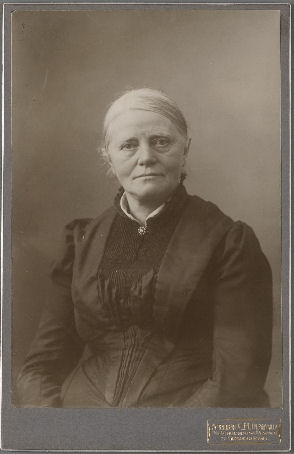
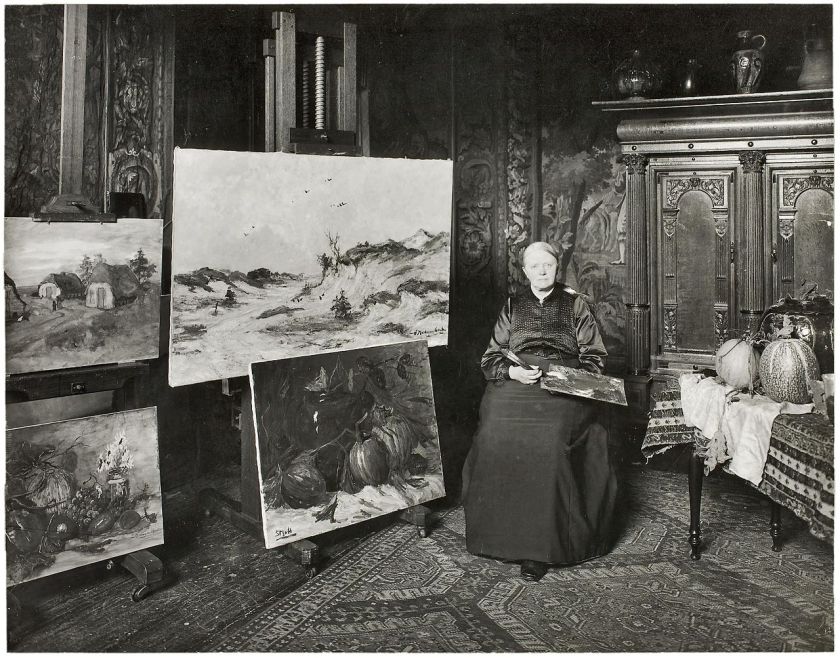
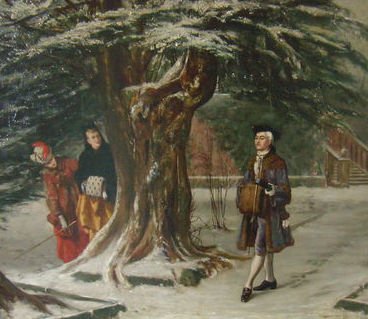
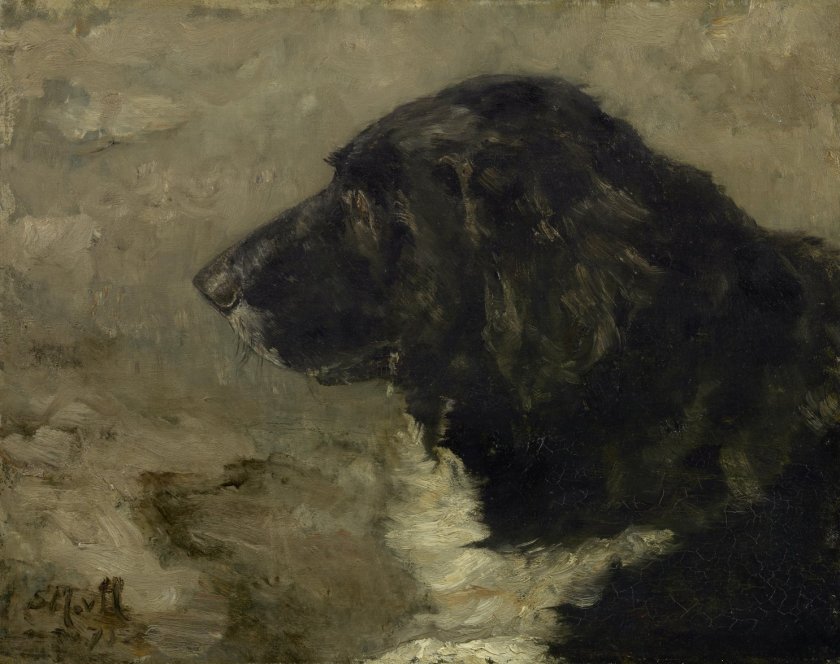
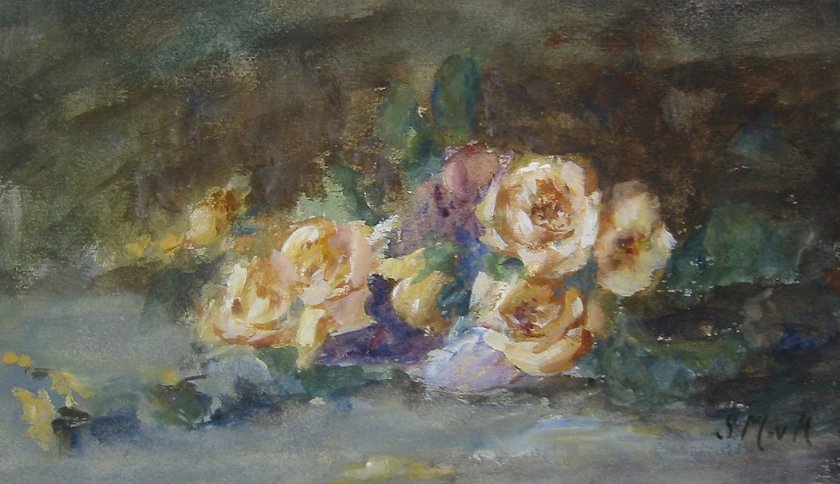
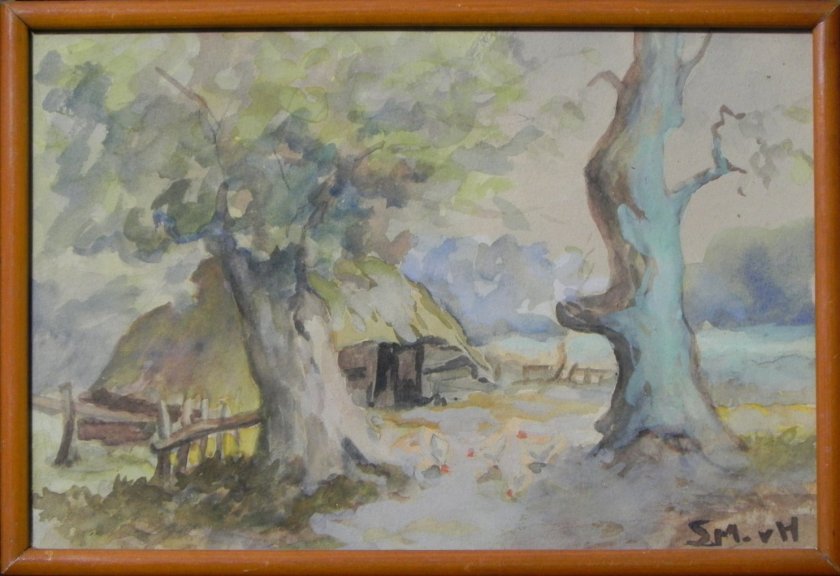
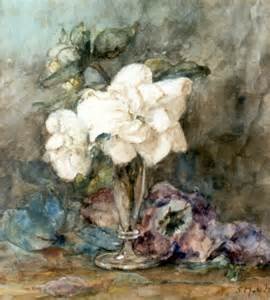

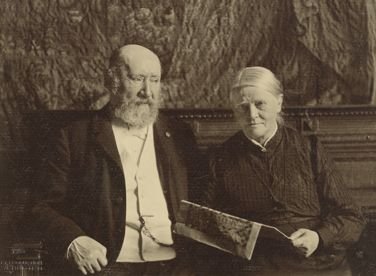


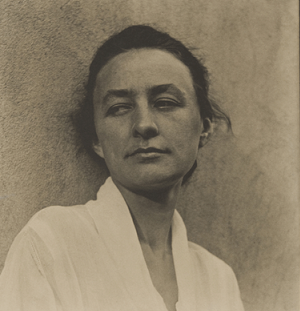

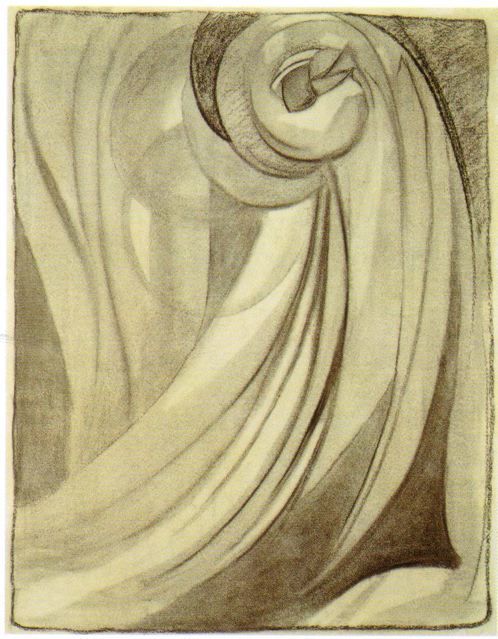
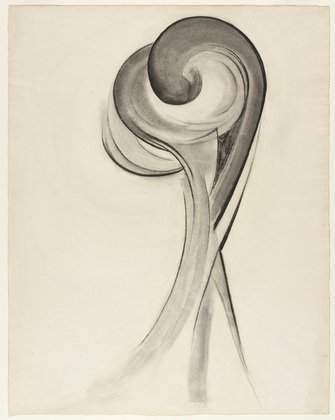
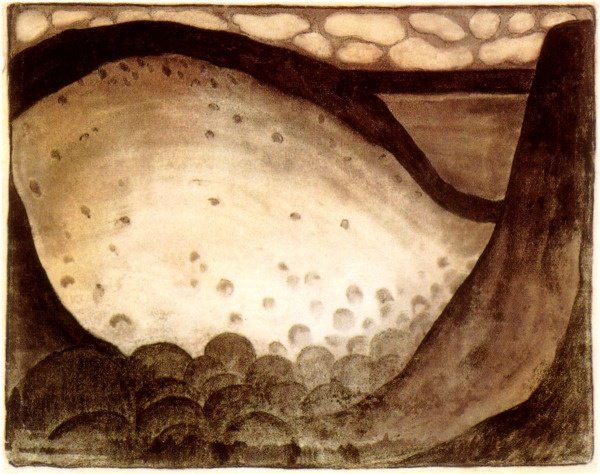


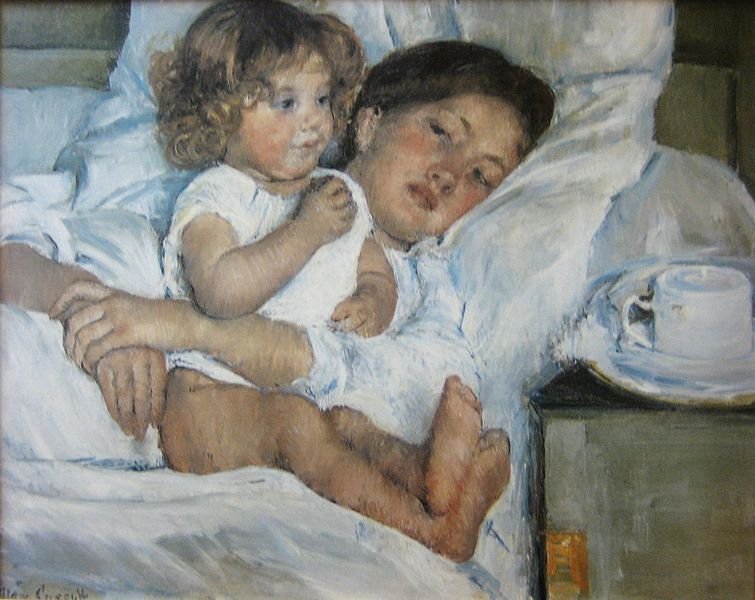
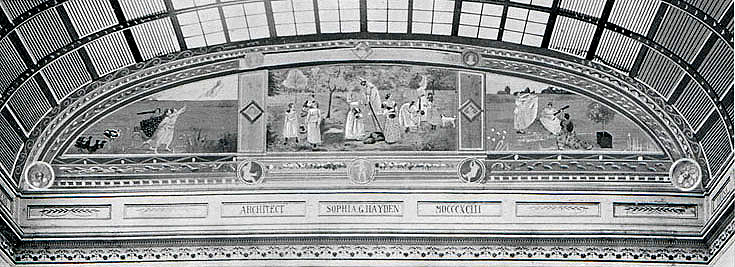


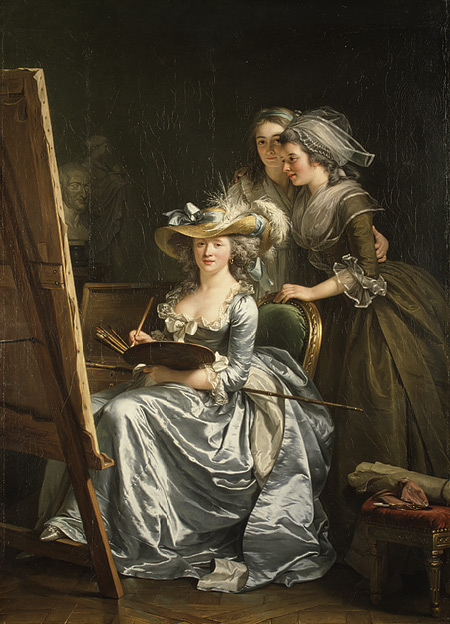


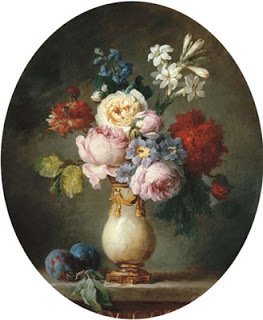


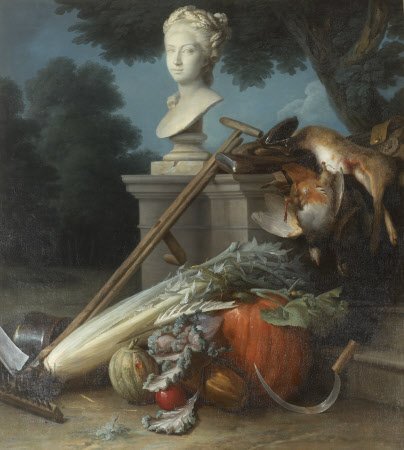
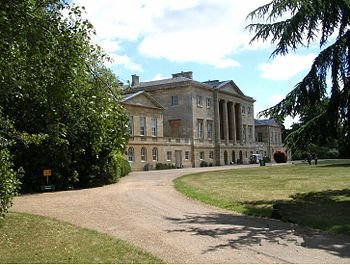
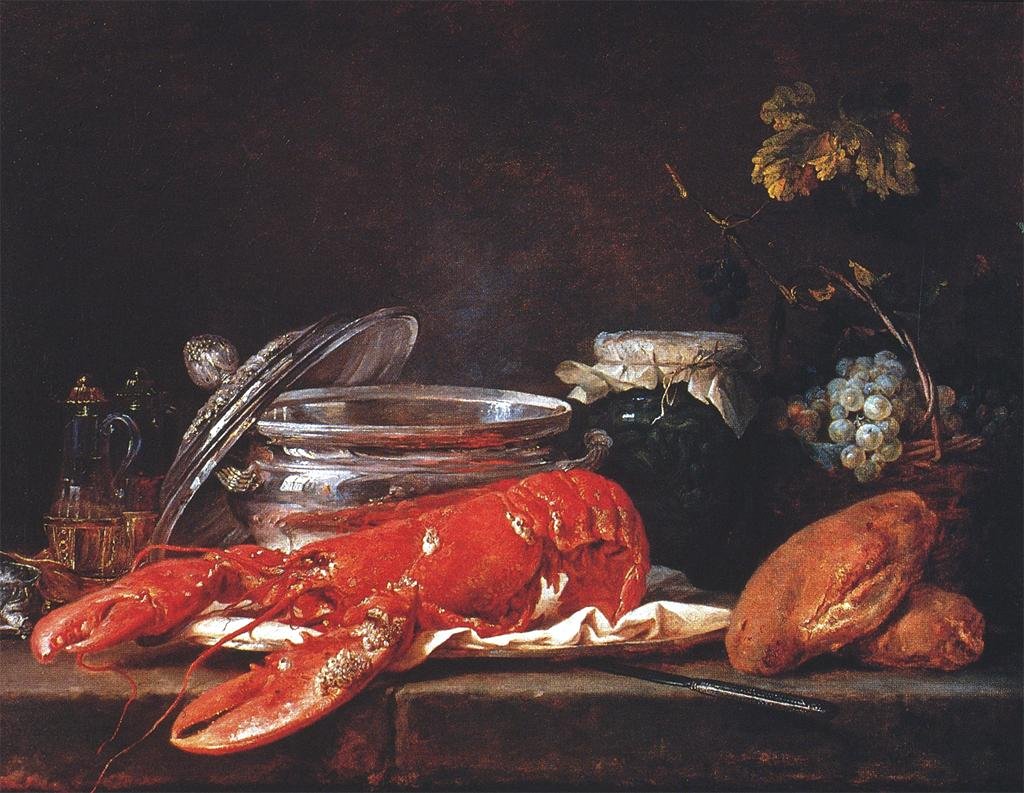
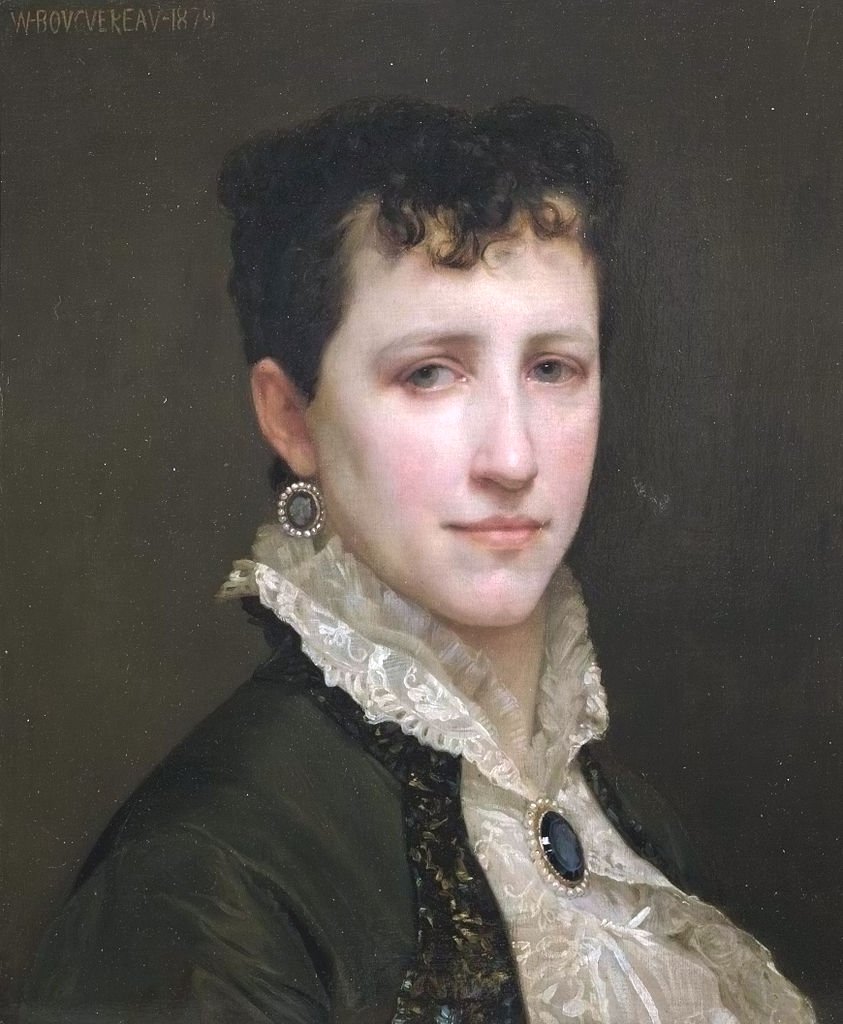

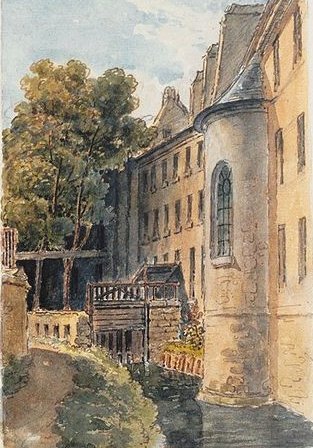
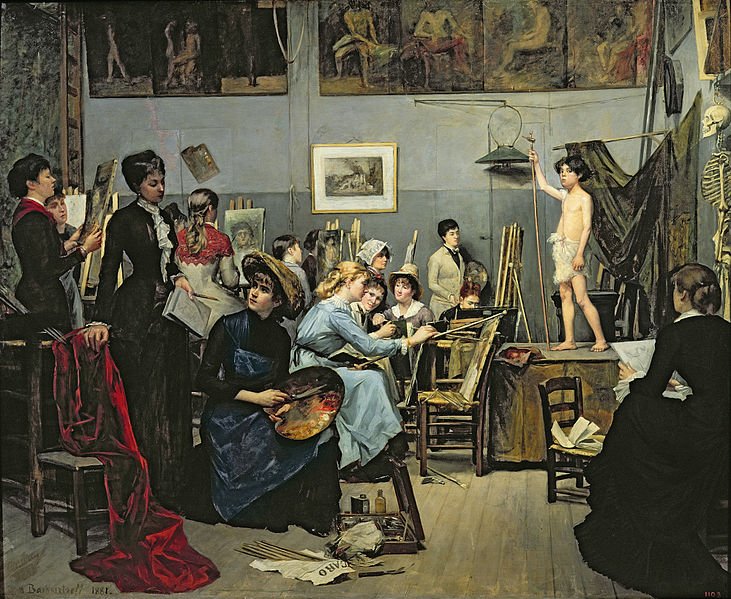
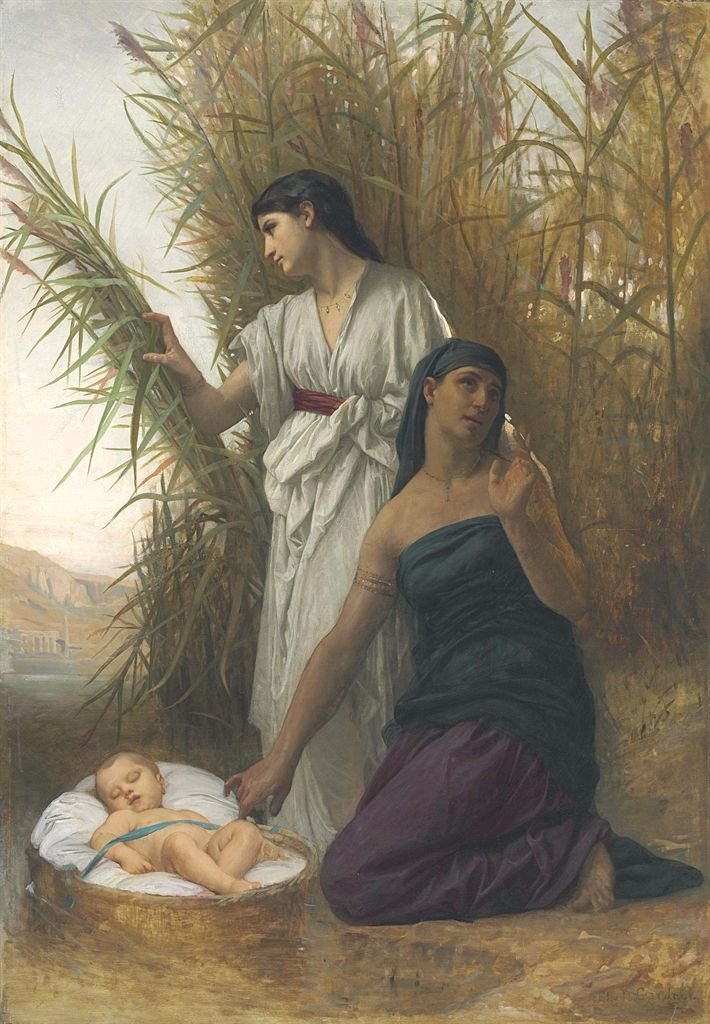
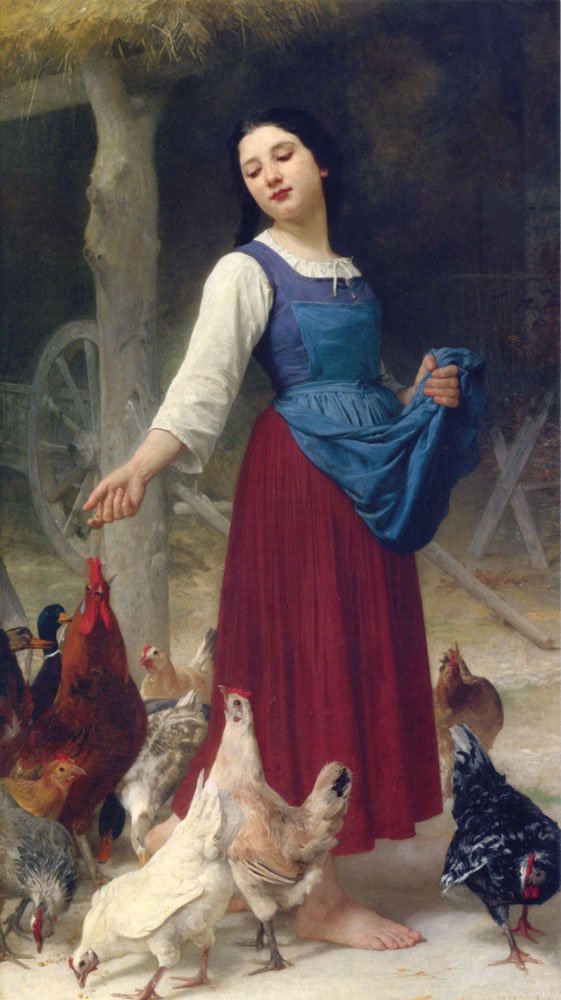
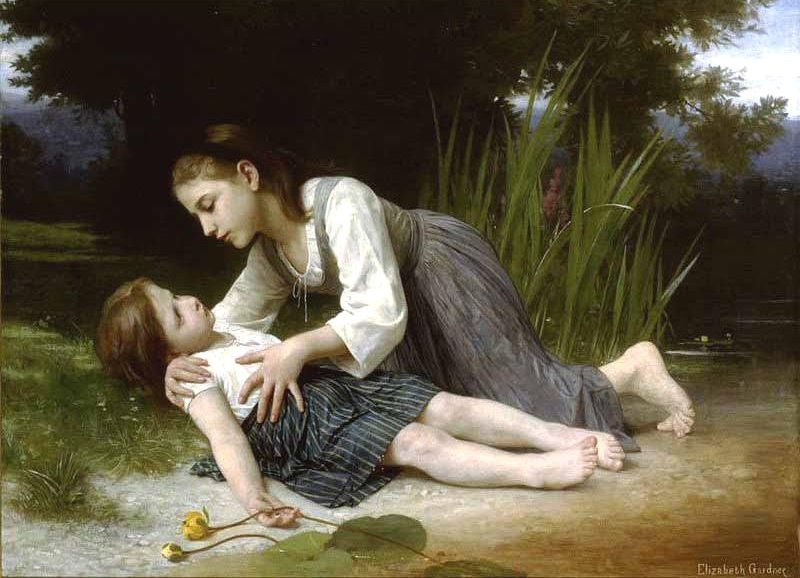




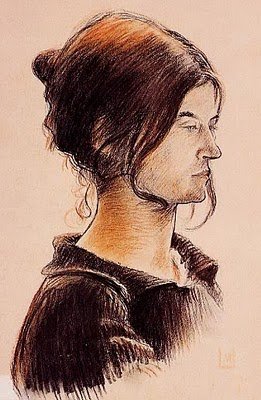
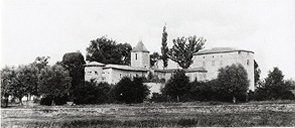


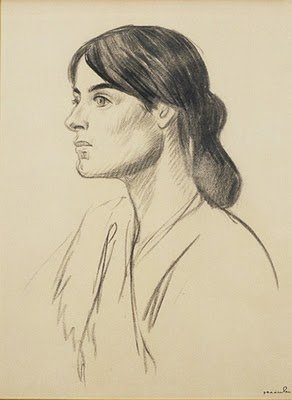
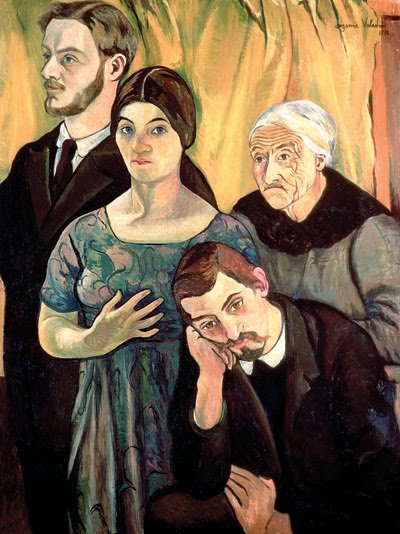
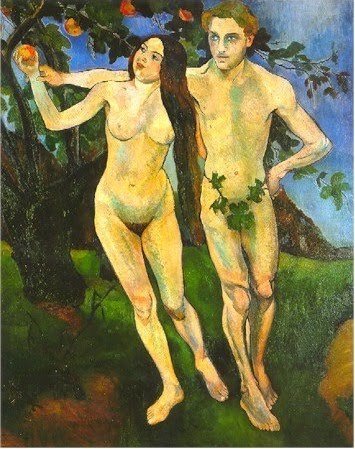


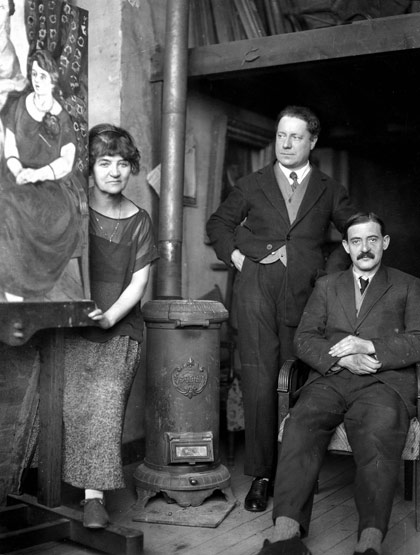


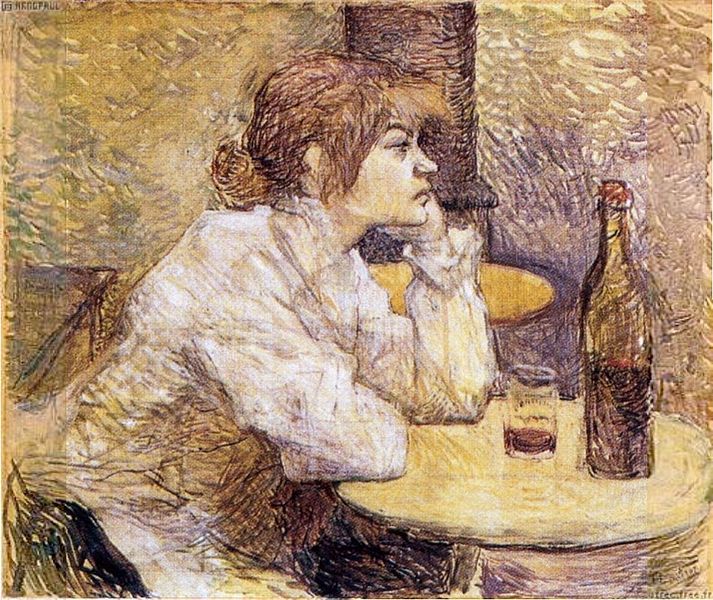
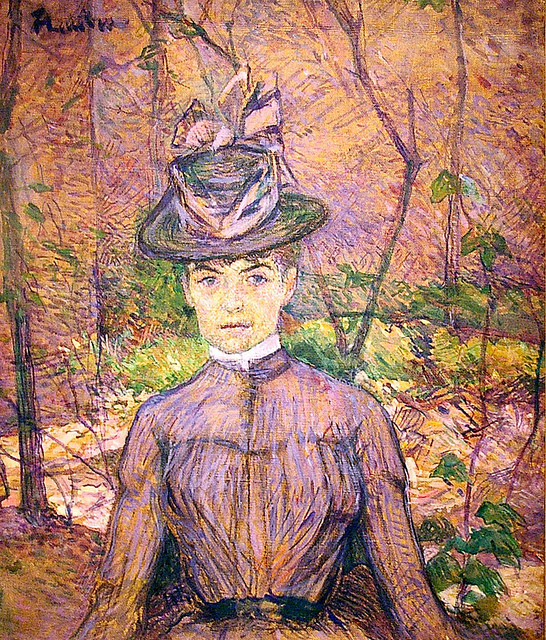

 my daily art display