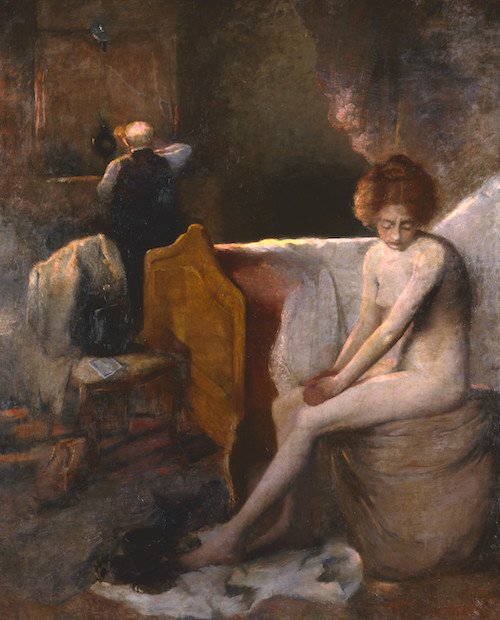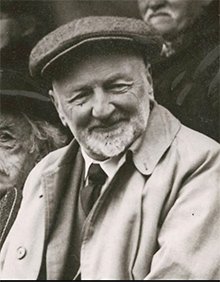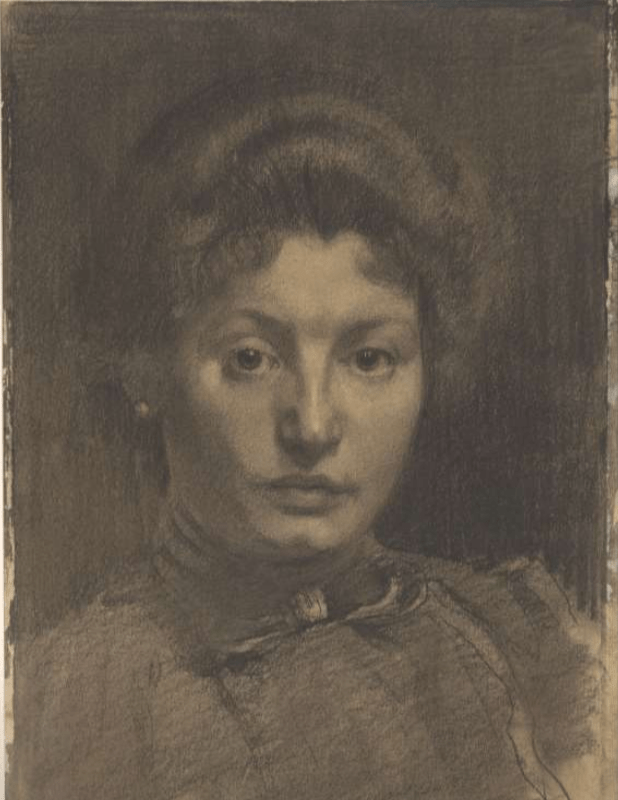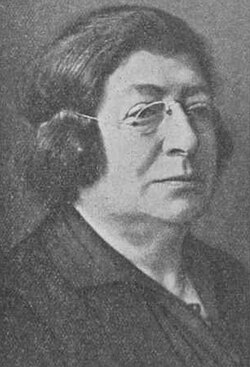
My featured artist today is a Dutch lady who became a great portrait painter but may be best remembered for another type of art which I will tell you about later.
Portrait of Lizzie Ansingh by Thérèse Schwartze (1895)
Maria Elisabeth Georgina Ansingh, better known as simply Lizzie Ansingh, was born on March 13th 1875 in the Dutch town of Utrecht. She was the eldest of three daughters of the pharmacist and amateur painter, Edzard Willem Ansingh and Clara Theresia Schwartze.
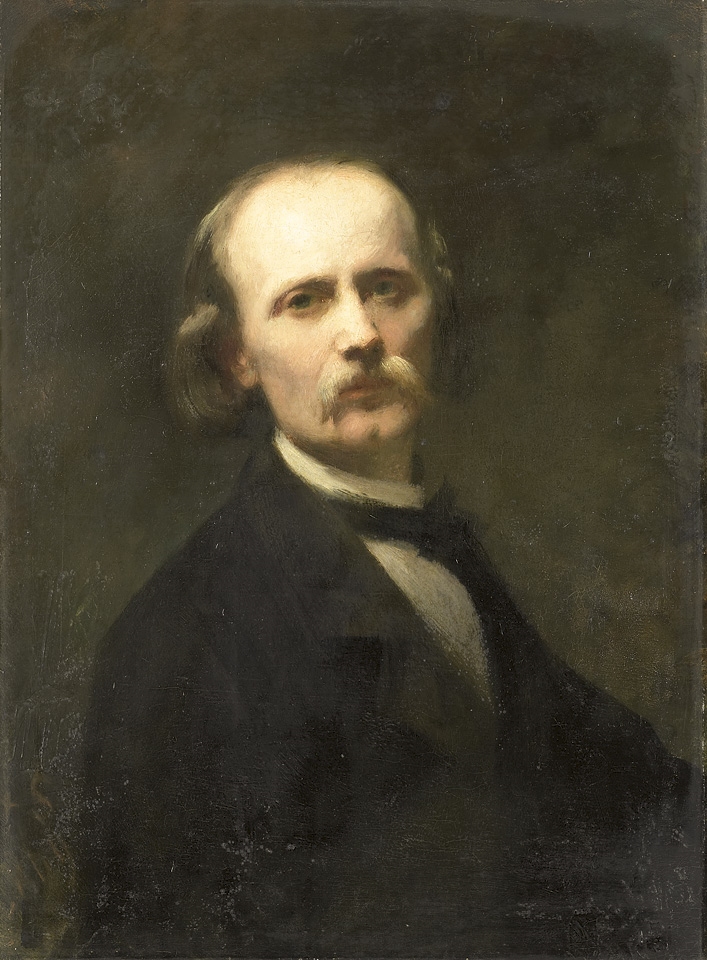
Johann Georg Schwartze self portrait (1869)
Her maternal grandfather was Johann Georg Schwartze a painter from Northern Netherlands who grew up in America and her aunt who was the portrait painter Thérèse Schwartze, and it was she who gave Lizzie her first drawing lessons. For many years during her childhood, due to her mother’s poor health, Lizzy lived with her aunt Thérèse and it was this aunt who encouraged her to paint and as French impressionism was the rage around that time, Thérèse introduced Lizzy to all sorts of impressionist painters of the time. Both of them also visited many museums and art exhibitions together, which further helped Lizzy gain a perspective on art.
Theresia Ansingh by Thérèse Schwartze
Lizzie’s youngest sister Theresia Ansingh was also a painter but did not take up art, using the non-de-plume Sorella, (meaning “sister”), until she was approaching the age of 50.
Housemates by Thérèse Schwartze (c.1919)
Around 1915, Thérèse Schwartze completed a group portrait of those living together in the Ansingh/Schwartze household. The setting is a room in their house in which a table is the only furniture on show. There are five people around the table. Sitting, with her hands on her lap, is Thérèse Schwartze’s sister the sculptor, Georgine Elisabeth Schwartze. Standing at the back, dressed in black with her hands crossed, is Lizzie Ansingh’s mother, Clara Theresia Ansingh-Schwartze. In the centre, seated at the table with an open book resting on two other books is Anton Gillis Cornelis van Duyl, the journalist and editor-in-chief of the Algemeen Handelsblad, the husband of Thérèse Schwartze. On the right of the group is Lizzie’s sister Thérèse Ansingh and on the far right, standing, leaning against her sister, Maria Elisabeth Georgina (‘Lizzy’) Ansingh.
Kunstenaars or Amsterdamse Joffers: Ritsema, Surie, Osieck, Ansingh, Van den Berg, Van Regteren-Altena en Bodenheim.
In 1894, when Lizzie was nineteen years old she enrolled at the Rijksakademie van beeldende kunsten (State Academy of Fine Arts) and studied Fine Art in a separate class for female students and this helped her to further develop her artistic skills. At the Academy, she also learned about human anatomy by studying Greek and Roman statues. Whilst studying at the Academy she and a number of fellow students, Marie van Regteren Altena, Suze Bisschop-Robertson, Coba Ritsema, Ans van den Berg, Jacoba Surie, Nelly Bodenheim, Betsy Westendorp-Osieck and Jo Bauer-Stumpff, formed a group in Amsterdam called Amsterdamse Joffers. This was a group of like-minded young Dutch female painters who would meet up regularly and share their artwork and more importantly support each other on their artistic journey. Many came from wealthy and artistic families and did not depend on painting for their livelihoods. Thérèse Schwartze would often act as a mentor/facilitator at their meetings. It became a major movement in Amsterdam and opened ways for many female painters to pursue art as a full-time profession. Lizzy Ansingh joined many other art associations such as Arti et Amicitiae, kunstvereniging Sint Lucas and Pulchri Studio. Lizzy Ansingh graduated from the art academy in 1897 and by this time Thérèse Schwartze had persuaded Lizzie to make painting a full-time career. This is what she actually did.
The Source of Life by Lizzie Ansingh
As I alluded to at the start of this blog, although Lizzy Ansingh, like her aunt, painted portraits, she will be remembered for being a painter of dolls. Thérèse Schwartze, her aunt encouraged this unusual interest. Lizzy purchased an antique dollhouse from 1740s and would spend hours arranging her dolls looking for inspiration for her paintings and would often buy pieces for furnishing the dollhouse.
Flora by Lizzy Ansingh
Sadly, on the night of April 17th 1943, Lizzy’s Amsterdam studio, along with the doll-house, was severely damaged when a British bomber was shot down, destroying the Carlton Hotel and much of the Reguliersdwarsstraat alongside her studio. The fire which followed was the most devastating in Amsterdam since 1659. Fortunately Lizzie restored the dollhouse and is now part of the Museum Arnhem collection.
Child on a Carp by Lizzie Ansingh
A Doll wearing a Mantilla by Lizzie Ansingh
Lizzie wrote two children’s books, A Little Fruit Basket in 1927 and Aunt Tor has Her Birthday in 1950. She also collaborated with illustrator, Nelly Bodenhein, and published a booklet of illustrations with lines of verse. Her poetry was published in the literary magazine Maatstaf from 1956 to 1957.
Lizzy Ansingh on the occasion of her 80th birthday (13 March 1955) in her Amsterdam studio on Prinsengracht. Photo Ben van Meerendonk / AHF, IISH Collection, Amsterdam
Lizzie Ansingh never married. She died in Amsterdam on December 14th 1959 aged 84.
Information for this blog came from a number of sources including:
During a period of very low temperatures and snowy conditions, it might seem appropriate to focus on art depicting sunshine, blue skies, and warm azure-coloured seas. However, today’s blog will start with featuring beautiful depictions of snow and ice and explore how people who experienced these conditions seemed to find enjoyment in them. Many such depictions are conjured up by nineteenth century Dutch artists and today’s blog is all about Fredrik Marinus Kruseman the Dutch painter who specialized in Romantic-style landscapes, and winter scenes, which made up about two thirds of his oeuvre.
Fredrik Kruseman was born in the Netherlands city of Haarlem on July 12th, 1816. He was the fourth son of Jacoba Mooij and her husband Benjamin Philip Kruseman, a Lutheran hat-maker. Fredrik had two older brothers, Hendrik and Jakob and a younger brother Benjamin. He also had two cousins who became famous painters. Cornelis Kruseman a painter of historical and biblical subjects who later became Director of the Royal Academy of Fine Arts of Amsterdam and Jan Adam Kruseman, a historical painter and portraitist.
A Winter’s Scene with Skaters on a Frozen Waterway by Fredrik Kruser (1858)
Fredrik was tutored by many of the great Dutch landscape artists of the nineteenth century school. In 1833, aged seventeen, he was apprenticed to Jan Reekers who taught him the skills required to draw from nature and the intricacies of perspective. Between 1832 and 1833 he also attended classes at the Vocational City Drawing School in Haarlem and studied painting with Nicholas Roosenboom, who had a studio near where Fredrik lived. It was in September 1833 that Fredrik Kruseman first exhibited his landscape work. It was at the Exhibition for Living Masters in The Hague. In 1835, Fredrik moved to the Gooi, an area around Hilversum, in the centre of the Netherlands. Here he took advanced studies with Jan van Ravenswaay. He also studied briefly with the landscape painter, Barend Cornelis Koekkoek.
During his twenties and thirties, Kruseman travelled widely throughout Northern Europe before finally setting up home in Brussels in 1841. He returned to the Netherlands and lived, between 1852 and 1856, on the outskirts of Haarlem. After that four-year sojourn he returned to the Belgian capital where he remained for the rest of his life.
Winter Landscape with Skaters and Wood Gatherers at a Ruinby Fredrik Kruseman
Kruseman’s 1845 painting entitled Winter Landscape with Skaters and Wood Gatherers at a Ruin depicts a frozen canal with skaters, walkers on a path along the shore, a picturesque castle and strange bare trees. Men scavenge for wood for their home fires. Life is hard at this time of year.
A Winter Landscape with Skaters on a Frozen Riverby Fredrik Kruseman (1862)
Kruseman’s painting entitled A Winter Landscape with Skaters on a Frozen River is a beautiful depiction and is a Romantic observance and veneration of nature. The sky dominates the paintingfxf. Before us we have a frozen waterway on which are a number of skaters bordered by snow-covered banks. On the right bank there is a refreshment table. We can also pick out a fallen skater in the left of the foreground and a young couple with their dog crossing the centre of the frozen river close to a wide crack in the ice. In the left middle-ground we can just make out a sailing boat frozen to the riverbank. The colours Kruseman has used are cool blue-grey tonality over the black mirror-like surface of the ice.
Wintry River Landscape with Windmill by Fredrik Kruseman (1844)
Although Kruseman is best known for his Romantic wintry landscape paintings he completed many other landscape works.
Monk Meditating near a Ruin by Moonlight by Fredrik Kruseman (1862)
One notable romantic piece is his 1862 painting titled Monk Meditating near a Ruin by Moonlight. The ruin of the title is the abbey in Villers-la-Ville near Brussels, which used to be one of the most significant Cistercian abbeys in Europe and close to where the painter lived for a while. In the right foreground of this nocturnal scene, we see a monk meditating near the overgrown ruin. The abbey was founded in 1146 and was a former Cistercian Abbey located in the very heart of Walloon Brabant.
Village Street on a Sunny Day by Fredrik Kruseman (ca. 1835)
Landscape with two Farmers by Fredrik Kruseman
In the foreground of this atmospheric work, we see two peasants talking to each other. One holds on to his ox, while the other is accompanied by his dog. The background consists of a wide landscape with a few hills. Once again the sky plays a dominant part of the painting.
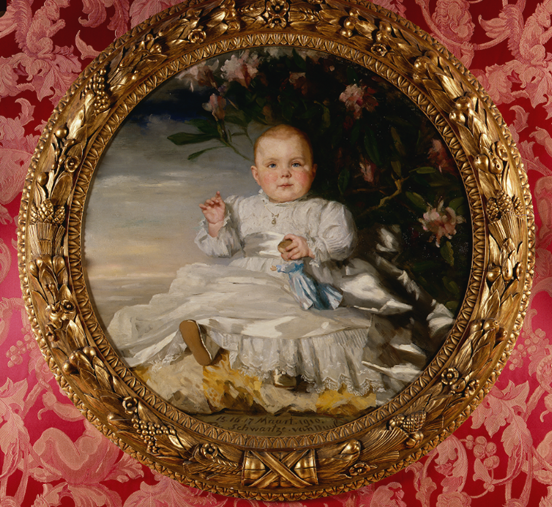
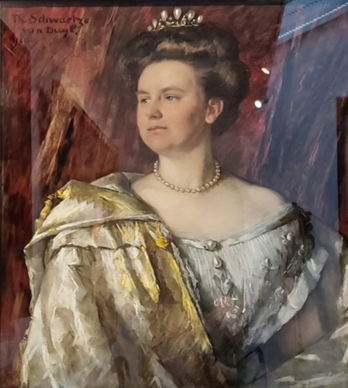
Tranquil Landscape with Women Washing by a Stream with Cattle and Sheep by Fredrik Kruseman
A River Landscape with Cows and Sheep by Fredrik Kruseman
In his winter scenes of frozen rivers, Fredrik Kruseman cleverly produced jet-black mirror surface of the ice and the marks left by skaters. Some of his most famous depictions were set in the fading light of early evening and combined the wintry scene with a background glow of a setting sun or a bright light emanating from the interior of a cottage or house.
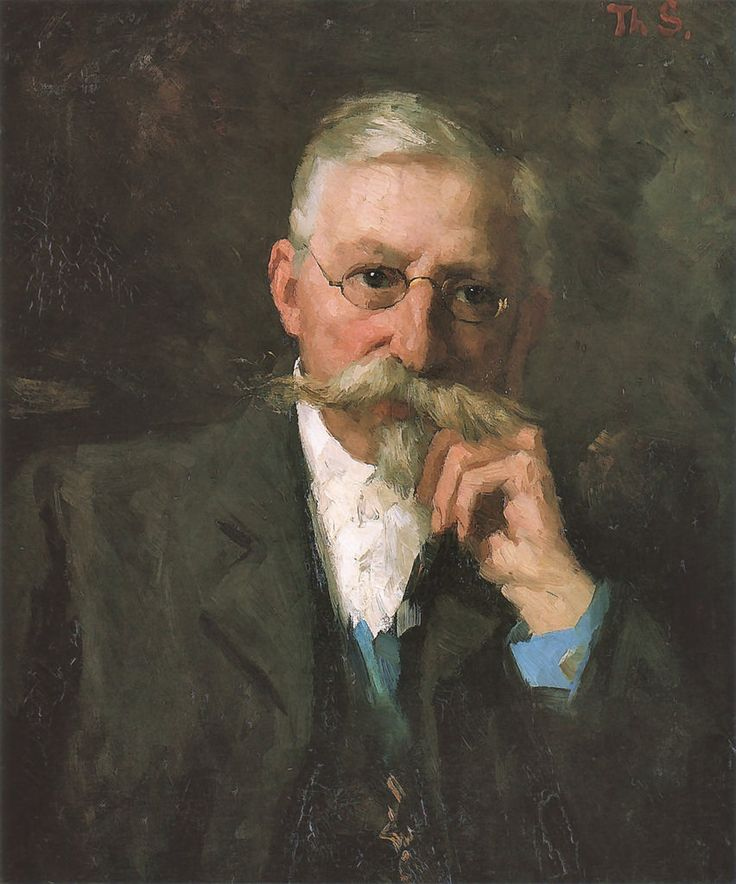
Fredrik Marinus Kruseman worked well into the late 1870s and died in St Gilles, a suburb of Brussels, on May 25th 1882.
Therese Schwartze was a Dutch 20th century painter. Such was a hugely talented portrait artist that was one of only a few females who had been honoured by receiving an invitation to contribute her self-portrait to the hall of painters at the Uffizi Gallery in Florence. This genius of portraiture completed around a thousand works during her forty-year career, which means that she completed more than twenty paintings a year. Because many of her portraits were created to be treasured by family members, most of her work has remained in private collections. About one hundred and fifteen of her paintings are in public collections in the Netherlands, and twelve are part of foreign public collections, which leaves the locations of nearly four hundred paintings still unknown. She became a millionaire in the process. Schwartze also established an international reputation, with countless exhibitions and commissions throughout Europe and the United States.
Self Portrait by Johan Georg Schwartze
Thérèse was born on December 20th 1852 in Amsterdam. She was the daughter of Johan Georg Schwartze and Maria Elisabeth Therese Herrmann. She was one of five children and had four sisters including Georgine, a sculptor, Clara Theresia, a painter and one brother, George Washington Schwartze, also a painter.
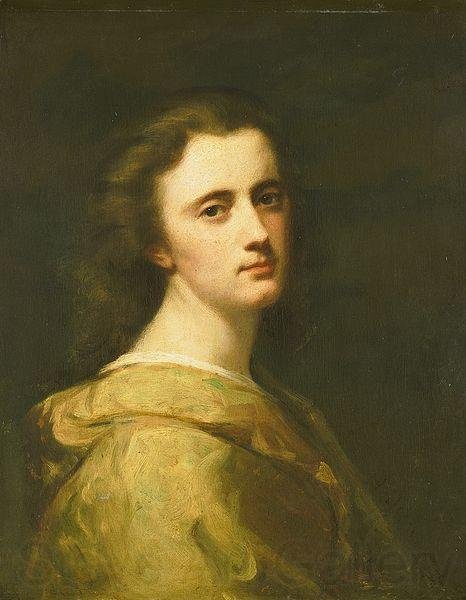
Portrait of Thérèse aged 16 by her father, Johan Georg Schwartze (1869)
Her father was a well-respected portrait painter and it was he who provided Thérèse with her first artistic training. In 1869 her father completed a portrait of his daughter, Thérèse.
Three girls of the orphanage in Amsterdam by Thérèse Schwartze (1885)
At that time, there was the perception that teaching girls and young ladies to paint was seen simply as a part of a cultured upbringing rather than a profession for earning money which was viewed as the role of the man. But for Johann Schwartze he couldn’t care less about such conventions. He trained his daughter in painting and drawing from a very young age and intended that Thérèse would become his worthy successor. She started her professional career at the age of sixteen, working in her father’s studio which she eventually took over when she was twenty-one after his death in 1874. Schwartze wrote to her father in a birthday letter, writing:
“…I will apply myself more to everything, so as, with God’s blessing, to be able to earn my living by painting…”
Because the art academies were not yet open to girls, her father sent her to Munich for expensive private lessons for a year under Gabriel Max and Franz von Lenbach who was regarded as the leading German portraitist of his era. In 1879 she moved to Paris and continued her artistic studies under Jean-Jacques Henner, the Alsace-born portrait artist.
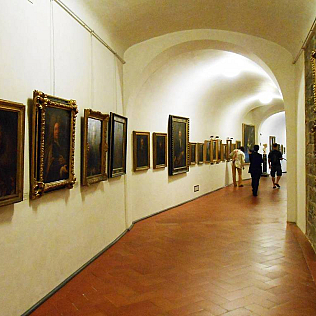
The Vasari Corridor at the Uffizi Gallery, Florence
Thérèse Schwartze’s portraits are truly remarkable and she was one of the few women painters, who had been honoured by an invitation to contribute her self-portrait to the Hall of Painters, the Vasari Corridor, at the Uffizi Gallery in Florence. The Uffizi collection is one of the most complete in all Europe, first started by Cardinal Leopoldo de’ Medici in the 17th century. The passageway was designed and built in 1564 by Giorgio Vasari to allow Cosimo de’ Medici and other Florentine elite to walk safely through the city, from the seat of power in Palazzo Vecchio to their private residence, Palazzo Pitti. The passageway used to contain over a thousand paintings, dating from the 17th and 18th centuries, including the largest and very important collection of self-portraits by some of the most famous masters of painting from the 16th to the 20th century, including Filippo Lippi, Rembrandt, Velazquez, Delacroix and Ensor. While the Medici family bought the first paintings, after the collection started, the family started receiving the paintings as donations from the painters themselves. This has continued over the centuries and there were more paintings in the collection that did not have space to be exposed. Things have now changed as from 1973 to 2016, some of the self-portraits which had been hung in the Vasari Corridor, were, however only visible during restricted and occasional visits because of the confined space, which, also lacked air conditioning and adequate lighting. Most of the self portraits have been moved to other rooms at the Uffizi.
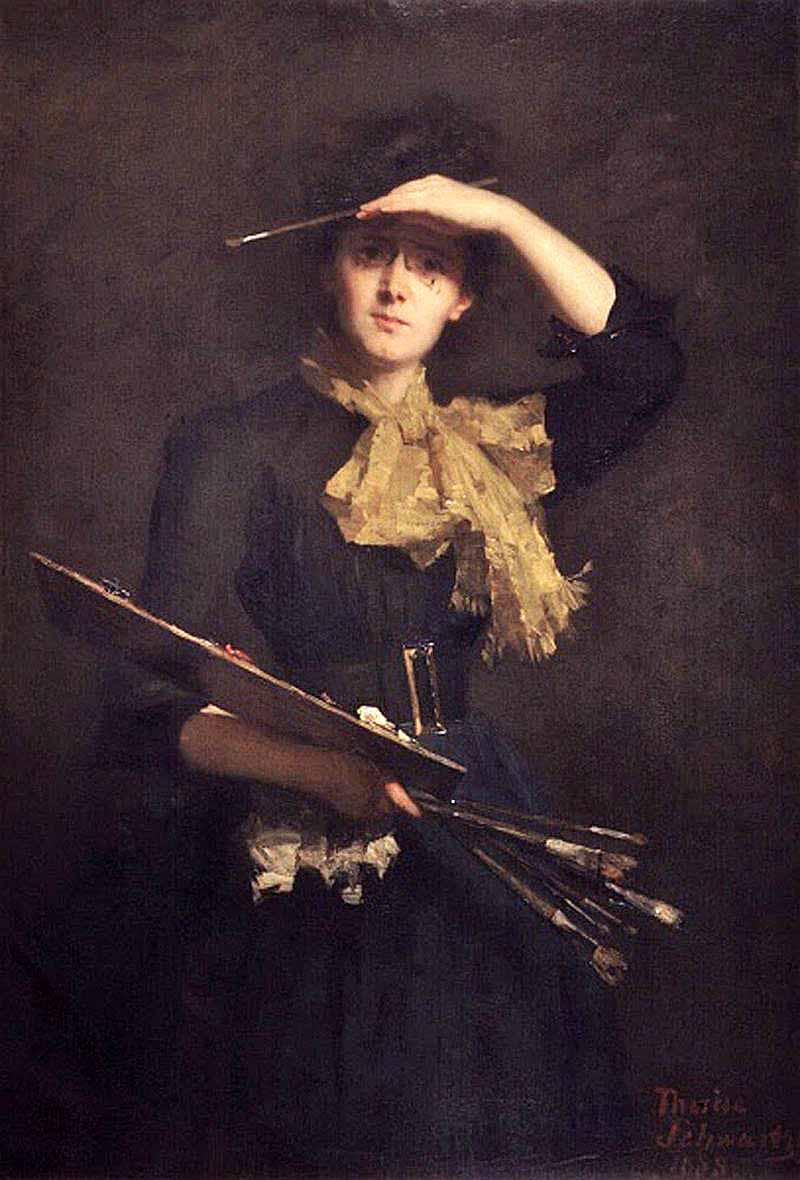
Self-portrait with Palette by Thérèse Scwartze (1888)
Only a handful of female portrait painters were active professionally in the 19th century, one of whom was Schwartze, who was nicknamed the ‘Queen of Dutch Painting’. In the self portrait she contributed to the Uffizi entitled Self-portrait with Palette, she depicts herself staring out at us with a haunted look, paintbrush in one hand with the other looped through a paint-laden palette. The background of this canvas is bare, and our eyes are drawn to the painter’s tools: eyes, brush, pigments, and a rag at the ready. The painting was exhibited at the 1888 Paris Salon before being given to the Uffizi gallery in Florence.
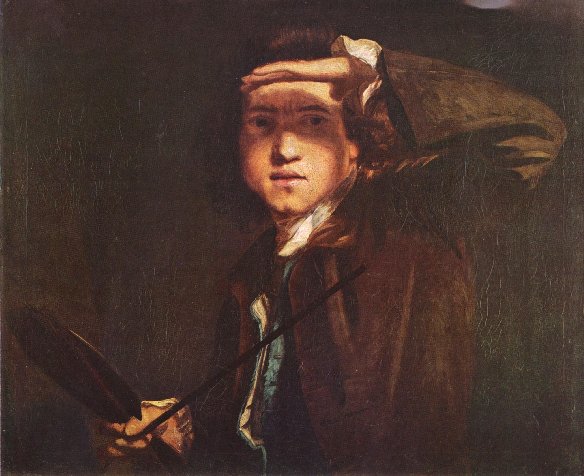
Sir Joshua Reynolds self portrait (c.1748)
Thérèse’s depiction of herself in her self-portrait could well have been inspired by Sir Joshua Reynold’s self-portrait which shows him similarly with his hand raised shielding his eyes from the bright light.
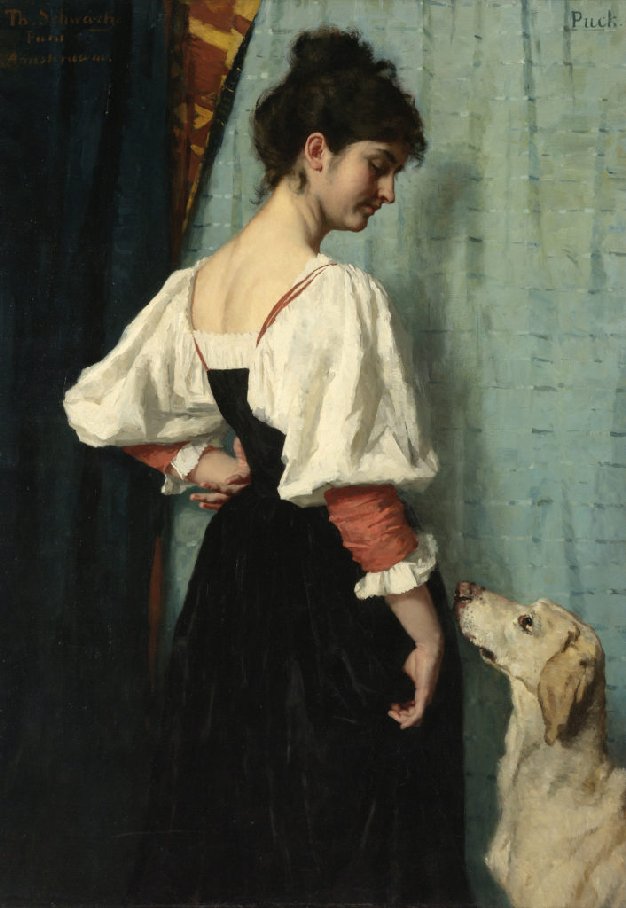
Young Italian Woman, with ‘Puck’ the Dog by Thérèse Schwartze, c. 1885)
Whilst living and studying in Paris, Thérèse completed her painting, Young Italian Woman, with ‘Puck’ the Dog. The model she used for this painting was known as Fortunata. She was one of the many professional Italian models working in Paris in the late 19th century. Schwartze started this painting in 1884 and exhibited it a year later in Amsterdam, having added the dog in the meanwhile.
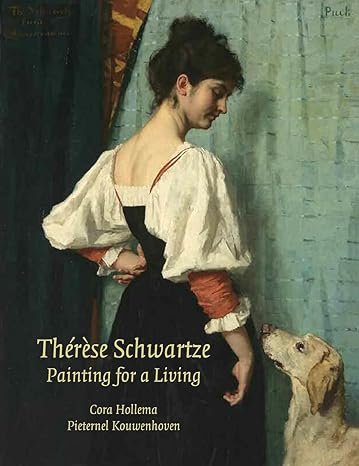
According the 2021 biography by Cora Hollema and Pieternel Kouwenhoven entitled Thérèse Schwartze: painting for a living. Thérèse’s career took off at a time when a new, wealthy Dutch class wanted to flaunt its status and what better way to achieve this than with a flattering portrait. Her biographer wrote:
“She was in demand because she produced a new elegant, un-Dutch, extravagant, flattering style of portraiture which was in demand by the upcoming ‘new money…….. The new entrepreneurs and industrialists in the second half of the 19th century…”
Portrait of Aleida Gijsberta van Ogtrop-Hanlo with her five children by Thérèse Schwartze (1906).
Schwartze was one of the leading society painters in the Netherlands around 1900. Her clientele came from the nobility and the bourgeois elite in Amsterdam and The Hague. Members of the royal family also sat for her. A good example of her excellent portraiture is her 1906 group portrait of Aleida Gijsberta van Ogtrop-Hanlo with her five children. In this work, Aleida van Ogtrop-Hanlo is surrounded by, from left to right: Adriënne (Zus), Pieter (Piet), Maria (Misel), Eugènie (Toetie) and Adèle (Kees). The youngest and sixth child, Joanna (Jennie) was not yet born. Her husband was a wealthy stockbroker and founder of Amsterdam Royal Concertgebouw. The portrait of his wife and children has a dreamy quality, with rich clothing and poetic colours. It gives an excellent impression of the self-image of the Dutch upper classes at the beginning of the twentieth century. Stylistically Thérèse Schwartze followed in the footsteps of the famous eighteenth-century English portrait painter, Thomas Gainsborough.
Portrait of the six Boissevain daughters by Thérèse Schwartze (1916)
An equally great group portrait by Thérèse Schwartze was her Boissevinfamily portrait but this a more decorous depiction. It is entitled Portrait of the Six Boissevain Daughters and she completed it in 1916. According to Schwartze’s biography by art historian, Cora Hollema, this difference in style was not due to a development of the artist, but more to do with the wishes of her client. Mr. & Mrs. Boissevain, who were wealthy members of the Amsterdam upper class had ten children, six daughters and four sons. They were aware of the portrait of Aleida and her children by Thérèse but believed it to be far too modern. So, when they commissioned Thérèse to paint the portrait in 1916 they asked her to produce a more time-honoured portrait of their daughters. Thérèse was now the breadwinner of the family and so sensibly adapted her style according to her client’s demands bearing in mind the adage: The client was king.
Thérèse Schwartze in her studio, Prinsengracht 1021, Amsterdam, 1903.
Thérèse’s great success as an artist became a point of reference for the young Dutch women painters who founded the Amsterdamse Joffers, a group of women artists who met weekly in Amsterdam at the end of the 19th and beginning of the 20th century. These “ladies of Amsterdam” met weekly, often at the Schwartze home, to update the glorious Dutch tradition of painting based on French Impressionist innovations. They supported each other in their professional careers. Most of them were students of the Rijksakademie van beeldende kunsten and belonged to the movement of the Amsterdam Impressionists.
Woman wearing a hat (Portrait of Theresia Ansingh (Sorella)), by Thérèse Schwartze (after 1906).
Besides Schwartze’s commissioned portraits, which made her very wealthy, she still had time to complete portraits of her friends and relatives which were not commissioned and were often given as gifts. A fine example in this regard is the portrait of Schwartze’s niece, Theresia Ansingh, who later became a member of the Amsterdam school of female painters known as The Joffers, many of them were inspired by Schwartze’s professional success.
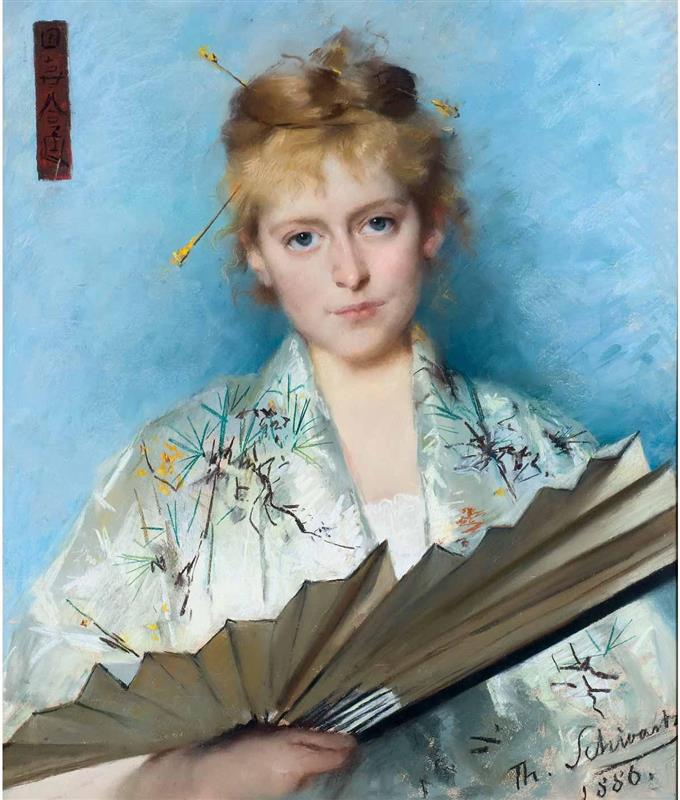
Maria Catharina Ursula (Mia) Cuypers by Thérèse Schwartze (1886)
One of my favourite portraits by Schwartze was her fascinating portrait of one of her friends, which is an amalgam of formal and informal portraiture and is entitled Portrait of Mia Cuypers. She was a daughter of the architect Pierre Cuypers, who designed such famous buildings as the Rijksmuseum and Amsterdam’s Central Station. In 1883, she fell in love, to the dismay of her family and the astonishment of “high society,” with the Chinese-British merchant Frederick Taen-Err Toung from Berlin, who was in Amsterdam selling his Oriental merchandise at the International Colonial Exposition. Mia managed to overcome the social uproar and married Toung in 1886. Being a close acquaintance of the Cuypers family, Thérèse was commissioned by the groom-to-be to make this wedding portrait, which is said to have only taken her one and a half days to complete. There are Chinese characters in the upper left corner, which are not clear in my attached photo, which mean “rice field,” “longevity”/”delighted,” and “coming together.”
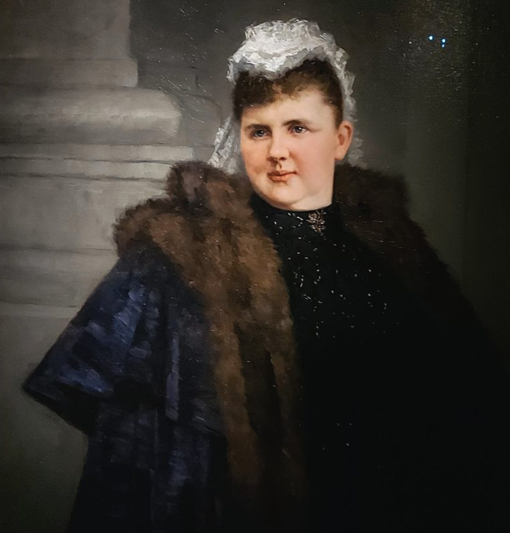
Portrait of Queen Emma by Thérèsa Schwartze (ca. 1881)
Soon after, she received a commission for a portrait of Queen Emma and the little princess Wilhelmina, who was born in 1880. In the single portrait of the young queen, she is dressed in dark colours against a neutral background, all is dark except her face. In this painting, one can already see the fine art of portraiture and the depicting of differing textures that Thérèse fully mastered. The fur stole, the lace cap on her head, as well as the brocade of the queen’s robe.
Portrait of Princess Juliana by Thérèsa Schwartze (1910)
Thérèse’s worked with the royal family of the Netherlands through a period of thirty-five years and in all they gave her six commissions that contributed greatly towards her fame and wealth. Most royal portraits were of Queen Wilhelmina.
Portrait of Queen Wilhelmina by Thérèse Schwartze (1910)
The royal court had a habit of paying a little more than the average client, which meant that 1910 was a particularly profitable year for Thérèse. She painted so many members of the royal family that she was almost deemed a member of their household.
Portrait of Anton van Duyl by Thérèse Schwartze
In 1906, Thérèse Schwartze married the editor-in-chief of the Algemeen Handelsblad, Anton van Duyl. Twelve years after they married, Thérèse’s husband died on July 22nd 1918. It was double blow for Thérèse as she herself had been very ill at the time and five months later, on December 23rd 1918, three days after her sixty-seventh birthday, she died in Amsterdam.
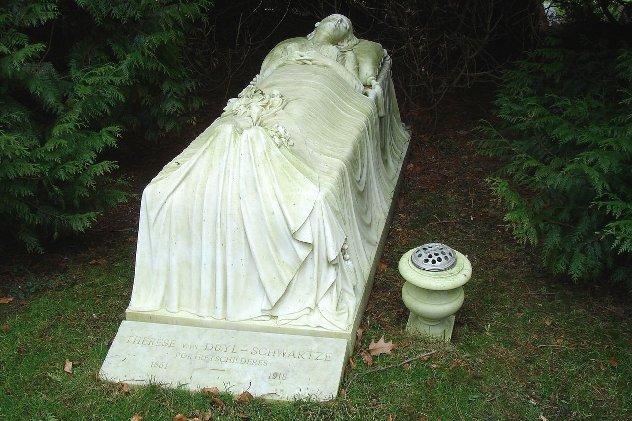
Grave of Thérèse Schwartze at the Nieuwe Ooster cemetery, Amsterdam.
She was buried at Zorgvlied cemetery in Amsterdam but was later reburied at the Nieuwe Ooster cemetery in Amsterdam, where her sister created a memorial to her, modelled after her death mask, which is now a rijksmonument.
This blog is the second one requested by Barbara Matthias, a reader of my blogs, who had actually met the artist, and, like the previous one about Rudolf Bonnet, it is about the life and artwork of a painter who spent the latter half of his life on the Indonesian island of Bali. Let me introduce you to Adrien-Jean Le Mayeur de Merprès, a self-declared impressionist.
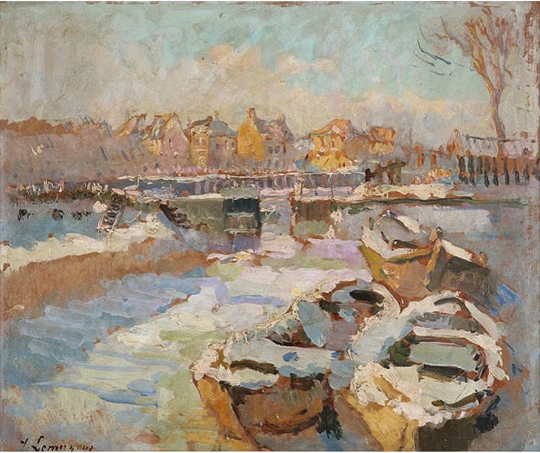
City view with boats in the canal byAdrien-Jean Le Mayeur de Merprès
Le Mayeur was born on February 9th 1880 in Ixelles, a municipality of Brussels which lies to the south-east of the Belgium capital. He was the youngest of two brothers born to Andrien Le Mayeur De Merpres, a marine artist, and his wife Louise Di Bosch. During his early years Jean studied painting with the French artist, Ernest Blanc-Garin as well as being tutored by his father. His father wanted his son to receive an all-round education and had him enrol at the Polytechnic College of The Université Libre de Bruxeles, where he studied Architecture and Civil Engineering. However much to the horror of his family, Jean decided to forego all that he had learnt at the polytechnic and pursue his love of painting and his favoured genre of landscape painting in the Impressionistic style, depicting Belgian landscapes in hazy hues.
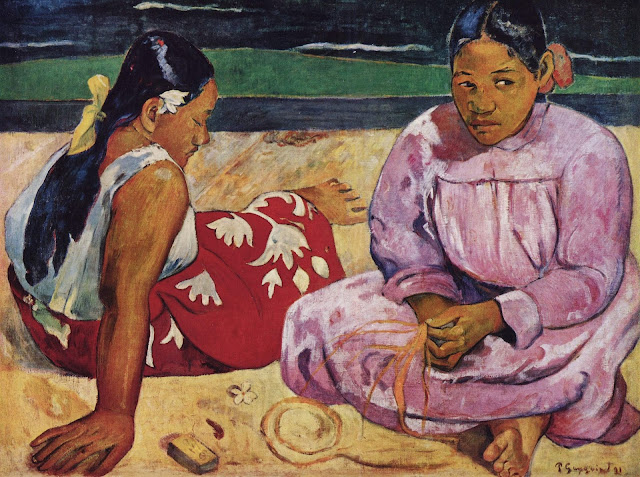
Tahitian Women on the BeachGaugin’s Tahitian painting(1891)
In 1914, now in his thirties, with the outbreak in Europe of the Great War, Jean was enlisted as a war-time painter and photographer. During the conflict he was affectedly badly by the carnage of the war and this could have been one of the reasons why he decided to leave Western “civilisation” and find solace in the exotic worlds which he had seen in the works of the French post-impressionist artist Paul Gauguin.
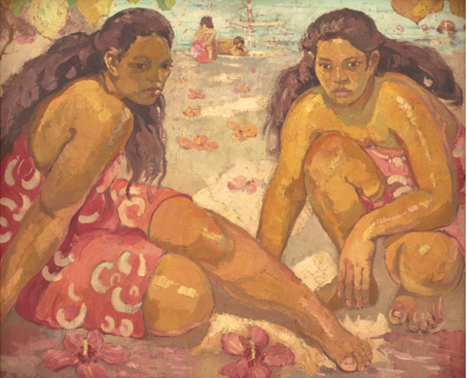
Two Women on the Beach, Tahiti, by Adrien-Jean Le Mayeur de Merprès
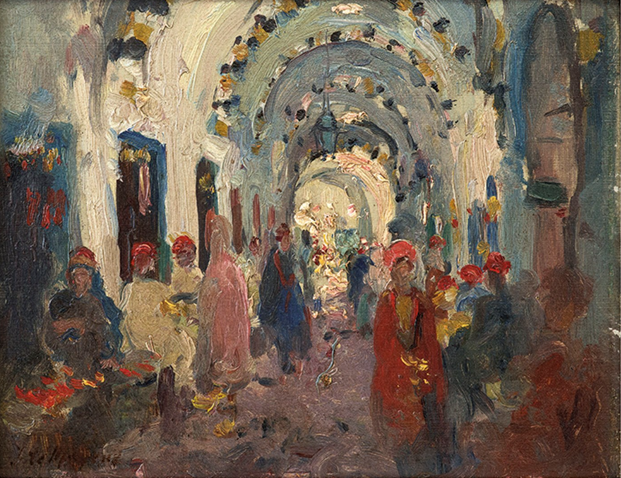
Jean had also acquired an insatiable appetite for travel. In the early 1920s he visited Italy, North Africa, India, Cambodia, Burma, Madagascar and Turkey, all the time transferring his thoughts and what he saw onto canvas. In a way these extensive travels were Jean’s way of searching for paradise and like Paul Gaugin, who had visited the Pacific island of Tahiti in June 1891, he too arrived on the Pacific island in 1929. Jean Le Mayeur was disappointed with Tahiti as it was now far more commercialised than it was in Gaugin’s day and so Jean discounted Tahiti as being the promised land and instead decide to travel to south-east Asia and in 1932 he embarked on his first voyage to the “island of the Gods”, Bali.
An Arab Market byAdrien-Jean Le Mayeur de Merprès
After a long sea passage, Le Majeur arrived at Singaraja, a port town in northern Bali. From there he travelled south and rented a house in Banjar Kelandis, close to the northern part of Denpasar, the island’s main town. He was captivated by the Balinese people’s traditional way of life, the temple ceremonies and the local dances such as Legong, which is a form of Balinese dance that is characterized by intricate finger movements, complicated footwork, and expressive gestures and facial expressions. For Le Mayeur, Bali was an ideal place to paint because of its light, colour and the exquisiteness of the surroundings in what was still a quite an unspoilt island.
Harbour of St Tropez byAdrien-Jean Le Mayeur de Merprès
From his love of watching the Legong dancers Le Majeur met a beautiful fifteen-year-old Legong performer, Ni Nyoman Pollok and he persuaded her to model for his paintings. In 1933 he had put together a collection of work featuring Ni Pollok, which he took to Singapore for an exhibition. The exhibition was a great success and it resulted in him being more widely known. On returning from Singapore, Le Mayeur purchased a plot of land at Sanur beach,a coastal stretch east of Denpasar in southeast Bali. There, he built a house, which was also his studio and a beautiful garden. It was here that Ni Pollok along with her two friends worked every day as his models.
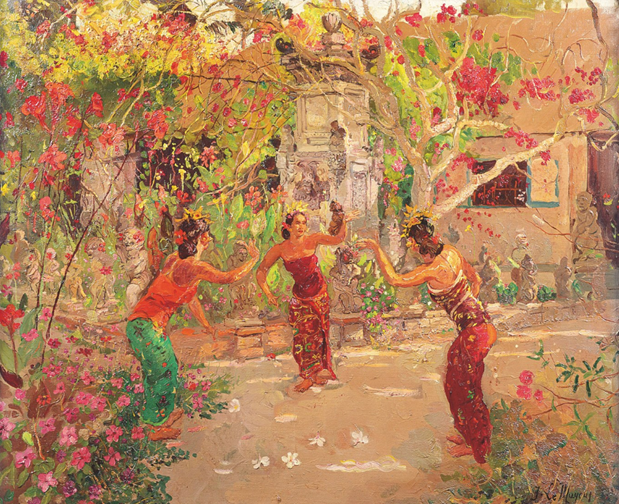
Three Dancers in the Garden by Le Mayeur by Adrien-Jean Le Mayeur de Merprès
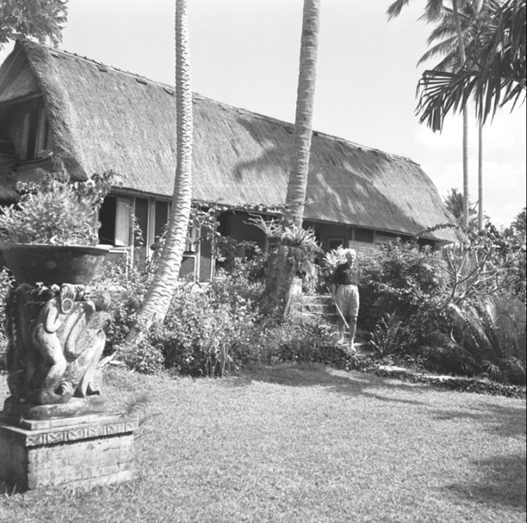
In his painting entitled Three Dancers in the Garden we see three graceful dancers. The setting of the depiction is in the garden in front of the house Le Mayeur and his wife Ni Pollok built on the beach of Sanur. Almost the whole of the background is taken up by the white house with its thatched roof and blue and white window shutters.
Their house at Sanur was depicted on a number of occasions by Le Mayeur. In one of his letters to a friend he recounts his love for the property:
“…I’ve evidently made all things serviceable to my art. All my actions have but one purpose: facilitating my work…”
In another, he talks about how he is inspired by the house:
“…you will understand my paintings wherever you may see them, for everythingin this little paradise which I created for myself was made to be painted”…”
Again, in yet another letter he writes about his love for the garden:
“…I organized my home exactly as I liked it. I intended to surround myself with nothing but beauty. I planted a mass of bougainvillea, frangipani, hibiscus and all around the cottage I put groups of intertwining plants. I built little temples, completely made of white coral, dug little ponds in which the reflections of all the Gods of Hindu mythology can be seen among the sacred lotus flowers. The two temples are surrounded by approximately two hundred of these little sculptures, which have integrated with the flowers whose silhouettes are drawn on the purple and pink tropic skies…”
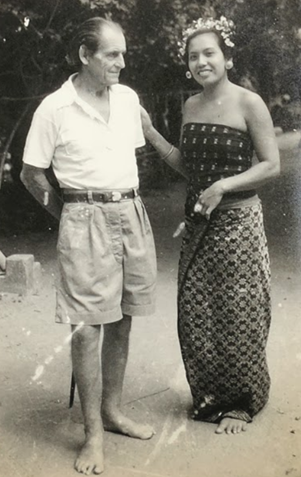
Le Mayeur and Ni Pollok
It is fair to say that Le Mayeur was smitten by the beauty of the island and the beauty of Ni Pollok. His original intention had been that he would just stay on the island for eight months but as that time came to an end he took the decision to remain in Bali for the rest of his life. After three years working together, in 1935, Le Mayeur and Ni Pollok got married. Le Mayeur kept on painting with his wife and her friends as his models during their married life. During the Japanese occupation of the Dutch East Indies in 1942, Le Mayeur was put under house arrest by the Japanese authorities.
Around the Lotus PondbyAdrien-Jean Le Mayeur de Merprès
Many of Le Mayeur’s paintings depicted scenes in and around their house. The subjects were varied such as women at leisure on a daybed in the interior of the house; women weavers at the loom; women on the veranda or women dancing on a terrace; women in front of the house or in the garden picking flowers or making offerings but one of his favourite depictions was of women dancing around the lotus pond in his garden. In this painting, Around the Lotus Pond, which Le Mayeur completed in the 1950s, we see the pond around which are six young women picking flowers. It is thought that Ni Pollock posed for all the women. Le Mayeur strived to make his paintings colourful and in this work the hues of red, purple, orange and pink dominate the painting and are in contrast with the darker colour of the pond and its water which we see in the lower left of the picture.
Ni Pollok with a friend enjoying the Afternoon Sun
byAdrien-Jean Le Mayeur de Merprès
During the war, tourism had totally disappeared but at the cessation of hostilities tourism to the island slowly returned. The island’s tourists would often visit and look around Le Mayeur’s home and studio in Sanur and took the opportunity to buy his artwork. Returning home with their purchasers enabled Le Mayeur’s works of art to become part of many collections. Although Bali was undoubtedly a scenic paradise, one of the downsides of living on the island was the possibility of contracting malaria and le Mayeur often suffered from bouts of the disease which weakened him. A riding accident in 1948, resulted in the then sixty-eight years old artist to suffer a broken leg from a fall from his horse, Gypsy, and after that incident, probably because of his age, he never ever really recovered and had always, from then on, to use a cane when walking. In 1951 the aging artist was attacked by a group of robbers and thanks to the effort of his wife Ni Pollok, they managed to fight off the intruders. However Le Majeur received a large stab wound in the shoulder during the attack. Five years later he suffered with a hernia. Despite all these negative happenings, Le Mayeur managed to keep focused on his work and maybe the highly colourful works he produced radiated the sunny side of his and Ni Pollok’s life.
Five women on the BeachbyAdrien-Jean Le Mayeur de Merprès
In 1958, seventy-year-old Le Mayeur had to travel to Brussels with his wife for treatment for cancer of his ear. Sadly, the illness was diagnosed as being terminal and the painter died on May 31st, 1958, aged 78. and was buried in Ixelles, Brussels. Ni Pollok later married an Italian physician who was living on the island but like many foreigners, during the troubles in Indonesia, he had his residence permit revoked and was obliged to leave the country. Ni Pollok stayed behind on Bali.
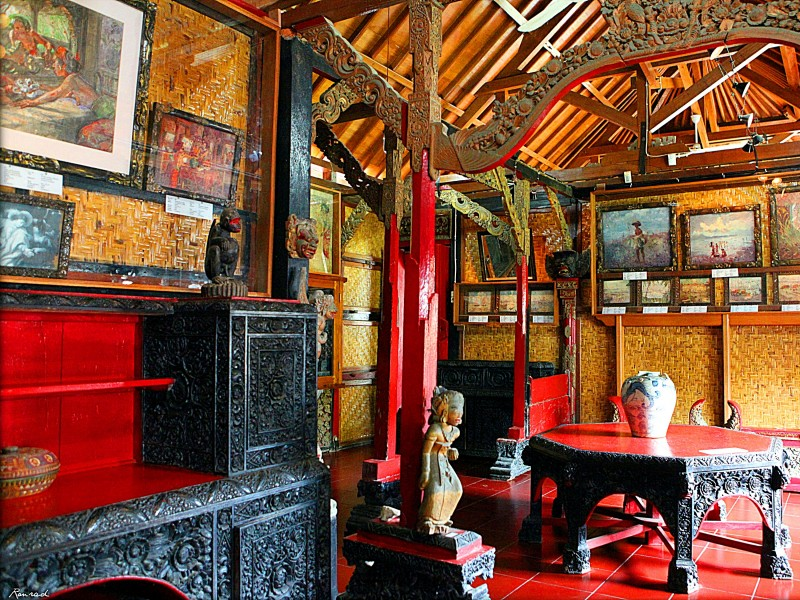
A room in Le Mayeur’s house, now a museum, in Sanur
The will of Le Mayeur had stated that Ni Pollok was allowed to live in the house in Sanur and she resided there up to her death in 1985. Subsequently, the house and its contents, including a hundred paintings by Le Mayeur, were then donated to the Indonesian government and the house was converted into a museum.
My next two blogs were requested by a reader of my site and so I always try and fulfil requests, here is the first one.
Today I am looking at the life and work of the Dutch painter Johan Rudolf Bonnet. He was born in Amsterdam on March 30th 1895, although, as we will see, he spent most of his life in the town of Ubud on the Indonesian island of Bali. He was one of the most individualistic artists who travelled and painted in the Dutch East Indies during the first half of the 20th century and he stood head and shoulders above his fellow European artists who visited the island of Bali. It was during his journeys away from his homeland to the East Indies which saw his artistic talent blossom.
Anticoli Corrado
Rudolf’s father was, Jean Bonnet Jr. and his mother was Elisabeth Elsina Mann, and both were of Huguenot descent, and were bakers. After normal Primary schooling he received artistic education at a technical High School where he studied decorative painting. He also attended evening classes at the Rijksacademie van Beeldende Kunsten. In 1920, when he was twenty-five, Rudolf Bonnet along with his parents took a vacation to Italy. Rudolf loved the area south of Rome known as Anticoli Corrado. The town was the home of an artists’ colony and many of the young inhabitants would pose as models for the this thriving artistic community. Rudolf remained in Italy for eight years.
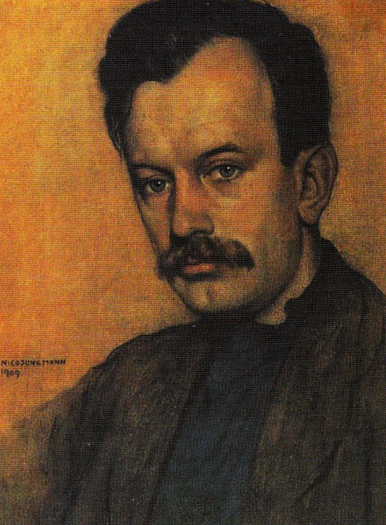
Portrait of Wijnand Otto Jan Nieuwenkamp by Nico Jungmann (1909)
It was during his latter years in Italy that Rudolf met Wijnand Otto Jan Nieuwenkamp, the first European artist to visit Bali, and who significantly influenced the island’s art and culture, making it better known in the wider world, and who had made numerous illustrations of Balinese culture. Nieuwenkamp shared with Bonnet this love for the Dutch East Indies and Bonnet knew he had to visit this “wonderous” place.
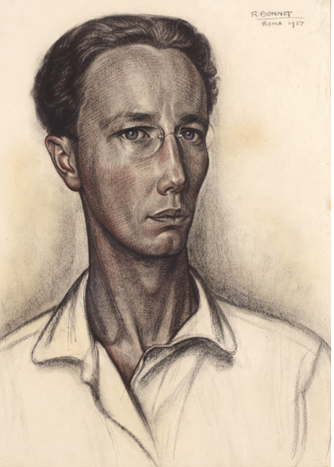
Self portrait by Rudolf Bonnet (1927)
In 1927, a year before leaving for the Dutch East Indies, Bonnet, aged thirty-two, completed a self-portrait. It is a stunningly meditative depiction of the artist at a time in his life when he was struggling to find inspiration and motivation outside his safe and comfortable European lifestyle. The painting was completed at a time in the artist’s life when he had begun to yearn for inspiration and an experience outside the comforts of European living. The artist surveys us out of the corner of his eye. It is a self-portrait which does not hide his physical facial gauntness and the receding hairline which cannot disguise his premature ageing. Bonnet, in this portrait, has honestly revealed himself to us.
Village Street by Walter Spies (1929)
Soon after arriving on the island Bonnet met the German artist Walter Spies, who had come to the Dutch East Indies in 1923 and settled in Bali four years later in the town of Ubud. Nine years later Spies moved out of the town and built himself a mountain retreat in Iseh. Rudolf Bonnet took over Spies’ house in Ubud where he set up his own studio.
Dewa Poetoe by Rudolf Bonnet (1947)
The sitter for the above artwork is Dewa Putu Bedil, one of the youngest members of the Pita Maha movement who had received instruction and encouragement from Bonnet in developing his own artistic style. Bonnet had a close personal relationship with, Dewa Poetoe and this work is an outstanding study of expression, and highlights the artist’s mastery of portraiture.
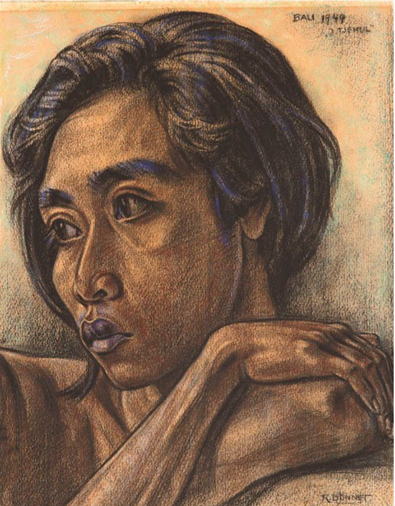
I Tjemul by Randolf Bonnet (1949)
Bonnet soon came across traditional Balinese art but soon he began to witness a change in it as local painters came in contact with the tourists who were visiting the island and soon they picked up on their concepts of art. It was not long before Bonnet immersed himself in issues affecting the local community such as healthcare and education and he became involved in setting up the Pita Maha movement. Pita Maha literally means “Great Shining” and was founded in 1934 as an association for artists in Bali and it had two main goals; firstly to develop, improve and preserve the quality of Balinese art objects by setting up weekly inspections and secondly to encourage the selling of high-quality art by coordinating sales exhibitions outside Bali. Bonnet believed the association would inspire local artists to raise their artistic standards.
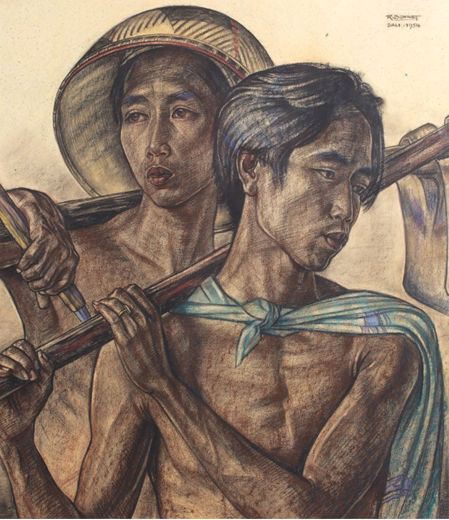
Two Balinese Men by Rudolf Bonnet(1956)
Two Balinese Men by Rudolf Bonnet (1954)
During his time in Italy, Bonnet had fell in love with the Italian Renaissance masters and in particular their portraiture. It was this that influenced him when he set about portraying the indigenous people living in the colonial Dutch East indies and he knew they faced many hardships during their lifetime in what was an ever-changing modernising of the twentieth century. Hoisted on their bare shoulders are tools of their manual trade Rudolf portrays the unpretentiousness of their daily existence and in a way has depicted them in the highest benchmarks of classical beauty.
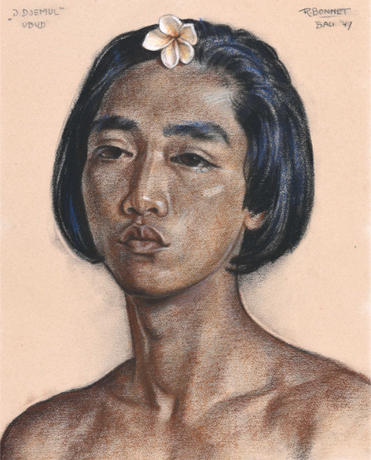
Portrait of J. Djemul by Rudolf Bonnet (1949)
Bonnet’s arrival on Bali in 1929 was followed by an influx of Europeans all who wanted to learn about and record the lives of the Balinese people. During the 1930s, Bali became home to the anthropologists Margaret Mead and Gregory Bateson, musicologist Colin McPhee, and the artists Miguel Covarrubias and Walter Spies. All these people helped glamorize and make popular the image of Bali itself and its inhabitants. Through words and paintings, they, like Bonnet presented Bali as an extraordinary place of unspoilt beauty. McPhee, made a musicological study of Bali, and in his book A House in Bali, described the island as “an enchanted land of aesthetes at peace with themselves and nature”, while Miguel Covarrubias, the Mexican painter, caricaturist, illustrator, ethnologist and art historian, on his honeymoon in Bali with his wife Rosa, wrote an ethnographic book, Isle of Bali, which became a literary sensation in the West, lauded for the detailed sketches of Balinese women, dancers and scenery that Covarrubias had made in the field.
“Ni Radji” Bali by Rudolf Bonnet (1954)
The Balinese idyll for Bonnet came crashing down with the arrival of the Japanese army in February 1942. Bonnet remained at liberty until later that year when he was arrested and sent to Sulawesi, where he remained a prisoner of war in internment camps in Pare-Pare, Bolong and Makassar for the remainder of the conflict.
Rudolf Bonnet standing in front of his house in the 1950s
When the war ended and he was released from internment and Bonnet returned to Bali where he built his house and studio in Campuan. More trouble was to rear its ugly head with the deterioration in the relationship between the Republic of Indonesia and the “motherland”, The Netherlands.
(Dua orang gadis) Double portrait of Ni Radji by Rudolf Bonnet.
However Bonnet was able to stay due to his close relationship with President Sukarno who, as an art lover, had collected fourteen of Bonnet’s works. His relationship with Sukrano soured in 1957 after a dispute regarding Bonnet’s painting entitled (Dua orang gadis) Double portrait of Ni Radji. Both Bonnet and President Sukarno loved the painting and Bonnet wanted to keep the work for himself and refused to sell it. For Bonnet, it was a means of remembering the young woman who had modelled for him but had left Ubud after her marriage. However Bonnet was pressurised by the President and had to sell the painting to Sukarno and after the acrimonious dispute Bonnet was forced to leave Indonesia in 1958. He only returned for short visits to his beloved Bali fifteen years later.
Rudolf Bonnet died in the Dutch town of Laren on April 18th 1978, aged 83. He was cremated and his ashes were taken to Bali by his niece Hilly de Roever-Bonnet, where they were re-cremated.
After my blog on Anton Pieck the other week, I received a comment from Barbara Matthias, who asked me to look at the life and work of another Dutch painter, Eppo Doeve. Having never heard of him, I was intrigued. I managed to scrape together some information about his life and works of art he had completed, so here is a blog on the twentieth century painter and cartoonist.
Aardappeleters (Potato Eaters) by Eppo Doeve
Jozef Ferdinand (Eppo) Doeve was born on July 2nd 1907 in Bandung, the capital city of the Indonesian province of West Java in the Dutch East Indies. He was the eldest child of a civil servant, Justin Theodorus Doeve and his wife Helena Rosina Kepel and he had four sisters. Both parents were of mixed European and Indian blood. Eppie, as Doeve was called at home, went to a Catholic School run by the Ursuline Sisters and then later went through the local secondary education system. Once Doeve had been awarded his diploma, he was allowed to make some trips through the Dutch East Indies. Because of his parents, Eppi developed a love and interest for plants and flowers and this made him choose to study agronomy in the Netherlands. Agronomy is the science and technology of producing and using plants by agriculture for food, fuel, fibre, chemicals, recreation, or land conservation . Of his dream for his future Doeve said:
“… I wanted to be a tea planter, somewhere near Garoet, there is nothing more delicious imaginable, isn’t there?…”
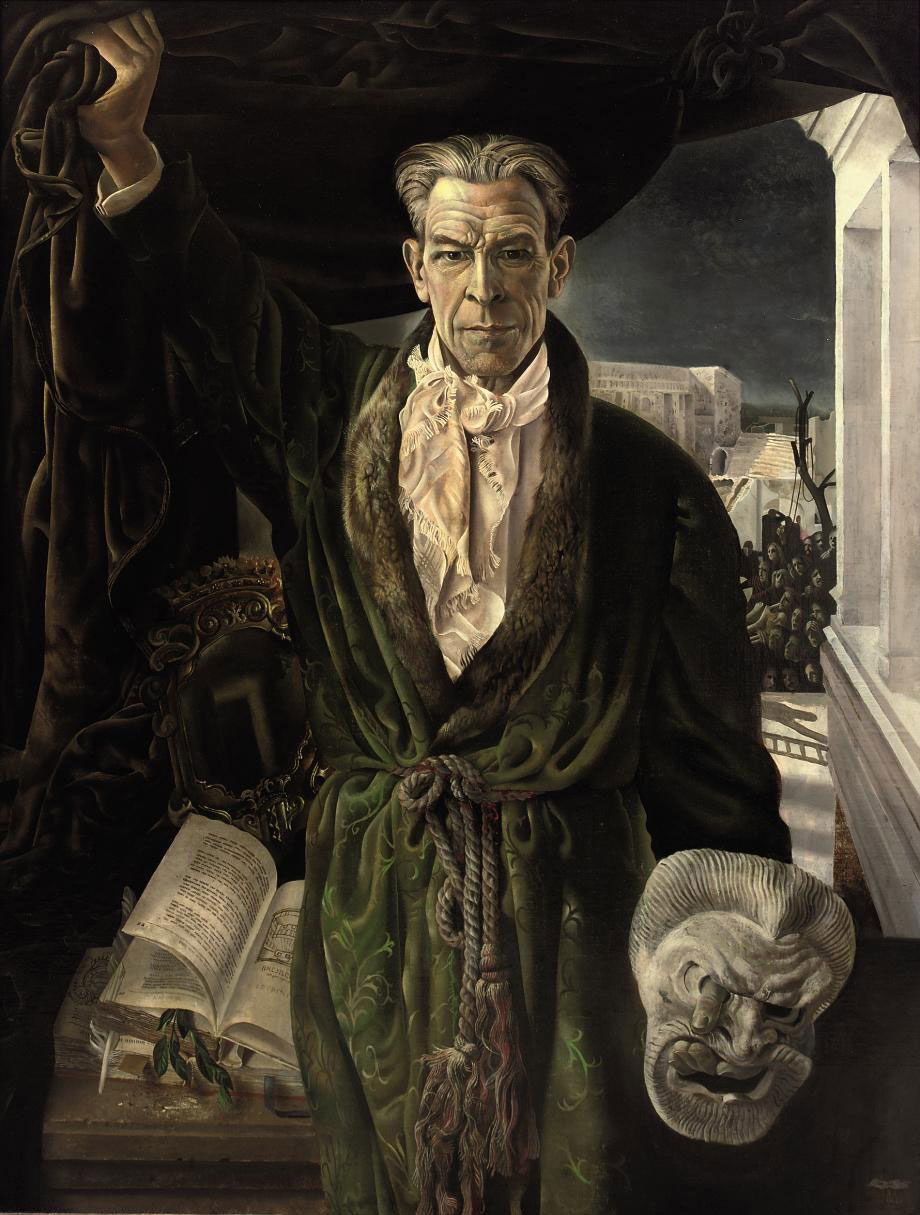
A portrait of the actor Louis van Gasteren Senior by Eppo Doeve (1944)
Besides his love of plants and flowers, Doeve was a multi-talented child and was very artistic from an early age. He played various instruments and could draw well. He was also very humble and did not consider himself very special, despite the fact that he received painting commissions whilst he was still young but he still looked upon drawing and playing music as hobbies and, not being in any way, future professions.
Winston Churchill by Eppo Doeve
When Doeve was twenty he attended the Landbouwhoogeschool (Agricultural science college) in Wageningen in The Netherlands. He enjoyed student life and would contribute drawings to the monthly college magazine, Wagenische Studentencorps. His love of music was also sated at the college as he was very busy with the jazz band of the association. All his plans and aspirations ended in the early 1930s after the tea market in India collapsed and it was a turning point in his life and his future plans had to be revisited.
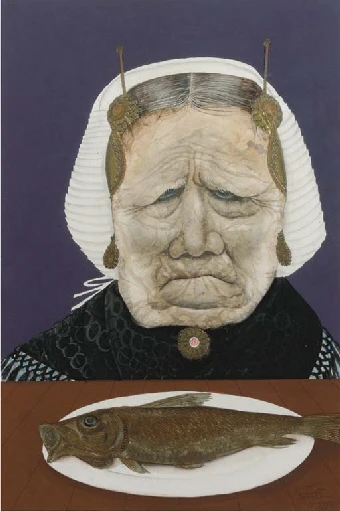
Fisherwoman in Regional Costume by Eppo Doeve (1968)
Above all, Doeve wanted to stay in The Netherlands and not return to the Dutch East Indies, to do this he had to find a way to achieve that goal. He realised that his drawing ability may be the secret to a new life. He had already earned some money at the Amsterdam advertising agency De LaMarAdvertising Company and was able to work regularly at the agency from 1932 onwards. Doeve went from there to other advertising companies and publishers, such as De Groene Amsterdammer, an independent Dutch weekly news magazine published in Amsterdam, and later he moved to the large publishing house, Haagsche Post. In the 1930s Doeve also worked on the Belgian magazine Radiobode, which listed radio programmes. The magazine was first published in 1931 and had a circulation of approximately 20,000 copies. His graphic work for the Radiobode was loved and became collectables and was praised by such contemporary luminaries such as the young and up-and-coming illustrator, Fiep Westendorp, and one of Doeve’s young colleagues, Marten Toonder, a Dutch comic strip creator, born in Rotterdam and who became the most successful comic artist in the Netherlands
In 1953, Doeve became an even more famous Dutchman when he provided the sketch of Hugo de Groot, the Dutch diplomat, lawyer, theologian and jurist, for the new 10 Guilden banknote.
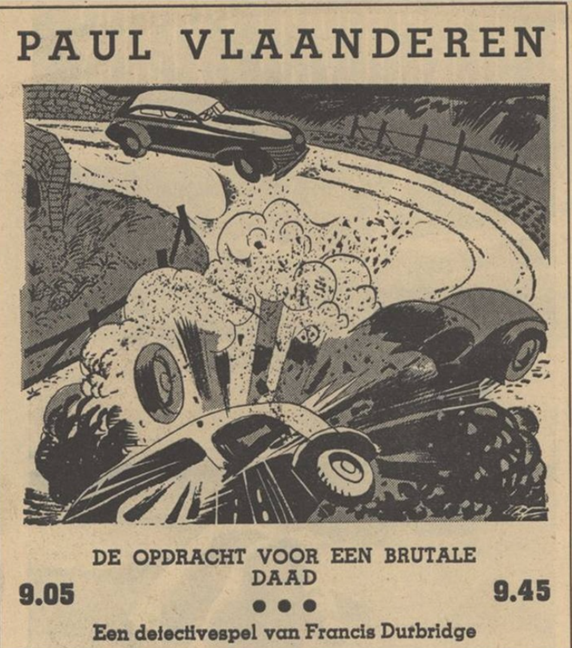
1940 issue of Radio Bode with Eppo Doeve’s graphics for the Paul Vlaanderen series
In the 100th issue of Aether, the magazine about the history of broadcasting and phonography, published in July 2011, there is a drawing by Doeve with an article about radio plays. It is a drawing for the well-known AVRO radio play Paul Vlaanderen. Paul Vlaanderen was the name of the fictional Dutch detective and was based on the novelist, Francis Durbridge’s character Paul Temple, who was a fictional detective in a long-running English radio serial, which first broadcast in 1938.
One of the many advert posters for Heineken Beer designed by Eppo Doeve
Doeve became skilled at every form of graphic art, without having had a formal education. He was commissioned to illustrate commercials, stage sets, book illustrations, and just simple paintings. Doeve mastered them all. One of his colleagues, Alexander Pola, commented:
“…He could do everything he wanted, and wanted everything he could…”
For the Dutch weekly magazine, Elseviers Weekblad, he submitted articles, illustrations and political prints. In addition, he regularly appeared on television. After years of being called J.F. Doeve in the press, he was then referred to by his nickname Eppo.
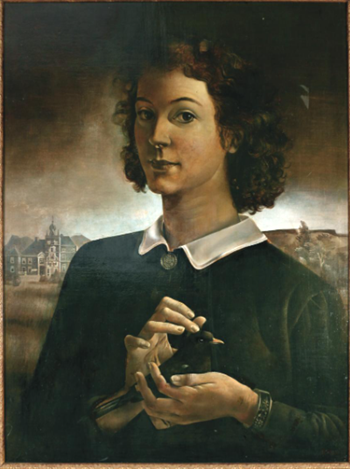
Portrait of Tinnie van der Elzen by Eppo Doeve (1940)
Eppo Doeve was also a fine portrait artist as can be seen in his 1940 work entitled Portrait of Eugenia Henriette Maria (Tinnie) van der Elzen. She was Doeve’s first wife, the daughter of a well-to-do family in Arnhem, whom he married in July 1934. In the background, a landscape is visible in which the castle of Cannenburgh (Vaassen) can be identified.
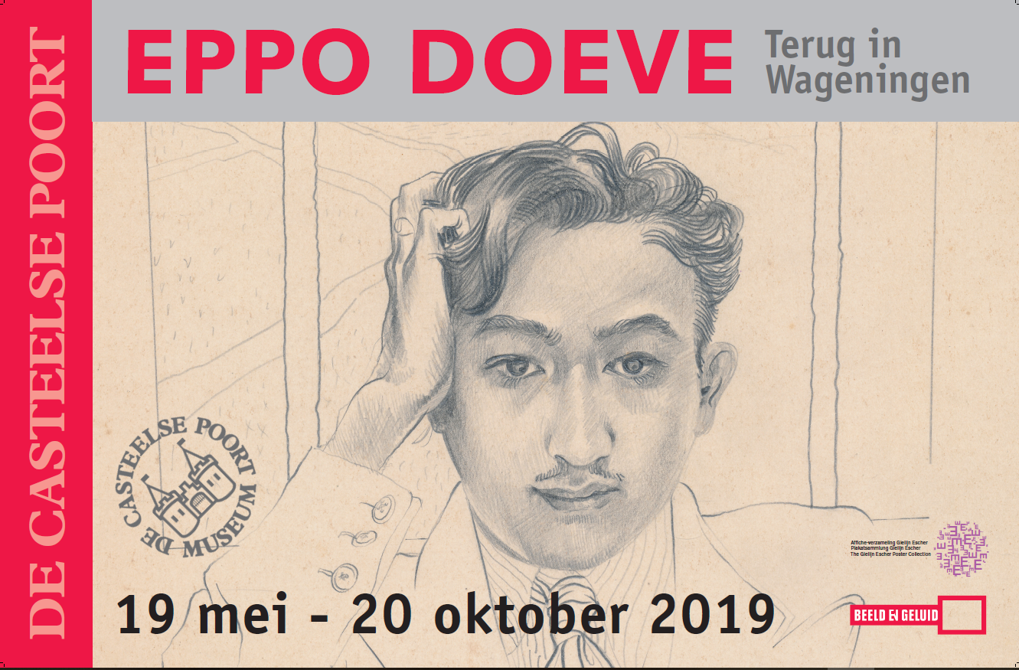
Poster for Eppo Doeve Retrospective
This painting was exhibited during the retrospective exhibition Eppo Doeve Terug in Wageningen in 2019. Doeve painted the portrait in the typical ‘magisch realisme‘ (magic realism) style of the late 1930’s, an artistic genre in which realistic narrative and naturalistic technique are combined with surreal elements of dream or fantasy.
Portrait of the artist André van der Burght at the age of 63 by Eppo Doeve
Jozef Ferdinand (Eppo) Doeve died on June 11th 1981, aged 73. After his death, piles of beautiful drawings were discovered in his studio.
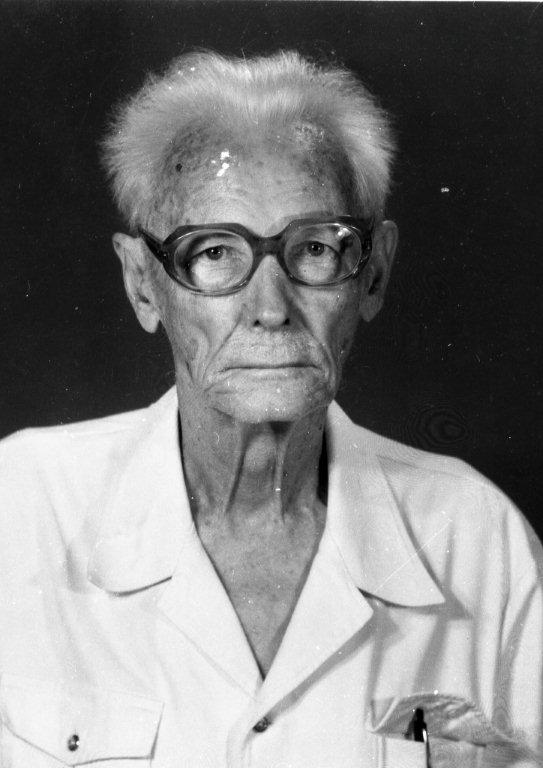
Eppo Doeve in his studio(August 1954)
The studio was a chaotic mess and many sketches were found behind the heater and at the bottom of the cupboards, almost as if he had hidden them.
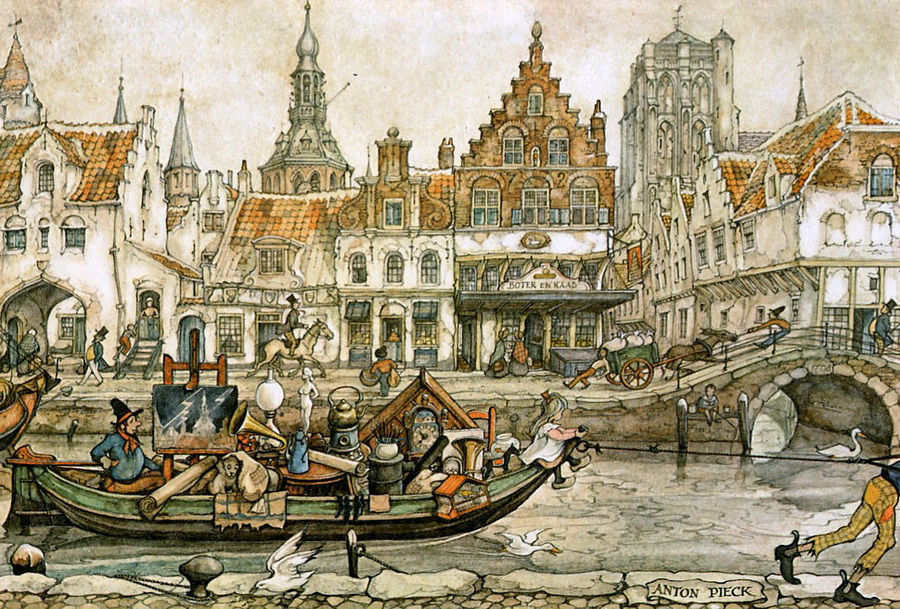
When one thinks of artists, one looks to the greats such as Veronese or Goya or Turner and some are maybe somewhat “sniffy” when graphic artists and illustrators are lumped together with such luminaries. My artist today was reviled by serious art lovers for his artwork being petty kitsch. Still, friend and foe had to admit that he was an accomplished draftsman with a highly unique, instantly recognizable and barely imitated style. However, whether you love or hate his work my featured artist today is one of the great illustrators of his time and whose works have brought unbridled happiness to many. For those who have never seen any of his works, let me introduce you to the Dutch graphic artist Anton Pieck.
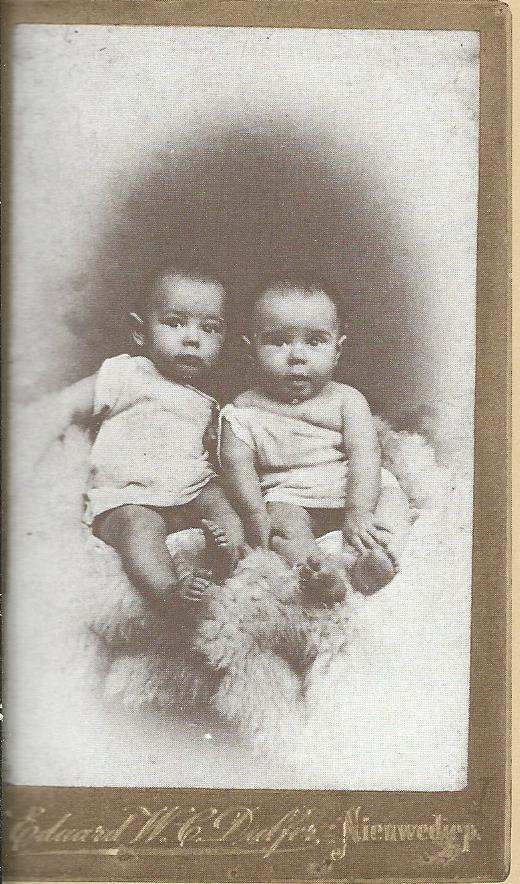
Anton Pieck aged 1 year-old, on the left, next to his twin brother Henri Pieck
Anton Franciscus Pieck and his twin brother, Henri, were born in the Dutch town of Den Helder on April 19th, 1895. He was the son of Henri Christiaan Pieck, who was a machinist in the Royal Dutch Navy, so he was often away from home for lengths of time. His wife was Stofffelina Petronella Neijts who gave birth to their first child, Coenraad, in 1891 but who died when he was just one year old. Anton’s twin brother Henri Christiaan became a Dutch architect, painter and graphic artist but who would lead a different, more exciting and dangerous life than his brother Anton. As an adult Henri became active within the Dutch Communist Party, and was recruited as a spy for Soviet Russia. Henri’s artistic interests differed from those of Anton as his main love was modern art, whereas Anton loved old-fashioned illustrations and paintings . When the twins were six years old, they took drawing lessons from J. B. Mulders, who ran after-school art classes at their school. He recognized the talent of the twins and taught them the basics of perspective and proportion, and these lessons quickly bore fruit. When he was ten, Anton won a prize at an exhibition for his still life watercolour depicting a brown pot on an old stove, and in recognition, among other things, he received five tubes of watercolour paints. More awards followed during his teenage years.
River Spaarne and the Bakenesser Tower by Anton Pieck
In 1906, after Anton’s father retired, the family moved to live in The Hague. Anton and his brother, after finishing secondary school, enrolled on a drawing course in the evenings at the Royal Academy of Art. They later received training at the drawing institute Bik and Vaandrager. When the brothers were aged fourteen, they obtained the first stage of their teaching certificate and 3 years later they completed their teaching certificates and were able to call themselves drawing teachers. Anton went to teach at his old school, Bik and Vaandrager. Henri Pieck was considered the better artist of the twins and is allowed to go to the Academy of Fine Arts in Amsterdam. This was a personal blow to Anton who never came to terms with the fact that his twin brother was looked upon as the more skillful artist. One could almost say that Henri was looked upon as an artist whereas Anton was looked upon as a drawing teacher!
During the First World War the Netherlands remained neutral, but still many young Dutchmen were mobilized so as to be on standby in case their country became embroiled in the fighting. Anton Pieck was one of those men and became a sergeant, however he spent most of his spare time sketching for his fellow recruits. A somewhat damning psychological army report on him in 1915 described Pieck as:
“…someone who looks more at the past than the future and will therefore never amount to anything…”
Not considered as “fighting material” and unlikely to be used for military duties, Pieck was sent back to The Hague, where he gave drawing lessons to other soldiers. This was pure heaven for Anton as for four evenings a week he would oversee two-hour sketching lessons. Pieck was then able to spend all his time doing what he loved best.
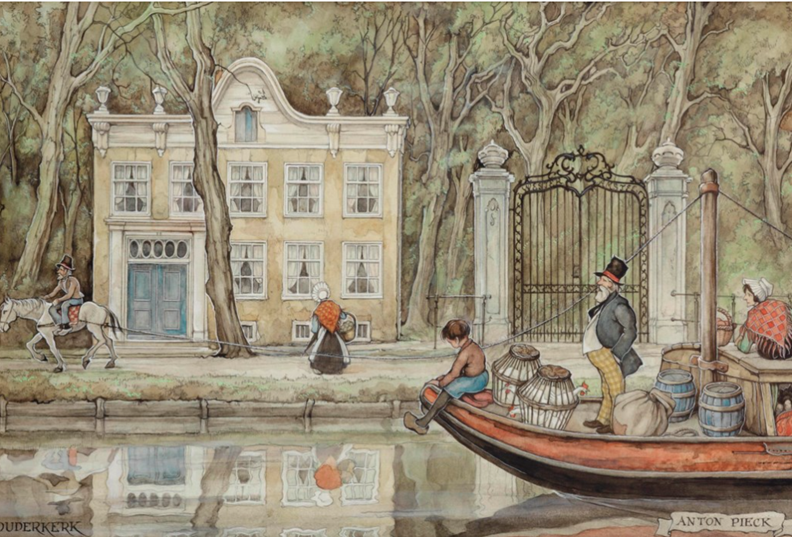
A boat on the River Amstel near Ouderkerk with the house “Wester Amstel” by Anton Pieck
When Anton graduated from the Bik en Vaandrager Institute, they offered him the position as an art teacher which he accepted and held the position until 1920. He then applied and was accepted as an art teacher at the newly established Kennemer Lyceum, a high school in the Haarlem suburb of Overeen. He would continue to work there until his retirement in 1960 at the age of 65. Throughout those years teaching students, he always made time for his own work.
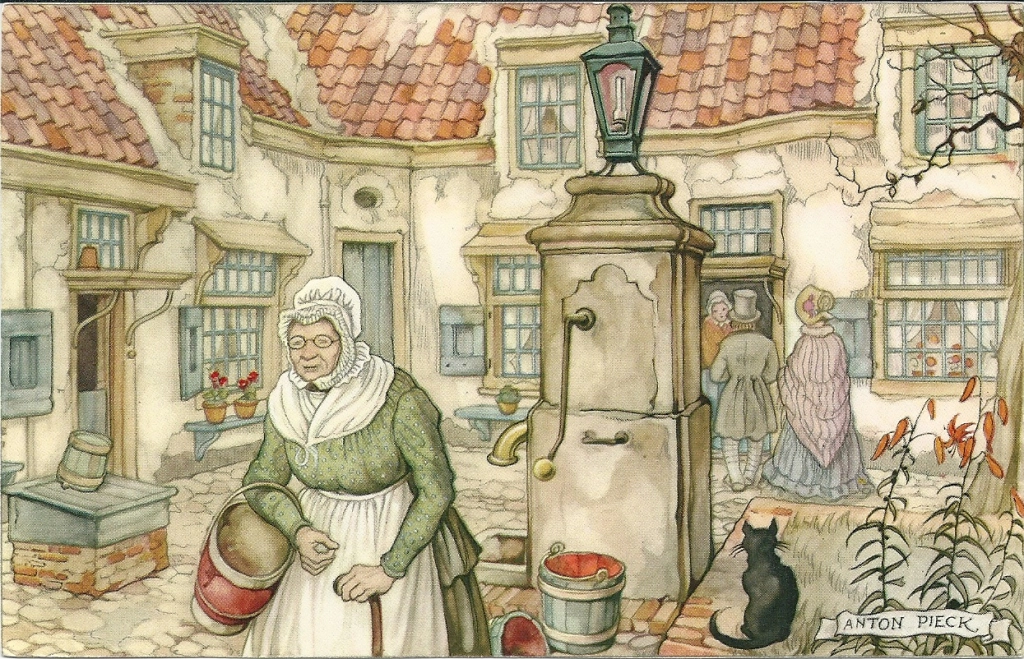
Hofje van Loo with communal water pump by Anton Piecke. The Hofje (Courtyard) van Loo is a hofje on the Barrevoetstraat 7 in Haarlem
Teaching art was not his great love and he was never quite satisfied with his job and he couldn’t wait for his daily teaching duties to end so that he could dash home and continue drawing and painting. However, being employed as a teacher gave him financial stability and this in turn gave him the comfort of only choosing commissions which pleased him, rather than being forced to work on work he disliked. Whilst employed at the school as a teacher, Anton would also illustrate diplomas, bulletins, ex-libris bookplates, birth cards and other administrative documents for his school.
The River Spaarne with the Waag building designed by Lieven de Key at the end of the 16th century by Anton Pieck
In the 1920’s Anton Pieck published his first drawings. It was also around this time that Anton forged a close friendship with the Flemish novelist Felix Timmermans and it is said that Timmermans’ jovial attitude rubbed off on Pieck whom he advised to “lighten up” and be more spontaneous and follow his own spirit.
A recent edition of Felix Timmerman’s book.
For the 10th edition of Timmerman’s very successful book, Pallieter, published in 1921, Timmermans asked Pieck to provide the illustrations to go side-by-side with the text. Through correspondence, Timmermans indicated what he wanted to see on the illustrations. The book was described as an ‘ode to life’ written after a moral and physical crisis. Pallieter was warmly received as an antidote to the misery of World War I in occupied Belgium. For Pieck, this was just a start of his book illustration journey as he went on to illustrate about 350 books.
In 1921 Pieck illustrated Felix Timmermans’ book Pallieter by the Flemish author Felix Timmermans. As the book was set in Flanders Pieck decided to visit there to soak up the atmosphere in the various towns. Above is an ink illustration from one of the chapters, A beautiful winter day in which the main character, Pallieter, goes out on a clear winter day and hears organ music. He heads towards the sound, but only sees two children playing with mud.
Anton Pieck’s way of announcing the birth of son Max Pieck sent to all the staff of the Kennemer Lyceumin 1928
In 1917, Anton Pieck met Jo van Poelvoorde, the sister of fellow soldier Hendrik van Poelvoorde. Jo was a teacher at the Royal Dutch Weaving School. Her first impressions of Anton were that he was friendly, but also taciturn and absent. Gradually he opened up more and became more talkative. Anton and Jo entered into a relationship and twenty-seven-year-old Anton Pieck married twenty-nine-year-old Josephina Johanna Lambertina (Jo) van Poelvoorde, on March 8th 1922 at The Hague. After the marriage the couple moved to Overveen. From their marriage three children were born, Elsa, Anneke and Max.
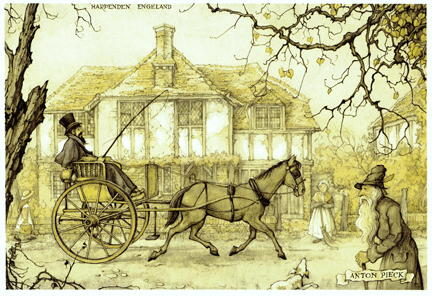
Harpenden Engeland by Anton Pieck
Throughout his life, Anton was an enthusiastic traveller and visited England, France, Ireland, Germany, Sweden, Switzerland, Austria, Italy, Poland and Morocco during which he built up a collection of sketches. He was a great lover of quaint buildings and had no interest in modern architecture. For him, it was a joy to study nature as well as picturesque cities and villages. He was so in love with Belgium and England that he termed them “his second mother countries” as their towns had not been “ruined” by modernisation as had happened in his homeland The Netherlands.
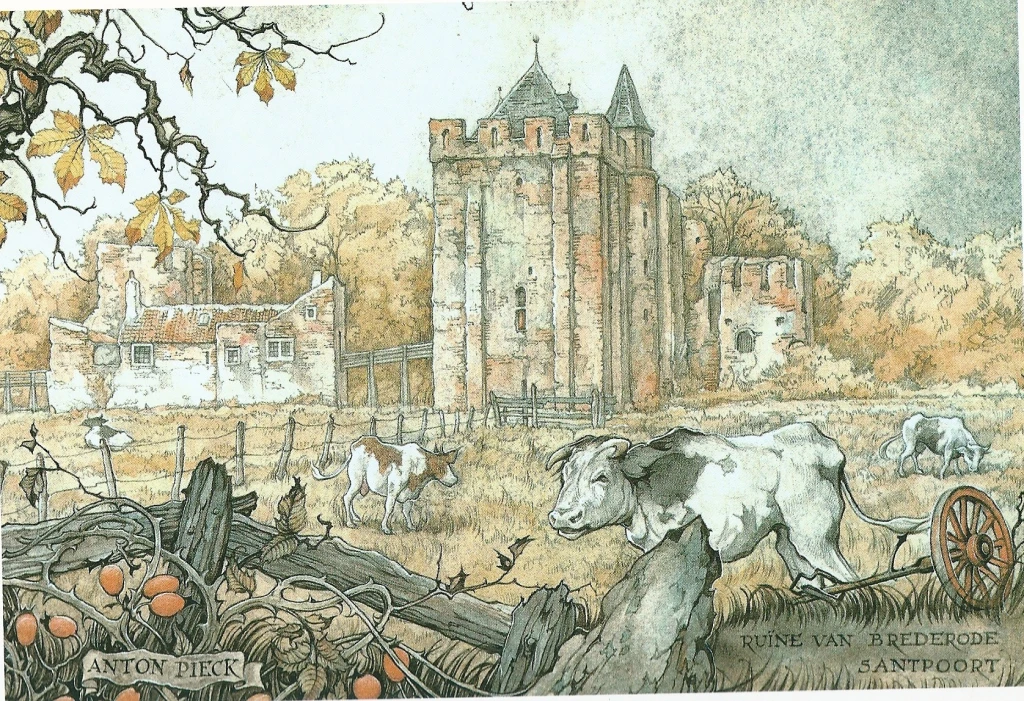
The ruins of Brederode in Santpoort by Anton Pieck (c.1950)
Anton Pieck was a twentieth century man as he only lived his first five years in the nineteenth century. Having said that, Pieck loved to look back with pleasure on what he considered to be a more appealing century – the nineteenth century.
The Warmoesstraat, Amsterdam by Anton Pieck
He had fallen in love with the Dickensian era and had completed many paintings, drawings, etchings and engravings depicting Dickensian scenes. He depicted gentlemen in high hats or ladies adorned in crinoline, people taking coach rides, watching a magic lantern show or listening to barrel organs or chamber concerts. All such scenes gave him great pleasure and they all contributed to his artistic ideal. Anton Pieck was adamant that when it came to commissions, he would only accept those which allowed him to illustrate novels or short stories set in bygone days.
Greeting card of Winchester by Anton Pieck
What Pieck liked to depict were things which looked old or dilapidated. Buildings and their interiors which were crooked and looked ramshackle and run-down. For Anton, nothing was to look new or be built completely straight. Anton’s first visit to England appears to have been around 1937 when, on a voyage by ship to North Africa, he had managed to come ashore in Southampton and was able to made sketches of some of the old commercial buildings and to visit the city of Winchester where he sketched some of the old Tudor buildings and historic inns, one of which was turned into a greetings card.
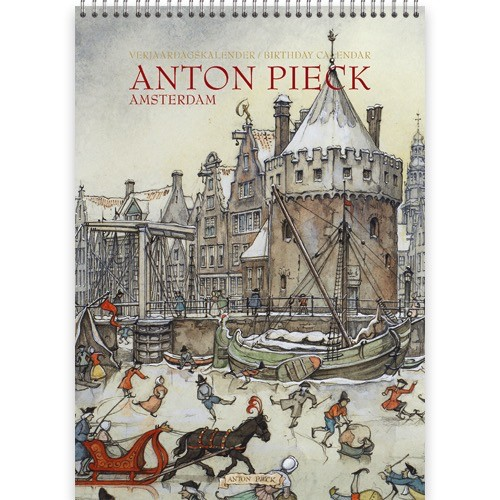
Besides prints and greeting cards, calendars were produced each year with a selection of Anton Pieck’s drawings.
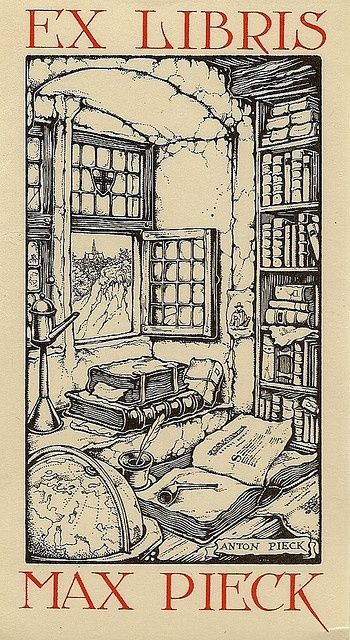
He would also produce a number of ex libris bookplates, a book owner’s identification label that was usually pasted to the inside front cover of a book. Above is one he created for his son, Max.
Anton Pieck’s vision for De Efteling
Anton Pieck’s work over the years and his popularity with the Dutch people was probably in the minds of the mayor of Loon op Zand, R.J. van der Heijden and filmmaker Peter Reijnders who had envisioned the building of a fantasy-themed amusement park, De Efteling, in Kaatsheuvel in the Dutch province of North Brabant in 1951, named after a 16th-century farm named Ersteling. The men approached Anton Pieck to design the theme park but he initially refused but later changed his mind on the proviso that only original materials are used for building the houses, such as coloured roof tiles and old stones. Anton then set about designing het Sprookjesbos, the fairy tale forest.
Anton Pieck at Efteling
Initially, the Fairy Tale Forest was designed and based upon ten different fairy tales, all of which were brought to life using original drawings by Pieck. Added to Pieck’s designs were mechanics, lighting and sound effects designed by the Dutch filmmaker Peter Reijnders. The life-sized dioramas, shown together in an atmospheric forest, were a incredible success and in 1952, the first full year, Efteling was open, it had 240,000 visitors and since 1978, the park has grown in size and is now become one of the most popular theme parks in the world.
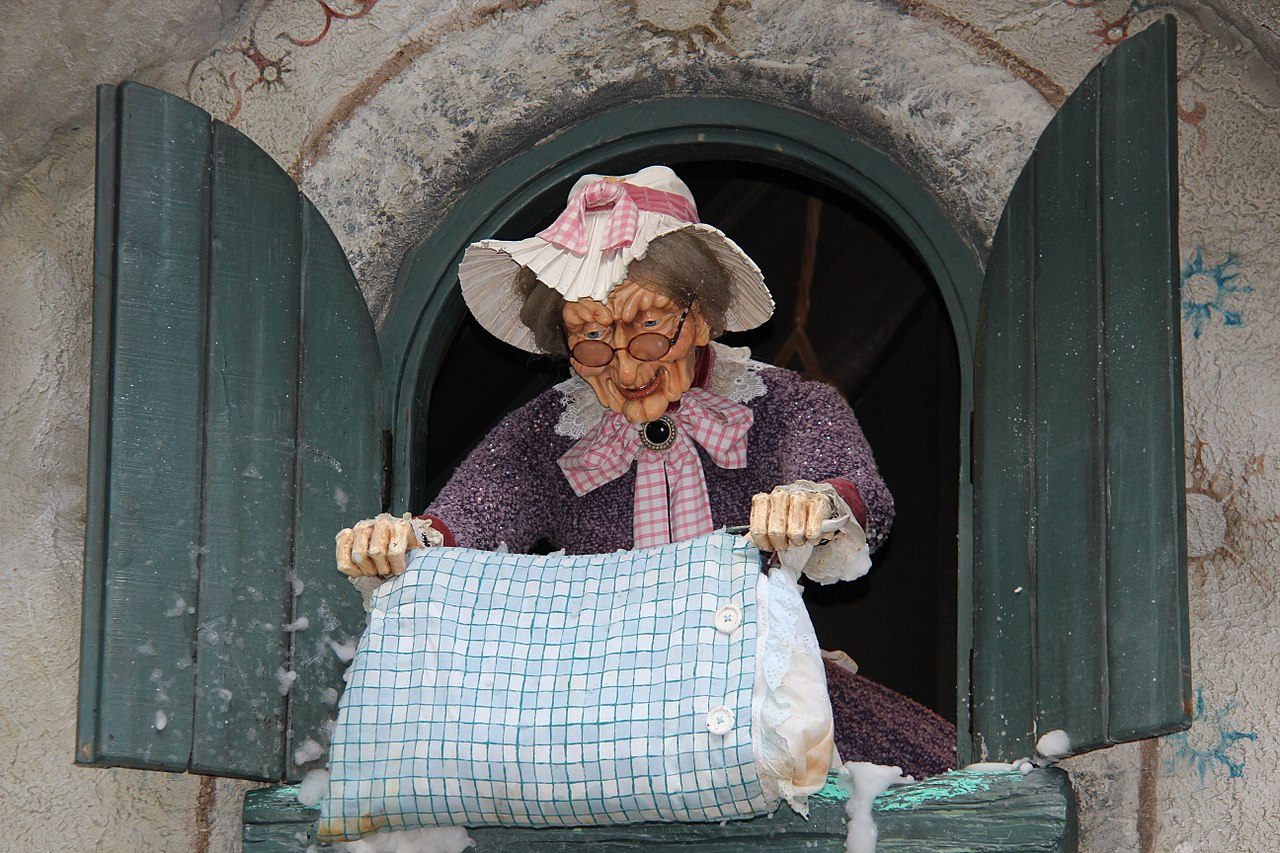
Frau Holle at Efteling
Pieck designed all the houses, buildings and the special animatronic inhabitants who were inhabitants of the fairy tale forest, such as Little Red Riding Hood at her grandma’s house, Sleeping Beauty’s castle, Frau Holle’s well and Hansel and Gretel’s gingerbread house. Frau Holle, also known as Mother Hulda, is a German fairy tale character from the 1812 book, The Grimm Brothers’ Children’s and Household Tales (Grimms’ Fairy Tales).
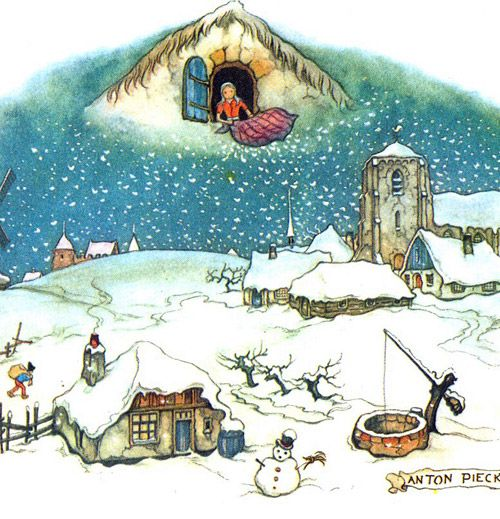
Frau Holle by Anton Pieck
Frau Holle is often depicted shaking out bed linen over an outside balcony then it begins to snow. It is still a common expression in Hesse and Southern parts of the Netherlands and beyond to say “Hulda is making her bed” when it begins to snow. Like many other tales collected by the Brothers Grimm, the story of Frau Holle was also a moral tale explaining that hard work is rewarded and laziness is punished.
Anton Pieck Museum
Anton Pieck retired from teaching in 1960. He was made a Knight in the Order of Orange-Nassau. Pieck died on November 24th 1987 at the age of 92. Three years before his death the Anton Pieck Museum House for Anton Pieck was opened in Hattem, a municipality and a town in the eastern Netherlands.
Anton Pieck loved nature, the past and Dutch cityscapes. Sadly, during the course of the 20th century, large swathes of that old Netherlands he loved disappeared due to bombing during the war, the renovation and rejuvenation of the city centers from the 1960’s and the construction of the complicated road network. As a result, Anton became sad and depressed at what he witnessed during his latter years, saying in 1985:
“… Yes, I have known this country very well. What is still there now, I see as a mess of the past. That makes me sad, yes…”
Whatever you may think about the artistic style of Anton Pieck, one has to feel warmed by the depictions and undergo a desire to be back in olden days when life may have been simpler, or was it ?
Like many others, I am a lover of the artwork of the Dutch Golden Age painters. The Dutch Golden Age was a period in the history of the Netherlands, which spanned the era from 1588 and the birth of the Dutch Republic to 1672, Rampjaar (Disaster Year) which was the year of the outbreak of the Franco-Dutch War. During this period, it was considered that Dutch trade, science, and art and the Dutch military were among the most acclaimed in Europe. We all know about the lives and works of the famous artists of that era, such as Rembrandt, Vermeer, Jan Steen, Frans Hals and Judith Leyster to name but a few. In my blog today I want to look at the lives and works of the lesser-known painters of that era.
Izaak van Oosten was a Flemish Baroque landscape and cabinet painter who worked out of Antwerp. Izaak was born in Antwerp in December 1613 and was the son of an art dealer with the same name. His father had become a master in the Antwerp Guild of St. Luke in 1617. Very little is known about his upbringing or his early artistic training as there is no record of which master or masters he studied under. Izaak became a master in the Antwerp Guild of St. Luke in 1652.
Landscape with a Wagon and Travellers passing through a Village by Izaak van Oosten
There is something joyful about paintings depicting skaters on frozen rivers and lakes. It is all before global warming and I am sure that now, many of the rivers and lakes retain their fluidity even in the depths of winter. The painting I am showcasing is entitled Skaters on a Frozen Lake at the Edge of Town and it was painted by the Dutch Golden Age landscape painter Cornelis Beelt. Cornelis Beelt was a Dutch Golden Age landscape painter who was one of the chief figures in the Haarlem school of landscape painting, but was also well-known for his genre paintings of towns, markets and villages. Beelt was born in Haarlem during the first decade of the seventeenth century.
Skaters on a Frozen Lake at the Edge of Town by Cornelis Beelt (c.1652)
The setting is a clear winter’s day and crowds of locals gather besides a country inn keen to enjoy the sport on the ice. Young and old, rich and poor are attracted to this pastime. In the foreground a group of well-dressed men and women stands on the ice and chat. An old lady with her hands in a fur muff sits in a splendid arreslee (sleigh which is drawn by a horse and which is decorated with a fine plumed harness. Close by young children propel themselves across the ice on small prikslees (sledges).
Beach of Shevingen by Cornelis Beelt
There is a strange thing about this painting which unfortunately is not visible from the attached picture. Beelt signed his painting in an unusual manner, one which he had also done on his painting Beach of Shevingen. He signed his name on the plank of wood in the foreground. However , at a later time, his signature was scrubbed out and replaced by the inscription J.V.Ostade f.1653 and this was judged to be an attempt by a less than honest art dealer to ascribe the work to a more famous name, Isaac van Ostade, so as to have a better chance of selling the painting, even though Ostade had died in 1649 !
The phrase ‘cabinet d’amateur’, in French, is an ancient term which referred to a room or part of a room in an art collector’s house where he or she displayed the paintings they had purchased. These display areas were before the rise of public galleries. Some where simple cabinets which contained their owner’s beloved works and some where floor to ceiling displays of their paintings. The phrase cabinet d’amateur should not be viewed as that of an “amateur collector” but that of an “art lover”. A German term for such a place is often referred to as a kunstkammer. In Italian it might be called a Gabinetto,Studiolo or Camerino.
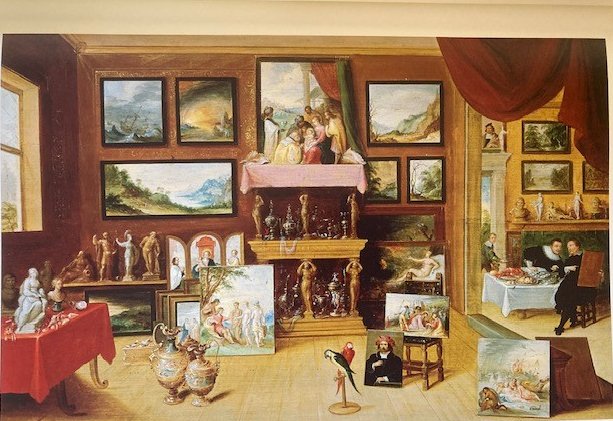
Two collectors dining in a gallery surrounded by paintings and works of art, with two parrots in the foreground. by Frans Fancken the Younger
The painting connected with this term is one by the Flemish painter, Frans Francken the Younger and described as Two collectors dining in a gallery surrounded by paintings and works of art, with two parrots in the foreground. Frans Francken the Younger was the most famous of an Antwerp dynasty of painters; he trained with his father, Frans the Elder, and joined the Antwerp guild in 1605. He was a painter of religious and historical subjects as well as being the inventor of the genre – the cabinet painting.
On the right-hand side of the painting we see two men deep in discussion about a painting one of them is holding up but we do not know who is the owner of this kunstkammer. The presence of a kunstkammer in one’s house was a sign of wealth, intelligence and social status. In the main part of the painting, we see an ornate sideboard supported by classical caryatids. A caryatid is the name given to a sculpted female figure serving as an architectural support taking the place of a column or a pillar supporting an entablature on her head. A light-pink fringed cloth covers the top shelf of the sideboard on which two large shells are placed either side of the painting, The Adoration of the Magi. Richly decorated goblets and covered urns are displayed on two of the sideboard shelves. On the floor we see two parrots depicted sitting on a perch. The import of exotic foreign birds testified to the owner’s wealth. We see a large red velvet curtain falls from the ceiling which when released would act as a separator of the two rooms. Everything in the room exudes the wealth of the owner which would have been the raison d’être for the owner of the cabinet d’amateur commissioning the work.
The Cabinet of the Collector by Frans Francken the Younger (c.1617)
A similar painting by Frans Francken the Younger is in the Royal Collection entitled The Cabinet of the Collector which he completed around 1617. Amongst the paintings on view in the kunstkammer is a landscape by Joos de Momper, a still life of an everyday table set for a meal; and a small, nocturnal Flight into Egypt. Other religious painting depicted are one featuring St Augustine who is trying to comprehend the idea of the Trinity and sees a baby struggling to pour the entire sea into a pool in the sand with a shell – both tasks being equally beyond the scope of man. The drawings, one framed and one in an open book are two studies for Michelangelo’s Sistine ceiling and a preparatory drawing for Raphael’s Madonna della Perla which emphasise the intellectual side of painting.. There are also letters on the table, no doubt signifying an intelligent characteristic of the painting’s owner. Also displayed are exotic weaponry which is a reminder of the importance of travel and trade and a handful of Roman coins and a bowl of modern ones, which were not anything to do with wealth but more likely a celebration of the achievements of great men.
For me, the most interesting part of the work is seen beneath the arch to the right. In the background a church is demolished and nearby donkey-headed men with cudgels destroy a pile of objects associated with learning, science, the arts and sport. According to Karel van Mander, the sixteenth century Flemish poet, painter and art historian, a man with a donkey head is a symbol of Ignorance. The episodes depicted here recall two historical events: the Beeldenstorm, an outbreak of iconoclasm carried out by Protestants in 1566; and the ‘Spanish Fury’, the sack of Antwerp in 1576.
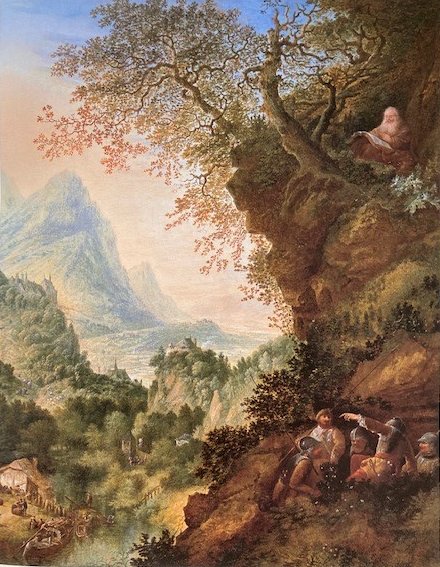
A Rhineland Landscape with a Hermit and Soldiers by Jan Griffier the Elder
Jan Griffier the Elder, who was born in Amsterdam around 1645, was a painter and printmaker, who produced views of Rhineland landscapes as well as spending time, around 1660, in England where he produced many landscape works featuring the English countryside. One of his most beautiful landscapes is referred to as A Rhineland Landscape with a Hermit and Soldiers. The painting dramatically depicts a steep mountain landscape with a meandering river below which slowly flows through wooded crags which are surmounted by castles. If we look to the left foreground, we can see a men loading barrels of wine onto a small boat. The main figures in this painting are on the right-hand side. We see a group of soldiers lying down, concealed among the ferns and flowers. One of the group points down to the boat which is being loaded. Are they planning to raid the operation? Above them, sitting on a rock by a large oak tree in peaceful isolation, is a hermit, who is meditating. It is an interesting painting with plenty to focus on, but what is it all about ?
Floral Still life Floral by Gaspar van den Hoecke
There is something that fascinates me about floral still life paintings. I think it is just the effort and patience the artists must have put in to produce such beautiful works. My next featured painting is a small (70 x 50cms) floral still life attributed to the Flemish Baroque painter, Gaspar van Hoecke, who was born in Antwerp around 1580.
Gaspar van den Hoecke was best known for his small religious cabinet pieces but during his early period around 1610 his work focused on still life floral paintings. The vase of flowers sits on a wooden tabletop. This dense grouping of flowers fills almost two thirds of the painting. The profusion of flowers doesn’t allow the artist to depict twigs and leaves between individual flowers. On the table we see a caterpillar of the swallow-tailed butterfly which is next to it. Also on the table there is a silver medal with the head of Pope Pius V which had been created in 1571. Just above it is a gold coin which is a rare example of a byzantine solidus made during the era of Anastasius, the Eastern Roman Emperor.
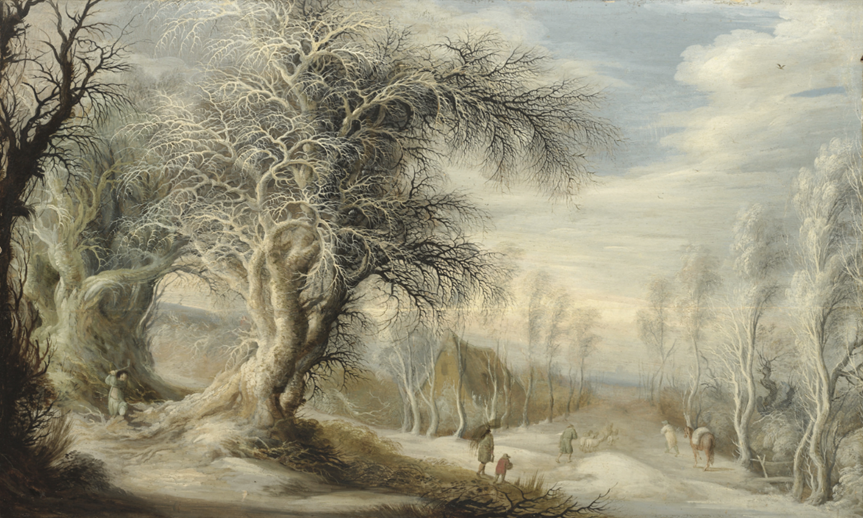
Winter Landscape with a peasant walking through snow by Gysbrecht Leytens
The Flemish painter Gijsbrecht Leytens was born in Antwerp in 1586. As a teenager, he began his apprenticeship with Jacob Vrolijck. In 1611 he joinied the Antwerp Guild of Saint Luke as a master. In 1615 he became a member of the Olijftak, a chamber of rhetoric that dates back to the early 16th century in Antwerp, when it was a social drama society which drew its membership primarily from merchants and tradesmen and provided public entertainment at prestigious events. Gijsbrecht was a captain in Antwerp’s Civic Guard between 1624 and 1628. His work followed the style of 16th and 17th century Flemish and Dutch great landscape paintings, which had brought recognition to such masters as Pieter Brueghel the Elder, Hendrick Avercamp, Gillis Van Coninxloo, Joost de Momper and Denijs Van Alsloot.
Winter landscape with a woodsman and travelers by Gysbrecht Leytens
However, it was Gijsbrecht Leytens’ determined personal style that brought him to the public’s attention. Many of his paintings were simply attributed to “The Master of the Winter Landscape” and only in the 1940’s attributed to him. Leytens has an easily recognisable style not just because he focuses on snowy winter scenes but because of the way he depicts intricate and curious intertwining designs created by the bare branches and twigs which form a large part of his depictions. He was described as a poet of the frost in the way he conveys the cold nakedness of the sun on a countryside caught in the ice. No-one before him, nor after him, either in Flanders or elsewhere, expressed this with such intensity. The fundamental and unique quality of his art also resides in the extreme refinement of the subtle colour harmonies apparent in his paintings at all times.
Old Man Reading a Letter by Willem van Mieris (1729)
The depiction of the reading of a letter has featured in many paintings over the years. Such attention to what is written in the letter adds to the back-story of the artwork and often our imagination runs riot as we try to fathom out the sentiment expressed in the pages of the letter. My next painting is one by the Dutch artist Willem van Mieris who was born in Leiden in the Northern Netherlands in June 1662. His artistic tuition came from his father Frans van Mieris who was a genre painter. Throughout his career Willem was successful and had the support of a number of patrons who constantly supplied him with commissions. He was equally at home painting genre scenes and portraiture as well as being a skilled landscape painter, etcher, and draughtsman. He was the active leader of, and once became dean of, the Leiden Guild of St. Luke in 1693. A year later, in 1694, he established a drawing academy in Leiden along with the painter Jacob Toorenvliet.
In this work we see an elderly gentleman seated at a table in a darkened interior deep in concentration as he reads a handwritten document. He wears an opulent-looking gown which is made of richly embroidered material and which is evocative of the fashion for Japanese dress at the time. Upon his head is a hat made of rich blue velvet and lined with a extravagant swathe of fur. In the dark background we can just make out shelves filled with books. Couple that with the paraphernalia on the table, such as an inkwell, sealing wax and quill pen tells us that this a gentleman of great learning, maybe a lawyer. Lawyers were often depicted in paintings reading documents and letters.
I hope this blog will encourage you to delve into the world of Dutch and Flemish painters where you will find so many talented artists.
The artist I am looking at today is George Hendrik Breitner, the nineteenth century Dutch painter, who was best known for his realistic depiction of Amsterdam street and harbour scenes. He was also of great importance in what was later termed Amsterdam Impressionism.
Self portrait by George Breitner (1883)
George Hendrik Breitner was born in Rotterdam on September 12th, 1857. He and his younger brother, Godfridus, were the children of Johan Wilhelm Heinrich Breitner and Marie Anne Henriette Gortmans. His father worked in the grain business and George, after finishing primary school, joined the Palthe & Haentjes, grain company, as a clerk. At the age of seventeen George went to the Delft Polytechnic School for vocational training. George showed a great talent for drawing and in January 1876, aged eighteen, partly because of the intercession of the artist Charles Rochussen, his father agreed to have him enrolled on a four-year course at the Koninklijke Academie van Beeldende Kunsten (Royal Academy of Art) in The Hague. He was an exemplary student and won a number of awards including a second prize for composition and two years later took the first prize in a live model competition. In October 1877 he obtained his teaching certificate and during 1878 and 1879 he taught art at the Leiden Art Society (Ars Aemula Naturae), originally the Leiden Guild of St. Luke.
The Dam, Amsterdam by George Breitner (1895)
In 1880 Breitner was expelled from the Art Academy for misconduct, his misdemeanour said to have been that he had destroyed the regulations-board. Around that time, he shared lodgings of the Dutch landscape painter of the Hague School, Willem Marisat, at the Oud Rozenburg house in The Hague. Marisat became Breitner’s friend and tutor. It was through Marisat that Breitner was accepted as a member of the Pulchri Studio, an important artist’s society in that city.
Les Brisants de la Mere du Nord (The Breakers of the North Sea) by William Mesdag
It was here that he met fellow member Hendrik Mesdag, a one-time banker but later an accomplished artist, whose forte was his maritime paintings, one of which, Les Brisants de la Mere du Nord (The Breakers of the North Sea), gained him the gold medal at the 1870 Paris Salon. In 1880, Mesdag had been commissioned by a group of Belgian entrepreneurs to paint a panorama depicting a view over the village of Scheveningen which lay on the North Sea coast close to The Hague. It was such a large project that Mesdag put together a team of artists including his wife Sientje, Theophile de Bock, Barend Blommers and twenty-three-year-old George Hendrik Breitner. The finished work which measured 14 metres high and 120 metres around, was completed in 1881 and I talked about in my My Daly Art Display blog
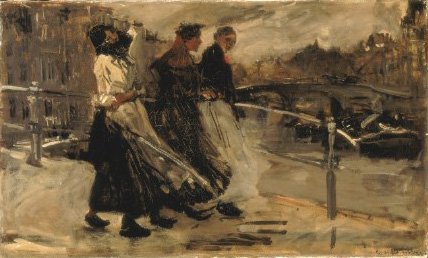
Bridge with Rain and Wind by George Breitner (1887)
In 1882, Breitner made the acquaintance of another distinguished artist, Vincent van Gogh, and the two would often go on sketching trips around the poorer and seamier side of The Hague. In a letter to his brother Theo in February 1882, Vincent wrote:
“…. At the moment I quite often go to draw with Breitner, a young painter who’s acquainted with Rochussen as I am with Mauve. He draws very skilfully and very differently from me, and we often draw types together in the soup kitchen or the waiting room &c…”
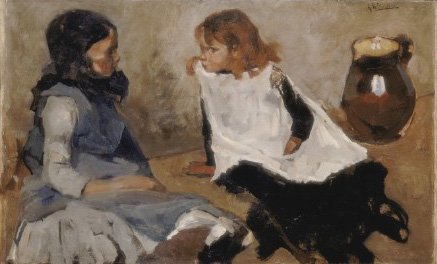
Two Girls with Brown Can by George Breitner (1885)
For Breitner his models were the poorer working-class folk such as labourers and servant girls who plied their trade in the lower working-class areas of the city. Breitner preferred these working-class models such as labourers, servant girls and people from the lower-class districts. Interest in the fate of the common people, which many artists felt in that period, was cultivated by the social conscience of French writers such as Émile Zola and the realism paintings of Gustave Courbet and Jean-François Millet. Breitner believed that through his paintings he would create history. His desire to become famous for his realistic paintings of the poor can be seen in his letter he sent to his patron, the grain merchant, Adriaan Pieter van Stolk, dated March 28th 1882. Breitner wrote:
“…Myself, I will paint the people on the street and in the houses, they built, life above all, I’ll try to be Le peintre du peuple or I’ll be better because I want to be. History I wanted to paint and I will too, but history in its most extensive sense. A market, a quay, a river, a gang of soldiers under a glowing sun or in the snow…”.
Distribution of Soup by George Breitner (1882)
In May 1884 Breitner left The Hague and travelled to Paris. His stay in the French capital lasted only six months during which time he attended Atelier Cormon where he liked to depict the toiling workhorses or demolition scenes, using dark tones . He completed a number of paintings featuring the streets of the city with its horse and cart transportation. His desire to paint scenes of everyday life in the French capital was enhanced by his interest in and inspiration from the writings of Zola, Flaubert and especially Edmund and Jules de Goncourts with their book, Manette Salomon, being a favourite of Breitner.
Labourers Pulling a Heavily Laden Cart on Jacob van Lennepkade, Amsterdam by George Breitner (1900)
In the late 1880’s, Breitner’s new hometown, Amsterdam, was beginning to expand, new industries were shooting up and it was pulsating with life. Breitner was afforded the ideal opportunity to record pictorially the changes. Now living in the city, he took the opportunity to hone his artistic talents by enrolling for a short period at the Royal Academy of Fine Arts under the tutelage of August Allebé, an exponent of realism and impressionism. Breitner’s cityscape paintings of that era, although maybe not topographically accurate, were emotional depictions, full of colour and movement. His depiction of the common people was somewhat different as he used greys and browns to portray the hard and laborious tasks, they had to perform to earn a meagre wage. His paintings were often both emotional and sensitive.
Construction Site in Amsterdam by George Breitner
Breitner’s 1902 painting, Construction Site in Amsterdam, highlights the building boom in Amsterdam. He based the painting on a series of photographs he took of a construction site in the city. Although it may have been thought to be an en plein air work, the painting was in fact carefully created in his Prinseneiland studio. Through the use of his photographs and sketches, he was able to portray an ever-changing city.
A View of the Leidsegracht Amsterdam by Willem Witsen
One of the painters he liked at this time and whose work influenced him was the Dutch painter and photographer associated with the Amsterdam Impressionism movement, Willem Witsen, whose best works include serene views of Amsterdam, such as his depictions of the canal areas Herengracht and Leidsegracht.
Lying Naked by George Breitner (1889)
In the late 1880’s, beside his cityscape works, Breitner embarked on painting nudes.
The Red Kimono by George Breitner (1893)
In 1893, he completed a series of paintings featuring Japanese girls, a beloved theme of many painters in those days. Japonism, which referred to the French term, japonisme, which denotes the assimilation of iconography or concepts of Japanese art into European art and design. Most of the Impressionists and Neo-Impressionists painters were influenced by this phenomenon.
Girl in White Kimono by George Breitner (1894)
Breitner was Inspired by Japanese prints he had seen between 1893 and 1896 and completed thirteen paintings featuring a girl in a kimono. In each the young woman assumes different positions and the kimono often are of different colours. In the above 1894 work, Girl in a White Kimono, what stands out the most in the depiction is the exquisitely embroidered, white silk kimono with red-trimmed sleeves and an orange sash. For this painting and many in the series, Breitner utilised the services of seventeen-year-old Geesje Kwak, a seamstress who was also one of his regular models.
De Gele Ruiters (The Yellow Riders) by George Breitner (1886)
In his earlier days during his time in The Hague, Breitner had been criticised in the media for his drawings and his attempts at Impressionism and even his patron had pressed him just to paint what the public wanted. Breitner baulked at this advice and his relationship with van Stolk ended. In the late 1880’s, then living in Amsterdam, there was a change in his fortune and with every passing month, he gained more and more recognition as a talented artist. In 1886 Breitner completed one of his great masterpieces, De Gele Ruiters (The Yellow Riders). It was a monumental work measuring 115 x 76 cms and featured the elite mounted artillery corps seen galloping down the sand dunes at breakneck speed. Breitner took full advantage of their black-and-red busbies and the gold braid on their uniforms, which adds to the vitality of the charge.
(Detail) De Gele Ruiters (The Yellow Riders) by George Breitner (1886)
We witness the sand being kicked up by the hooves of the horses at the front which clouds our view of the horsemen who follow and all we can make out of them are the flashes of black, yellow and red of the following troops. In the October 16th 1886 edition of the Netherlands Spectator, the Dutch poet and art critic, Carel Vosmaer, wrote
“…But what a momentum and storm in the movement, what a feeling for the poetry of such a tingling, dusty, turbulent group!..”
In the same year Breitner was invited by the avant-garde Société des XX (Vingtistes) to show his work in Brussels. More and more was written in the press about him and his work. At the turn of the century, George Breitner was forty-two-years-old and at the high point in his artistic career. So, what was he like as a person ? In his biography of the artist, Breitner, by Arthur van Schendel, he quoted the description of the artist by people who knew him, writing:
“…often fierce and brusque in his performance, sometimes suddenly rigid and closed, living among bouts of passion and despondency and always possessed wholeheartedly for his art…”
The levelled building-site for Maison de la Bourse by George Breitner (1909)
In 1901 an exhibition of his work was held, a highly successful retrospective at Amsterdam’s Arti et Amicitiae, one of the largest clubs for artists and art lovers in the Netherlands. At this time Breitner would use his photographs as a preparation for a painting. He built up a collection of people and cityscapes form a historical document of life in the city of Amsterdam at the end of the 19th century and it was these which helped to document city life at the turn of the century. These photographs and his cityscapes often appeared in historical publications.
On September 18th, that same year, 1901, George Hendrik Breitner married Maria Catharina Josephina Jordan in Amsterdam. His wife was nine years younger than him. The couple had no children.
Portrait of Marie Breitner, wife of the artist by George Breitner
Breitner painted a portrait of his wife, which, in my eyes, seems less than flattering.
Portrait of Mrs Marie Breitner-Jordan by Willem Witsen
A more flattering portrait was done by Breitner’s friend Willem Witsen.
George Breitner by Willem Witsen
Witsen also completed a portrait of George Breitner.
In 1903 Breitner decided to move away from Amsterdam and relocate to Aerdenhout, a small town located in the dunes between Haarlem and the seaside town of Zandvoort, some twelve miles west of Amsterdam. His decision to move away from the city was because his friend and fellow artist, Marius Bauer, had moved there and wanted Breitner to join him. However, Breitner missed Amsterdam and in 1906 he returned to the city.
Rokin with the Nieuwezijdskapel, Amsterdam. by George Breitner (1904)
In 1904 Breitner completed his work entitled Rokin with the Nieuwezijdskapel, Amsterdam. The Rokin is a canal and major street in the centre of Amsterdam and is a recurring theme in Breitner’s works. Breitner would spend much time in this area, sketching and photographing people and buildings. The art gallery Van Wisselingh & Co. was found in this area as was his artist’s society Arti et Amicitiae which can be seen in the background. The painting fetched 415,200 euros at Christie’s Amsterdam auction in April 2005.
Although Breitner was successful as an artist and enjoyed a great reputation during his life, he did encounter financial difficulties during his life and this led to the establishment of a support committee for him and his wife. On June 5, 1923, George Hendrik Breitner died of a heart attack, aged 65. George Breitner is seen as one of the most important painters in the Netherlands at the end of the 19th century – but internationally he is less well known as an artist.
Having a grandfather, father, and brother-in-law, who are accomplished artists must be a great benefit when considering your future occupation. My featured artist had all three as role models and therefore there is no surprise that he too became a renowned artist. The artist I am talking about today is the seventeenth century Dutch painter, Melchior d’Hondecoeter, who was born in Utrecht around the early months of 1636. Hondecoeter was known for his bird studies and in particular for the realistic portrayal of these beautiful creatures. Initially he painted seascapes but around 1660 he concentrated on depictions featuring colourful and often exotic birds. The settings for his paintings were varied. Sometimes it was a farmyard, other times it would be a country park or the courtyard of a palatial residence. Nearly all the works had an interesting background, often lush landscapes enhanced by the odd architectural feature. This type of work was in great demand at the time and his paintings adorned the large rooms of wealthy Amsterdam merchants’ houses and some were even purchased by William III for his palaces. It is said that Hondecoeter kept his own poultry yard at his house, but he also made visits to the country residences of his patrons where he could study more exotic species and perfect settings.
Hunting Trophies by Melchior d’Hondecoeter (1682)
But first let me talk a little about his antecedents who were to play an important part in forming his life. His paternal grandfather was the painter, Gillis d’Hondecoeter who was born into a Protestant family in Antwerp around 1580. A year after his birth, the Northern Netherlands, renounced the rule of the King of Spain with the declaration of Independence, Acte van Verlatinghe (Act of Abjuration), and as a result, Antwerp became even more engaged in the rebellion against the rule of Habsburg Spain. Antwerp was laid siege by Catholic Spanish forces for twelve months and it is thought that around 1582 Gillis and his family had to flee the city and move the safer protestant town of Delft. It is recorded that Gillis married on September 22nd 1602. His bride was Maritgen (Mayken) Ghysbrechts van Heemskerk who had come from the Dutch municipality of Rhenen. At this time Gillis was already living in Utrecht. A year later the couple moved to Amsterdam and it was here that Gillis remained until his death in October 1638.
Baptism of the Moorish Chamberlain by Gillis d’Hondecoeter
One of Gillis d’Hondecoete best known paintings is The Baptism of the Moorish Chamberlain. It is a forest landscape work. The landscape is used as background, the trees serving as the wings of the setting. The depiction is based on a theme taken from the Acts of the Apostles (8: 26-40) which tells the story of Philip the Evangelist who converts and baptises the eunuch who was the chief treasurer to the Queen of Ethiopia. It all came about on the road, when Philip falls in with the Moorish chamberlain who was returning from a pilgrimage to Jerusalem. The story goes that Moor had been reading the Book of Isaiah in his carriage but does not understand the content. Philip offers to explain it to him and, using the Old Testament, he preaches the teaching of Christ. Arriving at a stream, the chamberlain requests to be baptised.
Hound with a Joint of Meat and a Cat Looking On by Jan Baptiste Weenix
Gillis and his wife went on to have nine children including Melchior’s father Gijsbert d’Hondecoeter and a daughter, Josintje d’Hondecoeter. Josintje married the painter Jan Baptiste Weenix in 1639. His father, Jan Weenix, was Melchior’s cousin and also a well-known artist. It is easy to understand that Melchior d’Hondecoete was brought up in an artistic household and as you will see much of his artwork was similar to that of his family.
Fowl on a Riverbank by Gijsbert d’ Hondecoeter (1651)
Gijsbert d’Hondecoeter, primarily a painter of barnyard fowl, became a member of the Guild of St. Luke in Utrecht in 1629. He initially taught his son Melchior but in 1653, when his son was in his late teens, he died and Melchior’s artistic tuition was taken over by his brother-in-law, Jan Baptist Weenix.
Poultry Yard by Melchior d’Hondecoeter
Arnold Houbraken, also a 17th century painter, but best known as a biographer of Dutch Golden Age painters, was told by Jan Weenix that Melchior was an extremely religious youth, continually absorbed in prayer, so much so that his mother and uncle wondered whether they should have him trained as a minister rather than as a painter. Melchior worked as an artist in Utrecht and became a member of the Confrerie Pictura and its head in October 1654
The Raven Robbed of the Feathers He Wore to Adorn Himself by Melchior d’Hondecoeter (1671)
Records show that in August 1658, twenty-two-year-old Melchior was working in The Hague and had become a member of the local Confrerie Pictura, an artist’s society which had been formed in 1656. Normally, it would have been expected that as a professional artist, Melchior would have become a member of the town’s well established association, The Guild of St Luke, but he decided on aligning himself with the Confreirie Pictura which had been set up by 48 dissatisfied painters who had left the local Guild. Melchior became chief of this painters’ fraternity in 1662. In 1663, Melchior d’Hondecoeter married Susanne Tradel, a thirty-year-old woman from Amsterdam and the couple had two children, Jacob and Isabel, baptized in 1666 and 1668. The couple, as well as his sister-in-laws, lived on the street which ran alongside the Lauriergracht canal, which housed many artists and art dealers. It is believed that Hondecoeter spent much time in his garden or drinking in the tavern in the Jordaan, possibly being overwhelmed by the household of women. He later moved to Leliegracht which was close to his favoured drinking haunt on the Jordaan
A Pelican and Other Birds Near a Pool (The Floating Feather) by Melchior d’Hondecoeter (1680)
One of Melchior’s most famous works was his painting entitled A Pelican and Other Birds Near a Pool but is often referred to as The Floating Feather which he completed around 1680. The shortened title is because of the feather we see floating in the pond in the foreground. The work was commissioned by the Stadholder William III of Orange for his Het Loon Palace in Apledoorn. It must have been a great honour for Hondecoeter to receive such a commission from the country’s ruler. The painting depicts a pelican in the foreground, a cassowary behind it at the left, and a flamingo and a black crowned crane. In the foreground various water birds congregate in and around a basin, and a feather floats on the water’s surface. Paintings like this were admired by wealthy merchants of Amsterdam, and by William III, who had works by Melchior at three of his palaces. Hondecoeter’s murals and large paintings were ideal for merchants’ large country houses and the depiction of birds was very popular at the time.
The Menagerie by Melchior d’Hondecoeter.
Another painting which was bought by William III for his palace at Het Loo was his work entitled The Menagerie. It depicts two squirrel monkeys from Central America, two white sulphur-crested cockatoos from Australia, a grey parrot from Africa and a purple-naped lory, from Indonesia, on a chain at the lower left of the painting. In this painting, Hondecoeter combined these creatures and several other colourful exotic birds. The finished painting was given to William III and was hung above the door of the king’s private apartment.
A Pelican and other Exotic Birds in a Park by Melchior d’Hondecoeter (1655-1660)
Hondecoeter completed a similar depiction in his painting A Pelican and other exotic birds in a park, and in the birds we see before us, there are some similarities, such as: the birds on the water, the group of exotic birds, the pelican, and the famous floating feather. Other features are also similar, such as the background landscape and the Muscovy duck in the centre foreground. In this work, new species of birds have been added on the far side of the pool and a Moluccan cockatoo can be seen in the tree on the left. It is thought that Melchior completed this work sometime between 1655 and 1660.
A Park with Swan and Other Birds by Melchoir d’ Hondecoeter
The National Museum Wales has a painting by Melchior d’Hondecoete. It is entitled A Park with Swan and Other Birds. The setting is a country house park with fowl before a fountain and an ornamental terrace with statues and figures. In the depiction we see European birds as well as a peacock, a North American turkey and an African crowned crane in front of a fountain on an ornamental terrace The painting is one of six by the artist which once hung in the London home of Emily Charlotte, a daughter of Welsh landowner, industrialist and Liberal politician, C.R.M. Talbot of Margam Abbey and Penrice Castle. This type of painting was often used to decorate the country houses of wealthy Dutch patrons.
Dead Birds by Melchior d’Hondecoeter (mid 1660’s) Wallace Collection, London.
In 1692, his wife died and Melchior went to live in the house of his daughter Isabel on the Warmoesstraat, one of the oldest streets in the city. Melchior d’Hondecoete died, aged 59, in Amsterdam on April 3rd 1695, and was buried in the Westerkerk. He left his daughter with substantial debts.