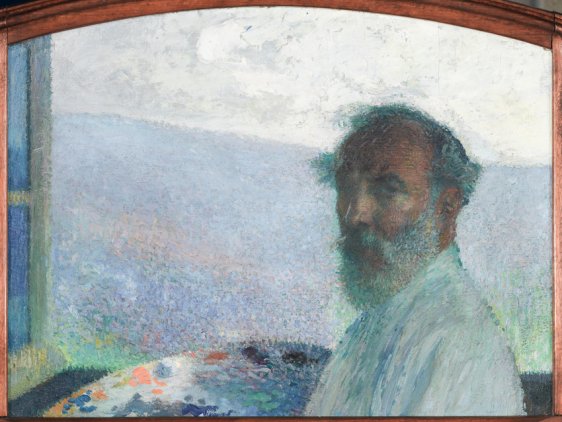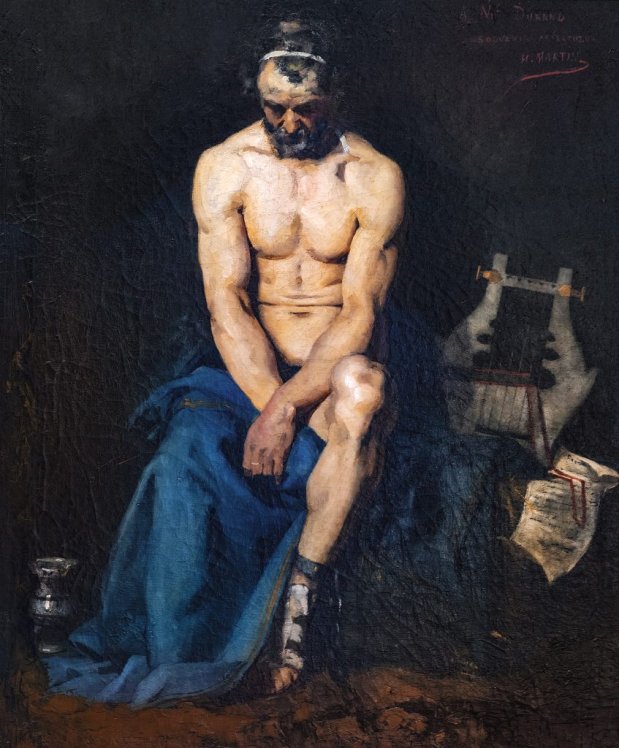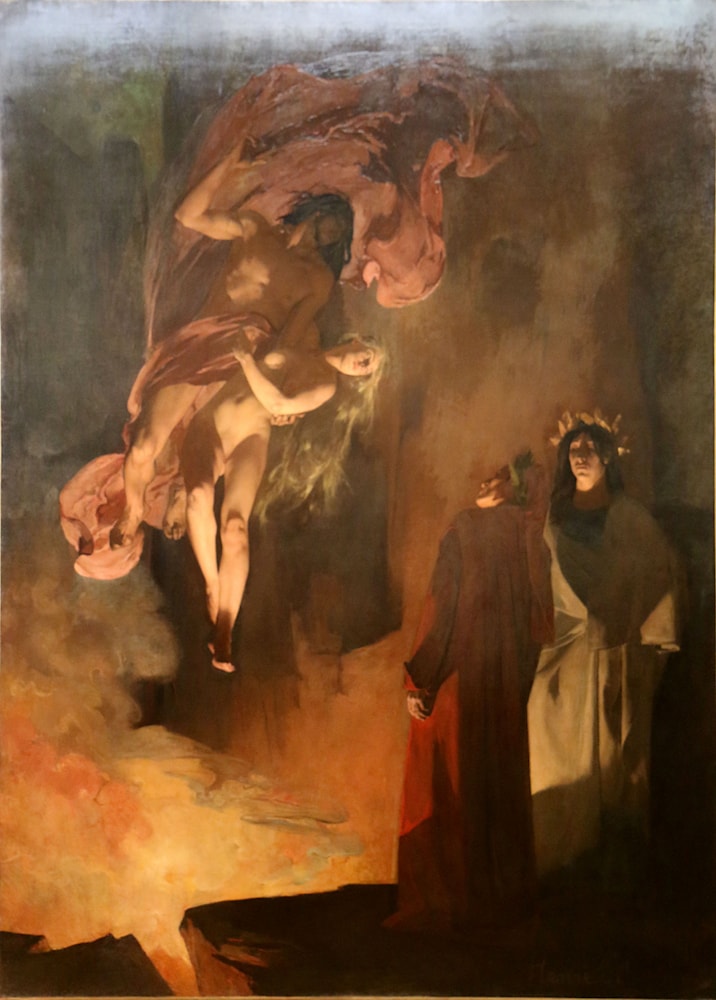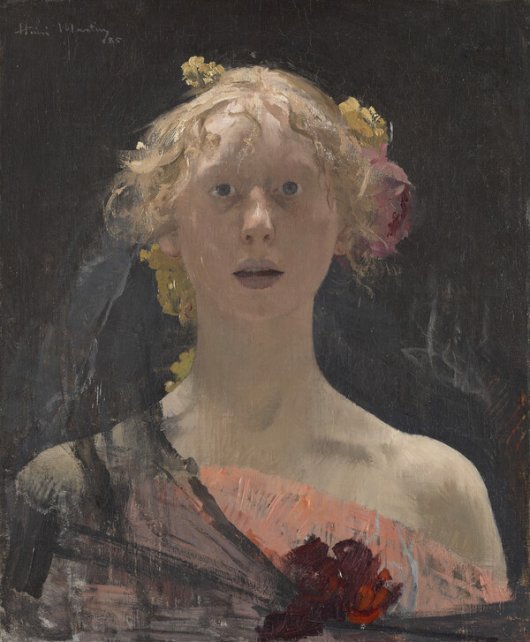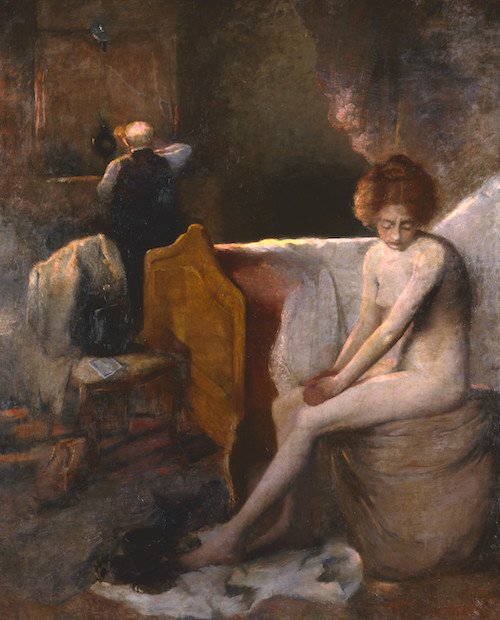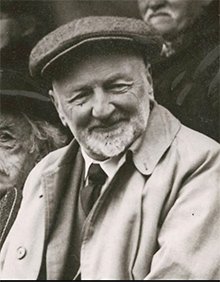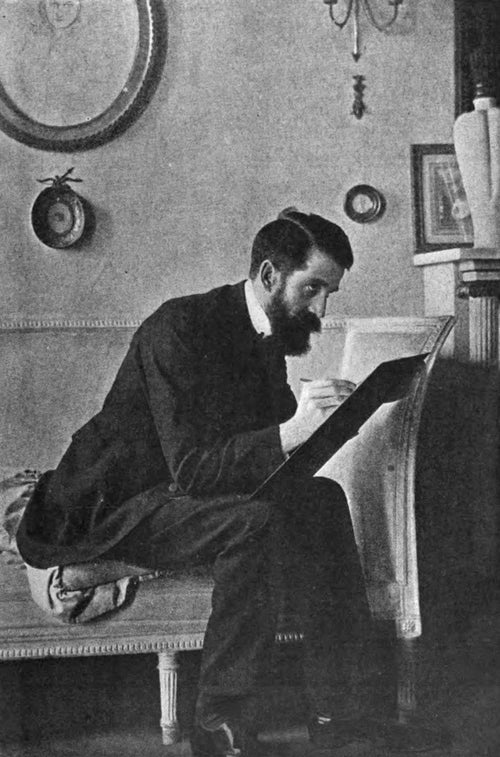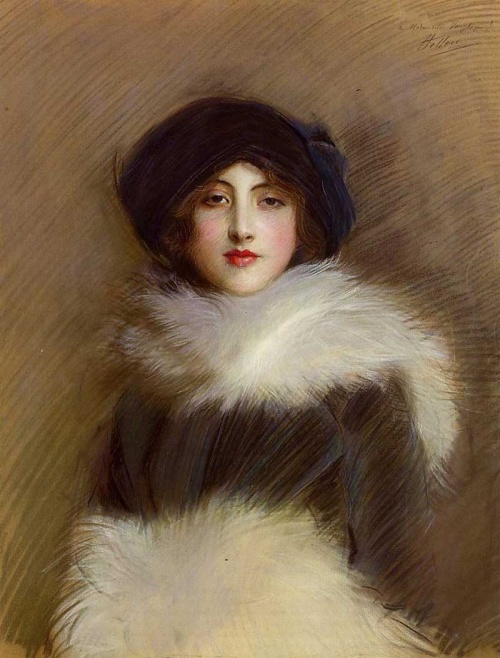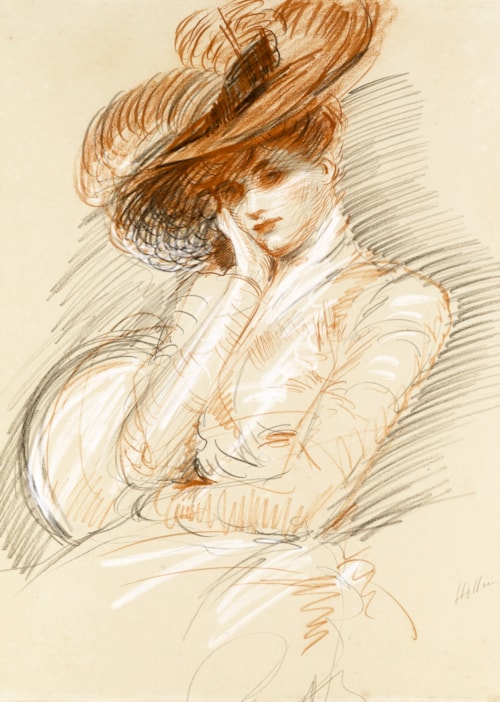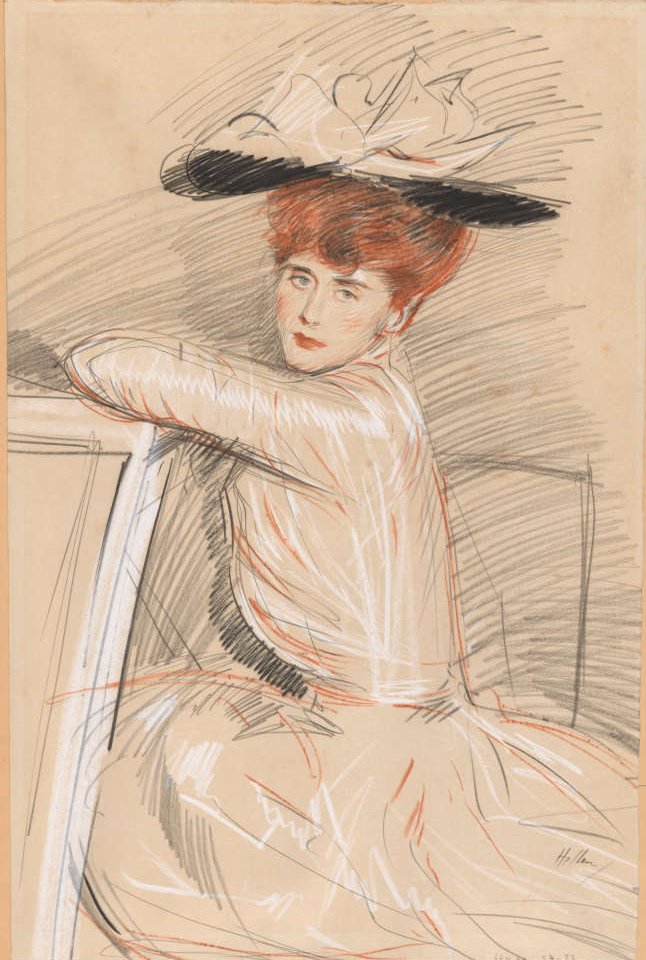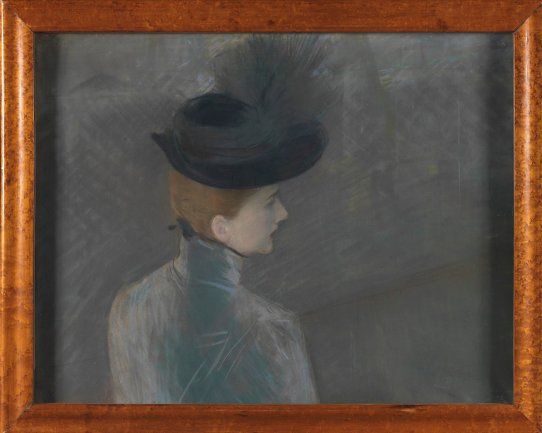
Paul César Helleu and Alice Guérin.

Paul César Helleu

At the end of my previous blog about the French artist Léon Bonnat, I talked about how he had bequeathed most of his art collection and the majority of his work to the local Bayonne museum and how the town named the Museum after him and yet it is now known as the Musée Bonnat-Helleu.. So who is “Helleu”?

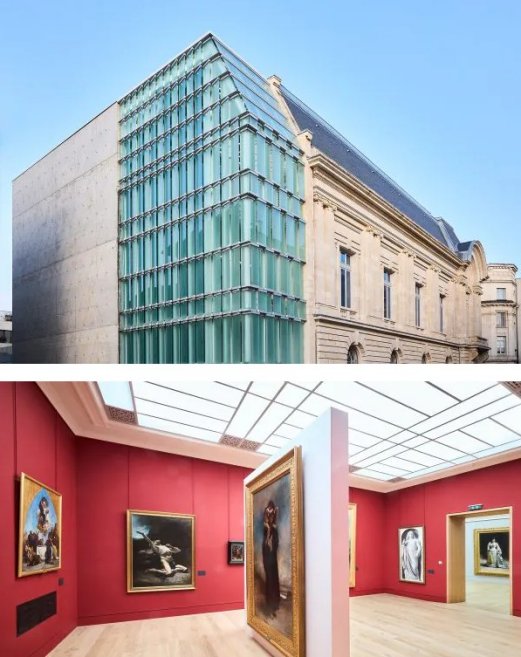
Musée Bonnat-Helleu, Bayonne

The donation of Paulette Howard-Johnston, the youngest child of Paul and Alice Helleu made the museum one of the places of reference for the works of Paul César Helleu from 1988 onwards. It houses his works thanks to his daughter’s donation, as well as the donations and bequests of Paulette Howard-Johnston’s nieces, Éliane Orosdi and Ghislaine de Kermaingant,  when in 2009, she died.  In her will,  the Bonnat Museum was designated as the heir to her collection of more than 300 new pieces.  In 2011, the museum closed its doors for a major renovation, while thanks to this last bequest made by the Helleu family, the museum became the Musée Bonnat-Helleu.

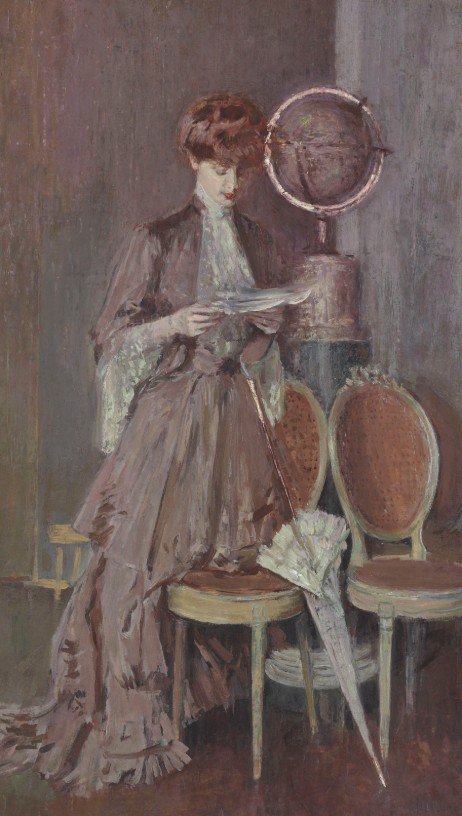
Portrait of Madame Helleu reading by Paul César Helleu

Paul César Helleu was born on December 11th, 1859, in the Brittany town of Vannes.  His mother, Marie Esther Guiot and his father, César Helleu, who was a customs receiver, were married in 1855 and had two sons Paul and his elder brother Édouard.   Paul took an interest in art when he was young. Following the death of his father when Paul was just a teenager, he decided he wanted to further his art studies by going to live in Paris.  His widowed mother was against this idea but Paul persisted and travelled to Paris to continue his schooling at the Lycée Chantal.  In 1876, at the age of sixteen Paul graduated and was admitted to the École des Beaux-Arts, at the atelier of Jean Leon Gerome, where he began his formal academic training in art.

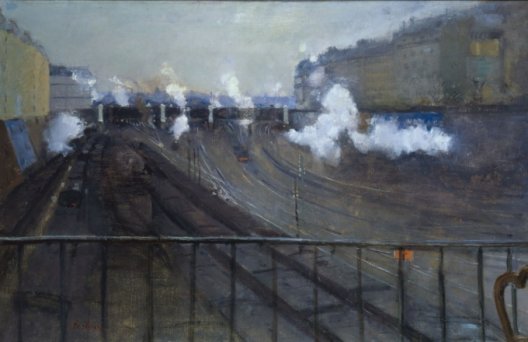
The Saint Lazare Train Station by Paul César Helleu (1885)

It was also in the Spring of 1876 that Helleu attended the Second Impressionist Exhibition at the Durand-Ruel Gallery in Paris. A total of nineteen artists participated in the exhibition, including prominent figures such as:  Degas, Monet. Morisot and Gustave Caillebot. Whilst in Paris,   Helleu made the acquaintance of John Singer Sargent, James McNeill Whistler, and Claude Monet. He was struck by their modern, bold alla  prima artistic technique, which was an approach to painting that involved applying layers of paint, also known as wet-on-wet, and completing a painting in a single sitting. This meant working with wet paint and not letting the layers dry, before applying the next layer. In Italian, the phrase alla prima translates to “at first attempt”.  Helleu was also impressed with their plein air style of painting.

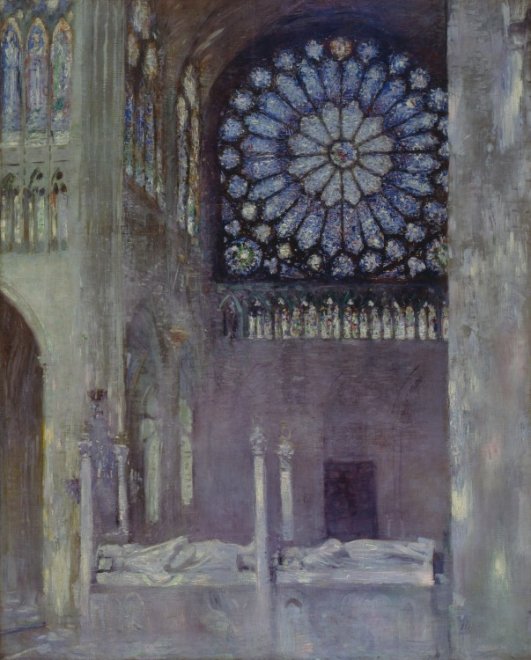
The Interior of the Abbey Church of Saint Denis by Paul César Helleu (c 1891)

Following graduation, Helleu found employment at the prestigious faience (earthenware) workshop, Joseph-Théodore Deck Ceramique Française.  Joseph-Théodore Deck was a 19th-century French potter, and an important figure in late 19th-century art pottery.  In 1856 he established his own earthenware workshop and began to experiment with styles from Islamic pottery, and particularly the Iznik style.  At the time Paul César Helleu joined the workshop, Japonisme, the popularity and influence of Japanese art and design following the forced reopening of foreign trade with Japan in 1858 was all the rage. Helleu created decorations for dishes.

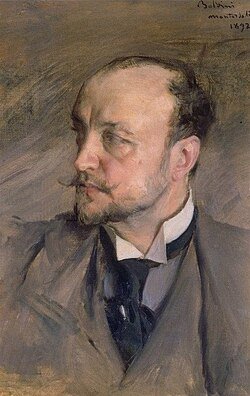
Giovanni Boldini self portrait (1892)

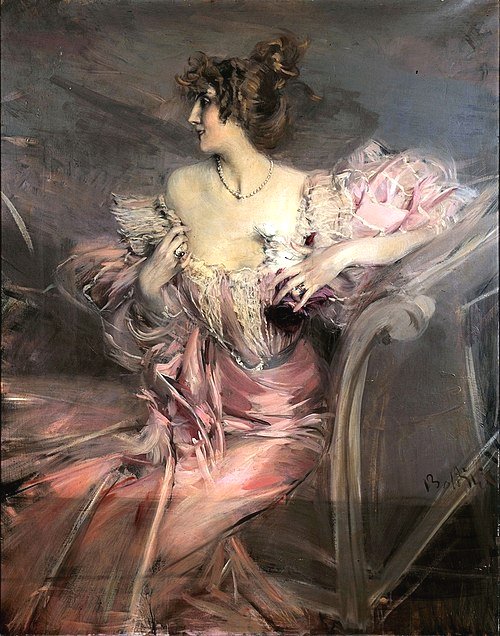
Portrait of Marthe de Florian, a French demi-mondaine and socialite,  by Giovanni Boldini (1898)

Around this time, Helleu met Giovanni Boldini, an Italian genre and portrait painter who lived and worked in Paris.   His portraiture focused on all the grandes dames of Paris, and for them to have their portrait painted by Boldini was looked upon as the crowning event of the social season. Boldini became a friend and mentor to Helleu, and his style of painting had a great influence on his artwork. The other great influence for Helleu was his friendship with John Singer Sargent, often referred to as the leader of “posh portraiture” in Britain, that majorly encouraged Helleu. Helleu even sold his first painting to Sargent. 

Portrait de Madame Chéruit by Paul César Helleu (1898) Madeleine Chéruit was a French fashion designer. She was among the foremost couturiers of her generation, and one of the first women to control a major French fashion house.

This time in Helleu’s life coincided with France’s Belle Époque era. The term, Belle Époque, literally means “Beautiful Age” and was a name given in France to the period between the end of the Franco-Prussian War in 1871 up to to the start of World War I in 1914. During those forty plus years of peace, the living standards for the upper and middle classes increased, (albeit the lower classes did not benefit in the same way, or to anywhere near the same extent).  It was the well-off who termed the phrase Belle Epoque labelling it a golden age in comparison to the humiliations that came with the Prussian invasion and what was to come, the devastation and occupation of the First World War.

Mademoiselle Vaughan by Paul César Helleu (1905)

It was a time of booming progress and prosperity in Europe, with Paris the centre of the fast-flowing changes in economics, technology, and the arts. However, as the name denotes, beauty was a key element of this prosperous period.  The upper-class patrons would often commission artists to paint their portrait or one of a family member, in a luxurious and extravagant manner highlighting both their beauty and wealth.  The finished portraits heightened an artist’s reputation, ensuring more clients for the artists.

Alice Helleu by Paul César Helleu (1885)

This blog is not only about Paul César Helleu but also his muse, lover, and later his wife, Alice Louis-Guérin. Helleu met Alice in 1884 when her mother asked him to paint a portrait of her fourteen-year-old daughter, Alice. At the age of twenty-four, Helleu appears to have fallen in love with her during this first meeting.   Alice remained the artist’s favourite model throughout his life and she was also a muse for many other artists.  Her beauty and sophistication also helped introduce her husband into the elite circle of artists, writers and society figures of the French capital.  The Count de Montesquiou, who was a noted dandy and one of the leading figures in the artist’s group of friends, described her appearance as

“…La multiforme Alice, dont la rose chevelure illumine de son reflet tant de miroirs de cuivre…”

 (‘The multifaceted Alice, whose rosy hair illuminates so many copper mirrors with its reflection.’)

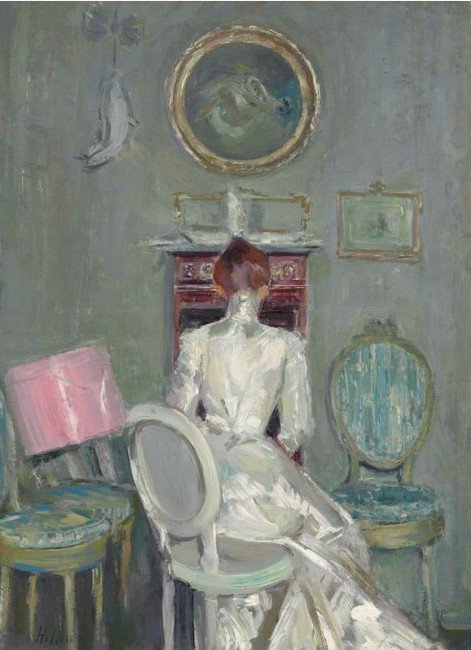
Madame Helleu à son bureau by Paul César Helleu.

Helleu often avoided standard conventional rules of portrait composition, and would frequently depict his sitters from behind – standing before a mirror, or sitting at a desk, as was the case of his painting entitled Madame Helleu à son bureau. Note the porcelain koi carp hanging in the upper left corner which was an example of Japonisme which was all the rage in Paris at the time.   The desk depicted in the painting and which appears in numerous works by Helleu is still in the artist’s family.  The painting hanging above it is Boldini’s Leda and the Swan.

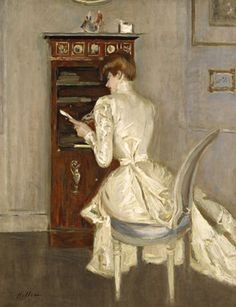
Madame Helleu assise à son bureau dans le salon de l’atelier de l’artiste, capturant une scène intérieure intime avec une élégance raffinée. (Madame Helleu seated at her desk in the artist’s studio salon, capturing an intimate interior scene with refined elegance.)

His painting entitled Mrs. Helleu sitting at her desk in the artist’s studio living room confirms Paul and Alice Helleu were had superb taste and these portraits depict Alice seated at a secrétaire in the couple’s drawing room of their Paris apartment, into which they moved in 1888. I suppose these two paintings cannot be considered as portraits in the conventional sense of the word, but rather as interior still life works, in which the furniture and surroundings are as vital as the sitter.

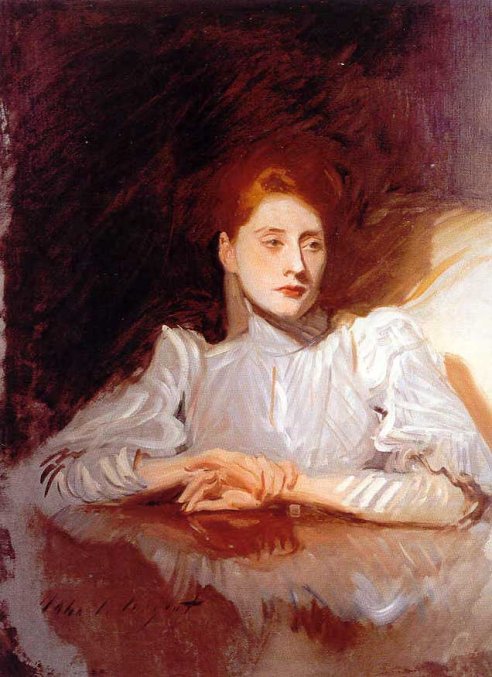
Madame Helleu by John Singer Sargent (1889)

Alice Guérin was depicted in a number of paintings by Paul Helleu’s friend John Singer Sargent.

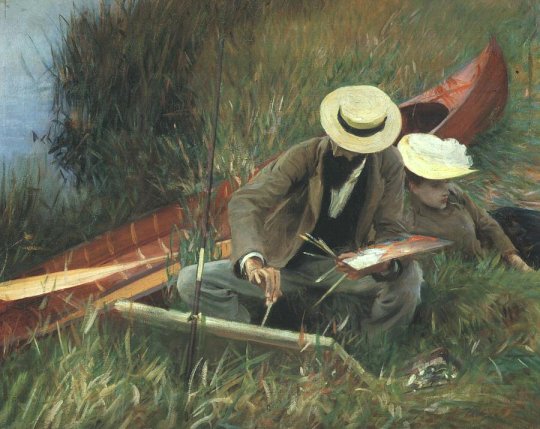
Paul Helleu Sketching with his Wife by John Singer Sargent (1889)

In his 1889 painting, Paul Helleu Sketching with his Wife, Sargent depicts a tranquil outdoor scene, portraying the French artist Paul Helleu engaged in the act of sketching. Alongside him, sits his wife Alice who appears happy and relaxed.  The figures of husband and wife are set against a lush, natural environment that suggests a calm and comforting ambiance. Sargent’s painting also manages to capture their fashionable clothing with Paul wearing a formal suit and Alice attired in an elegant dress.  Both wear wide-brimmed hats that both provide shade and stylishly adorn their heads.

Portrait of Artist’s Wife by Paul César Helleu

Paul Helleu was one of Sargent’s closest friends.  Initially, they had met in Paris in 1878.  Paul was 18 years old and Sargent 22. Sargent’s artistic career had already taken off, and he was becoming known to the public as a great portraiture artist and was receiving many commissions for his work. However, on the other hand, Helleu was selling little of his work, and because of this, he was suffering from depression.  Paul Helleu was financially strapped with hardly enough money to even eat and had to leave his studies in art due to lack of funds.  Sargent, got to hear about the plight of his friend and visited him at his studio and although he never alluded to his friend’s dire financial difficulties, Sargent selected one of Helleu’s paintings, and commended it for its artistic merits. Helleu was so flattered that the successful Sargent would think so kindly of his work that he offered to give it to him.  The story goes that Sargent responded to Helleu’s offer, saying:
“…I shall gladly accept, Helleu, but not as a gift. I sell my own pictures, and I know what they cost me by the time they are out of my hand. I should never enjoy this pastel if I hadn’t paid you a fair and honest price for it…”

He paid Helleu one thousand francs for the painting.  Helleu never forgot Sargent’s generosity and moral support and later, when Sargent was suffering from depression after the death of his father, Paul and Alice Helleu went to stay with him in England.

Portrait of Madame Helleu by Paul César Helleu.

Paul César Helleu and Alice Louis-Guérin married, two years after their first encounter, on July 29th, 1886, at Neuilly sur Seine.  She was two months away from her seventeenth birthday and Paul was twenty-six years old.  They went on to have four children, Hélène in 1887, Jean in 1894, Alice in 1896 and Paulette in 1904.

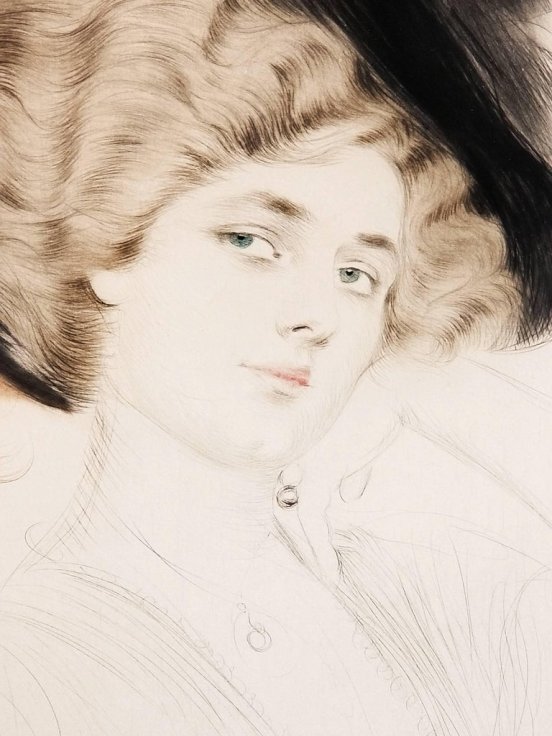
Details of Femme aux chapeau – Drypoint by Paul Helleu

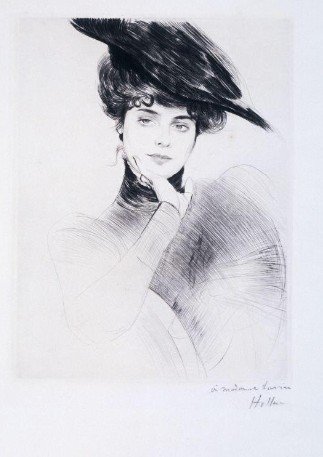
Drypoint Portrait of a Young Woman wearing a Hat by Paul César Helleu (c.1900)

It is believed that during a trip to London in 1885 Helleu once again met Whistler who introduced him to James Tissot a French society painter, illustrator, and caricaturist who was living in the English capital.  It was this established artist who taught Helleu the unique medium of etching.  Helleu became fascinated by drypoint etching.  Drypoint is a printing technique in which the printmaker scratches the lines on the printing plate with a sharp pointed tool. The printmaker holds the tool like a pencil and pushes the excess metal to either side of the furrow. It is this curl of rough metal, known as the ‘burr’, that gives the drypoint print its character. The ink is held in the burr as well as in the furrow and gives the edges of the printed line a soft, blurred quality. In Helleu’s work (above) the burr on the woman’s choker gives it a very velvety look.  Over the course of his career, Helleu produced more than 2,000 drypoint prints and he quickly mastered this technique, using the same flair with his stylus as he demonstrated with pastels.  It was the brilliance of his drypoint etchings that ensured Helleu’s place as one of the greats of the Belle Epoque, and he journeyed to Britain and America, and his artworks boosted his fame across both sides of the Atlantic.

Alice au chapeau noir by Paul César Helleu

Helleu and his wife had made many friends in Paris including Countess Greffulhe, a French socialite, known as a renowned beauty and queen of the salons of the Faubourg Saint-Germain which allowed Helleu to successfully expand his career as a portrait artist to elegant women in the highest ranks of Paris society

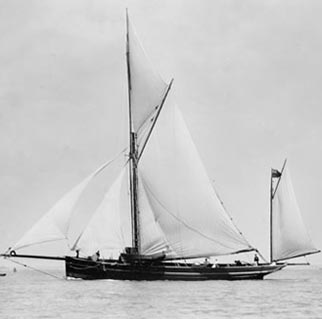
Paul Helleu’s yacht Étoile

Paul Helleu, wife Alice and baby daughter Paulette on L’Étoile (c.1904)

In 1904, Helleu was awarded the Légion d’honneur by the French president, Émile Loubet, and became one of the most celebrated artists of the Edwardian era in both Paris and London. He was an honorary member in important beaux-arts societies, including the Société Nationale des Beaux-Arts and the International Society of Painters, Sculptors, and Engravers, headed by Auguste Rodin. 

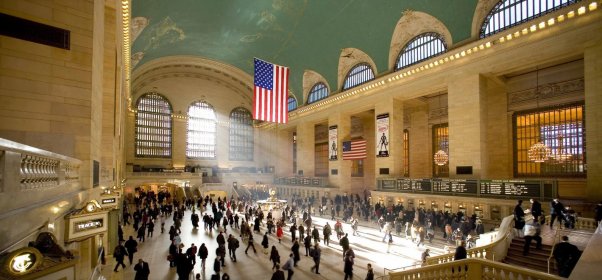
New York City’s Grand Central Terminal.

During his second trip to the United States in 1912, Helleu was awarded the commission to design the ceiling decoration in New York City’s Grand Central Terminal. Helleu decided on a mural of a blue-green night sky covered by the starry signs of the zodiac that cross the Milky Way.

Paul César Helleu (1859-1927)

Helleu made his last trip to New York in 1920 for an exhibition of his work, but he realized that the Belle Époque era was over. He sadly realised that he had lost touch with that vibrant era.   Shortly after his return to France, he destroyed nearly all of his copper plates.   While planning for a new exhibition with Jean-Louis Forain, a French Impressionist painter and printmaker, Helleu died of peritonitis following surgery in Paris, on March 23rd, 1927 at age 67.


Information needed for this blog came from Wikipedia and Facebook plus the following websites:
Brave Fine Art

Contessa Gallery

Stephen Ongpin Fine Art

John Singer Sargent Virtual Gallery

Sotheby’s

Léon Joseph Florentin Bonnat. Part 2

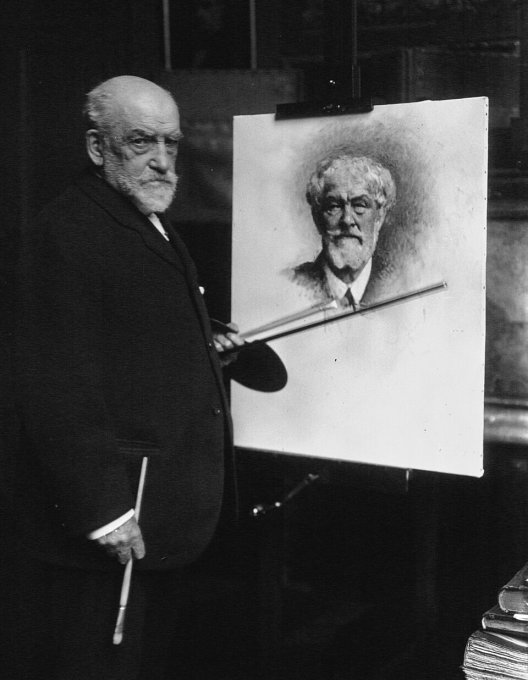
Léon Bonnat painting a portrait of artist, Alfred Roll (1918)

Léon Bonnat was born in Bayonne, France and lived there until he was thirteen years old.  Léon’s family then moved to Madrid where his father took on a book shop.  Léon’s love of art began to materialise after he went to live in the Spanish capital and, to encourage him, his father would take his son to the Prado.  He remembered those museum visits, saying:

“…I was brought up in the cult of Velasquez. I was very young, in Madrid; my father, on bright days such as one only sees in Spain, sometimes took me to the Prado Museum, where we did long stops in Spanish cinemas. I always left them with a feeling of deep admiration for Vélasquez… “.

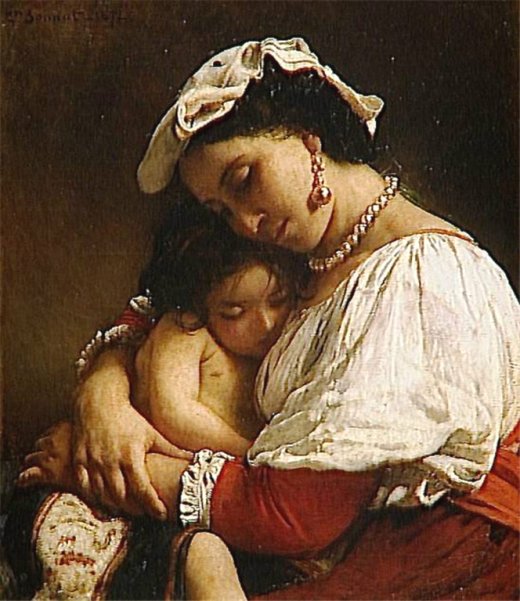
Italian Woman with Child by Léon Bonnat

In 1853, when Léon was twenty, his father died and the family returned to their French hometown of Bayonne.  After studying at the Ecole de Dessin de Bayonne, he went to live in Paris and study at the Ecole des Beaux-Arts.  In Paris, he was able to view paintings by the great Masters of French and Dutch art and particularly remembers seeing the works of Rembrandt and the influence his works had on him, commenting:

“…What is striking about Rembrandt is the power, the strength and the brilliance. He represents life in all its intensity. We see his characters, we talk with them, he resuscitates and revives an entire era. a marvellous and unique gift of interpretation, he joins the sensitivity, the goodness of a heart which vibrates to all the miseries, to all the joys, to all the emotions of humanity. He does not belong to any school. He has opened the new path which closed behind him…”

Roman Girl at a Fountain by Léon Bonnat (1875)

In 1857 he came second in the Prix de Rome competition and left Paris and spent three years at the Villa Medici.  The Villa Medici, now the property of the French State was founded by Ferdinando I de’ Medici, Grand Duke of Tuscany, and has housed the French Academy in Rome and welcomed winners of the Rome Prize since 1803, so as to promote and represent artistic creation in all its fields.

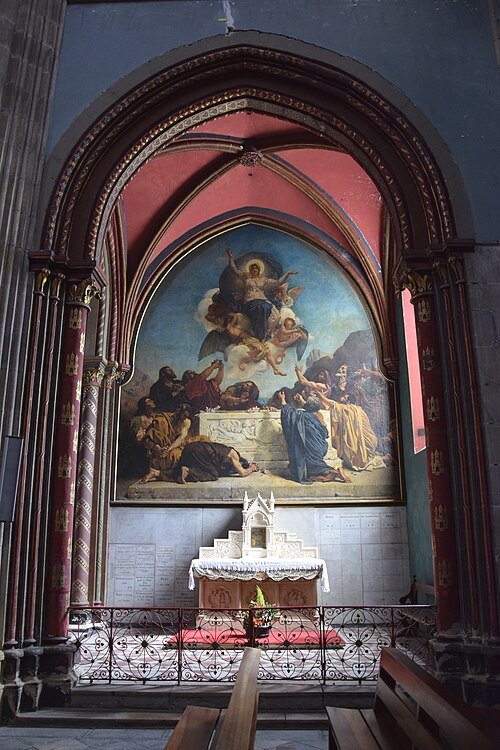
L’Assomption de Marie by Léon Bonnat (1869)

L’Assomption de Marie in situ in the Church Saint-André à Bayonne (Pyrénées-Atlantiques, Nouvelle-Aquitaine, France)

In 1869 Bonnat was awarded the Medal of Honor of the Salon for his painting L’Assomption.

The Martyrdom of Saint Denis by Léon Bonnat (1880)

One of Bonnat’s last religious paintings was his 1880 painting entitled The Martyrdom of Saint Denis.  St Denis was a 3rd-century Christian martyr and saint.  Denis was Bishop of Paris and through his speeches, made many conversions but he was looked upon by the local Roman priest as a danger and had Denis together with his faithful companions, the priest Rusticus and deacon Eleutherius, executed.  The place of the execution, by beheading, was on the highest hill in Paris, which is now known a Montmartre.   Denis was said to be against the beheading taking place at this spot and “folklore” has it that after Denis was beheaded, the corpse is said to have picked up his severed head and walked ten kilometres from the top of the hill, and during that entire walk he preached a sermon. 

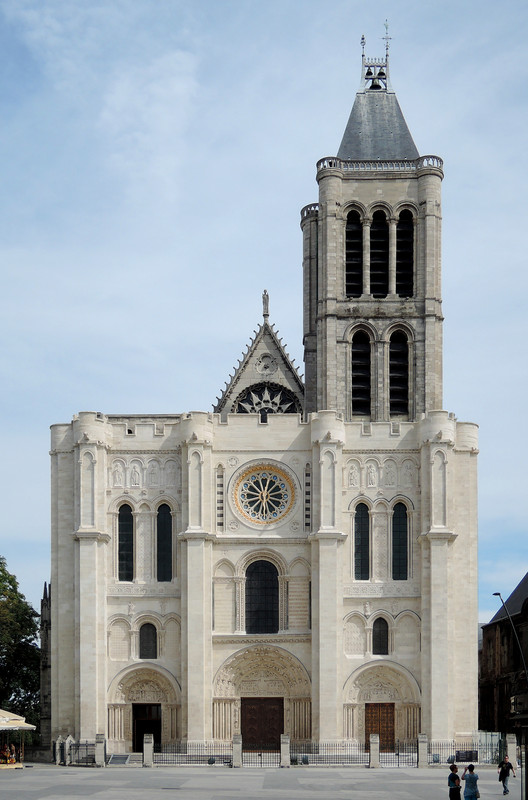
Basilica of St Denis, Paris

Detail of the north portal sculpture; the martyrdom of Saint Denis, Eleuthere and Rustique 

Denis finally collapsed at the place where he wanted to be buried, the spot where now stands the Basilica of St Denis and which is also the burial place of the Kings of France.  Saint Denis is the patron saint of both France and Paris.

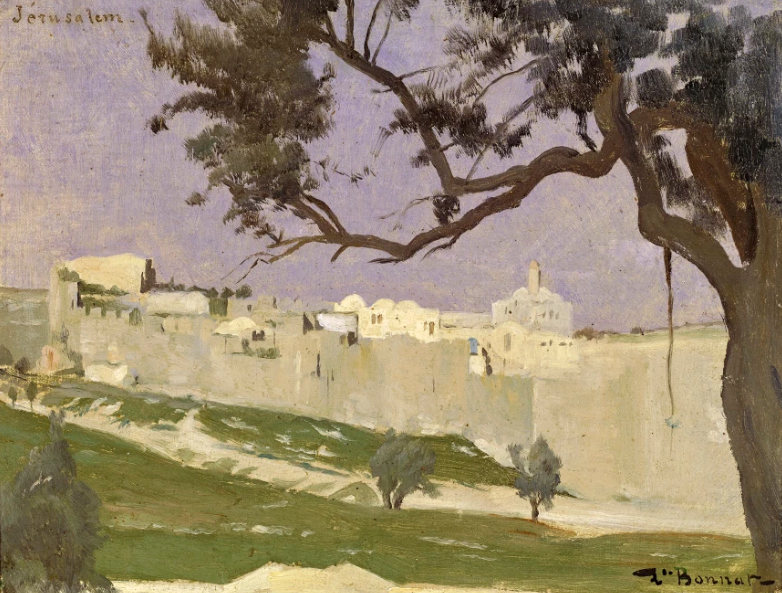
View of Jerusalem by Léon Bonnat

Although, as we will see later, Bonnat was best known for his portraiture and his early historical and religious subjects, but his landscapes and Orientalist depictions are looked upon as among his most intensely personal and beautifully crafted works.  Léon Bonnat travelled to the Middle East in 1868 together with a party that included the French painter, Jean-Léon Gérôme, his pupil Paul-Marie Lenoir,  the Dutch artist Willem de Farmas de Testas and Gérôme’s brother-in-law Albert Goupil.  The journey began in January 1868 at the Egyptian port of Alexandria and by the third of April, the group had arrived at the gates of Jerusalem.   Willem de Famars Testas recalled their first glimpse of the walled city:

“…The first glimpse of Jerusalem was gripping, the sun-illuminated city was silhouetted against a violet thundery light, while the outlying land lay under the shadow of clouds…”

Léon Bonnat recorded the impressions and the specifics of their arrival at the gates of Jerusalem in April of that year in one of his may oil on canvas sketches entitled View of Jerusalem.

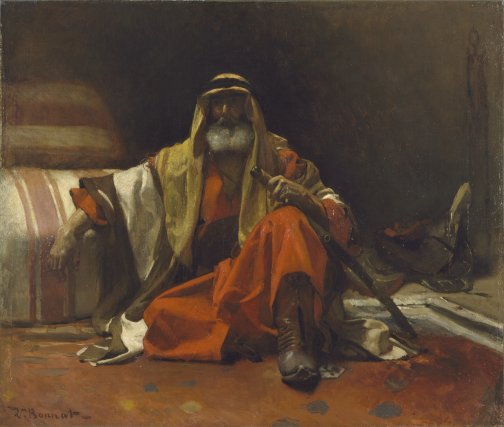
An Arab Sheik by Léon Bonnart (c.1870)

One of Léon’s works from this period was entitled An Arab Sheik which he completed once back in Paris.  It is thought that Bonnat’s depiction emerged from combining multiple resources such as the French model who posed for the seated figure; the saddle we see which Bonnat brought back from his travels and a multitude of sketched notations which he made during his travels in the Middle East.  Combining all this data Léon managed to create a painting that appears authentic, and yet, it is stereotypical of what Europeans believed about the Arabic world and its people such as the way the sheik holds his sword depicting his strength and fierceness and enhances how Europeans believed that that cultures in the Middle East and elsewhere were ruled by violence, in contrast to the supposedly more “civilized” societies of Europe and North America.

Christ on the Cross by Léon Bonnat(1674)

Bonnat’s haunting work entitled Christ on the Cross was commissioned in 1873 for the courtroom of the Cour d’Assises of the Palais de Justice in Paris.  The reasoning behind the commission was that it would embody divine justice in the eyes of the accused and by reminding them of the sufferings of Christ to save the fishermen. The painting was submitted  at the 1874 Salon.  The painting measures 1.59 meters in width and 2.27 meters in height. Bonnat’s depiction fundamentally renews the traditional representation of Christ on the cross. Christ is shown with a crown of thorns, his body is muscular and pale, and he wears a simple white loincloth. Blood is visible from the nails piercing his hands and feet. The background is dark and sombre. The crucified Christ is characterised in an extremely realistic way, accentuating Christ’s suffering due to the torture he received. Christ on the Cross is one of the best known and best loved crucifixion paintings of the western world. The painting can be viewed at the Petit Palais, Museum of Fine Arts of the City of Paris.

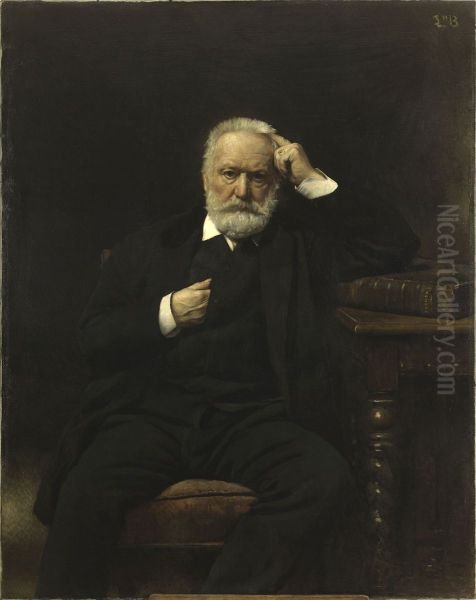
Victor Hugo by Léon Bonnat (1879)

For an artist to survive financially he or she must sell their work.  Once back in France, after his three-year stay at Villa Medici in Rome, Léon realised that the sale of his historical and religious paintings had fallen off and he had to look for another painting genre which would attract more buyers.  While Bonnat created many religious and historical works, his long-lasting fame rested on his exceptional career as a portrait painter. In an era before photography became the norm, painted portraits were central for chronicling the likenesses of important individuals, and Bonnat became one of the most sought-after portraitists of the French Third Republic and beyond. His sitters included presidents, politicians, writers, scientists, artists, and members of high society.

Jules Ferry by Léon Bonnat (1888) Jules François Camille Ferry was a French statesman and republican philosopher. He was one of the leaders of the Moderate Republicans and served as Prime Minister of France from 1880 to 1881 and 1883 to 1885.

Bonnat artistic brilliance as a portrait artist was his extraordinary skill in capturing not just a physical likeness but also the sitter’s charm, personality and social standing. His portraits are typified by their unruffled gravity, psychological perception, and scrupulous attention to every detail, whether it be the texture of fabrics to the detailed features of the face and hands. Bonnat often used dark, neutral backgrounds, which allowed viewers to focus entirely onto the subject, which were often illuminated by a carefully controlled light source, a technique evocative of the Spanish painter, Velázquez.

Portrait of Marthe and Therese Galoppe by Léon Bonnat (1889)

Marthe and Therese Galoppe were prominent figures in 19th-century France, known for their social standing and involvement in Parisian society. The painting captures their youthful beauty and grace, reflecting the evolving role of women in society during that time. Bonnat’s portrayal of the Galoppe sisters is significant as it showcases women not just as muses but as individuals with their own identities, challenging traditional views of women in art.

Armand Fallières by Léon Bonnat (1907) French statesman who was President of France from 1906 to 1913.

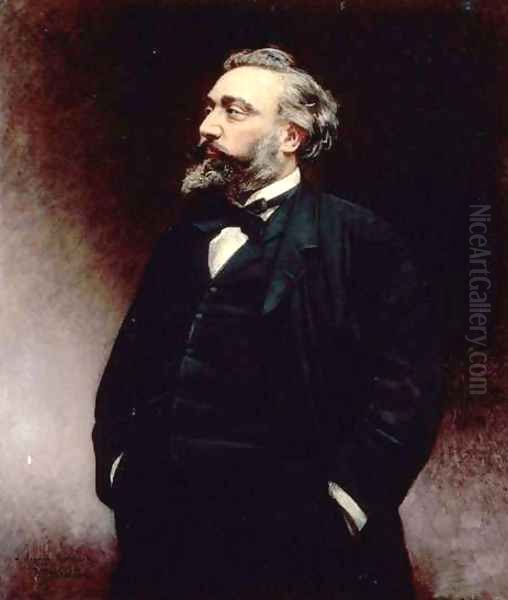
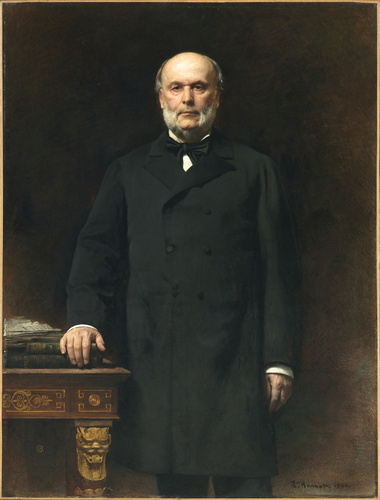
Among his most famous sitters were famous figures were the statesman Adolphe Thiers, the revered author Victor Hugo, the pioneering scientist Louis Pasteur, fellow painter Pierre Puvis de Chavannes, and French Presidents like Jules Ferry and Armand Fallières. Bonnat’s portraits served not only as personal records but also as official images that helped shape the public perception of these influential individuals. His success in this genre brought him considerable wealth and prestige.

Portrait of Léon Gambetta by Léon Bonnat (1888) Gambetta was a French lawyer and republican politician who proclaimed the French Third Republic in 1870 and played a prominent role in its early government.

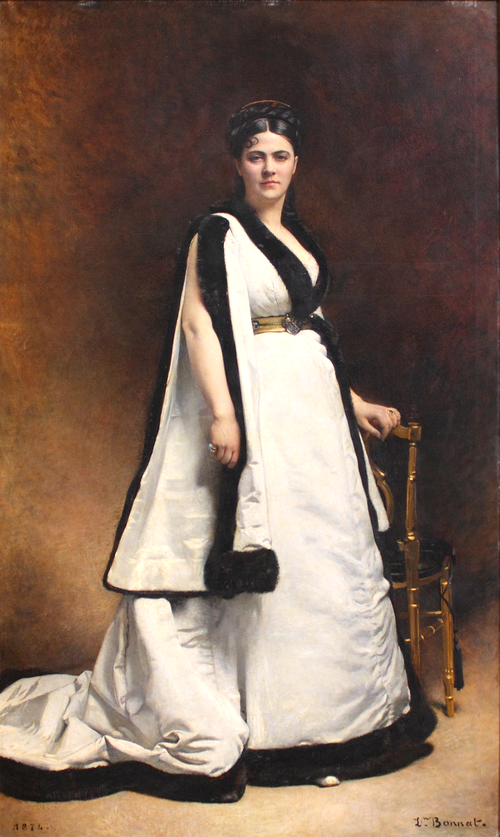
Madame Pasca by Léon Bonnat (1874) Alice Marie Angèle Pasquier was better known by her stage name Madame Pasca, a French stage actress.

Bonnat’s methodology when it came to creating portraits was known to be both thorough and painstaking. He demanded of his sitter numerous meetings so that he could carefully observe them in order to capture subtle gradations of expression and posture and because of this, he was able to achieve prolonged observations which allowed him to realise a high degree of naturalism along with psychological depth.  However, Bonnat’s long processes to achieve a finished portrait did not always please the sitters.  Although he was minded as to what the sitter wanted in the finished portrait, Bonnat refused to flatter his subject and simply strived for an unvarnished truth, but still conveying the dignity appropriate to the subject’s station in life. His commitment to authenticity along with his undoubted technical mastery in delivering form and texture, achieved the finished product being solid, present, and intensely real.

Portrait of Jules Grévy by Léon Bonnat (1880). Jules Grévy was  a French lawyer and politician who served as President of France from 1879 to 1887.

Léon Bonnat who had benefited, following the intervention of the mayor of Bayonne, Jules Labat, when he was granted a municipal scholarship from the city to study the Fine Arts in Madrid and then later in Paris, announced his intention to give his native city the gigantic art collection he had built up.  Léon Bonnat’s dedication to art extended well beyond his lifetime through this act of extraordinary generosity. Léon had no direct heirs, and decided to bequeath his extensive personal art collection, along with many of his own works, to his hometown of Bayonne.

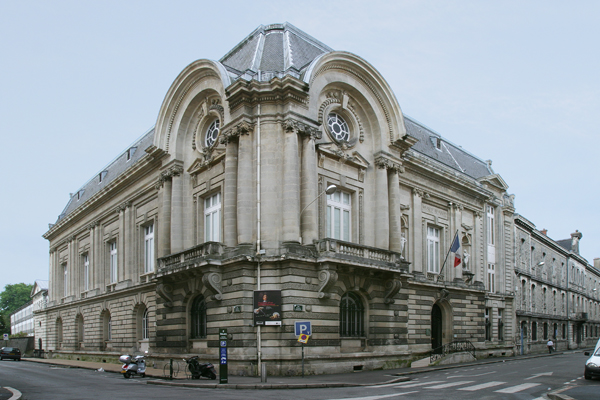
Musée Bonnat-Helleu in Bayonne, France

It was during the latter part of the nineteenth century that Bonnat had achieved financial stability and was able to indulge his passion for collecting art, especially drawings. He acquired sketches, drawings and prints by Rembrandt, Poussin, and Watteau as well as many others.  Eventually, his collection included drawings and paintings from the best of his students and colleagues as well. Like many collectors, Bonnat not only loved the art he had acquired, but he also hoped to share it with a larger public and so he proposed the idea of building a museum in his native Bayonne that would ultimately house his own collection. With his deep roots in the region, continuing family ties to Bayonne, and undoubtedly a sense of gratitude for the support he’d received as a fledgling painter, Bonnat worked tirelessly at developing the new museum. 

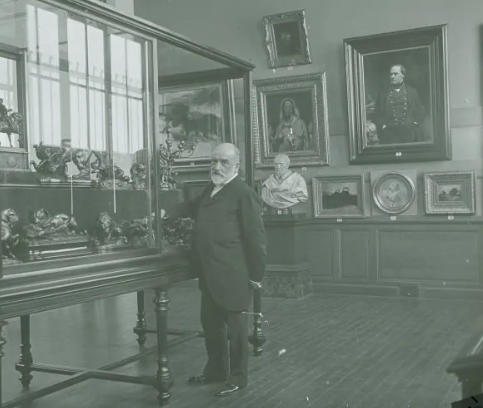
Léon Bonnat, installing his collection at the Musée Bonnat, Bayonne.

In 1902, he personally installed a large portion of his own unparalleled collection in the new Musée Bonnat.  The collection was later enriched by the donation of the collection of Paul Helleu and his wife Alice, leading to its current name, the Musée Bonnat-Helleu.  The chosen location of the museum was located at the corner of the two streets, Jacques-Laffitte and Frédéric-Bastiat, in the city centre, near the church of Saint-André where Léon Bonnat’s painting, Assumption of the Virgin can be seen. In 1896, the first stone of the future museum was laid by the Bayonne mayor Léo Pouzac and the classical-style building, in limestone, was completed eighteen months later. Inaugurated in 1901.  When the Bonnat Museum opened, the artist and collector came to set up his collection himself, while writing a will by which he bequeathed almost all of his works to the National Museums with the obligation to deposit them in Bayonne.

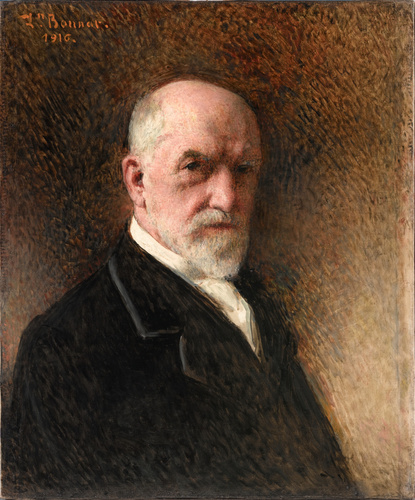
Self portrait by Léon Bonnat (1916)

Léon Bonnat died in Monchy-Saint-Éloi,  a commune in the Oise department in northern France, on September 8th 1922, aged 89.   Léon had never married and lived most of his life with his mother and sister. 

Léon Joseph Florentin Bonnat.

Self portrait by Léon Bonnat (1855)

The artist I am looking at today was one of the leading French painters of the nineteenth century.  He was a colossal figure in 19th-century French art, a painter whose career managed to tie together the past academic traditions with the proliferating trends of modernism. Let me introduce you to Léon Joseph Florentin Bonnat.

Madame Bonnat, mère de l’artiste by Léon Bonnat

Bonnat was born in Bayonne, in the French Basque Country in the far southwestern corner of France, close to the Spanish border, on June 20th1833.  He is remembered for his forceful, expressive and emotional portraits and yet he also made his name as talented history and religious painter, and an influential educator, who also built up a great personal art collection.

Portrait of Madame Melida, sister of Léon Bonnat by Léon Bonnat

In 1846. his family moved from France to Spain and went to live in the city of Madrid where his father took over the running of a bookshop. For thirteen years old Léon, who had developed a love of art this move was opportune. In the Spanish capital, Bonnat received his foundational art education, studying under the tutelage of José de Madrazo y Agudo one of the primary exponents of the Neoclassical style in Spain. He was also the patriarch of a family of artists that included his sons Federico and Luis; and his grandsons, Raimundo and Ricardo.  Federico de Madrazo y Kuntz, and his father were leading figures in Spanish academic art, and Federico was a renowned portraitist.

The Artist’s Sister by Léon Bonnat

Bonnat began his artistic education at the Academia Real de las Bellas Artes de San Fernando, in the studio of Federico Madrazo. Studying under Federico de Madrazo, he was plunged into the rich artistic heritage of Spain and he spent numerous hours in the Prado Museum, copying the works of Spanish Golden Age masters such as Diego Velázquez, Jusepe de Ribera, Francisco de Zurbarán, and Francisco Goya. These painters and their artworks had a great influence on Bonnat through their profound realism, dramatic use of chiaroscuro and the dignified way they depicted their subjects and their styles left an indelible mark on Bonnat’s developing style. Their portraits often used sombre palettes and this textural richness of Spanish art resonated deeply with him, and this style provided a contrast to the often more refined idealized French academic tradition that he would come across in his later years.

Job by Léon Bonnat (1880)

Léon’s father died in 1853 and Léon and his family moved back to France and their hometown of Bayonne.  Now back “home” Léon continued his art studies at the Ecole de Dessin de Bayonne, where one of his tutors was Bernard-Romain Julien, a French printmaker, lithographer, painter and draughtsman.  In 1854, with a stipend of 1500 francs from the city of Bayonne, Bonnat left Bayonne and travelled north to the French capital. His move to the French capital and the tuition costs were partly funded by the City of Bayonne. Having attained a strong foundation from his training in Madrid, Bonnat was able to enter the well-respected Ecole des Beaux-Arts. There, where he studied in the atelier of Léon Cogniet, a much admired historical and portrait painter. Cogniet’s studio was known for its demanding academic training, with great emphasis on students’ ability, emphasizing their drawing, and composition skills.  The students would also spend time studying the works of the old Masters. For a time whilst in Paris Bonnat briefly studied with Paul Delaroche, another prominent academic painter.

The Good Samaritan by Léon Bonnat

Adam and Eve Finding the Body of Abel by Léon Bonnat

Now in Paris, Bonnat began to create his reputation as an up-and-coming artist. In 1857, for the first time, he submitted paintings to the Paris Salon with works such as The Good Samaritan and Adam and Eve Finding the Body of Abel which demonstrated his skill in depicting religious and historical subjects, which confirmed the influence of his Spanish and Italian studies.

Villa Medici, Rome.

In 1857, whilst studying at the École des Beaux-Arts, Bonnat competed for the prestigious Prix de Rome in Painting, The Prix de Rome in Painting was one of the most prestigious awards in the field of fine arts. It was created in 1663, and this annual competition was organized by the Académie royale de peinture et de sculpture (Royal Academy of Painting and Sculpture) in Paris. Each year the winners of the Prix de Rome were sent to the Villa Medici in Rome to perfect their artistic training for a number of years.  The prize awarded to the winner was a scholarship that allowed promising artists to study cost-free in Rome. It was the goal of every early-career artist to win the award.   By rewarding talented young artists with a scholarship and a chance to stay at the Villa Medici in Rome, it was also seen as a way in which it helped to promote academic art and encourage artists to hone their skills. Bonnat, after two failures in 1854 and 1855 had made another attempt to win the prize in 1857.

The Resurrection of Lazarus by Léon Bonnat (1857)

Each year, entrants were given a subject to focus on and then present their submission in front of a demanding jury. This fierce competition encouraged artists to push their limits and express all their creativity.  The year, 1857, Bonnat attempted to win the award the subject matter chosen by the organisers was Lazarus. Léon Bonnat submitted his work entitled The Resurrection of Lazarus and he was awarded the second prize, which unfortunately did not include the full French state scholarship.

Lazarus Raised from the Dead by Charles Sellier

The winner of that year’s prize was the French painter who specialized in mythological and historical subjects, Charles Sellier with his painting, Lazarus Raised from the Dead.

Portrait of Léon Bonnat by Edgar Degas

Bonnat was pleased to receive the second-place award but disappointed that his prize did not allow him a three-year all expenses paid stay at the Villa Medici which was only awarded to the winner of the competition.  However, thanks to the financial assistance of a further 1500 francs granted to him by the city of Bayonne, as well as  money raised by some of the town’s wealthy citizens including the Personnaz family,  a wealthy Jewish family of fabric exporters,  he was able to spend the next three years in Rome, where he was able to study the works of the great Italian Masters, particularly the works of Raphael, Titian, and Michelangelo, as well as the powerful naturalism of Caravaggio.  During his stay in Rome, he also became friends with Edgar Degas, Gustave Moreau, Jean-Jacques Henner, and the sculptor Henri Chapu.

St Vincent de Paul Taking the Place of a Galley Slave by Léon Bonnat (1865)

Bonnat remained in the Italian capital from 1858 until 1861.   Bonnat’s early paintings, such as his 1865 St Vincent de Paul Taking the Place of a Galley Slave were renowned for their dramatic intensity and his religious works of that time strengthened his reputation in this genre.  This painting was based on a part of Vincent;s life. Vincent de Paul was an Occitan French Catholic priest who dedicated himself to serving the poor and became Chaplain-General of the Galleys in 1619, while working for the General of the Galleys of France, Philippe-Emmanuel de Gondi. This position took him to the port of Marseilles in 1622.   When not at sea, the galley slaves, or galères, would spend their time in a squalid prison in the fortified port’s prison. Vincent was horrified at the state of the prisoners and their environs and complained to his patron M. Gondi that such a situation could not continue if France was truly a Christian kingdom. Vincent began ministering to the galley slaves, providing aid to the Catholic prisoners, as well as to the enslaved Muslims and Protestants. At the same time, he instituted important reforms in relation to how these men were treated, regardless of their faith, and set about building a hospital in Marseilles to treat the galley slaves. Due to a lack of steady funding, the General Hospital of Galley Slaves, as it would eventually be called, was not finished until 1646.

Because of Léon’s artistic prowess and being looked upon as a leading academic artist, he was often asked to act as a juror for the annual Salon exhibitions, and in 1867, he was his nominated to the Legion of Honor.

…….to be continued.


Most of the information for these blogs about Léon Bonnat came from Wikpedia and these blogs:

NiceArtGallery

Rehs Gallery

Léon Bonnat by Guy Saigne

Vincent and the Galley Slaves

Musée Jacquemart-André, Baron Haussman and Georges de la Tour

Having been touring Europe for the last three weeks I have had a rest from my blog.   The last part of my journey was a short three-day stay in Paris and it was almost seven years since I had graced this wonderful city. I have visited many art galleries around the world, and my favourites have been the ones that offer something else other than walls of artwork.  I do like artwork which is hung on walls of the interiors of beautiful buildings.  It is like a 2 for 1 offering beautiful architecture and magnificent paintings.

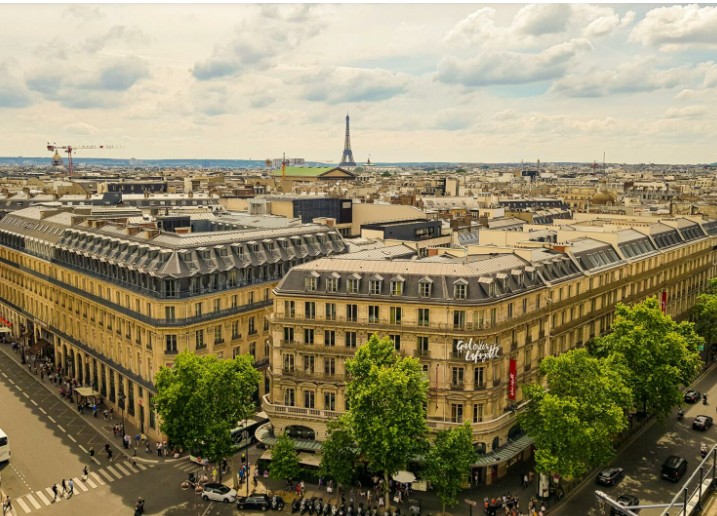
Baron Haussman’s Paris

Whilst in Paris there was an exhibition of one of France’s great 17th century artists, and one of the greatest exponents of 17th century Baroque painting, Georges le Tour.  However, first let’s have a look at the impressive building which was hosting the exhibition.  The Musée Jacquemart-André is a private museum located at 158 Boulevard Haussmann in the 8th arrondissement of Paris.  The street named after Georges-Eugène “Baron” Haussmann, a French administrator, who in the mid nineteenth century, with the backing of Emperor Napoleon III, was responsible for the transformation of the ancient impoverished and unhealthy areas of Paris which involved the demolition of 19,730 historic buildings and the construction of 34,000 new ones. Old narrow streets gave way to long, wide avenues characterised by rows of regularly aligned and generously proportioned neo-classical apartment blocks faced in creamy stone.

One such building was Musée Jacquemart-André, situated on Haussman Boulevard, which was the private home of Édouard André and his wife Nélie Jacquemart which was to display the art they collected during their lives. It was what the French term it as a hôtel particulier, a grand urban mansion. Edouard André bought land on the newly created Boulevard Haussmann with the intention of having a mansion built. Building started in 1869 by the architect Henri Parent and completed in 1875. 

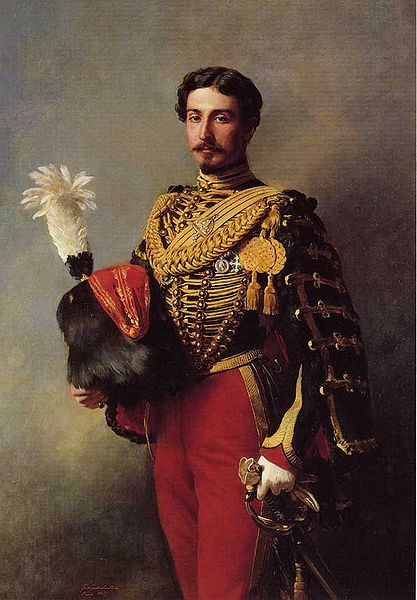
Portrait of Édouard André by by Franz Xaver Winterhalter. 

Nélie Jacquemart and Édouard André were an improbable and mismatched couple.  She was a Catholic woman and a famous society portrait painter, and he was the Protestant heir to a banking fortune. 

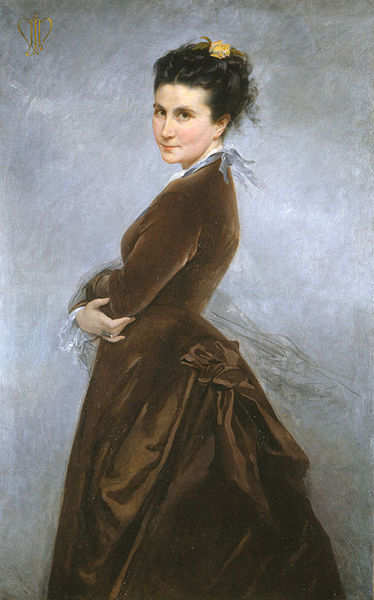
Nélie Jacquemart – Self portrait

They married in 1881. Nélie had painted Édouard André’s portrait ten years earlier. Each year, the couple would travel to Italy, buying works of art and slowly amassing one of the finest collections of Italian art in France. When Édouard André died in 1894, Nélie Jacquemart carried on the renovation of their home.  She also made many trips to Japan and neighbouring far-east countries adding many Oriental works to the collection.  Following her husband’s dying wishes, on her death in 1912, she bequeathed the mansion and its collections to the Institut de France as a museum, and it opened to the public in 1913. The couple’s relationship led to one of the most notable private art collections of fin-de-siècle Paris.

The Tapestry Room

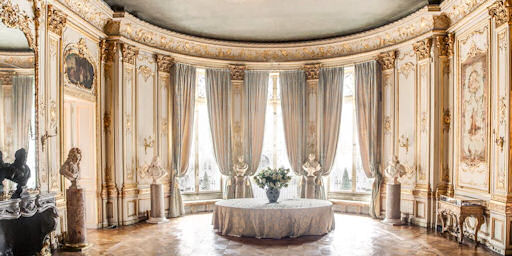
The Round Room

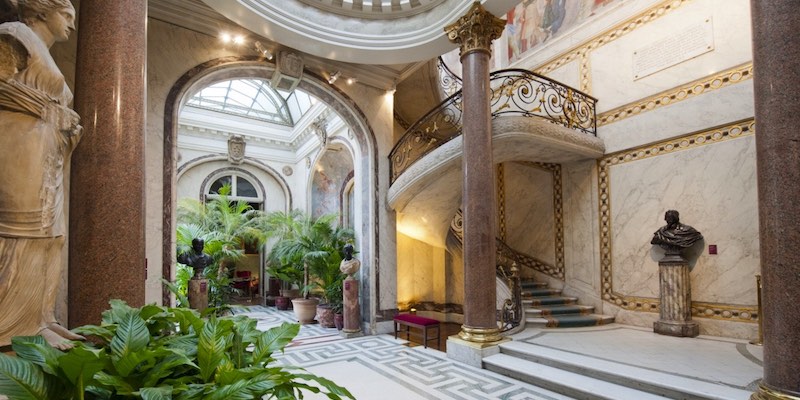
Once inside the Musée Jacquemart-André we are able to glimpse into the splendour of Parisian aristocratic life as it was in the 19th century.  We can witness the luxurious setting, both inside and outside of Édouard André and Nélie Jacquemart former mansion.  Adorned with the finest works of art, one can see in every room the evidence of their passion for Italian and French art.  This was a building which hosted extravagant receptions and soirees.

The Winter Garden and Staircase


Grand Salon

Their collection of Italian artwork which Nélie meticulously curated is legendary and includes paintings by Sandro Botticelli, Giovanni Bellini, and Andrea Mantegna. Besides these Italian works of art, the museum houses an remarkable array of French, Dutch, Flemish, and English paintings, as well as sculptures, antique furniture, and objets d’art. Wandering through rooms one observes how they have been preserved in their original state, and one feels that we have been immersed into the world of Parisian high society.

One of the State Rooms and Picture Gallery

The grand salons were designed for hosting lavish events and feature stunning frescoes, sculptures, grand sweeping staircases, and luxurious decor. The experience of walking through lavishly decorated rooms and halls allows us to see how the affluent lived in a bygone era of luxury.

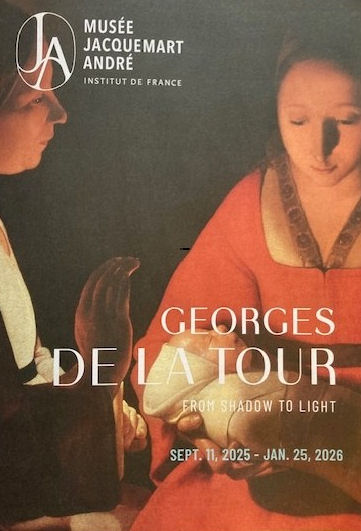
Once the excellent tour of the rooms and garden of the mansion was complete, I went to see the Georges la Tour exhibition which was spread across several upstairs rooms.   It was entitled From Shadow to Light which alludes to the way La Tour explored in his paintings nocturnal scenes, half hidden candles, light filtering through a translucent page, glimmers on a skull or a lantern punctuating the darkness in which meditation unfolds.

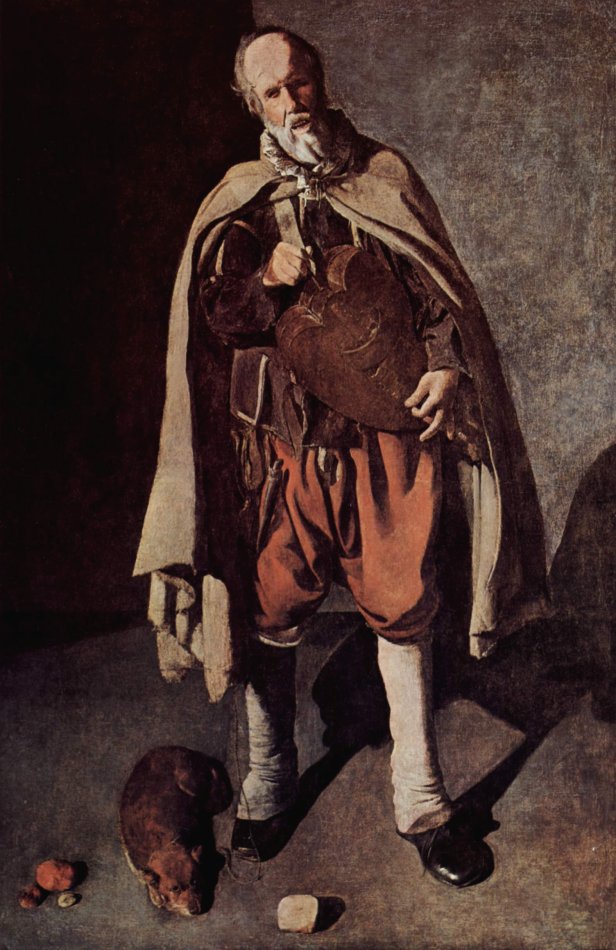
The Hurdy=Gurdy Man with a Dog by Georges de la Tour (1625)

Georges de la Tour was baptized in March 1593 in Vic-sur-Seille in Lorraine.  He was the second of seven children, born into a family of bakers.  Following a fire started by French troops during the Thirty Years’ War, his home, his studio, and some of his works were destroyed and he and some of his family escaped to Nancy.  A year later la Tour was appointed “First Painter to the King” by Louis XIII and as such, he lived in the Louvre and was officially recognized by the court and the Parisian artistic community.   At the height of his career, he painted for many prestigious patrons such as Cardinal Richelieu and the Dukes of Lorraine and became one of the wealthiest painters of his time.

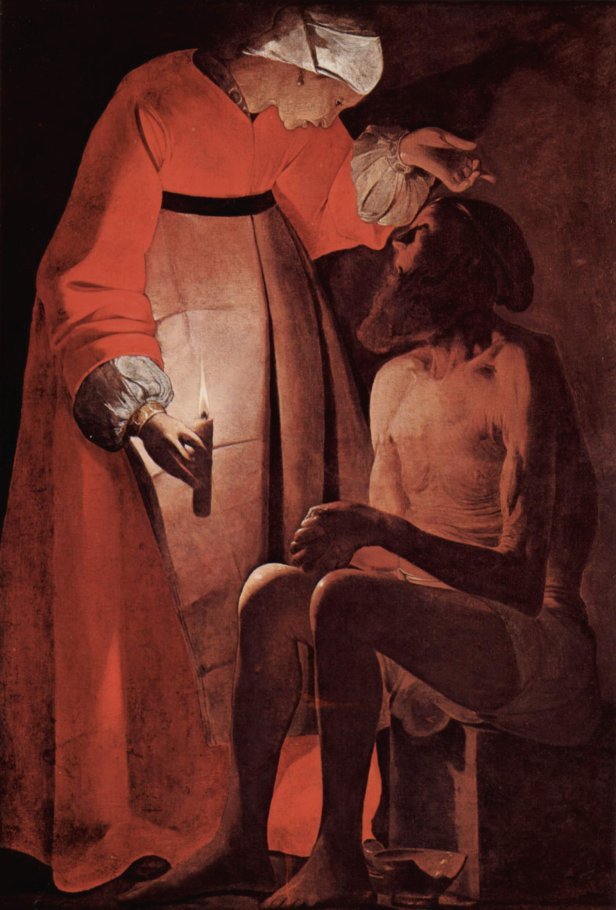
Job Mocked by his Wife by Georges de la Tour (1635)

As can be seen in his paintings, Georges de La Tour was influenced by the Italian painter Caravaggio whose style was then spreading throughout Europe. It is not thought that de la Tour ever travelled to Italy but he was probably influenced by Dutch and Lorraine Caravaggism.  De la Tour developed a personal and daring interpretation of chiaroscuro that made him truly original. His paintings are notable for their realism and sober compositions, which contrast with the dramatic intensity of Italian Caravaggist works. Although de la Tour’s work used the technique of chiaroscuro  his style is of painting is often alluded to as tenebrism.  Tenebrism, which comes from the Italian word tenebroso meaning dark, gloomy, mysterious and is a style of painting using especially pronounced chiaroscuro, where there are violent contrasts of light and dark, and where darkness becomes a dominating feature of the image. This technique was developed to add drama to an image through a spotlight effect and is common in Baroque paintings. Tenebrism is used only to obtain a dramatic impact while chiaroscuro is a broader term, also covering the use of less extreme contrasts of light to enhance the illusion of three-dimensionality.

St Peter Repentent by Georges de la Tour (1645)

The pamphlet that went with the exhibition describes the painting of St Peter as:

“…The celebrated St Peter Repentent exemplifies this sober style, in which lightbecomes the principal sign of the divine. The visual rhyme between the saint’s tonsureand the rooster’s crest introduces a discreet irony, a singular perspective on religious iconography…”

The painting is based on the Bible story of Jesus’s arrest on the night of the Last Supper, when the apostle Peter denied knowing him. Although Christ forgave his betrayal, Peter was consumed by guilt. In his painting, La Tour represents Peter as an old man, reflecting on his past actions in a state of perpetual repentance. The apostle’s red-rimmed eyes and the uncertain light of the lantern evoke the feeling that the Peter has spent anxious sleepless nights and the use of muted colours and simple forms give visual expression to Peter’s solemn and dejected emotions.

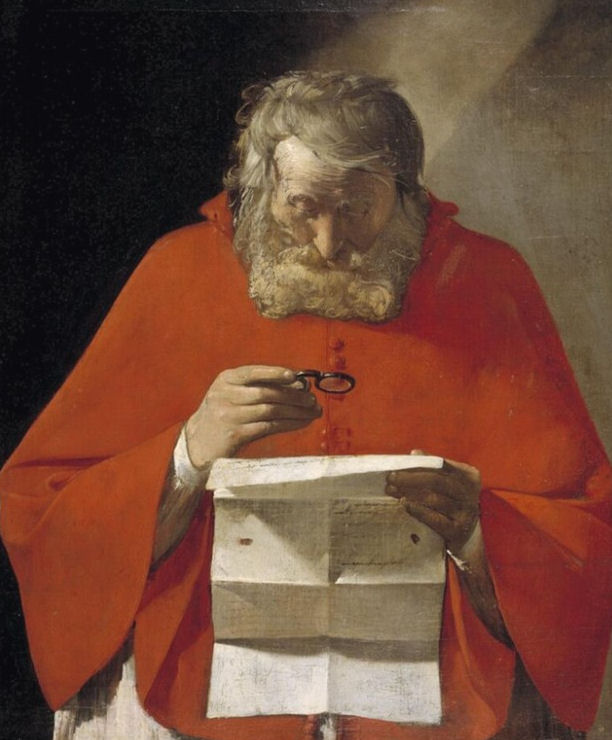
St Gerome Reading a Letter by Georges de la Tour (1629)

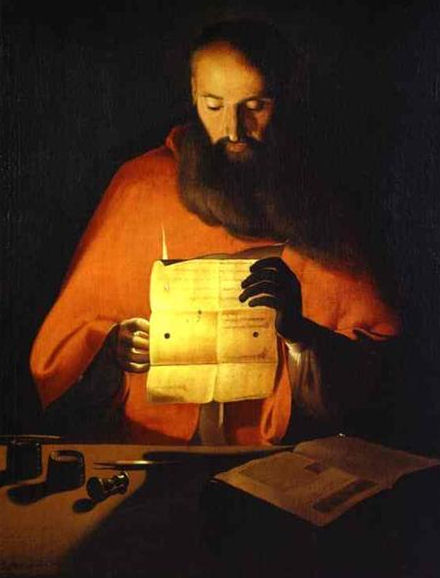
The painting by Georges de la Tour’s Saint Jerome Reading a Letter was completed around 1629 and is a masterclass in how to make a single, ordinary action, in this case, reading, carry the weight of a whole life. St Jerome was an early Christian priest, confessor, theologian, translator and historian and his image fills the frame at half-length, wrapped in a cardinal-red mantle.  His head bends slightly forward, and a wisped halo of grey hair catches the light that slants in from the upper right in a wedge-like form.  In his left hand, Jerome holds a creased sheet of paper and in his right hand, he lifts a small pair of spectacles toward the page, trying to focus on the written words.

St Jerome Reading by Georges de la Tour (1650)

Georges de La Tour is best known for his religious paintings, which are instilled with extraordinary spiritual intensity despite the look of simplicity. In complete contrast to the religious works, de la Tour was interested in scenes of games of cards and dice as well as genre scenes. His interest in depicting card players and card cheats can be seen in two versions he made two years apart.

The Cheat with the Ace of Clubs by Georges de la Tour ( 1630–1634)

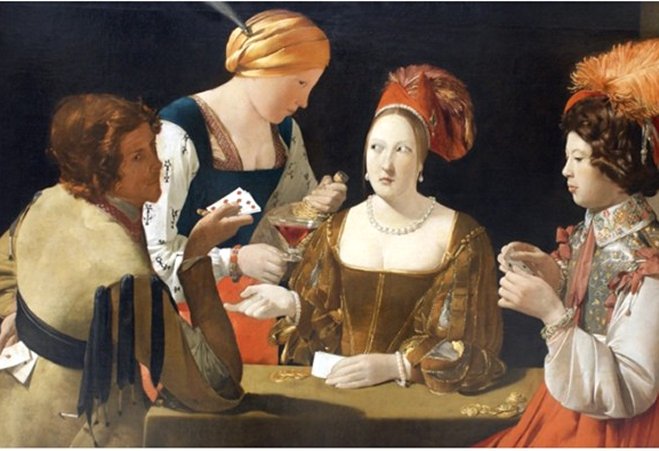
The earlier version is one of two versions of the composition by de la Tour and is known as The Cheat with the Ace of Clubs.   There are a number of variations in details of colour, clothing, and accessories between the two paintings.  This one is now hanging in the Kimbell Art Museum in Fort Worth, Texas.

The Card Sharp with the Ace of Diamonds by Georges de la Tour (1636-38)

The work, the later variation, depicts a card game in which the wealthy young man on the right is being cheated of his money by the other players, who both appear to be part of the scheme. The card sharp on the left is in the process of retrieving the ace of diamonds from behind his back.

The Dice Players by Georges de la Tour (1651)

De la Tour’s painting entitled The Dice Players is a genre painting which he completed in 1651.  In the work he depicts a group of five figures who are deeply absorbed in their game with dice. Their intimate gathering around a table, illuminated by a single, subtle light source, is a good example of his tenebrism-style that emphasizes dramatic contrasts between light and dark. Look how each figure has a different facial expression as we see them all concentrating on the game.  Besides this, look at how the artist has depicted details of their period clothes and he has created, through the dim, atmospheric lighting, a vivid record of 17th-century life, and a sense of realism to the scene. De la Tour has used a sombre palette and the careful attention to textural details highlights the gravity of the moment.

Payment of Taxes by Georges de la Tour (1620)

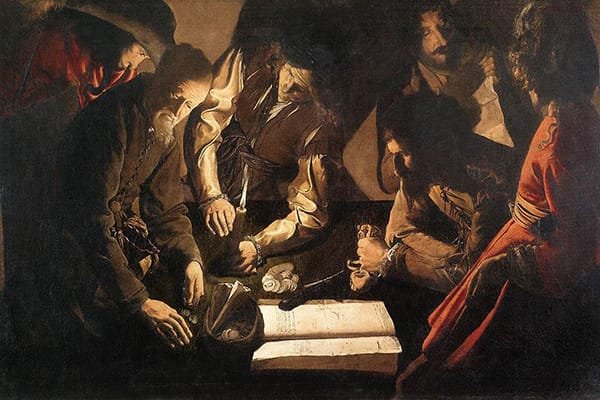
The painting entitled Payment of Taxes by Georges de La Tour was completed around 1620. Once again it highlights la Tour’s love of the artistic movement known as Tenebrism which is characterized by dramatic illumination and stark contrasts between light and dark. It is a large painting measuring 152 by 99 centimetres. The painting depicts a group of figures huddled together around a table. The depiction is dramatically lit by a single, stark light source, casting deep shadows and creating a profound sense of volume and space. This light appears to emanate from a candle or lantern which is out of view, highlighted by the reflective surfaces and illuminating select portions of the figures and objects. The men gathered around the table are engaged in an exchange, with a distinct focus on the act of counting or possibly exchanging money. The artist has focused their expressions and their hands and that emphasizes the gravity and concentration of the transaction at hand. The use of light and shadow not only gives the scene an emotional feeling but it also guides the viewer’s gaze through the composition, emphasizing the movement of money encapsulated in this painting.

Peasant Couple Eating by Georges de la Tour (c.1620)

Georges de la Tour’s painting entitled Peasant Couple Eating was completed around 1623, at the early part of his artistic career.   The two half-length figures which are almost life-size are tightly framed in the pictorial space.  They face us as if we have interrupted them during their meagre meal of dried peas.  The man exhibits a sour and resentful look as he looks down.  The woman stares fixedly at us with her deep-set almost dead eyes as she raises a spoon to her mouth.  As the background is a simple grey, we have no idea where the event is taking place.  However, this background enhances the old couple.  The painting of half-length figures like this one was a characteristic of Caravaggio’s style, an artist who influenced de la Tour in his early works.  This painting proved very popular and there are records of three 17th century copies.

In the book, Georges de la Tour of Lorraine, 1593-1652, by Furness, the author wrote of the artist:

“……Georges de la Tour is classed as a realist.  Realist he is in that his subjects, predominantly if not exclusively religious, are represented in terms of “real” life, often the life of his own country-town and surroundings in Lorraine.  But he avoided naturalism; rather, he chose to simplify, modelling his forms by marked contrasts of light and shade, and using large volumes and severe lines, with great selective economy of detail…”


Some of the paintings shown in this blog were not at the exhibition but I wanted to show you more of la Tour’s work.

Did I enjoy the exhibition ? The painting were excellent. However, for me the downside was two-fold. Firstly the rooms displaying the paintings were overcrowded (and this was a timed-enterance exhibition). Some people were moving clockwise whilst others moved anticlockwise and it felt slightly claustrophobic. Secondly all the paintings were accompanied by a card describing the work but they were all in French, rather bilingually. My love of visiting art museums is to buy a book with regards the exhibition and in this case a book about the actual museum itself and the works of the artist were on sale in many languages but none in English.. Brexit ???

I recommend you to the gallery website:

Musée Jacquemart-André | Museum in Paris

Mark (Max) Gertler. Part 2.

Mark Gertler

Gertler had now settled into life at the Slade art academy.  One of his fellow students, C.R.W Nevinson  summed up life at the Slade when he and Gertler were students there saying it was full with a crowd of men such as I have never seen before or since..  As far as his thoughts on Gertler, he once wrote that Max was the genius of the place… and the most serious, single-minded artist he had ever come across.   Gertler was considered the best draughtsman to study at the Slade since Augustus John. Another student, Paul Nash, said that Gertler riding high “upon the crest of the wave”.

Still life with a Bottle of Benedictine by Mark Gertler

In 1910 a new seventeen-year-old student arrived at the Slade Academy of Art who was to add a little “spice” to the lives of Gertler and some of the other students.   Dora de Houghton Carrington, who after joing the Slade, became known simply by her surname, Carrington, as she considered Dora to be vulgar and sentimental. Gertler and C.R.W. Nevinson both became closely attached to Carrington and according to Michael J. K. Walsh 2002 biography, C. R. W. Nevinson: The Cult of Violence, he wrote about that impossible situation:

“…What he (Nevinson) was not aware of was that Carrington was also conversing, writing and meeting with Gertler in a similar fashion, and the latter was beginning to want to rid himself of competition for her affections. For Gertler the friendship would be complicated by sexual frustration while Carrington had no particular desire to become romantically involved with either man…”

This was unfortunate as Gertler and Nevinson had become great friends.  Gertler wrote to his sponsor, William Rothenstein saying:

“…My chief friend and pal is young Nevinson, a very, very nice chap. I am awfully fond of him. I am so happy when I am out with him. He invites me down to dinners and then we go on Hampstead Heath talking of the future…”

In Michael J. K. Walsh’s biography of Nevinson, Hanging a Rebel: The Life of C.R.W. Nevinson, he wrote:

“…Together they studied at the British Museum, met in the Café Royal, dined at the Nevinson household, went on short holidays and discussed art at length. Independently of each other too, they wrote of the value of their friendship and of the mutual respect they held for each other as artists…”

C.R.W. Nevinson, himself, wrote of his friendship with Gertler in his 1937 autobiography, Paint and Prejudice:

 “…I am proud and glad to say that both my parents were extremely fond of him.” Henry Nevinson recalled: “Gertler came to supper, very successful, with admirable naive stories of his behaviour in rich houses and at a dinner given him by a portrait club, how he asked to begin because he was hungry…”

Gertler pursued Carrington for a number of years, and they had a brief sexual relationship during the years of the First World War.

Portrait of a Girl ( Gertler’s Sister, Sophie) by Mark Gertler (1908-1911)

As is the case for many young aspiring portrait artists, Gertler, before he painted commissioned works, began by painting portraits of family members. One of his most frequent depictions was of his mother.

The Artist’s Mother by Mark Gertler (1913)

In this painting of his mother Golda Gertler has depicted her as a peasant with huge, working hands. He called the portrait ‘barbaric and symbolic’, explaining that it was meant to show ‘suffering and a life that has known hardship’.

The Artist’s Mother by Mark Gertler (1911)

Gertler once wrote rather disparagingly about his sitter:

“… “I am painting a portrait of my mother. She sits bent on a chair, deep in thought. Her large hands are lying heavily and wearily in her lap. The whole suggests suffering and a life that has known hardship. It is barbaric and symbolic. Where is the prettiness! Where! Where! …”

Portrait of the Artist’s Mother by Max Gertler (1924)

This was the final portrait Gertler’s mother.  In this work there is no hint of sentimentality or the personality which came to the fore in his earlier portraits of her.  It is a depiction of dominance and authority.  The art critics of the time highly praised it.  Gertler loved the finished portrait and whether he was concerned that it would be bought and taken from him, it made him put a price of £200 on it in the hope that this would put off buyers.  It didn’t work as it was bought for the full asking price, which was the highest price any of his works fetched during his lifetime !

Portrait of the Artist’s Family, a Playful Scene by Mark Gertler (1911)

Gertler completed many more paintings of his family.  One such was his Portrait of the Artist’s Family, a Playful Scene which he completed in 1911. It depicts a room in the  family’s Spital Square house with his two brothers Harry and Jack watching their sister tickling their mother who has fallen asleep in her chair.

Still Life with Bowl, Spoon and Apples by Mark Gertler (1913)

Mark Gertler, like many young artists, was interested in new art trends, some of which he may be able to experiment with.   In November 1910 an influential exhibition opened at London’s Grafton Rooms entitled Manet and the Post-Impressionists curated by Roger Fry, which introduced the work of artists such as Cézanne, Gauguin, Van Gogh, and Picasso, to English art lovers.  Despite some derogative remarks from well-known critics, Gertler found the exhibition amazing and began to experiment with brighter colours and flatter styles.  In 1913 Gertler completed his painting, Still Life with Bowl, Spoon and Apples which displayed the influence of Cezanne

The Pond by Mark Gertler (1917)

The influence of Cézanne on his work, can also be seen in his 1917 work The Pond.  In this depiction we see the branch of a tree extends like an arm pointing to the silvery pond which can be seen in the mid-distance, created from a patchwork of overlaid paint strokes. Gertler uses an abstract arrangement of colours to capture the lush greenness of this quiet spot, emulating the dappled effect of light and colour reflecting on the still surface of the pond.  He has created a sense of depth in the way he has built up his painting with blocks of colour, which creates the impression of standing beneath the tree, overlooking the scene. 

Garsington Manor and Gardens

The painting was completed by Gertler whilst he was staying at Garsington Manor, the Oxfordshire residence of renowned literary and artistic patron Lady Ottoline Morrell.   It is believed that the painting, The Pond, was based on the fish pond at Garsington. At the outbreak of the First World War, Gertler was one of many artists and writers associated with the Bloomsbury Circle invited to Garsington Manor. Many were conscientious objectors who worked on the estate.

The Jewish Family by Mark Gertler (1913)

In 1912 Mark Gertler moved from the family home into the top-floor attic studio of 32 Elder Street, Spitalfields, which he shared with his brother Harry and Harry’s wife, and was just around the corner from the family home. Gertler remained deeply attached to home, family and the vital Jewish culture of his native Spitalfields/Whitechapel area of London’s East End, and this can be seen in his 1913 painting The Jewish Family.  It was a depiction of a family of four of differing generations and could well be based on his own family members. The painting was bought by Edward Marsh, a scholar and influential art collector, who became a patron of Gertler.  Sir Edward Marsh through the Contemporary Art Society bequeathed the painting to the Tate, London in 1954.

Around this time Mark Gertler became good friends with the writer Gilbert Cannan who based the title character of his 1916 novel Mendel, A Story of Youth, directly on intimate conversations he had with Gertler who talked about his early life and his relationship with C. R. W. Nevinson and Carrington.   “Mendel” being the Yiddish given name of Gertler.

Gilbert Cannan at his Mill by Mark Gertler (1916)

Mark Gertler’s friendship with Gilbert Cannan flourished and in 1914 he went to stay with the writer and his wife, Mary, in their Hertfordshire home, a converted windmill, at Cholesbury.  Cannan had been employed as a secretary by J. M. Barrie, the Scottish novelist and playwright, best remembered as the creator of Peter Pan. A relationship developed in 1909 between Cannan and Barrie’s wife Mary Ansell, a former actress, who felt ignored by her husband.  Although attempts were made by her husband to save their marriage they were divorced and she and Cannan were married in 1910.  Mark became a regular visitor at Cannan and Mary’s windmill house and it is thought that he began making preliminary sketches during his early visits and completed his painting Gilbert Cannan at his Mill in 1916.  It depicts Cannan with his dogs, Luath and Sammy.  Cannan’s wife Mary owned Luath, and he had been the model for Nana, the Newfoundland dog in Peter Pan. Sadly the relationship of Cannan and Gertler declined after 1916, mainly because of Cannan’s increasingly unstable behaviour.

Merry-go-Round by Mark Gertler (1916)

 At the outbreak of the First World War in 1914 there was a call to arms and Max applied for military service but was rejected on the grounds of his ‘Austrian’ parentage.  In 1918 he again applied but was  then later, after being called up in 1918, excused active service on the grounds of ill health which fortunately for Max avoided being forced to publicly declare his pacifist convictions, which were instead pictorially articulated in his 1916 anti-war painting entitled Merry-Go-Round.. Is this simply a painting of a carousel and people enjoying themselves or is there something more we should get from the depiction.  The Painting is part of the Tate Britain’s collection and was begun in May 1916 when Gertler wrote to Lytton Strachey about it:

“… ‘I am working very hard on a large and very unsaleable picture of “Merry-Go-Round…”‘

Max completed it the following autumn. Merry-Go-Round depicts men in uniform with their girlfriends close by their side.  Maybe it was the last time they had to enjoy life before they were sent to Europe to fight for King and Country.  But all is not well as the facial expression on the men is not one of joyfulness that such rides would inspire.  The faces are fixed in what looks like a cry for help.  Like the ride itself, which is unstoppable, probably too is their fate on the fields of war. When it was exhibited, it was looked upon by many critics as one of the most important war painting.  The writer, D. H. Lawrence, wrote to Gertler:

“…I have just seen your terrible and dreadful picture Merry-go-round. This is the first picture you have painted: it is the best modern picture I have seen: I think it is great and true. But it is horrible and terrifying. If they tell you it is obscene, they will say truly. You have made a real and ultimate revelation. I think this picture is your arrival…”

In an interview in 2021, Jeannette Gertler, Mark’s niece talked about the Merry-go-Round painting and she told the interviewer:

“…It was very controversial, not popular. People were annoyed about it and it was slated so much because it was making fun of the war. Making fun of the soldiers going around and around, achieving nothing. They thought it was very naughty of him to do that. Dispiriting. But he was opening their eyes. Really he was…”

On being asked what the Gertler’s family made of the painting Jeannette said:

“…They didn’t mind, Mark was their golden boy, their star, but other people were very annoyed about him making fun of the war. The boys were all pacifists you see. The family, they’d had enough trauma, as Jewish émigrés you know…”

Queen of Sheba by Mark Gertler (1922)

In 1920, Gertler was diagnosed with tuberculosis and was forced to enter a sanatorium.  He would have to attend these medical facilities on a number of occasions during the 1920s and 1930s. These health issues created an unsettling period for Gertler but he decided to go to Paris and returned home full of ideas.

Mandolinist by Mark Gertler (1934)

He was inspired by the great French painter Renoir, who was a leading painter in the development of the Impressionist style.  Gertler especially liked Renoir’s figurative paintings and on returning to London he began to focus on female portraits and nudes, and would sometimes combine figures with elaborate, colourful still lifes.  The 1920’s was to become his commercially most successful decade.

The Violist by Mark Gertler (1912)

Two of Gertler’s preliminary Studies for The Violinist (1912)

Continuing with musical depictions I come to Gertler’s famous 1912 figurative painting entitled The Violinist but, referred to in a letter by Gertler, as The Musical Girl, which he started whilst attending the Slade Art School. He created preliminary pencil head sketches before he completed two oil on panel versions of The Violinist.  The completed painting shown above is the second version.   We do not know the name of the sitter but we do know she was a music student and a friend of Gertler’s family.  Gertler was obviously taken by her distinctive looks with her striking, crop-haired, grey-eyed female who obviously captured his imagination.  His sitter wears a loose, open-necked, vivid purple blouse.  The vibrant colours of her clothing and background are perfectly balanced against the luminous skin tones. It is not the clothes we focus on but her face and her downward-looking eyes with their delicate lids relating closely to the earlier pencil study for the work.  The painting was sold for GBP 542,000, the most paid for a Gertler painting. The top preliminary study sold for GDP 62,500.

Talmadic Discussion by Mark Gertler

It was around 1925 that Mark Gertler met Marjorie Greatorex Hodgkinson who had begun studying at the Slade under Henry Tonks in 1921. That same year Gertler was admitted to Mundesley Sanatorium in Norfolk, and Marjorie’s visits to him and her caring nature seemed to boost his health.  He and Marjorie married in 1930 and their son Luke was born two years later.

Sales of Gertler’s paintings declined during the 1930s but despite their poverty, the Gertlers maintained a busy social life while Mark’s work continued with the still lifes, portraits and monumental nudes such as the Mandolinist.  Sadly, Gertler suffered from long bouts of depression, and other forms of ill-health.  Max’s marriage to Marjorie suffered because of his poor physical and mental health and by the mid-1930s, despite his efforts to improve matters, the marriage had deteriorated and Gertler’s mental health worsened and he became suicidal.

The Basket of Fruit by Mark Gertler

His mental decline was also part caused by the death of his close friends; the writers Katherine Mansfield in 1923 and D. H. Lawrence to tuberculosis in 1930.  Mark’s friend, and once a fellow student of his at the Slade, Dora Carrington, committed suicide in 1932, two months after her close friend, Lyllton Strachey’s death.  That same year Mark Gertler’s mother died.  Gertler went on painting trips to Europe to help his moods but this didn’t work and to make things worse many art critics began to slate his work.

Self portrait with Fishing Cap by Mark Gertler

Gertler’s final exhibition, held at the Lefévre Gallery in May 1939, failed to attract visitors and he sold only three works. Not long after, on June 23rd 1939, Mark Gertler gassed himself in his Highgate studio. He was buried four days later in Willesden United Synagogue Cemetery.


Once again information for this blog came from ma ny Wikipedia sites but also from these excellent websites:

Ben Uri Research Unit

Art UK

A Crisis of Brilliance

Spartacus Educational

Fine Art Society

New English Art Club

Glyn Vivian Gallery

Christies

Théophile “Théo” van Rysselberghe Part 1.

The artist I am looking at today is Théophile “Théo” van Rysselberghe a Belgian neo-impressionist painter, who was a major protagonist in the European art scene at the turn of the twentieth century.

Self-portrait in a Green Waistcoat (1924)

Théo was born in Ghent on November 23rd 1862, the youngest child of Jean-Baptiste and Melanie van Rysselberghe and had five bothers and a sister. He was brought up in a French-speaking middle-class home. His first art training occurred when he attended the Royal Academy of Fine Arts in Ghent studying under the Belgian painter, Theo Canneel.

Oriental Beauty by Jean-François Portaels

In 1879 he enrolled at the Académie Royale des Beaux-Arts in Brussels under the directorship of Jean-François Portaels, a Belgian painter of genre scenes, biblical stories, landscapes, portraits and orientalist subjects. Portaels is regarded as the founder of the Belgian Orientalist school and his North African paintings had started an orientalist fashion in Belgium. This aspect of Portaels’ work had a great influence on the young Théo van Rysselberghe, so much so that he made three extended painting trips to Morocco between 1882 and 1888.

Self-portrait with Pipe by Théophile “Théo” van Rysselberghe (1880)

In 1880, when Theo was eighteen years of age he submitted and had accepted two portraits to the Salon of Ghent and that year completed a self-portrait entitled Self Portrait with Pipe. In 1881, he exhibited for the first time at the Salon in Brussels.

Portrait of a Young Spanish Woman by Théophile “Théo” van Rysselberghe

Spanish Woman by Théophile “Théo” van Rysselberghe (1880)

In 1881 Theo made his first trip to Spain and Morocco, along with his friend Frantz Charlet, a Belgian painter, etcher, and lithographer and the Asturian painter Darío de Regoyos. It was Theo’s intention to follow in the footsteps of his mentor, Jean-François Portaels.

Descent from the Cross by Pedro Campaña (1547)

Whilst in Madrid he visited the Museo del Prado and later the trio visited Seville where Théo met Constantin Meunier, who had been commissioned by the Belgian government to copy Pedro Campaña’s Descent from the Cross which was mounted on the back wal of the Sacristia Mayor of Seville Cathedral.

Dario de Regoyos playing the guitar by Théo Van Rysselberghe (1882)

During Théo’s stay in Spain he made time to complete a portrait of his fellow traveller, Darío de Regoyos, playing his guitar.

Arabian Street Cobbler by Théo Van Rysselberghe

Moroccan Market by Théo Van Rysselberghe (1883)

Théo arrived in Tangier at the end of October 1882 and suddenly he realised that he had entered a “new” world, so different from the Europe he had come from. He stayed in the town for four months continually sketching and painting street scenes, the kasbah and the souk.

The Oyster Eater by James Ensor (1883)

In April 1883 he exhibited these scenes of everyday Mediterranean life at the Salon L’Essor, in Brussels. L’Essor was an association of visual artists in Brussels, which was active from 1876 to 1891. Its original aim was to rebel against the conservative tendencies of the art institutions and art circles in Brussels. However in 1883 some of the artists of this group were dissatisfied with the ruling body of the group with regards its admission policy, lack of direction and their controversial decision to reject Belgian Expressionist painter James Ensor’s The Oyster Eater in the 1883 L’Essor Salon. However, it has to be remembered that the previous year the Antwerp Salon jurists had rejected the same painting. It is thought that the rejection was because of the sexual overtones suggested by a single young woman eating oysters, which at the time was considered to be an aphrodisiac.

Portraits of or work by the 11 original founders of Les XX. Upper register, left to right: Darío de Regoyos y Valdés, Guillaume van Strydonck, Théo van Rysselberghe, Fernand Khnopff and a portrait of Willy Finch by Magnus Enckell. Bottom, left to right: La donna morta by Willy Schlobach, Rodolphe Wytsman, Le viatique qui passa (1884) by Charles Goethals, a medal made by Paul Du Bois, and a painting by Frantz Charlet. Right, larger image: James Ensor.

Portrait of Octave Maus by Théo Van Rysselberghe

Portrait of Octave Maus by Théo Van Rysselberghe (1885)

Van Rysselberghe and James Ensor were two of the eleven artists who left L’Essor and became founding members of the breakaway group, Les XX. Les XX became a group of twenty Belgian painters, designers and sculptors, formed by the Brussels lawyer, publisher, and entrepreneur Octave Maus, who, with his wife, featured in a number of van Rysselberghe’s portraits between 1883 and 1890, Each year twenty other international artists were also invited to participate in the Les XX exhibitions. Among the most notable members were James Ensor, Willy Finch, Fernand Khnopff, Félicien Rops, and later Auguste Rodin and Paul Signac.

Emile Verhaeren by Théo Van Rysselberghe

Emile Verhaeren by Théo Van Rysselberghe ((1892)

Rysselberghe completed many portraits and it was around 1882 that he struck up a close friendship with the poet and art critic Emile Verhaeren who featured in many of Théo’s portrait works. The lower work was viewed as a masterpiece of Neo-Impressionist drawing and aroused the passions of true connoisseurs. The sketch sold for 150,000 euros in 2006, it was offered at the same auction house, Christie’s Paris, on 21 October 2023 with an astonishing estimate of 60-80,000 euros. After a fierce bidding war, it sold for €240,000. This works out at €302,000, with the buyer paying the substantial sales costs.

Portrait of Marguerite van Mons by Théo Van Rysselberghe (1886)

Another of Rysselberge’s portraits featured the daughters of his friend Emile van Mons, a lawyer and well-known art lover. The June 1886 Portrait of Marguerite van Mons features ten-year-old Marguerite shortly after the death of her mother. She stands facing us wearing a simple black dress in front of a pastel blue door on which are a number of gilded ornaments. Her right hand holds the doorknob as if she had just entered or was about to leave the room. There is an air of mystery and melancholia about the depiction as the pale-faced girl stares absently out at us

Portrait of Camille van Mons by Théo Van Rysselberghe (1886)

Months earlier van Rysselberghe had completed a portrait of Marguerite’s elder sister, Camille.

……. to be continued

.


Most of this information for this blog came from various Wikipedia sites.

Hannah Harrison Cohoon and the Shakers.

My short blog today is about n artist and a religion. It looks at the life and works of Hannah Cohoon, a person you may not have heard of before. Her art is both unusual and simplistic and is connected to a millenarian restorationist Christian sect known as The United Society of Believers in Christ’s Second Appearing, but more commonly referred to as the Shakers. The group grew out of a branch of Quakerism around  1747 in Northwest England and later, the visionary Ann Lee (Mother Ann) brought Shakerism to America in the 1780s.

Shaker workshop service showing worshippers on benches and marching in a spiral.

The Shakers were so-called because of their practices of shaking, dancing, whirling, and speaking, shouting, and singing in tongues.

Hancock Shaker Village

Round Stone Barn and Fields

Hannah Harrison Cohoon was an American painter born in Williamstown, Massachusetts on February 1st 1788 and later became a member of Hancock Shaker Village. Although there are only sketchy details of Hannah’s education it is thought that she would have been instructed in watercolour painting and probably would have learned needlework skills from her elders as it was a skill, like painting that was considered an essential ability that every young woman should possess Hannah, now married, and known as Hannah Cohoon was twenty-nine-years-old and the mother of two young children. Her son Harrison was born in 1812 and her daughter Mariah was born in 1814. It was on March 15th 1817 that the twenty-nine-year-old Hannah entered the Hancock Shaker Village community situated just outside  Hancock and Pittsfield, Massachusetts. In the main, the Hancock Shakers supported themselves through farming. The grew and cultivated flowers and plants and from them sold garden seeds. Over time they purchased more land and by the 1830s the Hancock Shakers owned about 3,000 acres (12 km2).

Tree of Light or Blazing Tree by Hannah Cohoon (1845)

The leading artists at the time who worked at Hancock were Joseph Wicker, Hannah Cohoon, and Polly Collins and all chose to depict images which were derived from nature, especially trees. For the Shakers, the Tree of Life was an immediately identifiable symbol, celebrated in sermons, gift songs, and in their early history as a representation of the unity of the Shaker Church.

Tree of Life by Hannah Cohoon (1854).   Ink and tempera on paper. Courtesy of Andrews Collection, Hancock Shaker Village.

When we look at Cohoon’s wonderful single-image paintings of trees we realise that her expertise in embroidery, the ornamental needlework of appliqué, and her knowledge of quilting techniques were all present in her mind when she painted. It was during a summer day in 1854, that Hannah Cohoon, who had been a member of the Shaker community in Hancock for thirty-seven years, had a vision of a singular and curious tree. She saw plainly the branches, leaves and fruit, and she sketched and painted them on a sheet of white paper. One of the Shaker elders saw what she had done and told her that the name of the tree was the Tree of Life. Cohoon described how the vision came to her to create the Tree of Life drawing:

…I received a draft of a beautiful Tree pencil’d on large sheet of plain white paper bearing ripe fruit. I saw it plainly, it looked very singular and curious to me. I have since learned that this Tree grows in the Spirit Land. Afterwards the Spirit showed me plainly the branches, leaves and fruit, painted or drawn upon paper. The leaves were check’d or cross’d and the same colours you see here. I entreated Mother Ann to tell me the name of this tree which she did on Oct. 1st 4th hour P.M. by moving the hand of a medium to write twice over Your Tree is the Tree of Life…”

A Bower of Mulberry Tree by Hannah Cohoon. (1854). Ink and tempera on paper. Courtesy of Andrews Collection, Hancock Shaker Village.

A Bower of Mulberry Trees by Hannah Cohoon (1854)

The main feature of Hannah’s painting entitled A Bower of Mulberry Trees is dominated by the curving branches of trees that form an arch over a long Shaker table which is set out for a feast. It came from her vision of Shaker elders feasting on cakes under mulberry trees which were held at biennial meetings,. The doves represent the bounties that the believer would experience in heaven, and the table depicts holy feasts which were held biennially.

A Little Basket Full of Beautiful Apples by Hannah Cohoon (1856) Art Work by Hannah Cohoon / Courtesy the Hancock Shaker Village Collection / American Folk Art Museum.

Hannah also completed A Little Basket Full of Beautiful Apples in 1856. In his article for the New Yorker journal, Adam Gopnik, a long-time staff writer for the paper, wrote:

...Shining Tree of Life is among the key drawings in American art, with a tonic sense of abundance—all the apples just alike, each with its rub-on of rouge, like blush applied by an adolescent girl—allied to obsessive order…”

Hannah Harrison Cohoon died in Hancock, Massachusetts, on January 7th, 1864, aged 75 and is buried in the family cemetery of the Church.


An image of Cohoon’s Tree of Life appeared in a December 1945 Antiques magazine article by Edward Deming Andrews. Andrews used the image for the covers of his books, Visions of Heavenly Sphere and Fruits of the Shaker Tree of Life in 1969 and 1975.
The Hancock Shaker Village became a museum in 1960, and sometime after that the Andrews sold Cohoon’s drawings and other gift drawings to the museum. Andrews also organized an exhibit at the Whitney Museum of American Art in 1935.
Her Tree of Life drawing was used in 1974 for a UNICEF Christmas postcard to raise funds for the organization. In 1980, the Whitney Museum of Art held another exhibition, “American Folk Painters of Three Centuries, which featured four of Cohoon’s drawings.

New Hope Artists. Part 3.

The third artist who was involved in the early days of the New Hope Artists Colony was Daniel Garber.  He has been looked upon as being one of the three most important painters of that group

Daniel Garber

Daniel Garber was born on April 11th, 1880, in North Manchester, Indiana. He was the son of Daniel Garber and Elizabeth Garber (née Blickenstaff). Daniel always had a love of art and the belief he could some day become a professional artist.  In 1897, when he was sixteen years old he enrolled at the Art Academy of Cincinnati.  In that same year he moved to Philadelphia and in 1899 he became a student at the Pennsylvania Academy of the Fine Arts on a six year course.  His instructors at the Academy included Thomas Anshutz, William Merritt Chase, and Cecilia Beaux.  During the summers of 1899 and 1900 he also registered to take summer school classes in Fort Washington, Pennsylvania, at the Darby School of Painting, where he studied under Hugh Breckenridge, an artist and educator who championed the artistic movements from impressionism to modernism and Thomas Anshutz, an artist known for his portraiture and genre scenes, and who, along with Breckenridge, was a co-founder of The Darby School. This summer art school flourished first in Darby, PA, and then in Fort Washington, PA, between 1898 and 1918.  Anshutz and Breckenridge brought a lot of new ideas about painting back to Philadelphia after their European stays, and introduced those ideas to a public that was initially not very responsive to Impressionism, 

Lambertville Beach by Daniel Garber

During his time as a student at the Pennsylvania Academy, Daniel Garber met fellow artist Mary Ethel Franklin while she was posing as a model for the portrait class of Hugh Breckenridge. Peviously, she had been a student of Howard Pyle when he taught at the Drexel Institute. Following on from a two-year courtship, Garber and Mary were married on June 21st, 1901.

Battersea Bridge by Daniel Garber (1905)

Whilst still studying at the Academy, Daniel opened a studio in Philadelphia in 1901 and set to work as a portraitist and commercial artist. In May 1905, he won a Pennsylvania Academy award, The William Emlen Cresson Traveling Scholarship, which financed him to go to Italy, England and France for two years of independent studies. During his two-year sojourn in Europe he was continually creating paintings which depicted different rural villages and farm scenes and built up a collection of Impressionist landscapes some of which were exhibited at the Paris Salon. One such work was entitled Battersa Bridge.

Painting of Daniel Garber’s home, Cuttalossa, by J.C.Turner

Upon his return to America in 1907, Garber began teaching life and antique drawing classes at the Philadelphia School of Design for Women. That summer, Garber, his wife and baby Tanis settled in Lumberville, Pennsylvania, a small town just north of New Hope. Their new summer home came to be known as Cuttalossa, named after the creek which occupied part of the land. The family spent part of their time in Lumberville and part in Philadelphia at their Green Street townhouse which he used as a base when he was teaching.

Rural Landscape by Daniel Garber

Up the River, Winter by Daniel Garber (1917)

Daniel submitted many of his Pennsylvania landscapes at various exhibitions and received numerous prestigious awards for these works.

Garber teaching at Chester Springs, c. 1935. Image courtesy of the Garber family.

In Autumn 1909, Garber was offered a position at the Pennsylvania Academy as an assistant to Thomas Anshutz. Garber accepted and became an notable instructor of art at the Academy where he taught for the next 41 years. As a lecturer in art, Garber aroused in his students an anxious silence as he passed among them, correcting the mistakes in their work. The brusque severity of his remarks often had his students, especially the women, in tears. He commented to one female student whilst critiquing her artwork:

“…Can you cook?……You sure can’t draw, so you’d better learn how to cook…”

Garber’s students, albeit often fearing his harsh critiques, respected his honest comments, realising the value of his observations and understanding the high expectations and dedicated concern underlying them.

The Valley – Tohickon by Daniel Garber (1914)

Daniel Garber painted consummate landscapes depicting the Pennsylvania and New Jersey countryside which surrounded New Hope. In contrast to fellow New Hope artist, Edward Redfield, Garber delicately painted using a thin paint application technique. His paintings exude both beautiful colour and light, which generate a sensation of endless depth. Garber like Redfield painted large exhibition size works with the intention of submitting them to exhibitions and winning prizes which they were both extremely successful doing so.

Garden Window, an etching and drypoint on paper by Daniel Garber (1946).

Although, he completed many small delicate paintings he was a fine draftsman, and completed many works on paper, mostly in charcoal but also a few works in pastel. Daniel Garber was also a talented etcher completing a series of about fifty different scenes, most of which run in editions of fifty or fewer etchings per plate.

Stockton Church etching by Daniel Garber (1941)

Daniel Garber loved to sketch. In fact the first jobs he held during his teenage years honed his skills as a draftsman. After working at the Franklin Engraving Company, Daniel Garber illustrated books and magazines, one of which was the collected works of Theodore Roosevelt. In 1917, he went back to his first love, drawing, this time as a printmaker. There was financial sense for Garber in making prints as by doing so he widened his exposure as an artist, exhibiting his work at print venues as well as the usual gallery outlets. He held many one-man exhibitions of his drawings, etchings, and prints and this meant an expansion to his market.

Tanis Garber by Daniel Garber (1914)

Daniel and Mary Garber’s first child Tanis had been born in Paris on December 16th 1906 and when she was seven years old her father completed her portrait. The portrait is part of the National Gallery, Washington’s collection.

Tanis by Daniel Garber (1915) From the Warner Collection of the Westervelt Warner Company, displayed in the Westervelt Warner Museum of American Art, Tuscaloosa, Alabama.

In this depiction (above) of his daughter Tanis he portrays her as if standing in a doorway of his studio at their home, Cuttalossa. In this work Garber began to explore the passage of light through air and objects. Although this might look like an Impressionist-style work, it is not about capturing fleeting light effects or impressions. In fact, Garber said that the painting was worked on over all of the summer months of 1915, with himt apparently returning to the work when his general light effects could be recreated. What Garber had in mind was his desire to simply achieve a Golden Age depiction of childhood; an eternal idealized image, rather than a momentary real one.

The Boys by Daniel Garber (1915) Depicting three of Garber’s students at the Pennsylvania Academy of the Fine Arts, this oil was created in his studio at Cuttalossa

Garber’s second child, John Franklin Garber was born in Pennsylvania on September 25th 1910, three years after his parents had returned to America from France. He grew up on the Garber property Cuttalossa, near Lumberville and he, like his sister Tanis and his mother, posed for many of Garber’s figurative paintings. He attended Penn Charter School and graduated with a degree in chemical engineering from Lehigh University in 1933. John Garber became a keen sponsor and advocate of his father’s work, assisting and corresponding with museums, private collectors, dealers and writers

Geddes Run by Daniel Garber (1930)

Daniel Garber’s works were exhibited nationwide and many earned awards, including a gold medal at the Panama-Pacific International Exposition in 1915 in San Francisco, California. He was elected a member of the National Academy of Design in 1913.

Buds and Blossoms by Daniel Garber (1916)

Daniel Garber died, aged 78, on July 5th, 1958, after falling from a ladder at his studio.

He continued to paint until nearly the end of his life and produced over 2,500 objects which were shown at over 750 exhibitions during the course of his lifetime. It had always been his desire to create and to share his art with the public. This interest in art and educating was also apparent by his forty-one years at the Pennsylvania Academy of Fine Arts, where he taught from 1909 until 1950, where he offered up his knowledge of art and was able to influence succeeding generations of artists. Garber’s paintings today are considered by collectors and art historians to be among the finest works produced from the New Hope art colony. His paintings can be seen in many major museums including the Smithsonian American Art Museum in Washington, DC, the Art Institute of Chicago and Philadelphia Museum of Art.

Was he the greatest of the New Hope painters ? I will let you decide.


Information for this blogs was obtained from a number of sources including:

Incollect

New Hope Colony Foundation of the Arts

Michener Art Museum

Jims at Lambertville

Maria Elisabeth Georgina “Lizzie” Ansingh

Lizzie Ansingh

My featured artist today is a Dutch lady who became a great portrait painter but may be best remembered for another type of art which I will tell you about later.

Portrait of Lizzie Ansingh by Thérèse Schwartze (1895)

Maria Elisabeth Georgina Ansingh, better known as simply Lizzie Ansingh, was born on March 13th 1875 in the Dutch town of Utrecht. She was the eldest of three daughters of the pharmacist and amateur painter, Edzard Willem Ansingh and Clara Theresia Schwartze.

Johann Georg Schwartze self portrait (1869)

Her maternal grandfather was Johann Georg Schwartze a painter from Northern Netherlands who grew up in America and her aunt who was the portrait painter Thérèse Schwartze, and it was she who gave Lizzie her first drawing lessons. For many years during her childhood, due to her mother’s poor health, Lizzy lived with her aunt Thérèse and it was this aunt who encouraged her to paint and as French impressionism was the rage around that time, Thérèse introduced Lizzy to all sorts of impressionist painters of the time. Both of them also visited many museums and art exhibitions together, which further helped Lizzy gain a perspective on art.

Theresia Ansingh by Thérèse Schwartze

Lizzie’s youngest sister Theresia Ansingh was also a painter but did not take up art, using the non-de-plume Sorella, (meaning “sister”), until she was approaching the age of 50.

Housemates by Thérèse Schwartze (c.1919)

Around 1915, Thérèse Schwartze completed a group portrait of those living together in the Ansingh/Schwartze household. The setting is a room in their house in which a table is the only furniture on show. There are five people around the table. Sitting, with her hands on her lap, is Thérèse Schwartze’s sister the sculptor, Georgine Elisabeth Schwartze. Standing at the back, dressed in black with her hands crossed, is Lizzie Ansingh’s mother, Clara Theresia Ansingh-Schwartze. In the centre, seated at the table with an open book resting on two other books is Anton Gillis Cornelis van Duyl, the journalist and editor-in-chief of the Algemeen Handelsblad, the husband of Thérèse Schwartze. On the right of the group is Lizzie’s sister Thérèse Ansingh and on the far right, standing, leaning against her sister, Maria Elisabeth Georgina (‘Lizzy’) Ansingh.

Kunstenaars or Amsterdamse Joffers: Ritsema, Surie, Osieck, Ansingh, Van den Berg, Van Regteren-Altena en Bodenheim.

In 1894, when Lizzie was nineteen years old she enrolled at the Rijksakademie van beeldende kunsten (State Academy of Fine Arts) and studied Fine Art in a separate class for female students and this helped her to further develop her artistic skills. At the Academy, she also learned about human anatomy by studying Greek and Roman statues. Whilst studying at the Academy she and a number of fellow students, Marie van Regteren Altena, Suze Bisschop-Robertson, Coba Ritsema, Ans van den Berg, Jacoba Surie, Nelly Bodenheim, Betsy Westendorp-Osieck and Jo Bauer-Stumpff, formed a group in Amsterdam called Amsterdamse Joffers. This was a group of like-minded young Dutch female painters who would meet up regularly and share their artwork and more importantly support each other on their artistic journey. Many came from wealthy and artistic families and did not depend on painting for their livelihoods. Thérèse Schwartze would often act as a mentor/facilitator at their meetings. It became a major movement in Amsterdam and opened ways for many female painters to pursue art as a full-time profession. Lizzy Ansingh joined many other art associations such as Arti et Amicitiae, kunstvereniging Sint Lucas and Pulchri Studio. Lizzy Ansingh graduated from the art academy in 1897 and by this time Thérèse Schwartze had persuaded Lizzie to make painting a full-time career. This is what she actually did.

The Source of Life by Lizzie Ansingh

As I alluded to at the start of this blog, although Lizzy Ansingh, like her aunt, painted portraits, she will be remembered for being a painter of dolls. Thérèse Schwartze, her aunt encouraged this unusual interest. Lizzy purchased an antique dollhouse from 1740s and would spend hours arranging her dolls looking for inspiration for her paintings and would often buy pieces for furnishing the dollhouse.

Flora by Lizzy Ansingh

Sadly, on the night of April 17th 1943, Lizzy’s Amsterdam studio, along with the doll-house, was severely damaged when a British bomber was shot down, destroying the Carlton Hotel and much of the Reguliersdwarsstraat alongside her studio. The fire which followed was the most devastating in Amsterdam since 1659. Fortunately Lizzie restored the dollhouse and is now part of the Museum Arnhem collection.

Child on a Carp by Lizzie Ansingh

A Doll wearing a Mantilla by Lizzie Ansingh

Lizzie wrote two children’s books, A Little Fruit Basket in 1927 and Aunt Tor has Her Birthday in 1950. She also collaborated with illustrator, Nelly Bodenhein, and published a booklet of illustrations with lines of verse. Her poetry was published in the literary magazine Maatstaf from 1956 to 1957.

Lizzy Ansingh on the occasion of her 80th birthday (13 March 1955) in her Amsterdam studio on Prinsengracht. Photo Ben van Meerendonk / AHF, IISH Collection, Amsterdam

Lizzie Ansingh never married. She died in Amsterdam on December 14th 1959 aged 84.


Information for this blog came from a number of sources including:

Art Now and Then

The Famous People

Arnhem aan Zee – The Doll World of Lizzie Ansing

Jacob Ochtervelt and his Voorhuis Paintings

For many of my blogs recently, I have concentrated on nineteenth century artists as this is one of my favourite artistic era but I have always been fascinated by the artists who flourished during the Dutch Golden Age, a period in Dutch history which lasted from 1588, when the Dutch Republic was established until 1672, when the Rampjaar occurred. The Rampjaar, or Disaster Year, was the year of the outbreak of the Franco-Dutch War, when France invaded and nearly overran the Dutch Republic. It was the time of its peripheral conflict, the Third Anglo-Dutch War, and at the same time, it faced the threat of an English naval blockade in support of the French.

Portrait of a Family by Jacob Ochtervelt (1663)

The seventeenth century was a torrid time for the people of the Netherlands who had had to endure war with the old Spanish monarchist with their Catholic cultural traditions. It meant that Dutch art had to reinvent itself almost entirely, a task in which it was very largely successful. The painting of religious subjects of earlier days declined and a large prosperous new market for all kinds of secular subjects evolved. It was an era that saw genre paintings dominated by the likes of Vermeer, Gabriel Metsu, Rembrandt, Frans Hals, Jacob van Ruisdael and Jan Steen to mention but a few.

A Singing Violinist set within a niche (thought to be a self-portrait) by Jacob Ochtervelt (c.1670)

Today, my featured artist was a contemporary of these great Dutch painters who was also active during this period but was less well known. He is Jacob Ochtervelt, a Dutch Golden Age painter who was born in Rotterdam in late January 1634. He was the son and third child of of Lucas Hendricksz, who was employed as a bridgeman of the Roode Brugge, and Trintje Jans. He studied painting and lived in Haarlem from 1646 to 1655 apprenticed to the landscape painter Nicolaes Berchem along with fellow apprentice Pieter de Hooch, who became famous for his genre works of quiet domestic scenes and known for his kamergezichten or “room-views” with ladies and gentlemen in conversation. Ochtervelt moved back to Rotterdam in 1655 where he was a pupil of Ludolf de Jongh, who also taught Pieter de Hooch.

The Music Lesson by Jacob Ochtervelt (1670)

Jacob Ochtervelt married Dirkje Meesters in the Reformed Church of Rotterdam on December 14th 1655. Due to the lack of baptismal records of the church, it is thought that the couple apparently had no children. On January 7th 1657 the following year, however, on January 7, 1666, Ochtervelt was appointed one of two guardians of the orphaned children of his brother Jan. It was thought that Jan may have been a sailor; and according to records, he had died on a return voyage from the East Indies.

Singing Violinist by Jacob Ochtervelt (c.1666)

Ochtervelt depicted scenes which centred on the pleasures of the aristocratic life and leisure—men and women were portrayed reading and writing letters, eating and drinking, making music, and playing games. However, he also depicted the “them and us” perspective with his paintings focusing on the interactions between the upper and lower classes, and the setting for these works was often the threshold of an elegant townhouse. These were known as Voorhuis painting. Voorhuis, which translated means entrance hall or foyer and these paintings were a popular Dutch painting genre of the 17th century, which depicted a view from inside a wealthy house with affluent residents standing in the entrance hall and their interaction with the callers to the house. The foyer is lit up from the light emanating through the open front door bathing the area in light and colour. Ochtervelt was a master of this genre and compassionately depicted the people from the differing social classes.

A Nurse and a Child in an Elegant Foye by Jacob Ochtervelt (1663)

An example of Ochtervelt’s Voorhuis paintings was his 1663 work entitled A Nurse and a Child in an Elegant Foyer, which is in the National Gallery of London collection. It is a depiction of a young boy presumed to be about three years old. He wears his hair in long curls and is dressed in a freshly ironed white dress. It was common for boys until the age of around seven before they started wearing breeches. The young boys hand is outstretched offering money to a family of beggars who have called at his home. The housemaid gently holds her charge’s hand while in the background we see the child’s parents looking on through the open doorway. They beam with pride at their son’s generosity, something they have instilled in him, a virtue taught in the home and of great importance to the Dutch. Outside we see a beggar boy as he sets his foot gingerly on the hall floor as he waits to receive a coin. His mother holds a nursing infant to her breast as she covertly observes her son receiving the money. Ochtervelt skilfully contrasts the two classes of people, the privileged world of the aristocratic family with the insecurities of the life of the poor. He has achieved that by differentiating the dark, ragged clothing of the beggars with the grand marble hallway and the radiant attire of those who live in the impressive townhouse.

Street Musicians at the Door by Jacob Ochtervelt (1665)

A similar depiction can be seen in Ochtervelt’s 1665 painting entitled Street Musicians at the Door which can be seen at the St Louis Art Museum. The setting is similar to the previous painting – the foyer of an upper-class Dutch home. In the mid-ground we see the lady of the house and to the right, the housemaid wearing her pinafore holding the hand of a very young, very excited child dressed in a blue gown as she opens the front door of the house. On the outside we see two dishevelled street musicians who are going from house to house trying to elicit money and who would play some music once they had been paid. There is a moral to this depiction. It is about the child’s mother teaching her child to give coins to the hard working musicians. There is an obvious contrast between the wealthy occupants of the house who are dressed in bright reds and blues, and the musicians, standing outside, begging for money, dressed in shades of murky brown. Through the open doorway we get a perspective view of city buildings culminating in a church.

Bettelmusikanten (Begging Musicians) by Jacob Ochtervelt (c.1665)

A very similar scenario can be seen in Ochtervelt’s painting entitled Bettelmusikanten, which translated means “Begging Musicians”. The setting is once again the entrance area or foyer of a wealthy home. To the left stands a young woman and through the open front door we look into the nighttime darkness and see two musicians who have been going from house to house begging for money as recompense for playing a tune. They are about to enter the voorhuis with its marble-tiled hallway. The woman is holding on to a toddler with both hands who in turn is unaware of the musicians at the door but is concentrating all his efforts on attracting the dog’s attention by waving the yellow ribbons of his dress. Another child on the right bedecked in red satin dress with an expensive lace collar looks mesmerised by the sight of the musicians in the doorway and is already proffering money to recompense the musicians for their tunes.

The Regents of the Leper House, by Jacob Ochtervelt (1674)

The last record of Ochtervelt living in Rotterdam was in 1672, the Ramplaar year. He and his wife were recorded on July 10th 1672 as being a witness at the baptism of the daughter of Jan Meesters and Marya de Jong in a Rotterdam church. There is clear evidence that Ochtervelt and his wife moved to Amsterdam where he was to spend the remainder of his life. It is generally thought that the reason for the move was that Ochtervelt believed that he would find more patrons and receive more lucrative commissions in Amsterdam. Soon he was proved right when in that year he received his largest commission: a group portrait of the Regents of the Amsterdam Leper House. The painting which is now on loan to the Rijksmuseum from the City of Amsterdam. The painting depicts the four regents of the Leprozenhuis, Anthonie de Haes, Gilles Hens, dr. Bonavendura van Dortmont and Isaac Hudde.

Lazarus and the Dog

It is thought that the original painting was slightly larger than this version judged by the way the depiction of the dog in the foreground is almost cut off. On the wall in the background is painted Apollo, and to the right above the door is the Poor Lazarus, just like the lepers “full of ulcers”, whose wounds are licked by a dog as told in the Bible (Luke 16: 19-21):

“…There was a rich man who was dressed in purple and fine linen and lived in luxury every day. At his gate was laid a beggar named Lazarus, covered with sores and longing to eat what fell from the rich man’s table. Even the dogs came and licked his sores…”

An Interior with a Lady giving Alms to Beggars by Jacob Ochtervelt

Documents from the Burial Register of the Nieuwezijds Chapel in Amsterdam show that Jacob Ochtervelt died in April 1682, aged 58 and his name was entered in the Burial Register of the Nieuwezijds Chapel in Amsterdam on May 1, 1682 which stated that at the time of his death he had been living at the Schapenmarkt near the Amsterdam Mint.
His wife Dirkje was not left a wealthy widow and following her husband’s death she moved back to Rotterdam and died in February 1710 and was buried at the Dutch Reformed Church of Rotterdam.


Information for this blog came mainly from the following websites:

The Ochtervelt Documents by Susan Donahue Kuretsky In the Oud Holland, Journal

Johnny van Haeften website

The Leiden Collection