Southport’s Atkinson Gallery

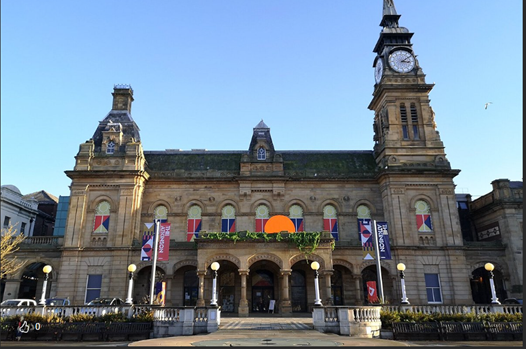
The Atkinson Gallery, Southport

Art galleries or Museums of Art come in various shapes and sizes from the gigantic multi-room edifices such as London’s National Gallery, Paris’ Louvre and Madrid’s Prado, to small one-room private galleries.  The former is awash with works which would take you days to properly study them all, whilst the latter often contain less than fifty paintings and you are sometimes hard-pressed to see a work you like. 

A couple of days ago I visited Southport on the Merseyside coast, a seaside resort which is close to where I was born and lived for most of my life and yet I had never visited the town’s art gallery.  There was something about the site’s publicity I found off-putting.  You see, it was a multi-faceted building; part museum, part library, part café, part children’s playroom, part theatre, part bar, part locals selling their art and crafts etc etc., and yet there was only a small shop/theatre ticket office which had no literature on the permanent collection and as I feared, the room set aside for works of fine art was small.  However the works of art in the permanent collection, numbering about fifty, were excellent and for that reason I can recommend you visit their permanent collection.  Today’s blog is about some of these fine works. There were a number of paintings, presumably on loan, which belonged to the Harris Museum and Art Gallery in the nearby town, Preston, which had been closed whilst undergoing renovations.

A Golden Dream by Thomas Cooper Gotch (1895)

Thomas Cooper Gotch was an English painter and book illustrator.  He studied art in London and Antwerp before he married and studied in Paris with his wife, Caroline, a fellow artist, and when they returned to England, initially his works depicted the lives of Newlyn fisherfolk but after a visit to Italy his style changed and he began painting Symbolist images conjuring up dreamlike idylls of Arcadian innocence, in a Pre-Raphaelite romantic style.  Gotch exhibited A Golden Dream for the 1895 opening of the Newlyn Art Gallery.
Cordelia Disinherited - John Rogers Herbert als Kunstdruck oder Gemälde.

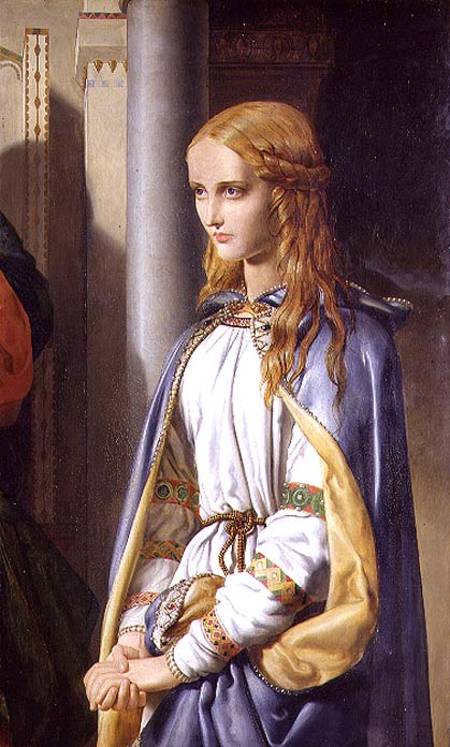
Cordelia Disinherited by John Rogers Herbert (1850)

The subject of John Rogers Herbert’s painting is Cordelia, a fictional character in William Shakespeare’s tragic play King Lear. Cordelia, along with her sisters, Goneril and Regen are the three daughters of King Lear. After her elderly father offers her the opportunity to profess her love for him in return for one-third of the land in his kingdom, she, unlike her two sisters, refuses.  Lear banishes Cordelia from the kingdom and disinherits her.  Cordelia is depicted as a saintly figure.  She looks impassive and wears blue and white clothes which remind us of depictions of the Virgin Mary.  Herbert painting is a detail from a large fresco commissioned for the Houses of Parliament.

The Orphan of the Temple by Edward Matthew Ward (1875)

On the face of it, we are simply looking at an elegant young lady painting en plein air.  The title of the painting does not offer us a clue as to what is going on in the depiction !  However, if I tell you that the young lady painting is Marie Thérèse Charlotte, the eldest daughter of Louis XVI and Marie Antoinette you will realise that this painting depicts a little piece of French history.  In a brief synopsis of Marie Thérèse Charlotte  life : she was the daughter of Louis XVI, king of France and Marie Antoinette.  She was educated at French was imprisoned with her family in the Temple, originally a fortified monastery of the Templars and later a royal prison, in 1792.  Her mother and father were guillotined in 1793 although she was unaware of their fate at the time.  She was released from prison in 1795 and four years later married the Duke of Angoulême.  Later she lived in exile with her uncle Louis XVIII in various European countries.  The painting clearly contrasts the innocence of the young woman, dressed in white, with her gaoler who stands in the background.
On the Bridge by Stanhope Forbes (1925)

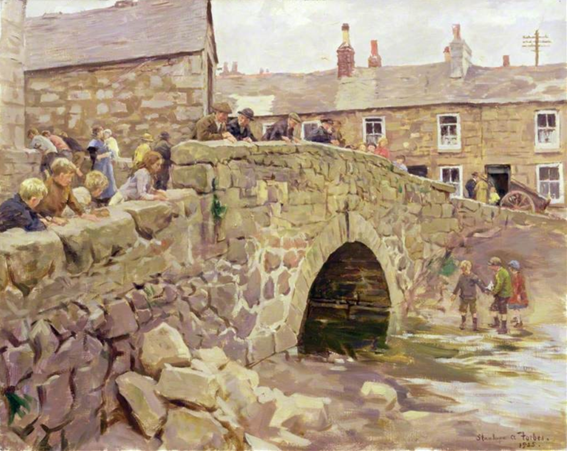
Stanhope Alexander Forbes was a British artist and a founding member of the influential Newlyn School of painters. He was often referred to as the father of the Newlyn School. This is the second time Stanhope Forbes painted this scene. The first was in 1888. The old bridge we see in the painting is in the Cornish village of Street-an-Nowan, in the lower part of the fishing town of Newlyn.
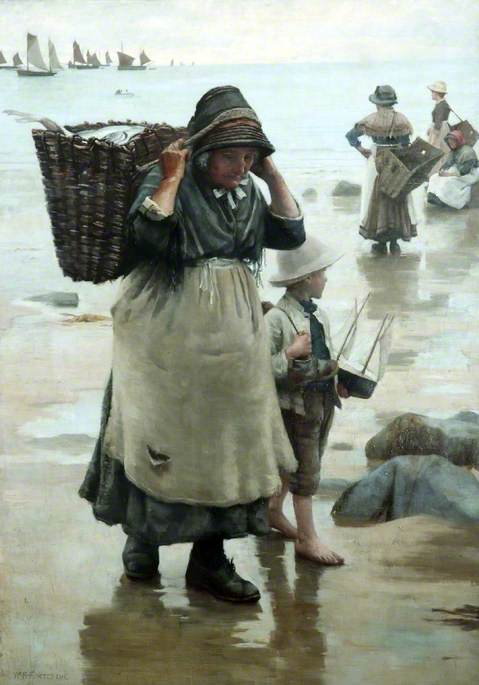
The Fish Fag by William Banks Fortescue (1888)

Fortescue was also one of the Newlyn School’s many Birmingham-born artists.  He began his career as an engineering designer but later trained as an artist. He studied art in Paris, and later travelled around Europe, reaching Venice in 1884.  On his return he exhibited many of his works depicting Venetian scenes at the Royal Birmingham Society of Artists. Fortescue went to live in the Cornish fishing town of Newlyn around 1885 and took lodgings in a house which also included Stanhope Forbes as another lodger.  This work by Fortescue was painted in the style of Stanhope Forbes and as is the case with this work, he used local people to model for his paintings.  The painting’s title Fish Fag is the term used for “Fishwife” and she would be in charge of cleaning the fish prior to them being sold.  Prior to the men setting sail in their boats the Fish Fags would also be tasked with baiting the hooks.  The little boy holding the toy boat and walking alongside the woman has probably been added by the artist implying that one day he will experience life as a fisherman.
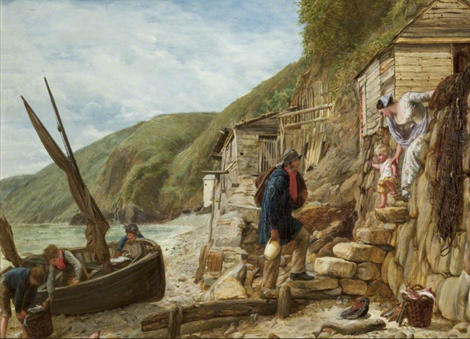
Welcome, Bonny Boat! The Fisherman’s Return (Scene at Clovelly, North Devon) by James Clark Hook (1856)

The life of a fisherman is a precarious one, even in the present day but more so in the nineteenth century. Catching fish to feed the family was a necessity and sometimes the fisherfolk heading out to sea to bring home food and to eke out a living sometimes meant taking risks which often resulted in dire consequences. James Clarke Hook RA., an English painter and etcher of marine, genre, historical scenes, and landscapes, was born in London in November 1819.   Initially his favoured painting genre was history painting but then he turned his attention to genre depictions in rural landscapes.   He made several trips to Devon and the fishing village of Clovelly which in Devon stimulated him to adopt coastal scenes as his main motif but it was more than just depictions of the sea and boats as he incorporated figures into his paintings in order to highlight the hardship and rewards of life by the sea. He completed so many of this type of depiction that his coastal paintings were soon dubbed “Hookscapes”.  In this painting we see a returning fisherman being greeted by his family, all of who are relieved to see him back safely.
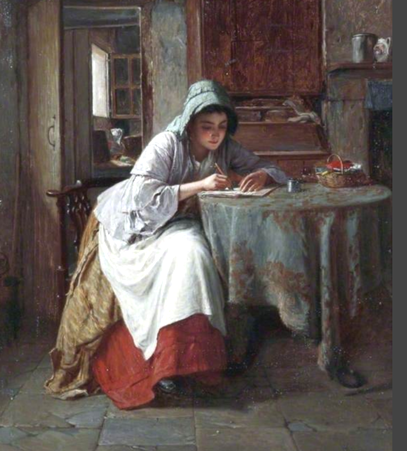
Katy’s Letter by Haynes King (1875)

Haynes King was an English genre painter, who was born in Barbados in December 1831. He came to London when he was twenty-three and became a student at Leigh’s later known as Heatherley’s Academy in Newman Street, London. In 1857 he exhibited some of his paintings for the first time at the Society of British Artists, of which he was elected a member in 1864 ; many of his works appeared at its exhibitions, and forty-eight were shown at the Royal Academy between 1860 and 1904.  He painted interiors, landscapes, and coastal scenes with figures. The motif in this painting centres around the letter which the young woman is reading.  The action of reading a letter was depicted in many paintings and became very popular.  The popularity of such a motif is probably because we are subconsciously being asked to imagine what was in the letter.  Good news or bad news?  We then put together in our minds a cover story both past and future for this young woman due to what she is reading !
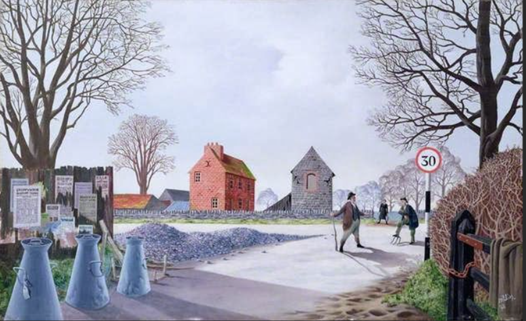
The Argument by Tristram Hillier (1943)

Tristram Paul Hillier was an English surrealist painter and a member of the Unit One group led by Paul Nash . He was born on April 11th 1905 in Beijing, China, and was the youngest of the four children of Edward Guy Hillier, a banker and diplomat, and Ada Everett.  He attended Downside, an independent boarding school.  He later went to Christ’s College, Cambridge and later in 1926, the Slade, where his tutors included Henry Tonks.  From the Slade he travelled to Paris and studied for two years under André Lhote, and also at the Atelier Colarossi.  Whilst in Paris he mixed with many members of the Surrealist movement and was particularly influenced by Giorgio de Chirico and Max Ernst. He lived in France until 1940, but travelled extensively; he remained a surrealist painter throughout his life. His painting style is unique to him and if you look at some of his other paintings you will recognise similar characteristics.
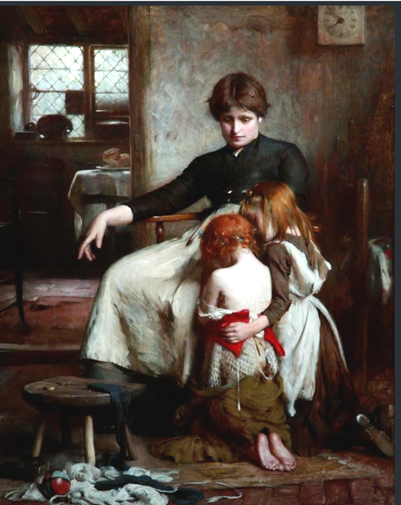
The Children’s Prayer by Arthur Hacker (1888)

There were a number of paintings on show with religious connotations.  One such work was Children’s Prayer by the English painter Arthur Hacker.  Hacker was born in St. Pancras, Middlesex in September 1858.  In 1876, aged eighteen, he enrolled on a four-year course at the Royal Academy.  From there he went to Paris where he studied at the atelier of Léon Bonnat.  He became a member of the Royal Society of Portrait painters in 1894.  His paintings were shown at the Royal Academy on two occasions, in 1878 and 1910.  It was also in 1910 that he was elected as a Royal Academician.  He travelled to France, Italy, Spain and Morocco., and of the RA in 1910.  Hacker was most known for painting religious scenes and portraits.
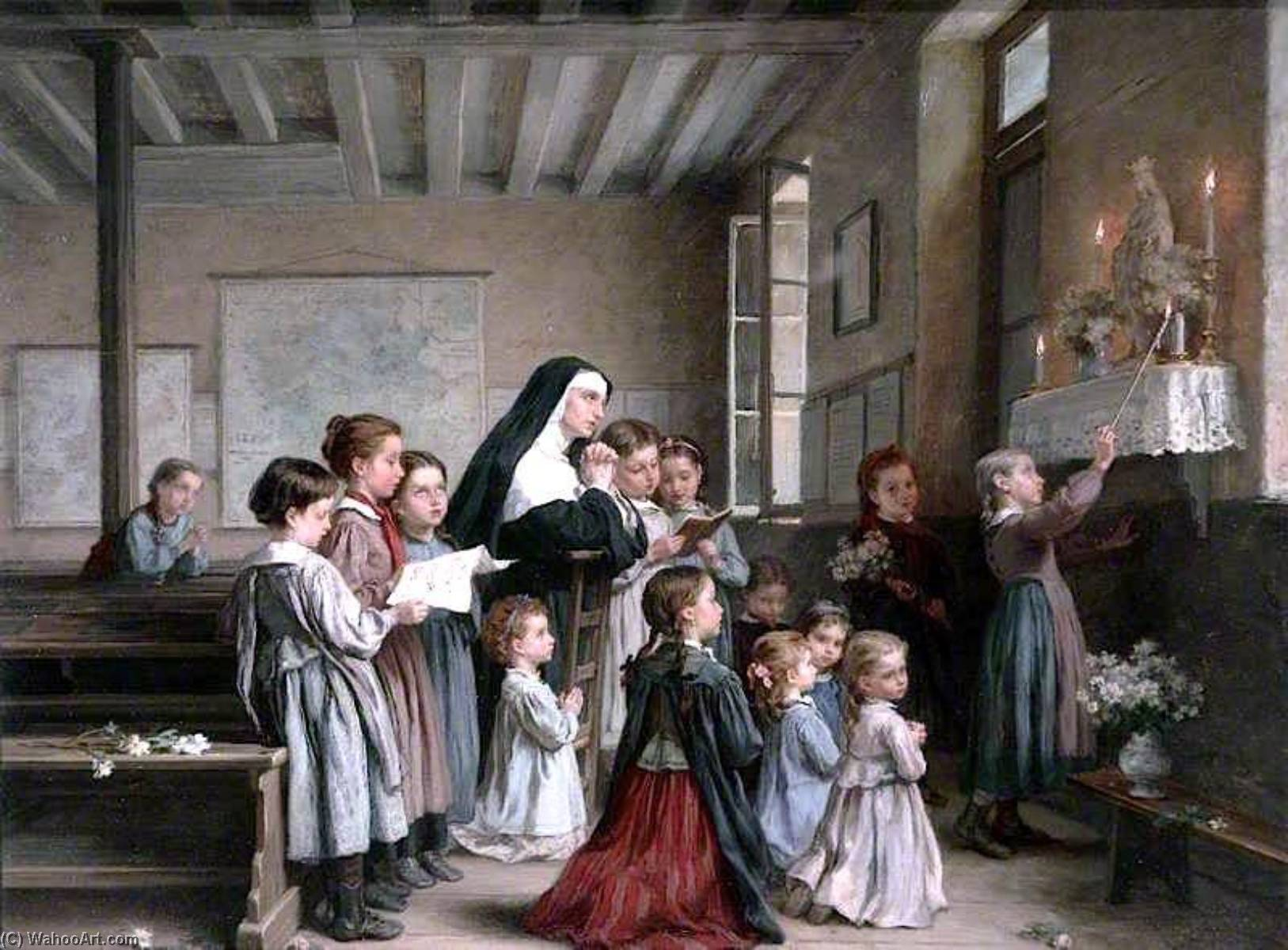
La Prière du Matin (Morning Prayer) by André-Henri Dargelas (c.1860)

André Henri Dargelas, a French painter of the realist movement, was born in Bordeaux on October 11th 1828.  In his twenties, his paintings became very popular in England due to the positive assessment of his work made by the English art critic, John Ruskin, who liked Dargelas’ sentimental vision as seen in many of his paintings.  In 1857 he began to exhibit his work at the Paris Salon and the motifs of his paintings were influenced by the very popular eighteenth century French artist, Jean Siméon Chardin.
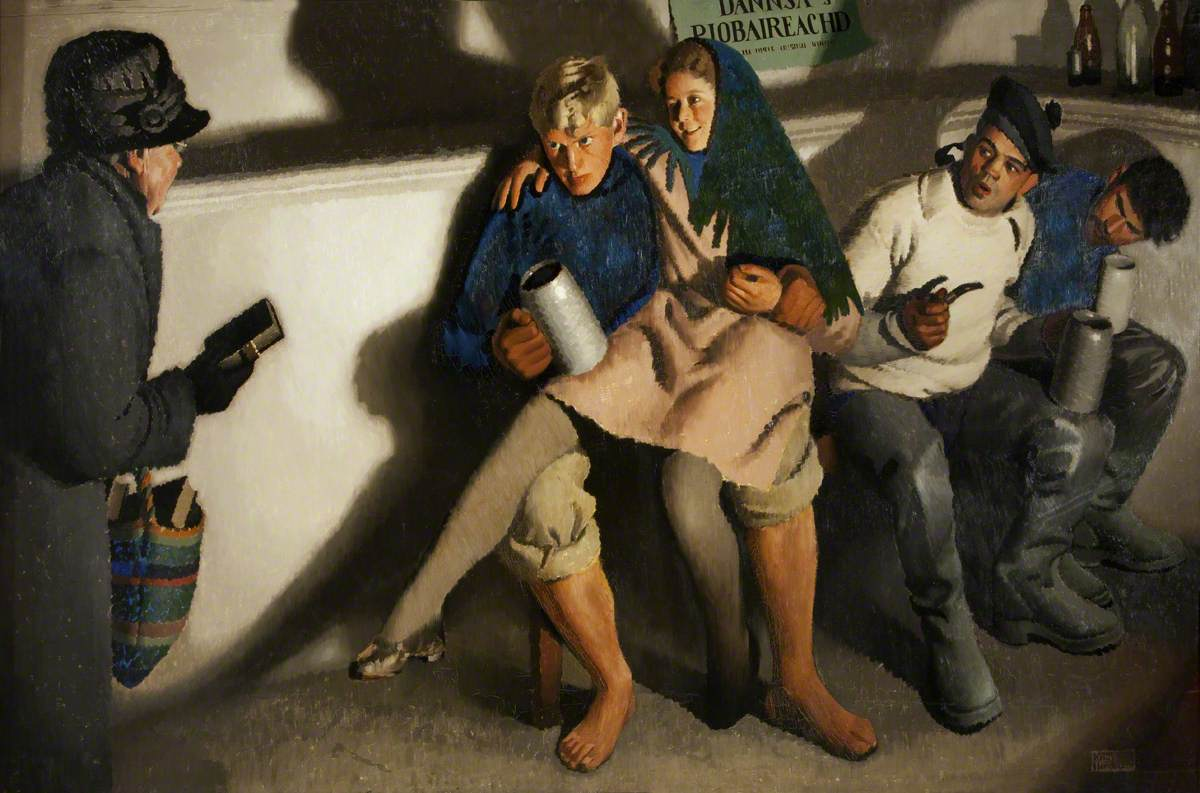
The Word by Keith Henderson (1931)

The above painting is more modern in comparison to those I have showcased earlier and some would say a more realistic view on religious trends and differing views of the old and young on the subject of religious worship. The Word was completed by Keith Henderson in 1931. Keith Henderson was a Scottish painter born in Aberdeenshire in April 1883.  He was one of three children born to George MacDonald Henderson, a barrister at Lincoln’s Inn, and Constance Helen, née Keith.  He attended Orme Square School in London before being admitted to Marlborough College, a prestigious Wiltshire public school. He then studied at the Slade School of Art before moving to Paris and studying art at the Académie de la Grande Chaumière.  During the First World War he served as a Captain with the Royal Wiltshire Yeomanry where he spent time in the trenches acting as a war artist.  He recorded his time on the Western Front in a book, Letters to Helen: Impressions of an Artist on the Western Front, which included several of his illustrations.  During the 1930s Henderson returned to Scotland to live on the Isle of Barra in the Outer Hebrides where his paintings at the time depicted village life.  He was forty-eight when he completed The Word which depicts an old lady seen distributing free bibles coming across a group of young revellers who have just come out of the local pub.  They seem to be little interested in her offer. The depiction harks back to Victorian moralistic paintings.

By the Waters of Babylon we sat down and wept by William Etty (1832)

“…By the rivers of Babylon, there we sat down, yea, we wept, when we remembered Zion. 

We hanged our harps upon the willows in the midst thereof. 

For there they that carried us away captive required of us a song; and they that wasted us required of us mirth, saying, Sing us one of the songs of Zion.

How shall we sing the Lord’s song in a strange land?…”

My final painting in this blog also has religious associations as it illustrates a passage from the tragic 137th psalm of the Book of Psalms in the Tanakh, the Jewish bible. The painting by William Etty, By the Waters of Babylon depicts the biblical story of the Israelites’ captivity in Babylon.  The psalm is a communal lament about remembering Zion, and yearning for Jerusalem while dwelling in exile during the Babylonian captivity.  The psalm reflects the yearning of the exiles for Jerusalem as well as hatred for the Holy City’s enemies.  In Etty’s painting the lyre can be seen hanging from the tree.   William Etty was an English artist best known for his history paintings containing nude figures. He was the first significant British painter of nudes and still lifes and in this “religious” painting the three women depicted are in a state of undress.

Isabel Codrington Pyke Nott

Portrait study of Isabel, by Philip Alexius de László, (c.1909)

In 1856, John Nott , the Lord of the Bydown Manor estate within the parish of Swimbridge, close to the town of Barnstable in Devon, died childless and his two sisters Elizabeth and Marianne became his co-heirs.  In 1838 Elizabeth Nott married Reverend John Pyke, and their son John Nott Pyke, became the heir to Bydown.  John Nott Pyke was educated at Eton College and Exeter College, Oxford and was an amateur playwright.    In 1863 John Nott Pyke received royal licence to assume the additional surname of Nott, in compliance with the will of his uncle and thus became known as John Nott Pyke-Nott. In 1867 he married Caroline Isabella Ward, a writer and artist.  The couple had five children, three sons and two daughters.   John Moels Pyke-Nott, the eldest and heir to the estate was born in 1868.  Caroline Evelyn Eunice Pyke-Nott was born in 1870 and Isobel Codrington Pyke-Nott was born in 1874 and it is this lady, a painter that is the subject of this blog.

Phoebe by Isabel Codrington

Isabel Codrington Pyke Nott, more commonly referred to as Isabel Codrington, was born on the Bydown estate within the parish of Swimbridge in Devon in 1874.  When she was nine years old she and her family moved to London.  In 1885 Isobel and her sister Evelyn Caroline Eunice were enrolled at the Hastings and St Leonards School of Art.  From there Isobel and her sister attended the St John’s Wood Art School which was a precursor for entry into the Royal Academy Schools which Isobel entered in 1889, aged fifteen. It was also here that her sister Eunice met her husband-to-be, the artist Byam Shaw.  Isobel soon displayed her artistic talent and won two medals for her work and she soon began to have her work shown at various exhibitions.

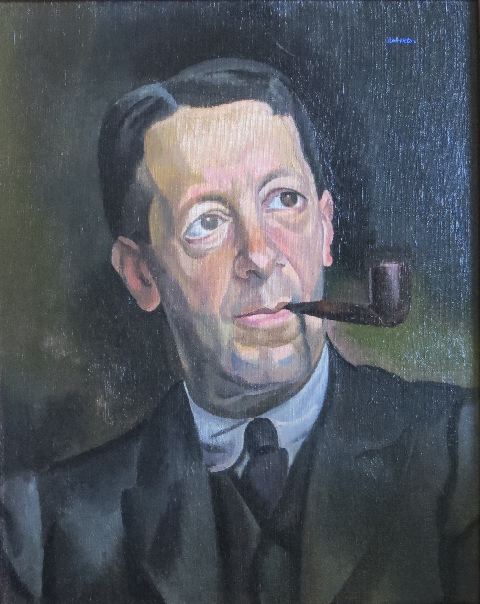
Paul George Konody by William Roberts (1920)

Around the end of the nineteenth century Isobel Codrington met a young and highly motivated Hungarian-born art critic, Paul George Konody who at the time was the editor of The Artist, and later became a regular art reviewer for The Observer and The Daily Mail. The couple fell in love and were married on October 27th 1901 in the romantic village of Porlock, an English coastal village in Somerset.  Isabel was twenty-seven at the time of her marriage and her husband, twenty-nine. She was now Mrs Isabel Konody. The couple went on, during the next five years, to have two daughters, Pauline and Margaret.

At this time, Isabel’s work featured miniatures and inventive watercolours, one of which won her a medal at the Exposition Internationale d’arte in Barcelona in 1907.  Isobel and her husband lived in London and hosted many parties for their artistic and literary friends.  Isobel’s husband was a keen motorist and the couple and two male companions, Gustavus ‘Dan’ Mayer, the art dealer, and ‘Pomponius’, the architect, Edwin Alfred Rickards, embarked on an exciting road trip in 1911 driving through France and then down the length of Italy from north to south through the Alps and Apennines, in what Konody described as a ‘noiseless’ thirty-horse-power steam driven landau.  Out of this momentous trip Konody published the account of their exploratory journey in a 1912 book entitled Through the Alps and the Apennines.

Mrs Konody sketching an ox-cart at Assisi. Photograph by Gustavus Mayer from P.G. Konody’s book , Through the Alps to the Apennines, (1911)

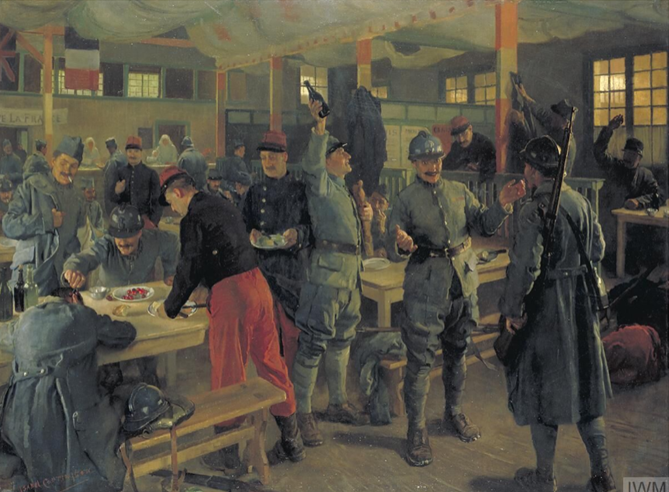
Cantine Franco-Britannique, Vitry-le-François by Isabel Codrington (1919)

Sadly Isobel’s marriage to Paul Konody came to an end around 1912 and they divorced in 1913.  That same year, Isabel married Gustavus Mayer, known as Dan, who had been with Isabel and her husband on their Italian road trip.  He was a director in the London art dealership, P & D Colnaghi.

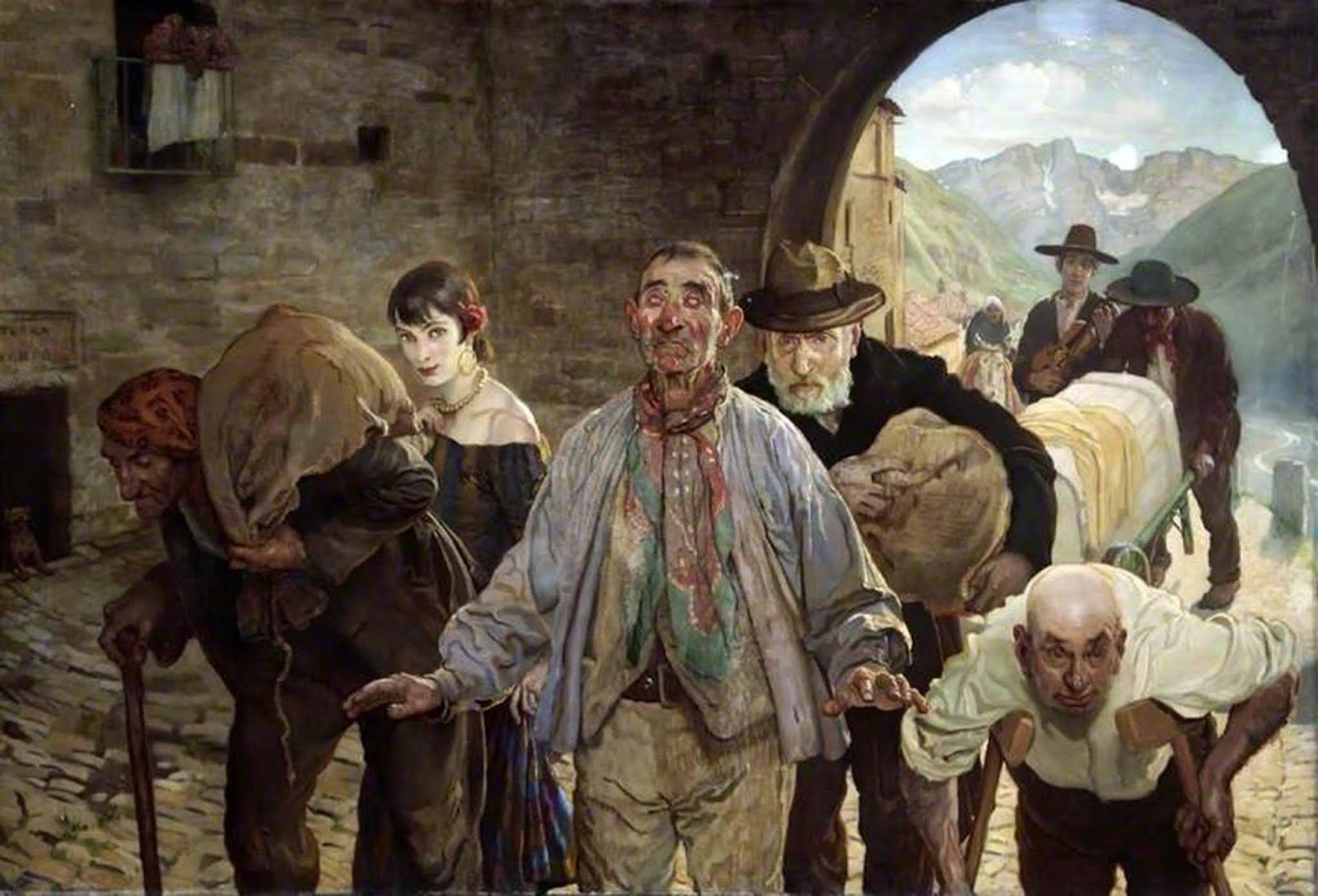
The Beggars are coming to Town by Isabel Codrington

Having two young daughters and a new husband to look after curtailed her painting for a few years.  She remembered the time she returned to her beloved art in an interview with a reporter in 1918, saying:

“…I felt I would like to begin again…… I had forgotten almost everything…”

The phrase “getting back on the horse” came to fruition in 1919 when she received a painting commission from the Imperial War Museum for a painting, Cantine Franco-Britannique, Vitry-le-François, which depicted life at a French canteen during the Great War.  It is an interior scene of a canteen for French troops and we see soldiers sitting and standing around the tables talking amongst their comrades. In the right foreground we observe one soldier greeting another who has just come into the room. On the extreme left of the foreground, we see one soldier slouched over with his head resting on his arms on a table.

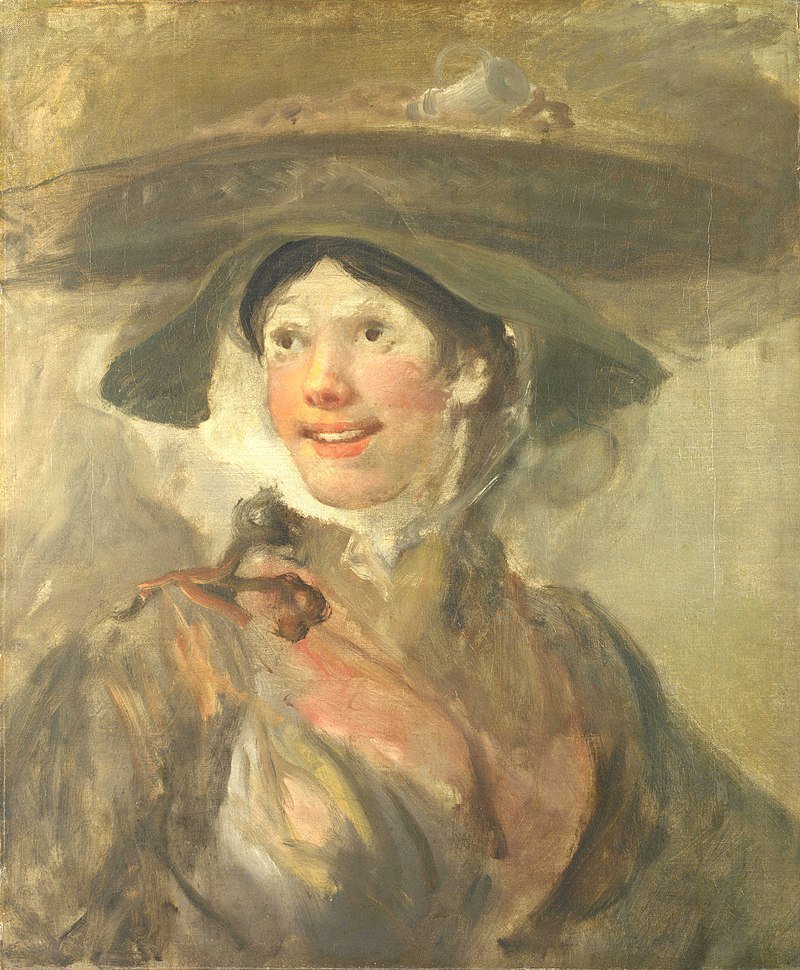
The Shrimp Girl by William Hogarth (c.1745)

The depiction of Costers, Hawkers and Gypsies became popular around the mid eighteenth century with the likes of William Hogarth’s painting, The Shrimp Girl. The painting was one of Hogarth’s later works and depicts a woman selling shellfish on the streets of London, which was typically a job assigned to the wives and daughters of fishmongers who owned stalls in markets such as Billingsgate. By the 1920s this type of depiction was favoured by the likes of George Clausen, who was one of Isabel Codrington’s most notable teachers.

The Old Tramp by Isabel Codrington (1926)

Her painting entitled The Old Tramp was well received by the critics and the art critic of the Colour magazine wrote:

“…At the present time Miss Codrington is among its ablest exponents as can be seen in this outdoor character study which is remarkably naturalistic and full of descriptive detail…”

The article also made reference to the plein air tradition of George Clausen and Bastien-Lepage.

Zillah Lee, Hawker by Isabel Codrington (c.1928)

Two years later in 1928 when her painting entitled Zillah Lee, Hawker was shown at the Paris Salon des Artistes Français, similar remarks were made about her depiction of the gypsy woman.  One French critic remarked that the depiction of the old woman was ‘sobres, très observés, traduites avec une grande simplicité de moyens, (simple, highly observed and translated with great simplicity of means). The exhibiting of her work that year was the fifth time her paintings had graced the walls of the Salon.  From Paris the painting went to London where it was exhibited at the Royal Academy.

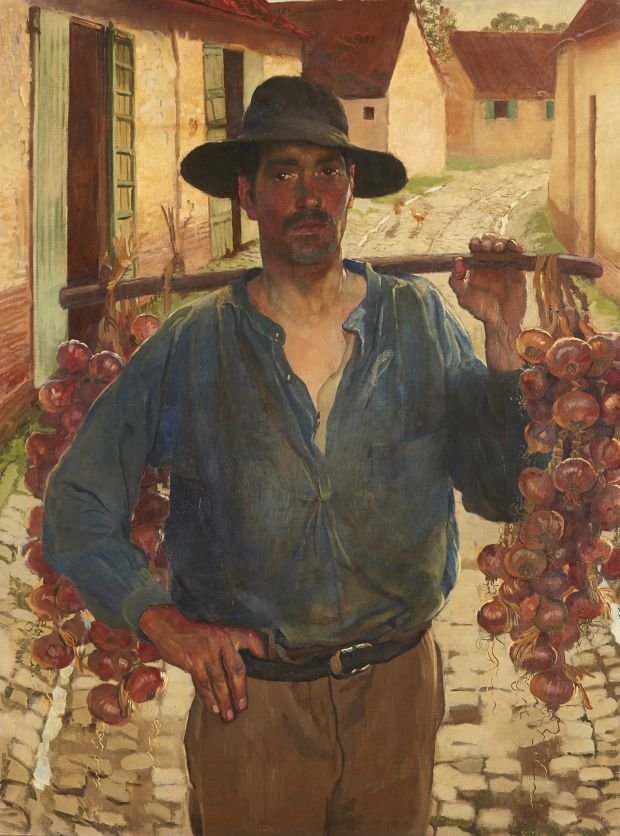
The Onion Rover by Isabel Codrington

In the 1920s Isabel had her work exhibited regularly at the Royal Academy and after 1923, her paintings could be seen hanging at the prestigious walls of the Paris Salon.  On one occasion she received a Mention Honorable from the Salon Jury. One of her favourite subjects for her paintings was that of peasant life.  She had exhibited works alongside the great George Clausen,  one of the foremost modern painters of landscape and of peasant life and maybe it was his influence that influenced Isabel. It could also be, despite her impressive circle of artist friends and the connections she made through her husband’s firm of P &D Colnaghi, that Isabel preferred scenes of peasant life which she would have come across during her travels through France, Spain and Italy. One of her “peasant” depictions was entitled Onion Rover.

The Old Violinist by Isabel Codrington (c.1933)

Fine Prints of the Year was an annual series of books that reported and discussed the etchings, engravings, woodcuts and lithographs published each year between 1923 and 1938 by major artists of the period.  Malcolm Salaman,  an art critic and Honorary Fellow of the Royal Society of Painter-Etchers and Engravers, who studied at Slade School of Art and Ruskin School of Art, Oxford,  explained in the preface to the 1933 volume of Fine Prints of the Year, why he had chosen to illustrate the distinctive figure of The Old Violinist in preference to Isabel Codrington’s consummate landscapes. He wrote about the subject of the print:

“…He is playing his way slowly along the poor street, his worn fingers touching the strings in no uncertain fashion, though his bowing is not perhaps what it was in his younger and more showy days. But there is something in the tone or the tune that attracts a small boy ambling along with his marketing mother. This etching is suggestive, the face, figure and clothes of the man show wear, but the fiddle is being strummed with a reminiscence that the child seems to recognise…”

Isabel often added distant figures to her etched street scenes, so to enrich the narrative element of the work.

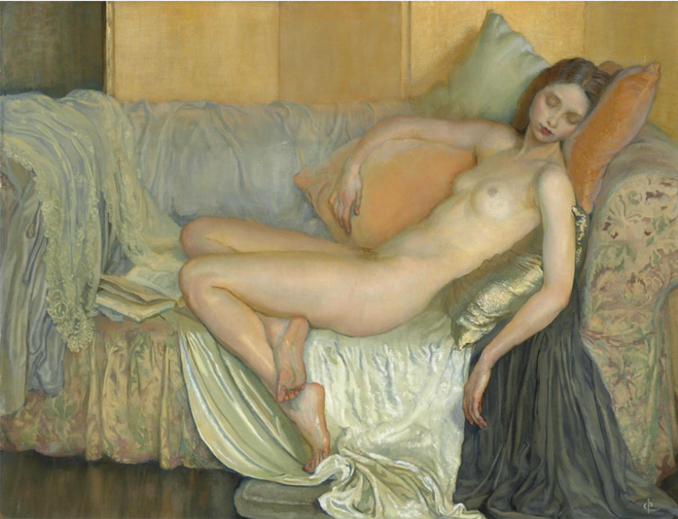
Drowsy Summer Days by Isabel Codrington (c.1935)

In complete contrast to Isabel’s paintings depicting gypsies, beggars and the like, she produced one of her most sensuous works entitled Drowsy Summer Days. Isabel Codrington may well have seen paintings depicting provocative reclining nudes which were popular in the 1920s and 1930s but she has depicted the sleeping female in the most sensitive way. 

Grande Odalisque by Ingres (1814)

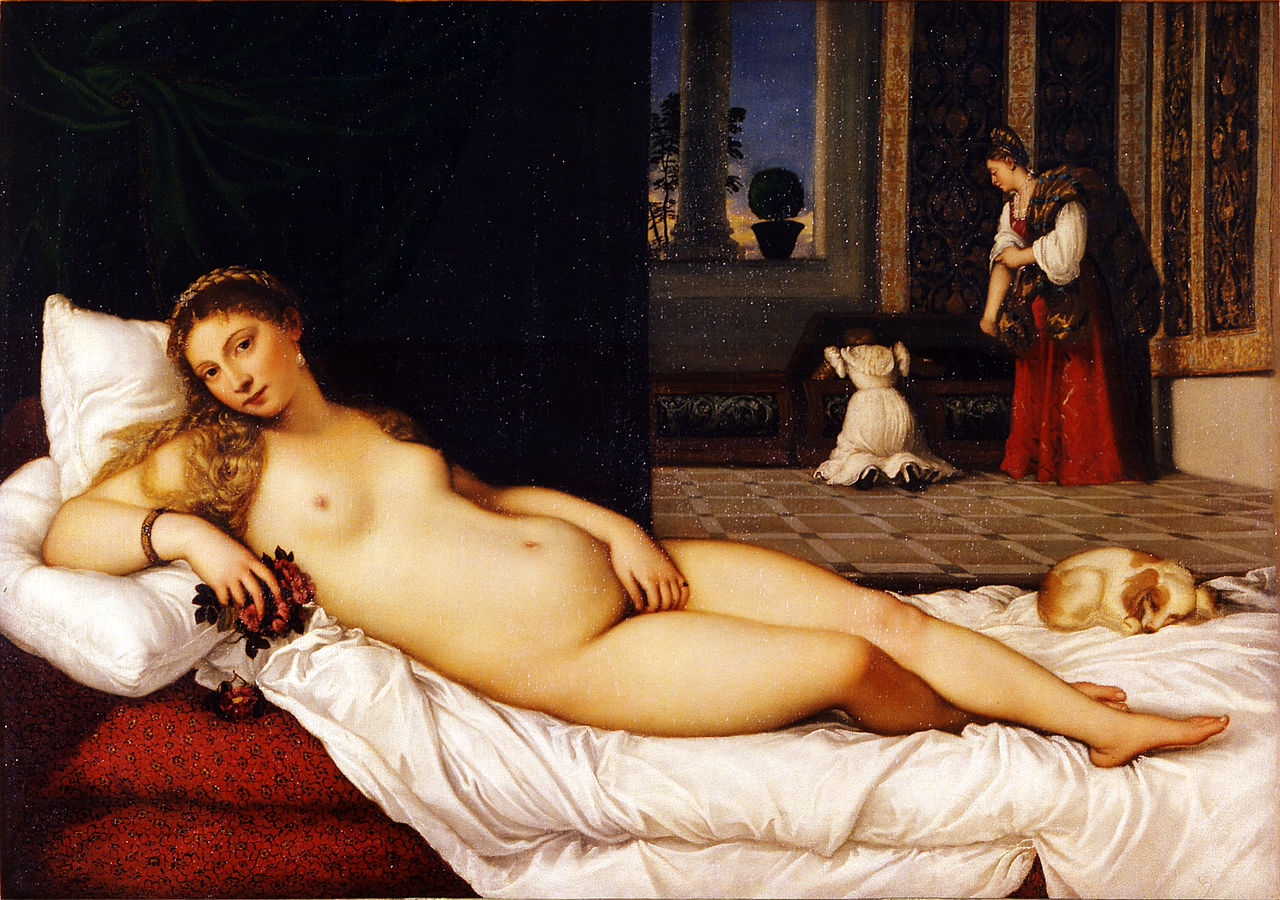
Her model’s sleek torso, pale skin, and the cool, silken cloths and cushions on which she rests, remind us of Ingres’ 1814 Grande Odalisque or the Venus of Urbino by Titian.. 

Venus of Urbino by Titian (1534)

In Isabel’s painting the woman’s body is bathed in the light from the fire in her boudoir on what appears to be a drowsy summer day. The young woman’s book has been set aside and her arms have fallen by her side, whilst her head has sunk into a silken pillow.  The painting was the last one she submitted to the Royal Academy.  Alfred Lys Baldry, the English art critic and painter commented on the work saying:

“…. it was an idealized rendering of the female nude as seen by a male painter and the frank fidelity of the female nude of the woman artist who has no illusions about the beauty of her sex…”

Morning by Isabel Codrington (1934)

Similar in some ways and yet in total contrast in other ways is Codrington’s 1934 work simply entitled Morning.  It was a masterclass on the use of light and shade.  Gone are the silk furnishings seen in her Drowsy Summer Days painting.  In this work we see a woman lying asleep in a simple metal bed. Her left arm lies outstretched towards the floor while her right hand clutches the sheets. The room is seedy and an untidy mess. In the room we see a plain wooden chair by her bed, enveloped with her discarded clothing and a melted candlestick.   In the foreground, the light from the morning sun streams through a window into the room. A breakfast table can be seen, cluttered with bread, cucumber, a bowl of tomatoes, a half-read newspaper, and a glass of water.  The lifestyle of the depicted woman could not be further away from the luxurious lifestyle of the female in the Drowsy Summer Days painting.

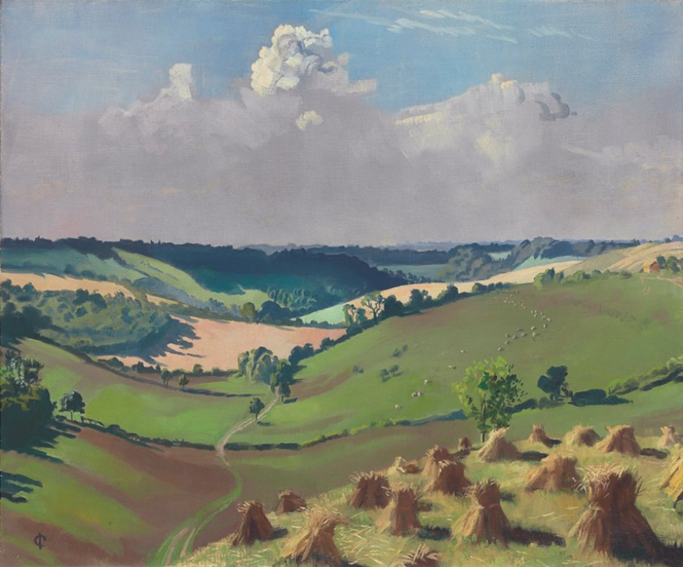
Wild Thyme Farm by Isabel Codrington (1927)

Isabel and her husband, Gustavus Mayer, moved to the village of Woldingham in Surrey, and bought a mock-Tudor mansion named Wistler’s Wood.

Isabel Codrington dominated the British art scene during the 1920s. Her landscape work was outstanding and her painting, Wild Thyme Farm was a prime example of her excellence.  The depiction with its foreground field of hay-stooks typifies a series of downland landscapes painted by Isabel on the estate surrounding her home at Whistler’s Wood, a forest in Surrey. The sun shines from the left on to the rolling hills and casts long shadows.

Frank Rutter, a British art critic, curator and activist who was the art critic for The Sunday Times, wrote about Isabel Codrington’s landscape works, saying:

“…since her art is based on simple domestic commodities and the homely landscapes and barns of the southern counties, Isabel Codrington has little need of an interpreter. Her pictures speak for themselves and speak simply but eloquently…”

The Lily Garden by Isabel Codrington (c.1935)

Isabel’s landscape paintings depicting rural scenes around her home, the Mayer estate, at Whistler’s Wood, Woldingham in Surrey, were shown at a 1929 exhibition.  During the 1930s, Isabel began to concentrate on etching and an exhibition of her etchings was presented at Colnaghi’s London gallery in 1933. 

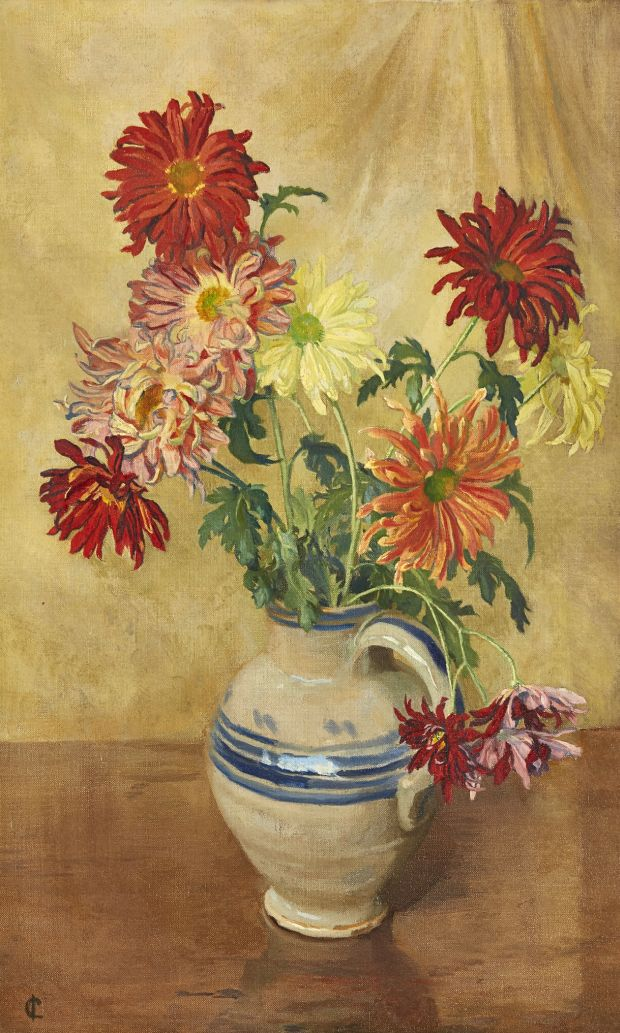
Chrysanthemums by Isabel Codrington

In 1935 she submitted work for the Royal Academy exhibition for the final time.  Her final solo exhibition of ‘Flower Paintings’ was held at the Rembrandt Gallery in Vigo Street in November 1935.  During the final years of her life, she moved to Devon where she died in 1943, aged 68.


Below are some websites I used when compiling this blog and they will offer you further reading about the life and works of Isabel Codrington.

Lyon & Turnbull

Artvee

Christies

Elizabeth Harvey Lee:  Original Prints 15th – 21st centuries

Broncia Koller-Pinell

I was reading an article entitled A Forgotten Fame in the German Arts magazine, Schirn Mag.  It was about the life and works of the Austrian artist Bronislawa (Broncia) Pinell, later, Broncia Koller-Pinell and the headline read:

“…Broncia Koller-Pinell is listed as one of Austria’s most important female artists of the turn of the 20th century – but today her name has been almost entirely forgotten…”

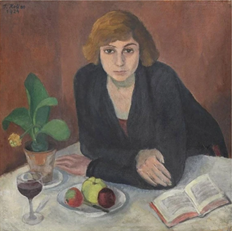
She was an Austrian Expressionist painter who specialized in portraits and still-lifes. I was fascinated by what I read and so I decided to feature the young Austrian painter in one of my blogs. It is a strange story as she was listed as one of the most impor­tant Austrian artists of the turn of the 20th century – even though her name has by now largely slipped into obscu­rity.

Had you heard of her ?

Self Portrait by Broncia Koller-Pinell

Bronislawa (Broncia) Pineles was born on February 23rd 1863 in the town of Sanok, which is situated in the extreme south-east of Poland close to both the Polish and Ukrainian borders.  She was one of five children brought up by Orthodox Jewish parents, Klara Chaja and Saul Pineles, an architect of military fortifications.  She was the fourth-born of five children and had two older brothers, Markus and Stanislaus and an older sister Erika, and younger brother Friedrich. Later in life, Dr. Stanislaus Pineles, became a lawyer and lecturer at the University of Vienna, and Friedrich Pineles, a physician at the Wiener Allgemeine Krankenhaus and later head of the Franz-Josefs Ambulatorium.

Egon Scheile and his wife Edith by Broncia Koller-Pinell (1918)

At the age of seven, Broncia moved with her family to Vienna.  Her father had set up a manufacturing business just outside the city.  It was also the time when the family name was changed to “Pinell”.  Broncia developed a love of art and her father Saul did everything he could to nurture his daughter’s love of painting and sketching.  When she was eighteen, he had her receive private lessons from the sculptor Josef Raab and after Raab’s death in 1883, she was tutored by Alois Delug, the Austrian painter and later a professor at the Academy of Fine Arts, Vienna.

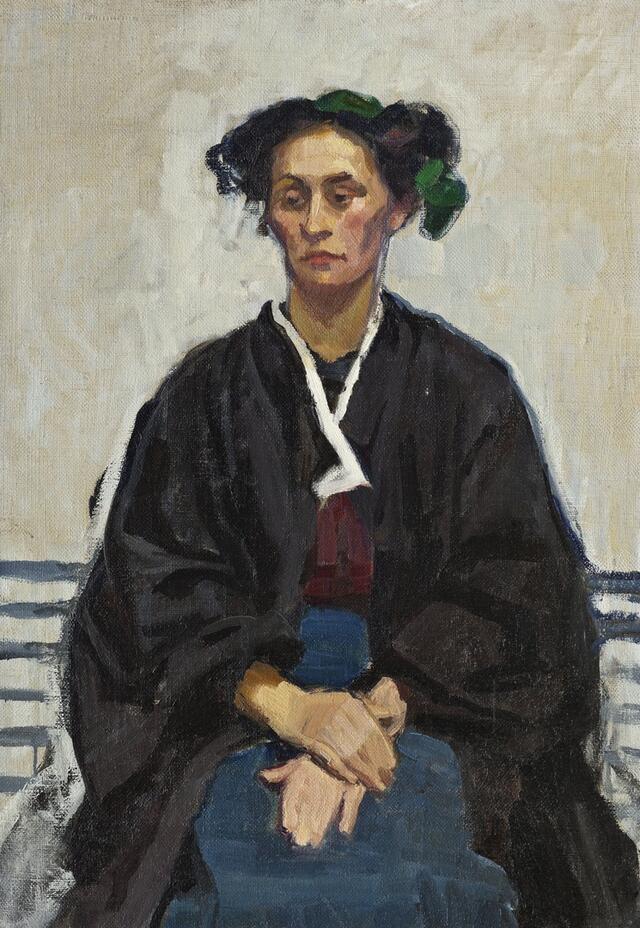
Seated Woman (Marietta) by Broncia Koller-Pinell (1907)

In 1885, Broncia went to Munich and enrolled at the so-called “Ladies Academy” at the Munich Kunstverein and this presented the young painter with the oppor­tu­nity to further profes­sion­alize her skills in a single-sex art class.  The Munich Women Artists’ Association was founded in 1882 and according to the statutes, the primary goal was:

“…to give the ladies of the arts and crafts the opportunity for mutual stimulation in their work and mutual support in their endeavours, to raise a sense and taste for beauty and to develop artistic understanding in women’s circles more and more…”

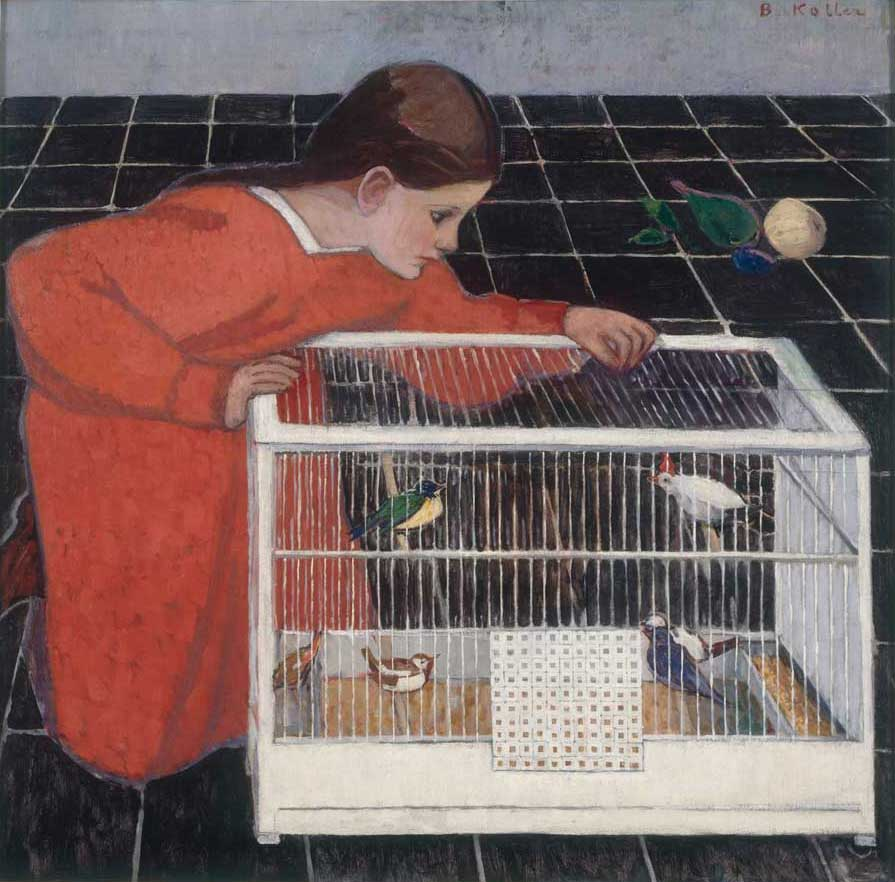
Silvia Koller with Bird Cage by Broncia Koller-Pinell (c.1905)

It was during her five-year stay at the Lady’s Academy that she was able to study in the ateliers of the German artist and educator, Ludwig Heterich and Ludwig Kühn, the German Impressionist and Modernist artist.

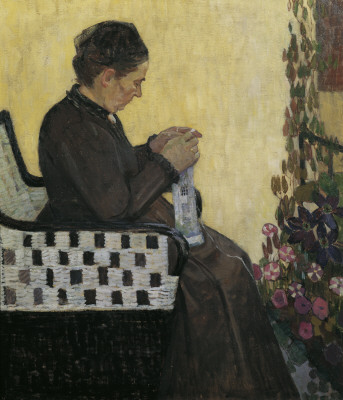
The Artist’s Mother by Broncia Koller-Pinell (1907)

Broncia Pinell began exhibiting her work in 1888.  However, it was not until 1892 when she achieved her first success with her paintings when they were exhibited at the Künstlerhaus in Vienna.  The following year her paintings were well received at the Glaspalast in Munich and in 1894 at the Kunstverein in Leipzig.   In 1896 she exhibited her works for the first time at the International Art Exhibition in Vienna.

Sleeping Child (The Artist’s Daughter, Sylvia) by Broncia Koller-Pinell (1903)

The year 1896 was also an important one for Broncia for this was the year she married Dr. Hugo Koller, a German Catholic physician and physicist, who studied medicine as well as mathematics and physics at the University of Vienna.  This decision did not please her family because she was Jewish and her husband was Catholic and the children were raised as Christians, albeit Broncia did not convert to Catholicism.  After marrying, the couple lived in Salzburg and later Nuremburg where Hugo held a leading position at Schuckert & Co., a German electricity company based in the city.  Whilst living in Nurenburg, they had two children, Rupert in 1896 and Silvia in 1898.  More about them later.   In 1903 the family resettled in Vienna.

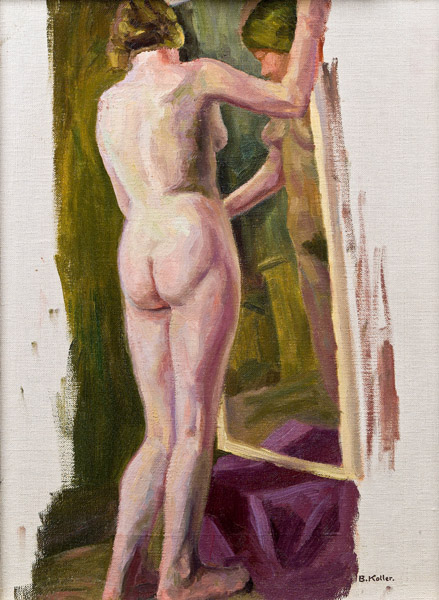
Nude standing in Front of a Mirror by Broncia Koller-Pinell (1904)

Once settled in Vienna, Broncia actively participated in the circles around the Vienna Secession, which was also known as the Union of Austrian Artists, or Vereinigung Bildender Künstler Österreichs.   It was formed in 1897 by a group of Austrian painters, graphic artists, sculptors and architects, including Josef Hoffman, Koloman Moser, Otto Wagner and Gustav Klimt. The latter becoming a friend of Broncia and her husband.  The Vienna Secession was an art movement, closely associated with Art Nouveau.   The artists who formed this organisation were opposing the domination of the official Vienna Academy of the Arts, the Vienna Künstlerhaus, and official art salons, with their traditional orientation toward Historicism.  Broncia was also involved with the Wiener Werkstätte, which was an association formed and brought together architects, artists, designers and artisans working in ceramics, fashion, silver, furniture and the graphic arts. 

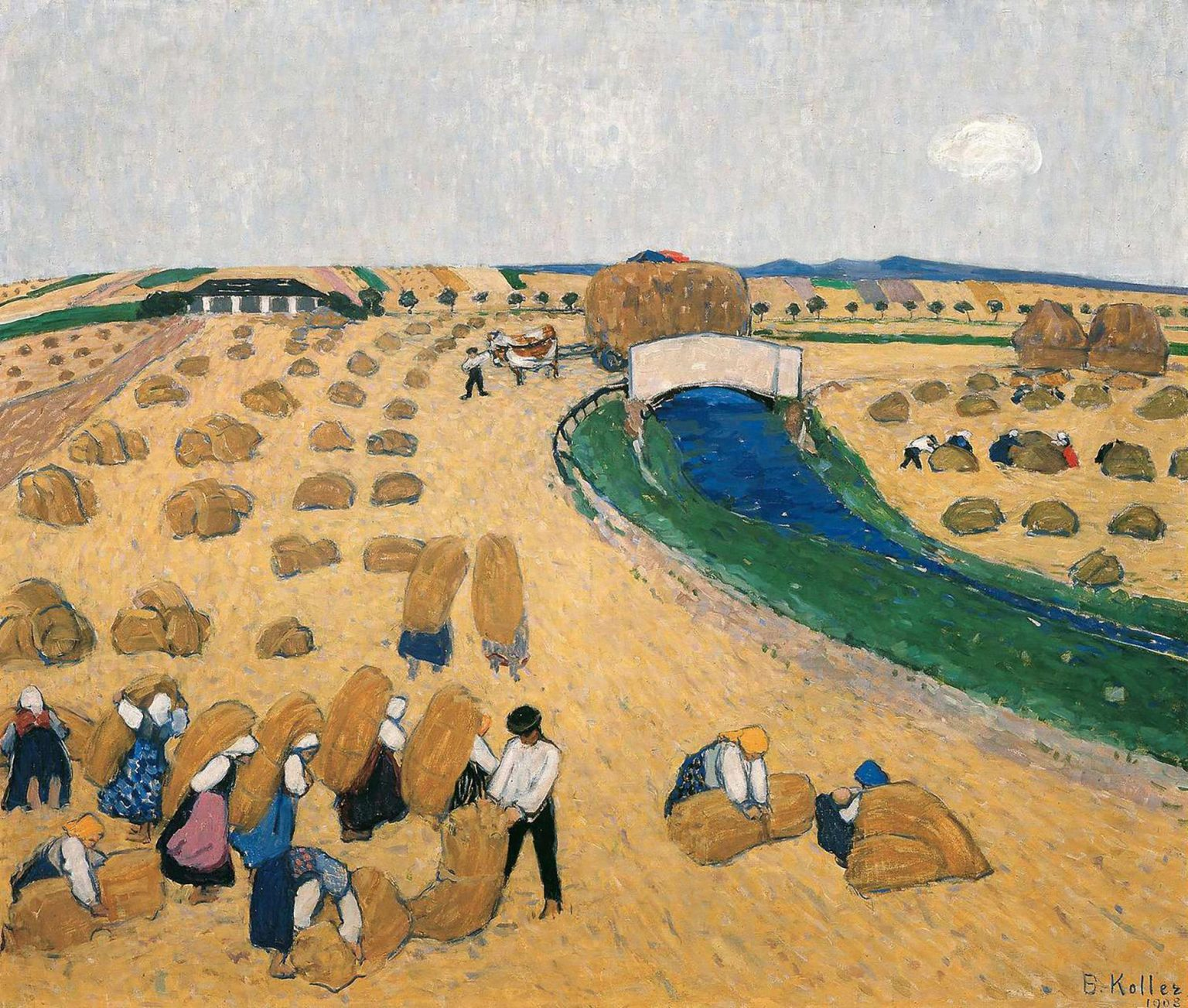
Die Ernte (The Harvest) by Broncia Koller-Pinell (1908)

Broncia’s husband Hugo Koller was an art collector and patron of the arts and he endorsed his wife’s artistic work and, through his good relations with the Secessionists and artists of the Wiener Werkstätte, he facilitated her access to exhibitions.  In 1898 the family moved to Nuremberg. In 1903 the family moved back to Vienna and lived right next door to the Theater an der Wien.  

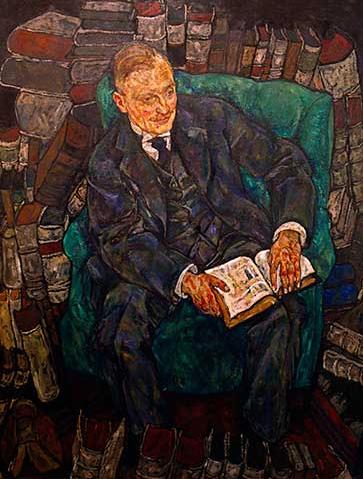
Hugo Koller by Egon Schiele (1918)

Hugo built the first power plant in Lower Austria to power the factory in Oberwaltersdorf which was owned by his father-in-law, Saul Pineles. After the death of his father-in-law in September 1903, Hugo and Broncia inherited Saul’s Oberwaltersdorf estate and had the main residence extensively rebuilt. 

House Koller in Oberwaltersdorf (Vienna), Austria.

The couple would often entertain guests from the art world here such as Josef Hoffmann, Kolo Moser, Egon Schiele and Gustav Klimt, as well as philosophers, musicians, and scholars. Broncia Koller had a special relationship with Klimt and his group of friends and she would exhibit her work alongside this group of artists and in 1913 she became a member of the Bund Österreichischer Künstler founded by Klimt, Moser, Hoffman, and others.

Erster Schnee” (Der Wiener Naschmarkt im Winter) by Broncia Koller-Pinell (1911)

Life’s pathway to being a respected artist was very bumpy for Broncia.  There were two main reasons for this.  Firstly she was a female and as such was looked down upon by some male art critics who, according to Albert Paris von Gütersloh, an Austrian painter and writer, despite her artistic accomplishments, her critics and even some of her “friends” labelled her with the stigma of being simply “the talented wife of a prominent husband” or “a painting housewife”.  Sadly, like many Jewish women artists of her time, Broncia Koller-Pinell was supposed to fit into the male-ordained female role of just looking after the family and the home.  The second reason as to why she had to fight all the way along her career path and parry male “put-downs” was that she was a prosperous Jew.  That duel factor, coupled with the growing anti­semitism in Austria after the First World War, was experienced ever more acutely by Broncia and other Jewish artists and their families.

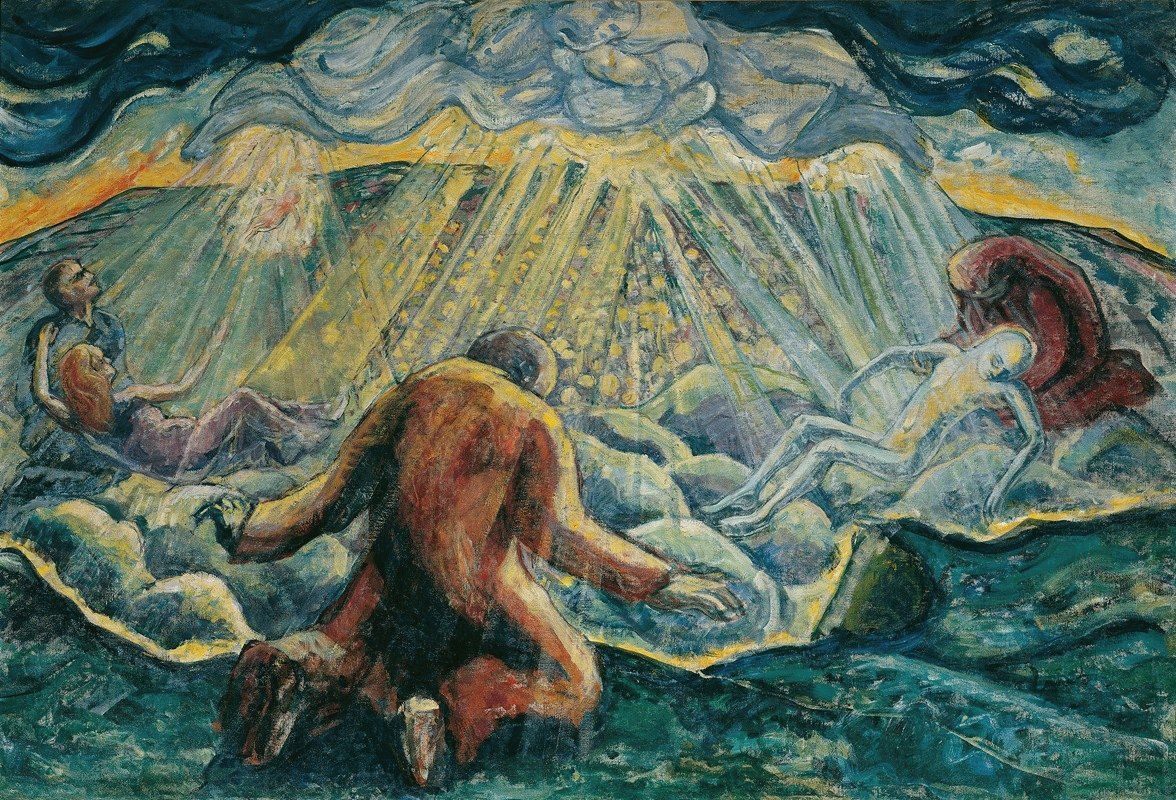
Werden und Vergehen by Broncia Koller-Pinell (1920)

Bronica Koller-Pinell died in Oberwaltersdorf on April 26th 1934, aged 71. Her husband died in October 1949.

Junge Frau by Sylvia Koller (1924)

After completing her studies, her daughter Sylvia Koller worked as an artist in Vienna. She became a member of the Kunstschau and the Wiener Frauenkunst, at whose exhibitions she began entering her work in 1927.  Being Jewish, it is probable that she was no longer allowed to work as an artist after the annexation of Austria. In 1937, three years after the death of her mother, she returned to Oberwaltersdorf and became a carer for her sick widowed father. In 1961, she organized the first posthumous exhibition of the work of her mother, Broncia Koller-Pinell.  Silvia Koller not only posed for her mother several times but also for a number of artists including Egon Schiele. Sylvia died in 1988, two weeks before her eighty-fourth birthday.

Anna Mahler by Broncia Koller-Pinell (1921)

Anna Justine Mahler was the second child of the composer Gustav Mahler and his wife Alma Schindler.  At the age of 16, Anna fell in love with a rising young conductor, Rupert Koller, the eldest child of Broncia Koller-Pinell and Hugo Koller. They were married on November 2nd 1920 but their marriage ended within months.  She actually married and divorced five times during her life.  Robert Koller was conductor at the Municipal Opera House in Elberfeld.  He died in 1976.


I acquired a great deal of information for this blog from the following websites:

The Shalvi/Hyman Encyclopedia of Jewish Women

Schirn Mag: Forgotten Fame

artvise.me:  Viennese Modernism, 6 important female artists from 1900-1938