
My featured artist today is the Italian painter who was best known for his Realist-style works. He is Fausto Zonaro.

Fausto Zonaro was born on September 18th 1854 in Masi a township in the Province of Padua in the Italian region of Veneto, located about 70 kilometres southwest of Venice and about 45 kilometres southwest of Padua. At the time of Zonaro’s birth, the area was under Austrian control. He was the eldest of six children to Maurizio Zonaro and his wife, Elisabetta Bertoncin. Maurizio was a builder which nowadays would refer to as a mason and like all fathers he had hoped to pass on his profession to his son Fausto. However, Fausto had, as a young boy, developed a love of drawing and sketching. His father was impressed by his twelve-year-old’s artistic skill so much so that he had him enrolled at the Technical Institute of Lendinara, a town 12 km from Masi and so everyday Fausto would set off on this long journey, often barefooted with his shoes slung around his neck so as to preserve the soles. He achieved great things at the school and his artistic talent blossomed. From there, through the patronage of a Paduan noblewoman, Stefania Omboni, who was a leading light of the cultural and social life of the city, and who encouraged young artists, Fausto was able to enrol at the famous Cignaroli Academy in Verona, which was one of the oldest Art Academies in the world and it was listed as one of the five Accademie Storiche d’Italia (Italian Historic Academies). The director of the Academy was the Italian artist, Napoleon Nani.
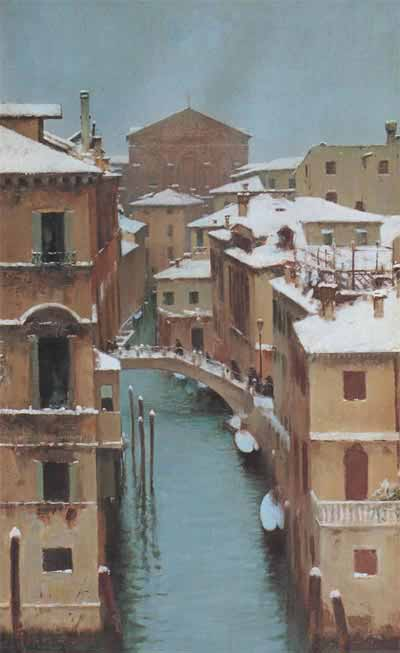
After completing his studies at the Academy, Fausto moved to Venice where he opened up his own studio on Palazzo Pesaro, on the Grand Canal, and it was here that he painted both small landscape works which were favoured by the visiting tourists and larger works featuring daily life of the people of the city.

He actively displayed works in exhibition in Naples, Turin and Rome and gained the respect of the art critics. He painted mainly genre works in oil and watercolour.

Whilst living in Venice Zonaro met Duke Paolo Camerini, who became not only his close friend of a lifetime, but also one of his most generous patrons. One of Zonaro’s commissions from Camerini was for a series of paintings which would adorn the walls of a living room in the duke’s luxurious villa, the Piazzola sul Brenta, which nowadays is known as Simes-Contarini.
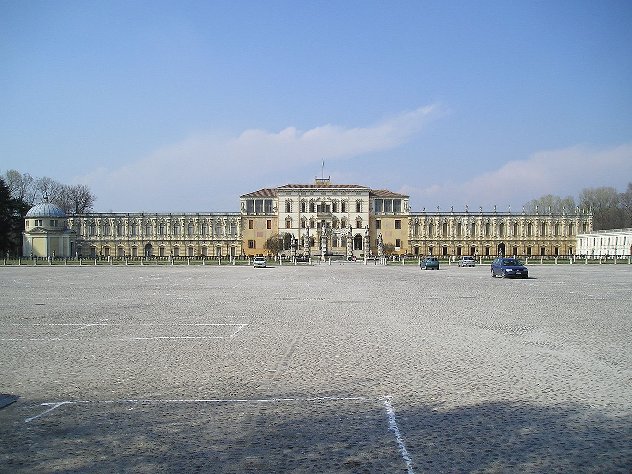
Villa Contarini as it looks nowadays
The series of thirty pastel works, which took Zonaro from 1887 to 1889 to complete, included views of Naples and surrounding places: alleys and streets of the city, one of Mt. Vesuvius, and many depicting local flora. They were set in the walls of the room and framed by plaster decorations that act as real frames.
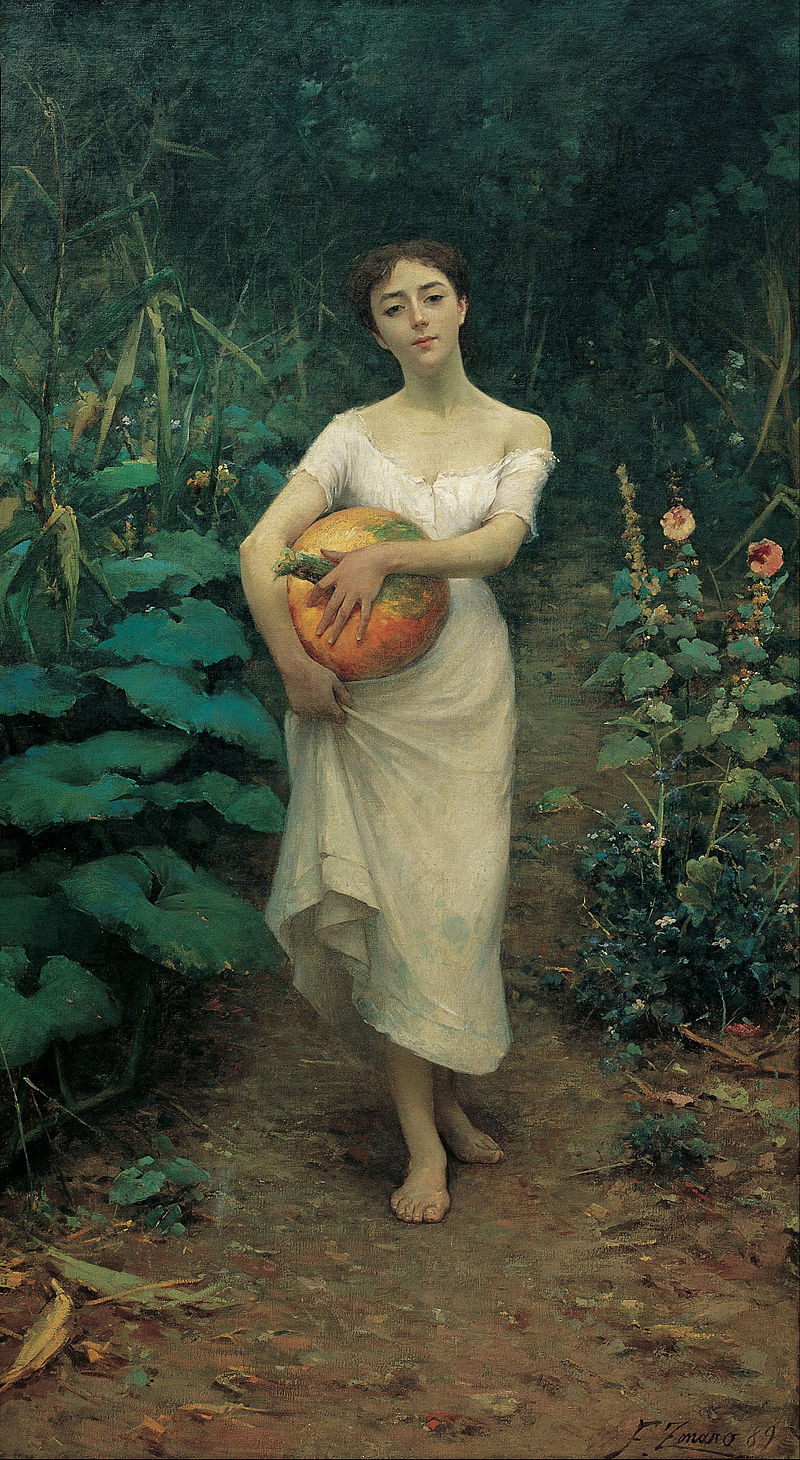
Competition with other painters to sell their works of art was very difficult and the market for his work, despite its quality, was highly unstable and competition was ruthless. In the years between 1885 and 1888 Zonaro wandered between Venice and Naples, without a specific plan for his future. At the time he simply declared:
“…It was a hard and adverse period. Time passed without a trace. The cities and places where I stopped to paint left no imprint on my memory. My experiences of those times are just a confused and indistinct memory as if, instead of living them, I had only dreamed of them. But the impressions I got from these trips were like the colours I imagined on my palette…”.
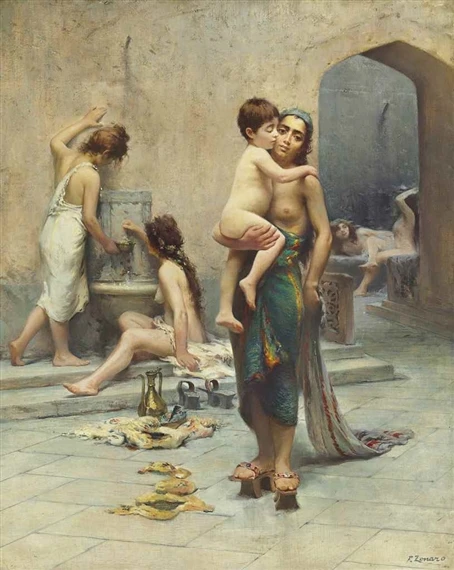
In 1888, Fausto Zonaro was living in Paris which was, at that time, the world centre for Impressionism and he met with many of the “masters” of this painting style. For the next twelve months he settled into a concentrated study of art in an attempt to refine his artistic techniques. Fausto’s paintings were a mishmash of various styles. He leant towards both Impressionism, albeit a rather superficial Impressionism, which permitted him to quickly complete the sketches all of which were conducted outdoors There was also a more nineteenth Italian style, detailed and full of colours, which Zonaro did not hesitate to use in his large works or in many of his works he created in the studio. He was fascinated with the study of light, which will he increasingly perfected over the years and which made the name Fausto Zonaro synonymous with a painter of life and light.
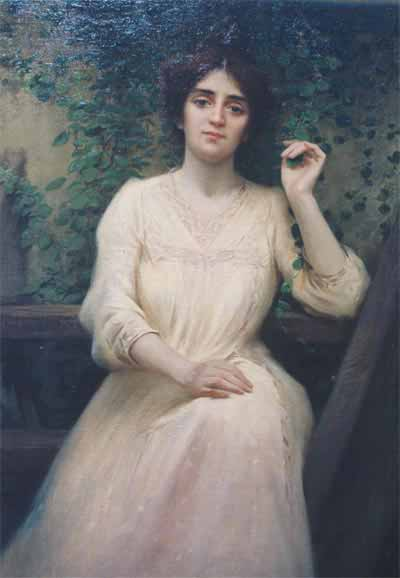
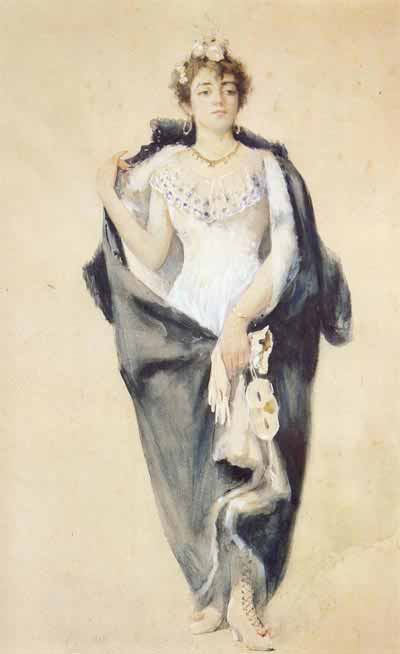
But life was to change for Fausto. Changes that made him focus more on his future. Among the other students who attended the school of Palazzo Pesaro was a young woman, a daughter of an engineer from Belluno, Elisabetta Pante. Fausto and Elisa became great friends and constant companions.
Zonaro was a great reader of books especially those extoling the virtues of travel and his favourite book at the time was Edmondo De Amicis book entitled Constantinople.
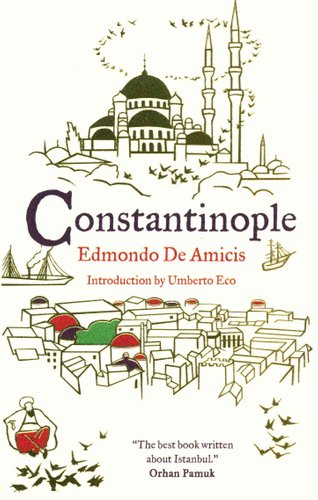
It was a non-fiction travel book published in 1877 which was a best-seller. Fausto and Elisabetta decided that travelling to Constantinople and living there for a period of time would lead to an exciting future. It would be the perfect opportunity to search for new inspirations and new places to explore.

Elisa(betta) left Venice first. She travelled to Constantinople, to an unknown city, on her own without any fear for her safety despite being a single lady. She had a teaching diploma and with the help of the Royal Italian Embassy of Italy began to initiate a network of relationship with the art community which would help Fausto. Whilst she awaited the arrival of Fausto she busied herself with teaching children sketching and the Italian language. She also arranged to rent two small wooden buildings, in the ancient district of Pera, now known as Beyoglu, the economic district and home to all the European Embassies. One building for herself and one for Fausto when he finally arrived in Turkey.

Fausto Zonaro soon followed Elisa leaving Venice for Constantinople. During his sea passage he never missed the opportunity to paint depictions of the stop-over ports such as Ancona, Bari, Corfu, Patras, and Athens.

When Fausto Zonaro finally arrived at Constantinople he could not believe the beauty of the place and its people. All art was forgotten for the first few weeks after his arrival as he immersed himself into the city and its people. He soon realised that the light and the atmosphere he experienced whilst living in Italy did not compare to the light and atmosphere he was now experiencing in Turkey and he felt challenged to depict these changes in his paintings. One of the places he visited was Anadoluhisarı, a medieval Ottoman fortress in Constantinople.

Istanbul by Fausto Zonaro
His initial paintings were avidly bought by tourists visiting the great Turkish city. Scenes featuring the daily life of the Turkish people were favourite subjects of tourists and traders in art. However, the money Fausto earned from the sale of his artwork had to be supplemented by Elisa’s earnings.

On the Göksu Deresi (showing Zonaro’s wife Elisabetta) by Fausto Zonaro
Fausto and Elisabetta’s friendship turned to love and in 1892, a year after their arrival in the Turkish city, Fausto and Elisa married and that same year their first child, a son, Fausto Junior, was born. Elisa was also the very important conduit between Fausto and the Western and Eastern aristocracy which led to many painting commissions. Elisa realised that for her husband’s work to be sold at good prices he needed a sales and marketing strategy. She took on the mantle of his publicist and realised that photography would be the medium they would use to sell Fausto’s work. She and their son travelled to Paris to study photography.

The Embarkation by Fausto Zonaro
Elisa returned to Constantinople, equipped with cameras, acids, films, and tanks used for the development of the photographs. She then takes many photographs of Fausto’s artwork and sends them to the major art newspapers in the world. The media was excited with what they received and the popular German journal, the Illustrirte Zeitung in Leipzig used a photograph of Fausto Zonaro’s painting, The Auctioneer on its front cover. This was excellent publicity for Zonaro as the newspaper was read in the living rooms of all the European Embassies in Constantinople, and soon many foreign ambassadors became interested in his work. Portraiture and landscape commissions flowed in. The Ambassador of Russia, Alexander Nelidov, even provided Fausto with a hall in the Russian Embassy where he would open a painting school which was attended by a good part of the Western aristocracy present in Constantinople such as Ambassadors, noblewomen, and ladies of the upper bourgeoisie even members of the Sultan’s court.

Alexsandr Nelidov helped Zonaro in another but very important way when he presented him to the Turkish ruler, Sultan Abdul Hamid II, when Zonaro’s showed him his latest painting entitled the Imperial Regiment of Ertogrul on the Galata Bridge which he had completed in 1896. The painting depicts the Ertogrul Cavalry Regiment, the Imperial Guard, dressed in their smart dark blue coats, pants and tarbush or ‘fez’ was the basis of the Ottoman uniform for 40 years. Zonaro had made many preliminary sketches of the troops before combining them into this large painting which is awash with detail. The regiment was named after Ertuğrul Bey who was the father of Osman I the founder of the Ottoman Empire.

Mehmed II at the Siege of Constantinopole by Fausto Zonaro

Mehmed II Entering Constantinople by Fausto Zonaro
The Sultan then commissioned a series of paintings from Zonaro depicting events in the life of the 15th-century Ottoman sultan, Mehmed II. Zonaro was proud of the fact that as court painter he had followed earlier great painters who held that position, such as Gentile Bellini. Life in Constantinople came to an end in 1909 following the Young Turk Revolution, which wished to see Abdul Hamid’s regime dismantled and reintroduce the Constitution. The deposal of the sultan ended the position of court painter and Zonaro was out of work.
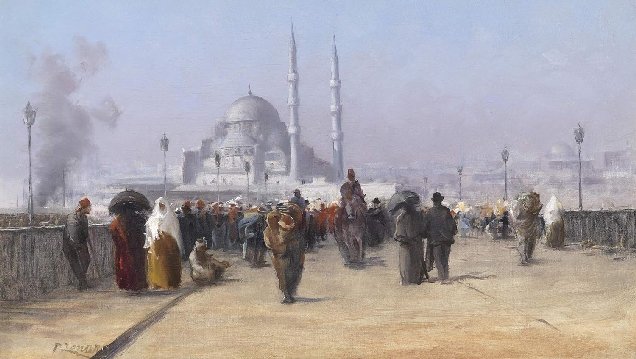
Galata Bridge Istanbul by Fausto Zonaro
Zonaro, and his wife left Turkey and moved to Italy where they settled down in San Remo. Zonaro started to rebuild his life and organises exhibitions throughout Liguria and the French Riviera. The subject of his later works was the Italian and French Rivieras as well as depictions of Constantinople and the Bosphorus which reminded him of happier times. In 1920 Zonaro and his wife Elisabetta separated and he went to live with his daughter, Yolanda.

A Young Woman by Fausto Zonaro
Fausto Zonaro died on July 19th 1929 two months before his seventy-fifth birthday. He was buried in the Foce Cemetery in Sanremo. On his gravestone, beneath an Ottoman tughra, it states that Zonaro was the court painter of the Ottoman Empire





 my daily art display