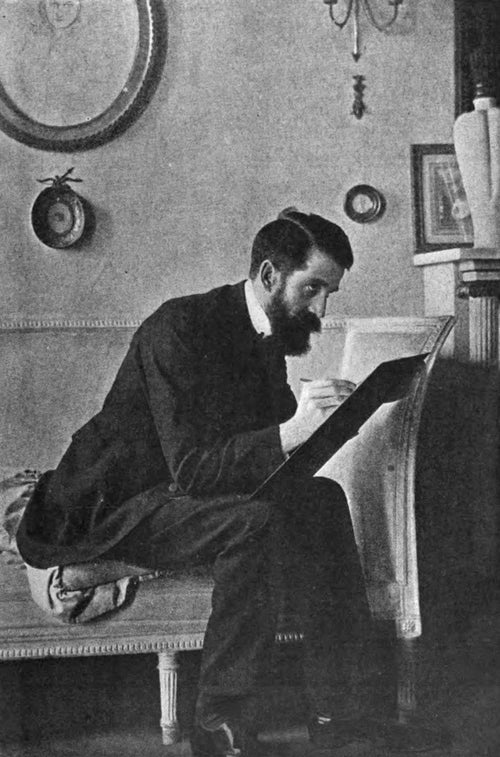
Paul César Helleu and Alice Guérin.

Paul César Helleu

At the end of my previous blog about the French artist Léon Bonnat, I talked about how he had bequeathed most of his art collection and the majority of his work to the local Bayonne museum and how the town named the Museum after him and yet it is now known as the Musée Bonnat-Helleu.. So who is “Helleu”?
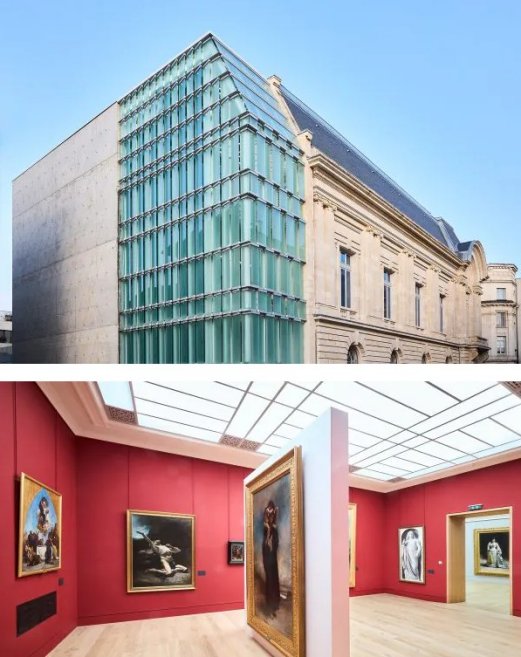
Musée Bonnat-Helleu, Bayonne

The donation of Paulette Howard-Johnston, the youngest child of Paul and Alice Helleu made the museum one of the places of reference for the works of Paul César Helleu from 1988 onwards. It houses his works thanks to his daughter’s donation, as well as the donations and bequests of Paulette Howard-Johnston’s nieces, Éliane Orosdi and Ghislaine de Kermaingant,  when in 2009, she died.  In her will,  the Bonnat Museum was designated as the heir to her collection of more than 300 new pieces.  In 2011, the museum closed its doors for a major renovation, while thanks to this last bequest made by the Helleu family, the museum became the Musée Bonnat-Helleu.
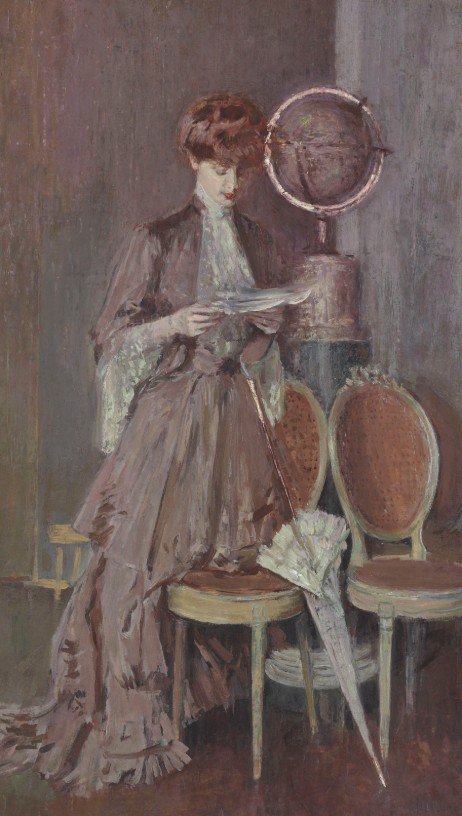
Portrait of Madame Helleu reading by Paul César Helleu

Paul César Helleu was born on December 11th, 1859, in the Brittany town of Vannes.  His mother, Marie Esther Guiot and his father, César Helleu, who was a customs receiver, were married in 1855 and had two sons Paul and his elder brother Édouard.   Paul took an interest in art when he was young. Following the death of his father when Paul was just a teenager, he decided he wanted to further his art studies by going to live in Paris.  His widowed mother was against this idea but Paul persisted and travelled to Paris to continue his schooling at the Lycée Chantal.  In 1876, at the age of sixteen Paul graduated and was admitted to the École des Beaux-Arts, at the atelier of Jean Leon Gerome, where he began his formal academic training in art.
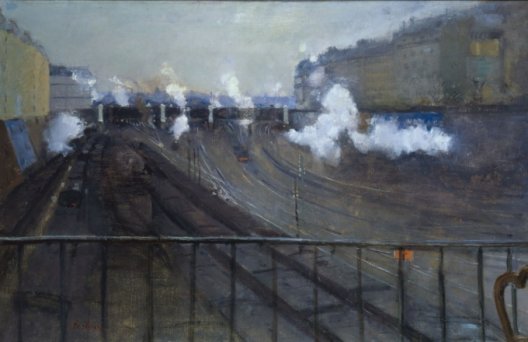
The Saint Lazare Train Station by Paul César Helleu (1885)

It was also in the Spring of 1876 that Helleu attended the Second Impressionist Exhibition at the Durand-Ruel Gallery in Paris. A total of nineteen artists participated in the exhibition, including prominent figures such as:  Degas, Monet. Morisot and Gustave Caillebot. Whilst in Paris,   Helleu made the acquaintance of John Singer Sargent, James McNeill Whistler, and Claude Monet. He was struck by their modern, bold alla  prima artistic technique, which was an approach to painting that involved applying layers of paint, also known as wet-on-wet, and completing a painting in a single sitting. This meant working with wet paint and not letting the layers dry, before applying the next layer. In Italian, the phrase alla prima translates to “at first attempt”.  Helleu was also impressed with their plein air style of painting.
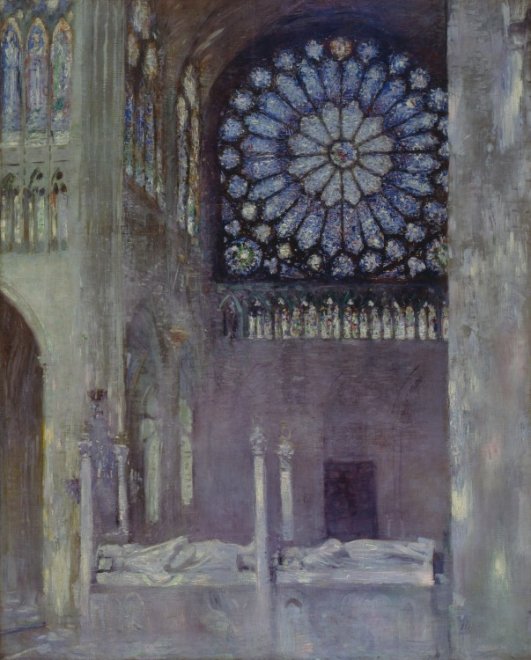
The Interior of the Abbey Church of Saint Denis by Paul César Helleu (c 1891)

Following graduation, Helleu found employment at the prestigious faience (earthenware) workshop, Joseph-Théodore Deck Ceramique Française.  Joseph-Théodore Deck was a 19th-century French potter, and an important figure in late 19th-century art pottery.  In 1856 he established his own earthenware workshop and began to experiment with styles from Islamic pottery, and particularly the Iznik style.  At the time Paul César Helleu joined the workshop, Japonisme, the popularity and influence of Japanese art and design following the forced reopening of foreign trade with Japan in 1858 was all the rage. Helleu created decorations for dishes.
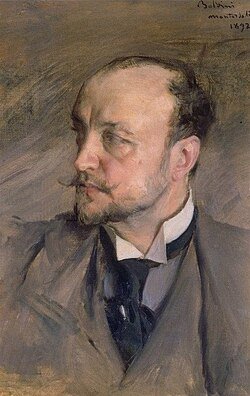
Giovanni Boldini self portrait (1892)
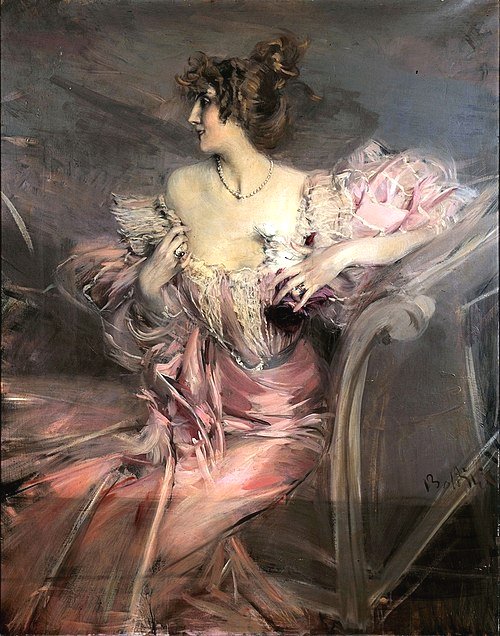
Portrait of Marthe de Florian, a French demi-mondaine and socialite,  by Giovanni Boldini (1898)

Around this time, Helleu met Giovanni Boldini, an Italian genre and portrait painter who lived and worked in Paris.   His portraiture focused on all the grandes dames of Paris, and for them to have their portrait painted by Boldini was looked upon as the crowning event of the social season. Boldini became a friend and mentor to Helleu, and his style of painting had a great influence on his artwork. The other great influence for Helleu was his friendship with John Singer Sargent, often referred to as the leader of “posh portraiture” in Britain, that majorly encouraged Helleu. Helleu even sold his first painting to Sargent. 

Portrait de Madame Chéruit by Paul César Helleu (1898) Madeleine Chéruit was a French fashion designer. She was among the foremost couturiers of her generation, and one of the first women to control a major French fashion house.

This time in Helleu’s life coincided with France’s Belle Époque era. The term, Belle Époque, literally means “Beautiful Age” and was a name given in France to the period between the end of the Franco-Prussian War in 1871 up to to the start of World War I in 1914. During those forty plus years of peace, the living standards for the upper and middle classes increased, (albeit the lower classes did not benefit in the same way, or to anywhere near the same extent).  It was the well-off who termed the phrase Belle Epoque labelling it a golden age in comparison to the humiliations that came with the Prussian invasion and what was to come, the devastation and occupation of the First World War.
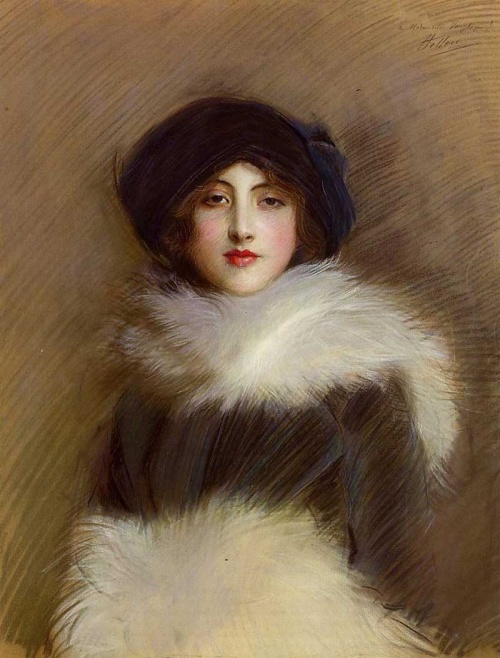
Mademoiselle Vaughan by Paul César Helleu (1905)

It was a time of booming progress and prosperity in Europe, with Paris the centre of the fast-flowing changes in economics, technology, and the arts. However, as the name denotes, beauty was a key element of this prosperous period.  The upper-class patrons would often commission artists to paint their portrait or one of a family member, in a luxurious and extravagant manner highlighting both their beauty and wealth.  The finished portraits heightened an artist’s reputation, ensuring more clients for the artists.

Alice Helleu by Paul César Helleu (1885)

This blog is not only about Paul César Helleu but also his muse, lover, and later his wife, Alice Louis-Guérin. Helleu met Alice in 1884 when her mother asked him to paint a portrait of her fourteen-year-old daughter, Alice. At the age of twenty-four, Helleu appears to have fallen in love with her during this first meeting.   Alice remained the artist’s favourite model throughout his life and she was also a muse for many other artists.  Her beauty and sophistication also helped introduce her husband into the elite circle of artists, writers and society figures of the French capital.  The Count de Montesquiou, who was a noted dandy and one of the leading figures in the artist’s group of friends, described her appearance as

“…La multiforme Alice, dont la rose chevelure illumine de son reflet tant de miroirs de cuivre…”

 (‘The multifaceted Alice, whose rosy hair illuminates so many copper mirrors with its reflection.’)
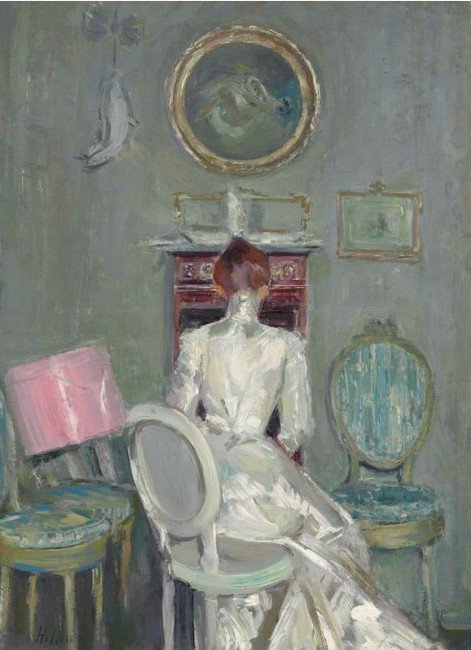
Madame Helleu à son bureau by Paul César Helleu.

Helleu often avoided standard conventional rules of portrait composition, and would frequently depict his sitters from behind – standing before a mirror, or sitting at a desk, as was the case of his painting entitled Madame Helleu à son bureau. Note the porcelain koi carp hanging in the upper left corner which was an example of Japonisme which was all the rage in Paris at the time.   The desk depicted in the painting and which appears in numerous works by Helleu is still in the artist’s family.  The painting hanging above it is Boldini’s Leda and the Swan.
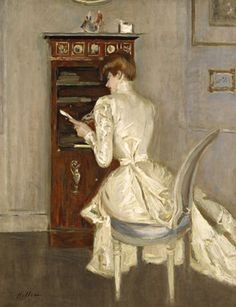
Madame Helleu assise à son bureau dans le salon de l’atelier de l’artiste, capturant une scène intérieure intime avec une élégance raffinée. (Madame Helleu seated at her desk in the artist’s studio salon, capturing an intimate interior scene with refined elegance.)

His painting entitled Mrs. Helleu sitting at her desk in the artist’s studio living room confirms Paul and Alice Helleu were had superb taste and these portraits depict Alice seated at a secrétaire in the couple’s drawing room of their Paris apartment, into which they moved in 1888. I suppose these two paintings cannot be considered as portraits in the conventional sense of the word, but rather as interior still life works, in which the furniture and surroundings are as vital as the sitter.
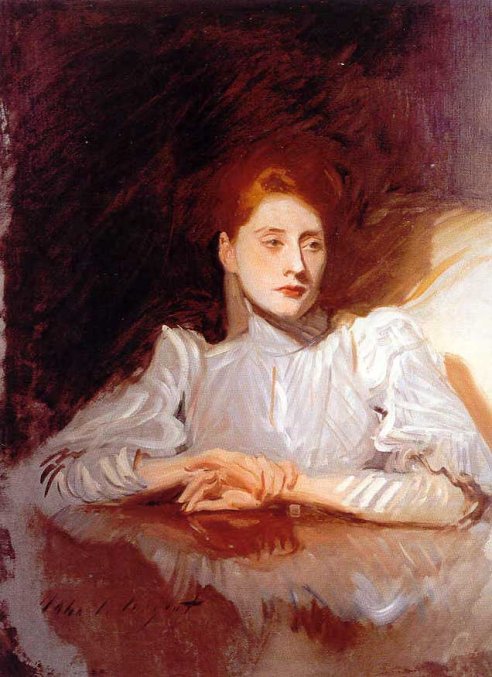
Madame Helleu by John Singer Sargent (1889)

Alice Guérin was depicted in a number of paintings by Paul Helleu’s friend John Singer Sargent.
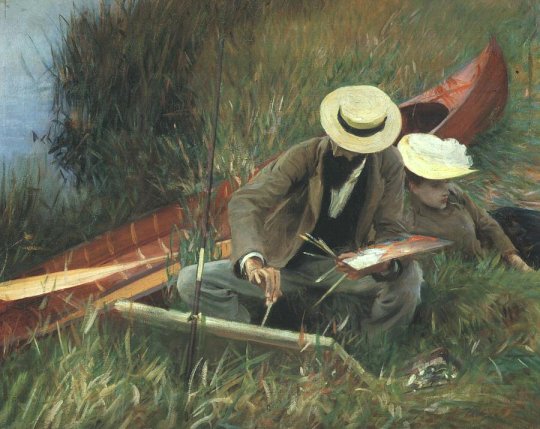
Paul Helleu Sketching with his Wife by John Singer Sargent (1889)

In his 1889 painting, Paul Helleu Sketching with his Wife, Sargent depicts a tranquil outdoor scene, portraying the French artist Paul Helleu engaged in the act of sketching. Alongside him, sits his wife Alice who appears happy and relaxed.  The figures of husband and wife are set against a lush, natural environment that suggests a calm and comforting ambiance. Sargent’s painting also manages to capture their fashionable clothing with Paul wearing a formal suit and Alice attired in an elegant dress.  Both wear wide-brimmed hats that both provide shade and stylishly adorn their heads.
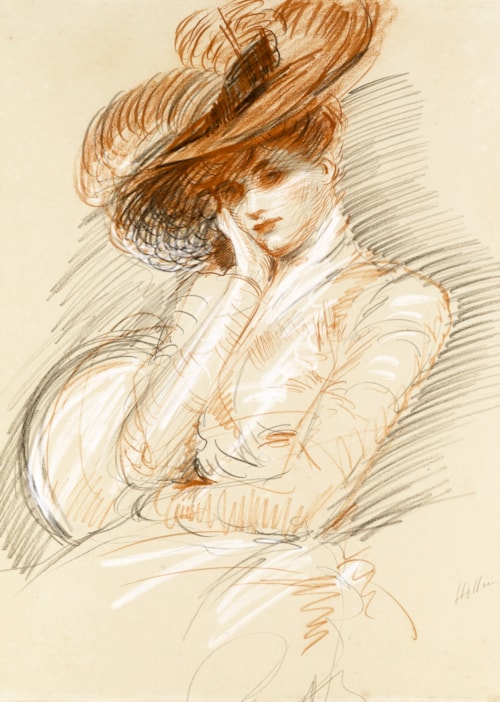
Portrait of Artist’s Wife by Paul César Helleu

Paul Helleu was one of Sargent’s closest friends.  Initially, they had met in Paris in 1878.  Paul was 18 years old and Sargent 22. Sargent’s artistic career had already taken off, and he was becoming known to the public as a great portraiture artist and was receiving many commissions for his work. However, on the other hand, Helleu was selling little of his work, and because of this, he was suffering from depression.  Paul Helleu was financially strapped with hardly enough money to even eat and had to leave his studies in art due to lack of funds.  Sargent, got to hear about the plight of his friend and visited him at his studio and although he never alluded to his friend’s dire financial difficulties, Sargent selected one of Helleu’s paintings, and commended it for its artistic merits. Helleu was so flattered that the successful Sargent would think so kindly of his work that he offered to give it to him.  The story goes that Sargent responded to Helleu’s offer, saying:

“…I shall gladly accept, Helleu, but not as a gift. I sell my own pictures, and I know what they cost me by the time they are out of my hand. I should never enjoy this pastel if I hadn’t paid you a fair and honest price for it…”

He paid Helleu one thousand francs for the painting.  Helleu never forgot Sargent’s generosity and moral support and later, when Sargent was suffering from depression after the death of his father, Paul and Alice Helleu went to stay with him in England.
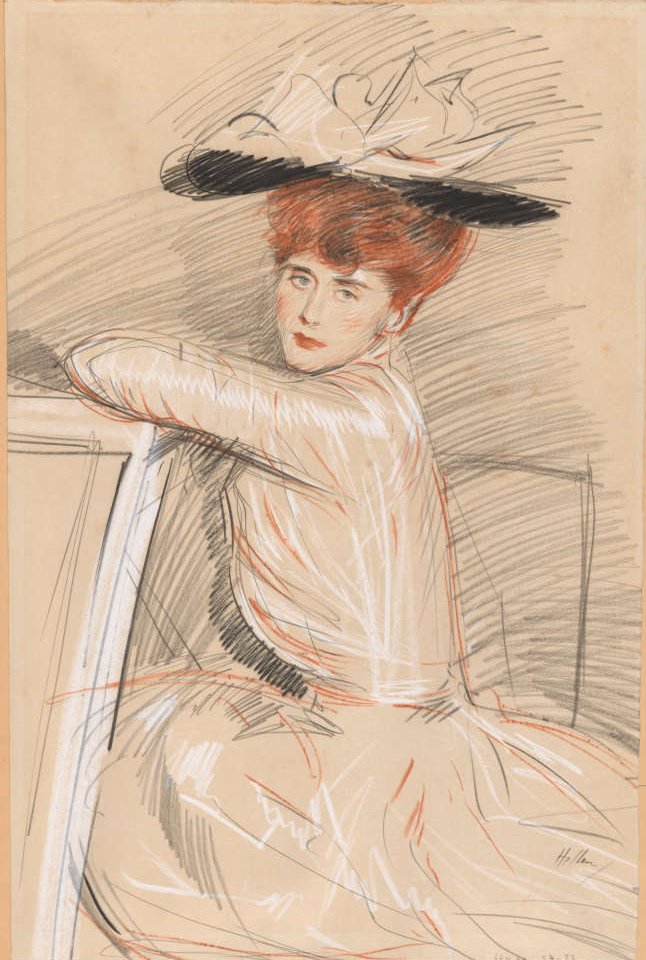
Portrait of Madame Helleu by Paul César Helleu.

Paul César Helleu and Alice Louis-Guérin married, two years after their first encounter, on July 29th, 1886, at Neuilly sur Seine.  She was two months away from her seventeenth birthday and Paul was twenty-six years old.  They went on to have four children, Hélène in 1887, Jean in 1894, Alice in 1896 and Paulette in 1904.
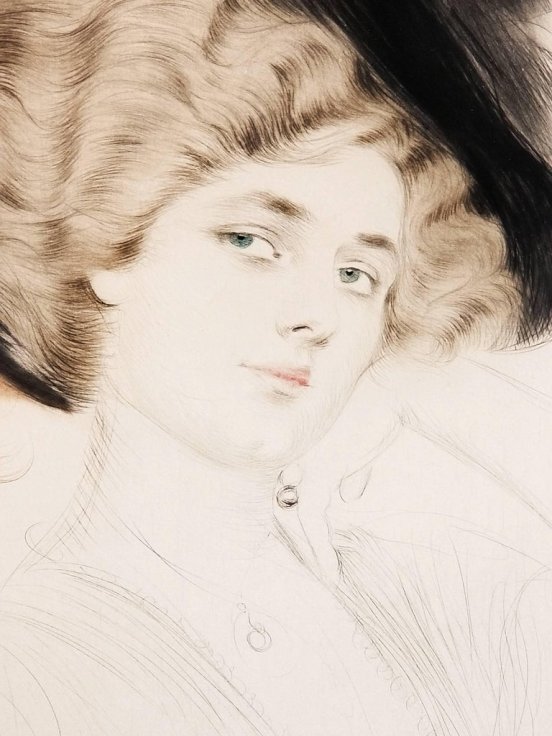
Details of Femme aux chapeau – Drypoint by Paul Helleu
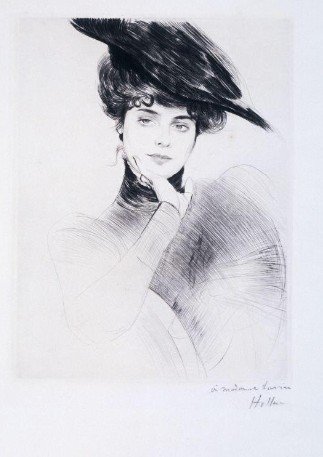
Drypoint Portrait of a Young Woman wearing a Hat by Paul César Helleu (c.1900)

It is believed that during a trip to London in 1885 Helleu once again met Whistler who introduced him to James Tissot a French society painter, illustrator, and caricaturist who was living in the English capital.  It was this established artist who taught Helleu the unique medium of etching.  Helleu became fascinated by drypoint etching.  Drypoint is a printing technique in which the printmaker scratches the lines on the printing plate with a sharp pointed tool. The printmaker holds the tool like a pencil and pushes the excess metal to either side of the furrow. It is this curl of rough metal, known as the ‘burr’, that gives the drypoint print its character. The ink is held in the burr as well as in the furrow and gives the edges of the printed line a soft, blurred quality. In Helleu’s work (above) the burr on the woman’s choker gives it a very velvety look.  Over the course of his career, Helleu produced more than 2,000 drypoint prints and he quickly mastered this technique, using the same flair with his stylus as he demonstrated with pastels.  It was the brilliance of his drypoint etchings that ensured Helleu’s place as one of the greats of the Belle Epoque, and he journeyed to Britain and America, and his artworks boosted his fame across both sides of the Atlantic.
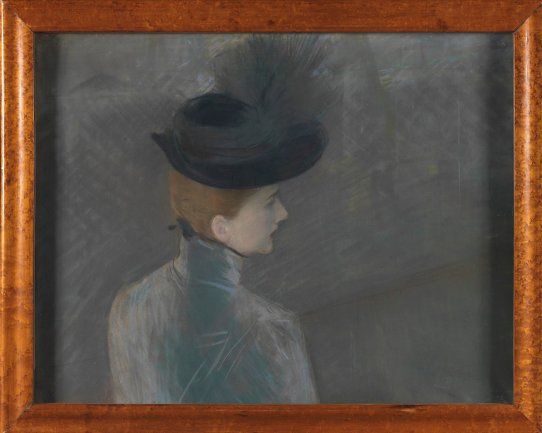
Alice au chapeau noir by Paul César Helleu

Helleu and his wife had made many friends in Paris including Countess Greffulhe, a French socialite, known as a renowned beauty and queen of the salons of the Faubourg Saint-Germain which allowed Helleu to successfully expand his career as a portrait artist to elegant women in the highest ranks of Paris society
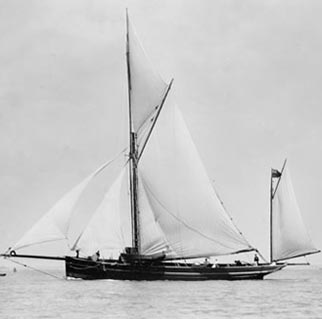
Paul Helleu’s yacht Étoile

Paul Helleu, wife Alice and baby daughter Paulette on L’Étoile (c.1904)

In 1904, Helleu was awarded the Légion d’honneur by the French president, Émile Loubet, and became one of the most celebrated artists of the Edwardian era in both Paris and London. He was an honorary member in important beaux-arts societies, including the Société Nationale des Beaux-Arts and the International Society of Painters, Sculptors, and Engravers, headed by Auguste Rodin. 
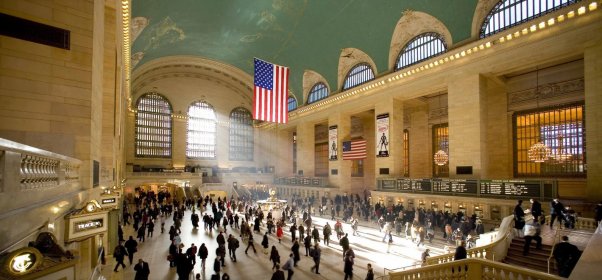
New York City’s Grand Central Terminal.

During his second trip to the United States in 1912, Helleu was awarded the commission to design the ceiling decoration in New York City’s Grand Central Terminal. Helleu decided on a mural of a blue-green night sky covered by the starry signs of the zodiac that cross the Milky Way.

Paul César Helleu (1859-1927)

Helleu made his last trip to New York in 1920 for an exhibition of his work, but he realized that the Belle Époque era was over. He sadly realised that he had lost touch with that vibrant era.   Shortly after his return to France, he destroyed nearly all of his copper plates.   While planning for a new exhibition with Jean-Louis Forain, a French Impressionist painter and printmaker, Helleu died of peritonitis following surgery in Paris, on March 23rd, 1927 at age 67.


Information needed for this blog came from Wikipedia and Facebook plus the following websites:
Brave Fine Art

Contessa Gallery

Stephen Ongpin Fine Art

John Singer Sargent Virtual Gallery

Sotheby’s

Cyril and Renske Mann. Part 4.

Renske Mann from her book, The Girl in the Green Jumper

Renske was overjoyed by Cyril’s words. Although she didn’t believe his words were utterances of flattery and just simple facts, nevertheless the words made her happy and made her love him even more.

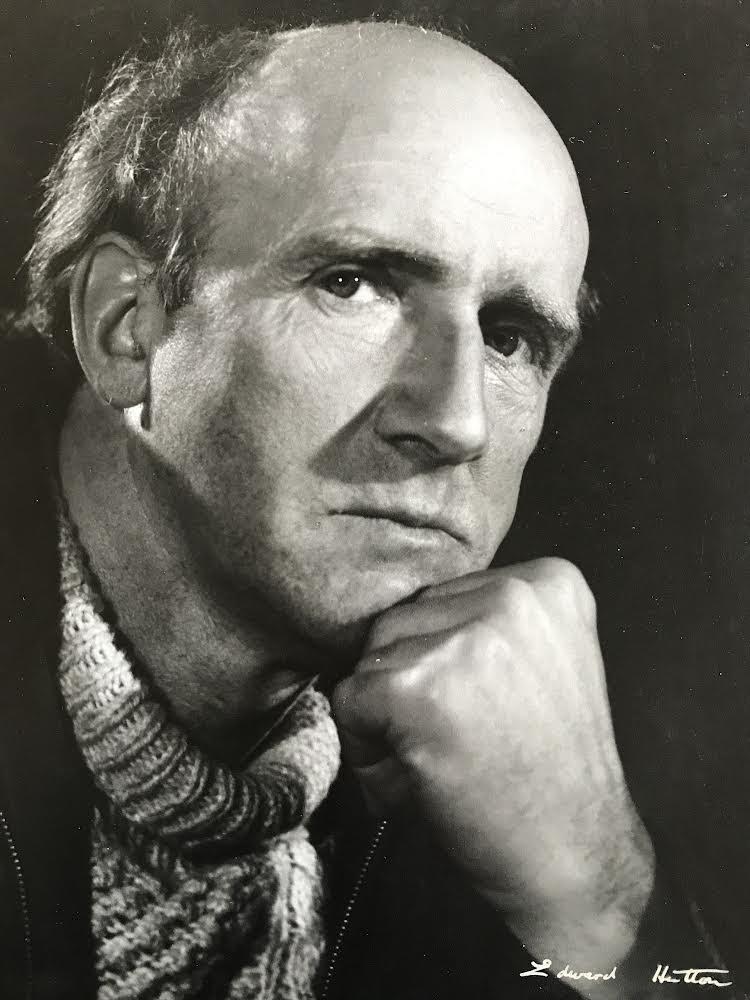
Cyril Mann (1960). Photograph by Edward Hutton.

Throughout his career Cyril painted many portraits, self-portraits and in the 1960s Cyril Mann completed a number of nude depictions using Renske as his model. 

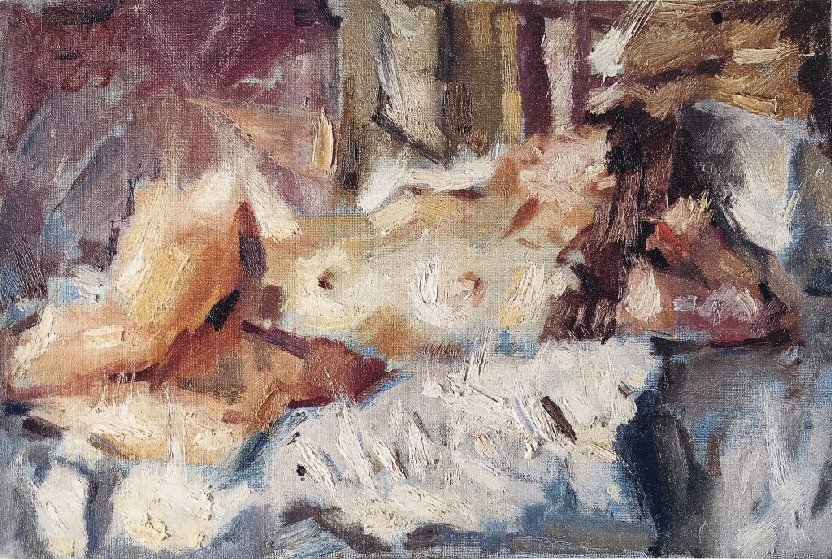
Ecstasy by Cyril Mann (1963)

One such nude portrait, using her as a model, was completed in 1963 and entitled Ecstasy.  Renske remembers the morning he began this work. In her book, The Girl in the Green Jumper, she describes the setting:

“…Cyril mostly painted in the morning.  The minute he drew the curtains he knew when the weather was set to last.  As the sun rose, it cast shadows from the Crittall windows [steel framed windows] across my nude body on our single bed.  He stared at me, grunting and squinting ‘Stay put and take a comfortable pose’ he ordered.  I knew by then that there was no such thing: every pose would turn into agony in time…”

It was not just about her body or pose it was also about the sunlight streaming through the window. It was of the utmost importance to Cyril to capture the dynamic effects of the rays of the sun as they bounced off every surface, from walls on to Renske’s body and back.  He was like a man possessed.  Tables and chairs had to be moved out to make a working space.  He would shuffle around the tight spaces never lifting the gaze from Renske’s body.  She moved to get comfortable on the bed and started to doze off only to be woken abruptly by Cyril who rudely told her “not to go fucking asleep”.  Throughout painting Renske said he would not stop talking, all the while explaining what he was doing.  He was adamant that he had to block in the light areas first as they were more important, not the mid-tones or darks.  Cyril compared Renske to the RA models he had once used saying:

“…Models at the RA haven’t a clue.  They just sit on a chair.  Students have to group around a podium.  If you are in the wrong spot, you’re fucked.  At least you know how to make your body look interesting…”

Cyril had been introduced to the famous English television personality, Denis Norden, who on seeing the painting told Cyril that he should give it the title Ecstasy. Cyril and Renske had hoped that Norden would buy the painting but he didn’t but their mutual friend, Peter Davis, who had introduced Denis Norden to them suggested they just give Norden the painting for nothing as the celebrity owning one of Cyril’s paintings would be added kudos. However Cyril was appalled by the suggestion and simply said ‘to hell with that’.

Modern Venus (c.1963)

One morning Cyril Mann came into the bedroom where is wife, naked, had just risen from bed.. He flings back the curtains and the sunlight streams in, illuminating her. He screamed at her not to move and at the same time drags into the room a large canvas and starts to paint her portrait.  She remembers that her shadow was cast against the wall as she rose from the vey messy jumble of bedclothes strewn on the bed. She is standing facing him with her left arm above her head which in that posture soon becomes numb. She balanced by standing one foot in front. Their blue alarm clock on their round bedside table glistens in the sun. He told her that she was a Modern Venus. Not rising from a seashell but from the sheets and blankets. The painting Modern Venus is complete.

Reclining Nude in Sunlight by Cyril Mann (1962)

In Reclining Nude in Sunlight, Cyril Mann omits detail as he just wants to depict and render light as a dynamic force. He used large hog’s-hair paintbrushes so that he could rapidly cover the canvas, and so focus on the light and how the sunlight fell and reflected on Renske’s nude body as it swiftly crossed their room.

Golden Torso by Cyril Mann (1961)

Golden Torso was completed in 1961 and when the author and art critic John Berger saw it he immediately recommended it for the Granada TV Art Collection which was recognised as probably having the third best corporate collection in Britain. Unfortunately for Berger the painting had already been snapped up by another collector and Berger reluctantly chooses another picture for his sponsor.

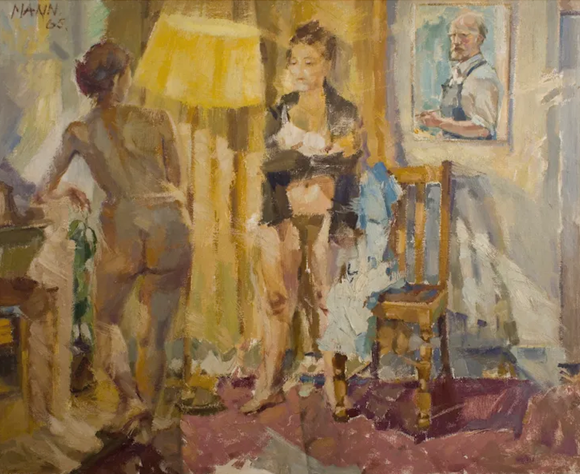
Self portrait with Double Nude by Cyril Mann (1965)

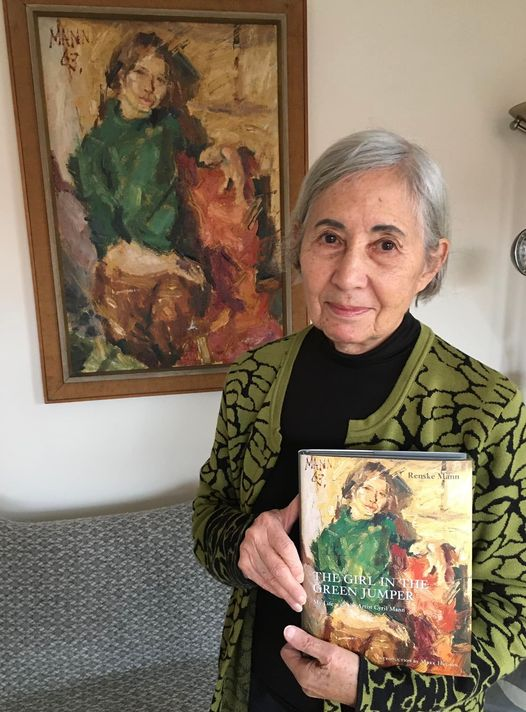
Probably the best-known portraits Cyril completed of Renske was The Girl in the Green Jumper, one with her fully clothed.  His self-portrait can be seen in the background, hanging on the wall.

The Girl in the Green Jumper by Cyril Mann (1963)

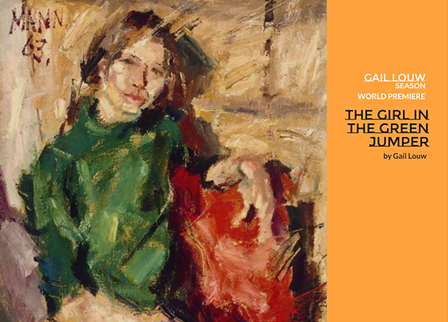
In the painting, The Girl in the Green Jumper, we see Renske perched on the narrow wooden armrest of their red chair, which she recalled made sitting still very difficult and painful, much to Cyril’s annoyance. She said that posing for Cyril required a good deal of concentration and willpower. The depiction came about when Cyril was admiring the green of her jumper which he commented looked so much more intense, seen against the red upholstery of their newly-purchased G-Plan suite. Renske, like many, queried whether it is a portrait or a study of sunlight blazing on to her through the window, striking her face and bouncing all over the room. She commented to her husband that her hands were just fingerless smears of paint but he replied that that was true abstraction. Abstraction he said was “to leave out” and abstract art is not actually abstract at all and should be better termed as “non-figurative”.

Amanda Mann has followed in her father Cyril Mann’s footsteps and is now also a talented artist. Here Amanda is seen with the painting that inspired her mother Renske Mann’s memoir “The Girl In The Green Jumper: My life with Cyril Mann”.

Cyril Mann, besides the nude depictions of his wife and self-portraits, completed many portraits of his family and friends which highlight what, he as a talented portrait artist, could produce. There is no doubt that he could have been a wealthy portrait painter. Alas he only rarely painted portraits of people outside the family as he said he could not accept portraiture commissions where he was supposed to flatter his sitter, which he believed was often the prerequisite for being given the commission.

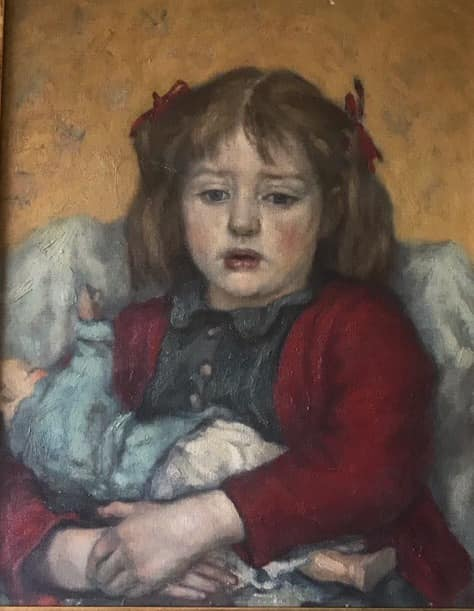
Portrait of Sylvia, aged 3, tearfully clutching her doll, by Cyril Mann (1943)

Sylvia, Cyril’s first daughter, would recount on a number of occasion the memory of sitting for her father for the portrait. She said the agony and boredom of sitting still for hours, clutching the doll still haunted her.

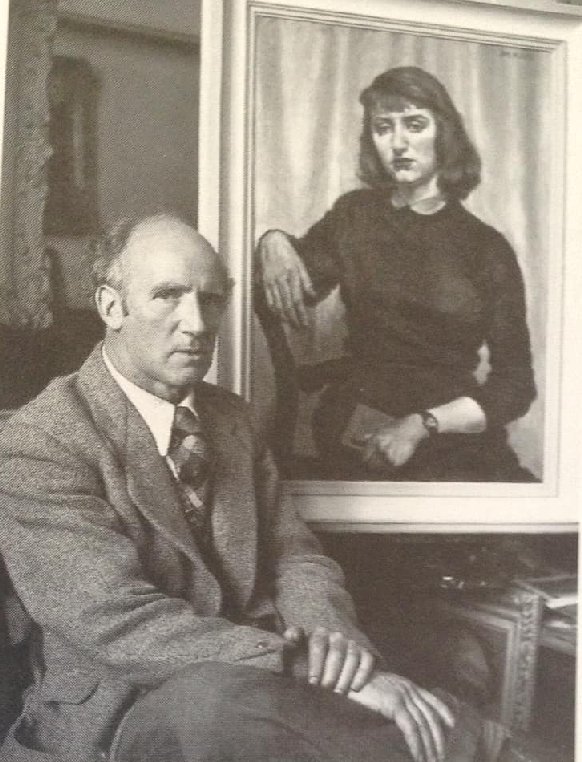
Portrait of Sylvia, by Cyril Mann (c.1957)                  Collection Gideon Dewhirst (Sylvia’s son and Cyril’s grandson)

Cyril Mann with his portrait of Sylvia Mann.

It is hard to judge the mood of the sitter. Sylvia was then aged seventeen and it was the time prior to her attending Keele University. It seems she is somewhat lost in her own thoughts. The depiction shows her holding a book, signifying her love of literature. After university she would go on to become a published author, poet and playwright. Sylvia died in 2006.

Amanda, aged 4, with Doll by Cyril Mann (1973)

Cyril and Renske’s four year old daughter, Amanda, was posed sitting on a chair holding her doll. It was a similar depiction to Cyril’s portrait of his first-born daughter, Sylvia, which he completed in 1943, also with a doll.

Portrait of David Hardisty by Cyril Mann (1966)

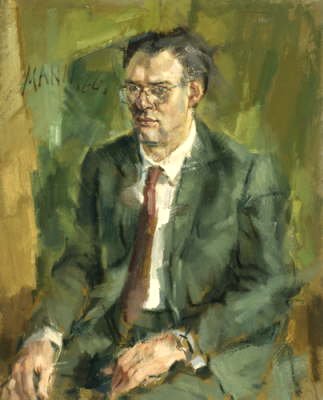
David Hardisty was a young lawyer working as a patent agent. He had seen and fell in love with one of Cyril’s floral paintings which were on display at the Rawinski Gallery in London. Hardisty, who had recently married, could not afford the £300 price tag. Not to be deterred he went to Bevin Court to ask Cyril if he could buy the painting in fifteen £20 instalments. Cyril agreed and during the following years David bought more of Cyril’s paintings. In the portrait, sunlight once again takes precedence over form in Cyril’s rendering. It plays across David’s features and on his suit, tie and hands. Time must have been at a premium for Cyril as the portrait was completed in only six two-hour sittings.

My Student, Vic Singh by Cyril Mann (1962)

When Renske went to the art class in December 1959 and met Cyril Mann for the frst time, one of his students that evening was Vic Singh. whom Renske remembered as being an extremely handsome young man,. His mother was Austrian and his father was an Indian politician. Singh went on to become a photographer. One day he called around to Bevin Court and Cyril persuaded him to pose for a portrait. He agreed and posed, one foot raised with his elbow resting across his knee while stretching one arm towards the bookcase in order to maintain his balance. He was exhausted by the time Cyril had completed the portrait.

Portrait of Ernest Groome (1971)

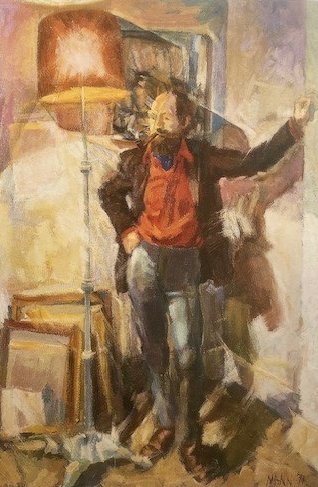
In 1960, Renske, like her husband, began to worry about the lack of sales of his paintings and suggested he took some of his work to Hyde Park Corner where many artists hung their work on the railings. Cyril was horrified with this idea saying that serious artists would not dream of hawking their wares in such a way. Renske, however, said that if he wouldn’t do it, she would. She arrived at Hyde Park Corner and found some spaces on the railings where she could hang Cyril’s artwork but she had forgotten to bring string or hooks to complete her task. She was rescued by a young Irishman, Ernest Groome, an aspiring young artist who had been working as a touring pub entertainer. He managed to find hooks and string and he and Renske hung Cyril’s paintings on the railings. 

Cyril first painted Ernest Groome’s portrait in 1961 shortly after the Hyde Park Corner meeting and ten years later completed another portrait of Groome. In this portrait Groome is in Renske and Cyril’s home. The red shade of the standard lamp picks up the colour of his shirt, casting a strong solid shadow against the wall behind him.

Self portrait by Cyril Mann

Cyril left behind many self-portraits which capture his many moods.

Self-Portrait with Hat by Cyril Mann (c.1968)

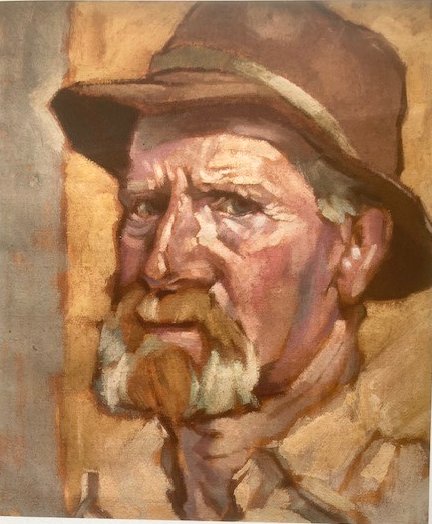
It is a very worried-looking Cyril Man who stares out at us in his 1968 Self-Portrait with Hat. He seems to have the cares of the world on his shoulders. It is 1968 and Renske is pregnant with her daughter Amanda, Renske, whose job was bringing financial stability to the household, was having to give up her job to have the baby. How were they going to cope? Could Cyril sell more of his work? All of these and many more questions were probably racing around Cyril’s head at the time of the self-portrait.

Self-Portrait with a Brush by Cyril Mann (1966)

The most controversial self-portrait came in 1978 under the title Ecce Homo. Ecce homo, meaning “behold the man” are, according to the Gospel of St John, the Latin words used by Pontius Pilate when he presented a scourged Jesus, bound and crowned with thorns, to a hostile crowd shortly before his Crucifixion. 

Ecce Homo by Cyril Mann (1978)

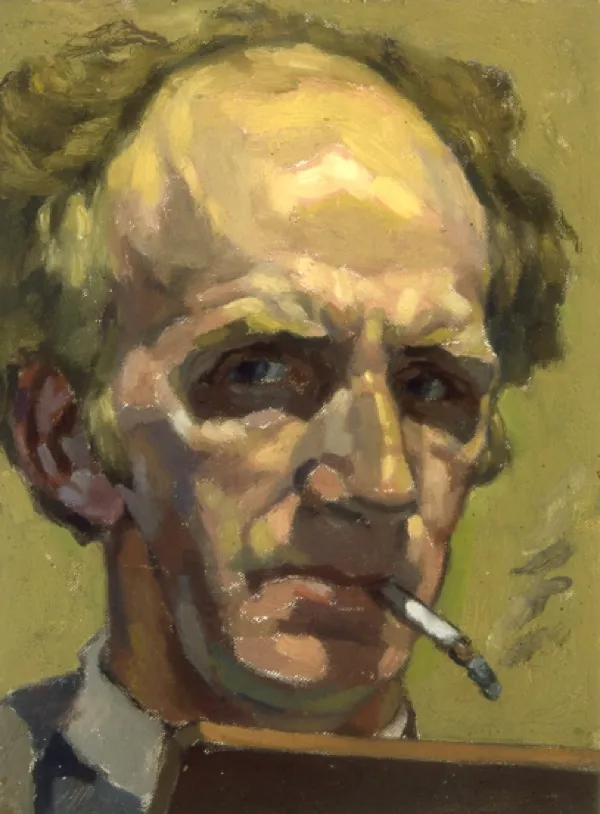
Ecce Homo was one of last self-portraits painted by Cyril Mann. He died a year later. His state of mind, at the time he painted his own portrait, was unstable but there was also a sense of defiance about this depiction. A sense that he was master of his own destiny. It is in a way a mirror of his great creative energy which throughout his life shone brightly and was never dimmed by his detractors.  Having given up smoking on doctor’s orders he had reverted to that habit and the portrait shows him defiantly holding a cigarette. It was another way of showing that he, and he alone, would make decisions about himself.  His rebellious posture and the title he gave the work was his way of reasoning that he, like Christ, had been persecuted and in a way crucified by art critics and gallery owners. He adamantly believed that the reason he never achieved the success he deserved during his life was due to others and not himself.   In the background, we see flanking him two earlier self-portraits and their positioning symbolises the thieves crucified on either side of Christ.

……. to be continued.


It would not have been possible for me to put together this and following blogs about the artist, Cyril Mann, without information gleaned from a number of sources:
The comprehensive biography of Cyril Mann, The Sun is God by John Russell Taylor

Renske Mann with her book The Girl in the Green Jumper, My life with the artist Cyril Mann

The intimate autobiography of Cyril Mann’s life by his second wife Renske, entitled The Girl in the Green Jumper.

Renske Mann and Natalie Ava Nasr, the lady playing the role of Renske in the play.

Peter Tate who plays Cyril Mann, Christian Holder, director of the play and Natalie Ava Nasr, who plays Renske in the play The Girl in the Green Jumper.

This autobiography has now been turned into a play which receives its World Premiere on Wednesday March 13th at the Playground Theatre, London, 8 Latimer Rd, London W10 6RQ. It runs until March 24th.

Finally, and most importantly I owe many thanks to Renske Mann herself who provided me with information and photographs appertaining to her late husband Cyril.

Piano Nobile Gallery London for information and pictures.

Eric Henri Kennington, Part 2 – the Second World War Artist

Eric Kennington (1926)

At the end of Part 1 of this blog about Eric Henri Kennington we had reached a point in his life when he had travelled to Arabia to prepare sketches which would later be used in his friend, T. E. Lawrence’s 1922 book entitled Seven Pillars of Wisdom.

In 1922, Eric Kennington first met Edith Cecil when he received a commission to paint a portrait of her husband, William Charles Frederick Hanbury-Tracy, 5th Baron Sudeley, whom she married in August 1905.  They had no children.  Kennington and Edith fell in love and in 1922 she and her husband divorced and in September 1922 she married Eric Kennington.  The couple went on to have a son, Christopher, in March 1925 and a daughter, Catherine in February 1927.  It is said that both Eric and Edith remained on friendly terms with Edith’s ex-husband.

The 1922 book Seven Pillars of Wisdom by T E Lawrence

Eric Henri Kennington, as well as having been a war artist during the Great War, was also a revered portrait painter.   During his time in Arabia sketching and working on paintings for T E Lawrence’s autobiographical book, Seven Pillars of Wisdom, he met Field Marshal Allenby.  Allenby, at that time, was the High Commissioner for Egypt and was based in Cairo.

Edmund Henry Hynman Allenby, 1st Viscount Allenby by Eric Kennington (1926)

In March 1921 Kennington met Allenby at the Semiramis Hotel in Cairo and produced a pastel portrait of Allenby.   It is remarkable to think that this pastel work was completed by Kennington in less than an hour.

Effigy of T.E. Lawrence - 'Lawrence of Arabia' in St. Martin's Church, Dorset by eric Kennington (1926)
Effigy of T.E. Lawrence – ‘Lawrence of Arabia’ in St. Martin’s Church, Dorset by eric Kennington (1926)

Kennington and T.E.Lawrence (Lawrence of Arabia) had an enduring friendship up until the day Lawrence was killed in a motorcycle accident in May 1935.  After his friend’s death, Kennington spent years completing a full-length reclining stone effigy of his friend dressed as an Arab sheikh.  This beautiful tomb effigy which was completed in 1939, and can now be found in the church of St Martin’s in Wareham in Dorset

Head of T. E. Lawrence by Eric Kennington (1926)

Kennington also completed a bronze sculpture of the head of T.E.Lawrence in 1926 and the intrepid British archaeologist, military officer, and diplomat was delighted with the work.  He said:

“…Magnificent; there is no other word for it. It represents not me but my top moments, those few seconds when I succeed in thinking myself right out of things…”

At the outbreak of the Second World War in 1939 the War Artists Advisory Committee was formed as part of the Ministry of Information.  The chairman of the new committee was Sir Kenneth Clark.  Clark who had been a fine art curator at Oxford’s Ashmolean Museum,  had, in 1933 at age 30, become the director of the National Gallery and as such was, and still is, the youngest person ever to hold the post.   One of the artists he chose was Eric Kennington, as by this time, he had built up a reputation as a leading portrait artist.    Kennington became a war artist for the second time in December 1939.   His contract with the War Artists Advisory Committee was to produce pastel or charcoal portraits and for each one he would be paid 25 guineas.  Kennington agreed but said he would need a minimum of three hours per sitter.

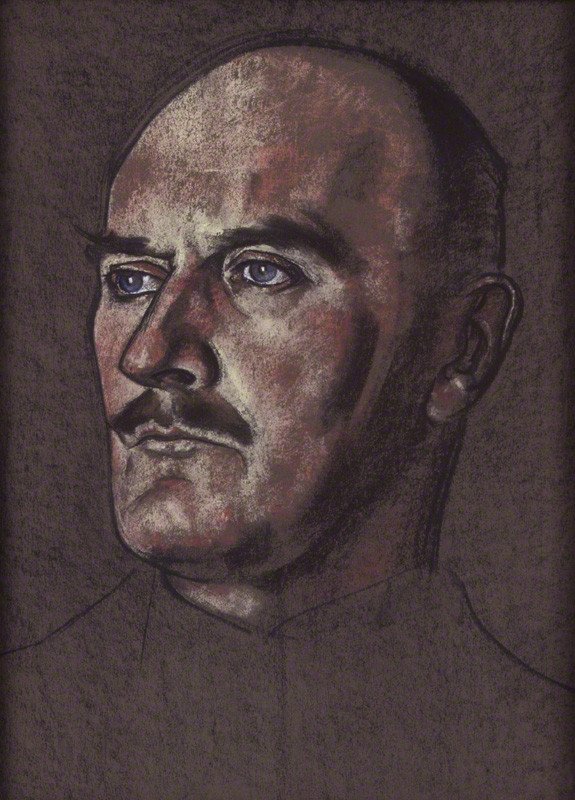
General Sir Edmund Ironside, General Officer Commanding-in-Chief, Home Forces, May-July, 1940. by Eric Kennington (1940)

One of his first sitters was the Chief of the Imperial Staff, General Sir Edmund Ironside.  He completed the portrait in January 1940

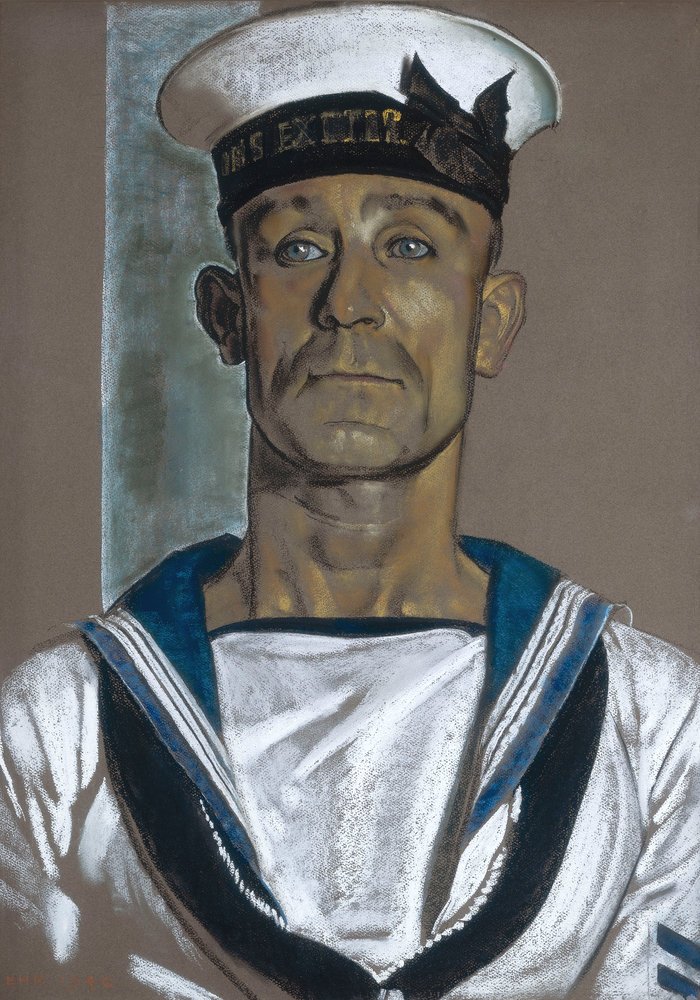
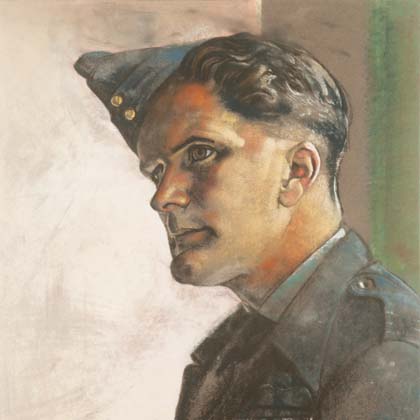
Portrait of Stoker A.Martin of HMS Exeter by Eric Kennington

In 1940 Kennington was sent to Plymouth to sketch portraits some of the seaman who had served in the great 1939 sea battle of the River Plate.  One such portrait, which he completed in the April of that year, was of Andrew Martin, a senior stoker aboard HMS Exeter during the River Plate battle.  Kennington wrote a small piece to accompany the portrait.  He wrote:

“…Man of Action: instantaneous: 100 per cent reliable: expert technician. Much humour under thorough camouflage. Very gentle, sensitive, and great physical strength…”
The painting found favour with the art critic, Herbert Granville-Fell who wrote:

“…Kennington’s harsh iron technique has a force admirably suited to conveying unflinching and dauntless resolution in the faces of his seamen and soldiers. I know of no other artist who can so convincingly depict the salt of the earth, and evoke palpably, in a portrait, the very essence and savour of courage…”

Kennington, as was the case during the First World War,  soon clashing with his “employer” the War Artists Advisory Committee principally because of his personal dislike of Colin Coote, a journalist, who was the War Office representative on the committee.  In May 1940 the Home Guard, the Local Defence Volunteers was formed and Kennington decided to leave his role as a war artist for the War Artists Advisory Committee and join the Home Guard.

In July 1940, shortly after Kennington left the War Artists Advisory Committee the Committee held an exhibition of official war art at the National Gallery.  The art critics and public were both pleased with what they saw and in particular the works of Eric Kennington which were said to have been the most popular.  In particular his works depicting the generals and the sailors received the most praise.

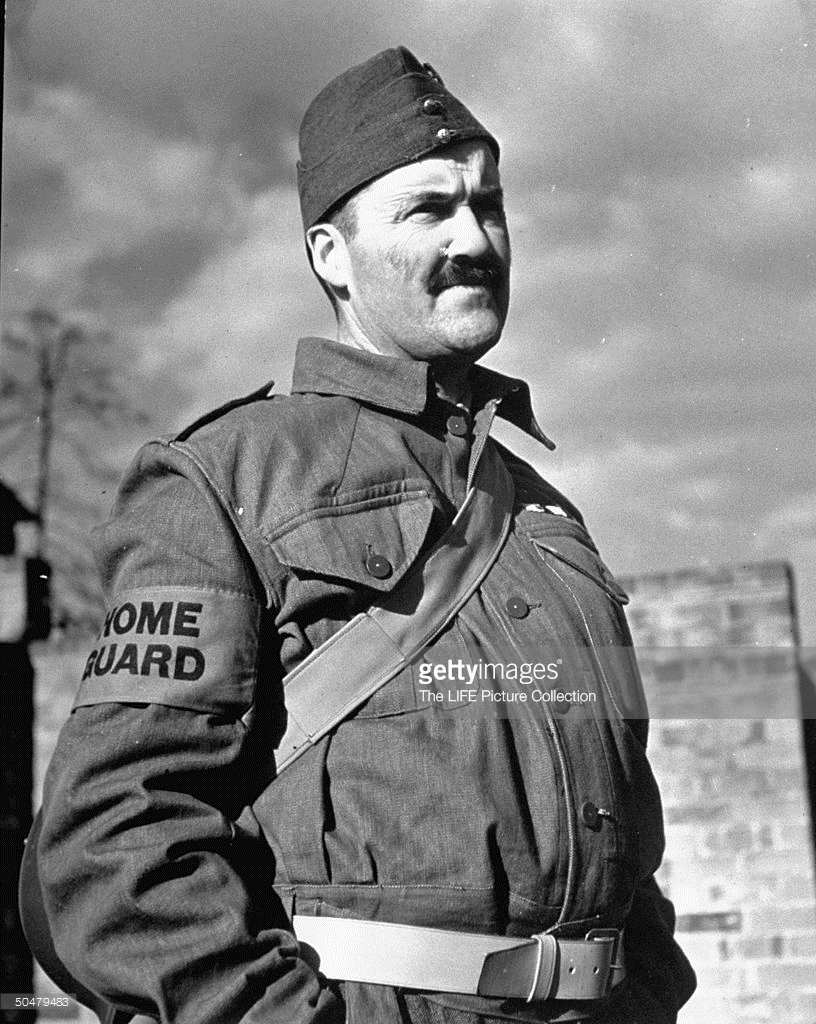
Eric Kennington in his Home Gurad uniform

Kennington rose in its ranks and in July 1940 he was put in charge of a section of six countrymen in the south Oxfordshire countryside, defending an observation post he had set up to the north of his home in Ipsden.   We are so use to thinking of the Home Guard as the people we see on the very popular TV comedy series, Dad’s Army or maybe we have a romantic view of the brave men who protected our homes.  Apparently Kennington did not view the Home Guard or his fellow Home Guardsmen in such an idealised and romantic manner.  Kennington was very vociferous in his criticism of the equipment they were given and was also critical with regards the senior officers, of whom he said were tied up in bureaucracy.   He wrote to his older brother William:

“…The men, if not suitably motivated, did not report for duty in the evenings, but sloped off after roll call to go poaching, fishing, or playing cards in the pub…”

Sergeant Bluett, Cornwall Home Guard by Eric Kennington

For all his criticism of some of his fellow volunteers he completed some wonderful portraits of them, such as Sergeant Bluett of the Cornwall Home Guard which he completed in 1943.

Corporal Robertson, City of Edinburgh Home Guard by Eric Kennington (1943)

….and Corporal Robertson of the City of Edinburgh Home Guard which he also completed in 1943.  Both these paintings are housed in the Imperial War Museum.

The War Artists Advisory Committee in August 1940 not wanting to have lost such a great artist approached Kennington and asked him to return to the fold as a war artist.  The War committee was delighted that Kennington agreed to return.  The secretary of the Committee, Edmund Montgomery O’Rourke Dickey, wrote to Kenneth Clark about how Kennington’s work instilled hope in those who saw his portraits.  He wrote:

“…The best of this artist’s [Kennington] portraits of sailors in the exhibition at the National Gallery have, in the eyes of the public, a nobility not shared by any other work that’s on display at the National Gallery. These portraits typify the fighting man who’s going to win the war for us…”

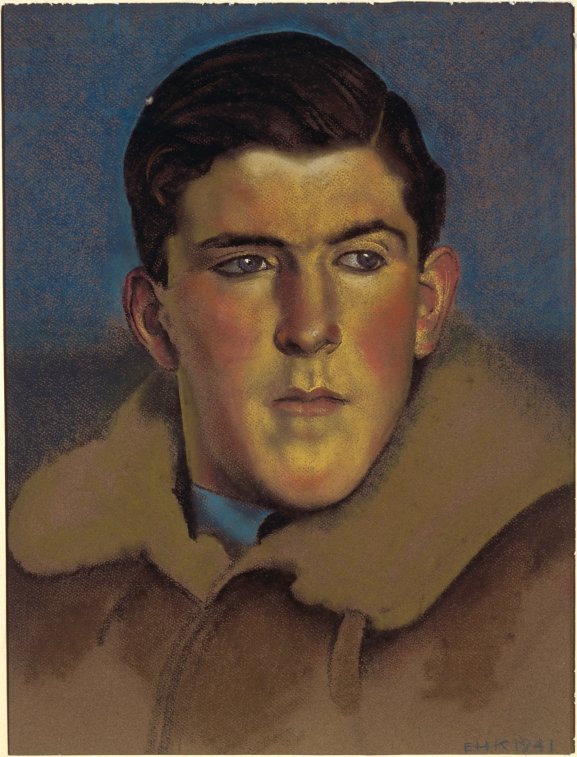
Pilot Officer M J Herrick, DFC, by Eric Kennington (1941)

Kennington agreed to return as a war artist and the Committee offered him a commission to draw portraits of RAF personnel at a time when the Battle of Britain was at its fiercest and these men were often referred to as “fighting aces”.

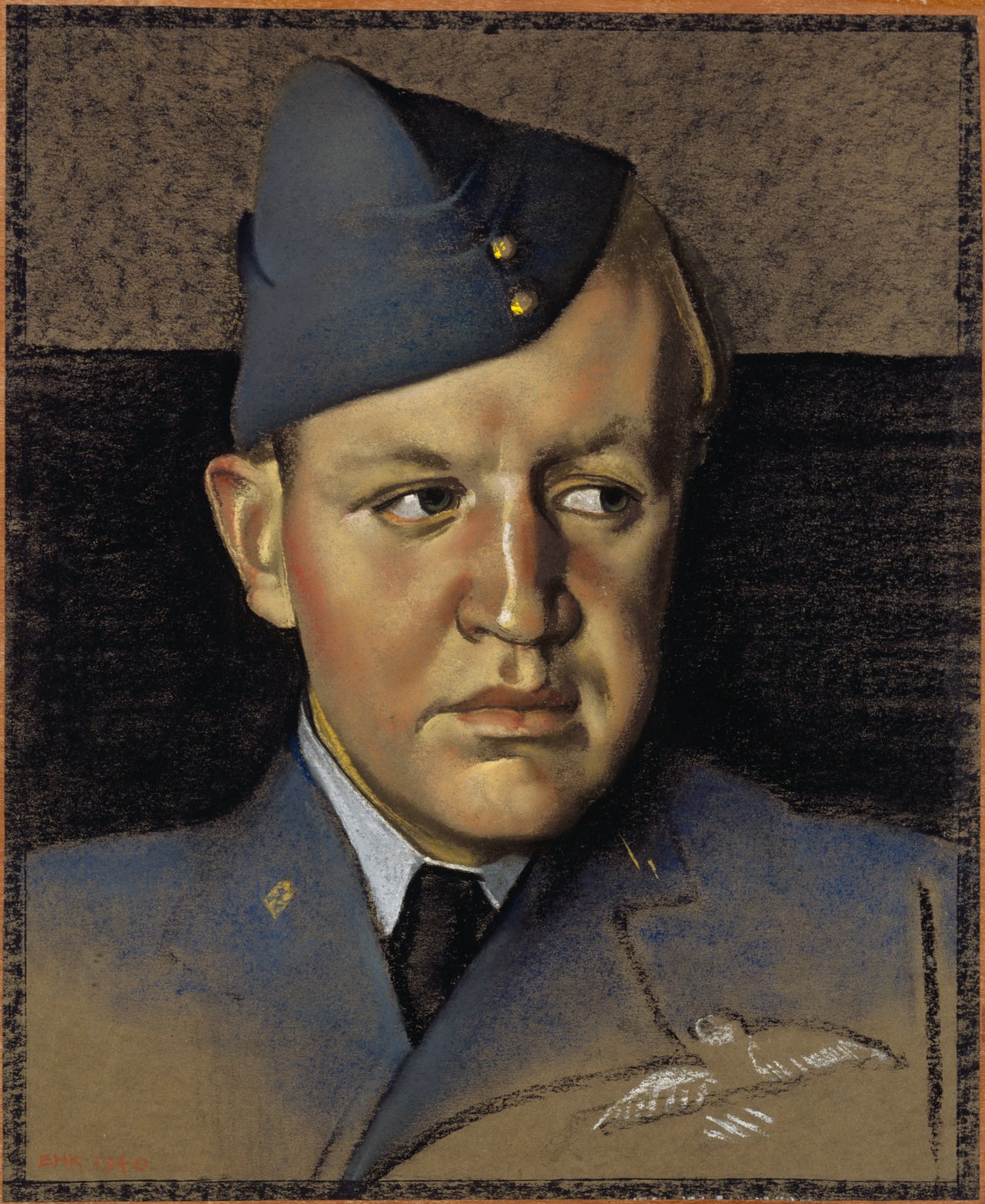
Flight Lieutenant Lloyd Watt Coleman, DFC, by Eric Kennington (1940)

The pastel portraits were sensitive depictions of the air force heroes and many were used as illustrations in Kennington’s 1942 book Drawing the RAF.  There is a simplicity about these portraits but the underlying thought that these were some of the men who would fight for and save our country, was unmistakeable.

Air Chief Marshall Sir Charles Frederick Algernon Portal DSO & Bar by Eric Kenningtonn(1941)
Air Chief Marshall Sir Charles Frederick Algernon Portal DSO & Barn by Eric Kennington (1941)

One must remember that the War Arts Committee would give Kennington a list of people who were to appear in his portraits.  This caused a rift between Kennington and the Committee as Kennington believed that all the Committee wanted was portraits of senior officers and Kennington wanted to highlight some of the fighting men from the lower ranks.  Once again Kennington threatened to walk away from his position as a war artist but he was such a great portraitist that he was talked out of his impending resignation by none other than the Chief of the Air Staff, Sir Charles Portal.

Wing Commander Geoffrey William Tuttle OBE DFC by Eric Kennington (September 1941)

As he carried on with his portraiture commissions they were often exhibited at the National Gallery.  Previously they had been lauded as great works of art but occasionally they received some adverse criticism, such as piece written by the art critic of the Sunday Times, Eric Newton, who wrote:

“…Eric Kennington goes on and on with his over-life-size portraits of supermen. They are strident things whose assertiveness almost hurts the eyes.’ But then he did concede: ‘They do look like men who are going to win the war. Some are positively frightening. Dropped as leaflets over enemy country, I can imagine them being as effective as a bomb…”

Cover of Eric Kennington's book Tanks and Tank Folk
Cover of Eric Kennington’s book Tanks and Tank Folk

In November 1941, Eric Kennington was invited to Ripon, Yorkshire by Sir Percy Cleghorn Stanley Hobart, the General Officer Commanding of the 11th Armoured Division to sketch portraits of some of his men.  Whilst there Kennington completed over twenty portraits of the men and also this small (29 x 38cms) oil on board portrait of his host.  Many of the portraits Kennington did whilst at the Ripon barracks appeared in his 1942 book Tanks and Tank Folk and many featured in his solo exhibition held at the Leicester Galleries, London in September 1943

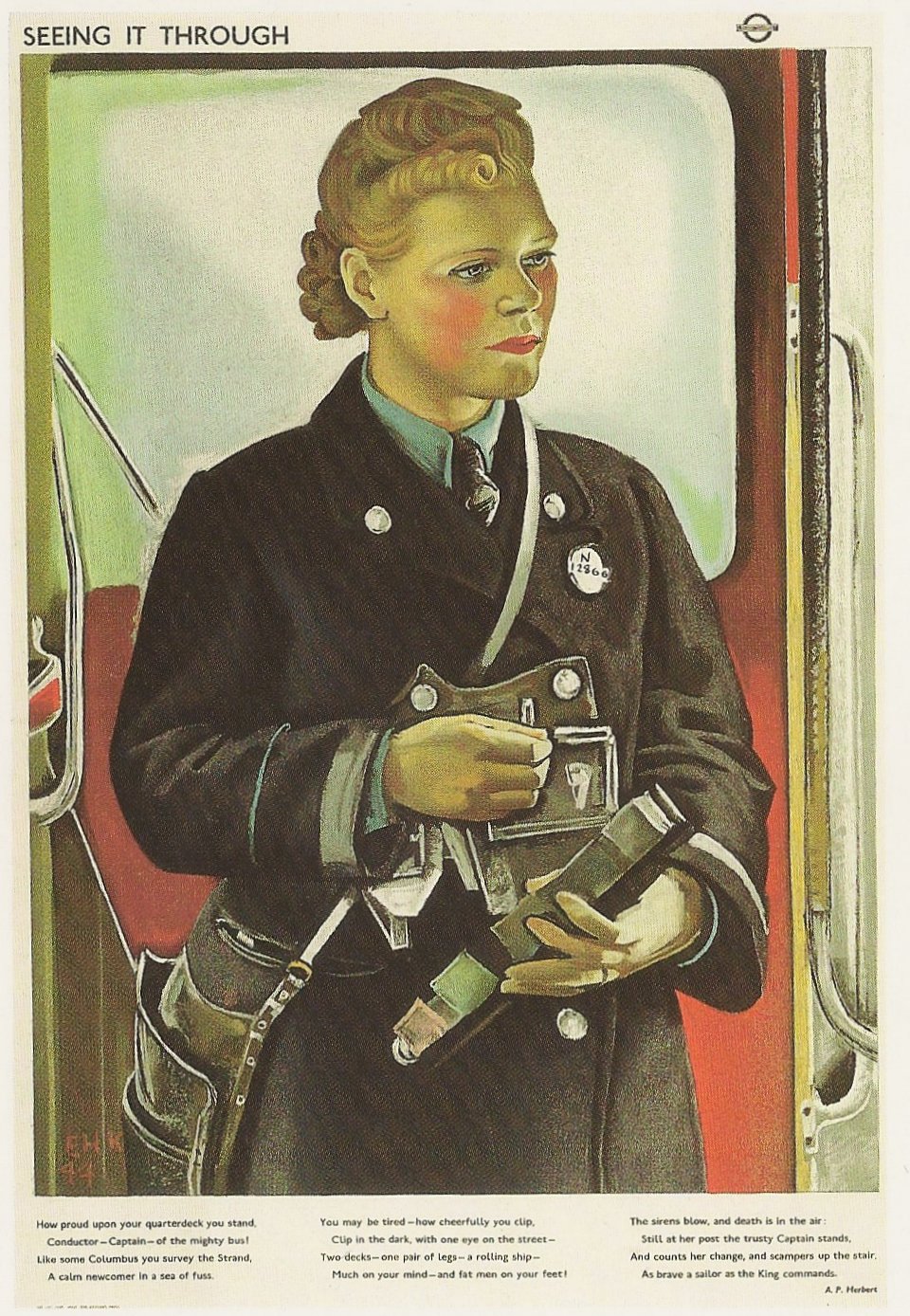
Seeing It Through, by Eric Kennington, (1944)

My final offering is a painting by Kennington which was used as one of the war posters in the series Seeing it Through.  It was not of  a fighting man or woman, but commemorated everyday heroism of normal people going about job in difficult and dangerous times.  Kennington preferred not to use models for this type of work and in this work he used the woman herself as the model.  It is of a young twenty year old woman, Mrs M.J. Morgan, who was a conductor on one London buses.  She had become one of the first generation of female bus conductors employed by London Transport in November 1940. She’d only just started her job as a “clippie” when the bus she was assigned to was caught in the blitz.  She became an instant heroine when she shielded with her own body two young children, and then helped passengers who’d been injured when the bus was riddled with shrapnel from a bomb exploding nearby.

Kennington remembered her well describing her:

 “…like a Rubens Venus’ and she had a complexion that was ‘edible as a peach…”

Beneath the portrait of the bus conductor was a short verse by the novelist and humorist, Alan Patrick Herbert:

“…How proud upon your quaterdeck you stand

Conductor- Captain  of the mighty bus!

Like some Columbus you survey the Strand

A calm newcomer in a sea of fuss

You may be tired – how cheerfully you clip

Clip in the dark with one eye on the street –

Two decks – one pair of legs – a rolling ship

Much on your mind and fat men on your feet !

The sirens blow, and death is in the air

Still at her post the trusty Captain stands

And counts her change, and scampers up the stair

As brave a sailor as the King commands.

A.P.Herbert


Eric Henri Kennington died in April 1960 aged 72.  He is buried in the churchyard in Checkendon, Oxfordshire, where he was once the churchwarden and he is commemorated on a memorial in Brompton Cemetery, London..

Théodore Géricault and Monomania

Self Portrait by Théodore Géricault

In my last blog I looked at some works by Théodore Géricault.  I examined his paintings which featured horses and the military and his masterpiece The Raft of the Medusa which I had examined in detail in my blog of June 10th 2011.  I finally looked at a highly erotic work which he painted for his own delectation around about the same time of the Medusa work.  In this blog I want to look at what I consider as his finest works, a series of portraits of men and women who had serious mental issues.

Raft of the Medusa by Théodore Géricault (1819)

Having completed The Raft of the Medusa around 1819 he exhibited it at that year’s Salon under the title Scène de Naufrage (Scene of Shipwreck).  It was hailed as the star piece of that year’s Salon and was well received by the French public including Louis XVIII himself, who had sponsored the exhibition.  Such was the fame of this work that Géricault was invited to London in June 1820 to exhibit the painting at William Bullock’s Egyptian Hall in Piccadilly.  It drew in crowds from all over the country and by the time the exhibition ended at the end of 1820, more than forty thousand people had come to view the masterpiece and as Géricault had negotiated a fee based on the number of people who paid to see his work it is thought that he walked away with twenty thousand francs and so it was just as well the French government would not countenance the purchase of the work when the 1819 Salon closed!

A year later, at the end of 1821, Géricault left London and returned to Paris.  It was at this time that he embarked on a series of ten portraits of people who were suffering from what is termed monomaniaMonomania is an exaggerated or obsessive enthusiasm for or preoccupation with one thing.  It is a type of partial insanity.  The word was first used by the French psychiatrist Jean Étienne Esquirol around 1810 and was a notion typified by the presence of an expansive fixed idea in which the person’s mind was diseased and deranged in some aspects but otherwise normal in others. So why would Géricault focus on this type of person and who commissioned the ten small works?

The man who commissioned the paintings is known to be Étienne-Jean Georget.  Georget was an intern at Salpêtrière, the women’s asylum in Paris, and later the medical supervisor at a private asylum in Ivry.  As to how the two men met is still up for debate amongst art historians.  One theory is that Géricault was treated by the psychiatrist.  He had been suffering from depression accompanied by paranoid delusions which culminated in a nervous breakdown around 1819.  Another possibility was that the two met during one of Géricault’s visits to the hospital morgue where he would go to acquire dissected limbs which he often used in his preliminary studies for major works, such as his Raft of the Medusa painting.  It could have been that Georget had commissioned the work as he believed such an artistic task would help Géricault recover from his own mental dark period.  When Géricault completed the work he gave them to the psychiatrist as a way of expressing his thanks.  Some art historians however believe that it was a simple commission, the result of which would help Georget in his studies into monomania.  However it should not be forgotten that Géricault had an intense interest in the causes and results of mental instability for his grandfather and one of his uncles had died insane. At the time Géricault was formulating his painting The Raft of the Medusa, which featured a group of men adrift on a raft after the sinking of their vessel Medusa, he knew that the key to success would be an authentic depiction of the terrified and dying seamen.   Géricault portrayed the men on the raft as dead or dying, desperately trying to signal for help.  To achieve a sense of realism he had contacted a variety of medical specialists. His principal concern had been to gain access to human bodies in various states of putrefaction, to ensure the genuineness of the finished painting and it could have been that he also talked to the likes of Georget about the psychological trauma suffered by the victims of the Medusa shipwreck.  It is known that he interviewed the surgeon, Henry Savigny, who had been serving on the vessel when the shipwreck occurred and the doctor, at the time, had been putting down in print his experiences and the way it mentally affected the stricken crew members.

Whatever the circumstances were we know the five paintings I am going to feature initially belonged to Georget.  He, like Géricault died when he was in his early thirties.   I mention five works and yet one of Géricault’s early biographers, Charles Clément, talked of there being ten portraits.  However, only five remain.  So did the missing five feature five other mental patients?  What is currently believed is that Georget had asked Géricault to paint a further five works featuring the same five people at a later time so as to highlight the change in their appearance.  For Georget this was the study of physiognomy, an art of judging character from the face and phrenology, which would link the external form of the cranium as indication of mental faculties.  Simply put it was the assessment of a person’s character or personality from his or her outer appearance.  We have no names as to the sitters, just the monomania that is afflicting each of them.  In his book On Madness, published in 1820, Georget is most definite that madness can be seen in the face of the afflicted.  He wrote:

“…In general the idiot’s face is stupid, without meaning; the face of the manic patient is as agitated as his spirit, often distorted and cramped; the moron’s facial characteristics are dejected and without expression; the facial characteristics of the melancholic are pinched, marked by pain or extreme agitation; the monomaniacal king has a proud, inflated expression; the religious fanatic is mild, he exhorts by casting his eyes at the heavens or fixing them on the earth; the anxious patient pleads, glancing sideways, etc…”

Certainly harsh and in some ways unfeeling words from the psychiatrist and are in complete contrast to the sympathetic way Géricault depicted the sitters.

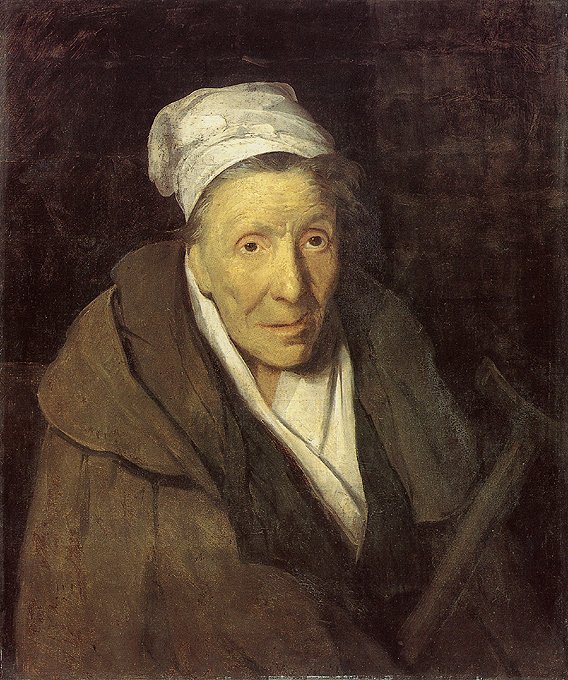
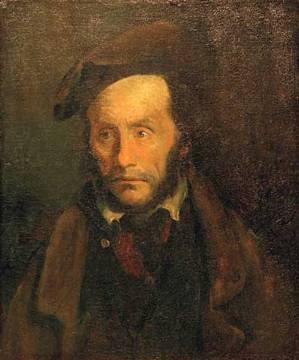
The five surviving portraits are entitled Portrait of a  Man Suffering from Delusions of Military Command;    A Kleptomaniac;  Portrait of a Woman Suffering from Obsessive Envy;     A Woman Addicted to Gambling and A Child Snatcher.  It seems likely that the featured women were inmates of the women’s hospital Salpêtrière, while the men were chosen from the many male inmates of the male asylums of Charenton and Bicȇtre.

Portrait of a Woman suffering from obsessive envy by Théodore Géricault (1822)

The first of the five I am featuring Portrait of a Woman Suffering from Obsessive Envy, which is housed in the Musée des Beaux-Arts in Lyons.  She avopids our gaze.  Her eyes are red-rimmed.  She has suffered and is probably still suffering.  Her case notes stated that she suffered from “envy obsessions” and maybe the slightest hint of a green tint to her face was the artist’s way to signify her obsession with envy.

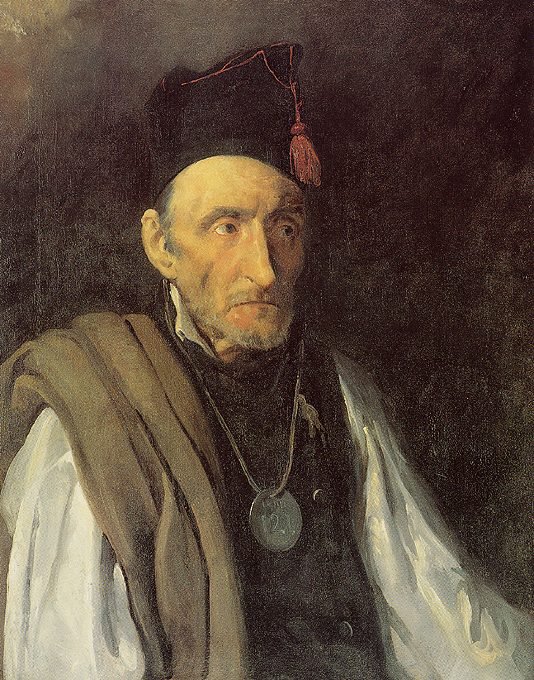
Portrait of a Man suffering from Delusions of Military Command by Théodore Géricault (1822)

Next we have a man who suffers from delusions of grandeur and the portrait is entitled A Man Suffering from Delusions of Military Command which is in the Museum Oskar Reinhart in Winterthur in Switzerland.  The man in this particular portrait believed he was Napoleon and maybe Géricault believed that it was not just his sitter who had delusions of grandeur but it was targeted at the man himself, Napoleon, who may also suffered a similar delusional belief in himself as the head of the French Empire.  One needs to remember my previous blog when I featured some of Géricault’s military paintings.  Maybe now, like many French people after the defeat of Napoleon, he had misgivings about the glory of battle.  It is a very sympathetic portrayal of the old man and there is an air of sadness about his demeanour.  He looks like a defeated man and could well be an allegory for a defeated nation.

Portrait of a Kleptomaniac by Théodore Géricault (1822)

My third offering is the painting entitled Portrait of a Kleptomaniac which is housed in the Museum of Fine Arts in Ghent.  It is a strange depiction.  Just by looking at him we know there is something wrong in his life both physically and mentally.  He is dishevelled.  His sallow skin tone alerts us to him being ill.  His beard is unkempt and his hair is uncombed and messy.  Look at his face.  Look at the redness of his left cheek which looks swollen as if he has been involved in a fight.  He stares out at us, or maybe past us, but we have no idea what he is thinking. It is an empty gaze.  Géricault probably had no idea what his sitter was thinking but he made sure he captured every small detail about the man and maybe he wants us to decide on what has brought this man to the asylum.

Portrait of a Woman suffering from an  Obsessive Gambling disorder  by Théodore Géricault (1822)
Portrait of a Woman suffering from an Obsessive Gambling Disorder by Théodore Géricault (1822)

The fourth painting is entitled A Woman suffering from and Obsessive Gambling Disorder and can be found at the Louvre in Paris.  The old woman in the painting avoids stares out at us but it is a blank stare.  One has no idea what she is thinking.  She is lost in her own world, a world she is resigned to but does not enjoy.   Her eyes are red-rimmed probably brought on by the amount of mental and physical pain she has had to endure.  Her mouth is tense.  You can see in her facial expression that she is disturbed by something but with what?

Portrait of a Child Snatcher by Théodore Géricault (1822)

The final portrait by Géricault is entitled A Child Snatcher.  Before us we have a man who looks distinctly unhappy with his lot in life.   He is dressed in old brown clothes and has a dishevelled look about him.  His face is haggard.  His life has not been easy.  The dark background give us the distinct impression that this man lives in a world of isolation.  It is as if, as a resident of a mental institution, he has been cut adrift by society.  He avoids our gaze and looks to the side in a somewhat shifty manner.  Although we would compartmentalize this type of portrait as one of realism there is an element of romanticism in the way Géricault does not want us to judge the sitter.  Looking at the man we would not know his crime but the title of Child Snatcher tells us all we need to know about a man who in the present day would be probably be classed as a paedophile.

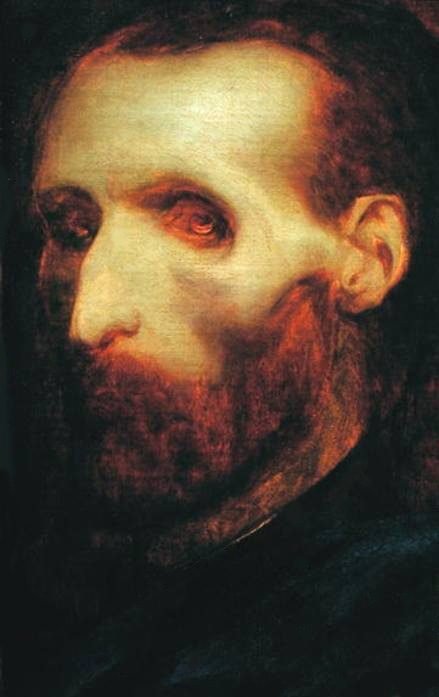
Last self portrait by Théodore Géicault (c. 1823 - 1824)
Last self portrait by Théodore Géicault (c. 1823 – 1824)

If you think that the five portraits were very disturbing and yet very real, I will leave you with one other shocking portrait.  It is the last self-portrait by Géricault, which he completed when close to death.  What a terrible sight it must have been as he looked in the mirror as he worked on his own portrait.  Remember this was a young man in his early thirties.

 The five existing portraits were discovered unframed and unstretched by Louis Viardot , the husband of the famous  French mezzo-soprano, Pauline Viardot .  Viardot was an artist himself, and a great admirer of Gericault, and so he recognised the style of the works as that of Géricault.  Géricault’s biographer Charles Clément researched the origin of the works and found that they had all belonged to a certain Dr Lacheze, to whom they had been bequeathed by another medical man, the psychiatrist Dr Etienne Georget.

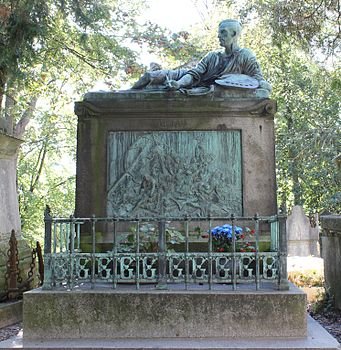
Théodore Géricault's tomb at Père-Lachaise cemetery in Paris
Théodore Géricault’s tomb at Père-Lachaise cemetery in Paris

Théodore Géricault died in January 1824, aged 32 and is buried in the Père-Lachaise Cemetery in Paris.  This series of portraits featuring mentally disturbed people was completed by an artist who also suffered depression during his later life.  In 1810, he wrote to his best friend, Pierre-Joseph Dedreux-Dorcy:

 “…Now I am disoriented and confused. I try in vain to find support; nothing seems solid, everything escapes me, deceives me. Our earthly hopes and desires are only vain fancies, our successes mere mirages that we try to grasp…”

Whereas Dr Georget was more clinical and some would say somewhat cold-hearted about his desire to have the portraits of these people we can see in the way Géricault depicted them with sympathy and even empathy.