View on the Ij with Amsterdam in the Background by Charles Leickert (1848)
…………………..In hindsight, Leickert’s decision to move away from The Hague in 1848 and base himself in Amsterdam was probably a brave decision but it paid off as the next twenty years are looked upon as his best period. The finely drawn details in his works and his use of the chiaroscuro technique was looked upon by the critics as masterful. One of the first paintings he did after his move to Amsterdam was View on the Ij with Amsterdam in the Background. The setting is a view from the grounds around the tollgate on the north shore of the IJmuiden, a body of water, formerly a bay, in the Dutch province of North Holland. It was a favourite place of artists, and the Amsterdam public were always willing to buy such depictions.
Winter op het IJ voor Amsterdam by Charles Leickert (1849)
Many artists depicted similar scenes and in fact Leickert completed several versions of this painting, including one with the same view but in a winter setting, entitled Winter op het IJ voor Amsterdam (Amsterdam in the Winter with the Setting Sun), which can be seen at the Rijksmuseum. It was painted from the same viewpoint at slightly different stages of sunset. Both paintings depict the same barn, house, and figure group to the left-hand side. However, the most notable difference is that the Rijksmuseum painting is set during winter and it depicts people skating on the frozen river. These two works are masterpieces in the way they depict a highly detailed analysis of light and colour, and the atmospheric fluctuations between the seasons and times of day. These were aspects of overriding importance to Leickert. Leickert left his mentor Schelfhout when he moved from The Hague to Amsterdam and began to be “his own man” as far as his artwork was concerned. An art critic at the 1850 Rotterdam exhibition which included Leickert’s winter variation of the painting commented on the work and Leickert’s newly-found independence:
“…Leickert has long managed to situate himself outside the school of Schelfhout – that is, to learn to observe with his own eyes. His view of Amsterdam in the Winter with the Setting Sun is one of those paintings at which one must gaze for a long time to recover, as it were all that is surprising and alluring about a sunset in December. The sky has a particularly divine effect, being harmoniously rendered and incontrovertibly one of the most handsome of the Exhibition…”
The “divine effect” mentioned by the critic alludes to the strong Romantic evening light depicted in the painting. In the work look how Leickert has the setting sun lighting up and colouring the sky in red, orange, and lilac tints. The setting of the painting was typical of Leickert. He often chose riverbank scenes which were full of human activity. He himself often lived in houses which were close to river or canal banks, such as the Rokin, in the centre of Amsterdam.
Fisherfolk on the Beach near Scheveningen by Charles Leickert
Having lived in both The Hague and Amsterdam he would have visited the coast on many occasions especially the fishing village of Scheveningen. Although Leickert will always be remembered for his cityscapes and landscapes he did paint coastal scenes. One such work was Fisherfolk on the beach near Scheveningen, the setting and type of depiction was very popular with artists.
Self portrait by Charles Leickert (1852)
We think of Leickert as a painter of enchanting scenes whether it be a riverscape, landscape or cityscape but the one facet of his talent is somewhat surprising – that of a portraitist, although he never contemplated this genre as a professional alternative to landscape painting. His 1852 Self Portrait was a triumph of tonal modulations used in the facial depiction. Look at how Leickert use of light on the skin and dark areas, as well as the clever way in which he shapes the background by the use of varying tones. What is Leickert trying to achieve with this portrait? What does he want us to take away after viewing the painting? Look at the way he is both well-groomed and well-dressed. Look at his facial expression – serious and somewhat imposing. What he has achieved with this depiction is a portrait of a professional and successful man, one who has gained success professionally as an artist and attained social acceptance. There is even a hint of elitism in his demeanour.
A Cappricio View of Utrecht by Charles Leickert
Leickert’s landscapes and cityscapes focused on life as it was and he rarely added to his depictions anything which signalled the changes that were taking place. He shied away from modernity. His paintings concentrated on picturesque towns and ageless, unspoilt landscapes. Such depictions had the wistful feeling of Romanticism.
At the ‘koek en zopie’ in a Panoramic Winter Landscape by Charles Leickert
I love his portrayal of the frontages of the old Dutch streets. I love how he instils in the viewer a sense of warm cosiness and contentment as we look at a winter scene with the refreshment stall on the ice. An example of this is his 1892 painting entitled At the ‘koek en zopie’ in a Panoramic Winter Landscape.
Numerous Skaters near a koek-en-zopie on a FrozenWaterway by a Mansion by Charles Leickert (1892)
Koek en zopie (cookies and hooch!) were refreshment stalls on the ice which sold cakes and biscuits as well as hot alcoholic drinks. The strange quirk of why these stalls were on the ice and not on the land was because if they had been positioned on the mainland there would have been a tax levied on their products. Nowadays these small stalls sell drinks such as split pea soup and hot chocolate. Another painting by Leickert which featured the koek en zopie was entitled Numerous Skaters near a koek-en-zopie on a Frozen Waterway by a Mansion. On the frozen water, we see villagers engaged in their daily routines. For some, whom we see skating, it is leisure time whilst others in the depiction are using the ice to transport goods. A house with a snow-covered step gable can be seen on the right of the painting. This tall structure forms a vertical compositional element and is echoed in the two windmills and the mast of the small boat which appears to be stuck in the ice. Look at how Leickert has accurately depicted the ice with all the scratches in its surface made by the skaters and sleighs. Look at how Leickert has depicted the sky. It is masterful with variance of colours, different tones of pink, blue and grey added to which are the dark clouds. The warm colours for the sky contrasts and enhances the whiteness of the snow which emphasises the coldness of the winter day.
A Frozen Canal with a Peasants by Charles Leickert
In 1859, forty-three-year-old Leickert leaves Amsterdam and travels to Germany where he journeyed down the Rhine valley calling at Rudesheim and later Mainz where he stayed for some time – time enough to meet, fall in love with, and on September 29th, within the year of their first meeting, marry thirty-six-year-old, Apollonia Schneider. The couple returned to the Netherlands in 1861, settling for a year in Frederikstraat in The Hague before returning to Amsterdam, where his drawings and paintings drew the attention of King Willem III.
Winter Scene with Figures by Charles Leickert
Over time Leickert’s paintings became less popular as they were beginning to be looked upon as old fashioned and the new painters of The Hague and Amsterdam could command prices three-times as high as his were sold for. In 1887, Leickert, then seventy-one years of age decided to end his artistic career, left The Netherlands, and returned with his wife to Mainz, where twenty-eight years earlier, they had married.
Figures on the Ice Unloading a Sledge by Charles Leickert
Charles Leickert died in Mainz on December 5th, 1907, aged ninety-one. His obituary notice stated he was a widower with no children and it is believed that his wife Apollonia had died a few years earlier. Leickert was a prolific artist producing approximately seven hundred paintings, of which he only exhibited about eight-five.
————————————————————————–
Most of the information for the three blogs on Charles Leickert came from excellent 1999 book entitled Charles Leickert 1816-1907: Painter of Dutch Landscape by Harry J Kraaij
My featured artist today and over the next two blogs, is the Dutch nineteenth century landscape painter Charles Henri Joseph Leickert. His painting genre was also often associated with another artistic “-ism”, that of Romanticism. But what is Romanticism when used as a description of an artist’s work. In his 1950 book De Romanesken, the Dutch art writer, Frans Hannema described Romanticism in art as:
“…A great emotive stirring of the heart; an all enveloping expansion of feeling; a controllable urge for the whimsical, the grotesque, the fantastic and the eerie; a boundless desire and self-imposed hardship; a fantastic devotion and passionate contempt; an unfathomable nostalgia for the transience of all happiness and for the inconstancy of all things; a flight from circumscribed reality to the interminable dream: these are the fiercely jostling and often contradictory emotions with which the soul of the Romantic individual is affected…”
Two Undershot Watermills with Men Opening a Sluice by Jacob van Ruysdael (1650s)
However, Romanticism in art was not that evident in Dutch paintings of the time. The leading Romantics of the nineteenth century were the Frenchman, Théodore Géricault, and Eugene Delacroix and the German Caspar David Friedrich. Dutch paintings in the early nineteenth century were generally limited to landscapes and cityscapes. The favourite Dutch artists of the time were from the bygone days of the seventeenth century such as Jan van Goyen, Salomon van Ruysdael, Jacob van Ruisdael, and Isaac van Ostade. Unlike the Romantic depictions of forests and waterfalls depicted in Jacob van Ruysdael’s works, Leickert preferred to depict everyday Dutch village and river scenes with their picturesque embankments or winter scenes featuring frozen canals on which people would be seen skating, and the frozen rivers and canals would often be overlooked by windmills. However, the Romantic title associated with Leickert was probably due to his ability to saturate his scenes with what is almost a supernatural light which was so prevalent in his depictions especially those featuring the evening sun.
Ice Merriment Near a Mill by Andreas Schelfhout
So why is Leickert not a well-known Dutch artist? Some historians believe the answer lies with his character. He was a shy person and often hid his light under the proverbial bushel. The bushel being his mentor and teacher, Andreas Schelfhout, whose shadow Leickert was pleased to remain under. The subject of Schelfhout’s works was very similar to that of Leickert or maybe that should be seen the other way around! Andreas Schelfhout was a Dutch painter, etcher, and lithographer, known for his landscape paintings. Schelfhout belonged to the Romantic movement and his Dutch winter scenes with frozen canals and skaters were already famous during his lifetime.
Charles Leickert was born on September 22nd, 1816 in Brussels. His parents were, his father Henricus Michael Leickert who had been born in Wittendorf, Germany in 1781 and his mother, also German-born, Henrietta Frederique Martilly. Leickert’s parents, who were married in Berlin, lived there until 1815, at which time with the defeat of Napoleon at the Battle of Waterloo and the subsequent ending of the First French Empire, the French were driven out of the Netherlands and Leickert’s father, mother, and his eldest sister, two-year-old, Louïze Frederica, moved from Berlin to Brussels.
Summer Landscape by Charles Leickert
Leickert’s father gained employment as the King’s chamberlain (valet de chambre) at the court of King Willem I. At this time, and until 1820, the Kingdom of the Netherlands had twin seats of government, The Hague in Northern Netherlands, and Brussels in Southern Netherlands and so Henricus Leicker, as part of the royal entourage, had to move with his family backwards and forwards from one city to the other. In 1816 Charles Leickert was born in Brussels while some his younger siblings were later born in The Hague. Finally, around 1820 The Hague was designated as the sole capital of The Netherlands and the Leickert family made their home there. With the defeat of Napoleon and the ending of the French annexation of the Netherlands thousands of people came to live in the country and the population of The Hague swelled. The surge in population led to housing shortages, poor sanitation and disease which led to a large rise in infant mortality. The Leickert family were hit hard losing most of their children before they reached adulthood, some due to typhoid and tuberculosis and his three-year-old brother died of his burns in a fire.
View of the Old Women and Children’s Hospital in The Hague by Bartholomeus van Hove (1830)
Charles Leickert managed to survive and when he was just twelve years old, because he was showing talent as an artist, his father enrolled him into The Hague Drawing Academy in 1827. The tutor who had the most influence on Leickert was the Dutch landscape and cityscape painter, Bartholomeus van Hove. In 1828, a year after his enrolment, Charles Leickert’s father Henricus died. The cause of death was given as verval van krachten which simply means a decline in strength which seems very unusual as Henricus was just forty-five years old, but it could have been “part and parcel” of the poor sanitary conditions of the city at the time. Leickert’s mother Henrietta was left to bring up the family but struggled financially as her poor health meant she could not work. She pleaded successfully with the art academy to give her son artistic tuition for free, a decision which says a lot for Leickert’s talent. With no money to pay the mortgage, the king stepped in and bought the house of his one-time servant and Henrietta, along with Charles and his two sisters, Adelheid and Barbara, moved into rented accommodation. The health of Leickert’s mother continued to deteriorate and she eventually died in 1830.
Winter Landscape by Charles Leickert (c.1860)
Charles Leickert’s mother was a great believer in her son’s talent as an artist and she wrote a short poem in one of his sketchbooks as a testament to her belief that one day he would become a great painter. A translated version of her poem is:
Accept this booklet, little Lijket And fill it with sweet studies Improve your judgement, and the little heart That burns with love so sweet for art With little skills, free from small sorrows May life flit by till death draws nigh.
Walk in the little field and in small nature Observe and draw each little hour Every little object, be it great or small And great you shall one day be as artist.
Charles then 14 years of age, Adelheid aged 10 and Barbara aged 12 were placed in the Civic Orphanage. Their older sister Louïze, who was eighteen, had her own home as a live-in domestic. Although being consigned to an orphanage seems harsh, it had its benefits. Sanitation was good, the children were inoculated against infections which were killing many children at the time and they were fed and clothed. Life in fact for the children was quite good, and for Charles, being the son of the former First Chamberlain to the King, he was allowed to carry on his art lessons at the Drawing Academy. Art played a part in the orphanage and the children were encouraged to try out art and the most talented would attend painting classes which were funded by charitable bequests.
Winter Scene by Charles Leickert (1867)
It is known, through his biographer, Johannes Immerzeel, that Charles Leickert’s first art teacher was Bartholomeus van Hove who ran a flourishing studio as well as teaching at The Hague Drawing Academy. Whilst under van Hove’s tutelage, Leickert honed his drawing skills and the art of chiaroscuro. The term chiaroscuro derives from the two words chiaro bright (< Latin clārus) + oscuro dark (< Latin obscūrus) and describes the prominent contrast of light and shade in a painting, and how the artist by managing the shadows is able to create the illusion of three-dimensional forms.
…………….. to be continued
Most of the information for the three blogs on Charles Leickert came from excellent 1999 book entitled Charles Leickert 1816-1907: Painter of Dutch Landscape by Harry J Kraaij
Just in case you haven’t read my previous blog featuring the Welsh artist, Sally Moore, let me explain why this blog, like the previous one, is much shorter in length than my usual ramblings.
When I decide on a subject for my blog I look for three criteria to be met. Firstly, and on a personal note, I need to be interested in the person or their art. Secondly, I need to be able to find enough information with regards the life of the artist and their family upbringing and lastly, I need to have enough copies of their works to be able to populate the blog. Without all three criteria, I tend to reluctantly disregard the artist as the subject of my blogs. Having said this blog and the last one featured two artists but did not meet with all the criteria – the missing criterium is the limited information I have about their life, but because I liked their work so much I decided to feature them albeit in much shorter blogs. Today I am looking at the life and work of the nineteenth century Swedish landscape painter, Josefina Holmlund.
Josefina Holmlund
Josefina Holmlund was born in Stockholm in 1827. Her parents were Nils Holmlund and Johanna Helena Holmlund (née Torsslow) and she had one sister, Jeanette. Josefina trained as a painter and studied under Teodor Billing, a former student of the Royal Academy of Fine Arts in Stockholm who was a realist landscape painter and who depicted many scenes from Skåne, Lapland and Värmland. Her other tutor in those early days was Olof Hermelin, who was an ardent advocate for national Swedish values and became a prominent portrayer of the domestic landscape mainly in Uppland and Södermanland
Vaxholm fortress by Josefina Holmlund
In the 1850’s, Josefina attended the Royal Academy of Fine Art in Stockholm where one of her professors was Edvard Bergh who started his career in law but later studied at the Royal Academy in Stockholm. He founded the landscaping school at the Royal Academy and this school was characterised by the Swedish landscape painting of the time. The fact that Josefina studied art at the Academy is unusual as the establishment did not officially allow entry for women before 1864.
In 1863, aged thirty-six, she travelled to Dusseldorf and went to live with her sister Jeanette. Jeanette Holmlund who was also a painter had married the Norwegian landscape painter Nils Björnsson Möller. Whilst living with them Josefina became influenced by her brother-in-law’s art. She continued with her artistic studies and became strongly influenced by the “Dusseldorf School of painting”, which referred to a group of painters who either taught or studied at the Düsseldorf Academy of Art in the 1830s and 1840s, when the Academy was directed by the German Romantic painter Wilhelm von Schadow. The work of the Düsseldorf School is typified by finely meticulous yet imaginary landscapes. Such landscapes often had religious or allegorical stories set in the landscapes. Members of the Düsseldorf School were great believers in plein air painting, and tended to use a palette with relatively subdued and even colours. that was a national romantic emphasis that depicted dramatic nature scenes, waterfalls and rapids with rocks.
Mountain Landscape with Rapids by Josefina Holmlund
Josefina captured the starkness of life in the mountains and the ferocity of the rapids in her painting, Mountain Landscape with Rapids in which we see the fast flowing water of the rapids fall spectacularly over a waterfall at the side of which is a small, log-built cottage, with smoke billowing from the chimney. By the side of it a lady, laden with wood she has collected heads home.
The Düsseldorf School emerged as part of the German Romantic movement. Depictions by these artists had a national romantic emphasis that depicted dramatic nature scenes, waterfalls and rapids with rocks. One can see in some of Josefina Holmlund’s paintings the influence of the Dusseldorf School.
She went on to make many trips to Holland, Norway and Scandinavia and the breath-taking countryside she discovered during her many journeys featured in her landscape works.
Josefina Holmlund never married and died in 1907, aged 78.
Fjord Landscape with Farm by Josefina Holmlund (1870)
Many of her landscape paintings featured the breath-taking “V” shaped fjords such as Fjord Landscape with Farm, the one she completed in 1870. There is a beautiful tranquillity about this depiction.
Fjord Landscape by Josefina Holmlund
Another painting of hers which I like is one featuring the tranquillity of the fjord which has lost its “V” shape as it is further from its source and closer to the sea. In this work we see a steamer, puffing out smoke from its tall funnel as it chugs across the wide expanse of water. In the right foreground we see a man making his way down to his row-boat. On the bank of the fjord on the right mid-ground of the painting we can just make out a man and woman standing next to their boat and boathouse.
Kustbild med Båt (Coastel Scene with Boat) by Josefina Holmlund (1879)
Josefina painted a beautiful and evocative sunset scene in 1879 entitled Kustbild med båt, (Coastal scene with boat). Dark storm clouds almost obliterate the setting sun the rays of which force their way through to create a golden halo on the surface of the fjord. Despite the prospect of an on-coming storm, a small sailing ship in the foreground sets out on its perilous journey. In the left mid-ground we see a small cottage perched on the rocky bank of the fjord. Look at the myriad of colours, such as silver, greys and gold, she has used in depicting the water.
On the Bridge by Josefina Holmlund
Her ability to depict water with shimmering reflections is palpably shown in her painting entitled On the Bridge.
Sommarlandskap med Gärdesgård Intill en Väg by Josefina Holmlund (c.1855)
As well as her paintings of the fjords and lakes she completed many works featuring the countryside. One of my favourites is Sommarlandskap med Gärdesgård Intill en Väg (Summer Landscape with Fence next to a Road) which she completed around 1855.
Cottage in the Woods by Josefina Holmlund (1879)
Often her countryside landscapes featured family life as in the case of her 1879 painting, Stuga vid skogsbryn (Cottage in the Woods) which is a depiction of idyllic life in the woods devoid of the noise and pollution of city life. I think it is her portrayal of what life should be like.
Hide and Seek by Josefina Holmlund
Happiness attained from life in the woods is once again brought to the fore in her painting entitled Kurragomma (Hide and Seek), which combines the beauty and serenity of nature with the laughter and playfulness of three children as they amuse themselves with the game of hide and seek.
Village Street by Josefina Holmlund
Another work of hers which I like for its simplicity is Village Street.
In my next blog I am going to look at the life and works of Charles Leickert, the nineteenth century painter of the Dutch landscape.
Whilst Robinson often depicted women at work, other paintings of his portrayed women at rest, sometimes relaxing at the piano as was depicted in his 1887 painting At the Piano. The painting was completed whilst he was staying at the home of John Armstrong “Archie” Chanler, a wealthy American writer and activist, and an acquaintance of Robinson who was related to the elite Astor, Livingston, and Stuyvesant families. Chanler was a great supporter of American artists who had come to Paris to follow their artistic dream and it is thought that on occasions had provided financial support to Robinson.
Look at the different textures depicted such as the glistening surface of the piano top and the glowing fabric of the woman’s dress. We can almost hear the sound of the music as we see the fingers of the lady caress the ivory keys.
The painting was very popular and Robinson believed he knew why. In his diary entry for September 10th, 1893 he wrote:
“…It is probably the sincerity with which it was done – I remember it seemed to me a sad failure at the time, and at Archie’s rue Dumont d’Urville just before leaving for the country…”
At the Piano by Whistler (1859)
Many believe the inspiration for this work was a painting Robinson may have come across when he was in Philadelphia in 1881 or New York in 1882 when At the Piano by James Abbott McNeil Whistler was being exhibited. Albeit that work, which is a study of Whistler’s half-sister and niece, is much darker in comparison to Robinsons painting which is aglow with delicate light.
Lady in Red by Theodore Robinson (1885)
The model for Robinson’s painting was thought to be Marie a love interest of his during his time in Paris and Giverny although they never married. Robinson first met Marie at the start of his second visit to France in the Spring of 1884. She was an artist’s model who lived in Paris. He first portrayed Marie in a watercolour in 1885 entitled Lady in Red in which she is depicted in profile against a dappled background of leaves and fragile branches.
The Red Gown (also known as His Favorite Model) by Theodore Robinson (1885)
Although that was just a head and shoulder depiction we see she is wearing a red costume which was often seen in other Robinson portraits, such as his painting entitled The Red Gown, and the dress is thought to be one of Robinson’s studio props.
Val d’Arconville by Theodore Robinson (c.1888)
Another of Theodore Robinson’s works featuring Marie was his beautiful 1888 work entitled Val D’Arconville, which can be seen at the Chicago Institute for Art. In this depiction, we see Marie sitting on a flower-filled hillside overlooking the Arconville Valley which is situated southeast of Paris. In the painting, Robinson used densely layered, broken brushwork, which was a technique he picked up from Monet. This clever artistic method has the observer of the work relinquish their focus on the woman and their eye is led down the slope, and across the valley. This was not simply an impressionistic painting which captured momentary effects such as the grass moving in the breeze, it becomes more of a structural work with the inclusion of the houses in the middle ground.
The painting was originally owned by Arthur Astor Carey, a cousin of John Armstrong Chanler, who had taken up residency at Giverny during the summer 1887. The identity of Marie as the sitter for the painting was confirmed by an entry in Robinson’s diary for June 11th1893 in which he stated:
“…Mrs B. told me of the inspiration she got from a picture of mine (Carey’s, with Marie on the hill-side)…”
Little is known of Marie but in Sona Johnston book In Monet’s Light she quotes from a letter of a fellow American tourist and lodger at Hôtel Baudy who wrote home:
“…By the way, dear, it looks very strange but Mr. Robinson has a model down here who has a little daughter . . . Everyone says that . . . the little girl is the daughter of Mr. Robinson [and] the child looks very like him.”
Robinson had fell heavily for his muse and in a letter to his sister-in-law, Mary, on May 20th, 1887, he wrote:
“…I am in love with a French Girl, it is an affair of some time – and I came close to writing of it to Father but did not. It is quiet just now and nothing may come of it so you had better say nothing about it – She has the same name as you in French – Marie – but she is as dark as you are fair…”
Nobody ever knew the surname of Robinson’s love as he never wrote it down in any of his letters or in his diary. Despite his deep love for the young women, nothing came of the relationship. The couple never married and we will never know why. Maybe it was because of his failing health or maybe it was because of his poor financial state. We do know that the relationship was not as Robinson would have liked as he discussed his disappointment with the state of his love life on many occasions over the dinner table with Will Low and his wife. His relationship with Marie lasted for six years until he finally left France but he continued to correspond with Marie up until his death.
Claude Monet Painting by the Edge of a Wood by John Singer Sargent (1885)
Giverny became a popular spot for artists around mid-1880’s. It is known that John Singer Sargent visited the village around 1885 and met with Monet and it was the latter’s love of en plein air painting that appealed to Sargent. It was in that year that Sargent produced his painting entitled Claude Monet Painting at the Edge of the Wood which depicts the great man at work watched over by his future second wife, Alice Hoschedé.
In 1880s and 1890s, American aspiring artists poured into Paris looking for places at its art schools and a chance to work in the ateliers of famous French painters. To them Paris was the Mecca of art and to study at one of the academies or ateliers was a “must have” experience and at the same time it was a sought-after freedom from the rigidity of artistic training at American academies. For them to study at one of the famed Parisian academies and then to head for the countryside or the coast during the summer months was, for them, their idea of Shangri-La.
In the summer of 1887 a small group of young American artists made their home in Giverny. How this came about was documented in a book written by the English Impressionist painter, Dawson Dawson-Watson entitled The Real Story of Giverny, based on a conversation he had had with the American artist, John Leslie Breck in 1888. Breck recounted:
“…In the spring of ’87 [he and] Willard Metcalf, Theodore Robinson, Blair-Bruce, Theo Wendel, and a chap named Taylor whose Christian name I cannot recall, were talking over some place to go for the summer. All of the usual places, Pont Aven, Etretat, Ecoigu, and Grèz, were rejected because their interest was in finding a new location to paint. After consulting the destination board at the Gare St. Lazare, they agreed that Pont del’Arche was appealing, so they decided to visit the town and see if it was as picturesque as its name.
The train to Pont del’Arche followed the Seine into Normandy and required a change at Vernon. As they approached Vernon, Metcalf pointed out a little village of white houses and a Norman church at the base of the hill on the opposite bank of the river and commented on its loveliness. At Vernon, they were told the village was Giverny. Once aboard the new train they were treated to a second view of Giverny when they crossed the Seine and were doubling back. The painters agreed unanimously that if Pont del’Arche was not to their liking they would return to Giverny the following morning, which was exactly what they did…”
After the initial discovery, other American artists soon followed and many began to extend their visits beyond the summer months.
Robinson’s photograph of the Monet-Hoschedé family gathering at Giverny (c.1892)
In April 1883, forty-two-year-old Claude Monet left his home in the western Paris suburb of Poissy and went to live in the small Normandy farming village of Giverny, a village he had passed thorough many times during his train journeys from Paris to Rouen. The unpretentious village nestled at the bottom of a hill across the River Seine from the town of Vernon. It was then made up of simple farms, modest houses, and a Norman church and at the time had a population of less than three hundred residents. What appealed to Monet about Giverny and the surrounding area was its pastoral charm. Monet, at this time, had been widowed for four years. He arrived at Giverny and set up home along with his two children, Jean and Michel, and his former patrons Ernest and Alice Hoschedé. Ernest Hoschedé, a departments store magnate and art collector had been declared bankrupt in 1877 when his business failed. With nowhere to live, he and his wife and six children went to live with Claude and Camille Monet and their two children.
Charcoal sketch of Claude Monet by Theodore Robinson (1890)
At the time of Monet’s arrival at Giverny, his artistic career was starting to take off. Giverny was to be a secluded and peaceful retreat and so he was less than pleased by the summer influx of artists to Giverny. In his 1993 book Monet’s Giverny: An Impressionists Colony. William Gerdts recalls what Monet told a reporter about the influx of Americans:
“…When I first came to Giverny I was quite alone, the little village was unspoiled. Now, so many artists, students, flock here, I have often thought of moving away…”
However, the great man did not move away. Instead he progressively removed himself to his compound where his garden and lily pond provided all the subject matter he needed for his paintings.
Theodore Robinson’s photograph of Monet (c.1889)
Theodore Robinson agreed with Monet about the downside of the influx of visitors and was set against the idea put forward by John Leslie Breck to establish Giverny as an artists’ colony, and he was quoted as saying:
“…Breck conceived the idea of making an art colony of it [Giverny]. Theo Robinson strenuously objected saying they had found a lovely spot and should keep it to themselves…”
Breck had replied that because everyone had been so damn nice, he wanted them to reap some real financial benefit and not withstanding Robinson’s objection, Breck had persuaded Monsieur Baudy, the owner of Café Baudy they frequented, to build six rooms in the courtyard in back of the building and so Hôtel Baudy came into existence. He even persuaded the landlord to build a studio for Willard Metcalf.
Theodore Robinson may have objected to making Giverny a hub for artists to visit in the summer for other than selfish reasons, it could well have been due to his own social reserve. Robinson was not an unfriendly person but was quite happy with his own company. Robinson, at thirty-one years of age, was older than his friends who had come to Giverny with him and this may have been a factor as to why he had been befriended by Monet. Robinson, being close to Monet, was probably aware of Monet’s dislike of the village being overrun by visiting artists. Robinson and Monet’s friendship was an interesting one. It was not based on Monet being the master and Robinson the pupil. It was a friendship based on a shared common love – painting, and both appreciated the talent of the other. It was a friendship that would last even after Robinson returned to America with many letters passing from one to the other.
La Vachère (The Cowherd) by Theodore Robinson (1888)
Robinson returned briefly to New York at the end of 1887, but was back in Paris by early 1888 and had once again re-visited Giverny that summer. One of his paintings he completed during that summer is now considered to be one of his first Impressionist paintings. It was La Vachére. It is interesting to note that this work highlights a dilemma for Robinson. Is he an Impressionist painter or an Academic painter? The painting would seem to be part Impressionism in the way the trees and foliage are depicted as patches of colour and part Academic in the way he depicts the woman. She is simply a figurative study within an Impressionistic backdrop. The painting was exhibited in the 1889 Paris Salon.
Autumn Sunlight by Theodore Robinson (1888)
A more impressionist style of painting can be seen in Theodore Robinson’s 1888 work entitled Autumn Sunlight. In this painting, we see a young woman standing in the woods. She is what is termed a faggot gatherer, a person who collects firewood, a bundle of which we see at her feet. The background of speckled light hints at tonalism, which emphasizes atmosphere and shadow. However, the foreground with its myriad of leaves depicted by a montage of broken brushstrokes is pure Impressionism.
Winter Landscape by Theodore Robinson (1889)
Robinson returned to New York in December 1888. He rented a studio in Manhattan. His artistic output was less than it had been during his days in Giverny but produced works that he exhibited at the American Watercolor Society in the Spring of 1889. Come the summer of 1889, Robinson was back in Giverny and it was during that year that he completed his beautiful work entitled Winter Landscape. The work depicts ta view of the village of Giverny after it had succumbed to a freak snowstorm. The red rooves of the houses were suddenly transformed to a patchwork of white and the entire village is swathed in a icy-looking purple-blue ambience. Once again Robinson had returned to New York that winter and entered this painting at the Society of American Artists annual exhibition. It won the Webb Prize, an award given for the best landscape in the exhibition, painted by an American artist under forty years of age. He also received a monetary prize amounting the three hundred dollars. Ironically this was one of the pure landscapes Robinson painted without a person or persons being part of the scene and the category for the prize stipulated that only “pure” landscape paintings would be accepted by the judges!
Capri and Mount Solaro by Theodore Robinson (1890)
Robinson was back in Giverny, once again a resident of Hôtel Baudy, for the summer of 1890 but the highlight of the year for him was his trip to Italy and the south of France. During that winter journey Robinson visited Capri and from that stop-over produced the painting Capri and Mount Solero. This landscape work was a depiction of the town and mountain as seen from a hillside which looks across from the town. Again, in this work, we see the juxtaposition of his two styles. We have the geometrical depiction of the village and the flat-roofed houses and yet we have the Impressionism style loose brushstrokes which are used to depict the foliage.
Capri by Theodore Robinson (1890)
For the first three months of 1891 Robinson was in Frascati, a town twenty kilometres south-east of Rome. It was in March 1891 that Monet contacted Robinson, summoning home:
“…[Spring] is close … and I hope you are not going to delay taking possession again of your little house…….”
Robinson returned to Giverny in April 1891 after a brief stay in the French coastal town of Antibes. Once again, having arrived back in Giverny, he took up residence at the Hôtel Baudy where he stayed until December, at which time he returns to New York. The year 1891 was one of the most productive for Robinson and it was in that year that he once again began to dabble with photography. He wrote to his family explaining why:
“…Painting directly from nature is difficult as things do not remain the same, the camera helps retain the picture in your mind…”
Two in a Boat Theodore Robinson (1891)
His use and dependency on photography varied but was mainly for use in his figurative work. In some cases, it was found that he drew a grid of squares on the photograph and on the canvas or sheet of paper he was to draw on so that he could transfer a composition with great accuracy. One painting he completed using this method to depict the two figures was Two in a Boat which he completed whilst in Giverny in the summer of 1891. The depiction is of two women reading while lounging in a skiff floating on the Seine or Epte rivers. The method Robinson used to complete the work is given by the Phillips Collection in Washington which houses the painting:
“…The relationship between Two in a Boat and the photograph from which it derived offers a vivid example of Robinson’s painting process. He lightly scored the photograph and the canvas with graphite and sketched in the composition, using the grid as a measure. The grid and under-drawing are visible throughout, because Robinson’s pink primed canvas was left exposed in many areas, particularly in the lines defining the interior of the occupied boat and the figures. The painting differs slightly from the photograph: Robinson excluded a fourth boat to the starboard side of the skiff and the branch falling diagonally from the top left corner; furthermore, the photograph’s strong contrast has been replaced by an overall tone of violet and green…”
Robinson was pleased with the painting and exhibited it in the Society of American Artists’ 1895 annual exhibition and in his one-person exhibition at Macbeth’s later that year.
On May 13th, 1892, Robinson departed for what would prove to be his last summer in Giverny and the following month celebrated his fortieth birthday. Celebrate was probably not the best way to describe this milestone in his life as he was suffering from a bout of severe depression and self-doubt.
La Debacle (also known as Marie at the Little Bridge) by Theodore Robinson (1892)
In 1892 Robinson completed one of his best known and best loved paintings. It had the strange title of La Débâcle and later a subtitle of Marie at Little Bridge was added. The sitter for this work was again his muse, Marie, Robinson’s great love and regular model. In the painting, we see a fashionably dressed young woman seated on the stone foundation of the bridge over the River Epte, which runs close to Giverny. Something or someone has disturbed her although we have no clue to what or who it is. Clutched in her hand is the most recent novel written by Emile Zola entitled La Débâcle which had just come on sale that year. The title of the book refers to the ignominious defeat of France in its battle with Prussia in 1870. However, there may be another reason for the title of the painting as Robinson had proposed to Marie on a number of occasions and had been spurned and in a way that was Robinson’s own Débâcle. It was also the year Robinson left Giverny and France for the last time but with him on his final journey back to America was this painting.
The Wedding March by Theodore Robinson (1892)
Also in 1892 Robinson produced what is probably his best-known work, The Wedding March. The painting was based on the wedding of the American painter, Theodore Earl Butler to one of Monet’s stepdaughter, Susan Hoschedé. In a letter to his friend he described the event:
“…There was a double ceremony – first at the Mairie – then at the church. Nearly all the wedding party were in full dress……Most of the villagers and all the pensionnaires were there – guns were fired, two beggars held open the carriage doors and received alms…”
Although one may have thought that Robinson painted the work using a photograph of the processional march but in fact he painted it from memory. In the painting, we see the procession from the orange-sided Mairie, or City Hall, on its way to the old Norman church down the lane which has since been named the rue Claude Monet. In the depiction, we see Monet himself escorting the bride at foreground while Butler and Madame Hoschedé bring up the rear. The unidentified girl in the middle is thought to be the youngest Hoschedé daughter.
Gathering Plums by Theodore Robinson (1891)
Robinson arrived back in America on December 12th, 1892. He had hoped to survive financially through the sale of his paintings but this was not to be and due to ever increasing financial difficulties Robinson was forced to teach a summer class for the Brooklyn Art School. Robinson was a shy person who favoured his own company and so due to this and his lack of confidence, teaching was not a favourite occupation, but beggars cannot be choosers.
Père Trognon and His Daughter at the Bridge (1891)
For the next three years, Theodore Robinson continued to paint and teach at various colleges but his health was beginning to fail. During the winter of 1895, asthma was increasingly consuming more of Robinson’s strength. In his final letter to Monet in February 6th, 1896 he wrote to the great man saying that he hoped to return to Giverny but it was not to be. He finally succumbed to the respiratory ailment that he had been suffering from all his life and he died on April 2nd, 1896 at the New York home of his cousin, Agnes Cheney. Robinson’s funeral was held on 4 April at the Society of American Artists in New York, and his body was then sent to Evansville, Wisconsin for burial. His death came just six weeks before what would have been his forty-fourth birthday.
Theodore Robinson has long been considered the first American Impressionist.
La Belle Époque, which literally means “Beautiful Age” is a name given in France to the period from the end of the Franco-Prussian War in 1871 and the start of World War I in 1914. So why was this termed a beautiful age? Probably the reason for naming this period thus was because, for the middle and upper classes in France, the standards of living and security increased in comparison with the dark days that went before. The devastation and death toll of the Franco-Prussian War and the short-lived but bloody battles of the Paris Commune were over. Napoleon III’s period of power had ended and a Third Republic was declared. It was a period free of wars affecting France. It was a period of economic affluence and an era of many new innovations both cultural and technological. For many it was a good time which needed to be savoured. My artist today is one who lived and painted during this time and his Parisian street scenes of the time depicted an opulence which many, but the poorer classes, could enjoy. Let me introduce you to the French painter Eugène Galien-Laloue. He was a consummate draughtsman. His depictions of fin-de-siècle Paris architecture was of an amazing standard and yet he was not just a cityscape painter as he was equally adept with his landscape work in which he brought to life the rural French countryside.
Paris Street in Autumn by Eugène Galien-Lalou
In his tiny gouaches Galien-Laloue rendered every detail of fin-de-siècle Parisian architecture with absolute precision, but in his landscape works he was more attuned to the painterly tradition of the Barbizon School and the Impressionists, recording life in the rural French countryside in light-filled canvasses. Galien-Laloue painted with great delicacy a wide variety of subjects. Eugene
Un 14 Juillet, Place de la Republique by Eugène Galien-Lalou
Eugène Galien-Laloue was born in Montmartre, Paris, on December 11th 1854, almost a year after his father, Charles Laloue, an artist and set designer, married Eugène’s mother, Endoxi Lambert in December 1853. Eugène was the eldest of nine children and the large family lived on Rue Leonie in the Montmartre, which at the time was an artistic community where many of the Parisian artists and freethinkers lived. Eugène, even as a child, demonstrated his artistic ability and almost certainly his early training from his father, who liked to paint, and being a set designer was a talented draftsman. Charles Laloue died suddenly in 1869 when Eugène was fifteen years old and the family, which only just made ends meet when he was alive, struggled to survive financially. Eugène, was forced to leave school so that he could find work and help his family and his mother secured him a job as an assistant to a notary.
Place de Bastille by Eugène Galien-Laloue
In 1871, aged seventeen, filled with a sense of patriotism and nationalism, Eugène joined the army but to do so he had to lie about his age. The war with Prussia was a short but deadly affair which France lost. Fortunately, Eugène came through the bloody war unscathed and once the war ended he left the army and returned to civilian life. His one aim in life was now to become a professional artist. For an aspiring artist in Paris there was just one course one had to take to reach that ultimate goal. One had to become a member of the prestigious L’Académie des Beaux-Arts, which was looked upon as the hub of the Parisian art world. Some of the artists of this French Academy also served on the jury that selected paintings for the well-respected Salon de Peinture et de Sculpture, held at the Palais de l’Industrie on the Champs-Élysées, at which more than a thousand artists and sculptors had their works of art and sculptures displayed. Unlike today there were only a small limited number of galleries where artists could show their work and so gaining access to the Salon was crucial for their success as painters and getting approval from the Salon hanging jurists was critical.
Flower Market by by Eugène Galien-Laloue
In order to be nominated to the French Academy, an artist followed a well-tread course of instruction. Students attended either the official school, the École des Beaux-Arts de Paris, or if they or their parents were affluent, received instruction in the private atelier of an established artist, often one who had connections with luminaries of the Salon. Academic learning in the nineteenth century to become an artist was not an easy process. The tuition was laborious albeit meticulous and it started off with the students learning draughtsmanship by copying engravings and sketching Roman and Greek sculpture, which was known as “working from the antique,” which translated, meant sketching black and white tonal studies from classical marble statuary or casts. If the student had mastered that task, then the tutor would allow them to progress to the next phase of learning. Advancement from one phase of instruction to another was based on the aspiring young artist mastering what they had been taught. Progression was not based on an indiscriminate period of instruction. They would then move on to drawing nude models using just graphite or charcoal.
Théâtre de la Ville by Eugène Galien-Laloue
Following several years of drawing the young artists would begin to paint. This would be carried out under the direction of a time-honoured master and, when he believed his scholars to be ready, they would be allowed to submit their work to the Salon. Having been trained by an established and well-respected painter would count for a great deal with the Salon’s jurists. Not only did the jurists control which paintings would be exhibited they also decided on the placement of the paintings on the monumental and crowded wall of works. A good placing of an artist’s painting (at eye level) ensured that they would be noticed by the buying public. In the days of Eugène Galien-Laloue the Academy favoured large figurative works and looked on painting landscapes as a mere hobby one did when holidaying in the many artist colonies!
Illustrated railway poster of the time
Records do not show whether Eugène attended the Academie des Beaux-Arts or any other academy, such as L’Academie Julian but when one of his works appeared at the Salon it was noted in the catalogue that he was artistically trained by his uncle, Charles Laloue, but of course this was also the name of his father, so maybe there was some confusion as to who did train Eugène. In life, everybody needs a good break, a stroke of luck, and for Eugène it was the seemingly unbounded industrial enlargement of La Belle Epoque and one aspect of this was rapidly developing rail network which was growing westward from Paris. Eugène was hired as an illustrator for the French railways, the Chemins de Fer de l’Ouest. The Compaigne de l’Ouest was formed in 1855 through the merger of several smaller railways operating in the western suburbs of Paris, largely serving Normandy and Brittany. Destinations served included London and Jersey (through ports in Normandy and Brittany), as well as Rouen, Dieppe, Saint-Germain, Mont St. Michel, Mers-les-Bains, Treport, and other outlying places. Illustrators, like Eugene, were employed to illustrate the sights that awaited passengers on their rail journeys and these were used to seduce potential passengers to find out more about what lay at the end of the line. To carry out his job as a railway company illustrator Eugène had to travel to all these “exotic” places out West and sketch the rural landscape along the way.
En Normandie by Eugène Galien-Laloue
Eugene exhibited his work for the first time in 1876 at the Museum of Reims, where his work Le quai aux fleurs par la neige (Flower Market Along the Seine Under the Snow) was shown. The following year he exhibited for the first time at the annual Parisian Salon, showing En Normandie (In Normandy) as well as two other gouaches. He preferred executing gouaches since they were less time consuming as his oils and, in fact, brought comparable prices.
Harbour Scene by Eugène Galien-Lalou
After some time, Eugène Galien-Laloue decided to become self-employed and set himself up in his own Paris studio in rue de Clignancourt. He spent a lot of his time alone which did not seem to bother him. Acquaintances described him as a loner, an introvert, who was never happier than when he was working alone in his studio or sitting quietly managing his business. Modern city life with all its gaiety did not appeal to him. Maybe he became somewhat crotchety as it was said of him that he was a loner and someone who did not suffer fools gladly, and because of this characteristic people found it very difficult to befriend him.
The French Art Expert, Noe Willer, who was author of Galien-Laloue’s catalogue raisonné wrote of this aspect of Galien-Laloue’s character:
“…He was not eccentric but always conservative, practically a royalist. He was obsessed with his painting. In his private life he found simplicity alluring: he married three sisters, one after the other (beginning with the youngest and ending with the oldest). They had all lived next door to him. He lived a monastic life. All worldly pursuits, games, alcohol, the pleasure of the flesh were not for him. Riding his bicycle to places in Paris to paint was his only physical exercise…”
View of the Grands Boulevards by Eugène Galien-Lalou
The cityscape of Paris was changing rapidly during Eugène Galien-Laloue lifetime. It all began around the 1830’s when Parisians were complaining about the condition of their city. The city was overcrowded. The streets with their open sewers were narrow and dark. Paris had become a very dangerous and unhealthy environment to live in and the people were not happy with the government. A whiff of revolution was once again in the air. Tampering with the problem was not helping and so Napoleon III, in 1854, and his interior minister brought in Georges Eugène Haussmann, known as Baron Haussmann, to oversee the “rebuilding” of the city. He had the slums torn down and the narrow streets were turned into wide avenues. Large parks were created as were small villages on the periphery of the city. A new theatre was built and the Paris Garnier opera house was completed in 1875. The cit,y after many years of change, became a desirable place to live and it was this revitalisation of Paris which became the subject of the many Belle Epoque artists such as Eugène Galien-Laloue.
Summer Landscape with River by Eugène Galien-Laloue
These Belle Epoque artists were pleased to depict the reality of the newly refurbished French capital with its cafés, parks and buildings. More importantly this now beautiful city was a magnet to tourists, visitors from Great Britain and the United States came to Paris while they were partaking of the “Grand Tour” and Galien-Laloue had a ready market for his work which concentrated on depictions of the city. These depictions were just the treasured mementos the American tourists wanted to take home with them for it is known that many of Galien-Lalou’s cityscapes made their way across the Atlantic and into the collections of wealthy Americans from New York, Boston and Chicago.
La Madeleine sous la neige by Eugène Galien-Laloue
One of Galien-Laloue’s favourite subjects was, L’église Sainte-Marie-Madeleine; less formally known as La Madeleine. This Roman Catholic church, looking more like a Roman temple, occupies a commanding position in the 8th arrondissement of Paris and was originally designed as a temple to the glory of Napoleon’s army. Galien-Lalou depicted the building and the area surrounding it in both summer with the flower markets brightening up the grey buildings and in winter with snow on the ground and people rushing to get to the warmth of their destinations.
River in Normandy by Eugène Galien-Laloue
In complete contrast, many people, who moved from the countryside in search of work and went to live in the bustling and noisy city, hankered after a more tranquil life in the countryside they had left behind and wished to be reminded of their rural idyll of the past. Paintings depicting rural landscapes became popular and Galien-Laloue and the Barbizon painters of the time filled the void in the market for those people who wanted a landscape painting to remind them of the peaceful serenity of nature they had left behind. Galien-Laloue had cornered both markets – Parisian street scenes and his rural landscape works which he made when he journeyed around the roads and villages of the Ile-de-France Region and the riverside views along the tree-lined banks of the rivers Seine and Marne.
In the early 1900’s Eugène and his family left the city of Paris and went to live at Fontainebleau, a town fifty kilometres south east of Paris which is surrounded by a large and scenic forest. Eugène now fifty years of age was probably drawn to this area because of its beautiful and quiet environ and the slower pace of life such an idyll afforded.
Snow Scene in Paris by Eugène Galien-Lalou
In 1904 he once again put forward a painting which was exhibited at that year’s Salon. It had been fifteen years since Galien-Laloue had exhibited at the annual Salon due partly to the politics of the Salon and maybe because his sales were so good that he no longer needed the Salon to be a sales vehicle. World War I broke out in August 1914 and the ever-patriotic Galien-Laloue put himself forward to fight for his country but, at that time, he was sixty years of age and he was considered too old for military duty.
Eugène Galien-Laloue married three times which in itself is not unusual but the extraordinary thing was that his three wives were sisters. He married Flore Bardin in the 1880’s and they had one child, a son, Fernand. She died in 1887 and five years later he married her elder sister Ernestine. This second marriage lasted thirty-three years until she died in 1925. They had a daughter Flore. A short time after the death of his second wife he married for a third time this time to another of the Bardin sisters, Claire. Claire died in 1933 and Eugène, now almost eighty years of age, moved back to Paris to live with his daughter Flore, her husband and his grandchildren.
Sortie La Théâtre by Eugène Galien-Laloue
Galien-Laloue never stopped painting but his output of pictures decreased. Despite living with his family, he became even more introverted and lived a rather solitude lifestyle. When the German army moved towards Paris in 1940, the family left their city home and went to their summer residence in their country at Chérence in Val d’Oise. During this flight from the French capital Eugène broke his arm which curtailed his ability to paint.
Eugène Galien-Laloue died at Chérence on April 18th 1941, aged 86.
Many of his paintings also bore other names such as “L.Dupuy”, “Juliany”, “E.Galiany”, “Lievin” and “Dumoutier”. The reason for this is thought to be that he had a sales exclusivity contract with certain galleries that gave them the exclusive right to sell all his works and so to get around this he may have decided to sell some of his works under a different name ! So why those pseudonyms? J. Lievin’ was the name of a soldier he met during the Franco-Prussian war, ‘E. Galiany’ is an Italianized version of his own names, and ‘L. Dupuy’ was the name of a neighbour, Dupuy Léon. Although he signed the paintings, very few of them showed a date and art historians have found it difficult to actually date them.
Portrait of the fictitious character Gottlieb Biedermeier from the Munich Fliegende Blatter
My blog today starts with a caricature of Gottlieb Biedermeier. Gottlieb is not the artist of the day. He is just the lead-in to the star attraction. Gottlieb Biedermeier, more commonly referred to as Papa Biedermeier, used to appear as a cartoon character in the popular newspaper, Fliegende Blätter, a German weekly non-political humour and satire magazine which appeared between 1845 and 1944 in Munich, and it is through his regular appearance that this period was actually termed the Biedermeier era, an era which stretched between the defeat of Napoleon in 1815 and the Republican revolts against European monarchies of 1848, which began in Sicily, and spread to France, Germany, Italy, and the Austrian Empire. Papa Biedermeier was a comic symbol of middle-class comfort. The art of the Biedermeier period came to be characterized by what art critics of the period termed “rigorous simplicity.” The works of art often had an enamel-like finish that masked individual brushstrokes. Landscape and portraiture grew in importance while history painting declined. In painting, the Biedermeier style reflected the bourgeois, simple, joyful, affable and conformist environment, enhanced the aesthetics of the natural beauty and has influence on contemporary art and design.
Early Spring in Vienna Forest by Ferdinand Waldmüller (1864)
In Austria painters during this time portrayed a sentimental and virtuous view of the world but in a realistic way. The German word best describing the emotions derived from the art is gemütlichkeit, which is a space or state of warmth, friendliness, and good cheer. Other qualities of gemütlichkeit include cosiness, peace of mind, belonging, and well-being. In other words, a “feel good” factor and such comfort, as depicted, emphasized family life and private activities, especially letter writing and the pursuit of hobbies. No Biedermeier household was complete without a piano as an indispensable part of the popularized soiree. Soirees perpetuated the rising middle class’s cultural interests in books, writing, dance, and poetry readings—most subject matter for Biedermeier paintings was either genre or historical and most often sentimentally treated. The leading Austrian exponent of this type of art is my artist of the day. He is Ferdinand Georg Waldmüller.
The Girl Antonia Seemann by Ferdinand Waldmüller
Ferdinand Georg Waldmüller was born in Vienna in January 1793. In 1807, at the age of fourteen, Waldmüller studied Fine Arts at the Academy of Fine Arts in Vienna under the Austrian painter, draughtsman, and well-respected teacher, Hubert Maurer, who had been teaching art at the Academy since 1785. Waldmüller remained there until 1811. Waldmüller then went to Presburg in Hungary to study portraiture. Following that he worked in Croatia as a drawing teacher for the children of the Count Gyulay, the governor of Croatia before returning to the Academy in 1813 to carry on with his artistic studies, this time concentrating on portraiture.
Whilst in Vienna Waldmüller would visit the court and municipal galleries where he would make copies of the Old Masters.
Martyrdom of St Andrew by Jusepe de Ribera (1628)
One example of this is his version of Juseppe de Ribera’s Martyrdom of St Anthony which the Spanish artist completed in 1628 which is now in the Szépmüvészeti Museum in Budapest. St. Andrew was St Peter’s brother and preached around the Black Sea Area. According to legend he was crucified on two pieces of wood which formed an “X” which has since become known as the cross of St Andrew.
Martyrdom of St Andrew by Ferdinand Waldmüller (1821)
Waldmüller’s copy of the painting can be seen in the Akademie der bildenden Künste in Vienna. Waldmüller had hoped to sell the copies he made of the paintings of the Old Masters but the income from this venture was insufficient for him to live and support himself.
Katharina Waldmüller (née Weidner) by Joseph Weidner
In 1814, Waldmüller married a well-known Austrian opera singer, Katharina Weidner and he worked as a scenery designer at the various venues at which his wife was performing. He took up the role as professor of art at the Academy of Fine Arts in Vienna and in 1823 exhibited for the first time at the Vienna Akademie.
Ferdinand Georg Waldmüller Kaiser Franz I (1827)
For the next decade he travelled around Europe, enhancing his reputation as a leading portraitist of his time and in 1827. He received royal patronage following his portrait of the nineteen year old Franz I, who would become the Holy Roman Emperor in 1845.
Portrait of a Young Lady by Ferdinand Waldmüller (1820)
His art at the time concentrated on portraiture, an art genre in which Waldmüller excelled. His portraits had a high smooth-finish and decorative detail and were often compared to the French Neo-classical painter Ingres. One of his most beautiful portraits is entitled Portrait of a Lady, which he completed in 1820.
Portrait of Beethoven by Ferdinand Waldermüller (1823)
One of the most famous of his sitters was Ludwig van Beethoven who sat for him in 1823. The portrait had been commissioned by the Leipzig publishers Breitkopf & Härtel. According to notes and letters, it was a one-off sitting and even that was interrupted. So in the short time he had, Waldmüller only portrayed Beethoven’s face, and it was later, back in his studio, that he added the clothes and probably also parts of his hair. The original was destroyed in 1943 but fortunately, the portrait was so popular in the late nineteenth and early twentieth century that it was reproduced and copied many times.
Julia Comtesse Apraxin by Ferdinand Waldmüller (1835)
Perhaps, one may consider his portraits of children a little too “syrupy” but this should not detract from the excellent portraits. In 1835, Waldmüller, whilst living in Vienna, completed a commission to paint the portrait of seven year old Julia Aspraxin, the daughter of Count Alexandr Petrovich Aspraxia, a serving Russian in Vienna.
Portrait of the Future Emperor Franz Josef I of Austria as a Grenadier with Toy Soldiers by Ferdinand Waldmüller (1832)
In 1832 he painted a portrait of the two-year-old Franz Josef, the future Austrian Emperor entitled Portrait of the Future Emperor Franz Josef I of Austria as a Grenadier with Toy Soldiers. The child posed for the artist in the uniform of a grenadier along with some similarly dressed Hungarian wooden figures. It is like a state portrait on a miniature scale. The child, with his blue eyes, looks out innocently unaware of his future role and the disasters that would follow.
Old Elms In Prater by Ferdinand Waldmüller (1831)
Waldmüller painted pictures of all genres and had soon built up his standing as a talented landscape painter. His beautiful landscape artistry was appreciated by the public and in the 1850’s he became very interested in the depiction of sunlight and the contrast between light and shadow which one realises was a pre-cursor to Impressionism. I especially like his 1831 paintings featuring the elm trees in Prater, the large park in Vienna. One was entitled Old Elms in Prater. Look at the extraordinary detail.
Elms In Prater by Ferdinand Waldmüller (1831)
The other simply, Elms in the Prater. His landscape artistry was based on his strong belief that art should be determined by the careful and meticulous examination of nature. For Waldmüller, a talented colourist and someone who had a great knowledge of nature, it was all about natural observation achieved by plein air painting and not so much the way art was taught in academies. It was, like the Impressionists, fifty years later, about the effect of light.
View Of The Dachstein With The Hallstättersee From The Hütteneckalpe At Ischl by Ferdinand Waldmüller (1838)
Another beautiful landscape work was his 1838 painting entitled View Of The Dachstein With The Hallstättersee From The Hütteneckalpe At Ischl.
He became the curator of the Gemäldegalerie of the Academy of Fine Arts in 1829, a post he held for almost three decades. However in 1849 and again in 1857, he wrote critical papers with regards the Academy and academic teaching of art and, at the age of sixty-four , was forced to resign from his position at the Academy.
Corpus Christi Morning by Ferdind Waldmüller (1857)
The third “string” to Waldmüller’s artistic bow was his great talent as a genre painter. His genre paintings shied away from idealisation or pretentiousness and although he would often add historical and religious elements to his depictions he was never afraid to highlight social criticism in the paintings. Through his depictions of life in the countryside his paintings extolled the virtue of rural life and at the same time highlighting the positivity of family life. Such joyousness can be seen in his 1857 painting, Corpus Christi Morning. Life for the peasant class may not all laughing and dancing but for that moment in time life could not be better. It was a gemütlichkeit time.
Ferdinand Georg Waldmüller, Children decorating a Conscript’s Hat (1854)
Ferdinand Georg Waldmüller completed his painting Children decorating a Conscript’s Hat in 1854. The painting depicts a very poignant moment. It was an occasion of great importance to rural families. We see a group of girls, maybe his sisters, decorating the hat of a young man who has been called up to fight for his country during his compulsory military service. His hat is being decorated with flowers and ribbons. The decorating of the hat is a time of joy and merriment which masks the possible horrors the young man may encounter. As far as art is concerned, it is a masterpiece of evocative genre painting and, the work is a testament to how Waldmüller depicts the intricate interplay of light and shadow.
The Departure of the Conscript by Ferdinand Waldmüller (1854)
Another work by Waldmüller, The Depature of the Conscript, shows the family of a conscript saying their farewells and wishing him a safe journey. His mother places the decorated hat on the head of her son. Look how the boy wraps one arm around his mother whilst his other hand is held lovingly by his father. It is now that maybe they realise that the ceremony of decorating the hat will mean nought if their beloved son does not return home. In the background we see women in tears. A young man, maybe the conscript’s younger brother, looks back pensively at his older brother wondering when it will be his time to join the military. The conscript’s young sisters try to cling hold of him, not wanting him to go. This is not a scene of joy but one of realism, one of foreboding.
I have always loved genre paintings especially when there are numerous characters depicted. Each time I look at painting like this I discover something different.
In 1851, Waldmüller, aged 58, married his second wife, 25-year-old Anna Bayer. He carried on exhibiting his work at various exhibitions, including the prestigious World Exhibition in Paris and at the International Exhibition in London. In 1856 he travelled to London where he sold thirty one of his paintings to the royal household and court. By the 1860s, the Academy in Vienna had forgiven Waldmüller’s transgressions and outspoken views critical of their institute and their teaching methods and he was once again welcomed back to the Viennese artistic fold. He was knighted in 1865, shortly before his death that August, aged 72.
Ferdinand Georg Waldmüller, Self-Portrait at the Easel, (1848)
Ferdinand Georg Waldmüller is looked upon as one of the most important Austrian painters of the Biedermeier period. His superb artistic talent, as a landscape painter, was never questioned. He was an advocate of plein air painting, putting down on canvas what the eye could see. This to him was of greater importance than the art taught in academies. The way in which he achieved an accurate characterisation of the human face took his portraiture to another level. His genre works which depicted rural everyday life were outstanding. The depictions, often moralising and socially judgemental would set a marker for future artists who favoured this genre.
C.W.Eckersberg by Christian Albrecht Jensen (1832)
In my last blog I talked about Christoffer Eckersberg travelling to Paris in 1810 where he studied under the tutelage of the French painter, Jacques-Louis David. The year 1810 was an important year for Eckersberg for a completely different reason for it was in this year on July 1st that he married Christine Rebecca Hyssing. The two had been lovers for a number of years and in September 1808 she had given birth to their son Erling Carl Vilhelm. It is thought that the reason for the marriage was more to do with expediency and the desire to legitimise their son than love and devotion and it was soon after his marriage that Eckersberg left the marital home to travel to France.
Erling Eckersberg
The marriage was doomed to be a failure and in 1816 the couple’s divorce papers finally came through whilst Eckersberg was away on one of his travels. In my next blog about Christoffer Eckersberg I will look at his excuisite portraiture.would follow in his father’s footsteps studying at the Danish Art Academy in Copenhagen and at the age of twenty-six he, like his father, received the Academy travelling scholarship for three years and during which time he journeyed to Paris and Parma in Italy.
The Israelites Resting after the Crossing of the Red Sea by Christoffer Eckersberg
Christoffer Eckersberg left Paris in June 1813 and arrived in Rome in July. He rented a room in a house which was also home to the Danish sculptor, Bertel Thorvaldsen. History paintings continued to be his favoured genre and in 1812 he had received a commission from a Jewish merchant, Mendel Levin Nathanson to depict the crossing of the Red Sea by Moses and the Jewish people and for two years whilst he was in Rome he worked on the painting which was entitled The Israelites Resting after the Crossing of the Red Sea. This large work which measures 203 x 283cms (80 x 112 ins) can be seen at the National Gallery of Denmark in Copenhagen. The depiction is not the actual crossing itself but what happened after the event – the Israelites resting after their crossing. In the book of Exodus (14: 26-29) it was written:
“…The Lord told Moses, “Stretch your arm toward the sea—the water will cover the Egyptians and their cavalry and chariots.”27 Moses stretched out his arm, and at daybreak the water rushed toward the Egyptians. They tried to run away, but theLorddrowned them in the sea.28 The water came and covered the chariots, the cavalry, and the whole Egyptian army that had followed the Israelites into the sea. Not one of them was left alive.29 But the sea had made a wall of water on each side of the Israelites; so they walked through on dry land…”
It is testament to Eckersberg’s artistic ability that he has been able to include such a large group of people in such a natural manner and once again he has added a landscape dimension to the biblical painting in the way the people are shown within a real landscape setting based on his studies and meticulous observations of nature which served as the basis for the depiction of the morning sun and cloud formations. This methodology was contrary to the teachings he received from his professor,Abildgaard back at the Copenhagen Academy, whose landscape works were often somewhat murky and had no relevance to the time of day of the depiction.
Rome, at the time of Eckersberg’s sojourn, was a hive of artistic activity. Many young artists had travelled from all over Europe to congregate in the Eternal City to be with like-minded painters and this offered them a chance to exchange views on art. Many were inspired by what they learnt from their contemporaries who, like themselves, had escaped the clutches of their Academies and the strict academic training. It was a chance for them to try out new artistic ideas. For landscape artists it was a vital stage in their education and the one main decision many undertook was to paint plein air. This technique allowed them to sit before their chosen subject in the open air and paint what they saw rather than just sketching out doors and then taking the sketches back to their studios for completion. For these artists plein air painting afforded them the chance to capture on canvas the existing weather conditions and observe how that affected the light and shadow. It also gave artists the opportunity to produce topographically correct depictions rather than idealized versions conjured up in their studios. One of the founders of this en plein air idea around 1780 was the French painter, Pierre-Henri de Valenciennes who produced many oil studies en plein air, which were not meant for exhibitions but for his own private collection.
The Marble Steps leading to the Church of Santa Maria in Aracoeli in Rome by Christoffer Eckersberg (1816)
At this time in Rome, landscape and cityscape paintings, especially ones with the city’s most famous sights were in great demand with the tourists so much so it was a struggle for these artists to come up with a subject or a point of view of a subject which had not already been recorded artistically by a previous painter. One of Eckersberg’s plein air paintings featuring a well-known building in Rome is The Marble Steps leading to the Church of Santa Maria in Aracoeli in Rome. It was completed in 1816 and we can see that he took up a position with his easel at the foot of the Capitoline Hill and that allowed him to produce a composition of vertical and diagonal lines. From the way and the direction of the shadow cast by the church we know the time of day was around ten in the morning and so Eckersberg would return numerous times at this time to build up the painting on the canvas.
View of the Capitoline Hill with the Steps that go to the Church of Santa Maria d’Aracoeli by Giovanni Piranesi (c.1757)
It is interesting to note that the structures we see in the painting were real and yet what was untrue about the depiction is what was left out – the omission of Michelangelo’s Palace which was atop the hill to the left of the church. We know this by looking at Giovanni Piranesi’s etching of the same scene made half a century earlier, one from his collection entitled Vedute di Roma (Views of Rome).
View of the Cloaca Maxima, Rome by Christoffer Wilhelm Eckersberg (1814)
Many of Eckerberg’s paintings featuring the city of Rome avoided the iconic locations which featured in many of the other artists’ paintings. He seemed to favour depicting less famous parts of the capital. One such work which he completed in 1814 was entitled View of Cloacia Maxima which was bought by the NGA in Washington in 2004. Cloacia Maxima, which means Greatest Sewer, is one of the world’s earliest sewage systems, thought to have been built around 600 BC as an open air canal. It is a highly elaborate depiction packed with rich detail. Some of the buildings we see are very old and many are decaying. There is no uniformity in the architecture for most of the buildings would have been erected in different eras. The viewpoint for this painting was the eastern slopes of the Palatine Hill looking towards the Capitoline, one of the Seven Hills of Rome. It is a painting which depicts the transition from the “countryside” in the foreground which then leads towards the city itself. It is a realistic depiction for although the foreground is a mass of verdant vegetation, it has been continually crossed by people on foot carving out rough paths. Our eyes follow the two figures that walk down the path and lead us into the city.
View of the Garden of the Villa Borghese in Rome by Christoffer Eckersberg (1814)
Even when Eckersberg chose a well known location for his painting, he chose to depict a view that in his mind didn’t become “yet another view” of a famous place. In his painting View of the Garden of the Villa Borghese in Rome which he completed in 1814 he chose to depict part of the decaying and unexceptional 18th century aqueduct rather than the famous gardens themselves. The ancient reliefs on the wall to the left are foreshortened and are almost unrecognisable. Having said that, it is a beautiful work, which combines a detailed depiction of the angular ruins of the aqueduct in the mid ground. Our eyes follow the path which runs under the aqueduct arch to an area of the garden albeit it is hidden from view by the ancient arch itself and the trees. Again, like the previous work, Eckersberg is making the comparison between the harshness of architecture and the softness of nature in a single painting. The way the artist depicts the sunlit and shaded areas leads one to believe that this was another of Eckersberg’s plein air paintings.
A Courtyard in Rome by Christoffer Eckersberg (1814-16) (34 x 28cms)
Another interesting painting during his stay in Rome is one entitled A Courtyard in Rome. It is a depiction of a nondescript courtyard which could have been in any city so what made Eckersberg paint this one. There is some conjecture about this and one line of thought is that it is the courtyard of Casa Buti a lodging house in which he and Thorvaldsen stayed. If that was the reason for painting this scene then it would make it a more personal depiction and one he would have seen every day for three years. However it and could equally be one he passed by one day when walking around the city and was just a random choice of depiction for the work. There is nothing breathtaking about the scene and yet it is a beautifully crafted work. It is interesting to note that the aspect of this scene, the loggia, which could have added colour and variety to the depiction, can barely be seen in the upper background. The painting is housed in the art museum of the town of Ribe in western Denmark.
A View through Three of the North-Western Arches of the Third Storey of the Colosseum by Christoffer Eckersberg (c.1816)
Probably the most famous of Eckersberg’s paintings was one he completed during his three year stay in the Eternal city and is entitled A View through Three of the North-Western Arches of the Third Storey of the Colosseum in Rome, which he completed around 1816. It is a relatively small work just measuring 32 x 50cms and is currently housed in the Statens Museum for Kunst (National Gallery of Denmark) in Copenhagen. Eckersberg had depicted the ancient monument in a number of sketches and paintings but he never depicted a view of the outer structure of the amphitheatre in its entirety unlike many other artists. It was this painting that he will be remembered for. He set up his easel high up on the third level of the Colosseum looking out across the city which we see through the three arches of the structure. The background details of the city in the distance are so precise it is thought that he may have used a telescope to ensure accuracy. Look at the foreground of the painting and the authentic way in which he precisely depicted the crumbling structure. This aspect of the work encompasses a thoroughness not seen in many landscape works. This attention to detail serves to highlight the slow disintegration of the ancient monument. However the greatest attribute to this work is the way he has made the three arches of the Colosseum act as picture frames for the cityscape in the distance. he painting is sometimes referred to as “The Beautiful Lie” for if we stood in front of the centre arch, as seen in the depiction, then we would not see views of the city of Rome depicted through the other two arches. To see those views we would have to move to the left or right and look through other arches. Eckersberg also rid himself of many of the intervening structures which he thought inconsequential and would detract from the beauty of the view. However this straying from realism does not take anything away from the work. Eckersberg just wanted his viewers to experience the beauty of Rome as he envisioned it.
In my next blog about Christoffer Eckersberg I will look at his exquisite portraiture.
Samuel Palmer was seventeen years old when he met the painter John Linnell and they would remain friends for life, a period stretching almost sixty years, albeit on occasions their relationship was somewhat strained during Palmer’s marriage to Linnell’s daughter. Linnell was born in London in 1792. His background was very different to the middle-class prosperity of Palmer’s family. His father, although a respectable carver and gilder, was not a wealthy man and whereas Palmer, who lived in the semi-rural outskirts of London, and was indulged and pampered by his parents, Linnell had to survive the murkiness of the depressing bleak streets of Bloomsbury. Linnell was a landscape artist and portrait painter who found himself constantly in competition with the great John Constable. At the time Linnell met Palmer the latter had rather lost his way artistically. Palmer wrote honestly about his worries regarding his art:
“…by the time I had practised for about five years I entirely lost all feeling for art … But it pleased God to send Mr. Linnell as a good angel from Heaven to pluck me from the pit of modern art…”
John Linnell inspired Palmer. He offered artistic advice and instruction. He took him to art galleries and introduced him to other artists, most notably William Blake who was to have a profound influence on Palmer.
The Rising of the Lark by Samuel Palmer (c.1839)
Linnell’s mentoring of Palmer was of great importance as it was Linnell who brought to the attention of Palmer the artists of the late Gothic and early Renaissance periods, such as Albrecht Dürer, and the fourteenth century muralists, Francesco Traini, Buonamico Buffalmacco and Benozzo Gozzoli who were responsible for decorating the cemetery, Camposanto Monumentale in Pisa, Italy.
Interior hallway of Campo Santo showing restoration work of some of the murals
This magnificent building was said to have been built around a shipload of sacred soil from Golgotha, brought back to Pisa from the Fourth Crusade in the 12th century. An inscription near the right gate tells us that the construction of the Camposanto started in year 1277 and finished in the late 15th century.
Another influence on Palmer around this time was the works of art of Henry Fuseli. The National Gallery in London was not built until 1824 so Palmer would spend time at the Dulwich Gallery (opened in 1817) copying the works of the Masters and was fortunate to be allowed to view the private collection of the German merchant and insurance agent Carl Aders which included many works by artists of the Primitives movement. However one of the greatest influences on Palmer was William Blake. Blake was introduced to him by Linnell in 1824, who at the time, because of his art work, was viewed by many of the art establishment as an obscure and impoverished figure and thought to be just a harmless madman. Palmer had always been a visionary and this was enhanced once he entered the world of William Blake
Early Morning by Samuel Palmer (1825)
In 1824, Palmer’s health once again deteriorated. He suffered from asthma and bronchitis, and so he decided to follow his mother’s old remedy of leaving London and heading to the South Coast. He visited the Kent village of Shoreham, and two years later he moved there permanently, buying himself a small run-down house, which he called Rat Abbey maybe because of his fellow dwellers in the old building! A short time later, his father sold up his book selling business and left London and joined his son in Shoreham. He rented half of a large house with the name Waterhouse which was situated on the banks of the River Darent. Samuel Palmer’s nurse, Mary Ward, and his brother William joined Samuel snr. and also came to live there. The Water House proved to be of use to Samuel as it often housed visiting guests and fellow artists when there was no room at Rat Abbey. Finally in 1828 Samuel Palmer left his small house and went to live with his father at Water House and stayed there for the rest of his time in Shoreham and it was during those heady days in Shoreham that Samuel first encountered John Linnell’s daughter Hannah whom he would later marry. Palmer loved his new home and we can witness his contentment shown in his autobiographical letter published in The Portfolio art journal of that time. He wrote:
“…Forced into the country by illness, I lived afterwards for about seven years at Shoreham, in Kent, with my father, who was inseparable from his books, unless when still better engaged in works of kindness. There, sometimes by ourselves, sometimes visited by friends of congenial taste, literature, and art and ancient music wiled away the hours, and a small independence made me heedless, for the time, of further gain; the beautiful was loved for itself …”
It was during his time in Shoreham that he founded, along with George Richmond and Edward Calvert, an artistic group of painters that were all inspired by William Blake. The group were known as The Ancients or the Shoreham Ancients. They were an artistic brotherhood who would meet both in Shoreham at Palmer’s home and at Blake’s apartment home in London. This like-minded group of painters were followers of William Blake and were attracted to archaism in art, a style which has the deliberate intention to emulate a style of the past to suit contemporary vision. With the exception of Palmer, most of the members of the “brotherhood” were former students of the Royal Academy, who had broken away from the confines of academic teaching and concentrated on their idealized vision of the past.
Samuel Palmer by George Richmond, watercolour and bodycolour on ivory, 1829
The Ancients were in existent around the same time as another art group was formed in Rome by some nineteenth century German painters. They were known as the Nazarenes a derisory title which was used against them by detractors because of the biblical manner in the way they dressed and their Christ-like long hair and beards. Samuel Palmer used to wear revivalist-type clothes and in a portrait in the National Portrait Gallery in London we see him with long hair and a full beard wearing a round-necked pleated smock under a coat. It was during this time that critics believe that Samuel Palmer created his best works of art. They were small landscapes which were almost composed of just a single colour using watercolour or ink. The depictions enforced Palmer’s religious belief which identifies God with the universe, or regards the universe as a manifestation of God and all the food derived from the fields were gifts from God.
An example of a Samuel Palmer painting of this time and type is one he completed in 1825 entitled The Valley Thick with Corn which is part of the six so-called Oxford Sepias, a group which now belongs to the Ashmolean Museum in Oxford. The six pictures were completed between 1825 and 1835 at a time when Palmer found inspiration in the landscape around his home village of Shoreham. The area was inspirational for him and it allowed him to produce, what some believe to be, some of the greatest English pictures of the 19th century.
The Valley Thick with Corn by Samuel Palmer (1825).
The Valley Thick with Corn is a beautiful brown ink pen drawing which has been finished off with a layer of varnish. This coating has aged over the years and has now given the work a rich yellow-brown finish. The setting for the painting is undulating cornfields. The darkness of the picture suggests it is late evening with the full moon rising over distant rounded hills and a tall thin church spire. A horse drawn cart can just be made out in the top left of the picture, as it trundles up a steep track. In the foreground we see an elderly bearded man dressed in what looks like Elizabethan clothes lying on the ground surrounded by ears of corn. He is stretched out and rests on his elbow. On his lap lies an open book so he could be reading, albeit he looks as if he has fallen asleep. Behind and to the right of him we see two cows slowly making their way through the cornfields. To the left, in the mid ground, we see upright sheaves of corn which have been harvested and awaiting collection and behind them are sheep tended by the shepherd who sits under a tree and plays music to them on his pipes.
In a Shoreham Garden by Samuel Palmer (1830)
In 1829 Palmer completed his work entitled In a Shoreham Garden. It is a wonderful work at a time which is looked upon as the height of Palmer’s achievements. The picture is a small watercolour heightened with gouache on stiff smooth cardboard often referred to as Bristol Board. The work, measured just 28 x 22 cms and remained in Palmer’s own collection, no doubt in memory of Shoreham, the village he had loved so much. It now resides in Oxford’s Ashmolean Museum. It is full of light and colour with the dominating feature being an apple fruit tree in full blossom on the end of a path within a walled garden. The tree is loaded with flowers. In fact, besides the side of a wooden building in the right foreground the picture is an abundance of colourful flowers, bushes and trees which reach up to the sky. In the background we see a lady wearing a long flowing red dress gazing out to something out of view to the right of the painting. It is thought that the painting was a scene from the garden of his and his father’s Water Garden house. It is now part of the V&A collection.
The Magic Apple Tree by Samuel Palmer (1830)
What is thought to be a companion piece to In a Shoreham Garden is one of his other 1830 works, The Magic Apple Tree.
Cornfield by Moonlight, with the Evening Star by Samuel Palmer (c.1830)
Around 1830, Palmer also completed a work entitled Cornfield by Moonlight, with the Evening Star. It was a small painting measuring just 19 x 30cms. The painting is now considered one of Palmer’s finest moonscape paintings. We see a man carrying a staff, dressed in a long smock and wearing a wide brimmed hat walking through a cornfield with his dog. In the foreground there are again sheaves of corn. The sky is dark, lit up by a waxing sickle moon and an evening star, which could be, because of its brightness, the planet Venus. The light emitting from the moon is probably much stronger than it would be for such a moon but it serves to illuminate the land. There is no documentation to tell us the location of the scene but the rolling hills we see was characteristic of the Shoreham area.
In 1835, after ten years in the Kent village, Palmer left Shoreham and went to live back in London. He had hoped to earn some money by selling some of the work he had accumulated whilst at Shoreham and he also hoped that he would be able to make some money by teaching art in the capital.
Samuel Palmer and Linnell’s eldest daughter, Hannah, married on 20th September, 1837 after an engagement which lasted several years. Linnell had always been supportive of the match unlike his wife who was somewhat opposed to the liaison. Samuel Palmer, funded by his new in-laws, and his new wife Hannah set off on their honeymoon to Italy in October 1837, a journey which would last two years and one that Palmer’s mother-in-law was vehemently opposed to..
Dream in the Apennines by Samuel Palmer (1864)
A later painting by Samuel Palmer, one of his largest watercolours measuring 94 x 130cms, may have come from sketches he made during the honeymoon. It was exhibited in 1864 and entitled Dream in the Apennine. The depiction is a view of Rome as seen from the south-east. It is now owned by the Tate in London. When it was first exhibited it came with a note which read:
“…Suddenly, at a turn in the mountain road, we looked for the first time on that Plain; the dispenser of law, the refuge of philosophy, the cradle of faith. Ground which Virgil trod and Claude invested with supernatural beauty was sketched – but with a trembling pencil...”
In the foreground we see a young girl peering over the edge of a stone wall at the fast flowing river below. She is throwing stones into the valley below. There are goats standing behind her which may well be in her charge. Behind and to the left of the girl we see a fully laden cart being pulled by a pair of mighty oxen which are being controlled by a young man. A small child rushes towards the cart to add a few more bunches of flowers to the already filled large wicker baskets. In the distance, on the plain we can see the Eternal city and the dome of St Peter’s Basilica.
The Lonely Tower by Samuel Palmer (1879)
The last work of Samuel Palmer which I am looking at was an etching which he completed in 1879 entitled The Lonely Tower. The scene before us was first exhibited as a watercolour at the Watercolour Society by Palmer in 1868. Along with the watercolour there was a quotation from Il Penseroso (The Serious Man), a poem by Palmer’s favourite poet, John Milton.
“…Or let my lamp at midnight hour,
Be seen in some lonely tower,
Where I may oft outwatch the Bear,
With thrice great Hermes…”
Palmer and his family were living at Furze Hill House in Reigate and from his study he could look out towards Leith Hill and the folly, built in 1765 which is at its summit. It could be this that he saw when he painted The Lonely Tower. It is a depiction of a remote hilltop tower standing on the edge of a cliff with its single light shining out against a darkening sky. It is now the remains of what once had a greater purpose. We see a crescent moon against a horizon which is filled with clouds and stars which sparkle brightly. Below and to the left of the light we see a man struggling to get his ox-cart up a steep track. On the opposite side of the deep ravine we see two shepherds gazing up at the light and the night sky. Flying over the ravine we see a barn owl. It is such an atmospheric and haunting picture. The Irish poet W B Yeats referred to the work in his poem Phases of the Moon:
“…He has found, after the manner of his kind,
Mere images; chosen this place to live in
Because, it may be, of the candle-light
From the far tower where Milton’s Platonist
Sat late, or Shelley’s visionary prince:
The lonely light that Samuel Palmer engraved,
An image of mysterious wisdom won by toil;
And now he seeks in book or manuscript
What he shall never find…”
This was by far the most evocative of Palmer’s late works.
Leith Hill Folly
Hannah and Samuel’s first son was born on January 27th 1842. He was named Thomas More Walter George Palmer, Thomas More, after the famous fifteenth century statesman and philosopher who was councillor to Henry VIII, and George after Samuel’s good friend George Richmond. He was a boy who grew to be a studious young man during which time he survived many boyhood scrapes whilst in Grammar school prior to going to Oxford University. Sadly his father’s dream that his son would get to Oxford was dashed when the young man’s health deteriorated in 1859 and eighteen months later, after a long and painful illness, died on July 11th 1861. He died at the tender age of nineteen. Both Hannah and Samuel were devastated. Samuel Palmer never got over his loss. In his work The Lonely Tower the Great Bear star constellation depicted in the sky in the background is said to be as it was on the night his son died and as he looked skyward in grief. It was forever engraved on his mind.
The couple had another son Alfred Herbert Palmer who was born in 1860. He went on to publish a biography of his father The Life and Letters of Samuel Palmer in 1892.
Samuel Palmer’s grave in St Mary Magdalene Church Reigate
Samuel Palmer died on May 24th 1881 aged seventy-six. Palmer’s father-in-law and mentor John Linnell died six months later. Palmer’s wife Hannah died twelve years later and the two are together in a cemetery in St Mary Magdalene churchyard in Reigate. A strange twist to this story is the fact that in 1909, many of Palmer’s Shoreham works were destroyed by his surviving son Alfred, who burnt a great quantity of father’s sketchbooks, notebooks and original works. His reasoning behind the destruction was that he believed that nobody would not be able to make head nor tail of the material and that he wished to save it from a more “humiliating fate”. Alfred Herbert Palmer died in 1931.
Samuel Palmer in Old Age by John Linnell
There is so much about Samuel Palmer I haven’t included in the two blogs but I hope that there is enough in them to tempt you to read more about the artist and I recommend an excellent book which will tell you all you about the great man. It is written by Rachel Campbell-Johnston the chief art critic and poetry critic for the Times. The book is entitled Mysterious Wisdom. The Life and work of Samuel Palmer.
My featured artist today is one of the great English landscape painters, draughtsmen and etcher of the nineteenth century. He was a major player in the art of Romanticism. His landscape works were special, conjured up by his inventive and far-sighted imagination. There was a magical feel about his work. Palmer was not just an ordinary every day painter; his works were poetical and he himself, through his art, seemed to have the ability of a mystical seer. Let me introduce you to Samuel Palmer.
At the time of Samuel Palmer’s birth there was a worrying tension brought on by conflict. It was a troubling time. It was a time of tumult in Europe. Sixteen years earlier France had been affected by the storming of the Bastille and the fall of the rich and the nobility of the ancient regime. Initially, there was probably a delighted sense of schadenfreude in the minds of many in England, including the “establishment” at the fall from grace of what they perceived was the cruel and greedy French aristocracy but soon that enthusiasm dwindled with the thought that such revolutionary behaviour may cross the English Channel. In 1793, twelve years before Samuel was born France declared war on Britain, a war which would last more than two decades. Although the battlefields were not in England Napoleon Bonaparte used another weapon against the British by blockading European ports and by so doing deprive Britain of lucrative trade. The war however proved fortuitous to Samuel’s family who were hatters and hats were in great demand since the government, to add to their much needed war chest, had imposed a hair powder tax and this ended the era when elegantly puffed and powdered coiffures which were once de rigueur, now could not be afforded. The fashion was now for the “topper”, the nickname given to top hats.
Portrait of Samuel Palmer by Henry Walter (1819)
Samuel’s father, also named Samuel, had set forth to study to become a surgeon but his squeamish nature put an end to that dream and he ended up in his father, Christopher Palmer’s, millinery business. Samuel Snr. was somewhat of a dreamer and this along with his love of books led him to forego the safe and lucrative job as a hatter to set himself up as a bookseller. This decision did not go down well with his family as the trade of a bookseller seemed a lowly trade not fit for a “gentleman”. Samuel Snr. was, besides being a dreamer, a very determined person and cared little about status and the financial position of his family.
Samuel Palmer Snr. met and fell in love with Martha Giles and they married in October 1803. Samuel Palmer, their first child, was born in Newington, London on winter Sunday morning, on January 27th 1805. The couple lived in Surrey Square in Newington, which at the start of the nineteenth century, was a semi rural area populated with lush gardens, fields and orchards. It was a haven for those who loved the countryside; a love young Samuel would have all his life. It was a time when survival at birth was somewhat of a lottery with a third of babies not surviving to see their first birthday and amongst the poor and deprived the survival rate would drop even further. However Samuel Palmer was lucky in as much as he was born into a prosperous middle-class family.
Early Morning by Samuel Palmer (1825) Pen and ink and wash, mixed with gum arabic, varnished,
Samuel was not a healthy child and his mother and grandmother would often take him to the Georgian seaside resort of Margate in the hope that sea air would improve his health. This once fishing town was a favourite of Turner. It was during his boyhood stays in Margate that he would listen to his grandmother’s tales of ghosts and restless spirits who wandered around the town. Stories of such apparitions would remain with Samuel and would interest him all his life. His mother’s continued concern about her son’s physical health led her to employ a live-in nurse, Mary Ward, who set about improving his health by improving his diet. It was also this lady who was to have such an influence on the young boy. Unlike most servants who were illiterate Mary was well read with the Bible and Jacob Tonson’s pocket illustrated book of Milton’s poems being her favourites. She, like Samuel’s father, loved books and would often read Milton’s poems to Samuel. When Mary died she bequeathed the book of poems to Samuel who would carry it round with him wherever he went. Of Milton’s poems, Samuel wrote:
“…I am never in a “lull about Milton”…….nor can tell how many times I have read his poems… He never tires….I do believe his stanzas will be read in heaven…”
Samuel gained a brother in 1810 with the birth of William, who was to be the only other surviving child of Samuel Snr. and Martha. Samuel Palmer did not have many boyhood friends as he was more than satisfied to immerse himself in his books, including works by Dickens, which featured the English capital. It was a trait, which delighted his father. Samuel would often go for walks on Dulwich Common with either his father or his nurse during which they would often read to him as they strolled the countryside. His love for reading and the joy books brought him can be seen in one of his letters (The Letters of Samuel Palmer – Raymond Lister, 1974) in which he wrote:
“…There is nothing like books of all things sold incomparably the cheapest, of all pleasures the least palling, they take up little room, keep quiet when they are not wanted and, when taken up, bring us face to face with the choicest men who ever lived at their choicest moments…”
Samuel, maybe because of his poor health, tried to avoid the necessity of going into the heart of London with all its pollution from coal fires and the often dank fogs emanating from the Thames. He was a lover of the countryside and being of poor health abhorred the polluted city life.
In May 1817, at the age of eleven, Samuel was sent to Merchant Taylors’ public school. This was a prestigious institution founded back in 1561 but for Samuel it was a nightmare. Samuel who had been cosseted by both his mother and nurse and had a quiet solitary home life, which suited his nature, suddenly was thrust into a maelstrom of lively and loud boys in which a pale-faced asthmatic boy fared badly. Samuel disliked the public school system with all it entailed and in another of his letters he wrote:
“…the fag crawls to be kicked, and, in his turn, kicks the fag who crawls to him………it perfectly represents and so admirably prepares for the requirement of public life for what is statesmanship but successful crawling and kicking….”
His time at Merchant Taylors lasted only six months as his pleading to come back home was answered in the Autumn of 1817.
The death of Samuel’s mother in 1818 came as a harsh blow to her thirteen year old son. He struggled to cope with the loss and shed many tears. The loss of his mother came at the same time as he and his father considered what career he should follow. Samuel favoured becoming an author. He had already written some prose and poetry and although the latter never attained the quality required to have them published his stylistic prose gave him hope of a fulfilling career. However it was not to be as his father believed, because of his son’s early talents as a draughtsman that the visual arts should be the career his son should follow. The family’s decision that Samuel should follow a career in art was thought to have been down to a belief that it was what his mother would have liked her son to do.
Entrance of the Meuse: Orange-Merchant on the Bar, Going to Pieces; Brill Church bearing S. E. by S., Masensluys E. by S. by J W Turner (1819)
The family employed William Wate, a run-of-the-mill landscape artist, to tutor Samuel. In 1819, when Samuel was just fourteen, he made his first visit to the Royal Academy Summer Exhibition. He was amazed by the colour in Turner’s painting of the Entrance of the Meuse and fascinated by Turner’s Liber Studiorum, a series of his landscape and seascape compositions which were published as prints in etching and mezzotint, has been once described as perhaps comprising of ‘the pith of all that is best in his life and work’.
At this time Palmer was just a developing artist who was still learning the basic skills of art through Wate’s tuition.
Samuel Palmer a Self-Portrait (1826)
I recently attended a portraiture workshop at which the guest artist and presenter talked about how the portrait he would produce would not necessarily be a photographic image of the sitter but how he envisaged the model. With those words still in my head I gaze at Samuel Palmer’s self portrait which he completed around 1826 when he was twenty years of age. Is this how he envisioned himself? There is something quite disturbing about this self-portrait. Palmer gazes directly towards us but it is a blank stare as if he is looking through us. The question that immediately springs to mind is what is he thinking about. What is going on in his mind as he looks into the mirror? It is not an image one would associate with an aspiring artist who is looking forward to the future. What is troubling him? Look at his physical appearance. He has not readied himself for the painting. It is more of a “this is who I am, take it or leave it” stance. He is unshaved. His thick hair looks uncared for. The collar of his shirt is crooked but he knows all this as he puts brush to canvas. Maybe he wants us to disregard his physical appearance and concentrate on what could be on his mind. We are looking at the face of a troubled dreamer. We are looking at a man whose vivid imagination would influence his art and those who view some of his imaginative paintings will be transported into a magical world which in her book Mysterious Wilderness, The Life and Work of Samuel Palmer, the author Rachel Campbell-Johnston describes the artist and some of his works:
“…It is a place in which magical shines through the material, in which nature and heaven are intertwined, in which God in all his mildness blesses man’s harvests and the darkness of night can be innocent and day. This is not the haunt of any workaday painter. It is the home of the artist as mystic and seer and poet…”
The Shearers by Samuel Palmer (1834)
One of his best known works is The Shearers which he completed in 1835. It is a painting which is rich in colour. There is the juxtaposition of golden sparkling light and gloomy shadow. I have already said the Palmer was looked upon as a seer and this painting was his vision of paradise. Raymond Lister in his book, Catalogue Raisonné of the works of Samuel Palmer describes the work and a similar one entitled The Sleeping Shepherd which uses the same setting of the entrance to the barn we see in the above work:
“…A group of richly textured and abundantly coloured paintings of this period includes some of Palmer’s greatest and most attractive work. Such work reached its ultimate expression in The Shearersand The Sleeping Shepherd…”
Geoffrey Grigson, in his 1960 book Samuel Palmer’s Valley of Vision, wrote of the work:
“…Great richness of technique was used to realise The Shearers. In this Palmer combined oil and tempera so as to render every nuance of texture from the light on the distant hills and in the sky to the detailed depiction, almost Dutch in its realism, of the group of implements on the right. There is also an advance in the drawing of the figures, the shearers and their helpers; rarely if ever before this had Palmer portrayed figures so convincingly in movement…”
The setting of the painting is the great barn, the doors of which are open and we look out at the scene before us. The doors and the roof beam in some way form a frame for the painting. A group of six people work in the shade of the trees outside the barn, three men and three women can be seen in the mid-ground. The men are in the process of shearing the sheep whilst the women collect and bag the wool. In the background we see an expanse of rolling hills which are lit up by the rays of the sun which light up the beautiful countryside. Samuel Palmer never forgot his walks with his father over the hills and through the fields of Dulwich. The idea for the painting must have been in his mind years earlier because he once wrote about his plans for depicting such a scene:
“…A group of different sex and age reaping, might be shewn in the foreground going down a walk in the field toward the above cottage island, and over the distant line that bounds this golden sea might peep up elysian hills, the little hills of David, or the hills of Dulwich or rather the visions of a better country which the Dulwich fields shew will to all true poets…”
Still life detail
In a way the painting is not just a rural landscape scene but part is also a still-life work in the way Palmer has painted the farming equipment inside the barn which we see on the right hand side along with a wide brimmed straw hat which the artist’s son, Alfred, said was one of his father’s most cherished possessions and an item which would appear in many of Samuel Palmer’s works.
In my next blog I will continue to look at the life of Samuel Palmer and explore the help he received from the landscape artist and portraitist John Linnell and how he was so influenced by William Blake, the poet and painter who was an influential figure in the history of the poetry and visual arts of the Romantic Age.
Paintings can elicit all kinds of feelings from the observer. Some of the realist and critical realist paintings elicit a feeling of sadness and guilt. Some paintings extract from us a sense of fear, whilst others bring forth a feeling of wonderment when we look upon a beautiful landscape or the portrait of a beautiful woman. The artist I am featuring in my next two blogs produced a painting, which, to me, was one of the most haunting and evocative paintings I had ever seen. The artist is the Swiss-born painter, Arnold Böcklin and the painting was entitled Die Toteninsel (Isle of the Dead). He completed five versions of the work between 1880 and 1886. I will look at this work in the second part of this blog.
Another reason for looking at some of the works by Böcklin is because I just returned from a three-day trip to Munich and instead of visiting the city’s major galleries such as the Pinakothek der Moderne and the Alte Pinakothek, I headed for the Schack Gallery which houses a notable collection illustrating the development of German painting in the 19th century. The history of the gallery is that its founder, Count Adolf Friedrich von Schack, was a generous patron of the arts, purchasing and commissioning numerous works by many leading 19th-century German painters including Moritz von Schwind, Carl Spitzweg, Franz von Lenbach, and the Swiss born artist, Arnold Böcklin. Von Schack’s collection now forms part of the Bavarian State Collection. This small gallery is a little gem and has an amazing collection of copies of works by the likes of Titian by German painters.
Ruined Castle by Arnold Böcklin (1847)
Arnold Böcklin was born in October 1827 in Basel. In 1841, aged 14, Böcklin went to art school at the Zeichenschule Basel, which was run by the painter, Ludwig Adam Kelterborn. A Zeichenschule was a drawing school where pupils were given the technical and artistic training of Craft Trade Association. His father was Christian Frederick Böcklin, who worked in the silk trade and his mother was Ursula Lippe. In 1845, Böcklin, aged 18, studied art for two years at the Düsseldorf Academy under Johann Wilhelm Schirmer, the German historical landscape painter. Böcklin initially painted landscapes and one of his early works was entitled Ruined Castle which he painted in 1847 and which is now housed in the Nationalgalerie, Berlin.
Das Hünengrab by Arnold Böcklin (1847)
Another atmospheric landscape work Böcklin completed in 1846 was one entitled Das Hünengrab (Megalithic Grave).
Böcklin excelled in his studies during his time at the Düsseldorf Academy and he was sent off on painting trips to Belgium with his friend and fellow student Rudolph Koller, where he was tasked with copying paintings by the Flemish and Dutch masters which were housed in museums in Antwerp and Brussels. One of his favourite painters was said to be Peter Paul Rubens. He returned home to Basel and then went to Geneva where he worked alongside the Swiss painter Alexandre Calame, a landscape artist, who specialised in Alpine scenes.
From Basel he set off on another painting trip, this time to Paris, where he remained for several months, sharing an apartment with his friend and fellow artist, Rudolf Koller. Whilst here, he busied himself copying works of the Old Masters and some of his contemporaries, which were held in the Louvre. He was influenced by the works of Thomas Couture and the landscapes of Jean-Baptiste-Camille-Corot. However the year was 1848 and Paris was not the safest place to be because of the February and June revolutions and so Böcklin left the French capital.
After a short spell of military service Böcklin got married. His bride was Luise Schmidt but sadly she died before their first wedding anniversary. In February 1850, heartbroken following the death of his wife, Böcklin travelled to Rome. It was here that he was befriended by the Dresden-born artist Heinrich Franz-Dreber who introduced him to a group of German artists living in Rome, who called themselves the Tugenbund (the League of Virtue). He also became friends with Oswald Achenbach, who at the time was looked upon as one of the leading European landscape painters and Anselm Feuerbach, the German Neoclassical painter.
Landscape from the Alban Hills by Arnold Böcklin (1851)
During his stay in Italy, Böcklin would spend the summers with some of his fellow artists in the Alban Hills, some forty-five kilometres east of the Italian capital, and it was there that they set up home in the village of Olevano. One of Böcklin’s first painting he completed in Italy was Landscape from the Allban Hills which he completed in 1851. This work of art is now housed in the Staatliche Kunsthalle in Karlsruhe.
Roman Landscape (Römische Landschaft) by Arnold Böcklin (1852)
The following year, 1852, Böcklin produced another landscape painting featuring the Roman Campagna. It was entitled Römische Landschaft (Roman Landscape), which can now be seen at the Brooklyn Museum. Unlike some of his contemporary landscape artists, who had sketched and painted views of the Roman countryside, Böcklin overcame the urge to add famous landmarks. He believed that such an addition detracted from flora and fauna and it was his intention to enhance the view of nature. This painting was a simple landscape work with a small figure of a woman, seen in the middle ground, undressing prior to going for a swim in the pool. She is just a mere white dot in the painting which gives viewers an idea of the enormity of nature with its huge old trees and cloud-filled sky. He wanted his painting to be all about details of the foliage and rock formations. It is believed that earlier studies for this painting included more than one bather and a satyr but Böcklin decided that these extra figures detracted from the “message” and so he painted over them. Böcklin wanted viewers to understand the immenseness of nature and how light and shade can alter tonal qualities .
In 1853, three years after arriving in Rome, Böcklin married for the second time. His second wife was a young Italian woman, Angela Rosa Lorenza Pasucci, the daughter of a papal guard. The couple went on to have fourteen children.
Böcklin changed his style of painting in the mid 1850’s when he began to include themes from Classical mythology and whereas his painting before concentrated on what he had seen they began to be about what he imagined. Some believe that there was another reason for this change of style – money, or lack of money. Böcklin needed to sell more of his paintings to survive and so he had to focus on what travellers passing through Rome wanted to see in his works. These travellers wanted to buy paintings featuring Classical Roman sites.
Pan in the Reeds by Arnold Böcklin (1858)
In 1859 Böcklin was in Munich and exhibiting some of his works at the Munich Kunstverein. It proved to be a great success for Böcklin as one of the works which he had completed the previous year, his second version of Pan im Schilf (Pan in the Reeds), was bought by King Maximillian II, the ruler of Bavaria. Fourteen of his other paintings were purchased by Friedrich Graf von Schack, the Munich art collector. Furthermore, in 1860, through the auspices of von Schack, Böcklin was offered the post of Professor of Landscape Painting at the newly founded Kunstschule in Weimar
In my next blog about Arnold Böcklin I will look at the paintings he completed later in his life which designated him as a Symbolist painter. Symbolism is defined as an art genre characterised by a rejection of direct, literal representation in favour of evocation and suggestion. Symbolism produced imaginary dream worlds populated with mystifying figures from biblical stories and Greek mythology as well as unbelievable, often monstrous, creatures.

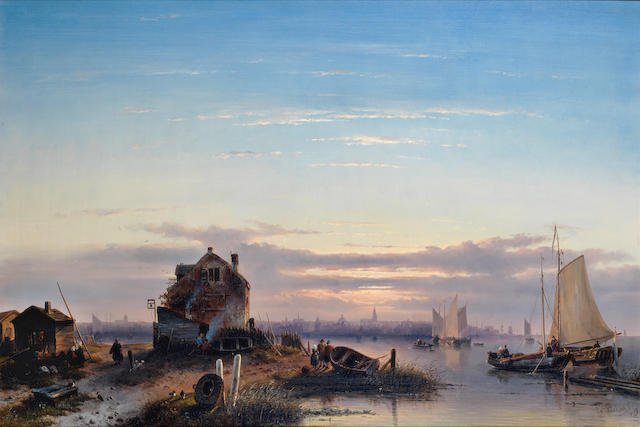
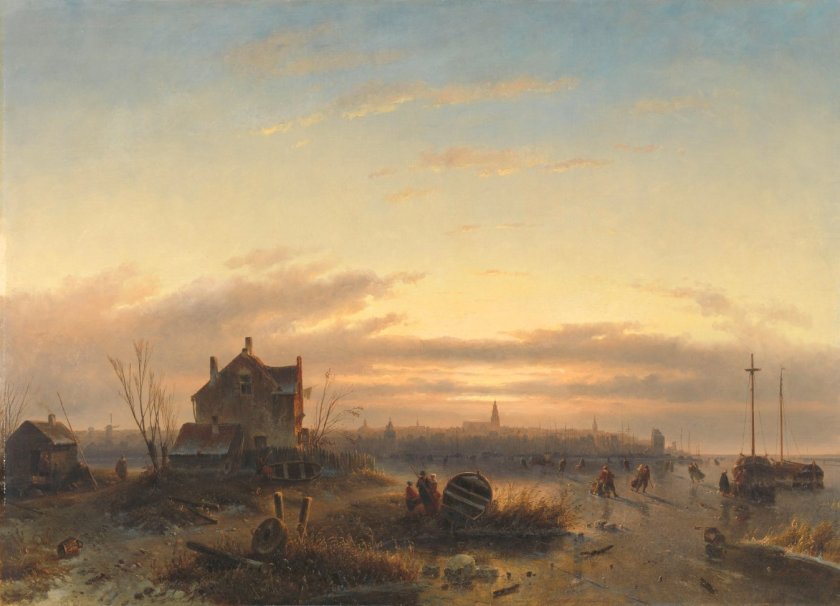
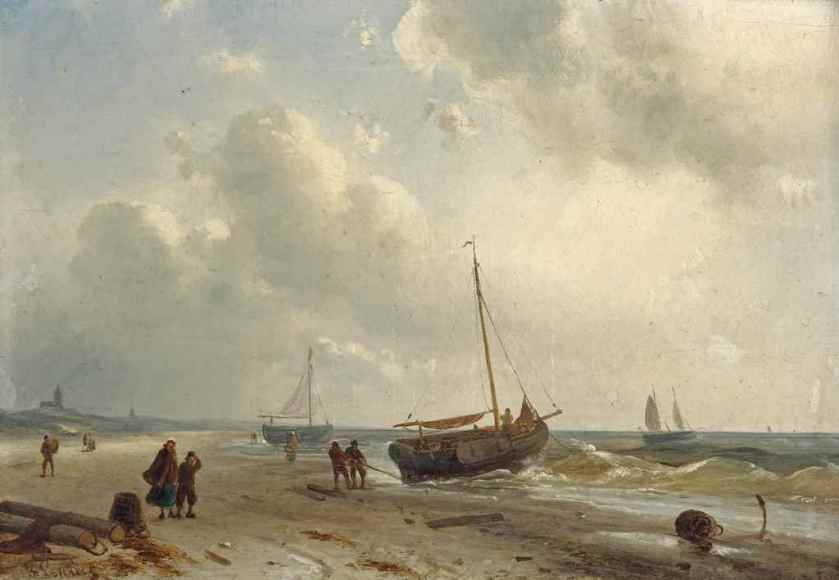
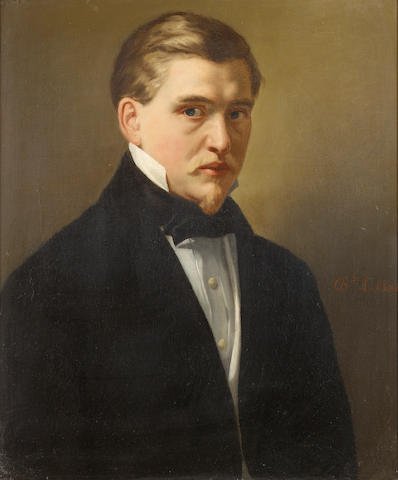
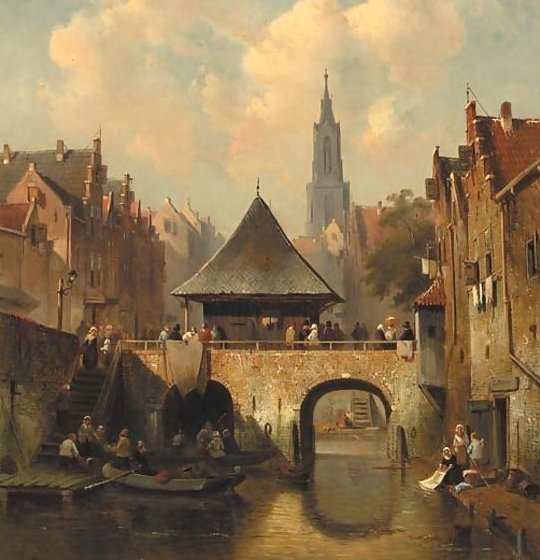


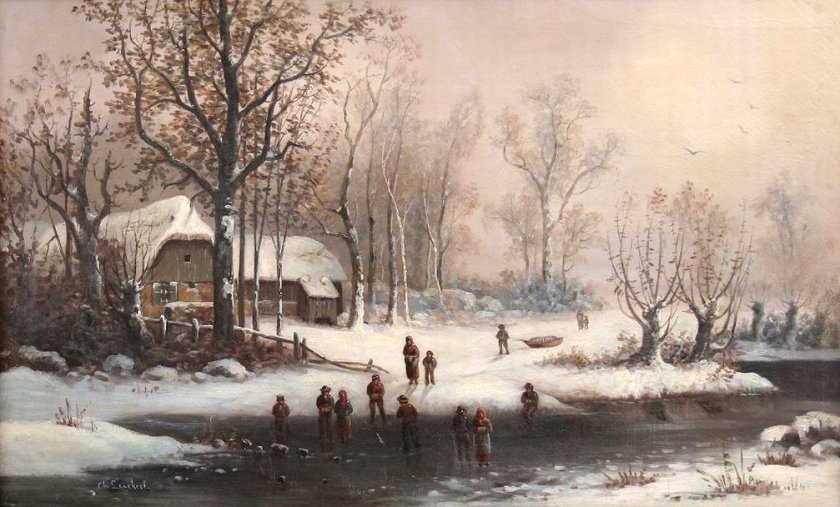

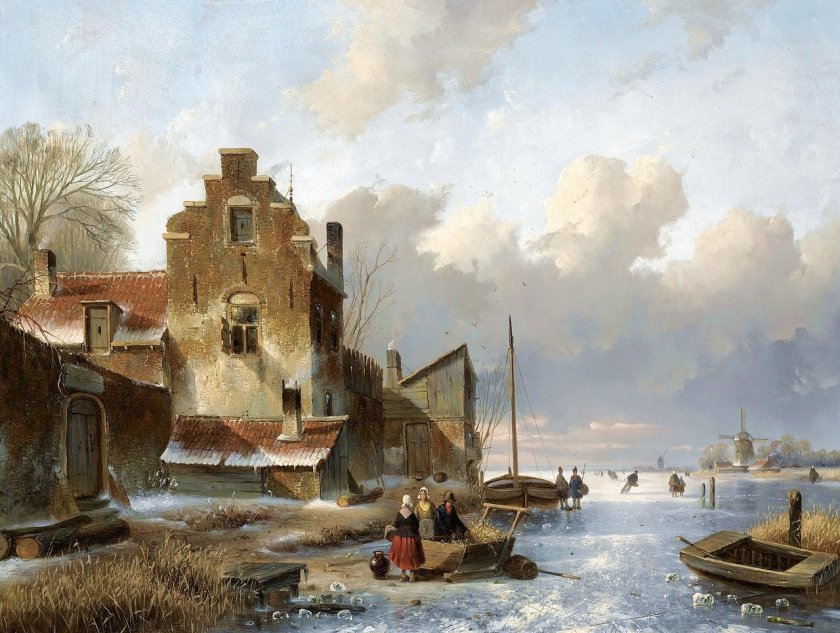
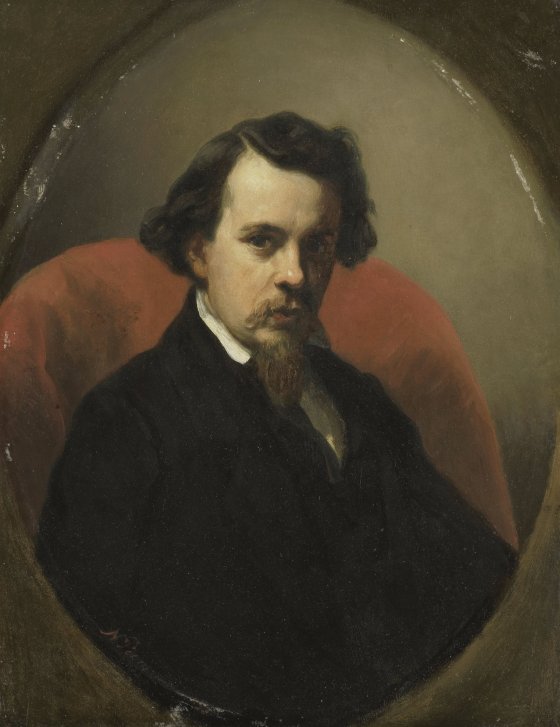
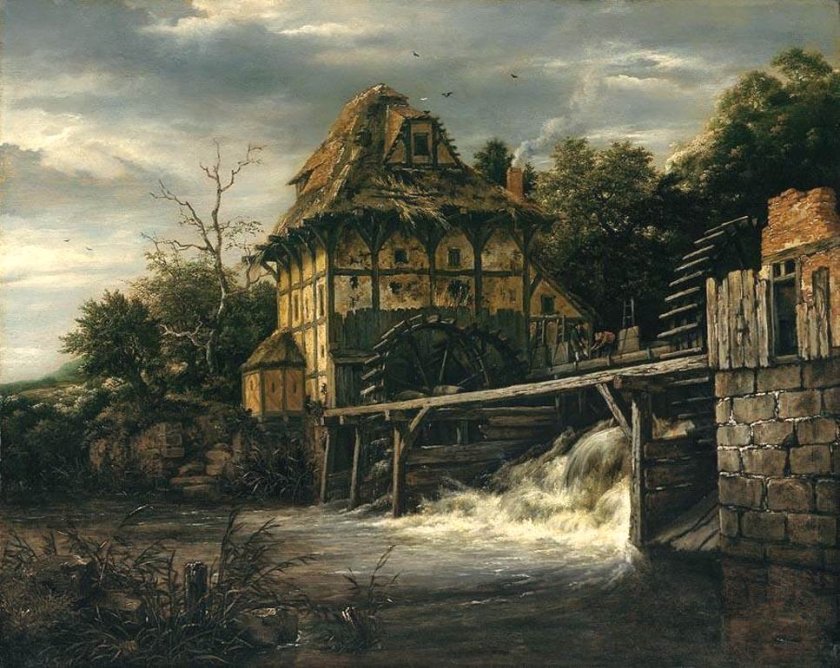
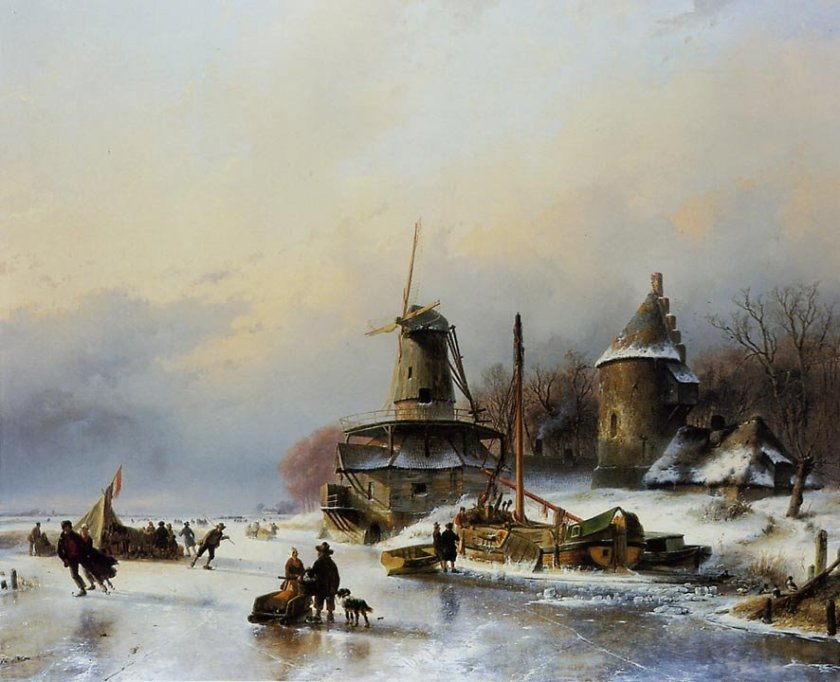


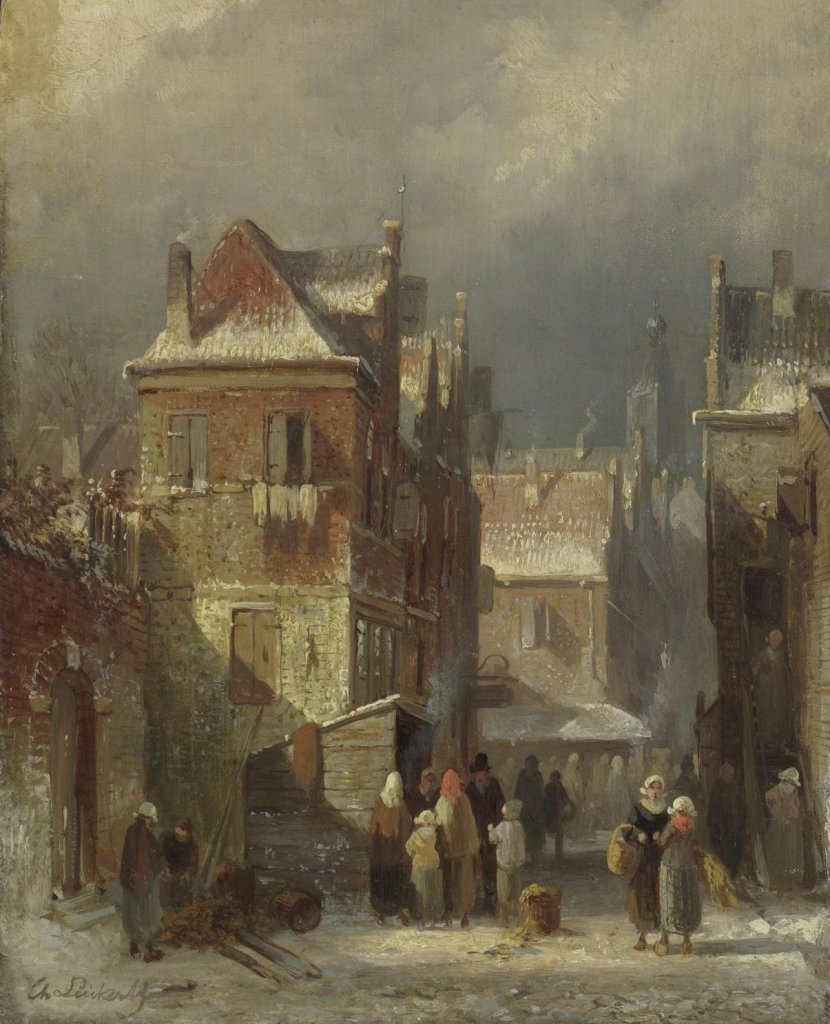

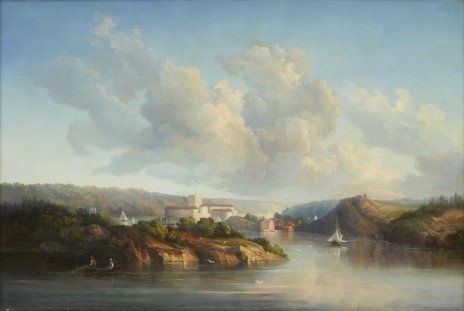
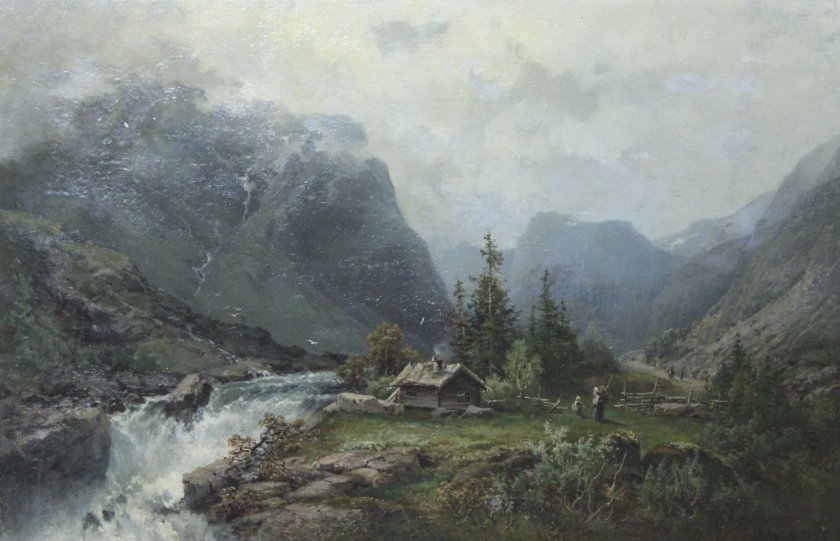
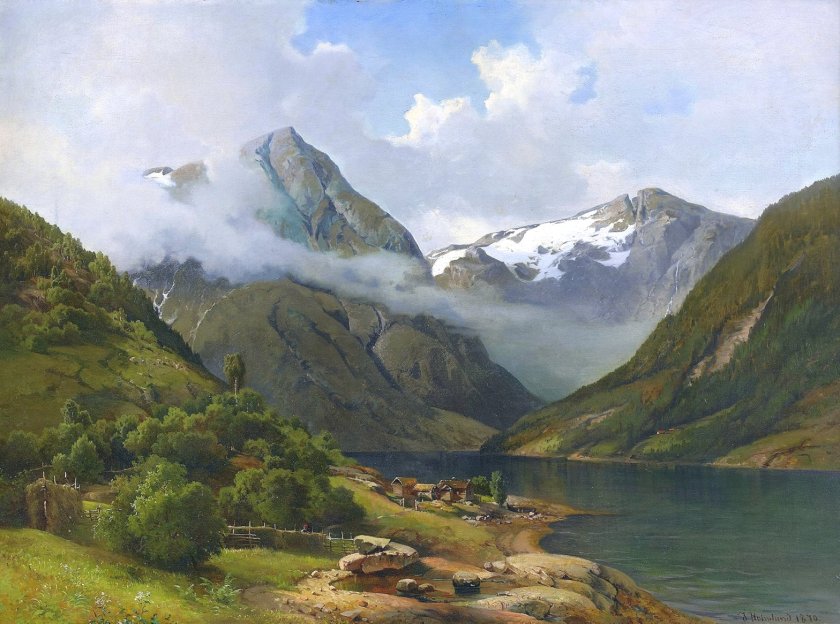
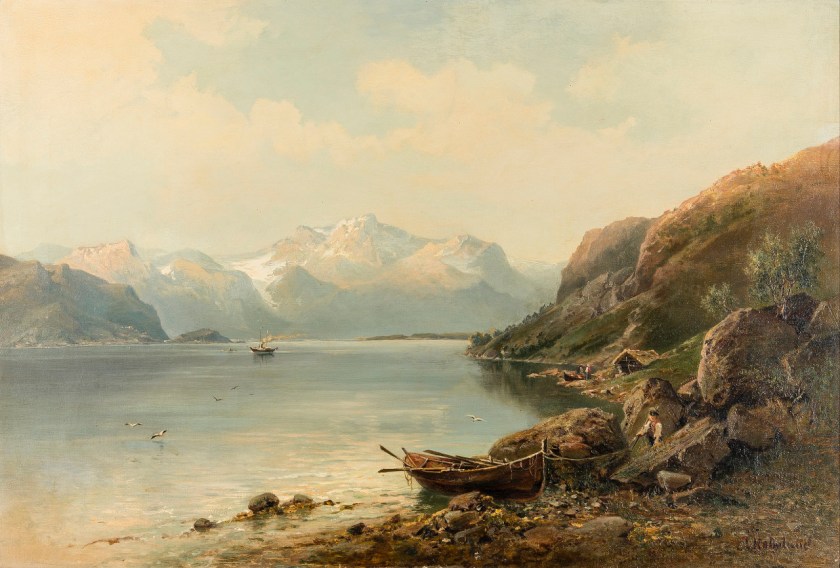
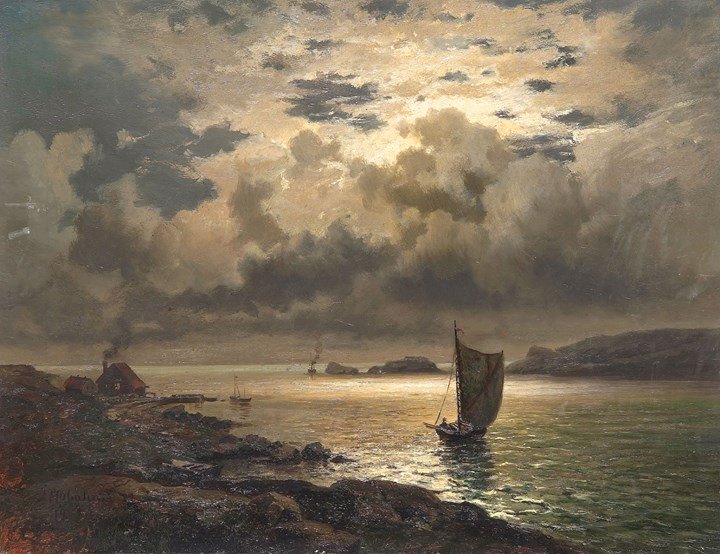

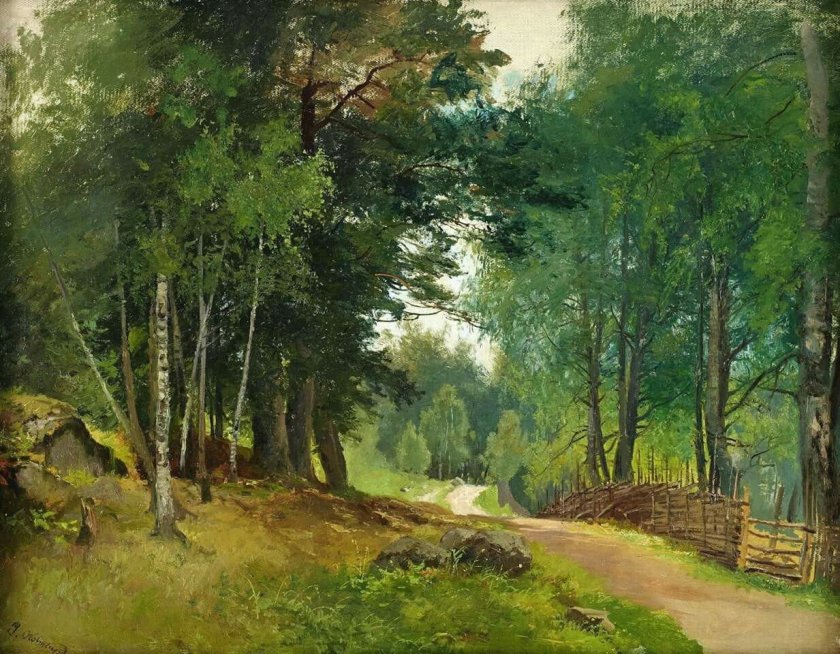


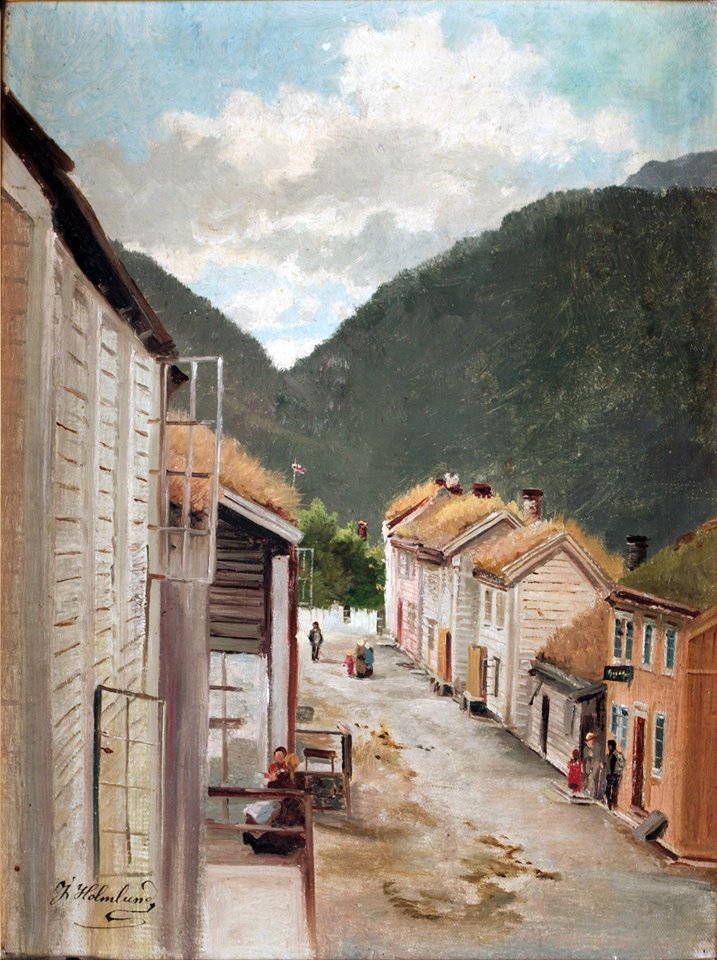


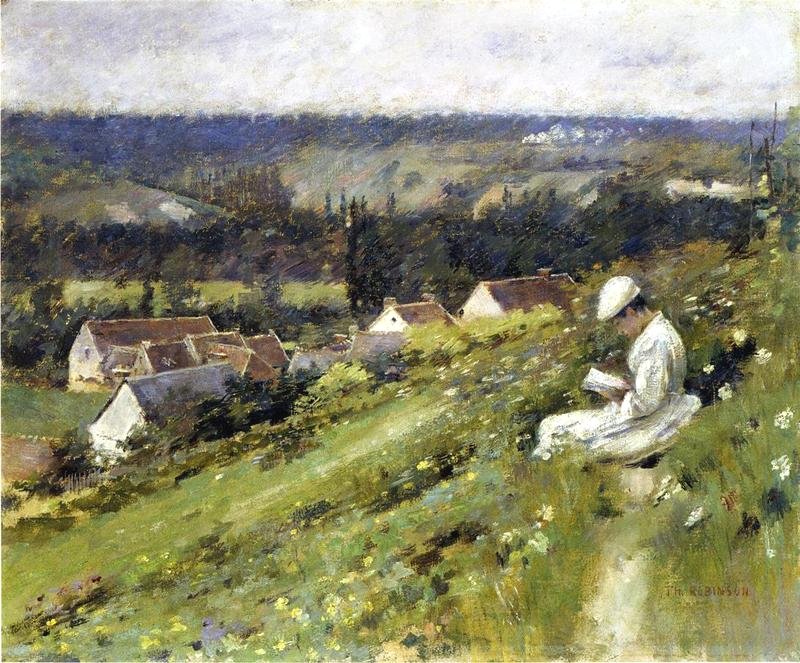


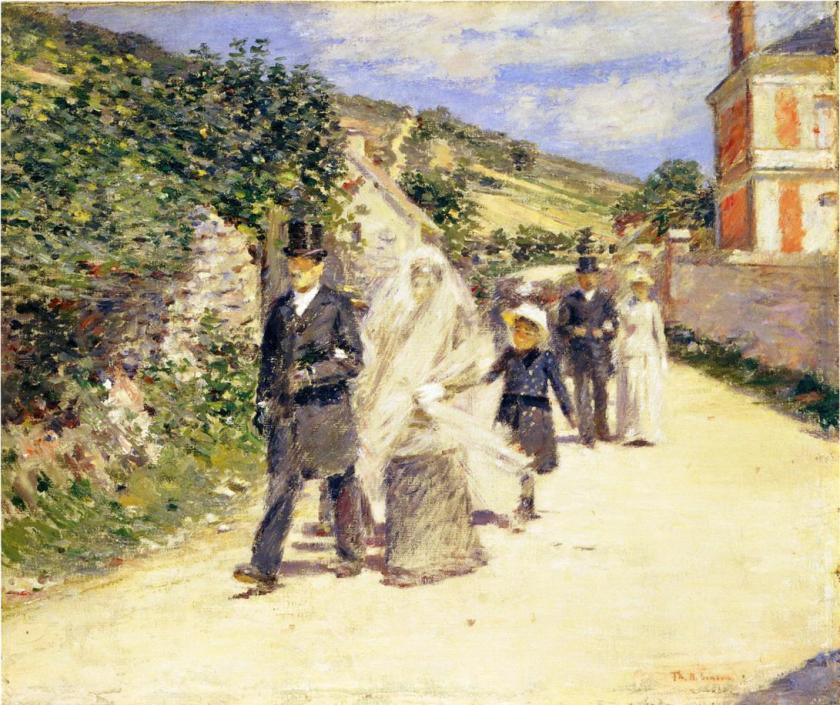



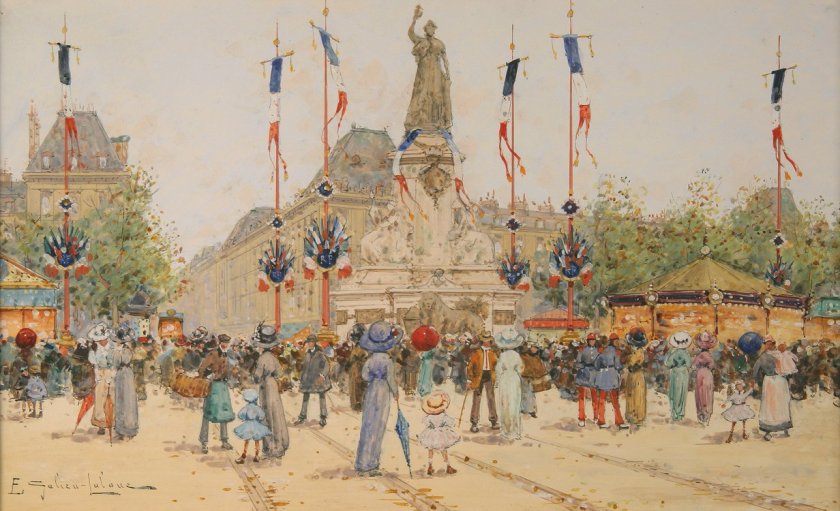
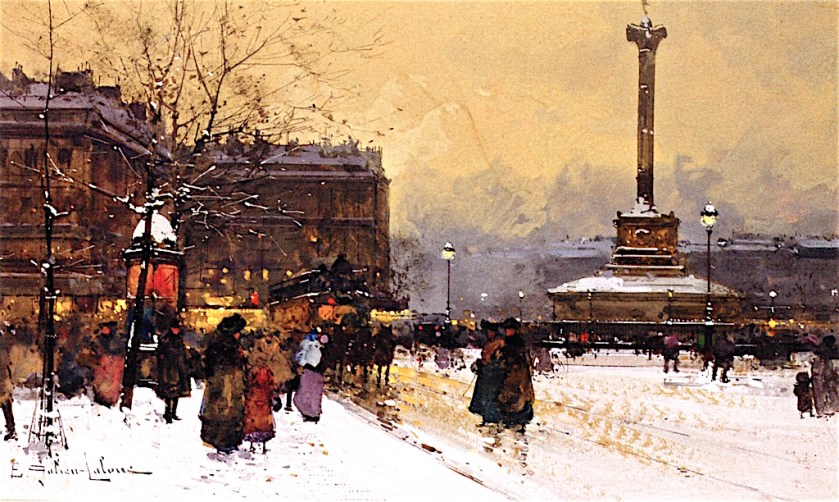


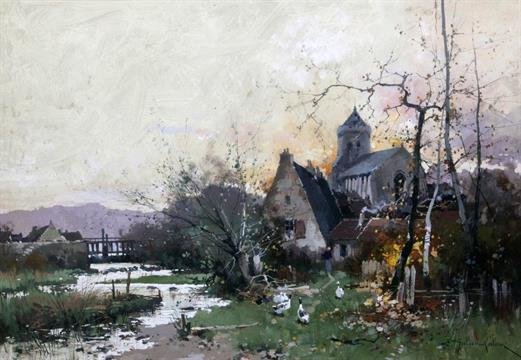
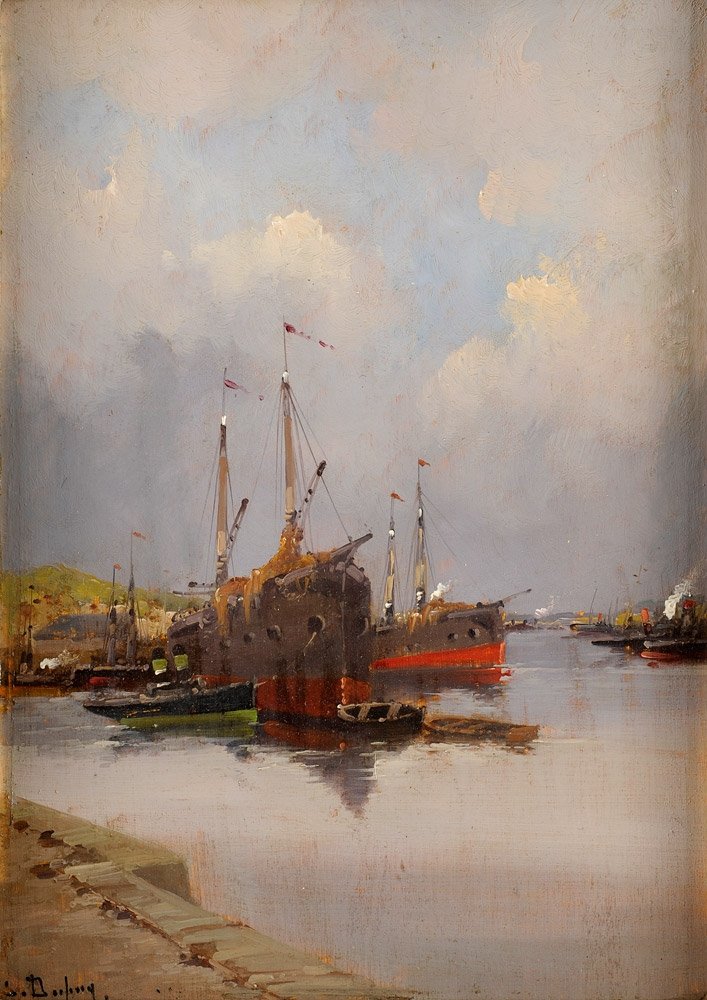
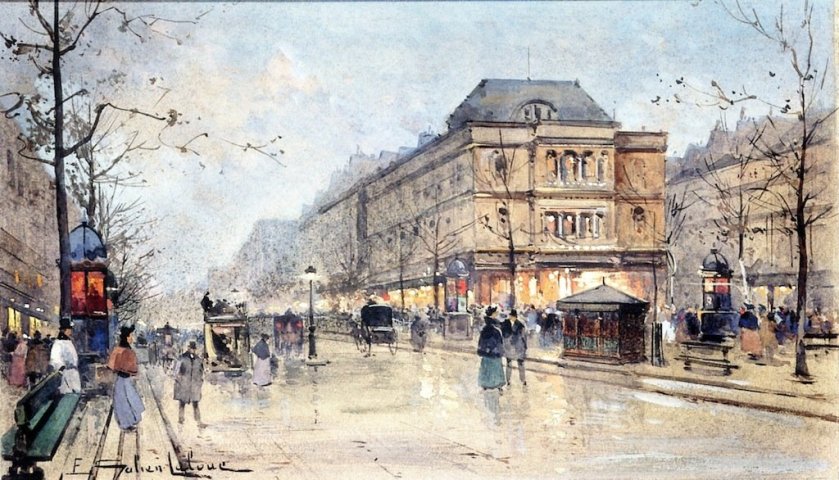


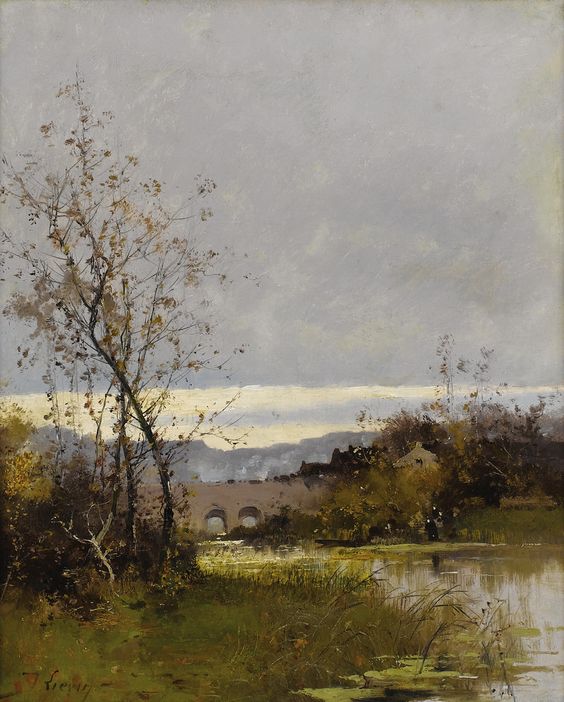
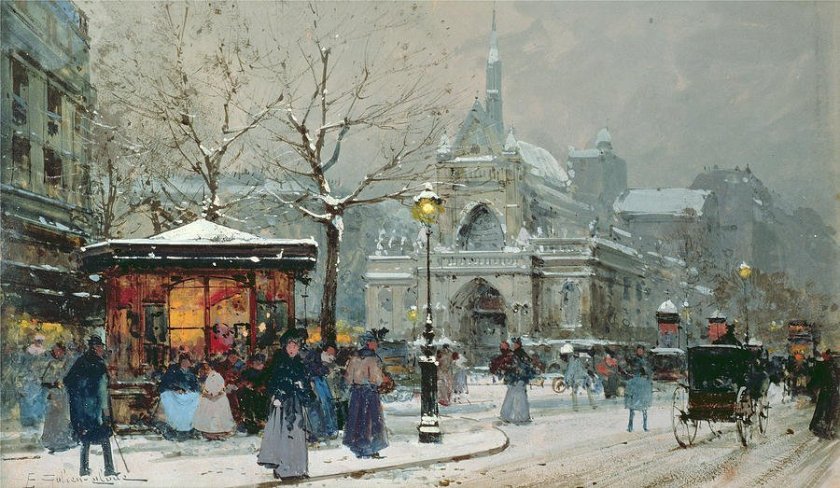


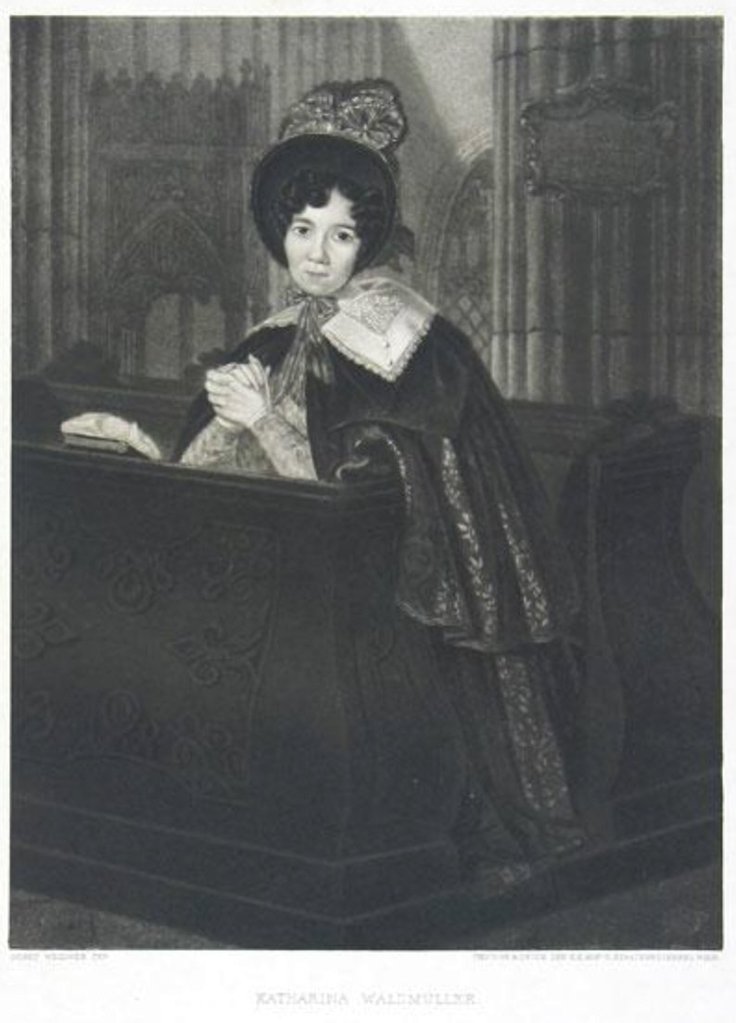

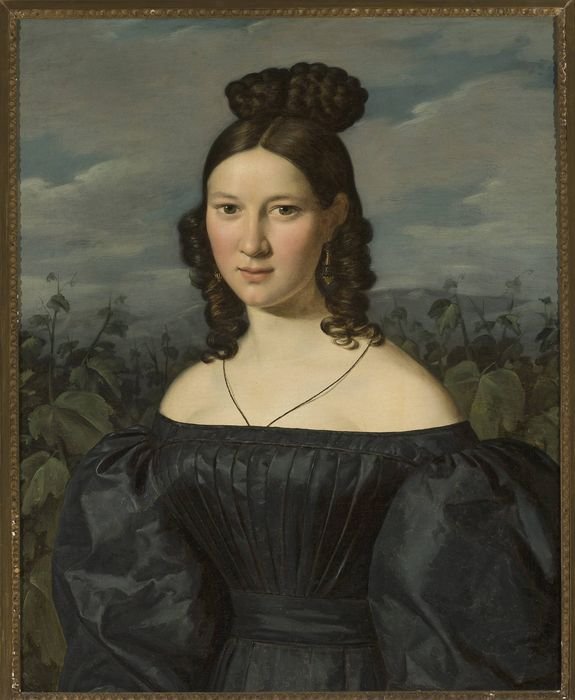

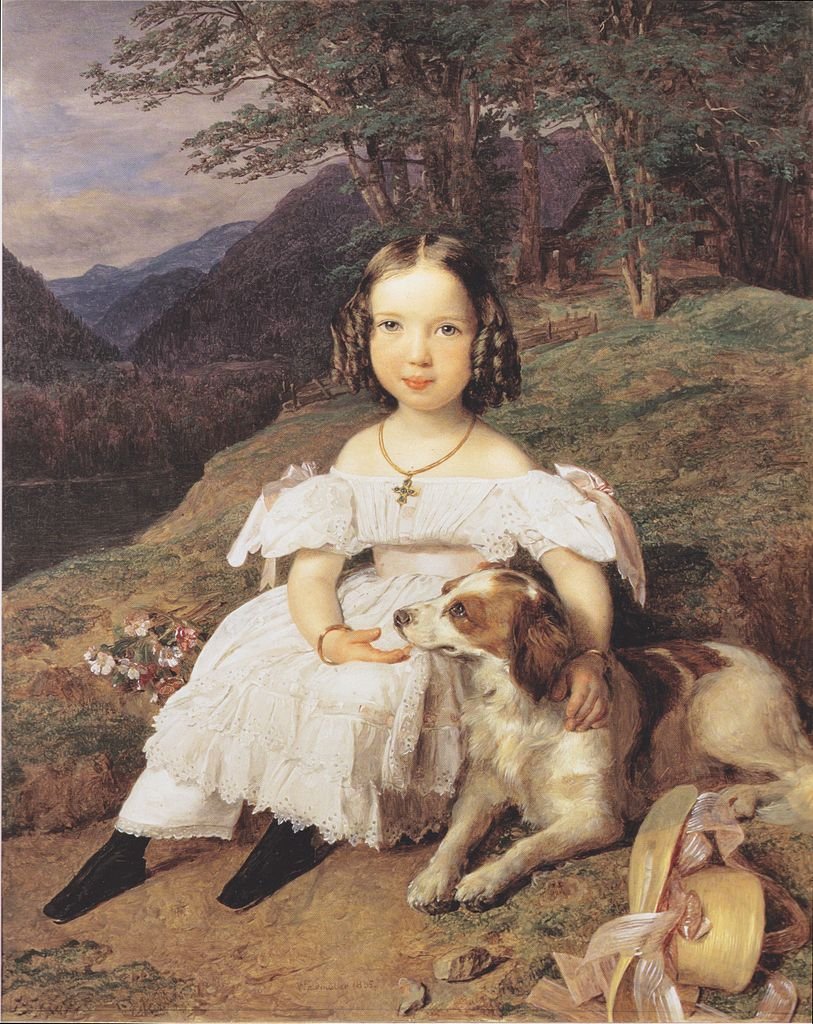

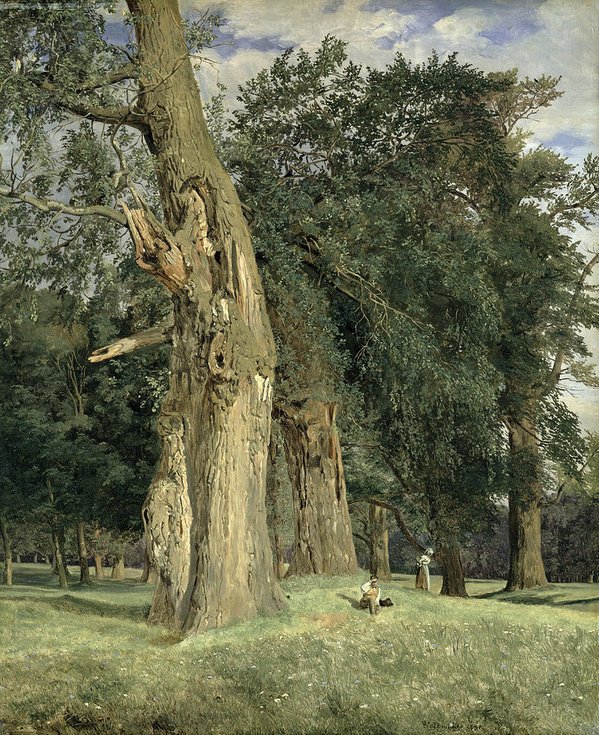


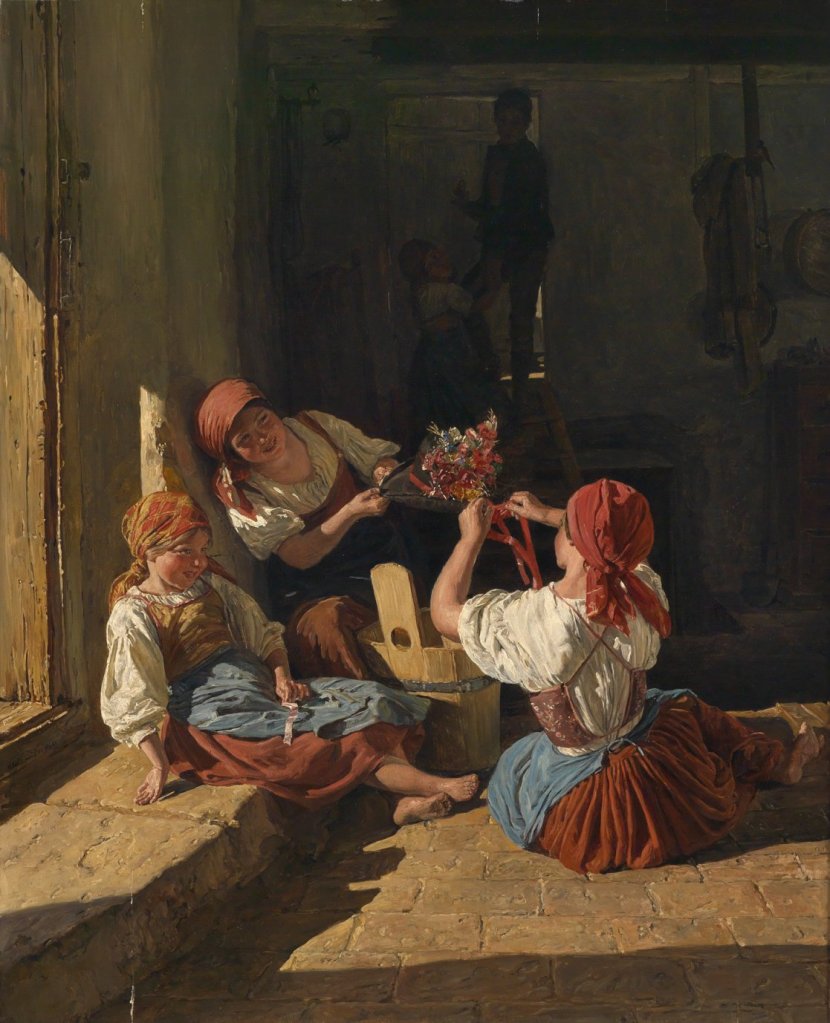

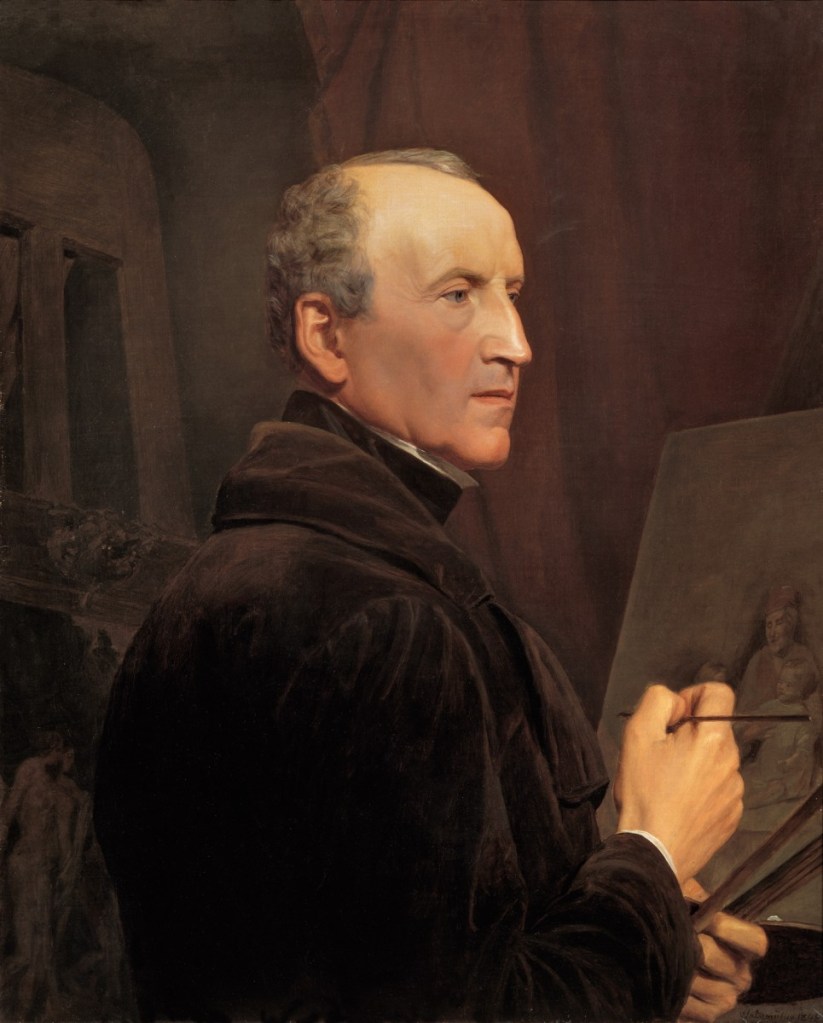


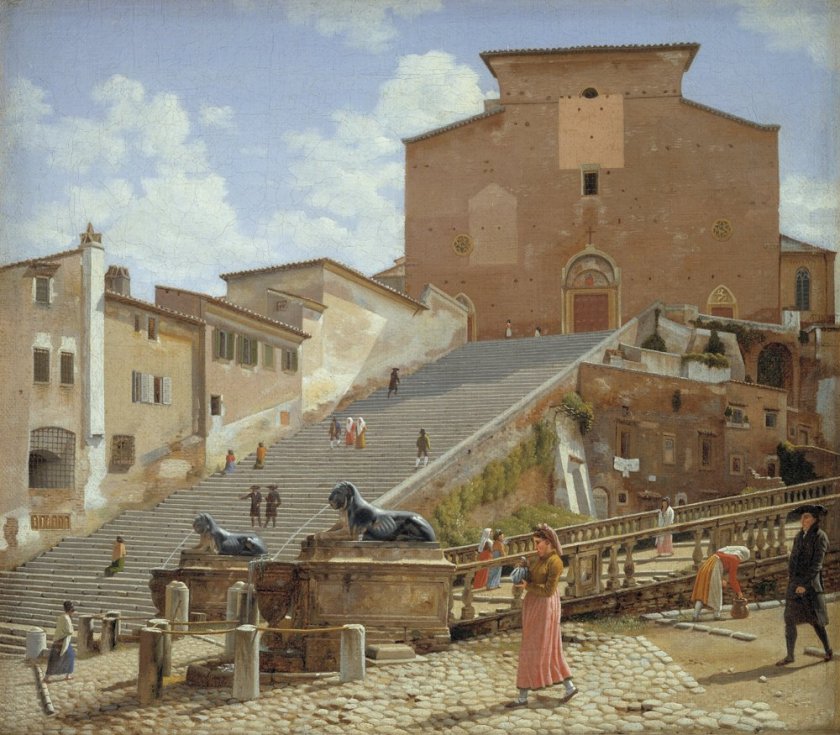
![View of the Capitoline Hill with the Steps that go to the Church of Santa Maria] d’Aracoeli) by Paranesi (c.1757)](https://mydailyartdisplay.uk/wp-content/uploads/2016/05/view-of-the-capitoline-hill-with-the-steps-that-go-to-the-church-of-santa-maria-d_aracoeli-by-paranesi-c.jpg?w=840&h=632)

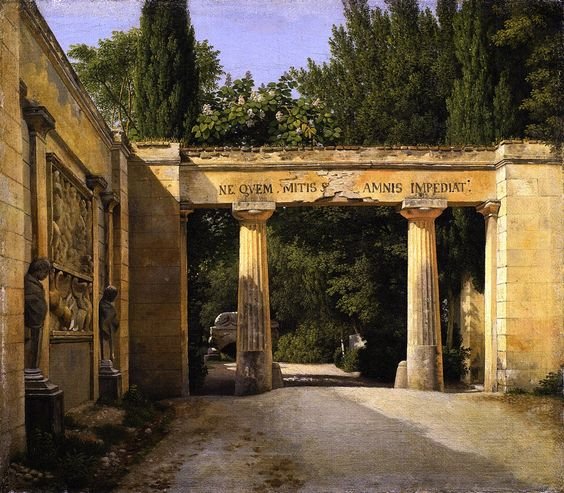


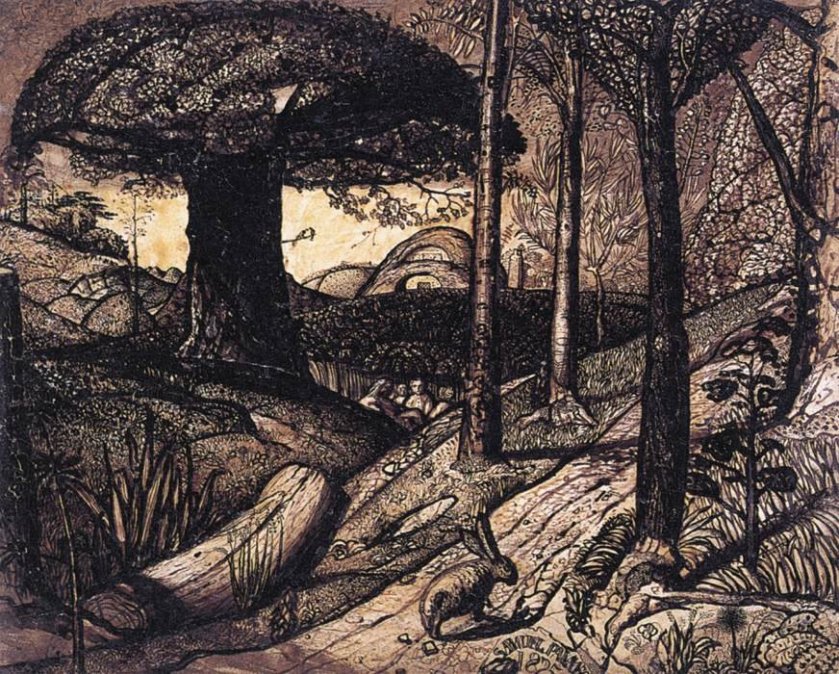
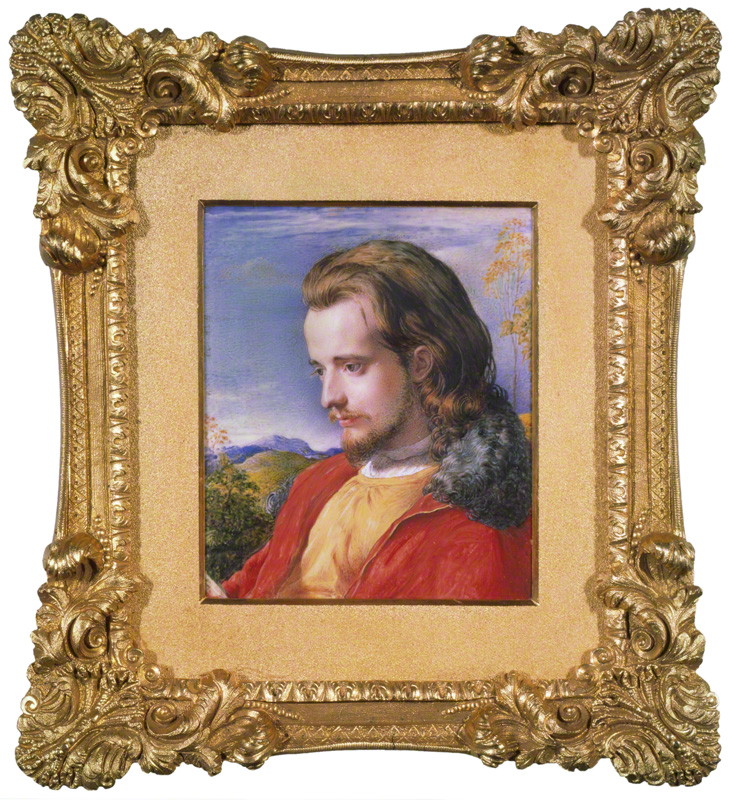










 my daily art display