My blog today looks at another of Bouguereau’s great history paintings. This is one of his religious works and has all the ferocity of his painting Dante and Virgil, which I featured in my last blog. Whether you are a lover of religious historic paintings or not, I defy you to be unmoved by the beauty of this work. Bouguereau was a devout catholic and looked upon his religious paintings as a form of his worship of both God and mankind. Bouguereau’s religious belief can be plainly seen in his religious works. The painting I am featuring today is entitled TheFlagellation of Christ, which he completed in 1880. Before I discuss the painting let me tell you a little about his life.
Adolphe-William Bouguereau was born in the French Atlantic coastal town of La Rochelle in November 1825. His father was Theodore Bouguereau, a seller of wine and olive oil. His father struggled to make much money from his business and because of the financial hardship and family tensions William was sent to live with his uncle Eugène Bouguereau, who was curate in the town of Montagne, some twenty kilometres from Bordeaux. This enforced move to his uncles was to prove highly fortuitous for the young boy as it was his uncle who introduced him to the world of Roman and Greek mythology and had him read the stories from the Old and New Testaments. At the age of thirteen, William’s uncle arranged for him to attend the high school at Pons where he attended his first drawing classes under the guidance of Louis Sage, a young classical painter who had once studied under Ingres. He remained at the school for three years. In 1841, he eventually moved to Bordeaux where his father had set up his business and once again William was with his family. William joined in his father’s business but at the same time, in 1842, he was allowed to enrol on a two-year part-time course at the city’s École Municipale de Dessin et de Peinture. Here he studiedunder Jean-Paul Alaux, the French landscape painter and lithographer. He could not attend full-time because of his promise to help his father during the day, and so, he only attended art classes in the early morning and in the late evening. Despite being a part-time student he excelled in what he did and in 1844 he won first prize for the best History painting with his depiction of Saint Roch. Following this award William Bouguerau realised that his future was indelibly tied to art. To earn some money for himself he designed lithographic labels for jars of jams and other preserves.
Bouguereau realised that to progress with his art he needed to be in Paris which was, at that time, considered the capital of the art world. However to live in the French capital required money, a commodity he lacked. His father’s business was not successful enough for him to give his son the money but fortunately for William, his uncle Eugène, the curate, once again proved to be his salvation. He arranged for William to paint portraits of his parishioners for a fixed fee and after months of portraiture he had amassed nine hundred francs. A similar sum was given to him by his aunt and he was all set to head to Paris.
The Flagellation of Christ by William Bouguereau (1880)
In my third and final blog about Bouguereau I will finish his life story but for today I want to focus on another of his great History paintings, his religious work entitled The Flagellation of Christ. He exhibited this work at the 1880 Paris Salon. It is a monumental work measuring 390 x 210 cms (almost 13ft high and 7ft wide). One can easily imagine how it stood out from all the other works on show at the exhibition. This is acknowledged as being one of Bouguereau’s greatest religious works. In this painting, Bouguereau has depicted Christ, tied to a column. Christ’s body hangs down almost lifelessly with his feet dragging on the ground. His head droops backwards. His eyes are blank and unfocused. He is utterly powerless. He can do little to stop the ferocious onslaught. Unlike Bouguereau’s painting Dante and Virgil which I featured in the last blog, he has made no attempt to exaggerate the musculature in his portrayal of Christ’s body. The body of Christ is that of a normal human being. It is just like ours and in doing this Bouguereau has allowed us more easily to empathise with Christ’s suffering and pain.
A look of concern
We see Christ’s tormentors, two men, who stand on either side of him, arms raised in mid swing with their knotted rope whips airborne. In the right foreground we see a third man kneeling. He is in the process of tying up birch branches which will be used later to flagellate their prisoner. Look at his facial expression. It is one of concern. It appears that maybe he is not convinced that what he sees before him is justified. It is if he is beginning to question his part in the flogging. In the background an inquisitive crowd gather to witness the flogging. This is not a leering and jeering crowd we have seen in many of the crowd scenes in Northern Renaissance works. This group of people cannot be likened to the snarling mob we have seen in earlier Passion of Christ depictions.
A child looks on
An old man in the crowd, maybe the father, lifts a baby aloft for him or her to get a better view. There is little sign of compassion on the faces of the crowd. Maybe they have accepted the charges that have been laid against Christ and feel that he needed to be punished. However there is one exception.
Look closely at the far left of the background. We see a young boy in a long green tunic who has turned away in horror of what is happening and has burrowed his head in the clothing of the woman who has wrapped her arm around him in a comforting gesture. Maybe it is his mother. Maybe she is horrified by what her young son has witnessed and is trying belatedly to protect him. In the mid-background, there is a man wearing a white vest and grey headband. He grips a sheath of birch branches and is readying himself to take part in the flogging. There are a number of examples where the artist has decided to insert his own image into a work and Bouguereau has done the same in this painting.
The artist looks on
Look at the face in the background to the right of the man wearing the white top and head band. There, gazing between the spectators is a man with red hair and a red beard. His brow is furrowed signifying his unease of what he sees before him. This is believed to be the face of the artist himself. He, like us, looks on at the terrible scene.
The size of the work almost certainly precluded the sale of it to a private individual and in 1881 Bouguereau gave it to the Society of Friends of the Arts in his home town of La Rochelle. This majestic work can now be found at the Baptistery of La Rochelle Cathedral, France.
Bouguereau never lost his love of Greek and Roman mythology which he had been brought up on from early age by his uncle Eugène. As I said earlier, Bouguereau was a very religious man and religious imagery was a persistent theme in his paintings. Often his religious works focused on sad and moving events and it is believed they mirrored the anguish and suffering he endured with the loss of loved ones in his own life, which I will talk about next time.
In my next three blogs I want to look at the life and some of the works of one of the greatest and most prolific nineteenth century French painters, Adolphe-William Bouguereau. At a time when many of his contemporaries were railing against academic art, Bouguereau was a staunch supporter of it. He was a pure traditionalist. So why did he support the establishment’s stance on art and the establishment’s method of training aspiring artists when many of his contemporaries were vociferous in their condemnation of all that the art establishment stood for? To answer that question, one must look at the way art was taught in France or more precisely in the case of Bouguereau, how it was taught in Paris which was then considered the art capital of the world. Artistic training in that city was centred on the government-sponsored art school, the École nationale supérieure des Beaux-Arts, which was founded in the mid seventeenth century as the Académie des Beaux-Arts and once it had become independent from the government in 1863 changed its name to L’École des Beaux-Arts.
Viila Medici, the French Academy in Rome
It was here that young men (women were not admitted until 1898) were taught how to draw. The actual teaching of putting paint on canvas was carried out in private studios which were often run by the professors of the school. Artistic training was thorough and aspiring artists had to reach high standards before they were allowed to proceed with the course. They would also have to enter work into a number of in-house competitions. The most prestigious award being the Prix de Rome, which was given to the artist who submitted the best History painting. Bouguereau won the coveted Prix de Rome in 1850, with his painting Zenobia Found by Shepherds on the Banks of the Araxes. His reward was the chance to attend the Villa Medici, which was the French Academy in Rome, and remain there for four years. During that time the student would have the opportunity to study the classical art of the Italian Renaissance masters. The reason why the French art establishment believed that this was so important was their belief that no artist had ever achieved the level of excellence attained by the likes of Raphael, Titian or Michelangelo. In their opinion, every aspiring artist was duty bound to emulate this type of art.
The Parisian art establishment which oversaw the running of L’École des Beaux-Arts issued artists with an official list detailing which genre of paintings they considered more important than others. This hierarchy of genres was headed by History painting and the reason for that was that it somehow represented all the artistic skills the young artists had been taught during their passage through the Academy system. History paintings were generally very large works, and thus were nearly always destined to be hung in public places such as in churches, or the spacious rooms of government buildings or on gallery walls. History paintings delved into the world of classical, mythological, literary and religious events which had taken place in bygone days. Within this top-placed genre there was the allegorical works which, through their depiction, carried symbolic messages about good and evil. It was in these works that the depiction of nude figures, were considered acceptable and it was from years of studying the human figure in life drawing classes at the Academy that the aspiring artists were able to skilfully show off what they had been taught.
Once an artist had trained at the academy, he and later she, had to face up to the fact that to survive they had to sell their work. In the past the government, the church and the wealthy aristocracy were the buyers of art works but it soon became obvious that their commissioning power was becoming limited and the new buyers of art were the Parisian people of middle and upper-class standing who had the money and wanted to fill their grand houses with fine art. So where could these new buyers get their hands on fine works of art? Parisian art dealers such as Paul Durand-Ruel and Adolphe Goupil did not become buyers and sellers of art until the mid nineteenth century. Before then the most prestigious way of selling your paintings was to get them accepted at the Paris Salon’s annual exhibition. Simply referred to as the Salon, it began in 1725 as the official art exhibition of the Académie des Beaux-Arts. These were massive exhibitions in which artist’s works, once they had passed the scrutiny of the Salon jurists, were exhibited floor-to-ceiling and on every available inch of wall space. Potential buyers were then able to see, in one space, the art work that was on offer. One can therefore realise that for a work to sell, not only had it to be pleasing on the eye of a potential buyer but it had to have been hung in a prominent position at the Salon exhibition. The advantage the History painters had over others was the monumental size of their works which often dwarfed their “competition” and therefore were always placed in a prominent position.
Dante And Virgil by William Bouguereau (1850)
In my next two blogs I want to look at two monumental history painting completed by Bouguereau, one secular, the other religious, but both follow the artistic traditions laid down by the Academy. Today I am featuring the secular work, entitled Dante and Virgil in Hell, which is housed at the Musée d’Orsay in Paris. This is a truly breathtaking work and is a prime example of classic art with so much attention paid to the musculature of the human body. The first thing that strikes one about this painting is its unfettered ferocity, which has the effect of either you wanting to turn away from it in shock or you stare at it in a mesmeric state.
The setting for the work comes from Dante Alghieri’s 14th century epic poem, The Divine Comedy, which recounts the journey made by Dante through Hell along with his guide the ancient Roman poet, Virgil. The poem tells us that Hell is made up of nine concentric circles within the bowels of Earth. Each of the circles houses people who have committed certain types of sin. Bouguereau’s painting depicts the two travellers arriving at the Eighth Circle of Hell. This is the Circle which houses the deceased falsifiers. This Circle, nicknamed Malebolge (evil pouches) is unlike the other Circles for it is surrounded by a wall of dull iron-coloured stone, and the valley itself is divided into ten secondary circles or pouches. The setting for Bouguereau’s work is the tenth pouch of the eighth Circle of hell. We see Dante and Virgil watching a fight between two damned souls.
So who are the two main characters depicted fighting in the painting and why are they condemned to stay in this Circle of Hell, which is the home of alchemists, counterfeiters, perjurers, and imposters? Dante Alghieri would have known about the two men. One is Capocchio, a heretic and alchemist from Sienna who was put to death by public burning at the stake in August 1293. The other is Gianni Schicchi who is condemned to Hell for impersonating Buoso Donati and making his will highly favourable to himself. The story goes that after the wealthy Florentine, Buoso Donati, died in 1299; his relatives conducted a frenetic search for his will. The will was eventually found but to the relatives’ horror Donati had left most of his money and possessions to the local monks. The relatives then turn to the scheming but ingenious Gianni Schicchi, who has the gift of mimicry, to help them find a solution and save their inheritance. Schicchi has no love for the money-grabbing relatives but however agrees to impersonate Buoso Donati, as nobody, other than the relatives, knows of his death. Schicchi successfully passes himself off as the deceased Donati and changes the will. The irony is that Schicchi, in changing the will, ends up giving himself most of the possessions belonging to the dead man. The relatives were powerless to do anything as they were involved in the deception! This usurping the identity of a Donati in order to fraudulently claim his inheritance has condemned him to the Eighth Circle of Hell.
The bite to the throat
The foreground of the painting is well lit and like the powerful light almost acts as a spotlight which has picked out the two fighting adversaries, Schicchi and Capocchio, in the foreground,. Capocchio, the heretic and alchemist is attacked and bitten on the throat by Gianni Schicchi, the usurper. He acts like a vampire. In the background shadows we see Dante and Virgil standing together. Virgil is dressed in a red cloak and hat and Dante is dressed in grey. Virgil looks down at the fighters but Dante has covered his mouth in horror at what he sees before him. However Dante’s eyes are not fixed on the fighting but at something to the right, out of picture. So what is he looking at? Maybe it is more naked writhing bodies similar to those which we see below the winged demon.
Dante and Virgil the onlookers
Virgil has taken hold of Dante and wants him to move on away from this horrific scene. Hovering above them is a flying demon which we see depicted against the fiery red background of Hell.
The smiling flying demon
The demon has a wide smile as he sees the men below tearing each other apart. On the floor by the fighting couple we see a man wracked in pain, the punishment for his past sins.
Nails dig into flesh and draw blood
Look carefully how Bouguereau has embellished the muscle structure of the two men. Look how the distortion of the bodies in their over-elaborate poses has added an animal-like ferocity to the painting. I particularly like the way Bouguereau has exaggerated the depiction of Schicchi’s violent stretching of Capocchio’s skin, his finger nails starting to draw blood whilst his knee, which has slammed into Capocchio’s back, bends his victim’s spine.
The 19th century French art critic and poet Théophile Gautier was very complimentary about Bouguereau’s painting, saying:
“…Gianni Schicchi throws himself at Capocchio, his rival, with a strange fury, and Monsieur Bouguereau depicts magnificently through muscles, nerves, tendons and teeth, the struggle between the two combatants. There is bitterness and strength in this canvas – strength, a rare quality!..”
It is a magnificent work of art albeit a very disturbing one. In my next blog I will feature another of Bouguereau’s history paintings, a religious one, which like today’s work has an undeniable feel of savagery, which makes the viewer nervously unsettled by what they see before them.
In my blog today I want to look at some of Honoré Daumier’s political and satirical caricatures and lithographs. To get some idea as to why he came to satirise the ruling classes of his day I think it is worthwhile looking at the French history of Daumier’s time to find the answers.
The French Revolution began almost twenty years before Daumier’s birth in 1789 with the storming of the Bastille and the fall of the French monarchy. The majority of upper-class and bourgeoisie Parisians who had managed to survive the slaughter, found themselves imprisoned. In September 1792 the ruling body known as the National Convention had declared France a republic and took control of the country. This ruling group was split into two major factions: the Moderates known as the Girondins and the Radicals known as the Jacobins but in Paris itself there was third and far more dangerous faction known as the sans-culottes, (those without breeches). This group of radical left-wing partisans came from the lower classes and were typically urban labourers. They were easily identifiable as they wore full-length working-class pants rather than the knee-length culottes which was the French name given to silk knee-length breeches worn by the moderate bourgeois revolutionaries of the National Convention. The sans-culottes strove for popular democracy, affordable food but most of all they wanted to ensure that a counter-revolution would never come to fruition. This fear of a counter-revolution was to have a bloody consequence as the sans-culottes were aware that there were a large number of political prisoners in gaols, the number of which they believed was greater than the free Parisians, and, in their mind, they viewed them as counter revolutionaries and a threat to the spirit of the Revolution. Their decision to rid themselves of this threat was precipitated by rumours that the Prussian army was going to invade the country and when it got to Paris would be sympathetic to the imprisoned counter-revolutionaries. The sans-culottes were now desperate to prevent the freeing of the prisoners and so on September 3rd and 4th of 1792 they stormed the prisons and within a few days had killed thousands of them. Men and women, aristocrats and clergy were butchered. The bloodbath became known as the September Massacre. A year later, Louis XVI and his wife Marie Antoinette were beheaded.
As is often the case violence begets violence and in 1794 the leaders of the sans-culottes had themselves been executed by the Jacobins under Robespierre. Robespierre was now a leader of the Convention and ruled through terror but by 1794 he was considered by many to have gone too far and eventually fell from grace. He was arrested by the deputies in the National Convention and was executed in July 1794. A new grouping known as The Directory was formed in 1795 with the intention of making France a republic. For four years the Directory tried to please all the people but they themselves were still divided between those who wanted life to go back to the Pre-Revolution days and those who still wanted the bloodshed to continue and rid the country of the upper classes.
In October 1799 Napoleon Bonaparte arrived back in Paris from his battlefield heroics in Egypt. The time was right for change. Popular opinion was divided but all seemed to hate the Directory and so Bonaparte struck and his successful coup in November 1799 led him to become the new French ruler. In December 1804 he was crowned Napoleon I, Emperor of the French by Pope Pius VII. Bonaparte reign as leader lasted until his defeat at Waterloo in June 1815, after which he was exiled to St Helena where he died six years later.
On Bonaparte’s departure, France was once again under monarchist rule – this time it was the House of Bourbon and Louis XVIII. On Louis death in 1824 his younger brother Charles X, who had been living in exile in London, returned to France and took up the reins of power. Soon after coming to power Charles’ government passed a series of laws which strengthened the power of both the nobility and clergy.
Charles’ rule was of a dictatorial nature. His was an absolute monarchy in which he exercised ultimate governing authority as the head of the country and his powers could not be limited by the country’s constitution or law. As an absolute monarch he was the supreme judicial authority and as such he could condemn men to death without the right of appeal. Charles wielded his unlimited authority to reassert the power of the Catholic Church in the country. He also sought to restrict the freedom of the press but most contentiously he passed laws which would compensate the families of the nobles who had had their property destroyed during the Revolution. His popularity slowly but surely waned with the French people. The “straw that broke the camel’s back” came about when Charles set forth what is now known as the July Ordinances which laid down a raft of new laws, one of which was to exclude the commercial middle-class from future elections. Furthermore most businessmen were banned from running as candidates for the Chamber of Deputies, membership of which for many was a position that afforded them the ultimate in social prestige. Bankers were far from happy with this Ordinance and took their revenge by refusing to lend money, and business owners shuttered their factories and work places, which culminated in workers being callously turned out onto the streets where they were left to fend for themselves. Naturally, the unemployed felt badly done by and decided that the only course of action left to them was to take to the streets in protest. The July Revolution of 1830 had started. It lasted three days and eventually forced Charles to flee to exile in England. However rule by a monarch survived and Louis-Philippe became king of the French. The downfall of Charles came to fruition, not only because of the workers protesting on the streets but because of the power wielded by the upper middle class society, the bourgeoisie, the bankers, railroad barons, mine and forest owners as well as wealthy merchants and so during Louis-Philippe’s eighteen year reign the power of the French bourgeoisie grew more powerful and became very close to the king.
However as years passed it was clear that not everybody was happy with Louis-Philippe’s monarchy and his government and many reform movements came in to being wanting more equality for the working classes. In 1846 France suffered a financial crisis and it was also a year when the harvest was disappointing. In 1847 the country descended into an economic depression and the peasant farmer workers began to rebel against their poor living standard. It was not just the rural areas that were suffering as a third of Parisians were out of work. Louis-Philippe and his government sought to silence the masses by banning political rallies but this only served to further incense the populace and the people took to the streets of Paris. The military fired on the angry crowd and over fifty were killed. Barricades were erected and shops, cars and omnibuses were set alight. It was over for Louis Philipe and so, like his predecessor Charles X, the people had ousted him, forcing him to flee to exile in England. The monarchy had once again fallen and the Second Republic of France was born.
It was in the middle of all this that Honoré Daumier was born in Marseille in February 1808. He came from a working-class household. When he was twelve years old the family moved to Paris. His father was a glazier and picture-framer but gave it all up in his quest to become a successful playwright, alas to no avail. The family was now short of money and Honoré had to supplement the family income by working as an errand boy at the law courts and as a clerk in a bookshop. He had developed a love of sketching and would often spend time at the Louvre copying the Masters. He secured some informal artistic training from a friend of his father, the painter, Alexandre Lenoir. Later he attended life-classes and at the age of seventeen he became an apprentice at the studio of Zepherin Belliard, the lithographer and portraitist and it was his love and skill at lithography which would shape Daumier’s future.
Daumier being from a working-class background was a staunch republican and so was delighted with the July Revolution of 1830 and the overthrow of Charles X but was bitterly disappointed to find that instead of the formation of a Republic, the monarchy would continue with the arrival of King Louis-Philippe as the successor to Charles X. His hope of a Republic had been dashed. Daumier decided to fight the monarchy in the only way he could. He would use the power of the political and satirical caricature to criticise the monarchy. This was quite a dangerous form of dissent and many artists shied away from such a blatant form of criticism. Daumier joined the newly founded Parisian satirical, anti-monarchist, illustrated newspaper Le Caricature. The four-page weekly journal, with two or three lithographs usually in the form of political caricatures, was one of the first French satirical newspapers and was founded in November 1830 by the anti-royalist, Charles Philipon, five months after the July Revolution.
Gargantua by Honoré Daumier (1831)
Probably the most famous of Daumier’s caricatures was one he completed in 1831, entitled Gargantua. The name Gargantua derives from Rabelais’ 16th century series of novels, which tells of the adventures of two giants, Gargantua and his son Pantagruel. It was one of the first major political lithographs completed by Daumier. In the work, we see King Louis-Philippe seated on his high throne, which is actually a giant commode! It is an unflattering caricature of the monarch but this pear-shaped head was Daumier’s constant caricature depiction of Louis-Philippe. From the king’s mouth runs a stepping board to the ground on which the servants carry the sacks of money which, on reaching the top, tip into the king’s mouth. Daumier is portraying the king as a devourer of his subjects’ hard-earned money.
In the bottom right of the work we see taxpayers who have been rounded up and told to empty their pockets into the baskets. Look at the man who is just putting his money into the basket. He is dressed in rags. Sitting on the floor in the very right of the foreground is an emaciated-looking woman clutching her baby. By depicting such people Daumier is highlighting that it is the lower class poor people who are giving money to the already-rich king. Above the heads of the poor tax-givers we see the windmills and buildings of a port. The sun is shining on this landscape and presumably Daumier is reminding his viewers that the economy was on track despite the way the king had an ever-demanding tax regime.
Look at the secondary scene by the feet of the king where we see well-dressed men with their tricorn hats. They are standing under the steep walkway and are availing themselves of any coins which may fall from the servants’ baskets as they stagger upwards towards the king’s mouth. Under the king’s commode/throne we see papers fluttering down and its is Daumier’s somewhat unsavoury way of showing the king “issuing” documents granting honours and privileges to the chosen few below, who are carrying their symbol of their status – their tricorn hats and who eagerly await to collect their privileges. In the left of the painting we see these people from upper-middle class who have collected their documents of privileges running off towards the National Assembly.
The caricature appeared in the December 15th 1831 edition of La Caricature and was displayed in the window of La Caricature office in the Gallery Vero – Dodat to attract onlookers. The ruling powers were horrified with this pictorial assault on royal power. Louis-Philippe immediately reintroduced press censorship. Orders were given by the king’s government via the courts that all the copies of the caricature were to be seized and the lithographic stone broken. The proprietor of the journal, Charles Philipon, was fined and Daumier was gaoled in August 1832 and not released until February 1833. To raise money to pay the fines, Philipon, in August 1832, immediately retaliated by launching the L’Association Mensuelle Liphographique, sometimes referred to as L’Association pour la Liberté de la Presse which published a monthly large format supplement which was distributed to regular subscribers.
The Legislative Belly by Honoré Daumier (1834)
Many of the issue would include a number of Daumier’s caricatures. The first of these was entitled:
Le Ventre législatif
Aspects des bancs ministériels de la chamber improstituée de 1834
The Legislative Belly
(Aspects of the Ministerial Benches of the Improstituted Chamber of 1834)
In it we see a meeting of some of the National Legislature. There are thirty-five members shown in the work, all of who, at some time, had been unflatteringly caricatured separately by Daumier. These were members of the Centre Right faction of Louis-Philippe’s legislature. One can see by the way Daumier has portrayed them that he has an extreme dislike of them and what they stand for. He has depicted them as bloated and uninspiring, figures who struggle to keep awake. Daumier is wishing to portray them as the embodiment of idleness, conceit and corruption as this was how he viewed the monarchy and its supporters.
Rue Transnonain le 15 avril 1834 by Honoré Daumier (1834)
The third and final Daumier work I am looking at is not a caricature but a lithograph which he completed in 1834 and once again highlights the artist’s interest in politics and the cause of the ordinary people as they struggled to survive. It is entitled Rue Transnonain le 15 avril 1834. This work was like many of his others in as much as Daumier wanted to put across, through his art his discontentment with what he believed was social injustice. Through his art work he wanted to remind people, if it was needed, that they should not have to put up with their lot in life. The background story to this work was that Louis-Philippe’s government had just passed a law which would seriously curtail the power of the unions. Louis-Philippe, although outwardly indicating that he would maintain the ideals which were held dearly by those revolutionists at the end of the eighteenth century, said that he would look after the lower classes. Despite this promise his government still favoured the wealthy classes when it came to offering business contracts. This we saw was highlighted in Daumier’s Gargantua caricature. The rich got richer and these wealthy businessmen treated their workers badly and for these downtrodden people, their union was their only hope of improved conditions. The workers could see that the curtailment of the union powers by this new proposed legislation was going to have dire consequences on their working life and living conditions and so they rose up against it.
In April 1834 the insurrections and public disorder began in Paris, part of which was centred around Rue Transnonain in the Parisian working class district of St. Martin,. The house at number 12 Rue Transnonain was close to a barricade set up by the protesters and, according to the soldiers of the civil guard, who were trying to quell the uprising, a shot was fired at them from a window in that building and a civil guard was killed The civil guard reacted swiftly and murderously. They forced their way into the building and indiscriminately fired on the inhabitants. Nineteen people, men, women and children, were slaughtered.
If we look at the lithograph we are aware that there is a somewhat restrained brutality about this work. We are not shown the actual killings but just witnessing the bloody aftermath. It is as if we have just opened the door of the bedroom and are greeted with this dreadful sight. There is a deathly stillness of what we see before us. The main focal point of this lithograph is a man slumped against his bed, tangled up in the sheets of his bed. He is dressed in his white night shirt which is stained with blood and he still has his nightcap on his head. His attire gives us the impression that he had been asleep when the civil guard burst into the room, all guns blazing. It is not until you look more closely at the slumped figure that you realise his inert body is lying on top of a dead child. Blood is coming from a wound in the child’s head. Cast your eyes to the left of the lithograph and in the shadows you can just make out another body of a woman lying on the ground and in the right foreground, on the floor by the bed, we see the head of an elderly man, yet another victim. From the choice of bodies, Daumier has depicted he is highlighting the fact that neither the elderly, nor a child nor a woman escaped the massacre.
We have to admire Daumier’s skill in the way he has made us search the lithograph for more victims of this massacre. Each one we find adds to the horror. There is a matter-of-fact element to Daumier’s depiction. Daumier had been quite clever with this lithograph. The king and the government were not alluded to nor openly blamed in the work. It was just a pictorial statement of facts of what happened on the night of April 14th 1834. It was simply a piece of journalism. People who looked upon the work were then allowed to make up their minds about what they saw before them and decide who to blame. Baron Haussmann in his radical remodelling of Paris in the 1860’s and 1870’s merged Rue Transnonain with the larger Rue Beaubourg and the street name Rue Transnonain was deleted and with it the reminder of the atrocities which occurred on the night of April 14th 1834.
My apologies for the length of the blog but I thought it was important to give you a feel for what was happening in France which lead to the staunch Republican views of Honoré Daumier. To all historians I just hope I have presented the French history facts correctly !!!
Jean-Marc Nattier by Louis Tocqué (c.1742)Toqué was taught by Nattier in the 1720’s and married Nattier’s daughter Marie in 1747.
The career you decide on as a teenager is often a logical follow-on from what one or both your parents did or what they were interested in. There are cases when parents are disappointed that their children don’t follow their career footsteps, no matter how much they try to cajole them. Musicians beget musicians, lawyers, beget lawyers and of course artists beget artists. The father, mother and godfather of the painter featured in my blog today were all artists and so one should not be surprised to find that their sons became interested in all things artistic. Of course to be interested in art and be good at art are two completely different things but my featured painter today was one of France’s most talented 18th century historical painter and portraitist. He was Jean-Marc Nattier.
Nattier was born in Paris in March 1685. He was the second son of Marc Nattier a portrait painter and Marie Nattier (née Courtois) who was a miniaturist. His father and his godfather were his first art tutors. His godfather was Jean Jouvenet, a history painter, who specialised in religious scenes. When he was fifteen years of age his father arranged for him to enrol in the drawing classes at the Académie royale de peinture et de sculpture of Paris and soon the establishment recognised the artistic talent of Jean-Marc for in 1700 he was awarded the Premier Prix de Dessin.
The Wedding by Proxy of Marie de’ Medici to King Henry IV by Rubens (1622-1625) Part of the Marie de’ Medici cycle
Nattier’s father had a royal licence to reproduce Rubens’s famous cycle of paintings known as the History of Marie de’ Medici, which was, at that time, housed in the Le Galerie duPalais du Luxembourg, Paris. It is now housed in the Louvre. Before he died, he arranged for the licence to be taken over by Jean-Marc and his brother, another artist, Jean-Baptiste Nattier. Nattier and his brother spent much time making drawings of this cycle of paintings. The cycle consisted of twenty four monumental allegorical paintings of the French dowager Queen by the Flemish painter Peter Paul Rubens who began painting them in 1622 and which took him two years to complete. It was a set of narrative paintings, commissioned by Maria de’ Medici, the widow of Henry IV of France, who, on her husband’s death, took control of the country until their thirteen year old son Louis XIII reached the age of thirteen. Twenty-one of these works tell the story of her life, her struggles and triumphs as a widow, mother and ruler. The other three paintings were portraits of her and her parents, Francesco I de’ Medici the Grand Duke of Tuscany and Joanna, Archduchess of Austria. It was presumably in her mind that such a set of paintings about her would immortalize her in French history. Jean-MarcNattier, over time, made a series of drawings of this cycle of paintings which were turned into engravings by the leading engravers of the time. The drawings appeared in 1710 under the title La Galerie du Palais du Luxembourg and proved extremely popular. Jean-Marc Nattier’s artistic ability was now recognised.
Portrait of Tsar Peter by Jean-Marc Nattier (1717)
Through the good auspices of his uncle, Jean Jouvenet, Jean-Marc Nattier was offered the chance to visit Rome and study at the prestigious Académie de France à Rome. Unlike his elder brother, John-Baptiste, however, he declined the offer and instead of heading to Italy, remained in Paris to further his career.
Catherine I of Russia by Jean-Marc Nattier (1717)
In 1717, Nattier, at the age of thirty-two, travelled to Amsterdam where he was commissioned to paint portraits of the visiting Russian Tsar, Peter the Great and his second wife, the Tsarina, Catherine. Both portraits are housed at the Hermitage in St Petersburg.
Battle of Poltava by Jean-Marc Nattier (1717)
The Tsar, obviously pleased with the portraits then commissioned Nattier to produce two historical paintings depicting the 1709 Battle of Poltava and the 1708 Battle of Lesnaya, two of the major conflicts between Russia and Sweden in the Great Northern War which he completed in 1717.
The Tsar was delighted with the history paintings and invited him to come to Russia and work at the Russian court but the Frenchman declined the offer and returned to the French capital. Nattier remained in Paris for the rest of his life .
Perseus Petrifies Phineas and his Companions with the head of Medusa by Jean-Marc Nattier (1718)
Nattier’s work between 1715 and 1720 focused on historical paintings such as his Great Northern War paintings (above) and he was received into the Académie Royale as a history painter on the strength of these works and in particular one he completed in 1718 entitled Perseus Petrifies Phineas and his Companions with the head of Medusa. The painting is based on Book V of Ovid’sMetamorphoses, which tells the tale of Andromeda, who was betrothed to her uncle, Phineas, until Perseus rescued her from the sea monster, Cetus, and in return for saving her life she agreed to marry him instead. At their wedding celebrations Phineas and his followers burst in and attacked Perseus and the wedding guests. Andromeda came to his aid but he was heavily outnumbered. Perseus then unveils his ultimate weapon, the severed head of the gorgon, Medusa, that petrifies all those who look at it. Perseus thus transforms all his attackers into statues and utters the words to Phineas:
“…You shall not suffer by the sword. Rather I will cause you to be an enduring monument through the ages and you will always be seen in my father-in-laws palace, so that my wife may find solace in the statue of her intended…”
Phineas tried to avert his eyes but it was too late. His neck hardened, the tears on his cheek were turned to stone and he was turned into marble. In Nattier’s painting we see the intruders on the left already turned to stone whilst those in the right foreground try to avert their eyes from the Medusa’s severed head which is being held aloft by Perseus. Throughout the painting we see the bright flashes of highly polished armour. There are also the gleaming silver salvers and decorative pitchers which lie on the floor in the foreground that were being used for the wedding feast. These random reflections catch our eye and have our gaze dart around the painting. This attention-dispersing effect is known as the papillotage.
Nattier’s was forced to move from historical paintings to the more lucrative genre of portraiture around 1720 when he, and numerous French citizens, lost most of their money they had invested in the government’s Mississippi Company, set up by Louis XIV’s financial adviser, the Scotsman, John Law. The collapse of the company became known as the Mississippi Bubble. Nattier was in a state of financial ruin and urgently needed to recoup his lost money and the most lucrative art genre was portraiture, although this form of art came low down in the academic hierarchy of genres. Artists of the time who made money from their portraiture were frowned upon by the art establishment who considered that the portraitists had lost all artistic credibility. Nattier was loathed to give up on his favoured genre of history painting, which he knew the art academies of 17th century Europe considered the highest intellectual achievement for an artist. He was extremely unhappy that he was about to sell his soul for the financial gain of portraiture but “needs must”. However to retain some artistic credibility he decided that his portraiture would revive the genre of allegorical portraiture and by depicting his sitters as characters from Greek and Roman mythology, history or biblical tales then he was not completely abandoning history painting. Initially his portraiture clientele came from the Parisian bourgeoise but later in the 1730’s he began to work on portraits of the ladies of the Royal court and in the 1740’s he was commissioned to paint portraits of the Royal family of Louis XV.
Henriette of France as Flora by Jean-Marc Nattier (1742)
Females liked this type of portraiture as artists could then depict them in roles outside their normally constrained and often boring professions, and elevate their status to that of Goddesses. Nattier realised that with a little help from props and artificial settings the finished painting moved a tad closer to the much vaunted and more credible history painting genre. His finished works pleased the female courtiers as besides elevating them to the status of Goddesses he would cleverly beautify his sitters without losing their true likeness. Examples of this allegorical portraiture can be seen in his 1742 painting entitled Henriette of France as Flora. The painting had been commissioned by Henriette’s mother, Maria Leczinska, the wife of Louis XV. Nattier had transposed the princess into the mythological figure of the Roman goddess of flowers and the season of spring, Flora.
Marie Adelaide of France by Jean-Marc Nattier (1745)
Three years later in 1745 he completed another allegorical portrait for Maria Leczinska. This time it was a portrait of another of her daughters, Marie Adelaide, which was entitled Marie Adelaide of France as Diana. Diana was the Roman goddess of hunting and in the painting we see Marie Adelaide sitting on the ground, one hand wrapped around her bow whilst the other hand withdraws an arrow from its quiver. Both the paintings of Louis XV’s daughters can now be seen at the Uffizi Gallery in Florence.
Portrait of Queen Marie Leszczyńska by Jean-Marc Nattier (1748)
In 1748 Nattier received a commission to paint Louis XV’s wife, Maria Leszczynska, who was the daughter of the former King of Poland. Louis and Maria’s marriage was an arranged one and fifteen year old Louis and twenty-one year old Maria met for the first time on the eve of their wedding. It started off as a very happy marriage and the couple went on to have ten children. There were complications with the birth of the last child, Princess Louise, in 1737 and from that time on the couples sex life was at an end and they slept in separate rooms. It was around this juncture in their married life that Louis began to have a series of love affairs including his famous one with Madame de Pompadour. The portrait by Nattier of the Queen was a change of portraiture style. This was not the usual allegorical portrait that he had been carrying out over the last twenty years, but a simple depiction of a forty-five year old married woman. Marie had asked that she be depicted in habit de ville (day dress). She wanted simplicity and that is exactly what Nattier gave her. We see her seated with her left hand on top of an open bible which makes us aware of her strong religious beliefs. She looks relaxed and at ease with herself. She was a homely-type of person and Nattier has depicted her just so. There is a natural quality about this work which must have pleased the queen.
Jean-Marc Nattier had married Marie-Madeleine de la Roche in 1724 and the couple went on to have four children, one of whom, Marie, married Louis Tocqué in 1747. Tocqué who was only ten years younger than his father-in-law and had at one time been a student of his and they were colleagues at the Académie Royale. Louis Tocqué and Jean-Marc Nattier were two of the most celebrated portraitists of the 18th century.
Self-Portrait with his Family, by Jean-Marc Nattier
Nattier completed a family portrait of himself, his wife and their four children which depicts them well dressed and quite affluent looking. The painting would have been from the 1730’s when Nattier had started to recover from his financial losses a decade before.
Jean-Marc Nattier’s health deteriorated in 1762 and he was forced to stop painting. The popularity of his work had started to wane in the last decade of his life and he died a poor man.
Jean-Marc Nattier died in Paris in November 1766, aged 81.
Today I have a new artist for you and a new –ism ! My featured painter today is the nineteenth century French artist Louis Anquetin, who was one of the founders of the expressionist style of painting that was referred to as cloisonnism. This artistic term comes from the French word cloison meaning partition and the French verb to partition off – cloisonner. Cloisonné was originally a method used in decorating metalwork objects and later was used in the decorating of vitreous enamel. Wires known as cloisons were soldered to the body of the piece, filled with powdered glass and then fired. There is also a similarity between cloisonné and old Gothic stained glass windows in which various pieces of coloured glass are often built up to form an image and are separated by black lead strips. So why is the term attributable to an art form? In art, the term cloisonnism refers to paintings that have areas of pure flat, colour enclosed by dark black outlines. These areas, of often-unnatural colours, are entirely free of shading or anything that would give them a 3-D effect and so there is an overriding two-dimensional appearance. In a lot of examples of cloisonnism there was an overwhelming simplicity to the forms seen in this artwork. In some ways the emergence of cloisonnism was a way of counteracting works by the Impressionist painters who were fixated by depiction of light. By resorting to cloisonnism, artists were able to bring together their artistic ideas with their chosen subject matter and by so doing, produce a more formidable form of modern art. The French painters Émile Bernard and today’s featured painter, Louis Anquetin, around 1887, pioneered this new form of art. Both painters had taken a great interest the Japanese Ukijo-e woodblock prints, which on Japan opening up its markets to the Western World in the late 1860’s, had a decade later become a major source of inspiration to the Post Impressionist artists of France. Louis Anquetin and Bernard had both studied under Fernand Cormon at his Atelier Cormon in the late 1880’s along with Van Gogh, Toulouse Lautrec and the featured artist in my last blog, John Peter Russell.
Henri de Toulouse-Lautrec by Louis Anquetin (1886)
And so to my featured artist, Louis Anquetin. Louis Anquetin was born in January 1861 in Étrépagny, a commune in the Eure department in the Haute-Normandie region of northern France. He was an only child. His father, George Anquetin, was a butcher by trade and his mother was Rose-Felicite Chauvet. His father’s business was very successful and Louis was brought up in a prosperous household and being an only child, led a very pampered lifestyle. When he was eleven years old his parents got him to take an interest in drawing and soon he needed little persuasion to while away the hours sketching. With his love of drawing successfully nurtured, his parents arranged for him to attend the art school in the nearby city of Rouen, the Lycée Pierre Corneille, named after the 17th century French dramatist. One of his fellow pupils at the time, who became his lifelong friend, was Edouard Dujardin, a man who would later become a much-respected writer and poet and be first to coin the term cloisonnism.
Émile Bernard by Louis Anquetin (c.1887)
After leaving school Louis went into the military and served in the 6th Cavalry Regiment of Dragoons. Once he had completed his military service in 1882, Louis, now aged twenty-two, persuaded his parents to let him try to become a professional artist. As had been the case for most of his early life, they were reluctant to deny their son anything and so acquiesced to his wish. Louis travelled to Paris and took up lodgings in the city and went to study at the atelier of the painter, Léon Bonnat. Whilst at Bonnat’s studio Louis became friends with another of Bonnat’s students, Henri de Toulouse Lautrec. Louis only remained there a short time as Bonnat gave up his studio when he was appointed professor at the École des Beaux Arts. In 1884, both Louis and Lautrec then moved on to work at the Atelier Cormon, which was run by the painter, Fernand Cormon. Among the students there around this time were the Australian painter John Paul Russell, fellow Frenchman Émile Bernard and the Dutch painter, Vincent van Gogh.
As we saw in the blog of John Peter Russell the aspiring painters at Fernand Cormon in an effort to improve their portraiture would ask their colleagues to sit for them and Louis Anquetin at this time completed portraits of both Toulouse Lautrec and Emile Bernard. Louis Anquetin eventually left the Atelier Cormon but remained friends with Lautrec, Bernard and van Gogh and often the painters would jointly hold informal exhibitions. One such “exhibition” was held in July 1887 at the Café du Tambourin, and was hosted by a friend of Van Gogh, the restaurant’s proprietor, Agostina Segatori. Segatori, an Italian by birth, had been an artist’s model and with the money she had earned, opened up her own Paris restaurant on the Boulevard de Clichy, just round the corner from Theo van Gogh’s apartment, which he shared with Vincent. She had become a good friend of Van Gogh and the two had a good working arrangement – he supplied the artwork for the restaurant’s walls and she fed him! This informal exhibition was a red-letter day for Anquetin for it was at this exhibition that he sold his first paintings.
Le Faucher by Louis Anquetin (1887)
It was around 1886 that Louis Anquetin was introduced to Georges Seurat and to his new artistic style, which became known as Divisionism or Pointillism (see My Daily Art Display, Oct 21st 2011). Anquetin and his friend Émile Bernard tried their hand at this new form of art but soon tired of it and adopted a new artistic style of their own, which was christened cloisonnism by Anquetin’s former school friend and now writer, Edouard Dujardin, when he reviewed their work for the symbolist journal, Revue Independent. He had gone to see their paintings which were on show at the 1888 Salon des Independents exhibition in Paris and the 15th Annual Exposition of Les XX in Brussels. Two of the best-known cloisonnism paintings by Louis Anquetin are the Avenue de Clichy: Five O’ clock and Le Faucher.
Avenue de Clichy – Five O’Clock in the Evening by Louis Anquetin (1887)
The work, Avenue de Clichy: Five o’clockin the Evening was painted in a Cloisonnist style with its graceful black outlines as well as the flat treatment of the subjects in the composition and there is a definite influence of Japanese woodcuts in the work. The subject of the painting gives us an insight of Parisian life in the opulent times of the Third French Republic in the last three decades of the nineteenth century and which lasted until the outbreak of the First World War. These were good time. Times of war were over and there was a general sense of optimism and it was a time when the arts flourished and theatre-going and visits to the various Parisian music halls were de rigeur. This period in French history later became known as the Belle Epoque. The setting for the painting is the late afternoon on the Avenue de Clichy, which was in Montmartre, near to Anquetin’s home and he would have, on numerous occasions, viewed the hustle and bustle of the throngs of people moving along the Avenue. It is still raining and people huddle under the awnings looking into the butcher’s shop which is bathed in light, whilst others with umbrellas raised brave the open street. This work by Louis Anquetin is often looked upon as being one of his finest works. In his book, Anquetin: La Passion d’être Peintre, the author Frederic Destremau wrote about this painting:
“…the iron and glass awning, an aspect of industrial design, above the butchers shop has a ethereal quality which suggests the roof of a pagoda, the legs strung up in a garland recall Japanese lanterns, the elegant woman seen from behind, raising her skirts, creates a gathering of folds that is drawn in a very Japoniste style, but […] more than any of these details, it is the use of dark outlines and flat colours that brings to mind Japanese prints…”
It is also interesting to note the inclusion of la boucherie (butcher’s shop) in the left foreground of the painting. Could this be Anquetin’s way of honouring his father who we know had his own butcher’s shop? This new style of Anquetin and Bernard was very popular with the public and critics alike. Louis had his works on display at the Fourth Paris International Exposition of 1889, which marked the centenary of the French Revolution. The sale of his works brought him not only fame but also a healthy bank balance and in keeping with his new status he moved his studio from Montmartre to the more fashionable Rue de Rome.
A Woman on the Champs-Elysées, at Night by Louis Anquetin (c. 1891)
In 1891 he exhibited ten of his works at the Salon des Independents and the one that caught everybody’s eye and singled out as a gem was Woman on the Champs-Elysees by Night. The painting depicts a finely attired woman who is walking alone along one of Paris’ main boulevards. This somewhat enigmatic figure is illuminated from above by the glow of the streetlights. Although not easy to see, but to the right of the woman, there is a man with a moustache who is paying close attention to her and one wonders whether he was there to find a companion for the night! The painting is now housed in the Van Gogh Museum in Amsterdam and in a way is a reminder of the lifestyle van Gogh would have experienced whilst staying in the French capital with his brother Theo. Louis Anquetin’s new style of painting was to influence other artists of the time, such as Picasso, Gaugin and Toulouse Lautrec.
However almost as quick as Anquetin had embraced this cloisonnism style of painting, he abandoned it. Anquetin often changed his artistic style, always searching for something different. The next change of style by Anquetin followed on from a trip he took to Belgium and Holland accompanied Toulouse Lautrec. It was during this visit that Anquetin saw and was influenced by paintings of the great Flemish painter, Peter Paul Rubens and the Dutch Golden Age painters, Rembrandt van Rijn and Frans Hals. He was extremely impressed by the brilliant colours used in their works and the fluidity of their brushstrokes and from then on Anquetin realised that he had to change his style yet again and moved to a more classical style.
Lili Grenier by Louis Anquetin (1929)
He also decided that to retain a classical style he must work in oil, which was a decision contrary to a number of his contemporaries who had abandoned oil in favour of pastels. He had at this juncture in his artistic career decided to abandon modern art and concentrate on classical art. Unfortunately this change of painting style meant that his erstwhile artistic friends, who did not share his artistic views, abandoned him. Toulouse Lautrec and Émile Bernard were the exceptions. Another aspect of classical painting that Anquetin wanted to emulate was the classical painters’ knowledge of the human anatomy which was so well depicted in many of their works. For that reason Anquetin decided that he too should carefully study anatomy and for two years attended the laboratory of the anatomist, Professor Arroux, in the Paris suburb of Clamart.
Rubens by Louis Anquetin
In 1901 his former mentor and tutor, Fernand Cormon had received a commission to paint murals at the Hôtel de Ville in Tours and he asked Anquetin for his help. Cormon commissioned his former student to complete four mural panels for the interior of the building each of which would represent four greats of French history – the writer, Honoré de Balzac, the philosopher, René Descartes, the humanist and writer, François Rabelais and the poet and playwright, Alfred de Vigny. In 1906, when Louis was forty-five years old he married an affluent widow, Berthe Coquinot, whose late husband had been an army officer. The couple moved into a house in the well-to-do rue des Vignes in Paris’16th arondissement. In their home Louis had a studio for his painting as well as a place to teach his students. Louis Anquetin had always been interested in the theoretical side of art and would often give lectures on painting techniques and styles. Anquetin wrote a book about his favourite painter Peter Paul Rubens and it was published in 1924. Louis Anquetin died in Paris in August 1932, aged 71.
Portrait of His Mother Suzanne Valadon by Maurice Utrillo
With their newly found wealth the acrimonious arguments ceased, long-standing bills were paid and new clothes were bought for Suzanne, her husband and her son. There was also a change in the fortunes of the trio for before they were all artists and all exhibited their works but now the Bernheim Jeune gallery just wanted paintings done by Suzanne and Maurice. Utter was now reduced to the role as their manager. He was the one who negotiated deals and organised exhibitions at home and in Europe. The new wealth brought happiness to their friends and neighbours as Suzanne was a generous soul. It was said that tiny street urchins would along the narrow streets of Montmartre clutching onto 100 franc notes which Suzanne had thrown to them from her top floor window in rue Cortot. Suzanne did not forget her mother in this exciting time and arranged to have a splendid granite tomb placed above her grave. She must have been thinking of the future for she the tomb inscribed in gold letters:
Valadon – Utter – Utrillo
Suzanne also remembered those idyllic months she spent with André in Belleville when he was recuperating and so she decided that she and André should return there for a visit. Sadly, as we all know, it is foolish to try and re-live old memories and their return was not as idyllic as she had imagined it would be as the couple lapsed into numerous arguments.
Chateau de St Bernard
The one thing which did lift their spirits was an impulse buy on the day they were to return to Paris. They bought themselves a chateau which lay close to the River Saône, just 25 kilometres north of Lyon. They bought Le Chateau de St Bernard from the owner AntoineGoujot. The purchase lifted their spirits and they immediately sent out invites to all their friends back in Paris along with money to pay for their travel. Money was no object when it came to supplying food and drink to the chateau parties.
Finally André and Suzanne had to return to Paris and once again relations between the couple began to deteriorate. Their marriage was under extreme pressure and during their vociferous arguments André Utter struggled to remember the good days they had shared together when Suzanne was the one true love of his life. In those days he was mesmerized by both her outer and inner beauty and could not understand what had changed. The problem with Suzanne, although he could not see it, probably emanated from her mental and physical failure to grow old gracefully coupled with the effect her son’s mental issue were having on her. Maurice’s behaviour was also affecting Utter but he was less sympathetic as he himself had been an alcoholic and had weaned himself off drink and therefore he could not accept Maurice’s behaviour. Sadly Utter was overlooking Maurice’s mental issues which had little to do with drink. For Suzanne and André there were still times of unfettered sexual activity but these bouts became less frequent. The new wealth of the couple could not compensate for their troubles and could not fix them.
Suzanne, Maurice and André in their studio
André Utter began to have love affairs and Suzanne was aware of his infidelity and strove to stop them but probably knew the situation was beyond redemption. She believed the reason for her husband’s infidelity was her fading looks whereas in reality it was probably due to her fragile mental state that had killed their relationship. Utter’s amorous trysts did not make him happy for very long as the women, aware of his wealth, were ever demanding. Soon he could not differentiate between their love for him and their love for his money. When one of his affairs ended disastrously, as they all did, he would return to Suzanne and beg her forgiveness. The locals were well aware of the situation between Suzanne and André and Suzanne being aware of this, ensured that everybody should be aware of her selfless magnanimity in forgiving her errant husband. As his sensual liaisons were not giving him the pleasure any more he turned back to drink as being drunk allowed him to escape reality and distance himself from his many lovers and the acerbic tongue of his wife. He would constantly bemoan his lot in life. Nobody loved him or his paintings any more. During his drunken outbursts he would become vile and malicious and Suzanne suddenly saw a different André. This was not the man she fell so deeply in love with back in 1908.
Still Life by Suzanne Valadon (1918)
Suzanne tried to console herself by throwing herself back into her art which was still commanding a high price and the fact that her son’s works realised four or five times more that hers did not bother her; in fact she was proud of Maurice’s achievements. The subjects in her paintings changed. Gone were the nude studies to be replaced by still life depictions often featuring flowers which were painted in somewhat crude colours which she always liked using. She still went back alone to her chateau and host luncheons and dinner parties. Her extravagant lifestyle carried on. She would feed her dogs with only the best faux-filets and her cats feasted on caviar. People looked her as being a foolish old woman but she continued undaunted.
Bouquet de fleurs devant une fenêtre à Saint-Bernard by Suzanne Valadon (1926)
In 1924 Maurice voluntarily placed himself in a Paris sanatorium which was close by at Ivry. Maurice was still unable to accept that he had mental issues and put down his problems solely to his alcohol addiction. Suzanne was heartbroken that at the time of her son’s greatest artistic triumphs he was hell-bent on destroying himself. It could be that for the first time in her life she realised that the symptoms Maurice displayed as a very young child was the onset of his mental issues and could not forgive herself for not doing more then to try and cure what was ailing her son. Once Maurice left the sanatorium Suzanne took him off to the chateau and employed a male nurse to look after him. She tended to all his needs. She fed him. She dressed him and would go for long walks with him and at night she would sit in a chair next to his be until he fell asleep. André made a number of visits to the chateau but the romance and the love he had for the place had gone and the tantrums and behaviour of Maurice now simply annoyed him. Later he reflected on this saying:
“…This Eden was transformed into a real hell. I thought we had bought the place for peace. But Maurice was able to scream and shout about to his heart’s content. Suzanne replied in kind. And only the walls and the fish in the Saône listened to them…”
Officials at the Bernheim Jeuene gallery were beginning to worry about Suzanne’s profligacy and so as to protect the interests of their co-client, Maurice Utrillo, purchased a house for him in the Avenue Junot and put it in his name. It was a modern building with a studio and a small garden which Suzanne enjoyed tending. Gardening and flowers were the one and only thing Suzanne loved about life. Utter remained in their house at No. 12 rue Cortot as it still had memories for him of the beautiful woman he had once loved and the pictures he had once painted. Years later, after Suzanne had died, Utter wrote to a friend:
“…Always I dream of the rue Cortot and the beloved Suzanne. When we first moved there, how beautiful everything was – except for the gossips! And I knew then that it was the place I should always keep in my heart. Every man has a home. He is lost if he does not treasure it…”
Suzanne Valadon at work in her studio (1926)
Suzanne’s art was still appreciated and in 1929 she was invited to show in the Exhibition of Contemporary Art – Women and Flowers and in the same year she exhibited work in the Painters, Self-Portraits exhibition. It was at this exhibition that she showed her extraordinary nude self-portrait which featured her as an aging woman gazing into a mirror. In 1932 Suzanne, Maurice and André had a joint exhibition of their work at Gallerie Moos in Geneva and they were all delighted with sales figures. That year Suzanne had a one woman exhibition of her paintings, drawings and etchings at the Galleries Georges Petit in Paris. It was an outstanding success. One of the visitors to the exhibition was Suzanne’s friend from her chateau days, the then Mayor of Lyons Édouard Marie Herriot who also served three times as Prime Minister and for many years as President of the Chamber of Deputies. Of the exhibition he wrote:
“…Alive as Springtime itself and, like Spring, clear and ordered without interpretation, Suzanne Valadon pursues her magnificent and silent work of painting……. I think of the words of Théopile Gautier ‘Summer is a colourist, winter a draftsman’. To us who admire and love her art, Suzanne Valadon is springtime – a creature in whose sharp, incisive forms we find fountains of life, the spontaneity of renewed day-to-day living. And those matters of the nineteenth century whose names we revere, I marvel that so scrupulous a respect for truth of form is able to achieve such a fete of colour and movement…”
Suzanne Valadon Self Portrait (1931)
Suzanne also had another troubling matter to deal with. What was to become of Maurice when she died? Her answer to that was that he should marry. Suzanne did not want to lose “control” of her son but believed a kind and dedicated woman would be the ideal wife for her troubled son. One candidate Suzanne had in mind was André Utter’s sister Gabrielle. Gabrielle, now in her thirties, had like André come from a humble background. She was a very caring person, deeply religious and not at all unattractive. In some ways she pitied Maurice which was a kind of love but in a maternal or sisterly sense. She and Maurice would talk together for hours and did all things close friends would do but this was not a physical relationship. After four years of this “courtship”, Suzanne, tired of waiting, forced the issue of marriage with Maurice but he was horrified with the suggestion and replied vitriolic ally:
“…I’ve had enough tragedy in my family with one of that family…”
An official delegation of the government descended on Chateau de Bernard to formally present Maurice with the Cross of the Legion de Honor in 1927 for his services to Art, for by this time he was an internationally acclaimed artist. I have to admit that whilst researching this blog I read that the award was in 1928 and other sources said 1929!
Portrait of her son Maurice Utrillo by Suzanne Valadon
In January 1935, now in her sixty-ninth year, Suzanne was taken seriously ill and rushed to the American Hospital at Neuilly where she was diagnosed with uremic poisoning. One of her visitors was Lucie Valore, who had reverted to her maiden name and who many years ago was Lucie Pauwels, who visited Suzanne with her banker husband to buy some of her paintings. Her husband had died two years earlier. What happened and what was said at Suzanne’s bedside depends on the version of the story you wish to believe. According to Suzanne, Lucie had simply come to visit her and during the visit had said that as Suzanne was unable to look after Maurice she would take on the role as carer. However Lucie remembered the visit differently as she simply remembered Suzanne’s anguished questions as to who would look after her son and on hearing those tormented pleas had volunteered to take up the burden that Suzanne had borne for such a long time. Who knows what the true version of events was, but for sure it was easy to realise that it was the start of a contest for who should bear the responsibility for looking after Maurice Utrillo. When Suzanne had planned a wife for Maurice she always believed she could still control him and his life. She wanted a compliant wife for Maurice one whom she could manipulate. However she realised right from the start that Lucie Valore was not a person she could control or manipulate and so she desperately tried to end the relationship. It did not work for Maurice made the decision to rid himself of the Montmartre life and replace it with a life with the banker’s widow. Maurice Utrillo and Lucie Valore were married in a civil ceremony at the Montmartre mairie and later in a religious ceremony at Angoulème. Although Suzanne was present at the civil ceremony she refused to attend the religious one.
Suzanne Valadon by Théophile-Alexandre Steinlen
The newlyweds remained in Angoulème for twelve months and Lucie took on both the role as Carer for Maurice but also as his business manager which had once been looked after by André Utter. Lucie in a way controlled Maurice by carefully rationing his alcohol consumption so that it would not affect his artistic output. Lucie was an astute business manager as she controlled the output of his work to the art dealers so as to artificially raise the value of his paintings. His paintings grew in value and with this increased income the couple bought a large house with extensive grounds in the fashionable town of Le Vésinet, to the north west of Paris. Despite Lucie’s attempts to win over the support of Suzanne, her attempts failed and slowly Suzanne’s contact with her son lessened. Although she was aware that Lucie had controlled Maurice’s outbursts it could be that she resented the fact that Lucie had succeeded where she had failed. Suzanne had lost her mother, her husband and now her son what was left in her life? The answer came in the form of another young aspiring artist, Gazi. He was a young man with a swarthy collection and rumour had it that he was the son of a mogul emperor. Locals referred to him as Gazi the Tartar but for Suzanne he was simply a young artist from Provence whom she befriended. He eventually lived with her and looked after her like a devoted son with his mother. He would sit with her in the evenings and listen to her tales of the past, about Pierre Puvis de Chavannes, Renoir and the little Master, Degas.
In May 1937 Suzanne was invited to attend the Women Painters Exhibition at the Petit Palais in Paris. She had several of her latest paintings on show as well as some of her earlier work. It was a celebration of French female artists and along with her works were paintings by Vigée le Brun, Berthe Morisot, Eva Gonzalèz and Sonia Turk. She spent hours critically viewing all the works of art and that evening she spoke to a friend who had accompanied her to the exhibition:
“…You know, chérie, I often boasted about my art because I thought that was what people expected – for an artist to boast. I’m very humble after what we have seen this afternoon. The women of France can paint too. But do you know, chérie, I think God made me France’s greatest woman painter…”
The grave of Suzanne Valadon at the Cimetière parisien, St. Ouen.
In April, 1938, Suzanne Valadon was sat before her easel painting a floral still life when she was struck down by a stroke. Neighbours heard her cry out and rushed inside to help her and found her lying motionless on the studio floor. She was rushed to hospital but the next day, the 7th April1938, she passed away, aged 73. Her daughter in law, Lucie, took care of the funeral arrangements as her husband, Suzanne’s son, Maurice, was in a state of collapse at home in Le Vésinet. A funeral service was held at the Church of Saint Peter of Montmartre on April 9th. The church was crowded to see the old lady, the great painter, begin her last journey. Her husband André Utter was there and inconsolable. His once greatest love had finally achieved peace. She was buried in Cimetière parisien de St Ouen.
AndréUtterbecame theowner of the castleto the death ofSuzanneValadonin 1938.Hesold it in1945 anddied inParisa few years later in 1948. Suzanne’s son Maurice Utrillo died on 5 November 1955, and was buried in the Cimitière Saint-Vincent in Montmartre and not in the family grave as Suzanne had planned. In 1963,eight yearsafter the death ofher husband, Utrillo’s wife Lucie, founded the AssociationMauriceUtrillo,which housed a collection of documents and photographs recording the history of the lives of her and her husband as well as Suzanne Valadon and André Utter. Lucy Utrillo diedin 1965.
When I started writing about the life and works of Suzanne Valadon I had no idea that it would stretch over seven separate blogs. The more I wrote the more fascinated I became and the more I read about her life. In the end I could not bear to leave out little bits of information I had just gleaned. At one point I had decided not to go into too much detail about her son, Maurice Utrillo, but I soon realised that as he played such a key role in Suzanne’s life, it was important that I examined his relationship with his mother and grandmother and later his relationship with Suzanne’s lover Paul Mousis and her husband André Utter.
What did you make of Suzanne’s life? Were you less sympathetic with her lot in life believing she brought all her problems upon herself? How did you feel about her relationship with her son Maurice? Did you blame her for paying too little attention to him when he was a young child and by doing so, allowed his mental issues to worsen irrevocably or do you think that once she had been told by the doctors that Maurice “would grow out of it”, it was all she had to go on? So can you empathise with her?
For me, I felt sadness for her when she realised she was losing her greatest asset, an asset that in so many ways shaped her life. The asset was her beauty but as we all know, one cannot hold on to it forever.
—————————————-
Most of my information came from a book I read on the life of Suzanne Valadon entitled The Valadon Drama, The Life of Suzanne Valadon, written by John Storm in 1923.
Self Portrait with Family (André Utter, Madeleine Valadon and Maurice Utrillo) by Suzanne Valadon (c.1910)
My last blog about Suzanne Valadon ended with the appearance on the scene of André Utter, a handsome young artist. Utter and Suzanne’s son Maurice slowly became friends as they both had a shared love of art and soon they became inseparable. Suzanne was delighted that at long last her son had found a companion. Utter, a son of a plumber was three years younger than Maurice. He had done well at school and his mother had high hopes that he would eventually enter a learned profession or even the priesthood whereas his father was convinced he would follow him into his plumbing business. However Utter ignored their wishes as he was determined to become an artist and live the colourful life that went with the profession and he had strolled around the streets of Montmartre observing the artists sitting with their box of paints and easels and would try to engage them in conversation.
It was 1908 when Utter first caught site of Suzanne, who was then forty-three years old. He had been painting in a street at Montmagny with his friend Edmond Heuzé and as he wrote later:
“…She passed by, ignoring us but I began to dream about her…”
She had blossomed into a true beauty – small in stature, but with a voluptuous figure which exuded sensuality. Later Maurice introduced Utter to Suzanne at his home at Pierrefitte-Montmagny and Utter recalls that first meeting:
“…That evening Maurice told his mother about our meeting. His mother was pleased. Apparently she thought I should be a good influence on him. The next day Maurice introduced me to her. She was a young woman I had been dreaming about! She showed me two of her paintings, some pastels, some drawings and some etchings. I left on a cloud…”
Utter during his late teens would become a leading figure of a group of young men who aspired to become great artists. These self-taught young artists would try to emulate the established painters of Montmartre who they looked upon as their “role models”. The young men, like their “role models” would paint en plein air by day and drink heavily at night. Their favoured drink would be the powerful green spirit, known as “la fée verte” – absinthe. After a number of glasses of absinthe they too, like their elders, experienced the dream-like effect it gave them after which they would fully experiment and sample the pleasures of love and sex! Utter enjoyed copying the mannerisms of the street artists and at the age of thirteen he would often be seen wandering the streets with a pipe clenched between his teeth.
When Utter and Suzanne met in 1908 it was around the time that she had started to become disillusioned with her life at the big house in Montmagny and the bourgeois lifestyle she had thrust upon her by her “husband” Paul Mousis. Mousis began to be aware of her disillusionment and in a desperate attempt to make things better he suggested they moved back to Montmartre and just used the Montmagny house as a weekend retreat. Mousis rented a house at No.12 rue Cortot which had a separate studio attached. The problem was he had made this gesture too late because Suzanne’s passion for the bourgeois lifestyle had waned months earlier and her relationship with Mousis had been in freefall with fierce arguments between them becoming the norm. Another cause of their arguments was their differing views on how best to deal with the mental health issues her son, Maurice, which he was now frequently and more violently displaying. Suzanne was wilting under the intolerable stress of having to pretend to be the happy “housewife” but at the same time she was well aware that her comfortable lifestyle was solely due to the wealth of Mousis. Her dilemma was simple. Was she prepared to forego the luxuries his wealth brought her and if she did leave him what would happen to Maurice?
Adam and Eve by Suzanne Valadon (1909)
One day in 1909 whilst standing outside her home on rue Cortot she saw André Utter and she invited him in and from this meeting came her painting entitled Adam and Eve, which now hangs in the Musée National d’Art Moderne, at the Georges Pompidou Centre in Paris. She posed as Eve whilst Utter posed as Adam. She is fully naked whilst his genitals are hidden from view by carefully placed leaves. Strangely there is no facial interaction between the two figures and although he has his hand on her wrist to try and stop her pulling the apple from the tree, there seems no relationship between man and woman. The painting was exhibited at that year’s Salon d’Automne and what pleased Suzanne more than just its inclusion at the exhibition was the fact that it was hung next to her son’s painting entitled Pont Notre Dame. Later Utter posed for her two versions of The Joy of Life which Suzanne completed in 1910 and 1911.
It was around this time that Utter and Suzanne’s son Maurice, shared the same lodgings at No.5 Impasse de Guelma and it was here that Suzanne would regularly meet up with Utter and eventually became his lover. One would have thought that Suzanne would want to keep this love affair a secret so that no word of it got back to Mousis but that was not the case as often the pair would sit hand in hand at café tables, staring into each other’s eyes like lovesick teenagers and they seem unconcerned that their intimate relationship was on show to the world. Utter loved, and was totally fascinated, by Suzanne despite the twenty year age difference. The one artistic thing Utter brought to the relationship was his persuasion and her acceptance that she should move away from sketching and concentrate on oil painting.
Portrait of her Son Maurice Utrillo, his Grandmother Madeleine and the Dog, by Suzanne Valadon (1910)
Although Utter and Suzanne were lovers and didn’t hide the fact from anybody, Suzanne still lived with Mousis and this eventually became intolerable and so, in 1909, she finally decided to leave him, packed up her belongings and along with her two cats, her German Shepherd dog, Pierret, and a goat, left the house at Montmagny and went to live with Utter and her son. Two years later they would move to her former home at No.12 rue Cortot. Soon the apartment and studio became a meeting place for young aspiring artists and poets. Artists such as the Fauvists Raoul Dufy and Georges Braque and the Italian figurative painter Amedeo Modigliani were frequent visitors. Modigliani was twenty-five at the time and had settled into life in Le Bateau Lavoir, a commune for penniless artists.
The year was 1912 and, even as early as then, there was rumblings of a possible war in Europe. Two years later in June 1914 it all came to a head when the heir to the Austro-Hungarian throne, Archduke Franz Ferdinand and his wife, Sophie, were shot dead by Gavril Princip on the streets of Sarajevo whilst making an inspection of the town. A month later the French Socialist leader and pacifist, Jean Jaures, who had been an advocate of rapprochement with the Germans was gunned down as he sat in a café by a twenty-nine year old French Nationalist, Raoul Villain, who was an advocate of France going to war with Germany. Three days later Germany declared war on France. A feeling of patriotism swept through Montmartre as it did in the rest of France and as was the case in England, young Frenchmen rushed to army recruiting offices and celebrated what they believed would be a short and joyous war against the loathsome Imperial German forces but sadly, like the young Englishmen who marched to war, their euphoria was short lived.
André Utter was one of the first to enlist. He attended the army recruiting centre in February 1915 and was accepted and sent to the training centre at Argentan. He eventually joined the 158th Infantry Regiment at Fontainebleau. Before he left for the front he and Suzanne were married which ensured that she would receive an allowance from the military as a soldier’s wife. She had been desperate to stop him enlisting but struggled to find a way. Years earlier her body would have been enough to persuade a lover to be attentive and never to want to leave her side but she was now forty-nine years of age and Utter was just twenty-eight. Suzanne was more and more conscious that her body was fighting a losing battle against the relentless march of time, and this despite her frequent changing of her date of birth!
The Moulin la Galette (c.1918) by Maurice Utrillo
The year 1915 was Suzanne’s annus horribilis. In June that year, her mother Madeleine died aged 84. In August her son Maurice was placed in an asylum at Villejuif where he remained for three months and of course her husband was fighting a war. Suzanne struggled to keep painting whilst her husband was away. In 1917, however, the Bernheim Jeune Gallery in Paris, staged by their artistic director, Felix Fénéon, a long time admirer of Suzanne’s work, put on a joint exhibition of the works by Suzanne and her son, along with some paintings by her husband André Utter. It was not only the works of the three that drew in the crowds but the extravagant and titillating tales that surrounded the trio. Sales of the work were unfortunately poor but this was probably due to the war. However a nude painting by Suzanne and the painting entitled Moulin de la Galette by Utrillo were purchased by the eminent French fashion designer Paul Poiret. Later, Poiret would tell his clients how chic it would be if they, like him, owned an original work by Suzanne Valadon or her son Maurice Utrillo and of course this led to a chain-reaction of feverish buying by the likes of the prestigious art dealers in the Rue du Faubourg St Honoré.
In that same year, 1917, Utter was wounded in the shoulder at the battle in the Champagne region of France and in January 1918 he was dispatched to an army recuperation centre at Belleville-sur-Saône. Suzanne immediately rushed to his side eager to tell him about the increasing sales of her paintings, drawings and etchings. It was a joyous reunion. She dedicated her time to him, looking after his every need and for three months they lived in their newly-discovered idyll. Utter was released from the army in January 1920 and returned to Paris to be with his wife and her son Maurice. Suzanne was now fifty-four years old and even she had to admit that her looks, which once stirred the loins of most men, were beginning to fade. She craved admiration. She craved attention and would dress and act in the most strange fashion so as to achieve her aims. She was desperate for Utter to admire and desire her as he once did when they first met. She was hyper-sensitive to his comments and she would be angered and sulk if his words were not the ones she was hoping for. Utter, in turn, was disappointed that those idyllic days at Belleville had not carried on in Paris. Their arguments, which became more frequent, were more intense, more acidic and more vociferous.
Following the cessation of the First World War money became freer once again and people began to cash in on their war savings and head for Paris to buy art. The wealthy descended on the French capital and the raised prices this buying spree had caused did not daunt them. Many bargain hunters headed to Montmartre in search of a bargain buy and it was around this time that a wealthy Belgian banker, Monsieur Pawels and his wife, Lucie, a former actress called on Suzanne. Lucie wanted to be great friends with Suzanne but she was not wholeheartedly sold on reciprocating this friendship. Sales of Suzanne, Maurice and Utter’s works continued to grow. Whether she became slightly jealous of her husband and son’s sales we may never know but she was always adamant that her work was the best and she of the three was the most accomplished painter. She was quite outspoken about this, once saying:
“…I do not seek to be known but to be renowned. For I shall go to the Louvre. That will be my glory…”
In 1920, with help from friends, she was elected as an associate of the Société des Artistes Indépendents. As time went buy she became vainer, more arrogant, and more egotistical. The person who suffered most from this attitude was her husband, Utter. She demanded of him his admiration of her as a great artist and almost a recognition that she was a superior being. She demanded his subservience. One can only wonder what Utter thought of his situation living with a wife and her son, both of whom were suffering from mental issues.
Suzanne Valadon, Her Son Maurice Utrillo (seated, right) and André Utter, (1920)
In 1921 Utter arranged a joint exhibition of Suzanne and Maurice’s work at Berthe Weill’s gallery. It was an outstanding success and soon works by Suzanne Valadon and Maurice Utrillo were commanding high prices. This sudden surge of demand for their work caused the Gallerie Bernheim-Jeune in the summer of 1923 to offer Suzanne and Maurice a contract guaranteeing them a minimum annual payment of a million francs (the equivalent of $60,000 at the time) for all their future works. This was a turning point in the lives of Suzanne, her husband and her son. It was today’s equivalent of us winning the lottery. Their life was about to change.
My look at the life of Suzanne Valadon would not be complete if I didn’t spend some time looking at the early years of her son Maurice and how he had such an effect on her life. In my earlier blogs I told you that Suzanne, who was eighteen years at the time, gave birth to her son on December 26th 1883. She was unmarried at the time and would never reveal the identity of the father. She decided on the name Maurice for her son, reasoning that as none of her previous or present lovers had that Christian name it would therefore not give a hint as to who actually was Maurice’s father. However in January 1891 she persuaded one of her former lovers, Miguel Utrillo to agree to sign the Act of Recognition naming himself as Maurice’s father. The document was signed on February 27th 1891and it stated:
“…27 February 1891. Act of Recognition of Maurice, Masculine Sex. Born 26 December 1883 and inscribed on the 29th following at the mairie 18th arondissement as son of Marie Valadon and unnamed father. Set up by us Charles-Paul-Auguste Bernard, assistant to the mayor, officer of the civil state 9th arondissement, on the declaration made by Michael (Miguel) Utrillo, 28 years of age, journalist of 50 Boulevard de Clichy, who has recognised as his son the aforementioned Maurice. In the presence of Charles Mahut, 44 years of age, employed, residing in Paris, 5b Impasse Rodier, and of Félix Dunion, 44 years of age, waiter, residing in Paris, 3 rue Saint Rustique, who have signed with the petitioner and ourselves after reading. Paris. 8 April 1891…”
One should note that the document refers to Suzanne by her original Christian name Marie (Marie-Clémentine) and not Suzanne, the name she changed it to on the advice of Toulouse-Lautrec. So was Miguel really Maurice’s father, if not, why would he sign such a document? It was not as if it was a “spur of the moment” decision as one can see by the dates at the start and the end of the document the process took almost six weeks to complete which would have given Miguel time to consider what he had been asked to sign and time to back out of the agreement. Whether Miguel was the father we will probably never know. She had many lovers as a teenager including Pierre-Puvis de Chavannes, the French artist. There was also Adrian Boissy, the drunken accountant from an insurance company she met at the Moulin de Galette one night, and who according to Suzanne, took her to his home, plied her with drink and raped her.
There is probably no greater love than that which a mother gives to her children and although I am sure there was a maternal love between Suzanne and Maurice her maternal instinct must have been sorely tested as Maurice was not a normal child. During his very early days Maurice was looked after solely by Suzanne’s mother, Madeleine, and their Breton maid, Catherine, whilst Suzanne pursued her career as an artist’s model. To say that Maurice was not a typical child would be something of an understatement. At times he would lie peacefully on his grandmother’s lap and then suddenly his body would become stiff and he would shudder violently, biting his lip until it bled and hold his breath until his whole face turned purple. In later childhood this small waif-like little boy would throw himself on the floor in fits of rage. Suzanne’s grandmother’s only solution was to give him some watered down wine to try and calm him down. It was not Suzanne that spent the most time with him but his grandmother. It was she who comforted him during his fits and rages. It was she who fed and clothed him. It was she who shared her bed at night with him. It was she who gave him the nickname Mamau which stayed with him all his life. Madeleine had spent little time or had shown much love towards her daughter Suzanne and she was now probably trying not to make the same mistake with her grandson. In turn, Maurice loved his grandmother and revelled in her company. Suzanne was not jealous of this grandmother/grandson close relationship, in fact as she had tried, without success, to please her mother all her life she was pleased that she had “given” her son to her mother as this had evoked so much pleasure.
Nu assis se coiffant by Suzanne Valadon (1896)
At the age of five Suzanne enrolled Maurice at a nursery school, Pension La Flaiselle, in the rue Labat. Her son hated the school, in fact he was terrified by it and yet although knowing his fear, Suzanne never walked the long distance up the hill to reach the place which, by doing so, would have afforded her son a modicum of comfort. This terror Maurice felt began to have an effect on life at home as the older he got the more he would lapse into spells of depression often followed by bouts of extreme violence which manifested itself into the smashing of the household china and ripping down the curtains. Despite the doctor’s prognosis that he would “grow out of it”, the violent episodes continued but at no time could Suzanne see the correlation between his mood swings and his unhappiness at the school. Suzanne saw his terror of school life as a form of cowardice and whimpishness for one has to remember that as a child of Maurice’s age, Suzanne was completely fearless. Suzanne showed Maurice little sympathy; on the contrary, she was embarrassed by his antics. When things got out of hand at home Suzanne would just leave the house to party or be with a lover and leave Maurice for her mother to handle.
Maurice playing with slingshot by Suzanne Valadon (1895)
It was in 1888 that a new lover for Suzanne came on to the scene in the form of a young wealthy banker, Paul Mousis, whom she had seen around the café-cabaret establishments, Auberge du Clou and the Chat Noir. Mousis would mingle with the artists who were at the Auberge du Clou and because he was a generous man, he would keep them supplied with drinks, and by this gesture, he was accepted as “one of their own”. The Auberge was just a short distance from Toulouse-Lautrec’s home and Mousis along with his new friends would often visit the painter’s home and join one of Lautrec’s frequent soirées and it was here that he met Suzanne, who was acting as Lautrec’s unofficial hostess. Mousis was immediately besotted with this beautiful young French woman and within a few weeks of their first meeting he had proposed marriage. She refused him but said that she would readily become his lover. Her reasoning was quite simple. Being Mousis’ lover meant that she was on equal terms with him, whereas marrying Mousis would make her his property and in some way subservient.
During her late teens and early twenties Suzanne had a number of lovers and would often tire of them very quickly. Mousis offered her not only his companionship and love-making but financial stability and yet Suzanne, three months into their relationship, strayed, this time towards the strange enigmatic musician and composer, Erik Satie whom she met whilst he was playing the piano at Le Chat Noir café. Twenty-one year old Satie was a dropout from the Paris Conservatoire, who had given up the bourgeois lifestyle he had whilst living with his parents, and moved to the bohemian lifestyle of the Montmartrois. One would have thought that Paul Mousis would have been horrified at this turn of events but he wasn’t, maybe because he too was having a liaison with another woman! Satie was besotted with Suzanne. He even proposed marriage to her on their first meeting. He lavished upon her numerous gifts, took her for walks in the Luxembourg Gardens and strange as it may seem, he would often go out in the evening with Suzanne and Mousis. This was indeed a ménage à trois. However the leading role in this love triangle was always Suzanne. She choreographed the love triangle. She constantly fussed around Satie looking after all his needs, such as feeding him, darning his socks and cleaning for him. In Ornella Volta’s 1989 book, Satie seen through his letters, the depth of his love for Suzanne can be clearly seen. He wrote to his brother in 1893:
“…I shall have great difficulty in regaining possession of myself, loving this little person as I have loved her …she was able to take all of me. Time will do what at this moment I cannot do…”
Mousis was not deterred by the presence of Satie as he felt that Suzanne was the only woman who could satisfy him sexually. However all good things had to come to an end and Mousis became tired of the love triangle and told Suzanne it must end. She refused to give up Satie and so Mousis went off for six months. He did return and once again took up with Suzanne but now it was the turn of Satie to complain and tell Suzanne to end her relationship with Mousis. Once again and highlighting her control of the love triangle she refused and Satie ended the ménage à trois being unable to share her with Mousis.
Portrait of Erik Satie by Suzanne Valadon (c.1892)
In 1894 Suzanne and Mousis set up house at No. 2 rue Cortot, just two doors away from the house belonging to Satie. After a short while, neighbours would refer to Suzanne as Madame Mousis. She did visit Satie and it was in 1892 in his one-room house, two doors away, at No. 6 rue Cortot, that she had painted the twenty-six year old musician’s portrait. It is entitled Portrait of Erik Satie and it can now be found in the Musée National d’Art Moderne, Centre Georges Pompidou in Paris. It was Suzanne’s first attempt at portraiture in oil. It measures just 22 x 41 cms and because the height of the portrait is double that of its width there is an elongated look to it. Satie almost fills the canvas. His facial expression in this painting is one of dourness. His red lips are partly hidden by his waxed moustache and the pince-nez glasses give him an intellectual air.
In the summer of 1886 Suzanne and Satie parted company in acrimonious circumstances. It is not clear what happened to initiate this final breakdown of their relationship, but final it was. It is alleged that Satie was devastated, hurling himself on the floor weeping bitter tears and bitterly declaring that he was left with “nothing but an icy loneliness that fills the head with emptiness and the heart with sadness”. In 1889 Satie left Montmartre and his one and only true love, Suzanne Valadon. It was also 1896 that Mousis and Suzanne were said to have married, but did they ever officially marry? Although Mousis was often referred to as “Suzanne’s first husband” there is no official record of their marriage or divorce in either the mairies of Montmartre or Pierrefitte-Montmagny and maybe when her friends talk of her marriage to Mousis it was just a figurative expression rather than a literal one.
Nu à la toilette by Suzanne Valadon (1892)
If we go back four years to 1892 there was a change in Suzanne Valadon’s lifestyle. Her wealthy lover, Paul Mousis had tired of the bohemian lifestyle of Montmartre and wanted to return to his former bourgeois lifestyle which he believed befitted a successful banker and so he decided to lease a house in the village of Pierrefitte, situated in the Seine valley, and which lay twenty kilometres north of Paris. This was to be a weekend retreat for himself, Suzanne and her family. Suzanne’s grandmother, Madeleine, was delighted to move back to a quiet rural village similar to the one she had been brought up in. She was now in her late sixties, a somewhat wizened old woman who suffered badly from rheumatism and who was still addicted to alcohol and spent much of her time in a semi-drunken haze. Her one love, her one great pleasure in life was her grandson Maurice. He still suffered from swiftly changing moods and his grandmother could only control his uncontrollable rages by plying him with glasses of wine. However the alcohol did not always have the desired effect and instead of calming him down it lead to him demanding more glasses of it until he virtually passed out. He had become an alcoholic.
In 1894 Mousis, who loved living in the area decided to build the family a new house atop the Butte Pinson which was between the village of Pierrefitte and the village of Montmagny. Suzanne was still uncertain about the move away from Montmartre so Mousis told her that the building of the new house was simply a business investment. He also tried to persuade Suzanne that to achieve a great artistic standing she needed to move away from the chaos of Montmartre life. As a compromise he agreed that Suzanne should keep her Montmartre studio in the rue Cortot. Suzanne would commute back and forth between their home at Montmagny and her studio in Montmartre by her own pony and trap which Mousis had given her. Soon she began to appreciate life at Montmagny and developed a passion for flowers and the enjoyment of gardening.
Notwithstanding her new lifestyle and her love of nature, she was not able to ignore the ever-increasing problem she had in her life – her son Maurice and his worsening mental behaviour. By his teenage years he like his grandmother had become addicted to alcohol but now it was not just wine, it was now the “green devil” itself, absinthe. In his late teens he had also become much more violent during his uncontrollable rages and Mousis and Suzanne consulted many doctors and psychiatrists. It culminated in 1901, just before his nineteenth birthday, when during a particularly nasty rage a doctor was called to forcibly sedate him and he was committed to the asylum of Saint-Anne where he remained for three months. This was a terrible time for Suzanne as it was during her son’s confinement she also learnt of the death of her good friend and mentor, Henri Toulouse-Lautrec, who had died in a sanatorium at the age of thirty-seven. The cause of death was partly put down to complications arising from his alcoholism and Suzanne must have wondered what her son’s fate would be.
Whilst Maurice remained in the asylum, Suzanne filled her life by concentrating on her art and spent nearly all the time at her studio in rue Cortot where she completed a series of nude drawings for which she served as her own model. Maurice was finally released from the asylum and according to his mother, “he looked better than he has for years – and so beautiful”. He was off drink but was very listless, avoided everybody and sat reading his books. A turning point came when Suzanne persuaded him to take up art as a hobby. Reluctant at first, he soon took a liking to it and within two years, would spend most of his time in his mother’s studio in Montmartre. In that time, he had completed no fewer than 150 works. By the age of twenty-three he was living in her studio. The only think he disliked about life in Montmartre was the people. People everywhere and he just wanted to shut himself away from them all. They annoyed him and soon the rages returned and to cope with the rages he turned back to drink and would, during the day, paint with excruciating hangovers. Despite his abhorrence of people he would still go out and wander around Montmartre painting en plein air. When buoyed by alcohol he would engage in conversation with others in the drinking establishments he frequented. He always introduced himself as Maurice Valadon, adamantly shunning the name “Utrillo”. The drinking resulted in his old habits returning – the violent outbursts of rage often culminating in fights with the locals.
One day in 1909, which was to have an effect on his life and the life of his mother Suzanne, he was sitting outside painting when he was approached by a young man who introduced himself as a fellow artist. He was André Utter.
In my last blog, Part 3 of the life story of Suzanne Valadon, I talked about her relationship with the French painter Pierre-August Renoir and looked at his 1883 Dance Series of painting, two of which featured Suzanne. At the end of the blog I stated that Renoir had nurtured Suzanne’s interest in art. I suppose nurturing was the wrong word to use as although Renoir’s art influenced Suzanne it was more his dismissive attitude to her early attempts to paint and sketch that had an effect on her. Renoir had a somewhat condescending attitude towards her attempts at drawing and painting and this along with his preference for Aline Charigot over her rankled Suzanne all her life. However Renoir’s indifference regarding her artistic attempts galvanised the young woman in her mission to prove him wrong and at the same time it fostered in her a desire to become a great artist in her own right, for if nothing else, Suzanne was a very headstrong and determined character and one who would never accept failure lightly.
Suzanne Valadon did however receive valuable help and support with her quest to become an artist. This help came from two completely different sources. Her initial help came from a young French artist who had just come on to the Parisian art scene and it was through his good auspices that she was introduced to an elderly artist who, at the time, was viewed as The Master of all the French artists. The young artist was Henri de Toulouse-Lautrec and the Master was none other than Edgar Degas.
My Utrillo at the Age of Nine by Suzanne Valadon (1892)
Unabashed by Renoir’s attitude Suzanne set about sketching with pencil and charcoal. She sketched avidly. Any free time she had from her modelling engagements were spent sketching. It was in the Spring of 1887 that she first met the twenty-two year old, Henri Toulouse-Lautrec, who had a top floor studio at No.7 rue Tourlaque, the same building in which Suzanne, her mother Madeleine and her son Maurice were living. Toulouse Lautrec was once described as having a grotesque appearance. At the age of fourteen, he slipped on a floor and broke his left thigh bone. The following year, while out walking, he fell and broke his right thigh bone. Neither leg healed properly. It is now believed that this was due to a genetic disorder. After these breaks, his legs never grew any longer which resulted in him attaining a height, as an adult, of just 1.54 m (5 ft 1 in) despite have a full sized torso. His walk was just an embarrassing shuffle. Add to this physical deformity his oversized nose, his dark and greasy skin and full black beard which masked his face, one can envisage the physical and mental torment he must have suffered. However, despite this, he was quite a gregarious person and had a buoyant character and soon after setting up his studio it took on a new role as a meeting place for local artists and members of the literary set. Lautrec would often provide food and drink at these meetings and conversation would often centre on art, artists and artistic trends. Suzanne Valadon often helped Lautrec with these get-togethers and soon she was considered the unofficial hostess of Lautrec’s soirées. One should remember that Suzanne was quite short in stature and so standing next to the diminutive Lautrec they made for an “ideal couple”. Suzanne had always been a very good looking woman and so, when standing next to him her physical beauty meant eyes were immediately focused upon her and not her little companion.
Suzanne was not “backward in coming forward” at these events and would unreservedly give her opinion on current artistic trends. As ever, her wit and the acidity of her tongue came to the fore ensuring that the evening would never be dull and of course, her physical beauty was always admired by all the male guests. As Suzanne helped Lautrec to run his parties and add her own brand of verbal entertainment at them Toulouse-Lautrec expressed his gratitude by taking an interest in her early art. He was also the first person to buy a couple of her sketches. He hung them on the wall of his lodgings and was often amused when visitors attributed them to artists such as Degas and Théopile Steinlen, the painter and printmaker, but all viewers of these works were in agreement that they had been done by an accomplished artist.
The Hangover; Portrait of Suzanne Valadon by Henri de Toulouse Lautrec (c. 1888)
Suzanne and Toulouse-Lautrec would often wile away their time together sketching. He completed a number of portraits of her but would never pose for her. One of the best portraits Toulouse Lautrec did of Suzanne was his 1888 painting entitled Gueule de Bois (The Hangover) in which we see her sprawled across a café table. She received no payment from Lautrec for modelling for this picture. It would have been unthinkable considering all the help he had given her. Soon Toulouse-Lautrec began to advise Suzanne, not just on things artistic, but everyday things such as how she should dress what hats she should wear and would often accompany her on shopping trips.
Portrait of the Artist Suzanne Valadon by Toulouse Lautrec (1885)
It was Toulouse-Lautrec who persuaded her to change her name from that which she was baptised, Marie-Clémentine, to Suzanne as he believed her birth name was just too mundane for an up-and-coming artist. Suzanne agreed to the change of name and she gave Lautrec the very first painting she completed, which had been signed “Suzanne Valadon”.
It was on the insistence of Toulouse-Lautrec that in 1887, Suzanne went to see Edgar Degas and took along some of her sketches. She recalled the time:
“…Lautrec’s great brown eyes laughed behind his thick glasses and his mouth was solemn and grave as a priest’s when he told me I must go to M. Degas with my drawings…”
When she arrived at Degas’ house for the first time, Suzanne always recalled that day stating on a number of occasions that it was “the wonderful moment of my life”. She arrived at the house in rue Victor Massé clutching her portfolio of sketches. She was extremely nervous in his presence. She recalled the time vividly. Degas took her sketches, moved to the window to see them better and slowly thumbed through them mumbling comments to himself, occasionally looking up at her. On completing his examination of her work he turned to Suzanne, who was sitting straight-backed in a chair, and uttered the words that she would never forget:
“…Yes it is true. You are indeed one of us…”
Nude getting into the Bath besides the Seated Grandmother by Suzanne Valadon (1903)
Degas, who had once described himself as simply a colourist with line, could see the merit in Suzanne’s work despite her work was in a pure and savage state and the sketches were totally without refinement, and yet there was a sense of grace about them. Suzanne and Degas became good and long-lasting friends. It was a friendship which would have, in some ways, seemed strange as Degas and Suzanne came from different backgrounds and different social classes but it could be the fact that Degas was uneasy in the company of women of his own social strata and that made Suzanne and ideal companion. During their many meetings she would show him her latest work which he would assess and give advice and she in return would tell him all the gossip and news from Montmartre, for he rarely set foot outside stating he was too ill and it was also around this time that his eyesight began to fail.
Although Suzanne Valadon was a self taught artist it is generally accepted that she owed a lot to Edgar Degas. It was he that supervised her first engravings and it was he who ensured that Ambroise Vollard, one of the most important art dealers of the time, presented an exhibition of Suzanne’s engravings at his gallery in 1895. As far as Suzanne was concerned, Edgar Degas was “The Master”, an artistic genius. Of all the artists she came across, he was the one she respected the most. She hung on his every word, basked in his praise for her work and although he had lost a number of friends due to his petulance and grumpiness, she looked on his irascibility as part of his charm and charisma. Degas could do no wrong in her eyes. Degas too loved her companionship and Suzanne Valadon was one of the few people who could call herself a friend of the great man and she was immensely proud of this mutual friendship.
Dance at Bougival by Renoir (1883) (featuring Suzanne Valadon and Eugene Pierre Lestringuez)
I ended my last blog about Suzanne Valadon with her relationship with Pierre Puvis de Chavannes ended and she had moved back in with her mother. That summer she had become pregnant and in December 1883 had given birth to a baby boy whom she named Maurice. The following year, after she had got herself back in shape and had employed a nanny to look after her son, she went back to her old life of modelling for artists by day and revelling in café-bar life at night…..
In 1883, before she became pregnant Suzanne was employed as a model by Pierre-August Renoir. Besides being an artist an artist’s model they had something else in common – they both originated from Limoges. Renoir had returned to Paris after extensively travelling around Europe and North Africa. Despite being moderately well-off due to the sale of his paintings he chose to live in the less salubrious area of Montmartre. Suzanne and Renoir would stroll along the streets of Montmartre arm in arm and nobody was in any doubt that they had become lovers. They would go dancing at the Moulin de la Gatte on Sundays and picnic at Argenteuil and Chatou on sunny summer days.
However, I want to turn the clock back two years to 1881 to look at what Renoir was doing at the time and, by doing so, look at the interaction between Suzanne and him a couple of years later. Renoir had completed his famous painting Les Déjeuner des Canotiers (Luncheon of the Boating Party) in 1881 (see My Daily Art Display August 2nd 2011), which had been a group portrait of his friends dining on the upstairs terrace of Restaurant Fournaise which was in the small village of Bougival on the bank of the River Seine. It was here that his friends would gather to eat and dance and watch the oarsmen row their boats up and down the river. One of the people depicted in the painting was Aline Charigot who Renoir would eventually marry in 1890 albeit Aline had already given birth to their son, Pierre, in 1885.
In 1882, a year after completing the Déjeuner des Canotiers painting he was commissioned by Paul Durand-Ruel to complete three paintings, which became known as the Dance Series. The series consisted of Dance à Bougival, Dance in the City and Dance in the Country. These were life-sized works measuring about 180 x 90 cms. In all three paintings there are two main characters, a male and a female dancing. In the first two paintings, the model for the female was Suzanne Valadon and in the third one, the model was Aline Charigot.
Dance in the City by Renoir (1883) (featuring Suzanne Valadon and Paul Lhôte)
The setting for Renoir’s painting Dance in the City is a high class Parisian establishment, for this is a “white ball”, which was favoured by the upper classes. Although the painting once again depicts a couple dancing, this work is all about the woman as the man is almost hidden from our view. There is a shimmering opulence about this work. Renoir has depicted the woman, modelled by Suzanne Valadon, wearing a two-piece white silk gown, – her toilette de bal (dance dress). The cut of her dress reveals her back and shoulders. Her partner, was thought to be modelled by Renoir’s close friend,Paul Lhôte, a journalist and writer of short fiction. He is wearing formal evening wear and the tails of his long coat swish with the movement of the dance. Both the man and woman wear white gloves which in a way makes the dance a more formal event ensuring that the bare hands of the man do not touch the delicate skin of the woman. Their hands are clasped as in the Dance à Bougival but in this painting it is just the lightest coupling of hands.
Suzanne Valadon always maintained that the Dancing à Bougival work featuring her was painted in-situ at Bougival thus implying that she was part of the Bougival “in-crowd”. In later life she talked about her relationship with Renoir and the Dance à Bougival painting saying:
“…He fell in love with me and at Bougival he painted me in his famous picture…”
However Renoir stated quite categorically that he simply made a few sketches of Suzanne and the paintings was completed at his studio. The painting Dance à Bougival is housed at the Museum of Fine Arts in Boston which acquired the work in 1937. In this painting we see Suzanne Valadon dancing with Eugene Pierre Lestringuez, another of Renoir’s friends, who was an official at the Ministry of the Interior and who featured in a number of Renoir’s works including LesDéjeuner des Canotiers. In this outdoor dance scene there is not the formality that we saw in the painting Dancing in the City. Gone is the woman’s formal toilette de bal, replaced by a light pink dress with red piping. The hands of the dancers are not gloved. Gone is the man’s formal attire, replaced by a loose fitting blue jacket and wool sweater and atop his head he wears a yellow straw hat which hides part of his face and his eyes. Gone are the lightly touching hands and in its place we see the left hand of the man gripping the lady’s hand tightly while his right hand snakes around her waist pulling her body into his. Suzanne wears a large bright red hat, the colour of which draws your eyes to it and, by doing so, we focus on the faces of the dancers. Look at the faces closely. The woman pulls her face away from that of her partner and looks downwards avoiding any eye contact with the man whilst he stares at his partner with an unnerving intensity. What is going on between the pair? There is a strange uneasiness, tenseness, between the couple. There is no sense of intimacy between the dancers.
Facial expression (Detail from Dance at Bougival)
As the artist, Renoir, was the one to decide on how he would depict the pair’s facial expressions and body language, what made Renoir portray the couple in this way? Was Renoir in some way transferring Suzanne’s character into the painting? This was supposed to be a joyful event in which couples twirl in the open air so why this pensiveness? It is almost as if the man has said something inappropriate to the woman and she is slightly offended or could it be that the averting of her eyes is simply her way of teasing her dancing partner?
Dance in the Country by Renoir (1883) (featuring Aline Charigot and Paul Lhôte
Another question posed by Renoir’s Dancing series paintings that although Suzanne Valadon modelled for Dancing à Bougival and Dancing in the City why did the artist decide to switch to Aline Charigot for Dancing in the Country, who we see depicted partnering Paul Lhôte. When I look at and compare the faces of the two females depicted in the paintings I have to say that Suzanne’ thinner and more delicate face is the more attractive and sophisticated and it could be that for a country dance scene Renoir decided that the fuller face with the rosy cheeks of Aline were more suited when it came to the ambience of the country. Or could it be that Aline Charigot’s insisted that she, and not Suzanne, featured in the third work.
The one aspect that the Bougival and City paintings have in common is the distracted expression on the face of Suzanne Valadon. In both paintings she pays little attention to her partner and lacks the smile which Aline Charigot has on her face in Dancing in the Country. Is this just coincidental? Could it be that Renoir’s depictions of Aline and Suzanne give us a better feeling as to how he viewed his two lovers.
The Bathers by Renoir (1887)
Suzanne travelled to Guernsey with Renoir in order for him to paint some pictures including a nude portrait of her. Although he later destroyed the painting it is thought that he used the face for the central character in his painting The Bathers which he completed in 1887. Amusingly, Suzanne was adament that it was not just her face that was used for the painting, but her whole body !! Their painting trip to Guernsey was rudely interrupted with the news that Aline Charigot was coming to visit Renoir and one can only imagine Suzanne’s anger when Renoir arranged for her to return to Paris immediately so that the women would not meet. There was obviously no love lost between Aline and Suzanne both vying to be Renoir’s one true love. As I said earlier, Aline won that battle as she and Renoir eventually married.
Suzanne Valadon by Pierre Auguste Renoir (1885)
Suzanne’s position as Renoir’s lover ended almost as soon as it had begun but she still modelled for him and in 1885 he completed a head and shoulder portrait of her. At our first glance of this portrait we are aware of her facial expression. It is not one of happiness but is one of despondency but it is still a charming depiction of his one time lover.
The Ponytail (Suzanne Valadon) by Renoir (1886)
In 1886 he completed another portrait of her which is sometimes referred to as The Braid (Susan Valadon) or The Ponytail (Susan Valadon) and which is housed in Museum Langmatt, Baden. This is a far more sensuous portrait of Suzanne and her downward gaze adds to her innate sensuality. There is no doubt that she was an extremely beautiful woman and one can see why artists like Renoir were drawn to this amazing young lady. Renoir, besides employing her as a model and becoming her lover, did something else which was to change the course of her life. He took an interest in her desire to draw and paint and nurtured the idea that she, one day, would become a great artist.
………………………….. to be continued.
If you would like to have a more in-depth view of Suzanne Valadon’s lifestory then I would recommend that you read a book entitled The Valadon Drama, The Life of Suzanne Valadon, written by John Storm in 1923.



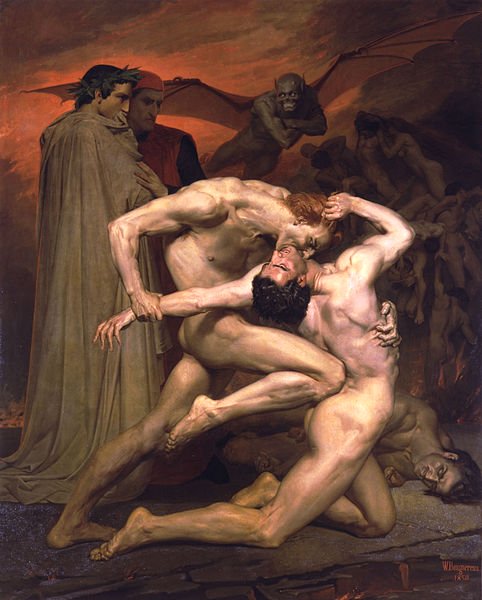


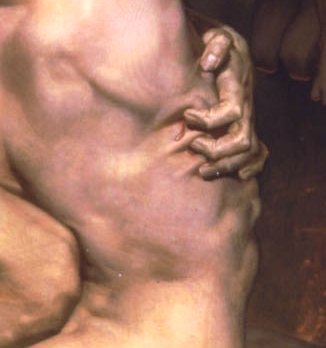
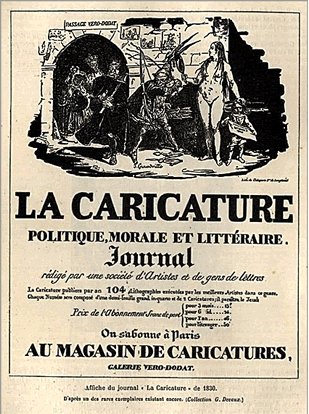


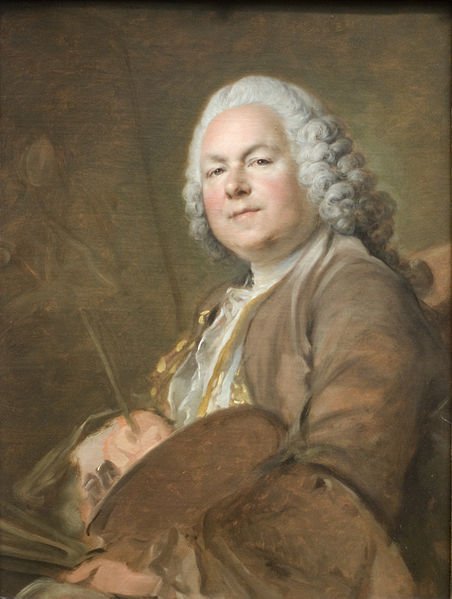
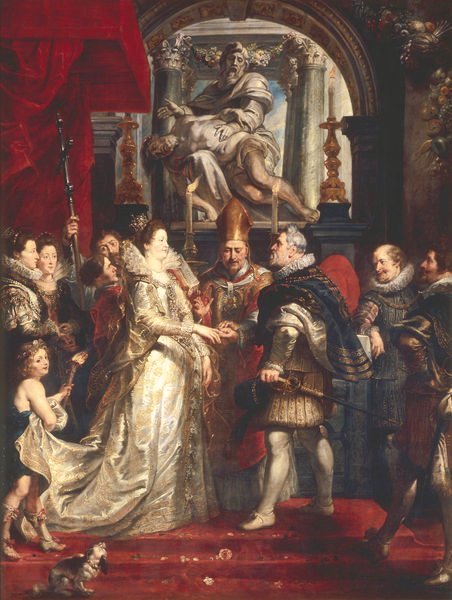

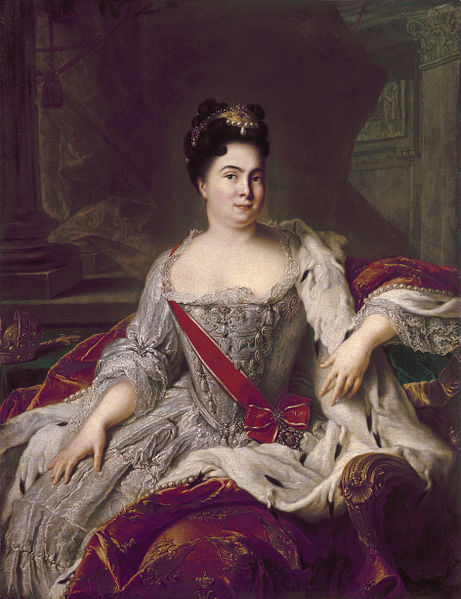


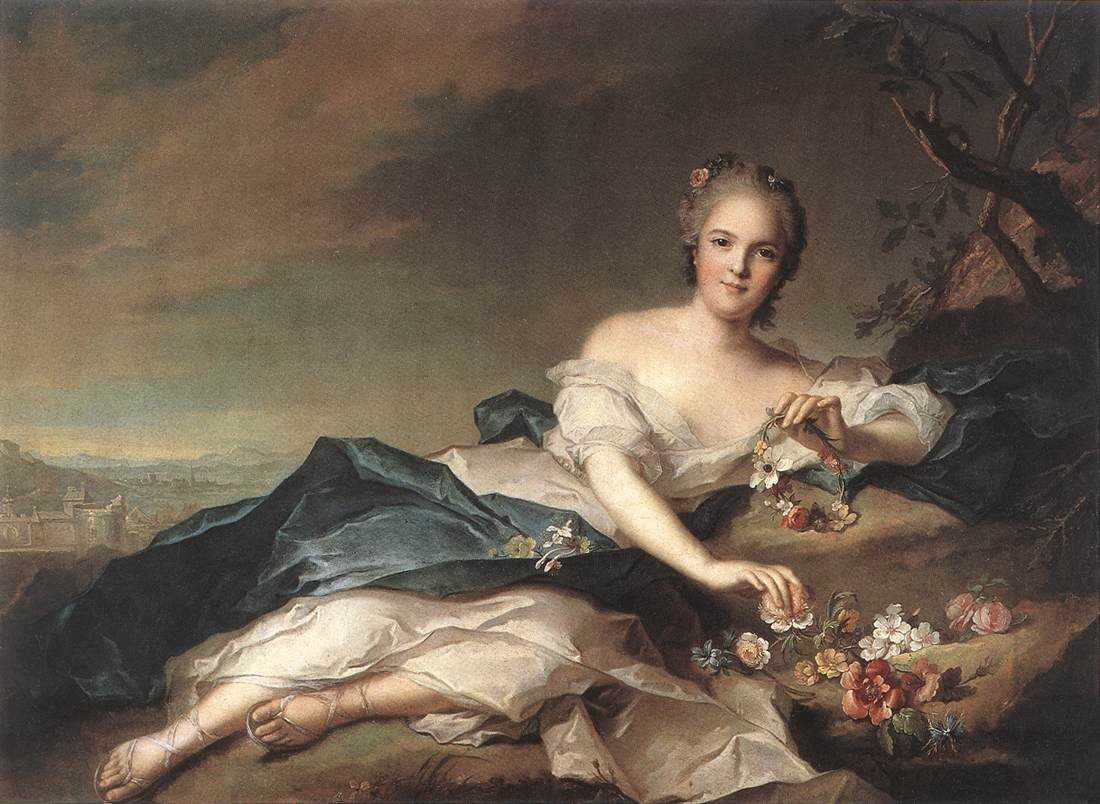


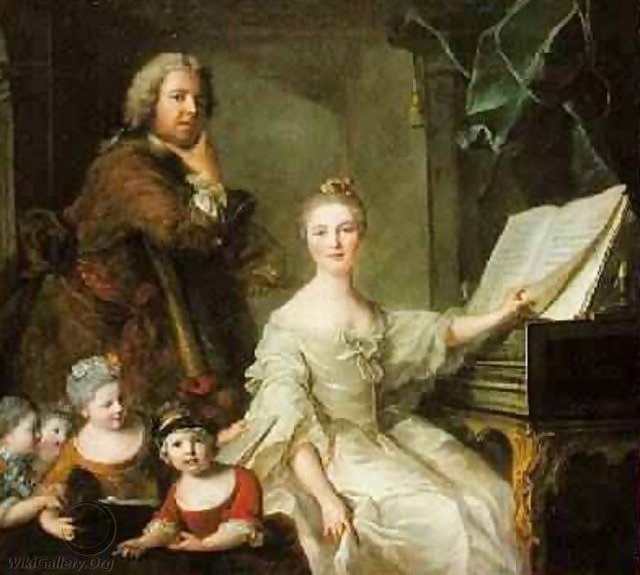


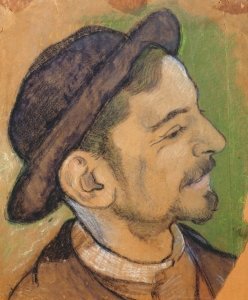


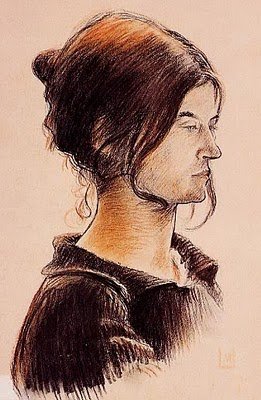
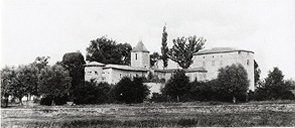

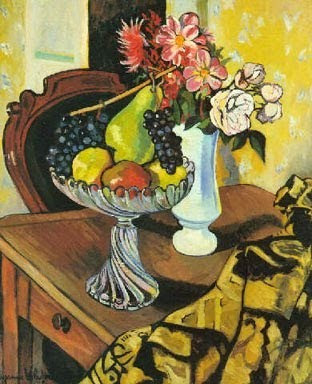
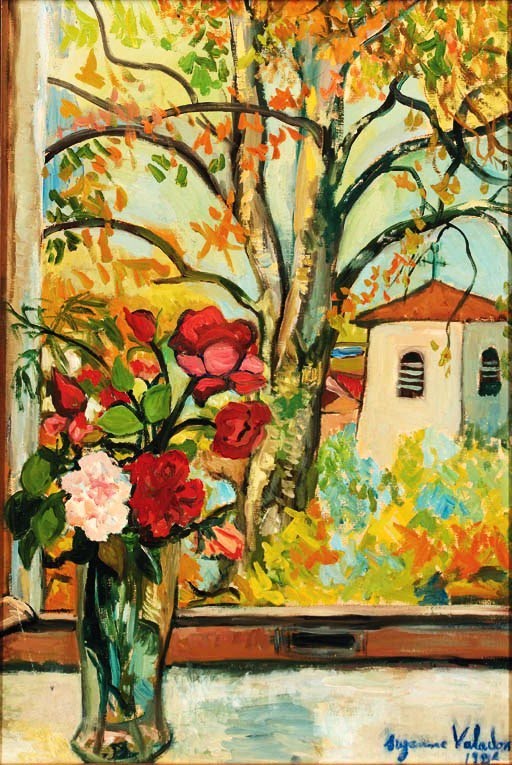

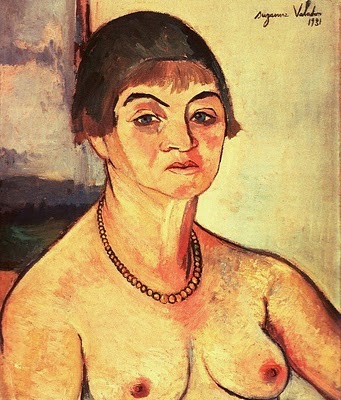
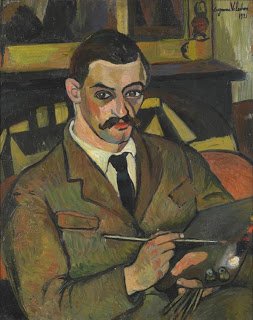
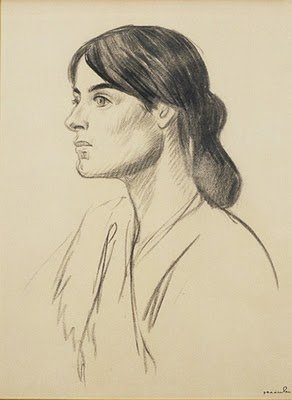
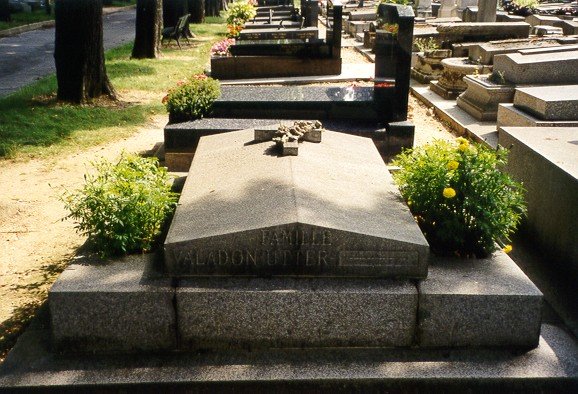
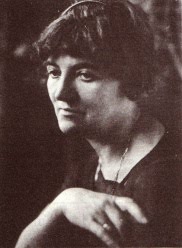
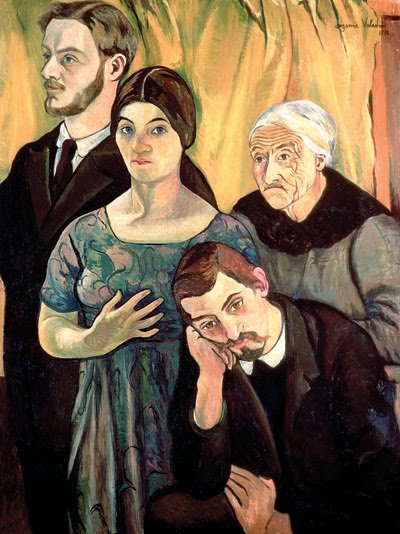
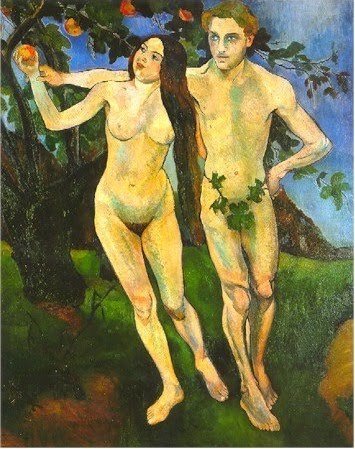


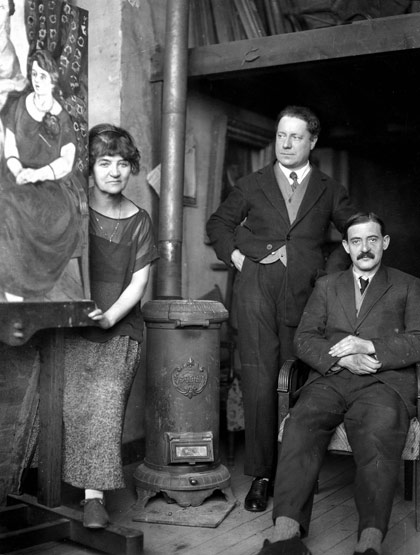

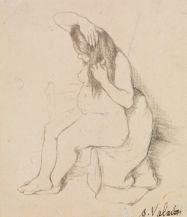
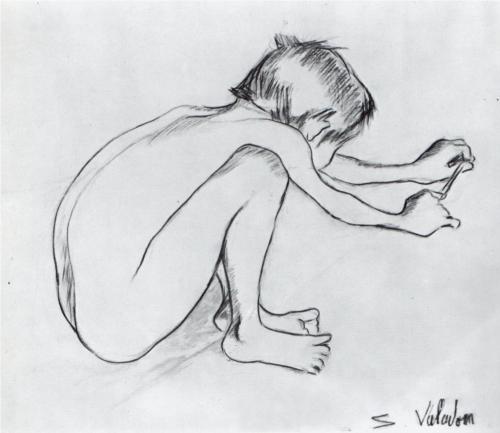


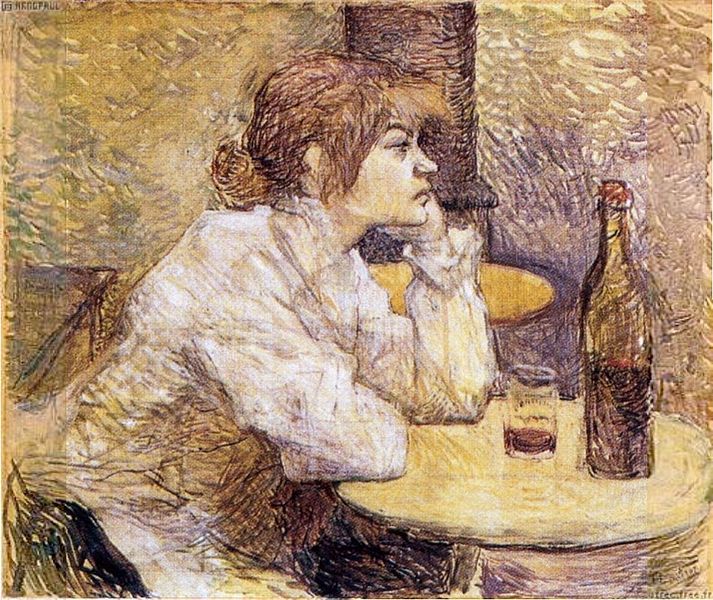





 my daily art display