
Amélie Beaury-Saurel and Rodolphe Julian.

Amélie Beaury-Saurel

Amélie Beaury a French painter, was actually born in Barcelona on December 17th 1848.  Her family had previously lived in Spain and Corsica before moving to the Catalan city in 1845.  Her parents, Camille Georges Beaury and Irma Catalina Saurel owned a large carpet and tapestry factory with more than twenty looms, which they called Saurell, Beaury y Compañía. Amélie was their middle child.  She had an elder sister, Irmeta, also an artist, and a younger sibling, Dolores. Amélie later added “Saurel” to her name in recognition of her mother’s family who could trace their lineage to the Byzantine emperors of the 11th century.
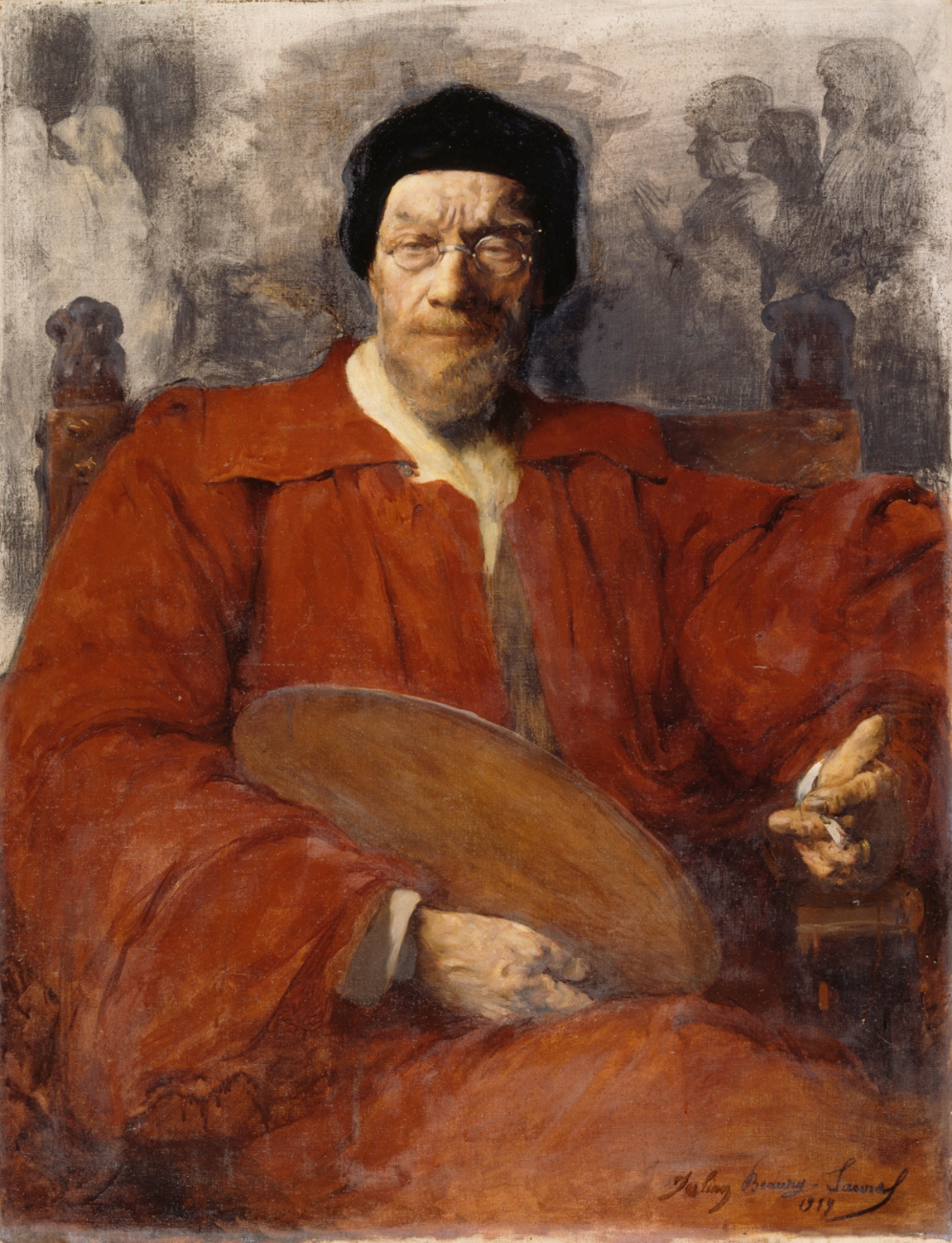
Portrait of the artist Jean-Paul Laurens by Amélie Beaury-Saurel (1919)

The happy family life was shattered in the late 1850s when Amélie’s father died and her mother decided to relocate with her three daughters to Paris.  Amélie recalled in an interview that she and her family lived in the French capital when she was ten years old and that her widowed mother, with little money, had to endure financial hardships.   Her mother instilled a love of art in her children and she would take them to the Louvre Museum to see the works of the Masters and encourage them to copy the works of the these great artists.

Portrait of Léonce Bénédite, curator of the Musée du Luxembourg,  by Amélie Beaury Saurel (1923)

Due to this family impoverishment, Amélie’s mother decided that her daughters should help with the financial burden and set about having them train as porcelain painting, a socially acceptable way of earning a living and eventually becoming financially independent. Amélie set to work as a painter of porcelainware but later said she considered what she was doing as commercial painting which in many ways damped down her creativity.  Her mother was very supportive of Amélie’s love of painting and, in 1874, initially paid for her nineteen-year-old daughter to study at the prestigious Académie Julian.  One of her first tutors was Pauline Coeffier, a French oil painter and pastelist, who specialized in the art of portraiture. Later many of the leading artists of the day would advise and tutor her, such as Tony Robert-Fleury, William Bouguereau, Jules Lefebvre, Benjamin-Constant, Jean-Paul Laurens and Pierre Auguste Cot.

Rodolphe Julian

The Académie Julian was founded in 1868 by Rodolphe Julian. It was a private art school for painting and sculpture.  Paris was looked upon as the capital of the art world, and the centre of modern art.  This was one reason many young aspiring painters came to the French capital to discover all the latest trends in painting, like Impressionism and Post Impressionism, decorative art of various types, new forms of representational art such as expressionism, lithography and much more. Also with having a reputation as a forward-thinking art college the Académie Julian profited from the reputation of Paris.
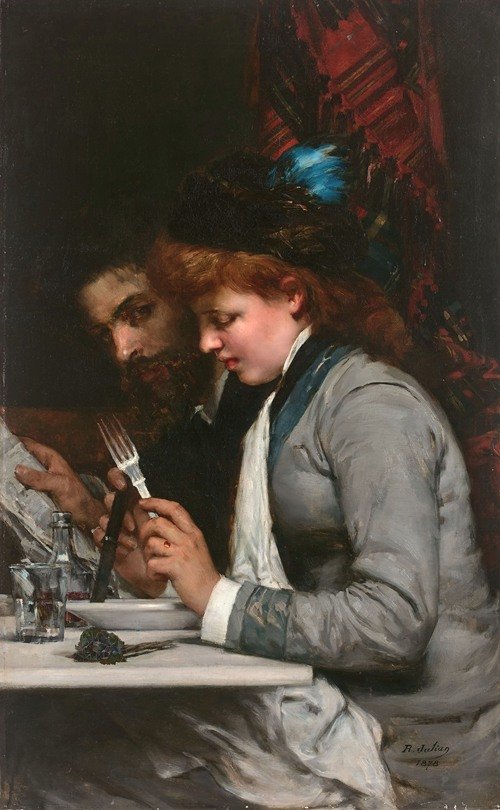
Chez Duval by Rodolphe Julian

Another reason for the popularity of Académie Julian was that it was the only art school in Paris to accept foreign students, many of whom struggled to pass the difficult French language exam, which was conditional on their acceptance into the Ecole des Beaux-Arts. Ambitious female painters were also barred from attending the official Ecole des Beaux-Arts until 1897 and even then, it was not considered suitable for women to study life drawing.  In contrast, Académie Julian was happy to offer them a full programme of education and training to women in fine art. They were offered the same classes as men, including the drawing of nude models. In fact, the Académie was one of the few schools to admit women to life-drawing classes. In fact, one of its four new branches was actually exclusively designed for female art students.
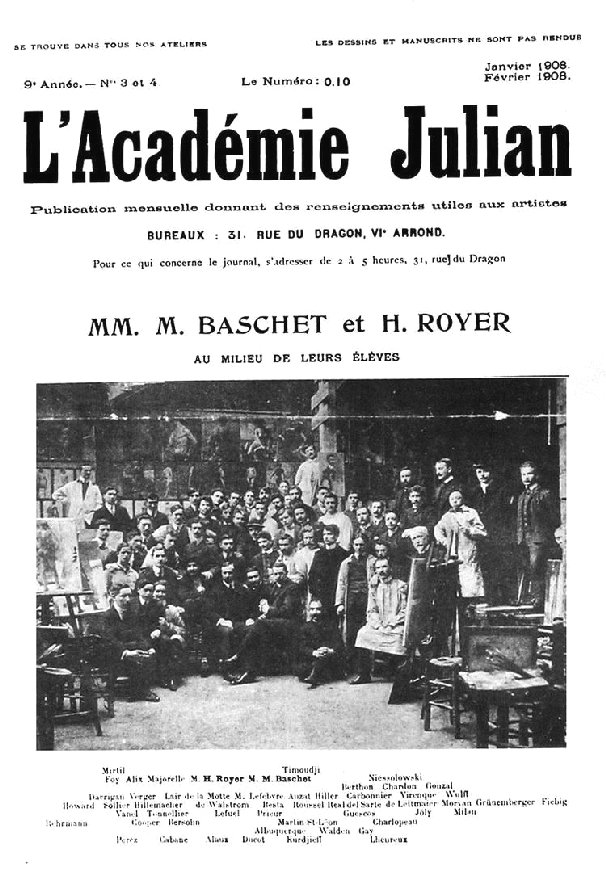
The Académie Julian was also regarded as a stepping stone to the prestigious École des Beaux-Arts by getting them prepared for the entrance exams and at the same time offered independent alternative education and training in arts.  Aspiring artists, both men and women, were welcome at the Académie Julian.   Men and women were trained separately, and women participated in the same studies as men, including drawing and painting of nude models.  The Académie Julian had no entrance requirements, was open from 8 a.m. until nightfall, and very soon became the most popular establishment of its type. Rodolphe Julian opened several branches throughout Paris, one of them especially for female artists, and by the 1880s the student population at these establishments reached six hundred.

Female Students at the Académie Julian in Paris, c. 1885

To ensure the success of the Académie, Rodolphe gathered together well-known and esteemed artists, such as Adolphe William Bouguereau, Jean-Paul Laurens, Tony Robert-Fleury, Jules Lefebvre and other foremost painters of that time trained in Academic art, to become tutors or visiting professors.  Académie Julian became recognised as a leading art establishment and its students were allowed to compete for the Prix de Rome, a prize awarded to promising young artists, and also show their work in the major Salons or art exhibitions.

So, who was Rudolphe Julian?

Rodolphe Julian was born in Lapalud, a commune in the Vaucluse department in the Provence-Alpes-Côte d’Azur region in southeastern France on June 13th 1839. He worked as an employee in a bookstore in Marseille but later moved to Paris, where he became a student of Léon Cogniet and Alexandre Cabanel, professor at the École des Beaux-Arts, albeit he never officially enrolled there.  Rodolphe was well aware of the struggles of artists who looked for artistic training once they had arrived in Paris and so, in 1863 he opened his own art school, Académie Julian.

Portrait of a Woman by Amélie Beaury-Saurel

Living in Paris, Amélie was determined to increase her knowledge of art and the Académie Julian offered her the best way of achieving that goal and eventually becoming a professional portrait artist.  However this course of action had to be funded so she approached Rodolphe Julian and proposed that in return to her helping out with the administrative and financial duties of the Académie, he would allow her to attend his classes free of charge.  He agreed. Rodolphe Julian had opened a women’s workshop in 1873 and in 1895 he put Amélie in charge of it.  As well as organising the workshop she had begun a very lucrative career as a portrait artist and received many commissions.

Académie by Amélie Beaury-Saurel (1890)

In 1890, Amelie completed one of her greatest paintings entitled Académie.  The title for the work refers to the art academy which at the time prohibited female painters from joining its ranks.  Her depiction conveys the compelling message to the viewer that she was not going to allow herself to be browbeaten by the male-dominated artistic establishment and she would not conform to their dictates.  The model in the painting exudes strength and determination as she stands grasping stalks of bamboo and stares out at us, challenging us.  It can be no coincidence that Amélie has depicted her model naked and this nude pose empathises the strong and defiant attitude women embraced as artists.
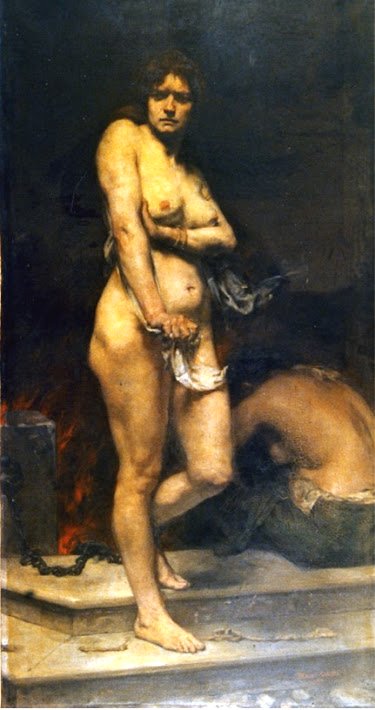
Deux vaincues (Two Defeated Women) by Amélie Beaury-Saurel (1892)

Two years later in 1892 Amelie produced another defiant depiction entitled Deux vaincues (Two Defeated Women).  It is looked upon as a rallying call to all female painters to be fearless as they travel through the unwelcoming and unforgiving world of art education and artistic professionalism and the many obstacles they had to overcome.  It was a plea to female artists to not allow themselves to be defeated in the face of the obstacles they would encounter.  The sketch depicts two women, both naked, chained to a wall.  Both face similar hardships but they have fared differently.  The one with her back to us is slumped forward in a defeated pose, while the other, in contrast, stands boldly upright, unrepentant and stares out defiantly.  The painting is a challenge to all women as to whether they give in or fight on. The work was exhibited at that year’s Salon.

 Portrait de Séverine by Amélie Beaury-Saurel (1893)

In 1893 Amelie completed a portrait of Caroline Rémy de Guebhard. She was a French journalist who held strong non-conformist views which labelled her as an anarchist, socialist, and communist.   She also was a great believer in feminist’s rights and opinions and this no doubt drew Amelie to paint the portrait.   Caroline Rémy de Guebhard would use the pen name Séverine, derived from the Latin severus which means “rigorous” or “brave”, for many of her newspaper articles.  When we look at the portrait, our eyes are immediately drawn to the vivid red flower on the sash of her dress.  The flower symbolizes Séverine’s leftist political views.  Look at her facial expression.  It is one that exudes strength, determination and tells you that this lady will not be moved.  Amelie’s ability as a great portraitist is borne out in this beautiful work.
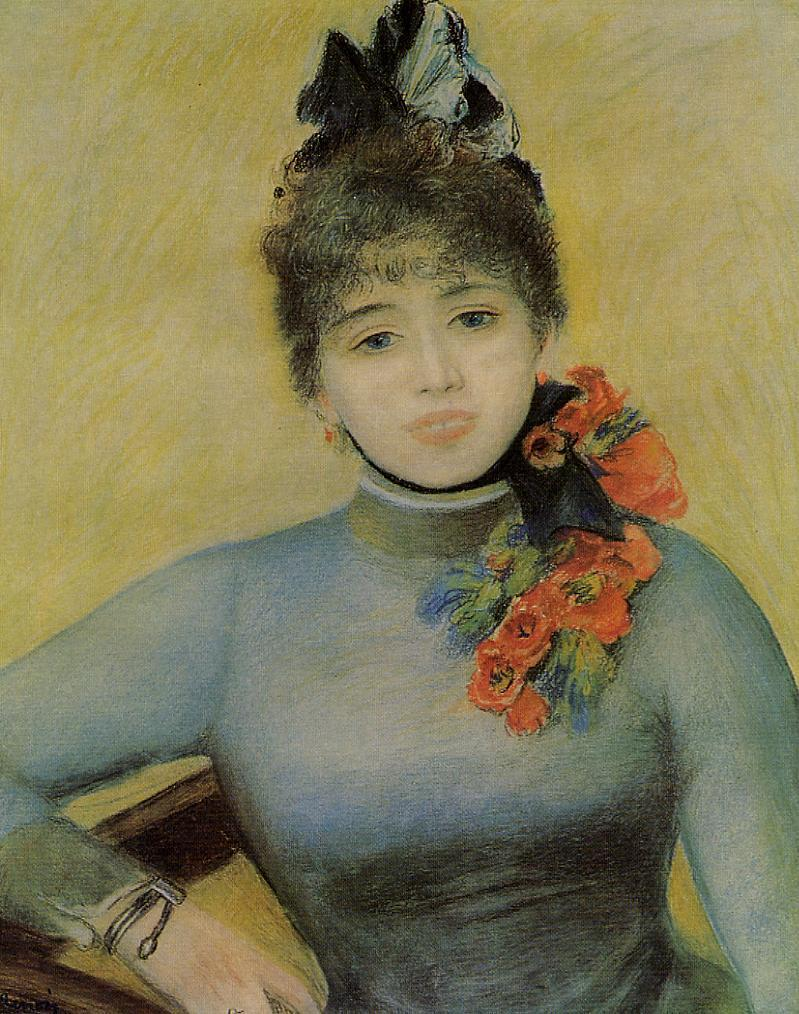
Séverine by Renoir (c.1885)

A portrait of Caroline Rémy de Guebhard was also complted around 1885 by Renoir. It is in the permanent collection of the National Gallery of Washington.

Dans le bleu by Amélie Beaury-Saurel (1894)

One of my favourite works by Amelie is her 1894 painting entitled Dans le bleu.  It is a pastel on canvas which depicts a young woman waking up in the morning and indulging in the gratification of smoking that first cigarette.  However that is not the point of the depiction.  It is all about feminist assertions. In this painting, we see a woman depicted in profile, boldly treating herself to the pleasures of escapism. It is a depiction of defiance as women at this time were not seen smoking, especially not in public.  It was a habit that was counter to the feminine conceptions of the time.  We should remember that Amélie Beaury-Saurel had dedicated a large part of her work to the female model and had always maintained the feminist cause.  She supported the right to arts education and artist status for women.  In 1894 when she was working on this painting her reputation in Paris as an artist was at its highest point and her paintings were exhibited all over the French capital.

The background of the work is very dark, predominantly blue and this allows the figure stand out in the work.   It is hard to know whether the scene takes place in a private dwelling such as a kitchen or a living room or whether the setting was in a public place, such as a café.  The woman in the depiction sits smoking a cigarette, chin in hand.  She appears to be daydreaming. She seems preoccupied as she watches the blue smoke unfurl from her lips, drifting upward. What is she thinking about?  Would she, like the smoke, like to drift away?  Some have suggested this might be a Beaury-Saurel self-portrait, as the model resembles the artist.  The depiction is simple and realistic and in no way staged.  Amelie’s depiction is all about everyday reality and is without any hint of idealization which would have weakened the work and it is this simplicity that has added to the beauty of the depiction and has expressed the woman’s femininity.

Our Girl Scouts by Amelie Beaury-Saurel

In this painting by Amelie, the seven women are represented in a compact group, around a table with a pile of books. On the left, holding his handlebars in his hand gloved, the Belgian cycling champion, Hélène Dutrieu; next to her, holding a paintbrush, the publisher Anna-Catherine Strebinger (Madame Henri Rochefort) who was also a student at the Académie Julian; then the collector Marguerite Roussel looks at the viewer; in the center, in professional attire and pointing to an article in a code, the lawyer Suzanne Grinberg, an eminent member of the French Union for the women’s suffrage, created in 1909; leaning on her, in the outfit that she had adopted to travel safely to the Middle East, archaeologist and explorer Jane Magre-Dieulafoy. Then comes the novelist and journalist Lucie Delarue-Mardrus and aviator Elise Deroche, First woman to obtain a pilot’s license.
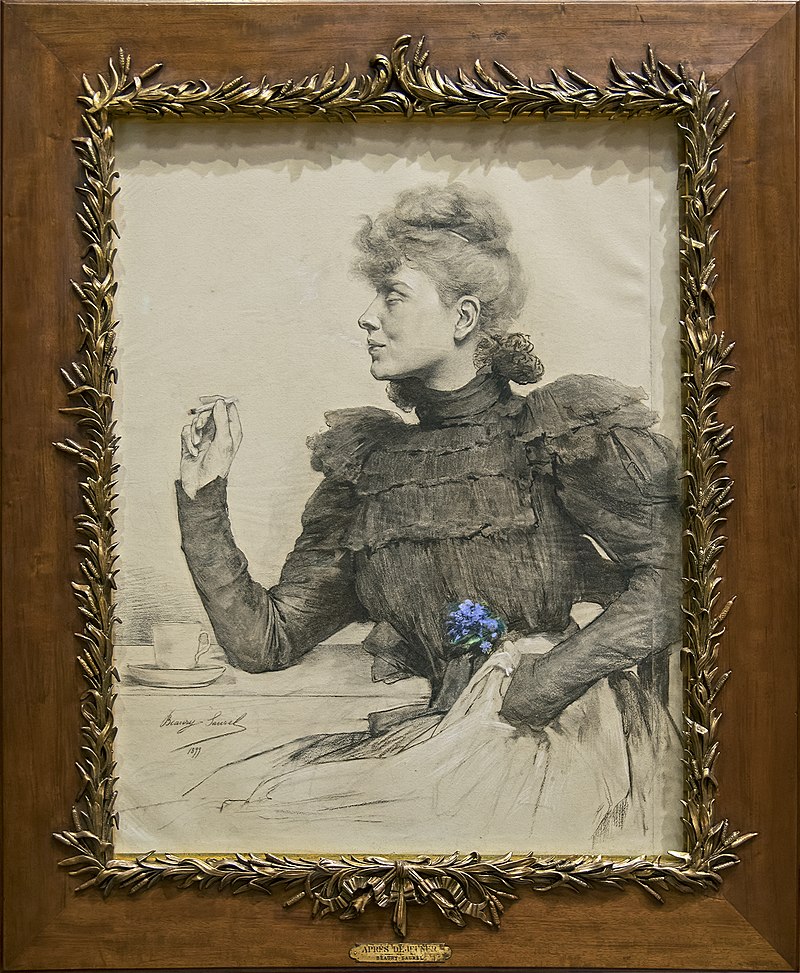
After Lunch by Amelie Beaury-Saurel (1899)

In 1895, Amélie Beaury-Saurel, married Rodolphe Julian and he put her in charge of the women’s workshops which he had started in 1873.  Amélie managed the expenses for the women’s studio, served as an intermediary between instructors and students, and ran the women’s group but also continued her career as a portraitist. She earned a medal for her submissions to the 1885 Paris Salon and the bronze medal at the 1889 Exposition Universelle. 

Chateau Julian, Lapalud

Rodolphe Julian died on February 2nd 1907, aged 67, and two months later on April 10th, Amelie’s mother died.  Following the death of Julian, Amelie took on the role of director of the Académie Julian.  This was a mammoth task and so she received help from her nephews Gibert and Jacques Dupuis, the children of her sister Dolores.  Rodolphe Julian had bought a large house in the village of Lapalud, where he was born and on his death they were bequeathed to his nephews.  Amelie bought this large property from her nephews and transformed it to accommodate her family. It was called the “Mas” Julian.
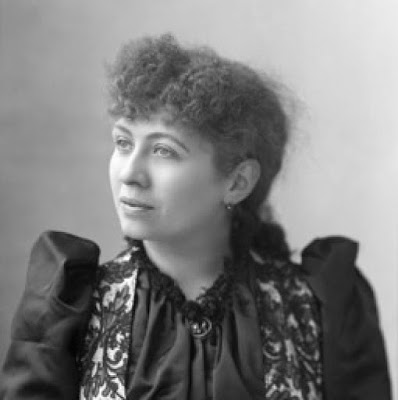
Amélie Beaury-Saurel

During her last years, Amélie continued to paint but also fought for women’s rights and supported women artists and their fight against male-dominated art circles.  She participated in solidarity exhibitions for the benefit of institutions such as the Société des Artistes Français, the Société Nationale des Beaux- Arts or the Fraternité des Artistes.  Such commitment to the promotion of art and her endless creative activity were recognized in 1923, a year before her death, through her appointment as Chevalier de la Légiond’honneur.   

Amélie Beaury Saurel died on May 30th 1924 aged 75 at he Paris home which she had once shared with her late mother and sisters.


Information for this blog came from the ususal search engines plus:

Aware Women Artists

Elles-d-artistes blogspot

Musings on Art

Ville de Lapalud

Jean-Baptiste-Siméon Chardin. Part 2 – Marriage and early still-life paintings.

Portrait of Marguerite Saintard by Chardin

Chardin’s road towards married life was a protracted one. The love of his life was Marguerite Saintard, the daughter of Simon-Louis Saintard, a Parisian tradesman and his wife Françoise Pantouflet and in 1723 a contract of marriage was agreed with financial details and dowries having been accepted by both parties and the future in-laws. However, Marguerite’s parents were wary with regards how Chardin would support their daughter and needed Chardin’s position to be “consolidated” before any marriage could take place. One has to remember that it was not until 1728 that Chardin was accepted into the Académie Royale de Peinture et de Sculpture which meant he had a greater chance of selling his work. However, in 1730 he had acquired his first patron, Comte Conrad-Alexandre de Rothenbourg, Louis XV’s ambassador to Madrid, who was buying up many of his paintings.

Still life with Attributes of the Arts by Chardin (c.1731)

In 1731 Chardin was commissioned by Rothenbourg to paint two still-life canvases for his library on Rue du Regard, in Paris. It was decided that they should be painted and then hung high up on either side of the door to the room, as they were initially designed to be viewed from below. One was entitled Attributes of the Arts which is housed in St Petersberg’s Institute of Russian Literature

The Attributes of the Sciences by Chardin (1731)

The other was Attributes of the Sciences.  It is interesting to note that two of the items depicted in this latter work belonged to Chardin. They were two large Turkish carpets which normally covered the oak tables in Chardin’s study. In the painting we can see a graphic characterisation of the Scientific Revolution and the discoveries and inventions from that time. We see instruments that were connected with observation such as a telescope, and a microscope. There were objects which harked back to times of discovery and knowledge such as the globe, as well as books and maps. These items also symbolise the documentation and spreading of knowledge in science. This still-life work focuses on inanimate objects that represent the theme and motif of the image. The depiction is without people and the scientific instruments are placed in the centre of the painting and reflect the scientific revolution and the new world view and perspective that was gradually accepted during the artist’s time.

Chardin and Marguerite, signed a second marriage contract in January 1731. It is ironic that the delay to the marriage was due to Marguerite’s parents concern about Chardin’s ability to financially provide for their daughter and yet her dowry as stated in the second contract (1000 livres) was less than that stated in the first marriage contract (3000 livres) eight years earlier. The probable reason for this reduction was that since the signing of the first contract both of Marguerite’s parents had died. Chardin and Marguerite married on February 1st 1731 at the nearby church of Saint-Sulpice.

A Lady Taking Tea by Chardin (1735)

In Chardin’s 1735 painting A Lady Taking Tea, it is believed that his wife, Marguerite Saintard, was the model for the depiction. It is a beautiful and, in some way, a haunting image of a lady drinking tea, because the work was completed just two months before she died.

Cat with Salmon, Two Mackerel, Pestle and Mortar by Chardin (1728)

In 1728 Chardin produced two more still-life works featuring cats. One was entitled Cat with Salmon, Two Mackerel, Pestle and Mortar which is now housed in the Thyssen-Bornemisza Museum in Madrid. In this work we see the cat with its tail erect placing its paw tentatively on a piece of salmon. Under the salmon fillet we can just make out a dark green pottery lid, next to which is a leek and an onion and on the far right there is a pestle and mortar.

Cat with Ray, Oysters, Pitcher and Loaf of Bread by Chardin (1728)

The other work, entitled Cat with Ray, Oysters, Pitcher and Loaf of Bread is also housed in the Madrid museum and features Chardin’s well-known ray. Like the previous painting this work depicts a nervous tortoiseshell cat as it hesitantly places its paws on the oysters. The depiction is completed by the ray. This is complimented by the inanimate objects – the green glazed earthenware dish, a small jug and part of a loaf of bread. Chardin’s still life works are arranged with objects that belonged to him and which he repeatedly used in his compositions.  These two paintings were in the collection of Baron Edmond de Rothschild and were acquired for the Thyssen-Bornemisza collection in 1986.  Both reflect the influence of Dutch painting that is evident in the artist’s early work, in which he adapted northern subjects and formats to his own manner. Chardin had now begun to supplement his inanimate objects with living animals that in some way interpose the calmness of the depiction. The composition of these two paintings is pure simplicity with the arrangement of the cats and the inanimate kitchen items on a stone ledge. Chardin’s rich colouring creates a visually believable image.

Still Life with Pestle and Mortar, Pitcher and Copper Cauldron by Chardin (c.1732)

Another of Chardin’s early still-life paintings housed in the Thyssen-Bornemisza collection in Madrid is Still Life with Pestle and Mortar, Pitcher and Copper Cauldron, which he completed around 1732. In this work, Chardin depicts a wooden pestle and mortar, a pottery pitcher, a small copper cauldron or cooking pot and a fired terracotta dish of a type used for cooking. The foreground is dominated by a white cloth of a thick weave, atop of which we see an arrangement made up of onions, potatoes, two eggs and some thin leeks. Colour played a big part in the success of Chardin’s works and this painting is a fine example of Chardin’s use of colour and tones. Look, for example, at the whites in the foreground. Chardin has used various shades of white to depict the skin of the onions, the eggs and the coarse tablecloth to give a feel for the texture of the objects. The wooden pestle and mortar on the left can be seen in other paintings by Chardin, as would the pitcher and the copper cooking pot.

Still life by Jan Davidsz. de Heem (1642)

Chardin uses ploys which can also be seen in Flemish and Dutch still-life paintings to create a sense of depth by depicting the white cloth fallings over the front of the table top. The end of the leek also appears to overshoot the table top to give a 3-D impression and this reminds one of the similar trompe l’oeil technique when objects overlap tables in many Netherlandish paintings, such as in the Still Life painting by the Flemish painter Jan Davidsz. de Heem in which we see the claws of a lobster and the curled peel of a lemon overhang the green velvet table covering.

Bowl of Plums, a Peach and Water Pitcher by Chardin (1730)

In 1930 Chardin completed his painting, Bowl of Plums, a Peach and Water Pitcher, which is now housed at The Phillips Collection in Washington DC.  The bowl of plums we see in this work was a favourite of Chardin’s and appeared in some of his other works.  What is unique about this painting is his inclusion of the white water pitcher with its exquisite butterfly pattern and delicate silver mount.  It puzzled art historians as to whether this item was a figment of the artist’s imagination but it is known that Chardin needed to have the objects in front of him when copying them and so it is thought that he had acquired this Chinese vessel at some time. Chardin has gone for a scumbled (the application of a very thin coat of opaque paint to give a softer or duller effect) background, so not to detract from the pitcher and fruit.

The next six years were a rollercoaster of personal events for Chardin. His father, Jean-Pierre died at the beginning of April 1731 but Chardin received very little from his father’s estate due to the fact he was the product of his father’s second marriage and there were many “calls” on the estate from his father’s ex-wife and their children of his first marriage. In the end Chardin inherited 1,711 livres. On November 15th 1731, Chardin’s son, Jean-Pierre was born and two years later, in 1733, his daughter, Marguerite-Agnès, was born. A period of sadness was to soon follow with Chardin’s wife Marguerite dying on April 13th 1735 at the young age of 22 and his daughter dying in 1737, aged just four. These deaths probably took their toll on Chardin as in 1742 he became very ill and takes no part in that year’s Salon.

..……to be continued


One of the many blogs I follow is one entitled Victorian Paris Blog and the author is Iva Polansky.  I was pleased to read that she has turned the various blogs into an e-book.  Take a look at it:

https://victorianparis.wordpress.com/2019/04/10/victorian-paris-blog-is-a-book/


Madame de Ventadour with Portraits of Louis XIV and his Heirs by The French School

Madame de Ventadour with Portraits of Louis XIV and his Heirs by The French School (c. 1715-1720)

For My Daily Art Display today I am returning to French art and a painting which is attributed to the French School around 1720.  The title of the work is Madame de Ventadour with Portraits of Louis XIV and his Heirs. It has all the grandeur and splendour one would expect in the pre-Revolution days when French life was controlled by the Monarchy.

I suppose the first thing I should talk about is who are all these people standing before us with their dignified regal poses?  In the painting we see four adults and a child in what is meant to look like an elegantly decorated room in the Palace of Versailles.  In the right background we can see the lavish gardens of the palace.  The people in the painting pose like actors playing to an audience and maybe we are that audience who marvels open-mouthed at such opulence.  Seated centre stage, as befits the most important person of the group, is King Louis XIV, the King of France.   Leaning on the back of his chair is his son, Louis, the Grand Dauphin and heir to the French throne.  On the right dressed sumptuously in a red velvet coat with gold brocade is the Dauphin’s eldest son and Louis XIV’s grandson, Louis, Duc de Bourgone who is second in line to the French throne.  The lady on the left is the lady of the title of the painting, Madame de Ventadour, who was the governess to the royal children and finally, the child in front of her, who is actually a boy despite the dress, and he is the great grandson of Louis XIV, Louis, the Duc d’Anjou, who would later become King Louis XV.  Two other personalities are present in the painting but only in the form of busts.  On the plinth in the left background we have the bust of King Henri IV, the deceased head of the Bourbon dynasty and on the plinth to the right we have the bust of King Louis XIII the deceased King of France and Louis XIV’s father.  Madame de Ventadour can be seen to the left of the painting but more about her later.

Louis XIV’s father Louis XIII had an arranged marriage with Anne of Austria when he was only fourteen years of age.  Anne suffered four miscarriages and the Royal couple waited twenty-eight years for their first child, Louis, to be born in 1638.  Five years after the birth of his son, Louis XIII died.  An amusing anecdote is related regarding the deathbed scene of the forty-one year old Louis XIII and his five year old son.  The dying man asked his son did he know who he was, the little boy replied:

“….Louis the Fourteenth, Father….”

To which his father quickly retorted:

“…You are not Louis the Fourteenth, yet….”

Louis came to the throne as Louis XIV on the death of his father at the age of four and ruled France for just over seventy-two years from 1643 to 1715 and as such, it is one of the longest recorded reigns of any European monarch.  He was known as the Sun King as he identified himself with the Sun God Apollo and it was probably in his honour that the picture of Apollo riding his chariot, which we see on the rear wall, was incorporated into the painting.

As the title of the painting states, this is a painting depicting Louis XIV’s heirs.  Actually we are looking at members from four generations.  We have the king seated, his son with the white wig, his grandson with the red coat and his great grandson the small child.   So why did this little boy, the king’s great grandson, become the next king on the death of his great grandfather?    The reason is simple but in some ways tragic.   Louis XIV lived a very long life, dying just four days before his seventy-seventh birthday in 1715.  His eldest son, the man standing behind his chair in the painting died of smallpox in 1711, aged 49.  The next in line for the throne would have been Louis XIV’s grandson, the Duc de Bourgogne, the man in the painting wearing the red coat, but he, his wife and one of their sons died of a measles epidemic in 1712.  This meant the little five year old boy, Louis duc d’Anjou, who we see in the painting with his governess Madame de Ventadour became Louis XV.

But why is this lady included in this royal portrait?  Like many of her family, Madame de Ventadour was the Gouvernante des enfants royaux, (Governess of the Children of France).  She became the royal governess in 1704.  It was amusing to read about her husband, Louis, Duke of Ventadour for though through marriage she became a duchess, she had a lot to put up with.  In L C Syms’ book of 1898 entitled Selected Letters of Madame de Sévigné  (Madame de Ventadour’s daughter) one letter described the Duke de Ventadour  as being

“horrific — very ugly, physically deformed, and sexually debauched”

However, she was credited as having saved the life of the soon to be Louis XV at a time when his elder brother, father and mother all succumbed to the deadly disease. The family was treated by the royal doctors, who bled them in the belief that it would help them to recover; instead, it merely weakened them and reduced their chances of survival.  She decided that she would not allow the same treatment to be applied to the two year old Duke of Anjou so Madame de Ventadour locked herself up with three nursery maids, and refused to allow the doctors near the boy.

The painting was commissioned to celebrate the role of the lady in ensuring the continuation of the Bourbon dynasty.  It is interesting to see how the seated king and the young child point to each other.  Maybe that symbolises the connection between great grandfather and his great grandson in as much as the crown passed between these two and circumvented the other two men in the painting.   If we want to look at symbolic connections in this painting, look how the bust of Louis XIII on the right hand pedestal, the seated Louis XIV and the little boy, Louis XV, the three consecutive French monarchs,  are connected by an imaginary diagonal line – just a coincidence ?

The painting can be seen by visiting the Wallace Collection in London.