William Sidney Mount. Part 3, More of his genre paintings

Caught Napping- (Boys Caught Napping in a Field) by William S Mount (1848)

This is Part 3 of my blog featuring the nineteenth century American genre painter and portraitist, William Sidney Mount.  In my first blog about this great painter I looked at his genre works which featured his great love of music and musicians.  My second blog featured some of his early biblical works and his portraiture and in this last offering I am reverting to his love of genre painting and some of his best known works of art.  In the first part of this trilogy I talked about the “heyday” of genre style paintings from the Low Countries in the seventeenth and eighteenth century.  They often featured taverns and interiors of homes and were often dark and looked at the life of the peasant classes with a degree of sombreness.  Mount’s genre paintings on the other hand, were more light and joyful.

 William Mount had entered the National Academy of Design in New York in 1829 and during his time there his studies incorporated the study of European paintings and engravings as well as the study of classical statuary.  Whilst he was studying at the Academy he was living with his uncle, Micah Hawkins, who was an amateur poet, and owned a tavern and grocery shop in New York.  Micah’s greatest love was the theatre and he would produce plays in which he would combine music and storytelling and the finished opus would have political and national connotations.  His nephew William was influenced by this and the American life theme and social comment  featured in many of his works of art.

 William Mount completed his studies in 1829 and returned home to Long Island where he set about building up a portfolio of paintings which included portraits of relatives and some of the workers on the family farmstead.  In 1832 he was elected to the Academy and for the next thirty-three years exhibited there regularly.   William Mount was very aware of the class structure in his country.  He could see the social gap between the urban citizens and those who worked the land.  Towns expanded and became cities and those who worked and lived in these cities became wealthier than their poor relations that remained in the countryside to work the land.  With financial wealth came cultural wealth and soon the division between the urban dwellers and the country folk became more obvious.

The Sportsman's Last Visit by William S Mount (1835)
The Sportsman’s Last Visit by William S Mount (1835)

The painting by Mount, which best looks at this cultural difference, was one he completed in 1835, entitled The Sportsman’s Last Visit.  In the depiction we see Mount has contrasted the genteel elegance of the city gentleman, dressed immaculately in black, who sits next to the lady and engages her in conversation.  She demurely, but coquettishly, looks away from him supposedly concentrating on a piece of fabric which she has been working on.  There is a slight smile on her lips indicating that she is enjoying the man’s attention. She completely ignores the man whom we see standing on the right hand side. He is scratching his head, perplexed by what he is witnessing.  He is a local country boy.  He has none of the airs and graces of the city gentleman but he cannot understand why the lady should favour the city gentleman over him.  Mount often painted scenes from rural life with loving depictions but in this one he was hinting at things were about to change.  If money was to be made, maybe city life was the way to do it.   On an artistic note I love how Mount has cleverly used the ceiling beams to demonstrate a feeling of depth in the painting.

California News by William S Mount (1850)

Another of Mount’s painting which recorded changing time, was entitled California News which he completed in 1850.,  This was in the middle of the chaotic California Gold Rush In the picture we see a local man, with the New York Daily Tribune newspaper in his hands, reading aloud about the gold rush in California.  Local people stand around agog with excitement but what is more interesting is the picture above the door which depicts a couple of pigs which is probably a reminder that many who raced across country to make their fortune were simple pig farmers who struggled to eke out a living wage for their family.

 In 1834, William Mount met Luman Reed.   Luman Reed, who was born in 1784, was a farmer’s son from upstate New York.  He made a fortune in the wholesale grocery business in New York City and through his love of paintings, built up one of America’s most important collections of paintings, concentrating on American art of his own time.  He became patrons to such American artists as Asher Durand, Thomas Cole and George Flagg, just to name a few.  Luman Reed liked the works of William Mount and bought two of his paintings, Bargaining for a Horse and The Truant Gamblers (Undutiful Boys).
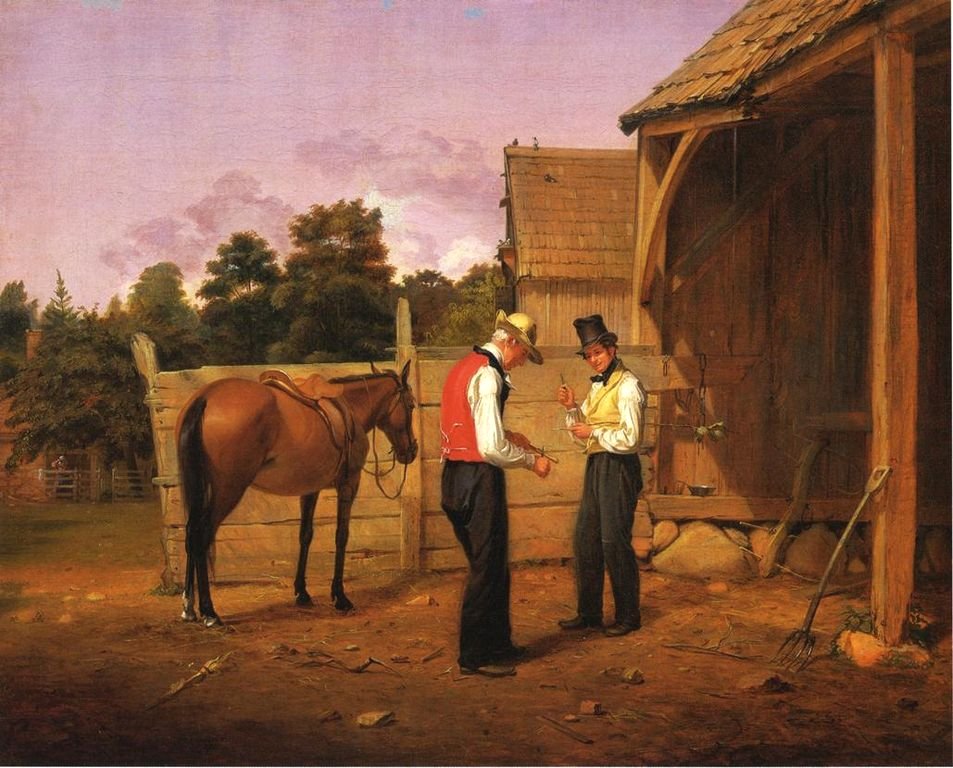
 

Bargaining for a Horse by William Sidney Mount (1835)

The painting, Bargaining for a Horse, which he completed in 1835, is probably one of the best known and best loved of William Mount’s works of Art.  The original title for the painting was Farmers Bargaining but when the painting was published as an engraving five years later the title was changed to Bargaining for a Horse.  When Luman Reed received the completed painting he was delighted and commented that this was “a new era of the fine arts of the country”.  There was a political connotation to this work by Mount as the phrase “horse trading” referred to a promise of material benefit in return for political support.  Mount’s original title for the painting did not so much allude to that colloquialism but the changed title in 1840 made it more apparent to all those who viewed the work.

 Look at the two men.  There is no eye contact between the seller and the buyer.  Both concentrate on the whittling of the wood almost as if the sale is of little importance.  Maybe the concentration they have given to the wood carving gives them time to think about their next step in the bargaining process.  It is a beautifully composed work which has been skilfully painted.   It is a painting which combines humour, warmth, and razor sharp observation.

 Luman Reed was delighted with his painting and wrote to William Mount in November 1835:

 “…This is a new era of fine arts in this Country, we have native talent and it is coming out as rapidly as is necessary.  Your picture of the ‘Bargain’ is the wonder and delight of everyone that sees it…”
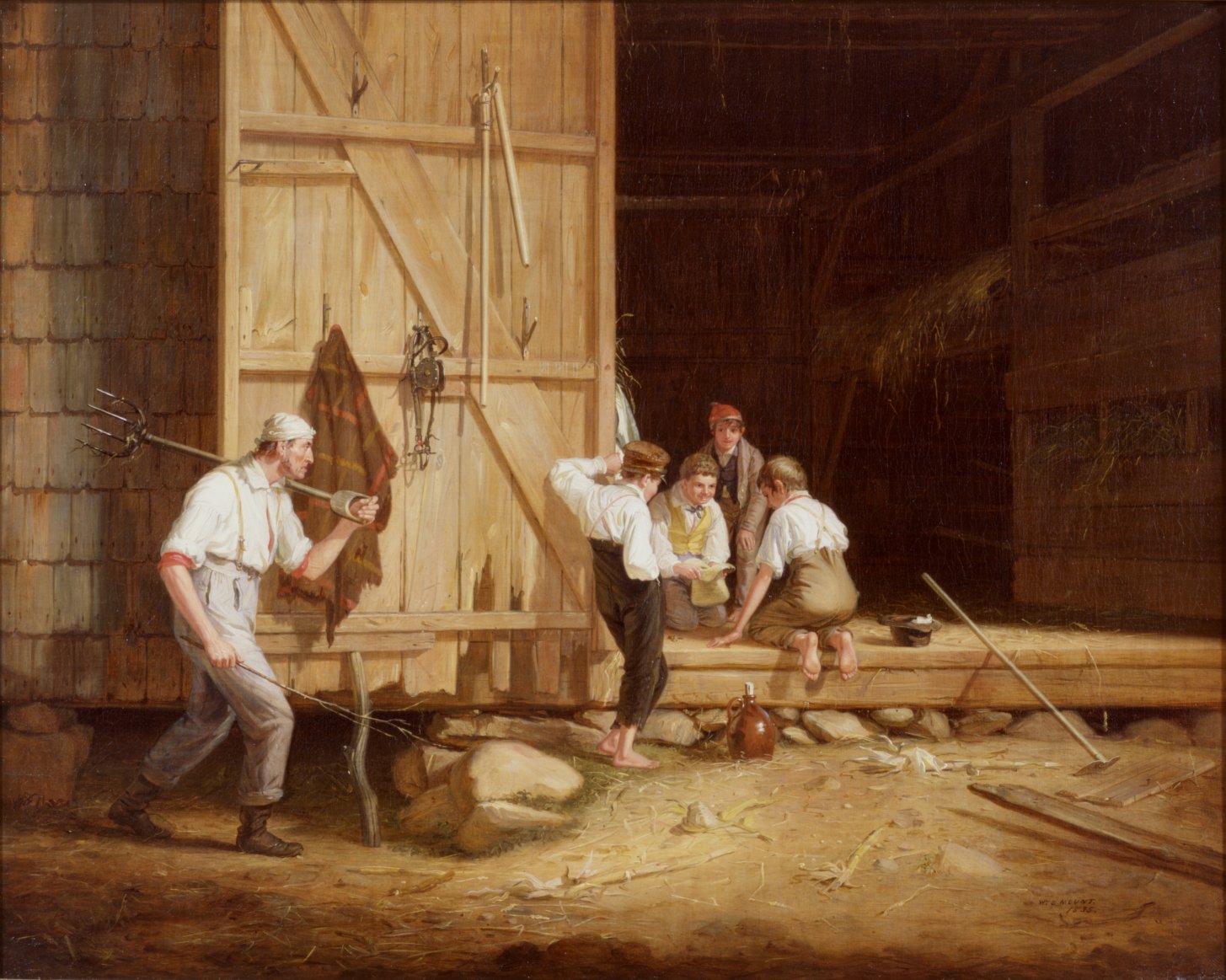
The Truant Gamblers (Undutiful Boys) by William S Mount (1835.)

A month later Mount wrote to Luman Reed telling him of the other painting he had completed for him.  He wrote:

 “…You will receive with this letter a picture: ‘Undutiful Boys’.   Boys hustling coppers on the barn floor……….My price for the picture ‘Undutiful Boys’ two hundred and twenty dollars.  I hope the picture will meet your approbation…”

 A week later Luman Reed wrote back  to Mount:

 “… I yesterday received your much awaited letter of the 4th Instant with your beautiful Picture of the ‘Undutiful Boys’.  To say that this picture is satisfactory is not enough, and the least I can say is that it pleases me exceedingly.  It is a beautiful specimen of art.   The interior is far superior to any thing of the kind I have seen, it is all good and therefore I need not particularize, the price is perfectly satisfactory and the money is ready for you any day you want it.  I pride myself on having now two of your Pictures and what I consider your best productions and hope yet to have more but it is no more than fair that others should be gratified too and I must wait until you execute some other commissions…”

 In the painting we see a group of young boys who have decided to abandon their farming chores and, instead, decided to spend some time gambling for pennies.  Happy with their decision to forego work, what they do not realise is that the farmer is approaching, pitchfork and switch in his hands and punishment is imminent.  This type of genre painting featuring life on the farm was popular in those days as life was changing from an agrarian one to an industrial one and rural life soon became somewhere to relax and enjoy and for people like Luman Reed who was brought up in the Hudson River town of Coxsackie and later moved to the hustle and bustle of New York City, paintings depicting life on the farm may have brought him fond memories of his childhood days.  For him this painting was a nostalgic one

At the Well by William S Mount

In 1837 William Mount left New York City and returned home to Stony Brook and Setauket on Long Island and remained there for the rest of his life with just the odd trips back to New York.  He was content to paint rural scenes and the characters who worked on the farmsteads.   He maintained his portraiture work as this was a good source of income.  Unlike a number of his contemporaries he showed no inclination to travel to Europe to experience artistic life in London, Paris or Rome.  Mount fully captivated the rich European artistic legacy that was imported to the United States. It was through engravings, books and copies of European masterpieces, that Mount received a complete schooling in the academic tradition of art and by doing so became America’s first great genre painter.  He lived quite a sheltered life and unlike his brothers, he never married.

When we look at his works of art we are struck by the amount of detail in them.  Mount loved detail and worked painstakingly slow to ensure no detail was omitted from the finished work and this resulted in a small number of completed works, believed to be no more than two hundred completed in the thirty years that he painted.
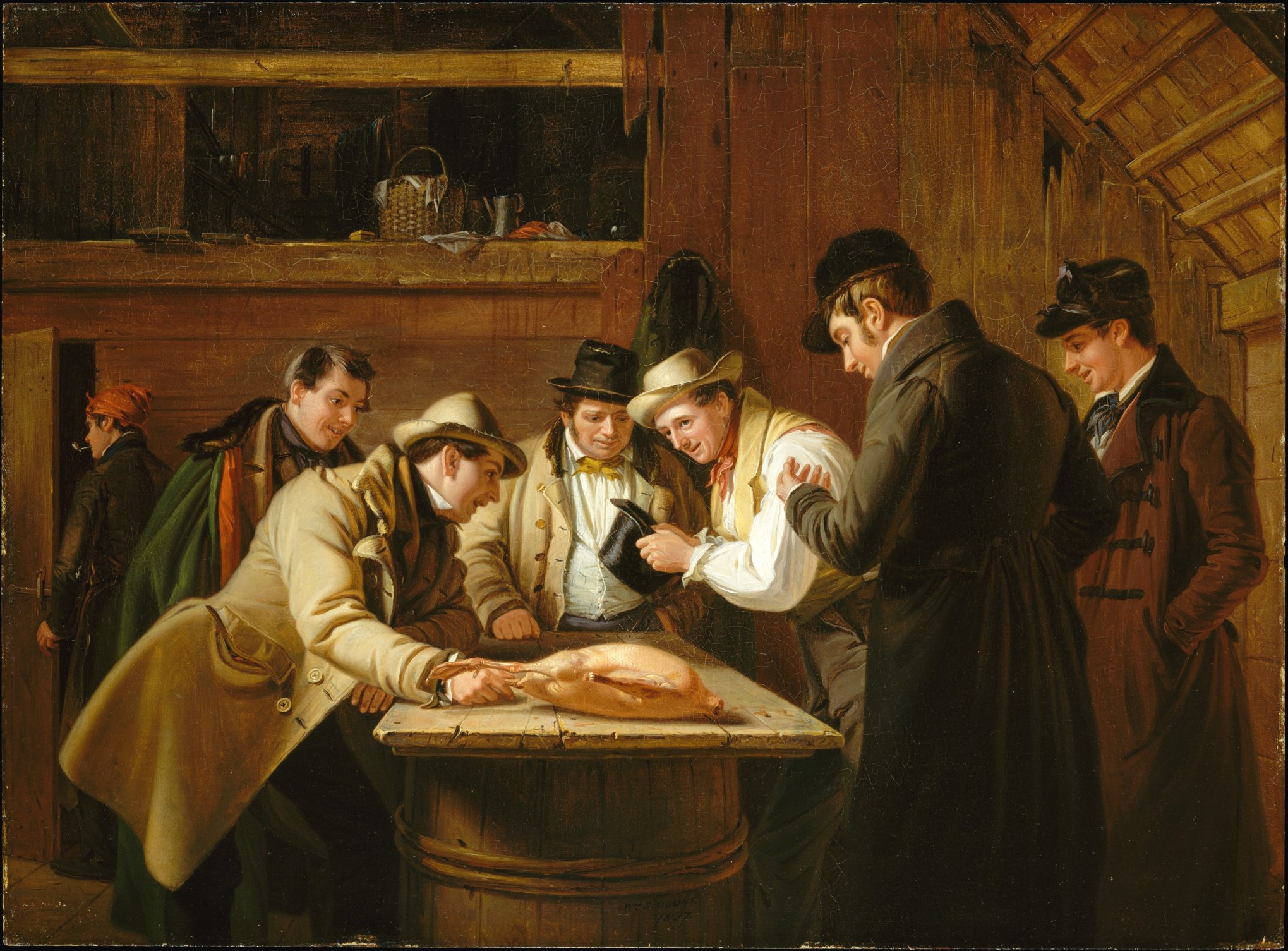
The Raffle (Raffling for the Goose) by William S Mount (1837)

My last featured painting is one of my favourites.  It is entitled The Raffle (Raffling the Goose) which William Mount completed in 1837 and is now housed in the Metropolitan Museum of Art, New York.  In this work, like a number of his other paintings Mount liked to highlight the social and political issues of the time.  Before us we see six men gathered around a table eagerly awaiting the result of an impromptu lottery to see who had won the plump goose which lies in front of them.  If you look carefully at the table you will see signs of blood which indicate the bird had recently been killed and plucked.  Such lotteries were common in the rural communities of Long Island around this time.  The year 1837 was a year of hardship for Americans.  The Panic of 1837, as it was known, was the financial crisis in the United States that touched off a major recession that lasted until the mid-1840’s. Profits, prices and wages went down while unemployment went up.  Mount alluded to food shortages during this hard time in this painting and what people had to do to survive and put food on the family table.  Mount worked on the painting through the winter of 1836 and completed it early in 1837.  Mount exhibited the painting that year at the National Academy of Design Spring Exhibition.

In the first part of this William S Mount trilogy I talked about his inventive nature and how he had invented a violin/fiddle which produced a larger volume of noise.  In about 1860 Mount designed a portable studio and home on wheels which was drawn by horses. It afforded him the opportunity to drive himself around the area and paint en plein air.   He spent much time during his last years in this unique conveyance, but sadly, due to ill health, his painting days were almost over.

The Grave of William Sidney Mount, Caroline Church of Brookhaven, East Setauket, New York.

William Sidney Mount died on November 19th 1868, at Setauket and is buried in the Presbyterian Church Cemetery.
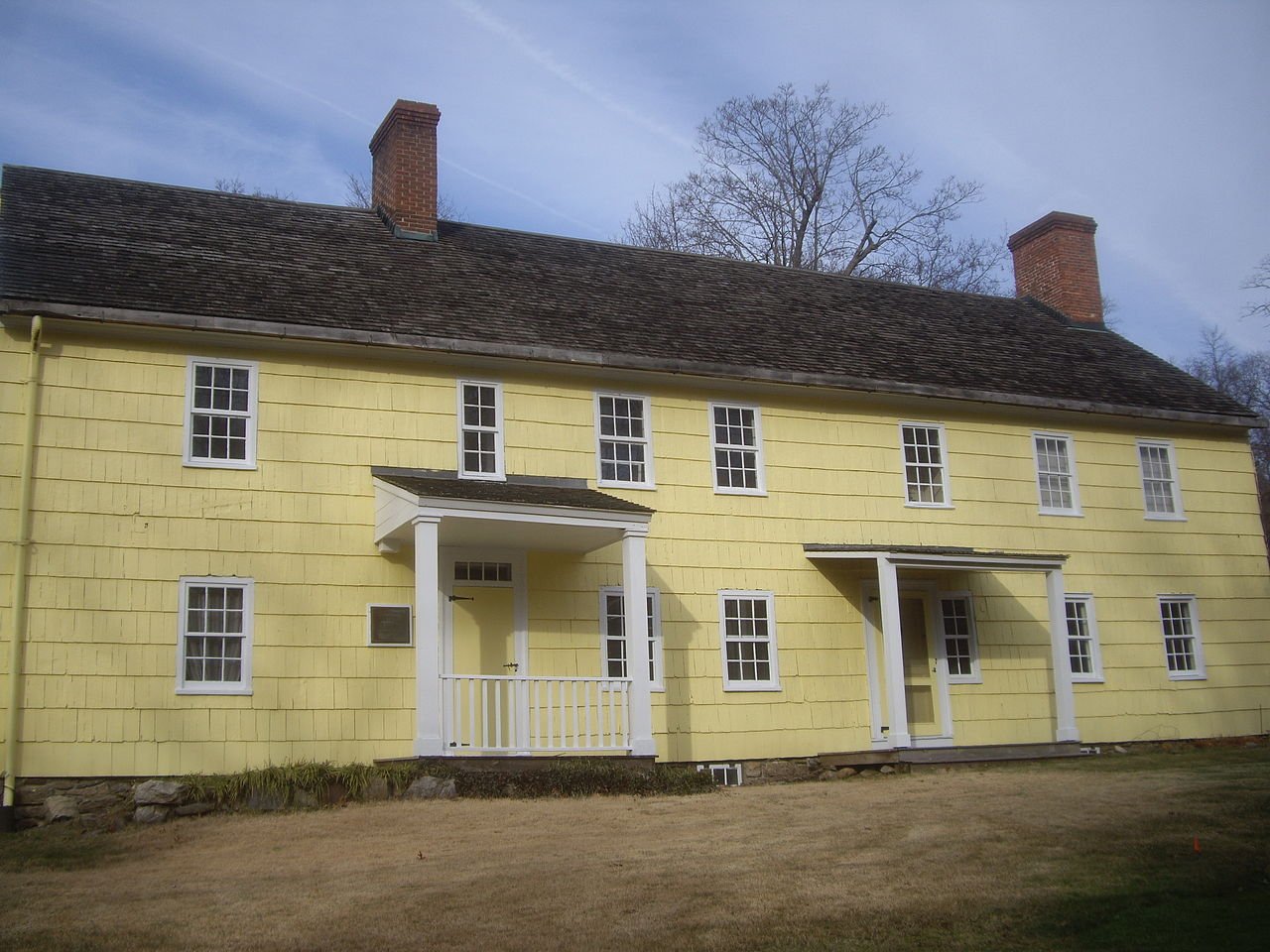
William Sydney Mount House, Stony Brook, NY

His home and studio, now known as The William Sidney Mount House is one of America’s National Treasures.   One of the local elementary schools in The Three Village Central School District, a district in Long Island so named from the older, original “Three Villages” of Setauket, Stony Brook and Old Field, is named after the artist.

There were so many paintings I could have included but these are just a few of my favourites.  Besides the usual internet sources I gleaned a lot of my information from an old book I just bought entitled William Sidney Mount by Alfred Frankenstein.  The William Sidney Mount House at Stony Brook, Long Island houses numerous works of art by William Sidney Mount and I would be interested to hear from anybody who has visited the museum.
William Sidney Mount. Part 2 – The Portraitist, and some of his early historical works

Self portrait by William S Mount (1832)

In my last blog I looked at the early life of William Sidney Mount, hailed as the first American genre artist.  I looked at his love for music and how he depicted song and dance in his paintings.  Today I want to carry on with his life story and take a look at his early works and his portraiture.

 William had been working for his brother, Henry Smith Mount, at his sign writing business in Setauket and enjoyed it.  At first he found the work interesting and challenging but later found the painting of signs somewhat restrictive.  He gave up working for his brother and moved to New York to live with his uncle Micah Hawkins, who operated a tavern and grocery store in New York City.  His uncle was also a composer, playwright, and poet.  Micah combined music and storytelling into his theatrical productions which often delved into what was happening in politics and much of these ideas were to influence his nephew and his paintings.

  It was also around this time that William Mount visited his first art gallery, the American Academy in New York and in 1826 he enrolled at the newly opened National Academy of Design, an artistic establishment founded by a number of young painters such as Asher Durand, Thomas Cole, and Samuel Morse.  In those early years William Mount’s art was all about portraits and historical scenes.  William remained at the Academy for a year before returning home.

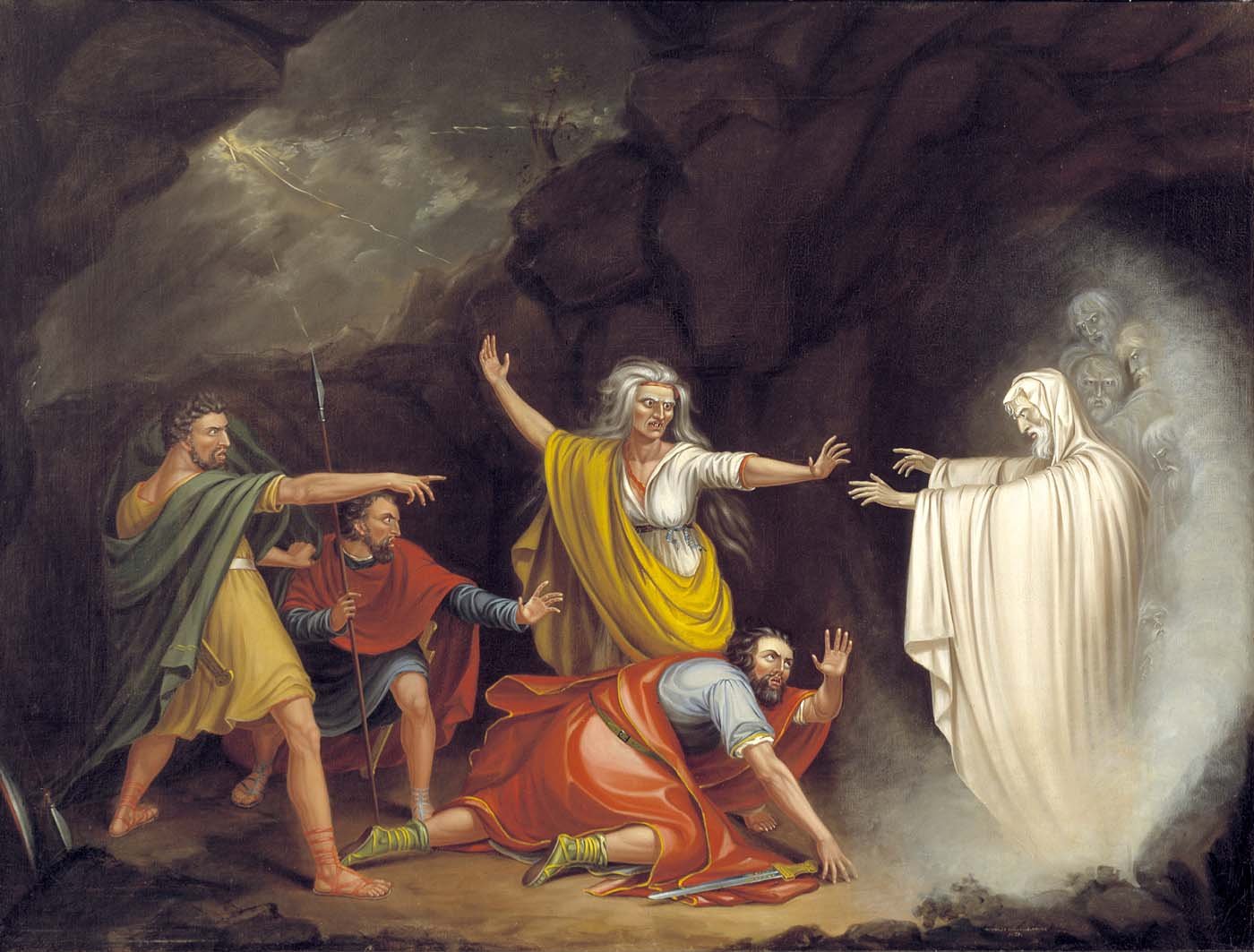
Saul and the Witch of Endor by William S. Mount (1828)

One of his early works was entitled Saul and the Witch of Endor, which he completed in 1828 and can now be found in the Smithsonian American Art Museum in Washington.   The painting depicts a passage from the Old Testament book of Samuel which tells of Saul and his battle with the Philistines.

 “… The Philistines assembled and came and set up camp at Shunem, while Saul gathered all Israel and set up camp at Gilboa. When Saul saw the Philistine army, he was afraid; terror filled his heart.  He inquired of the Lord, but the Lord did not answer him by dreams or Urim or prophets.  Saul then said to his attendants, “Find me a woman who is a medium, so I may go and inquire of her.

‘There is one in Endor,’ they said…”

 Saul seeks help from the oracle from Endor prior to him going into battle with the Philistines.  She summons the spirit of the prophet Samuel so that Saul could ask for his guidance.  In the painting we see Saul and his three companions cower in fear as the ghostly apparition approaches them.

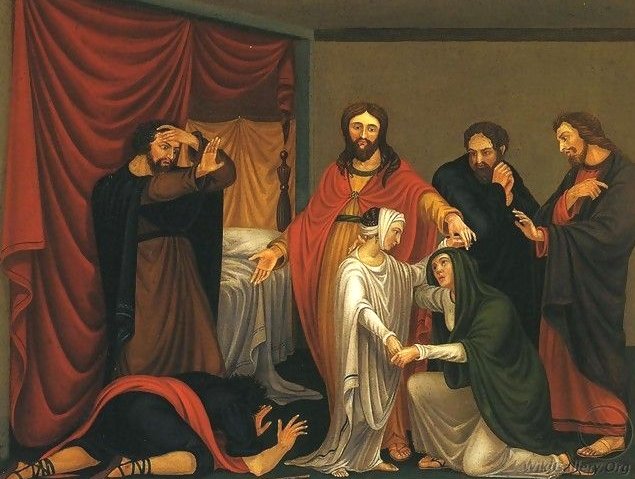
Christ Raising the Daughter of Jairus by William S Mount (1828)

In that same year he produced another biblical work based on Matthew’s Gospel (Matthew 9:23-26).  It was entitled Raising of Jairus’ Daughter.  The subject of this biblical work had been depicted many times before by great artists such as Veronese.  The bible relates the story:

“…When Jesus entered the synagogue leader’s house and saw the noisy crowd and people playing pipes, he said, “Go away. The girl is not dead but asleep.” But they laughed at him   After the crowd had been put outside, he went in and took the girl by the hand, and she got up.   News of this spread through all that region…”

William’s brother Henry was so impressed with the finished painting that he persuaded his brother to submit it at the annual National Academy exhibition.  It was well praised by the Academy professors.  William was now living at his brother’s place on Nassau Street, Lower Manhatten and had a studio in the attic.  He enjoyed painting historical and biblical works but the sales of which were not bringing in enough money so he reverted to portraiture which was always a guaranteed way of raising income.

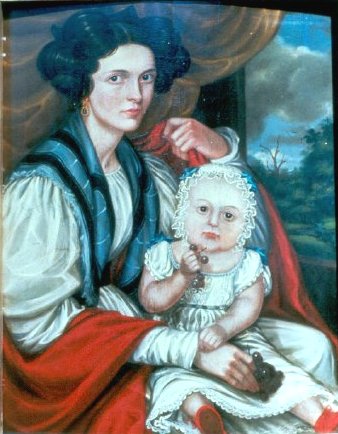
Ruth Hawkins Mount Seabury and Son Charles Edward by William S Mount (1828)

One of his early works of portraiture was a family portrait entitled Ruth Hawkins Mount Seabury and Son Charles Edward,  which he completed in 1828.  It depicts his nineteen year old sister Ruth Hawkins Mount and her infant son Charles Edward Seabury, the first of her seven children.

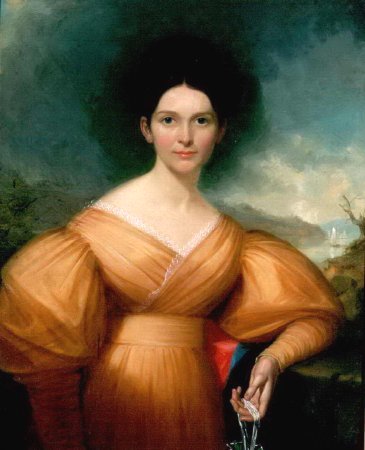
Ruth Mount Seabury by William S Mount (1831)

William Mount completed a portrait of his sister, Ruth in 1831.

I suppose if you are looking for people to sit for you for a portrait, you turn firstly to your family and in 1828 he completed a portrait of his eldest brother, and his former employer, Henry Smith Mount.

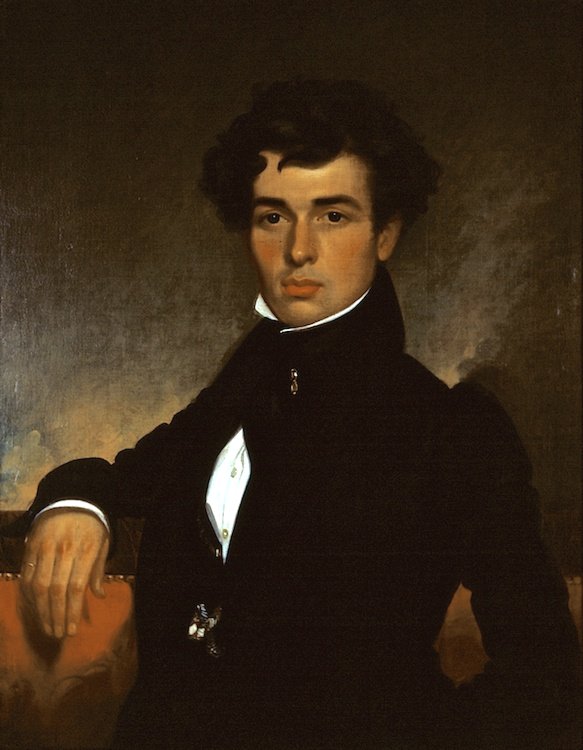
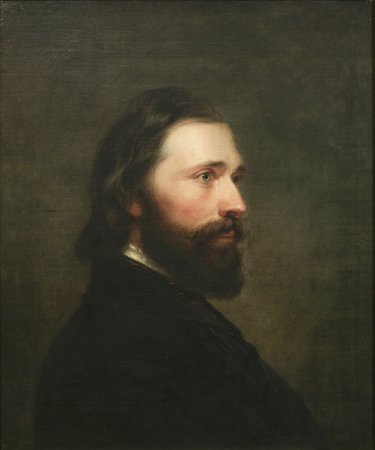
Portrait of Henry Smith Mount by William S Mount (1831)

Three years later, in 1831, Henry Smith Mount was the subject of another of his younger brother’s portraits.  This portrait of his eldest brother (by five years) is a masterful portrait.  He has depicted his brother as a man of great self-confidence, a man who comes across as a thoughtful academic and yet, a man who by his facial expression, seems stern and somewhat menacing, as he stares out at us, lost in his own thoughts.

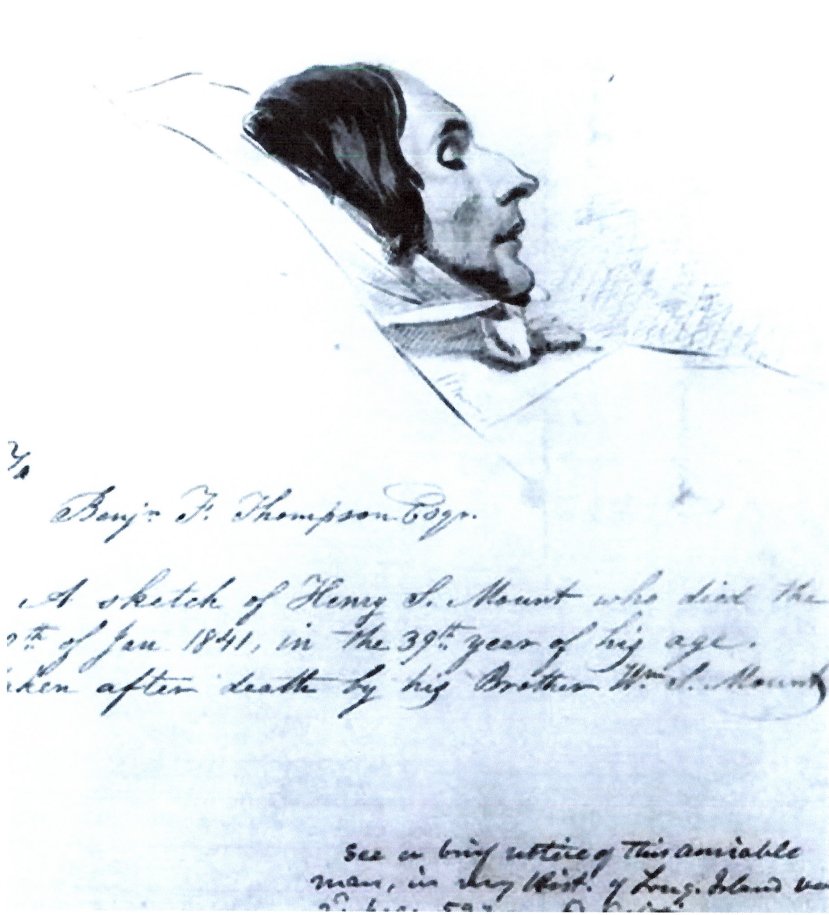
Henry Smith Mount on his deathbed by William S Mount (1841)

Thirteen years on he completed another depiction of his brother, Henry.  The circumstances surrounding this watercolour were much sadder as this was completed in January 1841 and the setting was Henry’s deathbed.  Henry was just thirty nine years of age.

Shepherd Alonzo Mount by William S Mount (1847)

In 1847 William Mount painted a portrait of his other brother, Shepherd Alonzo Mount.

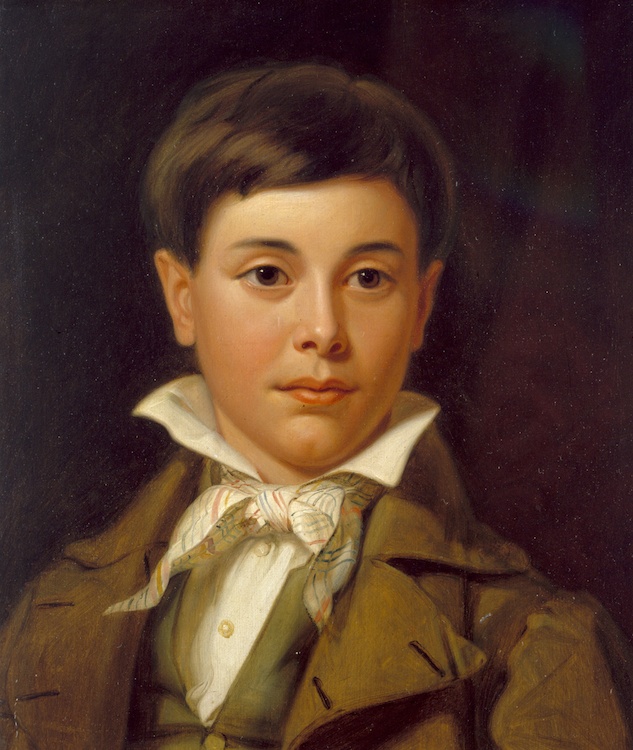
Portrait of Jedediah Williamson by William S Mount (c. 1837)

The next example of William Mount’s portraiture is one he completed in 1837 and was entitled Portrait of Jedediah Williamson.  It is a depiction of a ten year old boy commissioned by his family.  It is a full frontal depiction of the young lad and Mount has carefully and with great skill portrayed the boy’s facial features.  It is a very peaceful depiction of the boy as he looks out into the distance.  The family would have been very pleased to have received the work from Mount and it is recorded that they paid him fifteen dollars for the painting.  However there is a sad twist to this portrayal as this is a “mourning painting” or as Mount referred to them, “a painting after death”.  The boy had died and this portrait was in honour of him and may have given the family a modicum of comfort during the sadness of their great loss.  These “mourning paintings” were very popular at the time and artists found they could achieve a steady income from paintings which, for relatives, served as a reminder of a loved one who had passed away. One should remember that between 1861 and 1865 over 350,000 Americans died during the American Civil War, the families of many just had an artist’s painting to remind them of their lost son or daughter.

Portrait of Reuben Merrill by William S Mount (1832)

Another interesting portrait by William Mount was one entitled Portrait of Reuben Merrill.  It was one of Mount’s early works which he completed in 1832.  The question, which is yet to be resolved, is who is Reuben?  Some believe he was a gardener whilst others say he was a simple field worker on the farm owned by William’s sister, Ruth and her husband, Charles Saltonstall Seabury.  The fact that he identity of the sitter used by Mount is somewhat of a mystery is not uncommon as a number of the sitters in Mount’s portraits are unknown.  There is warmth about how Mount has depicted this man.  His face is weather beaten from all the outside work but he has compassionate eyes, which leads us to believe that although he was just a poor and simple labourer, there was some sort of warm connection between him and the artist which probably testifies to the fact that he was a hard worker and appreciated by his employers.

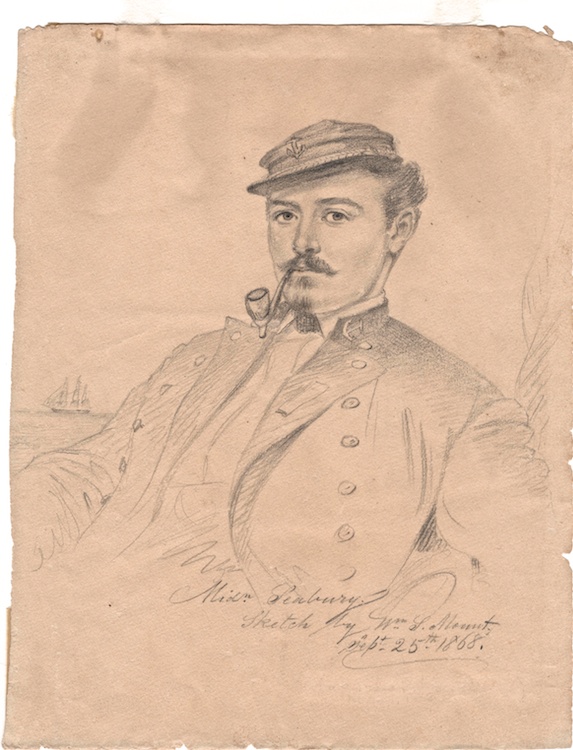
Portrait of Midshipman Seabury by William S Mount (1868)

My last example of Mount’s portraiture was also thought to have been his last artistic work.  It was completed in September 1868, less than two months before Mount’s death, and was a pencil sketch of his nineteen year old nephew Samuel Seabury.  Samuel was one of seven children.  His mother was Ruth Hawkins Mount Seabury, William Sidney Mount’s younger sister, and his father was Charles Saltonhall Seabury.   At the time of the portrait, Samuel Seabury was a midshipman in the navy, and the ship in the left hand background is a reminder of his profession.

In my next blog I will take my final look at William Sidney Mount and his work and I will feature some of his excellent non-musical genre work.

William Sidney Mount. Part 1. The Music Man

William Sidney Mount

Genre art is defined as the pictorial representation of scenes or events from everyday life.  They often depict settings such as a marketplace or tavern or simply everyday occurrences in houses or in the street.  They can be either realistic depictions or imagined ones which may have been romanticised by the artist.  These works of art have one or more persons in the depiction carrying on with their everyday life notwithstanding how unglamorous it may be.  When one thinks of genre paintings one immediately thinks of the seventeenth century art of the Low Countries, the art of the Golden Age, and of the art of Gerard Dou, Gerard te Borch, Pieter de Hooch and Jan Steen just to name a few.  I love this type of art and today I am focusing on another artist who was renowned for his genre works of art.  He however was not from Europe but from America.  He was the nineteenth century American genre artist and portraitist, often looked upon as one of the first American genre painter, the great William S. Mount.  In this blog, I will look at his early life, ponder over his connection with music and showcase some of his works which were influenced by his love of music.

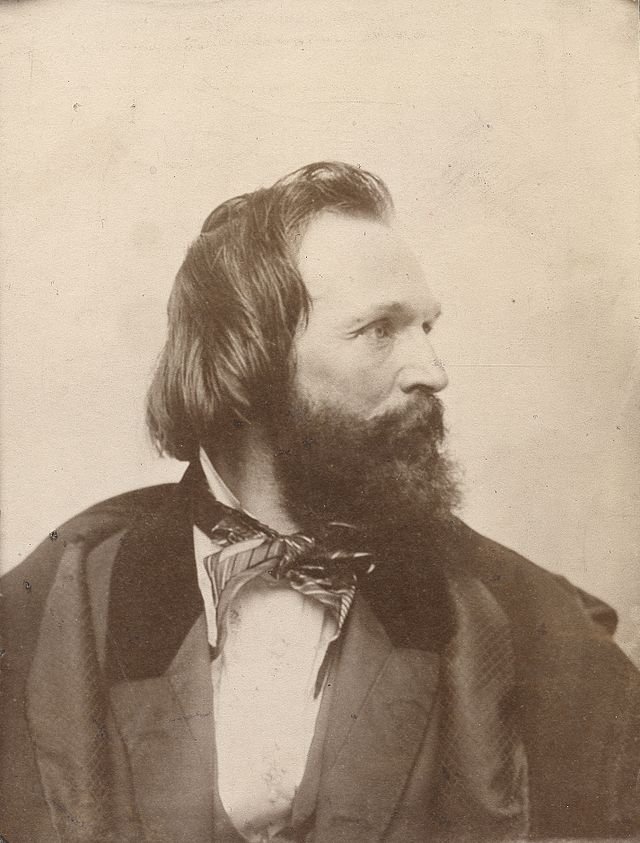
William Sidney Mount was born on November 26th 1807 in Setauket , a small town on the northern side of Long Island, New York. He was the son of Thomas Shepherd Mount and Julia Ann Hawkins.  He was the fourth of five children with three older brothers, Henry Smith Mount, Shepherd Alonzo Mount and Robert Nelson Mount and a younger sister, Ruth Hawkins Mount.  His maternal grandfather was Jonas Hawkins, an American Patriot and a member of the notorious Culper Spy Ring during the American Revolution, whose task it was to send messages to General Washington about the activities of the British Army in New York City which was the British headquarters and base of operations.

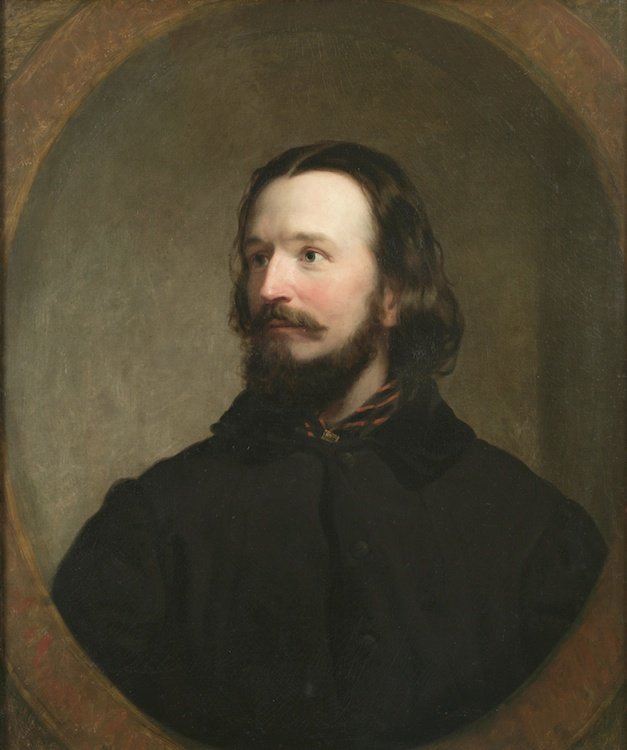
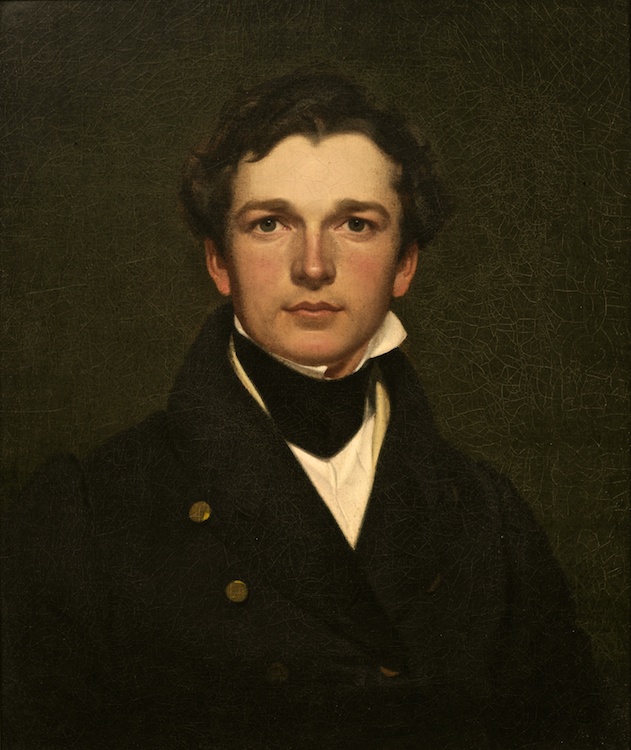
Portrait of William Sydney Mount by Charles Loring Elliott. (1848)

William recalled those very early traumatic days as an infant, presumably told to him by his relatives.  According to him he was literally left for dead.  He wrote:

“…The first and most remarkable event of my life occurred when I was about 6 or 7 months old.  I was taken from my Mother (she being very sick) to be brought up by hand – I soon declined for want of proper or abundant nourishment and after several days [was] considered dead by my kind nurse and tenderly laid away as so.  My Father’ sister being sent for to make further arrangements concerning me observed signs of life and immediately commenced nourishing me…”

Due to his mother’s poor health his grandmother played an important role in his upbringing.  In October 1814, a month before William’s seventh birthday, his father died and his mother took him and his four siblings to live on the Stony Brook farmstead owned by her family.  For the next ten years William and his brothers worked on the farm.  It was whilst living at the farmstead that, through his uncle, Micah Hawkins, who had a passion for music and the theatre that William and his siblings developed a love for music, especially the playing of the fiddle which William would often play at barn dances.

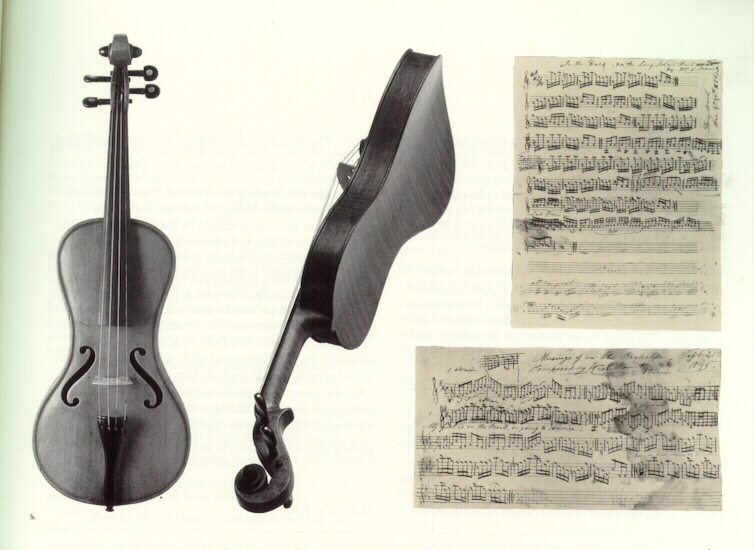
Cradle of Harmony
Cradle of Harmony

Barn dances were very popular with the farming communities but for them to be a success they needed a good fiddler and one such expert was young William Mount.  Barn dances were raucous and merry events and it could be difficult to hear the lone fiddler amongst the “whooping and hollering” of the dancers and so William decided to invent and instrument which could supply loud music.   In 1852 he designed a violin with a hollow back to make it sound louder than a normal violin and he patented it and called it The Cradle of  Harmony.

 However it was his younger brother Robert, the only one of the family who was not attracted to art who would turn out to be the accomplished musician and dance instructor.  Music however played a part in William Mount’s art as many of his paintings were a blend of music and art.

William Mount worked on the family farm at Stony Brook until 1824, when, at the age of seventeen, he was apprenticed to his older brother Henry, who was a sign and ornamental painter in New York City. It was also around this time that his other brother, Shepherd, became a fellow apprentice. From these small artistic beginnings, all three brothers soon became painters. William, who had taken up drawing seriously when he was eighteen years old studied for a short time with the leading American portraitist of the time, Henry Inman.  However William’s studies with Inman came to an end due to lack of tuition money and his own poor health and he returned home to Setauket in 1827.

Dancing on the Barn Floor by William S Mount (1831)

The painting entitled Dancing on the Barn Floor, which he completed in 1831, was one of Mount’s earliest successes and combines his love of music with his talent as an artist.  The painting is a perfect example of how his studies in perspective influenced him. The converging lines at the centre of the painting are textbook examples of how students were taught to organize their canvases.  The painting is housed in the Long Island Museum of American Art, located in Stony Brook, New York.

Catching the Tune by William Sidney Mount (1866)

Another work by Mount which focused on music was his painting entitled Catching the Tune, which he completed in 1866William wrote in his diary that the tune the musician was playing in this painting was Possum Up a Gum Tree, a title still known today and attached to more than one distinct tune in the South and Midwest.  All three men as well as the women onlookers are white. However, what is interesting is that a a study sketch that Mount did for this painting depicts the musicians’ faces with a subtle increase in African features.

The Banjo Player by William S Mount (1856)

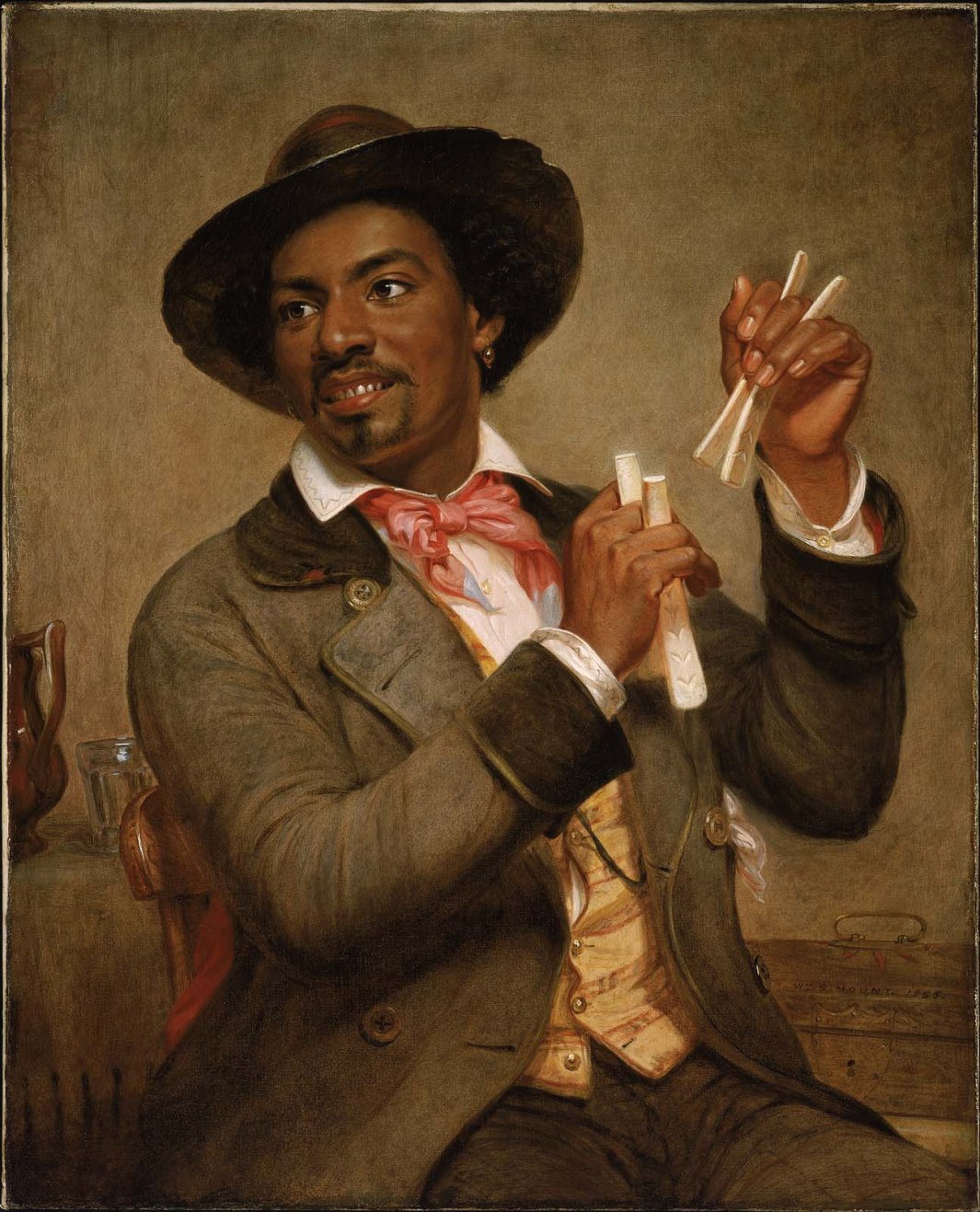
Probably two of his most famous works of art are a combination of portraiture and genre painting.   He completed both in 1856 featuring African American musicians.  They were entitled The Bone Player and The Banjo Player and both had been commissioned by William Schaus.  Schaus was the New York city agent for the European firm of the printers Goupil & Company, who had asked for two pictures of African-American musicians, to be lithographed for the European market.   One should remember that the time Mount completed these works was just five years before the outbreak of the American Civil War and feelings regarding slavery was about to split the country.  Mount was not known as an abolitionist but he was an artist who was in tune with the feelings of the African-American folk and his art always depicted the black man with dignity and sensitivity notwithstanding whether they were portrayed at work or at play.  His art made it very clear that everybody, black and white, should be judged for their own worth and not by the colour of their skin.  There was a simplicity about the two portraits.  It was all about enjoyment.

The Bone Player by William Mount (1856)

By entitling the painting The Bone Player, Mount points out that the work of art is all about the musical skill of the man and not the man himself.   The two sets of bones, one in each hand, are made of wood or bone and are clicked together.  This instrument has always been connected with African-American minstrels, and was easily recognised as such by folks on both sides of the Atlantic.  There was a good market in Europe for this type of work with all its mystic and exoticism.  In some ways Mount’s depiction of the African-American in both portraits was neutral and he left it up to the purchaser of the works how they wanted to interpret what they saw in the painting and this neutrality made the works appealing to Americans from both the North and the South.

Dance of the Haymakers by William S Mount (1845)

A painting by William S Mount which brings out the joy of barn dancing is one he completed in 1845, entitled Dance of the Haymakers.  It is said that Mount was inspired to paint this scene when he heard the song Shep Jones’ Hornpipe, composed by his neighbour Shep Jones who can be seen depicted in the painting as the fiddler.

The description of the work was outlined in a letter from William Mount to William Schaus of Goupil, Vibert & Company written on April 16th 1849.  Mount wrote:

“…[The depiction] represents a barnfloor scene, opening upon a fiddler, two Long Islanders, dancing with great energy, and an old man listening with his fancy evidently touched by the performance at the right, and on the out side of the barn, a negro boy is adding to the excitement and noise by drumming on the door, evidently delighted with the ‘concord of sweet music’ which he thinks he produces.  The noise of the clog hoppers, the music, and the loud laughter of the lookers on, is enough to arouse the village Parson.  The last and not least, a cat watching a dog from ma hollow beneath the door sill, is marvellous for its life and finish, quite equal to the celebrated master pieces of the kind in the Dutch school…

In my next blog I will carry on the story of William S Mount’s life and look at his wonderful portraiture and some more of his genre paintings.

John Singer Sargent and Virginie Amélie Avegno Gautreau

In my last blog I featured a painting by Theodore Roussel entitled The Reading Girl which was at the time both controversial and newsworthy, only going to prove the old adage that there is no such thing as bad publicity.  My blog today follows a similar theme, a controversial painting which had major repercussions on the artist and his career.

Self portrait by John Singer Sargent (1907)

My featured artist is John Singer Sargent.   He came from a very wealthy family.   His grandfather was Winthrop Sargent IV, who had descended from one of the oldest colonial families.  Due to a failed merchant-shipping business in Gloucester, Massachusetts, he moved his family to Philadelphia.  It was in that city that John Singer Sargent’s father, Fitzwilliam Sargent became an eye surgeon.  In 1850, Fitzwilliam Sargent married Mary Newbold Singer who was the daughter of a successful local merchant. In 1853 Mary gave birth to their first child, a daughter, who sadly died a year later.   Sargent’s mother suffered a nervous breakdown after the death of her daughter and her husband decided that it would be better for his wife’s health to move away from Philadelphia and the sad memories and take up residency in Europe.  Initially Sargent’s father’s idea was for he and his wife to stay in Europe just a short time until she was better but their life away from America extended and soon they became expatriates.  He and his wife based themselves in Paris but they would often travel and stay in Florence, Rome, or Nice in the winters and in the summers they would journey to the Alps were the climate was much cooler and more pleasant.   Their son John was born in January 1856 whilst they were in Florence.

Because of the nomadic lifestyle of the family and because of his determination not to stay in school, John Singer Sargent did not receive formal schooling and was taught at home by his father and mother.  He proved to be an excellent pupil excelling in languages and the arts.  Art played a great part in his early life as his mother was a talented amateur artist and his father was a talented medical illustrator.  Following more additions to the family and because his wife wanted to remain in Europe, John Singer Sargent’s father eventually resigned his post at the Willis Eye Hospital in Philadelphia and acquiesced to his wife’s wishes for the family to remain in Europe.

John Singer Sargent soon developed a love of art and his father had him enrol at the Accademia di Bella Arti in Florence during the winter of 1873/4.  In 1876, at the age of eighteen, Sargent passed the entrance exam to the École des Beaux-Arts in Paris.  Here he studied anatomy and perspective and spent time in the Paris museums copying the works of art of the masters. In those early days at the art academy Sargent was schooled as a French artist.  It was the era of French Impressionism and he was greatly influenced by the work of the Impressionist movement.  He was also a lover of the works of art by the Spanish painter, Velazquez and the Dutch master Frans Hals.

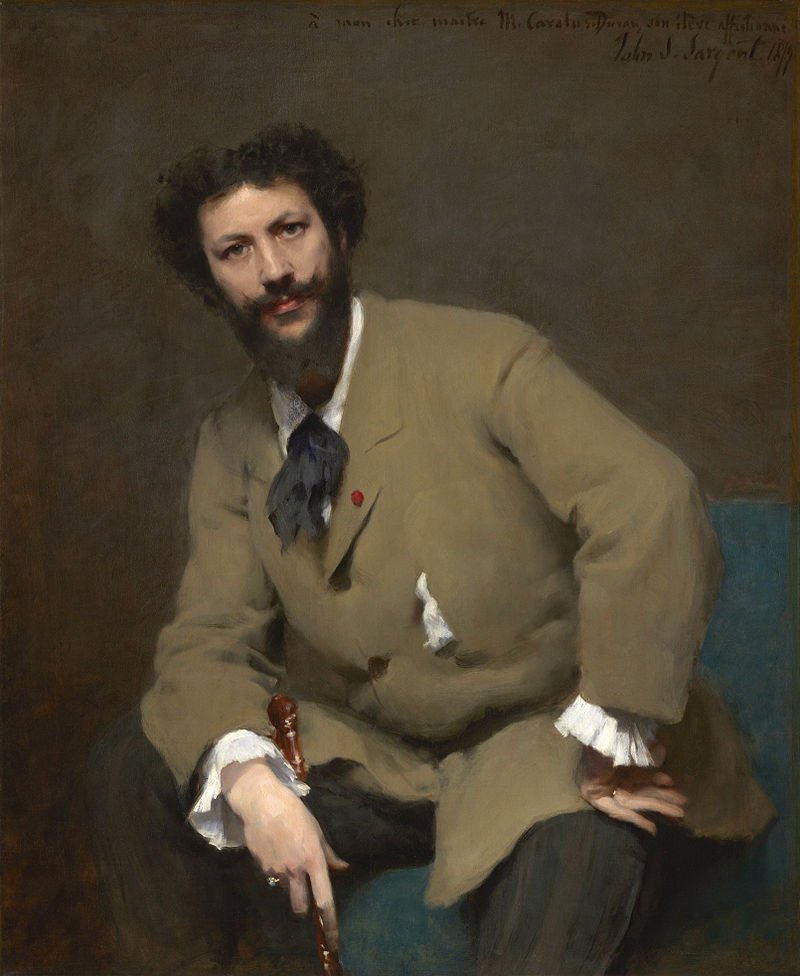
Portrait of Carolus-Duran by John Singer Sargent (1879)

However nearer to home he was inspired by his art tutor, the French painter, Carolus-Duran, a portrait of whom he completed in 1879.     John Singer Sargent’s reputation as a great artist and portraitist grew rapidly and in Paris he was the toast of artistic circles.  Everything he did was loved by the critics and the public.  The Parisians loved him.  He could do no wrong.  Well actually he could and did and through one painting, a portrait of a lady, his fall from grace was rapid and final and caused him to exile himself from Paris and France and take refuge in England.  So what happened?  The answer to this question is examined in this very blog.

The lady whose portrait caused such a stir was Virginie Amélie Avegno Gautreau.  Virginie Amélie Avegno was born in New Orleans in January 1859.  She was the daughter of a white Creole family.  Her father was Major Anatole Placide Avengo, a Confederate army soldier and her mother was Marie Virginie de Ternant who came from a wealthy Louisiana plantation owning family.  Her father was killed during the American Civil War at the Battle of Shiloh in 1862.  Five years later in 1867 her widowed mother took her eight year old daughter to live and be educated in Paris and as a teenager was introduced into high French society.

Virginie Amélie Avegno blossomed into a beautiful woman.  She was a pale-skinned brunette.  She was renowned for her great beauty and was accepted into Parisian society circles.  She dazzled all who met her with her exquisite clothing and undeniable beauty.  She mastered the art of make-up to enhance her looks and was known for her heavy use of chalky lavender powder which was dusted on her face and body affording her a very distinctive pallor.  Her beauty was unique.  She had a long nose which was somewhat longer than the accepted norm, her forehead was also too high and yet these physical characteristics never detracted from her hourglass figure and the seductive way she would walk when entering a room of people.

In his 2011 book The Greater Journey: Americans in Paris, David McCullough quotes an American art student named Edward Simmons who wrote about seeing Virginie and how the sight of her was unforgettable:

“…She walked as Virgil speaks of a goddess—sliding—and seemed to take no steps. Her head and neck undulated like that of a young doe, and something about her gave you the impression of infinite proportion, infinite grace, and infinite balance. Every artist wanted to make her in marble or paint…”

As always beauty as well as bringing out admirers, brings about jealousy and many of her detractors labelled her an arriviste, one who has attained a high position but has not attained general acceptance or respect.  I suppose we would liken her to one of the nouveau-riche looked down on by the “old establishment rich”

A mother’s most fervent wish is to see her daughters marry successfully which often translates into having their daughters marry a wealthy man.  Virginie’s mother must have been well pleased when her daughter married a wealthy French banker, Pierre Gautreau, and her daughter now had two of the greatest assets of life, beauty and a wealthy husband who held a great status in Parisian society.

John Singer Sargent met Virginie Gautreau at a social gathering around 1881.  He was smitten by her beauty and elegance; some say he soon became obsessed with her.  Having met her he wanted just one thing from life – to paint her portrait and have it exhibited at the Paris Salon so all could admire “his lady”.  Sargent had been inundated with portraiture commissions but on this occasion it was he who approached his desired sitter to ask if she would acquiesce to become the subject of his portrait.  Sargent realised that Gautreau was both part of high class Paris society and a renowned beauty and thus a portrait of her by him at the Salon would bring great kudos and he probably realised that if he portrayed her seductively it would cause a sensation similar to Manet’s Olympia at the 1865 Salon.  Sargent had unfortunately not realised how sensational it would turn out.

Watercolour figure study of Madame Gautreau  by John Singer Sargent (c.1883) Harvard Art Museum
Watercolour figure study of Madame Gautreau
by John Singer Sargent (c.1883)
Harvard Art Museum

After some help from colleagues Sargent persuaded Virginie Amélie Avegno Gautreau to sit for him.  For months on end he would complete many line drawings of her head in profile.  He would complete studies of her in pencil and watercolour, sometimes simply relaxing on a chaise-longue in a low-cut evening dress or depicted her in oil painting sketches drinking a champagne toast. In the summer of 1883, he stayed at the Gautreaus’ country estate in Brittany but admitted to his friend the writer, Vernon Lee, that he was still struggling to do justice to this un-paintable beauty.  He was also now having doubts as to whether it would be accepted into the 1884 Salon by the Salon jury.

In the winter of 1883, Sargent moved his Paris residence which had been on the Left Bank to a new studio across the Seine in the fashionable Parc Monceau neighbourhood and it was here that he completed his full-length portrait of Gautreau.  It was a nerve-wracking time for Sargent as he had suffered a loss of self-confidence in his artistic ability in respect to the depiction of his beloved beauty.  Despite his worries, the painting was finally completed in 1884 and the Salon jury accepted it into the 1884 Salon. This was the sixth year in a row that the Salon had accepted works by Sargent. Before the Salon opened there was already a frenzied excitement about the portrait.  Gautreau had talked wildly and incessantly to her friends and acquaintances about the painting, even though she had never seen the finished work.

Madam *** by John Singer Sargent as exhibited at 1884 Salon
Madam *** by John Singer Sargent
as exhibited at 1884 Salon

In the painting, Gautreau is seen dressed in a long black satin skirt with its sultry low-cut black velvet bodice.  Against the deep black of the dress and the plain dark background, the deathly blue-white of her powdered skin was even more eccentric and noticeable.   Her shoulders are bare with the exception of two narrow jewelled straps. Gautreau posture is one in which both her shoulders are held back, her body faces us and yet her head is angled to the left, which fully highlights her stunning profile.   Her left arm rests on her hip with her hand gripping the material of her dress.   Her right hangs down in a twisted manner s her fingers grasp the top of the table.  The result of this distorted pose was to create tension in the neck and arm but it also highlighted the subject’s graceful curves.   Her hair is pinned up high on her head atop of which is a tiara.  Sargent must have “designed” this un-natural pose presumably because he believed it brought a haughty sensuality to his sitter, for remember, besides wanting to do justice to his sitter’s beauty he also wanted this work to have a sensational affect when it was exhibited.  It was probably this thought of sensationalism that made him make the cardinal error which was to damn him.   During one of Gautreau’s sittings the thin strap of her dress had slipped from her right shoulder and as she was about to re-adjust it when Sargent told her to leave it down it was and he decided to make the portrait even more sultry by portraying Gautreau’s right shoulder bare.  The die was cast and the painting with the strapless shoulder went on exhibition under the title Portrait of Madame *** although most Parisians were aware that it was the portrait of Virginie Amélie Avegno Gautreau.

Even though the Salon had just opened the picture was condemned for what was termed the sitters’ “flagrant insufficiency” of clothing.  Little was said about the other aspects of the work, it was all about the seductive pose and dress (or undress) of the sitter.  The Paris public could not stop talking about Sargent’s portrait of Gautreau.  It was fast becoming a scandal of epic proportions.  The painting received many critical reviews.  Some objected to the portrait on the grounds that they disliked Madame Gautreau’s décolletage, others criticised what they termed the repulsive colour of her skin.  Few however were less harsh and stated that they liked the modern approach to the portrait and congratulated Sargent on is courageous approach.  It is difficult to understand the furore over the suggestiveness of the black dress when paintings of nudes littered the walls of the Salon but of course they would normally have biblical or mythological connotations to them which made blatant nudity acceptable.  Maybe it was the haughty pose of the arriviste with her heavily powdered features which was too much for the critics and public alike. Gautreau herself was humiliated by the whole affair and her mother, Madame Avegno, who was also horrified with publicity surrounding the portrait, demanded Sargent remove it from the Salon. He defended the portrait, telling the irate mother that it was a truthful likeness of the pose of her daughter and the clothes she wore.

John Singer Sargent in his studio with with his painting Madame X

Sargent had scandalised Paris society and he was widely criticised in Paris art circles for being improper.  For Sargent the criticism of the work and of him as an artist was almost impossible to bear.  He had been living and working in Paris for ten years and during that period he had received nothing but praise for his work and the commissions had poured in on the back of such praise.  The criticism of the portrait went beyond a simple poor review.  He was being mocked by the Paris public for what he later stated was the best painting he had ever completed.  For him the work was a true masterpiece but it would take a long time before the world acknowledged that fact.  Sargent hung the work first in his Paris studio and later in his studio in London and from 1905 onwards he allowed it to be seen at various international exhibitions.

Madame X by John Singer Sargent (c.1884) with the position of the strap of dress altered
Madame X by John Singer Sargent (c.1884)
with the position of the strap of dress altered

Sargent repainted the fallen strap on Guitreau’s right shoulder, re-titled it Madame X and eventually sold the work to the Metropolitan Museum of Art in New York in 1916 where it is housed today.  An unfinished second version of the same pose is in the Tate Gallery London.

Sargent found the criticism unjustified and shortly after the 1884 Salon, in the May, at the age of 28, he left Paris disillusioned by the incident and disappointed by the fall off of sales of his paintings and moved to London where he remained for the rest of his life England.  Although his long-term career as a portraitist in France was over, he once again thrived artistically in the English capital and some say that it was here that he reached the pinnacle of his fame.  In those days to have you portrait done by Sargent was looked upon as having it painted by the best portraitist of the time.

John Singer Sargent      (1856 - 1925)
John Singer Sargent
(1856 – 1925)

He died in London in 1925, aged 69.

Georgia O’Keefe. Part 3 – Floral paintings and sexuality

White Trumpet Flower by Georgia O'Keefe (1932)
White Trumpet Flower by Georgia O’Keefe (1932)

In my third look at the life and works of the American artist, Georgia O’Keefe, I want to concentrate on the art she is probably most remembered for, her flower paintings. The depiction of flowers in works of art has always been a popular genre. In past blogs I looked at two famous female artists, Rachel Ruysch (My Daily Art Display October 3rd 2011) and Judith Leyster (My Daily Art Display December 3rd 2013), who were amongst the greatest floral painters of their time. Also from the Netherlands there were the father and son floral painters, Jan van Os and Georgius van Os. At some time, many of the great names in art completed floral works, such as Manet’s lilacs, Monet’s lilies, Hokusai’s cherry blossom, Dürer’s tuft of cowslips, van Gogh’s sunflowers, Fantin-Latour’s roses and so on. So what is so special about O’Keefe’s floral depictions? The answer is that Georgia O’Keefe’s paintings featured close ups of parts of a flower rather than the whole flower and they are stand-alone depictions and not part of a still-life work. She seemed to integrate photographic methodologies such as cropping and close-ups into her floral works. She believed by enlarging the flower the true beauty of the specimen would be hard to ignore. Of her technique she once said:

“…A flower is relatively small. Everyone has many associations with a flower… still, in a way, nobody really sees a flower, really, it is so small….So I said to myself, I’ll paint what I see, but I’ll paint it big and they will be surprised into taking time to look at it, even busy New Yorkers [will] take time to see what I see of flowers. When you [referring to critics and others who wrote about these paintings] took time to really notice my flower you hung all your associations with flowers on my flower as if I think and see what you think and see of the flower, and I don’t…”

So where did all her ideas for depicting flowers in such a manner start? It could be that she remembered her art teacher she had at her convent school in Madison, back in 1901, when she was fourteen years old. The teacher brought in a wild flower, a jack-in-the-pulpit plant, and asked her teenage students to study it from all angles and told them of the importance of this close scrutiny. O’Keefe was fascinated and drew it from all different angles and then concentrated on drawing just parts of the flower rather than the whole specimen.  This was the beginning of her journey into floral painting.

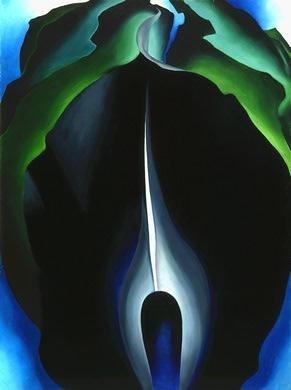
Jack in the Pulpit IV by Georgia O'Keefe (1930)
Jack in the Pulpit IV by Georgia O’Keefe (1930)

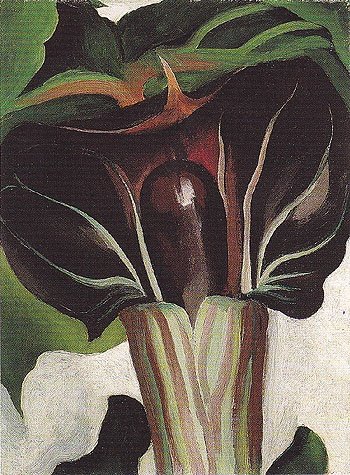
Almost thirty years after this classroom incident, in 1930, Georgia actually completed a series of six painting entitled Jack-in-the Pulpit, five of which can now be found in the National Gallery of Art in Washington. The first in the series began with the striped and hooded bloom and was a carefully detailed botanical depiction of the flower but as the series continued the depiction of the flower moved further away from a realistic depiction of it and became almost mass of colour.

Jack in the Pulpit No.1 by Georgia O'Keefe (1930)
Jack in the Pulpit No.1 by Georgia O’Keefe (1930)

As the series developed, the depictions became less detailed and more of an abstract rendering of the flower with the haloed pistil depicted against a sombre black, purple and gray background. The works shown above show the transition in the way she depicted the flower.   In fourth of the series one can see that it has less botanical detail than the first three works and is tending towards abstraction. O’Keefe explained the transition writing:

“…“I found I could say things with color and shapes that I couldn’t say in any other way – things that I had no words for…”

Red Canna  by Georgia O'Keefe (1924)
Red Canna by Georgia O’Keefe (1924)

It was around the early 1920’s during her summer visits to Lake George with Alfred Stieglitz that she started painting flowers in her own imitable style. She would concentrate on the head of the flower and “zoom in” on its centre and then enlarged it, so it completely filled the canvas, often cropping the depiction. She painted all types of flowers from the exotic black irises and red Canna lilies to the more mundane such as poppies, daffodils and roses.

The painting Red Canna Lilies, which she completed in 1924 and is now housed in the University of Arizona Museum of Art, has such great magnification it almost appears to be an abstract work of art with just a series of overlapping lines and a myriad of tones.

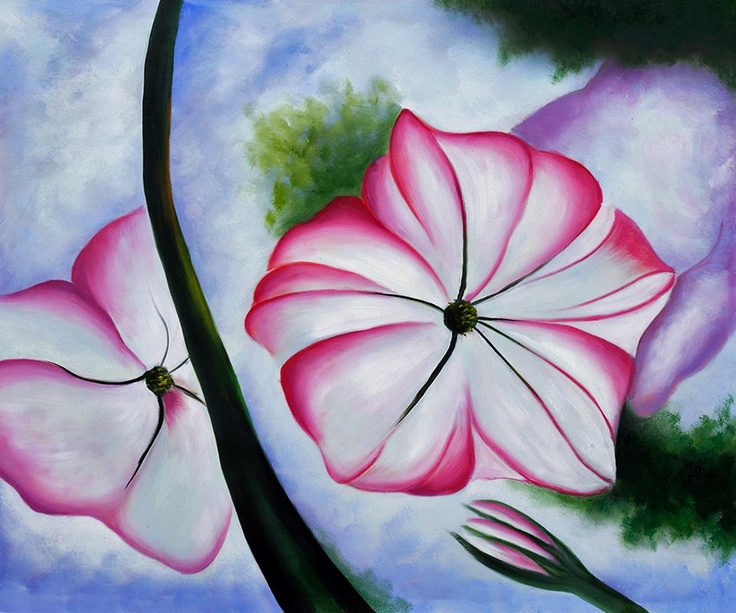
Petunia No.2 by Georgia O'Keefe (1925)
Petunia No.2 by Georgia O’Keefe (1925)

It was in 1924 that O’Keeffe began to make paintings in various sizes. The one thing they had in common was that all of them tended to focus on the centres of flowers. Petunia No. 2, which she completed that year, was one of her first large-scale flower paintings and she had it accepted into an exhibition organised by Alfred Stieglitz at the Anderson Galleries on Park Avenue, New York. The gallery was owned by the American publisher, Mitchell Kennerley and Stieglitz, who had not had his own exhibition space since 1917, borrowed rooms from Kennerley’s gallery and later in 1925 permanently rented a small room at the gallery which he called the Intimate Gallery. Stieglitz idea for the Intimate Gallery was that it should be a place for local artists to exhibit their work and by so doing create a sense of an artistic community, almost an artist’s cooperative. It was to be a less formal exhibiting place where patron and artists could mix and build up a good working and very personal relationship.

Stieglitz had gathered together a collection of works for his December 1925 exhibition, both artistic and photographic. He had called upon his friends to join him in supplying works for the exhibition. Including himself, there were seven contributors in all. They were John Marin, Marsden Hartley, and Arthur Dove, the modernist painters, the watercolourist Charles Demuth as well as his fellow photographer Paul Strand, and of course, not forgetting his wife, Georgia O’Keefe. The exhibition, at the time, was one of the largest exhibitions of American art ever organised and was entitled Alfred Stieglitz Presents Seven Americans: 159 Paintings, Photographs, and Things, Recent and Never Before Publicly Shown by Arthur G. Dove, Marsden Hartley, John Marin, Charles Demuth, Paul Strand, Georgia O’Keeffe and Alfred Stieglitz. The exhibition lasted for three weeks and had numerous visitors but few of the painting sold.

Two Calla Lily on Pink by Georgia O'Keefe (1928)
Two Calla Lily on Pink by Georgia O’Keefe (1928)

In the mid 1800’s an herbaceous perennial plant, native to southern Africa was introduced into America. It was the Calla Lily. It had such an exotic looking flower that it soon became a favourite subject of floral painters and photographers. Over time Georgia O’Keefe completed numerous renditions of the flower, so much so, the lily became her insignia in the eyes of the public, and the Mexican artist Miguel Covarrubias took up that theme in his caricature of O’Keeffe as “Our Lady of the Lily“, which appeared in the New Yorker in 1929. Two Calla Lilies on Pink was one of her painting depicting this exotic flower. She completed it in 1928 and is an amazing piece of floral art full of subtle merging of colours and tones. The flower petals lie against a pink background which enhances the beauty of the work. Look how O’Keefe has managed to merge a green colour in the white of the petals and by doing so cleverly highlighting them. Again these white and green tinged petals of the two flowers seem to be pierced by the emergence of two bright yellow pistils as they rise upwards. It was this kind of depiction with its sexual connotation that was to lead to controversy. How could floral paintings cause such controversy?

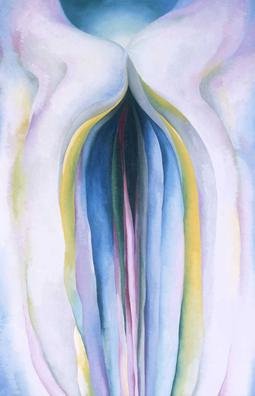
Grey Lines with Black, Blue and Yellow by Georgia O'Keefe (1923)
Grey Lines with Black, Blue and Yellow by Georgia O’Keefe (1923)

Another example of her work which some people believed lent credence to the sexual nuance of her paintings was one entitled Grey Lines with Black, Blue and Yellow which she completed around 1923 and is part of the Museum of Fine Arts in Houston collection. It is looked upon as one of her best works. Is it a floral painting? Is it a close up of the inner part of a flower? It is this ambiguity which is fascinating and has led some critics to argue that it is an abstract work and that the undulating folds are based upon female genitalia. Georgia O’Keefe was adamant that none of her floral works of art had anything to do with male or female genitalia and grew weary of those people who maintained the sexual link even after she had denied such a connotation. In Ernest Watson’s biography of Georgia, Georgia O’Keefe, American Artist, he tells how, in 1943, she dismisses the sexual association with her floral paintings even if it mean people paid closer attention to the works of art. She is quoted as saying:

“…Well – I made you take time to look at what I saw and when you took time to really notice my flowers you hung all your own associations with flowers on my flower and you write about my flower as if I think and see what you think and see of the flower – and I don’t…”

Some people will not accept what she has said and have ignored her denial of sexuality in her work. Randall Griffin, a Professor in the Department of Art History at Southern Methodist University in Dallas who specialises in American Art History, in his recent biography (Phaidon) on O’Keefe explained in a chapter entitled The Question of Gender:

“…It now seems abundantly clear that, in spite of her vehement denials, O’Keeffe meant some of her paintings (not just the flowers) to look vaginal…..Works such as Abstraction Seaweed and Water – Maine and Flower Abstraction overtly allude to female genitalia…”

So I guess I will leave you to form your own opinion as to the sexuality of her floral works.
In my final look at Georgia O’Keefe’s life and her paintings I will explore her life in the hot desert lands of New Mexico and how it influenced her art.

Georgia O’Keefe. Part 2 – Alfred Stieglitz, Lake George and New York Skyscrapers

Georgia O'Keefe (c. 1920)
Georgia O’Keefe (c. 1920)

Georgia O’Keefe’s annoyance at the high-handed attitude of Alfred Stieglitz in exhibiting ten of her charcoal abstract works in his gallery alongside other artists’ paintings, without her permission, in May 1916 soon cooled off and maybe Stieglitz decided to make amends by offering Georgia a solo exhibition at his gallery. She agreed and in April 1917 she had her first solo show. It was the final exhibition at Stieglitz’s 291 gallery as shortly afterwards it closed.

Evening Star by Georgia O'Keefe (1917)
Evening Star by Georgia O’Keefe (1917)

Georgia had initially been completing works in black and white insisting that colour would detract from the work itself. However for this solo exhibition she submitted oil paintings and watercolours which she had been working on whilst living in Texas. As far as the use of colour was concerned she admitted:

“…I found I could say things with colour and shapes that I couldn’t say in any other ways – things I had no words for…”

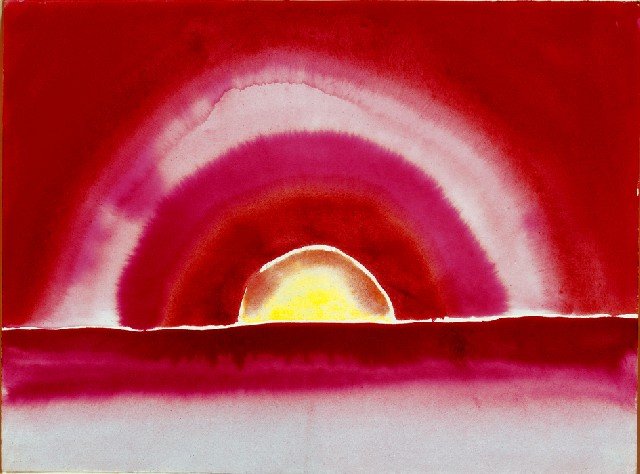
Georgia had been living in Canyon, Texas, a small town south of Amarillo and in the autumn of 1916 she had taken up a post as head of the art department at West Texas State Normal College (now West Texas A&M University) and remained there until February 1918. The rugged area around Canyon such as the Palo Duro Canyon fascinated O’Keefe and she visited there many times gaining inspiration for her paintings. She would spend hours witnessing the bright and shimmering sunrises and flaming sunsets and it could have been this explosion of colour that changed her mind about restricting herself to black and white drawings

Sunrise by Georgia O'Keefe (1916)
Sunrise by Georgia O’Keefe (1916)

Georgia O’Keefe and Alfred Stieglitz although living thousands of miles apart corresponded regularly and once again fate played a part in the course of her life. In this case fate came in the form of an influenza epidemic which, in 1918, was sweeping across America and which killed around 750,000 people. Georgia was struck down by it in the February and her recovery was slow and prolonged and she eventually had to give up her teaching post. Alfred Stieglitz was very concerned about Georgia’s health and sent his friend and fellow photographer Paul Strand to Texas to try and persuade Georgia to leave Texas and come to New York where he would support her health-wise and financially. She acquiesced and although still very ill arrived in New York in June 1918 and went to live in a studio which belonged to Stieglitz’s niece. Stieglitz slowly nursed Georgia back to health and during this time the couple fell in love.

Lake George, Autumn by Georgia O'Keefe (1927)
Lake George, Autumn by Georgia O’Keefe (1927)

When she was well enough she went to live with Stieglitz at his Lake George home in upstate New York. It was more than just a house and home; it was a former farm covering thirty-six-acres. It was situated along the western shore, in the southern section of the thirty-mile-long glacial lake, which was popularly known as “the Queen of American lakes”. It was here that she convalesced amongst the peace and tranquillity of the flower-filled meadows and forest areas around his family home. It was here that she would return from the bustling New York city every summer for the next sixteen years. She enjoyed to take long walks through the wooded hillsides, often took on strenuous hikes up Prospect Mountain so as to gain sight of spectacular views of the lake below, a lake on which she also enjoyed to row upon. Georgia had first been introduced to the Lake George area back in 1907, when she was a student at the Art Students League and had received a scholarship to paint in the region. O’Keefe and Stieglitz would spend the winters in their apartment in New York and from April to September or October would live in the large house on the banks of Lake George.

Georgia painting at Lake George (1918)

However there were many people descending on the property during the summer months. Relatives and friends of Stieglitz and his family were always coming and going throughout the summer months so much so the peace and tranquil life O’Keefe had hankered for was lost. Georgia desperately wanted a calm and quiet time alone to concentrate on her work. The problem was resolved when she persuaded Stieglitz to allow her to use a small wooden farm building which was part of the estate for her own private studio. It was on its own, in a field on a hill above the house. She had found solitude at last where she could shut out everybody and concentrate on her work. Her pleasure at being at Lake George was clear in a letter she wrote in 1923, to her friend, the American novelist and short story writer, Sherwood Anderson:

“…I wish you could see the place here – there is something so perfect about the mountains and the lake and the trees – Sometimes I want to tear it all to pieces – it seems so perfect – but it is really lovely – And when the household is in good running order – and I feel free to work it is very nice…”

My Shanty, Lake George by Georgia O'Keefe (1922)
My Shanty, Lake George by Georgia O’Keefe (1922)

Georgia produced a number of works featuring her new summer surroundings and even one, in 1922, of this new” bolt hole”. It was entitled My Shanty, Lake George. It is a simple yet atmospheric depiction of the isolated old farm building which became her summer studio, away from the distractions of the big lake house. In a way it is a reflection of O’Keefe’s desire for solitude. There is a noticeable contrast between the man-made object and nature. The flat geometric depiction of the building is in complete contrast to the curves of the trees and the hills. There is also a great contrast in colour. The sombre dark colours of the building itself is in contrast with the softer pinks and oranges used for the wildflowers and the greens of the grass in the foreground. The darkness of the shanty is however vividly lightened by the intense white window frame and mullion and they serve as the paintings focal point. In the background we can see blue-black sweep of the hills, above which are dark storm clouds.

Georgia O’Keefe painted many pictures featuring Lake George. As far as the composition is concerned they were often very similar. The top third of the painting was dedicated to the mountains. The middle ground of the work was a depiction of the lake and in the foreground were the trees.

Lake George (formerly Reflection Seascape) by Georgia O'Keefe (1922)
Lake George (formerly Reflection Seascape) by Georgia O’Keefe (1922)

However in the case of her 1922 painting, Lake George (formerly Reflection Seascape) the well tried composition changed and the shoreline of the lake disappears and the work almost becomes an abstract one. The colours and tonal quality of this work are so beautiful that if trees had been added to the foreground they would have been a distraction and detracted from the overall depiction.

Emmeline Obermeyer (c.1910)

On face value, this falling in love between Georgia, the artist and Alfred, the photographer and living together in New York and the family home at Lake George seems an idyllic situation but there was one problem, one major problem – Stieglitz was already married! In November 1893, after a great deal of pressure from his family who wanted to see him settle down with a wife, Alfred Stieglitz had married Emmeline Obermeyer. He had known her for a number of years and she was the sister of his close friend and business associate Joe Obermeyer. It was not a marriage based on love. They were an oddly matched couple and in his book, The Love Lives of the Artists: Five Stories of Creative Intimacy, Daniel Bullen writes about this mismatch:

“…Stieglitz was twenty-nine – and she had always been sheltered by her family’s considerable brewery wealth, so they were incompatible from the beginning. Stieglitz had already lived with a prostitute, and Emmy was not his choice of wife. She had not met him on artistic grounds, and she refused to pose nude for him: by various accounts, they did not consummate their marriage for between one and four years…”

As far as Emmy was concerned, it was a case of unrequited love. She loved him. He didn’t love her. Emmy had inherited money from her late father who had run a brewing empire. Could it be that Emmy’s wealth smoothed over Stieglitz unhappiness with the marriage, especially as around this time, his own father had lost a large amount of money on the Stock Market? The marriage was doomed to fail despite the couple having a daughter Kitty in 1898. They had nothing in common. They had no shared interests. Stieglitz soon tired of his wife and they spent long periods of time apart as he carried on with his photographic career, travelling all over Europe. Richard Whelan in his 1995 biography of the photographer, Alfred Stieglitz: A Biography, wrote that Stieglitz resented her bitterly for not becoming his twin.

Katherine, daughter of Alfred and Emmeline Stieglitz

Despite his unhappiness at being trapped in a loveless marriage and his open relationship with O’Keefe, Stieglitz could not extricate himself from his marriage to Emmy until September 1924, six years after he had originally filed for divorce. Alfred and Georgia married in late December 1924. Georgia had been somewhat reluctant to enter into marriage as she saw no point in formalising their relationship as she and Stieglitz had lived together for six years and survived the scandal attached to his extra-marital liaison. The marriage took place at the home of their friend and fellow artist, John Marin.

There was little or no pomp and ceremony to the occasion. Nobody was invited to a reception or help celebrate the marriage. In fact there was no honeymoon following the event. In her 1989 biography of the artist, Georgia O’Keefe, A Life, Roxanna Robinson, quotes O’Keefe as saying that she and Stieglitz married in order to help soothe the troubles of Stieglitz’s daughter Katherine, who at that time was being treated in a sanatorium for depression and hallucinations.

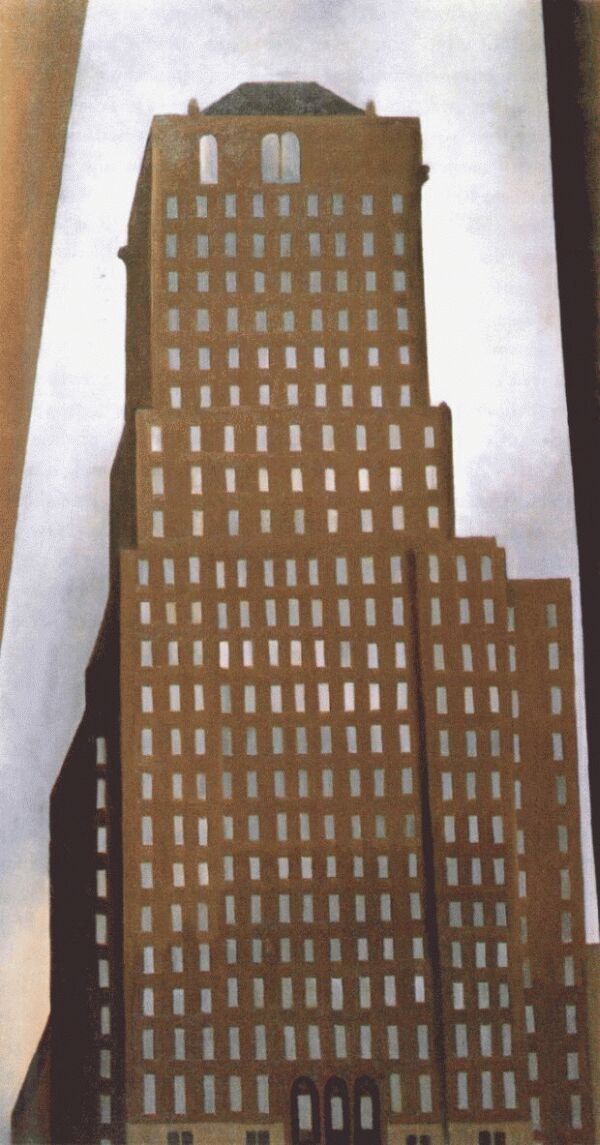
Shelton Hotel by Georgia O'Keefe (1926)
Shelton Hotel by Georgia O’Keefe (1926)

The following year, 1925, Georgia and Stieglitz moved their New York home to the Shelton Hotel in New York, taking an apartment suite on the 28th floor of the new building and it was here and the summer home at Lake George that the couple would spend the next 12 years. One can just imagine how their dual aspect apartment in the hotel, with vistas to the north and south, afforded them spectacular panoramic views of the vibrant city. Georgia began to paint pictures of the city skyscrapers, including the Shelton Hotel itself, the Radiator Building and the Ritz Tower all from a low-level viewpoint.

Radiator Building - Night, New York by Georgia O'Keefe (1927)
Radiator Building – Night, New York by Georgia O’Keefe (1927)

Her depiction of the Radiator Building in 1927, entitled Radiator Building – Night, New York is a haunting study of the magnificent building on West 40th Street, in midtown Manhattan which was completed three years earlier in 1924. The painting depicts a night scene of the building in which the illuminated windows shimmer against the dark of the building and the darkness of the night. To the right of the building we see steam and smoke slowly rising upwards from some ventilation system whilst in the left hand background searchlights scan the night sky and a red neon sign glows in the left background.

This type of painting by Georgia O’Keefe led her to be connected with an informal group of American artists who were inspired by the size and scale of modern American structures, such as bridges and skyscrapers. They were known as Precisionists or Immaculates and it was during the 1920’s and into the early 1930’s that Precisionism blossomed. Sometimes it was referred to as Cubist-Realism.

My next blog, the third part of Georgia O’Keefe’s life story, will focus on her large flower paintings and will explore her relationship with Stieglitz and her decision to live apart from him and head for the desert state of New Mexico which was to influence her later art.

Georgia O’Keefe. Part 1 – The early years and the “Specials”

Georgia Totto O'Keefe photograph by Alfred Stieglitz (1918)
Georgia Totto O’Keefe
photograph by Alfred Stieglitz (1918)

If I was to ask you who was the most quintessential American artist, I wonder whom you would choose. Would you go for one of the nineteenth century Hudson River School artists such as Frederic Church, Asher Durand and Thomas Cole or would you select one of the pioneering and tenacious American female painters who fought hard to gain a foothold in the male dominated world of art, such as Mary Cassatt and Elizabeth Jane Gardner. Perhaps you would decide on one of the great twentieth century painters such as Andrew Wyeth or Edward Hopper or the folk artist Grandma Moses. Then of course, let us not forget, there is John Singer Sargent and James McNeill Whistler and naturally there are the modern greats of American art such as Rofko, Warhol, Pollock and de Kooning. I suppose it is impossible to single out one from the list of artists who paint in so many different genres. However, for me, the painter who symbolises America is Georgia O’Keefe and in my next blogs I will look at her life and feature some of her best-loved paintings.

The O'Keefe farmhouse. outside Sun Prairie, near Madison, Wisconsin
The O’Keefe farmhouse.
outside Sun Prairie, near Madison, Wisconsin

Georgia Totto O’Keeffe was born on November 15, 1887, the second of seven children. She was the eldest of five girls and had a younger and elder brother. Her father, who was of Irish descent, was Francis Calyxtus O’Keefe, who ran a successful farmstead on the outskirts of the village of Sun Prairie, Wisconsin, along with his wife Ida Ten O’Keefe (née Totto), whose maternal grandfather was a Hungarian count. The farm was spread over 1700 acres of land on which they raised cattle, horses and grew crops. When Georgia was five years of age she attended the small one-roomed South Prairie Town Hall school. She progressed well and she and her siblings were constantly being pushed to learn by their mother, who would read stories to her children and play the piano for them. In fact Georgia went on to play both piano and violin.

At the age of eleven Georgia developed an interest in drawing and painting and so her mother arranged private art tuition for her and two of her sisters, Ida and Anita. Georgia revelled in what she learnt, She then attended the Sacred Heart Academy in nearby Madison as a boarder and in a conversation with a friend and fellow 8th grade pupil she talked about her future dreams:

“…I am going to be an artist!…..I don’t really know where I got my artist idea…I only know that by that time it was definitely settled in my mind…”

The O'Keefe's house in Williamsburg
The O’Keefe’s house in Williamsburg

In 1902 her family moved to Williamsburg, Virginia but Georgia, who was fifteen years old, stayed behind for a short time with her aunt. Soon after she re-joined her parents in Peacock Hill, a suburb of Williamsburg and enrolled as a boarder at the private Chatham Episcopal Institute for Girls. She continued to love art and her artistic talent was recognised by all and her fellow students elected her art editor of the school yearbook. In her yearbook was written the telling verse:

“…O is for O’Keefe.

an artist divine.

Her paintings

are perfect and

drawings are fine…”

In 1905, Georgia, now seventeen years of age, graduated from high school and enrolled at the Art Institute of Chicago. It was here that she honed her skills as an artist and studied composition, anatomy and life drawing. Her anatomical drawing class tutor was John Vanderpoel, the Dutch-American artist and teacher, who was best known as an instructor of figure drawing and whose 1907 book, The Human Figure, became a standard art school resource. Georgia O’Keefe excelled at the Academy and all was going well until the summer of the following year when she went home and contracted typhoid and was so ill that she was unable to rejoin the Academy. She had to remain at home to recuperate for more than twelve months.

Dead Rabbit with Copper Pot by Georgia O'Keefe (1908)
Dead Rabbit with Copper Pot by Georgia O’Keefe (1908)

When she finally got her health back in 1907, she decided to resume her art career but instead of returning to Chicago she enrolled at the Arts Student League of New York which was one of the top art colleges of the time. One of her tutors was William Merritt Chase, who was one of the foremost art teachers of his generation. At this institution aspiring young artists were trained in the European tradition, namely, learning to paint portraits and still-lifes. Once again her artistic talent shone through and the following year she won the League’s William Merritt Chase still-life prize for her oil painting Untitled (Dead Rabbit with Copper Pot). Her prize was a scholarship to attend the League’s outdoor summer school at Lake George, in upstate New York, east of the Adirondack Mountains.

In 1908 things changed for Georgia. The Arts Student League of New York wanted to keep to the European tradition of art tuition, copying in the style of the Old Masters. It was a conservative formula and one will never know whether it was this rigid mimetic way of teaching art that disillusioned Georgia, but at the end of her year’s tuition in the autumn of 1908, she decided that she no longer wanted to become a professional artist. Another reason for giving up on her art studies was that her father’s business had collapsed and the family was in need of an extra income and so Georgia gave up her studies and embarked on a career as a commercial artist in Chicago where she spent her time designing adverts and company logos. She did not paint another picture for four years.

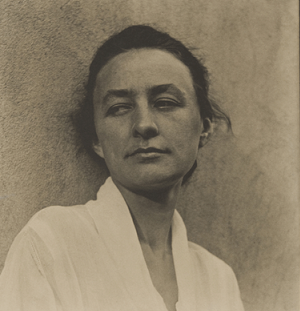
Georgia O'Keeffe, aged 30
Georgia O’Keeffe, aged 30

This artistic drought ended in 1912 when she attended a summer course at the University of Virginia in Charlottesville where one of the classes was run by Alon Bement of the Teachers College, Columbia University, in New York City. It was Bement who introduced O’Keefe to the radical thinking of his colleague, Arthur Wesley Dow, the head of the Faculty of Fine Arts at New York’s Columbia University Teachers College. Dow believed in the Modernist approach to art and postulated that rather than just copying nature, art should be created by the various elements of composition such as line, mass and colour. He put his thoughts into words in his 1899 book entitled Composition: A Series of Exercises in Art Structure for the Use of Students and Teachers. He summed his thoughts up in the introduction to the second edition of the work which came out in 1912. He wrote:

“…Composition … expresses the idea upon which the method here presented is founded – the “putting together” of lines, masses and colors to make a harmony. … Composition, building up of harmony, is the fundamental process in all the fine arts. … A natural method is of exercises in progressive order, first building up very simple harmonies … Such a method of study includes all kinds of drawing, design and painting. It offers a means of training for the creative artist, the teacher or one who studies art for the sake of culture…”

Georgia O’Keefe who had tired of the mimetic teachings of the academy was enthralled by Dow’s ideas and her love for art was rekindled. In 1912, she moved to Amarillo, Texas, where she had accepted a position as supervisor of art in the city’s public schools. She took up a post in the August of 1912 as an art teacher at City Public School of Amarillo but she returned to the University of Virginia’s to attend the summer course the following year; this time as an assistant to Bement and in the autumn of 1914 she went back to New York and enrolled for two semesters at Columbia University Teachers’ College where she studied under Dow himself. It was around this time that she discovered the work of Arthur Garfield Dove. Dove, an American modernist painter, who has often been labelled as the first American abstract artist. He placed great emphasis on the artist’s subjective experience of his surroundings and on the intrinsic emotional power of colour and line rather than just copying from nature. To Georgia this was not just a revelation but it was the kind of art, which she believed in and it was to influence her art for the rest of her life. For her, it was inspirational, and she happily set off on a new artistic journey. She was excited at the new ideas which flooded her brain and described how she felt:

“…I said to myself ‘I have things in my head that are not like what anyone has taught me – shapes and ideas so near to me – so natural to my way of thinking that it hasn’t occurred to me to put them down.’ I decided to start anew – to strip away what I had been taught – to accept as true my own thinking……. I was alone and singularly free, working into my own, unknown – no one to satisfy but myself…”

You can sense her joy. You can sense her feeling of casting off the shackles of rigid academic teaching. You can sense the elation in the way she saw her future.

Drawing XIII by Georgia O’Keeffe, 1915

In September 1915, she accepted a teaching post at Columbia College, South Carolina and it is around this time she begins to experiment with her art, producing a series of amazing cutting-edge charcoal abstract drawings. One such drawing was entitled Drawing XIII which was completed in 1915. In this work we see that the image is sub-divided into three parallel sections. The left hand section has wavy vertical lines which reminds one of a meandering river although some say it is more like a vertical flickering flame reaching upwards. The central part of the work consists of four rounded bulbs which if we continue with our thoughts of nature could then be construed as round top hills. An alternative to this premise is that they are four densely foliated trees. The right hand section comprises of a series of jagged lines which could be a representation of mountains and so in a way this drawing may be a bird’s eye view of a range of mountains and a flowing river with trees separating the two.

Early No. 2 by Georgia O'Keefe (1915)
Early No. 2 by Georgia O’Keefe (1915)

Another of her charcoal works was entitled Early No. 2 which she also completed in 1915. O’Keefe has followed the advice of Arthur Dow and focused on the lines, shapes and tonal values which she, like Dow, believed were the fundamentals of the picture. Her reasoning behind these early drawings being in black and white and devoid of colour was her belief that colour would distract viewers from what she had hoped to create. It was all about curves and geometrical shapes and the clever balance between areas of the work which were light and shaded.

No. 12 Special by Georgia O'Keefe (1916)
No. 12 Special by Georgia O’Keefe (1916)

Georgia O’Keefe was proud of her first foray into this new world of art and she would often refer to these early drawings as “Specials” indicating how much they meant to her. She mailed some of these drawings to her friend, Anita Pollitzer, who had been a Columbia classmate of hers. Pollitzer, who was now a photographer in May 1916, took them to show the internationally reknowned photographer and art impresario, Alfred Stieglitz, who had his gallery, 291, at 291 Fifth Avenue, New York. Stieglitz was impressed with what he saw and described them as:

“…the purest, finest sincerest things that have entered ‘291’ in a long while…”

Special No. 15 by Georgia O'Keefe (1916)
Special No. 15 by Georgia O’Keefe (1916)

Unbeknown to O’Keefe, Stieglitz exhibited her drawings at his gallery alongside works by other artists. When O’Keefe found out about this, she was not best pleased but later forgave him. This initial collaboration between artist and gallery owner was to be a turning point in Georgia O’Keefe’s artistic life.

…………….to be continued.


Mary Cassatt – Mother and Child – Part 2

Mary Cassatt
Mary Cassatt

As a follow-on from my previous blog I want to feature some more works by Mary Cassatt which feature the close relationship between mother and child. Mary Cassatt had always been enthusiastic about painting mothers and their children and this passion was once more awakened when, in 1880, Cassatt’s brother, Alexander, arrived in Paris with his young family. Their arrival renewed Cassatt’s interest in depicting children, and her nephews and nieces now provided the opportunity for Cassatt to study and paint children from life. She would often use her brother’s family as models. She would also use local women as her models for her paintings rather than employ professional models as, first of all, she did not believe that professional models would agree to sit for her, but secondly and more importantly, she was of the opinion that professional models posed self-consciously and that would destroy her objective of producing a natural mother and child portrait. As in most of her paintings, Cassatt did not seek to glamorise or sentimentalise her subjects; instead she wanted to depict the mothers as honest, clean-living, good-looking women.

Emmie and her Child by Mary Cassatt (1889)

The first mother and child work by Mary Cassatt that I am featuring is one she completed in 1889, entitled Emmie and Her Child. We can clearly see the influence of Impressionism in this work. Before us, we see a young child sitting on his or her mother’s knee. Look how relaxed the young child is as he gazes out at something off-canvas. The child rests his right hand on the mother’s chin. It seems to be almost an unconscious gesture. It assures him of her presence. It is not a demanding or needy gesture. His left hand is placed on his mother’s hand which encircles his waist. He is at ease. He feels secure in the close presence of his mother. The mother looks down lovingly at her child. She wraps her arms around her child offering comfort. She too is relaxed, content and happy.

There is a pleasing tranquillity about the depiction of mother and child. This tranquillity is enhanced by the colours Cassatt has utilised in this work. There is a lot of white but it is not a glaring brilliant white as it has been toned down by the grey, blue and brown she has added to the white. The white of the mother’s dress has also been toned down by the incorporation of a floral pattern of red roses, the colour of which almost optically masks the white of the dress. Although the white of the mother’s dress and the tinged white of the jug and bowl on the shelf in the background are less than pure it is the colour of the child’s vest which retains the pure white colour and thus makes it stand out. This pure white colour also reflects the light upwards on to the child’s face which thus cleverly captures our attention.

Baby's First Caress by Mary Cassatt (1891)
Baby’s First Caress by Mary Cassatt (1891)

My next featured work by Mary Cassatt is entitled Baby’s First Caress and was completed two years after my previous offering, in 1891. The first thing I noticed about this work was the similar way in which Cassatt has depicted the baby reaching up to touch and cup his mother’s chin with his tiny but pudgy hand. However, unlike the first painting, the baby boy is concentrating on his mother’s face. It is as if he is mesmerised by it and needs to feel the texture of his mother’s skin so as to glean some knowledge about her face. At the same time that he is touching her face she is holding his foot in her left hand, maybe soothingly stroking it with her thumb to give him some reassurance whilst her right arm which is out of sight cradles his back and keeps him secure on her knee. If we look closely, we can just make out the fingers of the mother’s right hand which the baby grasps in his right hand. She looks down at him with a loving expression. This work, unlike the first painting which was in oil, is in pastel. Once again the brilliant white of her dress has been toned down by strokes of blue as well as the hint of a red floral pattern. This has subdued the brightness of her dress and therefore does not distract us from the depiction of mother and child.

The provenance of this work is quite interesting. The painting had belonged to Louisine Waldron Elder Havemeyer. She was an art collector, fervent feminist and a patron of Impressionist art. After her father’s death in 1874, when she was eighteen years of age, her mother took Louisine and her sister to Paris. She attended the Marie Del Sarte’s boarding school where she became friends with a fellow student, also an American, Emily Sartain, and it was through this friendship that Louisine met Mary Cassatt. The two became inseparable and would often tour the Parisian art galleries and during one such visit Louisine met Degas. Cassatt convinced Louisine to invest in some of Degas’ works. It was good advice as in her autobiography Sixteen to Sixty: Memoirs of a collector, Louisine wrote that one of the works by Degas which she bought was a pastel, La Repetition de Ballett, and it cost her 500 francs (about $100 US) which was almost her week’s stipend. In 1965 her grandson George Frelinghuysen sold it for $410,000! After that first foray into the world of a buyer of artworks, Louisine and Mary Cassatt made many more art purchases and the pair of art lovers travelled all over Europe together. Louisine was introduced to other aspiring artists such as Monet and Manet. Louisine returned to America in 1880 and concentrated on becoming an art collector. Three years later she married Henry O. Havemeyer of the American Sugar Refining Company. In the years that followed she and her husband built up one of the most important private art collections. When she died Louisine’s most of the art collection went to the Metropolitan Museum of Art in New York and yet this work, Baby’s First Caress, did not, as Louisine bequeathed it to her daughter Elektra, who was the wife of the great polo player and member of the Vanderbilt family, James Watson Webb. The painting was then bequeathed to the New Britain Museum of American Art in New Britain, Connecticut where it is currently housed.

Portrait of Mrs. Havemeyer and Her Daughter Electra by Mary Cassatt (1895)

In 1895 Cassatt painted a portrait of Louisine and her daughter Electra.

Chateau Beaufresne
Chateau Beaufresne

Although based in her rue de Marignan apartment in Paris in the winter, with the occasional visit to Grasse in Provence if the winter weather was really bad, Mary Cassatt bought herself a summer residence in 1893. It was the Chateau Beaufresne which was situated fifty miles north-west of Paris in the commune of Mesnil-Théribus in the Oise department. She loved her summer home and stayed there 33 years up until 1926, the year she died. Of the country house she once said:

                                     “…I have two loves, my country and Beaufresne !…”

Reine Lefebvre Holding a Nude Baby by Mary Cassatt (1902)

My final offering is an oil painting by Mary Cassatt which she completed in 1902 and is entitled Reine Lefebvre Holding a Nude Baby. It was at Chateau Beaufresne that she completed this mother/daughter work. Reine Lefebvre was a local woman and neighbour and featured in a number of Cassatt’s works between 1902 and 1903 as well as being depicted in a number of preparatory sketches for this finished work. This oil painting of Reine and her baby was the culmination of many sittings and many preparatory sketches. We see the mother with her arms crossed together around the legs of the baby forming a platform for her to sit upon. She wears an orange robe and the simple flecks of white paint give it a polka-dot appearance. The addition of what looks like a red collar or scarf around Reine’s neck cleverly draws our eyes towards the faces of the mother and baby. The artist wants us to concentrate on the faces of her two characters. The lack of any objects in the plain dark background means that we focus purely on mother and baby.

Cassatt’s desire for realism extends to the depiction of the baby, which she has been portrayed as still having a fat stomach, which infants often have during the early days. The baby has wrapped her arms around Reine’s neck. They both focus on a point off-canvas. Reine’s eyes look tired. Once again Cassatt has avoided sentimentality in this work and the mother’s weary look is a true depiction of the tiredness that often goes hand in hand with a mother coping with a young baby. It would have been so simple to portray Reine as a person full of life with a loving smile for her baby but this portrayal of her is a realistic one and one that Cassatt believed was the way to depict a mother with her child. It is an honest portrayal and lacks sentimentality and hype.

In my two blogs featuring the mother/child portrayals by Cassatt I have constantly talked about her determination to avoid sentimentality which was often seen in works by other artists. The writer Joris-Karl Huysman was forthright in his condemnation of such artists who over-sentimentalised mother and child portrayals when he wrote about the way them. He wrote:


“…The bunch of English and French daubers have put them in such stupid and pretentious poses!…”


He went on to acknowledge the realism of Mary Cassatt’s work with its hint of Japonisme, writing:
“…[her works were]… irreproachable pearls

Mary Cassatt’s Mother and Child works. Part 1

Mary Cassatt 1844 - 1926
Mary Cassatt
1844 – 1926

Having just become a grandfather for the third time last week I thought I would look at a painter who depicted mother and child in such a loving way and with breathtaking brilliance.  My featured artist is the American painter Mary Stevenson Cassatt. In my next two blogs I will look at her paintings which feature children or mothers and their children. Despite never having married or having any children herself, she managed to capture, in her works of art, the essence of a mother-child relationship.  These paintings were not sugary idealisations of mother and child but a realistic and natural representation of that great love between the two.

Little Girl in a Blue Armchair by Mary Cassatt (1878)

My first offering is just of a child and it is her oil painting entitled Little Girl in a Blue Armchair.  She completed it in 1878 whilst living in Paris and submitted it for inclusion at that year’s Exposition Universelle, but it was rejected.  She was furious at the rejection as she had been confident about its acceptance having already had some of her works accepted at earlier Salons.  She was scathing of the three-man judging panel and later, in a letter to Ambroise Vollard, the Parisian art dealer, she wrote of her annoyance:

“…It was the portrait of a friend of M. Degas. I had done the child in the armchair and he found it good and advised me on the background and he even worked on it. I sent it to the American section of the big exposition [of 1878], they refused it … I was furious, all the more so since he had worked on it. At that time this appeared new and the jury consisted of three people of which one was a pharmacist ! …”

This rebuff by a jury system, which of course was similar to the way in which artists had paintings accepted for the Salon exhibitions, annoyed Cassatt and this is probably why she became friends with the Impressionist artists (although she and her friend Degas always referred to the group as the Independents) who railed against the Académie and its jurist system of accepting works into the annual Salon exhibitions.  The failure to have the work accepted by the jury was not only a rejection of Cassatt’s efforts but, unknown to them, it was a snub to Degas himself, who had helped her with the painting’s background and the light source we see from the rear windows. He had also supplied the model who was the daughter of one of his friends. It is thought that she exhibited the work two years later, in 1879, at the Fourth Impressionist Exhibition in Paris, as Portrait de petite fille.

Paris at the time was revelling in the arrival of all things Japanese.  Woodcut prints, fans, clothing and silk screens were all in great demand and Cassatt was an avid collector of these prints.  In this painting we can see the Japanese influence in the way Cassatt has close-cropped all four sides of the work even though it meant having parts of each of the four colourful blue arm cut out of the painting.  The chairs are arranged in such a way that they form a circle around an oddly dull-grey coloured floor.  The upper part of the windows in the background is also cropped.  The only things to avoid this cropping technique are the little girl and her pet griffon dog, which lies lethargically on the adjacent armchair.  I like the way the child is depicted.  Although the setting and the furniture have been carefully “stage-managed”, the girl herself seems to be less “posed”.  The only manipulation of the child would be the clothes she wears which would probably not be her ordinary daytime attire.  Whilst modelling for this painting, she has been made to wear fashionable clothes with a tartan shawl which match her ankle socks.  Her hair has been well groomed and now has a bow in it.  Her shoes are highly polished and the light catches their metallic buckles.  However, it is a realistic pose.  The young girl is slumped in the armchair and she exudes an uninterested demeanour obviously tired of posing for the artist.  She is almost sullen in her deportment as she stares into space.  How many times have we witnessed children slumped in an armchair or a couch complaining they have nothing to do and are bored?   How many times have we looked upon our children in a similar pose and told them to “sit up and look lively”?  This is such a life-like pose and is testament to Cassatt’s observational powers.  The painting is housed in the National Gallery of Art in Washington.

Breakfast in Bed by Mary Cassatt (1897)

My next offering is Mary Cassatt’s 1897 work entitled Breakfast in Bed which is now housed at the Huntington Library and Art Collection, San Marino, California.  In this oil painting we see a young mother lying in bed, with her arms wrapped around her young child. Is the embrace a sign of motherly love?  Maybe the embrace is to hold her secure from falling off the bed but I am going to hazard a guess that the mother just wants to hold the child still so she does not run off and cause some mischief !   It is interesting to look closely at the faces of the mother and child.  Their expressions are so different.  The mother lies back with her head on the pillow and gives her child a sideways glance.  She looks tired almost as if she is unable to lift her head from the pillow.  It could be that she has returned to bed after making herself a cup of tea and brought her child with her so she doesn’t have to wonder what the lively toddler is up to when out of sight.  The mother’s tired expression tells us that she would just like another thirty minutes of peace and quiet but looking at the child’s expression it will be an unfulfilled aspiration.  In contrast, look at the child.   She is wide awake, her eyes alert as she concentrates on something which is outside the painting.  I am sure she is pondering on her next act of devilment.


Mary Cassatt's Modern Woman Mural
Mary Cassatt’s Modern Woman Mural

Mary Cassatt left her homeland, America, and had been living in Paris since 1866.  As an artist she did not become famous back in her homeland until 1893 when she was commissioned to paint a mural for the 1893 World Columbian Exhibition and Fair at Chicago.  The position of the proposed mural was the tympanum over the entrance to the Gallery of Honour in the Women’s Building.  A tympanum is the semi-circular or triangular decorative wall surface over an entrance, which is bounded by a lintel and arch.  Her mural, which measured 12ft x 58ft, was in the form of a triptych. The central panel of the triptych was a depiction of an orchard setting and entitled Young Women Plucking the Fruits of Knowledge or Science.  The Women’s Building at the exhibition was a showcase of women’s advancement throughout history and Cassatt’s mural was an allegorical work in which we see women picking fruit from trees and handing it down to younger women who were collecting it.

Central panel of triptych

This central panel was meant to symbolise women picking “fruit” from a contemporary “tree of life” and passing it (knowledge) on to a younger generation.  Unfortunately after Exhibition, the Women’s Building was pulled down and Cassatt’s mural was lost but fortunately some black and white photos were taken of the work.

Baby reaching for an Apple by Mary Cassatt (1893)

So what has all this go to do with my theme of mother and child?  The reason is simple.  My next featured painting by Cassatt was a kind of spin-off from the lost Exhibition mural.  It is entitled Baby Reaching for an Apple and was also completed by Mary in 1893 and now resides in the Virginia Museum, Richmond, Virginia. In the painting we see the mother holding down the branch of the apple tree to allow her young child to reach up and grasp the fruit.  There is a beautiful contrast in colour between the green of the background and the leaves of the tree with the lustrous pink of the mother’s dress, her face and the baby’s body. Note the difference in subdued tonality of the lower part of the mother’s dress with the much brighter pink of the dress that encloses her upper torso and this is reciprocated in the background with the much darker green of the lower half in comparison to the brighter green of the upper background.  Cassatt has obviously spent much time depicting all the apples hanging from the branches.  All are different, all are beautifully painted.  It is a very tender depiction.

Maternal Caress by Mary Cassatt (1891)

My final offering for this blog is a painting which Mary Cassatt completed in 1891 and is entitled Maternal Caress.  It is a colour drypoint and aquatint on cream laid paper, which is presently housed in The National Gallery of Art in Washington.  It is a small work measuring just 36.8 x 26.8 cm (14.5ins x 10.5ins).  Once again this work harks back to the Japanese influence in her work.  Cassatt had seen the exhibition of Japanese woodcuts, which were on display at the École des Beaux-Arts, and it’s is apparent that she wanted to similarly create prints that captured these somewhat audacious designs. The background wallpaper is an orange-brown with a floral motif, which matches that of the upholstery of the armchair.   Against the wall lies a wooden bed with the white fluffed-up bedding which has a softening effect on the depiction.  The mother and child take centre stage in the painting and Cassatt has spent a lot of time creating the intricate detail of the print of the woman’s dress which gives it a hint of Japonism.

It is not known who modelled for this work but it could have been a friend or relative of hers as she often got them to pose with their children for her paintings.  Once again this is a realistic depiction.  It lacks sentimentality.  There is nothing idealized with the mother/child pose we see before us.  It is, to some extent, simply an awkward hug of a child as he seeks comfort from his mother.  She looks very concerned.  Her eyes are closed as if she could not bear to look at her distraught child.  Her left arm is wrapped tightly around her child hoping that the body to body contact will offer some reassurance to her young charge.  Her right arm supports the bottom of the naked child.  The child desperately throws his or her arms around the neck of the mother desperately seeking reassurance.  This genre of mother/child paintings and prints was very popular at the time and Mary Cassatt sold many prints of this work.

In my next blog I will continue looking at works by Mary Cassatt and her fascination with the Mother and Child theme.

Seymour Joseph Guy

At the Opera by Seymour Joseph Guy (1887)

I was looking at the website of a person who had commented on one of my blogs and I was fascinated by a painting he had posted.  I had to find out more about it and the artist who had painted it.  The title of the work is At the Opera and the creator of the work was the nineteenth century English-born,  American genre painter, Seymour Joseph Guy.  Genre paintings are works, which depict one or more persons going about their every day life.  They could be scenes in the kitchen, at the market or in a tavern and they are nearly always realistic depictions, lacking any sense of idealisation.  They are “warts and all” depictions of life.  Seymour Joseph Guy’s later works, which were often quite small “cabinet pieces”, concentrated mainly on depictions of children.  His works were meticulous in detail.

 Seymour Joseph Guy was born in 1824 in England, in the south London borough of Greenwich.   His father was Frederick Bennett Guy who owned an inn as well as a number of commercial properties.   His mother was Jane Delver Wilson.  Seymour had an elder brother, Frederick Bennett Guy Jnr. and a younger brother, Charles Henry.  When Seymour was five years old, his mother died and he and his brothers were brought up by their father.  Four years later their father died and the executors of their late father’s will were John Locke who was the owner of the inn called the Spanish Galleon and a local cheese merchant and friend of Seymour’s father, John Hughes.   It is the thought that the three orphaned boys came under the legal guardianship of one of these gentlemen.  Seymour’s schooling was at a local school in Surrey and it was during these early informative years that he took an interest in art and he liked to spend time drawing dogs and horses.   He enjoyed drawing so much that, when he was thirteen years old, he made it known that he would like to become an artist, or maybe a civil engineer.  This choice of career did not go down well with his guardian who actively discouraged the teenager, going as far as stopping his pocket money so he couldn’t buy any pencils and sketchbooks and that he believed would force his charge to abandon his artistic plans.  Seymour was not to be put off and despite his lack of pocket money; he managed to earn enough to buy his own drawing materials by becoming a part time sign-painter.

Open Your Mouth and Shut Your Eyes by Seymour Joseph Guy (c.1863)

Seymour Guy continued with his ambition to become a painter and in his late teenage years received some artistic tuition from Thomas Butterworth.  Butterworth, who had served as a seaman in the Royal Navy during the Napoleonic wars period, lived in Greenwich and was a marine painter.  His guardian decided that a good career for Seymour, and in line with his artistic ambitions, would be to become an engraver.  However the cost of an apprenticeship to learn the engraving trade was prohibitive and this proposed profession had to be abandoned and instead his guardian arranged for Seymour to begin a seven-year apprenticeship at an oil and colour firm which oversaw the making of pigments, preparing binders, as well as combining the two skills in order to make paint either by hand-grinding them or using a steam driven machine.   This was a valuable experience for Seymour as he learnt the intricacies and expertise of mixing various pigments which he would himself use in the future for his own paintings.

In 1845 Seymour’s legal guardian died. It was also a time, when having reached the age of twenty-one, the brothers’ late father’s estate was split between them.  In Seymour’s case this also coincided with the end of his seven-year apprenticeship at the colour factory.    Seymour Guy was twenty-one years of age and now had sufficient money to pursue his dream of becoming a professional painter.  A friend offered to sponsor him to enable his entrance to the Royal Academy but instead he decided to work on his own and so he obtained a copying permit and took his easel and brushes to the British Museum where he copied some of the works of art.  Understanding that working alone was not the answer to learning about art he also enrolled at the studio of the portrait and historical painter, Ambrosini Jerome, who had received a number of commissions from the English royal family.  Seymour Guy was to work with Jerome for the next four years.

The Crossing Sweeper by Seymour Joseph Guy (c.1860's)
The Crossing Sweeper by Seymour Joseph Guy (c.1860’s)

In 1852, aged twenty-eight, Seymour married Anna Maria Barber, who was the daughter of William Barber, an engraver.  The couple went on to have nine children, many of whom were used by Seymour as models for his genre paintings.  Two years later in 1854, Seymour moved his family from London to New York and settled in Brooklyn.  Here he set up his studio in Brooklyn Heights, played a leading role in the art life of the city and founded the Sketch Club and it was during these early times in Brooklyn that he met and became a close friend of another genre painter, John George Brown.  Brown who was also English-born had left his home in Durham and immigrated to America in 1853.  This close bond of friendship probably stemmed from them both being English born, and both genre painters who liked to concentrate on small-scale works which gave them the opportunity to demonstrate their intricate minute workmanship.   In those early days in Brooklyn Seymour Guy also completed a number of portraits of leading local figures.

In 1861, the two friends, Seymour Guy and John Brown, decided to move their studios from Brooklyn to the more fashionable Manhattan.  Seymour Guy had his studio on Broadway whilst John Brown moved into the Tenth Street Studio Building. Two years later Guy decided to leave his Broadway studio and move into the Tenth Street Studio Building.  The Tenth Street Building, which was on 51 West 10th Street, between Fifth and Sixth Avenue, was constructed in 1857 and was the first modern facility designed exclusively to the needs of artists.  Soon it became the hub of the New York art world and would remain so for the rest of the nineteenth century.  It was to be the home for many famous American artists including Winslow Homer, Frederic Edwin Church, William Merritt Chase and Albert Bierstadt.

Summer Issue by Seymour Joseph Guy (1861)

The genre work of John Brown with its depiction of young children in rural settings influenced Seymour Guy for around about 1861 he too started to produce similar depictions. Around this time, the two artists made a number of ferry trips across the East River,  to escape the manic setting of the big city, to the tranquil setting of Fort Lee in New Jersey.  The two artists liked the peace and quiet so much that they decided to quit Manhattan and move home to the New Jersey countryside.  Brown went in 1864 and Seymour Guy followed with his family two years later.  Seymour Guy and his family lived the quiet existence in the country for seven years until in 1873 when they moved back to Manhattan where they remained for the rest of their life.

Seymour Joseph Guy died in 1910, aged 86, by which time his art was out of vogue and he was almost completely forgotten as an artist.   During that first decade of the twentieth century Guy’s health had begun to fail and his role as an artist seemed simply to have acted as an elder statesman to younger artists who sought out his vast knowledge about the art and the craft of painting. One of the most complimentary eulogies to him following his death appeared in the Century Association’s annual journal, which stated:

“…He is remembered with deep affection by artists who came to him as to an older man of recognized position. He was most genial, cordial, and ready to place himself and the methods of his art at their disposal, rejoicing in their companionship and keeping himself young through participation in their pursuits. For twenty-two years he was of the rare artistic fellowship of The Century, though of late years, through the infirmities of age, seldom here…”

The Contest for the Bouquet.  The Family of Robert Gordon in Their New York Dining-Room  by Seymour Joseph Guy (1866)
The Contest for the Bouquet. The Family of Robert Gordon in Their New York Dining-Room by Seymour Joseph Guy (1866)

In 1866 Seymour Guy completed a painting entitled The Contest for the Bouquet: The Family of Robert Gordon in Their New York Dining-Room, which is a combination of a group portrait and a genre work.  It is a conversation piece sometimes referred to as a narrative painting.  Seymour had received the commission from the head of the family, Robert Gordon, a British-born financier and an avid collector of American art, who was also a founding trustee of the New York Metropolitan Museum of Art.  The commission was for the portrait of Gordon’s wife, Frances, and four of their children.  In this charming family portrayal we see the three older children of Robert Gordon playfully fighting to gain hold of a small floral corsage.  The elder boy, who is by far the tallest, holds the flowers aloft out of the reach of his sister whilst his brother stands on a chair to help him reach the “prize”.   To the right we can see the youngest child sitting on her mother’s lap, clinging to her, in order to avoid her three siblings.  The setting is the family dining room and appears to be around breakfast time as the three older children are already dressed in their school clothes.

The Story of Golden Locks by Seymour Joseph Guy

The final two paintings I am featuring were set in the same room.  The painting The Story of Golden Locks by Seymour Guy was completed around 1870 and in it we see a young girl reading the story of Goldilocks to two young boys, probably her brothers.  The storyteller is very animated and for the two young listeners it has probably turned the story telling into a somewhat nightmarish tale.  Look at their faces.  They are wide-eyed, unsure whether they want to hear more.  Maybe the frightening shadow of the girl’s head on the curtain above their bed has added to their trepidation.  On the chair next to the bed is the girl’s doll which lies in a drawer and this is thought to allude to the fact that the storyteller has finished with children’s toys and is transitioning between childhood and womanhood.

Making a Train by Seymour Joseph Guy (1867)

My final selected work by Seymour Guy was completed in 1867 and is entitled Making a Train.  There is an innocence about this painting although I am sure its content, the semi-nudity of a female child, would be criticised as being too salacious if it had been exhibited now.  In the same attic room as the setting for the previous work we see a young girl standing by her bed with a dress which has been lowered so that it drags along the ground like the train of a ball gown.  She looks over her shoulder to see the finished effect.   The painting is lit up by the light from an oil lamp which sits on a book on a wooden chair, to the right of the picture.  Once again Guy is depicting this young girl as moving from childhood to womanhood.  In the cabinet to the left of the picture we see a doll which has been put away.  This is the end of the era of playing with toys.  Now the interest is in fine clothing.  Her small breasts are both an evocation of her child-like innocence but also the start of her journey towards being a young woman.  In an era when realist painters liked to portray children as often sickly, dirty and poor street urchins many would have found favour with this work which depicts the young, clean, and healthy girl enjoying dressing-up.  It is thought that Seymour Guy’s daughter Anna modelled for this work.

For a further and much more detailed look at the life of Seymour Joseph Guy have a look at the website below, from which I got most of my information:

http://www.themagazineantiques.com/articles/seymour-joseph-guy/