Many of Thaulow’s best known Norwegian scenes are from Åsgårdstrand, a town 100 km south of Oslo. It had become a significant centre for artists and painters from the 1880’s. The town had been home to many internationally famous painter, such as Edvard Munch, Christian Krogh, and Hans Heyerdahl, who had either visited or lived in the town. Again, like Skagen, the reason it was popular with painters was because of its unique light which the best artists wanted to depict in their works.
Street in Kragerø by Frits Thaulow (1882)
Thaulow visited the Norwegian coastal town of Kragerø which was, and still is, a place where people went to “get away from it all”. It was a location which the great Norwegian painter Edvard Munch fell in love with, calling it ” Perlen blandt kystbyene (The Pearl of the Coastal Towns). The town of Kragerø is characterized by clear, blue water and beautiful views.
Houses in Kragerø by Frits Thaulow (1882)
However, in one of Thaulow’s paintings of the town, Houses inKragerø, we see a more realistic depiction of it. Gone are the blue water and beautiful views and instead we see an everyday view of the backs of the old houses with clothes pegged to a washing line fluttering in a strong breeze. There is a lack of bright colours, a lack of blue skies, just a simple depiction of an area of the town, “warts and all”.
Haugsfossen ved Modum by Frits Thaulow (1883)
In 1883 after a visit to Blaafarveværket, a cobalt mining and industrial company located at Amort in Modum in the Norwegian county of Buskerud, some thirty miles west of Oslo. Here there is the spectacular Haugsfossen waterfall and it was here that Thaulow completed his 1883 painting entitled Haugsfossen ved Modum. It is a spectacular painting and once again we witness Thaulow’s great talent when it comes to painting scenes which include stretches of water. The green tones used for the water when combined with shades of white in contrast to the black rocks allow us to imagine the ferocity of the water has it hurtles down the waterfall, carrying with it fallen logs.
Rialto by Frits Thaulow (1895)
Thaulow travelled to Venice on a number of occasions in the 1890’s and made many sketches and paintings of the city highlighting the city’s canals and architecture and completed many paintings of that city. In 1892, Thaulow returned once again to France but this time to make it his home. Originally, he lived in Paris but soon tired of the hustle and bustle and preferred a quieter life in the smaller towns of Dieppe, Montreuil-sur-Mer, Quimperle in Brittany and further south, the town of Beaulieu-sur-Dordogne.
Back Mills, Montreuil-sur-Mer by Frits Thaulow (1892)
Frits Thaulow had met Claude Monet when he was in Paris and a friendship between the two plein-air painters developed. Both Thaulow and Monet painted in Normandy with Monet preferring to base himself on the coast and depict the stormy sea and the windswept coastal landscapes whereas Thaulow preferred the tranquillity of painting on quiet rivers.
A Stream in Spring by Frits Thaulow
Thaulow’s weather tends to be calmer which in a way was more in keeping with his temperament. Thaulow said of himself:
“…I am more drawn to the gentle and harmonic than to the vigorous…”
Thaulow had urged Monet to paint in Norway, and the French artist finally acquiesced and travelled there in the winter of 1895, to visit his stepson, Jacques Hoschedé, who lived in Christiania. It proved a disastrous visit because of the severe winter climate with the temperature at minus twenty degrees Celsius when he arrived and because of the amount of snow falling, painting outdoors was a very difficult chore for Monet. One of the works completed during the visit was Sandvika. This small town just south-west of Oslo, looks as though it had been done in a blizzard.
Sandvika, Norway by Monet (1895)
It is interesting to note the colours used in the painting – cold blues and lavender whereas Thaulow often used gold and yellow in his winter scenes giving it a slightly warmer feeling. Maybe Monet just wanted to make sure we knew how cold and uncomfortable it was to paint winter scenes in such conditions whereas Thaulow was more forgiving.
The Akerselven River in the Snow by Frits Thaulow
Despite the adverse conditions, Monet painted twenty-nine Norwegian scenes during his two-month stay and these included at least six views of Sandvika. It is thought that the iron bridge we see in the foreground may have reminded Monet of the Japanese bridge at his home in Giverny. Monet never returned to Norway – he had had enough of the cold and inhospitable climate.
Evening in Camiers by Frits Thaulow (1893)
The Normandy coastal village of Camiers, which lies about ten miles south of Boulogne-sur-Mer, was visited by Thaulow in 1893 and that year he completed a painting depicting the village, entitled Evening in Camiers in which we see the sun setting over the dunes and rose-tinted houses caught up in the evening sunlight.
Thaulow the Painter and his Children by Jacques-Emile Blanche (1895)
Through an 1895 painting by Jaques-Emile Blanche we get an insight into Thaulow’s family life. In the portrait, Thaulow the Painter and his Children, also known as The Thaulow Family, Frits Thaulow appeared with his daughter Else, aged 15 from his first marriage and two of the children from his second marriage, Harold then aged 8 and Ingrid aged 3. The third child from his second marriage, Christian, was only born that year and does not appear in the work. The painting is housed in the Musée d’Orsay. Blanche’s portrait was presented at the Salon de la Société Nationale des Beaux-Arts in 1896, was greeted with unanimous critical acclaim, which prompted Blanche to say later that this work was the one that “made him a painter”.
The Adige River at Verona by Frits Thaulow
In the 1890’s Thaulow travelled to various European cities constantly sketching and painting what he observed. On his trip through northern Italy in 1894, he visited Verona on his way to Venice and completed a painting entitled The Adige River at Verona. In this work Thaulow used only muted colours and understated tonal harmonies which depict the view of the fast-flowing Adige River as it passes beneath the five arches of the sixteenth century Ponte della Pietra. In the background, we can see the Duomo of S. Maria Matricolare, and to the right the Sanmicheli’s campanile.
Small town near La Panne by Frits Thaulow (1905)
In the summer of 1905 Frits Thaulow spent some time with his family at La Panne, a small Flemish coastal resort. He had bought himself a small car and with this new-found transport was able to drive himself and his family to small Belgian towns in the area always looking for subjects for his paintings. One such painting was his 1905 work entitled Small Town Near La Panne. In the painting, we see small town houses nestled on the river bank and in the mid-ground a small arched bridge. Thaulow made three versions of this scene all slightly different in the way he depicted the bridge and the houses.
Evening at the Bay of Frogner by Frits Thaulow (1880)
Thaulow received several honours for his artistic work including his appointment as commander of the 2nd Royal Norwegian Order of St. Olav in 1905. He received the French Legion of Honour, Order of Saints Maurice and Lazarus from Italy and the Order of Nichan Iftikhar from Tunisia.
Johan Frederik “Frits” Thaulow 1847-1906
Thaulow developed diabetes in 1897, a time before insulin had been developed and his condition worsened over the next nine years Thaulow died in Volendam, in the Netherlands on November 5th 1906, aged 59.
Thaulow was a painter working within the framework of Realism, to which he made an original contribution. He forged a friendship with Monet and Rodin and was a valuable connection between Norwegian and French art.
As a painter, I wonder whether you have a favourite motif. Is there one aspect of your landscape work, maybe the sky, maybe trees, etc., which you feel that you excel at? If so, do you try and incorporate that feature into many of your paintings? My artist today seems to be a virtuoso when it came to depictions of water and the reflections on the surface and so many of his paintings include stretches of water. Let me introduce you to the Norwegian Impressionist landscape painter Johan Frederik Thaulow, better known as “Frits” Thaulow.
An Orchard on the Banks of a River by Frits Thaulow
Johan Frederik Thaulow was born on October 20th, 1847 in the Norwegian capital, Christiania (renamed Oslo in 1925). He was one of ten children. His father was Harald Conrad Thaulow, a wealthy pharmacist and his mother was Nicoline (“Nina”) Louise Munch. In order to satisfy his father’s wishes he carried on with his normal school and college studies and eventually attained a doctorate but his real love was for art and specifically maritime art and so, in 1870, aged twenty-three, he went to Copenhagen to try to become a marine painter.
Sailing Ships in the Strait South of Kronborg by Carl Frederik Sorensen (1857)
He enrolled on a two-year course at the Academy of Art in Copenhagen and one of his tutors was Carl Frederik Sørensen, the great Danish marine painter, whose paintings often depicted the relationship between weather and the effect it had on sea conditions.
The Mill Stream by Frits Thaulow
In 1873, Thaulow left Copenhagen and travelled to Karlsruhe where, for two years, he attended the Baden School of Art. At the time one of the professors lecturing at the academy was the Norwegian Romanticist landscape and marine painter, Hans Fredrik Gude.
Hardanger Fjord by Hans Fredrik Gude
Gude had previously been a professor at the Düsseldorf Academy of Art and through his popularity especially with his fellow countrymen, had built up a sizeable number of Norwegian students. When he left the Academy to take up a post at the Baden School of Art many followed him.
Landscape and River by Frits Thaulow
In October 1874, Thaulow married Ingeborg Charlotte Gad, whose sister Mette-Sophie Gad had married Paul Gaugin, and a year later the couple had a daughter, Nina, but the marriage ended in divorce in 1886. In September of that same year, Thaulow re-married. His second wife was Alexandra Lasson, the daughter of Carl Lasson, a noted Norwegian attorney. Alexandra was fifteen years younger than Thaulow. The couple went on to have three children, two sons and a daughter. Harald was born a year after the marriage, Ingrid born in 1892 and Christian who was born in 1895.
High Tide, Le Havre (1878) by Frits Thaulow
In 1875, Thaulow departed Karlsruhe and journeyed to Paris where he lived for most of the next four years. During his time in the French capital he concentrated on his marine and coastal paintings whilst also absorbing the exciting times of the French art scene. The year before his arrival, the Impressionists had held their first exhibition at the former Parisian studio of the photographer Nadar at 35 Boulevard des Capucines Another influence on Thaulow was the work of the French realist painter, Jules Bastien-Lepage. Thaulow believed in realism in art and considered that his fellow Norwegian artists should also consider this genre. Paris had always been popular with aspiring artists and had been fashionable among Norwegian artists. Thaulow became part of a group of Scandinavian landscape painters living in Paris, and worked with the Swedish painter Carl Skanberg, who was famous for his coastal, harbour paintings.
Skagen Painters,1883, Frits Thaulow
In the autumn of 1879 Thaulow left Paris and along with his friend and fellow artist Christian Krohg, a naturalist painter, illustrator, author, and journalist, and then the two arrived at Skagen from Norway in Thaulow’s little boat. Skagen was situated on the east coast of the Skagen Odde peninsula in the far north of Jutland. In the late 1870’s until the end of the nineteenth century, Denmark’s Skagen Art Colony became a magnet to numerous artists in the summer months who were drawn to the isolated fishing village and the quality of the light. The twilight of the early morning and evening was often referred to as the “blue hour” during which the sun is at a sizable depth below the horizon and this is a time when the remaining, indirect sunlight takes on a predominantly blue shade.
A Stream in Spring by Frits Thaulow
The Skagen area also provided beautiful and unspoiled landscapes and seascapes. The artists were hailed as part of a modern breakthrough movement, which wanted to abandon the academic tradition of neoclassical painting styles which was taught at the Academy of Fine Arts in Copenhagen and in its place these artists decided to follow the dictates of realism and naturalism which was part of the ethos of the Barbizon plein-air painters. They also became followers of the impressionist movements and by doing so, they could portray everyday life and everyday people in an un-idealized way. It was here that Thaulow’s depictions concentrated on the lives of the fishermen and the boats which had been dragged up onto the shore.
Evening at the Bay of Frogner by Frits Thaulow (1880)
After his stay in Skagen, Thaulow returned to Norway in 1880. He became one of the leading young figures in the Norwegian art scene, together with Christian Krohg and Erik Werenskiold and with them organised the first National Art Exhibit in late 1882, known as the Høstutstillingen or Autumn Exhibition. This first Høstutstillingen was held in Oslo as a radical protest the established bourgeois dominance of the Christiania Art Society and these three organisers decided that they would not let, unlike the Christiania Art Society, an artist jury to decide what could be included in the exhibition.
Thaulow spent the next twelve years in Norway. It was a period during which Realist painting based on the French model was accepted in Norway. And Thaulow’s personal interpretation of the Norwegian landscape was generally believed to be new. Although based in Norway he made several trips abroad visiting Scotland and Venice and returning to Paris
View of Overgaden, Christianshavn by Frits Thaulow (1881)
One of my favourite works by Thaulow is one he completed in 1881 entitled View of Overgaden, Christianshavn. Christianshaven is a district of Copenhagen and the Christianhaven Canal bisects the neighbourhood. Christianshavns Kanal is now noted for its bustling sailing community with numerous houseboats and sailboats, particularly in the northern half of the canal. Overgaden oven Vandet and Overgaden neden Vandet are the two streets running along each side of the waterway. Beside Thaulow’s masterful depiction of the water, look at the detailed portrayal of the buildings and cobbled walkways.
The artist I am featuring today is the South African-born, Australian portrait and landscape artist Florence Ada Fuller. She was born in Port Elizabeth, South Africa in 1867, one of several children of Louisa and John Hobson Fuller. As a child, she emigrated with her family to Melbourne. In 1883, aged sixteen years of age, Florence attended the National Gallery of Victoria Art School and for two years between 1884 and 1886 she worked part-time as a nanny.
Going Out with the Tide by Robert Hawker Dowling (c.1882)
During this period she received artistic tuition from her English-born uncle Robert Hawker Dowling, a painter of orientalist and Aboriginal subjects, as well as portraits and miniatures. He was Melbourne’s most sought-after portraitist of the early to mid 1880’s
Sir Henry Loch by Robert Hawker Dowling(1885)
One of his portraits was the 1885 one of Sir Henry Loch, later 1st Baron Loch of Drylaw, who was Governor of Victoria from1884 to 1889. This portrait was completed by 1885 and shown in exhibitions in that year.
Barak – last chief of the Yarra Yarra Tribe of Aborigines by Florence Fuller (1885)
In 1885, through the good auspice of her uncle, Florence, then eighteen years old, received a commission from Ann Fraser Bon, the Scottish-born philanthropist and a formidable woman who fought strenuously to protect the limited rights of Aboriginal people. She asked Florence to complete a formal oil on canvas portrait of William Barak, the leader of the Wurundjeri people, who was also an artist, and who became an advocate and leader in the wider Aboriginal community. The work was acquired by the State Library of Victoria. It is interesting to note how two art critics viewed the finished portrait. One complimented the way in which Fuller avoided romanticising Aboriginal people while another critic said that in his opinion the portrait was an idealisation of the man rather than a truthful portrait.
Amy, the Artist’s Sister by Florence Fuller
In 1886, Robert Dowling, returned to England and Florence gave up her work as a governess and decided to concentrate on her art, opening up her own studio in Melbourne. For all aspiring artists, to get a wealthy patron is an ideal start to their artistic career and Florence Fuller procured one by a strange turn of fate. Her uncle who had completed the portrait of Sir Henry Loch had started on a portrait of his wife but had not completed it by the time he went on his visit to London. Sadly, in 1886, aged fifty-nine, he died shortly after arriving in England. Florence was then asked by Sir Henry Loch to complete his wife’s portrait, which she did and Lady Loch was so pleased with the end result, she became Fuller’s patron.
Dawn Landscape by Florence Fuller (1905)
Florence later received tuition from the Australian landscape painter, Jane Sutherland. Sutherland, who had been born in New York, emigrated to Sydney, Australia in 1864 when she was eleven years of age. She was one of the founding members of the plein-air movement in Australia, and a member of the Heidelberg School, an Australian art movement which has often been described as Australian Impressionism. Sutherland was also one of few professional female artists and had to constantly strive for equality and fought hard to further the professional reputation of female artists during the late nineteenth century.
Weary by Florence Fuller (1888)
In 1888, Fuller completed a pair of realism paintings featuring poverty. They were entitled Weary and Desolate and both featured child poverty against the backdrop of a ship berthed at the docks in Melbourne. The powerful imagery of the painting, Weary, depicting a homeless child was a potent declaration on the disadvantaged in sharp contrast to the booming economy of the Australian city and although similar paintings by English Victorian realist artists were common this artistic work of urban realism was a shaming of Australian society and its injustice and as such, was very unusual. Look how Fuller has included the tattered advertising hoarding, its message frayed and in shreds weathered by time and the elements almost making its messages unintelligible. The title of the work is based on the poem, Weariness, by Longfellow with its opening lines:
“…O little feet! that such long years
Must wander on through hopes and fears,
Must ache and bleed beneath your load…”
Inseparables by Florence Fuller (1891)
At an exhibition of the Victorian Artists’ Society in 1889 Fuller won a prize for the best portrait by an artist under the age of 25. Another portrait of a child by Fuller which has a happier connotation is her 1890 work Inseparables which depicts a child reading her book. The joy the child gets from reading is depicted in this warm painting. One of the interesting things about studying a painting is our “take” on it. A good example of this is how this painting was viewed by two very different experts. The work was shown as part of The Edwardians exhibition at the National Gallery of Australia and the curator saw the depiction as a “love of reading”. On the other hand, the Australian art historian Dr Catherine Speck looked upon the work as being all about “subversion” because it portrayed a young woman reading and by doing so “gaining knowledge” rather than the stereotypical role of a family and home maker.
Lady in a Wicker Chair by Florence Fuller
Another of Fuller’s paintings which focused on the enjoyment of reading was her work Lady in a Wicker Chair. In the depiction, we see the lady leaning forward, as if someone is coming into the room where she is reading. She ensures that she doesn’t lose the place in her book by marking it with her hand. Look how Fuller has made sure the attention of the viewer is solely on the lady by darkening and blurring the detail of the background.
Sydney Harbour (View Across Double Bay from Darling Point) by Florence Fuller (c. 1920)
In 1892, she, accompanied by her married sister Christie, left Australia, and travelled to Cape Town to recuperate from an illness. She and her sister were the guests of her uncle Sir Thomas Ekins Fuller, a member of the Parliament of the Cape of Good Hope and it was through him that she was introduced to Cecil Rhodes, the British businessman, mining magnate and South African politician, who served as Prime Minister of the Cape Colony from 1890 to 1896. She left South Africa in 1894 but before she went she completed a painting depicting the home of Cecil Rhodes. Fuller returned in 1899 and had a number of meetings with Rhodes in order to put together studies for five portraits of him.
Whilst Yet the Days are Wintry by Florence Fuller
In 1894 Florence travelled to Europe. Her first port of call was Paris where she enrolled at the Académie Julian, where one of her tutors was William-Adolphe Bouguereau. It was at a time when French art schools had just recently opened their doors to women. This was not a popular move with many of the male artists, who felt threatened and the aspiring female painters were often held in contempt by some of the male tutors. The female students at the Académie often suffered from lowly and congested conditions. Whilst there, she exhibited her work at the Paris Salon in 1896 and again in 1897. Her works were also exhibited at the Royal Academy in 1897 and later in 1904, as well as being hung at exhibitions at the Royal Institute of Oil Painters and the Manchester City Art Gallery.
The Swan River, Perth by Florence Fuller (c.1904)
She returned to Australia in 1904 and for the next five years lived in Perth, where her sister Amy lived. Fuller held an exhibition of 41 works in Perth in 1905, and the newspaper proprietor Winthrop Hackett described one of her paintings, Early Morning, which was later purchased for the Art Gallery of Western Australia:
“…it is probably the greatest success in the domain of pure impressionism … because of its pure tone, its admirable perspective and its strongly vivid reproduction of that mysterious and evanescent but always brilliant colouring that is momentarily lent by the sunrise…”
A Golden Hour by Florence Fuller (1905)
In 1905, she completed a painting entitled A Golden Hour. When the National Gallery of Australia bought the painting in 2013 they described it as:
“…a masterpiece … giving us a gentle insight into the people, places and times that make up our history…”
The depiction is of a tranquil early evening, the end of a beautiful day. The sun is slowly setting and it gives off a warm glow over the xanthorrhoea, grasses and wildflowers, and lights up the trunks of the white gum trees. In the midground we see a couple walking side by side through the wildflowers towards the valley. Look at the mountains and the sky in the background which have been painted in many pink tones, adding tranquillity to the scene. If we close our eyes we can sense this calmness, this serenity, and soon our imagination even allows us to hear the sound of birds as they circle the gum trees. The setting of the landscape is the Darling Ranges in Western Australia, and the couple we see in the painting are John Winthrop Hackett, businessman, philanthropist and owner of the West Australian newspaper, and his new wife Deborah Vernon Hackett, née Drake-Brockman, who had married Hackett in 1905, when she was just eighteen years of age, much to the horror of her family. When exhibited in October 1905 the art critic for The Western Australian newspaper called the painting the pièce de résistance of Fuller’s exhibition. Many of the art critics of the time were also complimentary with regards to the work, citing the expertly balanced composition and the masterful way Fuller had depicted the hills and sky but most of all praised ‘the wonderful light effects which they referred to as ‘the golden glories of late afternoon’.
Deborah Vernon Hackett by Florence Fuller (c.1908)
The lady depicted in A Golden Hour also appeared in another painting by Florence Fuller, entitled Portrait of Deborah Vernon Hackett, which she completed around 1908. Hackett was born in West Guildford, Western Australia, in 1887, she was the daughter of surveyor Frederick Slade Drake-Brockman and heroine Grace Vernon Bussell and younger sister of Edmund Drake-Brockman. On August 3rd 1905, at the age of 18, she married Sir John Winthrop Hackett who was forty years her senior much to the annoyance of her family. He was a newspaper proprietor, newspaper editor, and prominent Western Australian politician. Fuller depicted Hackett compassionately. The portrayal capturing the young woman’s grace and charm. But she also conveyed the complexity of the twenty-one-year old woman’s character through the contrast between the femininity of her soft, pale-blue dress and the dramatic black hat. She gazes directly at us. It is a somewhat piercing expression questioning why we are staring at her.
Girl with a Doll by Florence Fuller (1890)
Florence Fuller joined the local theosophy society in Perth in May 1905, after attending a talk given by the enigmatic theosophist Charles Webster Leadbeater. Fuller’s time was taken up by the local branch of the society variously holding the positions of secretary, treasurer, and librarian of the local branch. She went on to paint many portraits of the leaders of the Theosophical Society. In 1911, she travelled to London and three years later journeyed to India and visited Adyar, the headquarters of the Theosophical Society.
Florence Fuller in her Studio
Later that year Fuller returned to NSW and settled in Mosman where she mainly painted miniatures. In 1920, the Society of Women Painters in New South Wales established a School of Fine and Applied Arts, with Florence Fuller appointed as the inaugural teacher of life classes. Fuller began to suffer from mental illness, which deteriorated over time, and in 1927, at the age of sixty, she was committed to Gladesville Mental Asylum where she died nearly two decades later, on July 17th 1946, aged seventy-nine. She was buried at Rookwood Cemetery, New South Wales.
The art genre I am highlighting today gets very mixed responses from people One either loves or hates the depictions. On one hand, the depictions are looked upon as delightful portraits of innocence and on the other they are viewed as mawkish, fluffy, and oversentimental. As always, the choice is yours, for, as we know, beauty is in the eye of the beholder. Let me introduce you to a foremost exponent of child portraiture and one whose style has often been compared to the Pre-Raphaelite painters or the French artist William-Adolphe Bouguereau Today my featured artist is the French-born English Victorian nineteenth century painter Sophie Gengembre Anderson.
Landscape by Charles Gengembre
Sophie was born in Paris in 1823. She was the first-born child of Charles Antoine Colomb Gengembre, a French architect, engineer and landscape artist and his English wife. Gengembre’s career as an architect began at the age of nineteen and he worked primarily on municipal commissions, such as the Mint of the City of Cassel, which he designed and helped to build. In 1814, aged twenty-four, he won second place in the Architecture category of the Grand Prix de Rom. In 1830, during the three-day July Revolution (révolution de Juillet), which saw the overthrow of King Charles X, Gengembre suffered a bayonet wound to his leg. This harrowing event occurred on the same day his son and second child, Philip, was born. Following this incident, he decided to take his family out of France and they went to live in London where he worked as an architect for the French Utopian Socialist, Charles Fourier. Gengembre and his family did eventually return to his homeland and they went to live in a small town in a remote part of France with his family, but because of his participation in the earlier revolution he was always under threat.
Its Touch and Go to Laugh or No by Sophie Anderson (1857)
When she was seventeen years of age, Sophie Gengembre Anderson received some art lessons from an itinerant portrait artist who had visited the small town where she lived. In 1843, whilst staying with friends in Paris, she received some portraiture and figurative training from Baron Charles Auguste Steuben, the German-born French Romantic painter and lithographer, but mostly, she was self-taught. In 1845 her brother Henry was born.
The Bird’s Nest by Sophie Anderson
Three years later, in 1848 another French Revolution broke out – this one, sometimes known as the February Revolution, was one of a wave of revolutions that were happening in Europe at the time and one which ended the Orleans monarchy and led to the creation of the French Second Republic. Fearing for his life and that of his family, the Gengembre family left France and went to live in Cincinnati. Once settled in America Sophie began to earn money by taking on portraiture commissions from well-to-do families around the neighbourhood. Her artistic talent was soon recognised and in 1849 she began to exhibit her work at the Western Art Union Gallery in Cincinnati. It was while collaborating on an album of portraits of the Protestant Episcopal Bishops of the United States that she met the British artist Walter Anderson.
Historical Collections of the Great West by Henry Howe
Walter Anderson was an English painter, lithographer, and engraver. He was a painter of still lifes, landscapes and genre work and had moved to Cincinnati in 1849 where he met Sophie. She and Walter collaborated on many illustrative commissions including her work on illustrations for Henry Howe’s Historical Collections of the Great West, which was published in 1851. She also worked for Louis Prang and Company which specialised in chromolithography, a technique for making multi-colour prints.
A Stitch in Time by Walter Anderson (1890)
Sophie and her family left Cincinnati in 1853, closely followed by Walter Anderson who was by this time engaged to Sophie, and the couple settled down in Manchester, a neighbourhood of Allegheny just north of Pittsburgh. In 1854 Sophie and Walter travelled to England where they married. Whilst there she entered paintings into the exhibitions held by the Society of British Artists and later exhibitions at the Royal Academy of Arts.
No Walk Today by Sophie Anderson (1856)
In 1856 Sophie produced one of her best loved and most famous works, entitled No Walk Today. The work is testament to Sophie’s fine attention to detail. It is almost photographic in quality. One cannot help but be mesmerised by the amount of work she has put into the detail of the lace curtains we see behind the child. Look at the child. By the way she is dressed, she appears to be part of a wealthy family. She wears her outdoor clothes as a prelude to setting off on a walk but we can see by her facial expression, all is not well ! The inclement weather has curtailed any thoughts of going out of the house and the sullen and disappointed expression on her face perfectly sums up feelings.
Victorian Painting book cover
The painting was reproduced on the cover of Graham Reynolds’s important 1966 book Victorian Painting. The work was bought in 1926 by David Montagu Douglas Scott, a grandson of the 5th Duke of Buccleuch for fourteen guineas. It was an astute buy as this painting genre at the time had fallen out of favour, hence the low purchase price. In November 2008, the painting was sold at Sotheby’s, London for a world record price, for her work, of more than £1 million pounds.
The Children’s Story Book by Sophie Gengembre Anderson
Her painting Children’s Story Book was one of her works which depicts the joy of everyday life. In this work, we see a group of country children who are reading from a story book. By the way they are dressed and by the holes in the boy’s socks which he pokes his fingers through, we must deduce that they are poor. Despite such poverty we are left in no doubt that they are very happy. The boy fools around craving attention whilst the four female children are reading or listening to a story. I suppose this could be seen as a very stereotypical view ! The tallest and presumably the oldest of the girls is carrying a baby. This type of depiction was popular at the time. For many it was the stereotypical idyllic image of the English countryside, the innocence of childhood and the maintaining of old-fashioned standards. Such utopian ideas were clung to by many in the face of the onset of rapid industrialisation.
Young Girl with Pomegranates by Sophie Gengembre Anderson
The couple returned to Pennsylvania in 1858 for a long visit with Sophie’s family, during which time she exhibited at the Pittsburgh Artist’s Association in 1859 and 1860, and it was in that latter year that she and Walter both had work exhibited at the National Academy of Design. The couple returned to London in 1863 where they remained until 1871.
Take the Fair Face of Woman, and Gently Suspending, with Butterflies, Flowers, and Jewels Attending by Sophie Anderson (1869)
In 1869 Sophie Anderson completed a painting depicting a fairy and the title of the work, Take the Fair Face of Woman, and Gently Suspending, With Butterflies, Flowers, and Jewels Attending, Thus Your Fairy is Made of Most Beautiful Things, which some believe was based on a passage from a poem by Charles Ede.
Elaine by Sophie Anderson (1870)
In 1870, Sophie completed a work entitled Elaine. The work is based on Tennyson’s cycle of twelve narrative poems by the English poet Alfred, Lord Tennyson, Idylls of the King which retells the legend of King Arthur, his knights, his love for Guinevere, her tragic betrayal of him, and the rise and fall of Arthur’s kingdom. In this depiction, it is all about Elaine who fell in love with Sir Lancelot but, sadly for her, he abandoned her in favour of Queen Guinevere. Elaine died of unrequited love and here we see her faithful dumb servant rowing her to King Arthur’s palace at Camelot. In her hand she clutches a lily, representing purity, and a letter expressing her undying love for Lancelot. It is a large painting, measuring 158 x 241cms (62” x 95”) and it was very unusual in the late nineteenth century for female artists to paint such grand history paintings. The Liverpool City Council selected this painting for purchase at the first of their Autumn Exhibition.
Capri Girl with Flowers by Sophie Anderson (1881)
Because of Sophie’s health problems he and her husband decided to move to a warmer climate and in 1871 relocated to Capri and lived in Villa Castello, a beautiful house with an extensive garden which was an ideal setting for entertaining fellow artists. Capri was a popular location for artists and at some time was home to the likes of Frederic Leighton, John Singer Sargent, and the French artists, Edouard Alexandre Sain, and Jean Benner.
The Song by Sophie Gengembre Anderson (1881)
In 1881, whilst on Capri, she completed a work entitled The Song. In this painting, we see three young women dressed in roman costume in a wooded clearing. All the women are dressed in Greco-Roman style clothes. One is playing a lyre and singing while the others recline and listen attentively. This scene could have a possible allegorical tone to it or may simply be a scene from every-day Roman life. Whichever is the case, this type of depiction was very popular in the nineteenth century especially with the middle classes who liked to show off their knowledge of Roman and Greek history. There is also a possibility that this depiction had moral connotations as during Victorian times the inclusion of the lyre or harp came to symbolise a faithful woman. The painting was exhibited the Liverpool Autumn Exhibition in 1881.
The Turtle Dove by Sophie Anderson
Walter and Sophie Anderson moved back to England in 1894 and settled into Wood Lane Cottage in the seaside town of Falmouth, Cornwall. They both continued to paint and exhibit their work in London. Sophie Gengembre Anderson died at home in Falmouth, aged eighty, on the 10th March 1903, just two months after the passing of her husband of thirty-nine years, Walter. Their bodies lie together in the same grave at Swanvale cemetery in Falmouth. It is not known for sure whether the couple had any children but it is often speculated that some of her child paintings were depiction of their daughters.
The Last Tribute Of Love by Sophie Anderson
In Victorian days ladies were not expected to have careers but with Walter Anderson’s support Sophie Anderson managed to do just that and, furthermore, was very successful. So I return to my original question about her art – love it or hate it?
View on the Ij with Amsterdam in the Background by Charles Leickert (1848)
…………………..In hindsight, Leickert’s decision to move away from The Hague in 1848 and base himself in Amsterdam was probably a brave decision but it paid off as the next twenty years are looked upon as his best period. The finely drawn details in his works and his use of the chiaroscuro technique was looked upon by the critics as masterful. One of the first paintings he did after his move to Amsterdam was View on the Ij with Amsterdam in the Background. The setting is a view from the grounds around the tollgate on the north shore of the IJmuiden, a body of water, formerly a bay, in the Dutch province of North Holland. It was a favourite place of artists, and the Amsterdam public were always willing to buy such depictions.
Winter op het IJ voor Amsterdam by Charles Leickert (1849)
Many artists depicted similar scenes and in fact Leickert completed several versions of this painting, including one with the same view but in a winter setting, entitled Winter op het IJ voor Amsterdam (Amsterdam in the Winter with the Setting Sun), which can be seen at the Rijksmuseum. It was painted from the same viewpoint at slightly different stages of sunset. Both paintings depict the same barn, house, and figure group to the left-hand side. However, the most notable difference is that the Rijksmuseum painting is set during winter and it depicts people skating on the frozen river. These two works are masterpieces in the way they depict a highly detailed analysis of light and colour, and the atmospheric fluctuations between the seasons and times of day. These were aspects of overriding importance to Leickert. Leickert left his mentor Schelfhout when he moved from The Hague to Amsterdam and began to be “his own man” as far as his artwork was concerned. An art critic at the 1850 Rotterdam exhibition which included Leickert’s winter variation of the painting commented on the work and Leickert’s newly-found independence:
“…Leickert has long managed to situate himself outside the school of Schelfhout – that is, to learn to observe with his own eyes. His view of Amsterdam in the Winter with the Setting Sun is one of those paintings at which one must gaze for a long time to recover, as it were all that is surprising and alluring about a sunset in December. The sky has a particularly divine effect, being harmoniously rendered and incontrovertibly one of the most handsome of the Exhibition…”
The “divine effect” mentioned by the critic alludes to the strong Romantic evening light depicted in the painting. In the work look how Leickert has the setting sun lighting up and colouring the sky in red, orange, and lilac tints. The setting of the painting was typical of Leickert. He often chose riverbank scenes which were full of human activity. He himself often lived in houses which were close to river or canal banks, such as the Rokin, in the centre of Amsterdam.
Fisherfolk on the Beach near Scheveningen by Charles Leickert
Having lived in both The Hague and Amsterdam he would have visited the coast on many occasions especially the fishing village of Scheveningen. Although Leickert will always be remembered for his cityscapes and landscapes he did paint coastal scenes. One such work was Fisherfolk on the beach near Scheveningen, the setting and type of depiction was very popular with artists.
Self portrait by Charles Leickert (1852)
We think of Leickert as a painter of enchanting scenes whether it be a riverscape, landscape or cityscape but the one facet of his talent is somewhat surprising – that of a portraitist, although he never contemplated this genre as a professional alternative to landscape painting. His 1852 Self Portrait was a triumph of tonal modulations used in the facial depiction. Look at how Leickert use of light on the skin and dark areas, as well as the clever way in which he shapes the background by the use of varying tones. What is Leickert trying to achieve with this portrait? What does he want us to take away after viewing the painting? Look at the way he is both well-groomed and well-dressed. Look at his facial expression – serious and somewhat imposing. What he has achieved with this depiction is a portrait of a professional and successful man, one who has gained success professionally as an artist and attained social acceptance. There is even a hint of elitism in his demeanour.
A Cappricio View of Utrecht by Charles Leickert
Leickert’s landscapes and cityscapes focused on life as it was and he rarely added to his depictions anything which signalled the changes that were taking place. He shied away from modernity. His paintings concentrated on picturesque towns and ageless, unspoilt landscapes. Such depictions had the wistful feeling of Romanticism.
At the ‘koek en zopie’ in a Panoramic Winter Landscape by Charles Leickert
I love his portrayal of the frontages of the old Dutch streets. I love how he instils in the viewer a sense of warm cosiness and contentment as we look at a winter scene with the refreshment stall on the ice. An example of this is his 1892 painting entitled At the ‘koek en zopie’ in a Panoramic Winter Landscape.
Numerous Skaters near a koek-en-zopie on a FrozenWaterway by a Mansion by Charles Leickert (1892)
Koek en zopie (cookies and hooch!) were refreshment stalls on the ice which sold cakes and biscuits as well as hot alcoholic drinks. The strange quirk of why these stalls were on the ice and not on the land was because if they had been positioned on the mainland there would have been a tax levied on their products. Nowadays these small stalls sell drinks such as split pea soup and hot chocolate. Another painting by Leickert which featured the koek en zopie was entitled Numerous Skaters near a koek-en-zopie on a Frozen Waterway by a Mansion. On the frozen water, we see villagers engaged in their daily routines. For some, whom we see skating, it is leisure time whilst others in the depiction are using the ice to transport goods. A house with a snow-covered step gable can be seen on the right of the painting. This tall structure forms a vertical compositional element and is echoed in the two windmills and the mast of the small boat which appears to be stuck in the ice. Look at how Leickert has accurately depicted the ice with all the scratches in its surface made by the skaters and sleighs. Look at how Leickert has depicted the sky. It is masterful with variance of colours, different tones of pink, blue and grey added to which are the dark clouds. The warm colours for the sky contrasts and enhances the whiteness of the snow which emphasises the coldness of the winter day.
A Frozen Canal with a Peasants by Charles Leickert
In 1859, forty-three-year-old Leickert leaves Amsterdam and travels to Germany where he journeyed down the Rhine valley calling at Rudesheim and later Mainz where he stayed for some time – time enough to meet, fall in love with, and on September 29th, within the year of their first meeting, marry thirty-six-year-old, Apollonia Schneider. The couple returned to the Netherlands in 1861, settling for a year in Frederikstraat in The Hague before returning to Amsterdam, where his drawings and paintings drew the attention of King Willem III.
Winter Scene with Figures by Charles Leickert
Over time Leickert’s paintings became less popular as they were beginning to be looked upon as old fashioned and the new painters of The Hague and Amsterdam could command prices three-times as high as his were sold for. In 1887, Leickert, then seventy-one years of age decided to end his artistic career, left The Netherlands, and returned with his wife to Mainz, where twenty-eight years earlier, they had married.
Figures on the Ice Unloading a Sledge by Charles Leickert
Charles Leickert died in Mainz on December 5th, 1907, aged ninety-one. His obituary notice stated he was a widower with no children and it is believed that his wife Apollonia had died a few years earlier. Leickert was a prolific artist producing approximately seven hundred paintings, of which he only exhibited about eight-five.
————————————————————————–
Most of the information for the three blogs on Charles Leickert came from excellent 1999 book entitled Charles Leickert 1816-1907: Painter of Dutch Landscape by Harry J Kraaij
Portrait of Charles Leickert by Charles Pieneman (1853)
…………………………………………In 1834, whilst attending the The Hague Drawing Academy Leickert gained a First Prize in the Third Grade which allowed him to enter the studio of Wijnand Nuyen. It was also at this establishment that he attended classes in architecture and ornamental drawings which was a perfect artistic grounding for him and proved a great help when he went on to paint his cityscape depictions.
River Landscape with Ruins by Wijnand Nuijen
A fellow student and friend of Charles Leickert from The Hague Drawing Academy Wijnand Nuijen opened his own atelier in 1833 and sometime later, in the mid 1830’s, it is known that Leickert worked there. It was through Nuijen that Leickert, although he carried on with his cityscape depictions, became more interested in the painting of nature. Dutch landscape paintings became very popular in the nineteenth century and there was a great demand for works depicting rivers and windmills. Many looked upon this painting genre as being a testament to the greatness of their country and the oneness with God. The nineteenth century Dutch merchant and poet, Reijer Hendrik Someren, in his lecture to the Rotterdam Drawing Society in 1830 summed up this feeling when he talked about:
It was the belief that nature and God are as one. It was a pantheistic view that all reality is identical with divinity.
Ice Merriment Near a Mill by Andreas Schelfhout
Leickert’s time with Nuyen did not last long as the latter died in 1839, at the young age of twenty-six. After the death of his mentor Leickert went to the studio of Andreas Schelfhout, an artist who had once taught Nuyen. Nuyen had married one of Schelfhout’s daughters and it was incumbent on Schelfhout to take on his late son-in-law’s atelier and his pupils. Schelfhout at the time was one of the highest paid artists of The Hague, one of the most influential Dutch landscape artists of his century and one of the most sought-after teachers.
Winter Scene by Charles Leickert (1867)
Leickert flourished as a painter under the mentorship of Schelfhout. Schelfhout and been known for his wonderful landscapes and certainly influenced Leickert and his first winter landscape was greeted by an art critic who stated:
“…Mr C Leycert, of The Hague, demonstrates with a winter scene with some buildings that he has turned the lessons of his master to good use…”
A Village Along A River, A Town In The Distance by Charles Leickert (1880)
Despite that first winter landscape work Leickert’s first love was always for summer landscapes. Although the landscapes were his own work, critics were often keen to point out the influence of Schelfhout on the depiction. One river scene of his which was shown at an exhibition was commented upon by the art critic of the art newspaper, Kunstkronijk, wrote of this influence:
“…A river view by M. Leickert, in The Hague, is well drawn and painted, soft and charming in tone, in the manner of Schelfhout, whom he fortunately seems to be emulating…”
However, there were other critics who thought that this copying of Schelfhout’s style was not beneficial to Leickert and wondered if it were not for Schelfhout, Leickert’s works may not even exist, one wrote:
“…Would not the handsome work by C. Leickert be less pleasing if we were less accustomed to the winter views by Schelfhout?…”
Maybe such implied criticism was to be expected as Schelfhout was adored by critics and the public and many were annoyed that Leickert was merely copying the great man’s style. However, for Schelfhout, Leickert was the most gifted of his pupils and probably the copying of his style by his pupil may have endeared him more to the master.
Summer River View by Charles Leickert (c.1847)
Over time Leickert liked to produce landscapes which incorporated stretches of water, whether it be lakes or rivers. They were characterised by pale hues. Take for example his painting Summer River View which he completed around 1847 and is now housed in the Douwes Gallery in Amsterdam. Look at the colours used for the sky and water. Look how many different tones of blue and grey he has used and these are contrasted by the golden/sandy tones of the shore. Our eyes are always drawn to the red colour in a painting and in this case, we immediately note the red roofs of the houses in the middle ground but we are also drawn to look at the launching of the boat because one of the men pushing the boat towards the water wears a bright red jacket. From there our eyes wander further into the depiction towards the white-sailed boat which is moored across the river, behind which is a castle in the background. It is a fascinating work and one which makes us carefully search the painting so that we do not miss any of the details. This painting, like many of Leickert’s landscapes, incorporate a certain amount of staffage. Staffage, in painting, are the human and animal figures depicted in a scene, especially a landscape, that are not the primary subject matter of the work, but in the case of Leickert the staffage was always subservient to the landscape and there were rarely any facial expressions seen on the small characters. For Leickert, it was all about the beauty of the landscape.
Park in the Vicinity of Paris by Charles Rochussen (1848)
Leickert was twenty-five years old when he first journeyed outside his homeland, a year after he was released from the Civic Orphanage in 1841. He visited Germany with his fellow painters Carl Eduard Ahrendts and Charles Rochussen, a former fellow student of Nuyen. He often collaborated with Rochussen with his landscape work arranging for Rochussen to add the staffage in his landscape depictions.
The Frozen River by Charles Leickert
By the mid-1840’s Leickert’s paintings had increased in popularity and he was starting to accumulate money from their sales. Having left the orphanage he moved to rented accommodation in Nieuwe Molstraat which was in the neighbourhood where he had spent his early childhood. It is thought that he may also have, by this time, his own studio.
Pulchri Studio, The Hague
In 1847, we know that Leickert was involved with the formation of the Pulchri Studio that year, as his signature was on the Pulchri Studio Regulation. The Pulchri Studio, which I mentioned in my blogs about Hendrik Mesdag, was established in 1847. It is a Dutch art society, art institution and art studio based in The Hague. It was modelled on the successful artist colony of Barbizon south of Paris in the forest of Fontainebleau and still exists today. The chairman of this organisation at its inception and for a number of years was Leickert’s old mentor Bartholemus van Hove.
A Summer View on Overschie by Charles Leickert (1870)
In 1848 Leickert left The Hague and moved to Amsterdam. So why did he move as we know his paintings were selling well in the city? Maybe the reason was that Leickert, along with many of Schelfhout’s pupils, were churning out numerous landscape works and Leickert may have believed that the landscape market in The Hague was reaching saturation point. Maybe he also wanted to go out on his own and break away from Schelfhout. Whatever the reason, Leickert left The Hague and rented a house in Kalverstraat in Amsterdam which he shared with Rochussen. From there, their collaborative work continued. He became a member of the Amsterdam art society Arti et Amicitiae (art and friendship) which was founded in 1839 and still exists today. Historians have made a comparison between the art establishments of Pulchri Studio in The Hague and the Artiet Amicitiae society in Amsterdam and believed the latter to be classier, which was just as Leickert liked. Later, in 1856 he became a member of the Royal Academy of Drawing of Fine Arts of Amsterdam and became a member of the Board of Governors of the Academy.
……………………………. to be concluded
—————————————————————————
Most of the information for the three blogs on Charles Leickert came from excellent 1999 book entitled Charles Leickert 1816-1907: Painter of Dutch Landscape by Harry J Kraaij
My featured artist today and over the next two blogs, is the Dutch nineteenth century landscape painter Charles Henri Joseph Leickert. His painting genre was also often associated with another artistic “-ism”, that of Romanticism. But what is Romanticism when used as a description of an artist’s work. In his 1950 book De Romanesken, the Dutch art writer, Frans Hannema described Romanticism in art as:
“…A great emotive stirring of the heart; an all enveloping expansion of feeling; a controllable urge for the whimsical, the grotesque, the fantastic and the eerie; a boundless desire and self-imposed hardship; a fantastic devotion and passionate contempt; an unfathomable nostalgia for the transience of all happiness and for the inconstancy of all things; a flight from circumscribed reality to the interminable dream: these are the fiercely jostling and often contradictory emotions with which the soul of the Romantic individual is affected…”
Two Undershot Watermills with Men Opening a Sluice by Jacob van Ruysdael (1650s)
However, Romanticism in art was not that evident in Dutch paintings of the time. The leading Romantics of the nineteenth century were the Frenchman, Théodore Géricault, and Eugene Delacroix and the German Caspar David Friedrich. Dutch paintings in the early nineteenth century were generally limited to landscapes and cityscapes. The favourite Dutch artists of the time were from the bygone days of the seventeenth century such as Jan van Goyen, Salomon van Ruysdael, Jacob van Ruisdael, and Isaac van Ostade. Unlike the Romantic depictions of forests and waterfalls depicted in Jacob van Ruysdael’s works, Leickert preferred to depict everyday Dutch village and river scenes with their picturesque embankments or winter scenes featuring frozen canals on which people would be seen skating, and the frozen rivers and canals would often be overlooked by windmills. However, the Romantic title associated with Leickert was probably due to his ability to saturate his scenes with what is almost a supernatural light which was so prevalent in his depictions especially those featuring the evening sun.
Ice Merriment Near a Mill by Andreas Schelfhout
So why is Leickert not a well-known Dutch artist? Some historians believe the answer lies with his character. He was a shy person and often hid his light under the proverbial bushel. The bushel being his mentor and teacher, Andreas Schelfhout, whose shadow Leickert was pleased to remain under. The subject of Schelfhout’s works was very similar to that of Leickert or maybe that should be seen the other way around! Andreas Schelfhout was a Dutch painter, etcher, and lithographer, known for his landscape paintings. Schelfhout belonged to the Romantic movement and his Dutch winter scenes with frozen canals and skaters were already famous during his lifetime.
Charles Leickert was born on September 22nd, 1816 in Brussels. His parents were, his father Henricus Michael Leickert who had been born in Wittendorf, Germany in 1781 and his mother, also German-born, Henrietta Frederique Martilly. Leickert’s parents, who were married in Berlin, lived there until 1815, at which time with the defeat of Napoleon at the Battle of Waterloo and the subsequent ending of the First French Empire, the French were driven out of the Netherlands and Leickert’s father, mother, and his eldest sister, two-year-old, Louïze Frederica, moved from Berlin to Brussels.
Summer Landscape by Charles Leickert
Leickert’s father gained employment as the King’s chamberlain (valet de chambre) at the court of King Willem I. At this time, and until 1820, the Kingdom of the Netherlands had twin seats of government, The Hague in Northern Netherlands, and Brussels in Southern Netherlands and so Henricus Leicker, as part of the royal entourage, had to move with his family backwards and forwards from one city to the other. In 1816 Charles Leickert was born in Brussels while some his younger siblings were later born in The Hague. Finally, around 1820 The Hague was designated as the sole capital of The Netherlands and the Leickert family made their home there. With the defeat of Napoleon and the ending of the French annexation of the Netherlands thousands of people came to live in the country and the population of The Hague swelled. The surge in population led to housing shortages, poor sanitation and disease which led to a large rise in infant mortality. The Leickert family were hit hard losing most of their children before they reached adulthood, some due to typhoid and tuberculosis and his three-year-old brother died of his burns in a fire.
View of the Old Women and Children’s Hospital in The Hague by Bartholomeus van Hove (1830)
Charles Leickert managed to survive and when he was just twelve years old, because he was showing talent as an artist, his father enrolled him into The Hague Drawing Academy in 1827. The tutor who had the most influence on Leickert was the Dutch landscape and cityscape painter, Bartholomeus van Hove. In 1828, a year after his enrolment, Charles Leickert’s father Henricus died. The cause of death was given as verval van krachten which simply means a decline in strength which seems very unusual as Henricus was just forty-five years old, but it could have been “part and parcel” of the poor sanitary conditions of the city at the time. Leickert’s mother Henrietta was left to bring up the family but struggled financially as her poor health meant she could not work. She pleaded successfully with the art academy to give her son artistic tuition for free, a decision which says a lot for Leickert’s talent. With no money to pay the mortgage, the king stepped in and bought the house of his one-time servant and Henrietta, along with Charles and his two sisters, Adelheid and Barbara, moved into rented accommodation. The health of Leickert’s mother continued to deteriorate and she eventually died in 1830.
Winter Landscape by Charles Leickert (c.1860)
Charles Leickert’s mother was a great believer in her son’s talent as an artist and she wrote a short poem in one of his sketchbooks as a testament to her belief that one day he would become a great painter. A translated version of her poem is:
Accept this booklet, little Lijket And fill it with sweet studies Improve your judgement, and the little heart That burns with love so sweet for art With little skills, free from small sorrows May life flit by till death draws nigh.
Walk in the little field and in small nature Observe and draw each little hour Every little object, be it great or small And great you shall one day be as artist.
Charles then 14 years of age, Adelheid aged 10 and Barbara aged 12 were placed in the Civic Orphanage. Their older sister Louïze, who was eighteen, had her own home as a live-in domestic. Although being consigned to an orphanage seems harsh, it had its benefits. Sanitation was good, the children were inoculated against infections which were killing many children at the time and they were fed and clothed. Life in fact for the children was quite good, and for Charles, being the son of the former First Chamberlain to the King, he was allowed to carry on his art lessons at the Drawing Academy. Art played a part in the orphanage and the children were encouraged to try out art and the most talented would attend painting classes which were funded by charitable bequests.
Winter Scene by Charles Leickert (1867)
It is known, through his biographer, Johannes Immerzeel, that Charles Leickert’s first art teacher was Bartholomeus van Hove who ran a flourishing studio as well as teaching at The Hague Drawing Academy. Whilst under van Hove’s tutelage, Leickert honed his drawing skills and the art of chiaroscuro. The term chiaroscuro derives from the two words chiaro bright (< Latin clārus) + oscuro dark (< Latin obscūrus) and describes the prominent contrast of light and shade in a painting, and how the artist by managing the shadows is able to create the illusion of three-dimensional forms.
…………….. to be continued
Most of the information for the three blogs on Charles Leickert came from excellent 1999 book entitled Charles Leickert 1816-1907: Painter of Dutch Landscape by Harry J Kraaij
Just in case you haven’t read my previous blog featuring the Welsh artist, Sally Moore, let me explain why this blog, like the previous one, is much shorter in length than my usual ramblings.
When I decide on a subject for my blog I look for three criteria to be met. Firstly, and on a personal note, I need to be interested in the person or their art. Secondly, I need to be able to find enough information with regards the life of the artist and their family upbringing and lastly, I need to have enough copies of their works to be able to populate the blog. Without all three criteria, I tend to reluctantly disregard the artist as the subject of my blogs. Having said this blog and the last one featured two artists but did not meet with all the criteria – the missing criterium is the limited information I have about their life, but because I liked their work so much I decided to feature them albeit in much shorter blogs. Today I am looking at the life and work of the nineteenth century Swedish landscape painter, Josefina Holmlund.
Josefina Holmlund
Josefina Holmlund was born in Stockholm in 1827. Her parents were Nils Holmlund and Johanna Helena Holmlund (née Torsslow) and she had one sister, Jeanette. Josefina trained as a painter and studied under Teodor Billing, a former student of the Royal Academy of Fine Arts in Stockholm who was a realist landscape painter and who depicted many scenes from Skåne, Lapland and Värmland. Her other tutor in those early days was Olof Hermelin, who was an ardent advocate for national Swedish values and became a prominent portrayer of the domestic landscape mainly in Uppland and Södermanland
Vaxholm fortress by Josefina Holmlund
In the 1850’s, Josefina attended the Royal Academy of Fine Art in Stockholm where one of her professors was Edvard Bergh who started his career in law but later studied at the Royal Academy in Stockholm. He founded the landscaping school at the Royal Academy and this school was characterised by the Swedish landscape painting of the time. The fact that Josefina studied art at the Academy is unusual as the establishment did not officially allow entry for women before 1864.
In 1863, aged thirty-six, she travelled to Dusseldorf and went to live with her sister Jeanette. Jeanette Holmlund who was also a painter had married the Norwegian landscape painter Nils Björnsson Möller. Whilst living with them Josefina became influenced by her brother-in-law’s art. She continued with her artistic studies and became strongly influenced by the “Dusseldorf School of painting”, which referred to a group of painters who either taught or studied at the Düsseldorf Academy of Art in the 1830s and 1840s, when the Academy was directed by the German Romantic painter Wilhelm von Schadow. The work of the Düsseldorf School is typified by finely meticulous yet imaginary landscapes. Such landscapes often had religious or allegorical stories set in the landscapes. Members of the Düsseldorf School were great believers in plein air painting, and tended to use a palette with relatively subdued and even colours. that was a national romantic emphasis that depicted dramatic nature scenes, waterfalls and rapids with rocks.
Mountain Landscape with Rapids by Josefina Holmlund
Josefina captured the starkness of life in the mountains and the ferocity of the rapids in her painting, Mountain Landscape with Rapids in which we see the fast flowing water of the rapids fall spectacularly over a waterfall at the side of which is a small, log-built cottage, with smoke billowing from the chimney. By the side of it a lady, laden with wood she has collected heads home.
The Düsseldorf School emerged as part of the German Romantic movement. Depictions by these artists had a national romantic emphasis that depicted dramatic nature scenes, waterfalls and rapids with rocks. One can see in some of Josefina Holmlund’s paintings the influence of the Dusseldorf School.
She went on to make many trips to Holland, Norway and Scandinavia and the breath-taking countryside she discovered during her many journeys featured in her landscape works.
Josefina Holmlund never married and died in 1907, aged 78.
Fjord Landscape with Farm by Josefina Holmlund (1870)
Many of her landscape paintings featured the breath-taking “V” shaped fjords such as Fjord Landscape with Farm, the one she completed in 1870. There is a beautiful tranquillity about this depiction.
Fjord Landscape by Josefina Holmlund
Another painting of hers which I like is one featuring the tranquillity of the fjord which has lost its “V” shape as it is further from its source and closer to the sea. In this work we see a steamer, puffing out smoke from its tall funnel as it chugs across the wide expanse of water. In the right foreground we see a man making his way down to his row-boat. On the bank of the fjord on the right mid-ground of the painting we can just make out a man and woman standing next to their boat and boathouse.
Kustbild med Båt (Coastel Scene with Boat) by Josefina Holmlund (1879)
Josefina painted a beautiful and evocative sunset scene in 1879 entitled Kustbild med båt, (Coastal scene with boat). Dark storm clouds almost obliterate the setting sun the rays of which force their way through to create a golden halo on the surface of the fjord. Despite the prospect of an on-coming storm, a small sailing ship in the foreground sets out on its perilous journey. In the left mid-ground we see a small cottage perched on the rocky bank of the fjord. Look at the myriad of colours, such as silver, greys and gold, she has used in depicting the water.
On the Bridge by Josefina Holmlund
Her ability to depict water with shimmering reflections is palpably shown in her painting entitled On the Bridge.
Sommarlandskap med Gärdesgård Intill en Väg by Josefina Holmlund (c.1855)
As well as her paintings of the fjords and lakes she completed many works featuring the countryside. One of my favourites is Sommarlandskap med Gärdesgård Intill en Väg (Summer Landscape with Fence next to a Road) which she completed around 1855.
Cottage in the Woods by Josefina Holmlund (1879)
Often her countryside landscapes featured family life as in the case of her 1879 painting, Stuga vid skogsbryn (Cottage in the Woods) which is a depiction of idyllic life in the woods devoid of the noise and pollution of city life. I think it is her portrayal of what life should be like.
Hide and Seek by Josefina Holmlund
Happiness attained from life in the woods is once again brought to the fore in her painting entitled Kurragomma (Hide and Seek), which combines the beauty and serenity of nature with the laughter and playfulness of three children as they amuse themselves with the game of hide and seek.
Village Street by Josefina Holmlund
Another work of hers which I like for its simplicity is Village Street.
In my next blog I am going to look at the life and works of Charles Leickert, the nineteenth century painter of the Dutch landscape.
When I decide on a subject for my blog I look for three criteria to be met. Firstly, and on a personal note, I need to be interested in the person or their art. Secondly, I need to be able to find enough information with regards the life of the artist and their family upbringing and lastly, I need to have enough copies of their works to be able to populate the blog. Without all three criteria, I tend to reluctantly disregard the artist as the subject of my blogs. Having said all that, the next two blogs feature artists who did not meet with all the criteria – the missing criterium in both cases was the limited information I had about their lives, but because I liked their work so much I decided to feature them albeit in much shorter blogs.
All at Sea by Sally Moore
In this blog, I am looking at the work of a living surrealist artist and as I told you in an earlier blog about another living artist, Neil Simone (My Daily Art Display – May 24th 2017), who coincidently could also be classed as a surrealist, I try and avoid blogging about painters who are still alive, for fear of upsetting them!!! My featured artist today is the Welsh-born surrealist painter Sally Moore.
Still Waters by Sally Moore
Although my favourite art tends to be landscapes, seascapes, and genre paintings I am fascinated by surrealist art and I am mesmerised by the thought process which goes into the depictions. The Tate’s short description of the term surrealism encapsulates the very essence of the art form:
“…A twentieth-century literary, philosophical and artistic movement that explored the workings of the mind, championing the irrational, the poetic and the revolutionary…”
One of the most famous surrealist artists was the twentieth century Italian artist, Giorgio de Chirico and his take on surrealism was:
“…Although the dream is a very strange phenomenon and an inexplicable mystery, far more inexplicable is the mystery and aspect our minds confer on certain objects and aspects of life…”
Bittersweet Offerings by Sally Moore
Sometimes it is a mistake to compartmentalise art or the works of an artist and maybe Sally Moore would not want her art to be categorised as Surrealism and perhaps she would be unhappy that I am typecasting her as a Surrealist painter. If so, I apologise in advance and just say that her exquisite depictions are quirky, amusing and cleverly thought out.
Sally Moore was born in Barry, South Wales in 1962. She studied art at the Ruskin School of Art, in Oxford. The Ruskin School of Art dates to 1871, when John Ruskin, the leading English art critic of the Victorian era, as well as an art patron, draughtsman, and watercolourist, first opened his School of Drawing. Sally subsequently won a scholarship to study at the British School in Rome.
Head with Bees by Sally Moore (1996)
Her paintings from the very start of her career were popular with both the critics and public alike and, early on, she won awards at the National Eisteddfod. More awards soon followed including one for her painting Head with Bees at the 1996 Discerning Eye Exhibition in London. The Discerning Eye Exhibition differs from many other exhibitions as six selectors (judges) make their choice of small works as their interpretation of the best of contemporary British art and each selected section is hung separately so that there may be a distinct identity with its combination of established and less established or even unknown artists. The Discerning Eye has one limitation and that is the paintings must be small in size giving more artists a chance to exhibit and also allowing the works to be small enough to be bought, carried back under arm and hung in any home or office space. Each judge was asked to pick over half of his selection from less established names. Her painting was selected as winner by artist and art critic, William Packer, one of the six judges/selectors.
This Charming Man by Sally Moore
In 2005, she won the Welsh Artist of the Year Award.
Her artworks are painstaking in style and much time is spent on the detail and this of course limits her output and thus the number of solo exhibitions she has held. She says she often has a umber of works on the go at the same time. I was fortunate to go to her exhibition the other week at the Martin Tinney Gallery in Cardiff, which contained sixteen of herpaintings. Although small in quantity, the quality of the work was excellent and the subjects fascinating.
Fishy Business by Sally Moore
The one aspect of her work you will soon notice is that she includes herself in most of her paintings!
Home Histrionics by Sally Moore
Not all her paintings feature humour and in two of her works she looks at the state of people’s minds and behaviour when they are experiencing a personal trauma. In two of her works, Beneath Suspicion and Home Histrionics, she looks at the behaviour of people, who we have all come across at some time, people who seem to revel in their catastrophes, to such an extent they almost seem to flourish on it. In a way Home Histrionics ridicules such characters.
Beneath Suspicion by Sally Moore
When asked whether she based the depictions on somebody she knew, she answered:
“…They are loosely based on a friend of mine who enjoys complex relationships with men and follows a specific pattern of destructive behaviour. She gets herself in these ludicrous situations and seems to relish the drama it creates, when it’s all driven by fake emotion…”
Captive by Sally Moore
My favourite work by Sally Moore is the quirky painting entitled Captive.
Her work is probably best summed up by her fellow Welshman and Visual Artist, Keith Bayliss, who commented:
“…Sally’s paintings are intriguing, there is a drama being enacted, a story unfolding. Sometimes the stage set is a domestic one, or an everyday scene, a seemingly familiar and therefore reassuring picture. We are drawn in as eager observers, only to realise that we have become participants in the story.
Her work displays an interest in, and a deep knowledge of, three visual art traditions, the Narrative, the Surreal and the Symbolic, marrying all together through her use of highly personal imagery. Her paintings are painstakingly crafted, taking months to produce one glowingly detailed art work. The paintings are icons of magical realism, the known with the mysterious. In making art she is making sense of the world and we, in viewing the work become part of that process, part of the drama…”
But maybe I should leave the last word to the artist herself when she describes what she wants to achieve through her work:
“…Each painting is a mini psychological drama, often absurd, sometimes surreal and invariably humorous. I hope that my paintings may both unsettle and amuse the viewer…”
To find out more about Sally Moore and her art have a look at her website:
and in the “About” page there is a video which she made in 2013 in collaboration with film-maker Mark Latimer entitled The Domestic Surrealist which documents Sally’s thought processes which goes into each of her works of art.
Gerard ter Borch the Elder by Moses ter Borch (1660)
Today I am looking at a dynasty of Dutch artists – the ter Borch family. The head of the family was Gerard ter Borch the Elder who was born in Zwolle in 1583. At the age of eighteen he travelled to Italy and stayed in Rome and Naples for the next eleven years drawing and painting local landscapes. On his return to his home town of Zwolle he married Anna Bufkens and five years later, in 1617, she gave birth to their son Gerard.
The Sacrifice of Abraham by Gerard ter Borch the Elder (1619)
During his final years in Italy and after his return to The Netherlands, many of the paintings by Gerard ter Borch the Elder featured scenes from the Bible, one of which was his 1619 painting entitled The Sacrifice of Abraham.
Head of a Girl by Gerard ter Borch the Elder (1628)
Gerard ter Borch the Elder was a talented draughtsman and this can be seen in his drawing, Head of a Girl, which he completed around 1628 and is thought to be a portrait of Sara, his daughter (by his second wife) who was four years old at the time.
Head of a Little Girl Wearing a Necklace by Gerard ter Borch the Elder (c. 1630)
Ter Borch the Elder, like many artists of the time used family members as their models and again we can see an example of this in another of his pen and ink drawings entitled Head of a Little Girl Wearing a Necklace.
Little Girl at a Table Holding a Slice of Melon by Gerard ter Borch the Elder (1630’s)
A third example of Ter Borch’s draughtsmanship is his 1630’s work entitled Little Girl at a Table Holding a Slice of Melon. This small (12 x 9cms) drawing is done using black chalk, brown ink washes and black ink. The brown wash is used to shade one side of the girl’s face and to cover the background. This wash reinforces the effect of light falling on her face and her clothing. The girl stares off to the right of the painting at something which is fascinating her. Other items of food lie in front of her. She is dressed simply, wearing a wide white collar over her dress. Her hair is tied behind her head with a bow, but some loose strands have escaped and lie across her forehead.
In the late 1630’s Gerard ter Borch the Elder almost gave up his painting although he did oversee the artistic education of his children.
Self Portrait of Gerard ter Borch the Younger (1688)
The eldest of the Ter Borch children was Gerard ter Borch the Younger, the only child from his father’s first marriage to Anna Bufkens, and I suppose if I was to talk about a Dutch artist by the name of ter Borch you would probably assume that I was referring to Gerard ter Borch the Younger as he was probably the most accomplished member of this talented and prosperous Dutch artistic family. He was born in Zwolle in 1617. His mother died when he was just four years old and was looked after by his father. Gerard Junior proved to be a talented painter even before his teenage years. In 1632, he went to Amsterdam to study painting and two years later, when he was seventeen years old, he went to Haarlem to study with the painter and engraver Pieter de Molijn and there, he entered the Guild of St Luke of Haarlem the following year.
The Suitor’s Visit by Gerard ter Borch the Younger (1658)
In 1635 ter Borch the Younger travelled to London where he worked alongside his uncle, Robert van Voerst, the royal engraver of Charles I. Many of his travels took him to Italy, France and Spain, the latter visit being an invitation to the Spanish royal court to produce a portrait of King Philip IV which gives you an idea as to how highly he was thought of as an artist. Ter Borch received a knighthood and a gold chain and medal from the king of Spain for his artistic efforts.
The Ratification of the Treaty of Münster, 15 May 1648by Gerard ter Borch the Younger (1648)
Around 1646 Gerard Ter Borch the Younger was living in Münster, Westphalia, and it is here he completed one of his most famous paintings, The Swearing of the Oath of Ratification of the Treaty of Münster which can be seen in the National Gallery in London. The Treaty of Munster, which was signed in May 1648, was a momentous time in the history of The Netherlands as it finally recognised the country’s independence. This treaty and the treaty signed in Osnabruck ended the Thirty Years’ War between 1618 and 1648 in the Holy Roman Empire, and the Eighty Years’ War between 1568 and 1648 between Spain and the Dutch Republic, with Spain formally recognizing the independence of the Dutch Republic.
The oil on copper painting is set in the Ratskammer (council chamber) of the Town Hall of Münster and depicts the portraits of seventy-seven men. In the foreground, standing behind the table, dressed in black, we see the six Dutch delegates. To the right of the table stand the two Spanish. Both sets of men are ratifying the treaty simultaneously. A Franciscan monk stands behind the Spaniards on the extreme right. What appeals to me about this work is that Ter Borch has taken the liberty of including himself in the work on the far left, gazing out at us!!!!
In his earliest works, Ter Borch depicted barrack-room scenes whereas most of his later genre scenes, focused on the more refined elements of Dutch society.
An Officer Dictating a Letter by Gerard ter Borch the Younger (1658)
Gerard ter Borch the Younger was also a leading proponent of genre scenes often featuring depictions of soldiers at rest in their barracks or the local taverns. These works were generally small and upright in format and typically depict two or three elegantly clad, full-length figures engaged in an activity such as letter writing or music making. The depiction of letter writing was extremely popular. The reason for this probably stems from the belief that letter writing was predominately a form of relaxation among the middle and upper classes and these social classes had expanded during this period which saw the Dutch economy prosper. An example of this is his 1658 work Officer Dictating a Letter. They are executed with great sensitivity of touch and show an interest in the psychology of the sitters.
Portrait of a Lady and a Girl by Caspar Netscher (1679)
Ter Borch also painted many small-scale, full-length portraits. His most important student was Caspar Netscher (Dutch, 1639 – 1684), who learned many of his master’s techniques for rendering luxurious textures and who painted, in addition to his original compositions, many signed copies of Ter Borch’s works.
The Concert, Singer and Theorbo Player by Gerard ter Borch the Younger (1657)
Later in the 1650’s he often depicted more genteel scenes featuring wealthy members of Dutch society. One such painting was entitled The Concert: Singer and Theorbo Player which he completed around 1657 and can now be found in The Louvre. The setting is a cosy and relaxed bourgeois interior. Hanging in the background we see a large luxuriant tapestry. The table in the left foreground is covered by a sumptuous oriental carpet with its colourful, geometric design that appealed to northern painters and which signified the wealth of the household. The two young women in the painting are giving a musical performance. The lady standing on the left is playing a theorbo, a plucked string instrument of the lute family. Seated at the table is her companion who is following the score, her hand is raised as she beats the time presumably as she prepares to break into song. On the right of the painting, and looking towards us, is a young servant who has brought the ladies a glass of beer on a tray.
A Maid Milking a Cow in a Barn by Gerard ter Borch the Younger (c.1654)
Another genre work from around 1654 by Gerard ter Borch the Younger was A Maid Milking Cows in a Barn. In the barn, we see a young woman squatting down in the process of milking a brown and white spotted cow. Another cow stands close by, waiting its turn. This work is a classic example of the ability of the artist to expertly depict different textures. Look at how he has portrayed the various objects dotted around the foreground of this work such as the jaggedly sculpted stool and the wooden basin which is filled with water. Look too at the chipped ceramic crock pot, and the shiny metal hinges of the buckets. The painting is housed in the Getty Centre, Museum East Pavilion in Los Angeles
Jan van Duren by Gerard ter Borch (1667)
Gerard ter Borch the Younger also painted many small-scale, full-length portraits such as the pendant portraits he completed around 1667 of Jan van Duren, a member of the upper ruling class of the Dutch town of Deventer and his wife Margaretha van Haexbergen. Van Duren is dressed in the opulent clothing one associated with an affluent regent and in the other work, his wife is equally well adorned.
Margaretha van Haexbergen by Gerard ter Borch the Younger (1667)
In both cases the background is bare which avoids anything that may have detracted from the subject/patron and in the same way, the settings are minimal with just a simple velvet covered table, atop of which is a hat, in one and a fringed velvet chair in the other. The overall appearance of both portraits is one of simplicity, elegance, and dignity.
Gerbrand Pancras, Formerly Known as Hendrick Casimir II, Prince of Nassau-Dietz by Gerard ter Borch the Younger (1670)
Another of Gerard ter Borch’s portraits is one entitled Gerbrand Pancras, Formerly Known as Hendrick Casimir II, Prince of Nassau-Dietz which is housed mat the Manchester Art Gallery. The three-quarter length, three-quarter right-side portrait is of a young man dressed in blue and silver clothes which are decorated with pink ribbon. The man stands looking out at us, some would say condescendingly, with a silver-topped walking stick in his right hand whilst his left-hand rests on his hip. Lying to the side of him is a table, covered by a red cloth, on which is a black hat dressed with a white feather. The inscription states that he is 12 years old.
Anna Bufkens, the first wife of Gerard ter Borch the Elder and the mother of Gerard ter Borch the Younger died in 1621, aged 34. Shortly after the death of his first wife, ter Borch the Elder re-married. His second wife was twenty-two-year-old Geesken van Voerst. The couple went on to have two daughters, Anna in 1622 and Sara in 1624. It was around this time that Gerard Snr’s painting output declined although he would still afford his children artistic training. He also assumed the position held by his aged father, Harmen, the Licencemaster of Zwolle, a position Gerard ter Borch the Elder would hold for about 40 years until his death.
The Milkmaid by Gesina ter Borch (1669)
Seven years later, in 1628, Gerard ter Borch the Elder’s second wife died aged just twenty-nine years of age. Following shortly on from her death, forty-five-year-old Gerard married for a third time. His third wife was twenty-one-year-old lady from Deventer, Wiesken Matthys. There seems some doubt about how many children they had ranging from five to ten but I found that they had a daughter Gesina in 1631, a daughter Catharina in 1634, a son Harmen in 1638, a third daughter Jenneken in 1640 and a son Moses in 1645. There was also talk about another son Mattijs but I cannot find a birth date for him.
Gesina ter Borch was born on November 15th, 1631 at the family home in Sassenstratt in the town of Zwolle, where she would live all her life. She was the eldest child of Gerard ter Borch the Elder and his third wife, Wiesken Matthijs. When her father died in 1662 and her brothers had left home, she lived in her parental home with her mother, sister Catharina and her late sister, Jenneken’s three children. She never married.
Page from Gesina’s poetry album
Gesina became a great talent in the art of draughtsmanship and when she painted she favoured the medium of watercolours. Her paintings which were mainly for her and her family’s pleasure and were usually small in size but vibrant in colour. She had not received any formal artistic training except for the tuition afforded to her by her father who had also taught his sons, Gerard the Younger, Harmen and Moses.
Farmer’s wife and child in a landscape by Gesina ter Borch (1669)
Gesina over time collected her pen and ink and watercolour drawings as well as her poetry in three albums, Materi-Boeks, the first of which was begun in 1646 when she was just fifteen years of age. Her art books were a combination of her art and her scrapbook. She printed drawings of her family members, newspaper clippings, children’s and friends’ artwork, and many copies of her half-brother Gerard’s work and that of her brother Moses.
Moses ter Borch by Gerard ter Borch the Younger and Gesina ter Borch (1667)
The one painting she is probably best known for was her posthumous portrait of her youngest brother Moses ter Borch which is in the Rijksmuseum. It was a collaborative work with her step brother Gerard ter Borch the Younger. Moses, who was born in 1645 and died in 1667, aged twenty-two, during the storming of Fort Languard near Felixstowe in England. He had served in the Dutch navy which had been fighting against the English since 1664. It is a painting full of symbolism and meaning. Time is alluded to by the inclusion of a pocket watch, death is symbolised by the skull, loyalty by the inclusion of a small lap dog looking lovingly at his master and eternity by the depiction of the ivy on the rocks. Moses ter Borch was buried in Harwich.
Moses ter Borch off the coast of Harwich by Gesina ter Borch (c.1667)
In the above collaborative portrait, one can tell that Gesina’s stepbrother Gerard probably was the greater of the two contributors to the work but a quite simplistic portrait of her brother and his death can be seen in her painting which was part of one of her albums.
Self portrait by Moses ter Borch (c.1661)
Moses himself was also an artist and when he was about sixteen years of age completed a self-portrait.
Self portrait, the so-called portrait of Jan Fabus by Moses ter Borch (1661)
He also completed many sketches, some were oil sketches like his very small (8 x 7cms) work with the strange title, Self Portrait, the so-called Portrait of Jan Fabus which he completed in 1661.
Sketch of soldiers by Harmen ter Borch (1650)
The final artist of the family was Harmen ter Borch. He was the eldest son of Gerard ter Borch and his third wife, Wiesken Matthys and the sister of Gesina and Moses. There are several his sketches in the Rijksmuseum including one depicting soldiers which he completed when he was just twelve years old.
Beestenconcert by Harmen ter Borch (1653)
Another, the Beestenconcert was completed in 1653 when he was fifteen years old.
The Broken Bridge by Harmen ter Borch (1655)
But probably my favourite is his colour sketch entitled The Broken Bridge which he painted in 1655 when he was seventeen years old
With such a number of artists in one family, one wonders whether family life was a very competitive environment. Gerard ter Borch the Younger was by far the greatest of the family artists but it is good to remember that he had some talented siblings.



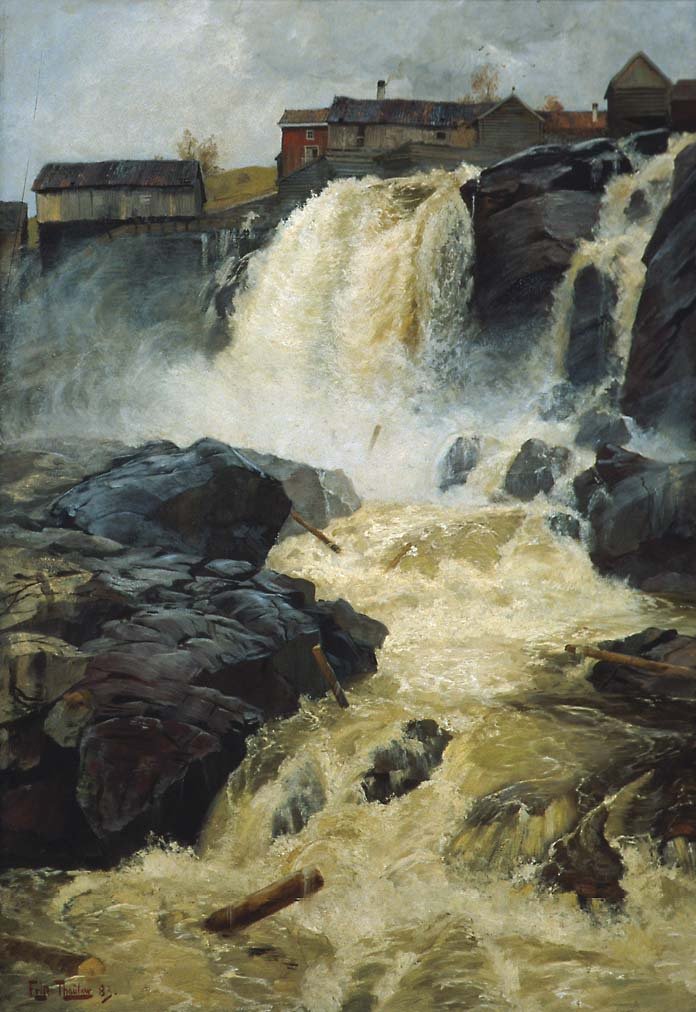


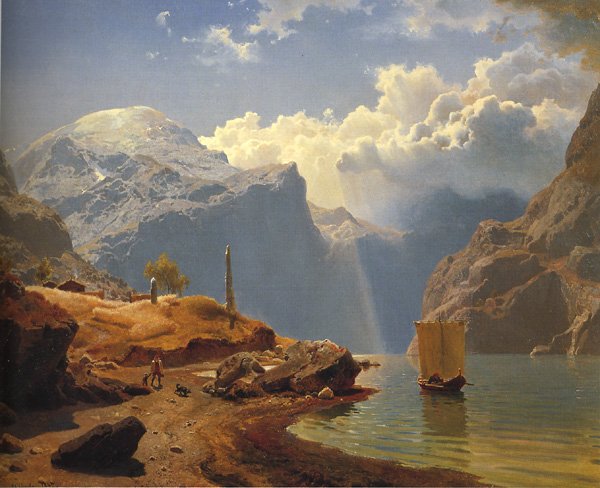


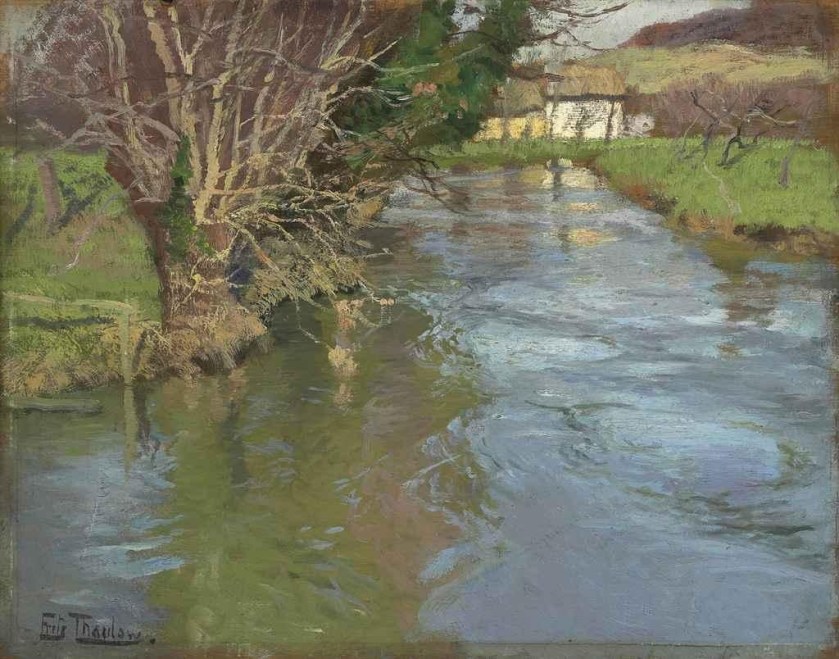

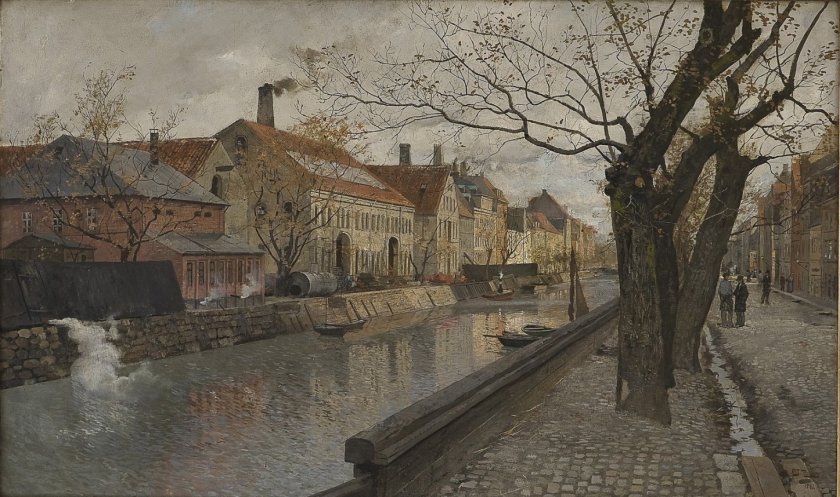


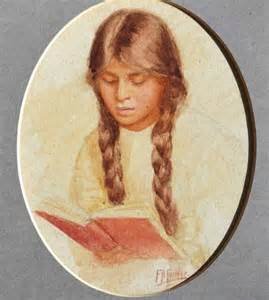
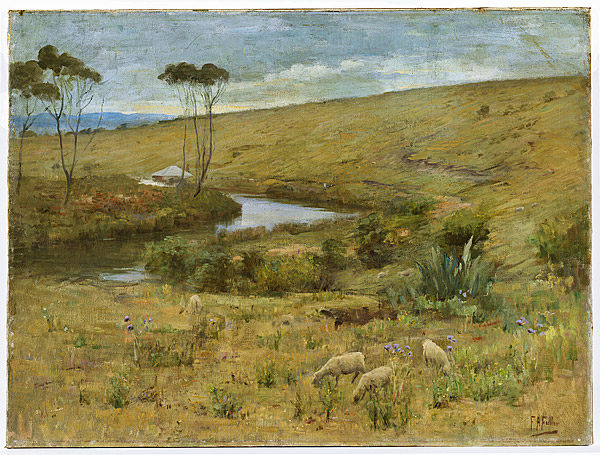




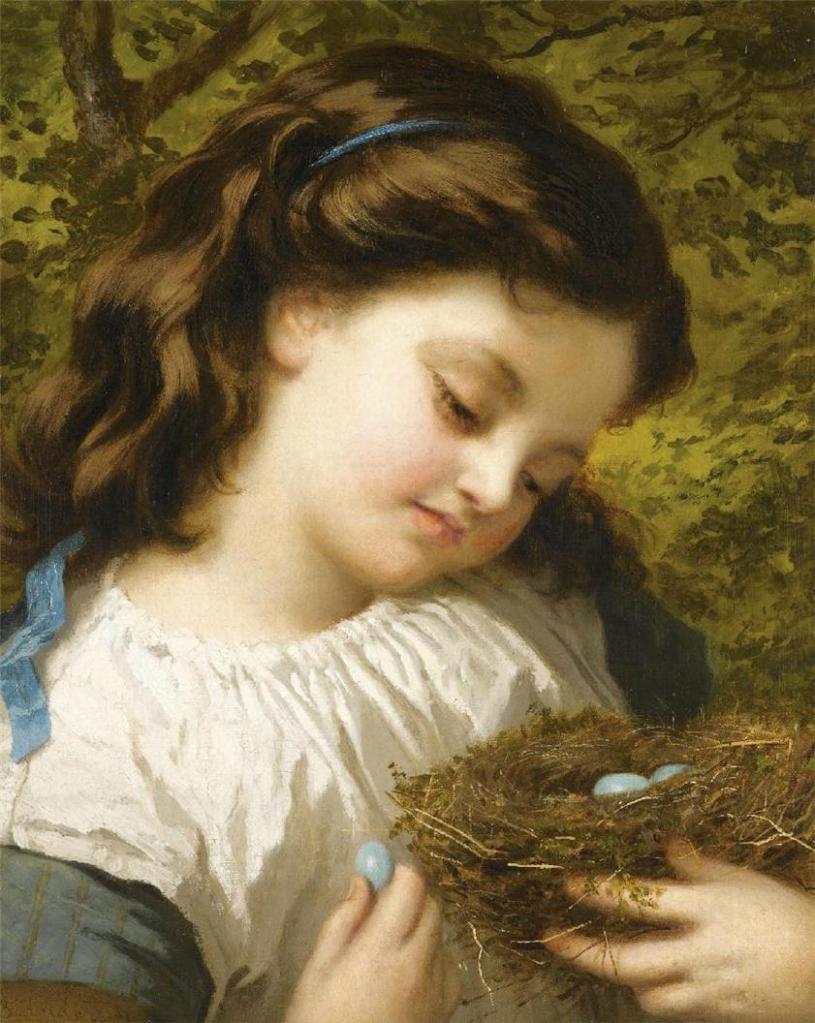
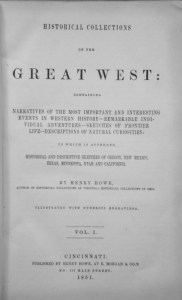
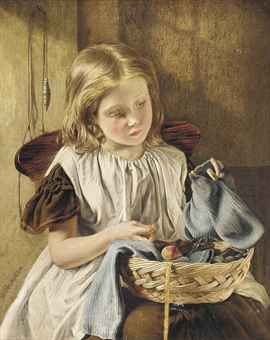
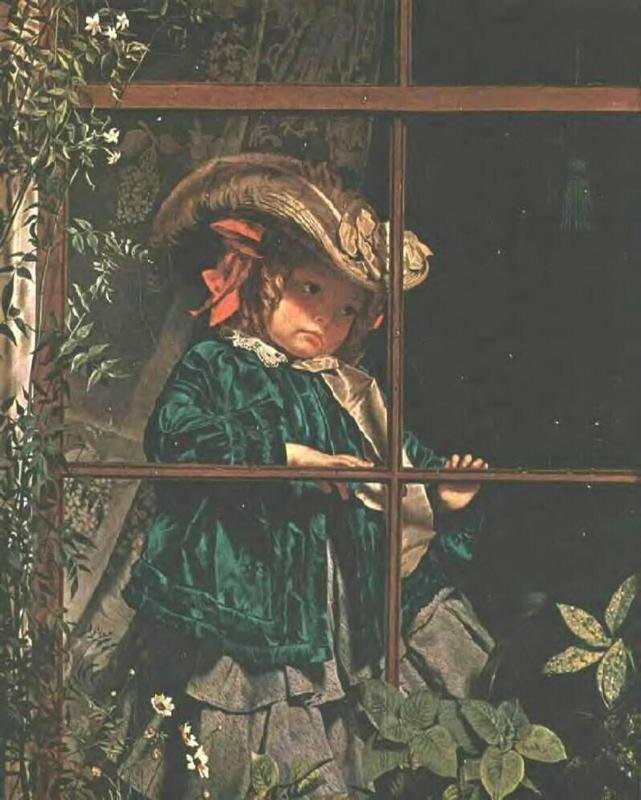
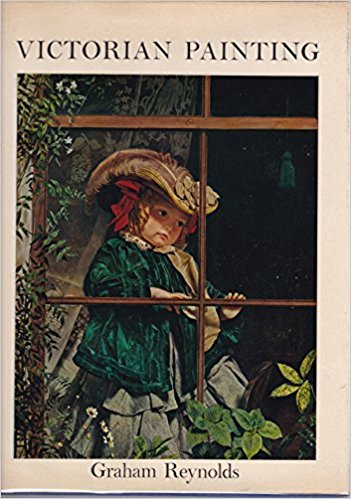


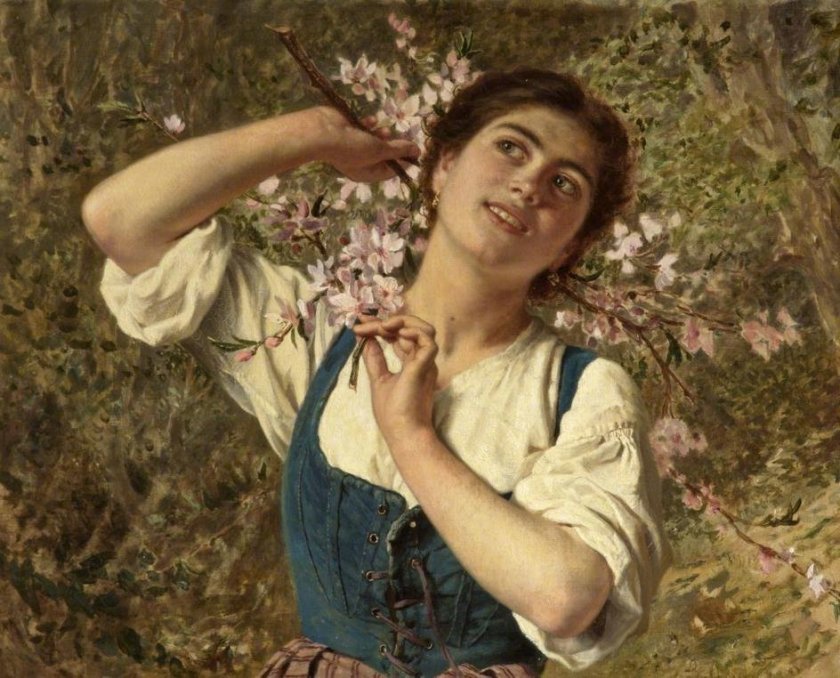
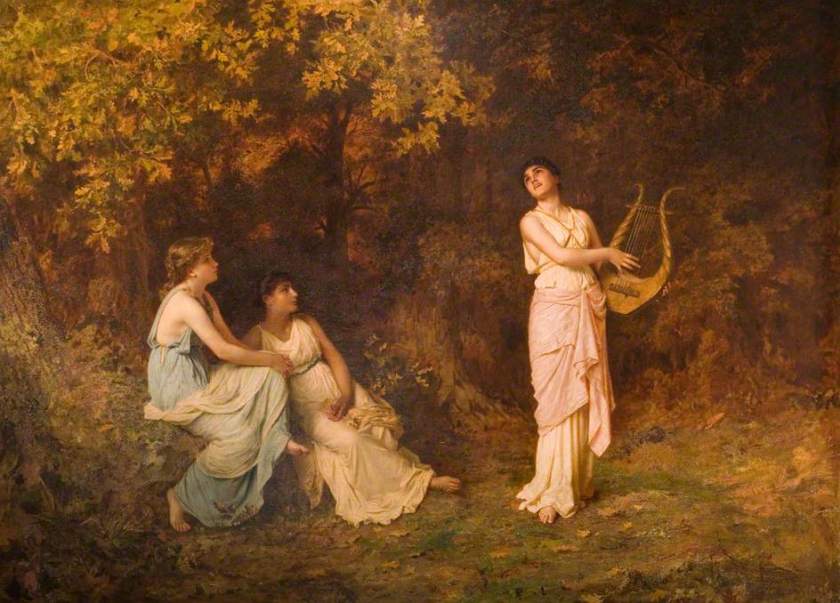
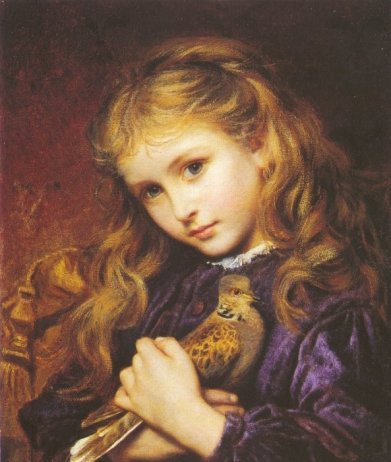

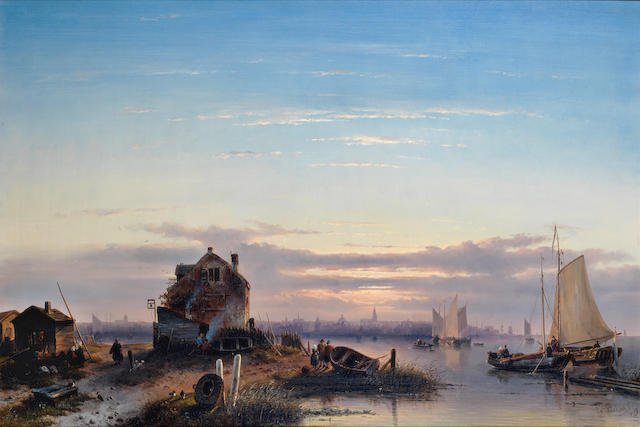
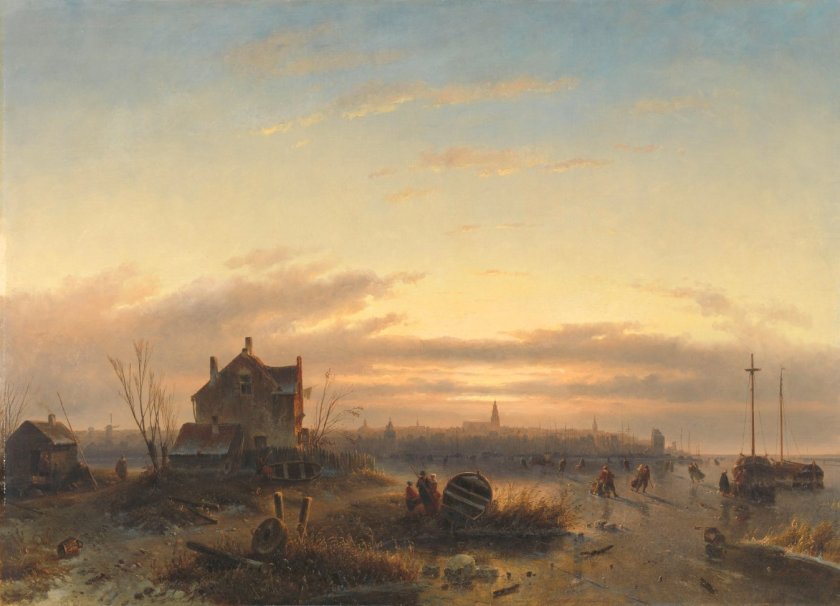
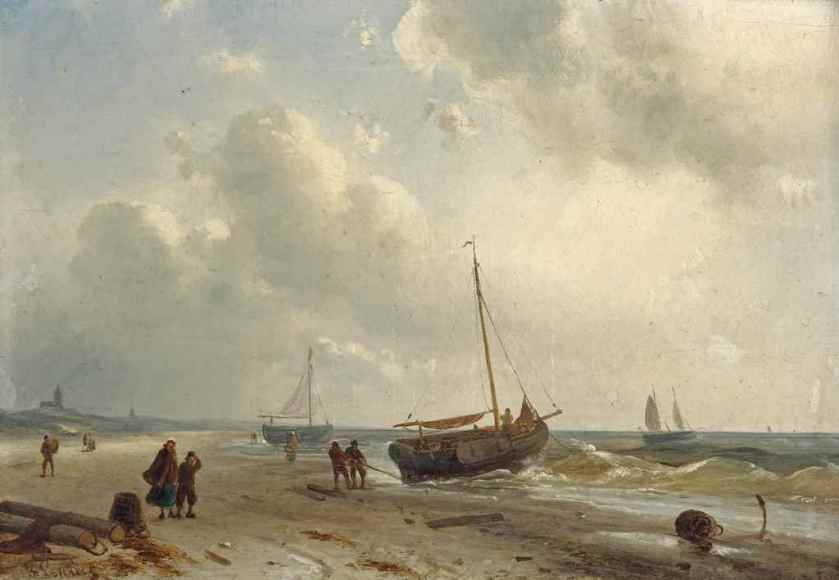
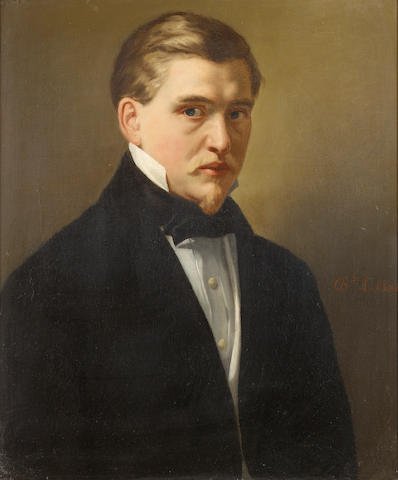
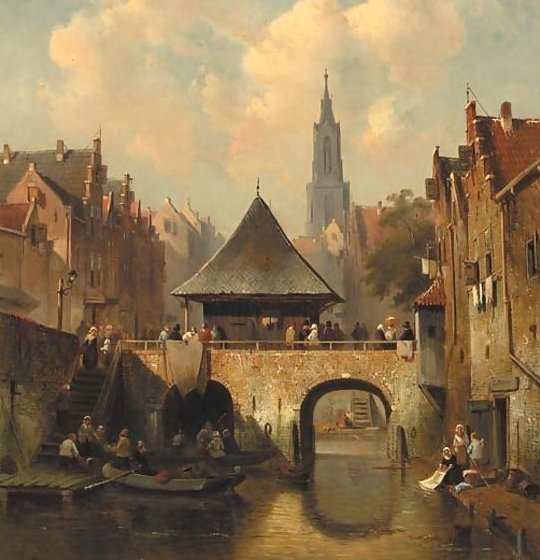


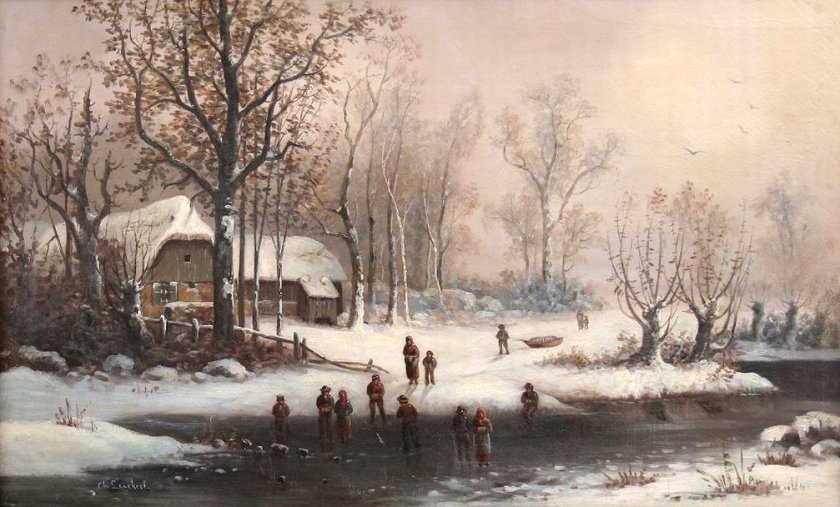

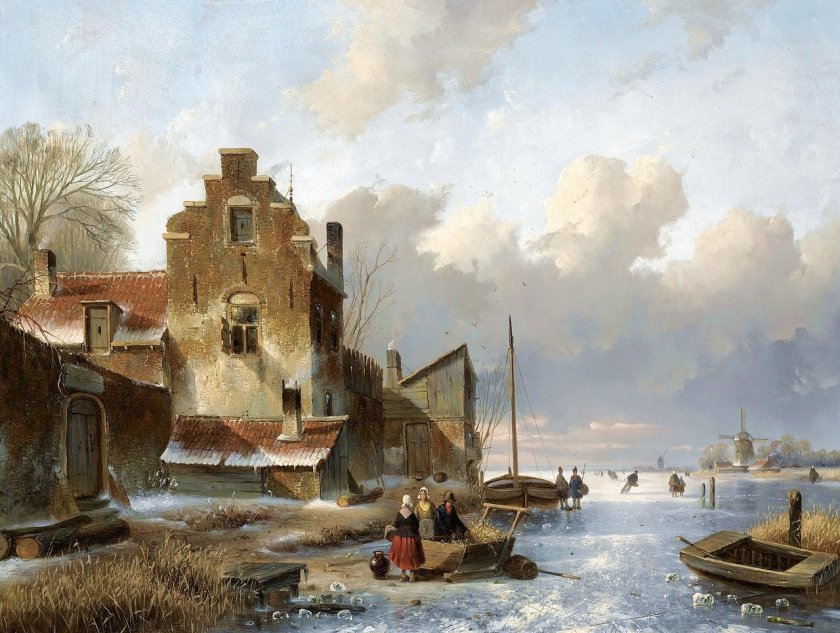
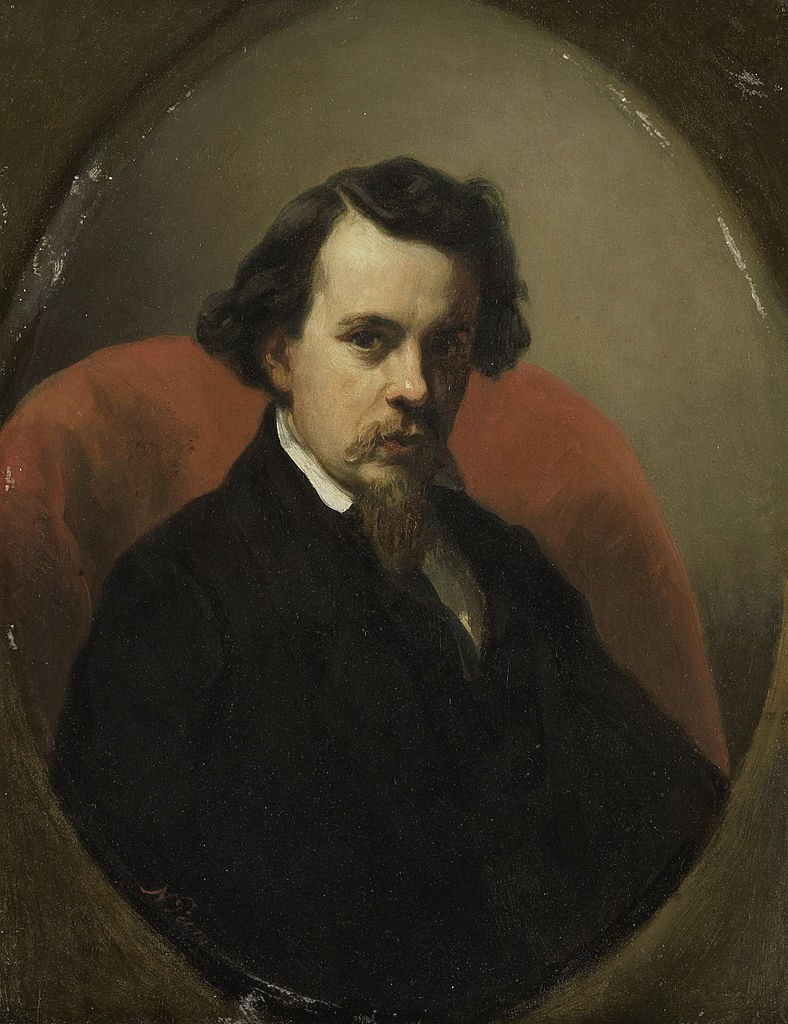
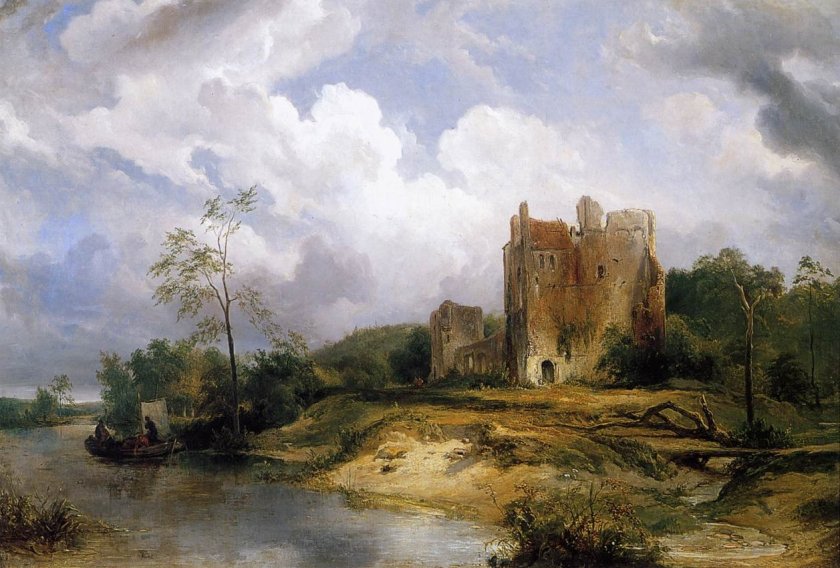
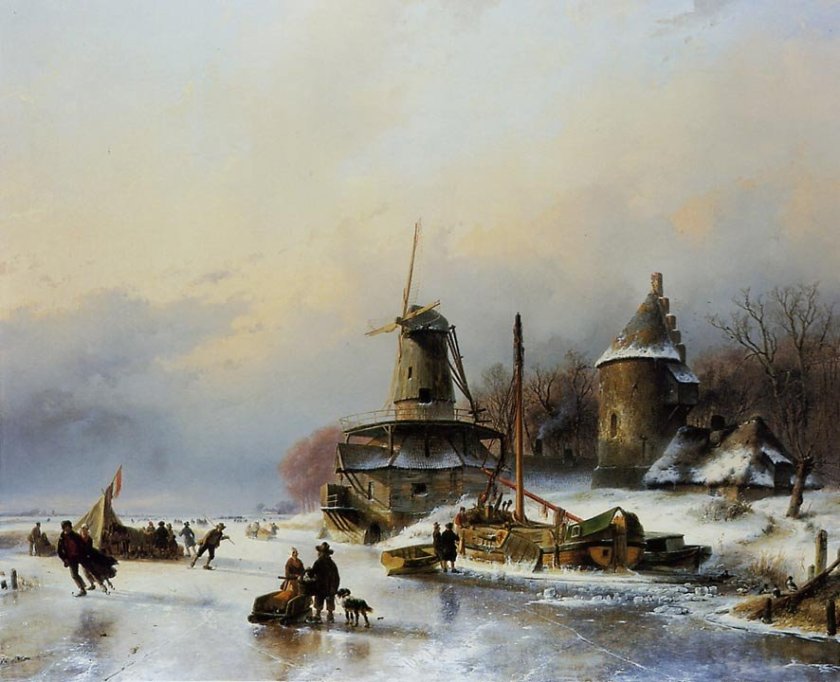


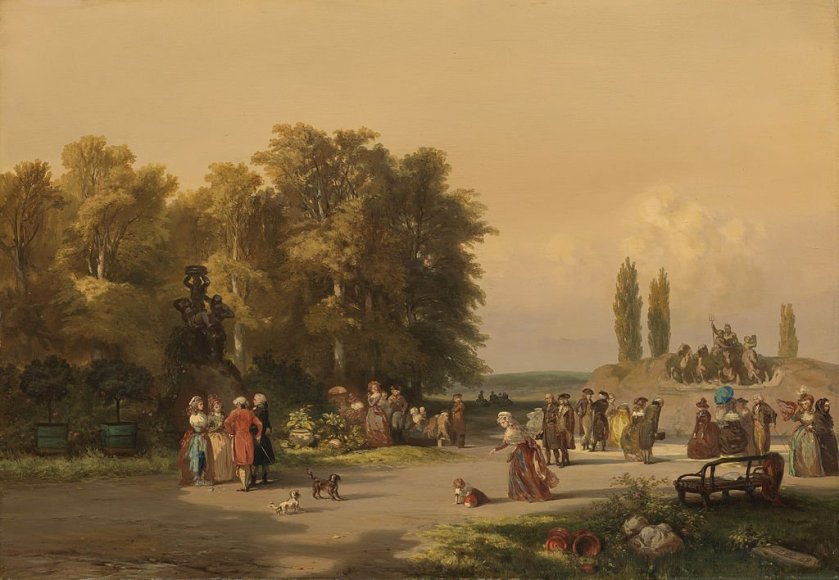

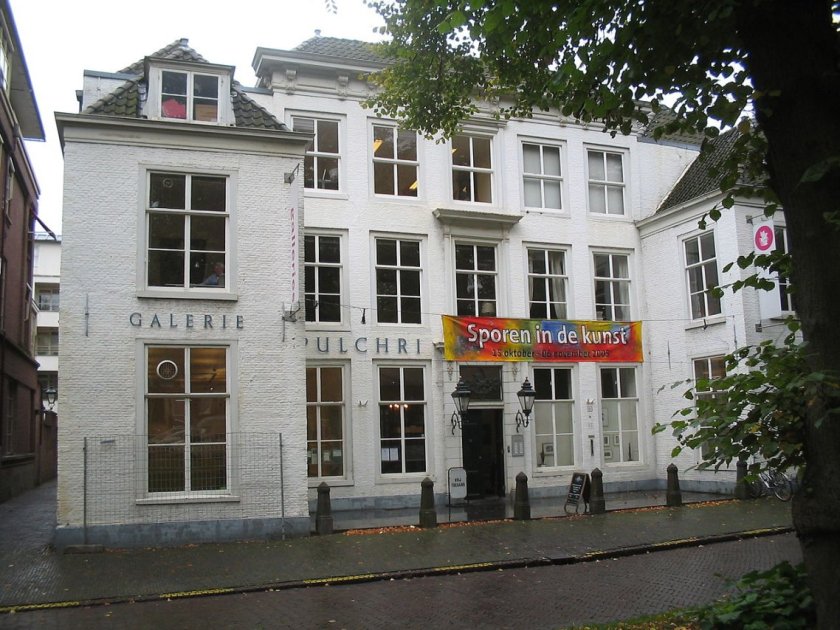

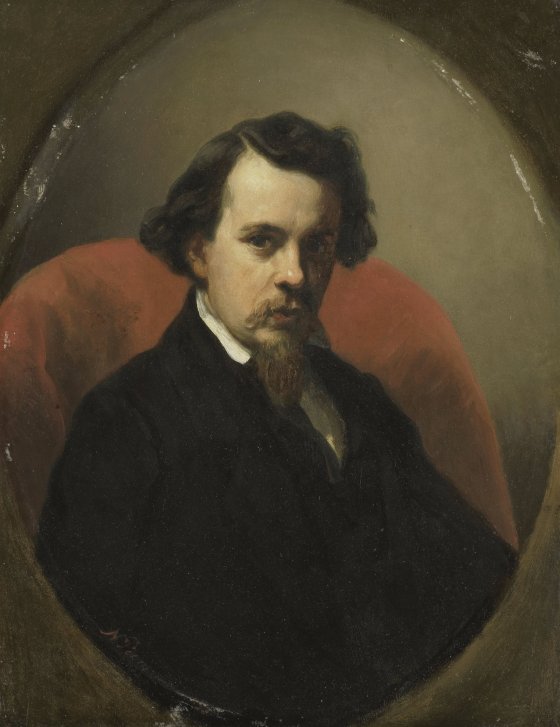
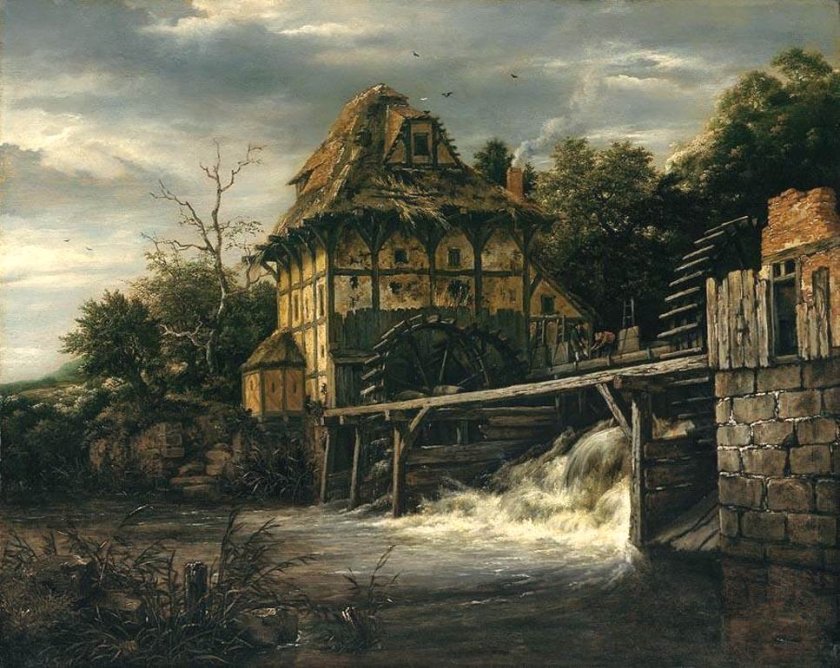
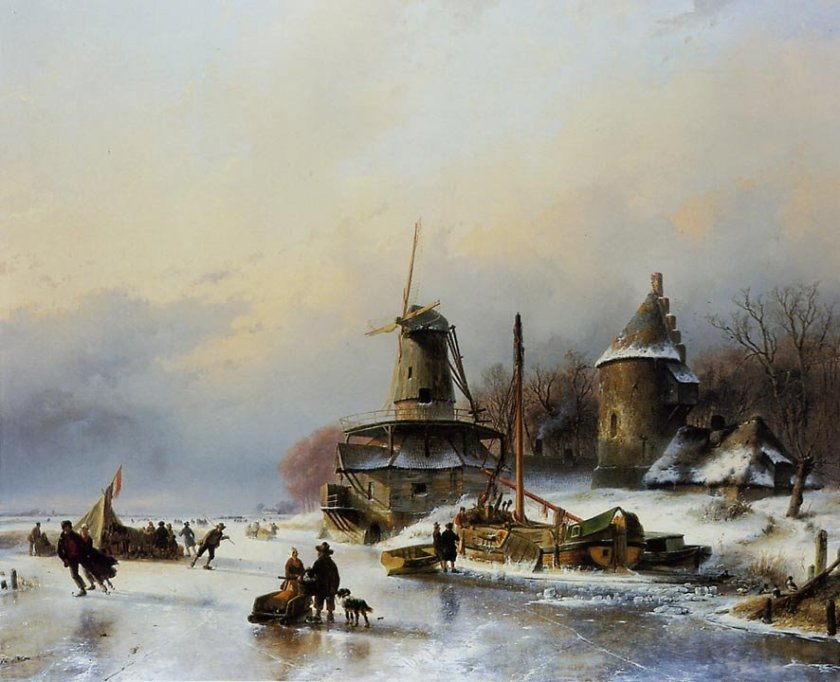


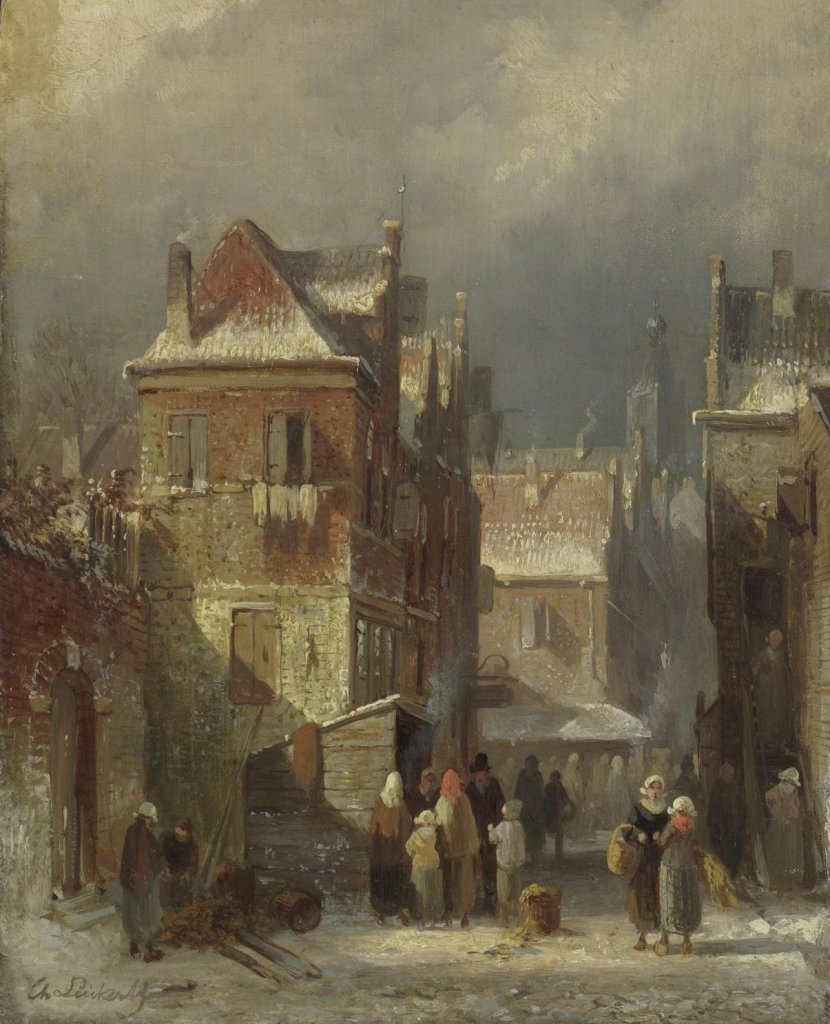

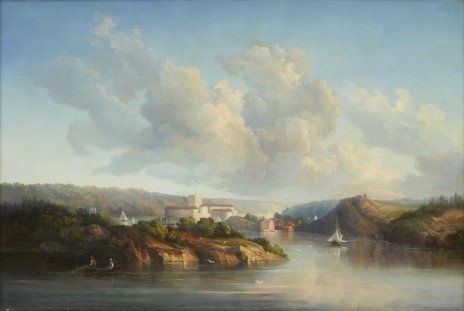
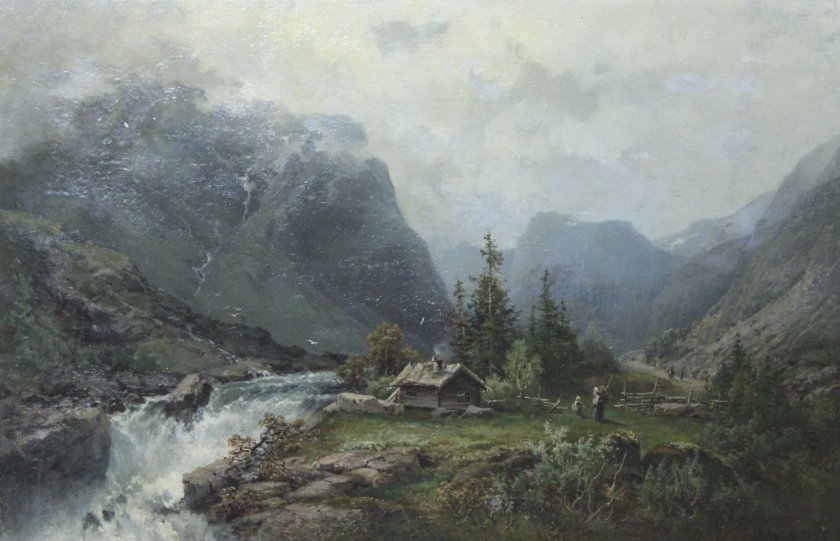
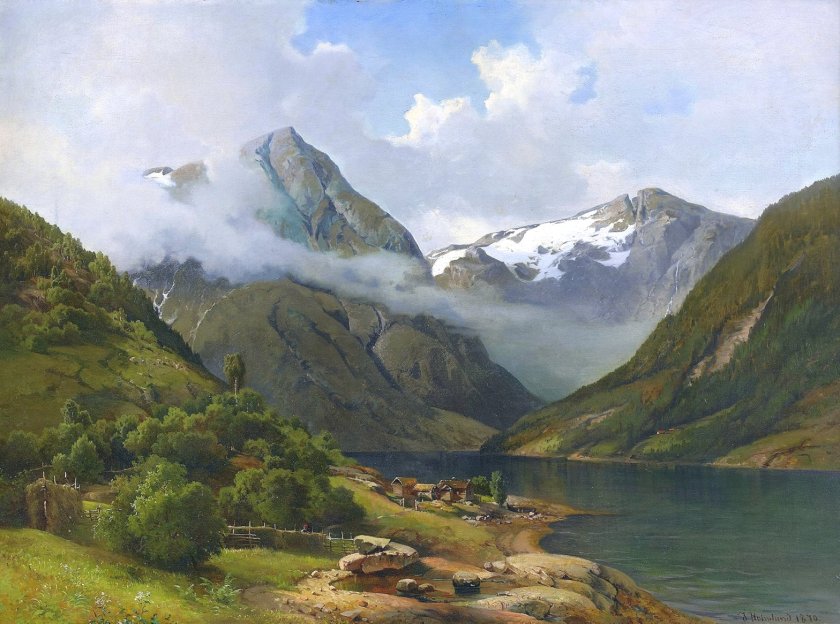
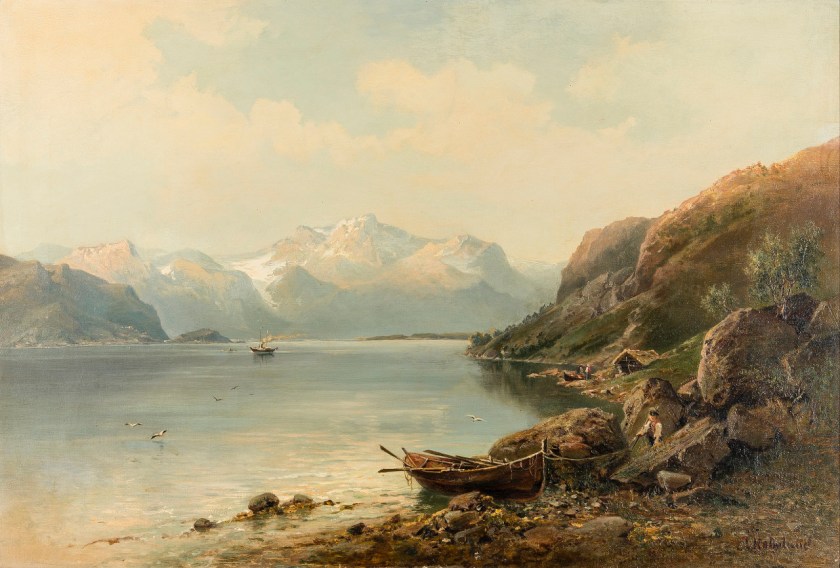
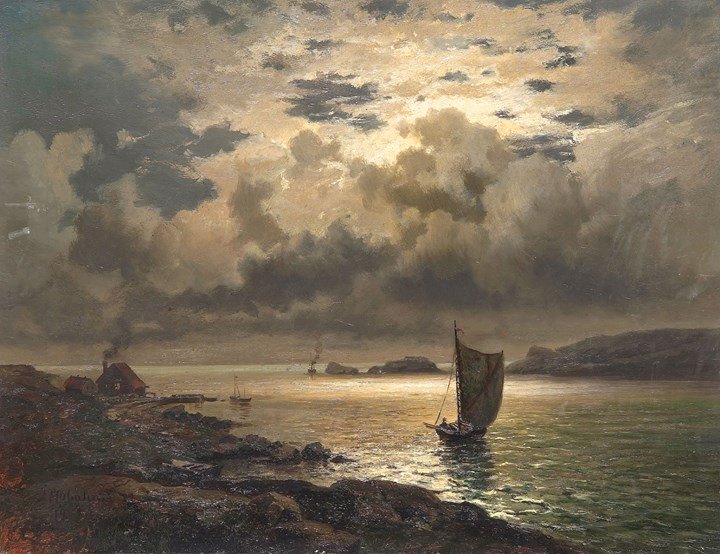

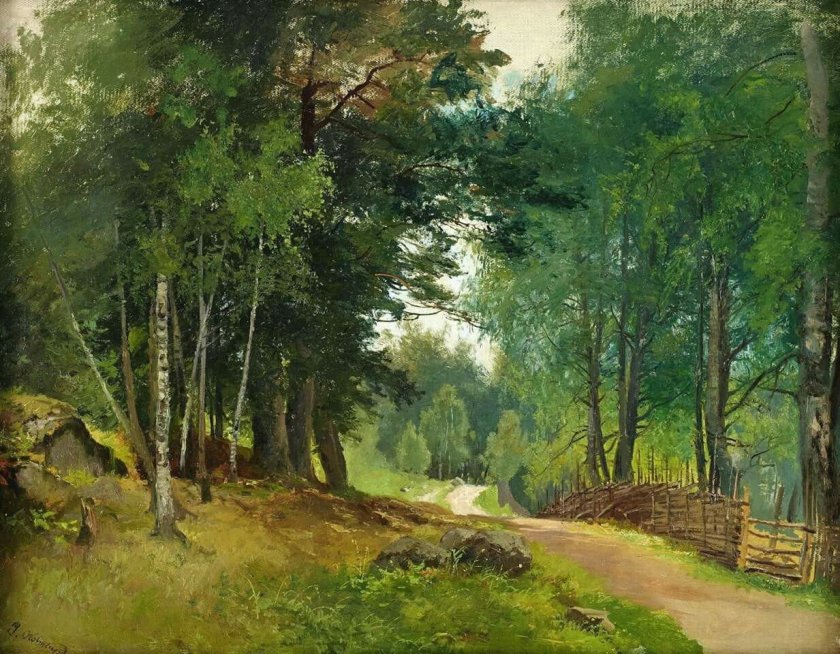


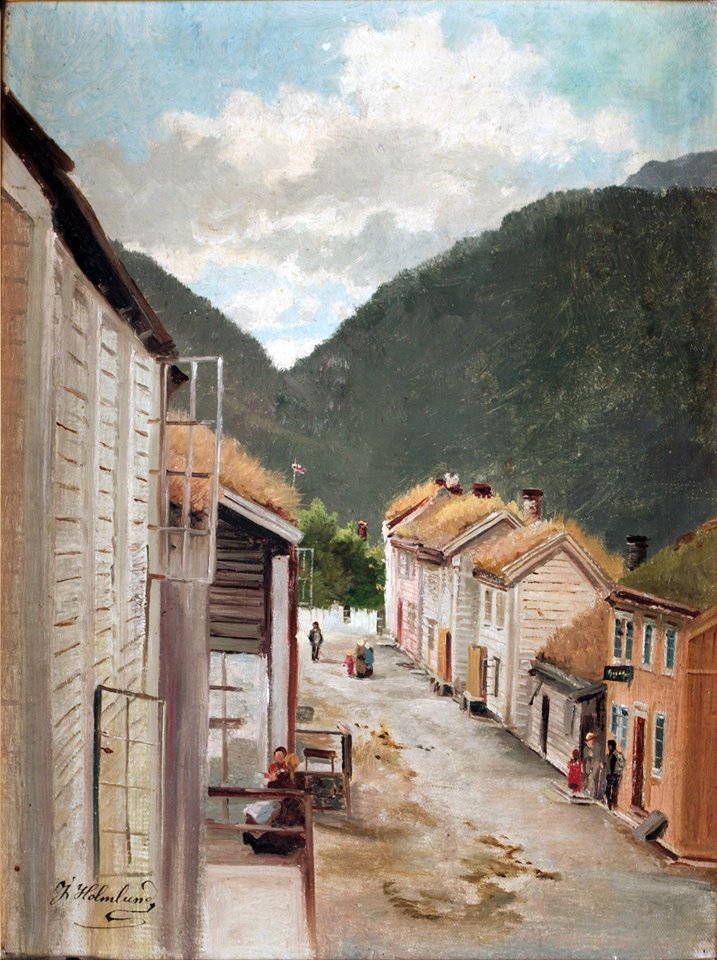
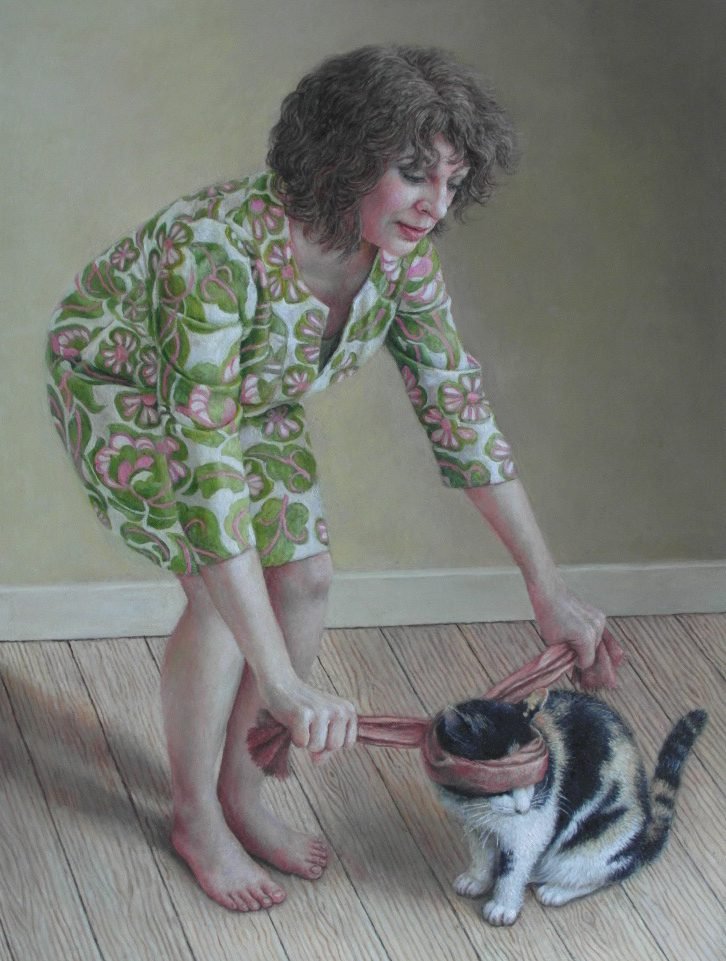
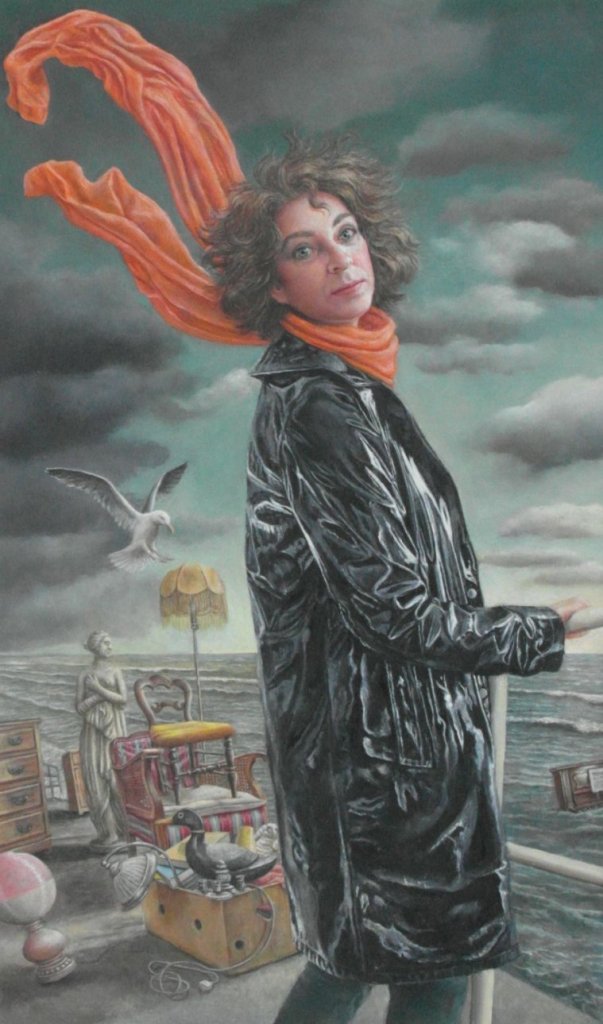
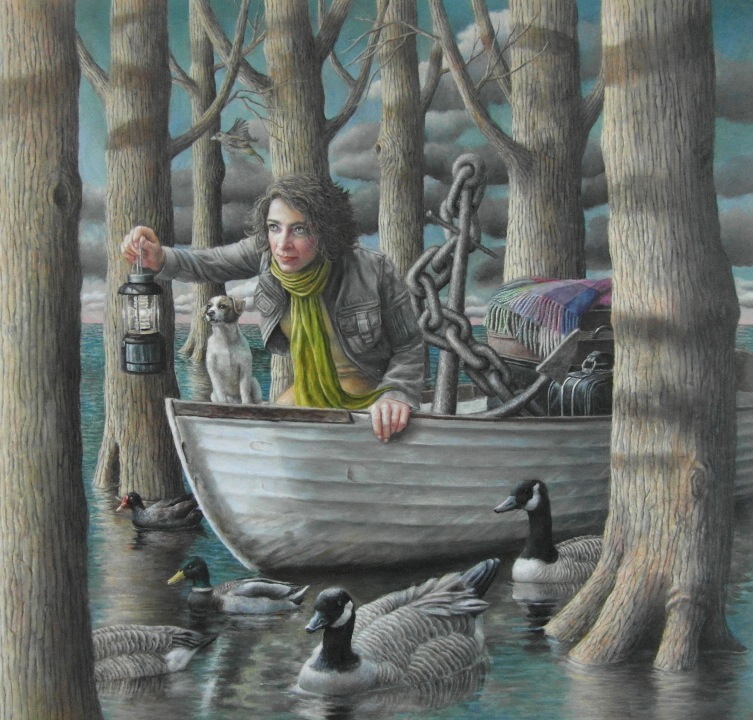


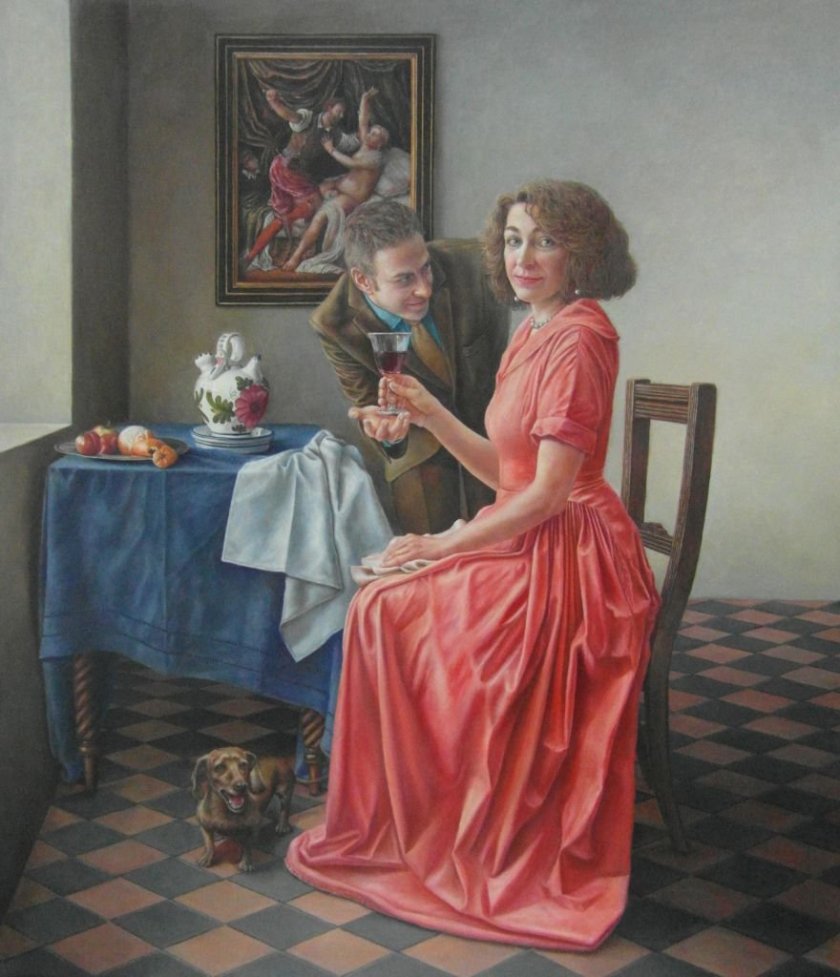
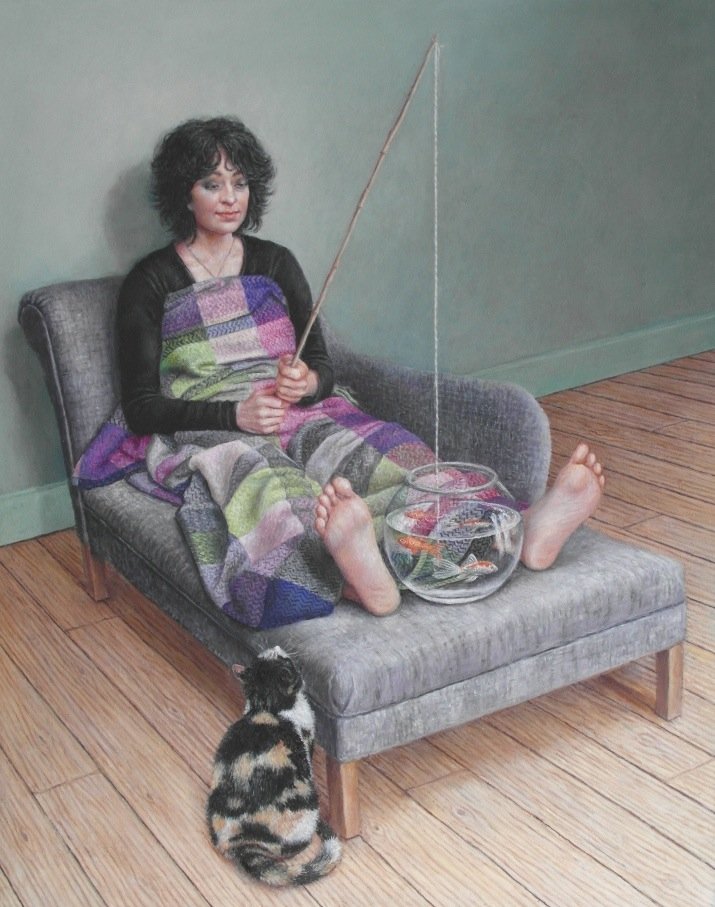


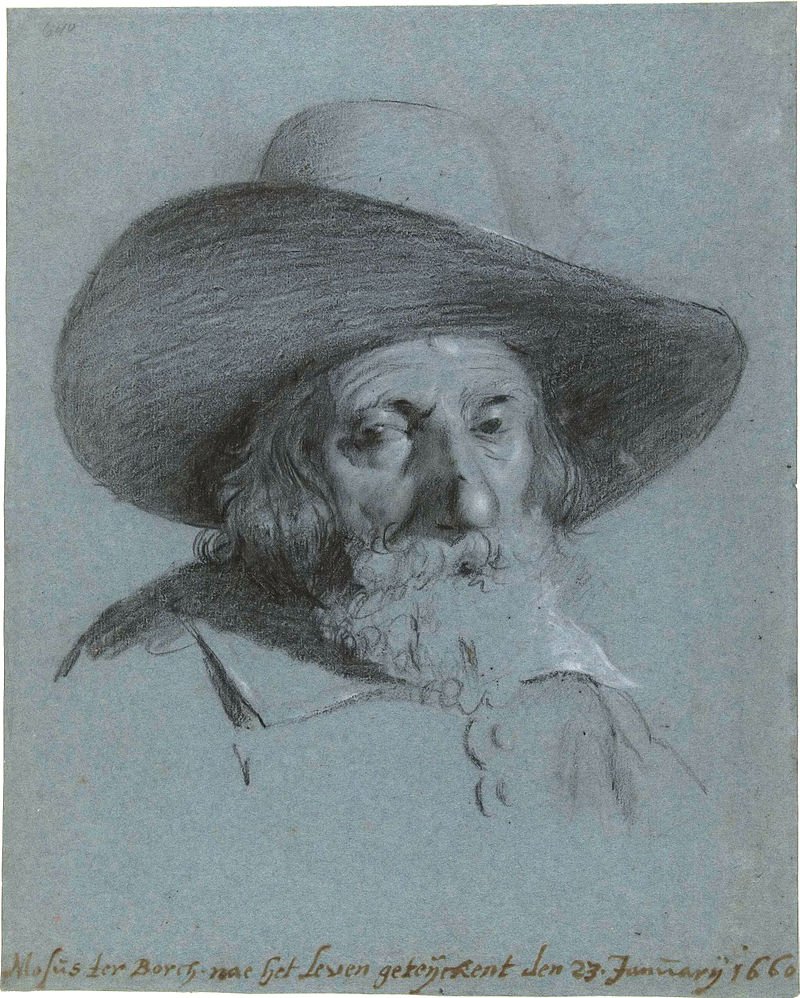
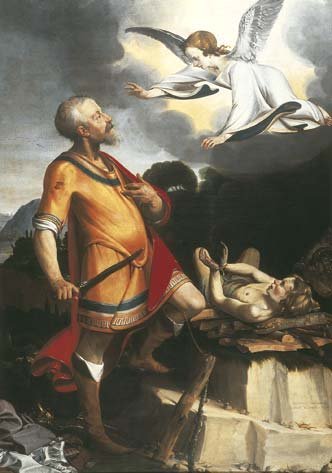

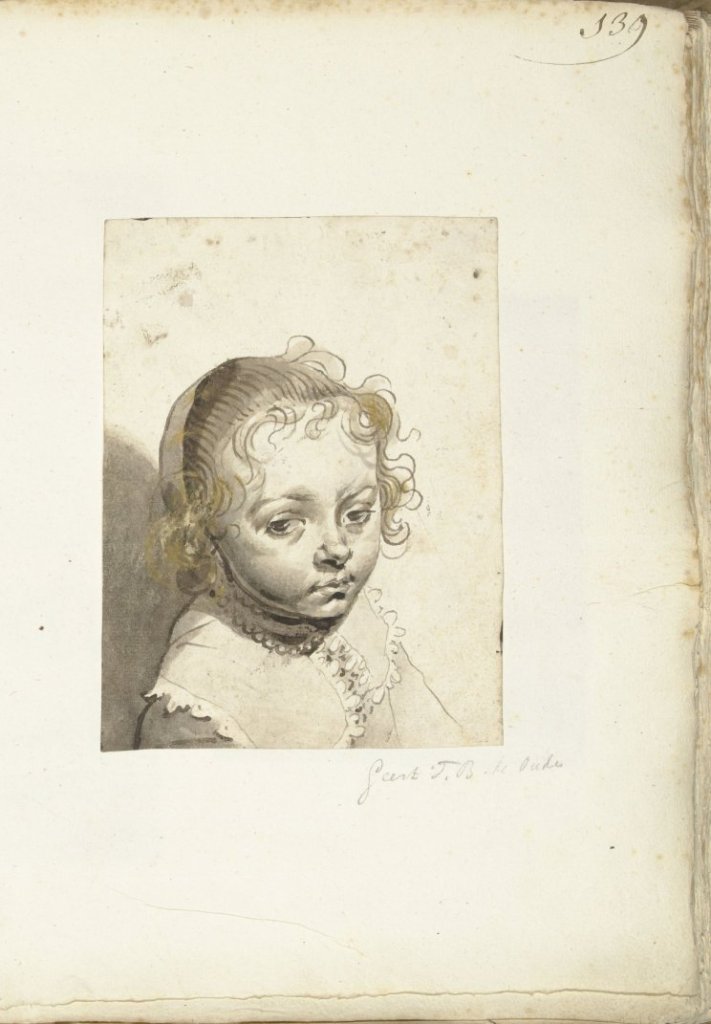


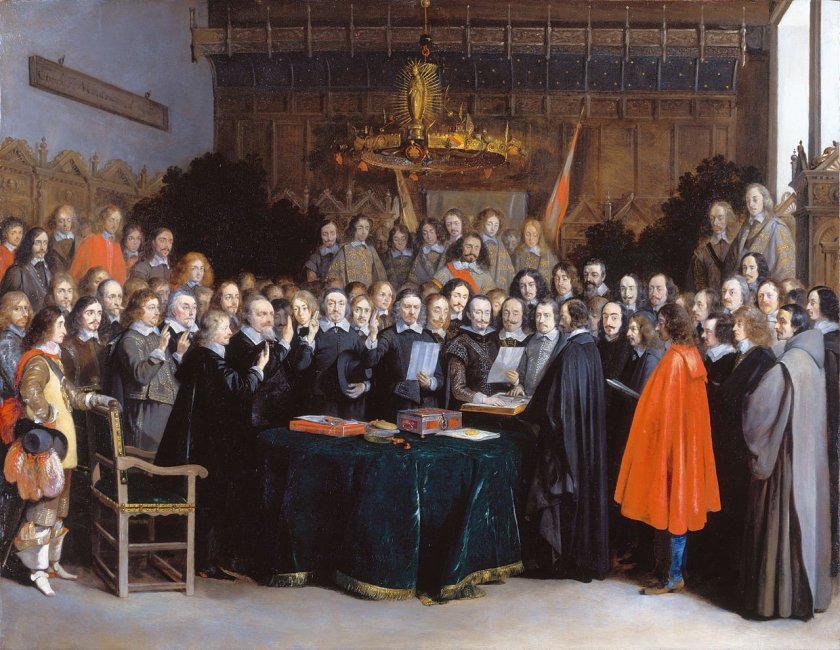

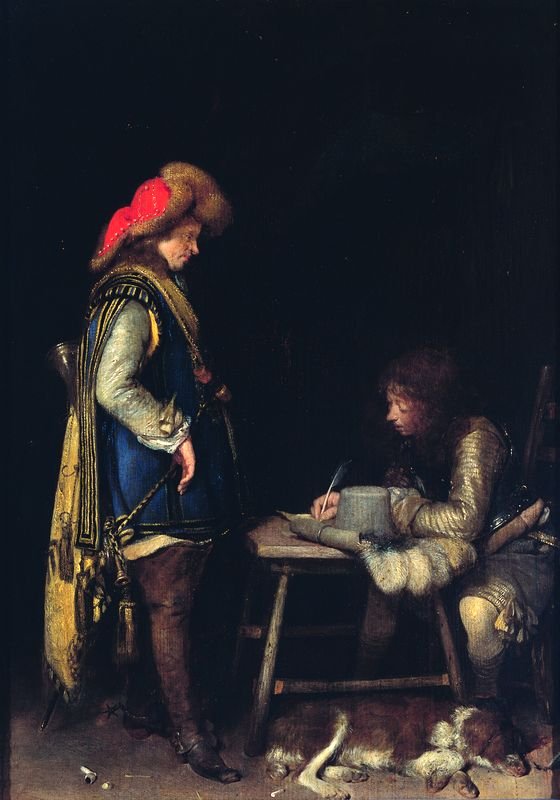
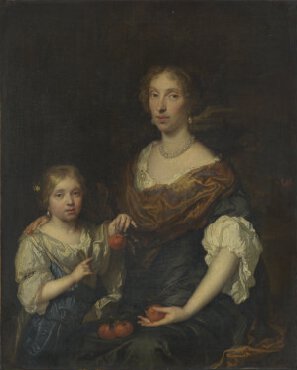

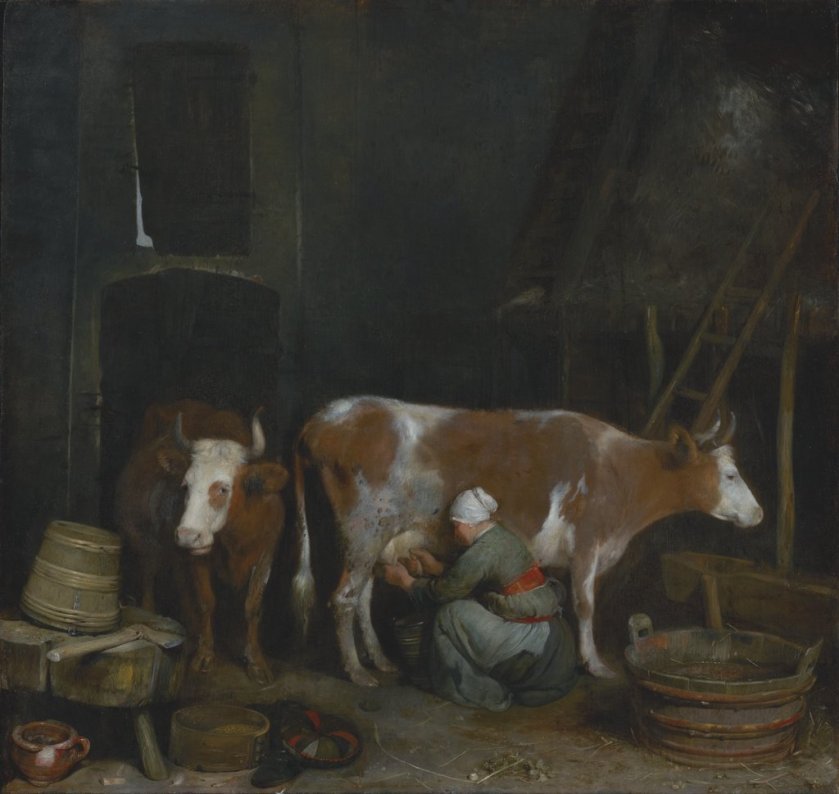
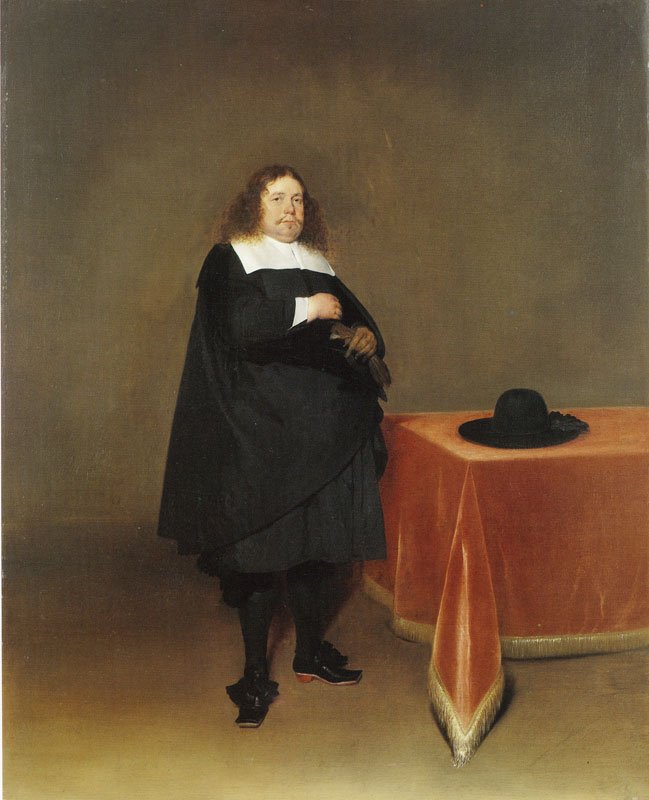


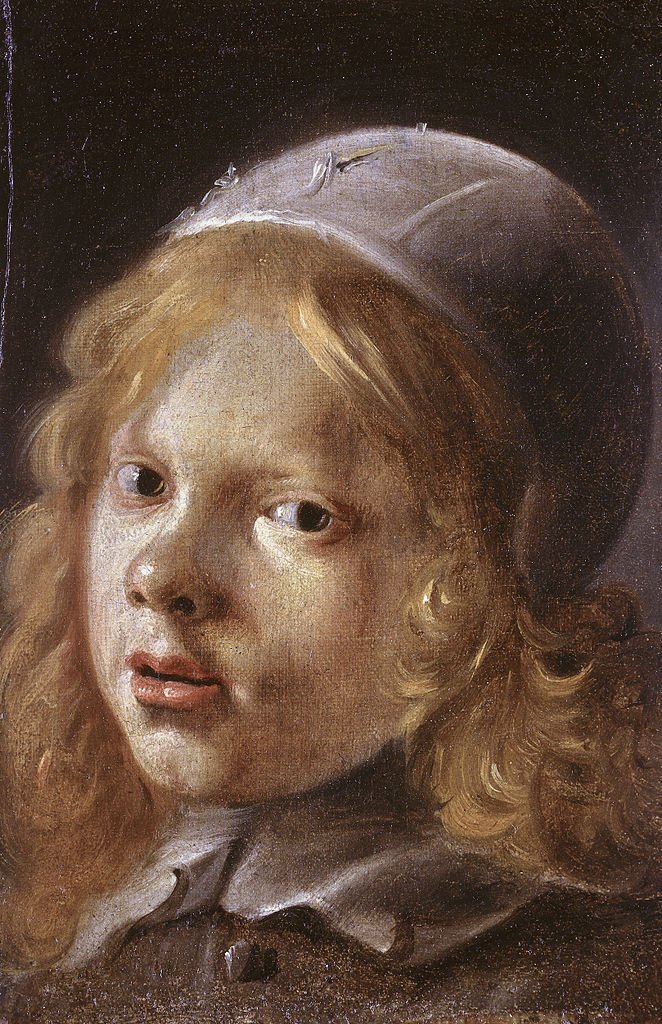
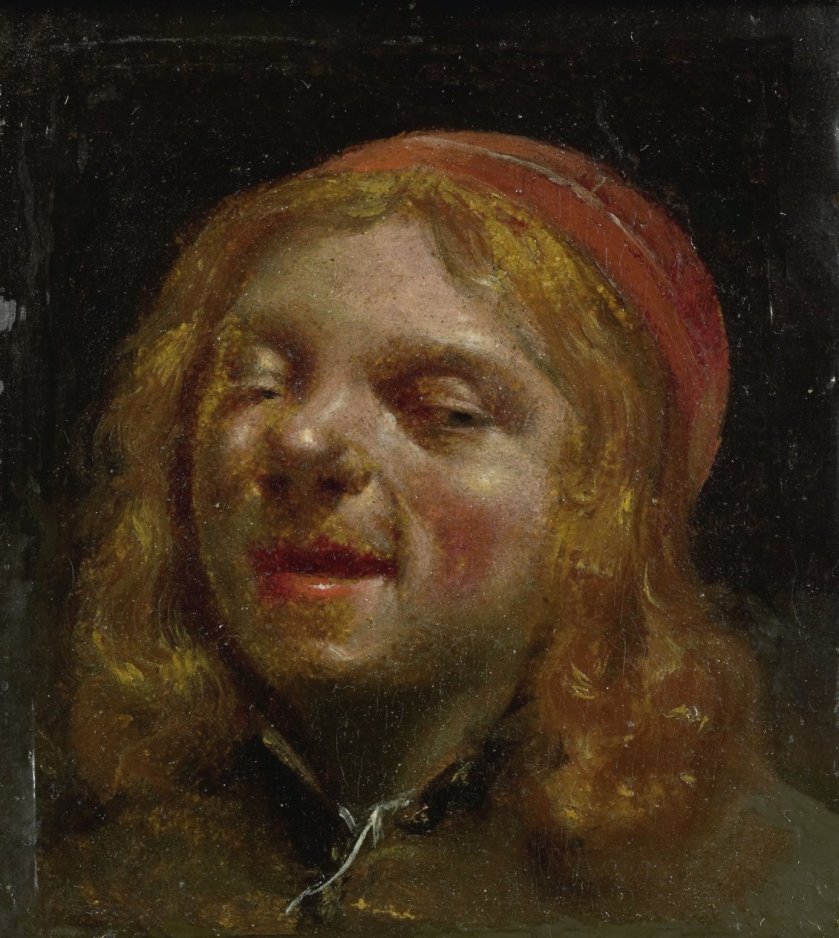
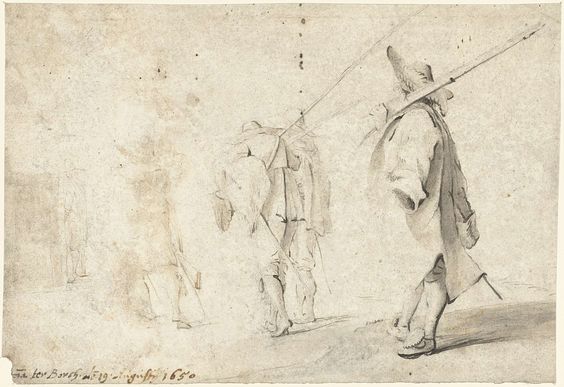

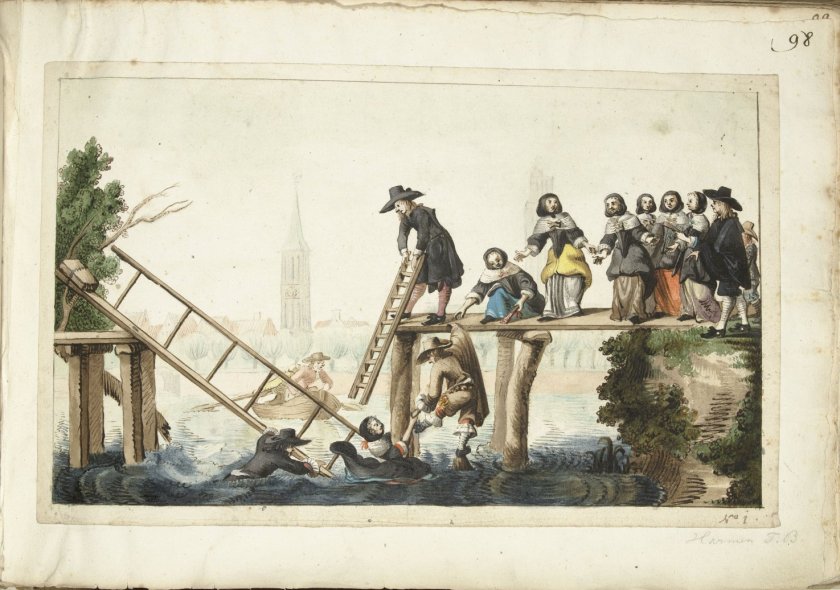
 my daily art display