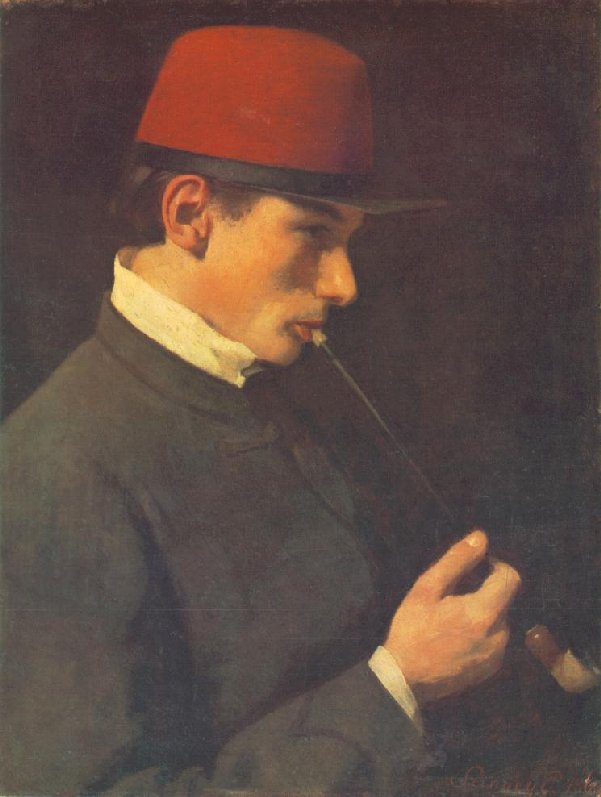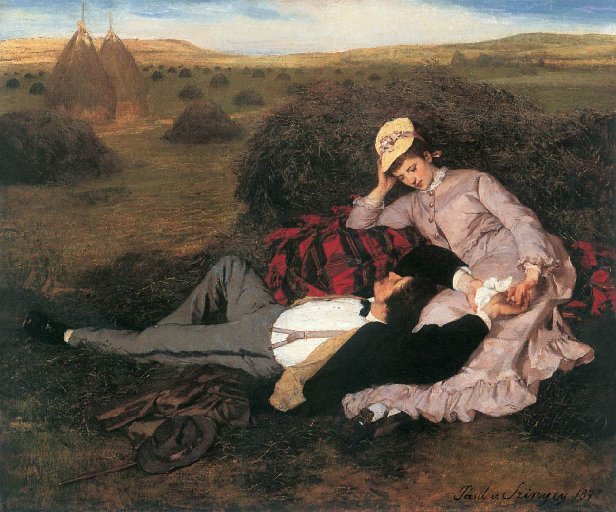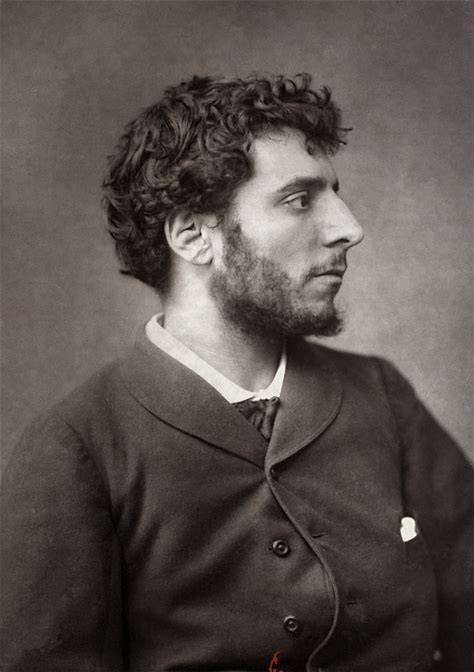
Léon Joseph Florentin Bonnat. Part 2

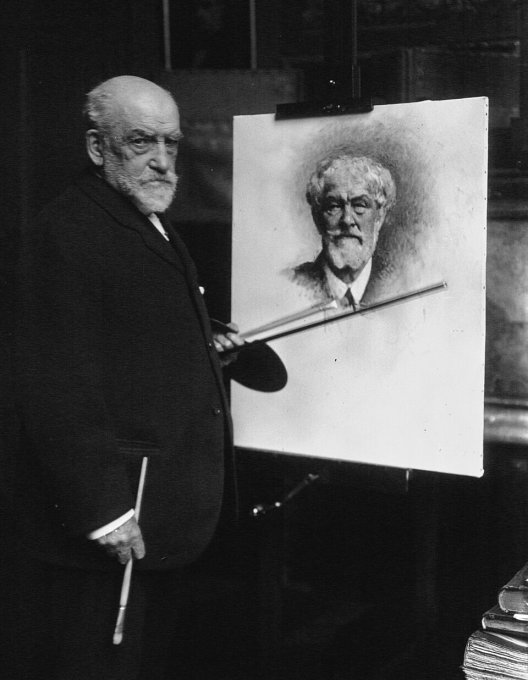
Léon Bonnat painting a portrait of artist, Alfred Roll (1918)

Léon Bonnat was born in Bayonne, France and lived there until he was thirteen years old.  Léon’s family then moved to Madrid where his father took on a book shop.  Léon’s love of art began to materialise after he went to live in the Spanish capital and, to encourage him, his father would take his son to the Prado.  He remembered those museum visits, saying:
“…I was brought up in the cult of Velasquez. I was very young, in Madrid; my father, on bright days such as one only sees in Spain, sometimes took me to the Prado Museum, where we did long stops in Spanish cinemas. I always left them with a feeling of deep admiration for Vélasquez… “.

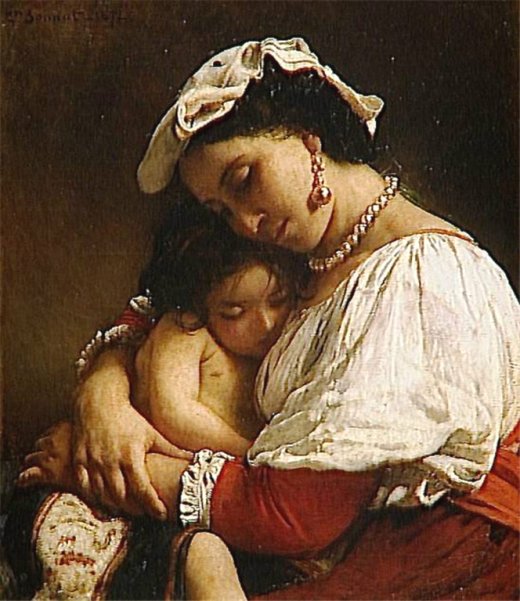
Italian Woman with Child by Léon Bonnat

In 1853, when Léon was twenty, his father died and the family returned to their French hometown of Bayonne.  After studying at the Ecole de Dessin de Bayonne, he went to live in Paris and study at the Ecole des Beaux-Arts.  In Paris, he was able to view paintings by the great Masters of French and Dutch art and particularly remembers seeing the works of Rembrandt and the influence his works had on him, commenting:

“…What is striking about Rembrandt is the power, the strength and the brilliance. He represents life in all its intensity. We see his characters, we talk with them, he resuscitates and revives an entire era. a marvellous and unique gift of interpretation, he joins the sensitivity, the goodness of a heart which vibrates to all the miseries, to all the joys, to all the emotions of humanity. He does not belong to any school. He has opened the new path which closed behind him…”

Roman Girl at a Fountain by Léon Bonnat (1875)

In 1857 he came second in the Prix de Rome competition and left Paris and spent three years at the Villa Medici.  The Villa Medici, now the property of the French State was founded by Ferdinando I de’ Medici, Grand Duke of Tuscany, and has housed the French Academy in Rome and welcomed winners of the Rome Prize since 1803, so as to promote and represent artistic creation in all its fields.

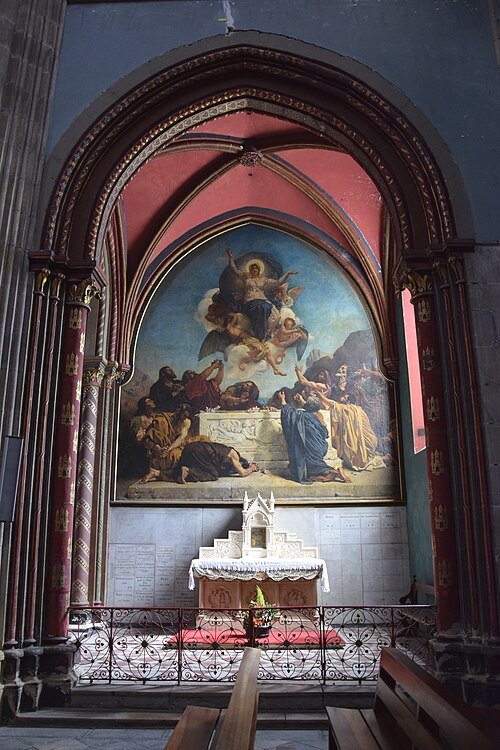
L’Assomption de Marie by Léon Bonnat (1869)

L’Assomption de Marie in situ in the Church Saint-André à Bayonne (Pyrénées-Atlantiques, Nouvelle-Aquitaine, France)

In 1869 Bonnat was awarded the Medal of Honor of the Salon for his painting L’Assomption.

The Martyrdom of Saint Denis by Léon Bonnat (1880)

One of Bonnat’s last religious paintings was his 1880 painting entitled The Martyrdom of Saint Denis.  St Denis was a 3rd-century Christian martyr and saint.  Denis was Bishop of Paris and through his speeches, made many conversions but he was looked upon by the local Roman priest as a danger and had Denis together with his faithful companions, the priest Rusticus and deacon Eleutherius, executed.  The place of the execution, by beheading, was on the highest hill in Paris, which is now known a Montmartre.   Denis was said to be against the beheading taking place at this spot and “folklore” has it that after Denis was beheaded, the corpse is said to have picked up his severed head and walked ten kilometres from the top of the hill, and during that entire walk he preached a sermon. 

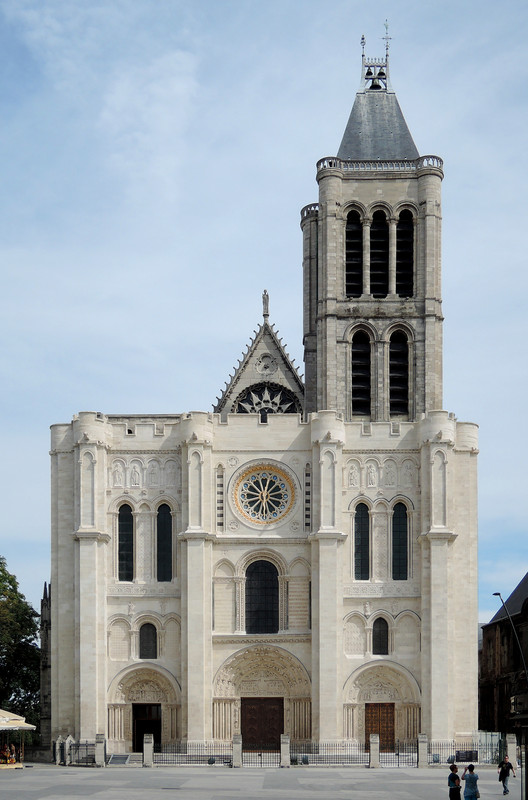
Basilica of St Denis, Paris

Detail of the north portal sculpture; the martyrdom of Saint Denis, Eleuthere and Rustique 

Denis finally collapsed at the place where he wanted to be buried, the spot where now stands the Basilica of St Denis and which is also the burial place of the Kings of France.  Saint Denis is the patron saint of both France and Paris.

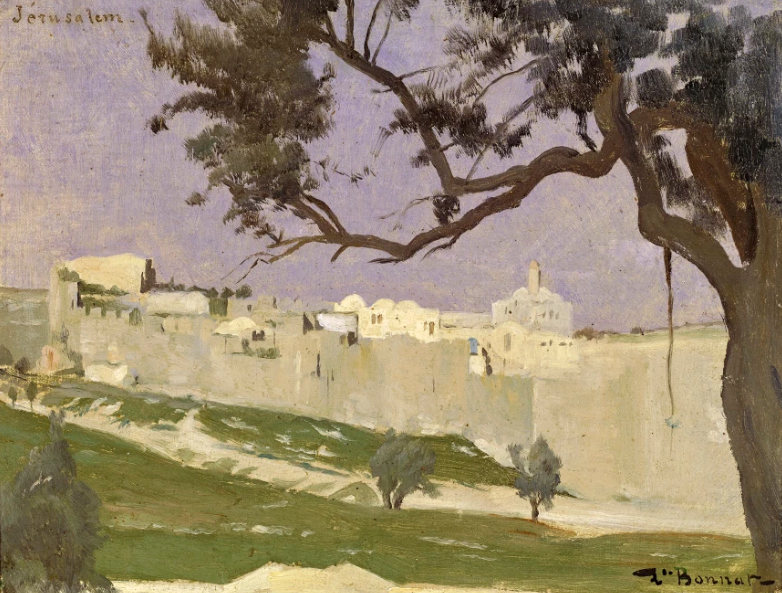
View of Jerusalem by Léon Bonnat

Although, as we will see later, Bonnat was best known for his portraiture and his early historical and religious subjects, but his landscapes and Orientalist depictions are looked upon as among his most intensely personal and beautifully crafted works.  Léon Bonnat travelled to the Middle East in 1868 together with a party that included the French painter, Jean-Léon Gérôme, his pupil Paul-Marie Lenoir,  the Dutch artist Willem de Farmas de Testas and Gérôme’s brother-in-law Albert Goupil.  The journey began in January 1868 at the Egyptian port of Alexandria and by the third of April, the group had arrived at the gates of Jerusalem.   Willem de Famars Testas recalled their first glimpse of the walled city:

“…The first glimpse of Jerusalem was gripping, the sun-illuminated city was silhouetted against a violet thundery light, while the outlying land lay under the shadow of clouds…”

Léon Bonnat recorded the impressions and the specifics of their arrival at the gates of Jerusalem in April of that year in one of his may oil on canvas sketches entitled View of Jerusalem.

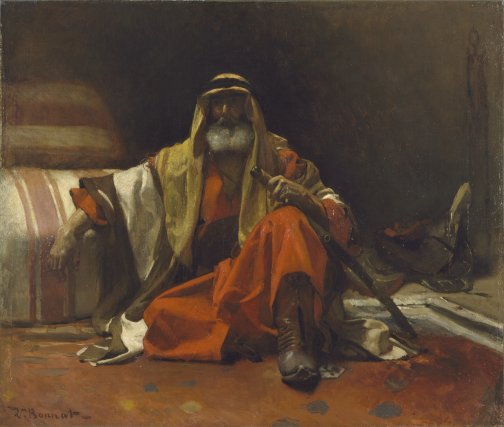
An Arab Sheik by Léon Bonnart (c.1870)

One of Léon’s works from this period was entitled An Arab Sheik which he completed once back in Paris.  It is thought that Bonnat’s depiction emerged from combining multiple resources such as the French model who posed for the seated figure; the saddle we see which Bonnat brought back from his travels and a multitude of sketched notations which he made during his travels in the Middle East.  Combining all this data Léon managed to create a painting that appears authentic, and yet, it is stereotypical of what Europeans believed about the Arabic world and its people such as the way the sheik holds his sword depicting his strength and fierceness and enhances how Europeans believed that that cultures in the Middle East and elsewhere were ruled by violence, in contrast to the supposedly more “civilized” societies of Europe and North America.

Christ on the Cross by Léon Bonnat(1674)

Bonnat’s haunting work entitled Christ on the Cross was commissioned in 1873 for the courtroom of the Cour d’Assises of the Palais de Justice in Paris.  The reasoning behind the commission was that it would embody divine justice in the eyes of the accused and by reminding them of the sufferings of Christ to save the fishermen. The painting was submitted  at the 1874 Salon.  The painting measures 1.59 meters in width and 2.27 meters in height. Bonnat’s depiction fundamentally renews the traditional representation of Christ on the cross. Christ is shown with a crown of thorns, his body is muscular and pale, and he wears a simple white loincloth. Blood is visible from the nails piercing his hands and feet. The background is dark and sombre. The crucified Christ is characterised in an extremely realistic way, accentuating Christ’s suffering due to the torture he received. Christ on the Cross is one of the best known and best loved crucifixion paintings of the western world. The painting can be viewed at the Petit Palais, Museum of Fine Arts of the City of Paris.

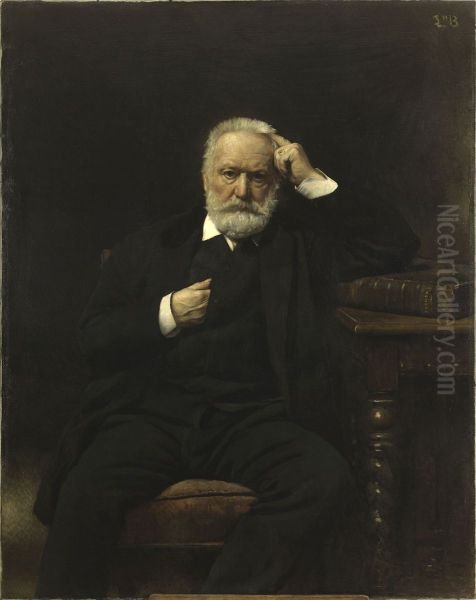
Victor Hugo by Léon Bonnat (1879)

For an artist to survive financially he or she must sell their work.  Once back in France, after his three-year stay at Villa Medici in Rome, Léon realised that the sale of his historical and religious paintings had fallen off and he had to look for another painting genre which would attract more buyers.  While Bonnat created many religious and historical works, his long-lasting fame rested on his exceptional career as a portrait painter. In an era before photography became the norm, painted portraits were central for chronicling the likenesses of important individuals, and Bonnat became one of the most sought-after portraitists of the French Third Republic and beyond. His sitters included presidents, politicians, writers, scientists, artists, and members of high society.

Jules Ferry by Léon Bonnat (1888) Jules François Camille Ferry was a French statesman and republican philosopher. He was one of the leaders of the Moderate Republicans and served as Prime Minister of France from 1880 to 1881 and 1883 to 1885.

Bonnat artistic brilliance as a portrait artist was his extraordinary skill in capturing not just a physical likeness but also the sitter’s charm, personality and social standing. His portraits are typified by their unruffled gravity, psychological perception, and scrupulous attention to every detail, whether it be the texture of fabrics to the detailed features of the face and hands. Bonnat often used dark, neutral backgrounds, which allowed viewers to focus entirely onto the subject, which were often illuminated by a carefully controlled light source, a technique evocative of the Spanish painter, Velázquez.

Portrait of Marthe and Therese Galoppe by Léon Bonnat (1889)

Marthe and Therese Galoppe were prominent figures in 19th-century France, known for their social standing and involvement in Parisian society. The painting captures their youthful beauty and grace, reflecting the evolving role of women in society during that time. Bonnat’s portrayal of the Galoppe sisters is significant as it showcases women not just as muses but as individuals with their own identities, challenging traditional views of women in art.

Armand Fallières by Léon Bonnat (1907) French statesman who was President of France from 1906 to 1913.

Among his most famous sitters were famous figures were the statesman Adolphe Thiers, the revered author Victor Hugo, the pioneering scientist Louis Pasteur, fellow painter Pierre Puvis de Chavannes, and French Presidents like Jules Ferry and Armand Fallières. Bonnat’s portraits served not only as personal records but also as official images that helped shape the public perception of these influential individuals. His success in this genre brought him considerable wealth and prestige.

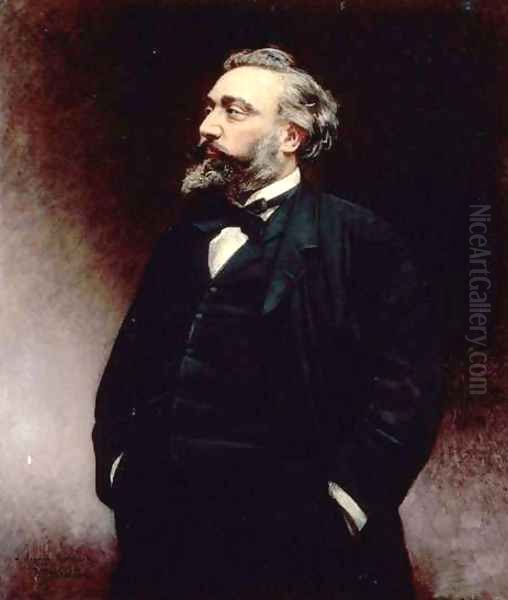
Portrait of Léon Gambetta by Léon Bonnat (1888) Gambetta was a French lawyer and republican politician who proclaimed the French Third Republic in 1870 and played a prominent role in its early government.

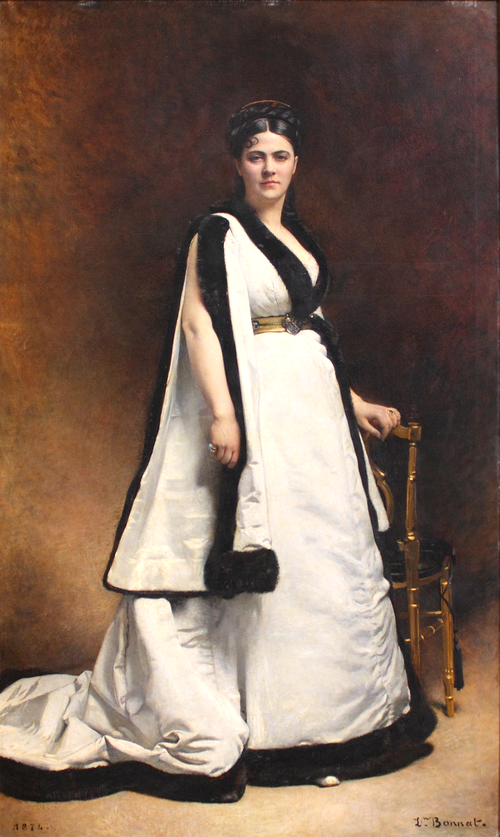
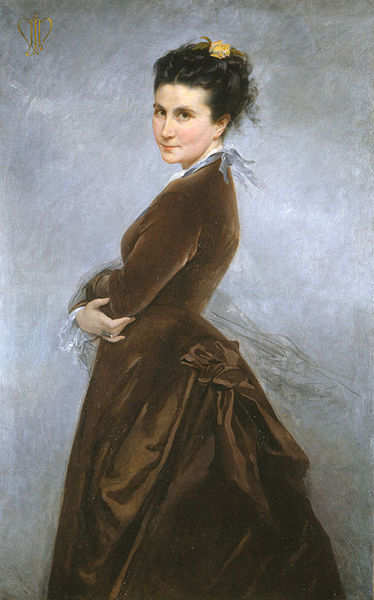
Madame Pasca by Léon Bonnat (1874) Alice Marie Angèle Pasquier was better known by her stage name Madame Pasca, a French stage actress.

Bonnat’s methodology when it came to creating portraits was known to be both thorough and painstaking. He demanded of his sitter numerous meetings so that he could carefully observe them in order to capture subtle gradations of expression and posture and because of this, he was able to achieve prolonged observations which allowed him to realise a high degree of naturalism along with psychological depth.  However, Bonnat’s long processes to achieve a finished portrait did not always please the sitters.  Although he was minded as to what the sitter wanted in the finished portrait, Bonnat refused to flatter his subject and simply strived for an unvarnished truth, but still conveying the dignity appropriate to the subject’s station in life. His commitment to authenticity along with his undoubted technical mastery in delivering form and texture, achieved the finished product being solid, present, and intensely real.

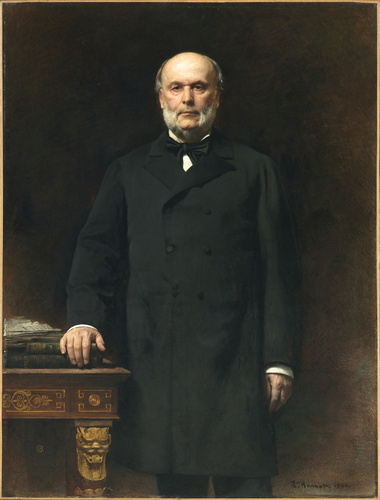
Portrait of Jules Grévy by Léon Bonnat (1880). Jules Grévy was  a French lawyer and politician who served as President of France from 1879 to 1887.

Léon Bonnat who had benefited, following the intervention of the mayor of Bayonne, Jules Labat, when he was granted a municipal scholarship from the city to study the Fine Arts in Madrid and then later in Paris, announced his intention to give his native city the gigantic art collection he had built up.  Léon Bonnat’s dedication to art extended well beyond his lifetime through this act of extraordinary generosity. Léon had no direct heirs, and decided to bequeath his extensive personal art collection, along with many of his own works, to his hometown of Bayonne.

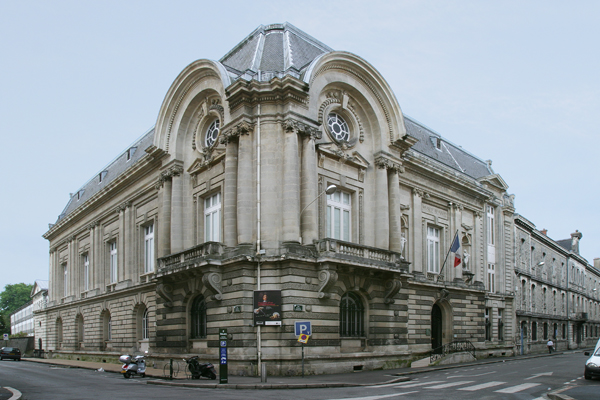
Musée Bonnat-Helleu in Bayonne, France

It was during the latter part of the nineteenth century that Bonnat had achieved financial stability and was able to indulge his passion for collecting art, especially drawings. He acquired sketches, drawings and prints by Rembrandt, Poussin, and Watteau as well as many others.  Eventually, his collection included drawings and paintings from the best of his students and colleagues as well. Like many collectors, Bonnat not only loved the art he had acquired, but he also hoped to share it with a larger public and so he proposed the idea of building a museum in his native Bayonne that would ultimately house his own collection. With his deep roots in the region, continuing family ties to Bayonne, and undoubtedly a sense of gratitude for the support he’d received as a fledgling painter, Bonnat worked tirelessly at developing the new museum. 

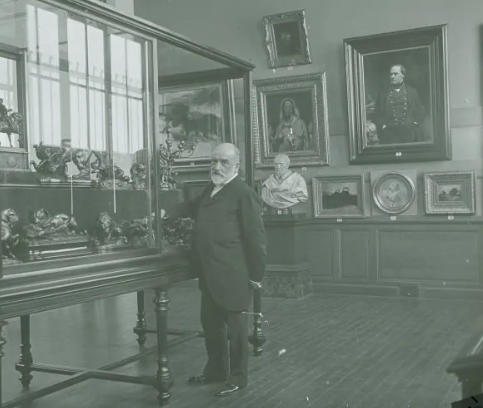
Léon Bonnat, installing his collection at the Musée Bonnat, Bayonne.

In 1902, he personally installed a large portion of his own unparalleled collection in the new Musée Bonnat.  The collection was later enriched by the donation of the collection of Paul Helleu and his wife Alice, leading to its current name, the Musée Bonnat-Helleu.  The chosen location of the museum was located at the corner of the two streets, Jacques-Laffitte and Frédéric-Bastiat, in the city centre, near the church of Saint-André where Léon Bonnat’s painting, Assumption of the Virgin can be seen. In 1896, the first stone of the future museum was laid by the Bayonne mayor Léo Pouzac and the classical-style building, in limestone, was completed eighteen months later. Inaugurated in 1901.  When the Bonnat Museum opened, the artist and collector came to set up his collection himself, while writing a will by which he bequeathed almost all of his works to the National Museums with the obligation to deposit them in Bayonne.

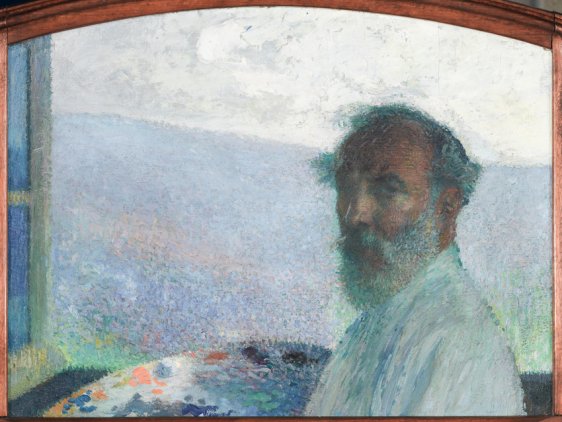
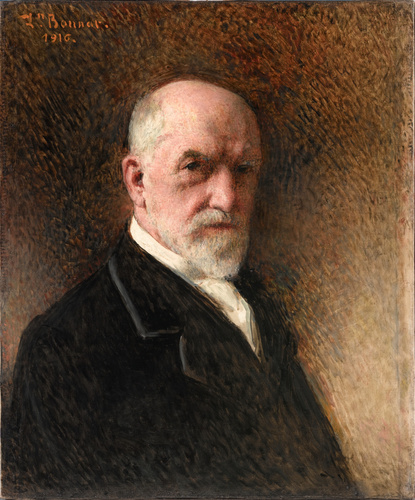
Self portrait by Léon Bonnat (1916)

Léon Bonnat died in Monchy-Saint-Éloi,  a commune in the Oise department in northern France, on September 8th 1922, aged 89.   Léon had never married and lived most of his life with his mother and sister. 

Musée Jacquemart-André, Baron Haussman and Georges de la Tour

Having been touring Europe for the last three weeks I have had a rest from my blog.   The last part of my journey was a short three-day stay in Paris and it was almost seven years since I had graced this wonderful city. I have visited many art galleries around the world, and my favourites have been the ones that offer something else other than walls of artwork.  I do like artwork which is hung on walls of the interiors of beautiful buildings.  It is like a 2 for 1 offering beautiful architecture and magnificent paintings.

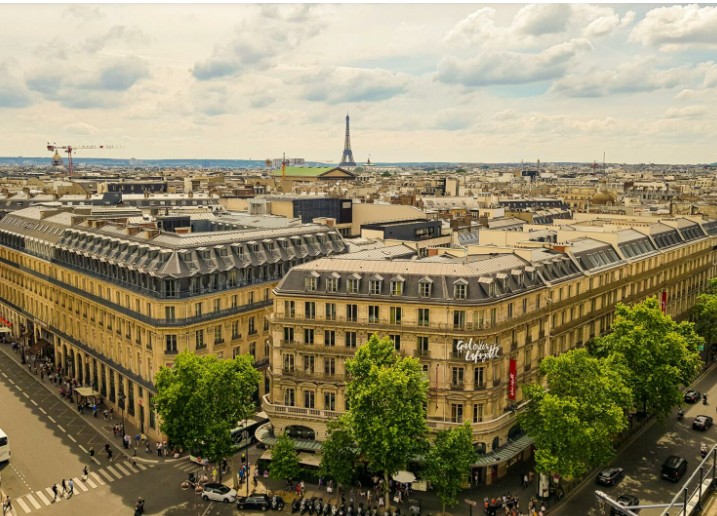
Baron Haussman’s Paris

Whilst in Paris there was an exhibition of one of France’s great 17th century artists, and one of the greatest exponents of 17th century Baroque painting, Georges le Tour.  However, first let’s have a look at the impressive building which was hosting the exhibition.  The Musée Jacquemart-André is a private museum located at 158 Boulevard Haussmann in the 8th arrondissement of Paris.  The street named after Georges-Eugène “Baron” Haussmann, a French administrator, who in the mid nineteenth century, with the backing of Emperor Napoleon III, was responsible for the transformation of the ancient impoverished and unhealthy areas of Paris which involved the demolition of 19,730 historic buildings and the construction of 34,000 new ones. Old narrow streets gave way to long, wide avenues characterised by rows of regularly aligned and generously proportioned neo-classical apartment blocks faced in creamy stone.

One such building was Musée Jacquemart-André, situated on Haussman Boulevard, which was the private home of Édouard André and his wife Nélie Jacquemart which was to display the art they collected during their lives. It was what the French term it as a hôtel particulier, a grand urban mansion. Edouard André bought land on the newly created Boulevard Haussmann with the intention of having a mansion built. Building started in 1869 by the architect Henri Parent and completed in 1875. 

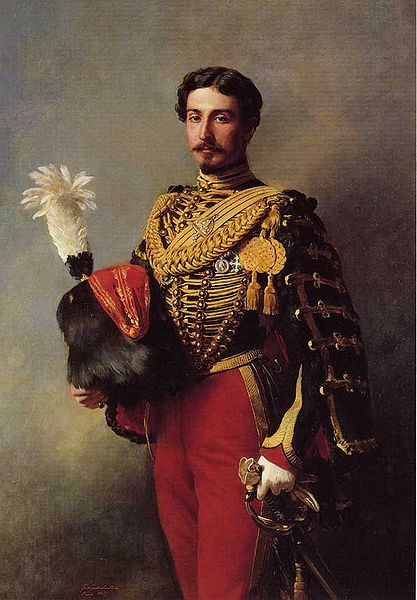
Portrait of Édouard André by by Franz Xaver Winterhalter. 

Nélie Jacquemart and Édouard André were an improbable and mismatched couple.  She was a Catholic woman and a famous society portrait painter, and he was the Protestant heir to a banking fortune. 

Nélie Jacquemart – Self portrait

They married in 1881. Nélie had painted Édouard André’s portrait ten years earlier. Each year, the couple would travel to Italy, buying works of art and slowly amassing one of the finest collections of Italian art in France. When Édouard André died in 1894, Nélie Jacquemart carried on the renovation of their home.  She also made many trips to Japan and neighbouring far-east countries adding many Oriental works to the collection.  Following her husband’s dying wishes, on her death in 1912, she bequeathed the mansion and its collections to the Institut de France as a museum, and it opened to the public in 1913. The couple’s relationship led to one of the most notable private art collections of fin-de-siècle Paris.

The Tapestry Room

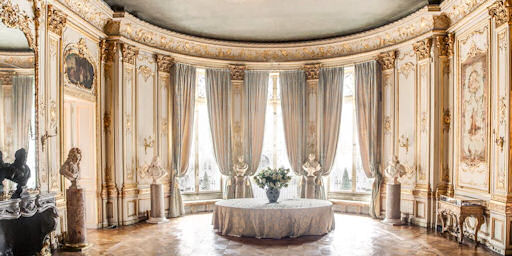
The Round Room

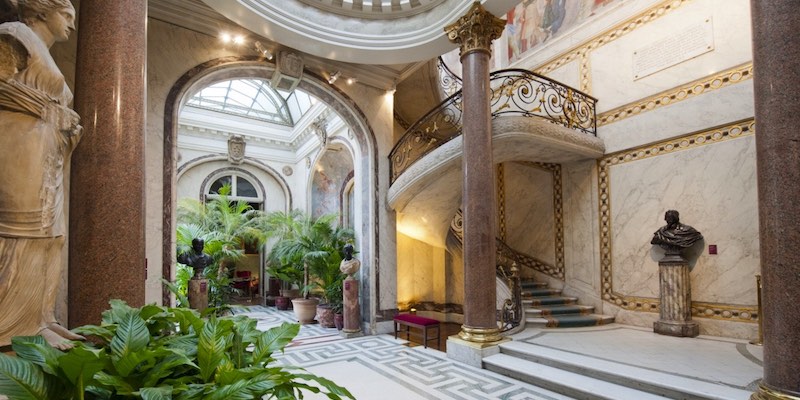
Once inside the Musée Jacquemart-André we are able to glimpse into the splendour of Parisian aristocratic life as it was in the 19th century.  We can witness the luxurious setting, both inside and outside of Édouard André and Nélie Jacquemart former mansion.  Adorned with the finest works of art, one can see in every room the evidence of their passion for Italian and French art.  This was a building which hosted extravagant receptions and soirees.

The Winter Garden and Staircase


Grand Salon

Their collection of Italian artwork which Nélie meticulously curated is legendary and includes paintings by Sandro Botticelli, Giovanni Bellini, and Andrea Mantegna. Besides these Italian works of art, the museum houses an remarkable array of French, Dutch, Flemish, and English paintings, as well as sculptures, antique furniture, and objets d’art. Wandering through rooms one observes how they have been preserved in their original state, and one feels that we have been immersed into the world of Parisian high society.

One of the State Rooms and Picture Gallery

The grand salons were designed for hosting lavish events and feature stunning frescoes, sculptures, grand sweeping staircases, and luxurious decor. The experience of walking through lavishly decorated rooms and halls allows us to see how the affluent lived in a bygone era of luxury.

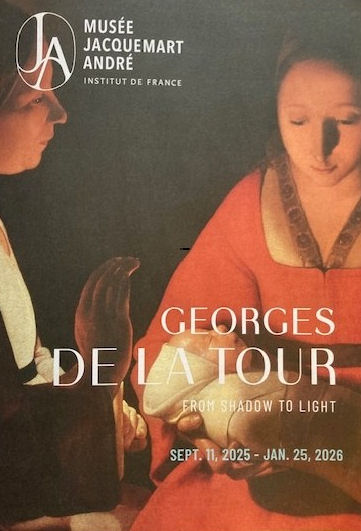
Once the excellent tour of the rooms and garden of the mansion was complete, I went to see the Georges la Tour exhibition which was spread across several upstairs rooms.   It was entitled From Shadow to Light which alludes to the way La Tour explored in his paintings nocturnal scenes, half hidden candles, light filtering through a translucent page, glimmers on a skull or a lantern punctuating the darkness in which meditation unfolds.

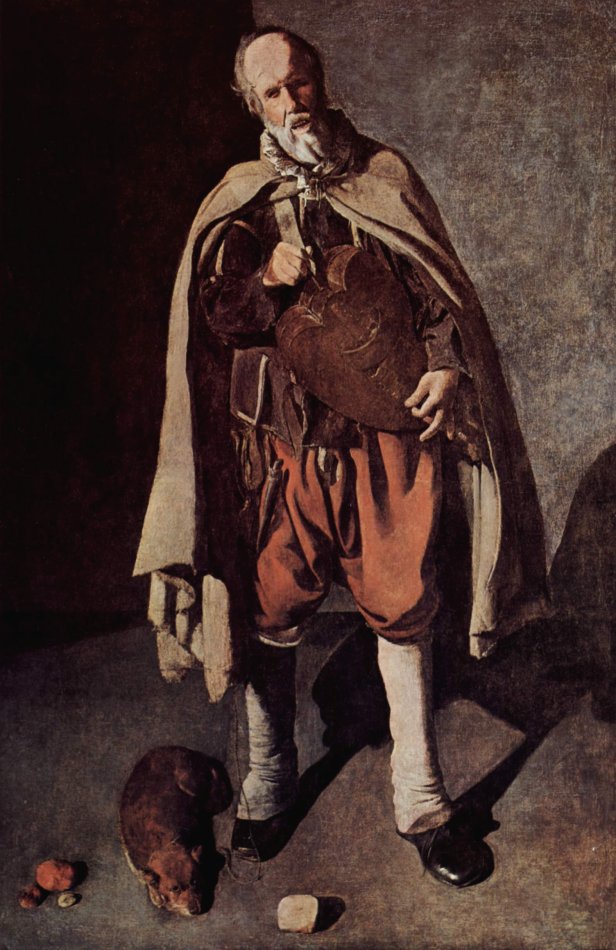
The Hurdy=Gurdy Man with a Dog by Georges de la Tour (1625)

Georges de la Tour was baptized in March 1593 in Vic-sur-Seille in Lorraine.  He was the second of seven children, born into a family of bakers.  Following a fire started by French troops during the Thirty Years’ War, his home, his studio, and some of his works were destroyed and he and some of his family escaped to Nancy.  A year later la Tour was appointed “First Painter to the King” by Louis XIII and as such, he lived in the Louvre and was officially recognized by the court and the Parisian artistic community.   At the height of his career, he painted for many prestigious patrons such as Cardinal Richelieu and the Dukes of Lorraine and became one of the wealthiest painters of his time.

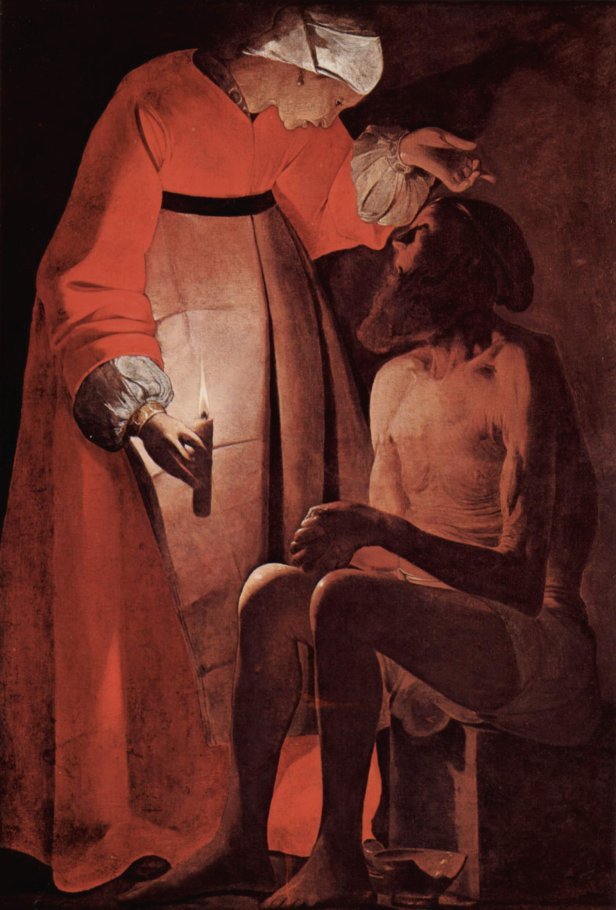
Job Mocked by his Wife by Georges de la Tour (1635)

As can be seen in his paintings, Georges de La Tour was influenced by the Italian painter Caravaggio whose style was then spreading throughout Europe. It is not thought that de la Tour ever travelled to Italy but he was probably influenced by Dutch and Lorraine Caravaggism.  De la Tour developed a personal and daring interpretation of chiaroscuro that made him truly original. His paintings are notable for their realism and sober compositions, which contrast with the dramatic intensity of Italian Caravaggist works. Although de la Tour’s work used the technique of chiaroscuro  his style is of painting is often alluded to as tenebrism.  Tenebrism, which comes from the Italian word tenebroso meaning dark, gloomy, mysterious and is a style of painting using especially pronounced chiaroscuro, where there are violent contrasts of light and dark, and where darkness becomes a dominating feature of the image. This technique was developed to add drama to an image through a spotlight effect and is common in Baroque paintings. Tenebrism is used only to obtain a dramatic impact while chiaroscuro is a broader term, also covering the use of less extreme contrasts of light to enhance the illusion of three-dimensionality.

St Peter Repentent by Georges de la Tour (1645)

The pamphlet that went with the exhibition describes the painting of St Peter as:

“…The celebrated St Peter Repentent exemplifies this sober style, in which lightbecomes the principal sign of the divine. The visual rhyme between the saint’s tonsureand the rooster’s crest introduces a discreet irony, a singular perspective on religious iconography…”

The painting is based on the Bible story of Jesus’s arrest on the night of the Last Supper, when the apostle Peter denied knowing him. Although Christ forgave his betrayal, Peter was consumed by guilt. In his painting, La Tour represents Peter as an old man, reflecting on his past actions in a state of perpetual repentance. The apostle’s red-rimmed eyes and the uncertain light of the lantern evoke the feeling that the Peter has spent anxious sleepless nights and the use of muted colours and simple forms give visual expression to Peter’s solemn and dejected emotions.

St Gerome Reading a Letter by Georges de la Tour (1629)

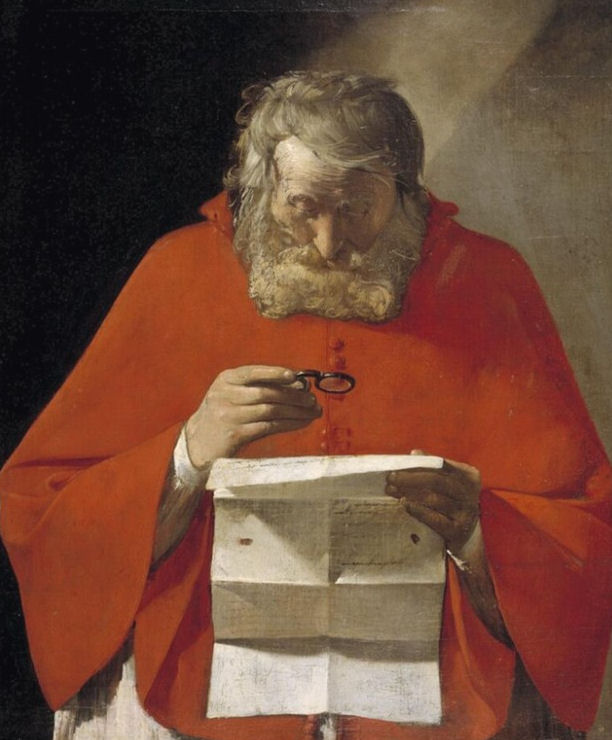
The painting by Georges de la Tour’s Saint Jerome Reading a Letter was completed around 1629 and is a masterclass in how to make a single, ordinary action, in this case, reading, carry the weight of a whole life. St Jerome was an early Christian priest, confessor, theologian, translator and historian and his image fills the frame at half-length, wrapped in a cardinal-red mantle.  His head bends slightly forward, and a wisped halo of grey hair catches the light that slants in from the upper right in a wedge-like form.  In his left hand, Jerome holds a creased sheet of paper and in his right hand, he lifts a small pair of spectacles toward the page, trying to focus on the written words.

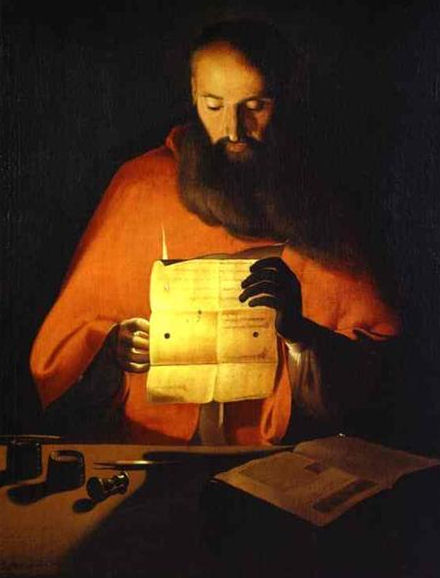
St Jerome Reading by Georges de la Tour (1650)

Georges de La Tour is best known for his religious paintings, which are instilled with extraordinary spiritual intensity despite the look of simplicity. In complete contrast to the religious works, de la Tour was interested in scenes of games of cards and dice as well as genre scenes. His interest in depicting card players and card cheats can be seen in two versions he made two years apart.

The Cheat with the Ace of Clubs by Georges de la Tour ( 1630–1634)

The earlier version is one of two versions of the composition by de la Tour and is known as The Cheat with the Ace of Clubs.   There are a number of variations in details of colour, clothing, and accessories between the two paintings.  This one is now hanging in the Kimbell Art Museum in Fort Worth, Texas.

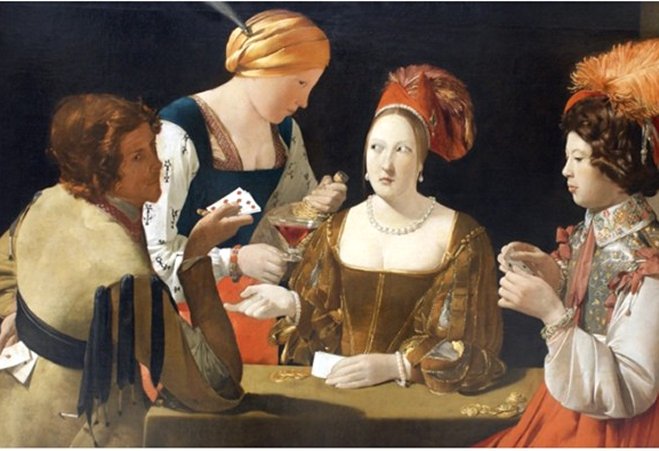
The Card Sharp with the Ace of Diamonds by Georges de la Tour (1636-38)

The work, the later variation, depicts a card game in which the wealthy young man on the right is being cheated of his money by the other players, who both appear to be part of the scheme. The card sharp on the left is in the process of retrieving the ace of diamonds from behind his back.

The Dice Players by Georges de la Tour (1651)

De la Tour’s painting entitled The Dice Players is a genre painting which he completed in 1651.  In the work he depicts a group of five figures who are deeply absorbed in their game with dice. Their intimate gathering around a table, illuminated by a single, subtle light source, is a good example of his tenebrism-style that emphasizes dramatic contrasts between light and dark. Look how each figure has a different facial expression as we see them all concentrating on the game.  Besides this, look at how the artist has depicted details of their period clothes and he has created, through the dim, atmospheric lighting, a vivid record of 17th-century life, and a sense of realism to the scene. De la Tour has used a sombre palette and the careful attention to textural details highlights the gravity of the moment.

Payment of Taxes by Georges de la Tour (1620)

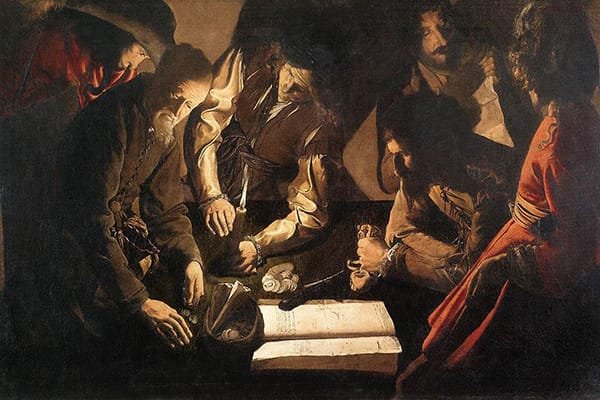
The painting entitled Payment of Taxes by Georges de La Tour was completed around 1620. Once again it highlights la Tour’s love of the artistic movement known as Tenebrism which is characterized by dramatic illumination and stark contrasts between light and dark. It is a large painting measuring 152 by 99 centimetres. The painting depicts a group of figures huddled together around a table. The depiction is dramatically lit by a single, stark light source, casting deep shadows and creating a profound sense of volume and space. This light appears to emanate from a candle or lantern which is out of view, highlighted by the reflective surfaces and illuminating select portions of the figures and objects. The men gathered around the table are engaged in an exchange, with a distinct focus on the act of counting or possibly exchanging money. The artist has focused their expressions and their hands and that emphasizes the gravity and concentration of the transaction at hand. The use of light and shadow not only gives the scene an emotional feeling but it also guides the viewer’s gaze through the composition, emphasizing the movement of money encapsulated in this painting.

Peasant Couple Eating by Georges de la Tour (c.1620)

Georges de la Tour’s painting entitled Peasant Couple Eating was completed around 1623, at the early part of his artistic career.   The two half-length figures which are almost life-size are tightly framed in the pictorial space.  They face us as if we have interrupted them during their meagre meal of dried peas.  The man exhibits a sour and resentful look as he looks down.  The woman stares fixedly at us with her deep-set almost dead eyes as she raises a spoon to her mouth.  As the background is a simple grey, we have no idea where the event is taking place.  However, this background enhances the old couple.  The painting of half-length figures like this one was a characteristic of Caravaggio’s style, an artist who influenced de la Tour in his early works.  This painting proved very popular and there are records of three 17th century copies.

In the book, Georges de la Tour of Lorraine, 1593-1652, by Furness, the author wrote of the artist:

“……Georges de la Tour is classed as a realist.  Realist he is in that his subjects, predominantly if not exclusively religious, are represented in terms of “real” life, often the life of his own country-town and surroundings in Lorraine.  But he avoided naturalism; rather, he chose to simplify, modelling his forms by marked contrasts of light and shade, and using large volumes and severe lines, with great selective economy of detail…”


Some of the paintings shown in this blog were not at the exhibition but I wanted to show you more of la Tour’s work.

Did I enjoy the exhibition ? The painting were excellent. However, for me the downside was two-fold. Firstly the rooms displaying the paintings were overcrowded (and this was a timed-enterance exhibition). Some people were moving clockwise whilst others moved anticlockwise and it felt slightly claustrophobic. Secondly all the paintings were accompanied by a card describing the work but they were all in French, rather bilingually. My love of visiting art museums is to buy a book with regards the exhibition and in this case a book about the actual museum itself and the works of the artist were on sale in many languages but none in English.. Brexit ???

I recommend you to the gallery website:

Musée Jacquemart-André | Museum in Paris

Walker Art Gallery revisited.

The Walker Art Gallery in Liverpool has one of the most significant and famous collection of artworks in the UK, which includes European Renaissance paintings, masterpieces by Rubens, Rembrandt, Turner and Stubbs, Pre-Raphaelite artworks by Rossetti and Millais, Impressionist works by Monet and Degas and contemporary works by Hockney, Wylie and the winners of the John Moores Painting Prize.   I have covered many of the Pre-Raphaelite works exibited here in previous blogs and following a visit I made to the gallery last week I have chosen a few more paintings which impressed me.

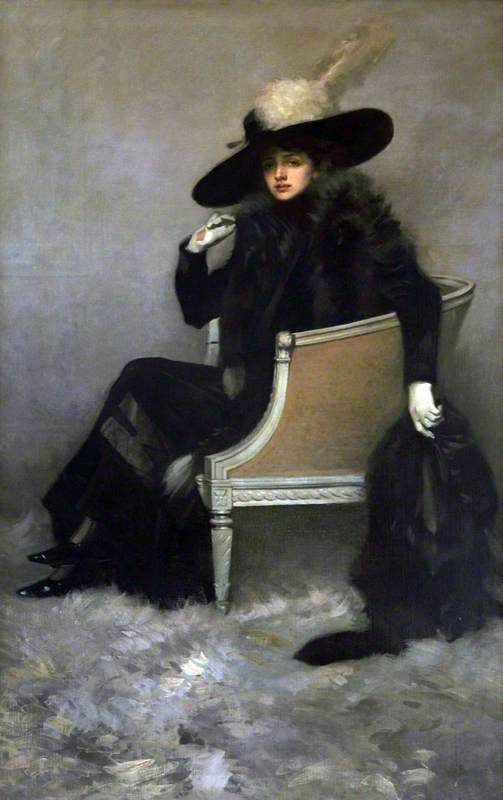
Lady in Black Furs by Pilade Bertieri (1912)

The first painting, I am showcasing is Lady in Black Furs, a work by the Italian painter Pilade Bertieri, which he completed around 1912.  Bertieri was born in Turin and exhibited in major cities in Italy, in New York and notably Manchester and Liverpool as well as Paris at the Salon from 1907 to 1931.  The painting depicts Bertieri’s wife Genevieve Wilson, the daughter of a wealthy New York socialite.  It was during a voyage in 1905 from Italy and America that they met and a year later they got married.  Bertieri said that he was first attracted to Genevieve when he saw seated on a deckchair.  For him, her graceful composure was just too much to resist and this depiction is a reconstruction of his first view of her but this time in a more fashionable chair.  The fact that she is wearing the very same furs, shoes and velvet and satin dress as she did aboard the ship in 1912 evokes memories for him of that first meeting.  At the time of the painting Genevieve was pregnant with their first child.

Fantine by Margaret Bernardine Hall (1886)

Margaret Bernadine Hall completed her painting entitled Fantine in 1886 and it depicts the character Fantine who was featured in Victor Hugo’s novel Les Misérables.  Fantine was dismissed from her job because of her illegitimate child and was forced into the life of a sex worker in order for her and her daughter to survive.  In the depiction we see Fantine protectively watching over her sleeping daughter.

Margaret Bernadine Hall was an English painter, born in 1863 in Wavertree, Liverpool.  Her father was Bernard Hall, a merchant, local politician and philanthropist, who was elected Mayor of Liverpool in 1879. Her mother was Margaret Calrow from Preston, who was Bernard Hall’s second wife. Margaret was their second child, and their oldest daughter.  In 1882 the family moved to London but at the end of that year nineteen-year-old Margaret went to live and study in Paris. Between 1888 and 1894 she travelled extensively to countries including Japan, China, Australia, North America, and North Africa, returning to live in the French capital in 1894. She moved back to England in 1907, where she died three years later.

River Scene with a Ferry Boat by Salomon van Riysdael (1650)

One of my favourite landscape painters is Salomon van Ruysdael and in his painting entitled River Scene with a Ferry Boat we see the kind of work he produced for the art-loving public. At this time, artists had mostly depicted religious subjects in their paintings and the Catholic Church used to be most artists’ best client, as they ordered altarpieces and other artworks to decorate churches and sacred places, but this came to an end with the Reformation as many Protestants refused to allow the presence of religious paintings or sculptures in churches.  This led to a great crisis for artists in Northwestern European countries as artists had only a few ways left to make money: painting portraits and illustrating books but there was also a revival of landscape paintings.  As well as the ever popular genre scenes, people began to buy landscape paintings to decorate their homes. Jacob Isaackszoon van Ruisdael, Salomon’s nephew, is generally considered the pre-eminent landscape painter of the Dutch Golden Age, a period of great wealth and cultural achievement when Dutch painting became highly popular. Jacob was best known for his atmospheric river scenes based upon the countryside around the city of Haarlem where he lived. He was also a merchant who dealt in the blue dye that was used in Haarlem’s famous cloth bleaching factories.

The Walker Art Gallery houses Salomon’s painting entitled River Scene with a Ferry Boat and we see a ferry crossing the river laden with people, livestock and even a small cart.  These ferries were an essential feature of the watery Dutch countryside, and a popular subject with landscape painters such as the Ruysdael family. This work is typical of much 17th-century Dutch landscape painting: naturalistic in its clear light and cloudy, rain-washed sky, but at the same time carefully organised to achieve a balanced composition. This work despite looking as though it was painted en plein air was not painted outdoors.  It is an idealised depiction and probably does not represent any particular place but is an amalgam of various details and features from a number of different places juxtaposed to form this vista.  Close to the riverbank we see a smaller boat with busy pulling in a fishing net. On the bank is a barn in which workers are salting fish and putting them into barrels. On top of the barn is a large dovecot. In a way the painting is a ‘foodscape’ as well as a landscape, highlighting what nature has to offer.  The Dutch patrons liked this kind of narrative painting.

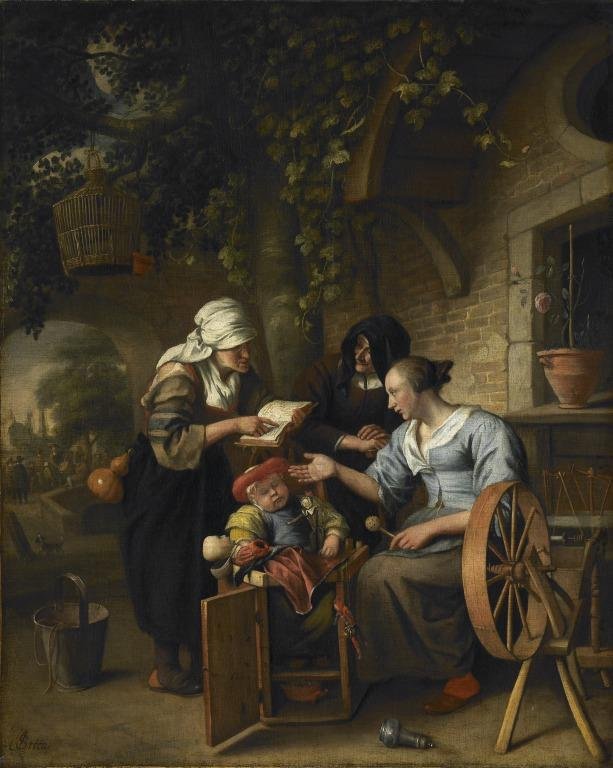
The Fortune Teller by Jan Steen (1663)

One of the greatest Dutch genre painters was Jan Steen. In Holland he ranks next to Rembrandt, Vermeer, and Hals in popularity.  He is best known for his humorous genre scenes, warm hearted and animated works in which he treats life as a vast comedy of manners.  Steen was born in Leiden and is said to have studied with Adriaen van Ostade in Haarlem and Jan van Goyen (who became his father-in-law) in The Hague. He worked in various towns – Leiden, The Hague, Delft, Warmond, and Haarlem and in 1672 he opened a tavern in Leiden.  In his painting The Fortune Teller we see a young woman sitting by her spinning wheel having her fortune told.  One interpretation of this depiction is that she is a sex worker, the old, black hooded lady is the brothel keeper and the soldiers in the background are her clients.  Fortune-telling was strongly associated with deceit, and therefore frowned upon in the seventeenth century.

The Epte in Giverny by Claude Monet (1864)

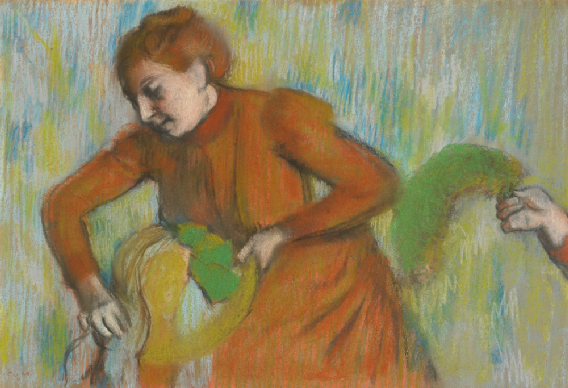
Modiste Decorating a Hat by Edgar Degas. (c.1895)

My next two offerings, The Epte in Giverny, by Monet and Modiste Decorating a Hat by Degas, are new arrivals at the gallery thanks to the beloved taxman. They have been acquired by National Museums Liverpool through the Government’s Acceptance in Lieu scheme which allows people, who have Inheritance tax bills to pay, to transfer important works of art and heritage objects into public ownership which are then allocated to museums, archives or libraries for people to enjoy.  Both the Monet and Degas artworks come from the collection of Mary Elliot-Blake and have been owned by the Montagu family by descent. Due to the family’s connection to Liverpool, the paintings were allocated to the Walker Art Gallery.

Monet completed the painting, The Epte in Giverny, in 1884, and it depicts the fast-flowing Epte river, which rises in Seine-Maritime in the Pays de Bray, near Forges-les-Eaux and empties into the Seine not far from Giverny where the artist painted his famous water lily series.

The second work is by Degas’ entitled Modiste Decorating a Hat and depicts a milliner adjusting a hat in a shop window.

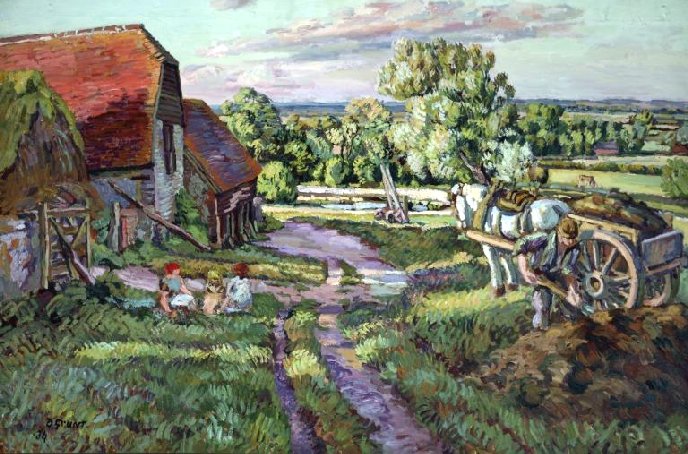
Farm in Sussex by Duncan Grant (1934)

The 1934 painting, entitled Farm in Sussex, is a depiction of Charleston Farm at Firle in Sussex is by the artist Duncan Grant. The picture was painted in his studio over a period of several years. The first thing that strikes you about the depiction is the unusually bright colours he has used and this is due to Duncan Grant’s great interest in Fauvism, which was popular between 1905 and 1910. The Fauves (the Beasts) used bright, clashing colours and fierce brushstrokes to express feelings and emotions.  In 1909, Grant met Henri Matisse, who was a leading light of this group.

He also saw more of the groups work in Roger Fry’s Post-Impressionist exhibition in London in November 1910, Fry had organised the exhibition Manet and the Post-Impressionists at the Grafton Galleries, London. This exhibition was the first to prominently feature Gauguin, Cézanne, Matisse, and Van Gogh in England and brought their art to the public.

Duncan Grant lived at Charleston Farm from 1916 with Vanessa Bell (neé Woolf), who was an artist and the sister of Virginia Woolf. They had met through the Bloomsbury Set, a London-based group of artists and writers who met regularly to discuss their work and ideas about modernism and art. Charleston Farm became a meeting place for the Bloomsbury Set outside of London.  The pair had moved to the countryside from London following the outbreak of World War I so that Grant could avoid conscription by working as a farm labourer. The couple each had their own studio at the farmhouse and decorated the entire building, including walls, fireplaces, door panels and furniture, with their paintings, fabrics and ceramics. They kept the house after the war and used it as a summer home. The painting highlights the bright colours that characterise Grant’s work. The painting was completed in 1934, the same year that Roger Fry died. Fry had been a close friend of both Duncan Grant and Vanessa Bell and was a regular visitor to Charleston. The painting reflects Grant’s affection for the Farm and the people he associated with it

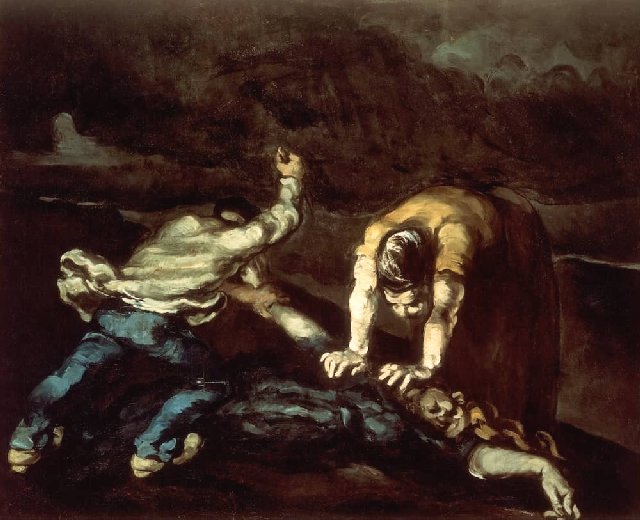
The Murder by Cezanne (c.1870)

The Murder is one of Cézanne’s early paintings which he completed around 1870.  It is a dark and highly melodramatic work which ably communicates the brutality of the act. In the depiction we see the murderer raising his hand and is about to give the final strike while his female conspirator forcefully holds down the rounded heavy-set body of the female victim whilst the fatal blow is struck.  Little can be made out of the figures; just the outline head and arms of the victim whose facial expression is contorted with pain.  The faces of her two assailants are blurred.  Cezanne was not interested with the identities of the murderers but the scene simply depicts the heinous act of anonymous violence.  The scene is made more frightening by the bleak surroundings and the dark sky overhead.  Close to the figures is a riverbank and we can deduce that the body of the dead woman will eventually be dumped into the dark waters.

Publicity Poster for Zola’s novel

The Murder was painted at a time when Cézanne was still influenced by the Old Masters such as Eugene Delacroix and Francisco Goya, and Diego Velazquez.  So after painting so many colourful landscapes why would he depict a brutal murder?  It is thought that Cezanne’s choice of depicting this brutal subject may have been inspired by Emile Zola’s novel Thérése Racquin which had been published in 1867, in which the heroine murders her husband. It was Zola’s third novel, though the first to earn wide fame. The novel’s adultery and murder were considered scandalous and famously described as “putrid” in a review in the newspaper Le Figaro. The painting’s subject could also be inspired by illustrations in the popular press.

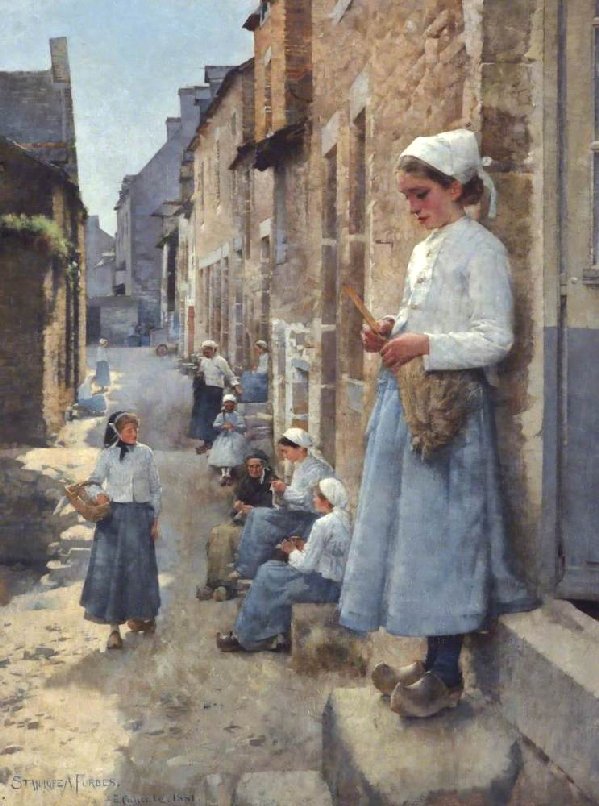
A Street in Britanny by Stanhope Forbes (1881)

My final painting is A Street in Brittany by Stanhope Alexander Forbes which he completed in 1881.  It is a depiction of figures in a narrow street: women in white headgear known as coiffes and blue petticoats.  They are grouped around their cottages, some are seated on their knitting blue jerseys for their fishermen husbands.

Stanhope Forbes was born in Dublin, the son of Juliette de Guise Forbes, a French woman, and William Forbes, an English railway manager, who was later transferred to London. He was educated at Dulwich College, and he studied art under John Sparkes at Lambeth College of Art, who later taught at South Kensington School of Art. Forbes then studied at the private atelier of Léon Bonnat in Clichy, Paris from 1880 to 1882.  It was in the French capital that Forbes met up with fellow artist, Henry Herbert La Thangue, who had also attended Dulwich College, Lambeth School of Art and the Royal Academy.

In 1881 Forbes and La Thangue went to Cancale, a village in Brittany, at the western end of the bay of Mont-Saint-Michel, fifteen kilometers east of Saint-Malo. It was here that Forbes began to paint en plein air and produced this painting. 

His biographer, Mrs. Lionel Birch in her 1906 book Stanhope A. Forbes, A. R. A., and Elizabeth Stanhope Forbes, A. R. W. S. recalled the setting of this work:

“..One of the first results of the visit to Cancale was a composition of figures in a narrow street: women in white coiffes and blue petticoats, grouped round their cottages and seated on their doorsteps engaged in their everlasting occupation of knitting blue jerseys for their fisher husbands…”

The biographer continues:

“…It was a very simple motif, but painted with great care and conscientiousness, and with a close and searching attention to those truths of lighting and that clear out-of-door aspect which the painter sought to betray. It was interesting, too, as the first attempt Stanhope Forbes had made in what might be termed figure composition, if, indeed, a picture in which there is so little of arrangement in the grouping of the figures can be termed a composition. But it was, at any rate, a great step from simple portraiture, and its success — for it brought the young painter a very signal one — had the most marked influence in determining his future. Exhibited at the Royal Academy of 1881, it attracted favourable attention, and when, later on, it was sent to Liverpool, the Committee of the Walker Art Gallery decided to purchase it for their permanent collection…”

Forbes left France and returned to London and exhibited the works he had made in Brittany at the 1883 Royal Academy and Royal Hibernian Academy shows.  In 1884 he moved to Newlyn in Cornwall, and soon became a leading figure in the growing colony of artists.

I hope this blog will tempt you to visit the Walker Art Gallery in Liverpool. You will not be disappointed.

Groeningen Museum Bruges. Part 2.

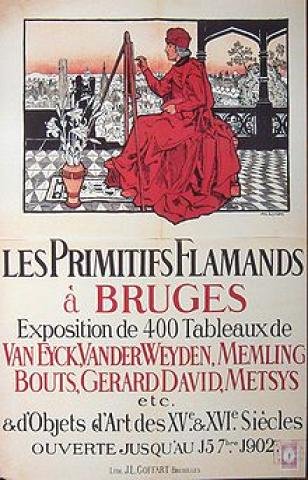
In 1902, a major exhibition of Flemish Primitive works entitled Les Primitifs flamands et l’art ancien was held in Bruges.  Almost four hundred paintings, including works by (or attributed to) Jan van Eyck, Rogier van der Weyden, Dieric Bouts, Hans Memling, Gerard David and Quentin Massijs, were on show. The exhibition drew in more than 35,000 visitors. It is believed that never before had so many Flemish paintings from the 15th and early 16th centuries been on display together.   If you manage to visit the Groeningen Museum in Bruges you will be able to see many works by the Flemish Primitives.

Portrait of a Theologian with his Secretary by Jacob van Oost the Elder (1686)

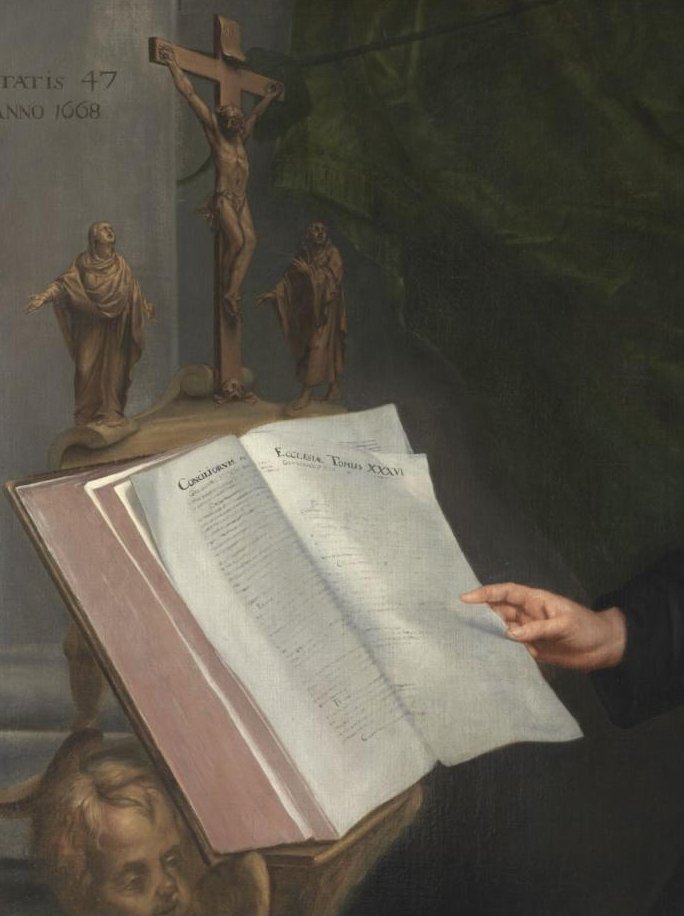
The first painting I am looking at in this blog is the dual portrait entitled Portrait of a Theologian and his Secretary by Jacob van Oost the Elder which he completed in 1668 and is part of the Groeninge Museum in Bruges.

Jacob van Oost the Elder was the leading artist of 17th-century Bruges. He painted many altarpieces in the churches of Bruges and he was also exceptionally gifted as a portrait painter as one can see in this work. Van Oost was born in Bruges, and trained there by his elder brother, Frans. He entered the Guild of Saint Luke in 1619, and became a Master two years later. He took a trip to Rome in the 1620s and on his return to Bruges in 1628, his work was influenced Caravaggio, albeit the depiction of his paintings were of a contemporary Netherlandish setting.

The work depicts a theologian, probably a Jesuit, reading the council’s decisions and comments on them to his secretary. His secular secretary takes notes. On the left of the painting we see a lectern, which is decorated with a sculpture of a Calvary group, and open on it is volume thirty-six of the collected Council Decrees. On the right of the painting we see a work table bedecked with a richly coloured tablecloth, at which the priest and the secretary are seated. On top of the table are study accoutrements, such as a globe and a book. Behind the two men is a bookcase with editions of the Bible and literature in the fields of theology and canon law.

Thomas Wentworth, Earl of Strafford, with Sir Philip Mainwaring by Anthony van Dyck

Once again, in this depiction we are reminded of the influence of Anthony van Dyck portraiture, such as his 1640 painting entitled Thomas Wentworth, Earl of Strafford, with Sir Philip Mainwaring, also the Caravaggesque treatment of the light, with its characteristically heavy contrasts between light and shade, in this case between the open book on the lectern and the black clothes of the English statesman and the lightness of his face in comparison to the dark background.

Portrait of a Bruges Family by Jakob van Oost the Elder (1645)

Portrait of a Bruges Family is another painting by the Bruges born painter Jakob van Oost.   He had been commissioned to paint a family portrait.  This work is regarded as a masterpiece of high Baroque painting. For the man who commissioned the work, it is a vanity painting in which he is asking the viewer to recognise his status, his wealth and his handsome family.  He stands before us his arm outstretched.  The focal point of this painting is the wealthy man who draws our attention to his assets. He points towards the estate he owns which stretches into the distance.  He is surrounded by his family and standing next to him is his wife.  We also see the children’s maid and the gardener and by catching a glimpse of the terrace he is standing on we know that his house will be palatial.  Van Oost has made his viewpoint low which adds to the imposing air of the central figure.  It is a painting which carefully exudes two facts for us to take in.  Firstly, the portrait is a glorification of family life based on love and fertility and secondly, it is a work of art which affirms the family’s social status.  In the seventeenth century the wealthy bourgeois yearned to be accepted into the realms of the aristocracy and one way of elevating themselves to that social status was to buy an estate that came with a title of nobility and we can clearly see the man in the portrait aspired to that elevated status.

What is fascinating about this painting, albeit you will probably not be able to see it clearly in the attached picture, is that the painting is signed and dated on the lower right on the parapet.  However, even more bizarre is that the painter has incorporated the age of the various figures in the work.  The man is 46 as we can see written on the heel of his shoe.  His wife is aged 26 and this figure appears on her fan and the boy who stands close to her is 3 as can be seen written on his hat.  The girl sitting on the steps sits on a cushion is 15 as shown on her basket and the young man is 17 as shown on his boot.  The baby who is being carried by the nursemaid has the figure 1 inscribed on his hand.   The ages of the various children suggest that there have been two separate marriages and the lady holding hands with the central figure is probably the mother of the two youngest children.  This work of art is considered to be one of van Oost’s greatest masterpieces.   It would be interesting to find out if anybody visits the museum and looks closely at the painting whether they can see the numbers inscribed in the painting

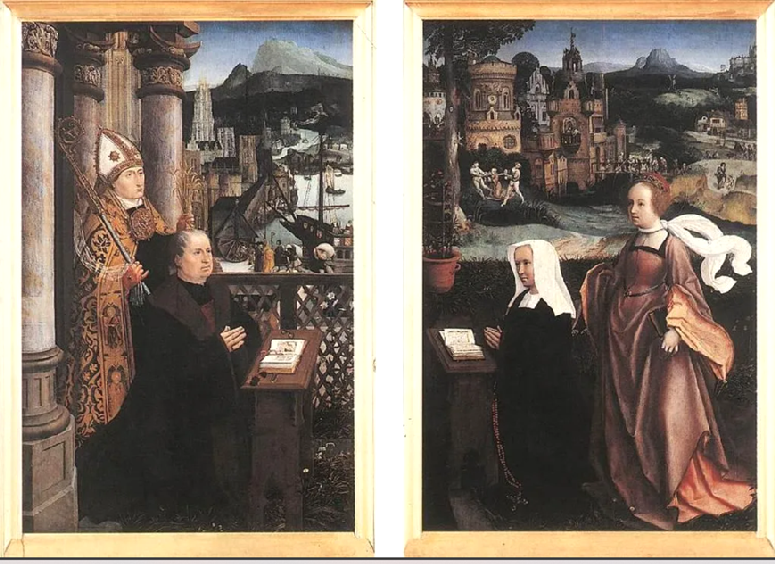
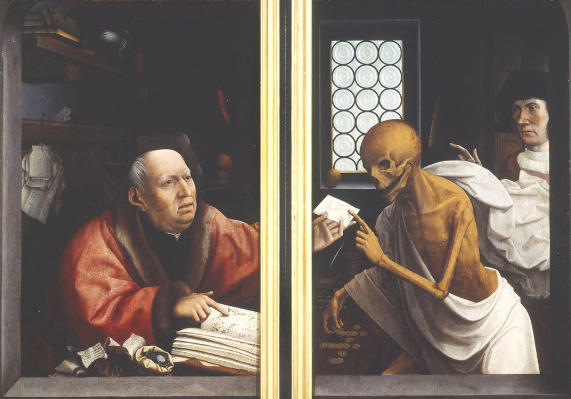
The next offering was once a triptych by the Belgian artist, Jan Provoost, and belonged to the former Dominican monastery in Bruges. Sometime before 1861 the front and back sides of the wing panels were separated by sawing them apart lengthwise.   The four panels are now displayed separately. The original central panel is missing. 

Jan Provoost was born in the Belgian town of Mons around 1463.  By 1491 he had married the widow of the miniaturist and painter, Simon Marmion and in 1494 he settled in Bruges.  He simultaneously headed up two workshops, one in Bruges, where he was made a burgher, the other in Antwerp, which was then the economic centre of the Low Countries. Provost was also a cartographer, engineer, and architect.

Inner wings of the original Triptych (c.1515)

The wealthy, but unknown, donors who commissioned the triptych are depicted on the original inner wing panels kneeling in prayer in a small, enclosed garden.  The background scenes include episodes in the lives of their patron saints, Nicholas of Myra and Godeliva who are also depicted in the panels.  Behind each of the saints are pictorial episodes from their lives.

The depiction in the background of the left hand panel we can just see men carrying sacks of food as they walk along the quayside next to a sailing vessel. When the people of Myra, a Lycian city in Ancient Greece in what is today the provinces of Antalya in Turkey, faced starvation, Bishop Nicholas had a shipload of grain that was destined for Alexandria distributed among the people. When the vessel completed its onward journey and arrived at Alexandria the cargo was found to have been miraculously replenished.

The right hand panel depicts the female donor along with her patron saint, Godeliva of Gistel and in the background we can see how the saint met her death. The story goes that she accepted an arranged marriage as was the custom, but her husband and family turned out to be abusive. Eventually he had her strangled by his servants. The large white scarf around the saint’s neck is to remind us of the manner of her death.

Outer (reverse)wings of the Triptych (c.1515)

Originally when the triptych was closed it showed the images Death and the Miser. These two rear sides form a continuous scene and depict a moneychanger who points to a line in an accounting register. Death lays down some tokens and points to the text held out to him by the moneychanger, presumably a promissory note. It is possibly that the man in the doorway with a raised finger could be the artist himself.

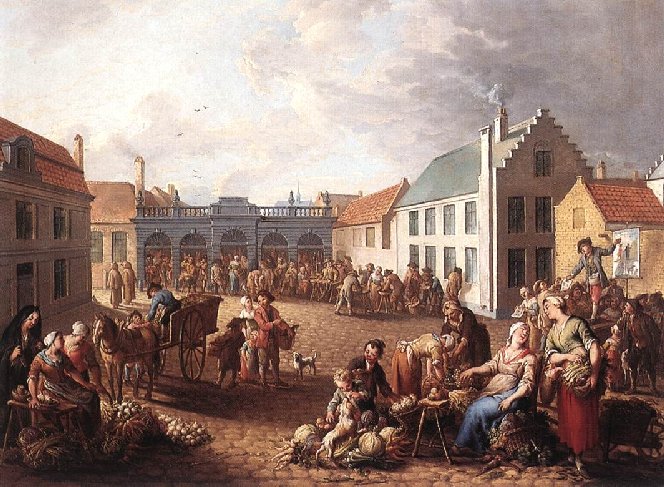
The Pandreitje in Bruges by Jan Antoon Garemijn (1778)

The world of art constantly changed.  Leaving the 15th- and 16th-century Northern Renaissance period, once known as the Flemish Primitives and moving on a quarter of a century, through the bombastic art of the Baroque period we arrive at the time when light-hearted charming, themed art of the Rococo period had gained in popularity.  In France, Antoine Watteau, Jean Honoré Fragonard and François Boucher held centre stage and defined the French Rococo period spanning from the reign of Louis XIV “The Sun King” to that of Napoleon Bonaparte.  They created soft-coloured dreamworld paintings set in idyllic surroundings exuding a light poetic atmosphere.  The Flemish Rococo artists never attained the aristocratic elegance of their French counterparts although they did manage to produce fresh bourgeois drawing-room style works. 

Portrait of Jan Antoon Garemijn by Charles-Nikolas Noel (1771)

The most talented of these Flemish artists was Jan Antoon Garemijn.  The Groeningemuseum houses his portrait and also a number of his beautiful works including one entitled The Pandreitje in Bruges which he completed in 1778. The Pandreitje was a square in Bruges used as a vegetable market. In the foreground we see women who have come to town from their rural homes bringing with them their vegetables which they hope to sell.  In the background, occupying the porticos of the prison building are the butchers selling their wares. 

On the left of the square we see a street entertainer singing songs and cracking jokes to keep the marketgoers entertained.  He is also depicted selling mannekensbladen, a kind of 18th century Flemish illustrated paper which is full of sensational stories.  Behind him is an advert for the paper he is trying to sell which bears the incomplete inscription:

DERLYCKL VAN- 1778

(Wonderful stories of 1778)

Garemijn always paid attention to detail in his paintings of market scenes, such as this one, which offered an idealised image of the common people without the symbolism and moralising undertone that earlier artists would insert into their genre works.  There was no hint of social criticism in this work.

Another painting housed in the Groeningemuseum is one I featured in one of my early blogs of 2011 and so I won’t repeat it but I will give you a link to the page. The painting and the story behind it, The Judgement of Cambyses and the Flaying of Sisamnes by Gerard David, was one of my most popular posts and it is well worth a visit.

Following these last two blogs featuring works housed in the Groeningemuseum I hope you will be able to visit one day in the future.

Groeningemuseum Bruges. Part 1.

Groeningemuseum, Bruges

If you ever manage to travel to Belgium and visit the city of Brugge (Bruges) then I entreat you to drop in at the Groeninge Museum which lies in the heart of the historic city.  It is at this establishment that you will be able to see works of art by Jan van Eyck, Hans Memling, Hugo van der Goes, Gerard David, Hieronymus Bosch, Ambrosius Benson, Lancelot Blondeel, father Pourbus and his sons and their contemporaries. These Masters came from the Low Countries and often worked in Bruges and completed assignments there in the late 15th and early 16th centuries. This museum is a home for many beautiful pieces of art produced by the Flemish Primitives. The painting of the 15th and early 16th centuries in the Southern Netherlands is an important highlight in the history of art. These painters are commonly referred to as Flemish primitives. The Flemish Primitive period flourished especially in the cities of Bruges, Ghent, Mechelen, Leuven, Tournai and Brussels, all of which are in present day Belgium.   The period began around the 1420s with painters such as Robert Campin and Jan van Eyck and lasted until the death of Gerard David in 1523, although many art historians believe it did not end until around 1566 or 1568 with the advent of the Dutch Revolt. Moreover, the Flemish primitives emphasise a previously unseen religious eloquence that accompanies a new tradition in painting. The painting commissions of the time not only came from the various courts and religious institutions, but also from the towns and cities and their citizens. It was a time when artists, for the first time, had attained a very important standing in the society. Several of their works are looked upon as highpoints in the history of European art.  In this blog I will introduce you to some of these fabulous paintings which can be found in this wonderful museum.

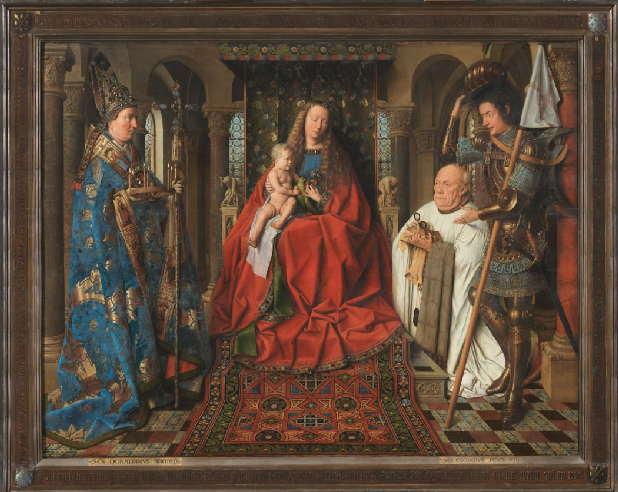
The Virgin and Child with Canon Joris van der Paele by Jan van Eyck (c.1436)

One of the great examples of early Netherlandish painting is the body of work by artists who were active in the Burgundian and Habsburg Netherlands during the 15th and 16th century Northern Renaissance period. The first work of art I am featuring is the large (122 x 158cms) oil on oak panel by Jan van Eyck entitled Virgin and Child with Canon Joris van der Paele which he completed around 1436. The painting depicts the the Virgin Mary enthroned at the centre of the semicircular space, which most likely represents a church interior, with the Christ Child on her lap. The Virgin’s throne is decorated with carved representations of Adam and Eve, Cain and Abel, prefigurations of the Crucifixion and Resurrection of Jesus, and scenes from the Old Testament. To the left in dark blue robes is Saint Donatian the patron saint of the church for which the panel was painted. The saint is dressed in brightly coloured vestments. This work is noted for the fine attire, including wonderful representations of furs, silks and brocades, and the detailed religious iconography. Kneeling down, as he piously reads from a book of hours, is Canon Joris van der Paele and standing behind him is St George, the canon’s patron saint.

Canon Joris van der Paele

Van der Paele had worked as a scriptor in the papal chancery in Rome.  From there he took up various posts in the Church before relocating to Bruges, his birthplace, in 1425.

Around the frame of the painting is a Latin inscription which once translated states:

“…Master Joris van der Paele, canon of this church, had the painting made by Johannes van Eyck, painter; and he founded two chantries, to be tended by the canons, 1434; the painting was, however, completed in 1436…”

The word “chantry” derives from Old French chanter and from the Latin cantare (to sing).   Its medieval derivative cantaria means “licence to sing mass”.  It is the prayer and liturgy in the Christian church for the benefit of the dead, as part of the search for atonement for sins committed during their lives.  In this case it indicates that Joris van der Paele donated a substantial amount of money to the authorities of St Donation’s Church in Bruges for them to dedicate an annual mass to his memory in perpetuity.  The painting would then have been hung alongside or above the church altar.

Death of the Virgin by Hugo van der Goes (c.1481)

The painting The Death of the Virgin is thought to have been the last work painted by Hugo van Goes before he died around 1482/1483.  It is thought that van der Goes was born in Ghent around 1442.  He enrolled in the city’s painter’s guild in 1467 and worked in the city for ten years during which time he received many lucrative commissions from the city, the Church and the Burgundian court.  In 1477 he left Ghent and went to live in Rouge-CloÎtre in the Forest of Soignes near Brussels.  Sadly, he suffered from many bouts of depression which culminated in a mental breakdown in 1481.  Following convalescence he returned to painting and completed this exquisite work of art which is believed to have been for Ter Duinen Abbey, a Cistercian monastery at Koksijde, in what is now Belgium.

Detail from Death of the Virgin by Hugo van der Goes

The depiction is the artist’s interpretation of the event with the vision of heaven above Mary’s deathbed.  The figures we see in the main picture are those filled with sorrow and the sense of despair at the death of the Virgin Mary.  Hugo van der Goes was looked upon as the most “modern” of the Flemish Primitive painters and this is borne out in this painting in which he has produced such realistic and expressive rendering of the figures and the movement and intensified feelings that pervade the composition.  The mystical, religious spirit along with the strong sense of emotion make this work one of the great masterpieces of 15th century painting.

Hans Memling was born in Germany, at Seligenstadt near Aschaffenburg, and it is thought that he received his first art education in Cologne.  He then travelled to the Netherlands but probably spent his early life in Mainz. By 1465 he had moved to Bruges and was the leading artist there for the rest of his life.  By 1480 he had bought himself a large stone house in the city and was taking on pupils.  Memling was listed among the wealthiest citizens on the city tax accounts. Sometime between 1470 and 1480 Memling married Anna de Valkenaere who bore him three children.

 Portrait of the family Moreel, 1482 by Hans Memling (Royal Museums of Fine Arts of Belgium, Brussels)

It is in the area of portraiture that Hans Memling appears to have been the most successful and had gained a vast number of aristocratic clientele who lived in Bruges. One of his lucrative commissions came from Willem Moreel, a prominent Bruges politician, merchant and banker and his wife Barbara van Vlaenderberch. He had painted their portraits in 1482. His figurative depictions are painted with an exactness, a precision and a concern for detail which bring them strongly to life.

The Triptych of Willem Moreel by Hans Memling (1484)

One such commissioned work of art was the Triptych of Willem Moreel. Moreel and his wife had commissioned Memling to paint a triptych altarpiece for the altar of the Saints Maurus and Giles in the Church of St. James in Bruges, a church in which Moreel and his wife wished eventually to be buried.

Central panel of the Moreel Triptych

The central panel of the triptych depicts the large figure of St. Christopher, who according to medieval legend, carried the Christ Child across a river on his shoulder. In the distance, up in the rocks in the left background we see the light from the hermit’s lamp guiding the saint. The two figures on either side of St Christopher do not belong in the legend but may have been added by Memling to balance the composition. To the left we see the former monk, St Maurus, holding his crook and open book and to the right is St Giles, a Benedictine hermit with an arrow in his arm and a deer at his side. It is interesting to note that the inclusion of the deer and the arrow which is in most depictions of the saint, as it harks back to the legend that Giles  finally withdrew deep into the forest near Nîmes, where, in the greatest solitude, he spent many years, his sole companion being his beloved deer, which in some stories sustained him on her milk.  His retreat was finally discovered by the king’s hunters, who had pursued the deer to its place of refuge. An arrow shot at the deer wounded the saint instead, who afterwards became a patron of the physically disabled.

The left hand panel of the Moreel Triptych

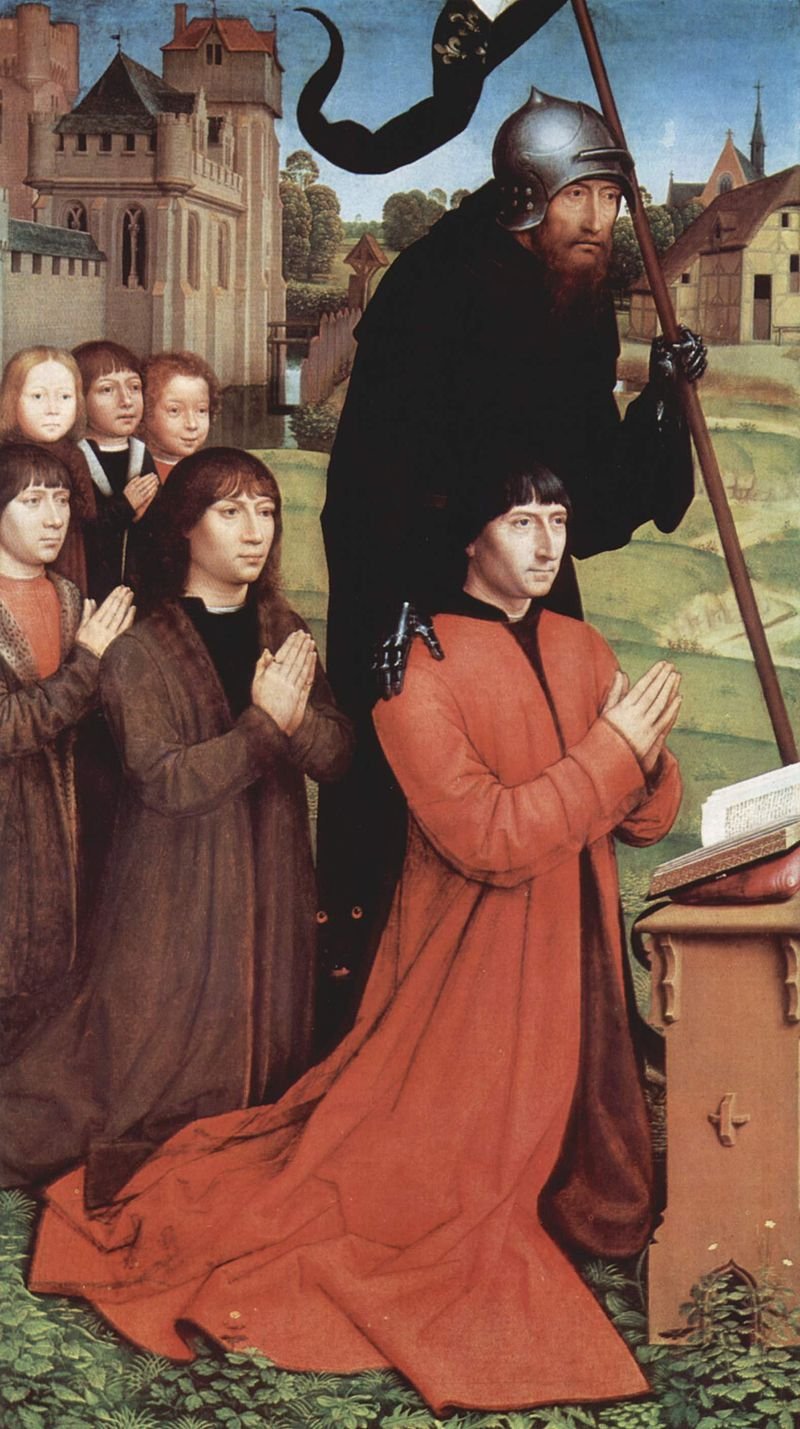
The left hand panel of the triptych continues with the magnificent landscape background. The depiction of the left hand panel has multiple figures. It depicts the Willem Moreel kneeling, hands clasped in prayer. His hair is short in a “bowl cut” and over his black jerkin, he wears a fur-lined tabard which is without a belt or fastenings, which was very fashionable in the 1480s. Behind him are his five male children, who are also shown kneeling. Of Moreel’s sons, two are known to have died in infancy leaving Willem the oldest, with his two remaining siblings, John and George. Moreel and his sons are being presented by Saint Wilhemus van Maleval, who stands among them, dressed in a fur-lined black coat over army clothing.   He places his hand on Willem’s shoulder as he directs and presents him to St.Christopher in the centre panel.

Right hand panel of the Moreel Triptych

On the right interior wing of the triptych is the depiction of Barbara Moreel with eleven of her thirteen daughters, who all kneel in prayer before an open book. Barbara wears an hennin, a headdress in the shape of a truncated cone, which was worn in the Late Middle Ages by European women of the nobility, a damask silk dress with a white collar, and a wide red belt with a golden buckle. The women are being presented by Saint Barbara, who was the patron saint of Moreel’s wife.  The saint is depicted standing before the tower where she was, according to legend, imprisoned and executed.

Sibylla Sambetha (Catherine Moreel ?) by Hans Memling (1480)

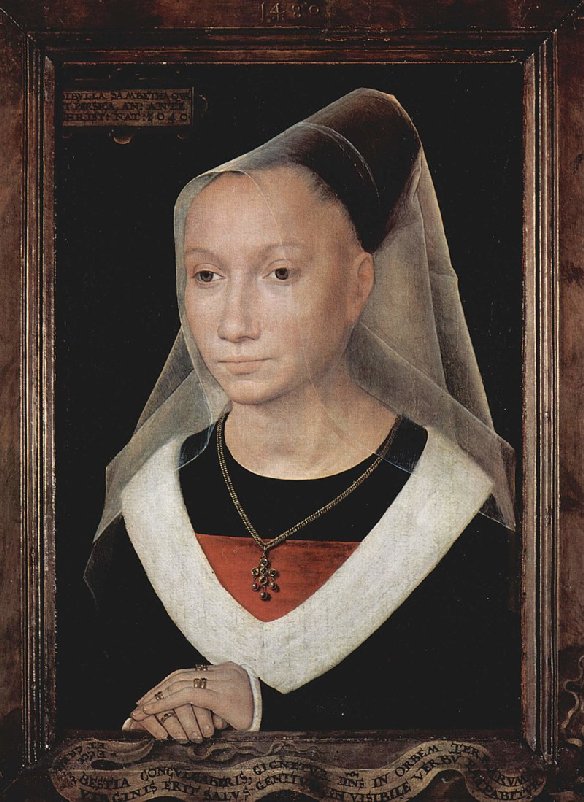
Barbara Moreel’s eldest daughter, Catherine, kneels directly behind her mother.  She also wears a black dress and it is known that later in her life she became a Dominican nun.  Besides completing portraits of Moreel and his wife, he had also painted a small oil on oak panel portrait entitled Sibyla Sambetha, in 1480.   The painting is now in the Hans Memling Museum at the Old St. John’s Hospital in Bruges. The girl in the light brown clothing, black V-neck and transparent veil has been identified as Maria from her name written in her headband, and is their second-born daughter, given her linear position in the painting.

Exterior panels of the Moreel Triptych when closed

The outer part of the two wings, seen when the triptych is closed has grisaille depictions of John the Baptist with his lamb and staff.  On the other wing we have Saint George in his full armour, slaying the dragon with a lance depicted on the right outer wing.  It is believed that these two panel paintings may have been completed much later around the time of the deaths of Willem and Barbara Moreel and dated as around 1504 by a number of art historians.  It was thought that Moreel’s sons, Jan (John) and Jaris (George), probably commissioned them as the final, successful, effort to have their parents interred within the chapel space.

One strange aspect to the Moreel Triptych is the fact that not all of the daughters depicted in the right hand panel were painted by Memling.   The art historian and former curator of the Groeningemuseum, Dirk De Vos, has identified at least six females who are later additions, layered over the original landscape. The explanation for these additions, which were probably added by members of Memling’s workshop, were that the daughters were born after the 1484 completion date of the triptych.   The left-hand panel depicting Moreel and his sons underwent a similar update.

………to be continued.

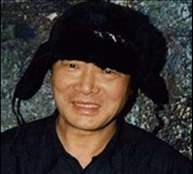
Walasse Ting

Walasse Ting (1929-2010)

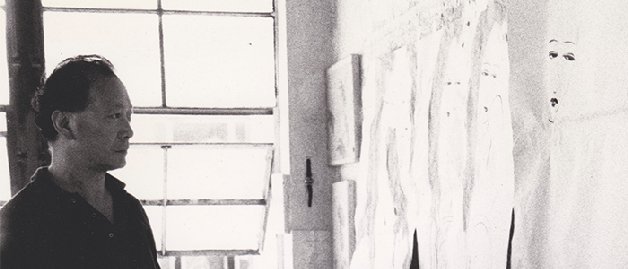
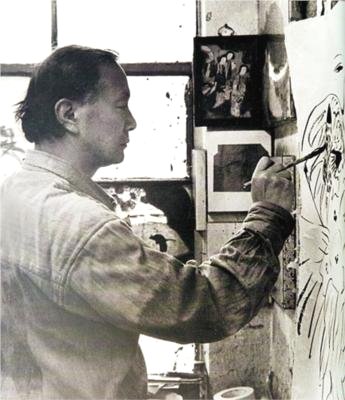
Walasse Ting at work in his studio

I have just returned from another stay in the Algarve where I could finally see some sun and experience warm weather.  Whenever I visit the Algarve, I always visit the Art Catto gallery in Loule which I have often written about.  This time I not only got a chance to return to the excellent small gallery in the centre of town,but take up their invitation to the opening of an exhibition at the Conrad Hotel in Quinta do Lago.

Conrad Hotel, Quinta do Lago, Algarve

The Conrad Hotel is, to say the least, a spectacularly lavish hotel, and the entrance foyer rooms where fine places to exhibit the expensive works of Walasse Ting.  Seven years after his death, Walasse Ting’s has been given a place as a giant of 20th century paintings. He is such a captivating figure and the art he has produced over his 50-year career reveals many influences.   Today, his artwork is in public collections which include MOMA, New York; Guggenheim Museum, New York; National Gallery of Chicago, Chicago; Tate Modern Museum, London; Centre Pompidou, Paris; Hong Kong Museum of Art, and the Shanghai Art Museum. 

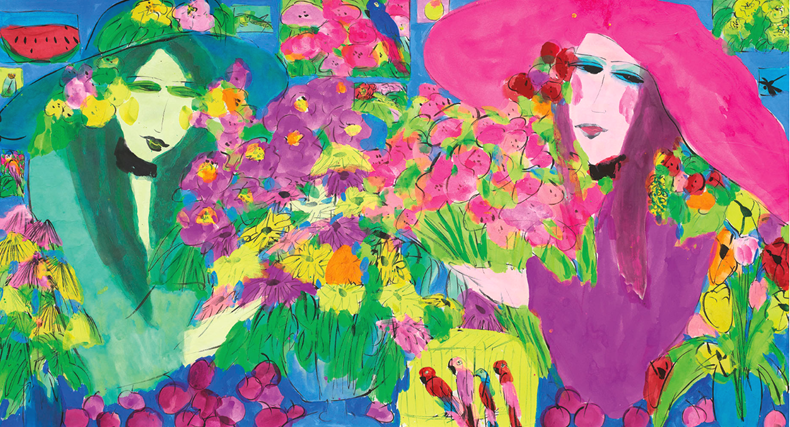
Beautiful Ladies by Walasse Ting

Many devoted private collectors also own his artwork. The latter group is growing especially fast, thanks in part to the rise of China as an economic and cultural force.  From the very early works, Walasse Ting’s paintings have charmed viewers with his use of vivid colours and light-hearted mood.

Ladies with Parrots by Walasse Ting

Walassi Ting is a Chinese artist who was born in Wuxi, China in 1929 but in fact was raised in Shanghai.  Ting is primarily a self-taught painter, sculptor, graphic artist, lithographer and poet, who began his life as an artist at a very young age. Ting studied at the Shanghai Art Academy before he left China in 1946 and after living briefly in Hong Kong set sail for France in 1950.   Times were hard for the young aspiring artist continually battling against poverty.  His stay in Paris coincided with the rise of the avant-garde artistic group known as CoBRA.   The word Cobra is derived from the French names of the cities of Copenhagen, Brussels and Amsterdam.

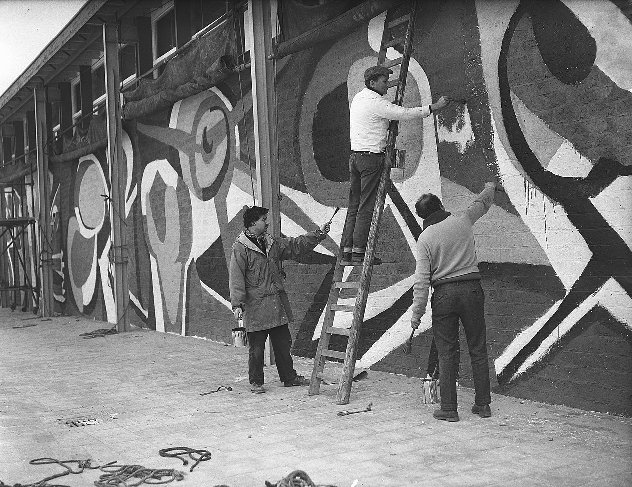
CoBra member Karel Appel working on a mural in Rotterdam for the Manifestation E55

The artists had founded the CoBRA group during a major international conference held in Paris in 1948 and they came from these three European capitals.  Ting became acquainted with all the members of the avant-garde group, most notably Pierre Alechinsky and Asger Jorn.

Women with Flowers by Walasse Ting

Walassi Ting left Paris and arrived in New York in 1959 and participated in the Pop Art and Abstract Expressionism movement where his closest associates were artists Sam Francis and Joan Mitchell, members of the second generation of Abstract Expressionist painters.  He sold many paintings which often featured bold dripping strokes.  It was just over a decade later in 1970 that Walassi Ting created a distinctive style using calligraphic brushstrokes to define outlines and filling flat areas of colour with vivid paint. After 15 years of abstract painting, Walasse Ting’s interest in the body and his exploration of sexuality led him back to figuration in the 1970’s.  Like the colour master, Gauguin, Ting made a number of journeys to Tahiti continually on the lookout for the exotic colours that he loved. The subject of his paintings often contained women, cats, birds and peacocks. 

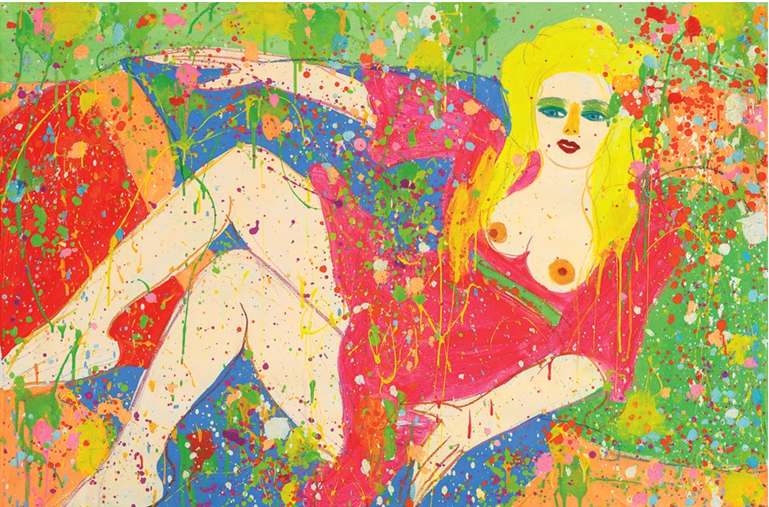
Kiss me, Kiss me by Walasse Ting

Ting embraced sexual desire through his art, as he conveyed his inner emotions through the fluent and expressive brushstrokes as he captured the alluring beauties set against a background of uncontrolled vibrant acrylic colours that break free into a dreamscape of sensual pleasure. In his 1974 acrylic on paper work entitled Kiss Me, Kiss Me, the title of the work and the bare-breasted model conjure up the emotions of sexual passion.   The work comprises of flat planes of colour and simplified lines, and the woman exposes herself to us, and is drenched in a tumult of multicoloured drips as if she was incorporated into an abstract expressionist canvas.

Come Talk to Us by Walasse Ting

In the summer of 1976 Ting produced his acrylic on canvas work entitled Come Talk to Us which depicted two half-length female figures who stare at a plant-like bouquet of colours at the centre of the image, an image which divides the image in two. The mirror-image like effect creates a sense of calm and balance, and the dabs of green, blue, and red paint trickle slowly along the canvas, exuding a melancholic beauty like that of gazing through a window on a rainy day. The title of the painting, Come Talk to Us, questions the viewer and echoes a lonely yet tantalizing longing. Ting has once again used the depiction of his figures to express the feelings inspired in him by objects of beauty.  Ting explained:

“…When I see a beautiful woman [and] I see flowers, its beauty makes me feel intangible, melancholy, love, refreshed, different, and reborn. I want to use different colours to express my inner feelings and emotions in my paintings.”

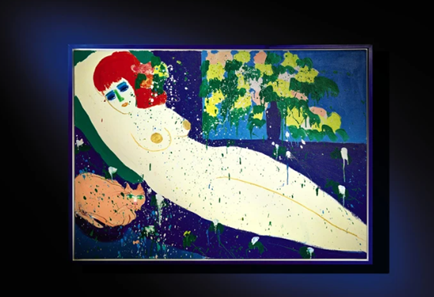
Eat me, I’m a Fish b y Walasse Ting

His 1978 work, with the strange title, Eat Me, I’m a Fish, Ting has splattered the paint over the entire canvas giving it the impression of a faint effervescence. This oblong depiction of the woman suggests the shape of a fish and the title boldly summons the viewer to come and consume its imagery, once again arousing the viewer’s culture’s sexual drive. The figure transects the diagonal of the picture plane while a cyan blue rectangle slices off the upper right quadrant of the image, giving the impression of a window.  Eat Me, I’m a Fish is Walasse Ting’s vivid interpretation of everyday life, and yet the composition is an obvious reference to Édouard Manet’s masterpiece Olympia. This painting could be thought of as Ting’s homage to a modern master, reinterpreting the essence of this classic painting and challenging the earlier artist’s greatness.

At the Conrad exhibition, many of his paintings were watercolours on rice paper.  They were both delicate and ornate, rendered with detail and repetitive patterns.

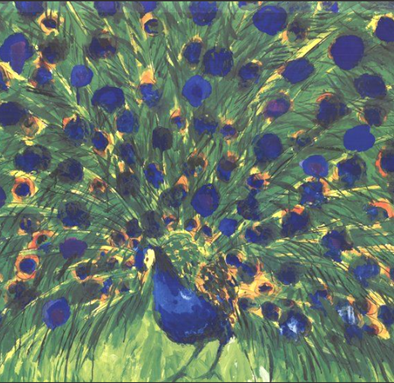
Peacock by Walasse Ting

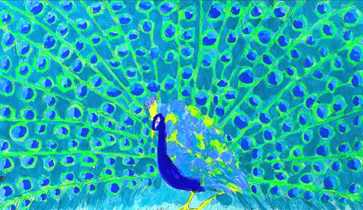
Peacock II by Walasse Ting

Ting frequently depicted cats, flowers and birds as in his painting, Peacock, in which the ‘eyes’ of the bird’s plumage radiate outwards across the large surface of the painting, creating a striking wallpaper of electric blue, yellow and green. The controlled circles, tightly arranged, create an arresting optical vibration.

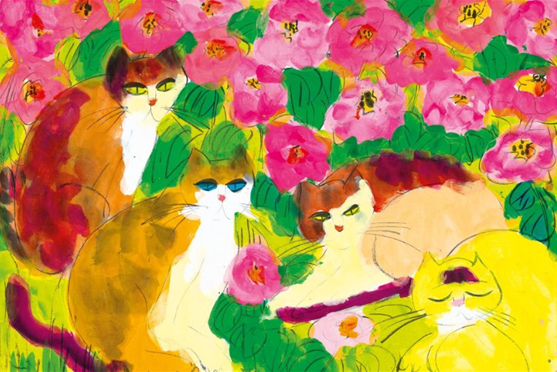
Cat Series by Walasse Ting

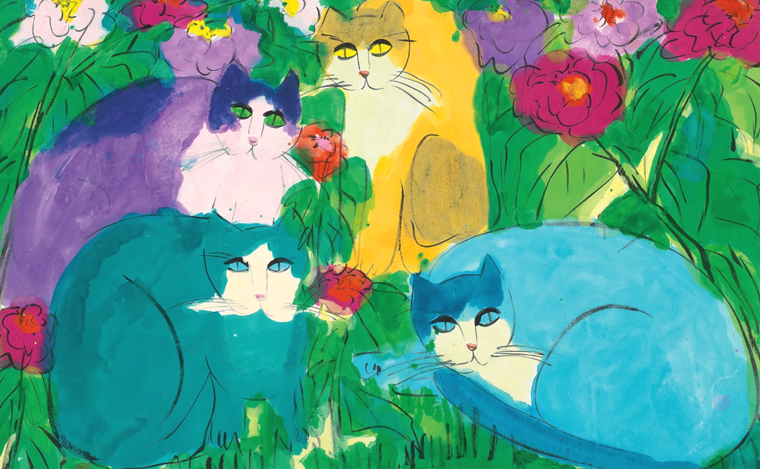
Cat Series by Walasse Ting

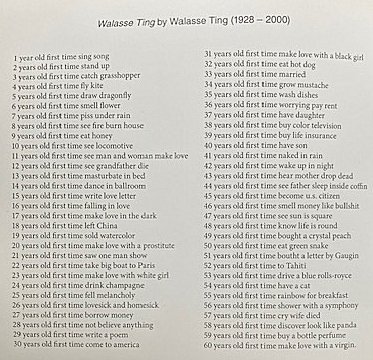
One very unusual thing at the exhibition was a display board giving a brief bio. by Ting himself It was also in the exhibition brochure. That is not strange in itself but what was unusual and some may say inappropriate, was his summary of his life “achievements”, year by year.

In the mid-1980s, he set up a studio in Amsterdam and in 2001 he permanently settled in that city. He was unable to create after a stroke in 2002. Ting died on May 17, 2010, at the age of 81 in New York.

The Funen Painters. Part 2.

Following the last blog regarding the early members of the Funen artists, this blog looks at some of the younger members and how they were often connected.

Peter Syrak Hansen

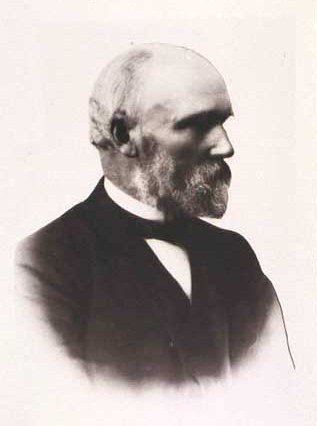
One of the leading figures of the Funen painters was Peter Syrak Hansen and it was his home and workshop, Mesterhuset, which became a cultural meeting place for the Funen painters. Syrak Hansen was born in Swanninge, a Danish village on South Funen, on September 10th 1853. He trained as a decorative painter at the Academy of Fine Arts in Copenhagen under George Hinkler.

The Double Portrait of Count Preben Bille-Braheand his second wife Johanne Caroline neé Falbe by Christoffer Eckersberg (1817)

After qualifying Syrak received many decorative work commissions in South Funen’s to decorate manor houses and churches. He was also given funds by the prominent and wealthy art collector and art patron, Count Bille-Brahe of Hvedholm, and continued his artistic studies in Germany, Austria and France, where he concentrated on studying church decorations. Following his European travels, he later settled down as a master painter and decorative painter in Faaborg in southern Funen and based himself in the building, which became known as the Mesterhuset. He bought Mesterhuset, situated at Lagonis Minde 7 in 1875, and he became a sought-after decorative painter working primarily in churches and manor houses on South Funen.

Sonnige Strandansicht by Peter Syrak Hansen

Syrak Hansen became so busy with all the commissions he received he had to look for some help and he hired a journeyman painter. The painter was Fritz Syberg who worked with Syrak in his workshop from 1882. It was here that Fritz Syberg got to know his future wives, Anna and Marie Hansen.

Faarborg Harbour by Karl Schou (1917)

Syrak Hansen married Marie Birgitte née Rasmussen and he and his wife had five children.  Marie Hansen, the eldest, was born in 1865 and became a parliamentary stenographer whose first husband was the painter Karl Schou. Schou was born in Copenhagen in 1870. After normal schooling he became a student at Valdemar Sichelkow’s painting school from 1884 to 1886 and then studied under Malthe Engelsted at The National Drawing Teacher Course, Copenhagen from 1886 to 1887, Finally he attended  Kristian Zahrtmann’s School from 1887 to 1900. During those three years at Zahrtmann’s school he became friends with the Funen painters.

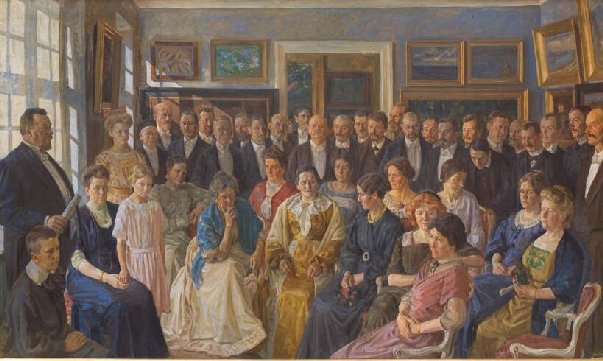
Three persons in conversation at an evening party by Hans Nikolaj Syrak Hansen (1903)

A year after the birth of their first child, Marie Hansen gave birth to their first son, Hans Nikolaj Syrak Hansen who became apprenticed to his father. Hans attended Zahrtmann’s School in Copenhagen from about 1885 to the spring of 1887, but he had to give up his art studies and return home in order to take over the painting company from his father in 1891.

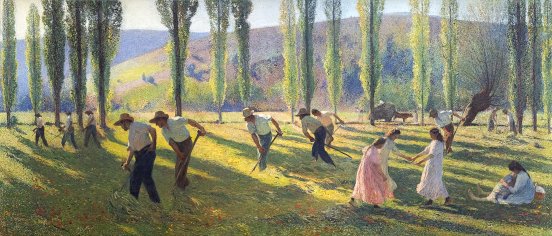
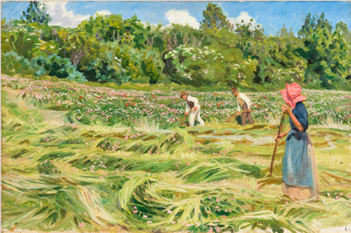
The Hay on the Meadow, South Funen by Peter Hansen

Syrak and Marie Hansen’s third child, their second son, Peter Marius Hansen was born on May 13th 1868. He attended the Copenhagen Technical School before studying under Kristian Zahrtmann at the Kunstnernes Frie Studieskoler between 1884 and 1890. 

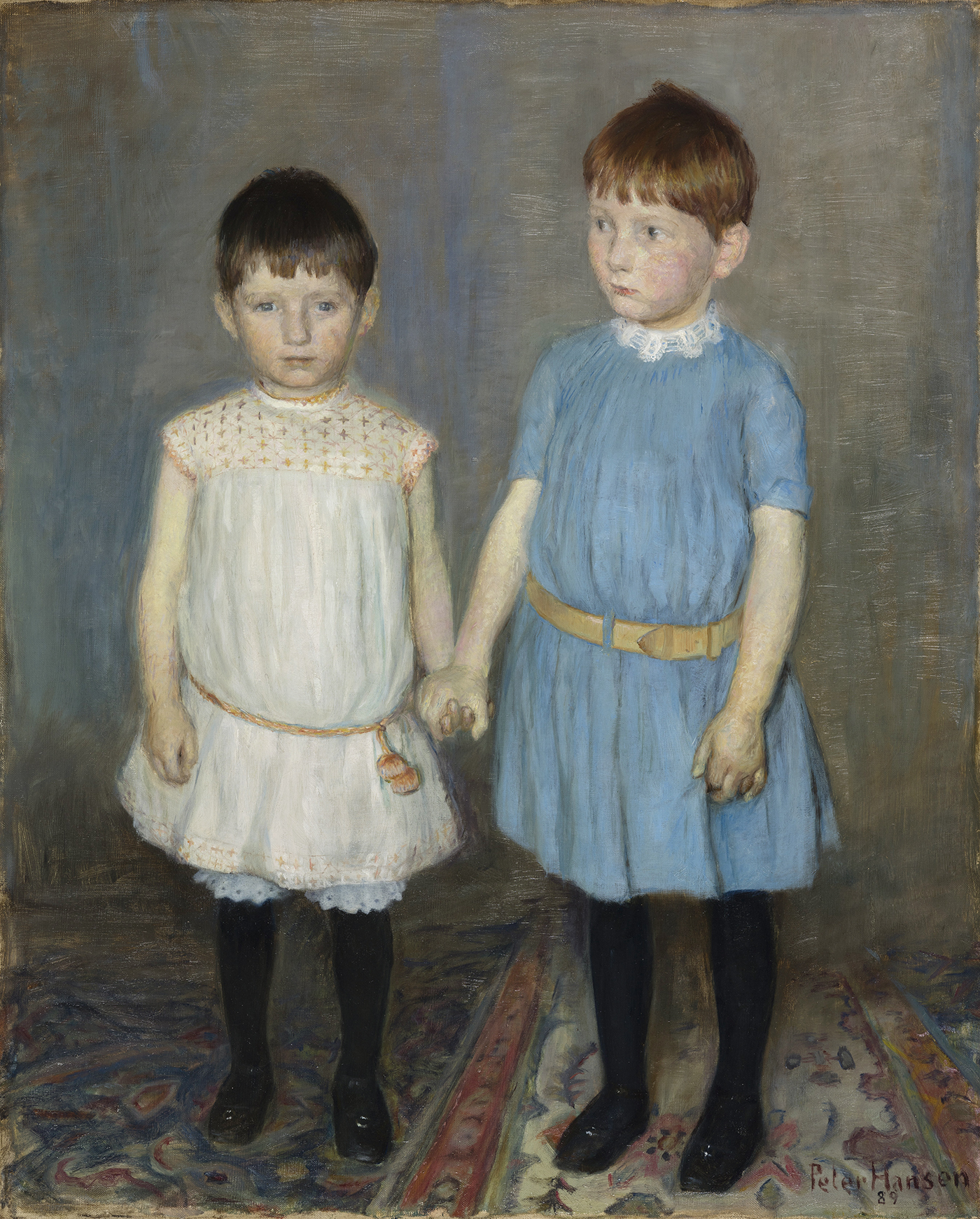
Double portrait of two children. The artist’s stepdaughters by Peter Hansen (1889)

Peter Hansen married Elisa Nikoline, who had previously been married to an engineer, Ludvig Conrad Neckelmann, whom she divorced. In 1898, shortly after the divorce, Peter and Elise married. Ludvig and his wife, Elisa, had had two daughters, Marie Christine and Elizabeth and Peter completed a double portrait of his stepchildren.

By the window. Double portrait of the artist’s daughter, Elena and stepdaughter, Marie Christine by Peter Hansen (1902)

Peter and Elisa went on to have their own two daughters, Elena Italia in 1899 and Anna Margrethe in 1906. In 1902 Hansen completed a double portrait of his twenty-year-old elder stepdaughter, Marie Christine and his own three-year-old child Elena Italia.

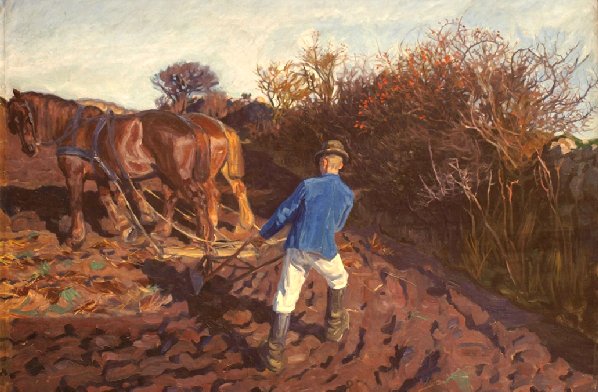
The Ploughman Turns by Peter Hansen (1902)

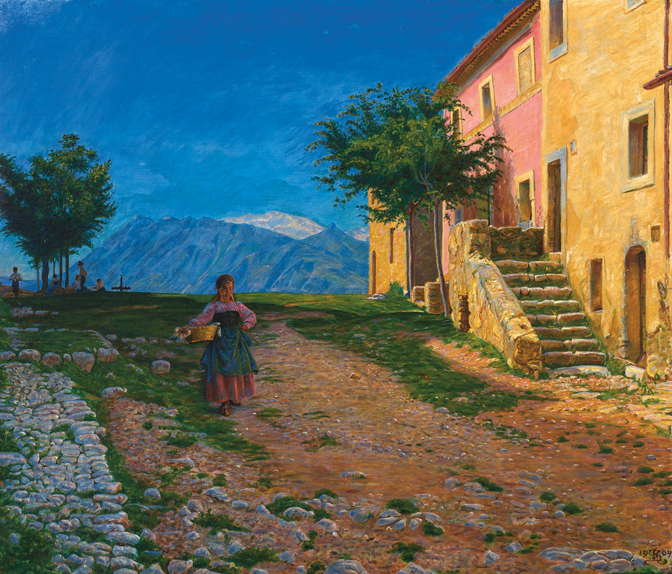
Peter Marius Hansen belonged to the group of Danish painters who were called the Funen Painters, since they came from and mainly worked on the island of Funen.  One of the important qualities Peter displayed was his respect for the steadily, busily working human being and he made it a key motif in his art. For him the Peasant was the epitome of this ideal, when he would depict local Danish farmers and the mountain farmers from around the Danish artists’ colony in the Italian village of Cività d’Antino in Abruzzi.

Fritz Syberg self portrait (1910)

Christian Friedrich Wilhelm Heinrich Syberg, generally known as Fritz Syberg, was born on July 28th 1862, in Faaborg.  He came from a poor background and was first apprenticed as a house painter under Syrak Hansen.  From there, in 1882, he attended the Copenhagen Technical School where Holger Grønvold taught him drawing. In the Spring of 1884 he enrolled for a short period at the Danish Academy but then attended the Kunstnernes Frie Studieskoler  where he became one of the first Fynboerne, along with Peter Hansen, Johannes Larsen, and Poul S. Christiansen to study under Kristian Zahrtmann.

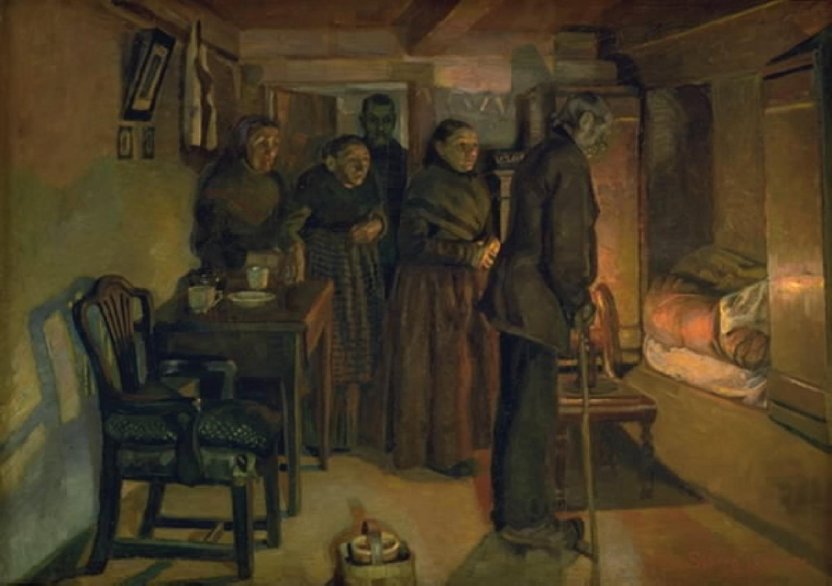
Dodsfald (Death) by Fritz Syberg (1881)

In the early 1890s may of Syberg’s paintings were dark and this can be seen in his 1892 work entitled Dodsfald (Death) which depicts his mother, Johanne Marie, on her death bed in 1881 in the Fåborg’s poorhouse.

Fritz Syberg “Jeg vil synge dem alle, alle!, sagde Moderen” (1898). Illustration for Hans Christian Andersen’s Historien om en moder. (I will sing them all, all of them!, said the mother) (1898). Illustration for Hans Christian Andersen’s The Story of a Mother by Fritz Syberg

In addition to the sale of his paintings, Syberg accepted many book illustration commissions, the most famous being his depictions for Hans Christian Andersen’s tragic tale, The Story of a Mother, which no doubt, Syberg could relate to his own childhood.  These depictions became one of the most celebrated collections of illustrations in Denmark’s history.

Spring by Fritz Syberg

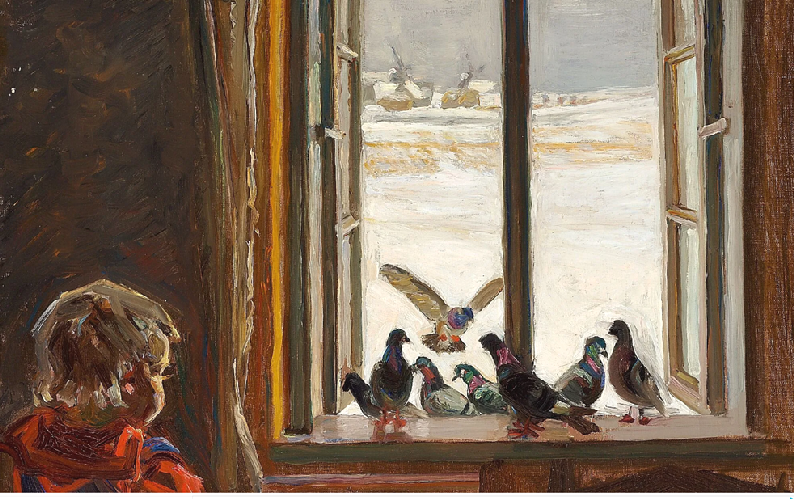
Watching Birds on the Windowsill by Fritz Syberg

Having struck up a close friendship with Syrak Hansen’s daughter Anna whilst working as Syrak’s apprentice, their friendship turned to love and the couple married in 1894. The couple went on to have seven children.   In the 1890s and the early decade of the twentieth century Fritz Syberg made a number of trips to other European countries such as Italy, The Netherlands, Germany and France, sometimes with his family.. 

Anna Syberg by her husband Fritz Syberg (1896)

Syrak and Marie Brigitte Hansen had their fourth child, a second daughter, Anna Louise Birgitte Hansen in January 1870 and she, like her brother Peter, became part of the Funen painters. Anna Syberg grew up amidst a very colourful and energetic artistic environment that differed from ordinary middle-class conventions. Her father, Peter Syrak Hansen, was a master painter, and a renowned figure in the town of Faaborg.  Fortunately for Anna, her parents believed that education was of prime importance to both their daughters as well as their sons.

Crocus, Hyacinths and Tulips by Anna Syberg (1898)

Anna loved to learn and one of her favourite pastimes was decorative painting.  In 1884 she enrolled on a two-year course at a technical school in Faaborg, and in 1889 she was receiving tuition in Copenhagen from the sculptor Ludvig Brandstrup and the painter Karl Jensen. Her artistic education was topped off when she received singing lessons, learnt to play the piano to a high standard and learnt to sing lieder and Danish songs.

Wild Roses by Anna Syberg (1898)

Anna Syberg became a key figure in the Funen Painters artists’ colony.  Her paintings, other than a few figure scenes, depicted flowers and plants, often in the vases and pots around her home, or in her garden and ones she saw when out walking in the countryside. She worked mainly in watercolours, using multiple layers that would often include sketched lines of pencil, transparent layers of watercolour and black ink contours ensuring the depiction of the floral was of the utmost accuracy.

Grapes in the Greenhouse by Anna Syberg (1903)

The subject of her depictions were often of stage-managed as she experimented with the floral arrangements.  In many of her works she would often let the depiction of her flowers and plants extend beyond the edge of the paper in a form of dynamic cropping.  Her floral painting were neither symbolic nor botanical studies.  In Anna Syberg’s pictures, flowers are not charged with symbolic significance, nor are they stringently restrained botanical studies with all its scientific accuracy. In her works, Anna Syberg portrays the simple beauty of the flowers, a testament to their beauty. In 1894 Anna Hansen married Fritz Syberg.

Fritz and Anna Syberg

So this life as a Funen painter amongst family and friends was to be part of much loved idyllic lifestyle for Anna Syberg.  What could possibly interrupt this peaceful and fulfilling way of life?   And yet………..

At the turn of the century in Denmark, like many other European countries and those across the other side of the Atlantic, the stature of women in art, and even in life itself, was continually being questioned by men.  For many men, including even some fellow artists, women simply painted as a hobby or to add to their social graces but for women in the early 1900s practicing art was problematic.  For Anna it was one thing to be a talented artist, it was another thing to have the same respect bestowed upon her for her work as that of the men.  Things came to a head in Faarborg when the town got their own museum and paintings had to be selected for display in the museum.

Mads Rasmussen

Mads Rasmussen, an important businessman in Faaborg, and his wife Kristine, held a party one evening and among the guests were the Funen Painters’ inner circle including amongst others Fritz Syberg, Peter Hansen and Jens Birkholm. Together with Johannes Larsen they were all to become part of the Museum’s purchasing committee which, in turn, came to act as the steering group for the Museum’s acquisitions, their curation and the fixtures and fittings for the gallery.  It was very unusual that the “money man” would let a group of artists dictate as to what works were to fill the gallery.

Artists hanging their works in the galleries of Faaborg Museum, May 1915. From the left: Peter Hansen, Peter Tom-Petersen, Johannes Larsen, Astrid Noack, Nicolaus Lützhøft, Christian Ernlund, Carl Petersen og Fritz Syberg.

Here was the problem – the purchasing committee for Faaborg Museum, made up of the Funen painters, were all  male artists from the group, and they didn’t believe in the quality of the works produced by the female members of the group. In the minutes of the meetings of the purchasing group, comments were recorded stating that

“…At the negotiations, Peter Hansen and Birkholm wanted to be recorded in the minutes that they voted against the acceptance of Mrs. A.(Alhed) Larsen and Miss Christine Larsen’s works. Peter Hansen also against Mrs. Syberg…”

Also in the minutes, Peter Hansen, Anna’s elder brother, noted:

“…AS (Anna Syberg) and the other ladies had no significance for Danish art…”

Gallery at the Faarborg Museum

No reasoning was ever recorded as to why they thought so little of the works of the female Funen painters but the damage was done.   Presumably, one has to recognise that at that time there was generally a reluctance for women to be able to produce an artistic work. The one thing to remember also is that flower painting traditionally had a lower rank in the art world and this could have been in the minds of the male purchasing committee.

Anna was horrified that her own brother would critique her work so harshly and the rift between siblings became bitter.  She wrote to her brother Peter:

“…Where you create yourself. You voted against me at the Faaborg Museum based on high idealistic notions of safeguarding the best interests of art in Denmark. “You did not want to hide from me”, you wrote that I and the other ladies had no significance for Danish art…”

Faaborg Museum Inauguration (1910) by Peter Hansen

Anna Syberg is not in the picture of the artist group Fynbomalerne, despite her being a central part of the group. She should have supposedly sat on the empty chair in the bottom right corner.

The empty chair.

During the heated exchanges between Anna and Peter, he was working on a painting depicting the inauguration of the Faarborg Museum. The depiction was supposed to pay tribute to a group of artists who were both well-known and acclaimed painters. Anna Syberg’s outburst of anger over the words of her brother and members of the purchasing committee came while her brother was working on the painting, and it is believed that he deliberately chose not to paint his sister as part of the group and yet, to rub salt into the wounds, he provocatively indicated her absence with the empty chair, despite her being present at the inauguration and was said to have sat tanned and dressed in festive clothes with a large hat in the front row of the group. All the other female artists in the group are in the painting.

Anna Syberg (née Hansen) 1870-1914

Anne Syberg died on July 4th 1914 following a failed operation to treat a gallbladder infection.  She was just forty-four years of age.  Sadly the recognition she deserved as a gifted artist never came until after her death.  In 1915 a retrospective of her art was held and it was a success, and sales were high, including Faaborg Museum which purchased sixteen of her works. quite central in the country. After her death, Fritz Syberg married Anna’s elder sister Marie who he had known since the days of working for is father-in-law.

In 1873 Syrak Hansen’s youngest child, Poul Gerhardt, was born.  He did not follow his siblings into the world of art. He was married to Dagmar and the couple had two children: Helga and Louise.  Poul is believed to have died at the young age of 33 in 1906.


I could not have put together the two blogs about the Funen painters without the information I gleaned from various websites:

The Beauty of the Moment

Faarborg Museum

DR

The Hirschsprung Collection

arkivdk

The Funen Painters (Fynboerne)

The term Artists’ Colonies defines gatherings of artists in towns, villages and rural areas, who have assembled at places of natural beauty and where the cost of living is less than that of city life.  In the latter part of the nineteenth century, art colonies began to spring up as village movements with thousands of professional artists taking part in a mass exodus away from urban centres and heading for the idyllic countryside where they resided for varying lengths of time in artistic communities. Art colonies appeared on both sides of the Atlantic, forming on both the East and West coasts of America.  Many were also established in Europe such as Barbizon on the outskirts of Paris, Pont Aven in Brittany, Worpswede in Germany, Giverny in the northern French department of Eure, Lamorna and St Ives in Cornwall and the Newlyn School to name just a few.  Denmark had two important art colonies.  One was in Skagen in the north of the country, which I have written about on a number of occasions and the other was on the Danish Island of Funen.  In the following blogs I want to look at the Funen Art Colony and the artists who founded it and others who came later and were part of this artistic movement.

Self portrait by Kristian Zahrtmann (1915)

The Royal Danish Academy of Fine Arts was founded in 1754 and was the dominating force in the teaching of art to aspiring painters in that country.  In the first half of the nineteenth century during the era of the great Danish painting, Christoffer Eckersberg “ruled”, and the period became known as the Golden Age of Danish Painting.  At the centre of this movement was Copenhagen which although it had experienced fires, bombardment and national bankruptcy, the arts took on a new period of inspiration brought about by Romanticism, the dominant intellectual movement of German-speaking countries in the late 18th and early 19th centuries.  However, many artists began to rebel against the outdated way art was taught at the Academy and its policies. They wanted an alternative and this came in the form of  the Kunstnernes Frie Studieskoler, (Artists Studio School) an art school established in Copenhagen in 1882.  It became the central institution of the Modern Breakthrough in Danish art, the name given to the strong movement of naturalism and debating literature of Scandinavia which replaced Romanticism near the end of the 19th century.  Laurits Tuxen became the school’s first director and Peder Severin Krøyer one of its teachers.

The Funen Painters

One hundred years ago an exhibition took place when the Faaborg Museum building opened its doors back in 1915, the Funen artists curated their own work, as the Museum had been conceived and built solely to show their ‘home-grown’ art. In 1915 gallery convention required that paintings were hung closely together and so there was space for the 366 paintings, sculptures and drawings, which had been purchased by the Museum from 1910-15. The entrepreneur Mads Rasmussen had the idea for a museum to showcase work by the Funen artists and he set up a purchasing committee composed of artists which had free rein to select work

The Funen Painters group, similar to other artists’ colonies in the late 1800s, searched for an alternative to city life by setting up a colony which was not just about painting but also a new lifestyle. Their aim was to connect their art with the countryside and the everyday life of the rural community which they believed created an overall vision for a ‘lifestyle’ reflecting their artistic ideals.

An oil painting recreating the frivolous court of Christian VII by Kristian Zahrtmann

In 1884 a preparatory class was added to the Kunstnernes Frie Studieskoler and in 1885 Kristian Zahrtmann became the head and, under him, it developed into an independent department.  Zahrtmann’s school became more avant-garde and innovative, due to his calls for radical experiments and strong use of colours.  By 1893 the preparatory class, which under his leadership,  turned into an independent department. He had some two hundred students from the Scandinavian countries and because of his stature as a teacher, the school was often simply referred to as “Zahrtmann’s School“.

A Family under Lamplight by Kristian Zahrtmann (1890)

Many of Zahrtmann’s students formed a group of painters who became known as Fynboerne (Funen Painters) due to their attachment to the island of Funen. His students included Peter Hansen, Fritz Syberg, Poul S. Christiansen, Johannes Larsen and Oluf Hartmann; and modern painters Karl Isakson; Edvard Weie, Harald Giersing and Olaf Rude. Zahrtmann travelled through Europe many times and his favourite country was Italy.

Piazza Santa Maria i Civita d´Antino by Kristian Zahrtmann (1904)

In June 1883, which was a very hot summer in Europe, Kristian Zahrtmann, travelled to the mountain town of Civita D’Antino in Italy, in search of cool temperatures as well as his love of good wine, and on the first afternoon in the town he decided that here was the ideal place for his summer painting school. His enduring fondness for Civita D’Antino lasted nearly 30 years and between 1890 and 1911 he spent every summer in the town living with the Cerroni family and gathering friends and students in an annual artist colony. He was named an honorary citizen of the town in 1902. This culminated in a vast production of portraits, landscapes, and scenes depicting an idyllic daily lifestyle around the mountain communit. His paintings are distinguished particularly by their realism and bold colour.

Johannes Larson, self portrait (1910)

Winter Day at the Zoo by Johannes Larson (1891)

One of the leading members of the Funen painters’ group was Johannes Larsen who was born in Kerteminde on the island of Funen on December 27th 1867. He was the son of Jeppe Andreas Larsen, a merchant and Vilhelmine Christine Bless.  During the 1880s, after regular schooling, Johannes studied art at the Free School in Copenhagen under Kristian Zahrtmann. It was whilst studying here that he met a number of aspiring painters who lived on Funen, notably Fritz Syberg and Peter Marius Hansen both of whom came from the southern port of Faaborg.  It was the coming together of these young artists that morphed into the Funen Painters group (Fynboerne).  Later they would create an art colony which would galvanise many Danish and Swedish artists to paint and exhibit their work.

Summer Sunshine and Wind by Johannes Larsen (1899)

After completing his studies with Kristian Zahrtmann, Johannes Larsen returned back home to his native Funen town of Kerteminde where he continued to paint working in oils, watercolour, woodcuts and drawing.  His depictions featured landscapes and other open-air scenes, and often included birds.  He received many commissions to illustrate books and paint large paintings for public buildings

The Garden House with Blossoming Cherries by Alhed Maria Larsen (c.1920s)

In 1898, Johannes married the painter Alhed Maria Warberg.  She played a central role within the Funen Painters group and would often have the role as hostess at their events.

Alhed Larsen

Alhed Larsen was born on April 7th 1872.  She was the second eldest of eight children, Laura Maria and Albrecht Christopher Warberg.  She had six sisters and one brother.   Her father was the estate manager for a very large farmstead, Erikshåb, and he had an office help, a teacher for the children and six servants.  Alhed grew up in well-to-do circumstances on the estate.  It was said that the seven sisters would often shock the bourgeoisie neighbours by walking around the streets of the town without wearing gloves and by using newfangled bicycles !  Many young painters would gather at the farmstead and soon Alhed began to learn to paint and was guided by the painter, Fritz Syberg.  Later it was the task of her husband, Johannes Larsen to take the role of her artistic mentor.  Peter Hansen joined the group along with his sister Anna and Maria and Johannes’ sister Christine and it was Alhed who had the role of unifying these painters of Funen.

Beach Leaves in the Window, Båxhult by Alhed Larson (1927)

When she was seventeen, Alhed went to Copenhagen and lived with her maternal uncle, the sculptor, Ludvig Brandstrup.  Between 1890 and 1893. In 1893, Alhed worked at the Royal Porcelain Factory with underglaze painting, at the same time as she received drawing lessons from her maternal uncle.  In late 1893 she travelled to Italy with the Brandstrup family and during that long holiday she managed to master the Italian language.  Back home at Erikshåb she formed a close and romantic relationship with Johannes Larsen but her parents were not happy with the prospect of their daughter marrying an impoverished artist.  She finally overcame her parent’s reluctance to have Larson as their son-in-law and in 1898 the couple married and settled in Kerteminde. Three years after the wedding the couple had a new home built on Møllebakken, on the coastal slope on the outskirts of the town.   Alhed decided that she was not satisfied with simply being the wife of an artist and decided that she wanted to become a professional artist as well.

Rhododendrons by Alhed Larson

Alhed Larsen’s artwork primarily depicted flowers, still life, interiors and window views. In 1917, Alhed and Johannes’ house was expanded with a large studio added, spacious enough for each to have their own studio space.

Møllebakken home of Alhed and Johannes Larson

Between 1901 and 1902, the couple built their home on Møllebakken in Kerteminde. Their home became the gathering place in summer months for many painters, particularly younger artists from Zahrtmann’s school.

Landscape with birds by Johannes Larsen (1946)

The Funen painters guiding principle was to encourage plein air painting, not just sketching but painting, notwithstanding the weather. Following this principle led to paintings having a fresh purity and energy which was missing from studio painting. Their works were appreciated by the public and became very popular, so much so that the Symbolist painters of the time attacked their style and in 1907 in the midst of a newspaper debate on Danish art, the Symbolists derogatively called them “farmer painters”.  Instead of being browbeaten by this tirade the artist gained greater recognition.

Birds flying over a landscape by Johannes Larson (1929?)

A turning point for the group came in 1910 when businessman Mads Rasmussen, who operated a successful cooperative canning factory in Faaborg, proposed to help the group by creating a museum next to his canning factory at Møllebakken in Kerteminde. which would promote and exhibit Funish Art. This made it possible for the public to view and buy their paintings which gave the Funen artists financial support. Johannes and Alhed Larsen lived almost their entire lives at Møllebakken.

In the autumn of 2006, a sculpture by the city’s two great artists, Johannes Larsen (1867-1961) and Fritz Syberg (1862-1939), was unveiled on Nordre Kirkerist, Kerteminde, next to the parish church, executed by local sculptor Bjørn Nordahl.

Johannes Larsen is looked upon as one of the greatest painters of birds and a knowledgeable pictorial storyteller of nature. His knowledge, his role as a conservationist and his beautiful artwork earned him an honorary membership of the Danish Society for Nature Conservation. At the age of 92, he was named president of the Wildlife Foundation established by the prime minister’s department.

………to be continued.

The Hungarian Artists. Part 1.

Museum Of Fine Arts Budapest

Buda Castle

I visited the Hungarian city of Budapest the other week and decided to visit some of its art museums.  The two main establishments are the Szépművészeti Múzeum, the Museum of Fine Arts on the Pest side of the city and the Hungarian National Gallery on the Buda side of the city which is located inside the royal palace of Buda Castle, and the vast collection there traces the country’s creative history from medieval triptychs through to post-1945 art and sculpture.  In the following blogs I want to look at the works of art of the Hungarian painters which feature predominantly in these collections.

Self portrait by Viktor Madarász

Viktor Madarász was born on December 4th 1830 in the small village of Csetnek, (today: Štítnik, Slovakia) in what is now middle-eastern Slovakia.  He came from a once noble family.  His father, András was an iron manufacturer and craftsman. Originally, his parents wanted Viktor to have a career in law and so he went to study in Bratislava.  The majority of Hungary had been under Ottoman rule from 1541 and 1699 at which time the Habsburg monarchy defeated the Ottoman forces and took control over Hungary. 

In 1848, when the Hungarian Revolution began, Madarász left college to join the struggle for independence. Despite being only seventeen, which was too young to join the army, he was accepted and participated in numerous battles and became a Second Lieutenant.  The revolution failed and for Madarász the experience was traumatic and one which he never forgot. He dedicated his art to the idea of Hungarian independence from Habsburg rule for the Hungarian people and recalled pictorially the heroic and tragic memories of this time in the history of Hungary.

Kuruck and Labanc by Viktor Madarász

One of his early historical paintings was entitled Kuruc and Labanc which depicted two brothers fighting on opposite sides of the Hungarian Revolution. The Kuruck was a group of armed anti-Habsburg grouping that wanted to rid Hungary of the Habsburg rule and the word “kuruck” is used in both a positive sense to mean “patriotic” and in a negative sense to mean “chauvinistic.” The term Labanc was designated to those Hungarians who advocated cooperating with the outside powers, the Habsburgs, and is almost always used in a negative sense to mean “disloyal” or “traitorous”. The painting was well received by the critics.

Thököly’s Dream (The Dream of an Exile) by Viktor Madarász (1856)

Dózsa’s People by Viktor Madarász

After the war of independence, the uprising had been defeated, and Madarász lived in exile and after hiding out briefly, returned on foot to his family’s home in Pécs.  Once back home he continued with his legal studies but also enrolled in art lessons from a local artist. In 1853, he enrolled for preparatory work at the Academy of Fine Arts, Vienna but was disheartened with the old-conservative atmosphere there, and he went to the private school of Ferdinand Georg Waldmüller, who was looked upon as a bold innovator at the time. In 1856, Viktor Madarász moved to Paris where he studied in the studios of Léon Cogniet and at the École des Beaux Arts.

The Mourning of László Hunyadi by Viktor Madarász (1859)

One of Madarász most popular works and considered the main work of his life, is part of the Hungarian National Gallery collection. It is entitled The Mourning of László Hunyadi and was completed by Madardsz in 1859 whilst he was living in Paris. It is a major work of romanticism. The painting depicts the altar of the Church of Mary Magdalene in Buda, before which is the body of László Hunyadi. László Hunyadi, the son of János Hunyadi, who had defeated the Ottomans and became a national hero, was ordered to be killed by Vladislav V. Young Hunyadi enjoyed widespread popularity among the Hungarians, so he was seen as a threat to the seventeen-year-old, inexperienced King Vladislav V, the only son of the Habsburg German King Albert II.   The king, fearing the popularity of Hunyadi, ordered his execution and he was beheaded on March 16th 1457.  In this depiction we see two women kneeling at the feet of Hunyadi.  One was his mother, Erzébet Szilágyi, the other was his bride, Maria Gara.  This painting by Madarasz was believed to be an anti-Habsburg political statement during a time of the Habsburg oppression of the Hungarian people.  The work of art became a symbol of the failed Hungarian Revolution and National self-sacrifice.  The painting was thought of as the Hungarian Pieta following the iconography of the Lamentation of Christ, in which Christ’s torso was removed from the cross and his friends mourned over his body and so in a way Madarasz’s painting offered a promise that like Christ, the Hungarian nation would rise again. 

Zrínyi and Frangepán in Bécsújhely Prison by Viktor Madarász (1864)

Another painting in the Hungarian National Gallery by Madarász was his 1864 historical work entitled Zrínyi and Frangepán in Bécsújhely Prison. When the painting was first exhibited in 1866 people flocked to see it.  The painting depicts two men, Péter Zrínyi, the Ban (local ruler) of Croatia, and the Hungarian Count Ferenc Frangepán, sitting facing each other across a table in the Bécsújhely prison.  Guards and imperial officials can be seen in the background.  Both had been implicated in the Wesselényi Conspiracy, a plot among Croatian and Hungarian nobles to oust the Habsburg Monarchy from Croatia and Hungary.  The two men are saying their last farewells to each other before they were both executed.

Self portrait by Pal Szinyei Merse (1897)

The second artist I am showcasing is Pál Szinyei Merse. Pál Szinyei Merse was an outstanding master of nineteenth-century Hungarian painting and one of the most influential figures in Hungarian art. He was born on July 4th 1845 in Szinyeújfalu, a village and municipality in the Prešov District of eastern Slovakia..  He was the third of eight children of Félix Szinyei Merse and Valéria Jekelfalussy and came from a noble family which had 700 years of history, but by the 19th century the family wealth had dwindled, and yet, Pál, because of his art, never ever had problems making ends meet. 

Winter by Pal Szinyei Merse (c.1905)

After the death of his grandfather in 1850, the family moved to the mansion in the east Slovakian town of Jernye (now Jarovnice). His father graduated in law from Košice and became ambassador to the town of Sibiu during the 1839/40 Parliament, and was appointed Alispan, an office held by the most prestigious and generally wealthiest of the commoners and in 1871 became the High Sheriff.  His father was a great supporter of his son and his artistic ambitions, and his mother was a lover of literature and music, who brought considerable wealth into their marriage.

Skylark by Pál Szinyei Merse.(1882)

From 1856 Pál studied at the Catholic high school in Prešov and remained there until he reached the sixth grade. He remained a private student until 1859, and, in the autumn of 1861, he studied in Oradea, where he graduated in the summer of 1863. Pál Szinyei started to become interested in painting and took it more seriously during his high school years and received tuition from Lajos Mezey a local artist from Oradea.

The Field by Pál Szinyei Merse (1909)

In 1864, thanks to the support of his parents, he enrolled at the Academy of Fine Arts in Munich, where he studied under the Hungarian artist, Alexander von Wagner, and later, from 1867 to 1869, his tutor was Karl von Piloty, the German historical painter.  Another famous artist he met whilst attending the Academy was Wilhelm Leibl, who introduced Pál to plein-air painting. After seeing a major art exhibition in 1869, Pál was anxious to get to work on his own and decided to leave the Academy. Pál Szinyei Merse was a ground-breaking pioneer and the first true colourist in the history of Hungarian painting. 

On October 15, 1873, Pál Szinyei Merse married the love of his life, Zsófia Probstner, the twenty-year-old daughter of the owner of the Lublo bath. They went on to have six children, a son, Laszlo Paul Felix and five daughters, Sophie, Mary, Valeria, Elisabeth and Adrienne.

Picnic in May by Pál Szinyei Merse (1873)

In 1873 Pál Szinyei Merse completed the painting entitled Picnic in May and although it was ridiculed by his contemporaries it is now looked upon as one of the finest Hungarian paintings.

In his autobiography Pál wrote about the painting, saying :

“…I painted myself into the picture prone, minching away, with my back to the spectator. I must admit I was thinking of the critics who would dislike my picture…”

Lady in Violet by Pál Szinyei Merse (1874)

Probably one of his most famous works was painted a year later, 1874, and is entitle Lady in Violet. It is seen on many posters around Budapest advertising the Hungarian National Gallery. It has become the Hungarian Mona Lisa and is one of the most well-known painting to this day.The painting depicts the artist’s wife, Zsófia, who was pregnant at the time, resting in the garden of their manor house in Jernye. She is wearing a taffeta bustle dress which was very popular in those days. The artist started the painting using complementary colours and then created a new colour harmony by juxtaposing yellow, violet and green. While he was in Munich he had bought the high-quality violet paint from Richard Wurm, a paint merchant and a mutual friend of both Pál Szinyei Merse and the Swiss Symbolist painter, Arnold Böcklin. It was Böcklin who encouraged Pál to use colour vigorously.

The Artist’s Wife Dressed in Yellow by Pál Szinyei Merse (1875)

The painting of his wife, which was never finished, was painted a year after his painting, Lady in Violet.

Portrait of Zsigmond Szinyei Merse by Pál Szinyei Merse (1866)

His family featured in many of his painting, such as his 1866 painting, Portrait of Zsigmond Szinyei Merse which he completed while spending his summer in Jernye. It is a depiction of his younger brother Zsigmond with a red cap, lost in thought as he plays a chibouk.

Portrait of Ninon Szinyei Merse by Pál Szinyei Merse (1870)

Pál Szinyei was working in Hungary during the French-Prussian war and painted several pictures of members of his family in a naturalist style. This portrait of his elder sister is one of them.

Portrait of Artist’s wife by Pál Szinyei Merse (1880)

Lovers by Pál Szinyei Merse (1869)

One of Szinvei’s favourite themes was outdoors parties and the enjoyment of periods of relaxation.  His 1869 painting entitled Lovers depicts two people relaxing in a rural setting, on a hillside during the early summer.  The artist has used pale colours which he has used harmoniously and this muted colouration evokes a lyrical aspect to the scene.  It is a scene of great intimacy as we see the couple lock eyes whilst their fingers tenderly intertwine and set in an almost dream-like countryside background.

…….to be continued

Southport’s Atkinson Gallery

The Atkinson Gallery, Southport

Art galleries or Museums of Art come in various shapes and sizes from the gigantic multi-room edifices such as London’s National Gallery, Paris’ Louvre and Madrid’s Prado, to small one-room private galleries.  The former is awash with works which would take you days to properly study them all, whilst the latter often contain less than fifty paintings and you are sometimes hard-pressed to see a work you like. 

A couple of days ago I visited Southport on the Merseyside coast, a seaside resort which is close to where I was born and lived for most of my life and yet I had never visited the town’s art gallery.  There was something about the site’s publicity I found off-putting.  You see, it was a multi-faceted building; part museum, part library, part café, part children’s playroom, part theatre, part bar, part locals selling their art and crafts etc etc., and yet there was only a small shop/theatre ticket office which had no literature on the permanent collection and as I feared, the room set aside for works of fine art was small.  However the works of art in the permanent collection, numbering about fifty, were excellent and for that reason I can recommend you visit their permanent collection.  Today’s blog is about some of these fine works. There were a number of paintings, presumably on loan, which belonged to the Harris Museum and Art Gallery in the nearby town, Preston, which had been closed whilst undergoing renovations.

A Golden Dream by Thomas Cooper Gotch (1895)

Thomas Cooper Gotch was an English painter and book illustrator.  He studied art in London and Antwerp before he married and studied in Paris with his wife, Caroline, a fellow artist, and when they returned to England, initially his works depicted the lives of Newlyn fisherfolk but after a visit to Italy his style changed and he began painting Symbolist images conjuring up dreamlike idylls of Arcadian innocence, in a Pre-Raphaelite romantic style.  Gotch exhibited A Golden Dream for the 1895 opening of the Newlyn Art Gallery.

Cordelia Disinherited - John Rogers Herbert als Kunstdruck oder Gemälde.

Cordelia Disinherited by John Rogers Herbert (1850)

The subject of John Rogers Herbert’s painting is Cordelia, a fictional character in William Shakespeare’s tragic play King Lear. Cordelia, along with her sisters, Goneril and Regen are the three daughters of King Lear. After her elderly father offers her the opportunity to profess her love for him in return for one-third of the land in his kingdom, she, unlike her two sisters, refuses.  Lear banishes Cordelia from the kingdom and disinherits her.  Cordelia is depicted as a saintly figure.  She looks impassive and wears blue and white clothes which remind us of depictions of the Virgin Mary.  Herbert painting is a detail from a large fresco commissioned for the Houses of Parliament.

The Orphan of the Temple by Edward Matthew Ward (1875)

On the face of it, we are simply looking at an elegant young lady painting en plein air.  The title of the painting does not offer us a clue as to what is going on in the depiction !  However, if I tell you that the young lady painting is Marie Thérèse Charlotte, the eldest daughter of Louis XVI and Marie Antoinette you will realise that this painting depicts a little piece of French history.  In a brief synopsis of Marie Thérèse Charlotte  life : she was the daughter of Louis XVI, king of France and Marie Antoinette.  She was educated at French was imprisoned with her family in the Temple, originally a fortified monastery of the Templars and later a royal prison, in 1792.  Her mother and father were guillotined in 1793 although she was unaware of their fate at the time.  She was released from prison in 1795 and four years later married the Duke of Angoulême.  Later she lived in exile with her uncle Louis XVIII in various European countries.  The painting clearly contrasts the innocence of the young woman, dressed in white, with her gaoler who stands in the background.

On the Bridge by Stanhope Forbes (1925)

Stanhope Alexander Forbes was a British artist and a founding member of the influential Newlyn School of painters. He was often referred to as the father of the Newlyn School. This is the second time Stanhope Forbes painted this scene. The first was in 1888. The old bridge we see in the painting is in the Cornish village of Street-an-Nowan, in the lower part of the fishing town of Newlyn.

The Fish Fag by William Banks Fortescue (1888)

Fortescue was also one of the Newlyn School’s many Birmingham-born artists.  He began his career as an engineering designer but later trained as an artist. He studied art in Paris, and later travelled around Europe, reaching Venice in 1884.  On his return he exhibited many of his works depicting Venetian scenes at the Royal Birmingham Society of Artists. Fortescue went to live in the Cornish fishing town of Newlyn around 1885 and took lodgings in a house which also included Stanhope Forbes as another lodger.  This work by Fortescue was painted in the style of Stanhope Forbes and as is the case with this work, he used local people to model for his paintings.  The painting’s title Fish Fag is the term used for “Fishwife” and she would be in charge of cleaning the fish prior to them being sold.  Prior to the men setting sail in their boats the Fish Fags would also be tasked with baiting the hooks.  The little boy holding the toy boat and walking alongside the woman has probably been added by the artist implying that one day he will experience life as a fisherman.

Welcome, Bonny Boat! The Fisherman’s Return (Scene at Clovelly, North Devon) by James Clark Hook (1856)

The life of a fisherman is a precarious one, even in the present day but more so in the nineteenth century. Catching fish to feed the family was a necessity and sometimes the fisherfolk heading out to sea to bring home food and to eke out a living sometimes meant taking risks which often resulted in dire consequences. James Clarke Hook RA., an English painter and etcher of marine, genre, historical scenes, and landscapes, was born in London in November 1819.   Initially his favoured painting genre was history painting but then he turned his attention to genre depictions in rural landscapes.   He made several trips to Devon and the fishing village of Clovelly which in Devon stimulated him to adopt coastal scenes as his main motif but it was more than just depictions of the sea and boats as he incorporated figures into his paintings in order to highlight the hardship and rewards of life by the sea. He completed so many of this type of depiction that his coastal paintings were soon dubbed “Hookscapes”.  In this painting we see a returning fisherman being greeted by his family, all of who are relieved to see him back safely.

Katy’s Letter by Haynes King (1875)

Haynes King was an English genre painter, who was born in Barbados in December 1831. He came to London when he was twenty-three and became a student at Leigh’s later known as Heatherley’s Academy in Newman Street, London. In 1857 he exhibited some of his paintings for the first time at the Society of British Artists, of which he was elected a member in 1864 ; many of his works appeared at its exhibitions, and forty-eight were shown at the Royal Academy between 1860 and 1904.  He painted interiors, landscapes, and coastal scenes with figures. The motif in this painting centres around the letter which the young woman is reading.  The action of reading a letter was depicted in many paintings and became very popular.  The popularity of such a motif is probably because we are subconsciously being asked to imagine what was in the letter.  Good news or bad news?  We then put together in our minds a cover story both past and future for this young woman due to what she is reading !

The Argument by Tristram Hillier (1943)

Tristram Paul Hillier was an English surrealist painter and a member of the Unit One group led by Paul Nash . He was born on April 11th 1905 in Beijing, China, and was the youngest of the four children of Edward Guy Hillier, a banker and diplomat, and Ada Everett.  He attended Downside, an independent boarding school.  He later went to Christ’s College, Cambridge and later in 1926, the Slade, where his tutors included Henry Tonks.  From the Slade he travelled to Paris and studied for two years under André Lhote, and also at the Atelier Colarossi.  Whilst in Paris he mixed with many members of the Surrealist movement and was particularly influenced by Giorgio de Chirico and Max Ernst. He lived in France until 1940, but travelled extensively; he remained a surrealist painter throughout his life. His painting style is unique to him and if you look at some of his other paintings you will recognise similar characteristics.

The Children’s Prayer by Arthur Hacker (1888)

There were a number of paintings on show with religious connotations.  One such work was Children’s Prayer by the English painter Arthur Hacker.  Hacker was born in St. Pancras, Middlesex in September 1858.  In 1876, aged eighteen, he enrolled on a four-year course at the Royal Academy.  From there he went to Paris where he studied at the atelier of Léon Bonnat.  He became a member of the Royal Society of Portrait painters in 1894.  His paintings were shown at the Royal Academy on two occasions, in 1878 and 1910.  It was also in 1910 that he was elected as a Royal Academician.  He travelled to France, Italy, Spain and Morocco., and of the RA in 1910.  Hacker was most known for painting religious scenes and portraits.

La Prière du Matin (Morning Prayer) by André-Henri Dargelas (c.1860)

André Henri Dargelas, a French painter of the realist movement, was born in Bordeaux on October 11th 1828.  In his twenties, his paintings became very popular in England due to the positive assessment of his work made by the English art critic, John Ruskin, who liked Dargelas’ sentimental vision as seen in many of his paintings.  In 1857 he began to exhibit his work at the Paris Salon and the motifs of his paintings were influenced by the very popular eighteenth century French artist, Jean Siméon Chardin.

The Word by Keith Henderson (1931)

The above painting is more modern in comparison to those I have showcased earlier and some would say a more realistic view on religious trends and differing views of the old and young on the subject of religious worship. The Word was completed by Keith Henderson in 1931. Keith Henderson was a Scottish painter born in Aberdeenshire in April 1883.  He was one of three children born to George MacDonald Henderson, a barrister at Lincoln’s Inn, and Constance Helen, née Keith.  He attended Orme Square School in London before being admitted to Marlborough College, a prestigious Wiltshire public school. He then studied at the Slade School of Art before moving to Paris and studying art at the Académie de la Grande Chaumière.  During the First World War he served as a Captain with the Royal Wiltshire Yeomanry where he spent time in the trenches acting as a war artist.  He recorded his time on the Western Front in a book, Letters to Helen: Impressions of an Artist on the Western Front, which included several of his illustrations.  During the 1930s Henderson returned to Scotland to live on the Isle of Barra in the Outer Hebrides where his paintings at the time depicted village life.  He was forty-eight when he completed The Word which depicts an old lady seen distributing free bibles coming across a group of young revellers who have just come out of the local pub.  They seem to be little interested in her offer. The depiction harks back to Victorian moralistic paintings.

By the Waters of Babylon we sat down and wept by William Etty (1832)

“…By the rivers of Babylon, there we sat down, yea, we wept, when we remembered Zion. 

We hanged our harps upon the willows in the midst thereof. 

For there they that carried us away captive required of us a song; and they that wasted us required of us mirth, saying, Sing us one of the songs of Zion.

How shall we sing the Lord’s song in a strange land?…”

My final painting in this blog also has religious associations as it illustrates a passage from the tragic 137th psalm of the Book of Psalms in the Tanakh, the Jewish bible. The painting by William Etty, By the Waters of Babylon depicts the biblical story of the Israelites’ captivity in Babylon.  The psalm is a communal lament about remembering Zion, and yearning for Jerusalem while dwelling in exile during the Babylonian captivity.  The psalm reflects the yearning of the exiles for Jerusalem as well as hatred for the Holy City’s enemies.  In Etty’s painting the lyre can be seen hanging from the tree.   William Etty was an English artist best known for his history paintings containing nude figures. He was the first significant British painter of nudes and still lifes and in this “religious” painting the three women depicted are in a state of undress.