Susan Greenough Hinckley was born in the Beacon Hill area of Boston, Massachusetts on May 15th 1851. Her father was Samuel Lyman Hinckley, of the well-known family of Northampton Lymans, and her mother was Anne Cutler Parker whom he married in 1849, nine years after his first wife had died. Susan had three siblings, an older brother Samuel Lyman Hinckley and a younger brother, Robert Cutler Hinckley. She had a younger sister, Anna who died when she was eight years old. She also had a half-brother Henry Rose Hinckley who was the son of Samuel Hinckley and his first wife Henrietta who died at the age of twenty in 1838.
Oriental Still Life by Susan Bradley
From a young age Susan and her brother Robert showed an interest in, and a talent for, sketching and painting. She attended Miss Wilby’s local school, where she was taught the history of painting. In 1871, aged twenty, Susan made her first trip to Europe and this ignited her love of art. Sadly, that December, while the family were in Paris her father died. When the family returned to America, Susan decided to learn about watercolour painting and read the books written by John Ruskin.
Eagle Lake, Acadia, Maine by Susan Bradley
Four years later in 1875 she returned to Europe with her mother and visited Rome where she studied under Edward Darley Boit, a fellow Bostonian who at the time was living and teaching in the Italian capital. On returning to Boston she enrolled at the Museum of Fine Arts’ School of Drawing and Painting, in Boston where one of her tutors was the Bostonian artist, Frederic Crowninshield. Here, she was in the first life class for women under his tutelage. In 1878 she began to exhibit her work at the American Watercolor Society and a year later, she enrolled in the Boston Museum of Fine Arts’ School of Drawing.
Reverend Leverett Bradley
A young man came into Susan’s life in 1878. He was Reverend Leverett Bradley a theology student at Hartford Theological Institute. Leverett Bradley was born in 1846 and was brought up on the family farm in Methuen, Massachusetts. In April 1861 the American Civil War began and aged only fourteen, Leverett left home and enlisted as a soldier in the Fourteenth Regiment of the Infantry which was under the command of his father. Leverett would write numerous letters to his family whilst away at war and they were later collated into a book, A Soldier Boy’s Letters (1862-1865). At the end of the war, Leverett returned to his family in Massachusetts and decided to dedicate the rest of his life to the church. In 1867, he enrolled at the Phillips Academy Andover to complete his education which had been cut short by the war. Two years later he attended the prestigious Amherst College where he studied for a theology degree. Having completed his degree, he studied at the Hartford Theological Institute and in the Spring of 1878 he was ordained and went to work at Boston’s Trinity Church, a church where Susan often went to worship.
The couple had much in common as they both loved art and music. Susan and Leverett became engaged in the summer 1879 and the couple married on December 3rd that year. Soon after the marriage Leverett was assigned a new post and he and Susan relocated to Maine where Leverett took on the role of rector at Christ Church Episcopal in the town of Gardiner. He was remembered there for the passion and enthusiasm he gave to his role.
Leverett and Susan with their four children
In 1880, Susan gave birth to their first child, a son, Leverett Jnr., and two years later a second son, Walter, was born. Susan and Leverett’s remained in Maine until the Autumn of 1884 when he accepted the position of rector of Christ Church in Andover, a town in Essex County, Massachusetts. Leverett and his wife Susan, now pregnant with their third child, a daughter Margaret, and their two young boys moved into the rectory of Christ Church.
Italian Landscape by Susan Bradley
Susan Hinckley Bradley faced, like so many female artists at the time, the fact that they did not have equal rights with male artists. In the 1880’s, the best-known art societies such as the Boston Water Color Society, which was organized in 1885 by Childe Hassam, refused membership to women until 1918. Other societies with similar discriminatory rules were the Art Club of Boston and St. Botolph Club, a dining club which was popular with many artists but which would not relax the all-male membership rule until 1988. However, Susan had a very supportive husband who was equally horrified by the fewer opportunities for women artists to meet and exhibit their work, and together they decided to rectify the situation.
Rome by Susan Bradley (1899)
In 1887, Susan together with fifteen other women such as Sarah Wyman Whitman, Sarah Choate Sears, Martha Silsbee, and Helen Bigelow Merriman came together to form the Boston Water Color Club in response to the exclusive membership rules of the all-male Boston Water-Color Society. The inaugural exhibition of the Water Color Club included forty-seven works by sixteen women artists; and ten years on, the membership had doubled. Ironically it was not until nine years later that men were allowed to join the club.
Concord River by Susan Bradley (c.1928)
In the Autumn of 1889 Susan and her husband were once again on the move, relocating to Philadelphia, when he was offered the rectorship at St. Luke’s Church. This church had a large, urban congregation and Leverett set to work and soon made a positive impact on the local community. He kept up the role of army chaplain of the Third Regiment for many years and during the miner’s strike of 1902 was called into active duty. Leverett’s health had been deteriorating for some time and on December 31st 1902 he died of heart complications, aged 56.
Evening near the Red Village, Algeria by Susan Bradley(c.1907)
Susan Bradley had to reduce her painting time when she was bringing up her four children and looking after her husband and their home. She did get back to it eventually studying with William Merritt Chase, and spent time once again in Rome being tutored by Boit. She travelled extensively to Egypt, Greece, Tunisia, Italy, Switzerland, France and Ireland, as well as exploring her own country and was known for not only the wilderness locations in Western Canada and Arizona but her depictions of the New York streets and the seascapes of the Maine and Massachusetts coasts. Her work was shown at many exhibitions including the Panama Pacific International Exposition in 1915, Louisiana Purchase Exposition in 1904, and the American Watercolor Society in 1902 and her works form part of many of the collections of the major American museums. Susan was a prolific painter whose career spanned five decades.
A Rose by Susan Bradley {1928)
She died on 11 June 1929, in Boston, Suffolk, Massachusetts, United States, at the age of 78, and was buried in Andover, Essex, Massachusetts, United States.
To look at the history of the Ashcan School one has to go back a step and look at a group of painters who became known as The Eight. These eight artists, with Robert Henri, acknowledged as the leader of the group, were Arthur B. Davies, William Glackens, Ernest Lawson, George Luks, Maurice B. Prendergast, Everett Shinn, and John Sloan.
Ashcan School artists and friends at John French Sloan’s Philadelphia Studio, 1898
Luks, Sloan, Glackens, and Shinn worked as newspaper artist/reporters and illustrator-cartoonists and maybe because of this connection, the many paintings of these artists took on a journalistic quality. All eight artists utilised the crowded life found on the New York streets as the subject of their paintings. Their work depicted un-idealized views of life in a big city and focused on the bars and the clientele, dark grubby-coloured tenements, pool halls, and slums. This was the epitome of urban realism. Realism in art was described by Gustave Courbet in an open letter he wrote on December 25th 1861, now referred to as his Realist Manifesto. He wrote:
“…To know in order to do, that was my idea. To be in a position to translate the customs, the ideas, the appearance of my time, according to my own estimation; to be not only a painter but a man as well; in short, to create living art – this is my goal…”
At the high point of their popularity these men were seen as confronting Academia which favoured the genteel tradition of “art for art’s sake, and which had dominated the American art establishment for many decades with works from likes of John Singer Sargent and Abbott Handerson Thayer.
However, on February 3rd, 1908, the MacBeth Galleries, New York, opened an exhibition featuring The Eight artists. It caught the attention of the American art world and although the show remained on view in New York for less than a fortnight, it was taken to several cities including Chicago, Detroit, and Philadelphia. These exhibitions were lauded as watershed exhibitions of 20th-century vanguard art. It was a triumph of “American” art.
The name “Ashcan School” was a derisive criticism of The Eight and their works of art, which appeared in an article in The Masses, an American magazine of socialist politics. The author of the article alleged that there were too many “pictures of ashcans and girls hitching up their skirts on Horatio Street” in their paintings. The group of artists were amused by the article and the group soon became known as the Ashcan School of painters. The Ashcan School of artists had also been known as “The Apostles of Ugliness”.
William Glackens by Robert Henri (1904)
A few blogs back I looked at the life of George Luks who was an American realist painter connected to the Ashcan School. Today I am looking at the life and paintings of one of his contemporaries who was also one of the Ashcan School of painters. He is William James Glackens. William Glackens was born in Philadelphia on March 3rd 1870. He was the youngest of three children to Samuel Glackens, a cashier for the Pennsylvania Railroad and his wife Elizabeth Glackens. William’s siblings were an older sister, Ada and an older brother Louis who would later become a cartoonist and illustrator and work on early animation films.
East River Park by William Glackens (1902)
William attended the Central High School where one of his fellow students John Sloan, who would later become a member of The Eight. Glackens graduated from the Central High School in 1890. Throughout his school days Glackens loved to draw and paint and became a very accomplished artist and in November 1891, aged twenty-one, he and Sloan enrolled at the Pennsylvania Academy of Fine Art. Glackens also worked as an artist reporter for many newspapers, starting at the Philadelphia Record. His task was to pictorially record news events and had to work to tight deadlines.
Christmas Shoppers by William Glackens (1912)
In October 1894, having completed his studies at the Academy of Fine Art, Glackens started a job as a staff artist/reporter for the Philadelphia Press and worked alongside fellow artists Sloan, Edward Davis, George Luks, and Everett Shinn. Around this time Glackens was introduced to Robert Henri by Sloan. Henri was an artist five years older than the pair. He had returned to study at the Academy for a second stint after spending time in Paris studying at the Académie Julian, under William-Adolphe Bouguereau, where he developed a love for Impressionism and later, he was admitted into the École des Beaux Arts. Besides befriending Glackens and Sloan two more aspiring artists, George Luks and Everitt Shinn joined the informal group which met at Henri’s apartment to discuss art, philosophy, culture and more, their meetings became known as the Charcoal Club because they would spend time using that medium to produce drawings from life. This informal group explored art genres not available at the Academy, such as nude figure drawing. They also became interested in the social philosophical writings of Ralph Waldo Emerson, Walt Whitman, Émile Zola, and Henry David Thoreau. Besides meeting to draw. paint and discuss philosophy, the group led a very sociable life during which alcohol played its part !
Figures in the Park, Paris by William Glackens (1895)
In 1895, Glackens, along with several other artists, including Robert Henri travelled to Europe so that they could learn more about European art. The first country they visited was Holland where Glackens scrutinised the work of the Dutch masters. From there he went on to the French capital where he and Henri rented a studio apartment for a year. For Glackens, staying in Paris, exposed him to the work of the great Impressionists and Post-Impressionists. His greatest influence was the work of Manet.
Lena (the artist’s daughter) Painting by William Glackens (1918)
Glackens returned to America in 1896 and moved to New York and spent time at Henri’s many social gatherings. Glackens took up employment at the New York Herald as a reporter and also worked as an illustrator for various magazines. These two lines of work provided him with a good steady income and over the next decade he produced more than a thousand illustrations. Although many were comedic in nature, in April 1898 the Spanish-American War broke out in Cuba and the McClure’s Magazine sent him there to collate the news and produce newsworthy illustrations. It was a difficult assignment and his living conditions were poor. On his return to New York, he was taken ill and it was discovered that he had contracted malaria which would return time and again during his life.
Hammerstein’s Roof Garden by William Glackens (1901)
In 1901 Glackens completed a painting entitled Hammerstein’s Roof Garden. Hammerstein’s Roof Garden was the official name of the fashionable semi-outdoor vaudeville venue that theatre magnate, Oscar Hammerstein I, built atop the Victoria Theatre and the neighbouring Theatre Republic. During summer months theatres were often closed due to the suffocating atmosphere inside the venues and so roof garden venues were very popular. The viewer is placed as if they are part of the audience and in front of us, we see a a colourfully dressed female tightrope walker as she tentatively navigates the rope which is strung across the stage. In the foreground we see the audience, some of which are unaccompanied females which was something that years ago would have been unheard of. The painting is now part of the Whitney Museum of American Art collection in New York.
The Artist’s Wife, Edith Dimock Glackens, in her Wedding Dress by William Glackens (1904)
William Glackens’ single status ended in 1904 when he married Edith Dimock. Edith, who was six years younger than William, came from a wealthy Hartford Connecticut family which made its fortune as silk merchants. Despite her family’s strong objections but she turned away from business as a career and instead set about becoming a professional artist. She left home and moved to New York City when, in her early twenties, she enrolled at the Art Students League where she studied with American Impressionist William Merritt Chase.
Sweat Shop Girls in the Country by Edith Dimock (c.1913)
She soon made a name for herself as a talented watercolourist depicting women and children of working- and middle-class backgrounds. Through his wife’s wealth, Glackens could concentrate on his art, and often Edith and later their daughters, Ira and Lenna became his models. His 1901 portrait of his wife is of a classical formal style. Set against a dark background, Edith is depicted wearing a black coat and hat with a long brown pleated skirt. As with many of his portraits Glackens wanted his subjects to be seen just as they were, warts and all, and refused to idealize his sitters. In this portrait Glackens has made no attempt to either make the depiction more modern or beautify the sitter.
Portrait of Edith Dimock Glackens by Robert Henri (c.1902)
His friend Robert Henri also painted a portrait of Edith around the same time which appears more idealized and certainly adds a touch of beauty to the depiction.
At Mouquin’s by William Glackens (1905)
Artists need to sell their work and to do this their work has to be shown at exhibitions. However it was not always easy for many artists to have their work accepted by exhibition juries and in 1907, Glackens and many of his contemporaries decided to take the matter into their own hands and split from the National Academy of Design who they felt, for some reason, stopped accepting their work The Eight, as they had come to be known, led by Robert Henri decided to host their own exhibition at the Macbeth Galleries in New York City and an opening date for the event was set for February 3rd 1908.
May Day in Central Park by William Glackens (1905)
Although part of the Ashcan School of Painters, Glackens preferred to use a lighter palette for his work, unlike the darker palette used by the others who liked to depict the darker and grittier side of life in the city. For Glackens depictions of family life whilst shopping or relaxing in the park were his favourite subjects for his paintings. Unlike his colleagues Glackens preferred to focus more on scenes of leisure and entertainment rather than concentrate on the misery of life in the slums of the Lower East Side.
The Green Car by William Glackens (1910)
The consequences of working as an artist/reporter for a number of Philadelphia and New York newspapers taught him to observe the smallest of details of a scene. In New York Glackens had a studio on Washington Square Park and it was from here he captured a scene for his 1910 painting entitled The Green Car. The painting depicts a green trolley car as it rounds the corner at the south side of the park and we see it is heading towards a lady who is standing by the snowy curb, waiting to alight. She is dressed smartly in a long coat, hat, and muff, she signals to the conductor of the trolley car. Our eyes move from the foreground and the green trolley car across the snow-covered grass, through the trees and finally alight on a row of three-storey brick tenement buildings.
Olympia by Manet (1863)
In 1910 Glackens produced what many believe is his homage to Édouard Manet’s Olympia with his painting entitled Nude with Apple.
Nude with Apple by William Glackens (1910)
It depicts a reclining nude holding an apple which she has taken from the nearby bowl on her right. To her left on the sofa there is a large hat and a pile of her discarded clothing including one blue shoe. She wears a black choker around her neck which harks back to the same accoutrement warn by Manet’s reclining nude, Olympia. Whereas Manet’s Olympia covered her pubic region with her hand, Glackens has modestly covered his model’s pubic region with a piece of discarded white lingerie. Glackens’ depiction is another of his typical realist genre. The model is ordinary. She could not be termed beautiful. The depiction alludes to her being simply one of Glackens’ models who has just arrived at his studio wearing a large flowery hat, a gown and blue shoes. She then hurriedly undressed, abandoning her clothes on the sofa. The scene seems to have been unscripted. And yet…..are we to think of the apple in her hand as symbolising Eve?
Breezy Day, Tugboats New York by William Glackens (1910)
Glackens extensive knowledge of European art and artistic trends in Europe led him to be commissioned by Albert Barnes, the American chemist, businessman, art collector, writer, and educator, in January 1912 to travel to Europe and buy paintings for him which would then become the foundation for the Barnes Collection in Philadelphia. Barnes was also a High School classmate of Glackens and gave him twenty thousand dollars to be used for purchasing paintings and Glackens returned with thirty-three works of art. That December Barnes himself travelled to Paris to buy more works of art.
Soda Fountain by William Glackens (1935)
On Feb. 17th, 1913, the International Exhibition of Modern Art opened at the 69th Regiment Armory on Lexington Avenue in New York. The Armory Show, as it came to be known, had a profound effect on American art. William Glackens helped to organize the American section of this ground-breaking exhibition but later reflected on how the American art was somewhat inferior to the European submissions. He voiced his opinion:
“…Everything worthwhile in our art is due to the influence of French art. We have not yet arrived at a national art […] I am afraid that the American section of this exhibition will seem very tame beside the foreign section. But there is a promise of renaissance in American art…”
William Glackens in his studio (c.1915)
Although he liked the modern and much more abstract European works Glackens maintained his love of painting scenes of everyday life and always remained a realist artist. During the inter-war years Glackens made a number of trips to Europe buying European works to enhance the Barnes collection. Glackens died of a cerebral haemorrhage on May 22nd 1938 while spending a weekend visiting fellow artist Charles Prendergast in Westport, Connecticut. He was 68.
The artist I am looking at today is an American who was mainly known for his social-realist paintings and illustration. Today’s painter supported several of his contemporaries in their philosophy of painting subjects which challenged the traditional approaches put forward at the time by the National Academy of Design and the established art circles in America. This art renegade is George Benjamin Luks and he became a leading figure in the New York art world in the early part of the 20th century.
Bear by George Luks (1904)
George Luks was born on August 13th, 1867, in Williamsport, Pennsylvania. He was the son of Emil and Bertha Luks who were both amateur painters and both encouraged their son’s inherent artistic talent by providing him with his earliest artistic tutoring. When George was still a young child, the family moved some fifty miles south-east to Pottsville, a town in the heart of Pennsylvania’s coal region. It was here that his father, a physician, tried to help the coal-miners and their families and was a supporter of a group known as the ‘Molly Maguires’, a secret organization of Irish-Americans that tried to improve conditions for the area’s miners. As George grew up, he became aware of the poverty-stricken lives of the miners and their families. This early exposure to the hard lives of the mining community had an effect on Luks and his works of art which often depicted impoverished families in naturalistic surroundings.
Portrait of Miss Ruth Breslin by George Luks (1925)
George Luks’ earliest job was in vaudeville. He and his brother took part in the Pennsylvania and New Jersey vaudeville circuits while still in their teens. However, even as a teenager, he was determined to become a professional artist and so his vaudeville career ended. In 1884, at the age of seventeen, he enrolled in the Pennsylvania Academy of Fine Arts, where he was tutored by the painter, Thomas Anshutz, but his rebellious nature resisted the rigors of formal study, and he withdrew after a short stay.
London Bus Driver by George Luks (1889)
Luks then visited Europe and set about visiting Germany, England and France attending several of the city’s art schools. One such school was the Kunstacademie in Dusseldorf, but his stay there as a pupil did not last long for the same reason that he departed the Pennsylvania Academy of Fine Arts – his dislike of the high standards and inflexibility of the rules of the establishment. This mindset would stay with him all his life. He then headed for Paris and London. Throughout his European sojourn he was greatly influenced by European painters such as Velazquez, Manet, Rembrandt but in particular the Dutch painter, Frans Hals.
The Little Madonna by George Luks (1907)
On his return to America in 1890 he began to earn money as a newspaper illustrator and in 1894 he started at the Philadelphia Press and Philadelphia Evening Bulletin, where he produced “at-the-scene sketches” which later became illustrations to go alongside the news stories. This was Luks’ forte as he was both a talented draftsman and had a meticulous eye for recording details of events.
Havana by George Luks (1896)
He and fellow illustrator at the Philadelphia Press newspaper, Everett Shin, moved into a one-room flat in the city. Whilst working at the newspaper Luks became friends with the artists John Sloan and William Glackens. These four painters and illustrators would have weekly get-togethers at the studio of Robert Henri, a renowned artist who was several years their senior, and who emboldened his younger friends to ponder over the necessity for a new style of painting. Henri’s vision was that this new artistic style would express the essentials of their own time and experiences and would counter the limitations imposed by the present conservative art establishment. Henri told his friends that they should be depicting scenes of ordinary life and discard the current trends of portraying life as a genteel existence. Robert Henri and his four new friends with their new ideas regarding the direction of American art, collectively became known as the Philadelphia Five.
In 1896, the Philadelphia Press sent Luks to Cuba to cover the Spanish-American War as a newspaper correspondent/war artist. On his return to America, he re-located to New York and joined the newspaper, New York World, under publisher Joseph Pulitzer. Luks began at the newspaper employed to draw the comic strips, such as The Yellow Kid and Hogan’s Alley. It was during this period that Luks began to devote more time to hone his painting skills, and six years later, in 1902, he abandoned newspaper work to concentrate all his energies to painting.
Street Scene (Hester Street) by George Luks (1905)
One of his most famous paintings was his 1905 work entitled Street Scene (Hester Street). The setting is a push-cart market on Hester Street on the Lower East Side of Manhattan, an area of the city which was packed with recent Jewish immigrants. From our viewpoint looking down the street we see a crowd of shoppers, both men and women and in the foreground we see children, milling around a toy pedlar, searching for bargains. Many art historians have judged the depiction to be a compassionate pictorial essay of Jewish life. We see the people in profile, and Luks has paid particular attention to skin colour and the physical features of the people in the crowd, while the subject matter relates to a series of caricatures of Jewish peddlers. It is a congested depiction and we only get small glimpse of the blue sky in the middle background. In the middle-ground we see the darkly oppressive inexpensive tenement blocks, in which were apartments that were so designed to house hundreds of these people, maximising the profits of the landlords.
Allen Street by George Luks (1905)
Another of George Luks’ 1905 Lower East Side paintings was entitled Allen Street. Between 1880 and 1920, more than twenty million immigrants came to America, making it the greatest period of mass migration in American history. At the time Luks painted these Lower East Side street scenes it was home to approximately half a million Jewish immigrants, who had fled economic hardship and political violence within the Russian Empire. At the time it was the most densely populated place on earth. Sadly, with this sudden influx of Jews into the area came a rise in nativism, the protection of the interests of native-born or established inhabitants against those of immigrants, and anti-semitism.
Luks had produced antisemitic caricatures, above is an example, for several publications during the 1890s, and the emphasis on racist stereotypes about Jewish physiognomy can be seen in the painting, Hester Street.
The Spielers by George Luks (1905)
Despite the hardship of life whilst living in the overcrowded tenement block Luks also wanted to depict a modicum of joy displayed by some of the younger residents. His 1905 painting entitled The Spielers (from the German word spielen – to play) was one of his favourites works and when, in 1907, he gave it to his dealer, William Macbeth to sell, he said he wanted $2000 for it. His dealer was dismayed at such a high price. When it was displayed at Luks’ 1910 solo exhibition at the Macbeth Gallery in New York, critics called it an artistic masterpiece. Luks sold it direct to a collector but it is not known whether he achieved his $2000. In an article in the New York Times Magazine on February 6th, 1916, the art critic James Huneker praised the work in his article George Luks, Versatile Painter of Humanity wrote:
“…The east side is yet to boast its Dickens. And Dickens would have enjoyed the picture of the little tousled Irish girl with her red locks who dances with the pretty flaxen-haired German child, surely a baker’s daughter of Avenue B. Now you might suppose that this vivid art, this painting which has caught and retained the primal jolt and rhythm of the sketch, might be necessary rude and unscientific in technique. It is the reverse. This particular picture is full of delicious tonalities. The head of the blonde girl might be from an English eighteenth century masterpiece…”
This simple painting of two girls dancing together more than any other work by Luks, made his reputation.
The Wrestlers by George Luks (1905)
Some art critics had voiced an opinion on Luks’ figurative work saying that he was not good at depicting human anatomy. It is thought that Luks’ baulked at this sleight on his ability and in 1905 produced a complex painting of two nude wrestlers, so as to counteract their criticism. The painting is now housed in the Museum of Fine Art, Boston, which described the work:
“…The artist’s perspective was radical for the time. Luks’s composition effectively presses the viewer to the edge of the wrestling pit, thereby emphasizing the down-at-heels setting. The jarring vantage point also evokes the sweaty underbelly of modern urban life, a theme for which he and fellow members of the Ashcan School would become known. Luks’s scene of entangled human flesh under duress is reminiscent of the sporting scenes that fellow Philadelphian Thomas Eakins painted, in particular Eakins’s 1899 Wrestlers (Los Angeles County Museum of Art). Whereas Eakins depicted a wrestling hold with the impassive eye of a painter rendering a studio model, Luks conveys the passion exuded by the heaving torsos. Eakins applied carefully blended strokes of pigment, building up solidly modelled forms after the manner of his studio training with the French academic painter Jean-Léon Gérôme. Luks, in contrast, enlivens his figures with energetic brushwork and thick impasto. Luks’s familiarity with the popular press, gained from his work for illustrated periodicals, may have inspired the sense of immediacy he suggested—brilliantly illuminated flesh is thrown into relief against the dark background as though caught in a reporter’s flashbulb. The opponent at the left also recalls the terrifying visages of the early-nineteenth-century Spanish painter Francisco Goya’s so-called Black Paintings (Museo Nacional del Prado, Madrid), in which humans are transformed into ghouls. Luks portrays a distinctive type among the multitudes in New York City, in this case an aggressive athlete. Once again, his training as a newspaper illustrator likely honed his astute sensitivity to physiognomy, and here the thickly furrowed brow, devilish eyes, and flushed complexion suggest the bellicose personality befitting a pugnacious wrestler…”
Known originally as The Five, of which Luks became a member. Then it became collectively known as The Eight, which was made up of the original five members with the addition of Arthur B. Davies, Ernest Lawson, and Maurice Prendergast. Then The Eight eventually became known as the Ashcan School. . The name “Ashcan” was originally coined by critics of the movement to deride the surplus of refuse bins in the artists’ pictures and the perceived dirtiness of the subjects at large. Robert Henri, the leader of the movement and its spiritual father was blunt of what he wanted to achieve. He said he wanted art to be akin to journalism… he wanted paint to be as real as mud, as the clods of horse-shit and snow, that froze on Broadway in the winter. Many of this group’s works were rejected when submitted to exhibitions of the powerful, conservative National Academy of Design and this motivated The Eight to form their own exhibiting group. Their exhibition at the Macbeth Galleries in New York in January, 1908 was a significant event in the promotion of twentieth-century American art.
Feeding the Pigs by George Luks
Following the success of the New York exhibition John Sloan organized a traveling exhibition that brought their paintings to Chicago, Indianapolis, Toledo, Cincinnati, Pittsburgh, Bridgeport, and Newark. These travelling exhibitions had people talking the new realism that the Ashcan School represented. George Luk’s paintings Feeding the Pigs and Mammy Groody were seen as examples of this new ‘earthiness’ that many art lovers were notyet ready to accept. The Ashcan movement threw down the gauntlet and confronted the academic art institutions, and as a result, during the 1910s the authority of the National Academy of Design as a cultural authority began to wane. The Ashcan painters played a an essential role in developing the nation’s sense of what were to be considered suitable subjects for free artistic expression.
Gramercy Street by George Luks (1905)
As a member of The Eight, George Luks created works in vivid bravura manner that captured the spirited energy of the tenement districts of New York and their occupants. The American Art historian, Milton Brown wrote about George Luks’ works in his 1955 book, American Painting from the Armory Show to the Depression:
“…In his art and in his character, he symbolized the spirit of American dynamism; as aggressive as a tycoon, as brash and boastful as a ‘drummer’. . . he was a swashbuckler in paint. This was not, of course, the cultured tradition of American life; it was rather the expression of a cruder side of America, an echo of the frontier…”
Hannaford.s Cove by George Luks (1922)
George Luks is best known for his depictions of New York City life, but he also painted many landscapes.
Old Gristmill, The Berkshires by George Luks (1925)
There are several landscapes of the Berkshire Mountains in Massachusetts that follow the Impressionist tradition. One such work is his painting Old Gristmill, The Berkshires which he completed in 1925. However, Luks was far happier living a city life.
Foggy Night by George Luks (c.1925)
Luks’ painting Foggy Night which he completed around 1925 captures his urban vision during his many walks around the city. He was fascinated by what he saw. In this depiction of an overcast night in New York, there is an eerie stillness about the scene. We see a lone cab driver who has stopped his horse-drawn carriage on an otherwise empty bridge. In the distance we can just make out shadowy buildings and the spire of a church. The city has been overwhelmed by the misty atmosphere and darkened by the nocturnal setting.
Spring Morning Houston and Division Streets by George Luks (1922)
George Luks was married twice but had no children. He was as famous for his paintings as he was with his mood. He was said to be loud, boastful of his boxing prowess but a good-humoured man, and was a notoriously heavy drinker. On October 29th, 1933, he was found dead in a Manhattan doorway at 6th Avenue and 52nd Street, a casualty of a bar-room brawl. He was 66. Luks was buried at Fernwood Cemetery in Royersford, Pennsylvania. He was dressed in an 18th-century embroidered waistcoat, which was one of his most valued possessions. His death was reported in the New York Times and the reporter wrote:
“…His canvasses were invariably virile; his versatility was astonishing, and he painted as he lived, contemptuous of conventionalities, impatient with snobbishness and full of joy of life that so many of his paintings reflected…”
The artist I am looking at today is the late nineteenth century American painter, muralist, art historian and travel writer, Edwin Howland Blashfield. Blashfield was born on December 5th 1848 in Brooklyn. He was the son of William H. Blashfield and Eliza Dodd. His father was an engineer and wanted his son to follow in his footsteps. On the other hand, his mother, Eliza, had been trained as a portrait painter and she encouraged her son’s artistic studies. His father’s wishes for his son’s future were granted, and in 1863, aged fifteen, Blashfield travelled to Hanover, Germany, to study engineering. The death three months later of his companion and godfather, Edwin Howland, necessitated in his return to the United States. Once on home soil, he enrolled on and engineering course at the Massachusetts Institute of Technology, Cambridge, Massachusetts, which lasted for two years.
The Roman Pose by Edwin Blashfield
While studying at the Massachusetts Institute of Technology, his mother, sent some of his drawings to the French academic painter Jean Léon Gérôme, whose praise for Edwin’s work persuaded his father to allow him to take up a career in art. Blashfield followed his technical training with three months of study with Thomas Johnson, who had once been a pupil of William Morris Hunt, the American Romantic painter. He then travelled to Paris in 1867 to gain more artistic training but was denied entrance to the Ecole des Beaux-Arts, so, instead, he took a place in the studio of the French history and portrait painter, Léon Bonnat from 1867 to 1870. As well as the tuition, Blashfield met great artists living in the French capital such as Pierre Puvis de Chavannes and William-Adolphe Bouguereau whose work greatly influenced him. Blashfield led a good life in Paris thanks to his inherited wealth and during the summers he would head for the French countryside. In late 1870 the Franco-Prussian War began and Paris was under siege and later came the uprisings in the French capital, so ending his artistic training, and so to escape the troubles he travelled around Europe, visiting Belgium and then went to Florence where he remained for eight months. He returned home to New York in 1871 and for the next three years he painted mainly costume pictures of fashionable ladies.
The Lover’s Advance by Edwin Blashfield
He returned to Paris in 1874 and re-enrolled at Léon Bonnat’s studio where he became great friends with fellow American painters Elihu Vedder, H. Siddons Mowbray, and Frederick A. Bridgman. In 1876, he met writer Evangeline Wilbour, a pioneer of women’s history, and activist. Evangeline was born in 1858 and often summered in her birthplace, Little Compton, Rhode Island, though she lived much of her life in New York. She was the eldest of four children of Charles Edwin Wilbour and his wife Charlotte. Her father’s principal business was ownership of a large paper manufacturing company and had connections with Tammany Hall, a New York City political organization, which became the main local political machine of the Democratic Party and played a major role in controlling New York City and New York State politics. It was through this connection that Charles Wilbour received many contracts and made his fortune from William “Boss” Tweed the political boss of Tammany Hall. Tweed fell from grace in 1871 and eventually in 1873 he was jailed for corruption. To escape any fall-out from this, Evangeline Wilbour’s father decided to hastily leave the United States in 1874, and move to Paris with his family.
Evangeline Blashfield née Wilbour
Evangeline spent a short time in finishing schools in Florence and Paris but despite her interrupted education, her insatiable curiosity and her never-ending search for knowledge, she was looked upon as one of the most learned people of her era: fluent in French and Italian, capable in German, Arabic, and Latin; a world-class expert on history, art history, literature, and theatre.
The Dolls by Edwin Blashfield
Evangeline and Edwin Blashfield met at a dance in Paris in 1876. Blashfield introduced her to his art, which consisted mainly of painted pictures of ladies in fancy dress, which he sold. Evangeline and he developed a close friendship but she believed he could better himself as his main source of income was squandered on parties and trips to London. Evangeline knew that Edwin must change his modus operandi if he was to succeed. Having met Evangeline, Blashfield’s painting motifs changed and he started to depict female gladiators fighting each other with swords, ancient women artists, and theatrical female figures thrilling with passionate intensity but this was just the start of the change Evangeline envisaged for Edwin. The couple married in 1881 and she provided him with a substantial income. Edwin gave up his studies with Bonnat and the couple returned to New York They set up home in the newly built studios in the Sherwood Building on West 57th Street, which was home to many of the emerging young artists of the generation.
The Roman Aviary by Edwin Blashfield
Evangeline persuaded her husband, who was now financially sound, to abandon his painting and selling small easel pictures and instead concentrate on painting larger and more ambitious works. However, Blashfield continued painting whimsical genre pictures and also did illustrations for the St. Nicholas Magazine. Soon after returning to New York, he worked together with his wife, producing illustrated articles for Century Magazine and Scribner’s Magazine. Edwin and Evangeline Blashfield returned to Europe in 1887, spending time at the artist colony of Broadway, in the heart of the English Cotswolds, where they met fellow painters, Francis Millet, the leading light of the group, from Mattapoissett, Massachusett, Edwin Austin Abbey, the American muralist and John Singer Sargent. These artists, who were mainly American, were attracted to the village by its idyllic rural nature.
Iliad, The Luxor Barber by Edwin Blashfield
Later that year the Blashfields continued their travels and took a boat trip to Egypt and went to sail on the Nile aboard the boat owned by Evangeline’s father. Her father Charles Wilbour had escaped America and the time of the fall of William “Boss” Tweed and the Tammany Hall corruption scandal which might have touched him, due to the many contracts his paper-making business had with Tweed. Charles Wilbour then had concentrated on his love of all things to do with Egypt and he visited Europe and spent his time studying the Egyptian treasures of the British Museum and other great European collections. He became associated with many well-known Egyptologists and went on five Nile River expeditions. He bought a boat which was moored on the Nile.
The Columbian Exposition (Chicago’s World Fair ) (1893)
Influenced by his wife, Blashfield agreed to concentrate are large scale paintings and murals, and soon in the 1880s he became America’s foremost authority on mural and monumental painting after his success at the Chicago World’s Fair. The Chicago World Fair was held in Chicago in 1893. It was also known as the World’s Columbian Exposition as a celebration of the 400th anniversary of Christopher Columbus’s arrival in the New World in 1492. The Fair was held in Jackson Park, with the centrepiece being a large expanse of water epitomising the voyage Columbus took to explore the New World. The exposition was an influential social and cultural event and had an insightful effect on American architecture, the arts, American industrial optimism, and most of all, Chicago’s image. In 1892 Blashfield was approached by the American academic classical painter, sculptor, and writer, Francis Davis Millet, whom he had previously met whilst visiting the Broadway artist colony in Worcestershire. Millet, a member of the Society of American Artists in 1880, and in 1885, was elected as a member of the National Academy of Design, New York and as Vice-Chairman of the Fine Arts Committee. He was made a trustee of the Metropolitan Museum of Art, and sat on the advisory committee of the National Gallery of Art. He was decorations director for the 1893 World’s Columbian Exposition in Chicago. He wanted Blashfield to contribute a mural, The Art of Metalworking, for one of the domes of the Manufactures and Liberal Arts Building of the World’s Columbian Exposition, Chicago. The murals Blashfield completed for Manufactures and Liberal Arts Building of the World’s Columbian Exposition, Chicago were loved by attendees and it led to many more mural commissions.
Edwin Blashfield’s mural for the interior of the dome of the Library of Congress Thomas Jefferson Building.
One such commission was for the interior of the dome of the Library of Congress Thomas Jefferson Building. It was decided that Blashfield’s murals would adorn the dome of the Main Reading Room, occupy the central and the highest point of the building and form the culmination of the entire interior decorative scheme.
His murals would decorate inside the lantern of the dome and depict Human Understanding. They would be observed above the finite intellectual achievements which were represented by the twelve figures positioned in the collar of the dome. These twelve seated figures represented the twelve countries, or periods, which Blashfield felt added the most to American civilization. On the right of each figure was a tablet on which was inscribed the name of the country typified and, below this, the name of the exceptional contribution of that country to human development.
Egypt represents Written Records.
Judea represents Religion.
Greece represents Philosophy.
Rome represents Administration.
Islam represents Physics.
The Middle Ages represent Modern Languages.
Italy represents the Fine Arts.
Germany represents the Art of Printing.
Spain represents Discovery.
England represents Literature.
France represents Emancipation.
America represents Science.
Edwin Blashfield at work on his murals
The precarious staging need by Blashfield to paint the murals
Blashfield’s murals featured in courthouses, state capitols, churches, universities, museums, and other places across the United States, including the grand ballroom of the Waldorf-Astoria Hotel, New York
Westward – mural by Edwin Blashford
Blashfield completed a mural for the Iowa State Capital Building in Des Moines, which extended the full width of the east wall above the staircase. The mural painted by Blashfield in 1905 measures 14 feet high and 40 feet wide and is simply entitled Westward.
Detail from the Westward mural
It was painted on six pieces of canvass and placed into the frame. It is an idealised representation which depicts early pioneers, who are crossing Iowa and heading West seeking a new life.
Detail from the Westward mural by Edwin Blashfield
Blashfield described his mural, writing:
“…The main idea of the picture is symbolical presentation of the Pioneers led by the spirits of Civilization and Enlightenment to the conquest by cultivation of the Great West. Considered pictorially, the canvass shows a ‘Prairie Schooner’ drawn by oxen across the prairie. The family ride upon the wagon or walk at its side. Behind them and seen through the growth of stalks at the right, come crowding the other pioneers and ‘later men.’ In the air and before the wagon, are floating four female figures; one holds the shield with the arms of the state of Iowa upon it; one holds a book symbolizing Enlightenment; two others carry a basket and scatter the seeds which are symbolical of the change from wilderness to ploughed fields and gardens that shall come over the prairie. Behind the wagon, and also floating in the air, two female figures hold, respectively, a model of a stationary steam engine and of an electric dynamo to suggest the forces which come with the ‘later men.’ …”
Mural above central staircase
The mural was a reminder of the courageous journey taken by pioneers travelling west to set up home and achieve a new life for their families and descendants. A truly noteworthy and heroic journey – or was it ? Some did not think so and wanted the mural removed. In Iowa, the Indigenous women-led activist group Seeding Sovereignty delivered a letter to officials seeking the removal of monuments and Blashfield’s mural from its State Capitol in Des Moines. Ronnie Free, a member of Great Plains Action Society, told the local newspaper, the Des Moines Register:
“…I feel it is a century long’s attempt at trying to erase the history of Indigenous peoples. It covers up genocide. The term whitewashing comes to mind. I think they’re horrible, and I hate that my children have to see that…”
In its place, activists are calling for the mural and monuments to be replaced with works that celebrate the state’s Indigenous history.
Trumpets of Missouri mural by Edwin Blashfield (1918)
In 1918, Edwin Blashfield was commissioned by the Kansas City Chapter of the Daughters of the American Revolution to complete a mural entitled Trumpets of Missouri which would commemorate and honour the citizens of Missouri who answered the nation’s call to arms in the First World War. The work is a rare surviving mural by the Blashfield. The Kansas City Chapter of the Daughters of the American Revolution was established in Kansas in 1896 and has helped promote history throughout the state from its 19th century beginning through the present. The foreground features a woman symbolizing Missouri, seated and clad in armor while watching her sons depart for war. Further historical symbolism emerges with a group of trumpeters in the background, “representing Old France, Old Spain, and the Union and Confederate forces, while in the front of her is a figure in khaki representing the Union of the present time, sounding the call to arms. Blashfield’s mural was described in the New York Times article of June 16th, 1918:
“…The composition is intended to give a historical outline of the development of the State. Before the Louisiana Purchase, Missouri belonged to France, then to Spain, and, again, to France. During the Civil War she was tossed from the Confederate to the Union side. The wide range of her racial and political affiliations is indicated in the painting. Missouri is symbolized by a seated female figure watching the departure of her troops. Over her head the Stars and Stripes billows on a strong wind in noble folds. Clad in armour, her hand grasping a sheathed sword, she looks out over a vast expanse of rolling country under a sky filled with clouds. Behind her stand a group of trumpeters representing Old France, Old Spain, the Union and Confederate forces, while in front of her is a figure in khaki representing the Union of the present time, sounding the call to arms. The troops responding are carrying the American flag and the Missouri State flag…”
Following its completion in 1918, the artwork was briefly displayed at an art gallery in Blashfield’s home state of New York, but later that year was presented by the Daughters of the American Revolution as a gift to the Kansas City Public Library to be hung in its facility at Ninth and Locust Streets. However mystery surrounds the mural and its present whereabouts. The library building was bought by U.S. Trade School and at that time the mural was in the building but sometime in the 1980s it disappeared. According to the Christies’, New York auction service website, the painting entitled Trumpets of Missouri, was sold at auction in 2014 to a private bidder for a substantial $149,000.
Evangeline Blashfield by Edwin Blashfield (1889)
Evangeline Wilbour Blashfield came from a long line of feminists and suffragists. Her mother, Charlotte Beebe Wilbour, founded and led half-a-dozen societies for the advancement of women, including Sorosis, the nation’s first women’s professional club. Evangeline often wrote about the rights of the poor and the downtrodden. She was able to understand a deep problem that even nowadays troubles her country and politics: that the oppressed, forgotten, and disenfranchised cannot become equal citizens until they have equal voice, dignity, and history. Evangeline was a knowledgeable historian. She understood that remembering rather than forgetting the errors and abuses of the past is the best defense against future abuses of our shared humanity.
Evangeline Wilbour Blashfield Fountain
A gift of the Municipal Art Society of New York to the city in honor of Evangeline Wilbour Blashfield who sought to beautify public space and provide water for vendors at the open-air marketplace originally on this site.
Evangeline Wilbour Blashfied died in New York on November 15th, 1918 aged 60. Six months after her death, the Evangeline Wilbour Blashfield memorial fountain was dedicated to her at Bridgemarket, underneath the Queensboro Bridge. She had lobbied for the fountain through her position in the Municipal Art Society. She wanted the vendors (and their horses), who came over the bridge from the farmlands of Queens with their wares, to have fresh water. At the turn of the twentieth century the immigrant sons of toil who kept New York and the nation running trucked their vegetables across the bridge every day to the beautifully vaulted Bridgemarket, but the space outside was a muddy, rutted mess. Evangeline wanted a fountain to be built to beautify this space and to water the horses of the vendors at the market.
In 1928, ten years after Evangeline’s passing, Blashfield re-married. His second wife was Grace Hall. Blashfield had been very active within the art community throughout his life. He served as President of the National Academy of Design, the National Institute of Arts and Letters (1915-16), and the Society of American Artists (1895-6). He was also a member of the Society of Mural Painters, the Architectural League, the Federation of Fine Arts of New York, and the National Commission of Fine Arts. Among his many honours, Blashfield was awarded a Gold Medal by the National Academy of Design in 1934, an honorary membership in the American Institute of Architecture, and an honorary Doctor of Fine Arts by New York University in 1926.
Edwin Howland Blashfield died at his summer home on Cape Cod on October 12th 1936, aged 87.
The artist I am showcasing today is a lady who hailed from the American Deep South. Anne Wilson Goldthwaite was born into a genteel Montgomery, Alabama family on June 28th, 1869. She was a true daughter of the South and the oldest of four siblings. Her father was Richard Wallach Goldthwaite, who served as an artillery captain for the Confederacy during the Civil War and the son of Alabama senator George Goldthwaite.
Portrait of a Young Man by Anna Goldthwaite (1913)
Her family moved to Dallas,Texas when she was young and remained there for the majority of her childhood while her father looked for work. After her parents both died, in the early 1880s, she and her siblings were taken back to Alabama where they lived with different relations. Anne went to live with her aunt Molly Arrington and her aunt’s nine children. Her aunt presented her to society as a promising young debutante who was destined to become a southern belle. However this ended when her fiancé was killed in a duel.
As a teenager Anne liked to sketch and paint and soon developed into a talented artist, so much so, that in 1898, one of her uncles, Henry Goldthwaite, who was so impressed by her artistic talent, he offered to pay for her to have private art tuition. He offered to support her financially for up to ten years if she relocated to New York City to study art. Anne Goldthwaite accepted his offer and arrived in New York around 1898. She then enrolled at the National Academy of Design, where she studied etching with the German-born immigrant, Charles Mielatz and was tutored in painting by the Scottish-American painter and illustrator, Walter Shirlaw and American artist, Francis Coates Jones.
Young Mother by Anne Goldthwaite
She also spent one summer in Princeton, New Jersey, in the 1890’s, where she met then-professor Woodrow Wilson who had been appointed by Princeton to the Chair of Jurisprudence and Political Economy. Two decades later he would become the twenty-eighth President of the United States. He commissioned her to paint a portrait of his wife.
Young Nude Woman in a Hat by Anne Goldthwaite
In 1906, Anne Goldthwaite decided to travel to Paris to further her interest in the early modern painting styles of Fauvism and Cubism.
4 Rue de Chevreuse, Paris by Anne Goldthwaite(1908)
On her arrival in Paris Anne headed for the American Girls Art Club at 4 rue de Chevreuse, on the Left Bank. The property was built by the Duc de Chevreuse and back in the 18th century it was the Dagoty porcelain factory. Later, in 1834, it was turned into a Protestant school for boys called the Keller Institute. It was in the 1890’s that Elisabeth Mills Reid, a wealthy American philanthropist and wife of the American ambassador, had the idea to turn it into a residential club for American women artists in Paris. Anne Goldthwaite made this her base for the next six years. According to Mariea Caudill Dennison’s article in the Woman’s Art Journal (2005) entitled The American Girls’ Club in Paris: The Propriety and Imprudence of Art Students, 1890-1914, Anne viewed the Club as a “chateau that was not a club at all, but a glorified pension for American women art students. We paid little board and lived in the midst of luxury and romance”
One day, while she was at the Luxembourg Gardens sketching, she met American writer Gertrude Stein. After a long conversation, Stein invited Anne to visit her apartment, but Anne was somewhat wary due to Stein’s scruffy appearance but eventually she agreed. Goldthwaite recalls Stein describing her as
“…a large, dark woman…who looked something like an immense brown egg. She wore, wrapped tight around her, a brown kimono-like garment and a large flat black hat, and stood on feet covered with wide sandals…”
Gertrude Stein’s legendary Montparnasse apartment at 27 rue de Fleurus
Despite Anne having doubts about Gertrude Stein, she was impressed with what she saw in Stein’s apartment. A large collection of contemporary paintings hung on the walls. Little did Anne realise that this chance meeting with Gertrude Stein, the most influential pre-war and avant-garde person of the time, would provide her with an opportunity to join the art circle of Henri Matisse and Pablo Picasso. In her memoirs, Goldthwaite wrote about he visit to Stein’s apartment:
“…Crossing a little pebbled court, we went into a beautiful large studio filled with antique Italian furniture. The walls were covered with the most remarkable pictures I had ever seen. I knew they must be pictures because they were framed and hanging on the walls […] There was what I know now was a head by Picasso, looking like a design made of the backbones of fish; “Le Joie de Vivre [sic] ” by Matisse; a small grey canvas by Cezanne, and a yellow nude on a peach-colored background, the feet hanging down as in an ascension […] This was my introduction to what we now call Modern Art, made some six days after my arrival in Paris. It was with surprise, later, that I saw American students who had been in Paris a long time, yet had not heard the names of Matisse, Picasso, et. al., and had never heard of l’Art Moderne, or if they had, thought it completely negligible …”
Anne was adamant that but for Gertrude Stein, Modernism would not have arrived in America. A page from her unpublished memoirs testifies to this belief. She wrote:
Page from the memoirs of Anne Goldthwaite
“Cones” refers to the Baltimore Cone sister, Dr Claribel and Etta Cone, who from 1898 to 1949 amassed a collection of primarily post-impressionist and modern French masterpieces.
Anne Goldthwaite later recalled her time in Paris and wrote:
“…Fate gave me several years in Paris at the most exciting time: during the great reconstruction from art to modern art…”
During her stay in Paris Anne moved from one atelier to another searching for a teacher that she could work with. Eventually, she joined a small group of young artists called Académie Moderne. This was a free art school in Paris, founded by Fernand Léger and Amédée Ozenfant who also taught at the academy. The school attracted students from Europe and America. They also held an exhibition each spring and their work was periodically critiqued by the post-impressionist painter, Charles Guerin.
The House on the Hill by Anne Goldthwaite (1911)
According to an article in the American Art Annual published in 1911, Anne served as president of the American Woman’s Art Association (AWAA) which was based at the The American Girl’s Club, from 1910-1911.
Cottage in Alabama by Anne Goldthwaite (c.1920)
In 1913, the Association of American Painters and Sculptors, also known as the International Exhibition of Modern Art organised a grand art exhibition. It was the first large exhibition of modern art in America, and a shocking introduction of Modernism to an American audience. It was an exhibition that had been held in the vast spaces of U.S. National Guard armories. It was a three-city exhibition which started in New York City’s 69th Regiment Armory, on Lexington Avenue between 25th and 26th Streets, on February 17th and ran until March 15th. The exhibition then moved to the Art Institute of Chicago and finally arrived at The Copley Society of Art in Boston. The Armory exhibition, as it became known, was an important event in the history of American art for it introduced Americans, who were accustomed to realistic art, to the experimental styles of the European avant-garde, which included Fauvism and Cubism. The show acted as a catalyst for American artists, who wanted to become more independent and by so doing, create their own artistic language. Upon her return to America in 1913, Anne Goldthwaite exhibited two of her works at the New York Armory exhibition. One was entitled The Church on the Hill, now known as The House on the Hill which she had completed around 1911. The other painting was entitled Prince’s Feathers.
Rebecca by Anne Goldthwaite (c.1925)
Now back in America, Anne lived most of her adult years in New York but travelled south during the summer months to spend time with her family. She became a member of the Dixie Art Colony in Wetumpka, Alabama, which was thought to be one of the Deep South’s first art colonies. These summers she spent in and around Montgomery established Anne Goldthwaite as one of the South’s most important regional artists for the period. During this time she often depicted rural African Americans in their post-slavery contexts in oil paintings, watercolours, and etchings.
Women’s suffrage march on New York’s Fifth Ave. in 1915
Anne Goldthwaite’s politics were said to be progressive and she was a staunch supporter of women’s suffrage, serving on the organizing committee for the 1915 Exhibition of Painting and Sculpture by Women Artists for the Benefit of the Women’s Suffrage Campaign, open from September 27-October 18, 1915 at the Macbeth Gallery in New York which coincided with the Women’s Suffrage March held that year in New York during which it was said that 20,000 supporters attended.
The Atmore Post Office mural: The Letter Box, by Anne Goldthwaite, 1938
The Atmore, Alabama Post Office
The Great Depression hit America at the end of 1929 and lasted almost ten years. It was both a financial depression and a mental depression which affected many American citizens. The American government thought that cheering people up during these hard times was something they needed to achieve. It was part of the New Deal, a series of programs, public works projects, financial reforms, and regulations enacted by President Franklin D. Roosevelt in the United States between 1933 and 1939. One of the projects in the New Deal was the Public Works of Art Project which was developed to bring artist workers back into the job market and assure the American public that better financial times were on the way. The idea was to employ artists to beautify American government buildings. The mission of the post office murals was multifaceted – to boost morale in communities, employ artists by the thousands and create world-class art that was accessible to everyone. The murals revolved around local folklore, landscapes, industry and, unsurprisingly, mail delivery. They told the story of life across the United States.
Tuskegee Post Office mural: The Road to Tuskegee, by Anne Goldthwaite, 1937
Anne Goldthwaite had two of her murals accepted for Alabama post offices. One was in the town of Atmore, the other was in the town of Tuskegee. The Road to Tuskegee mural painted in 1937 by Anne Goldthwaite was restored and moved to the new Tuskegee post office in 1996.
Portrait of Frances Greene Nix by Anne Goldthwaite (c.1940)
Anne Goldthwaite executed a number of portrait commissions, one being that of Frances Nimmo Greene Nix, the Museum Director, Artist, Portrait Painter, and Writer. Frances was clerk, director, and curator of the Montgomery Museum of Fine Arts and studied with Anne Goldthwaite.
Goldthwaite’s work is included in the permanent collections of The Metropolitan Museum, Whitney Museum, Montgomery Museum, Montgomery Alabama, Greenville County Museum of Art and History, Greenville, South Carolina. She was a member of the National Association of Women Artist, New York (Co-founder), Watercolor Society, Salons of America and the Society American Etchers/Brooklyn Society of Etchers. Goldthwaite began teaching at the Art Students League, where she was a very popular teacher until her death in 1944.
Anne Goldthwaite (1869-1944)
Anne Goldthwaite died in New York City on January 29th 1944, aged 74.
During the 1880’s, Blakelock carried on painting. He still derived pleasure from painting and showed his work at various exhibitions. Often, unable to pay the rent, Blakelock was repeatedly forced to move his large family from home to home in northern New Jersey and Harlem including a period of time spent with his in-laws who lived in Brooklyn. His wife, Cora, gave birth to more children. The seventh-born, Ruth, arrived in 1893, the same year that Blakestock exhibited some of his work at the World’s Columbian Exposition in Chicago. In 1897 Cora and Ralph’s eighth child, Allen, was born. During his ongoing mental health issues brought on by the financial stress of not being able to feed his family, he fluctuated in and out of lucid periods, but he still managed to capture beautifully haunting scenes of moonlit skies, glades of leafless trees and multicoloured streaks of clouds.
The demands of housing and feeding his family continued to worsen his mental health. In his 2003 biography of Blakelock, entitled The Unknown Night: The Genius and Madness of R. A. Blakelock, an American Painter, the author Glyn Vincent, described Blakelock’s eccentric behaviour at that time:
“…Mr. Blakelock began grandiosely adding price tags of millions of dollars to the backs of his paintings. He based his images on scratches in his enameled bathtub; started carrying around an antique dagger; and draped himself in embroidered sashes and belts with trimmings that his wife described as “long strings of beads and trinkets of all sorts…”
Moonlight by Ralph Blakelock (c.1899)
In 1899, on the day of the birth of his ninth child, Douglas, Ralph Blakelock was once again sectioned in a mental ward at the Long Island State Hospital at Flatbush. He was later transferred to Middletown State Homeopathic Hospital in June 1901, where he was treated for dementia praecox, which we know today as paranoid schizophrenia, leaving his wife and children destitute. Initially he was confined to a secluded ward but later was placed in an open ward where he had the freedom to move about the grounds and even visit the nearby village. This was just the beginning of an increasingly unbelievable story.
1902 Auction catalogue for Lotos Club exhibition
There now follows a strange twist in Blakelock’s life. Almost as soon as Blakelock went into the Long Island State hospital, his works began to receive recognition from the critics especially after his one-man exhibition of his work at the New York Lotos Club in December 1900. Further exhibitions at the prestigious club followed including one held in September 1902 for Exhibition of paintings by Ralph Albert Blakelock, from the collection of Hon. Frederick S. Gibbs.
Moonlight Sonata by Ralph Blakelock (c.1892)
Within a few years Blakelock’s paintings that he had once sold for a pittance were being resold for several thousand dollars. It is so ironic that the moment of his greatest triumph with his art came while he was sectioned at the Middletown hospital. On February 21st 1916, his painting, Brook by Moonlight sold at auction, part of the Catholina Lambert collection, for $20,000. This, at the time, was a record amount ever paid at auction for a living American artist. Later in 1916 he was finally elected to full membership at the National Academy of Design.
The news of the record payment for his painting Brook by Moonlight was extensively covered in the media and it captured the imagination of a young New York woman, Beatrice Sadie Filbert Adams. It is a story which has a hint of the Anna Sorokin/Anna Delvey story which has recently become famous through Netflix. But who was Sadie Filbert Adams?
Mrs Van Rensselaer (c.1925)
Beatrice Sadie Filbert was born in 1884 in the town of Fishkill, sixty miles north of New York. Her mother had been employed as a servant and Sadie never attended state schooling but was educated for a number of years at the home of her mother’s employer. When she was sixteen, she and her older sister went to live in New York. Two years later, in 1902, she married Louis Adams whom she described as a Chicago millionaire. Louis actually had rich relatives but none of their wealth ever came to him and he was “a person of interest” to the Cincinnati police. He went by a number of aliases as he plied his trade as a scam artist and swindler who had taken money from many unsuspecting and naive women. It is thought that Sadie was complicit in many of his scams. In October 1906, Louis Adams was convicted and jailed for his crimes and their two children were temporarily taken into care at an Albany orphanage. Two months later the younger child, a daughter, died of diphtheria. Sadie was heartbroken and managed to remove her son, Van Rensselaer, from the care facility.
Sadie or Mrs Van Rensselaer Adams, as she liked to be called, now gained money by writing begging letters to wealthy prominent people, mainly men and this soon led to a duplicitous lifestyle similar to that of her jailed husband. Two such wealthy philanthropists who gave her money to cover her living expenses as well as a loan whilst they pondered over how best to help her were Henry P Crowell of the Quaker Oats Company and Harold F McCormick of the International Harvester Company, the son of Cyrus Hall McCormick, an American inventor and businessman who founded the McCormick Harvesting Machine Company, which later became part of the International Harvester Company in 1902. McCormick was also treasurer of International Harvester subsidiary, Wisconsin Steel Company which leased mines including the Victoria Iron Mine of which Mrs Adams had an eighth share which it is believed she had acquired from her husband. Wanting to see her prosper legitimately they arranged for her to embark on a three-year nurse-training course at the Michael Reese Hospital in Chicago. She was not enthused by the nurse training and lasted just seven months before quitting, citing the ill health of her son as her reason for leaving.
Illustration in Tacoma Ledger newspaperBlakelock confined in an insane asylum
Sadie Adams left Chicago and returned to New York but still kept close to wealthy philanthropists. Here she involved herself in fundraising for the women’s division of the endowment association of Lincoln Memorial University, Tennessee. She would send out begging letters for financial contributions including ones to President Taft and President Woodrow Wilson. In the Spring of 1916, she became aware of the extensive publicity surrounding Ralph Blakelock who was languishing in a mental institution. One such article appeared in the Washington newspaper, the Tacoma Ledger, dated May 14th 1913 in which an imaginary illustration depicts Blakelock in his cell at the Middletown (New York) State Homeopathic Hospital
Mrs Van Rensselaer then began to involve herself with Blakelock’s friends and help organise an exhibition of his work and the money raised would go to achieving his release and provide for him and his family once released from the asylum. It was also a trust, which purported to help the poverty-stricken artist and his destitute family. She contacted a young newspaper reporter, Harrison Smith, who was working for the New York Tribune, and told him about Blakelock. Smith then went to visit the artist at the mental hospital. The young journalist found the artist to be lucid and yet rambling and reported that Blakelock was fantasising about an imagined “diamond of the Emperor of Brazil” which he said had been stolen from him. The journalist believed that Blakelock’s claim to be a great artist was not being believed by the asylum authorities or staff and so arranged for the artist and the asylum director to visit Manhattan where a gallery was holding a retrospective of Blakelock’s work. The rookie journalist was hailed for his major news story despite omitting the part in which Blakelock had told him that some of the paintings on show at the gallery were forgeries. In an account given by Smith many years later he said that he had omitted Blakelock’s comments as he believed Blakelock’s sanity at the time was in question.
Front page of New York Evening Journal (September 18th 1916)
By now Adams had assumed absolute control of the Blakelock Fund, which was reputed to be $35K, and in early September 1916, she, with the help from money she took from the Fund, managed to afford to move Blakelock from the Middletown Hospital to a bungalow studio at a private sanatorium in West Englewood, New Jersey. Not only was the money used to facilitate the move it allowed her to lavishly furnish the place and bring in large canvases, paints and brushes so that Blakelock would continue to paint more masterpieces which she could sell. The newspaper headlines at the time read:
Blakelock May Recover Genius.
(New York World, September 10th 1916)
Freed from Insane Asylum, Has Six Months’ Probation to Prove Sanity
(New York Times. September 6th 1916)
Untitled – Moonlight with Figures by Ralph Blakelock (1916)
Adams realised that Blakelock could be her cash-cow and took on the sole control of his artistic output. Adams maintained that it was all done for Blakelock’s benefit and she said in a gesture of his gratitude Blakelock painted a rough sketch on cardboard which he gave to her. It was unsigned but on the reverse, Adams had written:
“…This picture was painted by Blakelock for me as a momento of my efforts in his behalf and the figures are supposed to represent he and I…”
In the depiction we see the couple standing in the moonlight, surrounded by woods and mountains, at a gateway which probably leads symbolically away from the Middletown Asylum.
The Vision of Life by Ralph Blakelock (c.1897)
Adams managed to limit visits to him from his family and even had his wife Cora sign a waiver of her right to contest the guardianship as Adams had told her it would be best for her husband to be under Adams’ guardianship. Adams also promised Cora that funds would be released to her and her family to move to a more respectable residence and which would be fully furnished. Cora never received this promised payment. The family tried to visit Blakelock but Adams always blocked their requests and even moved Blakelock to a new, but secret, sanatorium so they even lost contact with him. She even returned Blakelock to the Middletown Asylum when the money ran out or as a punishment. By the Spring of 1919, Blakelock had become fearful of Adams and her wild physical tantrums and decide he would be safer at the Middletown facility. However on July 2nd 1919, Adams managed to extricate him from that safety and back into her custody for the last time. A month later, on August 9th 1919, seventy-one-year-old Blakelock was dead. Cause of death was given as a stroke or heart attack.
Such a sad end to the life of an extremely talented artist.
For a full account of the relationship Sadie Filbert (Beatrice Van Rensselaer Adams) had with Blakesock you should try and read an excellent twelve page article written by Dorinda Evans, entitled Art and Deception: Ralph Blakelock and his Guardian which appeared in The American Art Journal (Volume 19, No.1 Winter 1987). I discovered the article at the JSTOR website. It is a fascinating read and supplied me with so much information for this blog.
A blog I wrote some eleven years ago featured an artist who spent the last twenty years of his life in an asylum. He was Richard Dadd, the English Victorian painter. Today I am looking at the life and works of an American painter, Ralph Albert Blakelock, a contemporary of Dadd, who was also incarcerated in an asylum during the last eighteen years of his life.
Woodland Cabin by Ralph Blakelock (1864)
The art of Ralph Albert Blakelock is termed as being of the Romanticism movement. The Romantic movement, which emphasized emotion and imagination, emerged in response to the artistic disenchantment with the Enlightenment ideas of order and reason. Blakelock was a painter known mainly for his landscape paintings related to the Tonalism movement. Tonalism is, at times, used to describe American landscapes derived from the French Barbizon style, which accentuated mood and shadow.
Landscape by Ralph Blakelock (c.1865)
Ralph Blakelock was born on Christopher Street in New York City on October 15th, 1847. He was the son of Ralph Albert and Caroline Blakelock. His father was an English immigrant carpenter, who would later serve as a police officer before becoming a homeopathic doctor. It was not Ralph’s father but his uncle James A. Johnson, a choirmaster who was to be Ralph’s cultural mentor. Ralph had connections with art through his uncle’s friendship with the great American landscape painters of the time, Frederic Church with and James Renwick Brevoort. Ralph had four brothers and four sisters. His father had hoped that Ralph would follow in his footsteps and study medicine and so it transpired that in 1864, seventeen-year-old Ralph began to study medicine at the Free Academy of New York. However he gave up his studies at the academy after he had completed the third semester.
Hudson River Landscape by Ralph Blakelock (1867)
Blakelock ended his further education in 1866 and began to study art and paint landscapes full-time. To look for different landscapes to paint he made several sketching trips in upstate New York and New Hampshire. One of his first exhibition pieces was exhibited at the National Academy of Design in 1868, when he exhibited a view of the White Mountains.
Morning – near Devil’s Den, White Mountains by Ralph Blakelock (1868)
The voyage of discovery for Blakelock proved to be central to his artistic vision and was to be an influence on his work for the rest of his life. Such cross-country trips had become popular with artists such as Albert Bierstadt and Thomas Moran but their journeys were part of expeditions funded by the US government, unlike the one Blakelock undertook on his one-man adventure. He wanted to “go West” and explore more of his country and whilst doing so, sketch and paint what he saw.
House by the Stream by Ralph Blakelock (1869)
In 1869, thanks to his father’s financial backing, Blakelock began the first of two lengthy journeys to the western territories of the United States. His extensive travelling was done using the train, stagecoach, and horseback, and his trip took him to the states of Kansas, Colorado, Wyoming, Utah, and Nevada, finally arriving on the west coast and California. After spending time in that state, he travelled south into Mexico. It is thought that he arrived back home by sea in 1871. The voyage of discovery for Blakelock proved to be central to his artistic vision and was to be an influence on his work for the rest of his life.
Cheyenne Encampment by Ralph Blakelock (1873)
A year later, in 1872, Blakelock embarked on a second western trip. Blakelock spent all his time sketching and painting and it was during this voyage of discovery that he became interested in one of his most lasting subjects for his work – the Native Americans. He painted tableaux of American Indian dancers, tented encampments and native Indian horseback riders Like artists who had journeyed west, there is no doubt that Blakelock was impressed by the vastness of the landscape. He spent time with various American Indian tribes and would often travel alone into the wilderness on horseback and spent time with tribes of the Great Sioux Nation. It was a time when the Native Americans were still retaining many of their traditional practices despite the constant incursion on their lands by the white Americans from the East who were expanding rapidly taking hold of the land belonging to the Native Indians. Blakelock liked to depict Indian encampments in his paintings. His paintings were not just about pretty scenes, they were a pictorial history of the time. Mark Mitchell, the American writer and the Holcombe T. Green Curator of American Paintings and Sculpture at the Yale University Art Gallery, wrote in his 2008 article Radical Color: Blakelock in Context about Blakelock’s work during his travels West: He wrote:
“…they were documents of his experience and observations, but with time they became documents of his memory, as well as the memory of the nation at large…”
Sunshine in the Woods by Ralph Blakelock (1876)
Once Blakelock returned to New York after his wanderings in the West he rented his own studio and exhibited his work at the National Academy as well as the Society of American Artists and the Brooklyn Art Association. Initially his paintings followed the Hudson River School style
Shanties in Harlem by Ralph Blakestock (1874)
Now back on the East Coast, Blakelock began to concentrate on depictions of the northern edges of the outer city (what is now 55th Street and Central Park), which had yet to be developed. Here he focused on the shanties which were starting to appear. One such painting was his 1874 work entitled Shanties in Harlem.
Portrait of Cora Bailey (Mrs. Ralph Blakelock) by Ralf Albert Blakelock
In 1877, Blakelock married Cora Rebecca Bailey and, soon after, the first of their nine children, Carl, was born. It was probably at this time in Blakelock’s life that things started to go wrong. Unfortunately for Blakelock the art critics did not look upon his work favourably and the public were reluctant to buy his paintings at the advertised price. Coming into play was the dreaded balance of matching income with expenditure. His income was decreasing as he was having to sell his work cheaply. However, the increasing size of his family had to be housed and fed. He had to increase his rate of production of his paintings to boost his income. In his book, The Unknown Night: The Madness and Genius of R. A. Blakelock, An American Painter, Glyn Vincent tells that Blakelock’s wife, Cora, in a letter to the art dealer, Robert Vose, who ran the Vose Gallery in Boston, wrote that her husband did just that. She wrote:
“…His best work took a long time to complete and in the meantime he had to live. Pictures were painted to keep things going. He could paint a really good picture in less time than anyone else I ever saw…”
In 1880, his second child, Marian is born and in 1883, Blakelock moved into the prestigious Tenth Street Studio Building, in New York and had famous neighbours such as William Merritt Chase and Frederic Church. He took part in the 1884 Society of American Artists exhibition and this boosted his reputation with his work being hailed by the press as being among the best works on show. Clarence Cook of the Tribune wrote:
“…it was the best work of his which we have seen, marked not only by rich coloring, but by the possession of a distinctive character…”
The year 1884 was the year of the birth of his third and fourth chiId, twins, Claire and Ralph and so it became a dire financial struggle and to support his new and rapidly growing family. Blakelock would sometimes take jobs as an art teacher and later would produce small paintings of birds, flowers, and landscapes on plaques at E. C. Meekers Art Novelty Shop in New Jersey while he and his family lived nearby in East Orange.
A Waterfall, Moonlight by Ralph Blakelock (1886)
Despite the good press reviews of his work, Blakelock was still struggling financially. One reason could be that to avoid paying dealers a commission for selling his work he sold his own paintings and although he saved money, he lost the power of marketing and advertising a dealer would have afforded him. In 1886, the popular journal, Harper’s Weekly, reviewing an exhibition at the National Academy of Design praised Blakelock’s painting entitled A Waterfall, Moonlight hailing it as the best landscape in the exhibition, and the art critic admitted that he was surprised to see the name of the artist having completed such a powerful landscape. The painting featured elements that are typical of Blakelock’s style, such as generalized and silhouetted forms, glowing moonlight, and thick paint. The foliage that frames the edge of the canvas echoes the irregular contours of the tree so much that it gives the impression that the forms are almost able to interlock.
Brook by Moonlight by Ralph Blakelock (1891)
The year 1886 was also the year of the birth of Ralph’s fifth child, Mary, and, tragically, the year of the death of one of his twins, his two-year-old daughter Claire. In 1887 his sixth child, Louis was born. The financial stress on Blakelock continued to mount and cause him mental stress until March 1890, when it culminated in his first mental breakdown and he was taken by his brother to the Flatbush Insane Asylum.
Photograph of theSherwood Building, Manhattan (c.1902)
Blakelock stayed in the asylum for a short time and on his release, a wealthy patron of his, the English-born textile firm owner, Catholina Lambert allowed Blakelock, his wife Cora, and their four children to come to his estate in Hawley, Pennsylvania, to convalesce. Having recuperated, he returned to New York, where Blakelock began working out of fellow artists’ studios and later president of the National Academy of Design, Harry Watrous’s studio in the Sherwood Building. This building was at 58 West 57th Street, at the southeast corner with Sixth Avenue (Avenue of the Americas) in Midtown Manhattan, New York City. The building was constructed in 1879 as artists’ apartments. It was here that Blakelock painted his masterpiece Brook by Moonlight which is now part of the Toledo Museum of Art collection. Depicting moonlight, sunsets, and twilight were favourite depictions of Blakelock It is said that they held a special attraction for Ralph Albert Blakelock for their poetic qualities and in this work he expressed his personal response to nature in this mysterious and haunting moonlit forest.
Sadly the life of Ralph Blakelock was going to take a turn for the worse…..
Today I am delving into the life of the nineteenth century American painter Susan Waters. It is difficult to compartmentalise her artwork, some, however, have labelled her a folk portraitist. It is a mixture of portraiture which could be best described as quirky and animal paintings. Her art, especially her early portraiture, is certainly easily recognisable as you will see. I like its simplicity and although she will never be regarded as one of the American great artists, her depictions ooze a naiveté which is so endearing.
Susan Catherine Moore was born on May 18th 1823 in Binghamton, a small town in the Southern Tier of New York state on the border with Pennsylvania. She was one of two children, both daughters, of a cooper, Lark Moore, and his wife, Sally, who were Hicksite Quakers. As a young child Susan showed a talent for art.
Two Children in an Interior Setting, One Child Holding a Grey Cat, the Other Holding a Piece of Melonby Susan Waters
Susan and her sister, Amelia, attended the fee-paying Boarding School for Females run by Quakers at the small Pennsylvania border town of Friendsville. The town had been founded in 1819 and the majority of early settlers were Quakers. At the age of fifteen, in order to afford to pay the fees for the school for her and her sister, Susan would paint copies for the Natural History course run by the school. Although the school had basic art education lessons, Susan is considered to be a self-taught painter.
The Downs Children of Cannonsville, New York. by Susan Waters (1843)
On 27 June 1841, aged just eighteen, she married William C. Waters, a Friendsville Quaker and amateur artist, and he would encourage his young wife to develop her talent as a painter. She took up portraiture about 1843, when her husband became ill and was unable to support the family. She would travel around the outlying areas painting and selling portraits of the people and their children. One of Susan’s earliest recorded signed paintings is her 1843 work entitled The Downs Children of Cannonsville, New York. It depicts two children with a dog and a toy wagon in a landscape setting which includes a white house in the background. The boy on the left holds a riding crop.
Helen M Kingman by Susan Waters (1845)
In 1845, Susan completed a set of three paintings featuring the Kingman family. This signed and dated portrait of fifteen-year-old Helen M Kingman is one of the three works. The young girl is depicted seated in a stencilled chair, wearing a salmon pink dress, against a grey-walled backdrop. Note the potted plant on the windowsill, an accoutrement often seen in portraits of children.
Lyman Kingman by Sarah Waters (1845)
Another in the series is a portrait of Lyman Kingman dressed in a black suit, holding sheets of paper. Behind him are shelves of books at right and drapery at upper left.
The Lincoln Children by Susan Waters (1845)
In the 1840s Susan specialized in portraits of children, and this 1845 painting, The Lincoln Children, is a depiction of three of the twelve children of Otis Lincoln, an innkeeper who was plying his trade in the small rural town of Binghamton in New York State. The three small girls are Laura Eugenie, aged nine, Sara, aged three, and Augusta, aged seven and they have been positioned in a pyramid. They are all wearing decorative dresses, adorned with eyelet and lace. One of the girls holds a peach, another a small branch in one hand and a pencil in the other while the third has a book open upon her knee. These trappings were added to the portrait to publicise the girls’ sweetness and their attentiveness whilst attending school. The fine-looking furnishings including an expensive floral-patterned carpet, the pretty plants on a stand in the right background, and the addition of the appealing puppy with its well-arranged stance coalesce and create a lovely image of domestic stability and cosiness and yet their intense expressions as they look out at us gives the painting a disconcerting openness.
Herding Sheep before the Storm by Susan Waters
The Waters’ life was complicated, flitting from one temporary home to another. They continued to reside in Friendsville for several years, but by May of 1852 they had moved to Bordentown, New Jersey. They built themselves a cottage in the Quaker community of Bordentown and although they did not settle there permanently at that time, they would return to their house in 1866.
Chicken and Raspberries by Susan Waters
The couple sold their Bordentown cottage and journeyed to Mount Pleasant, Iowa, in 1855, returned to Friendsville four years later, and in 1866 finally resettled in Bordentown buying back their former home on Mary Street and it was here that they spent the rest of their lives. This was a base from which she taught art and produced over fifty of her later works, many of which were painting of animals in their natural settings, especially her favourite animals, sheep, and pastoral scenes. She was also an early photographer and produced many ambrotypes and daguerreotypes, which were early forms of photography. This made a lot of practical sense, as commissioned portraits were giving way to the more exciting medium of photography.
Barnyard Animals by Susan Waters.
Many of the animals depicted were kept in Susan’s own yard.
Rooster with two Chickens in the Yard by Susan Waters.
Whilst residing in Bordentown Susan Waters painted animal and still life pictures in a style which was more mature and academic than her earlier efforts at portraiture. There was a greater sophistication with her depictions.
A Cache of Raspberries by Susan Waters
Susan also produced a number of excellent still-life paintings
Still life with Grapes by Susan Waters
and sometimes a combined still-life and animal depiction as in her work entitled The Marauders.
The Marauder by Susan Waters
The artwork she produced and sold whilst living in Bordentown earned her recognition in her own lifetime. It was not just from within her local community but from outside and in 1876, Waters was honoured with an invitation to exhibit some of her paintings at the Centennial Exhibition in Philadelphia. It was the first official World’s Fair to be held in the United States. She submitted two of her animal paintings.
Lighthouse on the Coast by Susan Waters
Susan Waters also became active in State politics when she became a member of the New Jersey Woman Suffrage Association, which was founded in 1867. It was in this year that Lucy Stone delivered a speech on “Women Suffrage in New Jersey” before the state legislature. This would have been a thrilling time to be involved with the movement, and Susan was elected recording secretary for the Association in 1871. She was also an Animal Rights activist.
Pasture scene with cows and distant mountainsby Susan Waters
After exhibiting successfully at the Centennial International Exhibition in Philadelphia in 1876, Susan discovered that her work was much sought after and it remained so for the rest of her life. Her husband died in 1893 and from then on Susan dedicated herself to her art. In 1899 she had to sell her home and go to a nursing home in Trenton New Jersey. On July 10th 1900 Susan Catherine Moore Waters passed away at the age of seventy-seven. Three days later she was buried alongside her beloved husband, William in the beautiful Bordentown cemetery. Of her character, her obituary noted:
“…as beautiful as her paintings … her talent she could not bequeath…”
The folks of Bordentown will remember Susan Waters as a lady of refinement, modest and unassuming. She was a lady of extraordinary ability, not just as a painter but as a writer and a speaker in the Society of Friends.
Although based in Paris, Alson and his wife, Medora travelled extensively. They visited Normandy and further afield to regions of Italy and Spain, the Netherlands, the Dalmatian coast, and Canada. They would often return to their folks on Comfort Island and Watertown. Alson also visited New York to see art dealer William Macbeth, who owned the first gallery at that time to deal solely in American art, to see if he could interest the art dealer in some of his work.
The Rising Sun, Malaga by Alson Skinner Clark (1909)
Having spent some time painting in Spain, Alson organised an exhibition of his Spanish paintings at the O’Brien Art Galleries in Chicago in March 1910. It was Chicago’s first art gallery and one of the oldest family owned and operated gallery in the United States. It opened in 1855 as a frame shop, offering a variety of services to both artists and collectors. The exhibition of Alson’s work was a great success and seventeen of Alson’s thirty-eight canvases were sold immediately and his New York dealer, William Macbeth, agreed to exhibit the unsold canvases in his gallery.
Rooftops Seville by Alson Skinner Clark (1909)
On the Beach, Normandy by Alson Skinner Clark (1910)
Alson and Medora Clark returned to Paris in June 1910 and visited the Giverny Art Colony. The colony had started in the 1880’s and by the time Alson arrived in 1910 American artists were major players in the colony. The colony by 1910 was very popular and with the influx of more and more artists as well as tourists the cost of living there had risen sharply. Although Alson enjoyed the camaraderie of the Americans at Giverny, Medora was less impressed with the cliquish nature of the group. She once described it:
“…The more I reflect on the possibilities of Giverny as a place to go, the less I care for it. The petty jealousies…the fights, the spying on you by your neighbours all works up to the least attractive place…to spend a season. Then the similarity in all of the work. I have kept out of it…”
Luxembourg Gardens Pond, Paris by Alson Skinner Clark (1910)
Alson Clark’s exhibited his work at many venues such as The Art Institute of Chicago, The Pennsylvania Academy of the Fine Arts, the Paris Salon, and the National Academy of Design. He was always searching for new subjects to paint and the sale of his work through his New York and Chicago art dealers was making him financially secure.
Medora by Alson Skinner Clark (1917)
Having passed through the Panama Canal on a number of occasions I was fascinated by Alson Clark’s depictions of the building of the giant project. In the spring of 1913, Alson Clark, out of the blue, decided to visit the Panama Canal Zone where the construction on the vast and costly canal was nearing completion. Clark had made his mind up to somehow get himself involved in this exciting venture. He and his wife, Medora, boarded a steam ship and made the journey to Colon where they subsequently continued onto Ancon, on the Pacific side of the canal. Neither had letters of introduction nor any booked accommodation. Fortunately for the couple both were procured. Better still, the supreme commander of the project, Colonel George W. Goethals, gave Clark unprecedented access to the labour trains and construction sites. Alson worked energetically despite the extreme heat in order to portray the excavations, the construction of the locks, and the railroad.
Alson Clark wrote to his mother about this time:
“…This is such a busy place for me I never get time to write more than a postal. We get off on the 6:40 train in the morning, getting up at five[1]thirty or so and get back at noon, leave for lunch and go off again at one-thirty, getting in at seven and after dinner go to bed…. In the afternoon at present, I go to the Culebra Cut where all the blasting has been going on and the slides, and I paint there. It is wonderful all over….”
Work Trains – Miraflores (Panama) by Alson Skinner Clark (1913)
For his painting Work Trains -Miraflores, Alson Clark positioned himself on the western side of the Panama Canal where the construction of the Miraflores Locks was taking place. It was here that when fully operational, ships could be lowered sixteen metres to sea level into the Bay of Panama, and the last step for ships crossing into the Pacific Ocean. The depiction gives us a view looking down at the giant cavity which has been dug out to make the lock. Down below we can just make out tiny figures working near trains which billow steam and smoke, which is testament to the monumental size and effort of this construction.
In the Lock, Miraflores by Alson Skinner Clark (1913)
The viewpoint for Clark’s painting, In the Lock, Miraflores, is from inside the centre of the lock. The depiction highlights the massive construction project which dwarf the many working figures which appear as tiny dots in the enormous industrial landscape. Alson Clark employed his impressionistic technique using a rich palette and bravura brush strokes to reveal bright light saturating the workplace. The lines of the train tracks, canal walls and cranes create a strong compositional design, which together emphasize the dramatic effect of the scene.
Pedro Miguel Locks, Panama by Alson Skinner Clark (1913)
The Pedro Miguel Locks contain a single set of parallel locks each containing a single chamber. All the present locks on the Panama Canal are operated by gravity. In the case of the Pedro Miguel Locks, fresh water from Gatun Lake and the Chagres River flows into the Culebra Cut. For southbound traffic, this water flows into the Pedro Locks. When the water flows out of the lock into Miraflores Lake, towards the Pacific Ocean, ships are lowered 31 feet. For northbound ships, they are raised 31 feet when water flows into the lock from the Culebra Cut until the level is equal with the Culebra Cut. Ships can then exit the lock. Thus, the entire system relies upon rainfall for its operation.
In the Cut, Contractors Hill by Alson Skinner Clark (1914)
Culebra Cut was the “special wonder” of the canal. Here, men and machines labored to conquer the 8.75-mile stretch. Holes were drilled, filled with explosives and detonated to loosen the rock and rock-hard clay. Steam shovels then excavated the spoil, placing it on railroad cars to be hauled to dump sites.
1915Panama-Pacific International Exposition, San Diego, California
The Panama-Pacific International Exposition was a world’s fair held in San Francisco from February 20th to December 4th, 1915. Its stated purpose was to celebrate the completion of the Panama Canal, but it was widely seen in the city as an opportunity to showcase its recovery from the 1906 earthquake. Alson Clark was invited to hold a solo exhibition at the event, an honour bestowed on very few American artists at that time. He was awarded a bronze medal.
Frozen River, Jackson, New Hampshire by Alson Skinner Clark (1915)
The Clarks left Panama and decided to spend the summer of 1914 in France. The holiday ended abruptly with the outbreak of the First World War and they rushed to get a sea passage back to America. Once back in their homeland they accepted an invitation from Charles and Edith Bittinger to stay with them that winter in their New England home. Charles wasan American artist who explored the use of scientific techniques for artistic purposes. During World War I, he also played a prominent role in the development of naval camouflage. Alson was not put off by the extreme cold of New England and would go painting en plein air in snowshoes.
Charleston Houses (also known as St. Michael’s Alley) by Alson Skinner Clark (1917)
In January 1917, Alson and Medora agreed to join another couple on a short trip to Charleston. Clark had spent very little time in the southern states of America and was overcome by Charleston’s charm and history. He enjoyed the genteel Southern hospitality and undoubtedly would have stayed if not for a dramatic turn of events – The United States entered World War I.
Mission San Juan Capistrano by Alson Skinner Clark (1918)
Alson and Medora returned to Chicago in April 1917, and forty-one-year-old Clark enlisted in the US Navy. He believed that his knowledge of the French language and his familiarity with the French countryside would make him an ideal candidate. He was originally used as a translator and then in May 1918 he became a military photographer. His task was to take aerial surveillance photographs which required him to hang over the side of an open plane ! Sadly this experience left him deaf in one ear and doctors advised him that once he returned to America, he should relocate a place which offered a warm climate and help his recuperation. This partial deafness took a toll on his mental health and he told his wife that he would not paint again
Mission San Gabriel by Alson Skinner Clark (1919)
However, once in California, his hearing steadily improved; he regained his spirits and resumed painting. The couple settled in Southern California and the landscapes of this region offered Clark new and exciting possibilities for his art. The region was dotted with romantic Spanish Colonial missions, and the proximity to Mexico offered a kind of pictorial exoticism. Two of the couples’ favourite haunts were the Mission San Gabriel and Mission San Juan Capistrano. Alson was charmed by the decaying architecture of the two structures.
Alson Clark’s mobile studio
In 1919, the couple decided to remain in California until it was safe to return to France. They bought a small plot of land in Pasadena and put on it what they termed “a shack”. Over time and with an increasing love of the Californian life they had a new home and studio built. Alson, wanted to travel around the area to paint en plein air and so bought himself a truck which he converted into a mobile studio with built in easel and large umbrella to ward off the strong sunlight.
Montezuma’s Garden by Alson Skinner Clark (1922)
When Alson and Medora moved to Pasadena, Alson was reunited with fellow American Impressionist, Guy Rose, whom he had known when they were both at Giverny. Rose had moved to California to teach at the newly opened Stickney School of the Fine Arts in Pasadena. He had been director there since 1918 and asked Alson to join the faculty. Unfortunately, in 1921 Rose suffered a debilitating stroke and Alson assumed directorship of the school.
Reverie (Medora on the Terrace) by Alson Skinner Clark (1920)
The year 1921 was also the year that Alson and Medora had their first child, Alson Junior. Alson Senior had always lived and been allowed to paint in a quiet and serene atmosphere but with the arrival of Alson Junior all that changed and once again Alson was overwhelmed by the situation and would bemoan to Medora that his painting days were over !
Road to Cuernavaca by Alson Skinner Clark (1923)
Through the auspices of Earl Stendahl, a pioneering American art dealer known for promoting California Impressionism, Alson Clark was afforded his first solo exhibition at Stendahl’s California gallery. It was an East Coast/West Coast collaboration with Clark’s paintings being shown concurrently at the Corcoran Gallery in Washington DC as well as at the Art Institute in Chicago. In 1922, after long consideration, Alson and Medora decided to make Pasadena their permanent home and so, sold their Paris studio and had all their possessions shipped to California.
After the Shower, Cuernavaca by Alson Skinner Clark (1923)
During the next several years, Alson travelled widely throughout southern California, the South-West and Mexico, the latter being one of Alson’s favourite places to visit. His favourite Mexican destination was the southern Mexican town of Cuernavaca where he said he was influenced by both architecture and the indigenous people.
Pasadena Theatre curtain by Alson Skinner Clark (1925)
In 1925 Alson Clark was approached with a commission to design and paint the enormous theatre curtain (measuring twenty by thirty-two feet) for the newly built Pasadena Playhouse.
Small scale painting of theare curtain
This added another string to Alson’s bow – that of a muralist. The commission for the theatre was well received and more commissions for murals rolled in including a series of murals on the history of California for the Carthay Circle Theatre in Los Angeles, murals at the Pasadena First Trust and Savings Bank and eight mural-size paintings for a men’s club in Los Angeles. Between these lucrative projects, Alson continued to paint en plein air in the late 1920s, and his work appeared in numerous successful exhibitions with private dealers and museums throughout the country.
Rooftops, Paris by Alson Skinner Clark (1936)
During the 1930’s Alson received numerous commissions to decorate dining rooms and libraries of private homes and designing wallpaper and although that may seem he was “selling his soul” for money, one has to remember that the country was in the depths of the Great Depression.
In 1935 he decided to drive across the country with his family, a journey that lasted twelve months. Throughout that period Alson would sketch and paint. In 1936 Alson and Medora made their last visit to Paris. He was fascinated and charmed by what he saw, just as he had been when living there as a student. One of his paintings he completed during this final visit to the French capital was entitled Rooftops, Paris, which was a view from the window of their apartment. It is now part of the McNay Art Museum collection in San Antonio. It was a gift from Medora Clark.
In 1945, Alson Clark’s health began to deteriorate due to a heart condition which also meant he was not allowed to drive, which ended his plein air painting. In 1948 he was laid low with pneumonia which caused him to give up painting until the following March. However, On March 23rd, 1949, two days before his seventy-third birthday, and within days of his resumption of working in his Pasadena studio, he suffered a debilitating stroke and died. He is buried at Mountain View Cemetery, Altadena, California. Medora died on November 30th 1962, aged 81 and is buried in the same cemetery.
Much of the information I used for this blog came from an article in CALIFORNIA ART CLUB NEWSLETTER entitled An American Impressionist by Deborah Epstein Solon Ph D.
Alson Skinner Clark was an American Impressionist painter known for his landscape paintings and his murals, including at the Carthay Circle Theatre in Los Angeles and the First Trust and Savings Bank in Pasadena. He was also an ardent photographer. He was born on March 25th 1876 in Chicago, Illinois, to Alson Ellis Clark and Sarah Clark. He had two brothers, Mancel and Edwin and a sister, Mary Emily, who died when young. His father was not always a wealthy man as he came from an impoverished background. He had served in the Civil War, and then moved to Chicago where he established a highly successful commodities business at the Chicago Board of Trade. From then, his wealth increased and he was able to provide a comfortable lifestyle for his wife and family.
The Black Race by Alson Skinner Clark (1902)
Alson showed an early interest in art and was proving to be a gifted young painter. In an 1956 interview for The Archives of American Art, a collection of primary resources documenting the history of the visual arts in the United States, his wife recalled her late husband’s early “artistic talent” saying:
“… I think the desire to draw was always extant with Alson Skinner Clark. When he was nine or ten years old, it made itself manifest—and obnoxious as well—to the his church-going parents, for during the long Sunday sermons he surreptitiously recorded the bonnets and bald pates in front of him in the only place available at the time—the frontispiece and blank rear pages of the family hymnals…”
His family supported and encouraged him to continue with his art by enrolling him in Saturday classes at the Art Institute of Chicago when he was just eleven years old.
Breton Village, Rochefort-en-terreby Alson Skinner Clark (1903)
One of the perks of being part of a wealthy family was the ability to travel and in 1889 the Alson Clark and his family set off on a two-year trip around the world. For Alson it was his first taste of European art and no doubt instilled in the young man a love of both travel and painting. Back in America, Alson graduated from high school, and for a short period at the end of 1895 enrolled as a full-time student at The School of the Art Institute of Chicago. The teaching of art at the Institute was based on the teachings at the French Academies and focused on drawing from casts and still-lifes before students were allowed to progress to drawing live models. Alson was unhappy with the Institute’s system and after a quarrel with one of his teachers regarding the slow and arduous process of drawing from casts, Clark quit the Institute.
Despite his short but unhappy period at the Chicago Institute Alson was determined to carry on with his art and in 1896 moved to New York and studied under the tutelage of William Merritt Chase at the Art Students’ League of New York. Despite being twenty-years-old, Alson’s mother would not let him live on his own in New York and so went with him bringing along his childhood friend Amelia Baker. The three shared an apartment on Seventy-Seven Street and Columbus Avenue. Alson’s mother Sarah justified this arrangement by saying:
“…For two years Mela [Amelia] and I have talked of spending a winter in New York, in Bohemian fashion, and have searched for a good reason for doing so, in vain till this time. Alson, however, came to the rescue in his desire to study art with a New York master, and made it seem a necessary thing to do…”
Early Nude by Alson Clark (1898)
When Chase opened his own school of art, Alson Clark, along with many other students, followed him. Chase was a great influence on Alson, an influence which would remain with him for the years to come. A painting completed by Alson, entitled Early Nude, which he completed in 1898 bears an inscription that Merritt Chase had also worked on the painting.
Mansion of Leroy de Chaumont near Watertown, New York by Alson Skinner Clark (1902)
For two summers Clark spent working en plein air at Merritt Chase’s school in Shinnecock, Long Island and it was the beginning of his love affair with plein air painting and his predisposition with the Impressionist style of painting. In November 1898 Alson decided, like many other young aspiring artists, to leave America and travel to France to study at the famous French art academies. The most popular art academy for visiting American artists was the Académie Julian. However, the “rough and ready” Académie Julian was not for Alson, who commented that he found the working conditions “disgusting”. Alson preferred to enrol at the newly opened Academia Carmen, which had been founded by James Abbott McNeill Whistler, where the business side of the school was handled by Whistler’s former model Carmen Rossi for whom, along with her musician husband, the school was named. Alson Clark was in awe of Whistler’s artistic talents and kept going to Whistler’s atelier on and off until it closed in 1901. Alson would never to forget the teachings of Whistler.
Taking Paintings to the Salon, Paris, (c. 1905)
In March of 1899, Clark entered his first work in the Paris Salon. In a letter written the following month to his friend Amelia Baker, he described his experience:
“…Wednesday, Wilson and I went to the Salon to see the stuff carried in and all the awful things that went in—I never saw such a lot of bad painting. The wagons come up to the entrance and take their wads of pictures in and there are crowds of people watching the stuff enter. I have little hope that [my picture] will pass the jury but one can never tell as there is a great deal of “pull” in the Salon, and as I have not studied under any Frenchman I may be thrown out. I don’t care what happens although of course I would rather be in than out. Exhibitions are, after all, a farce…”
When his painting was rejected by the Salon jury, Clark feigned indifference stating:
“It doesn’t’ matter to me at all as I haven’t a reputation to make and there isn’t much honour in being in unless you get in squarely as only very few do.…”
The Violinist by Alson Clark (1901)
Despite his work being rejected by the jurists he never gave up trying to have one of his paintings was eventually accepted into a Salon exhibition for in 1901 his perseverance paid off with his painting, The Violinist being selected for that year’s Paris Salon exhibition.
Comfort Island Alexandria Bay, New York was built in 1883 by industrialist Alson E. Clark.
Whilst he had been living in America Alson Clark’s health was often very poor and was a frequent visitor to his doctor with stomach problems. In 1901 whilst living in France he once again became ill and was advised he had to have his appendix removed. In those days this was a serious operation and so he decided to return to America for the operation and set sail for New York on June 1st with surgery booked at a Chicago hospital that summer. After the operation he recuperated at the family home on Comfort Island, one of the Thousand Islands in Alexandria Bay, New York. Comfort Island, Alexandria Bay, New York was built in 1883 by his father Alson E. Clark and it is located on the St. Lawrence River in the Thousand Islands Region in what is known as Millionaire’s row.
Ile de la Cite, Paris by Alson Skinner Clark (c.1900)
In the Autumn of 1901 Alson rented a barn from the parents of his friend Amelia in Watertown a small, provincial city near Lake Ontario and the Canadian border and the closest city to Comfort Island. This was the start of his career as a professional artist and the only one in Watertown. Now set up as a professional artist, he needed a model and he discovered that one of the local girls, Atta Medora McMullin, was willing to pose for him and her mother would act as her chaperone. Soon love between artist and model blossomed but Alson had his doubts about being good husband material. He wrote:
“…In the evening I would have liked to have seen Medora, but stayed home and wrote. I have no more business in marrying than the man in the moon for I am fickle and can’t help myself. It is a misfortune and not a fault.” Yet, just a few days later, he wrote, “In the afternoon she posed. I could not work as I wanted to tell her that I loved her but could not. We sat by the fire knowing each other’s minds…”
Landscape near Le Pouldu, France by Alson Skinner Clark (c.1900)
At the end of January 1902, Alson Clark professed his love to Medora and proposed marriage. She accepted. Medora was to prove a very compassionate and supportive wife. His first exhibition of his work was at Watertown and featured many paintings of Paris. It was a success and he sold many works. From there the exhibition moved to Chicago for Clark’s first major exhibition, at the Anderson Galleries. Once again the exhibition was hailed as a great success and the Chicago Times declared:
“… Popular opinion has decided that it is a very promising display for a young artist…. Mr. Clark has a style of his own. It is suggestive of Japanese reminiscences, is refined and pleasantly frank…. The sentimental does not interfere with the boldness of using masses…”
From our Window, Paris by Alson Skinner Clark (1903)
Alson Skinner Clark and Atta Medora MacMullin wed on September 20th, 1902, and for their honeymoon they took a sea voyage to Europe on the S.S. Minnetonka. On November 7th the couple moved into a Parisian apartment at 6, rue Victor Considérant. Shortly after settling in, Alson’s friend, and fellow American artist, Frederick Carl Frieseke, moved in with them whilst waiting for the apartment above the Alsons to become available to rent. Alson and Frieseke were good friends and Frieseke used to paint from the Clarks’ apartment balcony and would also occasionally use Medora as a model. That winter Alson and Frederick painted continually so that they could build up a collection to put before the jurists at the Spring Salon. They even split the cost of renting wagons to transport their work to the Salon.
Les Colliers (The Necklaces) by Alson Clark (1905)
Alson Clark continually acknowledged the debt he owed Whistler and wrote to him many times confirming such indebtedness. In 1905 Alson completed a work entitled Les Colliers (the Necklaces) and the style of the work mirrored many of Whistler’s works. It was simply Alson’s way of paying homage to Whistler’s portraiture. In the painting we see the lady, modelled by Medora, dressed in a flowing gown with her back to us, standing beside an elegant mantlepiece. In her hands she holds a pair of necklaces
The Coffee House by Alson Skinner Clark (1906)
One of Alson’s early industrial paintings is his atmospheric work entitled The Coffee House which he completed in 1906. It is a depiction of Chicago on a cold winter day. We see ice floating down the river which is overlooked by monstrous dark skyscrapers which are looming through the smoggy atmosphere. As we look at the painting our eyes are drawn into the picture by the curved ironwork of the State Street Bridge,
Arrival of the Normandy Train, Gare Saint-Lazare, by Claude Monet (1877)
This is a typical depiction of urban realism and it is suggested that Alson may remember seeing such scenes depicted in Monet’s paintings such as his 1877 work, Arrival of the Normandy Train, Gare Saint-Lazare, which highlight both the ephemeral nature of fog and smoke and the atmosphere’s effect upon the forms of the city.
………….to be continued.
Much of the information I used for this blog came from an article in CALIFORNIA ART CLUB NEWSLETTER entitled An American Impressionist by Deborah Epstein Solon Ph D.



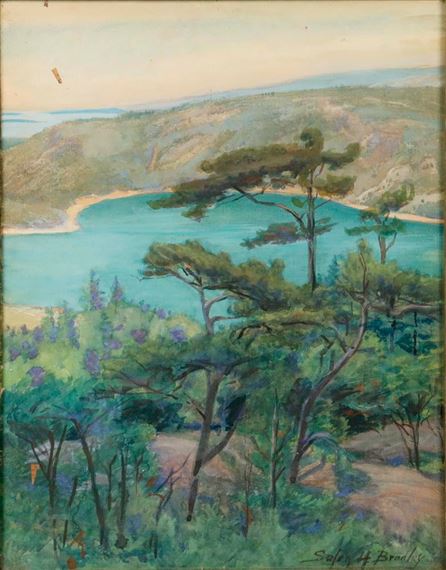


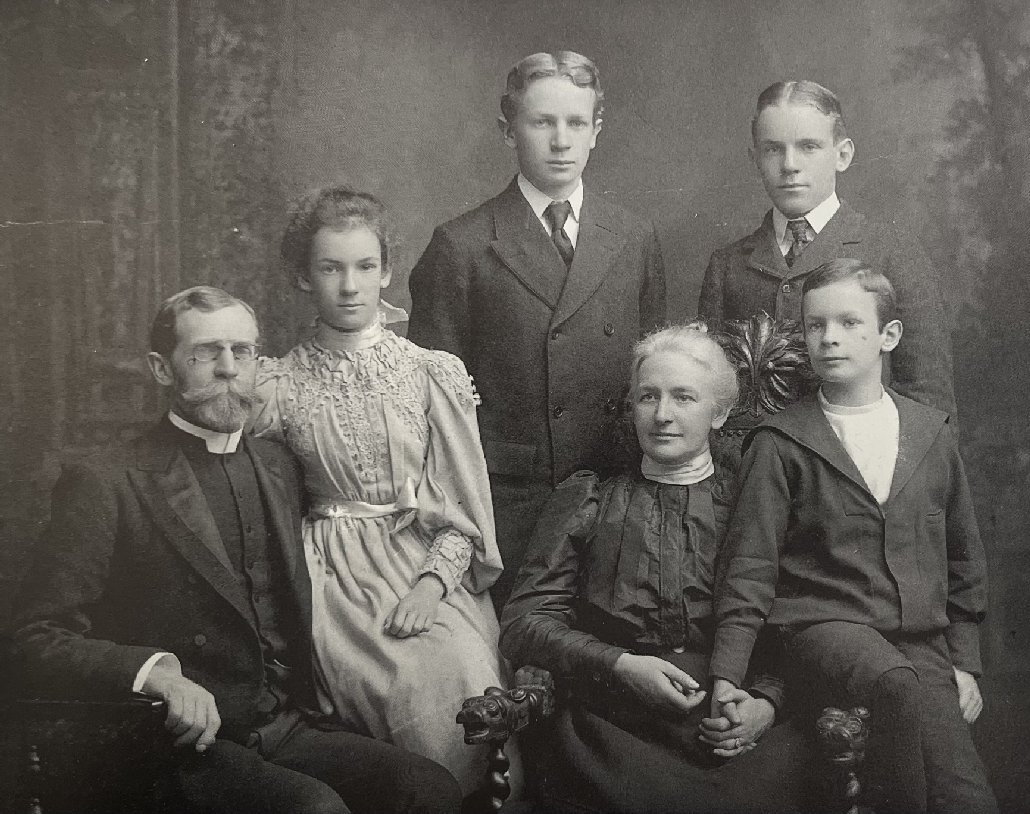

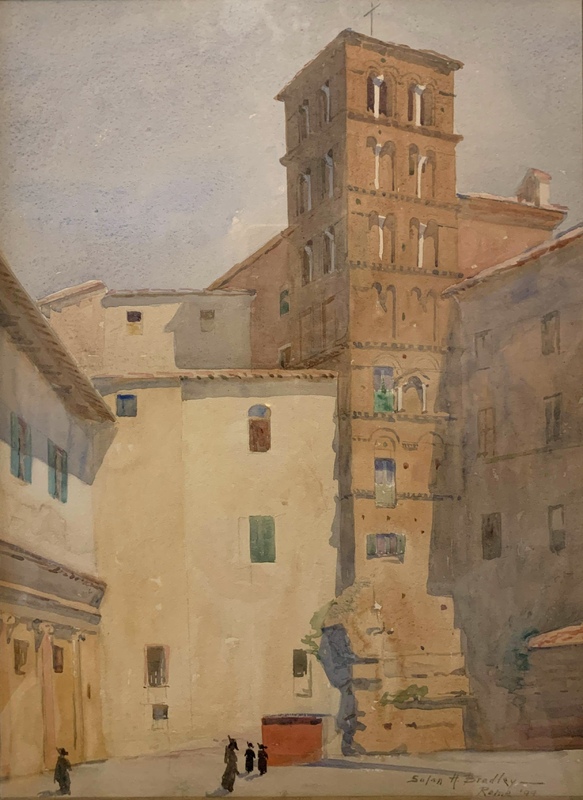
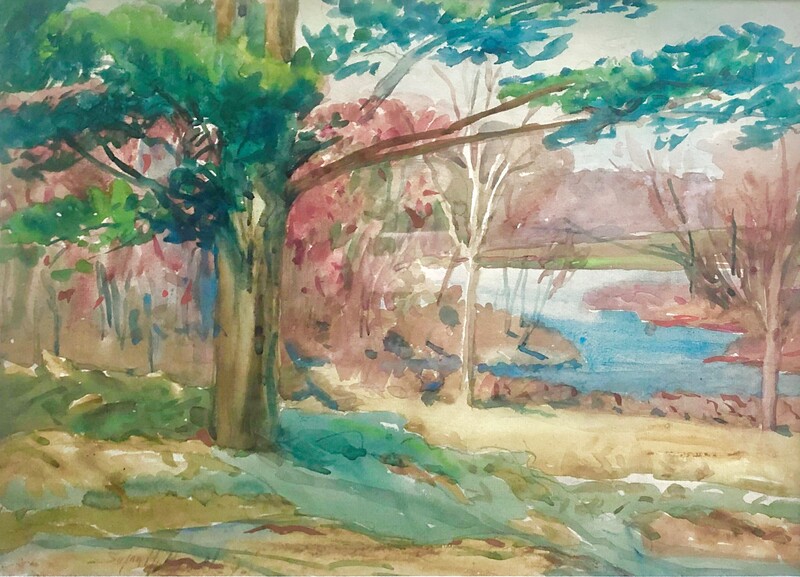
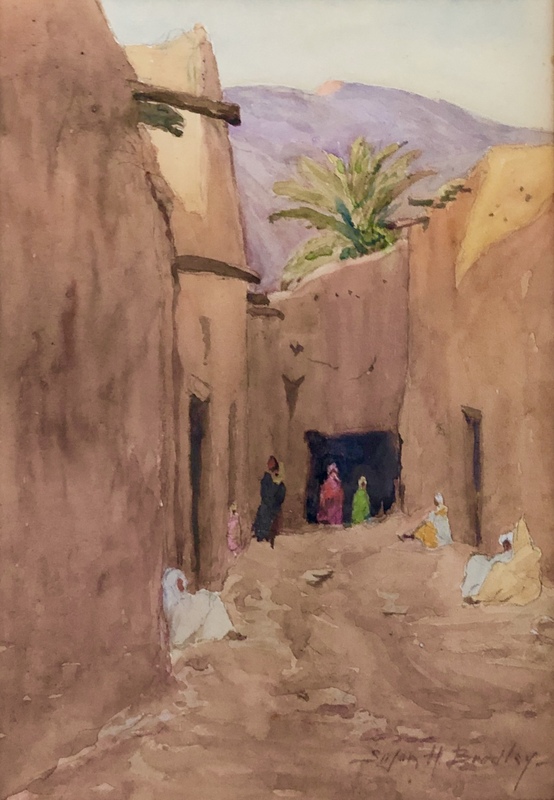


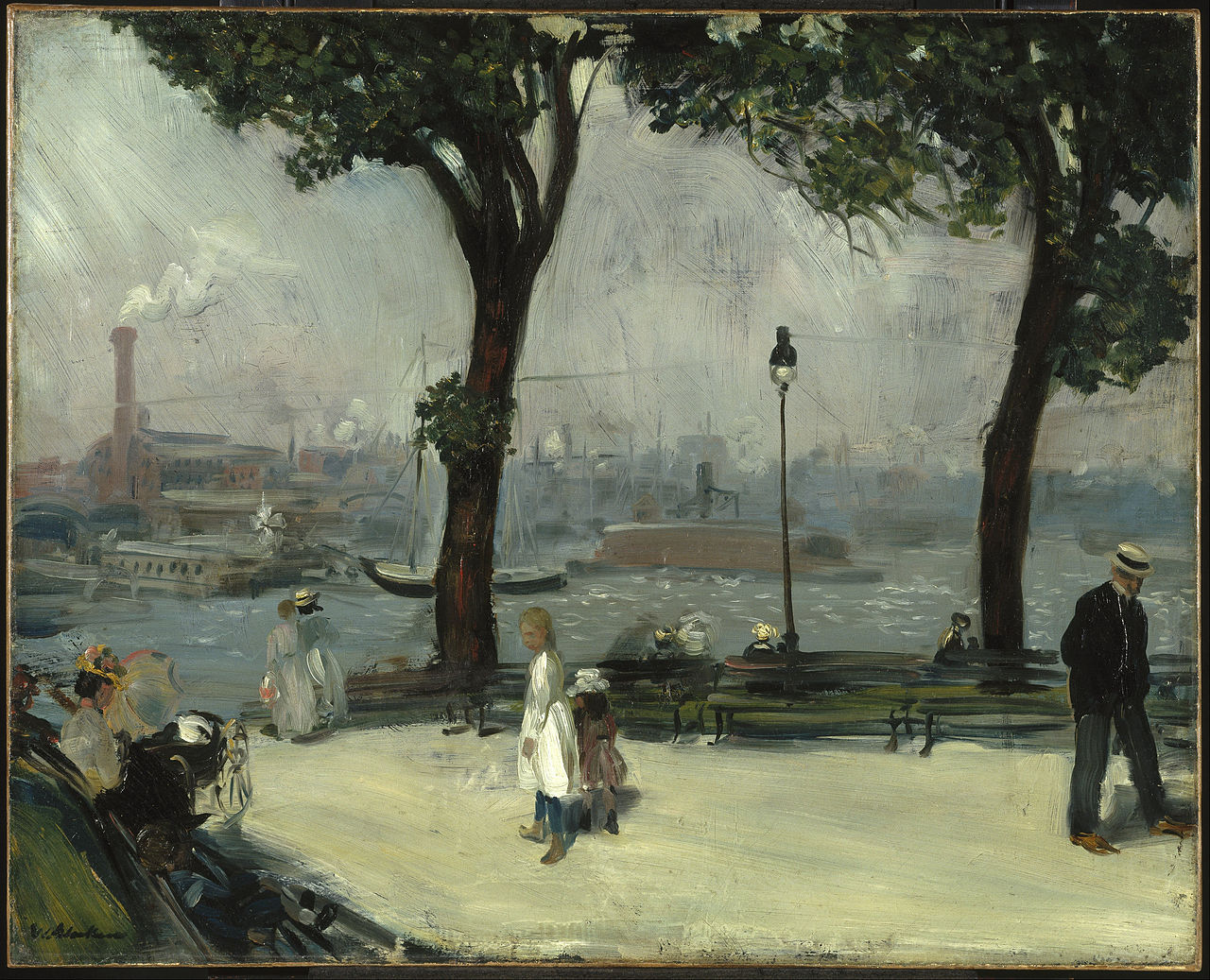

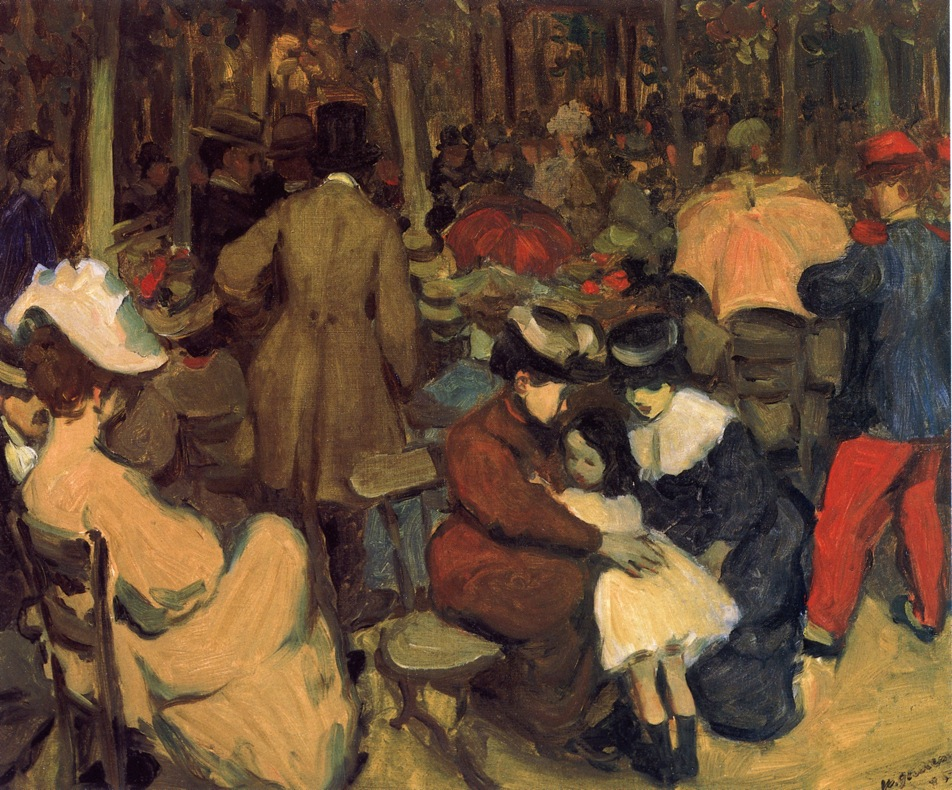

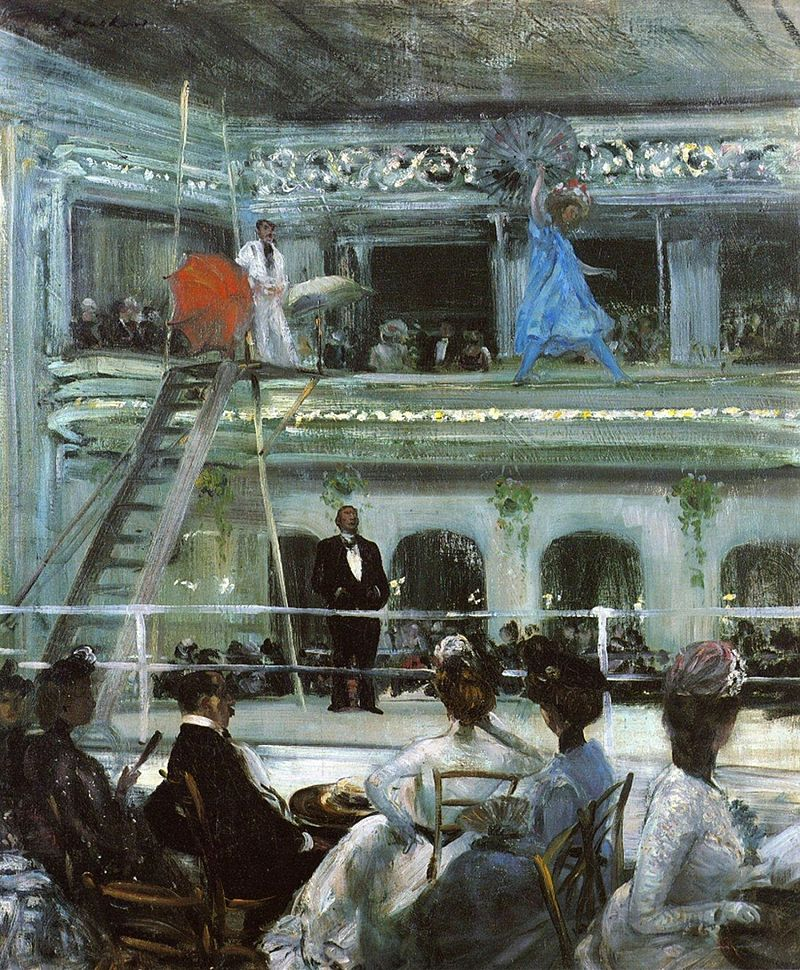


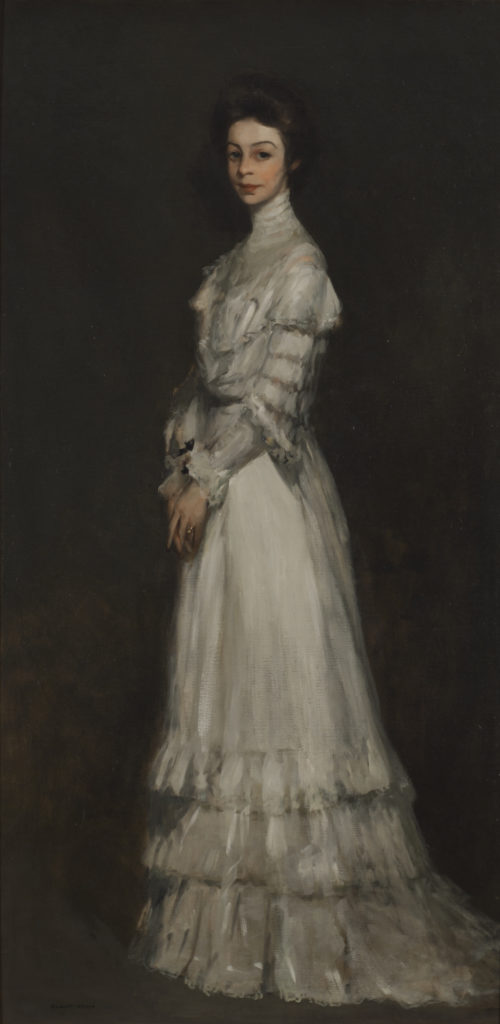
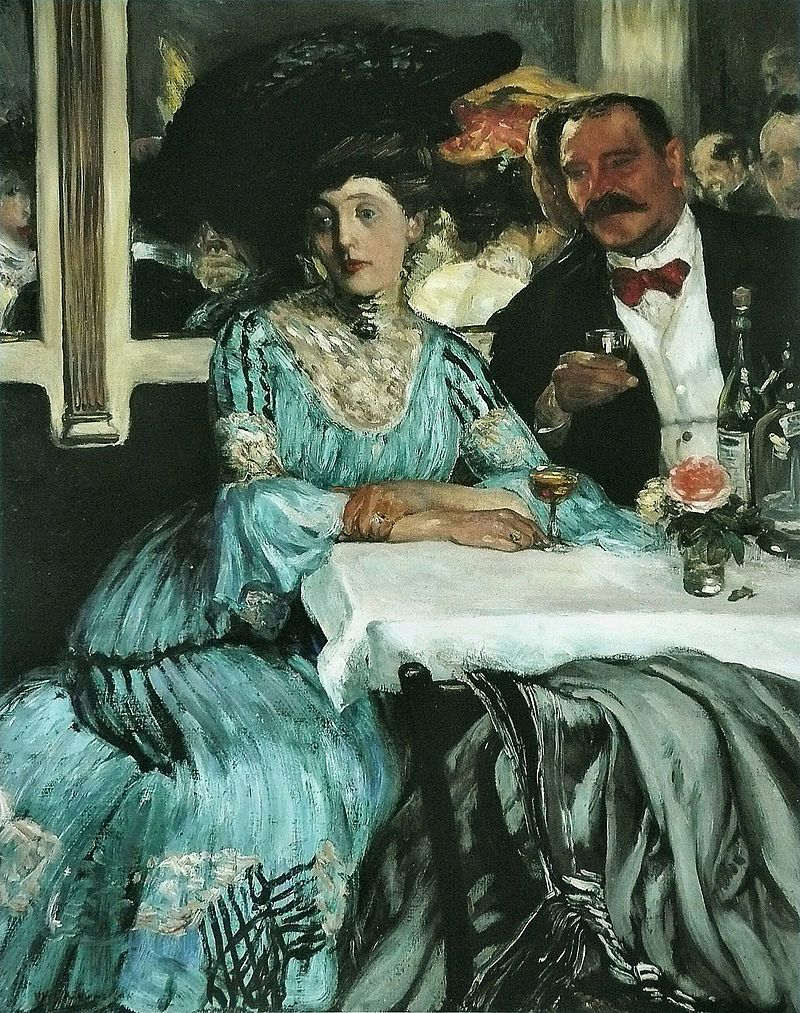


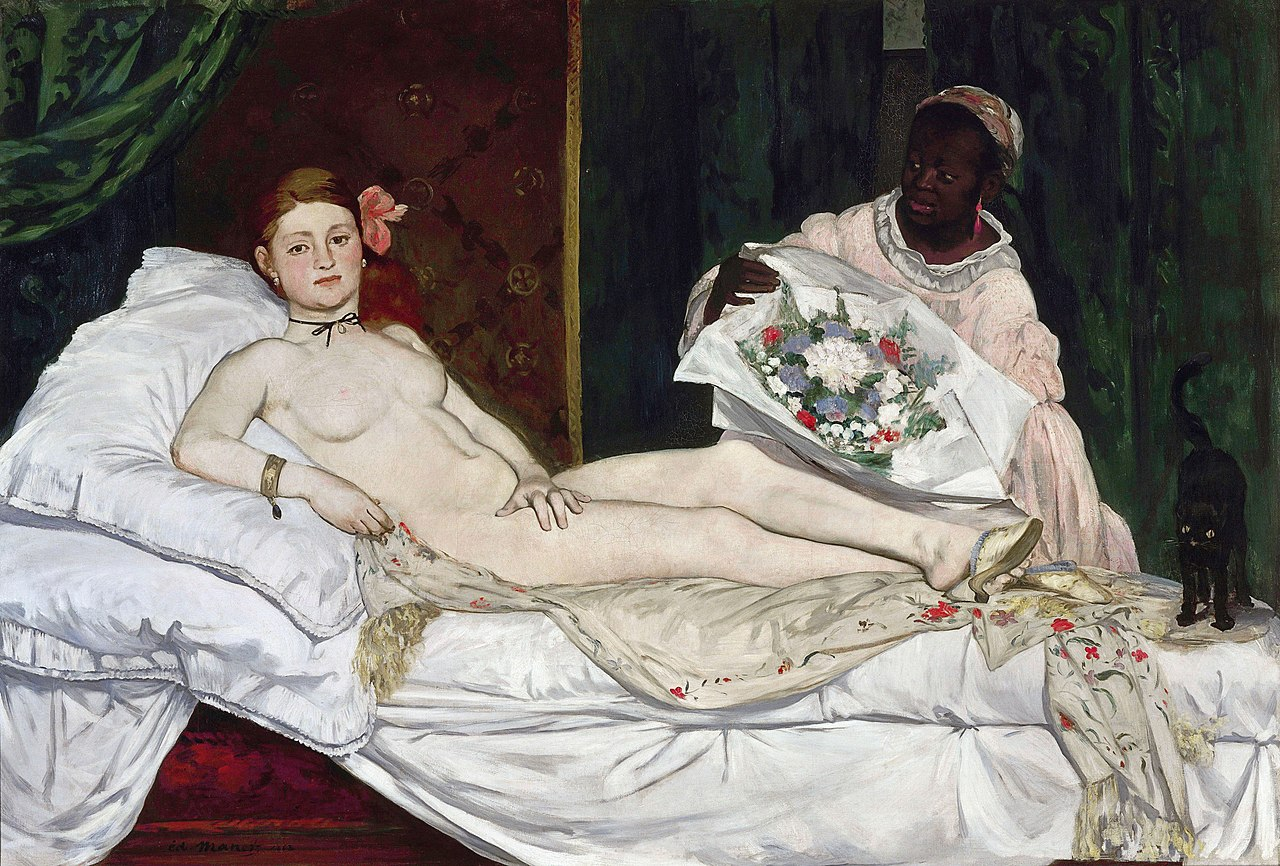
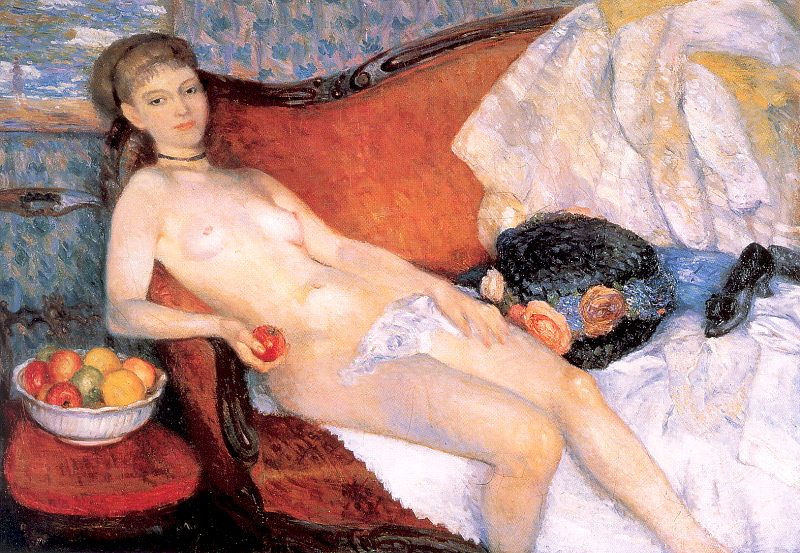
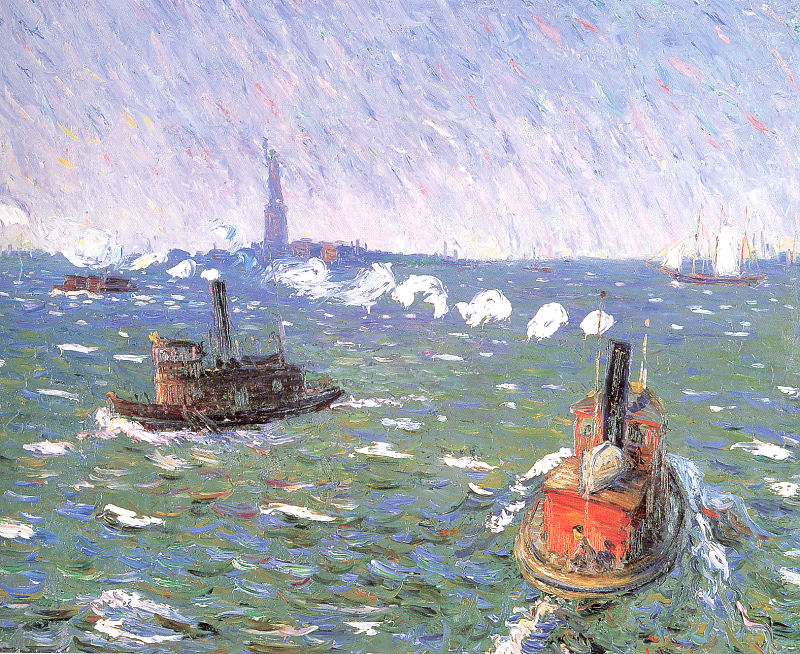
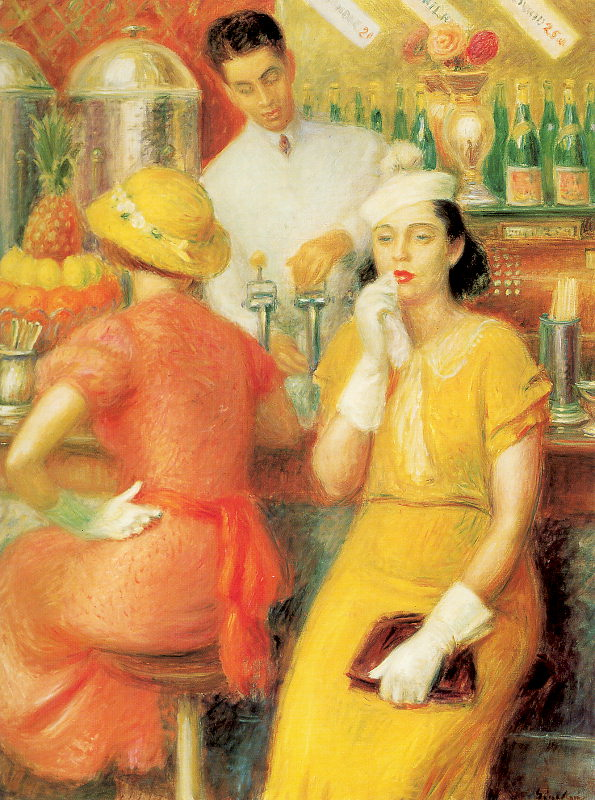

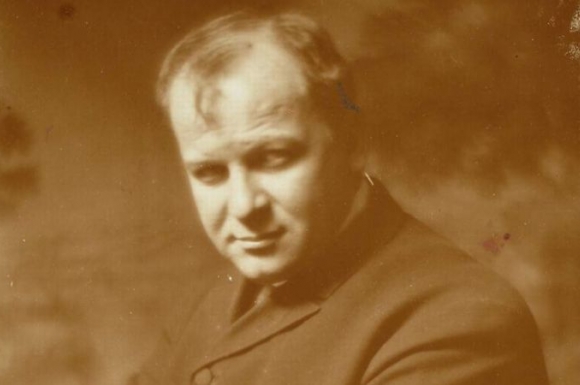
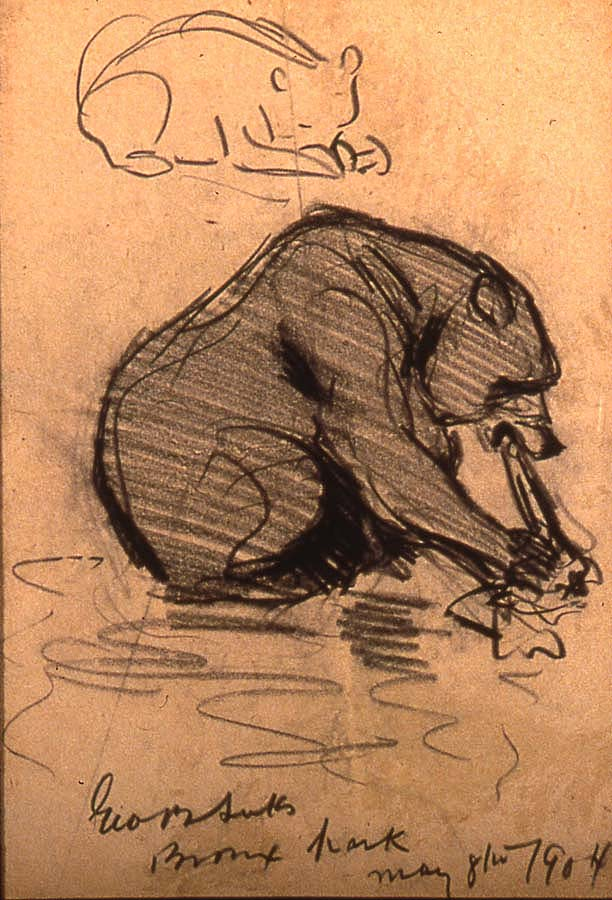
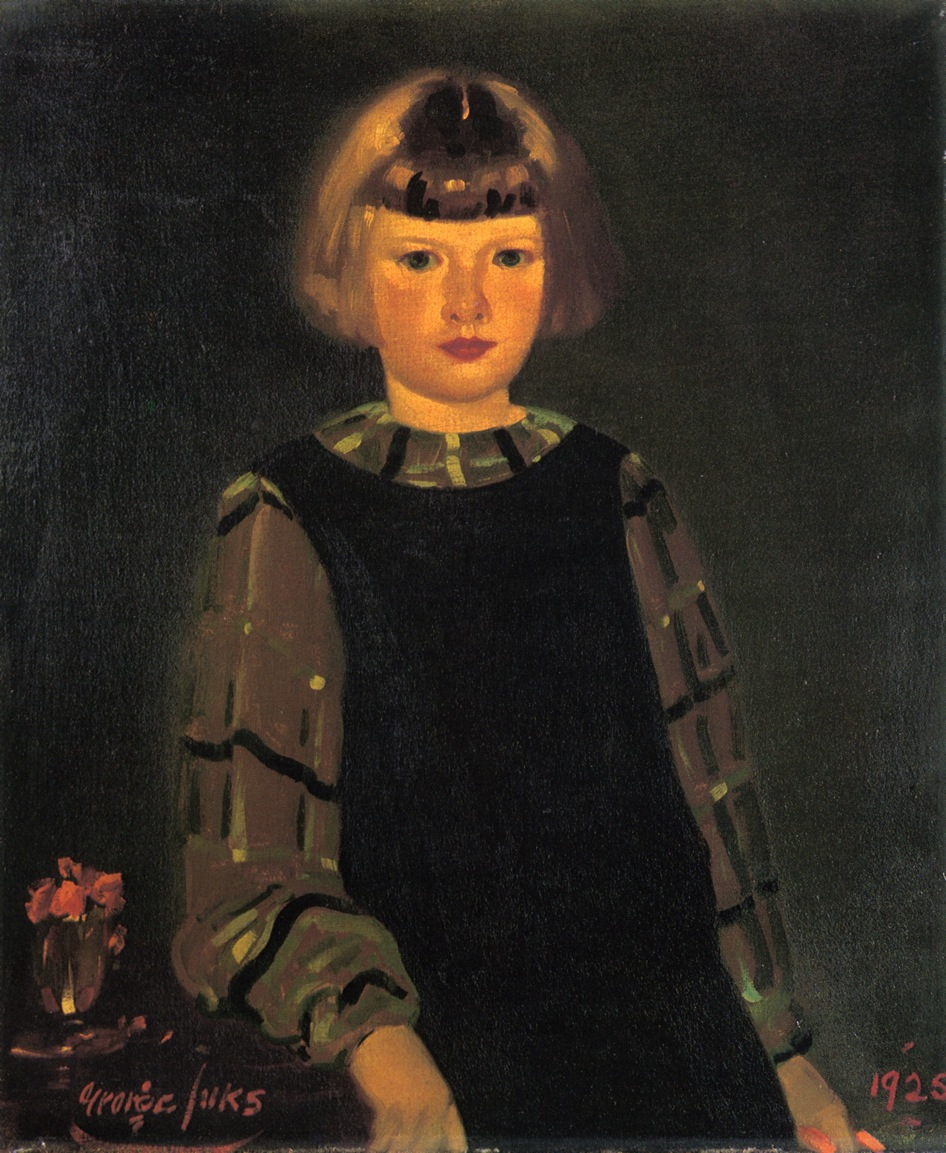
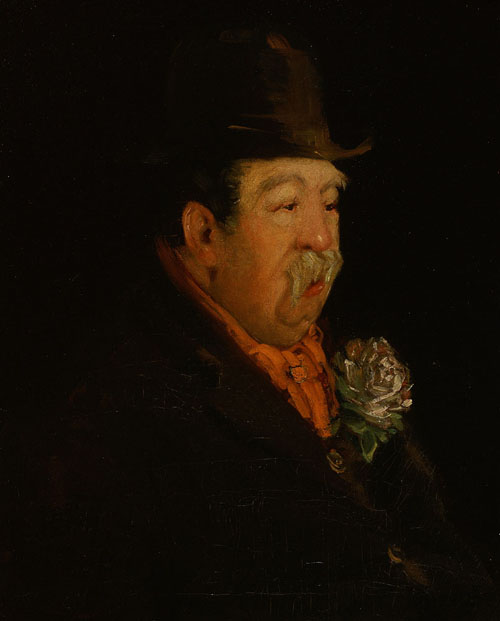
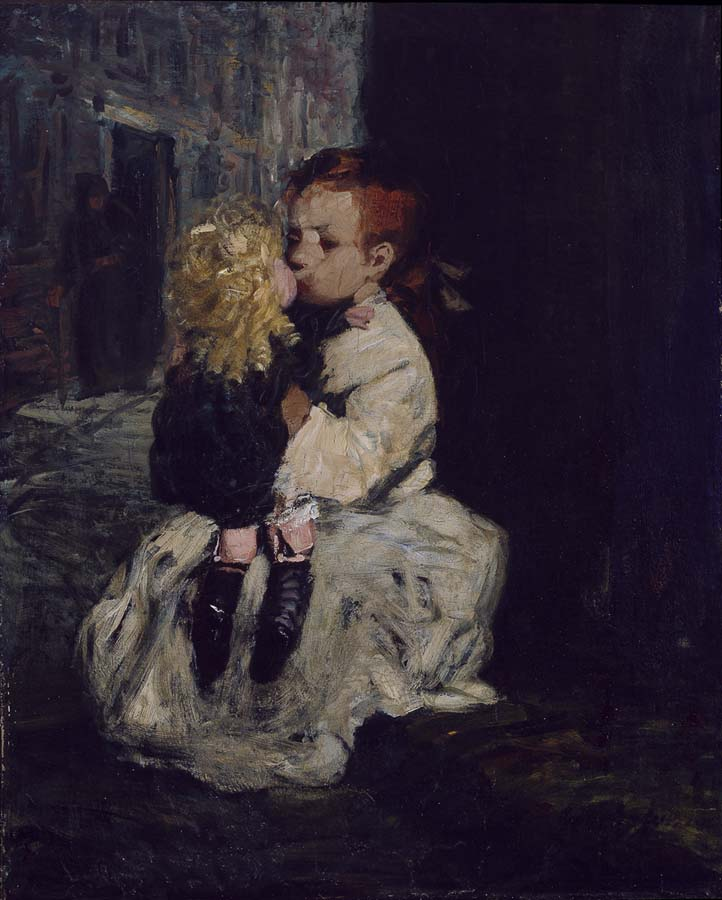
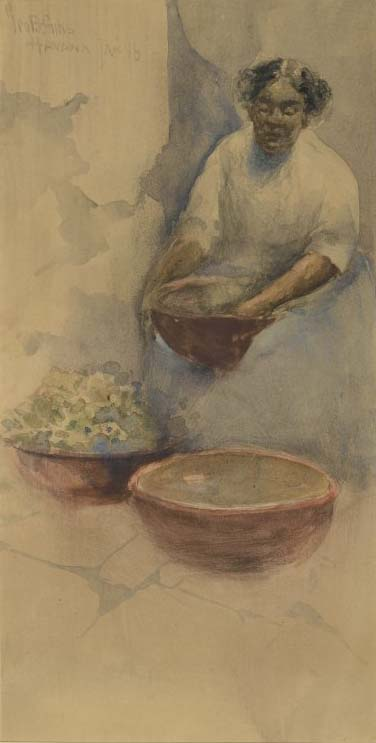


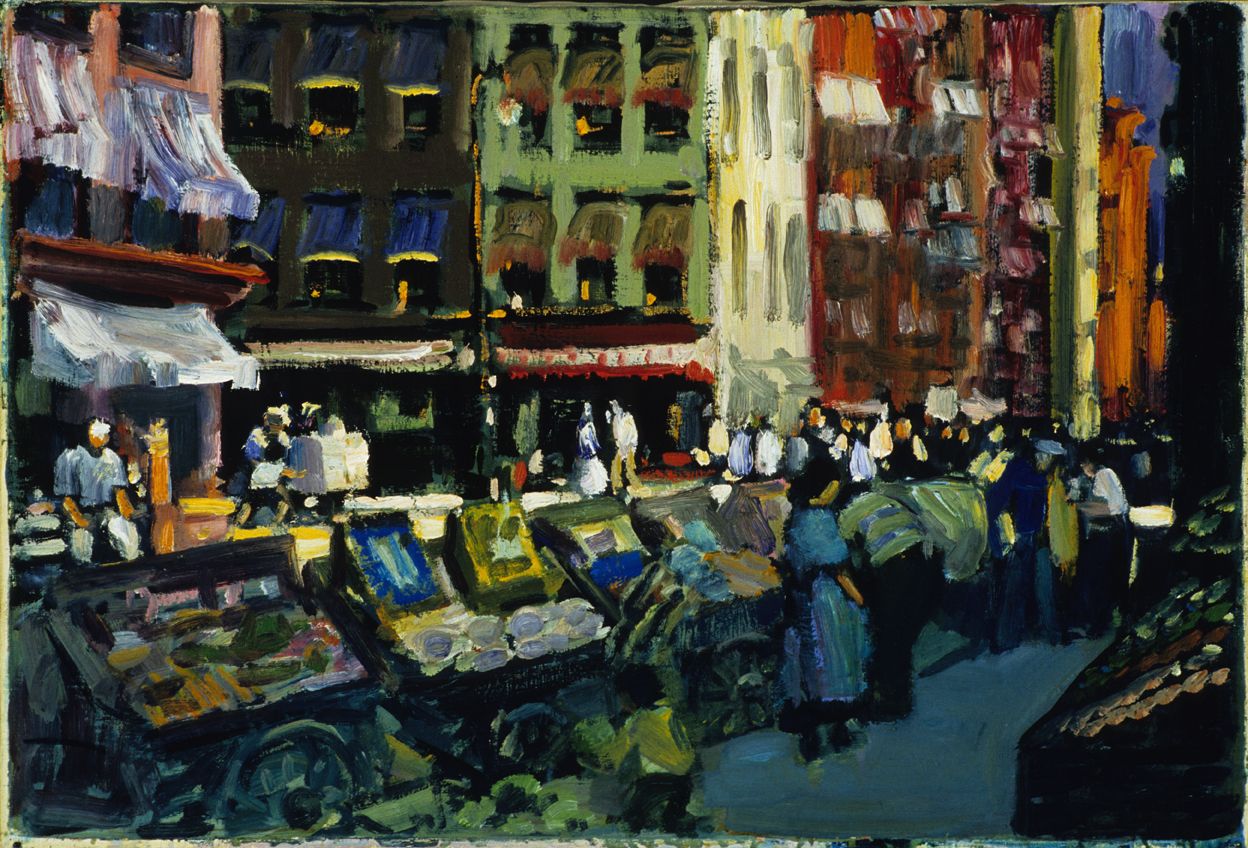

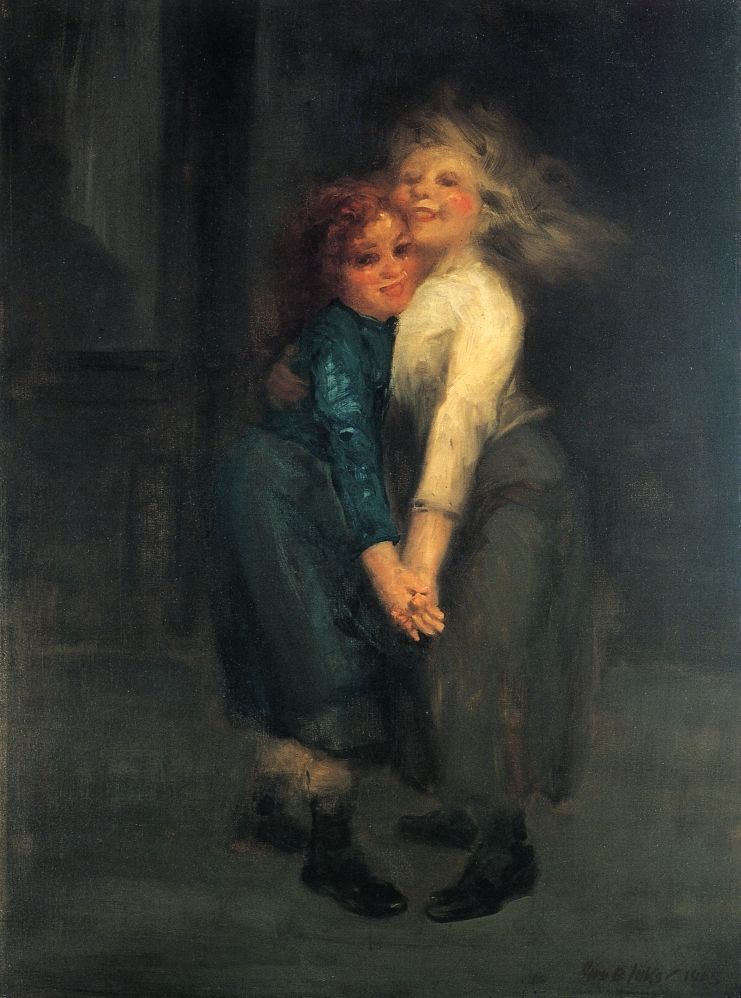
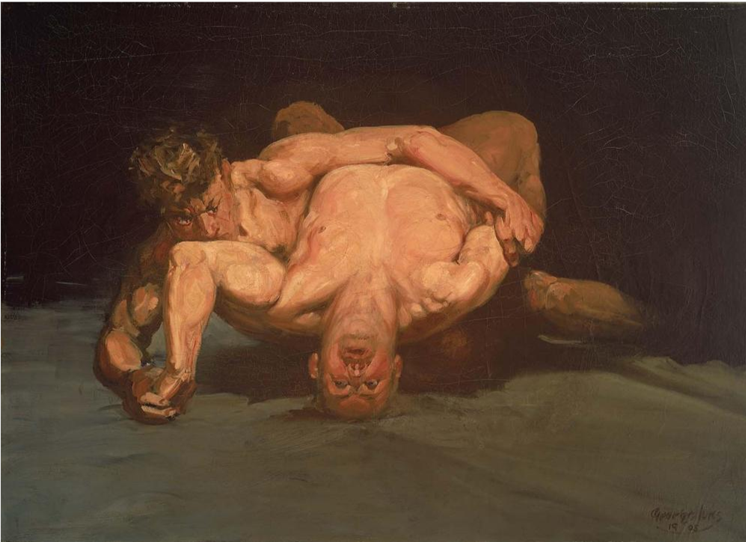

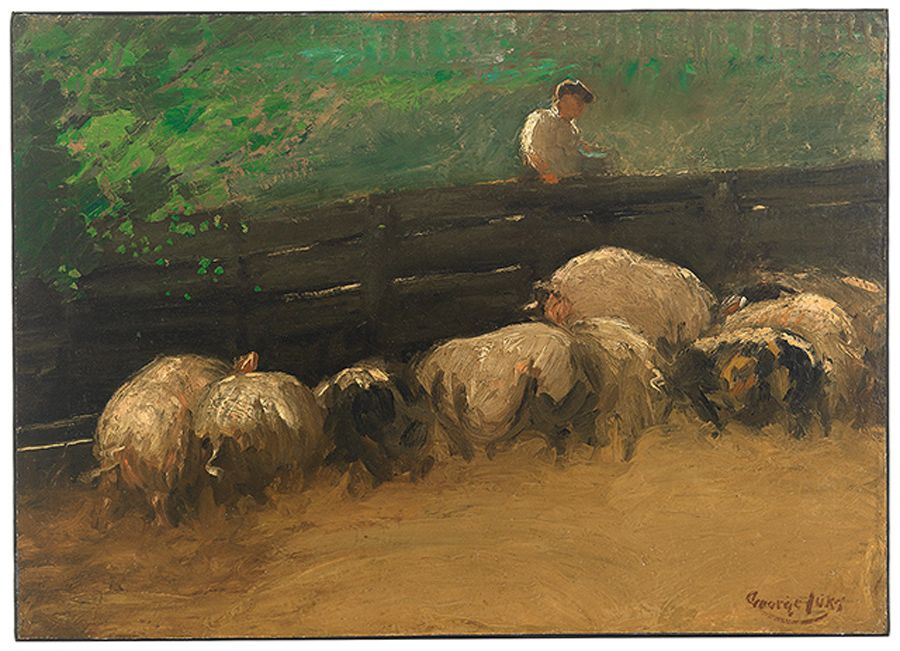
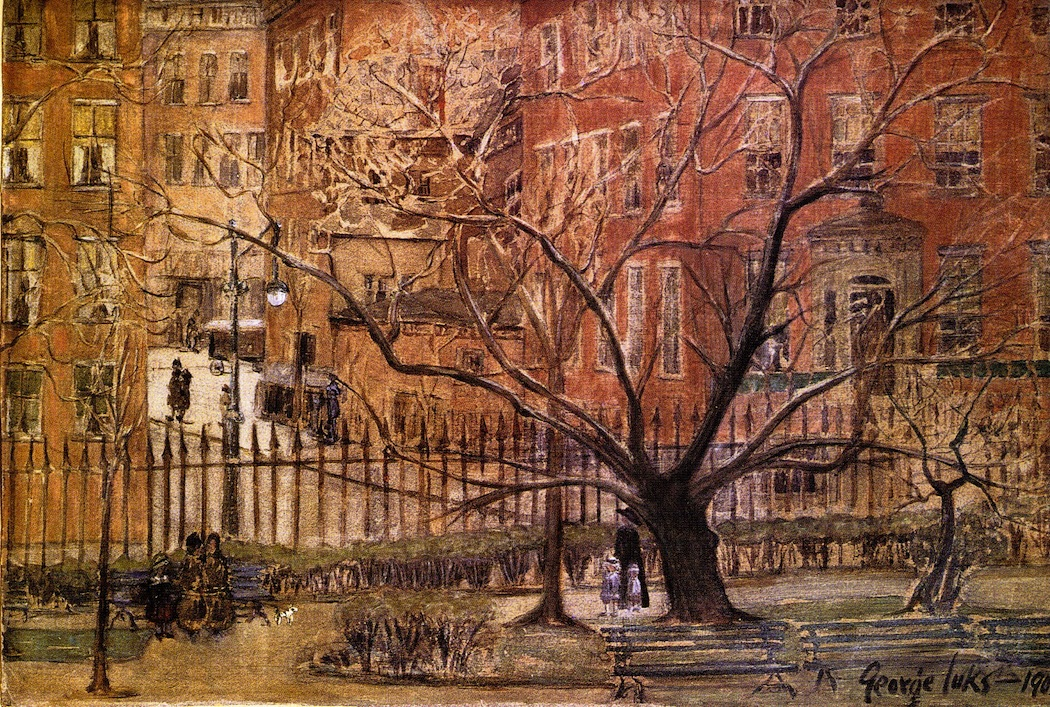

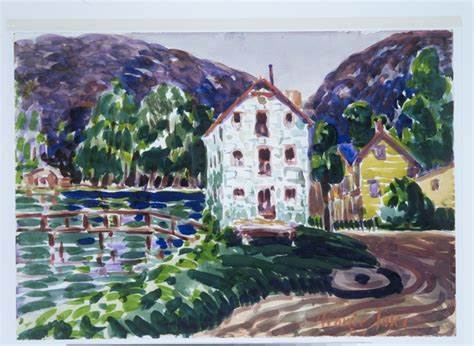
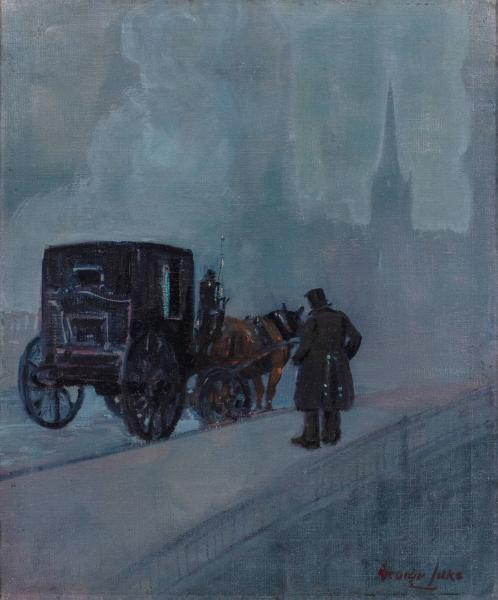
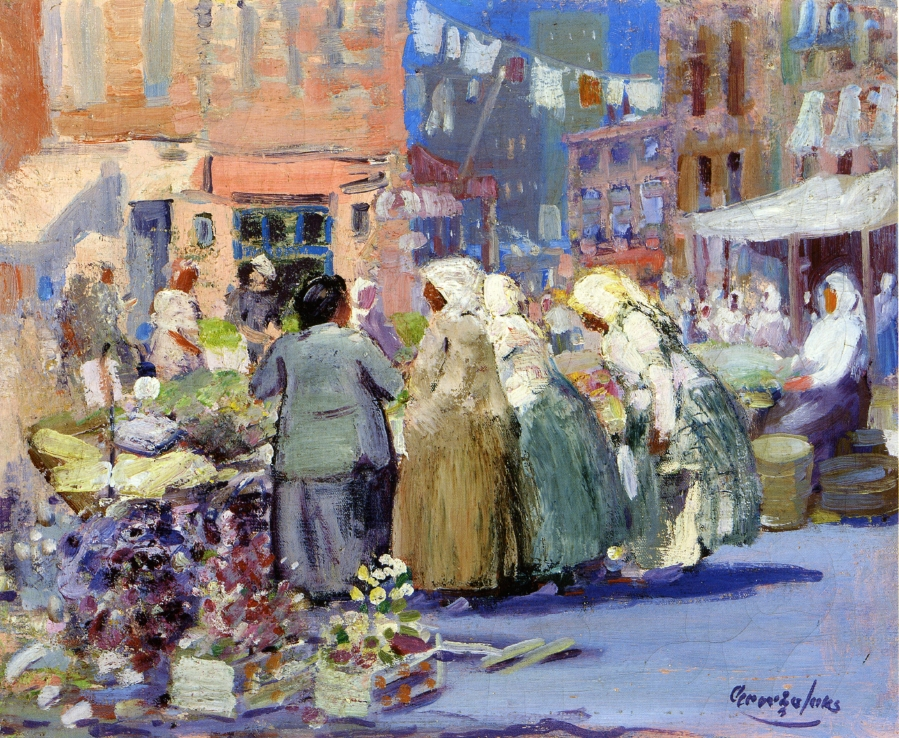
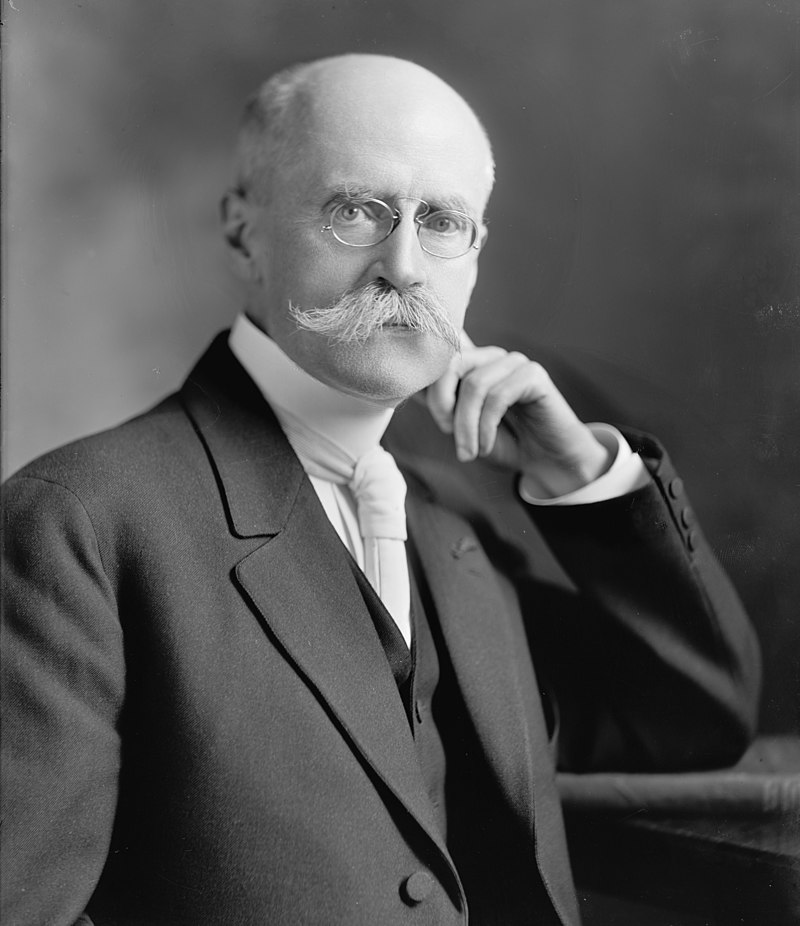
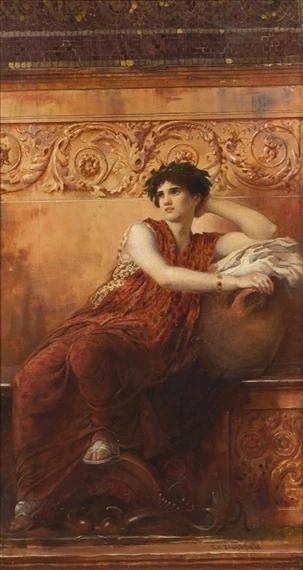
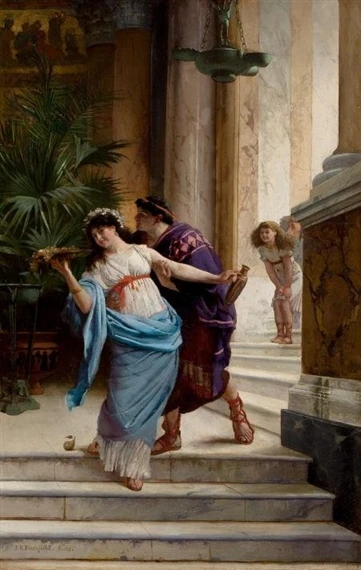
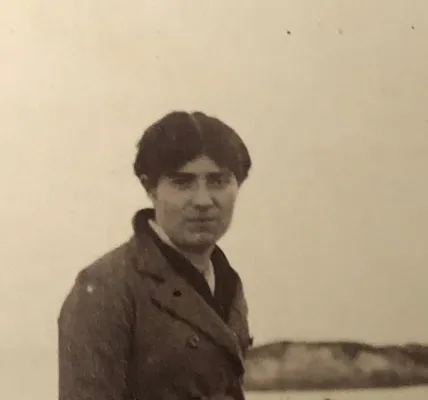
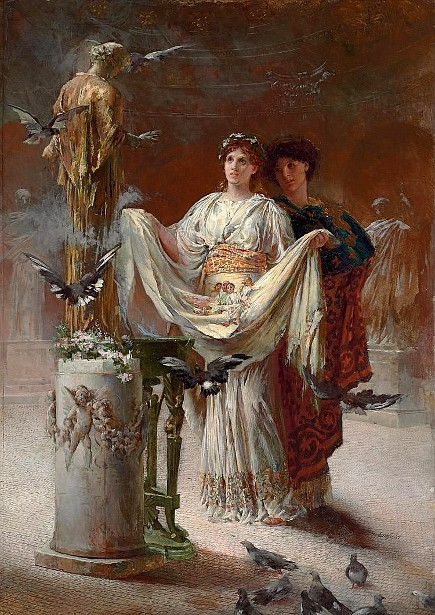
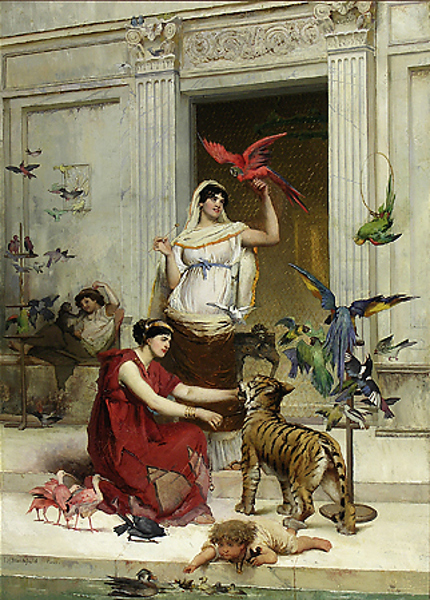
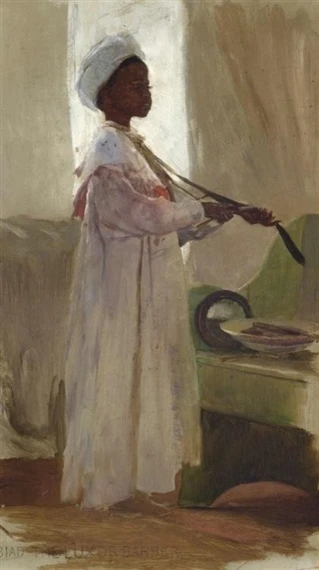
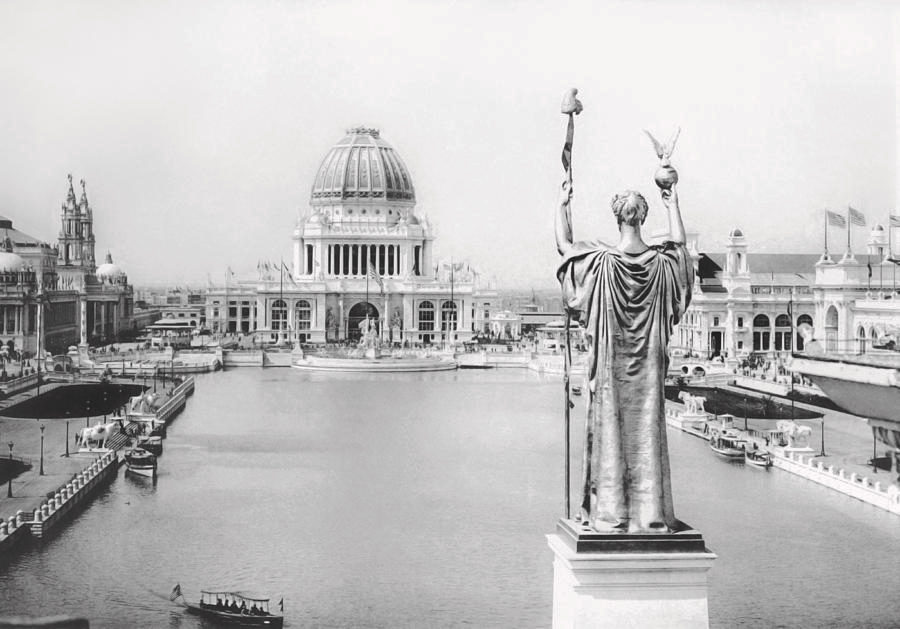
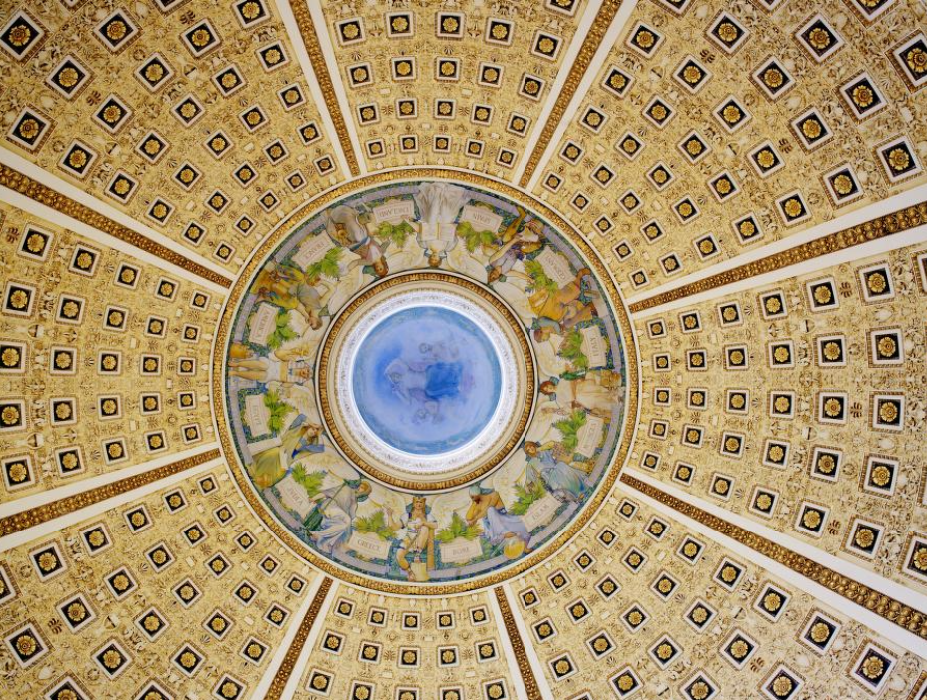
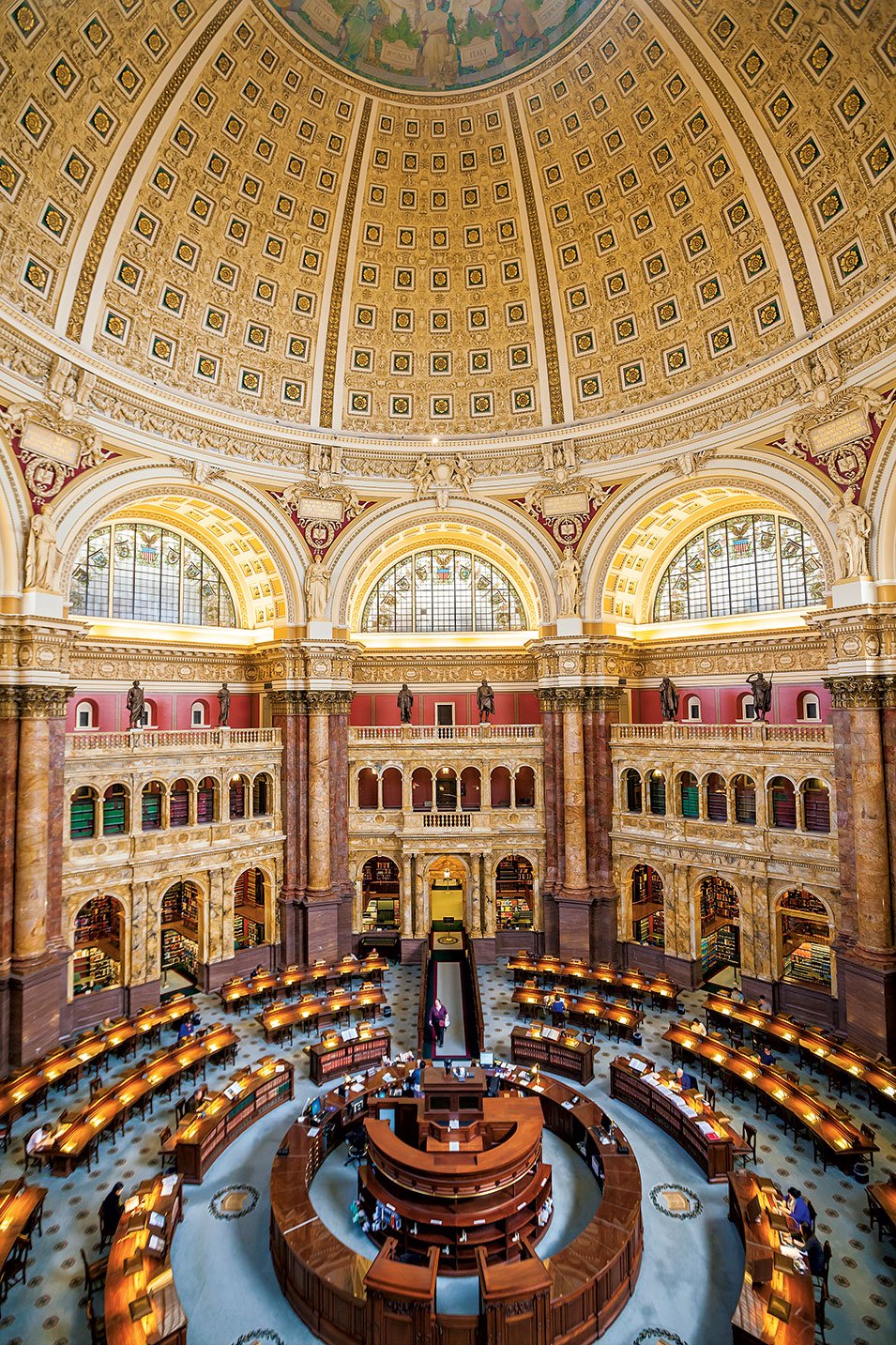
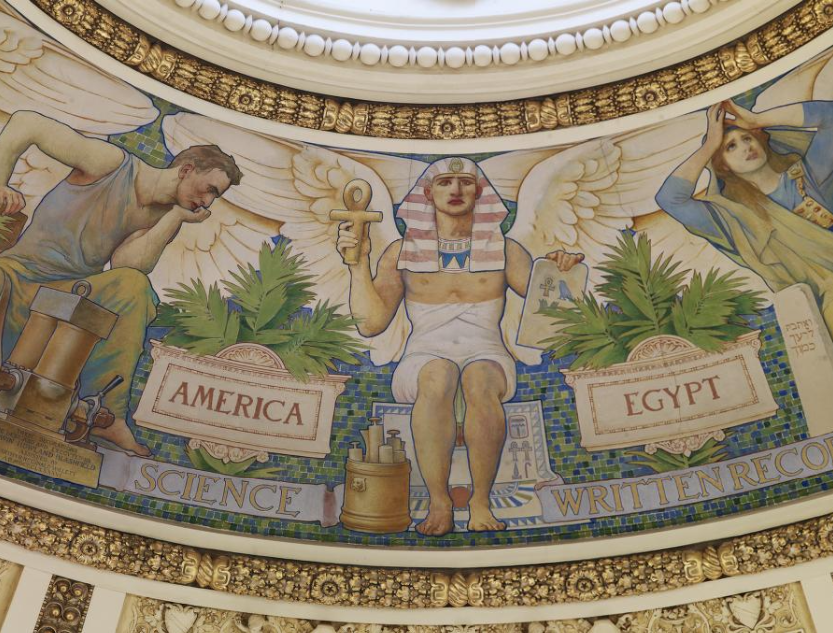

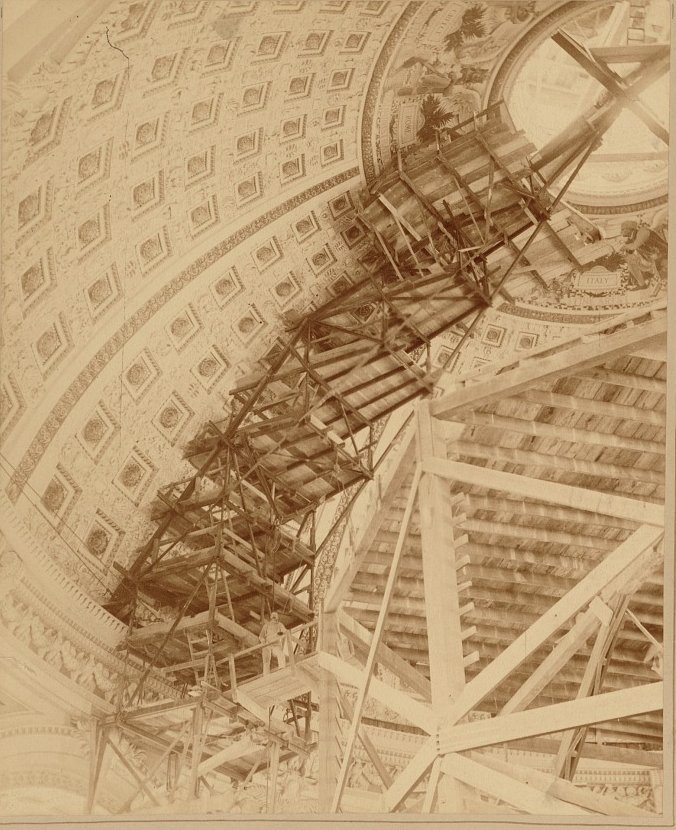
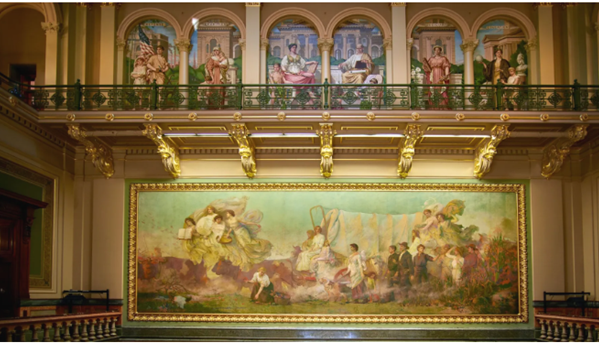
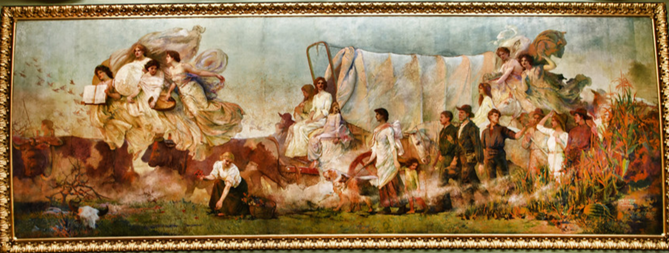

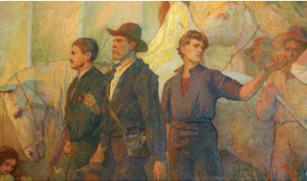


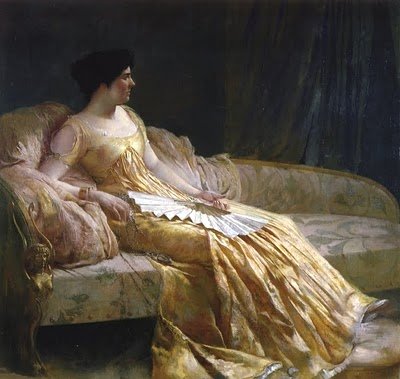


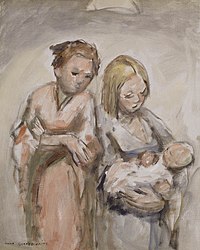
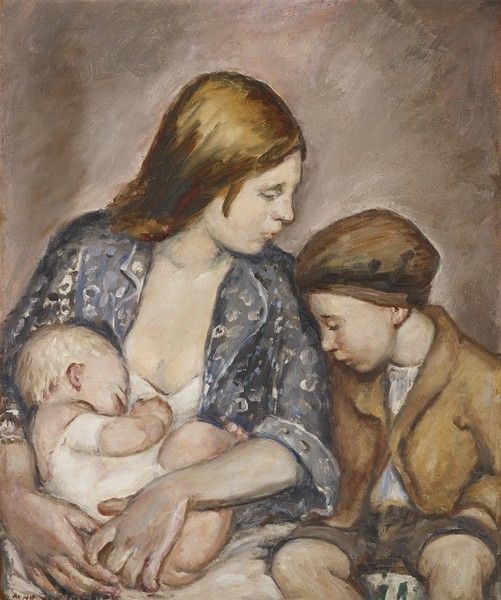
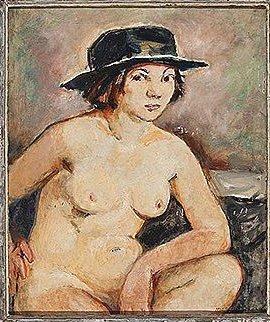

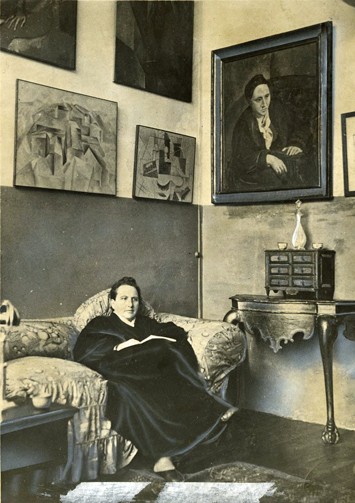
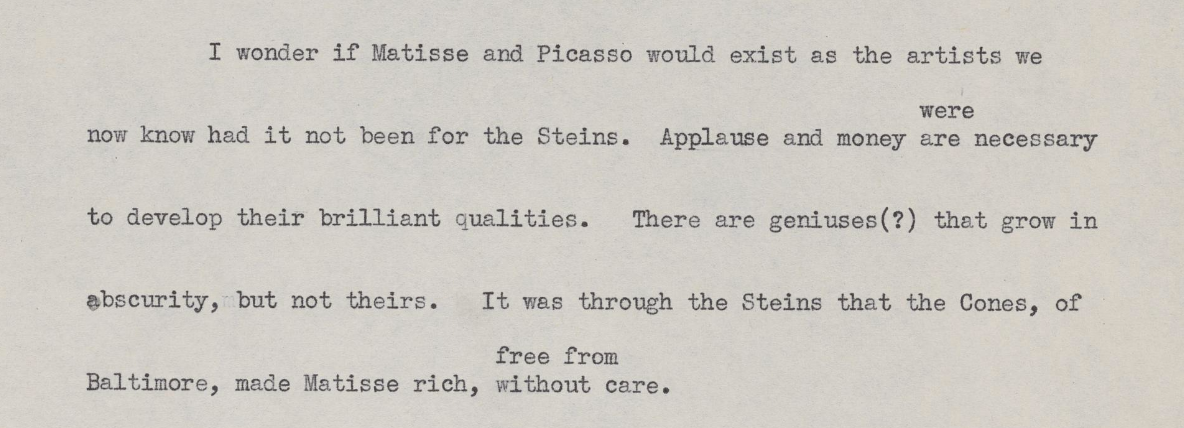


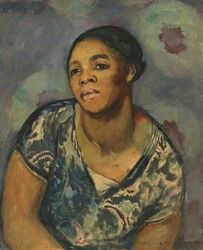

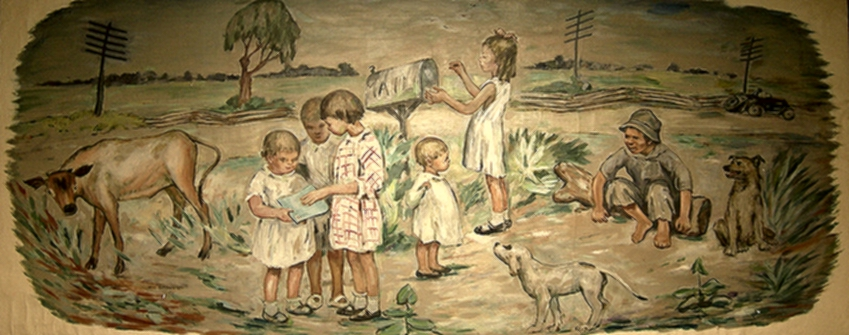

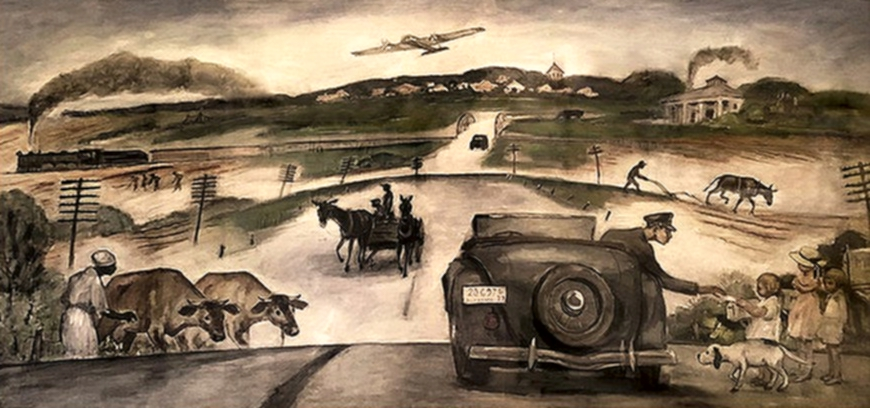
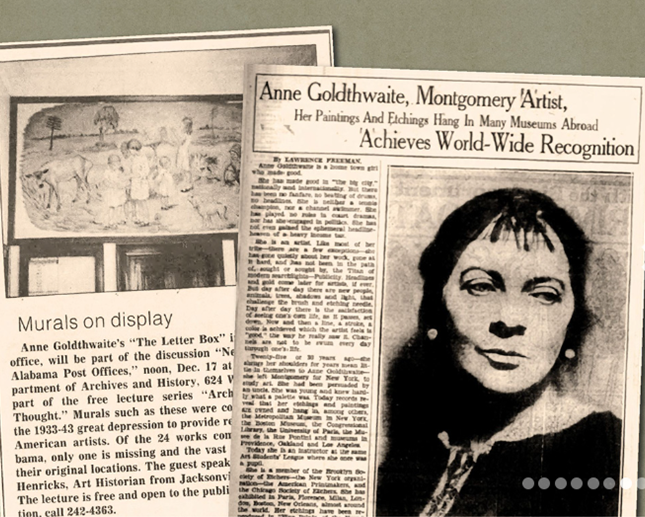
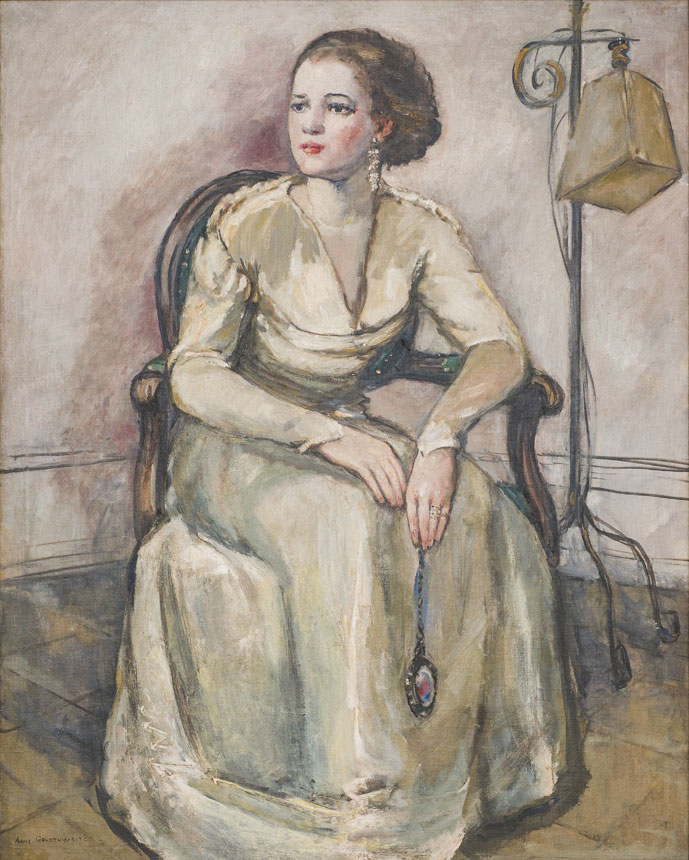
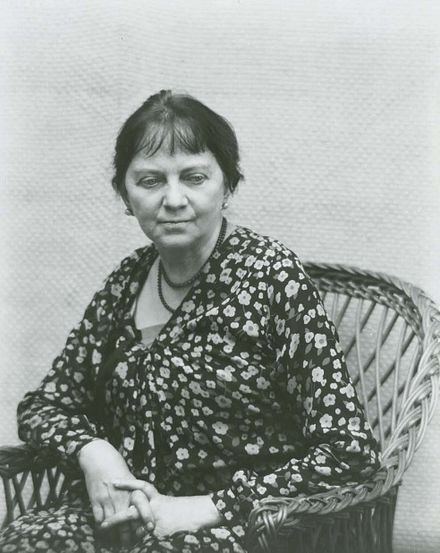


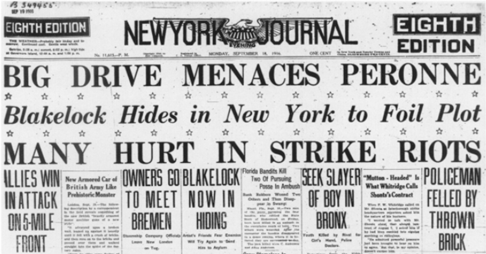
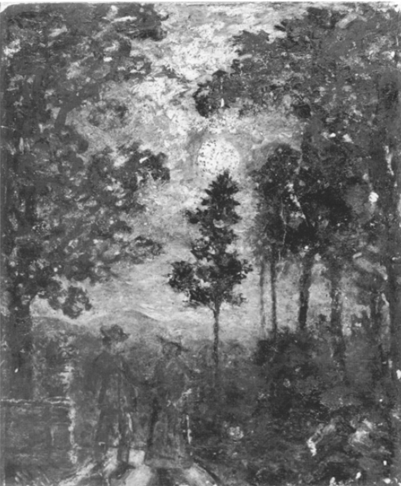

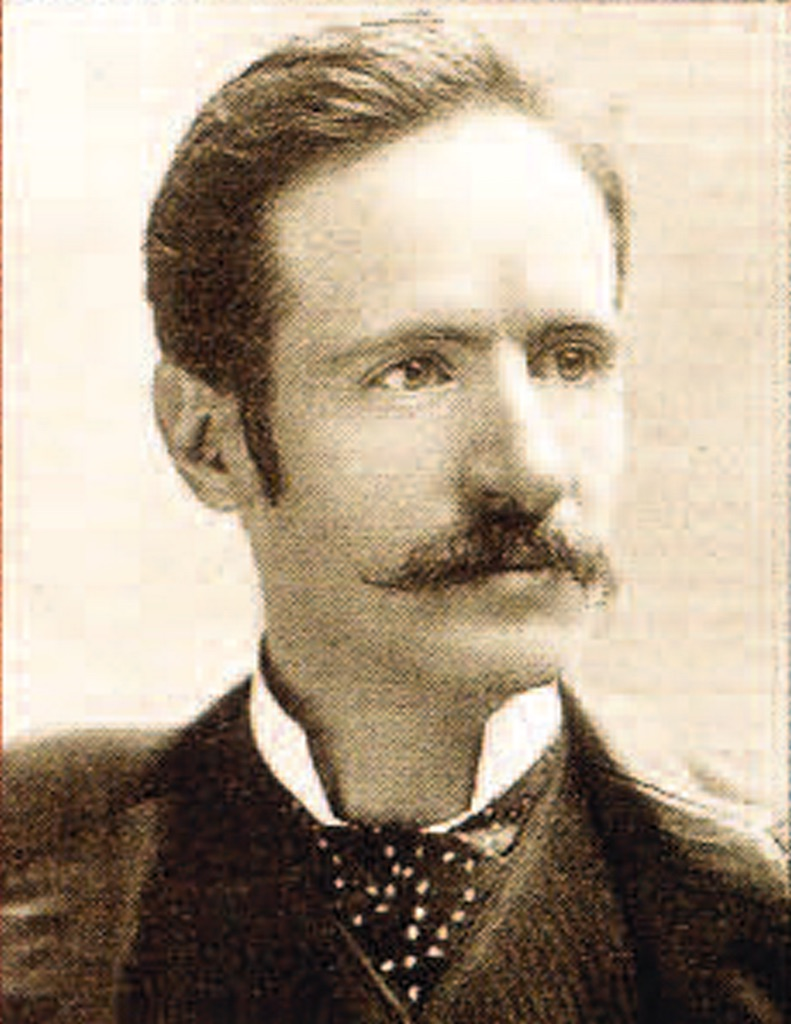
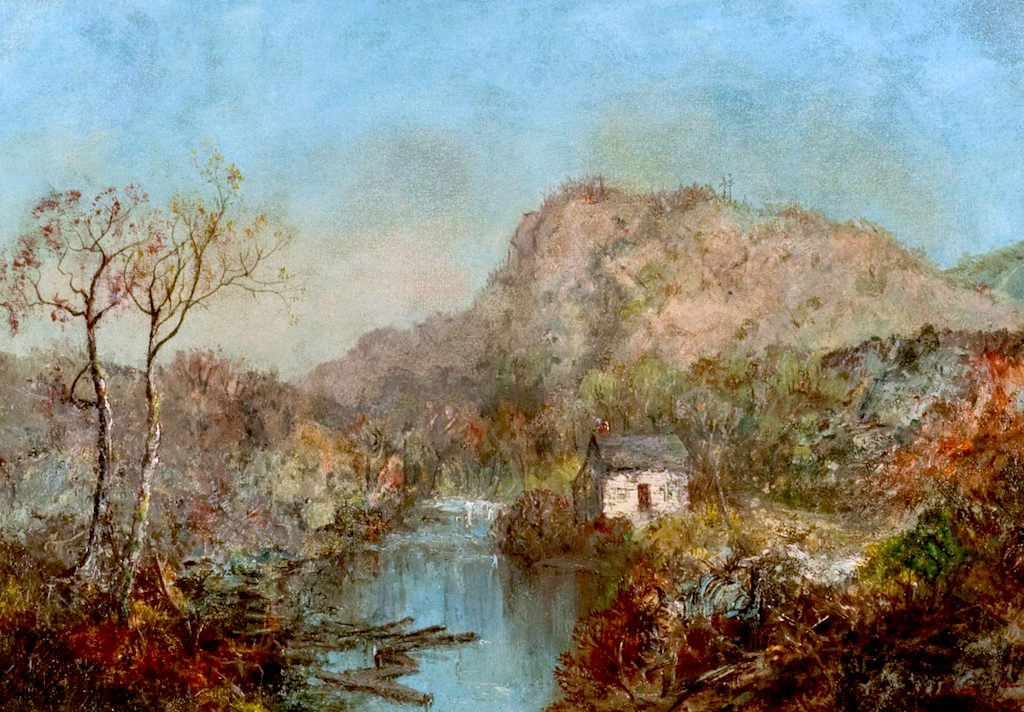


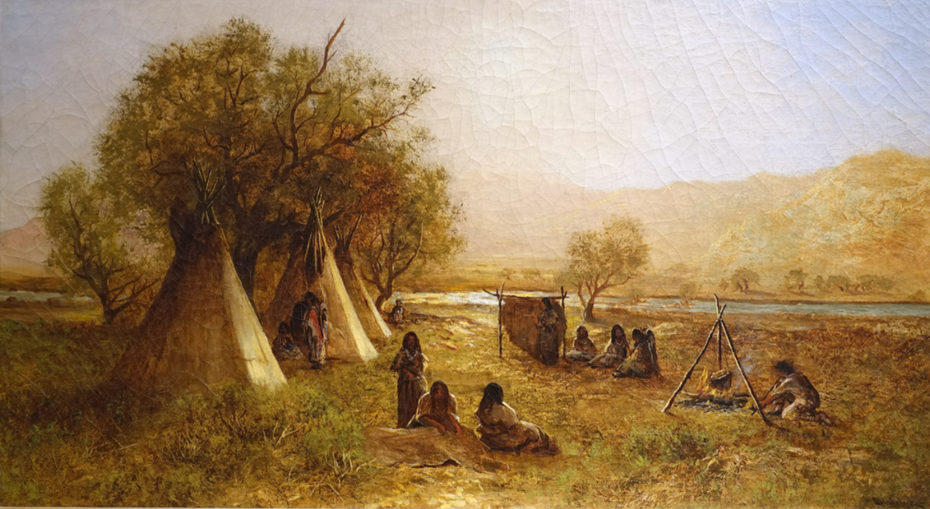

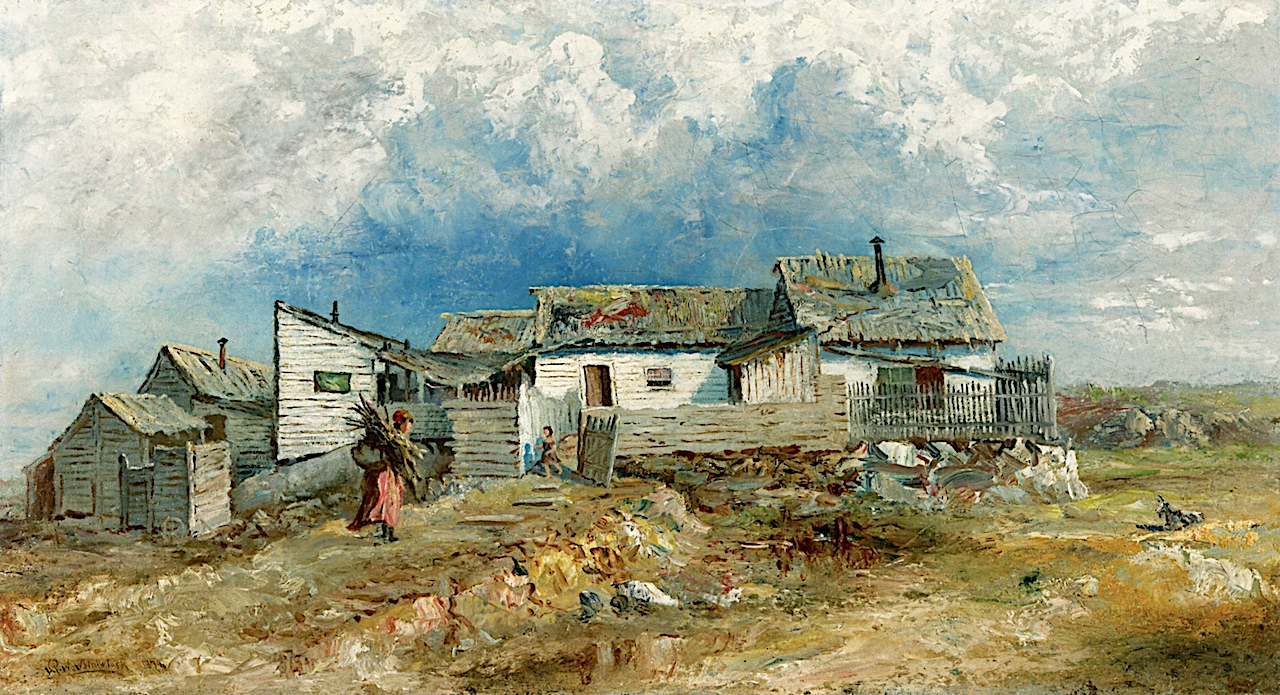
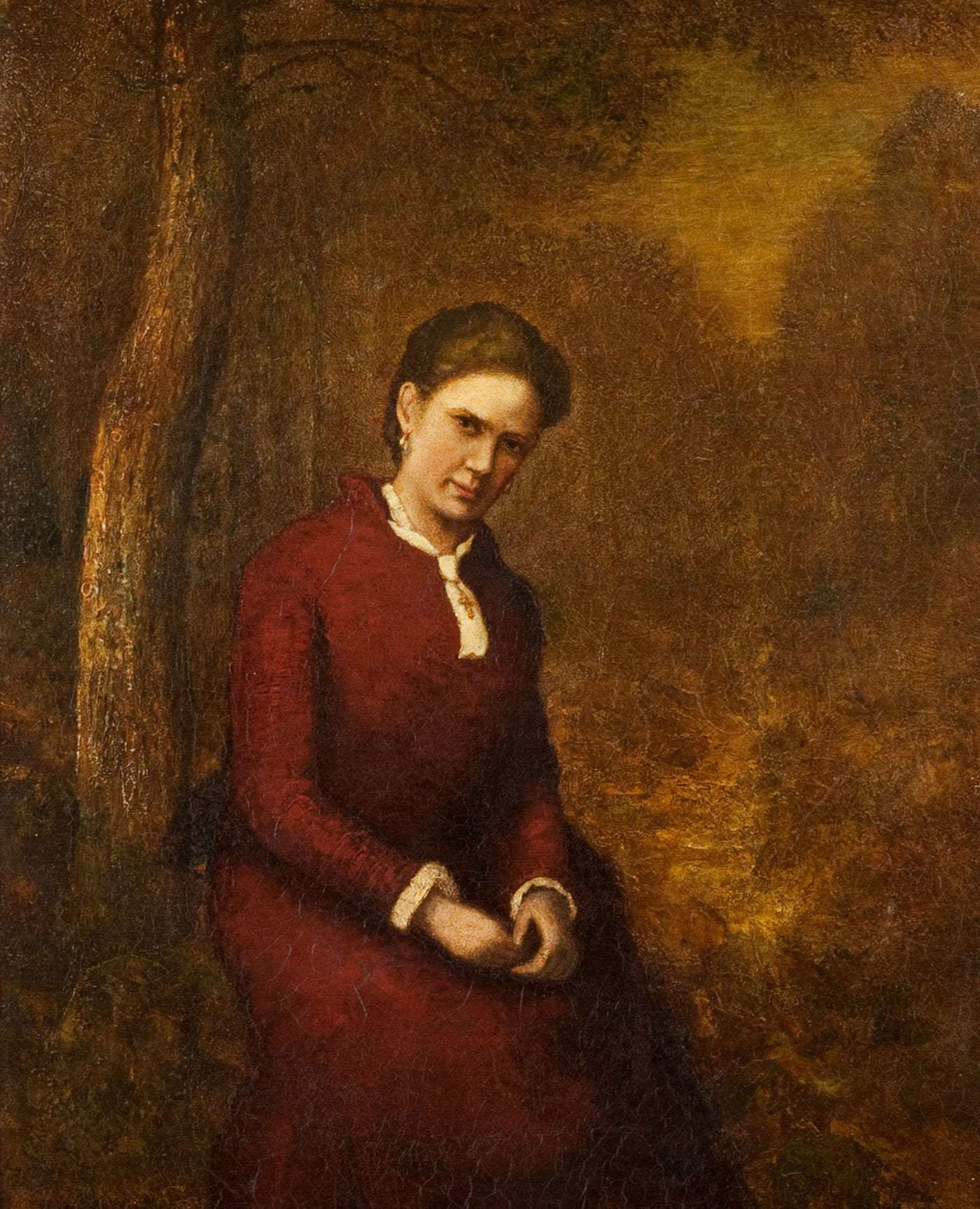


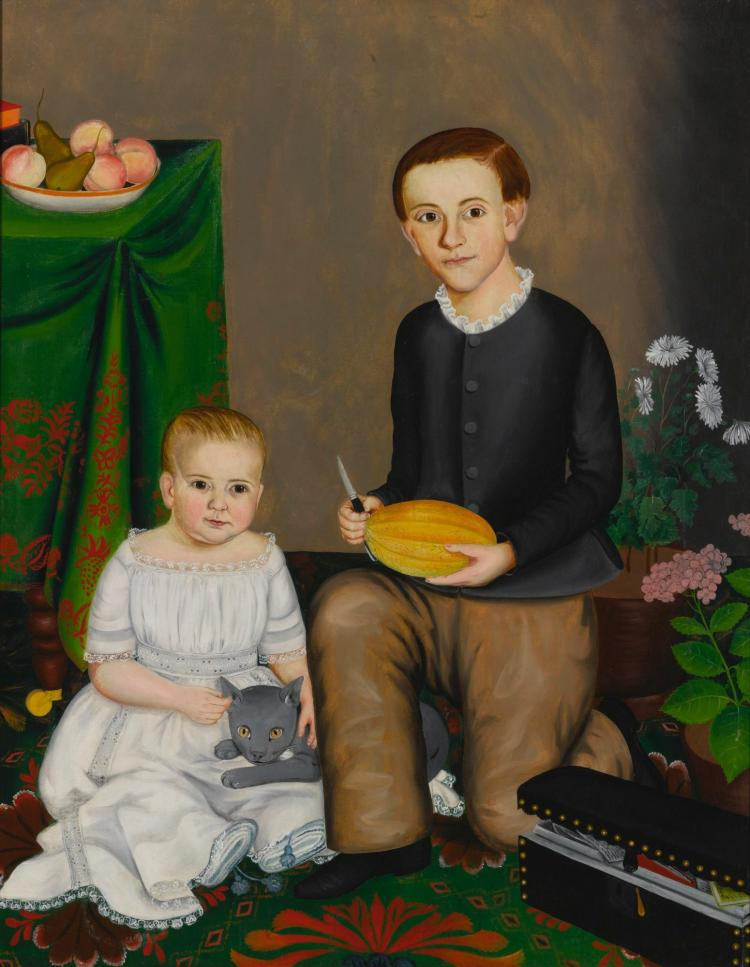


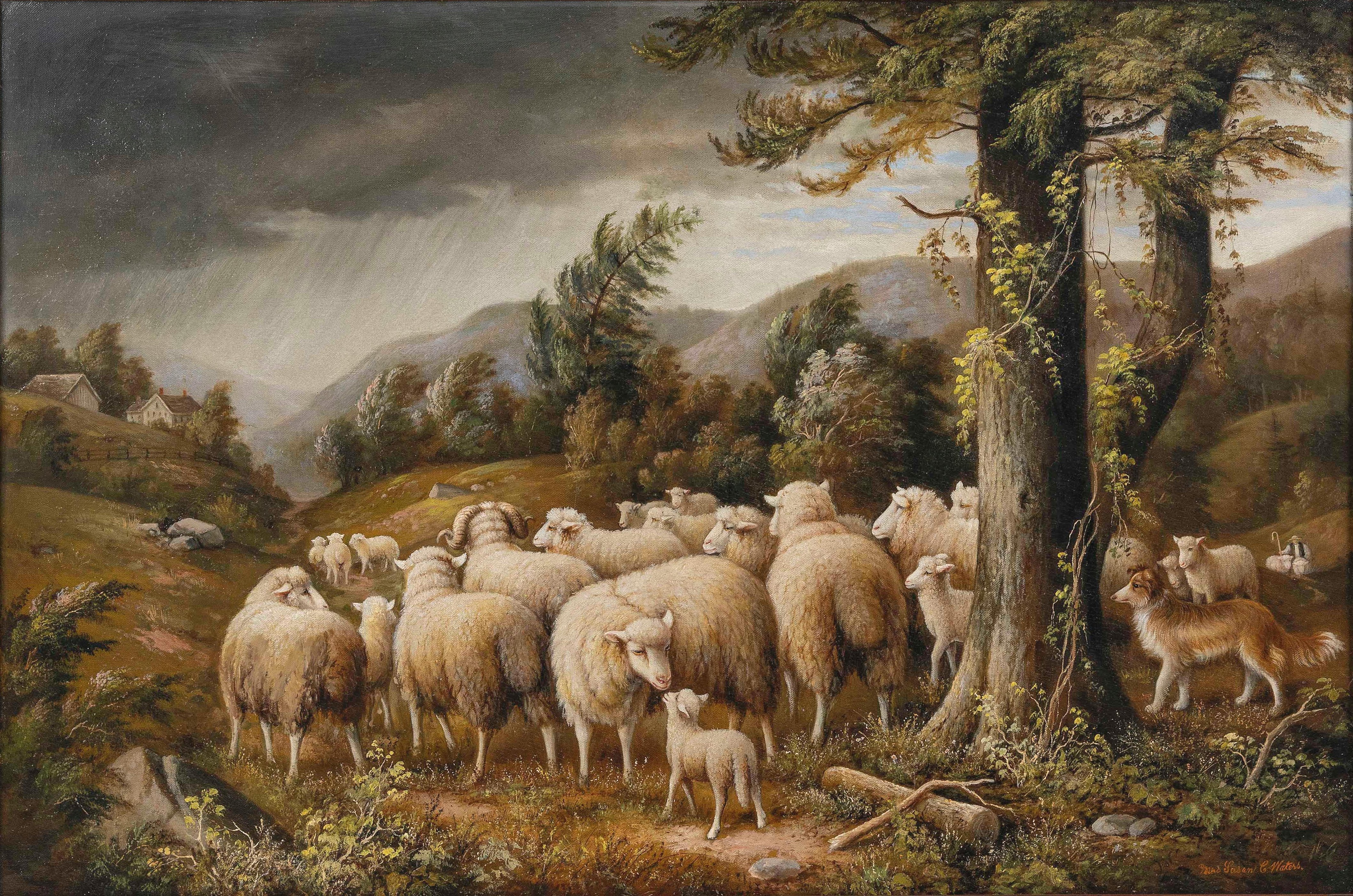

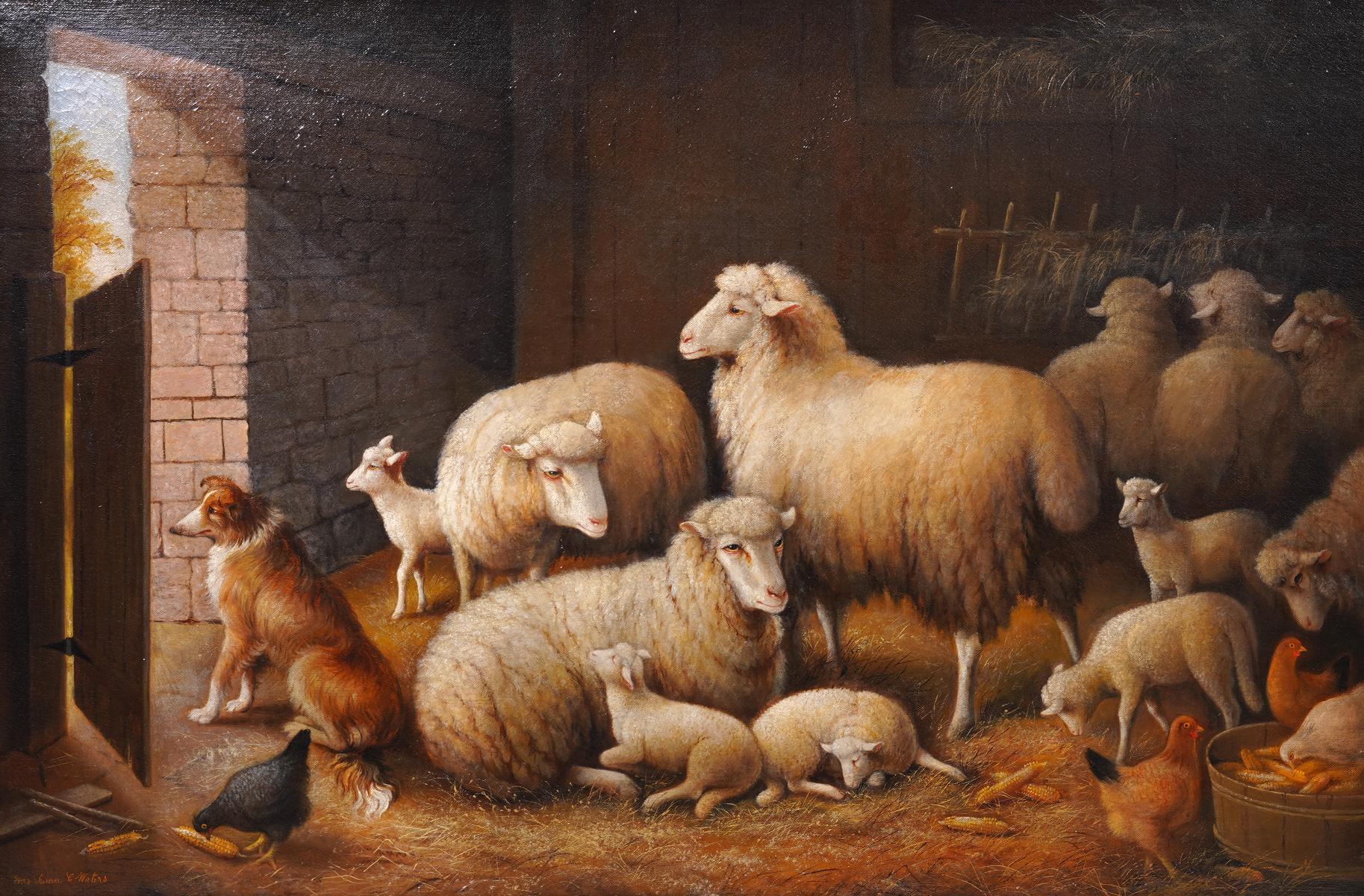
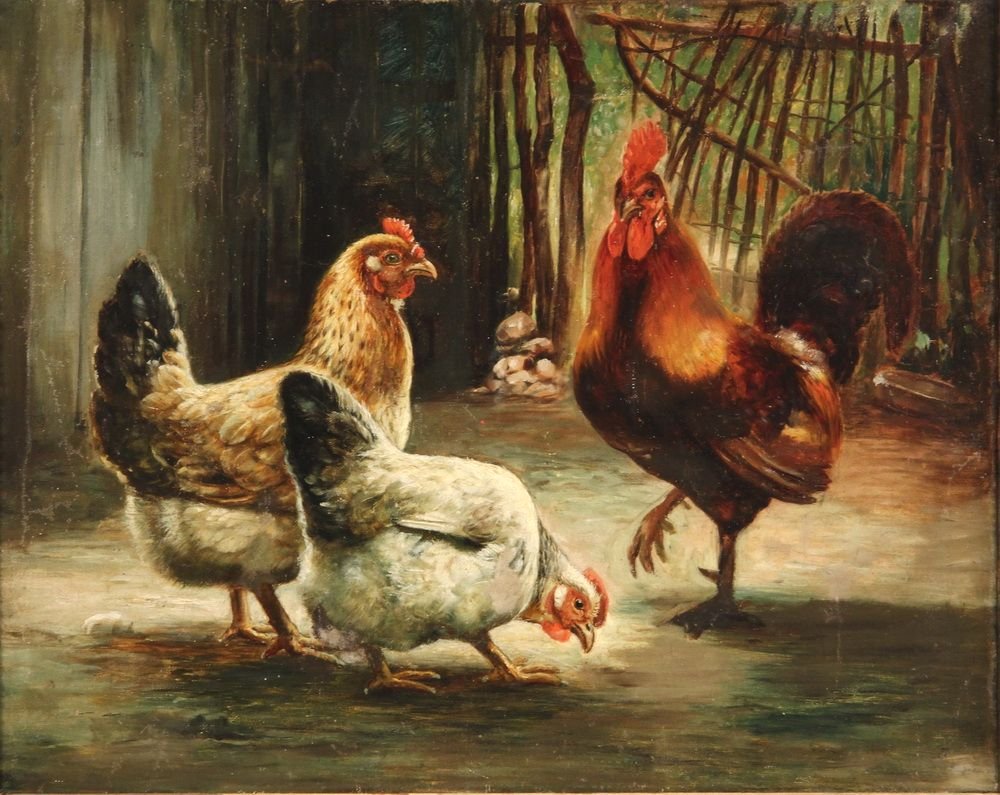

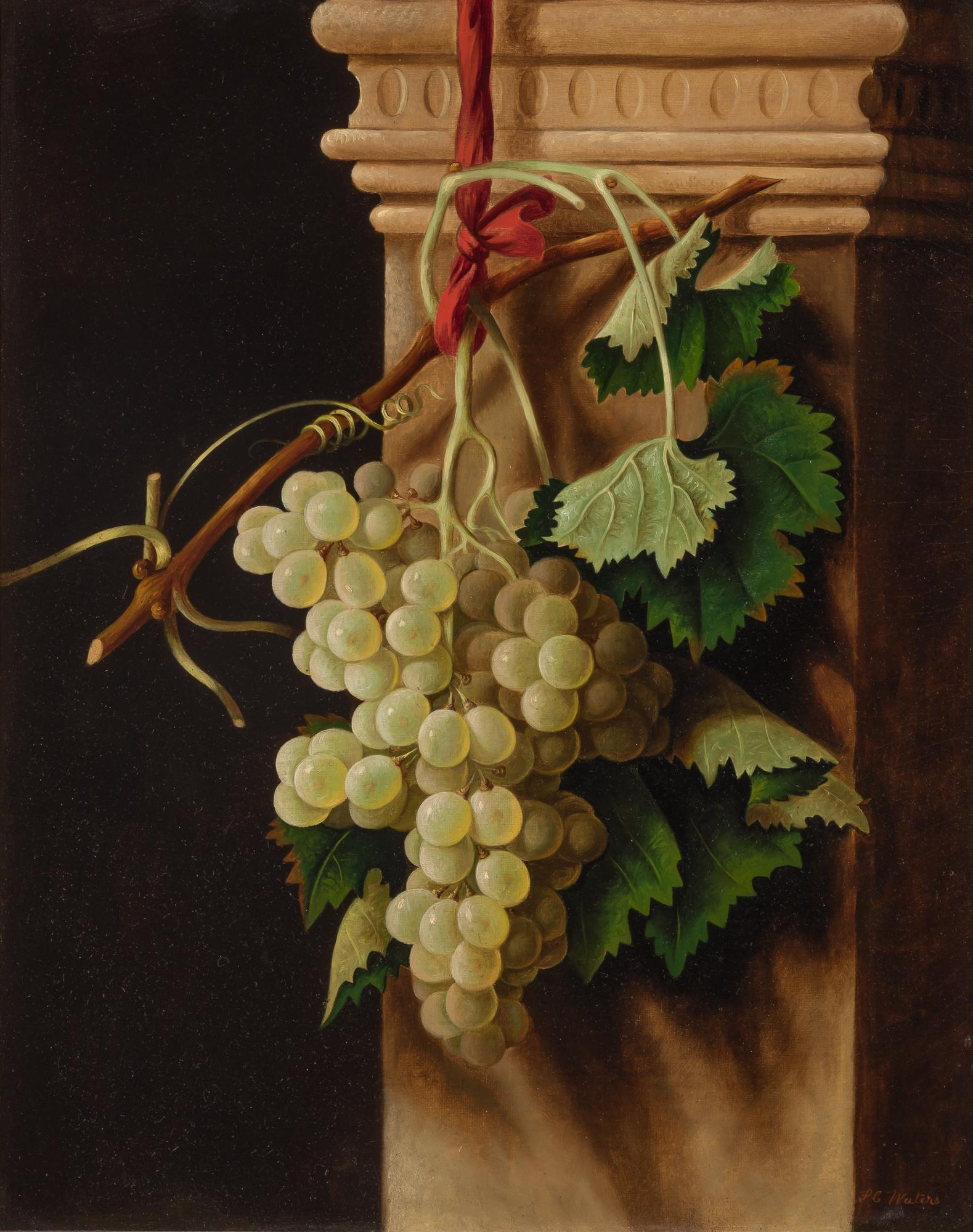
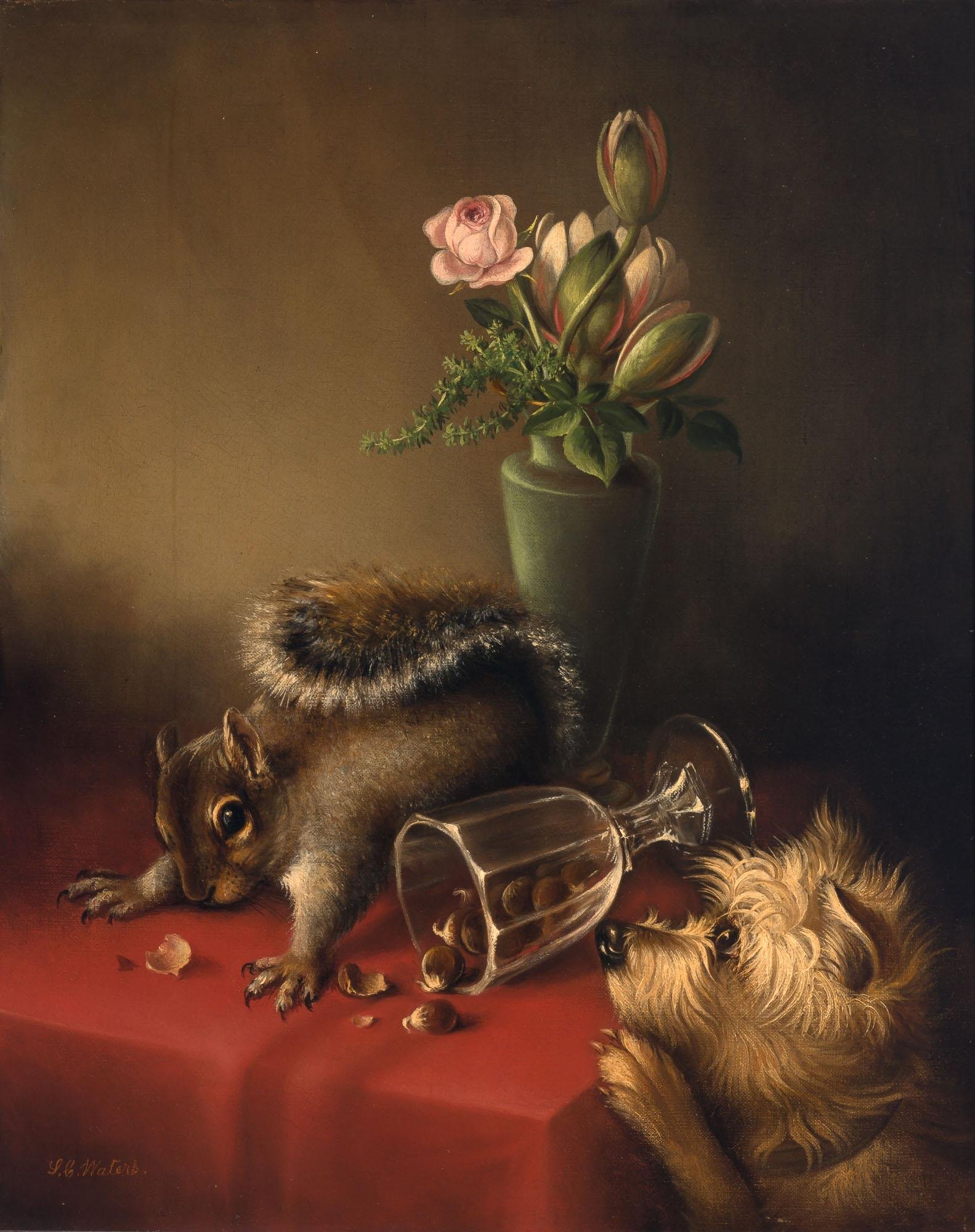

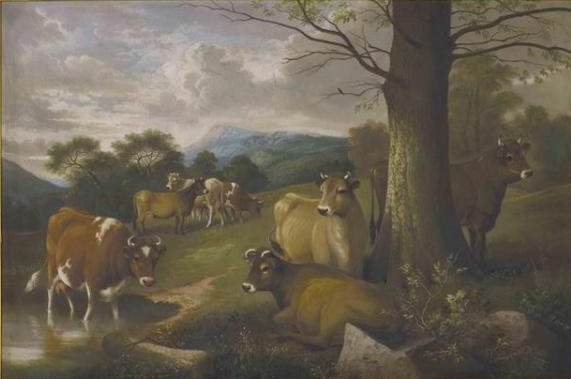

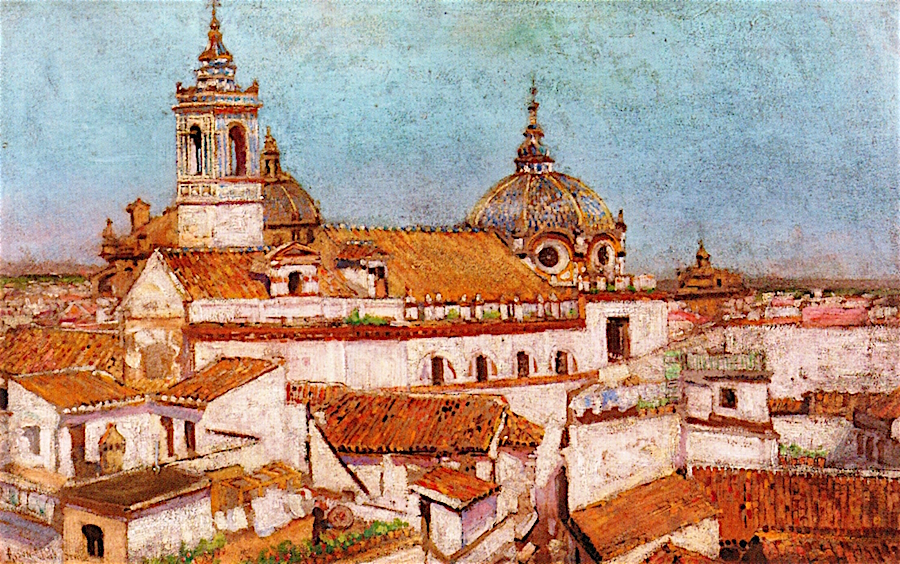

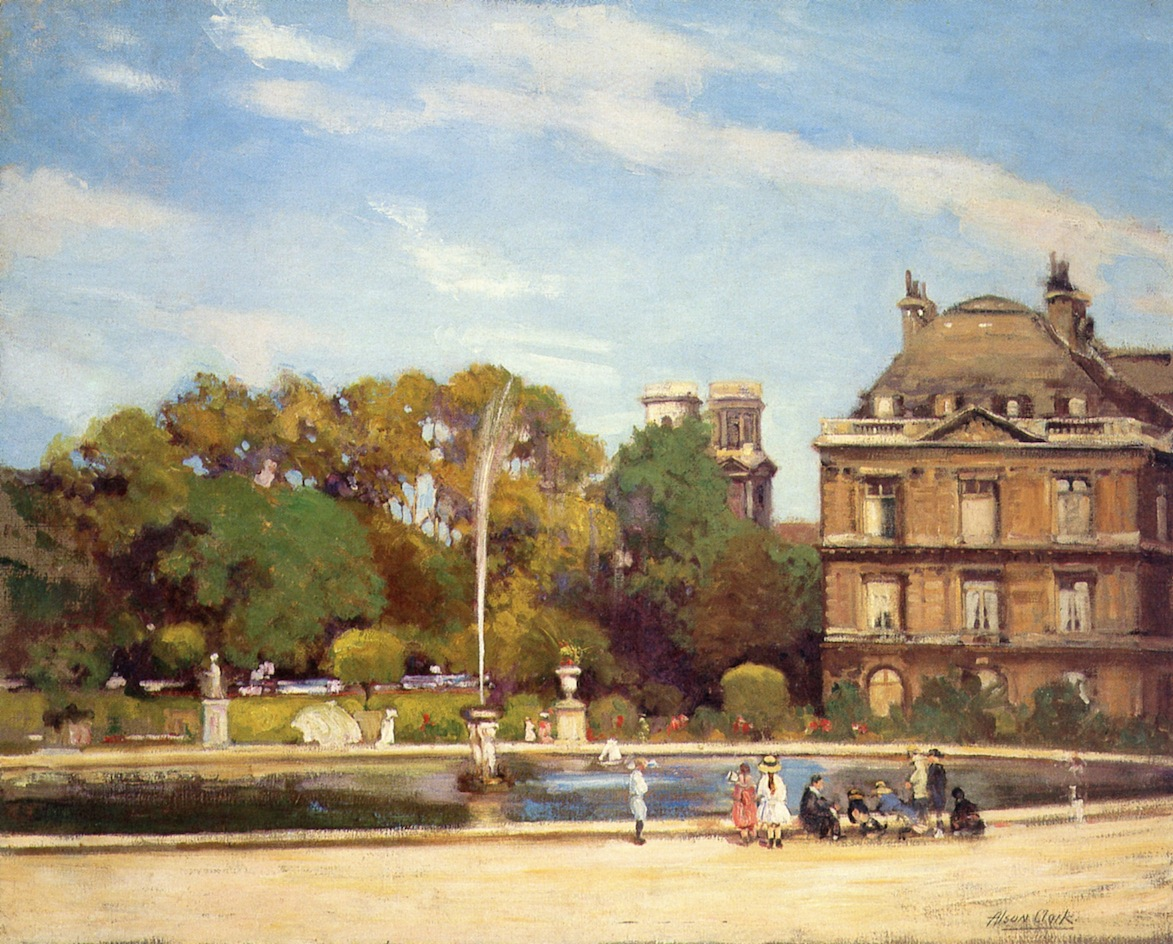


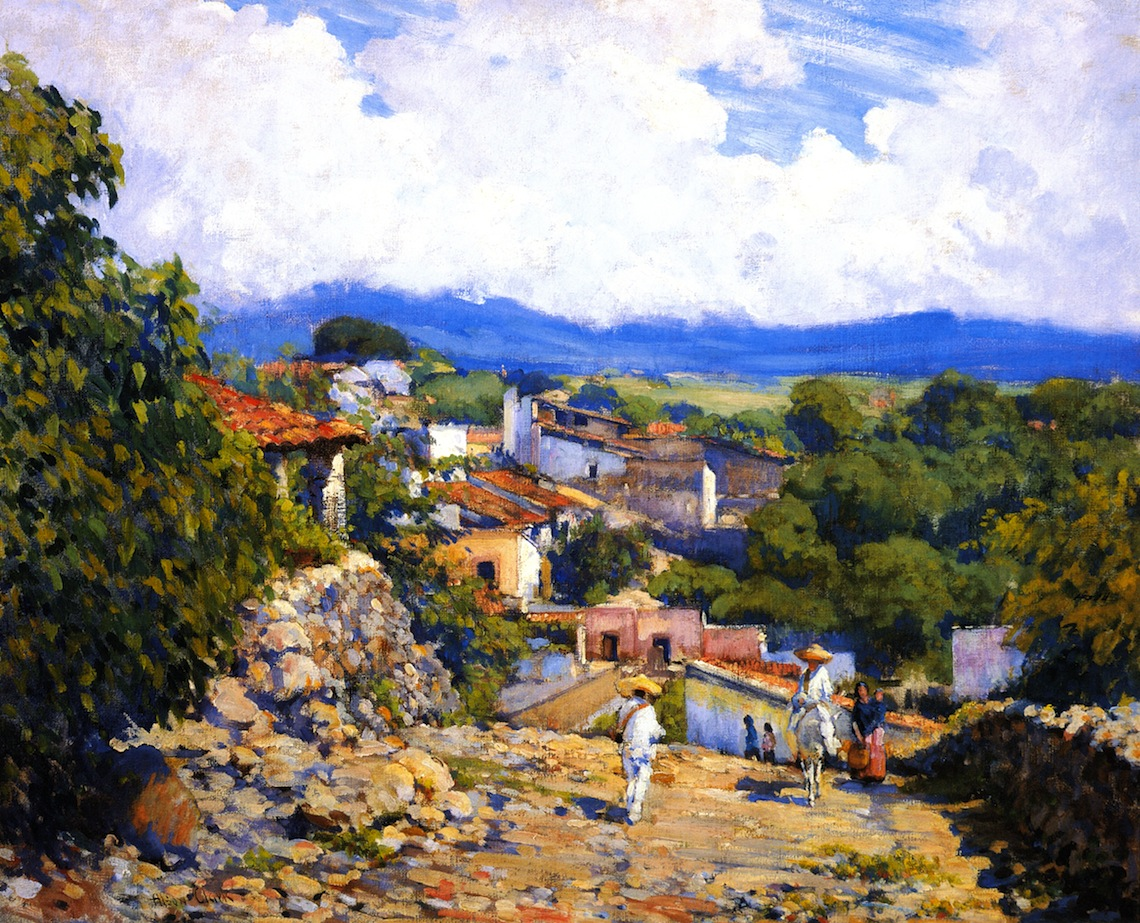




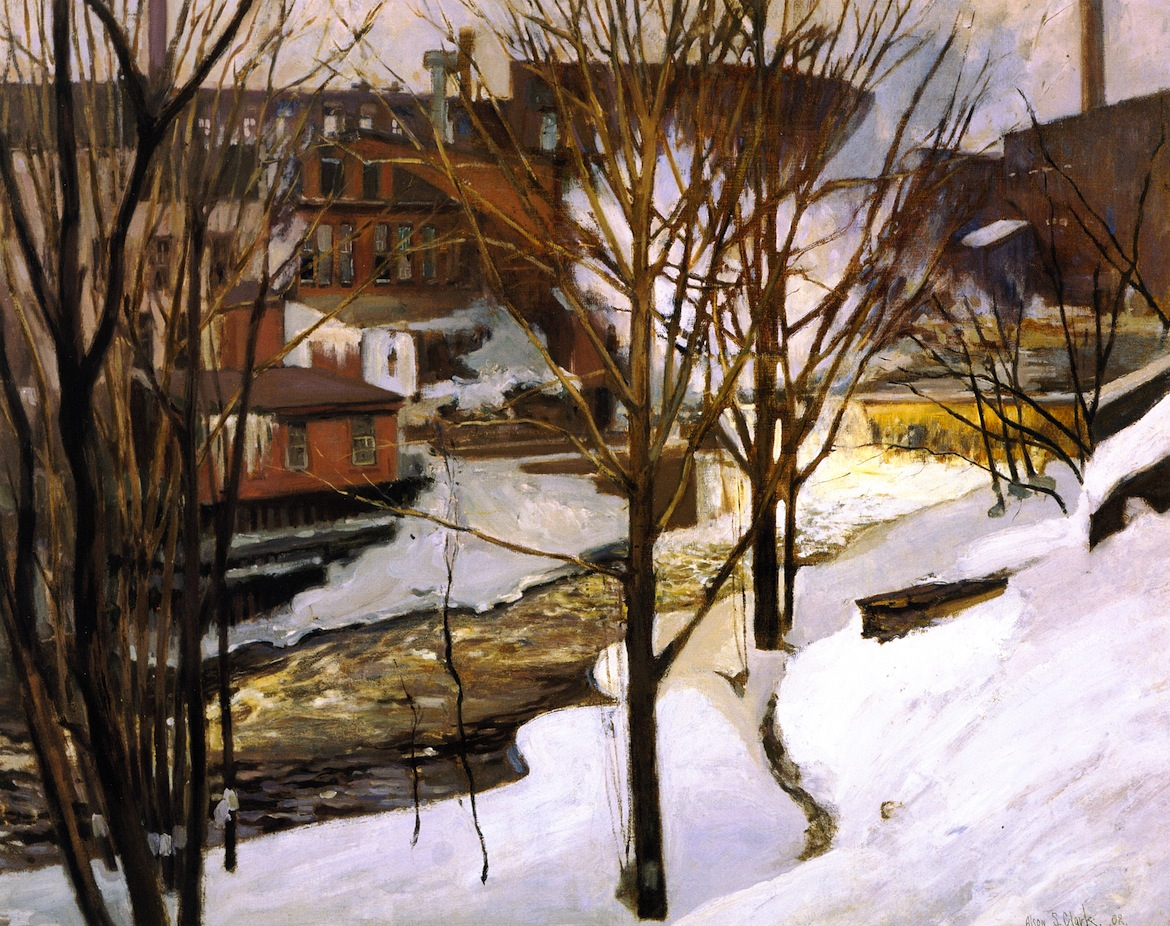


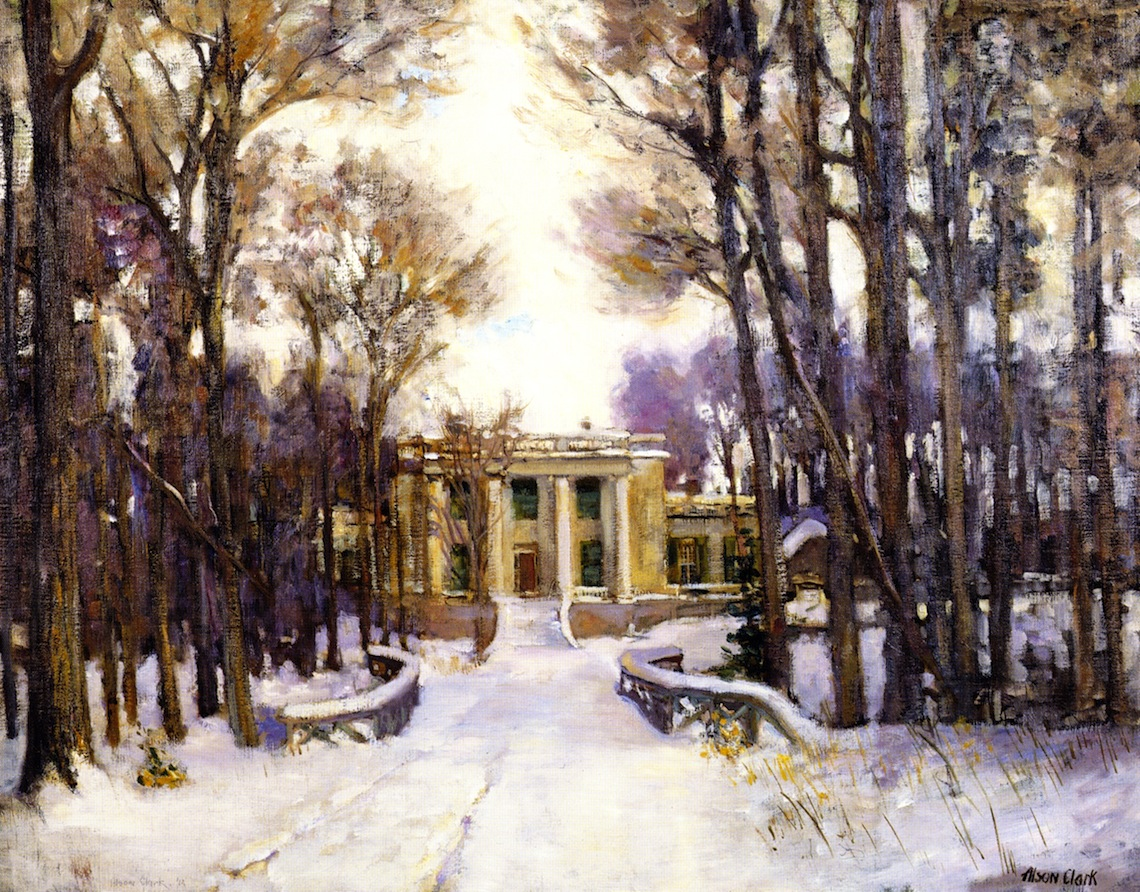


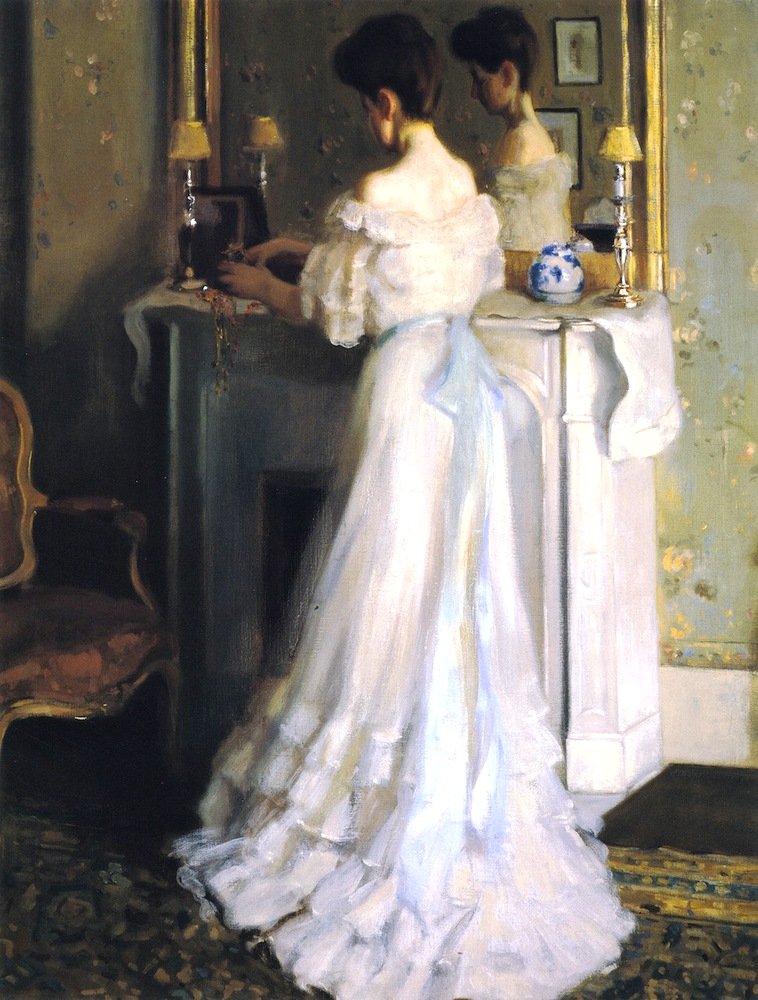
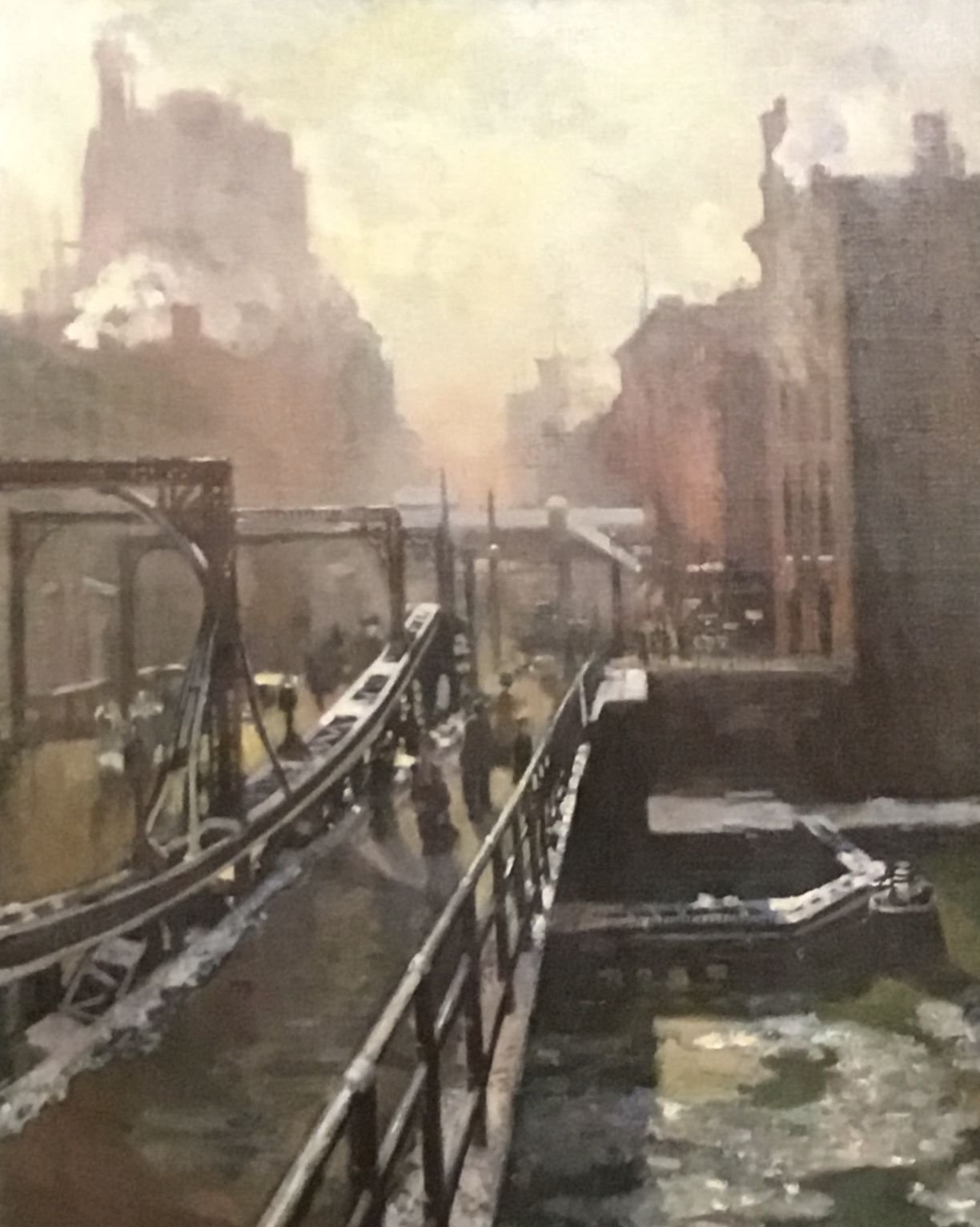

 my daily art display