Marianne North the botanical painter

Marianne North     1830-1890
Marianne North
1830-1890

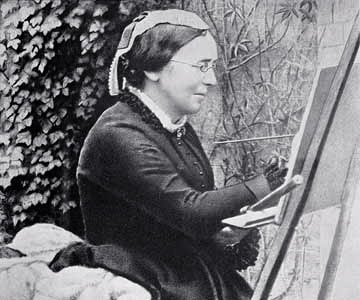
The artist I want to look at today could, I suppose, be labelled simply as a floral painter but in fact because of her desire for accuracy in floral detail she is often referred to as a botanical painter.  Even today, in the age of photography, botanical art still thrives and with so much destruction of habitats around the world, which nurtured rare flora, the necessity to record such species in detail is of paramount importance.  My featured artist today is the Victorian artist Marianne North.

The House at Hastings

Marianne North was born at Hastings Lodge in Hastings, England on October 24th 1830.  Her father Frederick North, an Old Harovian, was a wealthy landowner, local magistrate and, on a number of occasions, a Liberal Member of Parliament for Hastings.  His wife Janet (née Marjoribanks), was the daughter of Sir John Marjoribanks M.P., 1st Baronet of Lees in the County of Berwick.  She had been widowed when her first husband Robert Shuttleworth of Gawthorpe Hall in Lancashire died in a coaching accident 1818. She and her first husband had a daughter, Janet Shuttleworth.  Marianne North came from a long line of nobility and many of her ancestors’ portraits hung in the family dining room.  She was devoted to her father and in her autobiography, A Vision of Eden, she wrote of him:

“…My first recollections relate to my father.  He was from first to Last the one idol and friend of my life…”

Marianne had an elder brother, Charles and a younger sister, Catherine.  It is believed that she did not receive any formal education, except for a short period in a school in Norwich, which she hated.  Marianne was adamant that she taught herself all that was to be learnt, writing in her autobiography:

“…Walter Scott or Shakespeare gave me their versions of history, and Robinson Crusoe and some other old books my ideas of geography…”

Flowers of the Angel's Trumpet and humming birds, Brazil by Marianne North
Flowers of the Angel’s Trumpet and humming birds, Brazil by Marianne North

However the status and wealth of her father ensured that his children were well educated and often had the opportunity to mix with artists and musicians.  Marianne was said to have had a penchant for singing and as a child was given vocal lessons by Charlotte Helen Sainton-Dolby, the well-known English contralto, composer and singing teacher.  Unfortunately as a teenager her singing voice gave way and she began to concentrate on her other love – drawing and painting.  Life was good for Marianne.  As a young teenager, she had basked in a life of prosperity.  It was a privileged life.  Winters were spent at their Notting Hill house in London.  In the spring, they would move back to their large family home in Hastings.  During the summer months she and her family would either spend time on their farmhouse in Rougham, Norfolk, which had once been the laundry of Rougham Hall, once owned by her ancestors.  Alternatively, they would stay at Gawthorpe Hall in Lancashire which had been inherited by Marianne’s step-sister, Janet.  In the late summer of 1847 Marianne’s father took his family on a European tour which lasted almost three years.  Throughout this time Marianne studied flower painting, botany, and music.  On arrival back to London Marianne wanted to continue with her love of drawing and painting and it was arranged for her have some lessons in flower painting from a Dutch painter, Miss van Fowinkel and the English flower painter, Valentine Bartholemew, who had held the position of Flower Painter in Ordinary to the Queen from 1849 until his death thirty years later.

Marianne’s mother, Janet, who had increasingly become an invalid, died in January 1855.  The relationship between mother and daughter was nowhere as strong as the one between her and her father.  Marianne talked about her mother in her autobiography and commented:

“…On the 17th of January 1855 my mother died.  Her end had come gradually; for many weeks we felt it was coming.  She did not suffer, but enjoyed nothing, and her life was a dreary one.  She made me promise never to leave my father…”

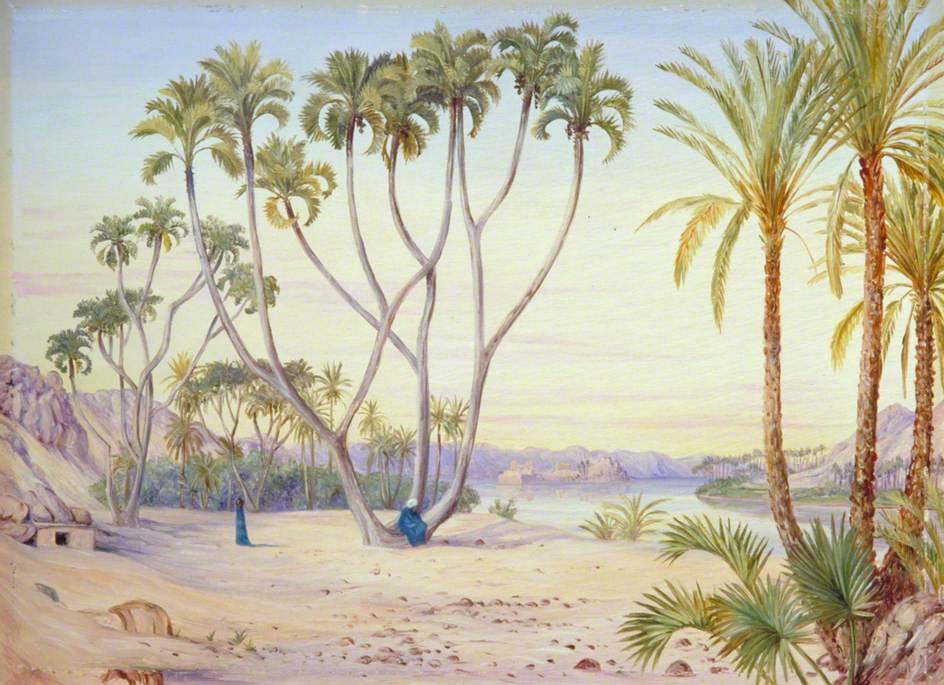
Doum and Date Palms on the Nile above Philae, Egypt by Marianne North (c. 1880)

With her mother gone, Marianne, aged twenty-four, took on the role as the lady of the house, looking after her father and the running of the household.   Her father, who had been the Liberal MP for Hastings on a number of occasions, would during the parliamentary recess take his two daughters off on long trips around Europe.     One of their favourite destinations was the valleys around the southern slopes of Mont Blanc and Monta Rosa.    By this time Marianne’s brother Charles had married and his father had given him the old house in Rougham. Marianne’s sister Catherine had married in 1864 and her father, Frederick North, narrowly lost his Hastings parliamentary seat by just nine votes at the General Election in July 1865 and this gave him the opportunity to set off on another voyage of discovery with Marianne travelling through Europe and the Mediterranean isles of Corfu and Cyprus before reaching Syria and Egypt.

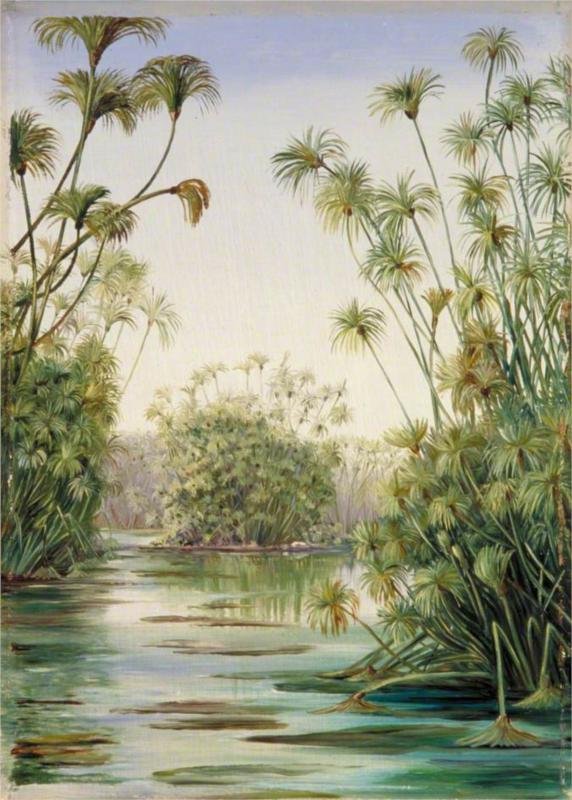
Papyrus Growing in the Ciane, Syracuse, Sicily by Marianne North (1870)

Three years after his defeat in the General Election Frederick North was re-elected as MP for Hastings in 1868.   Marianne’s father was sixty-eight years old and his health had begun to deteriorate but this did not stop him from taking a holiday to Southern Germany with Marianne.  However during their Bavarian sojourn, he became ill and Marianne was advised to take him back home to Hastings, which she did.  Frederick North died on October 29th.  Marianne was devastated for not only had she lost her father, she had lost her greatest friend.  She recalled his death in her autobiography, writing:

“…The last words in his mouth were, ‘Come and give me a kiss, Pop, I am only going to sleep’.  He never woke again and left me indeed alone…”

She recalled how much her father had meant to her and one can feel her deep sorrow.  She wrote:

“…For nearly forty years he had been my one friend and companion, and now I had to learn to live without him, and to fill up my life with other interests as I best might.  I wished to be alone, I could not bear to talk of him or anything else…”

The Aqueduct of Morro Velho, Brazil by Marianne North (1873)

Marianne North carried on with her two great loves, travelling and painting the flora she saw during those voyages of discovery.  In July 1871 she set off on a long journey which would last over two years.  She arrived in Canada, travelled on to the United States, and later the Caribbean island of Jamaica. From there, in 1872, she journeyed to Brazil where she spent much of her time drawing in a remote forest hut. She eventually returned to England in September 1873. Throughout her time on her travels she would be constantly sketching the flora of the area and the landscapes.

Roadside Scene under the Cocoanut Trees at Galle, Ceylon by Marianne North (c.1877)

In the spring of 1875 she was once again off on her travels.  This time she visited Tenerife, and later that year started her first round-the-world trip taking in the west coast of America, Japan, Borneo, Java, and Ceylon, and did not return home until March 1877.  Although she loved being in the house in Hastings and spent much time in the garden she had a wanderlust and in September 1878 this travel bug bit once again and she set off by ship to India, where she stayed for nearly six months,

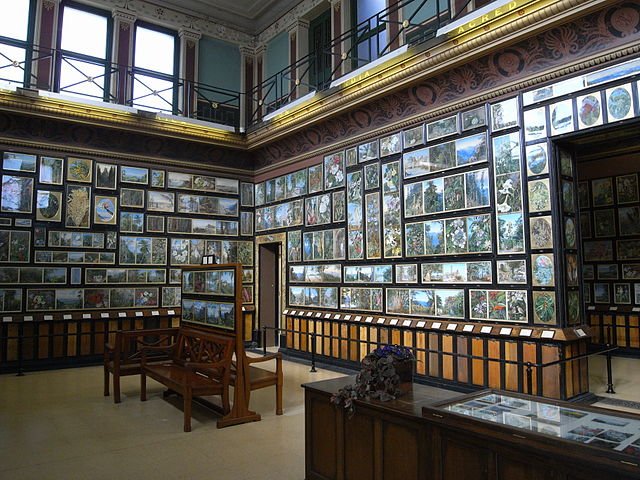
Marianne North Gallery, Kew Gardens, London

By this time Marianne had built up a large collection of drawings which she had completed during her extensive travels.  As they were so popular she held an exhibition of her work in a London gallery.  Having been overwhelmed by their popularity she came up with the idea that they should be housed in a permanent collection and with this in mind she approached Sir Joseph Hooker, the director of the Kew Botanical Gardens in London and offered to present them with her art works and to fund the building of a gallery to house them.  This was agreed and the architect James Fergusson submitted designs for the building and building work started in 1880.  Sir Joseph Hooker as well as being a director of Kew Gardens was a good friend of Charles Darwin and he was introduced to Marianne and it was on his suggestion that she should visit Australia, and New Zealand to discover and sketch the native flora and vegetation.  Marianne took up his suggestion and once again left her homeland and sailed to the antipodean.

Inside the Marianne North Gallery

On her return to England she set about arranging her paintings inside the newly completed gallery building at Kew and on July 9th 1882 it opened to the public as the Marianne North Gallery.

The Wild Tamarind of Jamaica with Scarlet Pod and Barbet by Marianne North (1872)

She resumed her travels visiting South Africa in 1883 and the following winter she was in the Seychelles.  All this travelling and having to endure constantly changing climatic conditions eventually affected her health and, during her later years, she was unable to live a pain-free existence.  She began to lose her hearing and in 1888 began to suffer from liver disease which finally claimed her life.  Marianne North died on August 30th 1890 aged 60.  Maybe it would be fitting to leave the last words to her sister Catherine who wrote about her sister:

“…The one strong and passionate feeling of her life had been her love for her father.  When he was taken away she threw her whole heart into painting and this gradually led her into those long toilsome journeys.  They no doubt shortened her life; but length of days had never been expected or desired by her, and I think she was glad, when her self-appointed task was done, to follow him whom she had faithfully loved…”

I have only been able to attach a few of Marianne’s numerous sketches and I am sure a visit to her gallery at Kew Gardens would be an amazing experience.  For those of you who might not be able to make that journey may I suggest you get hold of her autobiography, the book which I have been reading and from which I gleaned  most of the facts about this talented painter.   It was not an expensive book and well worth the money. It is called A Vision of Eden; The Life and Work of Marianne North.

Georgia O’Keefe. Part 4 – New Mexico and later life.

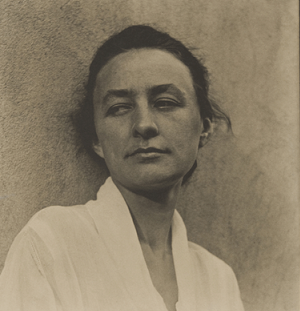
Georgia O'Keefe photograph by Alfred Stieglitz (1920)
Georgia O’Keefe photograph by Alfred Stieglitz (1920)

In this final look at the life and works of the American artist Georgia O’Keefe I want to examine her love affair with New Mexico and how it influenced her art.  She had been living in New York during the winter months and in the summertime she and her husband, Alfred Stieglitz, would move to his large family home at Lake George in upstate New York.  However by the end of the 1920’s Georgia had depicted all she could of the Lake George area and was looking for a new challenge, something fresh to influence her work.   Her reason for giving up her summer sojourns at Lake George could well be that she had tired of having to share the space with Stieglitz’s family and friends, who also passed time at Lake George during the summer months.  I already told you in the previous blog that in order to pacify Georgia, Stieglitz had agreed to her moving out of the large family home and live and work in a farm building on the estate, which she called her Shanty.  The desire to move away from Lake George and Stieglitz could have been Georgia’s desire to escape the suffocation of Stieglitz’s family and friends but another reason could have been that she was having health problems as in 1927 she had to undergo two breast operations.  Another contributory factor could be Georgia’s unhappiness at Stieglitz having become infatuated with a young woman Dorothy Norman, forty-four years his junior.

Rebecca Strand
Rebecca Strand

Fate took a hand in 1929.  Her friend and fellow artist, Rebecca Strand, the wife of photographer, Paul Strand, who was a close friend of Alfred Stieglitz, suggested that she and Georgia take a trip to Santa Fe, New Mexico.  Georgia liked the idea of escaping Lake George that summer and so in the May the two set off on the long train journey to the New Mexico town.  Not long after arriving in Santa Fe, the two women received an invitation from Mabel Dodge Luhan, a wealthy American writer and patron of the arts, to come and visit her and stay a while at her large twelve-acre property in Taos, New Mexico.  Mabel Luhan was a great hostess who liked to surround herself with artists and writers.  Taos was a small town, situated on a high plateau in the north-central region of New Mexico, whose inhabitants at the time were mainly native Indians.  It had become, since the beginning of the twentieth century, a favourite destination of artists because of its unspoiled landscape and clear light and in 1915 the Taos Society of Artists was formed.  The English writer and playwright, D.H. Lawrence, fell in love with the area waxed lyrically on the effect it had upon him:

“…The moment I saw the brilliant proud morning shine high up over the deserts of Santa Fe, something stood still in my soul, and I started to attend.   There was a certain magnificence in the high-up day, a certain eagle-like royalty……In the magnificence fierce morning of New Mexico one sprang awake, a new part of the soul woke up suddenly, and the old world gave way to a new…”

Georgia O’Keefe also could not have been happier with what she saw at Taos.  Mabel Dodge Luhan had even provided her two visitors with a studio within her large house. Georgia found Taos and the surrounding area simply inspirational and so different from the places she had previously visited.  She spent her time during her five-month stay wandering around the area visiting the small Indian villages on foot or sometimes on horseback constantly sketching and developing ideas for her work.  Travelling by foot or horse restricted the distance she could travel so Georgia learned how to drive and bought herself a Ford Model A car, and from then on, distance was no longer a problem.

The D.H. LawrenceTree by Georgia O'Keefe (1929)
The D.H. LawrenceTree by Georgia O’Keefe (1929)

One of the places Georgia visited was the Kiowa Ranch, which was owned by Mabel Dodge Luhan and who had gifted it to the English writer D.H.Lawrence and his wife Frieda in 1924.  It is situated near the town of San Cristobal, some twenty miles north west of Taos.  It has become known as the D.H. Lawrence Ranch.  One of the great natural phenomena on the ranch was the great pine tree, which stood in front of, and towered over the ranch house.  This beautiful specimen became known as the Lawrence Tree, as he used to sit writing at a table at its base and in Rachel Maurer’s The D.H. Lawrence Ranch she quotes the English writer’s description of the tree he loved so much:

“…The big pine tree in front of the house, standing still and unconcerned and alive…the overshadowing tree whose green top one never looks at…One goes out of the door and the tree-trunk is there, like a guardian angel. The tree-trunk, the long work table and the fence…”

Georgia O’Keefe wonderfully captured the tree in her 1929 painting, The D.H. Lawrence Pine Tree.  Of it, she said:

“… There was a long weathered carpenter’s bench under the tall tree in front of the little old house that Lawrence had lived in there. I  often lay on that bench looking up into the tree…past the trunk and up into the branches. It was particularly fine at night with the stars above the tree…”

At first glance, the depiction of the tree almost resembles an octopus with its long tentacles stretching out amidst its ejected black ink. Once you look closer you begin to realise that what you are looking at are the branches of a tree as they stretch upwards into the cloudless night sky.  Georgia achieved this depiction by painting it whilst lying down on a long carpenter’s bench at the base of the tree and looking up at the star-filled sky through its branches and the dark mass of pine needles.  It is a beautifully evocative work of art.  The painting now hangs at the Wadsworth Atheneum in Hartford, Connecticut.

Photoraph of San Francisco de Asis Mission Church, Taos, NM

Another place which fascinated O’Keefe during her 1929 visit to Taos was the San Francisco de Assisi Mission Church at Ranchos de Taos with its massive adobe buttresses and two front-facing bell towers,which was completed in 1816.  This building is a National Historic Landmark, dating back to Spanish Colonial times.

Photograph of the rear view of the church

It is a well-preserved adobe building in the heart of the community at the central plaza of the Ranchos de Taos Historic District and is re-mudded every spring.  O’Keefe was fascinated by the buildings of the indigenous people and completed a series of six paintings featuring the church from different angles, some in the clear light of day with cloudless blue skies, others with a cloud covering.

Ranchos Church, No. II, NM, by Georgia O'Keefe (1929)
Ranchos Church, No. II, NM, by Georgia O’Keefe (1929)

O’Keefe wanted her work to highlight the natural harmony of the building with the surrounding nature and she has cleverly captured just that by merging the rounded forms of the sand coloured building with the similarly coloured ground.

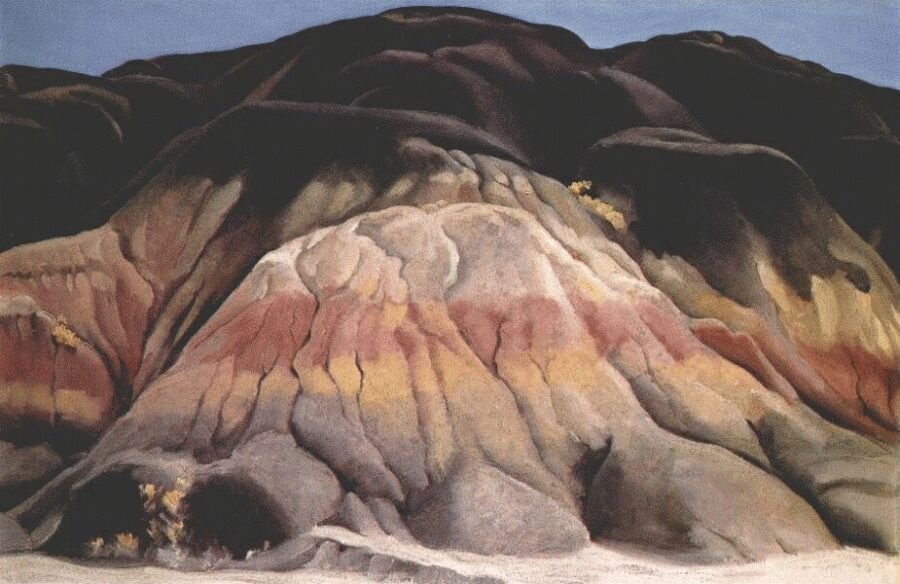
Grey Hills by Georgia O'Keefe (1942)
Grey Hills by Georgia O’Keefe (1942)

From 1929 to 1949, O’Keefe regularly returned to New Mexico each summer although she found the growing artist colony of Taos at odds with her desire for isolation and tranquility and so in 1931 she began to spend her summers in the Rio Grande Valley, which lay west of Taos and rented a small cottage in the village of Alcalde.  Georgia O’Keefe was fascinated by the barren landscape with its red sand hills and the flat-topped tablelands.  This was the New Mexico Badlands, which was a type of arid terrain where softer sedimentary rocks and clay-rich soils had been considerably scoured by both wind and water.What she saw before her may have been inhospitable and infertile but it was the colours which fascinated her and inspired her paintings.  Of this factor she once said:

“…All the earth colours of the painter’s palette are out there in the many miles of badlands.  The light Naples yellow through the ochres – orange and red and purple earth – even the soft earth greens…”

Small Purple Hills by Georgia O'Keefe (1934)
Small Purple Hills by Georgia O’Keefe (1934)

In 1934 she completed a painting entitled Small Purple Hills, which depicts the stark, desolate and yet colourful rocky formation.

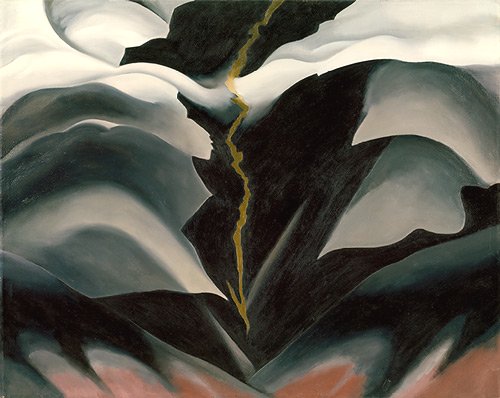
Another series of her paintings depicting the dark and forbidding landscape with its grey and black hills, was her series of paintings entitled The Black Place.   They were depictions of the Bisti De-Nazin Badlands, a desolate wilderness area in Navajo country, some 150 miles north west of her Ghost Ranch home.  Georgia loved the place and its isolation and made a number of camping trips between 1936 and 1949, sometimes alone, other times with her friend and assistant, the writer, Maria Chabot, who lived with her at Ghost Ranch, from 1940 to 1943.

Black Place II by Georgia O'Keefe (1944)
Black Place II by Georgia O’Keefe (1944)

The painting Black Hills II, completed in 1944, was one in the series of six, which she completed between 1944 and 1945, and Chabot, in her book, Maria Chabot—Georgia O’Keeffe: Correspondence 1941–1949, described the work:

“… the black hills—black and grey and silver with arroyos of white sand curving around them—pink and white strata running through them. They flow downward, one below the next. Incredible stillness!…”

In 1946, Ms. Chabot agreed to organize the rebuilding of an adobe hacienda on a hilltop in Abiquiu.  The town sits on a plateau at an elevation of 6,400 feet, overlooking the Chama River Valley in Rio Arriba County in New Mexico and forty-eight miles northwest of Santa Fe.  This was to become Georgia O’Keefe’s winter home.  It had originally been two buildings, one of which had been a home to pigs and this was converted into her studio, bedroom and bathroom, whilst the other building was transformed into her kitchen and living rooms and guest bedrooms.

Cow's Skull with Calico Roses by Georgia O'Keefe (1931)
Cow’s Skull with Calico Roses by Georgia O’Keefe (1931)

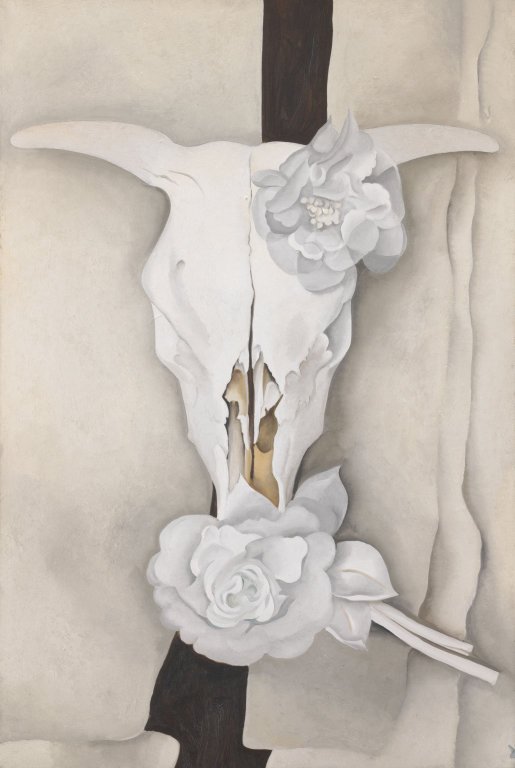
In the first part of this four-part blog on Georgia O’Keefe I asked you to name the most quintessential American artist and I had chosen her, not because of her floral paintings, but for her rugged landscapes but most of all for her works which depicted the skulls, horns and antlers of cattle and other animals which she collected up from the desert and which reminded me so much of the Wild West and American history.  There are two in particular that I like.  The first of these is Cow’s Skull with Calico Roses, which she completed in 1931 and can be found in the Art Institute of Chicago.  The previous year Georgia O’Keeffe had witnessed a devastating drought in the Southwest that caused the starvation and death of many animals.  All around the skulls and carcasses of the dead animals littered the landscape. Georgia was enthralled by what she witnessed and had a number of these bones shipped back to New York so she could depict them in her paintings. Of this collection of skulls and bones she commented:

“…To me they are as beautiful as anything I know…The bones seem to cut sharply to the center of something that is keenly alive on the desert even tho’ it is vast and empty and untouchable…”

 In Cow’s Skull with Calico Roses, O’Keeffe incorporated a somewhat ghoulish aspect by embelishing the skull of the cow with two artificial flowers, the type which often adorned graves in New Mexico.

Ram’s Head, White Hollyhock – Hills by Georgia O'Keefe (1935)
Ram’s Head, White Hollyhock – Hills by Georgia O’Keefe (1935)

The second painting I like is entitled Ram’s Head, White Hollyhock – Hills, which she completed in 1935 and is housed in the Brooklyn Museum of Art. In this painting we see an enlarged ram’s skull and antlers depicted floating over a mountainous landscape and a grey cloudy and threatening sky.  Once again, as was the case in a number of flower paintings some art historians alluded to the depiction of the lower part of the ram’s skull having a resemblance to the female genitalia!

In May 1946 the Metropolitan Museum of Modern Art in New York held a retrospective of her work.  Sadly a month later, Alfred Stieglitz died of a cerebral thrombosis and Georgia returned to New York, where she remained for almost three years in order to settle his estate.  In the spring of 1949 she returned to her beloved New Mexico.  She lived at her house in Abiquiu during the winter and spring and then moves back to her Ghost Ranch during the summer months.

Up until 1956 Georgia, who was then sixty-six years of age, had never travelled outside of America but that was all to change for long periods during the rest of her life she travelled around the world.  In 1962, O’Keeffe was elected to the American Academy of Arts and Letters and four years later she became a fellow of the American Academy of Arts and Science.  In the autumn of 1970, the Whitney Museum of American Art granted her a retrospective exhibition.  The exhibition was a great success and revived her popularity with the American public.

Georgia O'Keefe (1887 - 1986)
Georgia O’Keefe
(1887 – 1986)

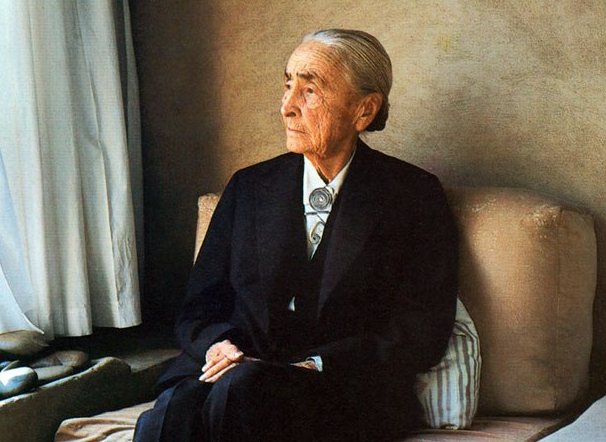
Her final foreign journey to Costa Rica came about in 1983 when she was ninety-six years of age !  In 1984, for health reasons, she had to leave her Abiquiu hacienda and she moved to Santa Fe.  Georgia O’Keefe died on March 6th 1986 at the age of 98.  In compliance with her last wishes her ashes were scattered over the land around her beloved Ghost Ranch.

This ends my four-part look at the life of Georgia O’Keefe.  There are many books about her life and works and one I can recommend is O’Keefe by Britta Benke.

In my next blog I will be looking at another female artist who was known for her flower and plant paintings.  However unlike Georgia O’Keefe this artist concentrated on detailed and botanically accurate depictions of her subjects and I suppose instead of labeling her as a floral painter she is better described as a botanical painter.


Georgia O’Keefe. Part 3 – Floral paintings and sexuality

White Trumpet Flower by Georgia O'Keefe (1932)
White Trumpet Flower by Georgia O’Keefe (1932)

In my third look at the life and works of the American artist, Georgia O’Keefe, I want to concentrate on the art she is probably most remembered for, her flower paintings. The depiction of flowers in works of art has always been a popular genre. In past blogs I looked at two famous female artists, Rachel Ruysch (My Daily Art Display October 3rd 2011) and Judith Leyster (My Daily Art Display December 3rd 2013), who were amongst the greatest floral painters of their time. Also from the Netherlands there were the father and son floral painters, Jan van Os and Georgius van Os. At some time, many of the great names in art completed floral works, such as Manet’s lilacs, Monet’s lilies, Hokusai’s cherry blossom, Dürer’s tuft of cowslips, van Gogh’s sunflowers, Fantin-Latour’s roses and so on. So what is so special about O’Keefe’s floral depictions? The answer is that Georgia O’Keefe’s paintings featured close ups of parts of a flower rather than the whole flower and they are stand-alone depictions and not part of a still-life work. She seemed to integrate photographic methodologies such as cropping and close-ups into her floral works. She believed by enlarging the flower the true beauty of the specimen would be hard to ignore. Of her technique she once said:

“…A flower is relatively small. Everyone has many associations with a flower… still, in a way, nobody really sees a flower, really, it is so small….So I said to myself, I’ll paint what I see, but I’ll paint it big and they will be surprised into taking time to look at it, even busy New Yorkers [will] take time to see what I see of flowers. When you [referring to critics and others who wrote about these paintings] took time to really notice my flower you hung all your associations with flowers on my flower as if I think and see what you think and see of the flower, and I don’t…”

So where did all her ideas for depicting flowers in such a manner start? It could be that she remembered her art teacher she had at her convent school in Madison, back in 1901, when she was fourteen years old. The teacher brought in a wild flower, a jack-in-the-pulpit plant, and asked her teenage students to study it from all angles and told them of the importance of this close scrutiny. O’Keefe was fascinated and drew it from all different angles and then concentrated on drawing just parts of the flower rather than the whole specimen.  This was the beginning of her journey into floral painting.

Jack in the Pulpit IV by Georgia O'Keefe (1930)
Jack in the Pulpit IV by Georgia O’Keefe (1930)

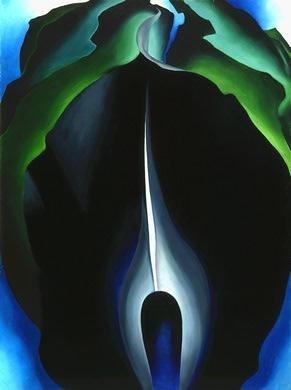
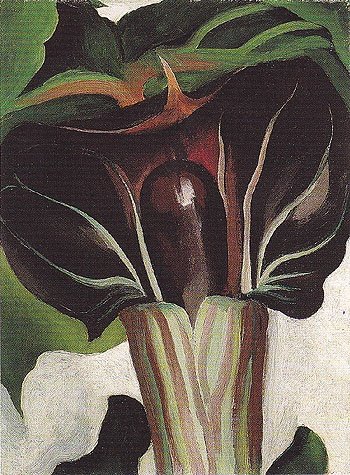
Almost thirty years after this classroom incident, in 1930, Georgia actually completed a series of six painting entitled Jack-in-the Pulpit, five of which can now be found in the National Gallery of Art in Washington. The first in the series began with the striped and hooded bloom and was a carefully detailed botanical depiction of the flower but as the series continued the depiction of the flower moved further away from a realistic depiction of it and became almost mass of colour.

Jack in the Pulpit No.1 by Georgia O'Keefe (1930)
Jack in the Pulpit No.1 by Georgia O’Keefe (1930)

As the series developed, the depictions became less detailed and more of an abstract rendering of the flower with the haloed pistil depicted against a sombre black, purple and gray background. The works shown above show the transition in the way she depicted the flower.   In fourth of the series one can see that it has less botanical detail than the first three works and is tending towards abstraction. O’Keefe explained the transition writing:

“…“I found I could say things with color and shapes that I couldn’t say in any other way – things that I had no words for…”

Red Canna  by Georgia O'Keefe (1924)
Red Canna by Georgia O’Keefe (1924)

It was around the early 1920’s during her summer visits to Lake George with Alfred Stieglitz that she started painting flowers in her own imitable style. She would concentrate on the head of the flower and “zoom in” on its centre and then enlarged it, so it completely filled the canvas, often cropping the depiction. She painted all types of flowers from the exotic black irises and red Canna lilies to the more mundane such as poppies, daffodils and roses.

The painting Red Canna Lilies, which she completed in 1924 and is now housed in the University of Arizona Museum of Art, has such great magnification it almost appears to be an abstract work of art with just a series of overlapping lines and a myriad of tones.

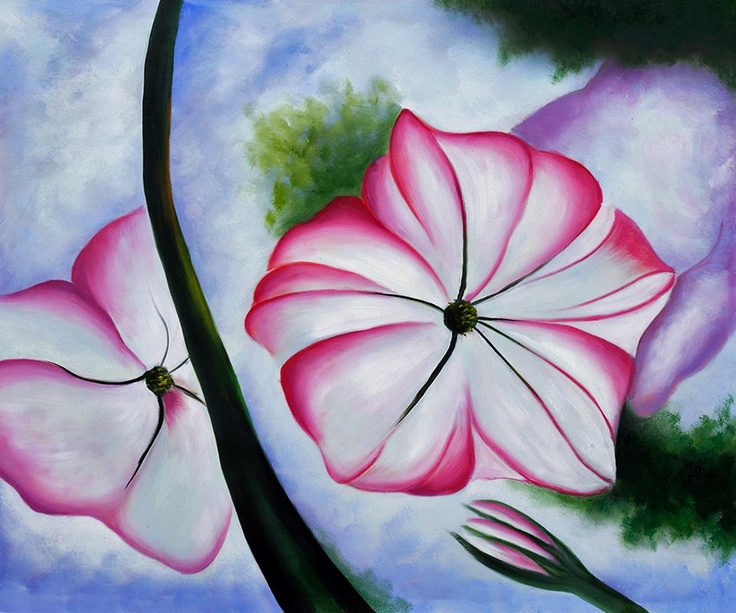
Petunia No.2 by Georgia O'Keefe (1925)
Petunia No.2 by Georgia O’Keefe (1925)

It was in 1924 that O’Keeffe began to make paintings in various sizes. The one thing they had in common was that all of them tended to focus on the centres of flowers. Petunia No. 2, which she completed that year, was one of her first large-scale flower paintings and she had it accepted into an exhibition organised by Alfred Stieglitz at the Anderson Galleries on Park Avenue, New York. The gallery was owned by the American publisher, Mitchell Kennerley and Stieglitz, who had not had his own exhibition space since 1917, borrowed rooms from Kennerley’s gallery and later in 1925 permanently rented a small room at the gallery which he called the Intimate Gallery. Stieglitz idea for the Intimate Gallery was that it should be a place for local artists to exhibit their work and by so doing create a sense of an artistic community, almost an artist’s cooperative. It was to be a less formal exhibiting place where patron and artists could mix and build up a good working and very personal relationship.

Stieglitz had gathered together a collection of works for his December 1925 exhibition, both artistic and photographic. He had called upon his friends to join him in supplying works for the exhibition. Including himself, there were seven contributors in all. They were John Marin, Marsden Hartley, and Arthur Dove, the modernist painters, the watercolourist Charles Demuth as well as his fellow photographer Paul Strand, and of course, not forgetting his wife, Georgia O’Keefe. The exhibition, at the time, was one of the largest exhibitions of American art ever organised and was entitled Alfred Stieglitz Presents Seven Americans: 159 Paintings, Photographs, and Things, Recent and Never Before Publicly Shown by Arthur G. Dove, Marsden Hartley, John Marin, Charles Demuth, Paul Strand, Georgia O’Keeffe and Alfred Stieglitz. The exhibition lasted for three weeks and had numerous visitors but few of the painting sold.

Two Calla Lily on Pink by Georgia O'Keefe (1928)
Two Calla Lily on Pink by Georgia O’Keefe (1928)

In the mid 1800’s an herbaceous perennial plant, native to southern Africa was introduced into America. It was the Calla Lily. It had such an exotic looking flower that it soon became a favourite subject of floral painters and photographers. Over time Georgia O’Keefe completed numerous renditions of the flower, so much so, the lily became her insignia in the eyes of the public, and the Mexican artist Miguel Covarrubias took up that theme in his caricature of O’Keeffe as “Our Lady of the Lily“, which appeared in the New Yorker in 1929. Two Calla Lilies on Pink was one of her painting depicting this exotic flower. She completed it in 1928 and is an amazing piece of floral art full of subtle merging of colours and tones. The flower petals lie against a pink background which enhances the beauty of the work. Look how O’Keefe has managed to merge a green colour in the white of the petals and by doing so cleverly highlighting them. Again these white and green tinged petals of the two flowers seem to be pierced by the emergence of two bright yellow pistils as they rise upwards. It was this kind of depiction with its sexual connotation that was to lead to controversy. How could floral paintings cause such controversy?

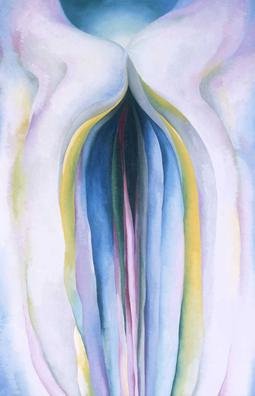
Grey Lines with Black, Blue and Yellow by Georgia O'Keefe (1923)
Grey Lines with Black, Blue and Yellow by Georgia O’Keefe (1923)

Another example of her work which some people believed lent credence to the sexual nuance of her paintings was one entitled Grey Lines with Black, Blue and Yellow which she completed around 1923 and is part of the Museum of Fine Arts in Houston collection. It is looked upon as one of her best works. Is it a floral painting? Is it a close up of the inner part of a flower? It is this ambiguity which is fascinating and has led some critics to argue that it is an abstract work and that the undulating folds are based upon female genitalia. Georgia O’Keefe was adamant that none of her floral works of art had anything to do with male or female genitalia and grew weary of those people who maintained the sexual link even after she had denied such a connotation. In Ernest Watson’s biography of Georgia, Georgia O’Keefe, American Artist, he tells how, in 1943, she dismisses the sexual association with her floral paintings even if it mean people paid closer attention to the works of art. She is quoted as saying:

“…Well – I made you take time to look at what I saw and when you took time to really notice my flowers you hung all your own associations with flowers on my flower and you write about my flower as if I think and see what you think and see of the flower – and I don’t…”

Some people will not accept what she has said and have ignored her denial of sexuality in her work. Randall Griffin, a Professor in the Department of Art History at Southern Methodist University in Dallas who specialises in American Art History, in his recent biography (Phaidon) on O’Keefe explained in a chapter entitled The Question of Gender:

“…It now seems abundantly clear that, in spite of her vehement denials, O’Keeffe meant some of her paintings (not just the flowers) to look vaginal…..Works such as Abstraction Seaweed and Water – Maine and Flower Abstraction overtly allude to female genitalia…”

So I guess I will leave you to form your own opinion as to the sexuality of her floral works.
In my final look at Georgia O’Keefe’s life and her paintings I will explore her life in the hot desert lands of New Mexico and how it influenced her art.

Georgia O’Keefe. Part 2 – Alfred Stieglitz, Lake George and New York Skyscrapers

Georgia O'Keefe (c. 1920)
Georgia O’Keefe (c. 1920)

Georgia O’Keefe’s annoyance at the high-handed attitude of Alfred Stieglitz in exhibiting ten of her charcoal abstract works in his gallery alongside other artists’ paintings, without her permission, in May 1916 soon cooled off and maybe Stieglitz decided to make amends by offering Georgia a solo exhibition at his gallery. She agreed and in April 1917 she had her first solo show. It was the final exhibition at Stieglitz’s 291 gallery as shortly afterwards it closed.

Evening Star by Georgia O'Keefe (1917)
Evening Star by Georgia O’Keefe (1917)

Georgia had initially been completing works in black and white insisting that colour would detract from the work itself. However for this solo exhibition she submitted oil paintings and watercolours which she had been working on whilst living in Texas. As far as the use of colour was concerned she admitted:

“…I found I could say things with colour and shapes that I couldn’t say in any other ways – things I had no words for…”

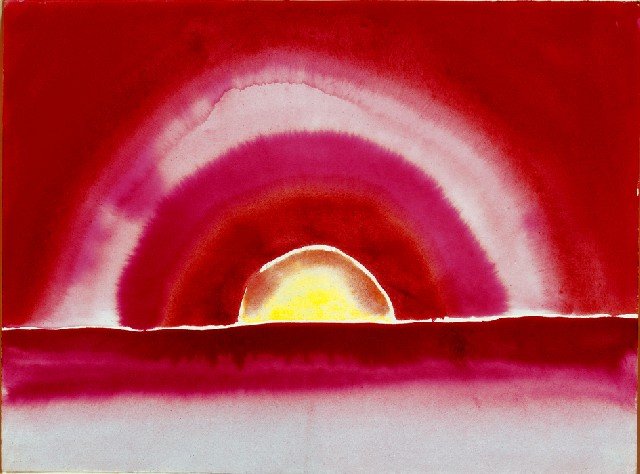
Georgia had been living in Canyon, Texas, a small town south of Amarillo and in the autumn of 1916 she had taken up a post as head of the art department at West Texas State Normal College (now West Texas A&M University) and remained there until February 1918. The rugged area around Canyon such as the Palo Duro Canyon fascinated O’Keefe and she visited there many times gaining inspiration for her paintings. She would spend hours witnessing the bright and shimmering sunrises and flaming sunsets and it could have been this explosion of colour that changed her mind about restricting herself to black and white drawings

Sunrise by Georgia O'Keefe (1916)
Sunrise by Georgia O’Keefe (1916)

Georgia O’Keefe and Alfred Stieglitz although living thousands of miles apart corresponded regularly and once again fate played a part in the course of her life. In this case fate came in the form of an influenza epidemic which, in 1918, was sweeping across America and which killed around 750,000 people. Georgia was struck down by it in the February and her recovery was slow and prolonged and she eventually had to give up her teaching post. Alfred Stieglitz was very concerned about Georgia’s health and sent his friend and fellow photographer Paul Strand to Texas to try and persuade Georgia to leave Texas and come to New York where he would support her health-wise and financially. She acquiesced and although still very ill arrived in New York in June 1918 and went to live in a studio which belonged to Stieglitz’s niece. Stieglitz slowly nursed Georgia back to health and during this time the couple fell in love.

Lake George, Autumn by Georgia O'Keefe (1927)
Lake George, Autumn by Georgia O’Keefe (1927)

When she was well enough she went to live with Stieglitz at his Lake George home in upstate New York. It was more than just a house and home; it was a former farm covering thirty-six-acres. It was situated along the western shore, in the southern section of the thirty-mile-long glacial lake, which was popularly known as “the Queen of American lakes”. It was here that she convalesced amongst the peace and tranquillity of the flower-filled meadows and forest areas around his family home. It was here that she would return from the bustling New York city every summer for the next sixteen years. She enjoyed to take long walks through the wooded hillsides, often took on strenuous hikes up Prospect Mountain so as to gain sight of spectacular views of the lake below, a lake on which she also enjoyed to row upon. Georgia had first been introduced to the Lake George area back in 1907, when she was a student at the Art Students League and had received a scholarship to paint in the region. O’Keefe and Stieglitz would spend the winters in their apartment in New York and from April to September or October would live in the large house on the banks of Lake George.

Georgia painting at Lake George (1918)

However there were many people descending on the property during the summer months. Relatives and friends of Stieglitz and his family were always coming and going throughout the summer months so much so the peace and tranquil life O’Keefe had hankered for was lost. Georgia desperately wanted a calm and quiet time alone to concentrate on her work. The problem was resolved when she persuaded Stieglitz to allow her to use a small wooden farm building which was part of the estate for her own private studio. It was on its own, in a field on a hill above the house. She had found solitude at last where she could shut out everybody and concentrate on her work. Her pleasure at being at Lake George was clear in a letter she wrote in 1923, to her friend, the American novelist and short story writer, Sherwood Anderson:

“…I wish you could see the place here – there is something so perfect about the mountains and the lake and the trees – Sometimes I want to tear it all to pieces – it seems so perfect – but it is really lovely – And when the household is in good running order – and I feel free to work it is very nice…”

My Shanty, Lake George by Georgia O'Keefe (1922)
My Shanty, Lake George by Georgia O’Keefe (1922)

Georgia produced a number of works featuring her new summer surroundings and even one, in 1922, of this new” bolt hole”. It was entitled My Shanty, Lake George. It is a simple yet atmospheric depiction of the isolated old farm building which became her summer studio, away from the distractions of the big lake house. In a way it is a reflection of O’Keefe’s desire for solitude. There is a noticeable contrast between the man-made object and nature. The flat geometric depiction of the building is in complete contrast to the curves of the trees and the hills. There is also a great contrast in colour. The sombre dark colours of the building itself is in contrast with the softer pinks and oranges used for the wildflowers and the greens of the grass in the foreground. The darkness of the shanty is however vividly lightened by the intense white window frame and mullion and they serve as the paintings focal point. In the background we can see blue-black sweep of the hills, above which are dark storm clouds.

Georgia O’Keefe painted many pictures featuring Lake George. As far as the composition is concerned they were often very similar. The top third of the painting was dedicated to the mountains. The middle ground of the work was a depiction of the lake and in the foreground were the trees.

Lake George (formerly Reflection Seascape) by Georgia O'Keefe (1922)
Lake George (formerly Reflection Seascape) by Georgia O’Keefe (1922)

However in the case of her 1922 painting, Lake George (formerly Reflection Seascape) the well tried composition changed and the shoreline of the lake disappears and the work almost becomes an abstract one. The colours and tonal quality of this work are so beautiful that if trees had been added to the foreground they would have been a distraction and detracted from the overall depiction.

Emmeline Obermeyer (c.1910)

On face value, this falling in love between Georgia, the artist and Alfred, the photographer and living together in New York and the family home at Lake George seems an idyllic situation but there was one problem, one major problem – Stieglitz was already married! In November 1893, after a great deal of pressure from his family who wanted to see him settle down with a wife, Alfred Stieglitz had married Emmeline Obermeyer. He had known her for a number of years and she was the sister of his close friend and business associate Joe Obermeyer. It was not a marriage based on love. They were an oddly matched couple and in his book, The Love Lives of the Artists: Five Stories of Creative Intimacy, Daniel Bullen writes about this mismatch:

“…Stieglitz was twenty-nine – and she had always been sheltered by her family’s considerable brewery wealth, so they were incompatible from the beginning. Stieglitz had already lived with a prostitute, and Emmy was not his choice of wife. She had not met him on artistic grounds, and she refused to pose nude for him: by various accounts, they did not consummate their marriage for between one and four years…”

As far as Emmy was concerned, it was a case of unrequited love. She loved him. He didn’t love her. Emmy had inherited money from her late father who had run a brewing empire. Could it be that Emmy’s wealth smoothed over Stieglitz unhappiness with the marriage, especially as around this time, his own father had lost a large amount of money on the Stock Market? The marriage was doomed to fail despite the couple having a daughter Kitty in 1898. They had nothing in common. They had no shared interests. Stieglitz soon tired of his wife and they spent long periods of time apart as he carried on with his photographic career, travelling all over Europe. Richard Whelan in his 1995 biography of the photographer, Alfred Stieglitz: A Biography, wrote that Stieglitz resented her bitterly for not becoming his twin.

Katherine, daughter of Alfred and Emmeline Stieglitz

Despite his unhappiness at being trapped in a loveless marriage and his open relationship with O’Keefe, Stieglitz could not extricate himself from his marriage to Emmy until September 1924, six years after he had originally filed for divorce. Alfred and Georgia married in late December 1924. Georgia had been somewhat reluctant to enter into marriage as she saw no point in formalising their relationship as she and Stieglitz had lived together for six years and survived the scandal attached to his extra-marital liaison. The marriage took place at the home of their friend and fellow artist, John Marin.

There was little or no pomp and ceremony to the occasion. Nobody was invited to a reception or help celebrate the marriage. In fact there was no honeymoon following the event. In her 1989 biography of the artist, Georgia O’Keefe, A Life, Roxanna Robinson, quotes O’Keefe as saying that she and Stieglitz married in order to help soothe the troubles of Stieglitz’s daughter Katherine, who at that time was being treated in a sanatorium for depression and hallucinations.

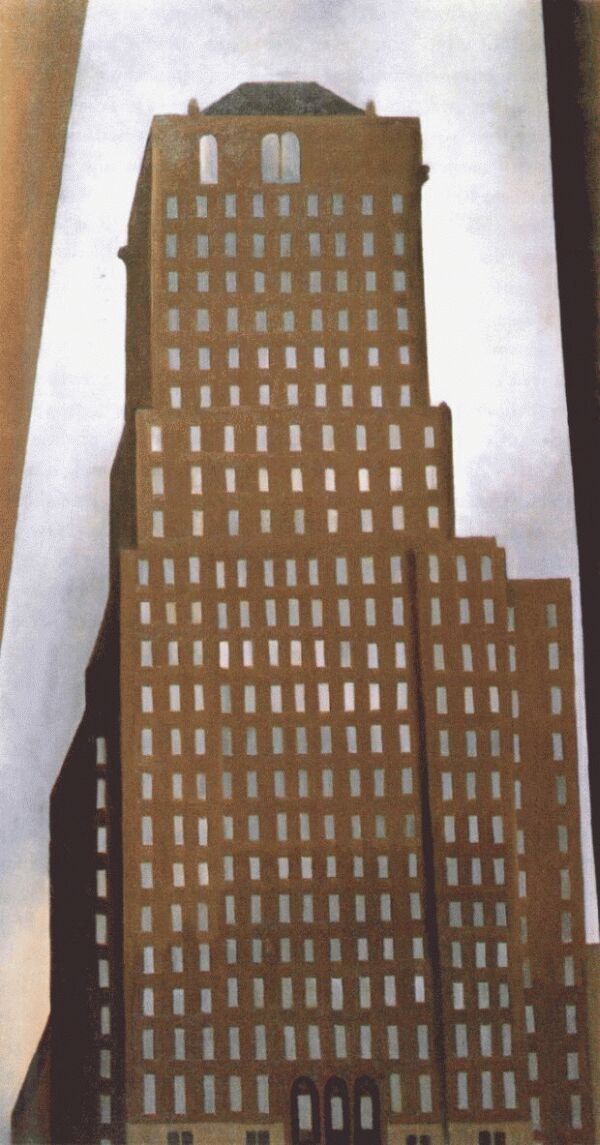
Shelton Hotel by Georgia O'Keefe (1926)
Shelton Hotel by Georgia O’Keefe (1926)

The following year, 1925, Georgia and Stieglitz moved their New York home to the Shelton Hotel in New York, taking an apartment suite on the 28th floor of the new building and it was here and the summer home at Lake George that the couple would spend the next 12 years. One can just imagine how their dual aspect apartment in the hotel, with vistas to the north and south, afforded them spectacular panoramic views of the vibrant city. Georgia began to paint pictures of the city skyscrapers, including the Shelton Hotel itself, the Radiator Building and the Ritz Tower all from a low-level viewpoint.

Radiator Building - Night, New York by Georgia O'Keefe (1927)
Radiator Building – Night, New York by Georgia O’Keefe (1927)

Her depiction of the Radiator Building in 1927, entitled Radiator Building – Night, New York is a haunting study of the magnificent building on West 40th Street, in midtown Manhattan which was completed three years earlier in 1924. The painting depicts a night scene of the building in which the illuminated windows shimmer against the dark of the building and the darkness of the night. To the right of the building we see steam and smoke slowly rising upwards from some ventilation system whilst in the left hand background searchlights scan the night sky and a red neon sign glows in the left background.

This type of painting by Georgia O’Keefe led her to be connected with an informal group of American artists who were inspired by the size and scale of modern American structures, such as bridges and skyscrapers. They were known as Precisionists or Immaculates and it was during the 1920’s and into the early 1930’s that Precisionism blossomed. Sometimes it was referred to as Cubist-Realism.

My next blog, the third part of Georgia O’Keefe’s life story, will focus on her large flower paintings and will explore her relationship with Stieglitz and her decision to live apart from him and head for the desert state of New Mexico which was to influence her later art.

Georgia O’Keefe. Part 1 – The early years and the “Specials”

Georgia Totto O'Keefe photograph by Alfred Stieglitz (1918)
Georgia Totto O’Keefe
photograph by Alfred Stieglitz (1918)

If I was to ask you who was the most quintessential American artist, I wonder whom you would choose. Would you go for one of the nineteenth century Hudson River School artists such as Frederic Church, Asher Durand and Thomas Cole or would you select one of the pioneering and tenacious American female painters who fought hard to gain a foothold in the male dominated world of art, such as Mary Cassatt and Elizabeth Jane Gardner. Perhaps you would decide on one of the great twentieth century painters such as Andrew Wyeth or Edward Hopper or the folk artist Grandma Moses. Then of course, let us not forget, there is John Singer Sargent and James McNeill Whistler and naturally there are the modern greats of American art such as Rofko, Warhol, Pollock and de Kooning. I suppose it is impossible to single out one from the list of artists who paint in so many different genres. However, for me, the painter who symbolises America is Georgia O’Keefe and in my next blogs I will look at her life and feature some of her best-loved paintings.

The O'Keefe farmhouse. outside Sun Prairie, near Madison, Wisconsin
The O’Keefe farmhouse.
outside Sun Prairie, near Madison, Wisconsin

Georgia Totto O’Keeffe was born on November 15, 1887, the second of seven children. She was the eldest of five girls and had a younger and elder brother. Her father, who was of Irish descent, was Francis Calyxtus O’Keefe, who ran a successful farmstead on the outskirts of the village of Sun Prairie, Wisconsin, along with his wife Ida Ten O’Keefe (née Totto), whose maternal grandfather was a Hungarian count. The farm was spread over 1700 acres of land on which they raised cattle, horses and grew crops. When Georgia was five years of age she attended the small one-roomed South Prairie Town Hall school. She progressed well and she and her siblings were constantly being pushed to learn by their mother, who would read stories to her children and play the piano for them. In fact Georgia went on to play both piano and violin.

At the age of eleven Georgia developed an interest in drawing and painting and so her mother arranged private art tuition for her and two of her sisters, Ida and Anita. Georgia revelled in what she learnt, She then attended the Sacred Heart Academy in nearby Madison as a boarder and in a conversation with a friend and fellow 8th grade pupil she talked about her future dreams:

“…I am going to be an artist!…..I don’t really know where I got my artist idea…I only know that by that time it was definitely settled in my mind…”

The O'Keefe's house in Williamsburg
The O’Keefe’s house in Williamsburg

In 1902 her family moved to Williamsburg, Virginia but Georgia, who was fifteen years old, stayed behind for a short time with her aunt. Soon after she re-joined her parents in Peacock Hill, a suburb of Williamsburg and enrolled as a boarder at the private Chatham Episcopal Institute for Girls. She continued to love art and her artistic talent was recognised by all and her fellow students elected her art editor of the school yearbook. In her yearbook was written the telling verse:

“…O is for O’Keefe.

an artist divine.

Her paintings

are perfect and

drawings are fine…”

In 1905, Georgia, now seventeen years of age, graduated from high school and enrolled at the Art Institute of Chicago. It was here that she honed her skills as an artist and studied composition, anatomy and life drawing. Her anatomical drawing class tutor was John Vanderpoel, the Dutch-American artist and teacher, who was best known as an instructor of figure drawing and whose 1907 book, The Human Figure, became a standard art school resource. Georgia O’Keefe excelled at the Academy and all was going well until the summer of the following year when she went home and contracted typhoid and was so ill that she was unable to rejoin the Academy. She had to remain at home to recuperate for more than twelve months.

Dead Rabbit with Copper Pot by Georgia O'Keefe (1908)
Dead Rabbit with Copper Pot by Georgia O’Keefe (1908)

When she finally got her health back in 1907, she decided to resume her art career but instead of returning to Chicago she enrolled at the Arts Student League of New York which was one of the top art colleges of the time. One of her tutors was William Merritt Chase, who was one of the foremost art teachers of his generation. At this institution aspiring young artists were trained in the European tradition, namely, learning to paint portraits and still-lifes. Once again her artistic talent shone through and the following year she won the League’s William Merritt Chase still-life prize for her oil painting Untitled (Dead Rabbit with Copper Pot). Her prize was a scholarship to attend the League’s outdoor summer school at Lake George, in upstate New York, east of the Adirondack Mountains.

In 1908 things changed for Georgia. The Arts Student League of New York wanted to keep to the European tradition of art tuition, copying in the style of the Old Masters. It was a conservative formula and one will never know whether it was this rigid mimetic way of teaching art that disillusioned Georgia, but at the end of her year’s tuition in the autumn of 1908, she decided that she no longer wanted to become a professional artist. Another reason for giving up on her art studies was that her father’s business had collapsed and the family was in need of an extra income and so Georgia gave up her studies and embarked on a career as a commercial artist in Chicago where she spent her time designing adverts and company logos. She did not paint another picture for four years.

Georgia O'Keeffe, aged 30
Georgia O’Keeffe, aged 30

This artistic drought ended in 1912 when she attended a summer course at the University of Virginia in Charlottesville where one of the classes was run by Alon Bement of the Teachers College, Columbia University, in New York City. It was Bement who introduced O’Keefe to the radical thinking of his colleague, Arthur Wesley Dow, the head of the Faculty of Fine Arts at New York’s Columbia University Teachers College. Dow believed in the Modernist approach to art and postulated that rather than just copying nature, art should be created by the various elements of composition such as line, mass and colour. He put his thoughts into words in his 1899 book entitled Composition: A Series of Exercises in Art Structure for the Use of Students and Teachers. He summed his thoughts up in the introduction to the second edition of the work which came out in 1912. He wrote:

“…Composition … expresses the idea upon which the method here presented is founded – the “putting together” of lines, masses and colors to make a harmony. … Composition, building up of harmony, is the fundamental process in all the fine arts. … A natural method is of exercises in progressive order, first building up very simple harmonies … Such a method of study includes all kinds of drawing, design and painting. It offers a means of training for the creative artist, the teacher or one who studies art for the sake of culture…”

Georgia O’Keefe who had tired of the mimetic teachings of the academy was enthralled by Dow’s ideas and her love for art was rekindled. In 1912, she moved to Amarillo, Texas, where she had accepted a position as supervisor of art in the city’s public schools. She took up a post in the August of 1912 as an art teacher at City Public School of Amarillo but she returned to the University of Virginia’s to attend the summer course the following year; this time as an assistant to Bement and in the autumn of 1914 she went back to New York and enrolled for two semesters at Columbia University Teachers’ College where she studied under Dow himself. It was around this time that she discovered the work of Arthur Garfield Dove. Dove, an American modernist painter, who has often been labelled as the first American abstract artist. He placed great emphasis on the artist’s subjective experience of his surroundings and on the intrinsic emotional power of colour and line rather than just copying from nature. To Georgia this was not just a revelation but it was the kind of art, which she believed in and it was to influence her art for the rest of her life. For her, it was inspirational, and she happily set off on a new artistic journey. She was excited at the new ideas which flooded her brain and described how she felt:

“…I said to myself ‘I have things in my head that are not like what anyone has taught me – shapes and ideas so near to me – so natural to my way of thinking that it hasn’t occurred to me to put them down.’ I decided to start anew – to strip away what I had been taught – to accept as true my own thinking……. I was alone and singularly free, working into my own, unknown – no one to satisfy but myself…”

You can sense her joy. You can sense her feeling of casting off the shackles of rigid academic teaching. You can sense the elation in the way she saw her future.

Drawing XIII by Georgia O’Keeffe, 1915

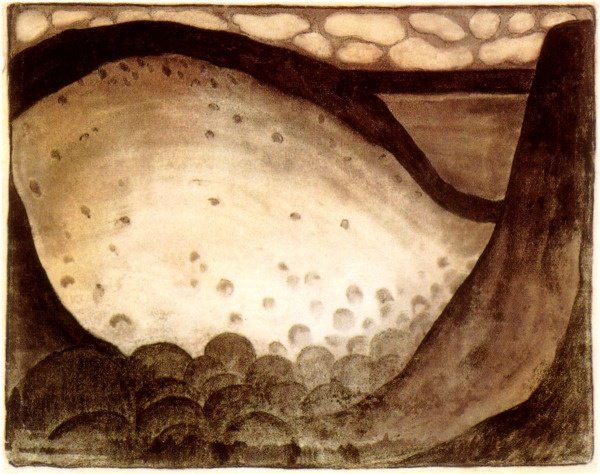
In September 1915, she accepted a teaching post at Columbia College, South Carolina and it is around this time she begins to experiment with her art, producing a series of amazing cutting-edge charcoal abstract drawings. One such drawing was entitled Drawing XIII which was completed in 1915. In this work we see that the image is sub-divided into three parallel sections. The left hand section has wavy vertical lines which reminds one of a meandering river although some say it is more like a vertical flickering flame reaching upwards. The central part of the work consists of four rounded bulbs which if we continue with our thoughts of nature could then be construed as round top hills. An alternative to this premise is that they are four densely foliated trees. The right hand section comprises of a series of jagged lines which could be a representation of mountains and so in a way this drawing may be a bird’s eye view of a range of mountains and a flowing river with trees separating the two.

Early No. 2 by Georgia O'Keefe (1915)
Early No. 2 by Georgia O’Keefe (1915)

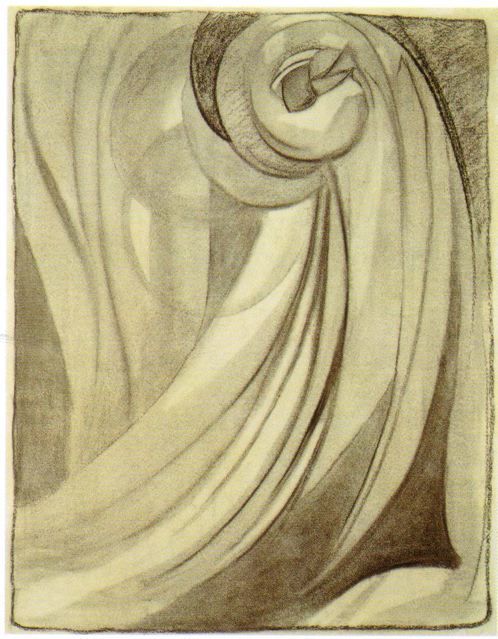
Another of her charcoal works was entitled Early No. 2 which she also completed in 1915. O’Keefe has followed the advice of Arthur Dow and focused on the lines, shapes and tonal values which she, like Dow, believed were the fundamentals of the picture. Her reasoning behind these early drawings being in black and white and devoid of colour was her belief that colour would distract viewers from what she had hoped to create. It was all about curves and geometrical shapes and the clever balance between areas of the work which were light and shaded.

No. 12 Special by Georgia O'Keefe (1916)
No. 12 Special by Georgia O’Keefe (1916)

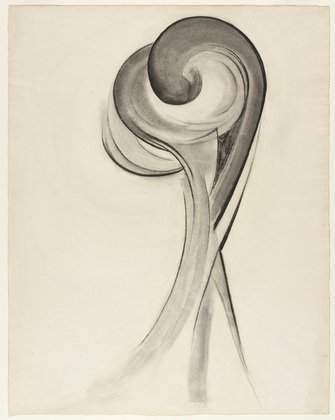
Georgia O’Keefe was proud of her first foray into this new world of art and she would often refer to these early drawings as “Specials” indicating how much they meant to her. She mailed some of these drawings to her friend, Anita Pollitzer, who had been a Columbia classmate of hers. Pollitzer, who was now a photographer in May 1916, took them to show the internationally reknowned photographer and art impresario, Alfred Stieglitz, who had his gallery, 291, at 291 Fifth Avenue, New York. Stieglitz was impressed with what he saw and described them as:

“…the purest, finest sincerest things that have entered ‘291’ in a long while…”

Special No. 15 by Georgia O'Keefe (1916)
Special No. 15 by Georgia O’Keefe (1916)

Unbeknown to O’Keefe, Stieglitz exhibited her drawings at his gallery alongside works by other artists. When O’Keefe found out about this, she was not best pleased but later forgave him. This initial collaboration between artist and gallery owner was to be a turning point in Georgia O’Keefe’s artistic life.

…………….to be continued.


Kristian Zahrtman and Leonora Christina

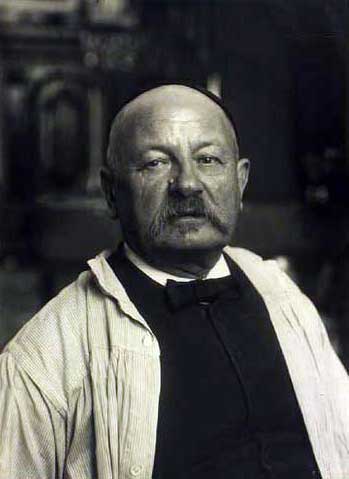
Kristian Zahrtmann
Kristian Zahrtmann

My blog today is a mixture of art and history. It is about a late nineteenth century Danish painter Kristian Zahrtmann and his fascination with Leonora Christina, the daughter of King Christian IV of Denmark and Kirsten Munk. Zahrtmann was a painter, who produced landscapes, street scenes as well as many fine portraits but he was especially known for his history painting and especially paintings which featured legendary, and often tragic, females in Danish history.

Self portrait (1914)

Peder Henrik Kristian Zahrtmann was born in March 1843 in Rønne, a Baltic Sea town on the west coast of the Danish island of Bornholm. His mother was Laura Pouline Jesperson and his father, Carl Vilhelm Zahrtmann, was a doctor on the island. He was the eldest of nine children, having two sisters and six brothers. On completion of his normal schooling, at the age of seventeen, he left the Rønne Realskole and enrolled at the Sorø Academy on the Danish island of Zealand and it was here that he began to study painting under the tutorship of the Danish landscape painter and drawing master, Hans Hader. He graduated from the Academy in 1862 and a year later received his doctorate.

Following his graduation he went to live in Copenhagen and for the six months of the winter of 1863 he enrolled at the Technical Institute in Copenhagen where he studied drawing and design under the Danish artist, Christian Hetsch and architect Ferdinand Vilhelm Jensen. At the same time, he received private instruction from the genre painter Wenzel Ulrich. A year later he enrolled on a four-year course at the Royal Danish Academy of Art in Copenhagen. He graduated from the Academy in 1868 when he was twenty-five years of age and it was in this year that he first exhibited some of his first work at the Charlottenborg, the palace in which was situated the Danish Academy of Fine Arts.

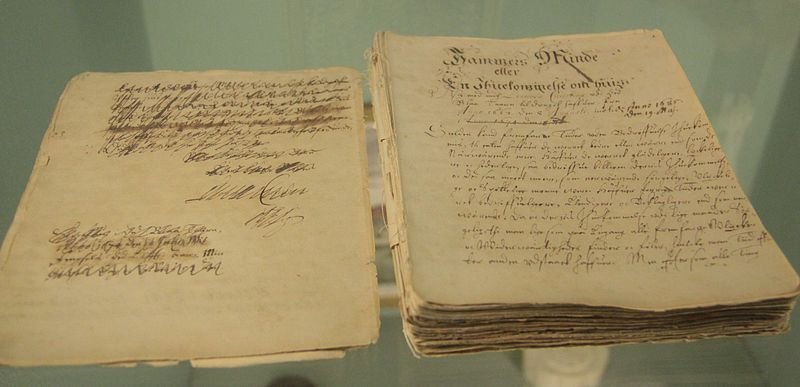
Jammers Minde The hand written autobiography of Leonora Christina
Jammers Minde
The hand written autobiography of Leonora Christina

It was around this time that Zahrtmann became great friends with aspiring Danish painters Otto Haslund and Pietro Krøhn with whom he shared a studio. It was this friendship that in some way was the starting point of this blog about Zahrtmann and the 17th century Danish princess Leonora Christina for it was they who gave Zahrtmann, for his birthday, a copy of Jammers Minde, which literally translated means A Memory of Lament. It was a posthumous autobiography written by Leonora during her twenty-two year solitary incarceration in the Blue Tower in Copenhagen Castle and which was not published until 170 years later, in 1869. So who was Leonora Christina and why was the daughter of the king imprisoned for over two decades of her life?

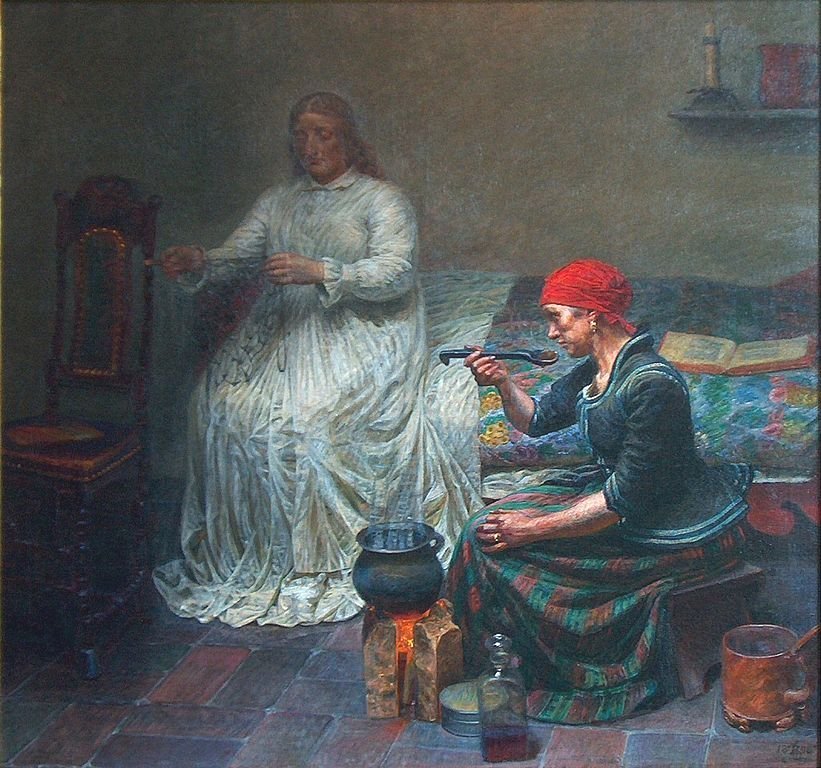
Leonora Christina in the Blue Tower by Kristian Zahrtmann

To find the answer to this we need to go back to King Christian IV of Denmark-Norway who succeeded his late father, Frederik II, at the age of eleven and ascended to the throne eight years later. He married his first wife Anne Catherine in 1597, when he was twenty years of age, and the couple went on to have seven children, four of whom died in infancy. Anne Catherine died in 1612 and three years later, in December 1615, Christian IV remarried. His second wife was Kirsten Munk, the daughter of a wealthy court official, who had been living with her family at the royal palace in Copenhagen . Although she was of the nobility, she held no title and so when she married the widowed king, Christian, it was a marriage between people of different social classes and the marriage was termed a morganatic marriage (similar to the present day marriage between Prince William and the “commoner” Kate Middleton). This difference in class between husband and wife could well have been the reason why the wedding ceremony was a private affair and not a full-scale church wedding. Kirsten Munk bore the king twelve children, ten of whom survived infancy, two sons and eight daughters. Leonora Christina was the couple’s fifth child, born in July 1621.

Leonora Christina i Fængselet (Leonora Christina in Prison) by Kristian Zahrtmann (1875)

Leonora Christina, like four of her sisters, did not marry princes from one of the many European monarchies but instead her father allowed them to marry powerful and wealthy Danish noblemen in an attempt to assure their allegiance to the monarchy. Leonora’s husband, whom she married in 1636 when she was just fifteen years old, was the thirty-eight year old Corfitz Ulfeldt, the son of the Danish chancellor. They had actually been engaged since she was nine years old! Corfitz Ulfeldt held great powers at the royal court but became more and more ambitious and grasping and it was these traits along with some bad political decisions which had him and the king fall out. Christian IV died in February 1648 and it was two months before the king’s second son, Leonora’s half brother, Frederick, from his first marriage, was elected the new King of Denmark and Norway. He became King Frederick III. During that two month transition period Corfitz Ulfeldt, as Steward of the Realm, the country’s de-facto prime minister, virtually ruled Denmark.

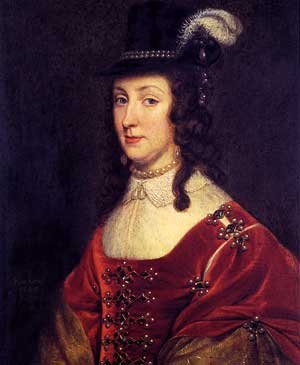
Leonora Christina Ulfeldt by Gerard van Honthorst (1647)

Corfitz Ulfeldt’s avarice and naked ambition during his rise to power irritated the new king and a perceived plot against the new monarch by Ulfeldt caused the latter, out of fear for his life, to flee the country with his wife Leonora and their family. Ulfeldt then forged a close alliance with Charles X of Sweden, Denmark’s old enemy, and offered his financial support with money which was thought to have been embezzled from the Danish state. This money was to help Charles facilitate the war against Denmark which began in July 1657. At the end of the conflict in 1658, Sweden had won its most celebrated victory, and for the vanquished, Denmark/Norway, they had suffered a humiliating and costly defeats of all time, having to cede territory to Sweden under the Treaty of Brömseboro. Ulfeldt even took part in these treaty negotiations, during which he took great pleasure in denigrating his former homeland. This, however, was to be his ultimate undoing. Ulfeldt, now feted by the Swedish monarch, once again became too ambitious and fell out with Charles X, who ordered his arrest and was condemned to death. In 1660, Ulfeldt decided that the lesser of two evils was to escape from Sweden with his wife Leonora Christina and return to his homeland, Denmark, and try and make his peace with Frederick III. Frederick was not amused and had the couple imprisoned for a year. Their release came after Ulfeldt paid a hefty fine which saw him and his wife almost reduced to a poverty-stricken existence. Their imprisonment had been both degrading and cruel and once released Ulfeldt plotted his revenge on Frederick. His act of treason against the Danish monarch was discovered and he was condemned to death in absentia. He escaped the jaws of death but died in a Rhine boating accident during one of his flights from impending arrest.

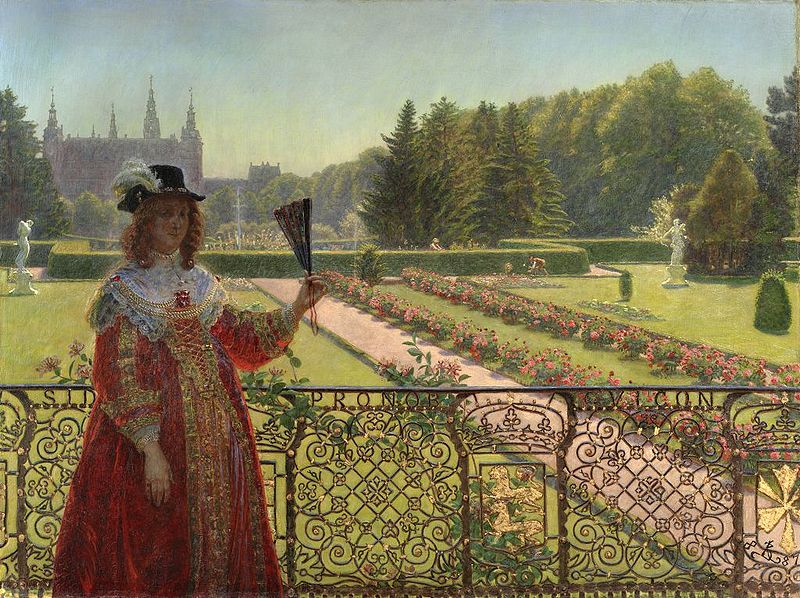
Leonora Christina in the Garden of the Frederisborg Palace by Kristian Zahrtmann (1887)

So what happened to Leonora Christina? After her and her husband’s release from prison Ulfeldt persuaded Leonora to go to England, seek an audience with Charles II and see if she could recover money he had lent the English monarch. Charles was unwilling to help and had Leonora arrested at Dover on her way back to the Continent. She was eventually hand over to Frederick and the Danish state, which as they still could not find Ulfeldt, instead decided to punish his wife and had her locked away in solitary confinement in the infamous Blue Tower at Copenhagen’s Castle. The conditions in the prison were both degrading and vile. So why was she so severely punished for the wrongdoings of her husband? Throughout her incarceration she blamed her downfall and her imprisonment, not on her half brother, the monarch Frederik, but on his wife Sophie-Amalie and the queen’s desire for revenge. Why this animosity between Leonora and Sophie-Amelie?

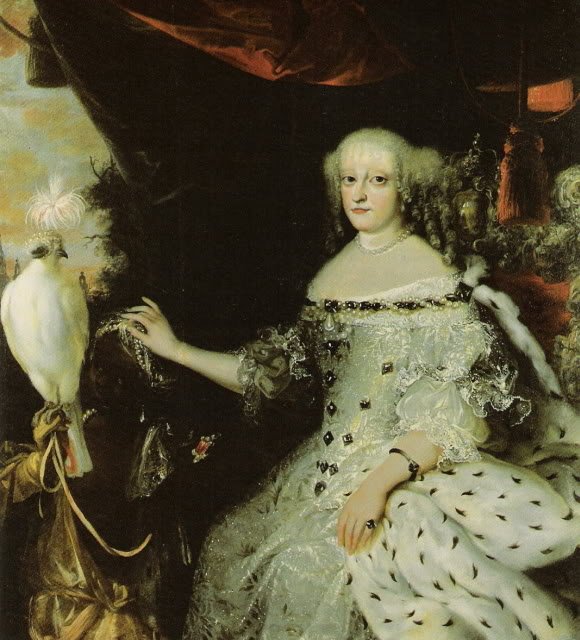
Sophie Amalie von Braunschweig-Lüneburg  with a slave by Abraham Wuchters (c.1670)
Sophie Amalie von Braunschweig-Lüneburg with a slave by Abraham Wuchters (c.1670)

Leonora had been her father’s favourite daughter and when her mother, Kirsten Munk, was banished from Copenhagen by her husband for infidelity, Leonora took on the role and power as the First Lady of Denmark. When her father died and Frederick came to the throne things changed. When you are at the pinnacle there is only one direction one can go – down! Frederick married Sophie-Amalie of Brunswick-Lüneburg, who became Queen of Denmark and Norway. She and Leonora, who had seen her power usurped by another woman, became bitter enemies and she probably played a leading part in having Leonore incarcerated.

Leonora Christina paa Maribo Kloster (Leonora Christina at Maribo Cloister)  by Kristian Zahrtmann (1883)
Leonora Christina paa Maribo Kloster (Leonora Christina at Maribo Cloister)
by Kristian Zahrtmann (1883)

Leonora Christina’s sworn enemy, Sophie-Amalie died in February 1685 and one of Leonora’s daughters went to the king, Christian V, the son of the late Frederick III and Sophie-Amalie, and begged for the release of her mother. The king agreed and in May 1685 and she went to live at a monastery run by the nuns of the St. Birgitte-order. It was here that Leonora completed her autobiography, Jammers Minde, which she had started to write during her long imprisonment. Leonora Christina died in March 1698 and was buried in the crypt of the monastery which is now the church at Maribo on the Danish island of Lolland. It is believed that some time later her sons had her body removed from the church and laid to rest in a secret location where her husband had been interred. Leonora’s last years in imprisonment improved due to the attitude of the new king Christian V and his wife, the queen-consort, Charlotte-Amelie despite his mother, Sophie-Amelie’s everlasting vindictive nature. In her autobiography Leonora wrote about her indebtedness to the king and queen improved situation:

“…My most gracious hereditary King was gracious enough several times in former years to intercede for me with his royal mother, through the high ministers of the State. Her answer at that time was very hard; she would entitle them “traitors”’ and, “as good as I was, and would point them to the door. All the favours which the King s majesty showed me — the outer apartment, the large window, the money to dispose of for annoyed the Queen Dowager extremely; and she made the Kings majesty feel her displeasure in the most painful manner…”.

Dronning Sophie Amalies død, (The Death of Queen Sophie Amalie)  by Kristian Zahrtmann (1882)
Dronning Sophie Amalies død, (The Death of Queen Sophie Amalie)
by Kristian Zahrtmann (1882)

Zahrtman was fascinated by the book and completed a number of paintings of the way he envisaged Leonora during her captivity and like Leonora, Zahrtmann blamed Sophie-Amalie for Leonora’s downfall and the artist depicted the deathbed scene of Leonora’s nemesis. The state of the dying queen mother and the pain-wracked expression on her face presumably comforted Zahrtmann !

For anybody who would like to read the translation of Leonora’s autobiography I believe there is a Guttenburg e-book available:

 http://www.gutenberg.org/ebooks/38128?msg=welcome_stranger

Feast at the House of Levi by Paolo Veronese

Feast at the House of Levi by Paolo Veronese (1573)

The 16th century the art scene of Venice was dominated by three artists, Titian, Paolo Veronese, and Jacopo Tintoretto and it was these three painters who managed to tender for and win most of the public and religious commissions, which were on offer during that period.  My featured painting today was one of Veronese’s most controversial paintings.   It was intended to be a monumental work depicting the Last Supper but as you will now read that Veronese, three months after its completion, had to hastily change the title of the painting.  The work, which is now entitled Feast at the House of Levi, is a massive work of art measuring 555cms x 1280cms (18’6″ x 42’6″) and was far too big to be included in the recent Veronese Exhibition at the National Gallery, London but I have been fortunate enough to stand in front of this amazing work a few years ago when I visited the Gallerie dell’Accademia in Venice.  It is a truly magnificent painting.

Basilica di Santi Giovanni e Paolo, Venice

In 1573, Paolo Veronese, who was at the time forty-five years old, was awarded the commission to paint a depiction of the Last Supper for the rear wall of the refectory of the fourteenth century Basilica di Santi Giovanni e Paolo, sometimes known as the pantheon of doges, as twenty-five of them have been buried there. It is one of the largest churches in the city of Venice. The building of this great church started around 1333 but was not completed until November 1430 as the construction was halted on many occasions due to the never-ending plagues that the city suffered during the 14th century.  This painting by Veronese would replace Titian’s painting, The Last Supper, which had been lost in a fire in 1571.  According to the writing on the base of the pillars, to the left and right in the foreground of the painting, the work was completed by Veronese on April 20th 1573.  When I looked at some of the Veronese paintings at the National Gallery exhibition in my previous two blogs, I talked about the artist’s penchant for combining secular depictions in some of his religious works, such as his painting, Supper at Emmaus, and in today’s painting we can see that this theme was once again adopted, much to the horror of the Catholic Church.  So let us look in more detail at this immensely impressive work.

Dog looking at cat which appears under Last Supper table

In the painting we see a monumental triple-arch background through which one can see more magnificent buildings of Venice cityscape.  This was more than likely inspired by buildings designed by the great Italian architects of the time, Andrea Palladio and Jacopo Sansovino, who designed many of the Venetian buildings in the sixteenth century.   In the foreground of the painting and on either side of the depiction of Christ at the Last Supper, we witness a scene of great merriment, with jesters and blackamoors, along with the nobility of Venice enjoying their own sumptuous feast.  Veronese has simply combined the Last Supper with Christ and his Apostles with a typical Venetian dinner party.  The first thing that strikes you about this work is the large number of figures that have been included in the work, one could say, almost crammed into the work and because the work is somewhat cluttered by human beings, the depiction of Christ at the Last Supper seems almost lost in the melee and this is part of the reason why it did not find favour with the Church.  One realises that the artist must have derived great joy from including all these various figures, all doing different things and for him this maybe what the painting was about and that the Last Supper was just a bi-product of the work.  Maybe we can glean an understanding of Veronese’s modus operandi by his description of his work as an artist when he described what he did, saying:

“I paint and compose figures”

Jester with parrot
Jester with parrot

The Church’s displeasure of the completed work was not just that the depiction of the Last Supper, in the central background of the painting, seems almost to play a secondary and minor role in the work; it was that they were horrified by some of the numerous other characters who populated the work.  Veronese’s inclusion of this assortment of characters into such a famous religious scene was looked upon by the Church as being irreverent, bordering on blasphemous. One has to remember that this period marked the beginning of the Counter Reformation which was the Catholic Church’s attempt to strongly and vociferously oppose the Protestant Reformation and to move towards a re-definition of good Catholic values.  The Church was very wary about anything which could be perceived as mocking the Church and its values.  This counter-reformation movement attempted to elevate the moral and educational standards of the clergy and by so doing enable it to win back areas endangered by Protestantism.  So when Veronese added a plethora of people, some of whom seemed to be drunk, as well as dogs, a cat, midgets, and Huns to the depiction of Christ at the Last Supper at the house of Simon, the elders of the Church were horrified.  Veronese was summoned to appear before the Inquisition on July 18th 1573 which was sitting in the Chapel of S. Teodoro.

One of the first questions posed by his inquisitors was whether he knew why he had been summoned before them.  Veronese replied:

“…I fancy that it concerns what was said to me by the reverend fathers, or rather by the prior of the monastery of San Giovanni e Paolo, whose name I did not know, but who informed me that he had been here, and that your Most Illustrious Lordships had ordered him to cause to be placed in the picture a Magdalene instead of the dog; and I answered him that very readily I would do all that was needful for my reputation and for the honour of the picture; but that I did not understand what this figure of the Magdalene could be doing here…”

 The inquisitors were not pacified by his answer and began to question him in more detail.  They asked him why he had included two German soldiers seen on the stairway, standing guard bearing halberds, in the right foreground.  One has to remember it was the German Martin Luther, who initiated the Protestan Reformation fifty-five years earlier and it was he who had been a thorn in the side of the Catholic Church, constantly criticising the ways of the Catholic clergy and the Catholic doctrine.   The Inquisition wanted to know why such frivolous things as a dwarf with a parrot on his arm, a dog which sits before Christ’s table staring at the cat which has appeared under the tablecloth had been included in a deeply religious scene.  Veronese had all the answers ready.  As far as the German soldiers he answered:

German guards with halberds

“…We painters use the same license as poets and madmen, and I represented those halberdiers, the one drinking, the other eating at the foot of the stairs, but both ready to do their duty, because it seemed to me suitable and possible that the master of the house, who as I have been told was rich and magnificent, would have such servants…”

The inclusion of the two Germans in the painting was considered by the inquisitors an even greater sin than the other inclusions the inquisitors questioned Veronese again as to their inclusion.

“…Do you not know that in Germany and other countries infested by heresy, it is habitual, by means of pictures full of absurdities, to vilify and turn to ridicule the things of the Holy Catholic Church, in order to teach false doctrine to ignorant people who have no common sense?…”

Veronese realised he was now on dangerous ground but skilfully replied:

“… I agree that it is wrong, but I repeat what I have said, that it is my duty to follow the examples given me by my masters…”

Veronese was probably now becoming a little fearful at the way the questioning was going and so decided to go down the line of – if you think I have blasphemed with my painting, what about the much beloved Michelangelo’s work in the Vatican.  Veronese expanded:

“…In Rome, in the Pope’s Chapel, Michelangelo has represented Our Lord, His Mother, St. John, St. Peter, and the celestial court; and he has represented all these personages nude, including the Virgin Mary, and in various attitudes not inspired by the most profound religious feeling…”

Other diners

The Inquisitors however would not criticise Michelangelo’s work, merely saying that in the depiction of the Last Judgement, which Veronese was referring to, it was only natural that the people were without clothes and that the work had been inspired by the Holy Spirit.  They then turned on Veronese stating that there was no indication that his work had been so inspired by the Holy Spirit and that he needed to make some changes to it.  They then compared Michelangelo’s work with his and commented:

“…There are neither buffoons, dogs, weapons, nor other absurdities. Do you think, therefore, according to this or that view, that you did well in so painting your picture, and will you try to prove that it is a good and decent thing?..”

A little trickier was the question as to why he would include a jester with a parrot on his wrist in such a “sacred” work.  However, he was not to be browbeaten and simply answered:

“…He is there as an ornament, as it is usual to insert such figures…”

 Veronese did however agree with his inquisitors that there was only Christ and his twelve apostle present at the table during the Last Supper but forwarded the reason for the inclusion of so many characters.  He said that the painting was to be so large that he had to fill the space with something, saying:

“…when I have some space left over in a picture I adorn it with figures of my own invention…” 

The inquisitors countered Veronese’s argument by asking him whether he thought he had the right to mock the Last Supper by including irreligious figures, such as buffoons, dwarves, a dog, a cat and worst of all Germans.  Veronese replied:

“…No, but I was commissioned to adorn it as I thought proper; now it is very large and can contain many figures…”

The way in which Veronese had depicted the Last Supper seen in the central background was also criticised by the Inquisition.  This was not similar to the portrayal of Last Supper à la Leonardo.  Veronese’s table scene was more of an everyday festive scene and this was not lost on the inquisitors who wanted to know what was going on at the supper table.  They started by questioning Veronese as to who was sitting down with Christ.  He answered:

“…The twelve apostles…”

They then questioned what the person, Saint Peter, on the right hand of Christ was doing.  The artist responded:

“… He is carving the lamb in order to pass it to the other part of the table and Christ holds a plate to see what Saint Peter will give him…”

On questioning what a third person at the table was doing he merely commented:

“…. He is picking his teeth with a fork…”

In a desperate final attempt to justify the inclusion of all the extra people, both normal and strange, he pointed out that such elements that displeased the Inquisition, such as the dog, the dwarf, the blackamoors, the man with the nosebleed, who is seen holding a handkerchief at the left of the picture, were all in the foreground or the sides of the painting, and did not, in any way, form an incursion into the religious depiction of Christ at supper at the centre of the work.

Venetian guest arriving for supper

With a terrible sense of foreboding the questions came to an end and Veronese awaited his fate. So, it was much to his surprise that at the end of the interrogation Veronese was told that he was a free man.  However as the Inquisition could not accept his argument for adding what they termed “anti-conformist elements” he was given three months to correct the painting at his own expense.  They required him to paint out the dog, and replace it with the Magdalene.  He was also to expunge the German soldiers and it was all to be done within three months. Paolo Veronese, who had feared torture and even death because of his heretical depiction of the Last Supper, couldn’t believe his luck.  So how had he managed to escape the full force of the Inquisition?  Maybe the answer lay in the fact that the Inquisition had much reduced powers in Venice and the inquisitors knew that they could only threaten and not use the brutal methods of torture that was taking place in other countries such as Spain and Italy.  They simply wanted to frighten Veronese in the hope that he would think twice before he again combined secularity with religious scenes.  The Inquisition in Venice was also fully aware that every judgement they made was scrutinised by the Venetian Senate, who were ready to drastically curtail their powers, if they dared to take away the liberty of a Venetian subject and, of course,  Paolo Veronese was one such subject.

Date on column and reference to Luke's Gospel
Date on column and reference to Luke’s Gospel

Veronese never made any of the major changes to his painting that the Inquisition had demanded, but in deference to Ecclesiastical sensibilities and not wishing to push his luck, he added the inscription across the top of the pillars at the head of the staircases, the ones which also showed the date of completion.  The inscription read:

Fecit D.Covi Magnum Levi                       Luca Cap. V

This was in reference to a passage in Luke’s gospel of the New Testament (Luke 5: 27-29):

“…After this, Jesus went out and saw a tax collector by the name of Levi sitting at his tax booth. “Follow me,” Jesus said to him, and Levi got up, left everything and followed him.  Then Levi held a great banquet for Jesus at his house, and a large crowd of tax collectors and others were eating with them…”

He then merely changed the title of the work from The Last Supper to Feast at the House of Levi and by doing so was able to retain the dog and removed the need for it to be replaced by a repentant Magdalene prostrating herself on the floor before Christ.  Veronese’s decision not to make the changes pleased both the friars who loved the painting, and for the majority of Venetians who resented Rome’s inquisition.   The painting remained in the refectory of the Basilica di Santi Giovanni e Paolo until Napoleon Bonaparte’s troops marched into Venice in 1797 and he ordered it be taken back to Paris.   It was returned to Venice a decade later and remained in the church until 1815, at which time it was acquired by the Accademia Galleries in Venice, its current home.

One final thought as to why Veronese would add so many people into a religious scene.   A decade earlier, in 1563, he had completed a similar monumental religious commission for the monks, entitled the Wedding at Cana, which now hangs in the Louvre.  It is interesting to note that it was the monks who had asked him to squeeze as many figures into their painting, as possible.  This was however at a time when the Inquisition and the upholding of Counter-Reformation ideals had yet to reach Venice.

The Veronese Exhibition at the National Gallery, London. Part 2

In art, the hackneyed phrase “size matters” is not relevant as some of the most beautiful works of art are quite small. In my first look at the Veronese exhibition at London’s National Gallery I focused on some of the artist’s monumental works which were on show. In today’s blog I want to look at some of the smaller paintings which were on display at the exhibition.

Mary Magdalen in the Wilderness by Veronese (c. 1585)

The first painting I want to feature is Veronese’s oil on canvas work entitled Mary Magdalene in the Wilderness which he completed around 1585 and is on loan to the exhibition from a private collection in Genoa. The scene is a cave, bathed in moonlight, which is home to Mary Magdalene. Legend had it that after the death of Christ, his resurrection and finally his ascension into heaven, she, along with her brothers Lazarus and Maximin, fled the Holy Land in a rudder-less boat and one without a sail and landed at Saintes-Maries-de-la-Mer in the Camargue near the city of Arles. From there she went to Marseille before living for thirty years in a cave in the Saint Maximin-la-Sainte-Baume Mountains. According to legend, during her self-imposed exile, she went on a strict period of fasting and that but for occasional visits by the angels, and the comfort bestowed by celestial visions, she might have died. The only food she received was the Holy Eucharist which was given to her by angels.

In the painting, we see Mary Magdalene leaning back against a shelf as she converses with the angel who has descended to offer her a modicum of comfort. Veronese has retained her youth and beauty despite what would have been her real age. She is depicted as being semi-naked although she attempts to cover up her nakedness with her hair and diaphanous clothing. Her legs are bare and her breast is exposed and this portrayal of her is probably meant to remind us of her previous immoral life. Look at the shelf behind her. On it we can just make out a number of items. There is an alabaster jar which is the traditional attribute of Mary Magdalene, reminding us of the jar of very expensive aromatic oil, pure nard, with which she anointed the feet of Christ. Also on the ledge there is a skull and an hour glass, both Vanitas symbols alluding to the passage of time and the inevitability of death. Propped up against the skull is a crucifix reminding us of the death of Christ which Mary Magdalene witnessed first-hand.

It is thought that the painting, which was purchased around 1736 by the Doria family, was enlarged during the eighteenth century so that it fitted snugly within decorated plasterwork of one of the rooms of their Strada Nuovo palace in Genoa.

The Finding of Moses by Veronese (c.1580)

My next featured work is one entitled The Finding of Moses which Veronese completed around 1580 and is part of the Prado collection in Madrid. This small cabinet-sized painting (57cms x 43cms) is another of his religious works and is based on the Old Testament story (Exodus 2:5-6):

“…Then the daughter of Pharaoh came down to bathe at the river. And her maidens walked along the riverside; and when she saw the ark among the reeds, she sent her maid to get it. And when she opened it, she saw the child, and behold, the baby wept. So she had compassion on him, and said, ‘This is one of the Hebrews’ children’…”

The painting depicts the moment when the Pharaoh’s daughter, Bithiah, and her ladies-in-waiting have plucked the basket, made of bulrushes and pitch, from the reeds on the edge of the Nile River. The basket was the one in which the baby, Moses had been placed by his Hebrew mother, Jochebed, in order to save him from the slaughter of all male Hebrew children ordered by the Egyptian Pharaoh.

Although this obviously a religious work it has secular connotations and this secularising of the work made it one of Veronese’s most popular subjects. He completed many versions of this depiction, some small like this one, others much larger. This painting has combined the pomp and ceremony often seen in secular works with a story from the bible. The Pharoah’s daughter and her royal attendants are lavishly dressed in sumptuous gowns. Bithiah, as the Pharoah’s daughter, is the most lavishly dressed in stunning orange and white damask gown. To her left is one of her attendants, dressed in blue, holding a blanket ready to wrap up the baby who is being cradled by another attendant who can be seen crouching down with Moses in her arms. The background at the left of painting depicts a river flowing through a large town and is crossed by a bridge. This could well be based on city of Verona, which has many bridges straddling the fast-flowing Adige River.

In the left foreground we see one of her black servants holding the basket which had once carried the baby down river. To the right of the painting Veronese has included a dwarf in the company of the women. Dwarves were often present at 16th century European courts and depicted in paintings of the time. It is thought that this version of the painting was commissioned by Marquis and Marchioness della Torre of Veneto. Its emergence in Spain dates to the 1666 inventory of the Alcázar of Madrid.

Portrait of a Lady 'La Bella Nani' by Veronese (c. 1560)
Portrait of a Lady ‘La Bella Nani’ by Veronese (c. 1560)

My third offering is a portrait which Veronese completed around 1560. It is entitled Portrait of a Lady, ‘La Bella Nani’ and this work is considered to be Veronese’s greatest stand-alone female portrait. Venetian portraiture of Venetian courtesans was very popular at this time with works by the Italian painter of the Venetian school, Palma Vechio, the Italian painter of the Venetian Renaissance, Paris Bordone and Titian. This portrait by Veronese was often likened to Titian’s 1536 work entitled La Bella. In both these paintings the female sitter exudes a sense of opulence by the sumptuous and expensive clothes they wear. Veronese’s woman is standing with her left hand spreading her gossamer veil whilst her right hand is at her breast. Her hair is set tightly, and bejewelled with pearls. She wears a velvet dress which is deep ultramarine in colour and has gold epaulets; The colour of the dress was originally blue although over time sunlight has caused the painting to darken and the beautiful ultramarine dress seems black with just a hint of blue woven in. Veronese’s clever and complex layer of glazes makes the expensive material of the dress shimmer in the light. Her make-up is perfect with rouge on her cheeks she wears an assortment of jewellery, including a large gold piece hanging at her waist. Her wrists are adorned with gold bracelets, on her fingers there are gold rings and around her neck we see a string of pearls. The combination of the jewellery and clothes transforms her into what we would now term a fashion idol. As was the case with Titian’s female, we do not know who the sitter for Veronese’s portrait was but it will almost certainly be a female member of the Venetian aristocracy.

La Bella by Titian (1536)

Whereas Titian’s woman looks out at us in a somewhat provocative manner, the female in the Veronese’s portrait has a somewhat restrained look as she averts her eyes from the observer. There is a look of sadness in her expression as she stares into the distance. She seems lost in thought and somewhat troubled. She does not seem to be at ease and maybe was a reluctant model, who has had to acquiesce to her husband’s demand that she should have her portrait painted. Her status as a married woman is confirmed by the ring she wears on her left hand. She looks tired and there are lines around her eyes. There is a vulnerability about this woman which makes us question whether wealth has given her all that she desired.

This painting by Paolo Veronese hangs at the Louvre and is in the same room as Leonardo Da Vinci’s famous painting, Mona Lisa and one of Veronese’s monumental works, Wedding at Cana. The question as to whether she is a wife of an aristocrat is questioned by the curators of the Louvre who believe it could just be an idealised portrait of a woman by Veronese bringing together all the attributes that make for a beautiful woman. Their view is quite simple:

“…The figure is in fact a depiction of all the criteria of beauty sought after in Venice at the time: blond hair, a pearly complexion and radiance, as well as sweetness of character, reserve, or the quasi-shyness appropriate to any married woman…”

The Dream of Saint Helena by Veronese (c.1570)  National Gallery, London
The Dream of Saint Helena by Veronese (c.1570) National Gallery, London

My final offerings are a pair of paintings by Veronese based on the dream of Saint Helena. One is housed at the National Gallery, London whist the other can be found in the Pinacoteca Vaticana, in Rome. The Dream of Saint Helena in the National Gallery was completed around 1570 and the Vatican painting of the same name was thought to have been completed by the artist five or six years later. The story behind the depiction tells of the Flavia Julia Helena, the Empress mother of Constantine the Great, receiving a visitation from an angel in her dream. The angel tells Helena that she should leave home, travel to the Holy Land in search of the relic of the true cross on which Christ was crucified. She set off for Palestine in 326AD on a part spiritual part diplomatic visit on behalf of her son Constantine and, after a two year search, found the cross. Since then, the imagery of the saint has always been associated with the relics of the cross.

In Carlo Ridolphi’s seventeenth century book, La Maraviglie dell’Arte, he talks about a painting of Saint Helena in the house of the Contarini family of Padua. Of the painting, he states:

“… a scene of Saint Helena, who while sleeping dreams of a vision of the Cross held by two angels, that saintly queen nursing such a saintly thought in her mind, even though she was resting…”

We can see by looking at the two works, only the one which is housed in London’s National Gallery has a depiction of two angels and so this could well be the work which Ridolphi was talking about.

Veronese, with great skill, depicts the dream of Saint Helena in the National Gallery painting by separating the work into two distinct areas. The foreground represents the “here and now” and in it we see Saint Helena, eyes closed, asleep on a window seat with her head supported by her right hand and her right elbow resting on the window sill. The view through the square window is the space which depicts the dream scene and in her dreams she sees two angels struggling to hold a very heavy and substantial wooden cross. It is a somewhat bare composition but the inclusion of Saint Helena lends an elegance to the depiction. The colours Veronese has used for Helena’s gown are fairly subdued, albeit the cool greens on one hand and the warm golds, rich pinks and oranges, on the other, harmonise perfectly. Look how Veronese has cleverly highlighted the garment with flecks and whirls of white and examine carefully the way he has skilfully depicted the folds of Helena’s gown.

The Dream of Saint Helena by Veronese (c. 1580)  Pinacoteca Vaticana
The Dream of Saint Helena by Veronese (c. 1580) Pinacoteca Vaticana

In the Vatican’s Dream of Saint Helena we see Helena seated in a luxurious palace location. This work is completely different to the starkness and sparseness of the London version. In this painting the background consists of a decorated wall covering. To the left there is a fluted column and behind the chair is a bronze statue. Veronese’s depiction of her in this painting is one of an opulently dressed empress. She wears a glorious brocade dress with a red mantle. A jewelled crown sits atop her head. She is seated asleep in a chair, and once again, as in the London painting, her head is supported by her hand. In the right foreground we see the rear view of an angel who appears to be walking into the picture dragging along a large wooden cross. This is the vision Saint Helena is dreaming about and through Veronese’s two depictions we are privy to that dream.

In my next blog I am staying with Veronese and looking at a painting which was 42 ft (1280 cms) wide was far too large to be transported to London.  It was a painting which combined a secular scene with a religious story and by so doing fell afoul of the Inquisition. His inquisitors were not amused!

The Veronese Exhibition at the National Gallery, London – Part 1.

Today’s blog came in to being thanks to Lady Luck.  Last week I went to London for two days.  The first day was spent with my daughter and her new baby leaving the second day free for me to roam around some art galleries.   It was March 19th and that was the day of the opening of the Veronese exhibition at the National Gallery.  I hadn’t planned my visit to coincide with that day and anyway, I had already checked on the internet to find, not unexpectedly, that I could not book tickets to the exhibition on its opening day.  However I decided to visit the gallery when it opened to see what literature they had regarding the exhibition and I was very surprised, but delighted, to be told that I could buy a ticket to visit the exhibition there and then.  I jumped at the offer.  It was a superb exhibition spread over seven rooms filled with the most magnificent paintings.  In my next two blogs, I want to feature some of my favourite works which were on display and look at the background to the depictions, in the hope that I can tempt you to visit this exceptional exhibition.
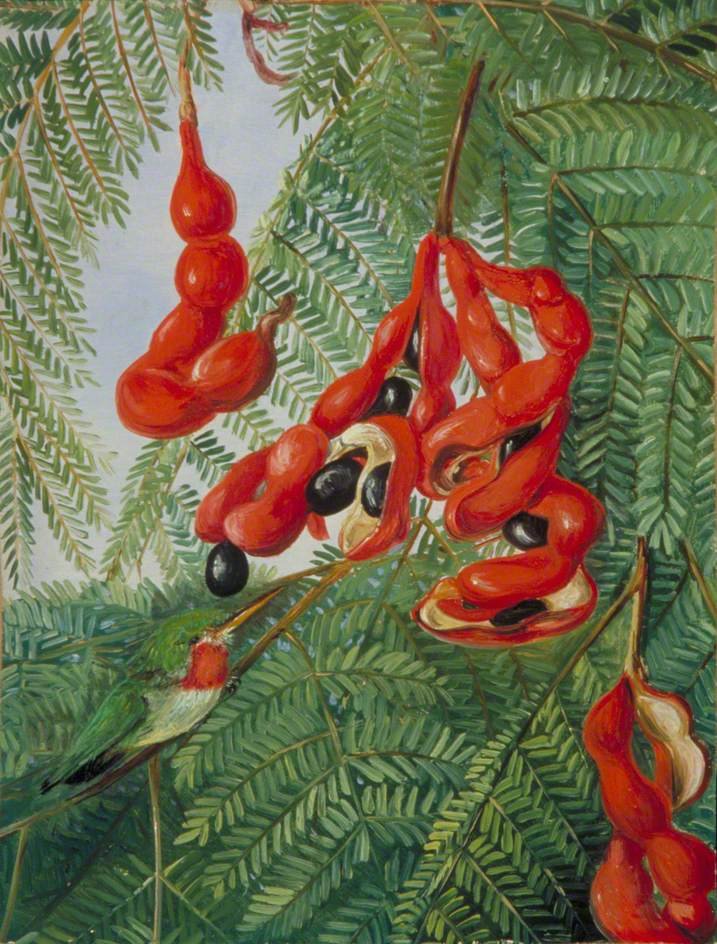
The Family of Darius before Alexander by Veronese (1565-7)

The first painting I want you to look at was one Palo Veronese completed around 1567.  It is entitled The Family of Darius before Alexander.  Veronese received the commission for this work from Francesco Pisani, the bishop of Ostia and a patron of the arts, for his residence Palazzo Pisani in Montagnana.  It is thought that this monumental work, which measures 236cms x 475cms (approximately 7.5ft x 16.5ft), was hung high up on the wall of the main room (probably the only room which could accommodate such a large work) on the piano nobile, the main floor of the house.  Its positioning meant that observers had to look up at the painting and from that viewpoint the depiction of the characters must have been amazing.

The event that is depicted in this work features Alexandra the Great and his first encounter with the abandoned womenfolk of the defeated Persian king, Darius III.  The meeting was written about by many Roman and Greek scholars and this work by Veronese was probably based on the writings of Valerius Maximus, a 1st century Roman historian.  It is an account of what happened following the Hellenic leader, Alexander the Great’s victory over the Persian army, led by Darius III at the Battle of Issus in 333BC.  Although far outnumbered by the Persians, Alexander’s troops won the battle and Darius, rather than be killed fled the battlefield abandoning his family and his troops.  Although it may seem strange that the female members of the royal family were at the battle but it was the custom for royal Persian women to accompany their father/husband while they went to war.   When Darius made a hasty retreat from the battlefield, without a care for his family, his mother, wife and children were then captured by Alexander.   Darius later wrote a number of letters to his conqueror asking for the return of his family but Alexander would not agree unless Darius acknowledged him as the new Emperor of Persia.
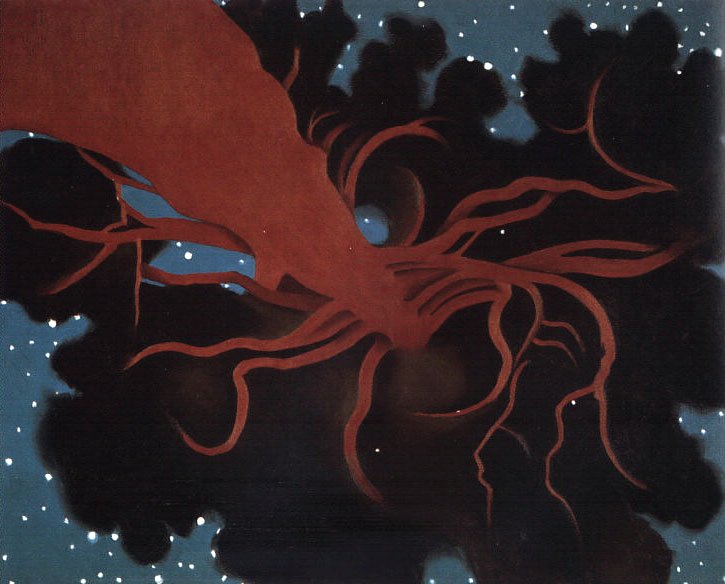
In the meantime the female captives, Darius’mother Sisigambis, his wife Stateira and their two daughters, Stateira II and Drypteis were abandoned.  In the painting we see the four women meeting Alexander and his friend Hephaestion for the first time.  The four women at the centre of the painting are Darius’s family and they have approached Alexander asking for mercy.  Behind them stand their servants and a dwarf.   On the right we see Alexander, who is dressed in red, standing next to Hephaestion.  In between the two parties is an elderly man, dressed in blue, who is introducing the women to Alexander.   It is thought that this figure is a portrait of Veronese’s patron, Francesco Pisani.  The story of the event tells of the Darius’ mother initially mistaking Hephasteion for Alexander and in the painting we can see Alexander pointing to his friend who has stepped back in surprise at Sisigambis’ mis-identification.

For most of the characters in this tale, all ended well.  Alexander married Darius’s daughter Stateira II, whilst his other daughter Drypteis became the wife of Hephasteion.  Sadly all didn’t end well for Darius III who, after the defeat, was assassinated by one of his satraps (governors), Bessus, who then pronounced himself King of Kings of the Persian Empire.  He was later captured and executed on the orders of Alexander for his crime, regicide.

Veronese’s depiction of the scene arranges the figures gracefully across the surface of the painting, and with the exception of Alexander who wears classical armour, the protagonists are sumptuously dressed in modern fashion.  Veronese chose an outdoor setting for the meeting with its classical architecture similar to what he saw in his home town Verona.

The Martyrdom of Saint George by Veronese (c. 1565)

The second work I am featuring is one Veronese completed around 1565 and is entitled The Martyrdom of St George.   It is a colossal work measuring 431cms x 300 cms (approximately14ft high x 10ft wide).  Veronese was probably commissioned to paint this for the high altar of San Giorgio in Braida, a Roman Catholic church in Verona, by the Venetian architect Michele Sanmicheli.

To set the scene I rely on a passage from Carlo Ridolfi, the Italian art biographer, 1648 book entitled Le Maraviglie dell’Arte, (The Marvels of Art) in which he describes the work:

“…in the church of San Giorgio Paolo painted for the high altar the saintly knight on his knees, stripped by henchman, persuaded by priests to offer incense to the idol Apollo, his face reveals an unvanquished soul, unafraid of the tyrant’s threats, strengthened by seeing the Virgin flanked by the Theological Virtues in the sky…”

In the painting we are not seeing the actual gruesome death of Saint George, who was a Roman soldier, but the lead up to his martyrdom.  The scene has an architectural background and the it is framed by two armoured horseman who enter the painting at the extreme left and right of the work.  Amongst the people we see a couple of men with turbans and a black page boy which gives a Middle Eastern feel to the setting and Veronese may have decided on this as legend had it that the martyrdom of St George took place on April 23rd 303AD in the town of Nicomedia, which is now the north-west Turkish town of Izmit.  High up on the extreme left of the painting we see the statue of Apollo which St George has been asked to worship.  Behind the statue is the unfurled Roman standard with its acronym in golden letters, S.P.Q.R., derived from the Latin phrase:

Senatus Populusque Romanus, (The Senate and People of Rome)

St George, who is kneeling on the ground, is stripped of his armour, which lies before him on the ground.  He is now bare-chested.  Look at Veronese’s portrayal of the saint.  Look how he has lovingly depicted the saint’s face with a look of kindness which is in direct contrast to the way he has depicted the harsh and ugly faces of the priest and executioner.  Behind St George is the priest dressed in a maroon cloak and cowl.  He leans towards his prisoner and points to the statue of Apollo and asks St George for the final time to worship the God, Apollo, and by so doing, saving his own life.   To the right of, and behind St George, we see the executioner. He is eagerly awaiting the priest decision.  The executioner has drawn his sword from its scabbard which he hands back to one of his henchmen.  Another man ties the hands of St George.  St George is unmoved by the threat and can be seen looking up to the heavens where he sees a vision of St Peter and Saint Paul, who sit either side of the Virgin and Child.  Below them are the three virtues, Faith Hope and Charity.  Hope, like the Virgin, look down on the soon to be executed St George.  Below them we see a small angel heading downwards to St George holding a wreath and palm branch, which are symbols of martyrdom.

It is a very moving scene and one can just imagine the painting in place at the high altar.  The observer would have had to look upwards over the altar towards the painting.  The observer’s eyes would then catch a glimpse of St George and follow the upward direction he is focusing on, towards Heaven and the Virgin Mary.  The painting which is housed in the Roman Catholic church of San Giorgio in Braida in Verona was trucked over to London for the exhibition.

Supper at Emmaus by Veronese (c. 1555)

The third painting I am showcasing is another monumental work, measuring 242cms x 416cms (approximately 8ft x 14ft).  It is Supper at Emmaus and this often painted scene was completed by Veronese around 1555.  The depiction based on the biblical story portrays the moment when the risen Christ, having comes across two of his disciples, thought to be Luke and Cleopas, on the road to Emmaus, joins them for supper.  We see Christ at the head of the table being served by the servant whilst at the opposite end of the table sit Cleopas and Luke who have just realised the identity of their fellow diner.  This supper scene has been depicted in paintings by all the great Italian painters, such as Caravaggio, Titian, and Tintoretto as well as other European artists such as Durer, Rembrandt, Velazquez and Jordaens.  However this painting of the Emmaus Supper by Veronese incorporates into the scene a group family portrait.  There are three men, who maybe brothers, a woman, ten children and an infant in the arms of the woman.  They are all dressed in contemporary 16th costumes.  It could be that is a family who has commissioned the work.  Where the work was to be hung is unknown but thought to be in the main hall of one of the new Venetian palaces.

The combination of the biblical scene with a secular scene works well and there is a lavishness about the secular depiction giving it a grand and stately appearance.  There is an element of humour about the depiction as we look down below the supper table at the two young girls who play with the large dog.  To the left, in the background, we witness a prelude to the supper as we see the two disciples with Christ as they make their way through the countryside to the village of Emmaus and the inn.

It is interesting to note that Veronese liked adding ordinary people into religious scenes and liked to incorporate his love of richness and ornamental embellishment in his religious works as in this painting.  However,  it was to get him into trouble with the Inquisition, who viewed the combining of secular and religious depictions into another of his painting in which, according to them, he had crowded “irrelevant and irreverent” figures into the work.  They took a dim view of it and they looked upon it as a sign of disrespect towards the Catholic Church.  I will tell you more about that painting in another blog.

The Rest on the Flight into Egypt by Paolo Veronese (c. 1572)

My final offering today is another religious painting by Veronese, which again has been the subject for many of the great painters, such as Caravaggio and Gerard David.  It is based on a passage from the New Testament (Matthew 2:13-15) which is a follow-on from the story of the three magi who had brought gifts to the newborn child, and had now departed:

“…When they had gone, an angel of the Lord appeared to Joseph in a dream. “Get up,” he said, “take the child and his mother and escape to Egypt. Stay there until I tell you, for Herod is going to search for the child to kill him.

So he got up, took the child and his mother during the night and left for Egypt,  where he stayed until the death of Herod. And so was fulfilled what the Lord had said through the prophet: “Out of Egypt I called my son….”

During their flight the Holy Family stopped for a rest and it is at their resting place that the various artists have depicted the scene.  Veronese completed his painting entitled The Rest on the Flight into Egypt around 1572.  We see Joseph sitting next to Mary who cradles the Christ Child.  They are all in need of sustenance but had nothing to eat or drink.  They sit in a palm grove, in the shade of a palm tree, which is emblematic of martyrdom.  It is laden with dates but they are too high up for them to reach.  Joseph’s water canteen is empty and they have nothing to drink.  Then a miracle occurs.  The tree bends downwards and we see one young angel dropping down dates whilst another gathers them up to give to the Holy Family to eat, whilst the Virgin Mary nurses the Christ Child.  A spring of water appears below them allowing Joseph to re-fill his canteen. Behind the couple is an ass and to the right of the picture there is an ox, a reference to the animals at the manger when the Child was born in Bethlehem.  Another young angel can be seen in the left of the painting, spreading out the baby’s clothes on a branch so they would dry.

Light filters through the leaves of the palm trees and in the background to the right the sky is the most beautiful blue.  This colour used by Veronese for the skies and clothes in some of his paintings is truly breathtaking and it is what struck me most about his work.  In this work, this beautiful rich blue colour is used again for the cloak of the Virgin Mary. Below the sky line in the right of the painting we see ancient buildings and obelisks which are meant to signify the far off land of Egypt, the country to which the couple are heading. It is a truly beautiful work of art.

In my next blog I will look at some more of Veronese’s paintings which were on show at the exhibitions, including some of his smaller works.

Mary Cassatt – Mother and Child – Part 2

Mary Cassatt
Mary Cassatt

As a follow-on from my previous blog I want to feature some more works by Mary Cassatt which feature the close relationship between mother and child. Mary Cassatt had always been enthusiastic about painting mothers and their children and this passion was once more awakened when, in 1880, Cassatt’s brother, Alexander, arrived in Paris with his young family. Their arrival renewed Cassatt’s interest in depicting children, and her nephews and nieces now provided the opportunity for Cassatt to study and paint children from life. She would often use her brother’s family as models. She would also use local women as her models for her paintings rather than employ professional models as, first of all, she did not believe that professional models would agree to sit for her, but secondly and more importantly, she was of the opinion that professional models posed self-consciously and that would destroy her objective of producing a natural mother and child portrait. As in most of her paintings, Cassatt did not seek to glamorise or sentimentalise her subjects; instead she wanted to depict the mothers as honest, clean-living, good-looking women.

Emmie and her Child by Mary Cassatt (1889)

The first mother and child work by Mary Cassatt that I am featuring is one she completed in 1889, entitled Emmie and Her Child. We can clearly see the influence of Impressionism in this work. Before us, we see a young child sitting on his or her mother’s knee. Look how relaxed the young child is as he gazes out at something off-canvas. The child rests his right hand on the mother’s chin. It seems to be almost an unconscious gesture. It assures him of her presence. It is not a demanding or needy gesture. His left hand is placed on his mother’s hand which encircles his waist. He is at ease. He feels secure in the close presence of his mother. The mother looks down lovingly at her child. She wraps her arms around her child offering comfort. She too is relaxed, content and happy.

There is a pleasing tranquillity about the depiction of mother and child. This tranquillity is enhanced by the colours Cassatt has utilised in this work. There is a lot of white but it is not a glaring brilliant white as it has been toned down by the grey, blue and brown she has added to the white. The white of the mother’s dress has also been toned down by the incorporation of a floral pattern of red roses, the colour of which almost optically masks the white of the dress. Although the white of the mother’s dress and the tinged white of the jug and bowl on the shelf in the background are less than pure it is the colour of the child’s vest which retains the pure white colour and thus makes it stand out. This pure white colour also reflects the light upwards on to the child’s face which thus cleverly captures our attention.

Baby's First Caress by Mary Cassatt (1891)
Baby’s First Caress by Mary Cassatt (1891)

My next featured work by Mary Cassatt is entitled Baby’s First Caress and was completed two years after my previous offering, in 1891. The first thing I noticed about this work was the similar way in which Cassatt has depicted the baby reaching up to touch and cup his mother’s chin with his tiny but pudgy hand. However, unlike the first painting, the baby boy is concentrating on his mother’s face. It is as if he is mesmerised by it and needs to feel the texture of his mother’s skin so as to glean some knowledge about her face. At the same time that he is touching her face she is holding his foot in her left hand, maybe soothingly stroking it with her thumb to give him some reassurance whilst her right arm which is out of sight cradles his back and keeps him secure on her knee. If we look closely, we can just make out the fingers of the mother’s right hand which the baby grasps in his right hand. She looks down at him with a loving expression. This work, unlike the first painting which was in oil, is in pastel. Once again the brilliant white of her dress has been toned down by strokes of blue as well as the hint of a red floral pattern. This has subdued the brightness of her dress and therefore does not distract us from the depiction of mother and child.

The provenance of this work is quite interesting. The painting had belonged to Louisine Waldron Elder Havemeyer. She was an art collector, fervent feminist and a patron of Impressionist art. After her father’s death in 1874, when she was eighteen years of age, her mother took Louisine and her sister to Paris. She attended the Marie Del Sarte’s boarding school where she became friends with a fellow student, also an American, Emily Sartain, and it was through this friendship that Louisine met Mary Cassatt. The two became inseparable and would often tour the Parisian art galleries and during one such visit Louisine met Degas. Cassatt convinced Louisine to invest in some of Degas’ works. It was good advice as in her autobiography Sixteen to Sixty: Memoirs of a collector, Louisine wrote that one of the works by Degas which she bought was a pastel, La Repetition de Ballett, and it cost her 500 francs (about $100 US) which was almost her week’s stipend. In 1965 her grandson George Frelinghuysen sold it for $410,000! After that first foray into the world of a buyer of artworks, Louisine and Mary Cassatt made many more art purchases and the pair of art lovers travelled all over Europe together. Louisine was introduced to other aspiring artists such as Monet and Manet. Louisine returned to America in 1880 and concentrated on becoming an art collector. Three years later she married Henry O. Havemeyer of the American Sugar Refining Company. In the years that followed she and her husband built up one of the most important private art collections. When she died Louisine’s most of the art collection went to the Metropolitan Museum of Art in New York and yet this work, Baby’s First Caress, did not, as Louisine bequeathed it to her daughter Elektra, who was the wife of the great polo player and member of the Vanderbilt family, James Watson Webb. The painting was then bequeathed to the New Britain Museum of American Art in New Britain, Connecticut where it is currently housed.

Portrait of Mrs. Havemeyer and Her Daughter Electra by Mary Cassatt (1895)

In 1895 Cassatt painted a portrait of Louisine and her daughter Electra.

Chateau Beaufresne
Chateau Beaufresne

Although based in her rue de Marignan apartment in Paris in the winter, with the occasional visit to Grasse in Provence if the winter weather was really bad, Mary Cassatt bought herself a summer residence in 1893. It was the Chateau Beaufresne which was situated fifty miles north-west of Paris in the commune of Mesnil-Théribus in the Oise department. She loved her summer home and stayed there 33 years up until 1926, the year she died. Of the country house she once said:

                                     “…I have two loves, my country and Beaufresne !…”

Reine Lefebvre Holding a Nude Baby by Mary Cassatt (1902)

My final offering is an oil painting by Mary Cassatt which she completed in 1902 and is entitled Reine Lefebvre Holding a Nude Baby. It was at Chateau Beaufresne that she completed this mother/daughter work. Reine Lefebvre was a local woman and neighbour and featured in a number of Cassatt’s works between 1902 and 1903 as well as being depicted in a number of preparatory sketches for this finished work. This oil painting of Reine and her baby was the culmination of many sittings and many preparatory sketches. We see the mother with her arms crossed together around the legs of the baby forming a platform for her to sit upon. She wears an orange robe and the simple flecks of white paint give it a polka-dot appearance. The addition of what looks like a red collar or scarf around Reine’s neck cleverly draws our eyes towards the faces of the mother and baby. The artist wants us to concentrate on the faces of her two characters. The lack of any objects in the plain dark background means that we focus purely on mother and baby.

Cassatt’s desire for realism extends to the depiction of the baby, which she has been portrayed as still having a fat stomach, which infants often have during the early days. The baby has wrapped her arms around Reine’s neck. They both focus on a point off-canvas. Reine’s eyes look tired. Once again Cassatt has avoided sentimentality in this work and the mother’s weary look is a true depiction of the tiredness that often goes hand in hand with a mother coping with a young baby. It would have been so simple to portray Reine as a person full of life with a loving smile for her baby but this portrayal of her is a realistic one and one that Cassatt believed was the way to depict a mother with her child. It is an honest portrayal and lacks sentimentality and hype.

In my two blogs featuring the mother/child portrayals by Cassatt I have constantly talked about her determination to avoid sentimentality which was often seen in works by other artists. The writer Joris-Karl Huysman was forthright in his condemnation of such artists who over-sentimentalised mother and child portrayals when he wrote about the way them. He wrote:


“…The bunch of English and French daubers have put them in such stupid and pretentious poses!…”


He went on to acknowledge the realism of Mary Cassatt’s work with its hint of Japonisme, writing:
“…[her works were]… irreproachable pearls