New Hope Artists. Part 3.

The third artist who was involved in the early days of the New Hope Artists Colony was Daniel Garber.  He has been looked upon as being one of the three most important painters of that group

Daniel Garber

Daniel Garber was born on April 11th, 1880, in North Manchester, Indiana. He was the son of Daniel Garber and Elizabeth Garber (née Blickenstaff). Daniel always had a love of art and the belief he could some day become a professional artist.  In 1897, when he was sixteen years old he enrolled at the Art Academy of Cincinnati.  In that same year he moved to Philadelphia and in 1899 he became a student at the Pennsylvania Academy of the Fine Arts on a six year course.  His instructors at the Academy included Thomas Anshutz, William Merritt Chase, and Cecilia Beaux.  During the summers of 1899 and 1900 he also registered to take summer school classes in Fort Washington, Pennsylvania, at the Darby School of Painting, where he studied under Hugh Breckenridge, an artist and educator who championed the artistic movements from impressionism to modernism and Thomas Anshutz, an artist known for his portraiture and genre scenes, and who, along with Breckenridge, was a co-founder of The Darby School. This summer art school flourished first in Darby, PA, and then in Fort Washington, PA, between 1898 and 1918.  Anshutz and Breckenridge brought a lot of new ideas about painting back to Philadelphia after their European stays, and introduced those ideas to a public that was initially not very responsive to Impressionism, 
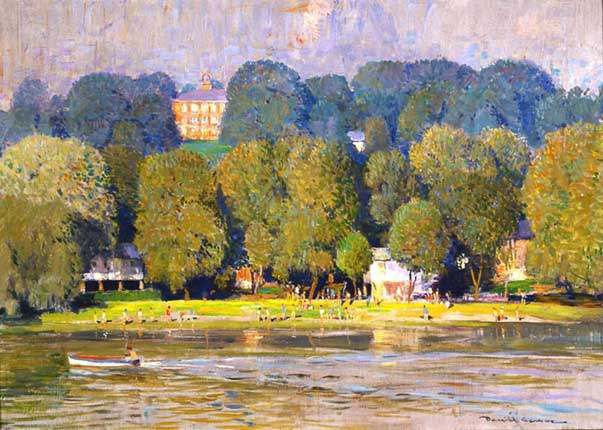
Lambertville Beach by Daniel Garber

During his time as a student at the Pennsylvania Academy, Daniel Garber met fellow artist Mary Ethel Franklin while she was posing as a model for the portrait class of Hugh Breckenridge. Peviously, she had been a student of Howard Pyle when he taught at the Drexel Institute. Following on from a two-year courtship, Garber and Mary were married on June 21st, 1901.
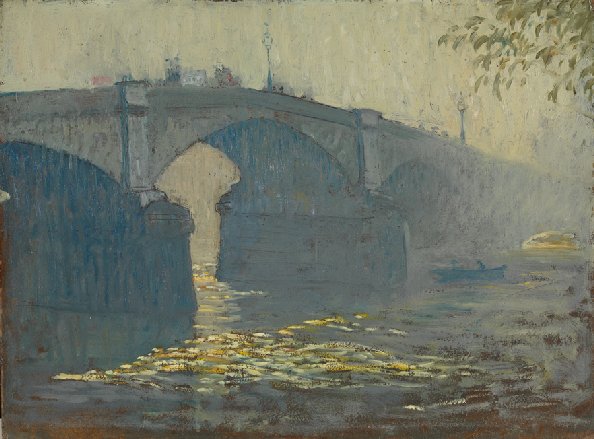
Battersea Bridge by Daniel Garber (1905)

Whilst still studying at the Academy, Daniel opened a studio in Philadelphia in 1901 and set to work as a portraitist and commercial artist. In May 1905, he won a Pennsylvania Academy award, The William Emlen Cresson Traveling Scholarship, which financed him to go to Italy, England and France for two years of independent studies. During his two-year sojourn in Europe he was continually creating paintings which depicted different rural villages and farm scenes and built up a collection of Impressionist landscapes some of which were exhibited at the Paris Salon. One such work was entitled Battersa Bridge.
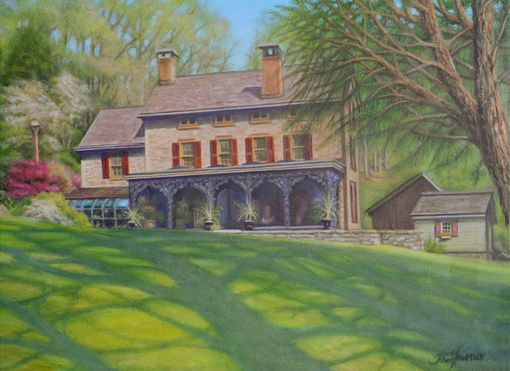
Painting of Daniel Garber’s home, Cuttalossa, by J.C.Turner

Upon his return to America in 1907, Garber began teaching life and antique drawing classes at the Philadelphia School of Design for Women. That summer, Garber, his wife and baby Tanis settled in Lumberville, Pennsylvania, a small town just north of New Hope. Their new summer home came to be known as Cuttalossa, named after the creek which occupied part of the land. The family spent part of their time in Lumberville and part in Philadelphia at their Green Street townhouse which he used as a base when he was teaching.
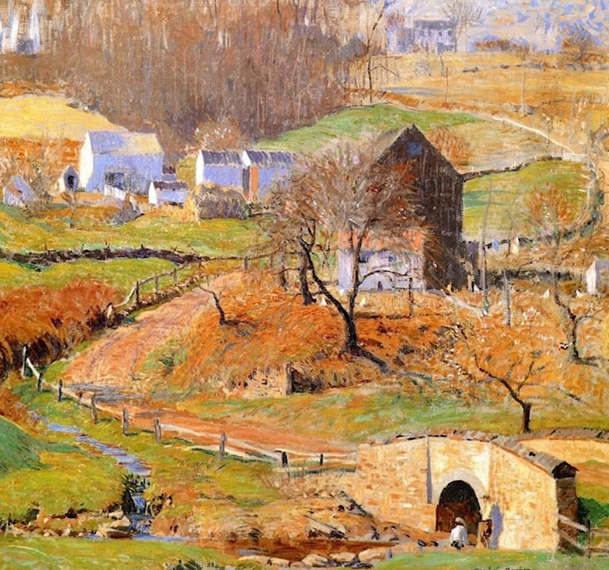
Rural Landscape by Daniel Garber
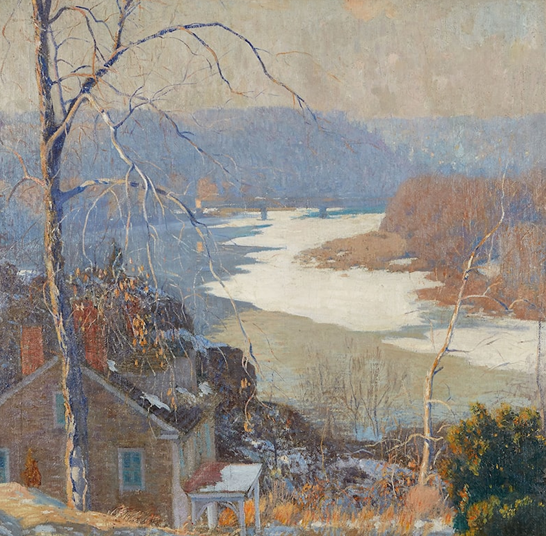
Up the River, Winter by Daniel Garber (1917)

Daniel submitted many of his Pennsylvania landscapes at various exhibitions and received numerous prestigious awards for these works.

Garber teaching at Chester Springs, c. 1935. Image courtesy of the Garber family.

In Autumn 1909, Garber was offered a position at the Pennsylvania Academy as an assistant to Thomas Anshutz. Garber accepted and became an notable instructor of art at the Academy where he taught for the next 41 years. As a lecturer in art, Garber aroused in his students an anxious silence as he passed among them, correcting the mistakes in their work. The brusque severity of his remarks often had his students, especially the women, in tears. He commented to one female student whilst critiquing her artwork:

“…Can you cook?……You sure can’t draw, so you’d better learn how to cook…”

Garber’s students, albeit often fearing his harsh critiques, respected his honest comments, realising the value of his observations and understanding the high expectations and dedicated concern underlying them.
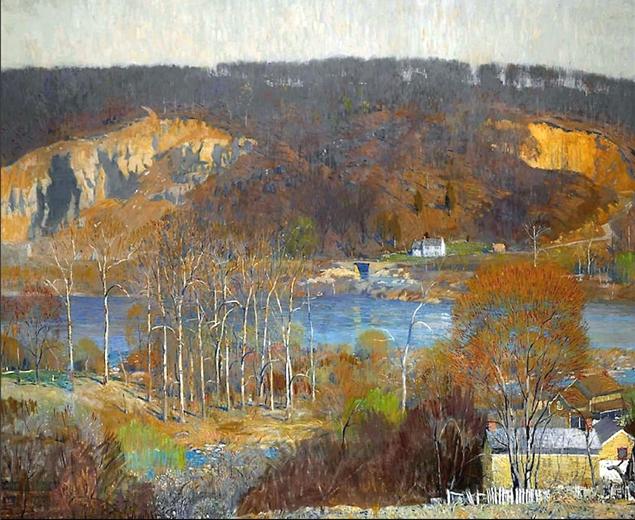
The Valley – Tohickon by Daniel Garber (1914)

Daniel Garber painted consummate landscapes depicting the Pennsylvania and New Jersey countryside which surrounded New Hope. In contrast to fellow New Hope artist, Edward Redfield, Garber delicately painted using a thin paint application technique. His paintings exude both beautiful colour and light, which generate a sensation of endless depth. Garber like Redfield painted large exhibition size works with the intention of submitting them to exhibitions and winning prizes which they were both extremely successful doing so.
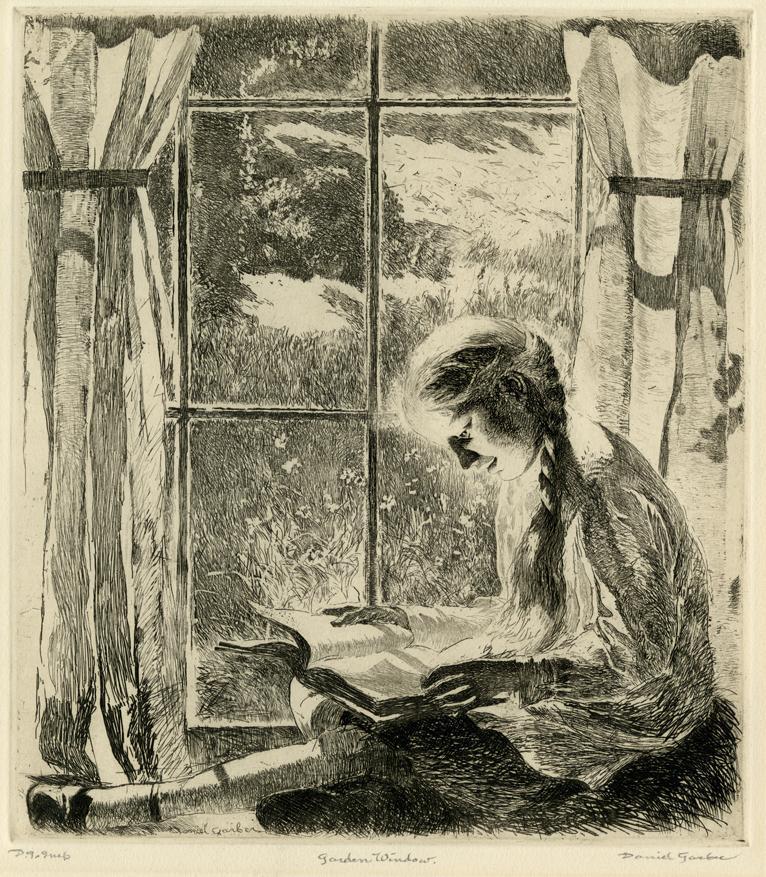
Garden Window, an etching and drypoint on paper by Daniel Garber (1946).

Although, he completed many small delicate paintings he was a fine draftsman, and completed many works on paper, mostly in charcoal but also a few works in pastel. Daniel Garber was also a talented etcher completing a series of about fifty different scenes, most of which run in editions of fifty or fewer etchings per plate.

Stockton Church etching by Daniel Garber (1941)

Daniel Garber loved to sketch. In fact the first jobs he held during his teenage years honed his skills as a draftsman. After working at the Franklin Engraving Company, Daniel Garber illustrated books and magazines, one of which was the collected works of Theodore Roosevelt. In 1917, he went back to his first love, drawing, this time as a printmaker. There was financial sense for Garber in making prints as by doing so he widened his exposure as an artist, exhibiting his work at print venues as well as the usual gallery outlets. He held many one-man exhibitions of his drawings, etchings, and prints and this meant an expansion to his market.
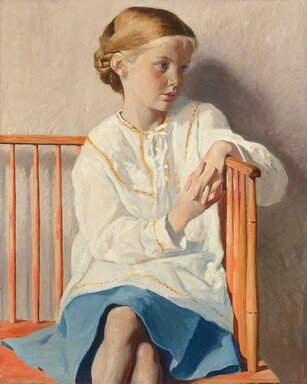
Tanis Garber by Daniel Garber (1914)

Daniel and Mary Garber’s first child Tanis had been born in Paris on December 16th 1906 and when she was seven years old her father completed her portrait. The portrait is part of the National Gallery, Washington’s collection.

Tanis by Daniel Garber (1915) From the Warner Collection of the Westervelt Warner Company, displayed in the Westervelt Warner Museum of American Art, Tuscaloosa, Alabama.

In this depiction (above) of his daughter Tanis he portrays her as if standing in a doorway of his studio at their home, Cuttalossa. In this work Garber began to explore the passage of light through air and objects. Although this might look like an Impressionist-style work, it is not about capturing fleeting light effects or impressions. In fact, Garber said that the painting was worked on over all of the summer months of 1915, with himt apparently returning to the work when his general light effects could be recreated. What Garber had in mind was his desire to simply achieve a Golden Age depiction of childhood; an eternal idealized image, rather than a momentary real one.

The Boys by Daniel Garber (1915) Depicting three of Garber’s students at the Pennsylvania Academy of the Fine Arts, this oil was created in his studio at Cuttalossa

Garber’s second child, John Franklin Garber was born in Pennsylvania on September 25th 1910, three years after his parents had returned to America from France. He grew up on the Garber property Cuttalossa, near Lumberville and he, like his sister Tanis and his mother, posed for many of Garber’s figurative paintings. He attended Penn Charter School and graduated with a degree in chemical engineering from Lehigh University in 1933. John Garber became a keen sponsor and advocate of his father’s work, assisting and corresponding with museums, private collectors, dealers and writers
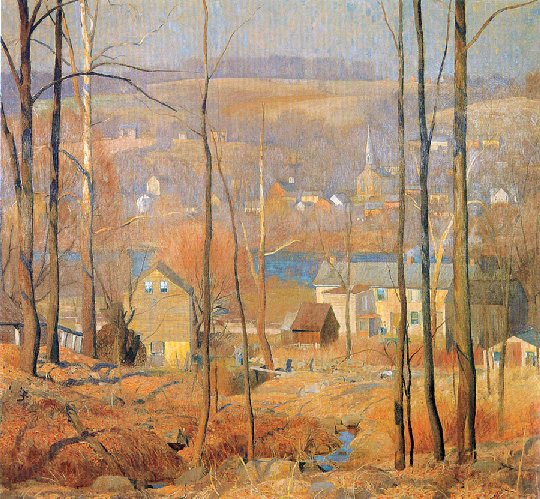
Geddes Run by Daniel Garber (1930)

Daniel Garber’s works were exhibited nationwide and many earned awards, including a gold medal at the Panama-Pacific International Exposition in 1915 in San Francisco, California. He was elected a member of the National Academy of Design in 1913.
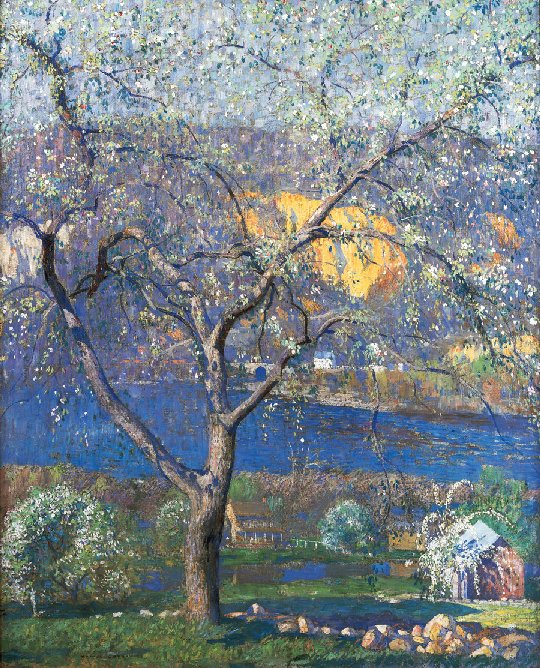
Buds and Blossoms by Daniel Garber (1916)

Daniel Garber died, aged 78, on July 5th, 1958, after falling from a ladder at his studio.

He continued to paint until nearly the end of his life and produced over 2,500 objects which were shown at over 750 exhibitions during the course of his lifetime. It had always been his desire to create and to share his art with the public. This interest in art and educating was also apparent by his forty-one years at the Pennsylvania Academy of Fine Arts, where he taught from 1909 until 1950, where he offered up his knowledge of art and was able to influence succeeding generations of artists. Garber’s paintings today are considered by collectors and art historians to be among the finest works produced from the New Hope art colony. His paintings can be seen in many major museums including the Smithsonian American Art Museum in Washington, DC, the Art Institute of Chicago and Philadelphia Museum of Art.

Was he the greatest of the New Hope painters ? I will let you decide.


Information for this blogs was obtained from a number of sources including:

Incollect

New Hope Colony Foundation of the Arts

Michener Art Museum

Jims at Lambertville

New Hope Artist Colony. Part 1.

In my last blog about the American Impressionist, M Elizabeth Price, I mentioned the New Hope Artist Colony and this name has cropped up in other of my blogs so I thought I would give you a more in-depth look at this artist colony and how it all began and the three artists who were part of its foundation.

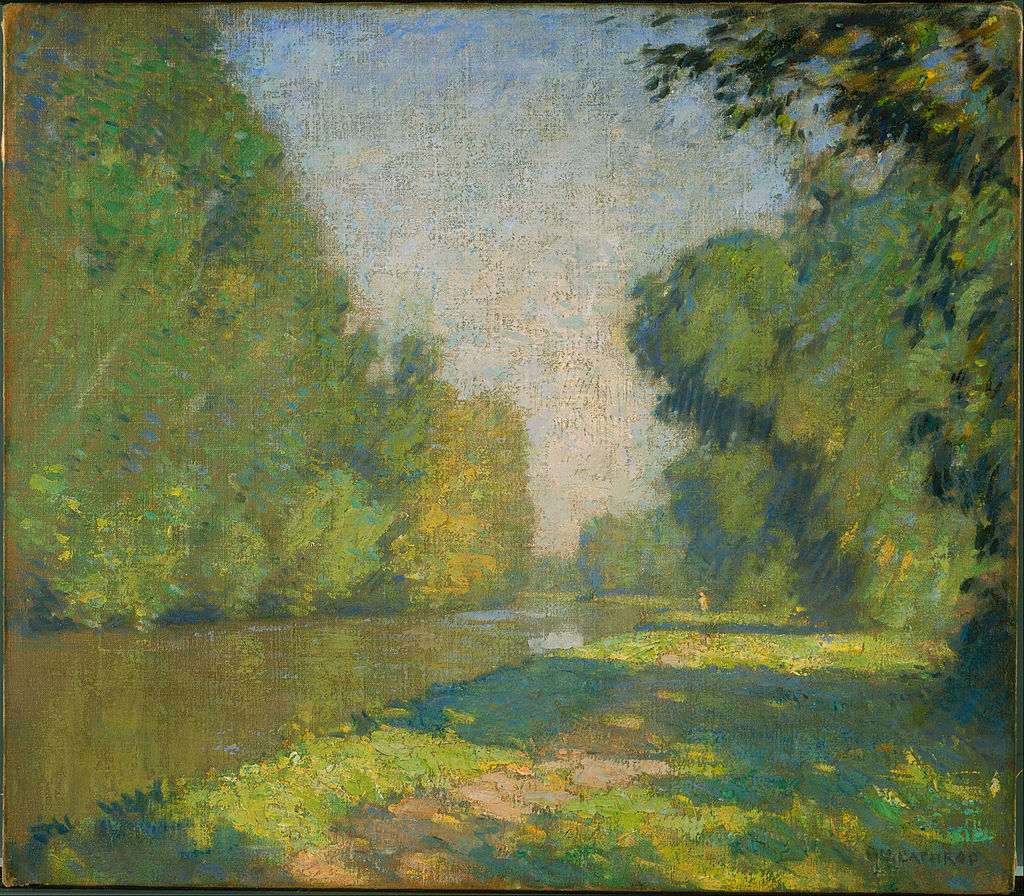
William Langson Lathrop, Edward Willis Redfield and Daniel Garber

Dr. George Morley Marshall

The New Hope Artist’s Colony can be traced back to 1896 when a Philadelphia surgeon and laryngologist Dr. George Morley Marshall acquired the hamlet of Phillips’ Mill in Solebury Township, Pennsylvania from the Betts Family. The grist mill, originally built in 1756 by Aaron Phillips, was ideally positioned to serve the many surrounding family farms.

Four generations of the Phillips family ground locally-farmed grain until 1889, when the property was sold and the mill fell into disuse. The property included a grist mill with water rights and glen, a dam, a pond, the Primrose Creek and a 40-foot waterfall which fed the mill race to run the two waterwheels. The buildings which surrounded the mill soon became residences for summer tenants, including the new school of Impressionist landscape painters, who used the outbuildings as studios to capture the natural beauty of Solebury and its environs.

William Langson Lathrop – self portrait

In 1897, Dr. Marshall contacted his boyhood friend, the well-known landscape artist William Langson Lathrop, inviting him to come to New Hope to paint the magnificent landscapes which bordered Phillips Mill.

Ely’s Bridge by William Langson Lathrop

William Langson Lathrop was an American Impressionist landscape painter. He was born in Painesville, Ohio, a small town on the shores of Lake Erie, on March 29th 1859. It was on this vast lake that William learnt to sail, a hobby he would enjoy for the rest of his life and ultimately, was to be the death of him.

A Pennsylvania Farm by William Langson Lathrop

Once he had completed his formal education, Lathrop began his art career in New York City. He was largely self-taught until he traveled to New York for a brief period of study with William Merritt Chase at the Art Students League. In the early 1880’s Lathrop secured a job as a graphic artist with Charles Parsons at Harper’s Magazine but he found that the small amount of money he earned was barely enough to live on. In the 1880s he travelled to England, France and Holland and it was during his stay in the English city of Oxford that Lathrop met, and in 1888, married his wife, Annie Sarah Burt. They had five children, three daughters, Nancy, Elizabeth and Ellen and two sons Joseph and Julian. Lathrop returned to America with little money, depressed at the way his artistic journey had stalled and he decided to give up art as a profession. After several years of struggle and failure, his friends back home persuaded him to return to his art and try the medium of watercolour. Lathrop finally found fame as a painter when, with one his works, he won the prestigious Evans Prize at the American Watercolor Society’s annual exhibition in 1896.  More importantly, he received a fulsome review in The New York Times, and, buoyed by this success, Lathrop embarked on the re-launch of his artistic career. In 1902 he was elected to the National Academy of Design.

Landscape by William Langson Lathrop (1915)

Having received Dr. Marshall’s invitation to visit the New Hope area, Lathrop, along with his wife Annie Sarah and their three children, Nancy, Joseph and Julian, travelled to New Hope where they rented the miller’s house which once belonged to Aaron Phillips on Marshall’s property. William Lathrop would later buy the property together with the surrounding four acres of farmland.

Twilight after the Storm by William Langson Lathrop

Lathrop’s wife Annie became a beloved figure in the New Hope Arts community and she would host afternoon teas on a Sunday on the lawn of their home besides the canal. These Sunday afternoon tea parties featured lively discussion of aesthetic, philosophical, and political issues, and visitors to these teas would love to sample a feast of homemade sandwiches, jams, beverages, and pastries. Lathrop’s wife, Annie, was a gifted cook and an affable host who took a genuine interest in the students’ well-being. Annie would attend their every need, housing, feeding, and encouraging them in a warmly maternal fashion. Martha Candler Cheney, a writer on the arts, wrote about these Sunday afternoon events:

“…Sunday afternoons, the Lathrops’ lawn was a collecting place at tea-time and someone remembered nostalgically only the other day how the fine, almost lost art of conversation flourished there…”

Spring Landscape by William Langson Lathrop (c.1915)

It was Lathrop’s reputation as an artist and a teacher that attracted other artists such as Edward Redfield. Daniel Garber and Charles Rosen to come to New Hope and form the group known as the Pennsylvania Impressionists. Lathrop was often called the “dean” of the New Hope art colony, and regularly welcomed students into his home at Phillips Mill. Unlike some of his colleagues, he preferred to work in the studio, rather than outdoors, which distinguished him from other artists in the group. Known primarily as a tonalist, Lathrop created rustic, simplified landscapes with a muted palette.

Montauk by William Langson Lathrop (1938)

William Langson Lathrop’s loved sailing and always had a boat.

Wiliam Langson Lathrop and his boat The Widget

William Langson Lathrop’s greatest love besides his art was sailing and in 1927 Lathrop hand-built a wooden boat in his backyard and named it The Widge which would become the love of his life. He completed and launched it into the Delaware River in 1930. It subsequently became his painting studio. Lathrop, being a competent sailor, would take the boat on trips along the eastern seaboard of America during the summer months. A companion on one of these trips was Albert Einstein, who was teaching at Princeton. 

On September 21, 1938, whilst Lathrop was sailing his boat around eastern Mountauk Point in Long Island he received word of an approaching hurricane. He was miles away from a safe harbour and so decided to ride out the storm in a secluded bay. The boat survived the hurricane-whipped seas but Lathrop’s body was recovered along the shoreline a month later. It is thought that he had suffered a heart attack and been washed overboard. After his death, a painting, entitled Montauk, dated September 21, 1938 was discovered in the boat’s cabin, proving that until his poignant final moments, Lathrop drew inspiration from the sea.

His good friend and fellow Bucks County artist, Henry B Snell wrote:

“…He had no fear of meeting death as he did — facing one of nature’s greatest manifestations. I know he died as he would have wanted to…”

William Langso Lathrop was buried in Solebury Friends Graveyard, Solebury, Bucks County, Pennsylvania.

………to be continued.


Important information for this and subsequent blogs regarding the New Hope Artists Colony came from an assorted websites, some of which were:

New Hope Colony Foundation of the Arts

Google Arts and Culture

Solebury

Diversions – A Meandering Journey through the World of Art

Mitchener Art Museum, Doylestown PA.

Fern Isabel Coppedge. Part 2.

                                                      The Coal Barge by Fern Isabel Coppedge

One of Fern Coppedge’s later paintings, The Coal Barge, which she completed around 1940, featured the Delaware Canal.  The sixty-mile canal and the coal barges, which ploughed their way down its length, were an important means of transporting anthracite coal from north-eastern Pennsylvania to Philadelphia.  This barge trade lasted a hundred years and started in 1932 and in its heyday, over three thousand mule drawn boats travelled up and down this waterway carrying more than one million tons of coal every year.  This mode of transport became obsolete with the transporting of coal by rail.  This depiction of the canal and towpaths was a favourite depiction of many artists at the time.  There was a connection between Fern and the mules, which were used to tow the barges, as her studio was in a barn which once housed the working animals.

                                            Evening Local, New Hope by Fern Isabel Coppedge (C.1930)

In 1933 Fern completed a painting entitled Evening Local, New Hope which originally had the title, Five O’clock Train, which pictorially presents historical documentation of the schoolhouses which were in the New Hope-Solebury School District.  The painting depicts New Hope Elementary School which can be seen on the hill off West Mechanic Street in New Hope.  The building is no longer a school but is now the home of the New Hope Jewish congregation Kehilat NaHanar known locally as the “Little Shul by the River.”

                                                         The Opalescent Sea by Fern Isabel Coppedge

Coppedge divided her time between her Boxwood home in Lumberville, her studio in the coastal town of Gloucester where she often spent summers, and a studio in Philadelphia which she used during exhibitions.  In 1916 Fern spoke about her plein air painting at the Massachusetts fishing town of Cape Ann, Gloucester, and how she had many ardent onlookers.  She wrote:

“…In the waters shown in my paintings, there were a number of lobster traps. The fishermen were so much interested in the development of the picture of this familiar scene that in order to have an excuse to see it they would bring me a freshly boiled lobster, and the old sea captains would entertain me with thrilling stories of stormy nights spent in their little fishing schooners on the Newfoundland Banks and the Georges…”

                                       The Philadelphia Ten.
                             Fern Coppedge, back row on left)

In 1922 Fern was accepted into the all-women art society known as the Philadelphia Ten and exhibited regularly with them through to 1935.   They were an exclusive and progressive group of female artists and sculptors who ignored society rules of the time by working and exhibiting together. 

Coppedge once talked about her favoured methodology of painting and how she favoured working plein air to capture the essence of nature, notwithstanding inclement weather conditions:

“…I may erase most of my sketch, but after I have it the way I want it in charcoal, then I work over the entire canvas with a large brush. I use thin paint in trying to get the right value. I test different spots to see whether the scene should be painted rich or pale. Then I proceed with the actual painting using paint right from the tube. I hold the brush at arm’s length and paint from the spine. That gives relaxation…”

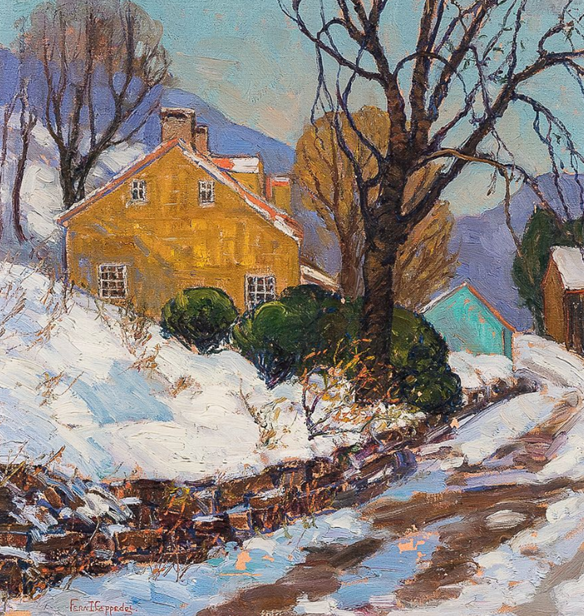
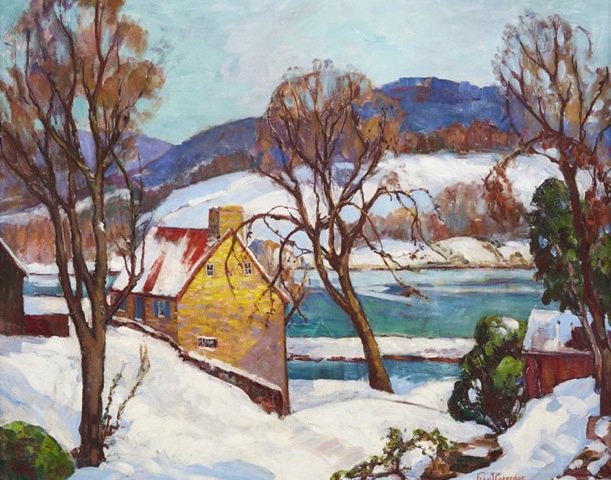
                                            Winter Solitude, Lambertville by Fern Isabel Coppedge

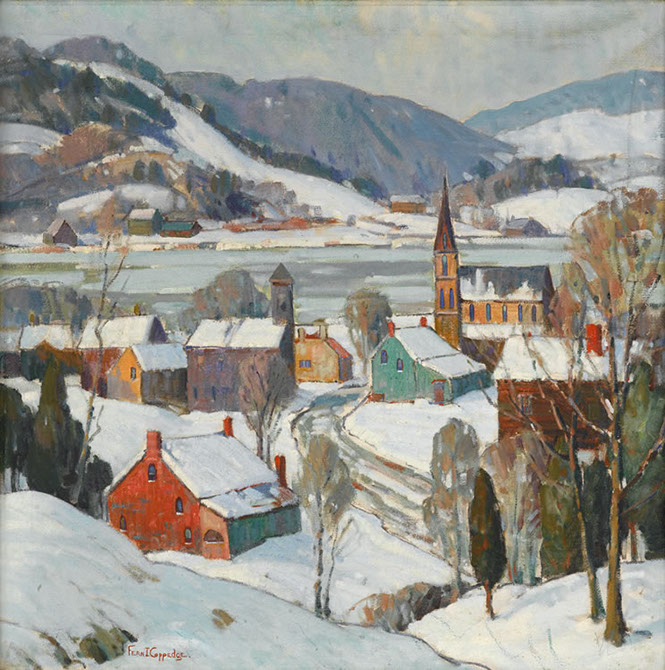
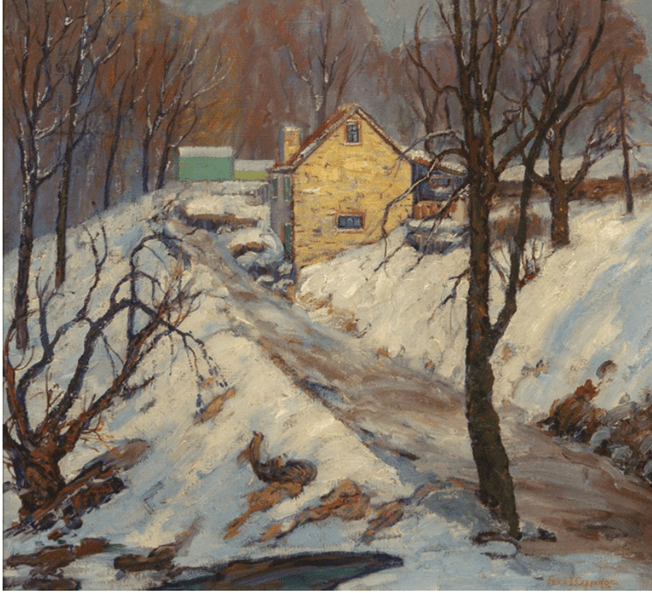
Pennsylvania Impressionism was an American Impressionist movement of the first half of the 20th century that was centred in and around Bucks County, Pennsylvania, particularly the town of New Hope. The movement is sometimes referred to as the “New Hope School” or the “Pennsylvania School” of landscape painting. Fern Coppedge was the only female member of The New Hope School.  She was part of that art movement and devoted numerous pictures to her Bucks County environment especially her winter scenes and she would suffer for her art with her plein air painting in the sub-zero conditions.   She was fascinated with the beauty of the snow.  There is no doubt that the extreme cold winters challenged her devotion to plein air painting.   She tried to get round this and carry on painting as long as she could by removing the back seat of her car to paint from an enclosed warm area. In cold windy conditions she would often tie her canvases to trees to fight off the wind and would wear her unfashionable but fit-for-purpose bearskin coat.  It was said by a local art critic for The New Hope magazine in November 1933:

“…We remember seeing Mrs. Coppedge trudging through the deep snow wrapped in a bearskin coat, her sketching materials slung over her shoulder, her blue eyes sparkling with the joy of life…”.

                                              Carversville by Fern Isabel Coppedge

There was a difference between her paintings and the other New Hope Impressionists.  Unlike other New Hope Impressionists, Fern Coppedge looked at the landscape scenes she was to paint with different eyes than them.    Of course, the first thing she acknowledged was what the eyes saw or the true photographic image.  However, she would also want an input from her imagination and how the scene felt like to her, and it was this power of imagination that led her to paint scenes with colours and tones which did not exist in reality.

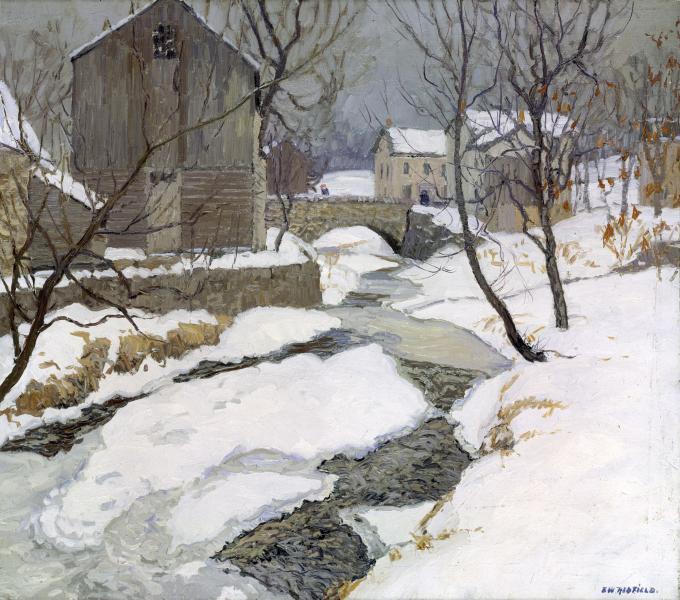
       The Brook at Carversville by Edward Redfield (ca. 1923), (Smithsonian American Art Museum)

An example of her differing style can be seen if you compare her depiction of Carversville with the depiction of the same place by her fellow New Hope School artist, Edward Redfield.

Often her scenes would not be topographically correct.  Again, it was down to her power of imagination which countered reality and the finished result was an idealised version of the scene which was all about pleasing the artist.  In her mind, the depiction was a battle between what was actually there in front of her against what she imagined should be there.  Instead of depicting building using true brown and grey colours, Fern preferred to use pink and turquoise to, as if by magic, brighten facades. A travesty of art ?  Maybe we should think of how nowadays we adjust photographs, using photo editing packages, to achieve, not a true result, but a result we find more pleasing !  The fact her paintings sold so well is testament that the buying public had no problem with her idealisation or colour shifts.

                                                 Back Road to Pipersville by Fern Isabel Coppedge

Fern joined “The Philadelphia Ten” in 1922 and exhibited regularly with them for the next thirteen through 1935. The Philadelphia Ten, which was founded in 1917, was both a unique and forward-thinking group of women artists and sculptors who ignored the rules of society and the art world by working and exhibiting together for almost thirty years. Their work was varied and included both urban and rural landscapes, portraiture, still life, and a variety of representational and myth-inspired sculpture.  The group of local female artists started with eleven founding members, who were all alumnae of either the Pennsylvania Academy of the Arts and the Philadelphia School of Design for Women (known today as Moore College of Art and Design), but over the years the membership rose to thirty artists, twenty three who were painters and seven who were sculptors.

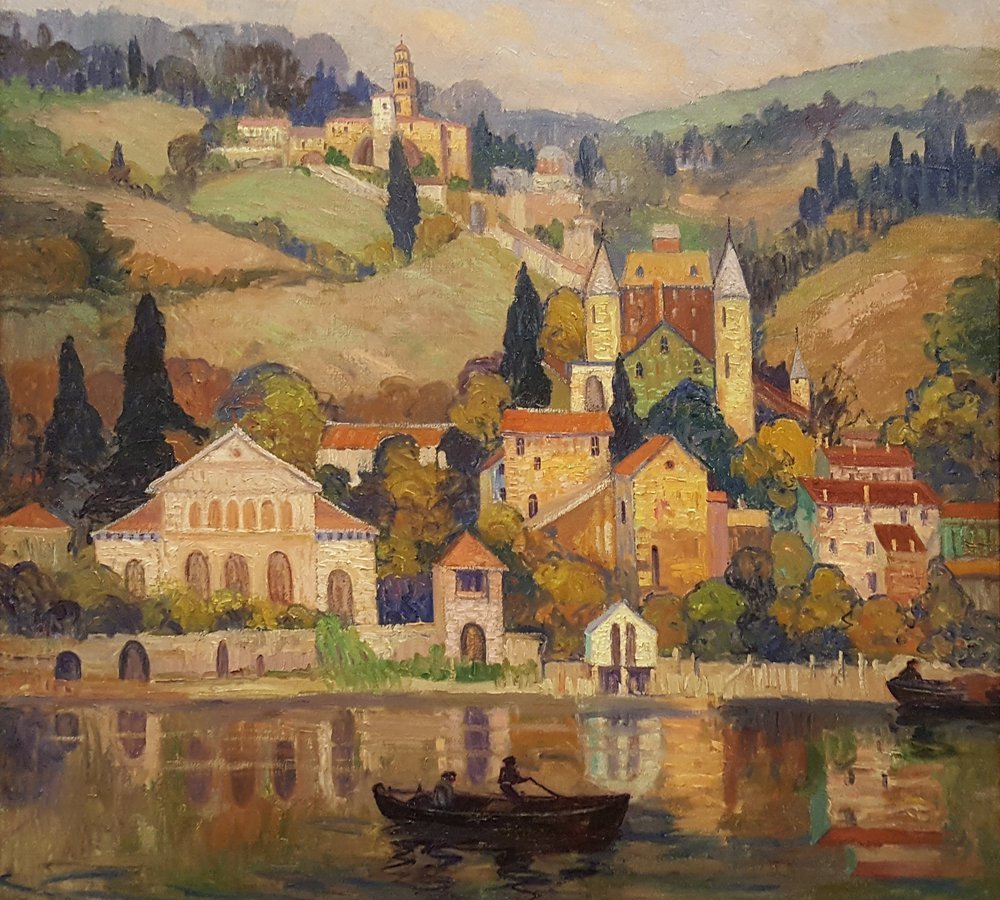
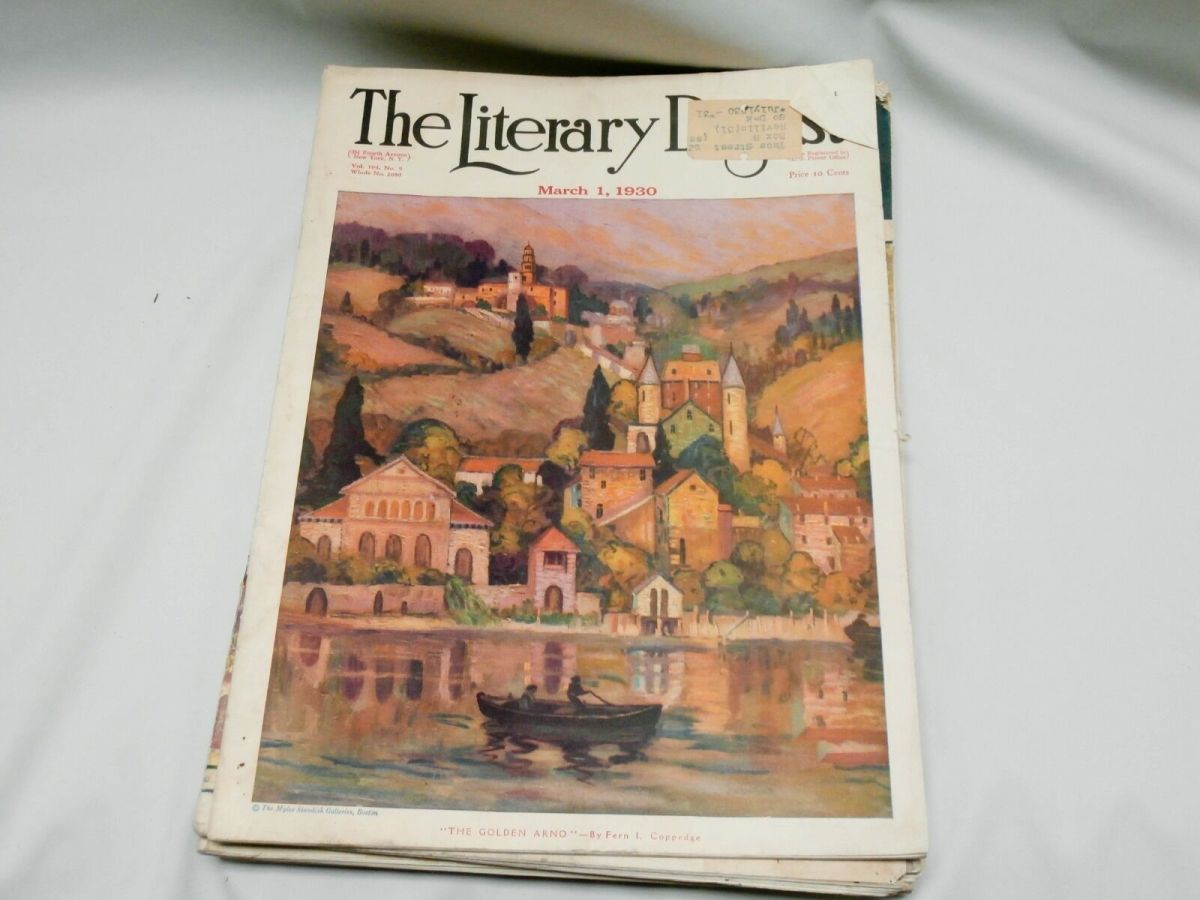
                                               The Golden Arno by Fern Isabel Coppedge (c. 1926)

In the summer of 1925, Coppedge travelled to Italy and immersed herself in painting local scenes.  She stayed in the city of Florence, which was a base for her travels around Tuscany, ever recording pictorially the beauty of the Tuscan landscape.  It is thought that during her time in Tuscany Fern was inspired to change her painting style.  She began to simplify the natural elements she saw before her, often flattening them and she also became much more audacious when it came to her colour choices.  One of my favourite works from this period is Coppedge’s painting entitled The Golden Arno.  She had sketched views of the great Italian river as it passed through Tuscany and the painting was completed back in her home studio.  Coppedge talked about this painting and how it came about:

“…From my hotel, overlooking the Arno in Florence—looking from the balcony window—I saw the Arno River flowing gently like molten gold. It was late afternoon, and lazy Italian boatmen floated past in the dark, sturdy barges, wending their way down the river. Along the opposite bank were charming old stucco houses in colours of pale and rusty yellow, rose, pink, and old red. Tiled roofs, arched doorways and deeply recessed windows, balconies, towers and turrets against the background of cypress trees—all mirrored in the waters of the Arno. Church towers and ancient castle walls patterned against the hills inspired me and thrilled me with an irresistible desire to put on canvas my impressions…”

         The Literary Digest March 1st 1930 edition with Fern Coppedge’s picture on the front cover

In 1926, the painting of the Arno was included in an exhibition of The Philadelphia Ten.  It received great praise from both viewers and art critics. The painting was later exhibited in exhibitions in New York, Boston, and Philadelphia, and it is now regarded as one of her best works. It was also reproduced on the cover of The Literary Digest in March of 1930. The painting was acquired by her local high school, mostly likely after the school opened in 1931.  Around 1934, Fern stopped exhibiting with The Philadelphia Ten and instead focused on exhibiting at her studio,

                                                  Lamplighters Cottage by Fern Isabel Coppedge (1928)

During her artistic career she received several awards including the Shillard Medal in Philadelphia, a Gold Medal from the Exposition of Women’s Achievements, another Gold Medal from the Plastics Club of Philadelphia, and the Kansas City H.O. Dean Prize for Landscape.

Coppedge died at her New Hope home on April 21st, 1951 at the age of 67.  Her husband, Robert W. Coppedge, died in New Hope, Pennsylvania in 1948. The Coppedges, who were married in 1904, remained husband and wife for 44 years.  Fern Coppedge was one of America’s most prolific painters, having completed over five thousand works during her lifetime.  I will leave the last word on Fern Coppedge and her paintings to Arthur Edward Bye, an American landscape architect born in the Netherlands who grew up in Pennsylvania who said:

“…Man and his activities seem pleasantly remote but not absent in her landscapes. She fills them with houses and churches, lanes, bridges, and canals. They have therefore, that suggestion of human life, coloured with brightness, exuberant, which best answers the needs of most of us…”


Most of the information for this blog came from the website Pennsylvania through the eyes of Fern I Coppedge.

Fern Isobel Coppedge. Part 1

Fern Isabel Coppedge in her studio

My featured artist today was one of the Pennsylvania Impressionists, an artistic movement of the first half of the 20th century that was centred in and around Bucks County, Pennsylvania, particularly the town of New Hope. Often the movement was referred to as the New Hope School or the Pennsylvania School of Landscape Painting.  Leading artists of the movement taught at the Pennsylvania Academy of the Fine Arts in Philadelphia. There was a difference between Pennsylvania Impressionism and Impressionism practiced in other parts of America as, with the former, the personification of their art was the thick brushwork and the way they almost had a dedicated concentration on landscape painting.  Today’s artist was one of the great American painters of her time and although she has been tagged with the term, Impressionism, Fern Isabel Coppedge has of late been labelled as a follower of Colourism,  which is a painting style characteristic for its use of intense colour, and for making colour itself the main compositional language in the resultant work of art.  Thus, her paintings are looked upon as part Impressionism part Colourism, which is a painting style characteristic for its use of intense colour, and for making colour itself the main compositional language in the resultant work of art. Coppedge’s paintings offered up her bold and unorthodox use of bright vibrant colours similar to Fauvism, which is also characterised by strong colours and fierce brushwork.

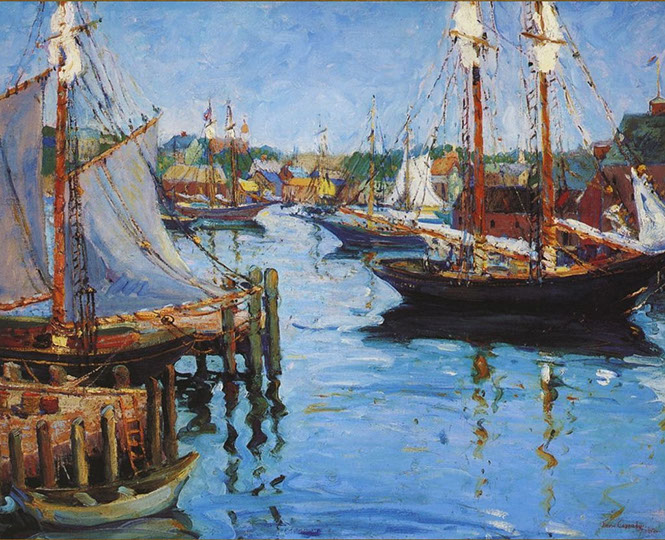
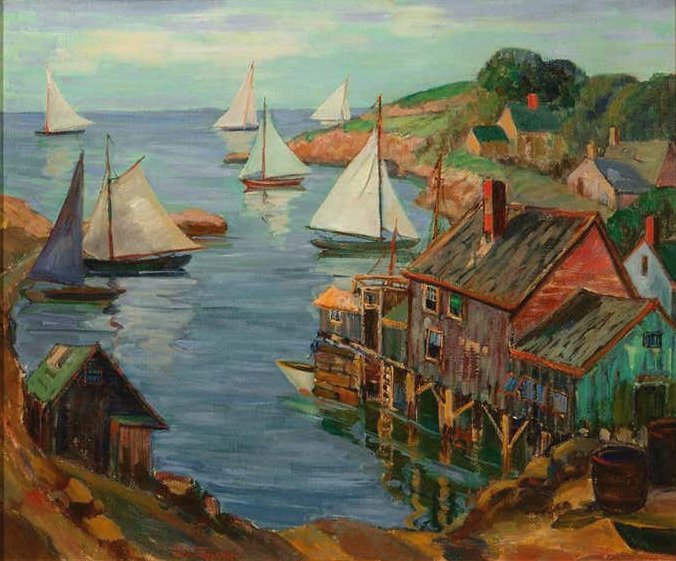
Gloucester Harbour by Fern Isabel Coppedge

Let me introduce you to the nineteenth century American painter, Fern Isabel Coppedge, a landscape artist, who was famed for her depiction of the villages and farms of Bucks County, Pennsylvania, often blanketed with snow, as well as her harbour scenes of Gloucester, Massachusetts, where she spent her summers.

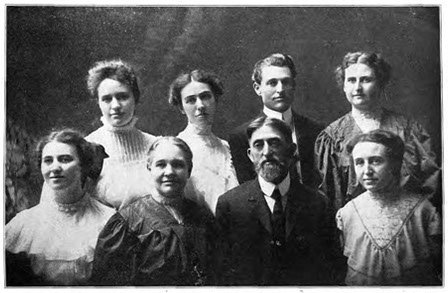
Fern (Kuns) Coppedge, Dessie (Kuns) Garst, George Dilling Kuns, Margaret Effa Kuns, Vada Dilling Kuns, Maria (Dilling) Kuns, John L. Kuns, Mary (Kuns) Klepinger

Fern Isabel Kuns was born on July 18th 1883 in the small town of Cerro Gordo which lies about twelve miles east of the central Illinois city of Decatur.  Her parents were John Leslie Kuns and Maria Anna Dilling.  Fern was one of six children.  She had four sisters, Margaret Effa, Dessie, Vada, and Maria and one brother, George Dilling.  Sadly, the first-born of John and Maria’s family was a boy, Joseph, who died in 1873 aged ten. 

Home of Fern Kuns and Family in McPherson, Kansas (c.1900)

Her father had a small farm which he had inherited from his father, but was constantly struggling to make ends meet, so much so that in 1886, when Fern was aged three, he had to sell the farm, at a loss, so as to feed the family and pay for their education.  John and his family moved west to California in the hope of finding work but nought came of it, although Fern’s eldest sister Margaret, nine years Fern’s senior, said that life in California was the best year of her childhood.  When potential opportunities did not work out for their father, they headed back east and arrived in Kansas. In 1889, the Kuns’ finally settled in McPherson, Kansas and occupied a house on the campus of McPherson College.

Watercolour by Margaret Effa Kuns (c.1935)

When Fern was thirteen years old, she went back west to Palo Alto in California where her sister Margaret Effa was studying at Leland Stanford University.  Fern,  still too young to leave the school system, enrolled at the Pasadena High school.  During her stay in California she enjoyed the company of her elder sister, Margaret Effa, and was fascinated watching her painting in a watercolour class.  This was what first instance which eventually made Fern fall in love with painting and drawing.  Effa encouraged her sister’s newly found love of art and would take her to museums to study famous paintings.

An early insight of Fern’s early work can be gleaned by a comment she once made about her art and her unusual views of the use of colours.  She said:

“…People used to think me queer when I was a little girl because I saw deep purples and reds and violets in a field of snow. I used to be hurt over it until I gave up trying to understand people and concentrated on my love and understanding of landscapes…”

Robert William Coppedge

In 1900, at the age of seventeen, Fern Kuns went back to Kansas and, upon her return to the Midwest, she studied at McPherson College and later the University of Kansas.   Shortly after her return to Kansas, she met her future husband, Missouri-born, Robert William Coppedge, a high school science teacher, botanist, and amateur artist.  On January 2nd, 1904, Fern Kuns and Robert Coppedge were married in her parents’ home in McPherson, and the ceremony was followed by a four-course wedding breakfast. Fern and her husband moved east to the Kansas state capital, Topeka.  Robert continued with his teaching profession whilst Fern continued with her love of painting and four years later, when they moved to Illinois, she attended the Art Institute of Chicago from 1908 to 1910. 

Back Road to Pipersvill by Fern Isabel Coppedge

From Chicago she moved to New York, where she enrolled at the Arts Student League.  She studied with the artist, muralist and illustrator, Frank Vincent DuMond and the Impressionist painter, William Merritt Chase.  In 1917, Fern spent time studying at the prestigious Pennsylvania Academy of Fine Arts, where one of her tutors was the Pennsylvania artist and art teacher, Daniel Garber and that year she had some of her artwork accepted into that year’s annual exhibition.  In that summer she studied at the Art Students League summer school in Woodstock where winter painting specialist, John Fabian Carlson, was director.  Carlson was one of the great interpreters of the wooded landscape and was a great influence on Fern Coppedge.

Pigeon Cove by Fern Isabel Coppedge (c.1930)

In 1917 Fern visited Pennsylvania for the first time. She immediately fell in love with its picturesque-wooded hills and the many old-fashioned Bucks County towns which reminded her a little of her home state, Kansas. She remained in Pennsylvania for over thirty years and went on to own homes in Philadelphia, and the Bucks County towns of Lumberville, where she purchased a home and art studio in 1920, which she named Boxwood, sometimes referred to as The Boxwood Studios. 

Lumberville in Winter by Fern Isabel Coppedge

In her painting,  Lumberville in Winter, we see depicted a yellow building which is believed to be her first Boxwood studio which had once been a Quaker meeting house dating to the 1700s and is featured in several other works by the artist.  The small two-storey building would feature in many more of her paintings.  Living close to her in the small village of Cuttalossa was her former tutor, Daniel Garber.

October by Fern Isabel Coppedge (after restoration work)

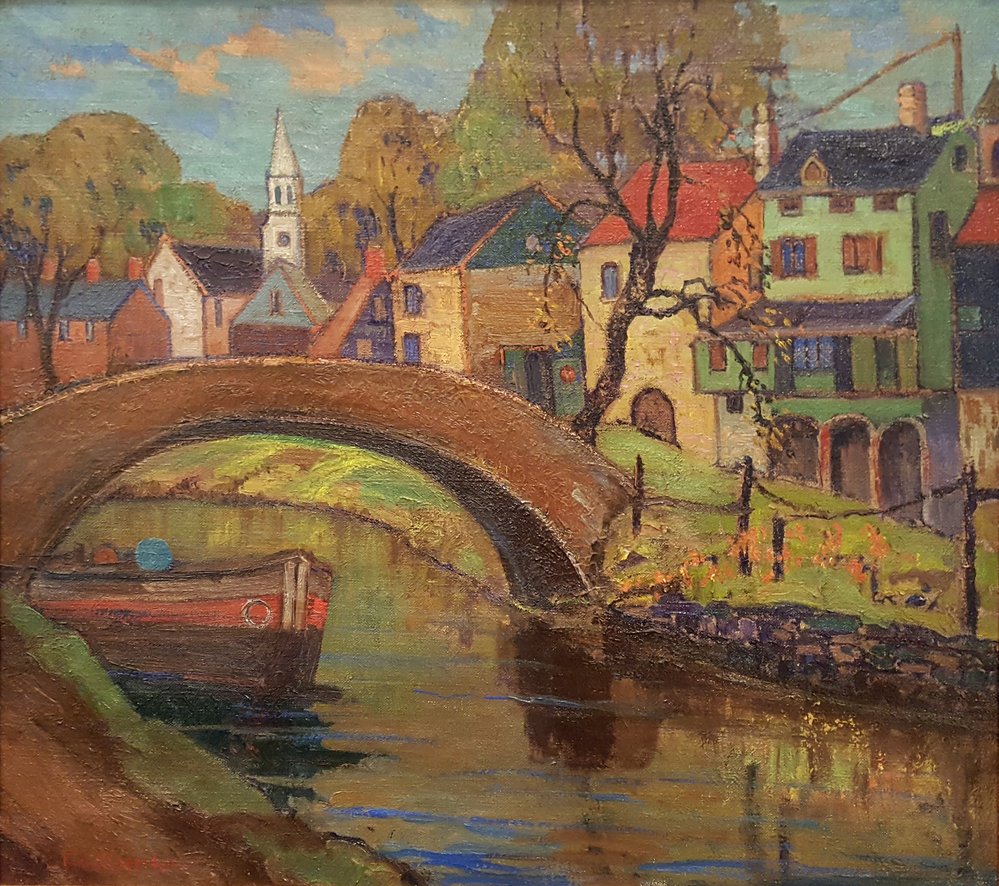
There is an interesting story about Fern Coppedge’s painting entitled October.   In May, 2011, a man with a small but pleasant oil painting entitled October, fresh from a New Jersey estate, walked up to the owner of a hot dog stand in North Carolina, Alison Bledsoe.  The hot dog lady, looked at the dirty landscape of a bridge, some yellow leafed trees, and some brightly coloured houses. She was not quite sure if the interesting painting was worth buying, but as it was not expensive she purchased it.   Seven months later, on December 4, 2011, Les and Sue Fox of West Highland Art Auction Brokers and authors of The Art Hunters’ Handbook, in cooperation with Alasdair Nichol of Freeman’s Auctioneers, sold the professionally cleaned New Hope, Pennsylvania bridge scene by Fern Isabel Coppedge for $29,800 at auction. 

The Tow Path by William Langson Lathrop
Landscape painter William Langson Lathrop (1859-1938) moved to New Hope in 1898, where he founded a summer art school, which became known as The New Hope School

Nine years later, in 1929, Fern Coppedge moved seven miles down-river to the small town of New Hope.  It  was a  town located along the route of the Old York Road, the former main highway between Philadelphia and New York City.  At the time when George Washington crossed the Delaware in 1776, it was known as Coryell’s Ferry, after the owner of the ferry business, and got its current name after a fire destroyed several mills in 1790. It was said that once the mills were rebuilt, there was a “new hope” for this small town on the Delaware river.  The town would later be joined by a bridge to Lambertville, on the New Jersey side. Artist William Langston Lathrop and his family moved to New Hope in 1898 and founded an art school and he is now considered the father of The New Hope School

Snow And Sunshine by Fern Isabel Coppedge

Fern Coppedge lived on North Main Street in the centre of New Hope, in an early American style stone house and studio which she had built and was designed by architect Henry T. MacNeill in 1929.  This too was named Boxwood !   Over the years Fern Coppedge painted a number of pictures of her Boxwood home, at which she held many exhibitions of her work.  In 1907 Daniel Garber, who had once tutored Fern at the Pennsylvania Academy of Fine Arts in the early 1900’s,  joined the early group of American Impressionists who would evolve into The New Hope School of Pennsylvania Impressionists. Fern became a member of the group and at the time she was the only female member of the New Hope School. Members of the New Hope School lived and painted in a number of Bucks County towns near New Hope, including Lumberville and Carversville. But the “New Hope School” name stuck and that is what these talented artists who followed in the footsteps of the French Impressionists are now called.

………………………to be continued.


Most of the information for this blog came from the website Pennsylvania through the eyes of Fern I Coppedge.