Laura Wheeler Waring. Part 2.

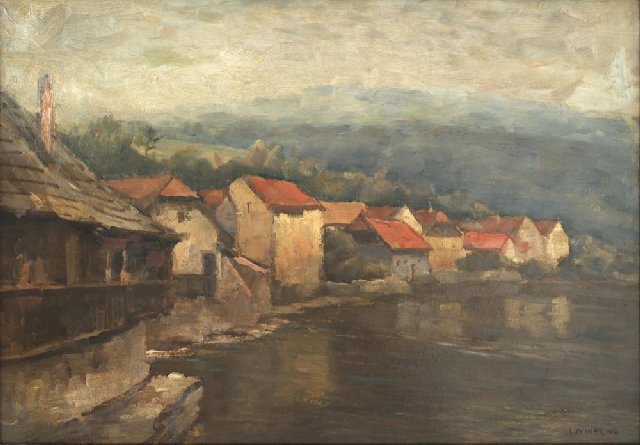
Houses at Semur by Laura Wheeler Waring (1925)

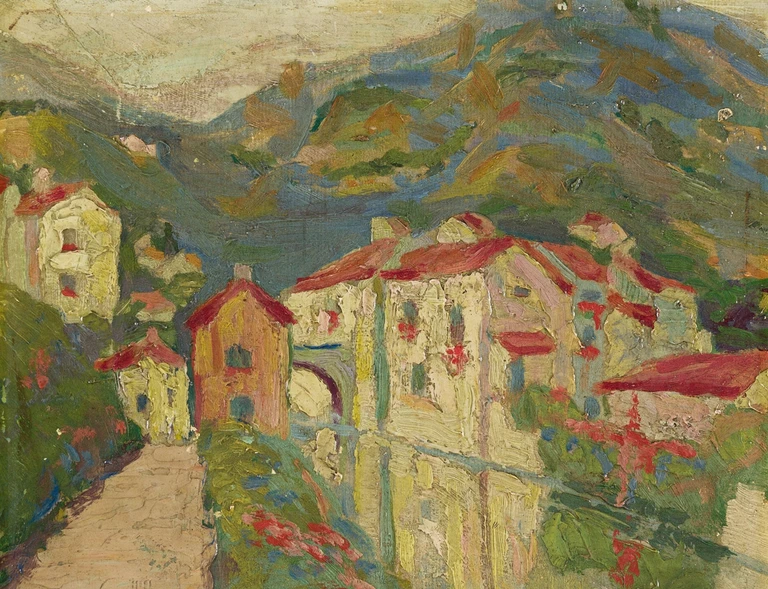
Saint-Jean-Pied-de-Port by Laura Wheeler Waring (1925)

After her short stay in the south of France, Waring returned to Paris in the Spring of 1925 and continued her studies at the Académie de la Grande Chaumiére whilst staying in the Villa de Villiers in Neuilly-sur-Seine.  That year Laura completed her paintings, Houses at Semur, France and Saint-Jean-Pied-de-Port. Critics believed this was a turning point in her artistic style as we see her use of vivid colours in order to express vivid, brilliant atmospheric conditions. Both works enhanced her growing reputation.  The following year, she had works shown at the Corcoran Gallery in Washington, D.C., the Brooklyn Museum, and the Philadelphia Museum of Art. And her standing in the art world was such that she was asked to curate the Negro Art section at the Sesquicentennial Exposition in Philadelphia.  

On June 23rd, 1927, Laura Wheeler was married to the Philadelphian, Walter Waring, a public-school teacher, who was ten years her junior and who was then working as a professor at the all-Black Lincoln University. The couple had no children. That same year, Laura won a gold medal in the annual Harmon Foundation Salon in New York. Laura Waring was actively painting during the Harlem Renaissance.  The Harlem Renaissance was an influential movement in African American literary, artistic, and cultural history from 1918 to the mid-to-late 1930s. The movement was originally referred to as the New Negro Movement, which referred to Alain LeRoy Locke’s 1925 book, The New Negro, which was an anthology that sought to motivate an African-American culture based in pride and self-dependence.

She was also involved with the Harmon Foundation.  It was established in 1921 by wealthy real-estate developer and philanthropist William E. Harmon who was a native of the Midwest, and whose father was an officer in the 10th Cavalry Regiment.  The Foundation originally supported a number of good causes but is best known for having served as a large-scale patron of African-American art and by so doing, helped gain recognition for African-American artists who otherwise would have remained largely unknown.
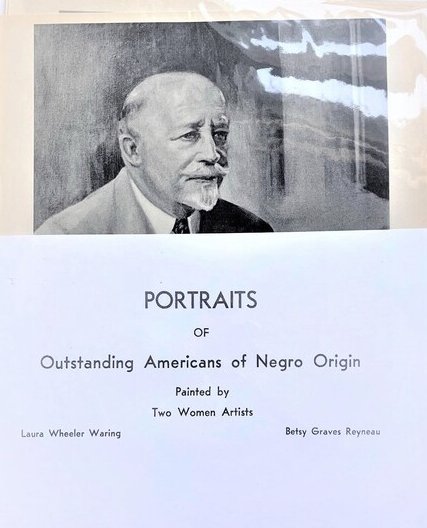
In 1944 the Harmon Foundation, which was under the direction of Mary Beattie Brady, organized an exhibition Portraits of Outstanding Americans of Negro Origin.  The idea behind the exhibition was to try and counteract racial intolerance, ignorance and bigotry by illustrating the accomplishments of contemporary African Americans. The exhibition featured forty-two oil paintings of leaders in the fields of civil rights, law, education, medicine, the arts, and the military. Betsy Graves Reyneau, Laura Wheeler Waring, and Robert Savon Pious painted the portraits that became known as the Harmon Collection. US Vice President Henry A. Wallace presented the first portrait, which featured scientist George Washington Carver, to the Smithsonian in 1944. The Harmon Foundation donated most of this collection to the Smithsonian’s National Portrait Gallery in 1967.

Anna Washington Derry by Laura Wheeler Waring (1927)

Laura Wheeler Waring will always be remembered for her portraiture and her most acclaimed work was not of the prosperous and famous African Americans which I have highlighted below but of a poor laundress, Anna Washington Derry.  She was one of five children who had moved with her family from Maryland to the eastern Pennsylvanian town of Strodsburgh, a borough in Monroe County.  Monroe was home to a small free Black community who had arrived via the Underground Railroad, a network of secret routes and safe houses used by enslaved African Americans to escape into free states.

The beautiful realistic depiction of the old lady beautifully conveys the lady’s dignity and inner determination through her use of simple, brown-beige tones of her dress, her expressive face, her folded arms and hands.  In the town where she lived Derry was looked upon as that of a community matriarch who was fondly addressed locally as “Annie”. The portrait was unveiled in 1926 at an elite exhibition for Black Philadelphian professionals some of whom may not have identified with Waring’s “ordinary” subject. The art historian Amanda Lampel commented:

“…Although Derry’s portrait did not sell that day, the Philadelphia Tribune, the oldest continuously published African American newspaper in the United States, called it remarkable……… Compared to fellow contemporaries like Aaron Douglas, Waring was much more conservative in her painting style and subject matter. This was in keeping with the types of artists who won the prestigious Harmon Foundation award, which sought to spotlight the up-and-coming Black artists of the Harlem Renaissance. Most of the award winners painted more like Waring and less like Douglas…”

In 1927 Laura exhibited the portrait of Anna Washington Derry at New York’s Harmon Foundation where it received the First Award in Fine Art – Harmon Awards for Distinguished Achievement Among Negroes. From there it was exhibited at Les Galeries du Luxembourg in Paris and across America.  The depiction was often reproduced in magazines and journals. The exhibition had its premiere at the Smithsonian Institution on May 2nd, 1944.  For the next ten years, Portraits of Outstanding Americans of Negro Origin, exhibition, travelled to museums, historical societies, municipal auditoriums, and community centres around the United States.  The public response was overwhelmingly positive in every venue.
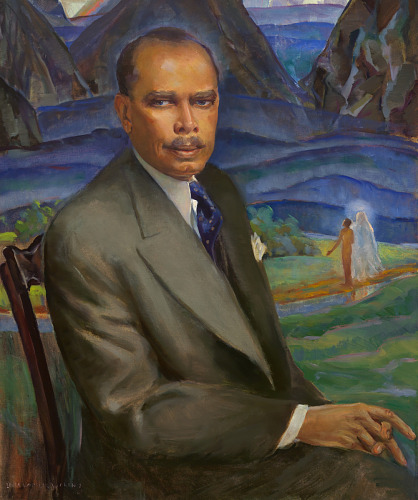
James Weldon Johnson by Laura Wheeler Waring

Laura Wheeler Waring will be most remembered for her portraits of successful, upper class Negroes and whites including James Weldon Johnson, the successful Broadway lyricist, poet, novelist, diplomat, and a key figure in the NAACP, National Association for the Advancement of Coloured People.  In 1900, he collaborated with his brother to produce “Lift Every Voice and Sing,” a song that later acquired the subtitle of “The Negro National Anthem.”
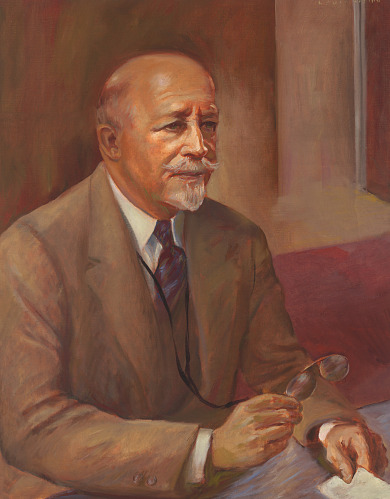
William Edward Burghardt Du Bois by Laura Wheeler Waring

Another sitter for Laura was William Edward Burghardt Du Bois (W.E.B. DuBois), who was the first African-American to earn a doctorate from Harvard University  He then became a professor of history, sociology, and economics at Atlanta University, and  co-founder of the National Association for the Advancement of Coloured People (NAACP), and founder and editor of the NAACP’s magazine The Crisis. Laura Waring had worked for Du Bois, creating several illustrations for The Crisis. Laura depicts Du Bois seated at a wooden desk or table, looking to the right. The spectacles he holds in his right hand, and the small paper he holds in his left, confirm his status as an intellectual and academic.
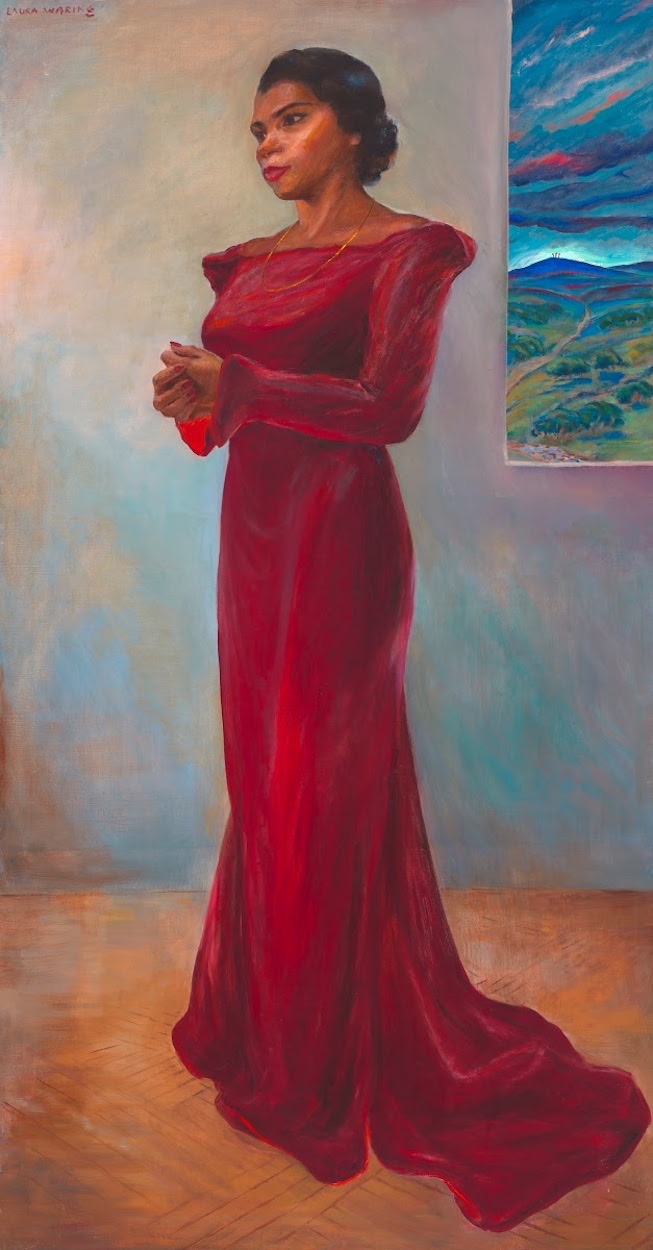
Marian Anderson by Laura Wheeler Waing (1947)

Many women were sitters for Laura’s portraits including Mary White Ovington, an American suffragist, journalist, and co-founder of the National Association for the Advancement of Coloured People (NAACP).  Another of her most famous female portraits was of  the opera singer, Marian Anderson.  This contralto singer, like many African American artists of the time, first achieved success in Europe. She was persuaded to return to America in 1935 and that year had a triumphant concert which secured her standing in the opera world.  In 1939 she became embroiled in a historic event when the Daughters of the American Revolution banned her appearance at its Constitution Hall because she was black. President Roosevelt’s wife, Eleanor, stepped into this controversial banning and arranged for her to take top billing at the Easter Sunday outdoor concert at the Lincoln Memorial, an event which drew in 75,000 opera fans as well as having the event broadcast to a radio audience of millions.

Jessie Redmon Fauset by Laura Wheeler Waring (1945)

Another female to have her portrait painted by Laura Wheeler Waring was Jessie Redmon Fauset, the first African American woman to be accepted into the chapter of Phi Beta Kappa at Cornell University, where she graduated with honours in 1905. Fauset then taught high school at M Street High School (now Dunbar High School) in Washington, D.C., until 1919  She then moved to New York City to serve as the literary editor of the NAACP’s official magazine, The Crisis. In that role, she worked alongside W. E. B. Du Bois to help usher in the Harlem Renaissance of the 1920s.

Alice Dunbar-Nelson by Laura Wheeler Waring (1927)

In the 1890s women formed national women’s club federations, most of which were dominated by upper-middle-class, educated, northern women. Few of these organizations were bi-racial, a legacy of the sometimes uneasy mid-nineteenth-century relationship between socially active African Americans and white women. Rising American prejudice led many white female activists to ban inclusion of their African American sisters. The black women’s club movement rose in answer in the late nineteenth century. The segregation of black women into distinct clubs produced vibrant organizations that promised racial uplift and civil rights for all blacks, as well as equal rights for women. Soon there followed another, more powerful group known as the National Association of Coloured Women in 1896. Women, including Laura Wheeler Waring and Alice Dunbar-Nelson, came together from a variety of backgrounds to combat negative stereotypes and fight for basic rights. Alice Dunbar-Nelson became the subject of Laura Wheeler Waring’s 1927 portrait. By the time the portrait was completed, Dunbar-Nelson was a prominent political activist and journalist and was much in demand as a public speaker. The depiction of her radiates her self-confidence and both artist and sitter were talented, intellectual women whose friendship helped advance the rights of both women and African Americans.
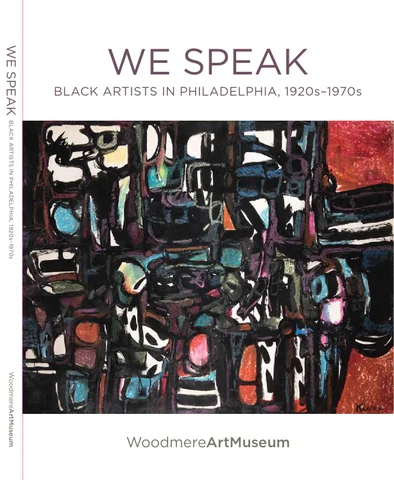
Waring died on February 3rd, 1948, aged 60, in her Philadelphia home after a long illness.  She was buried at Eden Cemetery in Collingdale, Pennsylvania. In 1949, Howard University Gallery of Art in Washington, D.C. held an exhibition of art in her honour.  Her paintings were also included in the 2015 exhibition We Speak: Black Artists in Philadelphia, 1920s-1970s at Philadelphia’s Woodmere Art Museum.
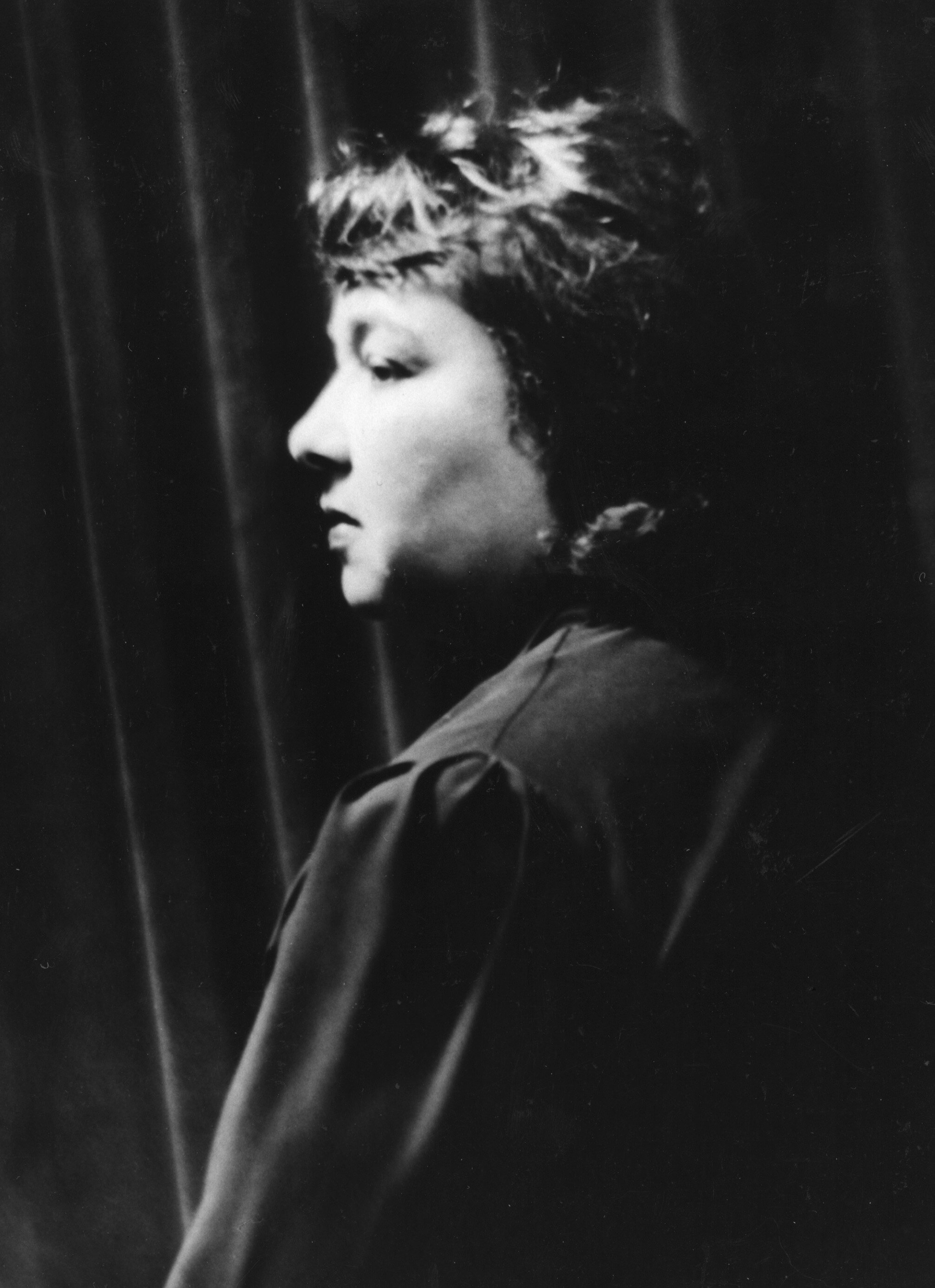
Laura Wheeler Waring (1887-1948)

There is no doubt that although Laura spent most of her life in America she always treasured her three stays in France which played an important role in her artistic progress. During those three periods on French soil she was able to engage in its culture, and associated with famous French, African, and African American intellectuals. Her scholarship, her study at the Academie de la Grande Chaumiere, and her solo exhibition in Paris gave her recognition in the United States in the form of awards, supervisory and teaching positions, and additional exhibitions.  Like many of her colleagues, Waring cherished the freedom she found abroad, declaring in her diary:

“…In my very busy seasons here to come I shall want to relive some of these moments of atmosphere. I record them so that I can never say “I wish I had enjoyed that more” or “I didn’t apprecate all that then but now—[.]” I can never say the above truthfully because am grateful every minute and even the least of things gives me a thrill. . . . The very feeling of freedom is a pleasure and the ride on the bus down will be a joy…”


Much of the information for this blog and many of my other blogs in the past has come from an excellent website entitled The Art Story.

Other sources were:

A CONSTANT STIMULUS AND INSPIRATION”: LAURA WHEELER WARING IN PARIS IN THE 1910s and 1920s by Theresa Lieninger-Miller
BLACKPAST

SPEEDWELL

Laura Wheeler Waring. Part 1.

The art critic Patricia Tilton commented on the artist I am featuring today, Laura Wheeler Waring, writing:

Waring is the perfect role model for little girls who have big dreams. Determined and committed to pursuing her passion, young Laura began to manifest her dreams. She was self-confident, believed in her gift, and welcomed each opportunity that came her way.

Laura Wheeler, later Laura Wheeler Waring, was born in Hartford Connecticut on My 26th 1887.  She was the fourth of six children. 

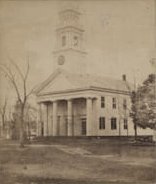
Her father was Reverend Robert Foster Wheeler, who was the pastor of the first all-Black church in Connecticut, the Talcott Street Faith Congregational Church. It had been built in 1819 as a place for African Americans to worship on their own since they were previously only able to worship in the backs of churches and in church galleries in that city.  Her mother was Mary Wheeler (née Freeman), who was a teacher and amateur artist. Laura’s maternal grandparents were Amos Noë Freeman, who was a Presbyterian minister, and her maternal grandmother, Christiana Williams Freeman, was an anti-slavery activist who worked as part of the Underground Railroad which was the given name to a secret network of escape routes and safe houses run by abolitionists in Portland, Maine, and Brooklyn, New York. Laura’s family were well educated.  Her father studied Theology and graduated from Howard University in 1877 and her mother graduated from Oberlin College.

Still life with Heather by Laura Wheeler Waring (1927)

Laura’s parents were determined that their children should learn about African history and were attendees at the local bible classes.  The family would also make regular visits to Hartford’s Wadsworth Atheneum Museum of Art as well as other local art events. The children soon developed a love of art and would frequently sit around their dining room table to sketch and paint together. The American art critic Patricia Campbell Carlson wrote about young Laura:

“…[Waring] would even bribe her brothers and sisters with peppermints to get them to pose for her. And although she knew there were no portraits of African Americans in museums yet, she hung her paintings in her room as a ten-year-old so that her sisters and brothers could see pictures of people with all different shades of brown staring back at them,,,”.

After Sunday Services by Laura Wheeler Waring

Laura Wheeler Waring attended Arsenal Grade School and Hartford High School and was a model student who graduated from Hartford with honours. Whilst at the High School she showed an interest in art and the school fostered this love of hers, encouraging her enthusiasm for drawing and painting with watercolours.  She graduated from Hartford High School in 1906 with honours.

Institute for Colored Youth Building Historical Marker

In the Autumn of 1907, Laura, now a twenty-year-old, through the auspices of her father was offered and accepted a position at the Institute for Coloured Youth, an African Institute, a trade school that taught young Black people necessary skills to retain employment and later became a training institution for teachers. In 1902, the Institute moved to George Cheyney’s farm, 25 miles west of Philadelphia, and afterward the name “Cheyney” became associated with the school and became known as the Cheyney Training School for Teachers. Nowadays and since 1983 it has become the Cheyney University of Pennsylvania.

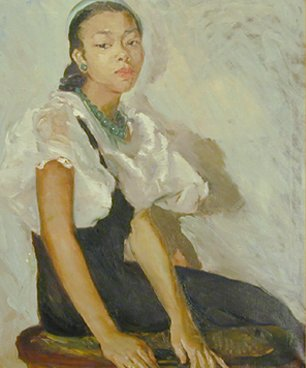
Girl in Green Cap by Laura Wheeler Waring

Times were difficult financially for Laura who was paid just seven dollars a month although room and board were provided. She needed money to pay the train fare to Philadelphia where she attended drawing classes, still life painting, portraiture, and illustration at the Pennsylvania Academy of the Fine Arts.   She remained there for the next six years.  The person who influenced Laura the most at the Academy was Henry Bainbridge McCarter, an American illustrator and painter known for his influence on the modernistic art movements. McCarter had worked as an illustrator in New York before becoming an instructor at the Pennsylvania Academy of the Fine Arts for forty years.  He managed to encourage Waring to take on board and appreciate Impressionism and Post-Impressionism.

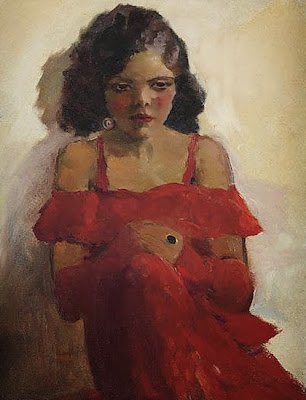
Girl in Red Dress by Laura Wheeler Waring

In 1914, Laura graduated from the Academy, and she was awarded the William Emlen Cresson Memorial Travel Scholarship. The Pennsylvania Academy of the Fine Arts prize was a two-year scholarship for foreign travel awarded annually to their art students.   This award for artistic excellence, which began in 1902, was funded by Emlen and Priscilla Cresson in memory of their son William Emlen Cresson, an Academy alumnus, who died in 1868 at the age of 23. He had been a child prodigy painter who began exhibiting at the Academy at a very young age. The award allowed recipients to study art at the Louvre.  Laura was the first Black woman to receive the award,

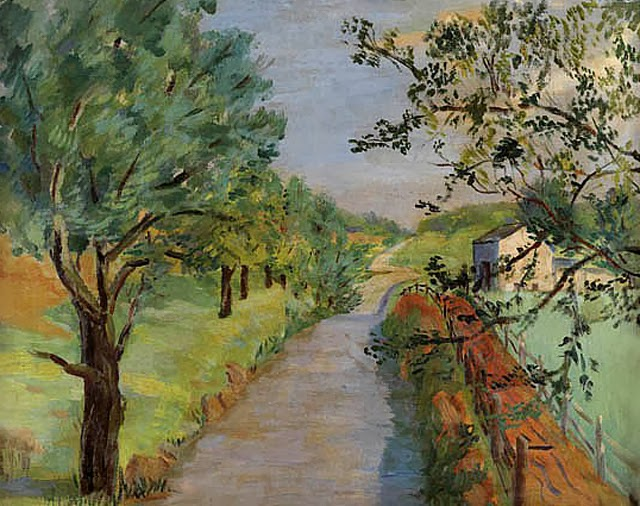
A Rural Landscape by Laura Wheeler Waring

Whilst in Paris Laura studied at the Académie de la Grande Chaumière and travelled throughout Great Britain. During her stay in the French capital, she spent much time in the Louvre Museum studying the works of Monet, Manet, Corot, and Cézanne. In Theresa Leninger-Millerher article:  A constant stimulus and inspiration”: Laura Wheeler Waring in Paris in the 1910s and 1920s, she quotes Laura as saying:

“…I thought again and again how little of the beauty of really great pictures is revealed in the reproductions which we see and how freely and with what ease the great masters paint…”

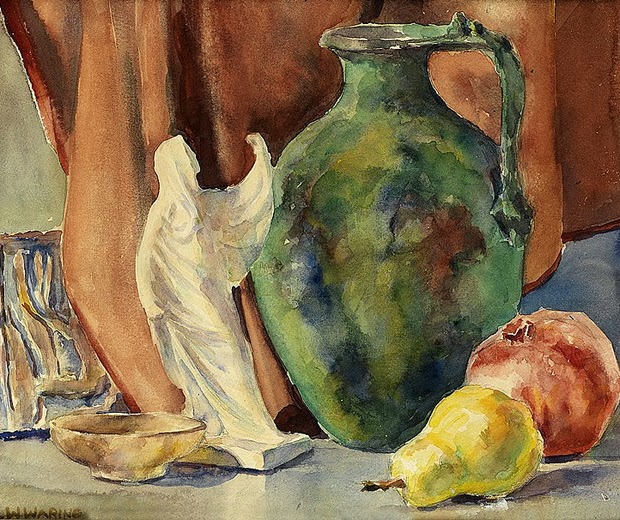
Still Life with Fruits by Laura Wheeler Waring

Laura Wheeler Waring had originally planned to travel more around Europe visiting Switzerland, Italy, Germany, and the Netherlands, but her trip was cut short when war was declared in Europe and she had to return to America.

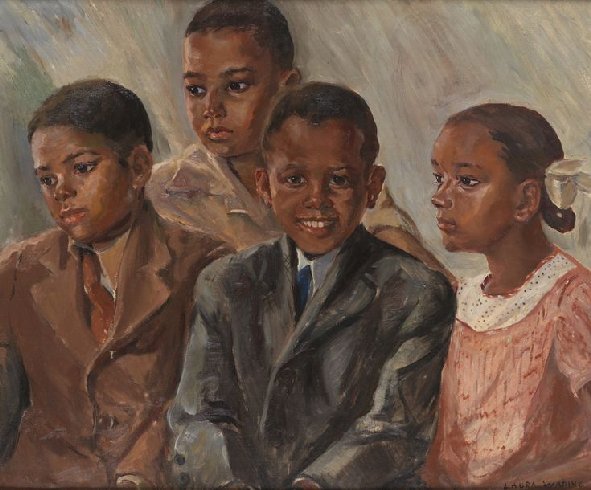
Four Friends by Laura Wheeler Waring

Back in America, Waring returned to teaching at Cheyney, and she played an important role in setting up the school’s new art and music departments. For thirty years she acted as the department’s art director and Chair, and between 1921 and 1934 she conducted the Cheyney Choir, training her students in high-toned spirituals and classical music. The Cheyney College like the local church, the Thornbury African Methodist Episcopal Church, slowly became the community centre for the black residents of Cheyney. Laura took her choir to sing at the church.  It was through her involvement with the church that she first met Annie Washington Derry, who would later become the subject of her most famous portrait which she completed in 1927 and which is owned by the Smithsonian is American Art Collection in Washington DC.

Landscape with River by Laura Wheeler Waring

Laura took a year out from teaching between 1924 and 1925 and returned to Paris.  This time she was accompanied by African-American novelist and poet, Jessie Redmond Fauset. On her arrival at the French capital she enrolled for classes in Expressionism and the Romanticism which were run by French artist and designer Bernard Boutet de Monvel, and the American painter Robert Henri. In October 1924 she enrolled to study at the Académie de la Grande Chaumiére, where she studied painting and it was here that she began her life-long love of portraiture.

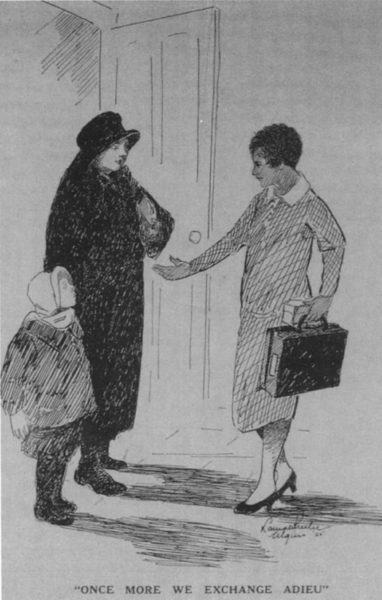
Once More we Exchange Adieu by Laura Waring (1925)

In January 1925, Laura Waring travelled to the South of France where she spent four days in the coastal town of Villefranche-sur-Mer. While living there she began to create illustrations for short travel stories and completed a number of figurative pen and ink drawings for The Crisis magazine. One of these was her pen and ink drawing entitled Once More We Exchange Adieu.  It depicts an African American woman dressed in a modern collared long sleeve dress, with black pumps holding a briefcase and waving goodbye to a white woman and child dressed in winter attire.

Houses at Semur by Laura Waring (1925)

Saint-Jean-Pied-de-Port by Laura Waring (1925)

In the next blog I will be looking at Laura Wheeler Waring’s portraiture, a genre which she is most famous for.

……………………………………………………to be continued.

Henry Ossawa Tanner. Part 2.

The Resurrection of Lazarus, by Henry Ossawa Tanner(1897)

The year is 1897, and Henry Tanner’s painting, The Resurrection of Lazarus, was exhibited at the Salon where it received a third-class medal. The work remains one of Tanner’s most treasured and familiar works. The depiction of the biblical story is realistic and lacks sentimentality and is characteristic of Tanner’s religious work and with his fascination with rebirth and deliverance.  The French government purchased the painting for the Musée du Luxembourg. Later it was displayed at the Louvre, and since 1980, it can be found in the Musée d’Orsay.

The Two Disciples at the Tomb by Henry Ossawa Tanner (1906)

After Tanner’s move to Paris his artwork tended to focus mainly on religious art and less about depictions of his African American countrymen. Now that he had become a famous artist, there was a certain amount of pressure brought to bear on him to bring attention to the predicament of black people in America and for him to speak out about how racism had blighted their lives. Tanner was a deeply religious person but shied away from politics maintaining he chose to allow his work to make his point about racial equality.

TLes pélerins d’Emmaüs (The Pilgrims of Emmaus) by Henry Ossawa Tanner (1905)

Henry also depicted the famous biblical scene, much favoured by artists, of the resurrected Christ’s meeting with two of his disciples, Luke and Cleopas, at Emmaus. Tanner’s 1905 work was entitled Les pélerins d’Emmaüs (The Pilgrims of Emmaus). This painting is also part of the Musée d’Orsay collection.

Jessie Olssen Tanner and her son Jesse (c.1908)

In 1899, Henry Tanner did the inconceivable. He married a white woman. His wife was an American opera singer from San Francisco, Jessie Macauley Olssen. They had first met in Barbizon and she had often acted as his model. The couple went on to have their only child, Jesse, who was born in 1903.

Henry Ossawa Tanner Family Photograph

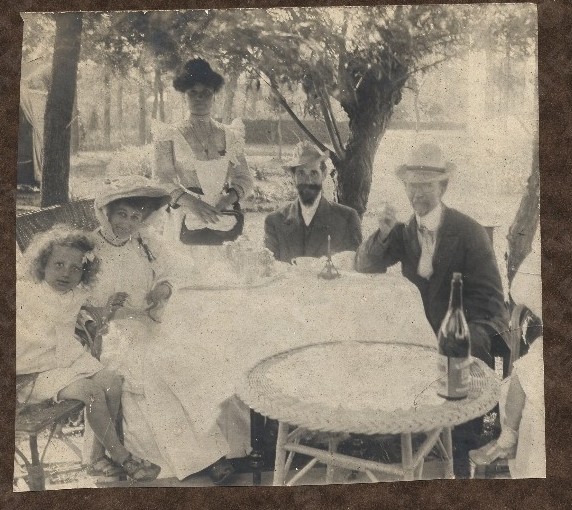
Above is a photograph of a family get-together in Paris. According to a note on the back of the photo the group was, from left to right, Jesse, their five-year-old son, Henry’s wife, Jessie Tanner, a fellow ex-pat American artist, Myron Barlow, and Henry himself. 


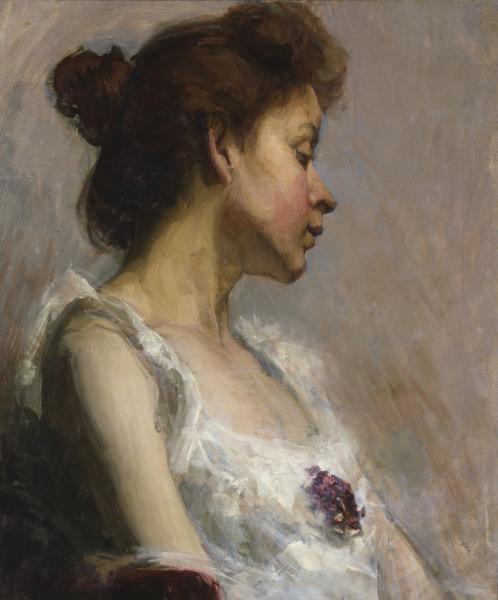
Portrait of the Artist’s Wife by Henry Ossawa Tanner (1897)

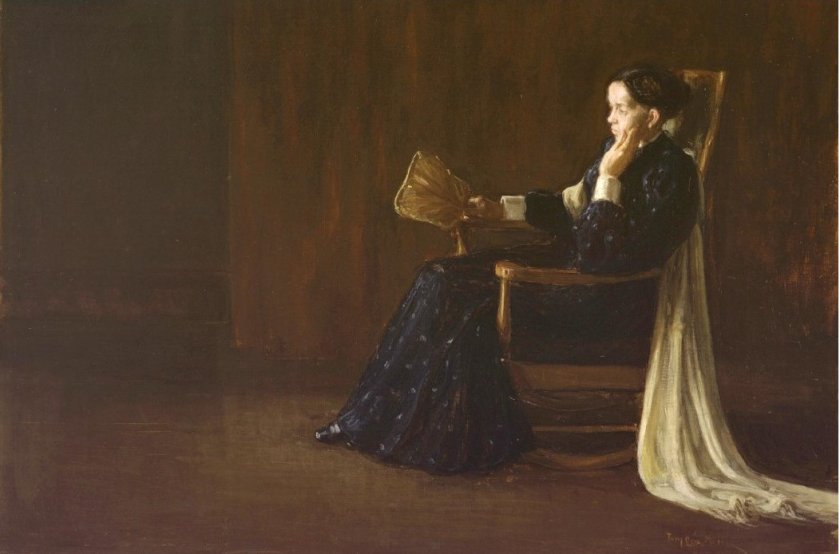
Henry completed a portrait of his wife around the time of their betrothal and is now part of the Smithsonian American Art Museum. In this portrait, Jessie Tanner is shown in a highly studied pose which is intended to look informal and nonchalant. Tanner put a lot of time in depicting the details of her face in comparison to the almost “unfinished” look of her dress.

Salome by Henry Ossawa Tanner (1900)

Tanner’s 1900 painting Salome is an Impressionistic-style work in which Tanner used sombre blues, greys, and blacks. It is a realistic depiction of the woman. There is no attempt to idealise her. It is an unusual and yet striking depiction of the biblical character and was typical of work which made Tanner the most famous and well-regarded artist of his time. The painting is housed in the Smithsonian American Art Museum in Washington DC. It is thought that Tanner’s wife modelled for this 1900 painting

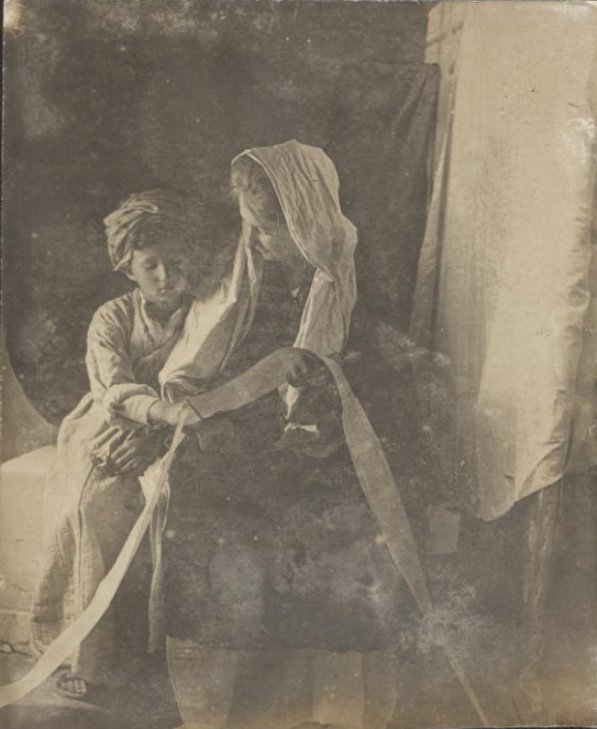
Wife and son

Many of Tanner’s subjects are based on his studies of African Americans from Georgia and North Carolina, the men, and women he encountered while traveling in the Middle East and North Africa in 1897 and 1898. and also, of his Caucasian wife, Jessie. She and their seven-year-old son Jesse posed for a photograph which Tanner would use for his 1909 painting, Christ and His Mother Studying the Scriptures which belongs to the Dallas Museum of Art. In the painting, we see the figures of Christ and her son engaged in a private moment of reading together. She has her hand wrapped around her son’s waist as they each hold the scroll from which they are studying. It is a painting exuding the tenderness of a mother and her son. This physical bond we see before us is also a recognition of their spiritual unity.

Christ and His Mother Studying the Scriptures by Henry Ossawa Tanner (1909)

Henry Ossawa Tanner has used a restricted palette of shades of blue, purple, with gold, bathing the figures in a warm, golden light. This illumination emanating from the scroll is a metaphor for the illumination gleaned from the words of the scroll. The existence of the photograph is proof that Tanner used his wife and son as models for Mary and Jesus. This being so gives the work a double meaning, firstly, a contemplative biblical scene and secondly a loving family portrait.

Christ Learning to Read by Henry Ossawa Tanner (1914)

Several years after, (around 1914), Tanner completed another painting remarkably similar to his 1909 work, Christ, and His Mother Studying the Scriptures. This time the title was Christ Learning to Read which is housed in the Des Moines Art Centre. In the Des Moines painting, brilliant colour, dramatic light, and deep shadows replace the Tonalist restraint of Tanner’s earlier work. The background is lighter and the design of the rug on the floor is more detailed. The depiction is less about spirituality and more about Christ’s early childhood with his mother.

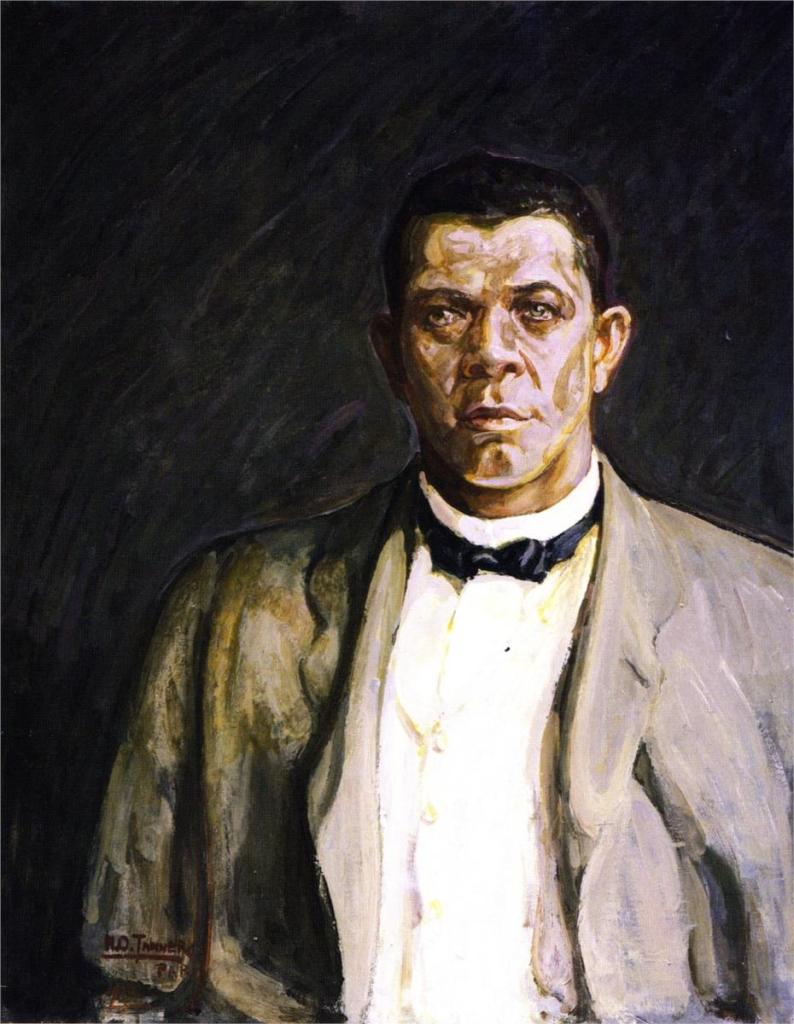
Booker T Washington by Henry Ossawa Tanner (1917)

Booker T. Washington was an American educator, author, orator, and adviser to multiple presidents of the United States and, between 1890 and 1915, Washington was the dominant leader in the African-American community and of the contemporary black elite. Washington was from the last generation of black American leaders born into slavery and became the leading voice of the former slaves and their descendants. In 1899, he published an article on Henry Ossawa Tanner. The publication of this article played a significant role in securing the artist an important position in the art world of America.

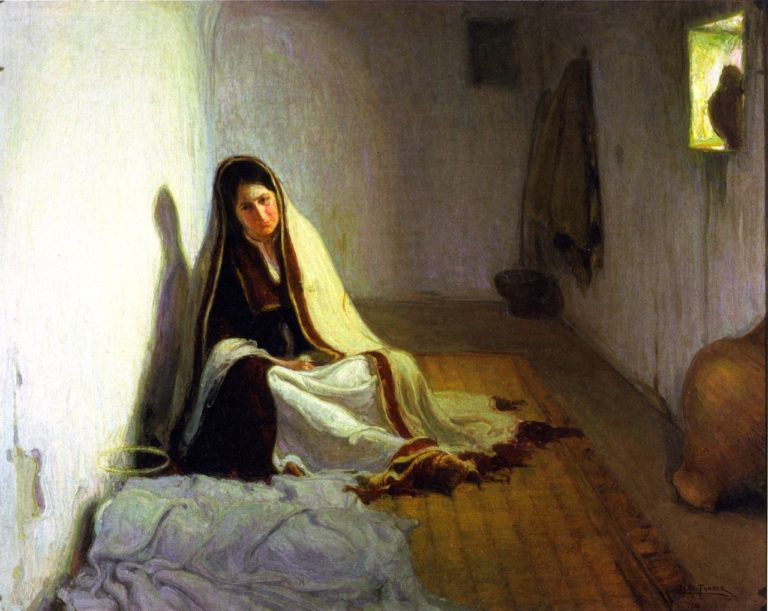
La Sainte Marie by Henry Ossawa Tanner (1898) La Salle University Art Museum

La Sainte Marie is a very strange depiction of the Virgin Mary with the Christ child.   Mary appears melancholy and lost in thought. The infant, who is lying on the floor, is almost completely covered by a shroud-like cloth, possibly suggesting a foreshadowing of his death. Tanner was painstaking when it came to detail and took back home with him sketches which he had made whilst in Jerusalem, where he first travelled in 1898. Tanner’s style is academic and is distinctive for his use of luminous lighting. The model for the depiction of Mary was again Tanner’s newlywed Swedish-American wife. 

Flight Into Egypt by Henry Ossawa Tanner (1923)

Whilst living in Paris, Tanner had met Lewis Rodman Wanamaker, a fellow American expatriate living in Paris, who—like his father, the department store magnate John Wanamaker—was a major patron of contemporary religious art. He was a patron of many important commissions in the field of liturgical arts. He was very impressed with Tanner’s religious paintings so much so that in 1897 he arranged for the artist to travel to Palestine for inspiration. According to Wanamaker any artist who wanted to depict believable biblical scenes should acquaint themselves with the Holy Land and then, from that encounter, he believed Tanner would be able to remind himself of the different shades of blue that can be seen in the twilight sky of Jerusalem and along the hills of Bethlehem.  Tanner left Paris in January 1897 and journeyed south through France by train to the port of Marseilles, where he boarded a ship to Cairo. From Cairo, he travelled to Port Said, Jaffa, Jerusalem, Jericho, and the Dead Sea, returning to Alexandria and sailing back to Europe through Naples. He spent just over two months in the Middle East, but the sketches he made during this trip would be used in his religious paintings for years to come.

Interior of a Mosque, Cairo by Henry Ossawa Tanner (1897)

During the time Tanner spent in Cairo, he visited a number of mosques. One of these featured in his 1897 painting, The setting for the painting, Interior of a Mosque, Cairo was the madrasa of Sultan Qaitbey, a Mamluk-dynasty complex originally containing a mosque, a school, and a mausoleum, built between 1472 and 1475. This mosque has long been held as one of the masterpieces of Islamic architecture in Cairo. The mosque of Qaitbey is famous for its coloured and cut marble, geometric patterning, and decorative tile. Tanner’s painting portrays it as an ageless place of faith and mystery. We are looking at the eastern end of the interior, where the mihrab, a semi-circular niche in the wall of a mosque that indicates the qibla, which is the direction of the Kaaba in Mecca and hence the direction that Muslims, should face when praying. Tanner has made a careful choice of view, one which is angled so as to highlight the curved arches and intricate marble patterning on two sides of the building. Light streams through the stained-glass windows onto the floor. To the left we can make out the minbar, an elaborately carved wooden pulpit in the mosque where the imam stands to deliver sermons. Two robed figures face east, engaged in their devotions. Tanner brought the completed work back with him to France.

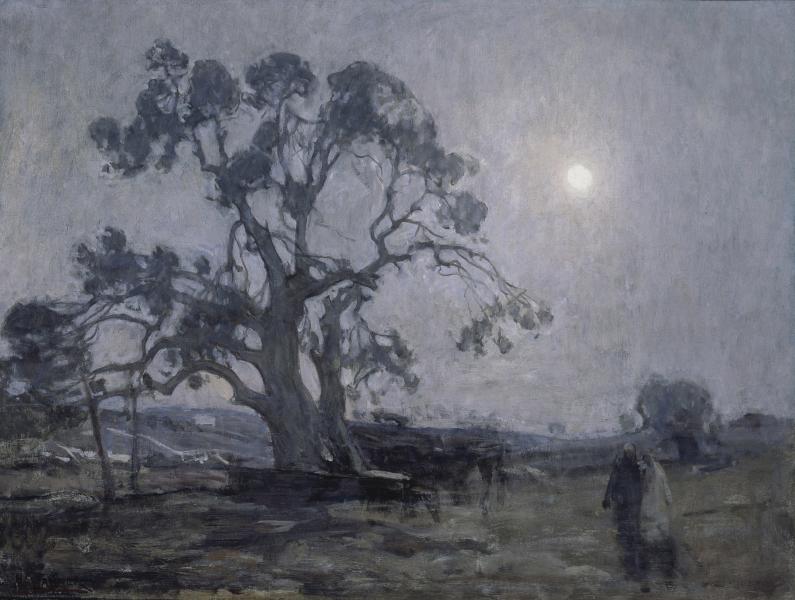
Henry Ossawa Tanner, Abraham’s Oak, (1905), Smithsonian American Art Museum,

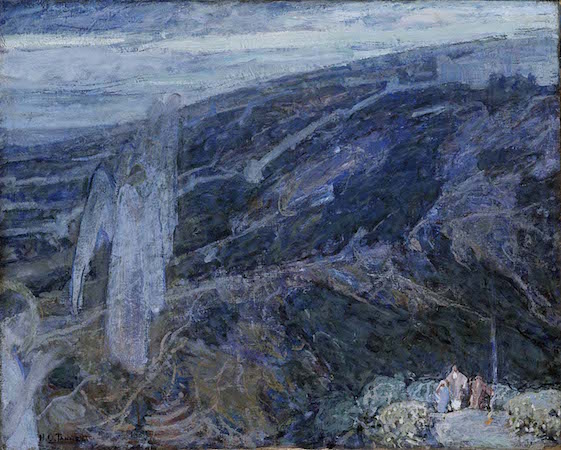
Tanner returned to Palestine, a year later, for a further six months of sketching and painting. During the latter stay he came to Khirbet es-Sibte on the Plain of Mamre and came across the great oak venerated by some as the Oak of Abraham. According to the bible, (Genesis 13), it was beneath this tree that Abram (not yet Abraham) pitched a tent and built an altar to the Lord of Israel after God’s promise of the land of Canaan to him and his offsprings. Whilst Tanner was there, he too pitched his tent on the Mamre Plain and I wonder if he drew the parallel of himself and Abraham. The biblical figure’s lifetime of wanderings and Tanner, who left America and went to live in France where conditions allowed him to work and live relatively free of the widespread and overpowering racism of his own native country and, like Abraham, he too wanted to start a new life. For Tanner it was Paris, for Abraham it was Canaan.  It was almost seven years later that Henry Tanner produced a painting which he looked upon as a souvenir from his Holy Land travels. The painting is entitled Abraham’s Oak. In his depiction, the ancient tree looms large over the scene. It is not just any tree. It is strong, solemn, and gigantic. The aged tree has one of its massive limbs on the left seemingly supported by two struts. The tree is almost withered, almost bare, with the exception of a few leaves sprouting from the end of its mighty limbs. Tanner has used his customary nocturnal blue-grey palette to depict the thick, dim nigh time air broken only by the hazy glow of the moon.

The Holy Family by Henry Ossawa Tanner (c.1910)

Some time in the first decade of the twentieth century, Henry Tanner and his wife and son had moved out of Paris and made their home in Etaples, a fishing commune on the Canche river in the Pas-de-Calais department in northern France, fifty miles from the Franco-Belgium border. However, the fighting during the First World had moved perilously close to Tanner’s home and so he uprooted his family and hastily moved them to England. During his latter years Tanner received many honours for his art. He was elected to the National Academy of Design in America and made an honorary chevalier of the Order of the Legion of Honour in France. Although Tanner remained active until 1936, he refused to change his artistic style and refused to follow the period’s artistic innovations. The taste in art changed in the twentieth century. Modernism became fashionable and so the realism of Tanner’s art became old-fashioned. He remained steadfast in his resistance to becoming a spokesman for racial issues, once again maintaining he wanted to put all his energy into his art. Despite this Henry Ossawa through his international reputation inspired generations of African American artists.

Sand Dunes at Sunset, Atlantic City by Henry Ossawa Tanner (1885)

His wife Jessie died on September 8th 1925 and Tanner died in Paris, alone, on May 25th, 1937, a month before his 78th birthday. On October 29th 1996, in the White House, the American president, Bill Clinton and his wife Hillary unveiled Tanner’s 1885 painting Sand dunes at Sunset in Atlantic City.

The painting became the first work by an African American artist to join the White House permanent collection.
Henry Ossawa Tanner. Part 1

Henry Ossawa Tanner. Paris 1907

In many of my previous blogs I have talked about youngsters, in centuries gone by, who had all the advantages needed to become an artist. They were male and did not have to overcome the barriers females had to hurdle over to become acknowledged painters. They were from wealthy families who could pay for their child’s best artistic tuition. They were part of an artistic family whose parents or siblings could initially tutor them, encourage them and, at the same time, introduce them to their established artist friends.  These were great advantages, not having these benefits was a disadvantage for an aspiring painter.

The nineteenth century American artist I am looking at today had one major disadvantage. He was an African American in nineteenth century America where racism was rife, and as such had to overcome problems his white contemporaries did not have to face. He, however, battled on and became the first African American painter to gain international acclaim. Welcome to the world of Henry Ossawa Tanner.

Portrait of Artists Mother by Henry Ossawa Tanner (1897)

Henry Ossawa Tanner was born in the city of Pittsburgh on June 21st 1859. His middle name was derived from the Battle of Osawatomie, an armed engagement that occurred on August 30, 1856, between pro- and anti-slavery partisans at the town of Osawatomie, Kansas. He was the eldest of nine children born to Benjamin Tucker Tanner and his wife Sarah Miller Tanner, a private school teacher, who was born into slavery in Virginia but whose mother had enabled her to escape to the North via the Underground Railroad. Tanner’s portrait of his mother in 1897, Portrait of the Artist’s Mother, is a dignified depiction of the woman who brought him up. The painting with its deep hues and the large area of dead space adds drama to the painting.

Henry Ossawa Tanner, Angels Appearing before the Shepherds, c. 1910

Henry was brought up in a religious setting. His father was a minister in the African Methodist Episcopal Church in Pittsburgh, the first independent black denomination in the United States. He and his family moved frequently due to him being assigned to various parishes. His father was also a political activist for the abolition of slavery. Religion always played an important role in Henry Ossawa Tanner’s life and art.

The family moved from Pittsburgh to Philadelphia in 1868 when Henry was nine years old. He attended The Promise Academy at Roberts Vaux High School, for coloured students. named after the American jurist, abolitionist, and philanthropist Roberts Vaux  It was a school which encouraged the love of art. He did well at the school and eventually graduated as the valedictorian of his class. The story goes that one day in 1872, thirteen-year-old Henry Ossawa Tanner was walking in the city’s Fairmont Park and came across an artist with his easel painting a landscape. He never forgot this meeting and determined there and then that he too would become an artist. Living in Philadelphia in the summer was a test for everybody. The temperature and the humidity were extremely high and everyday living became onerous. The Tanner family, like many others tried to escape the humid conditions by going to the seaside and experience the cooling Atlantic breeze. Young Henry enjoyed these seaside trips and found plenty of subjects to paint. Some of his sketches were seen by the Philadelphia artists, Henry Price, who offered young Henry a one-year apprenticeship at his Philadelphia studio. It was here that Tanner began to learn about art.

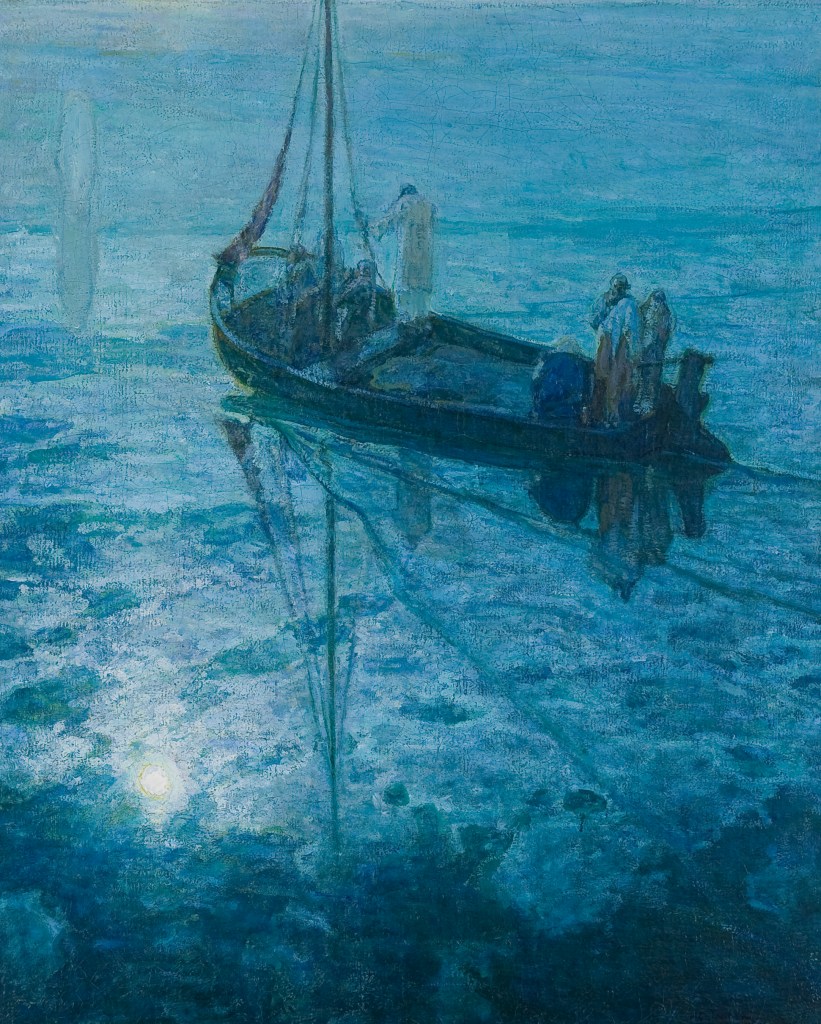
The Disciples See Christ Walking on the Water by Henry Ossawa Tanner (ca. 1907)

However, his father had other ideas as he was doubtful that a career in art was a suitable occupation for his son. With that in mind he arranged for Henry to start an apprenticeship as a miller in a flour mill. Henry Tanner was a delicate young man whose health was never resilient throughout his life and working in the flour mill proved too strenuous and he became seriously ill. Tanner was confined to his home to recuperate. Much of the time during this period of isolation was spent sketching. Once he had recovered, and was freed from home-based isolation, he would often take trips to Rainbow Lake in the Adirondack Mountains where the air was cleaner. He would also go down to the sunnier and warmer climate of Florida. He was pleased when he could get out of the family house and could not wait to be able to start sketching and painting. Tanner began to paint landscape and seascape scenes.

Sand Dunes at Sunset, Atlantic City by Henry Ossawa Tanner (1885)

His artwork must have reached a good standard as at the age of twenty-one, he passed the entrance examination to the Pennsylvania School of Fine Arts in 1880. It was here that he received the finest art tuition from the likes of the great American realist painter, Thomas Eakins. The artwork and teachings of Eakins were to have a great influence on Tanner for the rest of his life. He remained a student there, off-and-on, until 1885. Tanner exhibited some of his early works in New York in 1885 and the following year he opened his own studio in Philadelphia. Once again, Henry and his family would often head towards the New Jersey coast in the summer to avoid the stifling heat of Philadelphia. During those hot summer days Henry completed a painting entitled Sand Dunes at Sunset. Over a century later, in 1995, it became the first painting by an African American artist to be acquired by the White House.

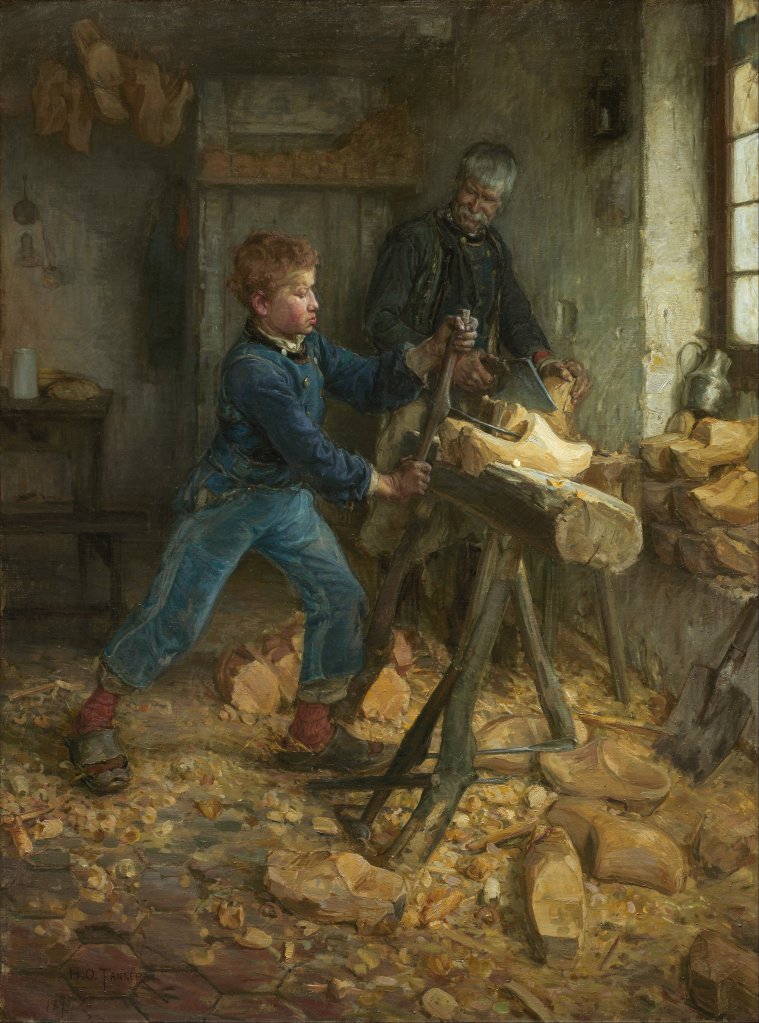
The Young Sabot Maker by Henry Ossawa Tanner

Tanner left the Pennsylvania Academy prior to graduating as he wanted to set himself up in business and in 1888 an opportunity arose in Atlanta, Georgia for him to establish his own art and photography gallery. His idea was to set up a modest gallery where he would attempt to earn a semi-artistic living by selling drawings, making photographs, and teaching art classes at the city’s private Methodist, historically black, university Clark Atlanta University. Through Tanner’s connection with the Methodist Church he came in contact with Joseph Crane Hartzell who was an American Missionary Bishop of the Methodist Episcopal Church.  Joseph Hartzell and his wife became his main white patrons over the next several years. In spite of his efforts, Tanner’s Atlanta studio failed and, in the summer of 1888, Henry sold the business.

Spinning by Firelight – The Boyhood of George Washington Gray by Henry Ossawa Tanner (1894)

Henry Tanner left Atlanta and moved to Highlands, North Carolina, a town in Macon County in North Carolina.  The town is located on a high plateau within the larger Blue Ridge Mountains. He had moved there with the idea that he could make some money from his photographs and paintings. He also believed that the clean mountain air would be good for his well-being. After staying at Highlands during the summer of 1888, he returned to Atlanta and taught drawing for two years at Clark Atlanta University. In a conversation Henry Tanner had with Bishop Hartzell and his wife, he told them about his desire to go to Europe and study art in Rome. They believed it to be a good idea and they arranged to have an exhibition of his work at a gallery in Cincinnati in the Autumn of 1890 and from the sale of his work his trip to Europe would be paid for.

The exhibition was held but unfortunately none of Tanner’s paintings sold. He was devastated. However, the bishop and his wife came to his rescue and bought all the paintings ! Henry Tanner now had the funds to travel to Europe. Tanner eventually set sail for Europe in January 1891. He stayed for a short time in Liverpool and London and then travelled to Paris. He was so impressed by the art scene of the French capital. To him, the French artistic world was much more cutting-edged than that of America’s art world, so much so that he abandoned his plans to travel to Rome and put roots down in the French capital. Once settled in Paris, Tanner enrolled in the Académie Julian and studied under Jean-Paul Laurens, a French painter and sculptor, and one of the last major exponents of the French Academic style and Jean Joseph Benjamin-Constant, a French painter and etcher best known for his Oriental subjects and portraits. He also joined the American Art Students Club of Paris.

In 1893, Tanner went back to the United States to deliver a paper on African Americans and art at the World’s Columbian Exposition in Chicago. In this same year, he created one of his famous works The Banjo Lesson while he was in Philadelphia.  His depiction incorporated a series of sketches he had made while visiting the Blue Ridge Mountains, four years earlier. The sketches he had made during the summer of 1888 had opened his eyes to the poverty of African Americans living in Appalachia.
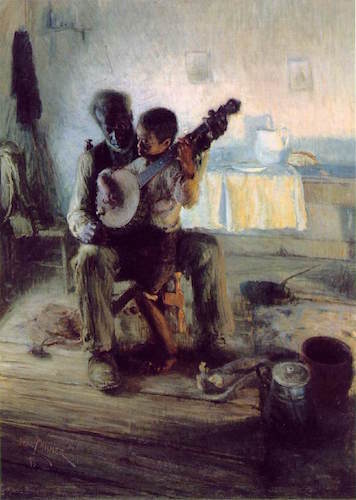
Henry Ossawa Tanner, The Banjo Lesson, 1893

The setting is inside a cramped log cabin with the cool glow of a hearth fire casting the scene’s only light source from right corner, enveloping the man and the boy in a rectangular pool of light across the floor. The young boy holds the banjo in both hands. He looks down, completely focused on the task ahead. His grandfather holds the banjo up gently with his left hand so that the boy is not hampered by its weight, yet it is also clear that the grandfather expects the young boy to appreciate the music he is producing although it may be hard work.

Woman from the French West Indies by Henry Ossawa Tanner (ca. 1891)

When he arrived back in his homeland, he was respected as an artist but despite this recognition and the honours and prizes he received for his art, his paintings were often displayed separately from those of his white colleagues. In 1895 he returned to in Paris, saying that he could not fulfil his artistic aspirations while fighting discrimination in America. Tanner lived over half of the rest of his life in France, saying that he was able to find an expansive and more accepting environment, free from the racial strife which he encountered in America.

The Thankful Poor by Henry Ossawa Tanner (1894)

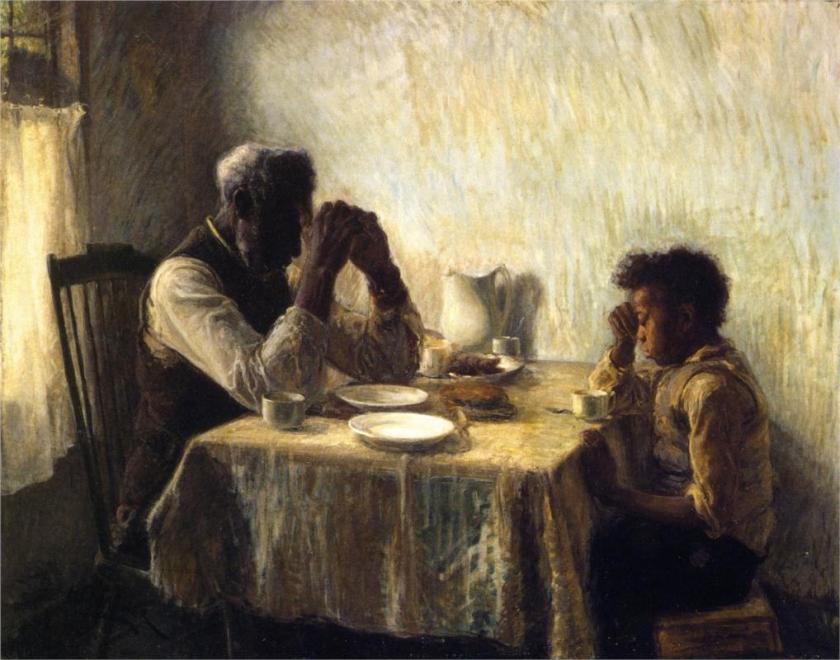
In 1894 Tanner completed another memorable work. It was entitled The Thankful Poor. It was an oil painting depicting an elderly black man sitting down to supper with a teenage boy. Their heads are bowed in prayer, thanking The Lord for the food they were about to eat. The table is plain and the food upon it is meagre, but Tanner has captured their thankfulness. Whilst Tanner has painted the two figures in great detail, the rest of the scene, such as the wall and the tablecloth seem to just blend in the light. This warm light which streams through the window onto the wall helps to enrich the spiritual quality of the painting. The bright light shines on the young boy’s face and illuminates the boy’s deliberations, devotion, and gratitude for having food to eat. Look how Tanner has portrayed poverty in the way he depicted the man’s coarse hands and the boy’s scruffy clothes.
Around the mid 1890’s, Henry Tanner strong religious beliefs became more apparent in his works. He was determined that the biblical stories he knew and loved should feature in his artwork. He once said:

“…my effort has been not only to put the Biblical incident in the original setting…but at the same time give the human touch…to convey to my public the reverence and elevation these subjects impart to me…”

Daniel in the Lion’s Den by Henry Ossawa Tanner (1896)

Impressionism had been at the height of its popularity in the 1870’s and Tanner was Influenced by colours used by the Impressionists. He was also inspired by the works of the Symbolists. A classic example of his work at the time was his 1896 painting Daniel in the Lion’s Den which won an honourable mention at the Paris Salon of 1896. In this depiction, Daniel is incarcerated in a den of lions. He was being punished for refusing to pray to King Darius of Persia. The late evening light streams through an upper window of his dark prison cell lighting up the lower body of Daniel and highlights his arms crossed on his lap whilst besides him is the exceptionally large head of one of the lions. There is a calmness about the figure of Daniel which underlines his spiritual belief in what he is doing. The shades of blue/green offer us a picture of serenity. The painting, which was the first to be exhibited at the Salon by an African American, was highly praised by the art critics and received international recognition. This was Tanner’s first major religious painting and indicated the direction that his art would take.

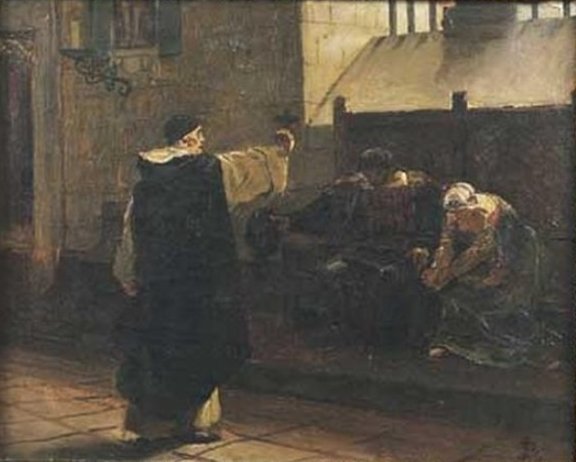
Le Grand Inquisiteur chez les rois catholiques by Jean-Paul Laurens

The choice of a religious subject may have been inspired initially by his teacher Jean-Paul Laurens, his former tutor at Académie Julian, who was noted for dramatic biblical paintings and who had depicted a similar scene of incarceration in his painting, Le Grand Inquisiteur chez les rois catholiques, a copy of which Tanner had owned. A later version of this painting can be found at the Los Angeles County Museum of Art on Wilshire Boulevard.

..……to be continued.