Thérèse Schwartze

Thérèse Schwartze – self portrait (1917)

Therese Schwartze was a Dutch 20th century painter.  Such was a hugely talented portrait artist that was one of only a few females who had been honoured by receiving an invitation to contribute her self-portrait to the hall of painters at the Uffizi Gallery in Florence.  This genius of portraiture completed around a thousand works during her forty-year career, which means that she completed more than twenty paintings a year. Because many of her portraits were created to be treasured by family members, most of her work has remained in private collections.  About one hundred and fifteen of her paintings are in public collections in the Netherlands, and twelve are part of foreign public collections, which leaves the locations of nearly four hundred paintings still unknown. She became a millionaire in the process. Schwartze also established an international reputation, with countless exhibitions and commissions throughout Europe and the United States. 
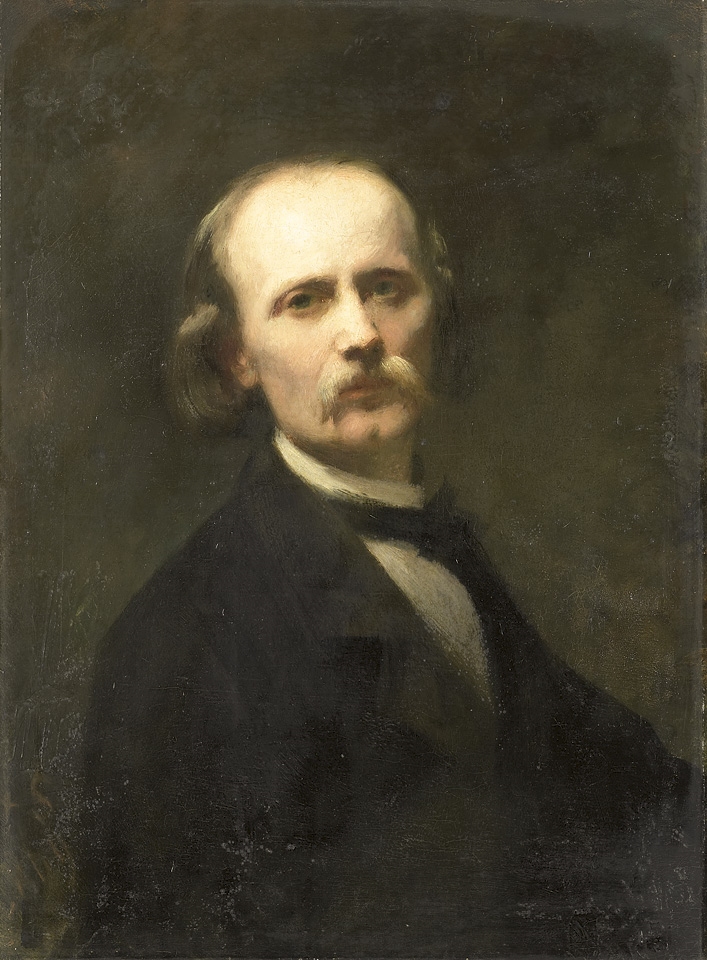
Self Portrait by Johan Georg Schwartze

Thérèse was born on December 20th 1852 in Amsterdam.  She was the daughter of Johan Georg Schwartze and Maria Elisabeth Therese Herrmann.  She was one of five children and had four sisters including Georgine, a sculptor, Clara Theresia, a painter and one brother, George Washington Schwartze, also a painter. 
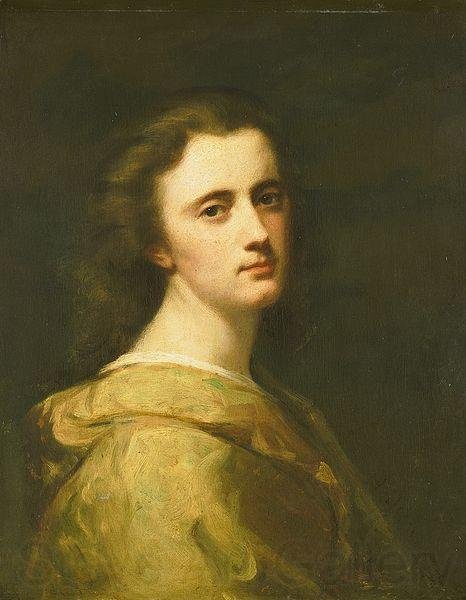
Portrait of Thérèse aged 16 by her father, Johan Georg Schwartze (1869)

Her father was a well-respected portrait painter and it was he who provided Thérèse with her first artistic training.   In 1869 her father completed a portrait of his daughter, Thérèse.

Three girls of the orphanage in Amsterdam by Thérèse Schwartze (1885)

At that time, there was the perception that teaching girls and young ladies to paint was seen simply as a part of a cultured upbringing rather than a profession for earning money which was viewed as the role of the man. But for Johann Schwartze he couldn’t care less about such conventions. He trained his daughter in painting and drawing from a very young age and intended that Thérèse would become his worthy successor. She started her professional career at the age of sixteen, working in her father’s studio which she eventually took over when she was twenty-one after his death in 1874. Schwartze wrote to her father in a birthday letter, writing:

“…I will apply myself more to everything, so as, with God’s blessing, to be able to earn my living by painting…”

Because the art academies were not yet open to girls, her father sent her to Munich for expensive private lessons for a year under Gabriel Max and Franz von Lenbach who was regarded as the leading German portraitist of his era. In 1879 she moved to Paris and continued her artistic studies under Jean-Jacques Henner, the Alsace-born portrait artist.
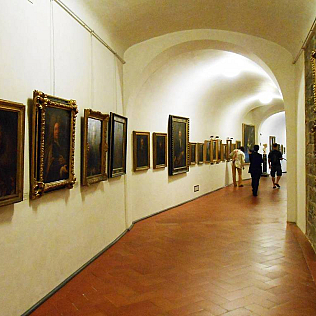
The Vasari Corridor at the Uffizi Gallery, Florence

Thérèse Schwartze’s portraits are truly remarkable and she was one of the few women painters, who had been honoured by an invitation to contribute her self-portrait to the Hall of Painters, the Vasari Corridor, at the Uffizi Gallery in Florence. The Uffizi collection is one of the most complete in all Europe, first started by Cardinal Leopoldo de’ Medici in the 17th century.  The passageway was designed and built in 1564 by Giorgio Vasari to allow Cosimo de’ Medici and other Florentine elite to walk safely through the city, from the seat of power in Palazzo Vecchio to their private residence, Palazzo Pitti.   The passageway used to contain over a thousand paintings, dating from the 17th and 18th centuries, including the largest and very important collection of self-portraits by some of the most famous masters of painting from the 16th to the 20th century, including Filippo Lippi, Rembrandt, Velazquez, Delacroix and Ensor.   While the Medici family bought the first paintings, after the collection started, the family started receiving the paintings as donations from the painters themselves. This has continued over the centuries and there were more paintings in the collection that did not have space to be exposed.  Things have now changed as from 1973 to 2016, some of the self-portraits which had been hung in the Vasari Corridor, were, however only visible during restricted and occasional visits because of the confined space, which, also lacked air conditioning and adequate lighting.  Most of the self portraits have been moved to other rooms at the Uffizi.
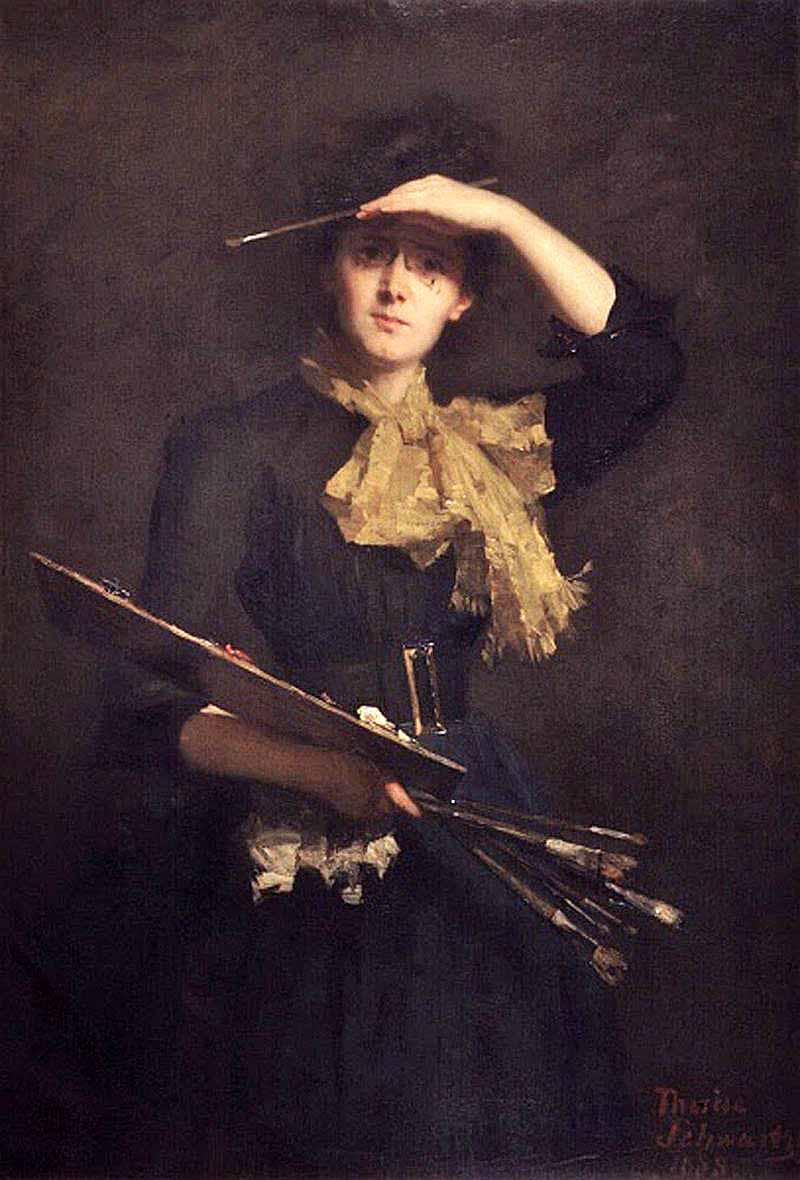
Self-portrait with Palette by Thérèse Scwartze (1888)

Only a handful of female portrait painters were active professionally in the 19th century, one of whom was Schwartze, who was nicknamed the ‘Queen of Dutch Painting’.  In the self portrait she contributed to the Uffizi entitled Self-portrait with Palette, she depicts herself staring out at us with a haunted look, paintbrush in one hand with the other looped through a paint-laden palette. The background of this canvas is bare, and our eyes are drawn to the painter’s tools: eyes, brush, pigments, and a rag at the ready. The painting was exhibited at the 1888 Paris Salon before being given to the Uffizi gallery in Florence.
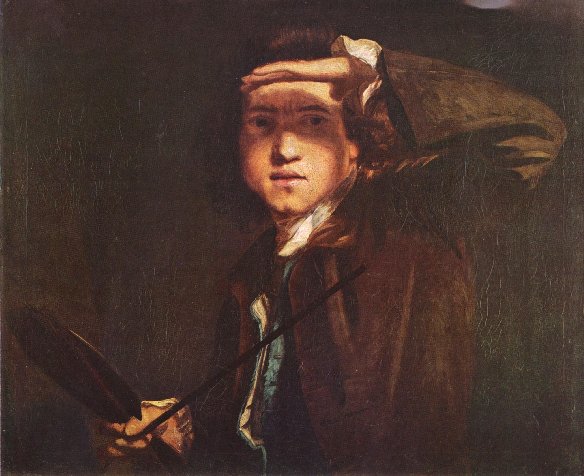
Sir Joshua Reynolds self portrait (c.1748)

Thérèse’s depiction of herself in her self-portrait could well have been inspired by Sir Joshua Reynold’s self-portrait which shows him similarly with his hand raised shielding his eyes from the bright light.
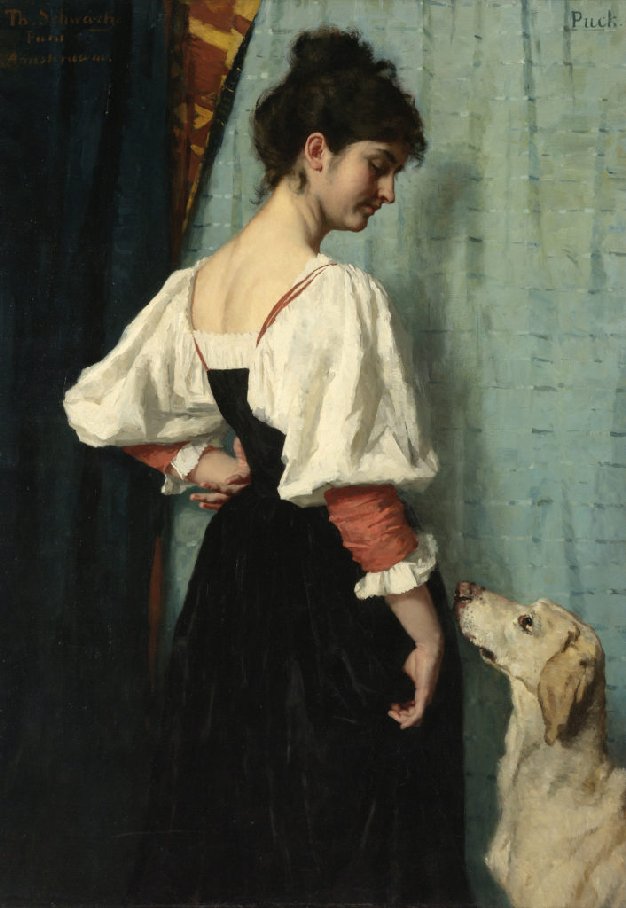
Young Italian Woman, with ‘Puck’ the Dog by Thérèse Schwartze, c. 1885)

Whilst living and studying in Paris, Thérèse completed her painting, Young Italian Woman, with ‘Puck’ the Dog.  The model she used for this painting was known as Fortunata.  She was one of the many professional Italian models working in Paris in the late 19th century. Schwartze started this painting in 1884 and exhibited it a year later in Amsterdam, having added the dog in the meanwhile.
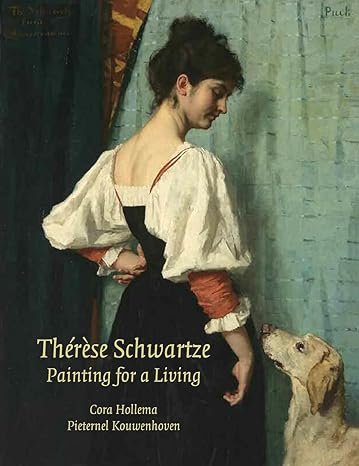
According the 2021 biography by Cora Hollema and Pieternel Kouwenhoven entitled Thérèse Schwartze: painting for a living. Thérèse’s career took off at a time when a new, wealthy Dutch class wanted to flaunt its status and what better way to achieve this than with a flattering portrait. Her biographer wrote:

“She was in demand because she produced a new elegant, un-Dutch, extravagant, flattering style of portraiture which was in demand by the upcoming ‘new money…….. The new entrepreneurs and industrialists in the second half of the 19th century…”

Portrait of Aleida Gijsberta van Ogtrop-Hanlo with her five children by Thérèse Schwartze (1906).

Schwartze was one of the leading society painters in the Netherlands around 1900. Her clientele came from the nobility and the bourgeois elite in Amsterdam and The Hague. Members of the royal family also sat for her.   A good example of her excellent portraiture is her 1906 group portrait of Aleida Gijsberta van Ogtrop-Hanlo with her five children.  In this work, Aleida van Ogtrop-Hanlo is surrounded by, from left to right: Adriënne (Zus), Pieter (Piet), Maria (Misel), Eugènie (Toetie) and Adèle (Kees). The youngest and sixth child, Joanna (Jennie) was not yet born.  Her husband was a wealthy stockbroker and founder of Amsterdam Royal Concertgebouw. The portrait of his wife and children has a dreamy quality, with rich clothing and poetic colours. It gives an excellent impression of the self-image of the Dutch upper classes at the beginning of the twentieth century.  Stylistically Thérèse Schwartze followed in the footsteps of the famous eighteenth-century English portrait painter, Thomas Gainsborough. 

 Portrait of the six Boissevain daughters by Thérèse Schwartze (1916)

An equally great group portrait by Thérèse Schwartze was her Boissevinfamily portrait but this a more decorous depiction.  It is entitled Portrait of the Six Boissevain Daughters and she completed it in 1916. According to Schwartze’s biography by art historian, Cora Hollema, this difference in style was not due to a development of the artist, but more to do with the wishes of her client. Mr. & Mrs. Boissevain, who were wealthy members of the Amsterdam upper class had ten children, six daughters and four sons. They were aware of the portrait of Aleida and her children by Thérèse but believed it to be far too modern.   So, when they commissioned Thérèse to paint the portrait in 1916 they asked her to produce a more time-honoured portrait of their daughters. Thérèse was now the breadwinner of the family and so sensibly adapted her style according to her client’s demands bearing in mind the adage: The client was king.

Thérèse Schwartze in her studio, Prinsengracht 1021, Amsterdam, 1903.

Thérèse’s great success as an artist became a point of reference for the young Dutch women painters who founded the Amsterdamse Joffers, a group of women artists who met weekly in Amsterdam at the end of the 19th and beginning of the 20th century. These “ladies of Amsterdam” met weekly, often at the Schwartze home, to update the glorious Dutch tradition of painting based on French Impressionist innovations.  They supported each other in their professional careers. Most of them were students of the Rijksakademie van beeldende kunsten and belonged to the movement of the Amsterdam Impressionists.

Woman wearing a hat (Portrait of Theresia Ansingh (Sorella)), by Thérèse Schwartze (after 1906).

Besides Schwartze’s commissioned portraits, which made her very wealthy, she still had time to complete portraits of her friends and relatives which were not commissioned and were often given as gifts.  A fine example in this regard is the portrait of Schwartze’s niece, Theresia Ansingh, who later became a member of the Amsterdam school of female painters known as The Joffers, many of them were inspired by Schwartze’s professional success. 
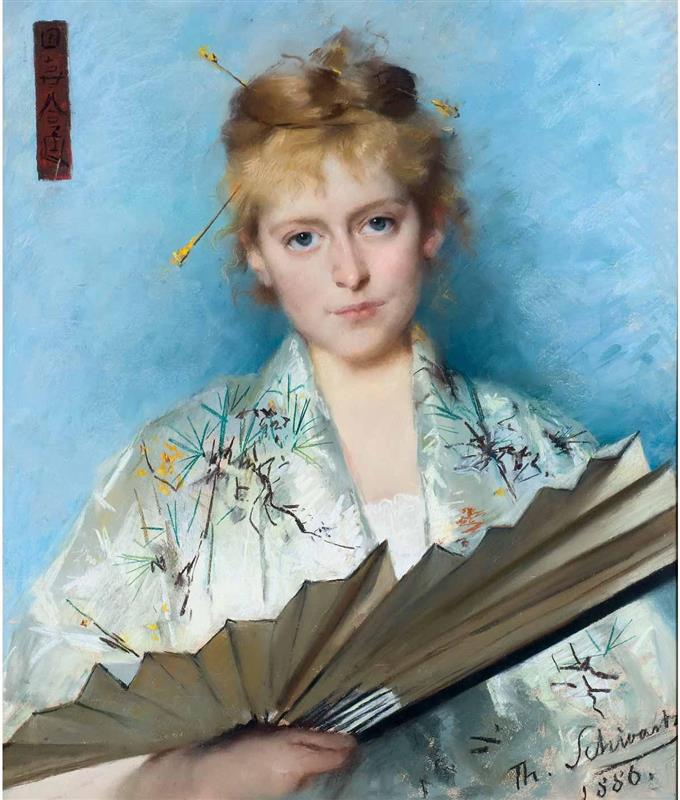
Maria Catharina Ursula (Mia) Cuypers by Thérèse Schwartze (1886)

One of my favourite portraits by Schwartze was her fascinating portrait of one of her friends, which is an amalgam of formal and informal portraiture and is entitled Portrait of Mia Cuypers.  She was a daughter of the architect Pierre Cuypers, who designed such famous buildings as the Rijksmuseum and Amsterdam’s Central Station. In 1883, she fell in love, to the dismay of her family and the astonishment of “high society,” with the Chinese-British merchant Frederick Taen-Err Toung from Berlin, who was in Amsterdam selling his Oriental merchandise at the International Colonial Exposition. Mia managed to overcome the social uproar and married Toung in 1886.  Being a close acquaintance of the Cuypers family, Thérèse was commissioned by the groom-to-be to make this wedding portrait, which is said to have only taken her one and a half days to complete.  There are Chinese characters in the upper left corner, which are not clear in my attached photo, which mean “rice field,” “longevity”/”delighted,” and “coming together.”
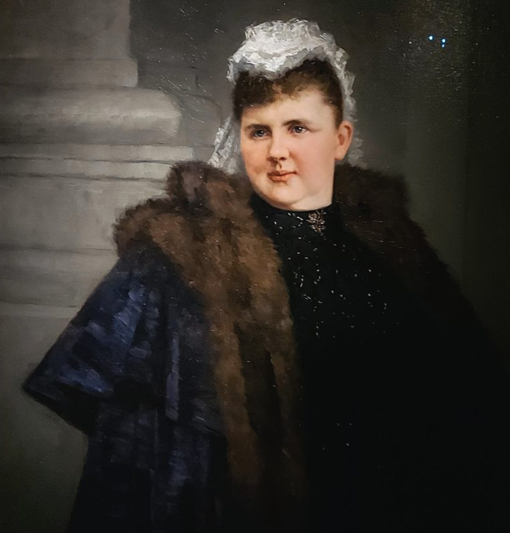
Portrait of Queen Emma by Thérèsa Schwartze (ca. 1881)

Soon after, she received a commission for a portrait of Queen Emma and the little princess Wilhelmina, who was born in 1880. In the single portrait of the young queen, she is dressed in dark colours against a neutral background, all is dark except her face. In this painting, one can already see the fine art of portraiture and the depicting of differing textures that Thérèse fully mastered. The fur stole, the lace cap on her head, as well as the brocade of the queen’s robe.
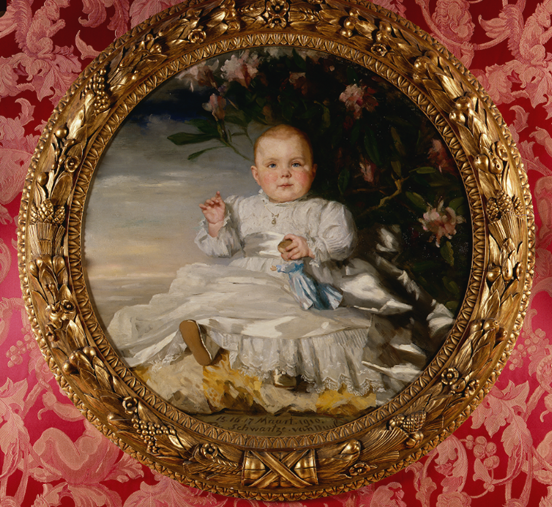
Portrait of Princess Juliana by Thérèsa Schwartze (1910)

Thérèse’s worked with the royal family of the Netherlands through a period of thirty-five years and in all they gave her six commissions that contributed greatly towards her fame and wealth. Most royal portraits were of Queen Wilhelmina.
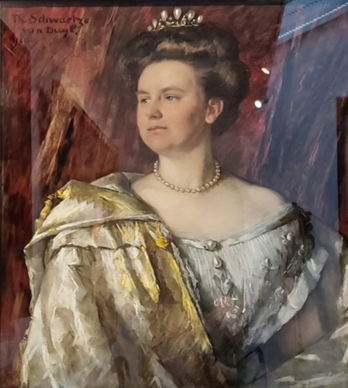
Portrait of Queen Wilhelmina by Thérèse Schwartze (1910)

The royal court had a habit of paying a little more than the average client, which meant that 1910 was a particularly profitable year for Thérèse.  She painted so many members of the royal family that she was almost deemed a member of their household.
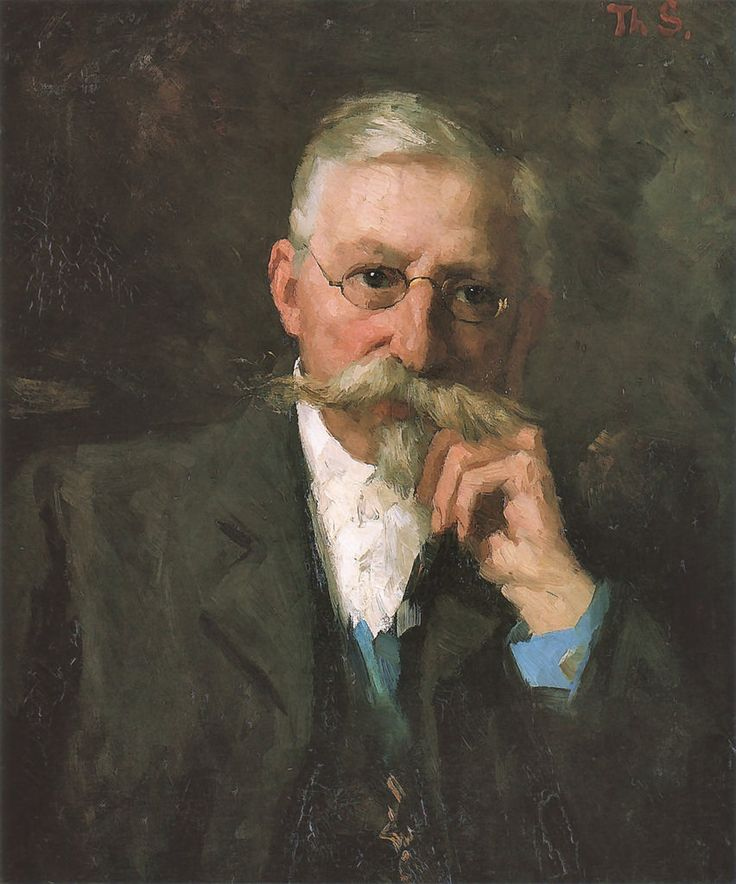
Portrait of Anton van Duyl by Thérèse Schwartze

In 1906, Thérèse Schwartze married the editor-in-chief of the Algemeen Handelsblad, Anton van Duyl. Twelve years after they married, Thérèse’s husband died on July 22nd 1918.  It was double blow for Thérèse as she herself had been very ill at the time and five months later, on December 23rd 1918, three days after her sixty-seventh birthday, she died in Amsterdam.  
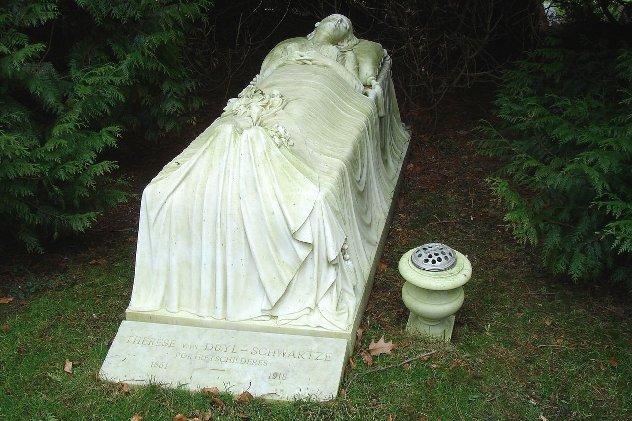
Grave of Thérèse Schwartze at the Nieuwe Ooster cemetery, Amsterdam.

She was buried at Zorgvlied cemetery in Amsterdam but was later reburied at the Nieuwe Ooster cemetery in Amsterdam, where her sister created a memorial to her, modelled after her death mask, which is now a rijksmonument.
Maria Slavona

Maria Slavona was born Marie Dorette Caroline Schorer on March 14th 1865 in the north German town of Lübeck.  She was the daughter of the pharmacist Theodor Schorer and his wife Ottilie, (née Steger).  Her father owned the Löwenapotheke on the corner of Königstraße, and Johannisstraße in the town, which is now known as Dr.-Julius-Leber-Straße.  She was the youngest of five children and had two brothers and two sisters.  As a child, she was brought up in a happy household in the old patrician house in Johannisstraße. Her parents’ home was a great meeting place for writers, artists and intellectuals. For Maria life at home was a liberal and cultural experience and, at an early age, she soon developed an intense interest in drawing and painting. Her parents encouraged her love of all things artistic and they hopde that one day she would become a painter and her mother and father supported this future road for her. 

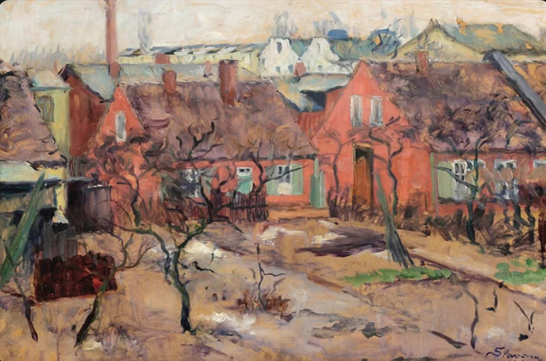
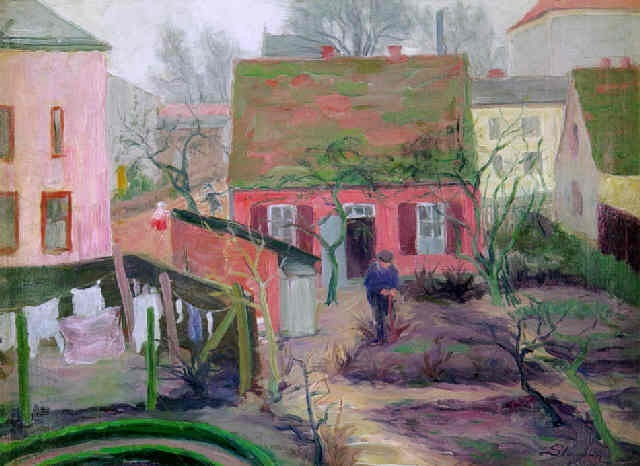
Red Gardener’s House with Gardener (Early Spring, Kahlhorst near Lübeck) by Maria Slavona

In 1882, when she was seventeen years of age, Maria went to Berlin to study art.  This was an unorthodox move as accordance with the social conventions of the time, it was unseemly for a young, unmarried woman to leave her parents’ home and pursue an education, in her case. studying painting.  Her move to Berlin caused a scandal in the Hanseatic city of Lübeck.  However, since women in Germany were denied access to art academies, Maria Slavona attended the Eichler private painting school in Berlin and the Deutsches Gewerbe-Museum zu Berlin, (Royal Museum of Decorative Arts) which at the time had a teaching institute.  In 1887, aged twenty-two, she moved to the painting school of the Verein der Berliner Künstlerinnen (Association of Women Artists and Friends of Art) in Berlin. It was an informal and free atmosphere, and the women here were allowed to conduct nude studies on living models.  A year later she enrolled at the painting school of the Münchner Künstlerinnenverein (Munich Association of Women Artists).

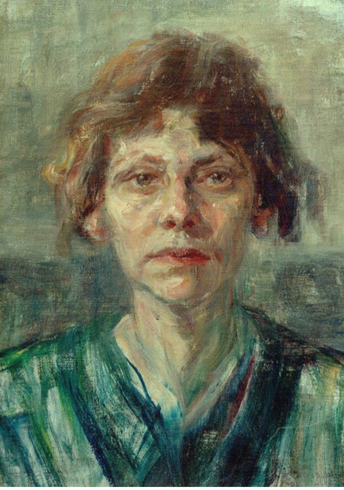
Self portrait by Maria Slavona (1887)

Her self-portrait, created in Berlin in 1887, shows the face of a 22-year-old, extremely pretty young woman, framed by tangled curls. With her head turned to the left, she fixes her gaze firmly on the viewer. Settling in this Bavarian city was fortuitous as the city of Munich had been, since 1850 onwards, deemed the most important centre for artistic creation and painting.  At this time, her most important patron and mentor was Ludwig Herterich, a German painter and art teacher, who in 1898 was a professor at the Academy of Fine Arts Munich, where he taught many young artists including Maria Slavona.   He introduced Maria to French Impressionism. A painting style that would be influential for her later paintings.

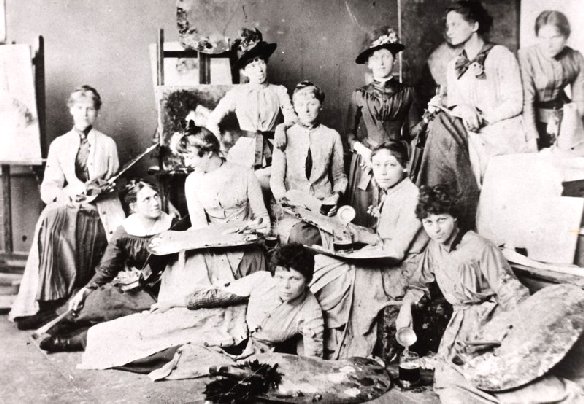
In the Munich Ladies’ Academy: Käthe Kollwitz seated between Maria Slavona (front right) and Rosa Pfäffinger (lying in front right)

Maria loved her time in Munich and made many friends including a fellow aspiring young painter, Käthe Kollwitz, who was also studying art in Munich. During a return home to Lübeck, she met some Scandinavian artists, one of whom was Vilhelm Petersen and, as they became closer friends, they both decided to take assumed names for their artworks. He chose Willy Gretor and she became Maria Slavona. Along with friends Maria and Vilhelm visited Paris in 1890.  She recalled her arrival in the French capital:

“…In 1890, I came to Paris. This is where a new world opened up to me. The first visits to the Louvre almost numbed and overwhelmed me. But I was disappointed by the schools I saw, I didn’t like them. I decided to work alone and seek advice and judgment only in the circle of a few young like-minded friends, almost all Danes and Norwegians…”

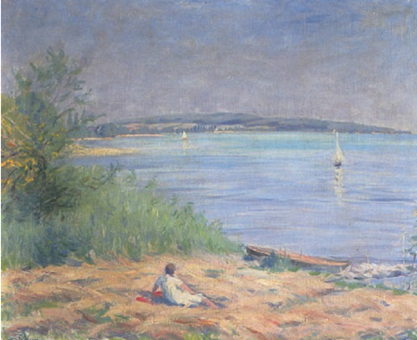
Sommermorgen am Starnberger See by Maria Slavona

That same year, Maria gave birth to an illegitimate daughter, Lilly, but her relationship with the father of the child, Petersen, was over.  She had at first looked upon him as a charismatic and educated man but he turned out to be a dubious art dealer, womanizer and bon vivant.  Worse still when their daughter Lilly was born Petersen had deserted Maria and she was left to bring up her daughter alone.

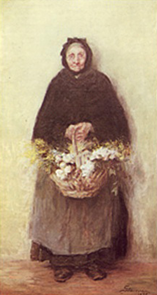
Alte Blumenfrau by Maria Slavona (1893)

In 1893, at her first exhibition at the Salon de Champ-de-Mars an annual event organized by the Société Nationale des Beaux-Arts.  Maria Slavona submitted her work, Alte Blumenfrau (Old Flower Woman). At this exhibition, ironically she identified herself under the male pseudonym “Carl-Maria Plavona”.  The painting depicts an old woman standing in frontal view, holding a large basket of white and yellow flowers in front of her body in her worn-out hands. Placed in front of a simple, ochre-coloured wall, the dark, poor clothing of the woman forms a strong contrast to the light background. The wrinkled face, framed by a headscarf, shows emotionless features. The tired eyes look firmly at the viewer.

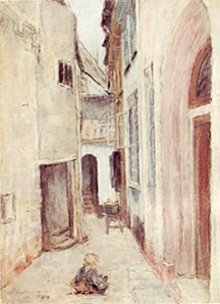
St Jurgen-Gang in Lubeck by Maria Slavona (1902)

Maria Slavona who, around 1898 had met the Swiss art connoisseur and collector Otto Ackermann. Their friendship grew over the next two years and in 1900 they married. Maria’s daughter Lilly took the name Ackerman and later she became an actress under the name Lilly Ackermann. Otto Ackermann was a valuable asset in the introduction of French art into Germany in the early 20th Century.  Otto and Maria set up home in Paris and it soon became a central meeting place for Parisian bohemianism. Visiting artists such as Münch, Liebermann, Leistikow, along with literary giants and art lovers would often frequent their home and be made most welcome.  Maria, who had spent sixteen years in the French capital, had led a happy and artistically productive life. During this period, she had completed many paintings depicting landscapes, portraits, still life and interiors.

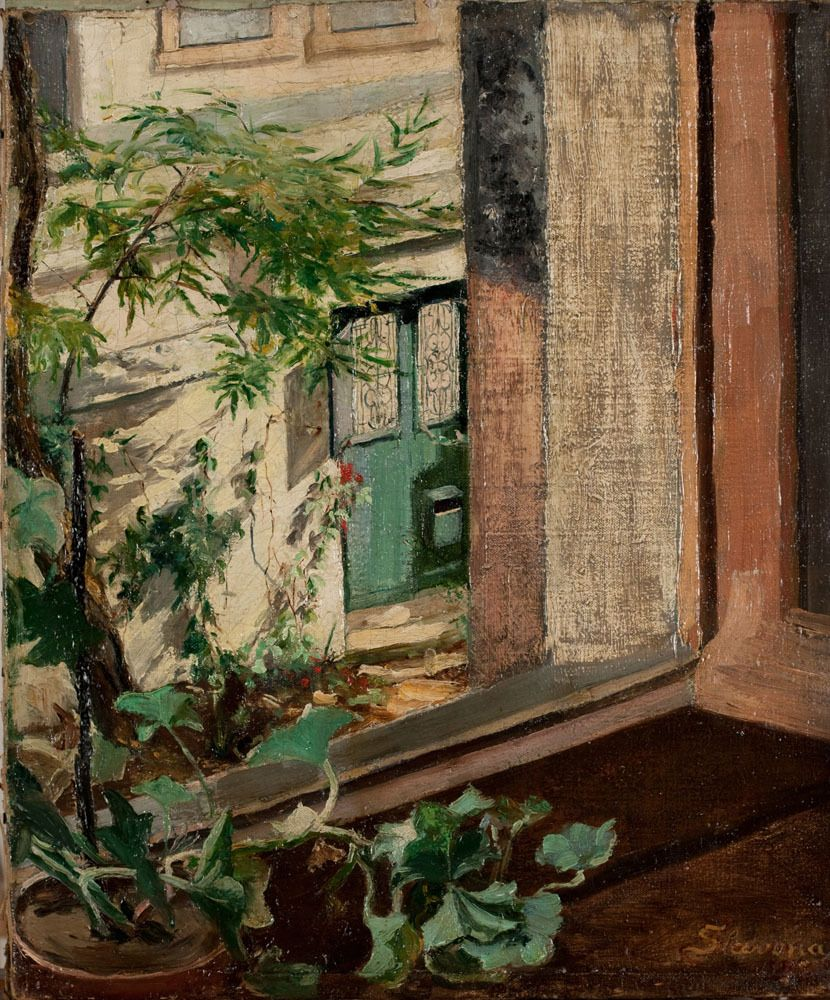
View from Studio Window by Maria Slavona (1899)

One of her favourite subjects was the view from the window of their home.  All of her work over those years established her reputation as a talented painter.

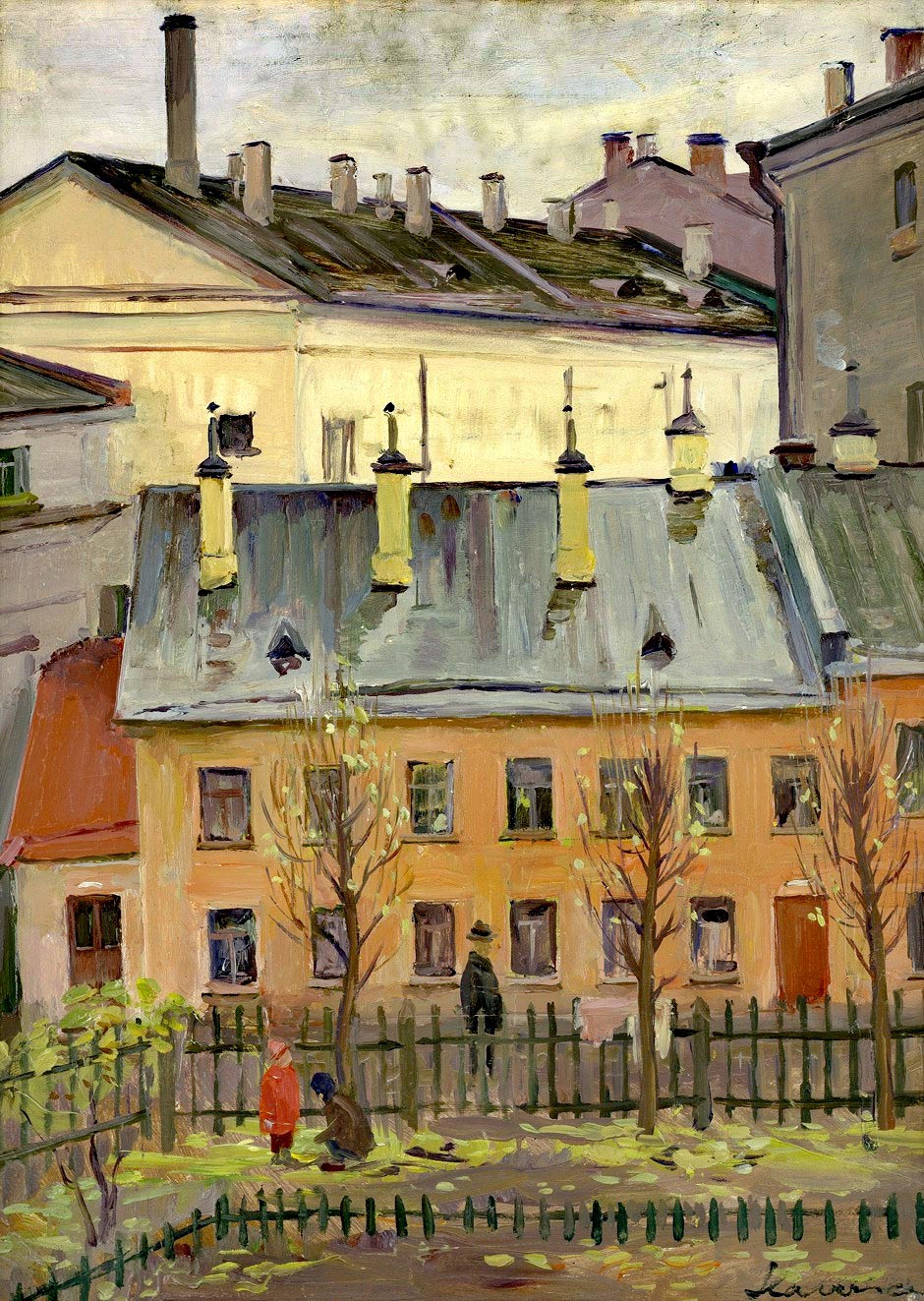
Houses on Montmartre, around 1900 by Maria Slavona

Häuser am Montmartre by Maria Slavona

In 1906 Maria and her family left Paris and returned to her old hometown of Lübeck.  During her stay in Lübeck she completed many paintings depicting the town and the surrounding areas.

 Villa entrance in Lübeck by Maria Slavona

Spring Thaw near Lubeck by Maria Slavona (1913)

Unfortunately, the bourgeois, art-hostile atmosphere that pervaded the old Hanseatic city had a negative effect on her husband’s art trade business and sadly this gave them no alternative but leave Lübeck in 1909, and move to Berlin.  It was in the German city of Berlin that she was once again artistically active and from 1913 she became a member of the Berlin Secession.  This was one of the last art Movements of 19th century German art.  It was a breakaway group of artists, who in 1898 ‘seceded’ from the city’s arts establishment, led by the eminent painter Max Liebermann.  It was a reaction to the Association of Berlin Artists, and the restrictions on contemporary art imposed by Kaiser Wilhelm II.  Sixty-five artists “seceded,” demonstrating against the standards of academic or government-endorsed art.  The group established an independent exhibition society, in order to champion new forms of modern art – rather than continue to churn out the old-fashioned academic art favoured by the art establishment.

Bouquet of field flowers by Maria Slavona (c.1900)

Following the end of the First World War Maria’s health began to deteriorate.  Added to that with a decrease in the sale of her paintings, the financial circumstances of the family took a substantial dip.  To try and rectify both her health and cut back on their financial outgoings the family moved to the countryside village of Munsing in Upper Bavaria.  From that time on, Maria mainly created floral still life works. 

Self portrait by Maria Slavona (1910)

Maria Slavona died in Berlin on May 10th 1931 aged 66.  Unfortunately, a large part of her work was lost during the Second World War, and also, for many years, her remaining works were branded by the Nazi government as Entartete Kunst (Degenerate Art) in 1933 and it was mainly ignored outside of her hometown Lübeck. Slavona is now known and famous as a representative of German Impressionism. Although she was unable to build on the artistic successes of her Paris years in Berlin, she was one of the best-known painters of her time, along with Dora Hitz and Käthe Kollwitz.

On the occasion of the 50th anniversary of her death in 1981, the Hanseatic City of Lübeck honoured its once famous and forgotten citizen with a large exhibition in the St. Anne Museum.

Ellen Day Hale

Portrait of Ellen Day Hale by Margaret Lesley Bush-Brown (1944)

The artist I am looking at today is the American painter, Ellen Day Hale.  Ellen Day Hale was born on February 11th, 1855 in Worcester, Massachusetts.  She was born into an elite Boston Brahmin Hale-Beecher family. The Boston Brahmins, sometimes referred to as the Boston elite, are members of Boston’s historic upper class who were associated with a cultivated New England accent, going to Harvard University, Anglicanism, and traditional British-American customs and clothing. They were considered White Anglo-Saxon Protestants (WASPs).

Edward Everett Hale

Hale’s father was the author and orator Edward Everett Hale, an American historian, and Unitarian minister, who was best known for his writings such as “The Man Without a Country” which was published in Atlantic Monthly in support of the Union during the Civil War. Her father acted as a Unitarian chaplain in the U.S. Senate from 1904 until his death in 1909, and Ellen Hale often assisted her father in his church-related duties. Her mother was Emily Baldwin Perkins. Although the Hale family was looked upon as being part of the Brahmin elite, they were neither wealthy nor were they well respected among the Boston upper class.  Emily Hale was one of nine children.  Her elder brother died during childbirth and she then became the oldest of eight children with seven younger brothers.  She was brought up in an artistic household and her mother encouraged her interest in art, and her father’s sister was watercolourist Susan Hale, and it was thought that Susan gave Ellen her first artistic instruction. Her brother was Philip Leslie Hale who became a celebrated artist and art critic and who married Lilian Westcott Hale, an Impressionist painter.

Plains Indian Girl by Ellen Day Hale

During the 1870s, Ellen Hale decided that she needed to move forward with her art and look for a formal art education.  It was a good time to cement this artistic idea as Boston was in the middle of what was known as the Boston Renaissance and new cultural institutions were coming into being in the city.  A new and large Boston Public Library had been founded in 1848 and the first large free municipal library in the United States, the first public library to lend books, the first to have a branch library, and the first to have a children’s room.  The Boston Museum of Fine Arts (MFA) was founded in 1870 and in 1876, it moved to a highly ornamented brick Gothic Revival building in Copley Square. 

William Morris Hunt by Helen Mary Knowlton (1896)

Starting in 1874, Hale enrolled on a five-year course at William Morris Hunt’s school for painting, where she studied under Helen Mary Knowlton.  Helen Mary Knowlton had received art tuition from William Morris Hunt, and she told him that she knew of forty women who would love to study art and so in 1868, despite criticism from those who thought he was wasting his time, Hunt began classes for women.  It was not art that he was teaching, he was inspiring his female students and instilling in them a sense of self-worth.  When Hunt died in 1879, Knowlton carried on his work of supporting his female students and getting the group of women to rely upon each other for professional and personal support rather than their husbands or other men,

Morning News by Ellen Day Hale (1905)

Having finished her five years at the William Morris Hunt school she moved to Philadelphia and enrolled at a two-year course at Pennsylvania Academy of the Fine Arts (PAFA), where the director was Thomas Eakins.  Following this, in 1881, Ellen Day Hale went to Europe with Helen Knowlton and the pair went on to visit Belgium, Holland, Italy and England continually visiting museums of art and taking time to copy some of the paintings.  For a brief time whilst in London, Hale studied at the  Royal Academy, but she eventually parted company with Knowlton and travelled to Paris where she enrolled with Emmanual Frémiet at the Jardin des Plantes, worked in the atelier of Emile Carolus-Duran, and learned the French academic style at Académie Julian before returning to Boston in 1883.

Self portrait by Ellen Day Hale (1885)

It was whilst back in Boston at her family’s home in Roxbury, Massachusetts, and at the family’s summer home in Matunuck, Rhode Island. that Hale began her self-portrait in 1884.  In this work we see Hale gazing out at us with great assurance.  Her right arm rests on the arm of a chair.  She is dressed completely in black wearing a dress with buttons and a fur collar, covered by a loose jacket.  From under the brim of her black hat we can see her fringe.  Hale appears to be making a fashion statement with her clothes and youthful hairstyle.  Her bold gaze and her fashionable outfit suggest her willingness to push traditional boundaries.  Hale exhibited her Self-Portrait in Boston, perhaps for the first time, in 1887.  The Museum of Fine Arts, Boston, which owns the work later commented:

“…Hale’s forthright presentation, her strong dark colours, and the direct manner in which she engages the viewer recall the work of one of the French painters she most admired, Edouard Manet. Manet had been known for his confrontational images, strongly painted without subtle nuances of light and shadow…”

June by Ellen Day Hale (1893)

Now although back living in Boston, Hale still loved to travel and made frequent journeys to Europe, North Africa, and the Middle East.  She also spent time exploring her own country especially the American West.  Despite her railing against traditional limitations exacted on females by society, the one she concurred with was that women should not travel alone and so she needed to find a like-minded companion for her exploratory journeys.  Hale soon lighted on the perfect companion in the guise of the painter Gabrielle de Veaux Clements.  Gabrielle had attended several prestigious art schools, studied under notable artists such as Tony Robert-Fleury and William-Adolphe Bouguereau, and exhibited at the Paris Salon in 1885. Clements specialized in landscapes, cityscapes, and harbour vistas capturing the bustling spirit of Paris, Baltimore, Cape Ann, and other cities and towns throughout France, Algiers, Palestine, and along the American East Coast.

Gabrielle de Veaux Clements.by Ellen Day Hale (1883)

Clements became the traveling partner of Ellen Day Hale whom she met in 1883. The two artists became life-long friends and beside their painting trips spent their summers in Folly Cove on Cape Ann, Massachusetts, which was a popular artist destination and an artist’s colony thrived. It was where the artists staying there were able to share models and learn each other’s techniques.   Such was their close friendship that in 1893, the two artists established a household together in the small Massachusetts town of Folly Cove, at a house they bought, “The Thickets”. During the winter months Clements and Hale spent their time traveling throughout Europe but sometimes just remained in America in Charleston, South Carolina, where they taught etching. Among their circle of friends and visitors were Cecilia Beaux and Margaret Bush-Brown.  Between 1904 and 1909, Hale resided in Washington, DC, serving as hostess in her father’s home while he was chaplain to the U. S. Senate.

Early Vegetables by Ellen Day Hale (c.1918)

The relationship between Ellen Day Hale and Gabrielle de Veaux Clements was often referred to as a Boston Marriage.  A Boston marriage was, historically, the cohabitation of two wealthy women, independent of financial support from a man. The term is said to have been in use in New England in the late 19th and early 20th century. Some of these relationships were romantic in nature and might now be considered a lesbian relationship; others were not.  The nature of Ellen and Gabrielle’s type of relationship is simply unknown.

Musical Interlude by Ellen Day Hale

While in Charleston Ellen and Gabrielle immersed themselves in the flourishing arts renaissance which was taking place in the city.  They were both accomplished printmakers and they helped organize the Charleston Etchers Club, whose founding members included Elizabeth O’Neill Verner, Alice Ravenel Huger Smith, and Alfred Hutty. It was Verner’s daughter who later recalled the input of Verner and Hale had in Charleston and she recalled Clement’s words:

“…We want to leave Charleston some of our skills . . . Get together a group so you can buy a press and we will show you how to use it . . . We’ll teach you, so you can teach them…”

The Charleston Etchers’ Club was formed in 1923 and it offered instruction on printmaking, encouraged intellectual exchange, art criticism, and exhibition planning.

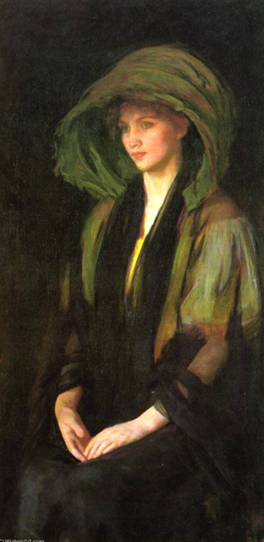
The Green Calash by Ellen Day Hale (1904)

In 1904 Ellen Hale completed a painting entitled The Green Calash.  A calash is a large green bonnet or hood and resembles the folding top of an 18th-century carriage known as a calash.  It is a three-quarter-view portrait of a young woman who is sitting on a chair with her hands resting together in her lap.

The Green Calash by Ellen Day Hale (1925)

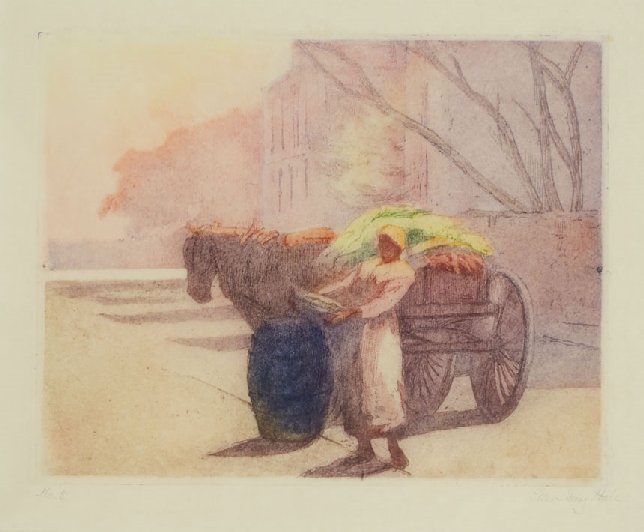
In 1925, twenty-one years later, Hale completed a soft ground colour etching and aquatint after her 1904 painting. The print is again a three-quarter-view portrait of a young woman seated with her hands resting together in her lap and is once again wearing a large green bonnet. The print of this etching was exhibited at the Smithsonian as part of a print exhibition in November 1936. Gabrielle DeVeaux Clements and Ellen Hale experimented extensively with colour printmaking throughout their careers.

The Original Colour Engraving by René Ligeron

Both had been influenced by the French artist René Ligeron’s 1924 treatise on colour intaglio, which Hale translated into English for the Smithsonian exhibition. Gabrielle Clements wrote to curator R.P. Tolman telling him that she and Hale had “been working on an interesting line of experiments in printing etchings in colour” and that they had “lately gained better control of the medium, and greater simplicity.”

This prestigious 1936 exhibition came near the end of Hale’s and Clements’s careers. By that time, they had been producing prints for more than sixty years. It was almost fifty years earlier that their work was showcased at the Women Etchers of America exhibition in 1887 at the Boston Museum of Fine Arts.

Hale died in Brookline, Massachusetts, on February 11, 1940, her 85th birthday.  Hale’s legacy is not only in her artwork and etchings but also her struggle to gain in the acceptance of female artists. A member of what is now referred to as the Boston School of Painting, Hale has also been recognized as one of America’s leading women impressionists.  She also wrote History of Art (1888). Her artist brother Philip Hale also exhibited at the Chicago World’s Fair. 

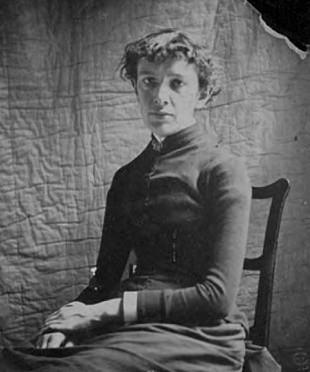
Ellen Day Hale

In his 1997 memoir, A Sculptor’s Fortunes, by Walker Kirtland Hancock an American sculptor and teacher talked about Hale and Clements, and their roles in establishing Folly Cove as a gathering spot for artists, a place he first visited in 1920:

“…Folly Cove…had begun to attract artists at least two generations before I arrived. The first to settle there were Ellen Day Hale and Gabrielle deV. Clements….Their houses were close to each other, overlooking the cove. Miss Clements’ was a large frame structure not far back from the road. Miss Hale’s, a stone building, was on higher ground. Miss Clements had been a mural painter, but because of her age she at that juncture limited her work to etching. She was kind and patient enough to give me lessons in that art. Miss Hale continued with her portrait painting. Both ladies were very much a part of the local community…They were responsible for [sculptor] Charles Grafly’s buying a house and building a large studio nearby, having recommended “the Folly” to him as a healthful place in which to live…